


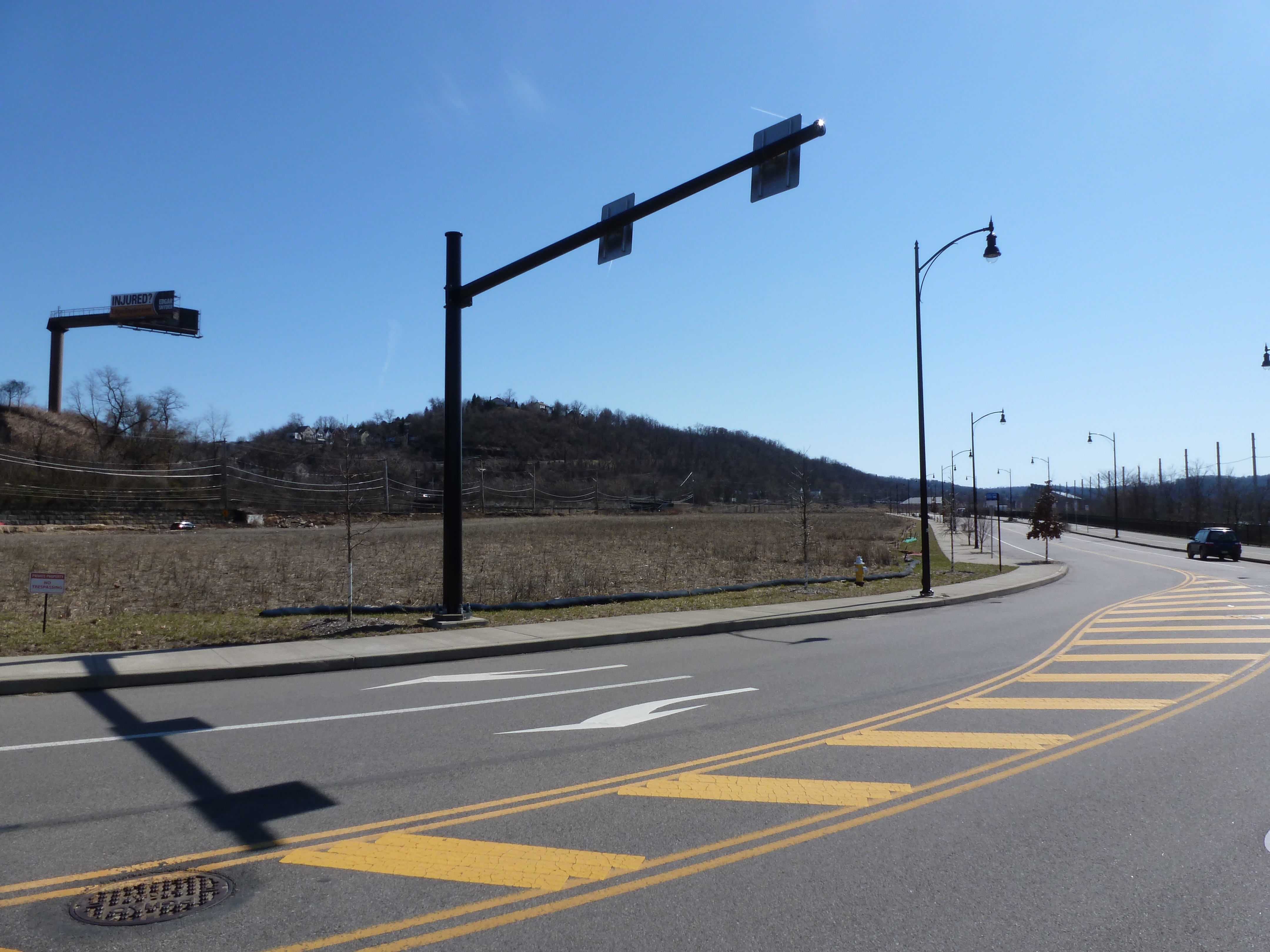


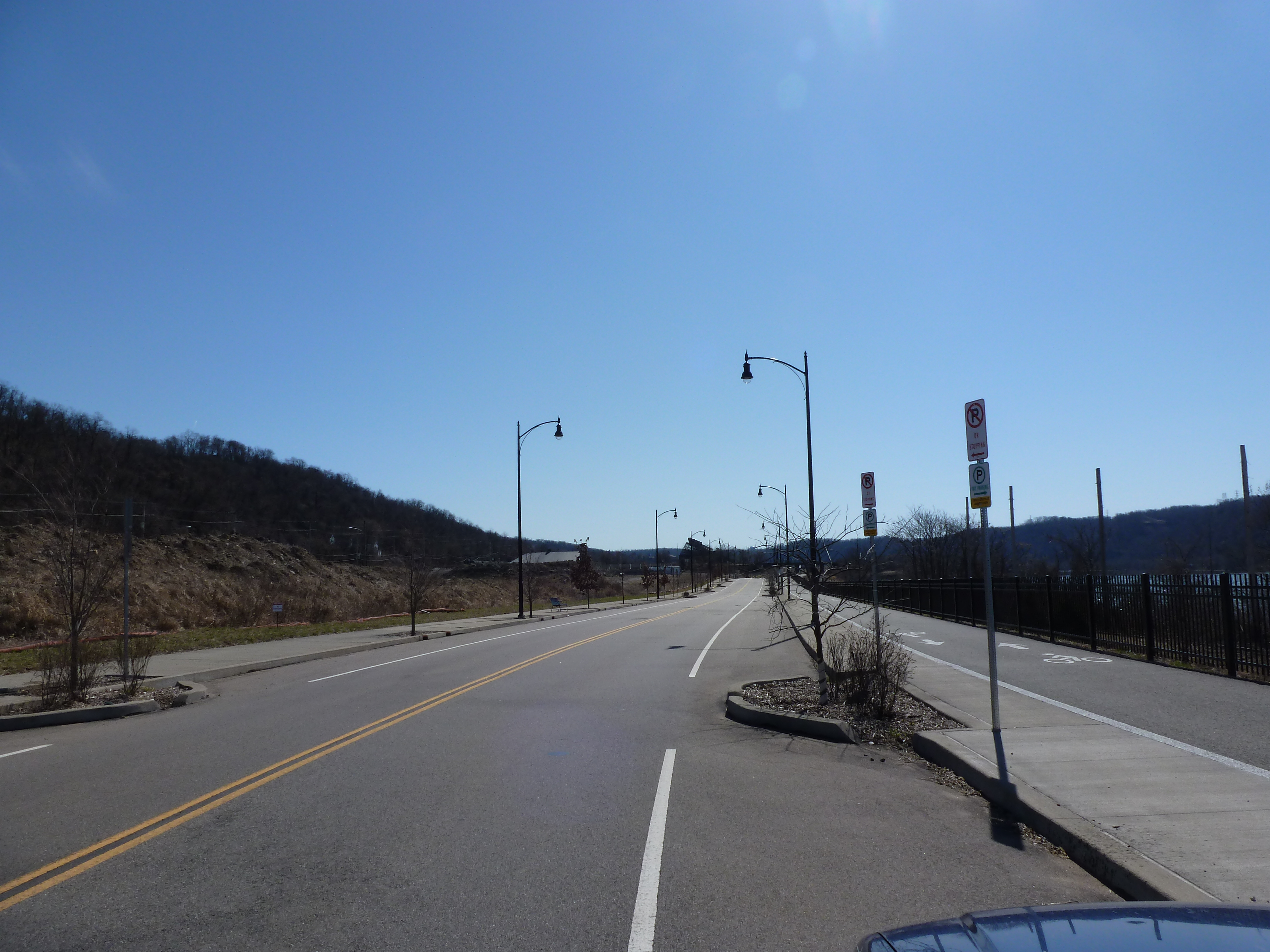


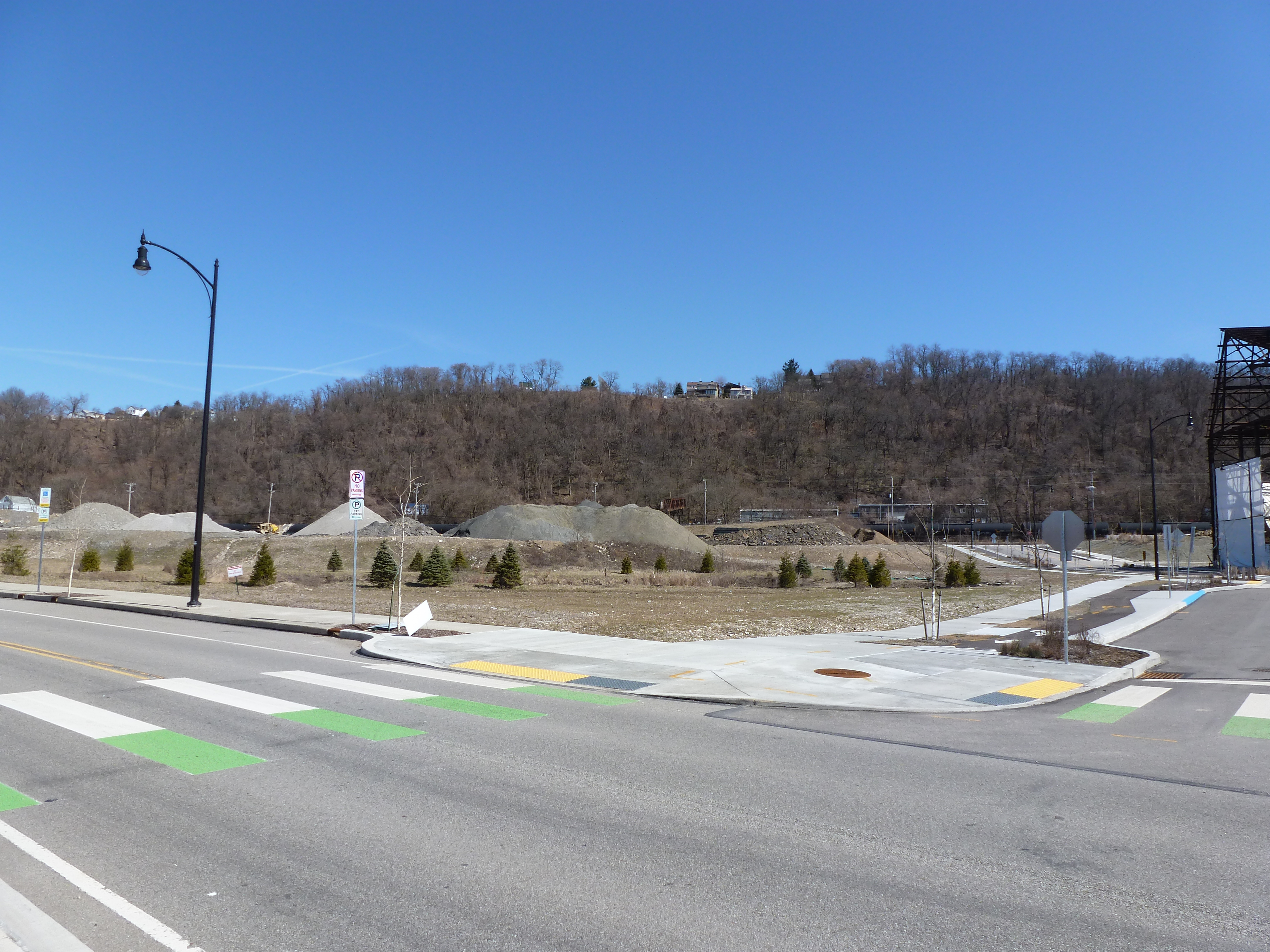


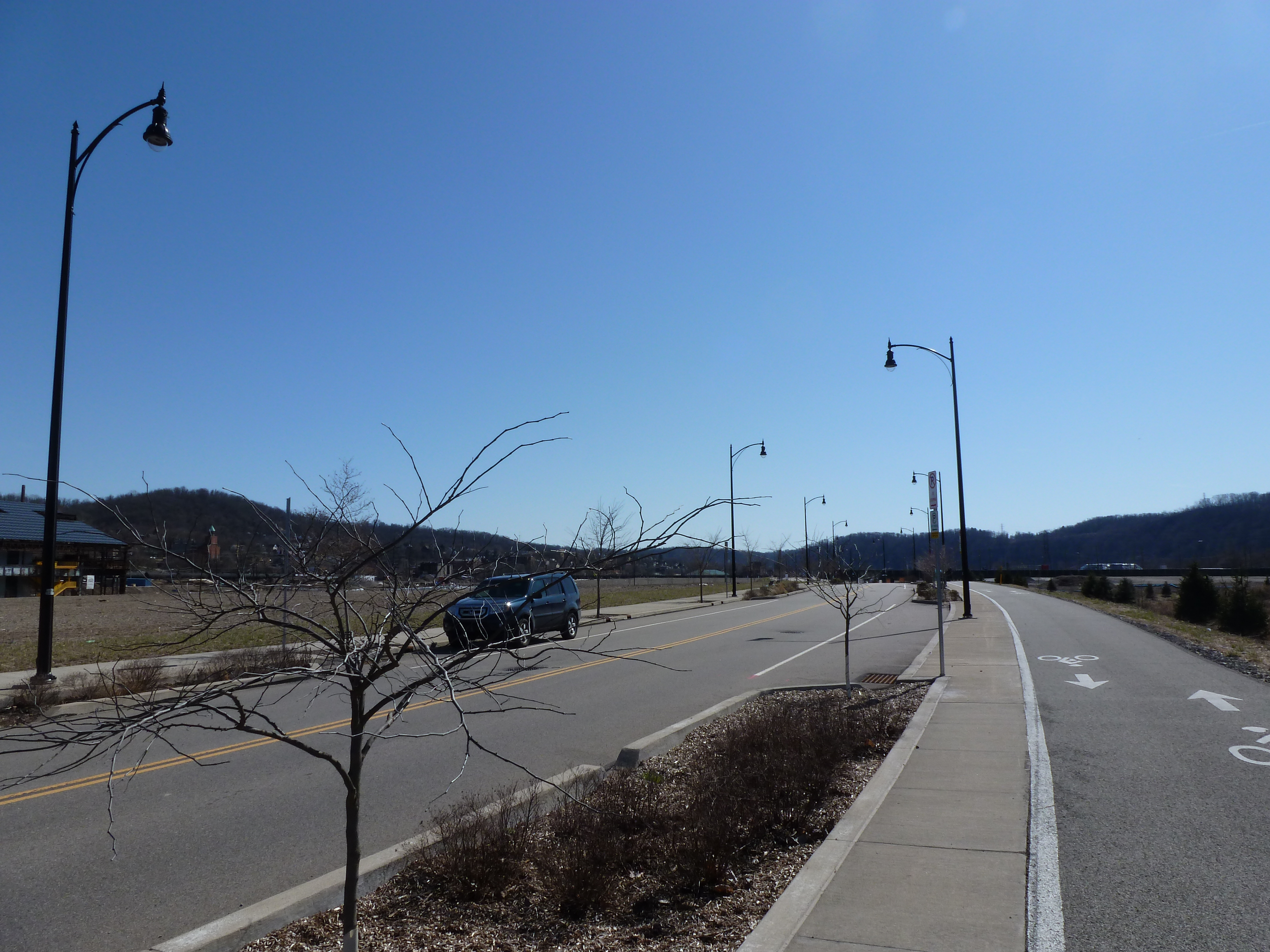

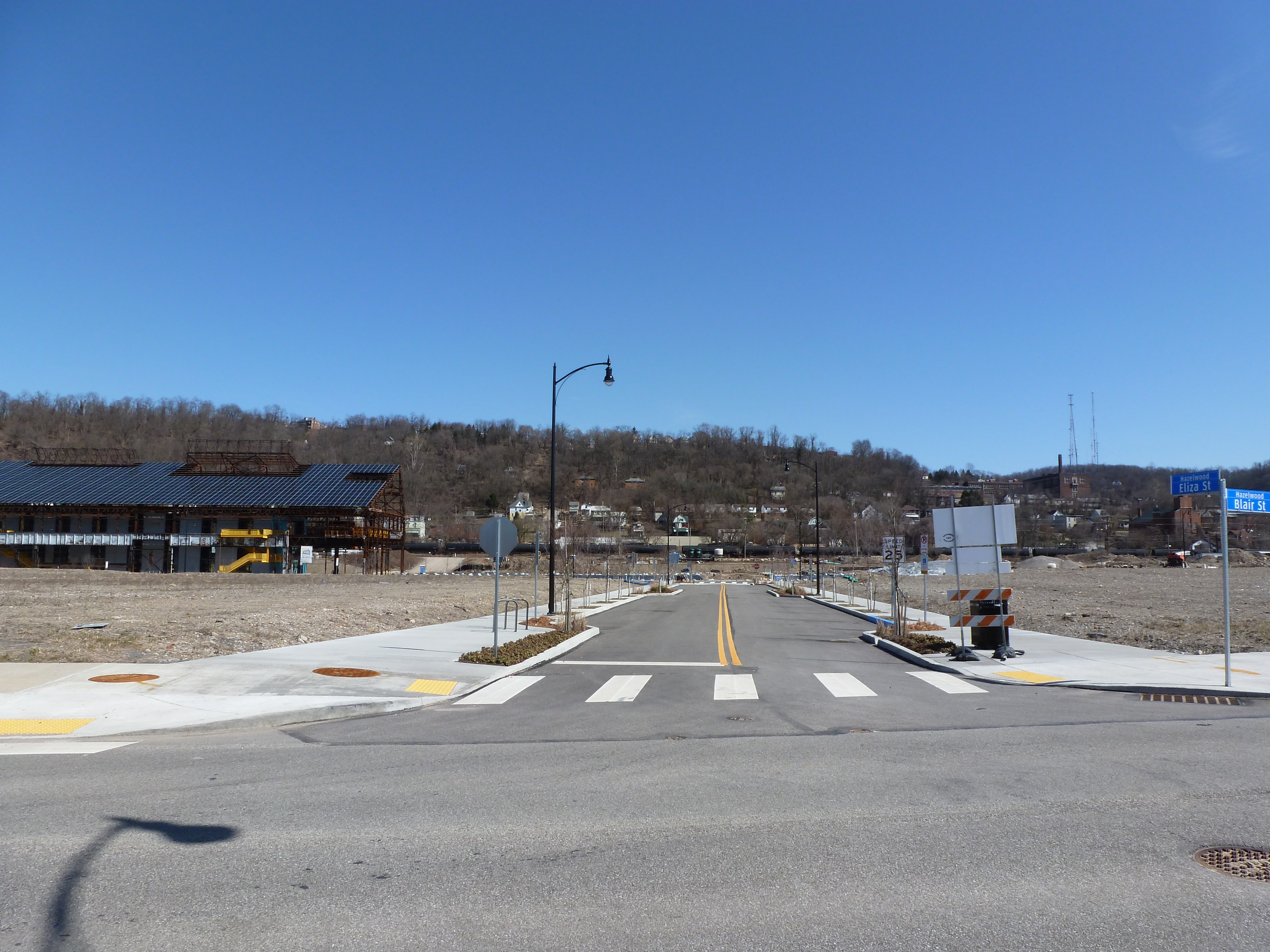

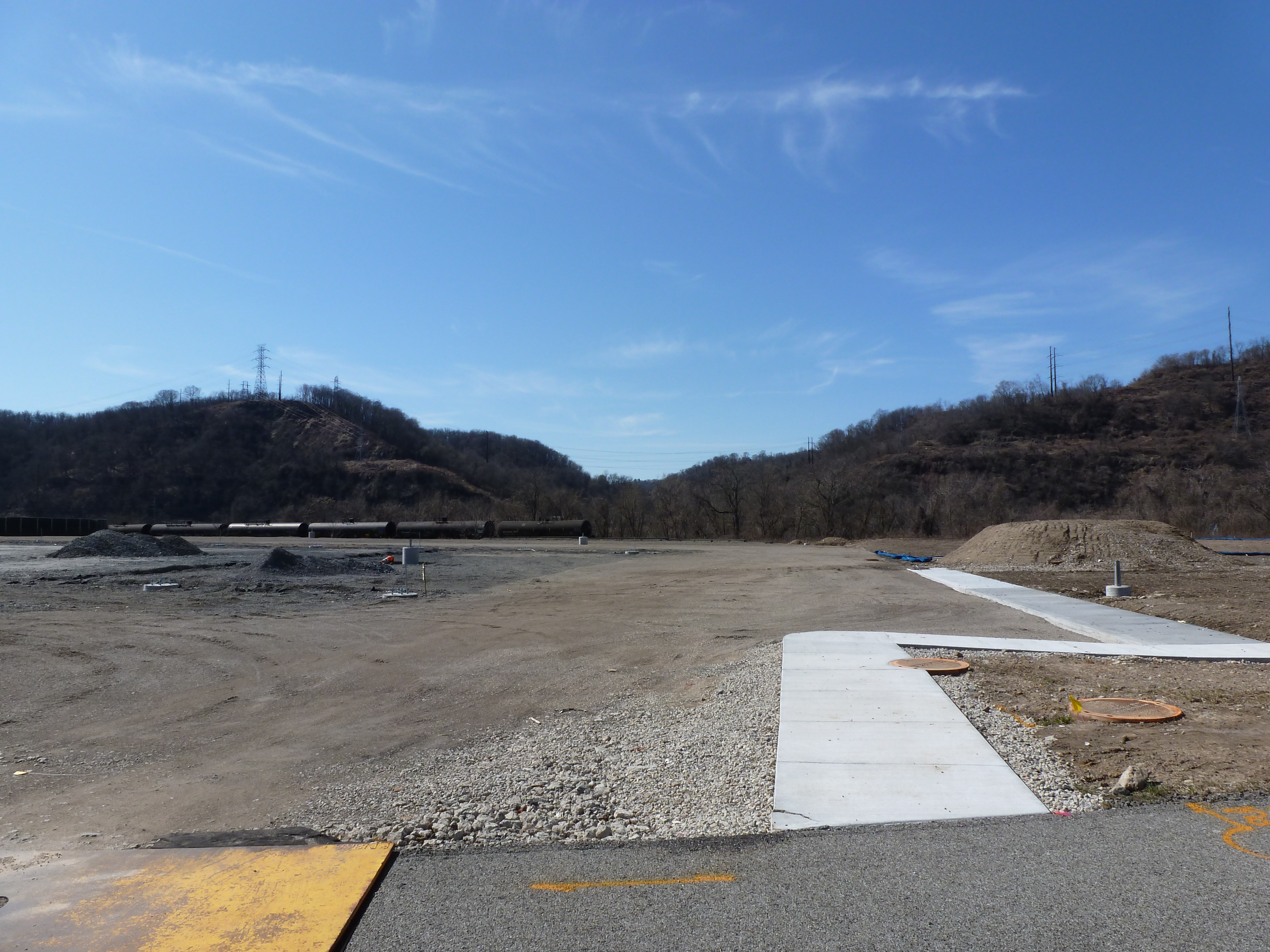
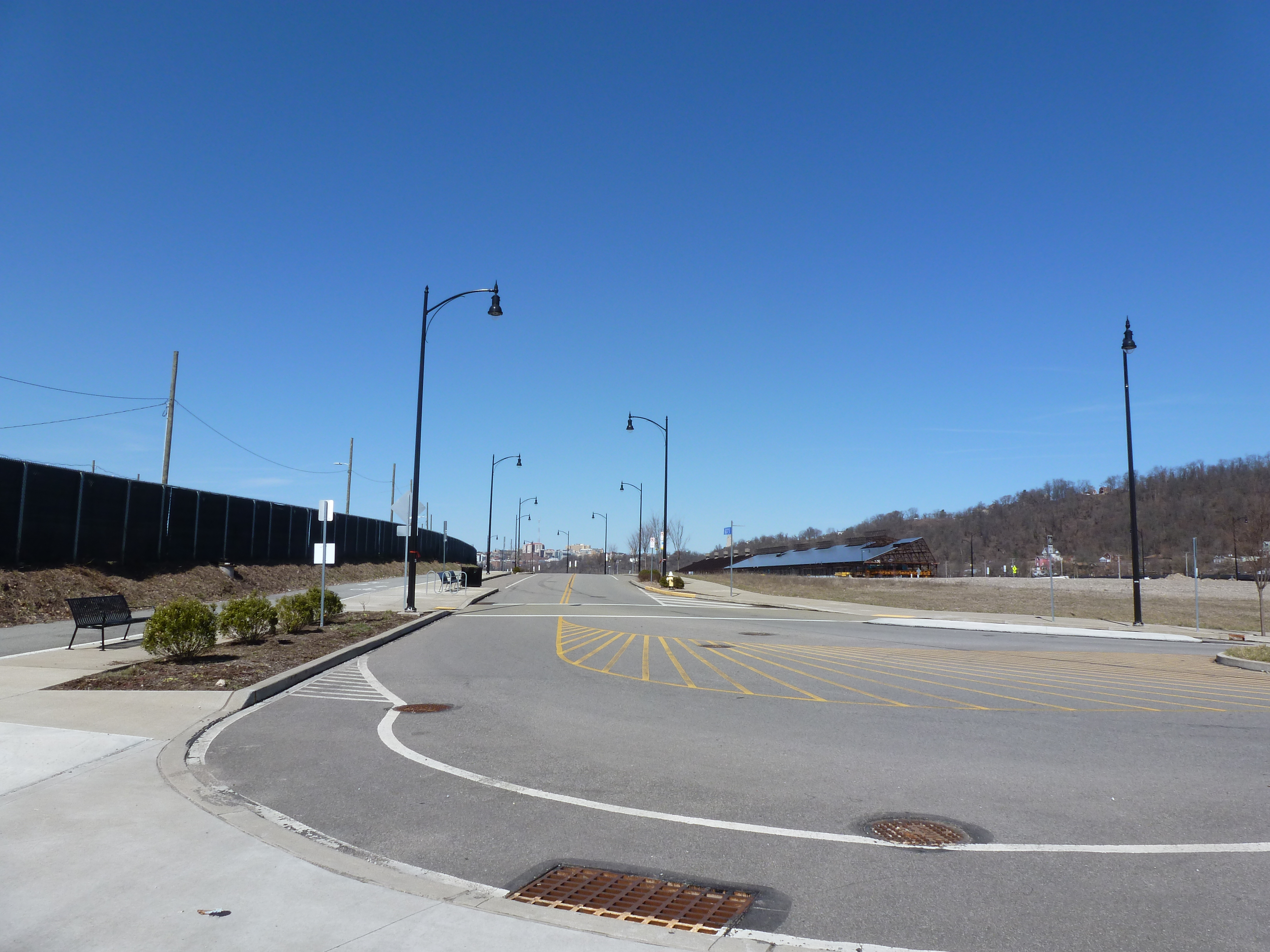

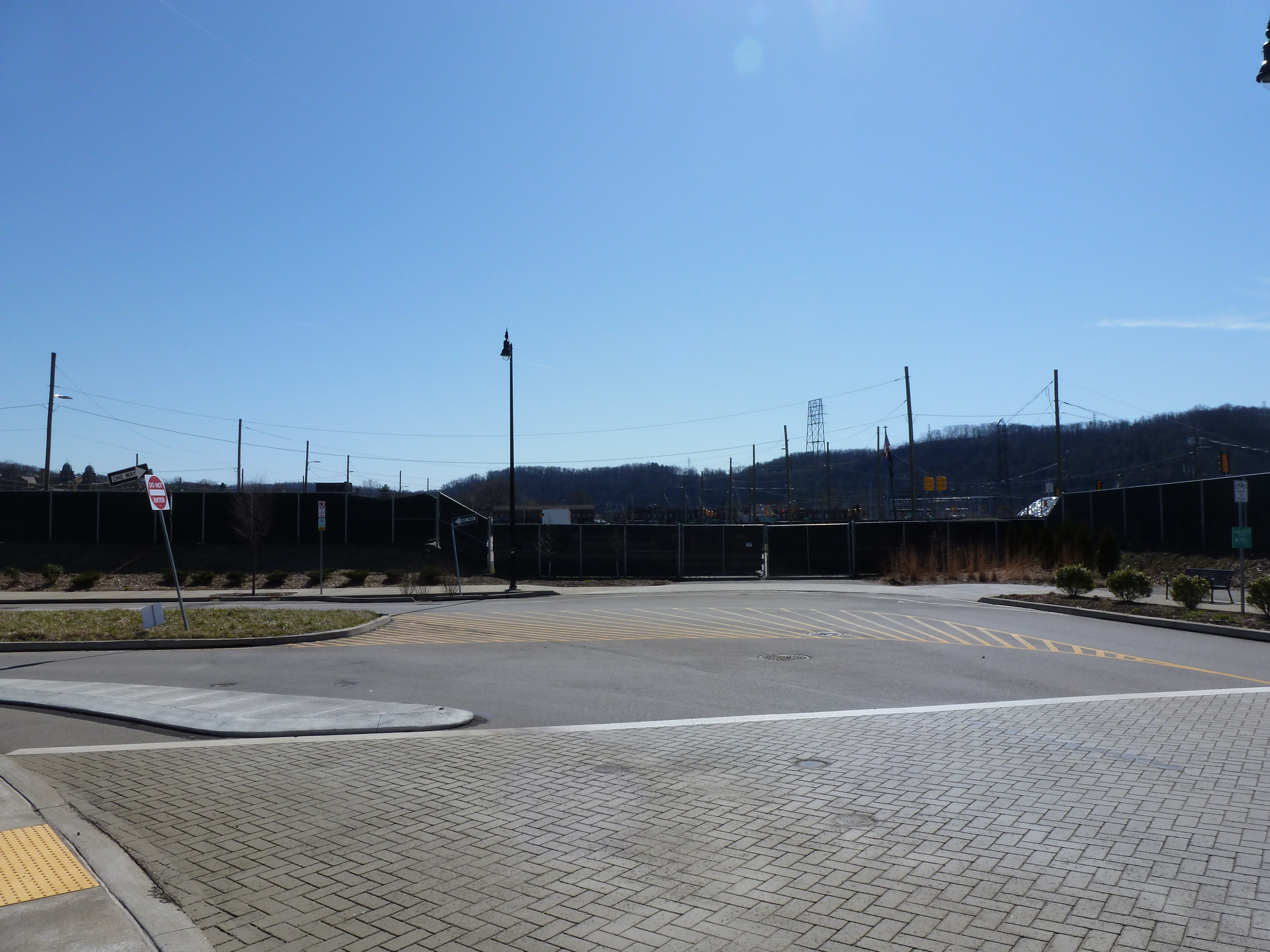
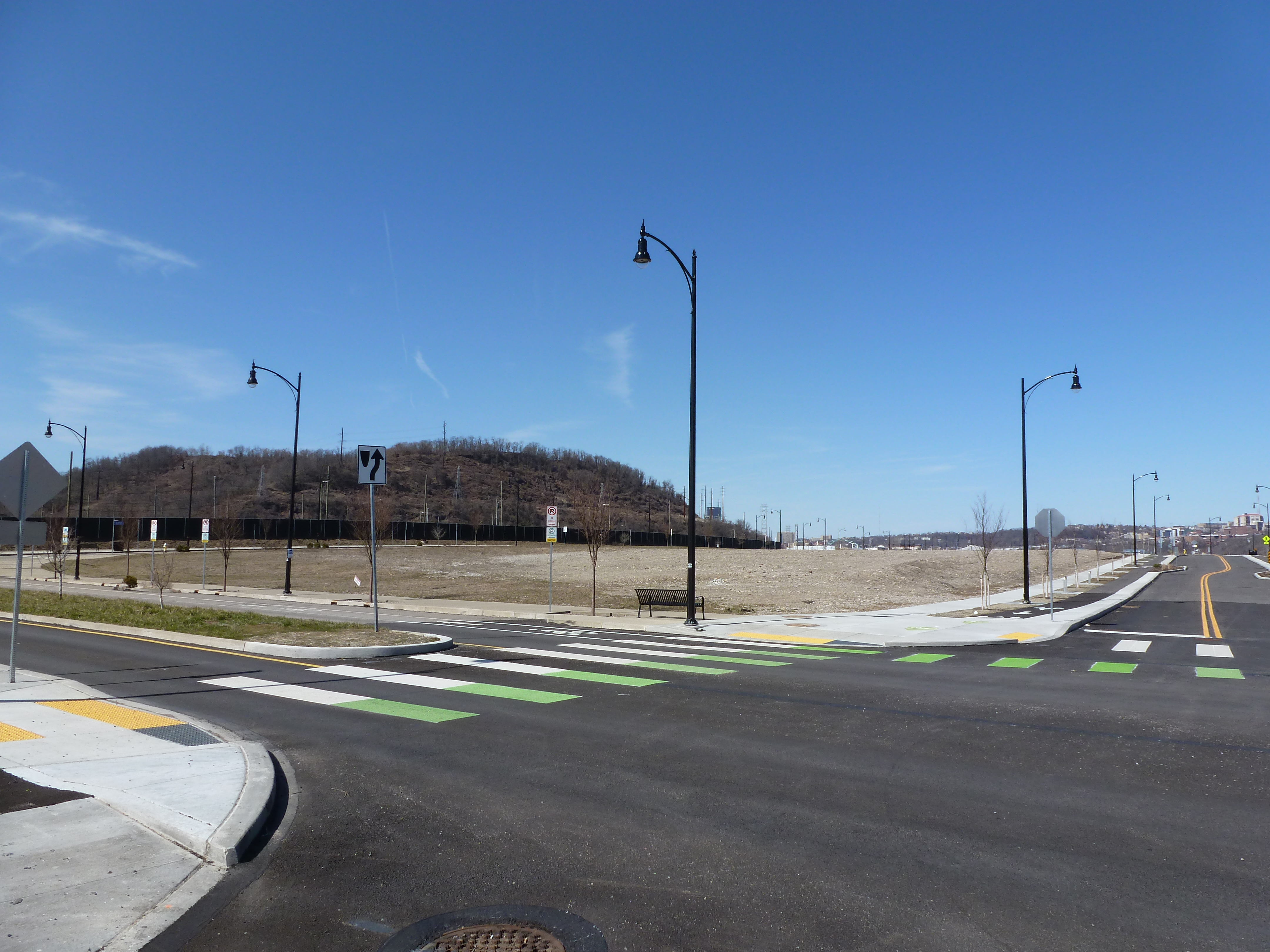

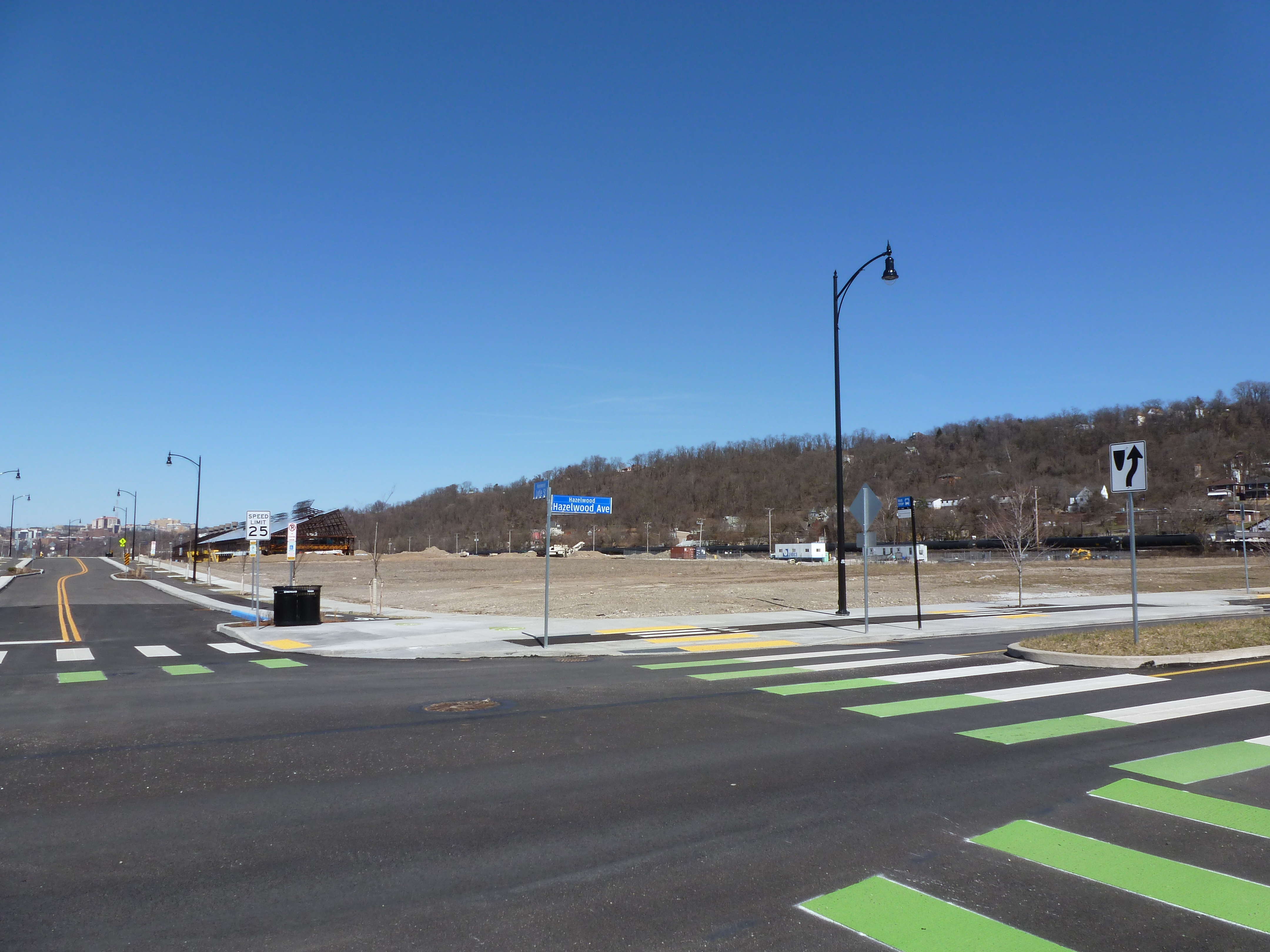
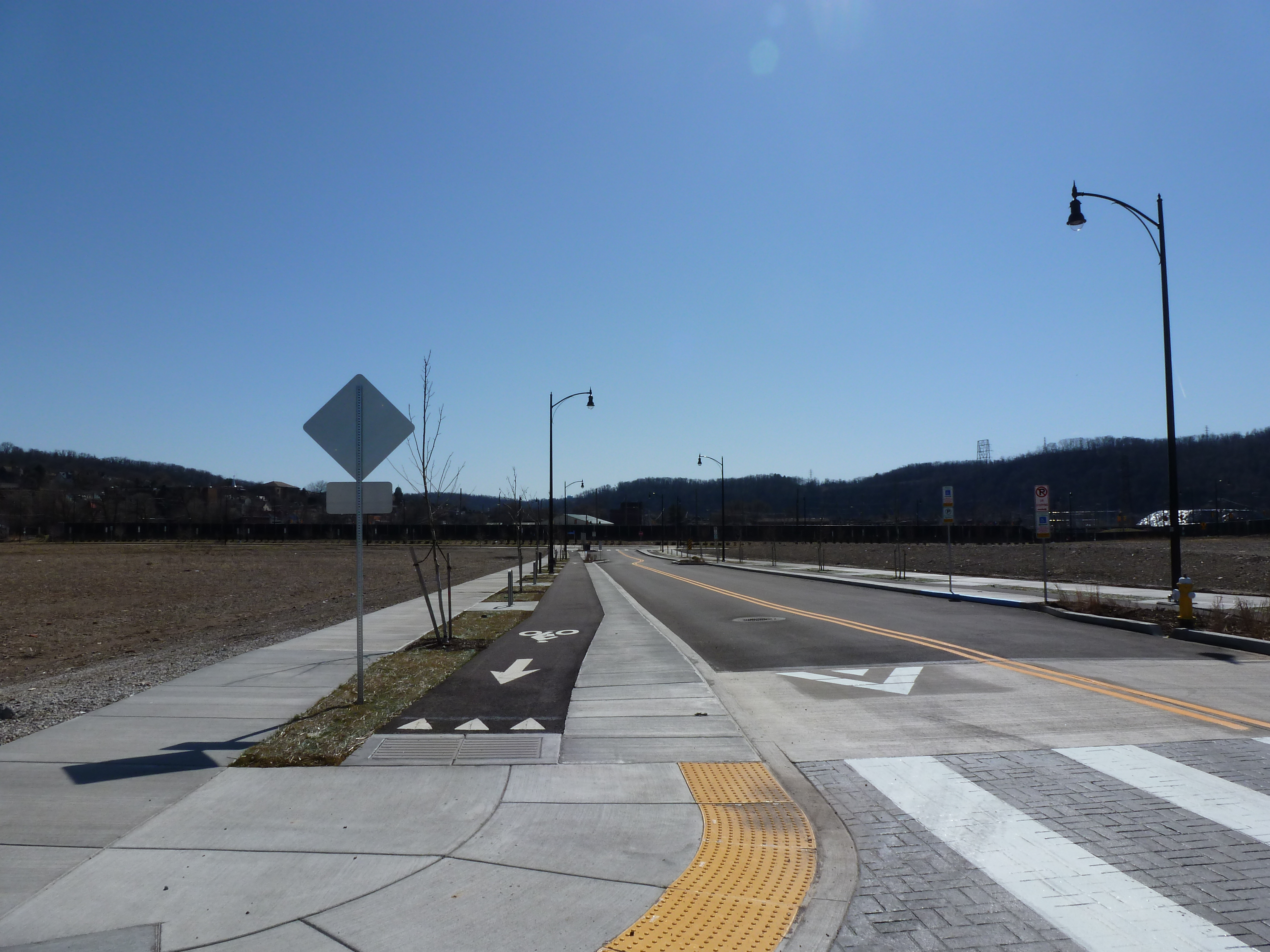
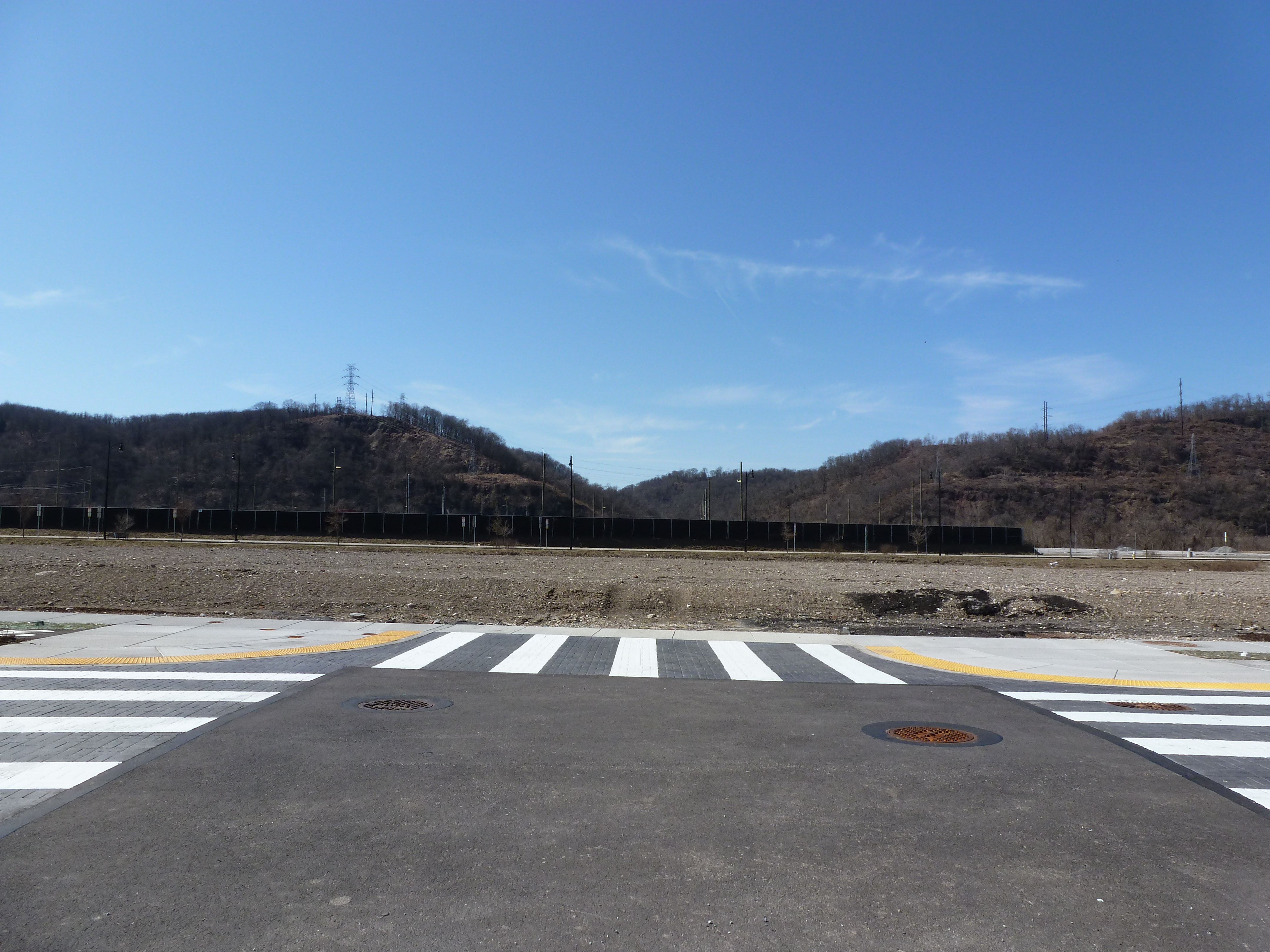

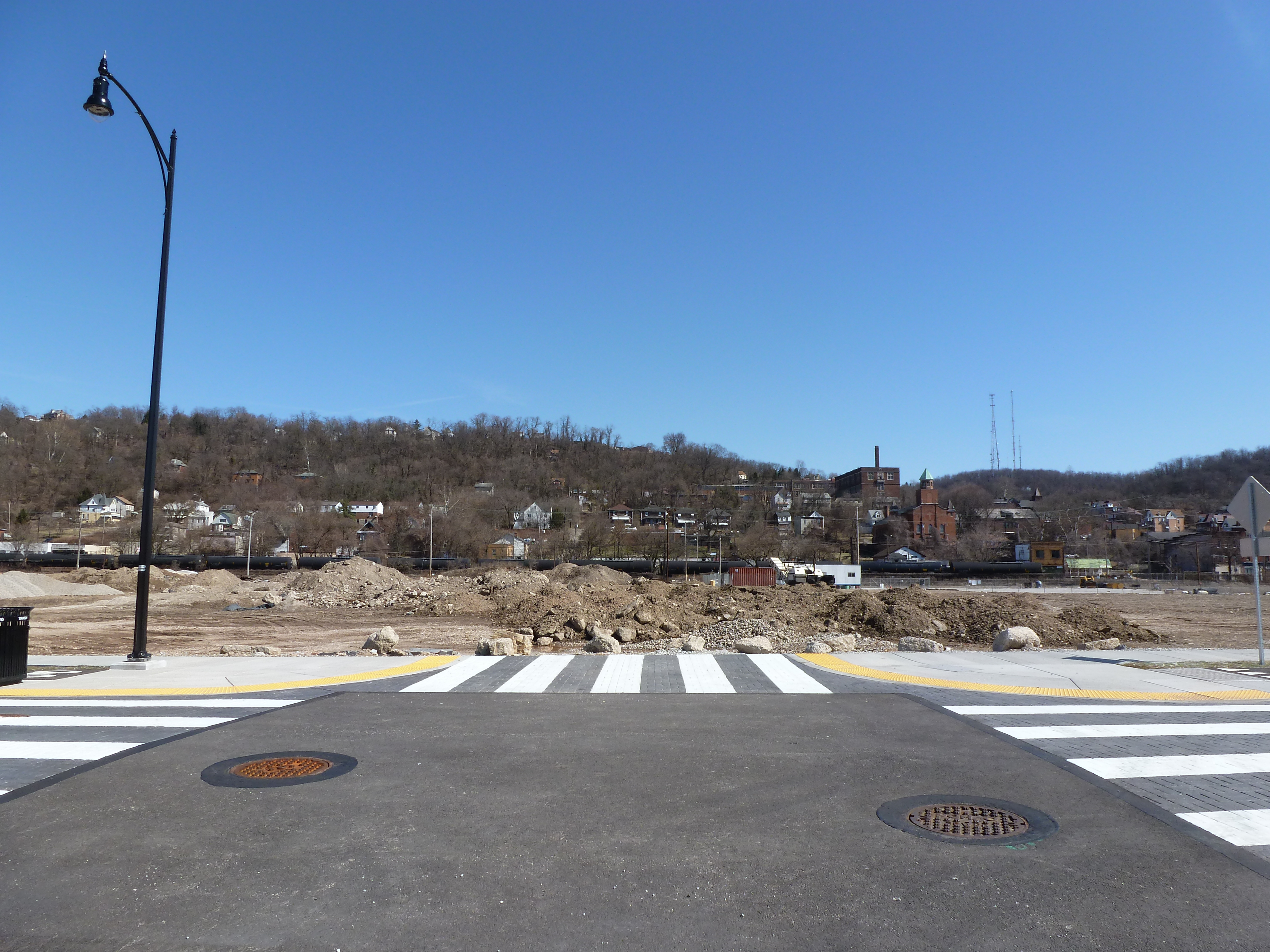

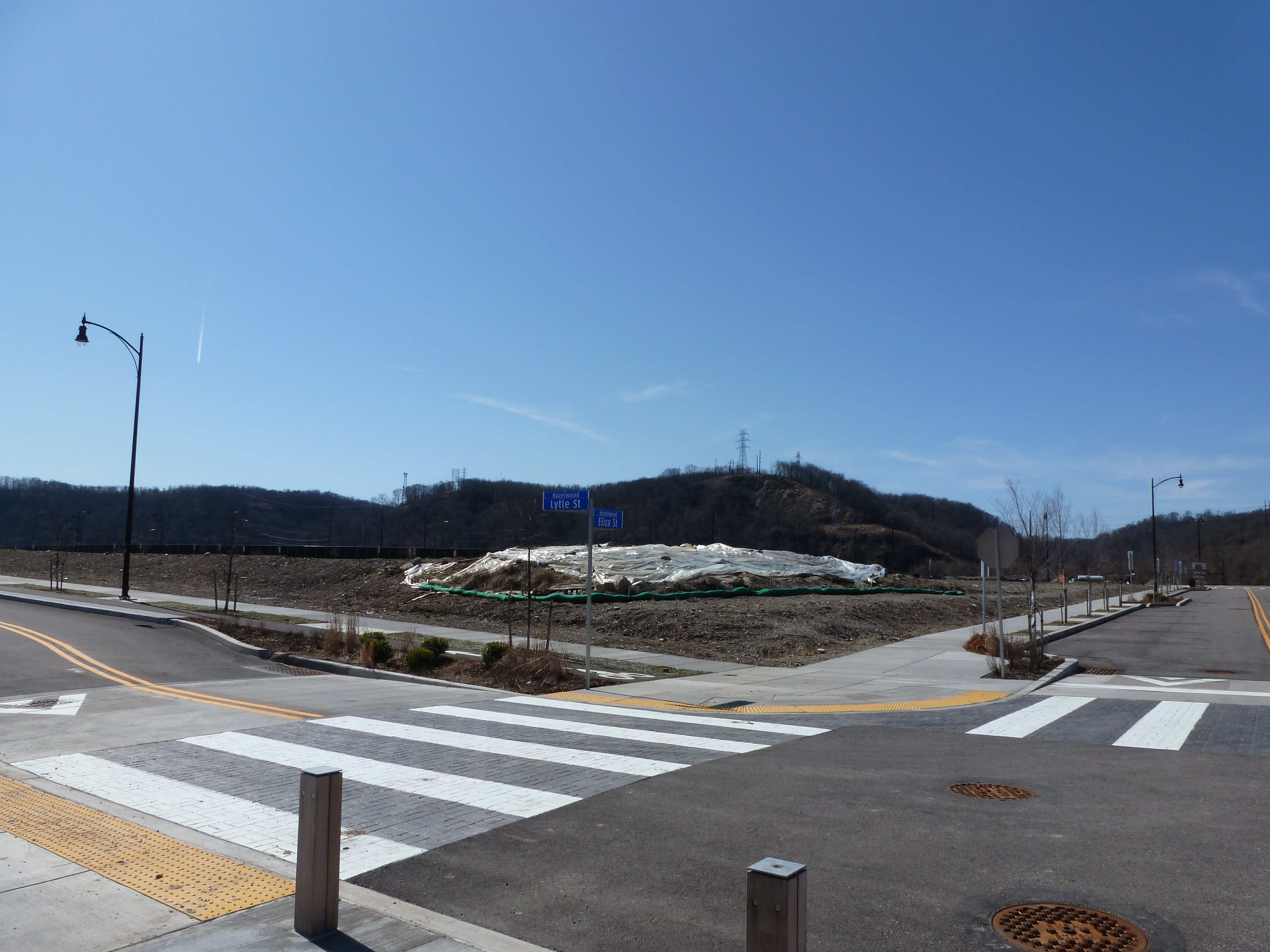


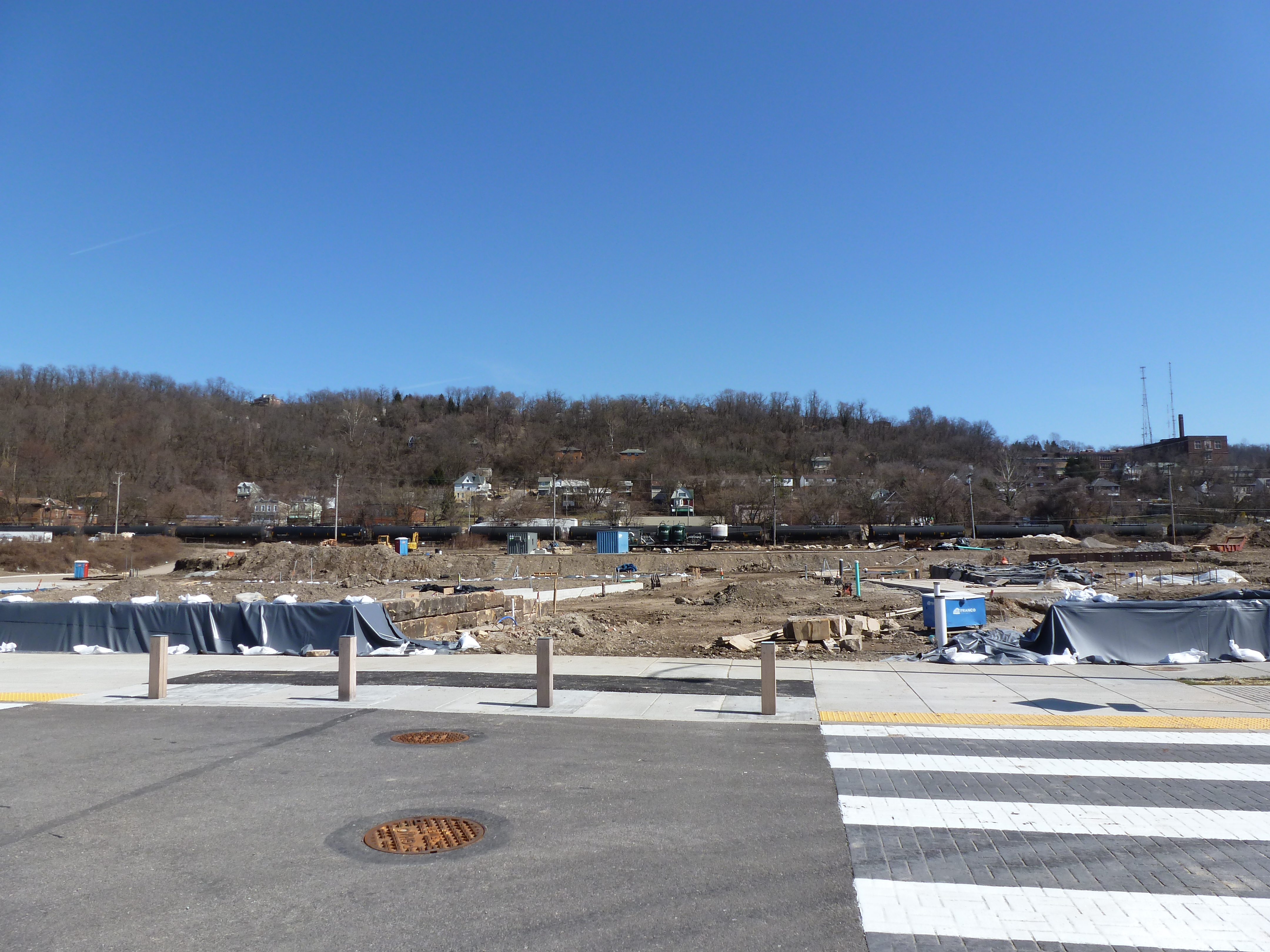
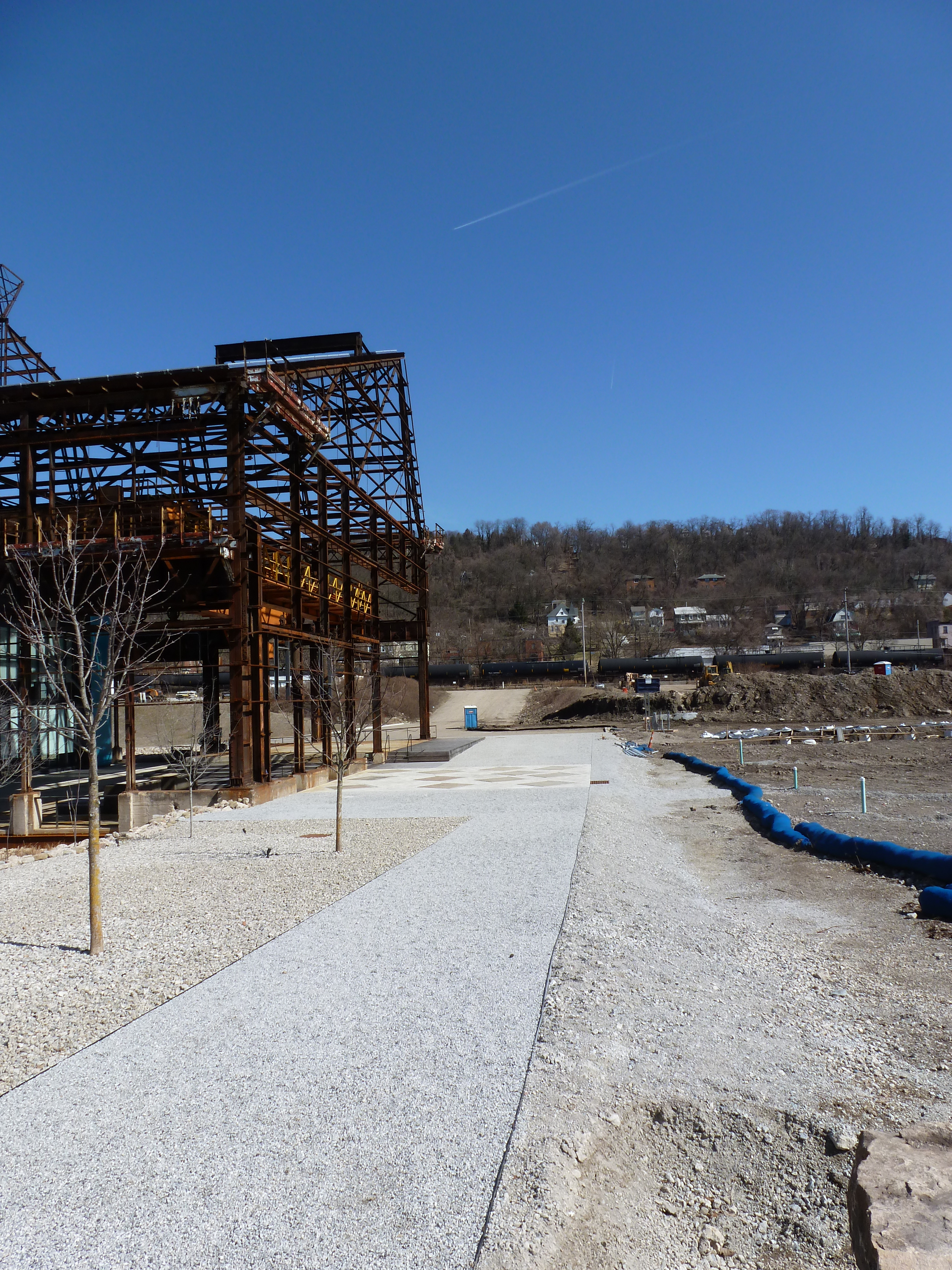
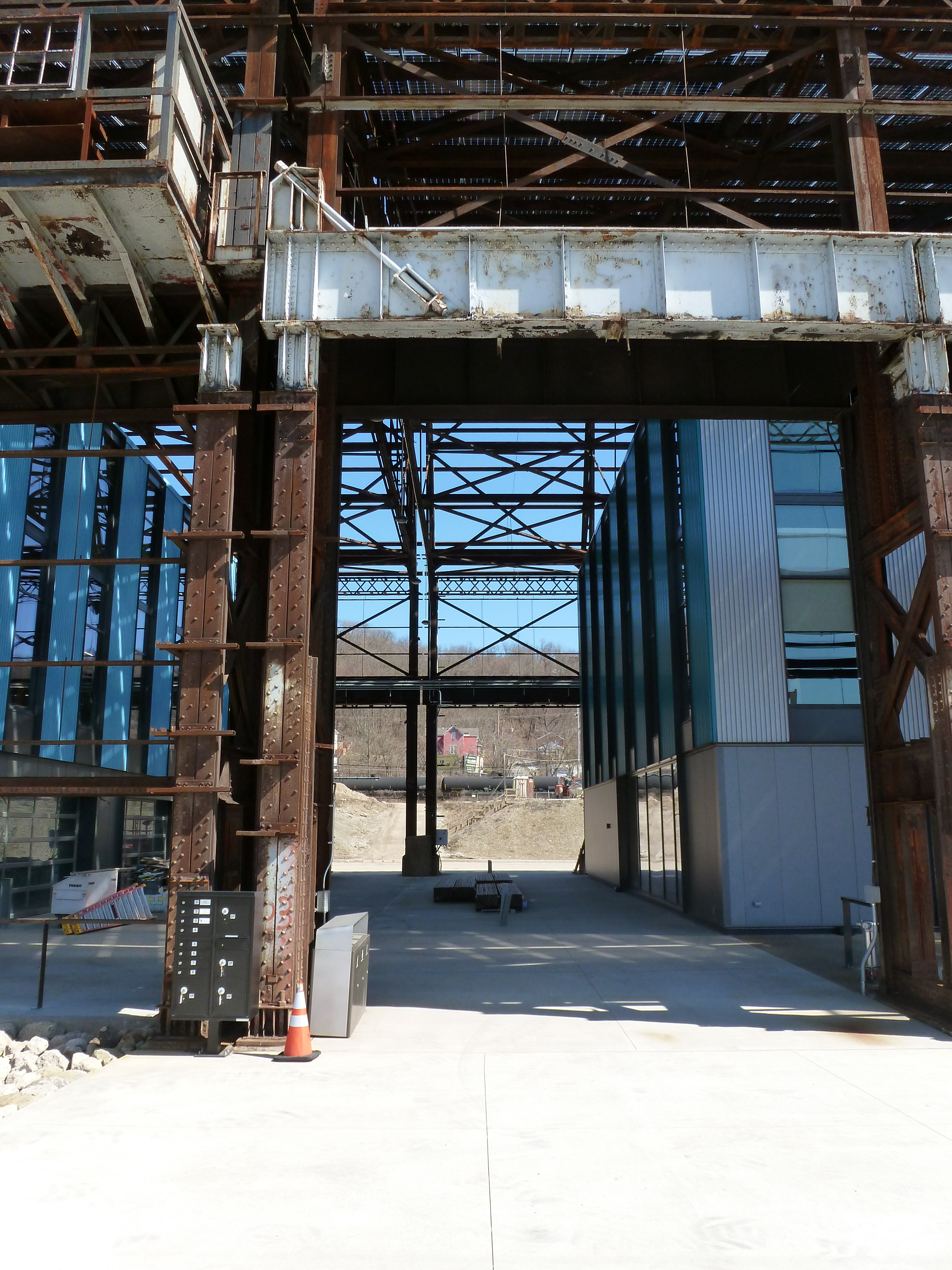
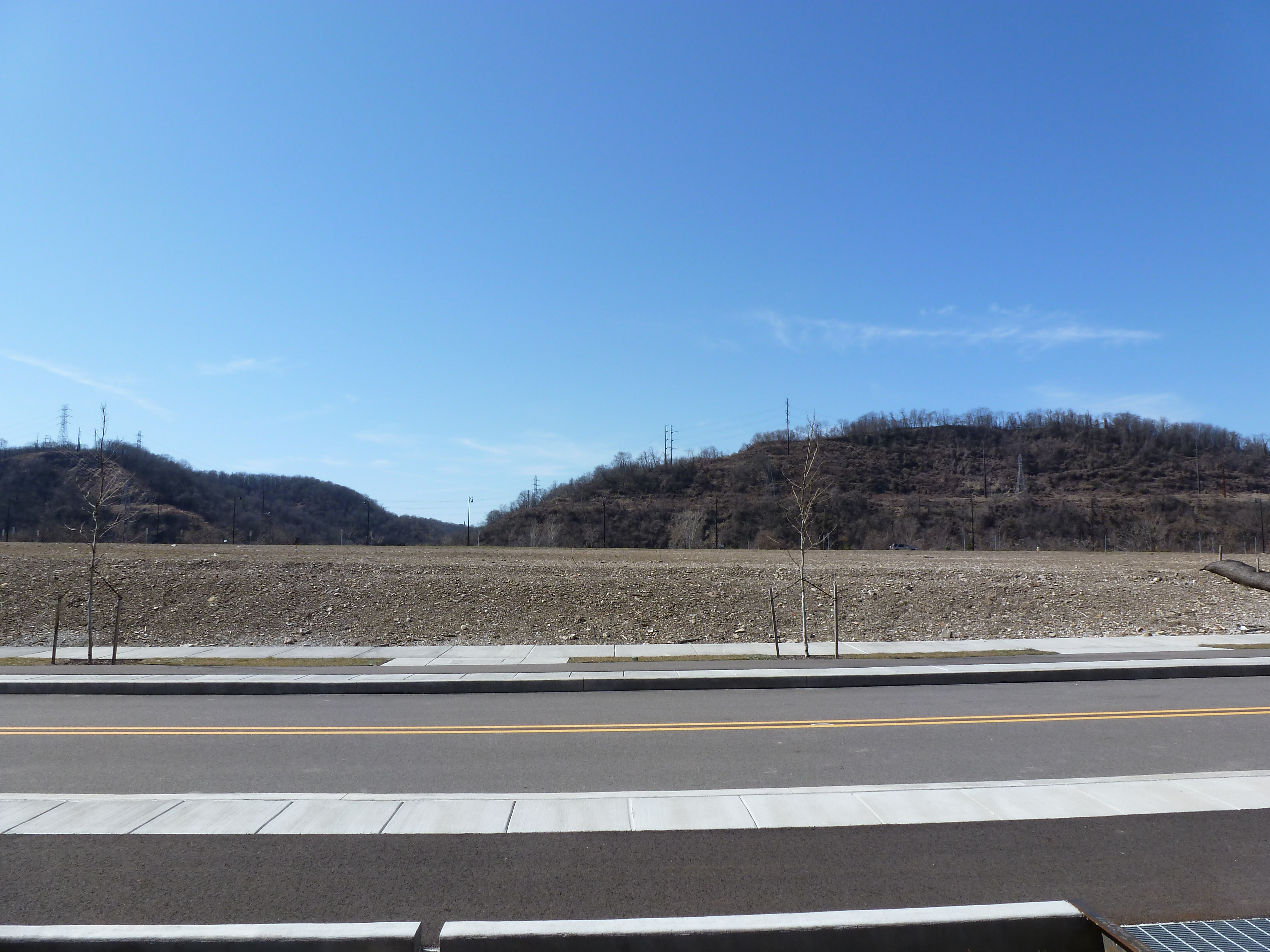

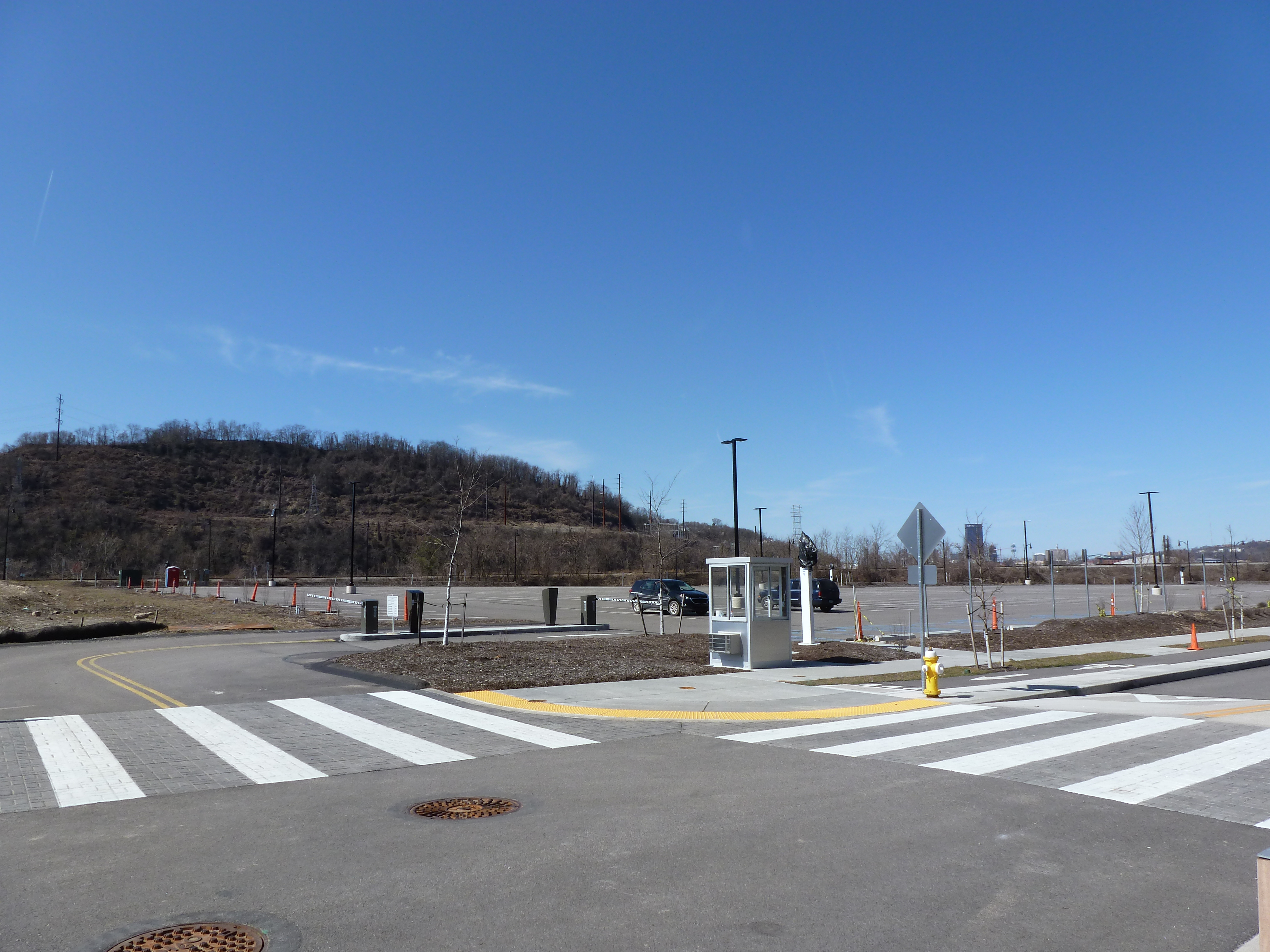


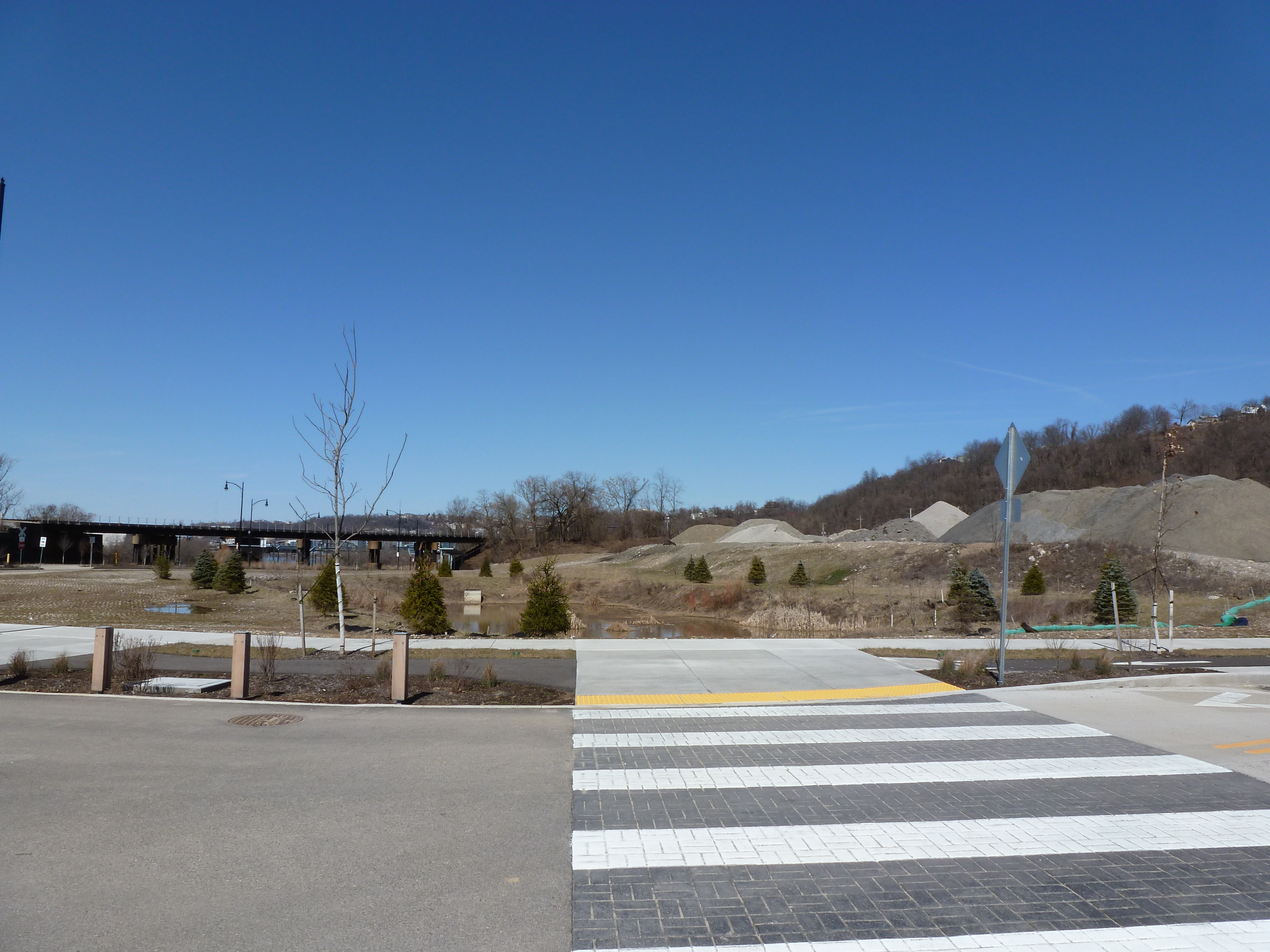
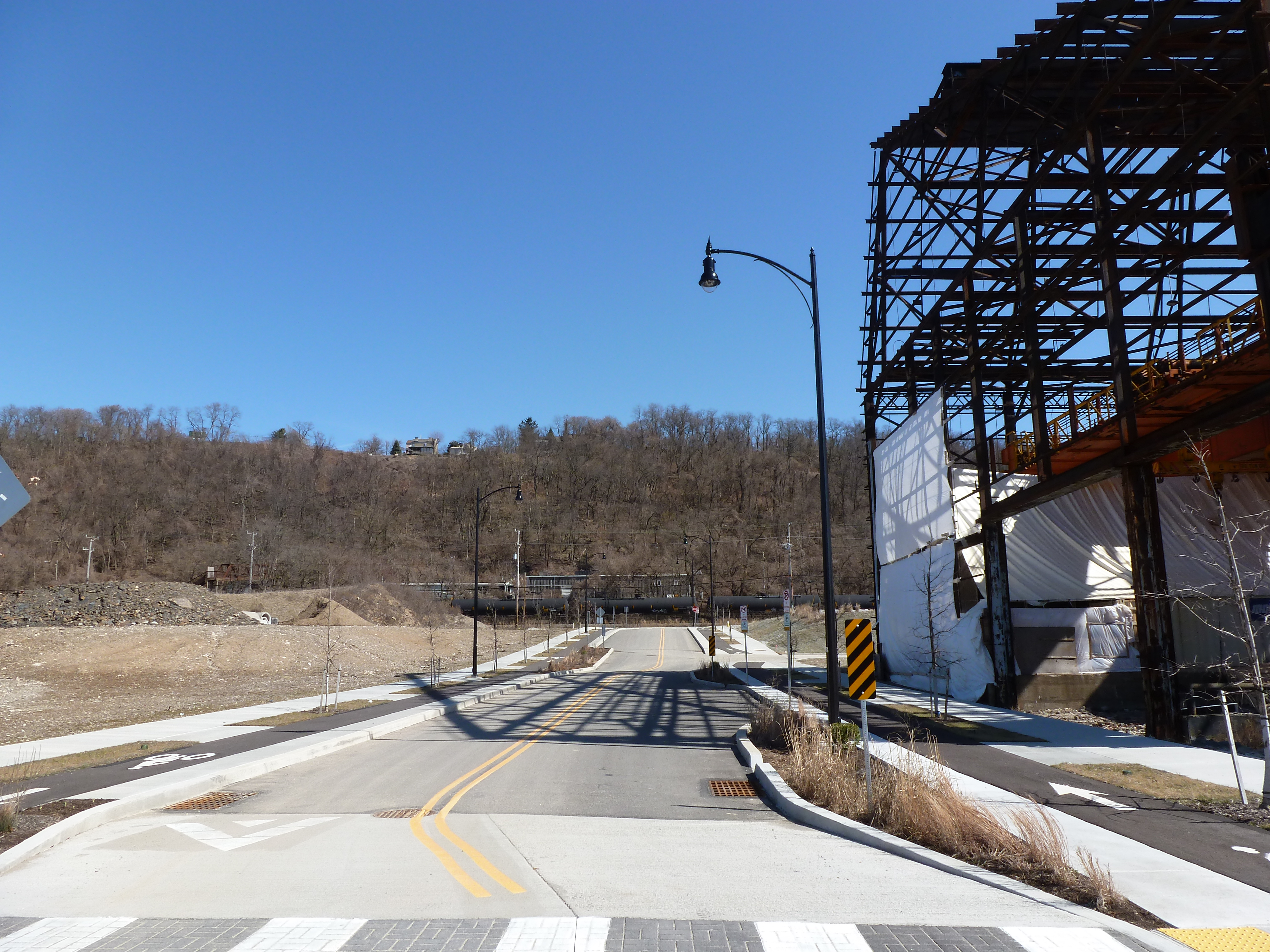
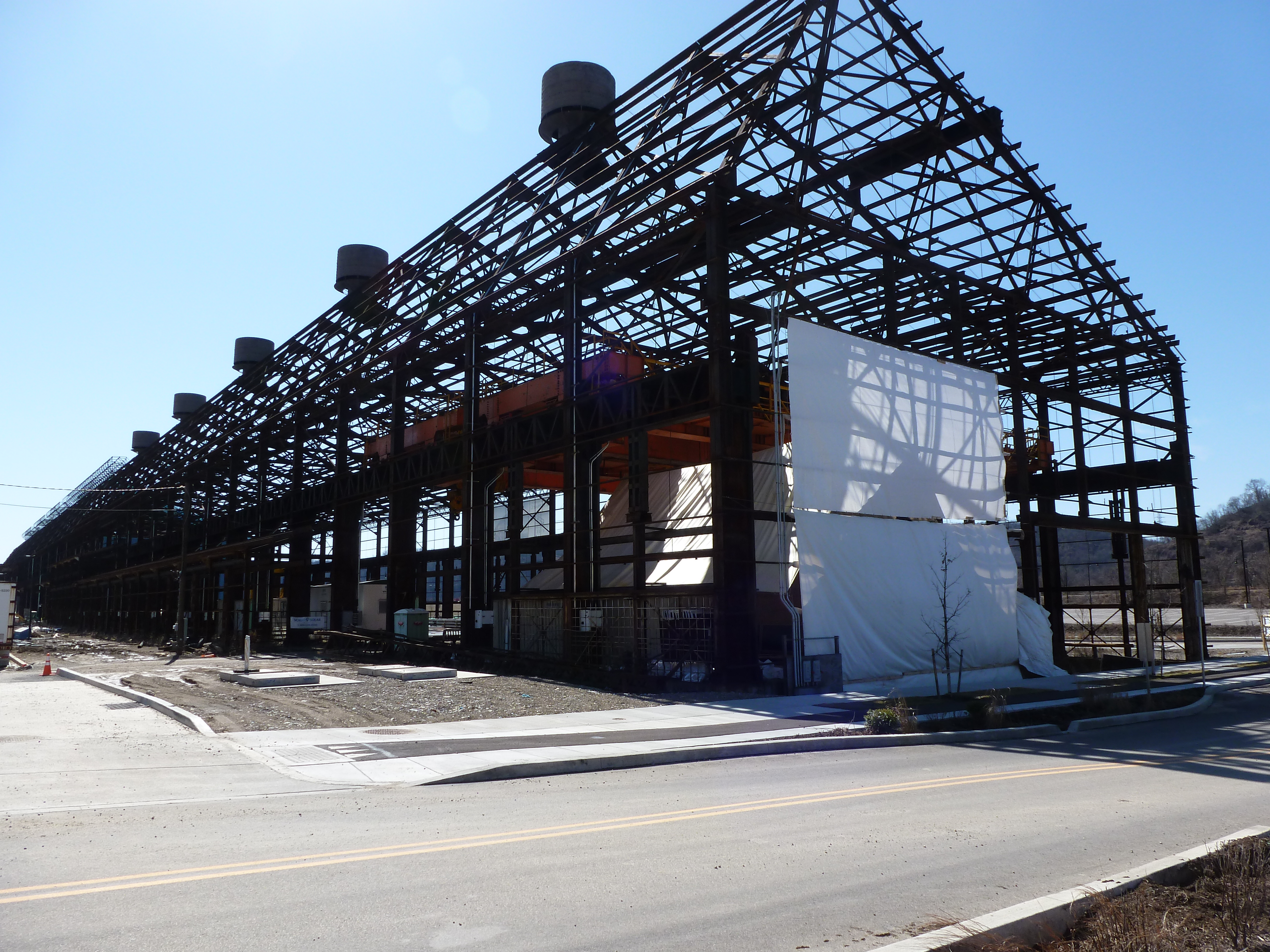


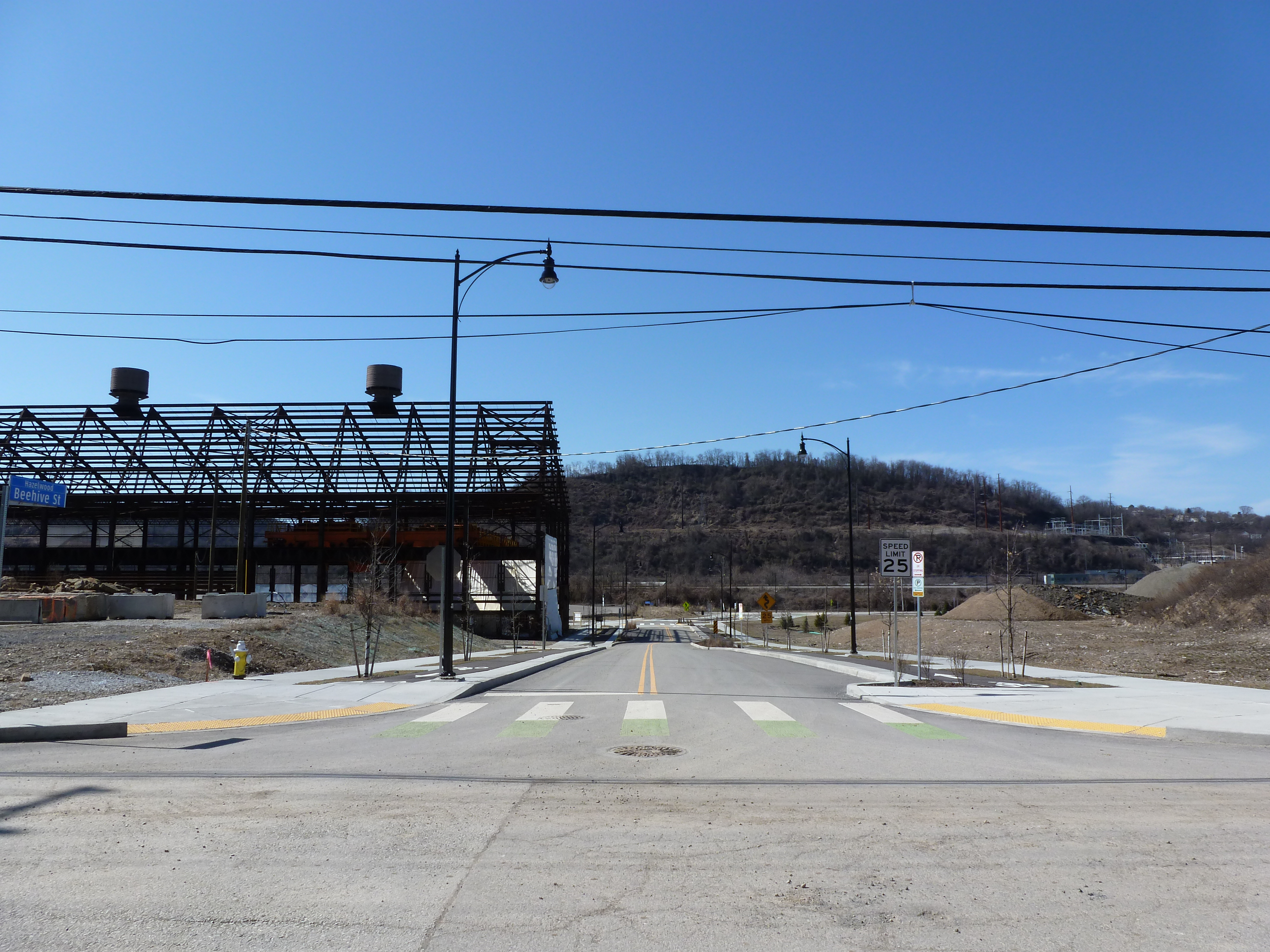
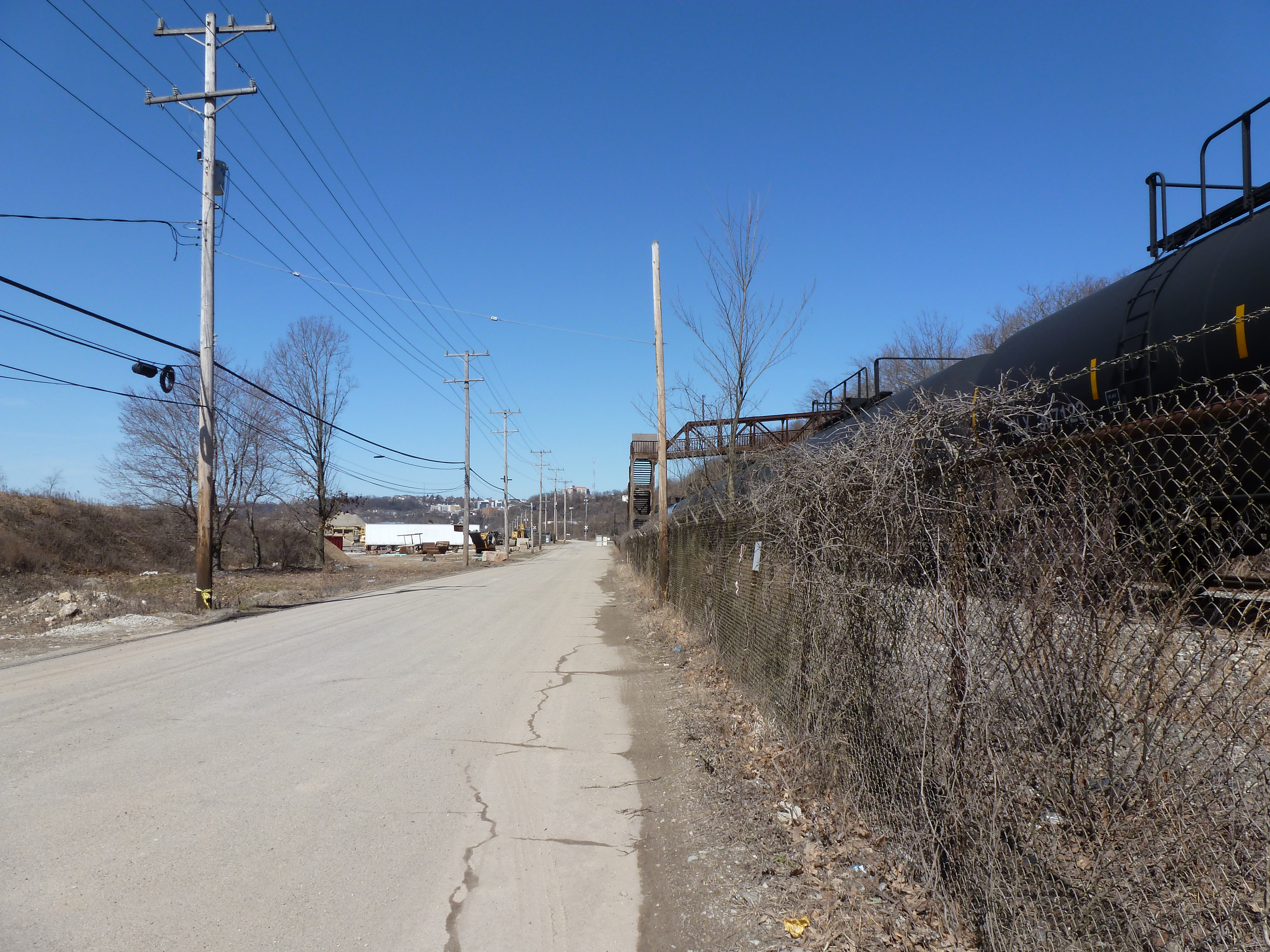
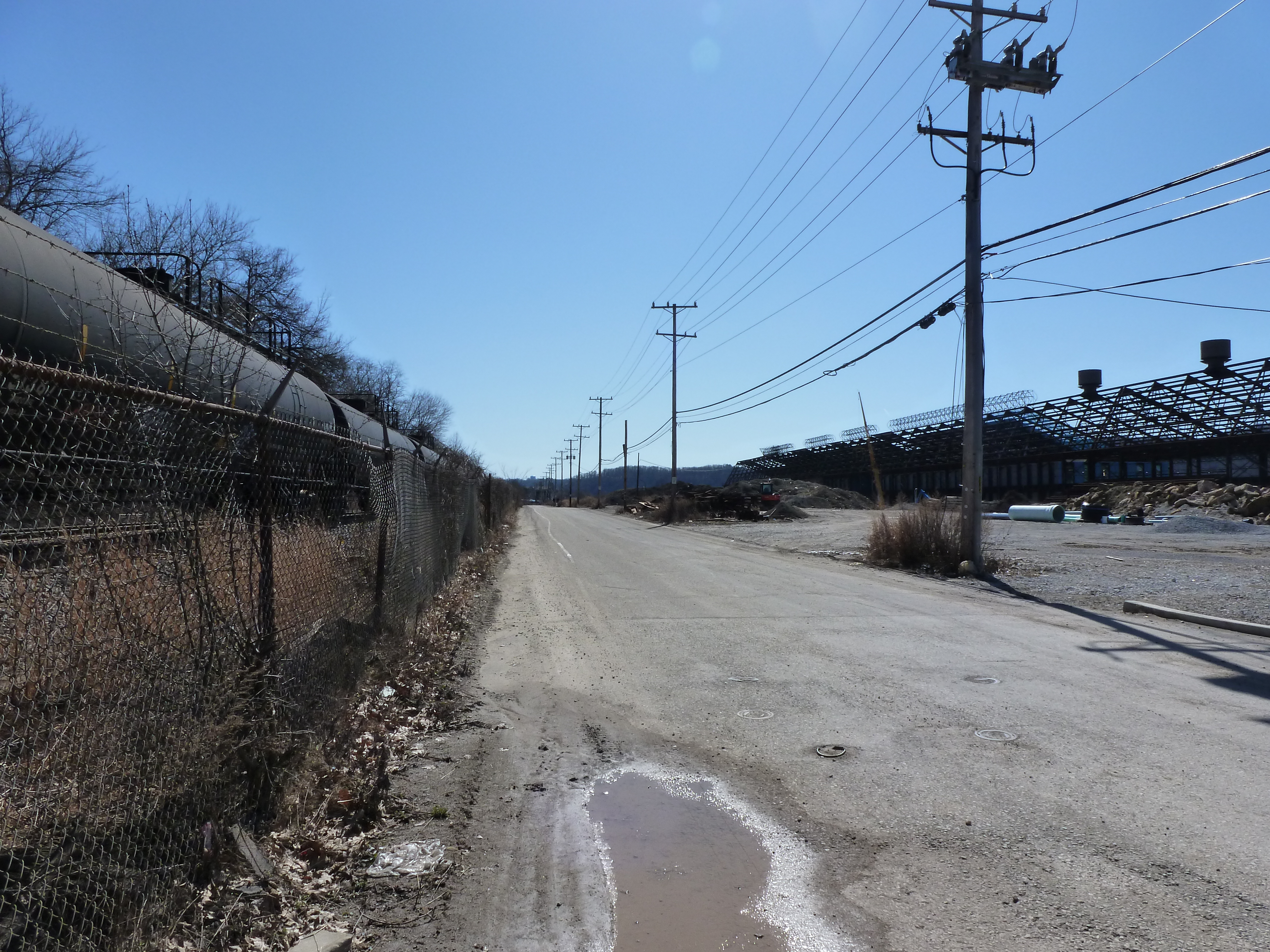
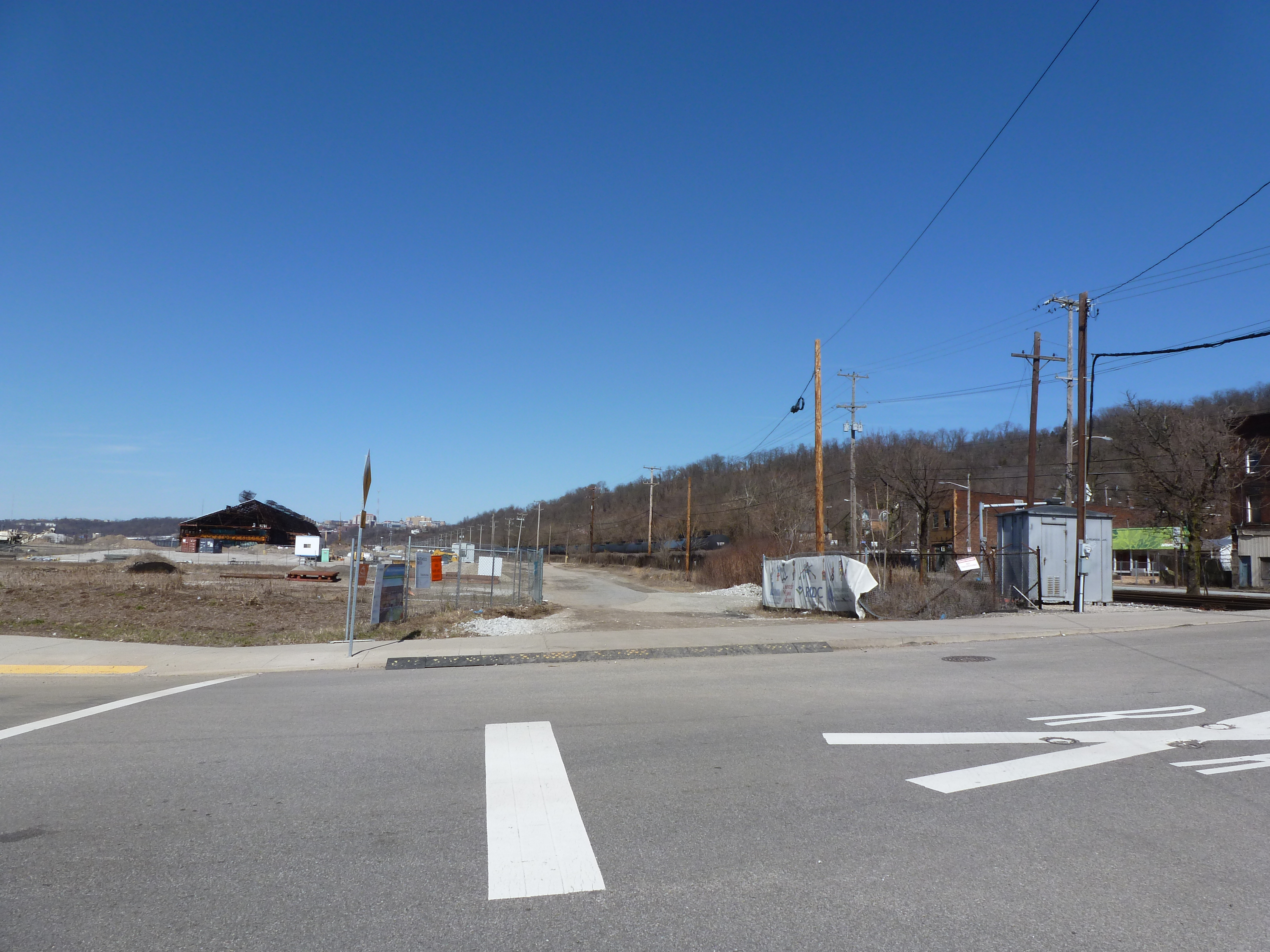
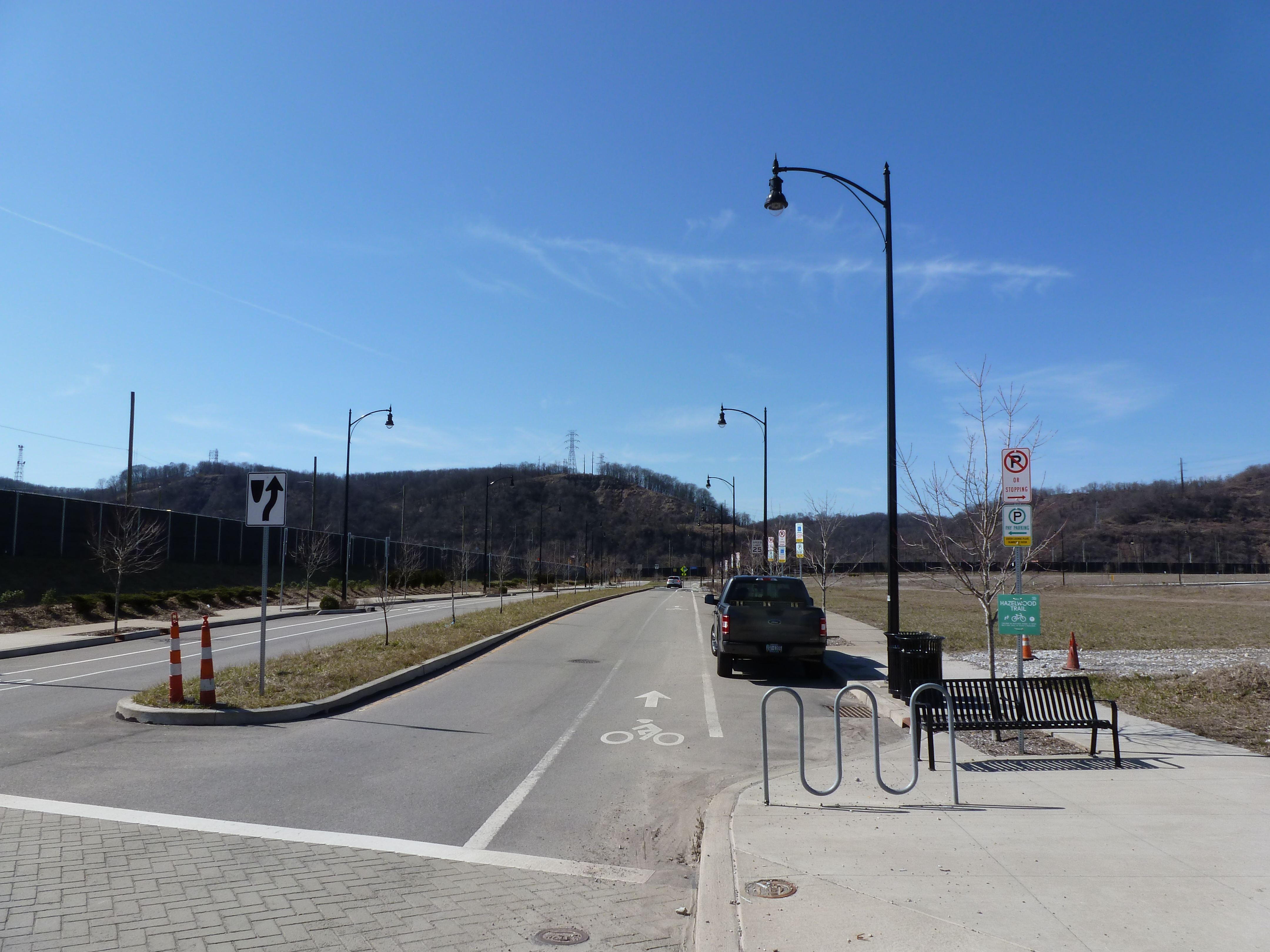
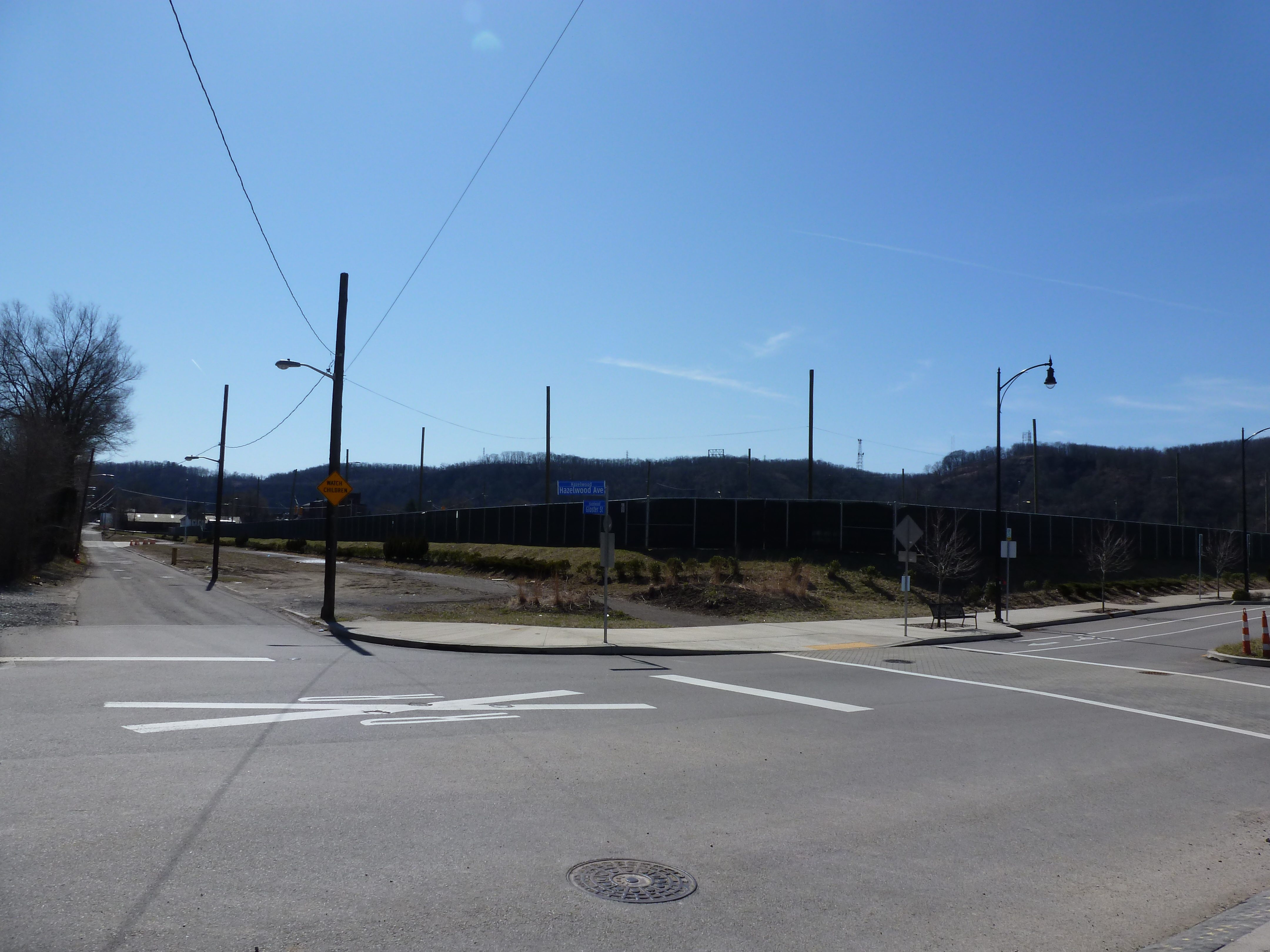

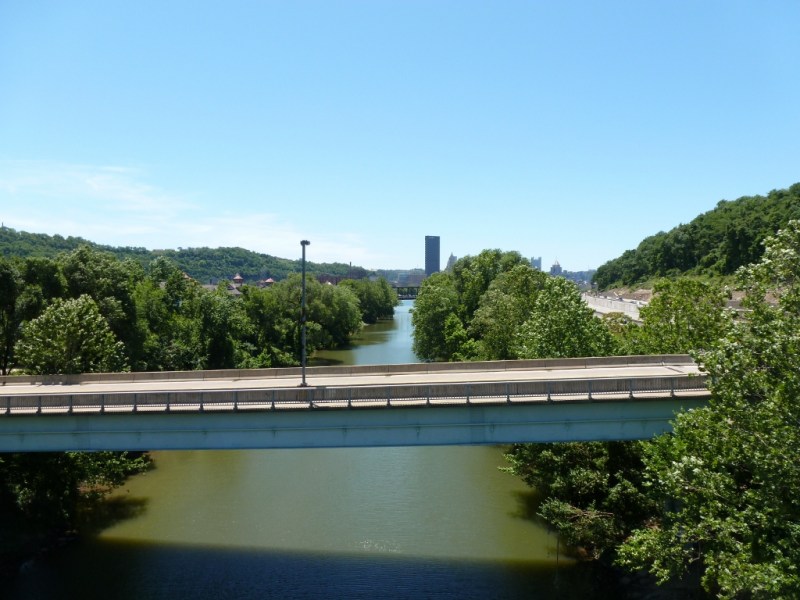
After introducing my series of Keeping an Eye on Uptown, the CAP, and the Lower Hill, I remembered that Hazelwood is another neighborhood expected to experience changes over the next several years. Between Hazelwood’s main street (2nd Avenue) and the Monongahela River is a 178-acre site of the former Jones and Laughlin Steel Company. Most of the structures from the mill have been demolished, leaving a large brownfield. In 2002, the site was purchased for redevelopment by Almono LP (at the time, an entity made up of four Pittsburgh foundations). After years of planning and a rebranding of the site as Hazelwood Green, a series of public streets and the first building opened for use in 2019. Construction is underway for more buildings and a public plaza.
During the planning and preparation stages, a question arose as to the effects of this redevelopment on the surrounding neighborhood. Hazelwood is one of Pittsburgh’s neighborhoods that has experienced high vacancy rates and subsequent demolition in its residential and business districts. While the building stock of the neighborhood has experienced a long downward trend, the community of people is strong. Only time will tell if the redevelopment of Hazelwood Green will connect with this community or if Hazelwood Green will become and isolated spot of prosperity for others.
Through two more photographic series, Keeping an Eye on Hazelwood Green and Keeping an Eye on Hazelwood, I will periodically document the physical changes to the former steel mill site and to the surrounding neighborhood.

A deep, full-bodied gong expanded through the small basement of the Zion Reformed Church in Allentown, PA, after the docent tapped the clapper against the replica Liberty Bell. Depending on the source, the US government commissioned 53 or 57 replica Liberty Bells from a French company in the 1950s. One was kept in France and the rest were distributed to each of the US states and territories. Most were put on display somewhere in the State Capitals. Pennsylvania was one of the exceptions.
During the Revolutionary War, the Liberty Bell and other bells from Philadelphia were hidden in the Zion Reformed Church’s basement in Allentown to protect them from the British troops. Now the basement is a museum to the Liberty Bell, featuring Pennsylvania’s replica bell along with artifacts from the Revolutionary War. The replica bell is whole with the famous crack depicted by a line drawn with a Sharpie marker. As a result, there isn’t the concern that ringing the bell will worsen the crack and perhaps split the bell in two as there is with the original. Still the docent must tap the bell very gently in demonstrations as it was designed to be heard 20 miles away. In the small basement, the full sound could cause auditory damage.
Most days in Pittsburgh, I can hear the neighborhood Catholic church bell chime the hours. Under the right weather conditions, I can hear a church bell from another neighborhood. The Catholic church is within a mile of my house. The other church is up to 2 miles away. Though I don’t subscribe to any organized religion, hearing these bells gives me a feeling that I am part of a community. The bells of the Allegheny County Courthouse downtown inspire a similar feeling of belonging when they ring at noon and 5:00 pm. These sounds create a shared experience between me and all the other people within earshot of the ringing bell.
The difference in capacity of the Liberty Bell and the bell of the local Catholic church reflects the style of living at the time they were established. In the days of the Liberty Bell, most of the country was agrarian with people spread out on farms often at least 20 miles away from the nearest town or hamlet. Fast forward to the 1910s, when the local Catholic church was established in a growing, dense urban environment. Most parishioners lived in the same neighborhood as their church, not more than a mile or two away. Today, in post-suburbanization US, people live in different neighborhoods or even towns from where they worship or work. In such a world, there isn’t one civic or religious institution that everyone within earshot subscribes to. I am glad to live in a neighborhood where there still is a bell to remind us every so often to look up from our digital devices to see and hear the world immediately in front of us.
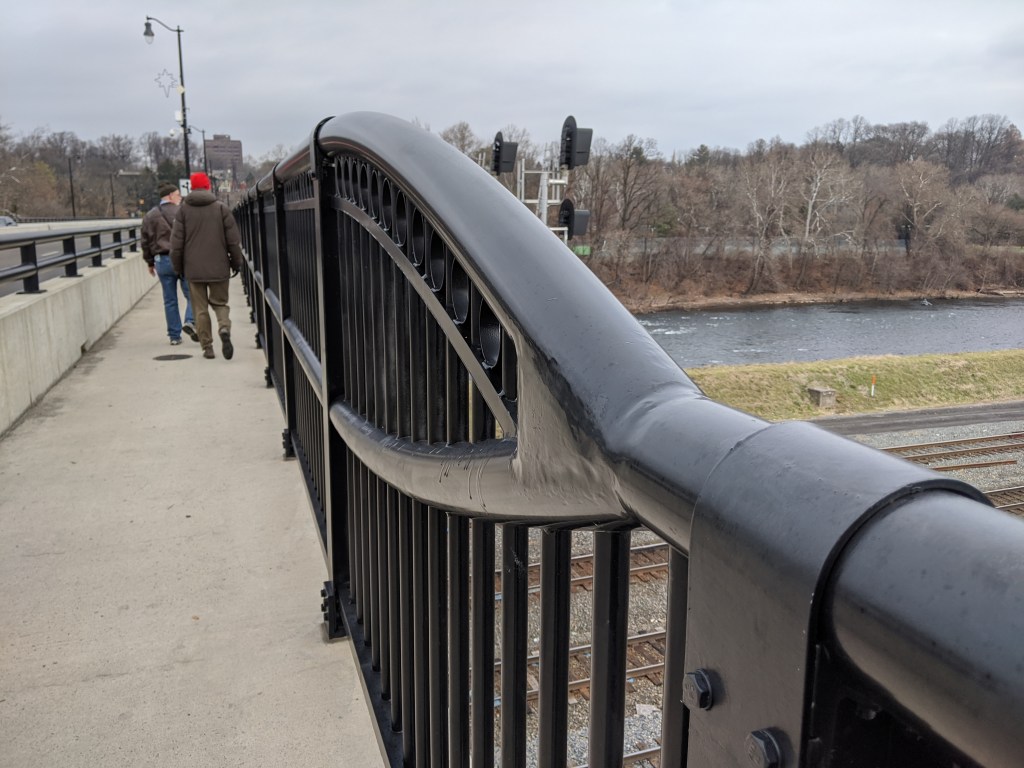
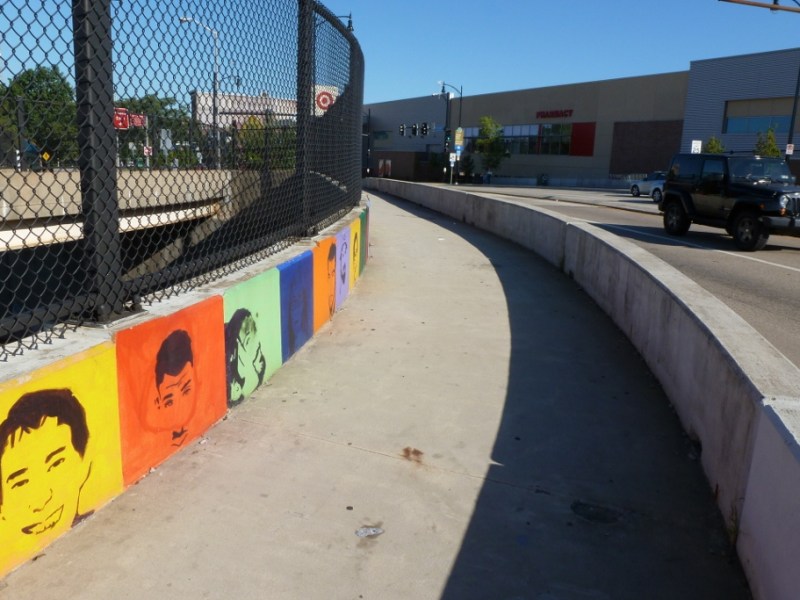
The summer I spent walking Pittsburgh bridges, I complained about the cages on the Millvale Avenue Bridge, the Highland Park Bridge, and the Graham Street pedestrian bridge. The narrow sidewalk and chain link fences on the first two examples and the chain link cage on the third example made me feel yucky and claustrophobic. Thanks to one of my blog followers, I recently learned that people tend to throw things onto moving objects, which is why bridges like the Millvale bridge have higher fencing along portions over roads and railroads. I still wished there was a cage-free option to meet the same goals of the bridge builders.
In Bethlehem, PA, I found just such an option on the Fahy Bridge. It is a fairly plain concrete bridge saved from the ugliness and gloom of many concrete bridges by using a functional, yet decorative, railing instead of the more common functional, yet ugly, chain link fence. This railing was installed during the 2016-18 renovation of the Fahy Bridge. Recent bridge renovations and replacements in Pittsburgh also feature more decorative railings. While the first of these new bridges in Pittsburgh tried to dress-up a chain link fence cage, the later ones are successful cage-free bridges even when they incorporate chain link fencing.* These examples give me hope that the days of caged bridges may be a thing of the past.
*Note: I have a to-do item to go back and photograph these new bridges for future posts, but no set timeline for the completion of this task.
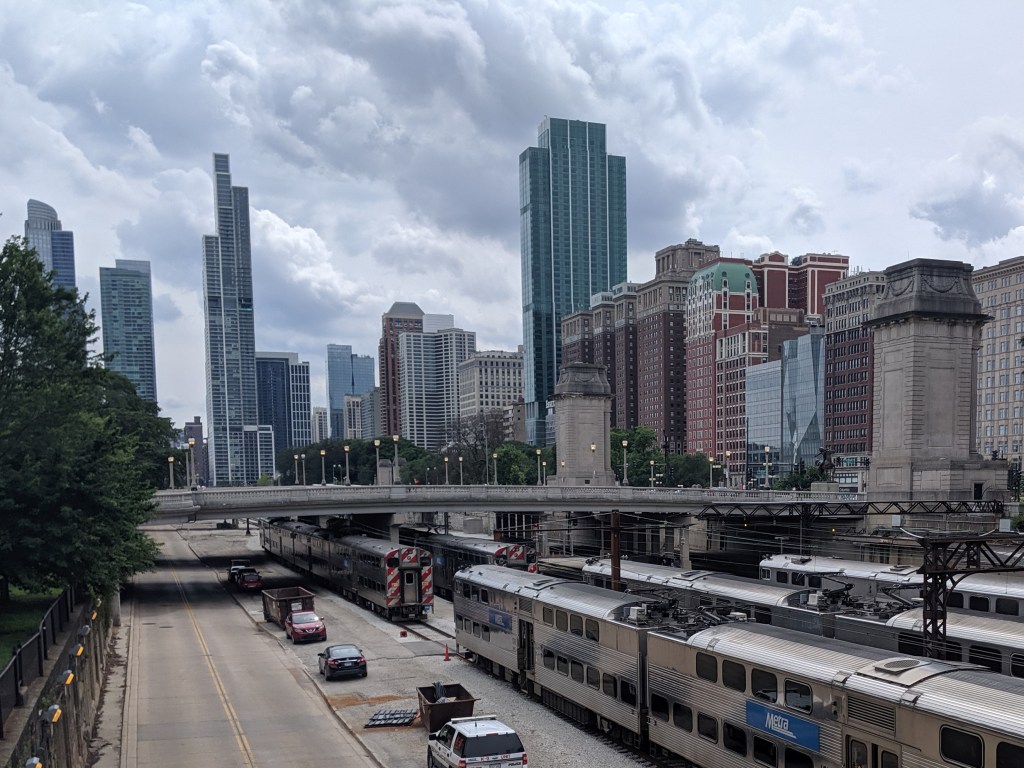
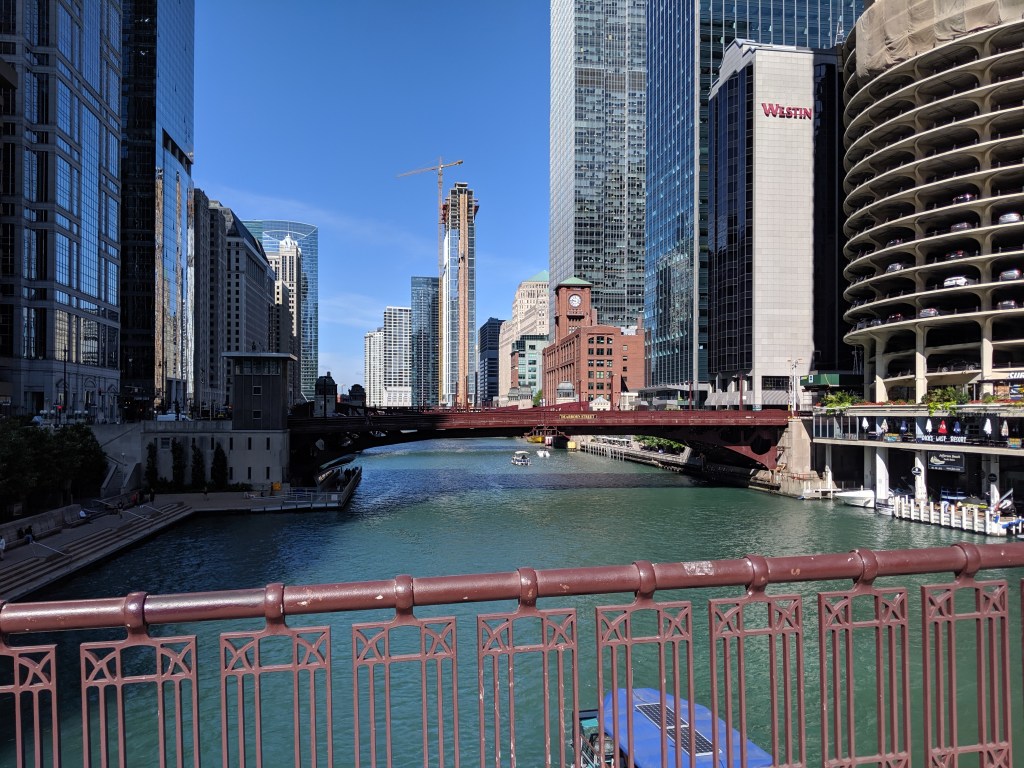
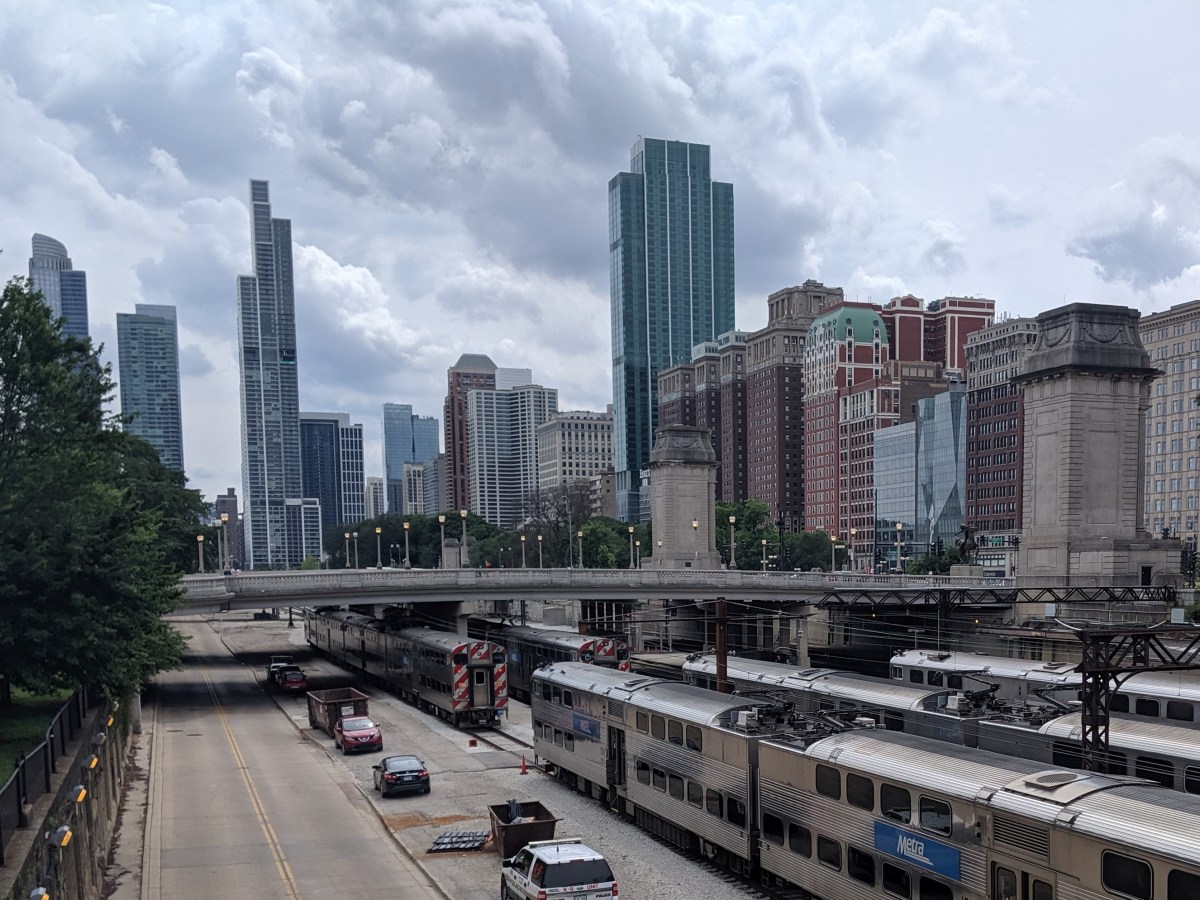
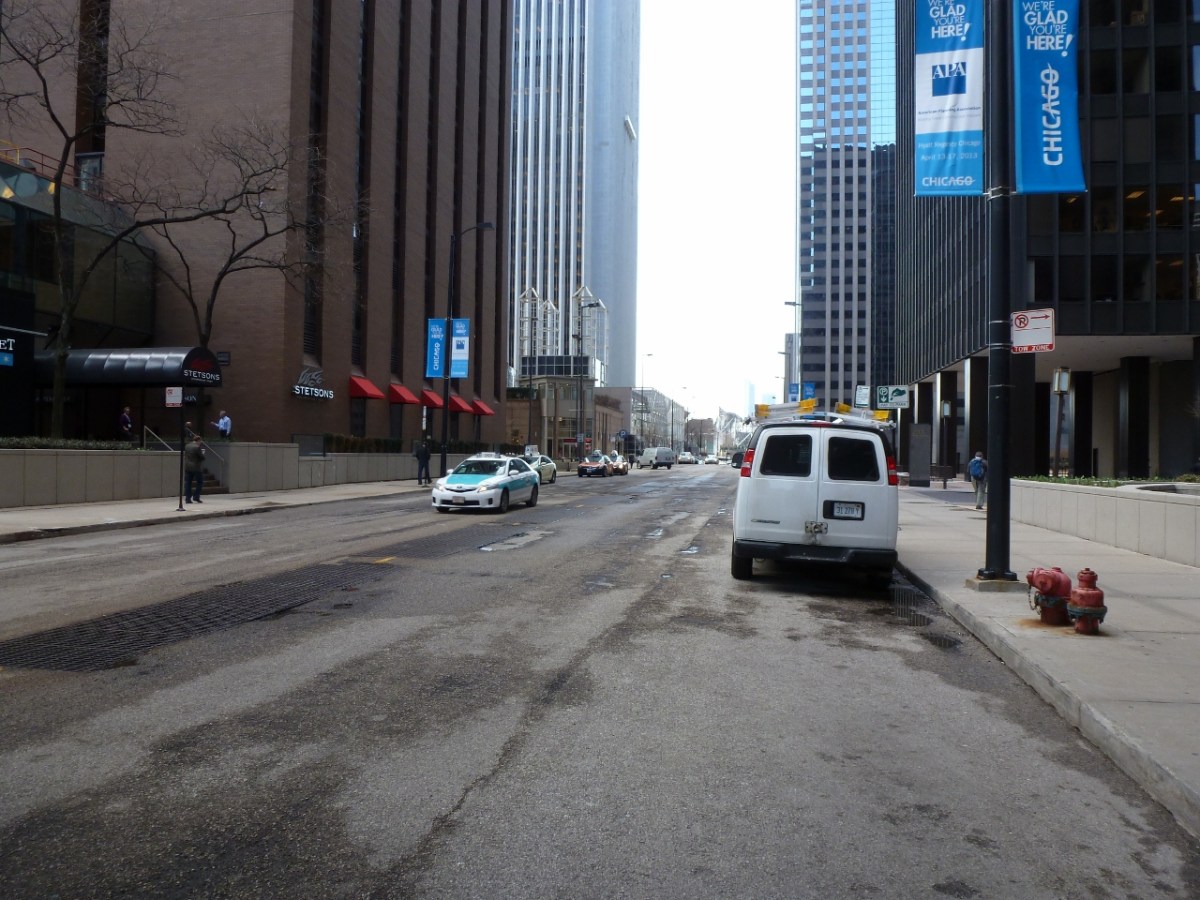
While poking around the map collection at Chicago’s Public Library, I discovered that the structures carrying roads over the railroad tracks in Grant Park are considered viaducts. The word viaduct brings to my mind a Roman structure soaring over a valley floor and conveying a flat road on top of towering stone arches. The Chicago “viaducts” do not fit that image. To me, they look like bridges with no striking difference between them and Chicago’s river bridges other than color and style of ornamentation. Both groups of structures have fairly flat roadbeds supported by piers. I am puzzled why one set of structures is called bridges and the other viaducts.
The main difference seems to be that the bridges are crossing a body of water while the viaducts are crossing an obstacle on land. This doesn’t feel like the answer, though. I’ve walked over 50 bridges in Pittsburgh, the majority of which are over land. Not one of these structures is called a viaduct. To help find clues to solve this puzzle, I looked up the definitions of bridge and viaduct.
Merriam-Webster’s definitions are not much help:
Viaduct: a long elevated roadway usually consisting of a series of short spans supported by arches, piers, or columns
Bridge: a structure carrying a pathway or roadway over a depression or obstacle
The Oxford English Dictionary has similar definitions:
Viaduct: an elevated structure consisting of a series of arches or spans, by means of which a railroad or road is carried over a valley, road, river, or marshy low-lying ground
Bridge: a structure forming or carrying a road, path, or (in later use) a railroad, etc., which spans a body of water, a roadway, a valley, or some other obstacle or gap, and allows a person or vehicle to pass unimpeded over or across it
Based on these definitions, the features that seem to distinguish a viaduct from a bridge are elevation and short spans. This still doesn’t help solve the question of why the Grant Park structures are viaducts and the Chicago River structures are bridges.
Next, I turned to “How to Read Bridges” by Edward Denison and Ian Stewart. The glossary defines viaduct as “a type of bridge over land formed by a series of small (usually arched) spans.” This definition seems to work best for the viaducts in Chicago. They are over land and have a series of spans, though the spans are not arched.
To further develop my understanding, I paged through the nine examples of viaducts in “How to Read Bridges.” All nine examples are elevated (such as the 330-foot high Goltzsch Viaduct and the 407-foot high Garabit Viaduct) and have multiple arches or piers (such as the 21-arch Glenfinnan Viaduct, the 8-arch Wharncliffe Viaduct, and the 5-pier Busseau Sur Grusse Viaduct). All, but one, have no support system above the road deck. The exception is the Millau Viaduct, which uses a cable-stayed deck on top of seven piers that range from 253 feet to 800 feet tall. All, but one, are over land. The Garabit Viaduct spans the Truyère Valley and one-third of its length crosses the Truyère River. In another example, the approaches to the Cubzac-les-Ponts over the River Dordogne are considered viaducts, but it is a bridge that crosses the river.
I find myself again at a loss. While the definition in this book seems to work for the Chicago viaducts, the examples do not look like the Chicago structures. To help the Chicago viaducts fit in, I propose a new definition built from the three definitions and nine examples above:
Viaduct: an elevated roadway, supported by many arches or piers over land.
Yet, there are exceptions to every rule. The nine examples in “How to Read Bridges” include exceptions to the support system of the viaduct and to the obstacle spanned by a viaduct. Expanding upon this, the Chicago viaducts, which are supported by multiple piers over land, become the exception to the elevated part of the rule or definition.
My biggest take away is that it is no easier to define a viaduct than it is to define a bridge. In most cases, as with bridges, a viaduct is something you know when you see it, even if you cannot define it. However, sometimes it takes a label or a sign, such as the maps of Chicago’s viaducts and, prior to its restoration, the maps of Heth’s Run Bridge, to know what you are seeing.


Lower Hill Redevelopment in the news:
October 8, 2019, Post-Gazette: Lacing the skates: Former Civic Arena redevelopment may be ready to roll
October 9, 2019, Post-Gazette: First wave of ex-Civic Arena site redevelopment would add garage, music and maybe money for Hill projects
October 10, 2019, KDKA: Urban Redevelopment Authority To Vote On Civic Arena Site Plans
October 10, 2019, Tribune-Review: Pittsburgh redevelopment authority postpones vote on construction at Civic Arena site
October 18, 2019, Tribune-Review: Pittsburgh authority gives preliminary OK for development of former Civic Arena site
October 18, 2019, WESA: URA Vote Sets the Stage for Lower Hill Development in Spring 2020
October 18, 2019, WPXI: City board green lights former Civic Arena site redevelopment
October 21, 2019, Arena Digest: Civic Arena Redevelopment Plan Moves Forward
Lower Hill Redevelopment project sites:
Sports and Exhibition Authority
The near fail of the Leaning Marina Tower of Chicago left me determined to prove that brownies could successfully be used to create an Architectural Dessert Masterpiece. All I needed was a subject.
Looking back on 2019, the most significant architectural moment for me was the fire of Notre Dame Cathedral. I felt gratitude that I had the opportunity in 2005 to see inside the cathedral from the vantage point of the organ loft; disappointment that all I really remember from the experience was how dark it was; curiosity about what they would do with the remaining structure (perhaps put a glass roof on it to increase the light?); and amazement that neither the cathedral nor Paris had experienced any major fires before in their centuries of existence.
The Great Fire of London in the 17th Century cleared the way for the construction of St. Paul’s Cathedral. One third of Pittsburgh burned in 1845. According to legend, the Great Chicago Fire of the 1870s was started when a cow kicked over a lantern. This fire destroyed approximately 17,500 buildings. Paris, Texas, experienced three major fires between 1877 and 1916. Yet, Paris, France, remained unscathed by significant fires until 2019.
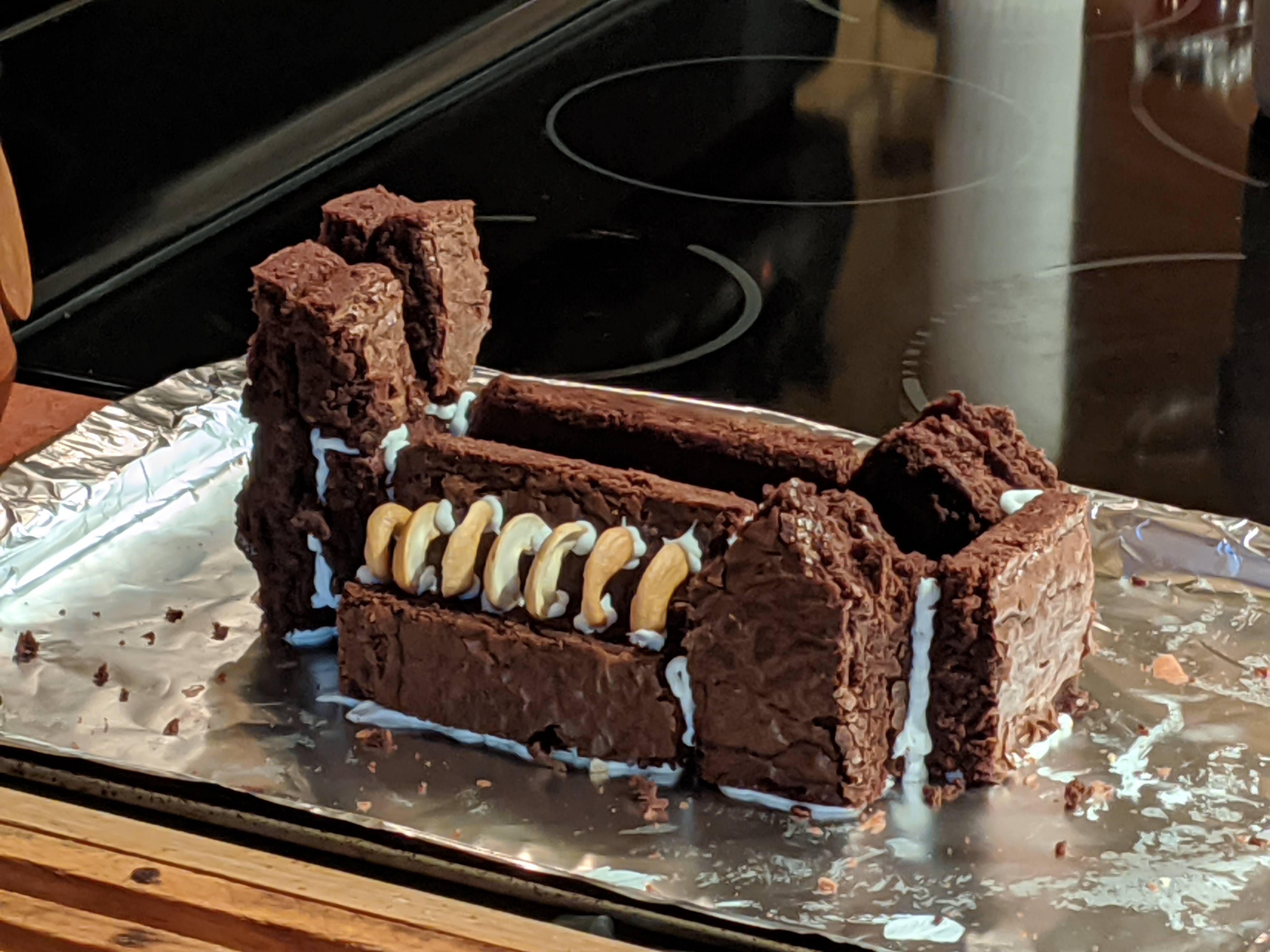
To commemorate the incident, I reached for my brownie pan, only to stop short at the challenge of creating the flying buttresses. While I believed that brownies were structurally sound enough to use as building blocks, I did not trust them to fly. In the spirit of the season, I briefly considered candy canes. However, their shape didn’t really match the flying buttresses of Notre Dame. I also hesitated to use candy as I have become more sugar conscious since my first Architectural Dessert Masterpiece. Sugary candy on top of sugar-heavy brownies seemed like a bad idea. I began to think I would have to give up on making Notre Dame as I didn’t have time for the meticulous, but safe process of designing and cutting out numerous pieces of gingerbread for the cathedral. Before I gave up completely, I walked the bulk foods aisle of the grocery store searching for inspiration. I found it between the candies and the grains. Nuts of all shapes, sizes, and flavors sparked my imagination. They go well with brownies and would counterbalance the sugar. I compared the shapes of the peanuts, walnuts, Brazil nuts, and cashews and determined that cashews were made to fly.
After selecting my materials, there were several more moments of anxiety that my walls and towers would collapse. I am pleased to say that like the cathedral it was based on, my structure stood through the test of time (eight hours from construction to consumption).
…for gingerbread!
Pittsburgh’s Annual Gingerbread House Competition moved this year from the PPG Winter Garden to the City-County Building. For several years, I’ve enjoyed making the time to go down to the Winter Garden for the gingerbread houses, santas from around the world, music, and ambiance. This year, I am finding it harder to identify a time to browse the entries. I changed my mind multiple times as I remembered the new location requires passing through the metal detectors and it just didn’t seem the right time to go through that annoying and unreliable process. In my travels through other downtown buildings, I am finding other gingerbread house displays to enjoy. Perhaps, I will get to the big competition at some point this season, but if not, I will at least have enjoyed some hassle-free displays.


 urbantraipsing