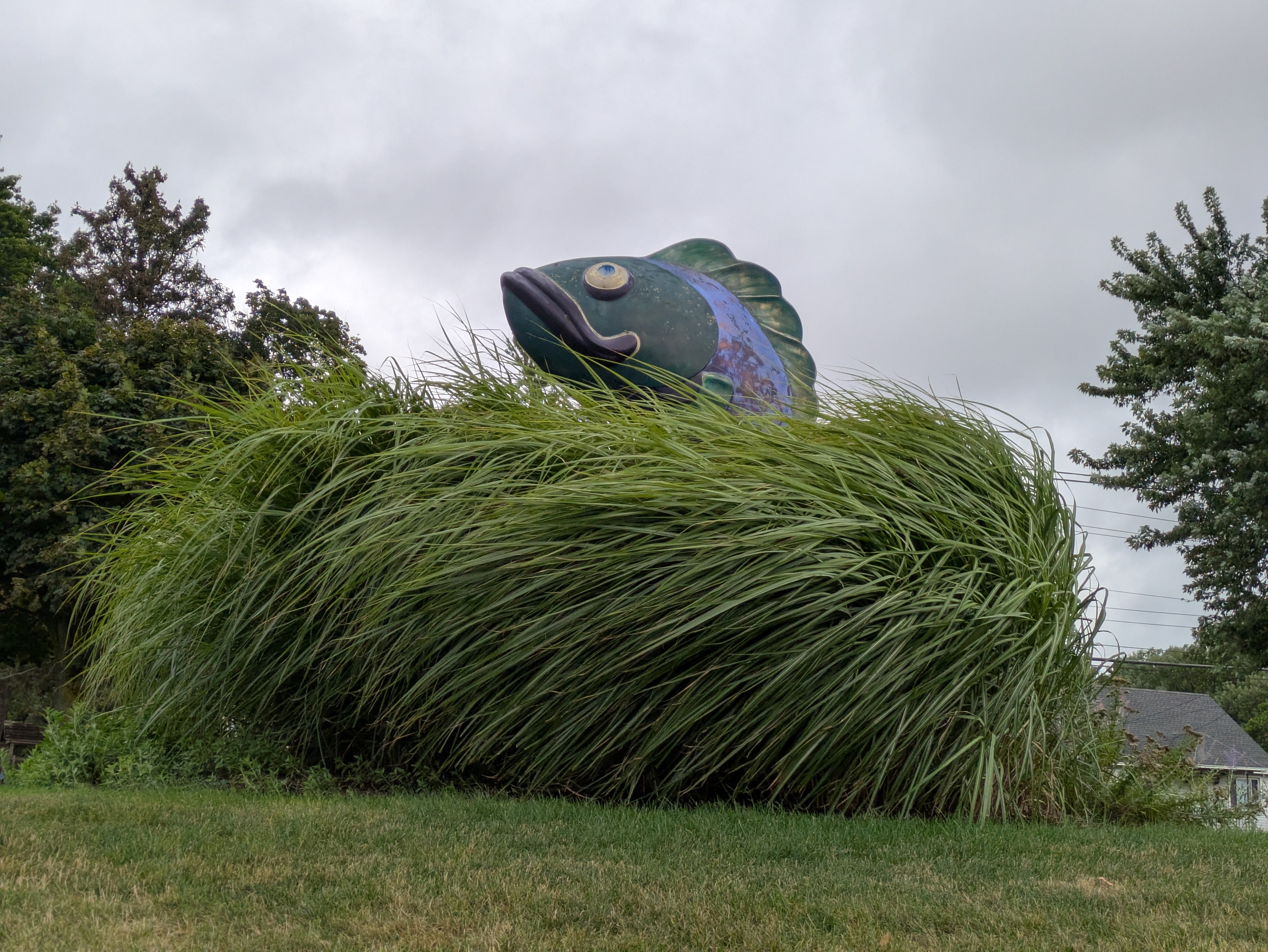
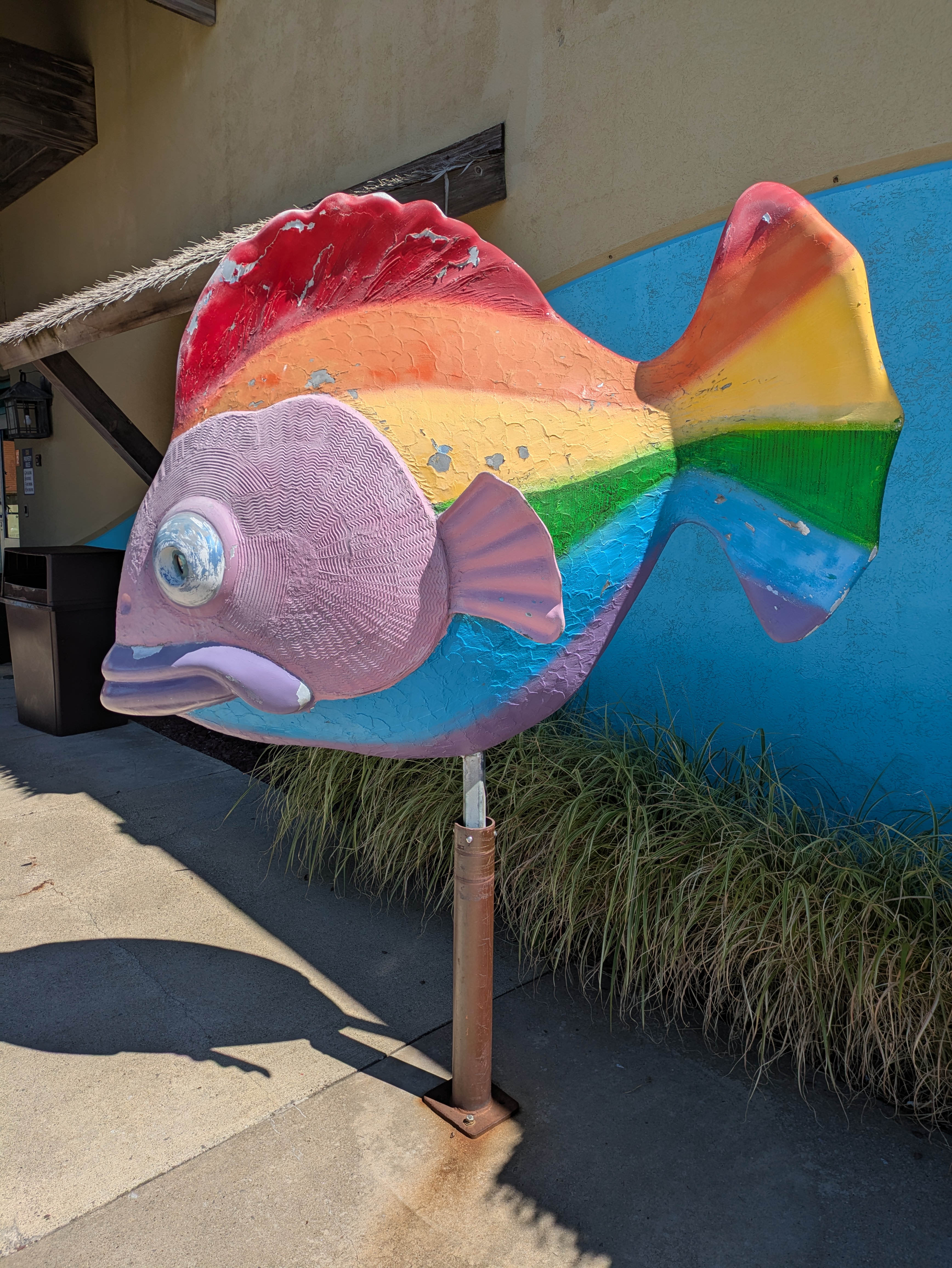
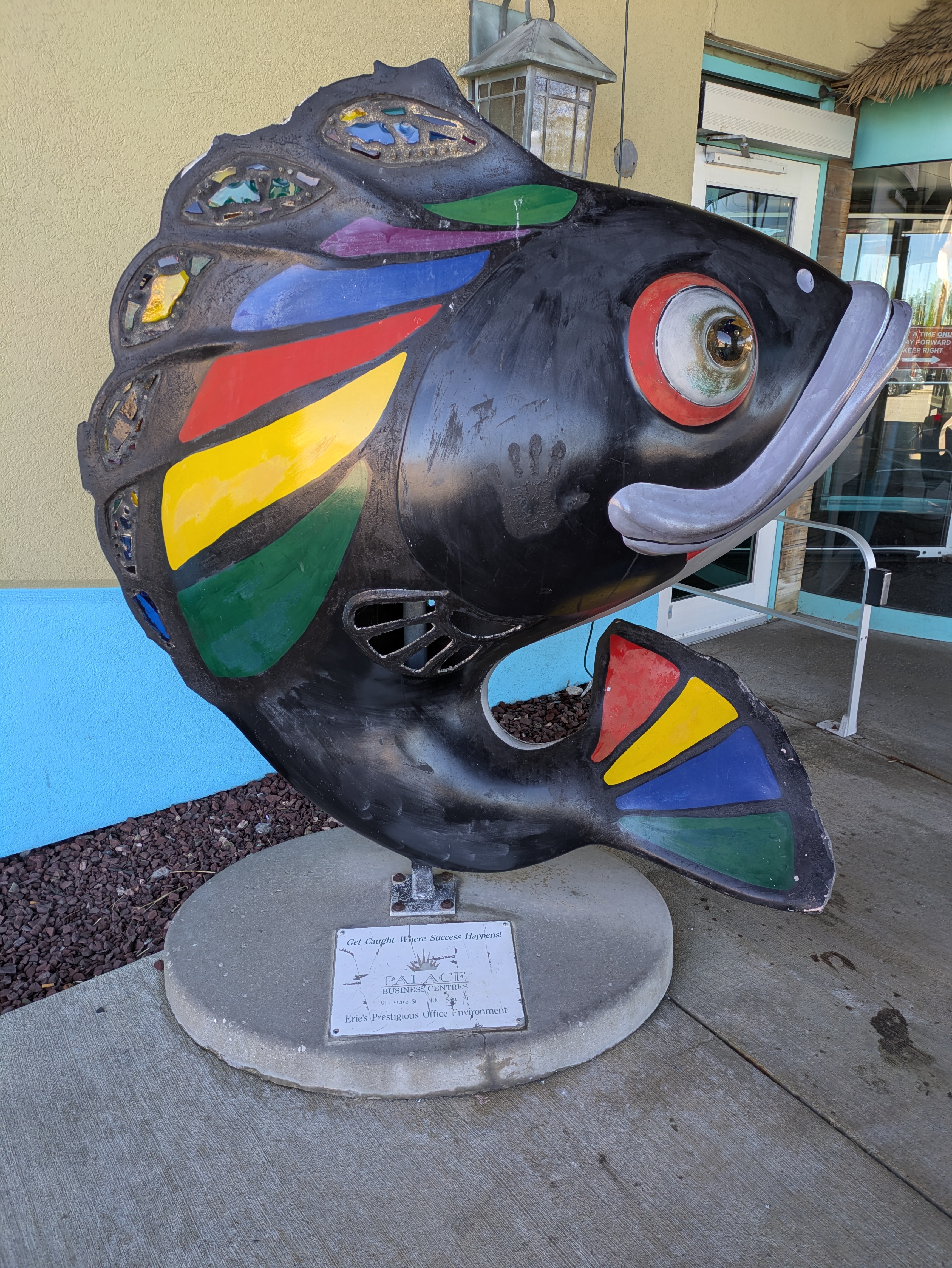
GoFish! was a fundraiser in Erie, PA, in 2001. When I visited Erie in 2025, I stayed in a suburb south of the city across from Splash Lagoon. I used it as an opportunity to explore more of the city outside of the central core that I am most familiar with. Driving along East 38th Street, “Artifishial” leaped out of the bushes at me.
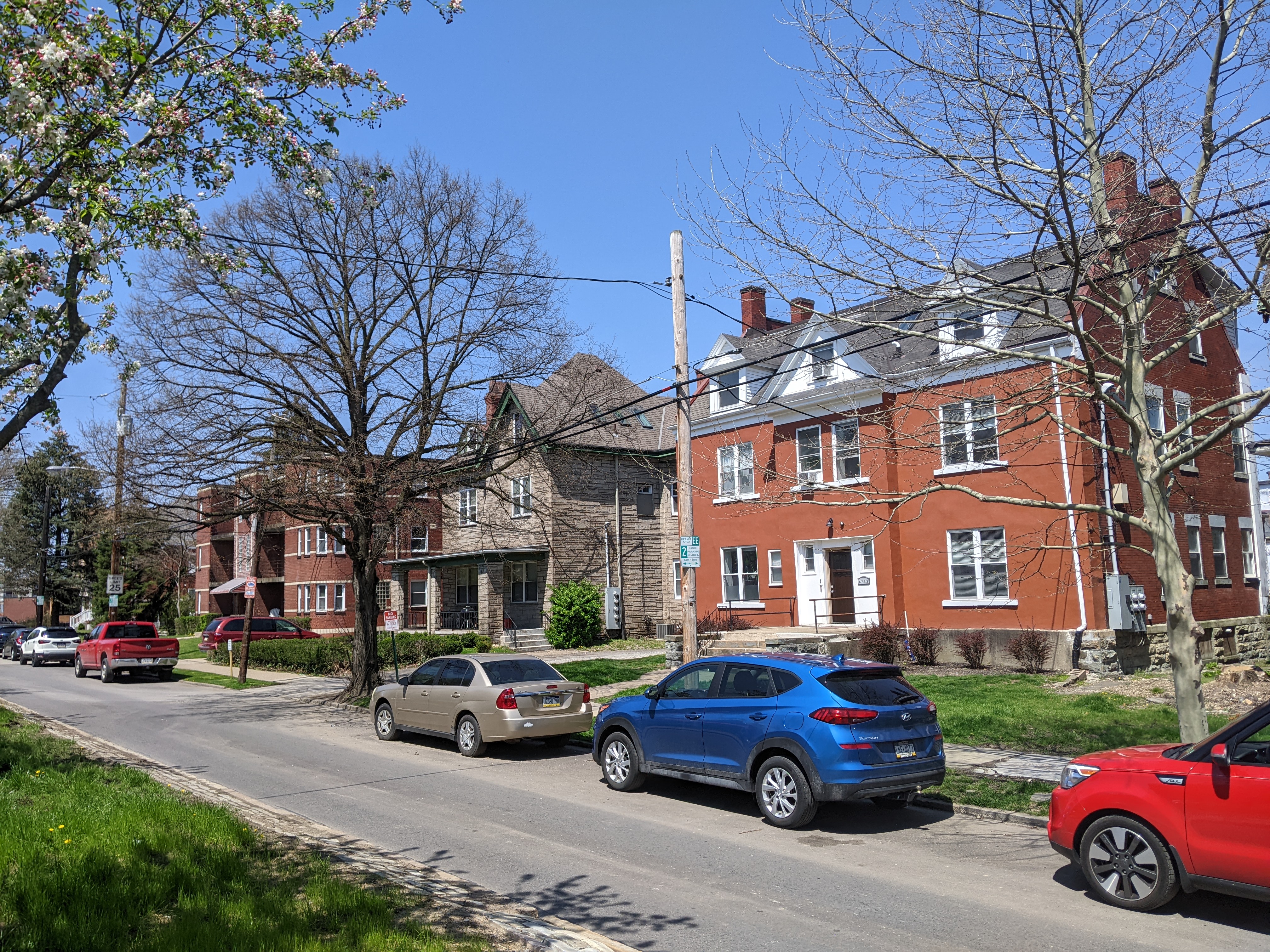
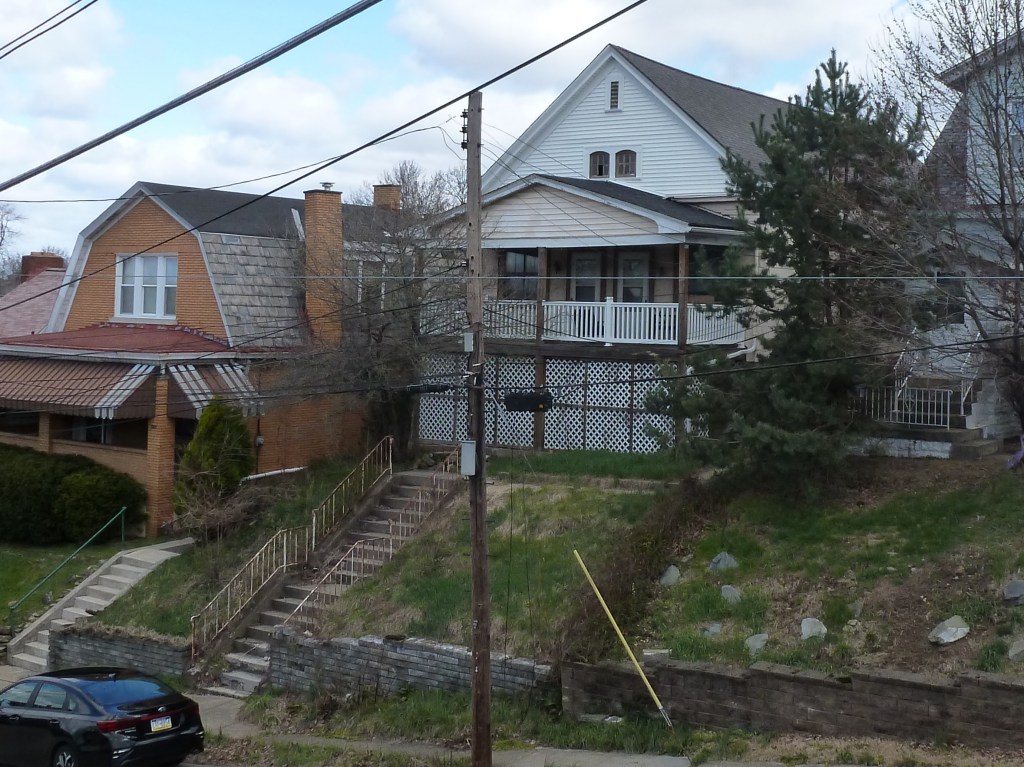
Sample of diverse housing on Thomas Blvd, taken from the boulevard’s green median
Point Breeze North Neighborhood
Point Breeze North is home to an eclectic mix of housing types (in the medium to large size range). “Flats” and apartment buildings are interspersed among large single-family dwellings and duplexes. A handful of small industrial sites are interspersed, taking advantage of the major railroad along the northeastern edge of the neighborhood. George Westinghouse, one of the Gilded Age tycoons of Pittsburgh, built his estate here, including his mansion “Solitude” and his laboratory. While much of this estate was later divided up into smaller lots, a large portion was turned into Westinghouse Park, a block-size public park with playground, picnic tables, lawns, and trees.
While the buildings in Point Breeze North have seen more stability than many other neighborhoods over the last 100 years, the definition of Point Breeze North has varied in that time. In 1974, the City designated this area as “Point Breeze” while the neighborhood we know today as Point Breeze was considered part of Squirrel Hill North at that time. Three years later, the Pittsburgh Neighborhood Alliance identified the two Point Breeze neighborhoods as a single neighborhood, although they acknowledged that due to resident self-identification, “Point Breeze North” was a distinct subneighborhood.
There is a story of racial relations in Point Breeze North that I have only begun to scratch the surface of. It is more subtle than the neighborhoods that experienced large-scale demolition through “urban renewal” or disinvestment, but it is just as important to understanding the history of Pittsburgh. In 1960, 4.8% of the neighborhood’s residents were Black. By 1970, 25.5% of residents were Black, prompting the City’s Department of City Planning to note “The area is now undergoing some change in its racial composition, and it is now a racially mixed neighborhood.” (1974)
That trend continued until 2000 when the neighborhood was majority minority (67.9% of residents were Black). Since then, while the neighborhood’s trend of overall population loss continued for the sixth decade, the demographics of that change shifted. Between 2000 and 2010, the neighborhood lost nearly 300 residents. However, that represents a loss of over 400 Black residents and a gain of nearly 100 white residents.
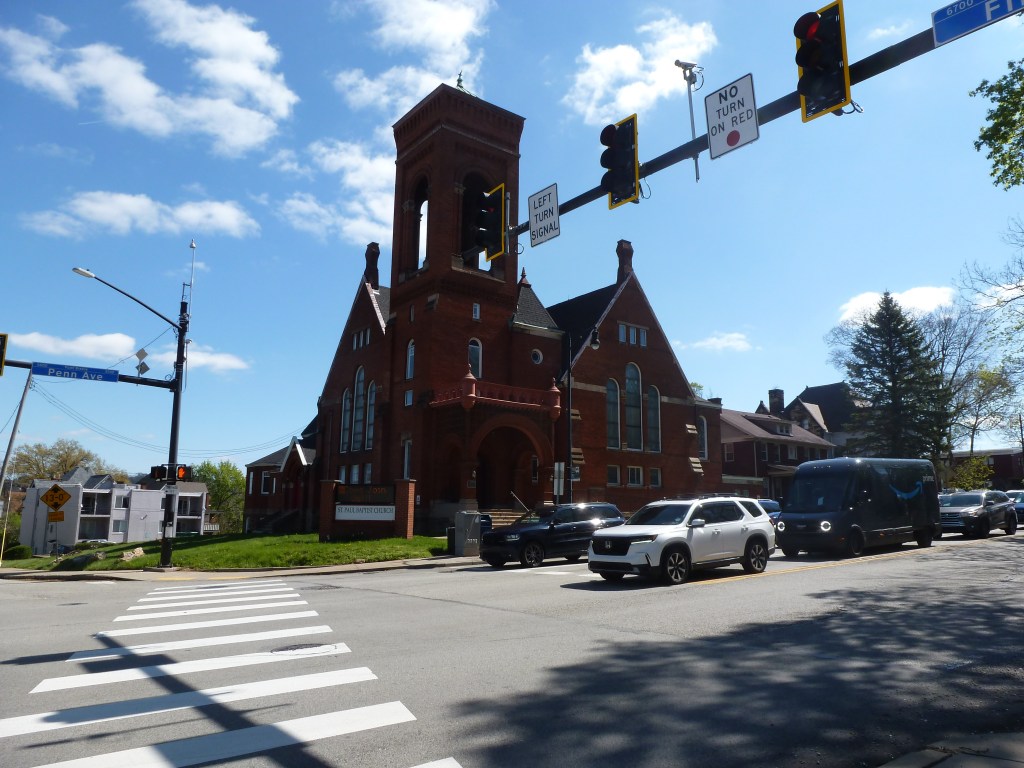
Despite the demographic changes to the neighborhood since a church building first showed up on the G.M. Hopkins maps in 1890, the Point Breeze Presbyterian Church is still an active congregation. The religious site at the eastern end of the neighborhood has not endured the changes over time.
Neighborhood Statistics (Out of 70 in this Series)
51st largest by acreage
53rd highest number of sites (multi-way tie)
50th most sites/acre
Locations
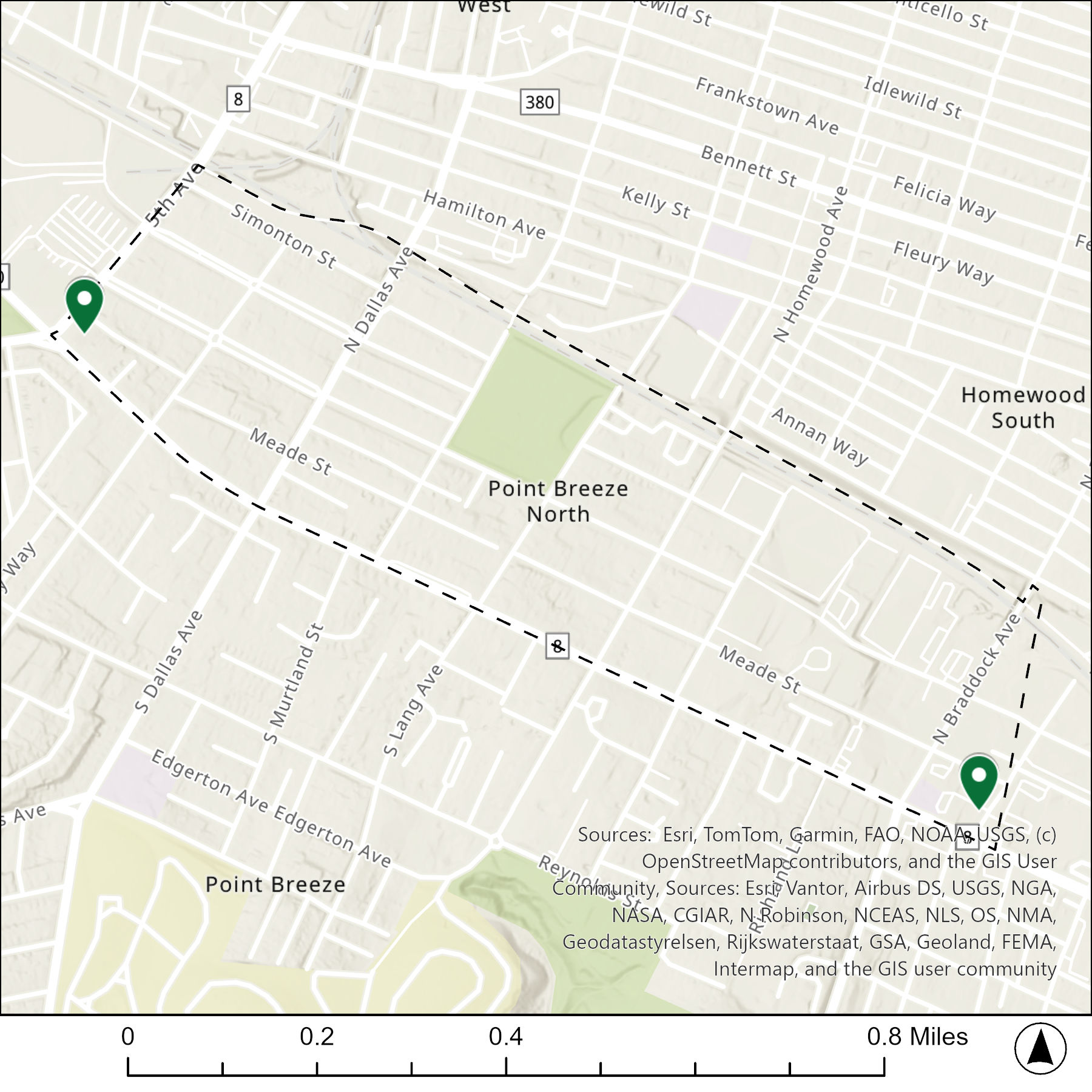
The map below shows the locations of the 2 congregations listed in the 1926 directory for Point Breeze North (the dotted line marks the neighborhood boundary).
What are they now?
The table below matches the 2 congregations listed in the 1926 directory with the current use of the site.
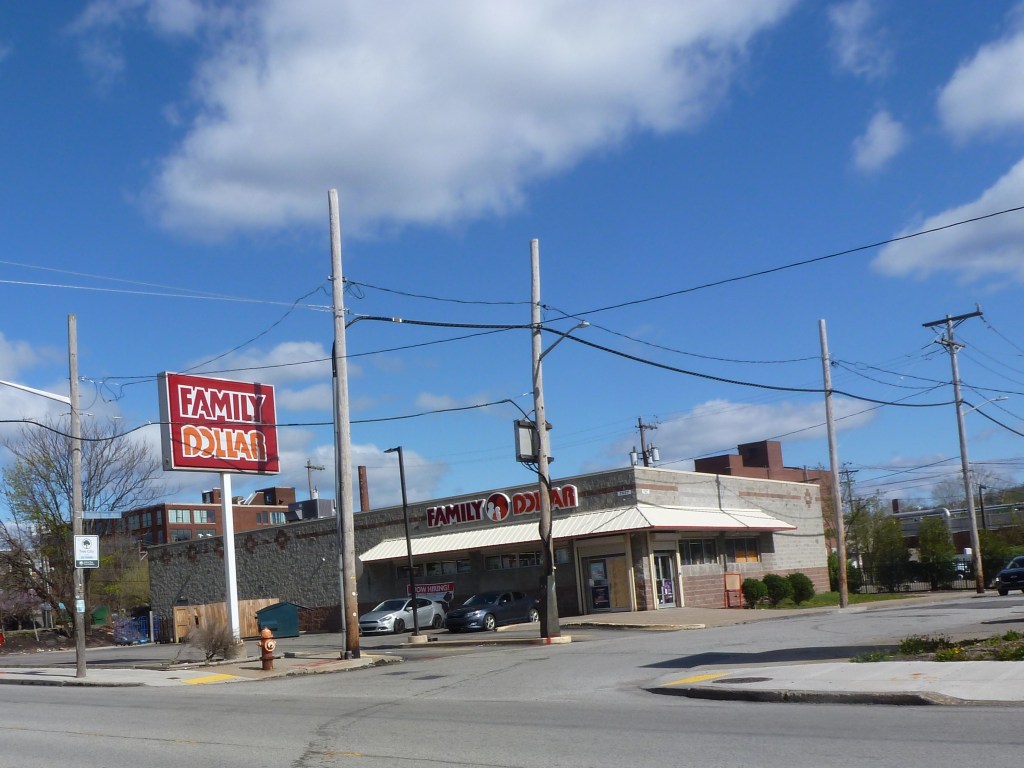
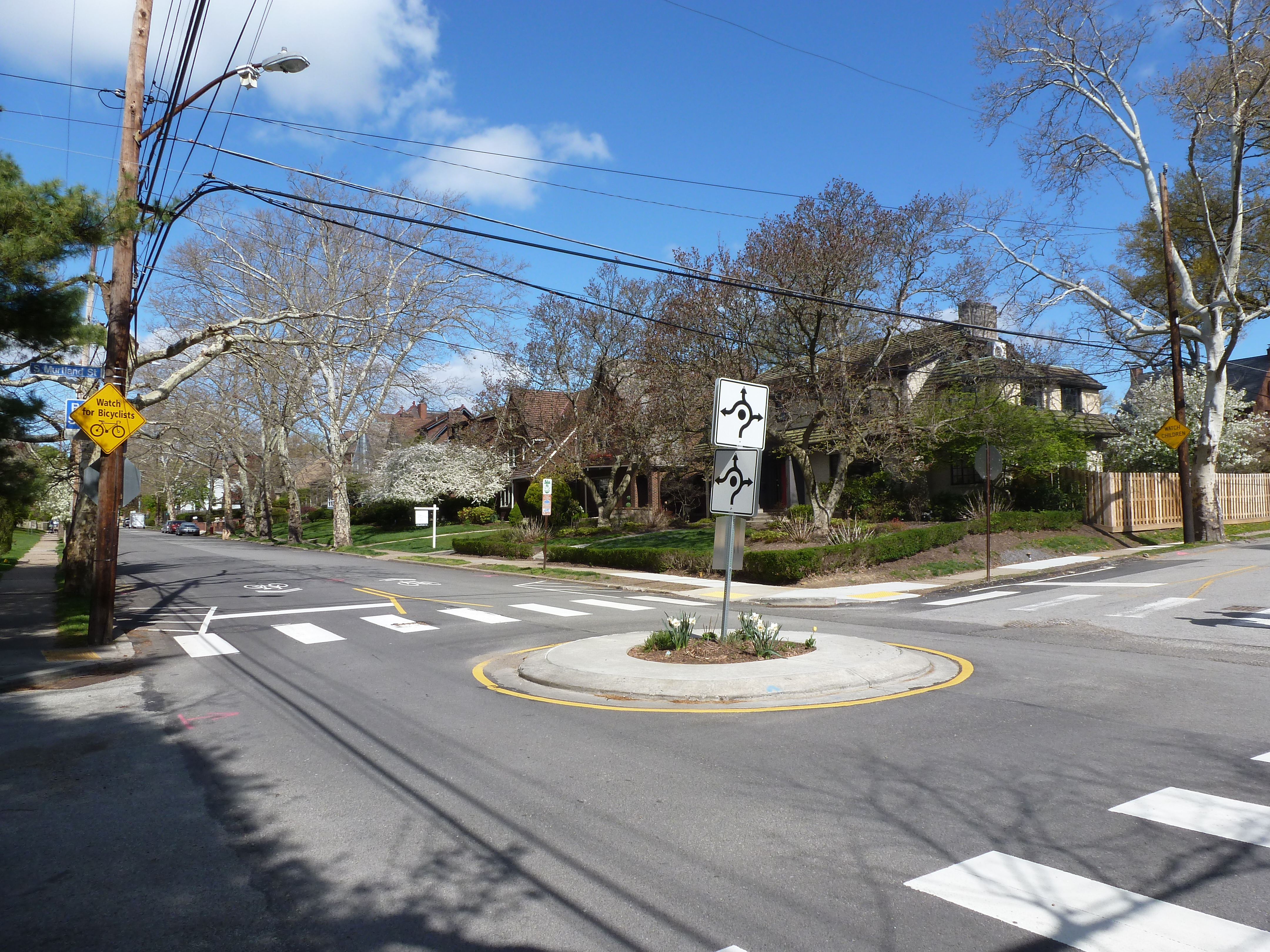
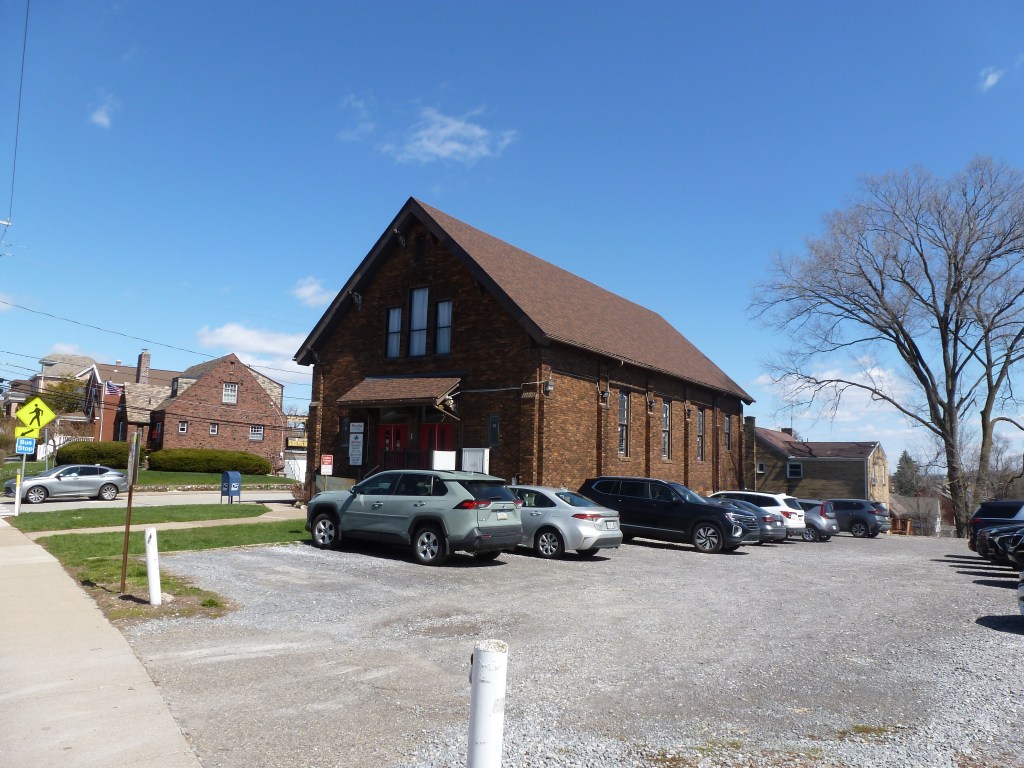
When I think of Point Breeze, I picture wide, tree-lined streets with large houses on large lots. However, that is only a small portion of the neighborhood. The two religious sites from the 1926 directory sit in parts of the neighborhood across their respective streets from close-set, sometimes attached, modest houses. For the neighborhood context photo above, I picked a block that showcases neither of those conditions, instead featuring a wide, tree-lines street with moderate-sized houses and moderate-sized front yards, but small side yards.
Point Breeze’s high numbers of property-owning, white residents likely contributed to its relative stability compared to other parts of the city. No “urban renewal” projects targeted any parts of the neighborhood. Population loss started a decade later than most of the city and always stayed lower than the citywide average. In 1974, the City described this neighborhood together with today’s Squirrel Hill North as “residential in nature with a preponderance of single family owner occupied dwellings, many of them fine brick quality.” It remains a pleasant neighborhood for those who can afford it.
Both religious sites from 1926 remain active under the same congregation names.
Neighborhood Statistics (Out of 70 in this Series)
12th largest by acreage
53rd highest number of sites (multi-way tie)
69th most sites/acre
Locations
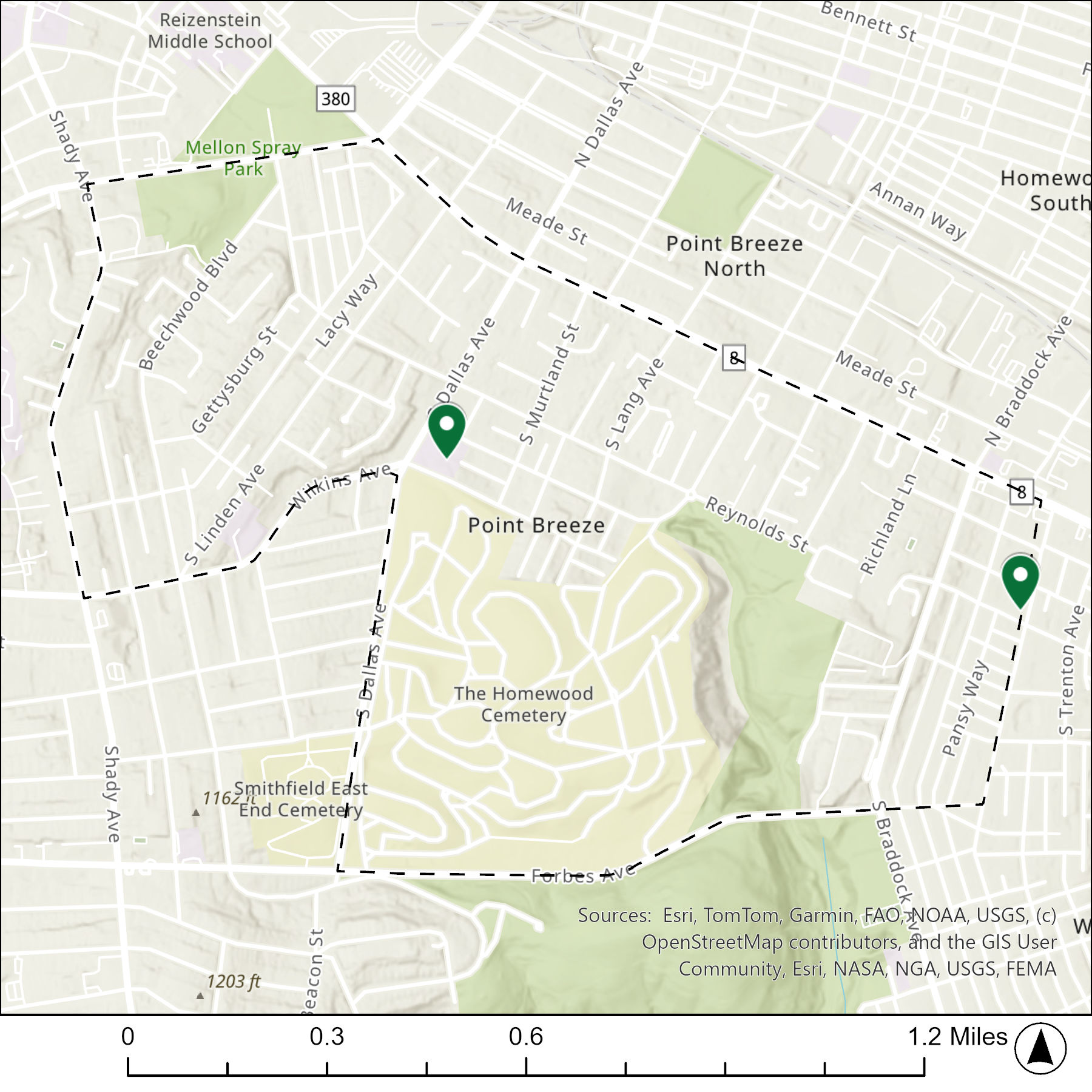
The map below shows the locations of the 2 congregations listed in the 1926 directory for Point Breeze (the dotted line marks the neighborhood boundary).
What are they now?
The table below matches the 2 congregations listed in the 1926 directory with the current use of the site.
1926 Congregation Name
By 2026 the Congregation’s Building is:
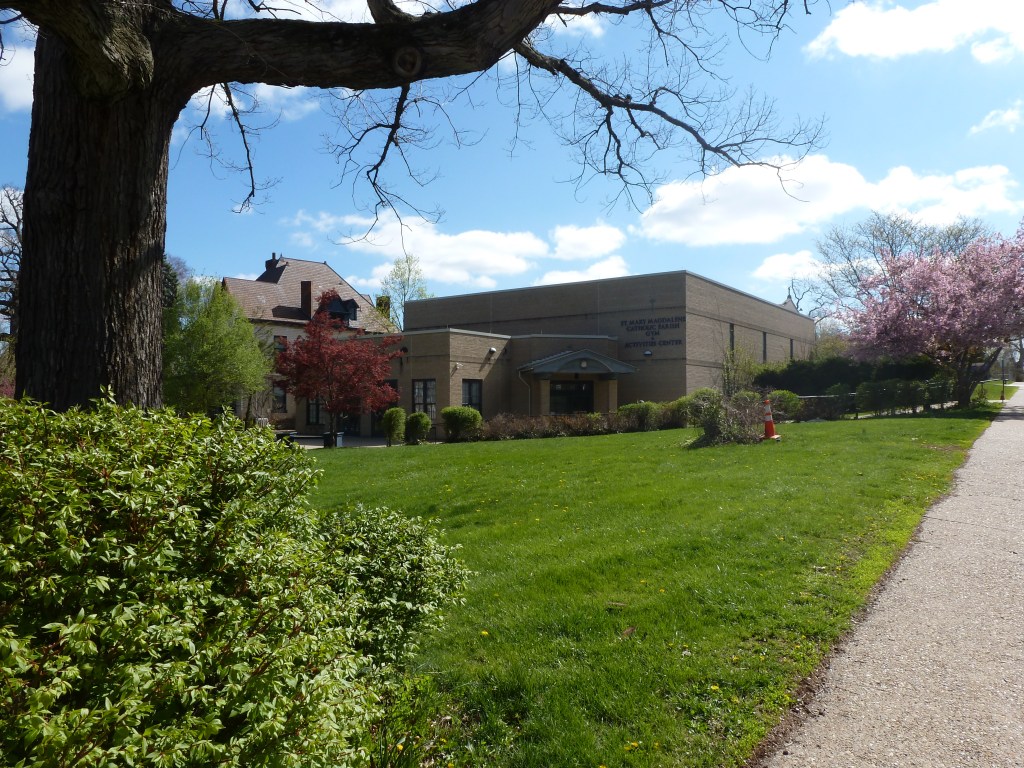
St. Bede’s Catholic Church
replaced with the gym & activities center of a greatly expanded St. Bede’s Catholic Church campus
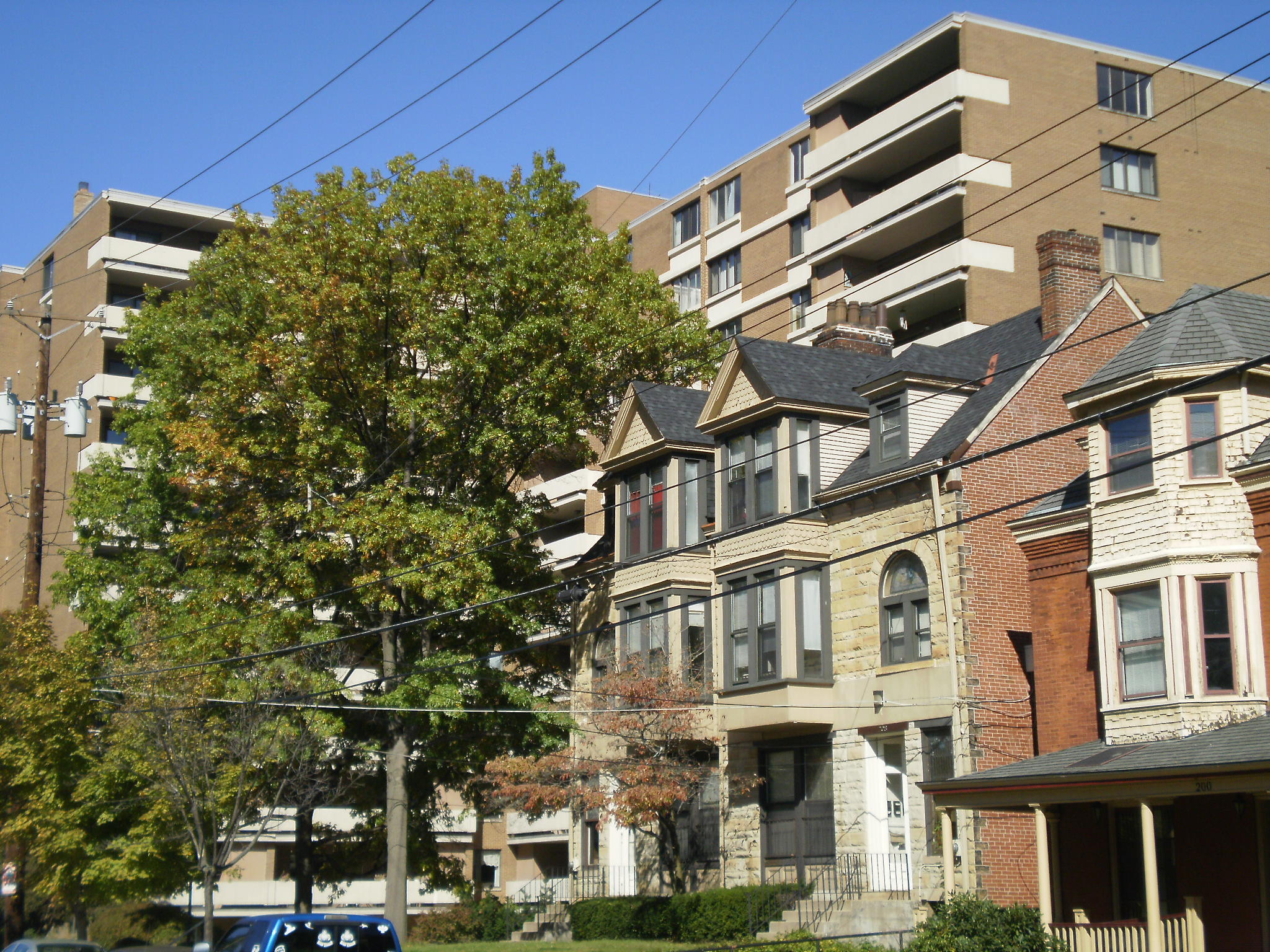
View of old and new housing on North Dithridge Street in North Oakland
North Oakland Neighborhood
North Oakland in the 1920s is a fascinating place from a land use perspective. While predominately single-family residential at this time, property owners in the southeastern portion of the neighborhood identified that its future was something else. This future vision was one of the existential threats to the city’s first zoning ordinance. That zoning ordinance passed in 1923, in part because the planners promised to study this area more closely immediately after zoning was adopted to identify what zoning districts would be better adapted to this area. The original 1923 zoning map placed the majority of this neighborhood in the 1-2-unit residential district. As a result of the subsequent study, the areas zoned in the commercial district and the areas zoned in the least restrictive residential district expanded significantly.
Then, in 1926, property owners in the west, central part of the neighborhood were about to lose their deed restrictions that prohibited construction of anything other than a detached single-family dwelling and the owner of the one undeveloped property was planning to construct a duplex once the restrictions expired. The remaining property owners feared this would destroy their enclave and petitioned the city to add an exclusively single-family zoning district to its zoning ordinance and apply it to their neighborhood before the deed restrictions expired. The city complied.
Today, according to the city’s zoning map, these early interest groups were correct in the future of the neighborhood. The city’s first exclusively single-family zoning district, remains an exclusive single-family zoning district; while the rest of the neighborhood’s zoning aligns with the future vision of the property owners in the 1920s. It is either in the city’s newest mixed-use district or in the institutional zoning district on behalf of the University of Pittsburgh, Carnegie Mellon University, or the Carnegie Museums of Art and Natural History and Main Carnegie Library.
What’s one the ground currently tells a more mixed story. Many of the homes that existed in the 1920s have been replaced by institutional buildings or large apartment buildings, yet many still remain. Without concentrated efforts, such as Urban Renewal, it is not easy to completely change the character of a neighborhood even after 100 years. A very small portion of North Oakland did see an Urban Renewal project that relocated 78 families and 13 businesses for an expansion of the University of Pittsburgh. The rest of the changes to the neighborhood have been accomplished property by property.
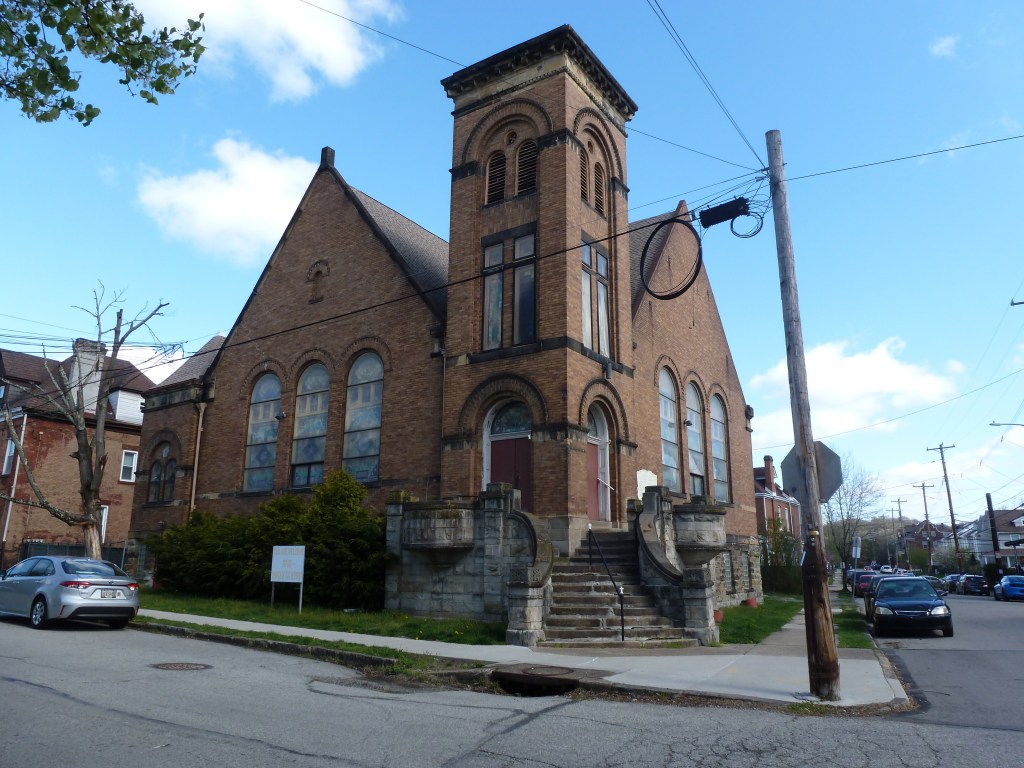
Despite the fact that the religious sites from the 1926 directory are all located in the areas of the neighborhood that have experienced the most change, they remain largely stable. One was demolished, but that congregation moved to one of the remaining buildings. The remainder continue to operate as religious centers and mostly as the same religious institution as in 1926.
Neighborhood Statistics (Out of the 70 in this Series)
31st largest by acreage
31st highest number of religious sites (multi-way tie)
30th most sites/acre
Locations
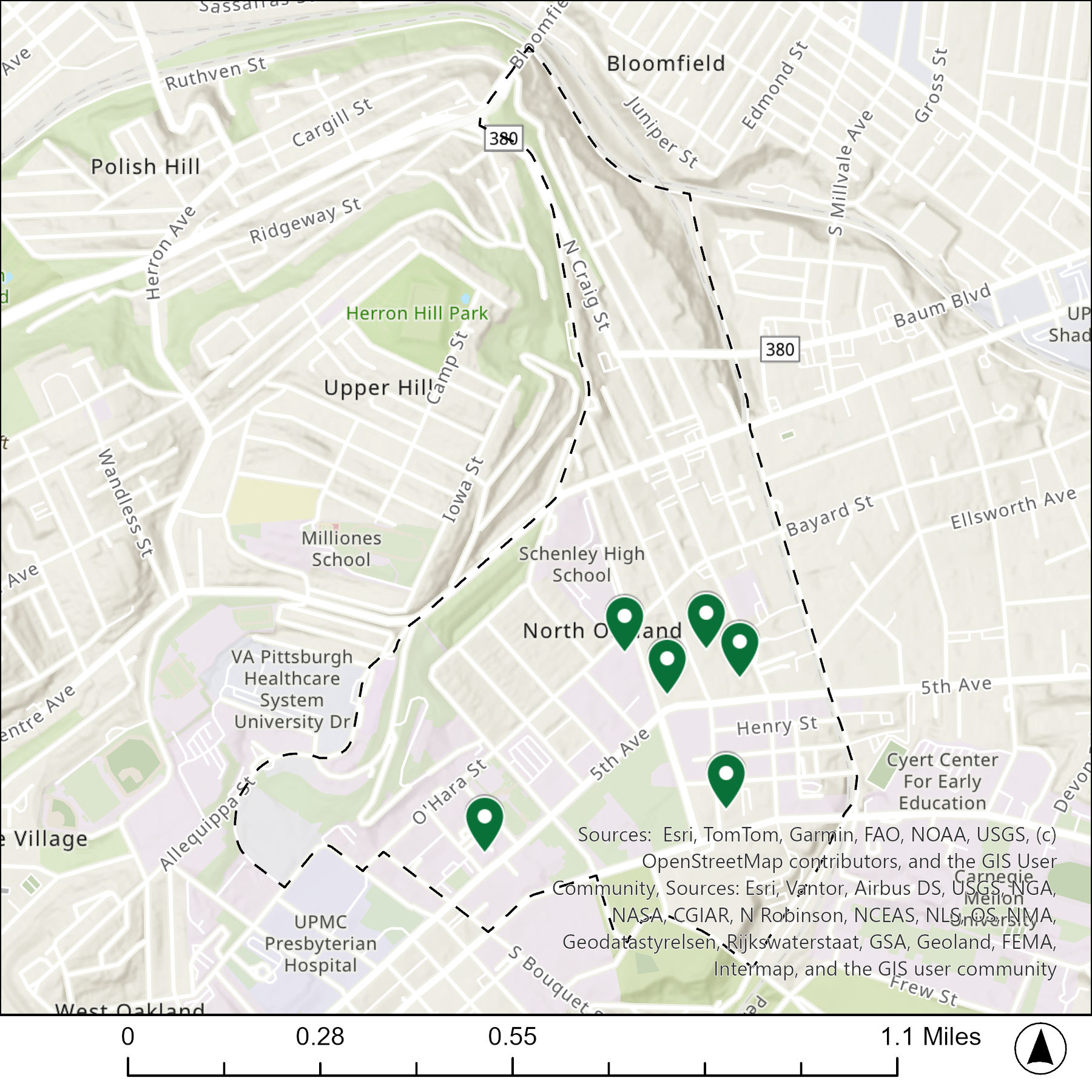
The map below shows the locations of the 6 congregations listed in the 1926 directory for North Oakland (the dotted line marks the neighborhood boundary).
What are they now?
The table below matches the 6 congregations listed in the 1926 directory with the current use of the site.
1926 Congregation Name
By 2026 the Congregation’s Building is:
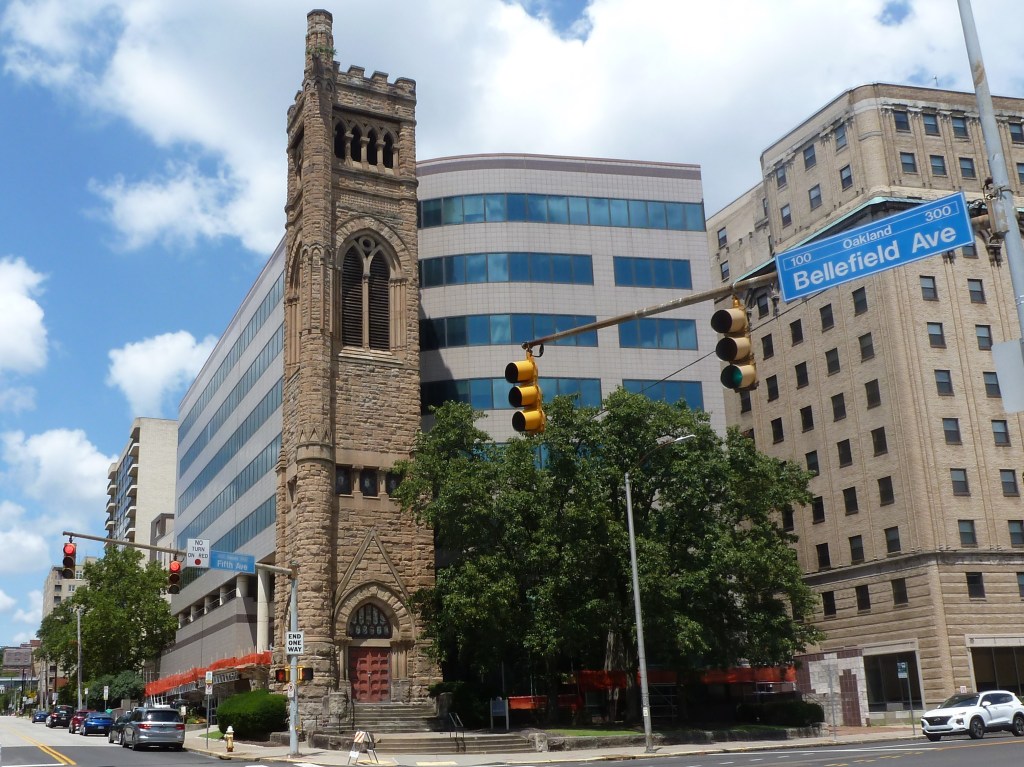
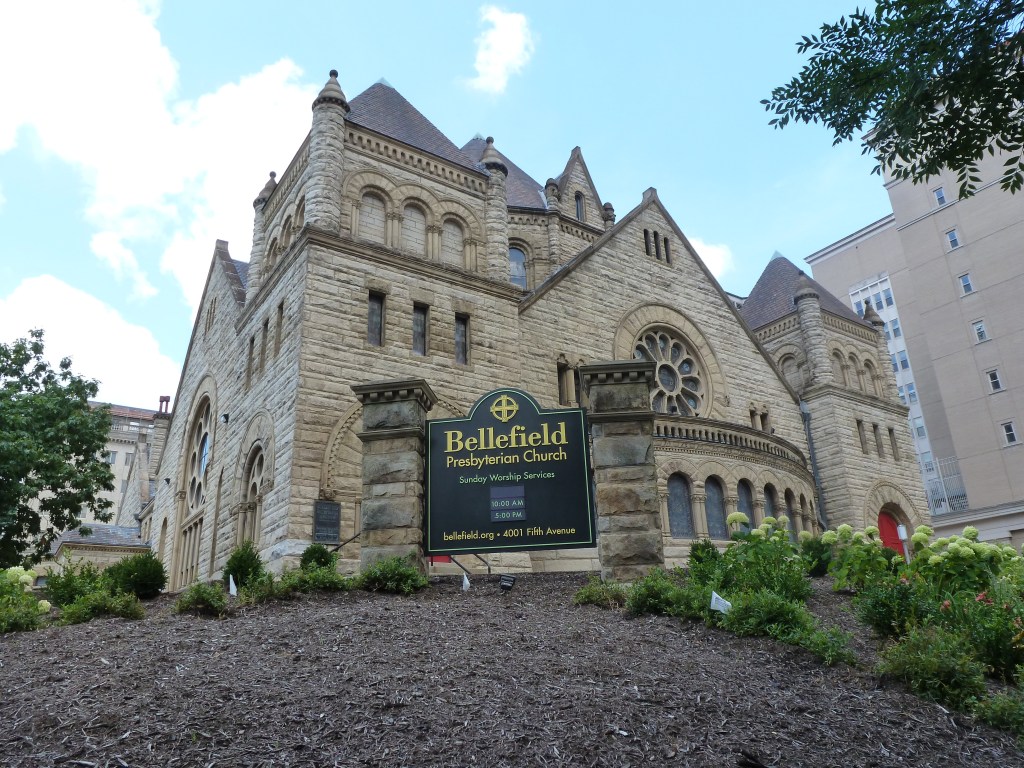
Bellefield Presbyterian Church
partially demolished, replaced with commercial building
“Appropriate Money for Mt. Washington Highway Project; Council Finally Passes Ordinances.” The Pittsburgh Gazette Times. September 21, 1926. https://www.newspapers.com/image/86466920/
“Civic Center Opposed to Sections of Zoning Bill; Commission Member Admits Special Situation. Flinn Asks Three Changes.” The Pittsburgh Post. July 24, 1923. https://www.newspapers.com/image/87626223/
“Final Public Hearing Held on Proposed Zone Measure; Many Indorse Principal, But Oppose Height Limit; Goes to Plan Commission.” The Pittsburgh Post. April 27, 1923. https://www.newspapers.com/image/88183510/
“Realtors Move Attacked in Zoning Fight; Board’s Attitude Called Insincere in Letter to Council. Motives Assailed.” The Pittsburgh Gazette Times. May 25, 1923. https://www.newspapers.com/image/85857316/
“Zoning Plan Opponents Renew Attack on Legality; Majority of Speakers Favor Plan, Minus Height Limit. Council Hears More Protests.” The Pittsburgh Post. March 2, 1923. https://www.newspapers.com/image/86504173/
GoFish! was a fundraiser in Erie, PA, in 2001. This brightly-colored rainbow fish is the reason I discovered 2025 that the Splash Lagoon fish and frogs were on display outside the paywall barrier. It caught my eye while waiting my turn at a very long light. I suspect that it is one of the ones that has been redecorated over the original design as the way the paint is chipping is different than how the original patterns age and I cannot find a match for it in “GoFish! The Offishial Tale.”
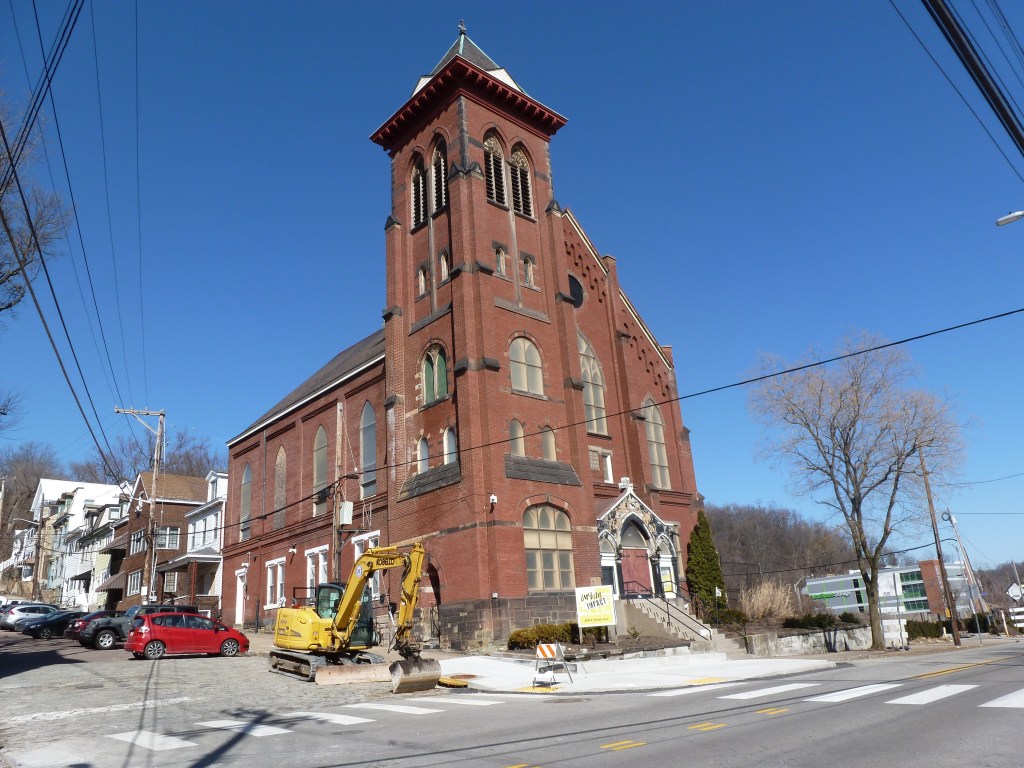
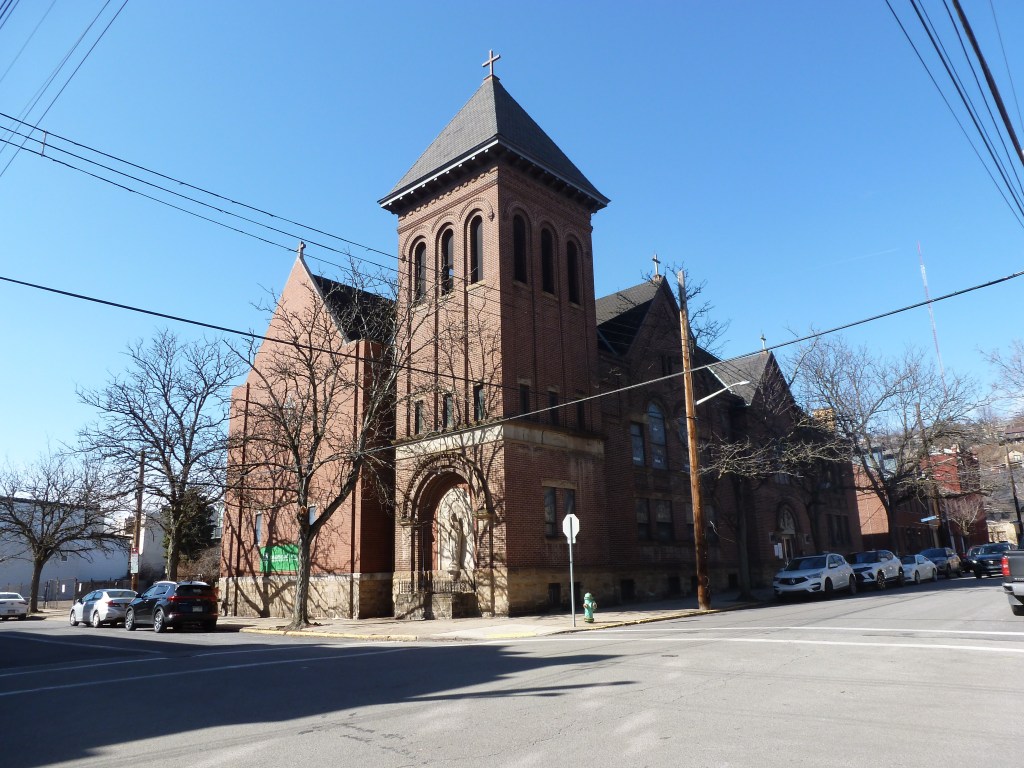
On the highest point in Mt. Oliver, the former St. Joseph Catholic Church towers above its surroundings. Its silhouette catches the eye from the surrounding neighborhoods. A woman who lives across the street stopped to chat as I was taking photographs. She mentioned that her parents were married at St. James and pointed out the plinth where the statue of St. Joseph stood until the Catholic Church removed it when they suppressed the church. She also shared stopping by an event recently held in the parish house that sounded suspiciously like an unauthorized rave and that was not her cup of tea.
Mt. Oliver neighborhood has always intrigued me. It is immediately east of Mt. Oliver Borough, the only municipality left that is completely surrounded by the City of Pittsburgh. The Borough residents soundly defeated the ballet measure to be annexed in 1928. However, the built environment is seamlessly connected between the Borough and the City. The Borough’s main commercial street runs along the boundary, the east side being the Borough and the west side the City.
I had always assumed that Pittsburgh’s Mt. Oliver neighborhood was a portion of the Borough that had agreed to be annexed. That appears to not be the case.
Mt. Oliver neighborhood was annexed to the City in 1923 as part of St. Clair Borough, which comprised the present day neighborhoods of Mt. Oliver, St. Clair, Arlington, and Arlington Heights. Today’s St. Clair neighborhood was largely undeveloped in 1916 and still comprised large land holdings. At that time, today’s Mt. Oliver neighborhood was largely platted with the lots we see today and some houses had been built. Based on the 1916 map and the diversity of style of house, it seems there was no coordinated development of housing in the Mt. Oliver neighborhood. Next door, in St. Clair neighborhood, was a different story. In 1953, the St. Clair Village housing project opened and the boundaries of the St. Clair neighborhood were drawn to encompass just that housing project. Perhaps, the Mt. Oliver neighborhood was named at that time to distinguish it from the St. Clair Village/neighborhood. Perhaps, the Mt. Oliver neighborhood was so named to put pressure on Mt. Oliver Borough to agree to annexation.
However it got its name, Mt. Oliver neighborhood probably remained influenced by its long ties to St. Clair, whether the Borough or the neighborhood. The common story of a mid-century housing project falling into disrepair due to lack of maintenance over the years and the residents abandoning the deteriorating site is the story of St. Clair Village. St. Joseph’s Catholic Church was rebuilt in 1953 after a fire destroyed the prior building, but then was closed in 1994, maybe in part due to the loss of population at the nearby St. Clair Village.
Neighborhood Statistics (Out of 70 in this Series)
70th largest by acreage
63rd highest number of religious sites (multi-way tie)
36th most sites/acre
Locations
The map below shows the locations of the 1 congregations listed in the 1926 directory for Mt. Oliver (the dotted line marks the neighborhood boundary).
What are they now?
The table below matches the 1 congregations listed in the 1926 directory with the current use of the site.
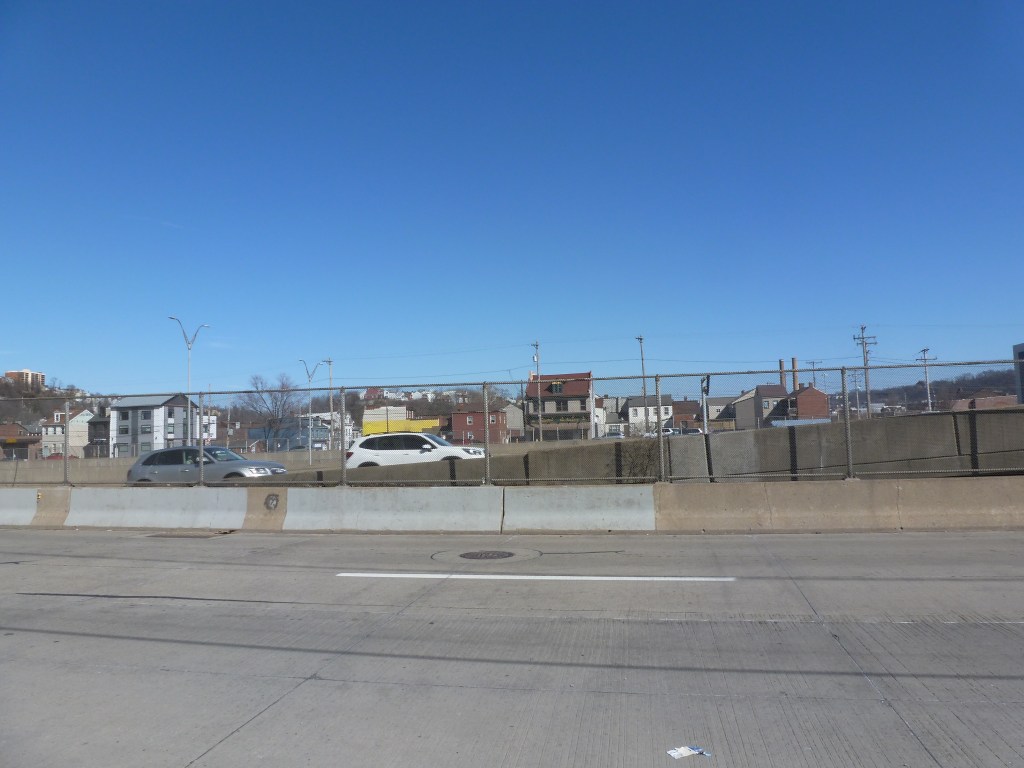
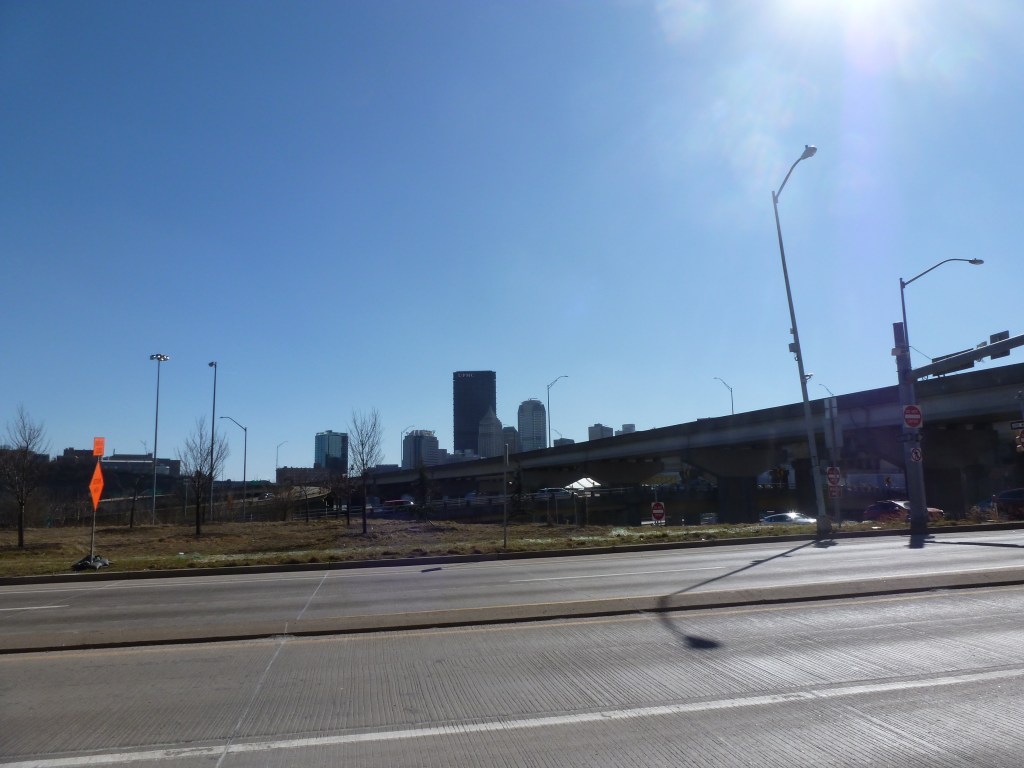
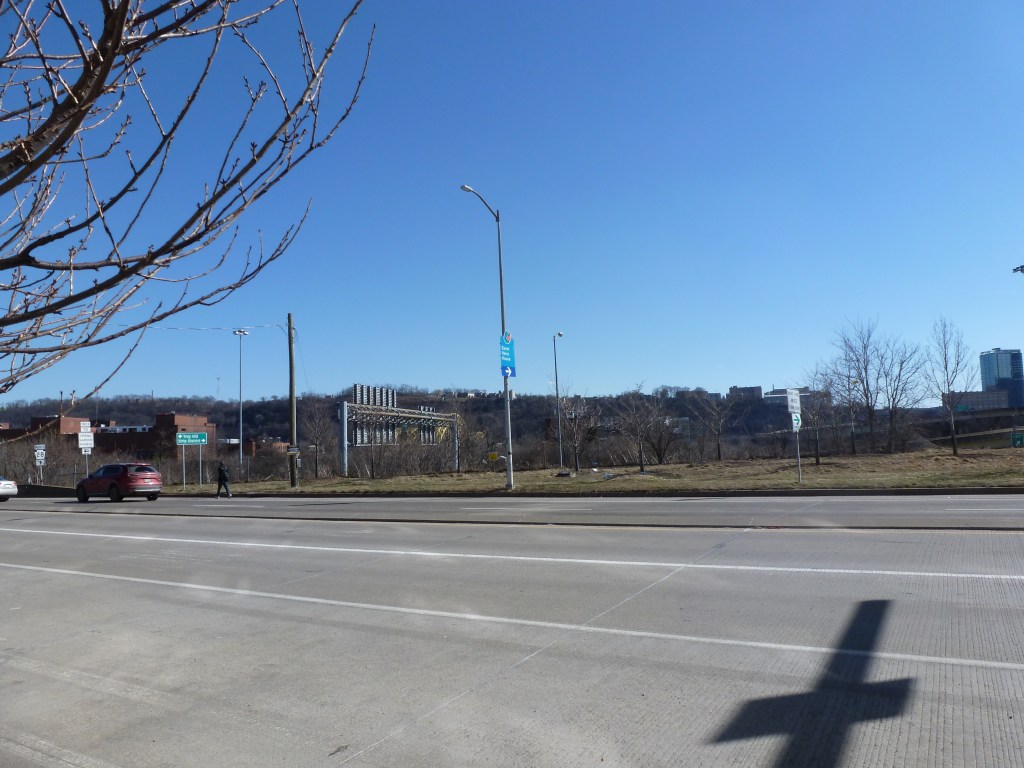
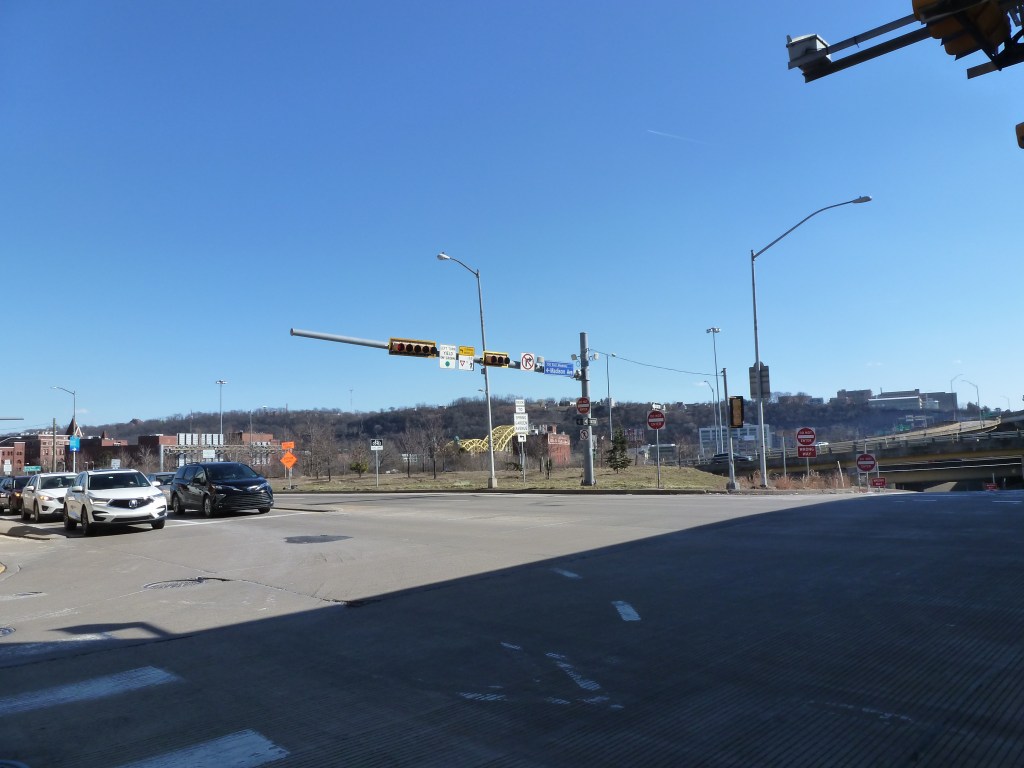
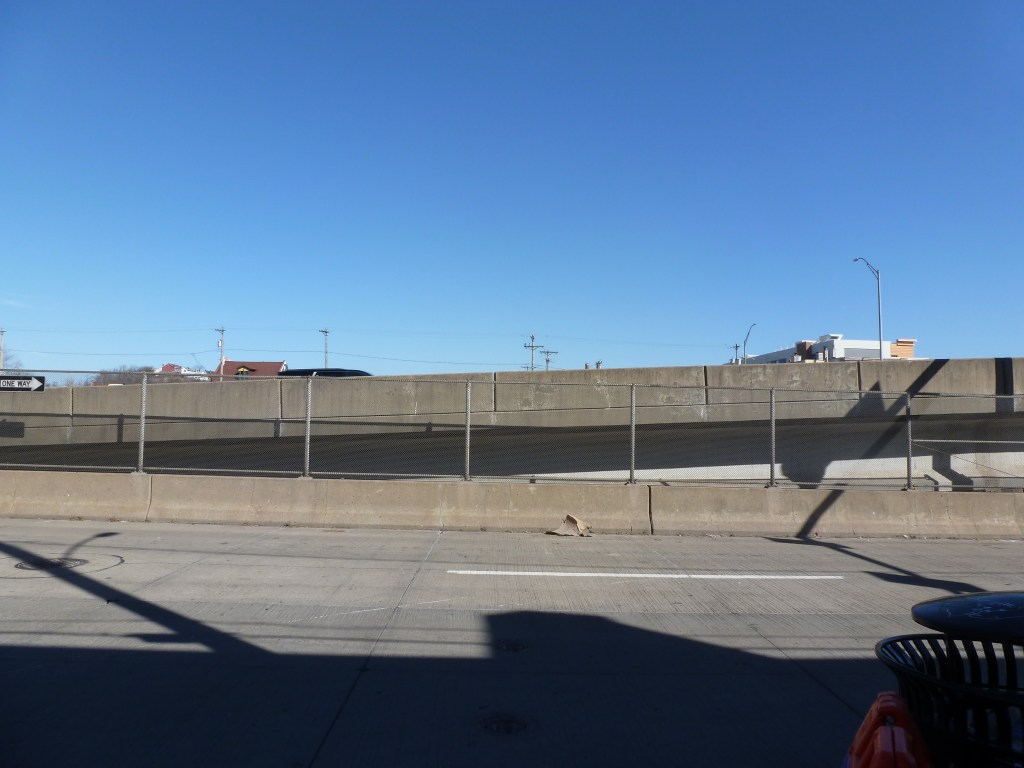
East Allegheny is a neighborhood cut in half. The middle section of the neighborhood, along with a significant portion of its southern parts, was erased for the sake of some highways and their interchanges in the 1960s-1980s. The project was still in its early stages in 1970, at which time the city estimated that 358 families, 383 individuals, and 184 businesses would need to be relocated to execute the planned “renewal.”
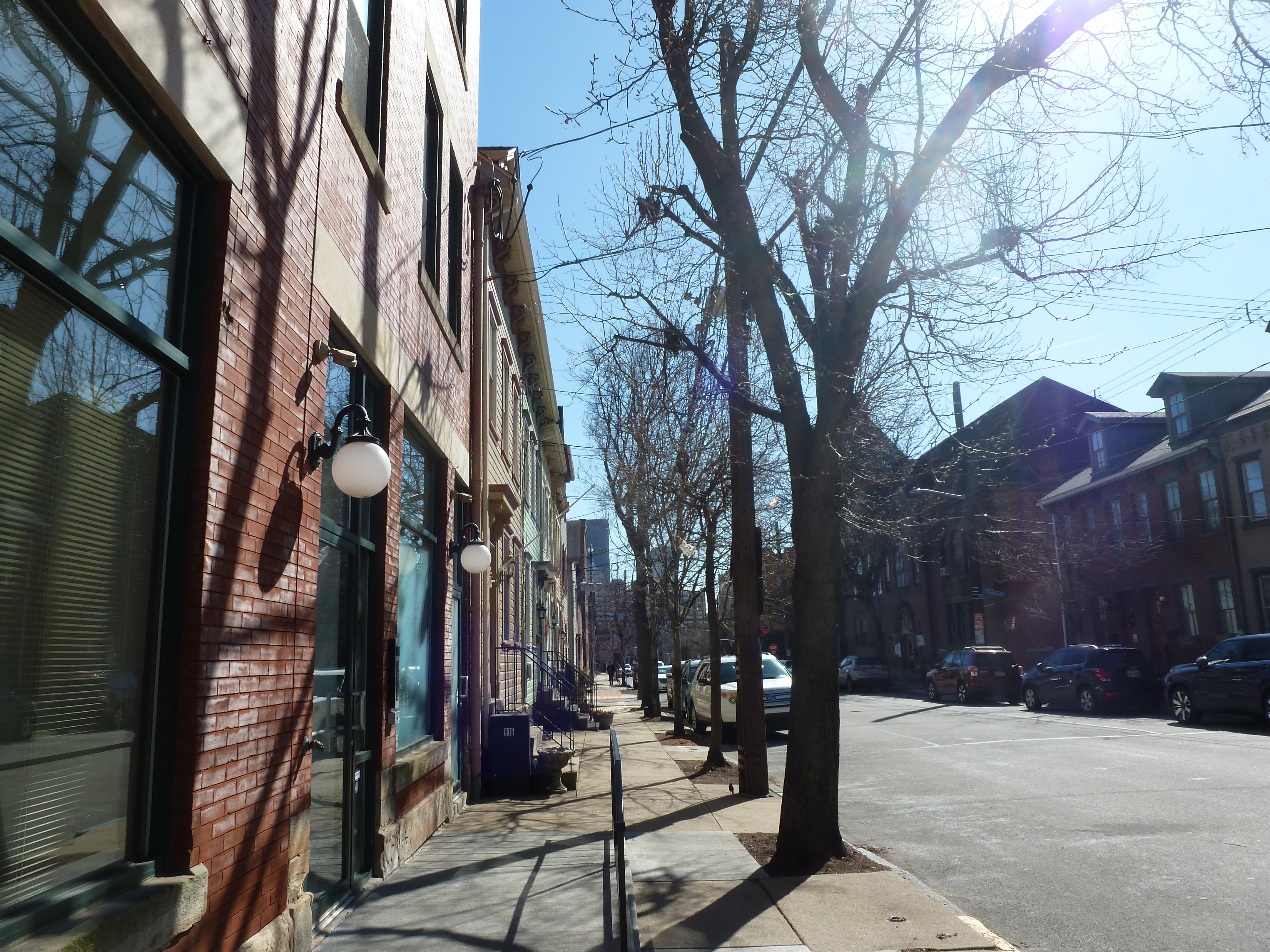
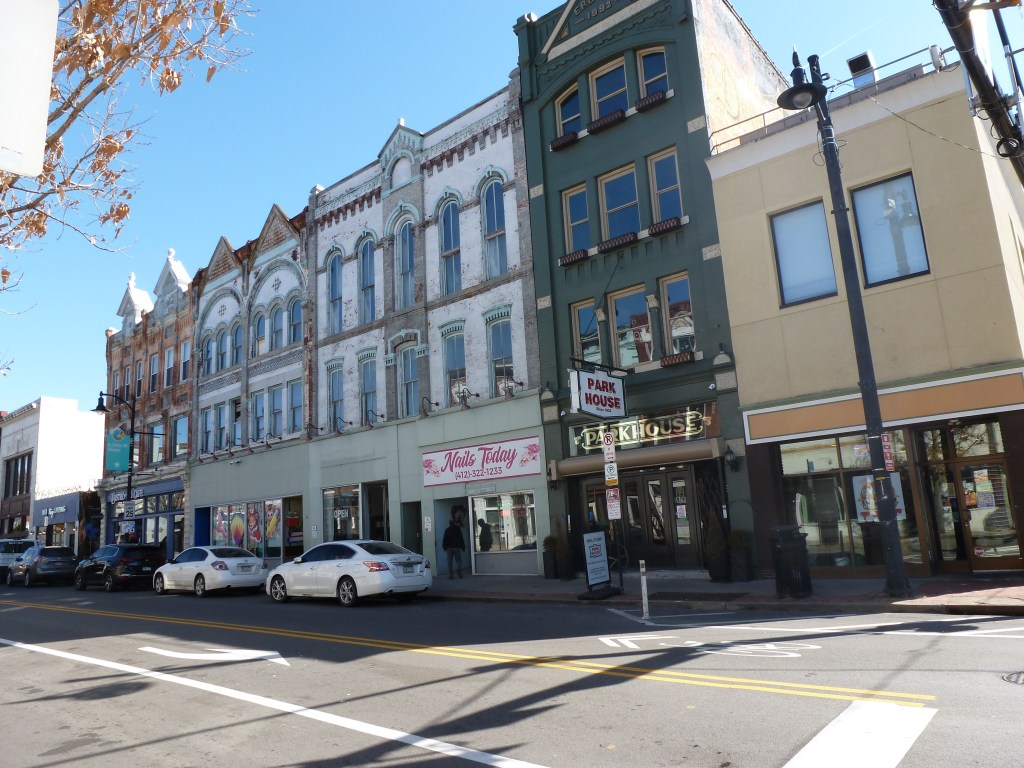
Except for where the highways now sit, the remainder of the neighborhood seems largely intact, at least as far as the buildings are concerned. It is a dense neighborhood. Houses and commercial spaces sit shoulder to shoulder directly against the sidewalks. Those closest to East Park in Allegheny Center are largest, more frequently built with brick or stone and featuring architectural embellishments. Moving eastward, the buildings are more plain and more frequently built with wood and covered in siding. The dividing line of the freeway brings that change into stark contrast.
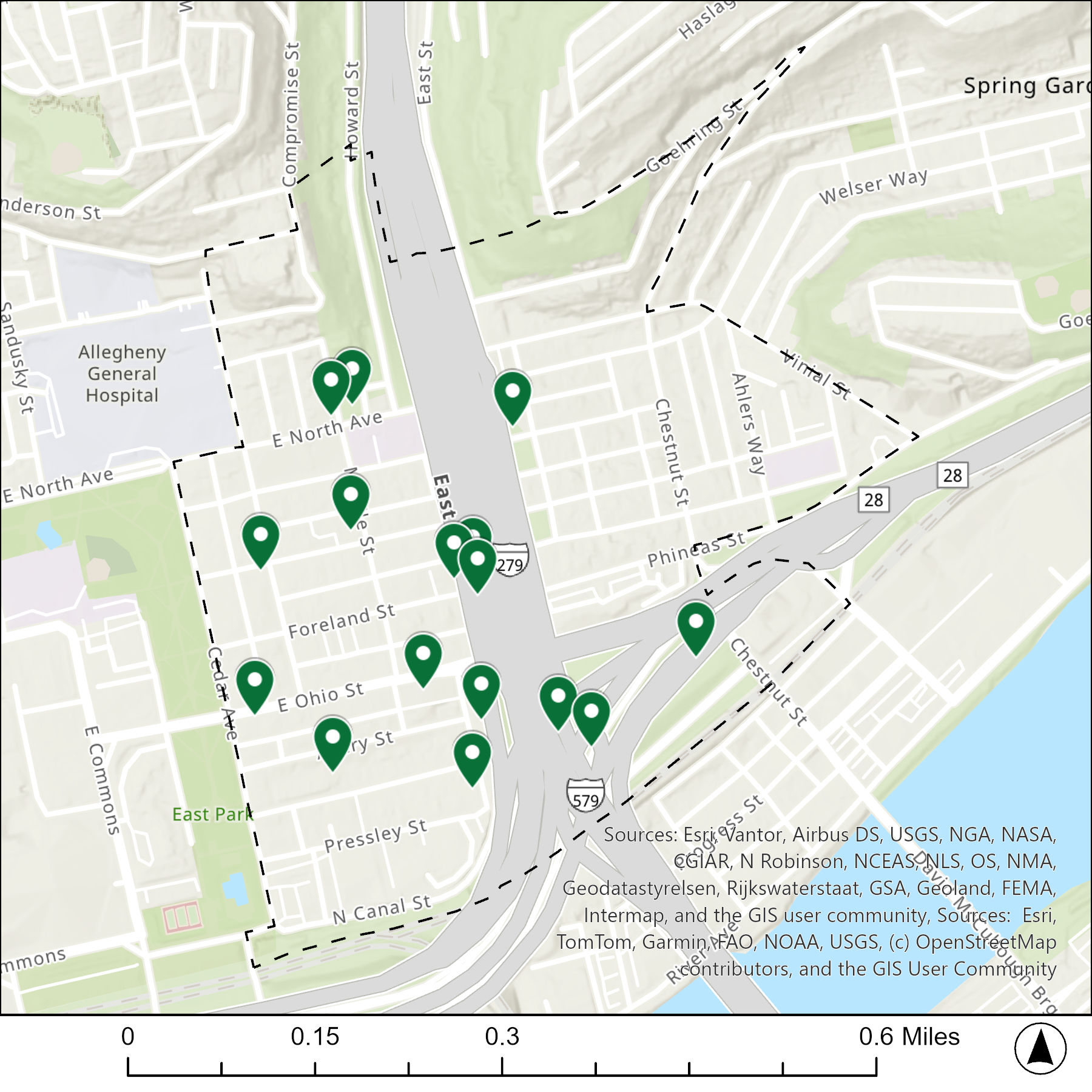
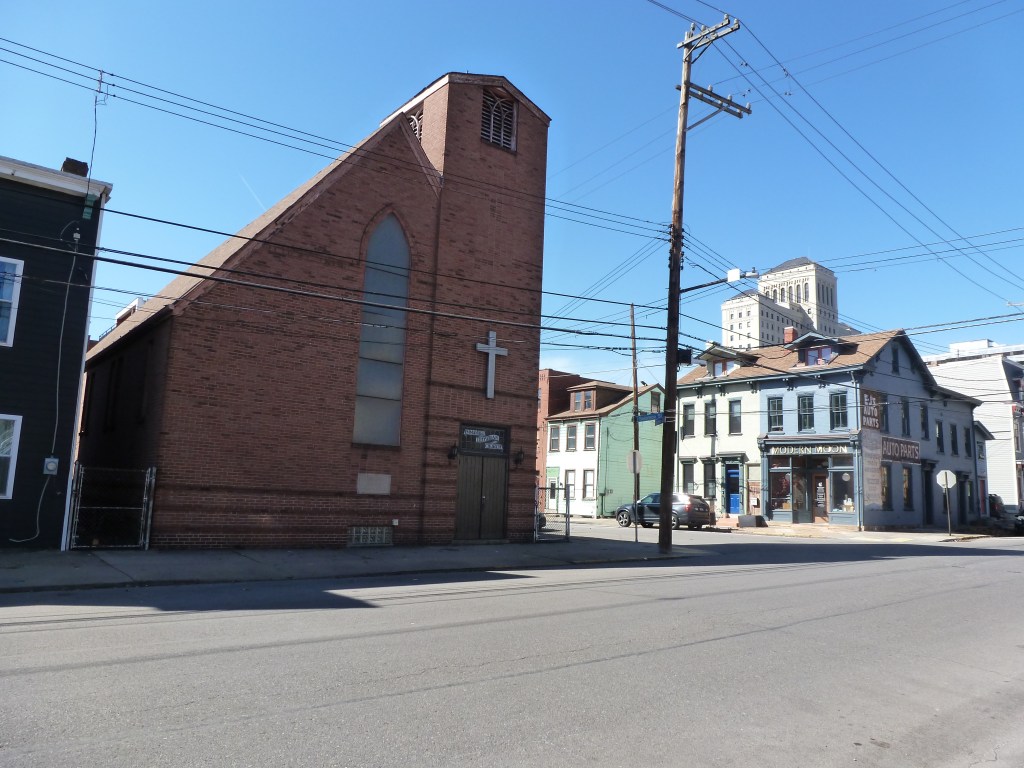
In 1926, there were 16 congregations listed in the Polk Directory. They were concentrated in the west and central parts of the neighborhood. While many of their buildings still stand, nearly half were victims of the freeway. The remaining neighborhood provided context clues to approximate where they were once located.
Neighborhood Statistics (Out of 70 in this Series)
59th largest by acreage
7th highest number of religious sites
4th most sites/acre
Locations
The map below shows the locations of the 16 congregations listed in the 1926 directory for East Allegheny (the dotted line marks the neighborhood boundary).
What are they now?
The table below matches the 16 congregations listed in the 1926 directory with the current use of the site.
1926 Congregation Name
By 2026 the Congregation’s Building is:
Avery Mission African Methodist Episcopal Zion Church
replaced with a parking lot/freeway
Bethel Israel Synagogue
replaced with a parking lot
Eighth Spiritualists
replaced with a freeway
First Spiritualists
mixed-use building still stands, nonsecular uses
Madison Avenue Immanuel Evangelical Lutheran Church
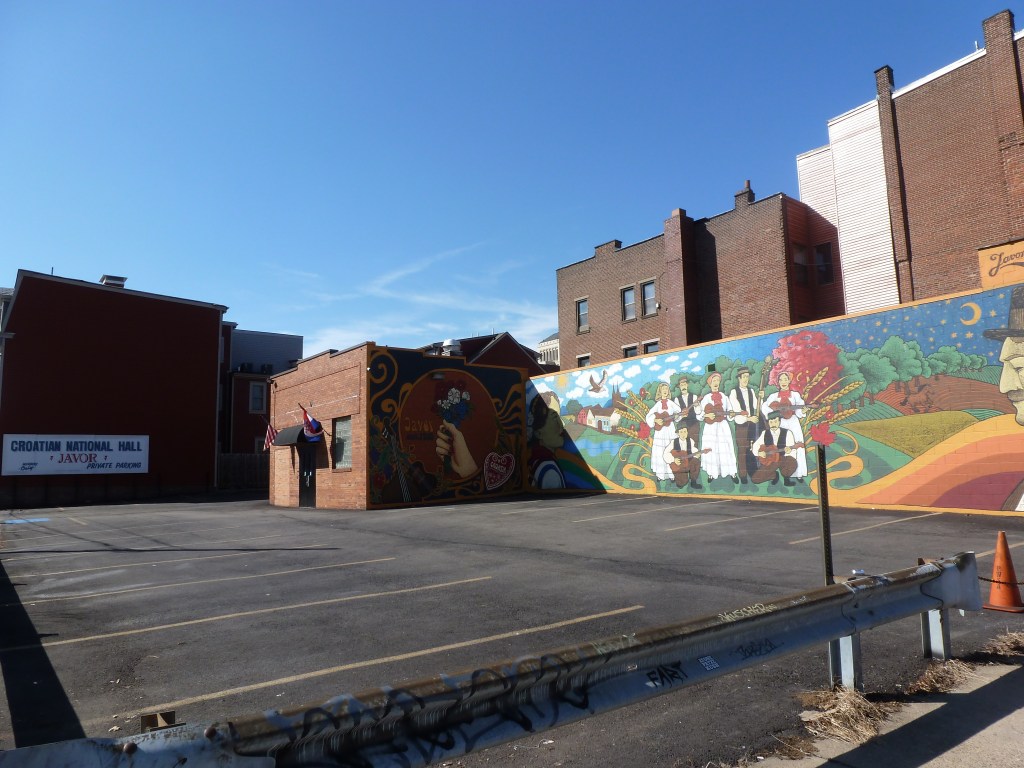
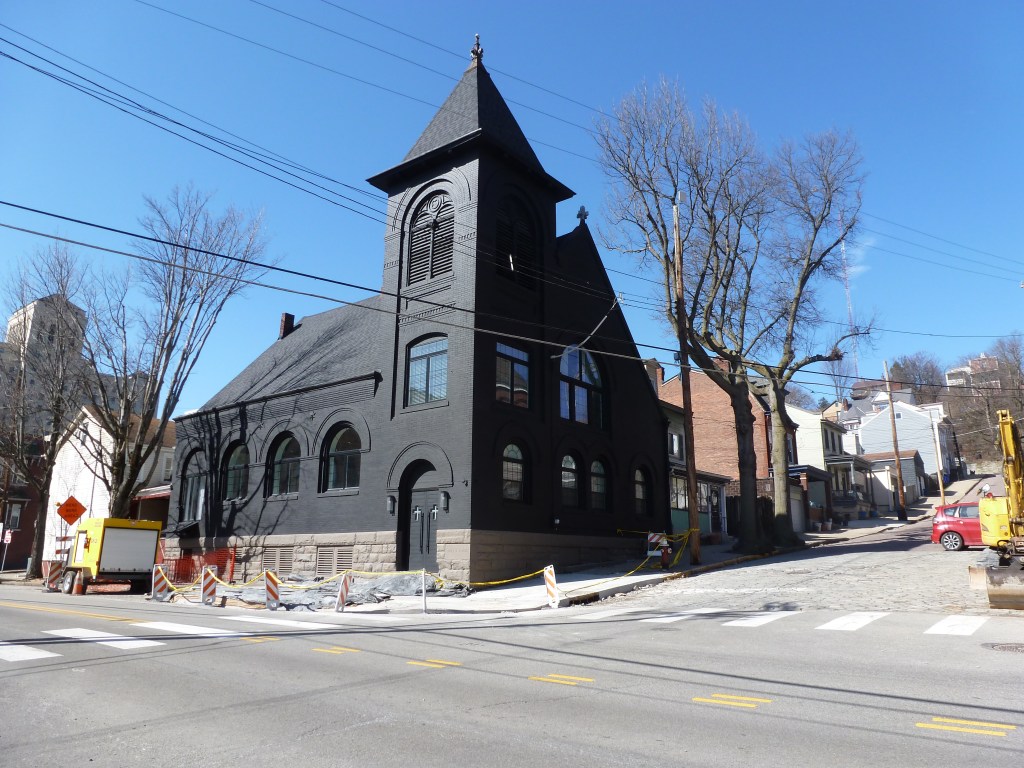
converted to community arts center
Mt. Hope Spiritualists
mixed-use building still stands, nonsecular uses
Providence Presbyterian Church
replaced with a freeway
Simpson Methodist Episcopal Church
replaced with a freeway
St. Emmanuel (Slovak) Evangelical Lutheran Church
vacant
St. John’s Evangelical Lutheran Church
replaced with a freeway
St. Mark’s Evangelical Lutheran Church
converted to unknown secular use
St. Mary’s (German) Catholic Church
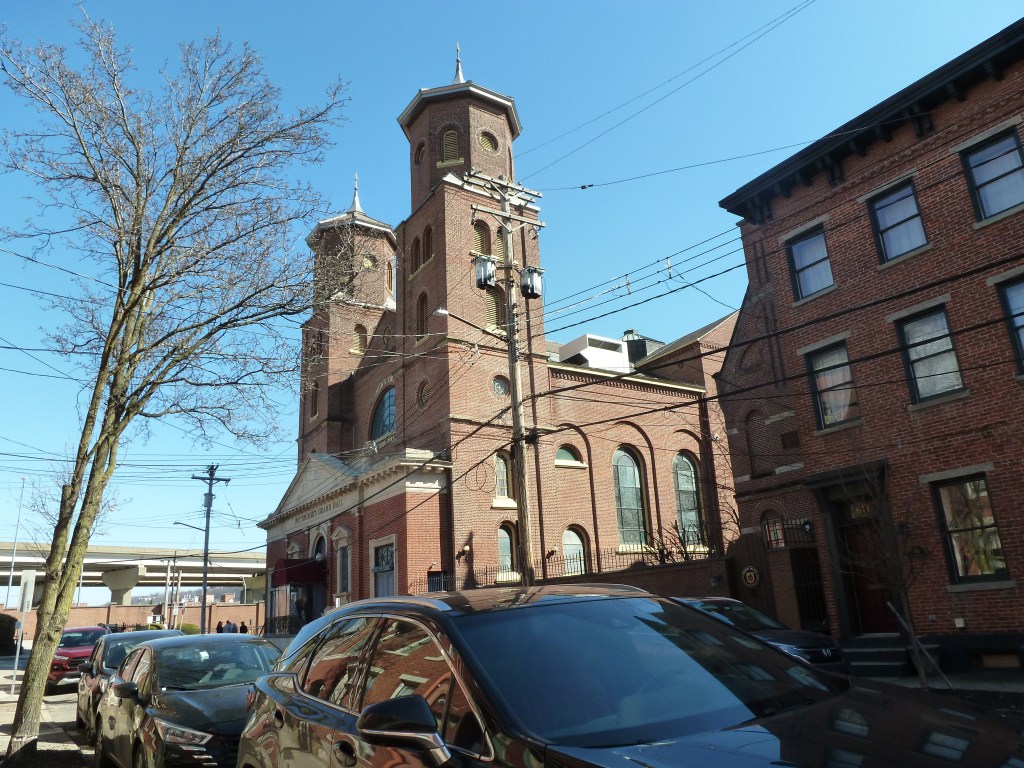
converted to rental hall/catering
St. Matthew’s (German) Evangelical Lutheran Church
converted to youth service use
St. Paul’s German Evangelical Church
replaced with a freeway
St. Peter’s Evangelical Lutheran Church
converted to housing
Tenth United Presbyterian Church
changed to a different religious institution
Photos
Avery Mission African Methodist Episcopal Zion site
Beth Israel Synagogue site
Eighth Spiritualists site
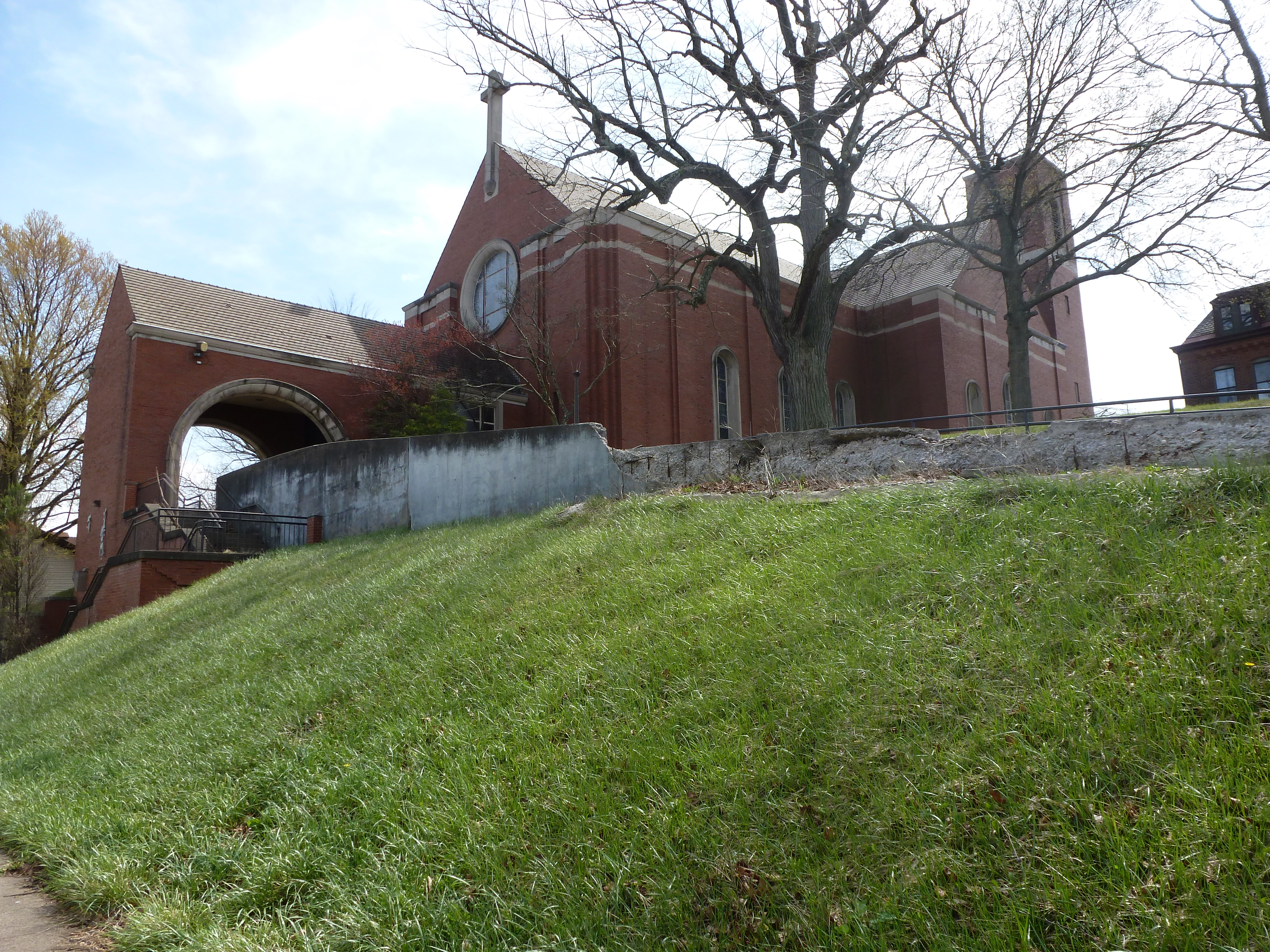
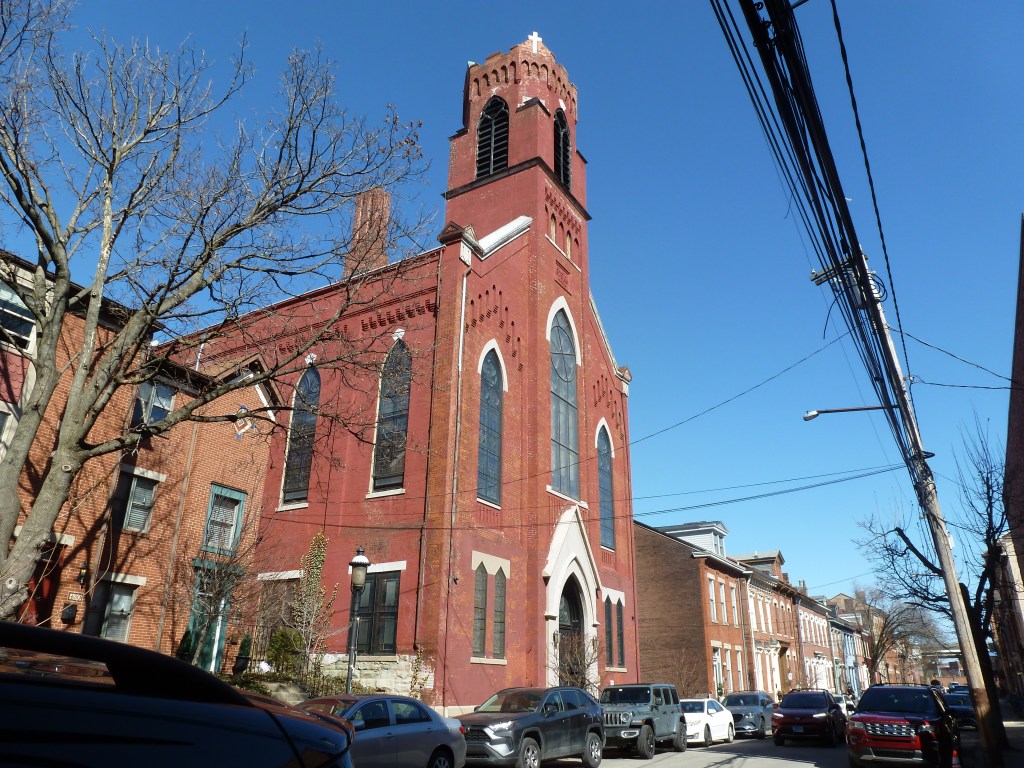
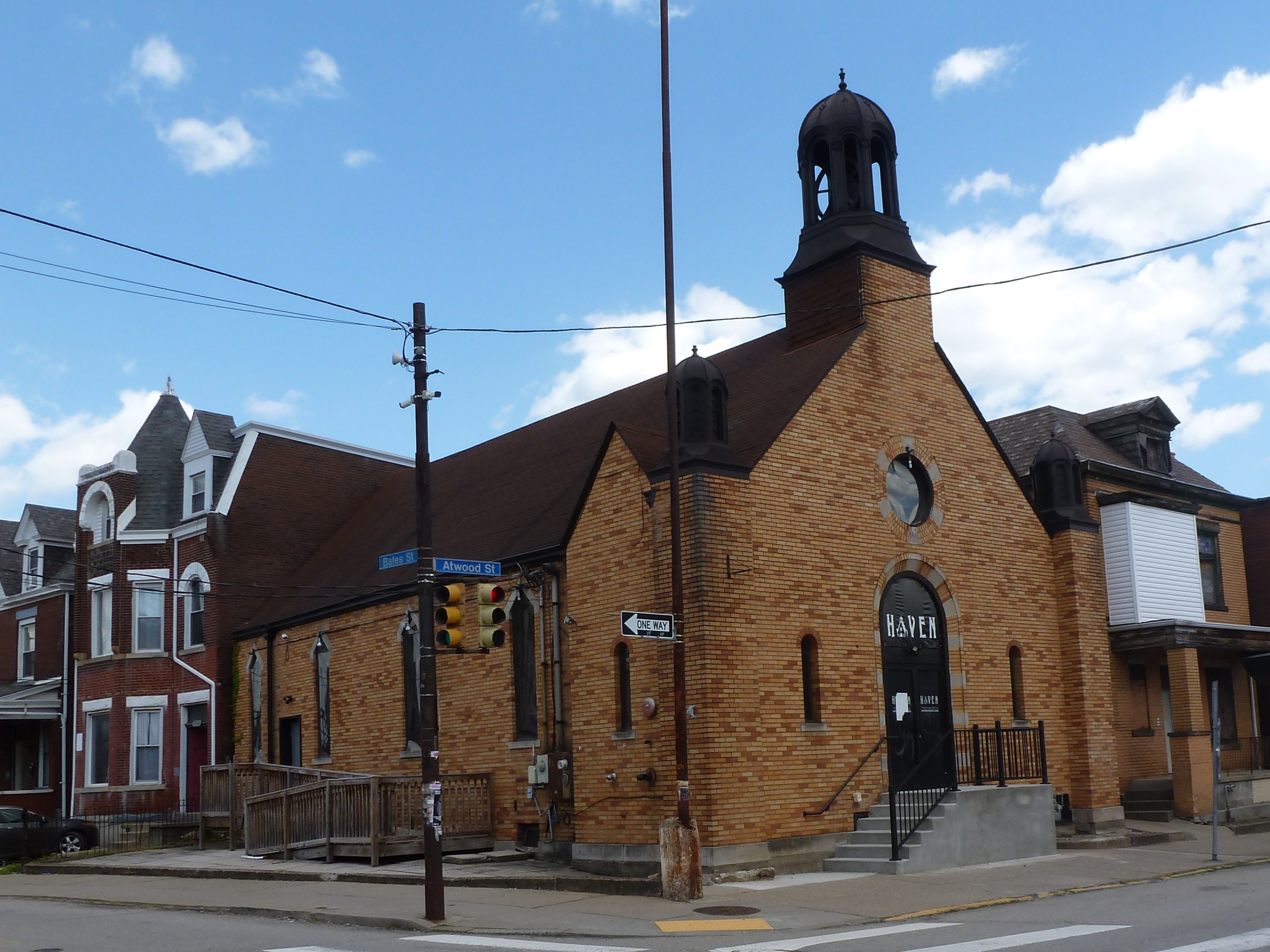
former Madison Avenue Immanuel Evangelical Lutheran Church
former Mt. Hope Spiritualists
Providence Presbyterian Church site
Simpson Methodist Episcopal Church site
St. Emmanuel Evangelical Lutheran Church (closed)
St. John’s Evangelical Lutheran Church site
former St. Mark’s Evangelical Lutheran Church
former St. Matthew’s Evangelical Lutheran Church
former Tenth United Presbyterian Church
former St. Peter’s Evangelical Lutheran Church (2026)
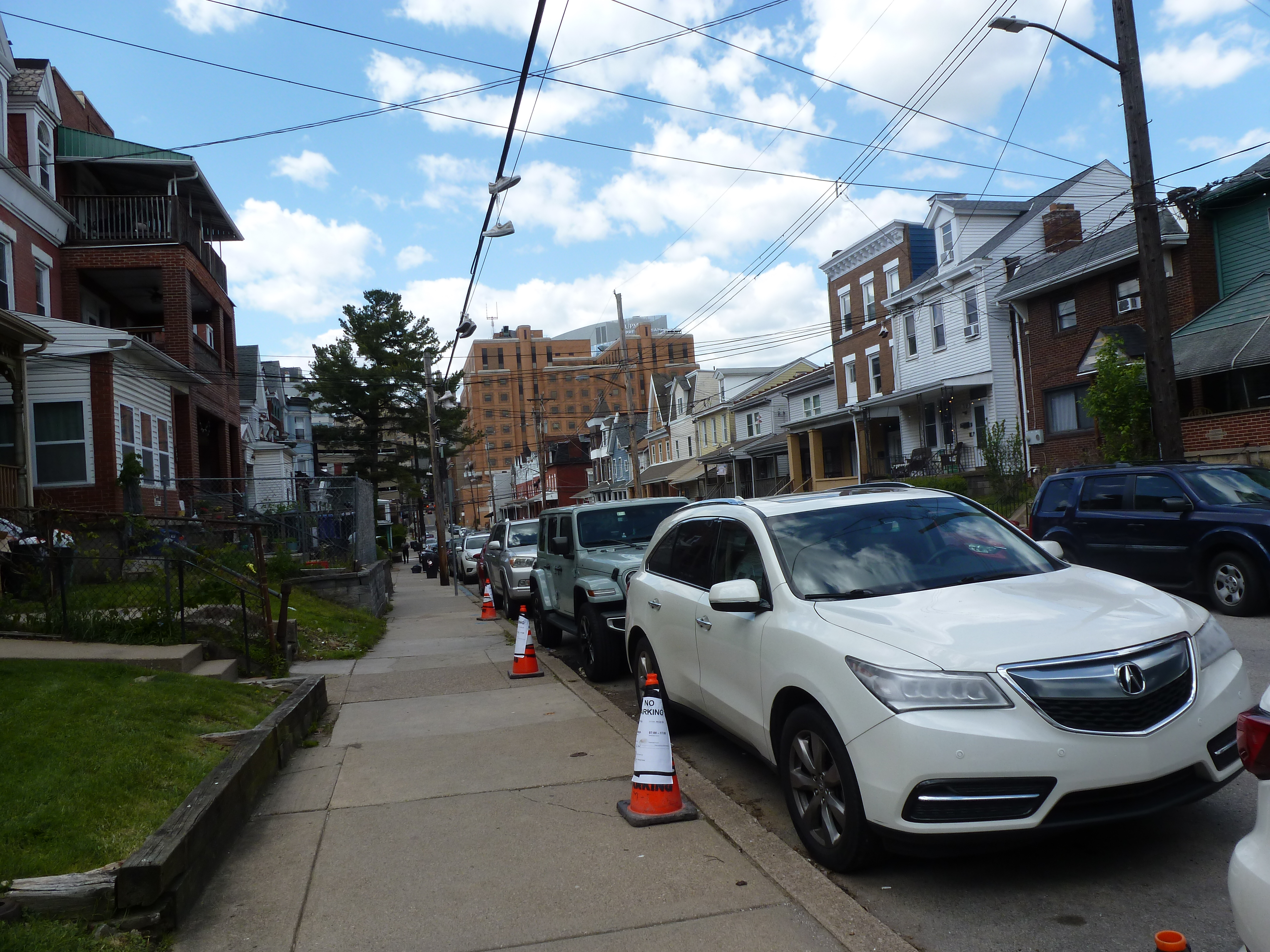
Central Oakland is an eclectic neighborhood. Single-family detached and attached homes, many subdivided into apartments, are mixed with vacant lots and buildings and apartment buildings from 100+ years ago, 50 years ago, and recent decades. Some buildings have first floor or basement commercial uses. Many come right up to the sidewalk, others are set far enough back to pull a car fully off the sidewalk, and some are far enough back to have a modest grass front yard.
Overshadowed by the University of Pittsburgh and multiple UPMC hospital complexes, the neighborhood is a popular off-campus housing choice for students, often to the chagrin of the long-term homeowners in the neighborhood. The large volume of temporary residents (students) may be a contributing factor for why all four of the sites listed under “churches” in the 1926 city directory are no longer used for religious purposes.
Neighborhood Statistics (Out of 70 in this Series)
52nd largest by acreage
41st highest number of sites (multi-way tie)
23rd most sites/acre
Locations
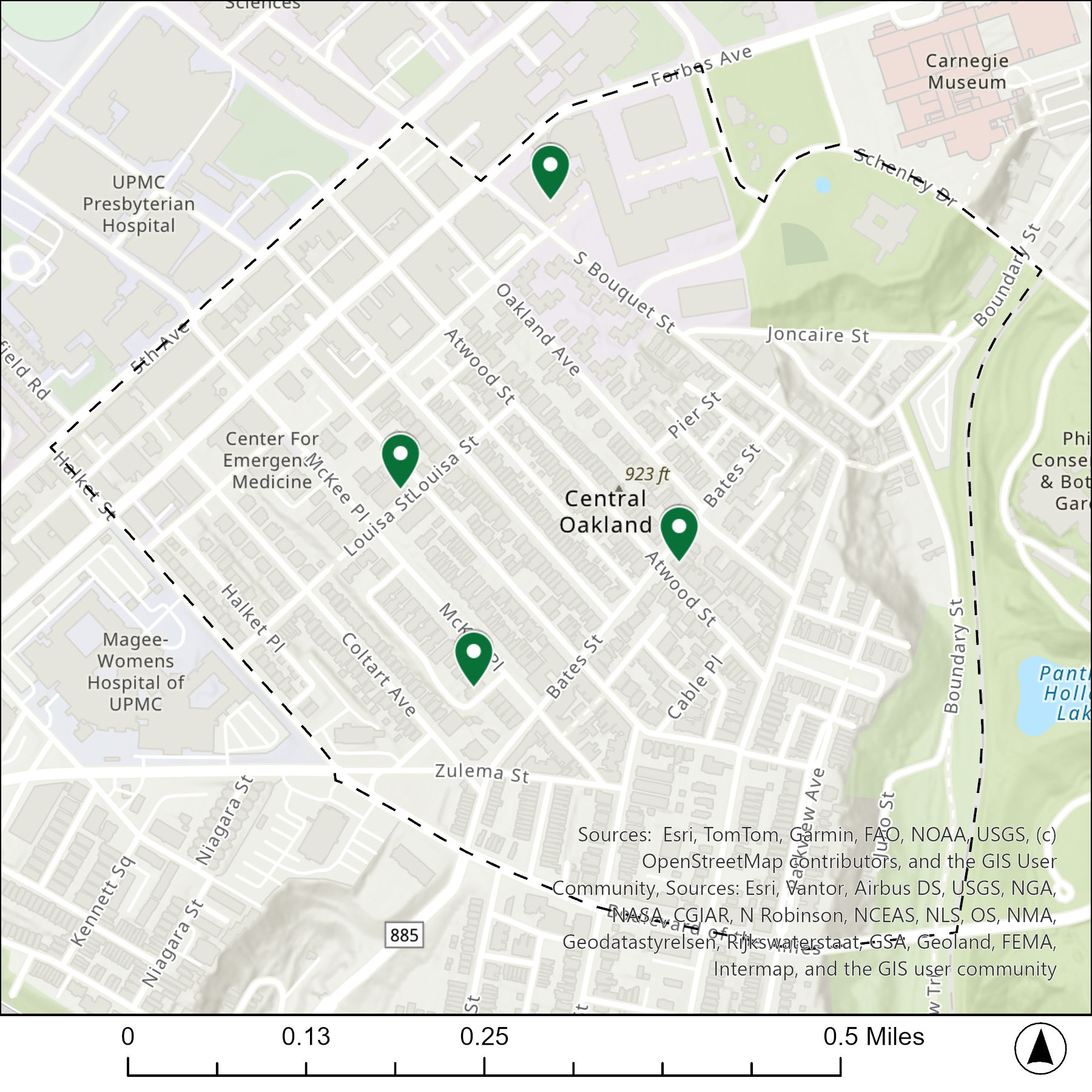
The map below shows the locations of the 4 congregations listed in the 1926 directory for Central Oakland (the dotted line marks the neighborhood boundary).
What are they now?
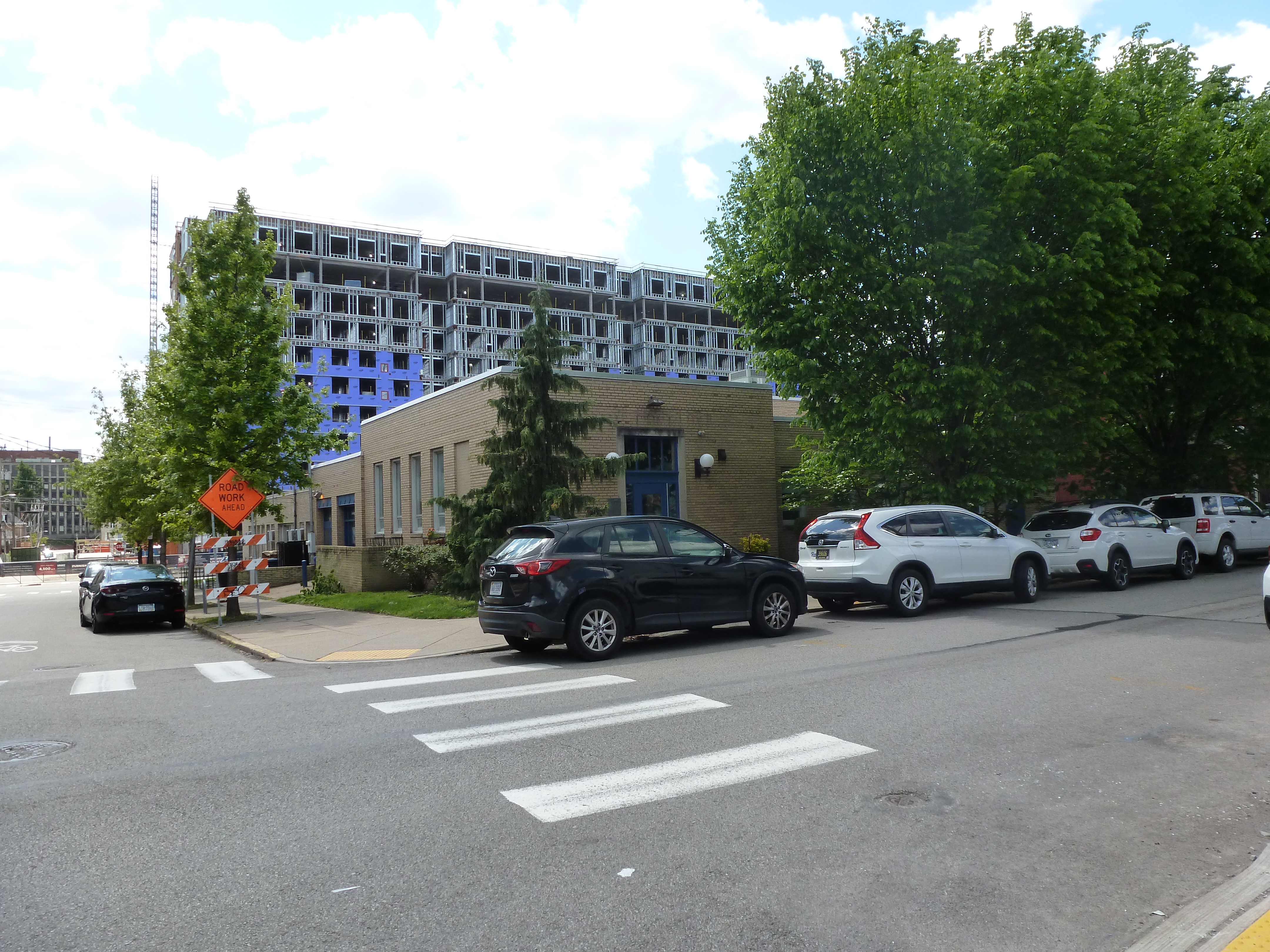
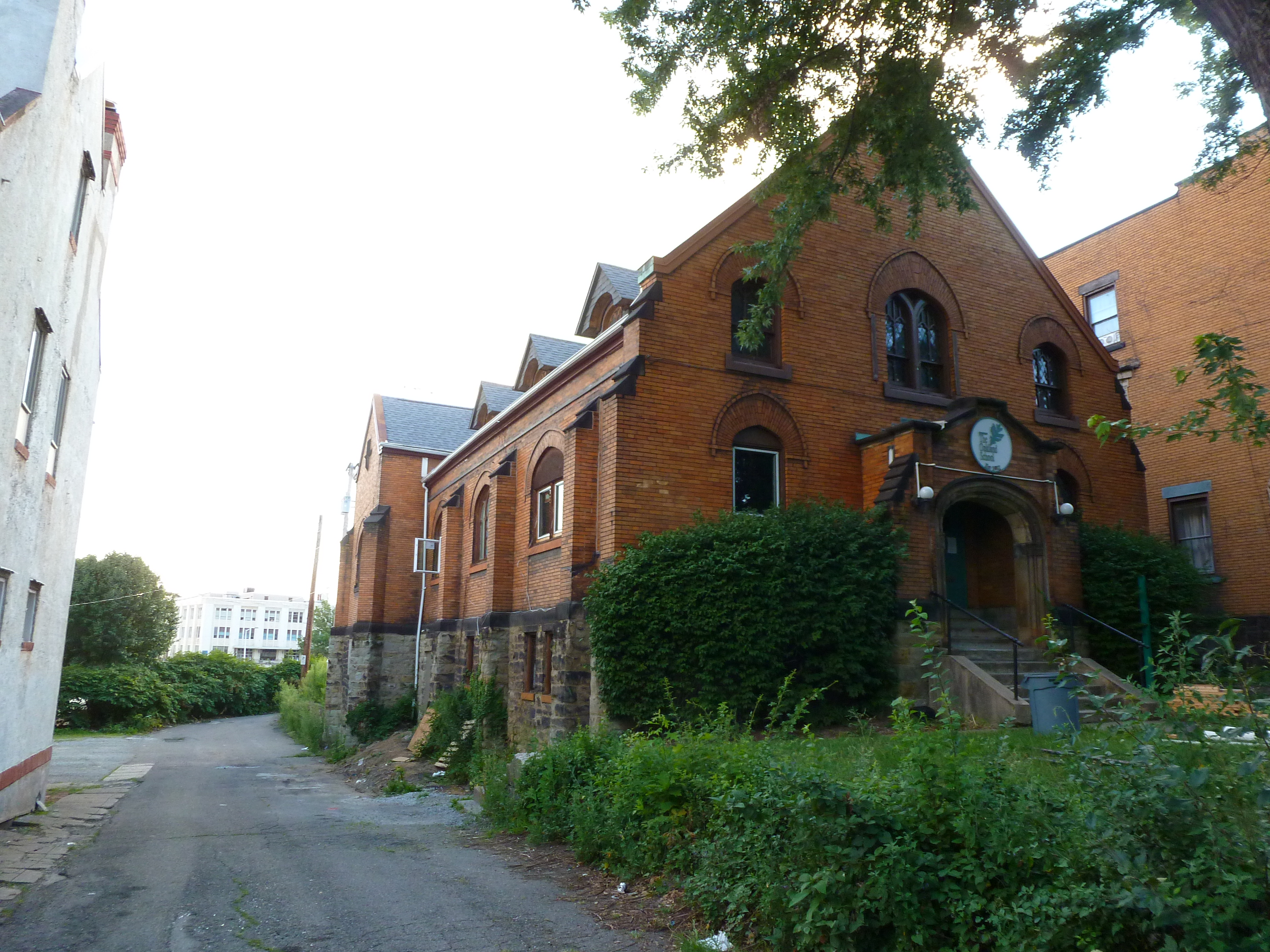
The table below matches the 4 congregations listed in the 1926 directory with the current use of the site.
View from Estella Street and Loyal Way looking northwest
Brookline Neighborhood
Brookline is a neighborhood that grew rapidly with advances in transportation technology and routes. The Mt. Washington Transit Tunnel (1904) provided efficient street car access between the southern neighborhoods and downtown Pittsburgh while the Liberty Tunnels (1924) provided efficient automobile access. A steep climb up a wide curve at one end of the neighborhood follows the old street car route up to the main business district on Brookline Blvd. Other steep, but straighter, climbs provide multiple access points from the valleys on the east and west to the expansive residential neighborhoods.
The earliest residential booms grew out from the street car line and business district and the automobile access along the Pioneer Avenue ridge in a mostly grid-like pattern. Later, a post-WWII residential boom created additional residential sections with the curvilinear roads and cul-de-sacs popular in that suburban-centric time period, but perhaps also more compatible than a grid to the topographic variety of these areas.
Urban renewal brushed over this neighborhood, but only for the development and expansion of two parks in largely undeveloped parts of the neighborhood. In 1970, the Department of City Planning estimated that at most 7 families would need to be relocated for one of the parks.
Since then, Brookline has remained relatively stable, with significantly less vacancy than the City’s average. Six of the seven religious sites remain active for religious worship, although only two of those are still the same congregations as in 1926.
Neighborhood Statistics (Out of 70 in this Series)
2nd largest by acreage
21st highest number of religious sites (multi-way tie)
61st most sites/acre
Locations
The map below shows the locations of the 7 congregations listed in the 1926 directory for Brookline (the dotted line marks the neighborhood boundary).
What are they now?
The table below matches the 7 congregations listed in the 1926 directory with the current use of the site.
GoFish! was a fundraiser in Erie, PA, in 2001. “Stained Glass Bass” by Ed Grout & Creators from the Black Lagoon was one of the fish I caught at Splash Lagoon summer 2025.