Homage in Bridge Reconstruction

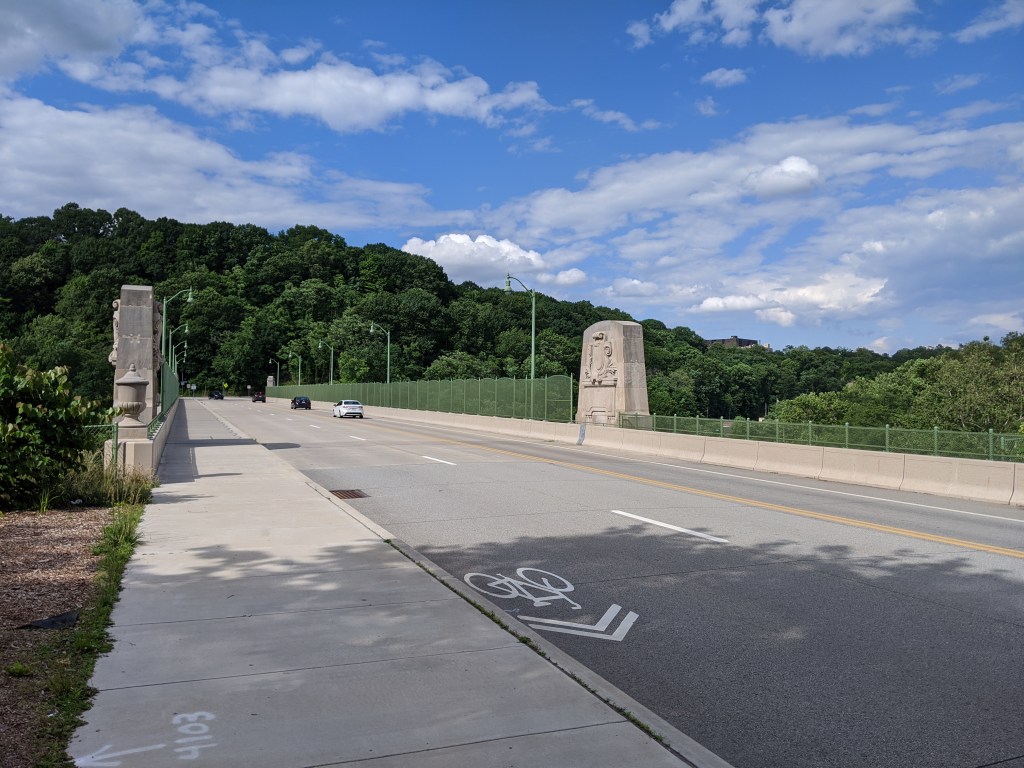
I’ve written before about how some bridges pay homage to the ones they replaced. Pittsburgh’s Greenfield and Heth’s Run Bridges did this. When writing about those bridges, I assumed that this approach might reassure a community by honoring the local memory and thereby maintaining a sense of stability. However, this was only a guess. While I had used the old Heth’s Run Bridge hundreds of times, I didn’t know it was a bridge until shortly before its replacement and most of its characteristics features had been removed, buried, or eroded long before. I don’t know if I had ever been on the Greenfield Bridge before the day I intentionally walked it for this blog. So I had no emotional connection to that bridge. Therefore, I cannot speak personally about the homage these bridges paid to the past.

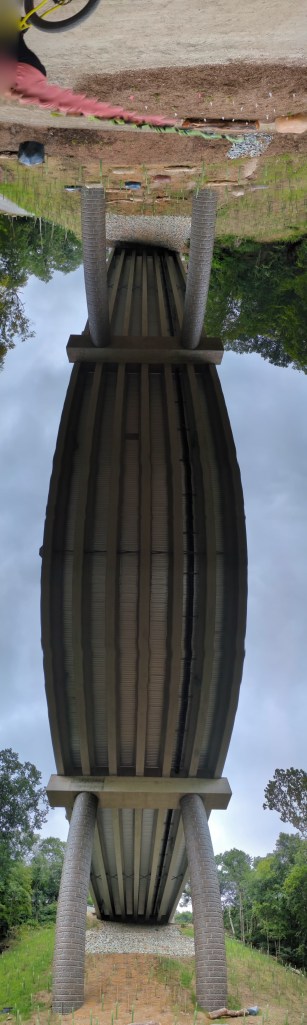
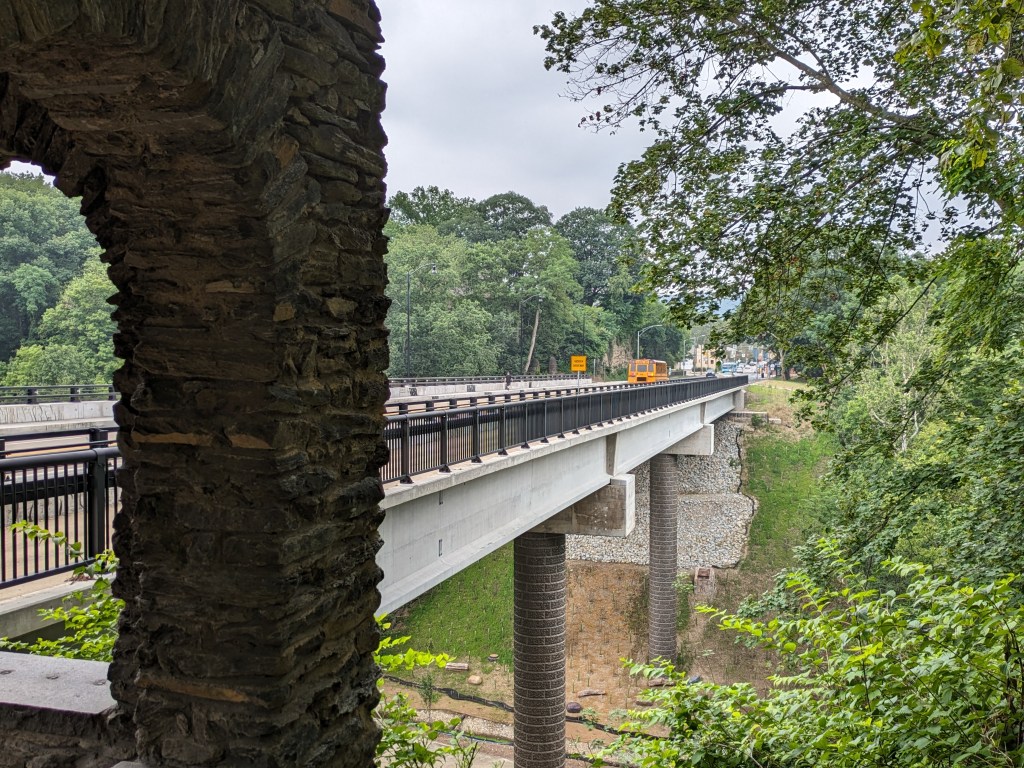
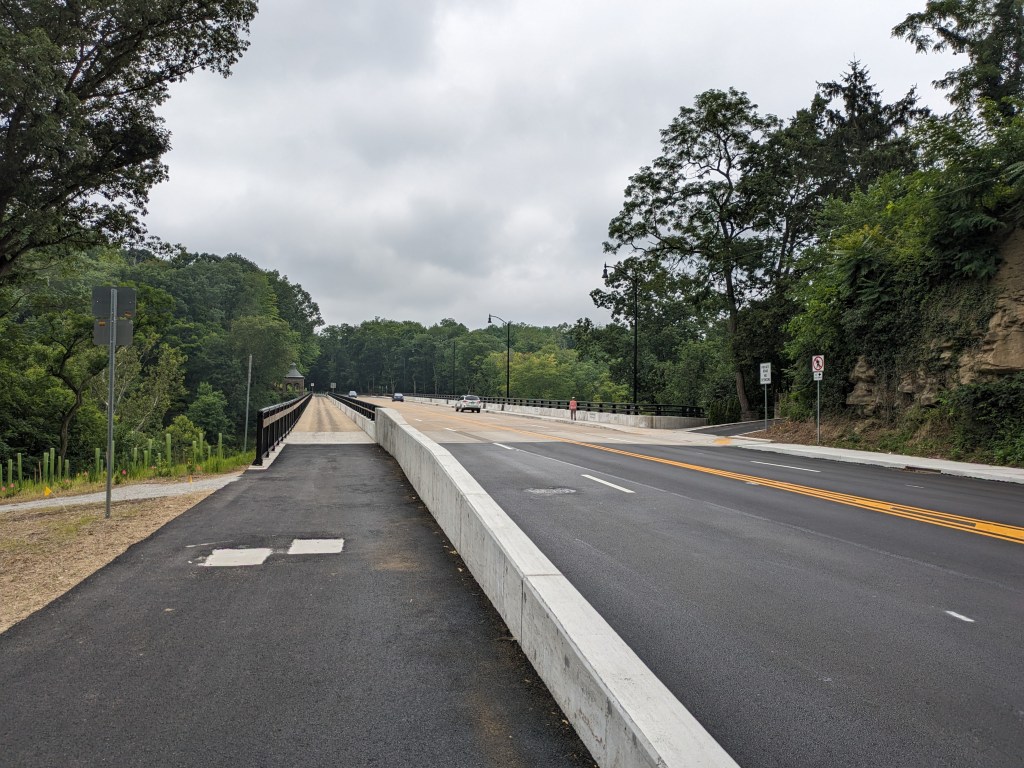
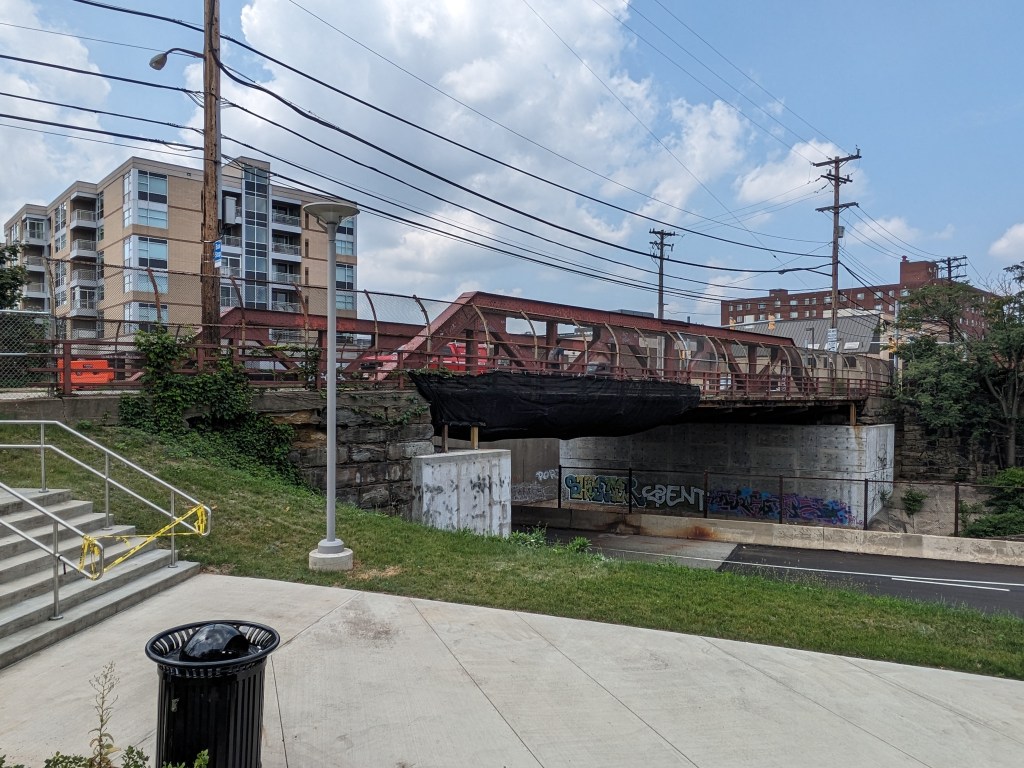
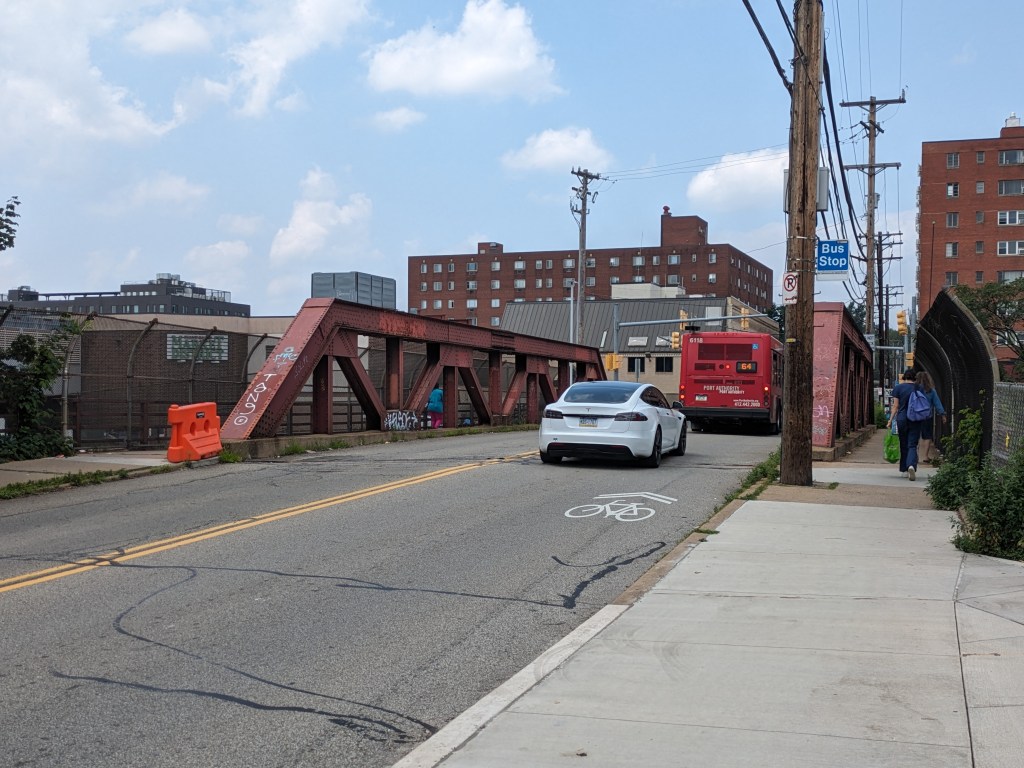
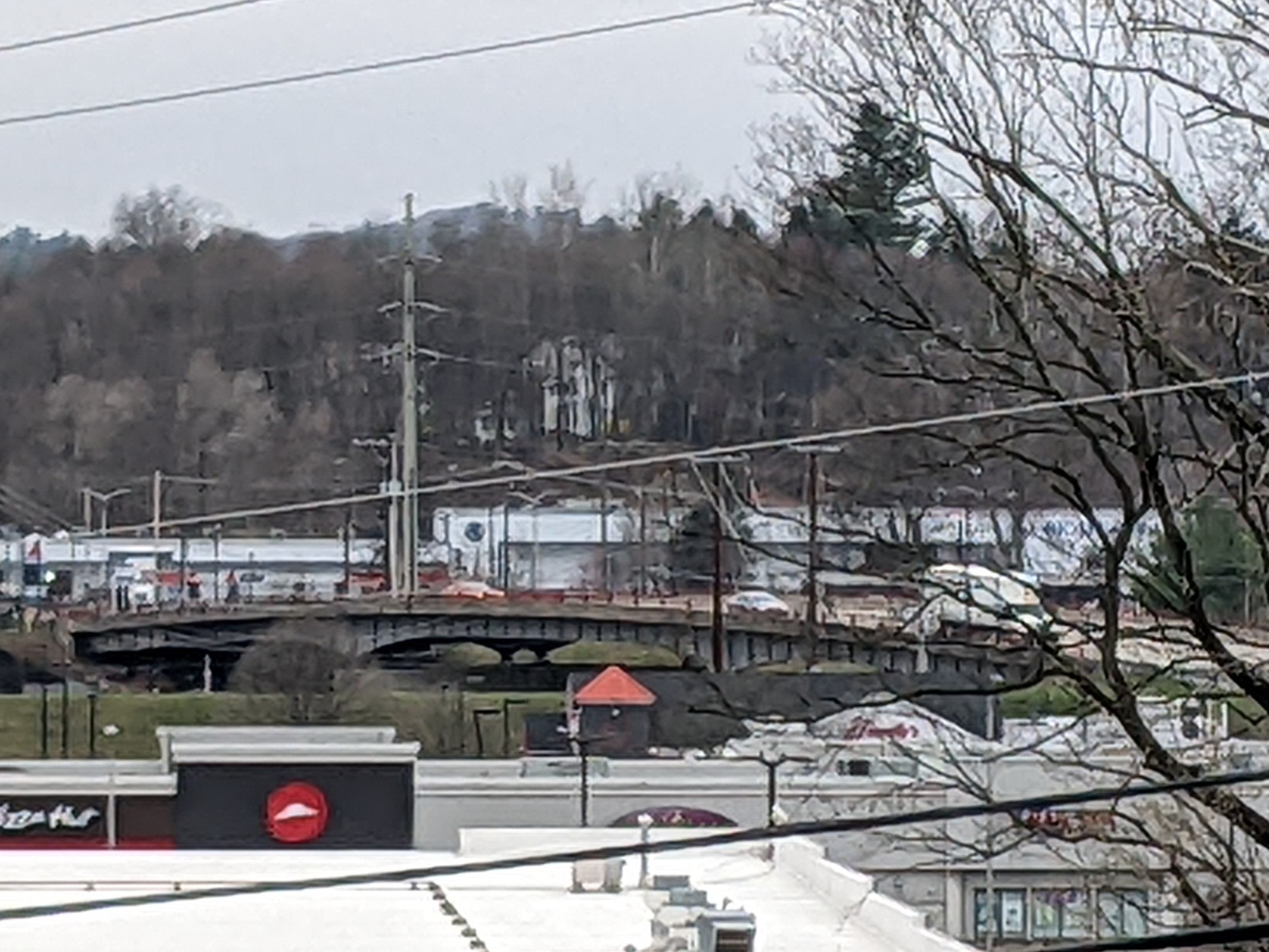
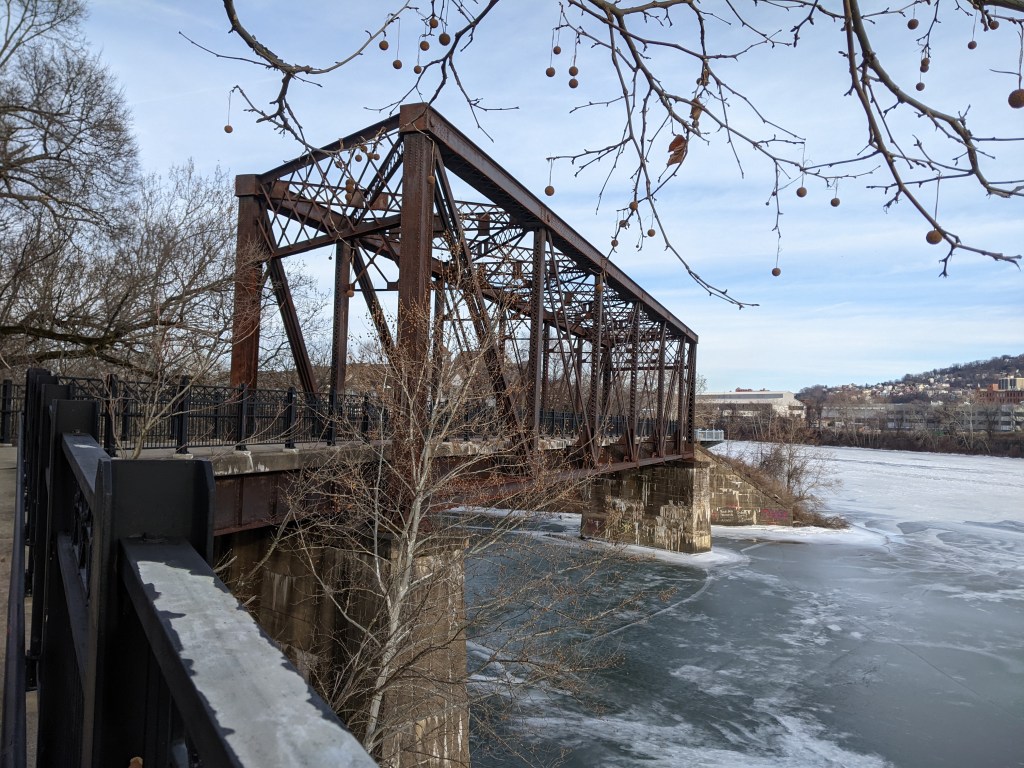
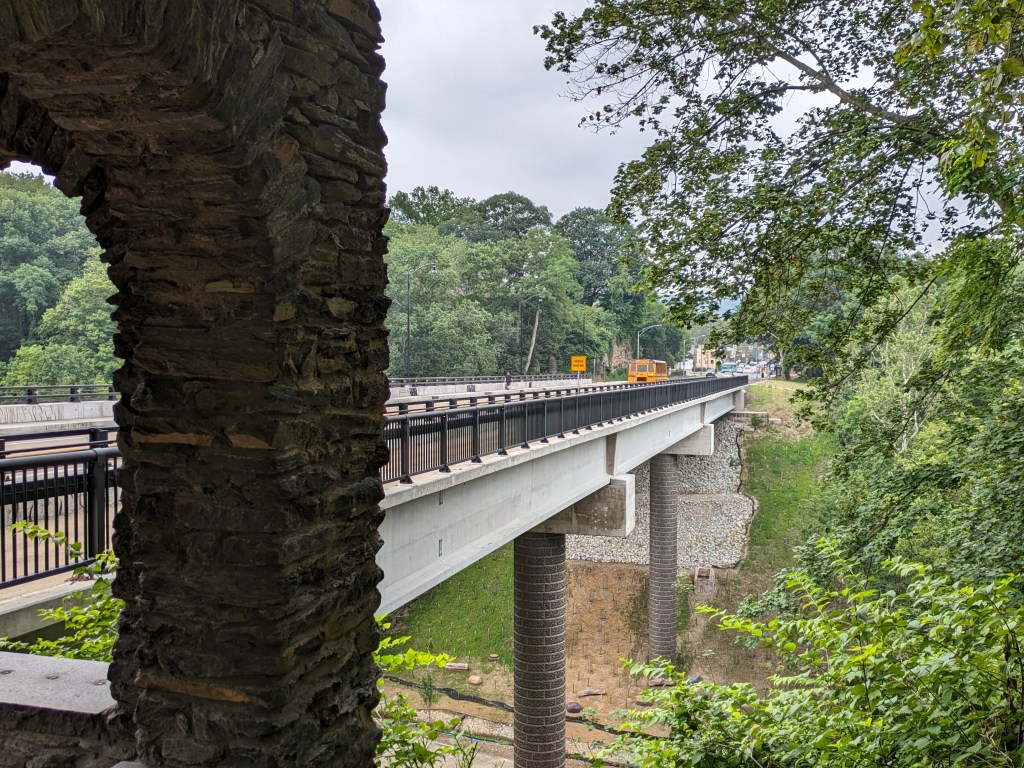
When I arrived in East Stroudsburg, the blood-red, rounded through-truss bridge was no longer there (officially, it was a Warren pony truss style). This bridge had been an important landmark for me as a child, probably because its design was distinctive. It made me smile when I saw the new bridge had paid homage to the shape of the former truss. While the change of color and style of the bridge was significant, I felt a sense of comfort at the continuity created by the way the new design acknowledged the former bridge.

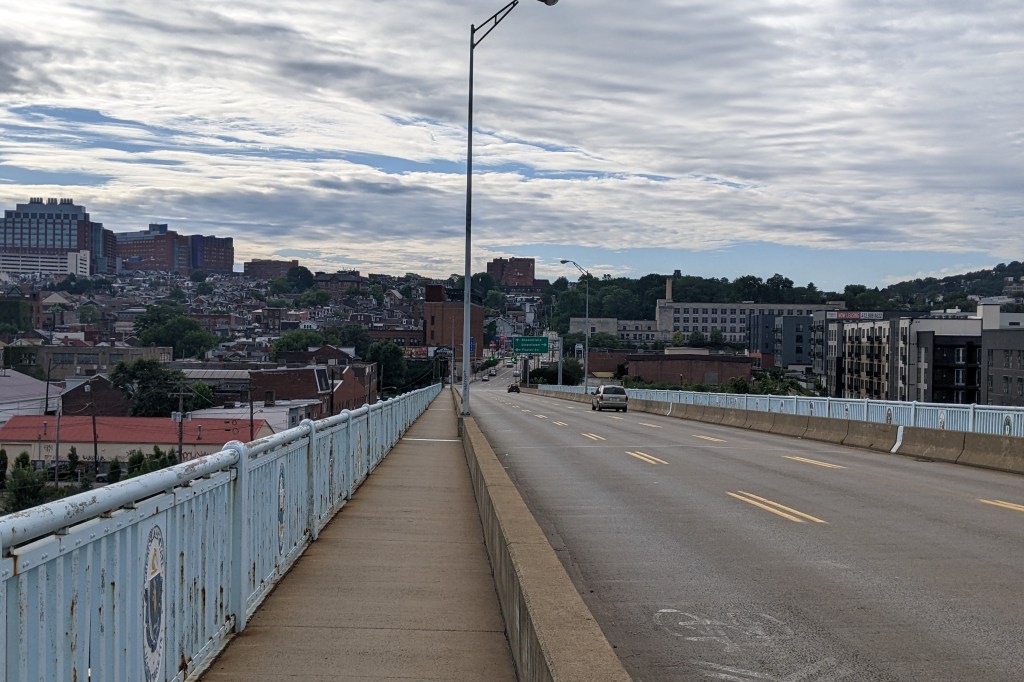
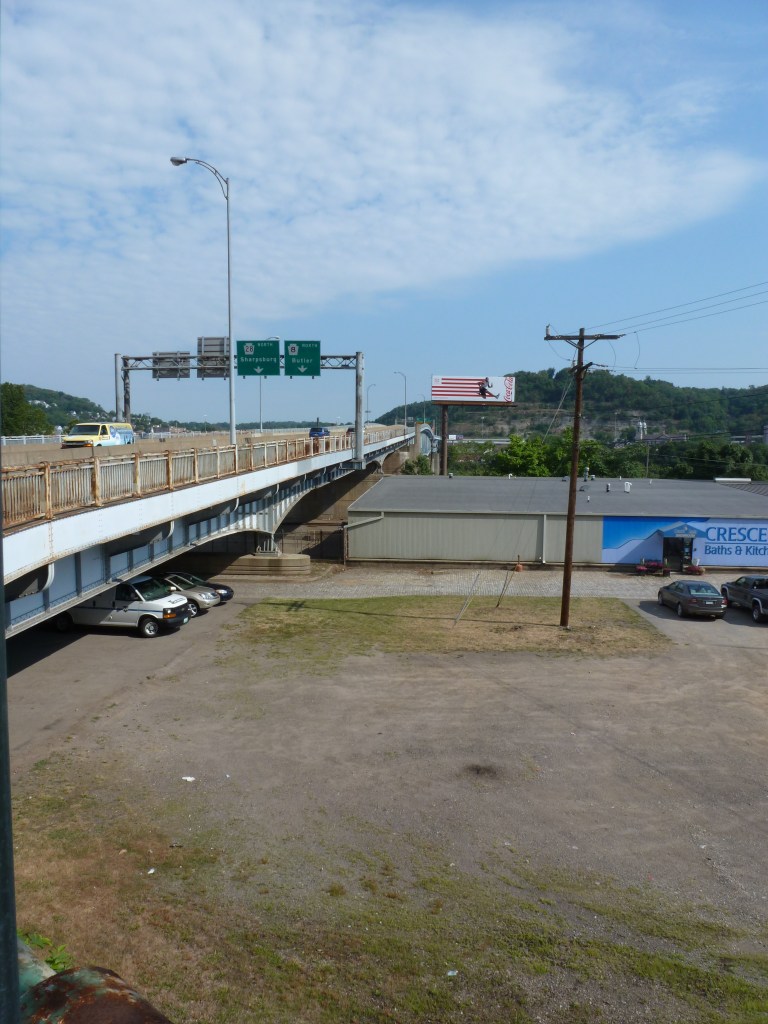
Down the hill from this bridge is the Interborough Bridge. This bridge connecting East Stroudsburg and Stroudsburg used to be a through-truss, possibly also a Warren pony truss bridge. When it was destroyed by a flood in 1955, the replacement did not pay homage to the past. The plain replacement bridge is very utilitarian and not much else. My foot had reached the end of its stamina before I was able to walk across it on this trip – which was actually a relief. I walked across it at least once when I was a kid. I remember it feeling unpleasant. There are sidewalks, but the proportion of vehicles lanes is quite large, cars move fast, and either end features auto-oriented uses. The one nice feature of the bridge are the views of Brodheads Creek, but there are plenty other more pleasant vantage points to view the creek.

In another form of homage, Brodheads Creek, the dividing line between East Stroudsburg and Stroudsburg, is named after Daniel Brodhead. On this trip, I learned that in 1737 Daniel was the first white settler in the area to purchase his land from the descendants of William Penn instead of the Lenni Lenape, the indigenous people who still lived on the land. Although, Penn began purchasing the land that the King of England had given him from the Lenape in 1683, it seems that the area around East Stroudsburg and Stroudsburg had not been purchased by the Penn family before they started selling it to settlers. The Walking Purchase of 1737 attempted to resolve this issue, though it seems the terms of the purchase were not explained clearly the Lenni Lenape beforehand. (Monroe County Historical Association, November 11, 2005; Pennsylvania Historical & Museum Commission)
Urban Renewal in the Stroudsburgs

After WWII, while the federal government was building highways — sometimes through communities — and subsidizing and incentivizing the construction and purchase of detached single-family dwellings — that is, if you were of the “right” race, ethnicity, and economic level, — there was a growing sense that cities, and perhaps even towns, weren’t safe places to live. As people and jobs, or jobs and people, or some people and jobs starting leaving cities in large numbers, the cities started looking for ways to reinvent themselves to reattract people and jobs in order to survive. Pittsburgh was a leader at that time, inventing and defining the process of Urban Renewal. Other cities like Bethlehem looked up to Pittsburgh and tried to adopt the strategies and techniques of Urban Renewal used in Pittsburgh. Often these cities, as illustrated by Bethlehem, lacked the resources and power to pull off Urban Renewal on the same scale as Pittsburgh.

Revisiting the once familiar environs of Stroudsburg (pop. 5,950) and East Stroudsburg (pop. 9,669), I realized that even these small towns adopted practices and principals of Urban Renewal. And similar to the pairing of Allentown (pop. 125,944) and Bethlehem (pop.75,624), the larger of the two municipalities implemented more Urban Renewal projects while the smaller implemented more historic preservation practices.

Below is a very biased sample of the the Urban Renewal practices I believe I identified in the Stroudsburgs:

Urban Renewal Practice #1 – The Ring Road

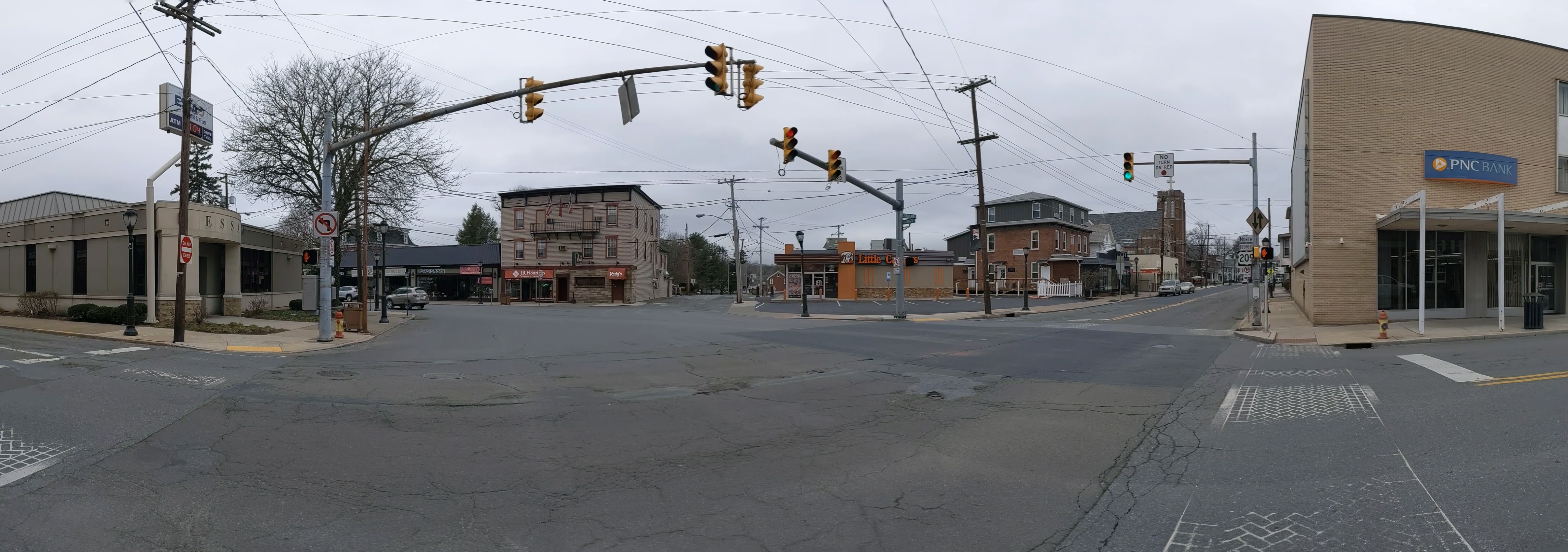
Both boroughs contain a partial or complete loop of one-way streets around portions of their downtowns. This traffic pattern now appears to me as strongly reminiscent of the circles Pittsburgh built around important commercial neighborhoods – which subsequently nearly died, possibly because they were already dying, but probably aided by being choked off by these ring roads. In Stroudsburg and East Stroudsburg, it didn’t appear that the ring road has the same sort of death grip on the commercial enterprises they encircled. Several of the business I remembered were still operating and I didn’t notice significant numbers of vacant properties – though the couple vacant businesses I noticed were in East Stroudsburg. However, they weren’t areas that were tempting to explore more closely because they were sites developed along the second Urban Renewal practice.

Urban Renewal Practice #2 – Auto-oriented Uses

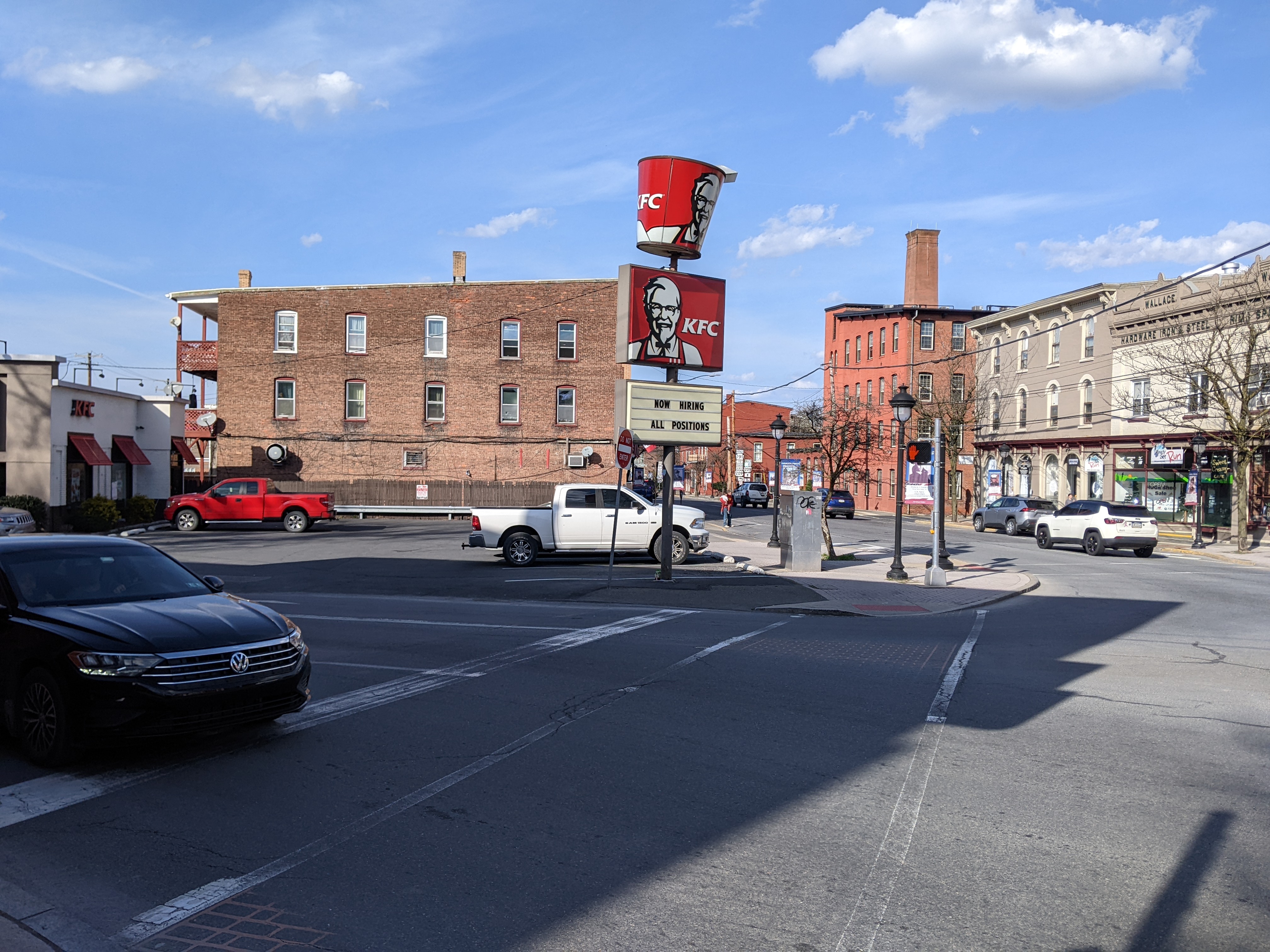
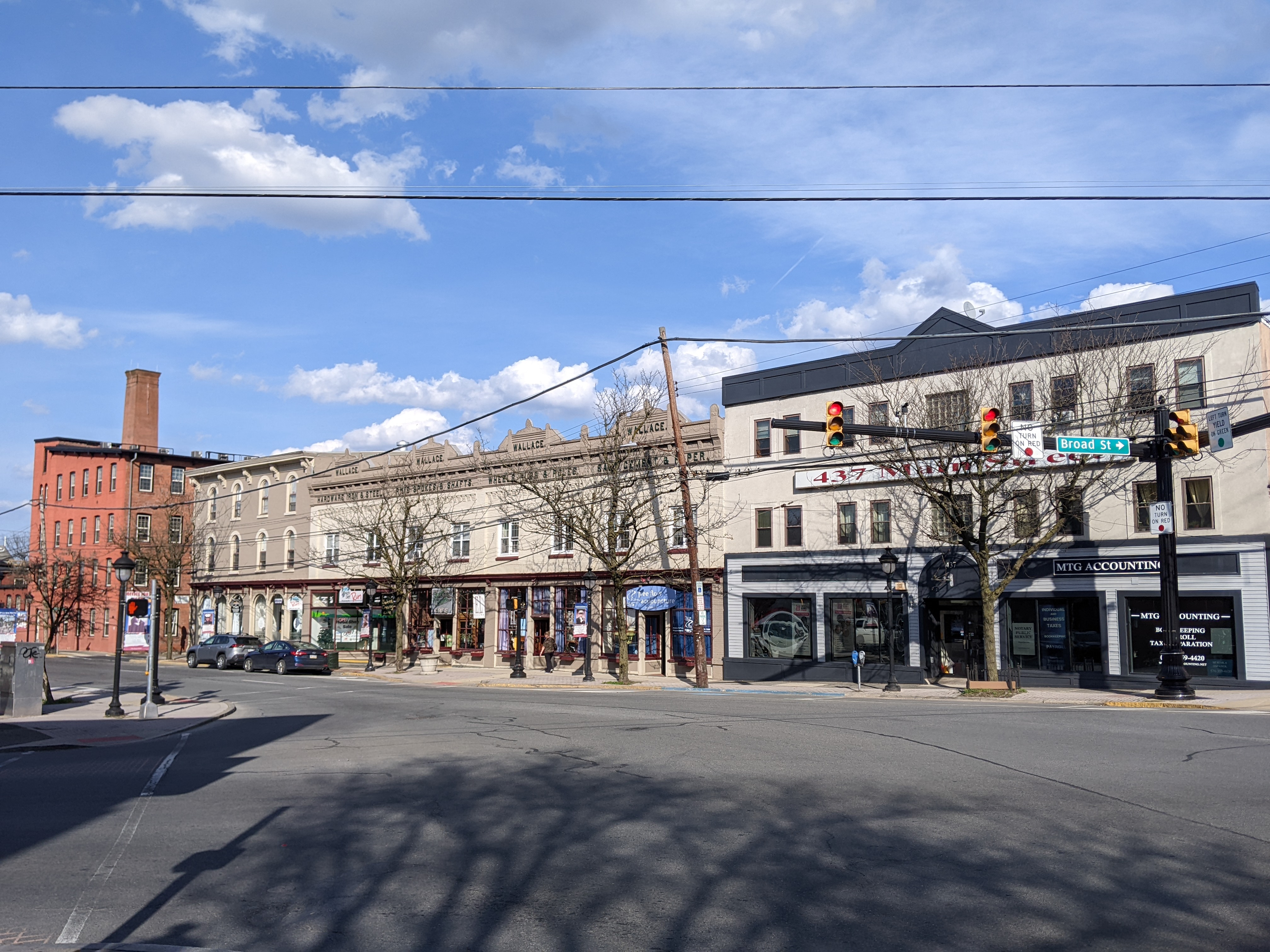
Both boroughs contained drive-through businesses in the center of their ring roads. In addition, strip malls are off to the right as you enter each borough on the ring road. In Stroudsburg, the auto-oriented uses felt like they were tightly centered on the ring road; nearby and spilling into the ring road was a dense, walkable downtown. On the other hand, in East Stroudsburg, it felt like the auto-oriented uses were spilling beyond the immediate environs of the ring road and into what was presumably once a much more extensive dense, walkable downtown.

Urban Renewal Practice #3 – Demolition for Underutilized Parking Lots

Part of what made the experience in East Stroudsburg feel more auto-oriented was the larger number of visible paved lots, presumably for parking, but largely empty. While I was most likely day-dreaming about the plot of my latest story featuring either princesses or cowboys when I previously spent time in downtown East Stroudsburg, there was a feeling of familiarity in the near empty parking lots suggesting that I would have felt uncomfortable if they were actually parked to capacity in the same way I felt uncomfortable passing locations where trees I used to know had been cut down.

Washington Crossing Bridge

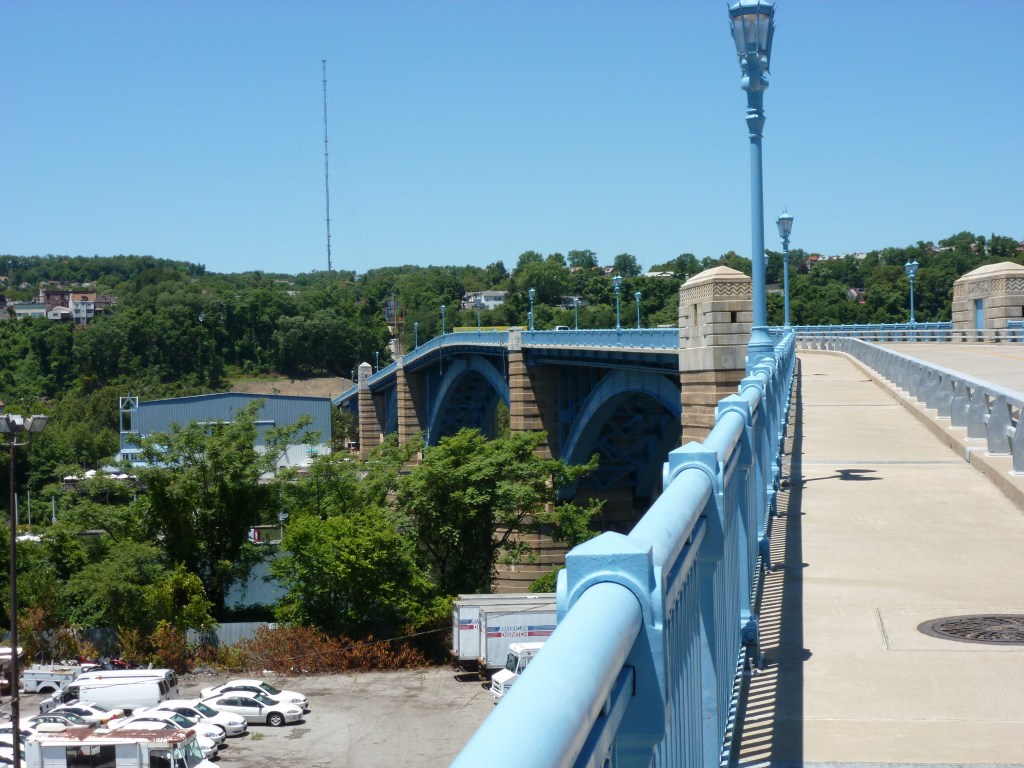
Last week, I unexpectedly found myself driving across the Washington Crossing Bridge. Once I got over the initial shock of finding myself driving on such a small bridge, I was struck by the parallels with other bridges I’ve encountered.

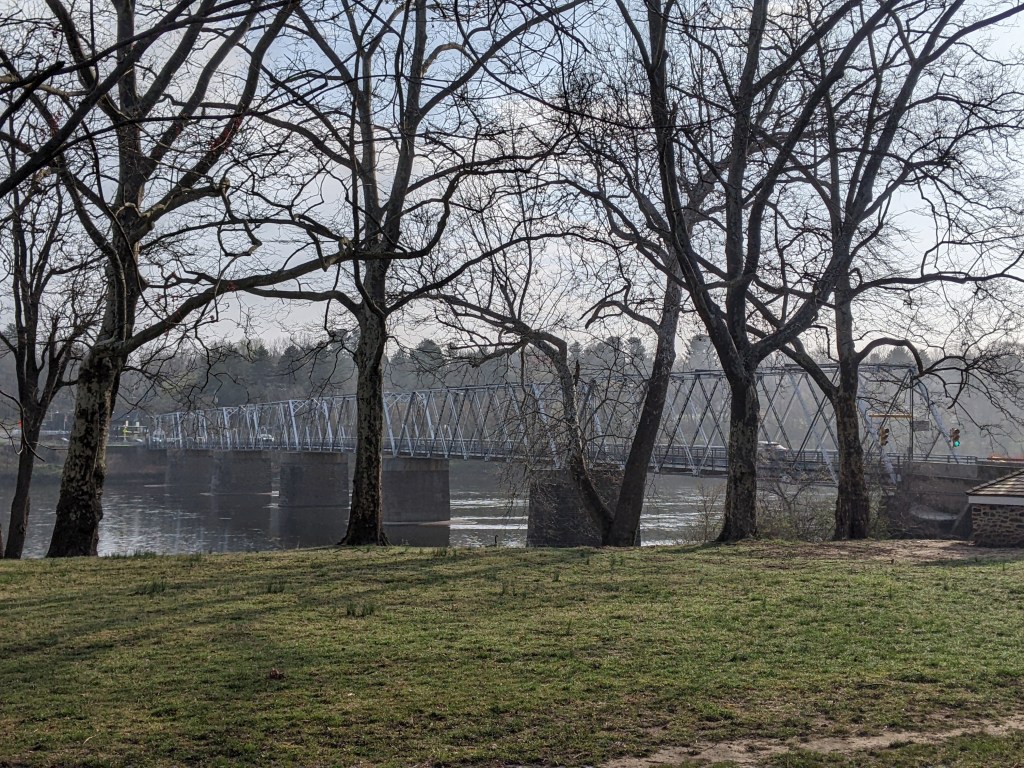
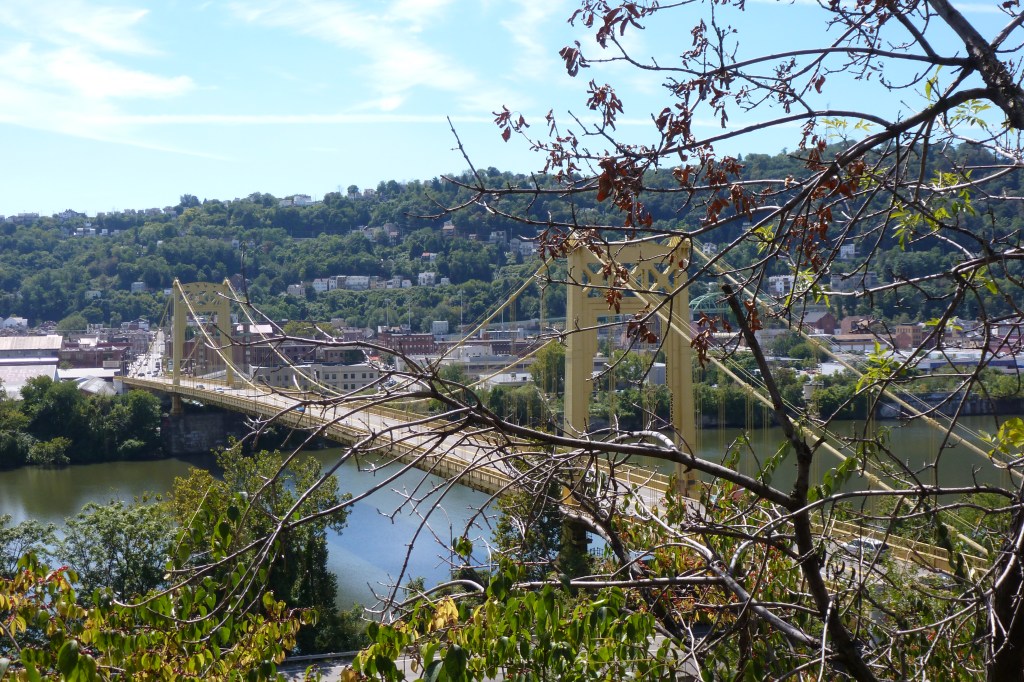
There was an immediate sense of deja vu having stumbled upon and walked across a similarly old and narrow bridge in 2017. The Market Street Bridge, Steubenville, bridges the Ohio River to connect Ohio and Pennsylvania; while the Washington Crossing Bridge bridges the Delaware River to connect New Jersey and Pennsylvania. Relying solely on my memory, I thought these two bridges were of the same design. However, looking back at my pictures, Market Street Bridge appears to be a hybrid suspension-truss bridge with the trusses painted yellow. The Washington Crossing Bridge is solely a truss bridge, with blue trusses. This leaves me with an unresolved sense of deja vu of having encountered a blue truss bridge of similar design somewhere once before.

The second parallel appeared when I stopped on the Pennsylvania side to figure out where I was and take more pictures of the bridge. A historic park made it easy to learn that this bridge and its surroundings were known as Washington Crossing. While I have a vague recollection of the story of Washington crossing the Delaware under the noses of the British Army, living in Pittsburgh, that crossing is eclipsed by his earlier crossing of the Allegheny River, when he fell in and had to spend the night on an island in the river before continuing on his mission on behalf of the British. The Allegheny River crossing is memorialized by the 40th Street Bridge‘s alternative name, Washington Crossing’s Bridge.

Best Pittsburgh Bridge?

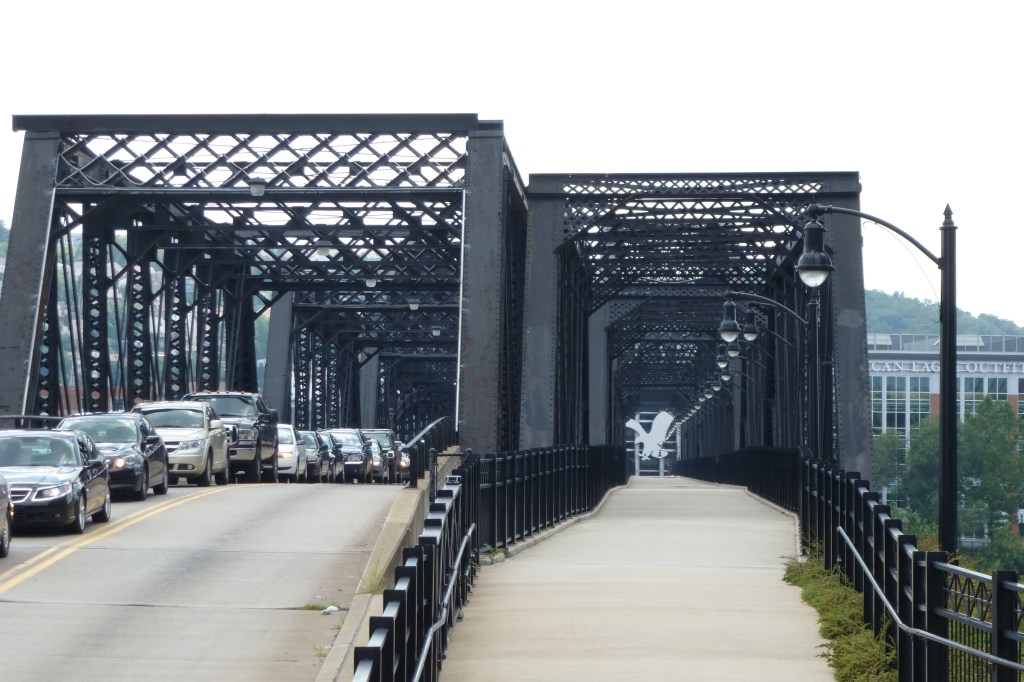
From time to time, someone will ask me which Pittsburgh bridge is my favorite. I typically answer the Smithfield Street Bridge. The shape and color of its trusses are unique in a city of golden bridges. The lights gently rising and falling along the curves the the trusses create a soft reflection on the river. Walking over it placed the stress of work on the other side of the river. Walking over it, it’s best not to look down at the holes rusted through the sidewalk that reveal the rushing water underneath.

This question came up again when my family was visiting for the holidays. I had postponed my first walk across the new Fern Hollow Bridge about a week to share the experience with them. While we were walking across it, I was asked what bridge(s) I liked in Pittsburgh. While I answered that the Smithfield Bridge is probably my favorite, we had experienced that one multiple times in the past, so I started to think about what are the other bridges I find interesting that are less visible than the Smithfield Bridge. This spurred an impromptu driving tour of bridges in Pittsburgh.

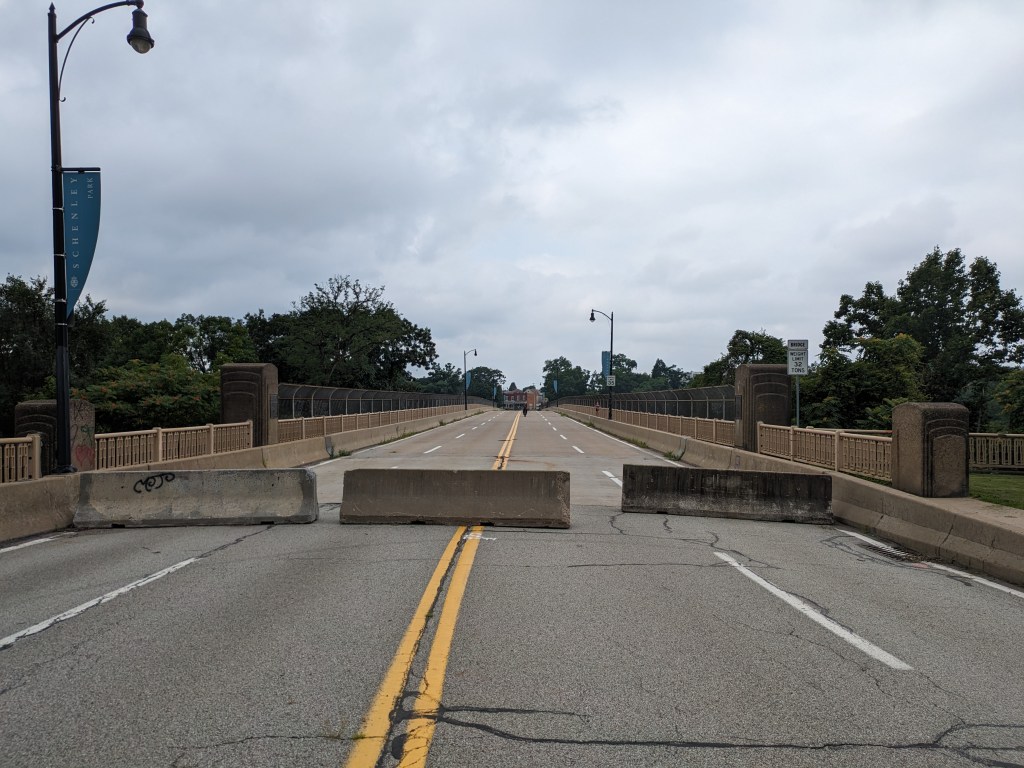
We went from the Fern Hollow Bridge to the Greenfield Bridge, as the last time we were all in Pittsburgh together we watched the cloud of dust from the implosion of the former bridge through the trees of Schenley Park. We passed the Hot Metal Bridge, Birmingham Bridge, and South 10th Street Bridge before passing through the Armstrong Tunnel for the fun of it. That positioned us to encounter the CAP – which is one of those bridges that doesn’t look like a bridge – on our way toward the Allegheny River. I added an extra turn so that we could pass over the 28th Street Bridge – the only through truss bridge over the busway – before crossing the 31st Street Bridge (my other favorite bridge to walk, except for the fact that it is out of the way). We got out of the car at this point to walk the pedestrian/bike trail bridge to Herr’s Island. While that was the end of this unofficial tour, we did pass by the 40th Street Bridge and cross the R.D. Fleming or 62nd Street Bridge to complete our loop.

Your Choice

In March, you will have the chance to vote for your favorite Pittsburgh River Bridges in the 2023 Bridge Madness Tournament. Details will be announced on March 7.

Bridge Photos

Tour Map

Bridge Collapse: One Year+ Later

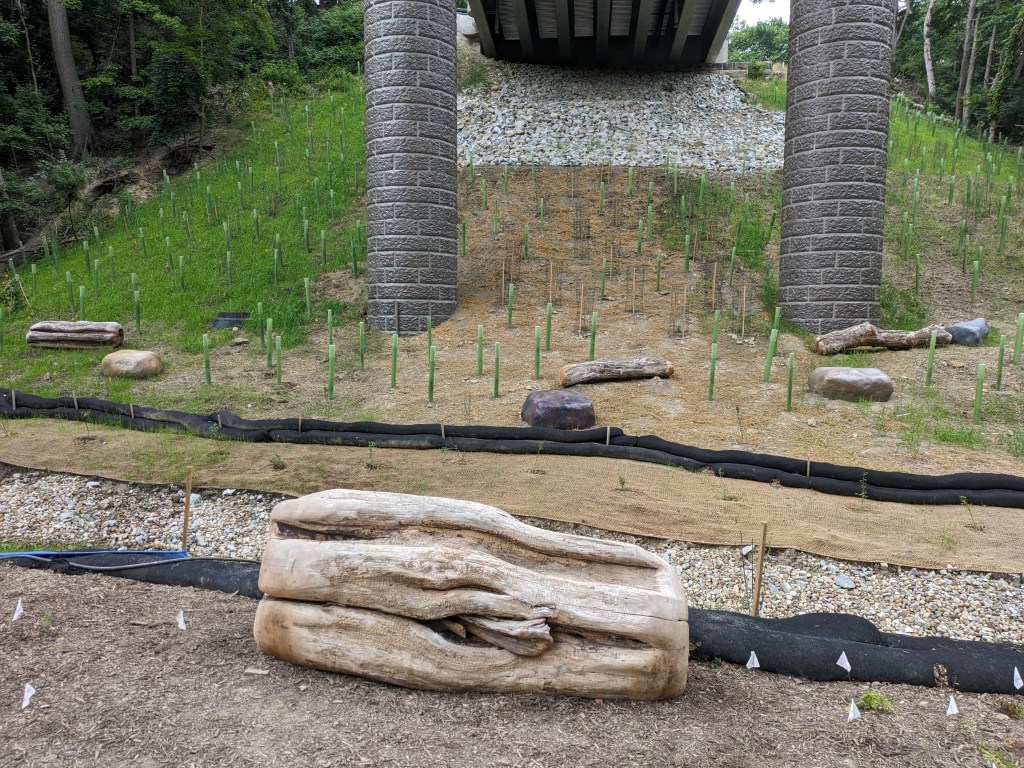
Irony? Serendipity? A sign I’ve walked too many bridges? It’s been one year since Pittsburgh’s Fern Hollow Bridge collapsed into Frick Park and another important arterial bridge is now closed and I am once again unable to fully explore due to another foot injury.

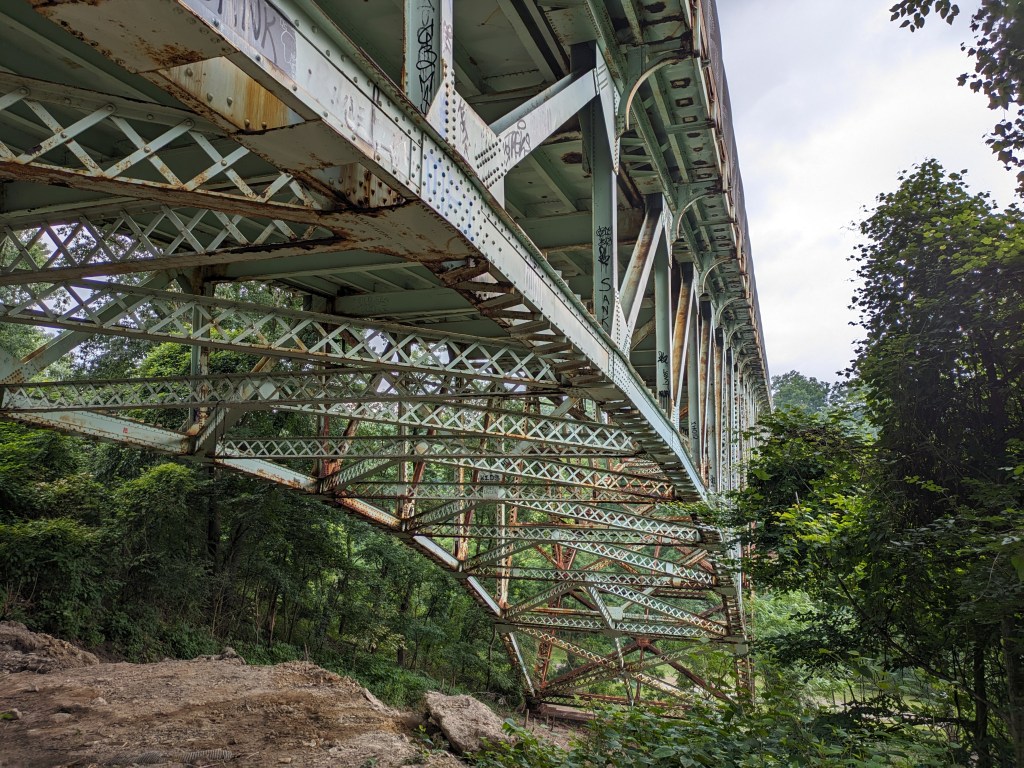
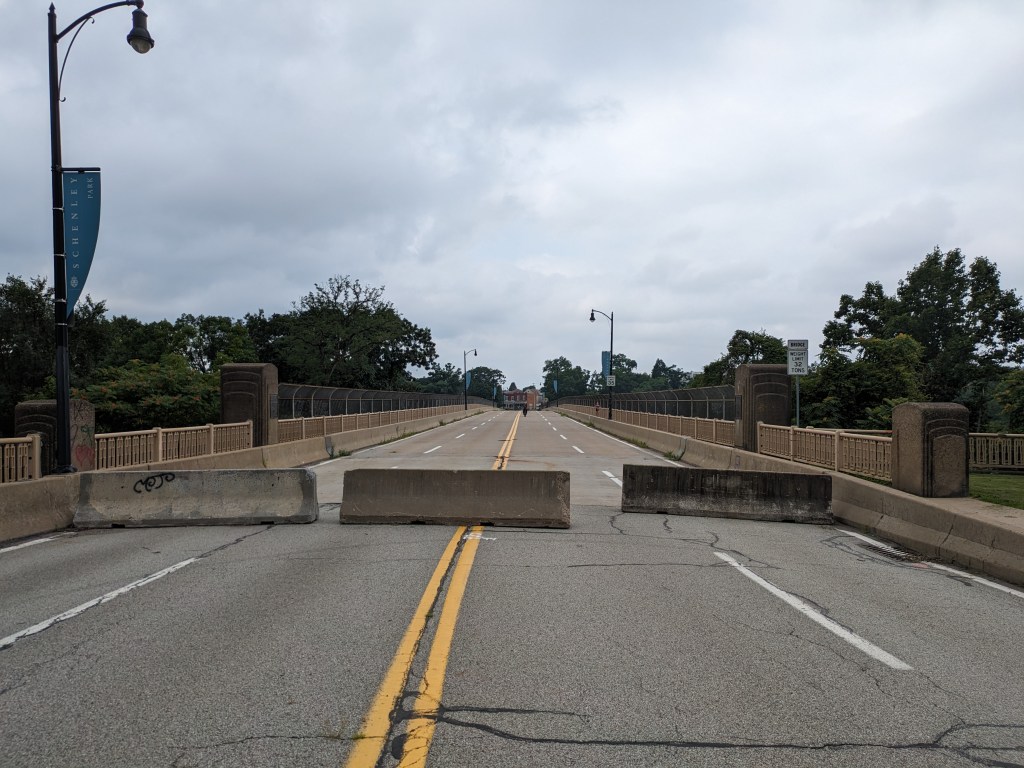
Shortly after the Fern Hollow Bridge collapsed, photos of temporary wires holding up the Charles Anderson Bridge supplementing the original metal structure that had rusted all the way through in places peppered social media and made the news with the question of would this be the next bridge to collapse? On February 1, 2023, the Charles Anderson Bridge was “immediately closed” to vehicular traffic (press release). Those with fully functioning limbs are still able to walk or bike across or under the bridge – it passes over another one of Pittsburgh’s major parks (Schenley Park).

The bridge was closed to facilitate interim repairs that may take four months. The bridge has been slated for a full rehabilitation for several years (see the City’s project page for more). The original projection was that this project would be funded this year, but according to a press release from the Mayor’s office on February 2, the expected funds have been delayed until 2027 and the City is looking for ways to expedite the funding.

Also, along the lines of serendipity, I happened to be browsing my copy of Bob Regan’s “The Bridges of Pittsburgh” (2006) this week for unrelated reasons and came across the section “Bridge Disasters.” The section opens with the statement: “Although Pittsburgh area bridges are quite safe and there has been an absence of bridge problems in modern times, this was not always the case.” (page 50) After identifying several of the bridge disasters from pre-modern times (summarized below), he ends this section with “Since that time [1927] there has not been a bridge collapse in the Commonwealth of Pennsylvania and there has never been a collapse of an operating bridge. However, this record was somewhat blemished in late 2005 with the collapse of a portion (one side girder) of a bridge over I-70 near Washington, PA.” (page 51) Of course, any updated version of the book will now have to strike this claim due to the 2022 collapse of the operating Fern Hollow Bridge.

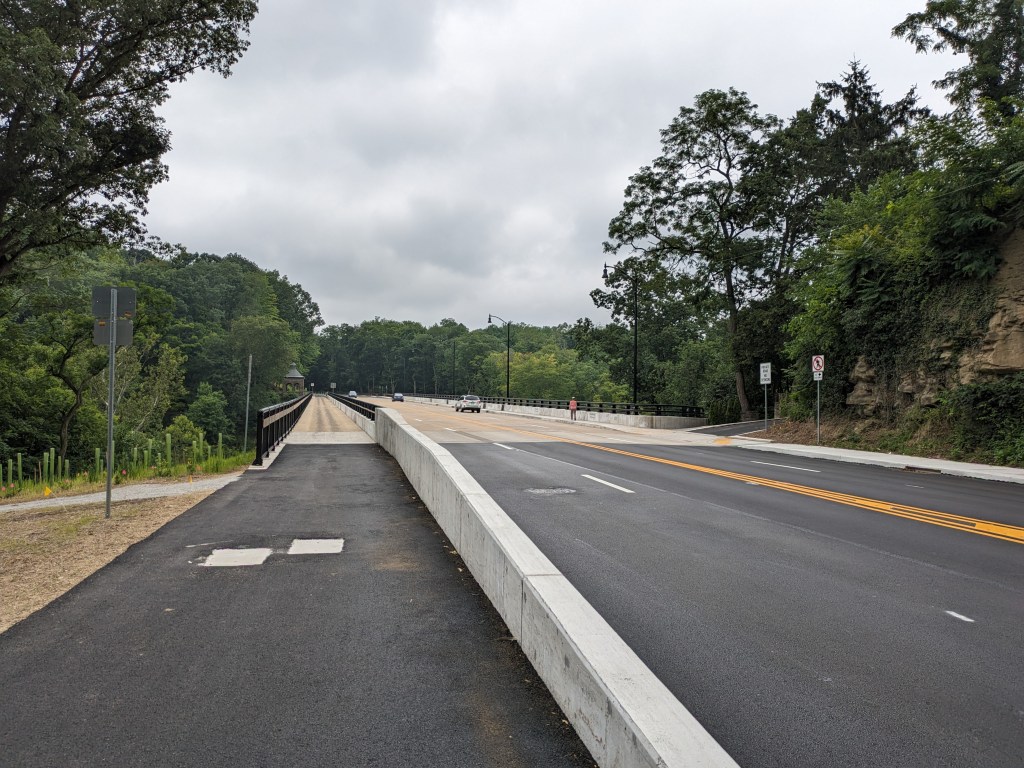
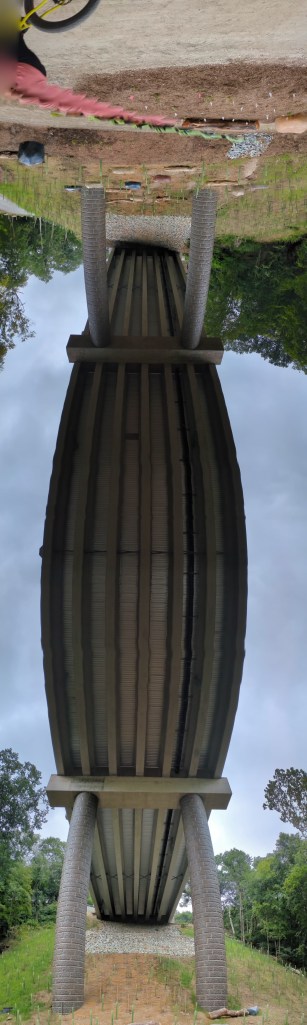
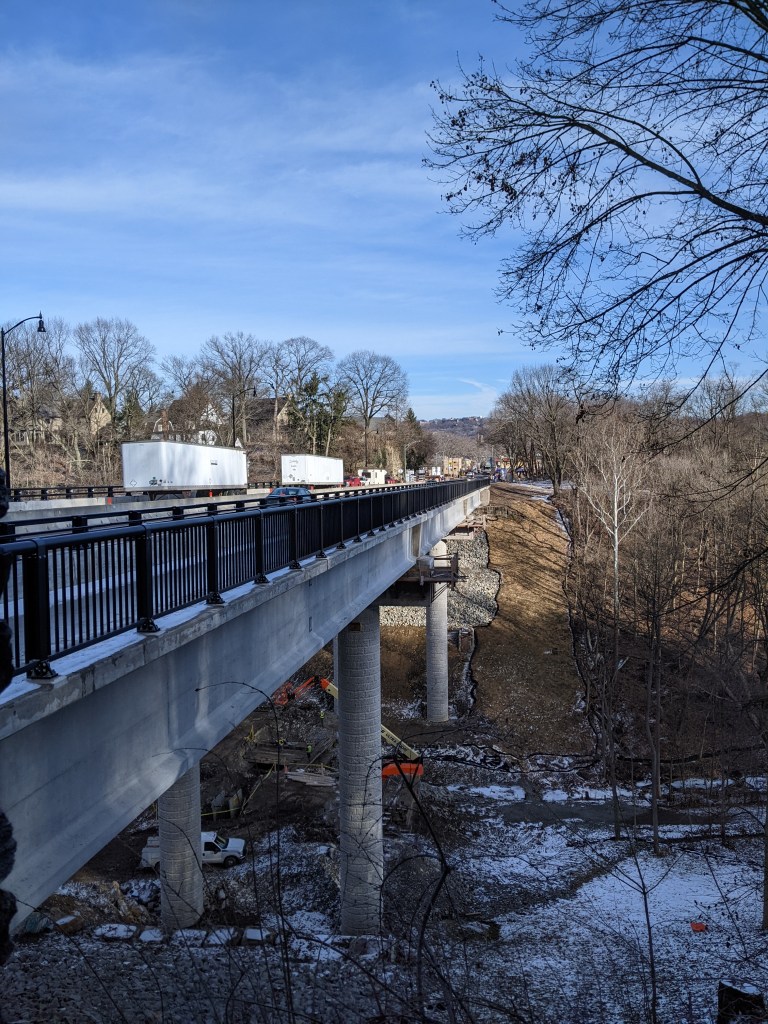
Driving over the new Fern Hollow Bridge this week, it looked in pretty much the same condition as in December with one lane of traffic in each direction and one shared path open. There were several bikers and pedestrians using it while we crossed during the latter part of rush hour.

Bridge disasters highlighted in “The Bridges of Pittsburgh:”

  • 1845 – The original Smithfield Street Bridge burned down
  • 1851 – The 16th Street Bridge burned down
  • 1865 – Two spans of the 16th Street Bridge was washed away in a flood
  • late 1880s – The 6th Street/St. Clair Street Bridge burned down
  • 1903 – The Wabash Bridge collapsed during construction
  • 1918 – The 16th Street Bridge burned down (again)
  • 1921 – The 30th Street Bridge burned down
  • 1927 – The Mount Washington Roadway Bridge collapsed during construction
Charles Anderson Bridge, February 10, 2023

Below are the news updates on the Fern Hollow Bridge and other bridge maintenance and replacement efforts in Pittsburgh and Allegheny County.

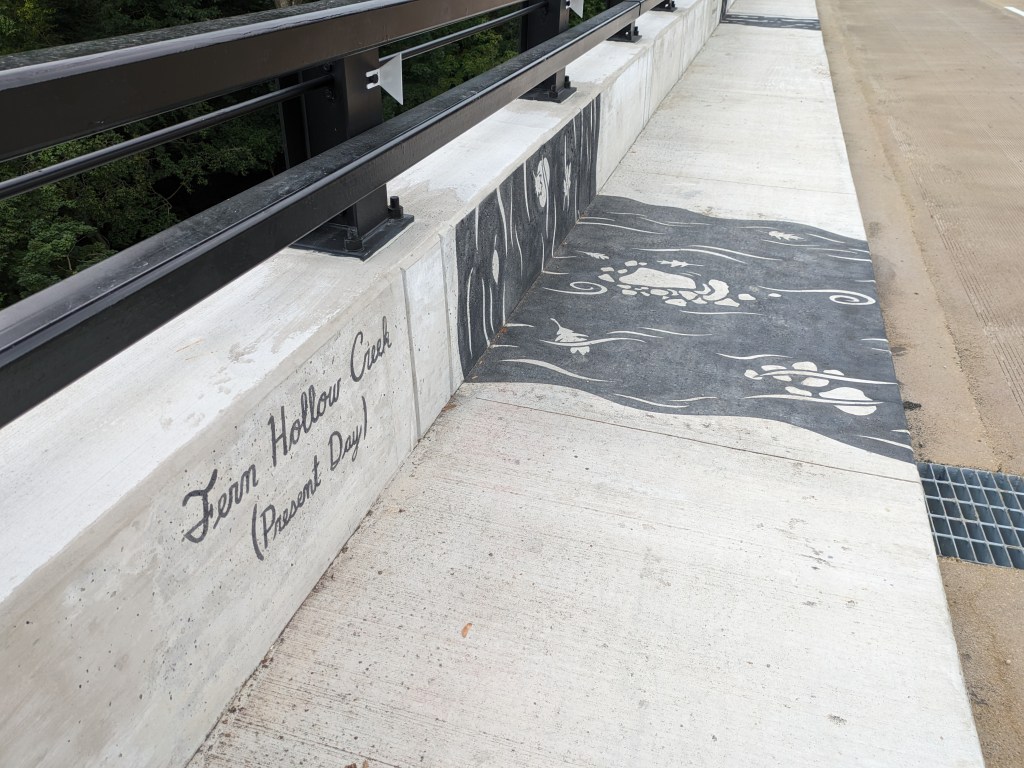
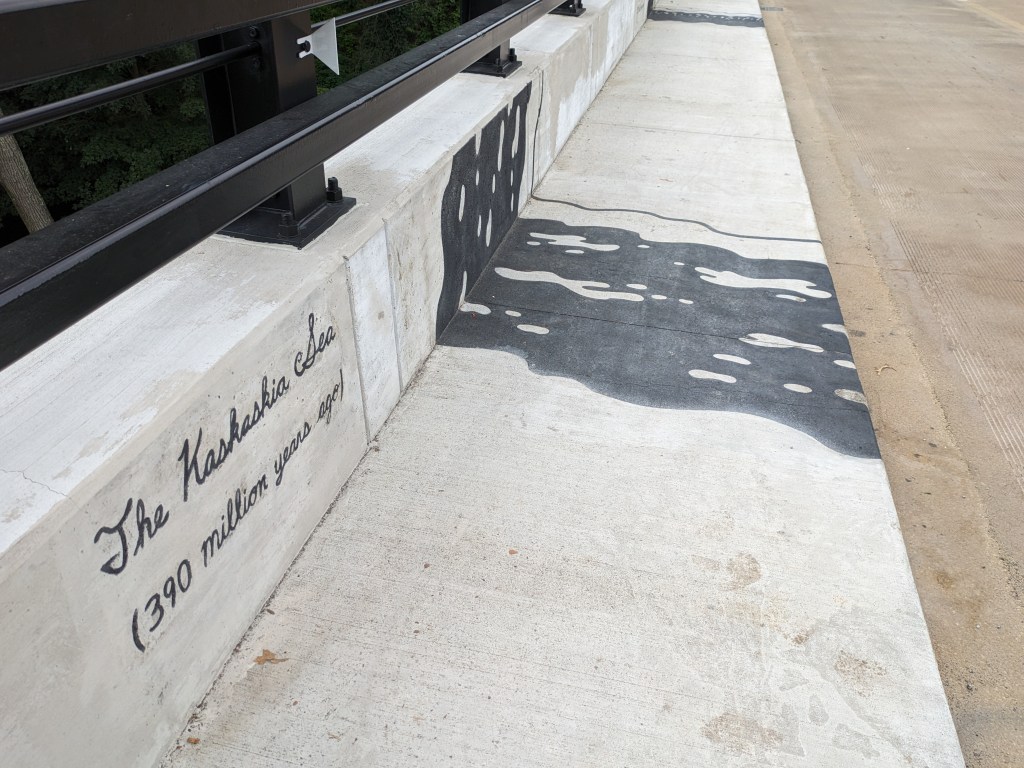
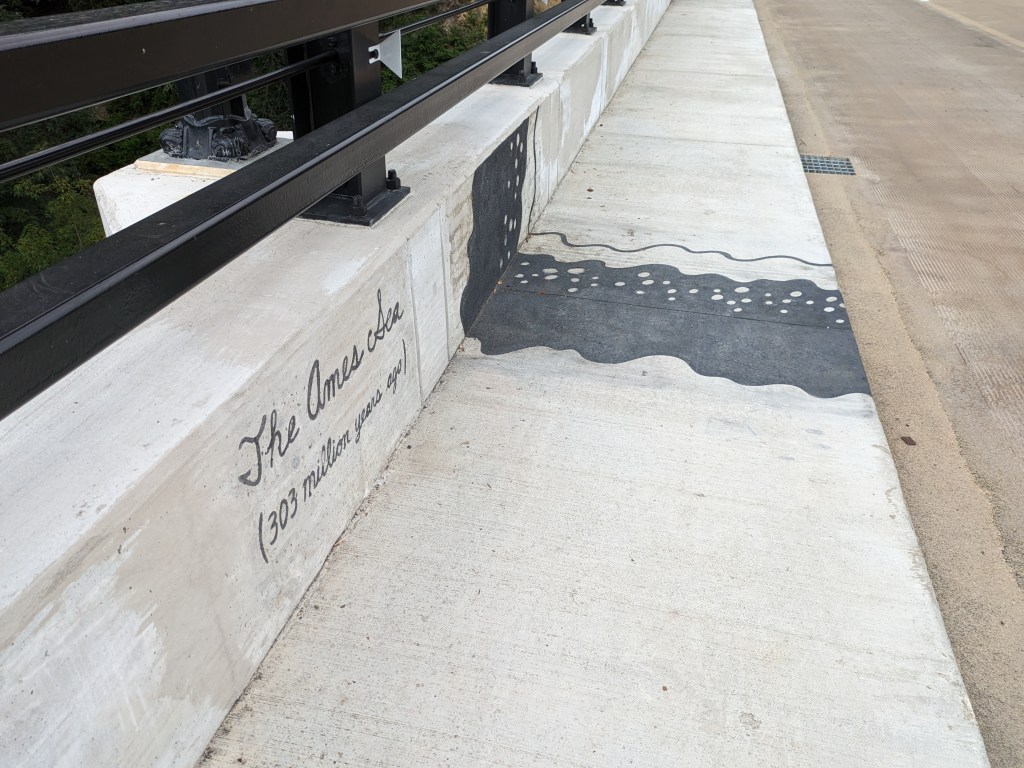
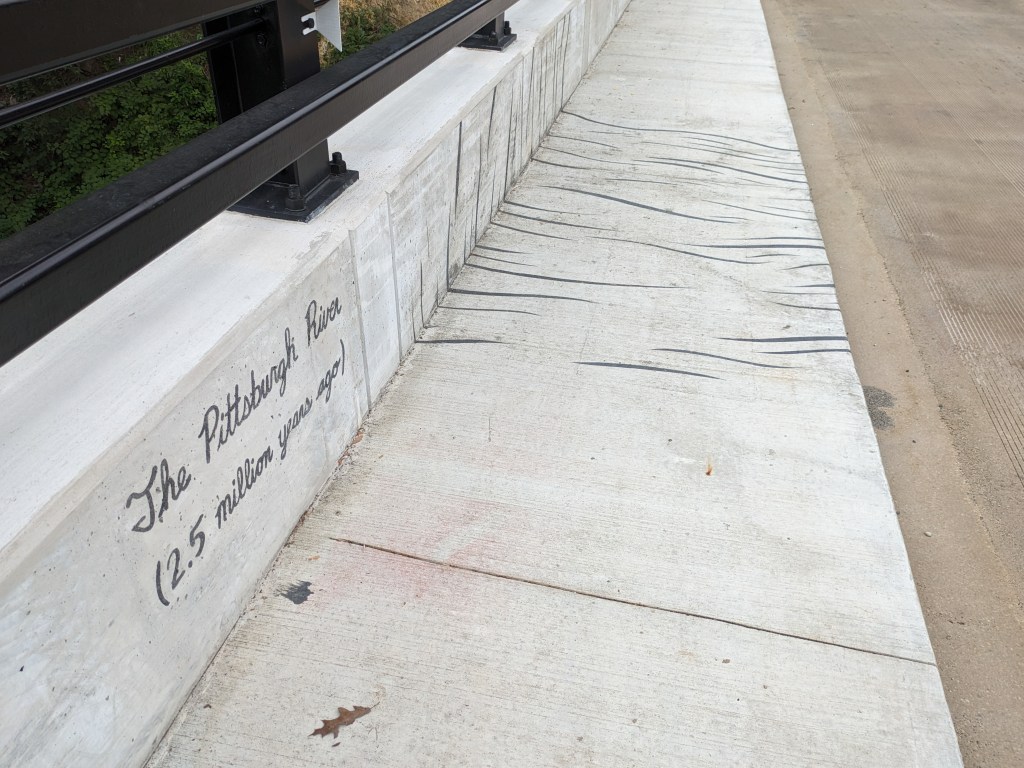
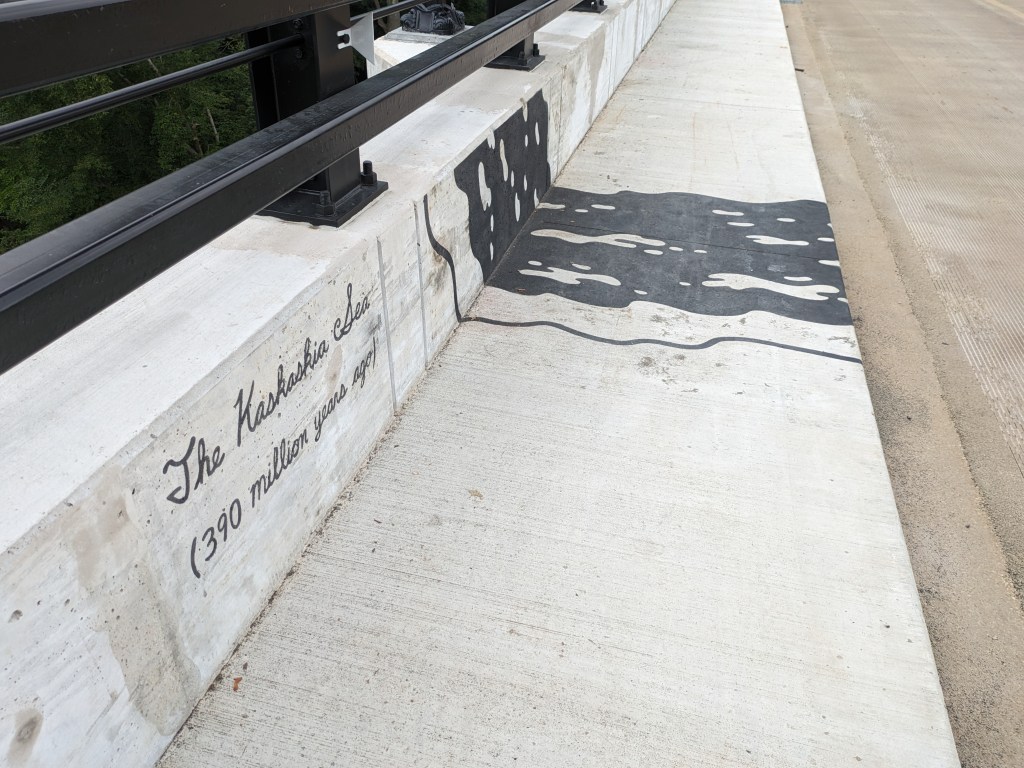
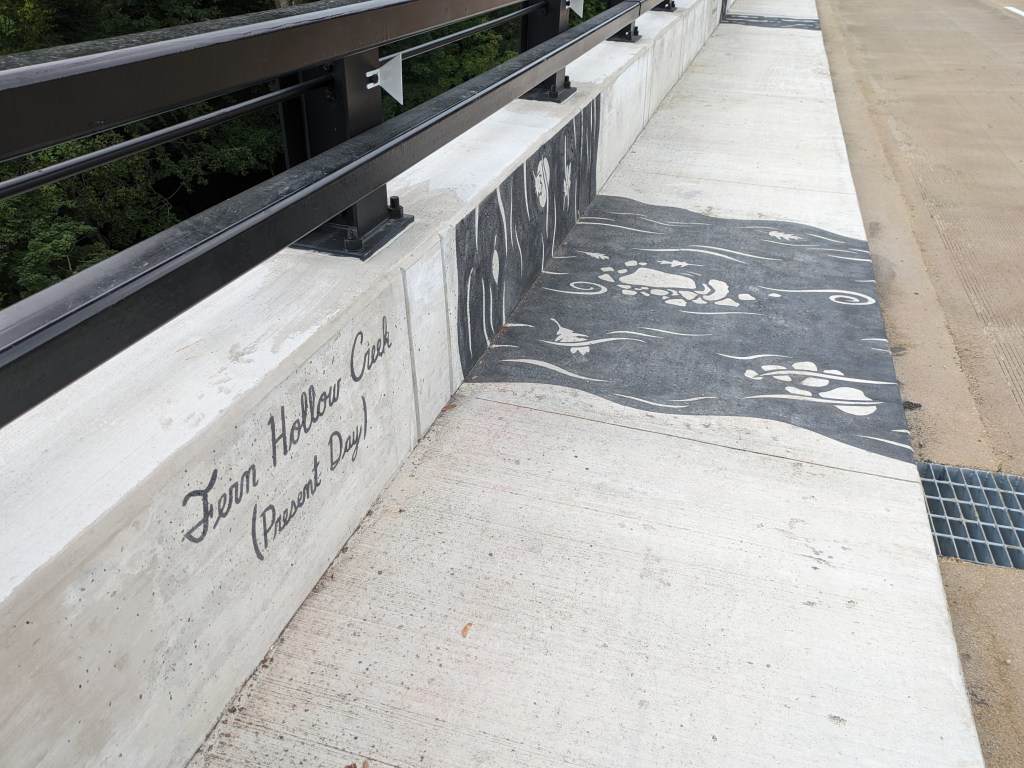
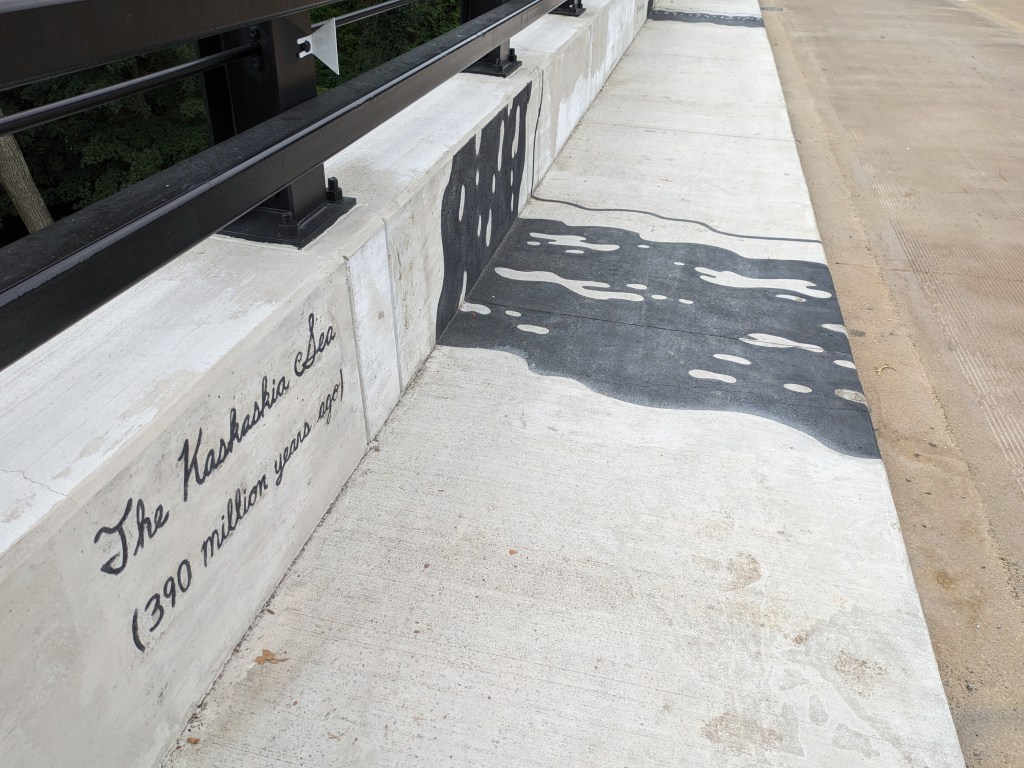
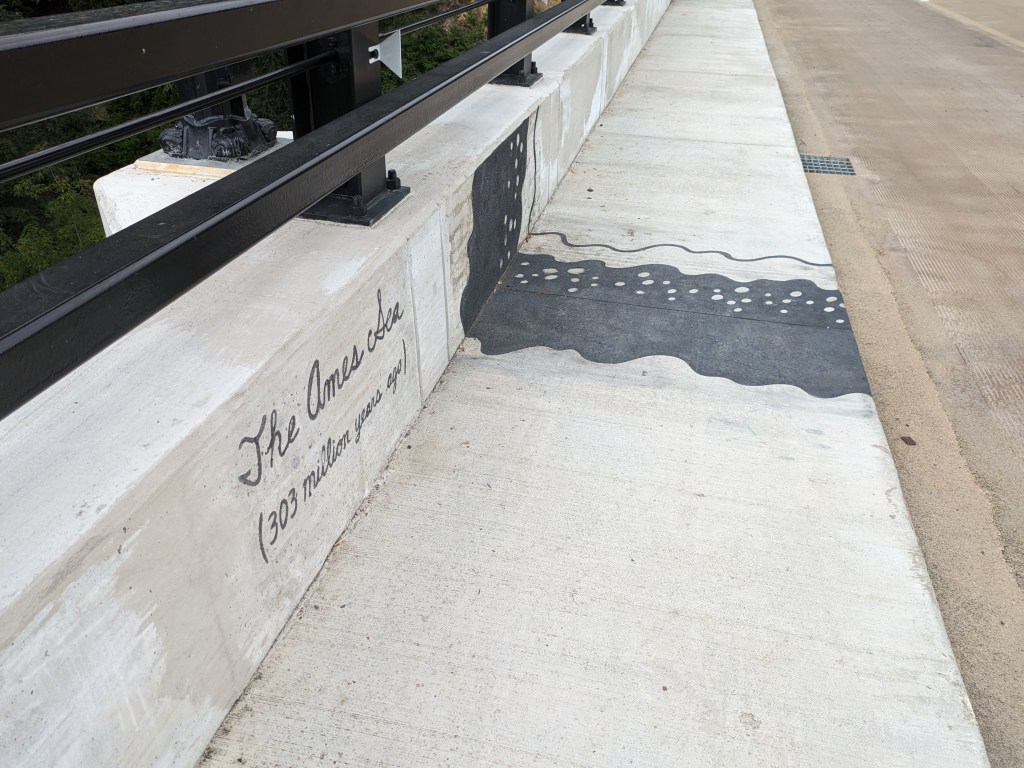
  • The proposed artwork for the new bridge is among the elements not yet completed. I didn’t find any new information on this since the NextPittsburgh article of September 26, 2022, that I cited in the December update.
  • PennDOT’s project page regarding the reconstruction of the bridge has not been updated since March 2022, except to add a sentence at the beginning to say that the bridge is now complete and operational, despite the fact that it is not fully open yet due to ongoing work/finishing touches.
  • The National Transportation Safety Board’s ongoing investigation into the Fern Hollow Bridge collapse was updated on January 26, 2023, with details of what has been investigated to date including photos of some of the parts of the collapsed bridge. It also now contains a link to a preliminary docket of materials that have been gathered in the investigation. They are still working out the cause of the collapse and recommendations to prevent such incidents in future.
  • The City created a Commission on Infrastructure Asset Reporting and Investment in March 2022, but this commission has not been added yet to the city’s website listing all Boards and Commissions and I have not seen any announcements of any appointments to the new Commission.
  • Pittsburgh’s Swindell Bridge, which closed from July to September 2022 due to falling debris, is currently under lane restrictions and is expected to close for a month later this year for additional repairs. (Pittsburgh Union Progress, February 12, 2023)
  • The closure of the west sidewalk of the South Negley Avenue Bridge doesn’t phase some people as they by-pass the barriers and continue on their way, in fact one of the barriers had been completely moved aside the last time I drove across the bridge, presumably by someone who found it in their way.
  • The Lincoln Avenue and Fremont Street bridges were closed for repair January 2023 by PennDOT in Millvale, PA – a small town across the 40th Street Bridge from Pittsburgh (WPXI, January 27, 2023)

Map of bridges discussed in the Bridge Collapse series:


Additional Resources:

Both PennDOT and the Federal Highway Administration have interactive maps of bridges for the state and country respective, and their inspection statuses. Pittsburgh now has the static Comprehensive Bridge Asset Management Program Report of the 147 bridges owned by the City of Pittsburgh.

Bridges in Pittsburgh with community engagement pages for pending rehabilitation or replacement projects:


Previous Fern Hollow Bridge Posts:

Eleven-Month Update

Six-Month Update

Five-Month Update

Four-Month Update

Two-Month Update

One-Month Update

Two-Week Update

One-Week Update

Day After

Breaking News

Urbantraipsing Rejuvenated

In Fall 2022, I moved back to a part of Pittsburgh that is more conducive to spontaneous urban traipsing. Since then, I have enjoyed the following discoveries:

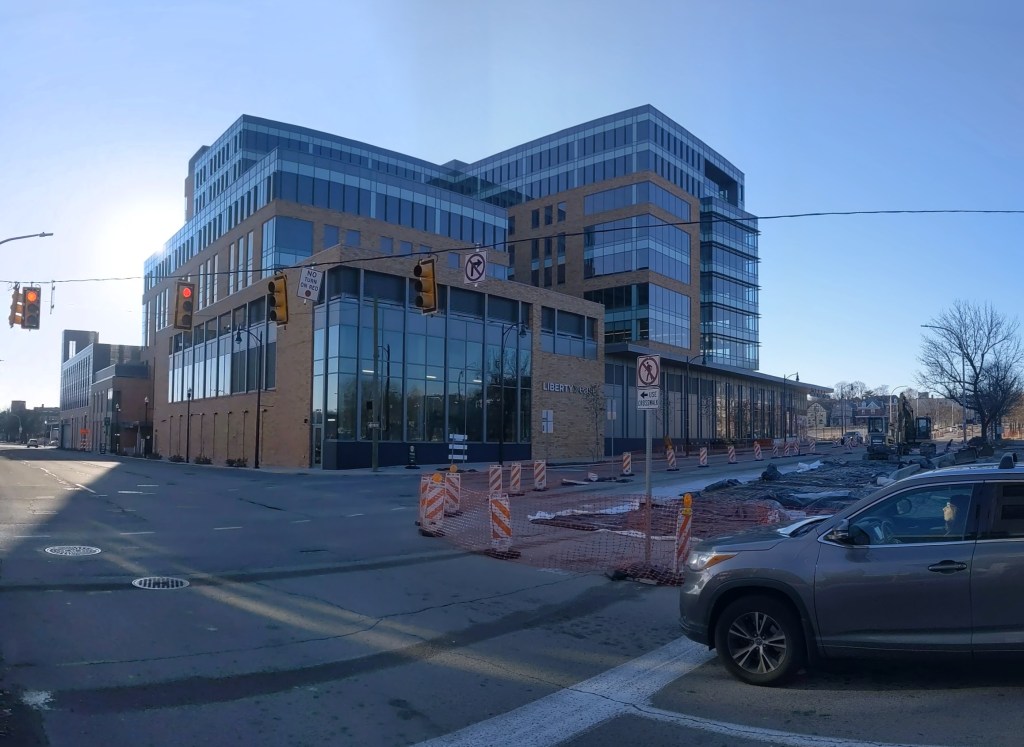
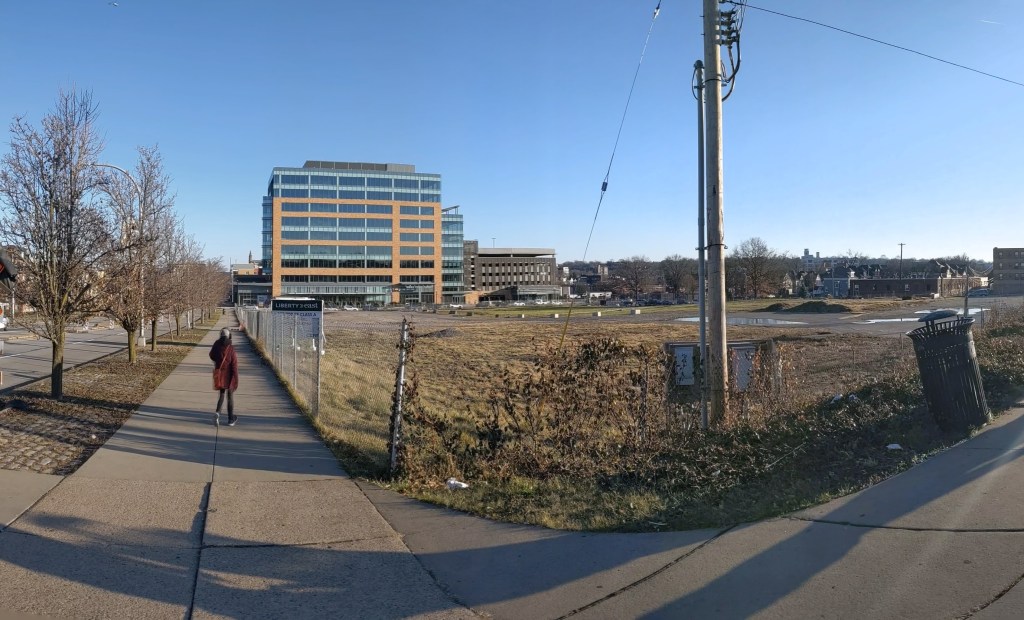
An architectural conversation between Eastminster Presbyterian Church and the Liberty Building rising above its surroundings a few blocks away.


Sunset from the East Liberty Busway pedestrian bridge.


The pastel light of a cloudy dusk.


The glow of the architectural features of East Liberty Presbyterian Church at night.


An industrial tower never noticed before despite having walked this way numerous times.


Reflections on a still river.

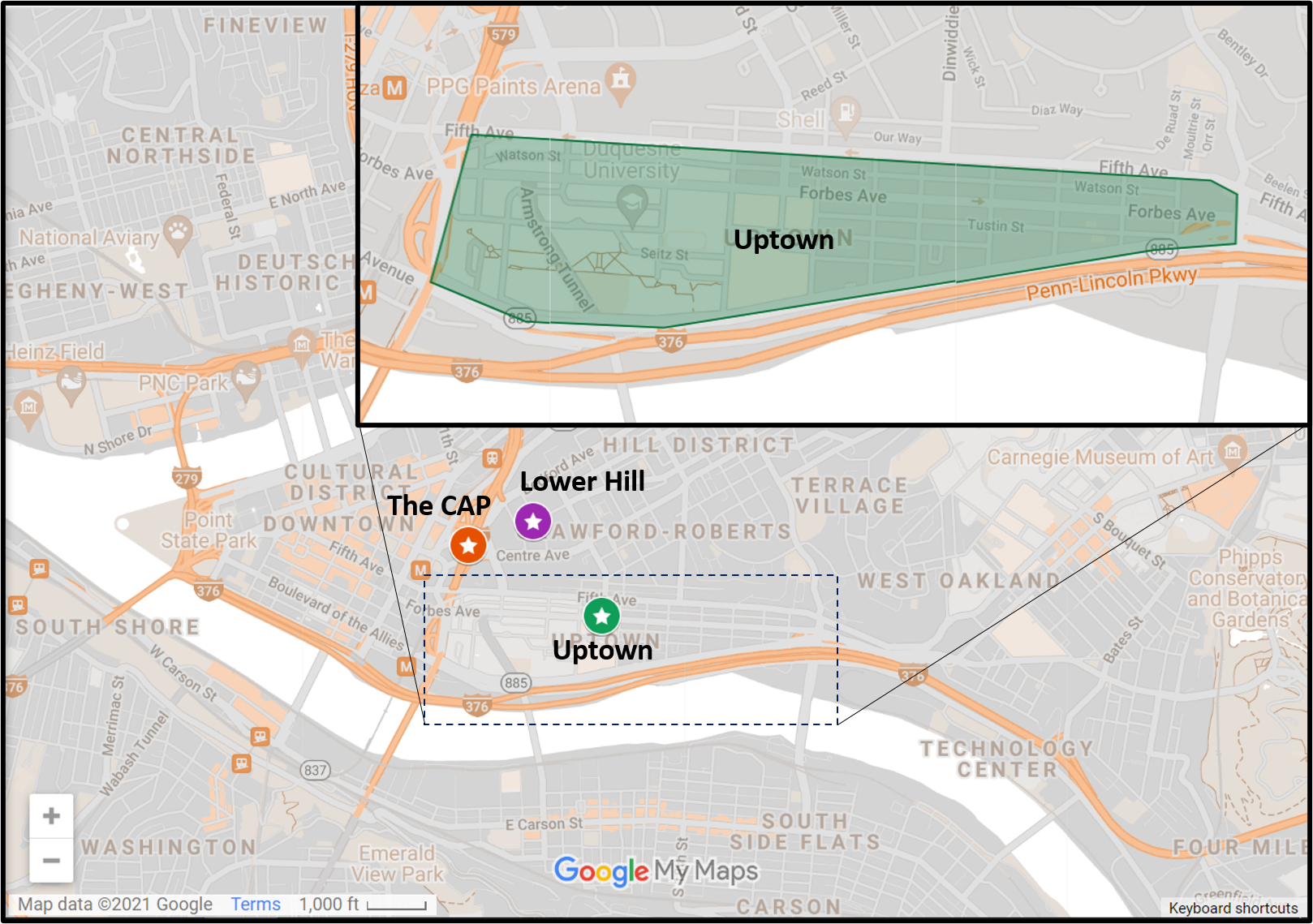
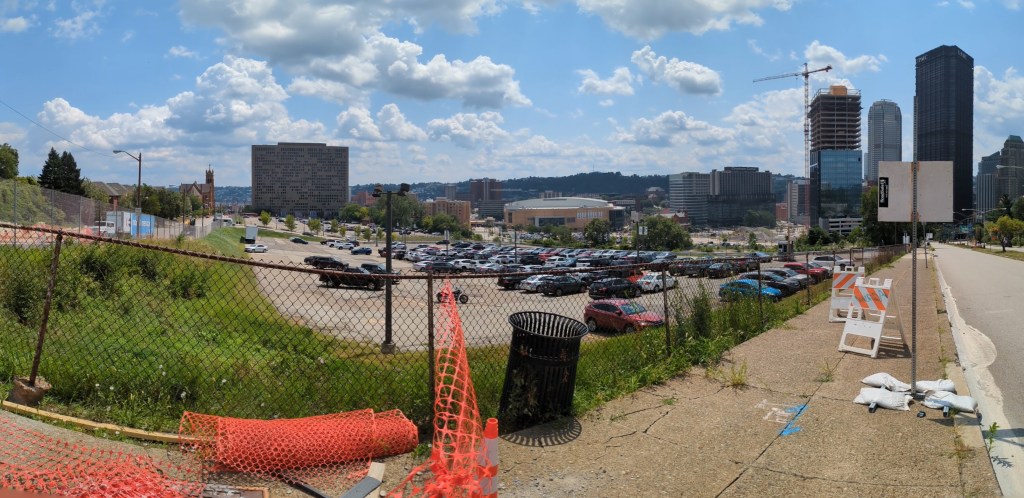
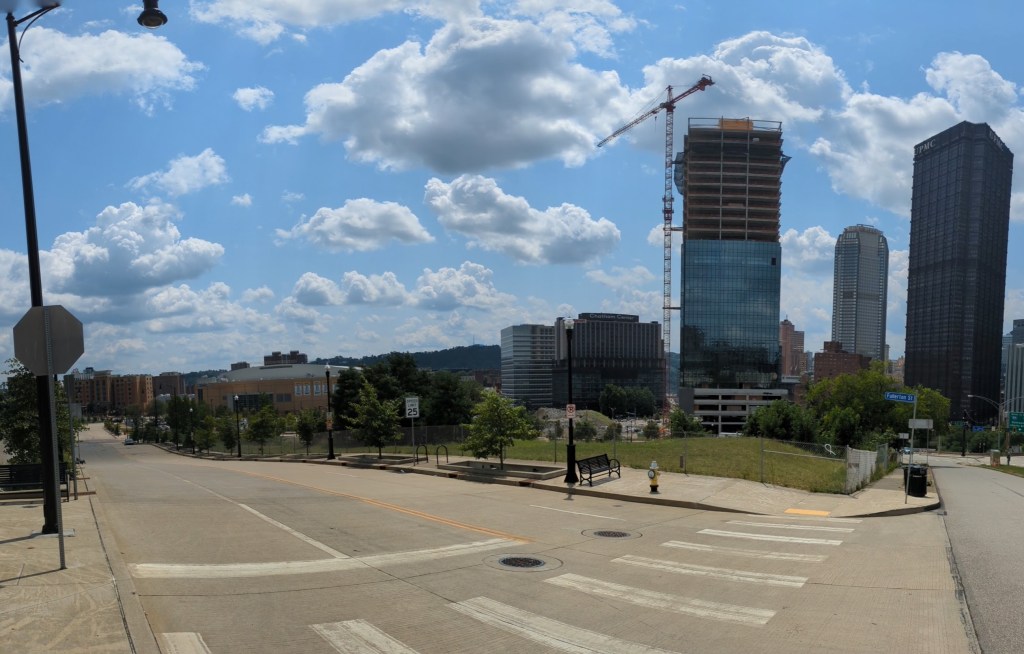
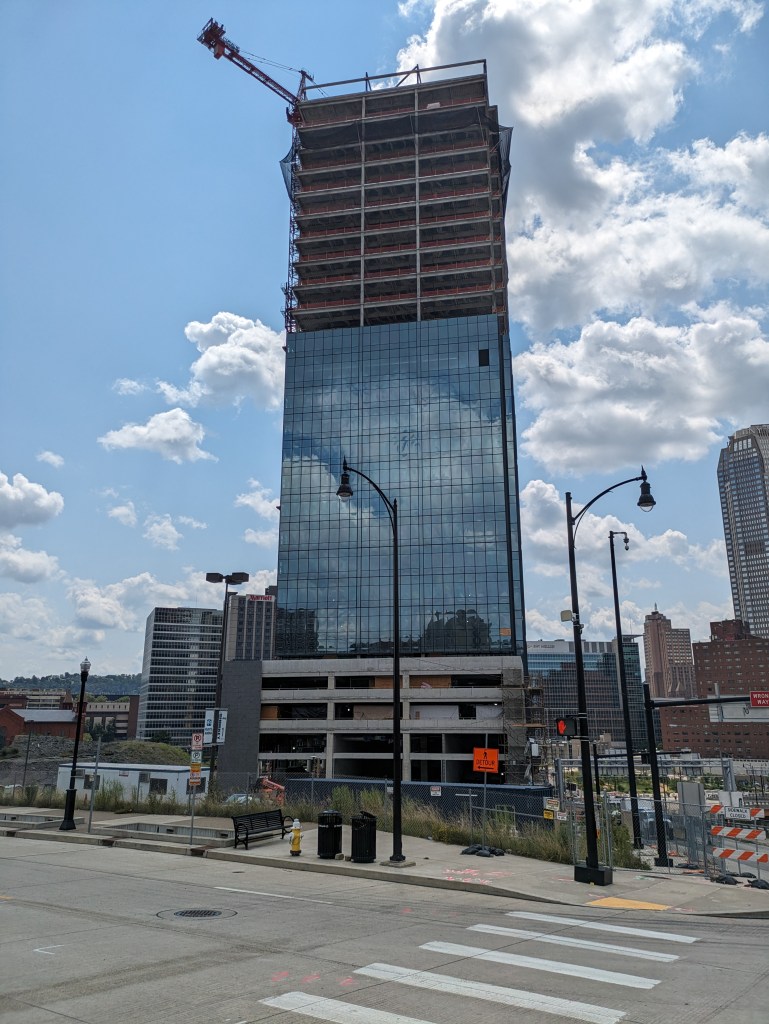
How this change in location will impact future blog posts is yet to be seen. In the meantime, 2023 will continue to see the monthly public art feature, updates on the aftermath of last year’s Fern Hollow Bridge collapse, and eyes on the developments of Penn Plaza, the Lower Hill, Uptown, and Hazelwood. The Annual Architecture Dessert Masterpiece was delayed by a case of COVID, but will also be forthcoming.

Bridge Collapse: Eleven Months Later

Six months after Pittsburgh’s Fern Hollow Bridge collapse, PennDOT and the Mayor’s office announced that the new bridge would probably open before the end of the year. The ribbon cutting for the new bridge was held on December 21 (Governor Tom Wolf News, WPXI, Pittsburgh Business Times) and the bridge opened to partial traffic the following day. There is one lane of traffic open in each direction and one “shared path” open on the south side of the bridge. Work on the bridge will continue through the spring.

The initial designs showed a bridge designed for highway vehicle traffic with pedestrian and bicycle access tacked on in a thoughtless way. Despite public outcry and professional push-back, the initial designs went primarily unchanged. As the bridge is not fully open, there is a chance that in execution it won’t be as bad as the initial design suggested, but it’s not off to a promising start.

The shared path on the south side – the one that’s now open – connects to sidewalk on the east side of the bridge and to the trails in Frick Park on the west side. There is no existing sidewalk to continue walking along Forbes Avenue to Squirrel Hill. While this path is unusually wide for a bridge, it appeared to be just a sidewalk when I visited it this week. I adopted the term “shared path” based on the videos of the ribbon cutting, which claimed that’s what it is. Perhaps there will be signage added eventually that bikes are also permitted, but I didn’t notice a way for bikes to get up onto this path from the road. While I’m clearly judging this bridge already and finding it wanting, I will continue to monitor its progress and will be open to finding it better than I do now once all the amenities are open and I’m no longer confronted with pedestrian dead end signs.

Below is a slideshow of photos from this month’s traipsing of the bridge followed by the news updates on the Fern Hollow Bridge and other bridge maintenance and replacement efforts in Pittsburgh and Allegheny County.

  • The City announced traffic pattern changes now that the bridge is reopening, breaking up one of the smooth travel paths for vehicles trying to cross the eastern neighborhoods on a north-south axis. (City Press Release, December 22, 2022)
  • The proposed artwork for the new bridge is among the elements not yet completed. (NextPittsburgh, September 26, 2022)
  • For whatever reason, PennDOT’s project page regarding the reconstruction of the bridge has not been updated since March 2022, making it a completely useless resource.
  • The National Transportation Safety Board’s ongoing investigation into the Fern Hollow Bridge collapse was last updated in May 2022, but this was initially described as a long-term effort.
  • The City created a Commission on Infrastructure Asset Reporting and Investment in March 2022, but this commission has not been added yet to the city’s website listing all Boards and Commissions and I have not seen any announcements of any appointments to the new Commission.
  • WSP USA released it’s Comprehensive Bridge Asset Management Program Report of the 147 bridges owned by the City of Pittsburgh – lots of work needs to be done on Pittsburgh’s bridges. (City Press Release, December 22, 2022; Tribune Review, December 21, 2022; WPXI, December 22, 2022)
  • The City of Pittsburgh’s 2023 Capital Budget includes limited funding for bridge repair and maintenance. (Public Source, December 5 & 22, 2022)
  • The bridge Port Authority closed to repair shortly after the Fern Hollow Bridge collapse, and then had to re-repair in July, seems to be okay now.
  • On July 1, Pittsburgh’s Swindell Bridge was closed due to falling debris. It reopened on September 1. (City Press Release, September 1, 2022; CBS, September 1, 2022; WPXI, September 1, 2022)
  • The Finland Street Pedestrian Bridge underwent an emergency demolition on October after being struck by a crane attempted to pass underneath. (City Press Release, October 7, 2022; City Press Release, October 8, 2022)
  • The City of Pittsburgh announced in November that it was going to close the east sidewalk on the South Negley Avenue Bridge (one of the bridges that the public is concerned about its highly deteriorate appearance) out of an “abundance of caution” to accommodate repairs, however, it was the west sidewalk that ended up closing. (City Press Release, November 23, 2022)
  • A public hearing was held on the Davis Avenue Bridge Reconstruction project in September. (City Press Release, September 28, 2022)


Additional Resources:

Both PennDOT and the Federal Highway Administration have interactive maps of bridges for the state and country respective, and their inspection statuses.


Previous Fern Hollow Bridge Posts:

Six-Month Update

Five-Month Update

Four-Month Update

Two-Month Update

One-Month Update

Two-Week Update

One-Week Update

Day After

Breaking News

Then & Now: Hot Metal Bridge

The final bridge in our 10-year anniversary look back at the Pittsburgh bridges and their environs is the Hot Metal Bridge. This is upriver from the Birmingham Bridge and the last bridge on the Monongahela before the big bend that hides downtown from view.

The Hot Metal Bridge was built to connect the Jones and Laughlin Steel Mill’s sites on opposite sides of the Monongahela River. With the industrial decline of Pittsburgh’s steelmaking industry in the mid- to late-20th century, Jones and Laughlin’s operations ceased over the 1980s. The first redevelopment of a portion of their property began in 1981. The redevelopment continues today.

On the south side of the river, the former site of milling operations is now the South Side Works shopping, dining, and residential area. Since 2012, the first marina in the city limits was added here and buildings under construction have opened (first photo pair), other buildings not pictured have been added.

On the north side downriver, the former site of the blast furnaces is now the Pittsburgh Technology Park containing office buildings, parking, and a hotel. The hotel was added in the last ten years as well as several other buildings outside the frame in the second and third set of photos.

On the north side upriver, the former Hazelwood Works is now the Hazelwood Green site a planned mixed-use, multi-block redevelopment. The remaining mill buildings on the site have been redeveloped as office and research facilities with the Mill 19 building visible on the left side of the river in the fourth photo pairing. The space between and around these buildings is expected to be filled in with other buildings of a variety of uses in the coming years.

The final photo pair features the former St Josaphat’s Catholic Church on the South Side Slopes, which is a building I have an eye as one of Pittsburgh’s pending adaptively reused religious buildings. This view shows another angle of the growth of the South Side Works development.

While both South Side Works and the Pittsburgh Technology Park were substantially developed by 2012, they continue to expand. On the other hand, Hazelwood Green is just beginning to be developed and is still predominantly vacant land. In another 10 years, perhaps, the upriver view from the Hot Metal Bridge will be significantly altered.

Then & Now: Birmingham Bridge

The penultimate installment of the Then & Now series is the Birmingham Bridge just upriver from the Duquesne University Pedestrian Bridge. This is a bridge that I’ve walked multiple times from necessity despite the fact that it was not well-designed for pedestrians, which I complained about in my first post about the bridge.

It would be nice to think that the pedestrian access upgrade it underwent in 2021 was in response to my complaints of the accessibility issues with the bridge design. However, the upgrade only partly resolves those issues.

On the south end of the bridge, pedestrians are no longer forced to leave the bridge and take steps down into the park. Instead, there is an option to continue along the level of the bridge. (See the first pair of photos.) This new option at first pushes pedestrians into the edge of the pavement beside the bike lane with no physical separation from the bikes or speeding cars. Once the bridge reaches the ground, a raised sidewalk appears.

On the north end of the bridge, there was no change for pedestrian’s use of the bridge (second photo pair). The options remain to walk in the painted buffer of the bike lane from where the bridge leaves Fifth Avenue or walk several blocks out of the way down the equivalent of multiple stories only to walk back up them on the sidewalk on the ramp from Forbes Avenue.

The view of Oakland from the bridge (third photo pair) shows a building that I regretted not taking photos of before it was demolished and one of the new buildings built along Fifth and Forbes in recent years. Looking downriver toward downtown (final photo pair), the new vision center as part of UPMC Mercy Hospital is clearly visible, though its coloring blends in well from this distance. Both of these views are expected to change further in the coming years with additional growth in Oakland and the redevelopment of the Lower Hill adjacent to downtown.

Then & Now: Duquesne University Pedestrian Bridge

I first walked the Duquesne University Pedestrian Bridge as part of my 10th Street Bridge walk in September 2012. However, by that point I was walking bridges faster than I could post about them. This is one of the bridges that I hadn’t posted about until now. It is accessed by a multi-story staircase from the northern end of the 10th Street Bridge and it crosses the speedy Blvd of the Allies. Students who prefer walking (and climbing) to transit and who live or party on the South Side use the 10th Street Bridge-staircase-pedestrian bridge path to get to and from campus.

Because of this bridge’s perch on The Bluff, it has great views up and down the Monongahela River. Some of the developments that have happened since 2012 along this river are visible from this bridge. The first pair of photos show a new construction self-storage complex that was built on a vacant, but complex, industrial site. Zooming out some in the second pair, a now brightly colored set of warehouses stand out (which incidentally are next to the Highline/Terminal Way Bridge). Less clearly visible is the white smudge that is the extension into the river built by the gravel company just on the other side of the Liberty Bridge.

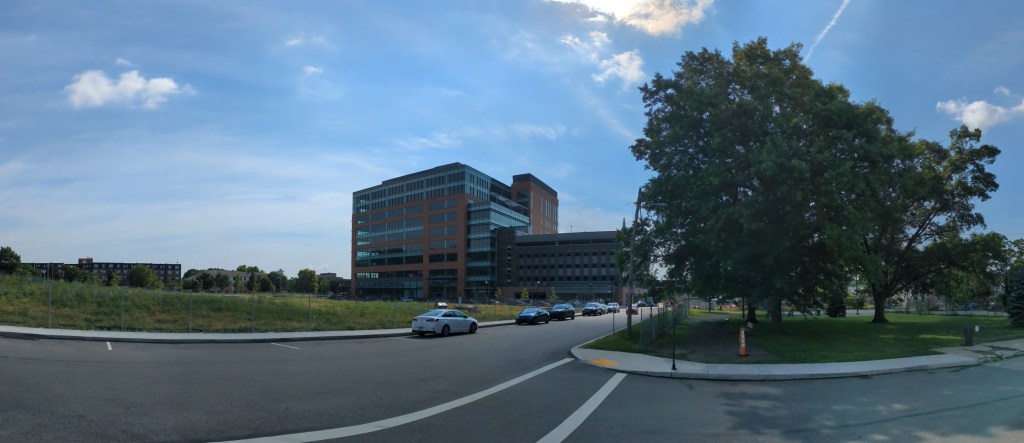
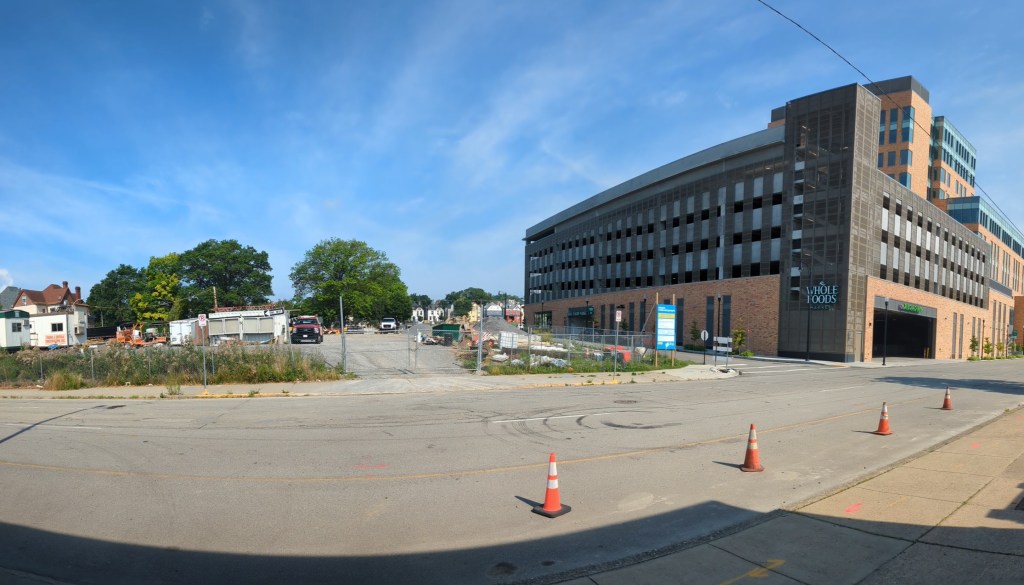
The most surprising thing to me on this return trip is that the new UPMC Mercy Vision Rehabilitation Center that is still under construction and looks massive from the views in my Keeping an Eye on Uptown series is not very visible from this bridge. If it had been a sunny day when I was out taking photos, perhaps the glass would have glinted a little more behind the freeway sign, but as it is, the dark spot visible under the freeway sign now isn’t much different than the dark spot from 10 years unless you zoom in close (final photo pair).