Layers of the City: Pittsburgh Edition

I clench my teeth every time the “T”, Pittsburgh’s light rail system, slowly makes the first 90 degree bend leaving Gateway Station, squeaking like fingernails on a chalkboard.  After traveling a few hundred yards, it turns back 90 degrees–squeak, scratch, squeak–before pulling into the Wood Street Station.  As everyone knows that the shortest distance between two points is a straight line, I struggled to understand why the T was built with turns so sharp it is impossible for the trains not to screech, until my friend pointed out that there might be building foundations or basements that the underground tracks need to maneuver around.

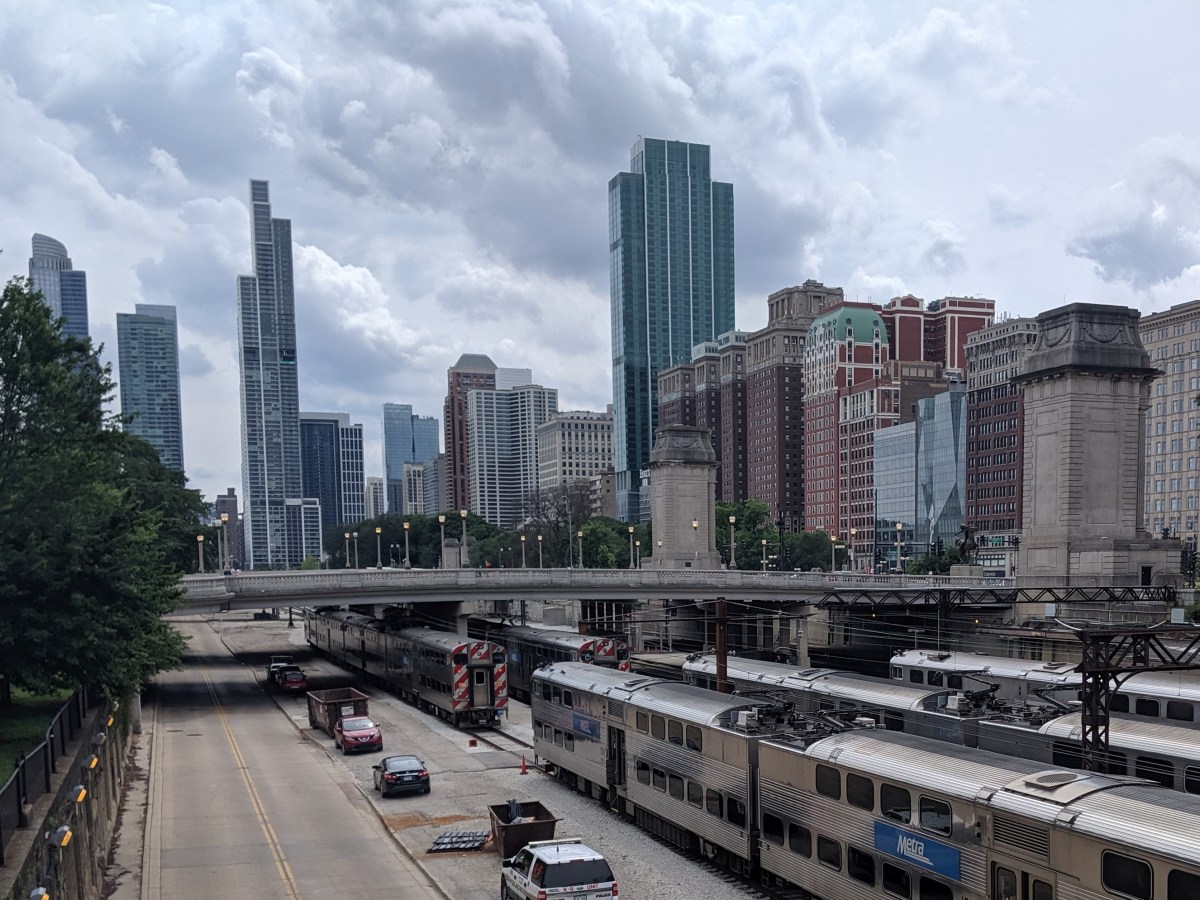
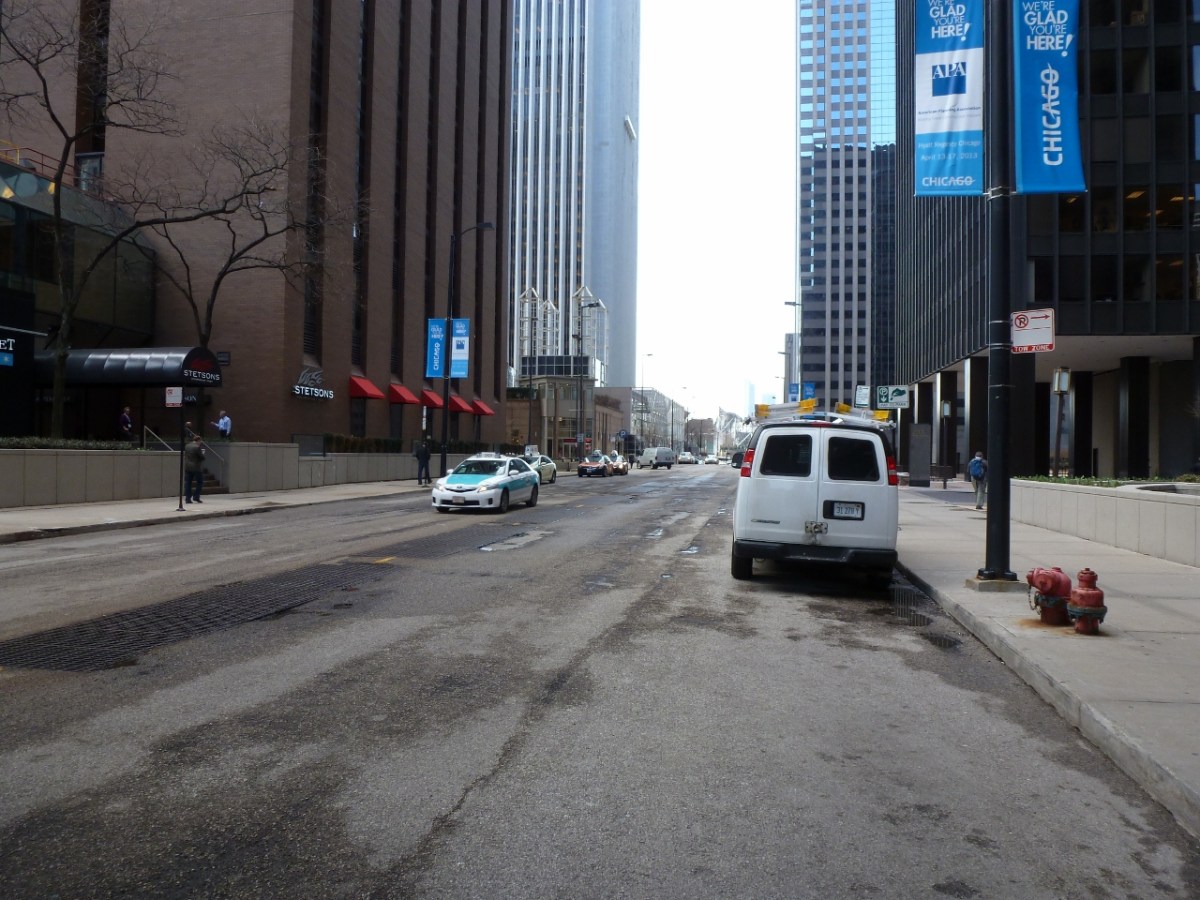
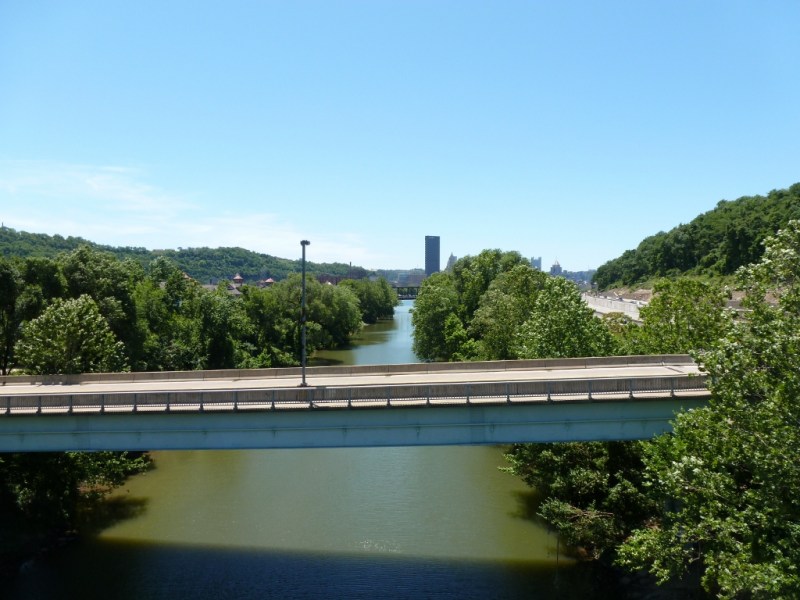
Like many metropolises, the density of downtown Pittsburgh creates various physical layers of activity.  Yet compared to other some other cities (see Layers of the City: Chicago Edition), Pittsburgh’s layers can be hard to notice.  The T is perhaps the most obvious example.  For most of it’s length through the southern neighborhoods and suburbs, the T travels at grade.  Once it crosses the Monongahela River into Downtown, it becomes an elevated train for a few blocks before submerging underground until it passes under the Allegheny River to the North Shore, where it reemerges to end as an elevated train.

Underground Life

If you get off the T at Gateway Station and walk down a block to the start of 5th Ave, which actually feels like an alley, you might notice that the Highmark Building is built over an underground garage.  I assume that this garage has multiple levels below grade and is at least part of the reason for the T’s sharp turns.

The new PNC Tower also has a garage below grade.  Yet the most recent new construction project downtown, on the former site of Sax Fifth Avenue, places the garage between the first floor retail and proposed upper level residences.

The building I work in, the former Jones & Laughlin Steel Mill Headquarters, has at least 3 1/2 levels of basement.  The building is long past its days of glory with peeling paint, cracked foundation, and elevators that you may never make it out of again.  The mezzanine level of the basement is a maze of building supplies, file cabinets, discarded furniture and boxes upon boxes of documents.  It is damp and dusty.  Five minutes down there could lead to a severe allergy attack.  Yet the stairs keep going down and down, plunging further into the dark depths.  I’ve heard rumors of more documents being stored in the lower levels.

Street Level

Coming back above ground, most activity in downtown Pittsburgh takes place at street level.  Pedestrians, bicyclists, buses, cars, delivery trucks, dumpsters, and more compete for space on the narrow streets and sidewalks.  Most shopping and restaurants are located at street level.  The Highmark Building and the Oxford Building still have some retail above the first floor.

Pie in the Sky

As you walk around downtown, if you look up, you might catch a rare sight of pedestrian sky bridges.  The most famous of which is the Bridge of Sighs connecting the Allegheny County Courthouse with the former Jail.  The second most famous (speaking with pure bias) is the bridge connecting the parking garage with what used to be the shoe section of the former Kaufmann’s Department Store (always a necessary stop when shopping for back to school).  A handful of others are sprinkled throughout downtown.  Indianapolis has got us beat though.  That city has a network of pedestrian connections that enables you to walk for miles between the stadiums, office buildings, and other structures downtown without ever getting a taste of fresh air.

Higher up, there is a sprinkling of rooftop or penthouse restaurants.  This is one of our complaints at work: while many new, good restaurants have opened downtown in recent years, there is still a dearth of restaurants and bars with views.  Sienna Mercado’s Il Tetto, Harris Grill, and the Biergarten at Hotel Monaco all have rooftop decks, but they are surrounded by taller buildings limiting views.  Ollie’s Gastropub on the top floor of the Oliver Building has some good views, but no fresh air.

There isn’t much connection or relationship between the different parts of these layers in Pittsburgh.  It is like they are experiments, like the city is only dabbling.  As if to say, it can’t make up its mind whether or not to let the public leave street level and participate in or explore all levels of the city.

Park-ing

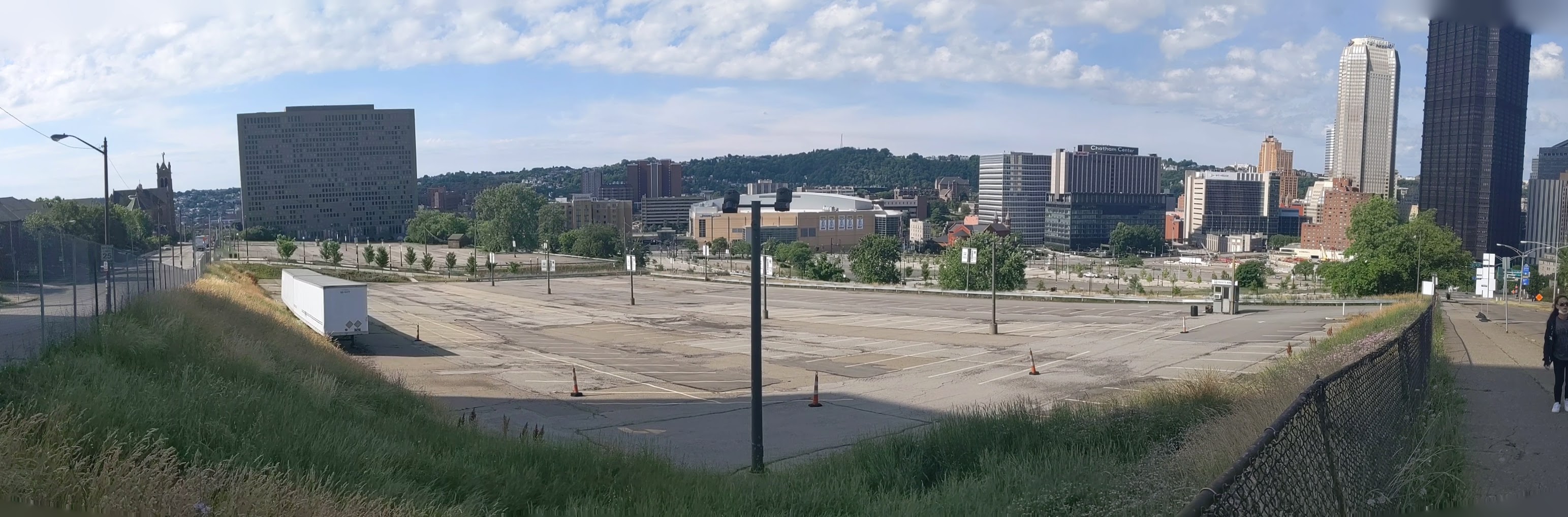
It’s the classic story of industry moving on to greener pastures at the same time that suburban flight takes off.  Pittsburgh politicians and notables tried everything they could think of to keep the loss of jobs and residents from increasing.  Despite their efforts, the city’s population plummeted over the next several decades.

Today, planners and officials often cringe at the mention of the “Urban Renewal” of the 1950s and ’60s.  The “bad” judgement applied by their earlier counterparts in efforts to keep the city attractive is an easy scapegoat for the problems of the intervening decades.  The people in charge today are doing “good” work by erasing the “mistakes” of the past: tearing down the crime-ridden high rises and replacing them with newly constructed mid-rises and townhomes, returning one-way ring roads to two-way traffic, rebuilding a neighborhood torn down for the sake of a grand civic project only partially deployed, etc.

This rhetoric is seductive.  “Urban renewal was evil” is a catchy phrase.  It is easy to point the finger and blame what is visible for the effects caused by complicated invisible factors.  Yet underneath all this rhetoric and finger pointing there are examples of Urban Renewal success stories in Pittsburgh.

ALCOA is one of Pittsburgh’s highly successful homegrown industrial companies.  When it threatened to move its headquarters to New York City in the 1950s, Richard King Mellon and the Mellon Foundation instigated the creation of a package that kept ALCOA in town.  ALCOA finally moved its “headquarters” to NYC in 2006, but 11 years later it returned to Pittsburgh.  In fact, this was only the executive headquarters with less than 100 staff.  ALCOA still continued to have operational headquarters in Pittsburgh throughout that time.

The 1950s package deal that induced ALCOA to stay was a new office building, garage, and public plaza known as Mellon Square.  Not only did this succeed in persuading the company to stay, thereby retaining jobs in the heart of downtown Pittsburgh, but the plaza recently underwent a $10 million refresh.

Today, Mellon Square is a gem as an outdoor lunchtime retreat downtown.  Unlike Market Square and Mellon Park, it is usually possible even during peak lunchtime to find a seat in Mellon Square, either in the shade of trees or buildings or basking in the sun.  Seats near the centerpiece fountain may be wet, especially if it’s a particularly windy day, but there are also seats in more hidden away areas.  On different days of the week, there might be a Farmers Market, yoga or other outdoor exercise, or live music to enjoy as well.

When enjoying the ambiance on top, it is easy to forget that there is a parking garage underneath.  This garage continues to serve downtown visitors and workers.  As the parking levels go down below ground instead of stacking up into the air, it brings less blight to the urban landscape than most other downtown garages.  During the 1950s when the idea of car as king was being imprinted in the city’s design through its new ring roads and new Zoning Code, it is amazing to me that Mellon’s team had the insight to say let’s hide the cars out of the way, underground.

Growing Parks

20180807_122605 copy

In a recent post, I complained about the lack of engaging outdoor spaces in Pittsburgh.  I recently realized that I was perhaps a little harsh in that assessment.  One of the things that attracted me to Pittsburgh in the first place was the abundance of parks and welcoming open spaces.  Now, as a naturalized Pittsburgher, I may take these places too much for granted.

Pittsburgh is home to five large city parks: Emerald View Park, Frick Park, Highland Park, Riverview Park, and Schenley Park.  In addition, there are Point State Park, neighborhood parks and playgrounds, and parklets and green spaces.

20180807_122530 copy

Downtown has a welcoming outdoor space within a 5 minute walk of almost every office building.  Come noon, the most popular ones are out of seats.  Some have programming on different days.  Market Square and Mellon Square regularly host farmers’ markets, live music, interactive art, and activities.

Yet, these oases are not spread out evenly across the Pittsburgh.  East Liberty used to be considered Pittsburgh’s second downtown and was the third largest economic engine in the state.  After decades of suburban flight and decay, this neighborhood is experiencing a resurgence that is recapturing much of its former dominance.  Yet, when I worked in East Liberty, there were no welcoming outdoor places for me to reasonably get to in my lunch hour.  I ended up eating everyday in the office, which meant the only time I left the office between starting and quitting times was when there was an off-site meeting.

It’s not just East Liberty that is missing out on these outdoor pockets and treasures.  Much of the city’s riverfronts are still dominated by industry or freeways.  Many neighborhood don’t have parks or the ones that are they have not been maintained.

Pittsburgh does have good outdoor spaces, but it could have better.  The riverfront is a visible place to expand upon the earlier successes such as Point State Park and the Watersteps.  The adult-friendly, public swings which spurred my previous post Engaging Riverfronts is one way to expand upon that.  I look forward to more ideas and implementations across the city.


Flood Measures

P1060955

There is an enormous floodwall on the Covington, KY, side of the Roebling bridge, which spans the Ohio River.  It shocked me to see such a huge wall when I was there last year.  I wondered if there couldn’t have been some other means of flood control that would not have produced such a large barrier.  It reminded me of the significant physical barriers to the waterfront that I observed in Erie, Pittsburgh, Homestead, PA, and Cleveland.  Unlike Erie, Homestead, and Cleveland, Covington did not have any significant economic drivers separated from the town by the barrier wall.  The river side only had a small park and parking lot.

In addition to acting as a barrier, the sheer massiveness of the flat concrete wall bothered me.  I wanted to see it broken up into staggered segments, even though I knew that would not be useful in a structure intended to block the path of water.  However, Covington handled the flat wall with style by turning it into a canvas for a giant mural.  Almost as long as the wall itself, this mural depicts the history of the crossing at this location from 8000 BCE to the present day.  While the mural did not help with the scale of the wall, it broke the monotony while turning it into a destination for its own sake.

In the back of my mind, this wall continued to bother me until observing the effects of the significant flooding experienced in Pittsburgh this year at the forks of the Ohio River (see Checking on the Rivers and The Aftermath).  A google search showed me that the flooding Pittsburgh experienced in February this year also affected the Covington-Cincinnati region in the worst flood in that area since 1997.  The concept of a wall still bothers me, but this one probably prevents a lot of property damage and Covington has taken steps to soften its negative effects.

Engaging Riverfronts

P1060986

Cincinnati’s riverfront park with swings

There is a proposal in Pittsburgh to introduce a new feature to its riverfronts: swings.  I am excited about this possibility as a swing lover and as someone who wants to see more welcoming and engaging spaces along Pittsburgh’s rivers.  One of the inspirations for this idea are swings found in Cincinnati’s riverfront park.  Last summer, I happened upon that park in a search for bridges by Roebling.  On an ordinary summer evening, this enormous riverfront park was filled with people of all ages enjoying the various activities from walking paths to playgrounds to interactive art installations.

Previously, when walking around Istanbul, I experienced jealousy at seeing the number of parks with adult exercise equipment installed.  This sort of acknowledgement that adults enjoy playing outdoors as much as children seemed lacking in parks across the United States.  Cincinnati’s park showed me that inviting adults to play outside is embraced in some parts of our country.

Pittsburgh has kayak and bike rentals for adults to play outside.  The walking trails, Fountain at the Point, and Watersteps attract people to enjoy the outdoors and the rivers.  However, if this swing proposal pans out, Pittsburgh may move up into the next tier of engaging outdoor spaces with the introduction of free play equipment for adults on par with Cincinnati and Istanbul.

In Search of Roebling

P1070036

Last summer’s search for Roebling bridges (see Market St, Steubenville and Wheeling Suspension Bridge) came to a successful end as a golden sunset spread over Cincinnati.  The reason we struck out earlier in the day is that the Cincinnati-Covington Bridge is one of the two remaining Roebling suspension bridges.  The other is, of course, his most famous bridge: the Brooklyn Bridge.  The first of Roebling’s five suspension bridges was built in Pittsburgh at the site of the current Smithfield Street Bridge, but lasted less than 40 years before the increased river and road traffic made it obsolete.

P1060937

Between Roebling’s two remaining bridges, I found the Cincinnati bridge more appealing.  Its character feels like it would fit right in on the Thames in London.  I also appreciated the engaging green spaces at either end.  The birds liked this bridge, too.
P1070038

Sunset from the Roebling Bridge


Signs of the Times

20180709_124401 - Copy

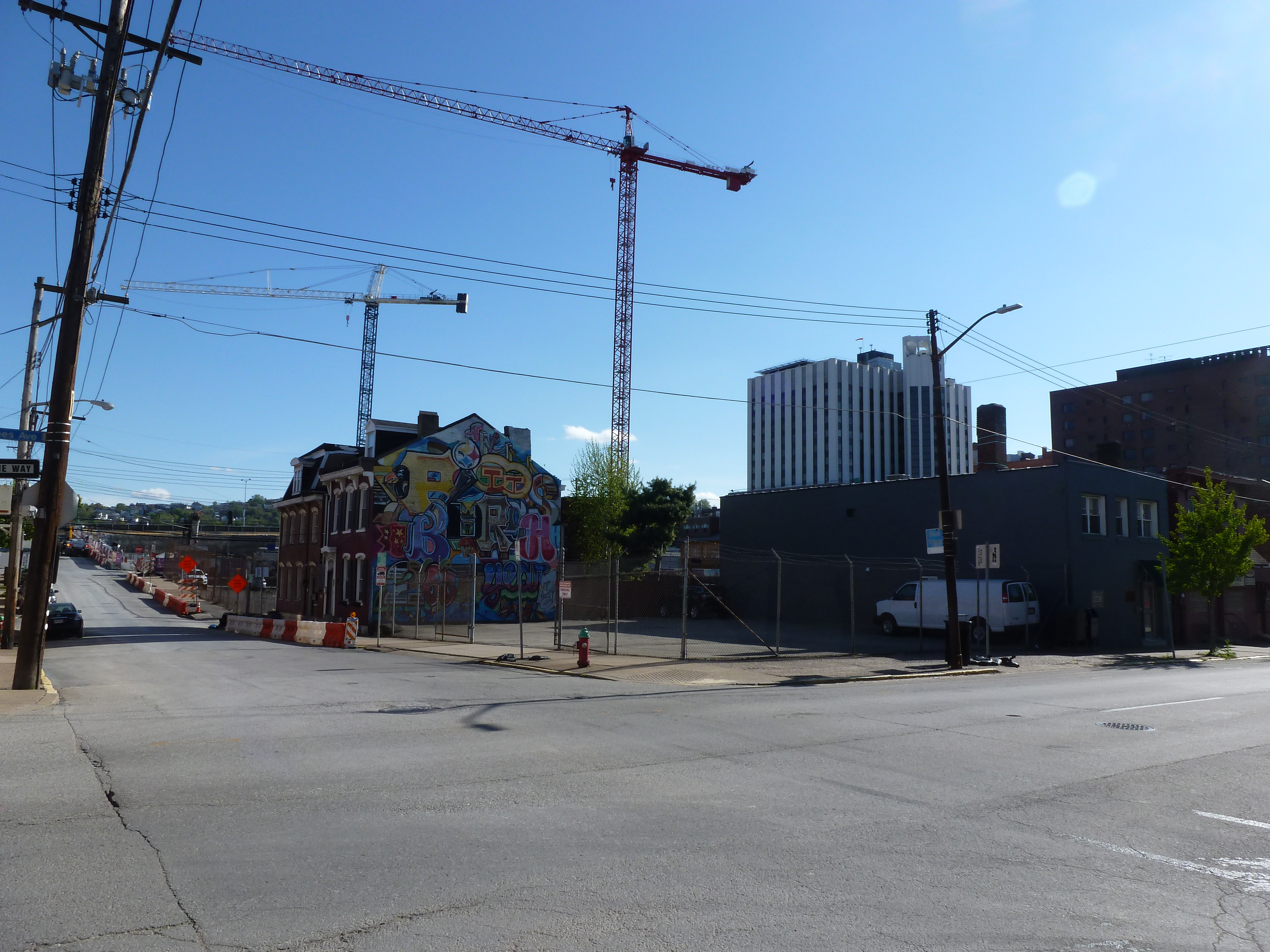
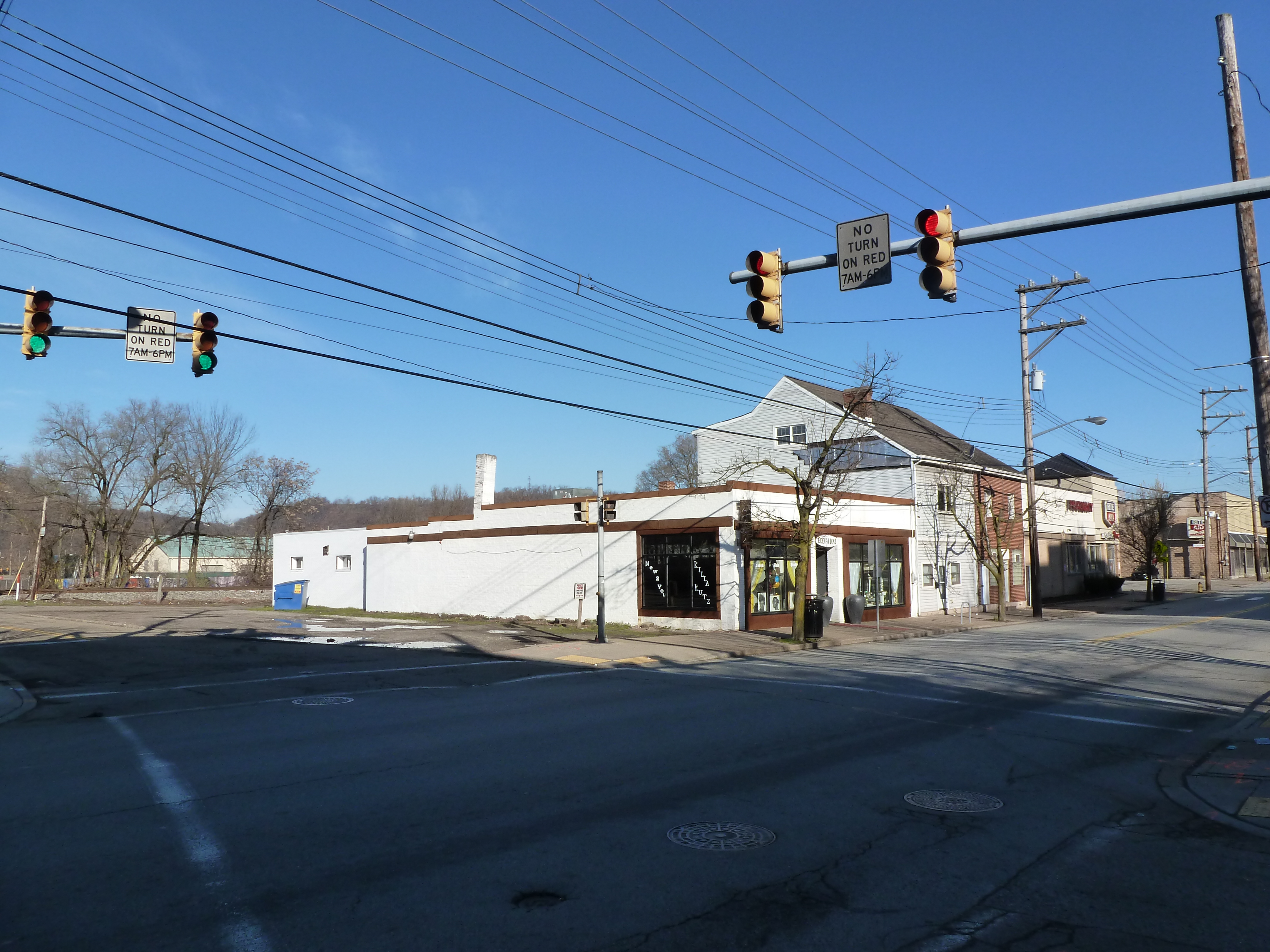
Once upon a time, signs painted on the side of buildings proliferated in Pittsburgh.  Over the decades as these types of signs went out of fashion, many were left to fade with time.  Remnants of these signs still cling to several buildings.  Some signs are faded but legible while others only show faint traces of having been there.
20180709_124148 - Copy

20180709_123654 - Copy

20180709_122215 - Copy

These signs tell a story of the history of the city.  Is it a story worth preserving?  If so, what is the appropriate way to preserve it?  Should these signs be refreshed so that they continue to live on?  Or should they be left alone to continue to fad to show their decline from favor?  Yet, there appears to be renewed interest in the hand painted sign.  (This article is one of several about a niche of successful hand painted sign artists.)  Maybe as these buildings are renovated, some of these signs will be refreshed with a modern take.

20180709_083128 - Copy

Dogs in the City

Dogs Chilling in Istanbul

Not being a dog person, I have been fascinated by different dog behaviors and treatment that I have seen in traveling.  In New York City, I was surprised to see people bring their pet dogs onto public transit, both on the metro and on the bus.  I wasn’t sure if this behavior was like eating on the buses in Pittsburgh–it’s not permitted, yet people do it anyway–or if pets are allowed on public transportation in NYC.  It also seemed unusual to me that most of the dogs I saw were small.  But then, thinking it through, I decided it made sense as if you live in a stereotypical tiny New York apartment, you wouldn’t have the space to keep a big dog.

In Pittsburgh, dogs seem to be more like what you would find in suburban areas.  They are often big and they tend to bark a lot and strain toward people they pass on the street.  After coming back from New York City, I realized that you don’t see dogs in downtown Pittsburgh.  However, as more people have moved downtown, dogs on the streets downtown have become much more common.  Including ones that are pushed around in what look like baby strollers, but given how some people feel about pets, they might have been strollers designed for dogs.

Istanbul dogs were quite different from the average dog in America.  I believe most of them were strays, but they appeared to be quite self-sufficient (such as the ones in the photo above).  They minded their own business and let everyone around go about their business.  It was quite refreshing to me to see numerous dogs that did not feel the need to bark their heads off just because someone was walking by.  I regret that I did not get a picture of the most notable dog I passed.  He had a human companion, but no leash, instead he was decked out in sunglasses and other bling like mardi gras beads.

Beth Abraham Cemetery

P1050876 (1024x768)

Yesterday, while exploring Carrick and the surrounding neighborhoods looking for adaptively reused religious buildings, we took a detour through the Beth Abraham Jewish Cemetery.  According to the map we had there were multiple roads through the cemetery. We started on one that went through a section of the cemetery with newer graves and came to a T-intersection with a sign to the right that said Do Not Enter One Way, so we turned left. The road was wide at that point, but went around a sharp bend and quickly narrowed to just barely the width of the car.

This was the original section of the cemetery. The graves were clearly older and were placed head to toe with sides touching. It was the most densely plotted cemetery that I have seen.

Our awe at the density was soon interrupted by the termination of the road we were traveling. Despite my confidence that the map was telling us we could get back to the main road by going straight, that was clearly not an option. Fortunately, there was a side leg of the road right at the point we realized we could go no further.  The width of both paths was perhaps a foot wider than the car. My friend who was driving predicted that a 21-point turn would be required to get us out.  I think we managed it in 10-points.

Once turned around, we went back the way we came. As we reached the main roads and started down the public road that bisects the cemetery, I realized I had been so distracted by looking around and then directing the u-turn, that I missed my opportunity to take a picture of the old section of the cemetery.  Instead, I got some shots of the section to the east of Stewart Ave, which is newer, but almost as dense as the old section.

If you decide to take a trip to this cemetery, I recommend entering through the main gates off of Stewart Ave and pulling off at the wide section of road at the sharp bend. From there, the old section and one of the newer sections are easily accessible by foot, though there may be some steep and uneven portions.