
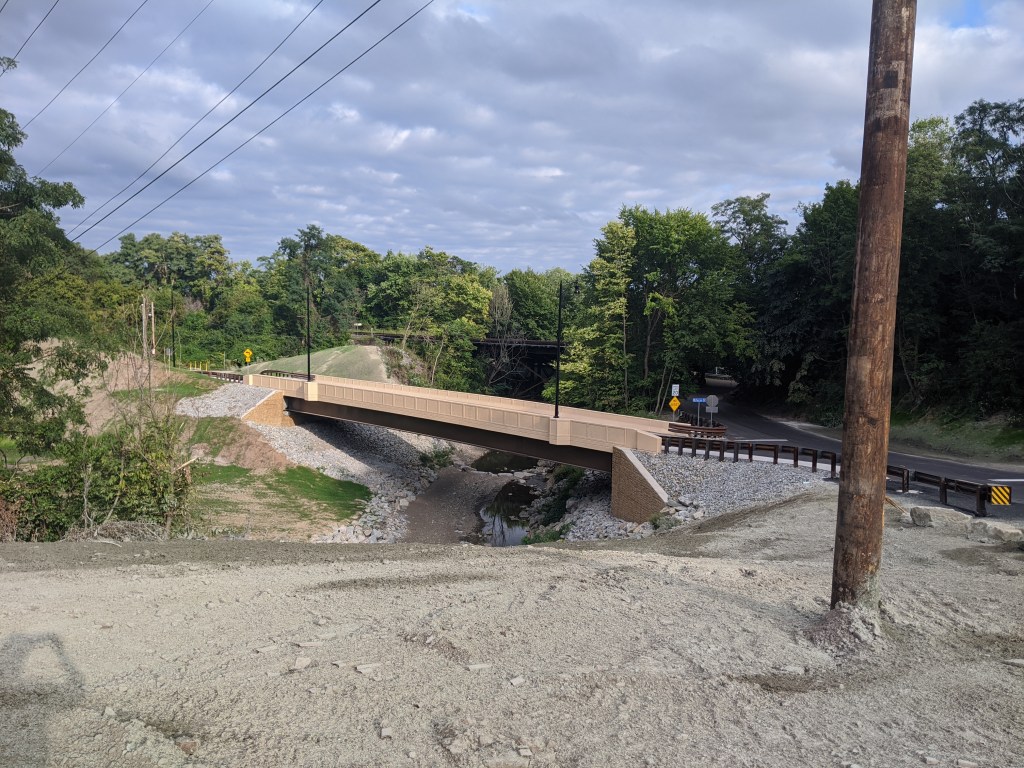
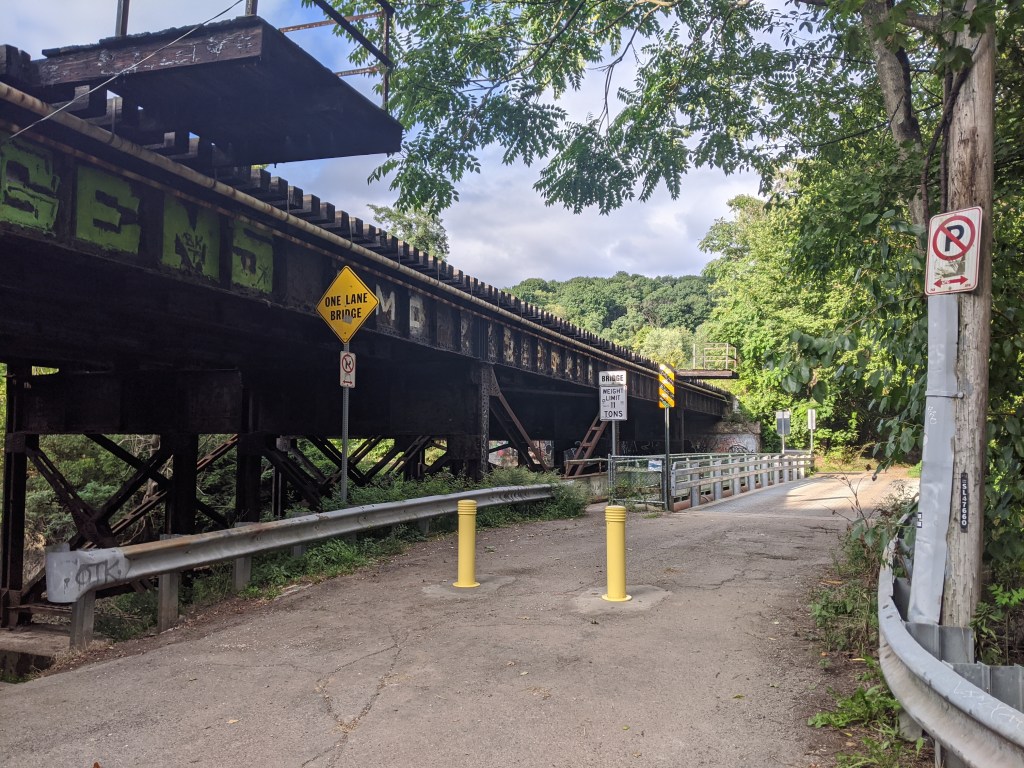
Duck Hollow is a mini neighborhood where Frick Park’s Nine Mile Run meets the Monongahela River in Pittsburgh. A handful of houses sit in the Hollow accessible only by an old one-lane bridge on a small spur of Second Avenue or the new bridge on McFarren Street that opened in 2020 (though it was only 2 years old at the time of the Bridge Report and presumably doesn’t see much traffic, it only received an overall grade of “good”). The houses of Duck Hollow are separated from the river by the railroad that crosses Nine Mile Run on the bridge above Second Avenue. These photos are from a walk my COVID-pod and I took of Frick Park in Fall 2020.
Tag Archives: Monongahela River
Keeping an Eye on Hazelwood: 2022 Recap
Overview
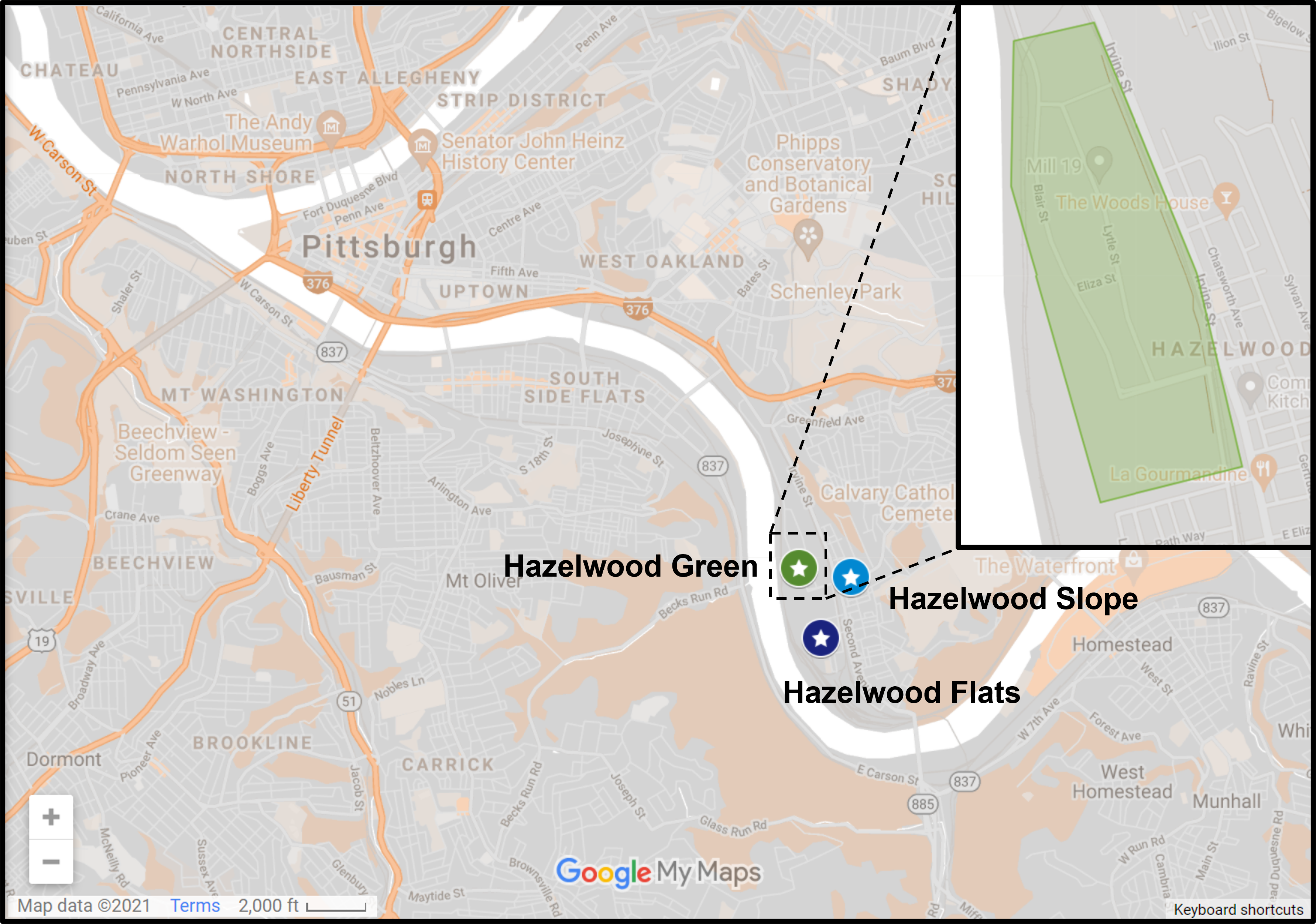
Hazelwood is a neighborhood about 4 miles down the Monongahela River from downtown Pittsburgh. It is currently experiencing significant change. Between Hazelwood’s main street (2nd Avenue) and the Monongahela River is a 178-acre site of the former Jones and Laughlin Steel Company. Most of the structures from the mill were demolished, leaving a large brownfield. In 2002, the site was purchased for redevelopment by Almono LP (at the time, an entity made up of four Pittsburgh foundations). After years of planning and a rebranding of the site as Hazelwood Green, a series of public streets and the first building opened for use in 2019. Construction is underway for more buildings and a public plaza.
During the planning and preparation stages, a question arose as to the effects of this redevelopment on the surrounding neighborhood. Hazelwood is one of Pittsburgh’s neighborhoods that has experienced high vacancy rates and subsequent demolition in its residential and business districts. While the building stock of the neighborhood has experienced a long downward trend, the community of people is strong. Only time will tell if the redevelopment of Hazelwood Green will connect with this community or if Hazelwood Green will become and isolated spot of prosperity for others.
Previously, I divided the approach to Keeping an Eye on Hazelwood into three series, Keeping an Eye on Hazelwood Green, Keeping an Eye on Hazelwood Flats, and Keeping an Eye on Hazelwood Slope. For this post and the 2023 post, I will be combining these into a single series. The goal of this series is to periodically document the physical changes to the former steel mill site and to the surrounding neighborhood.
The Photos
Due to a full schedule in 2022, I was not able to take any photographs of the neighborhood this year.
Hazelwood in the News
The big news of 2022 was the announcement of the plan for the current nonprofit owner (Almono LP) of Hazelwood Green to turn over management and eventually ownership of the site to a New York-based, for-profit development firm. (Pittsburgh Business Times, February 25, 2022, article 1 and article 2)
At the end of 2021, the plan and zoning regulations governing the redevelopment of Hazelwood Green was amended to respond to the current market. One of the changes was to allow more flexibility for temporary parking lots that the Planning Commission placed a condition that such parking lots must expire after 40 years. (Planning Commission agenda, Planning Commission minutes, City Council legislation page)
Public Source (October 27, 2021) discussed this amendment as well as community efforts to bring a grocery store to the neighborhood, to establish and maintain affordable housing, and to maintain and strengthen the ecosystem created by the greenway on the hill overlooking Hazelwood Green.
Also, toward the end of 2021, the One Valley innovation hub moved into the renovated Roundhouse (LinkedIn, July 20, 2021) and the University of Pittsburgh announced plans to build BioForge, a biomanufacturing facility, with funds from the Richard King Mellon Foundation (Pittsburgh Business Times, November 17, 2021, articles on funding and Pitt’s plans)
The City of Pittsburgh has a project page to track the restoration of the Hazelwood Greenway.
Locating Hazelwood and Hazelwood Green
Previous posts in series
Keeping an Eye on Hazelwood Slope: Sept. 2021
Keeping an Eye on Hazelwood Flats: Aug. 2021
Keeping an Eye on Hazelwood Green: Jul. 2021
Keeping an Eye on Hazelwood: Sept. 2020
Keeping an Eye on Hazelwood (across the tracks): Sept. 2020
Keeping an Eye on Hazelwood Green: Aug 2020
Keeping an Eye on Hazelwood: May 2020
Keeping an Eye on Hazelwood (across the tracks): Apr. 2020
Best Bridge – Bridge Madness 2023

Smithfield Street Bridge wins the 2023 Bridge Madness Tournament with 88% of the votes.
Thank you for participating in the 2023 Bridge Madness Tournament. While there were some close contests throughout the tournament, in the end, the Smithfield Bridge emerged as the clear winner with 88% of the votes to the 16th Street Bridge’s 12%.
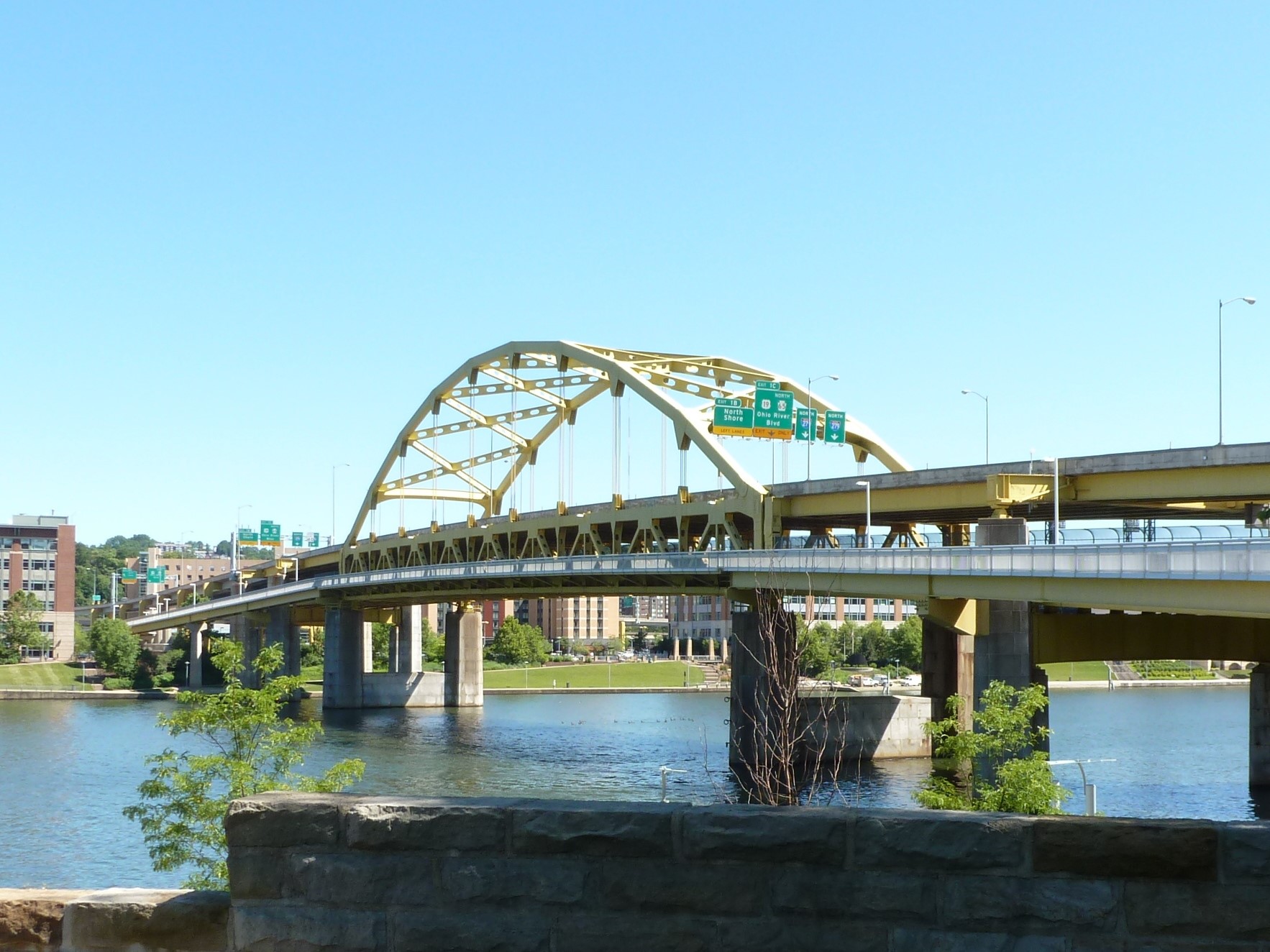
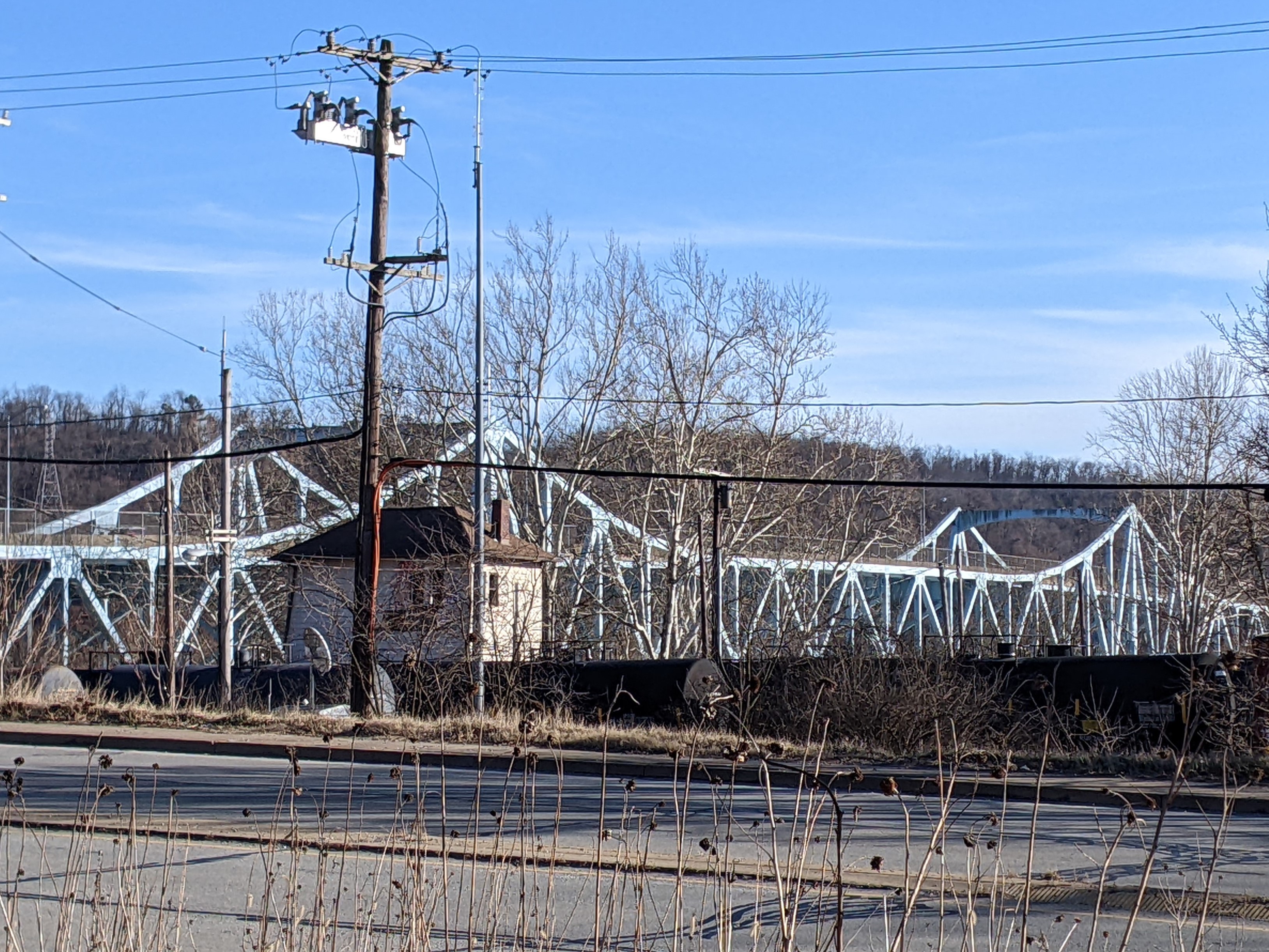
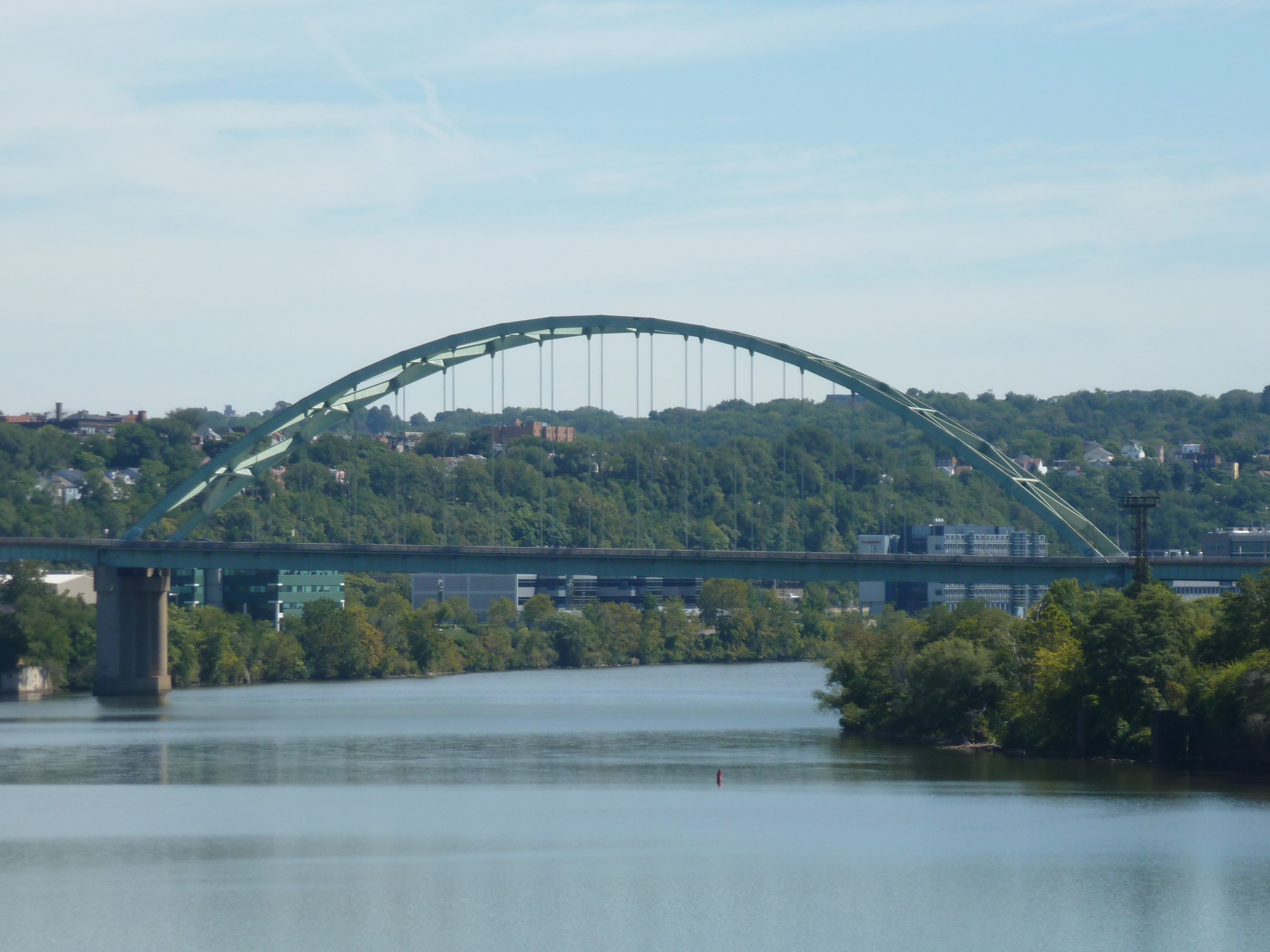
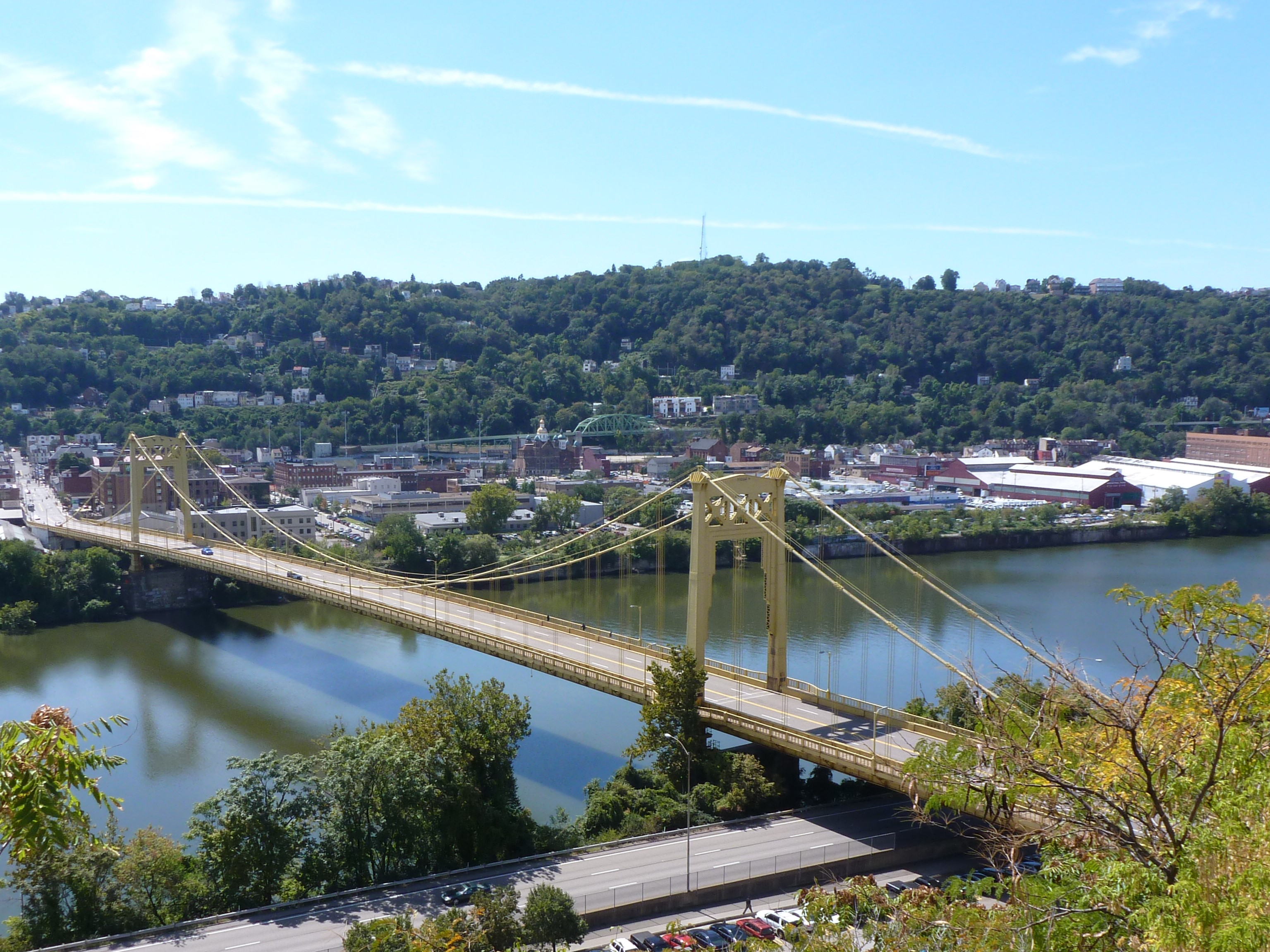
Bridge Madness 2023 featured bridges or groups of bridges that are accessible to vehicles and pedestrians. From east to west, these bridges on the Allegheny and Ohio Rivers are the Highland Park Bridge, the 62nd Street or R.D. Fleming Bridge, the 40th Street or Washington’s Crossing Bridge, the 31st Street Bridge, the 16th Street or David McCullough Bridge, the Three Sisters Bridges (6th Street, 7th Street, and 9th Street), the Fort Duquesne Bridge, and the West End Bridge. From east to west, these bridges on the Monongahela River are the Homestead Greys Bridge, the Glenwood Bridge, the Hot Metal Bridges, the Birmingham Bridge, the South 10th Street Bridge, the Liberty Bridge, the Smithfield Bridge, and the Fort Pitt Bridge.

Bridge Madness 2023 – Championship
The results are in from the Final Four match-ups in 2023’s Bridge Madness Tournament. The tournament features bridges or groups of bridges that are accessible to vehicles and pedestrians. From east to west, these bridges on the Allegheny and Ohio Rivers are the Highland Park Bridge, the 62nd Street or R.D. Fleming Bridge, the 40th Street or Washington’s Crossing Bridge, the 31st Street Bridge, the 16th Street or David McCullough Bridge, the Three Sisters Bridges (6th Street, 7th Street, and 9th Street), the Fort Duquesne Bridge, and the West End Bridge. From east to west, these bridges on the Monongahela River are the Homestead Greys Bridge, the Glenwood Bridge, the Hot Metal Bridges, the Birmingham Bridge, the South 10th Street Bridge, the Liberty Bridge, the Smithfield Bridge, and the Fort Pitt Bridge.
In the Allegheny and Ohio Conference
Bracket 7 was the 16th Street Bridge (46%) vs. the Three Sisters Bridges (37%) vs. the West End Bridge (17%).
In the Monongahela Conference
Bracket 7 was the Smithfield Bridge (55%) vs. the Hot Metal Bridges (45%).
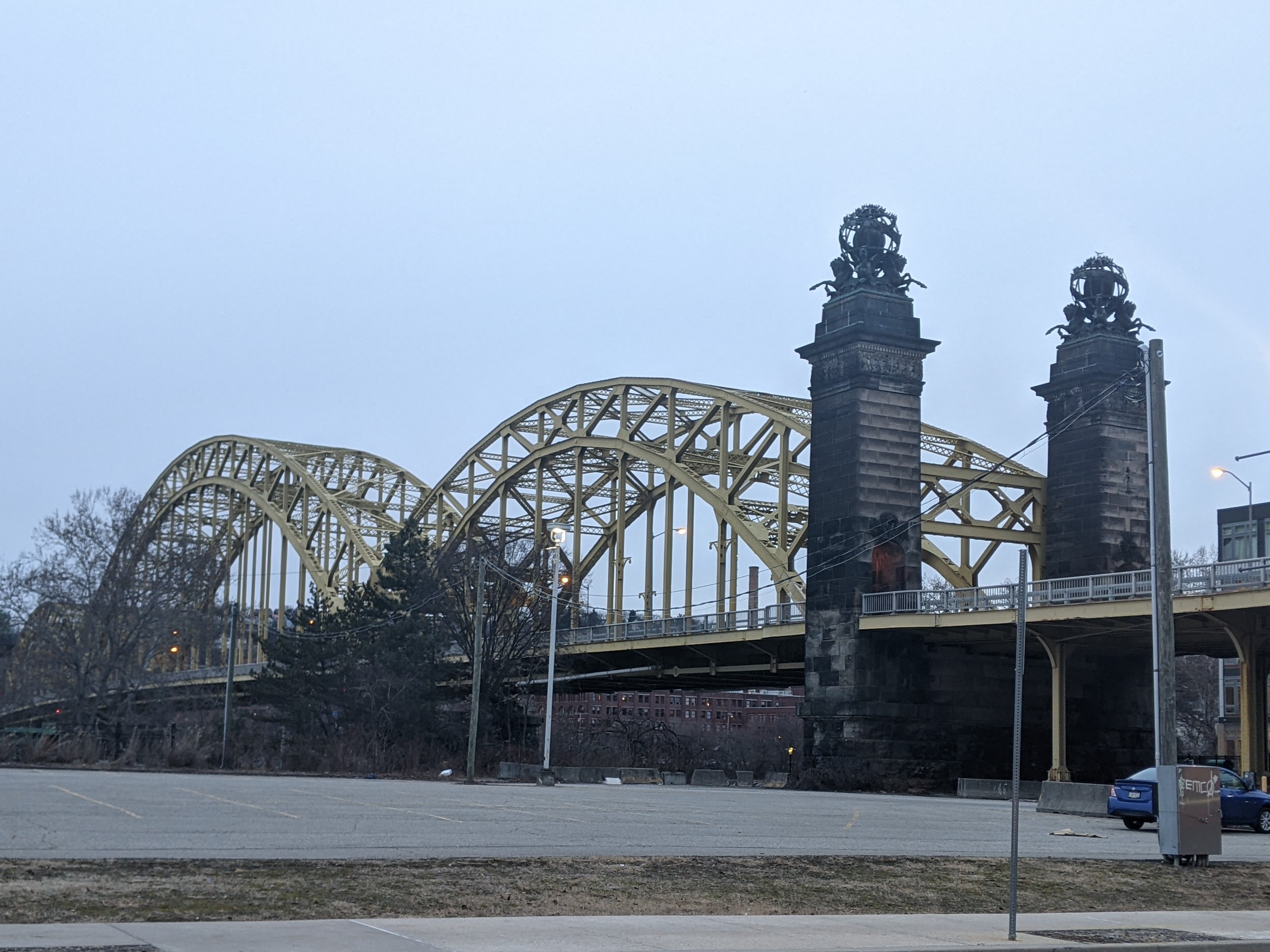
The winners are matched up below for the Championship. Vote for your favorite bridge by noon on March 29, then check back on March 30 for the announcement of the winner.
Bridge Madness 2023 – Final Four(ish)
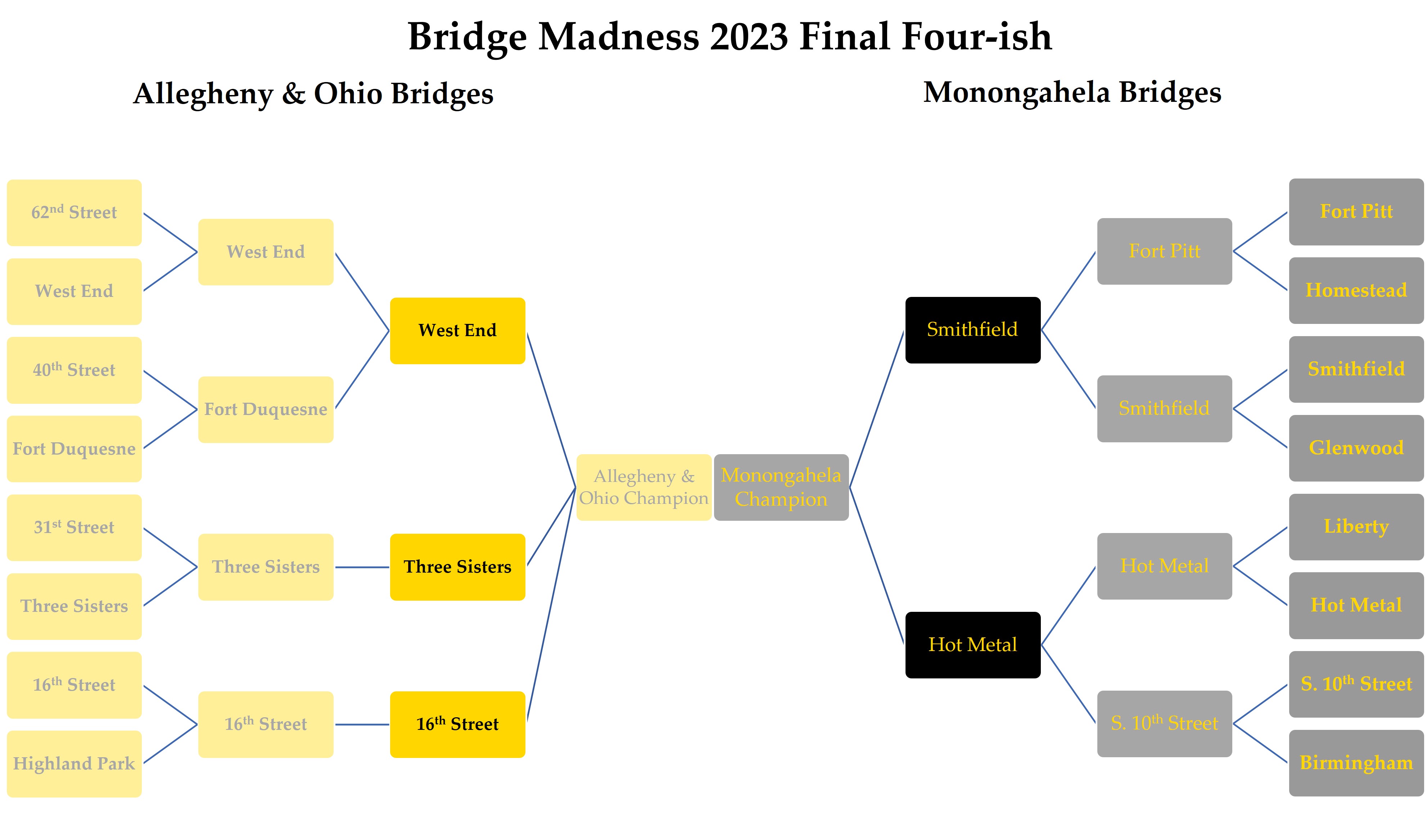
The results are in from the Elite Eight match-ups in 2023’s Bridge Madness Tournament. The tournament features bridges or groups of bridges that are accessible to vehicles and pedestrians. From east to west, these bridges on the Allegheny and Ohio Rivers are the Highland Park Bridge, the 62nd Street or R.D. Fleming Bridge, the 40th Street or Washington’s Crossing Bridge, the 31st Street Bridge, the 16th Street or David McCullough Bridge, the Three Sisters Bridges (6th Street, 7th Street, and 9th Street), the Fort Duquesne Bridge, and the West End Bridge. From east to west, these bridges on the Monongahela River are the Homestead Greys Bridge, the Glenwood Bridge, the Hot Metal Bridges, the Birmingham Bridge, the South 10th Street Bridge, the Liberty Bridge, the Smithfield Bridge, and the Fort Pitt Bridge.
In the Allegheny and Ohio Conference
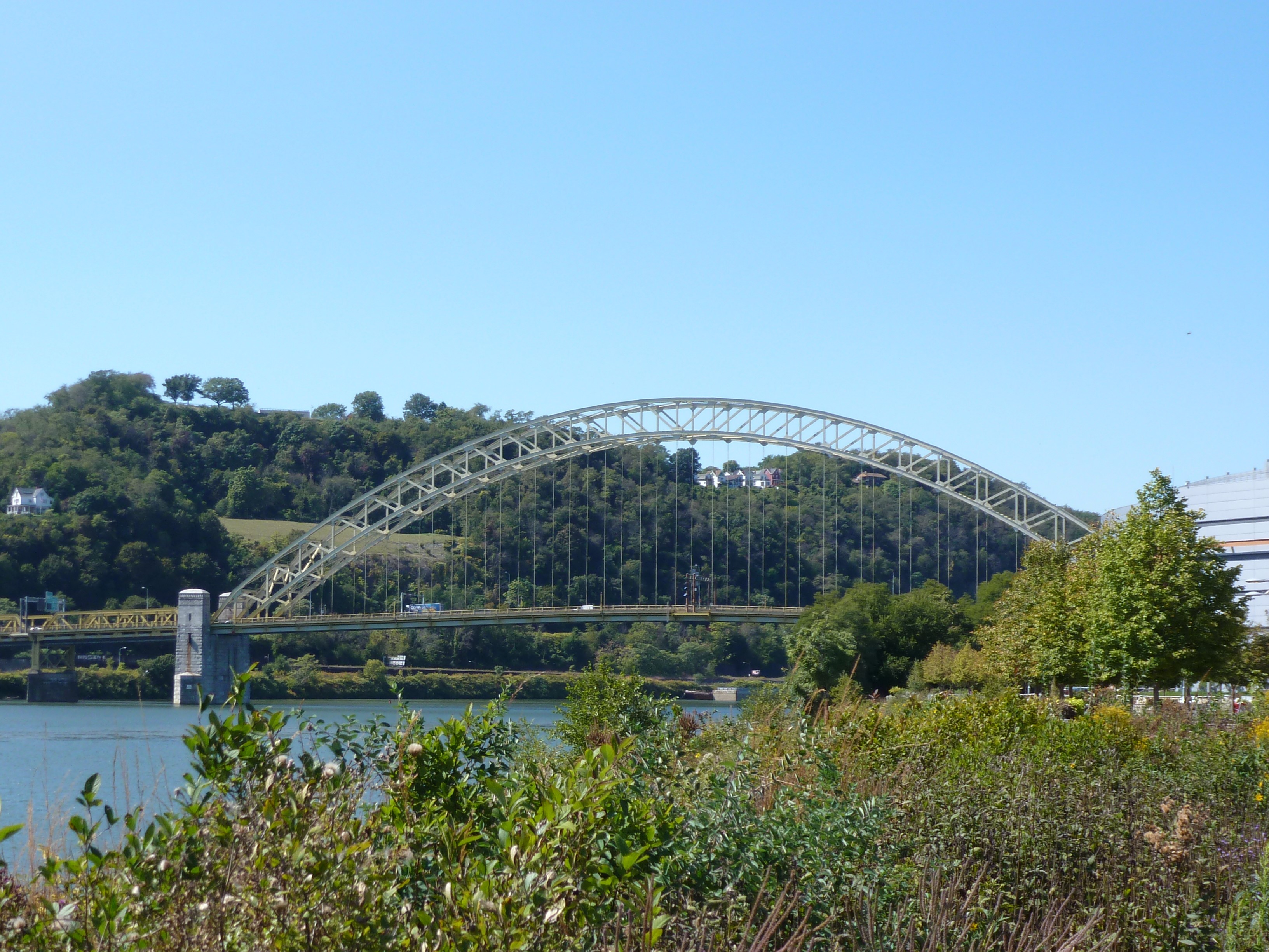
Bracket 5 was the West End Bridge (63%) vs. the Fort Duquesne Bridge (34%).
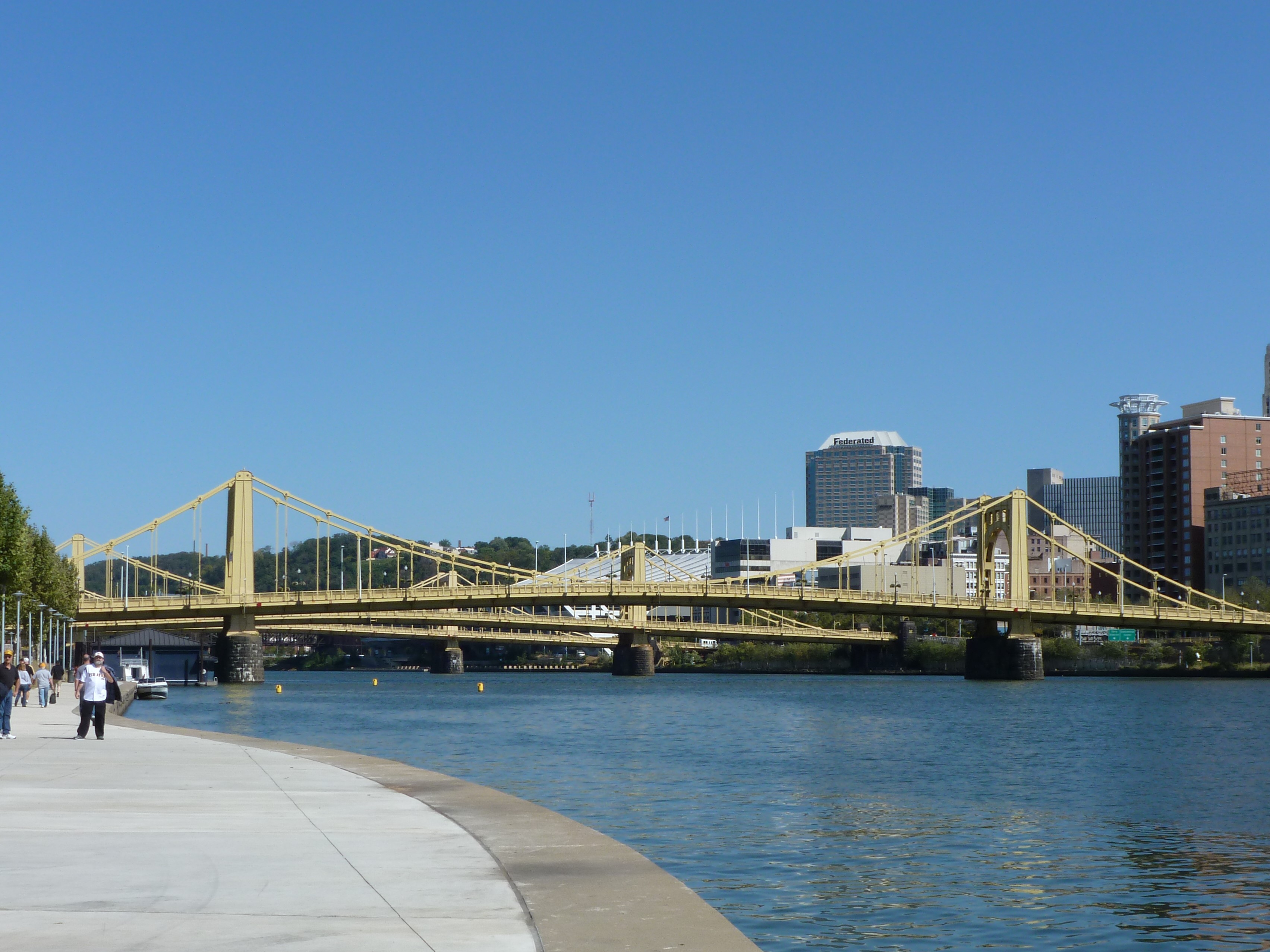
Bracket 6 was the Three Sisters Bridges (50%) vs. the 16th Street Bridge (50%).
In the Monongahela Conference
Bracket 5 was the Smithfield Bridge (79%) vs. the Fort Pitt Bridge (21%).
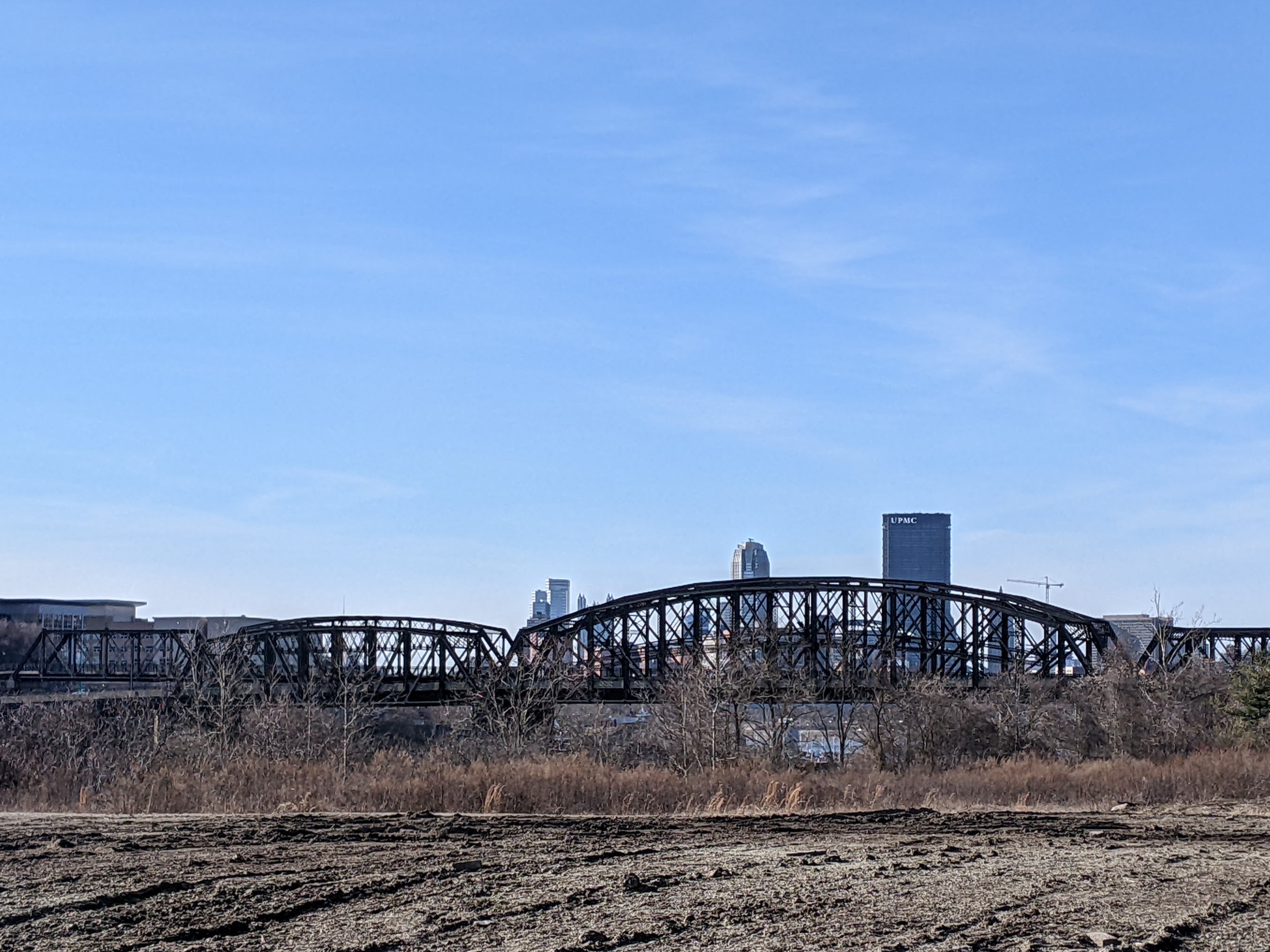
Bracket 4 was the Hot Metal Bridges (71%) vs. the South 10th Street Bridge (293%).
The winners in these brackets are matched up below for the Final Four. Vote for your favorite bridges below by noon on March 26, then check back on March 27 for the Championship.
Bridge Madness 2023 – Introduction
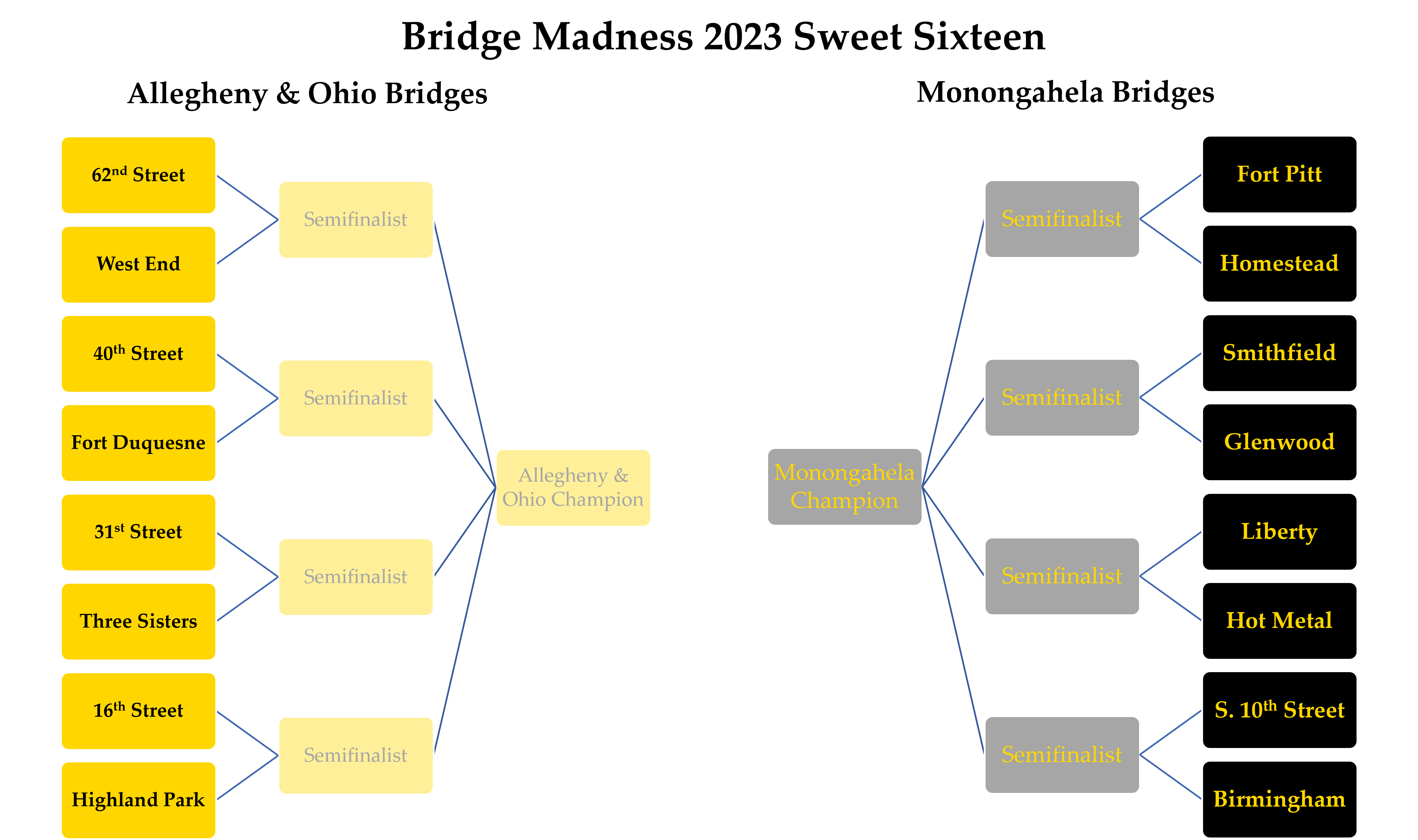
Rules
In the 2023 Bridge Madness Tournament, 16 bridges across Pittsburgh’s rivers go pier-to-pier in a reader’s choice tournament to pick the best one. The tournament features bridges or groups of bridges within the city limits that cross the Allegheny, Ohio, and Monongahela Rivers and that are accessible to vehicles and pedestrians. Beginning March 12, you will be able to vote for your favorite bridge in each bracket. The champion bridge will be announced on March 30.
The bridges are divided into two conferences: the Allegheny and Ohio Conference and the Monongahela Conference. From east to west, the bridges in the Allegheny and Ohio Conference are the Highland Park Bridge, the 62nd Street or R.D. Fleming Bridge, the 40th Street or Washington’s Crossing Bridge, the 31st Street Bridge, the 16th Street or David McCullough Bridge, the Three Sisters Bridges (6th Street, 7th Street, and 9th Street), the Fort Duquesne Bridge, and the West End Bridge. From east to west, the bridges in the Monongahela Conference are the Homestead Grays Bridge, the Glenwood Bridge, the joint Hot Metal Bridge and Monongahela Connecting Railroad Bridge, the Birmingham Bridge, the South 10th Street Bridge, the Liberty Bridge, the Smithfield Bridge, and the Fort Pitt Bridge.
Each round of voting will go live at 8 AM on the scheduled day and close at noon two days later. The following morning, the next round of voting will go live, until the winner is announced on March 30. The schedule is:
- March 12 – Sweet Sixteen: Allegheny & Ohio Conference
- March 15 – Sweet Sixteen: Monongahela Conference
- March 18 – Elite Eight: Allegheny & Ohio Conference
- March 21 – Elite Eight: Monongahela Conference
- March 24 – Final Four (both conferences)
- March 27 – Championship
- March 30 – Winner announced
Allegheny & Ohio Conference Bridges
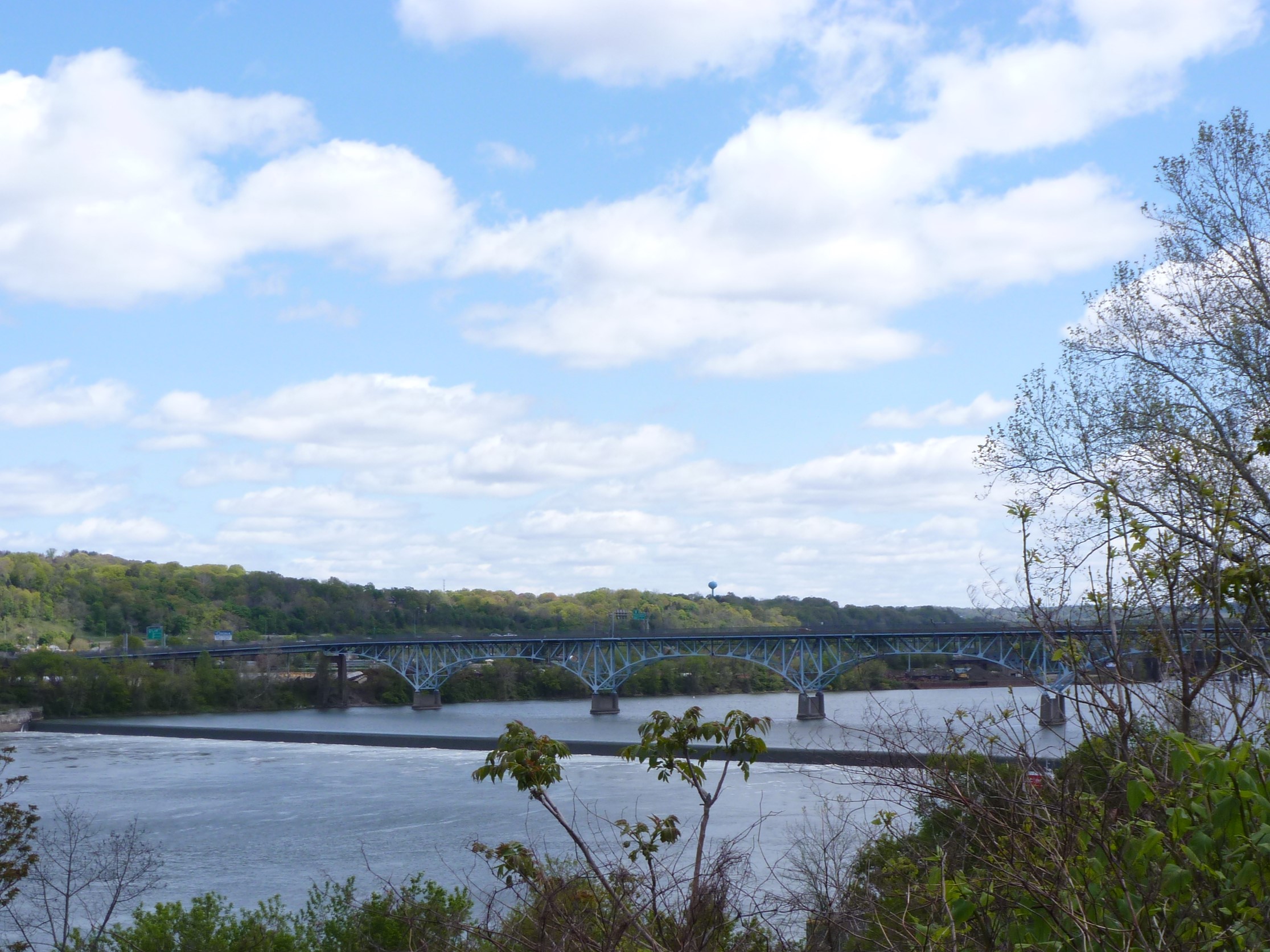
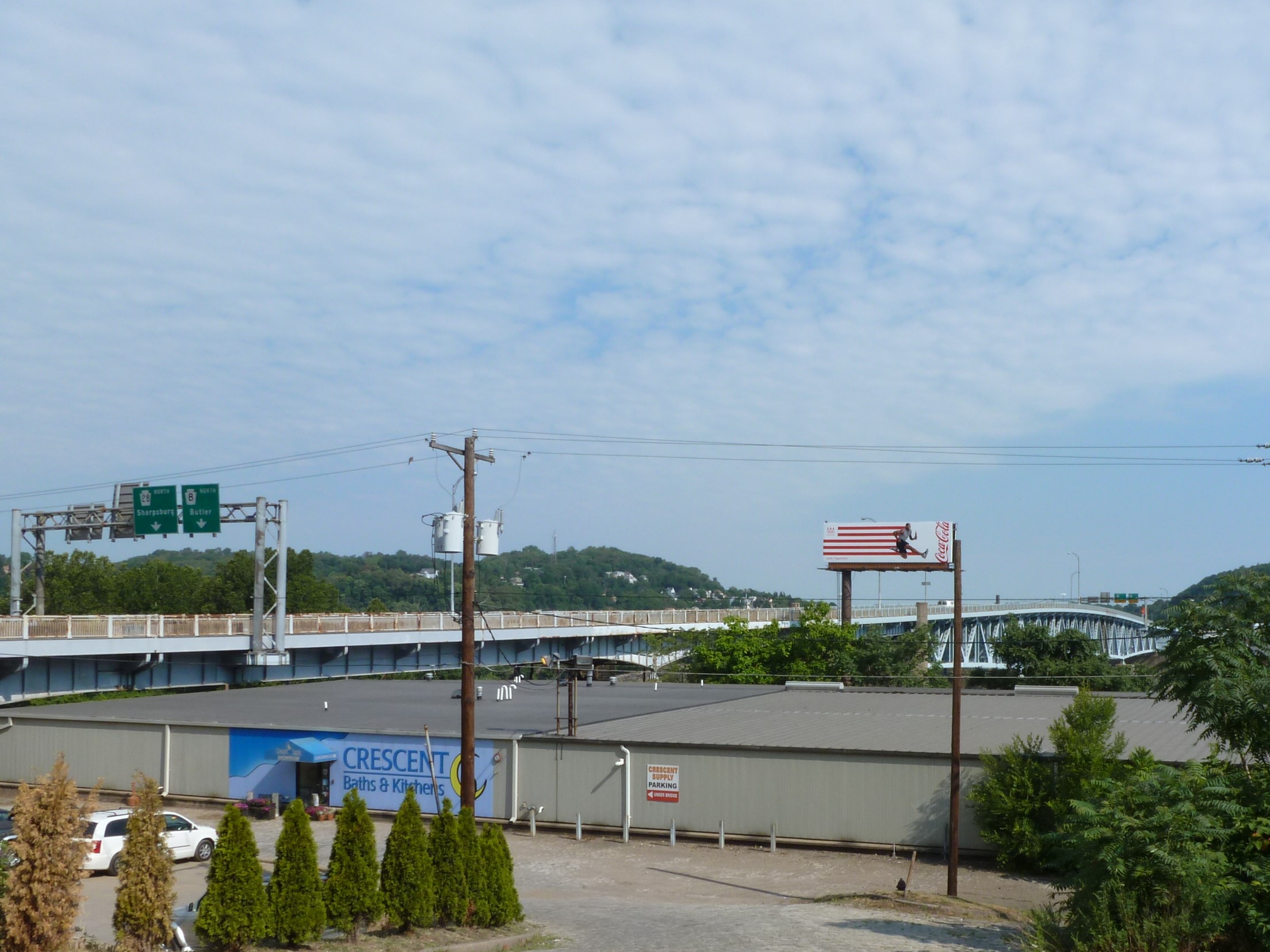

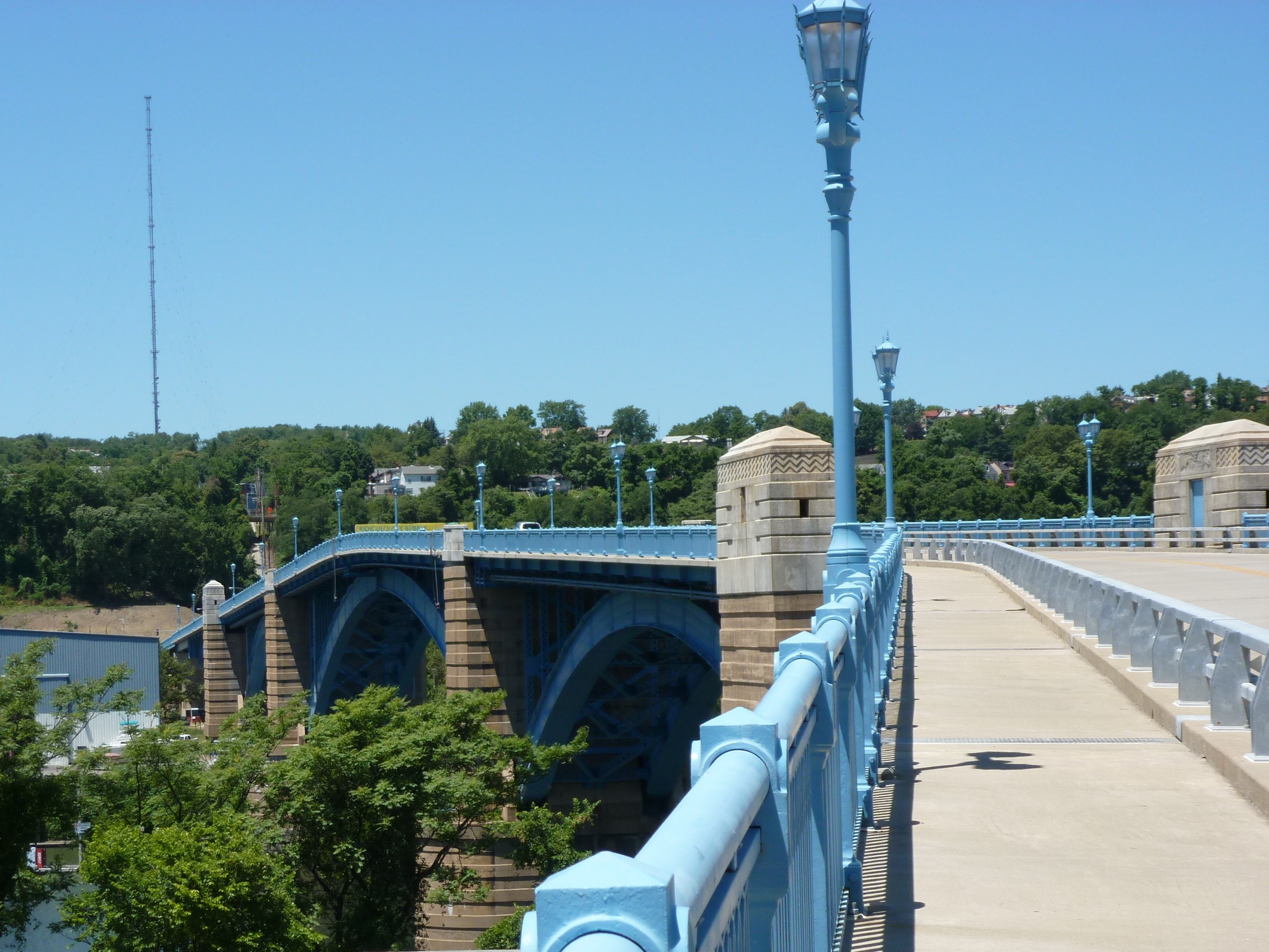
Monongahela Conference Bridges

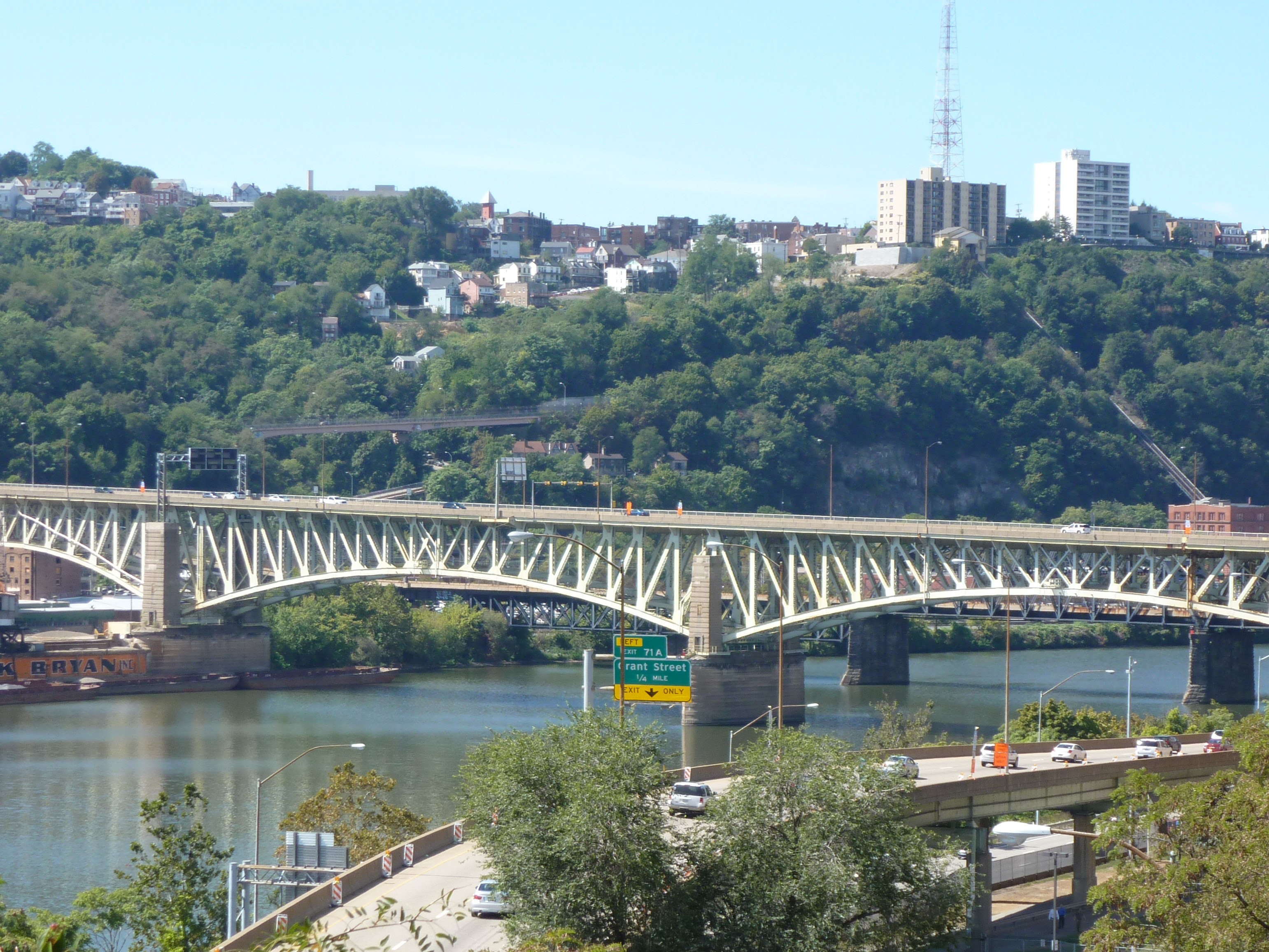
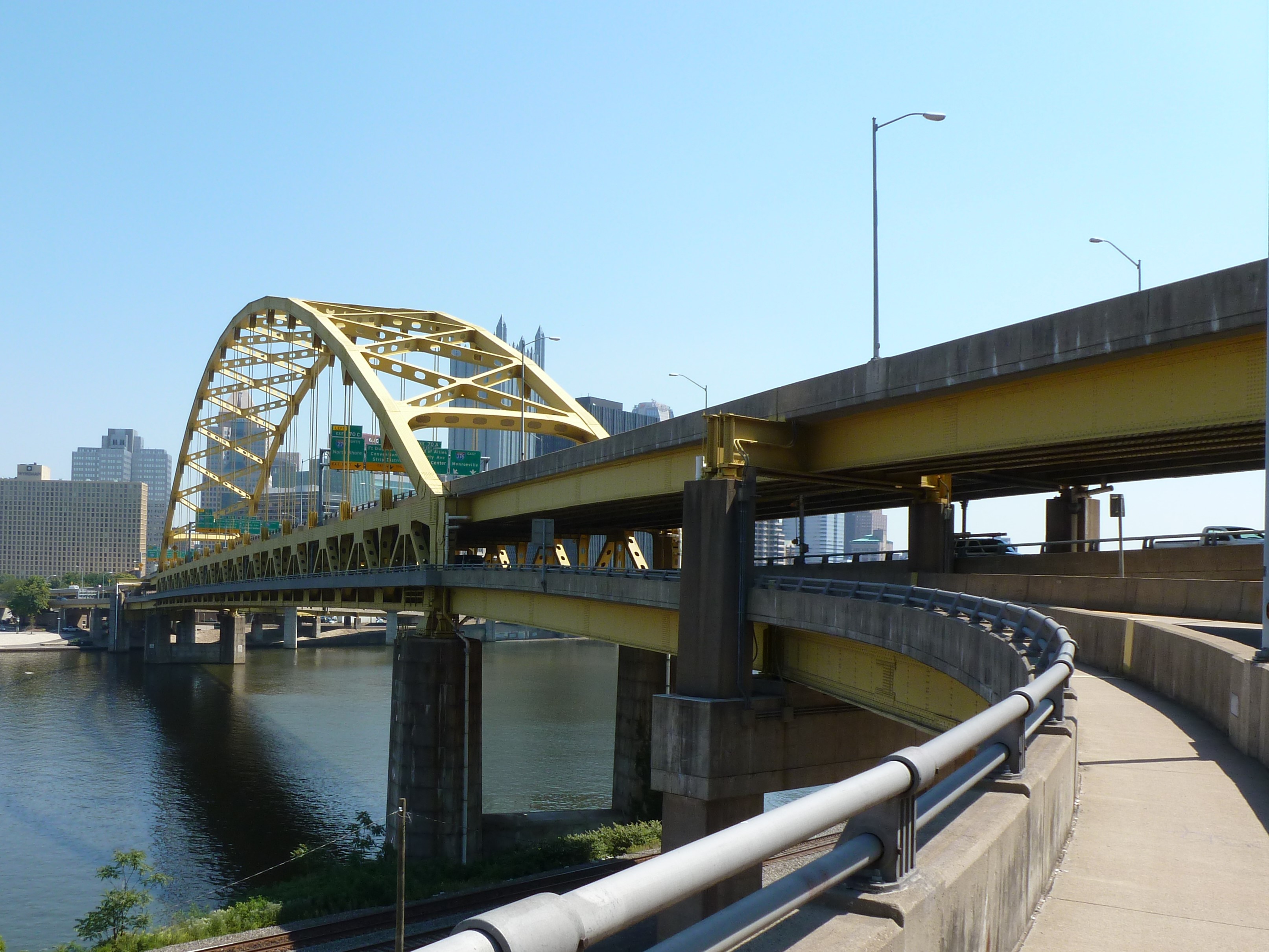
Bridge Madness 2023 Map
Best Pittsburgh Bridge?
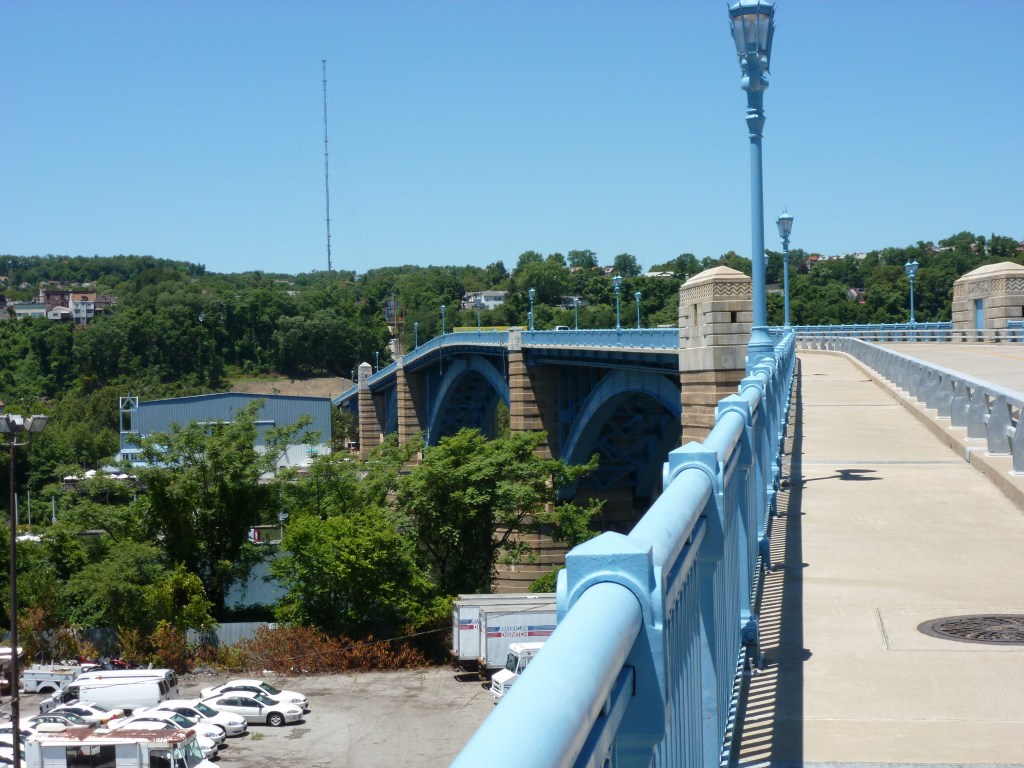
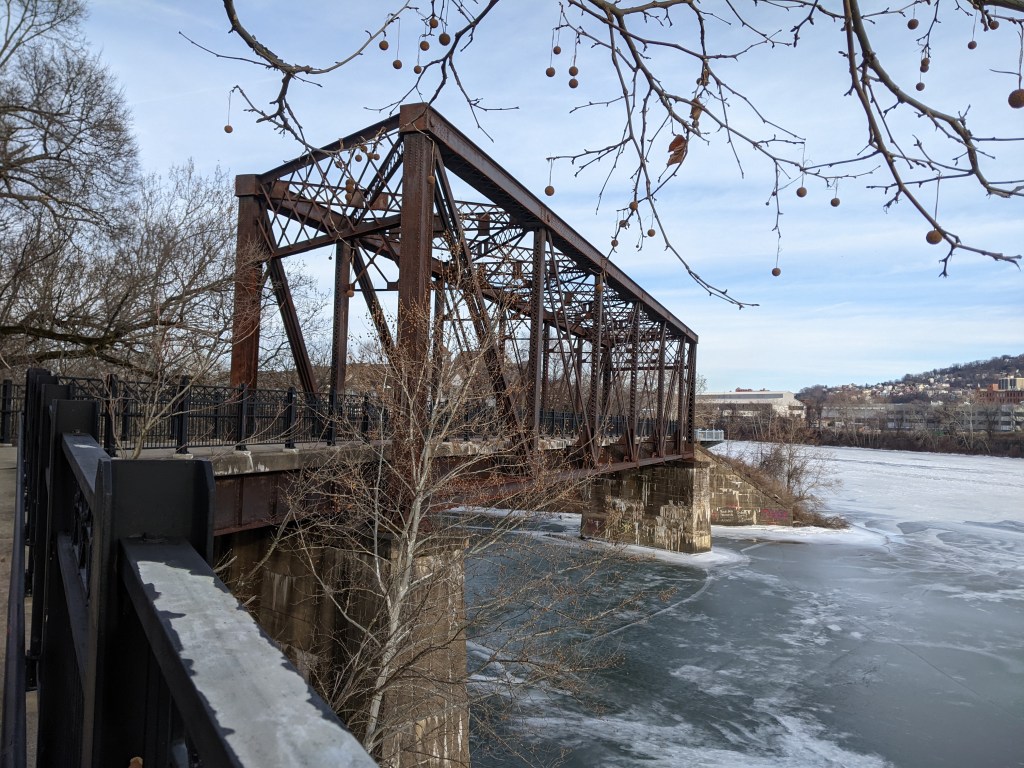
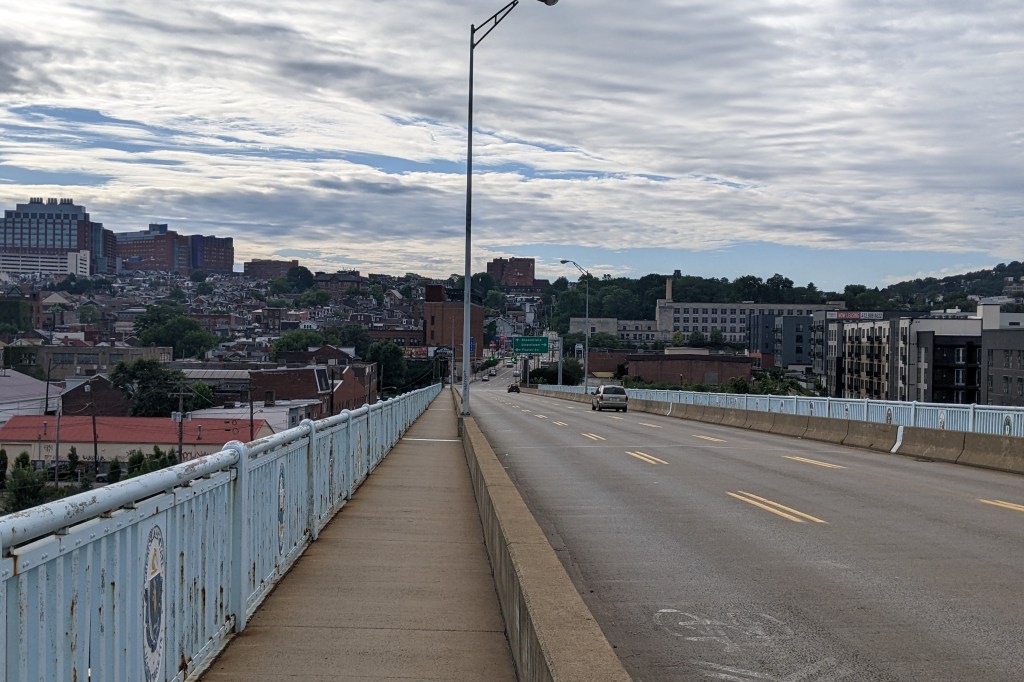
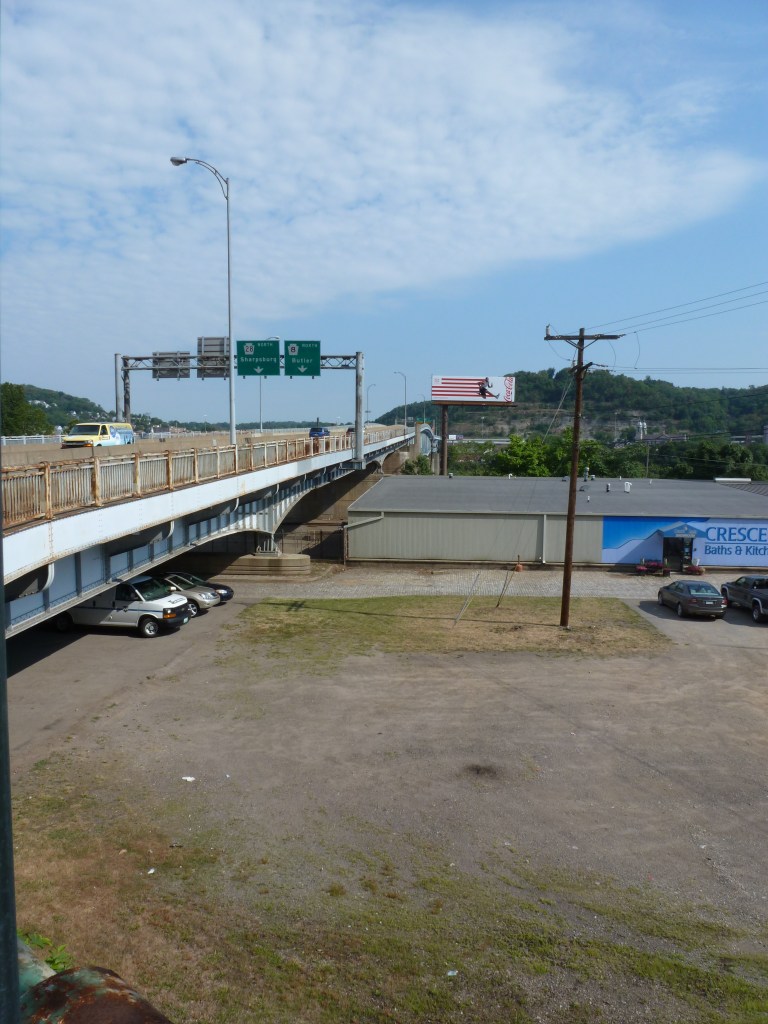
From time to time, someone will ask me which Pittsburgh bridge is my favorite. I typically answer the Smithfield Street Bridge. The shape and color of its trusses are unique in a city of golden bridges. The lights gently rising and falling along the curves the the trusses create a soft reflection on the river. Walking over it placed the stress of work on the other side of the river. Walking over it, it’s best not to look down at the holes rusted through the sidewalk that reveal the rushing water underneath.
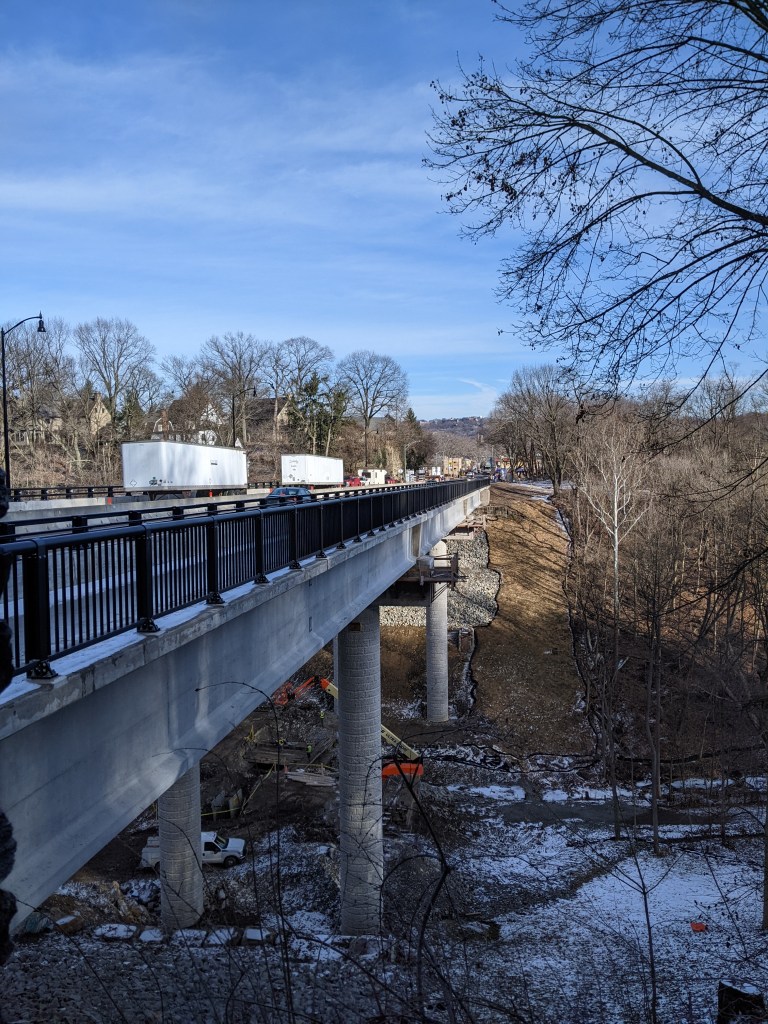
This question came up again when my family was visiting for the holidays. I had postponed my first walk across the new Fern Hollow Bridge about a week to share the experience with them. While we were walking across it, I was asked what bridge(s) I liked in Pittsburgh. While I answered that the Smithfield Bridge is probably my favorite, we had experienced that one multiple times in the past, so I started to think about what are the other bridges I find interesting that are less visible than the Smithfield Bridge. This spurred an impromptu driving tour of bridges in Pittsburgh.
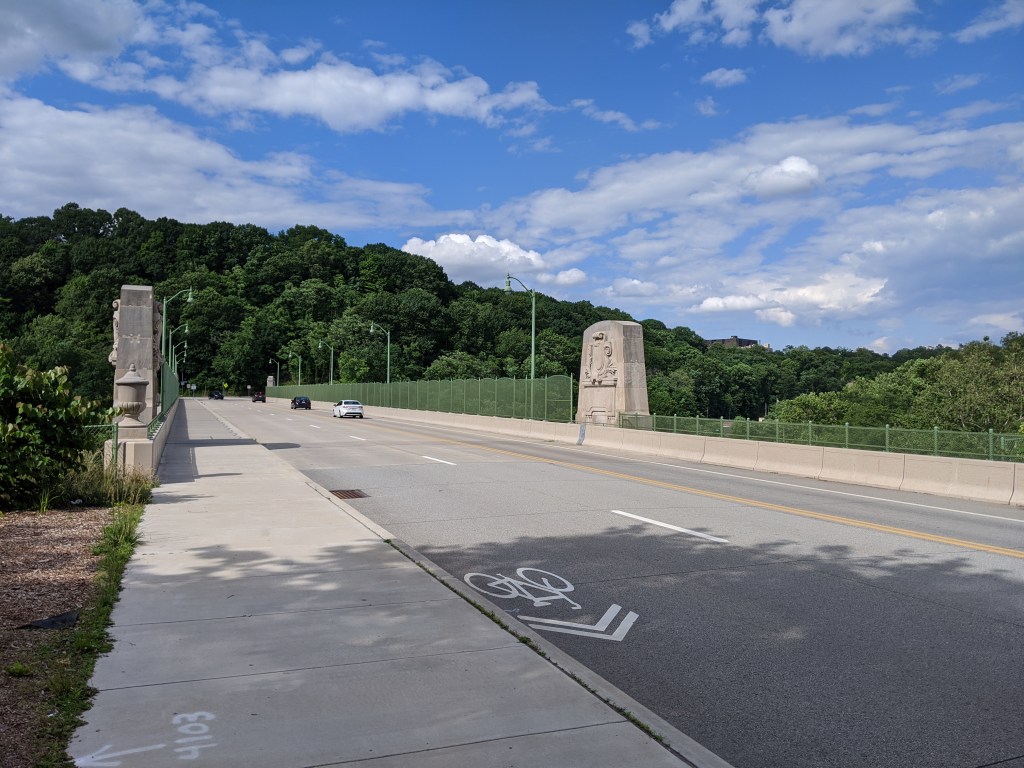
We went from the Fern Hollow Bridge to the Greenfield Bridge, as the last time we were all in Pittsburgh together we watched the cloud of dust from the implosion of the former bridge through the trees of Schenley Park. We passed the Hot Metal Bridge, Birmingham Bridge, and South 10th Street Bridge before passing through the Armstrong Tunnel for the fun of it. That positioned us to encounter the CAP – which is one of those bridges that doesn’t look like a bridge – on our way toward the Allegheny River. I added an extra turn so that we could pass over the 28th Street Bridge – the only through truss bridge over the busway – before crossing the 31st Street Bridge (my other favorite bridge to walk, except for the fact that it is out of the way). We got out of the car at this point to walk the pedestrian/bike trail bridge to Herr’s Island. While that was the end of this unofficial tour, we did pass by the 40th Street Bridge and cross the R.D. Fleming or 62nd Street Bridge to complete our loop.
Your Choice
In March, you will have the chance to vote for your favorite Pittsburgh River Bridges in the 2023 Bridge Madness Tournament. Details will be announced on March 7.
Bridge Photos
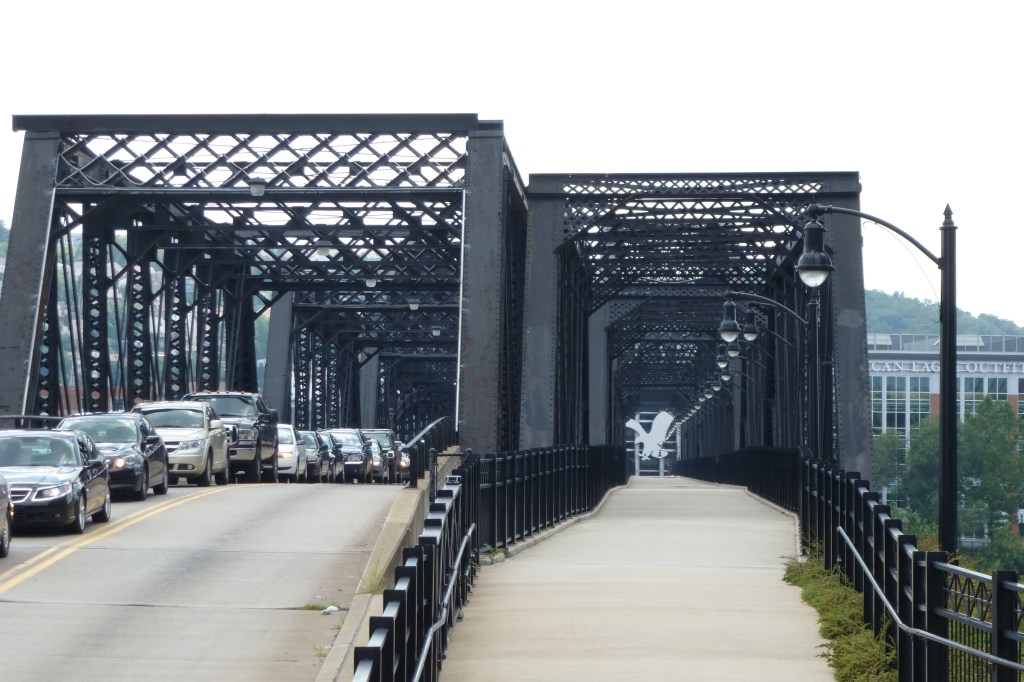
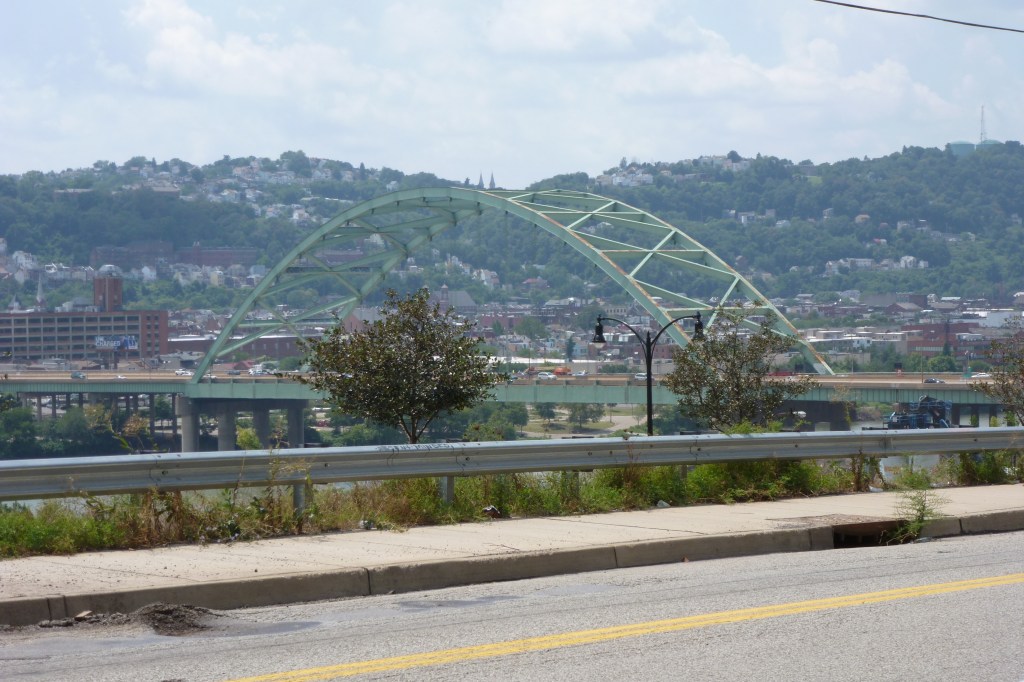
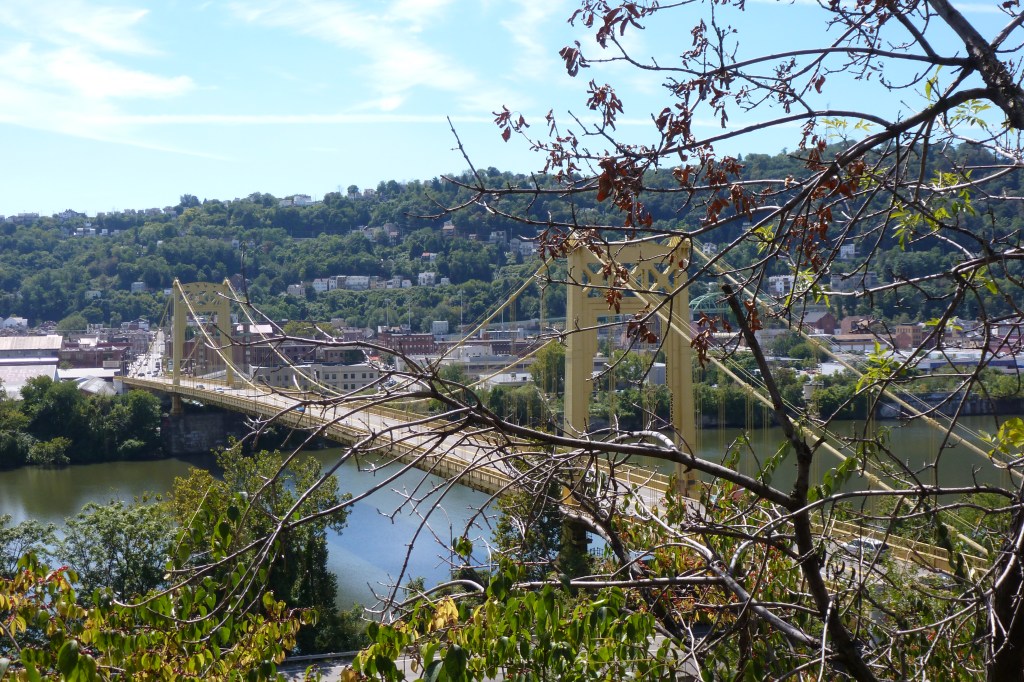

Tour Map
Then & Now: Hot Metal Bridge
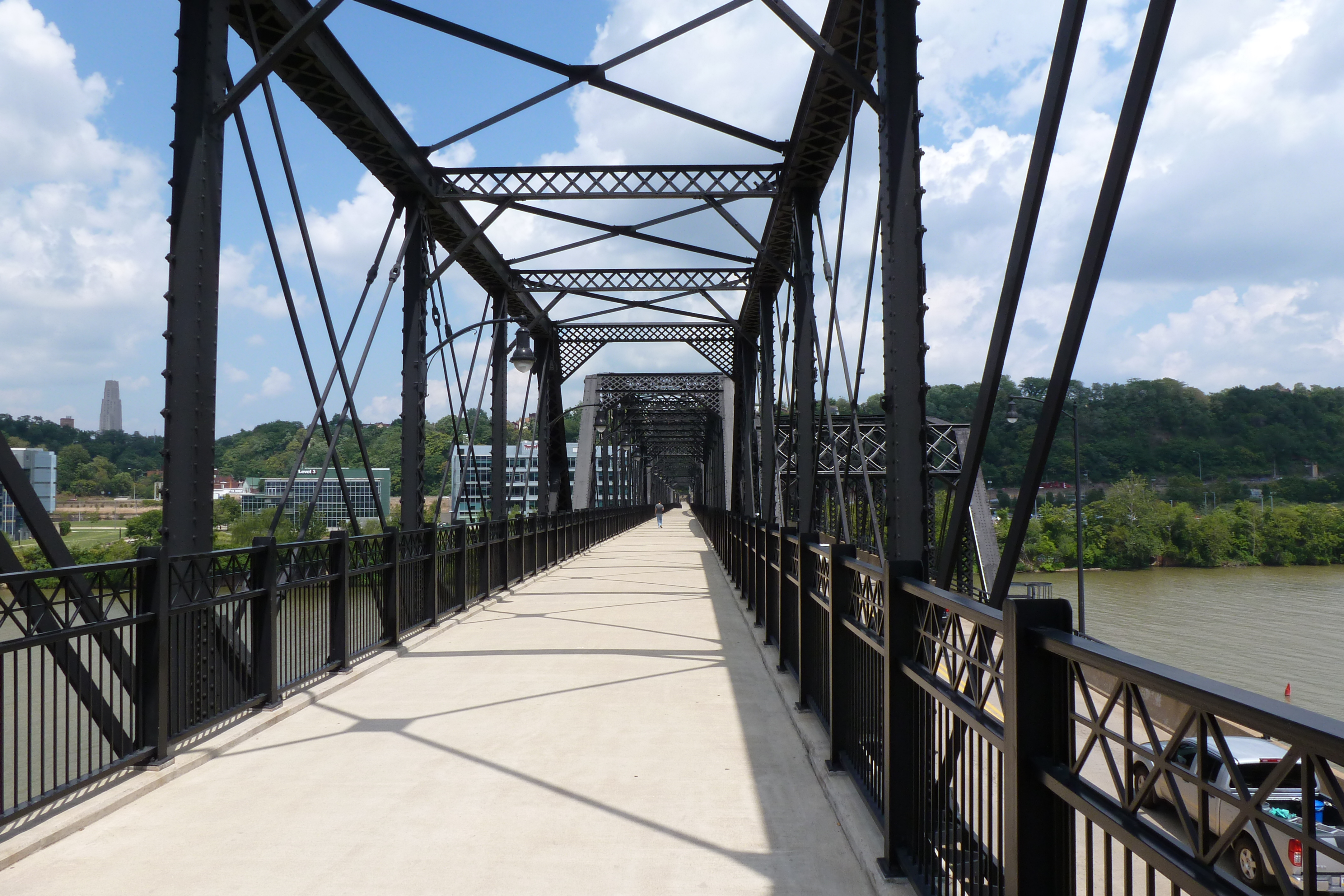
The final bridge in our 10-year anniversary look back at the Pittsburgh bridges and their environs is the Hot Metal Bridge. This is upriver from the Birmingham Bridge and the last bridge on the Monongahela before the big bend that hides downtown from view.
The Hot Metal Bridge was built to connect the Jones and Laughlin Steel Mill’s sites on opposite sides of the Monongahela River. With the industrial decline of Pittsburgh’s steelmaking industry in the mid- to late-20th century, Jones and Laughlin’s operations ceased over the 1980s. The first redevelopment of a portion of their property began in 1981. The redevelopment continues today.
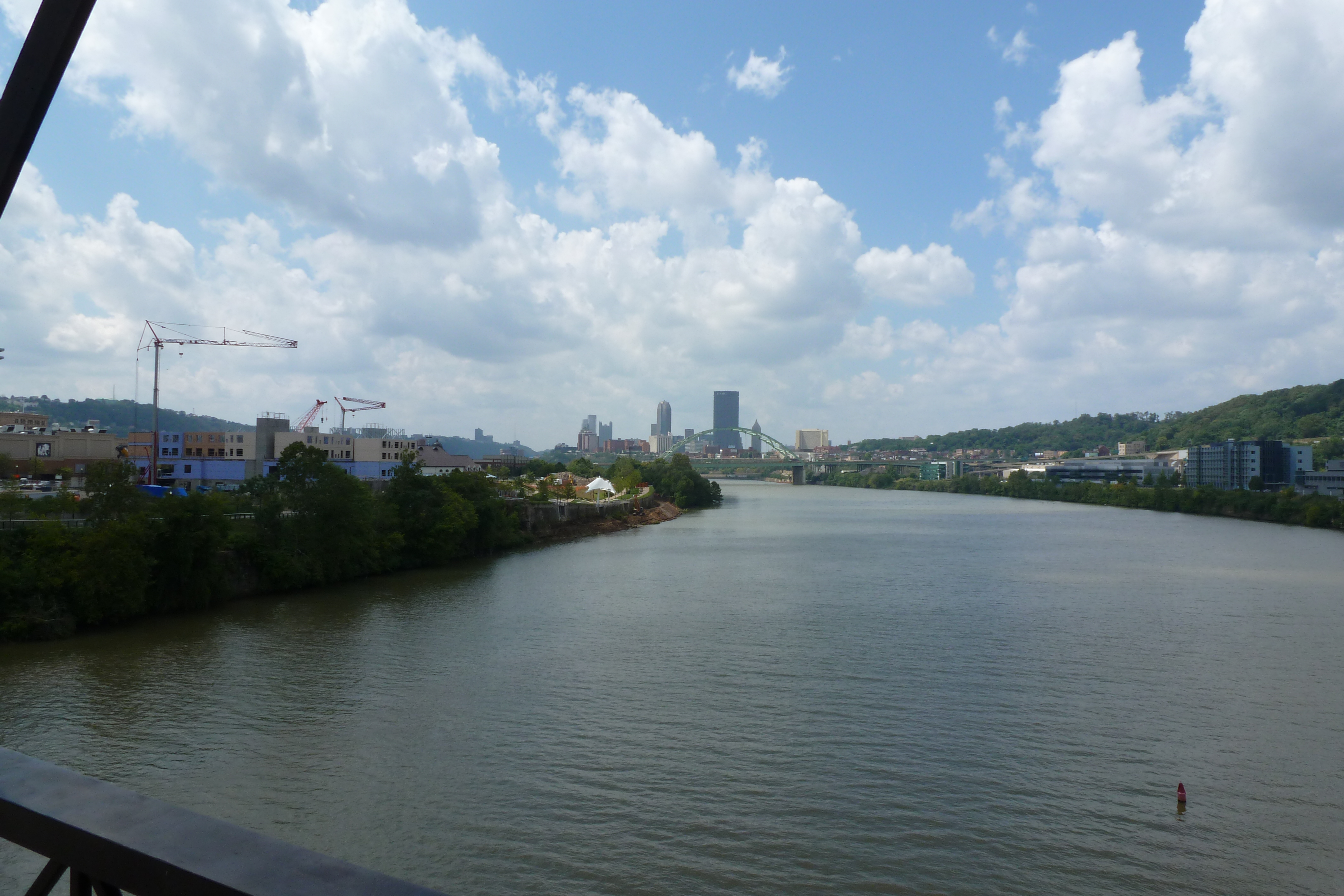
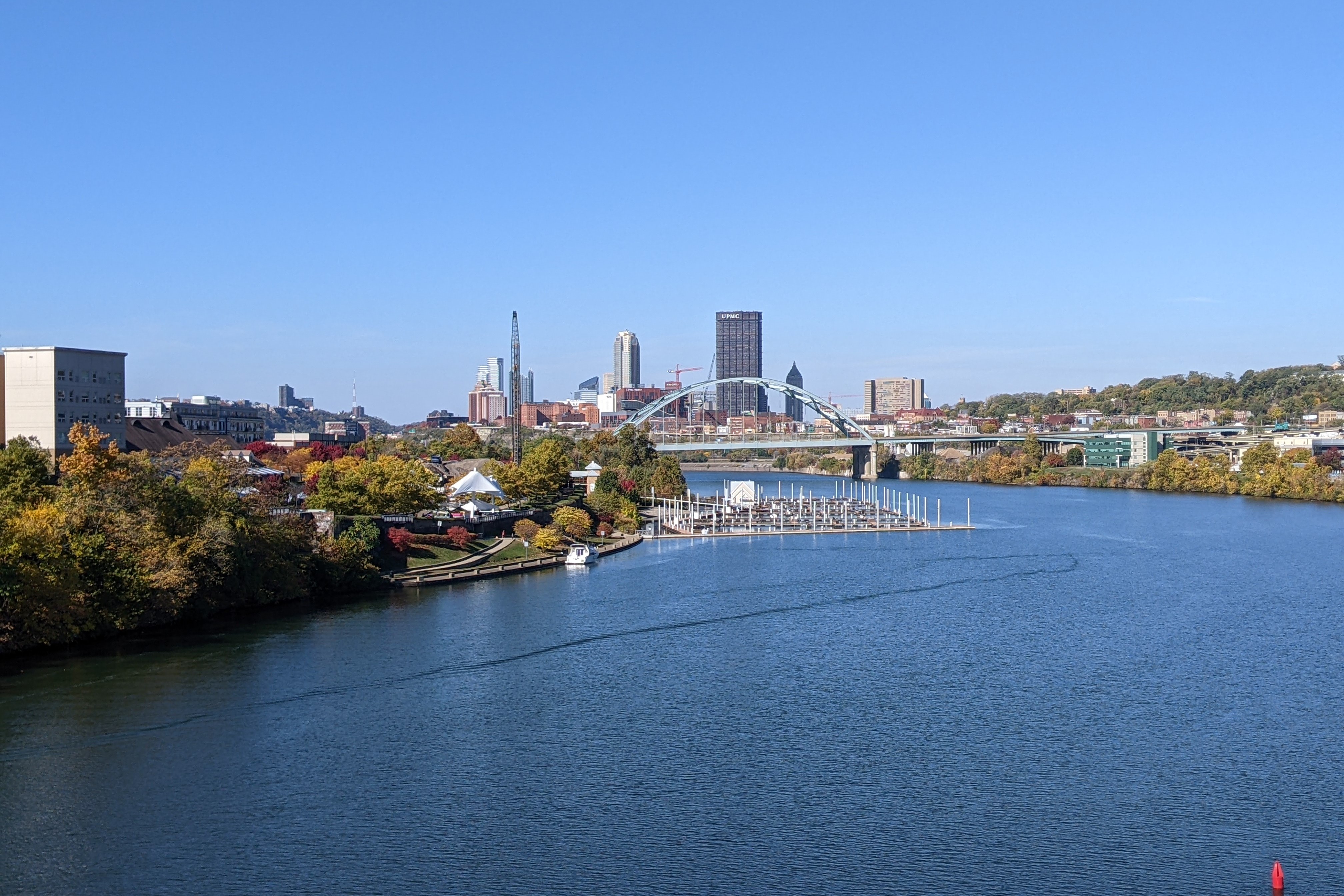
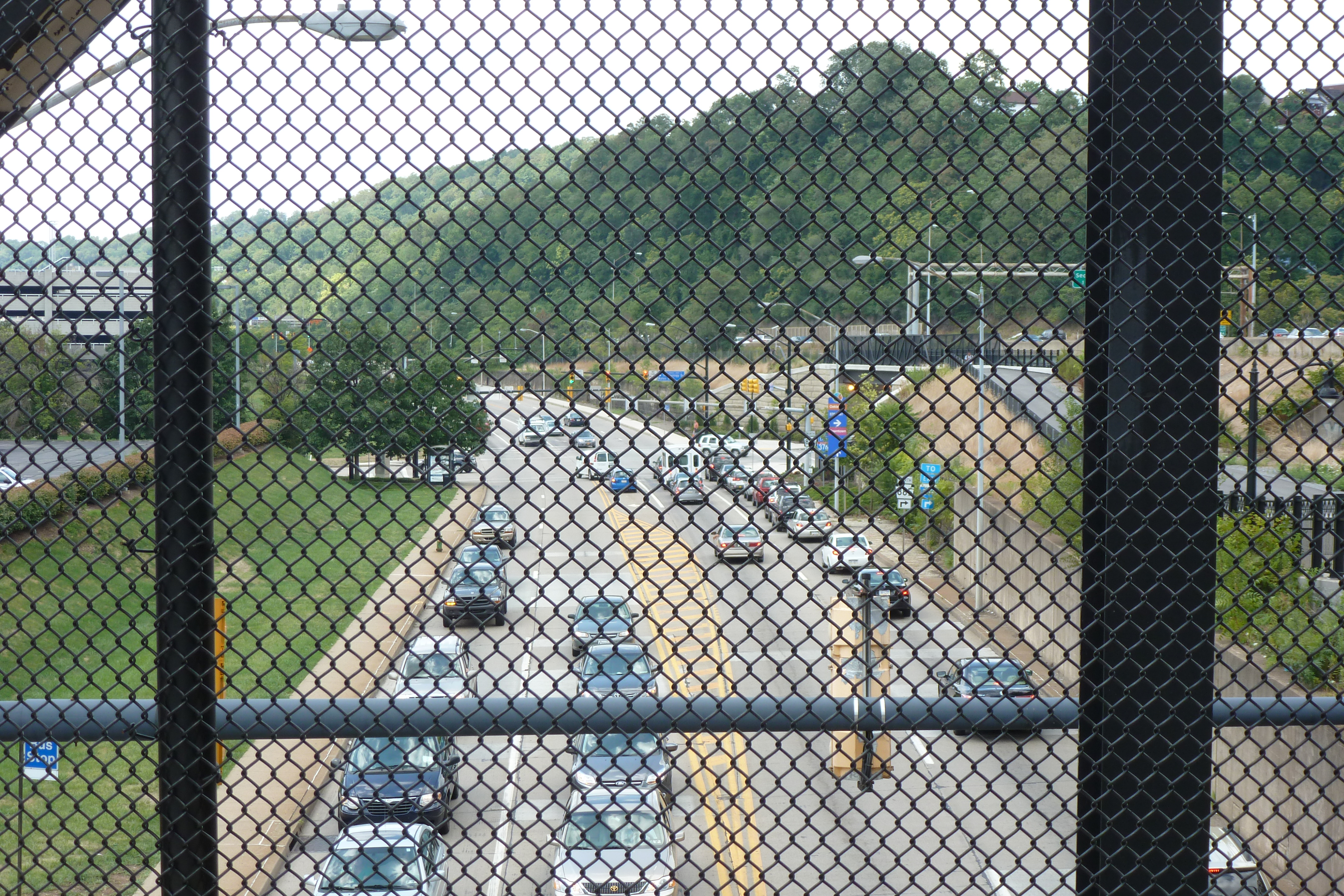
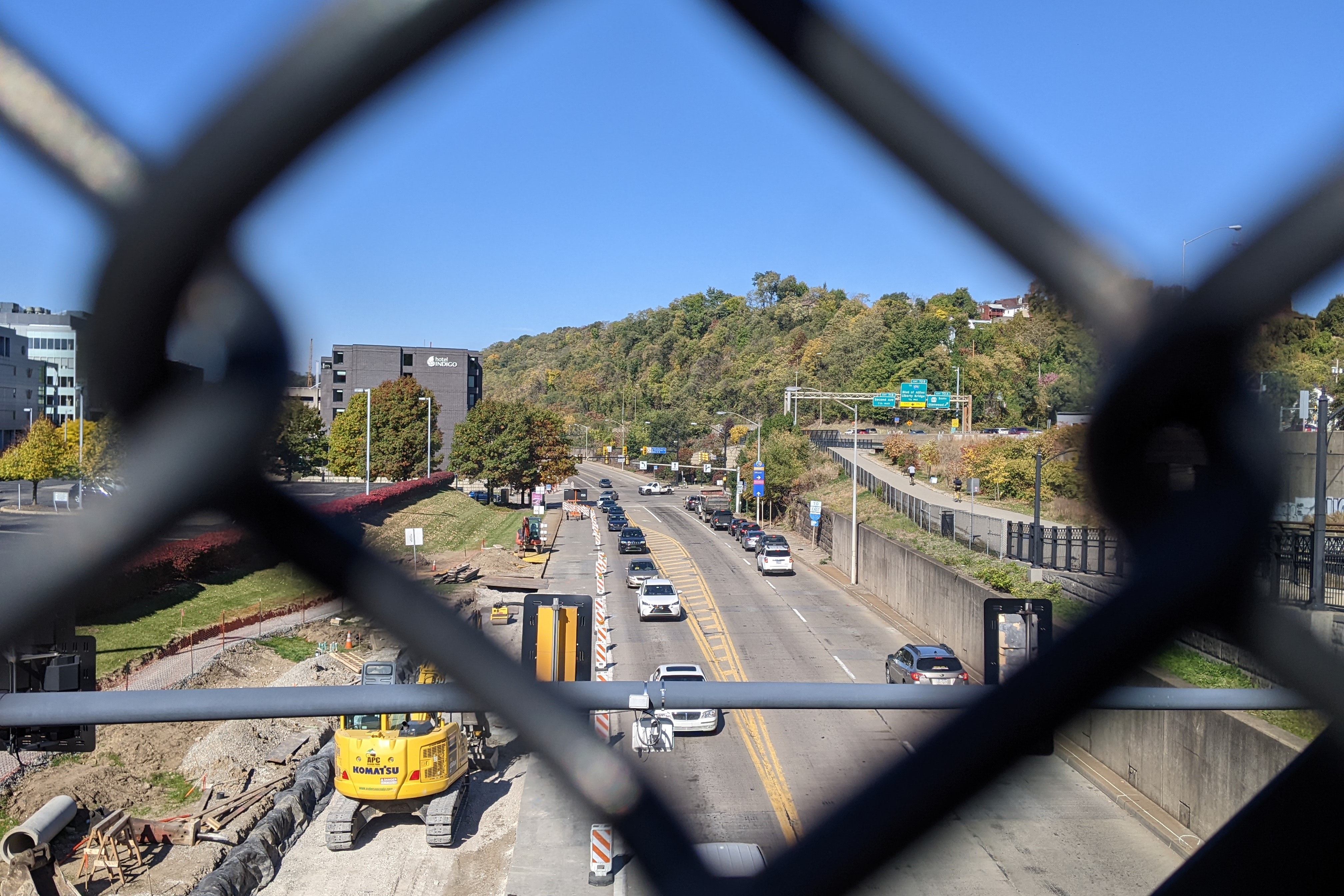
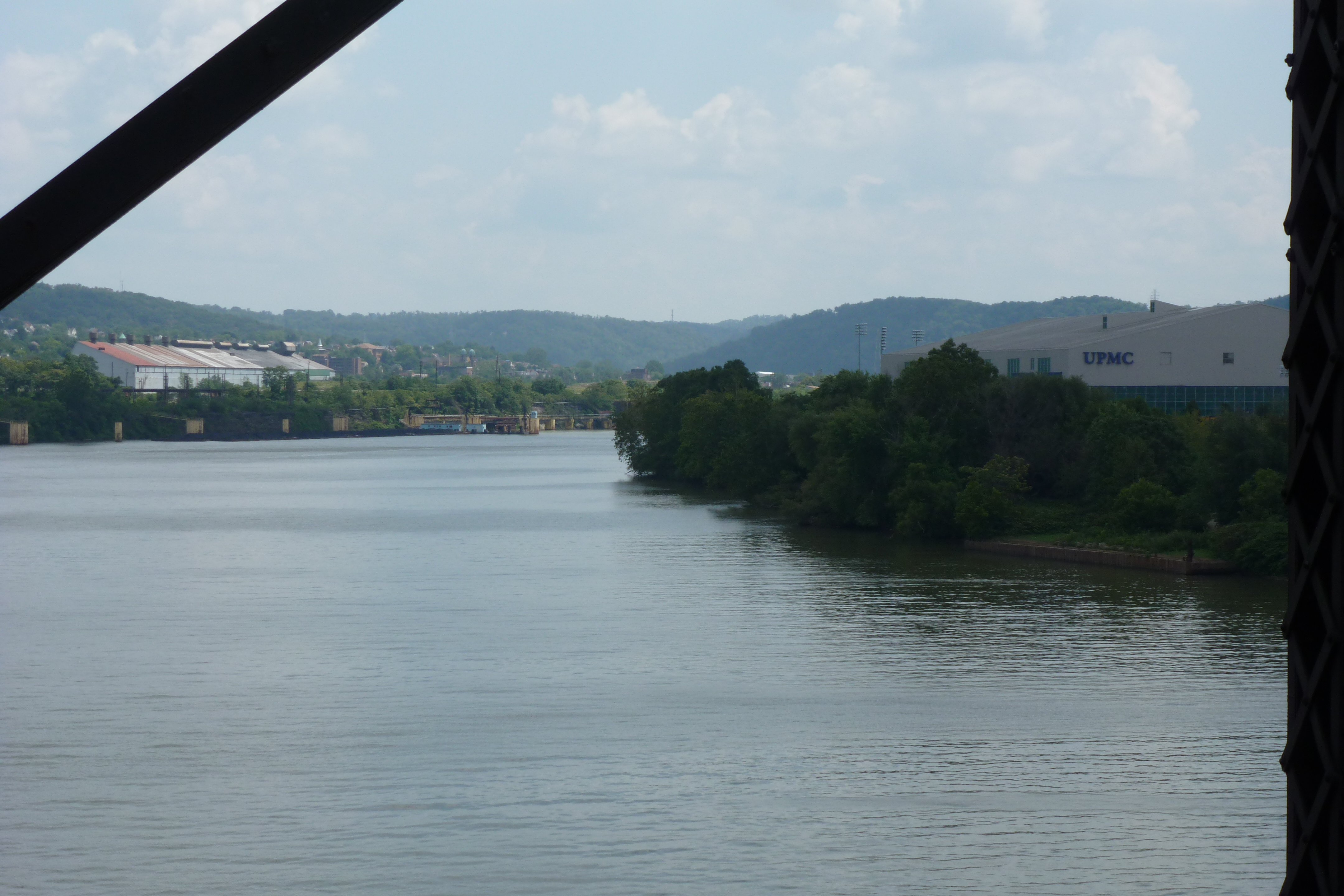
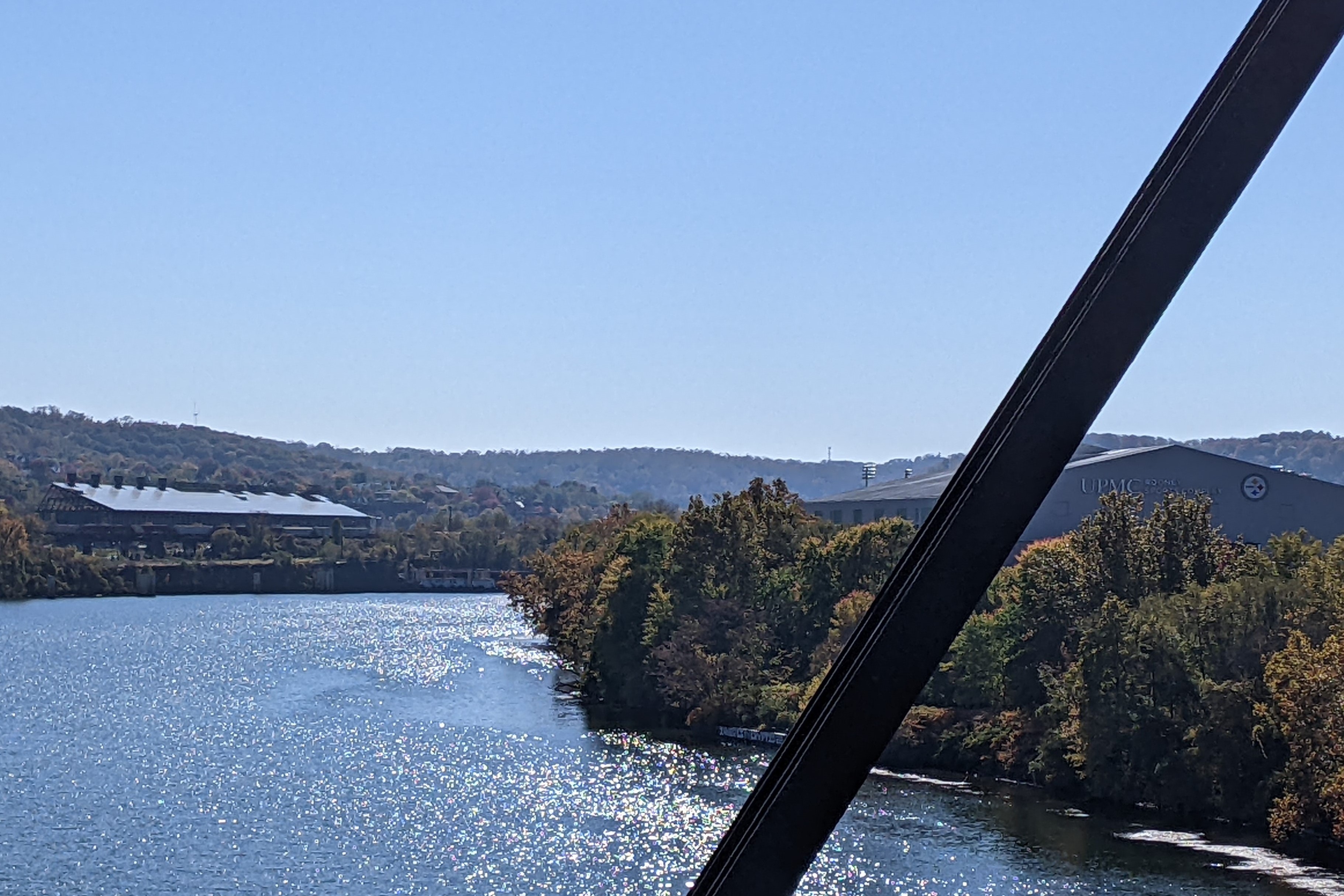
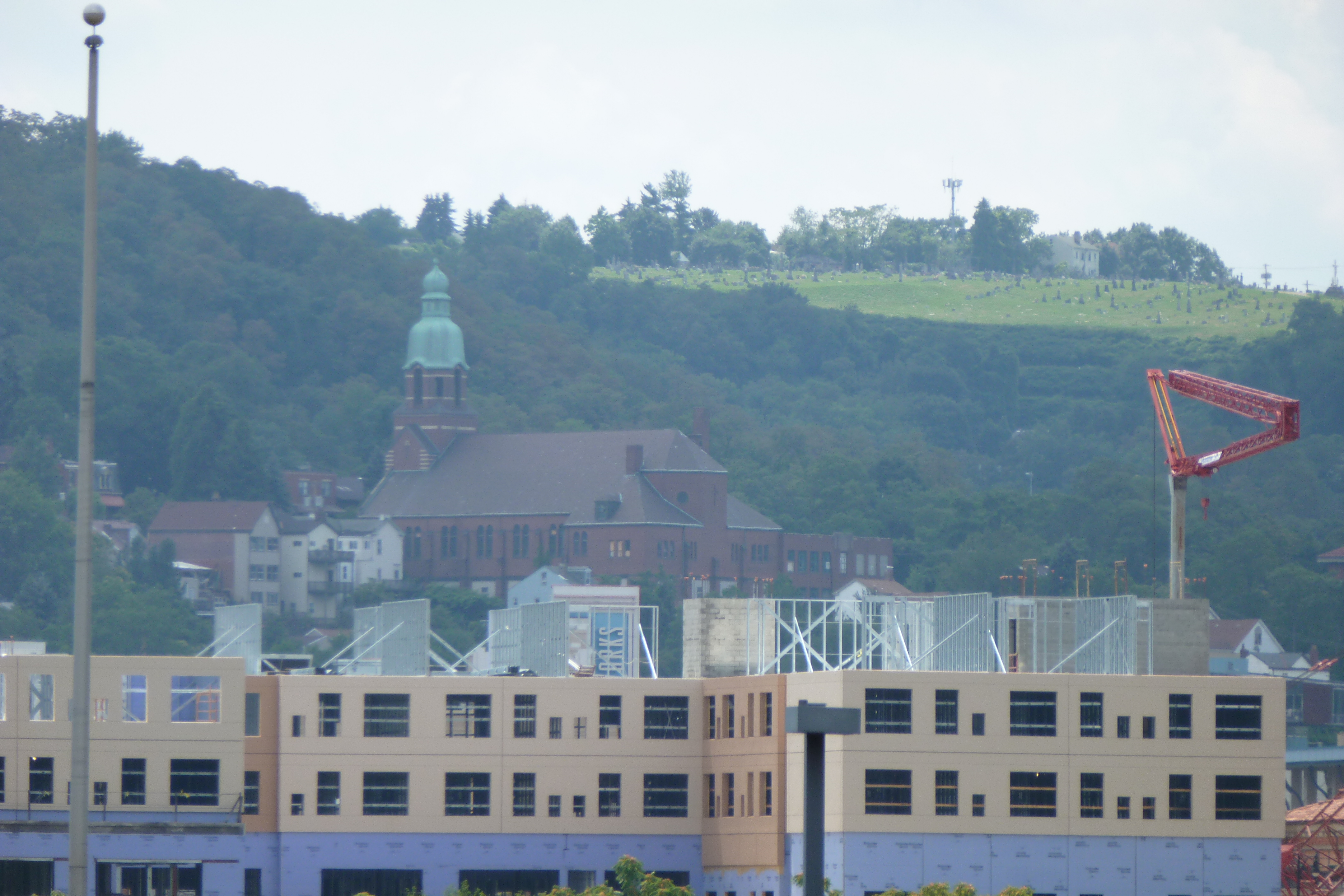
On the south side of the river, the former site of milling operations is now the South Side Works shopping, dining, and residential area. Since 2012, the first marina in the city limits was added here and buildings under construction have opened (first photo pair), other buildings not pictured have been added.
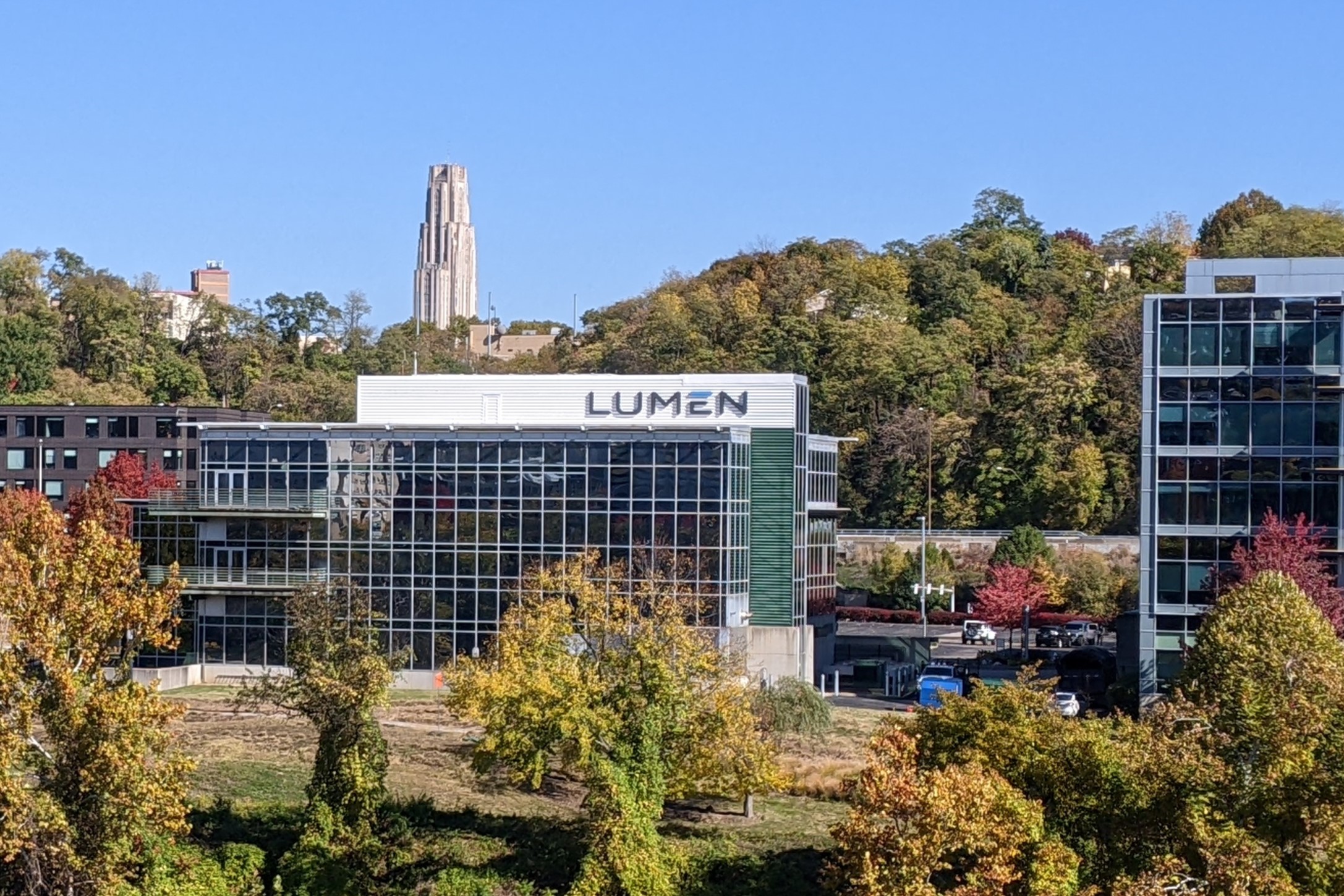
On the north side downriver, the former site of the blast furnaces is now the Pittsburgh Technology Park containing office buildings, parking, and a hotel. The hotel was added in the last ten years as well as several other buildings outside the frame in the second and third set of photos.
On the north side upriver, the former Hazelwood Works is now the Hazelwood Green site a planned mixed-use, multi-block redevelopment. The remaining mill buildings on the site have been redeveloped as office and research facilities with the Mill 19 building visible on the left side of the river in the fourth photo pairing. The space between and around these buildings is expected to be filled in with other buildings of a variety of uses in the coming years.
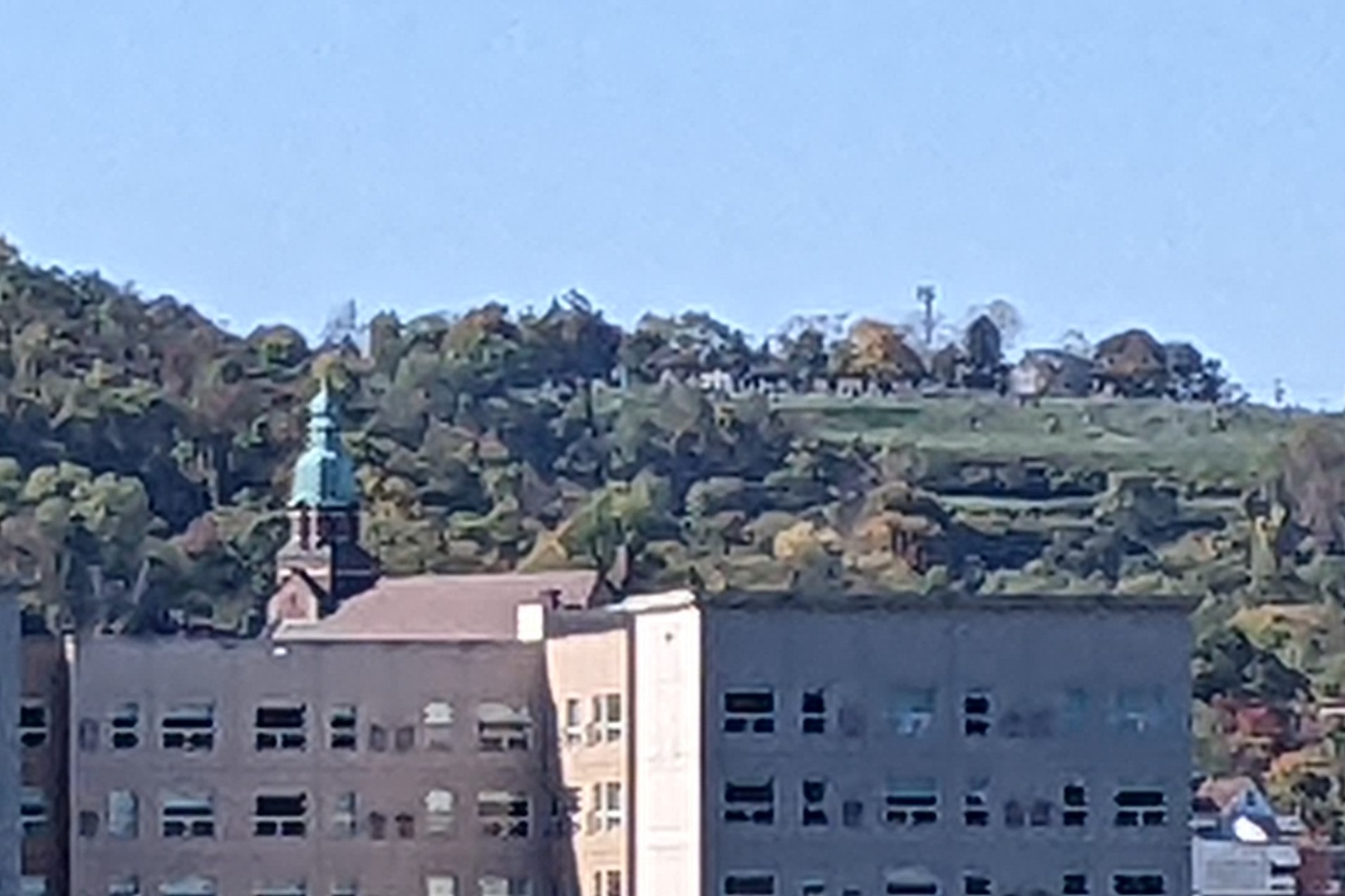
The final photo pair features the former St Josaphat’s Catholic Church on the South Side Slopes, which is a building I have an eye as one of Pittsburgh’s pending adaptively reused religious buildings. This view shows another angle of the growth of the South Side Works development.
While both South Side Works and the Pittsburgh Technology Park were substantially developed by 2012, they continue to expand. On the other hand, Hazelwood Green is just beginning to be developed and is still predominantly vacant land. In another 10 years, perhaps, the upriver view from the Hot Metal Bridge will be significantly altered.

Then & Now: Birmingham Bridge
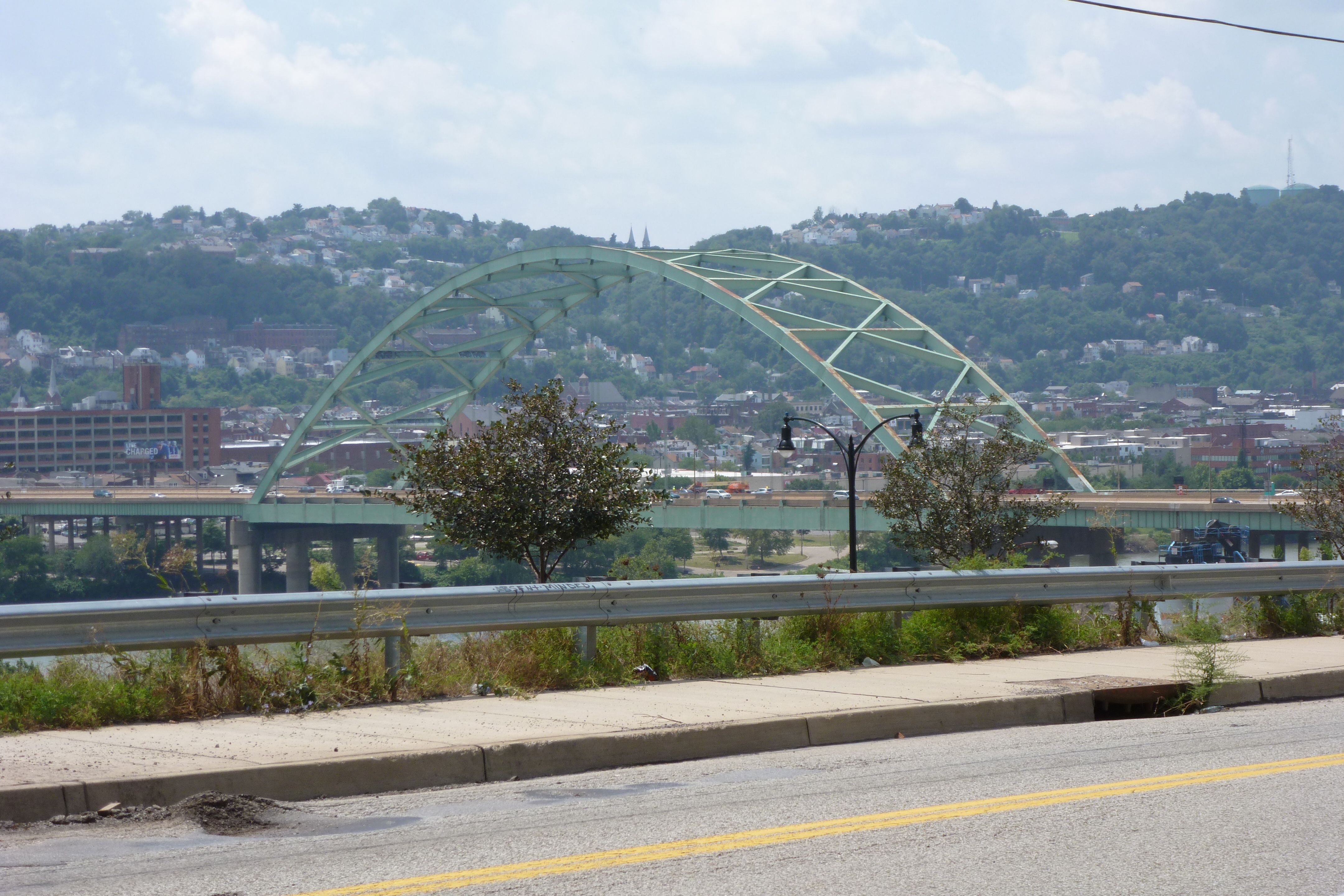
The penultimate installment of the Then & Now series is the Birmingham Bridge just upriver from the Duquesne University Pedestrian Bridge. This is a bridge that I’ve walked multiple times from necessity despite the fact that it was not well-designed for pedestrians, which I complained about in my first post about the bridge.
It would be nice to think that the pedestrian access upgrade it underwent in 2021 was in response to my complaints of the accessibility issues with the bridge design. However, the upgrade only partly resolves those issues.
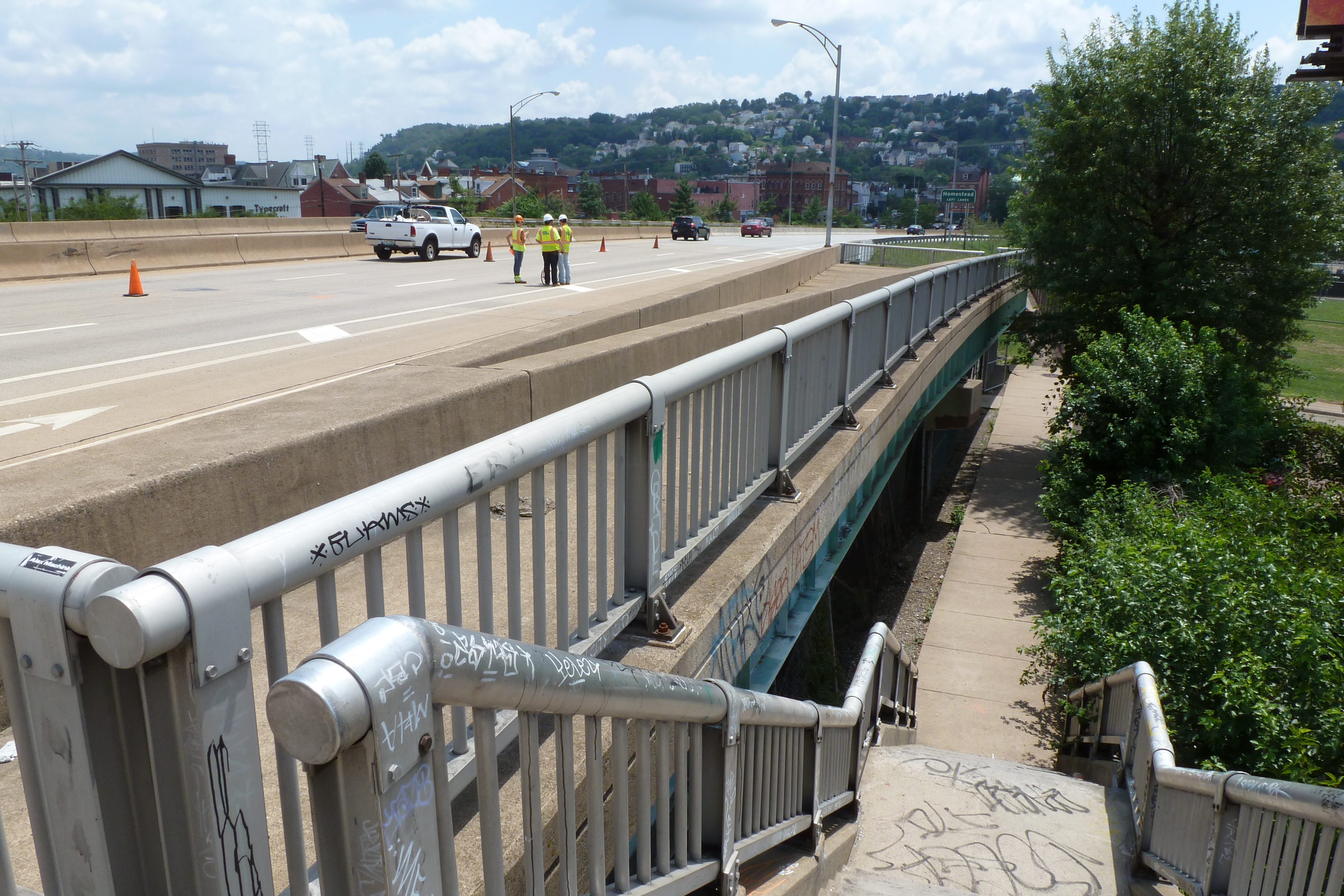
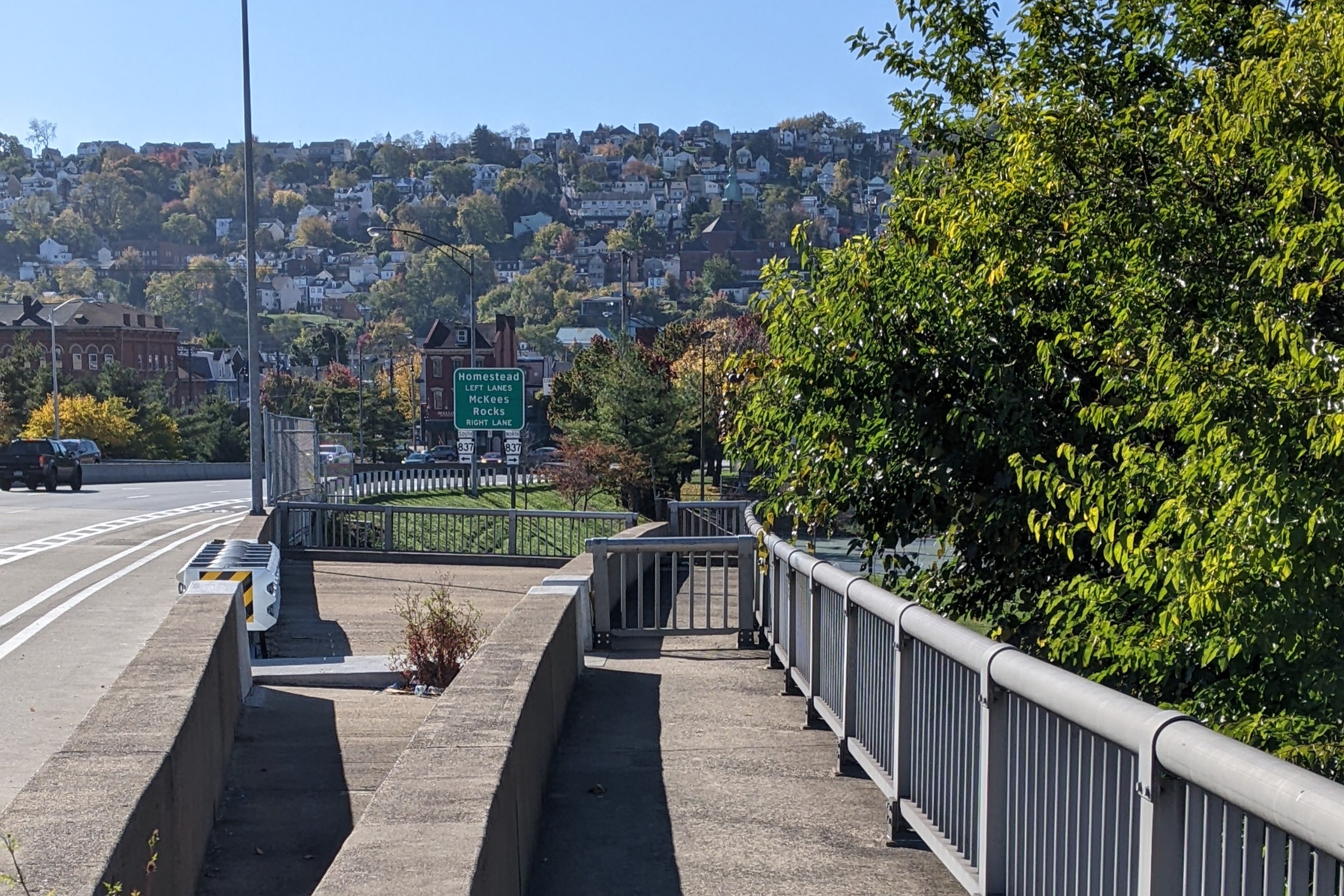
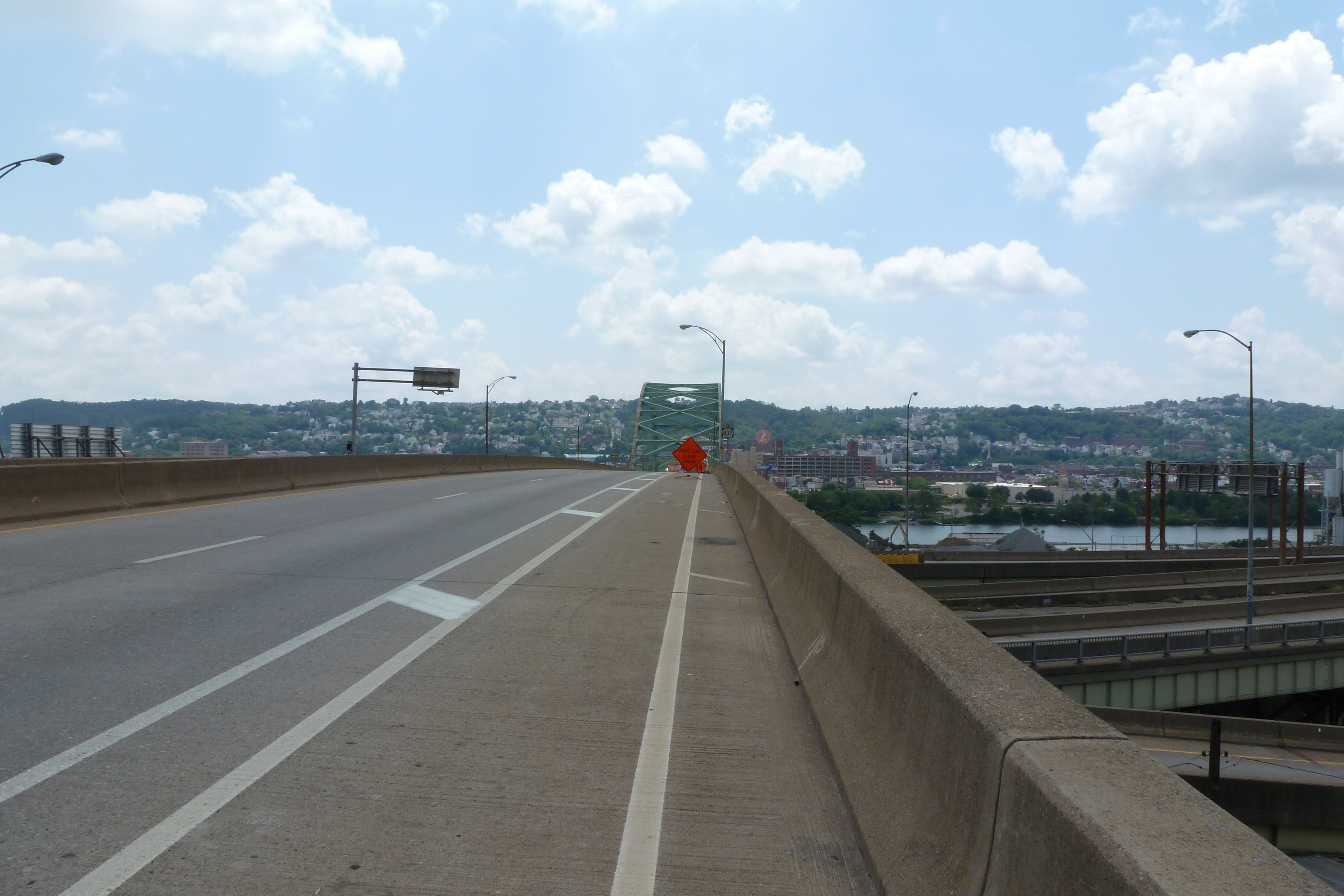
On the south end of the bridge, pedestrians are no longer forced to leave the bridge and take steps down into the park. Instead, there is an option to continue along the level of the bridge. (See the first pair of photos.) This new option at first pushes pedestrians into the edge of the pavement beside the bike lane with no physical separation from the bikes or speeding cars. Once the bridge reaches the ground, a raised sidewalk appears.
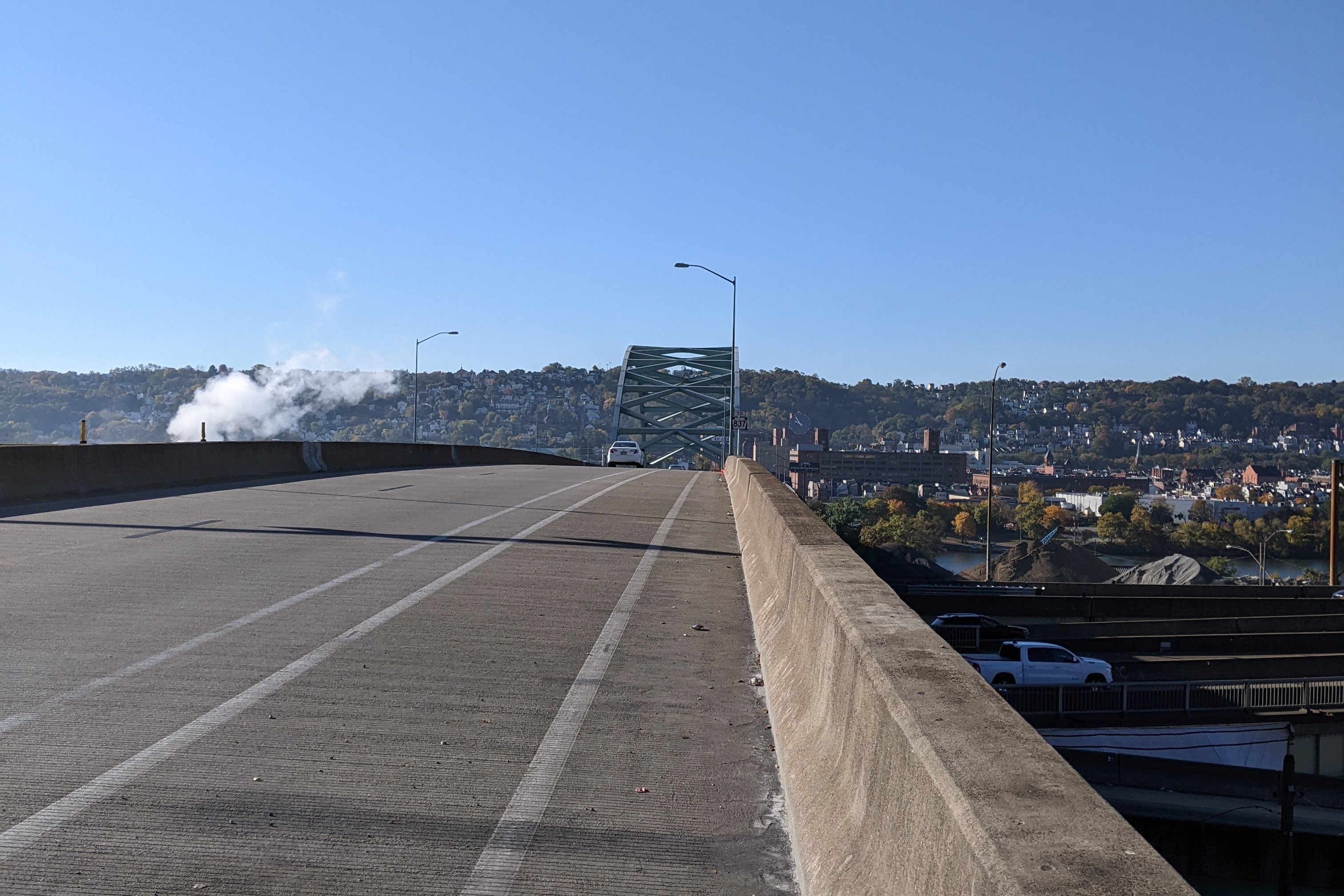
On the north end of the bridge, there was no change for pedestrian’s use of the bridge (second photo pair). The options remain to walk in the painted buffer of the bike lane from where the bridge leaves Fifth Avenue or walk several blocks out of the way down the equivalent of multiple stories only to walk back up them on the sidewalk on the ramp from Forbes Avenue.
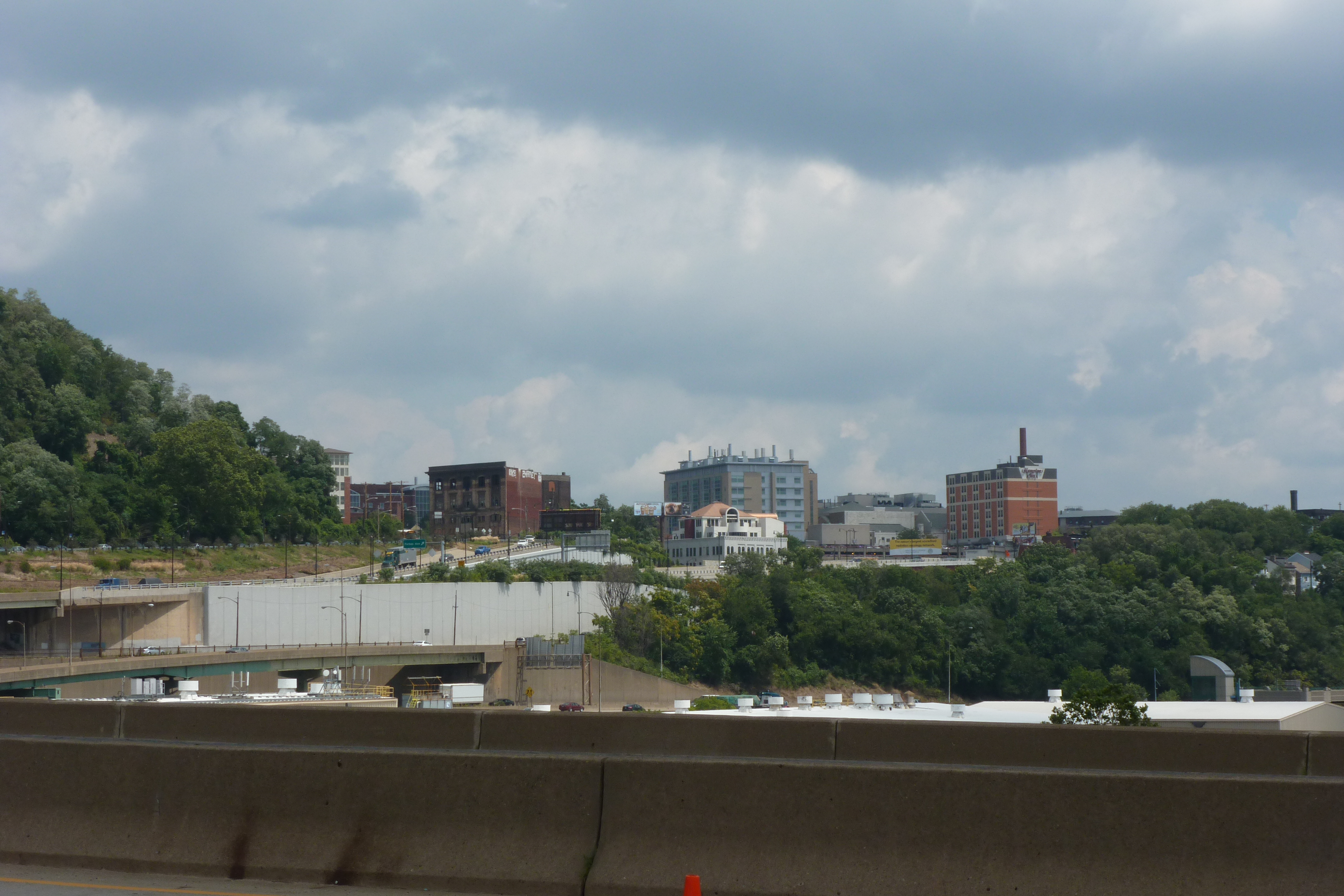
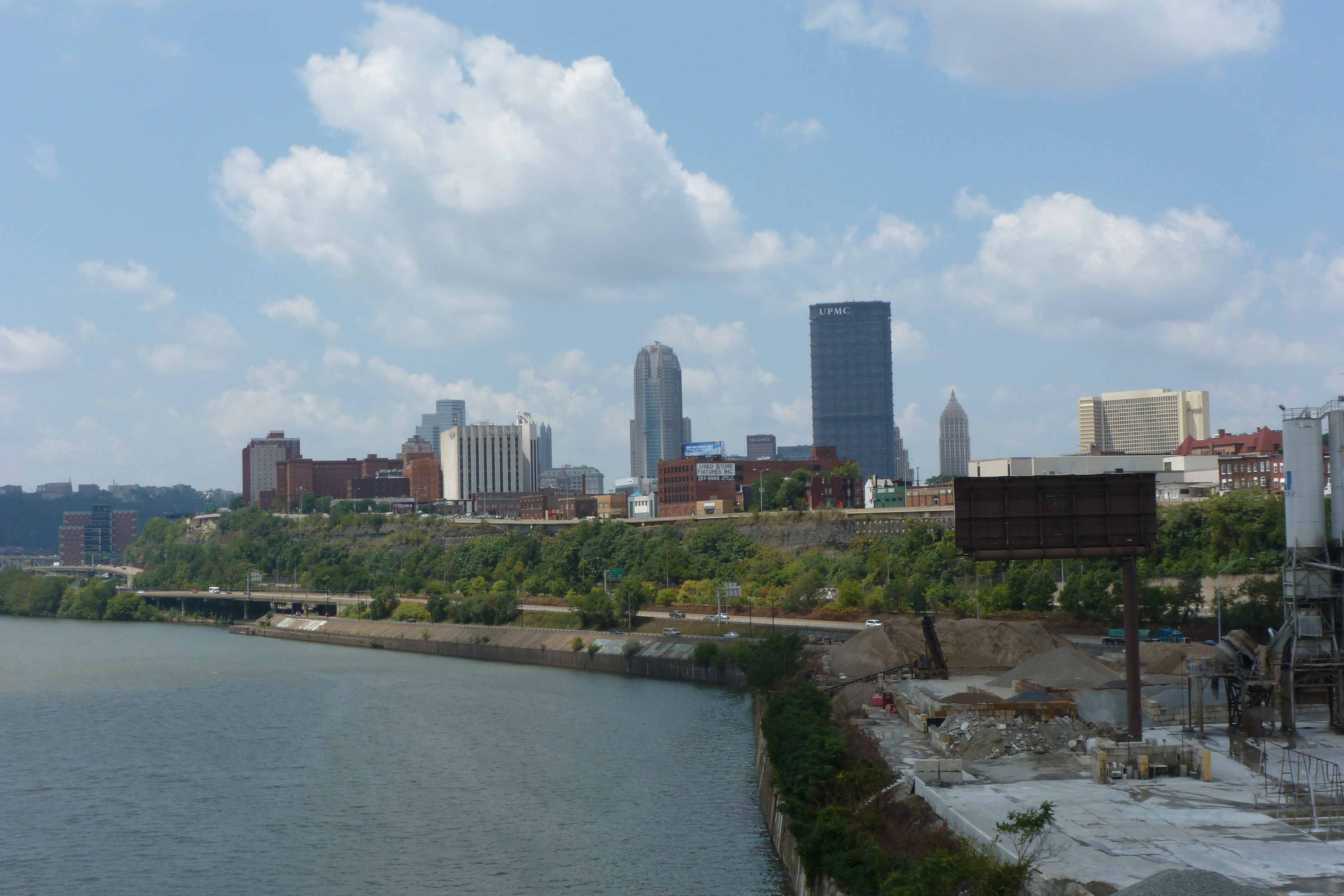
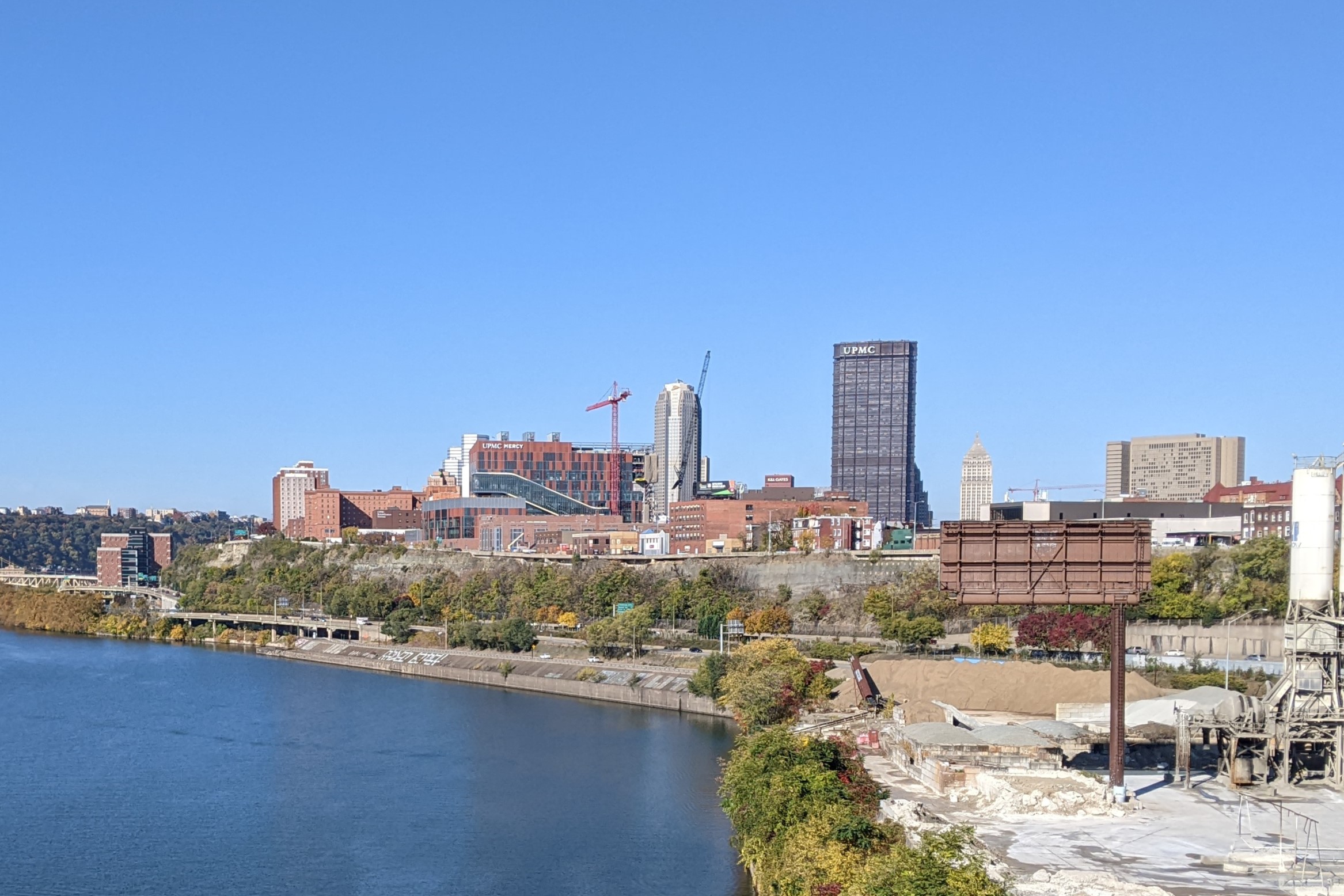
The view of Oakland from the bridge (third photo pair) shows a building that I regretted not taking photos of before it was demolished and one of the new buildings built along Fifth and Forbes in recent years. Looking downriver toward downtown (final photo pair), the new vision center as part of UPMC Mercy Hospital is clearly visible, though its coloring blends in well from this distance. Both of these views are expected to change further in the coming years with additional growth in Oakland and the redevelopment of the Lower Hill adjacent to downtown.
Then & Now: Duquesne University Pedestrian Bridge
I first walked the Duquesne University Pedestrian Bridge as part of my 10th Street Bridge walk in September 2012. However, by that point I was walking bridges faster than I could post about them. This is one of the bridges that I hadn’t posted about until now. It is accessed by a multi-story staircase from the northern end of the 10th Street Bridge and it crosses the speedy Blvd of the Allies. Students who prefer walking (and climbing) to transit and who live or party on the South Side use the 10th Street Bridge-staircase-pedestrian bridge path to get to and from campus.
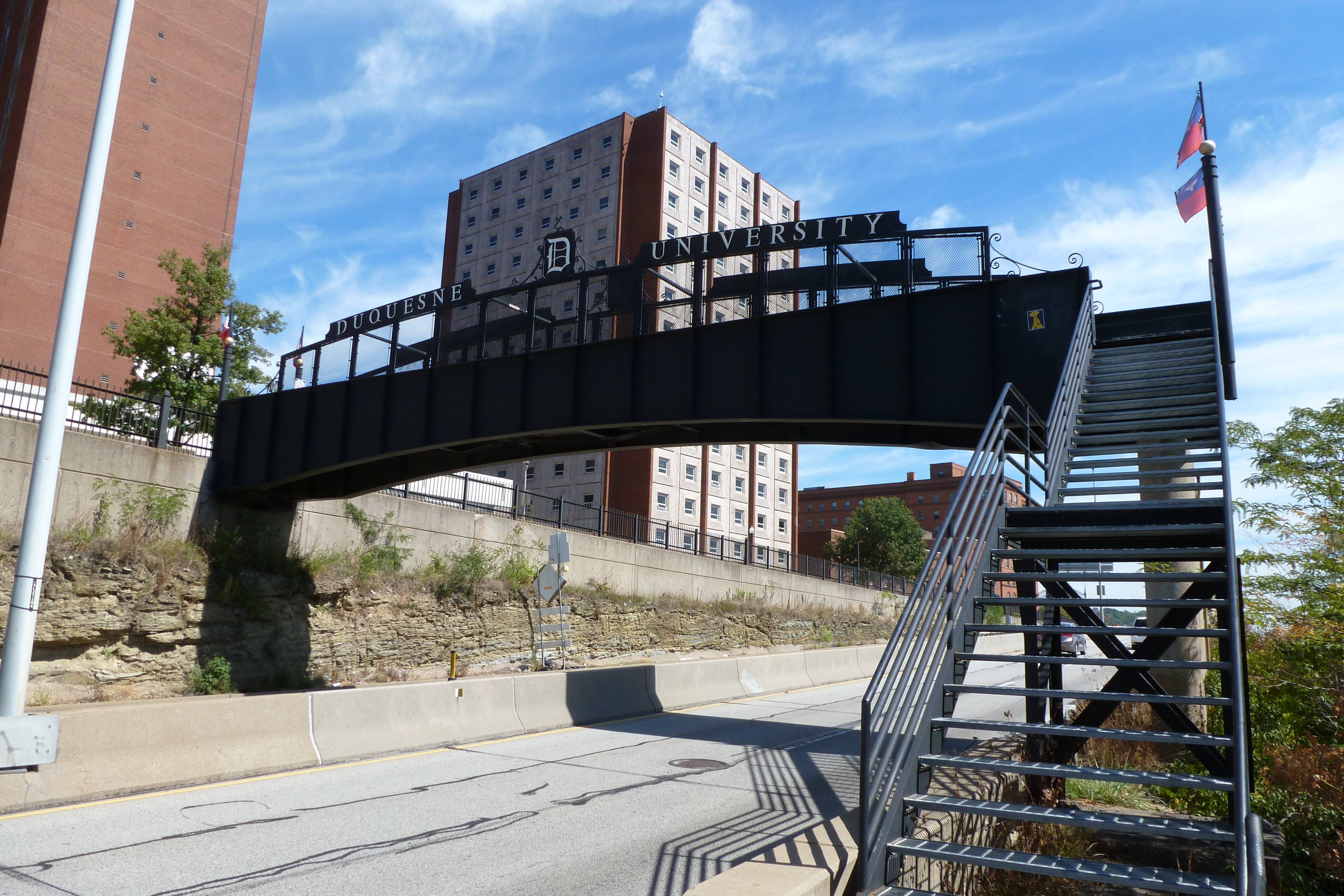
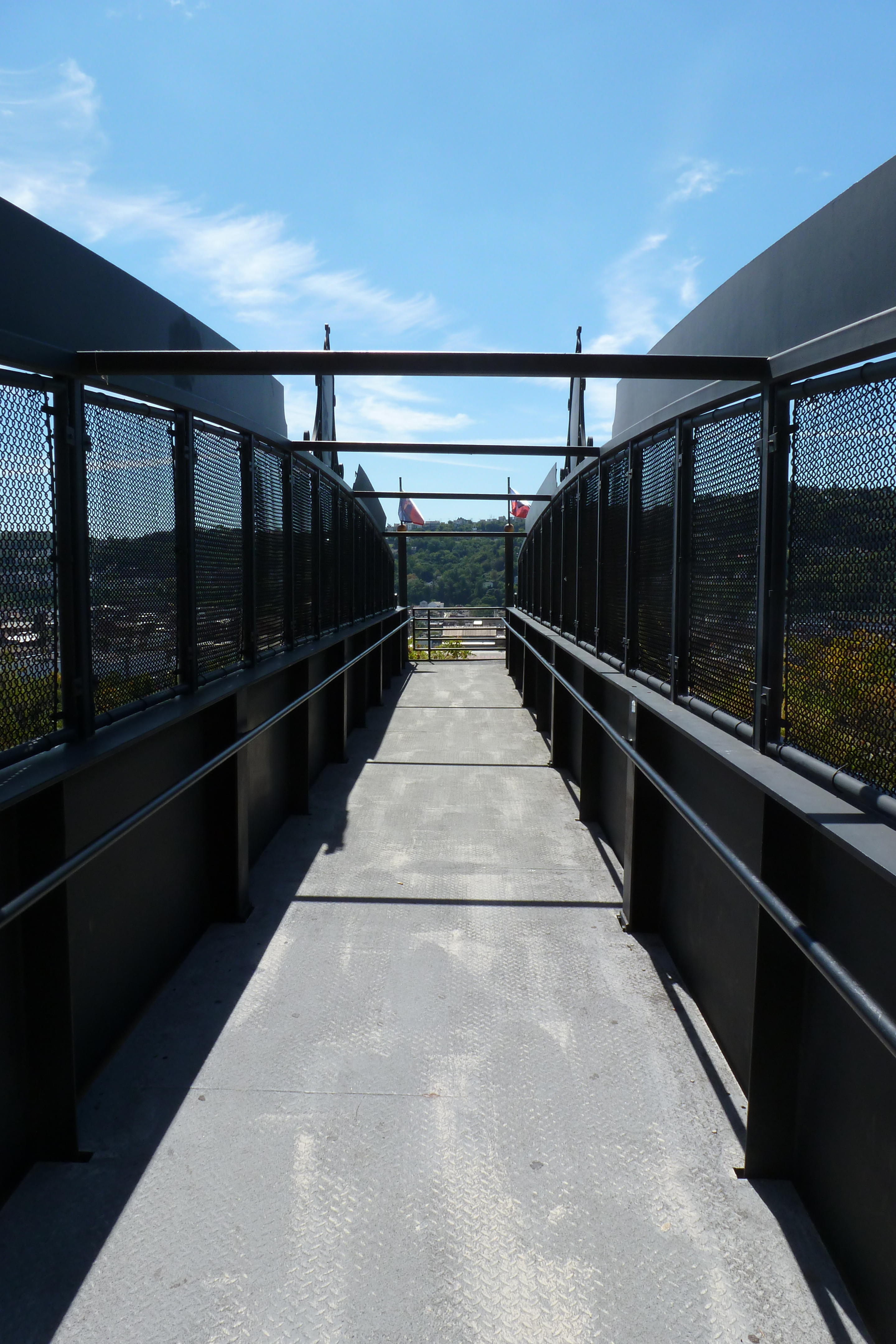
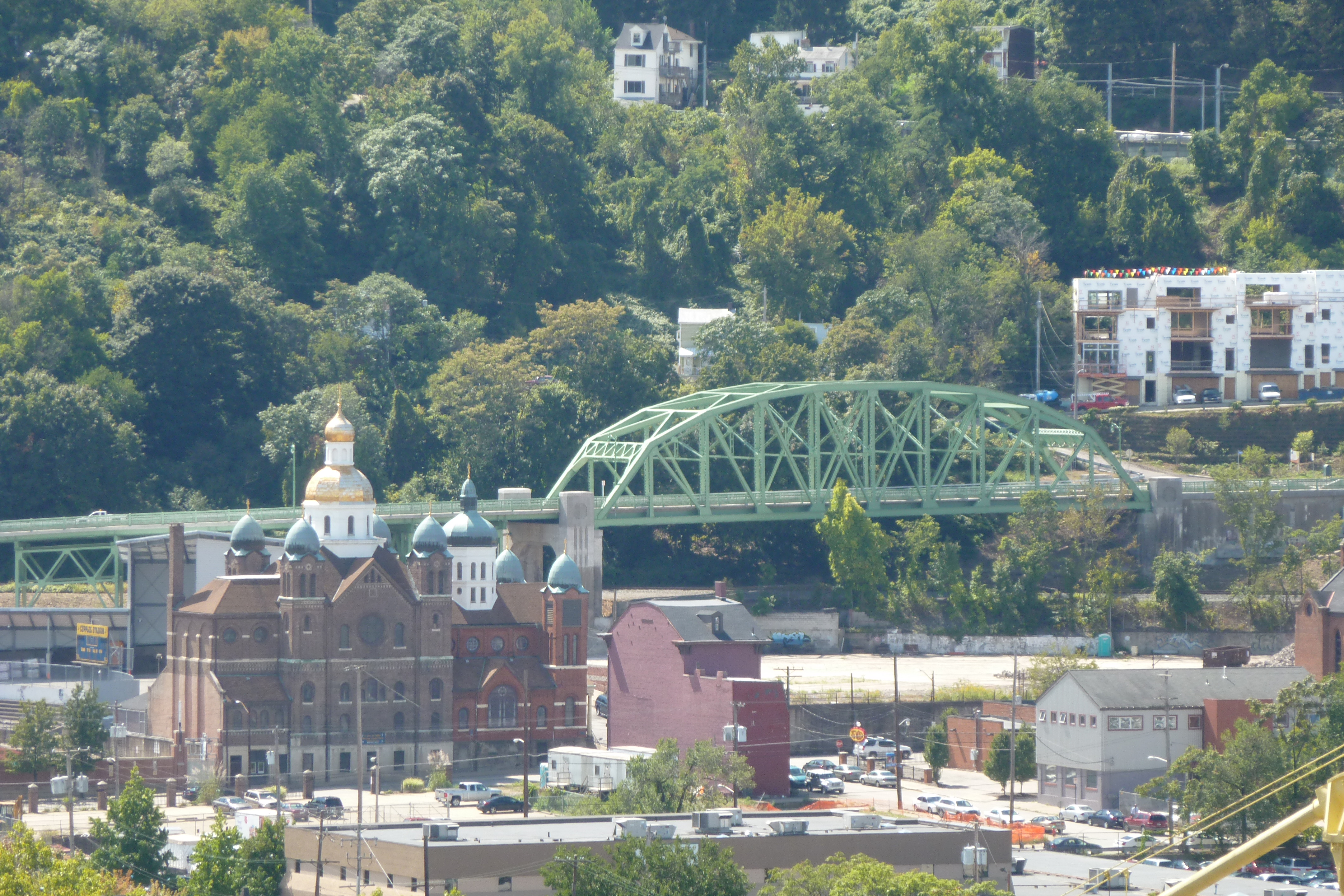
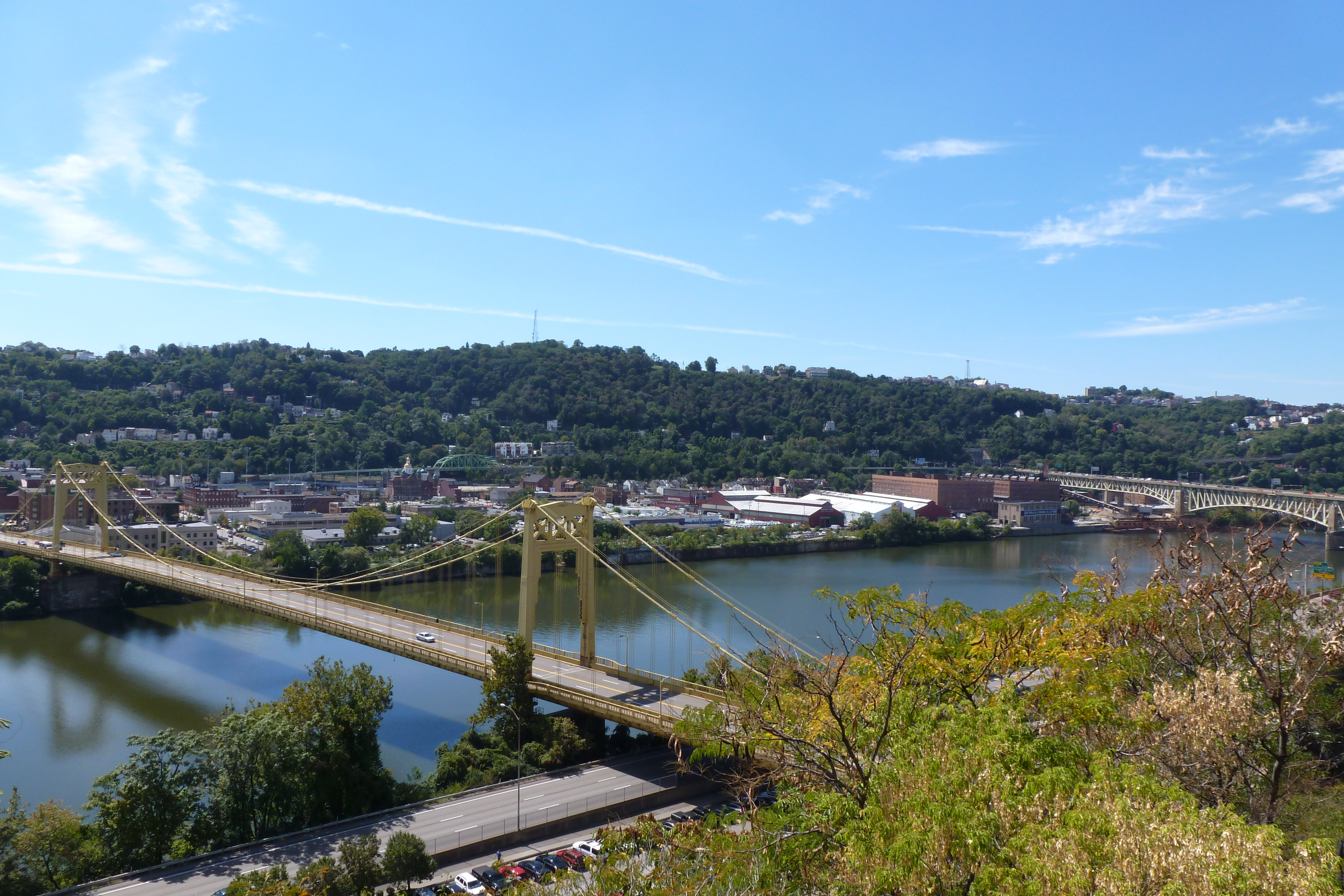
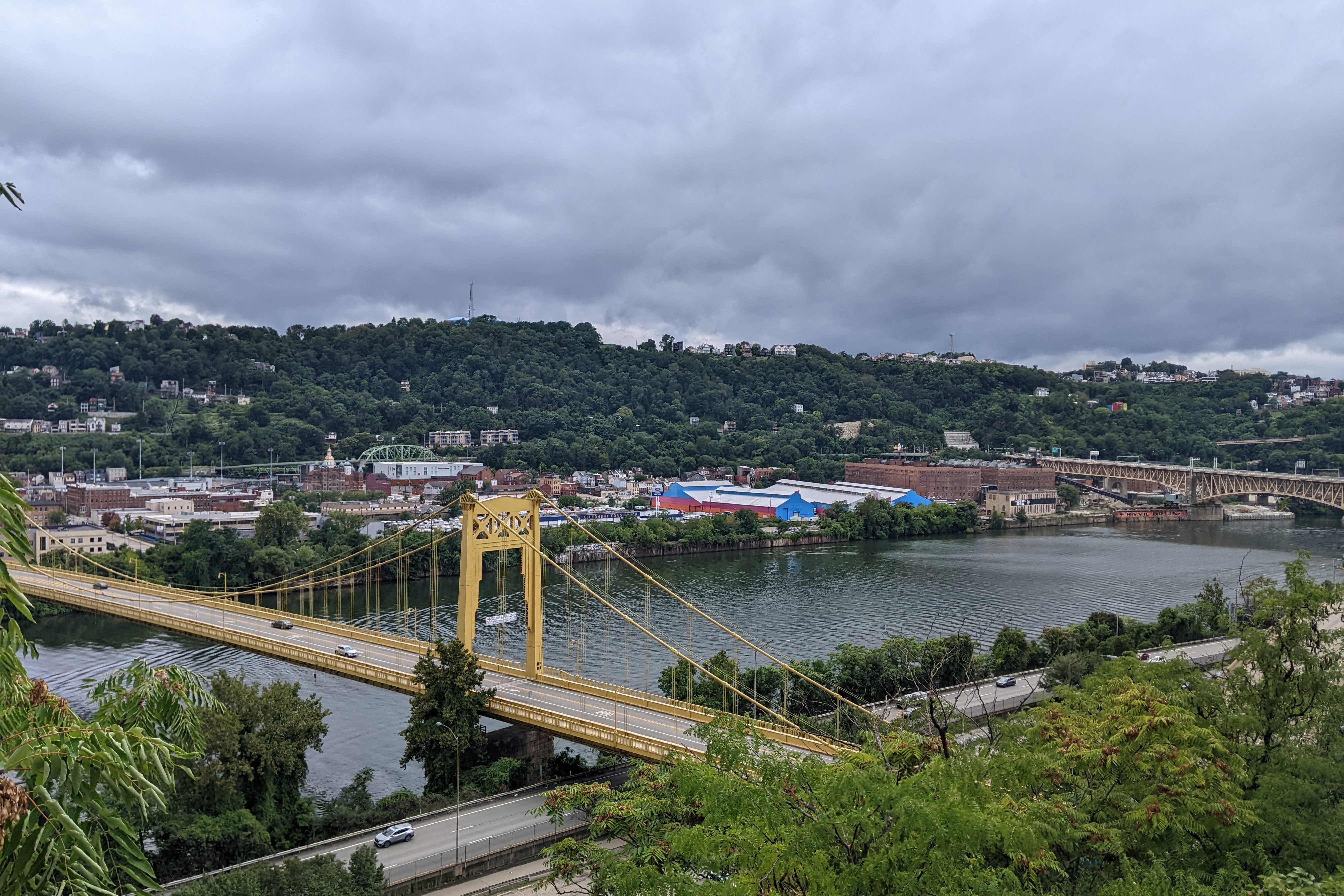
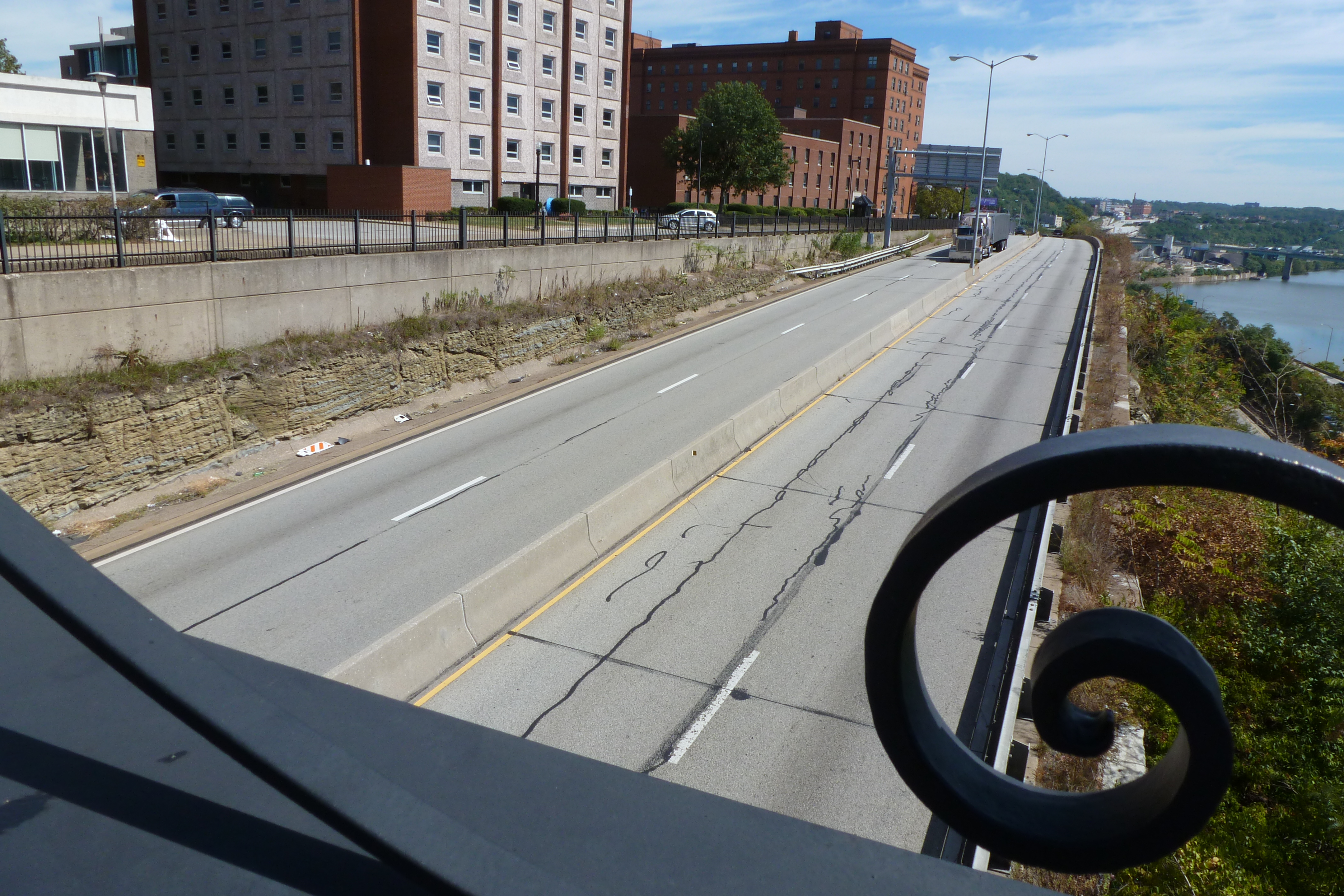
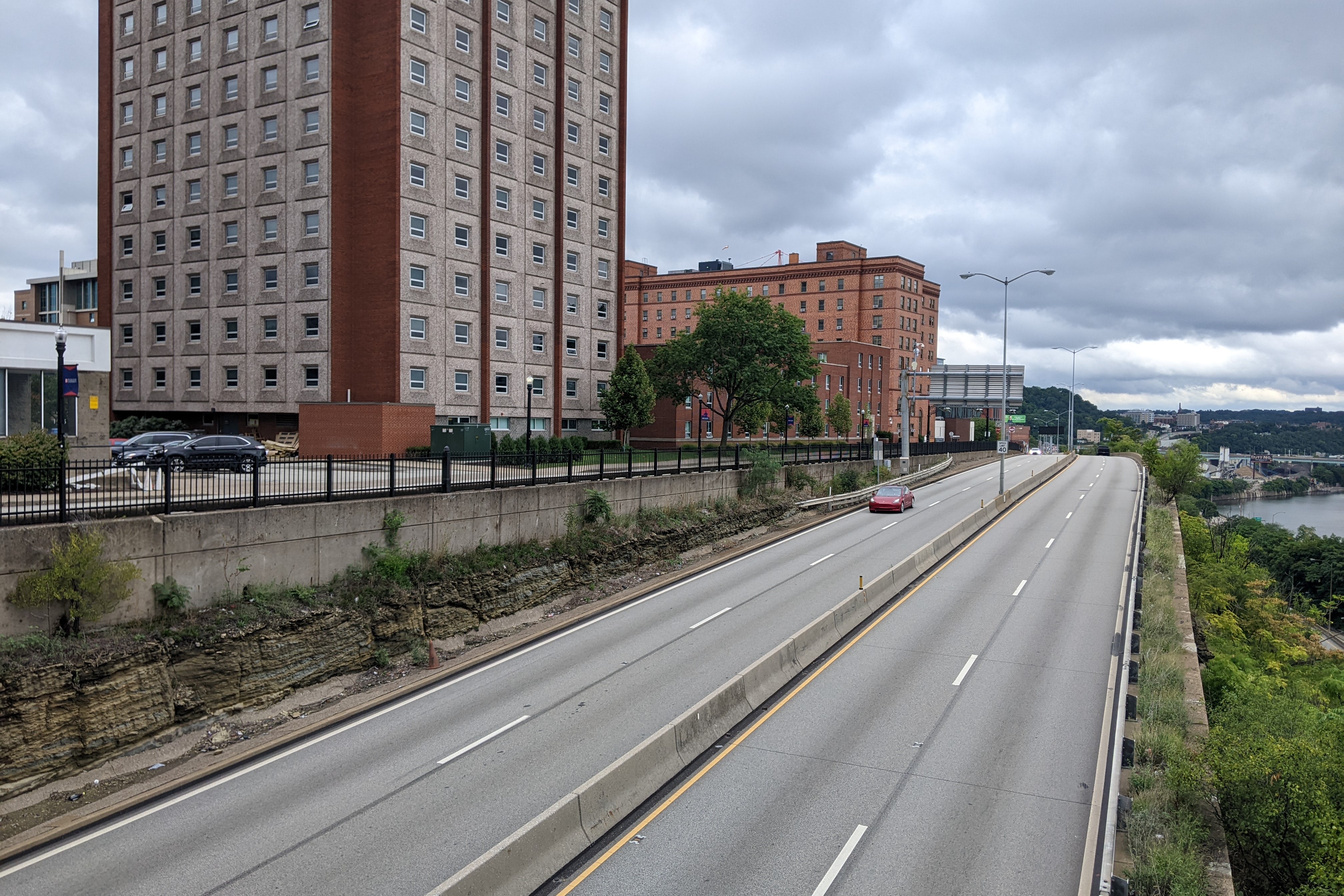
Because of this bridge’s perch on The Bluff, it has great views up and down the Monongahela River. Some of the developments that have happened since 2012 along this river are visible from this bridge. The first pair of photos show a new construction self-storage complex that was built on a vacant, but complex, industrial site. Zooming out some in the second pair, a now brightly colored set of warehouses stand out (which incidentally are next to the Highline/Terminal Way Bridge). Less clearly visible is the white smudge that is the extension into the river built by the gravel company just on the other side of the Liberty Bridge.
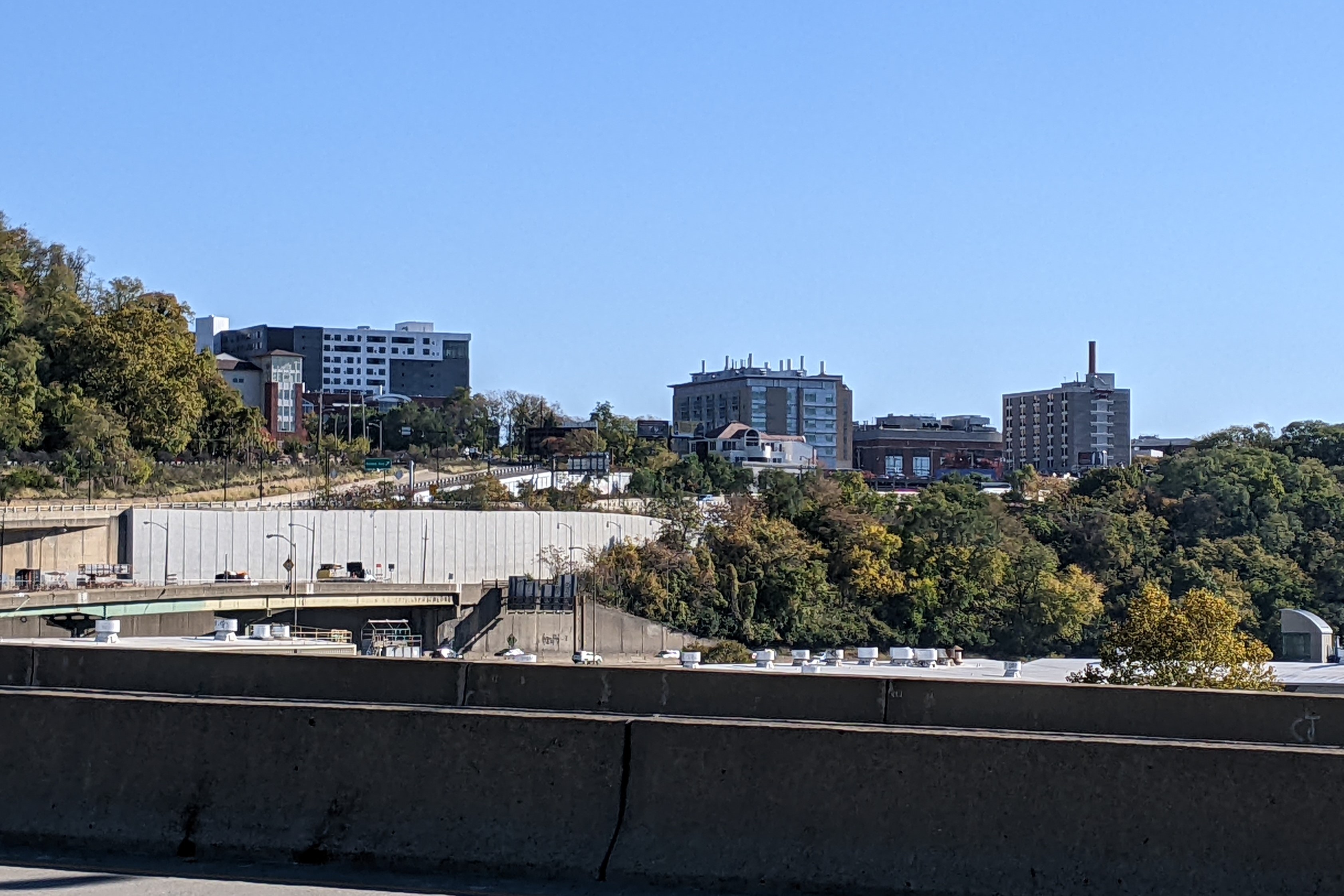
The most surprising thing to me on this return trip is that the new UPMC Mercy Vision Rehabilitation Center that is still under construction and looks massive from the views in my Keeping an Eye on Uptown series is not very visible from this bridge. If it had been a sunny day when I was out taking photos, perhaps the glass would have glinted a little more behind the freeway sign, but as it is, the dark spot visible under the freeway sign now isn’t much different than the dark spot from 10 years unless you zoom in close (final photo pair).
September 2012

September 2022
 urbantraipsing