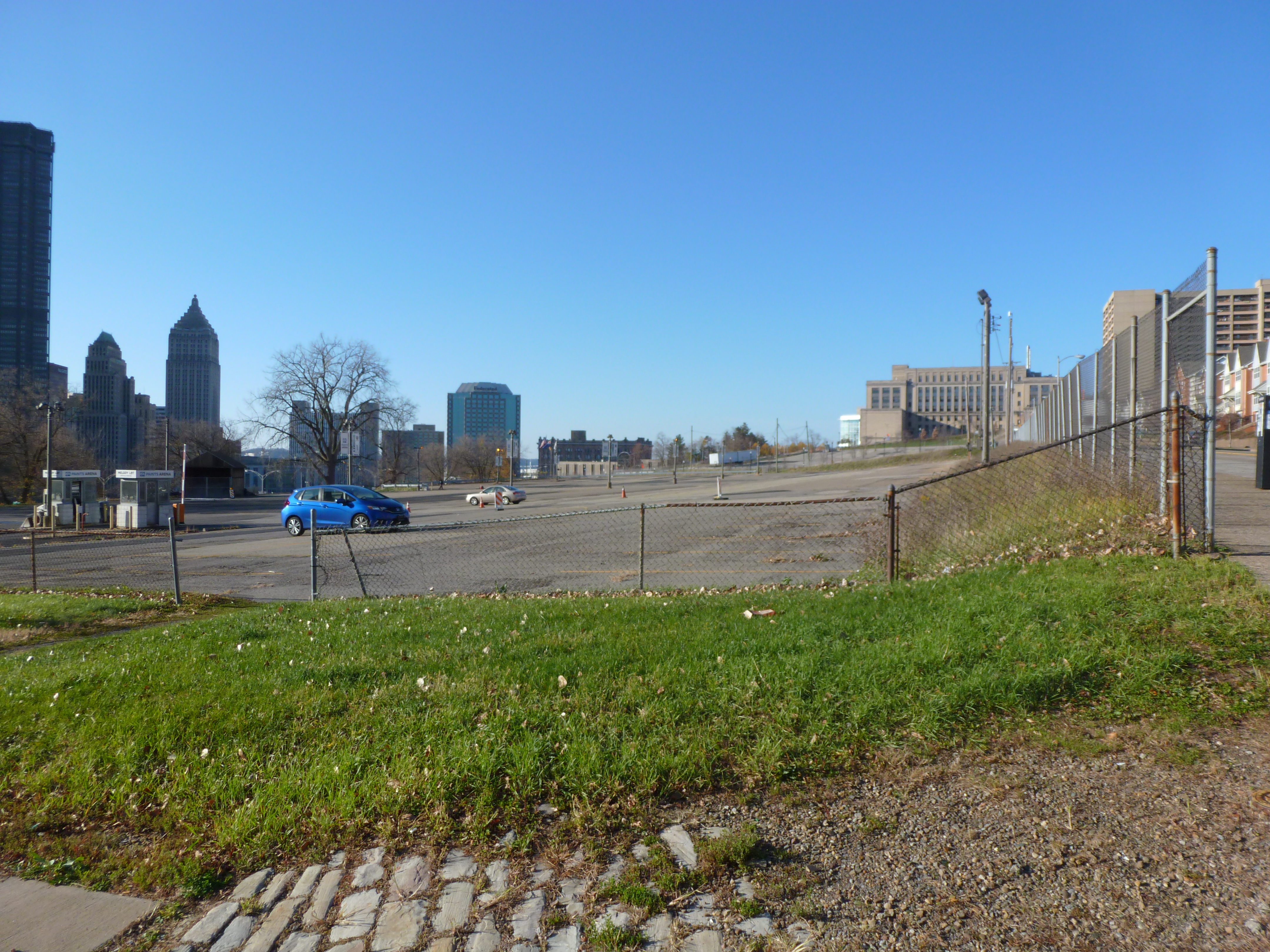
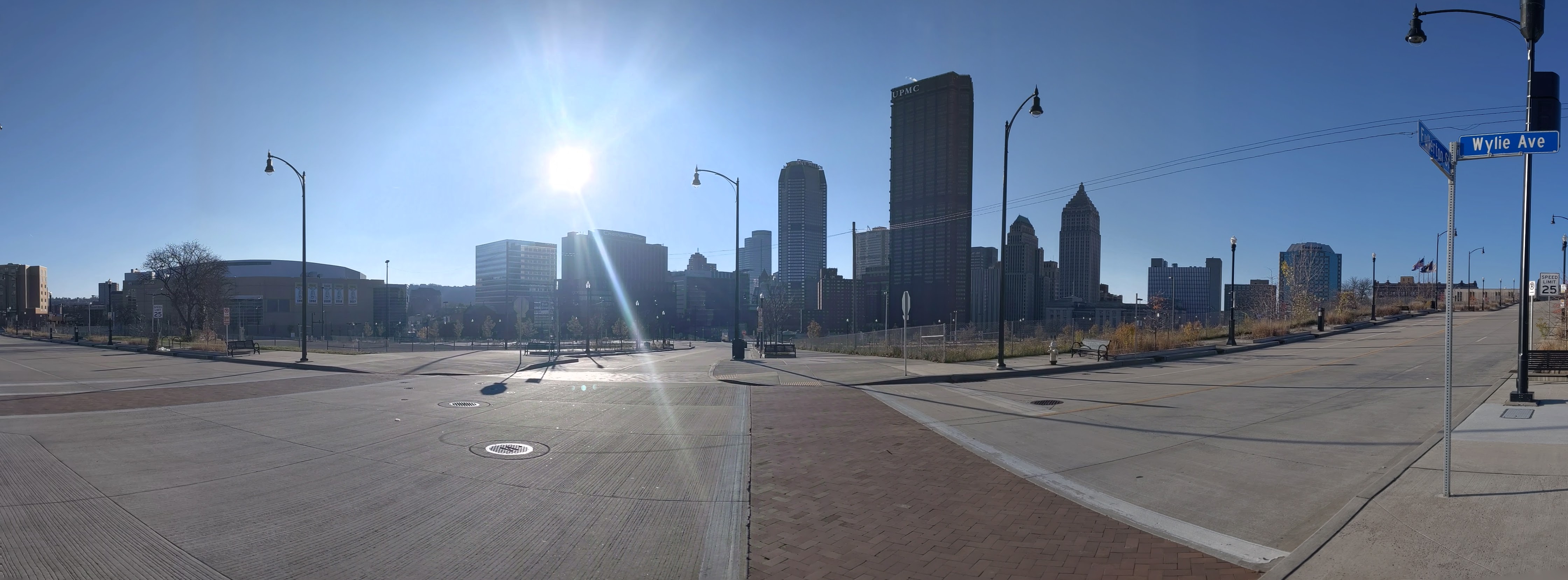
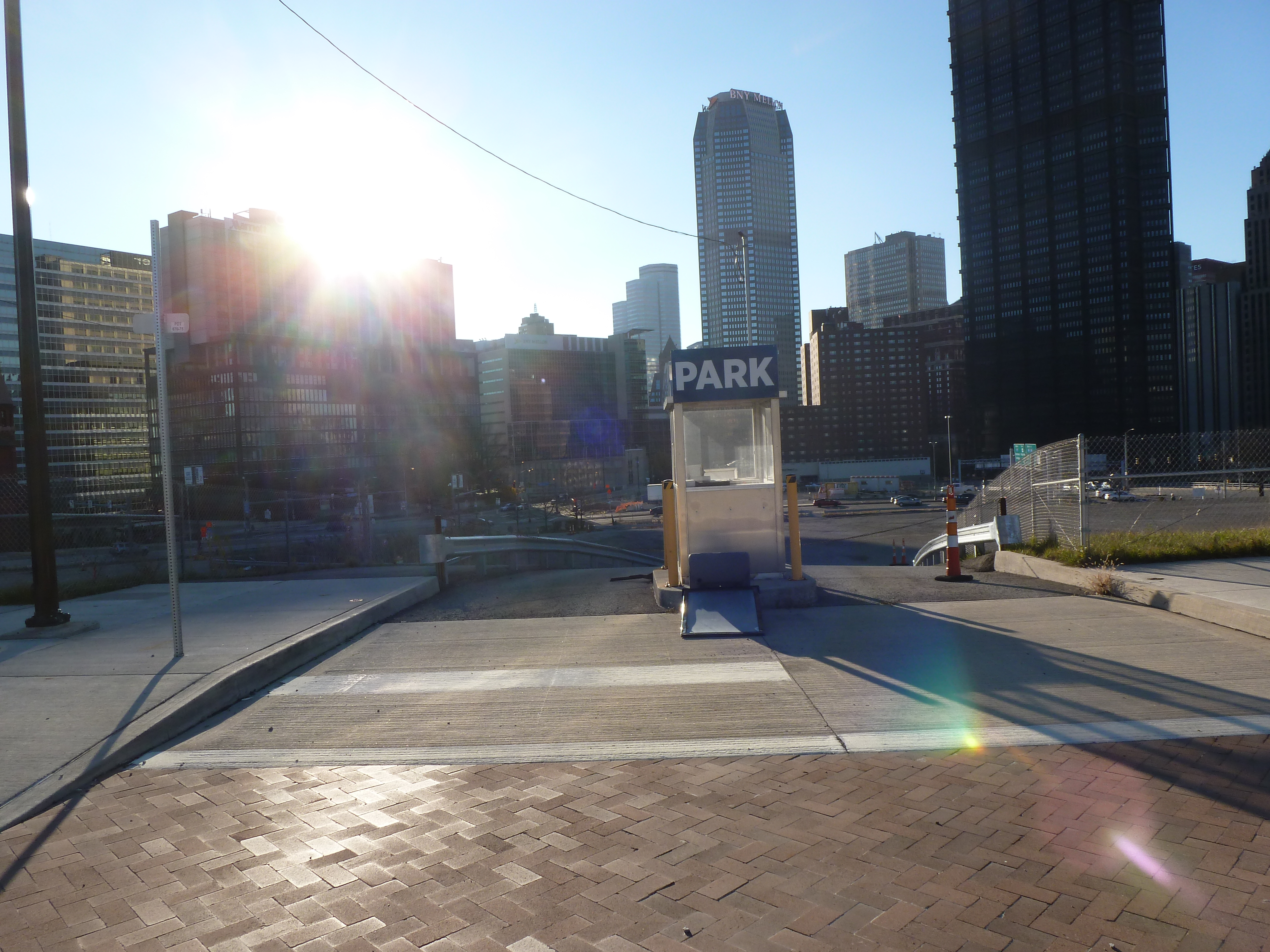
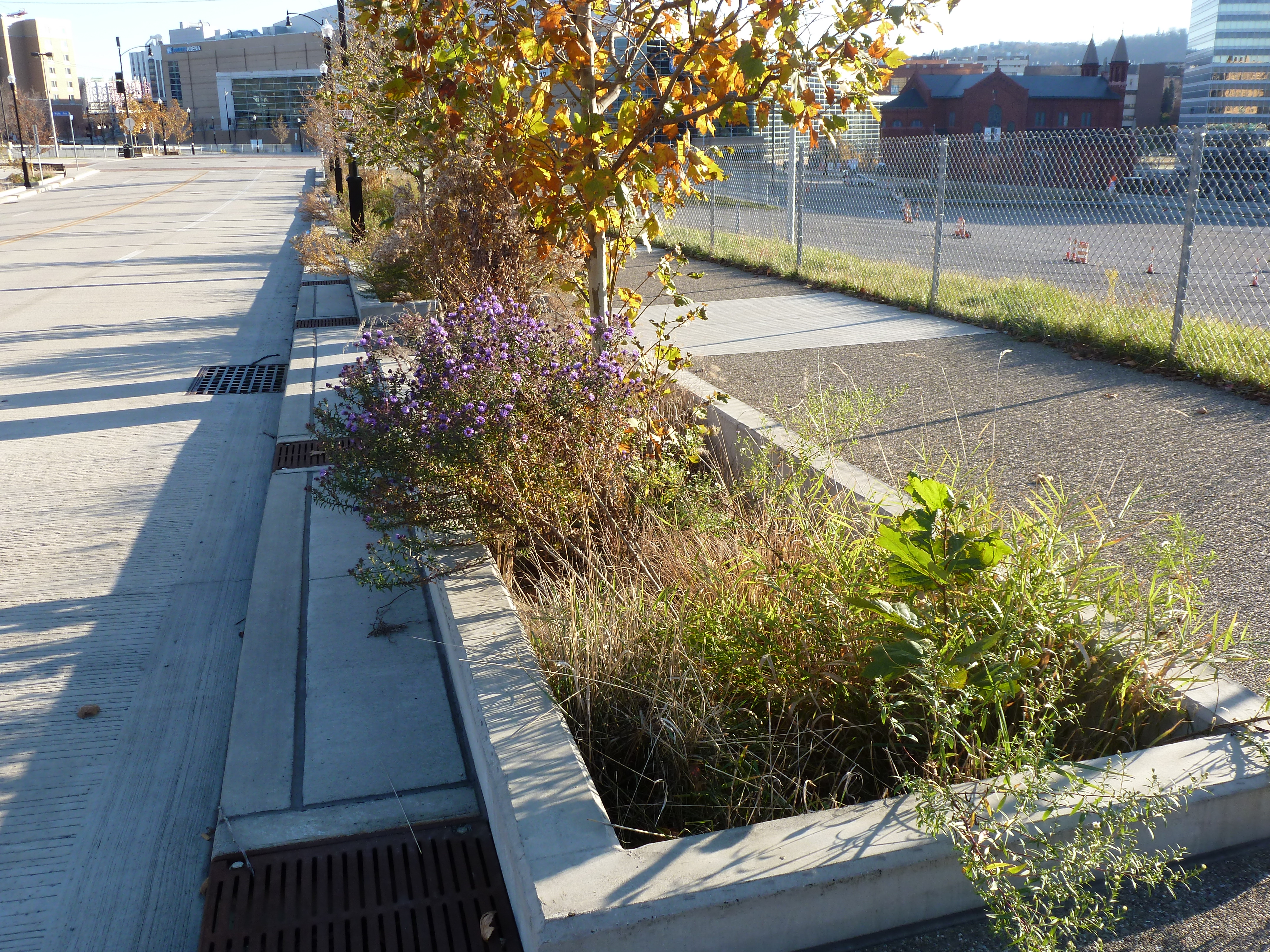
Keeping an Eye on the Lower Hill: Sept. 2023

Overview

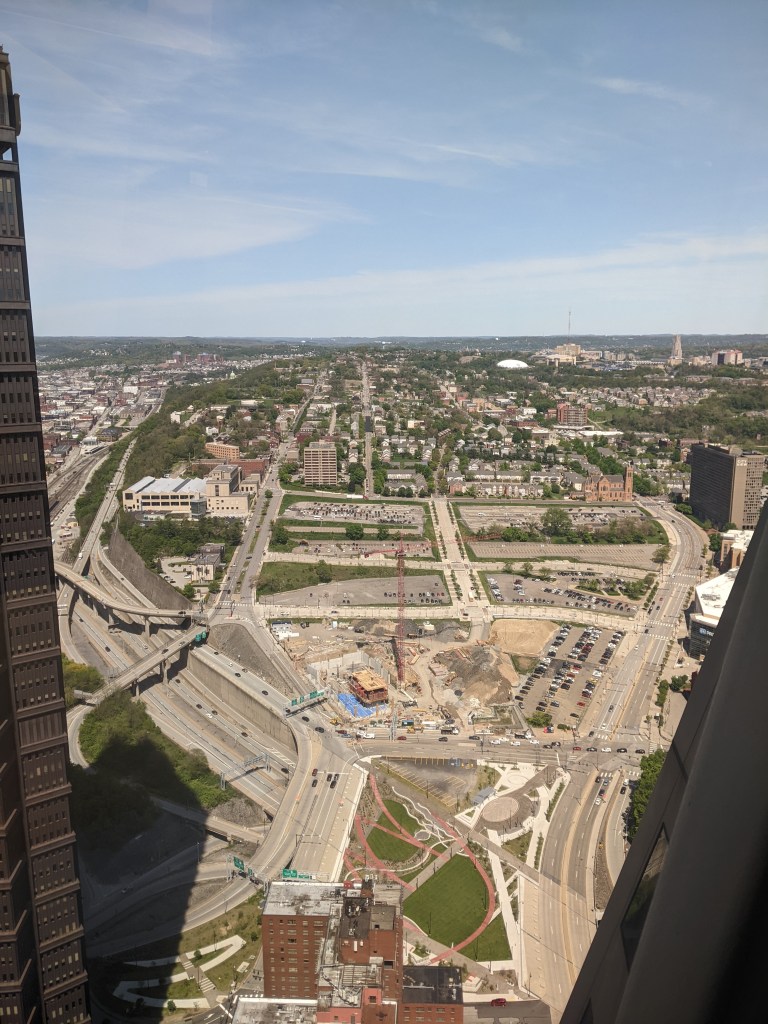
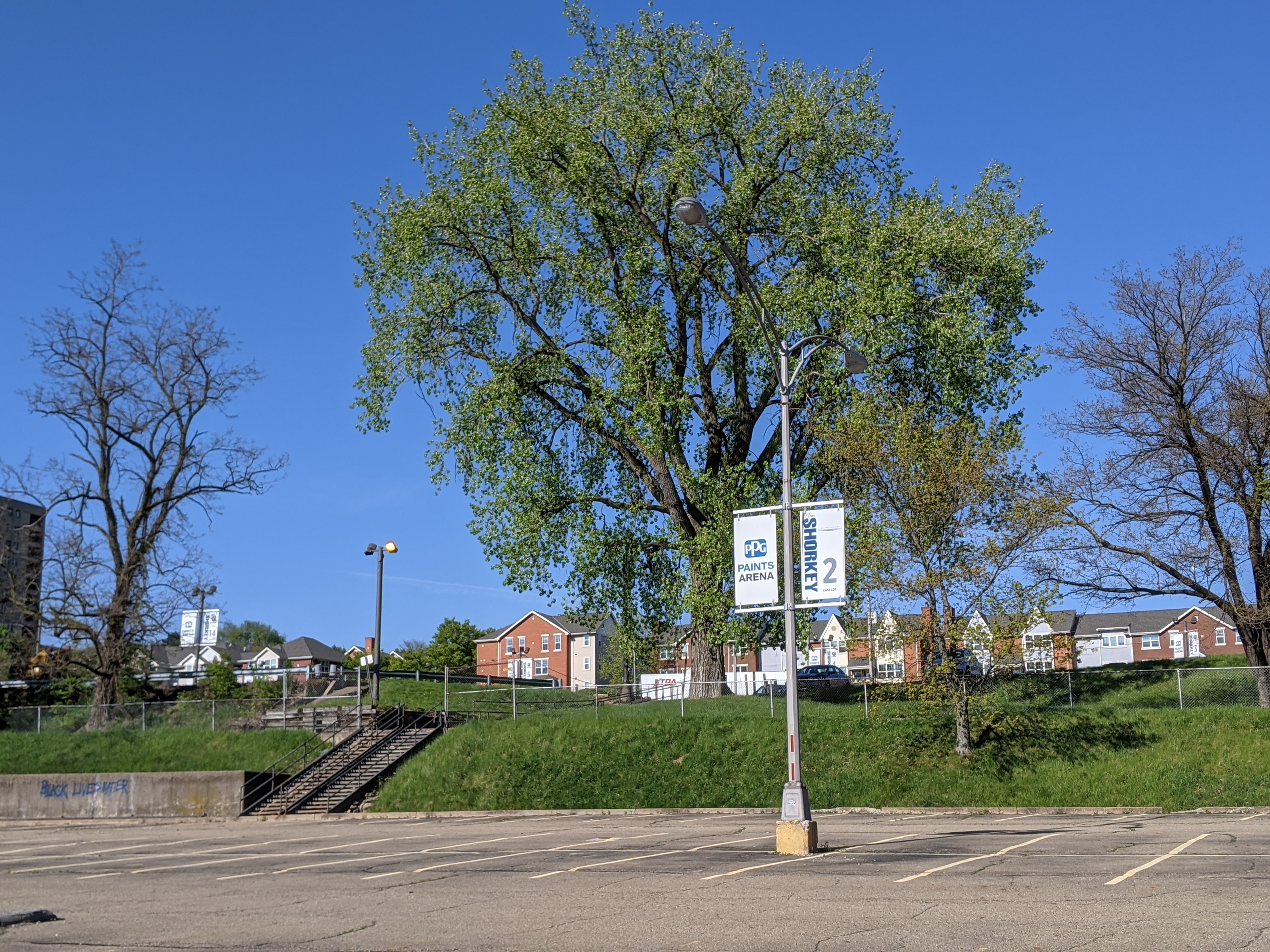
The Lower Hill is a notorious site in Pittsburgh, a scar on the city from the height of Urban Renewal. A vibrant (but poor and predominately Black) neighborhood was demolished in the 1950s so the City could build a cultural mecca centered on a Civic Arena, most of which ended up not being built and was left as parking lots.

Now that the arena has been demolished and replaced adjacent to the former location, the Penguins hockey team has the development rights to rebuild the Lower Hill, stitching back together the fabric of the city and reconnecting the remainder of the Hill District neighborhoods with downtown.

However, grand language describing the wonderful benefits to a city are part and parcel of any major development project, including the 1950’s Urban Renewal of the Lower Hill. Fifty years later, the Urban Renewal of the Lower Hill is rarely, if ever described as a good thing. In fact the current redevelopment is sometimes described as undoing the mistakes of that project. However, can the negative financial, social, and emotional repercussions of the original demolition and decades of disconnect be undone simply by reinstating (most of) the former street grid?

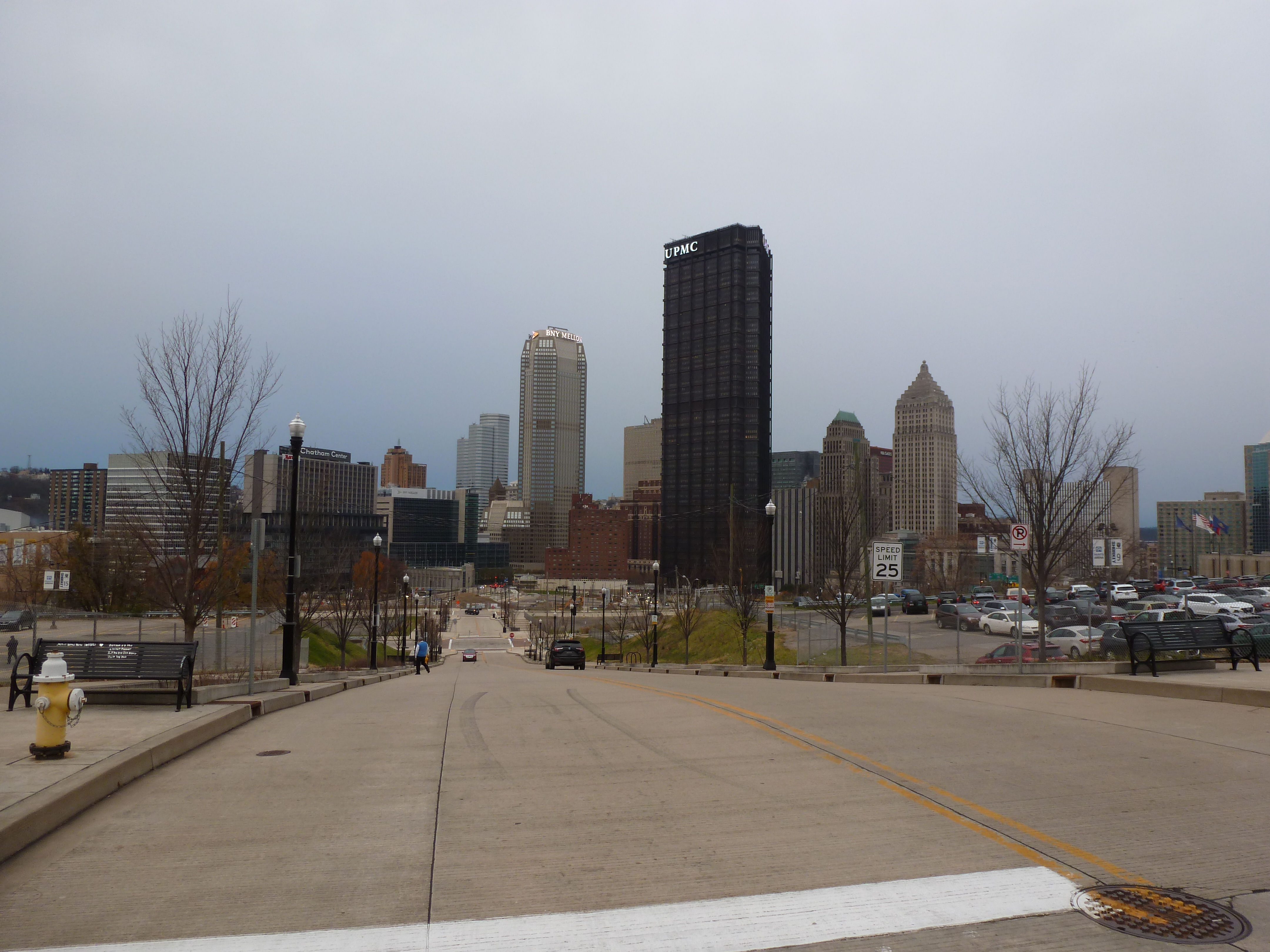
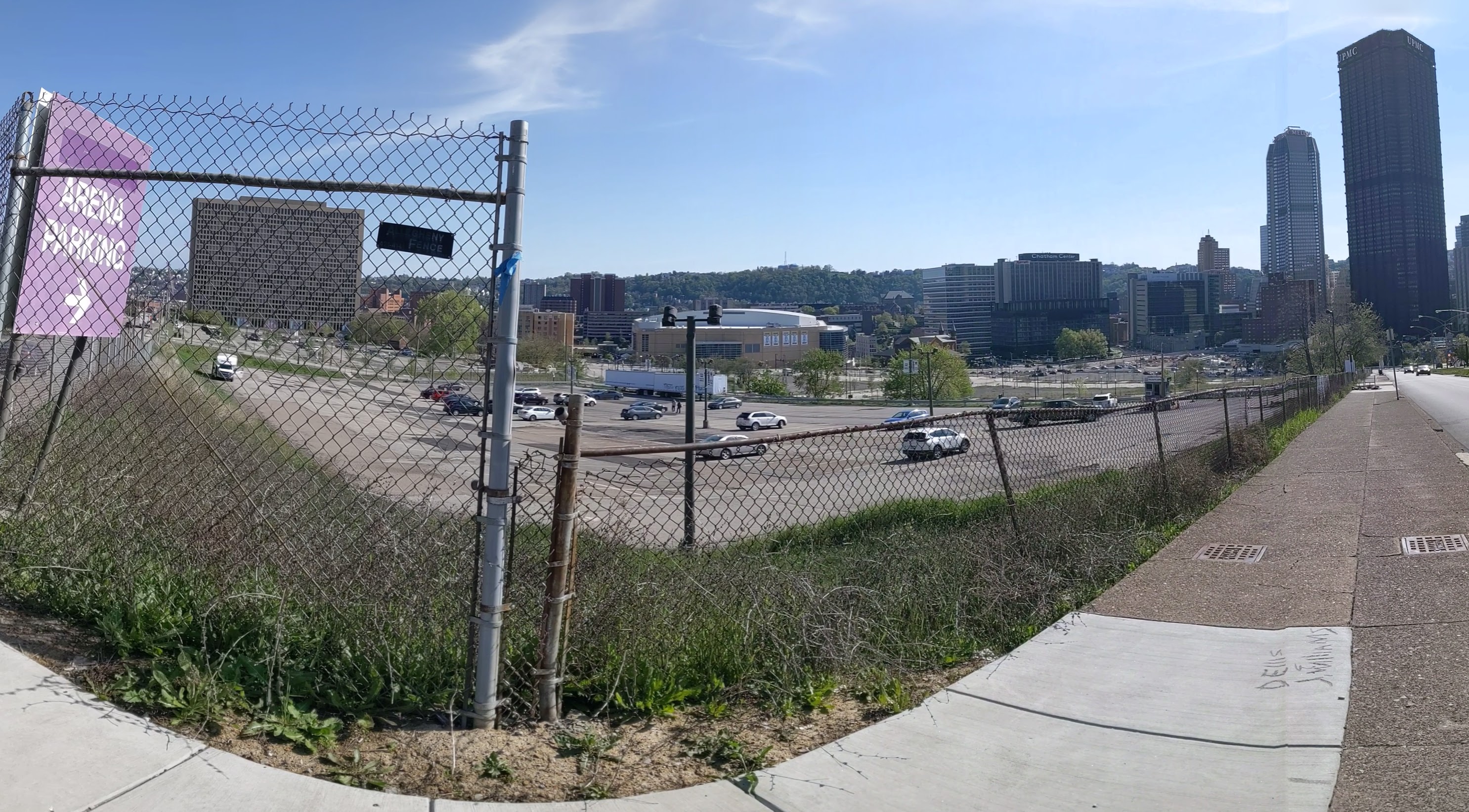
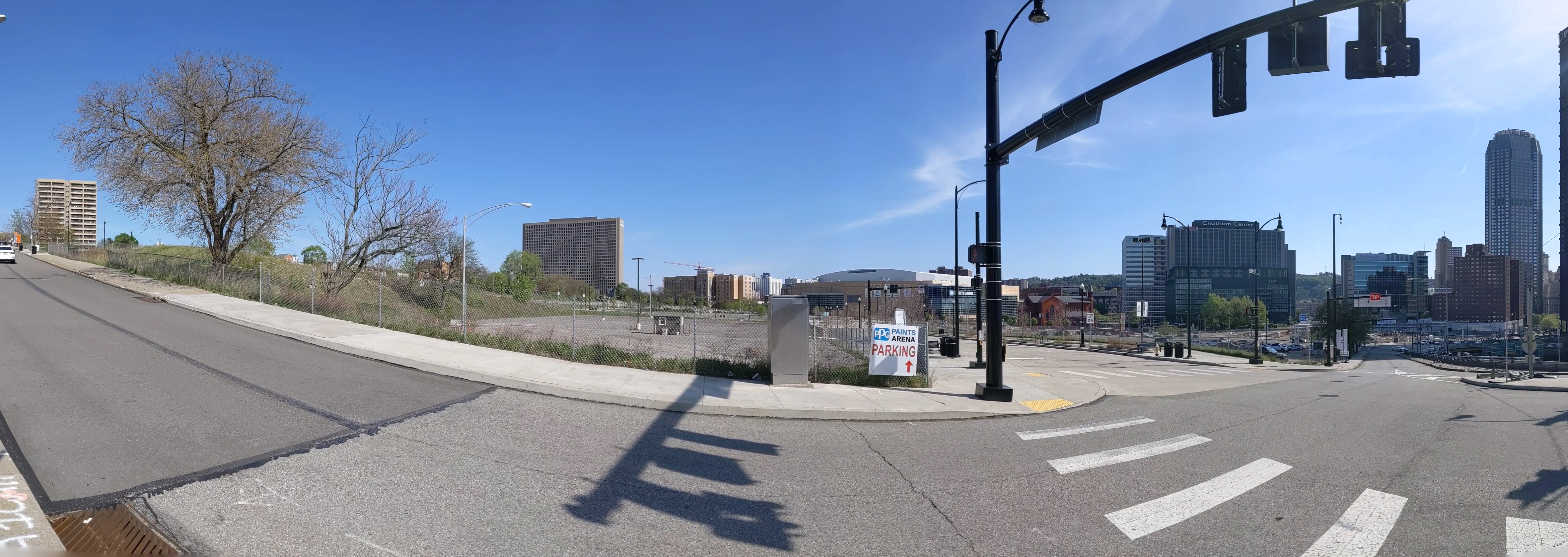
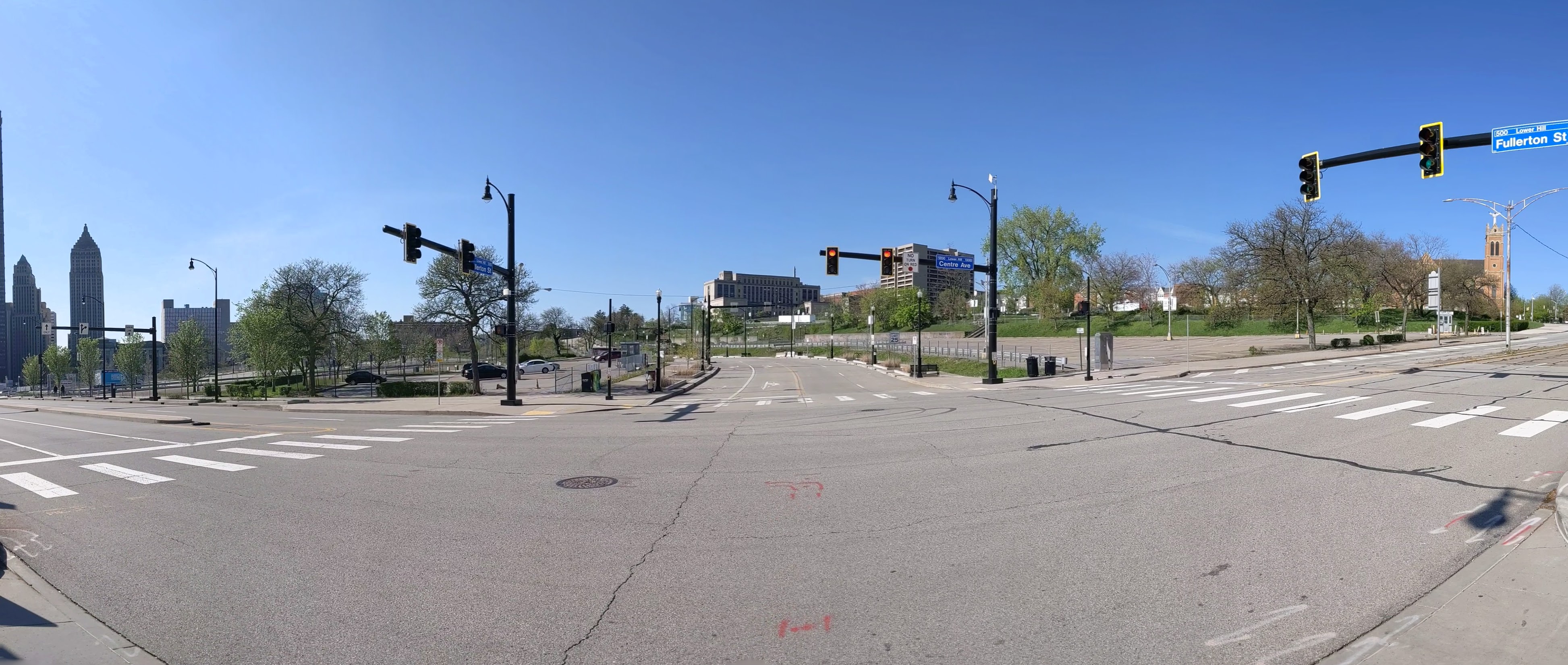
This blog post is part of an on-going photographic series to watch the redevelopment of the Lower Hill. Periodically, approximately once every six months, I return to the site to take new photographs. In addition, I include links to articles about the project that I’ve encountered since the previous post in the series. At the end of the post, there are links to all the previous posts in the series.

What’s New

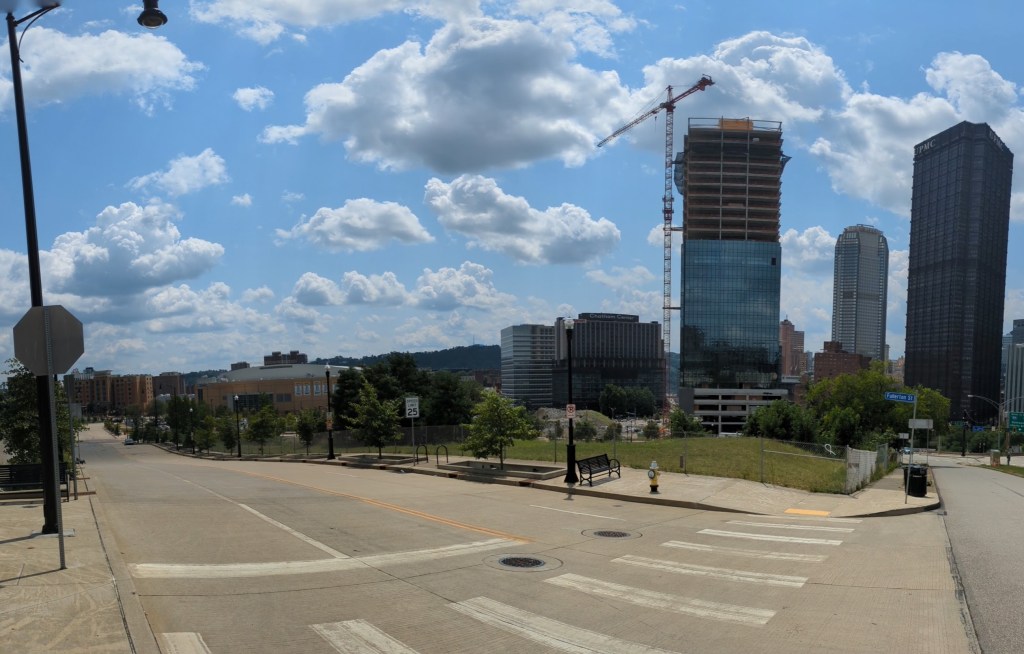
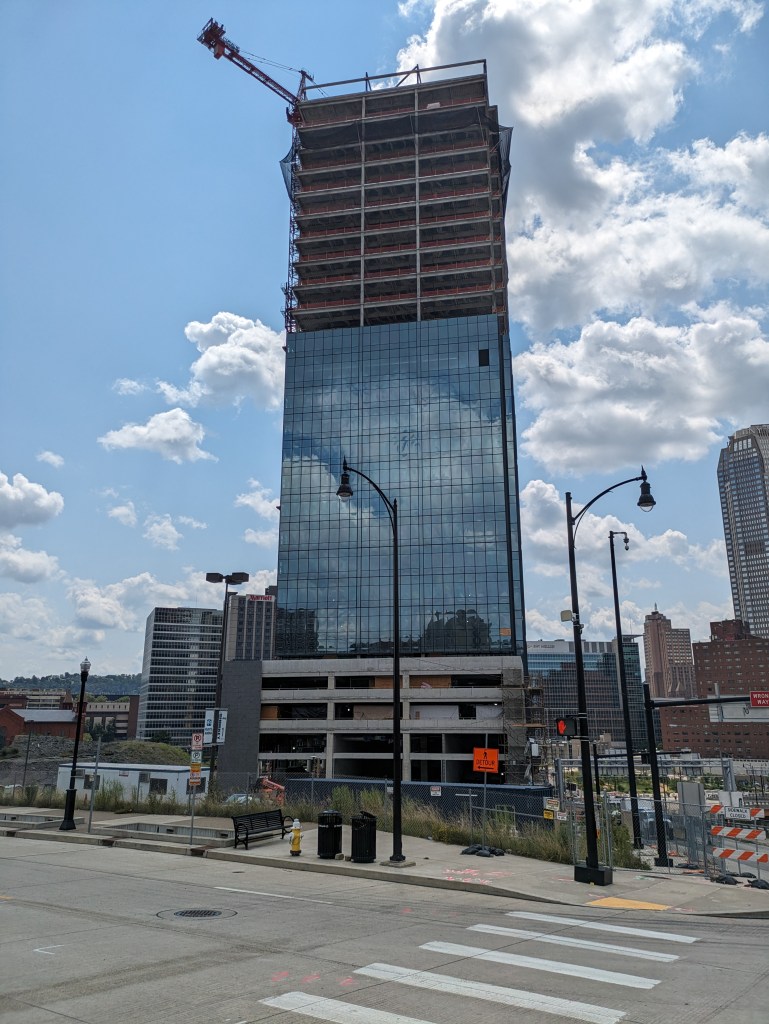
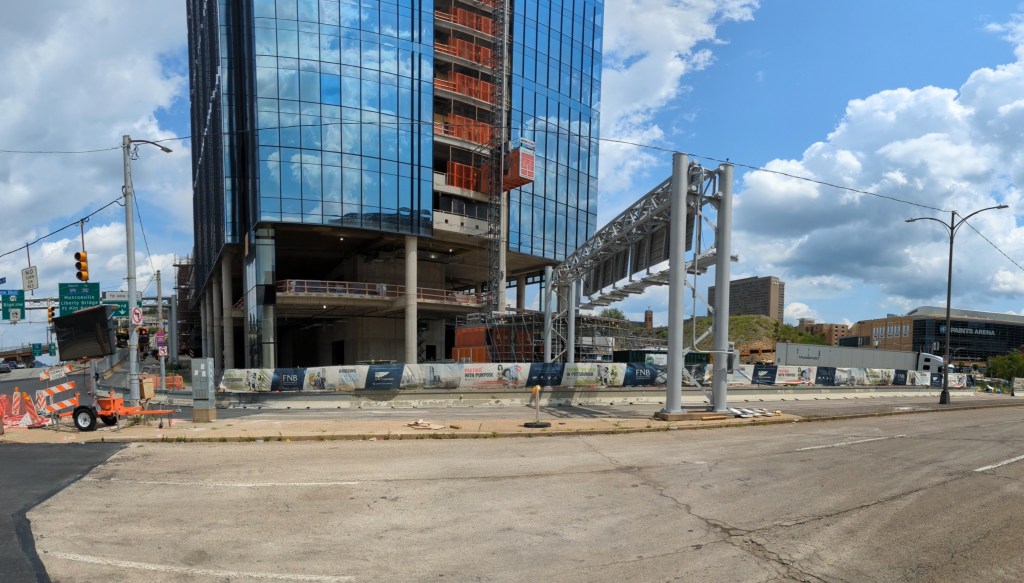
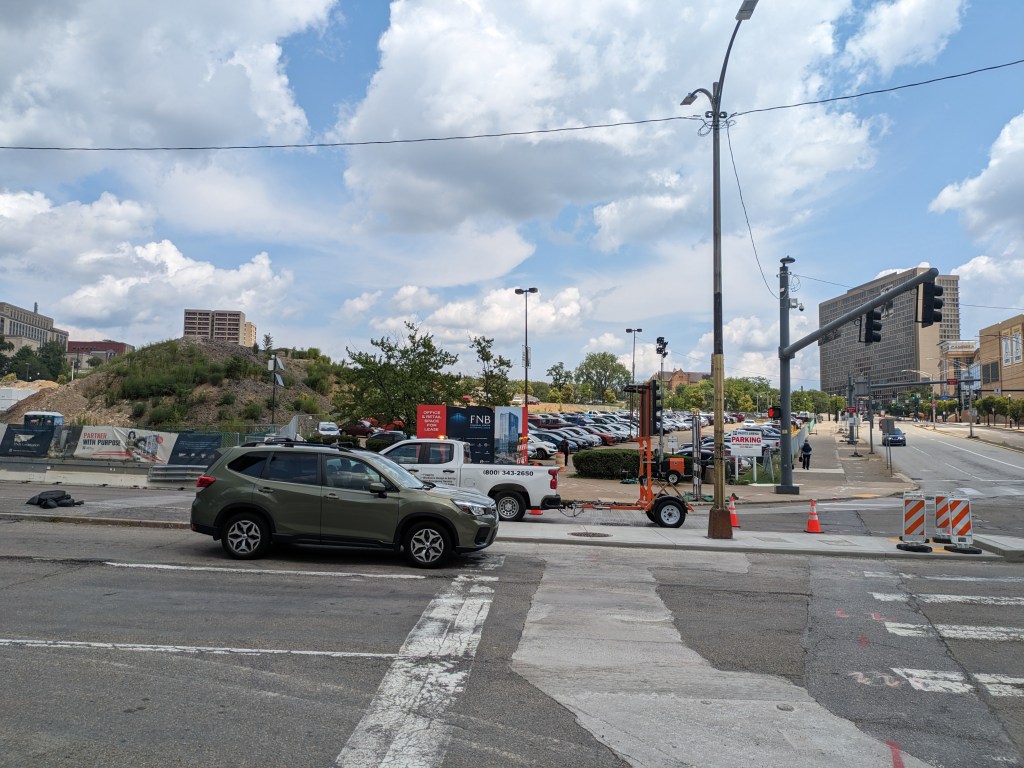
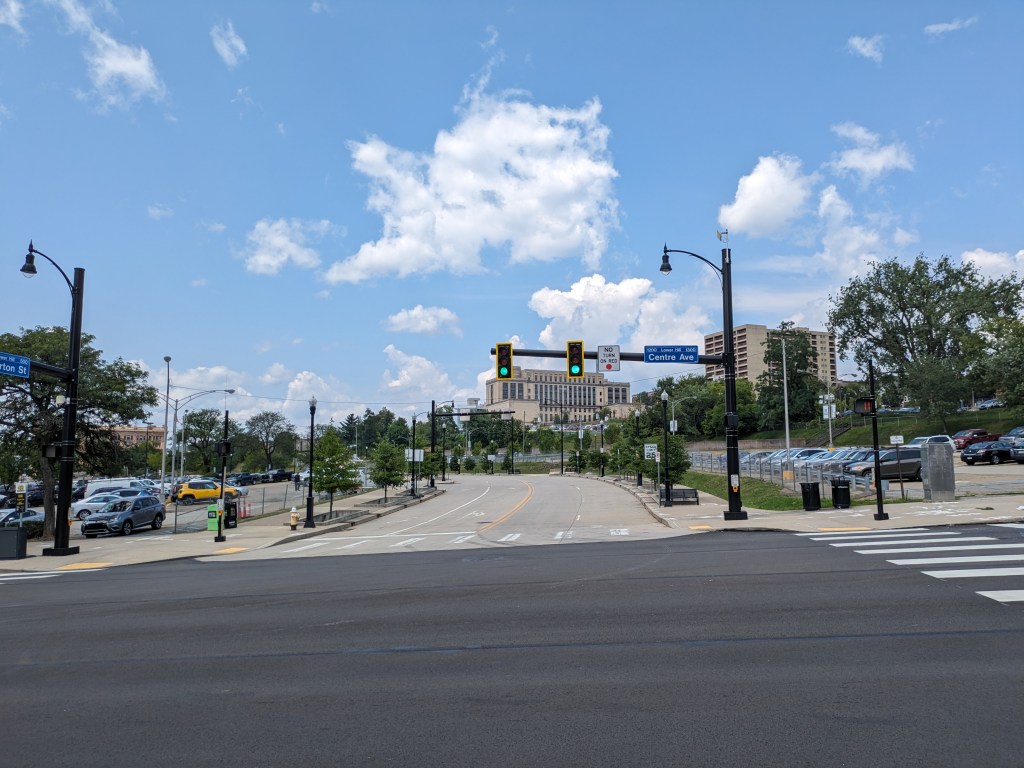
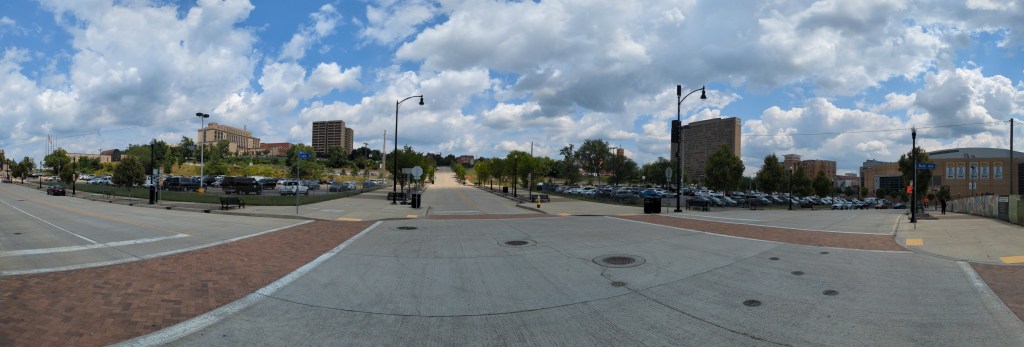
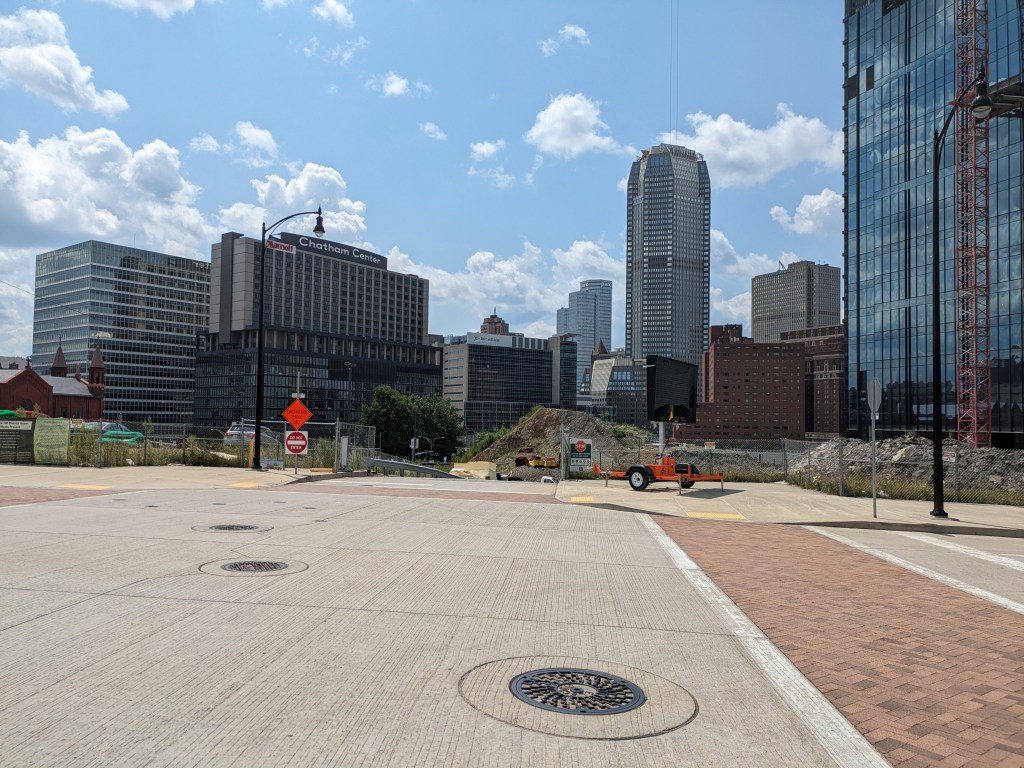
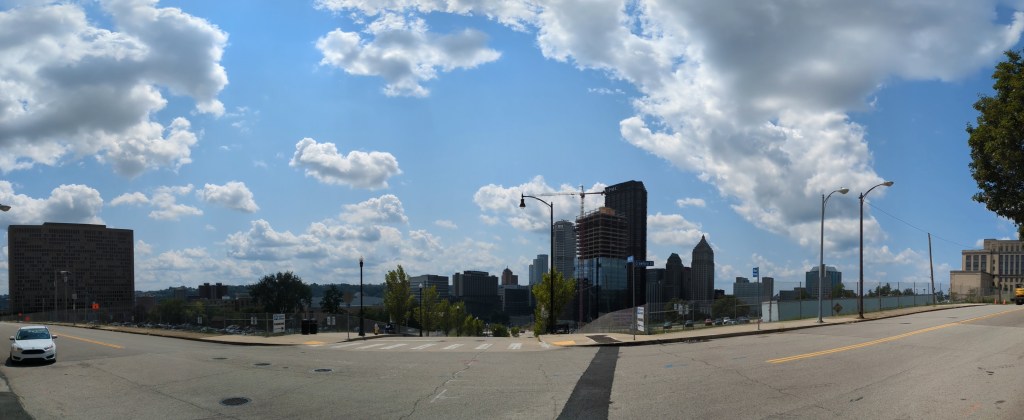
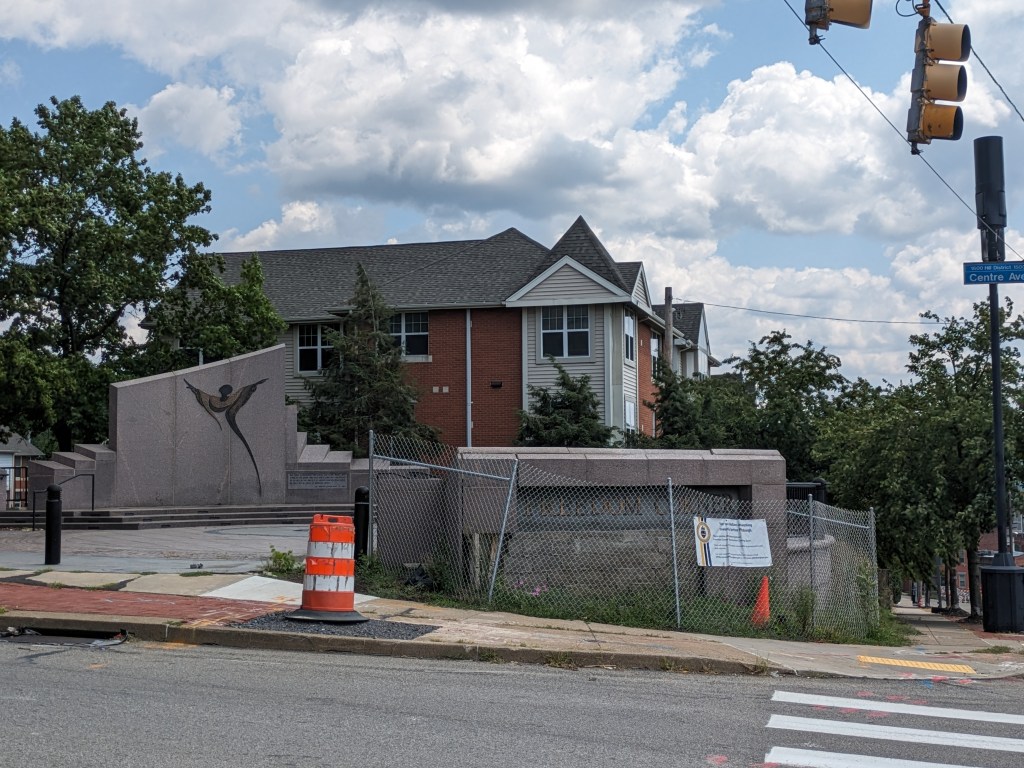
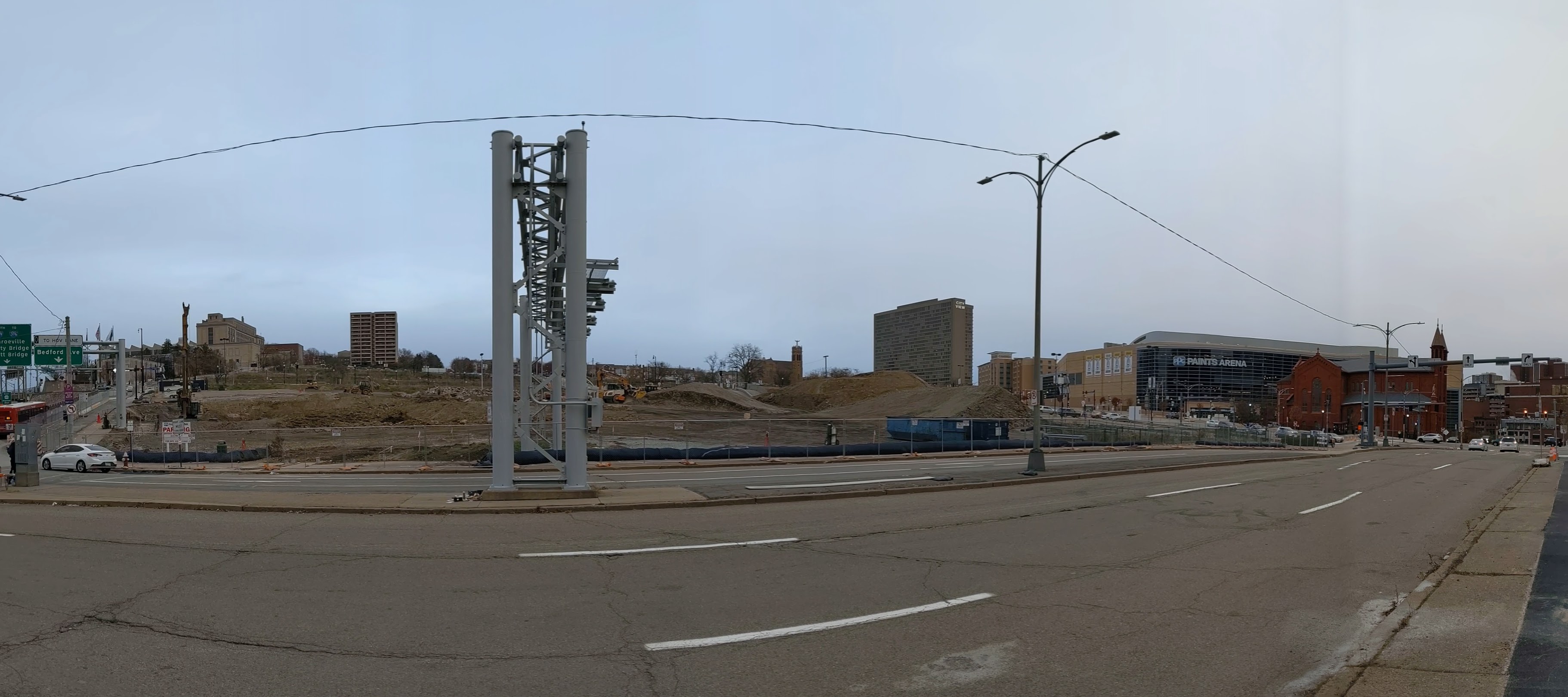
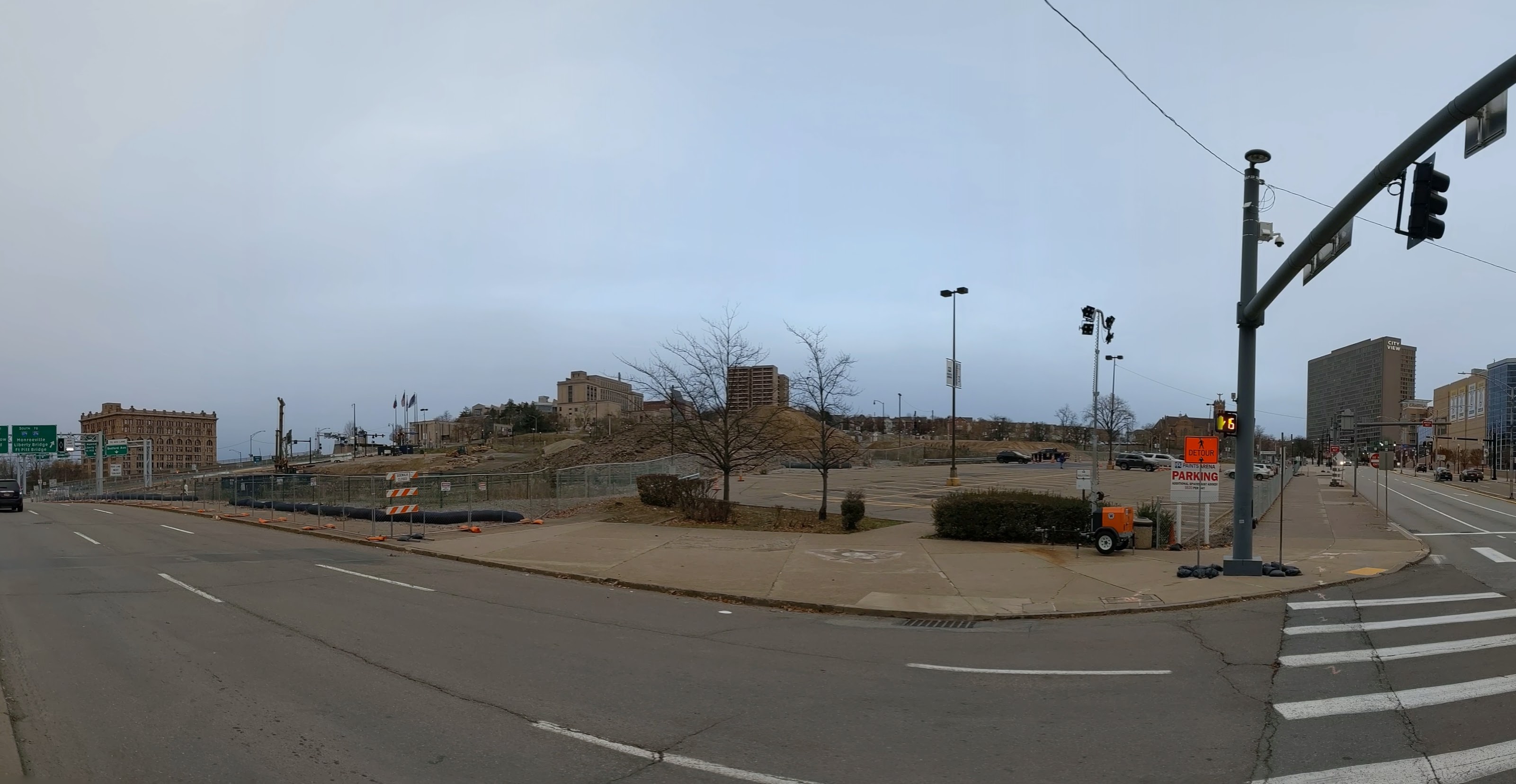
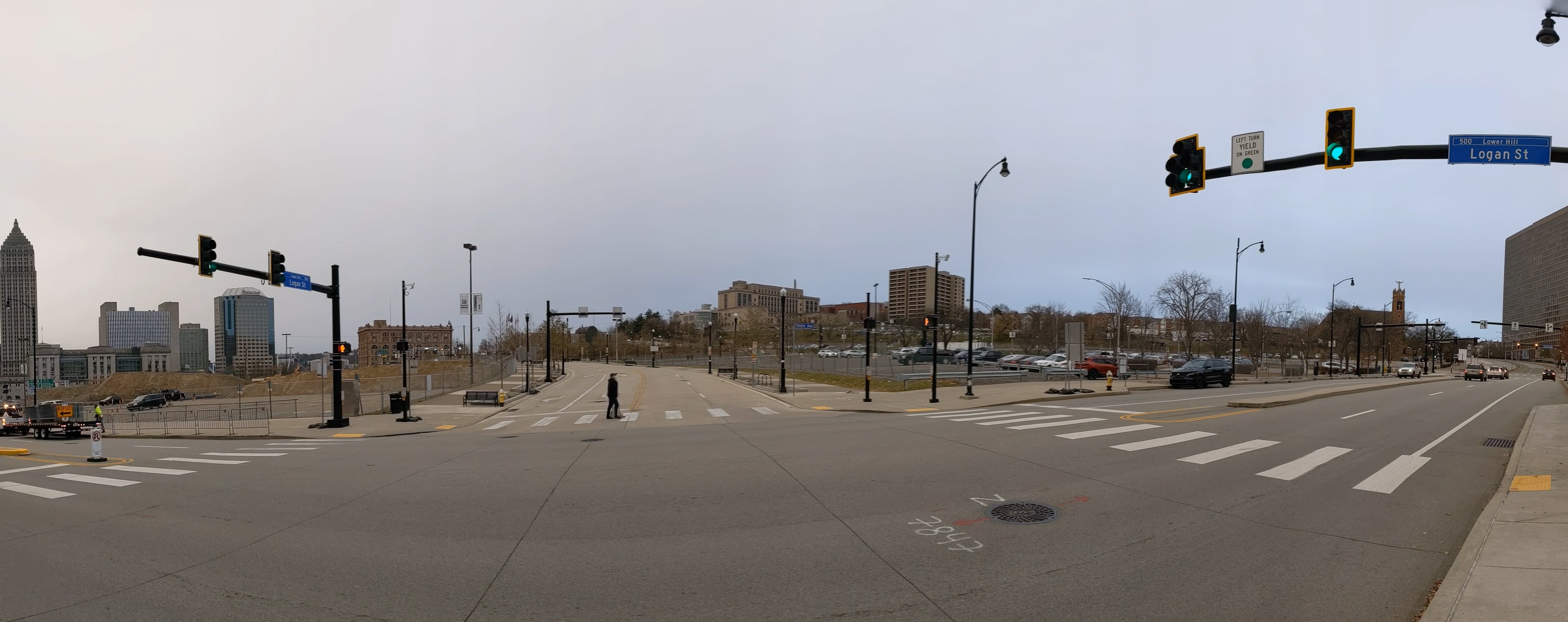
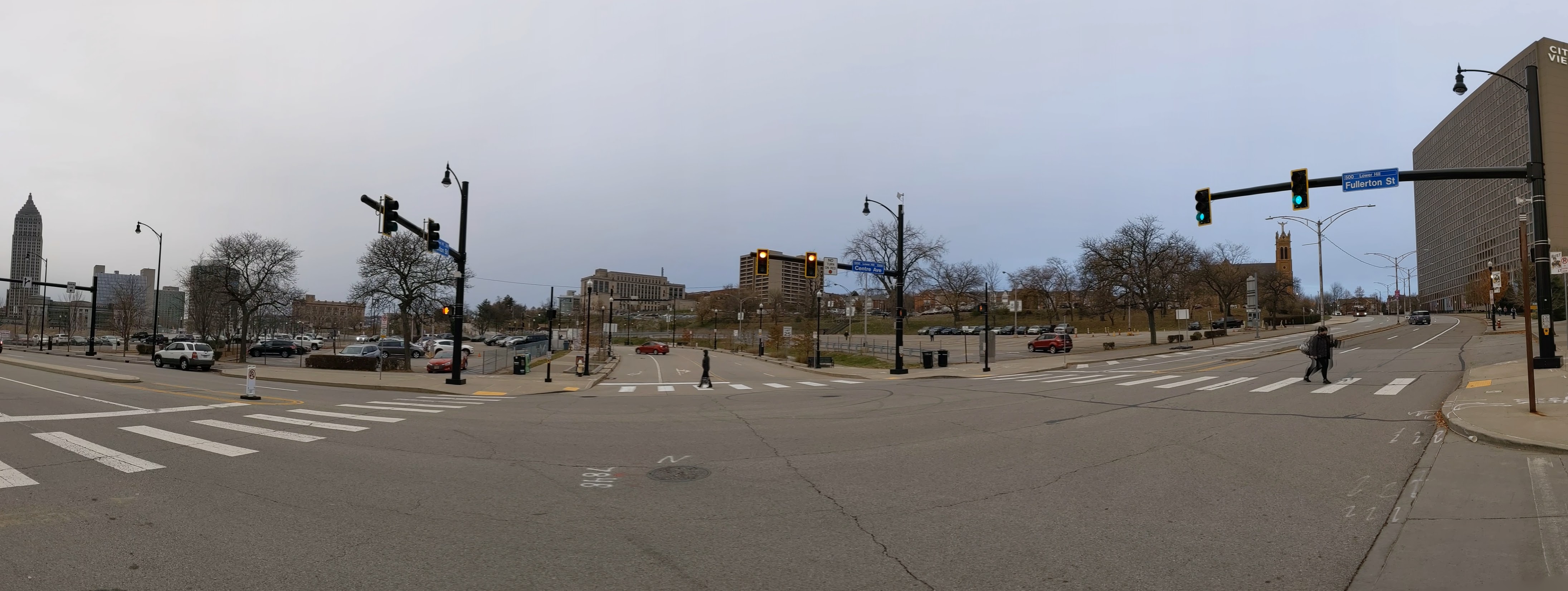
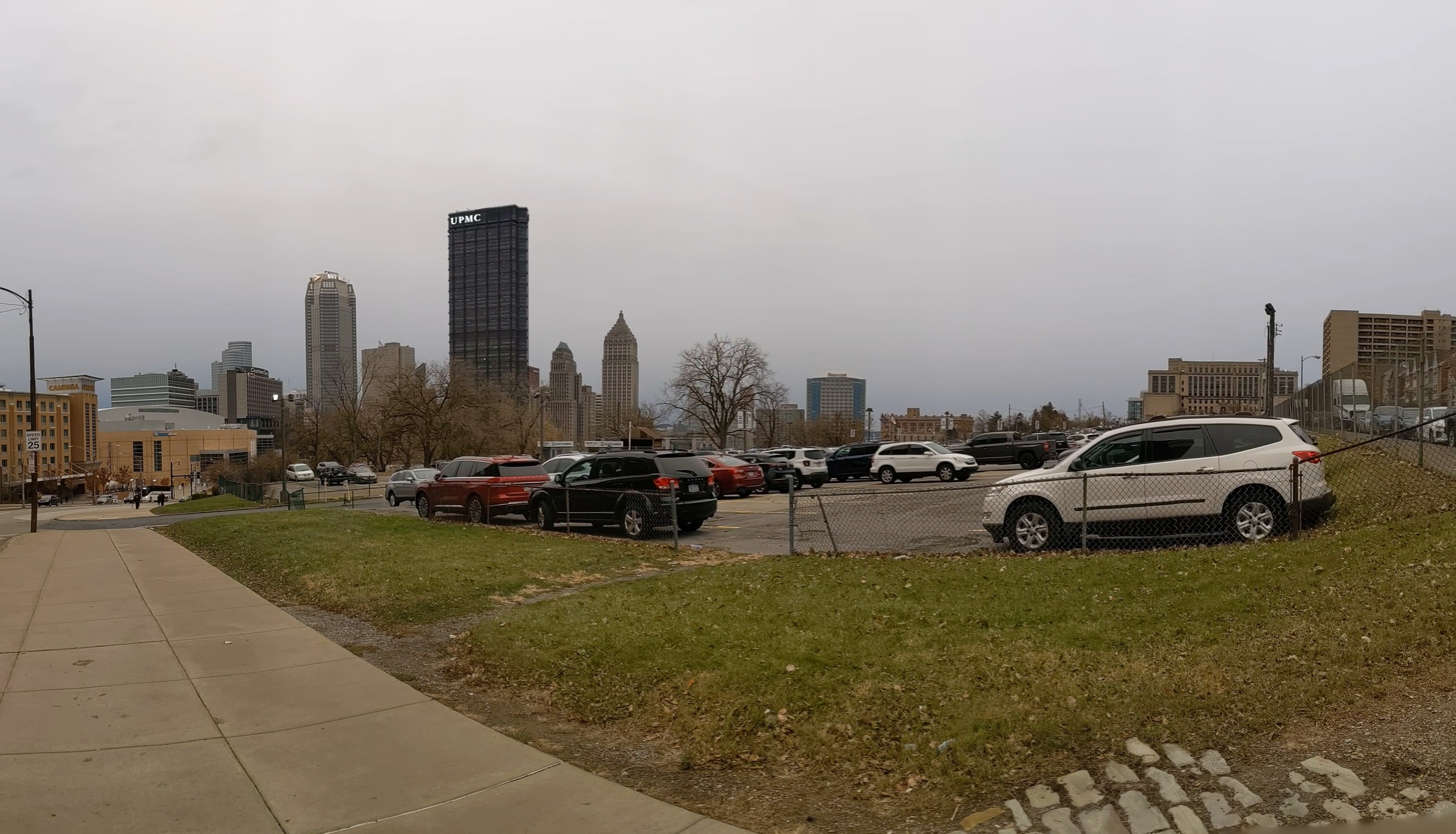
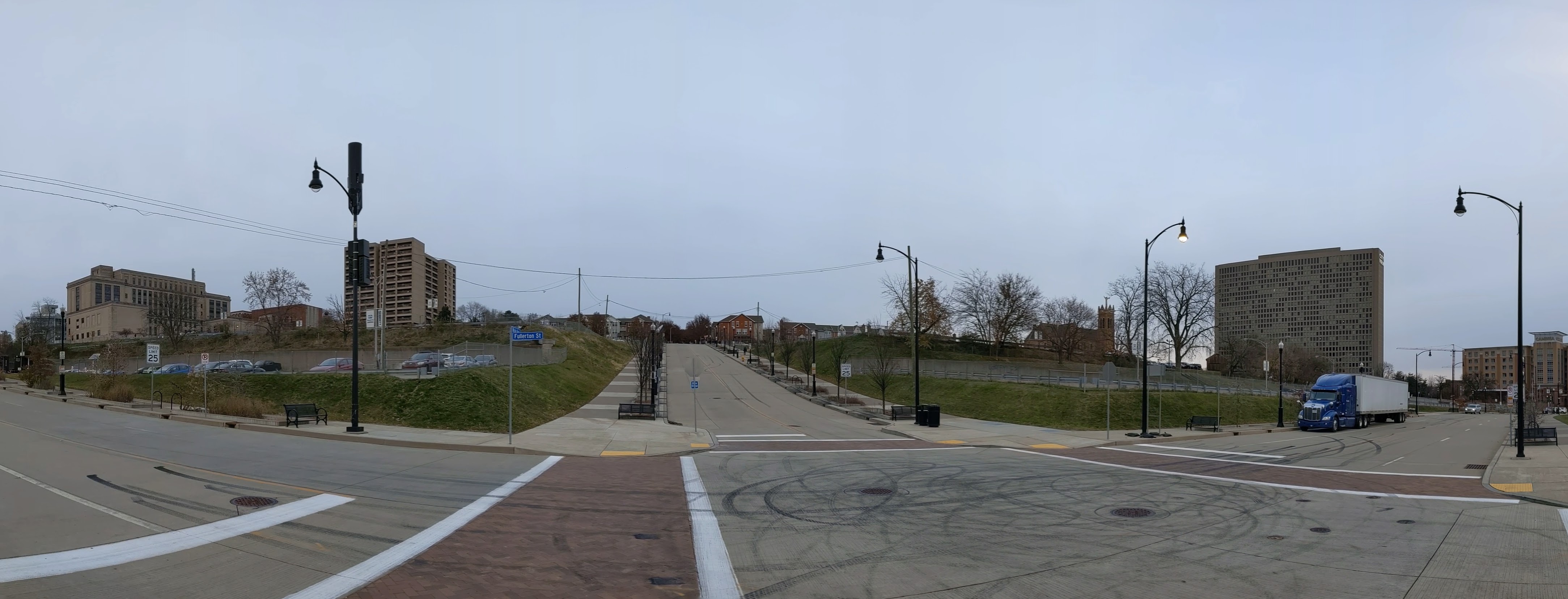
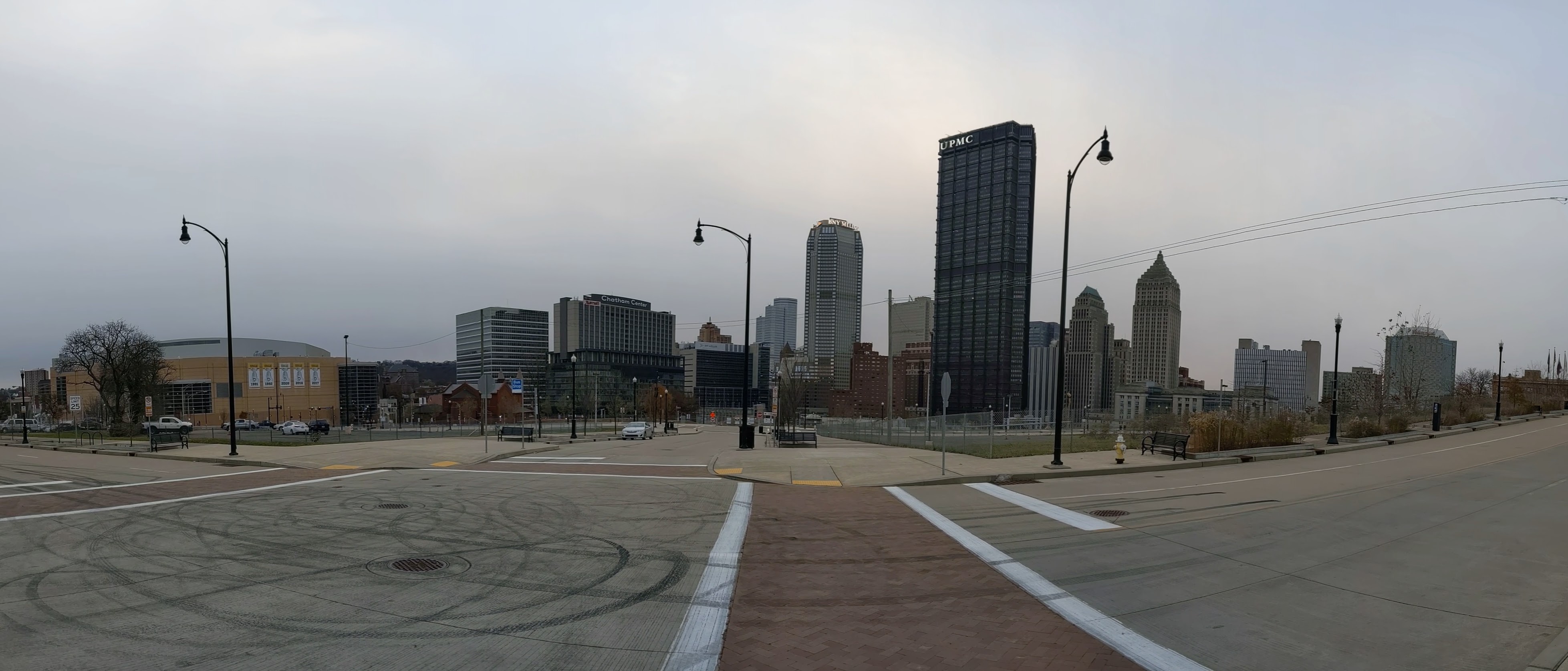
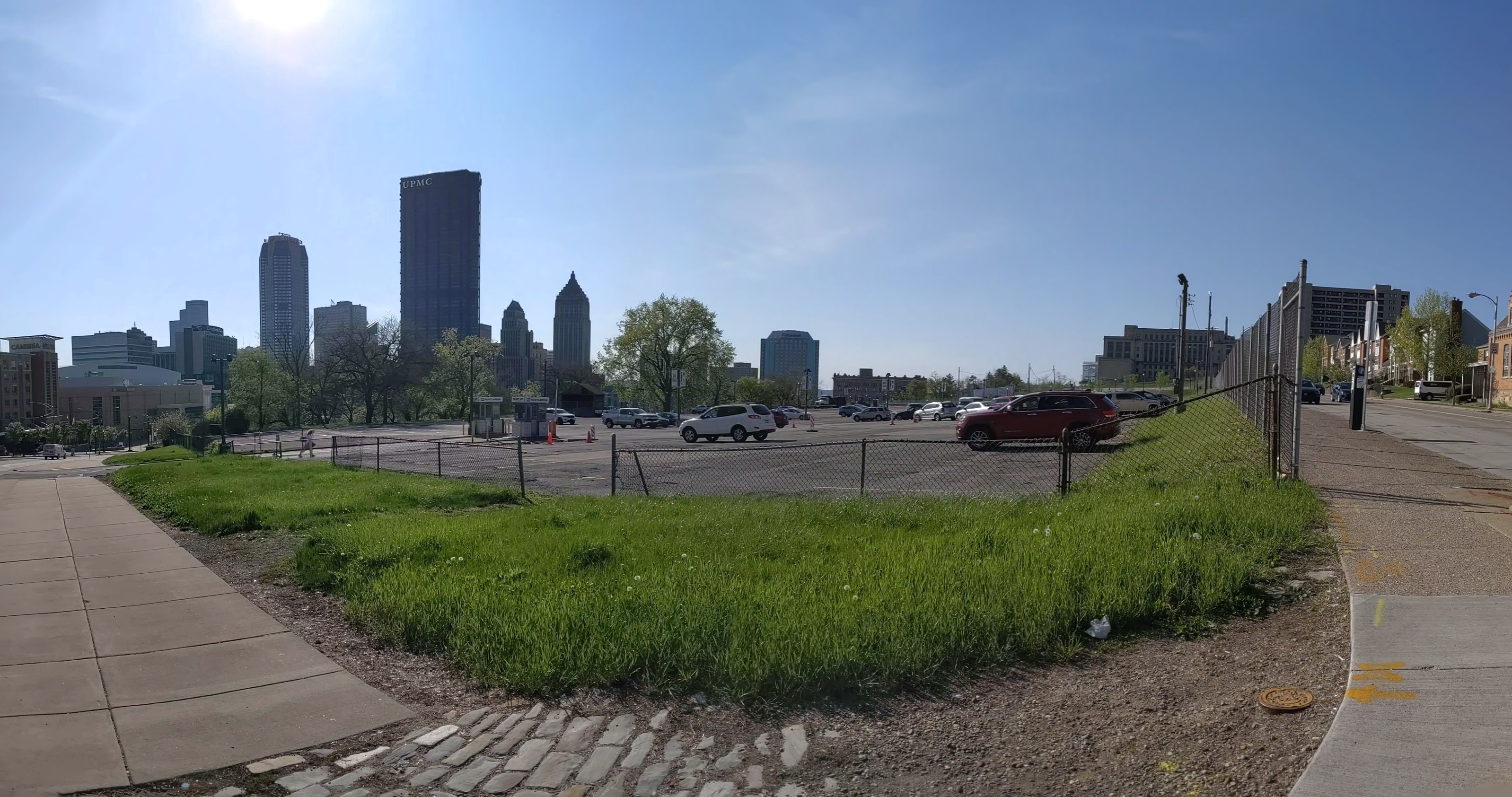
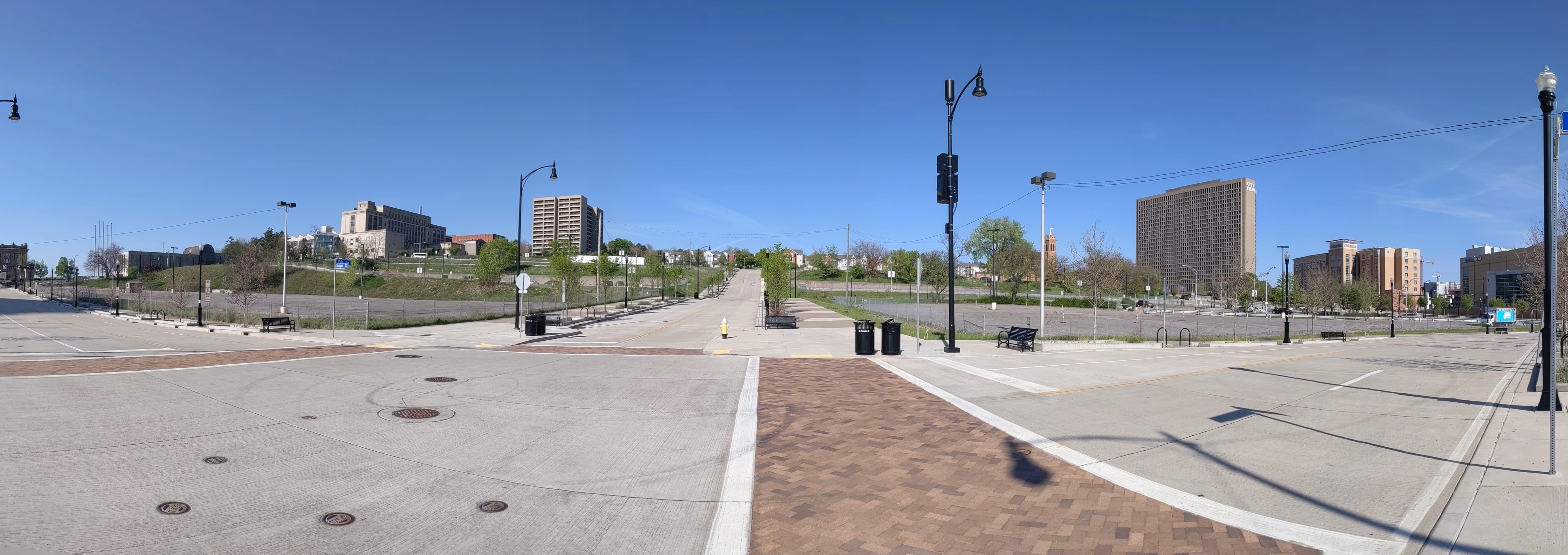
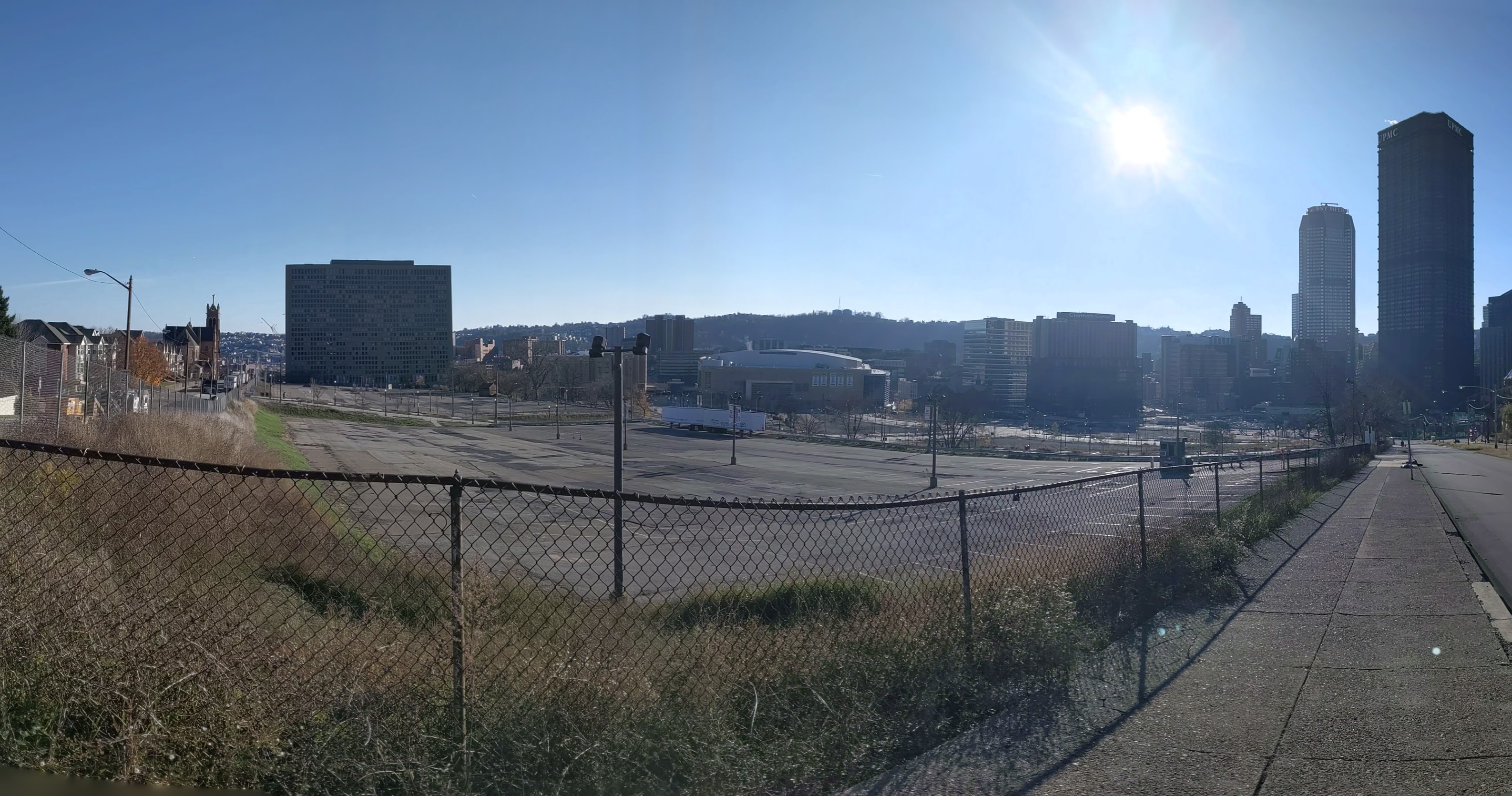
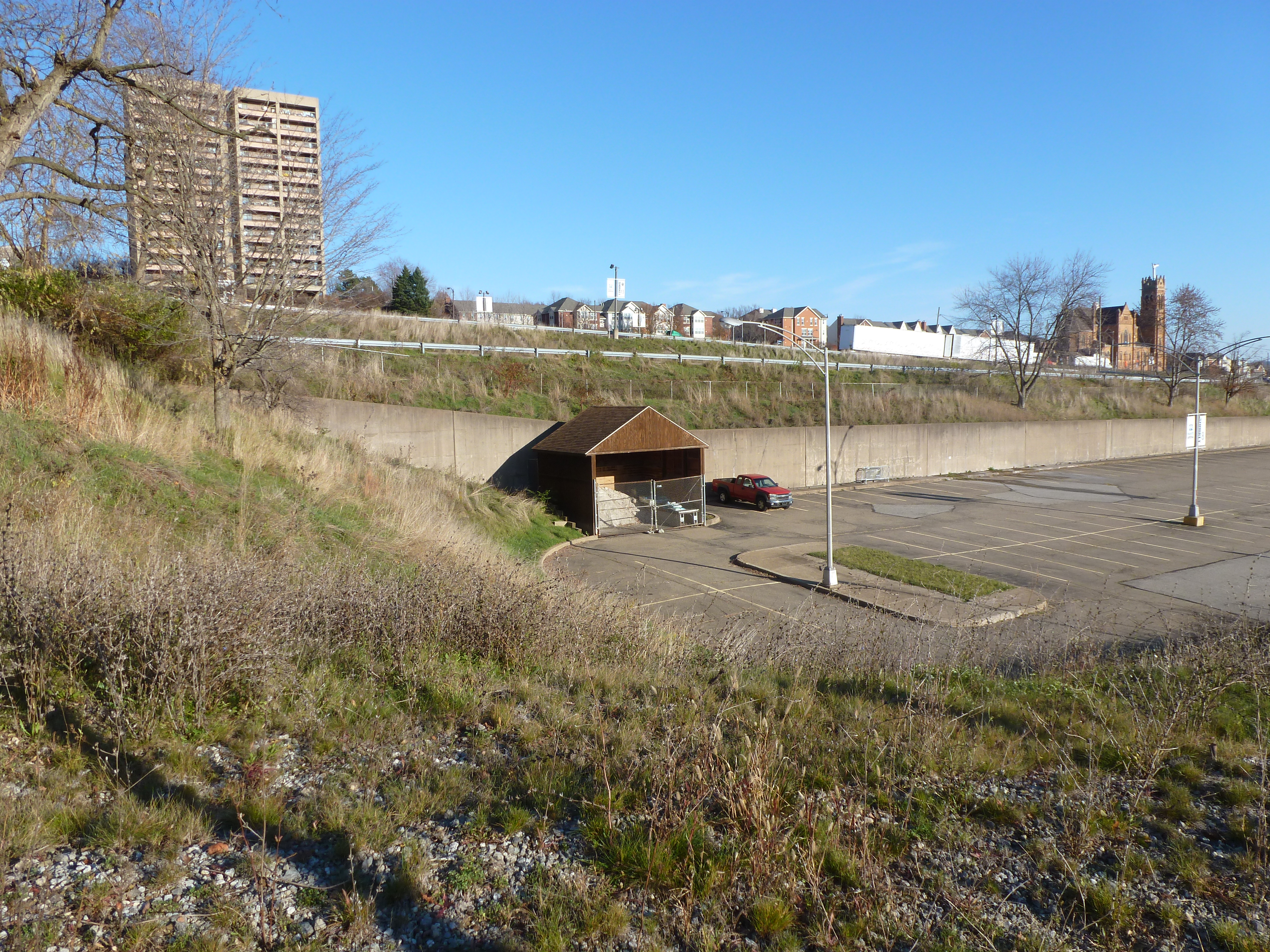
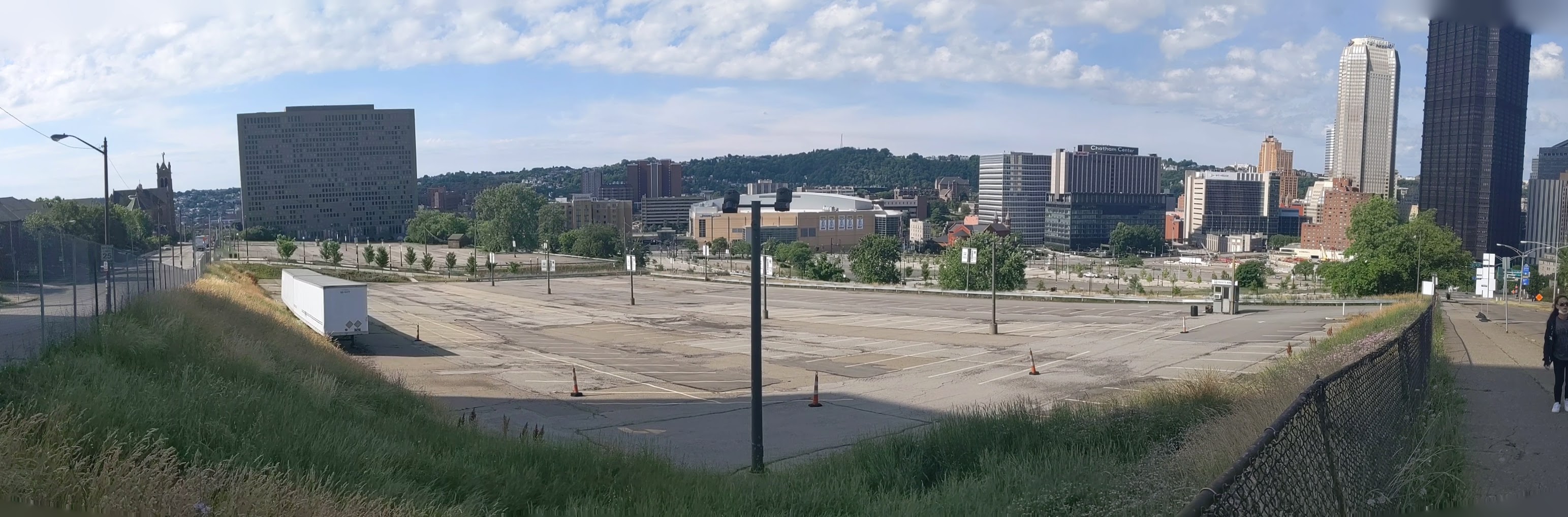
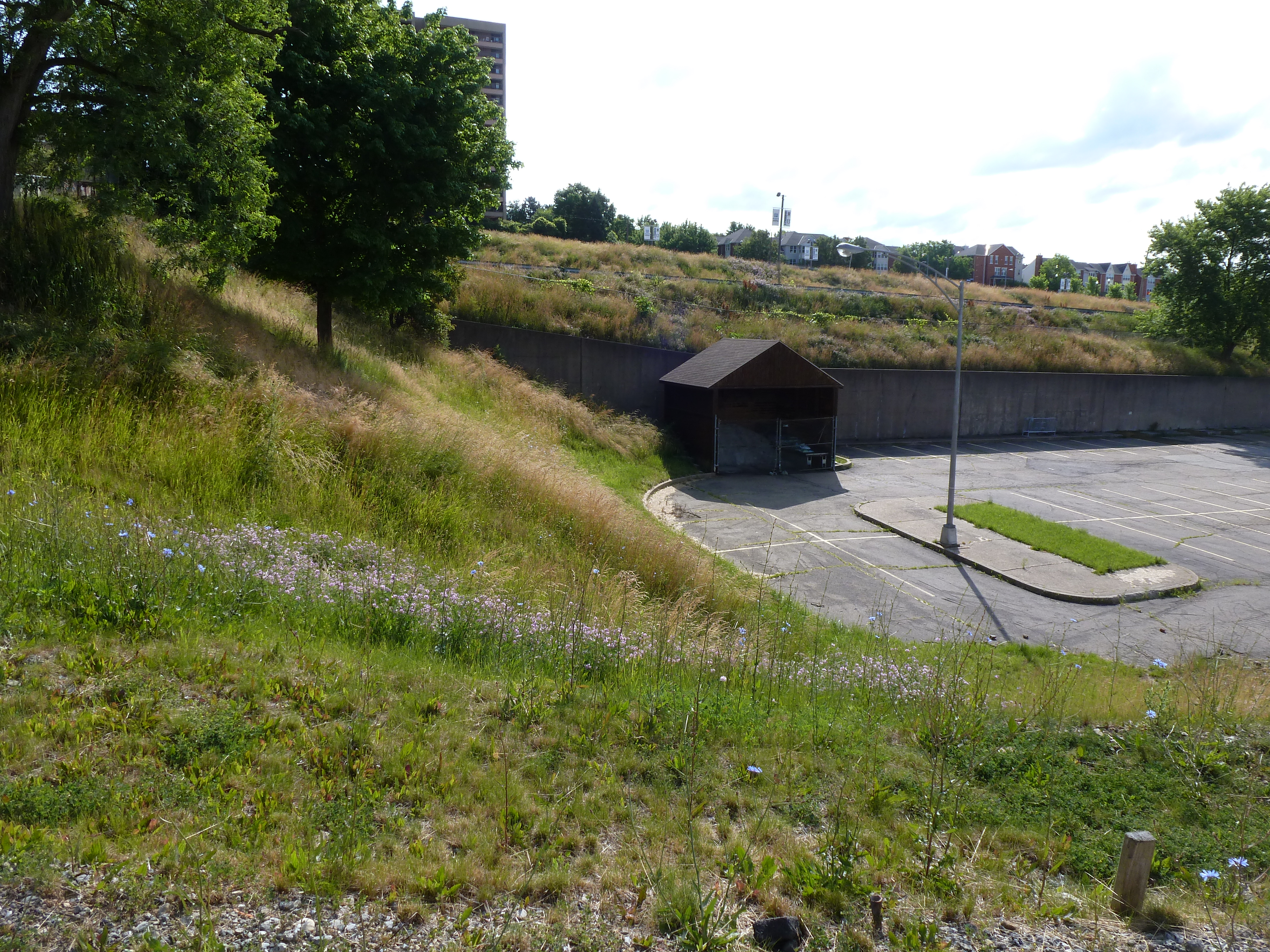
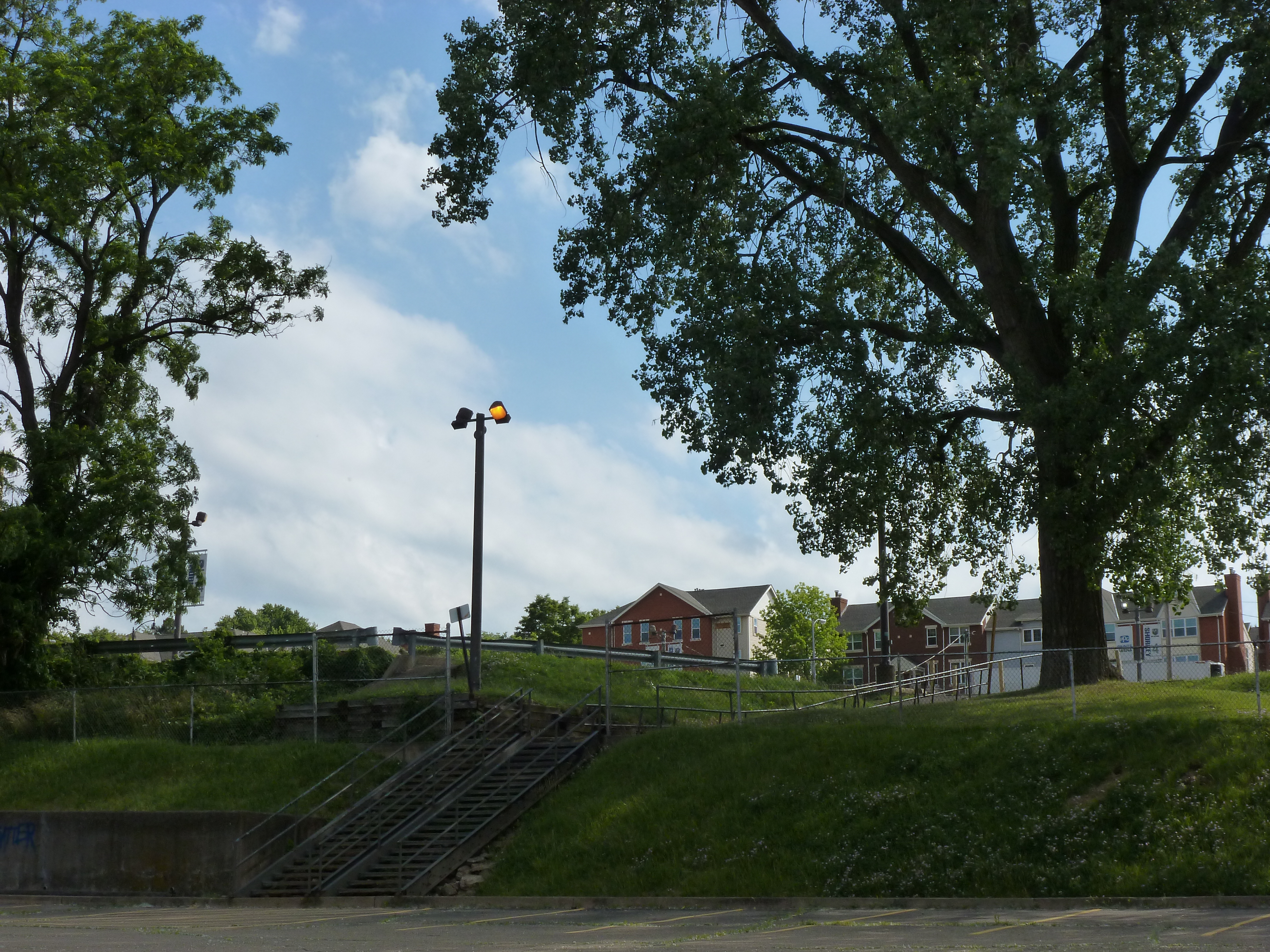
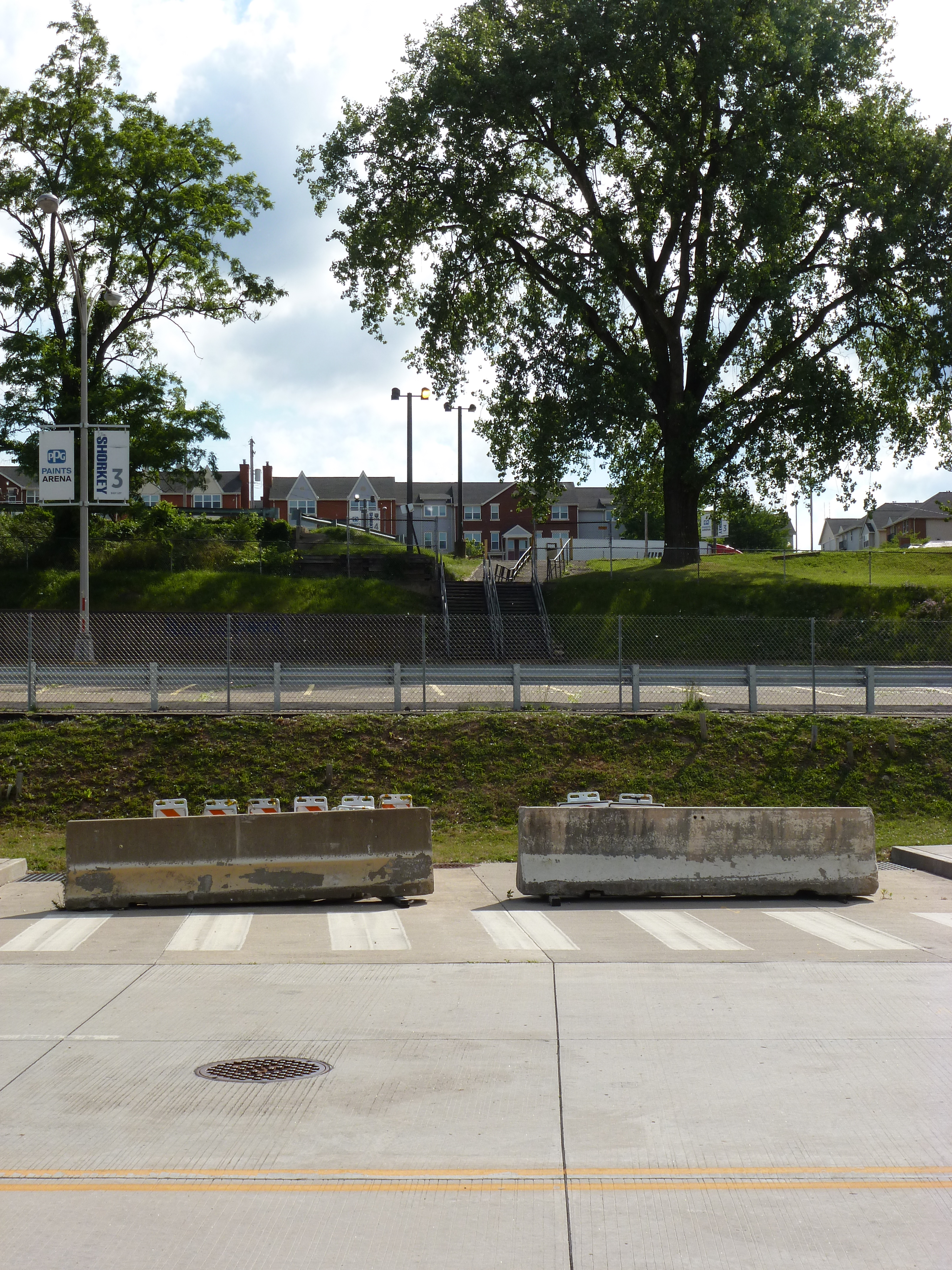
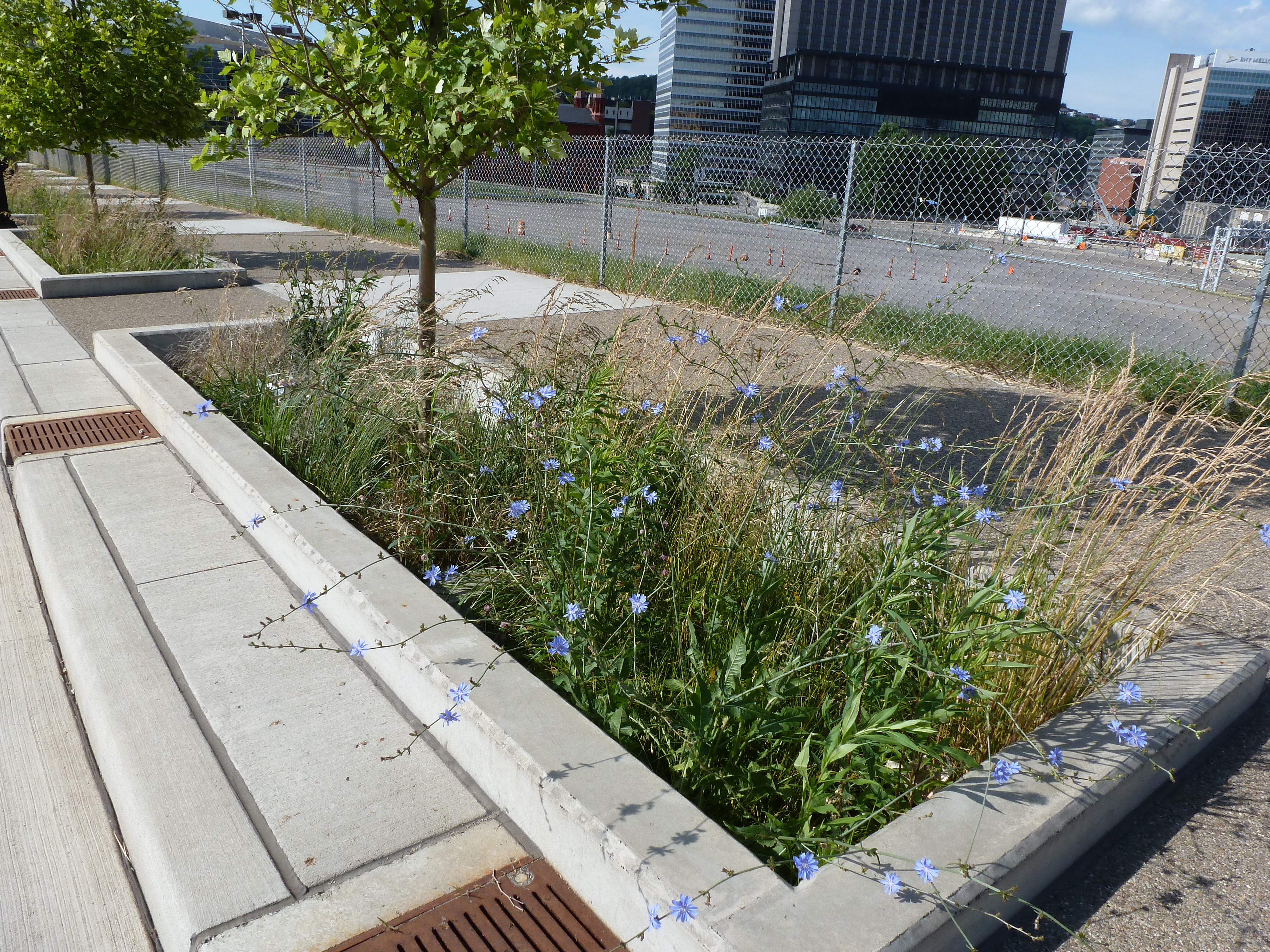
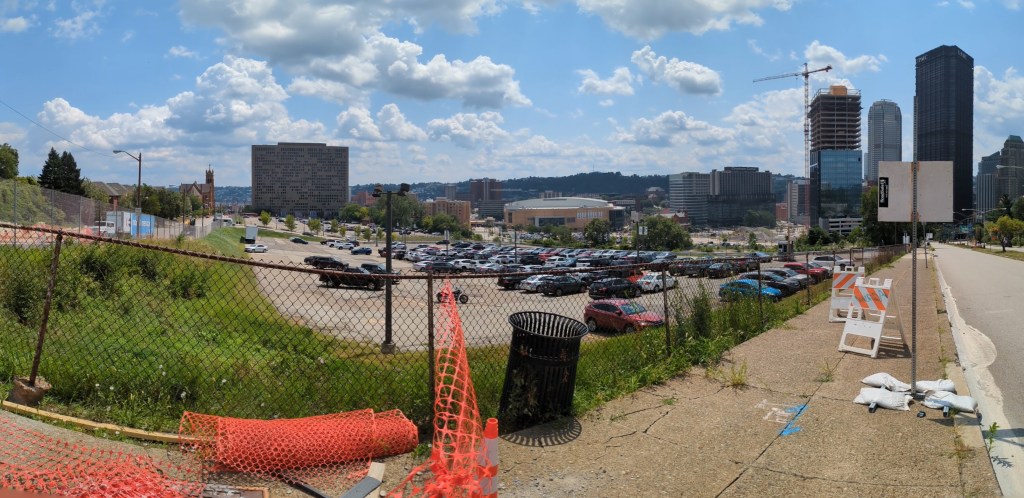
While still primarily a sea of parked cars, there have been a few changes on the site:

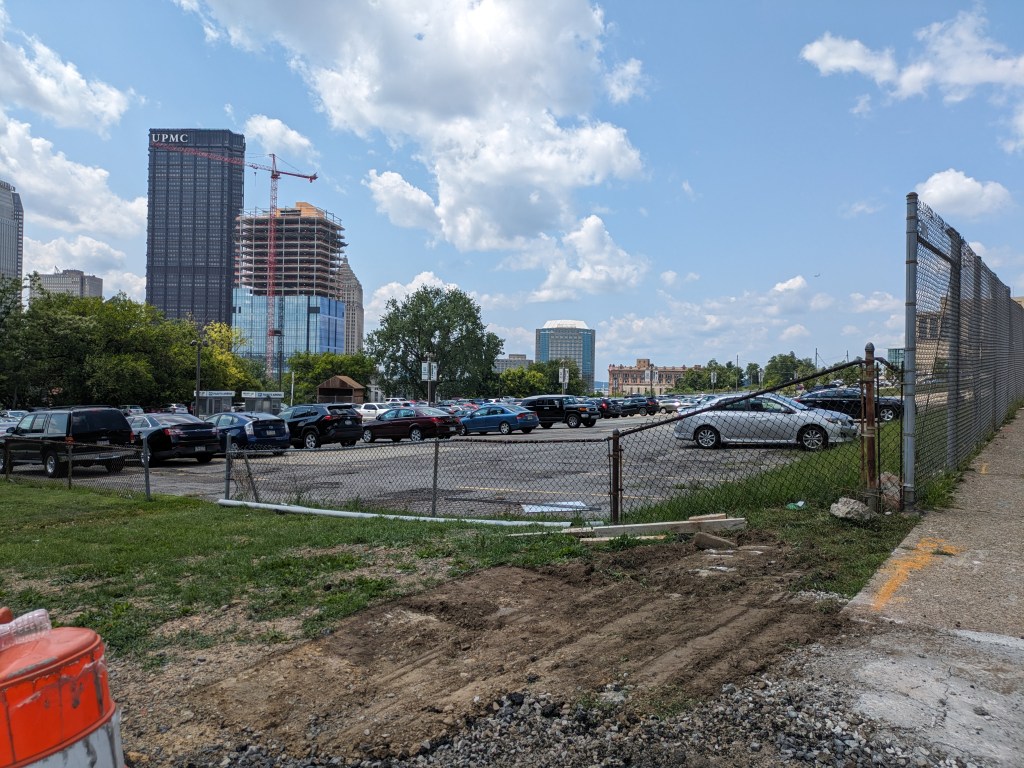
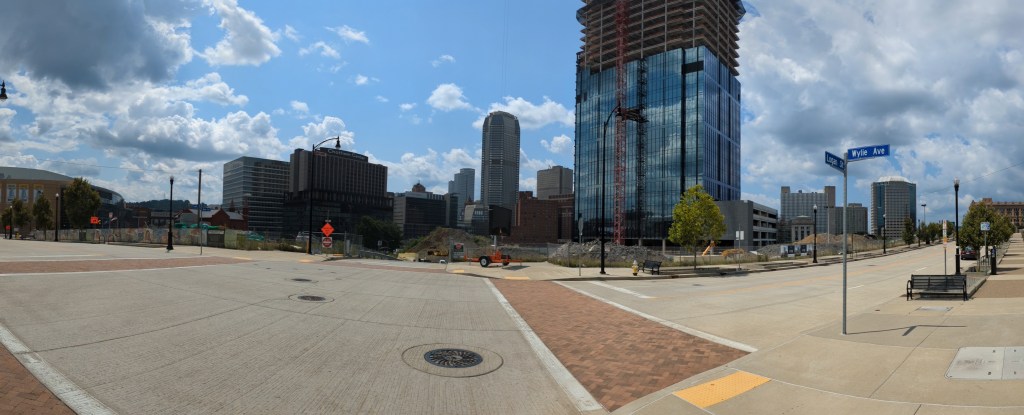
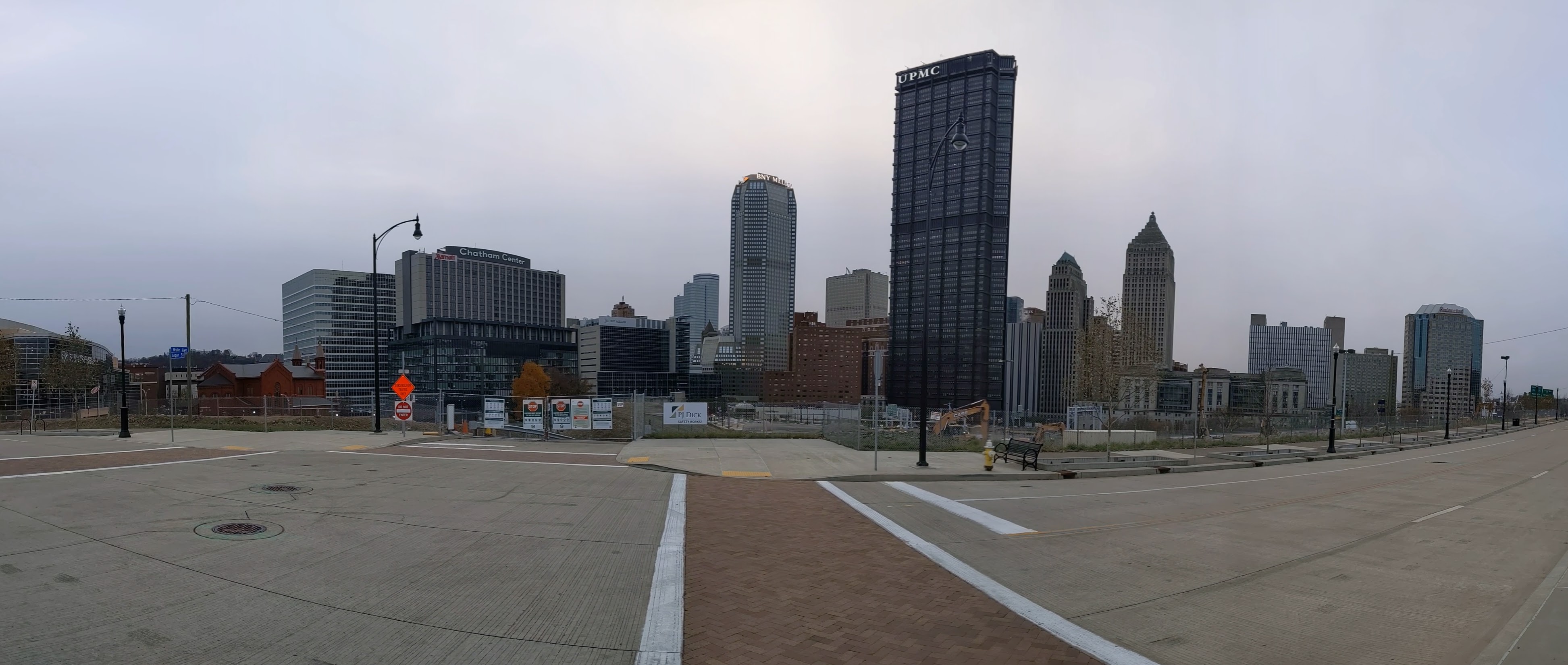
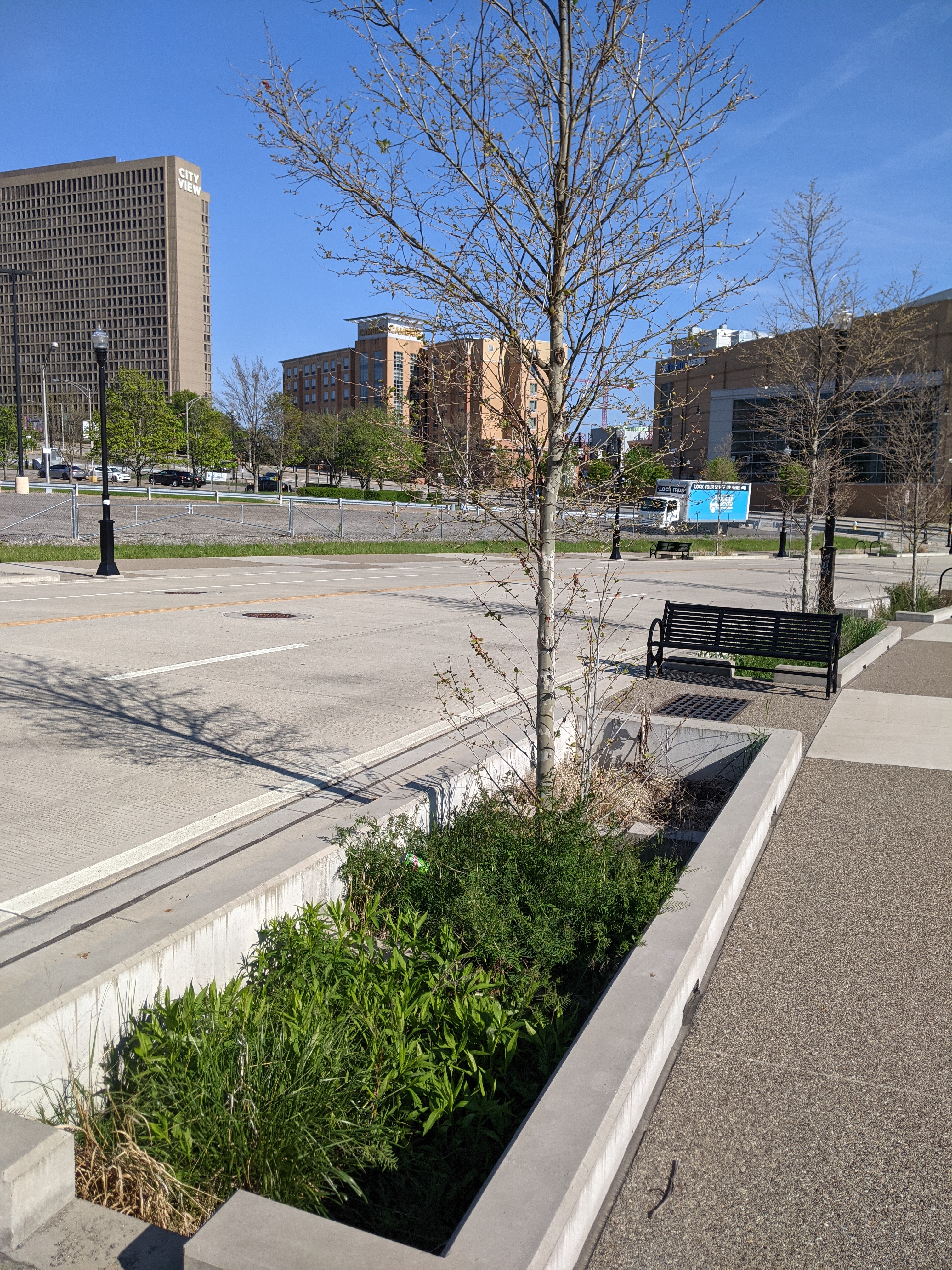
  • After months of the FNB Tower seemingly stuck at 5 or so stories despite activity on the site, the building shot up to what I assume is its full height.
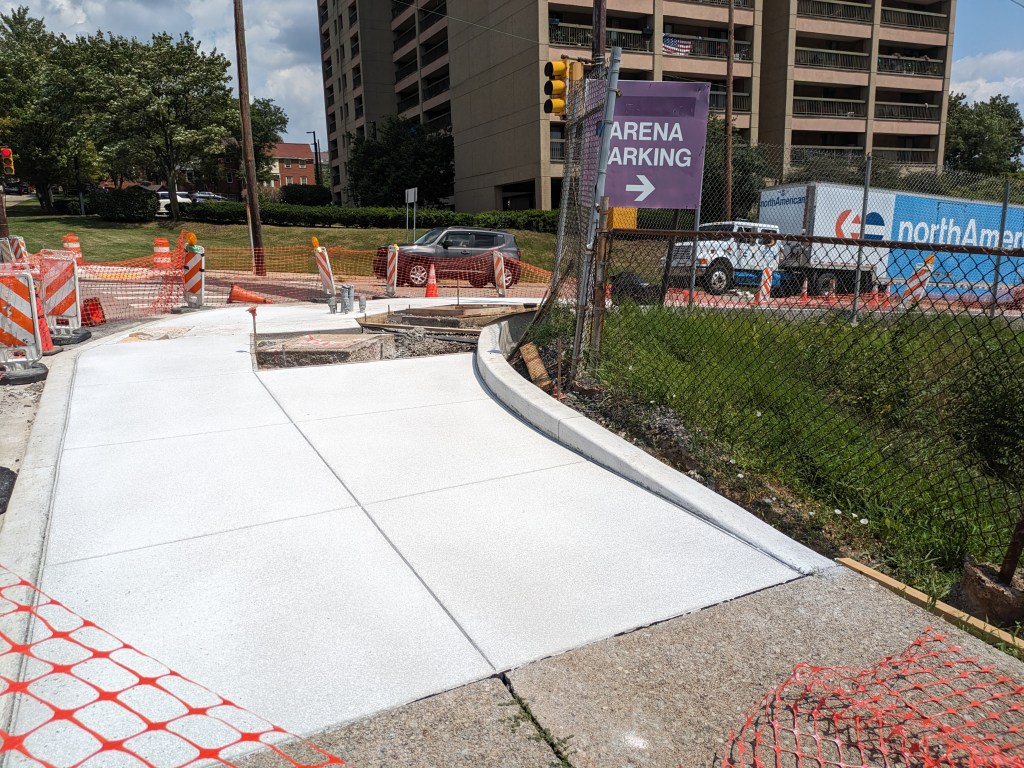
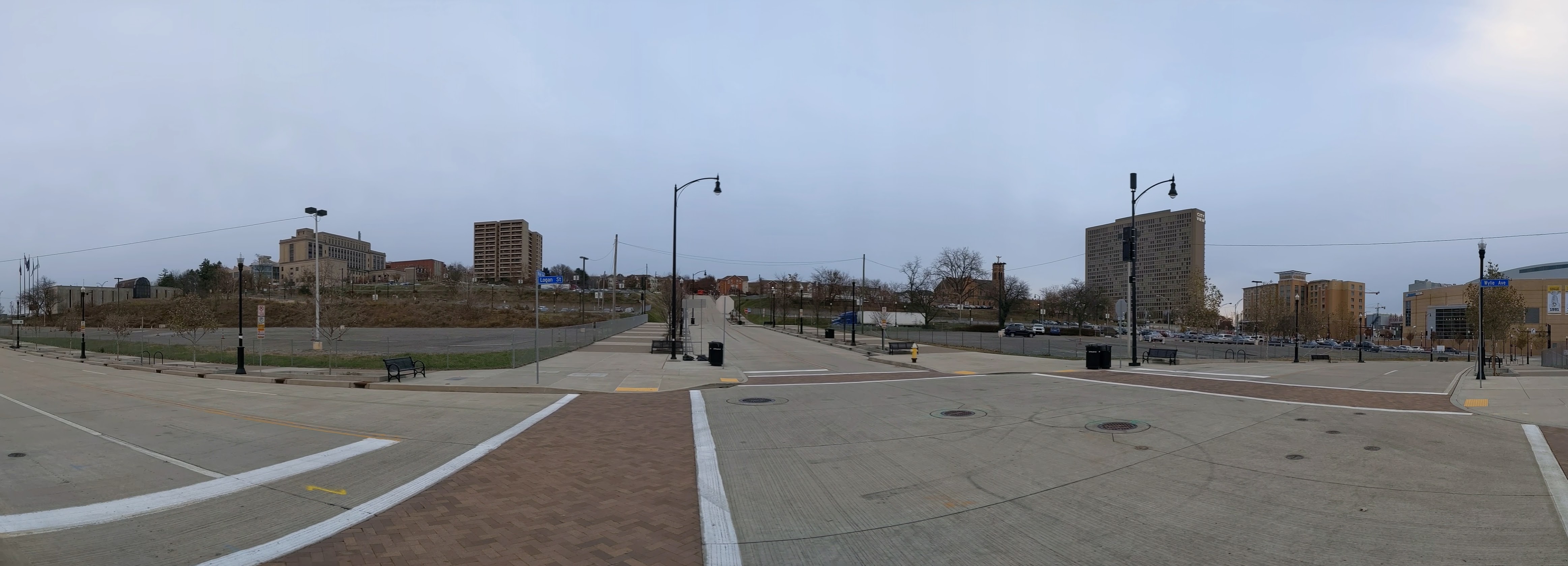
  • There was some sidewalk restructuring on the older sections – though as that’s happening around the city, it may not indicate anything special in regards to the redevelopment of the Lower Hill.
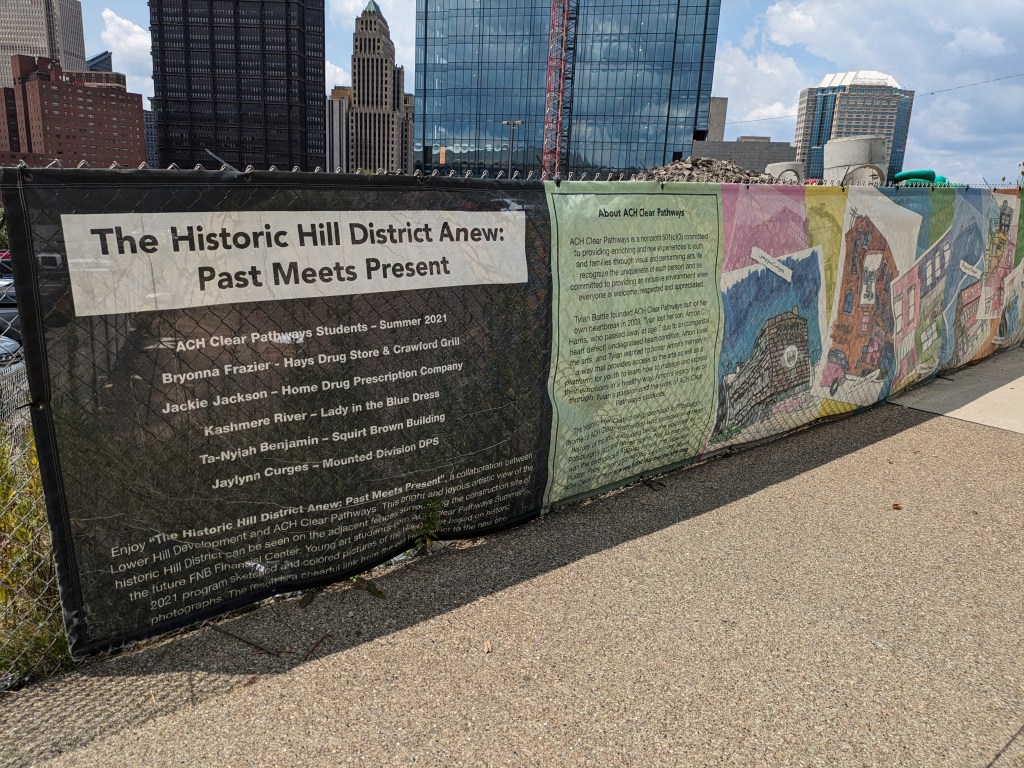
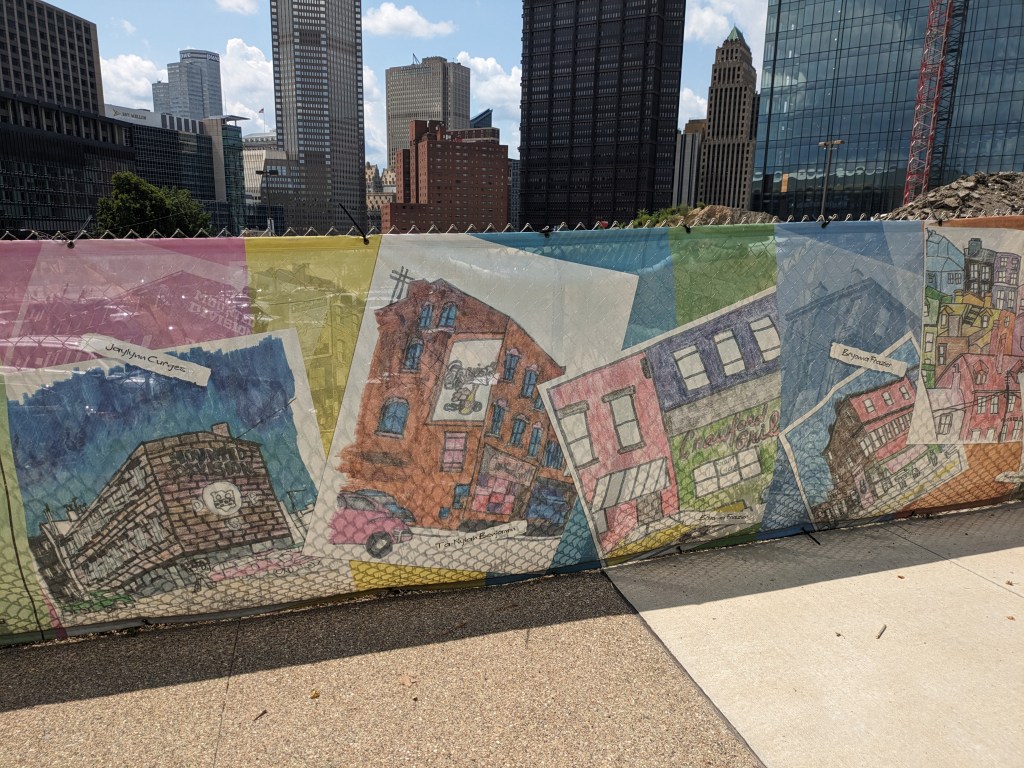
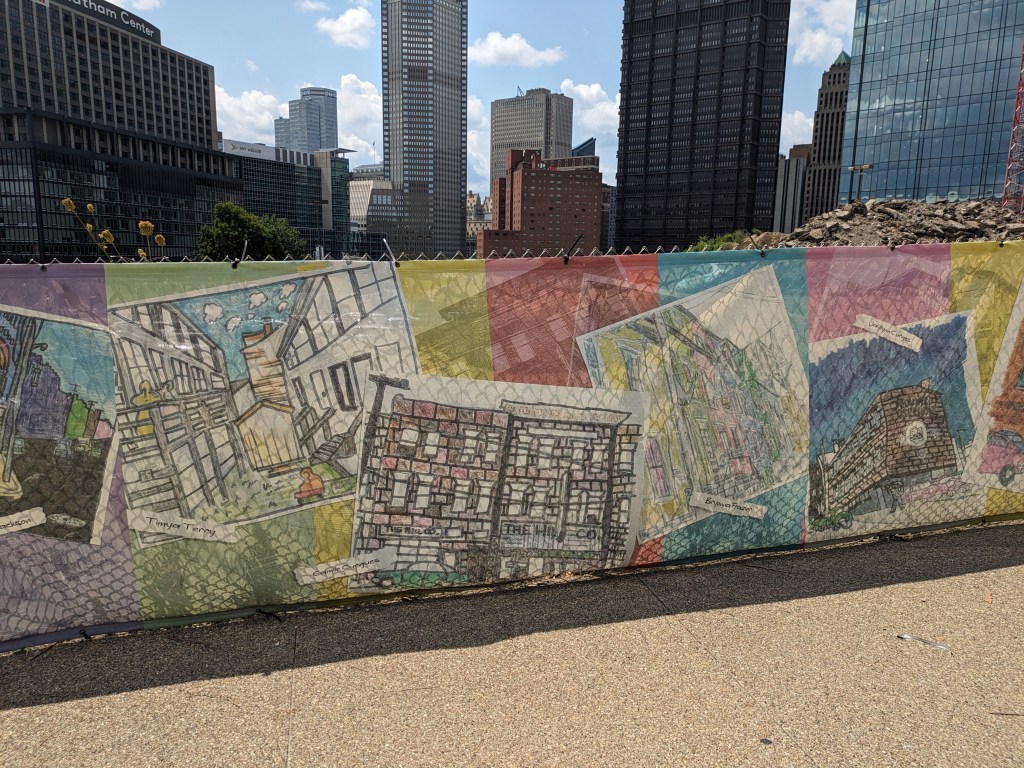
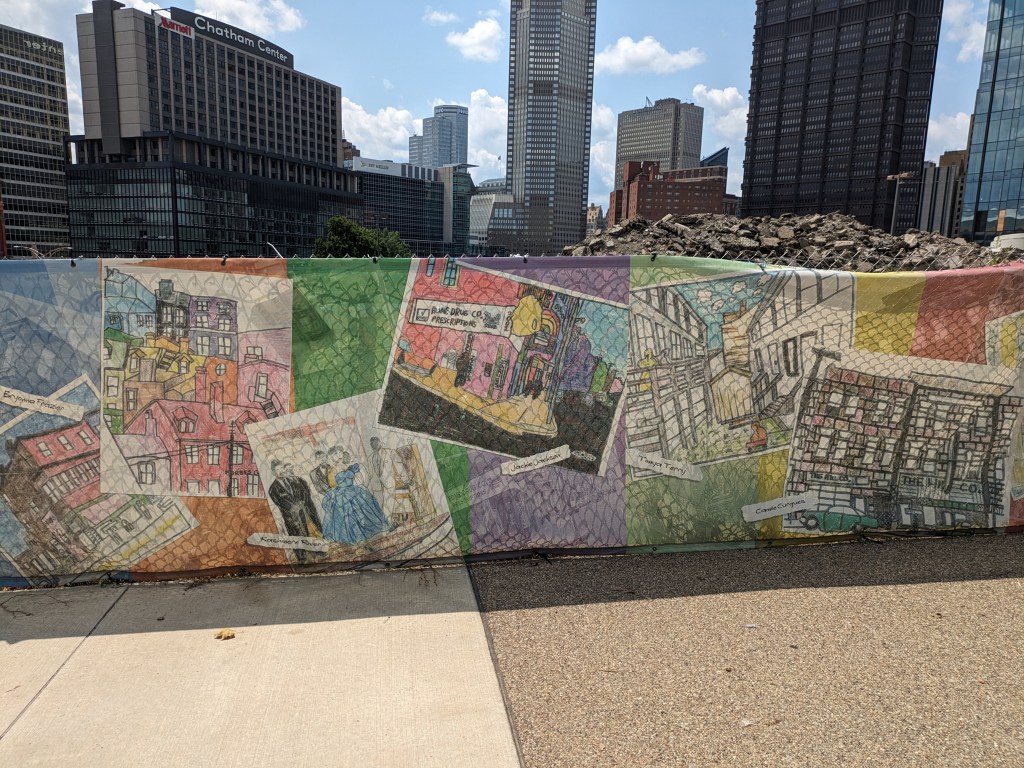
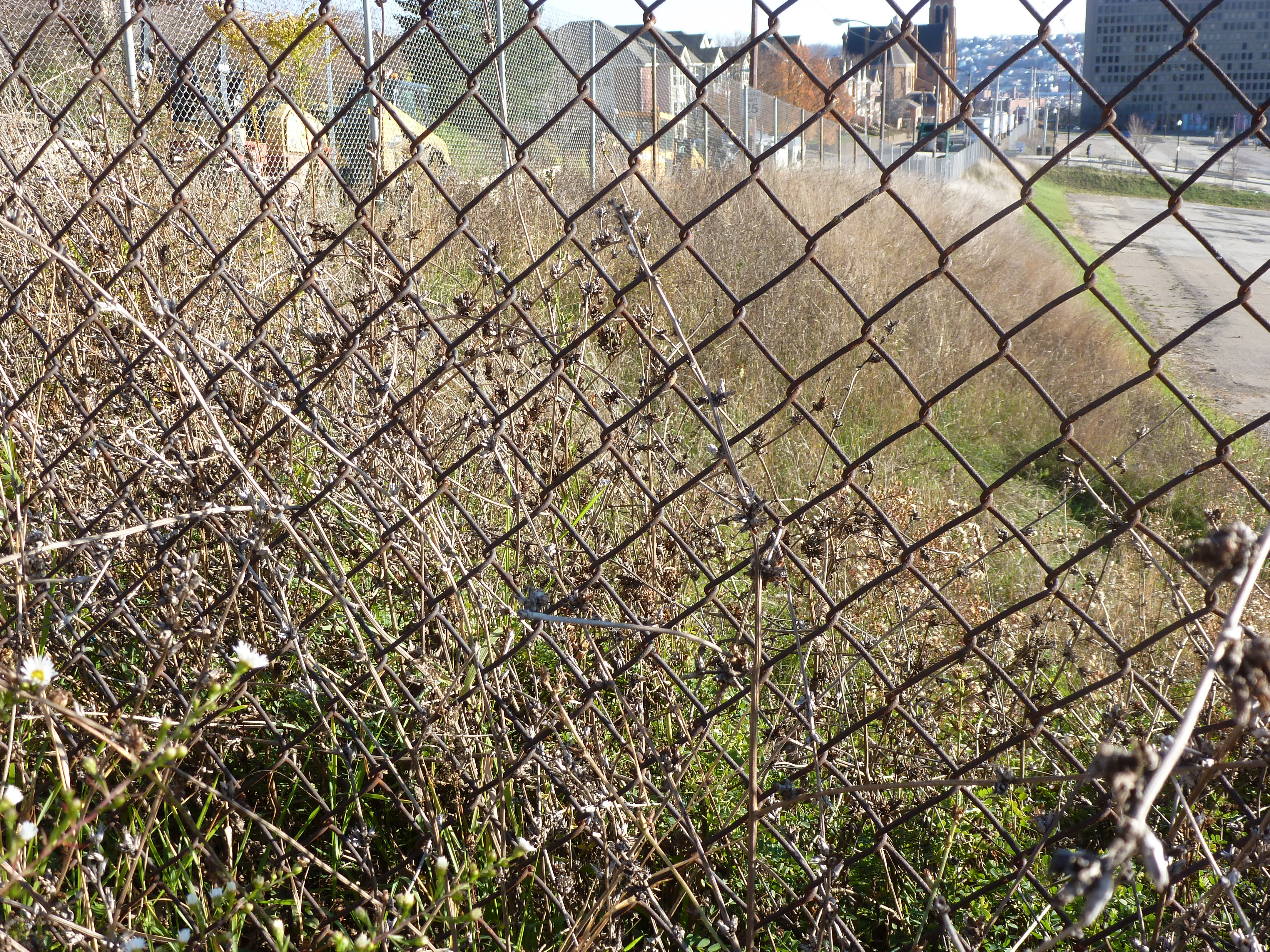
  • The construction fencing now has a temporary art installation by a non-profit that based in the Hill District and focused on connecting youth with arts.
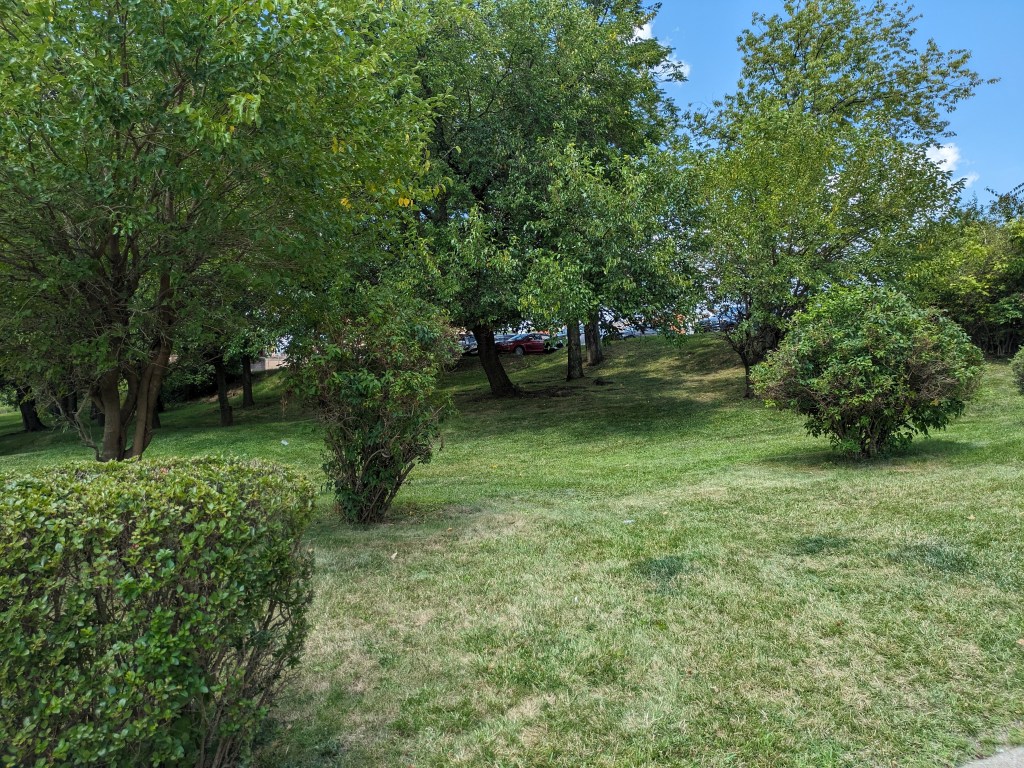
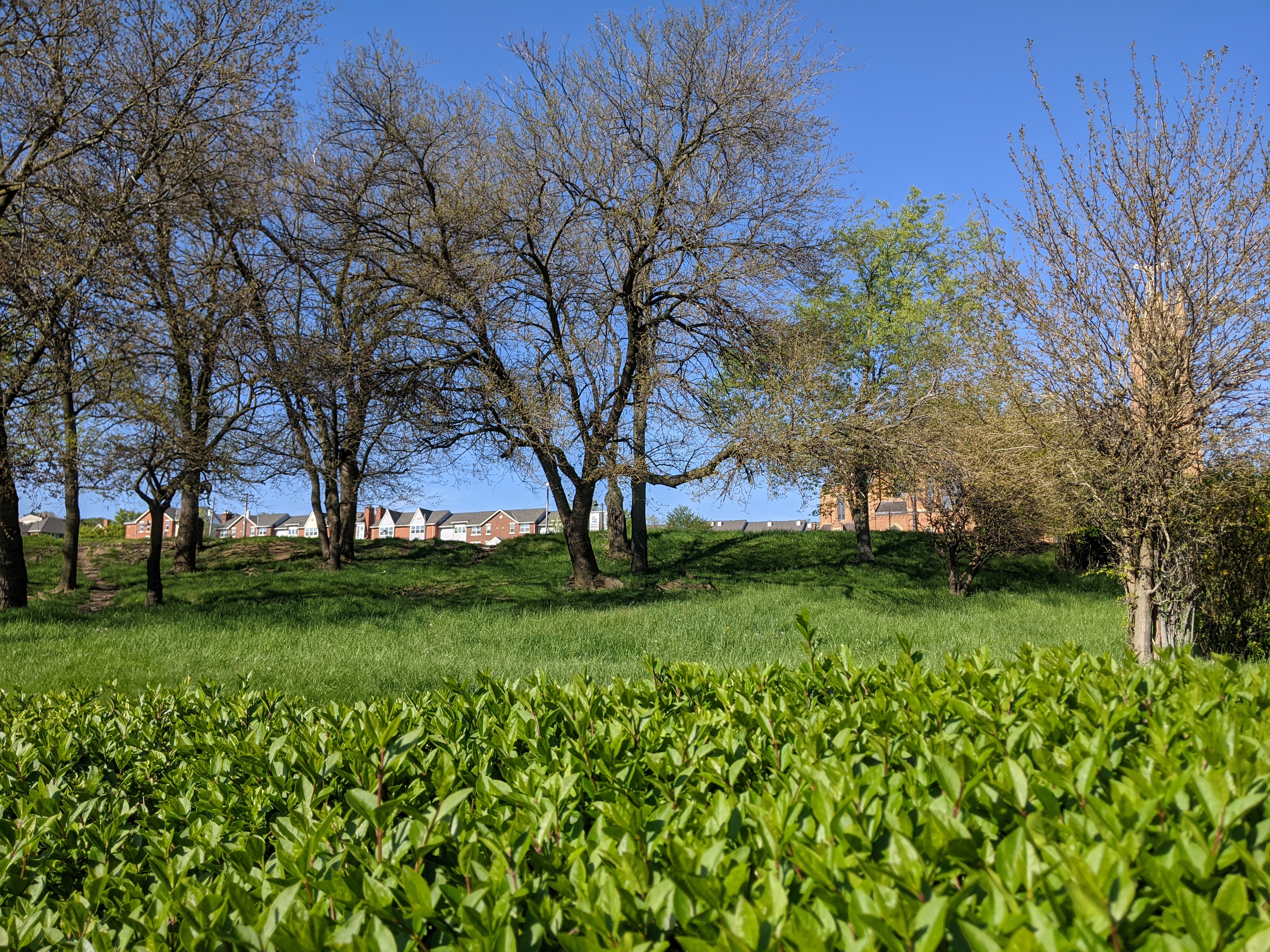
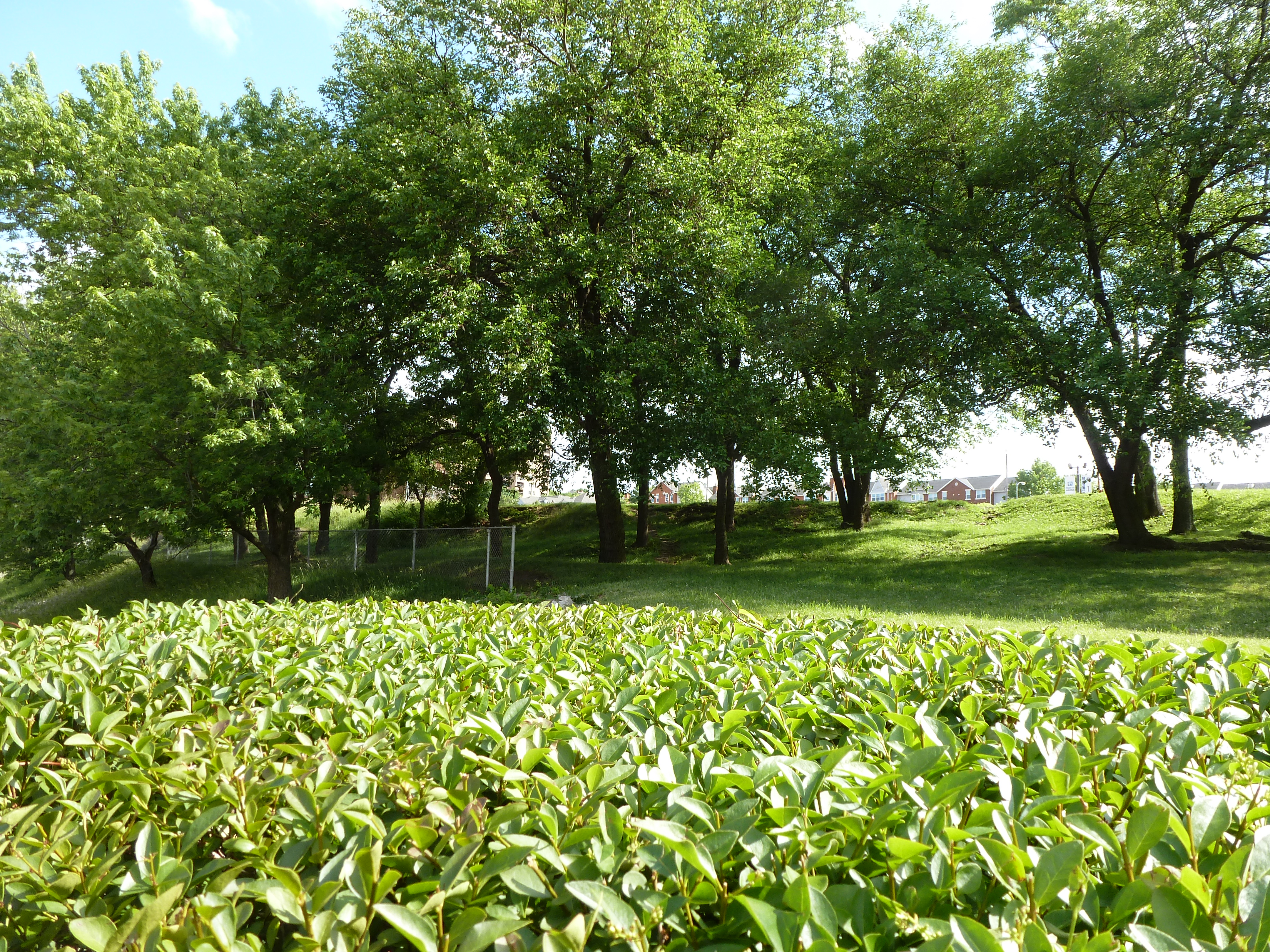
  • The hedges along Centre Ave were noticeably taller than the last time I photographed them.

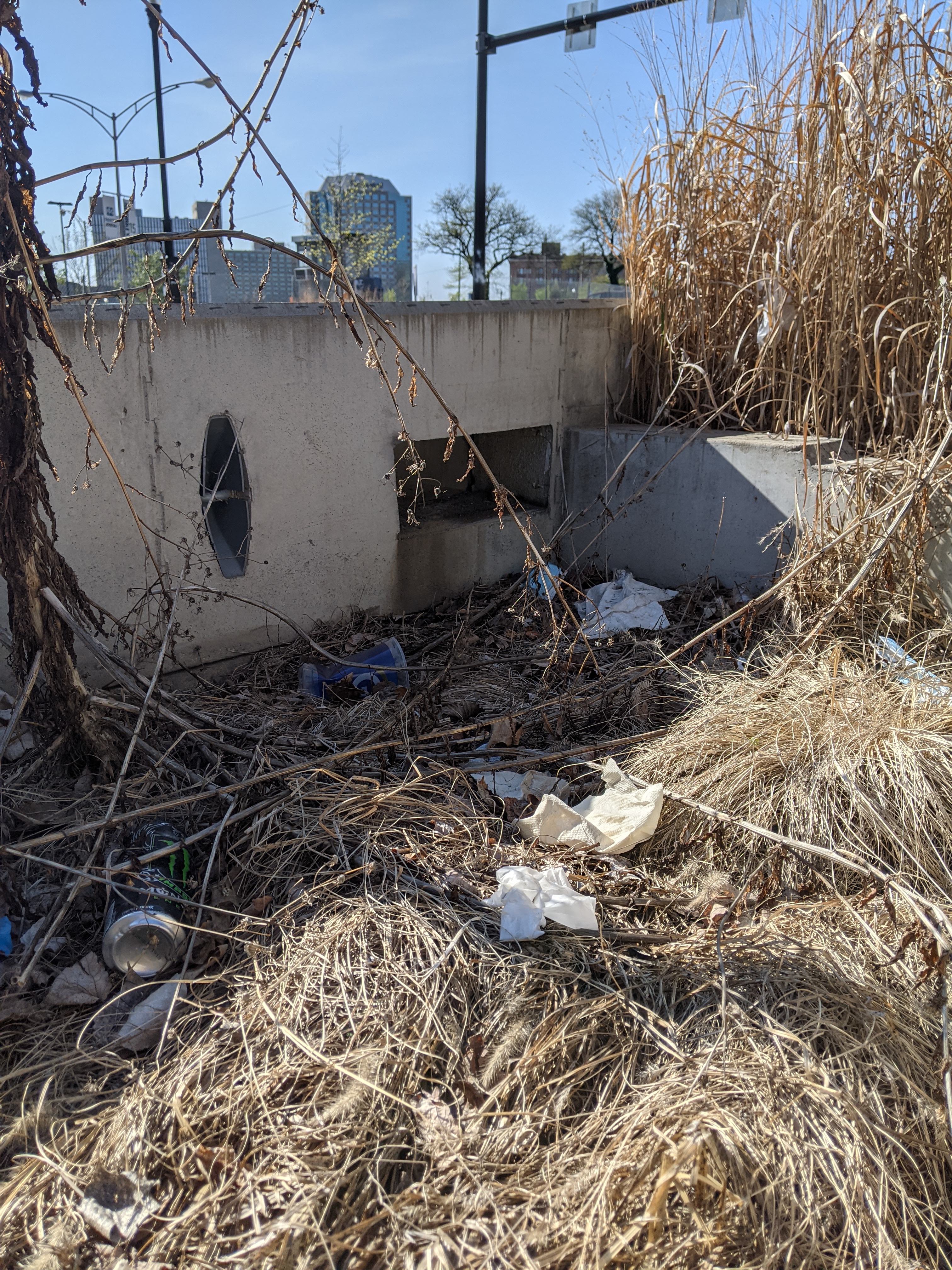
Other than that, the site remains much the same. But there has been LOTS of news about it and other developments in the Hill District (see below).

Photos
Lower Hill in the News

Next Pittsburgh named the Lower Hill redevelopment as one of the top 8 developments to watch in Pittsburgh in 2023 (January 11, 2023). Throughout the year, there have been conversations on the development opportunities happening and projected in the Lower Hill and beyond (Pittsburgh Business Times, June 7, 2023; Pittsburgh Business Times, June 8, 2023; Pittsburgh Business Times, June 13, 2023).

The question of how to equitably develop the Lower Hill and other areas of the city that have long seen disinvestment is a hot topic this year (Public Source, January 23, 2023). The community continues to express concern about the deals and process in the redevelopment of the Lower Hill (Next Pittsburgh, January 25, 2023; Public Source, April 22, 2023; Pittsburgh Business Times, May 15, 2023; City Paper, May 16, 2023). The proposed concert venue that is one of the subprojects generating concern in the community moved forward (Pittsburgh Business Times, January 10, 2023; Public Source, January 10, 2023; Public Source, January 24, 2023; Pittsburgh Business Times, May 11, 2023; Public Source, May 11, 2023).

A project website dedicated to construction bidding opportunities shows the most recent bid opportunity was for the controversial concert venue.

The FNB Tower construction makes progress (Pittsburgh Business Times, May 18, 2023) while FNB gets approval for a new skyline sign on the building (Pittsburgh Business Times, February 7, 2023) and announced an investment in the neighborhood (Pittsburgh Business Times, May 15, 2023).

Bethel AME is Pittsburgh’s oldest Black congregation. They were one of the organizations forced out of the Lower Hill neighborhood to make way for what became the Civic Arena and a sea of parking lots. They are now seeking reparations and the ability to return to the neighborhood (Public Source, April 14, 2023). An agreement between Bethel AME and the Penguins was reached (Public Source, April 14, 2023; Pittsburgh Business Times, April 14, 2023).

The funding announced last year for the redevelopment of the Housing Authority’s Bedford Dwelling apartments has been augmented by an additional $50 million grant (Pittsburgh Business Times, July 21, 2023; Public Source, July 21, 2023; Pittsburgh Business Times, July 28, 2023) and Planning Commission approval of the plans (Pittsburgh Business Times, July 11, 2023; Public Source, July 25, 2023). The Pittsburgh Business Times also ran a profile of Michele Beener (May 11, 2023), who helped with the grant application for Bedford Dwellings that received funding in 2022.

The New Granada Theater is a historic building with strong ties to the cultural wealth of the Hill District about 0.5 miles from the Lower Hill. The community has put in decades of advocacy, planning, fundraising, and more around redeveloping this building in a meaningful way. Fruits of their labors are starting to ripen with the groundbreaking for new life for the theater (Pittsburgh Business Times, May 25, 2023; Post-Gazette, May 26, 2023) and a ribbon cutting for a new affordable housing development adjacent to the theater (Post-Gazette, September 1, 2023).

The grocery store that the Hill District advocated for many years, was built, and closed after a few years in business is getting new life. A local multi-ethnic market purchased the site earlier this year (Pittsburgh Business Times, April 13, 2023; Public Source, April 13, 2023).

For more information on the community that lives and has lived in the Hill District, Ralph Proctor Jr. published a book describing his memories and experience living in the Hill District (Next Pittsburgh, June 20, 2023) and Next Pittsburgh published an article on the influence of the Burke family on the bar and entertainment scene in the Lower Hill from the 1920s to 1960s (January 19, 2023).

Locating the Lower Hill


Previous posts in series

Keeping an Eye on the Lower Hill: 2022 Recap

Keeping an Eye on the Lower Hill: Dec. 2021

Keeping an Eye on the Lower Hill: May 2021

Keeping an Eye on the Lower Hill: Dec. 2020

Keeping an Eye on the Lower Hill: Jun. 2020

Keeping an Eye on the Lower Hill: Jan. 2020

Keeping an Eye on Uptown: Introduction

Keeping an Eye on the Lower Hill: 2022 Recap

Overview

The Lower Hill is a notorious site in Pittsburgh, a scar on the city from the height of Urban Renewal. A vibrant (but poor and predominately Black) neighborhood was demolished in the 1950s so the City could build a cultural mecca centered on a Civic Arena, most of which ended up not being built and was left as parking lots.

Now that the arena has been demolished and replaced adjacent to the former location, the Penguins hockey team has the development rights to rebuild the Lower Hill, stitching back together the fabric of the city and reconnecting the remainder of the Hill District neighborhoods with downtown.

However, grand language describing the wonderful benefits to a city are part and parcel of any major development project, including the 1950’s Urban Renewal of the Lower Hill. Fifty years later, the Urban Renewal of the Lower Hill is rarely, if ever described as a good thing. In fact the current redevelopment is sometimes described as undoing the mistakes of that project. However, can the negative financial, social, and emotional repercussions of the original demolition and decades of disconnect be undone simply by reinstating (most of) the former street grid?

This blog post is part of an on-going photographic series to watch the redevelopment of the Lower Hill. Periodically, at least once a year, I return to the site to take new photographs. In addition, I include links to articles about the project that I’ve encountered since the previous post in the series. At the end of the post, there are links to all the previous posts in the series.

What’s New

In 2022, construction of the FNB Tower progressed. Not much else changed on the ground, but the news shared some of the negotiations and deals being made to move the rest of the site forward.

Photos

Lower Hill in the News

Next Pittsburgh named the Lower Hill redevelopment as one of the top 10 developments to watch in Pittsburgh in 2022 (January 3, 2022).

Bethel AME, Pittsburgh’s Oldest Black Church (Public Source, January 31, 2022) who’s building was taken through eminent domain and demolished in the 1950s to build the Civic Arena, has been in talks with the Penguins about reparations as part of the redevelopment of the Lower Hill (Next Pittsburgh, October 3, 2022). In October 2022, it appeared a preliminary agreement had been reached (Public Source, October 17, 2022; Next Pittsburgh, October 17, 2022), but in November the talks stalled according to Bethel AME (City Paper, November 18, 2022).

The plans for “Block E” were presented to the Planning Commission in the first of two hearings (Planning Commission Agenda & Application; Public Source, December 13, 2022; Pittsburgh Business Times, December 13, 2022). In the months prior to this hearing, this plan, which is a revision from the original Preliminary Land Development Plan, was presented to the community amid concerns about process and the Community Collaborative Implementation Plan (Pittsburgh Business Times, October 14, 2022).

Funding announcements for the greater Hill District included infrastructure funding from a federal RAISE Grant (City Paper, August 11, 2022) and Housing Authority funds allocated toward the redevelopment of the Bedford Dwelling apartments along with the intention to apply for a Choice Neighborhoods grant (Public Source, December 15, 2022).

A car crashed into Freedom Corner damaging the monument on the site (City Paper, August 3, 2022). This is an important neighborhood location for many social justice actions including as a marker at the demarcation line of the redevelopment of the Lower Hill, which did not spread beyond that line due to community resistance.

In other Hill District development new, the redevelopment of the former Miller School into apartments was moving forward (Pittsburgh Business Times, November 30, 2022).

Locating the Lower Hill


Previous posts in series

Keeping an Eye on the Lower Hill: Dec. 2021

Keeping an Eye on the Lower Hill: May 2021

Keeping an Eye on the Lower Hill: Dec. 2020

Keeping an Eye on the Lower Hill: Jun. 2020
Keeping an Eye on the Lower Hill: Jan. 2020

Keeping an Eye on Uptown: Introduction

Keeping an Eye on the Lower Hill: Dec. 2021

Overview

The Lower Hill is a notorious site in Pittsburgh, a scar on the city from the height of Urban Renewal. A vibrant (but poor and predominately Black) neighborhood was demolished in the 1950s so the City could build a cultural mecca centered on a Civic Arena, but most of the site ended up not being built and was left as parking lots.

Now that the arena has been demolished and replaced adjacent to the former location, the Penguins hockey team has the development rights to rebuild the Lower Hill, stitching back together the fabric of the city and reconnecting the remainder of the Hill District neighborhoods with downtown.

However, grand language describing the wonderful benefits to a city are part and parcel of any major development project, including the 1950’s Urban Renewal of the Lower Hill. Fifty years later, the Urban Renewal of the Lower Hill is rarely, if ever, described as a good thing. In fact, the current redevelopment is sometimes described as undoing the mistakes of that project. However, can the negative financial, social, and emotional repercussions of the original demolition and decades of disconnect be undone simply by reinstating (most of) the former street grid?

This blog post is part of an on-going photographic series to watch the redevelopment of the Lower Hill. Periodically, approximately once every six months, I return to the site to take new photographs. In addition, I include links to articles about the project that I’ve encountered since the previous post in the series. At the end of the post, there are links to all the previous posts in the series.

What’s New

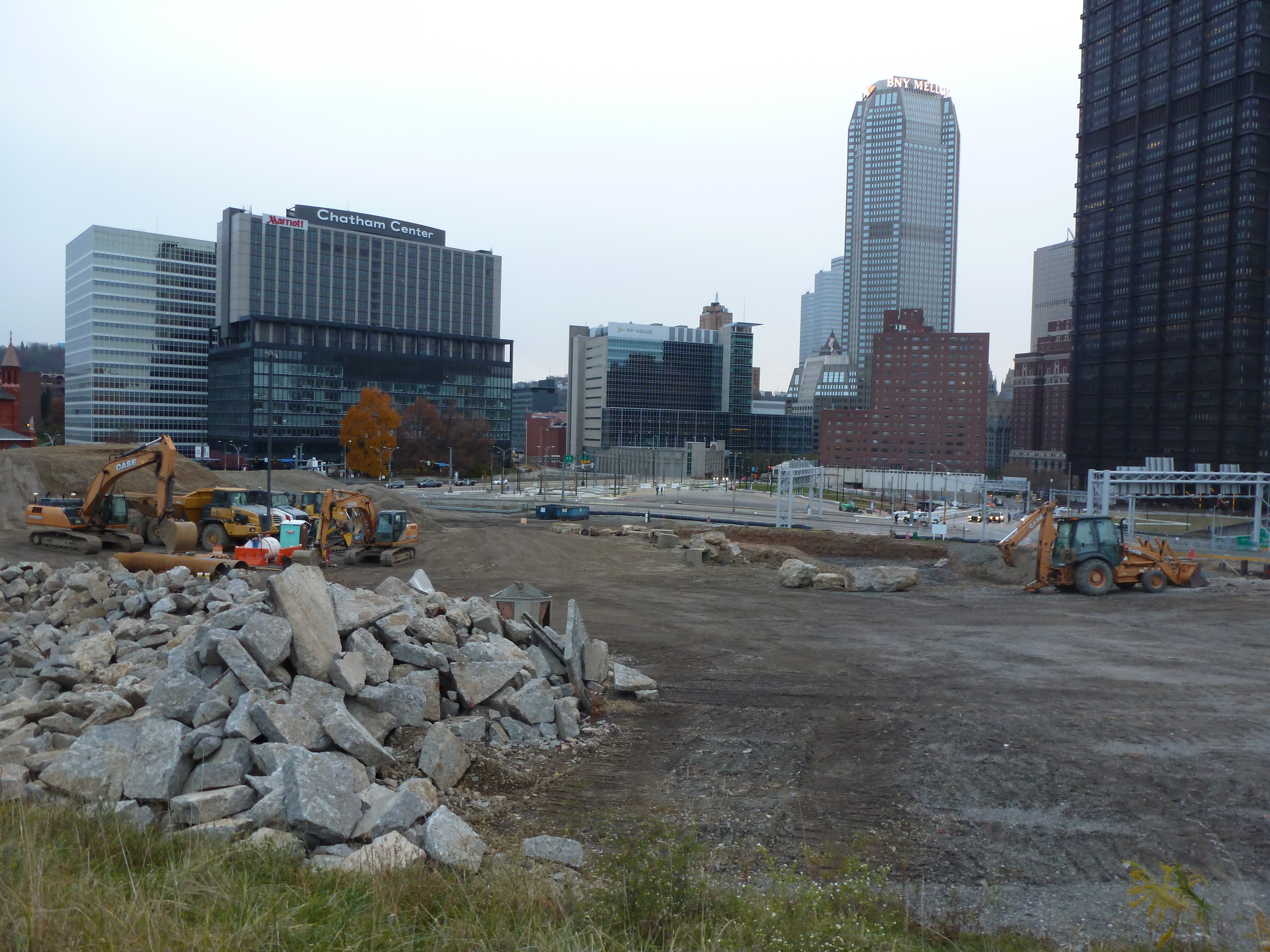
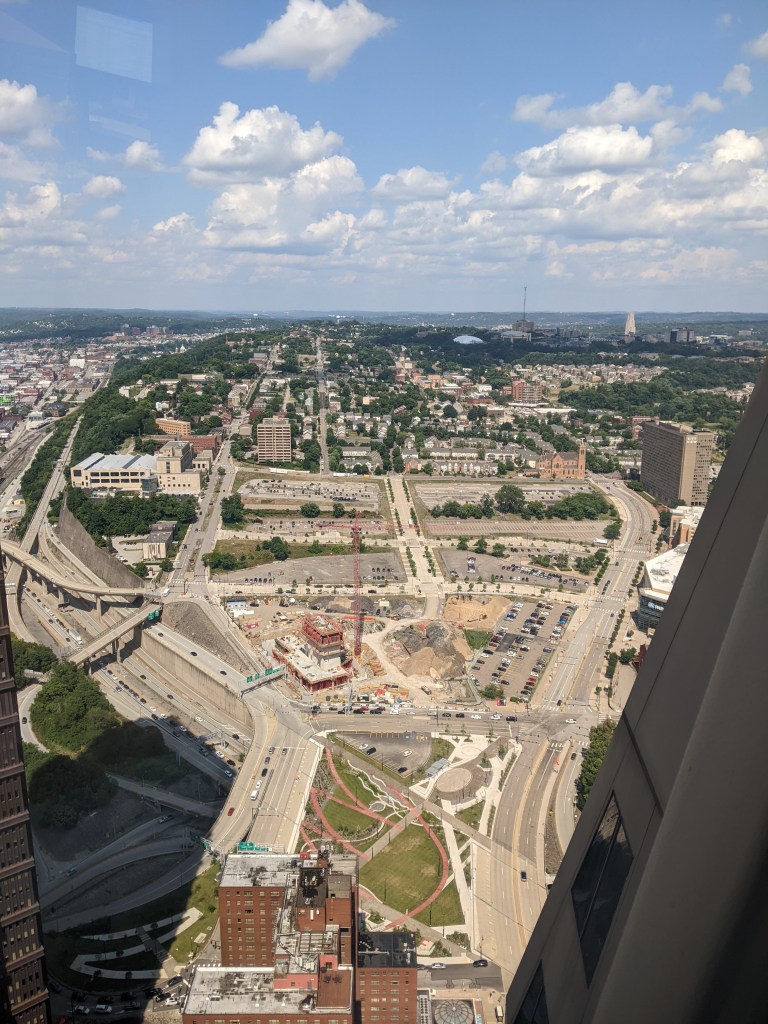
Ground has broken! There are a large hole, giant piles of dirt and debris, and closed sidewalks as construction begins for the new FNB Tower, the first building to be built on the site.

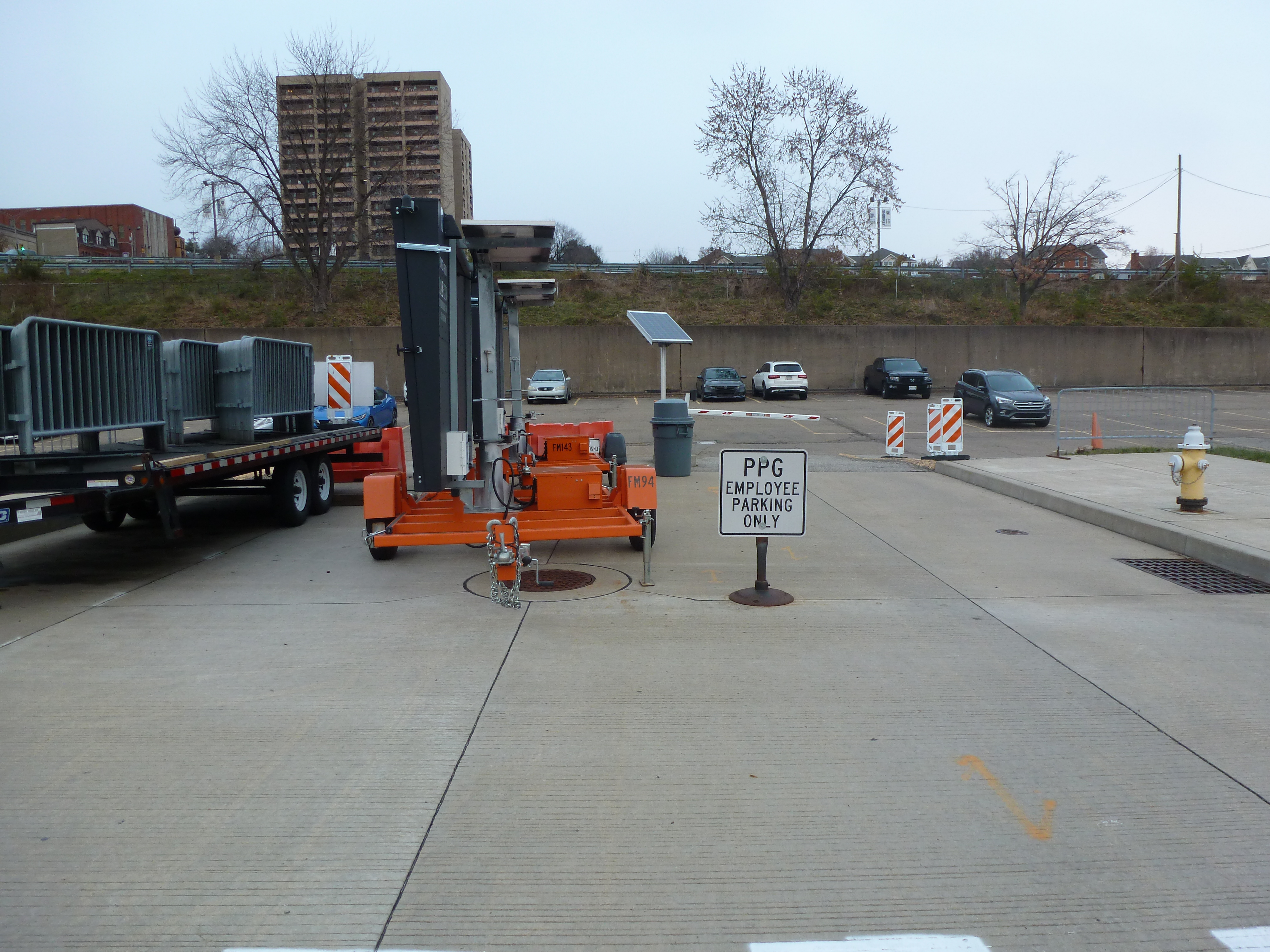
This was also the first time that I’ve visited the site on the day of a Penguins game, which was interesting to see how the sea of parking lots get used for events. At least one of the lots is reserved for employees only during events. There is also a slight price differential, the lot closet to the arena costs $30 to park for the event, while the one at the top of the hill is “only” $25.

Photos

Lower Hill in the News

Controversy and concerns continue over the redevelopment of the Lower Hill from the Executive Management Committee that was appointed to answer how the redevelopment would benefit the entire Hill District in private meetings (September 17, 2021, Public Source, & September 23, 2021, NextPittsburgh) to the impact of a pending change in owner of the Penguins (November 23, NextPittsburgh) and the pending registration of a second community organization in the Lower Hill, which would then also participate in the Lower Hill development activities meetings (November 19, 2021, Public Source). The potential new owner has previously been involved in real estate development around sports arenas (November 21, 2021, Post-Gazette).

Locating the Lower Hill


Previous posts in series

Keeping an Eye on the Lower Hill: May 2021

Keeping an Eye on the Lower Hill: Dec. 2020

Keeping an Eye on the Lower Hill: Jun. 2020
Keeping an Eye on the Lower Hill: Jan. 2020

Keeping an Eye on Uptown: Introduction

Keeping an Eye on the Lower Hill: May 2021

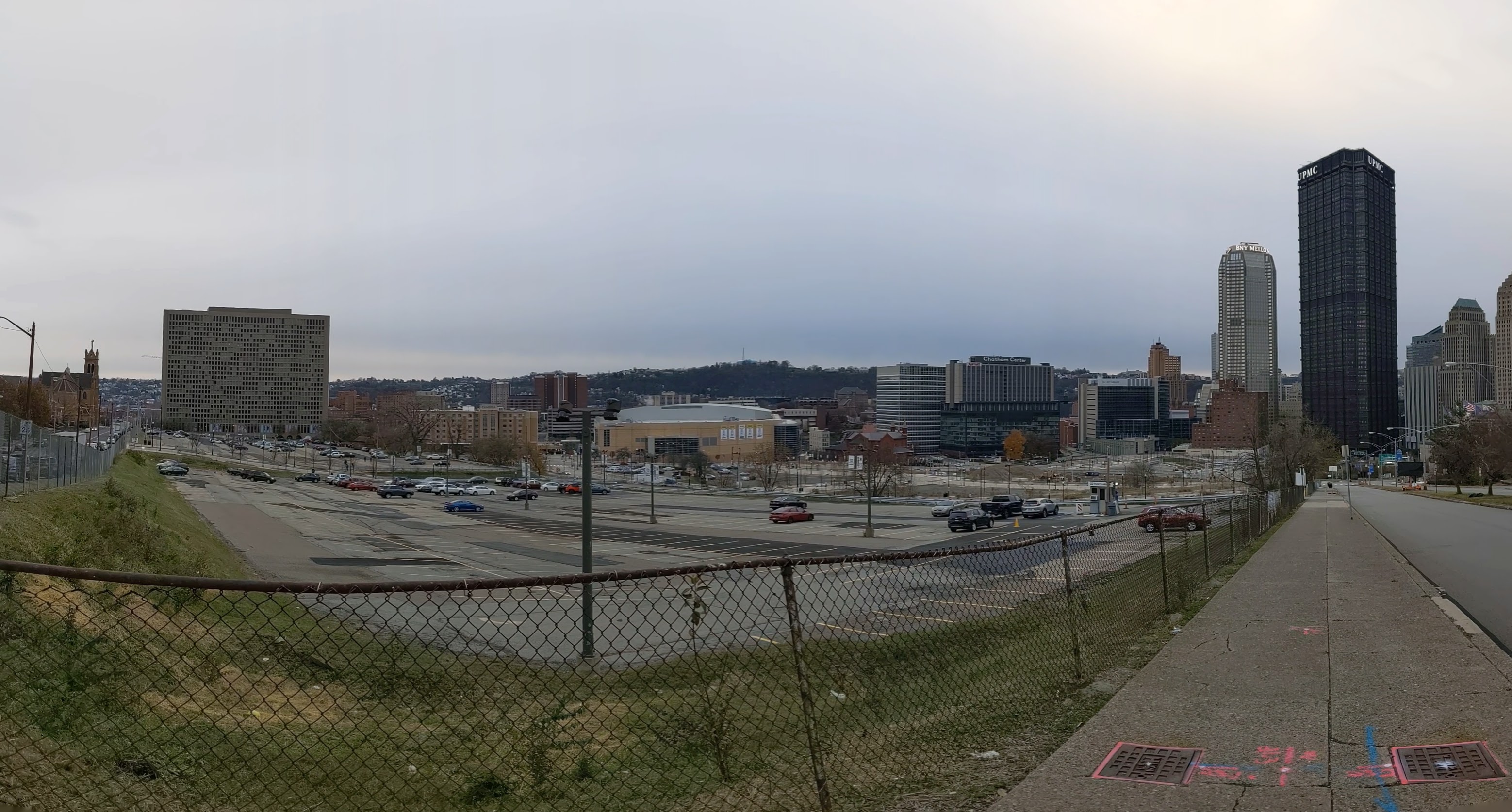
The Lower Hill is a notorious site in Pittsburgh, a scar on the city from the height of Urban Renewal. A vibrant (but poor and predominately Black) neighborhood was demolished in the 1950s so the City could build a cultural mecca centered on a Civic Arena, most of which ended up not being built and was left as parking lots.

Now that the arena has been demolished and replaced adjacent to the former location, the Penguins hockey team has the development rights to rebuild the Lower Hill, stitching back together the fabric of the city and reconnecting the remainder of the Hill District neighborhoods with downtown.

However, grand language describing the wonderful benefits to a city are part and parcel of any major development project, including the 1950’s Urban Renewal of the Lower Hill. Fifty years later, the Urban Renewal of the Lower Hill is rarely, if ever described as a good thing. In fact the current redevelopment is sometimes described as undoing the mistakes of that project. However, can the negative financial, social, and emotional repercussions of the original demolition and decades of disconnect be undone simply by reinstating (most of) the former street grid?

This blog post is part of an on-going photographic series to watch the redevelopment of the Lower Hill. Periodically, approximately once every six months, I return to the site to take new photographs. In addition, I include links to articles about the project that I’ve encountered since the previous post in the series. At the end of the post, there are links to all the previous posts in the series.

Lower Hill in the News:

A deep look at the Penguins development in anticipation of ground breaking later this year (January 13, 2021, The Undefeated)

Is the project moving too fast to make sure it is done right for the community? (March 15, 2021, Pittsburgh Post-Gazette)

Community questions if the first building is being rushed at the community’s expense (March 16, 2021, WESA)

Pittsburgh’s Equal Opportunity Commission approved the Penguins’ MWBE participation plan (March 18, 2021, Pittsburgh Business Times)

Penguins updated the community on progress of MWBE inclusion as ground breaking approaches (April 1, 2021, Pittsburgh Business Times)

The census line is moved to undo the Urban Renewal inclusion of the Lower Hill in the downtown census tract, but will this divert needed funds from the rest of the Hill District? (April 7, 2021, Public Source)

A major Black church was demolished as part of Urban Renewal while a nearby White church was saved from the wrecking ball, are reparations now possible? (April 14, 2021, Public Source)

Penguins propose a $5 million Opportunity Zone fund (April 16, 2021, Pittsburgh Post-Gazette)

The final plan presented to Pittsburgh’s Planning Commission for the new FNB Tower proposes not finishing the last block to reconnect Wylie Ave to downtown. This is a change from the guiding redevelopment plan and technically requires an amendment that the developer says will take too long. (April 20, 2021, Pittsburgh Business Times)


Previous posts in series:

Keeping an Eye on the Lower Hill: Dec. 2020

Keeping an Eye on the Lower Hill: Jun. 2020
Keeping an Eye on the Lower Hill: Jan. 2020

Keeping an Eye on Uptown: Introduction

Keeping an Eye on the Lower Hill: Dec. 2020

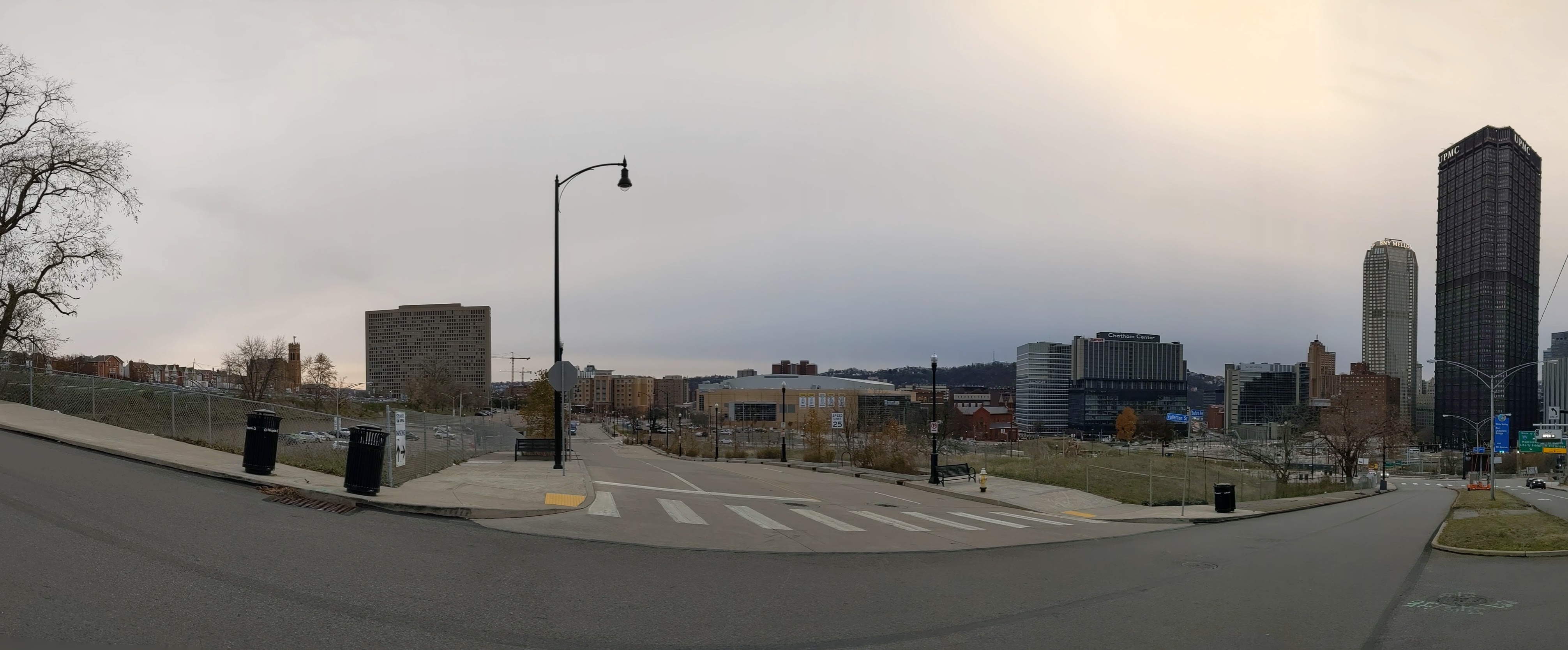
Lower Hill in the News:

URA board votes in favor of FNB Tower (Pittsburgh Business Times, May 21, 2020)

FNB tower will be among first post-pandemic buildings (Pittsburgh Business Times, May 22, 2020)

The Penguins and FNB Corp provide funds for tech center in the Hill District (Pittsburgh Business Times, August 27, 2020)

FNB and Penguins establish partnership (Pittsburgh Business Times, September 10, 2020)

Funding secured for FNB tower in Lower Hill (Pittsburgh Business Times, October 8, 2020)

Penguins miss deadline; URA considering next moves (Pittsburgh Business Times, November 12, 2020)

Lower Hill commercial redeveloper, Mayor Peduto, and Councilman Lavelle announce partnership (Mayor’s Press Release, November 19, 2020)

New Lower Hill partnership could move project forward (Public Source, November 19, 2020)

Lower Hill redeveloper establishes downtown office and announces local firms and personnel added to team (Pittsburgh Business Times, November 19, 2020)

Previous posts in series:

Keeping an Eye on the Lower Hill: Jun. 2020
Keeping an Eye on the Lower Hill: Jan. 2020

Keeping an Eye on Uptown: Introduction

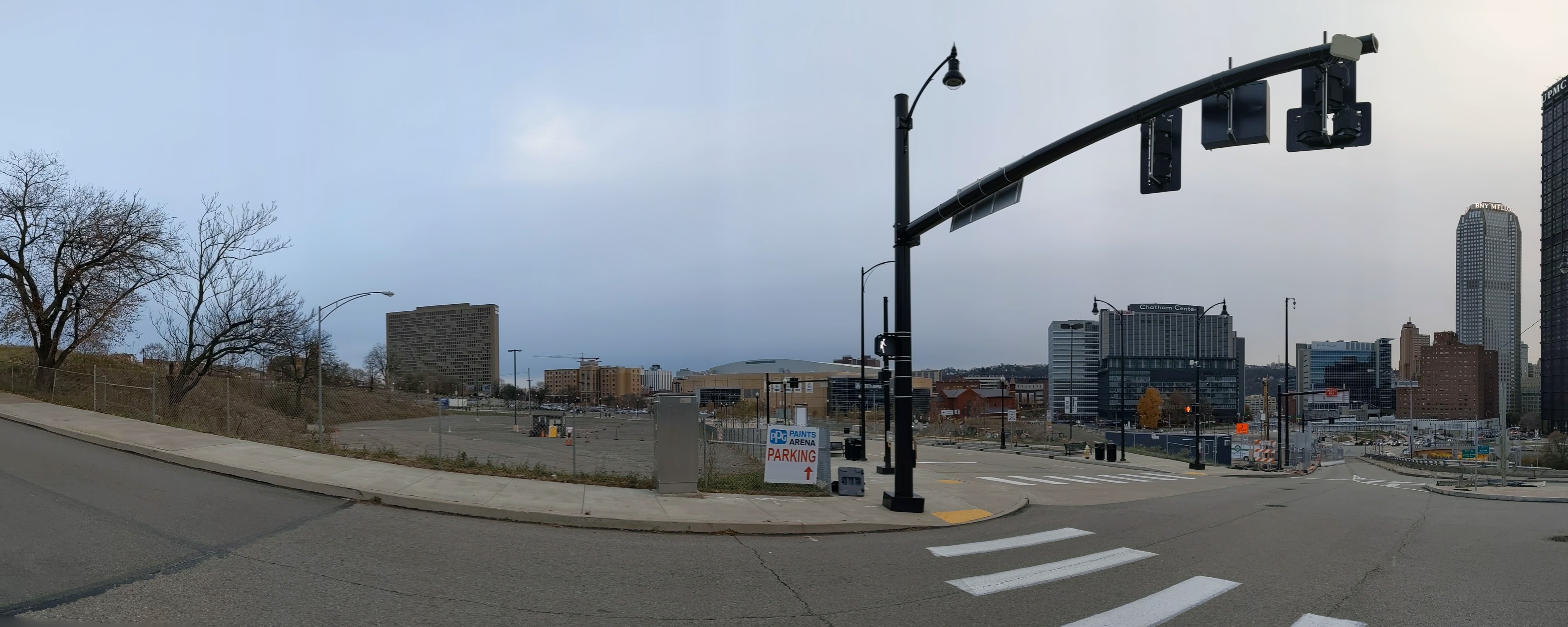
Keeping an Eye on the Lower Hill: Jun. 2020
Lower Hill in the News:

Mayor’s Press Release (May 5, 2020)

Penguins Stop Development (Public Source, May 14, 2020)

Penguins Pull Out (Trib, May 14, 2020)

Penguins Back Out (WPXI, May 15, 2020)

Penguins Cease Redevelopment (Patch, May 15, 2020)

Penguins Halt Lower Hill Development (WESA, May 18, 2020)

Mayor’s Press Release (May 20, 2020)

Mayor Urges URA to Approve Development (Trib, May 20, 2020)

URA Explanation of Community Benefits

URA Board Votes to Move Lower Hill Development Forward (May 21, 2020)

URA Board Approves Development Project (WPXI, May 21, 2020)

Never Mind, Penguins Back In (WTAE, May 21, 2020)

President Trump Tweets about BRT Grant Award (May 29, 2020)


Previous posts in series:

Keeping an Eye on the Lower Hill: Jan. 2020
Keeping an Eye on Uptown: Introduction

Keeping an Eye on the Lower Hill: Jan. 2020


Lower Hill Redevelopment in the news:

October 8, 2019, Post-Gazette: Lacing the skates: Former Civic Arena redevelopment may be ready to roll

October 9, 2019, Post-Gazette: First wave of ex-Civic Arena site redevelopment would add garage, music and maybe money for Hill projects

October 10, 2019, KDKA: Urban Redevelopment Authority To Vote On Civic Arena Site Plans

October 10, 2019, Tribune-Review: Pittsburgh redevelopment authority postpones vote on construction at Civic Arena site

October 18, 2019, Tribune-Review: Pittsburgh authority gives preliminary OK for development of former Civic Arena site

October 18, 2019, WESA: URA Vote Sets the Stage for Lower Hill Development in Spring 2020
October 18, 2019, WPXI: City board green lights former Civic Arena site redevelopment

October 21, 2019, Arena Digest: Civic Arena Redevelopment Plan Moves Forward


Lower Hill Redevelopment project sites:

Lower Hill Redevelopment

Sports and Exhibition Authority

Urban Redevelopment Authority


Inclusionary Wealth

Amid writing my posts about how the wealth gap manifests itself in the built environment and the morality of unequal economic investment in cities, I took another trip to Chicago. I spent most of my stay in the downtown areas within a mile of Grant Park. I love the old stone buildings, established green parks, ornate fountains, and modern glass skyscrapers with interesting architectural embellishments. Yet this trip, I felt hypocritical as I walked around soaking it all in. All these elements that I enjoy are the result of significant financial outlay that I know is not evenly distributed throughout the city. So where was my moral indignation at this display of deeply entrenched wealth unequally spread?

Chicago’s display of wealth isn’t gaudy like Tijuana or Las Vegas. The message I absorb in places like those with their flashing lights is “come on in, so we can suck all the money out of your pockets.” Chicago businesses identified their presence on the street with regular signs leaving it up to the passers to decide whether to engage.

One bar did add a layer of enticement to their sidewalk advertising. I was searching for a place for dinner, with this bar in mind as the one that looked most appealing from Google maps. I was looking around to see if there were any other better options. The smell of the burgers from this first bar convinced me that it was the best option in that vicinity. It was only after I had sat down and ordered that I realized the smell wasn’t coming from the open window, but rather it came from pipes pumping the kitchen smells to the sidewalk. Still it was a subtle inducement and unlike flashing lights it did not have a nefarious undertone.

By pumping out the smell to the sidewalk, it also felt indiscriminate. Anyone passing was invited to enjoy. This was unlike my experience in Cardiff where if I couldn’t afford the items in the business, I felt I shouldn’t be walking past in the public space. I never felt like I didn’t belong in Chicago. There were economic barriers to certain experiences, but those places that I encountered still did not feel exclusionary. One example is the lounge on the 96th floor of Chicago’s Hancock Building. The stunning views are only accessible to those who can afford a $17 cocktail, but those who can afford one only once in a blue moon were just as welcome as those who can afford one or more every night.

In Chicago, I never saw that strong line, as in Tijuana and Cardiff, that divided those with and those without financial resources.  Everywhere I went, there was a mix of people with different economic statuses, skin colors, and first languages. This diversity gave me the feeling that anyone is welcome to enjoy the well-maintained investment in public spaces with or without hitting a minimum financial threshold.

Layers of the City: Chicago Edition

The first place to show me how a city can be stacked like a layer cake, Chicago provided ample opportunities to explore all levels of the city. The experience of noticing the expansion joints in roads that I assumed were on solid ground opened my eyes to the possibilities of stacking uses.

Underground Life

A vacant lot two stories below street level solved the mystery of the expansion joints, by exposing the inner guts.  Two more roads sit below street level to segregate trash pick-up and deliveries from the flow of traffic.  These lover levels also provide some opportunities for parking without monopolizing valuable real estate above.  Retail shops connected by pedestrian passageways are also interspersed in these layers.

River Life

At the same elevation as the “underground life,” the Chicago River flows through the heart of the city.  On and along the river are a variety of activities.  Pedestrian paths, cafes, housing, parks, industrial uses, and homeless encampments line the shores.  Meanwhile, the river abounds with ducks, boat tours, water taxis, construction staging, and marinas.

Street Level

Back up on the street level, life buzzes.  Vehicular and pedestrian traffic rush passed, occasionally pealing off to visit the numerous shops, offices, museums, restaurants, cafes, parks, and trails.

Pie in the Sky

Yet, more life looms above.  Several of the skyscrapers have penthouse, or nearly penthouse, restaurants.  Others have rooftop observation platforms.  Between these and the street are many other opportunities for enjoying life including a religious sanctuary, the “L”, gardens, art, pedestrian bridges, and of course, offices, apartments, hotel rooms, and shops.

Unlike Pittsburgh, in Chicago, the public is welcome in some form on every level to gain a full experience of the city.

Layers of the City: Pittsburgh Edition

I clench my teeth every time the “T”, Pittsburgh’s light rail system, slowly makes the first 90 degree bend leaving Gateway Station, squeaking like fingernails on a chalkboard.  After traveling a few hundred yards, it turns back 90 degrees–squeak, scratch, squeak–before pulling into the Wood Street Station.  As everyone knows that the shortest distance between two points is a straight line, I struggled to understand why the T was built with turns so sharp it is impossible for the trains not to screech, until my friend pointed out that there might be building foundations or basements that the underground tracks need to maneuver around.
Like many metropolises, the density of downtown Pittsburgh creates various physical layers of activity.  Yet compared to other some other cities (see Layers of the City: Chicago Edition), Pittsburgh’s layers can be hard to notice.  The T is perhaps the most obvious example.  For most of it’s length through the southern neighborhoods and suburbs, the T travels at grade.  Once it crosses the Monongahela River into Downtown, it becomes an elevated train for a few blocks before submerging underground until it passes under the Allegheny River to the North Shore, where it reemerges to end as an elevated train.

Underground Life

If you get off the T at Gateway Station and walk down a block to the start of 5th Ave, which actually feels like an alley, you might notice that the Highmark Building is built over an underground garage.  I assume that this garage has multiple levels below grade and is at least part of the reason for the T’s sharp turns.

The new PNC Tower also has a garage below grade.  Yet the most recent new construction project downtown, on the former site of Sax Fifth Avenue, places the garage between the first floor retail and proposed upper level residences.

The building I work in, the former Jones & Laughlin Steel Mill Headquarters, has at least 3 1/2 levels of basement.  The building is long past its days of glory with peeling paint, cracked foundation, and elevators that you may never make it out of again.  The mezzanine level of the basement is a maze of building supplies, file cabinets, discarded furniture and boxes upon boxes of documents.  It is damp and dusty.  Five minutes down there could lead to a severe allergy attack.  Yet the stairs keep going down and down, plunging further into the dark depths.  I’ve heard rumors of more documents being stored in the lower levels.

Street Level

Coming back above ground, most activity in downtown Pittsburgh takes place at street level.  Pedestrians, bicyclists, buses, cars, delivery trucks, dumpsters, and more compete for space on the narrow streets and sidewalks.  Most shopping and restaurants are located at street level.  The Highmark Building and the Oxford Building still have some retail above the first floor.

Pie in the Sky

As you walk around downtown, if you look up, you might catch a rare sight of pedestrian sky bridges.  The most famous of which is the Bridge of Sighs connecting the Allegheny County Courthouse with the former Jail.  The second most famous (speaking with pure bias) is the bridge connecting the parking garage with what used to be the shoe section of the former Kaufmann’s Department Store (always a necessary stop when shopping for back to school).  A handful of others are sprinkled throughout downtown.  Indianapolis has got us beat though.  That city has a network of pedestrian connections that enables you to walk for miles between the stadiums, office buildings, and other structures downtown without ever getting a taste of fresh air.

Higher up, there is a sprinkling of rooftop or penthouse restaurants.  This is one of our complaints at work: while many new, good restaurants have opened downtown in recent years, there is still a dearth of restaurants and bars with views.  Sienna Mercado’s Il Tetto, Harris Grill, and the Biergarten at Hotel Monaco all have rooftop decks, but they are surrounded by taller buildings limiting views.  Ollie’s Gastropub on the top floor of the Oliver Building has some good views, but no fresh air.

There isn’t much connection or relationship between the different parts of these layers in Pittsburgh.  It is like they are experiments, like the city is only dabbling.  As if to say, it can’t make up its mind whether or not to let the public leave street level and participate in or explore all levels of the city.