Wheeling Suspension Bridge

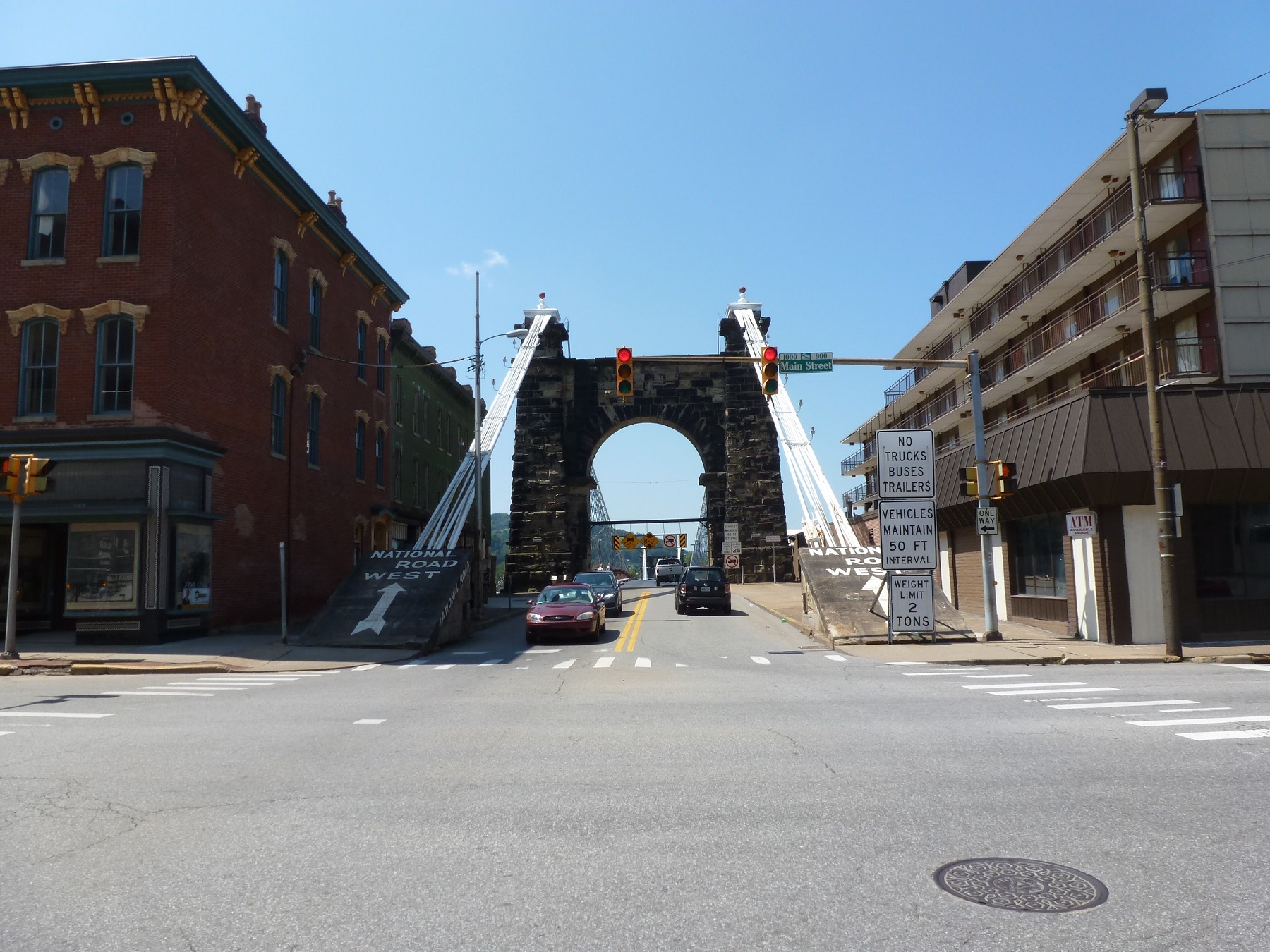
Wheeling Bridge - straight on

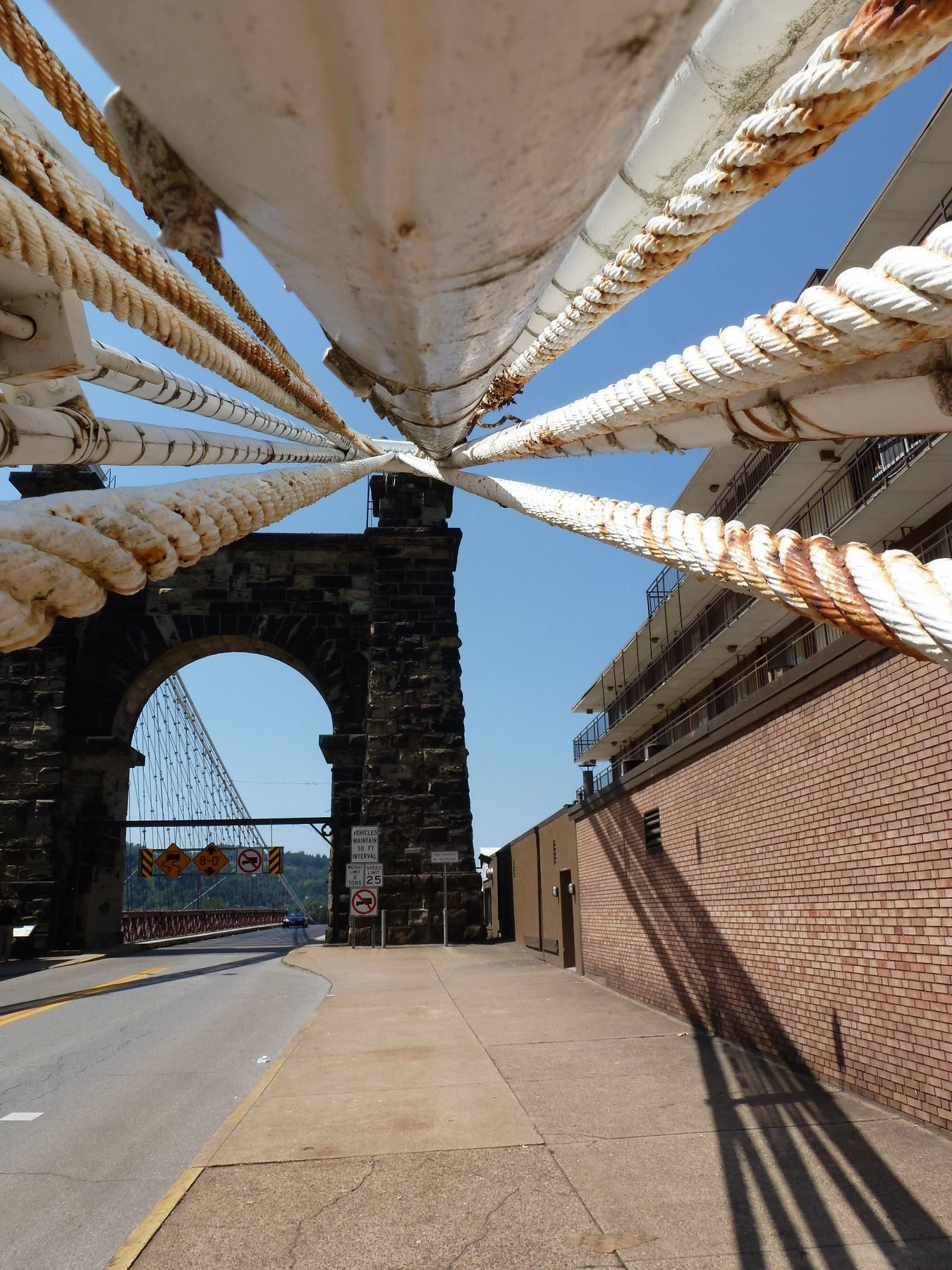
I had a blast with the Wheeling Suspension Bridge.  First, I was fascinated by how it was squeezed between the buildings on the mainland side.  Second, as an early suspension bridge, it has many parts to ensure that it would stay up, which provided more than the average opportunity to attempt to be artistic in photographing it.

Artsy shot 1
Artsy shot 2
Artsy shot 3

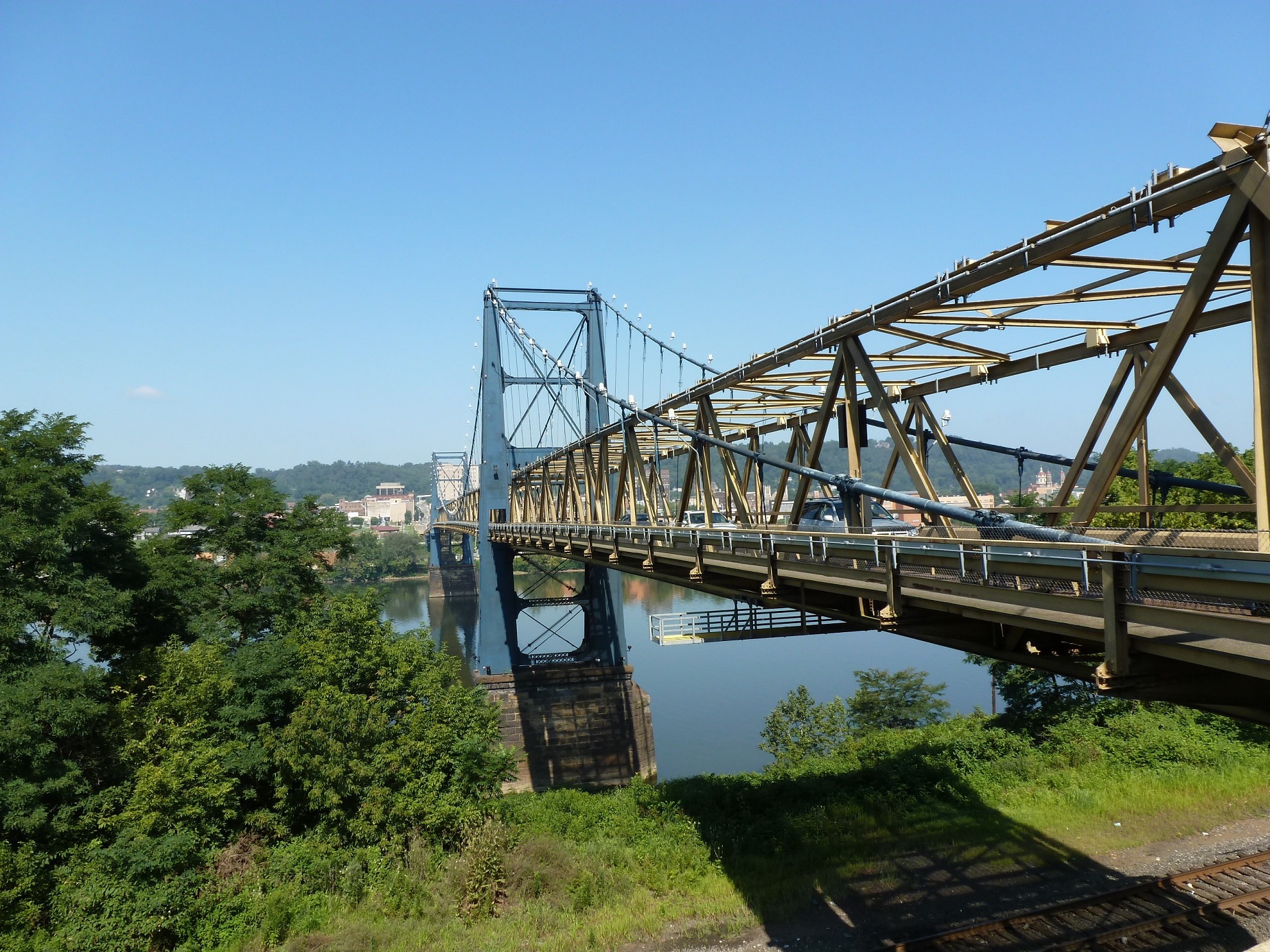
The Wheeling Suspension Bridge was the largest suspension bridge in the world when it was built.  Charles Ellet won the competition to design the bridge over John Roebling.  There are some similarities in style between this bridge and Roebling’s Brooklyn Bridge with the stone piers and suspension ropes.  Before we walked across this one and read the plaque, we were under the impression that it was a Roebling bridge.

Wheeling Bridge.jpg

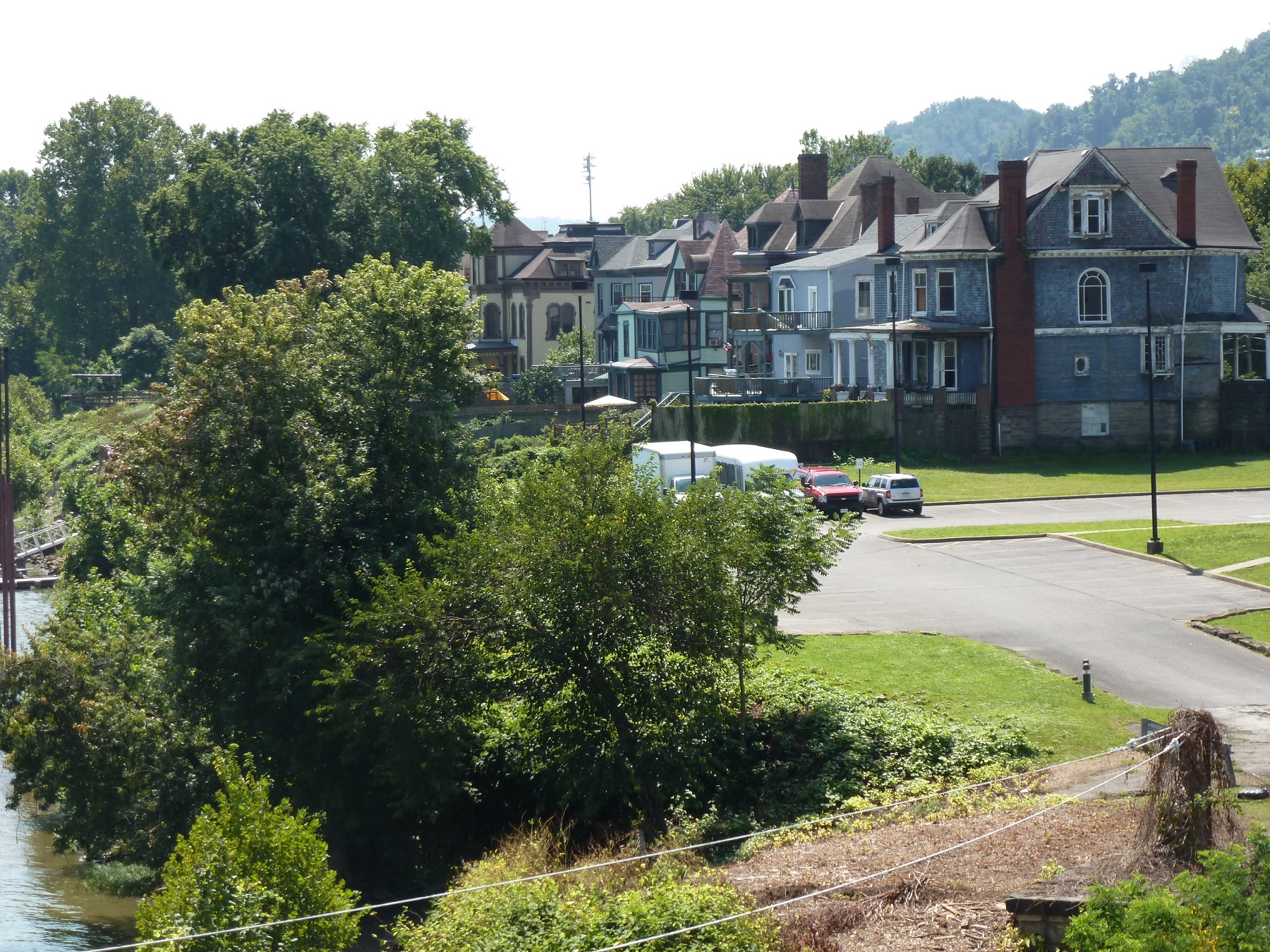
Wheeling has two different trends of riverfront uses than those found in Stuebenville.  On one side of the river (island side), is riverfront housing of surprisingly old construction.  On the other side (city side), is a modern riverfront park with bike trail.

Riverfront homes
Riverfront park

Market St, Steubenville


Market St Bridge

On a road trip this summer, one of the goals was to search out and walk interesting bridges.  The first bridge we stopped at was an unplanned eye-catcher.  We went to Steubenville in order to drive across the iconic Veteran’s Memorial Bridge.  Heading south from that bridge, our eyes were caught by this one.  So we took an unscheduled stop to walk across.

This is the Market Street Bridge in Steubenville, OH.  The best part about this bridge was that it marked the first time I walked across a state line by bridge.

West Virginia sign

The other thing that fascinated me while walking this bridge was the uses on along the river.  On the West Virginia side, it was all wilderness at the end of the bridge, but further downriver an active mill could be seen.

Mill view

On the Ohio side, the feature river-side uses were the sewage treatment plant and the jail.

Sewage Plant view

Jail view

The innocent looking brick building is the Jefferson County Justice Center and Jail.  While I can image the sewage plant was probably a long standing use on the river side, the jail appears to be of more recent construction.  After a short internet search, I wasn’t able to find the date of construction of this building, but did find out that this was the third jail.  The second jail was built around 1950 and converted to offices when this building was constructed.  If I were to hazard a guess, I would say this third jail was probably built around the time that the Allegheny County Jail was built on riverside property in the Pittsburgh, PA.  That jail opened in 1995.

I find it fascinating that riverfront property has been used more than once to locate a jail.  Historically, industry settled along the rivers because that was either its main transportation or power source.  Recently, cities have been taking strides to reclaim their riverfront properties as economic boosters in the form of parks and entertainment venues or housing.  In both these scenarios, the uses are placed on the rivers due to the greater economic benefit to be gained from the interaction between the use and the river.  Placing a jail on a river seems contradictory to the view of rivers as the heart of a city’s economy (previously industrially based, now tourist based).

However, the rivers may confer a benefit of another sort to the use of the property as a jail.  When I was recently confined to a hospital room for a week, the sight of the small sliver of river that I could see from my window went a long way toward helping me stay sane.  It also prompted some more contemplation about the siting of hospitals in a way I had never considered before.  The view I had of the river was beyond a sea of parking associated with the hospital and partially blocked by the buildings for a water treatment facility.  There was little of interest to see in the immediate vicinity.  I hope that in the case of the jails, the river view windows are for rooms and the non-river view windows are for offices and/or back-of-house operations.

Beth Abraham Cemetery

P1050876 (1024x768)

Yesterday, while exploring Carrick and the surrounding neighborhoods looking for adaptively reused religious buildings, we took a detour through the Beth Abraham Jewish Cemetery.  According to the map we had there were multiple roads through the cemetery. We started on one that went through a section of the cemetery with newer graves and came to a T-intersection with a sign to the right that said Do Not Enter One Way, so we turned left. The road was wide at that point, but went around a sharp bend and quickly narrowed to just barely the width of the car.

This was the original section of the cemetery. The graves were clearly older and were placed head to toe with sides touching. It was the most densely plotted cemetery that I have seen.

Our awe at the density was soon interrupted by the termination of the road we were traveling. Despite my confidence that the map was telling us we could get back to the main road by going straight, that was clearly not an option. Fortunately, there was a side leg of the road right at the point we realized we could go no further.  The width of both paths was perhaps a foot wider than the car. My friend who was driving predicted that a 21-point turn would be required to get us out.  I think we managed it in 10-points.

Once turned around, we went back the way we came. As we reached the main roads and started down the public road that bisects the cemetery, I realized I had been so distracted by looking around and then directing the u-turn, that I missed my opportunity to take a picture of the old section of the cemetery.  Instead, I got some shots of the section to the east of Stewart Ave, which is newer, but almost as dense as the old section.

If you decide to take a trip to this cemetery, I recommend entering through the main gates off of Stewart Ave and pulling off at the wide section of road at the sharp bend. From there, the old section and one of the newer sections are easily accessible by foot, though there may be some steep and uneven portions.

Sacred Row

P1050644 (1024x768)

This is a fascinating structure I discovered on the South Side Flats. A friend and I were going around the neighborhood looking at adaptively reused church buildings. While going from one building we knew of to another location, we stumbled upon this building. From what I’ve pulled together so far, this building was built sometime between 1876 and 1884 as four rowhouses. In 1926, the Second Greek Catholic St John the Baptist Church of the South Side purchased the property. The deed described the structure as four 4-room houses. When the Second Greek Catholic St John the Baptist Church sold the property in 1959, the deed described the property as four 2-story brick party wall houses.

P1050646 (768x1024)

However, when you look at the side of the building facing 23rd St, it appears that at one time, this property was used as a church. The middle of the three boarded up openings on this side looks like it used to be a door for an entrance into a church that has been partially bricked up. From this I assume that while the Second Greek Catholic St John the Baptist Church owned the property, they renovated to use as their place of worship with a main front door and two windows.

I look forward to learning more about this structure and its history. I suspect there is an interesting story that connects this building to the 1st St John the Baptist Greek Church which is still in operation at the corner of E Carson St and 7th and the 2nd St John the Baptist Greek Church that set up just down the block at 615 E Carson St before moving to Jane St. From the pieces I’ve found so far there was a severe split in the South Side congregation that involved boycotts and arrests of arguing members and former members.  I’m not sure yet how this rowhouse/church may have fit into that struggle.


Big Dam Bridge

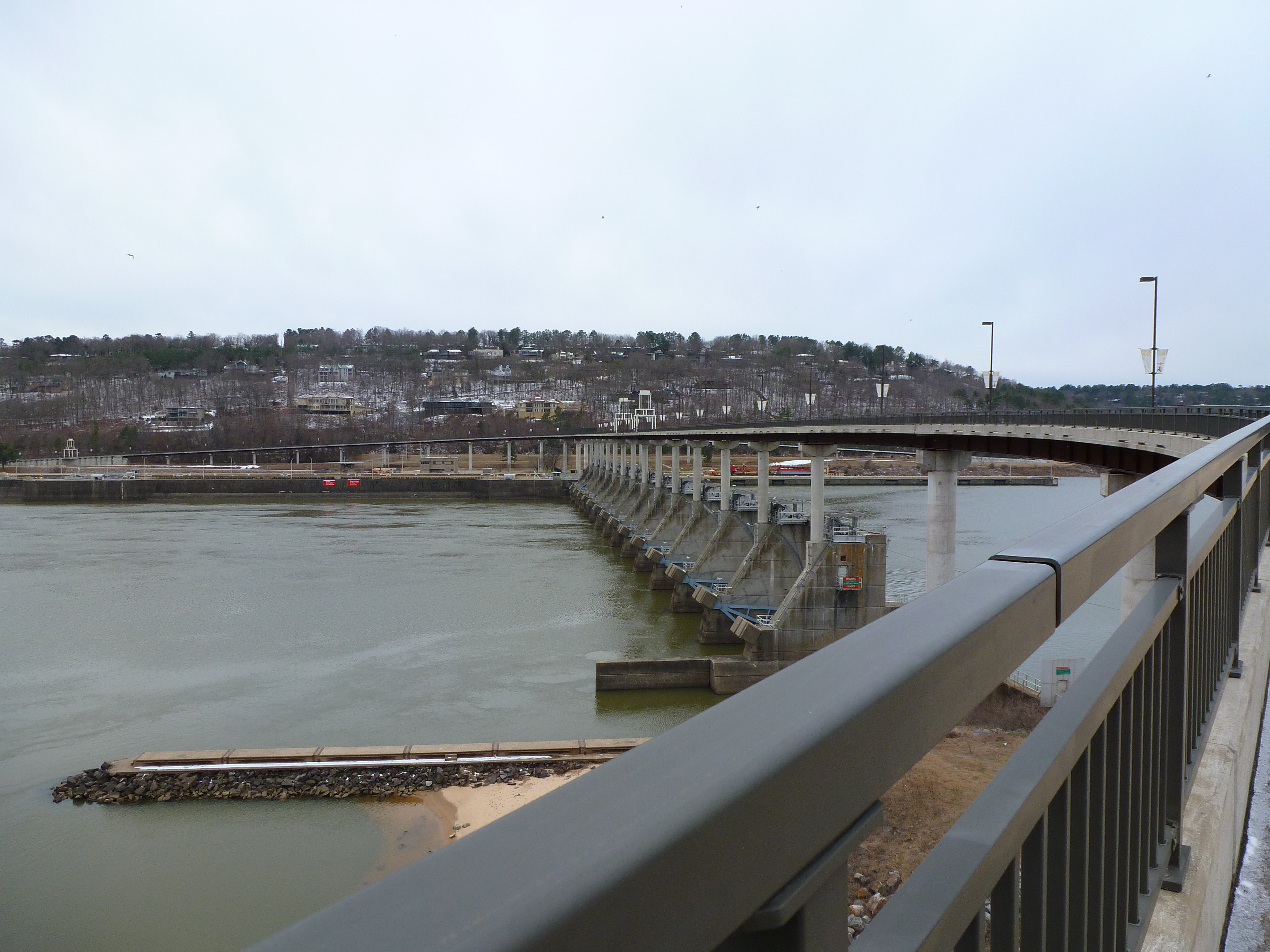
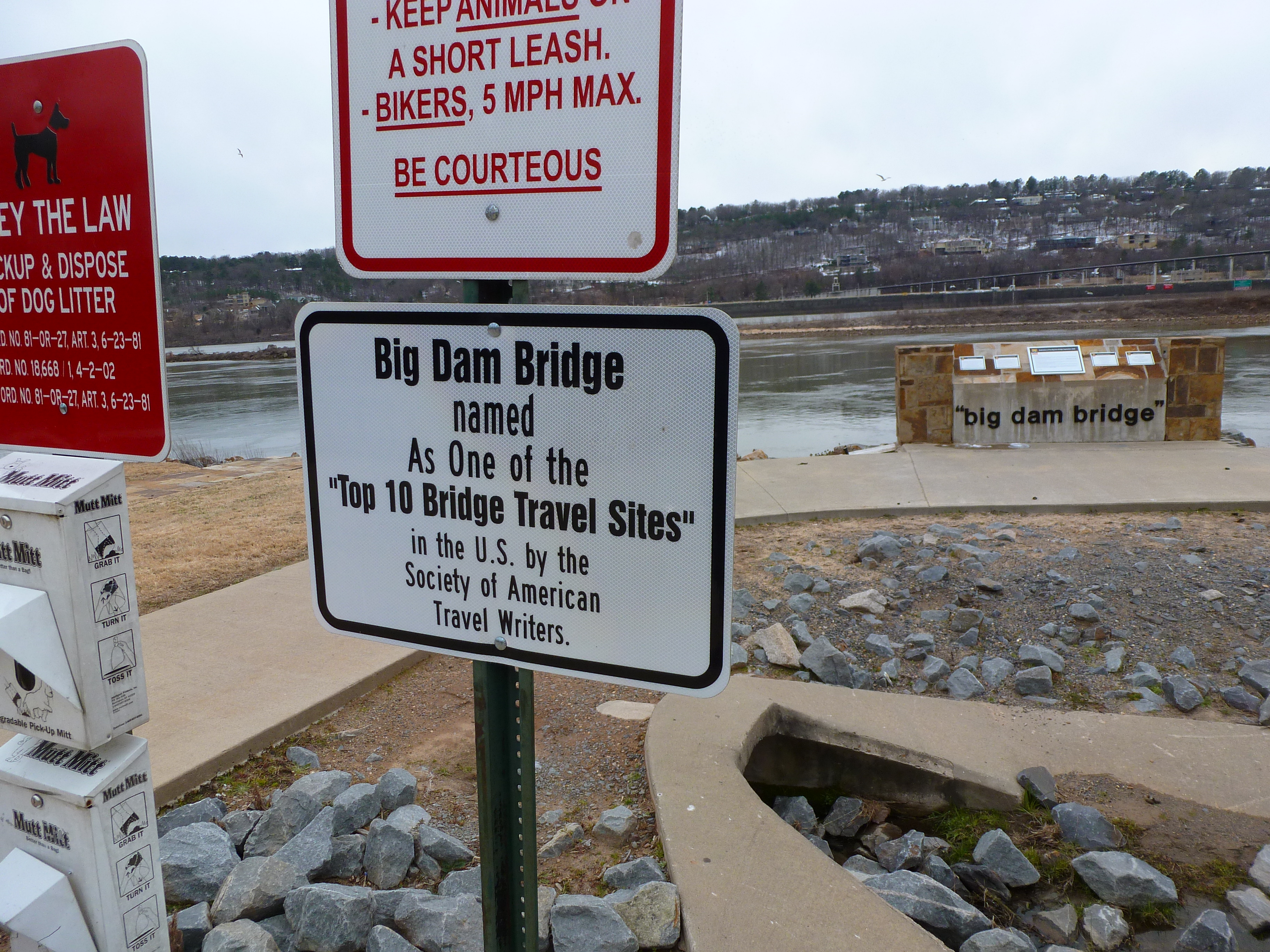
Big Dam Bridge signThe name says it all. This bridge was built as the longest pedestrian- and bicycle-built bridge in the country spanning 4,226 feet across the Arkansas River, connecting Little Rock and North Little Rock. It is part of the Arkansas River Trail.

Big Dam Bridge

On a trip to Arkansas this winter, I discovered this bridge and naturally had to add it to my list of bridges I’ve walked across. The intention of my trip to Arkansas was to visit friends but also to get a break from the cold northern winter by heading south. When I bought my tickets in January, the Little Rock region was having 60 degree weather. A month later when I arrived, the high was 26.

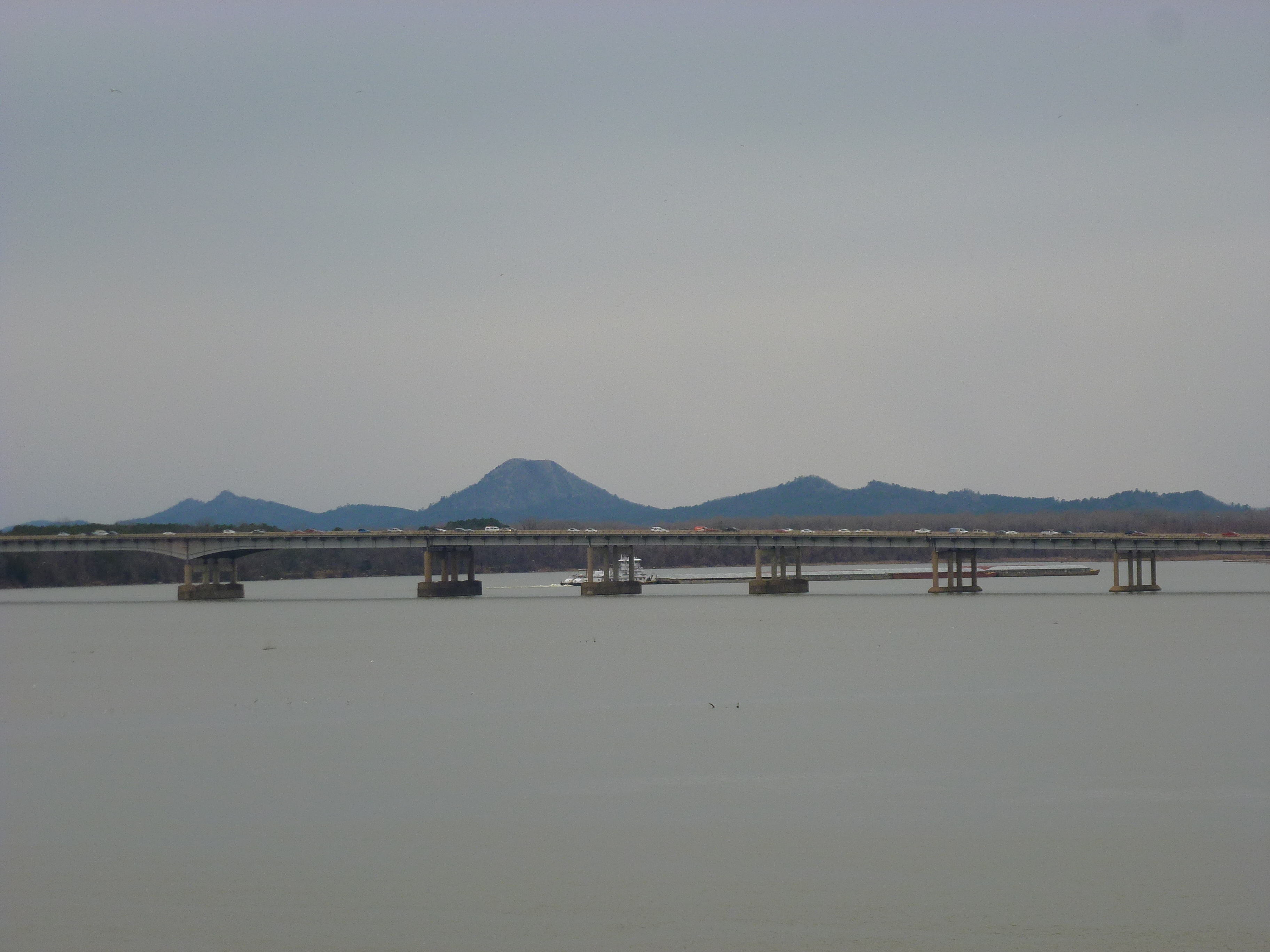
View of Pinnacle Mountain from the Big Dam Bridge

View of Pinnacle Mountain from the Big Dam Bridge

View toward downtown Little Rock showing Rebsaman Park

View toward downtown Little Rock showing Rebsaman Park

By the time we reached the half-way point of the bridge, we were frozen stiff. The farther we got on the bridge the stronger the wind got, probably creating a wind chill factor closer to 20 degrees or less. After admiring the views from the midpoint for a minute, the cold and wind forced us to turn back toward the car.On the Big Dam Bridge

Top 10 Bridge Travel SitesWhile I didn’t make it all the way across, I can still say I’ve been on one of the Top 10 Bridge Travel Sites in the US. Now I just have to find the other 9 sites.

Heth’s Run Bridge: Redux

Heth’s Run Bridge, the first bridge I posted about in my Pittsburgh bridges project, is scheduled to be replaced by the end of next year.  The notice to proceed was expected to be issued last week with construction beginning on Sept. 24 with the installation of a temporary road around the bridge, through the zoo’s parking lot.  According to the schedule that was passed out at a community meeting at the end of August, the bridge is expected to close with all car traffic being diverted to the temporary road on Nov. 1st.  Due to the turning radius constraints with the temporary road, trucks will not be permitted and will instead be by way of the Highland Park Bridge, Route 28 and the 62nd Street Bridge.  If all goes according to schedule the bridge should reopen to all traffic on October 1, 2014.  Additional road work will continue through October.  After final inspections, the project is expected to be officially completed by December 8, 2014.
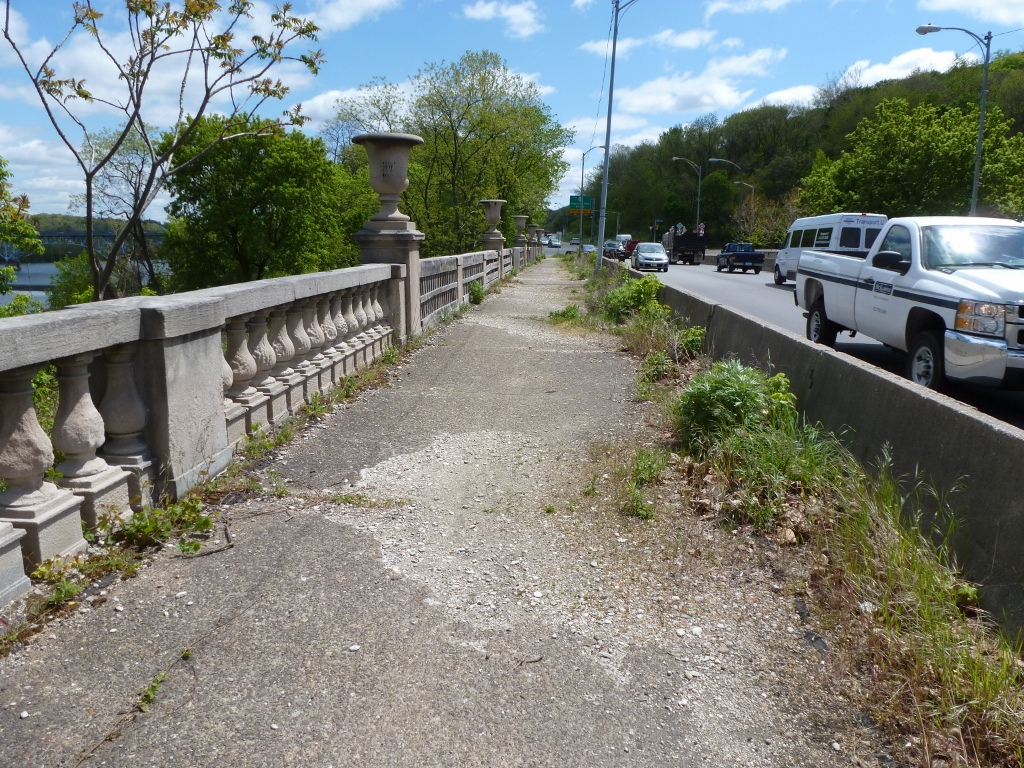
Heth's Run Bridge's hazardous sidewalk

This is a PennDOT project expected to cost over $18.5 million and is definitely needed.  As I discuss in my Heth’s Run Bridge Part II and Highland Park Bridge posts, the sidewalks here are in desperate need of repair and the proportion of sidewalk to road across the bridge is at least 50 years out of date.  All this is going to be addressed in the reconstruction.  The new bridge is going to have two lanes in each direction to match the roadway on either end.  Additional features of the new bridge will be decorative railing, period lighting, entrance pylons, and “architectural features on the abutments with form liners” (which I believe refers to new urns).  At the community meeting, it was mentioned that the current urns will be saved and kept in a warehouse until a new home is found for them.

In addition to the bridge, about 870 feet of Butler Street are going to be reconstructed including sidewalks.  My understanding is that this is the part of Butler from the Heth’s Run Bridge to the ramps of the Highland Park Bridge, which should take care of my complaints about the condition of the sidewalk for those of us trying to cross the Highland Park Bridge without a car.  This should also clear up the confusion for the outbound traffic of whether this part of the road is one lane or two as the plans include removing the “kink” from the existing alignment.

New signals and ADA ramps will be installed at the intersections of Butler with One Wild Place and with Baker Streets.

Another major part of the project is the excavation under the bridge to an elevation of 762.  According to GoogleEarth, the bridge is at an elevation of 800 ft. I’m not sure if this will restore the bridge to its exact historic height, but it will be close (see the photo of the previous bridge from 1912).  This will also pave the way for connecting this area to the proposed Allegheny Riverfront Green Boulevard project.

This project will no doubt cause some inconveniences during the construction process, but the construction of the temporary road will significantly cut down on this even though it adds over a month to the process.  Imagine instead, everyone having to go on the truck detour or all the Zoo traffic coming down Morningside Ave and Baker Street instead of One Wild Place and Butler Street.  That would be a true nightmare.  Thank you, PennDOT and the Pittsburgh Zoo & PPG Aquarium for the temporary road.  Thank you, PennDOT and any other funders, Sen. Jim Ferlo, Rep. Dom Costa, and anyone else who had a hand in helping bring about this long overdue project.

I can’t wait to walk over the new bridge when it’s finished!

More information about the project including the design of the temporary road can be found here: http://morningside-pa.org/wp-content/uploads/2013/08/hethsrunbridge.pdf

Safety while Traipsing

The Bloomfield-Garfield Corporation, a non-profit community development organization in Pittsburgh, is raising funds to buy back guns.  The goal is to get unwanted guns out of the community where they may be stolen and used in a crime or found by a child and played with, causing injury and death.

In the process of raising funds and talking with different people, it’s become clear that not all guns are bad.  Some guns are very useful such as soldering guns, caulking guns, staple guns, salad shooters, glue guns, nail guns, heat guns, cookie guns, water guns, and cameras (which shoot).  Check out the links for each of these guns to see how they can improve communities (more links will be added over the next few weeks).

As an urban traisper, it is important to feel safe as I walk around exploring the city.  I have chosen not to walk the bridges in certain neighborhoods of Pittsburgh, because of safety concerns.  I was excited when I joined the staff of the BGC to hear that they were working on planning a gun buyback to reduce the chances of gun violence in their neighborhoods.  Maybe our work will make a small difference and help lead to broader changes that will improve the safety of the currently troubled areas or those perceived as troubled.

For more about the Gun Buyback Initiative, check out our Razoo page.  While you’re there, please consider giving a donation.  We hope to reach at least $15,000 by August 31.  Thank you!

Conquering the Dome

St. Paul's Cathedral Cake

Shortly after facing the dilemma of how to create a dome for my Blue Mosque Architectural Dessert Masterpiece, I saw an gingerbread creation of Moscow’s St. Basil’s Cathedral which used rice crispy treats to form the shape of the domes of this cathedral.  I held onto this idea for almost a year in preparation for my Third Annual Architectural Dessert Masterpiece.

St Paul's Dome  St Paul's Cathedral

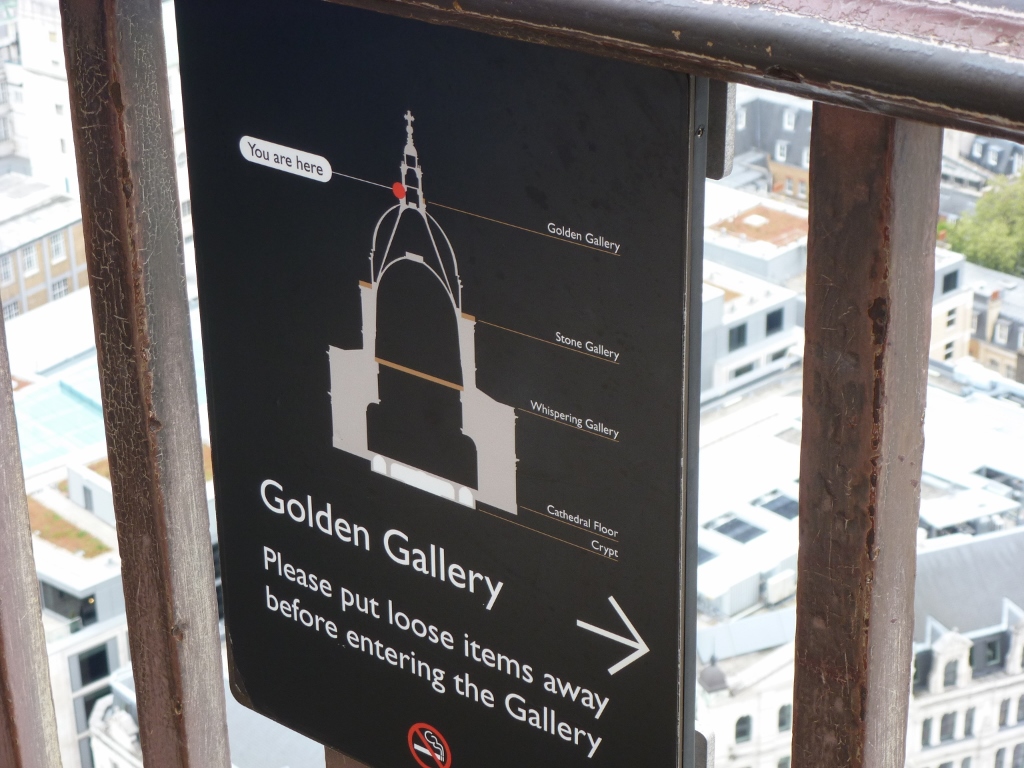
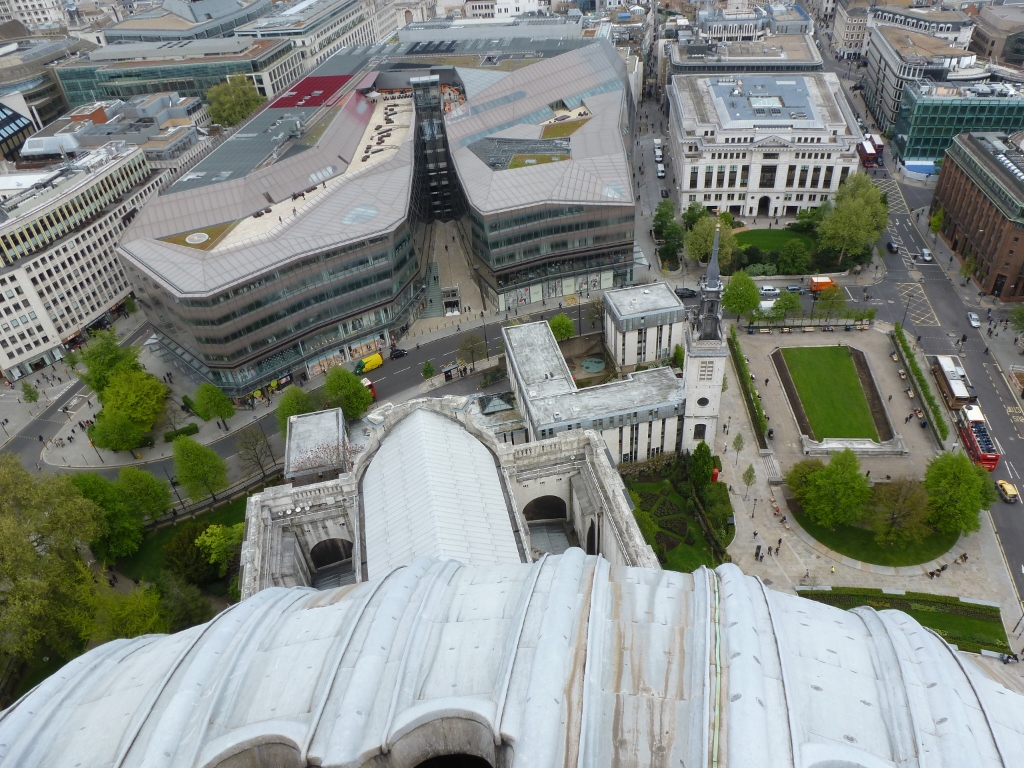
For this one, presented and eaten December 2012, I chose St. Paul’s Cathedral.  First, because it has the perfect dome for trying the rice crispy method.  Second, because St. Paul’s was a significant part of my trip to London earlier in the year.  I experienced a wonderful view of the City despite minor issues with heights and major issues with claustrophobia.  I successfully climbed to the top of St. Paul’s (at least as high as they allow tourists to go) and made it back down again.  The first flights of stairs to come back down were particularly challenging as they were very narrow and steep with very short ceilings–it reminded me of the first and last time I went caving as part of a school trip in 8th grade, where I somehow managed to crawl through impossibly small places.  The praise of my teacher, Mr. Wolfe, from that occasion was essential in helping me make it down the stairs at St. Paul’s.  Thanks, Mr. Wolfe, you were my hero this time!!

Top of the Dome Looking Down

In making my St. Paul’s Cathedral Architectural Dessert Masterpiece, the design was influenced by the memory of how long it took to create the Gingerbread Blue Mosque.  I determined to take a quicker route this time around by baking sheet cakes and cutting them out in the shape of St. Paul’s.  Again, I referred to my textbook from my Western Architecture course (see Parthenon Cake post) to determine what the appropriate proportions were in cutting out the shape of the Cathedral.  To approximate the proportions in height, I made a double layer cake, plus additional layers at the towers and dome.

Aerial St. Paul's Cathedral Cake

The dome was made using the rice crispy treat method, which ended up being much more challenging than I anticipated due to the stickiness of rice crispy treats.  It did not work to try and shape the dome in my hands.  I ended up using wax paper to form the shape, but found the rice crispies still stuck to the wax paper, but not as badly as to my hands.  Then, I frosted the whole creation, using chocolate frosting as an accent color to suggest the different color of the domes (including those on the front towers) from the rest of the building.  I also used the chocolate frosting to indicate the break in design from the lower and upper portions of the exterior walls.  Chocolate Crunch Bells were used for the small domes on the front towers.

This one was easy to cut like a normal cake for eating and tasted quite good.

The Point…of Gathering

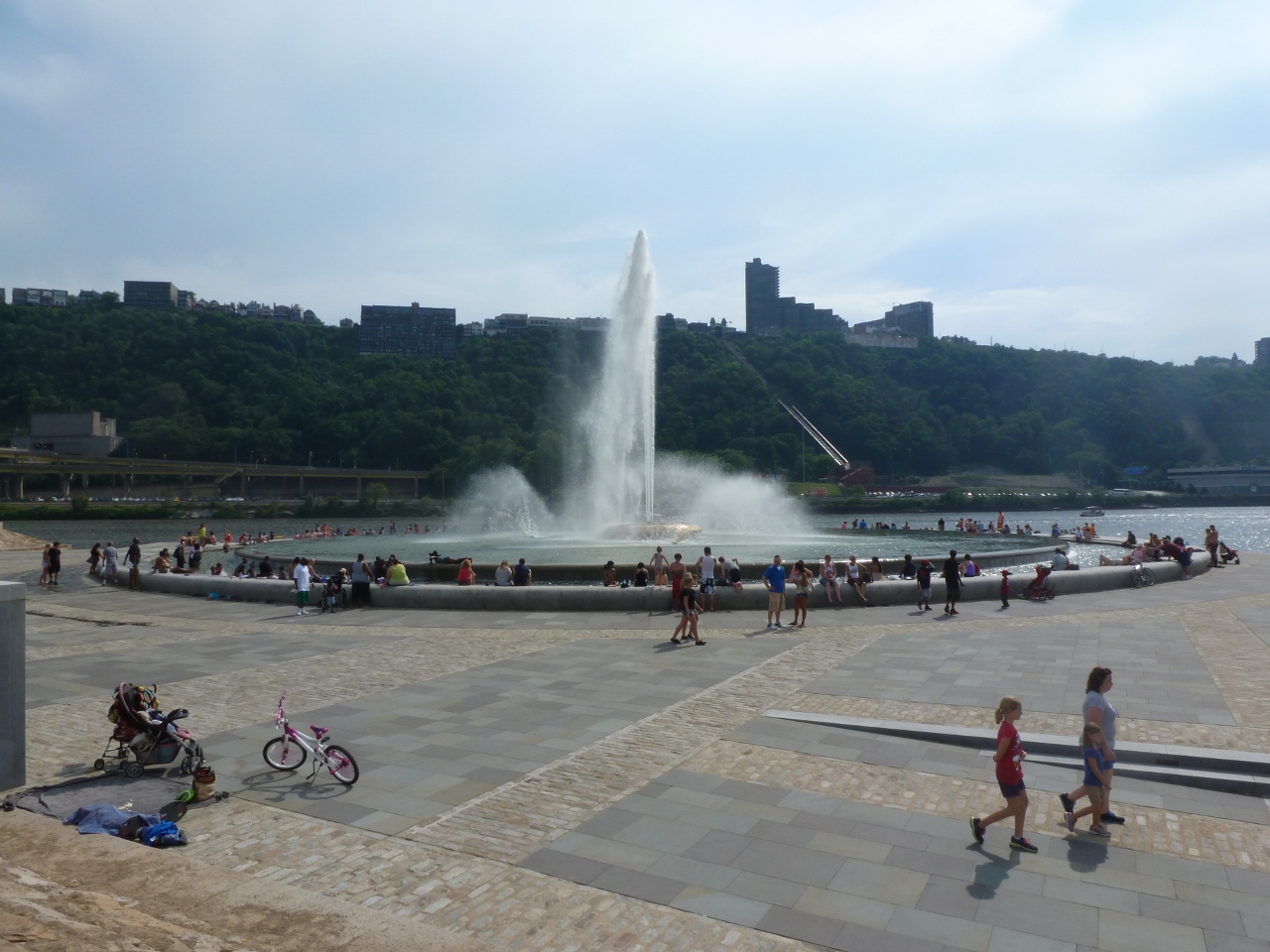
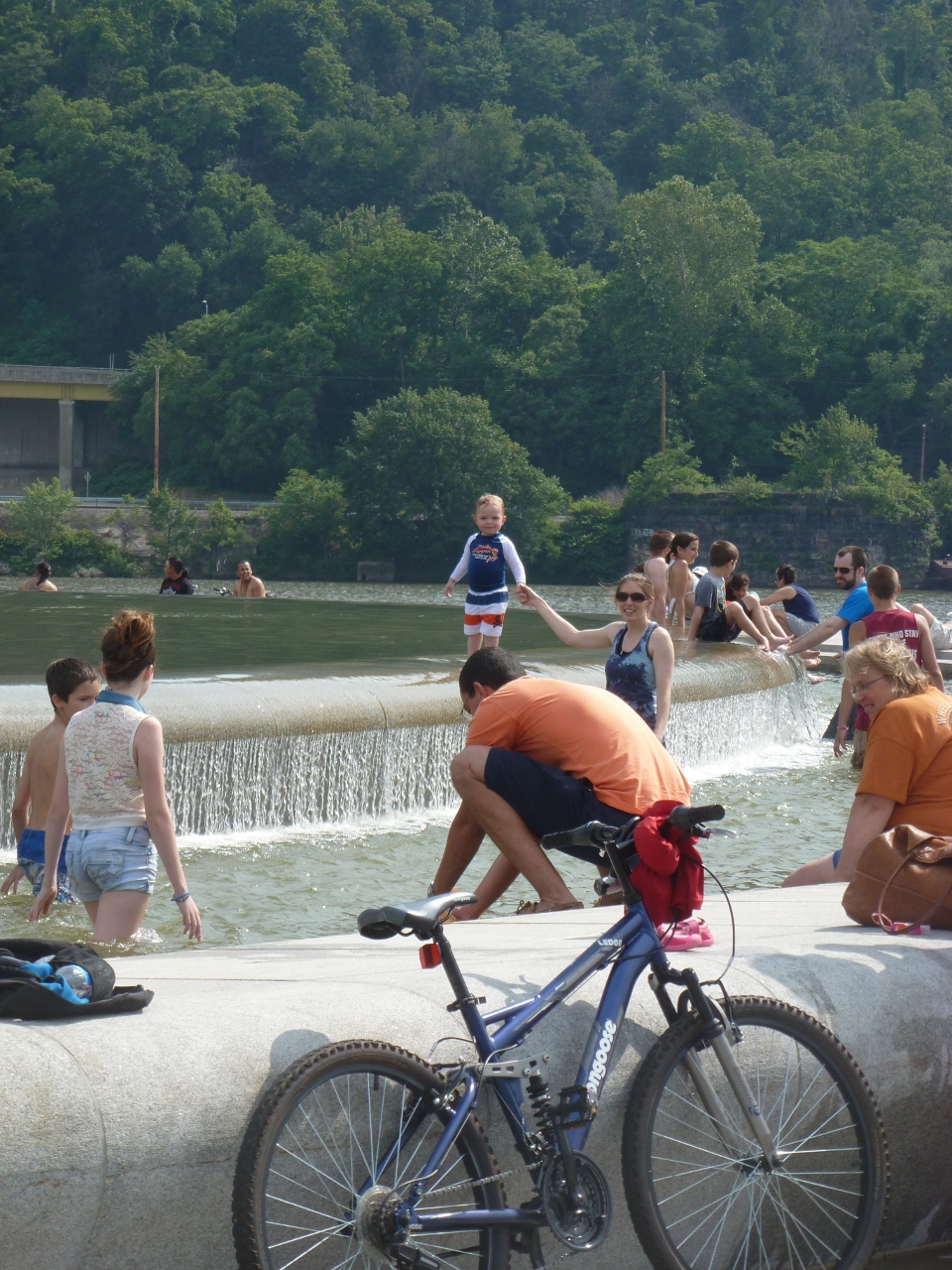
A renewed downtown Pittsburgh attraction is a great place on a hot day.  With last weekend’s temperatures reaching near 90, the revitalized Fountain on the point of Point State Park was a popular place to be.

The Fountain

The new “wading” portion of the fountain was enjoyed by families, friends, couples, and pets.

Bathers

Families and Pets

Pittsburghers and Icons

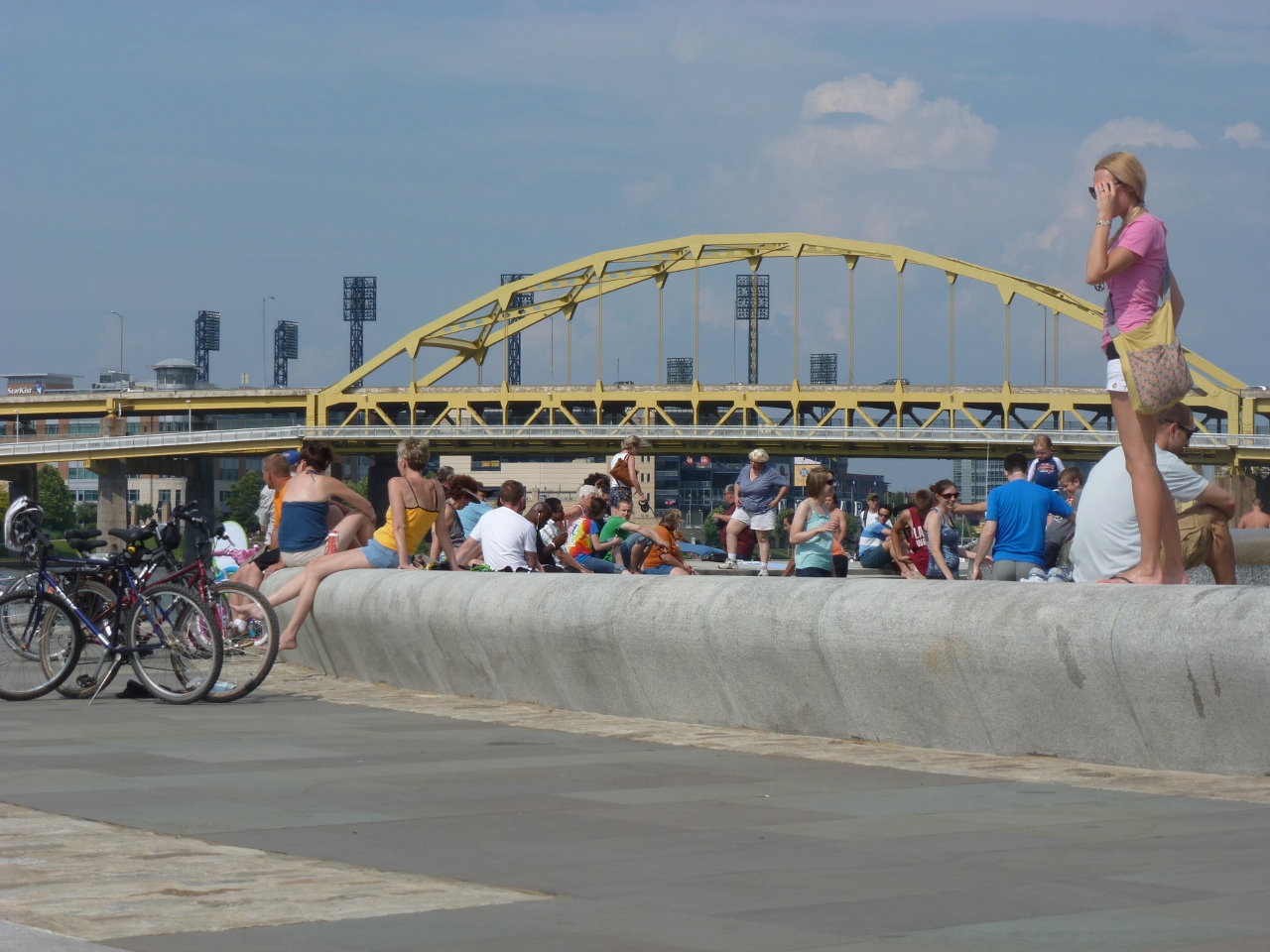
The fountain was also a gathering point for bikers enjoying the Three Rivers Heritage Trail System and Pittsburgh’s bike rental program and kayakers taking advantage of Venture Outdoors’ Kayak Pittsburgh rentals.

Kayakers and Bikers enjoy the Point

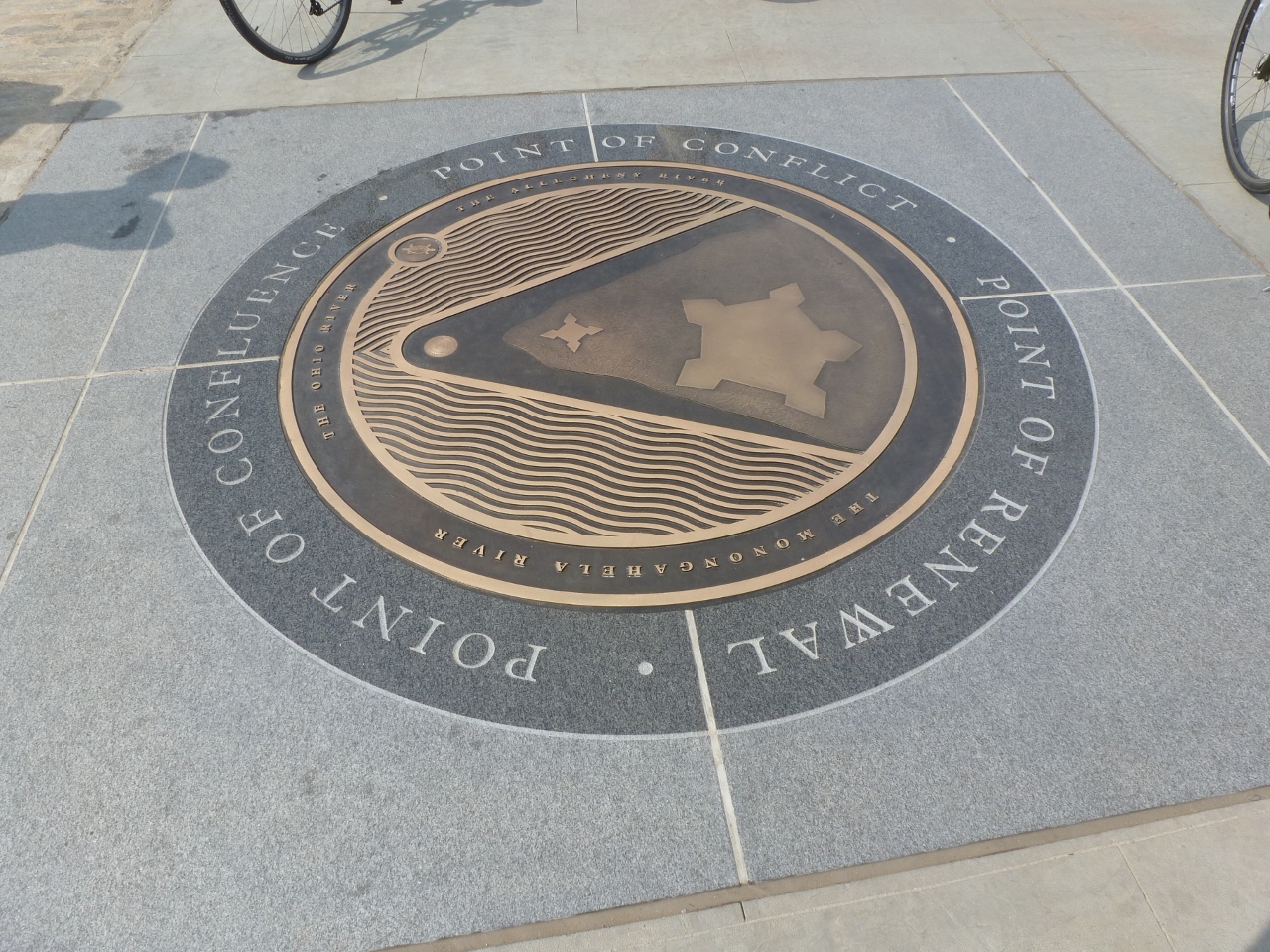
The Point is one of the key geographical features that influenced the creation and history of Pittsburgh.  With the rebirth of the fountain, it will continue to be an important attraction in the city.

The Point of...