Signs of the Times

20180709_124401 - Copy

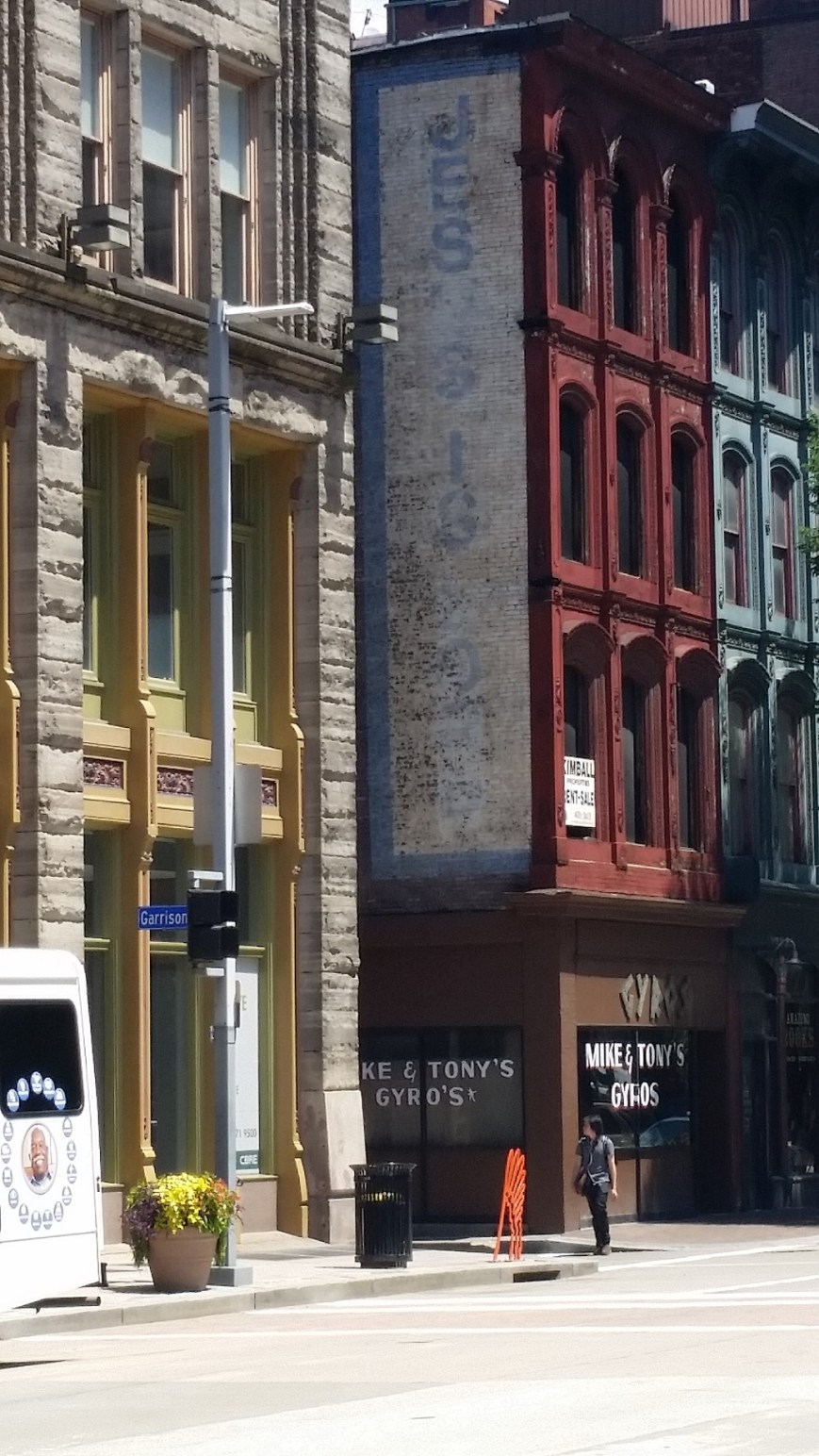
Once upon a time, signs painted on the side of buildings proliferated in Pittsburgh.  Over the decades as these types of signs went out of fashion, many were left to fade with time.  Remnants of these signs still cling to several buildings.  Some signs are faded but legible while others only show faint traces of having been there.

20180709_124148 - Copy

20180709_123654 - Copy

20180709_122215 - Copy

These signs tell a story of the history of the city.  Is it a story worth preserving?  If so, what is the appropriate way to preserve it?  Should these signs be refreshed so that they continue to live on?  Or should they be left alone to continue to fad to show their decline from favor?  Yet, there appears to be renewed interest in the hand painted sign.  (This article is one of several about a niche of successful hand painted sign artists.)  Maybe as these buildings are renovated, some of these signs will be refreshed with a modern take.

20180709_083128 - Copy

Utility Siloes Part 2


20180624_080041 (2)

Dismantling in progress (6/24/2018)


After continued observations, I need to modify some of my assumptions in the post Utility Siloes.  It turns out that the existence of the other utility wires attached to the poles does not prevent the old poles from being removed.  Instead, weeks after a new utility pole is installed, the remainder of the deteriorated pole is removed except for the chunk where the other wires are attached.


20180624_080058 (2)

Close-up of the dismantling (6/24/2018)

Perhaps the crew that removes poles is different than the crew that installs them.  Although, the installation team is able to lob off the top of the old pole after they transfer the wires to the new one.  Why then can’t they dismantle the rest of the pole at the same time?  And in the case of constricted locations, such as the feature of these posts, why can’t they located the new pole in the same location as the old one?


20180630_093623 (2)

Dismantling Complete (6/30/2018)


20180630_095652 (2)

View of another dismantled pole, the remaining chunk is secured to the new pole by a rope.


Out of Sight…

20180614_155542 (2)

Trash Train Passing through Pittsburgh

Once a week, I put a bag of trash out at the curb before going to bed.  When I leave for work in the morning, it’s gone.  Poof!

Yesterday, while enjoying the beautiful summer day, the stench of garbage made me look up.  Crossing the railroad bridge, chugged a train full of trash.  I couldn’t see either engine or caboose, only car upon car upon car full of trash.  As I passed under it, smelling the breadth of the aura of stink surrounding the train, my mind imagined all the homes, parks, farms, mountains, forests, and prairies that would be polluted by this rotting mass before it reached its final destination.  A destination that is forever polluted.

I don’t litter.  I recycle when possible (or easy).  I don’t have a newspaper delivered as most of it ends up going straight to my recycle bin, wasting energy and resources.  I try to buy yogurt by the quart instead of single serve to reduce the amount of plastic used.  I plan to compost, one day.  Yet, I had no qualms setting out a bag of garbage every week.

In a corner of my mind, I knew that a truck comes and takes the garbage away to something called a landfill.  And that the garbage will sit there…forever.

OLYMPUS DIGITAL CAMERA

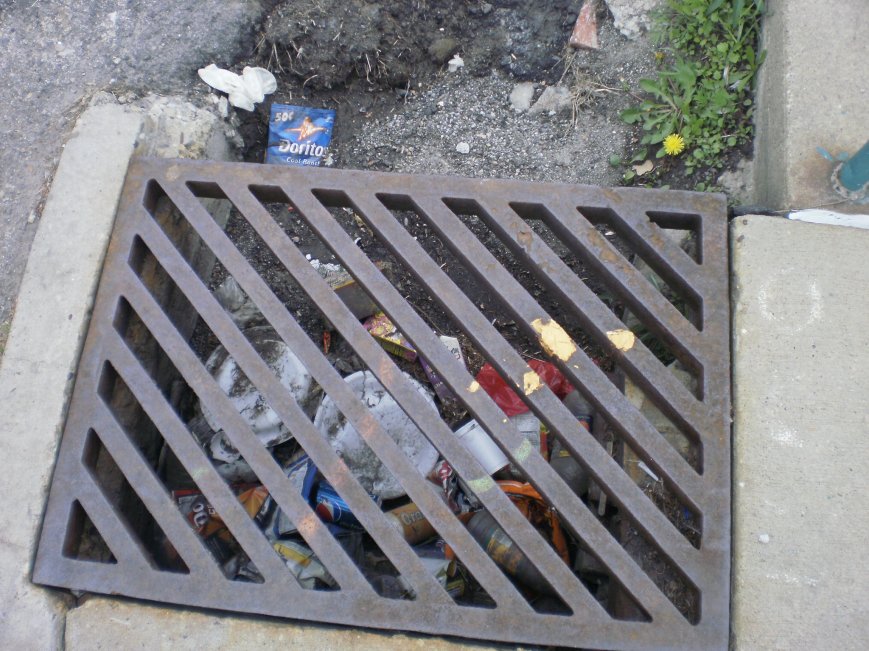
A Storm Drain Treated as a Trash Can

Today, that image of the trash train is causing me to question my behavior.  Is my habit of collecting all my “garbage” in a plastic bag and setting it at my curb for it to find its way to this train and then to a landfill really any better than the person whose habit is to drop their trash on the ground or down a storm drain?  Is a landfill really any better than the Great Pacific Garbage Patch?

Social media is filled with indignation over the trash vortex floating in our ocean, but maybe there should be more discussion and awareness about the rest of our trash: where it goes and what alternatives we have.

Utility Silos

20180421_133652 - Copy

The obstruction from utility silos

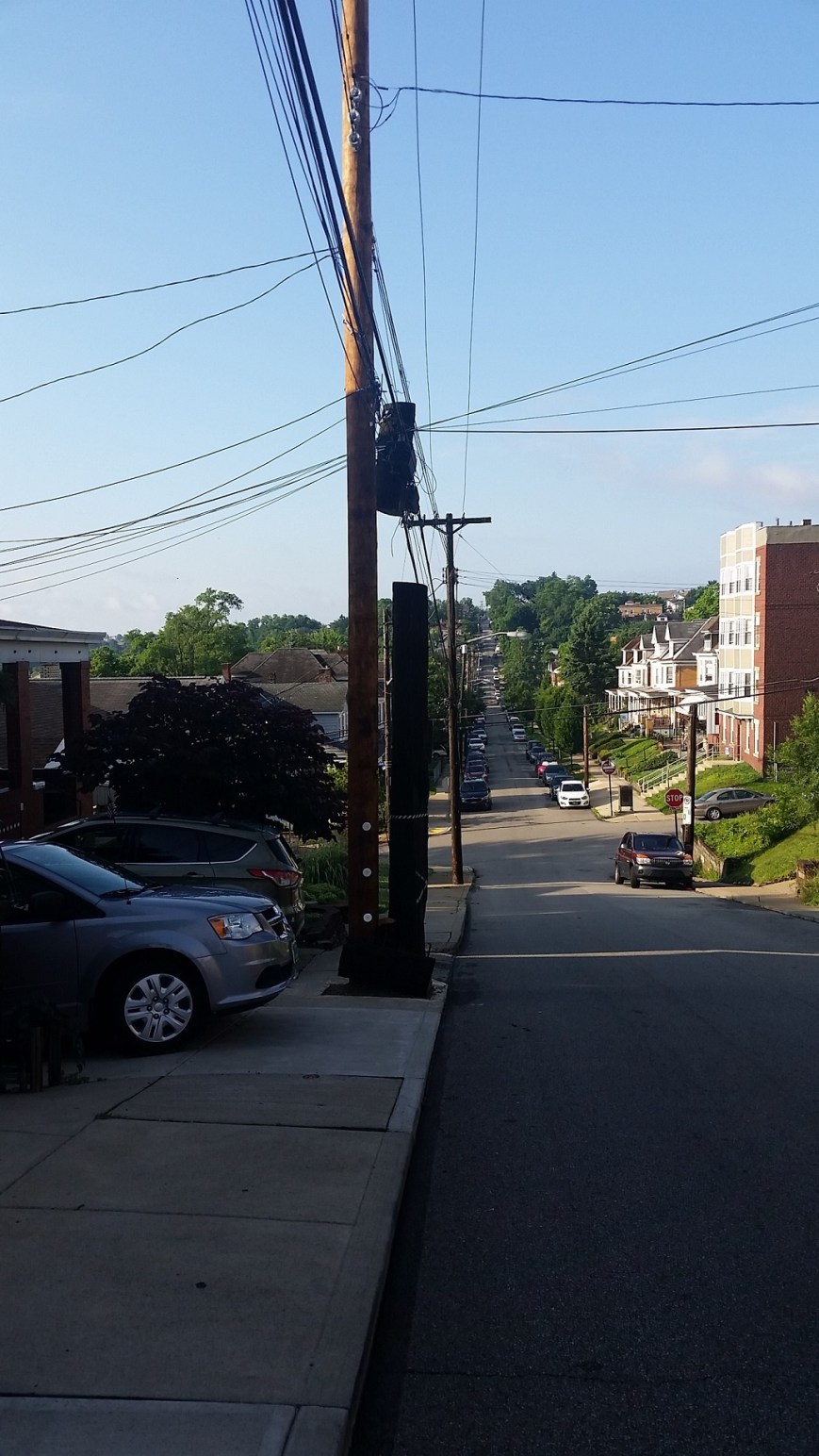
This spring, the electric company went around my neighborhood installing replacement utility poles where the existing ones were on their last leg.  Watching them do this for a pole just down the street from me, I drew some conclusions about the interaction between the various companies that supply the different technologies available at our fingertips.  The electrical company owns the poles and the electric wire, but other companies own the other fiber optics and cables that use the poles.  The electric company installs new poles when the existing ones are deteriorated.  Once installed, they transfer the electric lines to the new pole.  The old pole is left with all the other lines in place, until the companies that own the rest of the lines transfer them to the new pole.

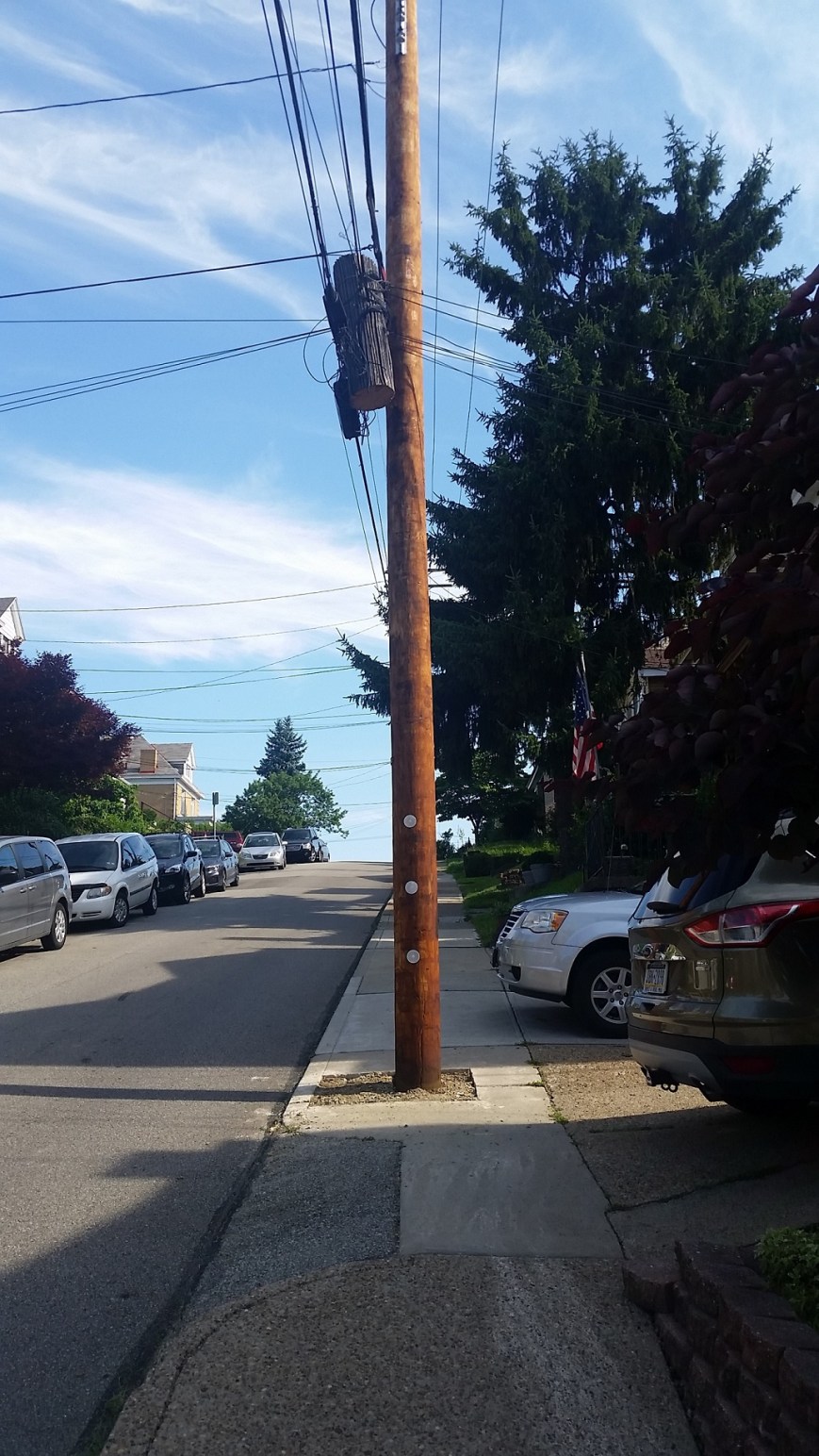
This arrangement seemed relatively harmless as I watched it in action near my house, but then I found the example above.  In this case, the rigidity of the silos and jurisdictions of the various companies created a physical barrier in the neighborhood that will likely be in place for the next 35 years or so, until the pole is ready to be replaced.  This is in direct contradiction to the City’s initiatives for greater accessibility illustrated by the sidewalk curb ramps installed within the last year at the intersections on either side of this pole.

20180421_133736 - Copy

Close-up showing the curb, the old pole, the new pole, the foot of sidewalk left, and the combined driveways

The choices were limited for siting this new utility pole.  There are driveway curb cuts immediately adjacent on either side.  Therefore, to place the new pole in line with the existing poles would have partially blocked someone’s driveway.  Apparently, the silos are so entrenched that even under unusual circumstances such as these the various companies cannot work together so that a new pole can be placed in the exact same spot as the old pole.  The sidewalk that was already narrow and could not accommodate the recommended 5-foot clearance around obstructions is now nearly impassible and requires pedestrians to cross partially on the driveways.

I do not know if anyone paused before installing this new utility pole to ask if there was a different or better way to approach the situation.  From my experiences at my office in trying to work with others to design an approach that looks at the organization as a whole while still respecting and acknowledging each area of expertise and specialization, it is difficult to get all parties at the table to apply creative thinking and openness to how we can approach our work.  No doubt, even if someone was able to get all relevant parties involved in this utility pole to the table, they would have encountered similar challenges.

20180421_133844 - Copy

Evidence that the old poles eventually get removed and an example of where a new pole was placed next to the old along side the curb

Checking on the Rivers


20180220_131344

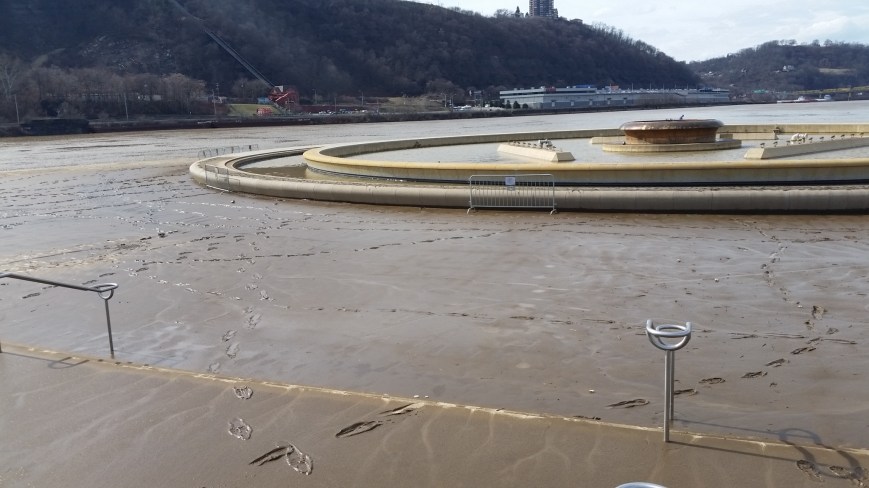
Silt deposit after the flooding rivers receded enough to uncover the fountain at The Point (February 20, 2018)


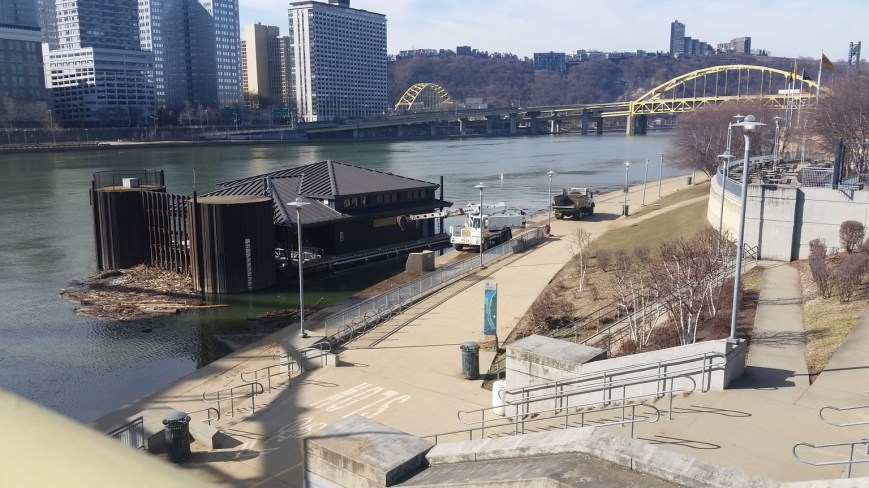
Over the last few years, I have developed a habit of “checking on the rivers” regularly by crossing them on my way to various activities or eating my lunch on their shores.  This habit started as a way to get a break from the office and clear my mind.  After having read several books by John Muir and James Fennimore Cooper, I found a deeper meaning in these “check-ups”.  Both authors wrote wonderfully descriptive passages of nature scenes and kayaking on rivers and oceans.  While crossing the Allegheny one day, something about the view recalled some of these passages.  I was filled with a sense of wonder and awe that this river running through the heart of our city is still the same force of nature described by Muir and Cooper in other locations, despite the man-made attempts at controlling it through dams and bridges and concrete lining the shores.

This winter, the weather patterns are reinforcing the power of nature as exhibited by the rivers.  During our cold snap over MLK Jr Day weekend, the rivers froze.  The Allegheny had some pockets of open water surrounded by thick ice, but the Monongahela froze all the way across.  Commercial traffic on the Monongahela started up again on Tuesday, breaking a path through the ice along the shipping lane, but on the coldest days that week, the channel remained clogged with chunks of ice that appeared to be refreezing together between shipments.  As the weather warmed up slightly, the rest of the river remained frozen, but the shipping lane cleared of ice, until it got cold again and refroze.

Marveling at the sight of the frozen rivers, I found myself beset by the feeling that impels people to walk across frozen bodies of water without knowing whether or not the ice is actually thick enough to hold you.

Since then, an extended period of unseasonably high temperatures and record pushing rainfall has brought on over a week of flooding and high water on the rivers. The fountain at The Point is supposed to have gone underwater at least twice in that time. Multiple roads and ramps downtown have been forced to close off and on due to high water. The highest I saw the water, a few hours before it’s first peak, it appeared to be within a few feet of the base of PNC Park.

Every time I pass by one or the other, I compare the water height against the familiar features. On the Monongahela, several of the trees lining the shore have been standing in water for days. I wonder how long they will hold out before they join the other logs floating down the middle of the swollen torrent. On the Allegheny, the trails on both sides of the river are either more or less under water. As I look down from the high perch of the bridges or the sidewalk along Fort Duquesne Blvd, I am amazed at how effortless it seems the water just slips over the edge of the trail. Whenever I’ve walked that same path, the water always seemed far below.

As I spent my lunch breaks this week running from one to another of the rivers to check on the effects of all this water, I laughed at my eager curiosity to explore these flooded shores compared to the terror I experienced as a kid when my Dad took my brother and I along on similar exploration of the flooded Delaware River. My heart clutched as the waters of the Delaware bubbled and gurgled inches from the road we traveled. When we pulled off to park and watch the water a uniformed personnel directed us to move to higher ground. That area was being evacuated due to the rupture of an ice dam upstream that released a 50 ft high wall of water expected to hit that part in 10-20 minutes. My Dad got us back in the car and headed up the road again at what seemed to me to be a snail’s pace. My eyes detected signs of the water being even closer to the level of the road as we went back the way we came. I only breathed freely again, when we reached a lookout off the Appalachian Trail hundreds of feet above the bed of the river. We waited and watched for a long time, but never saw the promised wall of water.

Ever since that day, my mind has contemplated the idea of a wall of water traveling down a river with interest trying to picture and understand how that would work. The extreme variations in the heights of Pittsburgh’s three rivers the last couple weeks are the closest real-life examples I’ve had of massive amounts of extra water flowing downriver. My curiosity is teased by this, impelling me to explore, urging me to go on, go closer. Yet, the fear of the water’s power still remains tucked up in the corners of my mind. It mingled with wonder and awe as I stood at the edge of the silt deposited by the rivers around the fountain at The Point.

 

Dogs in the City

Dogs Chilling in Istanbul

Not being a dog person, I have been fascinated by different dog behaviors and treatment that I have seen in traveling.  In New York City, I was surprised to see people bring their pet dogs onto public transit, both on the metro and on the bus.  I wasn’t sure if this behavior was like eating on the buses in Pittsburgh–it’s not permitted, yet people do it anyway–or if pets are allowed on public transportation in NYC.  It also seemed unusual to me that most of the dogs I saw were small.  But then, thinking it through, I decided it made sense as if you live in a stereotypical tiny New York apartment, you wouldn’t have the space to keep a big dog.

In Pittsburgh, dogs seem to be more like what you would find in suburban areas.  They are often big and they tend to bark a lot and strain toward people they pass on the street.  After coming back from New York City, I realized that you don’t see dogs in downtown Pittsburgh.  However, as more people have moved downtown, dogs on the streets downtown have become much more common.  Including ones that are pushed around in what look like baby strollers, but given how some people feel about pets, they might have been strollers designed for dogs.

Istanbul dogs were quite different from the average dog in America.  I believe most of them were strays, but they appeared to be quite self-sufficient (such as the ones in the photo above).  They minded their own business and let everyone around go about their business.  It was quite refreshing to me to see numerous dogs that did not feel the need to bark their heads off just because someone was walking by.  I regret that I did not get a picture of the most notable dog I passed.  He had a human companion, but no leash, instead he was decked out in sunglasses and other bling like mardi gras beads.

Mural of Weeds

20171201_125555

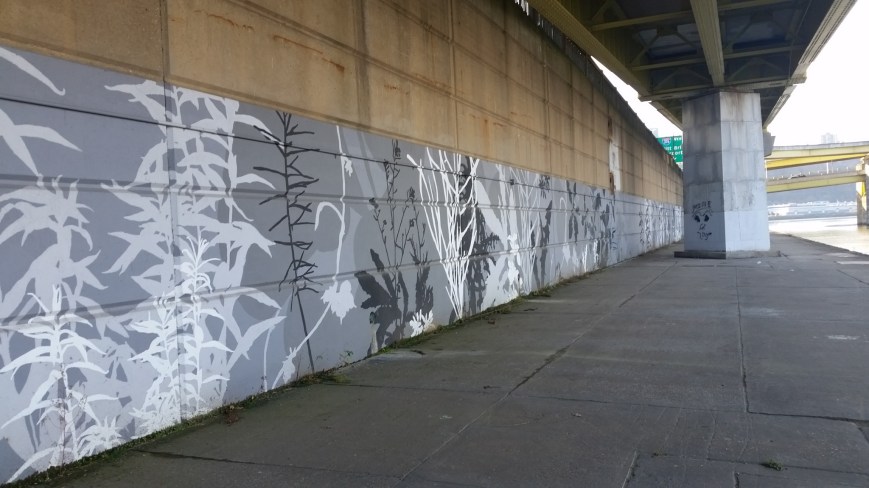
I love this mural.  It was put up two years ago along one of the worst stretches of the trail along the Allegheny River.  This is in downtown Pittsburgh, feet away from The Point, and yet it is a barren wasteland of concrete.  Next to one highway ramp and underneath another, the only good features are the river and the view to the north side where the trail has many features and improvements including the well-loved water steps.

20171201_125737

For me, this mural by Kim Beck is aptly named Adjutant, the non-military definition of which is “one who helps” according to Merriam-Webster.  While this stretch of trail is still a wasteland of concrete and weeds (which the mural accurately depicts), it is no longer a creepy section of trail to be hurried through as fast as possible.  Somehow by acknowledging the barrenness, the mural has taken away the edge.

The deadline has just passed on a call for ideas for a new installation at this location, but I am torn about this call.  While it would be nice to have this section of trail feel more connected with the rest of the trail, a part of me is going to miss the honesty of this mural of weeds.

Brooklyn Bridge

119 (1024x768)

Yesterday, as I was writing my post about the Wheeling Suspension Bridge by Roebling’s competitor, I was fascinated to discover that I never wrote a post about my walk across the Brooklyn Bridge. I decided to rectify the situation. The more I worked on it; the more fascinated I became. At this point, nearly 5 years after having walked it, all I can surmise is that I must have been very tired and/or hungry while crossing it.

In my post on the Manhattan Bridge, I mention how much more I liked that bridge than the Brooklyn Bridge. I can remember how much more thought provoking I found the Manhattan Bridge, but in looking back at my photos, I am shocked at how uninspiring I found the Brooklyn Bridge. I think it may hold the record for the fewest number of photos I’ve taken of any of the bridges I have walked. Especially, if we look at number of photos versus the length of the bridge. I suppose there may have been some other factors such as the construction zone on parts of the bridge.

144 (1024x768)

Another factor may have been the fact that the walkway is in the center of the bridge and above level of the traffic. While I remember this as a highlight and an intriguing part of the bridge, I also seem to recall that it may have caused interference with framing any potential photos.

156 (768x1024)

I will take back some of my comments on the Wheeling Suspension Bridge. While both bridges do have a lot of structural parts holding them up, those of the Wheeling bridge were much more fascinating. This may in part have been because you were able to get up close with them.

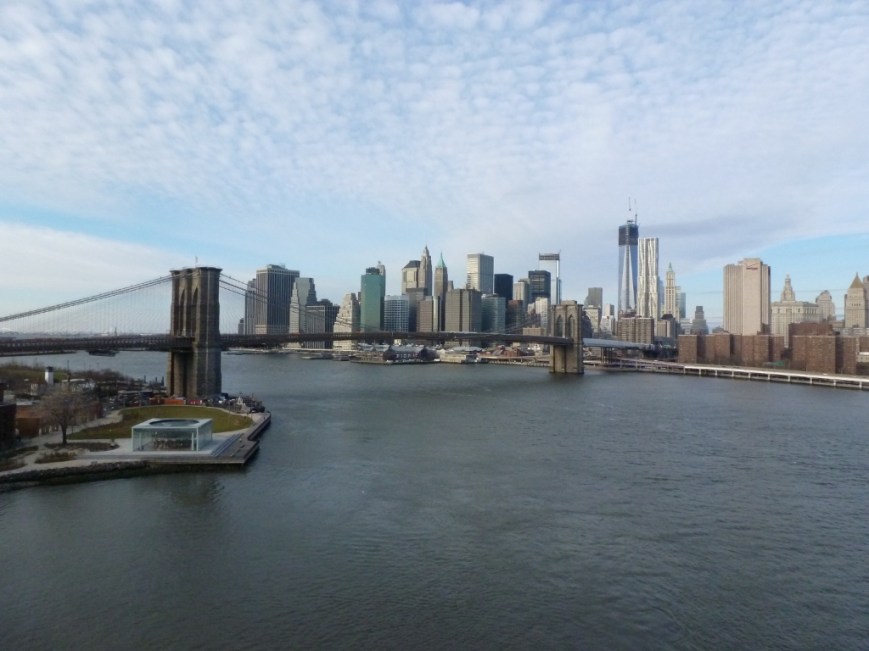
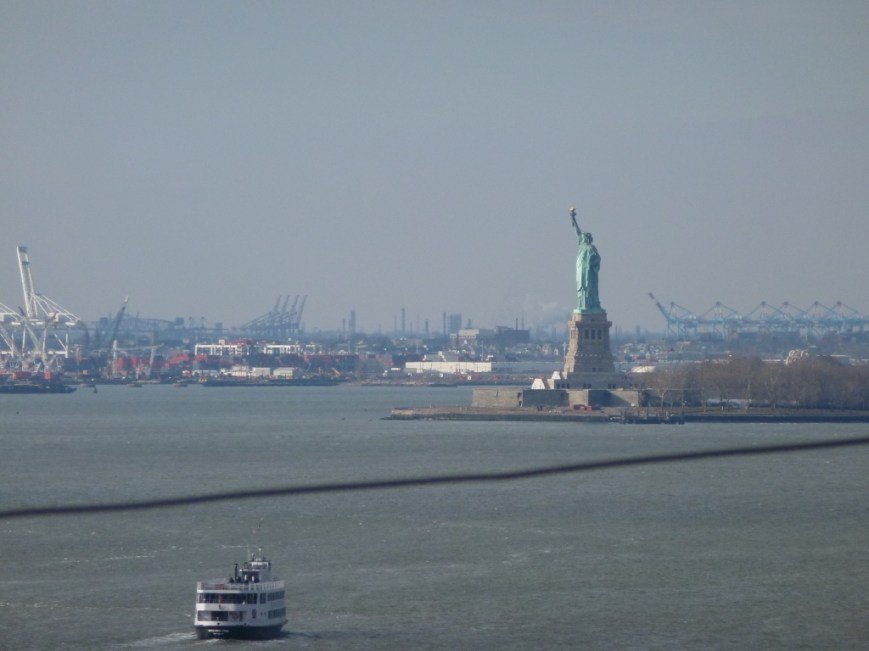
Below are the views of the surroundings. On one side you have the Manhattan Bridge and on the other the Statue of Liberty. That is just about the extent of the photos I took from the Brooklyn Bridge.

154 (1024x768)

166 (1024x768)

I feel that I ought to give this bridge a second chance. If/when I ever make it back to New York City, I think I will have to walk it again (maybe after a good meal). The problem here is that my last trip there in 2012 when I first walked the bridge confirmed for me that New York is really not the city for me and I have no plans to make a trip back anytime soon.