Busway Bridges: 28th Street

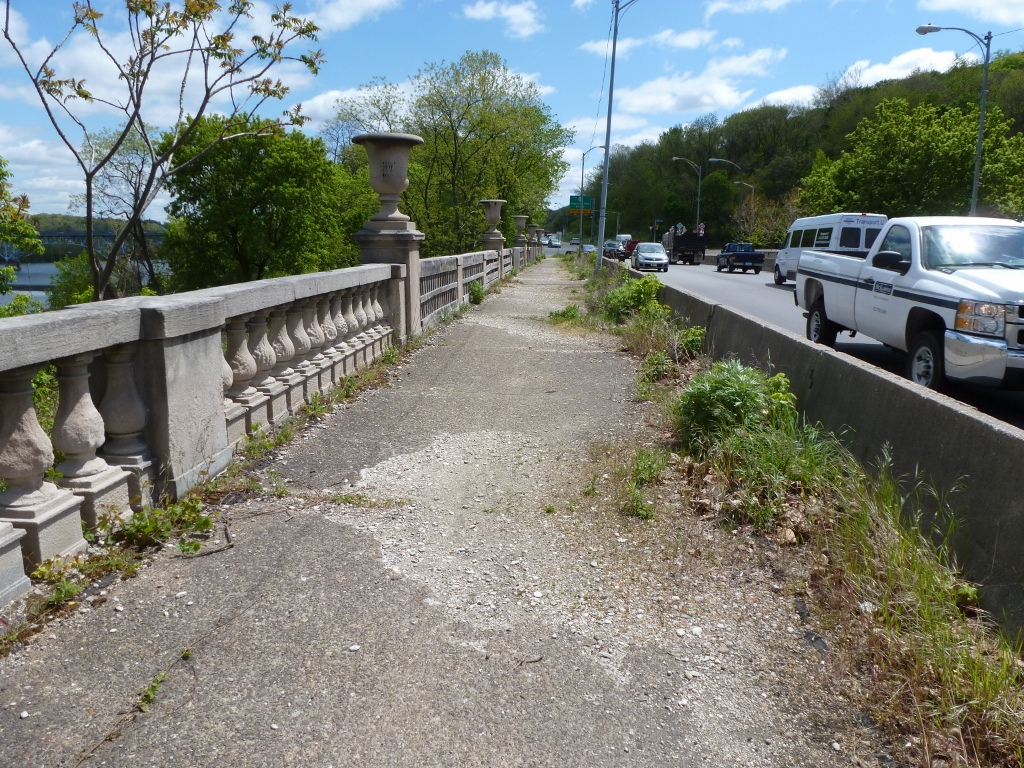
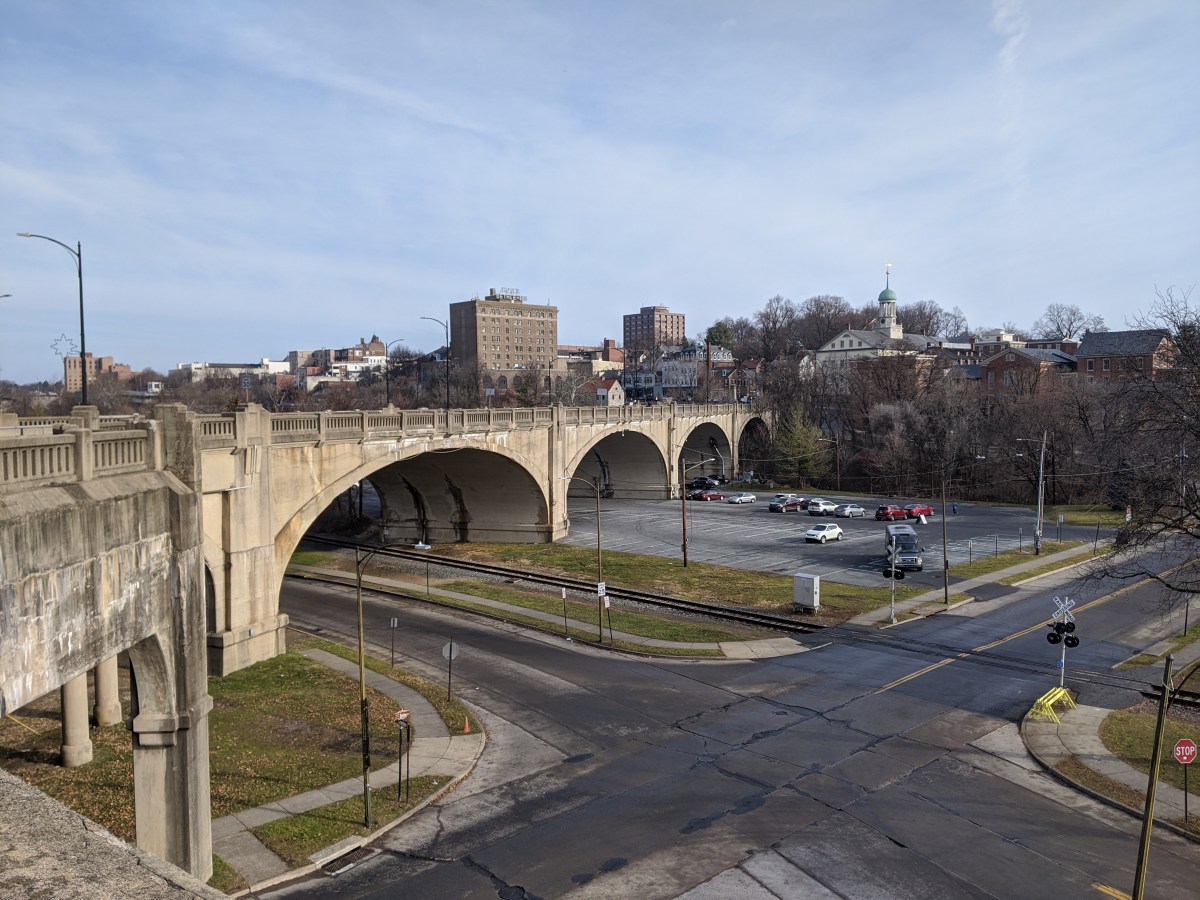
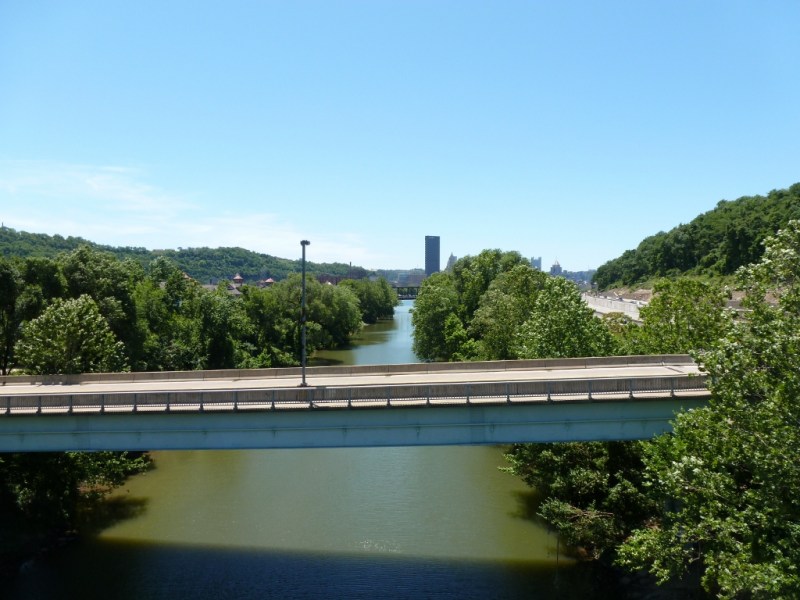
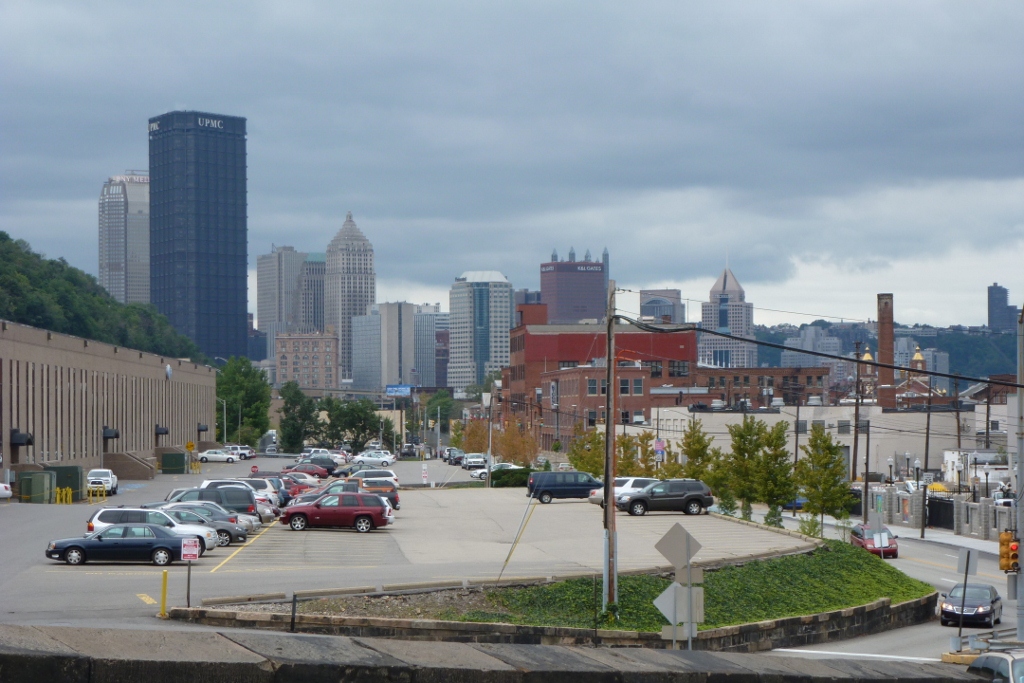
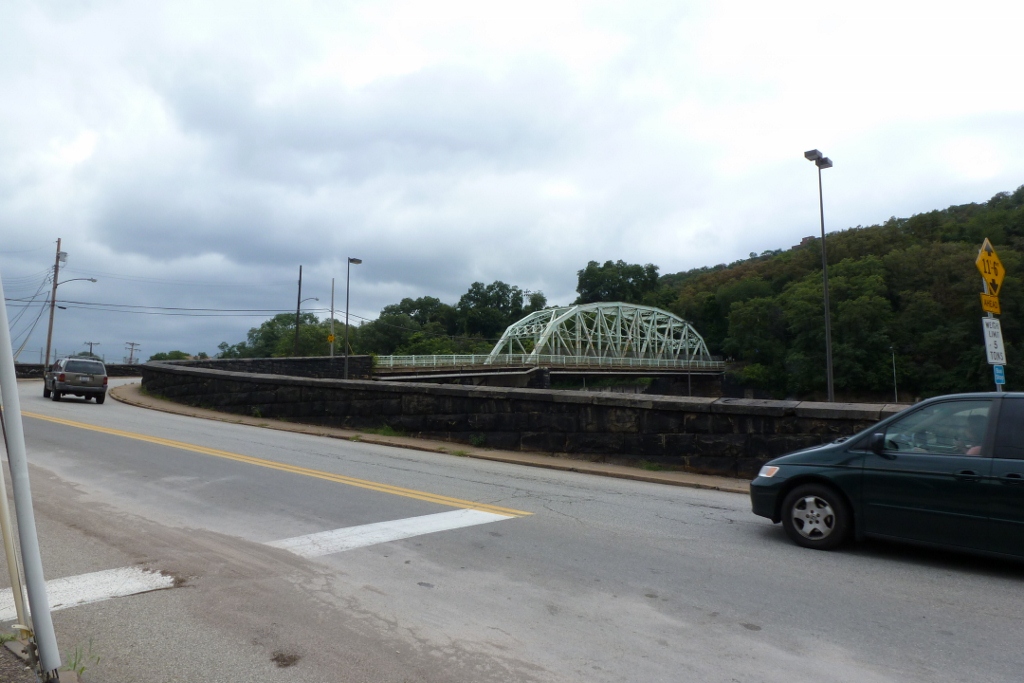
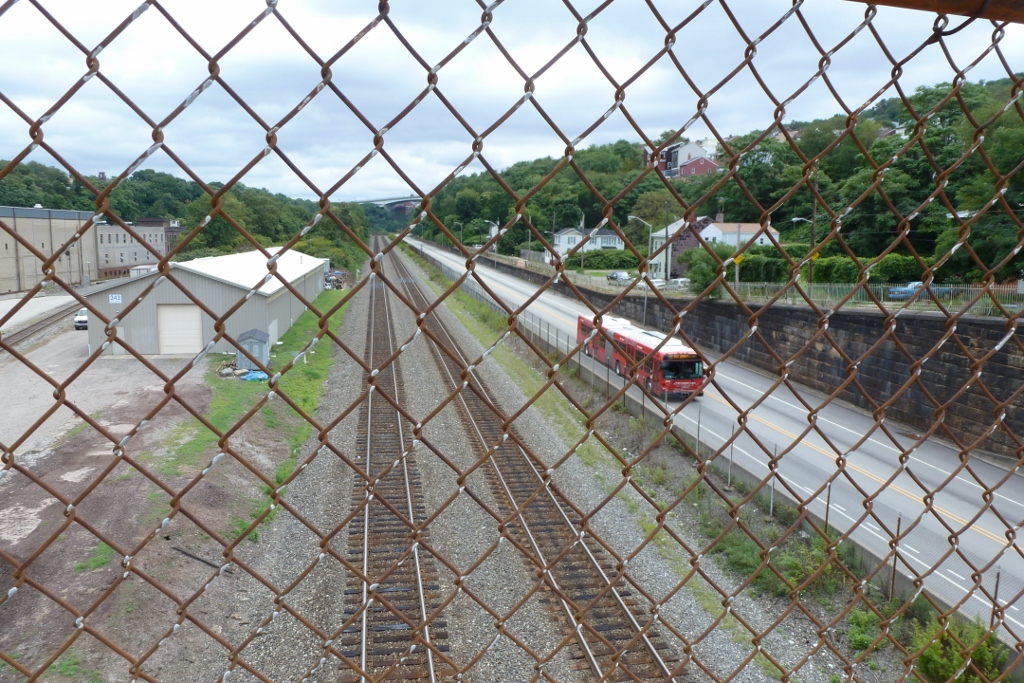
The 28th Street Bridge is one of Polish Hill’s two points of access to the lower regions between it and the Allegheny River, the second is the Herron Street Bridge (see post).  This bridge is also the last pedestrian accessible bridge across the busway before downtown.  Several of the views from this bridge are similar to, but better than, the ones from the Herron Street Bridge.

For instance, the images of downtown from the 28th Street Bridge have fewer non-downtown buildings blocking the view than those from the Herron Street Bridge.

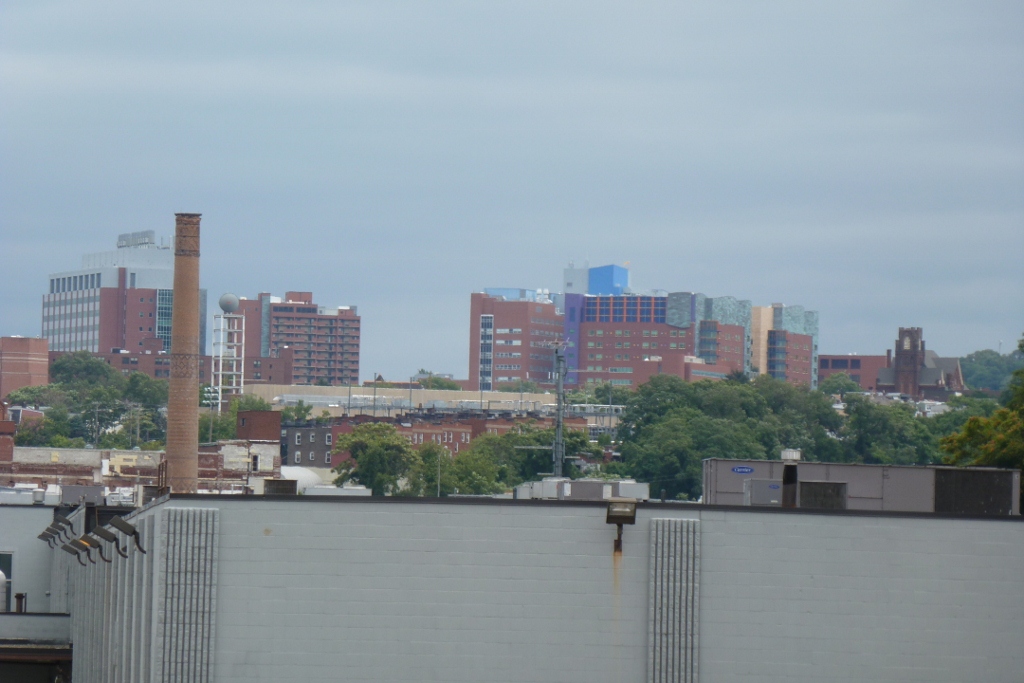
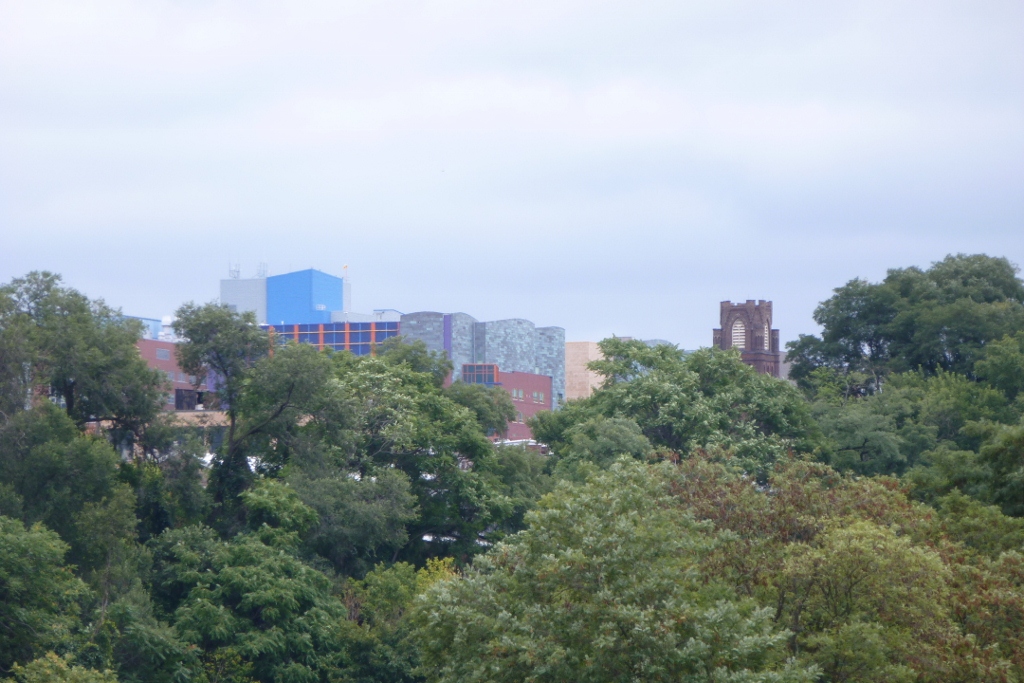
Also, the Children’s Hospital and Choir Loft Condominiums are visible from both bridges, but on the Herron Street Bridge only the tops of the buildings were visible while from the 28th Street Bridge most of the buildings are visible.

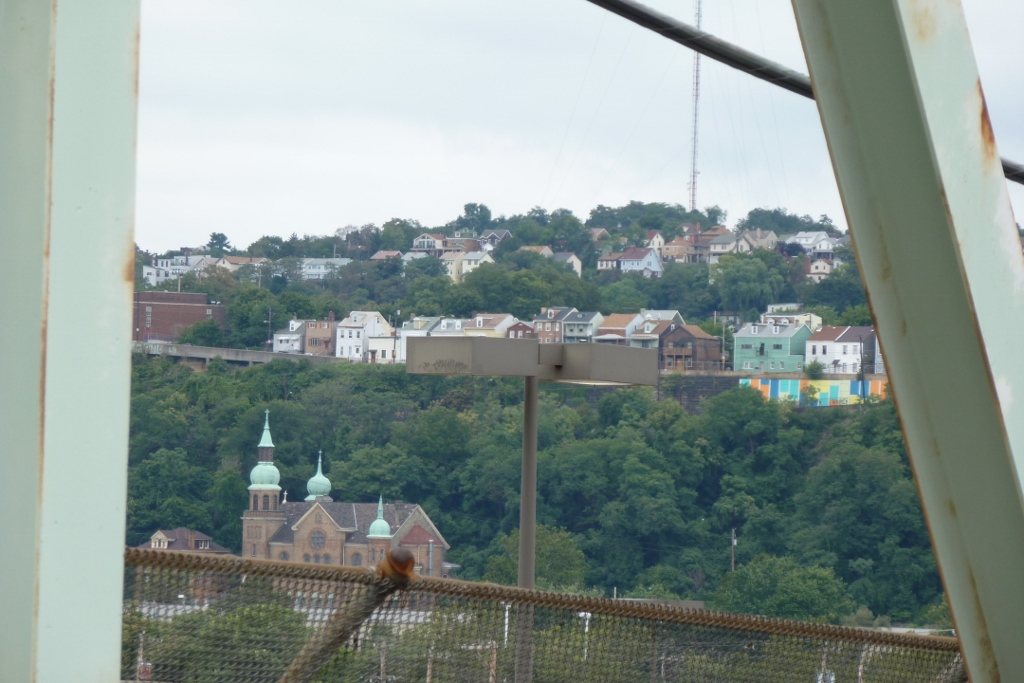
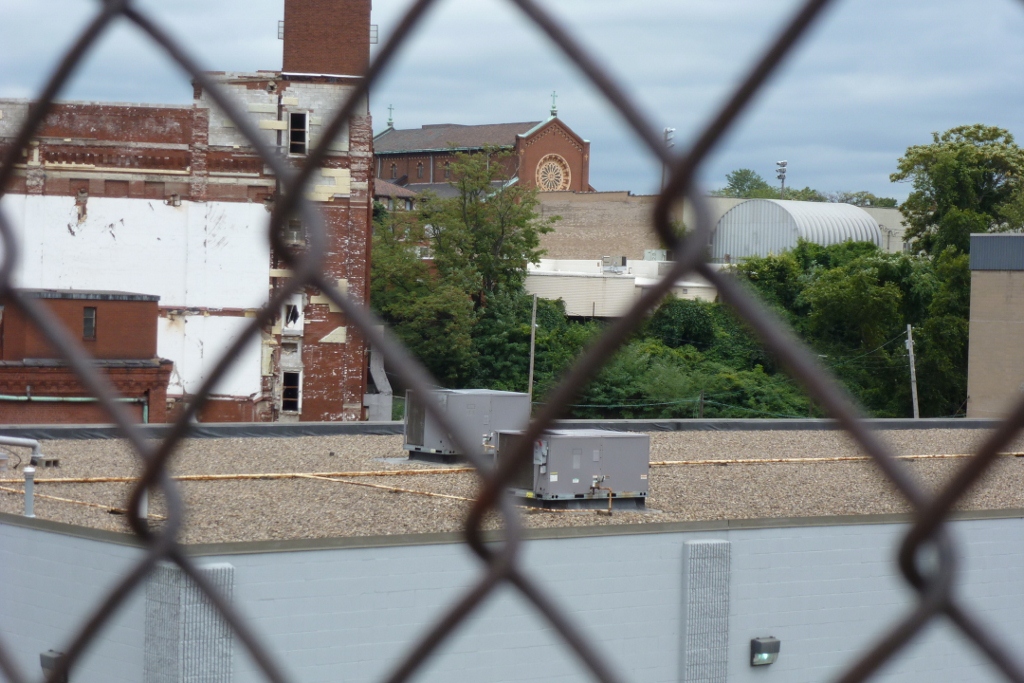
Across the river in Troy Hill, another site of contention within the city is visible.  The former St. Nicholas Church pictured above is the sister to the St. Nicholas Church I saw from the 40th Street Bridge (see post), has been vacant since 2004, and has been locked in a battle between preservationists and the parish for over a year.  The parish wants to demolish the building that it cannot afford to maintain and many people have called an eyesore, while the preservationists want to preserve the building.  This summer a county judge ruled in favor of the parish (see article), but the city has threatened to appeal this decision (see article).  The building is certainly architecturally interesting, however it is in a horrible location, smack up against route 28, which I believe provides the only access to the building.

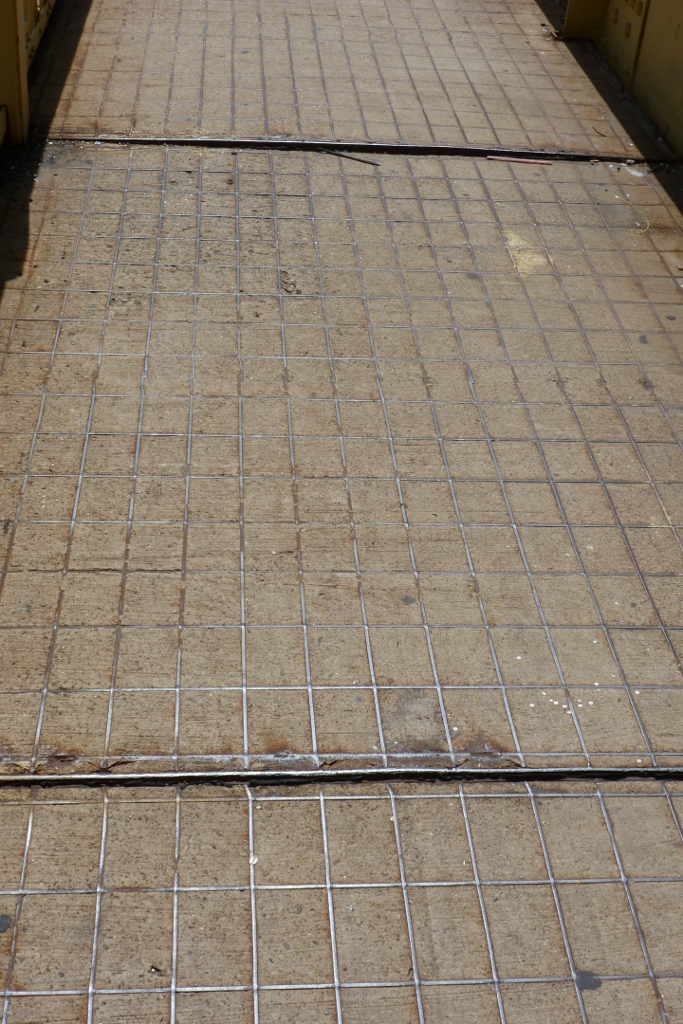
Earlier this summer, when I was talking with someone about my project to walk the bridges of Pittsburgh, he asked me which bridge was my favorite so far.  I hadn’t thought about it before, but when he asked, I decided that the Heth’s Run Bridge was my favorite because its design and its existence called up many questions (see May 31 and June 9 posts).  Now I would say that the 28th Street Bridge is my favorite, despite the fact that it is rusting, the sidewalk is crumbling, and it has the cage-like fence I generally dislike.  I think the bridge is rather cute (if a bridge can be called cute)….Or perhaps I like it so much because it has a stone-lined approach.  I love stone.

Busway Bridges: Herron Avenue

Polish Hill, the neighborhood which is home to the Immaculate Heart of Mary’s Church I’ve pointed out in some posts (see 31st Street Bridge and A Sidewalk to Nowhere), has only two points of access to the lower ground along the Allegheny River.  These are the Herron Avenue Bridge (above) and the 28th Street Bridge (see post) which cross over the busway and parallel railroad tracks to reach Lawrenceville and The Strip District, respectively.

There are a few sites of interest from the Herron Avenue Bridge.  The first of which is the former Iron City Brewery site, which up until a few years ago was the oldest (and only remaining) brewery within the city limits.  It closed and the site has been vacant ever since.  This summer, it became a site of contention.  The property was purchased earlier in the year by a development company, who this summer demolished some of the buildings on the site.  The site is a designated historic landmark, but the company received permission to demolish one building that was structurally unsound.  As I read it in articles in the Post-Gazette and elsewhere, the company said that when this building was demolished others became unstable requiring immediate demolition.  The Lawrenceville Stakeholders Historic Preservation Committee petitioned the city to site the company for unauthorized demolitions.  At the end of August, the development company was fined $20,000 for the demolitions (see article).  Despite the argument over the demolitions, the company and the neighborhood are supposedly working together to come up with a plan to (re)develop the site.

Also visible from the bridge are two of Pittsburgh’s repurposed churches.  The one in the first picture is the Church Brew Works, the city’s most infamous adaptive reuse of a church building.  The one in the second picture is the Choir Loft Condominiums which have been visible from other bridges as well (see Bloomfield Bridge and 31st Street Bridge posts).

Other views from this bridge show downtown and the busway.

Homestead High Level Bridge

I got off the bus a stop or two before the Homestead High Level Bridge (aka Homestead Grays Bridge).  As I walked down Brown’s Hill Road, I was unpleasantly surprised to find that my sidewalk turned into a drain.  From a distance it looked like the sidewalk continued all the way to the bridge as it was the same material and same width the whole way down.  However, at one point it suddenly changed from being a flat sidewalk to a v-shaped drain.  Fortunately it had not rained recently, so the drain was dry and I was able to continue on my way.  If I were a person with a mobility disability trying to get down to the bridge, this would have presented a serious problem. There was no warning for this change and the nearest traffic light was some distance back uphill (because of the traffic level this is not a road where it is wise for any person to attempt to j-walk).  I did not walk on the other side of the road, so I am only assuming that the sidewalk there would be accessible (that is, not turn into a drain).

The walk across the bridge itself was fine.  There is sidewalk on both sides and no fence to cage you in or to block the views.  It was a windy crossing, which reminded me that every time I’ve walked the Highland Park Bridge, I’ve noticed the wind.  It made me wonder if there is something special about the location of these two bridges or if it is merely coincidence that they are windy.  One factor in common between the bridges is that there are the last bridges within the city on their respective rivers when traveling away from downtown.

There are several interesting sites visible from this bridge (most of which are not within the boundaries of the city of Pittsburgh).  First is the view above of Homestead.  In this shot there are five churches visible, just outside the frame are three more to the left and one more to the right, within several additional churches just a little farther out from this core.  I find the close proximity of so many churches interesting first because it is a clear indicator of the past of this town (a major mill town with numerous immigrant groups) and second because about half of these church buildings are vacant or for sale.  It is a dream of mine to create a master plan for adapting these churches to new uses that complement each other, address some of the needs of the town and act as a productive catalyst for lifting the town out of decay.  As I still haven’t figured out what these uses would be or how to implement the adaption, it currently remains a dream.

A project that I’ve heard was supposed to lead to the revitalization of Homestead was the creation of the Waterfront Mall on the former Homestead Steel Works site (originally part of the Carnegie steel empire before being sold to US Steel).  The revitalization plan did not work out and it is popular to criticize the design of the mall and point out all the reasons for this failure.  The most glaring reason is that the roads were designed so that people coming from the city can completely avoid going into the town when going to the mall.

Another negative factor about the mall, which doesn’t necessarily have any effect on the potential to revitalize the surrounding area, is the limited walkability of the site.  It drives me nuts and definitely is a major factor curtailing my use of the mall.  Part of the mall, pictured above, is walking friendly.  However, as someone once pointed out to me, this is where all the expensive stores are and chances are that people shopping here have cars.  On the other side of the bridge and across a couple parking lots are the rest of the shops laid out in a long string of big box stores including Target and the grocery store (which as the same helpful person pointed out are frequented by people without cars).  I have nightmares of the long trek lugging my growing number of purchases all over this site as I travel between stores and then try to find a bus stop that will take me out of this barren landscape toward home (an absurdly difficult feat).

The image above shows the never-ending parking lots along the long string of stores.  From this view it looks far more green than it feels on the ground.  One other aspect of interest is the black shapes above the America flag, which are the abandoned structures of the Carrie Furnace, one of the few remnants from the Pittsburgh region’s industrial and steel past.  I say “abandoned” but this perhaps is not an accurate term as there are plans and efforts underway to use the site.  An August article in the Post-Gazette discusses the efforts of volunteers to save the site and turn it into a museum.  The first half of another article from June talks about development plans for turning the land surrounding the furnace into an office/industrial park.

A final site of interest visible from the Homestead High Level Bridge is the slag heap which is now home to the “Somerset at Frick Park” housing development.  When I get caught up with posting about the walks I’ve done since starting my blog, I’d like to write about some I took before my blog began, including the hike through Frick Park and over this slag heap.  I suppose given my interest in seeing vacant property, including brownfields, within a city reused, I should be pleased with this development.  I think I’m getting a bit hung up on the irony of the site–once a dump site for the refuse of mines and industrial sites, now the site of luxury homes and condominiums.

Roebling and the Smithfield Street Bridge

For several years, I had been under the impression that Roebling has designed/built the current Smithfield Street Bridge in Pittsburgh. This summer I discovered that while he certainly designed one of the bridges at this location (as well as several others in the city including an earlier rendition of the 9th Street Bridge) he did not create the current structure–here or elsewhere in the city.  The current bridge was built in the 1880s by Gustav Lindenthal.  However, according to Wikipedia, a part of Roebling’s bridge still stands as the piers were the ones built for his bridge.

As I paused in my walk across the Smithfield Street Bridge to take photos of the views off either side, a Segway tour passed.  These seem to be an ever increasing site in downtown Pittsburgh.  While walking around downtown last week, I nearly got run over by a straggler on a Segway who had some trouble navigating the turns.

The Smithfield Street Bridge connects downtown with Station Square, which I believe was one of the earliest industrial sites turned into an entertainment complex in Pittsburgh.  (Later developments of this kind are South Side Works and the Waterfront.)  The Smithfield Street Bridge is probably the most heavily used by pedestrians of any of the bridges in the city.  This is in large part because there is a large parking lot attached to Station Square, which many people who work downtown park in.  I believe downtown workers are also attracted by the restaurants and river trail which can be reached by walking this bridge.  An additional attraction for walking across this bridge from downtown is the Monongahela Incline, the base of which is across the street from Station Square.

I feel like I also hear people talk excitedly about walking the Smithfield Street Bridge as an event in and of itself.  I assume this is in part due to the fact that the sidewalks are nice and wide and there is no mesh fence caging the pedestrians in (see my complaints in earlier posts starting with the Highland Park Bridge, but not perfected until I got to the busway bridges such as the Millvale Avenue Bridge).  A larger part of the reason for this may be the bridge’s location and uniqueness.  One factor distinguishing this bridge from others in the city is the fact that it is basically flat and at street level.  Most of the other pedestrian accessible bridges that cross the rivers have inclines/declines.  Another distinguishing factor is its blue color.  I believe it is the only bridge in the city with this particular deep blue color (the 31st Street Bridge is the only other one I can think of that is any shade of blue).  This is especially significant as the Smithfield Street Bridge is located in the heart of downtown where all vehicular river bridges, except this one, are a golden-yellow color.  The third significant factor about this bridge is its shape.  All the golden bridges are either suspension bridges (see the 6th, 7th, 9th, and 10th Street bridges) or semi-circular truss bridges (see Fort Pitt, Fort Duquesne, 16th Street, and West End bridges).  The Smithfield Street Bridge is shaped like two close-set, narrow eyes.

To wrap up this post, I’ll just add that I like this view of downtown.  Perhaps I like it because of the smaller scale of the buildings seen here or for the fact that it captures some of the remnants of the old downtown or simply because it makes a nice composition for a photograph.

Glenwood Bridge

While many characteristics are shared between the Pittsburgh bridges, each has its own unique combination.  The Glenwood Bridge, built in 1966 across the Monongahela, was one of the nicer ones to walk across, but I had a hard time finding a reason for anyone to walk it.

The Glenwood Bridge perhaps has the most in common with the Highland Park Bridge.  Both bridges cross over industrial land uses.  On the north shore of the Monongahela, the Glenwood Bridge crosses over a railroad yard and on the south shore, the bridge crosses over a scrap yard.  The Highland Park Bridge also crosses a scrap yard, but while that one seems to focus on braking up the pieces of scrap metal, the one at the Glenwood Bridge seems to sort it and condense it into cubes.

While the Glenwood Bridge has some similarities with the Highland Park Bridge, there are also some significant differences.  Cars travel very fast across this bridge, but they are much more spread out than on the Highland Park Bridge.  Also, the sidewalk is very broad and clear of debris (a stark contrast to the Highland Park Bridge where the sidewalk looks similar but is narrow and collects debris).  This bridge has the mesh fence that I usually rant against as making me feel caged in, but in this case the fence does not curve inward at the top as many of the others do like the Millvale, Negley and Aiken Avenue bridges.  As a result of the straight fence and the width of the sidewalk, I did not feel caged in on this bridge.

Unfortunately the southern end of the bridge does not live up to the standard set by the rest of it.  Like the Birmingham Bridge, the sidewalk leaves the bridge before its end and goes down a stairway to ground level.  The stairs are not nearly as well-maintained as the rest of the sidewalk.  They are overgrown, broken and covered with litter.  The sidewalk at the bottom only allows one choice of direction for the pedestrian: to go left underneath the bridge.  Following this sidewalk (which is covered in mud and litter in places), the pedestrian crosses another short bridge (carrying a roadway over a roadway) and comes to another stairway in much worse condition than the one above.

This area is a labyrinth of high speed roadways.  The picture above is the second bridge taken from the top of the second stairway.  These stairs lead to a slower speed road that followed inland leads to some residences and followed toward the river leads to Sandcastle or the scrap yard the Glenwood Bridge crosses.

Given the unpleasantness of the southern end of the bridge for pedestrians and the fact that the main use of that area is an interchange for cars between various high speed roads, I could see very little incentive or reason for pedestrians to actually use the nice, broad, clear sidewalk of the Glenwood Bridge.  The only reason I could think of was perhaps if residents of the Hazelwood neighborhood wanted to walk to Sandcastle (the waterpark on the other side of the river).

This lack of purpose for the sidewalks on the Glenwood Bridge is intriguing.  The bridge has two wide sidewalks on either side, whereas the Highland Park and Birmingham bridges have sidewalks only on one side.  It doesn’t seem likely that whoever built the bridge would have wasted money on two such broad sidewalks if they didn’t expect them to be used.  Perhaps when the bridge was built in the 1960s, people still used walking as a common mode of transportation to work.  At that time period, I believe that there was much more industrial work to be found along this part of the river.  I am not as familiar with this area of the Monongahela as I am with parts farther upstream and downstream, but given that in both directions were large steel mills, this part of the river probably also had some mills or other industry.  Therefore the sidewalks might originally have been in high demand as a commuter path.

Fort Pitt Bridge

Pittsburgh has the Three Sisters Bridges with the 6th, 7th, and 9th Street bridges, but I think it should also have the Twin Brothers Bridges with the Fort Pitt and Fort Duquesne (see post) bridges.  The two Fort bridges look very much alike as I think my featured images for the bridges show.  The roadway connecting them across the Point further suggests a close relationship between the bridges as do the names themselves.

To be honest, I had not been looking forward to my walk across the Fort Pitt Bridge.  It carries a freeway and the southern end connects to a highway and dirt.  Last spring I was at a conference at a downtown hotel and overheard a hotel employee giving directions to some out-of-town visitors to the Duquesne Incline, which involved crossing the Fort Pitt Bridge and walking along West Carson Street.  I couldn’t believe what I was hearing.  I didn’t understand why anyone would send a tourist along that route, as you always want to show tourists the best side of a city.  If the tourists had asked me, I would have sent them across the Smithfield Street Bridge and up the Monongahela Incline.  Then I would have recommended they walk along Grandview Avenue to the observation platform by the Duquesne Incline as it provides a more iconic view of the city.

After walking the route across the Fort Pitt Bridge to the Duquesne Incline myself, I don’t feel so bad about tourists being sent on it.  It wasn’t that bad of a walk and the view from the top is one of the best in the city.

I’ve probably made it quite clear by now that I really don’t like the fenced in bridges.  (See for instance thee Busway Bridges posts for Shadyside, East Liberty, and Millvale Avenue.)  The Fort Pitt Bridge sidewalk is wide and open, though the traffic is a little loud and it might have been hard to hear if I had wanted to have a conversation with a walking buddy.  The worst part was the stretch pictured above alongside the Fort Pitt Museum.

I enjoyed the views from the bridge as I never see the city from this angle.  It certainly does not present the most exciting view of the downtown buildings, but that was one of my goals with this project—to see all the views of downtown.

While crossing the bridge, I realized that I never spend any time on the Monongahela side of the Point.  I’m not sure why, but I always end up on the Allegheny side (or at the tip of the Point before it was under construction) when I come to the park.  This made me realize I really need to explore Point State Park more as the Monongahela side looks quite pleasant.

Renaming Bridges

There is a proposal to rename at least one of Pittsburgh’s bridges.  Apparently, Allegheny County has been considering renaming its bridges for at least the last year.  According to a July 25th article in the Post-Gazette, the county council’s public works committee passed a motion to rename the 16th Street Bridge after the historian David McCullough, who is from Pittsburgh.  I must not have read the paper that day as I’m sure the headline would have grabbed my attention: “Allegheny County May Rename the 16th Street Bridge for McCullough.”

The first that I became aware of this proposal was Wednesday this week (Aug. 22nd) when another article announced that the whole county council voted on the proposal and passed it.  This article does not commit to which bridge will be renamed.  Though it later says that the 16th Street bridge is the most likely, it starts by saying “a major span” may be named after McCullough.  This really got me interested.  As I’ve discovered from walking and writing about Pittsburgh’s bridges, many of the bridges already have alternative names that honor someone.  I believe that most people in Pittsburgh are aware that the Three Sisters Bridges have alternative names, but I don’t think people are as aware that the 40th Street Bridge also has an alternative name.  So, I wondered, which “major spans” in Pittsburgh are left to be renamed?

I believe that “major spans” probably translates to bridges over the three rivers.  Here follows a list of the bridges spanning the rivers and any alternative names they have.

On the Allegheny River:

Fort Duquesne Bridge – The Bridge to Nowhere (see post)

6th Street Bridge – Roberto Clemente Bridge (see post)

7th Street Bridge – Andy Warhol Bridge (see post)

9th Street Bridge – Rachel Carson Bridge (see post)

Fort Wayne Railroad Bridge

Veteran’s Bridge (see post)

16th Street Bridge – David McCullough Bridge (see post)

31st Street Bridge – William Raymond Prom Memorial Bridge (see post)

33rd Street Railroad Bridge – B&O Railroad Bridge

40th Street Bridge – Washington’s Crossing Bridge (see post)

62nd Street Bridge – R. D. Fleming Bridge (see post)

Highland Park Bridge (see post)

Brilliant Branch Railroad Bridge

On the Monongahela River:

Fort Pitt Bridge-Parkway West (see post)

Smithfield Street Bridge (see post)

Monongahela Bridge – Panhandle Bridge (railroad)

Liberty Bridge-South Hills Bridge

South 10th Street Bridge – Philip Murray Bridge (see post)

Birmingham Bridge (see post and post)

Monongahela Connecting Railroad Bridge (see post)

Hot Metal Bridge (see post)

Glenwood Bridge (see post)

Bridge Number 73 – Glenwood Bridge: B&O Railroad

Homestead Grays Bridge – Homestead High Level Bridge (see post)

On the Ohio River:

West End Bridge – West End/North Side Bridge

Ohio Connecting Railroad Bridge

McKees Rocks Bridge

The 16th, 31st, and 10th Street Bridges are the most likely candidates for being renamed.  Other bridges like the Highland Park Bridge and the West End Bridge could be renamed to honor someone or something.  Some bridges with only one name such as the Hot Metal and Veteran’s bridges already honor or refer to something historical and it would be a shame to replace with a new name.  (Of course not all of these bridges are within the county’s jurisdiction.)

While I am talking about bridge names, I realize I should have had a discussion about the name of the Birmingham Bridge when I posted about that bridge as its name is somewhat significant.  Pittsburgh’s South Side, before it was annexed to the city, was the village of Birmingham.  So this is another bridge that should not be renamed as this tidbit of history could then be easier to lose.

The Aug. 22nd article in the paper said that there is an unofficial suggestion that a bridge should be renamed for Art Rooney, Sr., the founding owner of the Steelers.  If McCullough gets the 16th Street Bridge, perhaps the West End Bridge or 31st Street Bridge should be the one to be renamed for Rooney as he lived on the North Side and they are the only significant bridges left that connect to that part of Pittsburgh.

Another article of interest relating to the discussion of renaming bridges was published yesterday.  It discusses the dilemma of whether or not a living person should be honored in such a way.

Bloomfield Bridge

The Bloomfield Bridge towers over much of the surrounding areas thanks to the unique geography of Pittsburgh.  As I discussed in Pedestrian Bridges: Bigelow Boulevard, the Bloomfield Bridge is an a location that could lend itself to higher pedestrian traffic than some of the bridges I’ve walked because of its close proximity to a grocery store and a drug store on one side and residences on the other.  However, the accessibility for the residents is limited and not inviting.  Car traffic on the bridge and on Bigelow Blvd tend to have higher speeds, particularly as Bigelow Blvd is used like an expressway to get from one part of town to another.

Despite the issues of limited accessibility and the non-pedestrian friendliness of the bridge, it was worth the walk across for the various views of the city available from this bridge.  As I mention in my introductory post about my plan to walk Pittsburgh’s bridges, what I was already enjoying about the project was the various views of the city from the beautiful to the industrial and developing a greater awareness and appreciation for the varied geography of the city.  The Bloomfield Bridge covers both of these ideas.

I refer to the Bloomfield Bridge in the introductory post linked above because of the “underbelly”-like view it still provides of Pittsburgh.  While much of the city is being shined and cleaned up–such as downtown and East Liberty–there are still places of what I like to call the nitty-gritty of Pittsburgh.  The Bloomfield Bridge shows one of these areas along the busway.  I’m not sure how all the buildings lined up in the picture above are used, but I believe at least some are junk yards for cars.  I believe the smoke stack in the distance at the end of the line buildings is for the former Iron City Brewery site, which I will talk about more in the post on the Polish Hill bridges.

This view off of the other side of the bridge helps illustrate the extreme changes in geography around the Bloomfield Bridge from the rise on which West Penn Hospital sits (this photo) to the gully where the busway runs (photo above).  I think that the Bloomfield Bridge may offer one of the most open views in the city.  Like the view from the pedestrian bridge across Bigelow, the view east from the Bloomfield Bridge stretches past Bloomfield to East Liberty, Shadyside and beyond.

The view west of the bridge also reaches far: beyond the busway out over the rooftops of the warehouses and factories of The Strip District to the 31st Street Bridge (see post), the Herr’s Island development (see post) and the hills beyond.  There are not many places in Pittsburgh where the view stretches so far in multiple directions.

Part of the neighborhood of Bloomfield continues west of the Bloomfield Bridge.  Just a few blocks from the bridge is Woolslair Elementary School behind which is the Choir Loft Condominiums (formerly a German Evangelical Church).  I pointed out this church in my 31st Street Bridge post.  I explained in my first post about this blog that my current themes in walking are bridges and the adaptive reuse of churches.  This summer I focused mostly on the bridges as I set myself the goal of walking as many of Pittsburgh bridges as I could.  This fall I plan to shift the focus more toward the adaptive reuse of churches, though I will still continue to walk bridges as well.  Once I shift my emphasis, the Choir Loft Condominiums will be among the first adapted churches in Pittsburgh I will discuss.

Pedestrian Bridges: Bigelow Blvd

There is a pedestrian bridge across Bigelow Boulevard at the Bloomfield Bridge.  I walked this bridge before I started this blog and didn’t think to take a picture of the bridge itself.  Its appearance is similar to the Graham Street Pedestrian Bridge (see post) except that the fencing doesn’t connect overhead and does continue along the stairs.

The picture above is from the Bigelow pedestrian bridge looking out over Pittsburgh’s East End.  The large brownish building on the left is West Penn Hospital in Bloomfield.  In the middle of the frame are two white points standing above the other buildings.  These are the steeple of East Liberty Presbyterian Church on the left and the Highland Building, also in East Liberty and designed by Daniel Burnham, on the right.

When I saw this symbol on the pedestrian bridge, I stopped to consider it.  This was the first time I had ever seen this symbol.  I thought whoever put it on this bridge had a very good point.  The only way to access the Bloomfield Bridge from Oakland and the uphill side of Bigelow Boulevard is by the pedestrian bridge, which is only accessible by a set of stairs on either side.  As such anyone with a mobility disability is barred from using the Bloomfield Bridge as a pedestrian.  The way the intersection of the bridge and the boulevard is set up now, it would not be safe for any pedestrian to attempt to cross the streets, let alone one with a disability.  This is a unequal and limiting situation.  There is a grocery store across from the other end of the bridge and a drug store and restaurants within another block.  Up the hill from this side of the bridge is a residential area.  The other end of the Bloomfield Bridge is the residents closest area for essentials found at grocery and drug stores as well as entertainment found at restaurants and bars.  It would be highly convenient for the residents on the hill to be able to walk to this area; however the current situation limits who is able to use this resource.  (Not to mention the ugliness of the bridge and the intersection which probably discourages many people from even considering the short walk across the Bloomfield Bridge.)

The second time I saw this graffiti symbol was on the 16th Street Bridge (see post).  I could not figure out what statement, if any, the 16th Street Bridge one was trying to communicate.  As far as I could tell, that bridge is accessible to any pedestrian with or without mobility issues.  At least there are no stairs to contend with at either end.

Busway Bridges: Shadyside

The Negley Avenue and Aiken Avenue bridges connect the sections of Pittsburgh’s Shadyside neighborhood divided by the busway.  Both were originally built in the 1920s and renovated in the 1970s.  There were at least two previous bridges at Aiken (see 1909 and 1924 photos).  I did not find any images of an earlier bridge on Negley, but there are images of the bridge from 1924 (the year it was built) and from 1965.

Today, these bridges share the feature of the mesh fence protecting the pedestrians from the edge.  The width of the sidewalk on the Aiken Bridge is wide enough to reduce any feelings of being caged in, but on the Negley bridge, the metal girder on one side and the fence on the other enhance the caged feeling for pedestrians.

These bridges are two blocks apart, but because the busway curves they are not visible to each other.  Both do see the Graham Street pedestrian bridge (see post).

This space between the Negley and Aiken bridges is mostly residential.  Next to the Negley Bridge is a condo complex while single family homes line the busway near Aiken Avenue.  On the other sides of the bridges, the area turns more industrial.  The industrial area east of Negley is denser than that west of Aiken.