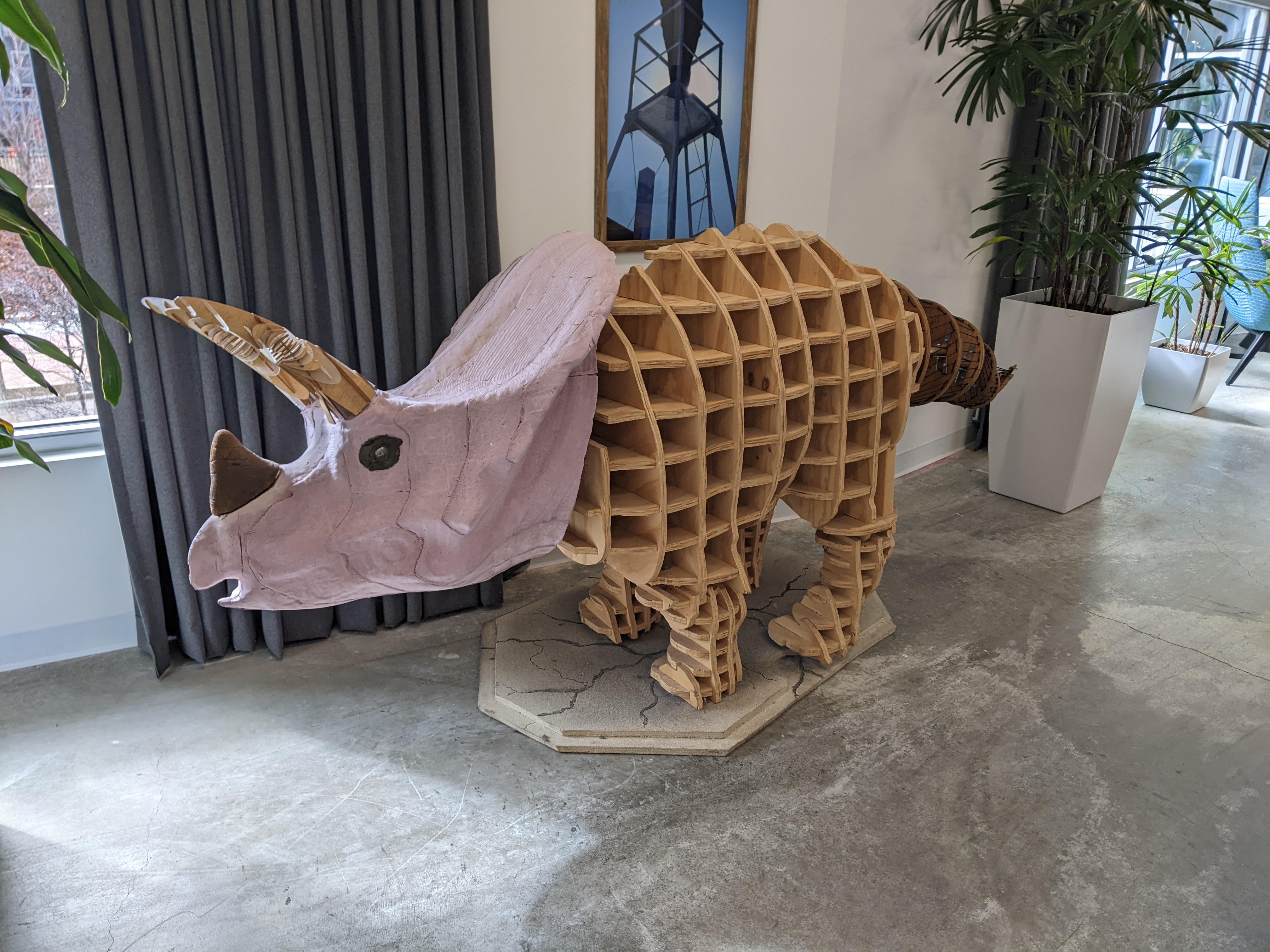
Pittsburgh DinoMite Parade 25

According to the Pittsburgh Business Times, the collapse of the Fern Hollow Bridge in Pittsburgh ranked 4th in the top stories of 2022. Ranked higher were the New Normal (#1), Economic Stressors (#2), and the Shutdown of Tech Startups (#3).
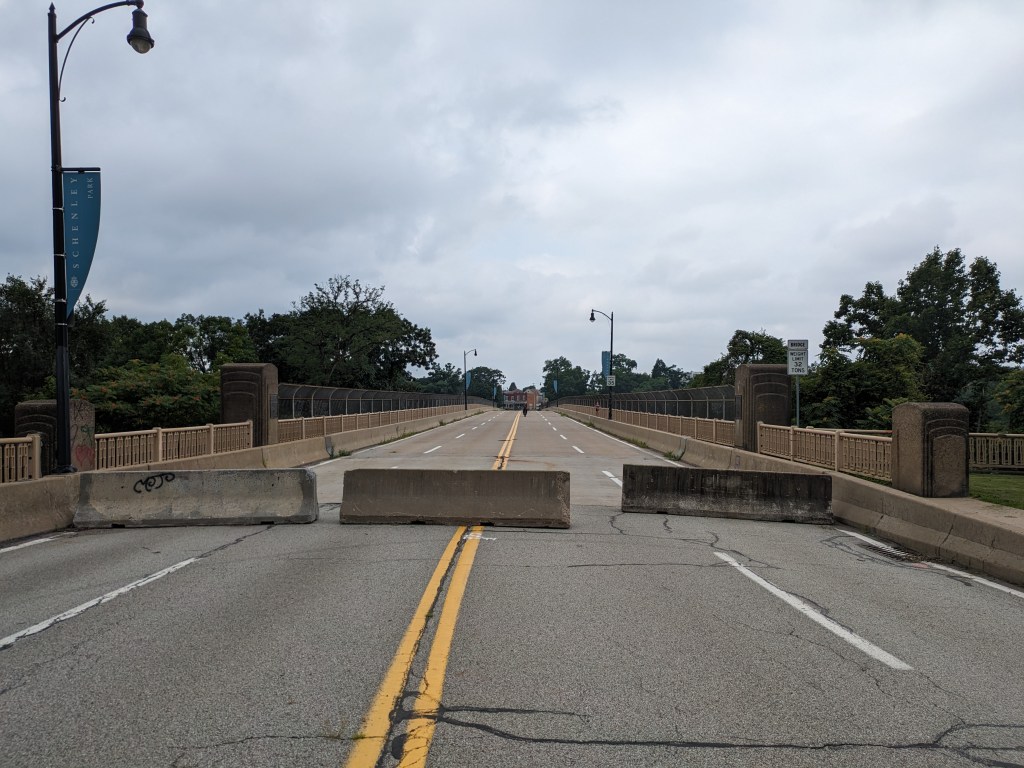
As the first bridge collapse in nearly 100 years within the city limits of Pittsburgh, this remains a top story on urbantraipsing. In the six months since our last look at the bridge, there have been four important updates:
Update 1: Unsurprisingly, the NTSB’s investigation found that a decade of ignoring the calls for maintenance in the annual bridge inspection resulted in the deterioration of the steel structure of the bridge. The findings reference the inspections of bridges of similar construction in Pennsylvania following the collapse of the Fern Hollow Bridge. It noted that while those bridges have also experienced deferred maintenance, none of them are exhibiting deterioration as bad as Fern Hollow’s. The report did express concern that the status of similar bridges outside of Pennsylvania is unknown.
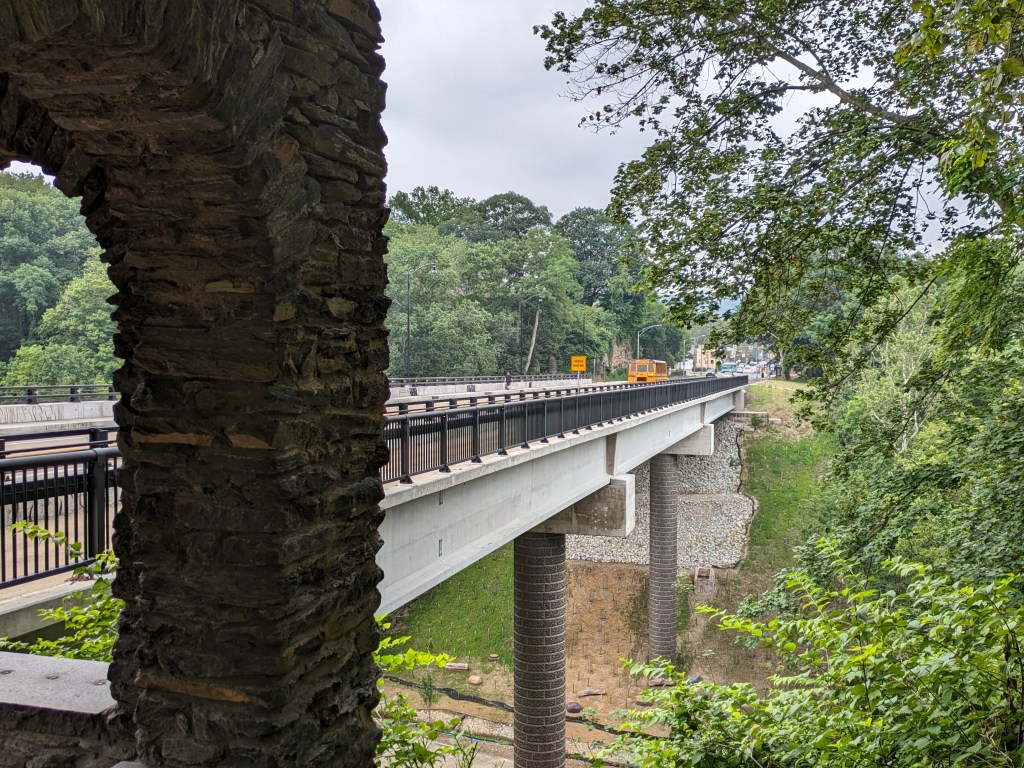
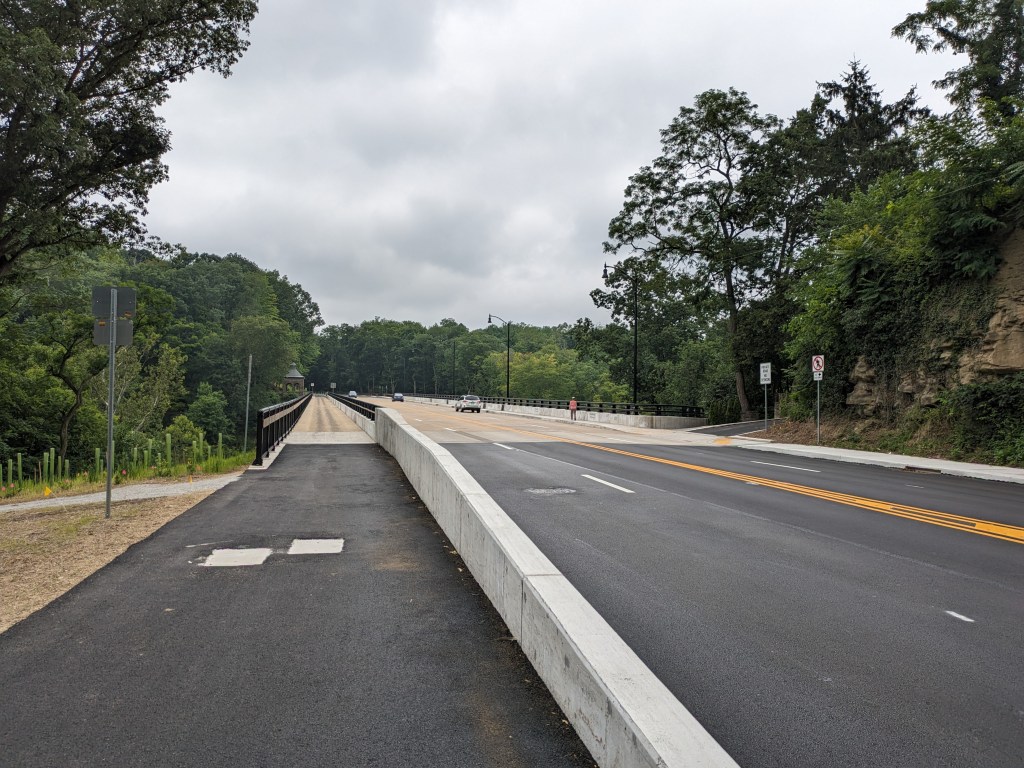
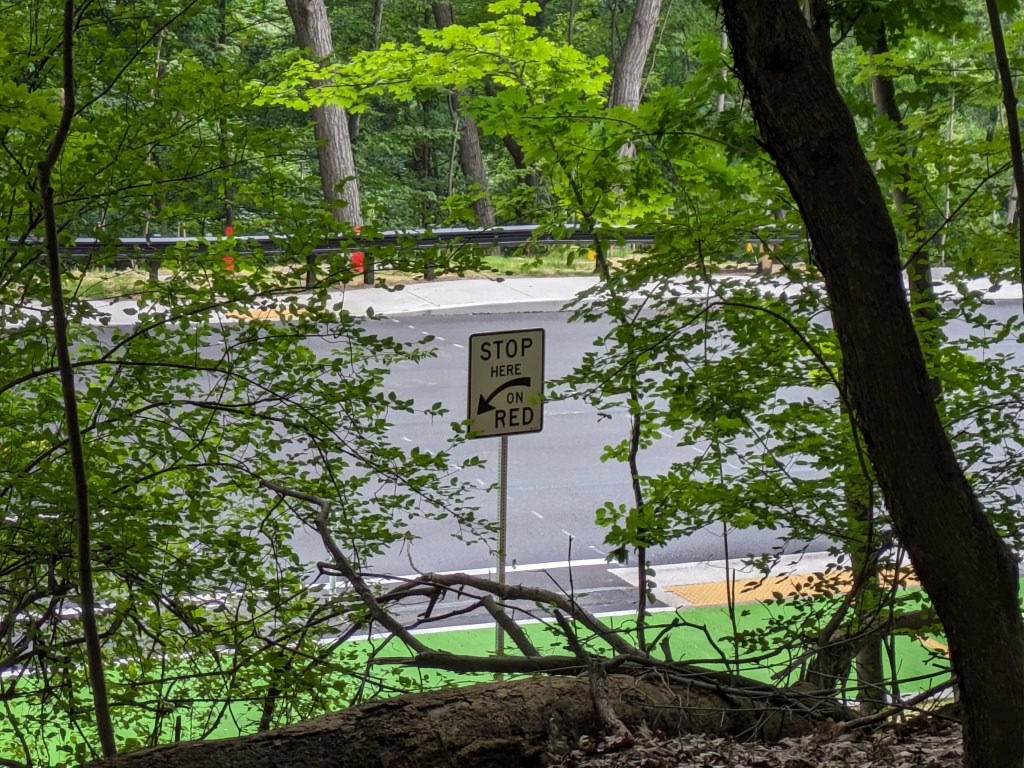
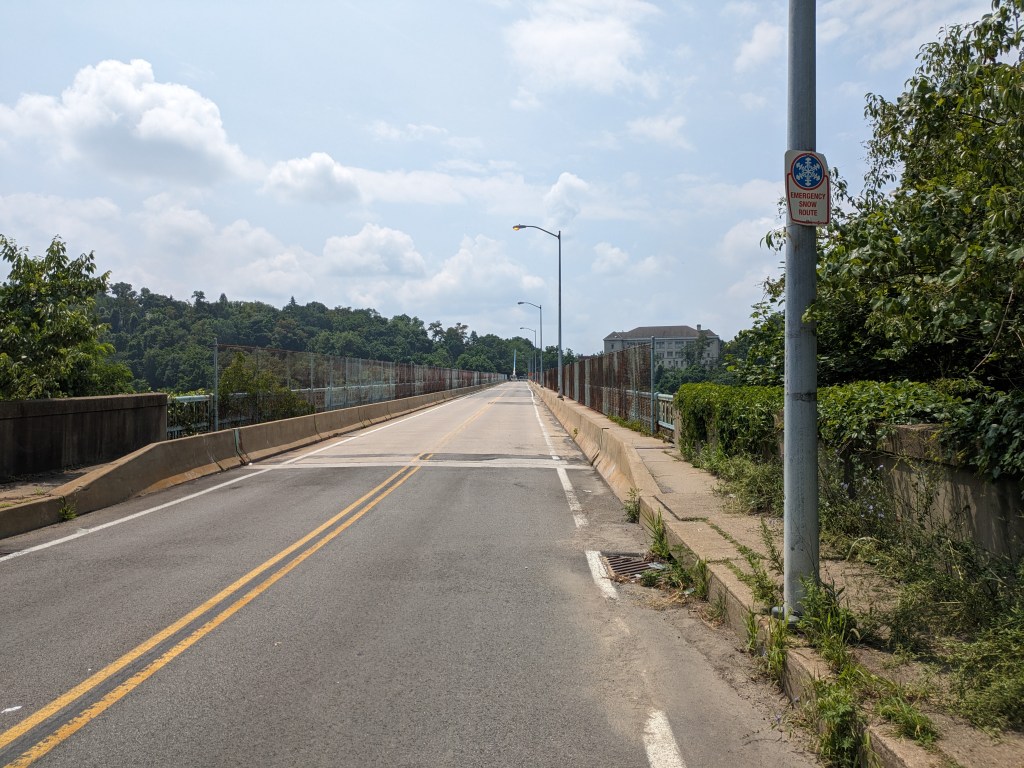
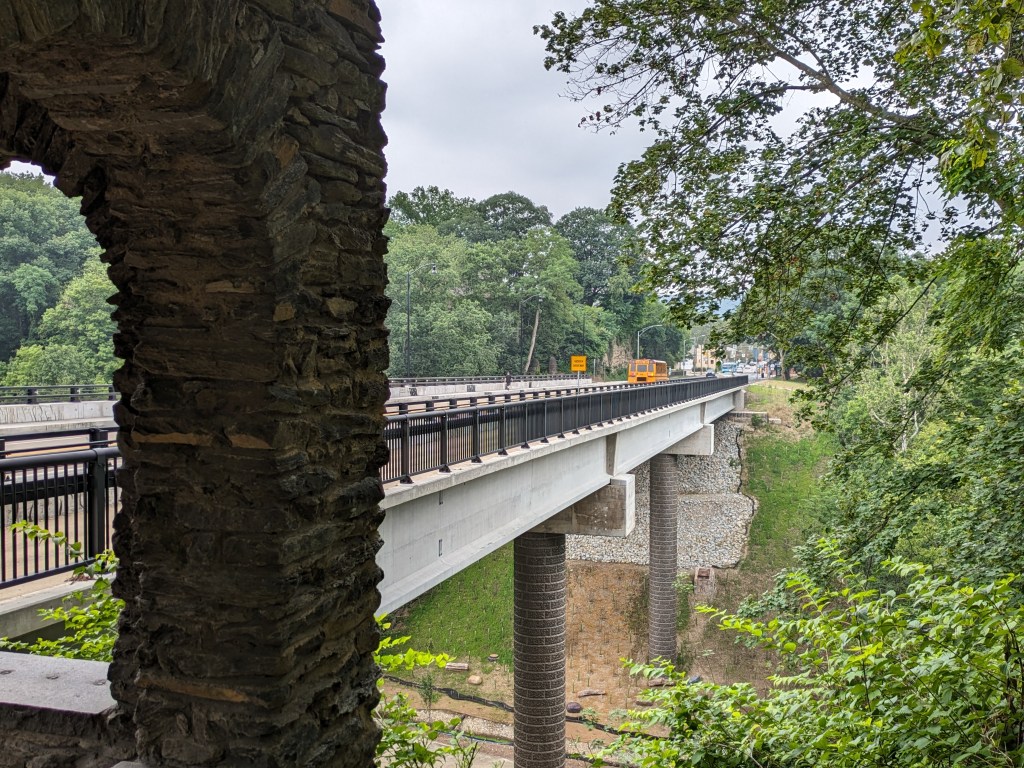
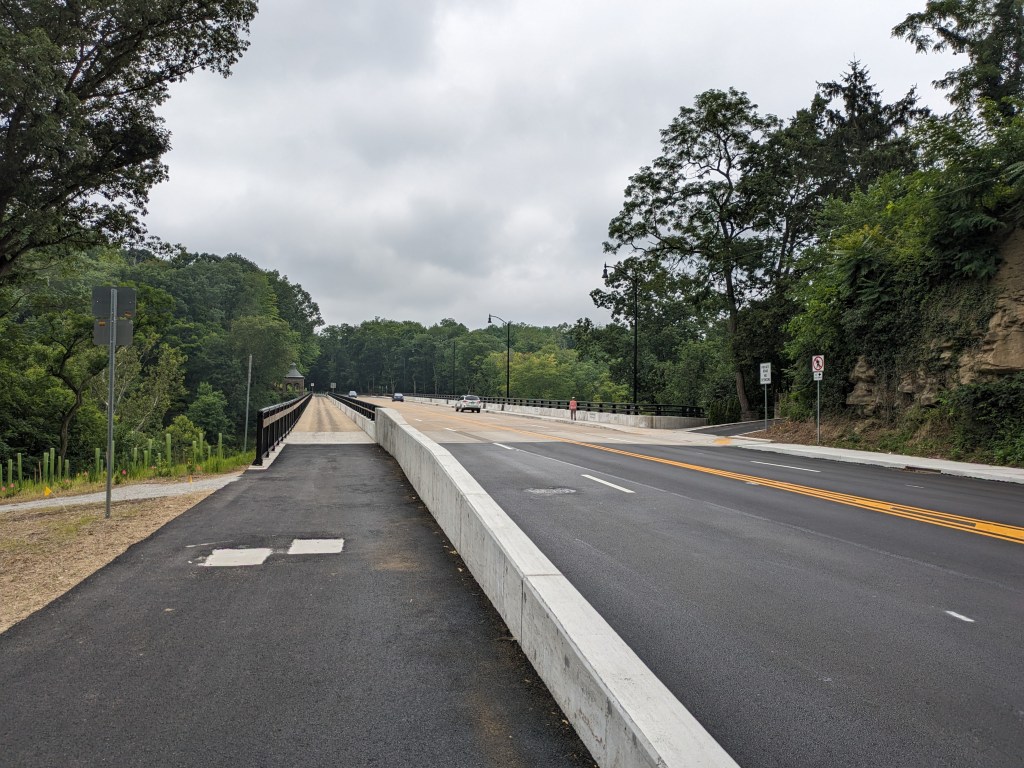
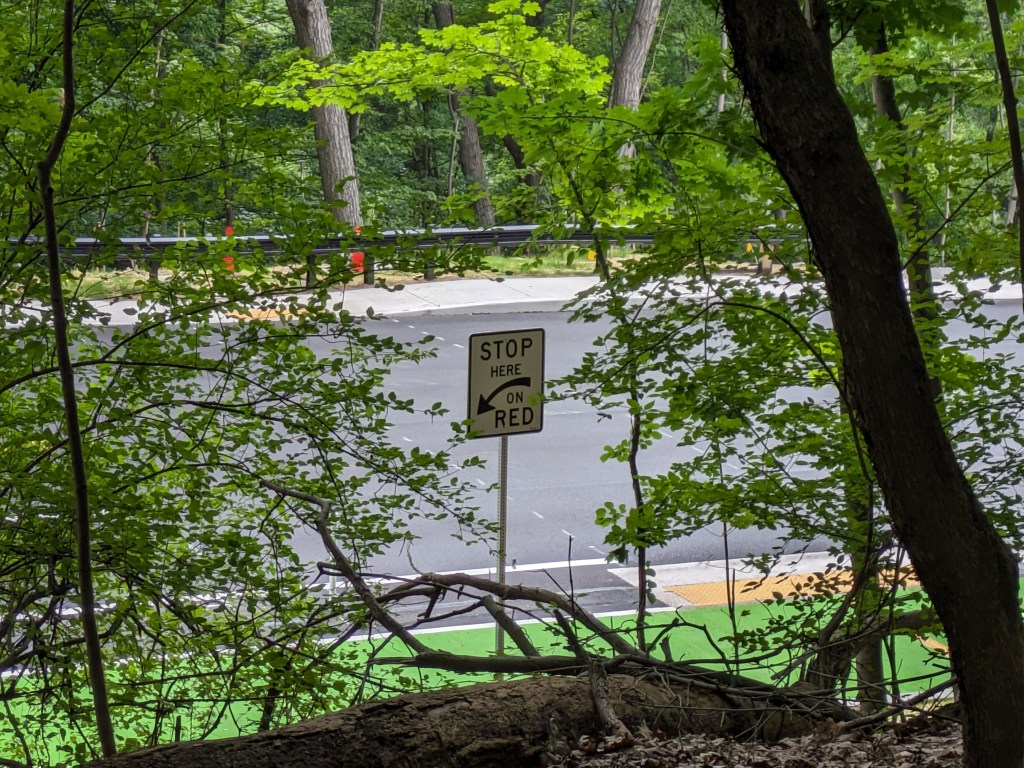
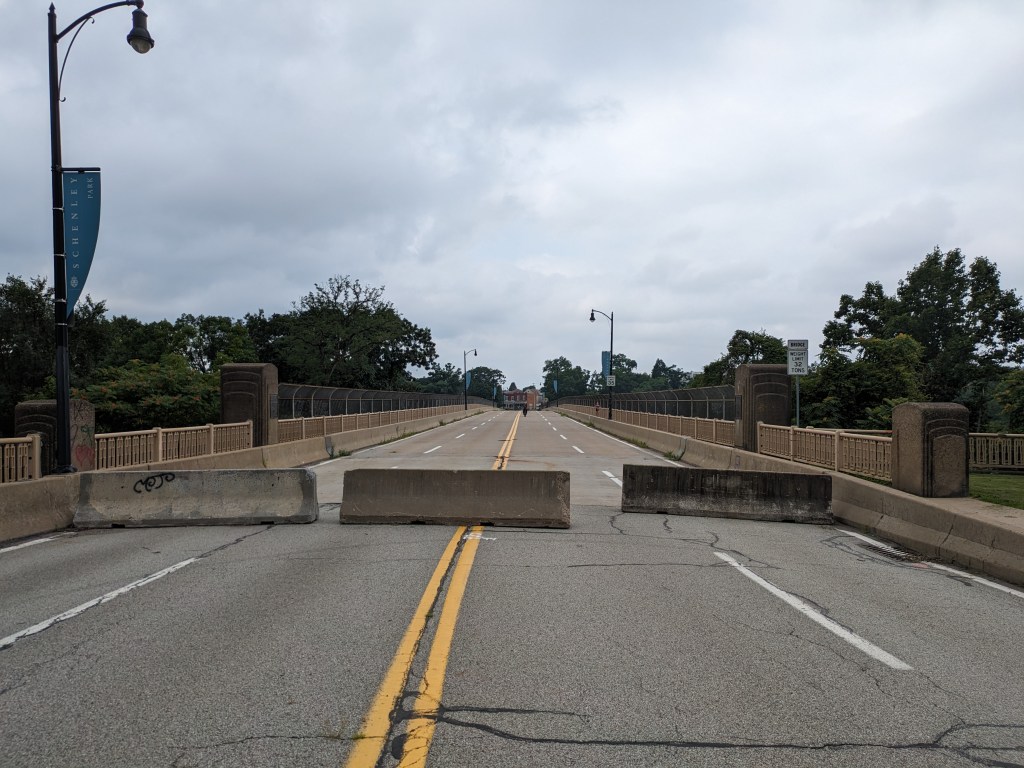
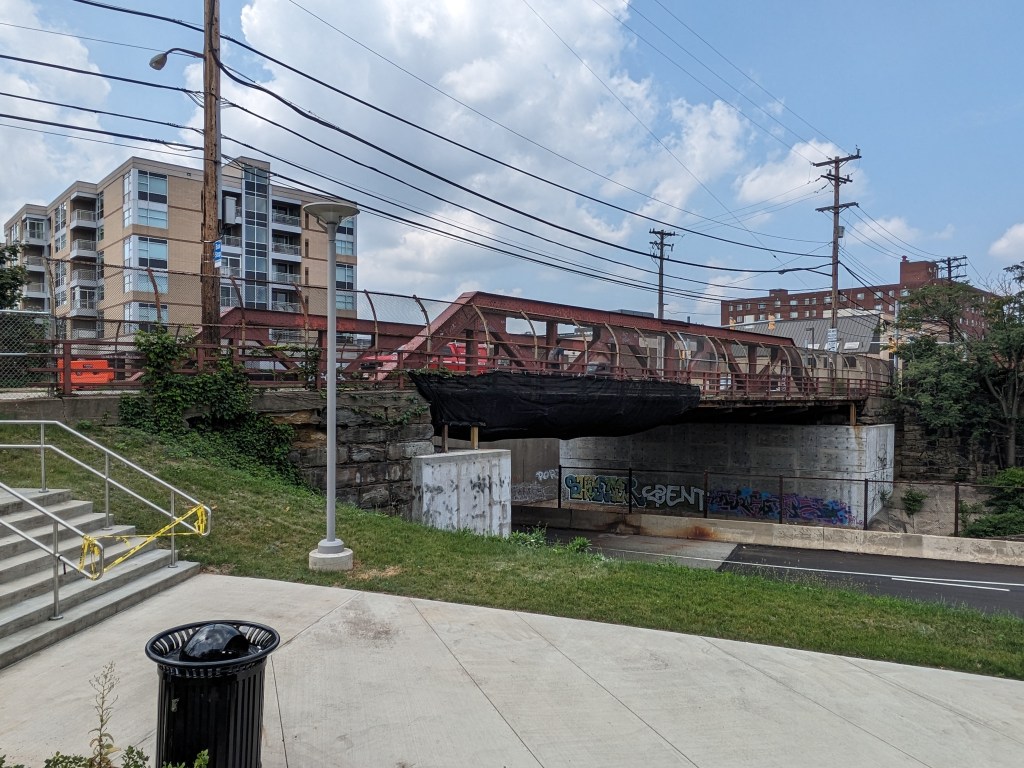
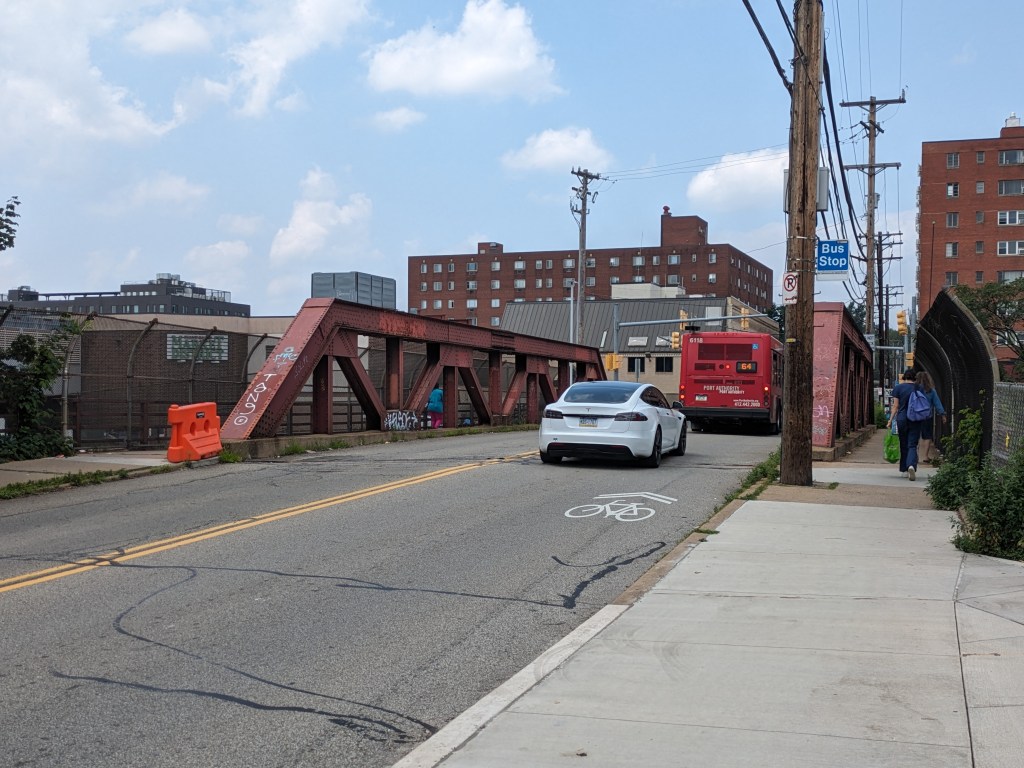
Update 2: While all lanes, the sidewalk, and multi-modal path are now open, there is evidence of some more work to be done. A little beyond the western end of the bridge, there are the preliminary markings for a crosswalk. Also, a “stop here on red” sign was installed, though it currently faces the park, not the traffic. Both of these suggest that a new traffic light will be installed to create a safe pedestrian crossing.
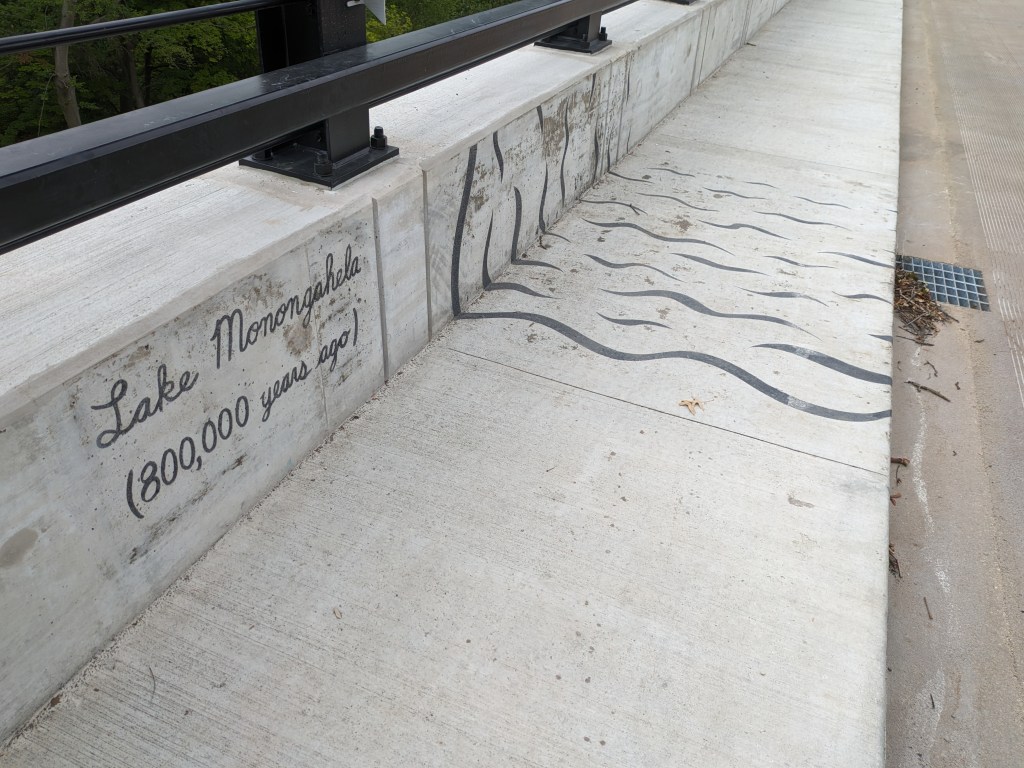
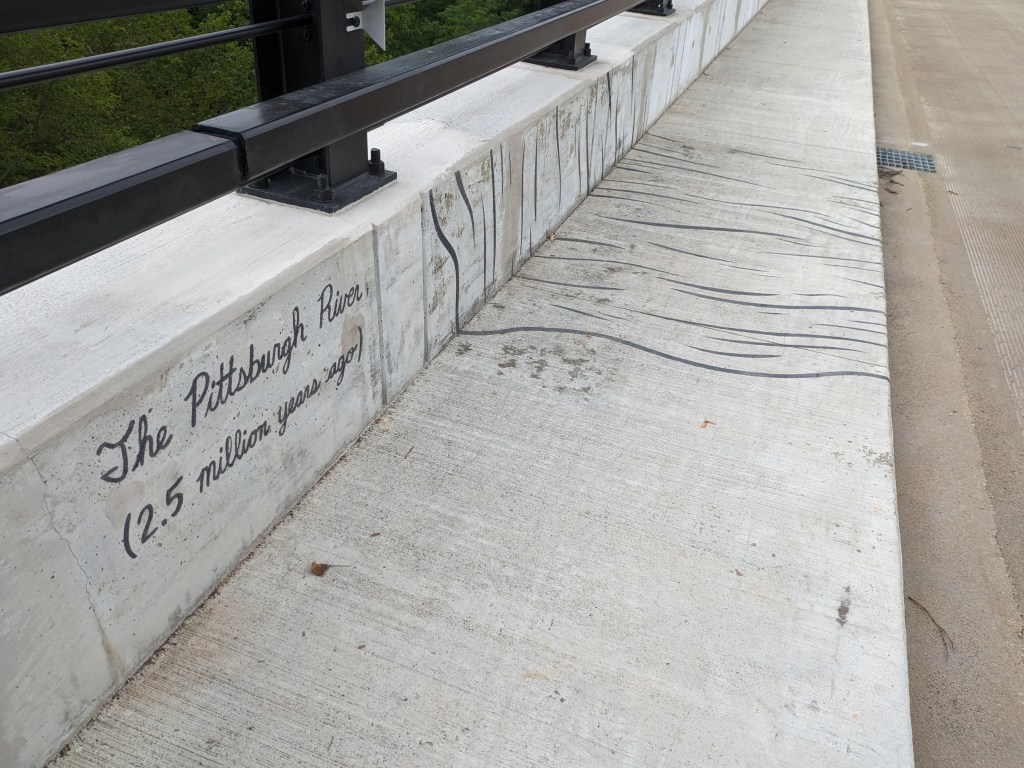
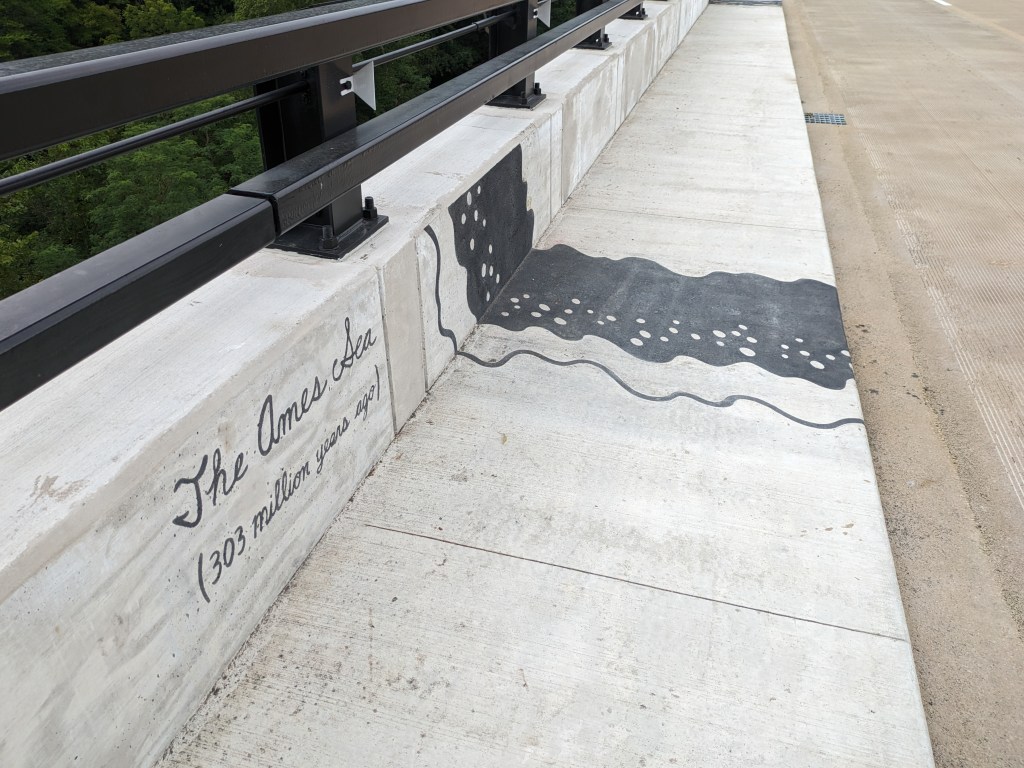
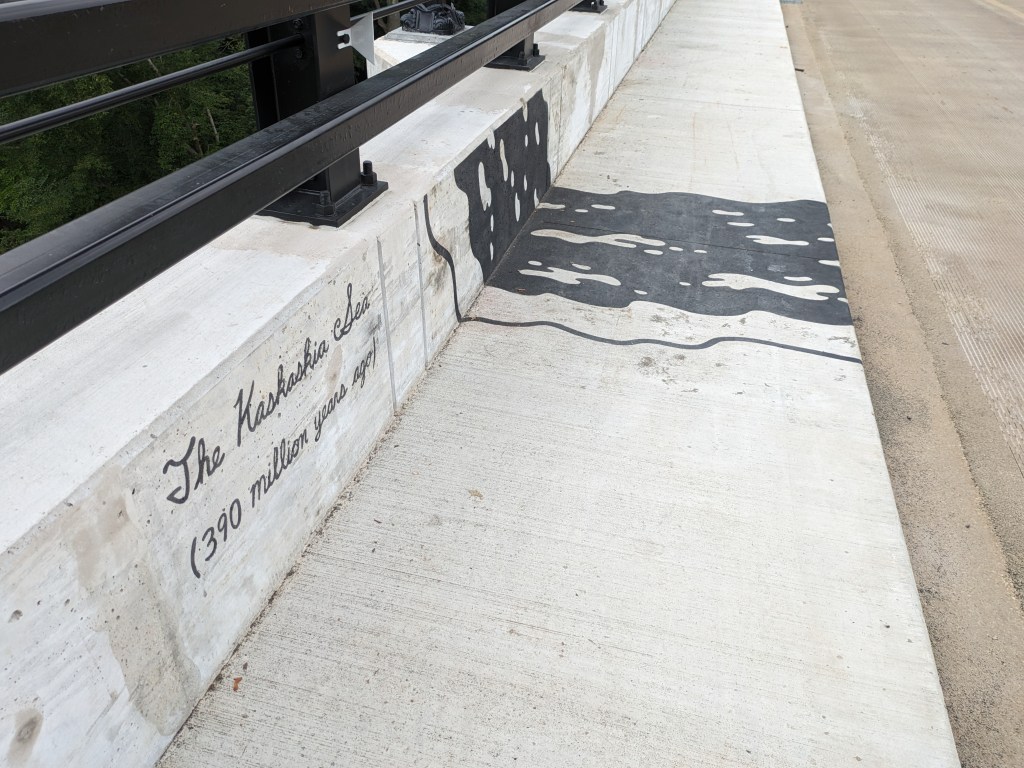
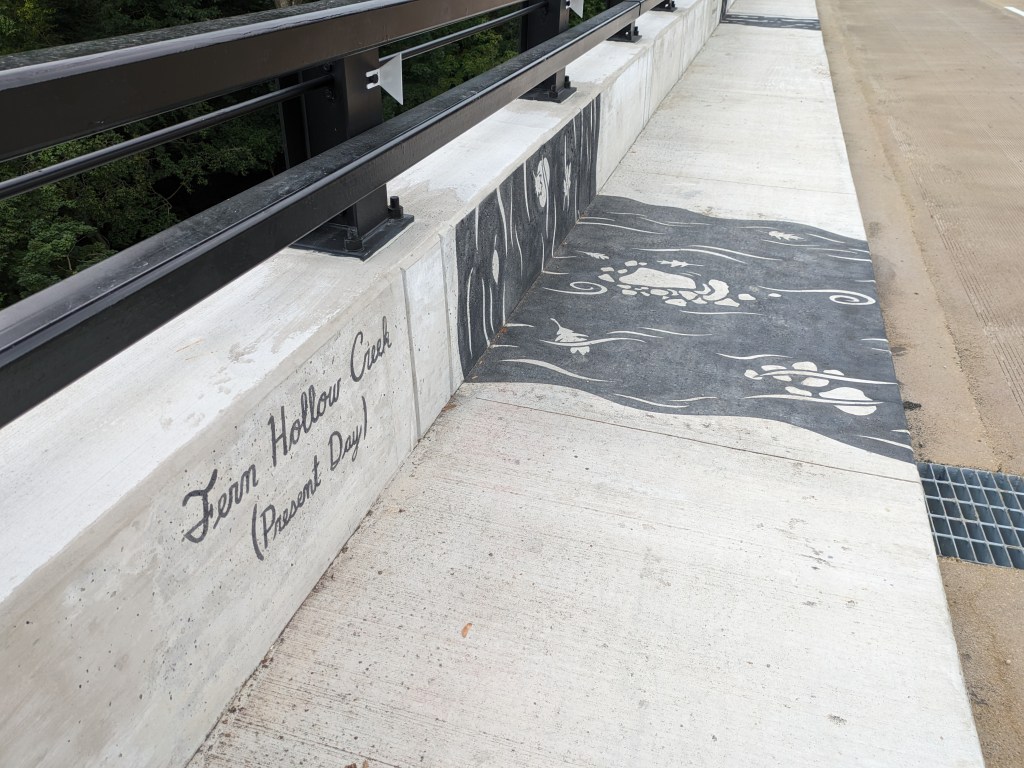
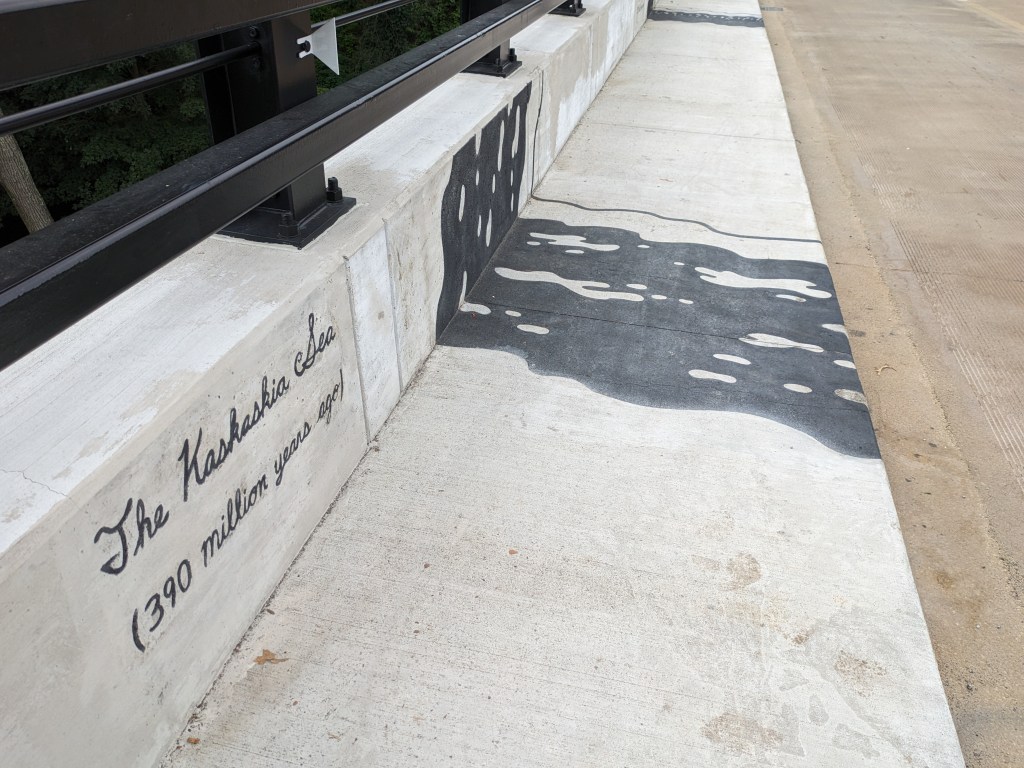
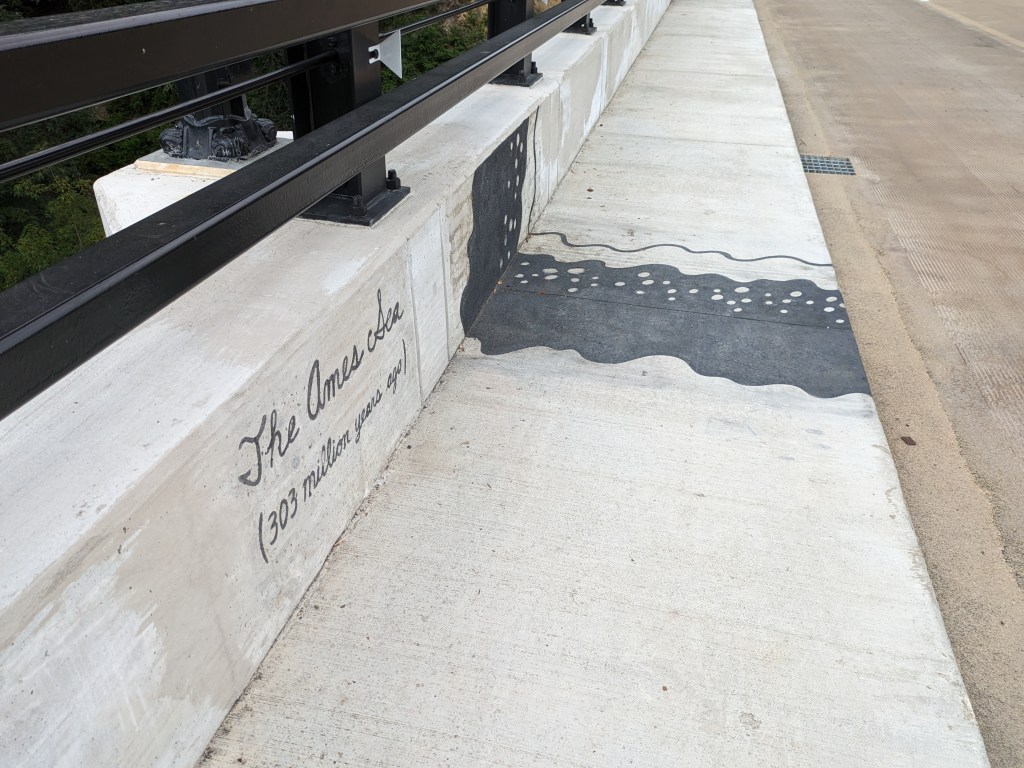
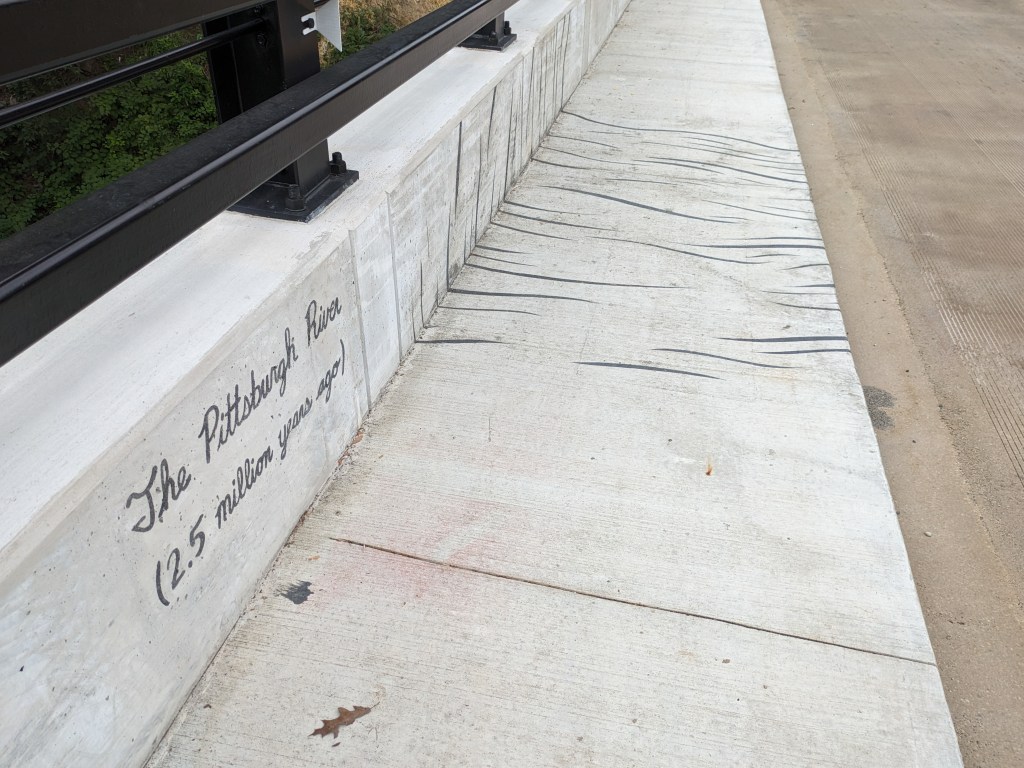
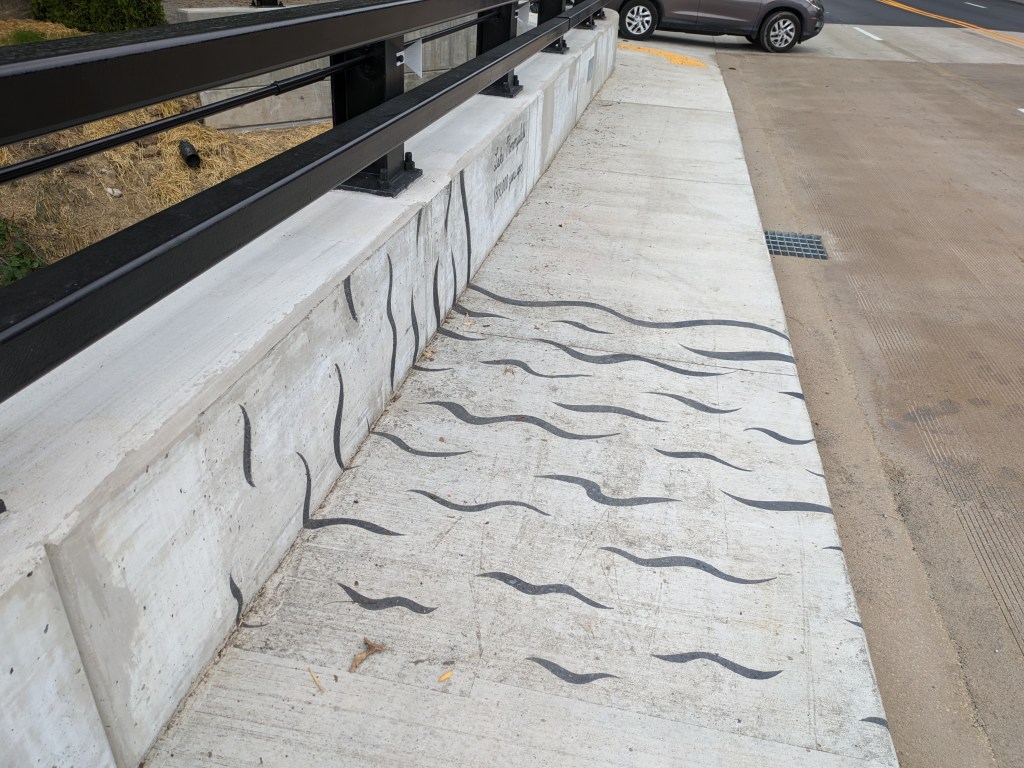
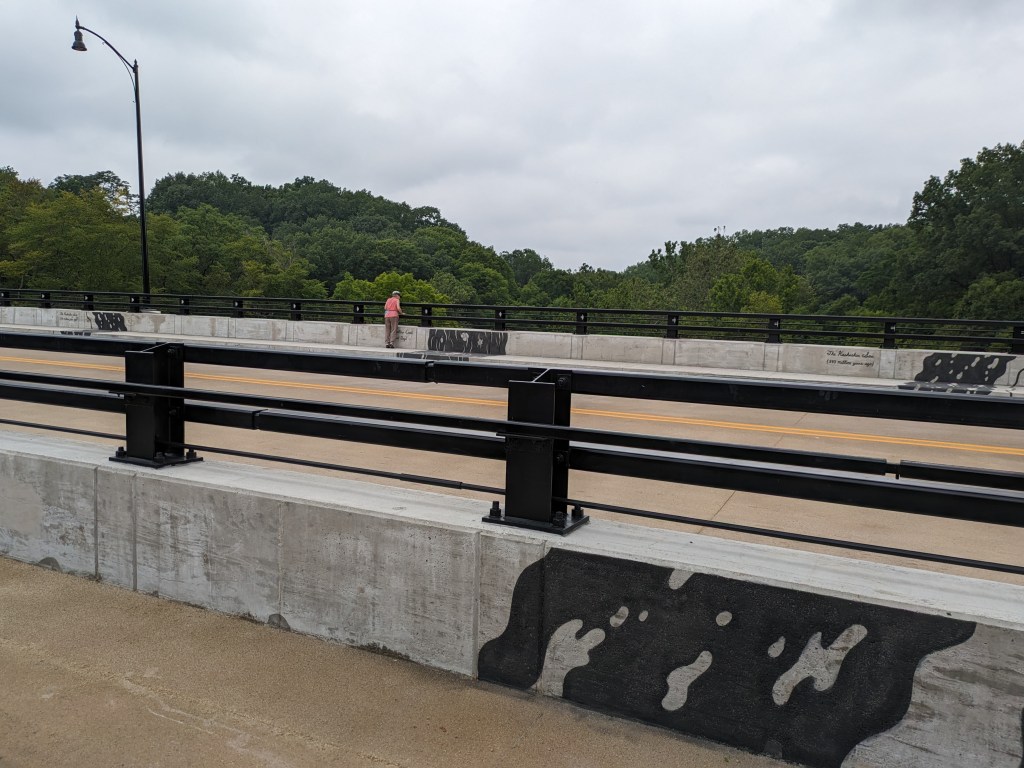
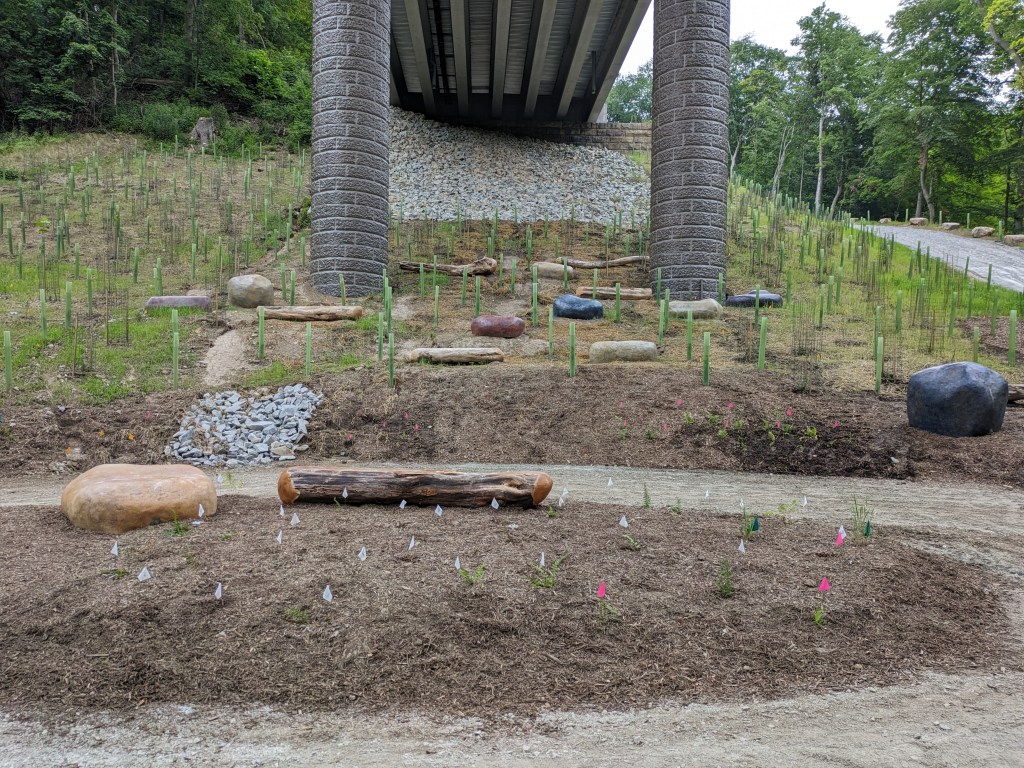
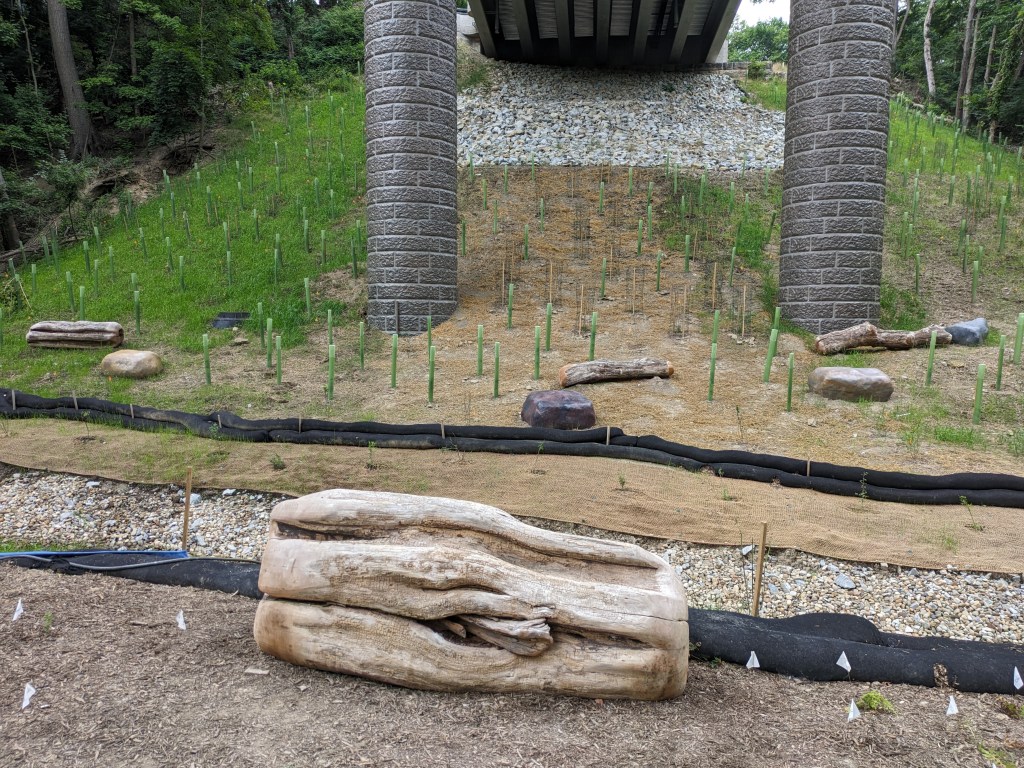
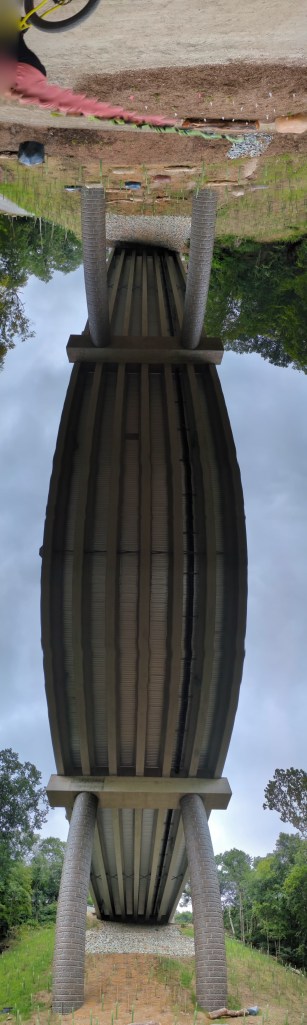
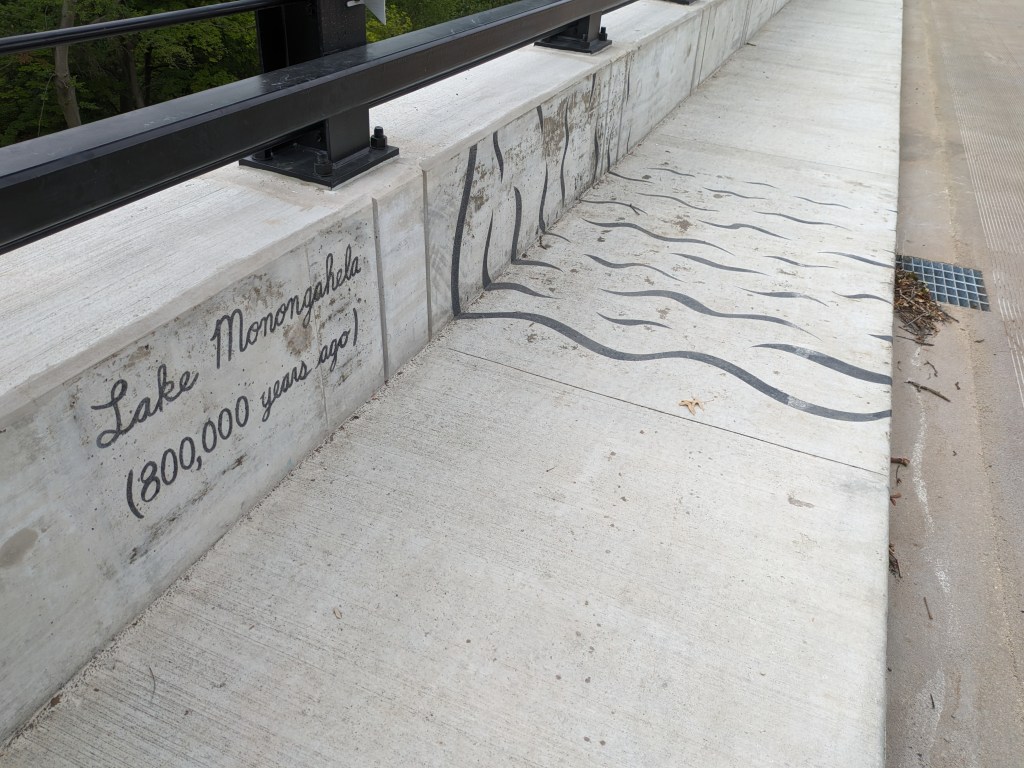
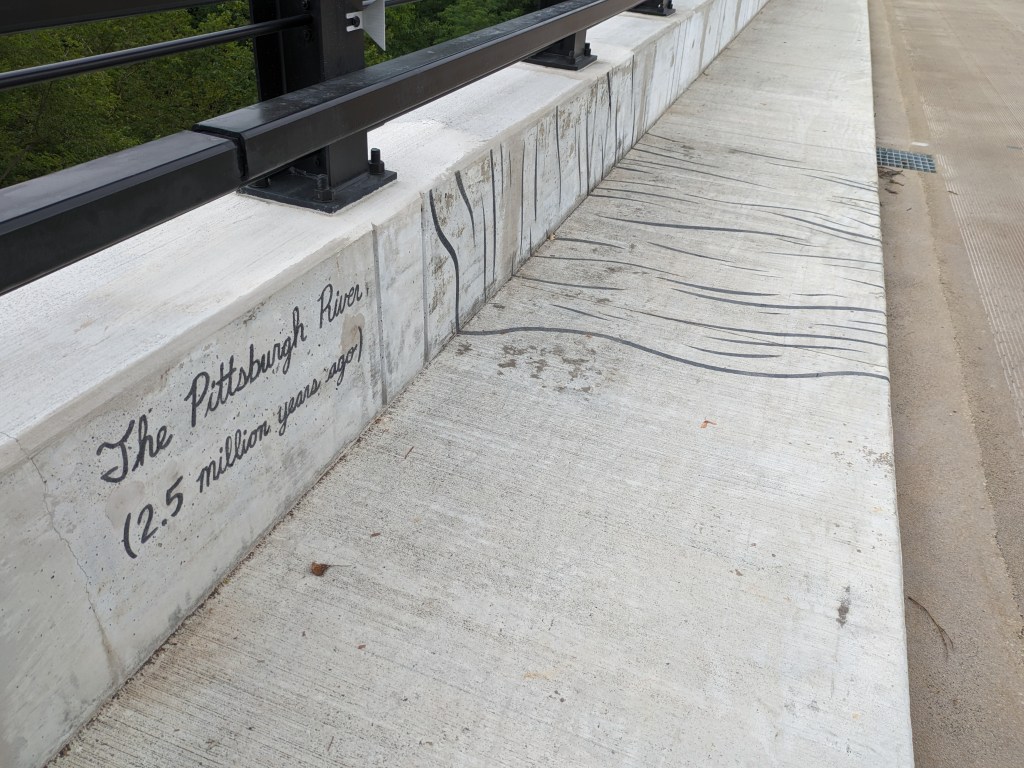
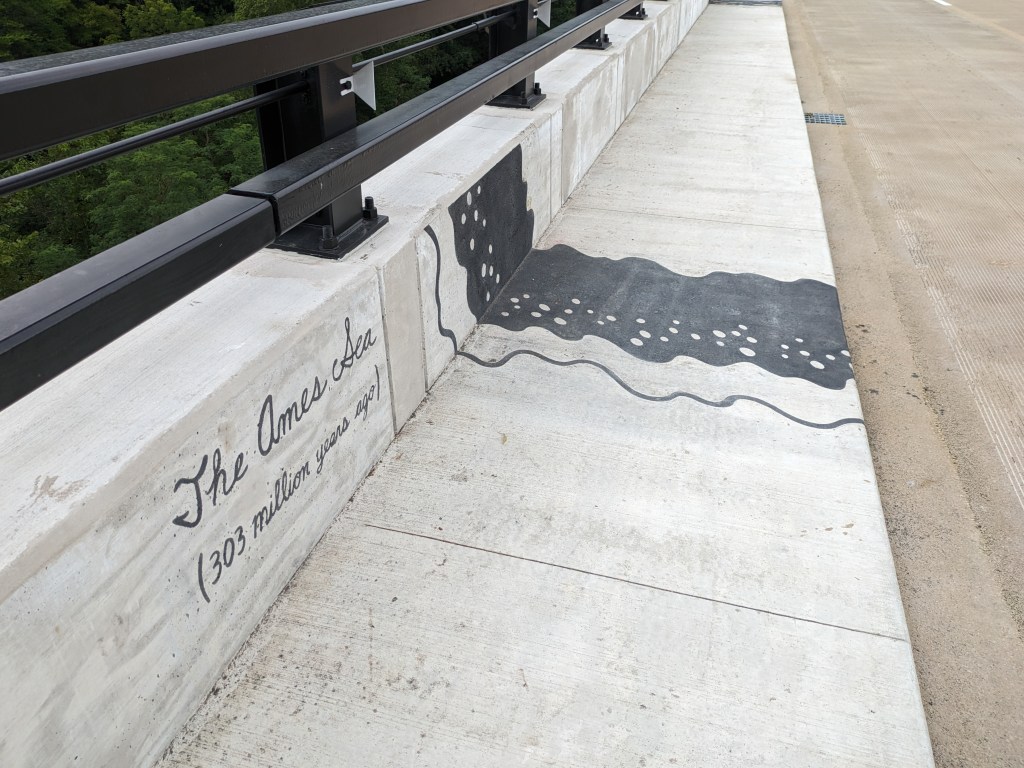
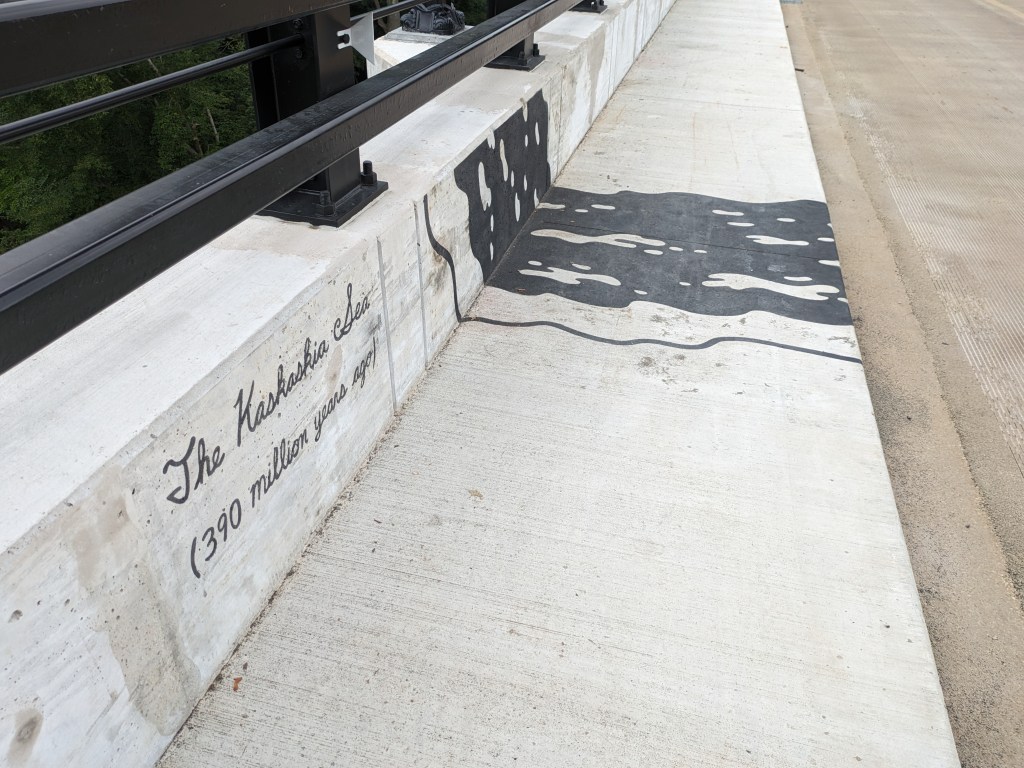
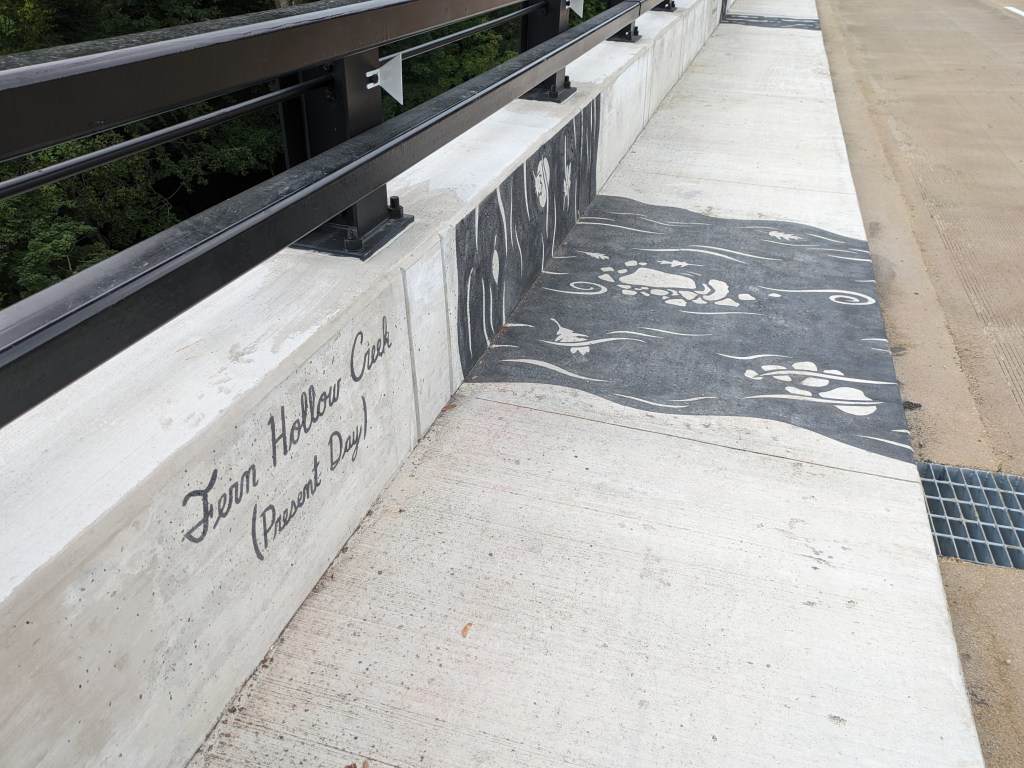
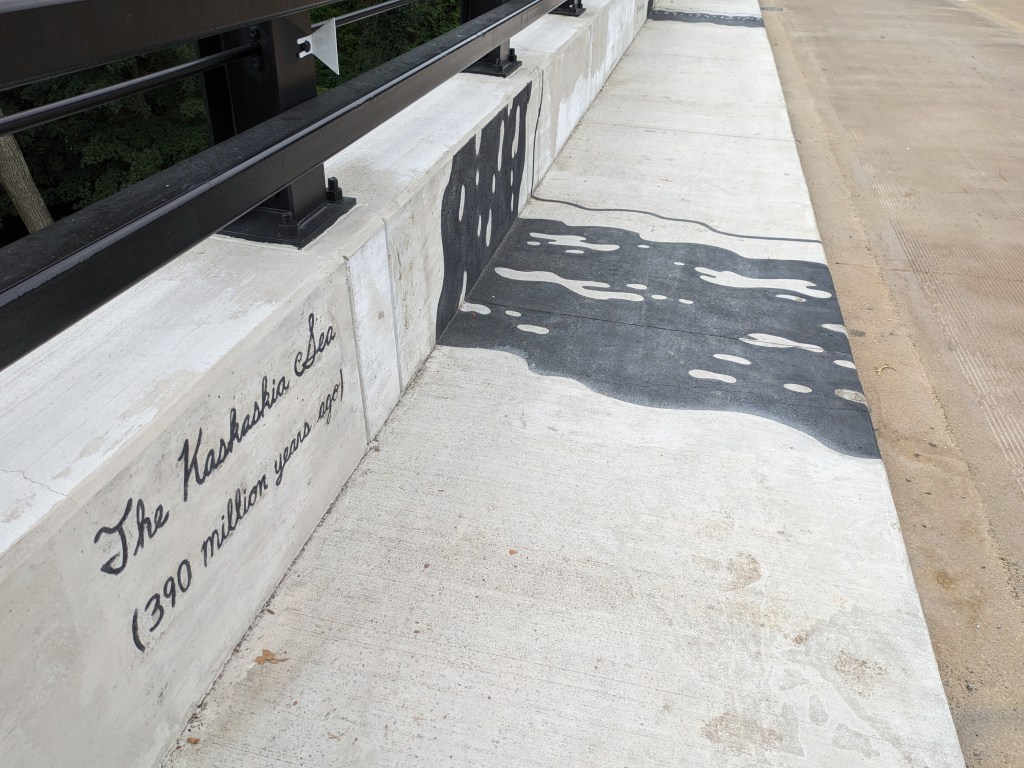
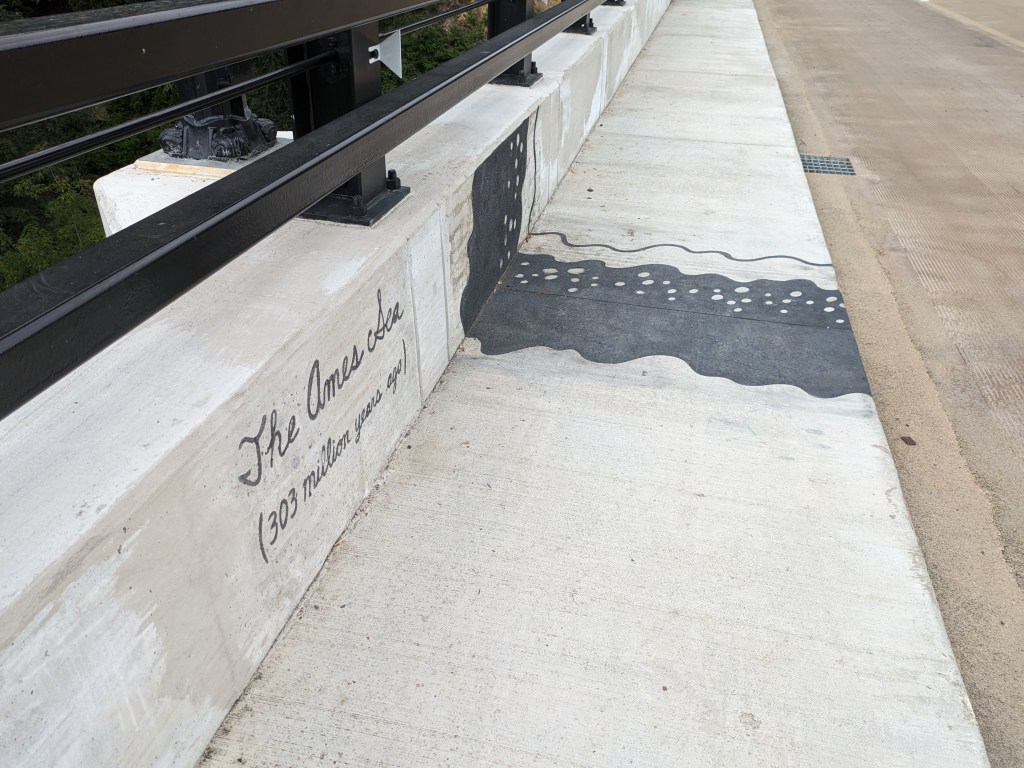
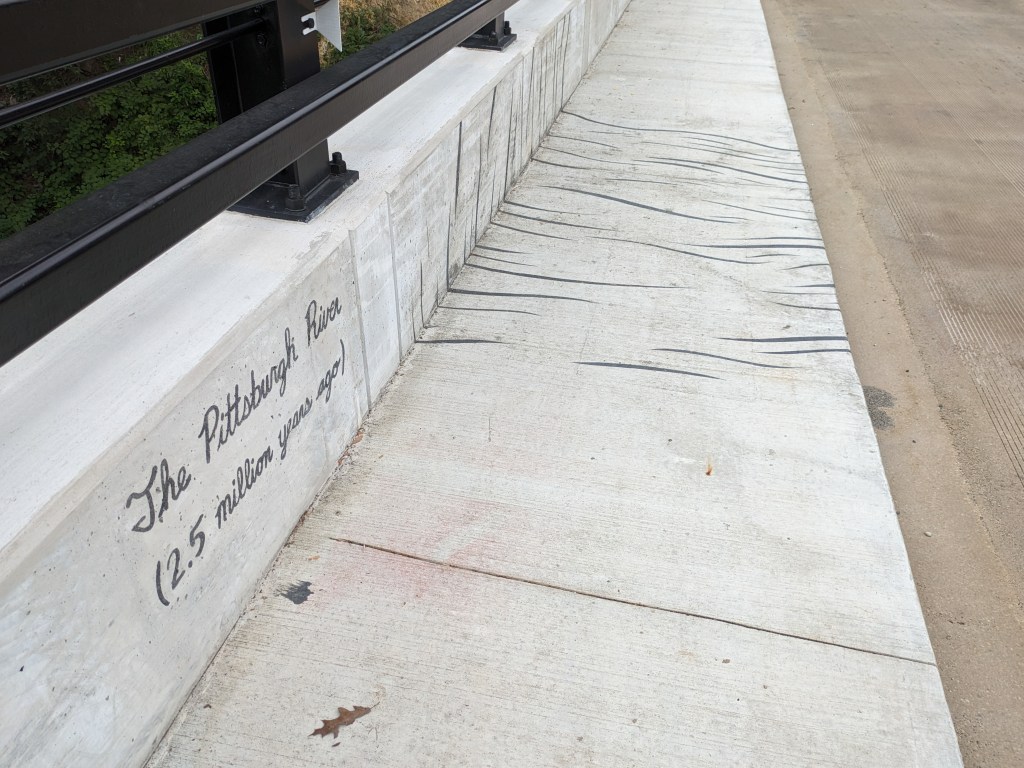
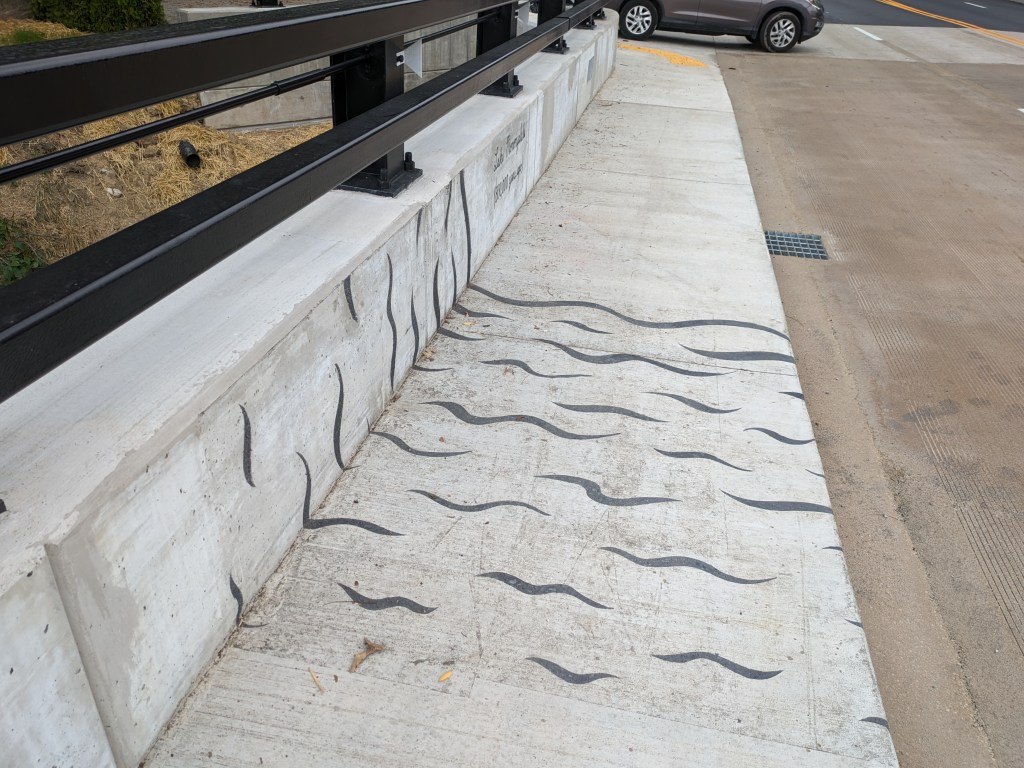
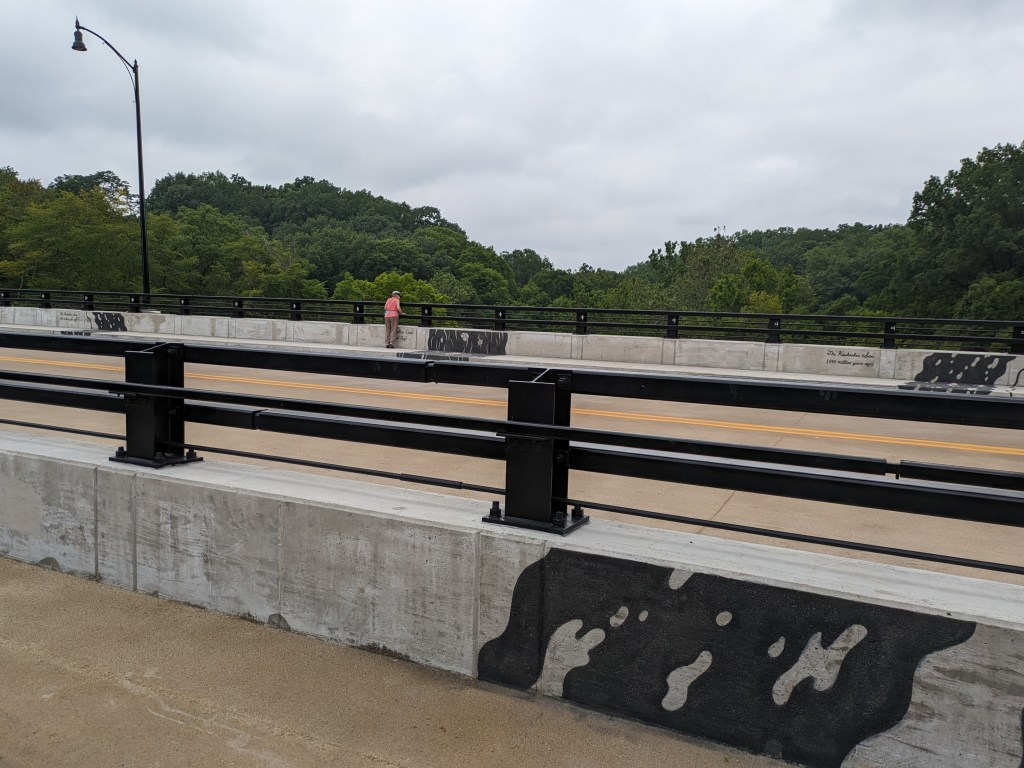
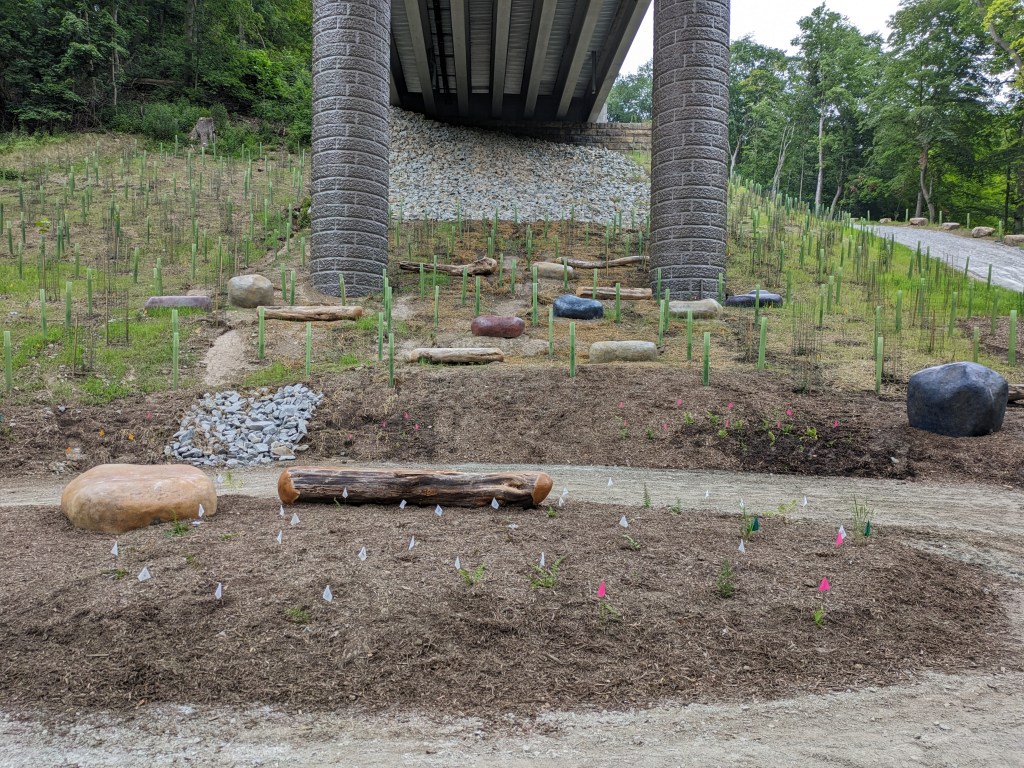
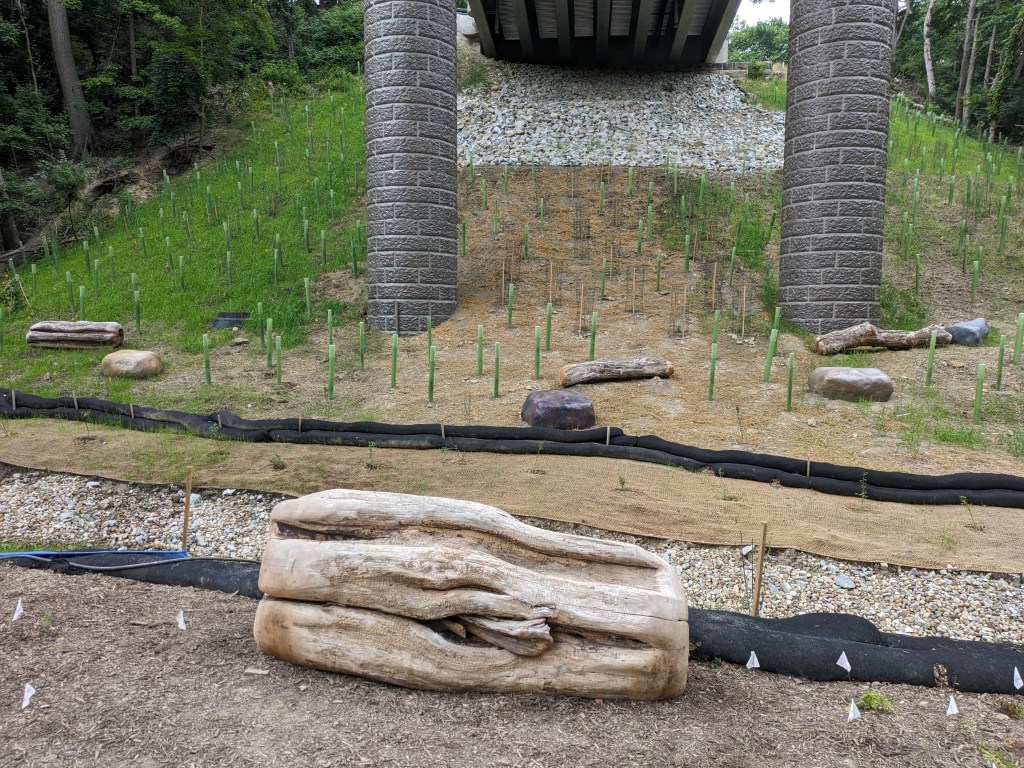
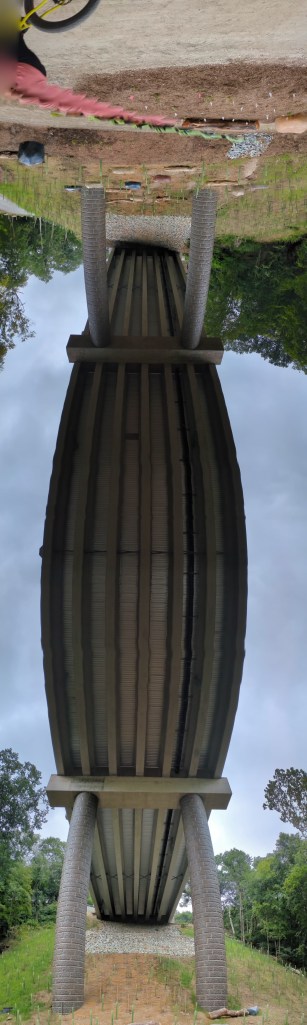
Update 3: John Peña’s A History of Fern Hollow Creek was installed on the bridge and Carin Mincemoyer’s Trail Meander was installed under the bridge. Mincemoyer’s alternative concept of a rain arch that paid homage to the arch of the former bridge did not move forward as it was found to not be feasible within the time and budget constraints of the project. I enjoyed the historical timeline of the bodies of water on this site illustrated in Peña’s installation – it provides and opportunity to stop and think about the different bodies of water that have shaped the landscape of Pittsburgh over millennia. I haven’t yet cracked the pattern of the order in which they are displayed, if there is one.
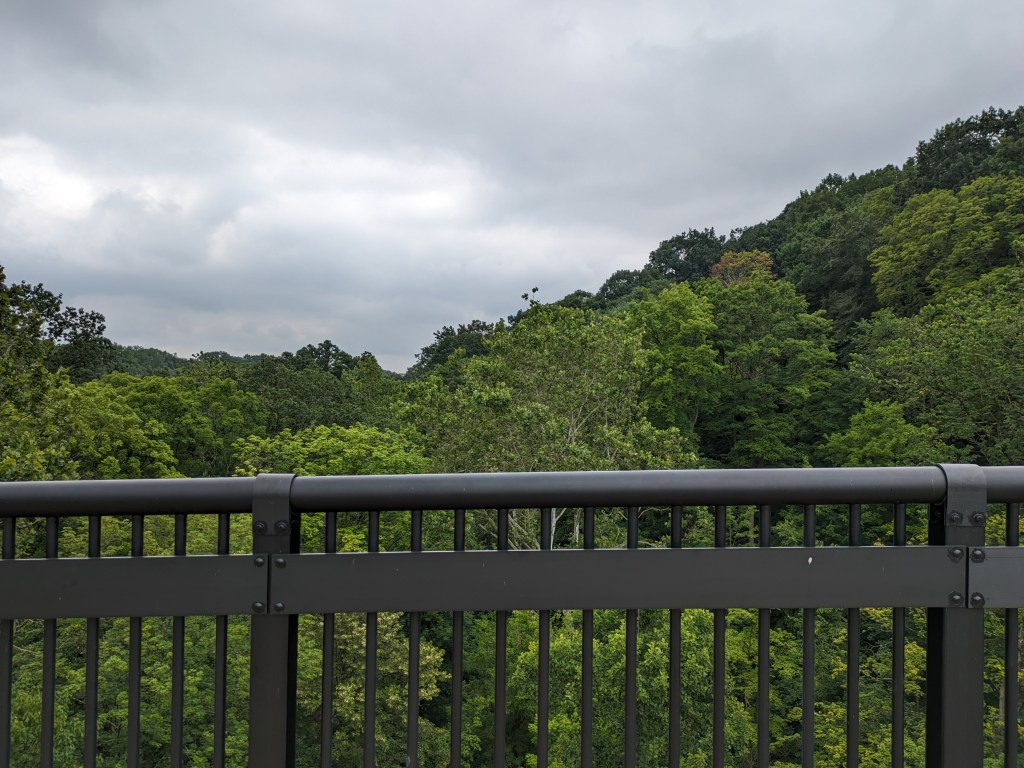
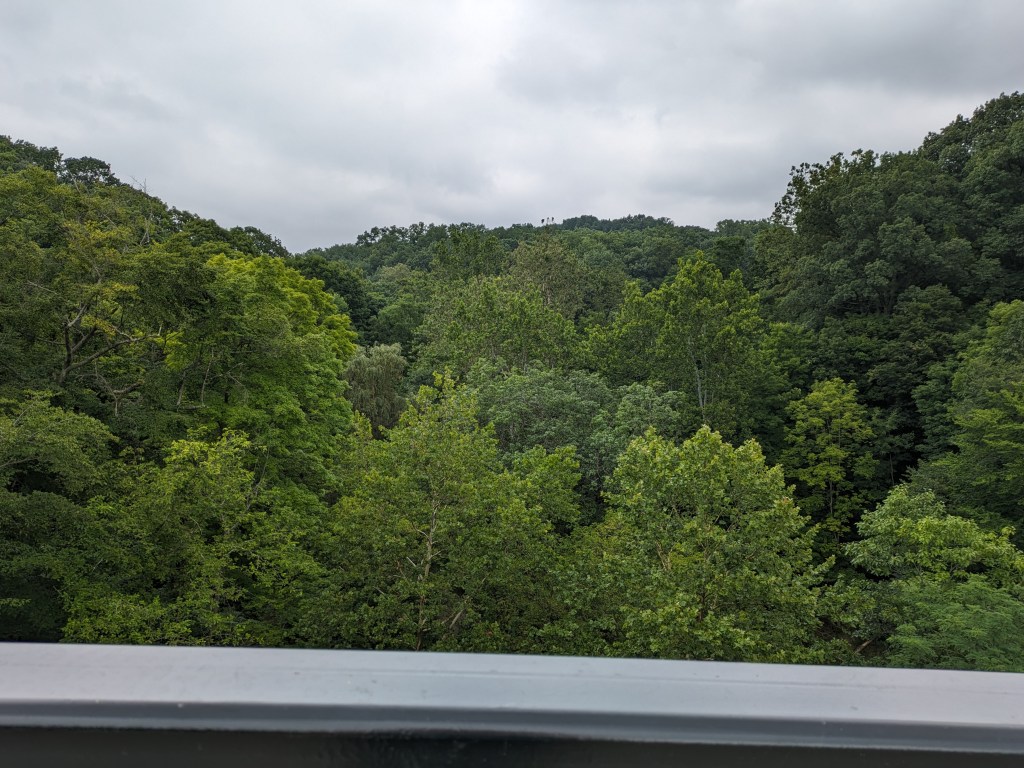
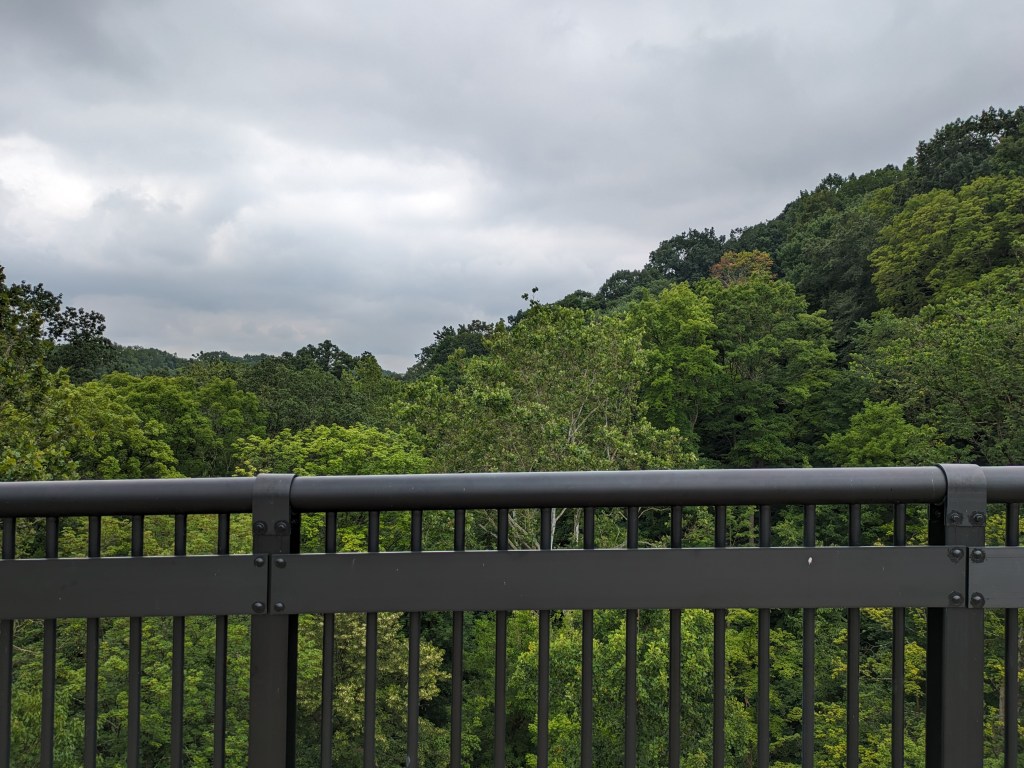
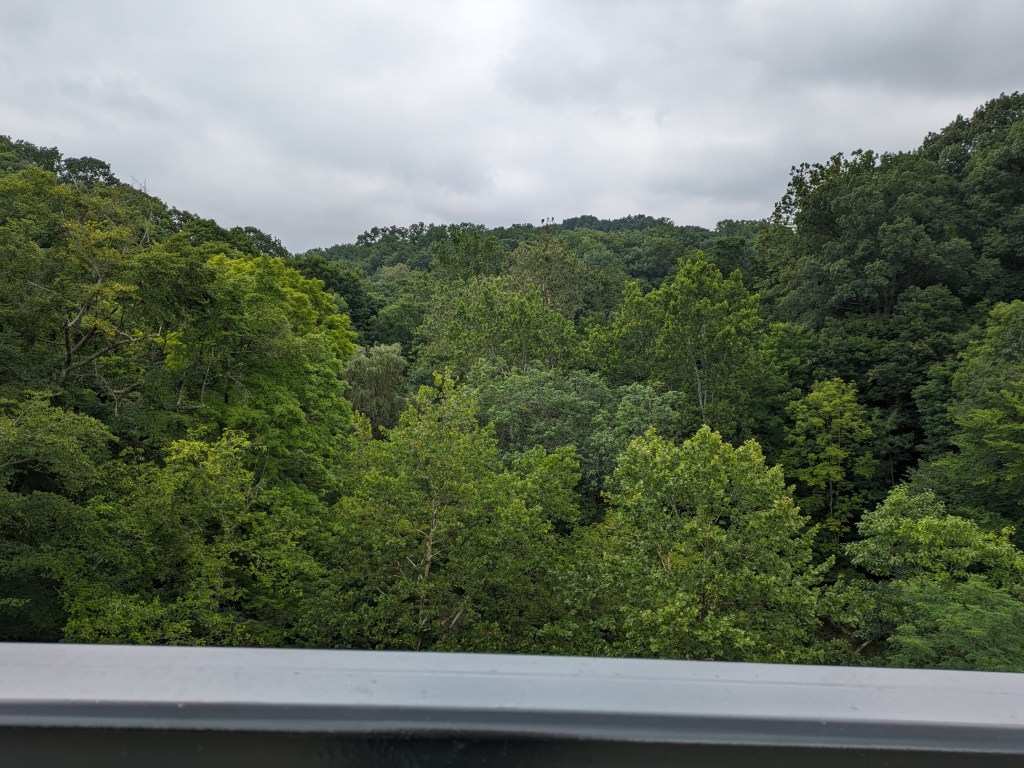
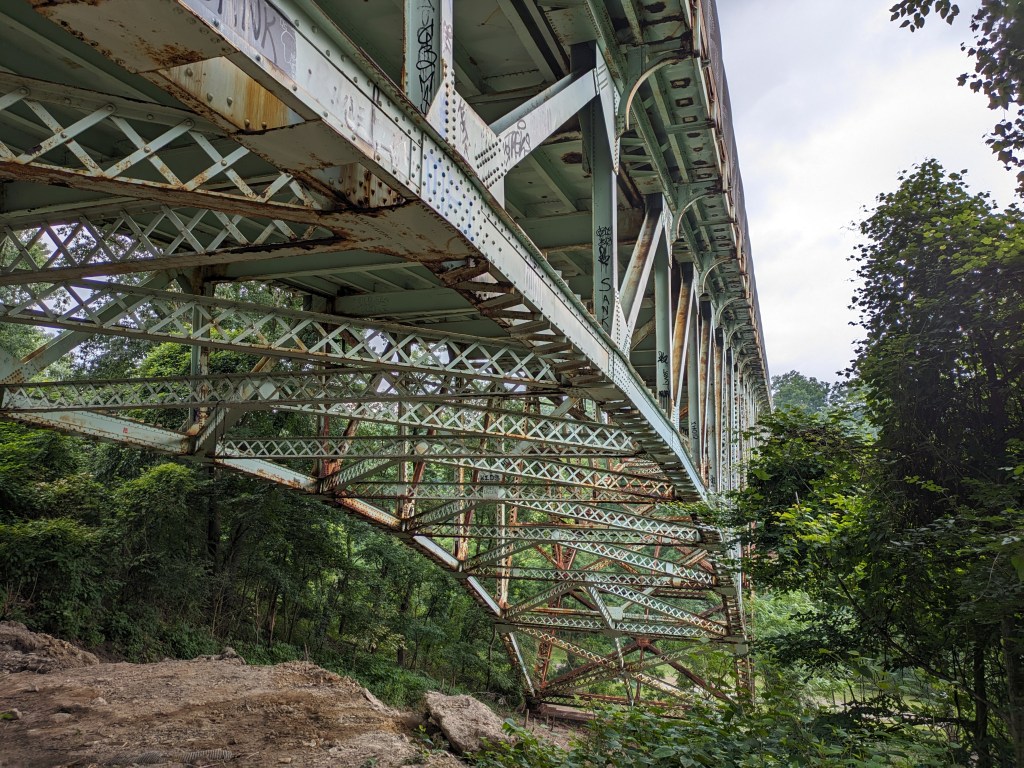
Update 4: As I do not currently have any mobility limitations, I was able to take many more pictures from different angles.
Below are the news updates on the Fern Hollow Bridge and other bridge maintenance and replacement efforts in Pittsburgh and Allegheny County.
Historic Pittsburgh Bridge Disasters
According to Bob Regan’s 2006 book “The Bridges of Pittsburgh,” Pittsburgh is no stranger to bridge disasters:
Map of bridges discussed in the Bridge Collapse series:
Additional Resources:
Both PennDOT and the Federal Highway Administration have interactive maps of bridges for the state and country respective, and their inspection statuses. Pittsburgh now has the static Comprehensive Bridge Asset Management Program Report of the 147 bridges owned by the City of Pittsburgh.
Bridges in Pittsburgh with community engagement pages for pending rehabilitation or replacement projects:
Previous Fern Hollow Bridge Posts:
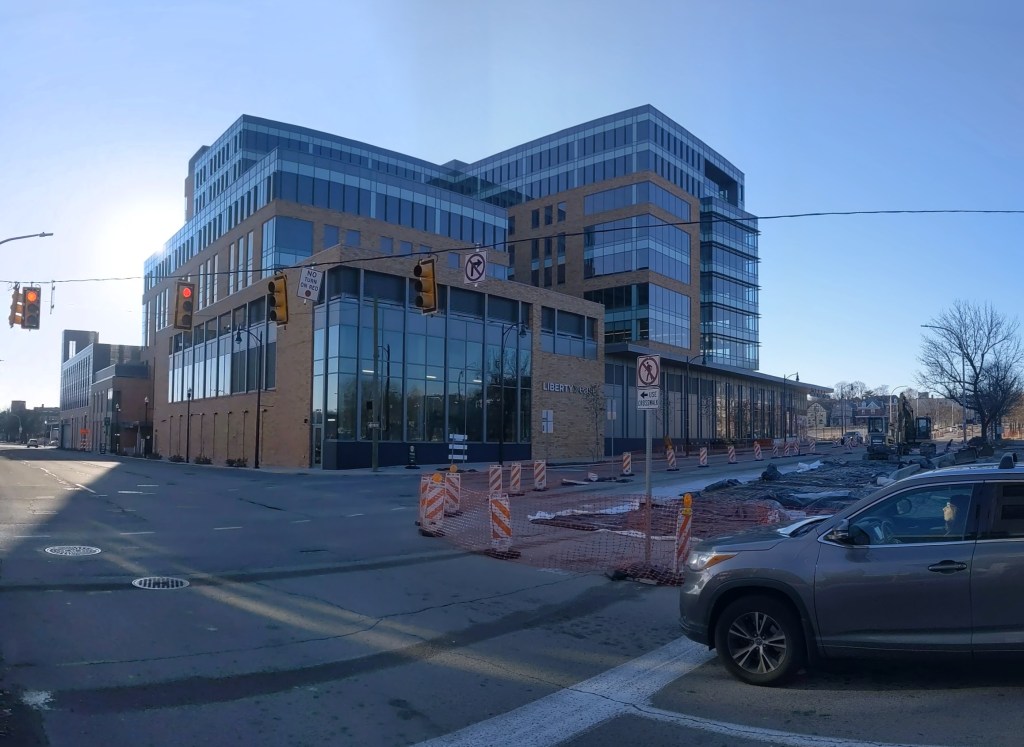
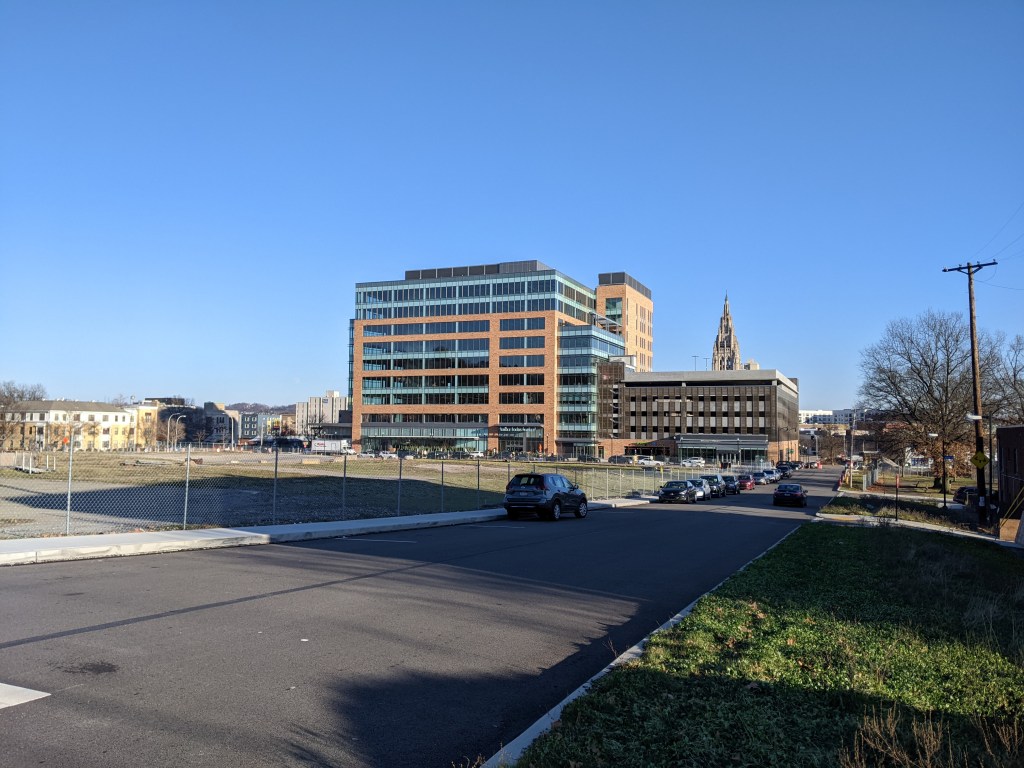
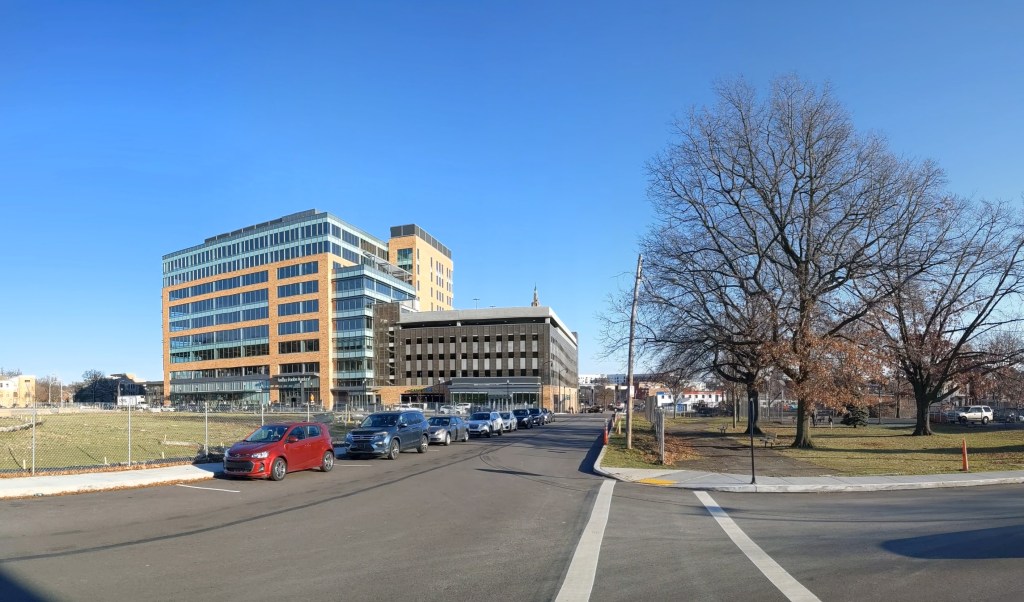
Phase 1 of the Penn Plaza redevelopment opened in 2022, seven years after the initial eviction notices went to the low-income residents of the former Penn Plaza Apartments. The redevelopment is a new retail/office complex that is being constructed in place of the former 519-unit affordable housing complex.
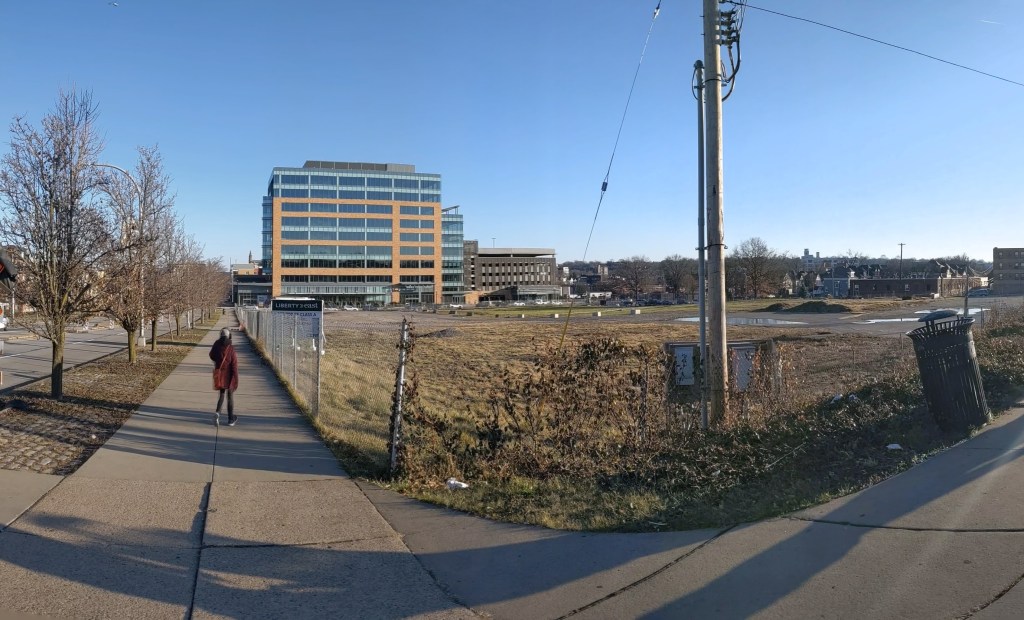
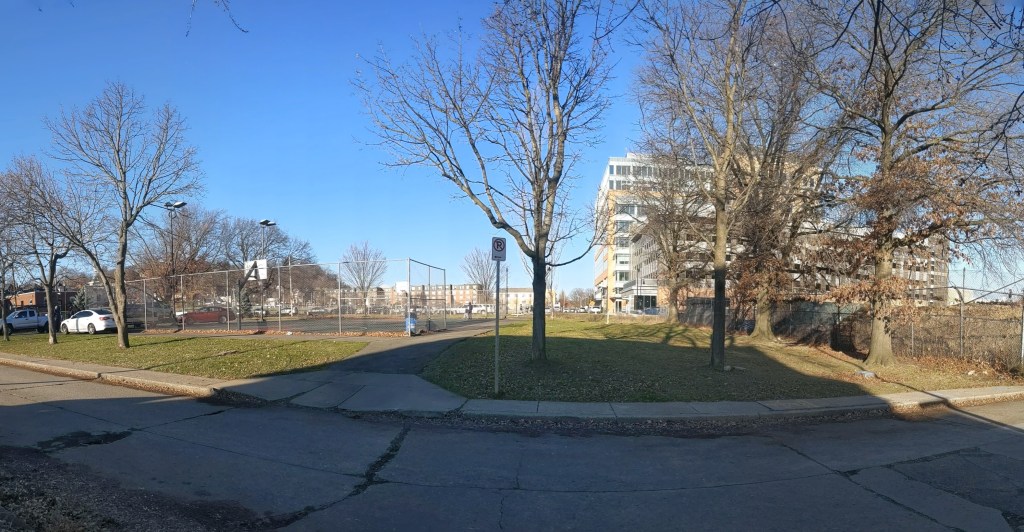
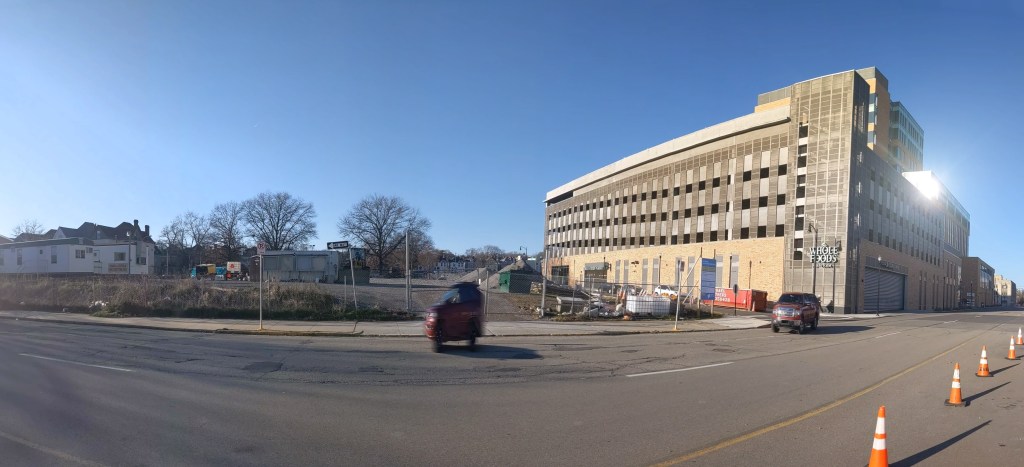
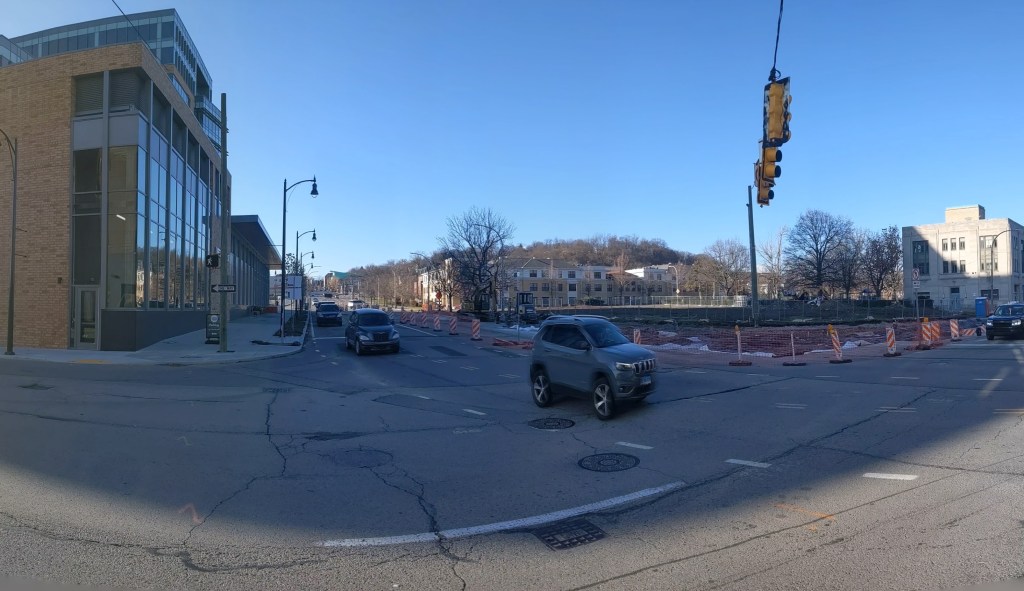
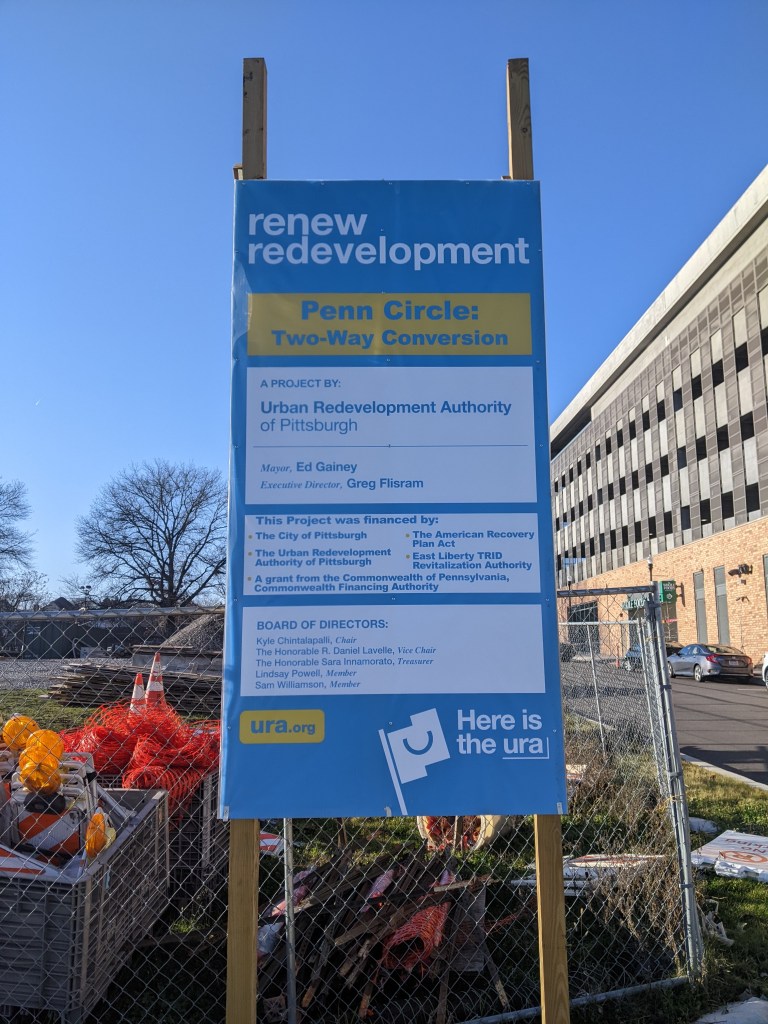
The new building is called Liberty East. Whole Foods is the anchor retail tenant and Duolingo is the first office tenant. An area about twice the size of the footprint of this building remains an untouched meadow with broken pavement scattered throughout and surrounded by a 6-foot high chain link fence. One day, future phases of this redevelopment will begin. In the meantime, changes are starting on land surrounding the site.
The former Penn Plaza Apartments was a group of large of apartments buildings that served a low-income population. After years of neglecting these apartments, the owner gave the remaining 200 residents notice to vacate within 90 days in the summer of 2015. By then, the surrounding neighborhood of East Liberty was a hopping place to live with low vacancy rates and the average rent much higher than what these residents could afford. There was a large outcry at the time, which only got worse as the owner’s plans for the site were understood. The owner wanted to swap some land with the City and change the zoning district to build a large scale mixed-use development: 54,600 sq ft of retail and 246,090 sq ft of office with accessory parking (see the application materials starting on page 54 from the final Planning Commission review and approval). After months of negotiation with the City and the community, the land and the zone change were given to the development while the affordable housing crisis in Pittsburgh only got worse and the former residents were forced to uproot their lives.
The Penn Plaza Support and Action Coalition has more information on what was promised and what happened as the residents were forced to find new housing.
The site:
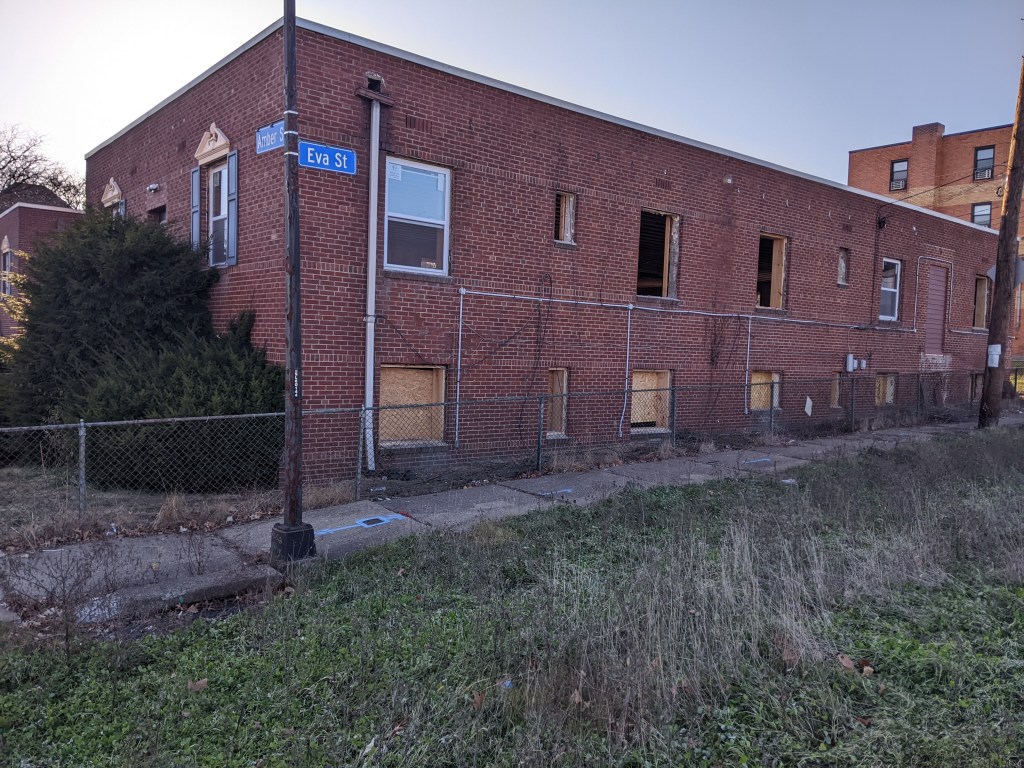
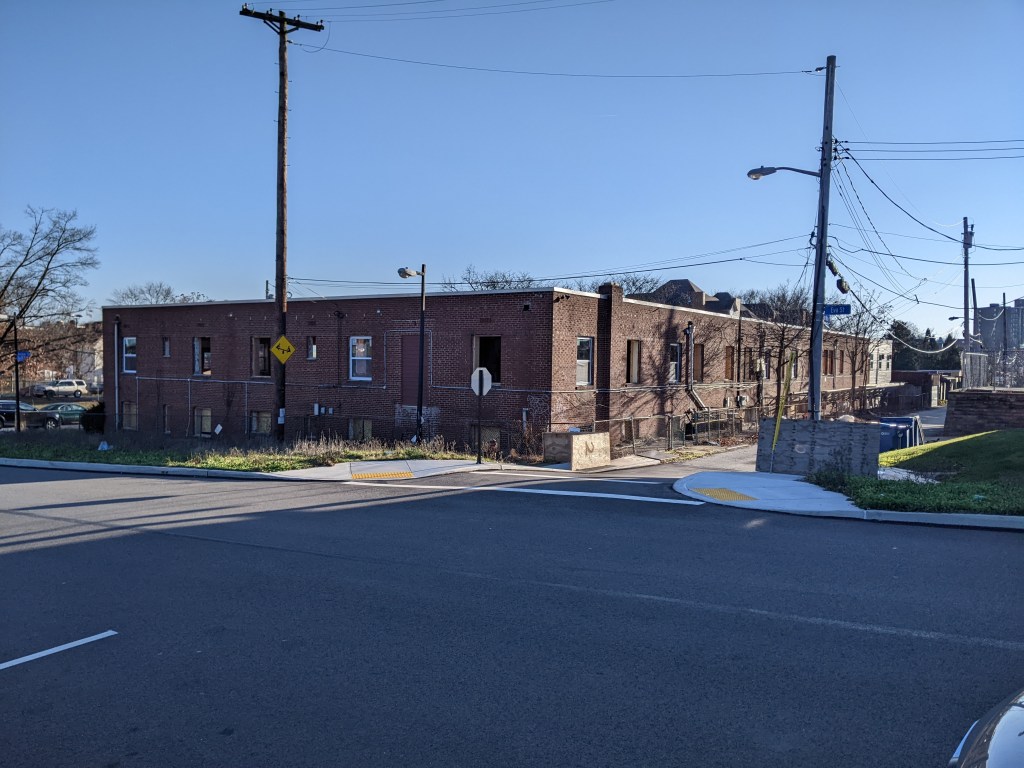
The surroundings:

Keeping an Eye on Penn Plaza – Jun. 2022
Keeping an Eye on Penn Plaza – Apr. 2021
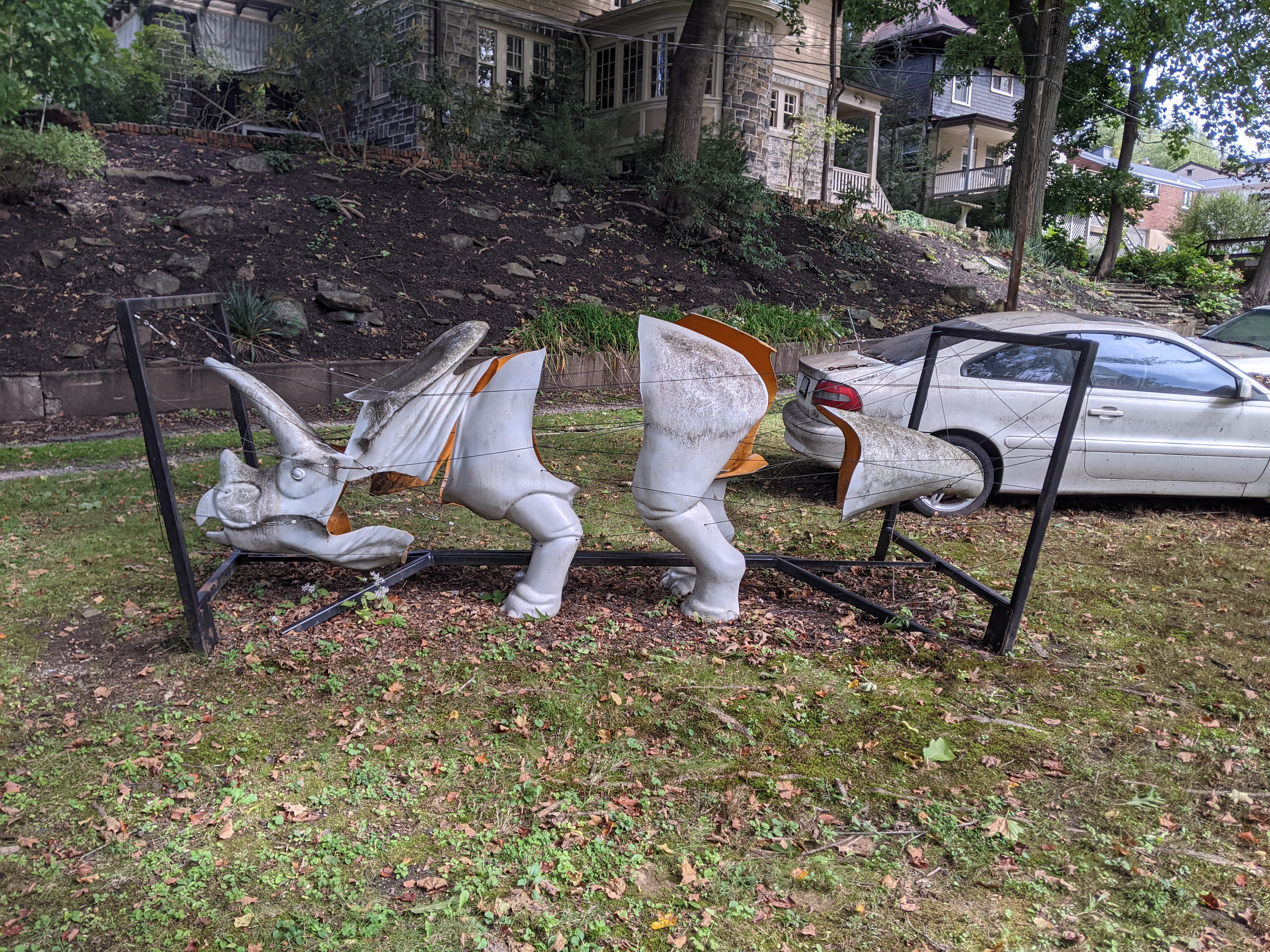
After WWII, while the federal government was building highways — sometimes through communities — and subsidizing and incentivizing the construction and purchase of detached single-family dwellings — that is, if you were of the “right” race, ethnicity, and economic level, — there was a growing sense that cities, and perhaps even towns, weren’t safe places to live. As people and jobs, or jobs and people, or some people and jobs starting leaving cities in large numbers, the cities started looking for ways to reinvent themselves to reattract people and jobs in order to survive. Pittsburgh was a leader at that time, inventing and defining the process of Urban Renewal. Other cities like Bethlehem looked up to Pittsburgh and tried to adopt the strategies and techniques of Urban Renewal used in Pittsburgh. Often these cities, as illustrated by Bethlehem, lacked the resources and power to pull off Urban Renewal on the same scale as Pittsburgh.
Revisiting the once familiar environs of Stroudsburg (pop. 5,950) and East Stroudsburg (pop. 9,669), I realized that even these small towns adopted practices and principals of Urban Renewal. And similar to the pairing of Allentown (pop. 125,944) and Bethlehem (pop.75,624), the larger of the two municipalities implemented more Urban Renewal projects while the smaller implemented more historic preservation practices.
Below is a very biased sample of the the Urban Renewal practices I believe I identified in the Stroudsburgs:
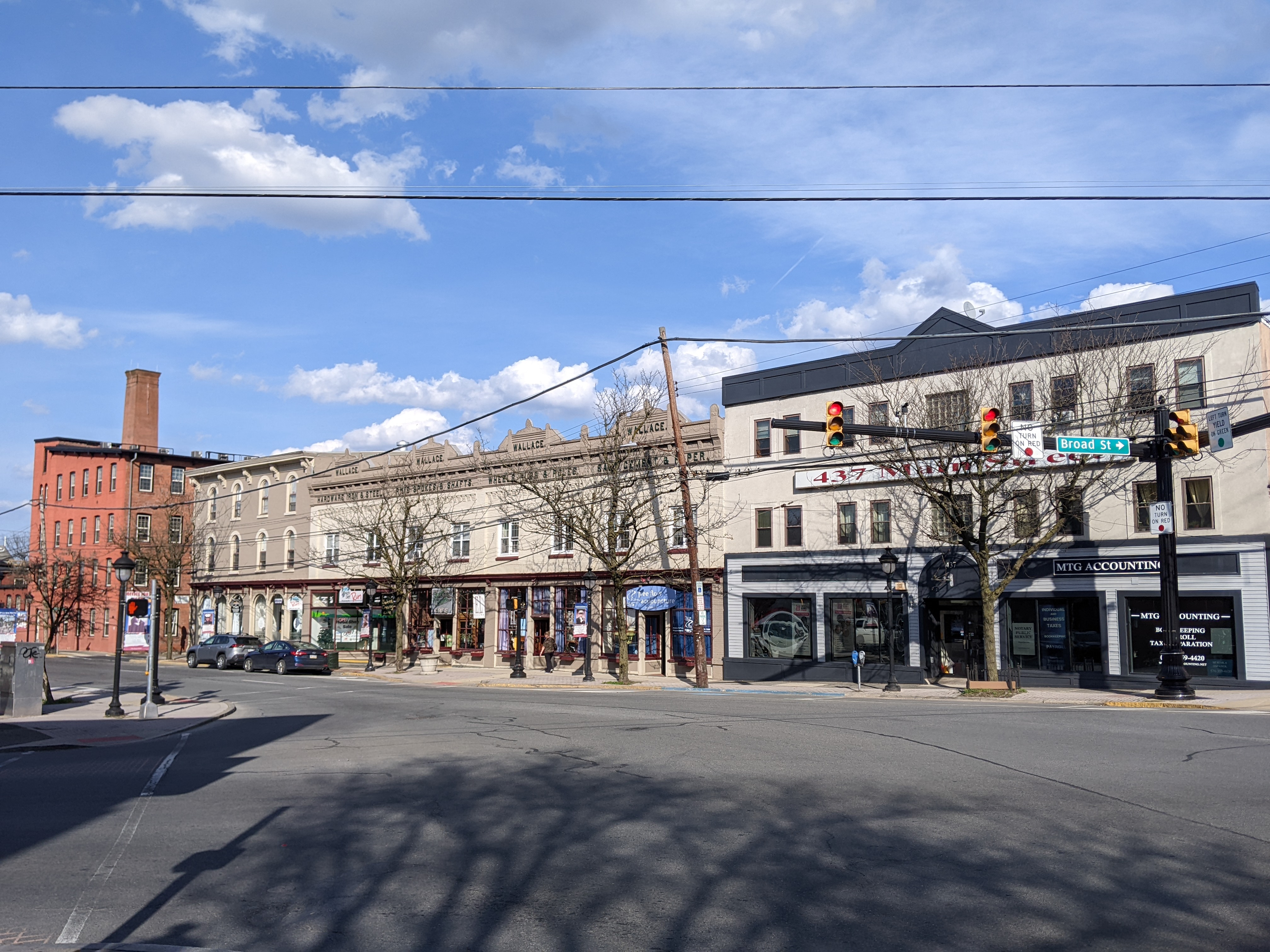
Both boroughs contain a partial or complete loop of one-way streets around portions of their downtowns. This traffic pattern now appears to me as strongly reminiscent of the circles Pittsburgh built around important commercial neighborhoods – which subsequently nearly died, possibly because they were already dying, but probably aided by being choked off by these ring roads. In Stroudsburg and East Stroudsburg, it didn’t appear that the ring road has the same sort of death grip on the commercial enterprises they encircled. Several of the business I remembered were still operating and I didn’t notice significant numbers of vacant properties – though the couple vacant businesses I noticed were in East Stroudsburg. However, they weren’t areas that were tempting to explore more closely because they were sites developed along the second Urban Renewal practice.
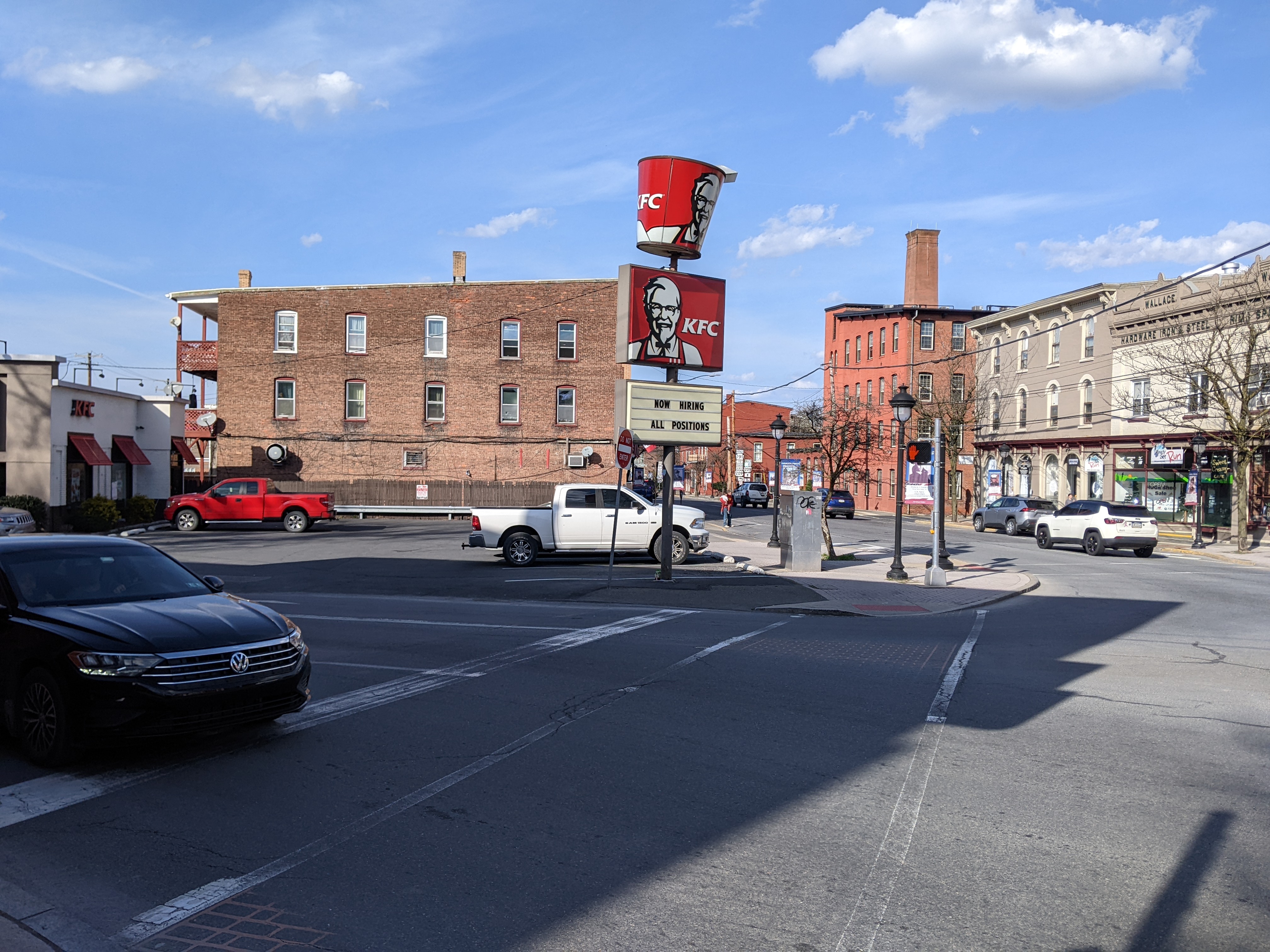
Both boroughs contained drive-through businesses in the center of their ring roads. In addition, strip malls are off to the right as you enter each borough on the ring road. In Stroudsburg, the auto-oriented uses felt like they were tightly centered on the ring road; nearby and spilling into the ring road was a dense, walkable downtown. On the other hand, in East Stroudsburg, it felt like the auto-oriented uses were spilling beyond the immediate environs of the ring road and into what was presumably once a much more extensive dense, walkable downtown.
Part of what made the experience in East Stroudsburg feel more auto-oriented was the larger number of visible paved lots, presumably for parking, but largely empty. While I was most likely day-dreaming about the plot of my latest story featuring either princesses or cowboys when I previously spent time in downtown East Stroudsburg, there was a feeling of familiarity in the near empty parking lots suggesting that I would have felt uncomfortable if they were actually parked to capacity in the same way I felt uncomfortable passing locations where trees I used to know had been cut down.
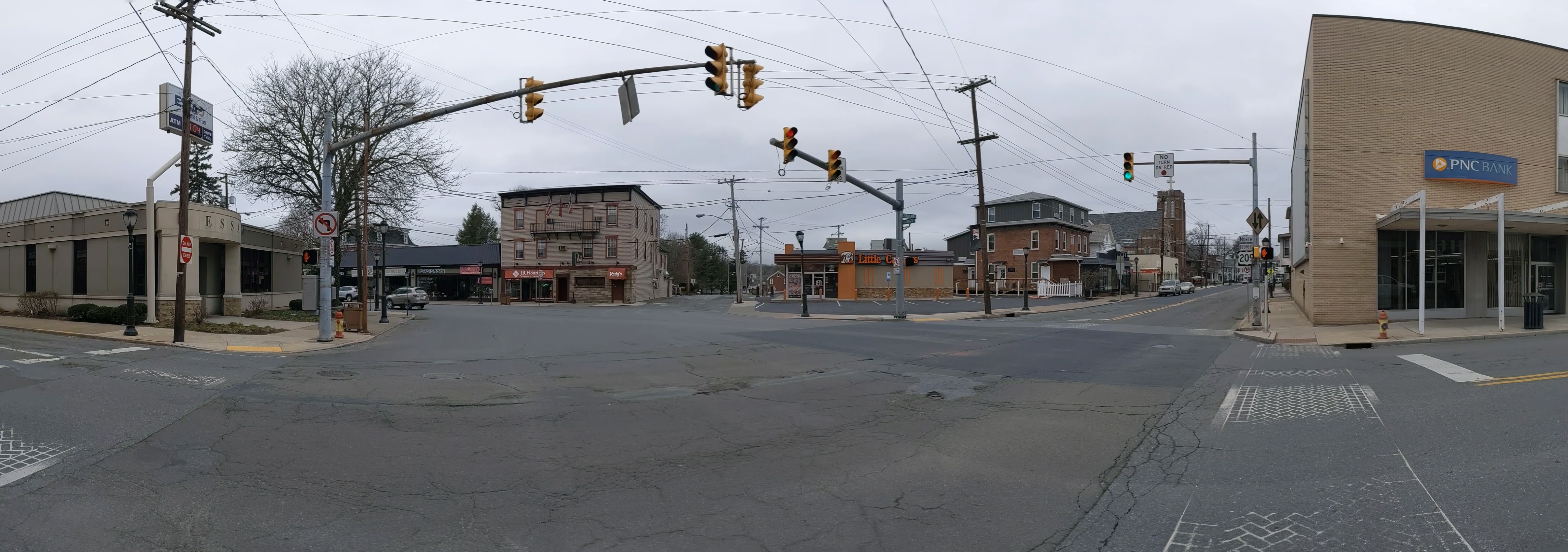
One of the key ingredients for the stability component of “home” is safety. In the aftermath of 9/11, there was a concern about the safety of living in cities and living in New York in particular. The Pennsylvania boroughs of Stroudsburg and East Stroudsburg were among the places considered safe by those leaving New York City. Knowing this going in and comparing it to the lessons learned from Bethlehem, I assumed that the religious buildings would reflect a sense of stability.
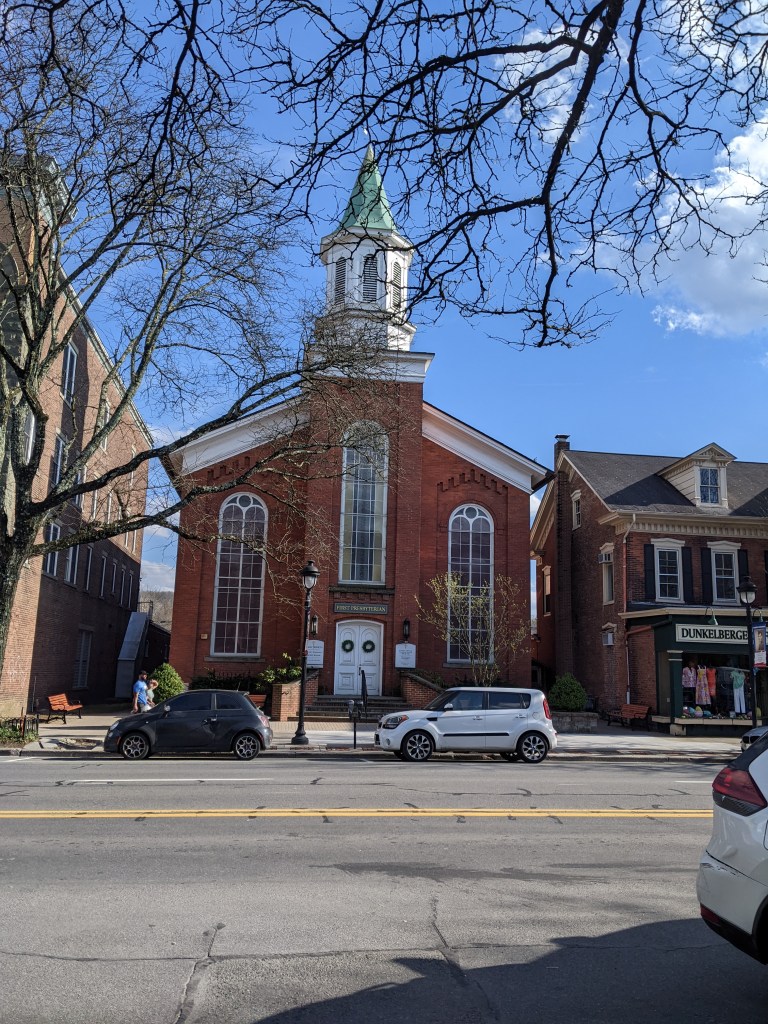
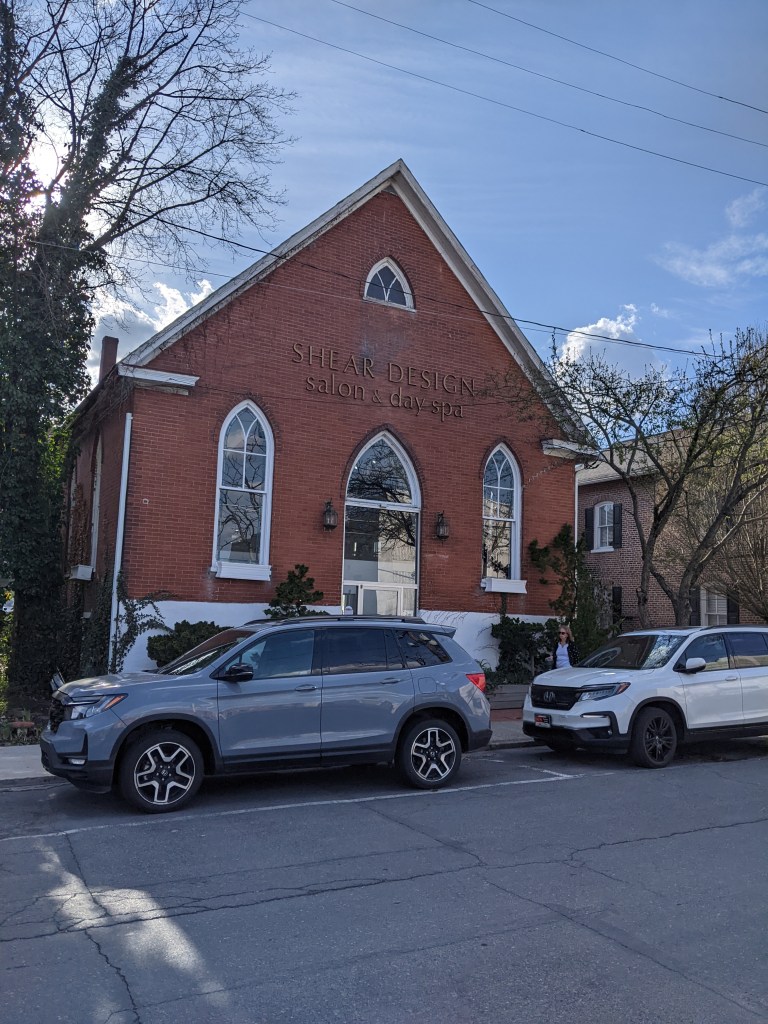
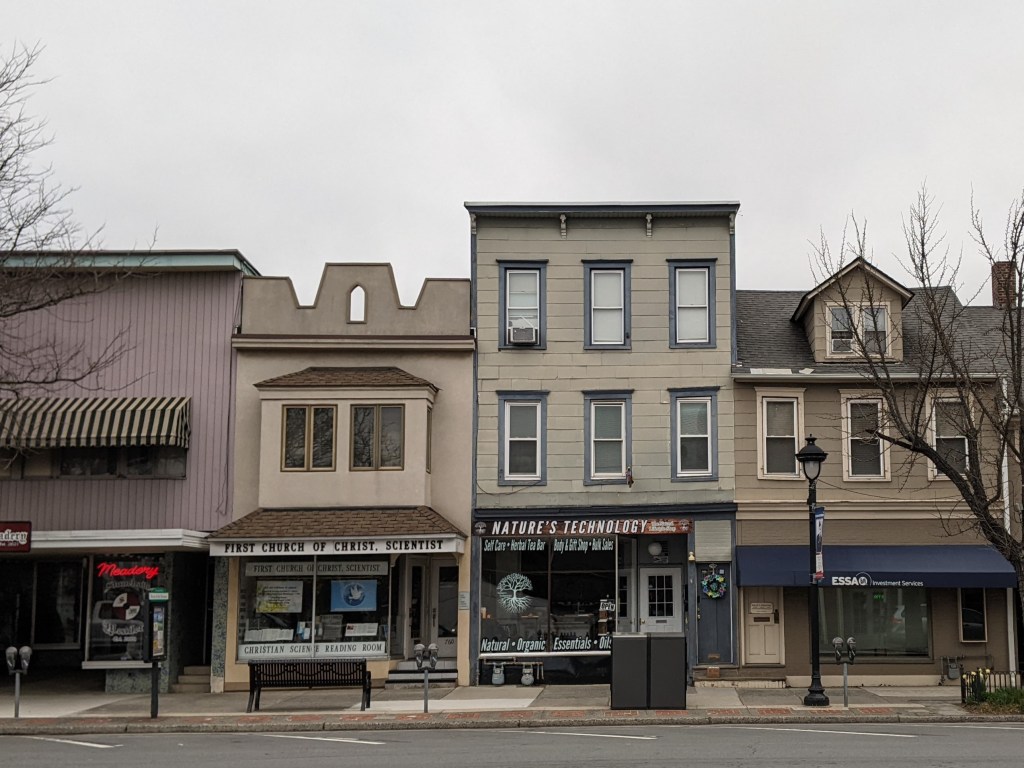
Of the two boroughs, Stroudsburg has a more centralized concentration of religious buildings that was easy for me to explore on foot within the limitations of my post-injury recovery phase. The results of this survey confirmed my hypothesis. Of the seven buildings I found, only one was converted to a secular use. Another one appeared to be having a renovation of it’s primary entrance but was still looked actively used as a church. (Facebook confirmed that it is still active with a video of the Polish language mass from a few days before the date I looked it up.) A third building was a storefront that is a First Church of Christ, Scientist.
Comparing Stroudsburg with other Pennsylvania towns where I’ve explored the status of religious buildings, it fits the pattern well. Stroudsburg’s peak population was in 1950, the same as Pittsburgh and Wilkinsburg. Below is an updated chart of the population loss for these cities and a broad impression of the state of their religious buildings.
| City | Population Loss Since Peak (Peak Year) | Status of Religious Buildings |
| Bethlehem | 1% (1960) | Primarily active sacred uses |
| Erie | 26% (1960) | Primarily active sacred uses |
| Homestead | 85% (1920) | Significant numbers closed or converted to secular uses |
| Pittsburgh | 55% (1950) | Significant numbers closed or converted to secular uses |
| Stroudsburg | 14% (1950) | Primarily active sacred uses |
| Wilkinsburg | 49% (1950) | Significant numbers closed or converted to secular uses |
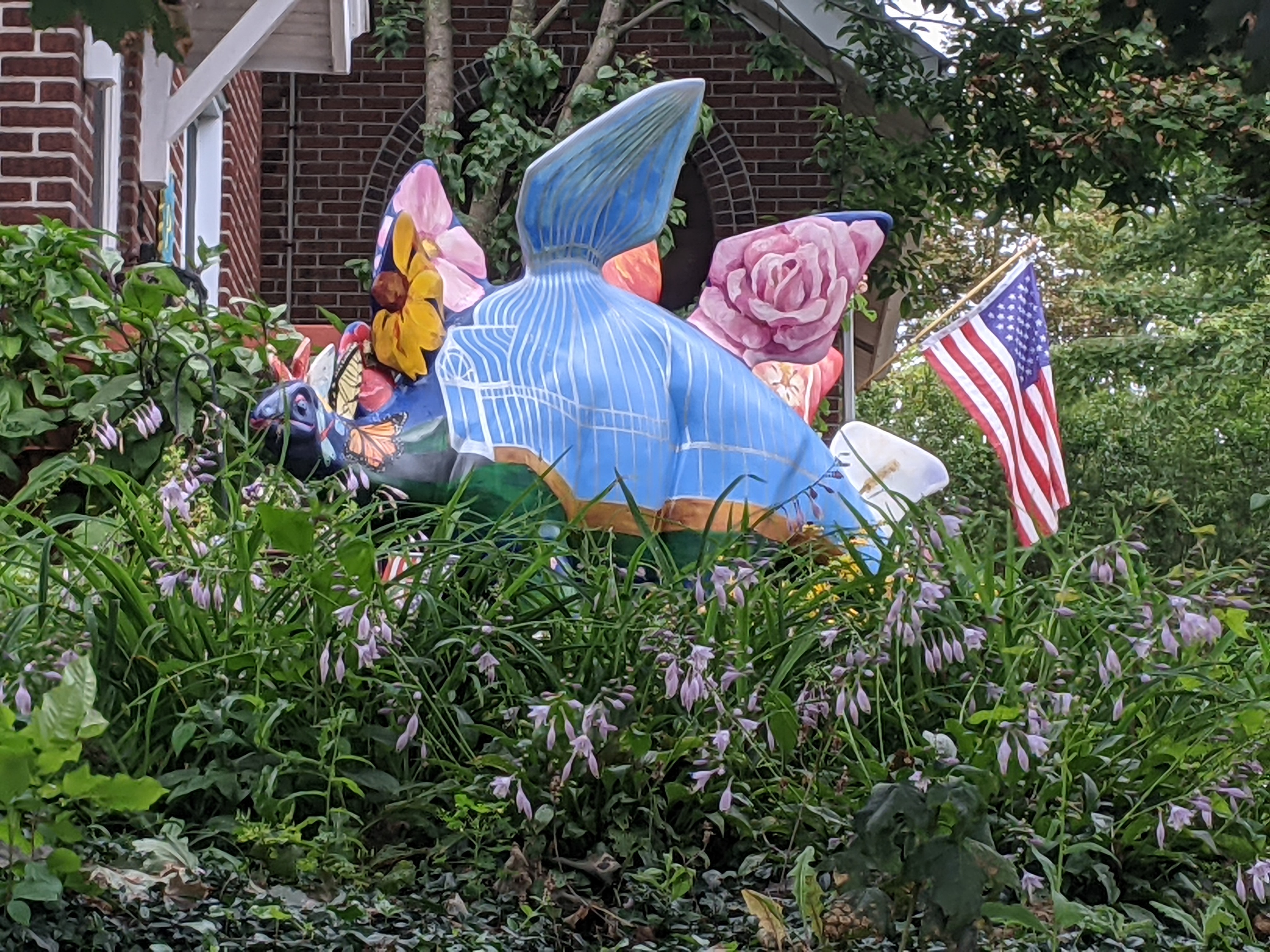

Thank you for participating in the 2023 Bridge Madness Tournament. While there were some close contests throughout the tournament, in the end, the Smithfield Bridge emerged as the clear winner with 88% of the votes to the 16th Street Bridge’s 12%.
Bridge Madness 2023 featured bridges or groups of bridges that are accessible to vehicles and pedestrians. From east to west, these bridges on the Allegheny and Ohio Rivers are the Highland Park Bridge, the 62nd Street or R.D. Fleming Bridge, the 40th Street or Washington’s Crossing Bridge, the 31st Street Bridge, the 16th Street or David McCullough Bridge, the Three Sisters Bridges (6th Street, 7th Street, and 9th Street), the Fort Duquesne Bridge, and the West End Bridge. From east to west, these bridges on the Monongahela River are the Homestead Greys Bridge, the Glenwood Bridge, the Hot Metal Bridges, the Birmingham Bridge, the South 10th Street Bridge, the Liberty Bridge, the Smithfield Bridge, and the Fort Pitt Bridge.

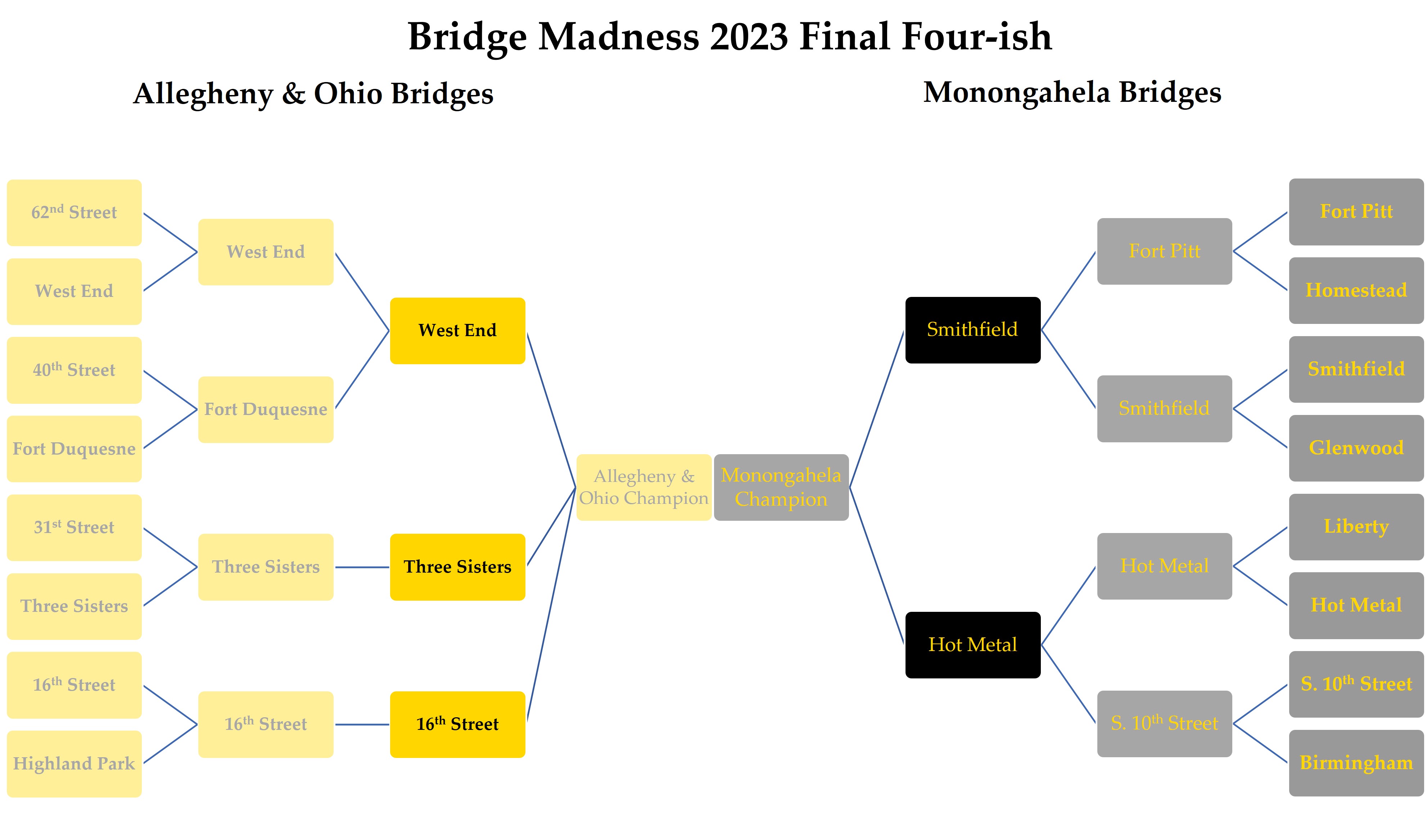
The results are in from the Final Four match-ups in 2023’s Bridge Madness Tournament. The tournament features bridges or groups of bridges that are accessible to vehicles and pedestrians. From east to west, these bridges on the Allegheny and Ohio Rivers are the Highland Park Bridge, the 62nd Street or R.D. Fleming Bridge, the 40th Street or Washington’s Crossing Bridge, the 31st Street Bridge, the 16th Street or David McCullough Bridge, the Three Sisters Bridges (6th Street, 7th Street, and 9th Street), the Fort Duquesne Bridge, and the West End Bridge. From east to west, these bridges on the Monongahela River are the Homestead Greys Bridge, the Glenwood Bridge, the Hot Metal Bridges, the Birmingham Bridge, the South 10th Street Bridge, the Liberty Bridge, the Smithfield Bridge, and the Fort Pitt Bridge.
In the Allegheny and Ohio Conference
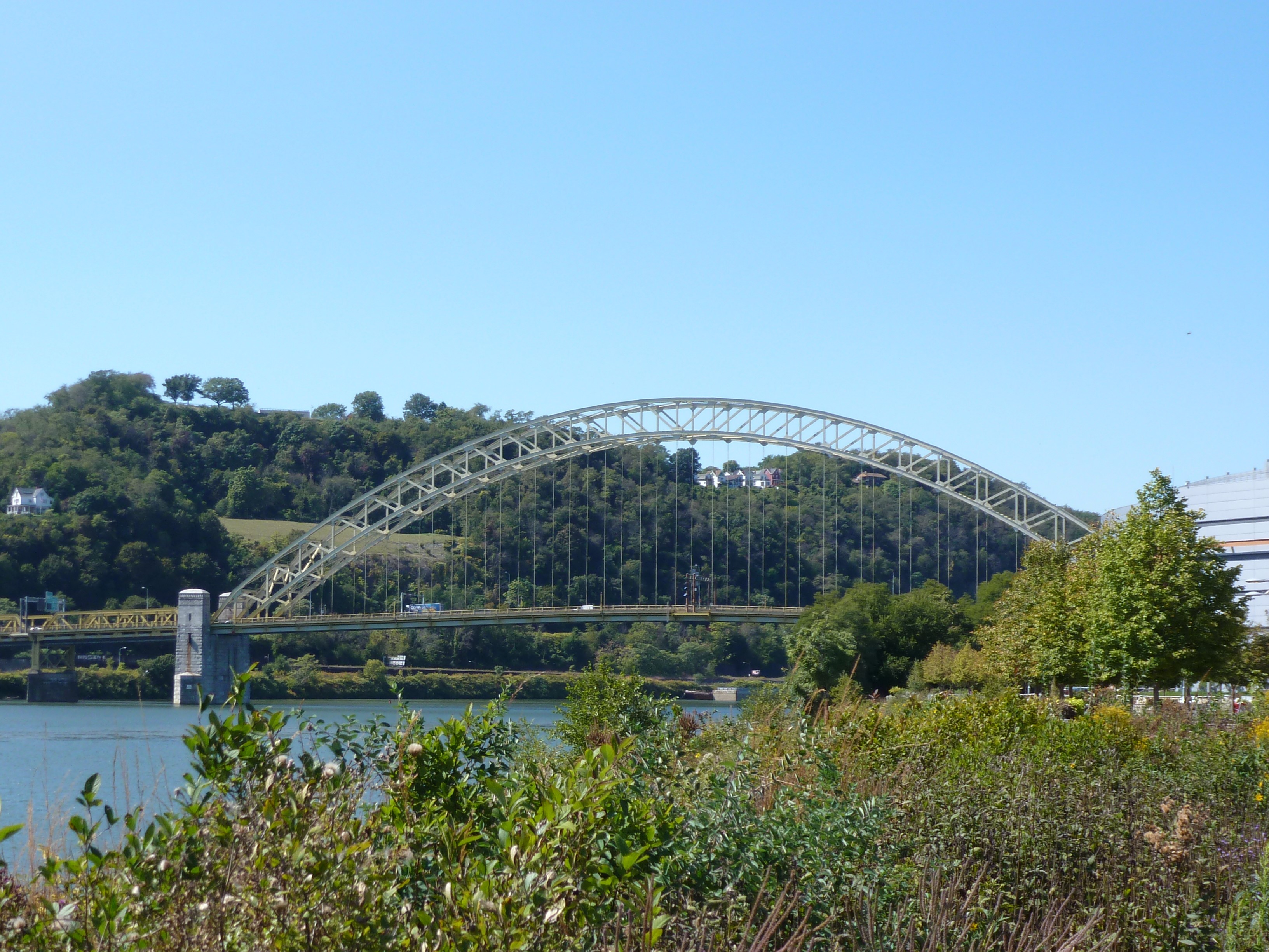
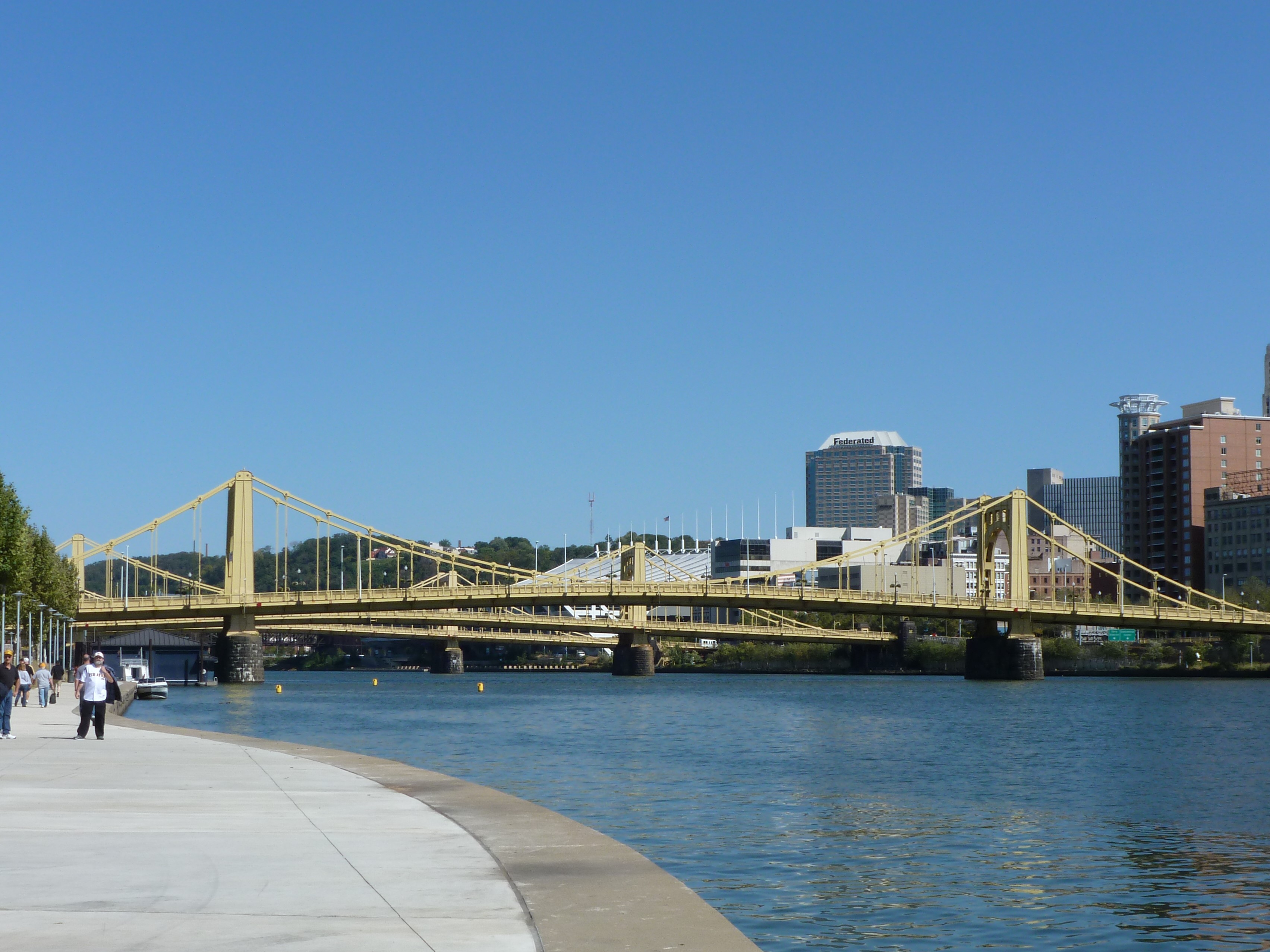
Bracket 7 was the 16th Street Bridge (46%) vs. the Three Sisters Bridges (37%) vs. the West End Bridge (17%).
In the Monongahela Conference
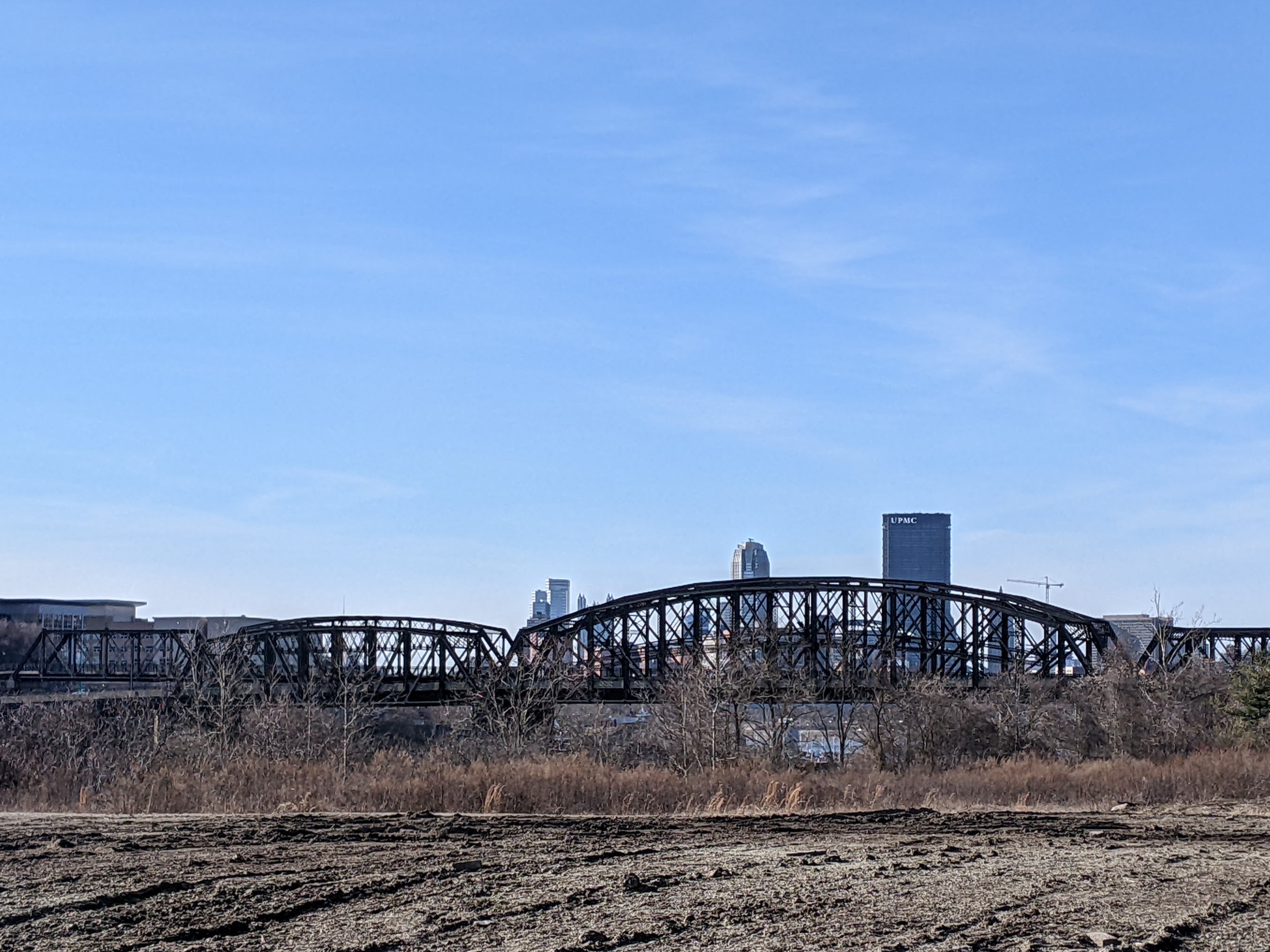
Bracket 7 was the Smithfield Bridge (55%) vs. the Hot Metal Bridges (45%).
The winners are matched up below for the Championship. Vote for your favorite bridge by noon on March 29, then check back on March 30 for the announcement of the winner.
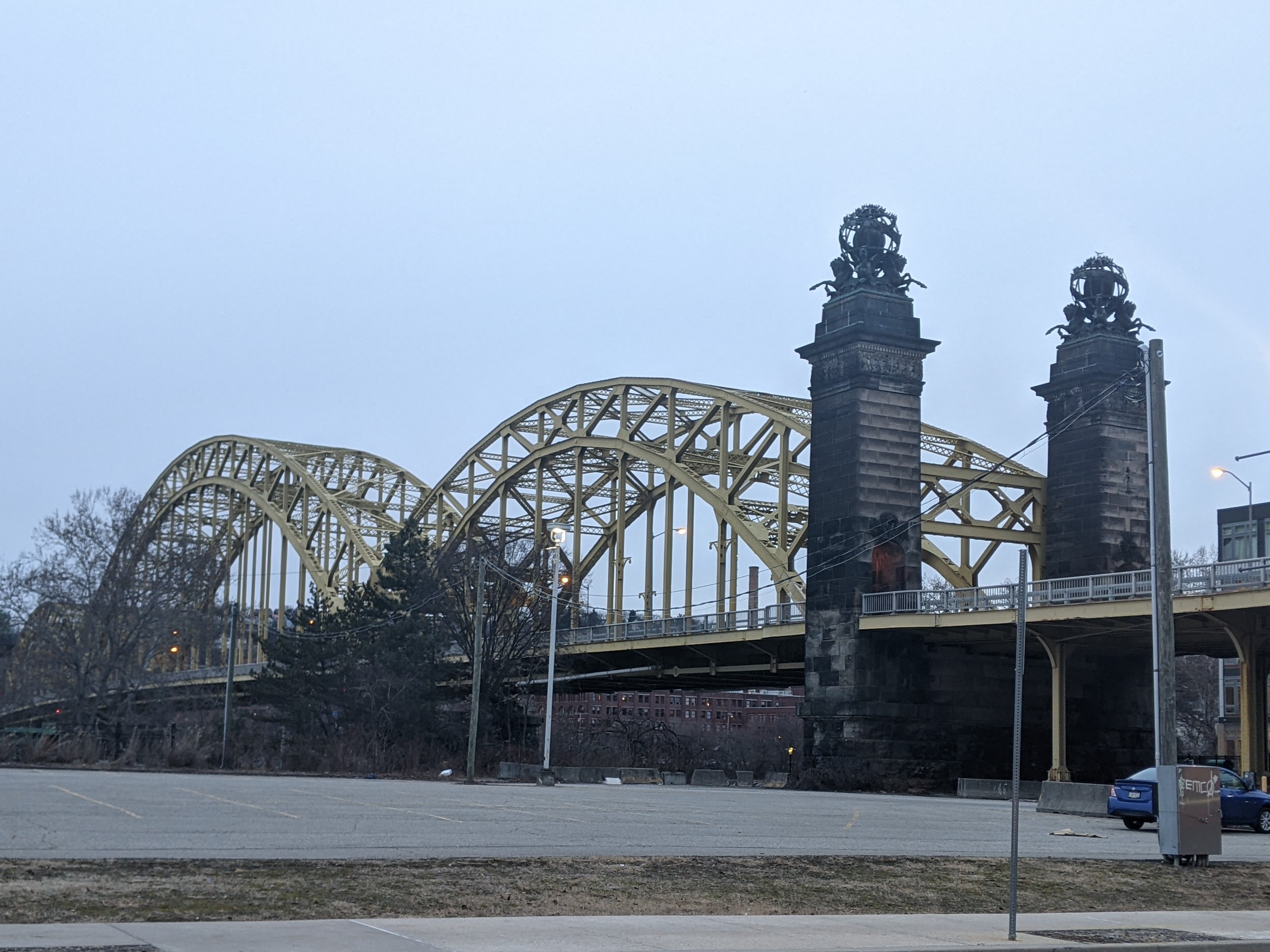
The results are in from the Elite Eight match-ups in 2023’s Bridge Madness Tournament. The tournament features bridges or groups of bridges that are accessible to vehicles and pedestrians. From east to west, these bridges on the Allegheny and Ohio Rivers are the Highland Park Bridge, the 62nd Street or R.D. Fleming Bridge, the 40th Street or Washington’s Crossing Bridge, the 31st Street Bridge, the 16th Street or David McCullough Bridge, the Three Sisters Bridges (6th Street, 7th Street, and 9th Street), the Fort Duquesne Bridge, and the West End Bridge. From east to west, these bridges on the Monongahela River are the Homestead Greys Bridge, the Glenwood Bridge, the Hot Metal Bridges, the Birmingham Bridge, the South 10th Street Bridge, the Liberty Bridge, the Smithfield Bridge, and the Fort Pitt Bridge.
In the Allegheny and Ohio Conference
Bracket 5 was the West End Bridge (63%) vs. the Fort Duquesne Bridge (34%).
Bracket 6 was the Three Sisters Bridges (50%) vs. the 16th Street Bridge (50%).
In the Monongahela Conference
Bracket 5 was the Smithfield Bridge (79%) vs. the Fort Pitt Bridge (21%).
Bracket 4 was the Hot Metal Bridges (71%) vs. the South 10th Street Bridge (293%).
The winners in these brackets are matched up below for the Final Four. Vote for your favorite bridges below by noon on March 26, then check back on March 27 for the Championship.





 urbantraipsing