The Last Allegheny River Bridge

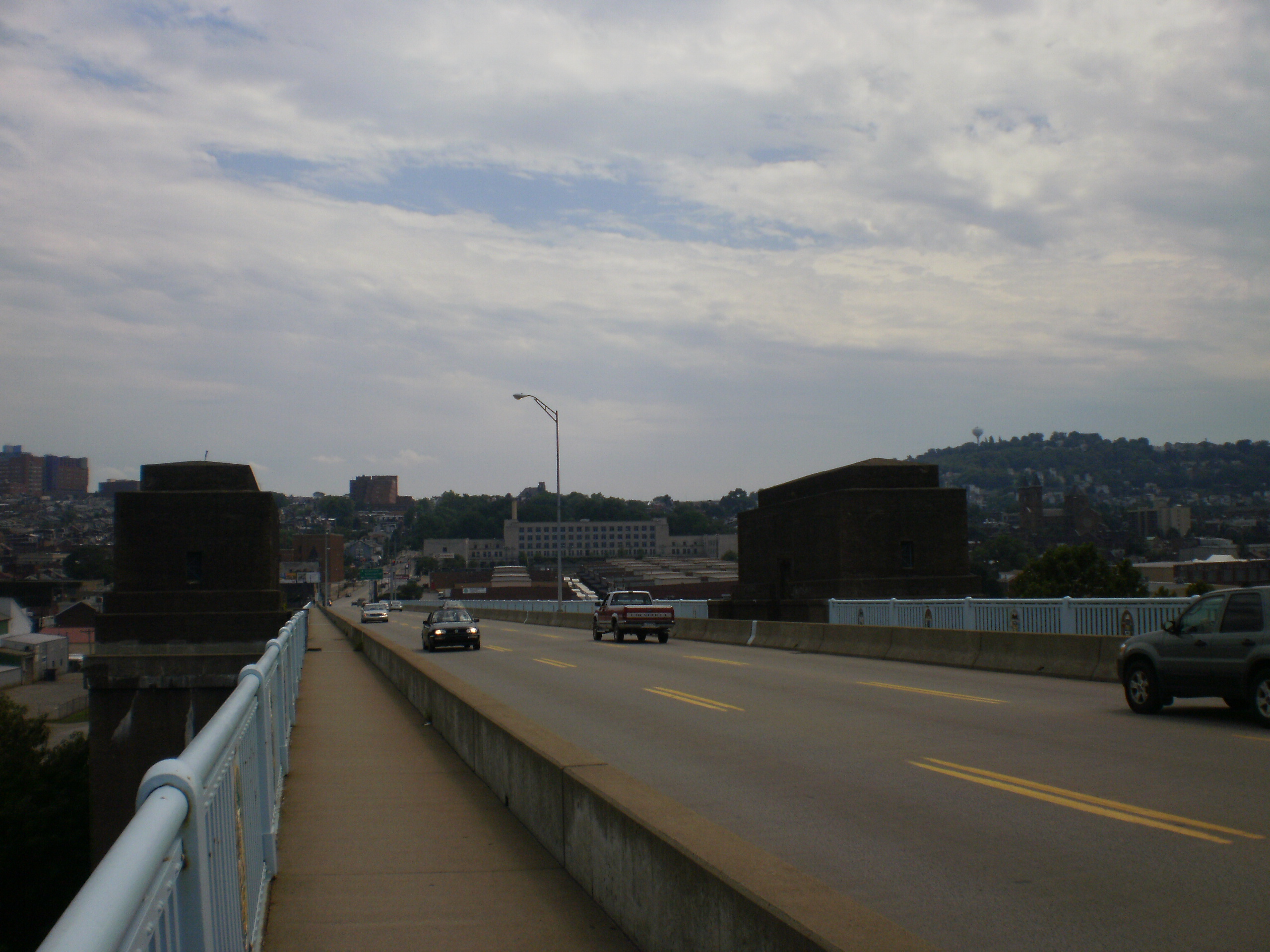
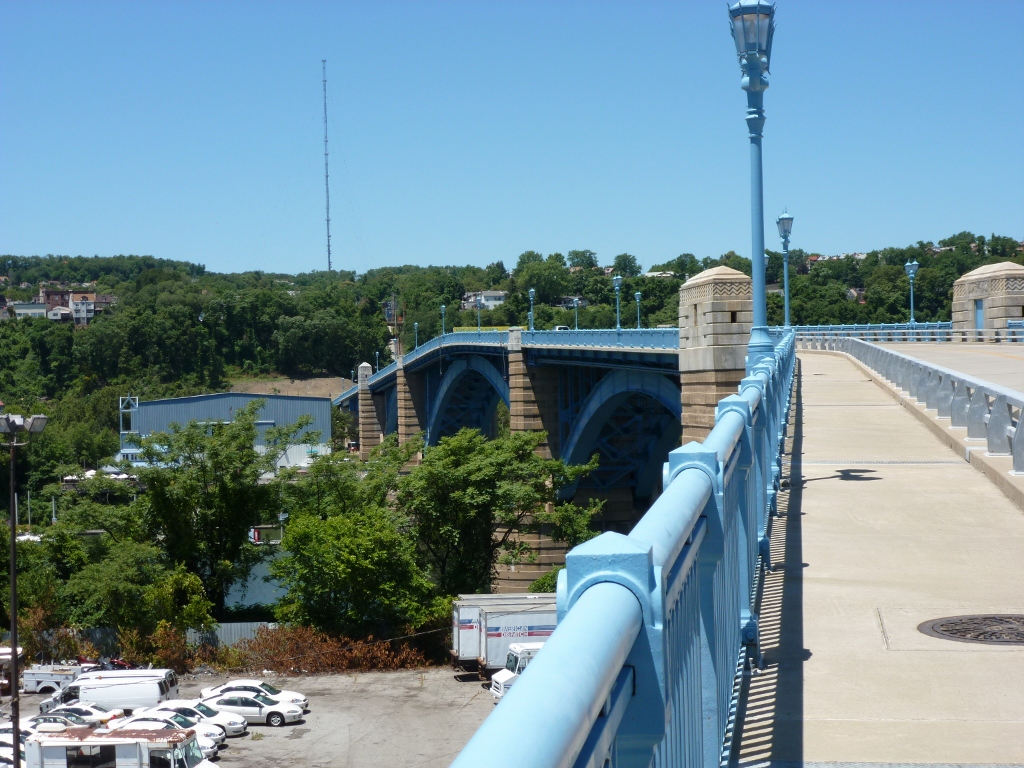
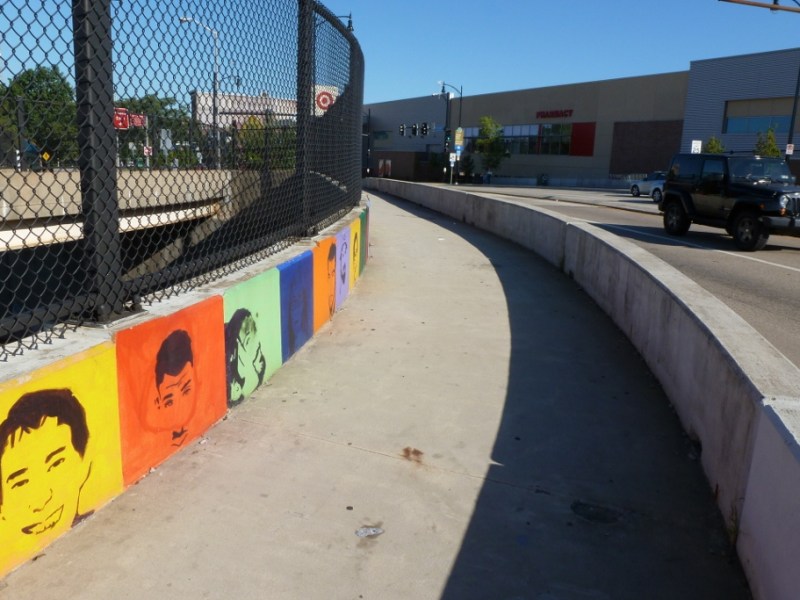
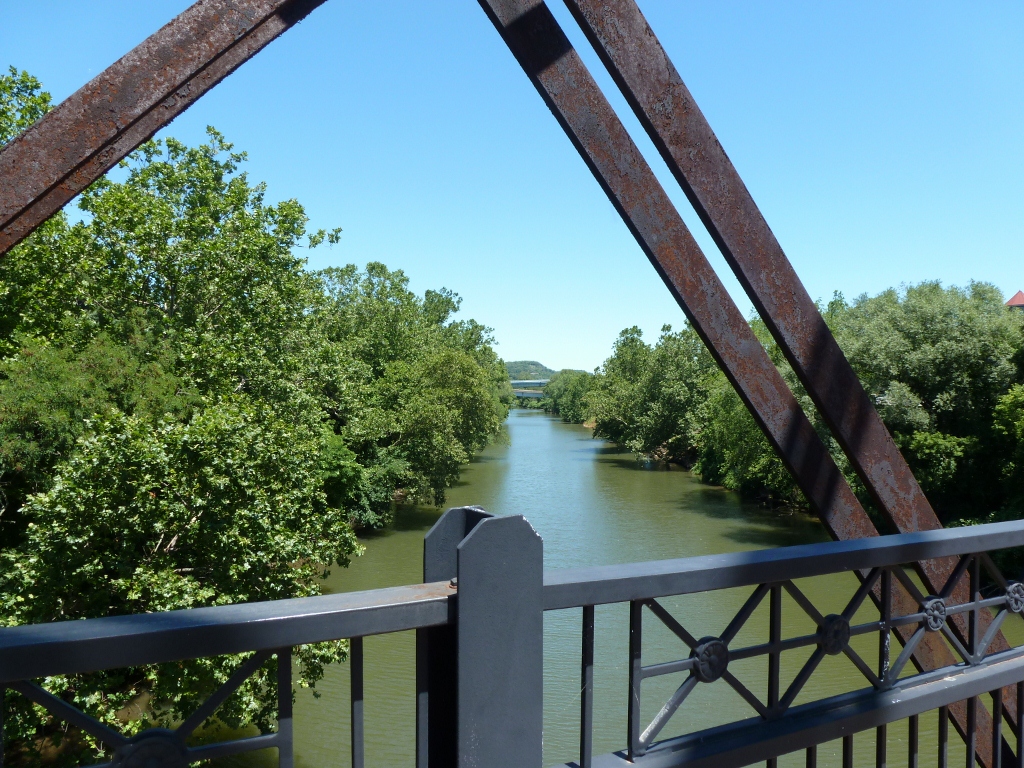
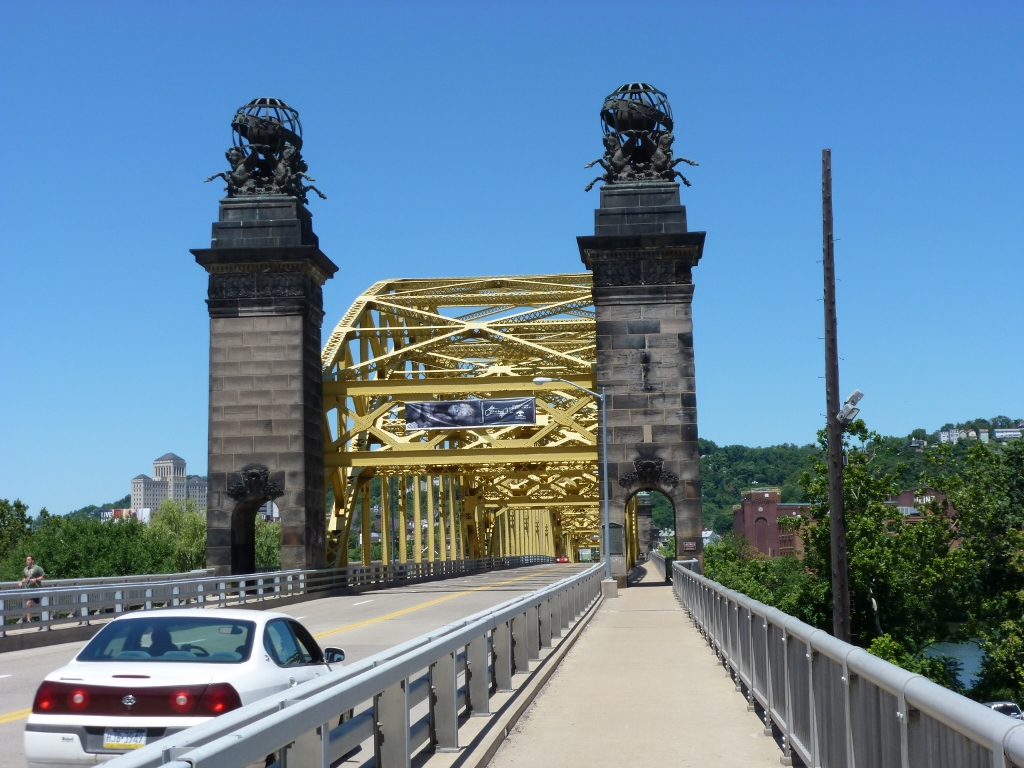
The last bridge across the Allegheny I needed to cross was the 62nd Street Bridge.  While the approach to the bridge less than inviting, the bridge itself was surprisingly pleasant to cross.  The approach was a skinny sidewalk overgrown and broken in spots connected directly to a very fast-paced road.  This approach is similar to the one for the Highland Park Bridge (see June 10 post).  For this reason and because the 62nd Street and Highland Park bridges are the two farthest from downtown on the Allegheny, I compared the experience of walking across these two bridges.  The 62nd won by a long shot.  Its sidewalk is much wider and it has sidewalk on both sides.  The Highland Park Bridge has a high mesh fence enclosing you in, while the 62nd Street Bridge has a shorter waist-/chest-height railing similar to those on the 31st and 40th Street bridges (see July 19 and July 20 posts).  The traffic was also much lighter on the 62nd compared to the Highland Park Bridge, although I imagine that at rush hour the 62nd might get busier than when I crossed it.

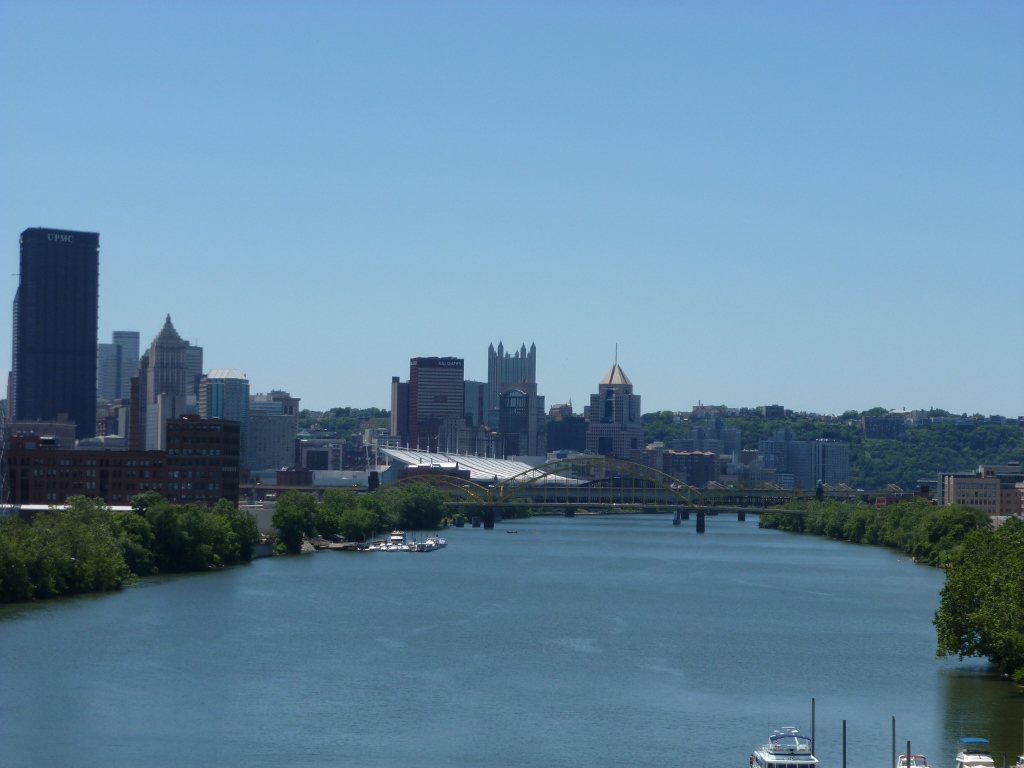
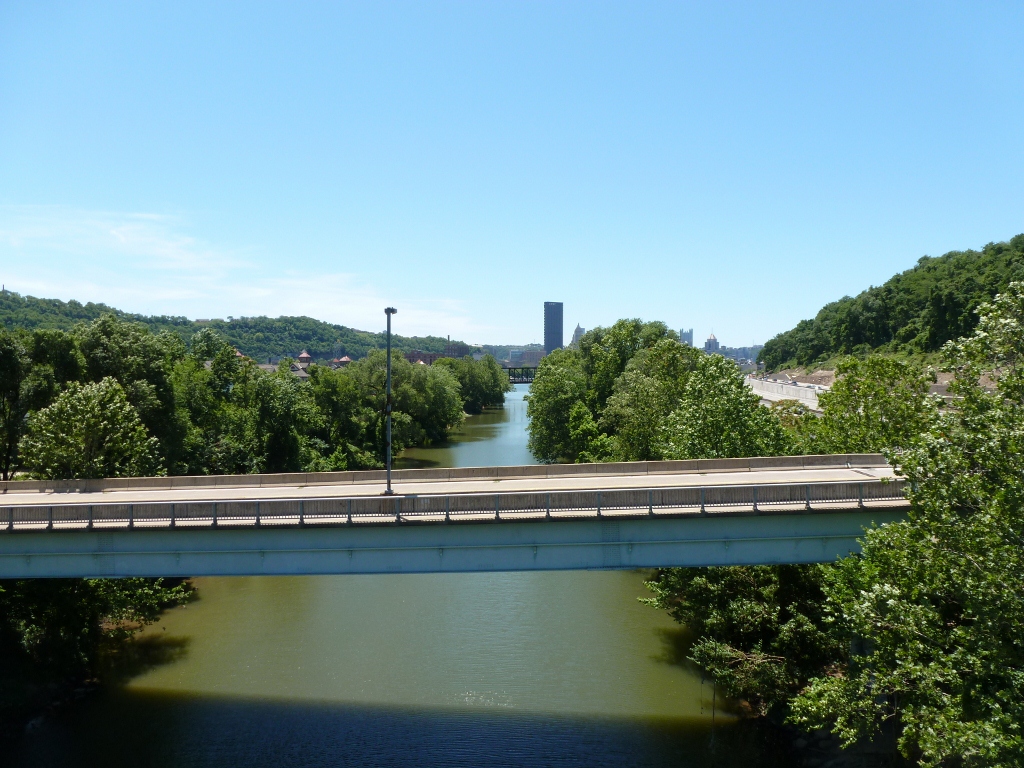
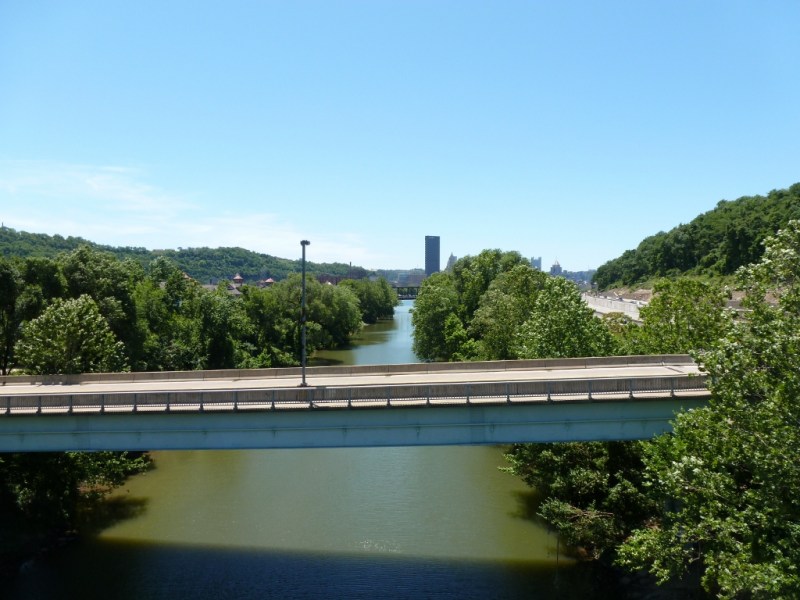
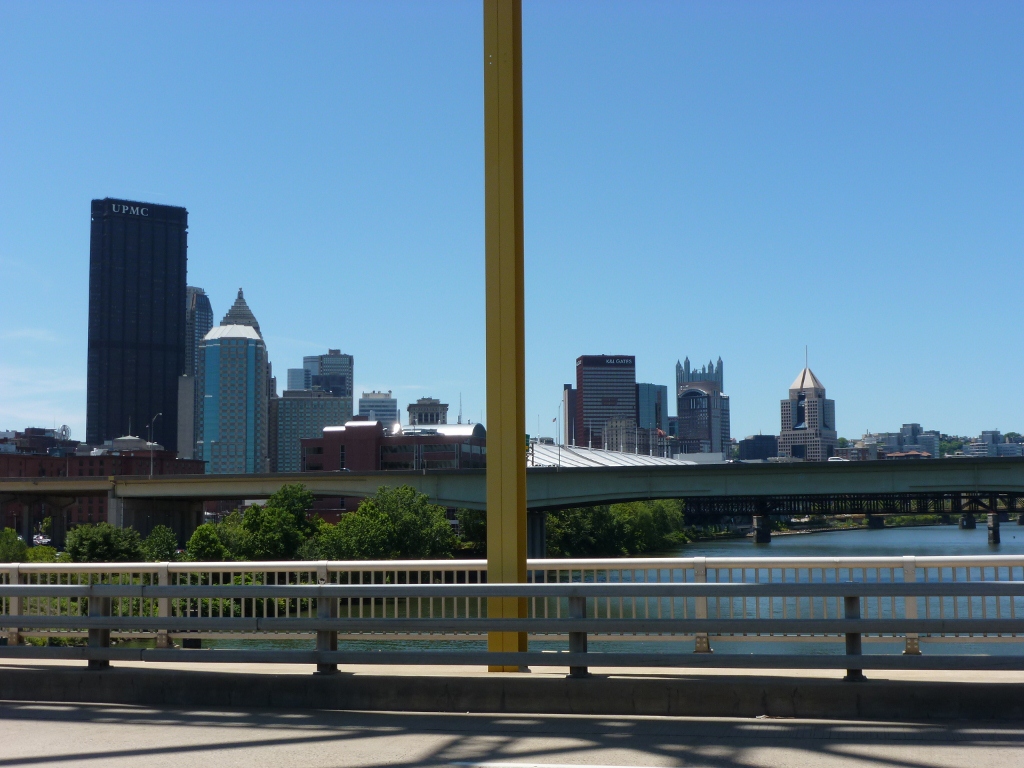
I was surprised that there is still a good view of downtown from the 62nd Street Bridge.  The river bends quite a bit before getting to 62nd Street, so much so that the 40th Street Bridge is not visible from the 62nd.  However, there is a significant stretch of flat land on the southern shore which permits the view of downtown from the northern end of the bridge, by the middle of the bridge only part of downtown is visible, and by the southern end downtown is hidden from sight.

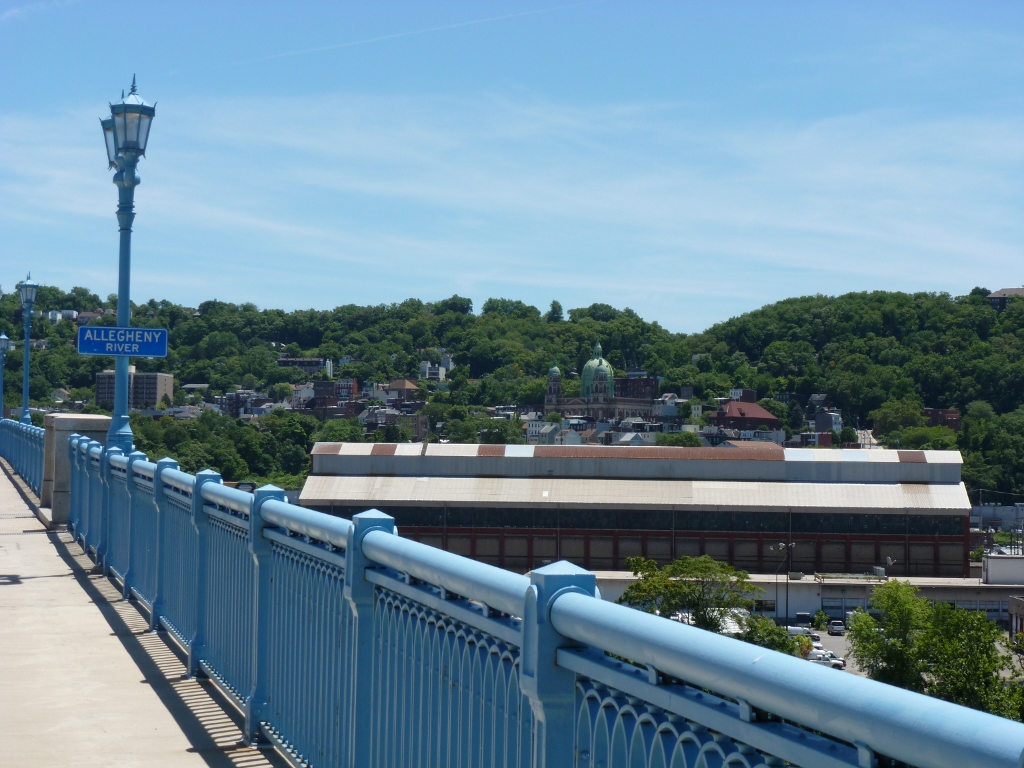
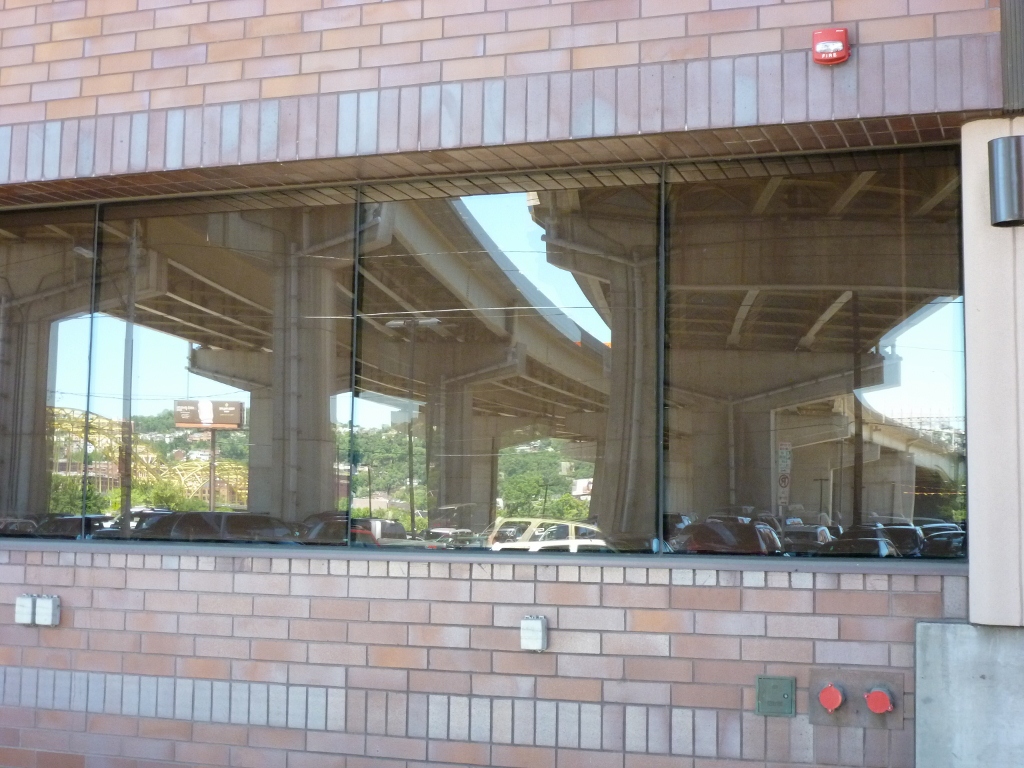
While most of the area surrounding the bridge is industrial or former industrial, the northern end connects to the edge of Sharpsburg, PA, which has a couple interesting looking churches and likely housed industrial workers for many years.
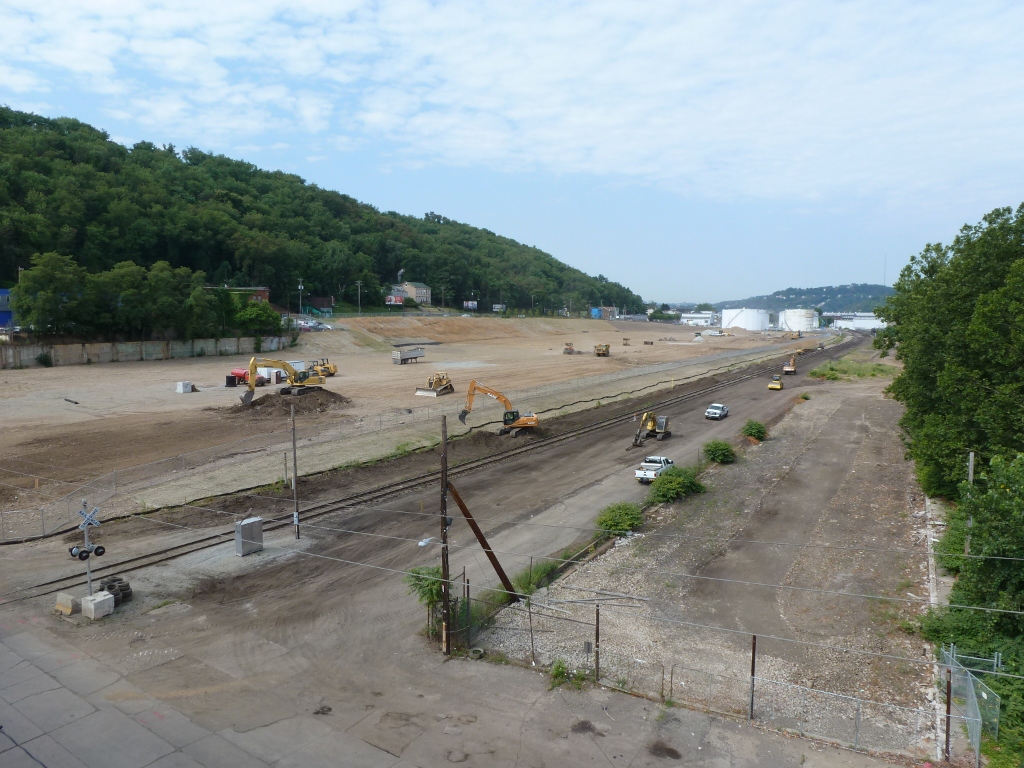
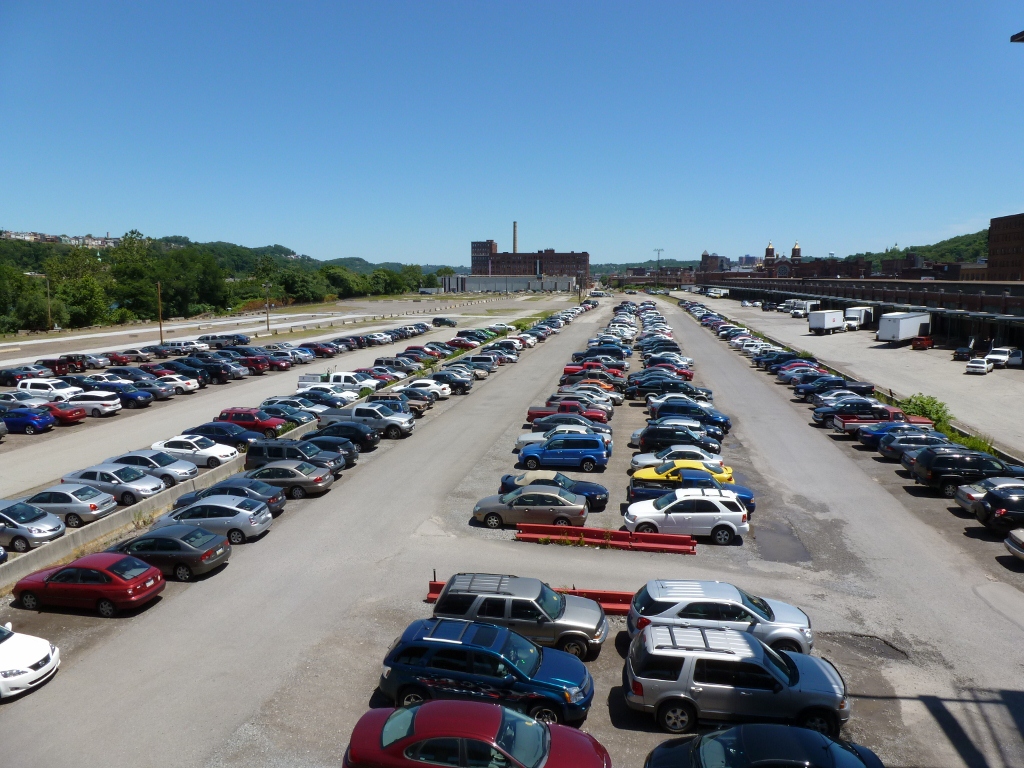
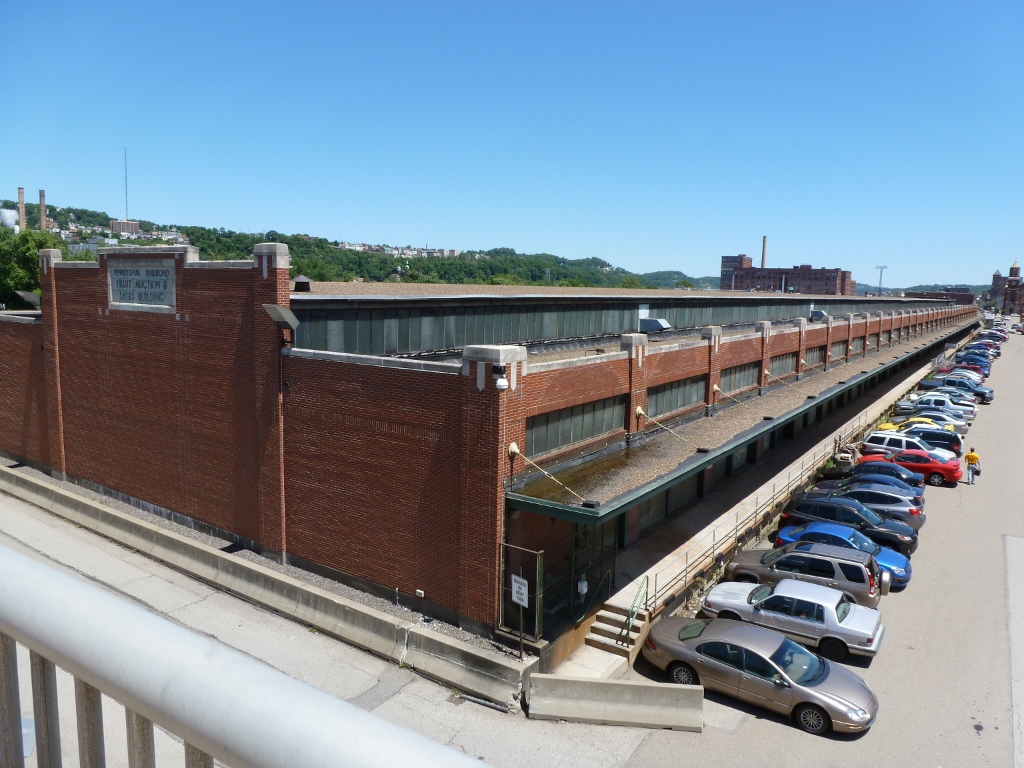
The 62nd Street Bridge also passes by a future site of redevelopment.  I thought I read somewhere last summer about something interesting that was planned for this site, yet when I searched for it today, I could not find what I thought I was looking for.  However, there looks like there is a different interesting story connected with this site.  It seems the site is being considered for a distribution center for the company trying to redevelop the parking lots and produce terminal near the 16th Street Bridge (see July 14 post).  The Post-Gazette has an article explaining that not only does Councilman Dowd have issues with the redevelopment in the Strip (the 16th Street Bridge area), but he also has issues with this redevelopment scheme.  I was sorry to learn that the plans for the site are leaning away from something interesting and more publicly accessible such as a park/retail area.  However based on the surrounding area, it makes sense.  There are only a very few residences nearby and what traffic that does come by is looking for a quick way to get between other points in the city and surrounding region.  Also, there is very minimal bus access to the site.  (There used to be more when the site belonged to the bus company, see article.  There are still bus stop signs along Butler Street from this time.)

Here’s one final note on the 62nd Street Bridge.  Like many of the numbered street bridges, this bridge has an alternative name (see posts on 6th Street, 7th Street, 9th Street, and 40th Street bridges).  The 62nd Street Bridge is also known as the R.D. Fleming Bridge.  For years, I have assumed that R.D. Fleming was in the medical profession, he name suggested medical to me when I was in grade school and the idea has stuck for years.  It would make sense as Pittsburgh has a good reputation for things medical.  However, it turns out that R.D. Fleming was a Republican senator whose district included the region near the bridge.  I could not find an explanation for why this former senator, of all the former senators Pittsburgh has had, was honored by having a bridge named after him.  If anyone knows what made him unique, please share.

Washington’s Crossing Bridge

I walked the 40th Street Bridge last fall after having taken a tour of the Maxo Vanka murals at the St. Nicholas Croatian Catholic Church (pictured above).  Two years after having come up with the idea of walking all the bridges in Pittsburgh, this one was the first that I documented (side note: the camera I had at that time produced pictures of significantly less quality than my current camera).  While the bridge itself was fine for walking across, the approach to it was quite intimidating, so much so that if there was a bus easily accessible and going in the direction I wanted, I would have chickened out and taken it instead.  Between the church and bridge I had to cross through an active road construction zone, cross more than one fast past road, and then walk up a small strip of a highway exit ramp covered in debris and just barely wide enough for passing the people coming the other direction.

The other end of the bridge connects to Lawrenceville and is much more pleasant as it immediately connects to a residential area and there is a little parklet that is designed to encourage pedestrians at one corner.  The large building in the middle of the frame above is Arsenal school, behind which is Arsenal Park.  Both sites were named after the Allegheny Arsenal located on this site during the Civil War, which played a significant role in the war and where there was a major explosion that killed many of the female workers.

On the bridge itself are seals.  I did not look closely at them as on this, my first official walk across a bridge, I was mostly concerned with the views from the bridge and not the bridge itself.  According to PGHbridges.com these seals are the seals of Allegheny County and the thirteen original colonies repeated up and down the bridge.

The downstream view above looks out over the forested northern end of Herr’s Island toward downtown.  As I mention in the Converted Railroad Bridge post, Herr’s Island has been renamed Washington’s Landing, in honor of George Washington’s crossing of the Allegheny River.  Apparently the official name of the 40th Street Bridge is Washington’s Crossing Bridge, which I was not aware of until looking it up online.  In the cases of the other bridges with double names such as each of the Three Sisters Bridges (see June 14, June 21, and June 22 posts) and the R.D. Fleming/62nd Street Bridge (see July 24 post) both names are used interchangeably, but I have only ever heard this bridge called the 40th Street Bridge.  As the person who commented on the Converted Railroad Bridge pointed out, the island renamed Washington’s Landing wasn’t actually where Washington landed.  PGHbridges.com has a somewhat detailed account of what might have happened when Washington crossed the Allegheny according to which the island he and Christopher Gist landed on after Washington fell into the river was actually on the southern side of the river (Herr’s Island/Washington’s Landing is on the northern side).

Up until this point on the Allegheny River, both sides of the river are part of the City of Pittsburgh.  Now the right-hand side of the river in the upstream view above is Pittsburgh while the left-hand side belongs to other municipalities.

31st Street Bridge

To date I have walked the 31st Street Bridge twice.  The first time was a few years ago when I had over two hours to kill between an event downtown and a meeting in the Strip a few blocks from the bridge.  So I naturally decided to spend it by walking from the first to second location along the Three Rivers Heritage Trail.  It was winter and I saw the first flurries of the season as I crossed this bridge.  For that reason, I remember the walk and the bridge fondly though I was disappointed and surprised when I arrived at the Strip District end of the bridge to realize how far away I was from the stores in the Strip.  I had been planning on getting a snack at one of the nice little ethnic groceries or perhaps at the bakery.  As I was in a car every other time I had been to the Strip, I never realized how little of the neighborhood the stores took up.  Fortunately, there was hot chocolate and a good spread of fruit and pastries at my meeting.

As I sat down to write this post, I realized that I have already discussed most of the observations I had or at least something similar in other posts.  So I went to PGHbridges.com to look for some inspiration of something new to write.  It has a nice description of the decorations on the bridge (see link), which I completely missed as I walked it this summer either because they aren’t there or because I looked in the wrong places as I thought there might be some decoration.  The other thing that intrigued me on the website was the name of the bridge which is 31st Street Bridge, Number Six Allegheny River.  I thought perhaps this meant it was the sixth bridge at this location; however PGHbridges.com says that the 31st Street Bridge replaced a former bridge at 30th Street.  While the streets aren’t that far apart, it seems more likely that “number six” refers to it being the sixth bridge up the Allegheny from the Point, yet this would have to be only counting road bridges (not railroad).  The 1929 G.M. Hopkins map shows that the sixth bridge from the point is the 16th Street Bridge when you count the railroad bridge between the 9th and 16th Street bridges.


These are the pictures that go with the topics I’ve discussed in other posts.  On the left is the cookie-cutter, perfectly manicured housing development on Herr’s Island.  In my Converted Railroad Bridge post, I mention how I feel like a trespasser when I walk through this part of the island.  Except for the little lighthouse/widow’s walk attachments on top of the houses (the circular, red peaked roof thing), the development looks identical to some of the newer developments (older being 1960s) in the California town I lived in for several years.

The view downriver, above on the right, shows again the two clusters of tall buildings downtown that I first observed on the 16th Street Bridge (see July 13 post).


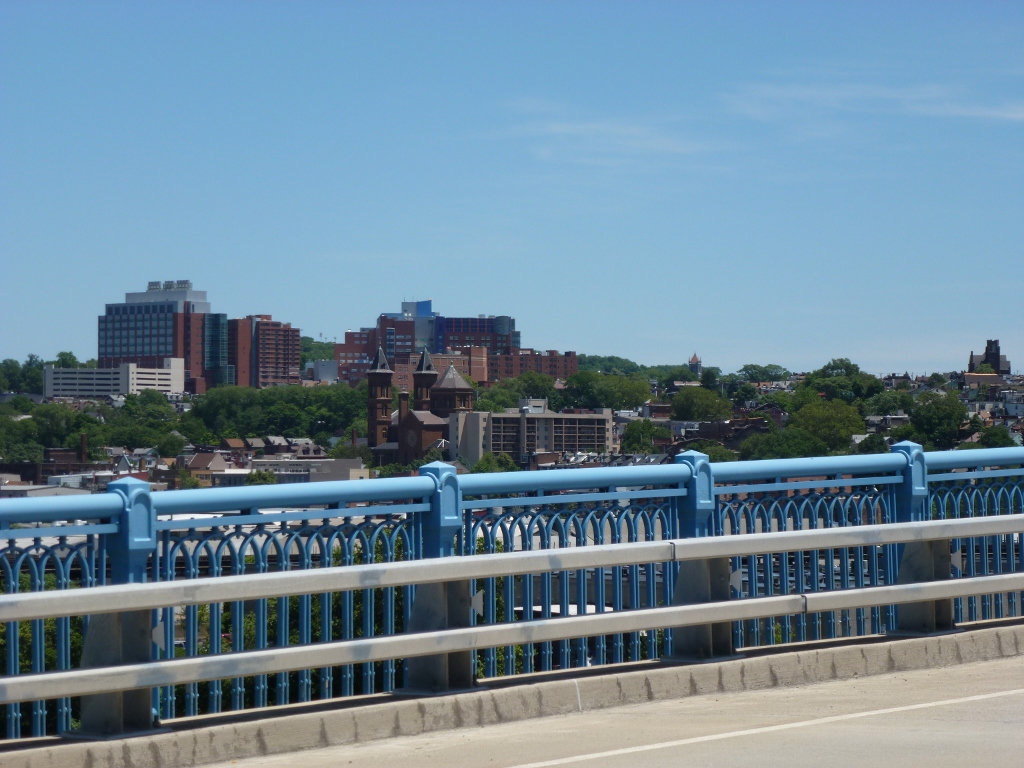
Several well-known landmarks (which I have mentioned in other posts) are visible from the 31st Street Bridge.  First on the downstream side (above left) is the Immaculate Heart of Mary Church.  Perhaps because of the lighting and angle, I don’t think it appears as impressive in the picture as it does in real life.  I mentioned this landmark previously in my post about the Fort Duquesne Bridge.  On the other side of the bridge (above right), the most famous landmark is Children’s Hospital, which came up in the 9th Street Bridge post.  Before doing this project, I don’t think I realized just how big Children’s Hospital is.  I thought it was big, but I’ve learned from observing it from the 9th and 31st Street bridges that it is actually huge.  Closer to the bridge a little lower on the hill from the hospital is the St. Augustine Church in Lawrenceville, one of the many large, old, and beautiful churches in the city.  I’d also like to point out the little church on the right-hand side of the photo towering above its surroundings.  I don’t want to go into much detail about it now, but it is one of Pittsburgh’s repurposed churches and I will be coming back to it in a future post.

What is a Bridge? Pittsburgh Edition I

When I reached the next pedestrian accessible bridge to get off of Herr’s Island/Washington’s Landing (after having got on it by the converted railroad bridge), the question of what is a bridge stared me in the face.  I’ve skirted that question since starting this blog, sometimes alluding to it in passing, but never really dealing with it head on.  It came up first with Heth’s Run Bridge.  While in the posts on this bridge (see Part I and Part II) I mention that the deep ravine that the bridge once spanned has been filled in, I don’t discuss what this means for the structure’s status as a bridge.  The question there is: Is a bridge still a bridge if what it bridged has been filled in and the bridge isn’t actually bridging anything anymore?

Then, when I wrote about the Bridge Under a Bridge, I couldn’t help wondering if it was cheating to include this bridge as it was purely an aesthetic bridge built so that a man-made pond could go underneath.  A different aesthetic choice could have led instead to a path bordered by two man-made ponds.  Yet I still refused to address the question of what is a bridge?

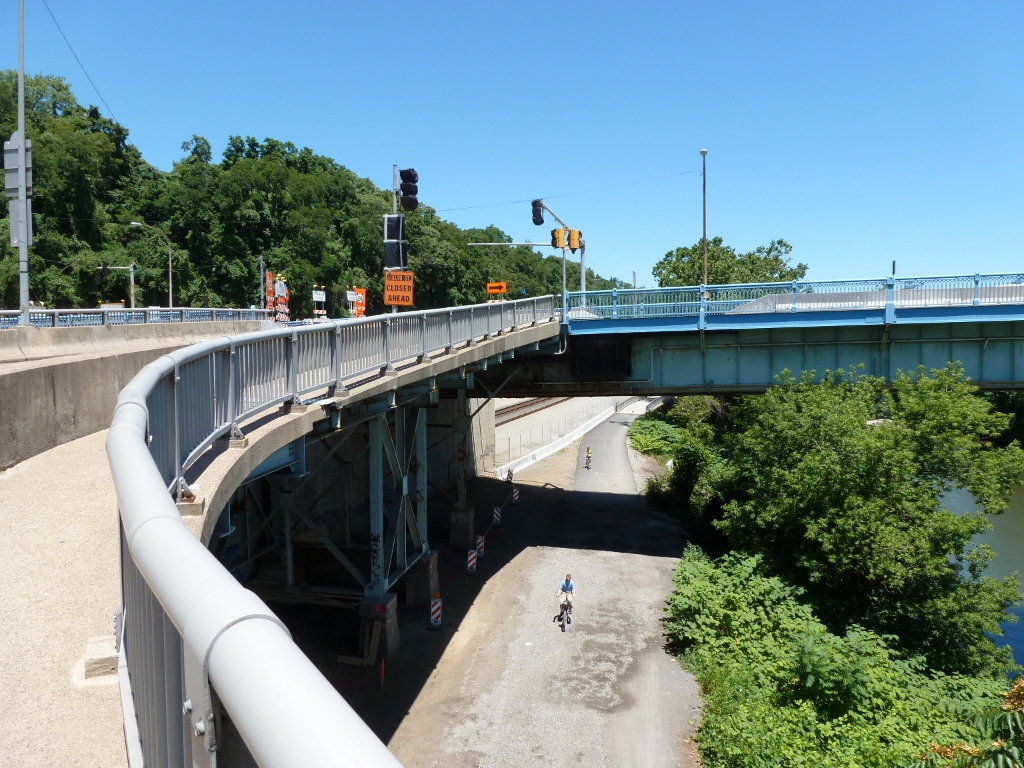
At this point, I feel it is necessary to face the question, this point being where the 30th Street Bridge connects to the River Avenue ramp which connects to the 31st Street Bridge.  From the view pictured above of the 30th Street Bridge, it looks like a bridge.  However, from where I got on it (the lower end on the left side in the image above) it looked to me like a ramp taking traffic from a low point to merge onto another road at a higher elevation.  Besides, it connects to the River Avenue ramp and in the junction of these two structures (pictured below), it felt like one continuous ramp system.  Yet, a portion of this system is called a bridge.    So I ask myself, “what is a bridge?”

First, I thought, “a bridge is a structure that connects two points which would otherwise not be accessible to each other.”  Then I realized this definition includes ramps. In my current example, there is no other way that River Avenue, which for most of its course runs at the same level as the bike path in the picture above, would be able to access the 31st Street Bridge without a ramp.  Therefore, according to my definition above the ramp is a bridge.

Another thought I had was “a bridge is a structure that spans a geological obstacle.”  Well then, that means that the bridges that only exist to cross over a road or railroad aren’t really bridges.  I discuss these types of bridges some in my post on Cleveland Bridges.  In that post, I don’t question whether or not they are bridges, but whether they are significant enough to be counted in comparing the number of bridges cities have.  Though I didn’t state it, I also wondered if they were significant enough for me to include these types of bridges in my bridge walking.  Regardless of their significance, I consider them bridges.

Merriam-Webster defines a bridge as “a structure carrying a pathway or roadway over a depression or obstacle.”  This definition seems pretty good as it excludes ramps but includes the bridges over man-made obstacles.  I’d say this definition also would include the Bridge Under a Bridge.  However, it doesn’t address the situation of Heth’s Run Bridge prior to its renovation.  What if the structure “carrying a pathway or roadway” at one time crossed over “a depression or obstacle,” but does so no longer though the structure is still there?  Is it still a bridge?

There is one other dilemma suggested by the 30th Street Bridge/River Avenue Ramp/31st Street Bridge structures, the Fort Duquesne Bridge, the Veterans Bridge, and London’s Jubilee Bridge.  This dilemma is perhaps best expressed by “what makes one bridge?”

In the Veterans Bridge example, three separate structures cross over the obstacle of the lower elevation of the parking lots in the Strip before joining to become one structure across the obstacle of the Allegheny River.  So, is this one bridge or three?

When I walked the Fort Duquesne Bridge, I was walking a pedestrian bridge built approximately 40 years after the Fort Duquesne Bridge.  The pedestrian bridge is attached to the Fort Duquesne Bridge over the Allegheny River, but on either end it is separate with its own supports.  Is this one bridge or two?

London’s Jubilee Bridge has two separate pathways, but one name and dedication date.  They are separated by a bridge for the underground, which, as far as I can tell, they are attached to for structural support.  So is this one, two or three bridges?

The 30th Street Bridge/River Avenue Ramp/31st Street Bridge structures appear to me to be one conglomeration, similar to the three structures that merge in the Veterans Bridge.  Yet while the elements in the Veterans Bridge appear to be considered one structure, the 30th Street Bridge is considered a separate structure from the 31st Street Bridge, at least in so far as it has its own name and its own page on PGHbridges.com.  What makes the 30th Street and 31st Street bridges different from the other examples I’ve listed above?

For a continuation of this discussion see What is a Bridge? Pittsburgh Edition II


Additional Posts in Series:

Converted Railroad Bridge

This is the bridge that I missed when identifying the river bridges to cross on GoogleEarth.  I missed it because it doesn’t cross the entire width of the Allegheny River.  About 2.5 miles upriver from Downtown Pittsburgh is Herr’s Island, also known as Washington’s Landing.  The name Washington’s Landing refers to the story that this was where George Washington spent the night after a crossing of the Allegheny River during which he fell into the river.  (The folk song “The Forks of the Ohio” describes the incident.)  Herr’s Island refers to one of the original landowners of the island, Benjamin Herr.

One of the names of this bridge is Herr’s Island Railroad Bridge.  While PGHbridges.com lists multiple names for the bridge, none of them refer to the new use of the bridge as a pedestrian bridge.  The bridge connects the northern shore of the Allegheny with Herr’s Island and I image was very well used while the island was covered with industry.  Now is it a very pleasant pedestrian bridge connecting the northern branch of the Three Rivers Heritage Trail with Herr’s Island, which now features a swanky residential area.


The view upstream shows the little stretch of the Allegheny that separates the northern shore from Herr’s Island, while the downstream view captures downtown.

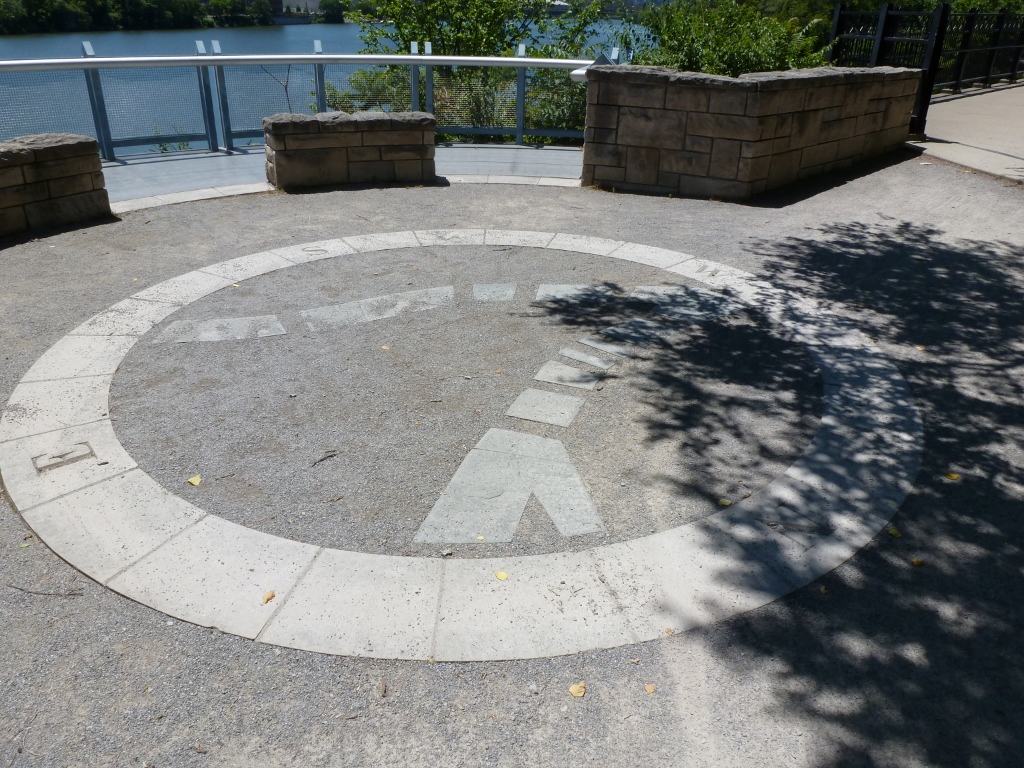
At the Herr’s Island end of the bridge is a nice look-out space featuring this compass with the three rivers.  While this part is nice and seems to welcome the public, I always feel very awkward as I continue on the trail along Herr’s Island.  The way the island was developed, it feel like it’s a private, gated community and people like me who use the trail but don’t live there are interlopers and trespassers.

16th Street Bridge-Developments


The southern end of the 16th Street Bridge soars over an area that is currently provoking controversy in the city.  It is a site where there are what feels like be miles of barren (although used) parking lots right up against the river on either side of the bridge.  It is a very un-pedestrian-friendly area and a very unattractive place.  Alongside these parking lots on one side of the bridge is the historically significant produce terminal building.  While a developer has put forward a plan to redevelop the area, connecting the existing Strip District to the Allegheny River and adding new mixed development in place of the parking lots, part of the plan requires a partial demolition of the produce terminal.  (A description of this intended development can be read in the article linked here.)

In the beginning of June, City Councilman Dowd began holding up funding for the project, saying he wanted more information about how the funding was to be used (see article).  Then about a week ago, two more councilmen voiced their wish for more information about the use of the funding as well as other aspects of the project such as how the community has been engaged (see article).  Another newspaper article from a few days ago, describes a lawsuit being filed about the property and the development.  This article explains, “The lawsuit alleges that the city is not following its own stormwater management program nor that of the federal Environmental Protection Agency in allowing the project.”

Based on what I’m learning in my internship this summer, this seems like the opposition against, or at least concerns, about the project are piling high enough to prevent the development from happening.  As I am not a fan of harsh, stark parking lots currently in place, it would be a shame for the project to fall through.  However, if the claims of the opposition are true, then it seems we need to find someone else to develop the site.  As awful as the parking lots are, their removal is not worth the price of poorly spent funds, no community engagement, and poor storm water management.  The last concern is the most significant given the fact that the city’s storm water management already causes problems.  (For more related to this issue seen my Heth’s Run Bridge post.)

One River Down!!

This week I officially crossed all the pedestrian accessible bridges in Pittsburgh across the Allegheny River.  I still have a few more to post about, but I’m so excited about having reached this milestone, I had to share it with my readers.  I finished the legwork and now just need to complete the fingerwork to be geographically one-third of the way to reach my goal for the summer.

Of the 20 bridges I initially identified as pedestrian accessible over the three rivers in Pittsburgh (see May 30th post), 10 cross the Allegheny River.  It turns out one of these that I identified wasn’t actually pedestrian accessible, though I posted about it anyway (see June 24th post).  However, it turns out that I missed a bridge on the Allegheny when picking them out on the map.  So I still crossed 10 out of 20 bridges.

I have been using the term pedestrian accessible because not all of the bridges I crossed were necessarily pedestrian friendly.  From the Point downtown up to the 31st Street Bridge (see July 19 post) the bridges were mostly pedestrian friendly.  The 31st Street Bridge begins to get a little dubious.  Farther upriver, while the bridges remain accessible, they are not particularly pedestrian friendly.  See Highland Park Bridge, Washington’s Crossing Bridge and The Last Allegheny River Bridge posts.

16th Street Bridge

Pittsburgh’s 16th Street Bridge was quite interesting.  I was surprised by how many people were crossing it.  As there is only one pedestrian in my picture above, there obviously weren’t crowds of people, but compared to the other bridges upriver that I’ve crossed there were a lot.  I thought this bridge was far enough out from downtown that the sidewalks wouldn’t be used much.  Also there didn’t seem to me to be much development on either side of the river that would promote walking across the river.  For all the bridges downriver from this point, one side is connected to downtown and the other is connected to a sports stadium and/or large office buildings.  While at the 16th Street Bridge there are some offices near the southern end and some apartments near the northern end, there didn’t seem to be enough for people to be using the bridge so much.  One explanation I came upon was that it was lunch time and both ends of the bridge connect or almost connect with the Three Rivers Heritage Trail.  It seemed like it would be a nice loop for downtown workers to walk the trail on one side of the river, cross the 16th Street Bridge, and return to work on the other side over lunch break.


The view on the left of downtown fascinated me.  It looks like there are two clumps of tall buildings (the yellow post doesn’t block any tall buildings).  However, the view on the right supports something I heard in one of my classes which I sort of scoffed at at the time.  I don’t remember exactly how it went, but it was something like the US Steel building (now labeled UPMC) was the center point of a triangle of downtown buildings and as such had to be the tallest.  I think part of the reason I had an issue with it was because the building is located in the middle of a side of the triangle and so the term “apex” or “center point” or whatever the teacher used didn’t fit my sense of geometry.  Actually, regardless of the term used, having the center of the base of a triangle as the focal point doesn’t match my sense of geometry.  However, in the view from the 16th Street Bridge, I can accept the US Steel building as the tallest and therefore a focal point because from this view, the buildings gradually increase in height until reaching it.

This graffiti symbol was painted on the sidewalk of the 16th Street Bridge.  I will not go into a discussion about it here, as I have come across it somewhere else that provokes a much more interesting conversation about it.  I was very surprised and intrigued to see it on this bridge as well, as I have only noticed it in one other place in the city, which isn’t exactly next door.  Although now that I’ve spotted it twice, I will be keeping my eyes open for it.

Maps are Awesome!

While talking with someone recently, we discovered we shared a seemingly rare love of maps.  Maps are truly awesome and useful tools and not just for figuring out how to get from one place to another.  Maps provide insight into what a place looks like, giving clues about the layout and geography of a place you’ve never been.  Street names and other labels can hint at the history of the place.  Historical maps show what a place looked like in times past.

I have used maps several times to help me with writing my blog and there are many more times when I should have gone to a map first. As I mentioned in the first Heth’s Run Bridge post, the G.M. Hopkins maps on Historic Pittsburgh are probably my favorite resource for Pittsburgh.  Heth’s Run Bridge presented many puzzles that the maps helped me understand.  I realized yesterday that I probably should have gone to these maps first when wanting to figure out which bridge remnant I saw from the Fort Duquesne Bridge (see June 19’s post).  While writing that post, I did a search on the internet, but came up with nothing.  The G.M. Hopkins maps came to the rescue, although there are two possibilities for which bridge the remnant belonged to.  The first possibility I found on the 1900 map.  This one was called the Union Bridge.  By 1929, the Union Bridge was gone and another bridge connected the Point to the North Side.  This one was called Manchester Bridge.  This bridge was demolished in 1970, by which time the Fort Duquesne Bridge was built (see June 19th post).  I made a few other discoveries about Pittsburgh while looking at the 1929 map.  First, Penn and Liberty avenues used to come straight through to Water Road which ran along the northern shore of the Monongahela River.  Today these avenues stop much further inland.  The second major discovery was that Point Park already existed in 1929.  It was significantly smaller than it is today, but it is there.

Google Maps helped me with identify the buildings near Lambeth Bridge (see June 28th post) that I didn’t take the time to stop and investigate while I was walking the bridge.  Several of the buildings I was able to identify from labels that Google Maps conveniently placed on the map.  The Parliament View Apartments weren’t labeled, but using Google Maps’s other wonderful feature–Street View–I was able to find a sign on the building identifying it.

The image leading this post is of another highly convenient map.  On my recent trip to Cleveland, I arrived Downtown 2 hours before the person I was visiting finished work.  We arranged to meet at their place of work, but I was only familiar with two or three of the streets in downtown Cleveland, and the meeting place wasn’t on any of them.  I had just decided to use my skills of logic to find it (which would have been feasible in this case as one of the cross streets was a numbered street and the other was called Lakeside) when I came across this map on a street corner.  It turns out that these maps are posted regularly around downtown Cleveland, which I thought was very considerate of the city.  It made the city feel like it welcomed visitors with open arms, engaging them in being engaged in the city.  Even though I had a plan for finding where I was going without a map, I prefer being safe rather than sorry, so I took the easy way out and used the map to figure out where I was supposed to end up.  I also used it to plot out how I could spend the time I had until my friend got out of work to cross at least one of Cleveland’s bridges over the river Cuyahoga.  I ended up getting distracted from this goal, but that is a story for another day….(see July 9 post)….

Veterans Bridge

The Veterans Bridge is one of the bridges I will not be walking in Pittsburgh because it doesn’t have pedestrian access.  It carries another one of the freeways over the Allegheny River.  As discussed in the Fort Duquesne Bridge post, freeways and pedestrians usually don’t mix.

The reason that I am including a post on this bridge, as my focus is on the bridges that I walk, is that it adds to the discussion of how many bridges are there in Pittsburgh.  As the Veterans Bridge, I consider it a single bridge entity.  However, the image above shows that there are three separate entities that make up the bridge, at least as it crosses over the parking lots in The Strip (I believe at least two of these merge before the bridge crosses the river).  So the question is, do these three elevated roadways get counted as three separate bridges in addition to the bridge over the river?  If that is the case, then it is easy to see how Pittsburgh can outrank Venice in the number of bridges each city has.  Though I have yet to go to Venice, I image its bridges are more like London’s bridges where there is only one roadway and few or no elevated ramps/roadways to approach the bridge.