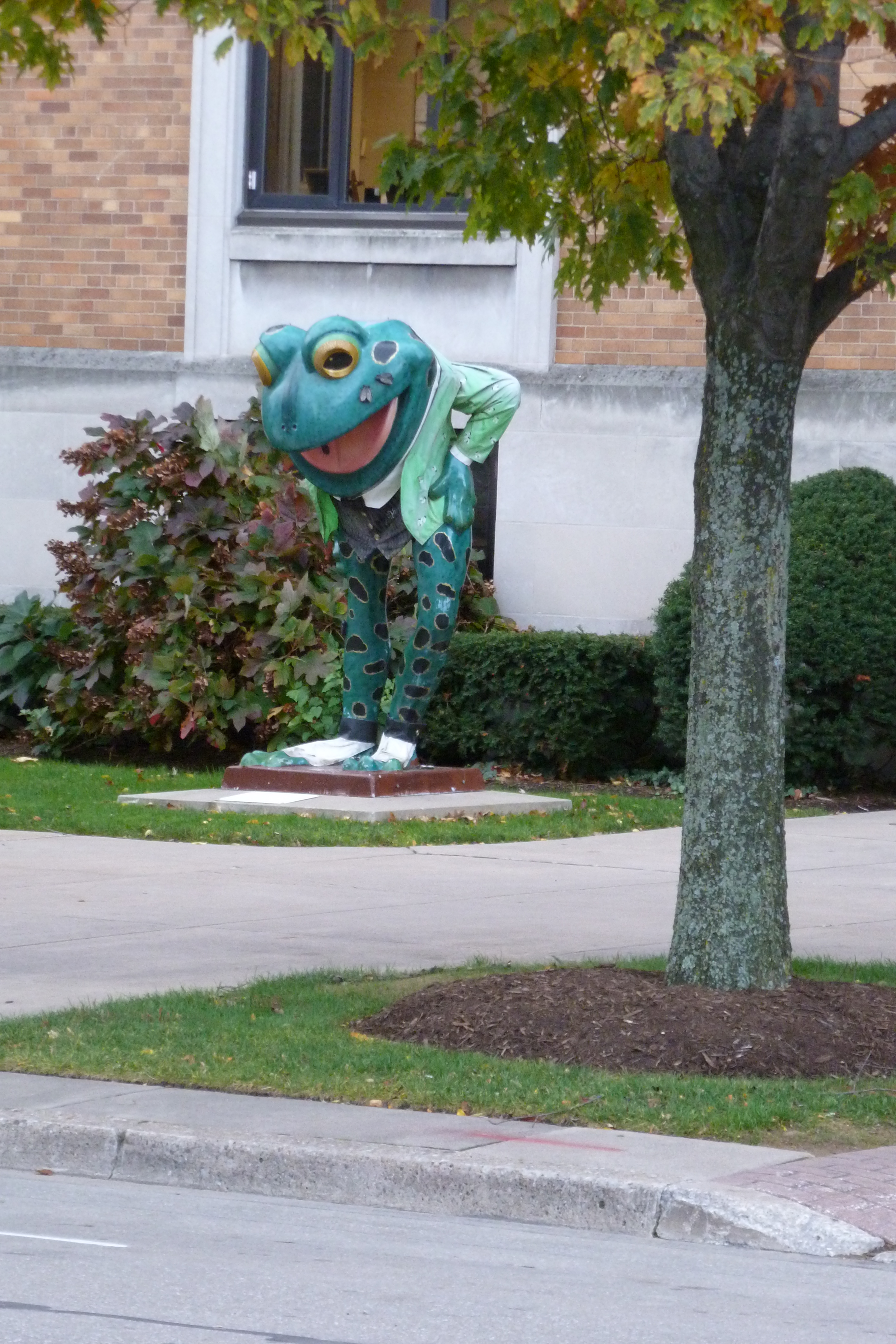
LeapFrog! was a fundraiser in Erie, PA, in 2004. “I Only Have Flies for You” by Susan P. Black was one of the frogs I found in 2012. I don’t remember where I found this one and I don’t see it on Amy H.’s map of the frogs. This suggests that it has either been repainted or removed from the public eye.
As a child, I was a fan of Laura Ingalls Wilder (author and heroine of the Little House on the Prairie series). I read all of her books, biographies about her, the books about her daughter, and as they began to be released the books about her mother, grandmother, and great grandmother. I also researched her family tree and found her ancestors back to the time of Henry VIII.
I no longer remember the exact order of events. When I was 12 (almost on my birthday), we moved to California. Either before or after that event, I read Laura Ingalls Wilder’s book West from Home, which are letters to her husband written on a visit to her daughter, a reporter in San Francisco, in 1915. Because Laura had visited the 1915 Panama-Pacific Exposition (World’s Fair) in San Francisco, I wanted to go visit what was left of it. I never got the chance while I lived in California. Years later, I finally got there.
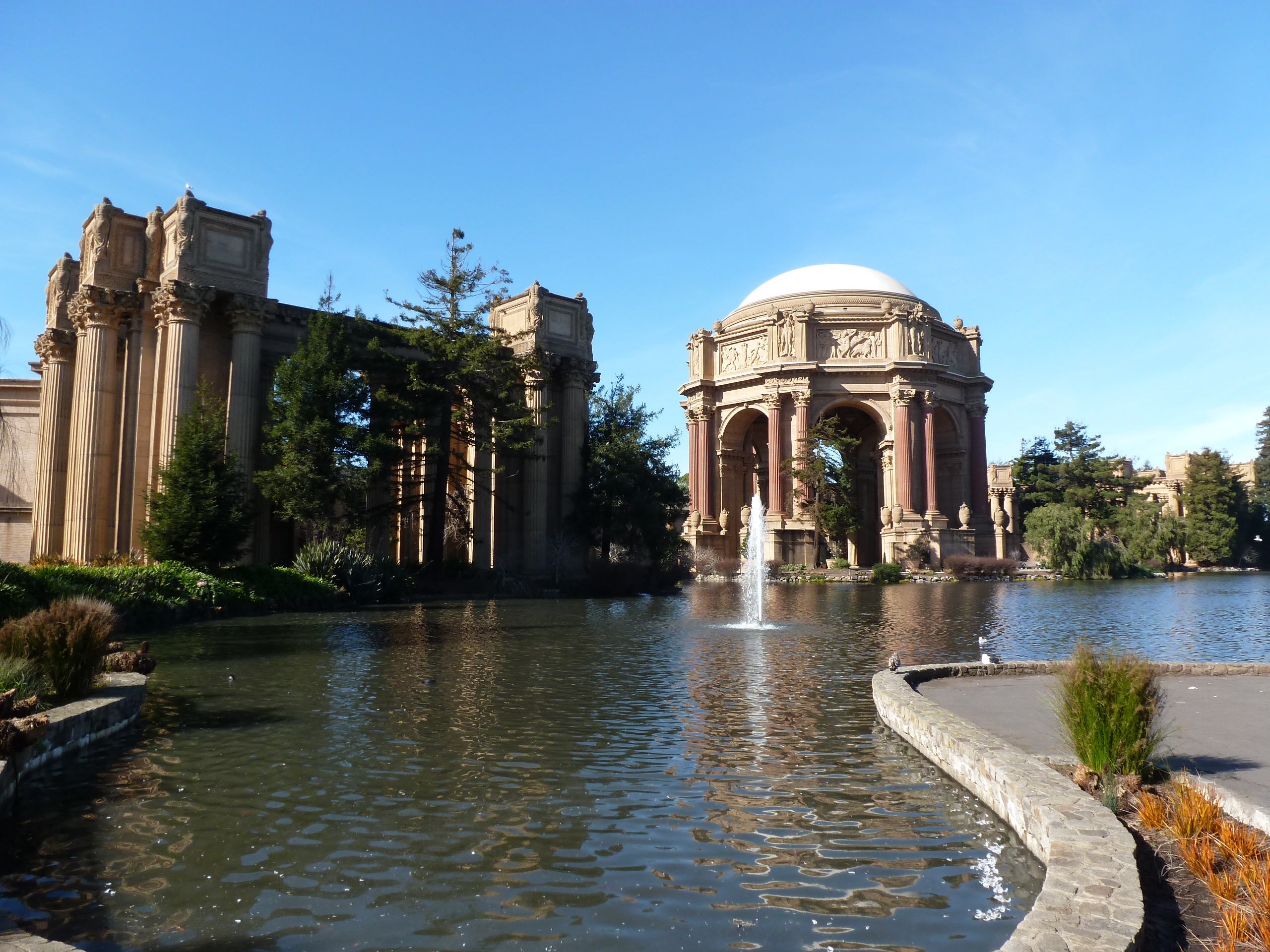
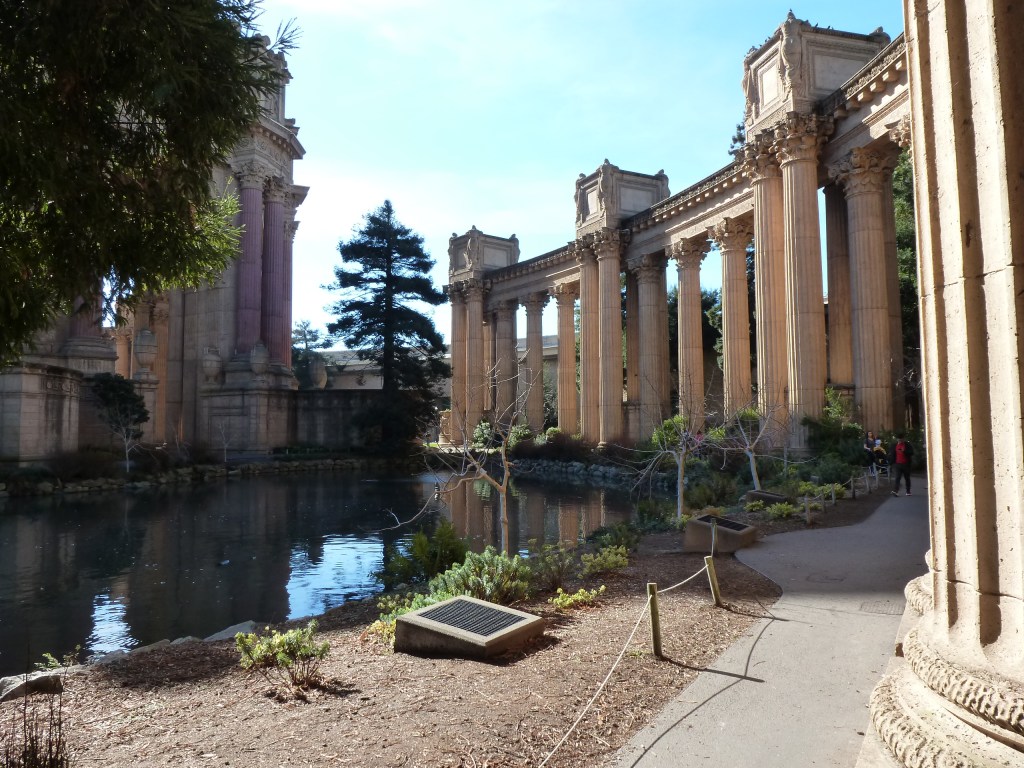
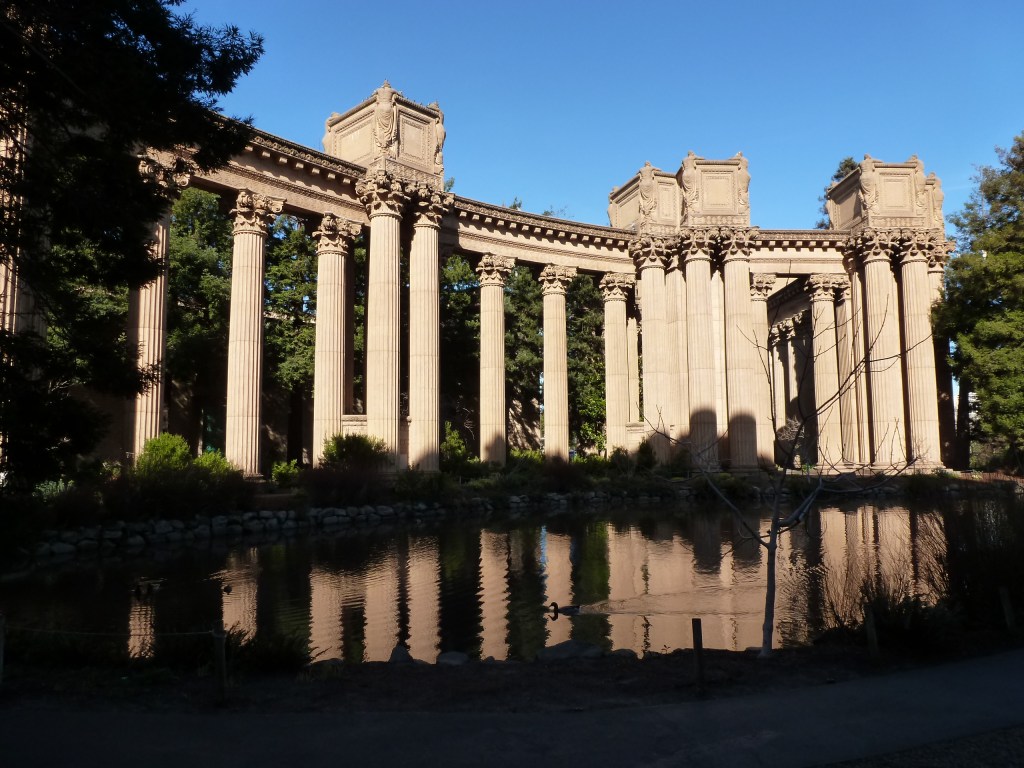
Sitting by the lagoon of the Palace of Fine Arts was very peaceful, with the small fountain splashing and birds chirping and cawing. As I sat there enjoying the scene, there was a moment when I could almost picture Laura Ingalls Wilder and other women of the 1910s in their multi-layer dresses, hats or bonnets, and gloves strolling past in a promenade and gazing with wonder at the sights around them.
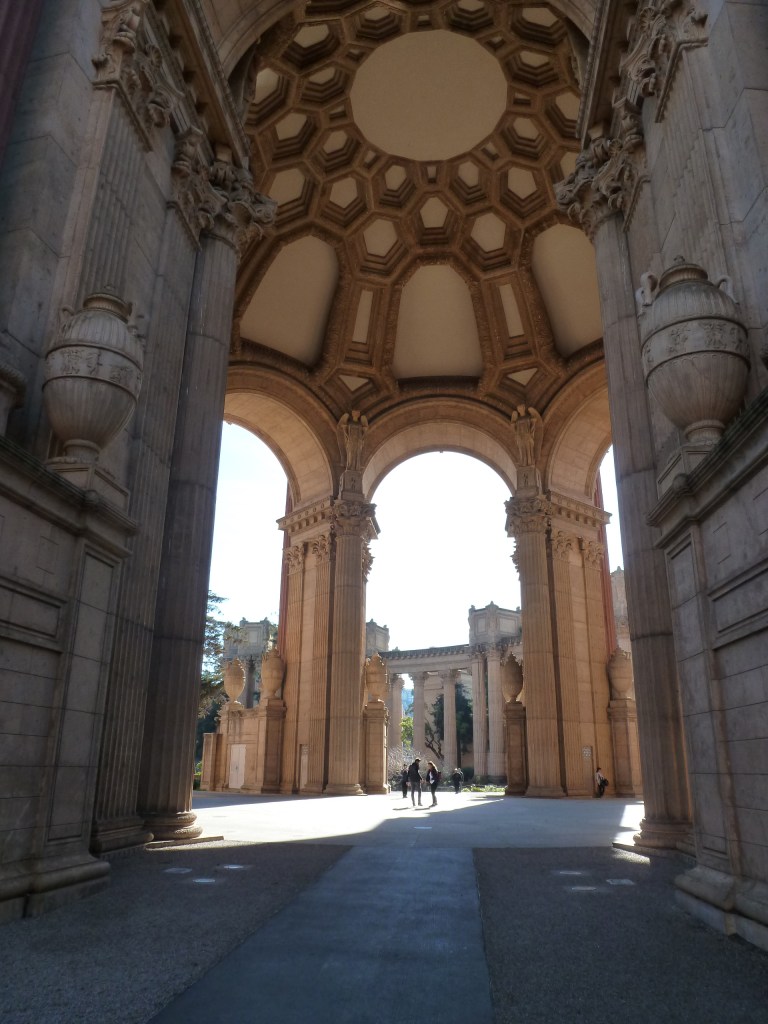
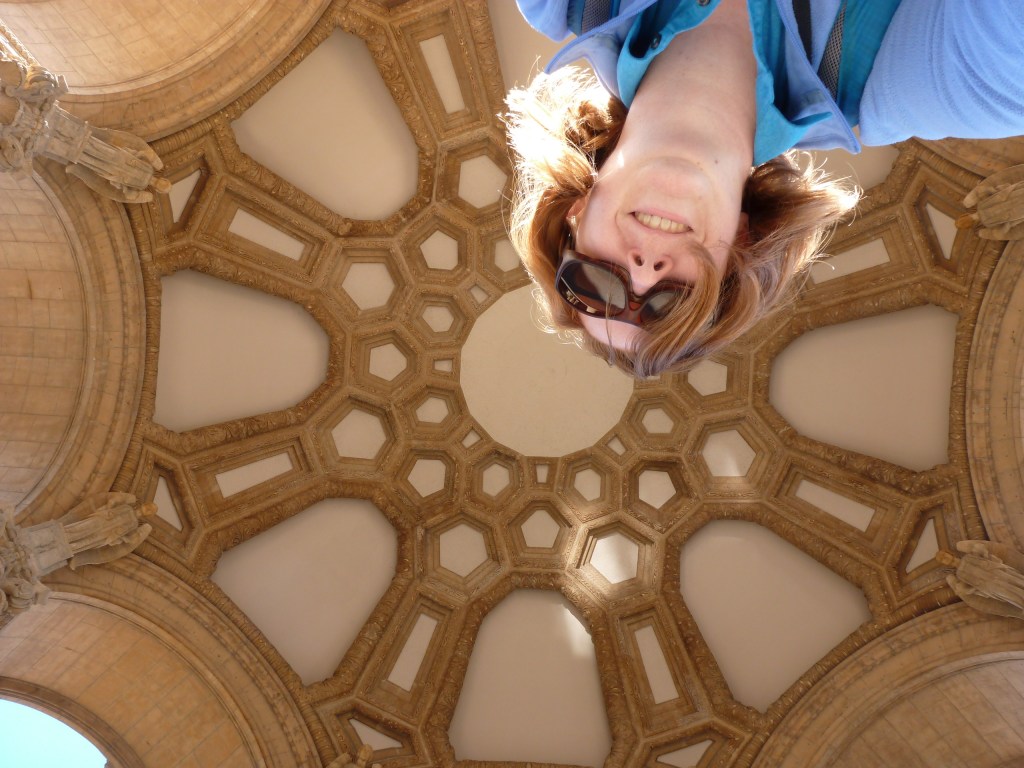
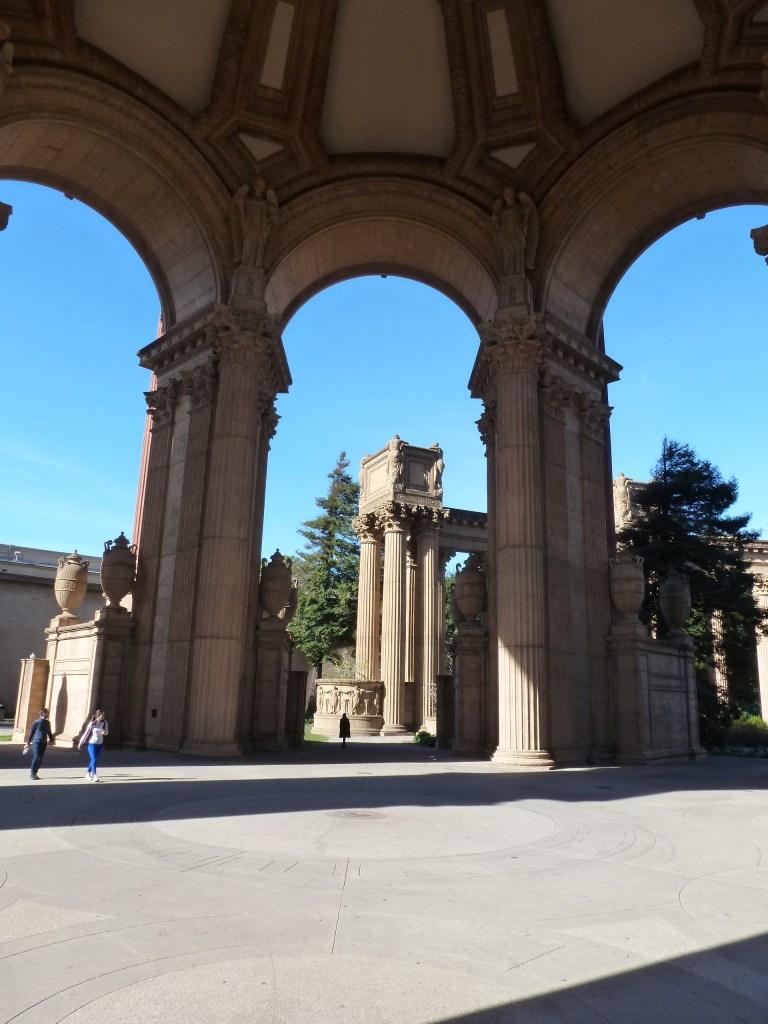
The Palace of Fine Arts was of a scale to inspire awe and intimidation. It was far more massive and taller than I had imagined. Walking underneath the rotunda, I felt insignificant. Are such large structures built to show us the insignificance of humanity? And yet, they are designed and constructed by humans, which means we create what makes us feel our own insignificance.
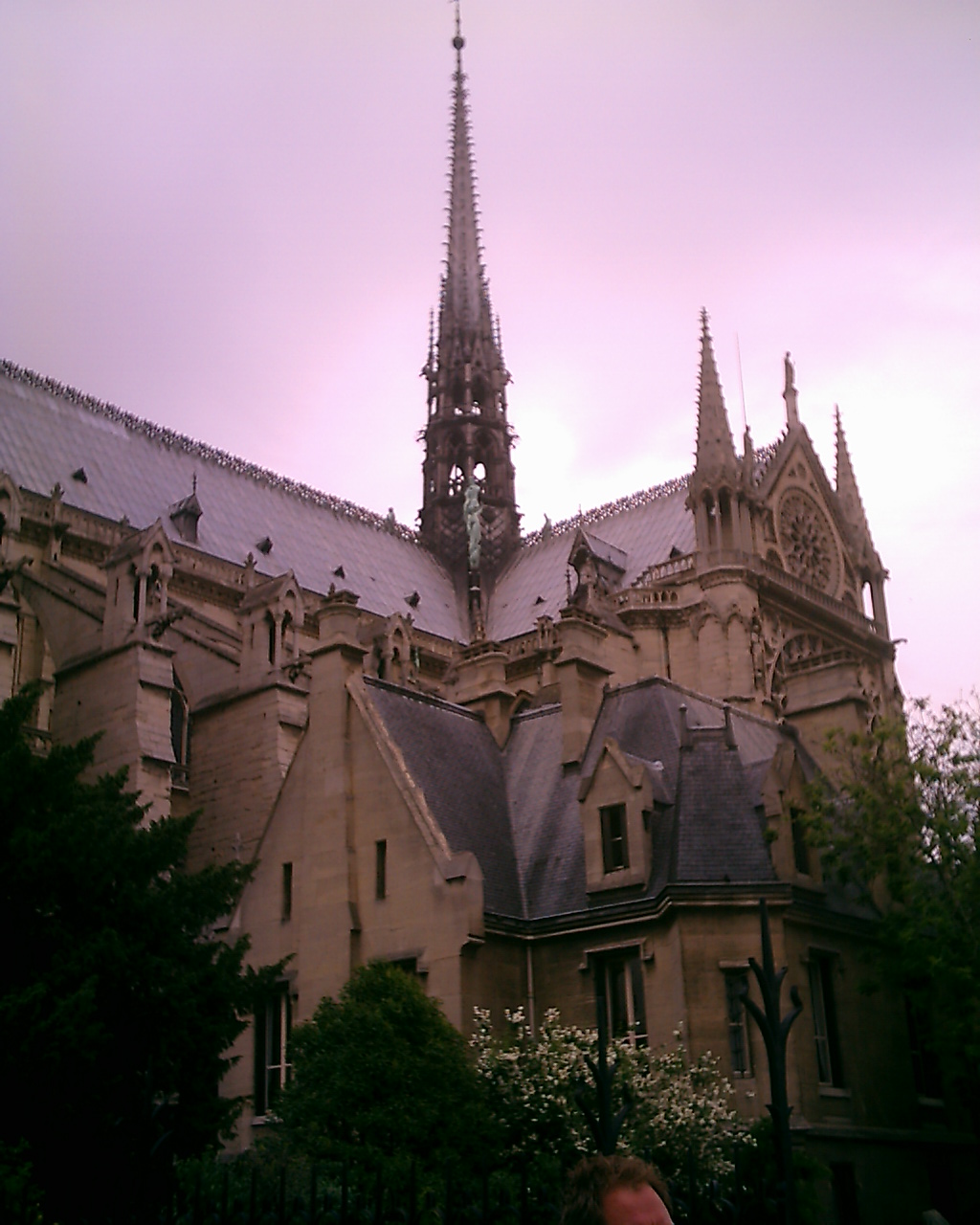
On April 15, 2019, the roof of Notre Dame caught fire and collapsed. The cathedral has been closed ever since. Almost immediately came promises to rebuild exactly as it was and reopen within 5 years. These promises are almost fulfilled. The new spire was recently uncovered and looks much like the one in my photo from 2005. The cathedral is scheduled to reopen in December 2024, five years and eight months after the fire. (Paris Je T’aime, Friends of Notre Dame; Mad White; World, April 4, 2024)
I was fascinated by the fire and commemorated it in 2019 with one of my architectural dessert masterpieces. 1 As I mentioned in that post, I visited Paris in 2005 and was fortunate to have a connection to a guest organist. We were invited to experience the cathedral from the organ loft. A unique experience that I was distracted from enjoying fully for a number of reasons.
This trip was before I officially began urbantraipsing, but was one of the first places I unknowingly tested out the habit. It was also the first time I liked a city, a foundational necessity for urbantraipsing which paved the way for my return trip to London in 2012 where I explored adaptively reused churches and bridges.
I enjoyed the Paris trip immensely and before we left was looking forward to returning. There was much I didn’t get to see on that trip and bridges that I didn’t know I would need to document walking. One day, I will return with a more advanced camera and improved photography skills.
Notre Dame organ pipes 2005Notre Dame woodwork from the organ loft 2005
Unfortunately, personal encounters with COVID have disrupted my intention to have an annual architectural dessert masterpiece over the last few years. I look forward to resuming the tradition one day. ↩︎
East Liberty Station Pedestrian Bridge, August 2020, Carolyn RistauSpahr Street Pedestrian Bridge, February 2022, Carolyn Ristau
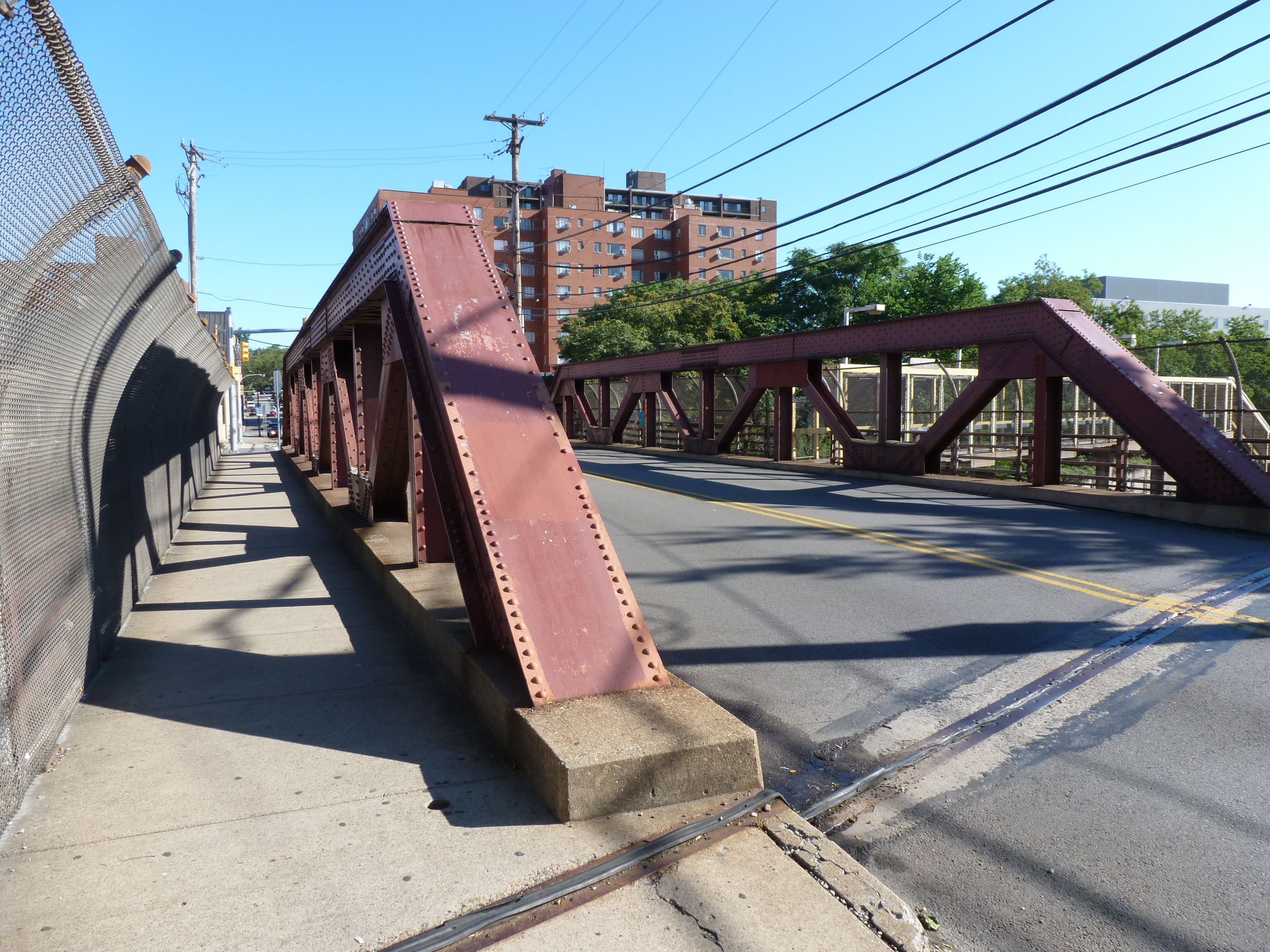
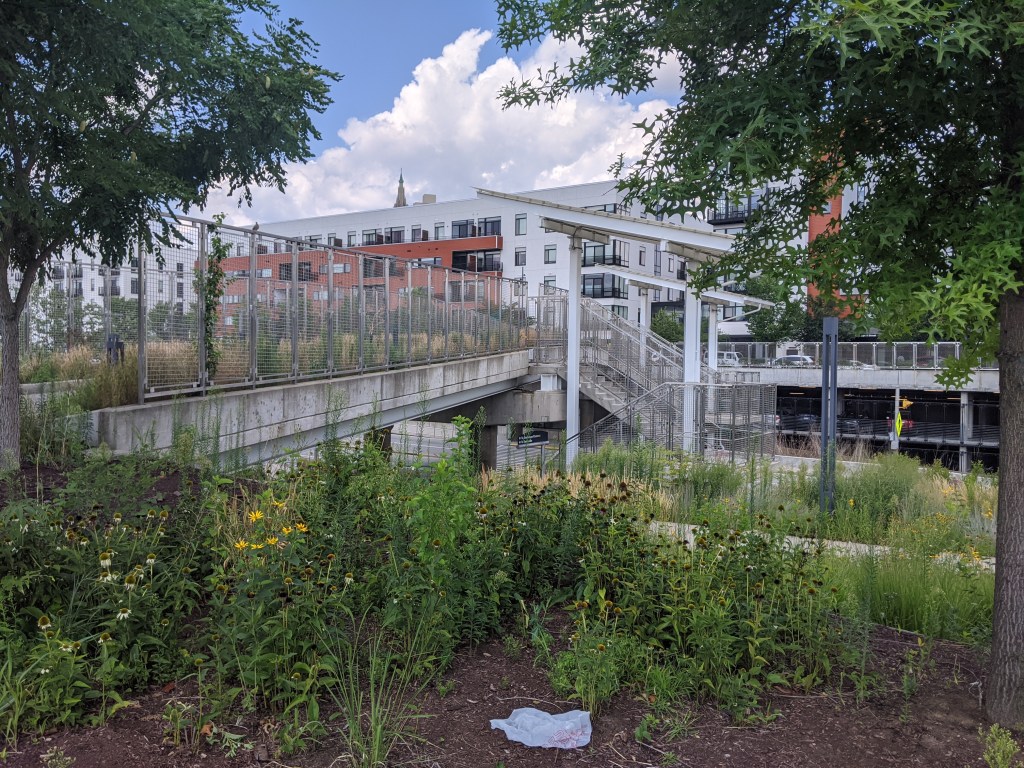
The winner of the 2024 Bridge Madness tournament, the East Liberty Station Pedestrian Bridge, faced stiff competition in the Final Four round from the Spahr Street Pedestrian Bridge. Both of these bridges are relatively new, constructed with funding sources from the Obama Administration. When I moved to Pittsburgh 15 years ago, neither of these bridges existed. There was no pedestrian connection at Spahr Street and the pedestrian bridges at East Liberty Station were boxed-in bridges with no greenery. (For a side-by-side comparison of the prior and current East Liberty Station bridges see their Then and Now post.) These are not the only changes to bridges in this area. In fact, I suggest that East Liberty has seen more bridge turn-over in the last 100 years than any other part of Pittsburgh.
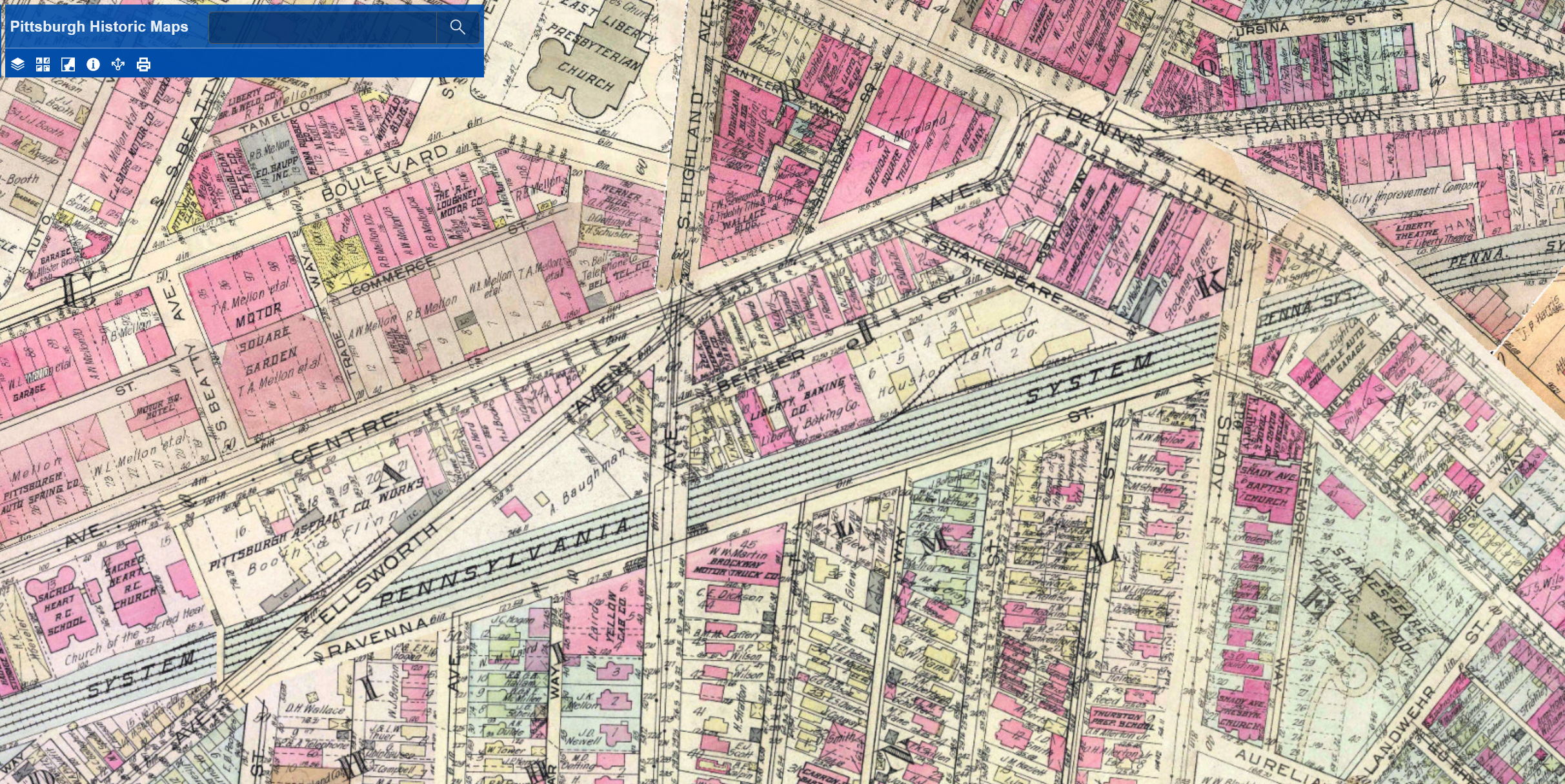
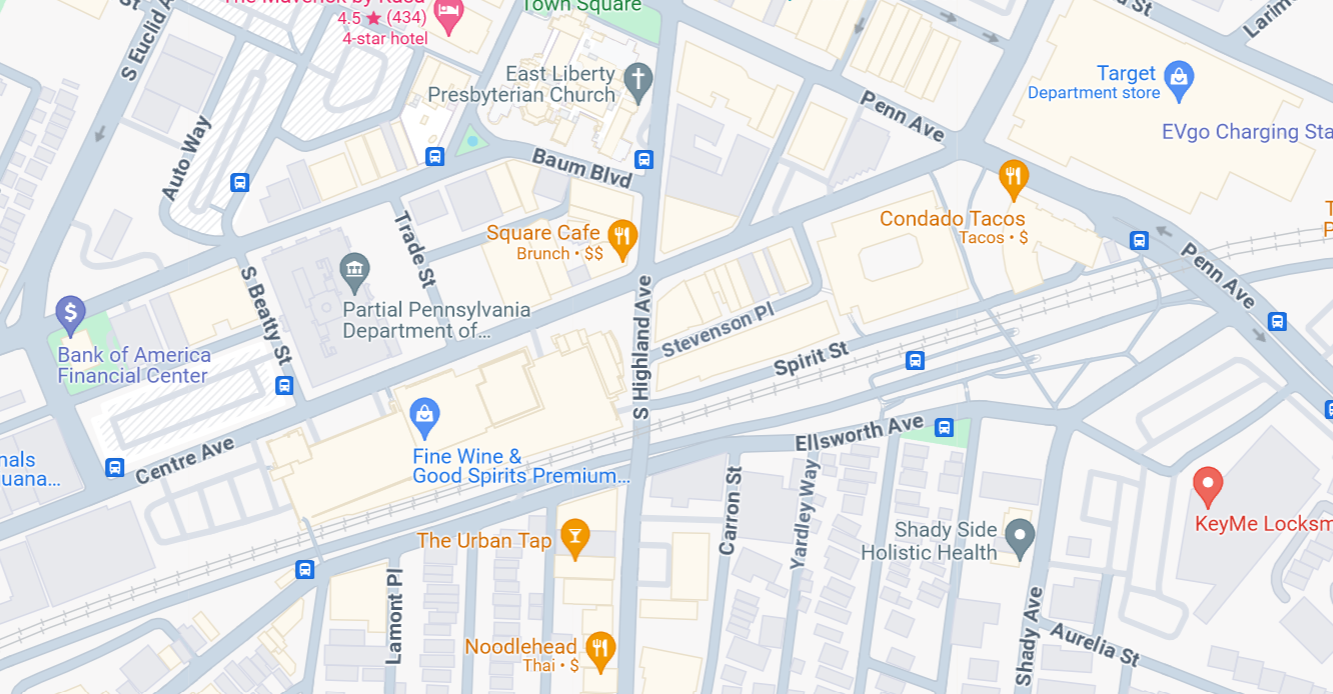
The Penn Avenue and South Highland Avenue Bridges have stayed fairly constant, at least as far as location is concerned. The South Highland Avenue Bridge was rebuilt and redesigned in the 15 years I’ve lived here. While the Spahr Street Pedestrian Bridge is new, the 1923 G. M. Hopkins map above shows that there used to be a pedestrian bridge at this same location. The historical precedent for a pedestrian bridge here may be another factor for why the bridge was located here and not further east where residents have been asking for a pedestrian bridge for years.
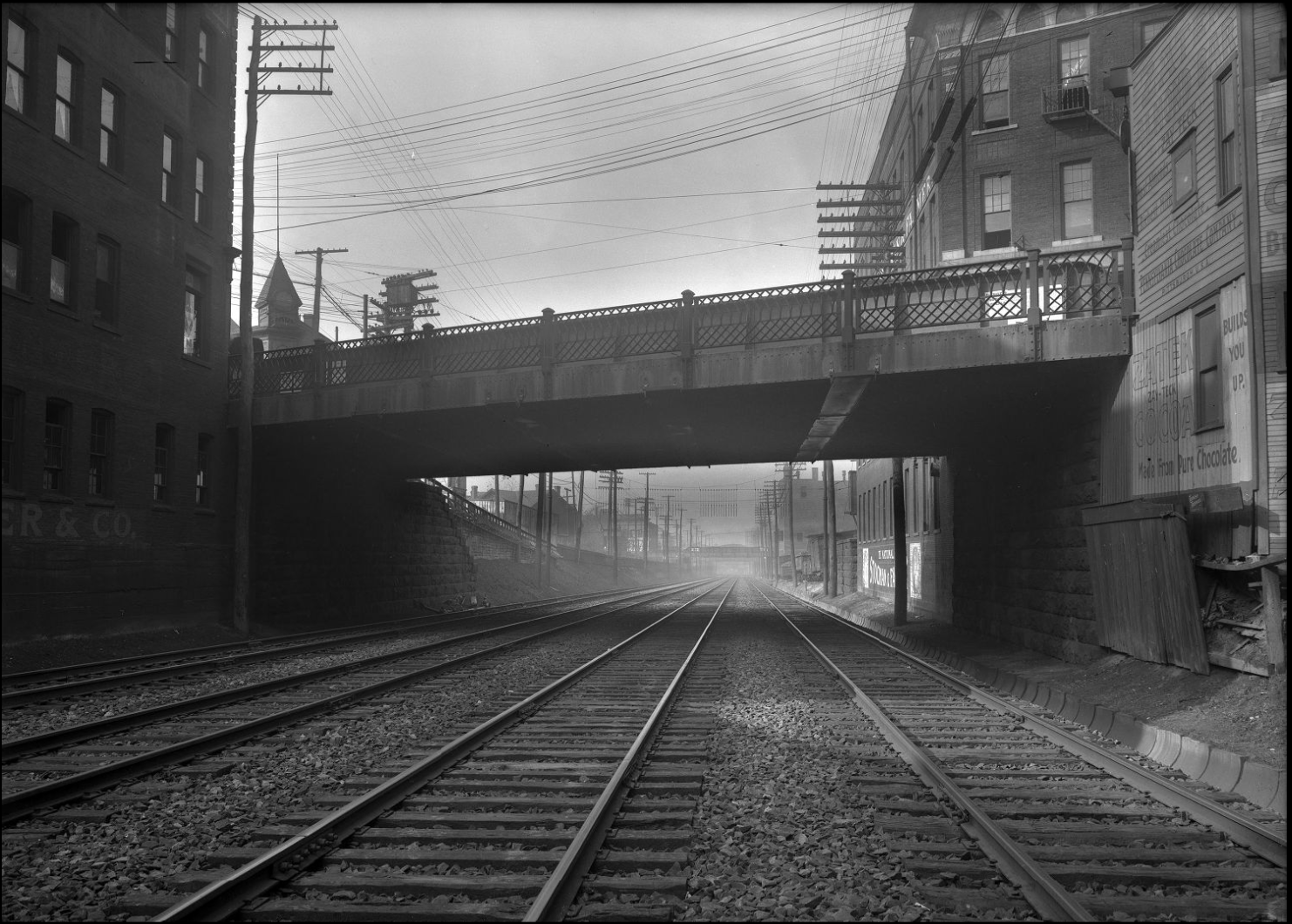
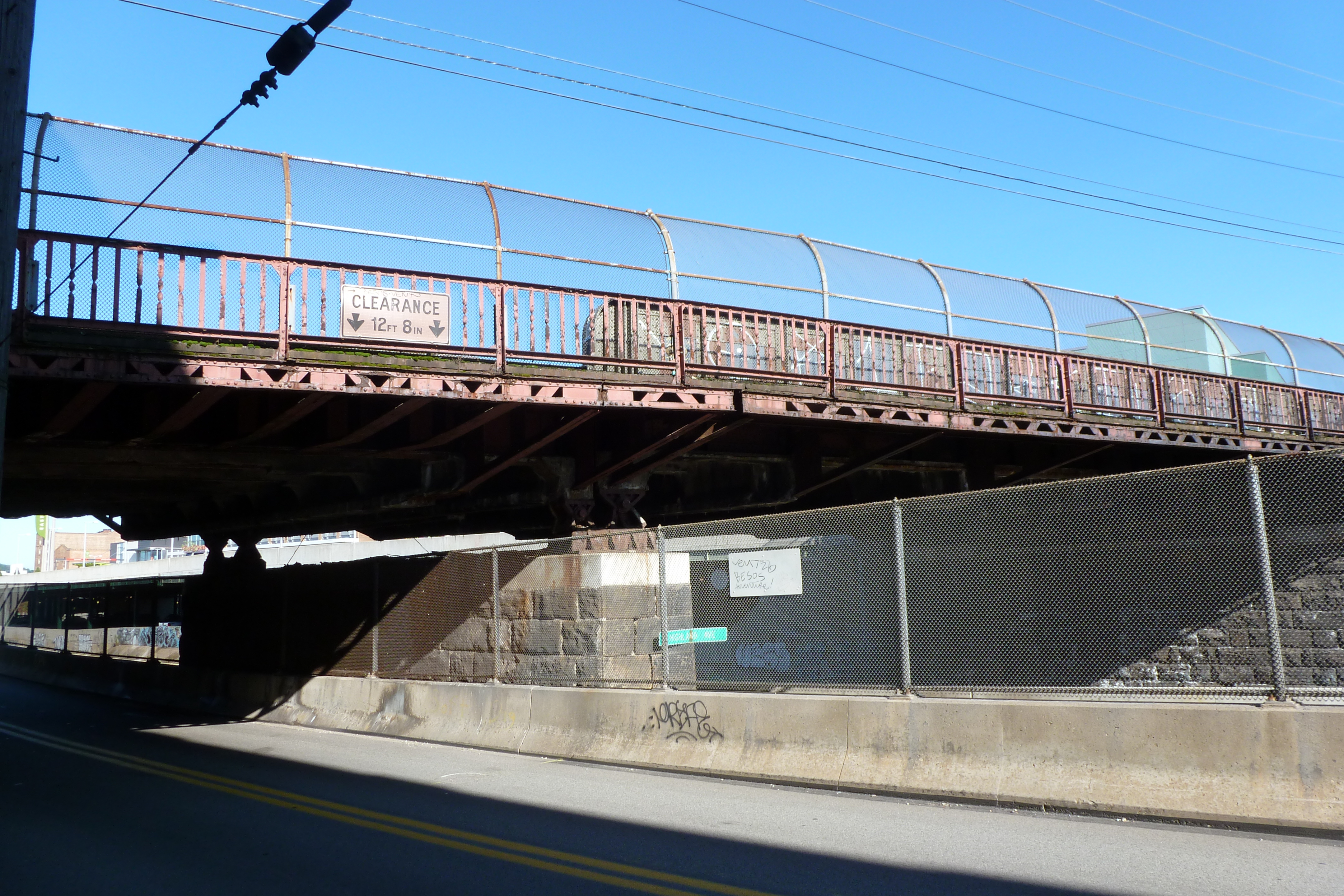
The other major bridge changes in this area are the former Ellsworth Avenue and Shady Avenue Bridges that show on the 1923 G. M. Hopkins map. Both of those are long gone. I assume they were casualties of the massive Urban Renewal of the neighborhood that significantly impacted the street grid of the area. The digital archives of Historic Pittsburgh include photos of these former bridges. The Shady Avenue Bridge seems to have been of a similar design to the former South Highland Avenue Bridge. The Ellsworth Avenue Bridge seems to have been of a similar design to the current South Negley Avenue Bridge that is just outside the map frame to the west. One key difference is that cages were added at some point to the South Highland and South Negley Bridges.
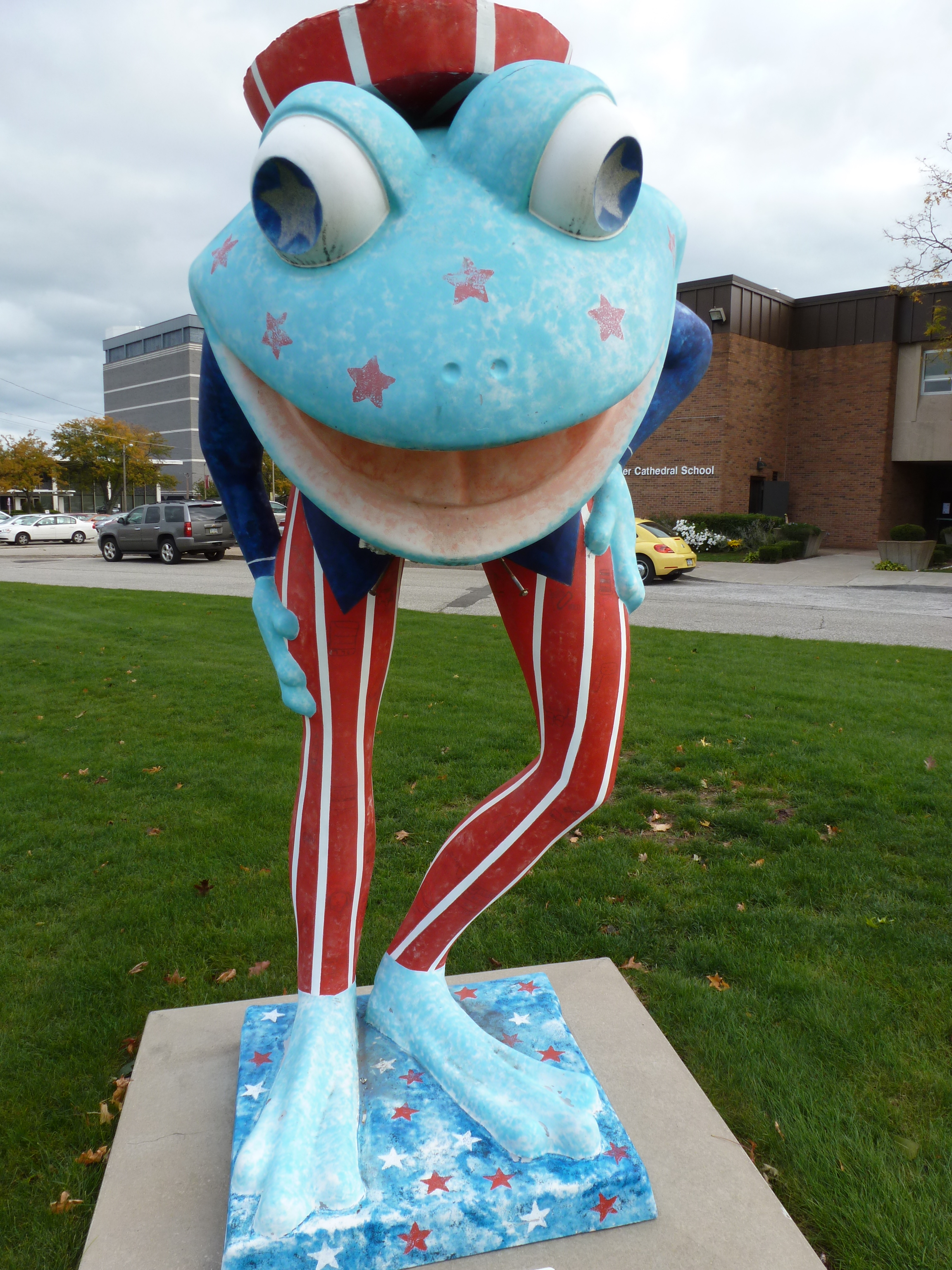
LeapFrog! was a fundraiser in Erie, PA, in 2004. “Experience America” by Cathedral Center Class of 2006 was one of the frogs I found in 2012. I think I found this one in the yard of what is now the Mother Teresa Academy near the corner of Sassafras and W 11th Street. According to Ami H.’s map, this frog moved to Splash Lagoon.
One of my readers alerted me to last night’s collapse of the Francis Scott Key Bridge in Baltimore. While I’ve never walked that bridge, since the collapse of Pittsburgh’s Fern Hollow Bridge, which I have walked, the scope of my blog has expanded to highlight the fragile nature of the infrastructure we rely on daily in the United States (and across the pond). According to the reports coming in and the video of the accident, a loaded cargo liner crashed into a pier of the Francis Scott Key Bridge causing the structure to collapse. The Baltimore Sun (March 26, 2024) and Washington Post (March 26, 2024) articles are my primary sources for learning of the accident.
Unlike Pittsburgh’s disaster which was due to a deteriorated portion of the bridge finally giving way after years of deferred maintenance, no blame has yet been placed on any structural unsoundness of the Francis Scott Key Bridge.
The ship that ran into it is another story. Apparently, it recently was flagged as having questionable issues in its navigation system. The current understanding is that the ship lost power and control of steering, issued a mayday alert, and crashed into the bridge pier. In the early analysis of what happened, there are questions as to why various things were not handled differently to have prevented the collision. For example:
Why were there not more structures in the water to deflect any ships away from the bridge pier?
Why didn’t the tugboats continue with the ship until it cleared not just the harbor, but the bridge as well?
Why wasn’t the bridge built with redundancies so that even if one of the piers were knocked out, the bridge could still stand?
Much like deferred maintenance (of bridges and ships), I suspect that money is at the root of the reason why not for items one and three above. It may also be a factor in why the tugboats don’t travel farther down the river with the ships.
The City of Baltimore and State of Maryland have declared a state of emergency. Pledges are being made to rebuild the bridge quickly, including President Biden promising the money to rebuild. It may be interesting to compare the rebuilding of the Francis Scott Key Bridge against Pittsburgh’s Fern Hollow Bridge. While of significantly different scales, both bridges are considered major transportation arteries that the local region cannot afford to be without any longer than absolutely necessary. Will the Francis Scott Key Bridge rebuild include similar time saving measures of purely utilitarian design and of concurrent design/build phases?
Pittsburgh’s Charles Anderson Bridge closed to vehicles indefinitely pending restorationPittsburgh’s Swindell Bridge closed to vehicles indefinitely pending restoration
Pittsburgh isn’t alone in being home to bridges on the verge of collapsing. This year marks the 200th anniversary of London’s Hammersmith Bridge, which has been closed to vehicular traffic for five years after cracks threatening the stability of the bridge were discovered. The bridge was temporarily closed to pedestrians and cyclists crossing over and river traffic crossing under, but those restrictions have been lifted. Except cyclists are required to dismount and walk across. (Transport for London: Hammersmith Bridge) Work is slowly being done on the bridge, but there is no estimate for when it will be fully functional again. Part of the delay appears due to the decentralization of bridge ownership in London that puts the burden of costly bridge maintenance and repairs on local councils that don’t have sufficient funds (The Standard, July 5, 2023). Much as I enjoy walking across bridges, I would have second thoughts about walking one where the vibrations caused by a cyclist might increase the damage to the bridge.
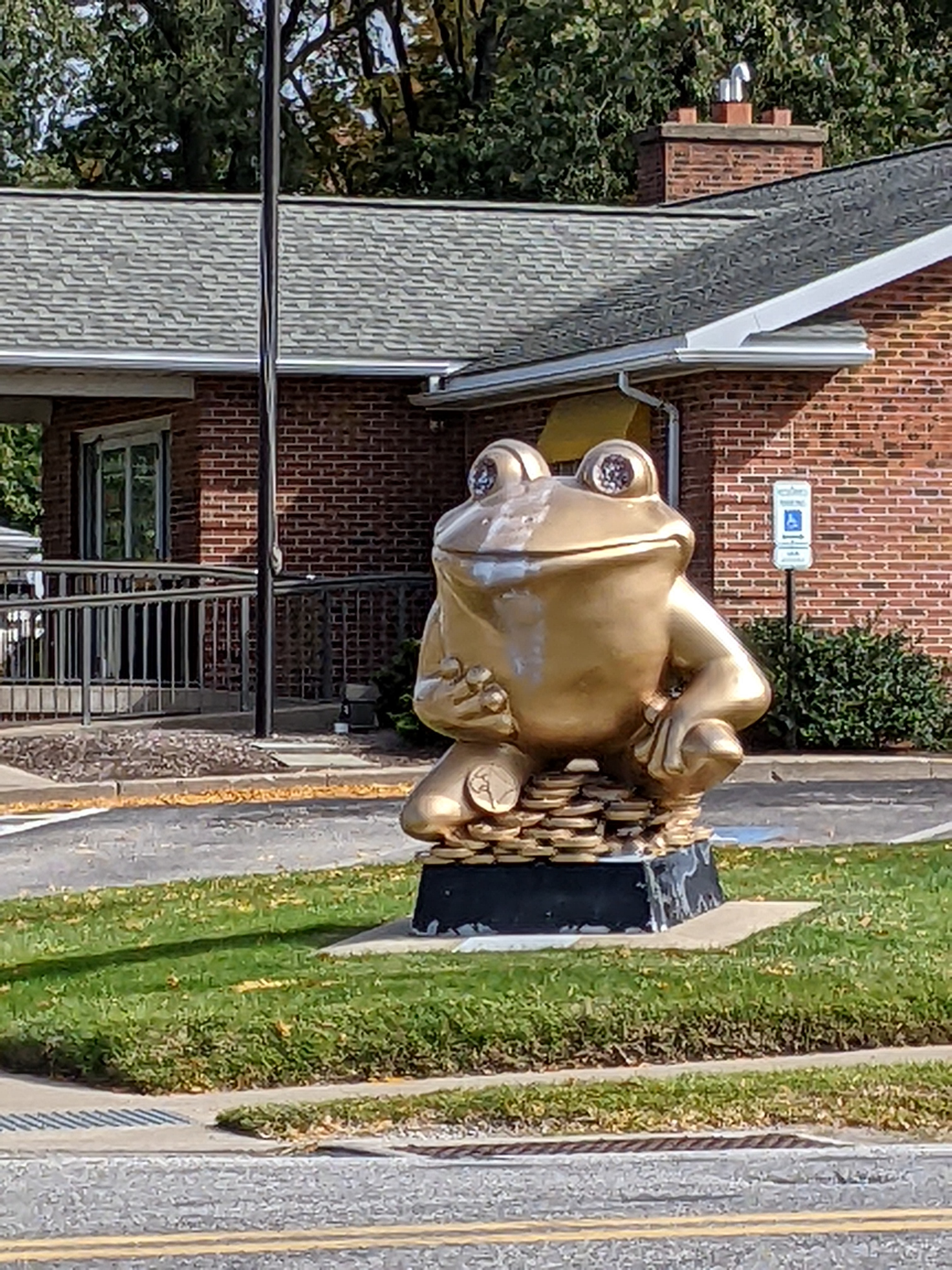
LeapFrog! was a fundraiser in Erie, PA, in 2004. I missed my turn on my way home from Presque Isle in 2022 and stumbled upon “On Golden Pond” by Chuck Benson and Bill Lechner. A few months later, I found Ami H.’s map and list of the frogs, which enabled me to intentionally find frogs on future trips to Erie.
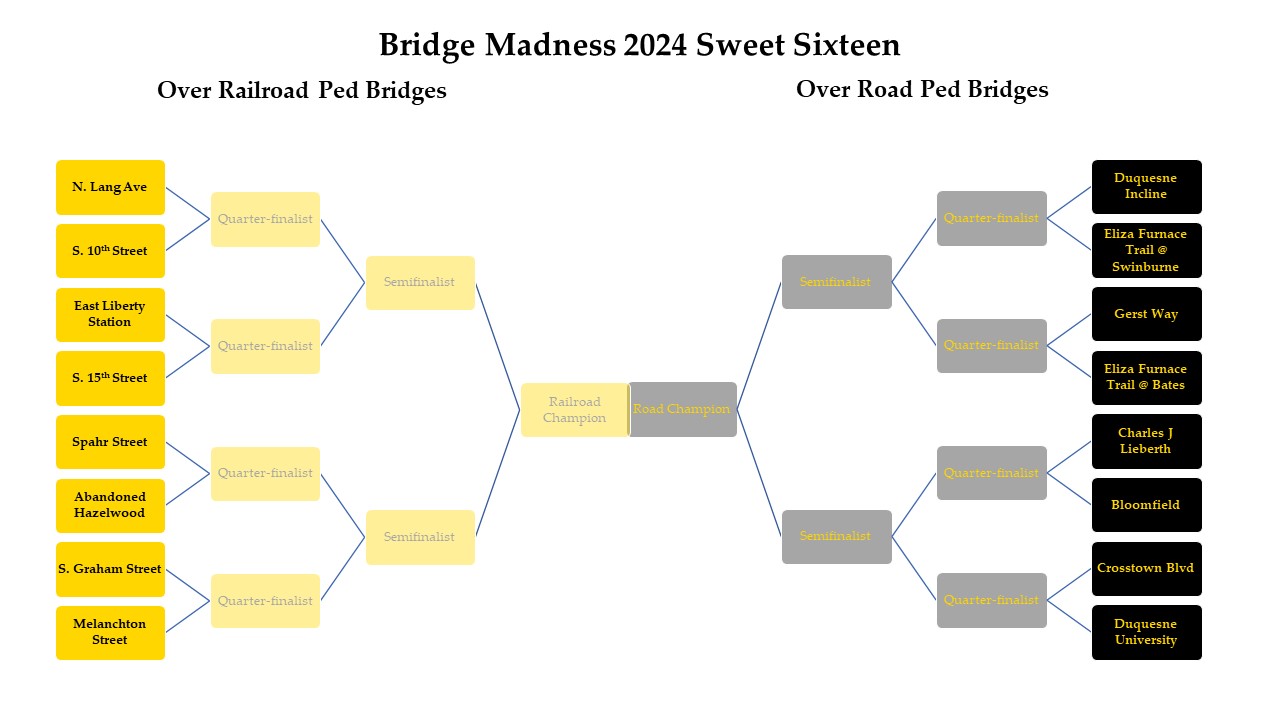
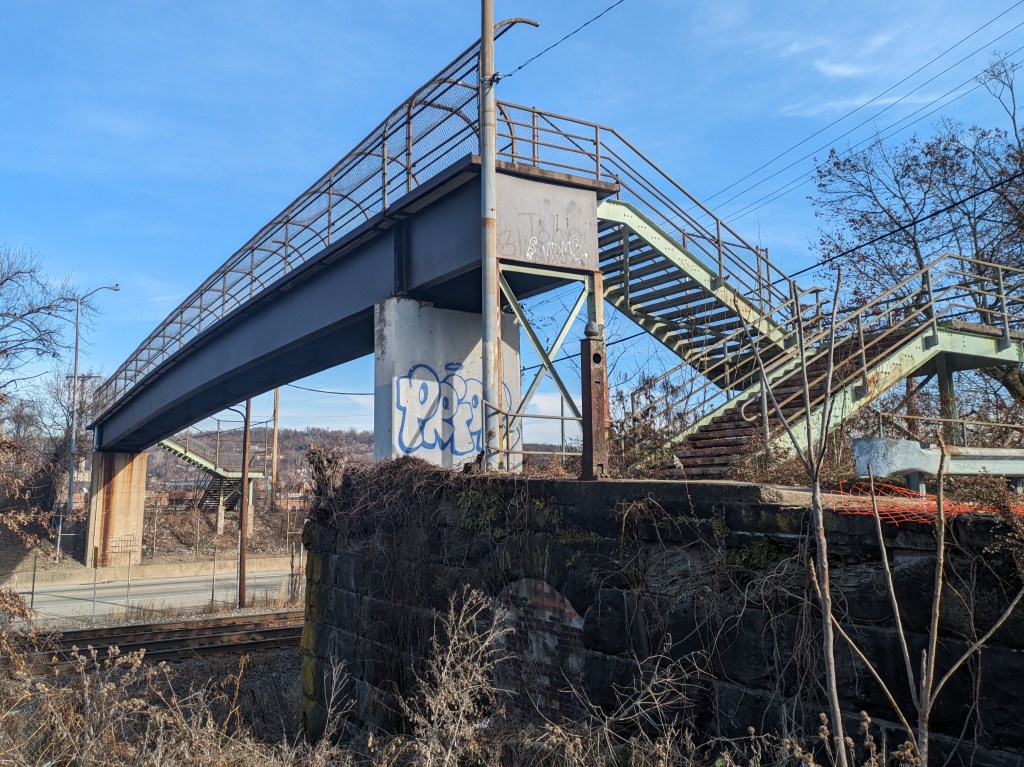
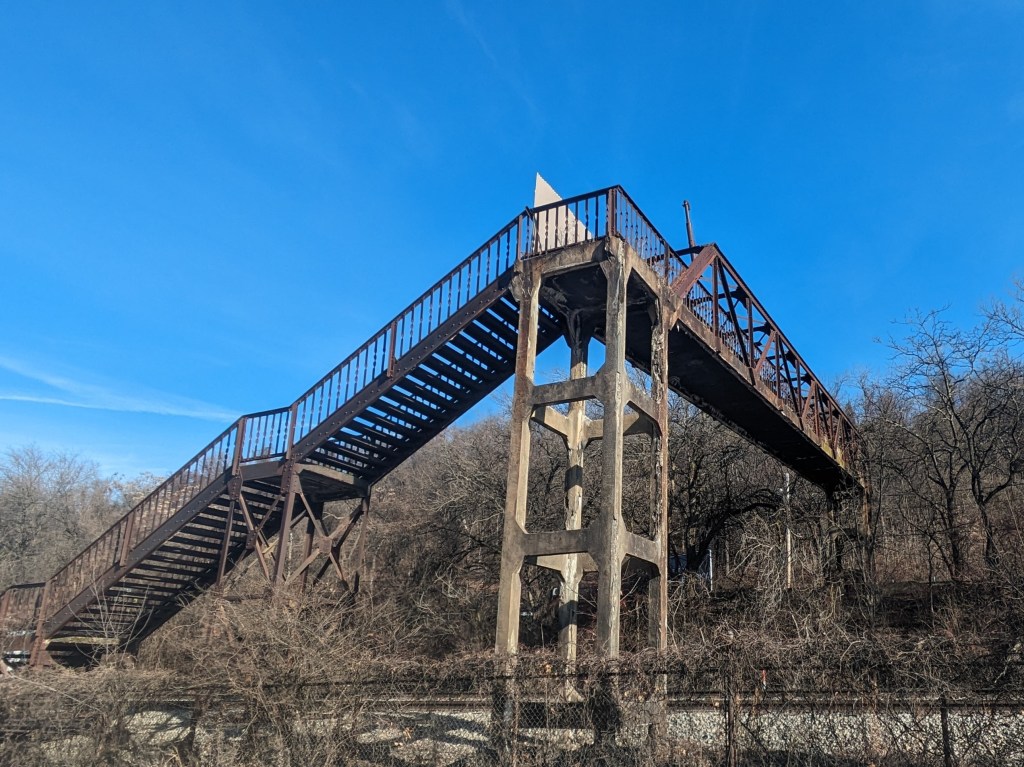
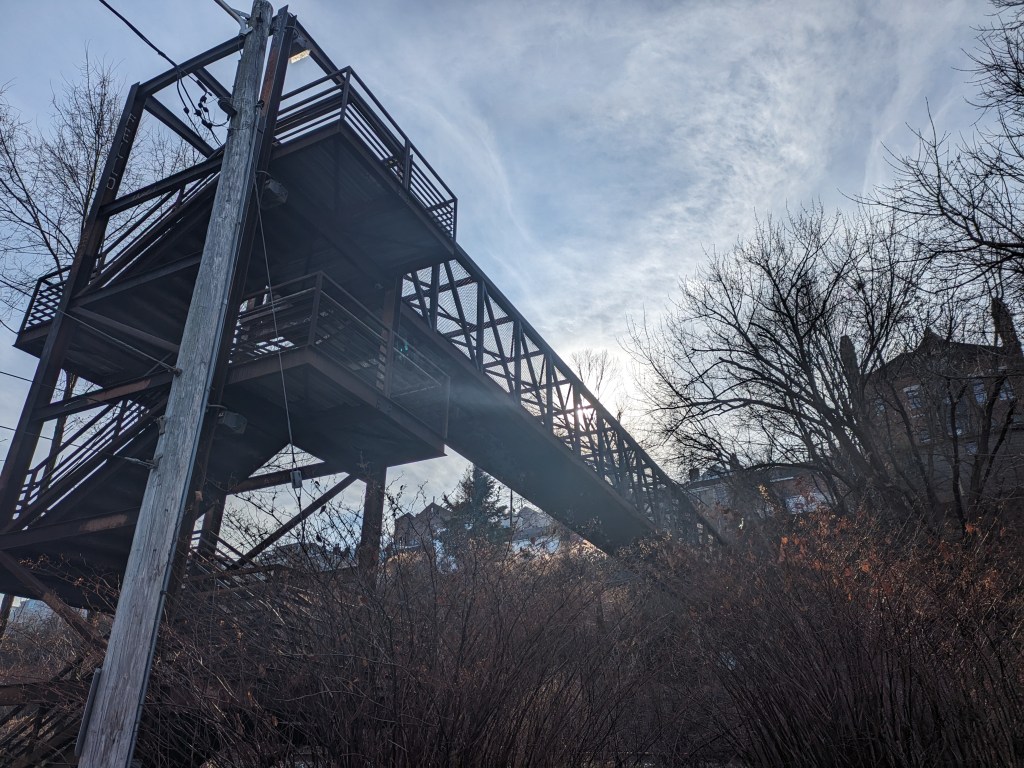
In the 2024 Bridge Madness Tournament, 16 pedestrian bridges go pier-to-pier in a reader’s choice tournament to pick the best one. This year’s tournament features pedestrian bridges within Pittsburgh that cross over roads or railroads. Beginning March 1, you will be able to vote for your favorite bridge in each bracket. The champion bridge will be announced on March 29. Don’t forget to come back each week to vote your favorite bridge to #1!
Each round of voting will go live at 8 AM on the scheduled Friday and close at noon the following Wednesday. The schedule is:
March 1 – Sweet Sixteen
March 8 – Elite Eight
March 15 – Final Four
March 22 – Championship
March 29 – Winner announced
The bridges are divided into two conferences: Pedestrian Bridges over Railroads and Pedestrian Bridges over Roads.
Pedestrian Bridges over Railroads
From east to west, the bridges that pass over railroads are:
the North Lang Avenue Pedestrian Bridge
the East Liberty Station Pedestrian Bridge
the Spahr Street Pedestrian Bridge
the South Graham Street Pedestrian Bridge
the Melanchton Street Pedestrian Bridge
an abandoned pedestrian bridge in Hazelwood
the South 15th Street Pedestrian Bridge
the South 10th Street Pedestrian Bridge
Pedestrian Bridges over Roads
From east to west, the bridges that pass over roads are:
the Eliza Furnace Trail Bridges over Swinburne Street
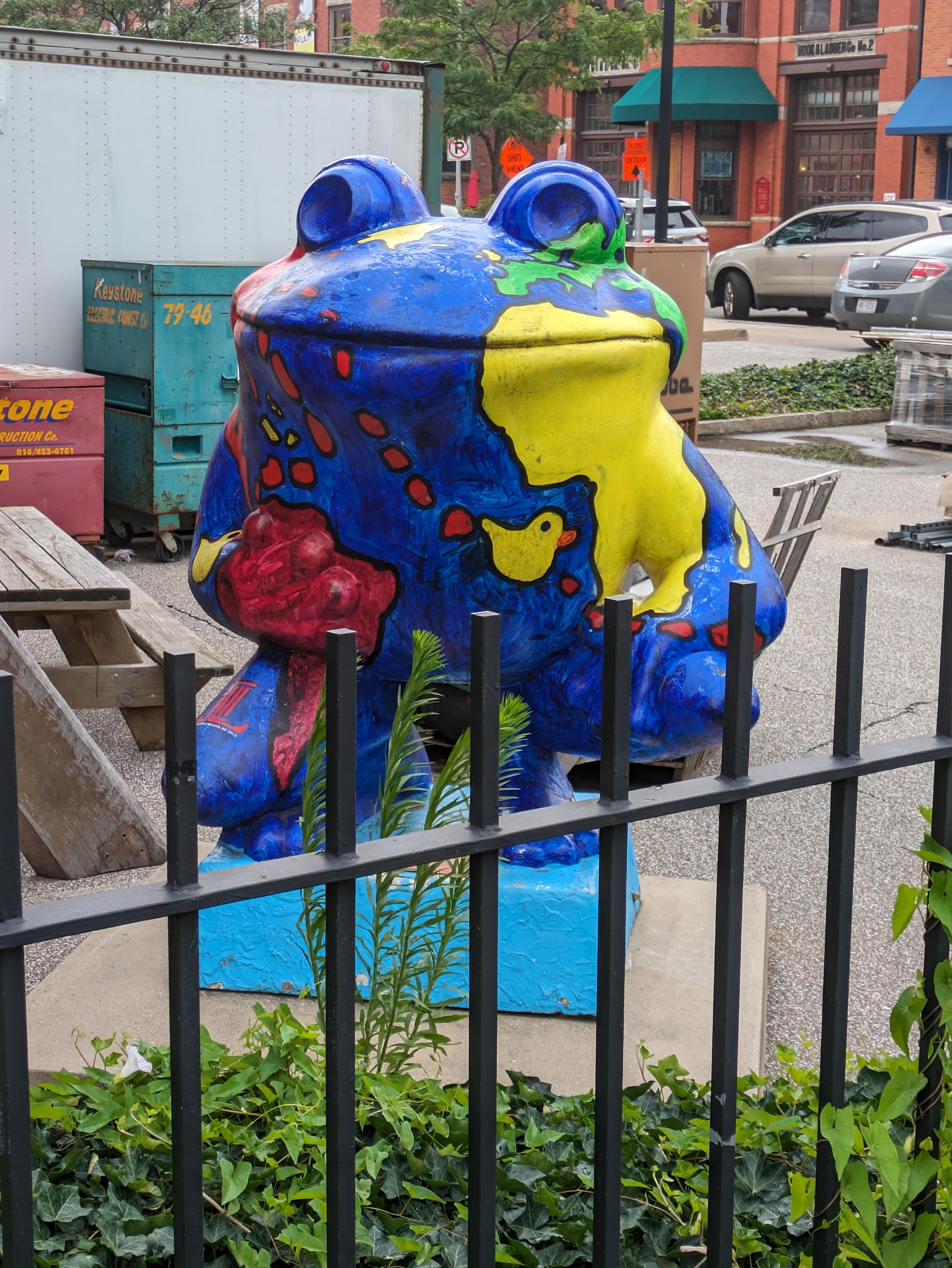
LeapFrog! was a fundraiser in Erie, PA, in 2004. I found the frog above on a trip to Erie in 2012. Like some of Pittsburgh’s dinosaurs, I cannot match it to one of the original frogs in the official book.
In 2012, I experienced a narrow band of Erie along State Street from downtown to the waterfront. While walking around in this area looking for churches, I found some frogs. At the time, I did not make a note of the locations where I found them.
In 2023, I found that Ami H. maintains a list and map of the locations of the LeapFrog! frogs. I believe the frog that I found in 2012 is the one tagged on Ami’s map at the Children’s Museum. It has been repainted and become “Experience Frog.” (I still can’t find a match for it in the official LeapFrog! book.)













 urbantraipsing