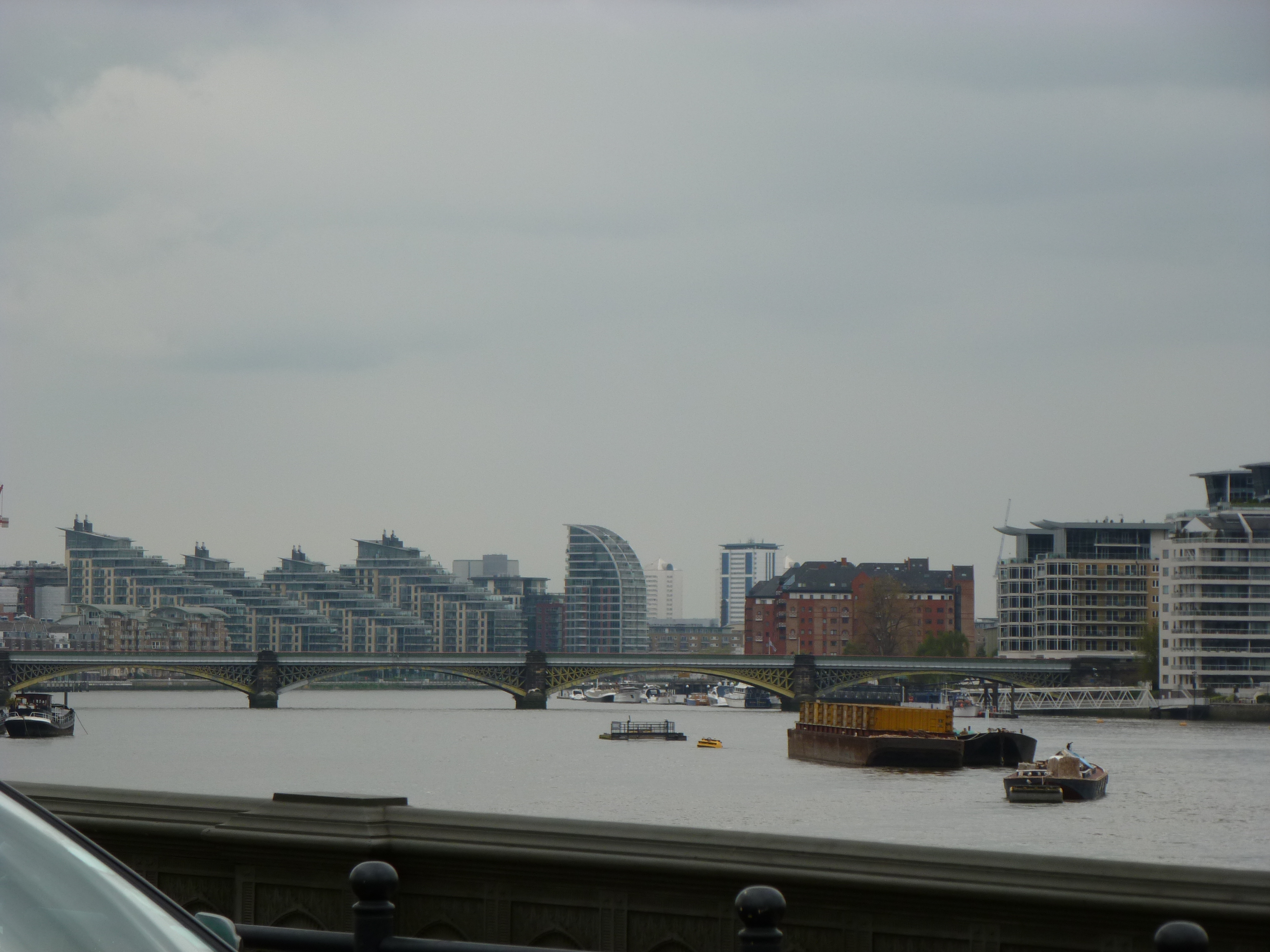
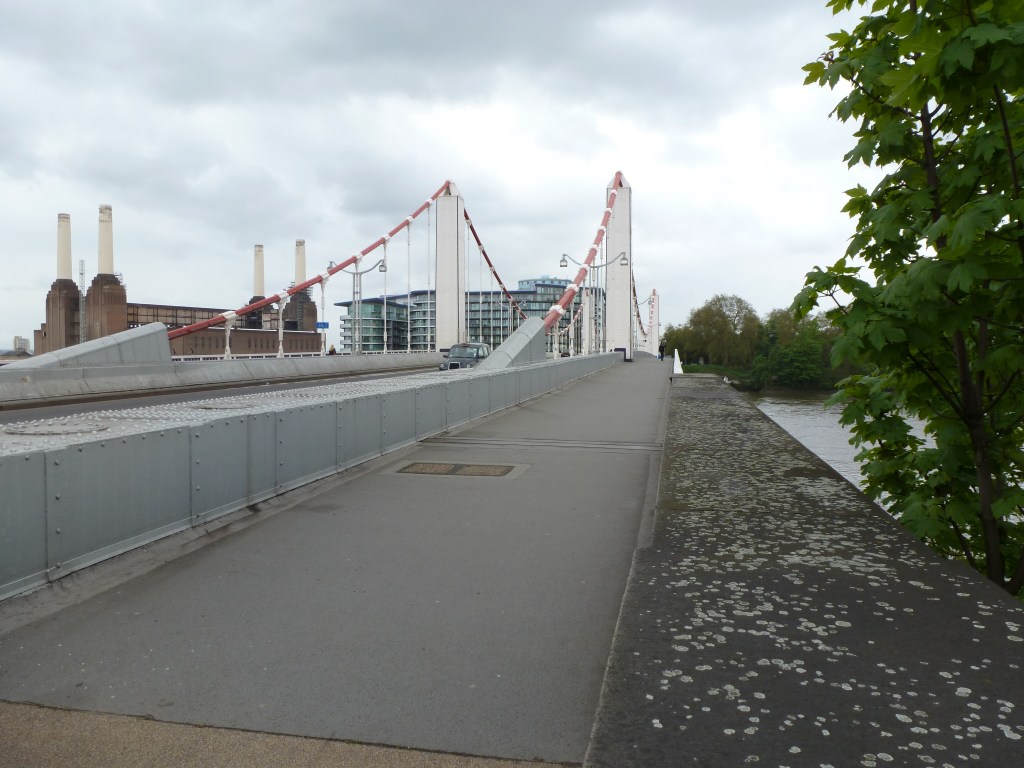
Just upriver from the Battersea Bridge – technically the first bridge I traipsed – is the Battersea Railroad Bridge. It mimics the deck arch style, and echoes the gold contrasted against a dark tone color-scheme, of the Battersea Bridge. The railroad bridge also has a similarly narrow road bed, making it the skinniest of the railroad bridges I encountered in my bridge walking of London in 2012.
This is the closest I got to the Battersea Railroad Bridge. My paper map ended about there – I refused to get a smartphone for several more years – and I had no idea there was another bridge just beyond that bend in the Thames that I could have walked. However, my motivating goal in walking bridges was to capture different views of the city. I took numerous photos from and near each of the bridges I walked, usually including at least one upriver and one downriver view, which enabled me to capture views of bridges that weren’t pedestrian accessible, such as the Battersea Railroad Bridge.
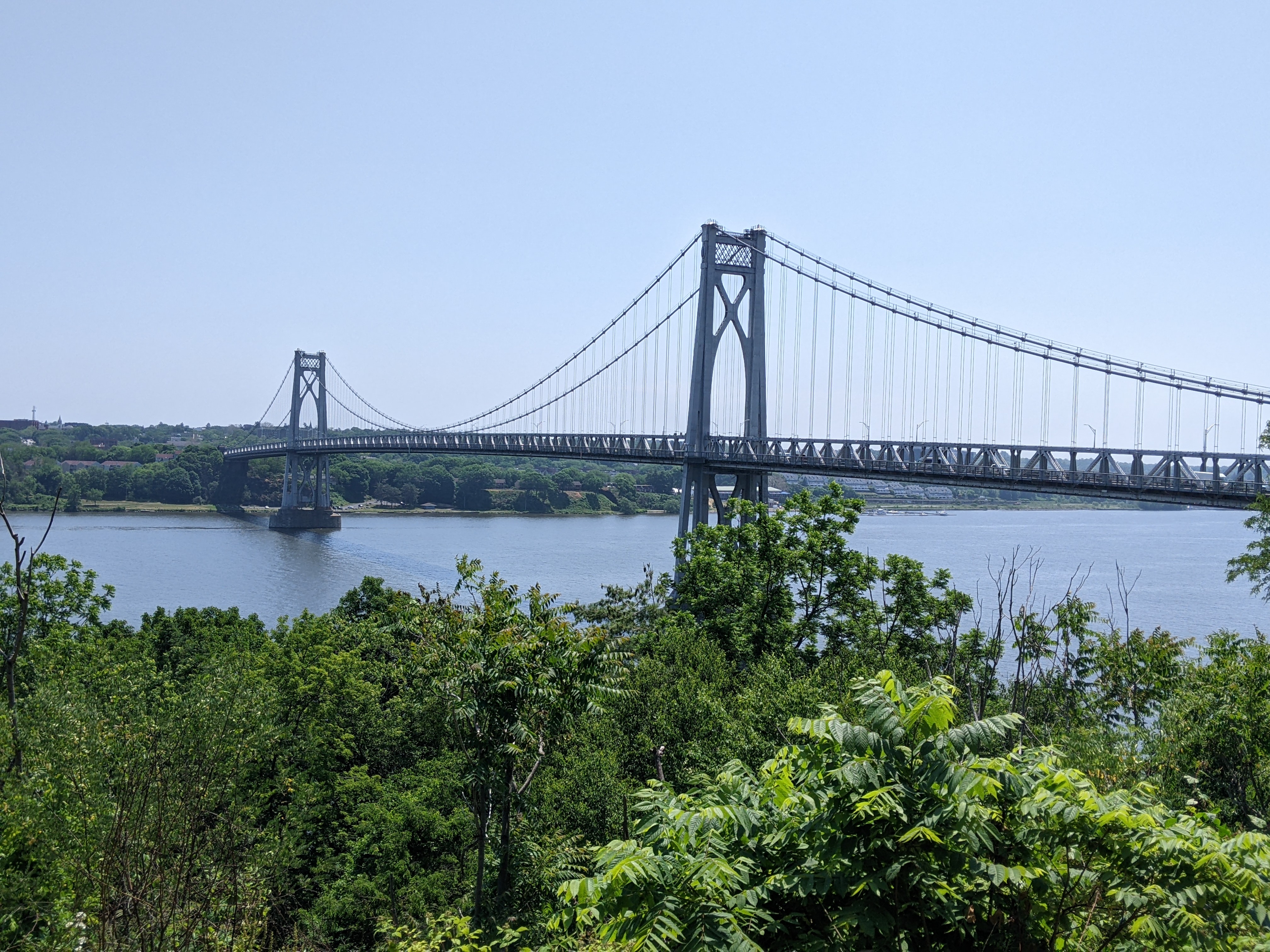
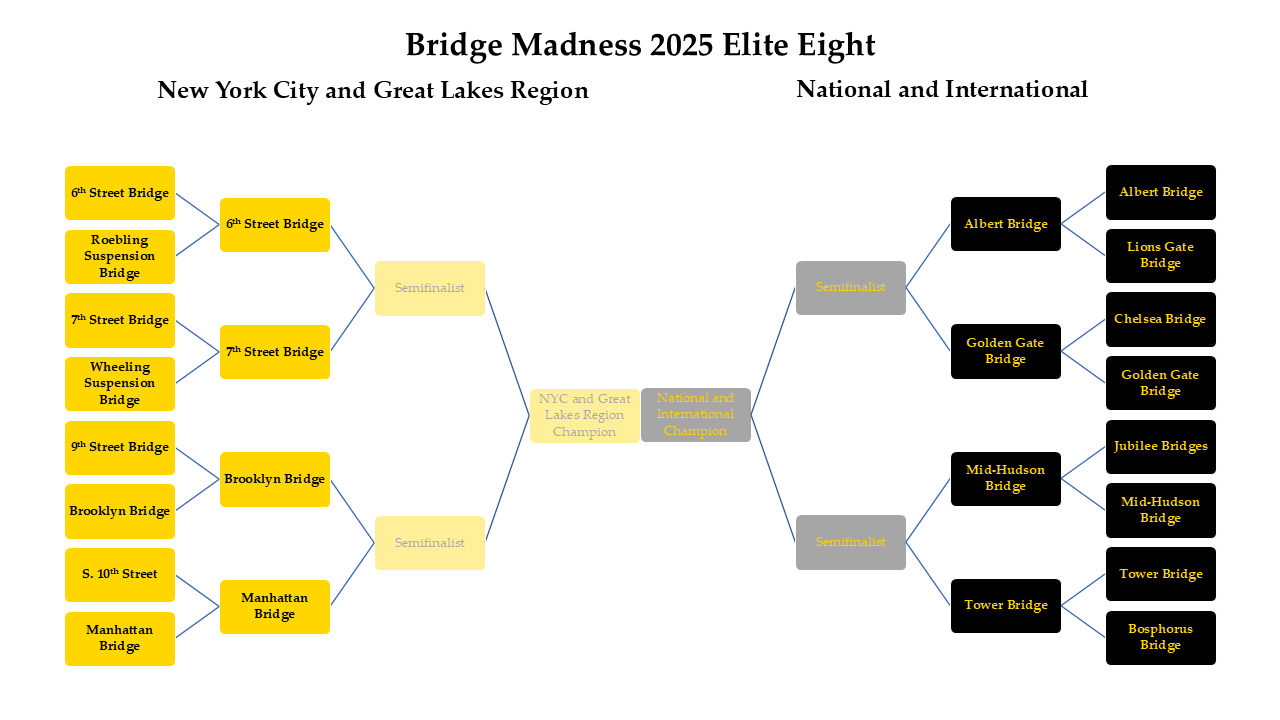
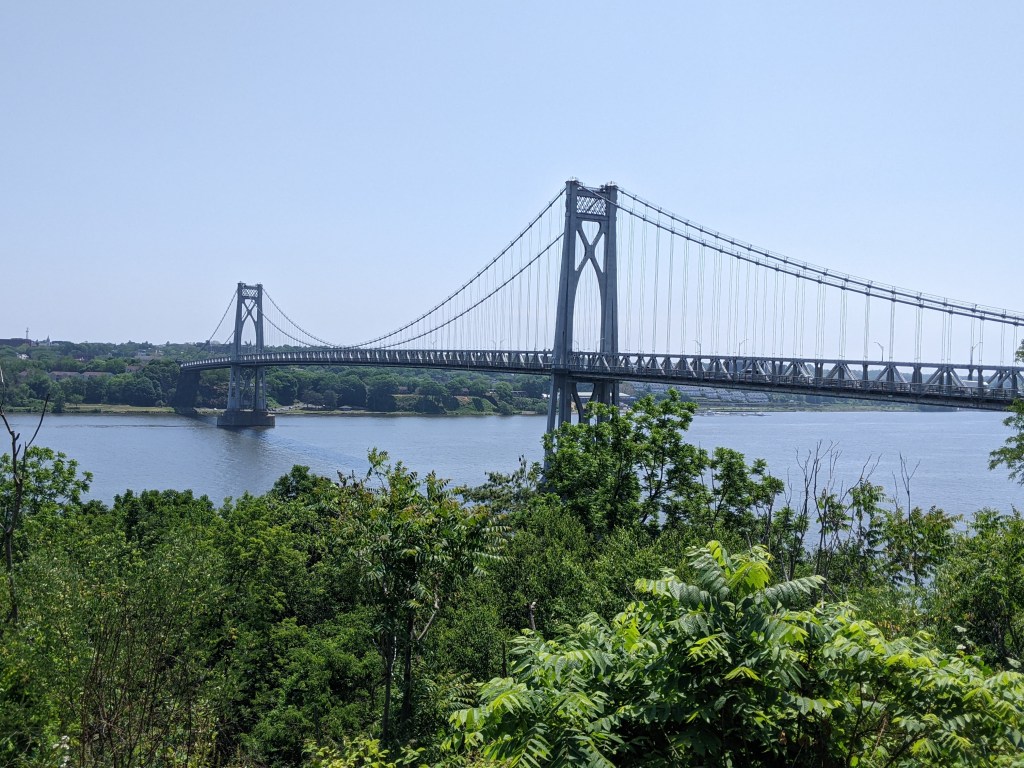
The Mid-Hudson Bridge in Poughkeepsie wins Bridge Madness 2025 with 88% of the votes.
Thank you for participating in the 2025 Bridge Madness Tournament! I hope you had as much fun voting as I did watching the votes add up. There were several surprises in this year’s match-up. Multiple iconic bridges got knocked out early; and the Mid-Hudson Bridge inspired a strong following right from the beginning.
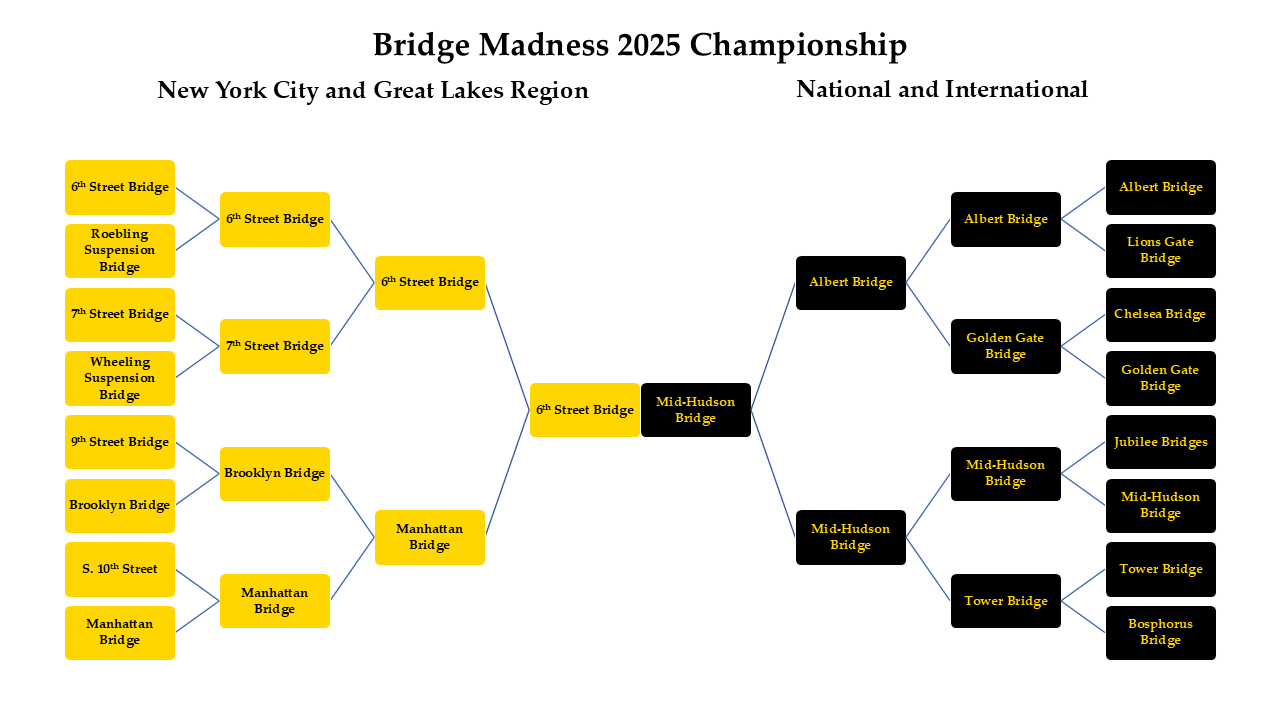
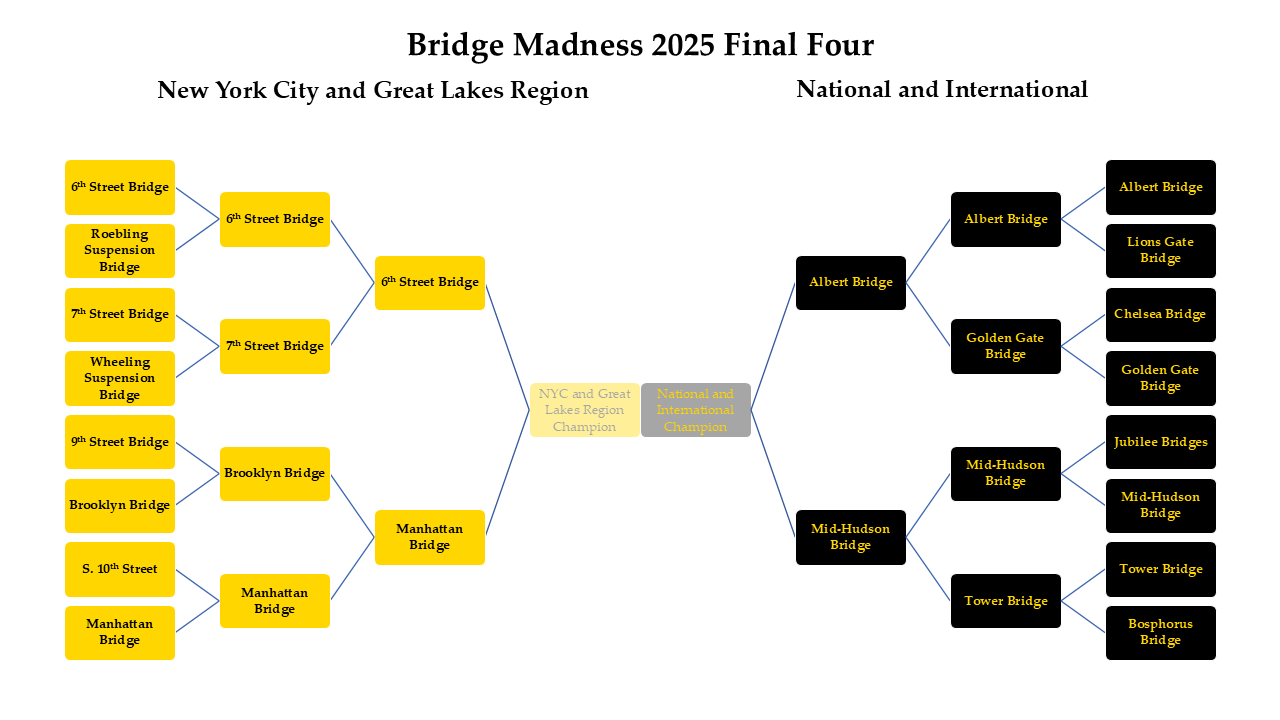
As a reminder, this year’s tournament featured suspension bridges visited by urbantraipsing nationally and internationally. Below is the completed brackets for Bridge Madness 2025. To learn more about the bridges, revisit the introduction which has links to posts on each bridge. Keep scrolling to see past winners and for an opportunity to send me feedback on Bridge Madness.
I’m already brainstorming for Bridge Madness 2026. Hope you come back!
Past Winners
Bridge Madness 2024: Pittsburgh Pedestrian Bridges Winner – East Liberty Station Pedestrian Bridge
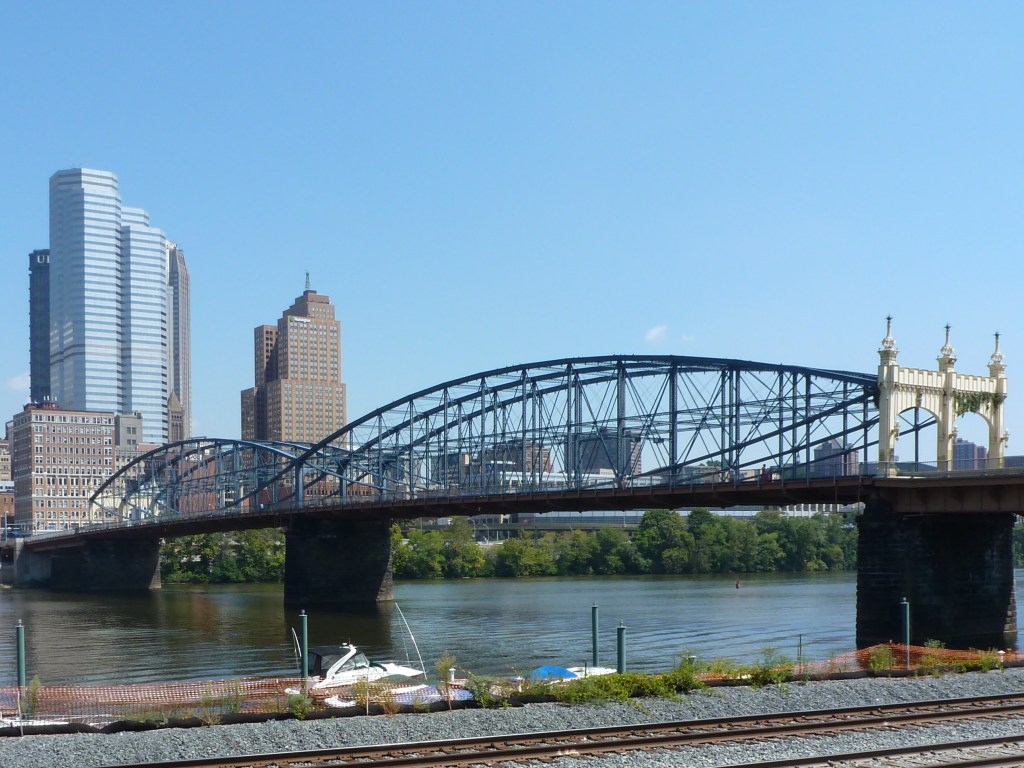
Bridge Madness 2023: Pittsburgh River Bridges Winner – Smithfield Street Bridge
Bridge Madness 2025 Map
Send me Feedback!
Bridge Madness started from a conversation with one of urbantraipsing’s fans. I added links to posts about the bridges in the introduction this year based on feedback from participants in prior years. Now it’s your turn to send me feedback. Do you have suggestions that would make the tournaments more fun? Thoughts on how to engage more people in voting? A bridge you recommend I add to my list of bridges to explore?
Also, I make a postcard every year announcing Bridge Madness, if you fill in your address below, I will add you to my mailing list for next year (the postcard is the only mailing I will send you).
In the 2025 Bridge Madness Tournament, 16 suspension bridges go pier-to-pier in a reader’s choice tournament to pick the best one. This year’s tournament features suspension bridges visited by urbantraipsing nationally and internationally.
Results of the Final Four:
6th Street Bridge vs. Manhattan Bridge – 69% to 31%
Albert Bridge vs. Mid-Hudson Bridge – 15% to 85%
Below is the bracket for the Championship. To learn more about the bridges, revisit the introduction which has links to posts on each bridge.
Championship
6th Street Bridge – PittsburghMid-Hudson Bridge – Poughkeepsie
In the 2025 Bridge Madness Tournament, 16 suspension bridges go pier-to-pier in a reader’s choice tournament to pick the best one. This year’s tournament features suspension bridges visited by urbantraipsing nationally and internationally.
Results of the Elite Eight:
6th Street Bridge vs. 7th Street Bridge – 64% to 36%
Brooklyn Bridge vs. Manhattan Bridge – 44% to 56%
Albert Bridge vs. Golden Gate Bridge – 51% to 49%
Mid-Hudson Bridge vs. Tower Bridge – 79% to 21%
Below are the brackets for the Final Four. Remember to vote for one bridge in each bracket by noon on Thursday, March 20th, and then return on March 22th to vote for the Championship.
The bridges are divided into two conferences: New York City and Great Lakes Region vs. National and International. To learn more about the bridges, revisit the introduction which has links to posts on each bridge.
New York City and Great Lakes Region
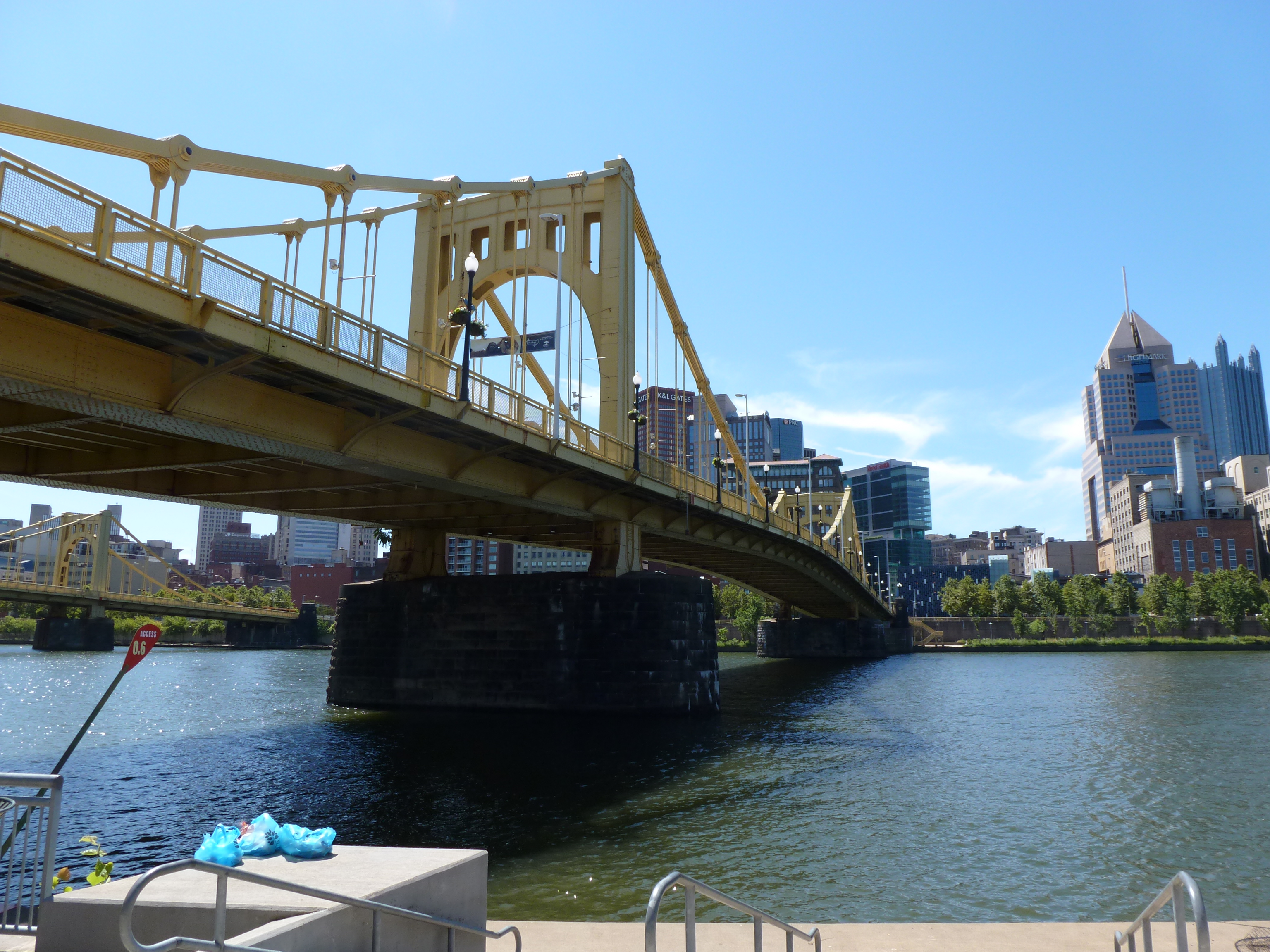
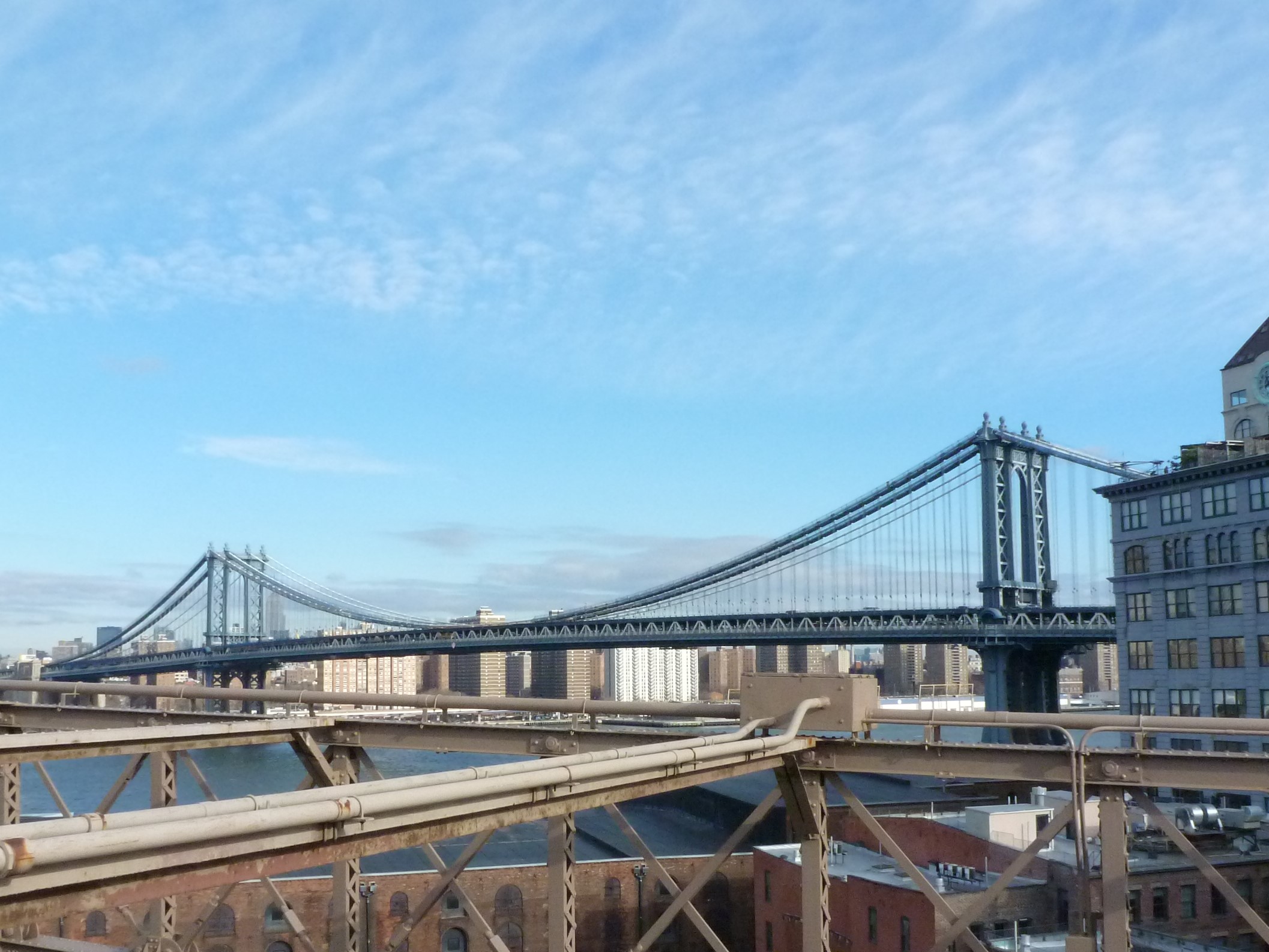
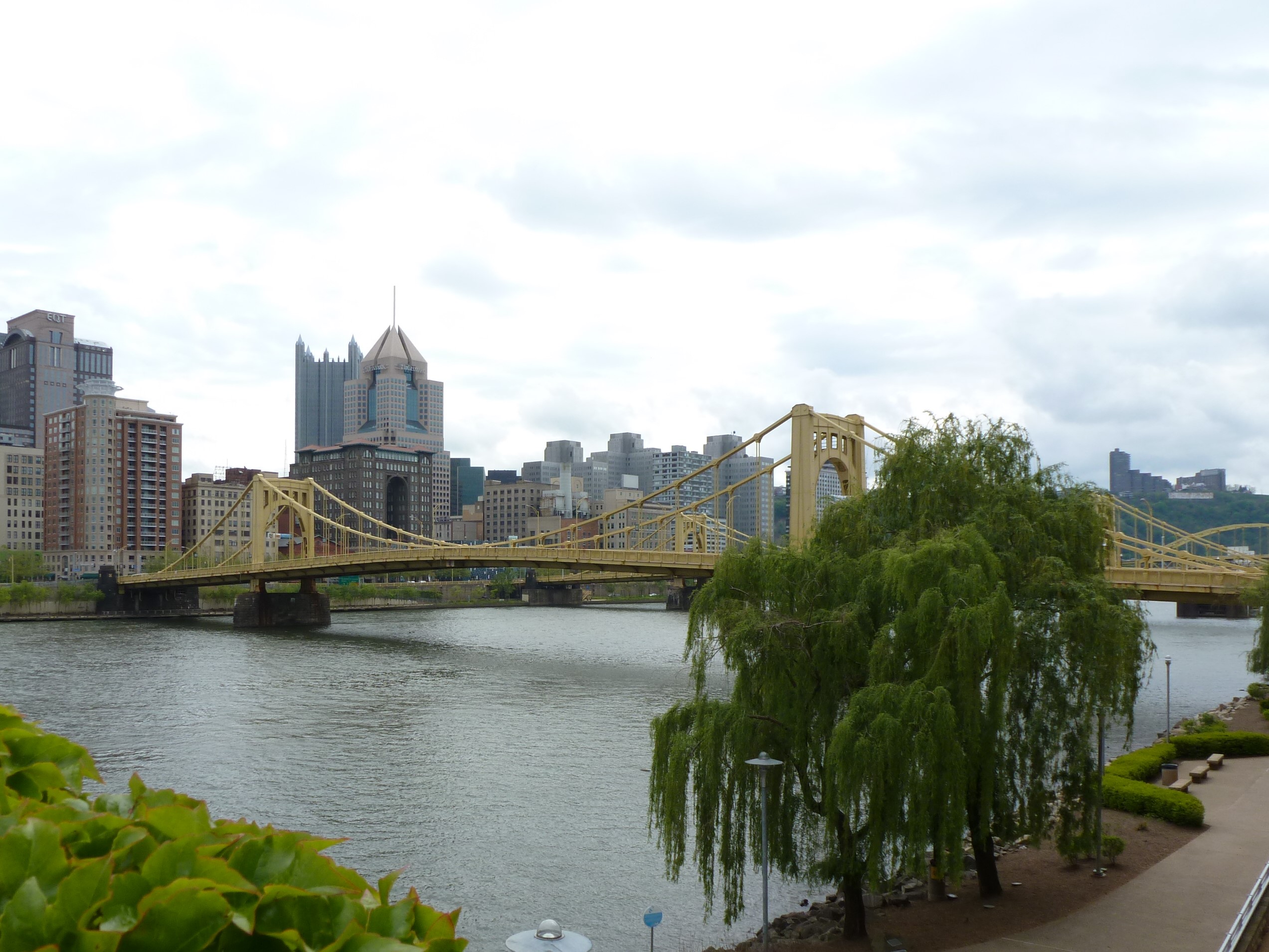
6th Street Bridge – PittsburghManhattan Bridge – New York City
National and International
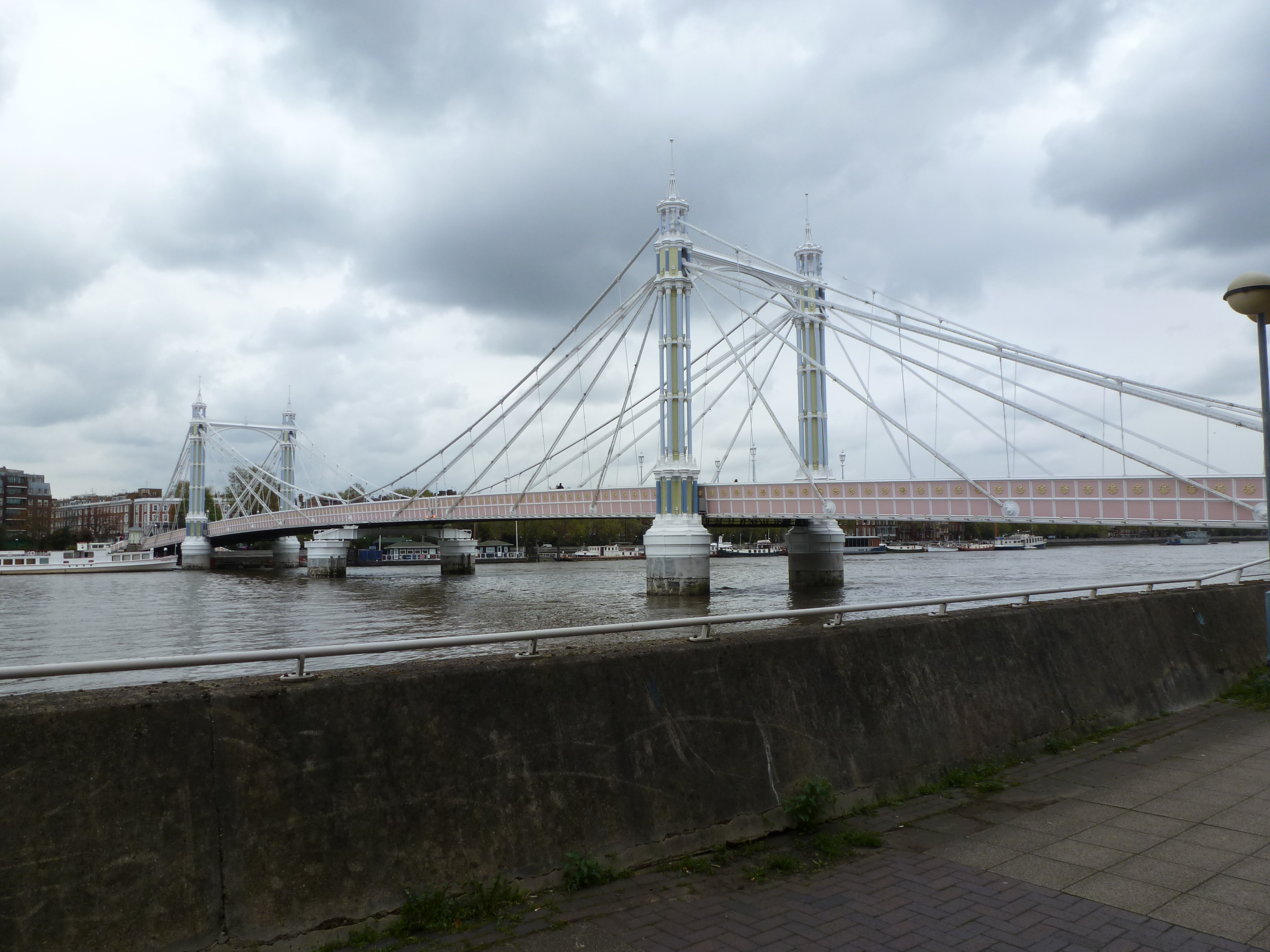
Albert Bridge – LondonMid-Hudson Bridge – Poughkeepsie
In the 2025 Bridge Madness Tournament, 16 suspension bridges go pier-to-pier in a reader’s choice tournament to pick the best one. This year’s tournament features suspension bridges visited by urbantraipsing nationally and internationally.
Results of the Sweet Sixteen:
6th Street Bridge vs. Roebling Suspension Bridge – 52% to 48%
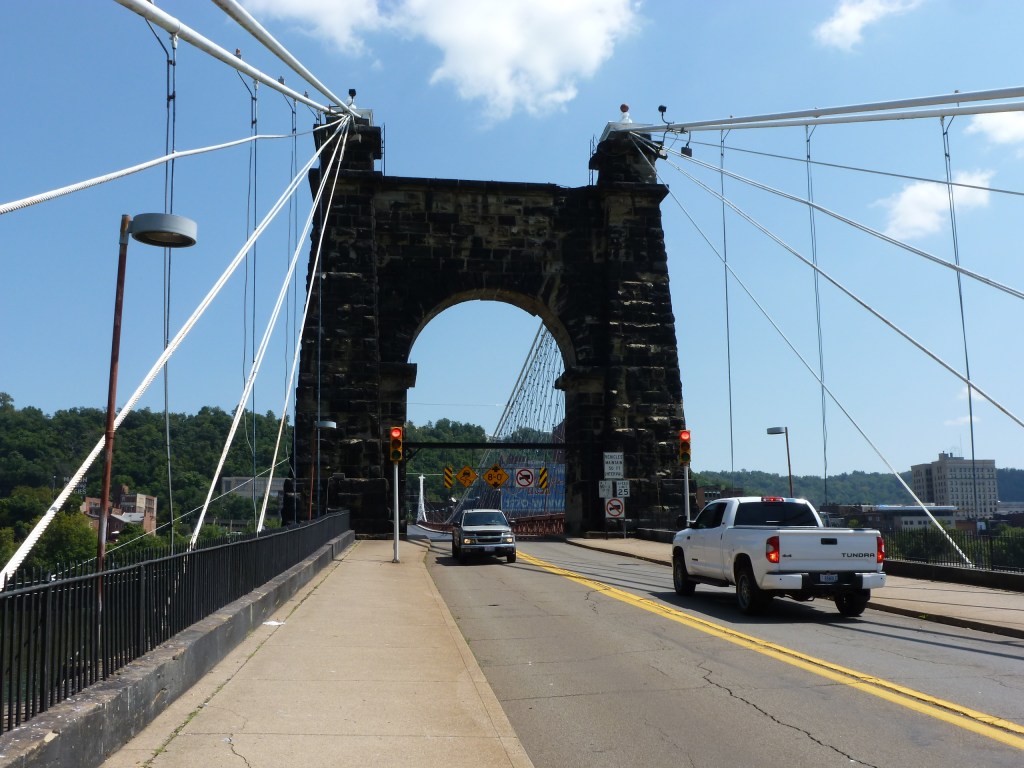
7th Street Bridge vs. Wheeling Suspension Bridge – 60% to 40%
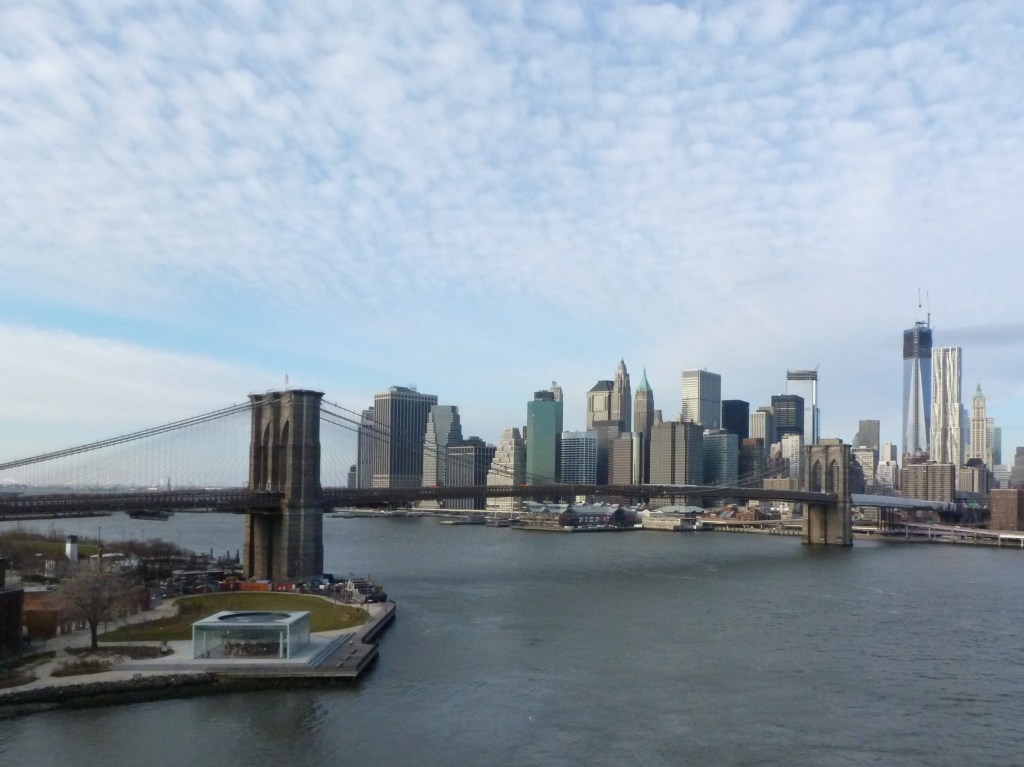
9th Street Bridge vs. Brooklyn Bridge – 28% to 72%
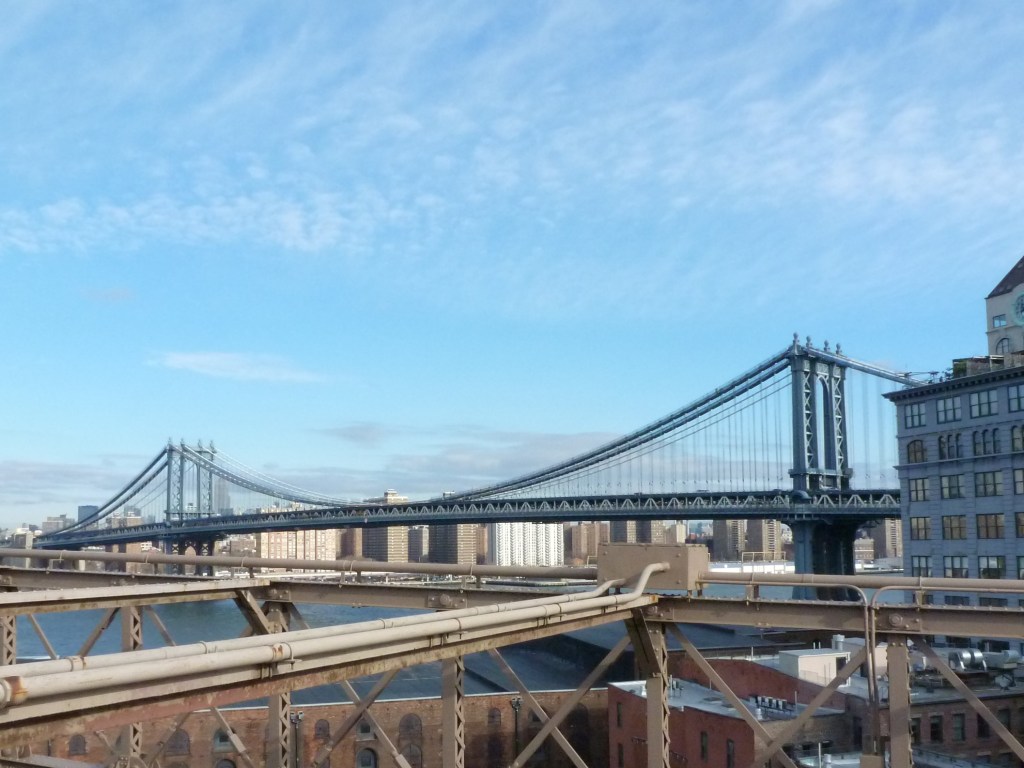
South 10th Street Bridge vs. Manhattan Bridge – 16% to 74%
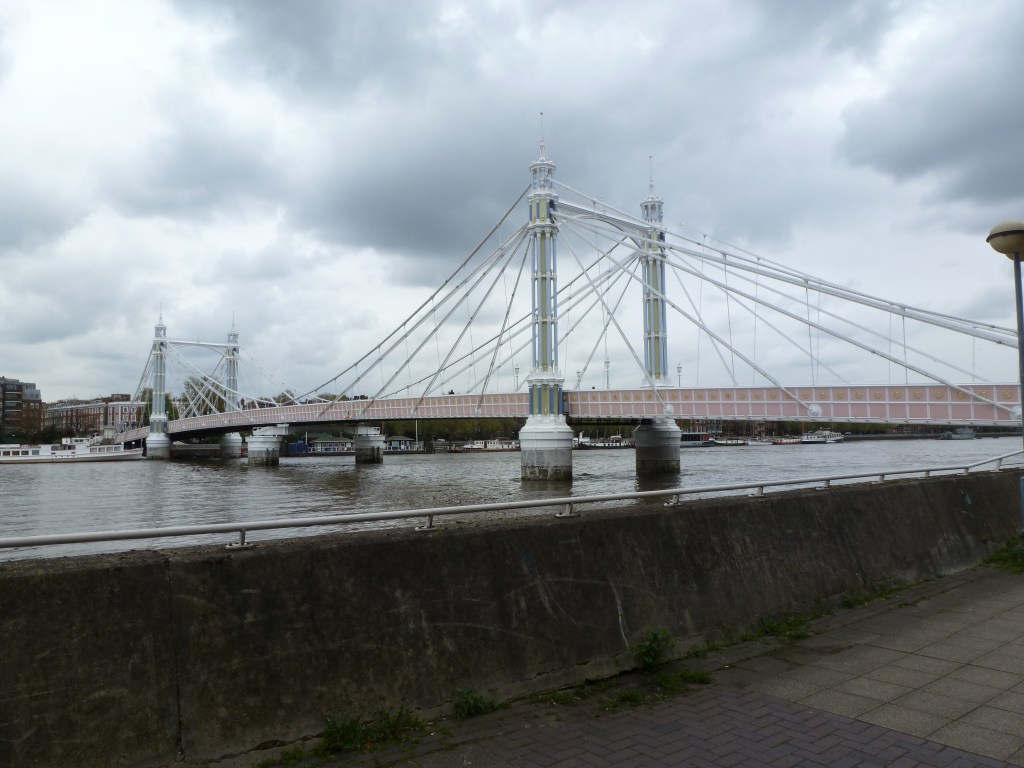
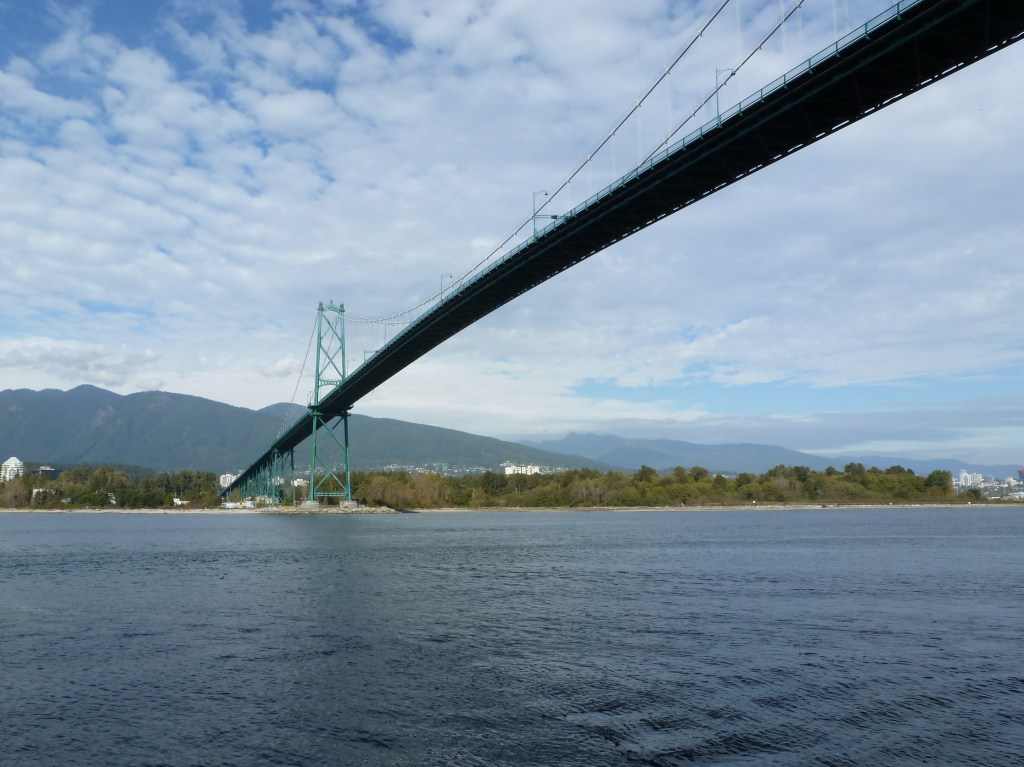
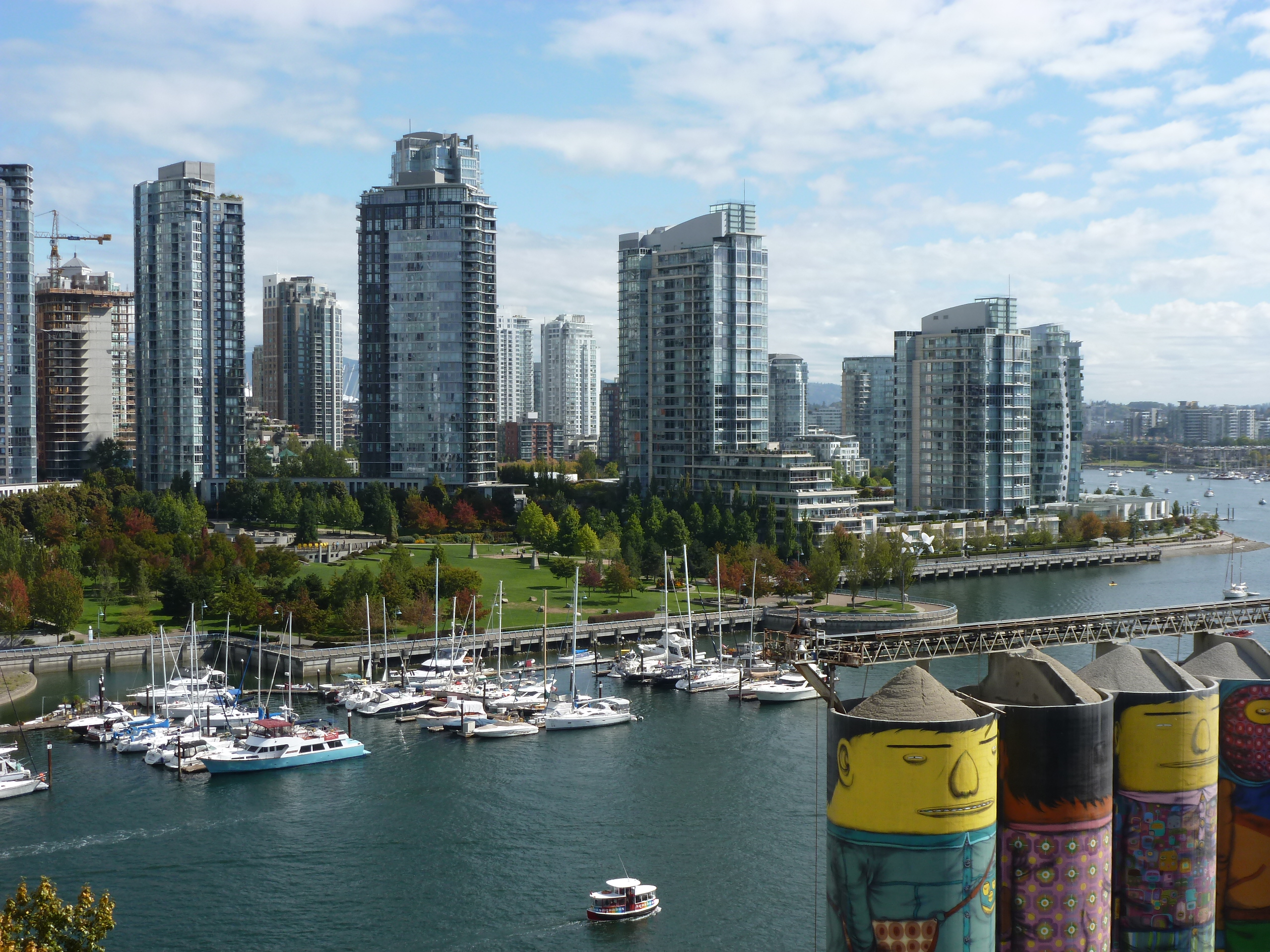
Albert Bridge vs. Lions Gate Bridge – 58% to 42%
Chelsea Bridge vs. Golden Gate Bridge – 35% to 65%
Jubilee Bridges vs. Mid-Hudson Bridge – 10% to 90%
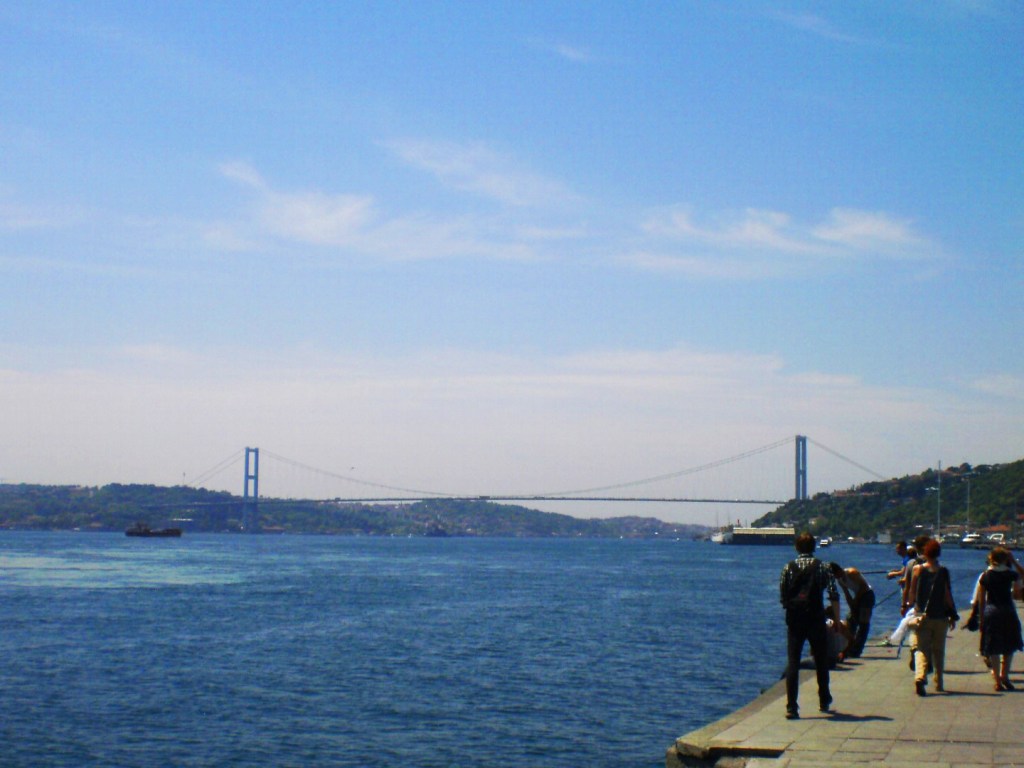
Tower Bridge vs. Bosphorus Bridge – 83% to 17%
Below are the brackets for the Elite Eight. Remember to vote for one bridge in each bracket by noon on Thursday, March 13th, and then return on March 15th to vote for the Final Four.
The bridges are divided into two conferences: New York City and Great Lakes Region vs. National and International. To learn more about the bridges, revisit the introduction which has links to posts on each bridge.
New York City and Great Lakes Region
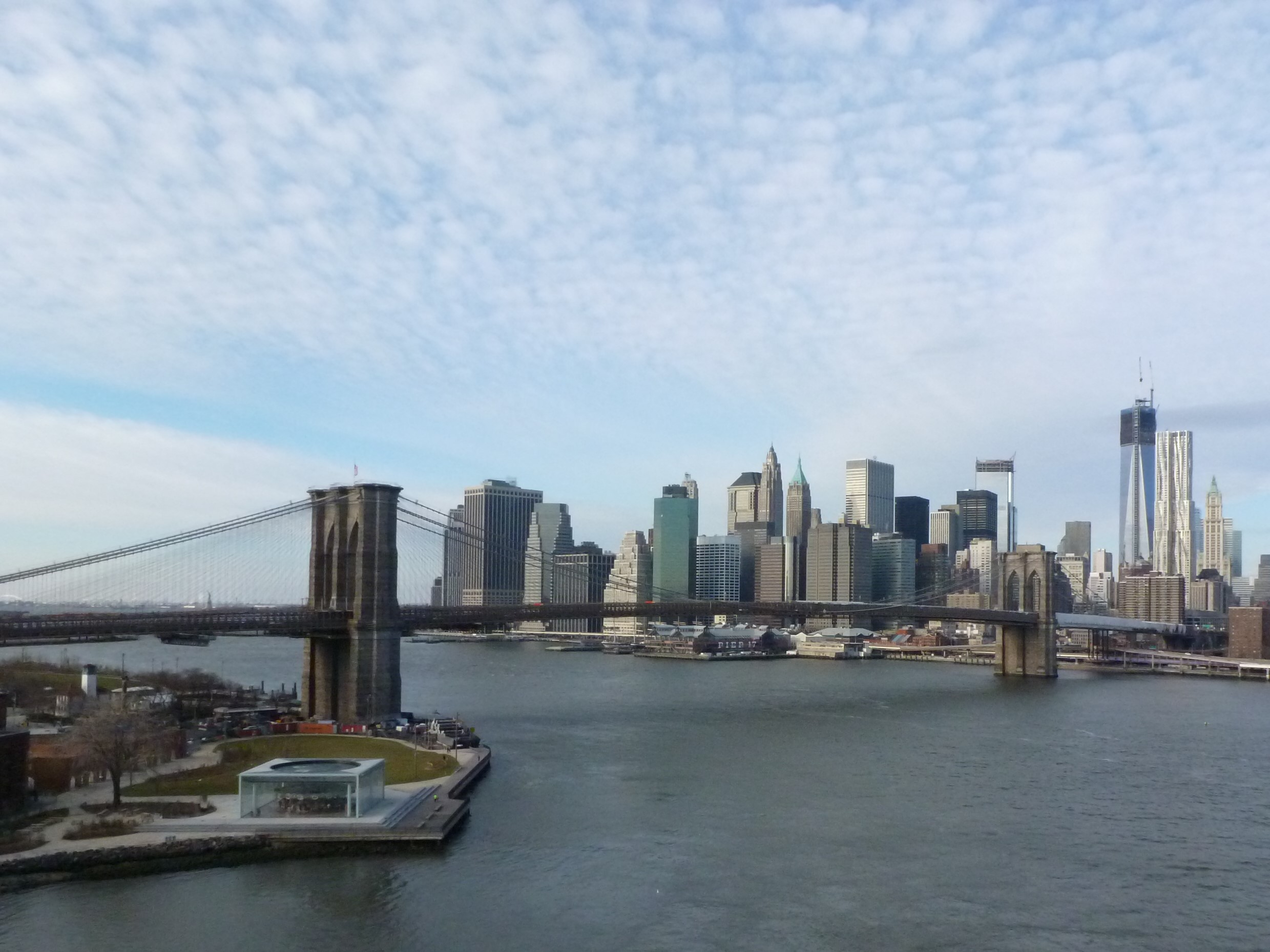
6th Street Bridge – Pittsburgh7th Street Bridge – PittsburghBrooklyn Bridge – New York CityManhattan Bridge – New York City
National and International
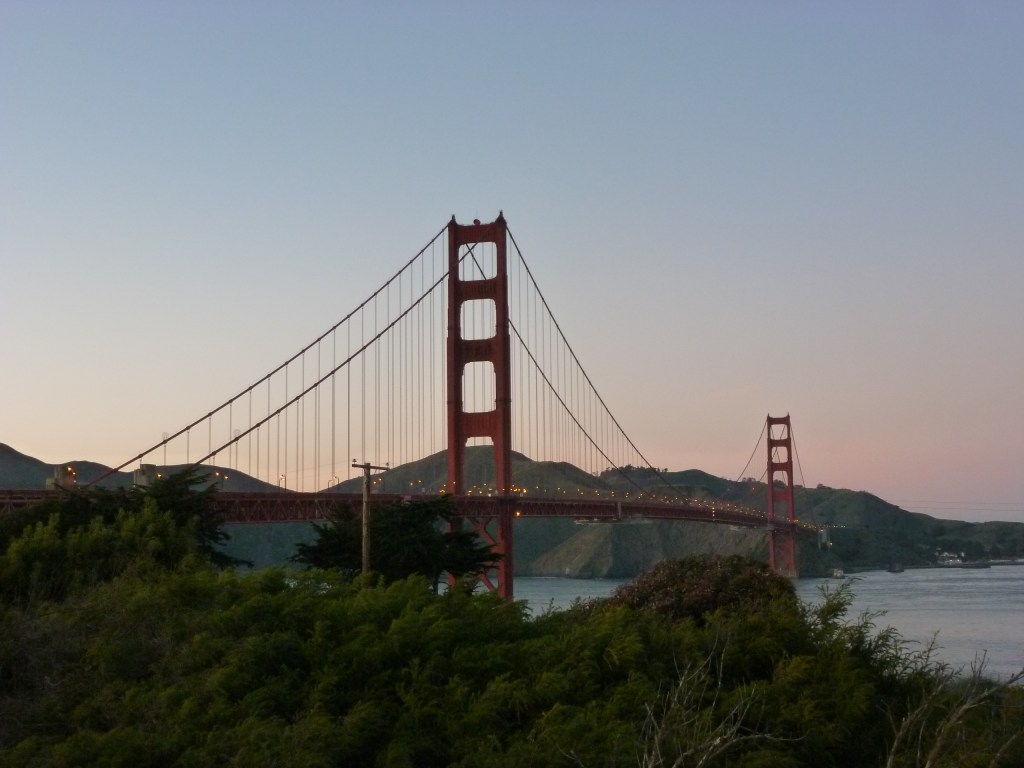
Albert Bridge – LondonGolden Gate Bridge – San FranciscoMid-Hudson Bridge – PoughkeepsieTower Bridge – London
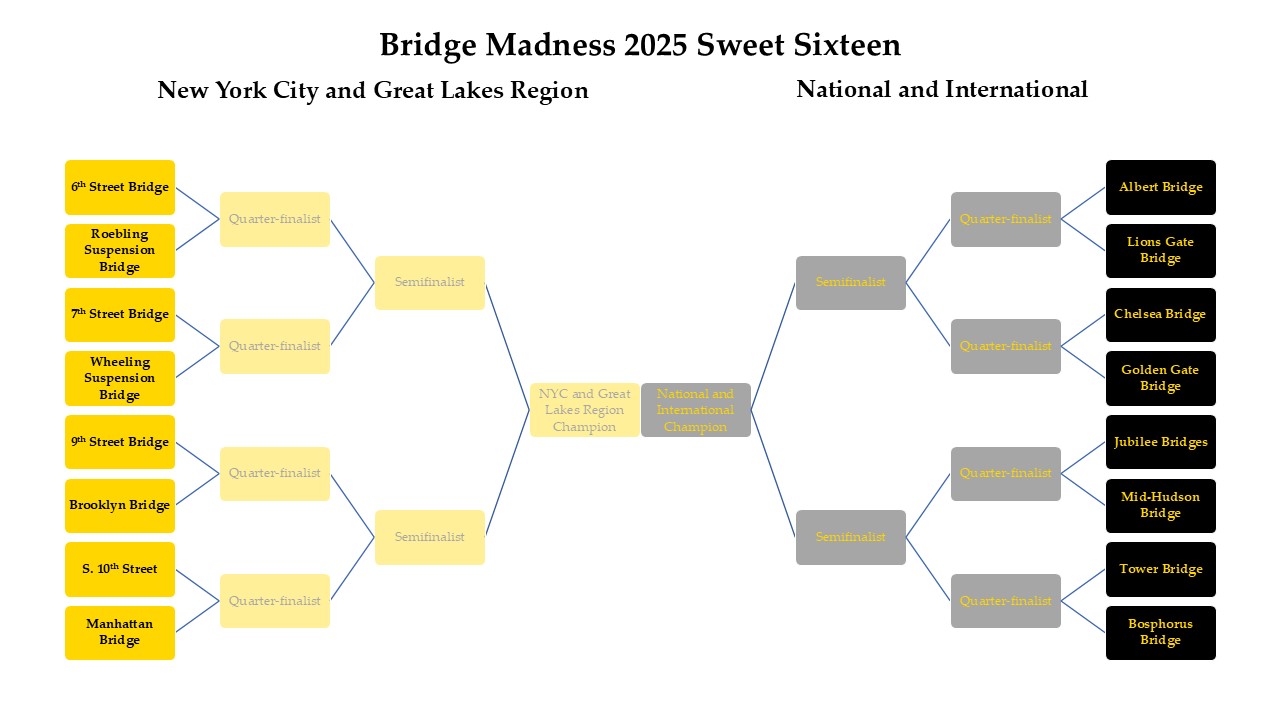
In the 2025 Bridge Madness Tournament, 16 suspension bridges go pier-to-pier in a reader’s choice tournament to pick the best one. This year’s tournament features suspension bridges visited by urbantraipsing nationally and internationally. Below are the brackets for the Sweet Sixteen. Remember to vote for one bridge in each bracket by noon on Thursday, March 6th, and then return on March 8th to vote for the Elite Eight.
The bridges are divided into two conferences: New York City and Great Lakes Region vs. National and International. To learn more about the bridges, revisit the introduction which has links to posts on each bridge.
New York City and Great Lakes Region
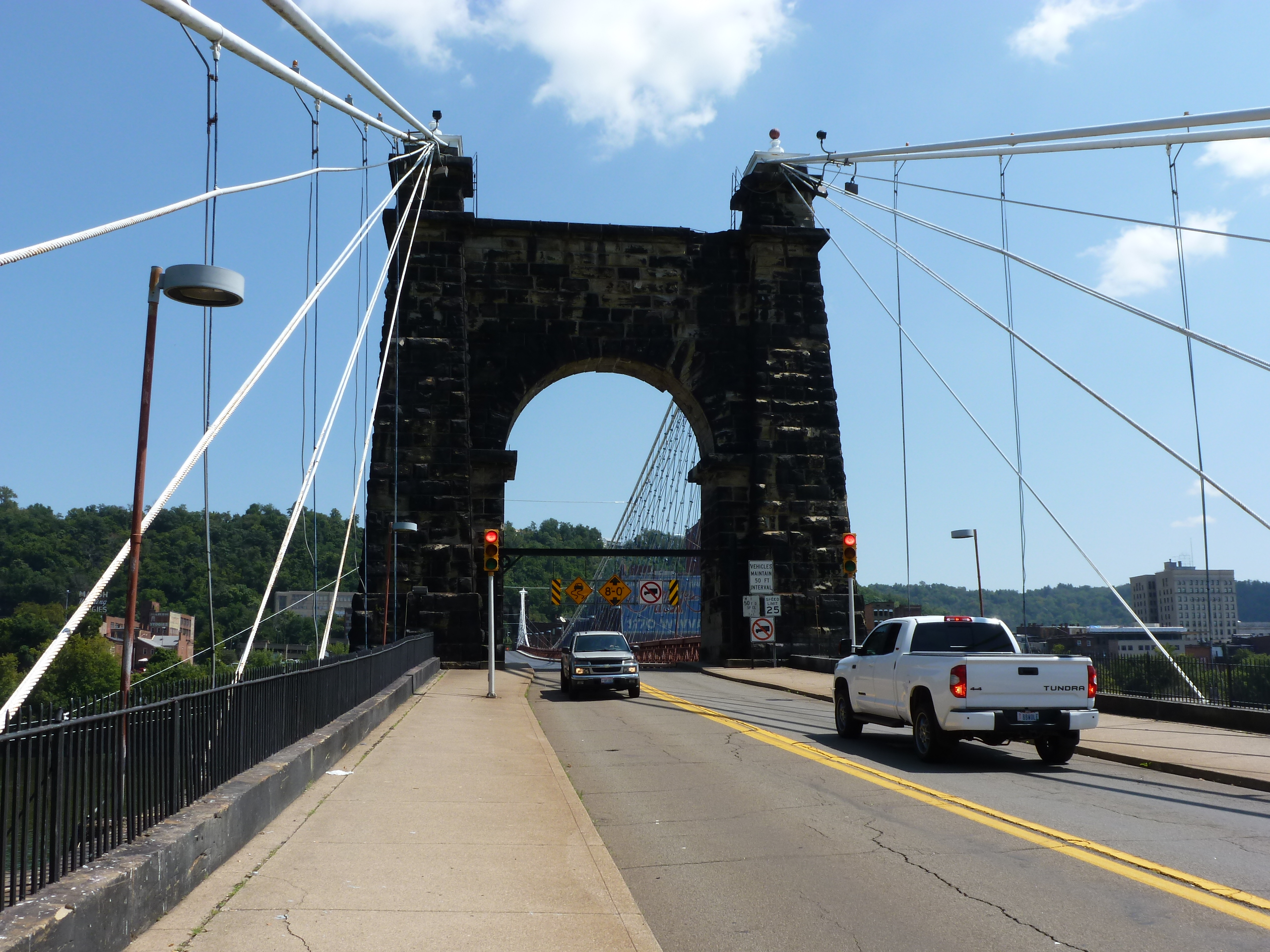
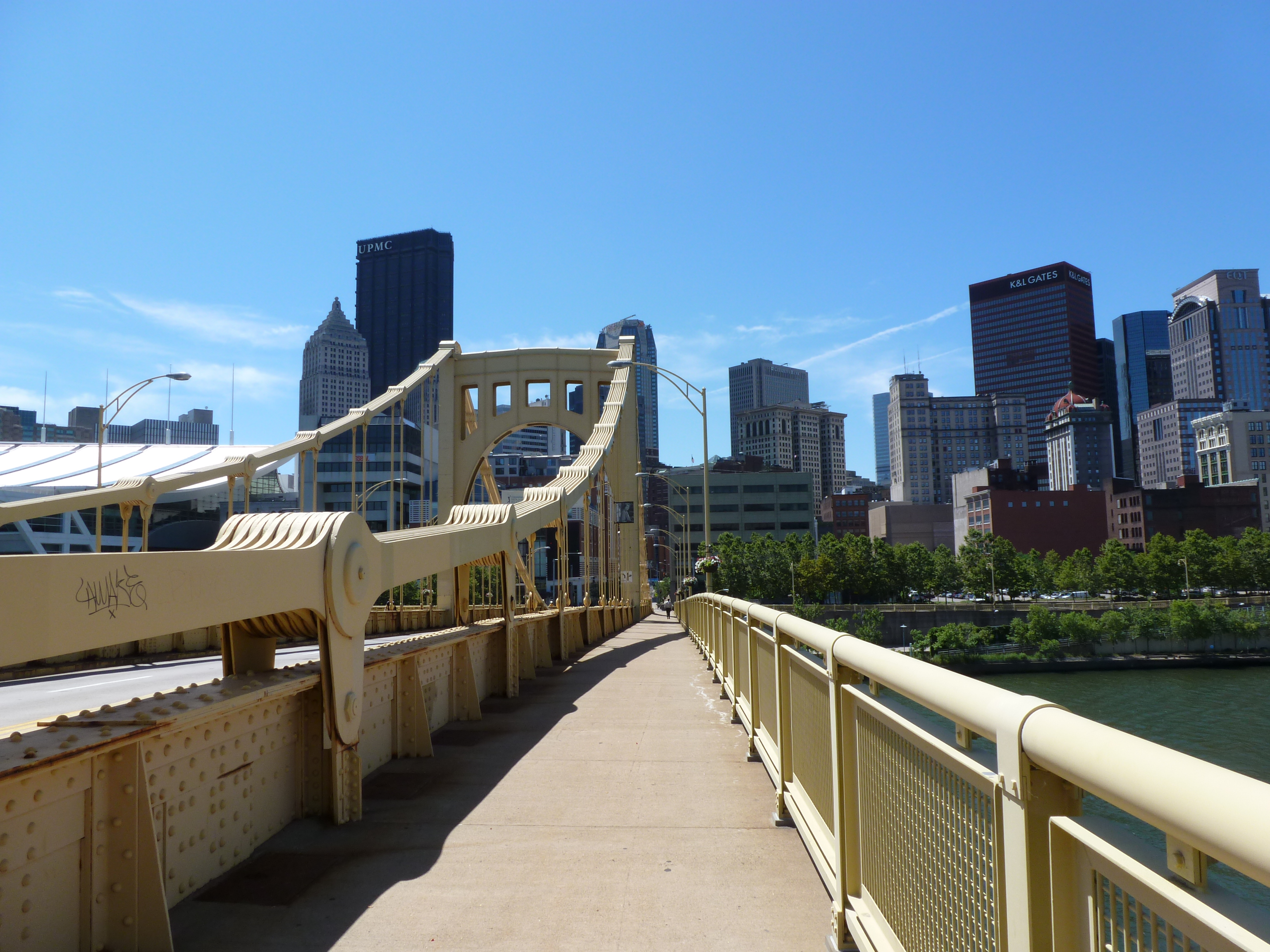
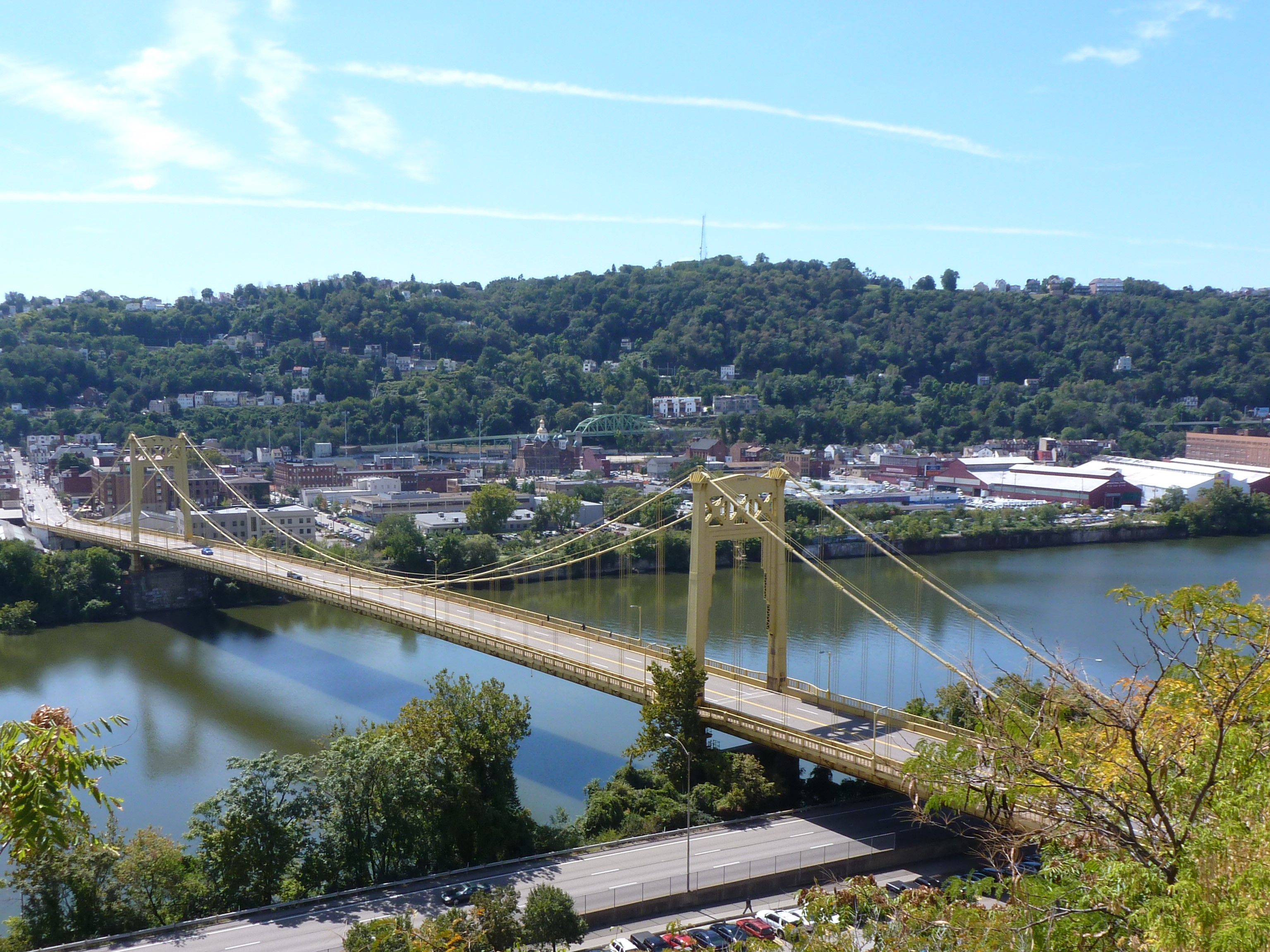
6th Street Bridge – PittsburghRoebling Suspension Bridge – Cincinnati7th Street Bridge – PittsburghWheeling Suspension Bridge – Wheeling9th Street Bridge – PittsburghBrooklyn Bridge – New York CityS. 10th Street Bridge – PittsburghManhattan Bridge – New York City
National and International
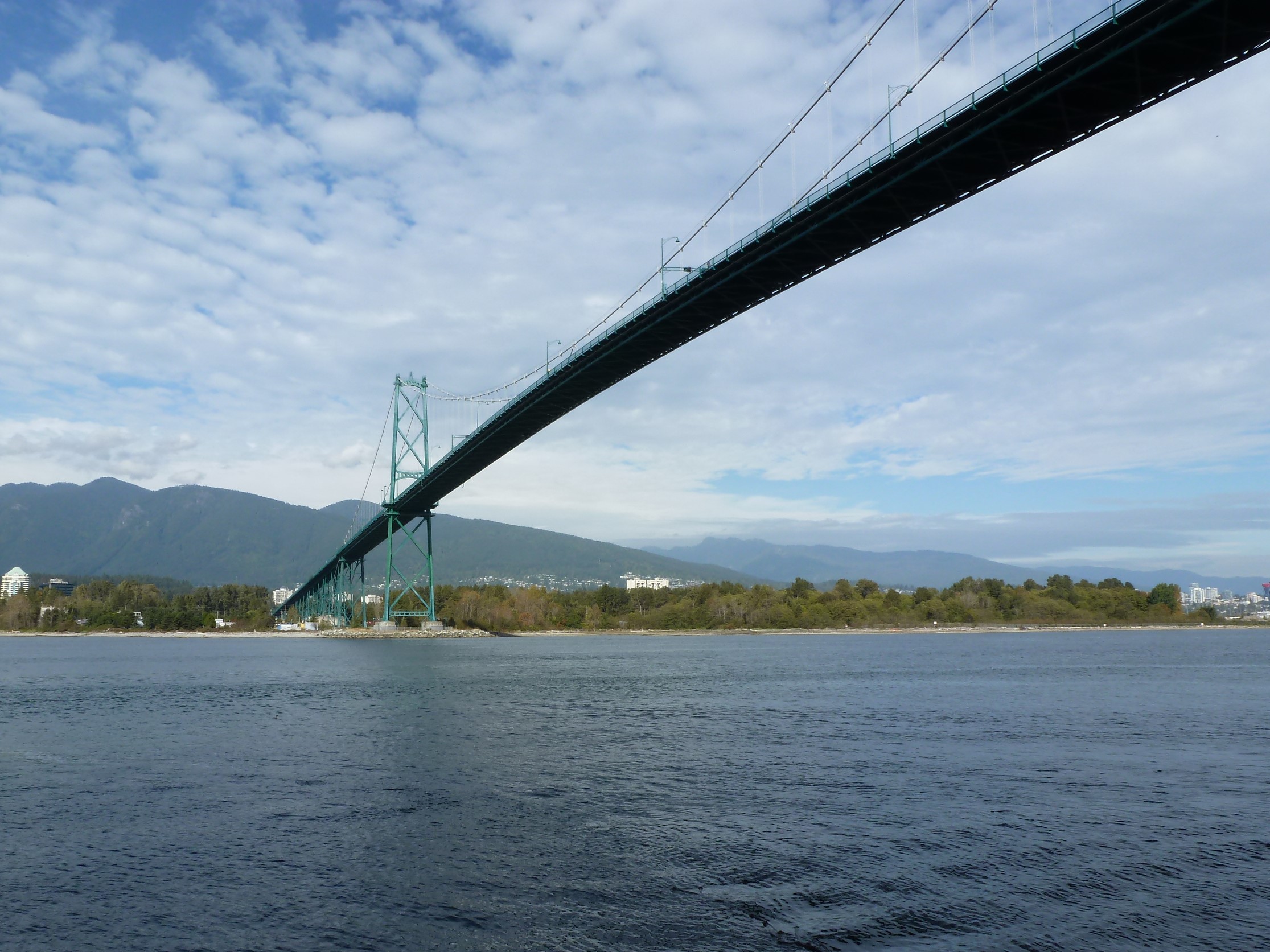
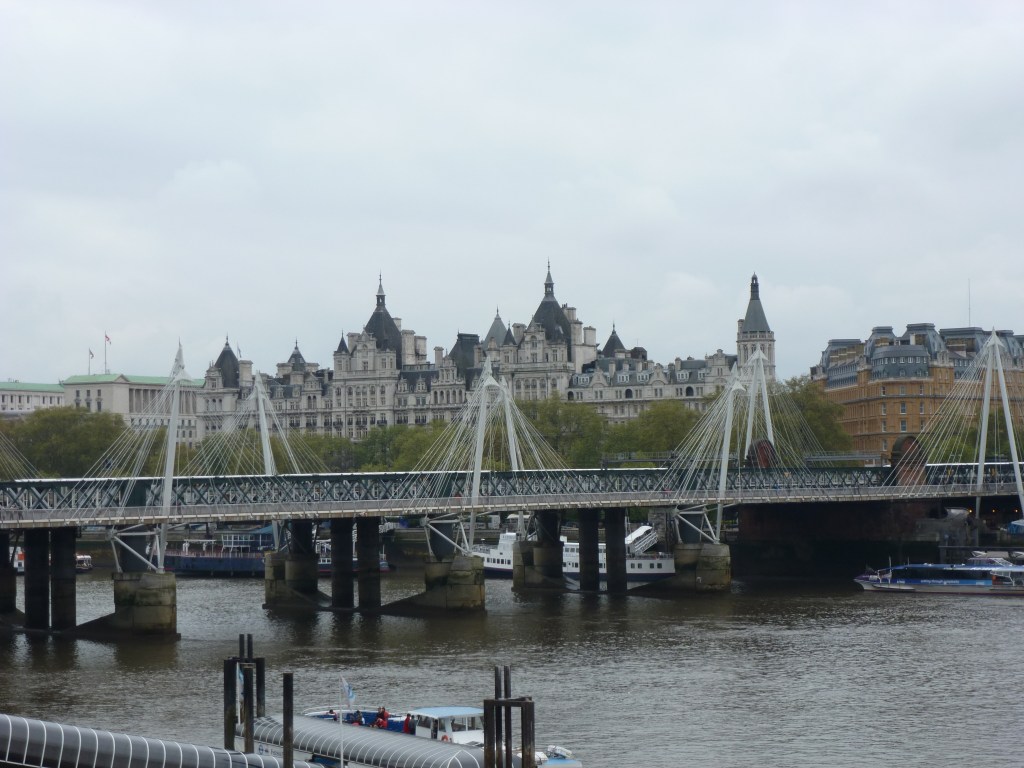
Albert Bridge – LondonLions Gate Bridge – VancouverChelsea Bridge – LondonGolden Gate Bridge – San FranciscoJubilee Bridges – LondonMid-Hudson Bridge – PoughkeepsieTower Bridge – LondonBosphorus Bridge – Istanbul
In the 2025 Bridge Madness Tournament, 16 suspension bridges go pier-to-pier in a reader’s choice tournament to pick the best one. This year’s tournament features suspension bridges visited by urbantraipsing nationally and internationally. Beginning March 1, you will be able to vote for your favorite bridge in each bracket. The champion bridge will be announced on March 29. Don’t forget to come back each week to vote your favorite bridge to #1!
Each round of voting will go live at 8 AM on the scheduled Saturday and close at noon the following Thursday. The schedule is:
March 1 – Sweet Sixteen
March 8 – Elite Eight
March 15 – Final Four
March 22 – Championship
March 29 – Winner announced
The bridges are divided into two conferences: New York City and Great Lakes Region vs. National and International.
New York City and Great Lakes Region
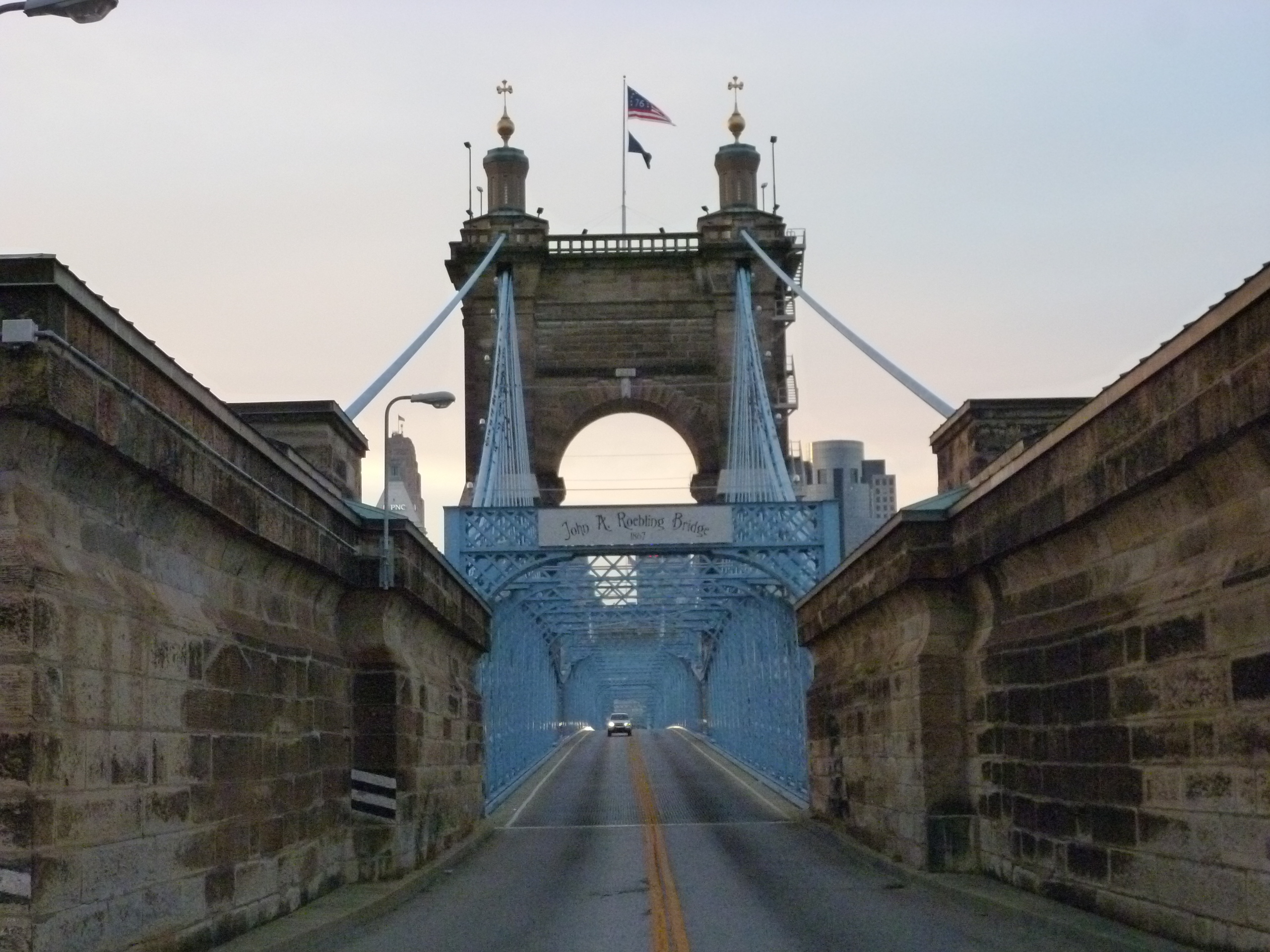
The suspension bridges in the New York City and Great Lakes Region Conference are below. Click on the links to learn more about urbantraipsing’s encounter with each bridge.
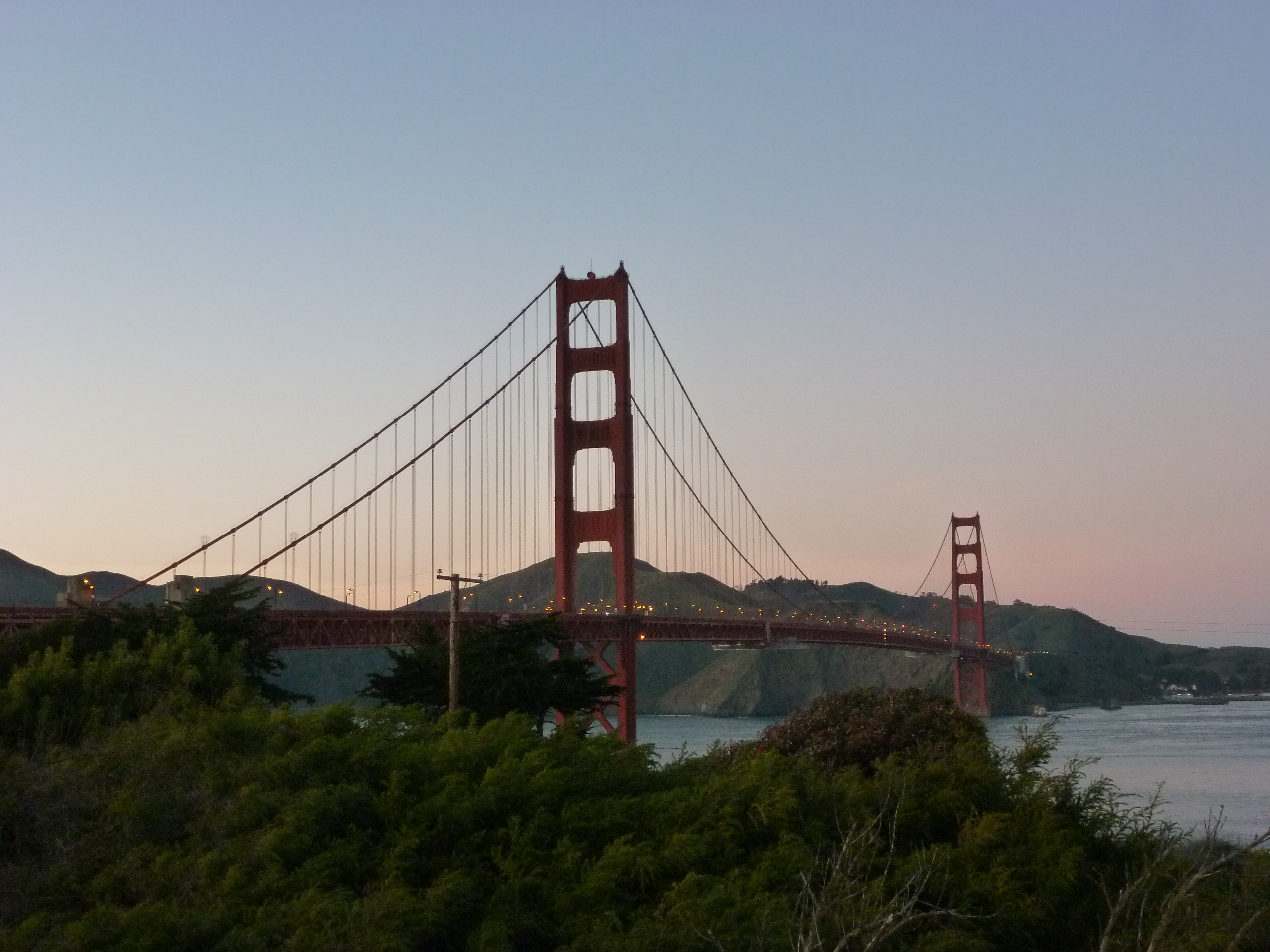
The suspension bridges in the National and International Conference are below. Click on the links to learn more about urbantraipsing’s encounter with each bridge.
Adrenaline is a powerful force. When I arrived in Vancouver in 2016, I bounded with energy despite only having slept 4 hours in the previous 36. After dropping my stuff off at my lodgings, I rented a bike and rode like a woman on a mission along the waterfront trail. Part of that mission was to burn off the adrenaline so that I would be able to sleep that night.
However, revisiting my photos and my recollections of this trip to write about the bridges and greenery, I’ve been haunted by the thought that there was an additional mission to that bike ride. I distinctly remember biking the trail along False Creek, but I have no photos from this excursion (the photo above is False Creek from Granville Bridge, nowhere near Olympic Village). Perhaps I was too focused on my mission? One line from my travel journal buried in a flurry of thoughts on urban design reminded me that the destination of that bike ride was the Olympic Village from when Vancouver hosted the 2010 Olympics.
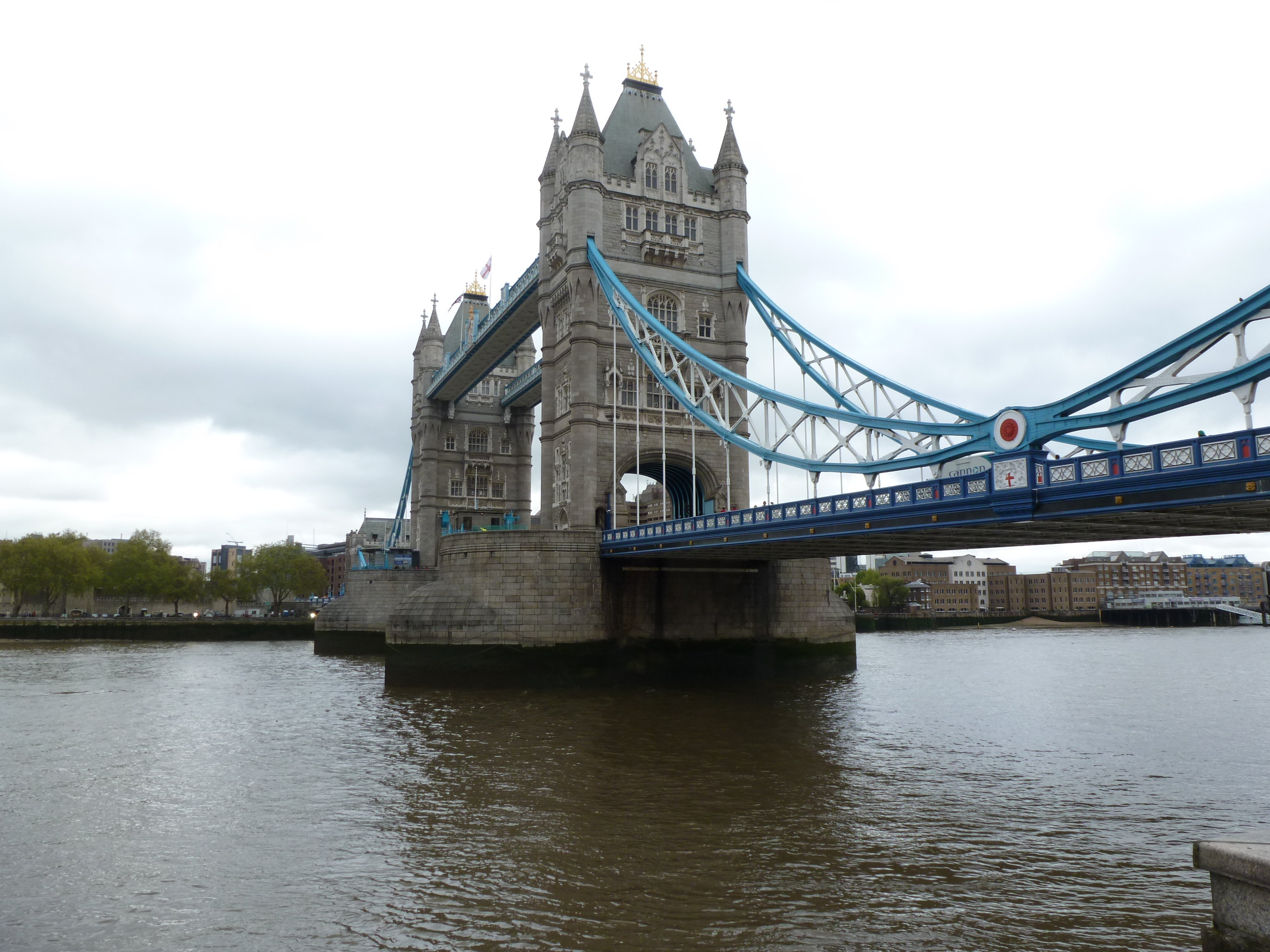
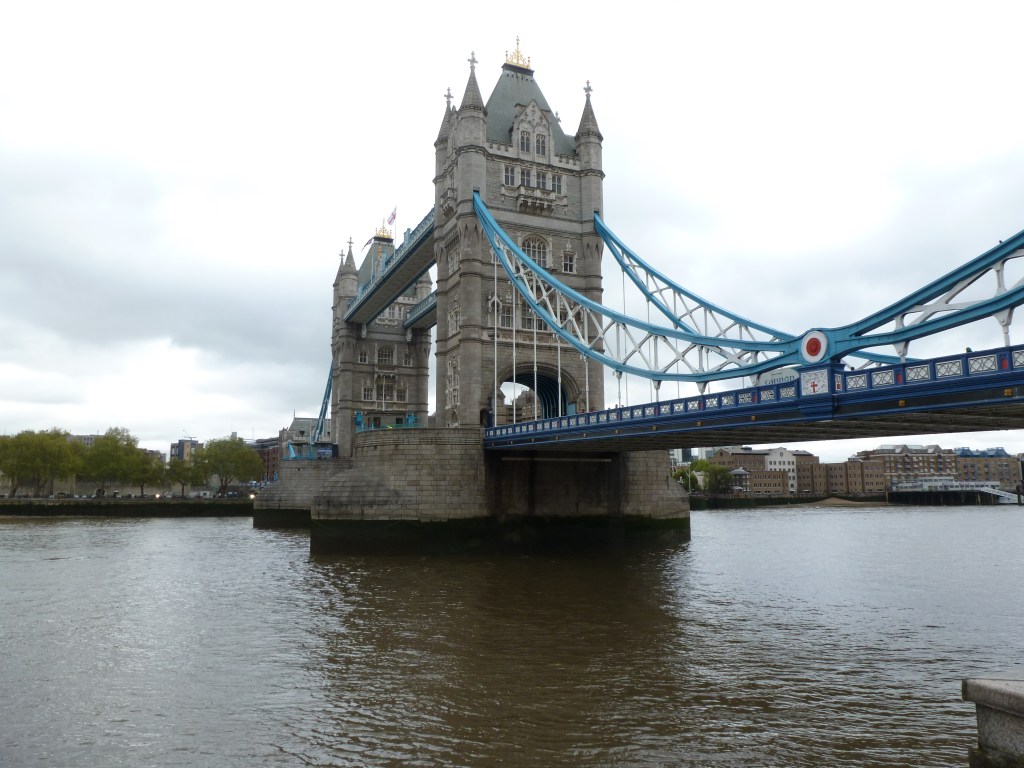
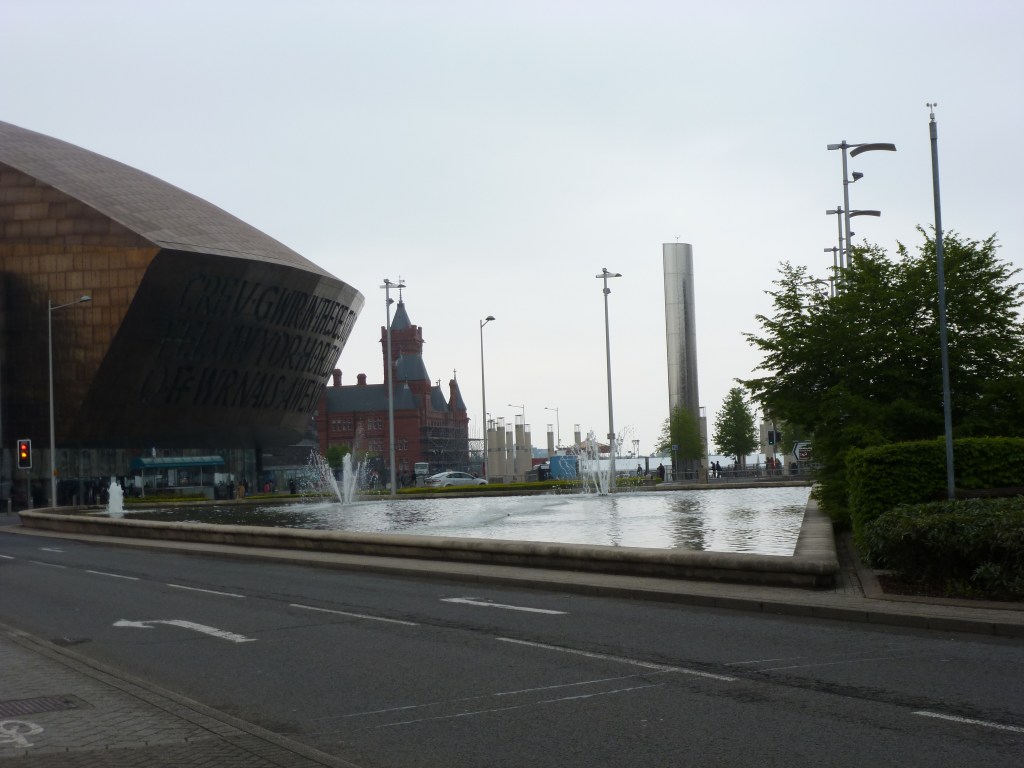
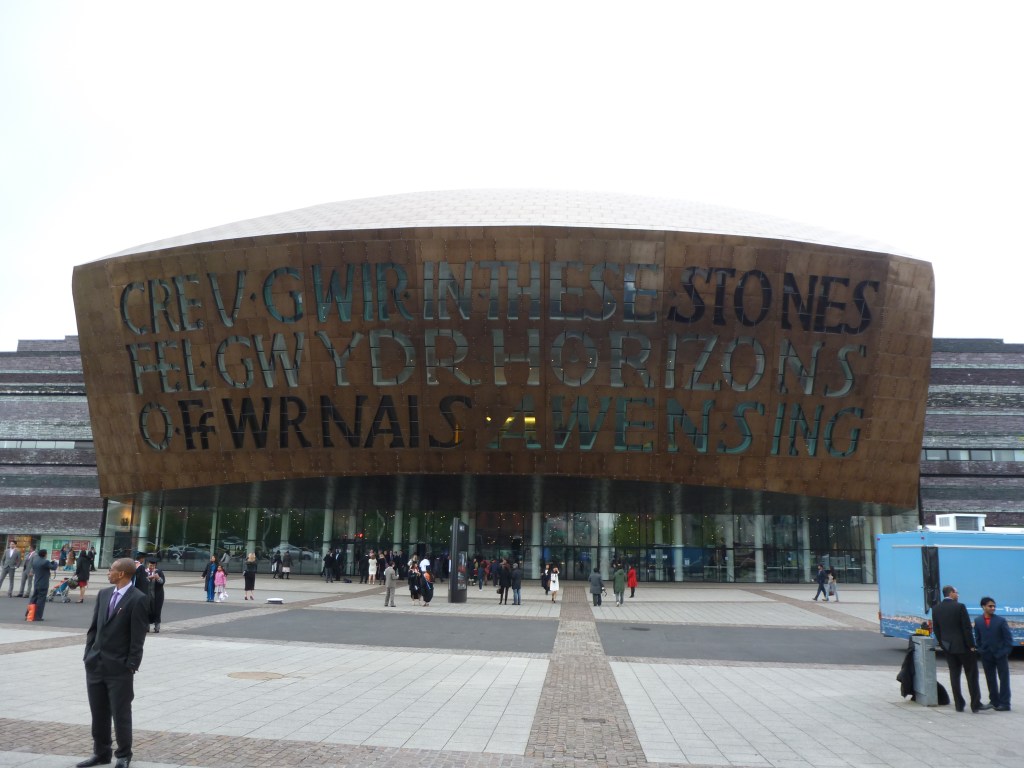
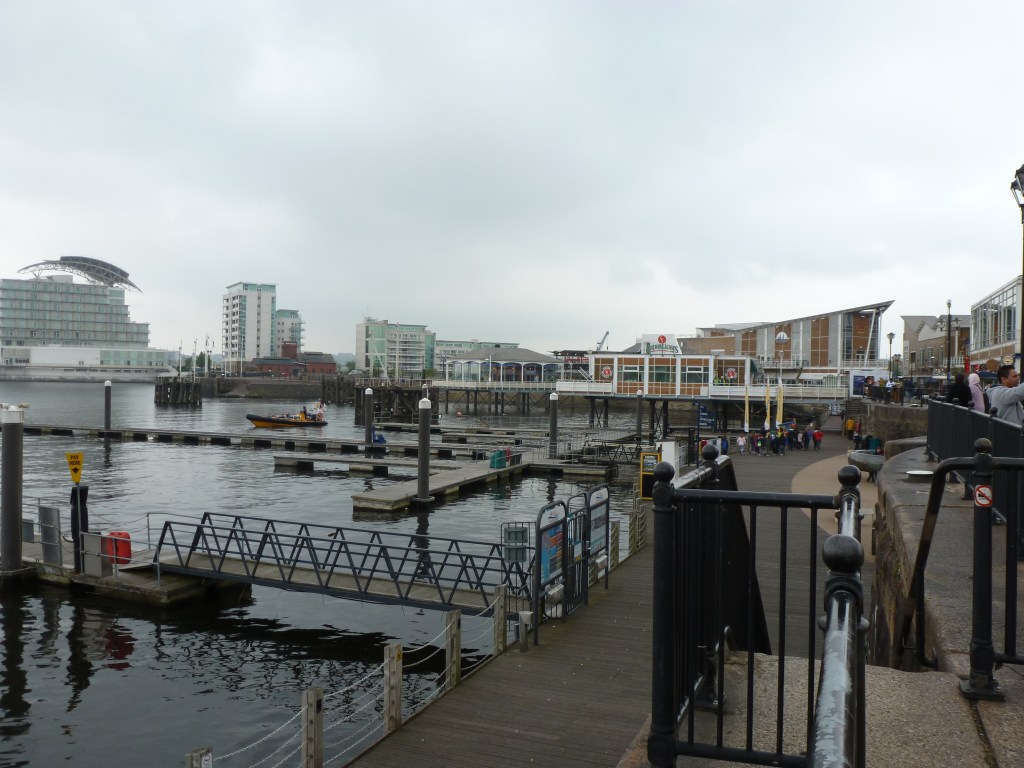
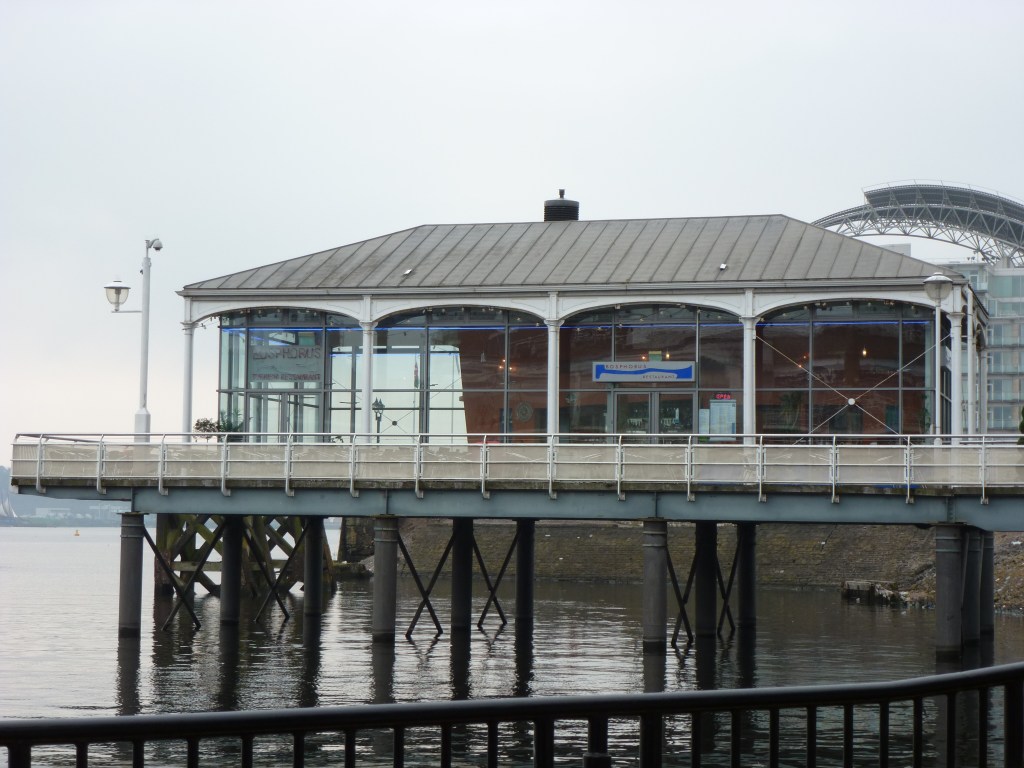
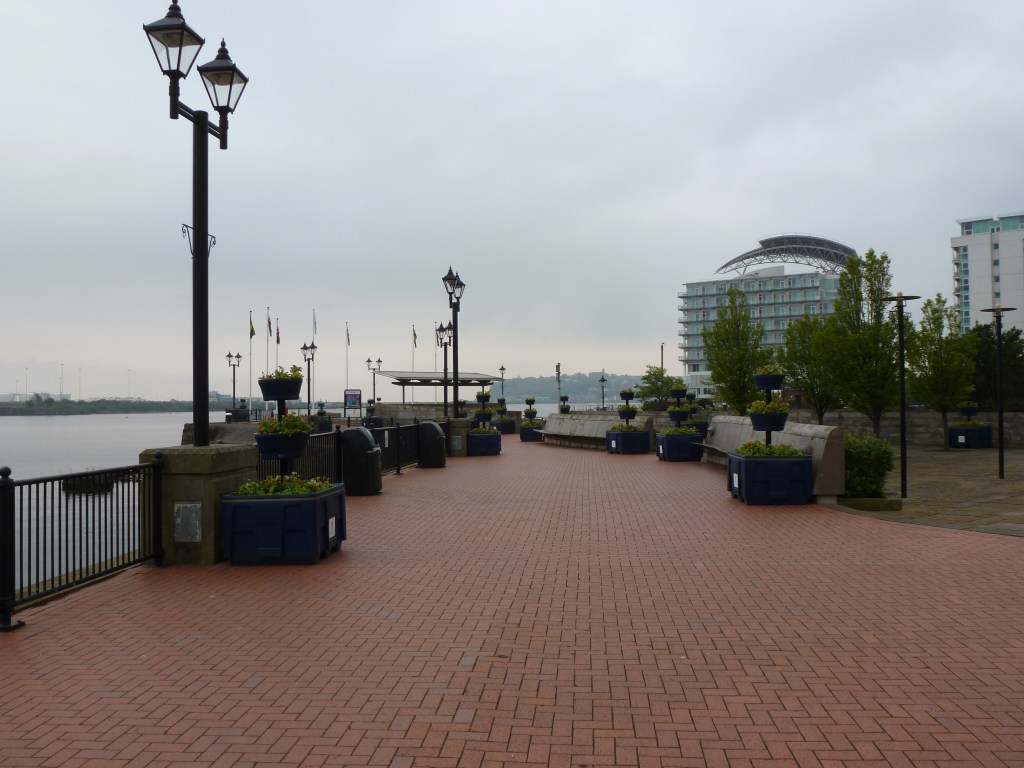
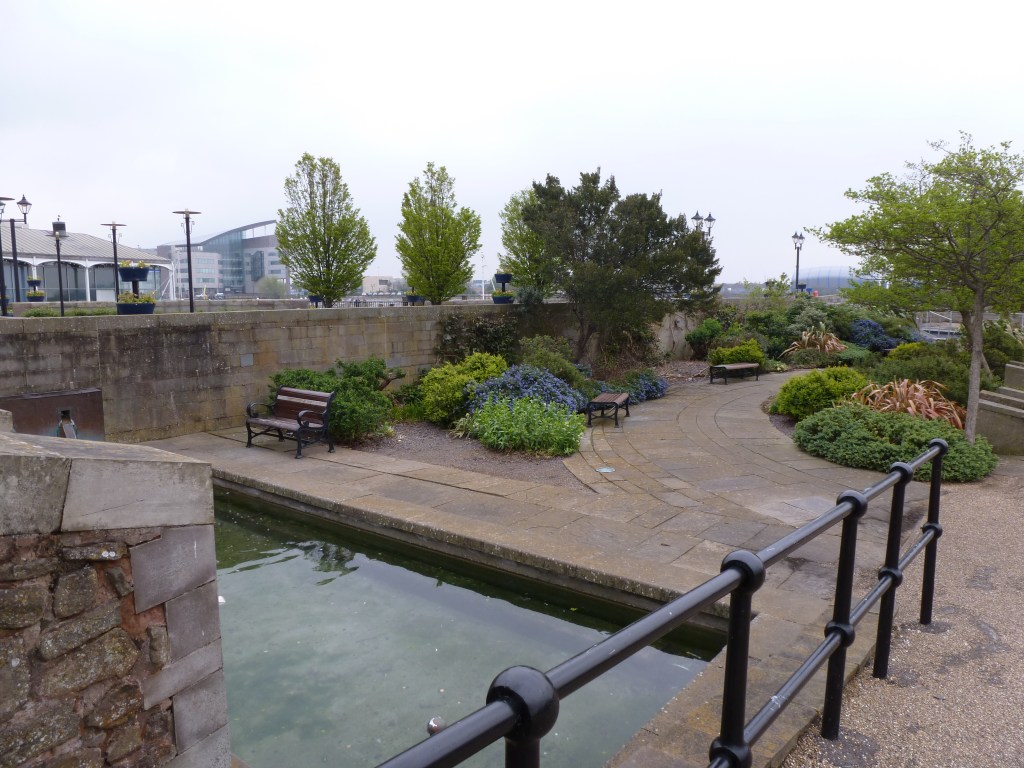
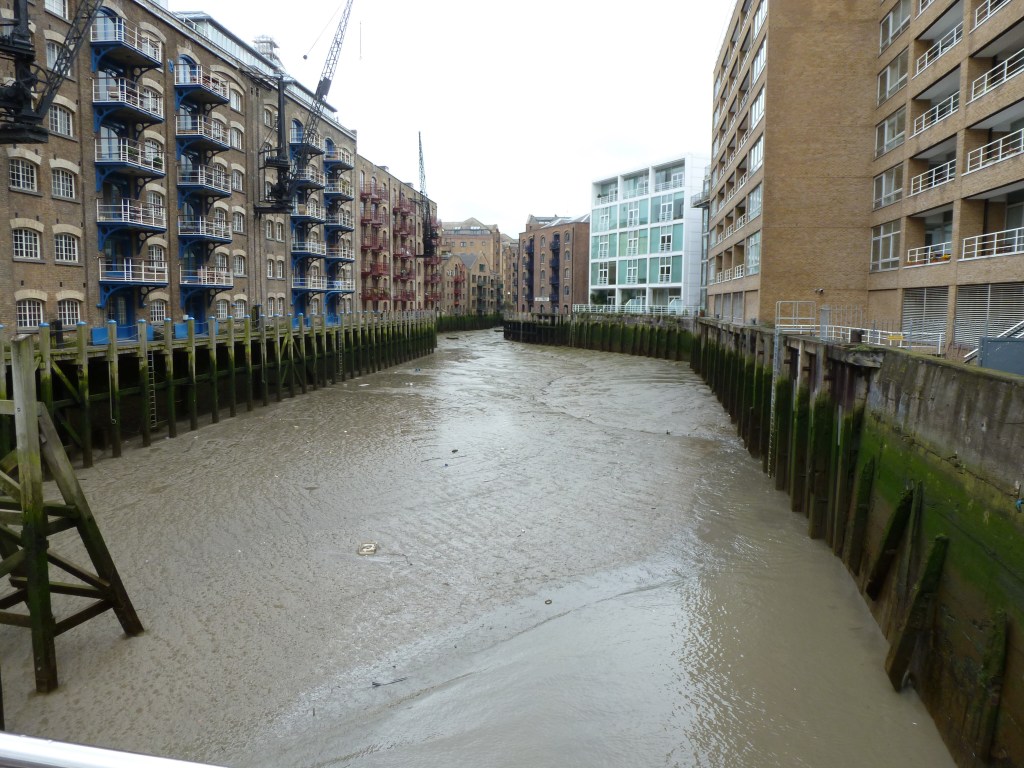
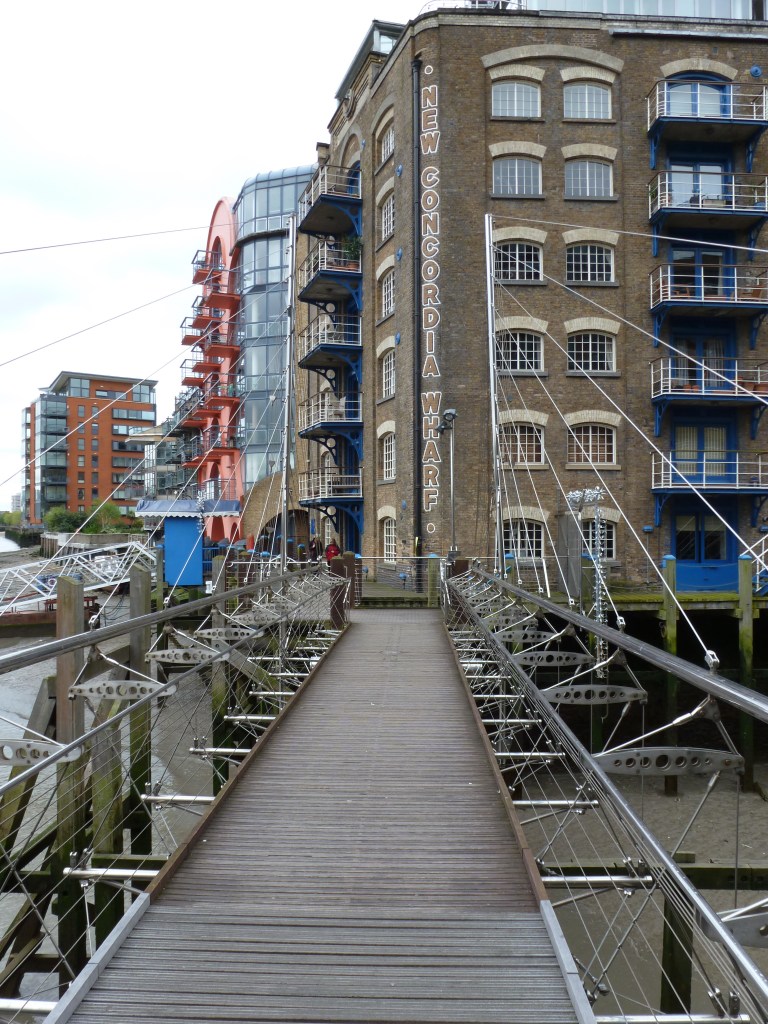
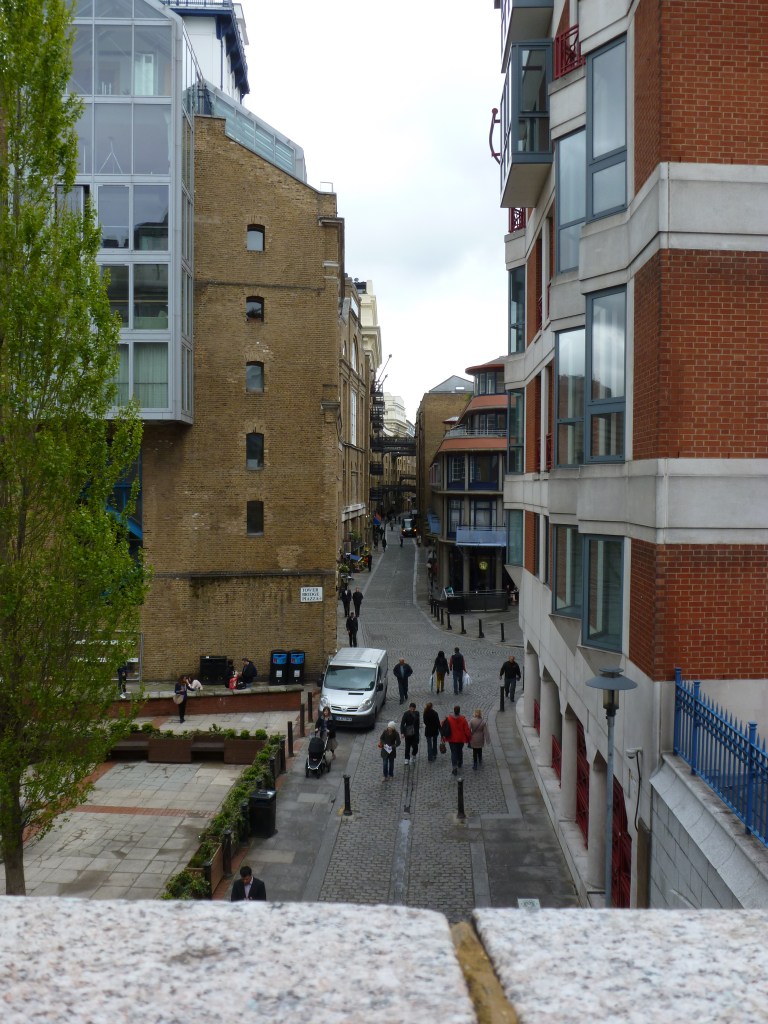
In my journal reflecting on the city’ newer architecture that could have been anywhere, I wrote: “In biking along the coastal trail, there were several parts that I felt could have been Cardiff or London. For instance, the part around Yaletown felt like the Cardiff Wharf development, though this one melded into its surroundings on all sides unlike Cardiff’s which was just plopped there. The area around Olympic Village and parts also around Yaletown felt a lot like the part of London past the Tower Bridge on the southern shore.” (Photos of the area around Tower Bridge are below and, of course, the building that I remember as being what I probably was thinking of in Vancouver is not one I photographed.)
My interest in the Olympic Village came from the same place as my on-going interest in World Fairs and Urban Renewal. These are large-scale developments that cities pursue “for the greater good” to attract tourists and others outside their boundaries while ignoring or actively harming their residents. Despite the intent, the end result is often more harm than good. For example, the Olympics and World Fairs are typically promoted as events that will bring in extensive revenues to the city, but most lose money due to the large expenditures required to build the necessary facilities. A successful Fair or Olympics is the one that breaks even.
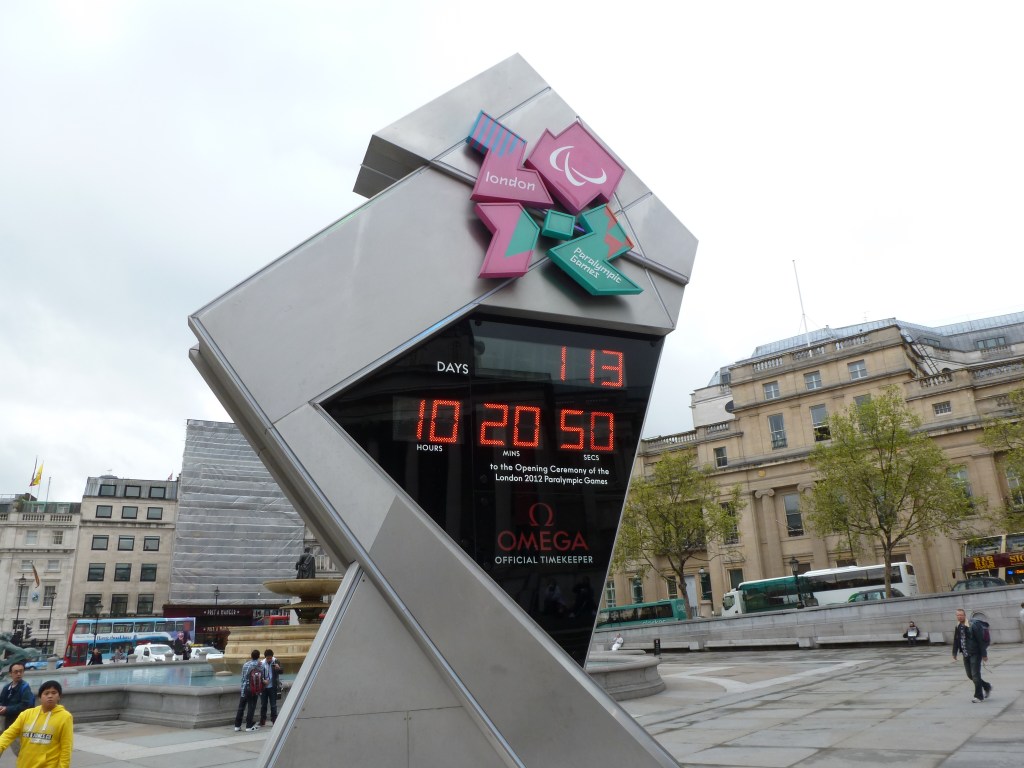
In my Comparative International Urbanism course in college, I wrote a paper on three large-scale redevelopments in London, including the Olympic Village from the 2012 summer games. I intended to visit the Olympic Village when I visited London that May, but I got distracted by bridge walking. The research I did for that paper on Olympic Villages highlighted the inequities inflicted on residents in the construction of these developments. Based on my paper, over 200 local businesses and nearly 1,000 residents were evicted for London’s Olympic Village.
While I can’t find my notes, I seem to recollect that researchers featured Vancouver as the city whose Olympic Village created the least harm for existing residents and most seamlessly integrated into city life after the games and athletes left. Something I definitely would have wanted to see while in Vancouver, but I was operating on too little sleep to take photos to prove I was there.
Pittsburgh’s Charles Anderson Bridge closed to vehicles indefinitely pending restorationPittsburgh’s Swindell Bridge closed to vehicles indefinitely pending restoration
Pittsburgh isn’t alone in being home to bridges on the verge of collapsing. This year marks the 200th anniversary of London’s Hammersmith Bridge, which has been closed to vehicular traffic for five years after cracks threatening the stability of the bridge were discovered. The bridge was temporarily closed to pedestrians and cyclists crossing over and river traffic crossing under, but those restrictions have been lifted. Except cyclists are required to dismount and walk across. (Transport for London: Hammersmith Bridge) Work is slowly being done on the bridge, but there is no estimate for when it will be fully functional again. Part of the delay appears due to the decentralization of bridge ownership in London that puts the burden of costly bridge maintenance and repairs on local councils that don’t have sufficient funds (The Standard, July 5, 2023). Much as I enjoy walking across bridges, I would have second thoughts about walking one where the vibrations caused by a cyclist might increase the damage to the bridge.
As if there weren’t already enough crises, London’s bridges were “falling down” in 2020. Three were closed for vital repairs. Hammersmith Bridge remains suspended in limbo while the other two, London Bridge and Vauxhall Bridge, reopened after months of work. Yet, none are totally in the clear. London Bridge’s reopening included significant daytime traffic restrictions. Traffic restrictions may be implemented for Vauxhall Bridge, if money cannot be found for more repairs. Financial straits threaten Hammersmith Bridge as well. It was first closed to vehicular traffic in April 2019 and closed to all traffic, pedestrian and bicycles over and boat traffic under, in August 2020 due to widened cracks feared to portend imminent collapse. The estimate to repair this bridge is £140 million and nearly seven years of work.
London Bridge is falling down,
Falling down, falling down,
London Bridge is falling down,
My fair Lady.
In my experiences walking bridges, it seems common to wait until a bridge is almost falling down to invest in it. It appears politically unappealing to direct funds to maintaining bridges, so we live in a world with a dire refrain of our collapsing infrastructure.
Build it up with bricks and mortar,
Bricks and mortar, bricks and mortar,
Build it up with bricks and mortar,
My fair Lady.
Bricks and mortar will not stay,
Will not stay, will not stay,
Bricks and mortar will not stay,
My fair Lady.
In Pittsburgh, bridges are often left to run the course of their lives without regular maintenance, then are replaced with a new bridge. The resulting demolition ceremonies and ribbon cuttings make splashy political news stories. The river bridges are an exception. Probably because of their character and contribution to the city’s photogenetic downtown, they are occasionally partially or completely closed for maintenance.
Build it up with iron and steel,
Iron and steel, iron and steel,
Build it up with iron and steel,
My fair Lady.
Iron and steel will bend and bow,
Bend and bow, bend and bow,
Iron and steel will bend and bow,
My fair Lady.
London’s river bridges have more history and, sometimes, more character than Pittsburgh’s bridges. Hammersmith Bridge is one of the city’s unique and historical bridges. The steep price tag to repair this bridge, perhaps the result of mounting deferred maintenance, begs the question of at what point in the decades of non-investment is the threshold crossed beyond which repair is no longer an option.
Build it up with silver and gold,
Silver and gold, silver and gold,
Build it up with silver and gold,
My fair Lady.
Silver and gold will be stolen away,
Stolen away, stolen away,
Silver and gold will be stolen away,
My fair Lady.
The decades of neglect in Pittsburgh and London overlooks bridges’ frequent role as practical infrastructure built to assist in crossing an obstacle. Even temporary closings can cause extreme headaches and delays to those who rely on the bridge. Hammersmith Bridge was left to deteriorate so long, it had to be closed before a plan was in place. As funds and a repair approach are sought, the residents and businesses of Hammersmith continue to be seriously inconvenienced by not being able to cross the river close to home.





 urbantraipsing