One of my readers alerted me to last night’s collapse of the Francis Scott Key Bridge in Baltimore. While I’ve never walked that bridge, since the collapse of Pittsburgh’s Fern Hollow Bridge, which I have walked, the scope of my blog has expanded to highlight the fragile nature of the infrastructure we rely on daily in the United States (and across the pond). According to the reports coming in and the video of the accident, a loaded cargo liner crashed into a pier of the Francis Scott Key Bridge causing the structure to collapse. The Baltimore Sun (March 26, 2024) and Washington Post (March 26, 2024) articles are my primary sources for learning of the accident.
Unlike Pittsburgh’s disaster which was due to a deteriorated portion of the bridge finally giving way after years of deferred maintenance, no blame has yet been placed on any structural unsoundness of the Francis Scott Key Bridge.
The ship that ran into it is another story. Apparently, it recently was flagged as having questionable issues in its navigation system. The current understanding is that the ship lost power and control of steering, issued a mayday alert, and crashed into the bridge pier. In the early analysis of what happened, there are questions as to why various things were not handled differently to have prevented the collision. For example:
Why were there not more structures in the water to deflect any ships away from the bridge pier?
Why didn’t the tugboats continue with the ship until it cleared not just the harbor, but the bridge as well?
Why wasn’t the bridge built with redundancies so that even if one of the piers were knocked out, the bridge could still stand?
Much like deferred maintenance (of bridges and ships), I suspect that money is at the root of the reason why not for items one and three above. It may also be a factor in why the tugboats don’t travel farther down the river with the ships.
The City of Baltimore and State of Maryland have declared a state of emergency. Pledges are being made to rebuild the bridge quickly, including President Biden promising the money to rebuild. It may be interesting to compare the rebuilding of the Francis Scott Key Bridge against Pittsburgh’s Fern Hollow Bridge. While of significantly different scales, both bridges are considered major transportation arteries that the local region cannot afford to be without any longer than absolutely necessary. Will the Francis Scott Key Bridge rebuild include similar time saving measures of purely utilitarian design and of concurrent design/build phases?
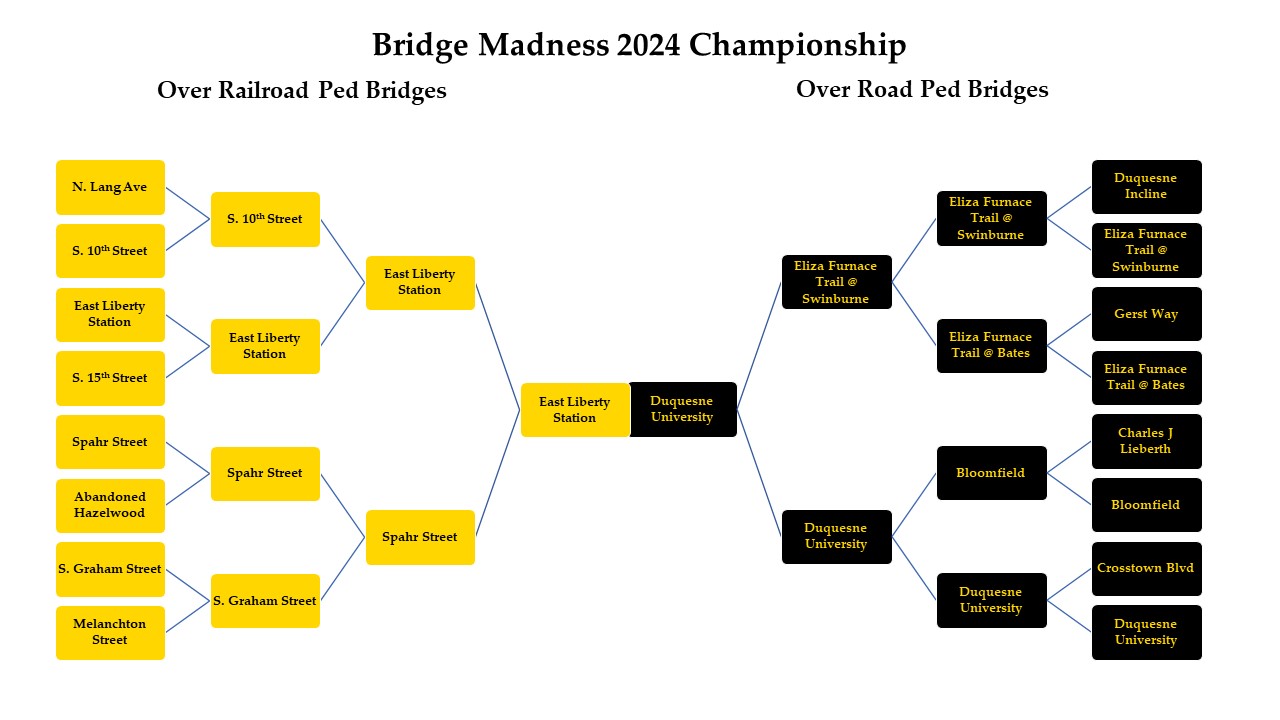
In the 2024 Bridge Madness Tournament, 16 pedestrian bridges go pier-to-pier in a reader’s choice tournament to pick the best one. This year’s tournament features pedestrian bridges within Pittsburgh that cross over roads or railroads. Below is the Championship contest. Vote for your favorite bridge by noon on Wednesday, March 27, and then return on March 29th to see the winner.
The bridges are divided into two conferences: Pedestrian Bridges over Railroads and Pedestrian Bridges over Roads.
Championship Bridges
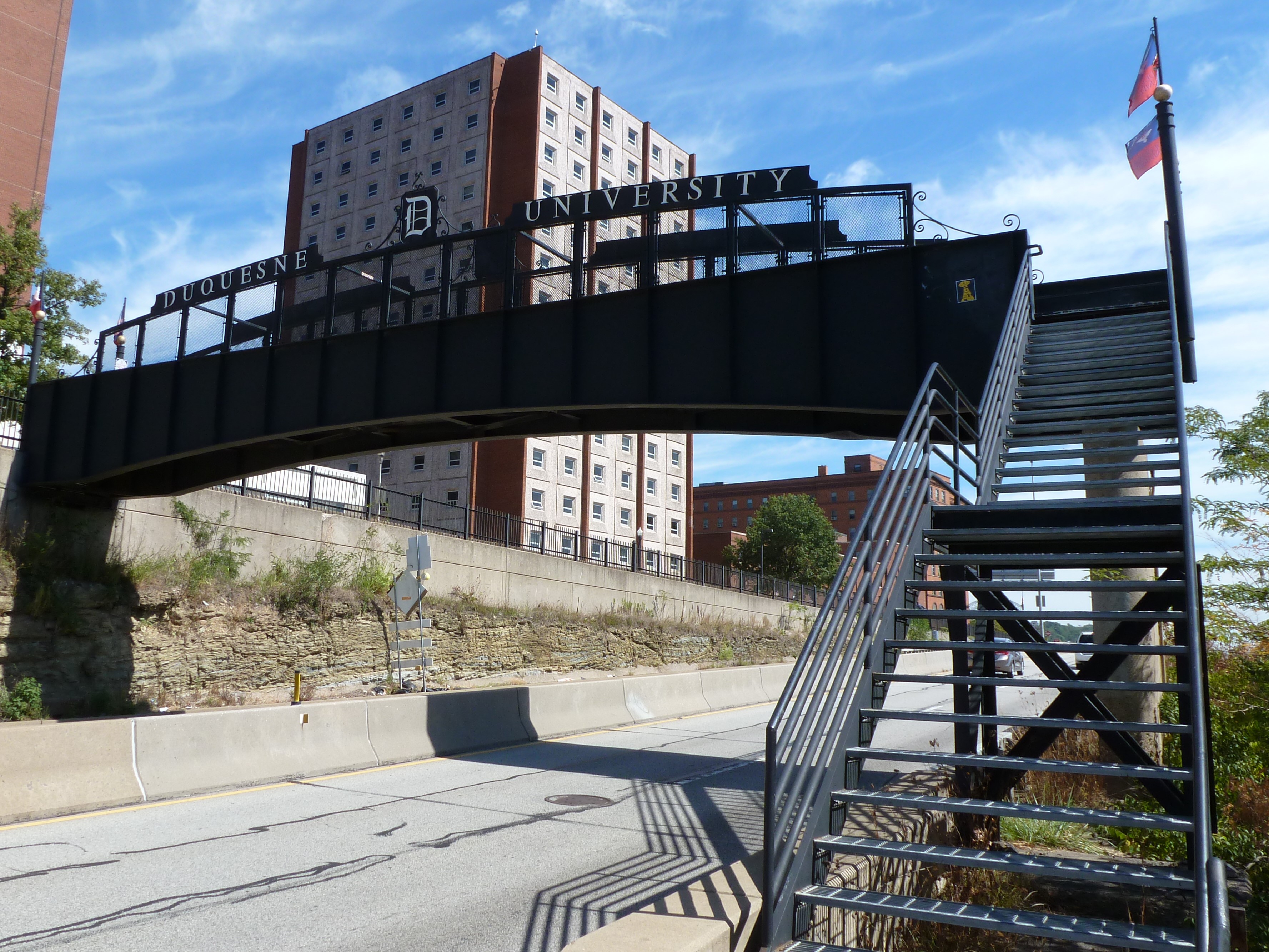
East Liberty Station Pedestrian BridgeDuquesne University Pedestrian Bridge
In the 2024 Bridge Madness Tournament, 16 pedestrian bridges go pier-to-pier in a reader’s choice tournament to pick the best one. This year’s tournament features pedestrian bridges within Pittsburgh that cross over roads or railroads. Below are the brackets for the Final Four. Remember to vote for one bridge in each bracket by noon on Wednesday, March 20, and then return on March 22nd to vote for the Champion.
The bridges are divided into two conferences: Pedestrian Bridges over Railroads and Pedestrian Bridges over Roads.
Pedestrian Bridges over Railroads
East Liberty Station Pedestrian BridgeSpahr Street Pedestrian Bridge
Pedestrian Bridges over Roads
Eliza Furnace Trail over Swinburne StreetDuquesne University Pedestrian Bridge
Pittsburgh’s Charles Anderson Bridge closed to vehicles indefinitely pending restorationPittsburgh’s Swindell Bridge closed to vehicles indefinitely pending restoration
Pittsburgh isn’t alone in being home to bridges on the verge of collapsing. This year marks the 200th anniversary of London’s Hammersmith Bridge, which has been closed to vehicular traffic for five years after cracks threatening the stability of the bridge were discovered. The bridge was temporarily closed to pedestrians and cyclists crossing over and river traffic crossing under, but those restrictions have been lifted. Except cyclists are required to dismount and walk across. (Transport for London: Hammersmith Bridge) Work is slowly being done on the bridge, but there is no estimate for when it will be fully functional again. Part of the delay appears due to the decentralization of bridge ownership in London that puts the burden of costly bridge maintenance and repairs on local councils that don’t have sufficient funds (The Standard, July 5, 2023). Much as I enjoy walking across bridges, I would have second thoughts about walking one where the vibrations caused by a cyclist might increase the damage to the bridge.
In the 2024 Bridge Madness Tournament, 16 pedestrian bridges go pier-to-pier in a reader’s choice tournament to pick the best one. This year’s tournament features pedestrian bridges within Pittsburgh that cross over roads or railroads. Below are the brackets for the Elite Eight. Remember to vote for one bridge in each bracket by noon on Wednesday, March 13, and then return on March 15th to vote for the Final Four.
The bridges are divided into two conferences: Pedestrian Bridges over Railroads and Pedestrian Bridges over Roads.
Pedestrian Bridges over Railroads
S. 10th Street Pedestrian BridgeEast Liberty Station Pedestrian BridgeSpahr Street Pedestrian BridgeS. Graham Street Pedestrian Bridge
Pedestrian Bridges over Roads
Eliza Furnace Trail over Swinburne StreetEliza Furnace Trail over Bates StreetBloomfield Pedestrian BridgeDuquesne University Pedestrian Bridge
In the 2024 Bridge Madness Tournament, 16 pedestrian bridges go pier-to-pier in a reader’s choice tournament to pick the best one. This year’s tournament features pedestrian bridges within Pittsburgh that cross over roads or railroads. Below are the brackets for the Sweet Sixteen. Remember to vote for one bridge in each bracket by noon on Wednesday, March 6, and then return on March 8th to vote for the Elite Eight.
The bridges are divided into two conferences: Pedestrian Bridges over Railroads and Pedestrian Bridges over Roads.
Pedestrian Bridges over Railroads
N. Lang Street Pedestrian BridgeS. 10th Street Pedestrian BridgeEast Liberty Station Pedestrian BridgeS. 15th Street Pedestrian BridgeSpahr Street Pedestrian BridgeS. 15th Street Pedestrian BridgeS. Graham Street Pedestrian BridgeMelanchton Street Pedestrian Bridge
Pedestrian Bridges over Roads
Duquesne Incline Pedestrian BridgeEliza Furnace Trail over Swinburne StreetGerst Way Pedestrian BridgeEliza Furnace Trail over Bates StreetCharles J. Lieberth Pedestrian BridgeBloomfield Pedestrian BridgeCrosstown Blvd Pedestrian BridgeDuquesne University Pedestrian Bridge
In the 2024 Bridge Madness Tournament, 16 pedestrian bridges go pier-to-pier in a reader’s choice tournament to pick the best one. This year’s tournament features pedestrian bridges within Pittsburgh that cross over roads or railroads. Beginning March 1, you will be able to vote for your favorite bridge in each bracket. The champion bridge will be announced on March 29. Don’t forget to come back each week to vote your favorite bridge to #1!
Each round of voting will go live at 8 AM on the scheduled Friday and close at noon the following Wednesday. The schedule is:
March 1 – Sweet Sixteen
March 8 – Elite Eight
March 15 – Final Four
March 22 – Championship
March 29 – Winner announced
The bridges are divided into two conferences: Pedestrian Bridges over Railroads and Pedestrian Bridges over Roads.
Pedestrian Bridges over Railroads
From east to west, the bridges that pass over railroads are:
the North Lang Avenue Pedestrian Bridge
the East Liberty Station Pedestrian Bridge
the Spahr Street Pedestrian Bridge
the South Graham Street Pedestrian Bridge
the Melanchton Street Pedestrian Bridge
an abandoned pedestrian bridge in Hazelwood
the South 15th Street Pedestrian Bridge
the South 10th Street Pedestrian Bridge
Pedestrian Bridges over Roads
From east to west, the bridges that pass over roads are:
the Eliza Furnace Trail Bridges over Swinburne Street
Thirteen months ago, Pittsburgh’s Fern Hollow Bridge reconstruction was declared finished eleven months after the previous bridge had collapsed. I scoffed at this announcement at the time as the side walk wasn’t yet open and the new bridge was closed again for a month during the summer to “complete all remaining bridge work.” (Mayor’s Press Release, June 8, 2023). However, David McCullough in The Great Bridge points out that there is never a clear completion date for a new bridge. He notes that when the Brooklyn Bridge was “finished:”
There was no one moment, no particular day, when he [Washington Roebling] could have said as much, nor would there be. Bridges did not end that way. There was always something more to finish up, some last detail to attend to. The final touches at Cincinnati, for example, had dragged on for nearly six months after the opening ceremonies and it looked as though the same might happen here. (505)
David McCullough, “The Great Bridge”
The Fern Hollow Bridge, therefore, was simply following the pattern established by other greater bridges. The bridge itself now seems to be fully complete and operational: all the multi-modal options to cross are open, the trail underneath is also open, and people crossing over or passing under can experience the public art installations. However, while the physical infrastructure has been repaired, the human physical and emotional fallout from the collapse continues.
Some of the people injured in the collapse are working with attorneys to seek transparency and a way to move forward following their experience. This fall, a judge ordered the release of documents relating to the bridge and its collapse (TribLive, November 16, 2023; TribLive, November 28, 2023; WPXI, November 28, 2023; WTAE, November 28, 2023; CBS News, November 29, 2023). In December, PennDOT released hundreds of pages of documents related to the collapse (CBS News, December 23, 2023).
News
Below are the news updates on the Fern Hollow Bridge and other bridge maintenance and replacement efforts in Pittsburgh and Allegheny County.
A year and a half after the City created a Commission on Infrastructure Asset Reporting and Investment, Mayor Gainey finally submitted nominations for the board seats to City Council (WESA, July 18, 2023). Council approved 12 commissioners on July 25, 2023, one commissioner on September 19, 2023, and one commissioner on December 18, 2023. The commission had its first meeting on December 5, 2023, (City of Pittsburgh Tweet, November 28, 2023; WPXI, December 5, 2023) but it hasn’t been added yet to the city’s website listing all Boards and Commissions. Presumably it will be added soon so that the agenda and minutes of the commission will be publicly available the same as all other city commissions. There have been no press leases regarding the long-overdue formation of this commission. I’ve only found the commissioners names by searching the City’s Legislative Center for “Appointment-Requiring Vote.” The approved commissioners are:
Lisa Frank
Zachary Workman
Tyler Watts
Tom Melisko
Patrick Cornell
Greg Bernarding
Eric Setzler
Doris Carson Williams
Darrin Kelley
Councilwoman Erika Strassburger
Chief Darryl Jones
Andy Waple
Samuel Miclot
Michele Miller Beener
The final designs for the rehabilitation of the Charles Anderson Bridge and the Panther Hollow Overpass are nearing completion and bids are expected to be released this month. (Pittsburgh Engage project page)
Pittsburgh’s Swindell Bridge, which closed initially from July to September 2022 due to falling debris, continues to have problems and the city is providing little to no information at this time. The expectation was that repairs over the summer would enable the bridge to fully reopen to traffic. Instead the latest repairs seem to have uncovered more issues. There is no evidence of a plan yet for addressing the situation. (TribLive, July 7, 2023; WPXI, August 7, 2023; Pittsburgh Engage page)
The “complete overhaul” of the South Negley Avenue Bridge announced in 2022 (CBS, February 25, 2022) has not been mentioned since and there is no project page for it to indicate that plans are in the works for it. The obvious deterioration on this bridge and lack of movement on repairs leaves the way open for speculation on whether we will have another bridge disaster in our city sooner rather than later.
Construction began on the 30th Street Bridge rehabilitation in April 2023 and finished in August. (WPXI, August 21, 2023; Pittsburgh Engage page)
Rehabilitation on the Swinburne Bridge remains on pause until after the Charles Anderson Bridge is reopened as the Swinburne Bridge is part of the detour route. (Pittsburgh Engage page)
Preliminary engineering is ongoing for the rehabilitation of the 28th Street Bridge. (Pittsburgh Engage page)
Temporary repairs, including protection from falling debris, were done on the California Avenue Bridge. Preliminary engineering is scheduled to start this year. Residents remain concerned about the falling debris and the condition of the bridge. This bridge is another possible candidate for the next bridge disaster in the city. (CBS, January 2, 2023; WPXI, June 29, 2023; WPXI, December 5, 2023; TribLive, September 8, 2023; Pittsburgh Engage page)
Photos: Other Bridges
Historic Pittsburgh Bridge Disasters
According to Bob Regan’s 2006 book “The Bridges of Pittsburgh,” Pittsburgh is no stranger to bridge disasters:
1845 – The original Smithfield Street Bridge burned down
1851 – The 16th Street Bridge burned down
1865 – Two spans of the 16th Street Bridge was washed away in a flood
late 1880s – The 6th Street/St. Clair Street Bridge burned down
1903 – The Wabash Bridge collapsed during construction
1918 – The 16th Street Bridge burned down (again)
1921 – The 30th Street Bridge burned down
1927 – The Mount Washington Roadway Bridge collapsed during construction
Map of bridges discussed in the Bridge Collapse series:
As the first bridge collapse in nearly 100 years within the city limits of Pittsburgh, this remains a top story on urbantraipsing. In the six months since our last look at the bridge, there have been four important updates:
The preliminary findings of the National Transportation Safety Board’s investigation into the collapse have been released
The bridge is now fully open to vehicular, bicycle, and pedestrian traffic
The two art installations have been installed
My feet are back to being fully functional
Update 1: Unsurprisingly, the NTSB’s investigation found that a decade of ignoring the calls for maintenance in the annual bridge inspection resulted in the deterioration of the steel structure of the bridge. The findings reference the inspections of bridges of similar construction in Pennsylvania following the collapse of the Fern Hollow Bridge. It noted that while those bridges have also experienced deferred maintenance, none of them are exhibiting deterioration as bad as Fern Hollow’s. The report did express concern that the status of similar bridges outside of Pennsylvania is unknown.
Update 2: While all lanes, the sidewalk, and multi-modal path are now open, there is evidence of some more work to be done. A little beyond the western end of the bridge, there are the preliminary markings for a crosswalk. Also, a “stop here on red” sign was installed, though it currently faces the park, not the traffic. Both of these suggest that a new traffic light will be installed to create a safe pedestrian crossing.
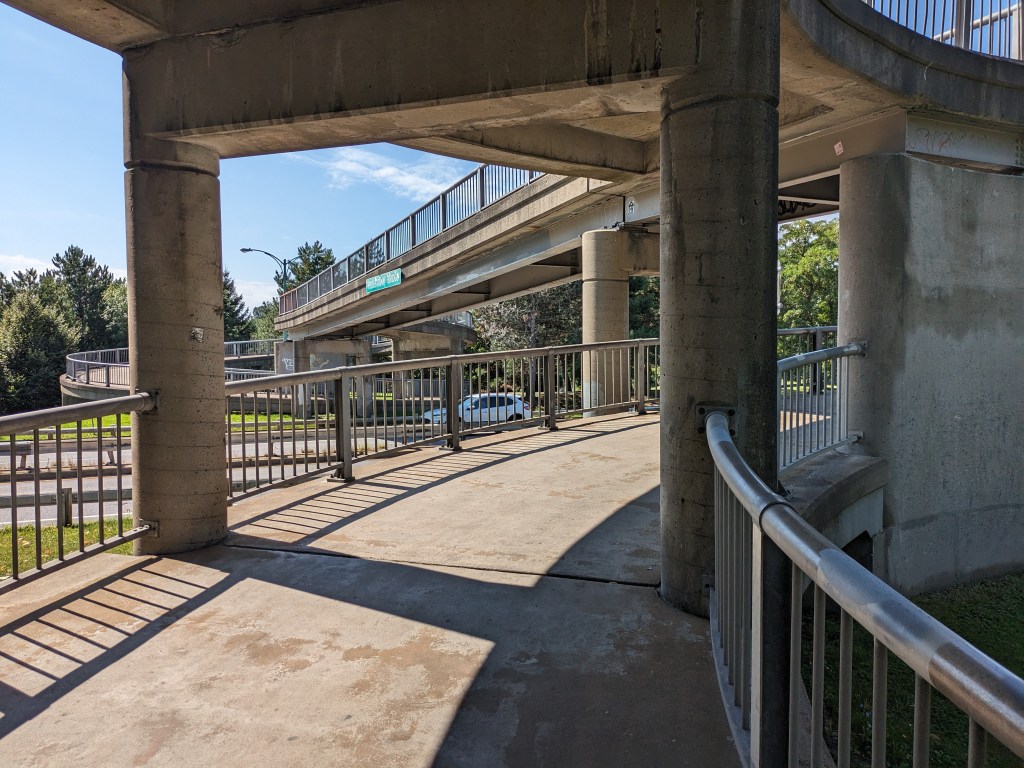
Update 3: John Peña’s A History of Fern Hollow Creek was installed on the bridge and Carin Mincemoyer’s Trail Meander was installed under the bridge. Mincemoyer’s alternative concept of a rain arch that paid homage to the arch of the former bridge did not move forward as it was found to not be feasible within the time and budget constraints of the project. I enjoyed the historical timeline of the bodies of water on this site illustrated in Peña’s installation – it provides and opportunity to stop and think about the different bodies of water that have shaped the landscape of Pittsburgh over millennia. I haven’t yet cracked the pattern of the order in which they are displayed, if there is one.
Update 4: As I do not currently have any mobility limitations, I was able to take many more pictures from different angles.
Photos: Fern Hollow
Below are the news updates on the Fern Hollow Bridge and other bridge maintenance and replacement efforts in Pittsburgh and Allegheny County.
The artwork on the bridge was approved by the Public Art + Civic Design Commission in October 26, 2022 (Agenda, Application, Minutes). The artwork for the trail experience under the bridge was approved by the Public Art + Civic Design Commission in March 22, 2023 (Agenda, Application, Minutes).
PennDOT’s project page regarding the reconstruction of the bridge has not been updated since March 2022, except to add a sentence at the beginning to say that the bridge is now complete and operational prior to my last update in January, despite the fact that the bridge was fully closed again for a month in June 2023 to “complete all remaining bridge work.” (Mayor’s Press Release, June 8, 2023; WESA, June 8, 2023; Pittsburgh Magazine, June 9, 2023; Roads & Bridges, June 9, 2023; WPXI, June 11, 2023; WTAE, June 12, 2023)
Preliminary findings have been released in the National Transportation Safety Board’s ongoing investigation. Corrosion and deterioration of Fern Hollow Bridge’s uncoated weathering steel components is the key finding along. In addition, while the annual inspection of the bridge had identified maintenance activities that would have addressed these issues for over a decade, the maintenance was not completed.
The City created a Commission on Infrastructure Asset Reporting and Investment in March 2022, but no one has been appointed to the commission and it hasn’t been added yet to the city’s website listing all Boards and Commissions. Earlier this year, Mayor Gainey (WESA, June 26, 2023) and Councilwoman Strassburger (Pittsburgh Union Progress, April 3, 2023) both discussed the value of the commission – when it is operational. Neither discussed why the Mayor hasn’t appointed anyone to the board yet (Post-Gazette, June 8, 2023).
The temporary closure of the Charles Anderson Bridge turned into a long-term closure as expedited funding was negotiated to move the full rehabilitation forward sooner. The project may take until 2025 or 2027 and will include a new 2-way bike lane. The Panther Hollow Overpass will also be repaired while the Charles Anderson Bridge is closed because the overpass “is approaching the end of its functional life” and the road is already closed. (Mayor’s Press Release, March 16, 2023; KDKA, March 17, 2023; KDKA, March 23, 2023; WTAE, April 18, 2023; Patch, April 18, 2023; Post-Gazette, April 18, 2023; WPXI, April 19, 2023; WESA, June 1, 2023; Pittsburgh Engage project page)
Pittsburgh’s Swindell Bridge, which closed from July to September 2022 due to falling debris, closed for about a week in April to set-up platforms for future construction and then closed again in July to install new beams. One of the articles says that this will finish the work on the Swindell Bridge, while another says that a full rehabilitation project is yet to come. Pittsburgh’s Engage site only shows the public meeting from April. (Triblive, April 22, 2023; Mayor’s Press Release, April 21, 2023; WTAE, April 27, 2023; Mayor’s Press Release, April 27, 2023; KDKA, July 9, 2023; Pittsburgh Engage page; Mayor’s Press Release, July 7, 2023; Post-Gazette, July 10, 2023)
In searching for new news on the South Negley Avenue Bridge, I didn’t find anything new, but I found an article from 2015 that said the renovation of the bridge was scheduled to start 2 years from then – that has come and gone with no new start date in sight. In addition to not finding anything new about what is happening to this poor condition bridge, it’s not clear if the closure of the west sidewalk of the South Negley Avenue Bridge from 2022 officially ended or if pedestrians took matters into their own hands and moved the barriers aside themselves. (The Philadelphia Tribune, February 2, 2015)
Maintenance work on Swinburne Bridge was scheduled for May 2023. Full rehabilitation will happen later, after the Charles Anderson Bridge is reopened as the Swinburne Bridge is part of the detour route. (Mayor’s Press Release, May 19, 2023)
The Lincoln Avenue and Fremont Street bridges were closed indefinitely for repair January 2023 by PennDOT to the surprise of Millvale, PA – a small town across the 40th Street Bridge from Pittsburgh – the borough is seeking funding for the repairs (Borough’s Announcement, January 23, 2023)
Photos: Other Bridges
Historic Pittsburgh Bridge Disasters
According to Bob Regan’s 2006 book “The Bridges of Pittsburgh,” Pittsburgh is no stranger to bridge disasters:
1845 – The original Smithfield Street Bridge burned down
1851 – The 16th Street Bridge burned down
1865 – Two spans of the 16th Street Bridge was washed away in a flood
late 1880s – The 6th Street/St. Clair Street Bridge burned down
1903 – The Wabash Bridge collapsed during construction
1918 – The 16th Street Bridge burned down (again)
1921 – The 30th Street Bridge burned down
1927 – The Mount Washington Roadway Bridge collapsed during construction
Map of bridges discussed in the Bridge Collapse series:
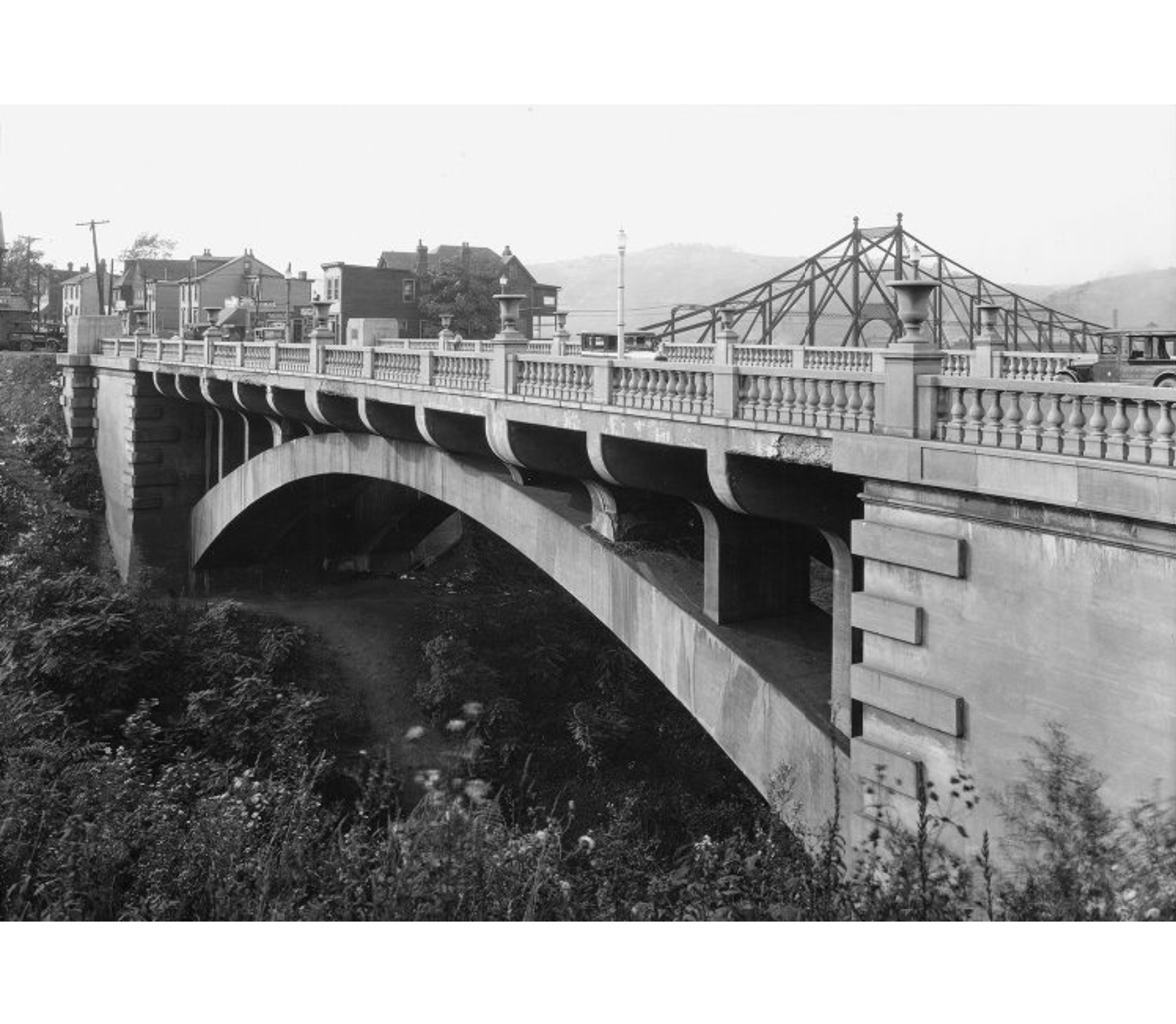
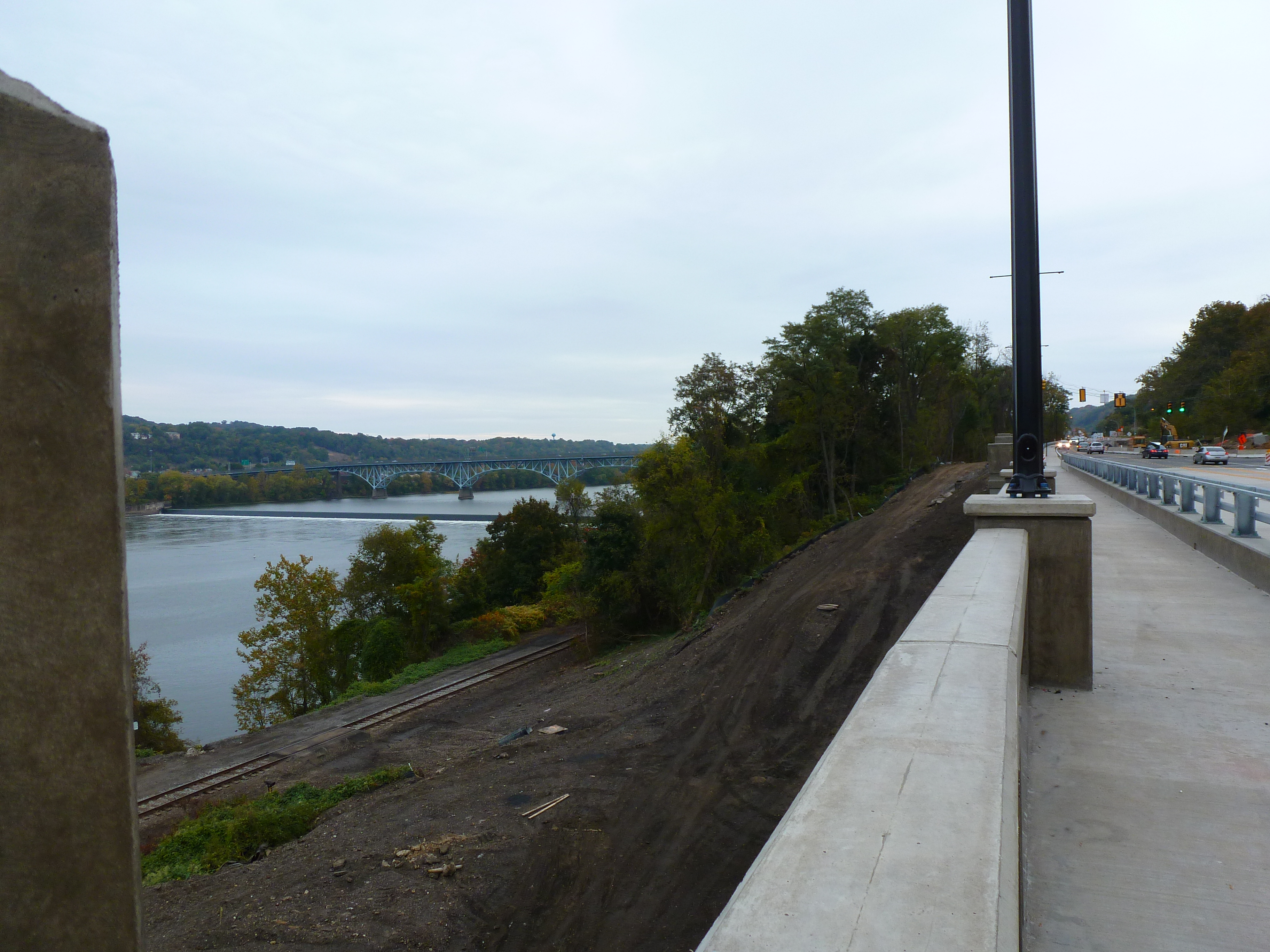
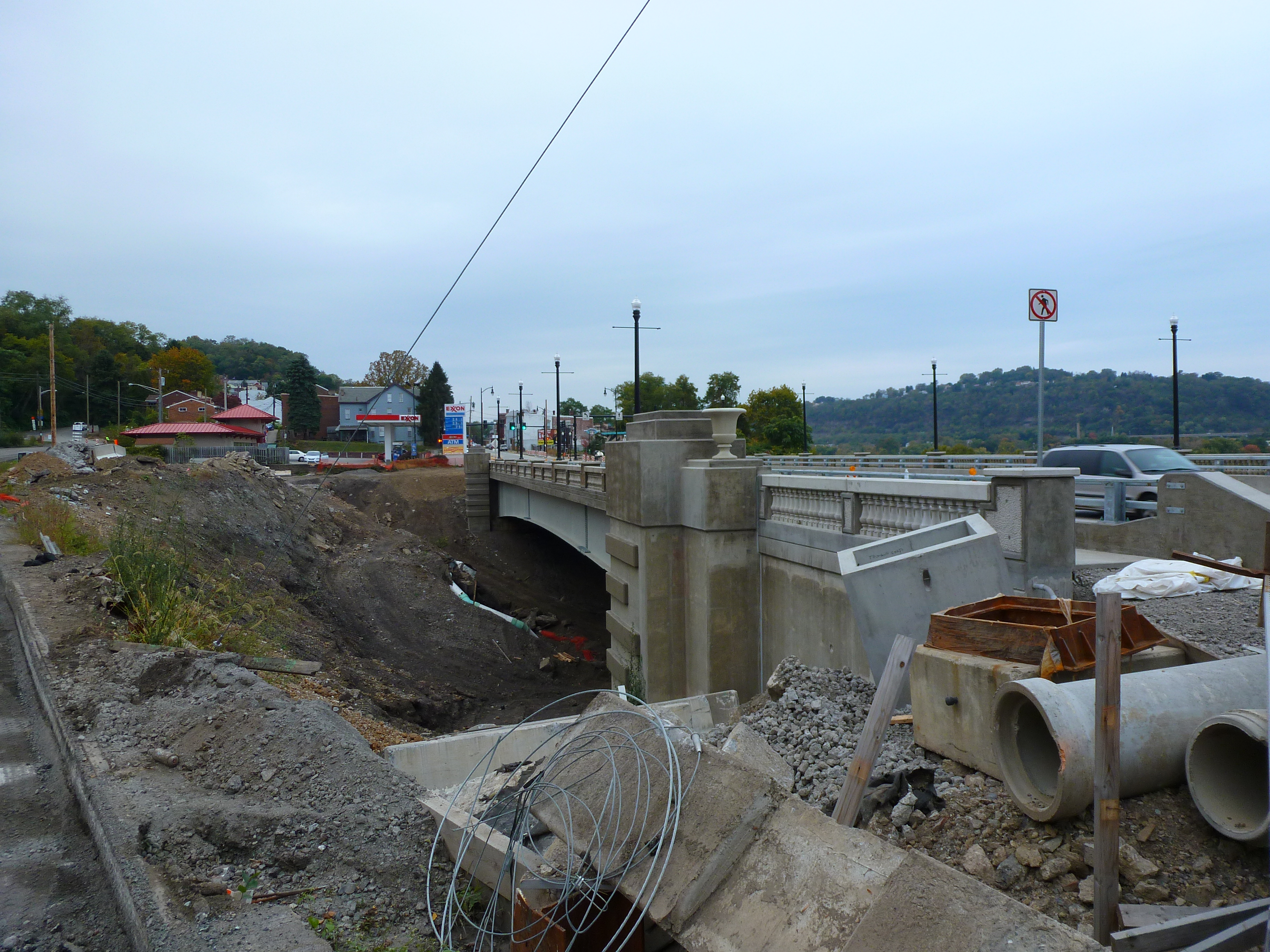
I’ve written before about how some bridges pay homage to the ones they replaced. Pittsburgh’s Greenfield and Heth’s Run Bridges did this. When writing about those bridges, I assumed that this approach might reassure a community by honoring the local memory and thereby maintaining a sense of stability. However, this was only a guess. While I had used the old Heth’s Run Bridge hundreds of times, I didn’t know it was a bridge until shortly before its replacement and most of its characteristics features had been removed, buried, or eroded long before. I don’t know if I had ever been on the Greenfield Bridge before the day I intentionally walked it for this blog. So I had no emotional connection to that bridge. Therefore, I cannot speak personally about the homage these bridges paid to the past.
When I arrived in East Stroudsburg, the blood-red, rounded through-truss bridge was no longer there (officially, it was a Warren pony truss style). This bridge had been an important landmark for me as a child, probably because its design was distinctive. It made me smile when I saw the new bridge had paid homage to the shape of the former truss. While the change of color and style of the bridge was significant, I felt a sense of comfort at the continuity created by the way the new design acknowledged the former bridge.
Down the hill from this bridge is the Interborough Bridge. This bridge connecting East Stroudsburg and Stroudsburg used to be a through-truss, possibly also a Warren pony truss bridge. When it was destroyed by a flood in 1955, the replacement did not pay homage to the past. The plain replacement bridge is very utilitarian and not much else. My foot had reached the end of its stamina before I was able to walk across it on this trip – which was actually a relief. I walked across it at least once when I was a kid. I remember it feeling unpleasant. There are sidewalks, but the proportion of vehicles lanes is quite large, cars move fast, and either end features auto-oriented uses. The one nice feature of the bridge are the views of Brodheads Creek, but there are plenty other more pleasant vantage points to view the creek.
In another form of homage, Brodheads Creek, the dividing line between East Stroudsburg and Stroudsburg, is named after Daniel Brodhead. On this trip, I learned that in 1737 Daniel was the first white settler in the area to purchase his land from the descendants of William Penn instead of the Lenni Lenape, the indigenous people who still lived on the land. Although, Penn began purchasing the land that the King of England had given him from the Lenape in 1683, it seems that the area around East Stroudsburg and Stroudsburg had not been purchased by the Penn family before they started selling it to settlers. The Walking Purchase of 1737 attempted to resolve this issue, though it seems the terms of the purchase were not explained clearly the Lenni Lenape beforehand. (Monroe County Historical Association, November 11, 2005; Pennsylvania Historical & Museum Commission)