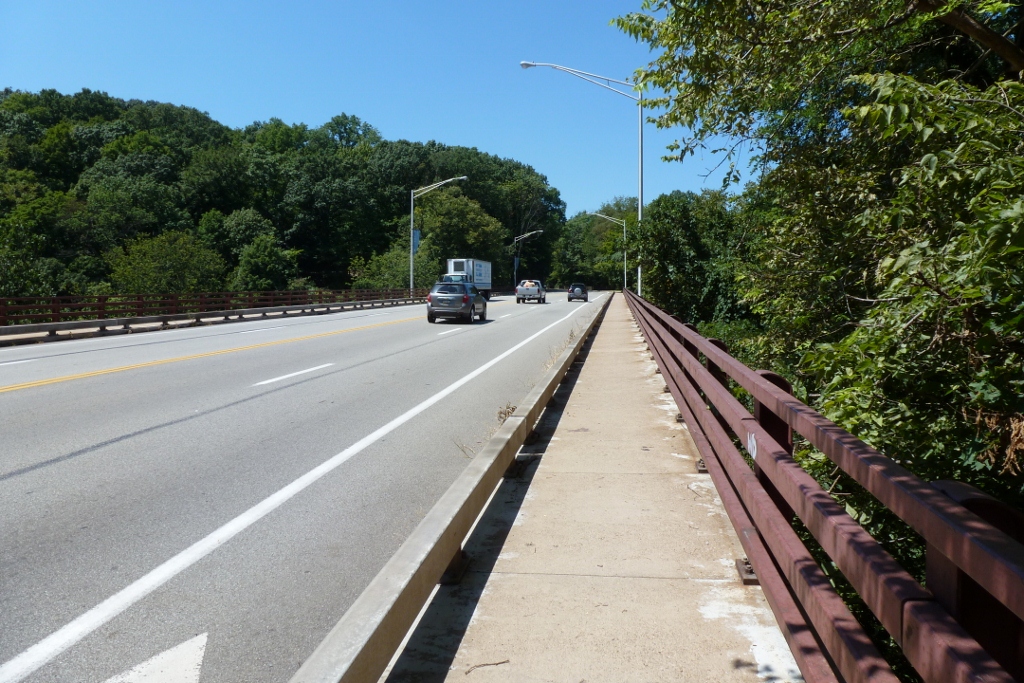
Bridge Collapse: Two Month Update

It’s been two months since the collapse of the Fern Hollow Bridge over Pittsburgh’s scenic Frick Park. Below is a summary of updates from across the city and state on activity related to the collapse. If I have missed anything of interest, please share it in the comments and I will try to include it in future updates.

  • As of March 8, construction is expected to start in April on the new bridge.
  • The design of the new bridge was released causing chagrin among neighbors, urban designers, accessibility advocates, mobility advocates, and users of the park. The only people I have heard directly or indirectly say only positive things about the new bridge design are engineers (though some engineers also have concerns).
  • The Pittsburgh Business Times compiled a detailed special report on bridge conditions in the region and what is needed to repair them. Allegheny County has more bridges than any other county in Southwestern Pennsylvania. Statewide, Allegheny County ranks 37 out of 67 for the most poor condition bridges and 44 out of 67 for the most good condition bridges.
  • The Charles Anderson Memorial Bridge has been featured in social media conversations due to its rusted condition. A project to “modernize” this bridge was launched in 2019. The final design is expected to be completed in 2024 with construction starting in 2025.
  • Two local start-ups (robotic- and drone-based) are working to provide bridge inspection services that could create more detailed, less biased condition analyses in less time to municipalities and other bridge owners. (Pittsburgh Business Times, February 25, 2022)
  • No new information has been released in the National Transportation Safety Board’s ongoing investigation into the collapse. According to an article in the Post-Gazette, the investigation will take at least a year.
  • The City’s legislation to establish the Commission on Infrastructure Asset Reporting and Investment was signed by the Mayor on March 3, 2022, and is effective as of that date. (City Council legislation page)
  • The City’s legislation to establish public reporting procedures on city infrastructure by the Department of Mobility and Infrastructure also became effective on March 3, 2022, with the Mayor’s signature. (City Council legislation page)
  • There are no new updates on the bridge repair being conducted by Port Authority, but as a resident in the affected area, I recently received a letter from Port Authority. This letter announced that they were taking advantage of the existing detour to implement some stop upgrades to the T stations in Beechview and Dormont. These renovations had been on the schedule for the near future and were being bumped up due to the current rerouting. The stop upgrades are expected to take 6 months. The letter did not mention how that would impact the resumption of normal T service. Based on the press release from February 16, there are only 6-8 more weeks of work before the bridge is restored. It seems unlikely that normal T service will resume in Beechview for several months after that with the continued concurrent work on the stops in the neighborhood.
  • A February 4th Facebook Live Q&A with PennDOT is the only reference I have found yet that says the inspections have been completed on the 5 other bridges in Pennsylvania that use the same K-design as the collapsed Fern Hollow Bridge. At about minute 19:30, a representative from PennDOT states that these bridges have all been inspected or will be inspected by the end of the day on February 4th. He also said that they are all in better condition with ratings of “fair” and “good,” instead of Fern Hollow’s “poor condition” rating, and none have weight restrictions.
  • I also found that PennDOT has its own interactive map of bridges in the state and their inspection status separate from the Federal Highway Administration’s resource.
  • The City of Pittsburgh announced on March 2 that they are starting maintenance repairs to the Centre Avenue Bridge that will take place on the underside over several months. The work is not expected to affect pedestrian or vehicular traffic.
  • The City of Pittsburgh announced in the middle of March that they were “proactively” closing the northern sidewalk on the Meadow Avenue bridge to conduct “necessary,” but “not an imminent structural concern” repairs to the bridge following a routine inspection.

Previous Fern Hollow Bridge Posts:

One-Month Update

Two-Week Update

One-Week Update

Day After

Breaking News

Then & Now: South Highland Ave Bridge

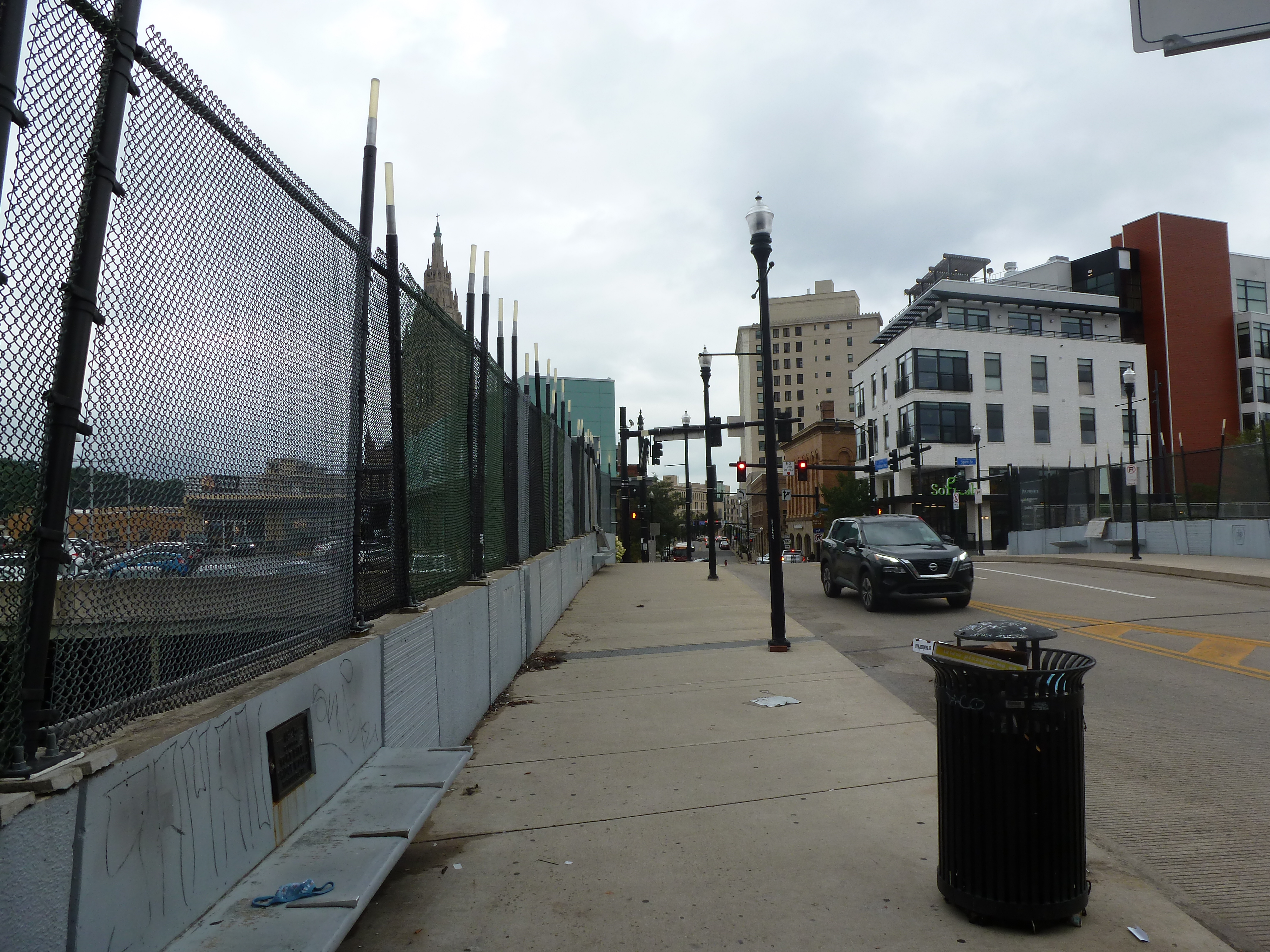
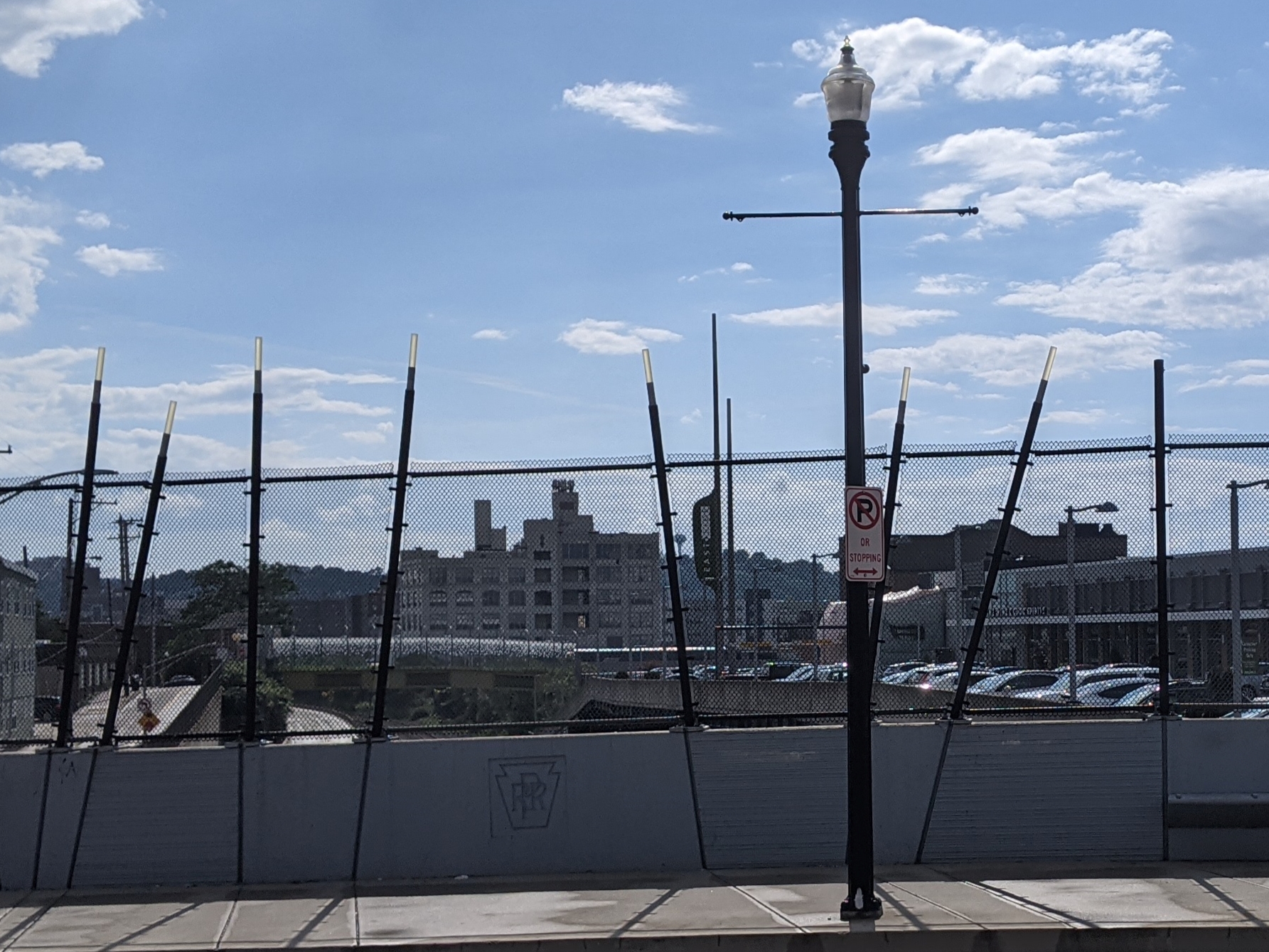
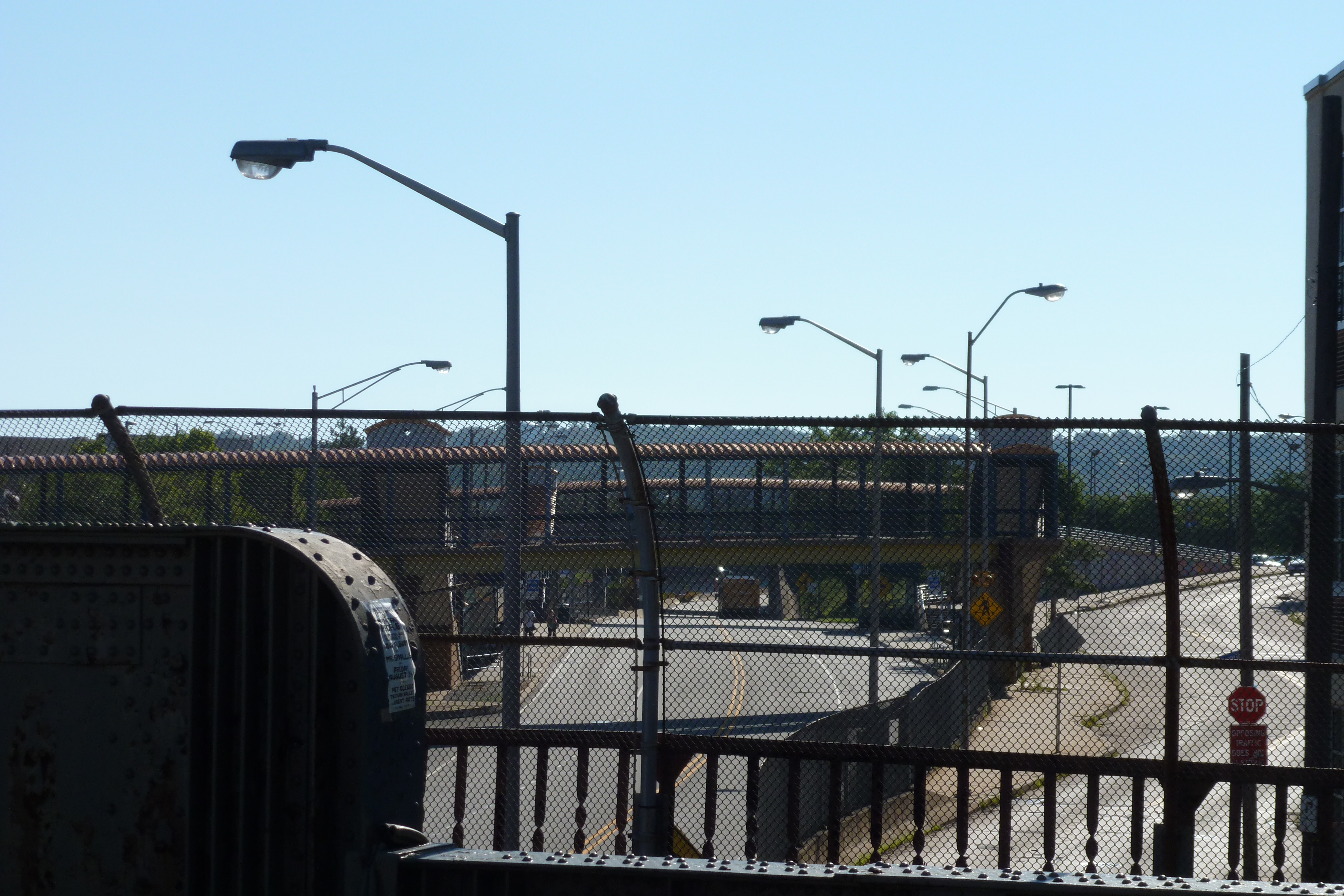
When I first started walking Pittsburgh’s bridges, the South Highland Avenue Bridge rated among those that were more than a little creepy. First, you were partially caged in. Second, the integrity of the wooden planks holding you up seemed more than questionable. I have no doubt that this bridge was rated in “poor condition” at that time. Now, the new bridge is considered in “good condition” per the National Bridge Inventory as of its November 2017 inspection. It has presumably been inspected twice more since then (November 2019 & November 2021), but those results have not been made publicly available yet.

The reconstruction of this bridge in 2013 made me hopeful that the similarly creepy bridge at South Negley Avenue would also shortly be reconstructed. This has yet to happen. My hope is renewed with the passage of the Infrastructure Investment and Jobs Act coupled with the greater attention “poor condition” bridges are receiving this year after the collapse of the Fern Hollow Bridge. However, according to a recent article on the redevelopment of the busway station adjacent to the South Negley Avenue bridge (Tribune Review, February 16, 2022), funding issues and coordination with Norfolk-Southern Railroad are causing continued delays to the proposed reconstruction of this bridge.

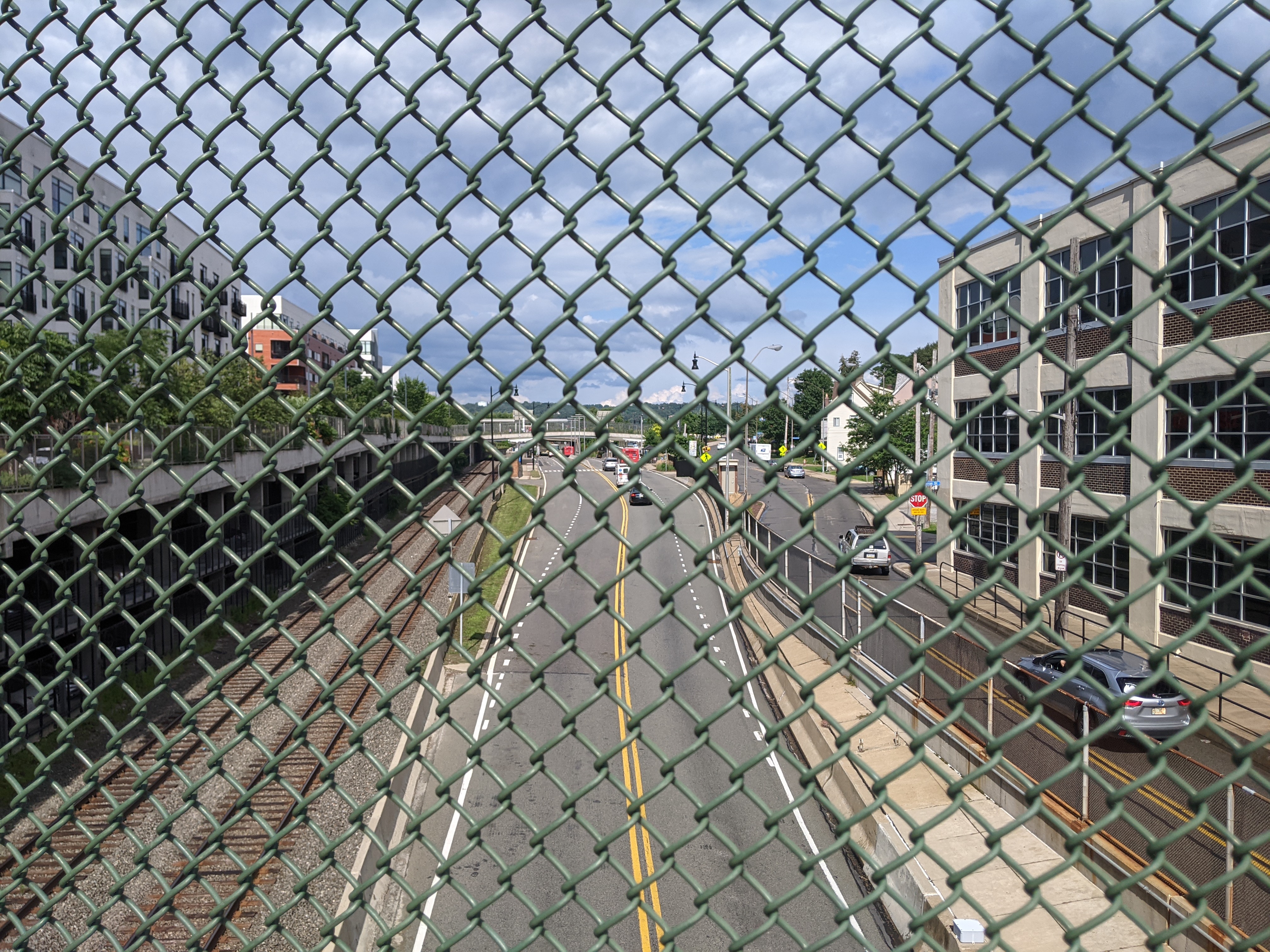
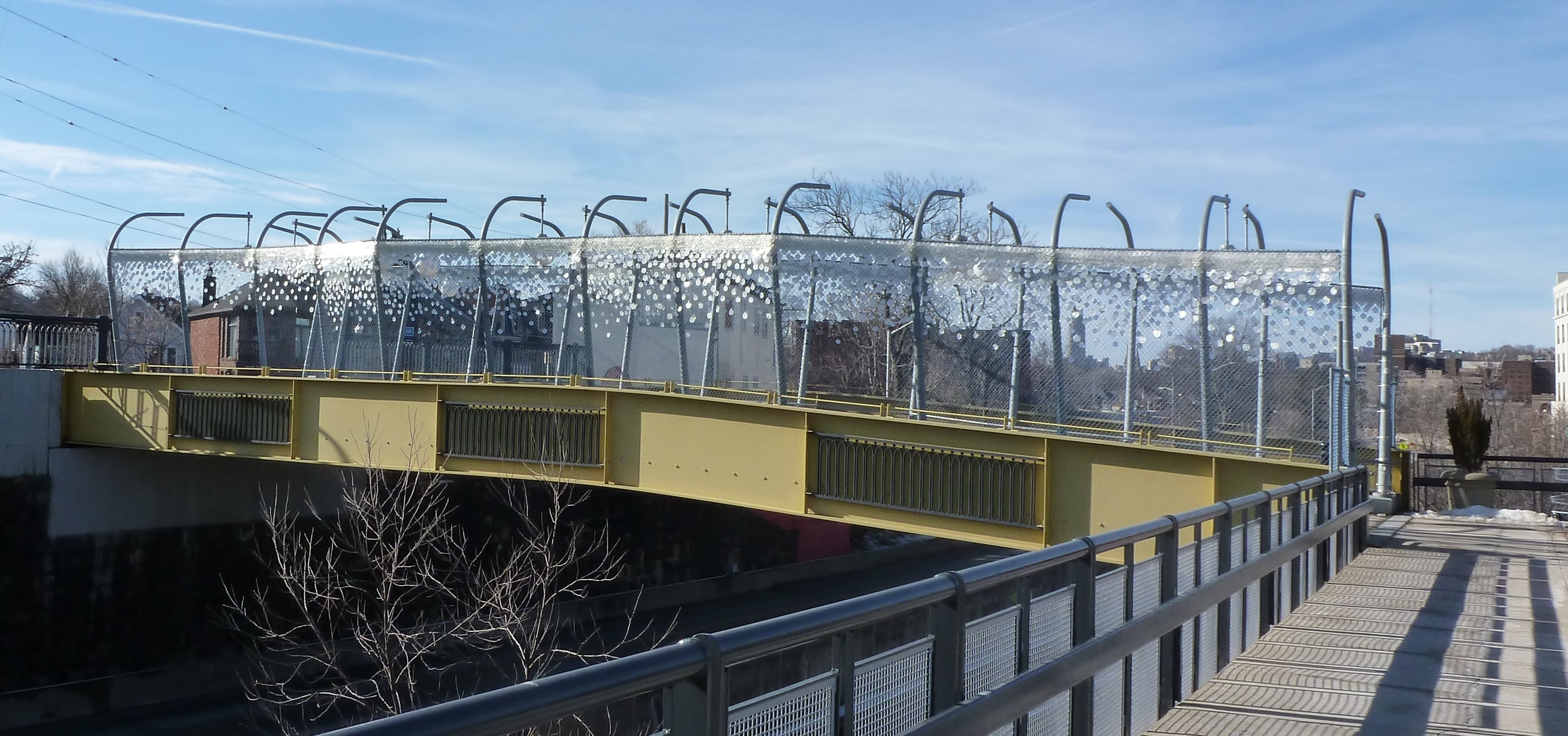
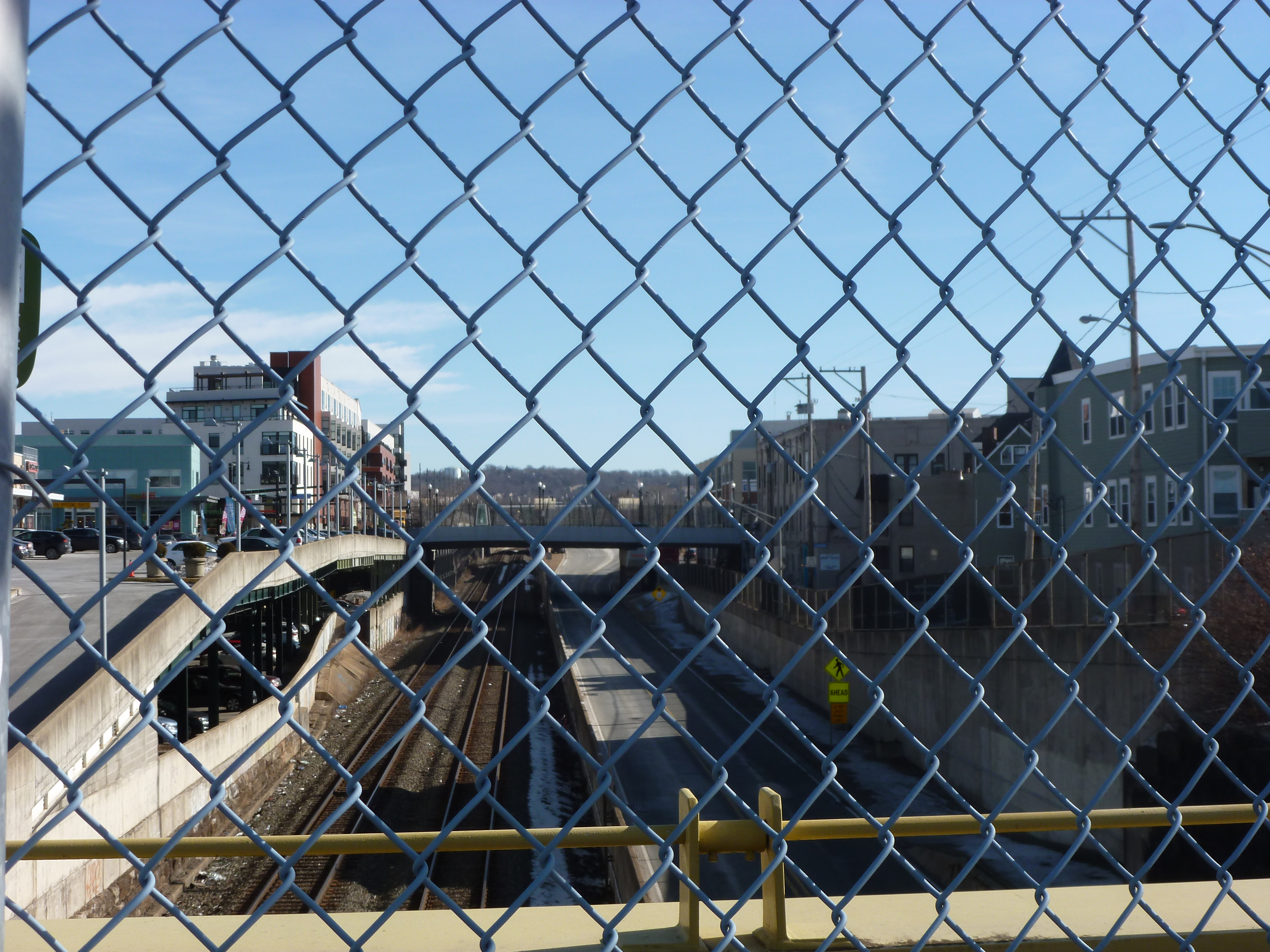
The new South Highland Avenue is a definite improvement over the last one. I no longer cringe at the thought of walking across it as being fenced in is better than being caged in (second photo set below). Yet, it is still not a pleasant experience to walk this bridge.  On the other hand, the Smithfield Street Bridge, for example, is a nice bridge to walk despite the many places where the sidewalk has rusted out providing direct views to the river below. The difference in these experiences is in part due to the bridges’ environments – nothing short of climate change will return the former river to what is now the busway and train tracks under the South Highland Bridge. However, design also plays a part in the experience. Many people in Pittsburgh’s architecture and design community are concerned that a poor bridge design will be rushed through on the Fern Hollow Bridge replacement with the excuse that it is an emergency (WESA, March 3, 2022). As the Fern Hollow Bridge has pleasant surroundings, it will be the bridge’s design that makes or breaks the experience of using the future bridge.

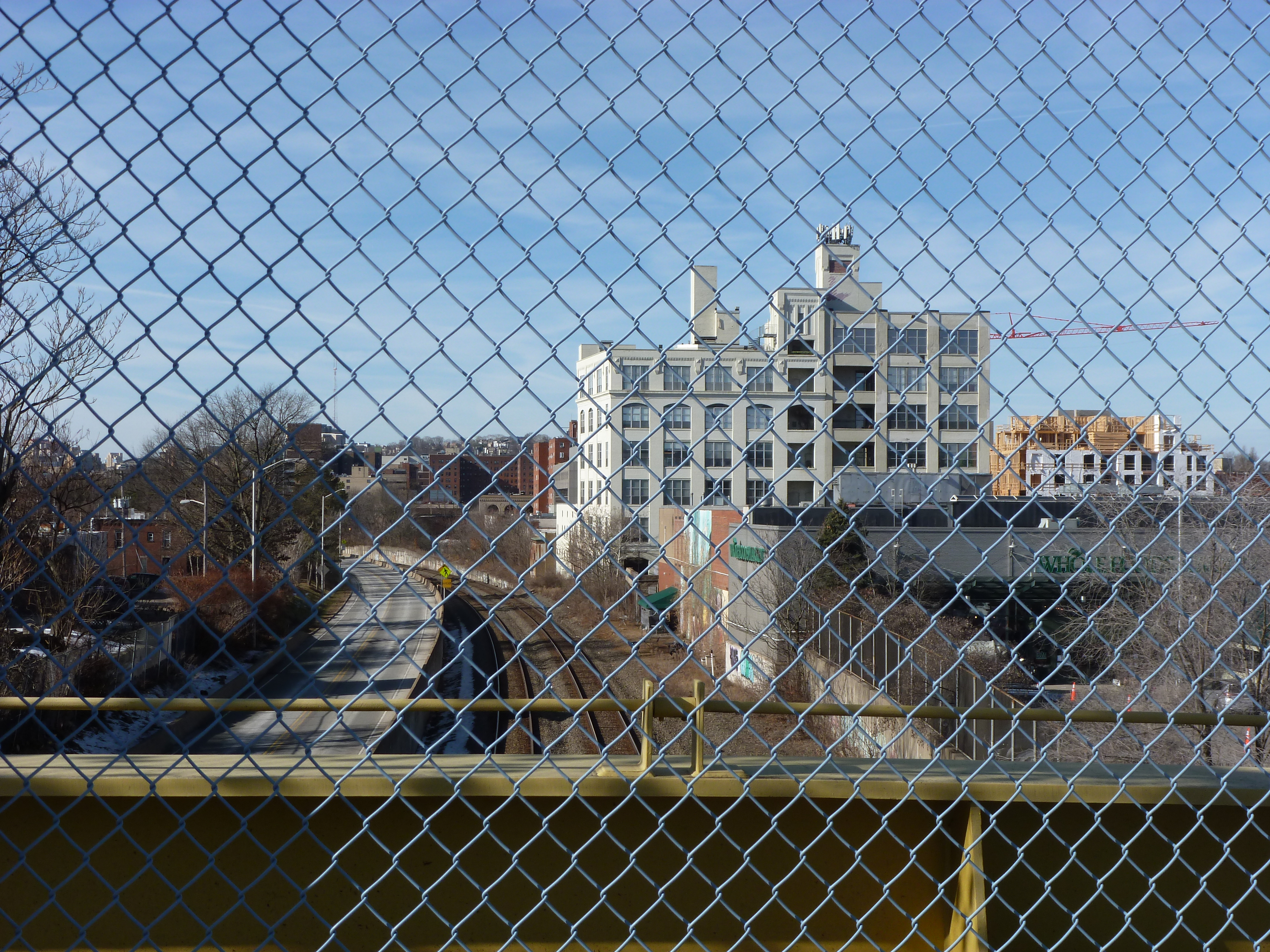
The South Highland Avenue bridge was replaced before it turned into an emergency. I assume the reason why it was replaced when it was while the South Negley Bridge continues to rust away is the massive amount of investment and redevelopment that was put into the East Liberty neighborhood in the last 10+ years. Looking west from the bridge, the early developments are visible, including the East Liberty Pedestrian bridge that was last month’s 10-year anniversary featured bridge and the Whole Foods location. These developments are old enough that the “Then” and “Now” views (third photo pairing) look substantially the same. The newer developments are clear in the east view (final photo pairing below), which looks like a completely different world between the “Then” and “Now” views. Next month’s feature will discuss this redevelopment in greater detail.

In Memoriam & Bridge Collapse Update

My uncle Jon, the writer, died this week. While he was and did much more than write, our strongest connection was through words. He taught me the basics of blogging, helped me select the platform for urbantraipsing, and gave me advice and support along the way. After years of living with advanced cancer, he was physically in very poor condition. Mentally and spiritually, he remained strong and very much himself until the end. A creative, compassionate, and witty man, Uncle Jon will be much missed.


Fern Hollow Bridge collapse updates, one month later:

  • No new information has been released in the National Transportation Safety Board’s ongoing investigation into the collapse.
  • The City’s legislation to establish the Commission on Infrastructure Asset Reporting and Investment underwent several amendments last month, but appears to have reached its final version. Perhaps it will be passed and sent to the Mayor for signature soon. (City Council pending ordinance)
  • The City’s legislation to establish public reporting procedures on city infrastructure by the Department of Mobility and Infrastructure was also amended multiple times. This one appears to have caused more questions as it was also sent for a legal opinion before being passed out of committee. (City Council pending ordinance)
  • The Port Authority’s South Busway Bridge remains closed with repairs expected to take up to 3 months, though the detour due to the bridge closure is still listed as indefinite (the end date shows as December 2049). (Press release, detour details)

Previous Fern Hollow Bridge Posts:

Two-Week Update

One-Week Update

Day After

Breaking News

Then & Now: East Liberty Pedestrian Bridge

Just after I began my 10-year anniversary celebration of bridge walking, the Forbes Ave Bridge over Fern Hollow collapsed on January 28, 2022. This accident shone a light on a pattern of infrastructure funding in the time since I became a bridge person. Ten years ago, there were several bridges built, repaired, or replaced in Pittsburgh. Five years later, the flurry of long overdue investment in our infrastructure stopped – before all the bridges that needed help received it. An article on the aftermath of last month’s bridge collapse reminded me that federal funds were allocated toward infrastructure under the Obama administration. As a result, many bridges that were falling apart were fixed or replaced. It seems that when that funding stopped, so did the repairs. Now that new funding has been allocated under the Biden administration, we should see a similar spurt of investment in our infrastructure, starting with the now missing Fern Hollow Bridge.

One of the bridges presumably supported by the Obama infrastructure funding was the brand-new pedestrian bridge across the East Busway connecting the Shadyside and East Liberty neighborhoods. This bridge is 10-years old this month. The “road” surface of the bridge hasn’t held up very well: the paint was faded and the top surface was patchy when I returned this month. On the other hand, the over-the-top lamps and giant glitter looked like they have held up well. Though it’s hard to say in wintertime, the landscaping between the cage and the bridge walls also appeared to be well maintained.

From the bridge, some of the new developments in East Liberty are visible. Looking southwest toward the current location of Whole Foods (soon to relocate), one of the several new apartment buildings along the Baum-Centre corridor is visibly under construction in the far right of the second set of photos. In the third set, the northeast view shows the new South Highland Avenue Bridge and (to the left of the bridge) the final phase of the East Side Bond development that brought several buildings of first floor commercial with residences above.

I was surprised to find that the highly controversial and massive redevelopment of the former Penn Plaza affordable housing complex was not visible from this bridge. Despite being only a quarter mile apart, the first phase of redevelopment is blocked from the bridge’s view by the iconic Motor Square Gardens building. One of the controversies of this new development is that affordable housing units were demolished without replacement for a series of commercial buildings which include the feature anchor of the pricey Whole Foods grocery store.

The pedestrian bridge was controversial when it was proposed and built. It connects the wealthy Shadyside neighborhood to the expensive Whole Foods, a high-end liquor store, and other luxury shops. It is also redundant as the South Highland Avenue bridge is only 0.1 miles away. A quarter mile away, is the neighborhood of Larimar whose residents are primarily living on low-incomes and do not have a walkable route to the lower cost Giant Eagle grocery store or Trader Joes that are just on the other side of the busway from their homes. For years, the residents have been asking for a pedestrian bridge over the busway to give them better access to these stores. Instead of a bridge serving those who need it, an ornamental bridge was built to provide access for those who already have abundant options.

Around the same time that this bridge was built, the Port Authority altered its bus service by eliminating the 94B bus that connected the low-income residents of Larimar with a shopping center featuring Walmart, Giant Eagle, TJ Maxx and similar clothing retailers, and other stores. In addition to providing shopping opportunities for necessities, these locations provided jobs. The 94B bus was never less than half-full (an unusual condition for Pittsburgh buses outside of rush hour). This bus was replaced by the 75 bus, which connected the higher-end shopping centers of South Side Works and Bakery Square through the wealthy residential neighborhood of Shadyside. For years, it was common to be the only person or one of a handful of people riding the 75. Eventually, the Port Authority acknowledged the value of the 94B route and tact it on to the end of the 75 route.

Presumably both the pedestrian bridge and bus route changes of 2012 were supported at least in part by the federal infrastructure funds of the time. With the current round of federal funding, it would be nice to see a greater focus of infrastructure investment for those who need it and not on additional luxury options.

Bridge Collapse: Two Weeks Later

I had intended to do some serious traipsing this weekend in and around Frick Park to see what kind of angles and views I could get on the site of the bridge collapse into Fern Hollow. Unfortunately, a foot injury during the week has limited my mobility to within a short range of my car. Fences and construction tape block unauthorized people from getting closer than the intersection of Forbes and Braddock on the west side of the site.

Below are updates on the activity inspired by or related to the bridge collapse, some of which follow-up on the activity identified a week after the collapse:

  • UpstreamPGH is concerned about and monitoring the environmental impacts of the collapse and reconstruction on Fern Hollow Creek and its ecosystem. (Post-Gazette article, February 11, 2022)
  • City Council extended the Mayor’s Declaration of Disaster Emergency through May 2, 2022. (City Council Resolution)
  • The National Transportation Safety Board investigation posted investigation details on February 7 describing what happened in the collapse based on the evidence reviewed so far. No probable cause has been determined yet. It is believed that the collapse started at the west end.
  • The City’s legislation on establishing the Commission on Infrastructure Asset Reporting and Investment is scheduled for council’s standing committee meeting this week. (City Council pending ordinance)
  • A related piece of legislation to establish public reporting procedures on city infrastructure by the Department of Mobility and Infrastructure was also heard and amended in council last week, but a new date has not been set for moving this legislation forward yet. (City Council pending ordinance)
  • The cause of the shift was identified in the bridge that Port Authority closed a week after the Fern Hollow Bridge collapse. It is believed that water got into the superstructure and with the freeze-thaw weather we’ve been having expanded and contracted causing the shift. (WPXI news article, February 10, 2022)
  • The City of McKeesport sped up the reinspection and closure of the Versailles Ave Bridge due to the increased risk from the fluctuating freeze-thaw temperatures. (WTAE news article, February 11, 2022)
  • The Pennsylvania Department of Transportation has order the inspection of 5 bridges across the state that share the same design as the Fern Hollow Bridge (WTAE news article, February 2, 2022):
    • Canon-McMillan Alumni Bridge in North Strabane
    • Shenango Road Bridge in Beaver
    • Philip J Fahy Memorial Bridge in Bethlehem (walked & posted)
    • McCallum Street Bridge in Philadelphia
    • Murray Ave Bridge over Beechwood Blvd in Pittsburgh (walked, but not posted yet)
  • The final of the Three Sisters Bridges, the Roberto Clemente/6th Street Bridge, will undergo its renovation starting on February 14, 2022, through December 2023. (WTAE news article, February 2, 2022)
  • Allegheny County (the owner of the Three Sisters Bridges) has plans to resolve 25 of its 27 poor condition bridges by 2024 with seven bridges scheduled to be removed or replaced this year. (Post-Gazette article, February 7, 2022)

Bridge Collapse: One Week Later

A week ago yesterday, an important arterial bridge collapsed in Pittsburgh – on a day that President Biden was already scheduled to be in town to talk about infrastructure. Fortunately, while several vehicles, including a bus, were on the Forbes Ave bridge when it fell into Frick Park’s Fern Hollow, no one died. Several people were injured. Some were treated on site and many were taken to the hospital.

The bridge was one of many in the region that are known to be structurally deficient. The City Controller Michael E. Lamb told the Pittsburgh Business Times that “Allegheny County has more structurally deficient bridges than any other county in the nation.” President Biden said in his visit that there are 3,300 bridges in Pennsylvania “just as old and . . . just as decrepit” as the Fern Hollow Bridge. (Pittsburgh Business Times) An editorial in the print edition of this week’s Pittsburgh Business Times noted that the estimated cost to fix all the bridges in Pennsylvania would be $20.7 billion, however, the total allocation of bridge repair funds to the state from the infrastructure bill is $1.63 billion. This is a drop in the bucket of what is needed to maintain the long neglected infrastructure of the region, state, and country. However, it is a drop we didn’t have before. The editorial ends with a call to state and local authorities to make bridge repair a higher priority as “We were lucky with this collapse that no one was killed, but we likely won’t be so lucky next time. Let this serve as a wake-up call.”

There has been a flurry of activity in the wake of the collapse:

On a side note, President Biden said he hadn’t known before that Pittsburgh has more bridges than any other city in the world (Pittsburgh Business Times). While I have written about this claim before, I recently discovered that my original source for the number of bridges in the city has some errors (including at least one bridge counted twice due to the renaming of the street carried by that bridge), which has shaken my faith in the claim as a few errors like that would put Venice back in the lead.

“Poor Condition” Forbes Ave Bridge Collapsed Yesterday

Yesterday, after the Fern Hollow Bridge collapsed in Pittsburgh a photo circulated on social media of one of the steel support beams of the bridge completely rusted through. This photo was taken in 2018 and reported to the City’s 311 system. While the photo also showed cables that had been added to the bridge to presumably take over the job of the steel beam that then ended in mid-air, the person submitting the photo was concerned that this might not be sufficient. I have seen similar rusted conditions on other bridges that I have walked over or under in Pittsburgh. I cannot remember if it was the Negley Ave bridge over the busway, the Charles Anderson Bridge over Junction Hollow in Frick Park, both, neither, or a handful of other bridges. (Note: both of these bridges are rated in poor condition.)

A neighbor quoted in a Tribune Review article after the Fern Hollow Bridge collapse wondered why the bridge hadn’t been repaired or replaced before the accident since it was known to be in poor condition. According to BridgeReports.com, which pulled inspection data on the bridge from 1991-2017, the bridge has been rated as in poor condition since 2011. Based on my experiences and exposure to bridges, I am not surprised that a bridge was left in poor condition for over a decade. This morning, I pulled data from the National Bridge Inventory on the 449 inventoried bridges within a 6-mile radius of downtown Pittsburgh. I was surprised to find that only 10% of these bridges were rated in poor condition.

Below is a chart of the 48 bridges rated in poor condition within a 6-mile radius of downtown, which includes some that are outside the boundaries of the City of Pittsburgh. In those cases, the city owner would be the municipality they are within. The first four columns are the data I pulled from the National Bridge Inventory, the final column is from BridgeReports.com. Both sources were updated through 2018, which means that there have been some changes since then, including the possibility that more bridges have fallen into a poor state. I marked in italics the bridges that I am heard went through renovations in recent years and in bold the one that collapsed. The bridges with hyperlinks are the ones that I have walked and blogged.

OwnerBridge DescriptionYear BuiltYear RenovatedRated Poor Since
StateIsland Avenue Bridge1900
StateWetzel Rd over Pine Creek1936
StateBlvd of Allies over cliff19502018
StateBlvd of Allies over Forbes195219842017
StateRamp U over Old Brady St195419852013
StateRamp R over Brady195619852017
StateRamp H over Forbes, Diamond, 6th Ave196220121997
StatePeoples Rd over Girtys Run1963
StateWashington Ave over P&O RR1965
StateFt Duquesne to 10th St19681988
StateBlvd of Allies over another cliff198120012018
RailroadWest Ohio St over NS RR190319581991
RailroadN Ave & Brighton Rd over NS RR190519292009
County9th Street – Rachel Carson Bridge192619942013
CountyJacks Run Rd over Jacks Run19802019
CountyWible Run Rd over Wible Run1987
CitySecond Ave over Nine Mile Run1886at least 1991
CityShaler St over Saw Mill Run1900at least 1991
CityLowrie St over Rialto St190019722008
CityElizabeth St over Gloster St190019792014
CityRidge Ave over NS RR19031957at least 1991
CityTimberland Ave over Saw Mill Run1909at least 1992
CityFremont St over Girtys Run1911
CityLincoln Ave over Girtys Run19111950
CityLarimer Ave over Washington Blvd1912at least 1991
CityGrant Ave over Girtys Run19141986
CityKlopper St over Girtys Run1915
CityLincoln Ave over Girtys Run19151986
CityFrazier St over Saline St191519892007
CityS Negley Ave over E Busway19241973at least 1991
CityW Carson St over Chartiers Creek192519782009
CityAnsonia Pl over Saw Mill Run192519981995
CityMaple Ave over N Charles St19291953at least 1991
CitySwindell Br over East St193019902009
CityCalera St over Streets Run1931at least 1991
City28th St over Busway & RR19311974at least 1990
CityE Main St over Chartiers Creek19342002
CityCharles Anderson Bridge193819872012
CityMission St over S 21st St193919822010
CityRiver Ave over Bike Trail193919862008
CityGanges Way over Streets Run19512016
CityE Liberty Blvd SB over walkway19682009
CityForbes Ave over Fern Hollow19702011
CityHerron Ave over Busway & RR19802018
CityMcArdle over Sycamore St19832017
CityMilroy St over I-27919862011
Other Local AgencyCentre Ave over East Busway19792008
Other Local AgencyPenn Ave over East Busway19812018

Breaking News: Fern Hollow Bridge Collapse

A bridge collapsed in Pittsburgh this morning. While not an iconic bridge, the Forbes Avenue Bridge over Fern Hollow was significant as the sole road link over Frick Park. With this link missing, motorists and those using public transit will have to travel several miles out of their way through some very congested roads. Pedestrians and bicyclists have some shorter options using the park’s trails.

The bridge was built in the early 1970s and as far as I know has not had any significant maintenance work done since then. It is owned by the City of Pittsburgh. Based on the National Bridge Inventory by the Federal Highway Administration, the bridge was in “Poor” condition, had an inspection frequency of 18-24 (units were not included, hopefully this is months), the structural evaluation was “Minimally Tolerable,” the substructure was rated “Satisfactory” while the superstructure was rated “Poor,” average daily traffic was 10,000-15,000, and the detour route would add 2-5 miles. In addition, this site estimates the replacement cost at $6.5 million. I could not find the date of the last inspection on the NBI site. Based on a summary of inspections on BridgeReports.com, which sites the NBI as its source, the bridge was inspected every two years between 1991 and 2017, so presumably there were additional inspections in 2019 and 2021.

There was a bus and some other vehicles on the bridge when it collapsed. The two passengers on the bus were taken to a hospital with “minor injuries” as was a third person. Seven other people are reported to have “minor injuries” that did not require a hospital visit. The City’s first official press release on this disaster says that rescue efforts concluded at 8:30am, but that underneath the bridge was still being checked for potential victims – some of the park’s well-used trails pass underneath. WTAE has videos from the scene; the Tribune Review has quotes from nearby residents on what they heard and saw this morning. This story has also made national news with coverage by on the US News and World Report website.

The coincidences: President Biden is scheduled to speak in Pittsburgh today about infrastructure, including bridge maintenance, the overnight snow may have limited vehicular and foot traffic over and under the bridge, and I just happened to be somewhere where the news was on this morning in time to see the first news report on WTAE (I never watch or read the daily news).

Mayor Gainey is quoted as saying “we were fortunate.” The people using the bridge were unfortunate that the bridge collapsed when it did, but given that it did collapse, they were fortunate in that it appears there are no serious injuries and no deaths. It was also fortunate that the collapse happened before rush hour and on a bridge that was over land. If this was one of our river bridges or if it happened during rush hour, serious injury and death seem impossible to avoid.

Deferred maintenance of bridges is a real and serious thing. Bridges are a crucial part of our daily lives (especially in places like Pittsburgh). Every time I walk over the Negley Ave bridge over the busway, I warily eye the rusted structure. The old Highland Ave bridge over the busway used to spark the same reaction, but it was fortunately replaced several years ago. The Smithfield Street bridge has holes through the sidewalk. How far do we push our “poor” condition bridges before investing in maintenance and repair?