Keeping an Eye on Penn Plaza: June 2022

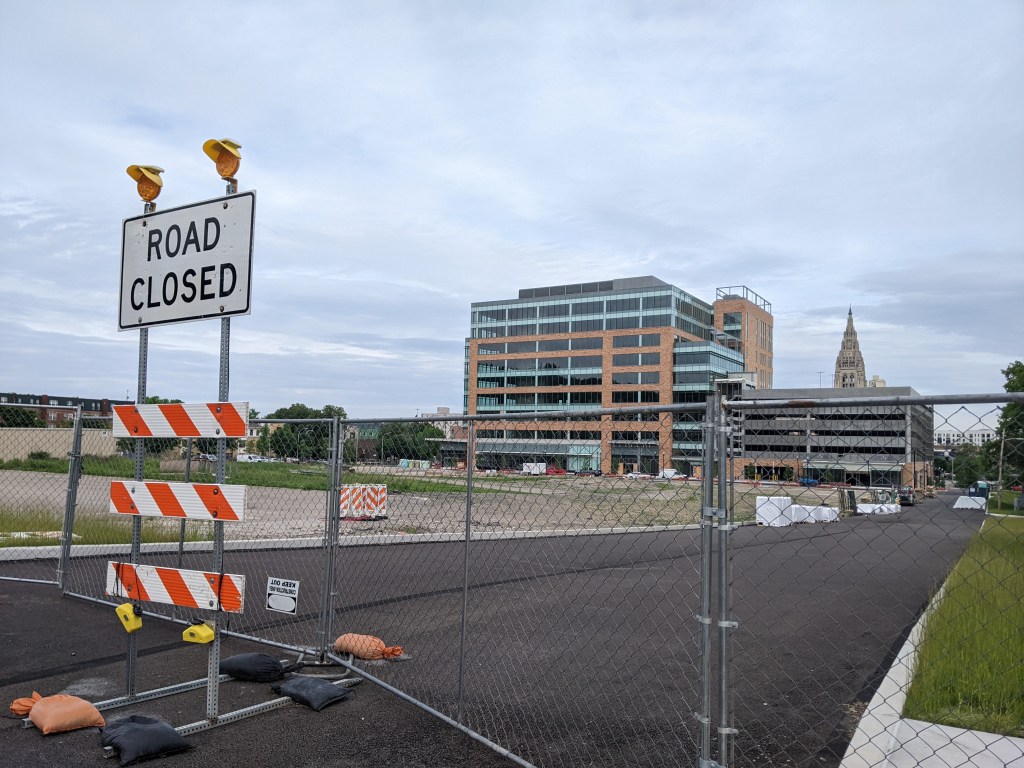
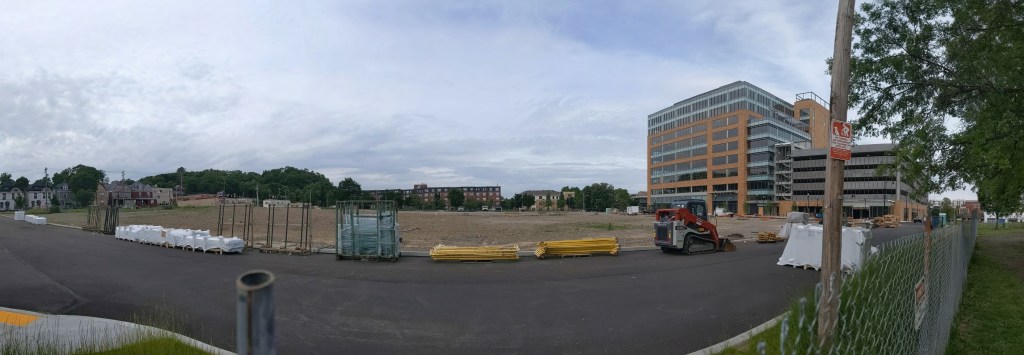
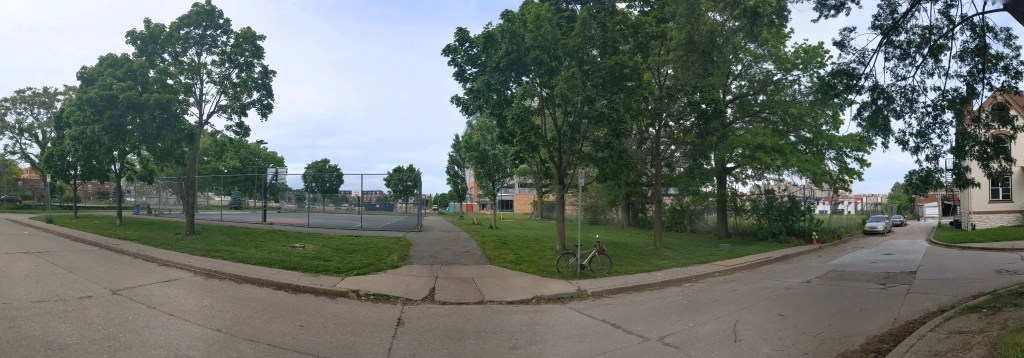
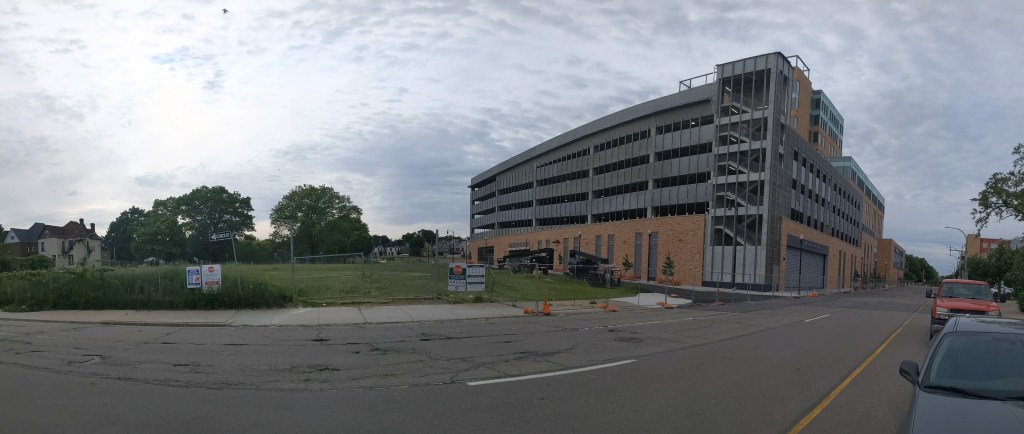
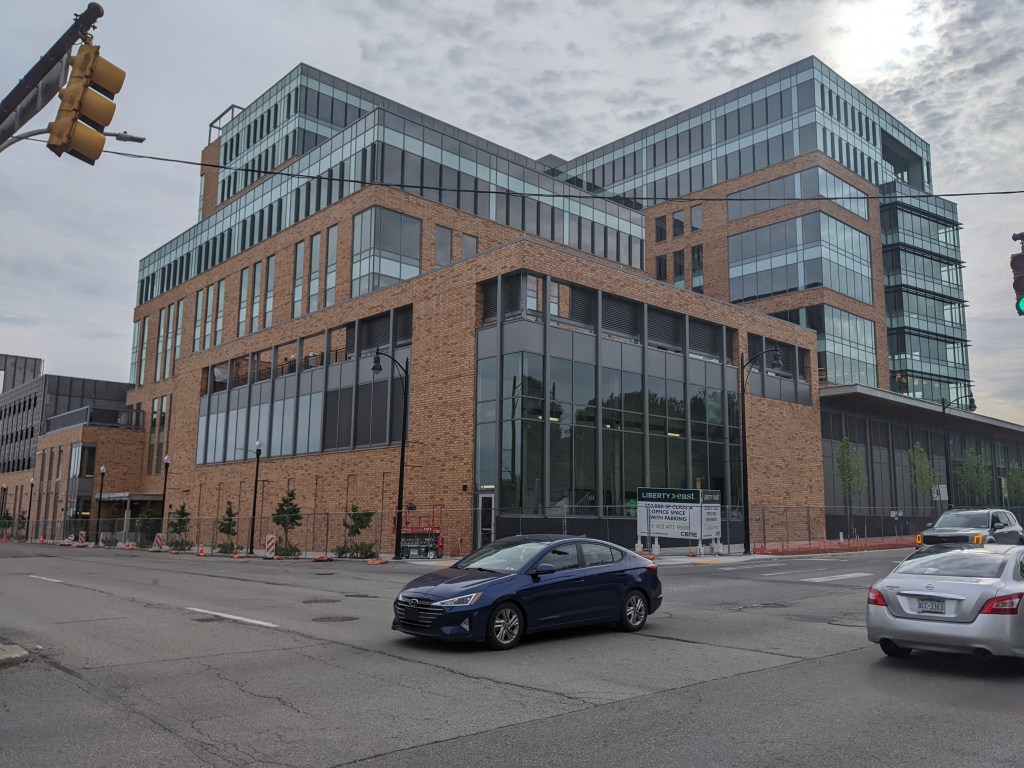
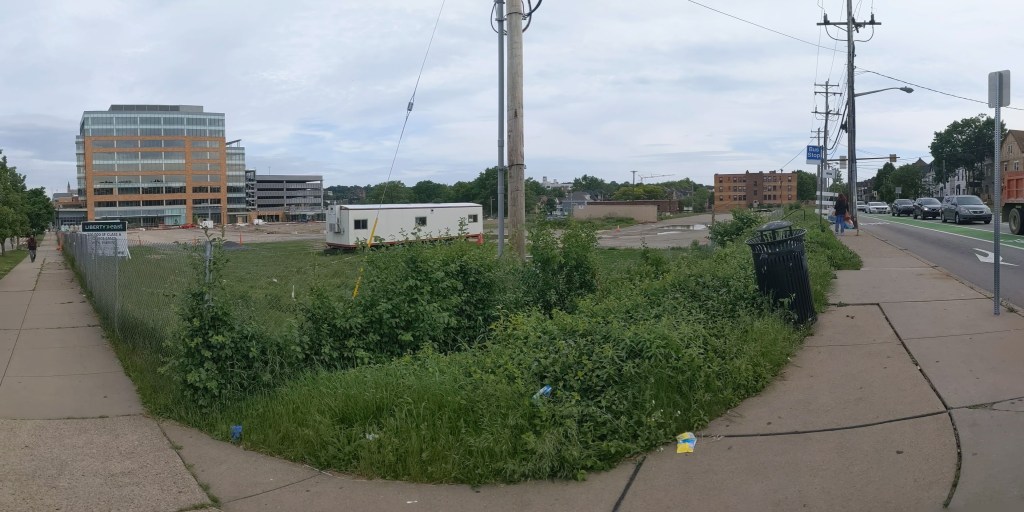
Seven years after the initial eviction notices went to the low-income residents of the former Penn Plaza Apartments, the mixed-use redevelopment of the size nears completion of Phase 1.

The former Penn Plaza Apartments was a group of large of apartments buildings that served a low-income population. After years of neglecting these apartments, the owner gave 200 residents notice to vacate within 90 days in the summer of 2015. By then, the surrounding neighborhood of East Liberty was a hopping place to live with low vacancy rates and the average rent much higher than what these residents could afford. There was a large outcry at the time, which only got worse as the owner’s plans for the site were understood. The owner wanted to swap some land with the City and change the zoning district to build a large scale mixed-use development: 54,600 sq ft of retail and 246,090 sq ft of office with accessory parking (see the application materials starting on page 54 from the final Planning Commission review and approval). After months of negotiation with the City and the community, the land and the zone change were given to the development while the affordable housing crisis in Pittsburgh only got worse and the former residents were forced to uproot their lives.

The Penn Plaza Support and Action Coalition has more information on what was promised and what happened as the residents were forced to find new housing.
Penn Plaza in the News

While the construction of Phase 1 of the new development appears to be nearing completion, I did not find any news items specifically about the site. News about affordable housing issues in Pittsburgh continue.

Public Source articles discuss:

New affordable housing units opened and another project broke ground in October 2021 (Tribune Review).

A brief from the Federal Reserve Bank of Philadelphia on the homeownership gap in that city including findings applicable to Pittsburgh and other cities (East Liberty Development Inc, January 4, 2022).


Previous Posts in the Series

Keeping an Eye on Penn Plaza – Apr. 2021
Keeping an Eye on Penn Plaza – Nov. 2020

Keeping an Eye on Penn Plaza – Aug. 2020

Bridge Collapse: Four Month Update

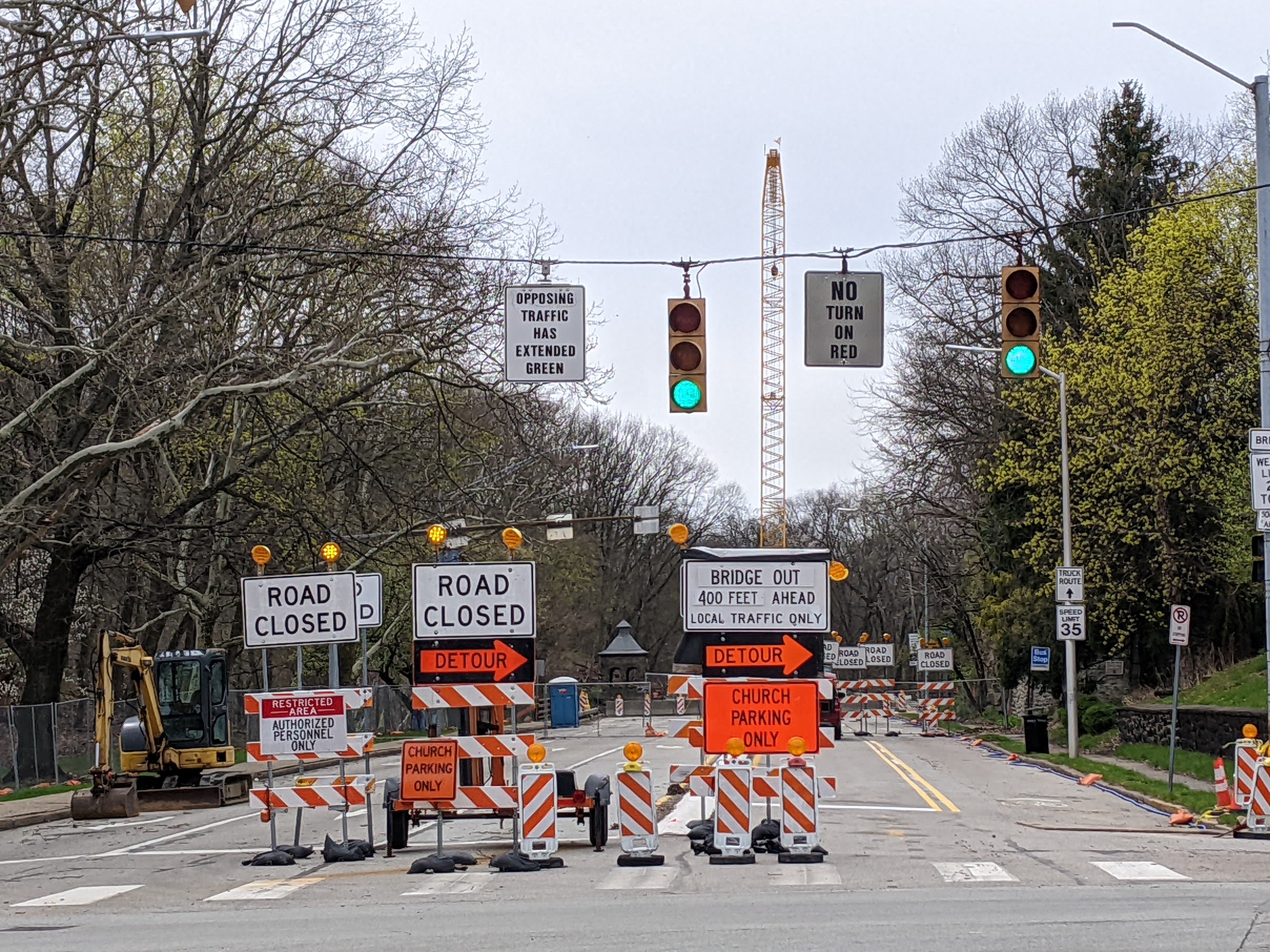
It’s been four months since the collapse of the Fern Hollow Bridge over Pittsburgh’s scenic Frick Park. I took the above photo at three months, but didn’t have an opportunity to put together an update. This month, I had the opportunity to do the text update (below) on activity across the city and state related to the collapse, but not to go to the site for a photo. So this post combines a 3-month update photo with 4-month update activity and news. If I have missed anything of interest, please share it in the comments and I will try to include it in future updates.

  • The project page now identifies “spring” as the timeline for the start of construction for the new bridge. A May 9th article in the Post-Gazette states that work on the new supports began two weeks prior.
  • An April update to the FAQ on PennDOT’s project page states that it is working with the Office of Public Art to identify artists who could develop aesthetic elements for to-be-determined locations on the bridge.
  • A redacted version of the Fern Hollow Bridge’s September 2021 inspection report was released this month after a right-to-know request. It details corrosion and holes in the bridge and its support structure. (CBS text and video report, Post-Gazette report, WTAE report)
  • An update was issued on May 5, 2022, in the National Transportation Safety Board’s ongoing investigation into the Fern Hollow Bridge collapse. This update describes the ongoing examination and testing of the bridge’s components.
  • The City created a Commission on Infrastructure Asset Reporting and Investment in March 2022, but this commission has not been added yet to the city’s website listing all Boards and Commissions and I have not seen any announcements of any appointments to the new Commission.
  • Mayor Gainey announced in early May the formation of a Bridge Asset Management Program and the search for a manager for the program through an RFP. (City Press Release, May 5, 2022)
  • Port Authority’s bridge has been repaired and is back in service. The stop upgrades to the stations in Beechview and Dormont continue. The Red Line T is therefore still out of service with a bus shuttle running sporadically from Dormont through Beechview to Station Square, leaving the residents in this area waiting for unknown periods of time for transportation to jobs and appointments. (I recently waited for over 1 1/2 hours for the shuttle before giving up and calling an Uber.) There is no posted schedule and transit apps do not indicate that there is this disruption to service.
  • The repairs to the Centre Avenue Bridge and Meadow Avenue Bridge continue with cones marking a narrow road across the Centre Avenue Bridge and the sidewalk on one side closed on the Meadow Avenue Bridge.
  • Pittsburgh’s 30th Street Bridge is expected to undergo repairs starting in 2023. (Tribune Review, February 23, 2022)
  • Pittsburgh’s local robotics companies continue to make progress in the world of bridges with Advanced Construction Robotics’ TyBOT recently completing 101,564 ties of rebar on a Texas bridge. (Pittsburgh Business Times, May 16, 2022)

Additional Resources:

Both PennDOT and the Federal Highway Administration have interactive maps of bridges for the state and country respective, and their inspection statuses.


Previous Fern Hollow Bridge Posts:

Two-Month Update

One-Month Update

Two-Week Update

One-Week Update

Day After

Breaking News

Then & Now: Penn Ave Bridge Ramp

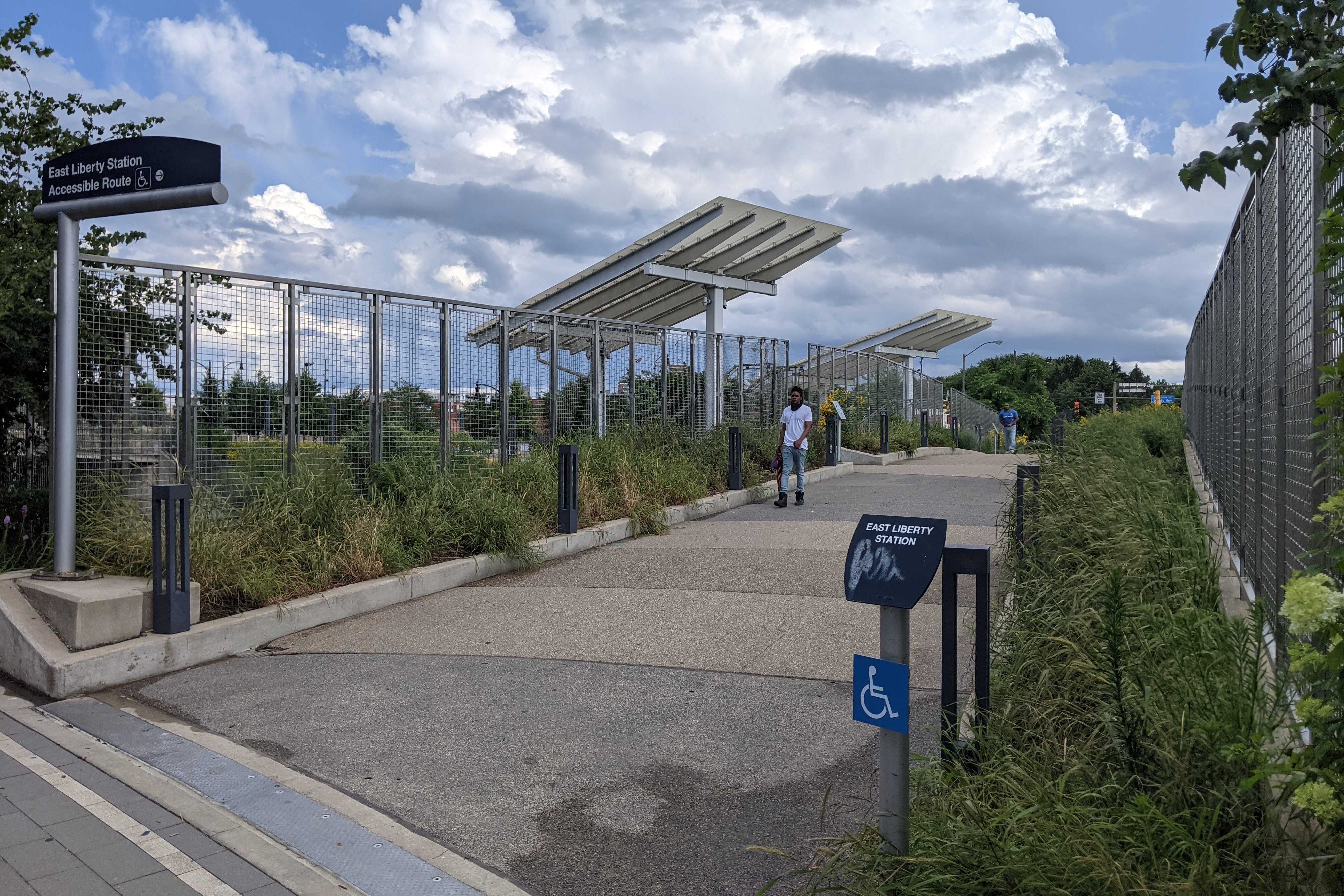
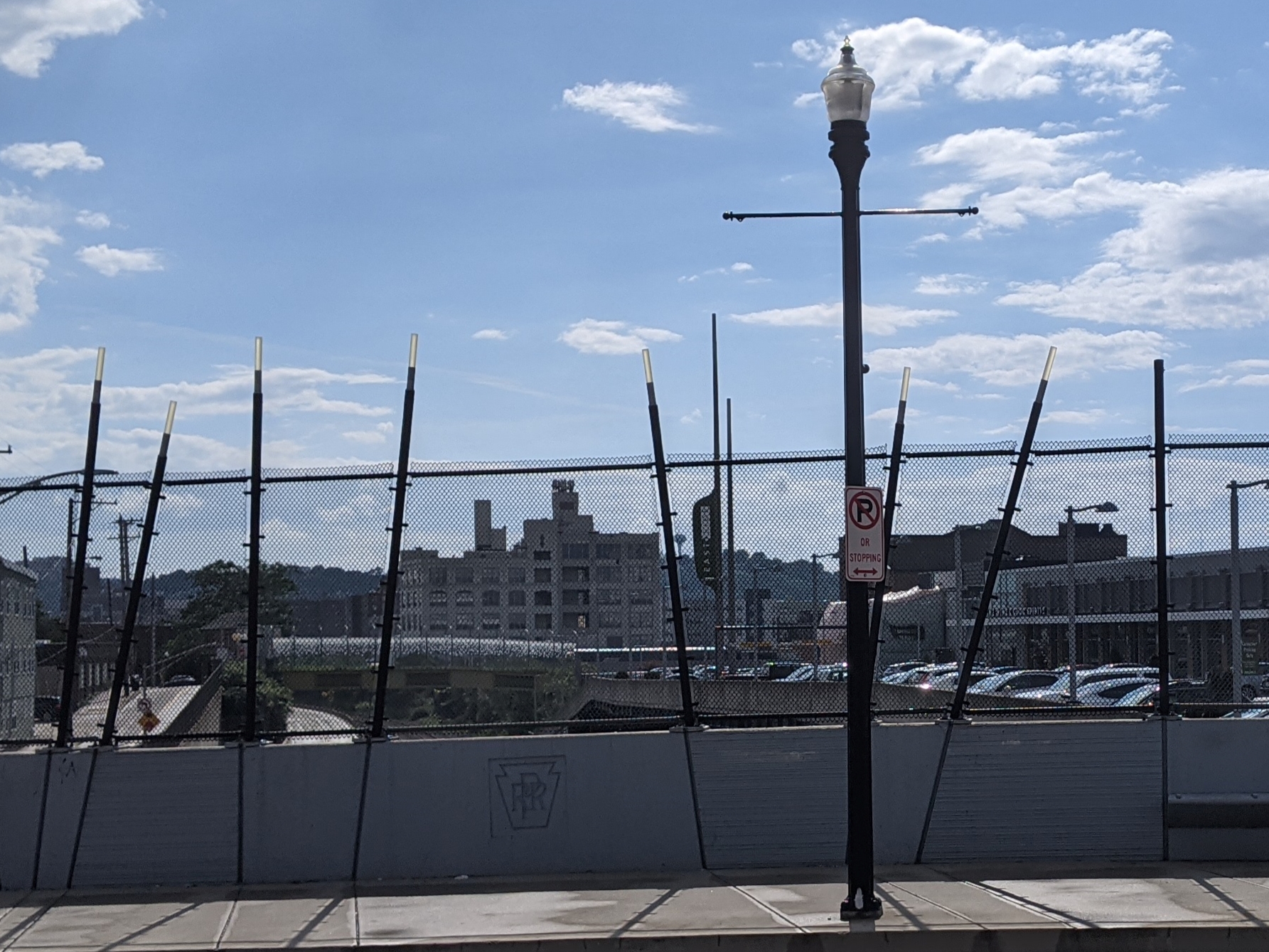
Closing out the East Liberty portion of the Then & Now 10-year anniversary series is the Penn Ave Bridge Ramp. This ramp inspired the second Pittsburgh edition of What is a Bridge?. As best as I can make out from the data on the National Bridge Inventory, the Federal Highway Commission does not consider the ramp a bridge. It is not marked as one of the bridges inventoried by the Commission. And the data for the Penn Avenue Bridge does not include any approach spans. This leaves me wondering who, if anyone, inspects the ramp.

As I cannot find a public source that shares inspection data of the ramp (if it is inspected), its condition rating is anyone’s guess. However, this lack of data may be attributable to the change the ramp underwent in the last ten years. It was originally a ramp for buses to travel from a major bus stop off Penn Avenue onto the East Busway. With the redevelopment of the East Busway Station, this bus stop was redesigned as a regular on-street stop and the ramp was converted to pedestrian access only (second photo set below). The National Bridge Inventory seems to skip over pedestrian bridges as the East Liberty Pedestrian Bridge featured in February is also not listed.

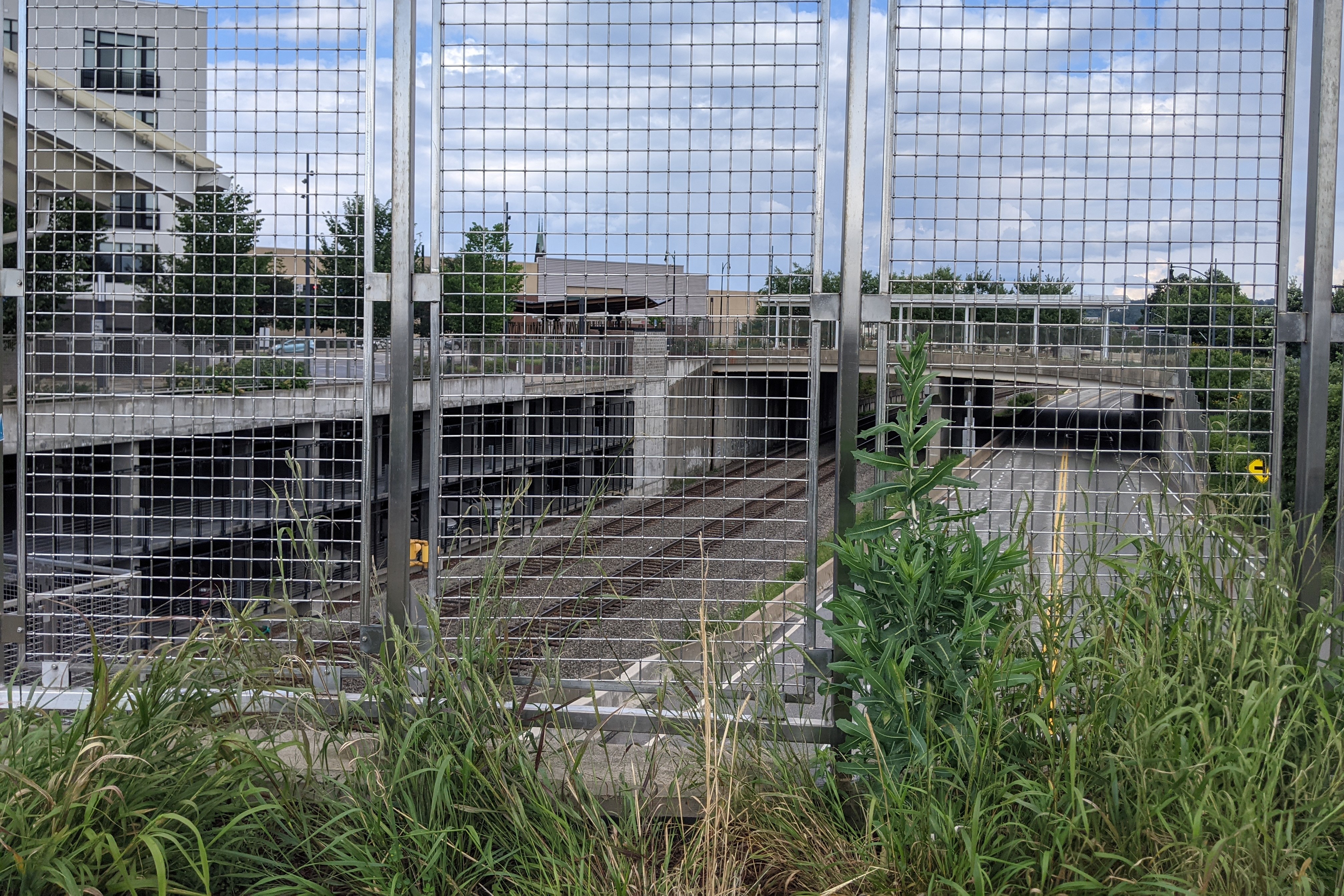
Regardless of the ramp’s condition, its fate now seems tied to the fate of the Penn Avenue Bridge as the gap between the two been filled in with much needed greenspace (first photo set below). The Penn Avenue Bridge was last inspected in May 2020 (which means it probably has been or will be inspected again this month). It received a “poor” condition rating in that inspection – a rating that is worrying for Pittsburghers since the collapse of the “poor” condition Fern Hollow Bridge, despite reassurances from the bridge engineering community that “poor” condition does not necessarily equate to imminent danger.

Then & Now: East Liberty Station Bridge(s)

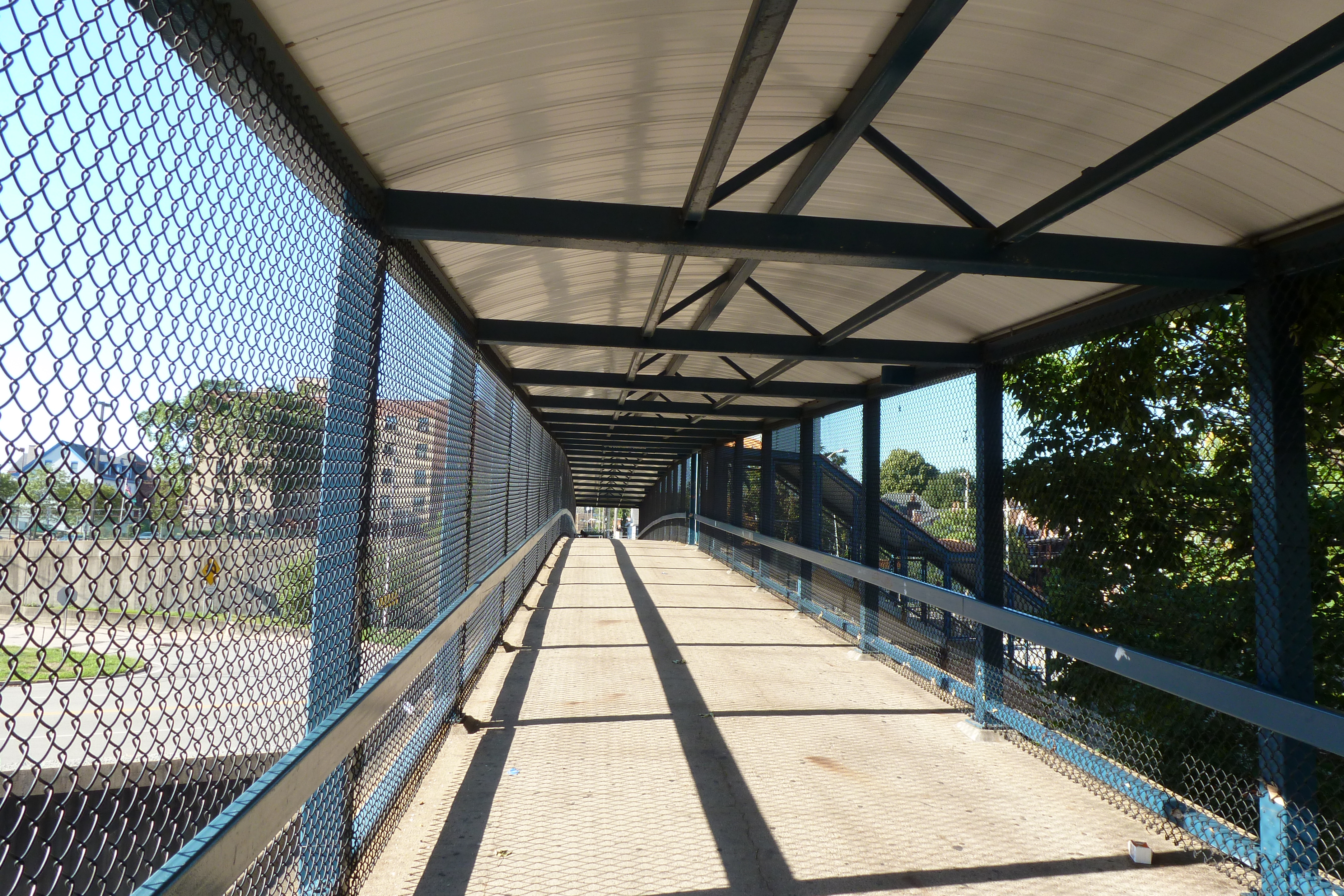
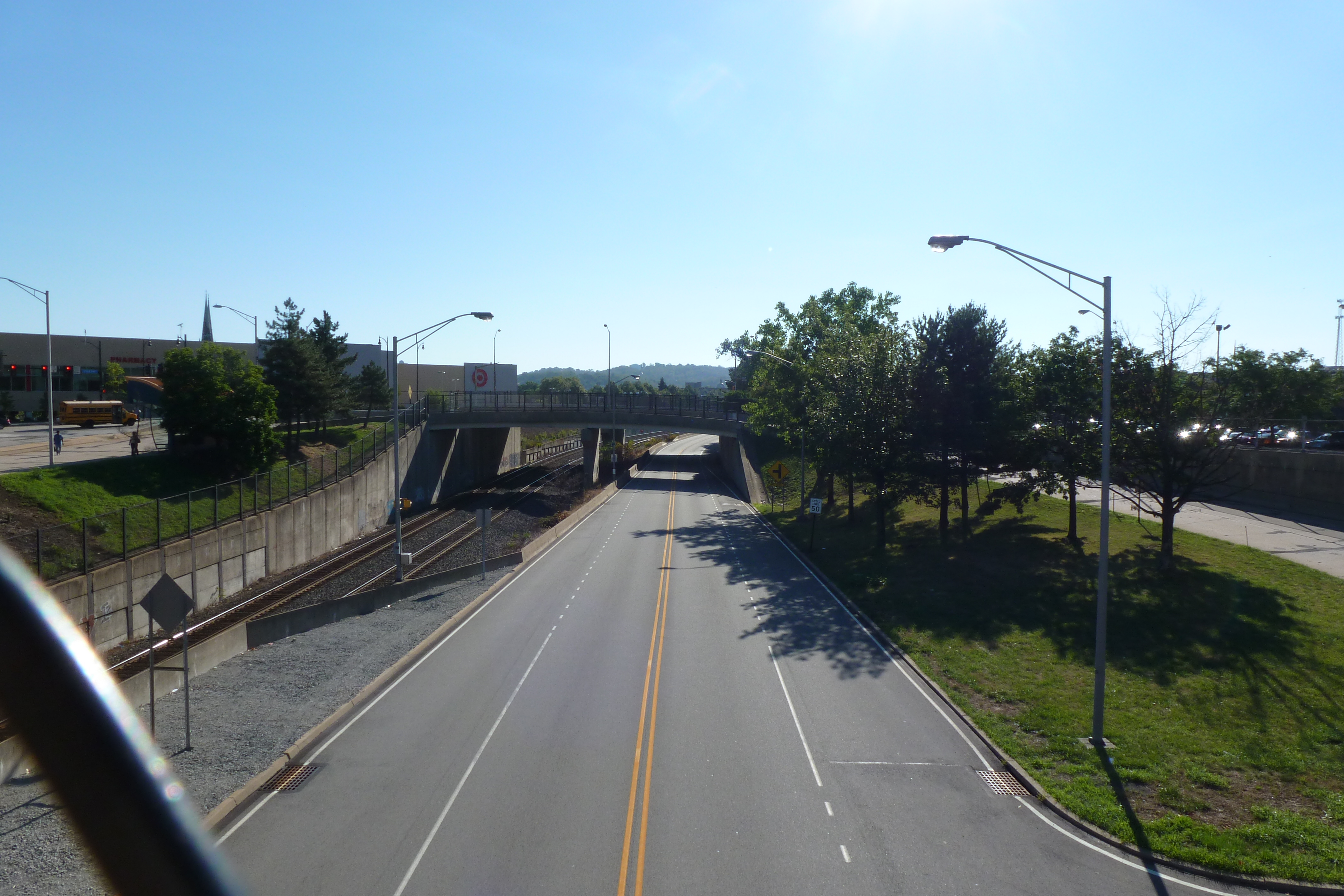
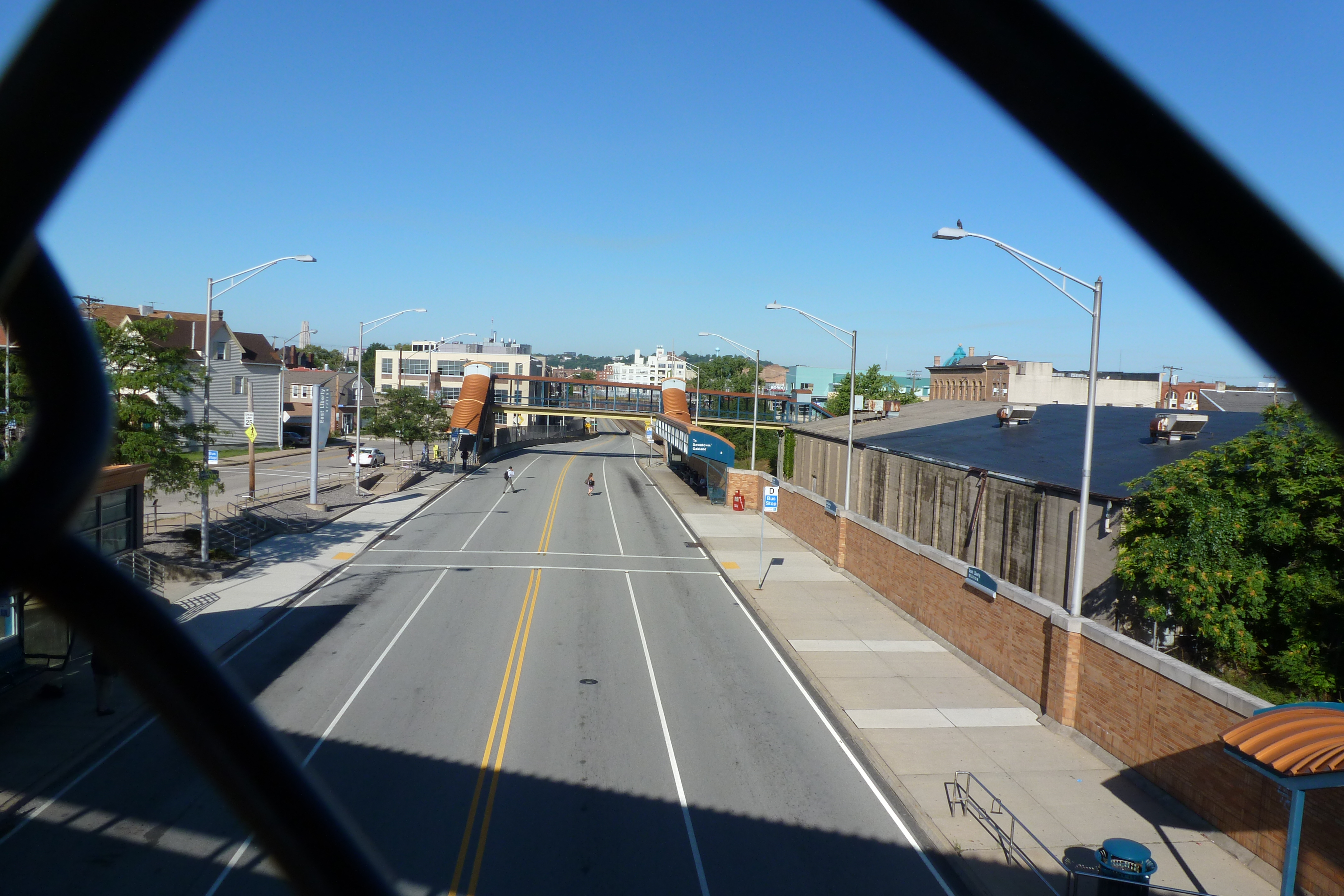
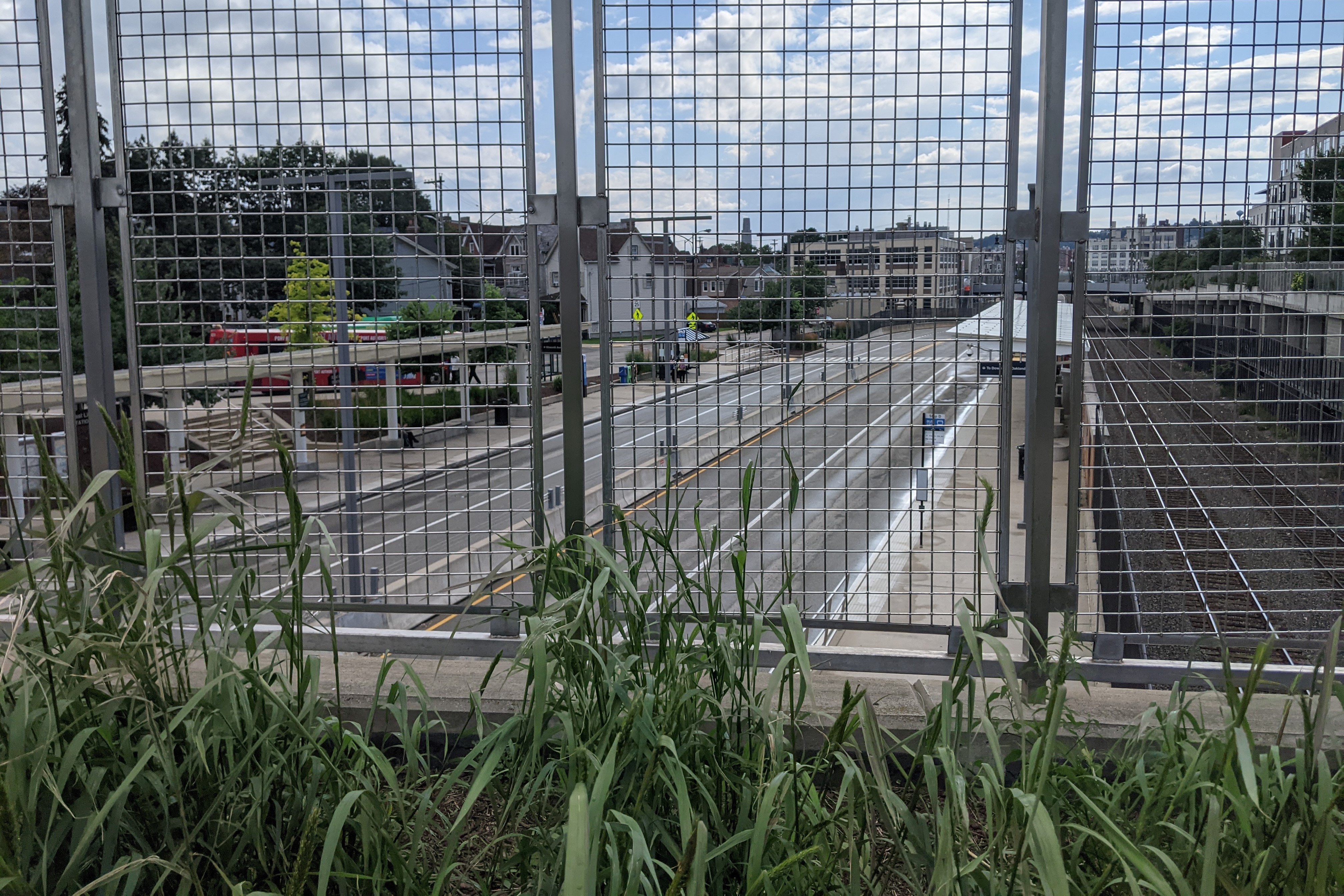
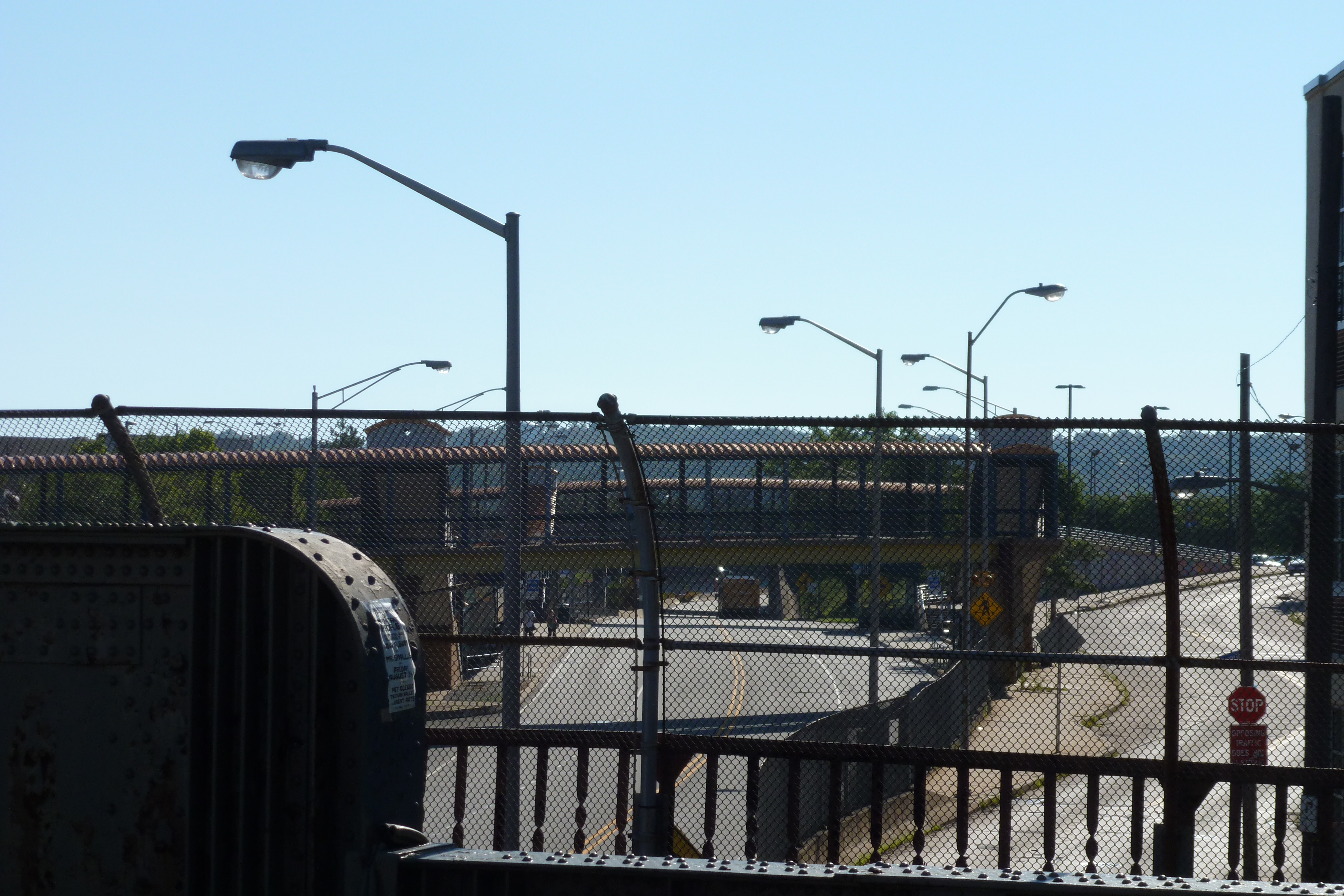
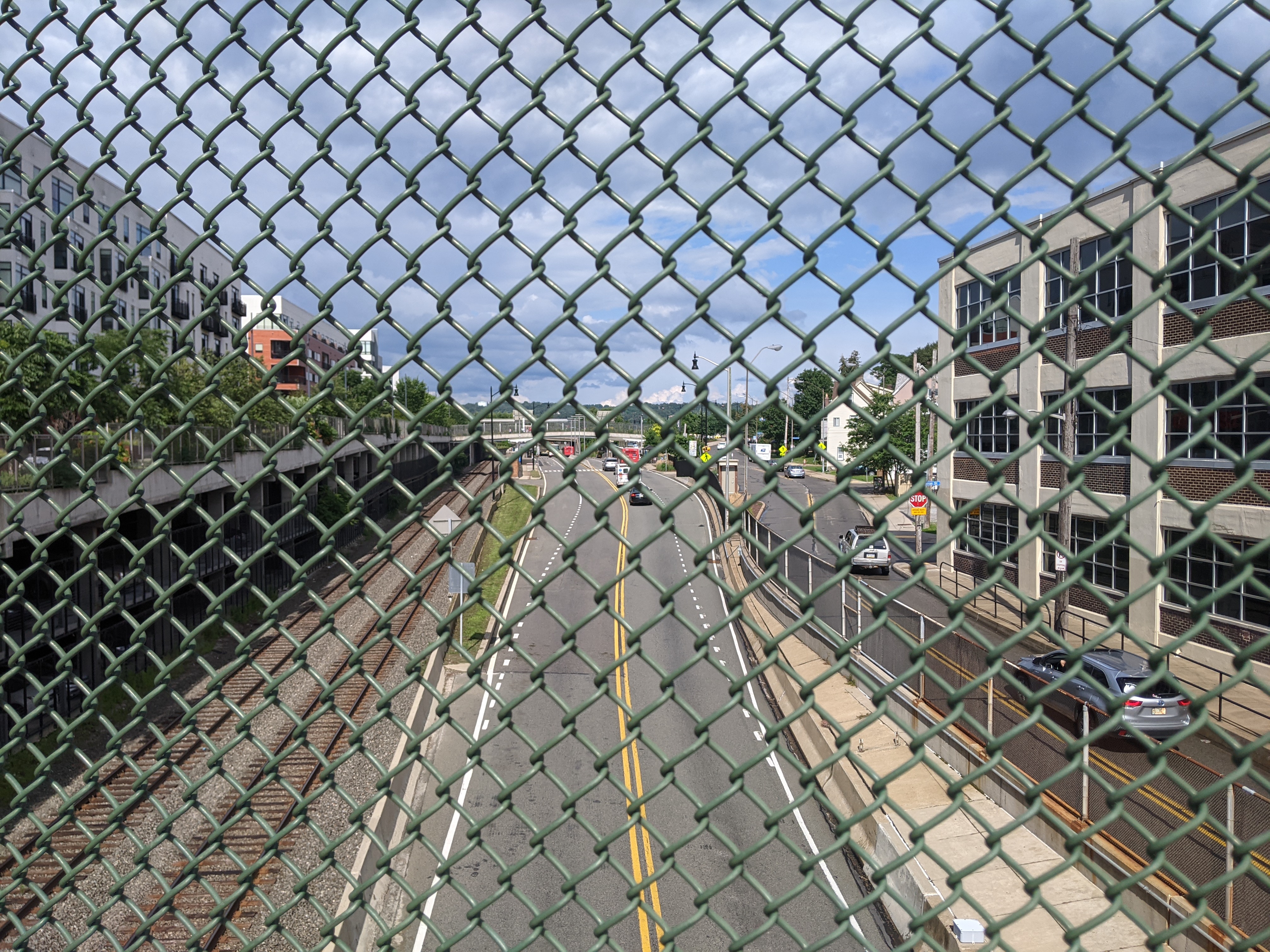
Just beyond the South Highland Bridge from the East Liberty Pedestrian bridge is the busway’s East Liberty Station. When I moved to Pittsburgh over a decade ago, there were two pedestrian bridges over the busway and train tracks – one at either end of the station – and a ramp providing buses on Penn Avenue access to the busway. Across the tracks from the busway was a one-story, graffiti-covered warehouse, a parking lot, and a drive-through bank. Along Penn Avenue and connected by the ramp to the busway was a major bus stop on its own governor’s drive.

All of this was replaced in 2014-2015 with a transit-oriented development. The two boxed-in (a step beyond caged) pedestrian bridges were demolished and replaced by a new open bridge (first photo pair below) and a crosswalk on the busway. The bus ramp was renovated into an accessible pedestrian ramp (seen in the east view, second photo pair). Plantings were introduced on both the bridge and the ramp, changing this portion of the vast paved, treeless area into a desert oasis. It is still a hot and uncomfortable place to be in the summer months, but at least now there are black-eyed Susans to bring cheer.

The warehouse, parking lot, drive-through bank, and Penn Avenue bus stop were replaced with a massive mixed-use complex called EastSide Bond (glimpsed on the right in the final pair of photos, also visible in the South Highland Avenue Bridge Then & Now post). The new development features 360 residential units, 43,000 sq ft of retail (most of which is occupied, except for the promised anchor tenant), 554 parking spaces in a garage under the buildings, and a 120-space bike parking garage (which I’ve only ever seen a handful of bikes in, probably because Penn Avenue is not a bike-friendly thoroughfare).

Similar to the older, new developments near the East Liberty Pedestrian Bridge, this site and its uses cater to a White and moneyed demographic. However, in 2010, East Liberty had a population that was 67% Black (down from 72.5% a decade prior) and the median income was $23,000. This means the site is catering to an audience that currently makes up a minority of the neighborhood. Perhaps that is why whenever I pass by or stop at one of the retail locations at EastSide Bond, I feel like it has a luke-warm success. In contrast, the Target across the street is heavily trafficked as is the busway station – both are used by the current population.

Once upon a time, Black residents were pushed to East Liberty through Urban Renewal and the demolition of their previous lives. Now, we may be witnessing the pushing out of Black residents through redevelopment and the demolition of their current lives. The current proposed redevelopment of the shopping center south of the East Liberty Station promises to bring the grocery store back and to include 35 affordable units out of 232. There is no mention of whether any of the other smaller retail stores that catered to the current population will be returning. I also wonder if the grocery store will still carry beauty products for darker skin tones when it reopens. Down the street, the redevelopment of the former affordable and predominantly Black Penn Plaza apartments is the latest project that is definitely catering to people who are not the majority residents of the neighborhood, after permitting affordable housing units to deteriorate through neglect before demolishing them.

Bridge Collapse: Two Month Update

It’s been two months since the collapse of the Fern Hollow Bridge over Pittsburgh’s scenic Frick Park. Below is a summary of updates from across the city and state on activity related to the collapse. If I have missed anything of interest, please share it in the comments and I will try to include it in future updates.

  • As of March 8, construction is expected to start in April on the new bridge.
  • The design of the new bridge was released causing chagrin among neighbors, urban designers, accessibility advocates, mobility advocates, and users of the park. The only people I have heard directly or indirectly say only positive things about the new bridge design are engineers (though some engineers also have concerns).
  • The Pittsburgh Business Times compiled a detailed special report on bridge conditions in the region and what is needed to repair them. Allegheny County has more bridges than any other county in Southwestern Pennsylvania. Statewide, Allegheny County ranks 37 out of 67 for the most poor condition bridges and 44 out of 67 for the most good condition bridges.
  • The Charles Anderson Memorial Bridge has been featured in social media conversations due to its rusted condition. A project to “modernize” this bridge was launched in 2019. The final design is expected to be completed in 2024 with construction starting in 2025.
  • Two local start-ups (robotic- and drone-based) are working to provide bridge inspection services that could create more detailed, less biased condition analyses in less time to municipalities and other bridge owners. (Pittsburgh Business Times, February 25, 2022)
  • No new information has been released in the National Transportation Safety Board’s ongoing investigation into the collapse. According to an article in the Post-Gazette, the investigation will take at least a year.
  • The City’s legislation to establish the Commission on Infrastructure Asset Reporting and Investment was signed by the Mayor on March 3, 2022, and is effective as of that date. (City Council legislation page)
  • The City’s legislation to establish public reporting procedures on city infrastructure by the Department of Mobility and Infrastructure also became effective on March 3, 2022, with the Mayor’s signature. (City Council legislation page)
  • There are no new updates on the bridge repair being conducted by Port Authority, but as a resident in the affected area, I recently received a letter from Port Authority. This letter announced that they were taking advantage of the existing detour to implement some stop upgrades to the T stations in Beechview and Dormont. These renovations had been on the schedule for the near future and were being bumped up due to the current rerouting. The stop upgrades are expected to take 6 months. The letter did not mention how that would impact the resumption of normal T service. Based on the press release from February 16, there are only 6-8 more weeks of work before the bridge is restored. It seems unlikely that normal T service will resume in Beechview for several months after that with the continued concurrent work on the stops in the neighborhood.
  • A February 4th Facebook Live Q&A with PennDOT is the only reference I have found yet that says the inspections have been completed on the 5 other bridges in Pennsylvania that use the same K-design as the collapsed Fern Hollow Bridge. At about minute 19:30, a representative from PennDOT states that these bridges have all been inspected or will be inspected by the end of the day on February 4th. He also said that they are all in better condition with ratings of “fair” and “good,” instead of Fern Hollow’s “poor condition” rating, and none have weight restrictions.
  • I also found that PennDOT has its own interactive map of bridges in the state and their inspection status separate from the Federal Highway Administration’s resource.
  • The City of Pittsburgh announced on March 2 that they are starting maintenance repairs to the Centre Avenue Bridge that will take place on the underside over several months. The work is not expected to affect pedestrian or vehicular traffic.
  • The City of Pittsburgh announced in the middle of March that they were “proactively” closing the northern sidewalk on the Meadow Avenue bridge to conduct “necessary,” but “not an imminent structural concern” repairs to the bridge following a routine inspection.

Previous Fern Hollow Bridge Posts:

One-Month Update

Two-Week Update

One-Week Update

Day After

Breaking News

Then & Now: South Highland Ave Bridge

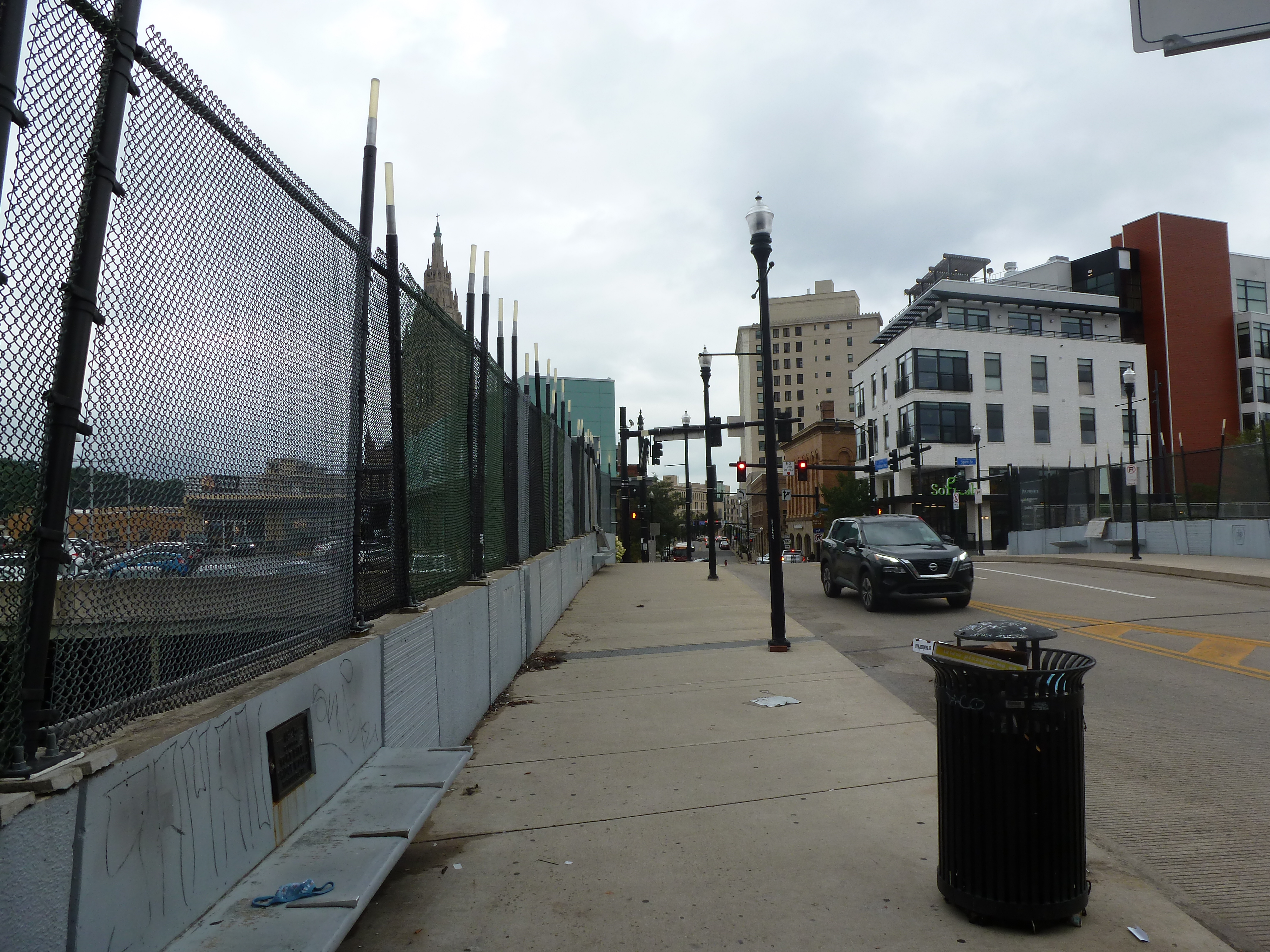
When I first started walking Pittsburgh’s bridges, the South Highland Avenue Bridge rated among those that were more than a little creepy. First, you were partially caged in. Second, the integrity of the wooden planks holding you up seemed more than questionable. I have no doubt that this bridge was rated in “poor condition” at that time. Now, the new bridge is considered in “good condition” per the National Bridge Inventory as of its November 2017 inspection. It has presumably been inspected twice more since then (November 2019 & November 2021), but those results have not been made publicly available yet.

The reconstruction of this bridge in 2013 made me hopeful that the similarly creepy bridge at South Negley Avenue would also shortly be reconstructed. This has yet to happen. My hope is renewed with the passage of the Infrastructure Investment and Jobs Act coupled with the greater attention “poor condition” bridges are receiving this year after the collapse of the Fern Hollow Bridge. However, according to a recent article on the redevelopment of the busway station adjacent to the South Negley Avenue bridge (Tribune Review, February 16, 2022), funding issues and coordination with Norfolk-Southern Railroad are causing continued delays to the proposed reconstruction of this bridge.

The new South Highland Avenue is a definite improvement over the last one. I no longer cringe at the thought of walking across it as being fenced in is better than being caged in (second photo set below). Yet, it is still not a pleasant experience to walk this bridge.  On the other hand, the Smithfield Street Bridge, for example, is a nice bridge to walk despite the many places where the sidewalk has rusted out providing direct views to the river below. The difference in these experiences is in part due to the bridges’ environments – nothing short of climate change will return the former river to what is now the busway and train tracks under the South Highland Bridge. However, design also plays a part in the experience. Many people in Pittsburgh’s architecture and design community are concerned that a poor bridge design will be rushed through on the Fern Hollow Bridge replacement with the excuse that it is an emergency (WESA, March 3, 2022). As the Fern Hollow Bridge has pleasant surroundings, it will be the bridge’s design that makes or breaks the experience of using the future bridge.

The South Highland Avenue bridge was replaced before it turned into an emergency. I assume the reason why it was replaced when it was while the South Negley Bridge continues to rust away is the massive amount of investment and redevelopment that was put into the East Liberty neighborhood in the last 10+ years. Looking west from the bridge, the early developments are visible, including the East Liberty Pedestrian bridge that was last month’s 10-year anniversary featured bridge and the Whole Foods location. These developments are old enough that the “Then” and “Now” views (third photo pairing) look substantially the same. The newer developments are clear in the east view (final photo pairing below), which looks like a completely different world between the “Then” and “Now” views. Next month’s feature will discuss this redevelopment in greater detail.

In Memoriam & Bridge Collapse Update

My uncle Jon, the writer, died this week. While he was and did much more than write, our strongest connection was through words. He taught me the basics of blogging, helped me select the platform for urbantraipsing, and gave me advice and support along the way. After years of living with advanced cancer, he was physically in very poor condition. Mentally and spiritually, he remained strong and very much himself until the end. A creative, compassionate, and witty man, Uncle Jon will be much missed.


Fern Hollow Bridge collapse updates, one month later:

  • No new information has been released in the National Transportation Safety Board’s ongoing investigation into the collapse.
  • The City’s legislation to establish the Commission on Infrastructure Asset Reporting and Investment underwent several amendments last month, but appears to have reached its final version. Perhaps it will be passed and sent to the Mayor for signature soon. (City Council pending ordinance)
  • The City’s legislation to establish public reporting procedures on city infrastructure by the Department of Mobility and Infrastructure was also amended multiple times. This one appears to have caused more questions as it was also sent for a legal opinion before being passed out of committee. (City Council pending ordinance)
  • The Port Authority’s South Busway Bridge remains closed with repairs expected to take up to 3 months, though the detour due to the bridge closure is still listed as indefinite (the end date shows as December 2049). (Press release, detour details)

Previous Fern Hollow Bridge Posts:

Two-Week Update

One-Week Update

Day After

Breaking News