Why Bridges?

The week before Bridge Madness 2025, my aunt asked why I’m interested in bridges. The answer actually has nothing to do with the bridges themselves.

In 2009-2010, I volunteered in AmeriCorps in Pittsburgh, a city I thought I knew until AmeriCorps exposed me to a different side of the city. After 11 months of eye-opening experiences teaching me that Pittsburgh is far more than its downtown, museums, universities, and middle- and upper-income neighborhoods, I found myself attending a fundraiser at a house on Grandview Avenue.

Grandview Avenue is well named. It sits on top of a ridge directly across the river from downtown Pittsburgh, providing great views of the skyline and neighborhoods along the rivers. It is a popular spot to bring out-of-town visitors to show off the city and ride one of the two remaining inclines. I had been there countless times first as an out-of-town visitor and later as a resident bringing out-of-towners. The view from the street and lookout platforms is very familiar to me (and still fun).

But on that day in 2010, I suddenly found myself up 4 stories on a rooftop deck, looking at the same buildings, rivers, and neighborhoods I thought I knew and feeling like I was looking at a completely different scene.

It fascinated me that moving 40 feet made something familiar look brand new. As I stood at the railing pondering this, instead of mingling with the strangers who could afford a ticket to this fundraiser (unlike me who had been gifted a ticket), Pittsburgh’s iconic bridges were part of the view. I realized that the city would look completely differently from each of those bridges. And so I decided to start walking the bridges to continue increasing my perspectives and awareness of Pittsburgh.

The rest, as they say, is history. I thought it would be just a summer project. However, it has been so interesting….and there are still so many bridges to walk….that it has become a life habit. In the meantime, I have started getting interested in the structures themselves, not just the views from them.

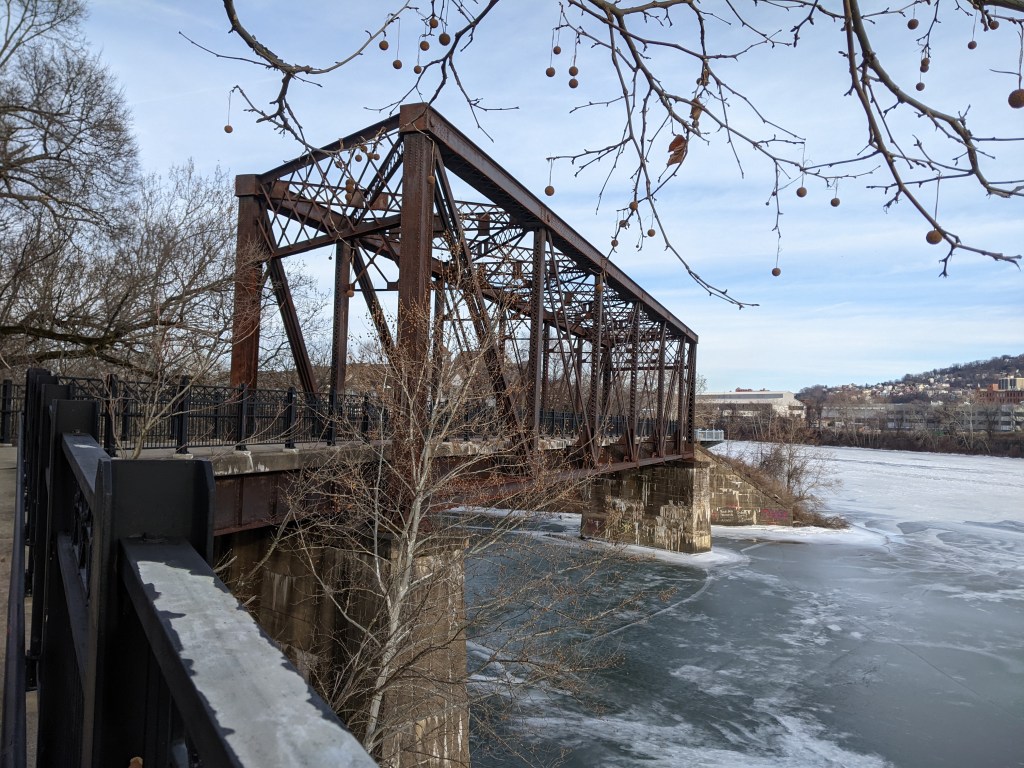
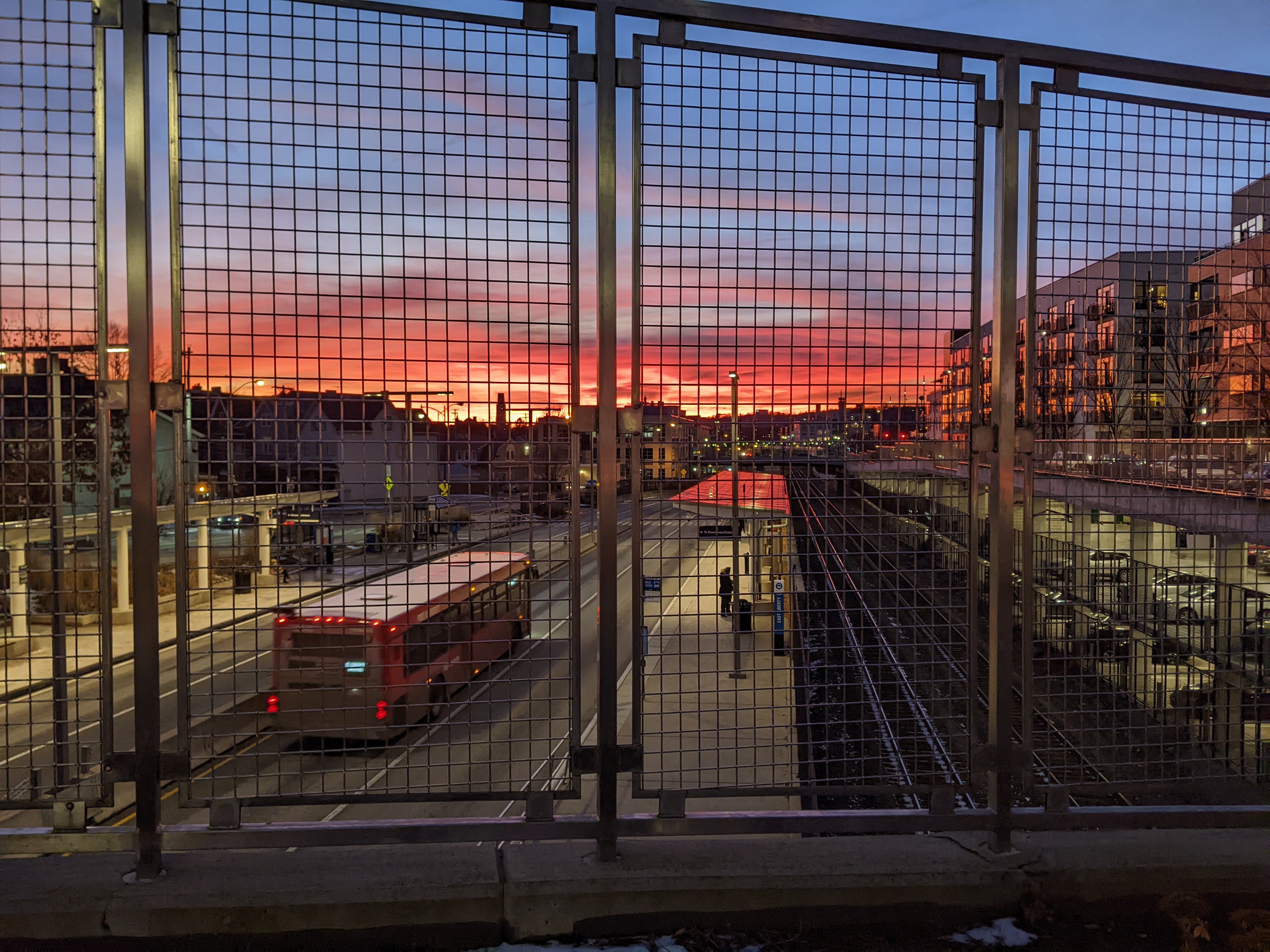
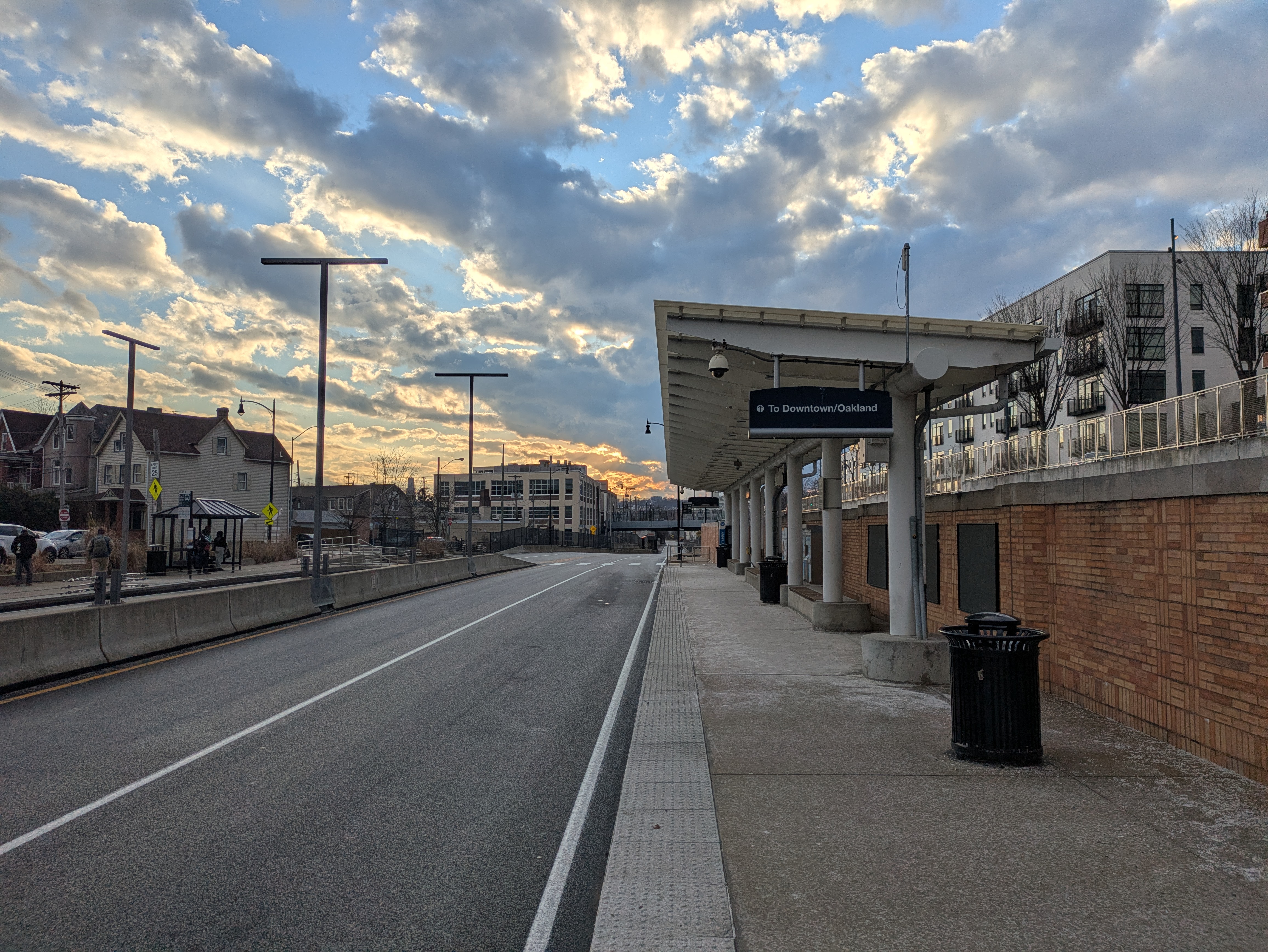
Two days after I told this story to my aunt, I walked across part of the East Liberty Station Pedestrian Bridge (Bridge Madness Champion 2024) at sunset. This is not the first time I’ve been on this bridge going about my daily business when I needed to stop to take photos of the view of sunset. In this instance, I then immediately walked down the steps to the busway station below. My experience of the sunset changed completely with the change in perspective. From the bridge, it seemed spectacular, but at the sidewalk below I no longer recognized it as something worthy of notice.

Have you ever noticed a time when a slight shift in perspective changed how you viewed your surroundings?
Bygone Bridges of East Liberty

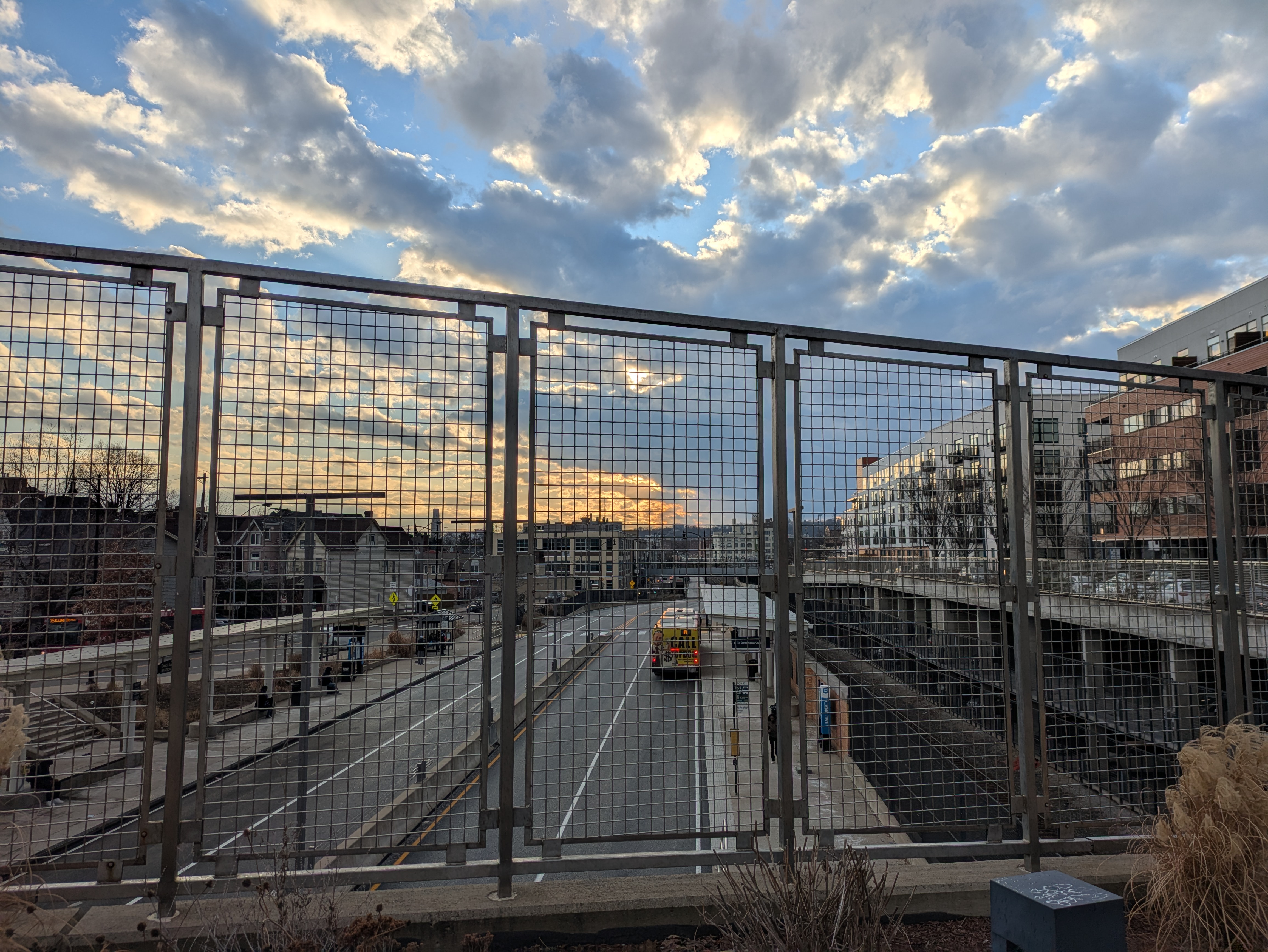
The winner of the 2024 Bridge Madness tournament, the East Liberty Station Pedestrian Bridge, faced stiff competition in the Final Four round from the Spahr Street Pedestrian Bridge. Both of these bridges are relatively new, constructed with funding sources from the Obama Administration. When I moved to Pittsburgh 15 years ago, neither of these bridges existed. There was no pedestrian connection at Spahr Street and the pedestrian bridges at East Liberty Station were boxed-in bridges with no greenery. (For a side-by-side comparison of the prior and current East Liberty Station bridges see their Then and Now post.) These are not the only changes to bridges in this area. In fact, I suggest that East Liberty has seen more bridge turn-over in the last 100 years than any other part of Pittsburgh.

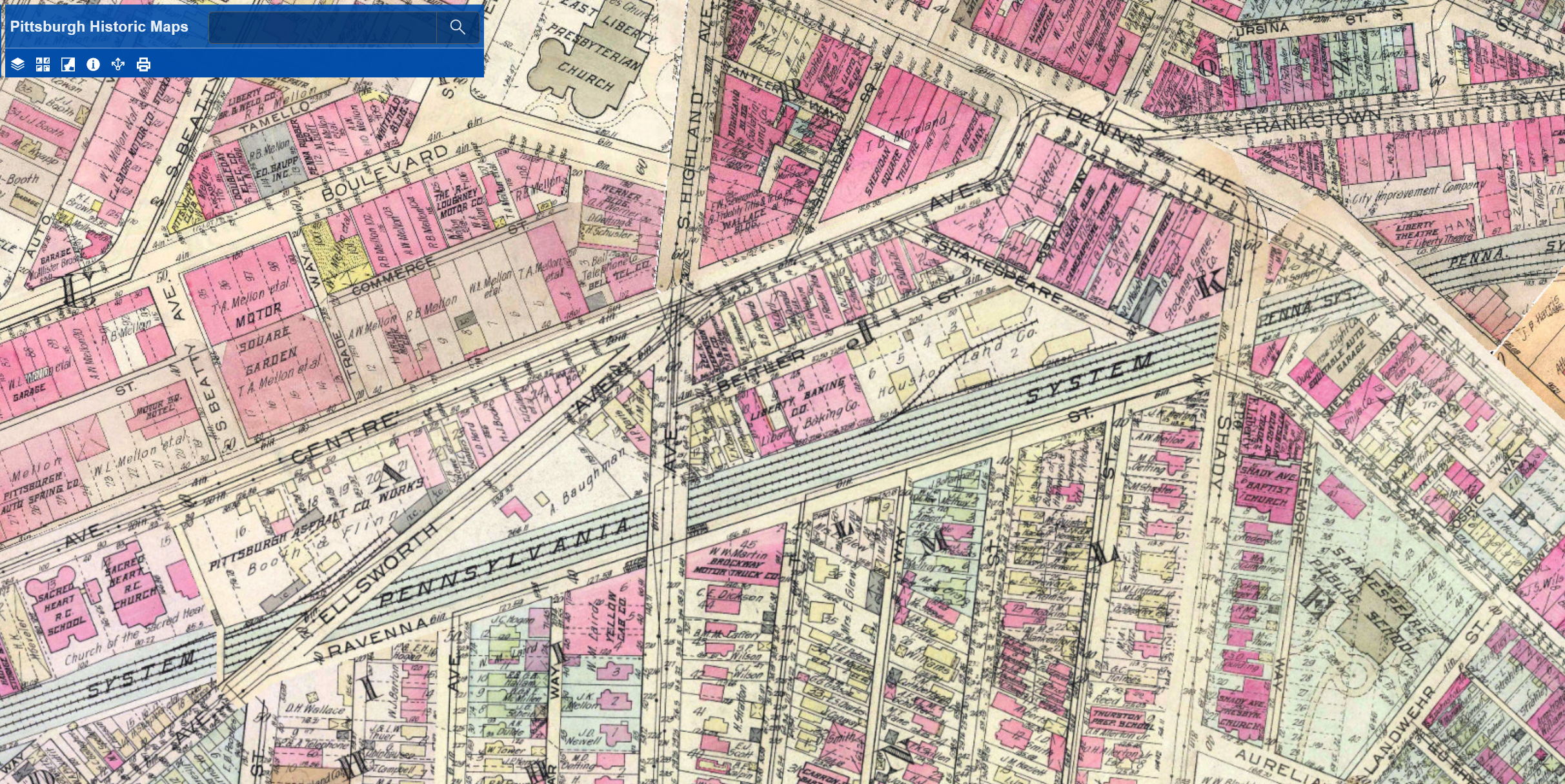
G. M. Hopkins Map 1923 https://www.arcgis.com/apps/View/index.html?appid=63f24d1466f24695bf9dfc5bf6828126
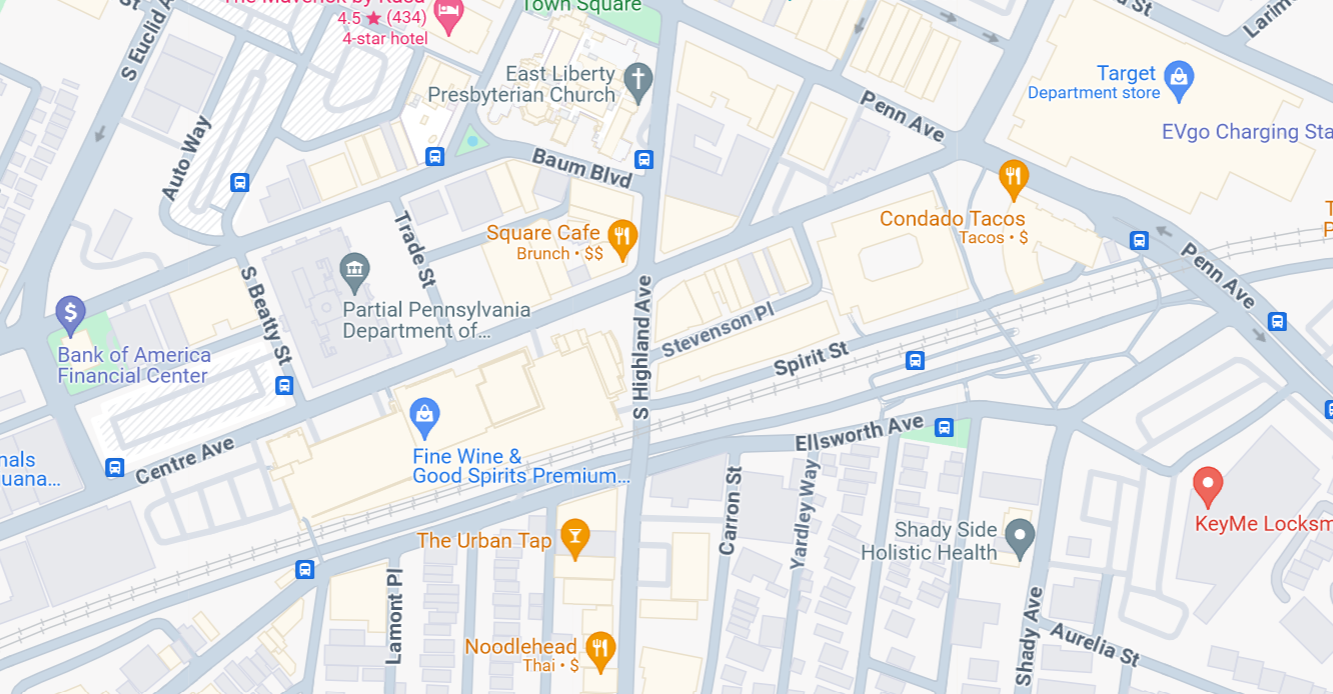
Google Map 2024 https://www.google.com/maps/@40.4595742,-79.9247739,17z?entry=ttu

The Penn Avenue and South Highland Avenue Bridges have stayed fairly constant, at least as far as location is concerned. The South Highland Avenue Bridge was rebuilt and redesigned in the 15 years I’ve lived here. While the Spahr Street Pedestrian Bridge is new, the 1923 G. M. Hopkins map above shows that there used to be a pedestrian bridge at this same location. The historical precedent for a pedestrian bridge here may be another factor for why the bridge was located here and not further east where residents have been asking for a pedestrian bridge for years.

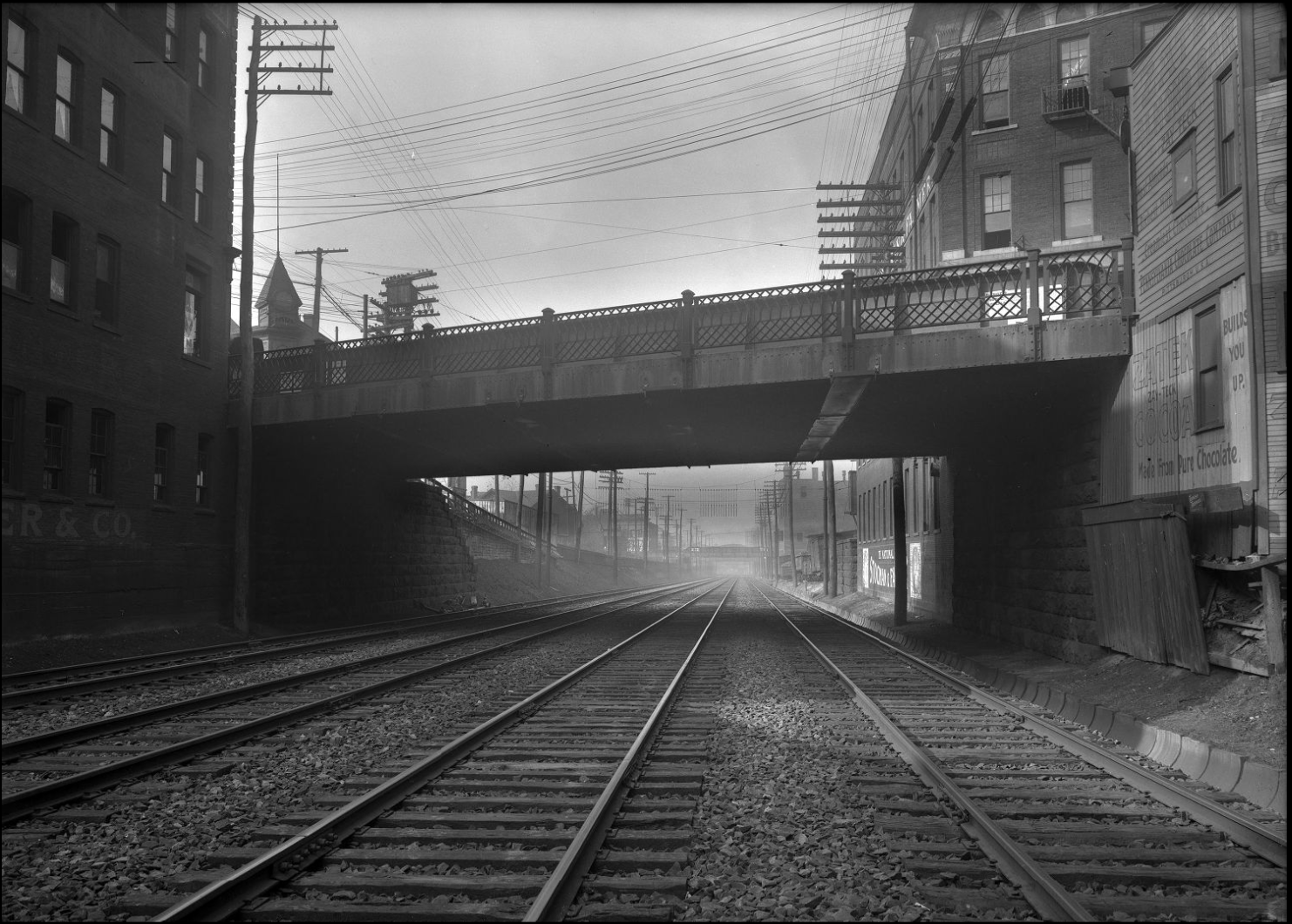
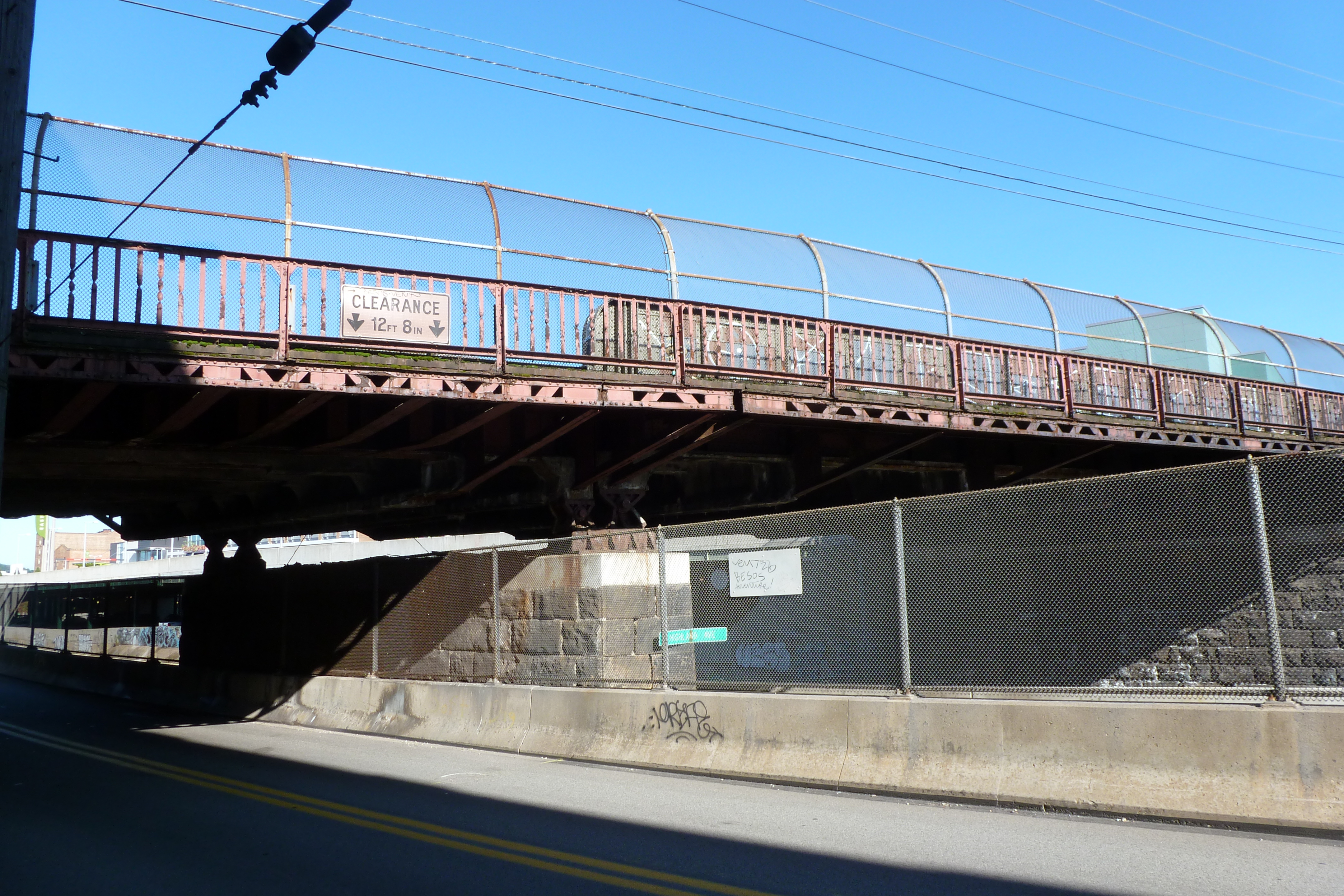
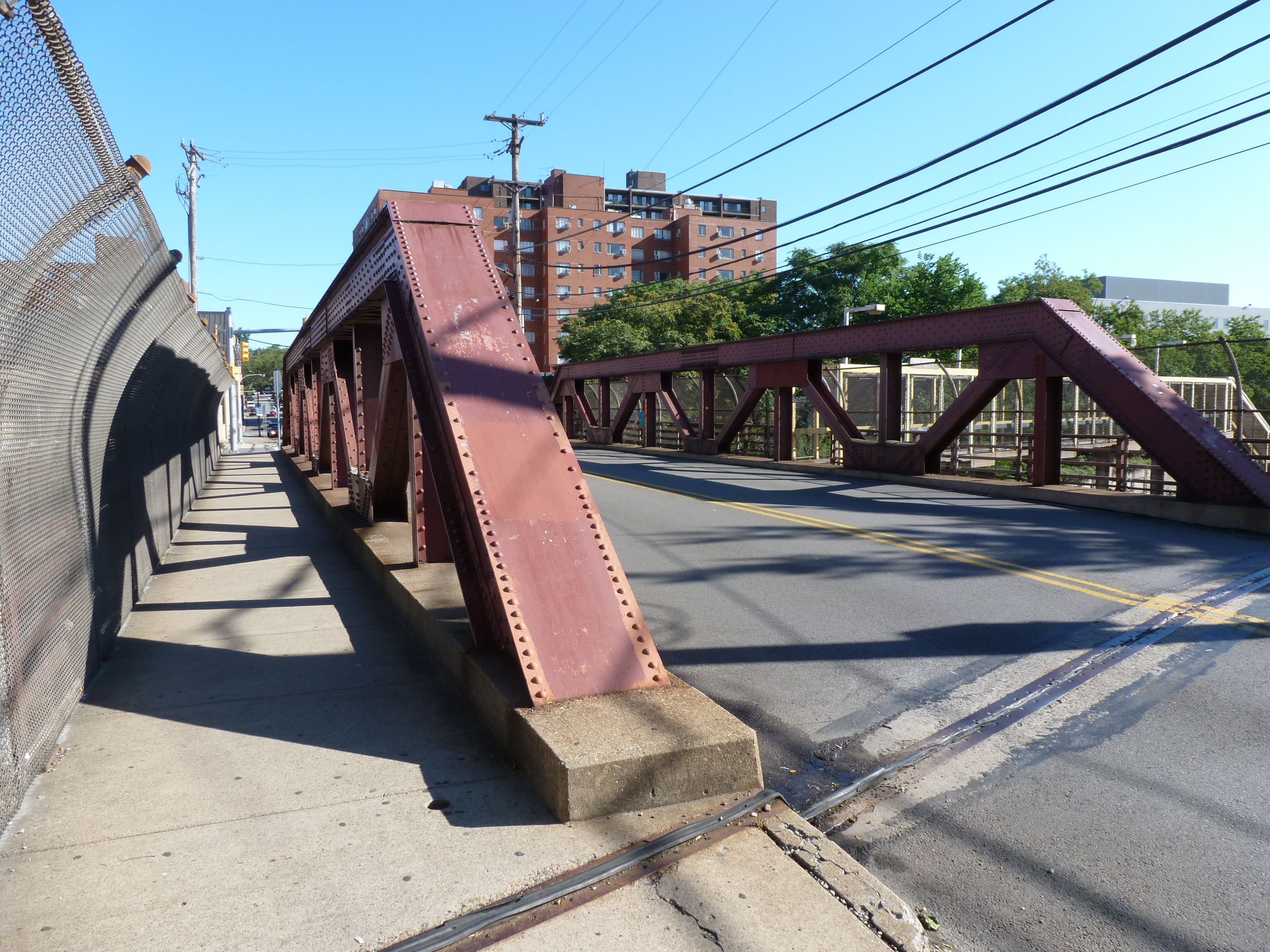
The other major bridge changes in this area are the former Ellsworth Avenue and Shady Avenue Bridges that show on the 1923 G. M. Hopkins map. Both of those are long gone. I assume they were casualties of the massive Urban Renewal of the neighborhood that significantly impacted the street grid of the area. The digital archives of Historic Pittsburgh include photos of these former bridges. The Shady Avenue Bridge seems to have been of a similar design to the former South Highland Avenue Bridge. The Ellsworth Avenue Bridge seems to have been of a similar design to the current South Negley Avenue Bridge that is just outside the map frame to the west. One key difference is that cages were added at some point to the South Highland and South Negley Bridges.

Best Pittsburgh Bridge?

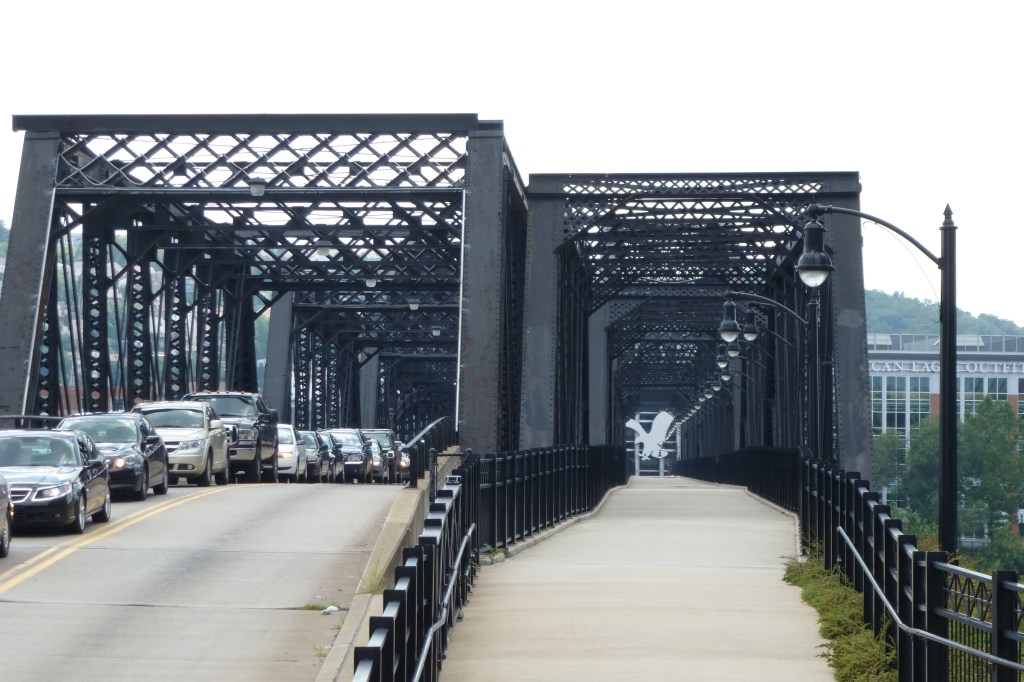
From time to time, someone will ask me which Pittsburgh bridge is my favorite. I typically answer the Smithfield Street Bridge. The shape and color of its trusses are unique in a city of golden bridges. The lights gently rising and falling along the curves the the trusses create a soft reflection on the river. Walking over it placed the stress of work on the other side of the river. Walking over it, it’s best not to look down at the holes rusted through the sidewalk that reveal the rushing water underneath.

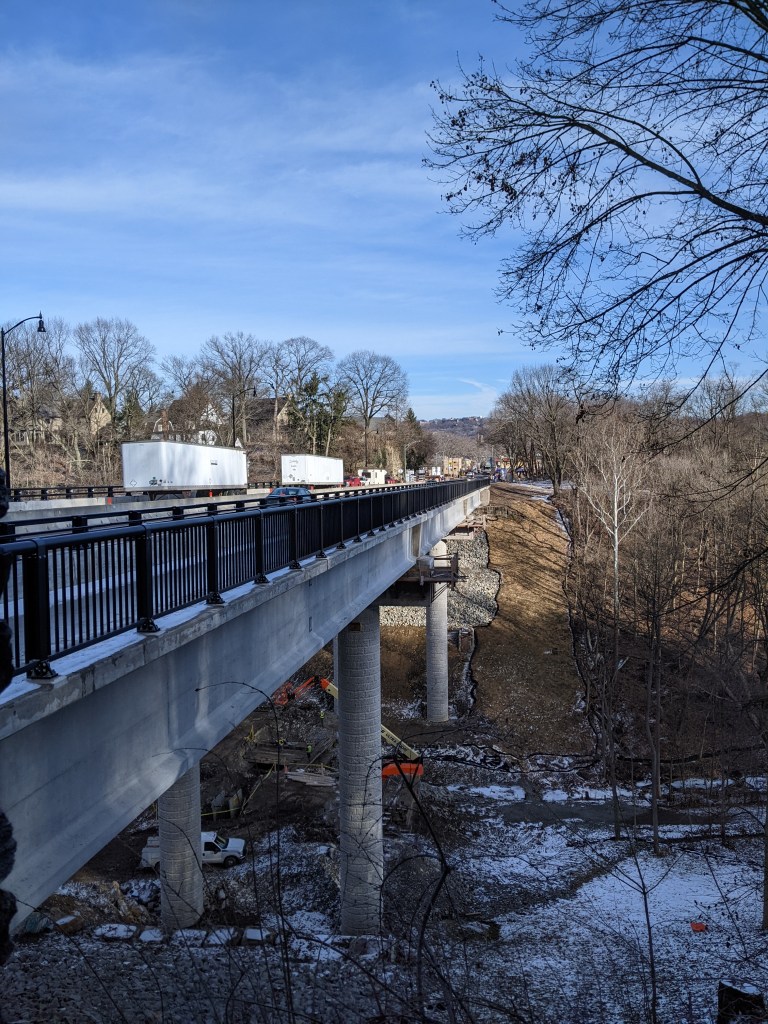
This question came up again when my family was visiting for the holidays. I had postponed my first walk across the new Fern Hollow Bridge about a week to share the experience with them. While we were walking across it, I was asked what bridge(s) I liked in Pittsburgh. While I answered that the Smithfield Bridge is probably my favorite, we had experienced that one multiple times in the past, so I started to think about what are the other bridges I find interesting that are less visible than the Smithfield Bridge. This spurred an impromptu driving tour of bridges in Pittsburgh.

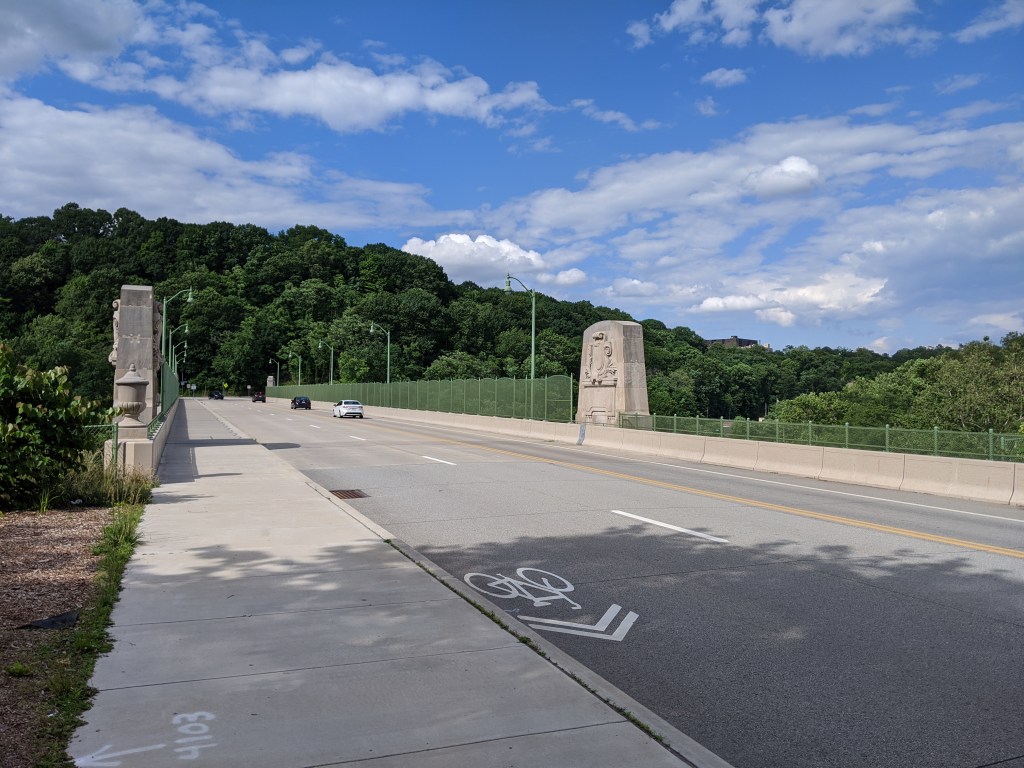
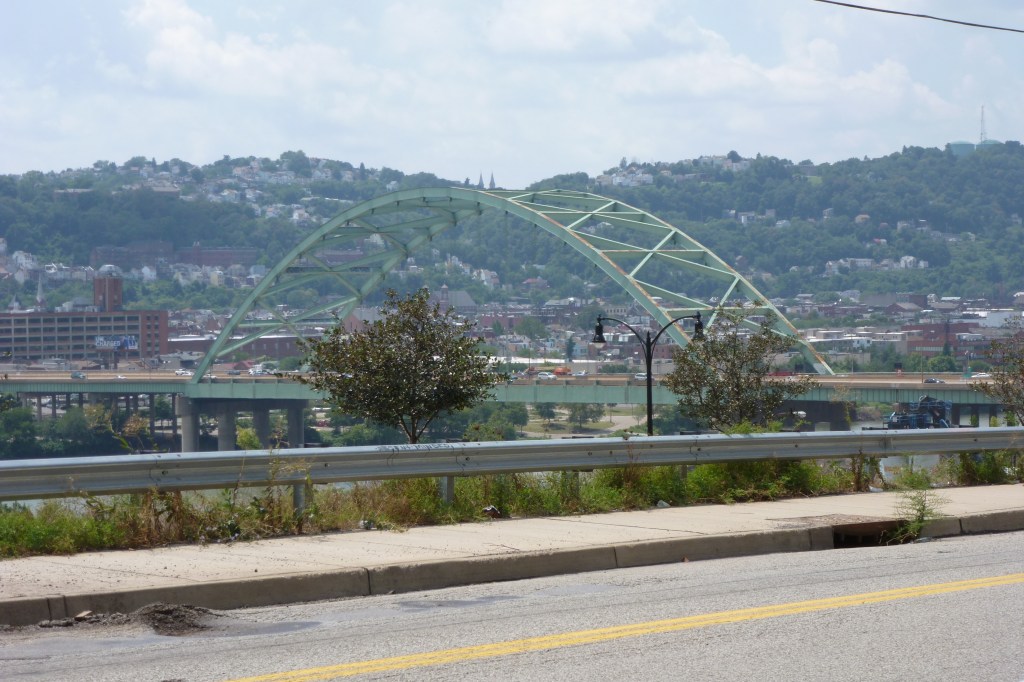
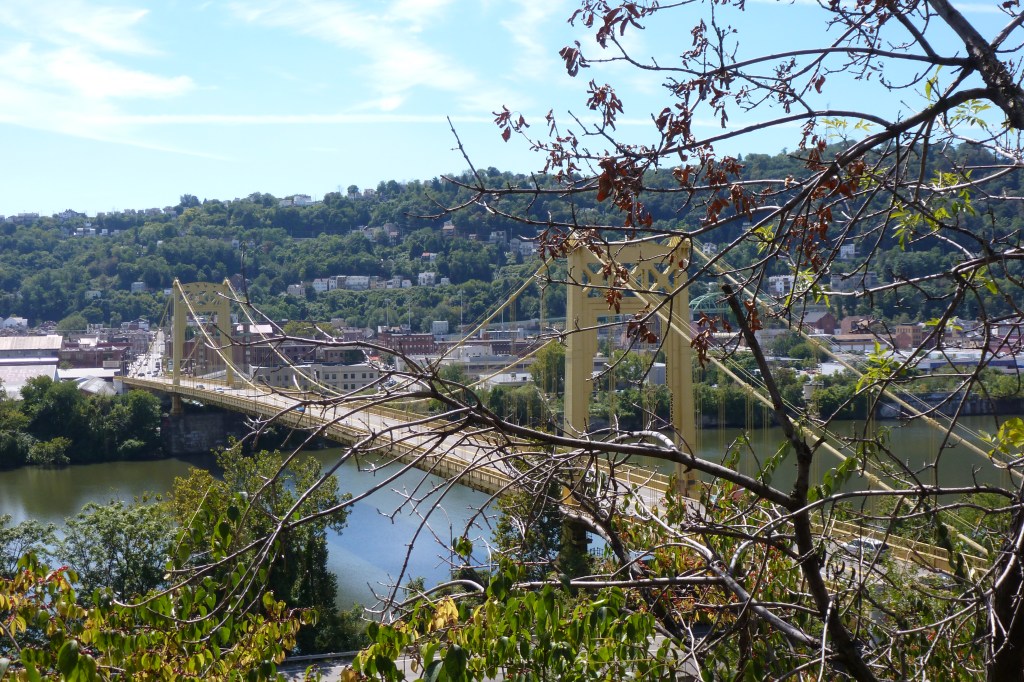
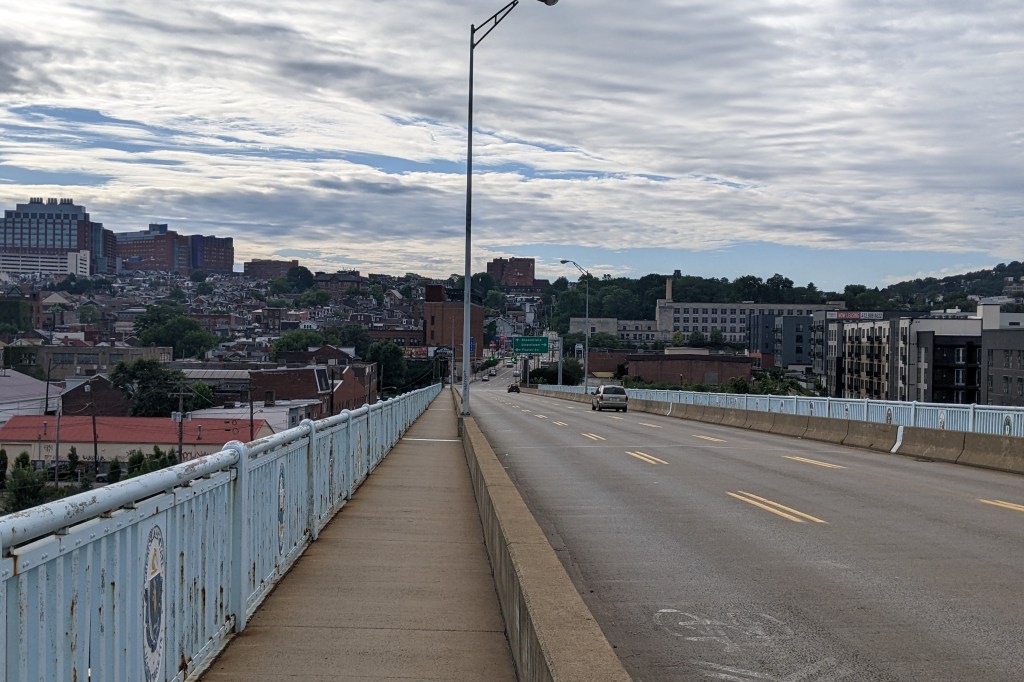
We went from the Fern Hollow Bridge to the Greenfield Bridge, as the last time we were all in Pittsburgh together we watched the cloud of dust from the implosion of the former bridge through the trees of Schenley Park. We passed the Hot Metal Bridge, Birmingham Bridge, and South 10th Street Bridge before passing through the Armstrong Tunnel for the fun of it. That positioned us to encounter the CAP – which is one of those bridges that doesn’t look like a bridge – on our way toward the Allegheny River. I added an extra turn so that we could pass over the 28th Street Bridge – the only through truss bridge over the busway – before crossing the 31st Street Bridge (my other favorite bridge to walk, except for the fact that it is out of the way). We got out of the car at this point to walk the pedestrian/bike trail bridge to Herr’s Island. While that was the end of this unofficial tour, we did pass by the 40th Street Bridge and cross the R.D. Fleming or 62nd Street Bridge to complete our loop.

Your Choice

In March, you will have the chance to vote for your favorite Pittsburgh River Bridges in the 2023 Bridge Madness Tournament. Details will be announced on March 7.

Bridge Photos

Tour Map

Then & Now: Penn Ave Bridge Ramp

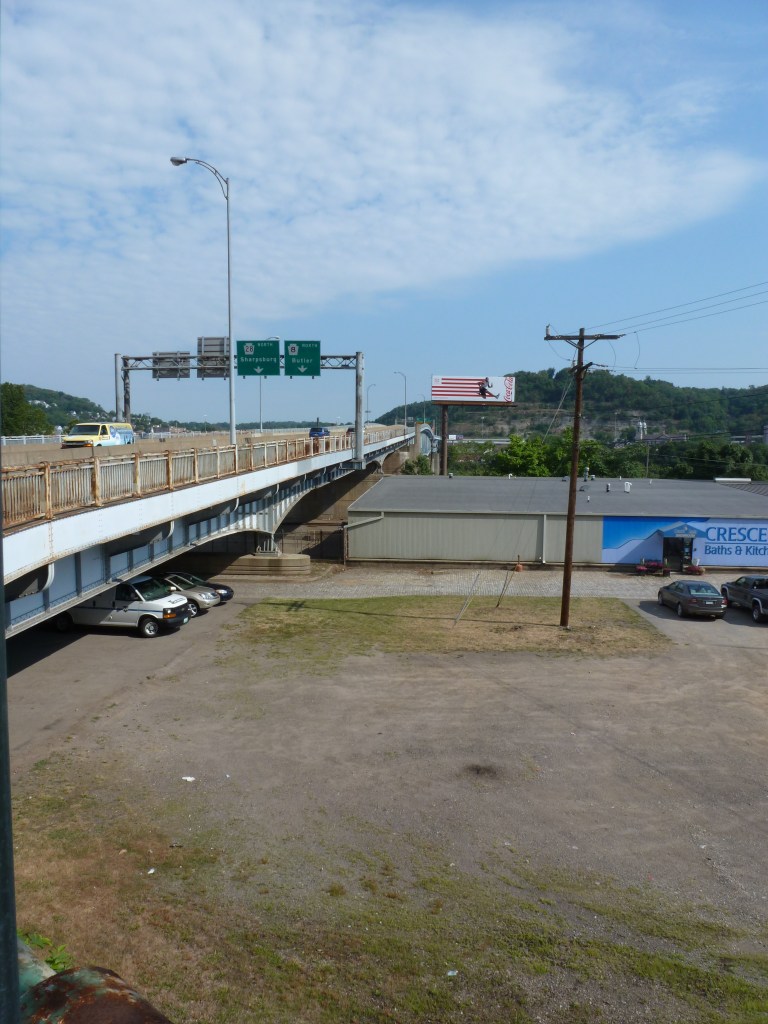
Closing out the East Liberty portion of the Then & Now 10-year anniversary series is the Penn Ave Bridge Ramp. This ramp inspired the second Pittsburgh edition of What is a Bridge?. As best as I can make out from the data on the National Bridge Inventory, the Federal Highway Commission does not consider the ramp a bridge. It is not marked as one of the bridges inventoried by the Commission. And the data for the Penn Avenue Bridge does not include any approach spans. This leaves me wondering who, if anyone, inspects the ramp.

As I cannot find a public source that shares inspection data of the ramp (if it is inspected), its condition rating is anyone’s guess. However, this lack of data may be attributable to the change the ramp underwent in the last ten years. It was originally a ramp for buses to travel from a major bus stop off Penn Avenue onto the East Busway. With the redevelopment of the East Busway Station, this bus stop was redesigned as a regular on-street stop and the ramp was converted to pedestrian access only (second photo set below). The National Bridge Inventory seems to skip over pedestrian bridges as the East Liberty Pedestrian Bridge featured in February is also not listed.

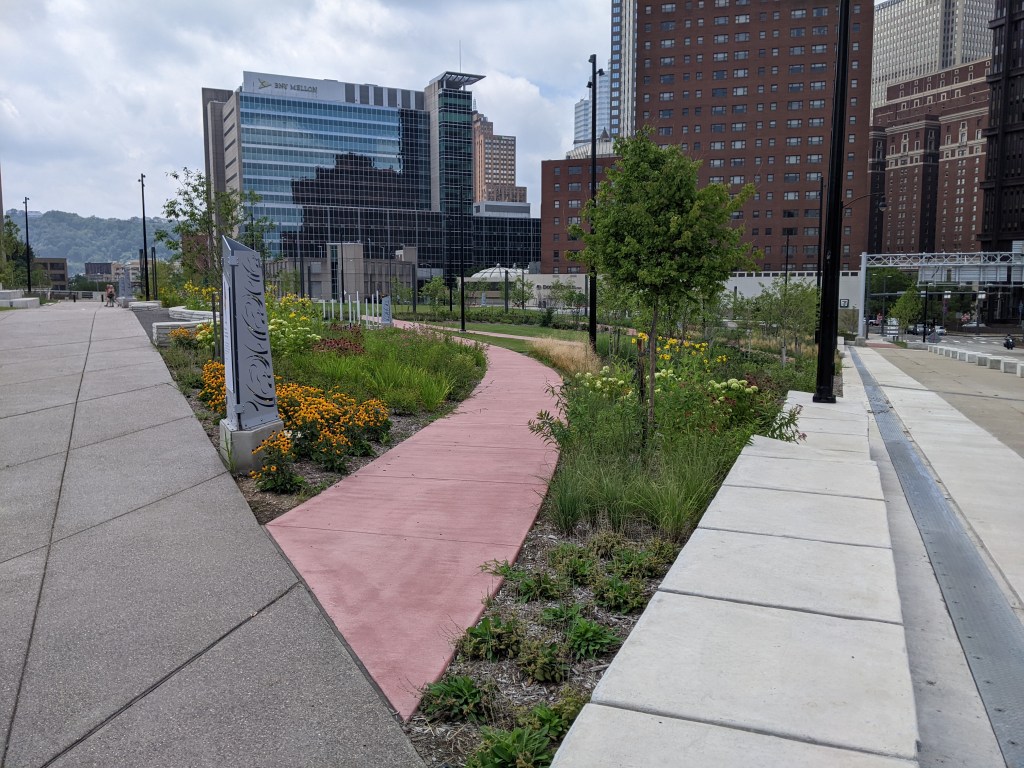
Regardless of the ramp’s condition, its fate now seems tied to the fate of the Penn Avenue Bridge as the gap between the two been filled in with much needed greenspace (first photo set below). The Penn Avenue Bridge was last inspected in May 2020 (which means it probably has been or will be inspected again this month). It received a “poor” condition rating in that inspection – a rating that is worrying for Pittsburghers since the collapse of the “poor” condition Fern Hollow Bridge, despite reassurances from the bridge engineering community that “poor” condition does not necessarily equate to imminent danger.

Then & Now: East Liberty Pedestrian Bridge

Just after I began my 10-year anniversary celebration of bridge walking, the Forbes Ave Bridge over Fern Hollow collapsed on January 28, 2022. This accident shone a light on a pattern of infrastructure funding in the time since I became a bridge person. Ten years ago, there were several bridges built, repaired, or replaced in Pittsburgh. Five years later, the flurry of long overdue investment in our infrastructure stopped – before all the bridges that needed help received it. An article on the aftermath of last month’s bridge collapse reminded me that federal funds were allocated toward infrastructure under the Obama administration. As a result, many bridges that were falling apart were fixed or replaced. It seems that when that funding stopped, so did the repairs. Now that new funding has been allocated under the Biden administration, we should see a similar spurt of investment in our infrastructure, starting with the now missing Fern Hollow Bridge.

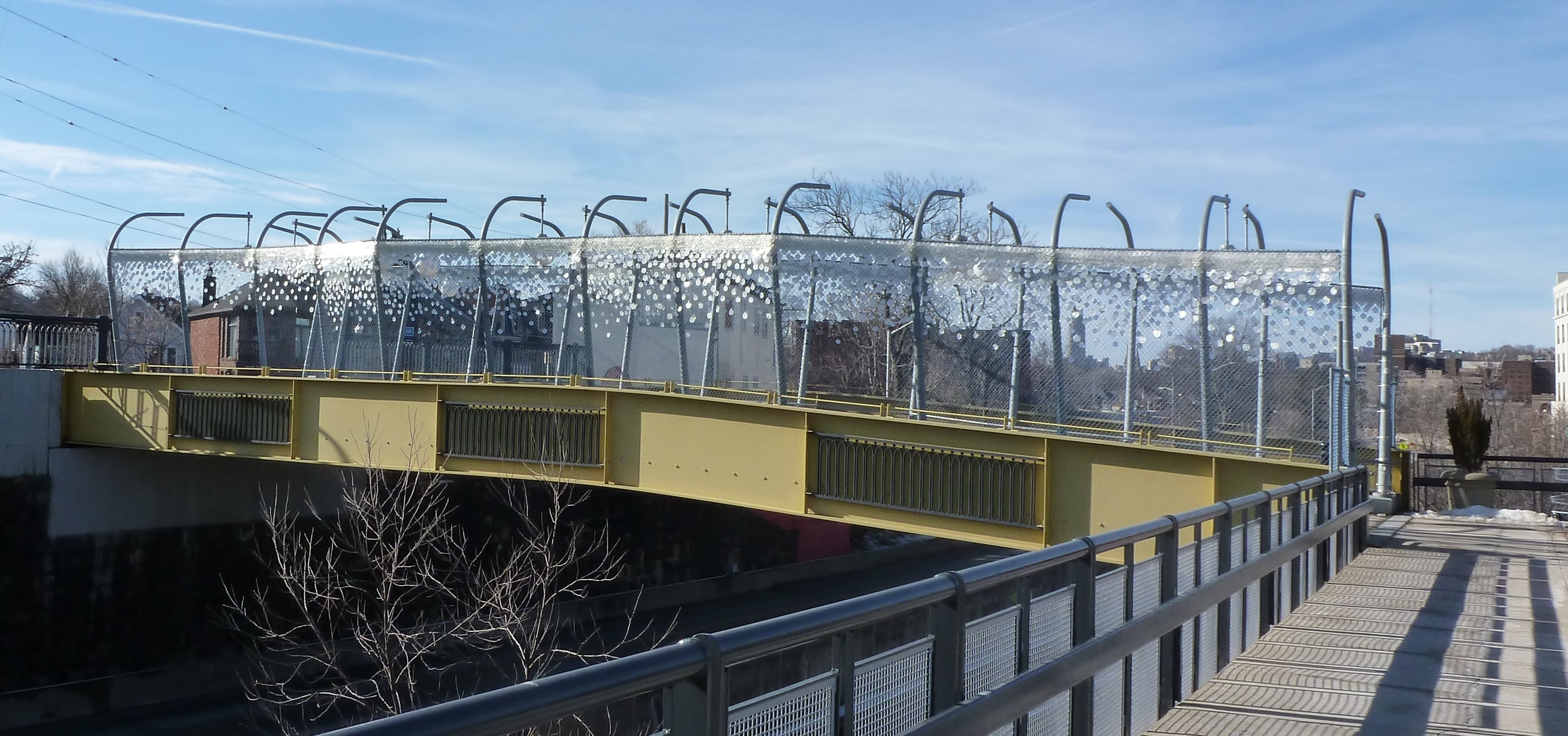
One of the bridges presumably supported by the Obama infrastructure funding was the brand-new pedestrian bridge across the East Busway connecting the Shadyside and East Liberty neighborhoods. This bridge is 10-years old this month. The “road” surface of the bridge hasn’t held up very well: the paint was faded and the top surface was patchy when I returned this month. On the other hand, the over-the-top lamps and giant glitter looked like they have held up well. Though it’s hard to say in wintertime, the landscaping between the cage and the bridge walls also appeared to be well maintained.

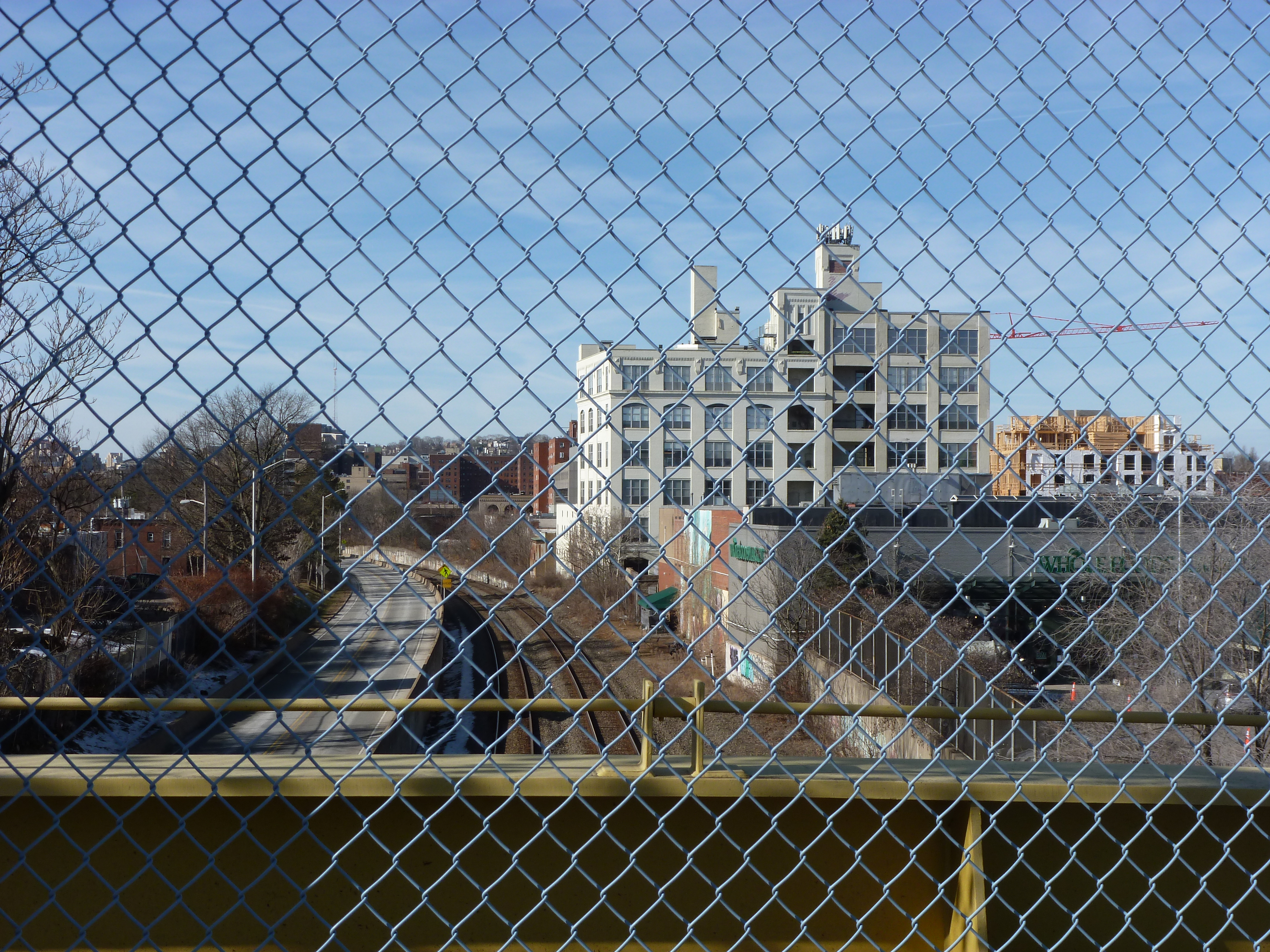
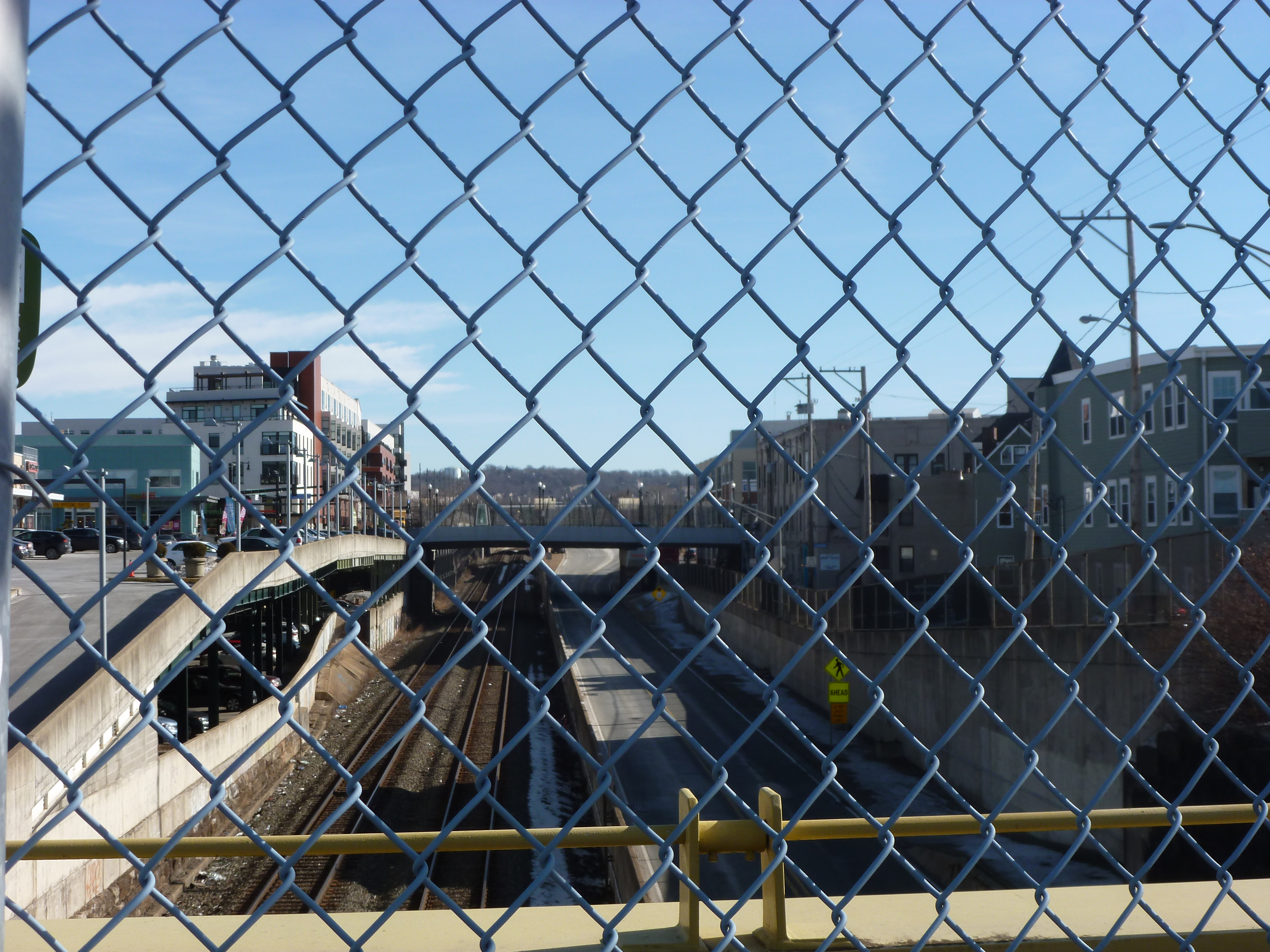
From the bridge, some of the new developments in East Liberty are visible. Looking southwest toward the current location of Whole Foods (soon to relocate), one of the several new apartment buildings along the Baum-Centre corridor is visibly under construction in the far right of the second set of photos. In the third set, the northeast view shows the new South Highland Avenue Bridge and (to the left of the bridge) the final phase of the East Side Bond development that brought several buildings of first floor commercial with residences above.

I was surprised to find that the highly controversial and massive redevelopment of the former Penn Plaza affordable housing complex was not visible from this bridge. Despite being only a quarter mile apart, the first phase of redevelopment is blocked from the bridge’s view by the iconic Motor Square Gardens building. One of the controversies of this new development is that affordable housing units were demolished without replacement for a series of commercial buildings which include the feature anchor of the pricey Whole Foods grocery store.

The pedestrian bridge was controversial when it was proposed and built. It connects the wealthy Shadyside neighborhood to the expensive Whole Foods, a high-end liquor store, and other luxury shops. It is also redundant as the South Highland Avenue bridge is only 0.1 miles away. A quarter mile away, is the neighborhood of Larimar whose residents are primarily living on low-incomes and do not have a walkable route to the lower cost Giant Eagle grocery store or Trader Joes that are just on the other side of the busway from their homes. For years, the residents have been asking for a pedestrian bridge over the busway to give them better access to these stores. Instead of a bridge serving those who need it, an ornamental bridge was built to provide access for those who already have abundant options.

Around the same time that this bridge was built, the Port Authority altered its bus service by eliminating the 94B bus that connected the low-income residents of Larimar with a shopping center featuring Walmart, Giant Eagle, TJ Maxx and similar clothing retailers, and other stores. In addition to providing shopping opportunities for necessities, these locations provided jobs. The 94B bus was never less than half-full (an unusual condition for Pittsburgh buses outside of rush hour). This bus was replaced by the 75 bus, which connected the higher-end shopping centers of South Side Works and Bakery Square through the wealthy residential neighborhood of Shadyside. For years, it was common to be the only person or one of a handful of people riding the 75. Eventually, the Port Authority acknowledged the value of the 94B route and tact it on to the end of the 75 route.

Presumably both the pedestrian bridge and bus route changes of 2012 were supported at least in part by the federal infrastructure funds of the time. With the current round of federal funding, it would be nice to see a greater focus of infrastructure investment for those who need it and not on additional luxury options.