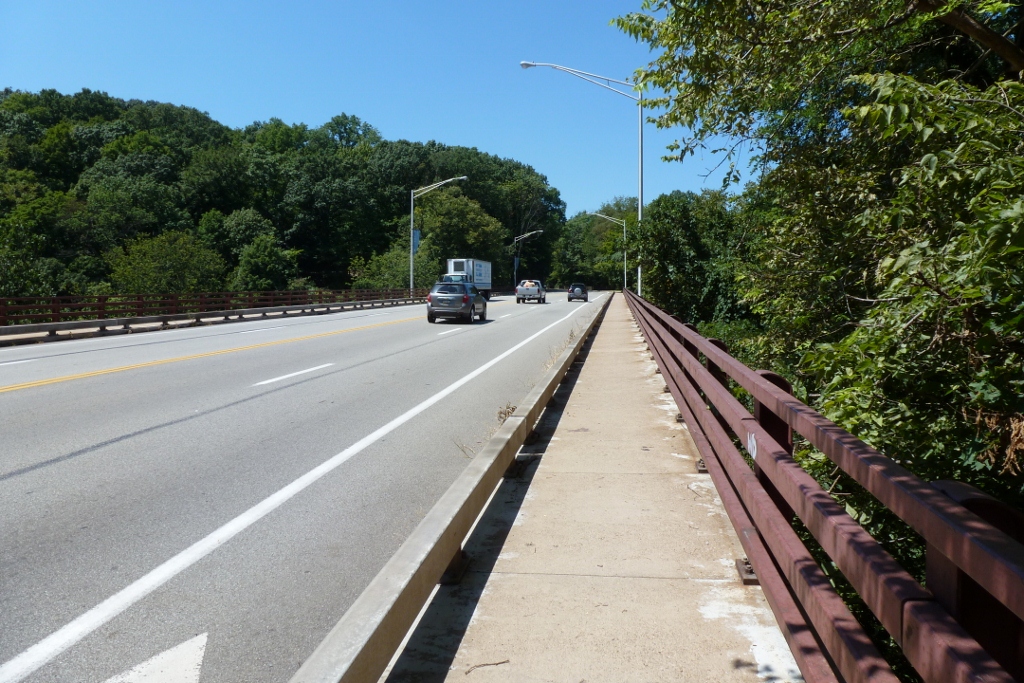
Then & Now: 16th Street Bridge

urbantraipsing turns 10 in May. To mark a decade of urban-traipsing and bridge-walking, I will be revisiting twelve of the Pittsburgh bridges I walked early on to see the changes 10 years brought to them and their surroundings.

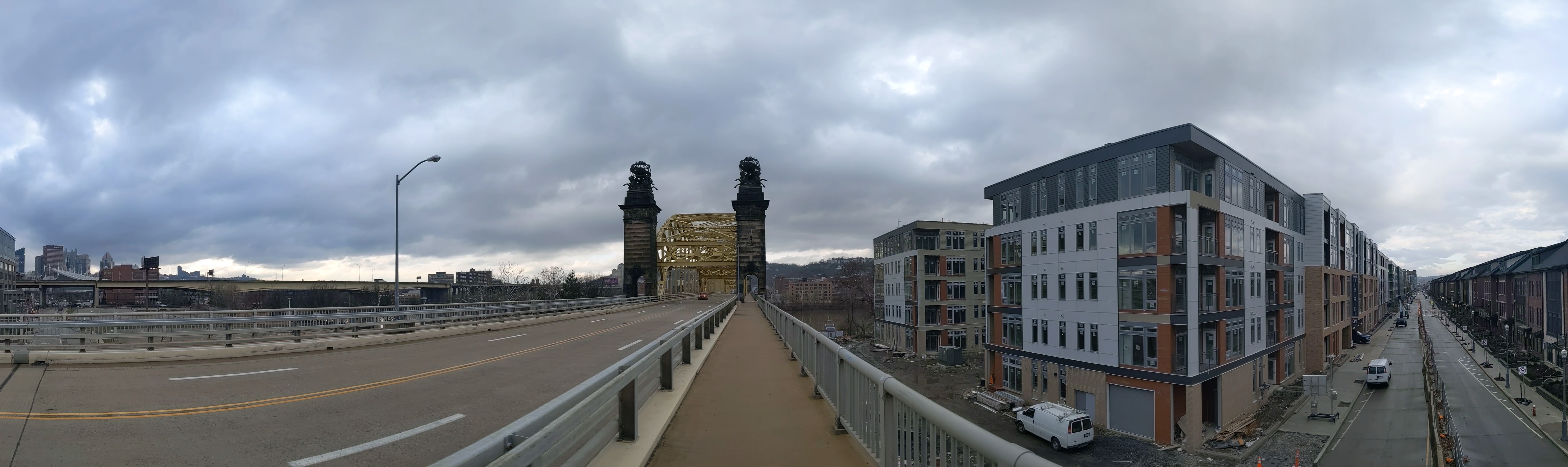
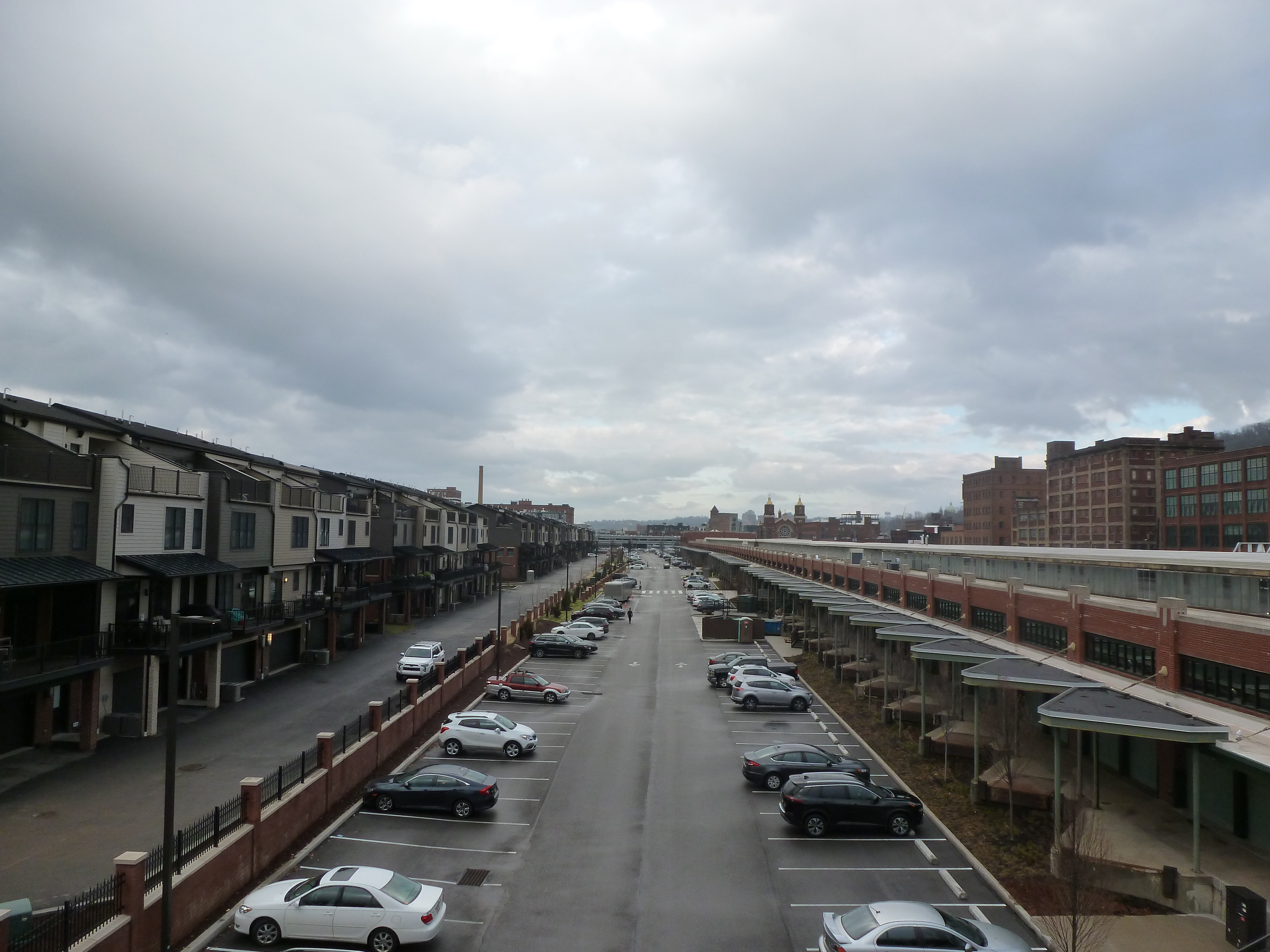
I started walking and photographing bridges to get different angles and views of the city. In 2012, the 16th Street Bridge provided views of two major, controversial development sites: the Produce Terminal and the former St. Nicholas Croatian Catholic Church.

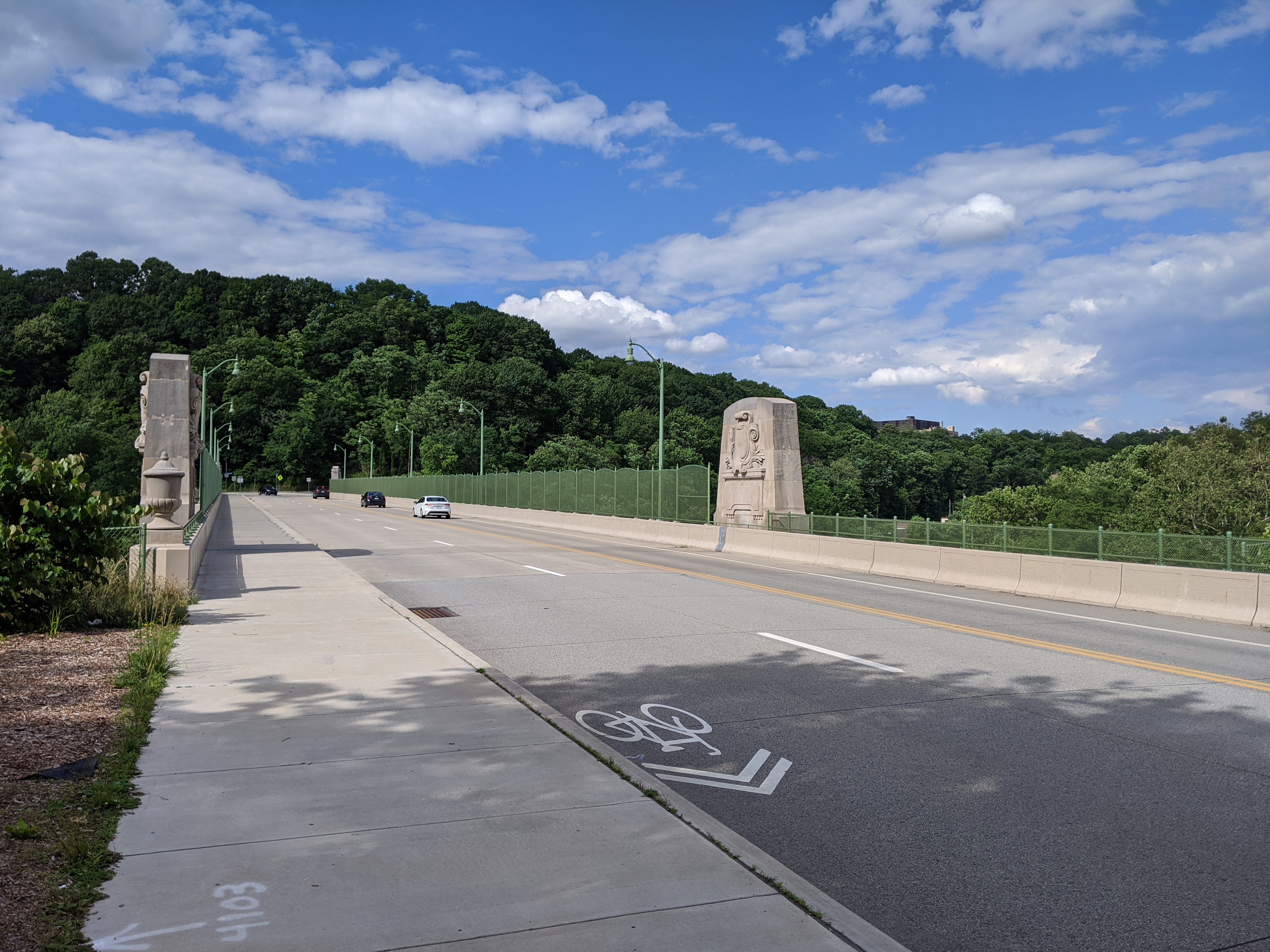
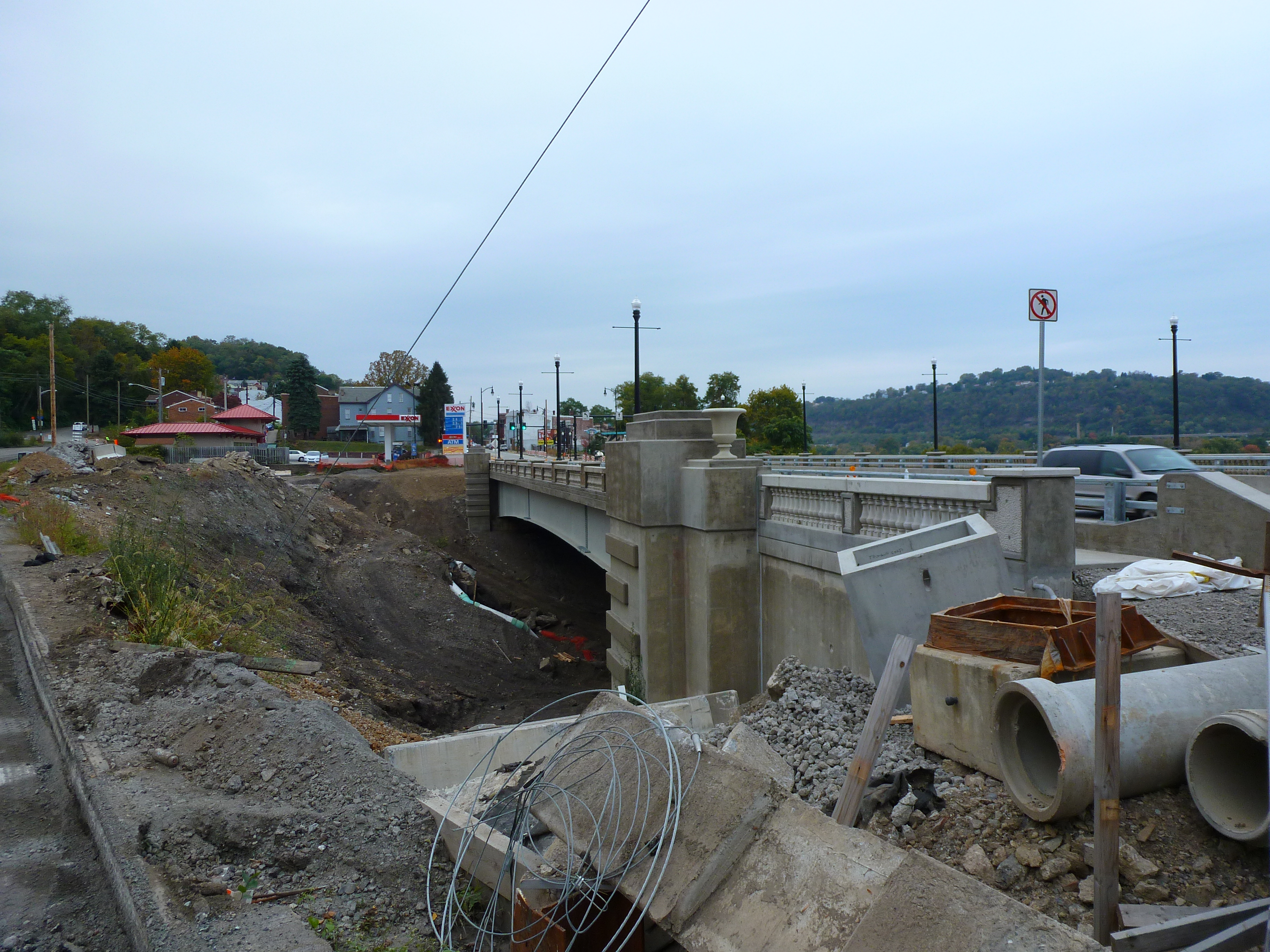
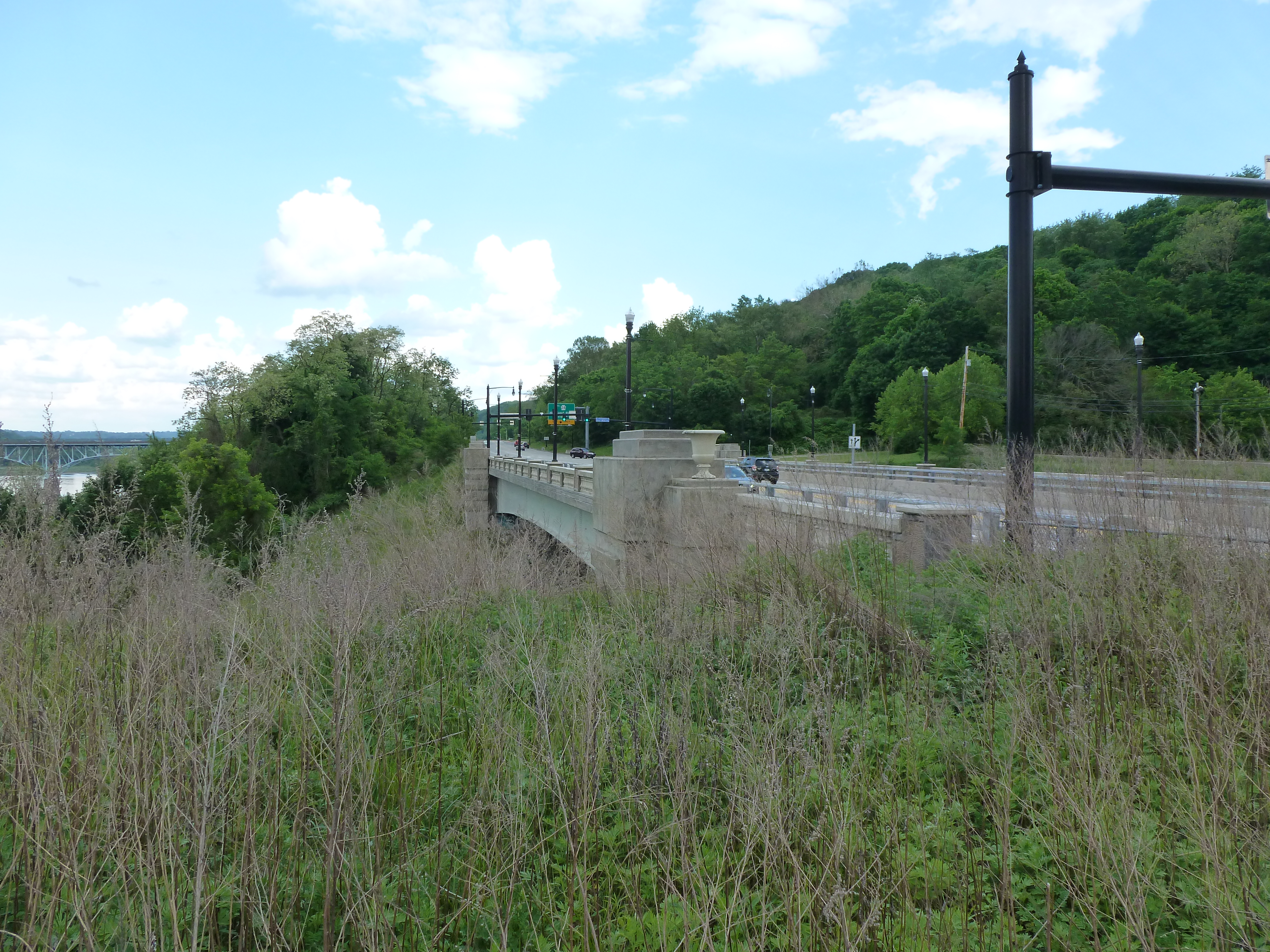
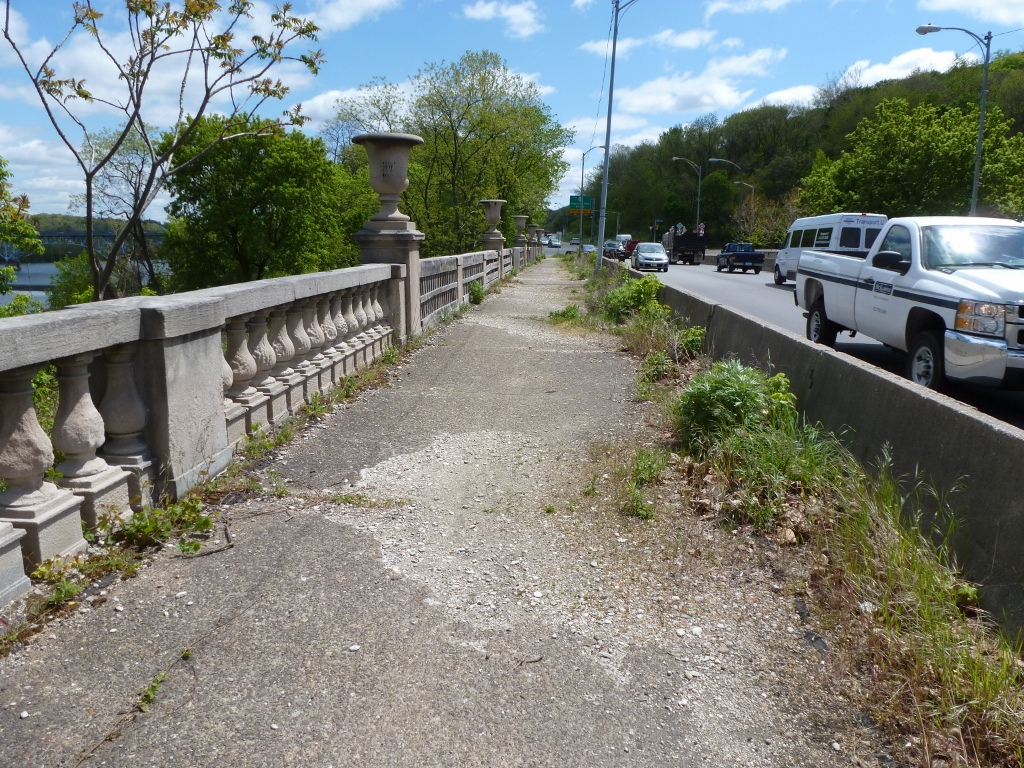
During the summer of 2012, the Produce Terminal seemed on the cusp of being redeveloped, and partly demolished. However, significant opposition to the demolition plans killed that proposal. For years there was no visible progress. Eventually, after extensive negotiations, a new development proposal was approved and implemented (see the first photo pair below). Simultaneously, several new developments popped up nearby, replacing much of the sea of parking I complained about in my original post on the bridge (see the second and third photo pairs below).

The former St Nicholas Croatian Catholic Church was visible from the 16th Street Bridge in 2012. Six months later, it was demolished to make way for the widening of Route 28 despite parishioners efforts to save their church (see a 2013 Tribune Review article for more). I followed the story of their fight for their building closely at the time, which is what I believe prompted me to take a photo of the church from the bridge (see the fourth photo pair below).

Oakland Bridges: Blvd of the Allies

The Blvd of the Allies was one of Pittsburgh’s grand public works projects from the 1920s. It rises from downtown, passing along the backside of Uptown and cutting through South Oakland before wrapping up in Schenley Park.

Four bridges enable the Blvd to make its mark on Oakland. Under normal conditions, only one of these bridges is pedestrian usable.

The road makes a flying leap into Oakland on the Boulevard of the Allies Bridge. On the South Oakland side, the Blvd enters a commercial corridor that begrudgingly gives pedestrians a place on a narrow sidewalk that abruptly begins (or ends) at the edge of the bridge. On the other side of the bridge, the Blvd is a mess of highway interchanges, so pedestrians are not welcome to utilize this bridge to go anywhere.

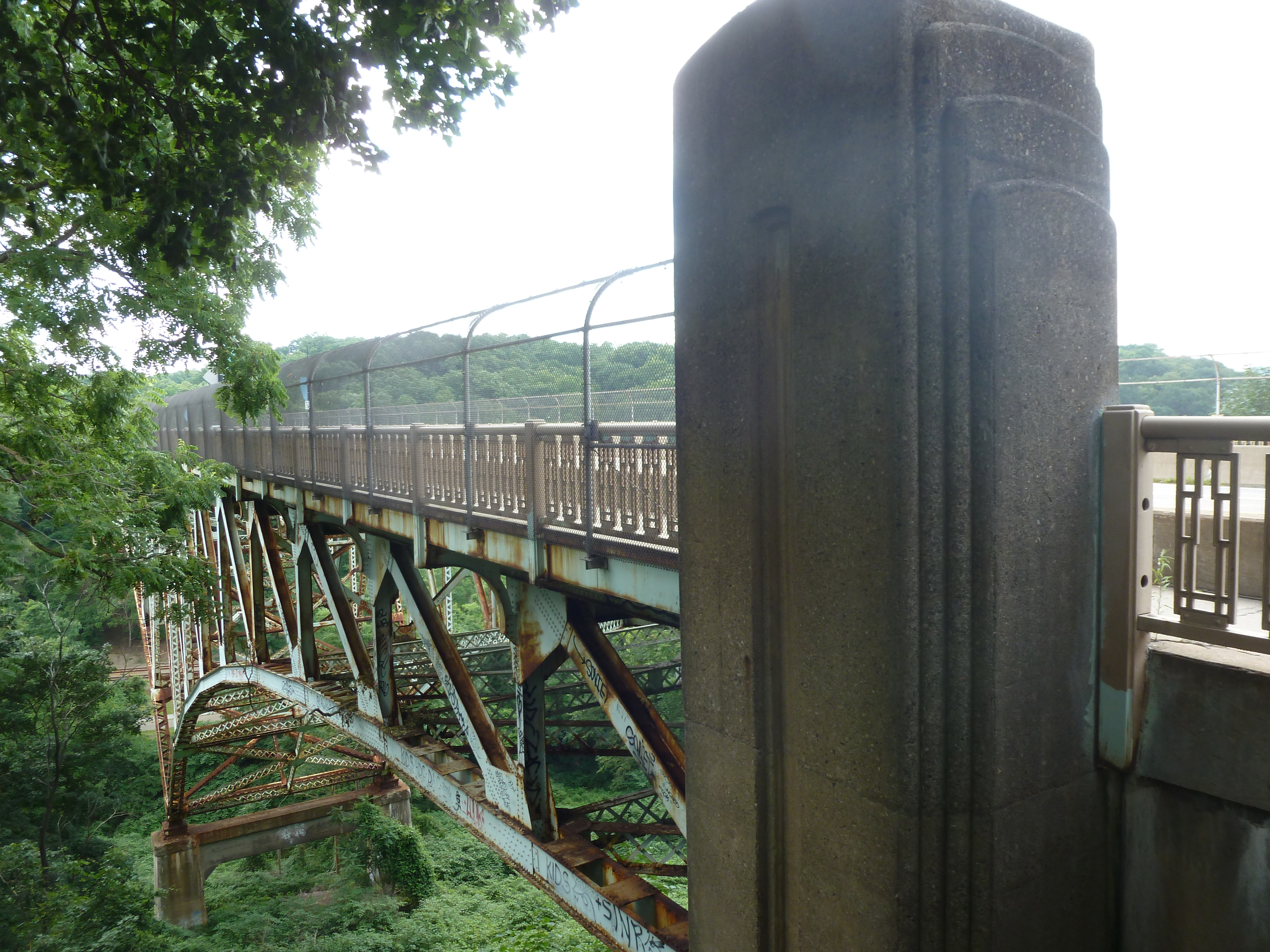
At the other end of the commercial corridor, pedestrians are invited to cross the Charles Anderson Bridge over Junction Hollow and into Schenley Park. (This bridge is also featured in Oakland Bridges – The Hollows.) However, once in the park, pedestrians are pushed away from the Blvd as it changes names and before it cruises through the Park.

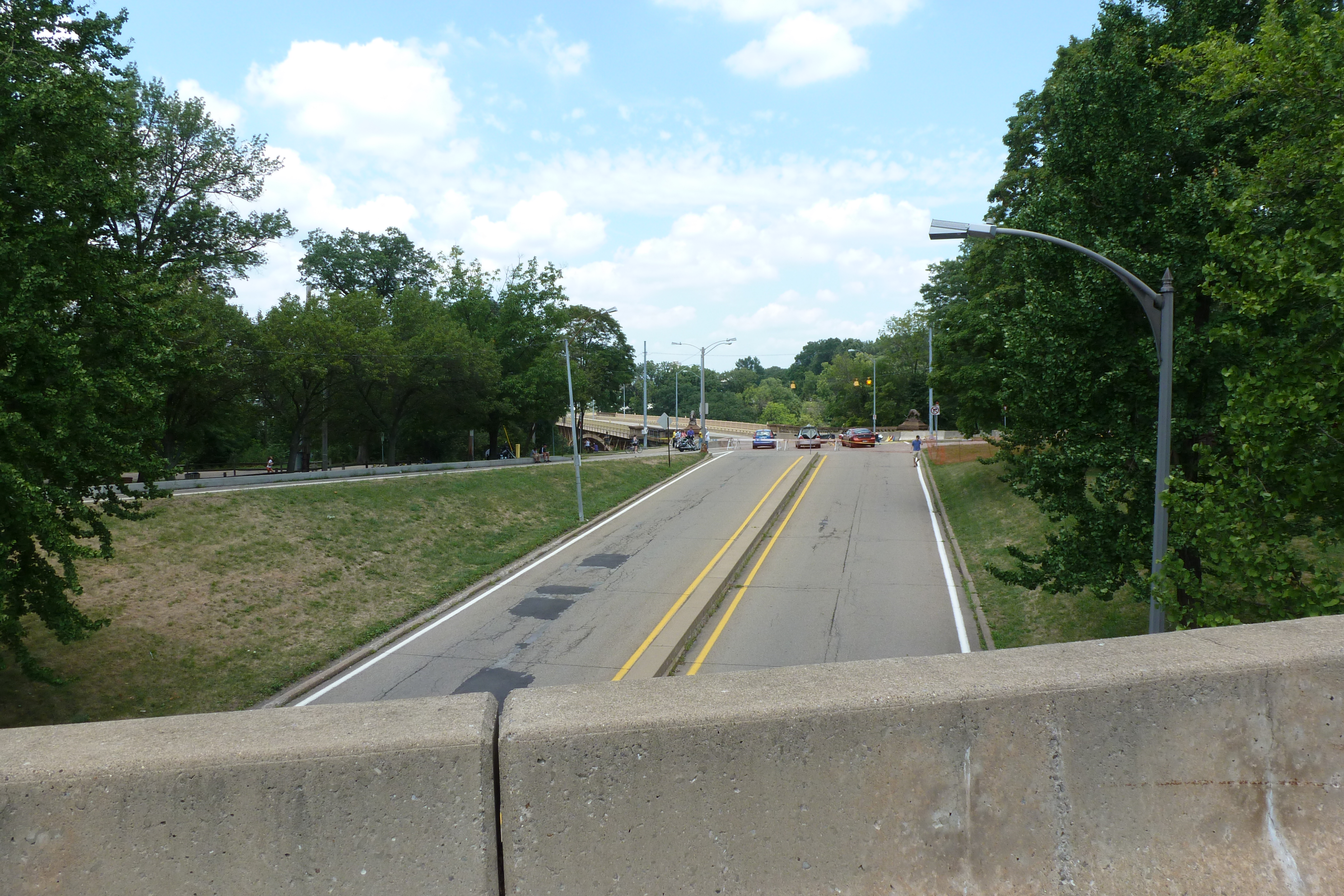
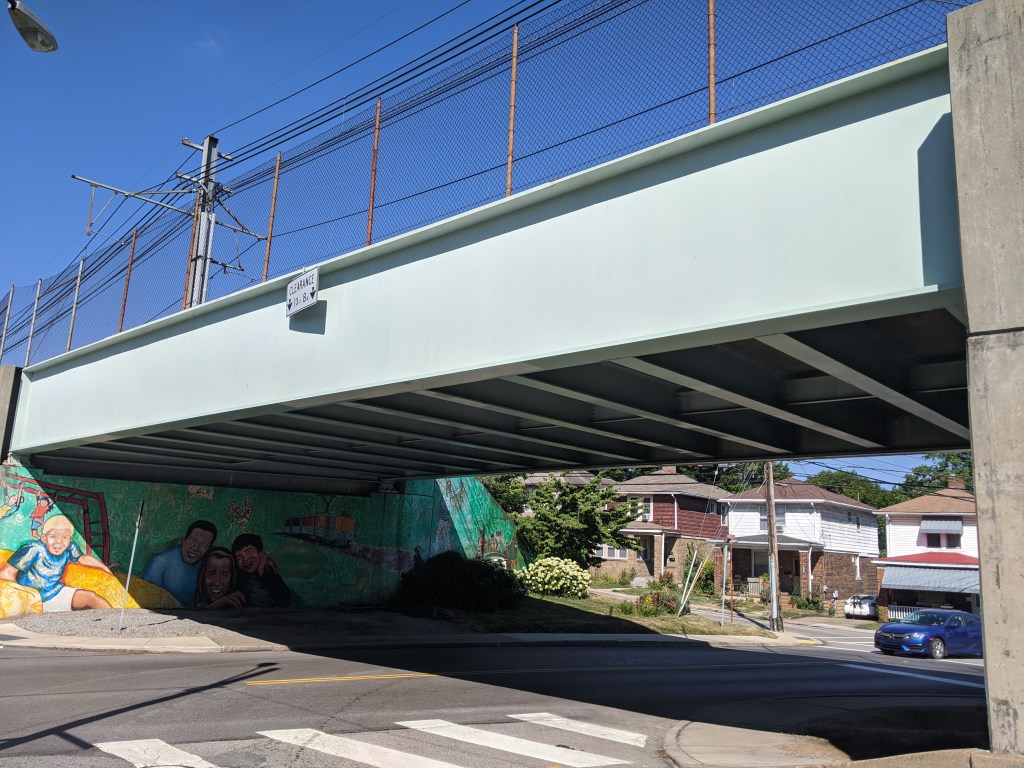
The next two bridges are related as one is over the pedestrian route and one over the vehicular route to the recreational facilities of Schenley Park. These facilities include a pool, ice skating rink, disc golf course, tennis courts, and a track. The bridge over the pedestrian route is a small affair to cross over the pedestrian tunnel. The other is a slightly longer overpass over the two-lane segment connecting Panther Hollow Road and Overlook Drive. Neither the tunnel-bridge nor the overpass are open to pedestrians – except during the annual Pittsburgh Vintage Grand Prix, which I once took advantage of for some photographs.

Oakland Bridges: The Hollows

Oakland is a cluster of Pittsburgh neighborhoods east of downtown. It has the highest concentration of institutions and cultural amenities in the city. It is home to Carlow College, the University of Pittsburgh (Pitt), Carnegie Mellon University (CMU), multiple UPMC hospitals, the Phipps Conservatory (Phipps), Schenley Park (the second largest city park), and the Carnegie Institute complex (housing the Carnegie Museums of Art and Natural History, the main Carnegie Library, and the Carnegie Music Hall). Most of these as well as much of the commercial and residential parts of Oakland were built on a shelf. The hospitals, part of Pitt, and some houses climb the slope toward the Hill District. Some houses also spill over the edge of the shelf, down into the hollows.

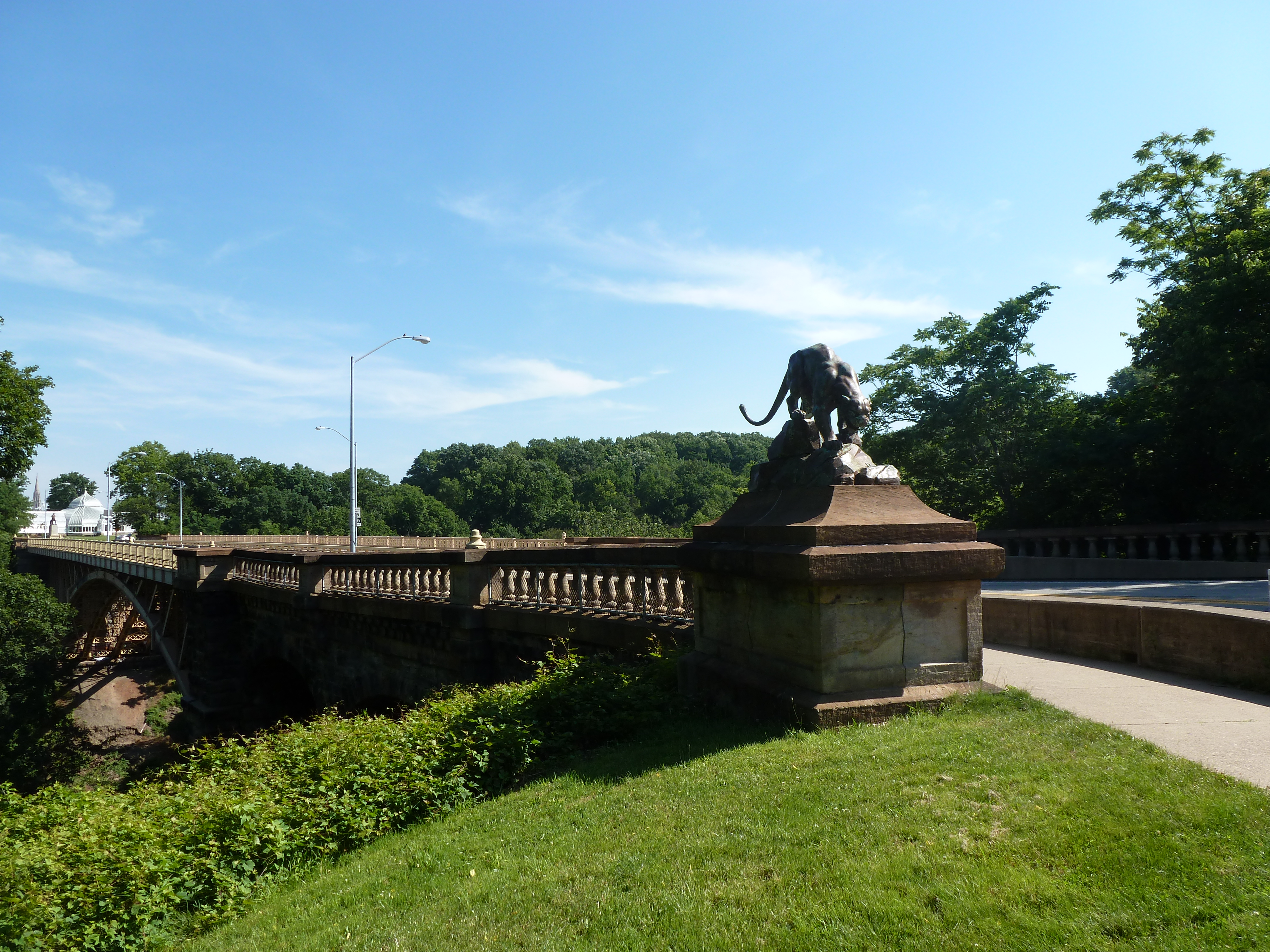
Several bridges span the Junction and Panther hollows in Oakland. The Forbes Avenue bridge connects CMU to the Carnegie Institute complex and one of the commercial districts. The Schenley Bridge connects Pitt and the Carnegie Institute complex to the Phipps and Schenley Park. The Panther Hollow Bridge spans a second hollow to connect the Phipps with the rest of Schenley Park. The Charles Anderson Memorial Bridge carries the Blvd of the Allies over Junction Hollow. A fifth bridge without pedestrian access carries 376 over the hollow. This bridge can be partially glimpsed from the Anderson Bridge, but its presence can be clearly marked by the traffic’s rushing whoosh that carries up the hollow.

By the Forbes Ave and Schenley bridges, Junction Hollow has an industrial feel. The railroad is mostly exposed at these points (further down it is surrounded by trees, shrubs, and other overgrowth). There are also several parking lots and CMU houses some of its facilities functions along the hollow. By the Schenley Bridge, a massive electrical substation was recently constructed across from the historic (and active) steam factory.

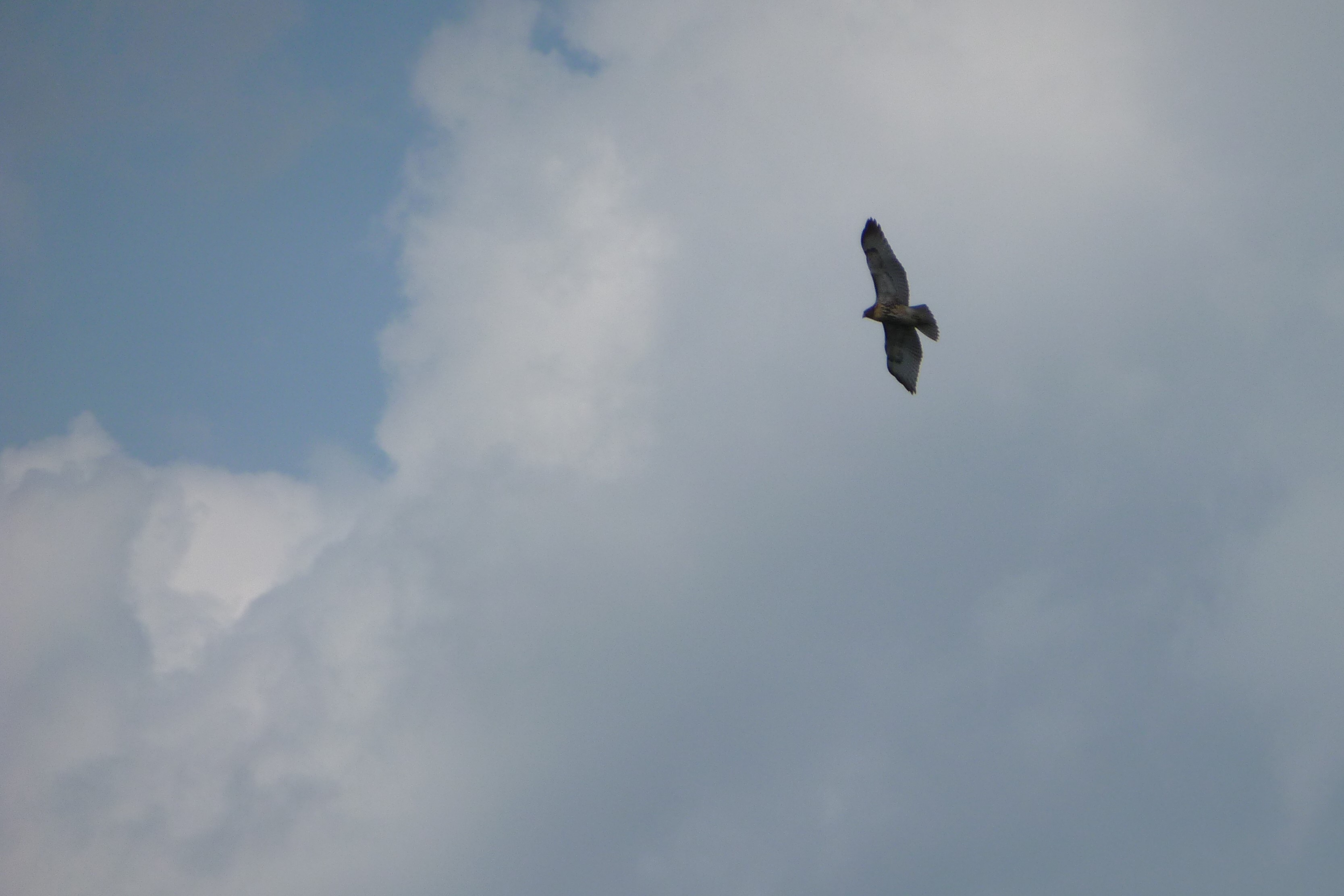
The Panther Hollow Bridge provides a completely different feel as its hollow is 100% park. It is the only one of these bridges that does not cross over the railroad and is therefore the only one without a cage. A small lake with walking trail is visible on one side (with the railroad beyond a row of weeds). The other side overlooks a forested hillside and valley floor. Hawks and/or falcons can often be seen gliding over this hollow.

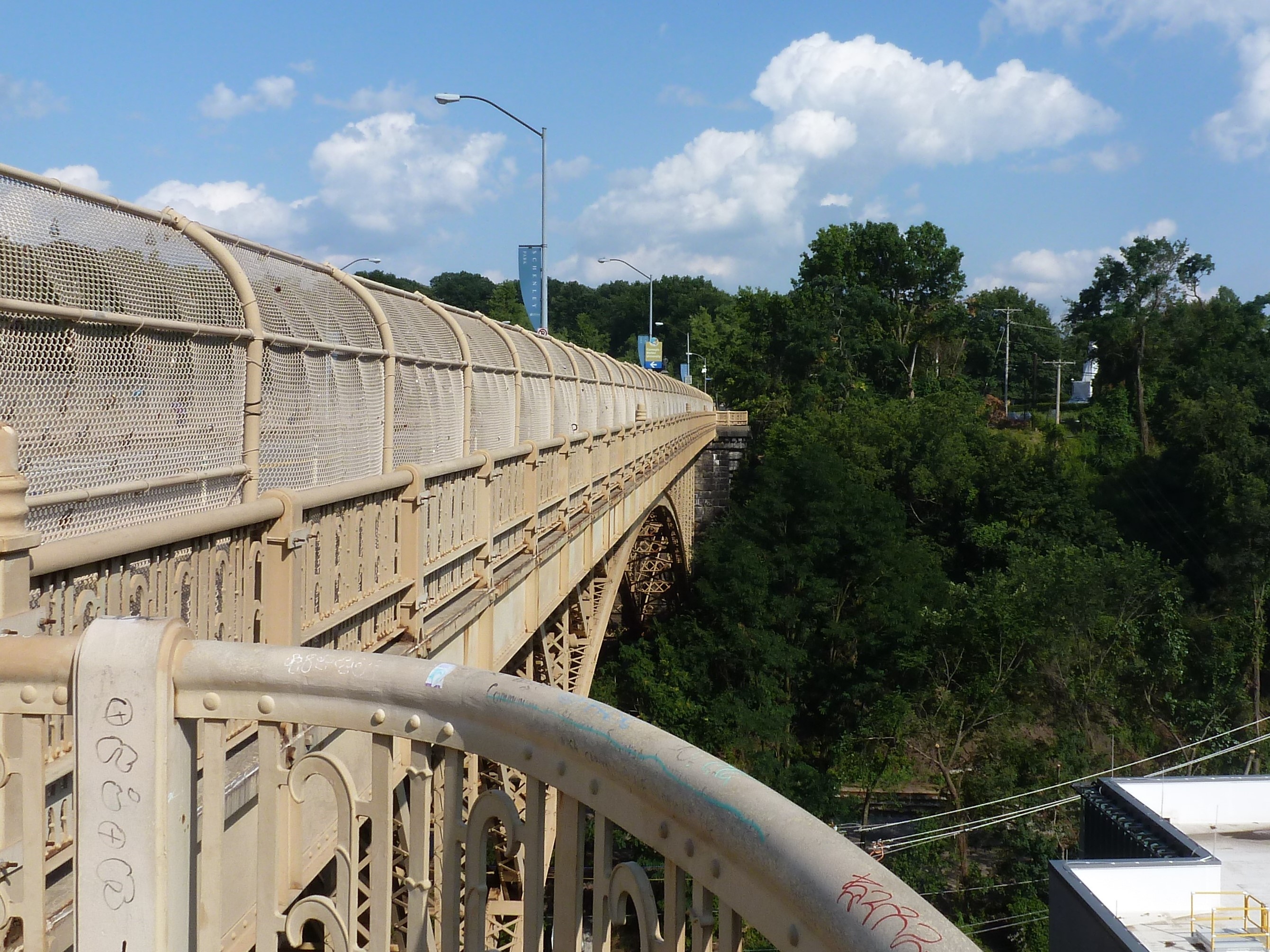
The Anderson Bridge overlooks Junction Hollow at its most parklike point, but it has a less peaceful feel than the Panther Bridge. A combination of the almost-highway Blvd of the Allies, the bridge’s height above the hollow, and its pedestrian fence make the bridge feel isolated from nature when walking across.

Beechview Bridges

Beechview is a neighborhood built on the crest of a hill and spilling down all the sides of the ravines and runs. It claims the steepest paved car “accessible” street in the US, if not the world. Traveling in almost any direction around or through the neighborhood includes an uphill portion. It is a place where anyone driving without chains ought to call in sick or request to work from home after a snow or ice storm to avoid sliding back down the hill when attempting to leave the neighborhood.

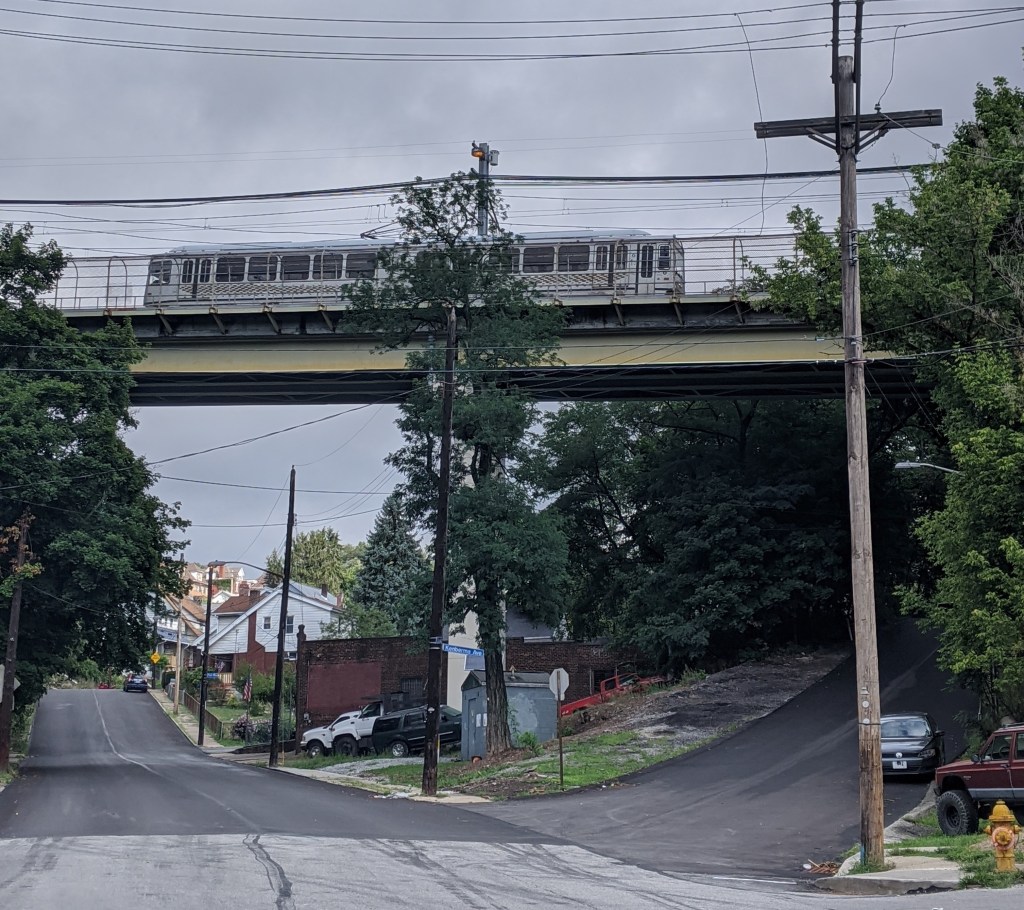
Bridges are used to create more level routes, spanning hillsides, runs, and dips. However, none of the two and a half bridges in the neighborhood are for cars. (The half bridge crosses the city boundary into the neighboring borough of Dormont.) The bridges are for the “T”, the local light rail system. Cars are left to manage the ups and downs as best they can. Pedestrians have access to one of the bridges, but otherwise, they are also left to manage the slopes as best they can.

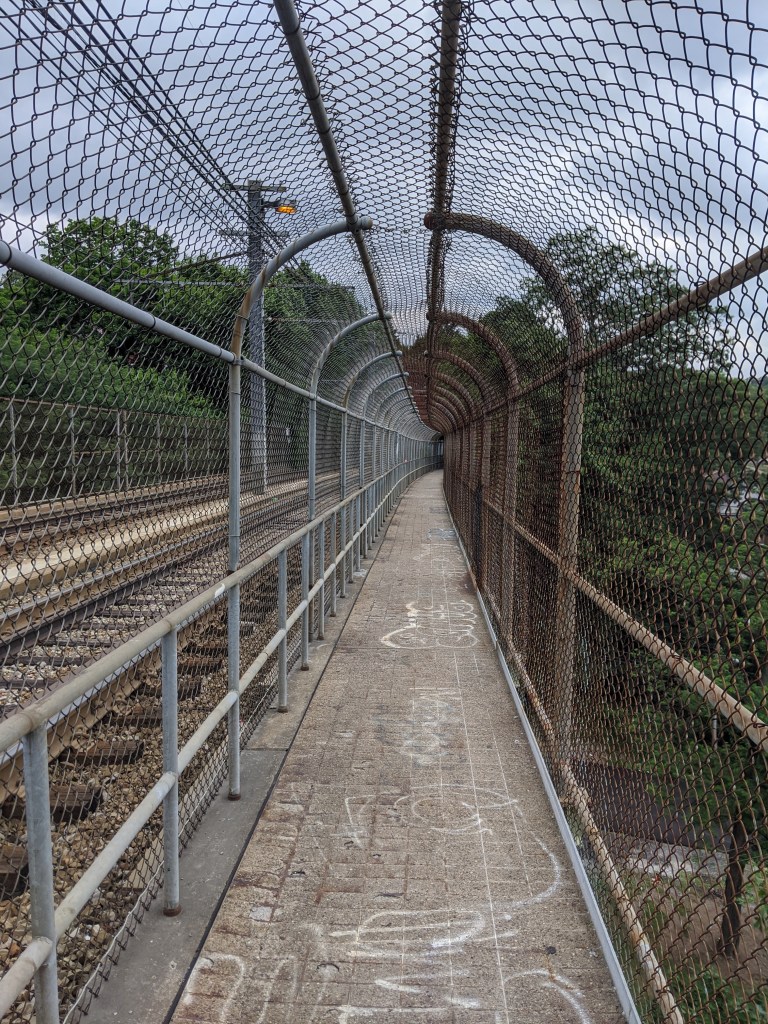
The bridge with pedestrian access was constructed in the era of cages (see post). I am noticing a theme of completely enclosed pedestrian walkways found in association with major transit lines (ex. Beechview’s bridge, Graham Street Bridge, and the former pedestrian bridges over the East Liberty busway) while partially enclosed cages are found in association with roads and rivers (ex. Highland Park Bridge and the pedestrian bridge over Bigelow Blvd).

Greenfield Bridge

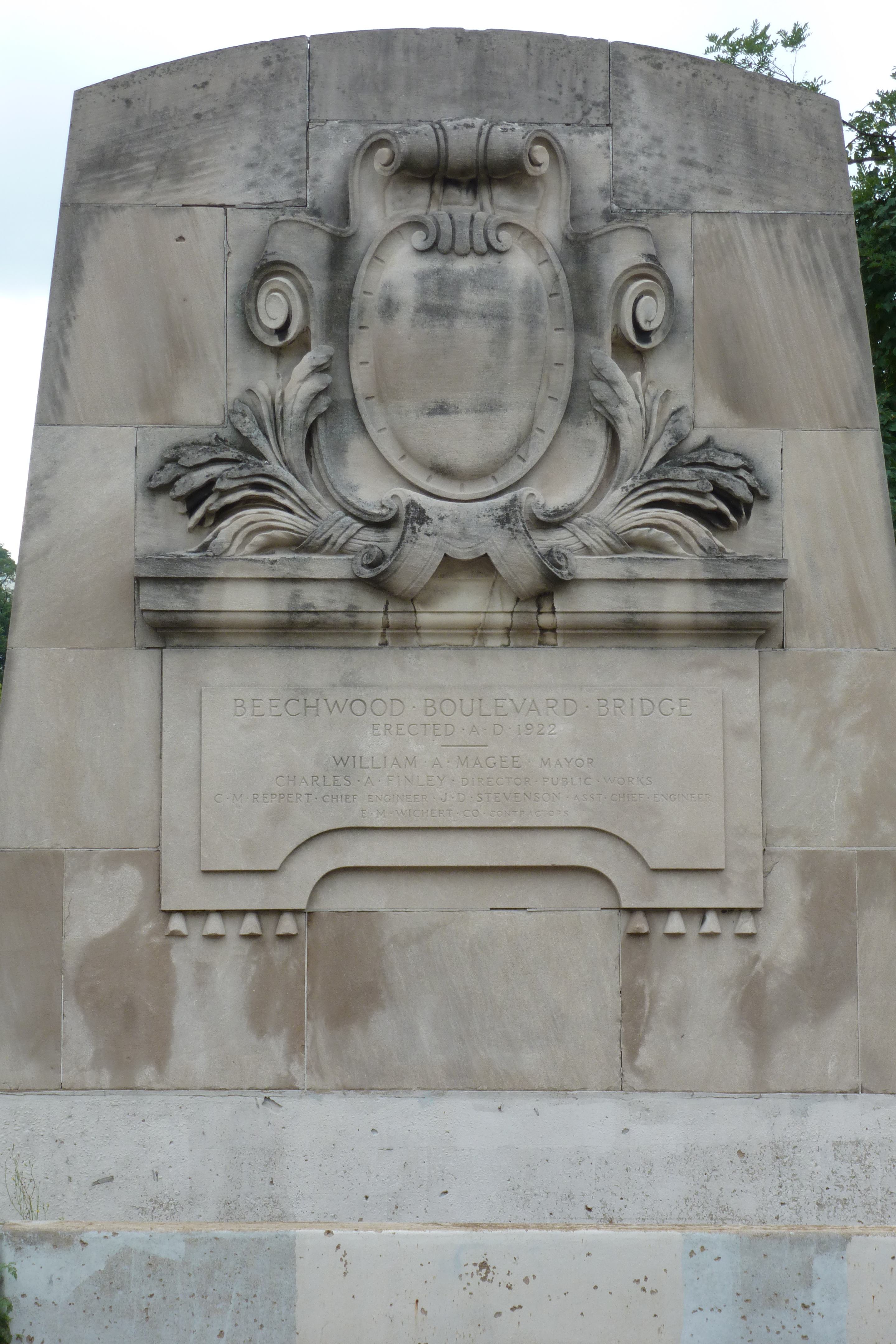
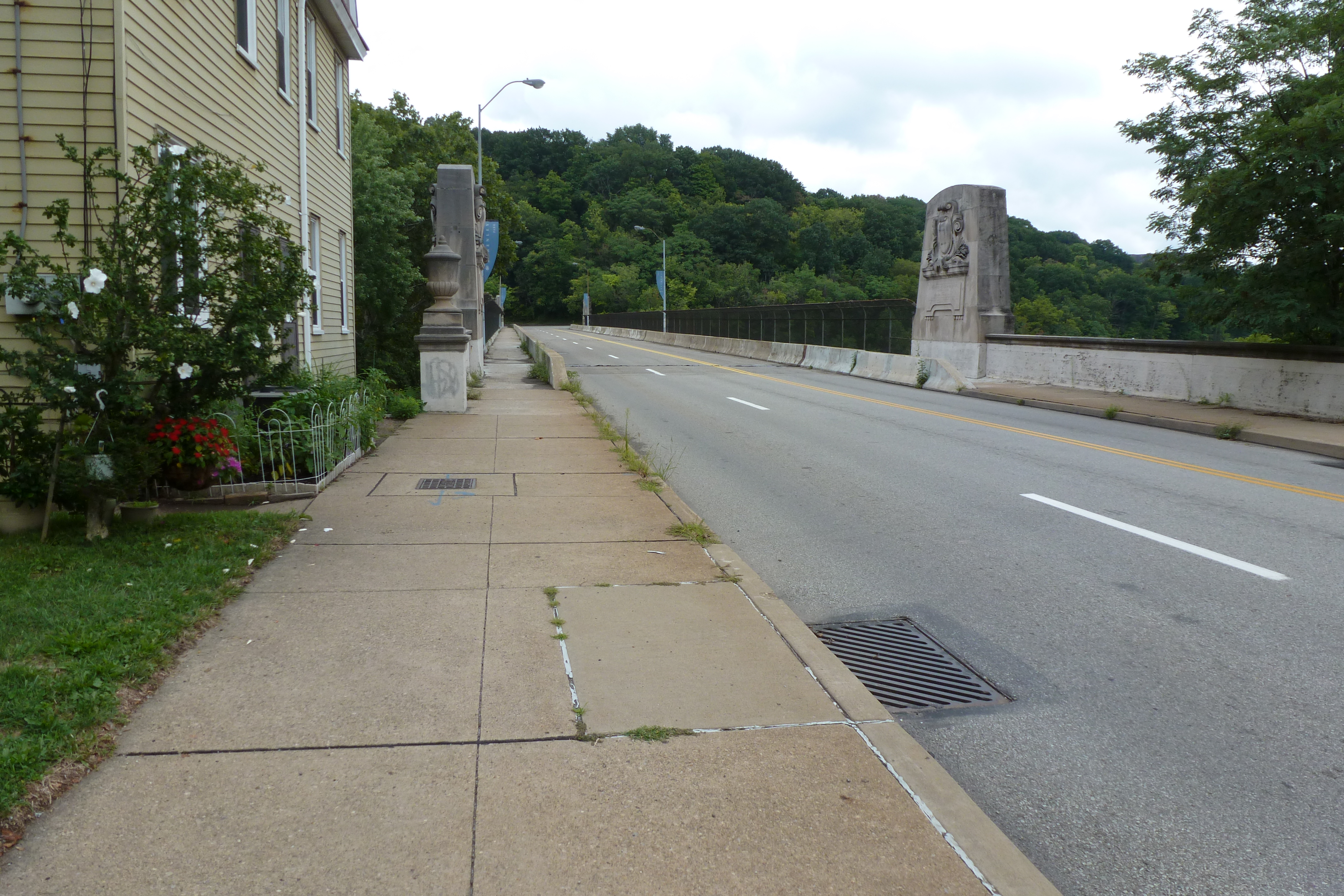
The Greenfield Bridge, formerly known as the Beechwood Boulevard Bridge, was originally built in 1922, demolished in 2015, rebuilt in 2017, and repaired in 2020. It was a classic case of waiting until the bridge was falling down before replacing it. To increase the lifespan of the original bridge, a second bridge was built underneath, and a net installed as early as the late 1980s to protect cars on the freeway below from the falling debris.

Yet it remained in that deteriorating condition for decades before being imploded in a grand ceremony between Christmas and New Year’s Eve 2015. The freeway was covered with tons of dirt, the bridge dropped onto this pile, and the debris cleared away before the highway was needed again for regular commuting. Many people (myself and my family included) stationed themselves on either hillside to watch. We picked a distant vantage point in Schenley Park where we had a great view of the dust cloud that resulted from the demolition.

Another grand ribbon cutting ceremony took place when the new bridge reopened in 2017. A part of the reason for celebration was that, similar to the rebuilding of Heth’s Run Bridge, the historical decorative elements of the bridge were restored or reinstated. The new fencing on the bridge also aimed for a more decorative feel compared to the previous cage-like fencing.

After all the ceremonies and splash around the new bridge, I was surprised to receive a press release three years later announcing that the bridge would be closed for a month to undergo repaving and other repairs. On the one hand, it was nice to see that a bridge was undergoing maintenance instead of being left to fall to pieces before being replaced, but three years seemed early to need this kind of maintenance. According to the Post-Gazette, the repairs were for issues identified in the final inspection before the 2017 reopening. These issues threatened to significantly shorten the projected 50-year life span if unaddressed. Now that those issues have been resolved, I assume it will be at least 50 years before the next press release about repair or renovation for this bridge.

London Bridge (and others) are Falling Down

As if there weren’t already enough crises, London’s bridges were “falling down” in 2020. Three were closed for vital repairs. Hammersmith Bridge remains suspended in limbo while the other two, London Bridge and Vauxhall Bridge, reopened after months of work. Yet, none are totally in the clear. London Bridge’s reopening included significant daytime traffic restrictions. Traffic restrictions may be implemented for Vauxhall Bridge, if money cannot be found for more repairs. Financial straits threaten Hammersmith Bridge as well. It was first closed to vehicular traffic in April 2019 and closed to all traffic, pedestrian and bicycles over and boat traffic under, in August 2020 due to widened cracks feared to portend imminent collapse. The estimate to repair this bridge is £140 million and nearly seven years of work.

London Bridge is falling down,

Falling down, falling down,

London Bridge is falling down,

My fair Lady.

In my experiences walking bridges, it seems common to wait until a bridge is almost falling down to invest in it. It appears politically unappealing to direct funds to maintaining bridges, so we live in a world with a dire refrain of our collapsing infrastructure.

Build it up with bricks and mortar,

Bricks and mortar, bricks and mortar,

Build it up with bricks and mortar,

My fair Lady.

Bricks and mortar will not stay,

Will not stay, will not stay,

Bricks and mortar will not stay,

My fair Lady.

In Pittsburgh, bridges are often left to run the course of their lives without regular maintenance, then are replaced with a new bridge. The resulting demolition ceremonies and ribbon cuttings  make splashy political news stories. The river bridges are an exception. Probably because of their character and contribution to the city’s photogenetic downtown, they are occasionally partially or completely closed for maintenance.

Build it up with iron and steel,

Iron and steel, iron and steel,

Build it up with iron and steel,

My fair Lady.

Iron and steel will bend and bow,

Bend and bow, bend and bow,

Iron and steel will bend and bow,

My fair Lady.

London’s river bridges have more history and, sometimes, more character than Pittsburgh’s bridges. Hammersmith Bridge is one of the city’s unique and historical bridges. The steep price tag to repair this bridge, perhaps the result of mounting deferred maintenance, begs the question of at what point in the decades of non-investment is the threshold crossed beyond which repair is no longer an option.

Build it up with silver and gold,

Silver and gold, silver and gold,

Build it up with silver and gold,

My fair Lady.

Silver and gold will be stolen away,

Stolen away, stolen away,

Silver and gold will be stolen away,

My fair Lady.

The decades of neglect in Pittsburgh and London overlooks bridges’ frequent role as practical infrastructure built to assist in crossing an obstacle. Even temporary closings can cause extreme headaches and delays to those who rely on the bridge. Hammersmith Bridge was left to deteriorate so long, it had to be closed before a plan was in place. As funds and a repair approach are sought, the residents and businesses of Hammersmith continue to be seriously inconvenienced by not being able to cross the river close to home.


Note: Lyrics to “London Bridge is Falling Down” were taken from https://allnurseryrhymes.com/london-bridge-is-falling-down/.

Heth’s Run Bridge – Post Reconstruction

My experiment of living without home internet in 2014 interfered with posting the images of Heth’s Run Bridge I took that fall as it reopened with an actual gap underneath:

I went back this year to get an updated view:

Previous posts in the Heth’s Run Bridge series:

Heth’s Run Bridge: Redux

Heth’s Run Bridge, the first bridge I posted about in my Pittsburgh bridges project, is scheduled to be replaced by the end of next year.  The notice to proceed was expected to be issued last week with construction beginning on Sept. 24 with the installation of a temporary road around the bridge, through the zoo’s parking lot.  According to the schedule that was passed out at a community meeting at the end of August, the bridge is expected to close with all car traffic being diverted to the temporary road on Nov. 1st.  Due to the turning radius constraints with the temporary road, trucks will not be permitted and will instead be by way of the Highland Park Bridge, Route 28 and the 62nd Street Bridge.  If all goes according to schedule the bridge should reopen to all traffic on October 1, 2014.  Additional road work will continue through October.  After final inspections, the project is expected to be officially completed by December 8, 2014.

Heth's Run Bridge's hazardous sidewalk

This is a PennDOT project expected to cost over $18.5 million and is definitely needed.  As I discuss in my Heth’s Run Bridge Part II and Highland Park Bridge posts, the sidewalks here are in desperate need of repair and the proportion of sidewalk to road across the bridge is at least 50 years out of date.  All this is going to be addressed in the reconstruction.  The new bridge is going to have two lanes in each direction to match the roadway on either end.  Additional features of the new bridge will be decorative railing, period lighting, entrance pylons, and “architectural features on the abutments with form liners” (which I believe refers to new urns).  At the community meeting, it was mentioned that the current urns will be saved and kept in a warehouse until a new home is found for them.

In addition to the bridge, about 870 feet of Butler Street are going to be reconstructed including sidewalks.  My understanding is that this is the part of Butler from the Heth’s Run Bridge to the ramps of the Highland Park Bridge, which should take care of my complaints about the condition of the sidewalk for those of us trying to cross the Highland Park Bridge without a car.  This should also clear up the confusion for the outbound traffic of whether this part of the road is one lane or two as the plans include removing the “kink” from the existing alignment.

New signals and ADA ramps will be installed at the intersections of Butler with One Wild Place and with Baker Streets.

Another major part of the project is the excavation under the bridge to an elevation of 762.  According to GoogleEarth, the bridge is at an elevation of 800 ft. I’m not sure if this will restore the bridge to its exact historic height, but it will be close (see the photo of the previous bridge from 1912).  This will also pave the way for connecting this area to the proposed Allegheny Riverfront Green Boulevard project.

This project will no doubt cause some inconveniences during the construction process, but the construction of the temporary road will significantly cut down on this even though it adds over a month to the process.  Imagine instead, everyone having to go on the truck detour or all the Zoo traffic coming down Morningside Ave and Baker Street instead of One Wild Place and Butler Street.  That would be a true nightmare.  Thank you, PennDOT and the Pittsburgh Zoo & PPG Aquarium for the temporary road.  Thank you, PennDOT and any other funders, Sen. Jim Ferlo, Rep. Dom Costa, and anyone else who had a hand in helping bring about this long overdue project.

I can’t wait to walk over the new bridge when it’s finished!

More information about the project including the design of the temporary road can be found here: http://morningside-pa.org/wp-content/uploads/2013/08/hethsrunbridge.pdf

Safety while Traipsing

The Bloomfield-Garfield Corporation, a non-profit community development organization in Pittsburgh, is raising funds to buy back guns.  The goal is to get unwanted guns out of the community where they may be stolen and used in a crime or found by a child and played with, causing injury and death.

In the process of raising funds and talking with different people, it’s become clear that not all guns are bad.  Some guns are very useful such as soldering guns, caulking guns, staple guns, salad shooters, glue guns, nail guns, heat guns, cookie guns, water guns, and cameras (which shoot).  Check out the links for each of these guns to see how they can improve communities (more links will be added over the next few weeks).

As an urban traisper, it is important to feel safe as I walk around exploring the city.  I have chosen not to walk the bridges in certain neighborhoods of Pittsburgh, because of safety concerns.  I was excited when I joined the staff of the BGC to hear that they were working on planning a gun buyback to reduce the chances of gun violence in their neighborhoods.  Maybe our work will make a small difference and help lead to broader changes that will improve the safety of the currently troubled areas or those perceived as troubled.

For more about the Gun Buyback Initiative, check out our Razoo page.  While you’re there, please consider giving a donation.  We hope to reach at least $15,000 by August 31.  Thank you!

10th Street Bridge

The 10th Street Bridge (which a reader pointed out is nicknamed the Phillip Murray Bridge after the first president of the United Steelworkers of America) was the last of the bridges over the Monongahela River for me to walk.  Or so I thought.  It turns out that the Liberty Bridge also has a sidewalk despite the fact that it is a freeway bridge like the Veteran’s Bridge (see post).  So I’ll have to come back to the Liberty Bridge at some point.

I delayed my walk of the 10th Street Bridge in part because it seemed like an awkward one to get to and from.  One end is in the middle of the South Side, but the other connects to the Armstrong Tunnel, which would obviously not be pedestrian friendly.  Last week, I finally went out and walked it and as I hoped, it turns out there is a pedestrian access over the hill to the high-bus-traffic corridor of Fifth and Forbes avenues in the form of a giant staircase that I will address in another post.  This end of the 10th Street Bridge was more well-connected than I had anticipated.  Not only do the stairs provide access to the top of the hill when Duquesne University sits, but there is also access to a parking lot down by the river which also connects to the Three Rivers Trail System.  The best proof of this bridge’s connectivity is the number of other pedestrians I saw walking the bridge.  While I did not keep a count, I noticed that there was a comparatively high level of pedestrian traffic.  It certainly wasn’t as much as the Smithfield Street Bridge (see post), but it was comparable to or higher than that on the other downtown bridges.

My favorite part about this bridge was the dinosaurs painted at the top of the southern tower.  I couldn’t tell if they were official or freelance graffiti, but it seemed appropriate given that Pittsburgh is famous for dinosaurs.  Andrew Carnegie brought the first dinosaur skeletons on display anywhere in the world to his natural history museum.  I found someone else wrote a post about the dinosaurs on the bridge, which the artist apparently calls geese, which suggests that the painting may not have been officially sanctioned.

The post mentioned above about the dinosaurs also comments on the “rusty” condition of the bridge.  While I didn’t notice the rust much (it wasn’t nearly as bad as the 28th Street Bridge), I did notice the condition of the sidewalk.  I thought my theory that the top of the sidewalk had worn away to expose the metal framework supporting the structure rather farfetched, as how could the entire sidewalk (on both sides as far as I could tell) wear out so evenly.  Yet, I cannot think of any other sidewalk I’ve walked that looks like this and given the other bloggers comments on the poor physical condition of the bridge, perhaps my idea isn’t totally crazy?