
Author Archives: Carolyn Ristau
Park-ing
It’s the classic story of industry moving on to greener pastures at the same time that suburban flight takes off. Pittsburgh politicians and notables tried everything they could think of to keep the loss of jobs and residents from increasing. Despite their efforts, the city’s population plummeted over the next several decades.
Today, planners and officials often cringe at the mention of the “Urban Renewal” of the 1950s and ’60s. The “bad” judgement applied by their earlier counterparts in efforts to keep the city attractive is an easy scapegoat for the problems of the intervening decades. The people in charge today are doing “good” work by erasing the “mistakes” of the past: tearing down the crime-ridden high rises and replacing them with newly constructed mid-rises and townhomes, returning one-way ring roads to two-way traffic, rebuilding a neighborhood torn down for the sake of a grand civic project only partially deployed, etc.
This rhetoric is seductive. “Urban renewal was evil” is a catchy phrase. It is easy to point the finger and blame what is visible for the effects caused by complicated invisible factors. Yet underneath all this rhetoric and finger pointing there are examples of Urban Renewal success stories in Pittsburgh.
ALCOA is one of Pittsburgh’s highly successful homegrown industrial companies. When it threatened to move its headquarters to New York City in the 1950s, Richard King Mellon and the Mellon Foundation instigated the creation of a package that kept ALCOA in town. ALCOA finally moved its “headquarters” to NYC in 2006, but 11 years later it returned to Pittsburgh. In fact, this was only the executive headquarters with less than 100 staff. ALCOA still continued to have operational headquarters in Pittsburgh throughout that time.
The 1950s package deal that induced ALCOA to stay was a new office building, garage, and public plaza known as Mellon Square. Not only did this succeed in persuading the company to stay, thereby retaining jobs in the heart of downtown Pittsburgh, but the plaza recently underwent a $10 million refresh.
Today, Mellon Square is a gem as an outdoor lunchtime retreat downtown. Unlike Market Square and Mellon Park, it is usually possible even during peak lunchtime to find a seat in Mellon Square, either in the shade of trees or buildings or basking in the sun. Seats near the centerpiece fountain may be wet, especially if it’s a particularly windy day, but there are also seats in more hidden away areas. On different days of the week, there might be a Farmers Market, yoga or other outdoor exercise, or live music to enjoy as well.
When enjoying the ambiance on top, it is easy to forget that there is a parking garage underneath. This garage continues to serve downtown visitors and workers. As the parking levels go down below ground instead of stacking up into the air, it brings less blight to the urban landscape than most other downtown garages. During the 1950s when the idea of car as king was being imprinted in the city’s design through its new ring roads and new Zoning Code, it is amazing to me that Mellon’s team had the insight to say let’s hide the cars out of the way, underground.
Growing Parks

In a recent post, I complained about the lack of engaging outdoor spaces in Pittsburgh. I recently realized that I was perhaps a little harsh in that assessment. One of the things that attracted me to Pittsburgh in the first place was the abundance of parks and welcoming open spaces. Now, as a naturalized Pittsburgher, I may take these places too much for granted.
Pittsburgh is home to five large city parks: Emerald View Park, Frick Park, Highland Park, Riverview Park, and Schenley Park. In addition, there are Point State Park, neighborhood parks and playgrounds, and parklets and green spaces.

Downtown has a welcoming outdoor space within a 5 minute walk of almost every office building. Come noon, the most popular ones are out of seats. Some have programming on different days. Market Square and Mellon Square regularly host farmers’ markets, live music, interactive art, and activities.
Yet, these oases are not spread out evenly across the Pittsburgh. East Liberty used to be considered Pittsburgh’s second downtown and was the third largest economic engine in the state. After decades of suburban flight and decay, this neighborhood is experiencing a resurgence that is recapturing much of its former dominance. Yet, when I worked in East Liberty, there were no welcoming outdoor places for me to reasonably get to in my lunch hour. I ended up eating everyday in the office, which meant the only time I left the office between starting and quitting times was when there was an off-site meeting.
It’s not just East Liberty that is missing out on these outdoor pockets and treasures. Much of the city’s riverfronts are still dominated by industry or freeways. Many neighborhood don’t have parks or the ones that are they have not been maintained.
Pittsburgh does have good outdoor spaces, but it could have better. The riverfront is a visible place to expand upon the earlier successes such as Point State Park and the Watersteps. The adult-friendly, public swings which spurred my previous post Engaging Riverfronts is one way to expand upon that. I look forward to more ideas and implementations across the city.
Pittsburgh’s Bragging Rights
I mentioned previously that I totally geek out over maps. I recently came across a fascinating “new” map called The “Z” Atlas & Map of Pittsburgh, PA, and Mount Oliver, PA. I am adding it to the Sanborn Maps and GM Hopkins Maps as a go-to for studying the changes Pittsburgh went through in the 20th Century. The “Z” Atlas was published in 1952. There are two things about this map that caught my eye as setting it apart from others during my initial perusal.
First, in the street index, it identifies which streets have unusual addressing. Pittsburgh is known for some unique addressing situations. For example, there is a block where houses built before WWII have 1300 numbers and the ones built after WWII have 1400 numbers, even though they are intermixed. This atlas shows that the post WWII houses were built after 1952 because the address numbers on that street weren’t wonky yet.
Second, this map claims that “Pittsburgh has more streets than any City in the World. You will find EVERY ONE of them in this ‘Z’ Atlas and Map!”
“Preposterous,” I said, when I first read that claim. Pittsburgh’s land area is small compared to other large metropoles. It does not make Wikipedia’s current list of the 150 largest US cities by land area. Without digging into census data, I assume that many of the old cities (ex. New York City, Chicago, Cleveland), if not most of the 150 listed, likely were of a similar size in the 1950s as today. How could it be possible for Pittsburgh to have more streets than these cities that are significantly larger?
Then it hit me. It is possible by the same token that makes it possible for Pittsburgh to have more bridges than any other city in the world, more steps than any other city, and the steepest paved street in the world: topography.
Pittsburgh’s many hills, ravines, cliffs, and rivers mean there are few long streets and many short streets. Maybe after all, Pittsburgh did have more streets than any other City in the World in 1952. Reading more of the “Z” Atlas, it elsewhere explains that Pittsburgh had over 6,000 streets at the time of the map’s publication. That number does include the numerous “paper” streets that were surveyed and mapped, “but never built or even marked in the dirt.”
Many of these paper streets still exist today causing headaches for the City and its citizens, but some have been vacated and turned over to private ownership. Between that and the rise of mega-cities since the 1950s, I won’t say that Pittsburgh can still claim more streets than any other city. A quick Google search showed that the question of what city has the most number of streets is not as well discussed as what city has the most bridges. Perhaps a more ambitious person than myself could run an analysis to see whether Pittsburgh still has more streets than any other City in the World. (Don’t forget to count the step streets!)
Flood Measures

There is an enormous floodwall on the Covington, KY, side of the Roebling bridge, which spans the Ohio River. It shocked me to see such a huge wall when I was there last year. I wondered if there couldn’t have been some other means of flood control that would not have produced such a large barrier. It reminded me of the significant physical barriers to the waterfront that I observed in Erie, Pittsburgh, Homestead, PA, and Cleveland. Unlike Erie, Homestead, and Cleveland, Covington did not have any significant economic drivers separated from the town by the barrier wall. The river side only had a small park and parking lot.


In addition to acting as a barrier, the sheer massiveness of the flat concrete wall bothered me. I wanted to see it broken up into staggered segments, even though I knew that would not be useful in a structure intended to block the path of water. However, Covington handled the flat wall with style by turning it into a canvas for a giant mural. Almost as long as the wall itself, this mural depicts the history of the crossing at this location from 8000 BCE to the present day. While the mural did not help with the scale of the wall, it broke the monotony while turning it into a destination for its own sake.
In the back of my mind, this wall continued to bother me until observing the effects of the significant flooding experienced in Pittsburgh this year at the forks of the Ohio River (see Checking on the Rivers and The Aftermath). A google search showed me that the flooding Pittsburgh experienced in February this year also affected the Covington-Cincinnati region in the worst flood in that area since 1997. The concept of a wall still bothers me, but this one probably prevents a lot of property damage and Covington has taken steps to soften its negative effects.
Engaging Riverfronts
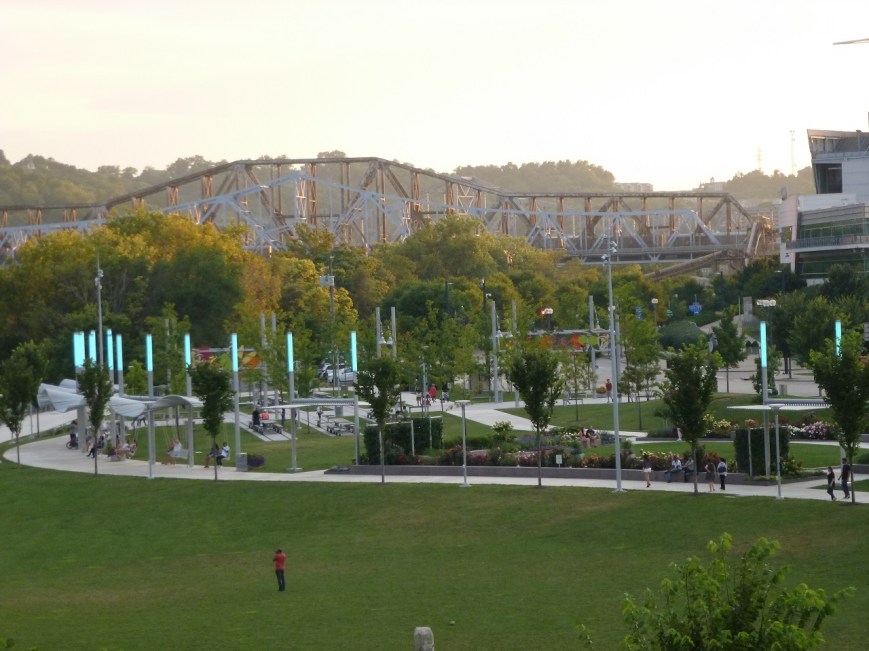
Cincinnati’s riverfront park with swings
There is a proposal in Pittsburgh to introduce a new feature to its riverfronts: swings. I am excited about this possibility as a swing lover and as someone who wants to see more welcoming and engaging spaces along Pittsburgh’s rivers. One of the inspirations for this idea are swings found in Cincinnati’s riverfront park. Last summer, I happened upon that park in a search for bridges by Roebling. On an ordinary summer evening, this enormous riverfront park was filled with people of all ages enjoying the various activities from walking paths to playgrounds to interactive art installations.

Istanbul exercise equipment

Istanbul exercise equipment

Istanbul exercise equipment
Previously, when walking around Istanbul, I experienced jealousy at seeing the number of parks with adult exercise equipment installed. This sort of acknowledgement that adults enjoy playing outdoors as much as children seemed lacking in parks across the United States. Cincinnati’s park showed me that inviting adults to play outside is embraced in some parts of our country.


More images from Cincinnati’s riverfront park
Pittsburgh has kayak and bike rentals for adults to play outside. The walking trails, Fountain at the Point, and Watersteps attract people to enjoy the outdoors and the rivers. However, if this swing proposal pans out, Pittsburgh may move up into the next tier of engaging outdoor spaces with the introduction of free play equipment for adults on par with Cincinnati and Istanbul.
In Search of Roebling

Last summer’s search for Roebling bridges (see Market St, Steubenville and Wheeling Suspension Bridge) came to a successful end as a golden sunset spread over Cincinnati. The reason we struck out earlier in the day is that the Cincinnati-Covington Bridge is one of the two remaining Roebling suspension bridges. The other is, of course, his most famous bridge: the Brooklyn Bridge. The first of Roebling’s five suspension bridges was built in Pittsburgh at the site of the current Smithfield Street Bridge, but lasted less than 40 years before the increased river and road traffic made it obsolete.

Between Roebling’s two remaining bridges, I found the Cincinnati bridge more appealing. Its character feels like it would fit right in on the Thames in London. I also appreciated the engaging green spaces at either end. The birds liked this bridge, too.


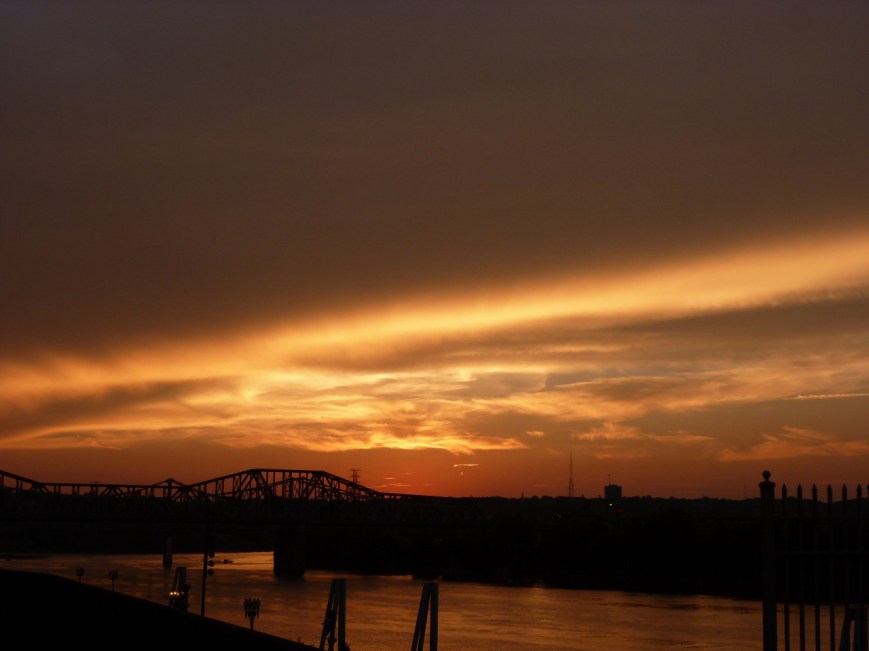
Sunset from the Roebling Bridge
Signs of the Times
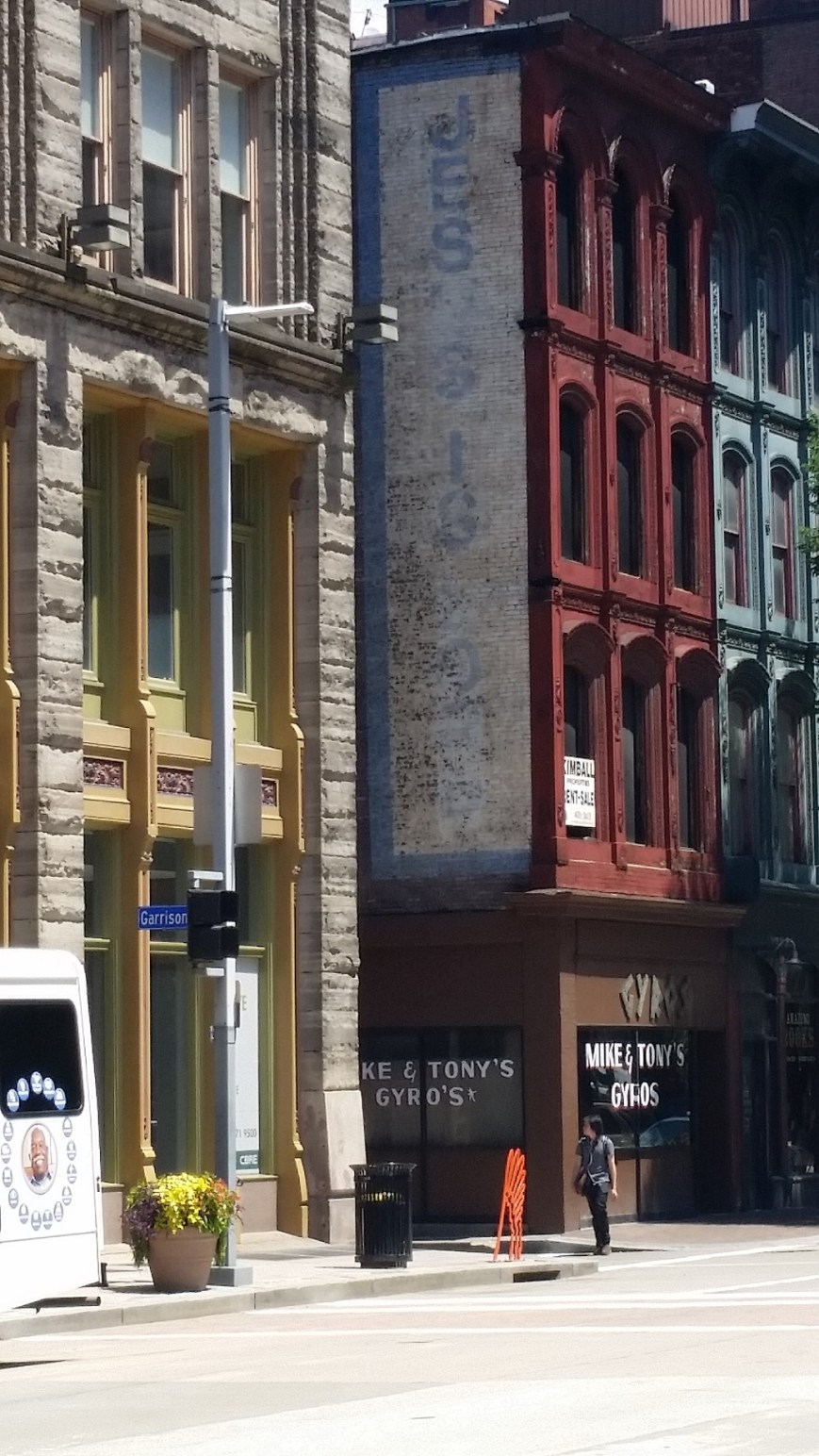
Once upon a time, signs painted on the side of buildings proliferated in Pittsburgh. Over the decades as these types of signs went out of fashion, many were left to fade with time. Remnants of these signs still cling to several buildings. Some signs are faded but legible while others only show faint traces of having been there.


These signs tell a story of the history of the city. Is it a story worth preserving? If so, what is the appropriate way to preserve it? Should these signs be refreshed so that they continue to live on? Or should they be left alone to continue to fad to show their decline from favor? Yet, there appears to be renewed interest in the hand painted sign. (This article is one of several about a niche of successful hand painted sign artists.) Maybe as these buildings are renovated, some of these signs will be refreshed with a modern take.

Life Among the Ruins
Even in the midst of destruction, life finds a way…

Utility Siloes Part 2
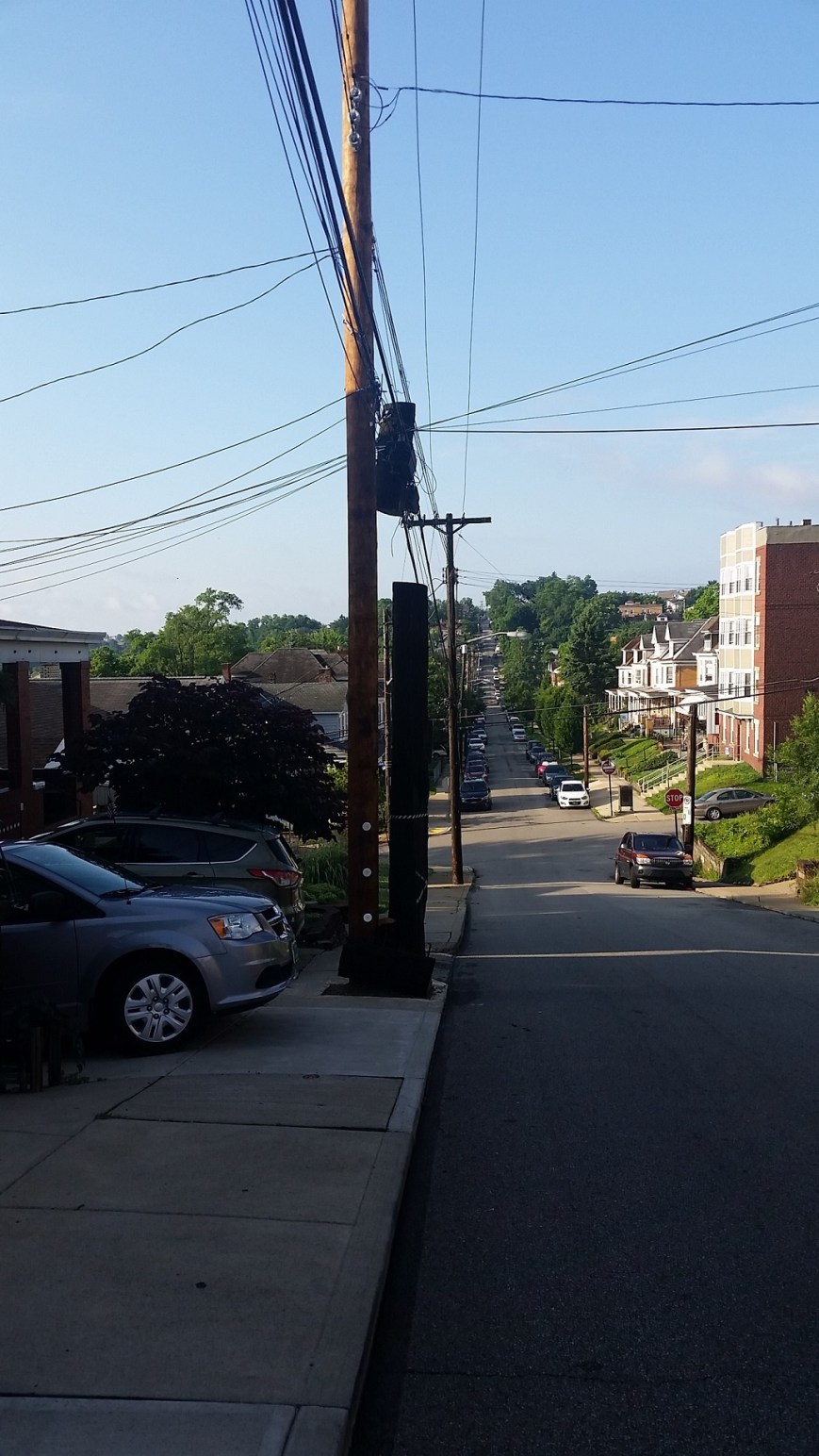
Dismantling in progress (6/24/2018)
After continued observations, I need to modify some of my assumptions in the post Utility Siloes. It turns out that the existence of the other utility wires attached to the poles does not prevent the old poles from being removed. Instead, weeks after a new utility pole is installed, the remainder of the deteriorated pole is removed except for the chunk where the other wires are attached.

Close-up of the dismantling (6/24/2018)
Perhaps the crew that removes poles is different than the crew that installs them. Although, the installation team is able to lob off the top of the old pole after they transfer the wires to the new one. Why then can’t they dismantle the rest of the pole at the same time? And in the case of constricted locations, such as the feature of these posts, why can’t they located the new pole in the same location as the old one?
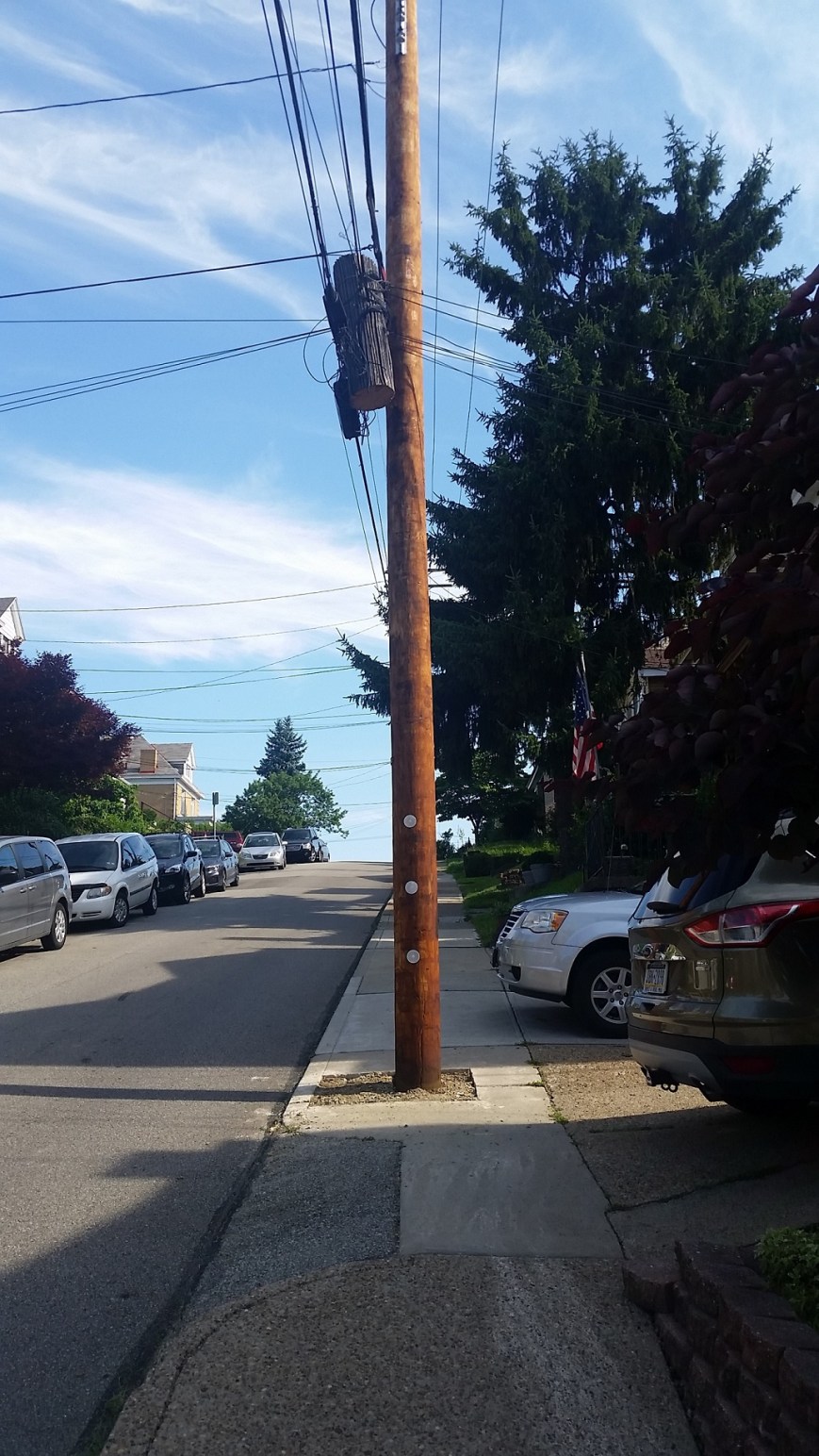
Dismantling Complete (6/30/2018)

View of another dismantled pole, the remaining chunk is secured to the new pole by a rope.

