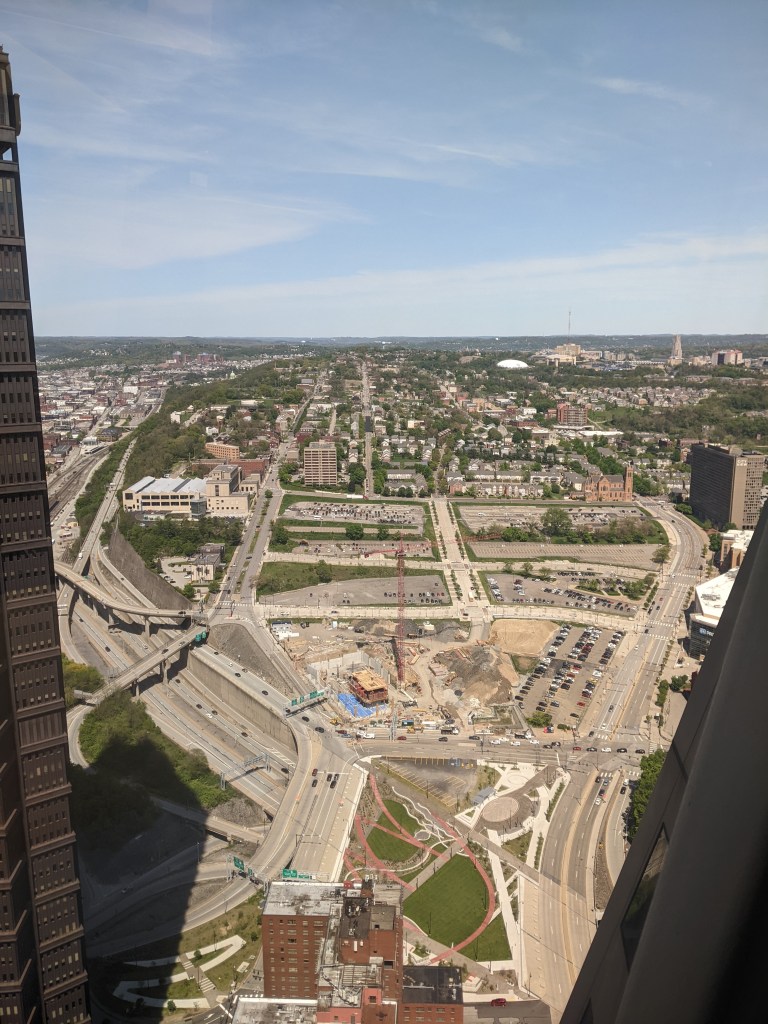
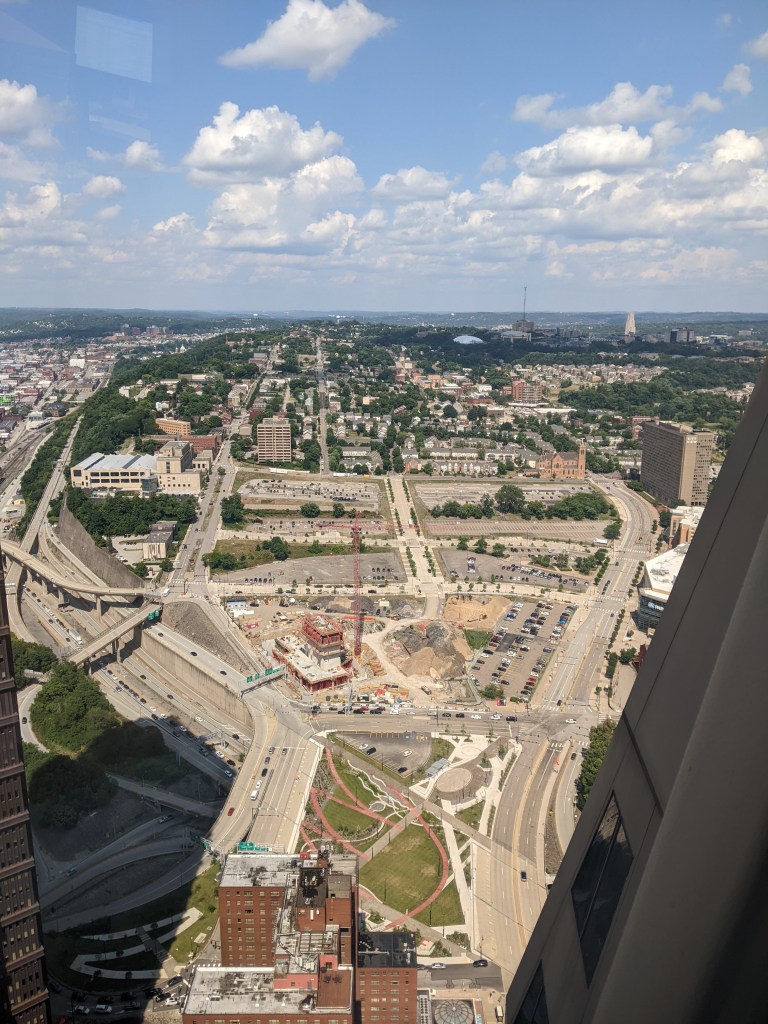
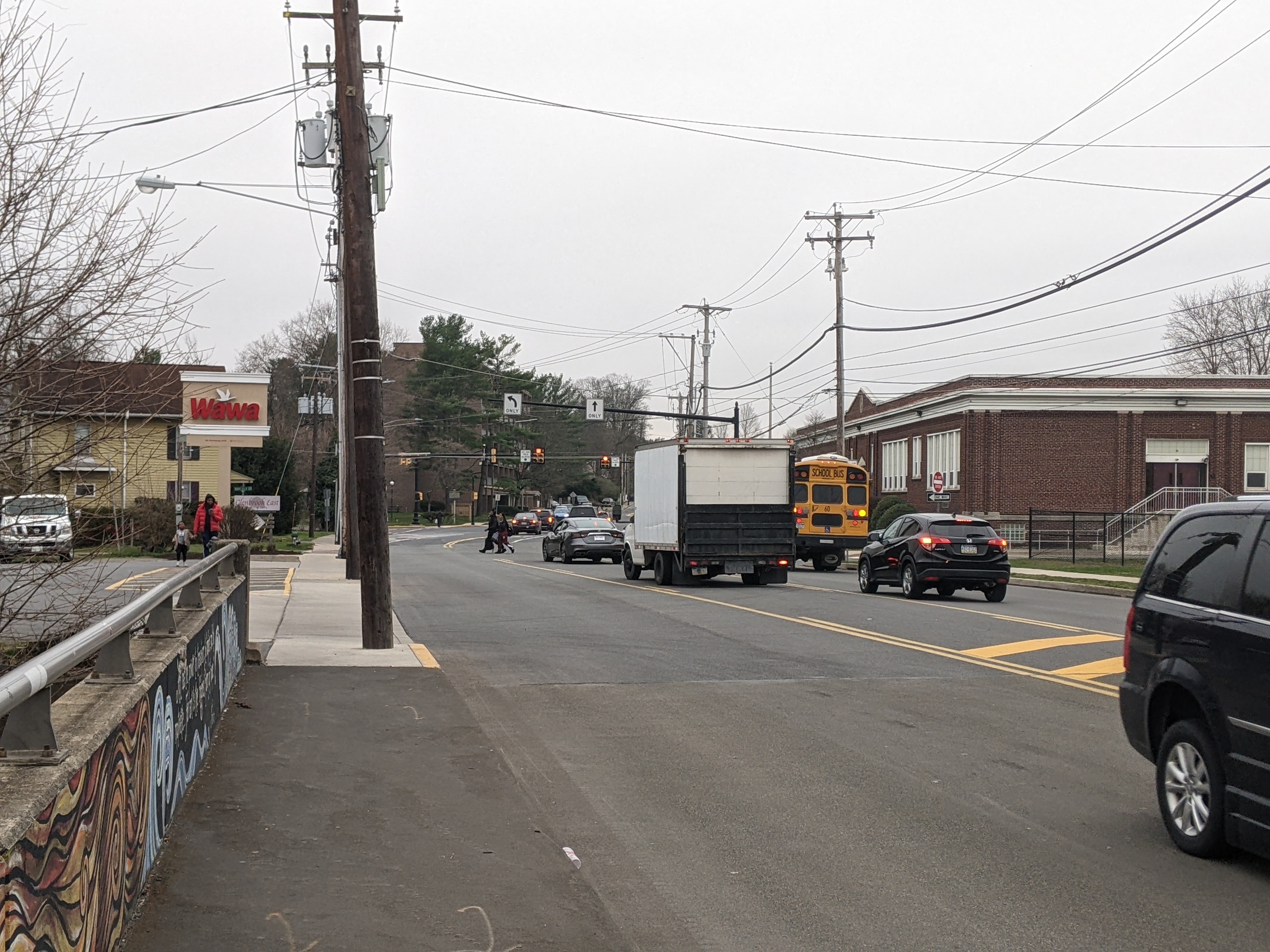
Keeping an Eye on the Lower Hill: 2022 Recap

Overview

The Lower Hill is a notorious site in Pittsburgh, a scar on the city from the height of Urban Renewal. A vibrant (but poor and predominately Black) neighborhood was demolished in the 1950s so the City could build a cultural mecca centered on a Civic Arena, most of which ended up not being built and was left as parking lots.

Now that the arena has been demolished and replaced adjacent to the former location, the Penguins hockey team has the development rights to rebuild the Lower Hill, stitching back together the fabric of the city and reconnecting the remainder of the Hill District neighborhoods with downtown.

However, grand language describing the wonderful benefits to a city are part and parcel of any major development project, including the 1950’s Urban Renewal of the Lower Hill. Fifty years later, the Urban Renewal of the Lower Hill is rarely, if ever described as a good thing. In fact the current redevelopment is sometimes described as undoing the mistakes of that project. However, can the negative financial, social, and emotional repercussions of the original demolition and decades of disconnect be undone simply by reinstating (most of) the former street grid?

This blog post is part of an on-going photographic series to watch the redevelopment of the Lower Hill. Periodically, at least once a year, I return to the site to take new photographs. In addition, I include links to articles about the project that I’ve encountered since the previous post in the series. At the end of the post, there are links to all the previous posts in the series.

What’s New

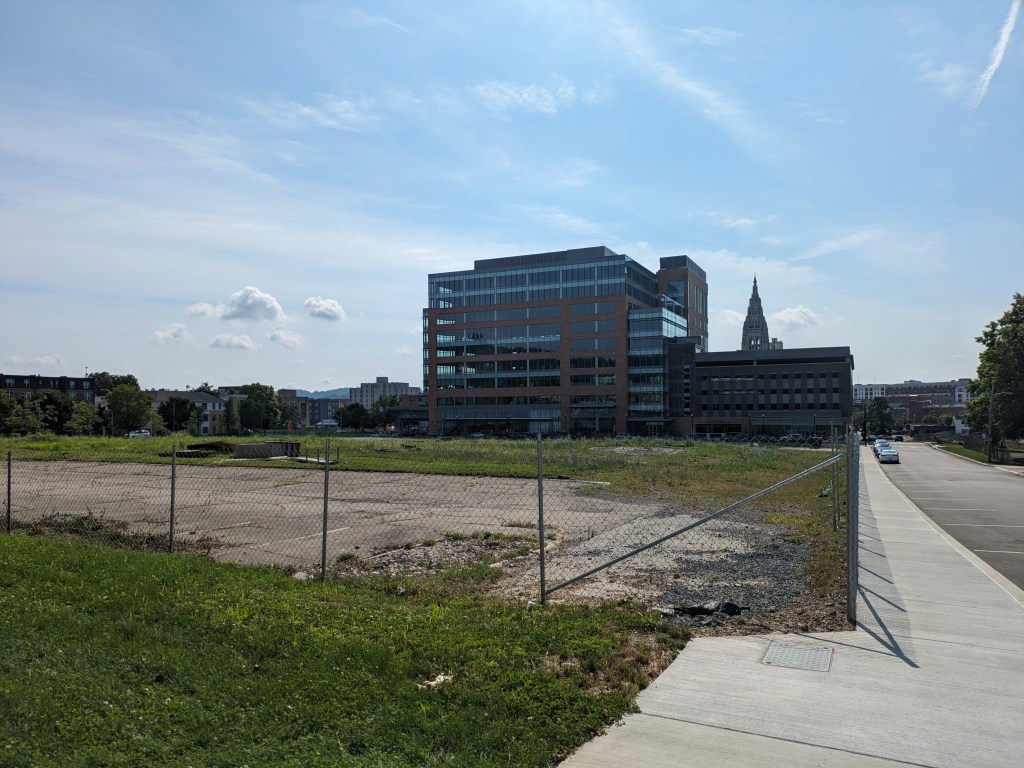
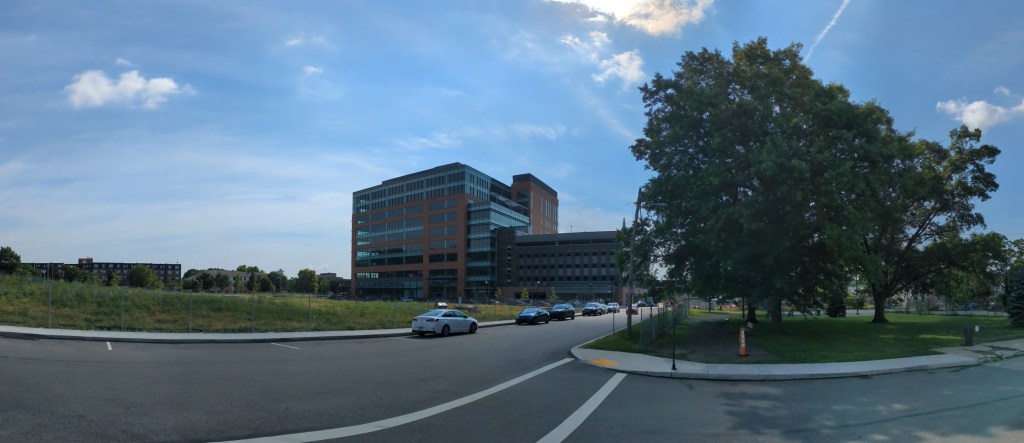
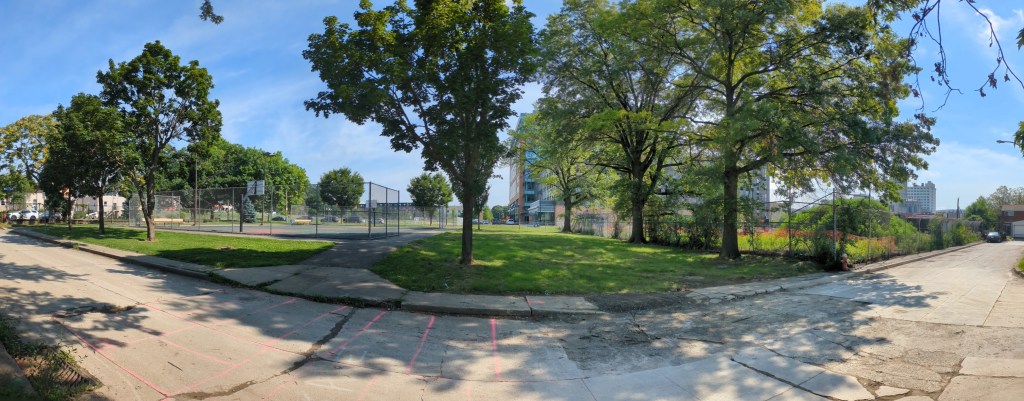
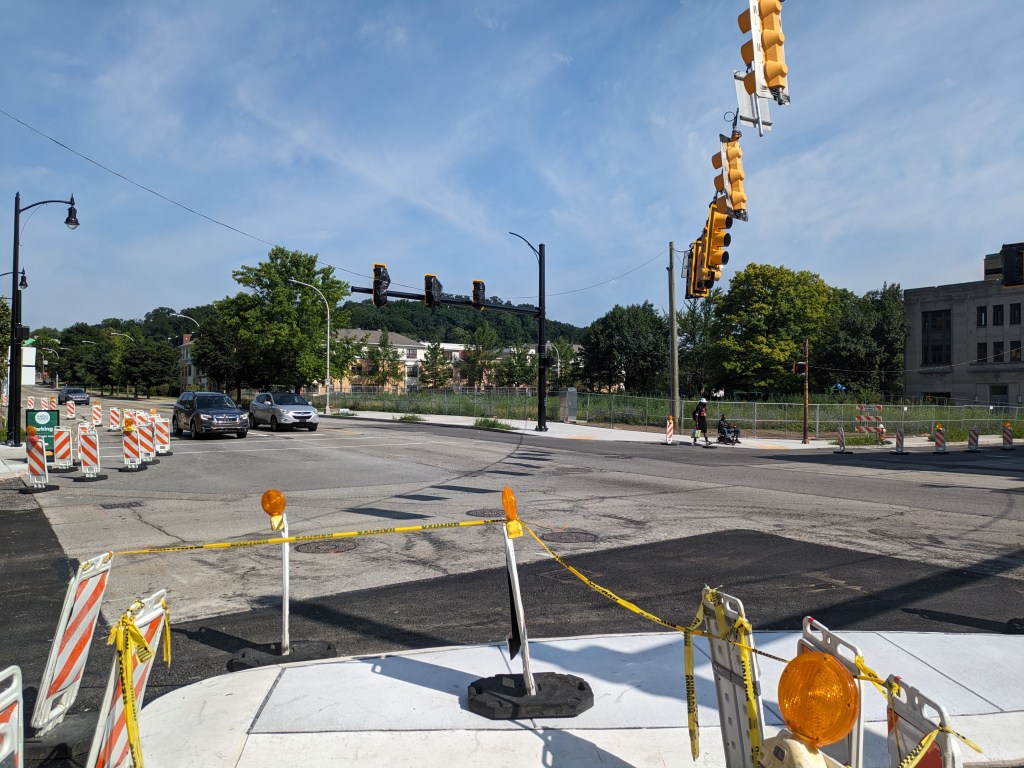
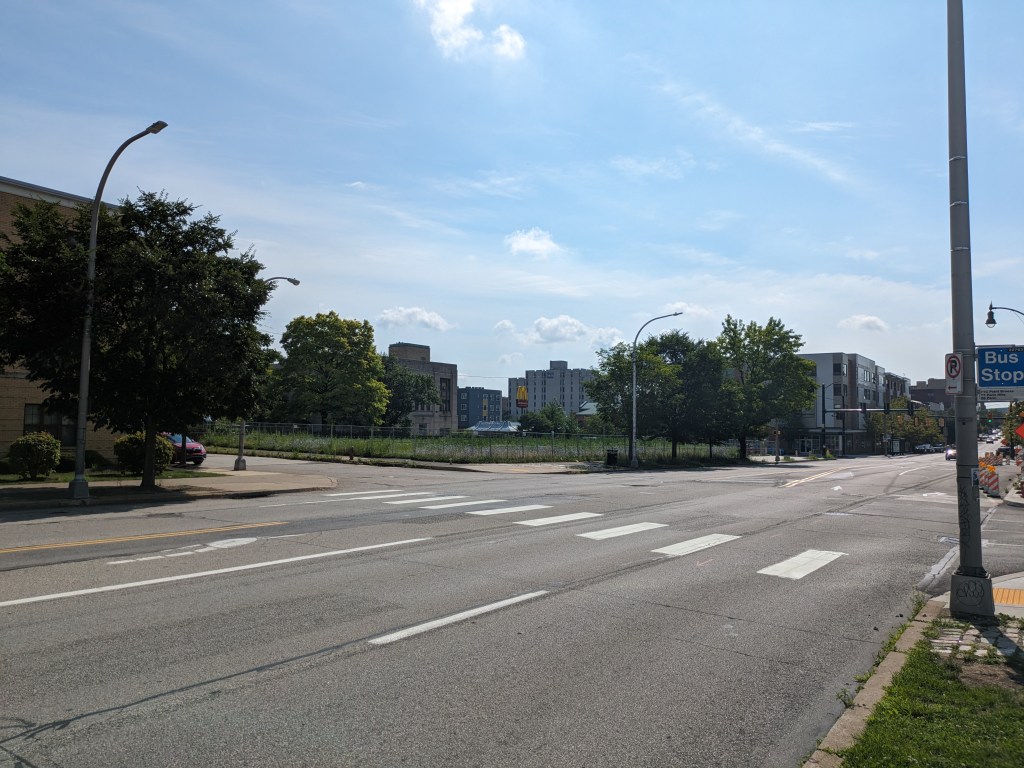
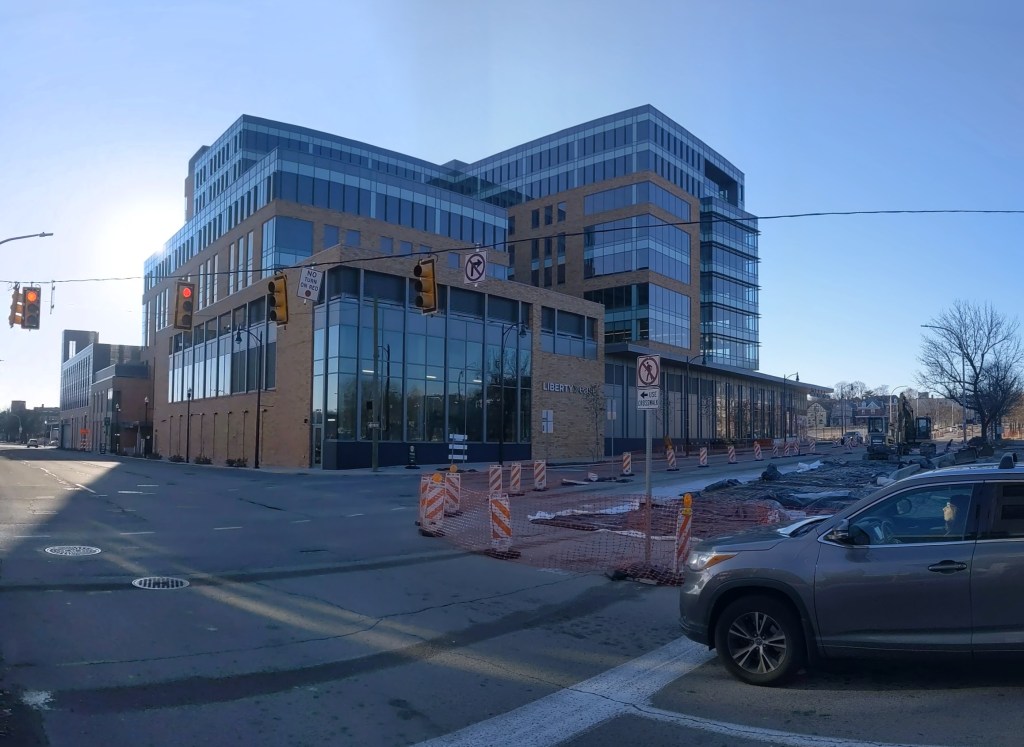
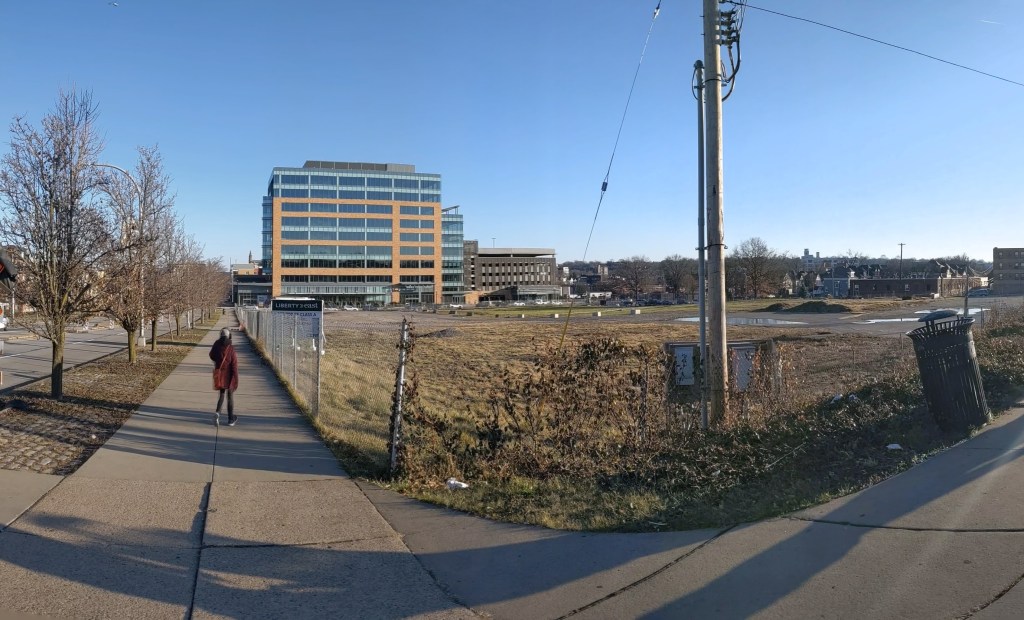
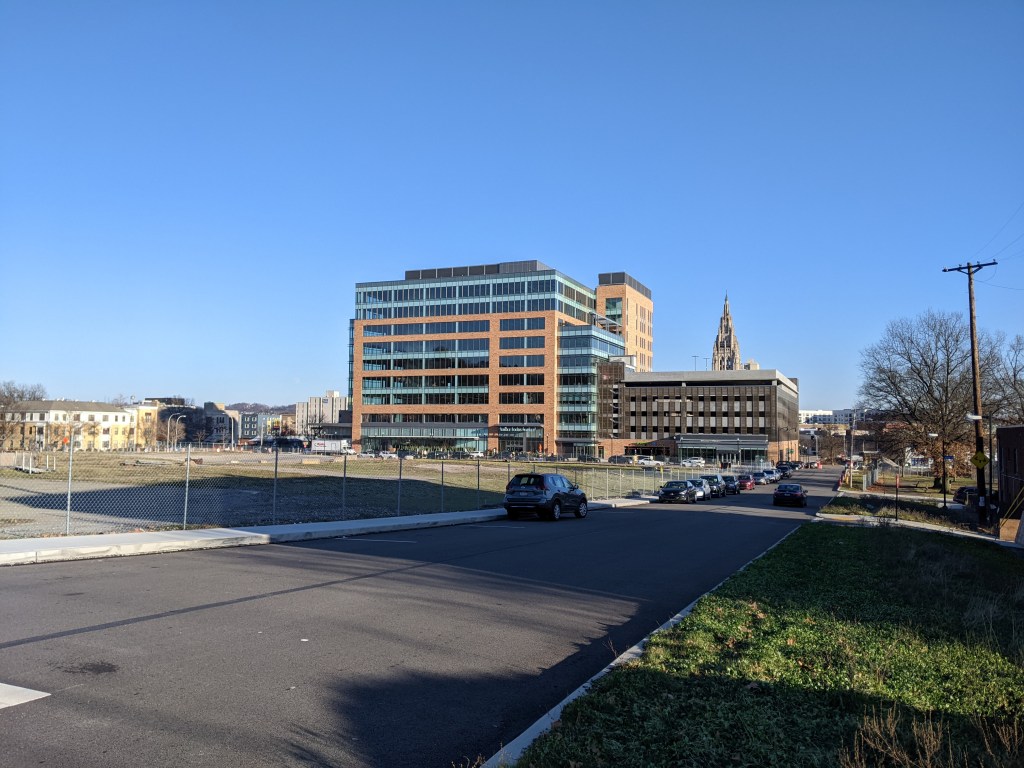
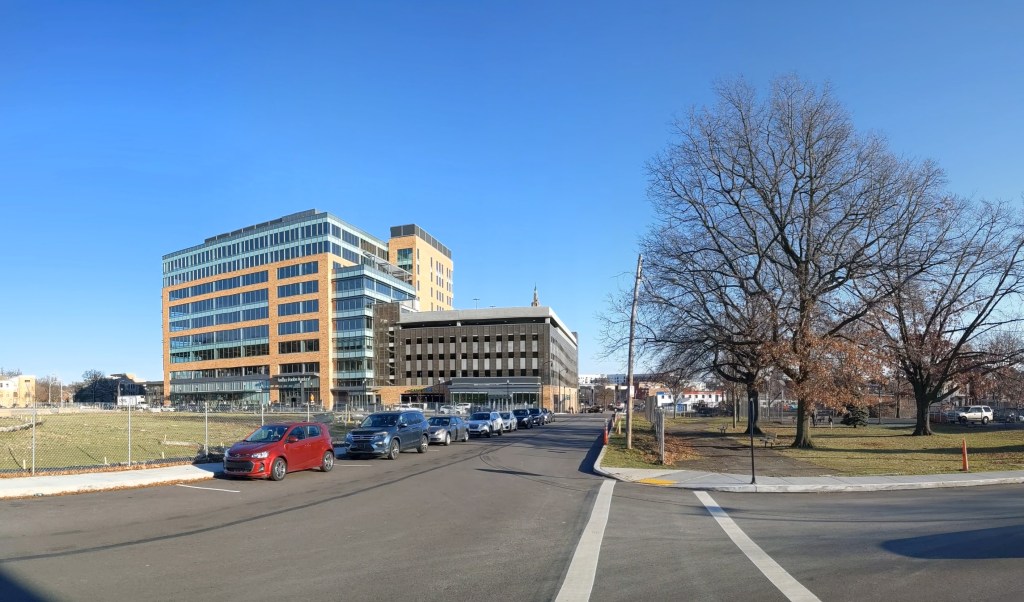
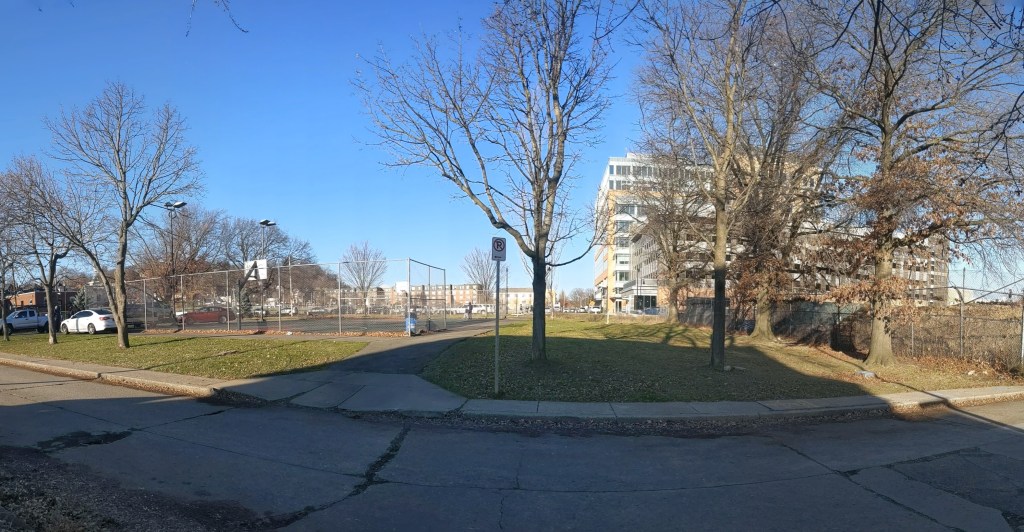
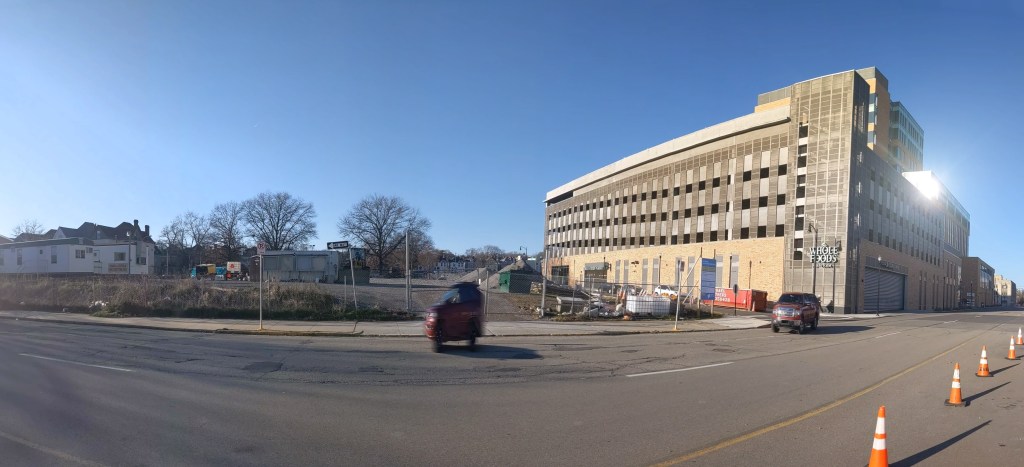
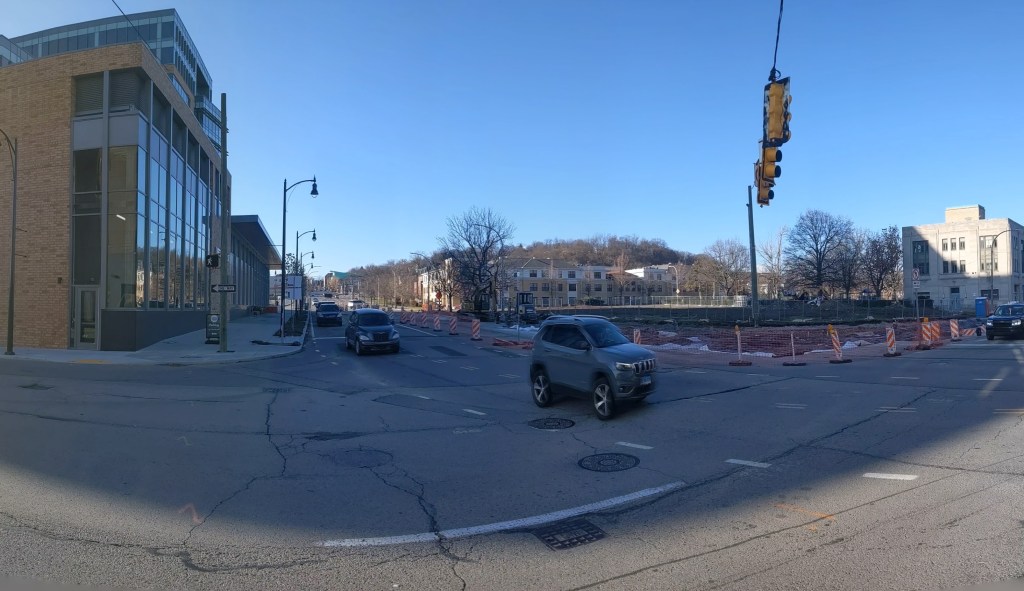
In 2022, construction of the FNB Tower progressed. Not much else changed on the ground, but the news shared some of the negotiations and deals being made to move the rest of the site forward.

Photos

Lower Hill in the News

Next Pittsburgh named the Lower Hill redevelopment as one of the top 10 developments to watch in Pittsburgh in 2022 (January 3, 2022).

Bethel AME, Pittsburgh’s Oldest Black Church (Public Source, January 31, 2022) who’s building was taken through eminent domain and demolished in the 1950s to build the Civic Arena, has been in talks with the Penguins about reparations as part of the redevelopment of the Lower Hill (Next Pittsburgh, October 3, 2022). In October 2022, it appeared a preliminary agreement had been reached (Public Source, October 17, 2022; Next Pittsburgh, October 17, 2022), but in November the talks stalled according to Bethel AME (City Paper, November 18, 2022).

The plans for “Block E” were presented to the Planning Commission in the first of two hearings (Planning Commission Agenda & Application; Public Source, December 13, 2022; Pittsburgh Business Times, December 13, 2022). In the months prior to this hearing, this plan, which is a revision from the original Preliminary Land Development Plan, was presented to the community amid concerns about process and the Community Collaborative Implementation Plan (Pittsburgh Business Times, October 14, 2022).

Funding announcements for the greater Hill District included infrastructure funding from a federal RAISE Grant (City Paper, August 11, 2022) and Housing Authority funds allocated toward the redevelopment of the Bedford Dwelling apartments along with the intention to apply for a Choice Neighborhoods grant (Public Source, December 15, 2022).

A car crashed into Freedom Corner damaging the monument on the site (City Paper, August 3, 2022). This is an important neighborhood location for many social justice actions including as a marker at the demarcation line of the redevelopment of the Lower Hill, which did not spread beyond that line due to community resistance.

In other Hill District development new, the redevelopment of the former Miller School into apartments was moving forward (Pittsburgh Business Times, November 30, 2022).

Locating the Lower Hill


Previous posts in series

Keeping an Eye on the Lower Hill: Dec. 2021

Keeping an Eye on the Lower Hill: May 2021

Keeping an Eye on the Lower Hill: Dec. 2020

Keeping an Eye on the Lower Hill: Jun. 2020
Keeping an Eye on the Lower Hill: Jan. 2020

Keeping an Eye on Uptown: Introduction

Keeping an Eye on Penn Plaza: Aug. 2023

What’s New

While there are no visible changes yet, the redevelopment of Enright Park has made significant progress so far this year. It has been presented to the Art Commission, the Zoning Board of Adjustment (ZBA), and the Planning Commission. Art Commission because any projects on city-owned land require Art Commission approval; ZBA because the proposal includes a fence taller than is permitted in the zoning regulations; and Planning Commission because of the zoning district where the park is located (AP – Mixed-Use Planned Unit Development). All three boards and commissions have approved the project.

Enright Park was one of the City’s bargaining chips when the developer of the Penn Plaza site was seeking approval to redevelop affordable housing that had been disinvested by the owner into a mixed-use development. For the new layout to work, the developer needed a portion of the land that Enright Park covered. The final agreement between the City and the developer included swapping land so that the park remained and at a similar size and the developer agreed to contribute a significant portion of the cost to redevelop the park.

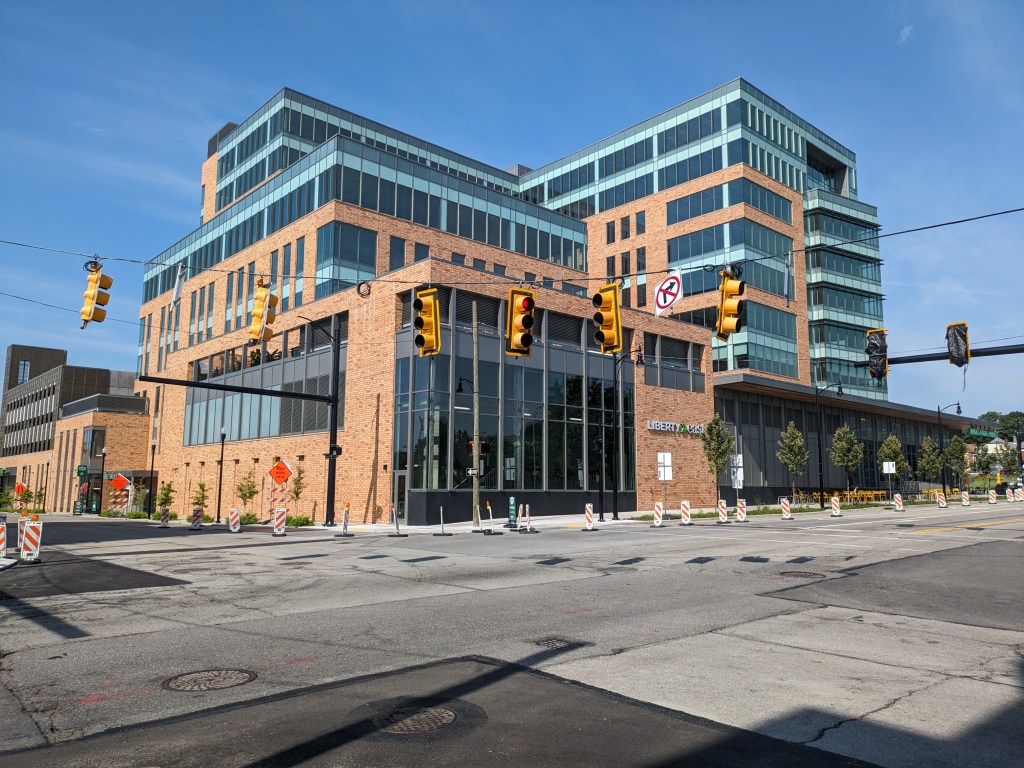
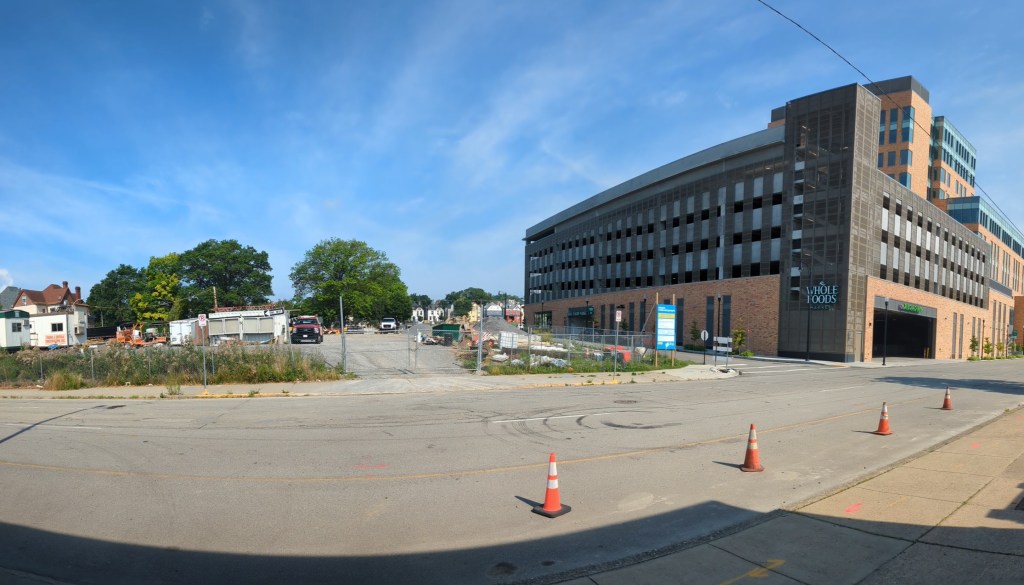
The Phase 1 building (Liberty East) remains much as it did in 2022. Whole Foods takes up most of the first floor and the one other space at ground level remains vacant. However, according to the news a second office space has been taken by the developer of the building (LG Realty). Duolingo was the first office tenant to move in.

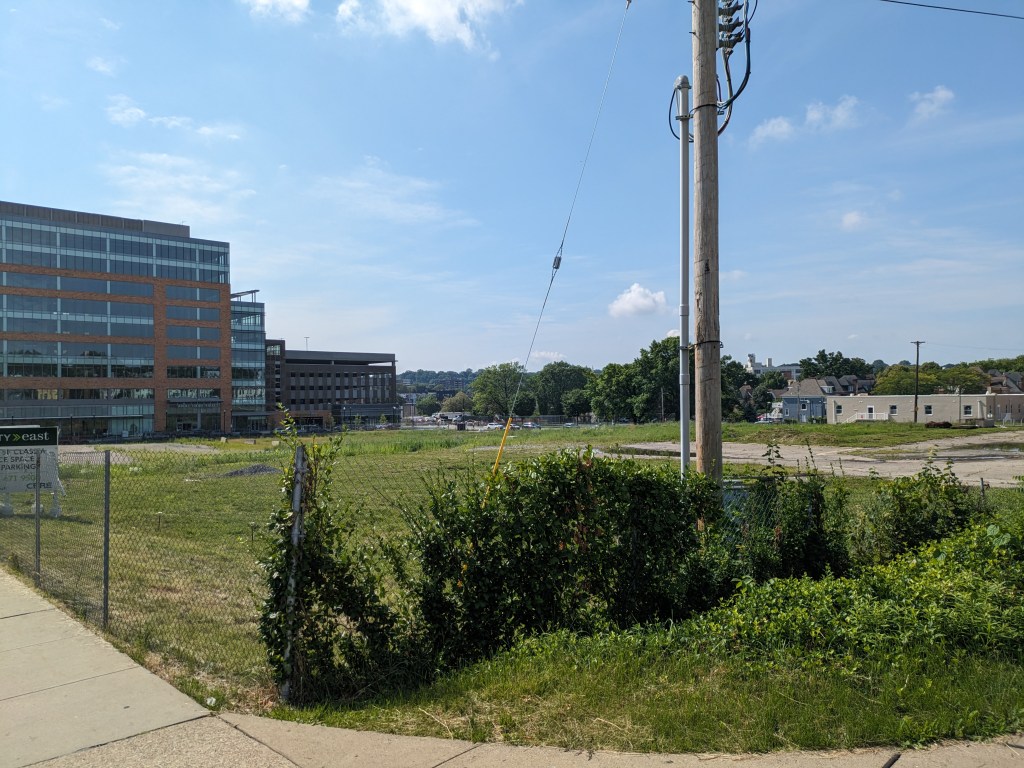
The large block where Phase 2 will go remains visible untouched. Perhaps behind the scenes work is moving forward.

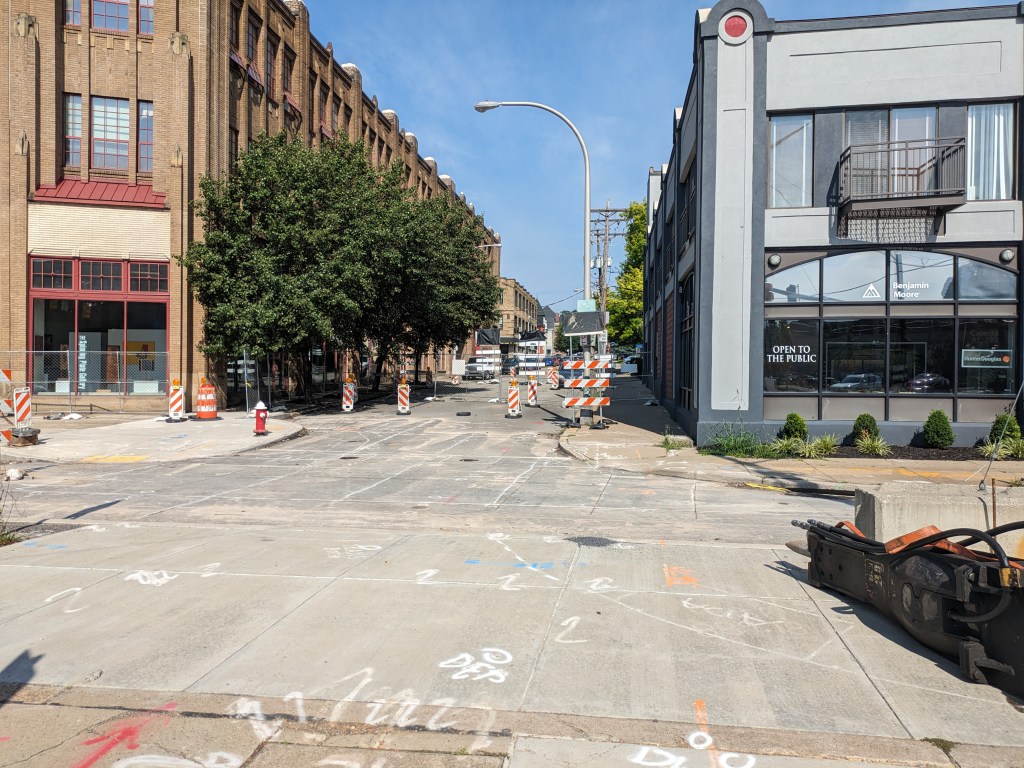
Around the site, the re-establishment of two-way traffic on Euclid Avenue continues; the renovation of the nearby apartment building also progresses, though now they look like they belong in California instead of Pittsburgh since the brick was covered up; and the former site of the East Liberty Lutheran Church remains vacant.

Background

The former Penn Plaza Apartments was a group of large of apartments buildings that served a low-income population. After years of neglecting these apartments, the owner gave 200 residents notice to vacate within 90 days in the summer of 2015. By then, the surrounding neighborhood of East Liberty was a hopping place to live with low vacancy rates and the average rent much higher than what these residents could afford. There was a large outcry at the time, which only got worse as the owner’s plans for the site were understood. The owner wanted to swap some land with the City and change the zoning district to build a large scale mixed-use development: 54,600 sq ft of retail and 246,090 sq ft of office with accessory parking (see the application materials starting on page 54 from the final Planning Commission review and approval). After months of negotiation with the City and the community, the land and the zone change were given to the development while the affordable housing crisis in Pittsburgh only got worse and the former residents were forced to uproot their lives.

The Penn Plaza Support and Action Coalition has more information on what was promised and what happened as the residents were forced to find new housing.

Photos: The Site

Photos: The Surroundings

Penn Plaza in the News and Additional Resources

Enright Park:

  • City of Pittsburgh project page
  • The Art Commission approved the plans (TribLive, March 23, 2023)
  • The Zoning Board of Adjustment approved a variance to the fence height (ZBA agenda; ZBA application)
  • The Planning Commission approved the plans (TribLive, May 16, 2023; Planning Commission agenda; Planning Commission presentation slides; Planning Commission hearing beginning at 1:06:30)

LG Reatlty moves into new office (Pittsburgh Business Times, June 16, 2023)

City of Pittsburgh project page for the two-conversion of Penn Circle (Euclid Avenue)

City of Pittsburgh project page for pedestrian and traffic improvements to East Liberty

Giant Eagle spoke at a community meeting in January 2023 to share what their plans are for the site that closed and is expected to reopen after redevelopment of the shopping center formerly known as Shady Hill or Shakespeare.

Locating Penn Plaza


Previous Posts in the Series

Keeping an Eye on Penn Plaza – 2022 Recap

Keeping an Eye on Penn Plaza – Jun. 2022

Keeping an Eye on Penn Plaza – Apr. 2021

Keeping an Eye on Penn Plaza – Nov. 2020
Keeping an Eye on Penn Plaza – Aug. 2020
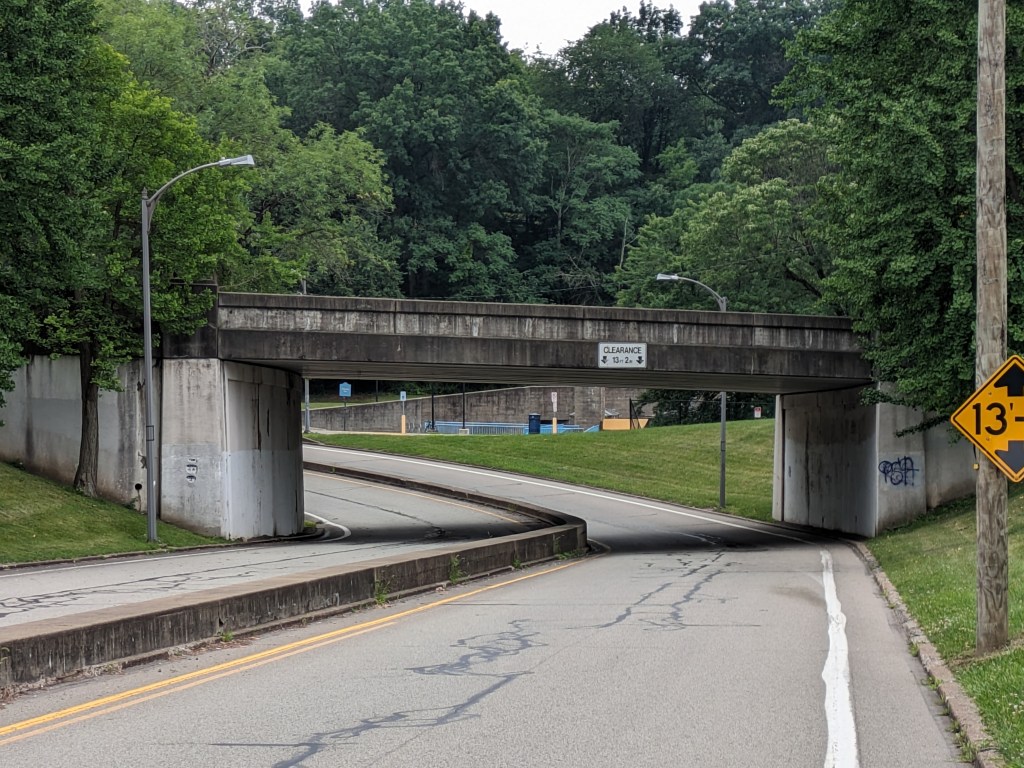
Bridge Collapse: Eighteen Months Later

According to the Pittsburgh Business Times, the collapse of the Fern Hollow Bridge in Pittsburgh ranked 4th in the top stories of 2022. Ranked higher were the New Normal (#1), Economic Stressors (#2), and the Shutdown of Tech Startups (#3).

As the first bridge collapse in nearly 100 years within the city limits of Pittsburgh, this remains a top story on urbantraipsing. In the six months since our last look at the bridge, there have been four important updates:

  • The preliminary findings of the National Transportation Safety Board’s investigation into the collapse have been released
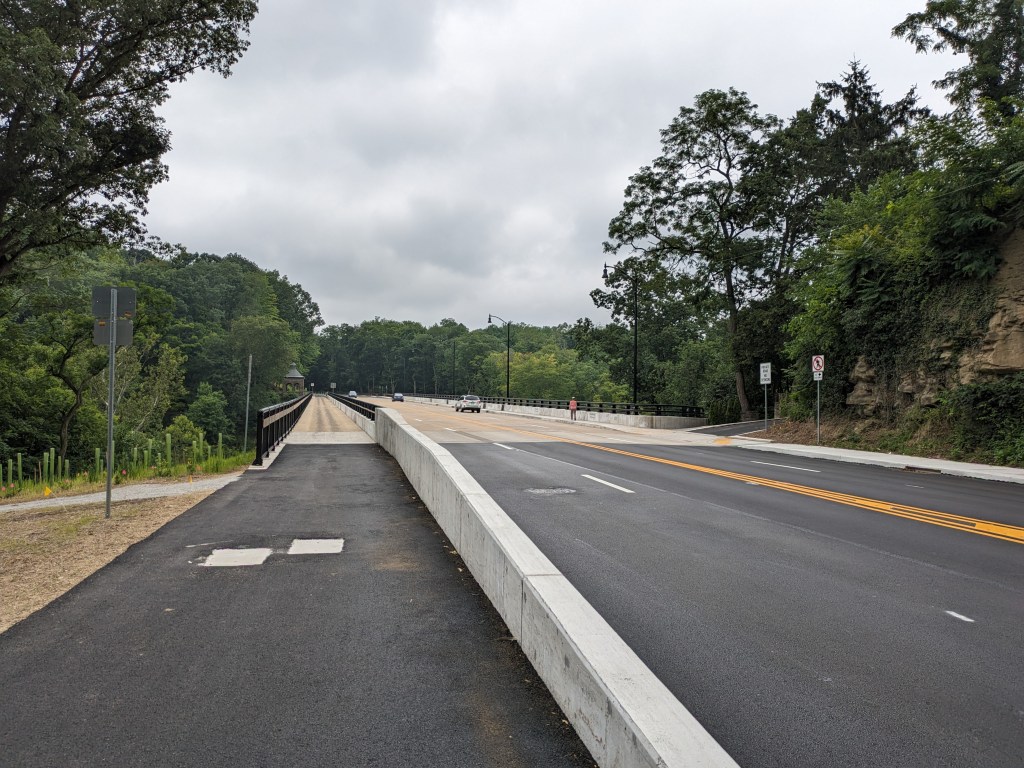
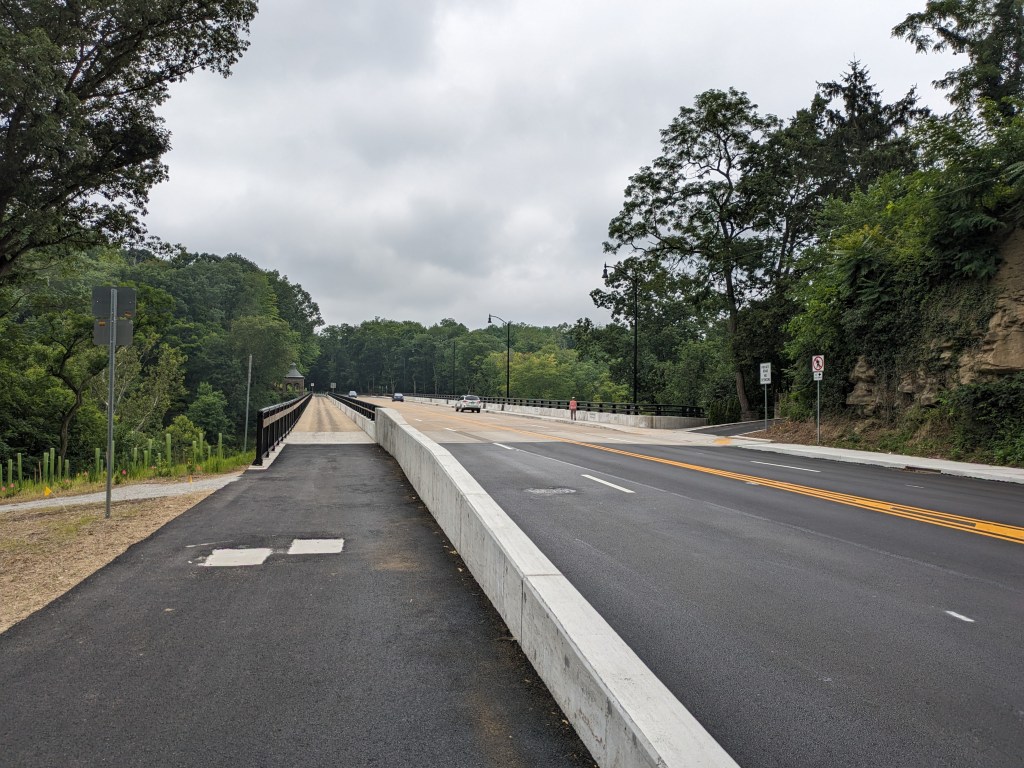
  • The bridge is now fully open to vehicular, bicycle, and pedestrian traffic
  • The two art installations have been installed
  • My feet are back to being fully functional

Update 1: Unsurprisingly, the NTSB’s investigation found that a decade of ignoring the calls for maintenance in the annual bridge inspection resulted in the deterioration of the steel structure of the bridge. The findings reference the inspections of bridges of similar construction in Pennsylvania following the collapse of the Fern Hollow Bridge. It noted that while those bridges have also experienced deferred maintenance, none of them are exhibiting deterioration as bad as Fern Hollow’s. The report did express concern that the status of similar bridges outside of Pennsylvania is unknown.

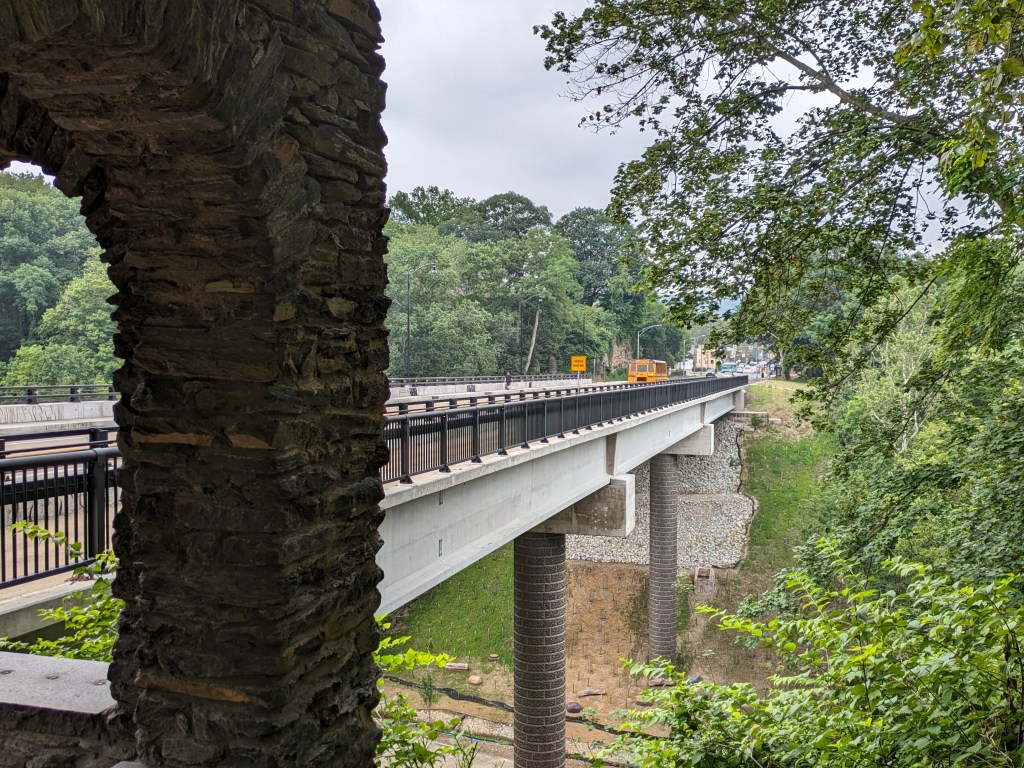
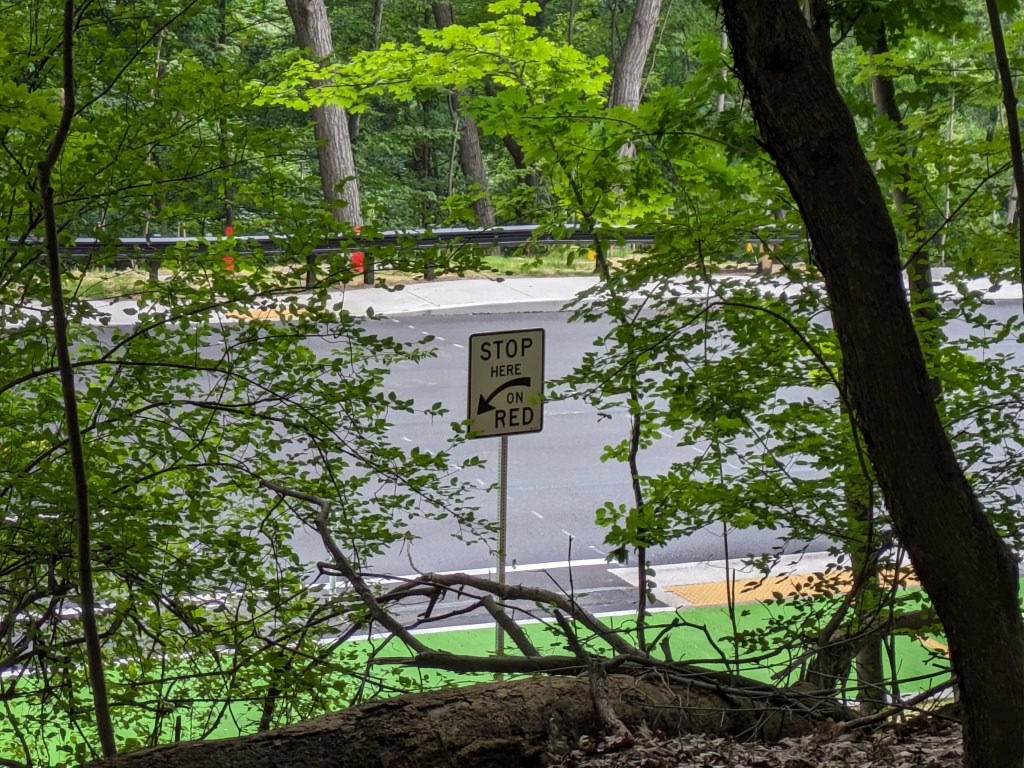
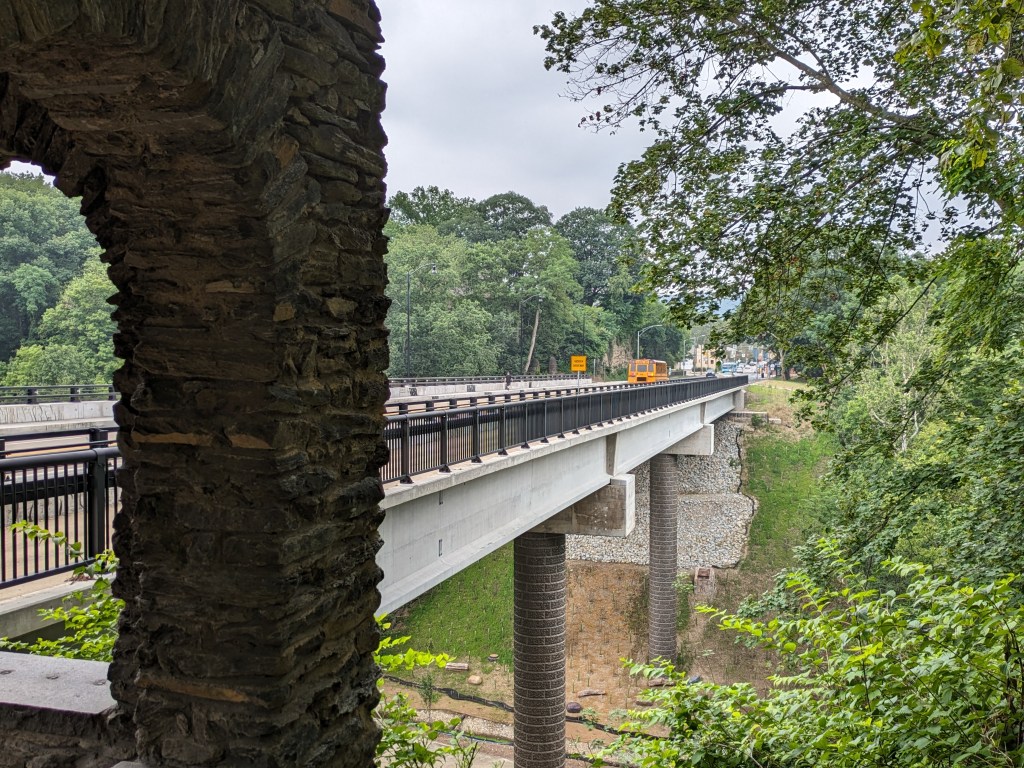
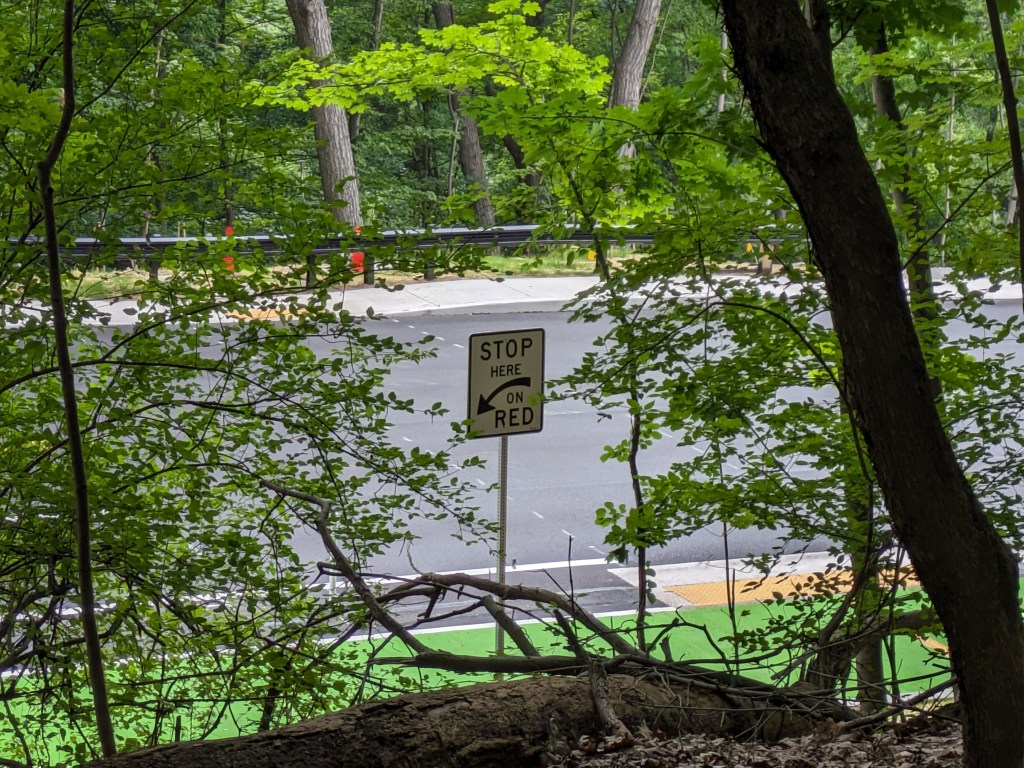
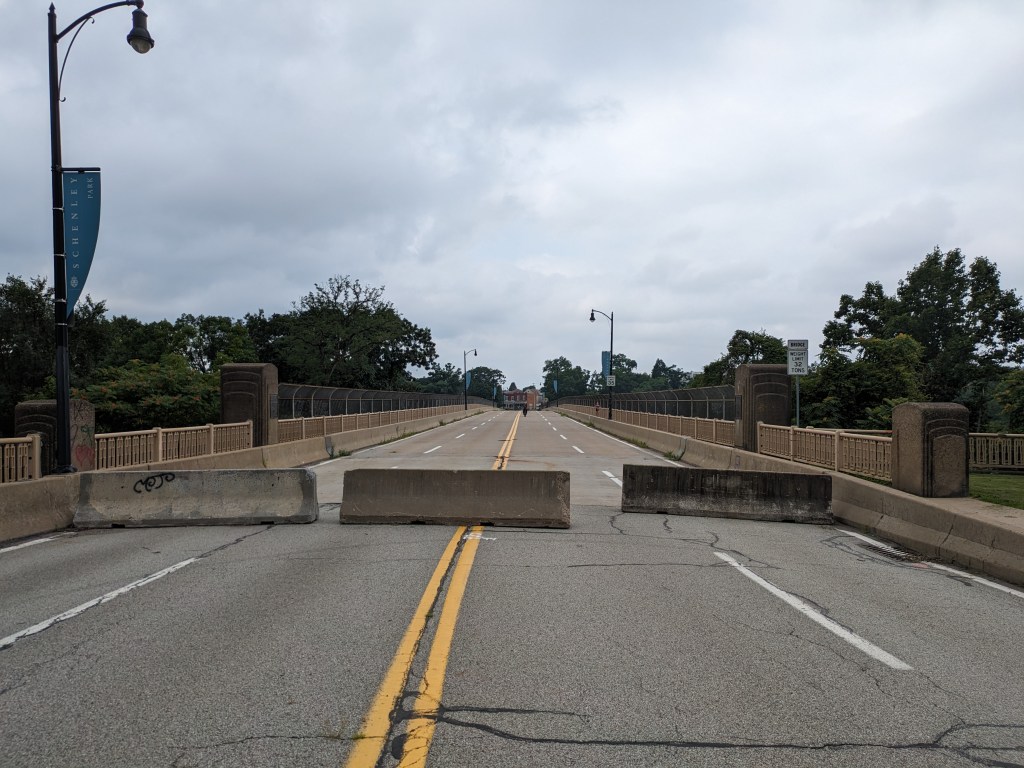
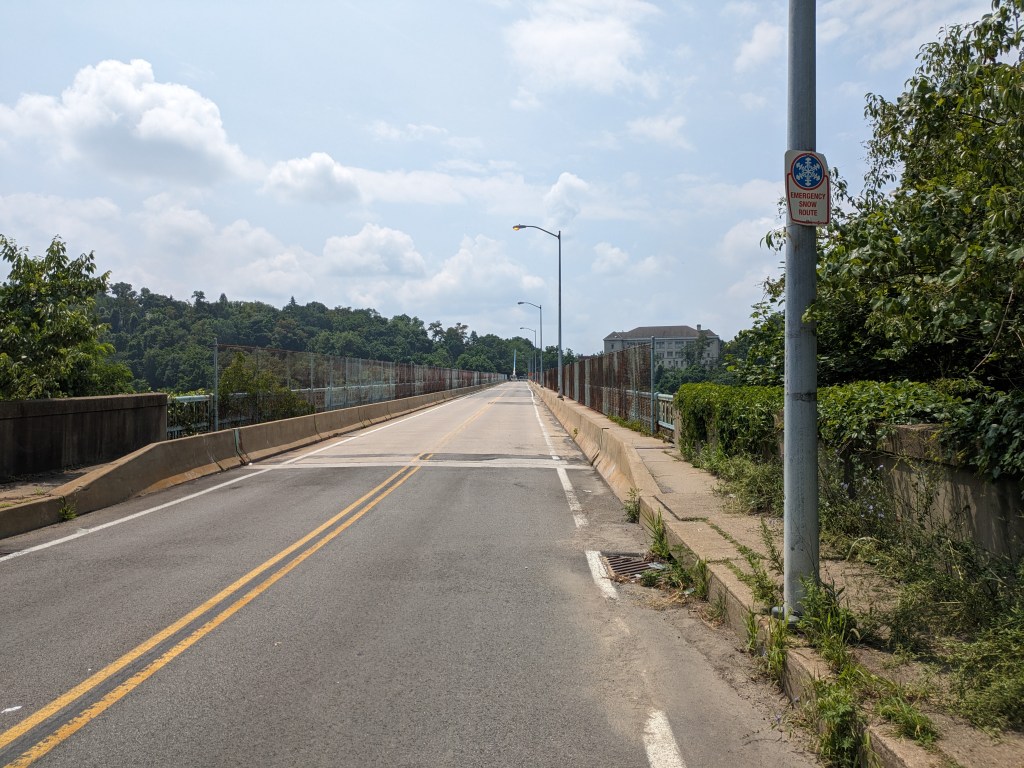
Update 2: While all lanes, the sidewalk, and multi-modal path are now open, there is evidence of some more work to be done. A little beyond the western end of the bridge, there are the preliminary markings for a crosswalk. Also, a “stop here on red” sign was installed, though it currently faces the park, not the traffic. Both of these suggest that a new traffic light will be installed to create a safe pedestrian crossing.

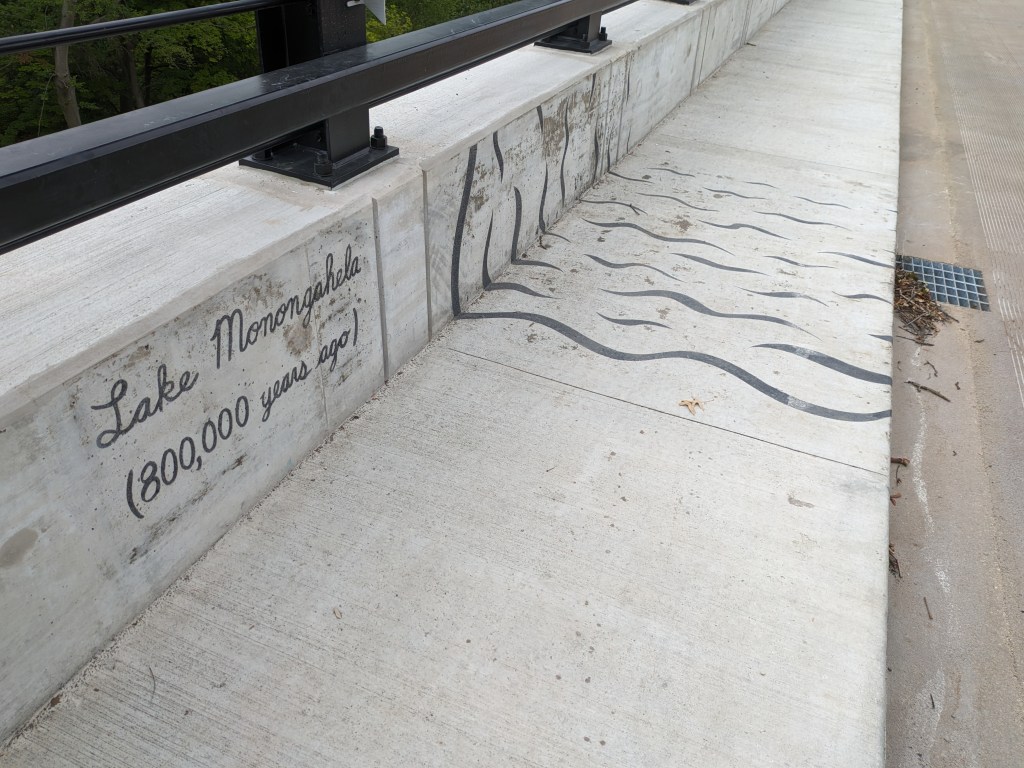
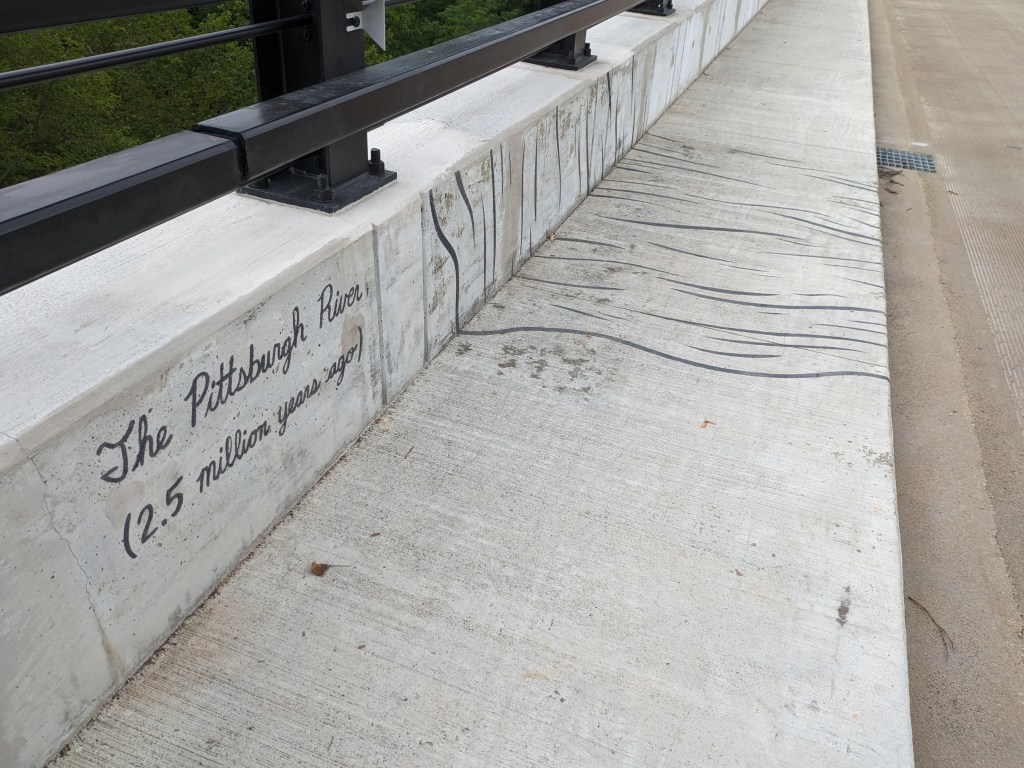
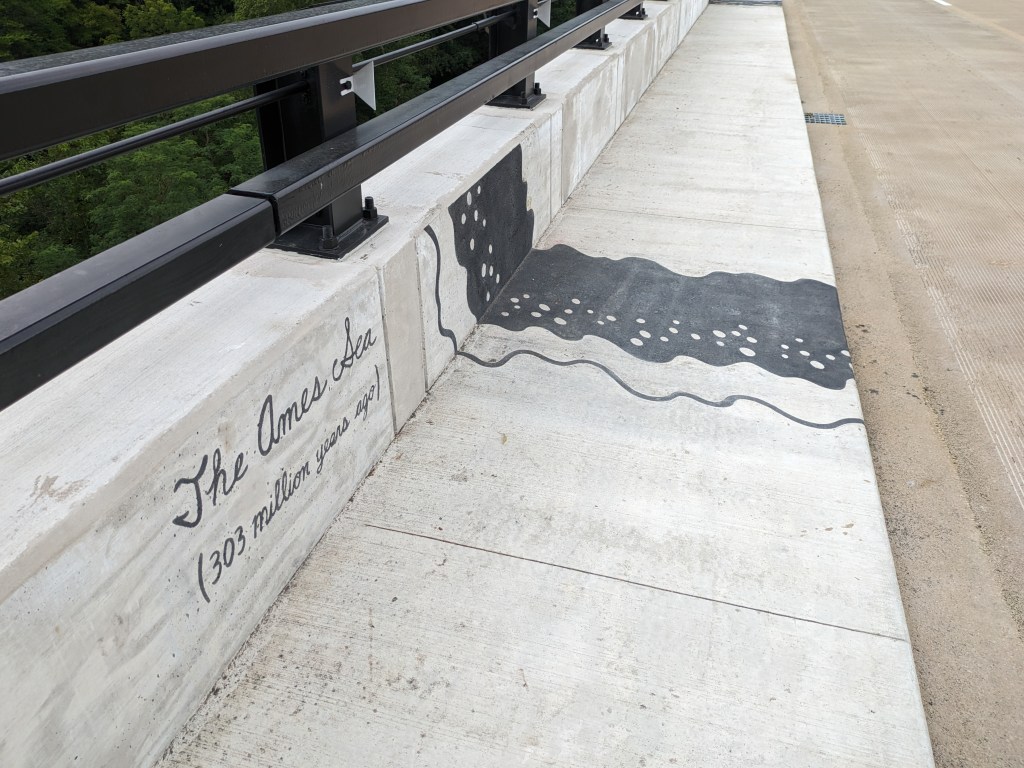
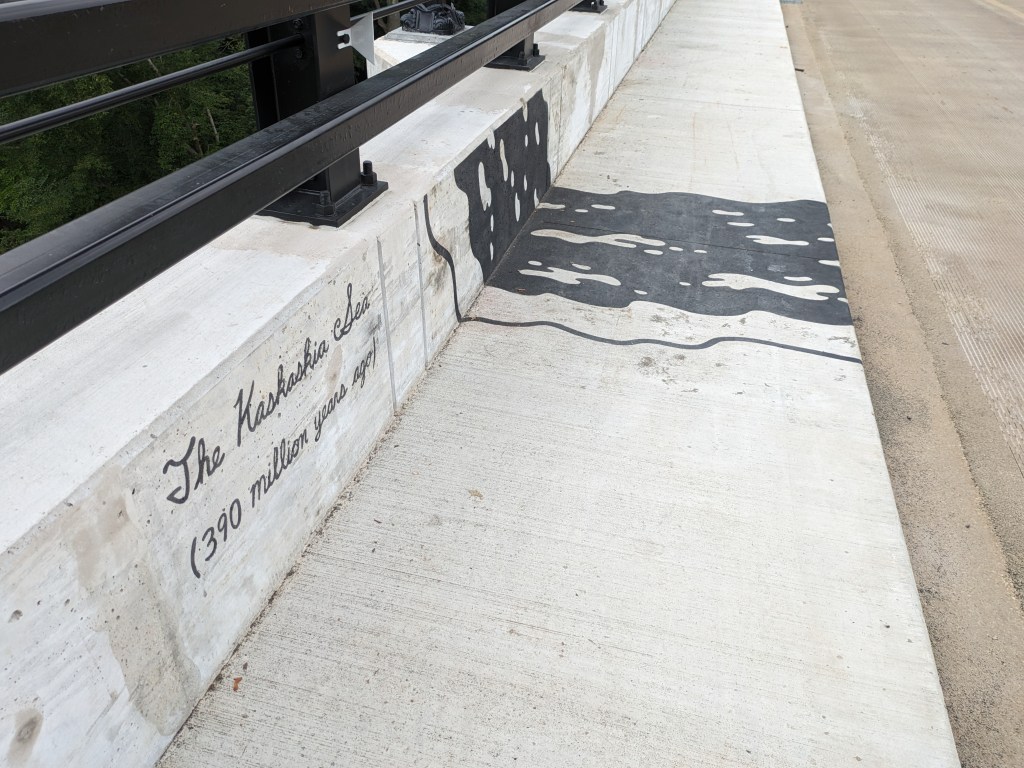
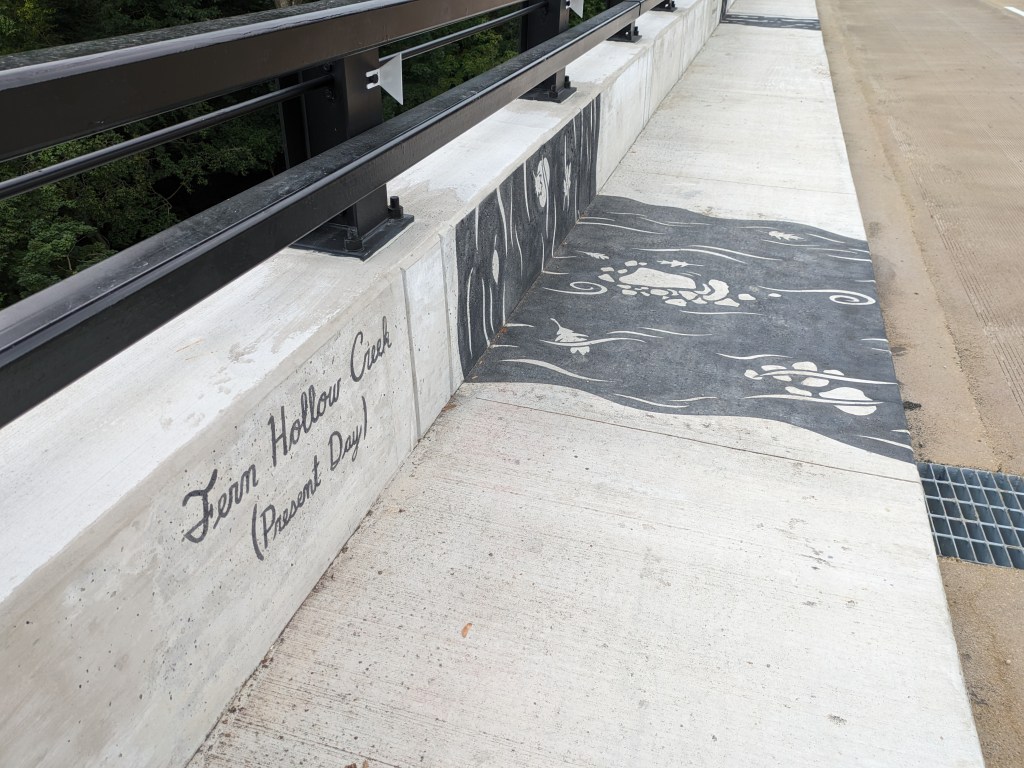
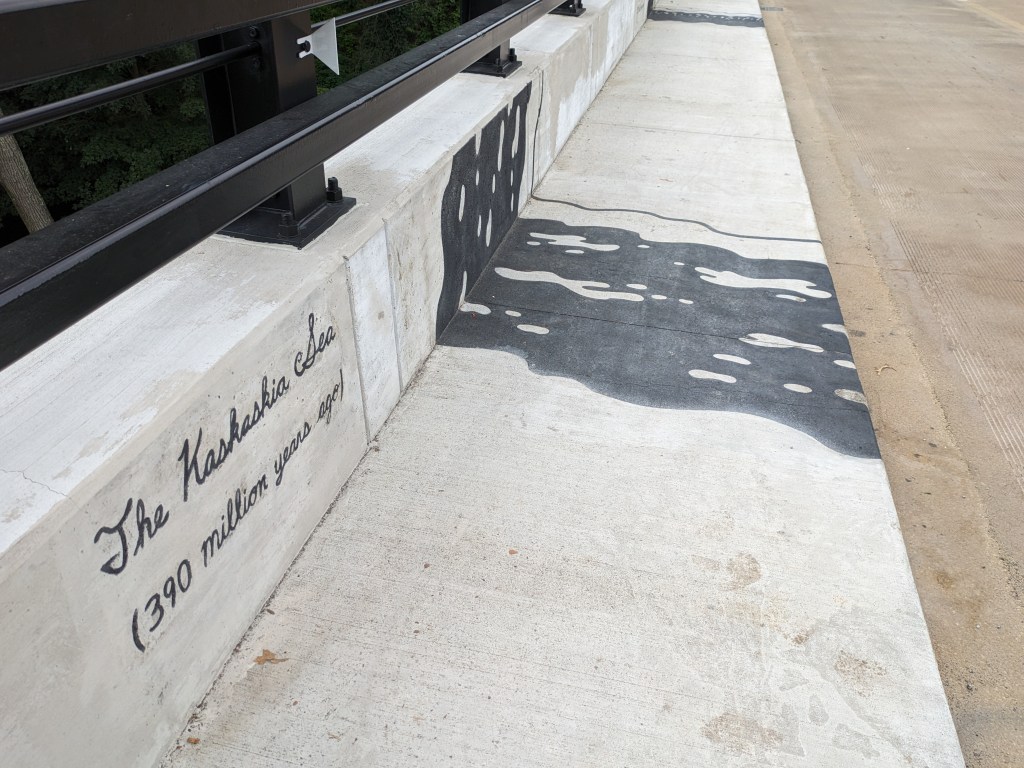
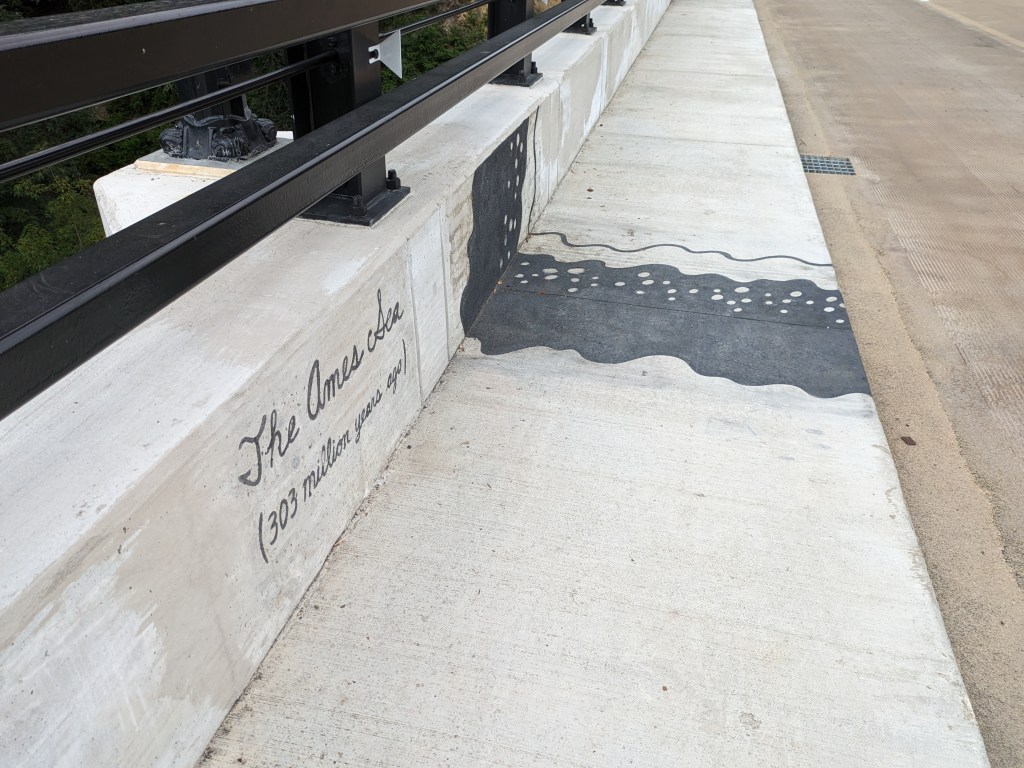
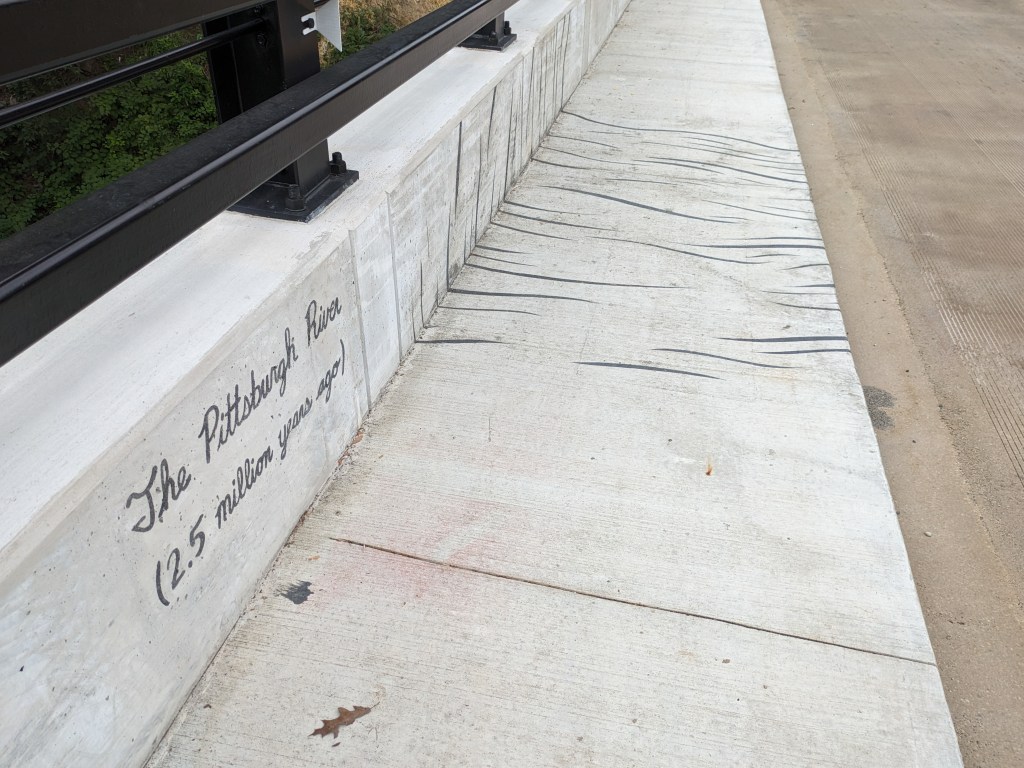
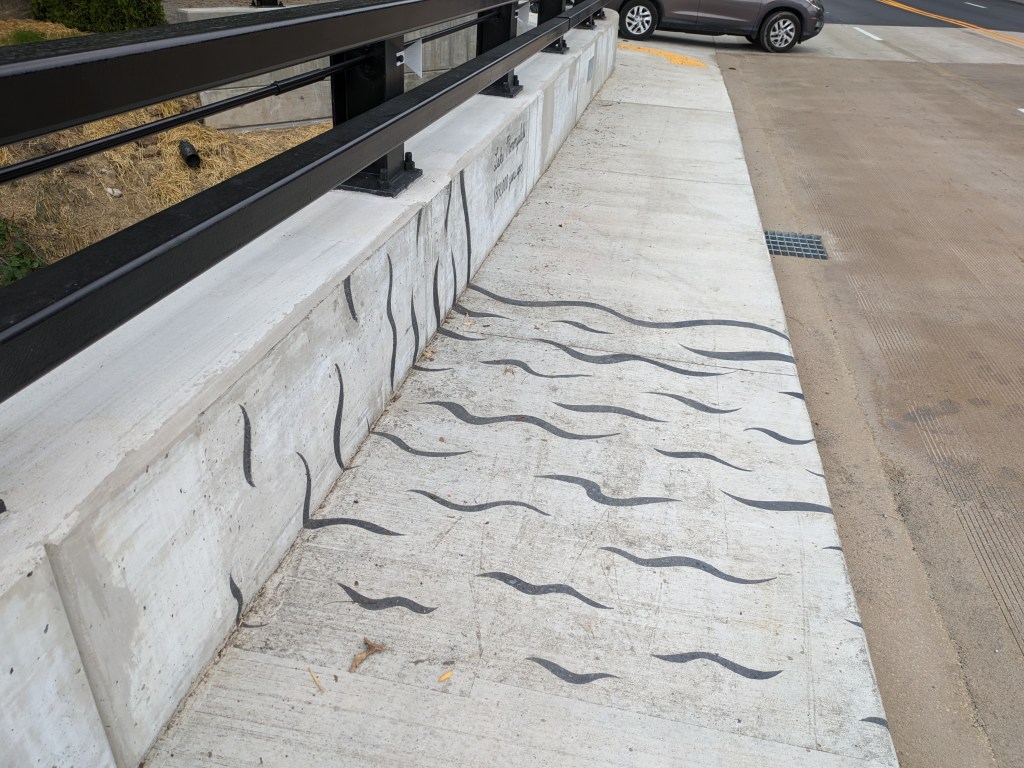
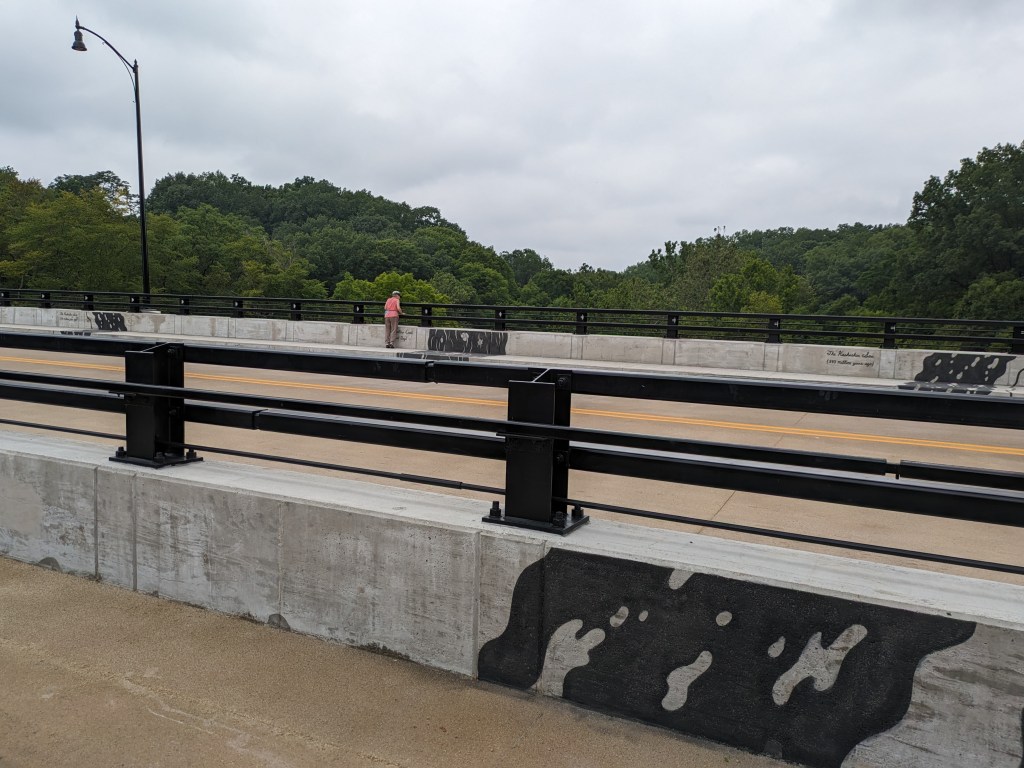
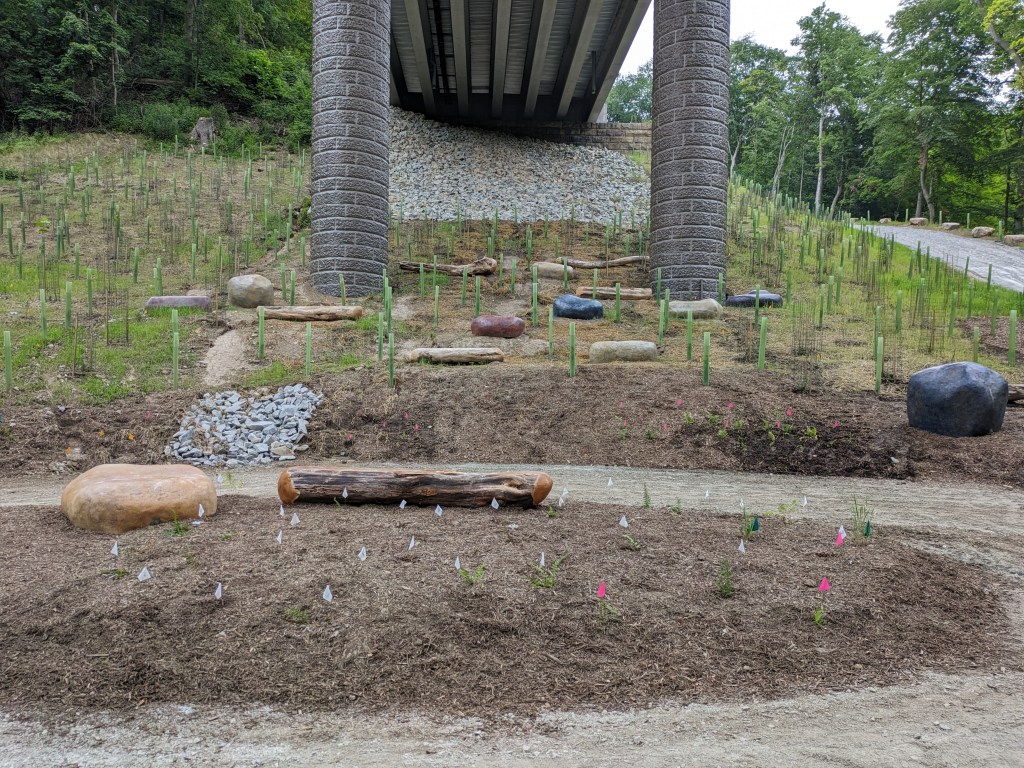
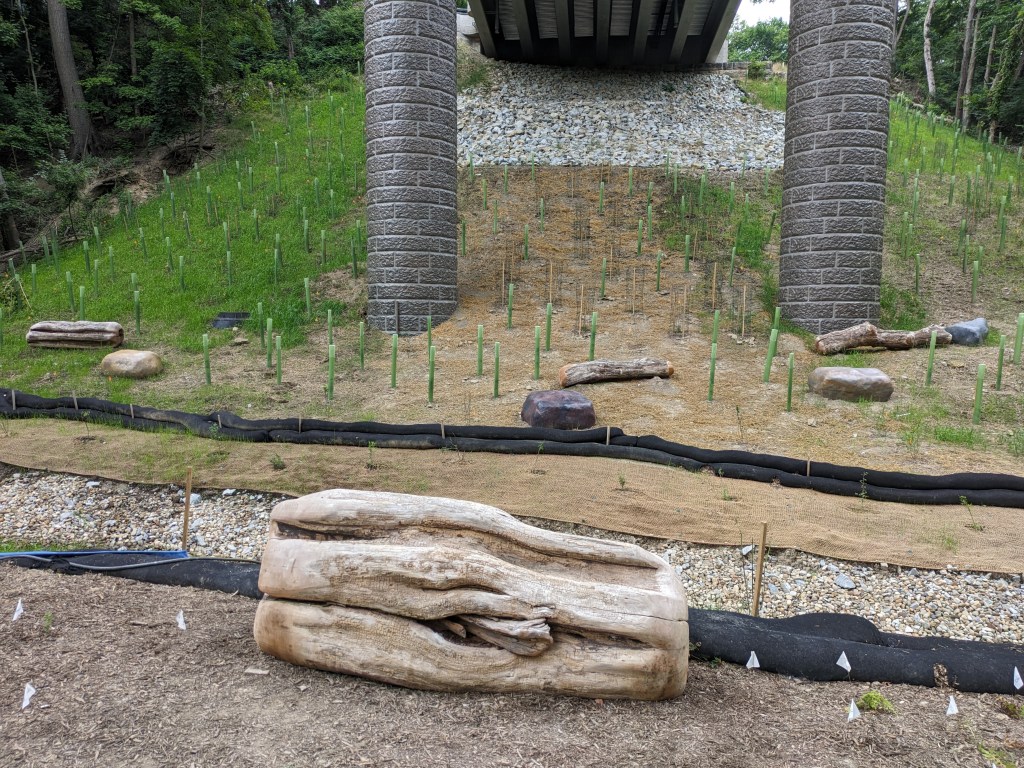
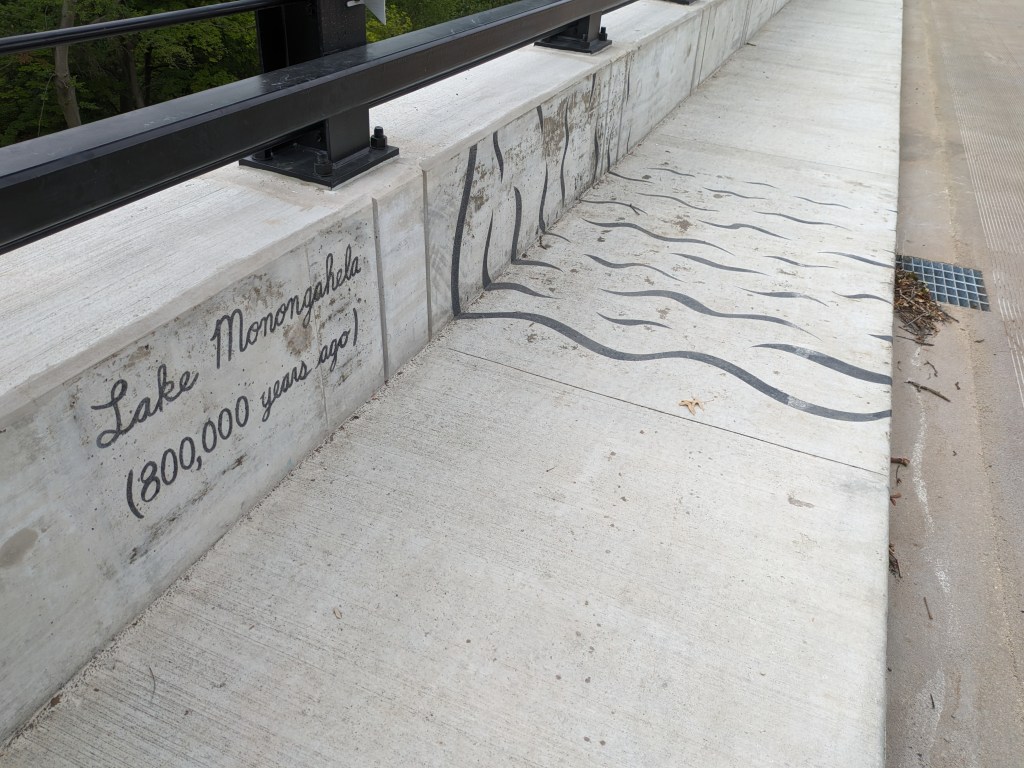
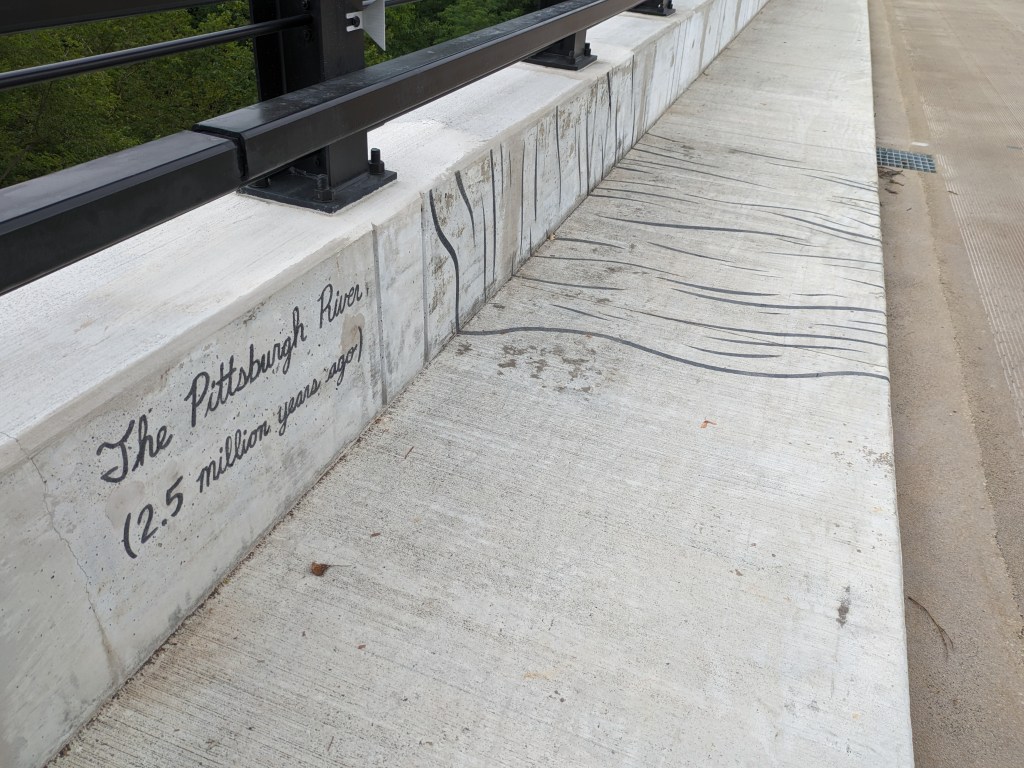
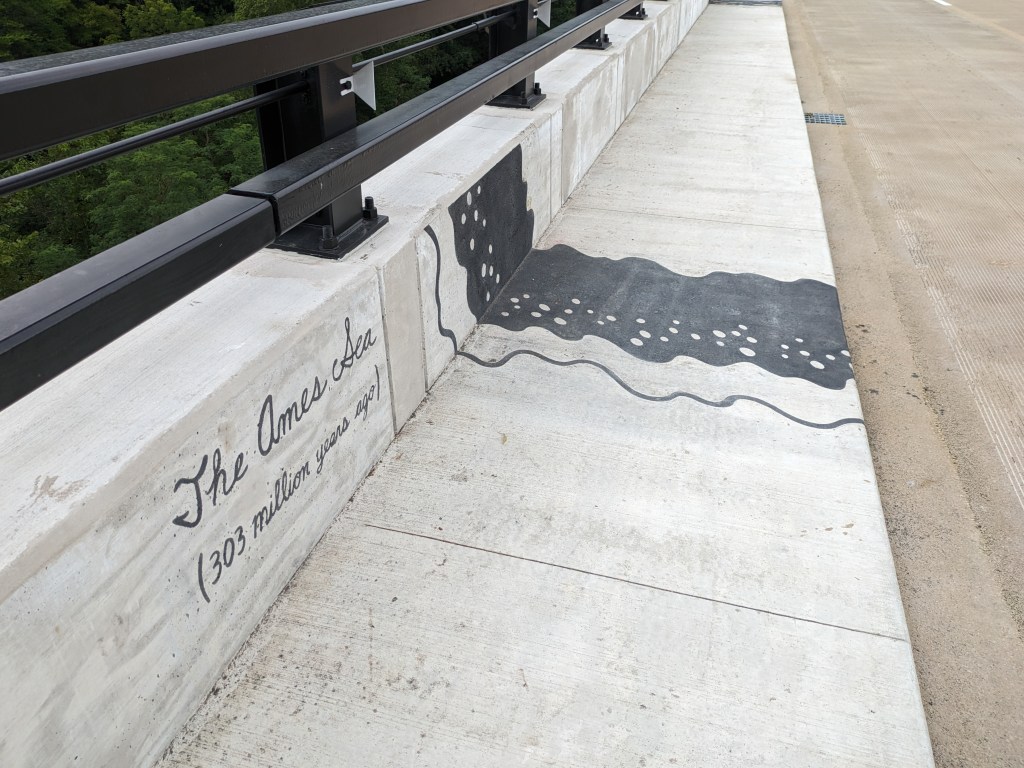
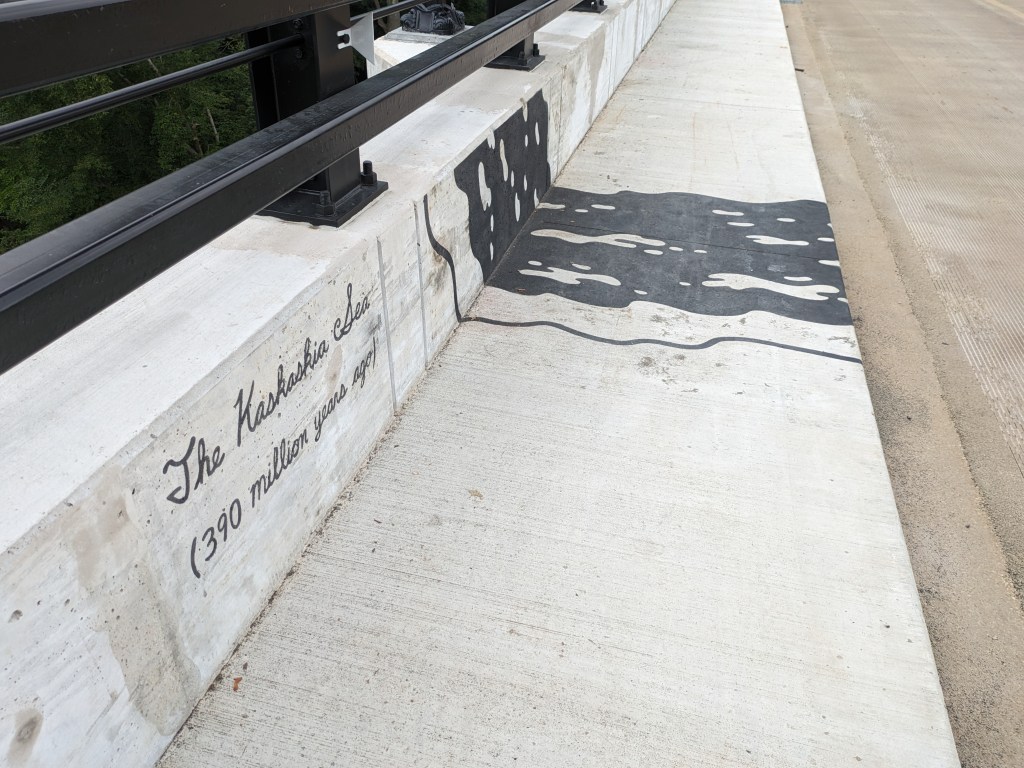
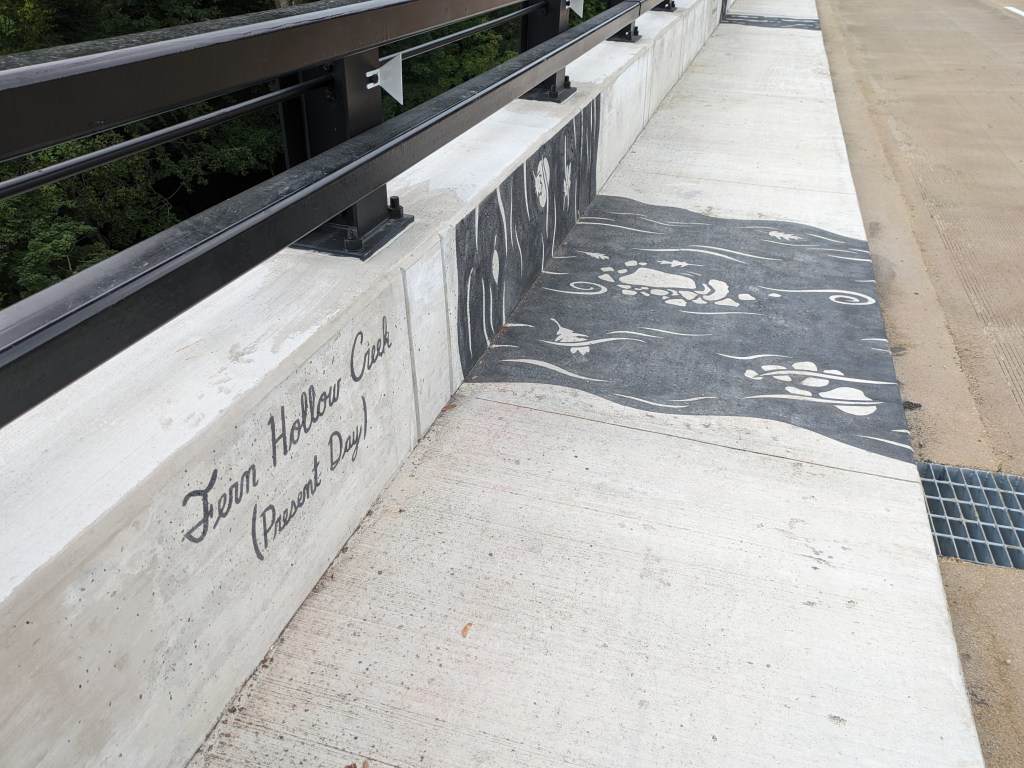
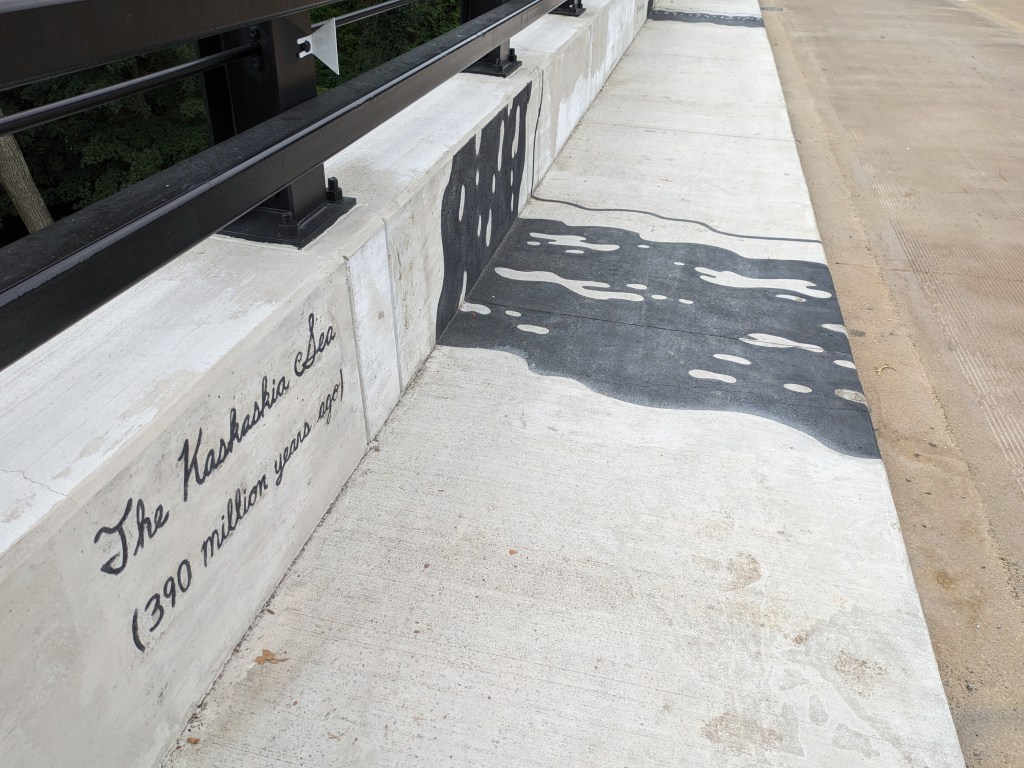
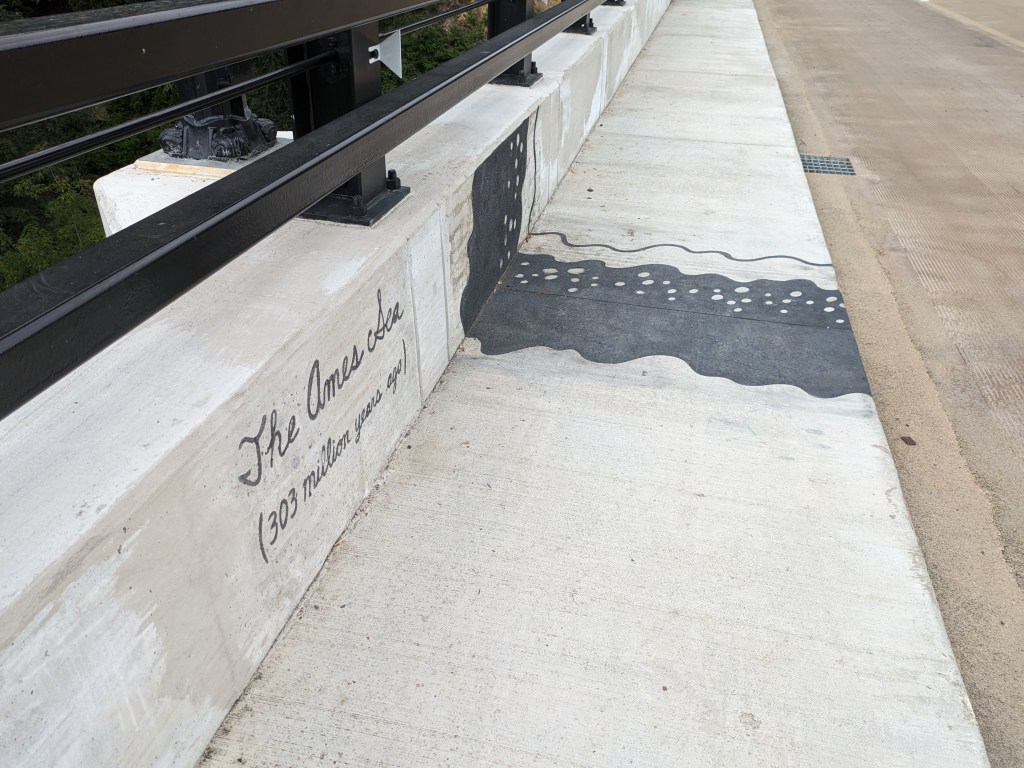
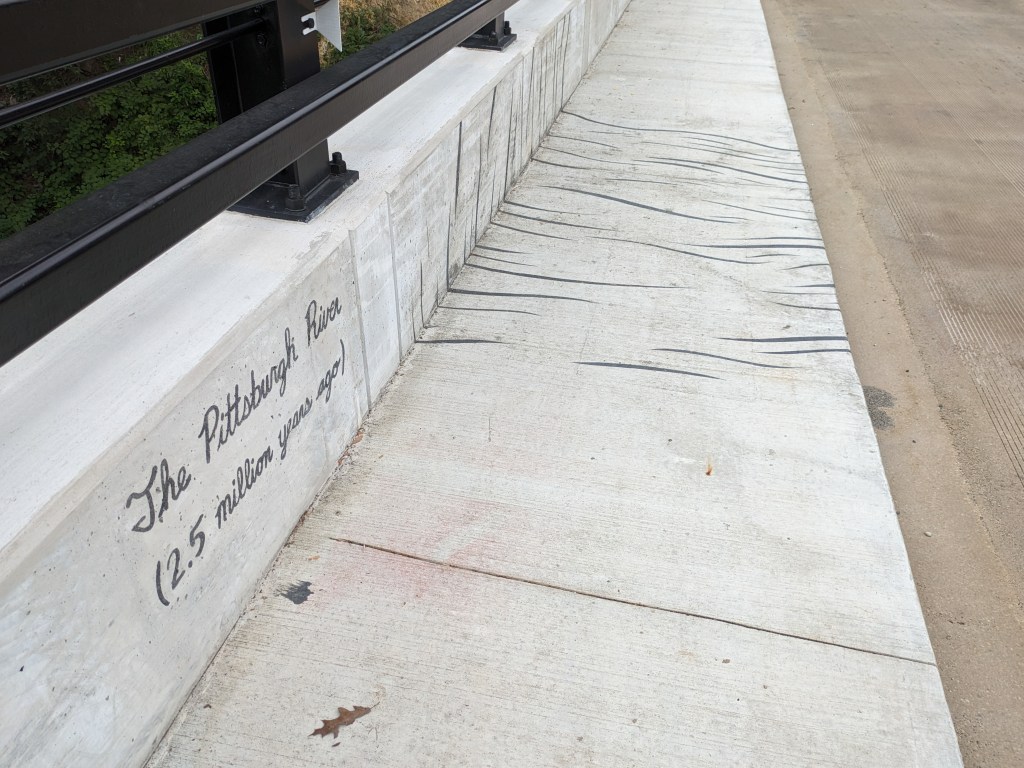
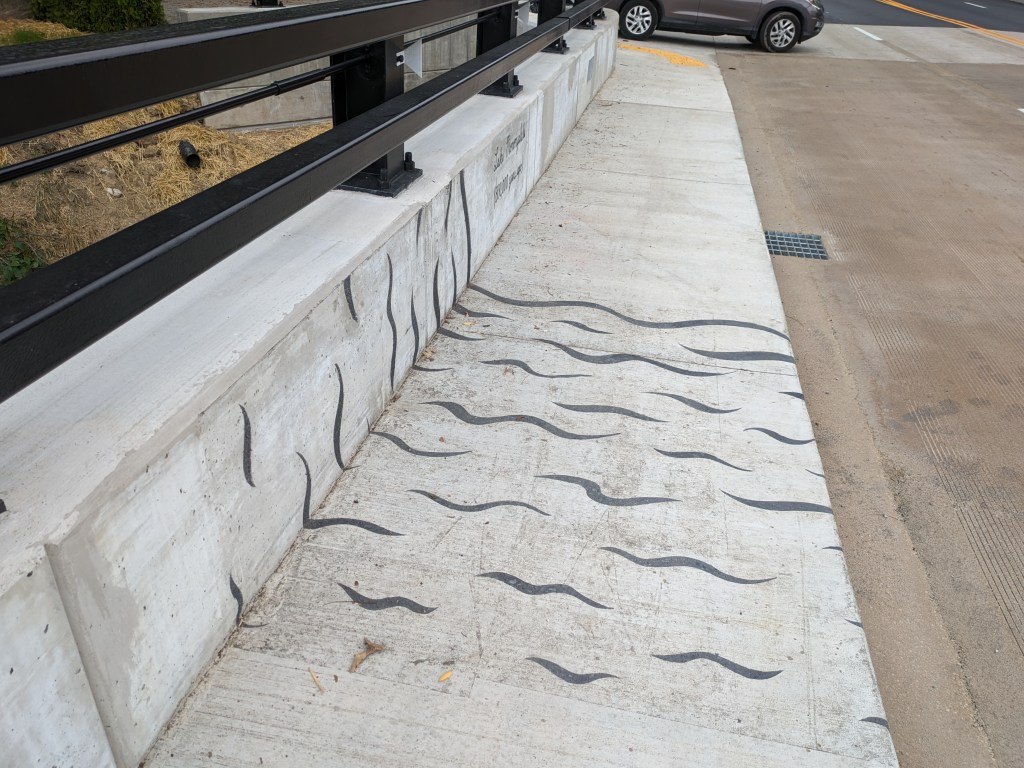
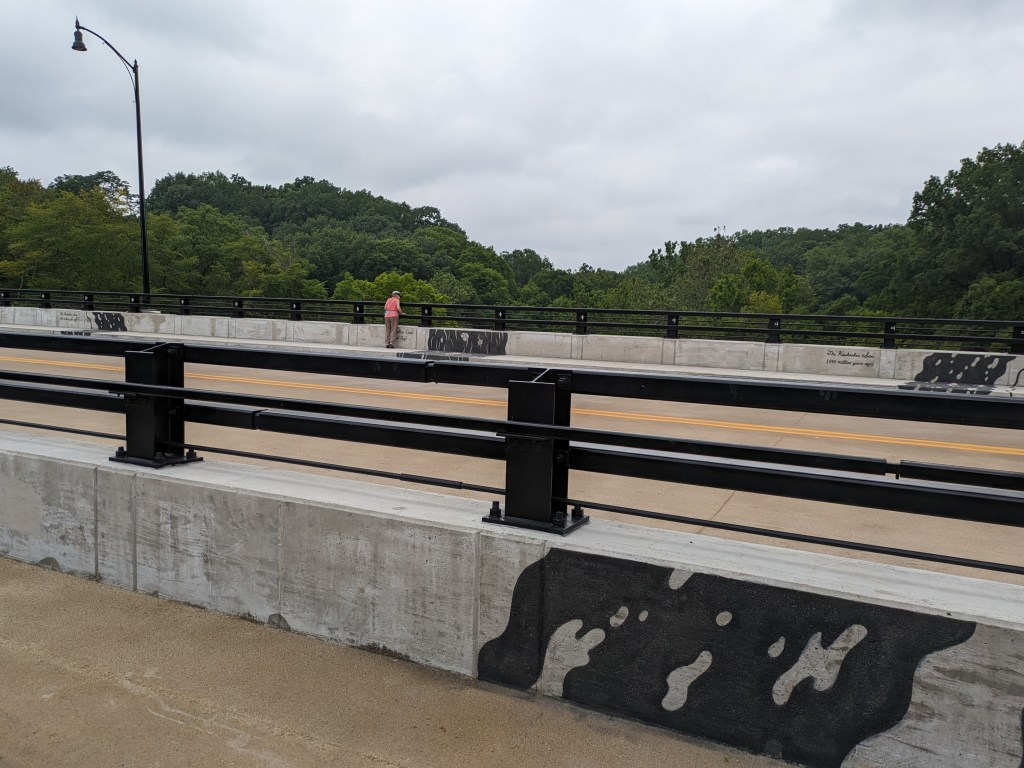
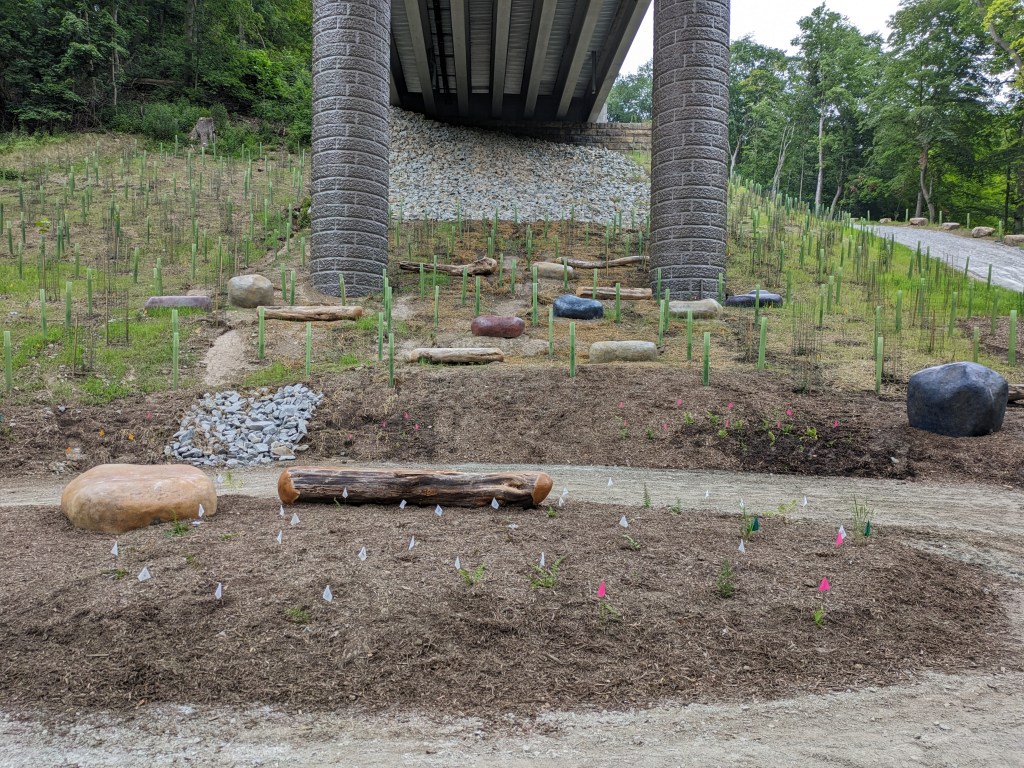
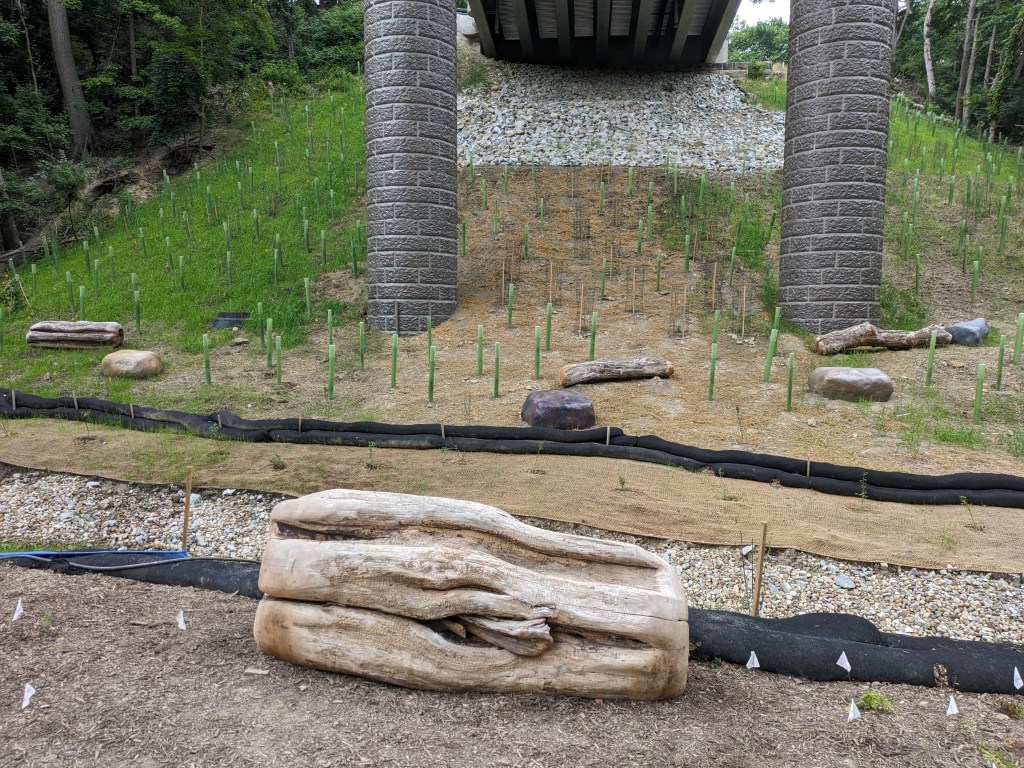
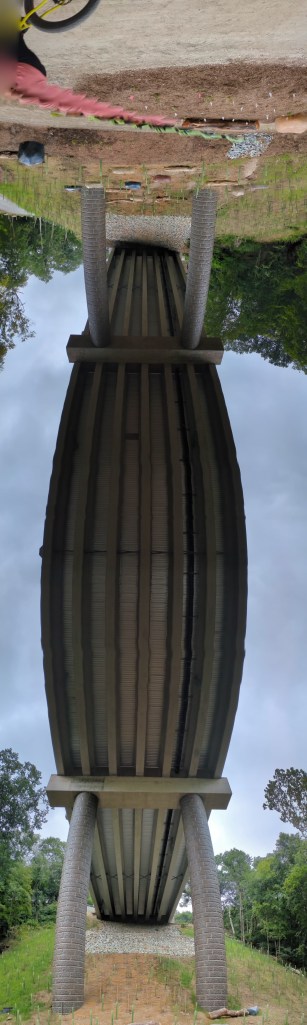
Update 3: John Peña’s A History of Fern Hollow Creek was installed on the bridge and Carin Mincemoyer’s Trail Meander was installed under the bridge. Mincemoyer’s alternative concept of a rain arch that paid homage to the arch of the former bridge did not move forward as it was found to not be feasible within the time and budget constraints of the project. I enjoyed the historical timeline of the bodies of water on this site illustrated in Peña’s installation – it provides and opportunity to stop and think about the different bodies of water that have shaped the landscape of Pittsburgh over millennia. I haven’t yet cracked the pattern of the order in which they are displayed, if there is one.

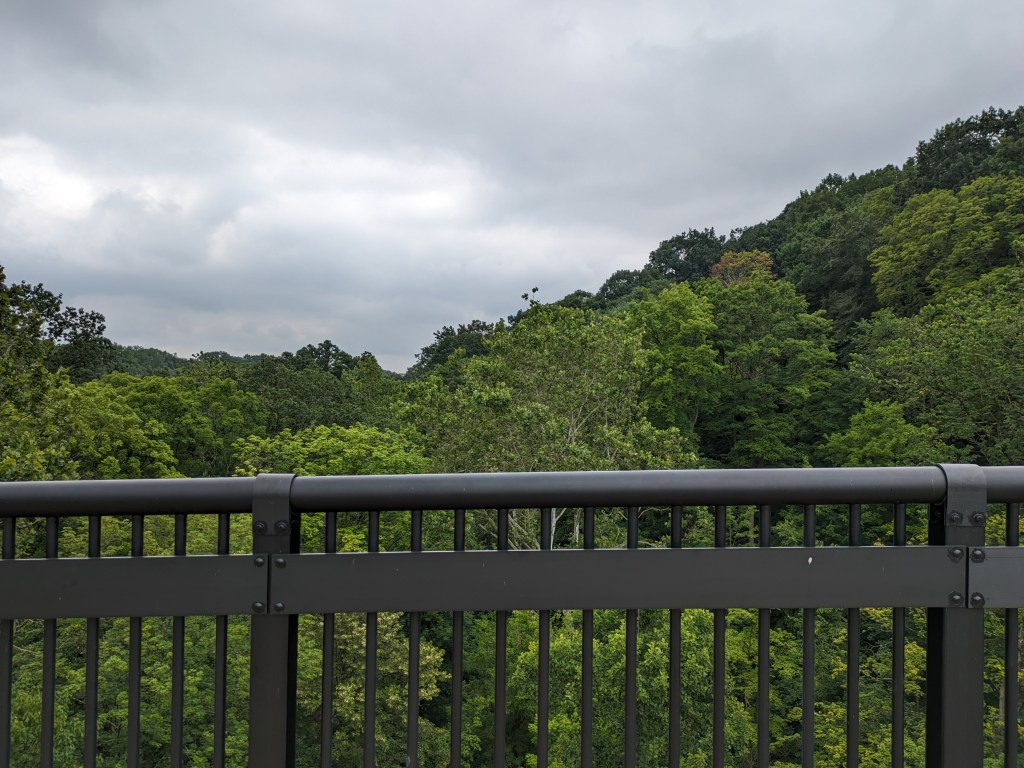
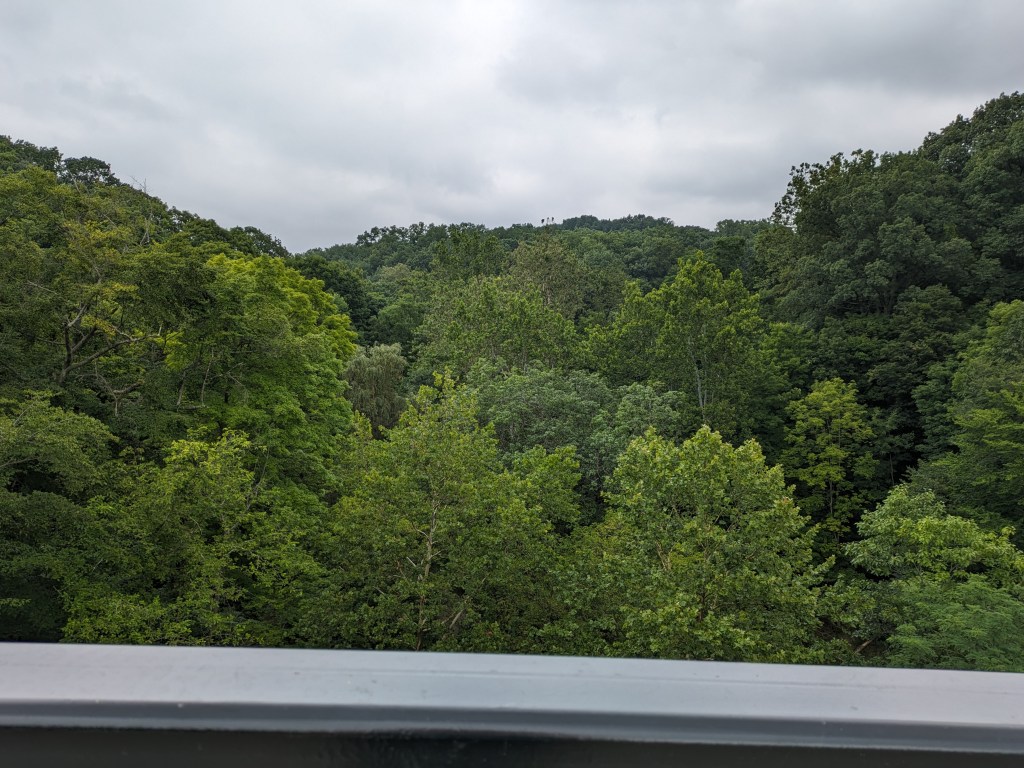
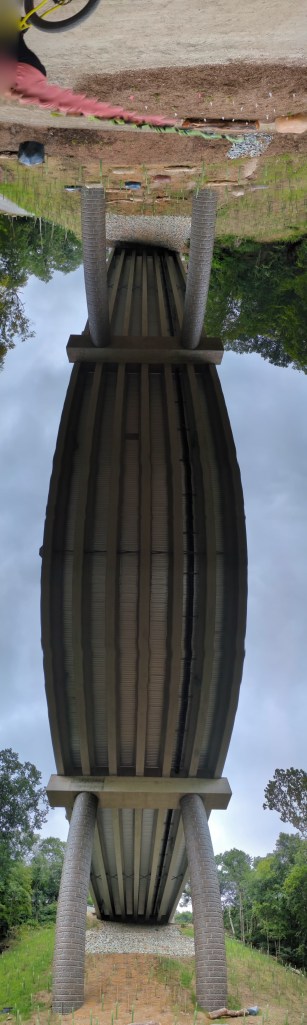
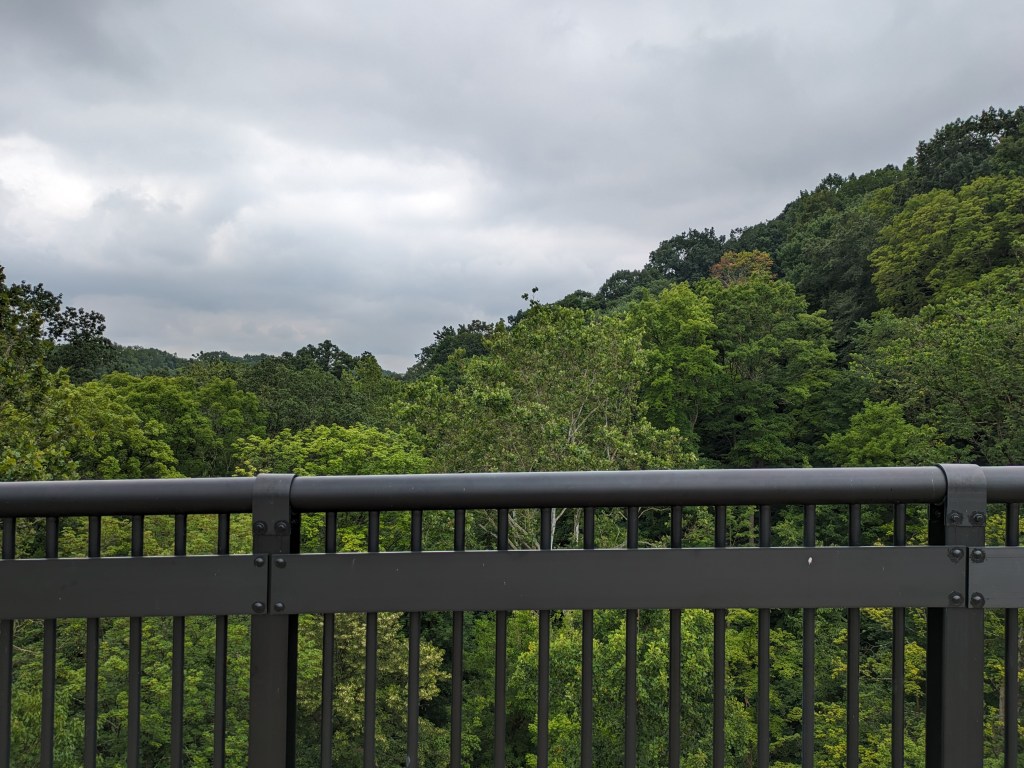
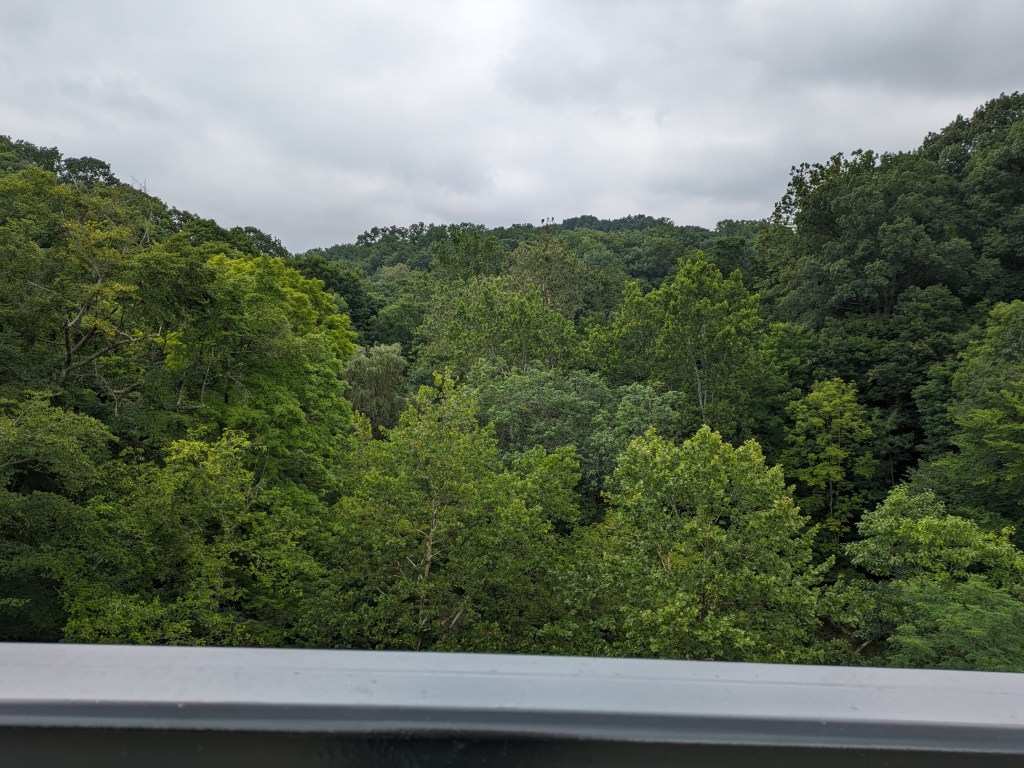
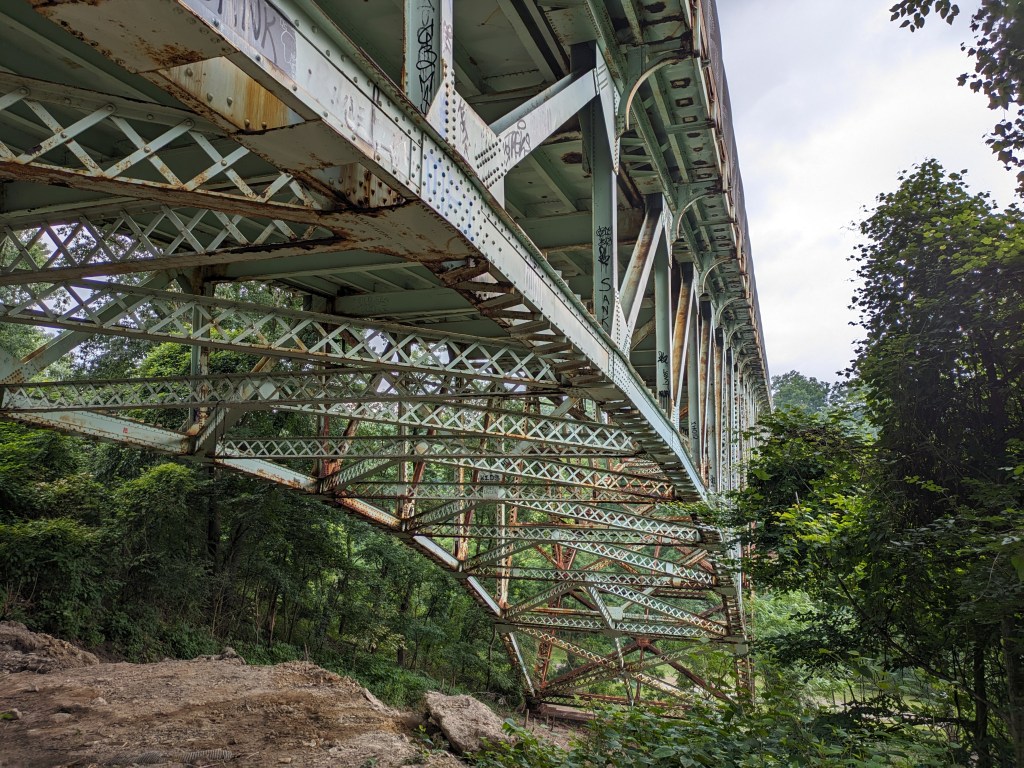
Update 4: As I do not currently have any mobility limitations, I was able to take many more pictures from different angles.

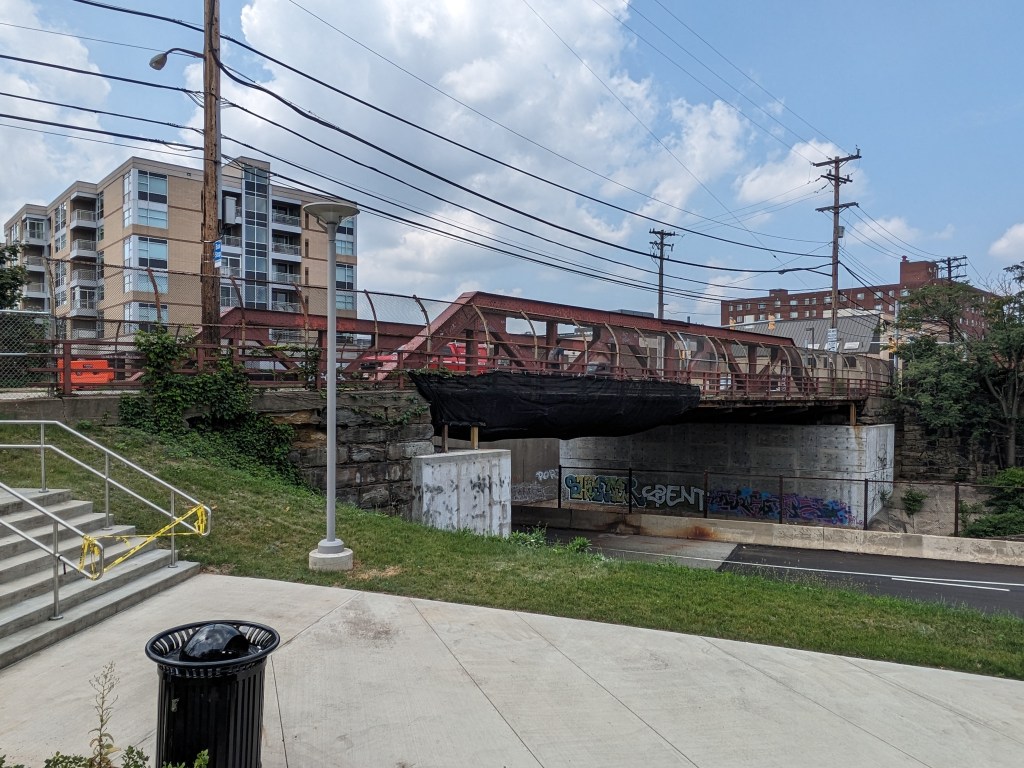
Photos: Fern Hollow

Below are the news updates on the Fern Hollow Bridge and other bridge maintenance and replacement efforts in Pittsburgh and Allegheny County.

  • The artwork on the bridge was approved by the Public Art + Civic Design Commission in October 26, 2022 (Agenda, Application, Minutes). The artwork for the trail experience under the bridge was approved by the Public Art + Civic Design Commission in March 22, 2023 (Agenda, Application, Minutes).
  • PennDOT’s project page regarding the reconstruction of the bridge has not been updated since March 2022, except to add a sentence at the beginning to say that the bridge is now complete and operational prior to my last update in January, despite the fact that the bridge was fully closed again for a month in June 2023 to “complete all remaining bridge work.” (Mayor’s Press Release, June 8, 2023; WESA, June 8, 2023; Pittsburgh Magazine, June 9, 2023; Roads & Bridges, June 9, 2023; WPXI, June 11, 2023; WTAE, June 12, 2023)
  • Preliminary findings have been released in the National Transportation Safety Board’s ongoing investigation. Corrosion and deterioration of Fern Hollow Bridge’s uncoated weathering steel components is the key finding along. In addition, while the annual inspection of the bridge had identified maintenance activities that would have addressed these issues for over a decade, the maintenance was not completed.
  • The City created a Commission on Infrastructure Asset Reporting and Investment in March 2022, but no one has been appointed to the commission and it hasn’t been added yet to the city’s website listing all Boards and Commissions. Earlier this year, Mayor Gainey (WESA, June 26, 2023) and Councilwoman Strassburger (Pittsburgh Union Progress, April 3, 2023) both discussed the value of the commission – when it is operational. Neither discussed why the Mayor hasn’t appointed anyone to the board yet (Post-Gazette, June 8, 2023).
  • The temporary closure of the Charles Anderson Bridge turned into a long-term closure as expedited funding was negotiated to move the full rehabilitation forward sooner. The project may take until 2025 or 2027 and will include a new 2-way bike lane. The Panther Hollow Overpass will also be repaired while the Charles Anderson Bridge is closed because the overpass “is approaching the end of its functional life” and the road is already closed. (Mayor’s Press Release, March 16, 2023; KDKA, March 17, 2023; KDKA, March 23, 2023; WTAE, April 18, 2023; Patch, April 18, 2023; Post-Gazette, April 18, 2023; WPXI, April 19, 2023; WESA, June 1, 2023; Pittsburgh Engage project page)
  • Pittsburgh’s Swindell Bridge, which closed from July to September 2022 due to falling debris, closed for about a week in April to set-up platforms for future construction and then closed again in July to install new beams. One of the articles says that this will finish the work on the Swindell Bridge, while another says that a full rehabilitation project is yet to come. Pittsburgh’s Engage site only shows the public meeting from April. (Triblive, April 22, 2023; Mayor’s Press Release, April 21, 2023; WTAE, April 27, 2023; Mayor’s Press Release, April 27, 2023; KDKA, July 9, 2023; Pittsburgh Engage page; Mayor’s Press Release, July 7, 2023; Post-Gazette, July 10, 2023)
  • In searching for new news on the South Negley Avenue Bridge, I didn’t find anything new, but I found an article from 2015 that said the renovation of the bridge was scheduled to start 2 years from then – that has come and gone with no new start date in sight. In addition to not finding anything new about what is happening to this poor condition bridge, it’s not clear if the closure of the west sidewalk of the South Negley Avenue Bridge from 2022 officially ended or if pedestrians took matters into their own hands and moved the barriers aside themselves. (The Philadelphia Tribune, February 2, 2015)
  • Construction began on the 30th Street Bridge rehabilitation in April 2023. (Triblive, April 22, 2023; Mayor’s Press Release, April 21, 2023; Pittsburgh Engage page)
  • There’s evidence of that the construction of the new Davis Avenue Bridge is moving forward from the approval of the Public Art + Civic Design (PACD) Commission in March to the listing in the Construction Journal for bids. (Triblive, March 24, 2023; Construction Journal, June 9, 2023; Bridge Engage Page; Public Art Engage page; PACD Agenda, Application, Minutes)
  • Maintenance work on Swinburne Bridge was scheduled for May 2023. Full rehabilitation will happen later, after the Charles Anderson Bridge is reopened as the Swinburne Bridge is part of the detour route. (Mayor’s Press Release, May 19, 2023)
  • The Lincoln Avenue and Fremont Street bridges were closed indefinitely for repair January 2023 by PennDOT to the surprise of Millvale, PA – a small town across the 40th Street Bridge from Pittsburgh – the borough is seeking funding for the repairs (Borough’s Announcement, January 23, 2023)

Photos: Other Bridges


Historic Pittsburgh Bridge Disasters

According to Bob Regan’s 2006 book “The Bridges of Pittsburgh,” Pittsburgh is no stranger to bridge disasters:

  • 1845 – The original Smithfield Street Bridge burned down
  • 1851 – The 16th Street Bridge burned down
  • 1865 – Two spans of the 16th Street Bridge was washed away in a flood
  • late 1880s – The 6th Street/St. Clair Street Bridge burned down
  • 1903 – The Wabash Bridge collapsed during construction
  • 1918 – The 16th Street Bridge burned down (again)
  • 1921 – The 30th Street Bridge burned down
  • 1927 – The Mount Washington Roadway Bridge collapsed during construction

Map of bridges discussed in the Bridge Collapse series:


Additional Resources:

Both PennDOT and the Federal Highway Administration have interactive maps of bridges for the state and country respective, and their inspection statuses. Pittsburgh now has the static Comprehensive Bridge Asset Management Program Report of the 147 bridges owned by the City of Pittsburgh.

Bridges in Pittsburgh with community engagement pages for pending rehabilitation or replacement projects:


Previous Fern Hollow Bridge Posts:

One-Year Update

Eleven-Month Update

Six-Month Update

Five-Month Update

Four-Month Update

Two-Month Update

One-Month Update

Two-Week Update

One-Week Update

Day After

Breaking News

Keeping an Eye on Penn Plaza: 2022 Recap

What’s New in 2022

Phase 1 of the Penn Plaza redevelopment opened in 2022, seven years after the initial eviction notices went to the low-income residents of the former Penn Plaza Apartments. The redevelopment is a new retail/office complex that is being constructed in place of the former 519-unit affordable housing complex.

The new building is called Liberty East. Whole Foods is the anchor retail tenant and Duolingo is the first office tenant. An area about twice the size of the footprint of this building remains an untouched meadow with broken pavement scattered throughout and surrounded by a 6-foot high chain link fence. One day, future phases of this redevelopment will begin. In the meantime, changes are starting on land surrounding the site.

  • Across Penn Avenue, the East Liberty Lutheran Church sold its property in August, seven years after first listing it. By December, the site was completely demolished and leveled – ready for whatever comes next.
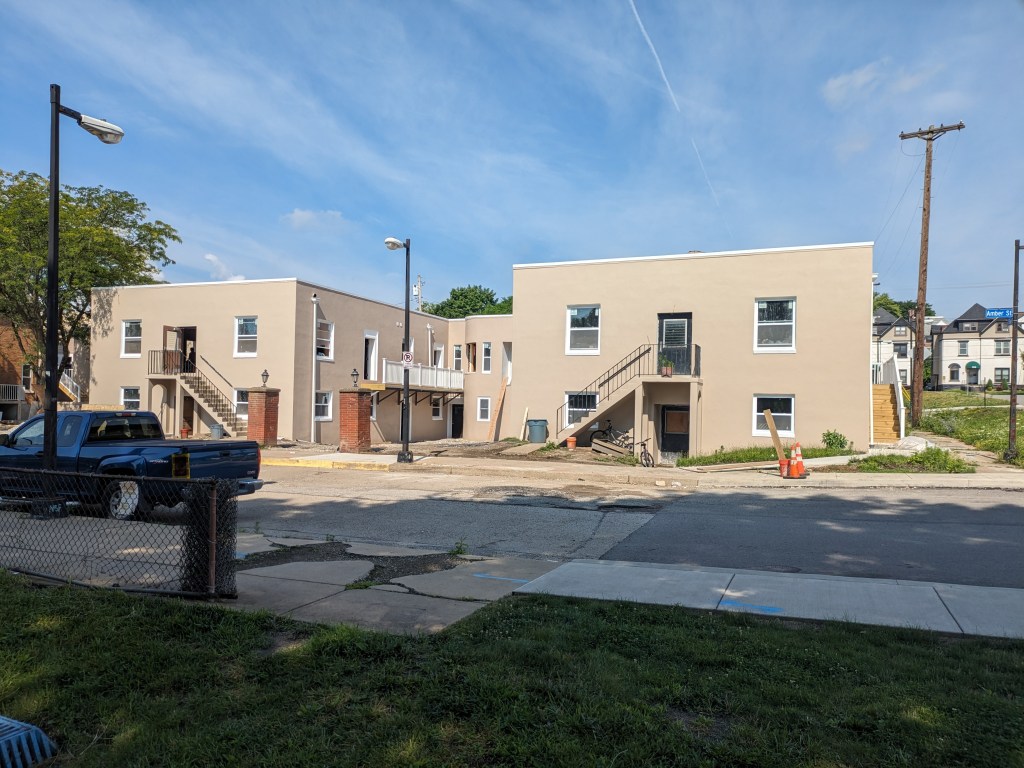
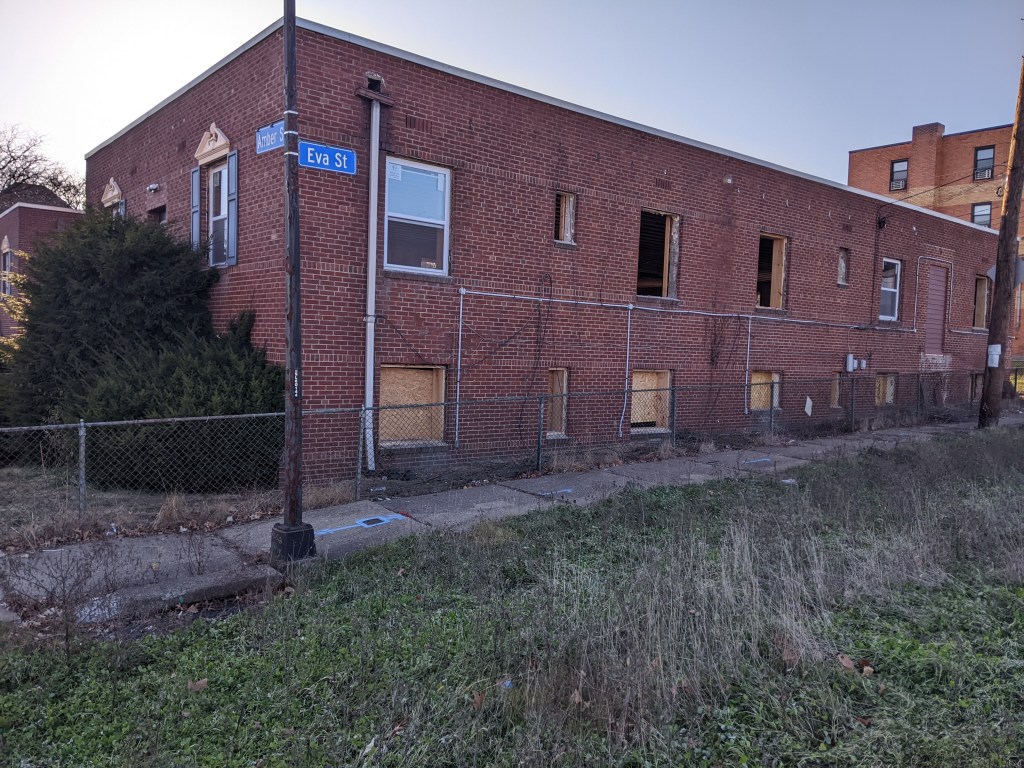
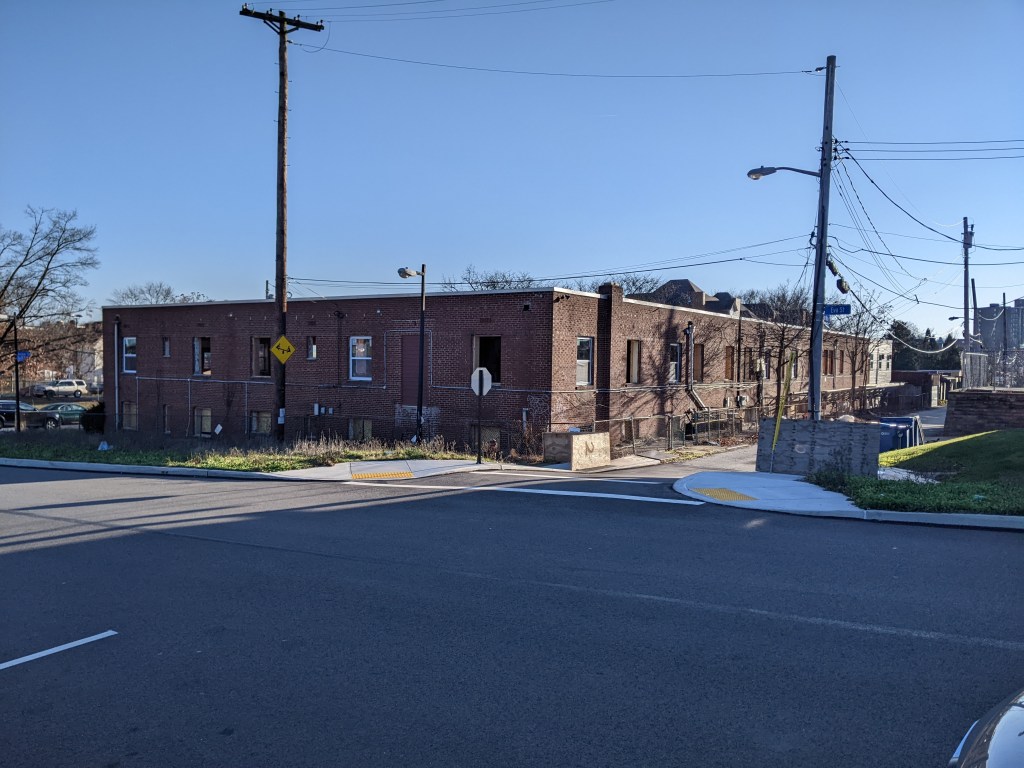
  • On the other side of Penn Plaza, a two-story, garden apartment building is showing the first signs of renovation.
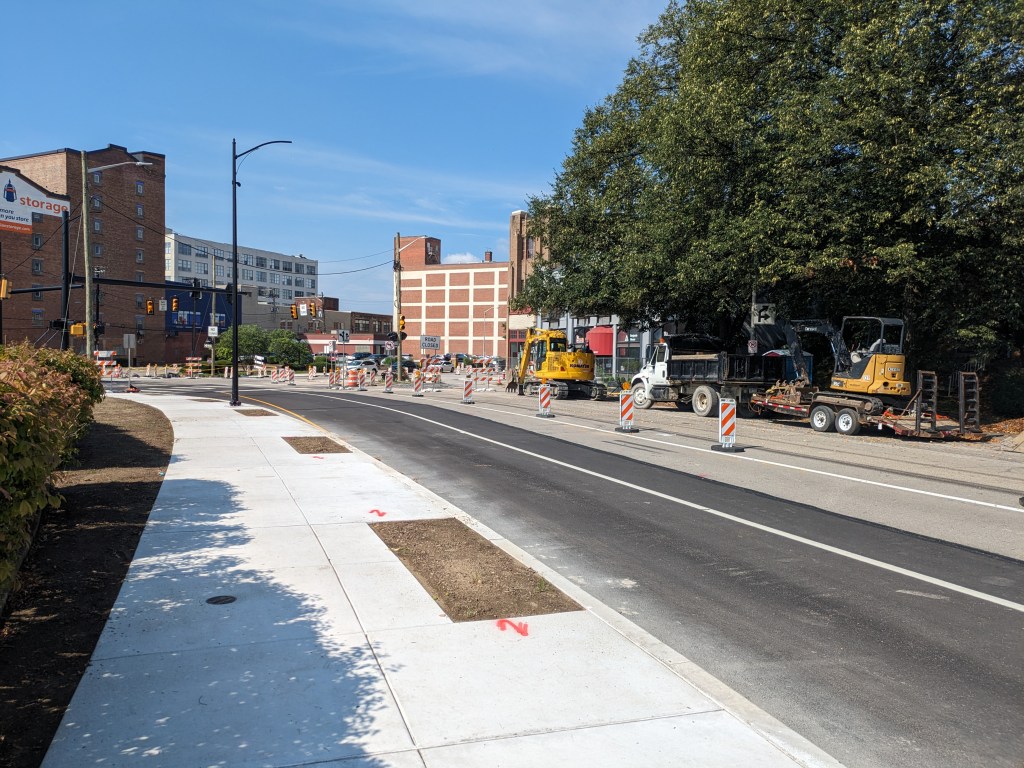
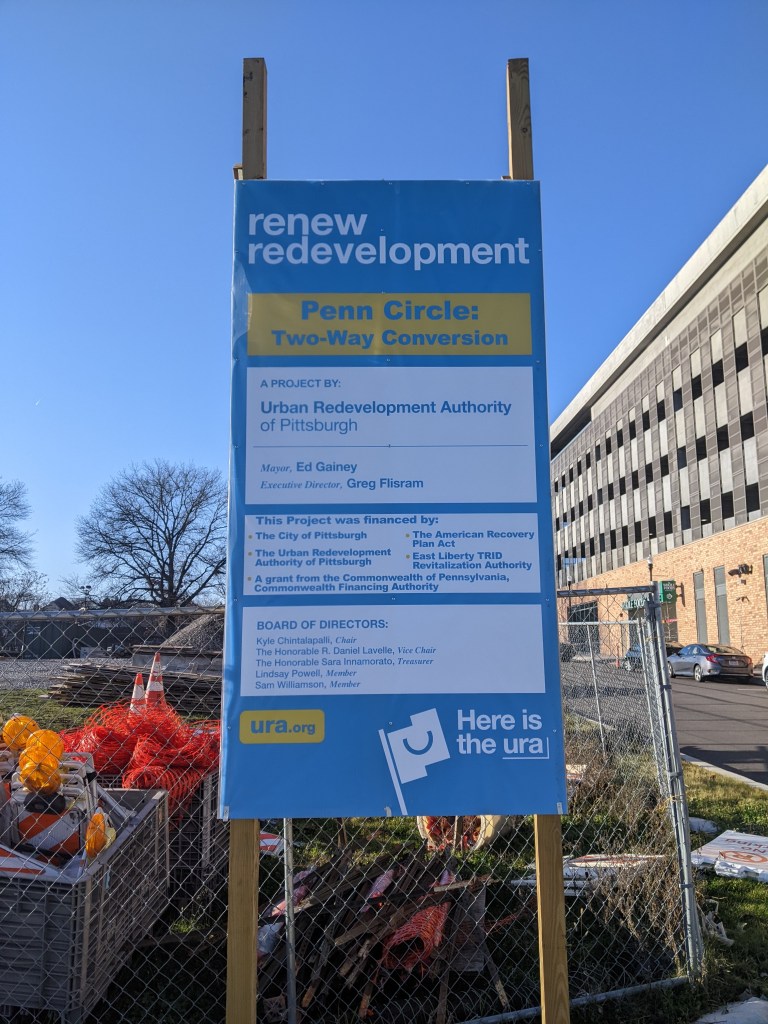
  • Behind the new building, Euclid Ave and, further down, Station Street are in the initial stages of being converted back to two-way after the 1960s Urban Renewal project that created the Penn Circle ring road.
  • On the opposite site of East Liberty’s commercial core, the affordable Giant Eagle closed for the redevelopment of that shopping plaza.

Background

The former Penn Plaza Apartments was a group of large of apartments buildings that served a low-income population. After years of neglecting these apartments, the owner gave the remaining 200 residents notice to vacate within 90 days in the summer of 2015. By then, the surrounding neighborhood of East Liberty was a hopping place to live with low vacancy rates and the average rent much higher than what these residents could afford. There was a large outcry at the time, which only got worse as the owner’s plans for the site were understood. The owner wanted to swap some land with the City and change the zoning district to build a large scale mixed-use development: 54,600 sq ft of retail and 246,090 sq ft of office with accessory parking (see the application materials starting on page 54 from the final Planning Commission review and approval). After months of negotiation with the City and the community, the land and the zone change were given to the development while the affordable housing crisis in Pittsburgh only got worse and the former residents were forced to uproot their lives.

The Penn Plaza Support and Action Coalition has more information on what was promised and what happened as the residents were forced to find new housing.

Photos: The Site

Photos: The Surroundings

Penn Plaza in the News

The site:

The surroundings:

  • East Liberty Lutheran Church’s sale (Pittsburgh Business Times, August 2, 2022)
  • Giant Eagle closure (East Liberty Development, June 17, 2022)
  • Echo Realty presented the redevelopment of the Giant Eagle shopping center to Pittsburgh’s Planning Commission (Pittsburgh Business Times, November 15, 2022) and got approval (Public Source, November 29, 2022; Pittsburgh Business Times, November 29, 2022)

Locating Penn Plaza


Previous Posts in the Series

Keeping an Eye on Penn Plaza – Jun. 2022

Keeping an Eye on Penn Plaza – Apr. 2021

Keeping an Eye on Penn Plaza – Nov. 2020

Keeping an Eye on Penn Plaza – Aug. 2020
Homage in Bridge Reconstruction

I’ve written before about how some bridges pay homage to the ones they replaced. Pittsburgh’s Greenfield and Heth’s Run Bridges did this. When writing about those bridges, I assumed that this approach might reassure a community by honoring the local memory and thereby maintaining a sense of stability. However, this was only a guess. While I had used the old Heth’s Run Bridge hundreds of times, I didn’t know it was a bridge until shortly before its replacement and most of its characteristics features had been removed, buried, or eroded long before. I don’t know if I had ever been on the Greenfield Bridge before the day I intentionally walked it for this blog. So I had no emotional connection to that bridge. Therefore, I cannot speak personally about the homage these bridges paid to the past.

When I arrived in East Stroudsburg, the blood-red, rounded through-truss bridge was no longer there (officially, it was a Warren pony truss style). This bridge had been an important landmark for me as a child, probably because its design was distinctive. It made me smile when I saw the new bridge had paid homage to the shape of the former truss. While the change of color and style of the bridge was significant, I felt a sense of comfort at the continuity created by the way the new design acknowledged the former bridge.

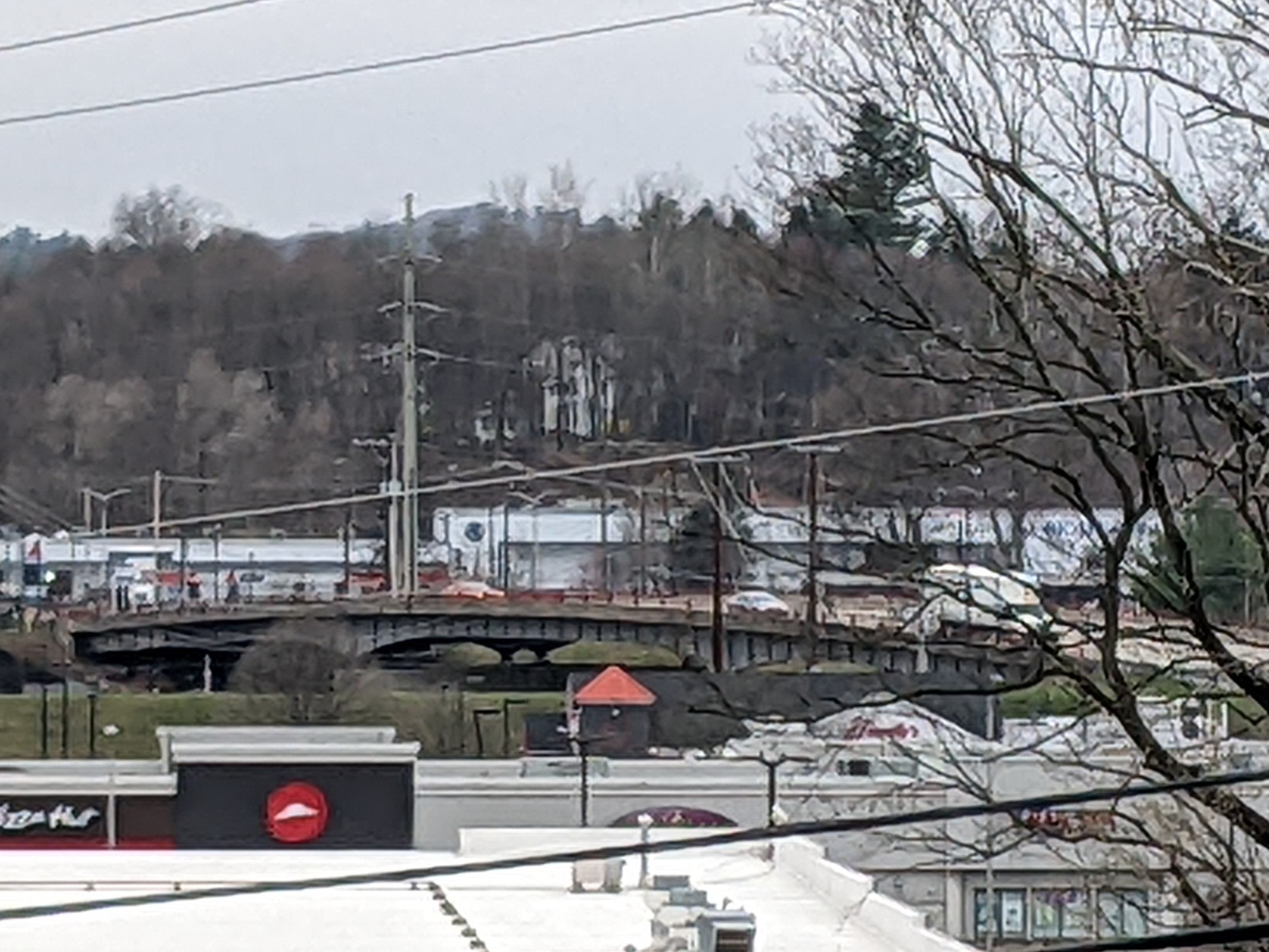
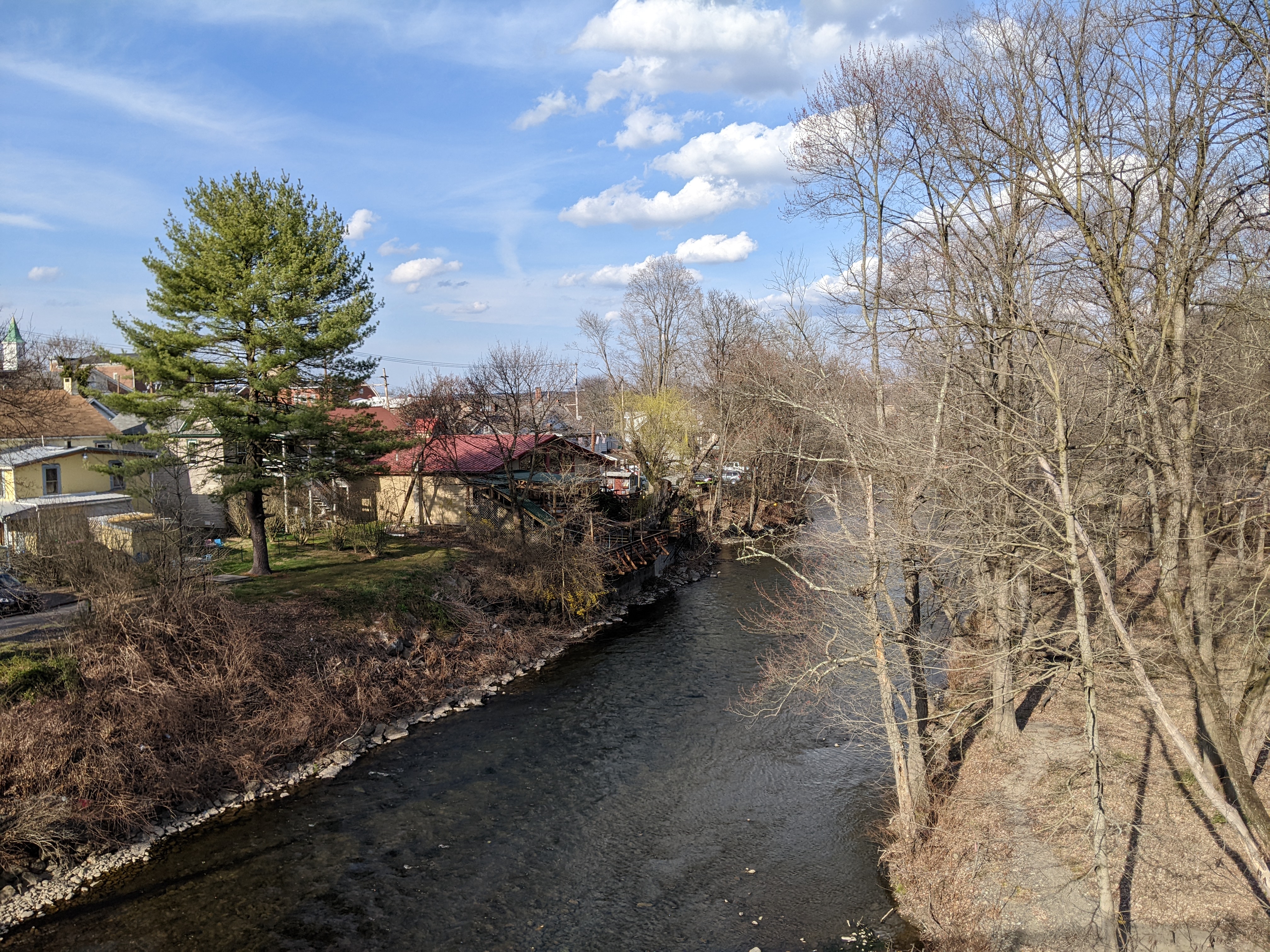
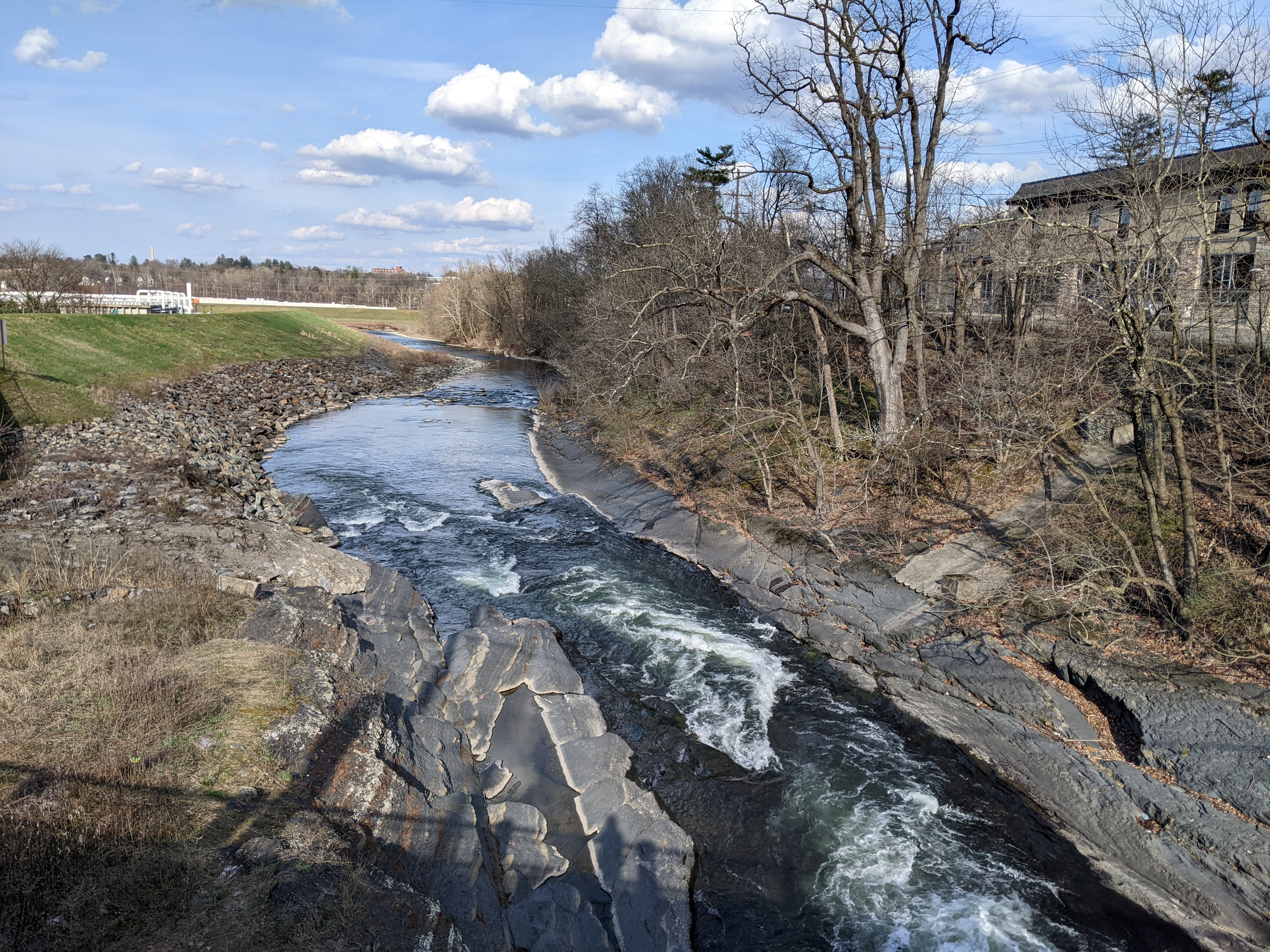
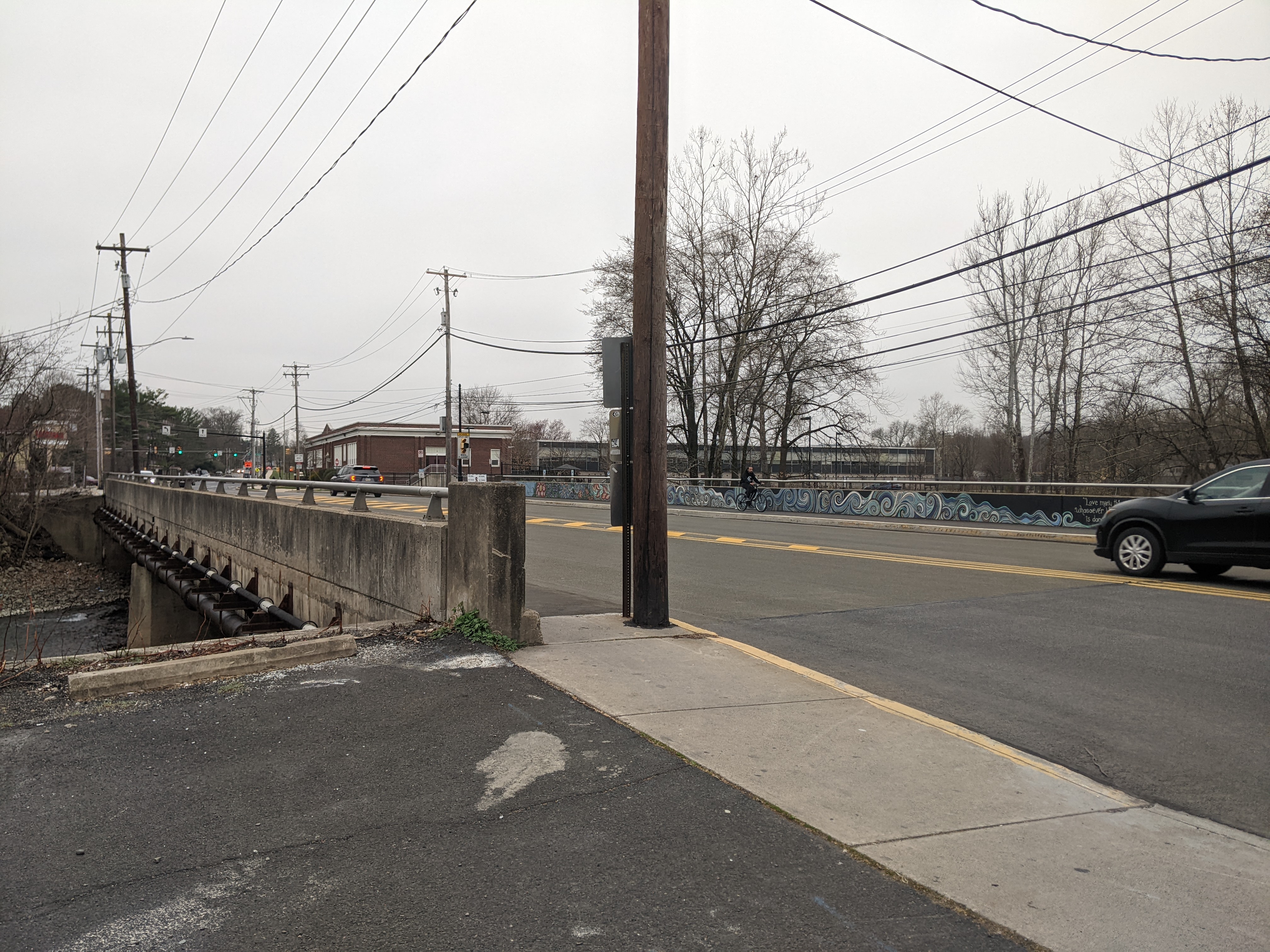
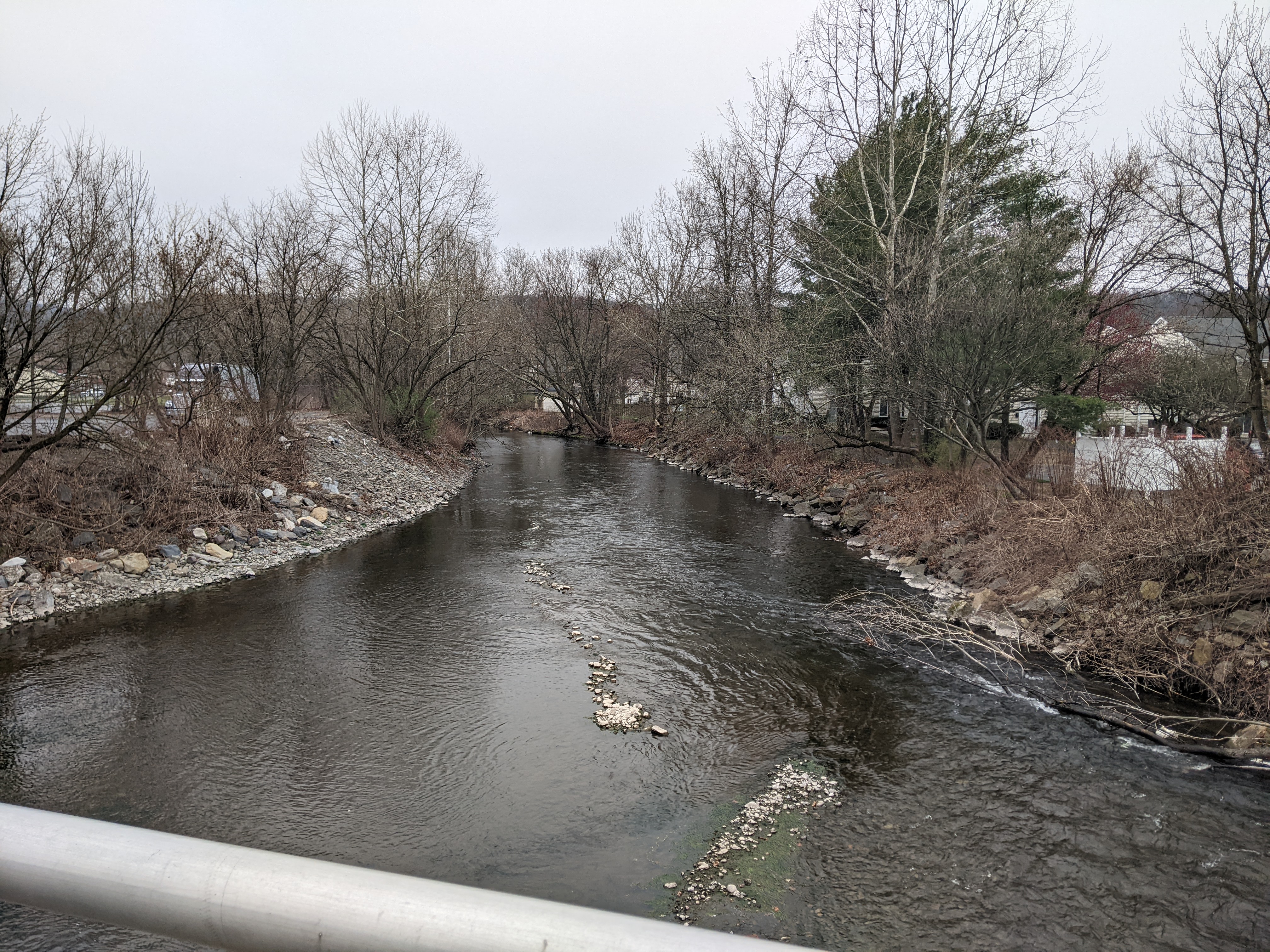
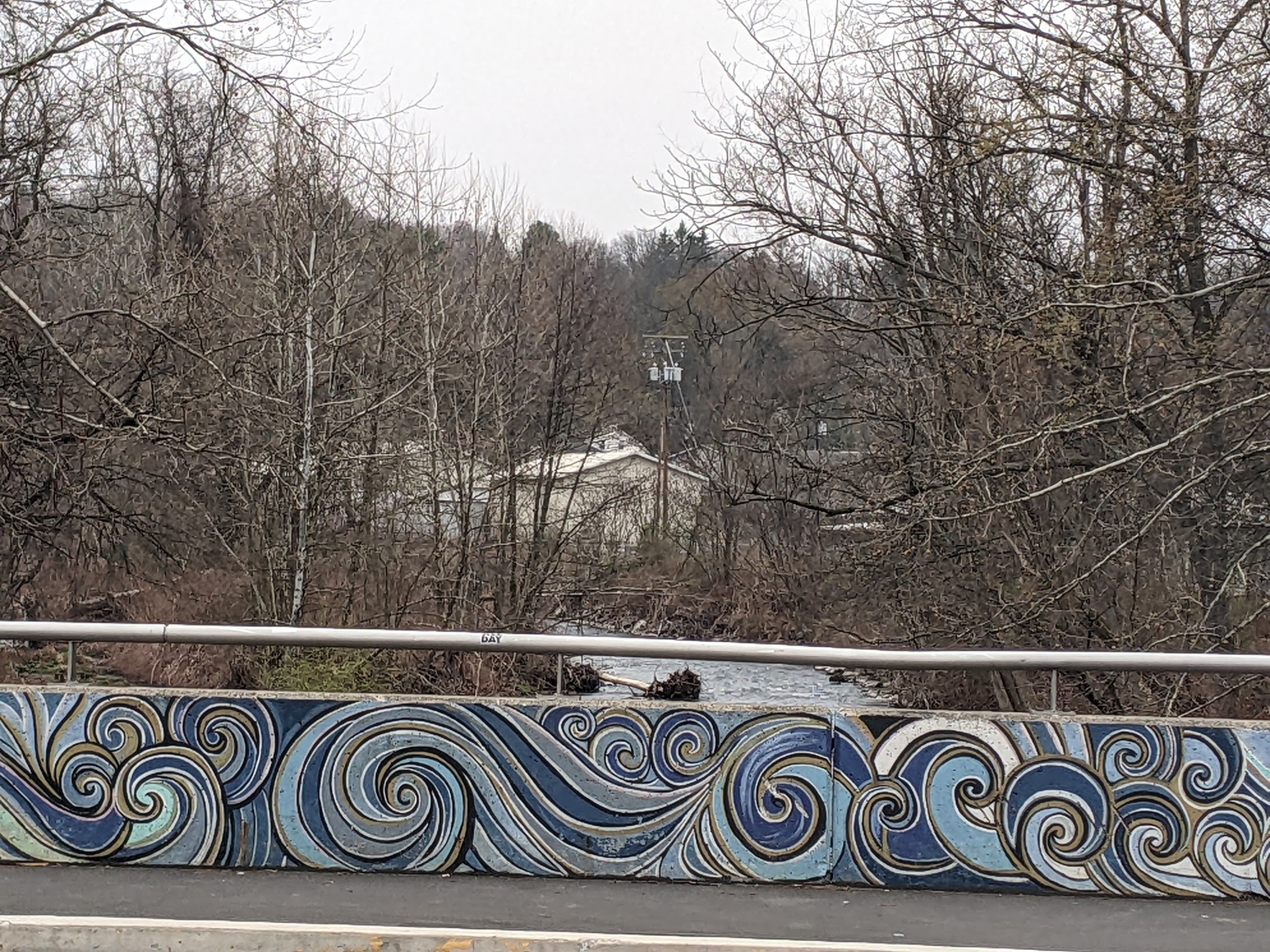
Down the hill from this bridge is the Interborough Bridge. This bridge connecting East Stroudsburg and Stroudsburg used to be a through-truss, possibly also a Warren pony truss bridge. When it was destroyed by a flood in 1955, the replacement did not pay homage to the past. The plain replacement bridge is very utilitarian and not much else. My foot had reached the end of its stamina before I was able to walk across it on this trip – which was actually a relief. I walked across it at least once when I was a kid. I remember it feeling unpleasant. There are sidewalks, but the proportion of vehicles lanes is quite large, cars move fast, and either end features auto-oriented uses. The one nice feature of the bridge are the views of Brodheads Creek, but there are plenty other more pleasant vantage points to view the creek.

In another form of homage, Brodheads Creek, the dividing line between East Stroudsburg and Stroudsburg, is named after Daniel Brodhead. On this trip, I learned that in 1737 Daniel was the first white settler in the area to purchase his land from the descendants of William Penn instead of the Lenni Lenape, the indigenous people who still lived on the land. Although, Penn began purchasing the land that the King of England had given him from the Lenape in 1683, it seems that the area around East Stroudsburg and Stroudsburg had not been purchased by the Penn family before they started selling it to settlers. The Walking Purchase of 1737 attempted to resolve this issue, though it seems the terms of the purchase were not explained clearly the Lenni Lenape beforehand. (Monroe County Historical Association, November 11, 2005; Pennsylvania Historical & Museum Commission)

Stroudsburg’s Bridges

Speaking of federal highways built after WWII (potentially through communities), Interstate Route 80 runs through Stroudsburg and East Stroudsburg. President Johnson mentions the recent completion of this highway in his letter to Stroudsburg’s mayor celebrating the borough’s sesquicentennial:
The recent completion of the Interstate Highways through the Poconos has made Stroudsburg and the communities around it more accessible than ever before. The Federal Government is proud to have played an important role in this acheivement.

Letter from President Johnson dated May 31, 1965

I do not know if any communities were demolished to build this interstate highway. It is likely that the presence of this interstate is part of the reason why some New Yorkers chose to relocate here following 9/11. It is certain that some of the local bridges owe part or all of their existence to this interstate. Many of the local bridges also owe their existence to the several creeks in the area.

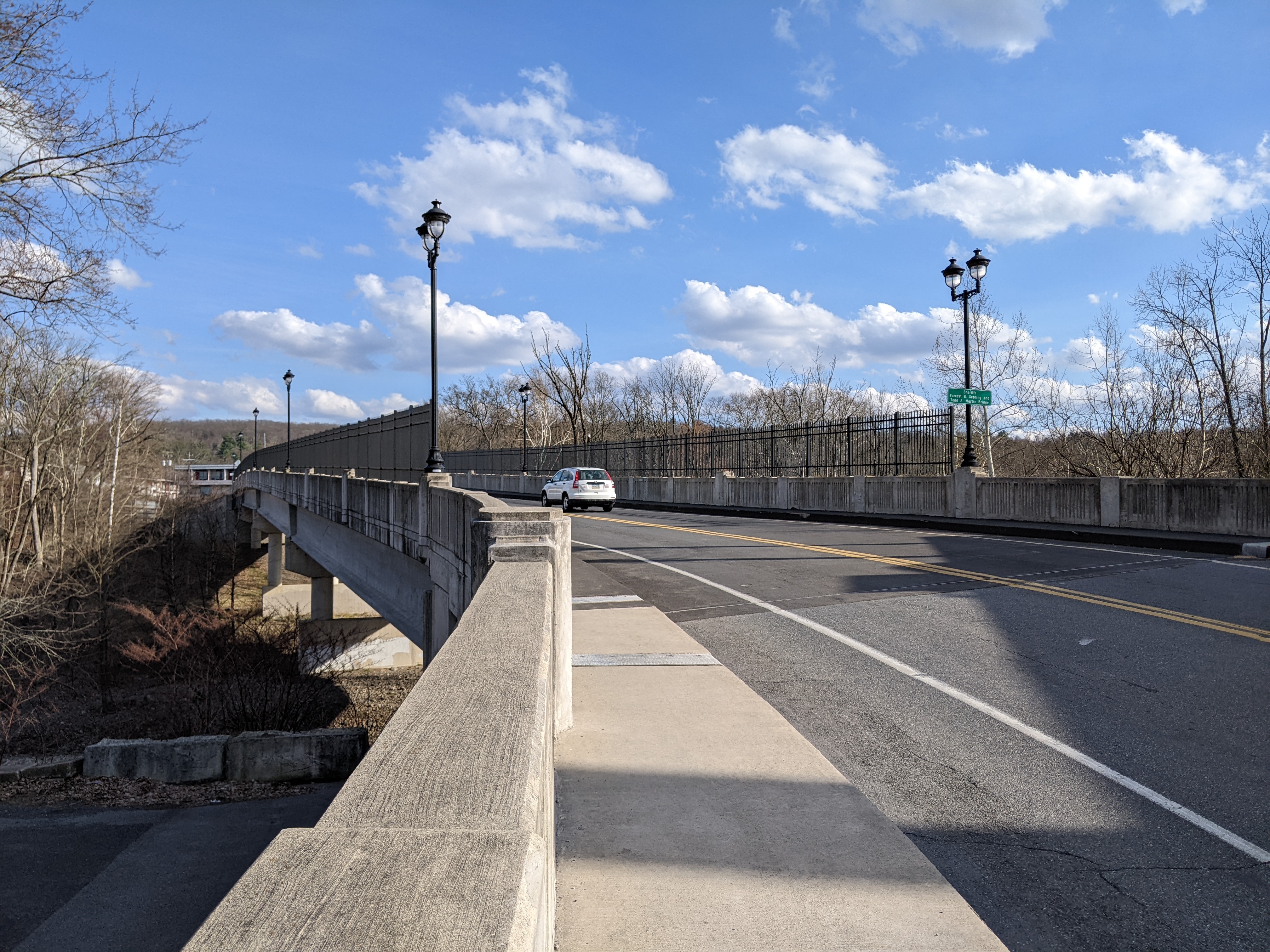
The Seventh Street Bridge spans both Route 80 and McMichael’s Creek. (According to signs on this bridge it’s name is Sherrifs Forrest B. Sebring and Todd A. Martin Bridge, but the Pocono Record’s article on the renaming of this bridge highlights the controversy and public backlash to this renaming which was led by a State Representative.) Further east, the freeway and the creek are farther apart and so two separate bridges carry Broad Street over both obstacles. Heading back west, another bridge carries Main Street over Pocono Creek.

Pocono Creek and its bridge (the J. Summerfield Staples Memorial Bridge) appear to mark the western boundary of the historic core of town. On the other side of the bridge, there is an uptick in the number and frequency of auto-oriented uses and building designs.

Seventh Street Bridge

Broad Street Bridges

J. Summerfield Staples Memorial Bridge