10th Street Bridge

The 10th Street Bridge (which a reader pointed out is nicknamed the Phillip Murray Bridge after the first president of the United Steelworkers of America) was the last of the bridges over the Monongahela River for me to walk.  Or so I thought.  It turns out that the Liberty Bridge also has a sidewalk despite the fact that it is a freeway bridge like the Veteran’s Bridge (see post).  So I’ll have to come back to the Liberty Bridge at some point.

I delayed my walk of the 10th Street Bridge in part because it seemed like an awkward one to get to and from.  One end is in the middle of the South Side, but the other connects to the Armstrong Tunnel, which would obviously not be pedestrian friendly.  Last week, I finally went out and walked it and as I hoped, it turns out there is a pedestrian access over the hill to the high-bus-traffic corridor of Fifth and Forbes avenues in the form of a giant staircase that I will address in another post.  This end of the 10th Street Bridge was more well-connected than I had anticipated.  Not only do the stairs provide access to the top of the hill when Duquesne University sits, but there is also access to a parking lot down by the river which also connects to the Three Rivers Trail System.  The best proof of this bridge’s connectivity is the number of other pedestrians I saw walking the bridge.  While I did not keep a count, I noticed that there was a comparatively high level of pedestrian traffic.  It certainly wasn’t as much as the Smithfield Street Bridge (see post), but it was comparable to or higher than that on the other downtown bridges.

My favorite part about this bridge was the dinosaurs painted at the top of the southern tower.  I couldn’t tell if they were official or freelance graffiti, but it seemed appropriate given that Pittsburgh is famous for dinosaurs.  Andrew Carnegie brought the first dinosaur skeletons on display anywhere in the world to his natural history museum.  I found someone else wrote a post about the dinosaurs on the bridge, which the artist apparently calls geese, which suggests that the painting may not have been officially sanctioned.
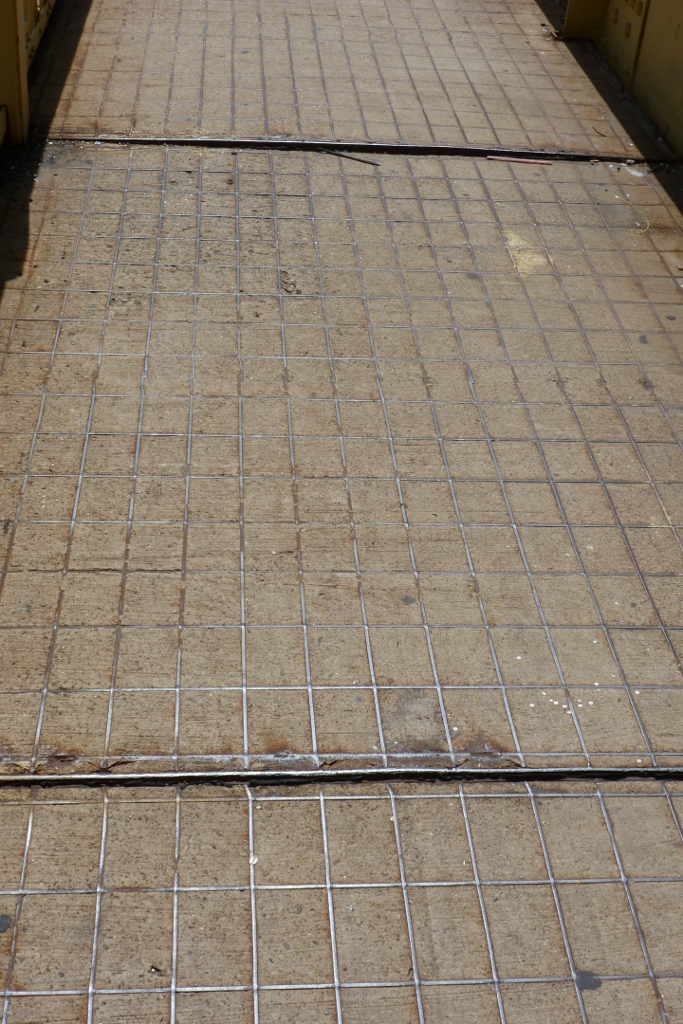
The post mentioned above about the dinosaurs also comments on the “rusty” condition of the bridge.  While I didn’t notice the rust much (it wasn’t nearly as bad as the 28th Street Bridge), I did notice the condition of the sidewalk.  I thought my theory that the top of the sidewalk had worn away to expose the metal framework supporting the structure rather farfetched, as how could the entire sidewalk (on both sides as far as I could tell) wear out so evenly.  Yet, I cannot think of any other sidewalk I’ve walked that looks like this and given the other bloggers comments on the poor physical condition of the bridge, perhaps my idea isn’t totally crazy?
Fort Pitt Bridge

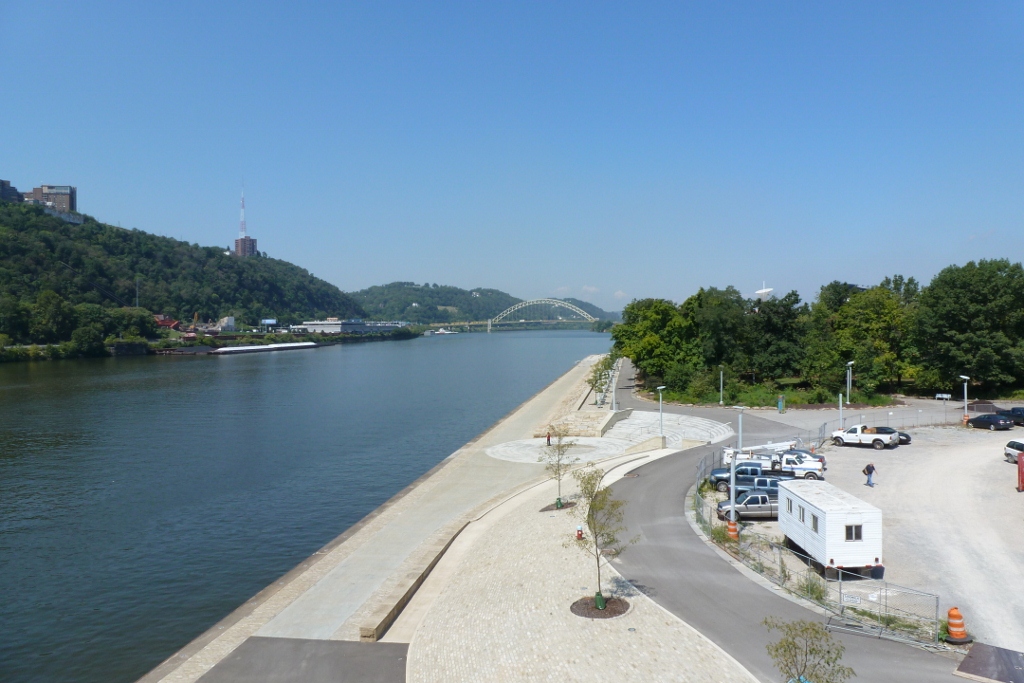
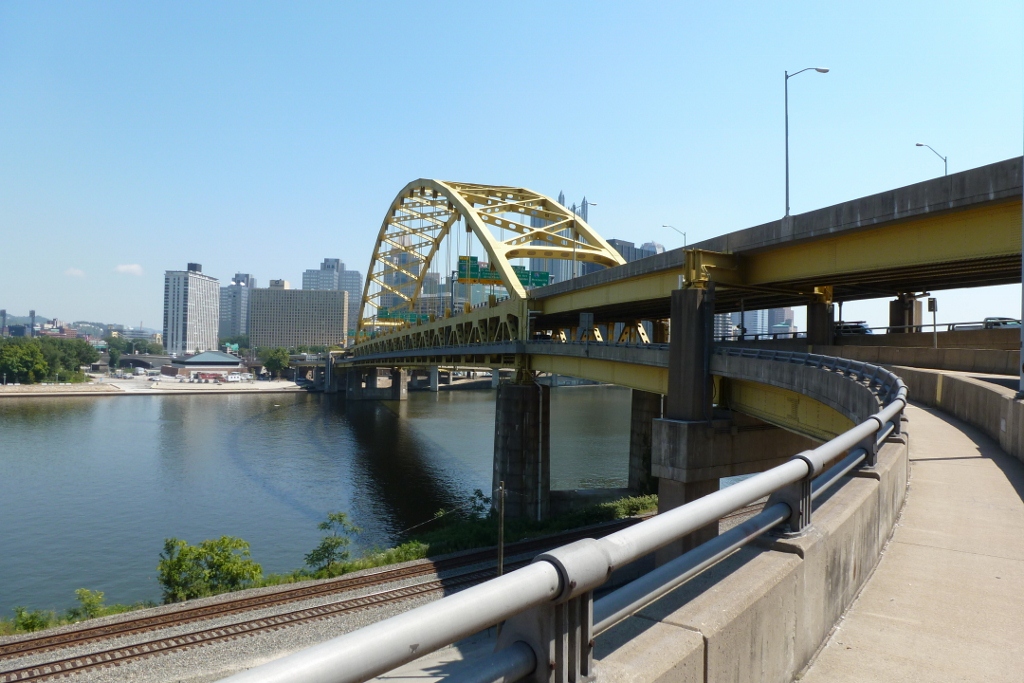
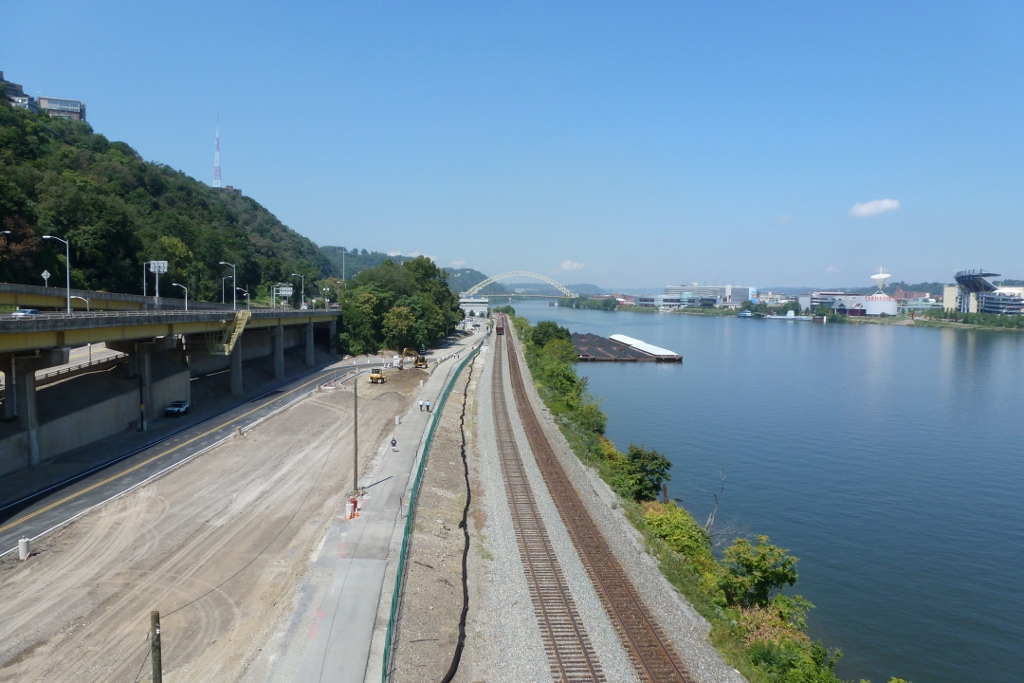
Pittsburgh has the Three Sisters Bridges with the 6th, 7th, and 9th Street bridges, but I think it should also have the Twin Brothers Bridges with the Fort Pitt and Fort Duquesne (see post) bridges.  The two Fort bridges look very much alike as I think my featured images for the bridges show.  The roadway connecting them across the Point further suggests a close relationship between the bridges as do the names themselves.

To be honest, I had not been looking forward to my walk across the Fort Pitt Bridge.  It carries a freeway and the southern end connects to a highway and dirt.  Last spring I was at a conference at a downtown hotel and overheard a hotel employee giving directions to some out-of-town visitors to the Duquesne Incline, which involved crossing the Fort Pitt Bridge and walking along West Carson Street.  I couldn’t believe what I was hearing.  I didn’t understand why anyone would send a tourist along that route, as you always want to show tourists the best side of a city.  If the tourists had asked me, I would have sent them across the Smithfield Street Bridge and up the Monongahela Incline.  Then I would have recommended they walk along Grandview Avenue to the observation platform by the Duquesne Incline as it provides a more iconic view of the city.

After walking the route across the Fort Pitt Bridge to the Duquesne Incline myself, I don’t feel so bad about tourists being sent on it.  It wasn’t that bad of a walk and the view from the top is one of the best in the city.

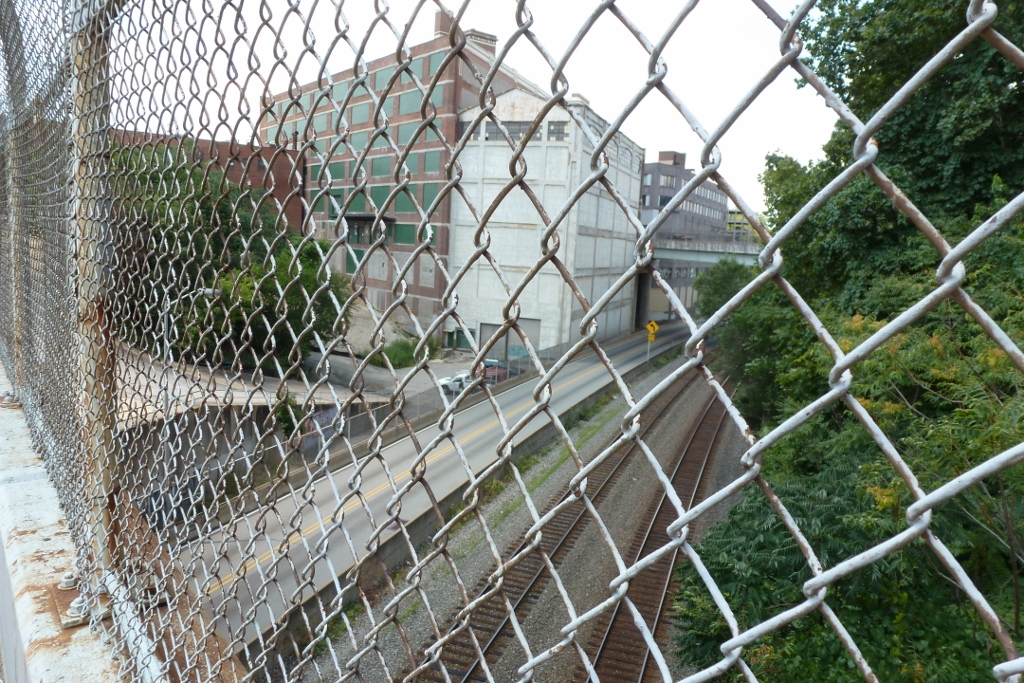
I’ve probably made it quite clear by now that I really don’t like the fenced in bridges.  (See for instance thee Busway Bridges posts for Shadyside, East Liberty, and Millvale Avenue.)  The Fort Pitt Bridge sidewalk is wide and open, though the traffic is a little loud and it might have been hard to hear if I had wanted to have a conversation with a walking buddy.  The worst part was the stretch pictured above alongside the Fort Pitt Museum.

I enjoyed the views from the bridge as I never see the city from this angle.  It certainly does not present the most exciting view of the downtown buildings, but that was one of my goals with this project—to see all the views of downtown.

While crossing the bridge, I realized that I never spend any time on the Monongahela side of the Point.  I’m not sure why, but I always end up on the Allegheny side (or at the tip of the Point before it was under construction) when I come to the park.  This made me realize I really need to explore Point State Park more as the Monongahela side looks quite pleasant.

Busway Bridges: Millvale Avenue

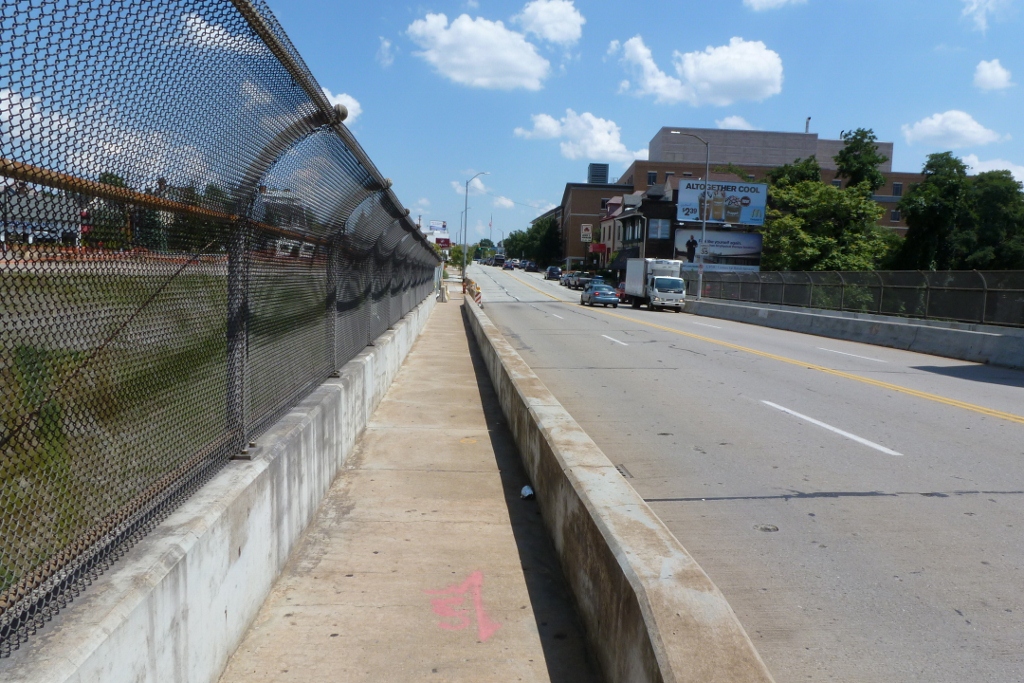
When I crossed the Millvale Avenue Bridge over the busway, I was thinking a lot about the “caged” aspect of many of Pittsburgh’s bridges.  I wrote about this idea in my Highland Park Bridge, Taking the Long Way Round, and Busway Bridges: East Liberty posts.  While a lot of bridges in Pittsburgh have the mesh fencing, which often makes me as a pedestrian feel caged in, there are several that do not.  As I prepared to cross this bridge I wondered why that is.

I wondered if perhaps it was to prevent people from jumping off the bridges.  This theory did not make sense though.  First, if that is the case shouldn’t all the bridges have the fences?  One of the times I crossed the Birmingham Bridge, I witnessed a scene that I believe was a group of people working to dissuade a jumper.  The Birmingham Bridge is one of the bridges without a fence.  The second reason this theory doesn’t fit is that on the Millvale Bridge, the fencing is only along part of it.  There is a significant stretch not fenced with a big drop.  The part that is fenced is the stretch over the railroad tracks and the busway.

My next ideas were that perhaps the fences are meant to stop litter from blowing off the bridge and onto the tracks/road/river below or to stop people from throwing things over the bridge.  Again, these don’t make sense.  Litter can blow in from any direction and could blow over the fence.  There is also a parking lot under the Millvale Bridge, so if the concern is about people tossing things over the bridge, why isn’t the fence extended to protect the cars in the lot?

I mention in Busway Bridges: Baum-Centre Corridor that most of the bridges across the busway between Penn Avenue and the Bloomfield Bridge are ugly and unpleasant.  Millvale Avenue Bridge is mostly exempted from this.  The design of the bridge is more aesthetically pleasing than the concrete of the Baum and Centre bridges and the rusty metal of the Highland and Negley bridges.  The area surrounding this bridge is also more residential and less used than the commercial arteries of Baum and Centre.

I thought the aesthetic difference might be explained by the years in which the bridges were built, but that is not the case.  The Highland, Negley, Aiken, Baum, and Millvale bridges across the busway were built in the 1910s or 1920s.  They were all reconstructed while the Penn, Centre, and Bloomfield bridges were all built in the 1960s, ’70s, or ’80s.  The Negley and Aiken bridges also connect with residential areas, so the land use around the bridge cannot explain the slightly different and better design of the Millvale Bridge.

Busway Bridges: Baum-Centre Corridor

Baum Boulevard and Centre Ave run parallel along the border of Pittsburgh’s Shadyside and Bloomfield neighborhoods and are arteries that help people move from downtown and Oakland to East Liberty and other East End neighborhoods.  The Baum-Centre corridor is currently receiving a lot of attention from the perspective of the development of the city.  There is even a community group called the Baum-Centre Initiative made up of representatives from other groups along the corridor.  Their goal is to work together to promote development along the corridor that is beneficial and satisfactory to their respective groups and communities.

This area is attracting interest in part because of its arterial activity, but also because Baum used to be the car dealership district.  Most of the dealerships have closed their locations leaving behind many empty buildings.  Contrary to this disinvestment, Centre Ave hosts one of the UPMC hospitals and an urgent care center was recently added.  From what I’ve picked up, UPMC is working to expand in this area.

The large building between Centre and Baum last housed a party/costume supply store, but I image most of the building was sitting empty.  For about the last year, it has been under redevelopment.  The rumor I have heard is that something related to UPMC is going into the space.

I also heard that UPMC wants to build a parking lot for its employees in this area.  I couldn’t picture exactly where it was to be placed from the description I heard, but I wonder if it is this empty lot off of Baum Boulevard.

Outside of the developments going on near them, my impression of these two bridges is that they are quite ugly.  I am glad that except for when I walked them for my project, I’m in a bus when crossing Centre Avenue’s bridge and in a car when crossing Baum Boulevard’s bridge.  Now that I mention it, that’s how I felt about most of the bridges across the busway I’ve walked (except for the new pedestrian bridge, see July 26 post).  Though I haven’t written the posts for all of them yet, at this point I have walked all the bridges over the busway between Penn Avenue and the Bloomfield Bridge.

My favorite part about walking these two bridges was the view of Bloomfield/Lawrenceville from the Baum Boulevard Bridge.  This view captures two of Bloomfield’s churches (both currently active) with Lawrenceville’s Childrens Hospital sandwiched between them.

Southwark Bridge

After three mono-color bridges (see Jubilee Bridge, Waterloo Bridge, and Millennium Bridge posts), the Southwark Bridge returned to using the unique color schemes that I came to expect of London bridges after walking the first few (see Battersea Bridge, Albert Bridge, Chelsea Bridge, Vauxhall Bridge, Lambeth Bridge, and Westminster Bridge posts).

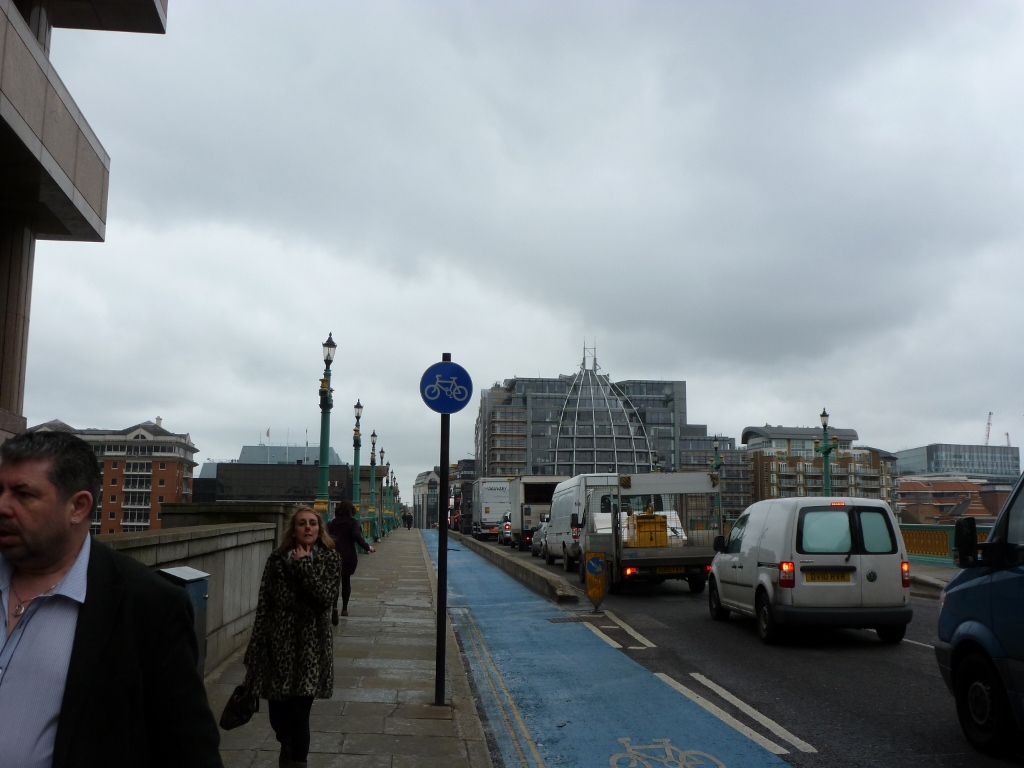
The Southwark Bridge had the most, or at least slowest, vehicular traffic of any of the bridges I walked in London.  It was also the only one with a painted bike lane.  I believe this lane is part of London’s Cycle Superhighway system.  These bike lanes are intended to make bike travel to central London from the surrounding areas easier (see website).  I really liked the bright blue color of these lanes.  It is highly visible and makes it quite clear this is not a place for cars.  Of course I am sure it costs a lot to paint miles of bike lanes solid.

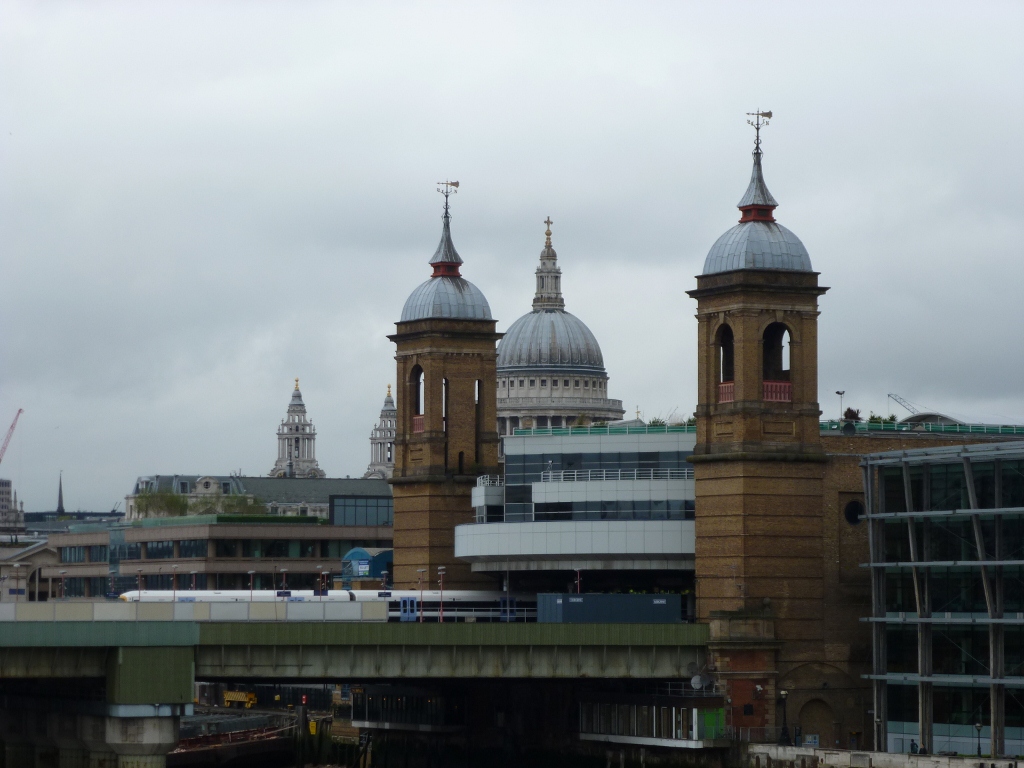
The little domes on this building had been visible to me long before I saw the rest of the building.  I was in anticipation for several days to learn what it was.  I assumed it would be something really interesting like a church built by Eastern European immigrants, in which case its prominent location on the waterfront would led to a fascinating story, I’m sure.  Consequently I was a little disappointed to learn that it was only a train station.  (Note: I learned what the building was while on the Southwark Bridge, but the view above was taken from the London Bridge on the other side of the station from Southward Bridge.)

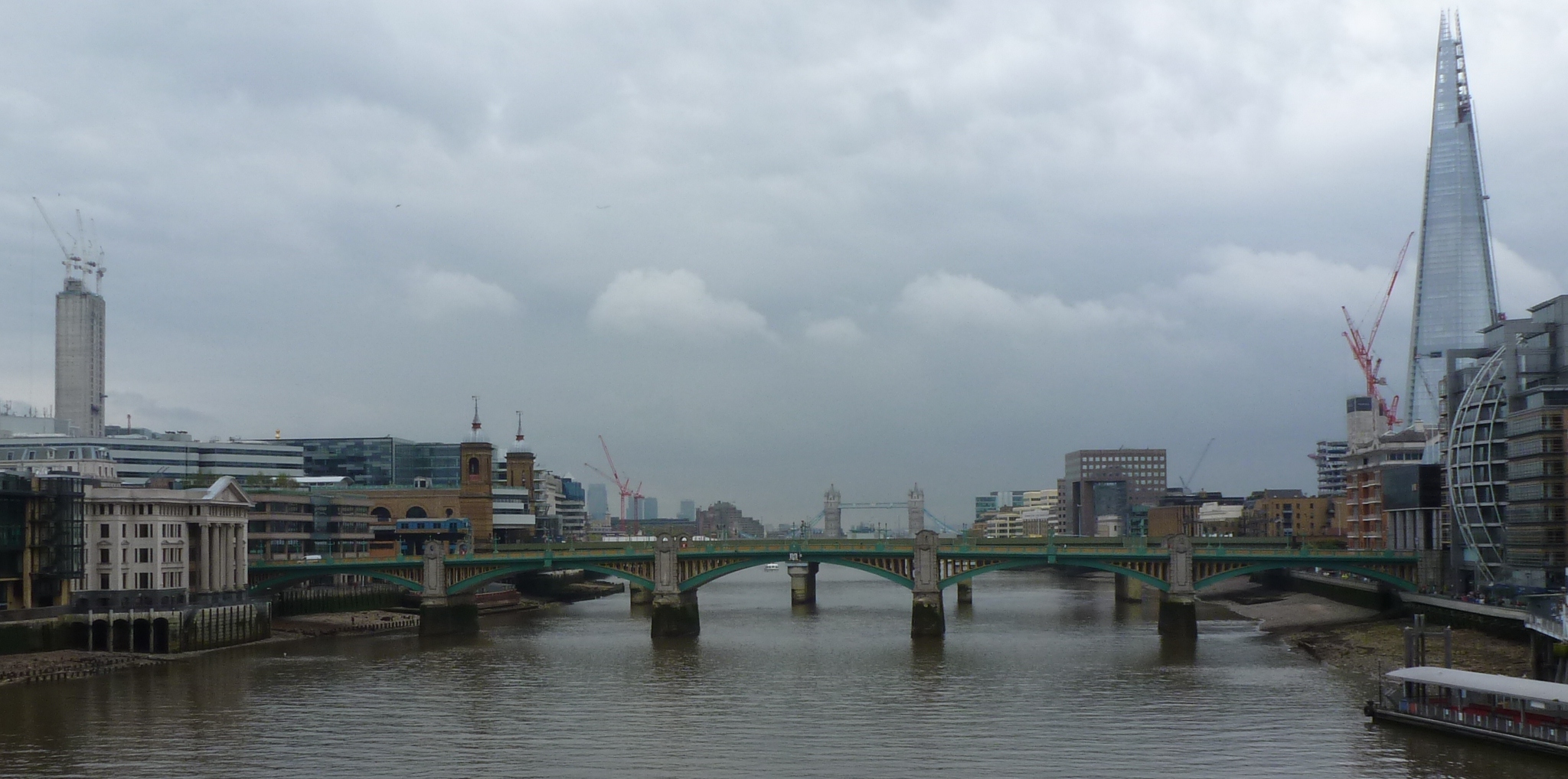
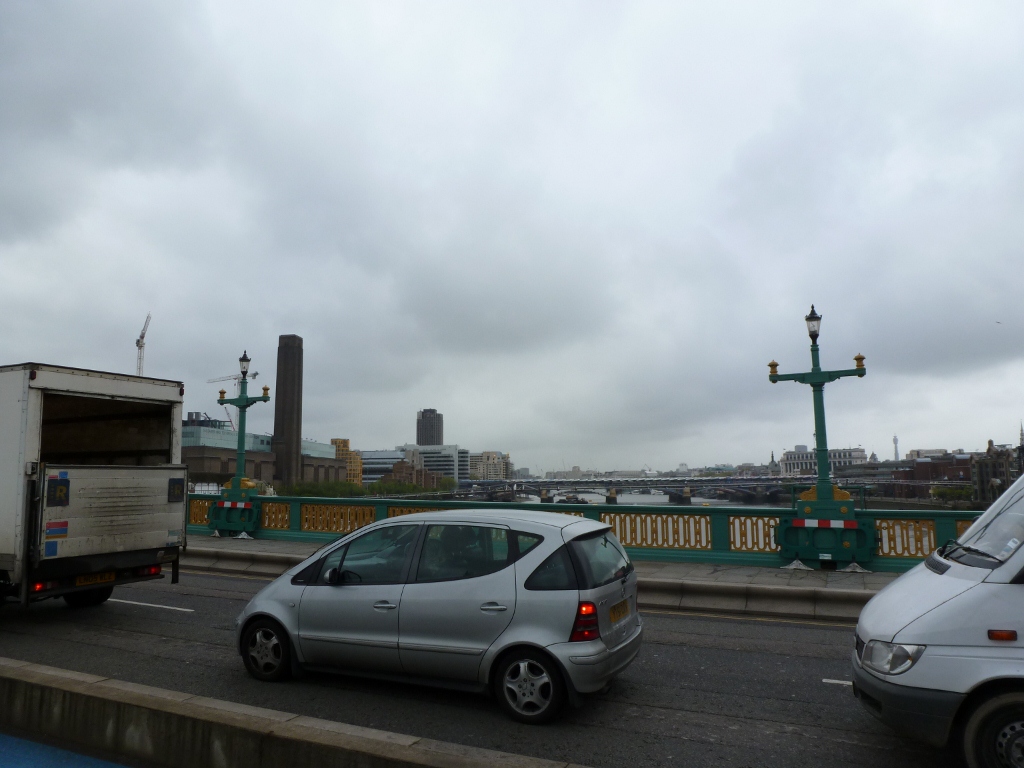
In this view upstream, the Millennium Bridge, which was so photogenic from the other angles (see Aug 2 post), becomes invisible against the background of the Blackfriar’s Rail Station spanning the Thames (see Blackfriar’s Bridge post).

The Last Allegheny River Bridge

The last bridge across the Allegheny I needed to cross was the 62nd Street Bridge.  While the approach to the bridge less than inviting, the bridge itself was surprisingly pleasant to cross.  The approach was a skinny sidewalk overgrown and broken in spots connected directly to a very fast-paced road.  This approach is similar to the one for the Highland Park Bridge (see June 10 post).  For this reason and because the 62nd Street and Highland Park bridges are the two farthest from downtown on the Allegheny, I compared the experience of walking across these two bridges.  The 62nd won by a long shot.  Its sidewalk is much wider and it has sidewalk on both sides.  The Highland Park Bridge has a high mesh fence enclosing you in, while the 62nd Street Bridge has a shorter waist-/chest-height railing similar to those on the 31st and 40th Street bridges (see July 19 and July 20 posts).  The traffic was also much lighter on the 62nd compared to the Highland Park Bridge, although I imagine that at rush hour the 62nd might get busier than when I crossed it.

I was surprised that there is still a good view of downtown from the 62nd Street Bridge.  The river bends quite a bit before getting to 62nd Street, so much so that the 40th Street Bridge is not visible from the 62nd.  However, there is a significant stretch of flat land on the southern shore which permits the view of downtown from the northern end of the bridge, by the middle of the bridge only part of downtown is visible, and by the southern end downtown is hidden from sight.

While most of the area surrounding the bridge is industrial or former industrial, the northern end connects to the edge of Sharpsburg, PA, which has a couple interesting looking churches and likely housed industrial workers for many years.

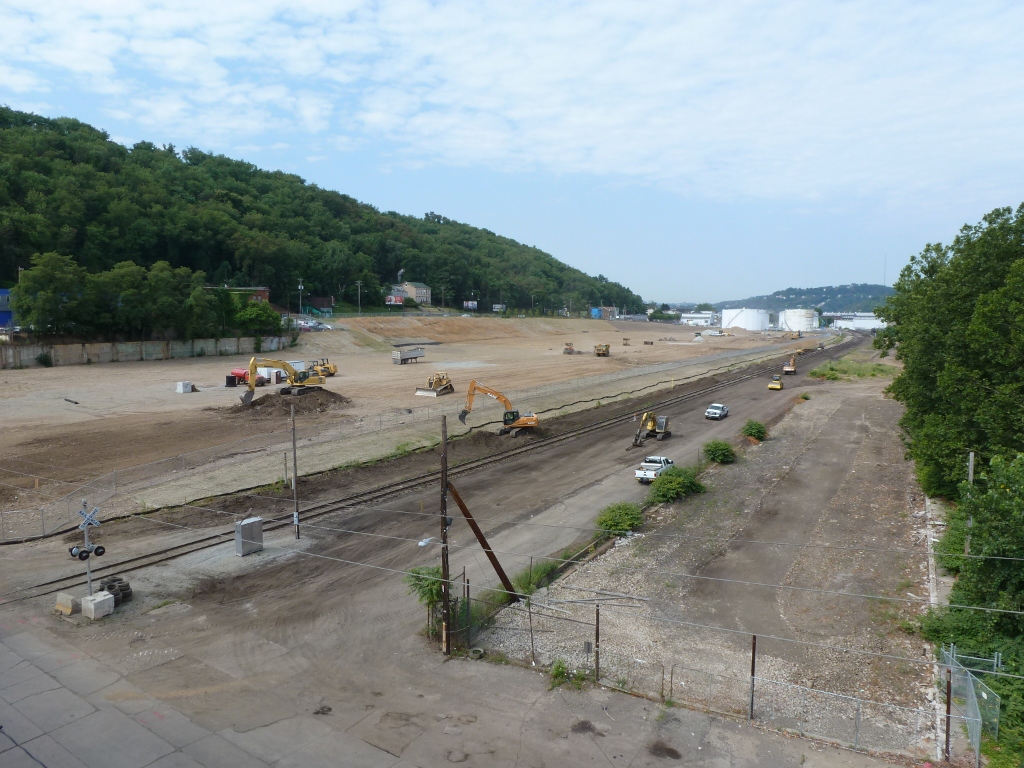
The 62nd Street Bridge also passes by a future site of redevelopment.  I thought I read somewhere last summer about something interesting that was planned for this site, yet when I searched for it today, I could not find what I thought I was looking for.  However, there looks like there is a different interesting story connected with this site.  It seems the site is being considered for a distribution center for the company trying to redevelop the parking lots and produce terminal near the 16th Street Bridge (see July 14 post).  The Post-Gazette has an article explaining that not only does Councilman Dowd have issues with the redevelopment in the Strip (the 16th Street Bridge area), but he also has issues with this redevelopment scheme.  I was sorry to learn that the plans for the site are leaning away from something interesting and more publicly accessible such as a park/retail area.  However based on the surrounding area, it makes sense.  There are only a very few residences nearby and what traffic that does come by is looking for a quick way to get between other points in the city and surrounding region.  Also, there is very minimal bus access to the site.  (There used to be more when the site belonged to the bus company, see article.  There are still bus stop signs along Butler Street from this time.)

Here’s one final note on the 62nd Street Bridge.  Like many of the numbered street bridges, this bridge has an alternative name (see posts on 6th Street, 7th Street, 9th Street, and 40th Street bridges).  The 62nd Street Bridge is also known as the R.D. Fleming Bridge.  For years, I have assumed that R.D. Fleming was in the medical profession, he name suggested medical to me when I was in grade school and the idea has stuck for years.  It would make sense as Pittsburgh has a good reputation for things medical.  However, it turns out that R.D. Fleming was a Republican senator whose district included the region near the bridge.  I could not find an explanation for why this former senator, of all the former senators Pittsburgh has had, was honored by having a bridge named after him.  If anyone knows what made him unique, please share.

Westminster Bridge

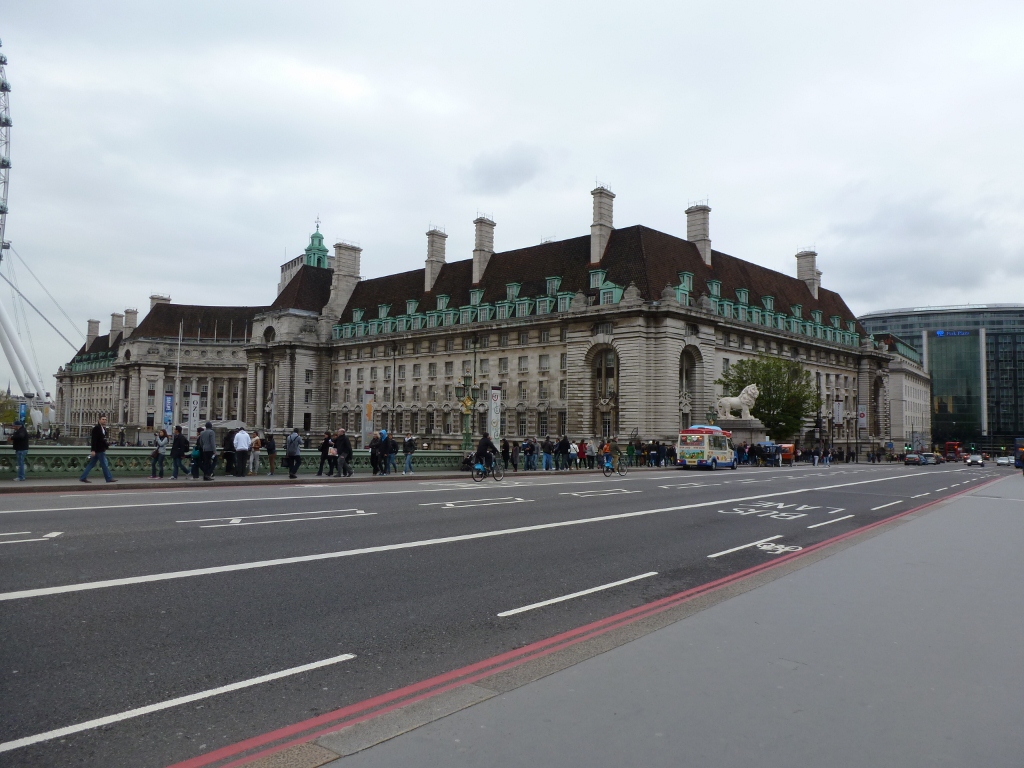
I mentioned in my post on Battersea Bridge that the traffic on the bridge was low, but that this was probably in part due to the fact that I crossed it on Sunday afternoon.  I was so excited about walking all the bridges in London that I walked half of them first thing that Sunday afternoon when I arrived.  The traffic condition on most of the bridges was similar to the Battersea Bridge–not much.  I did pass several other pedestrians as I walked along the Thames River Path to get between the bridges, but the volume of the pedestrian traffic changed significantly when I reached Westminster Bridge.  Crowds of people were crossing the Westminster Bridge, enough that an ice cream truck parked at one end to attract customers from the passersby.


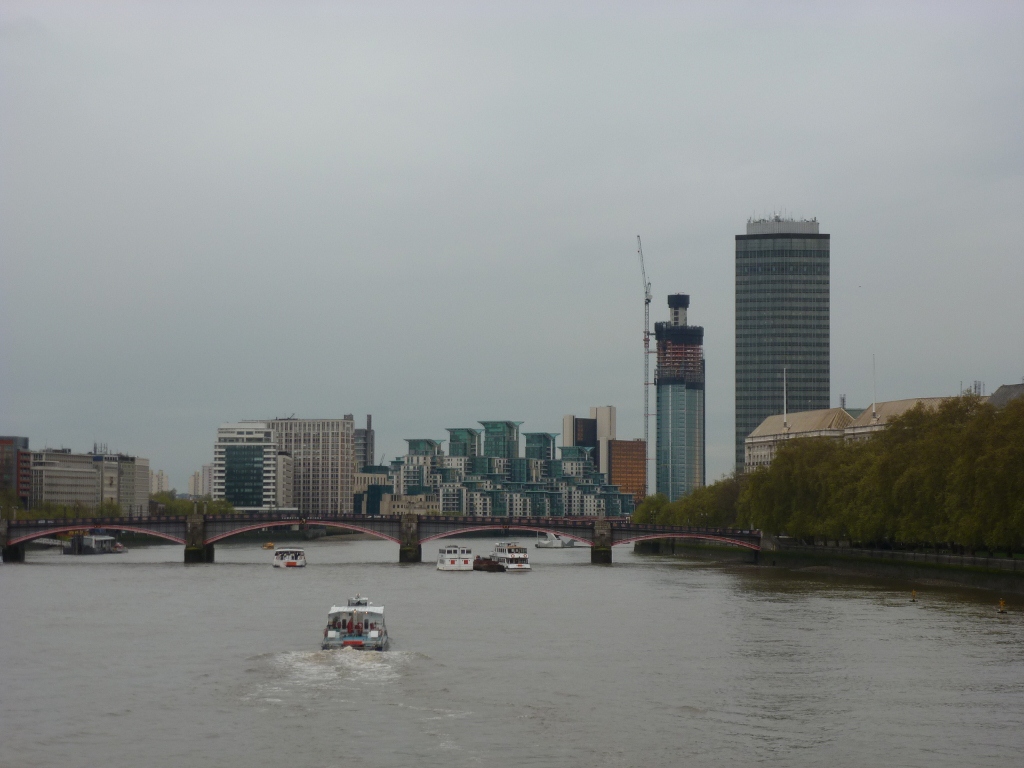
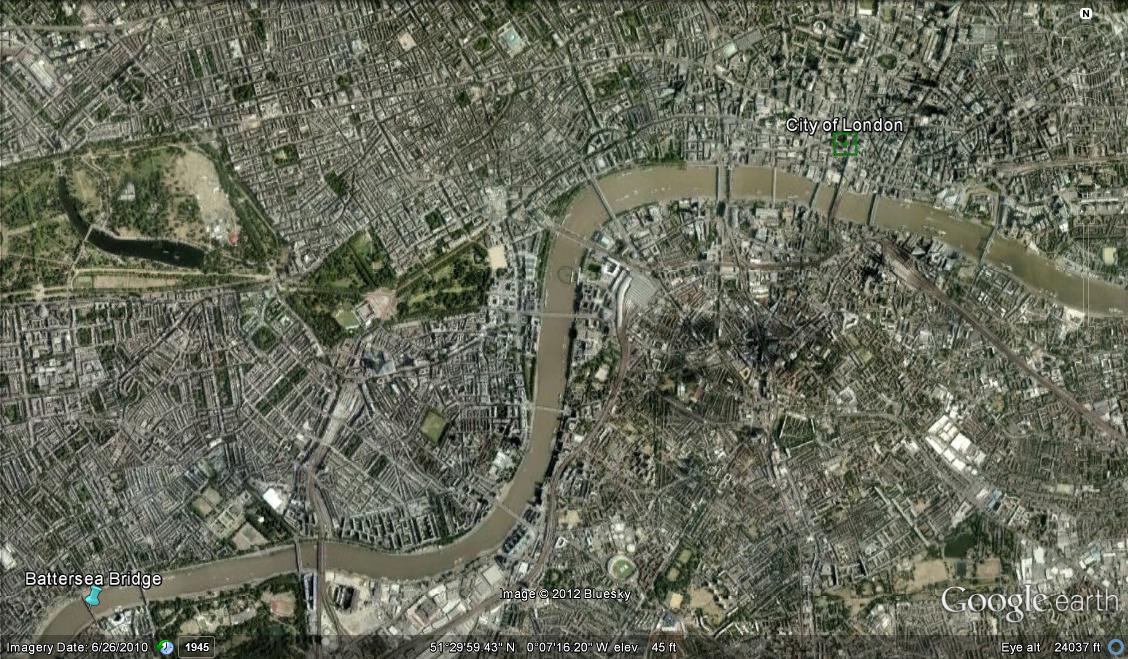
Going back to the mysterious tower under construction next to the St Georges Wharf Apartments (see Lambeth Bridge post and Battersea Bridge post), my favorite view of these buildings was from the Westminster Bridge.  The way they appear in a cluster with other buildings along the river soothes my sense of harmony, as the tower doesn’t stick out so abruptly in this view.  This is one of my favorite things about walking bridges–seeing how the appearance of a particular location can change drastically when viewed from different locations.  The Thames River is particularly good for this as it twists and turns quite a bit as it passes through London.  This causes the incomplete tower to look like it is right next to the other tall building, when in reality they are separated by a fair distance and are on opposite sides of the river (again refer to the Lambeth Bridge post for a different view of these buildings).

Battersea Bridge

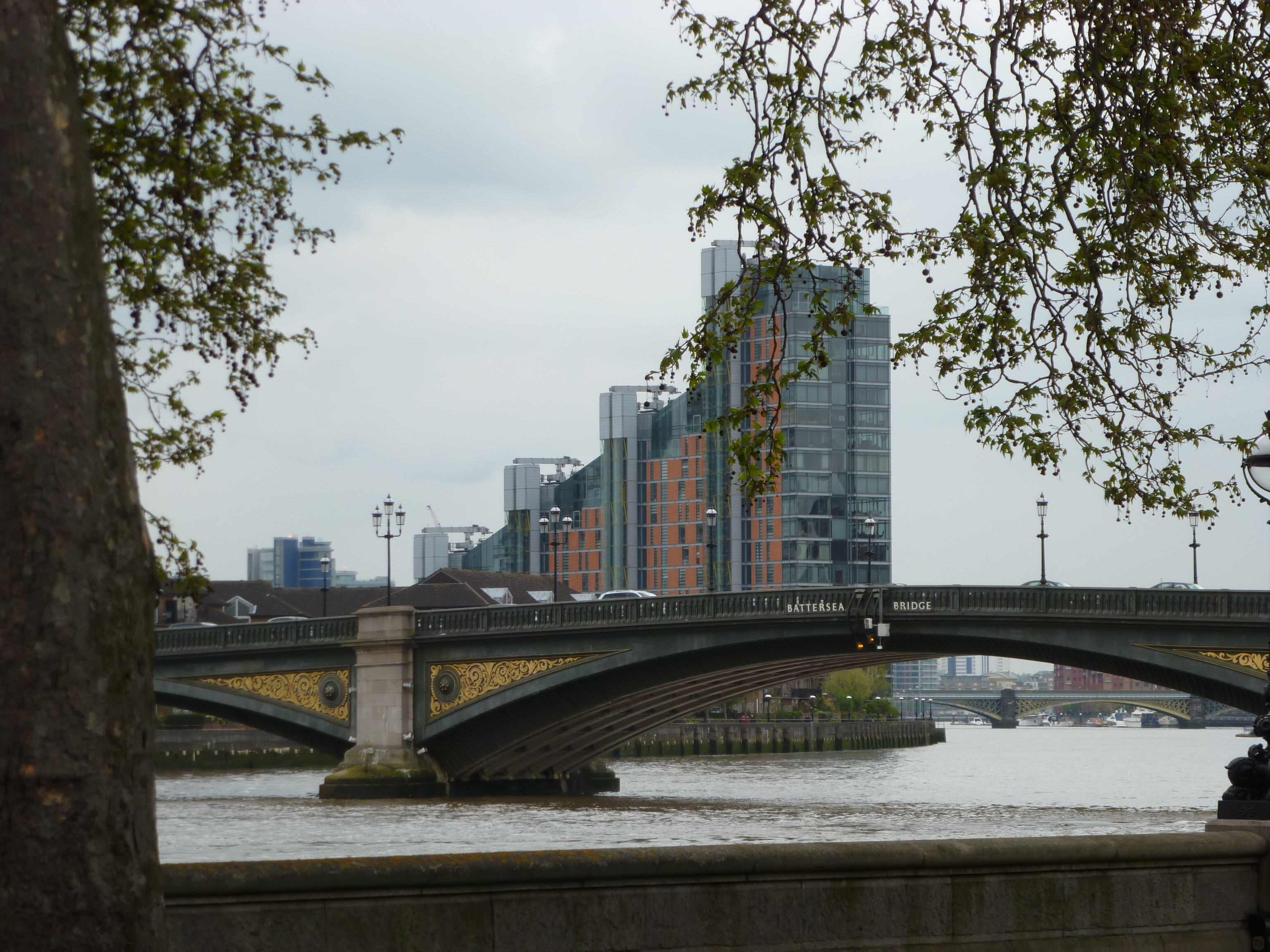
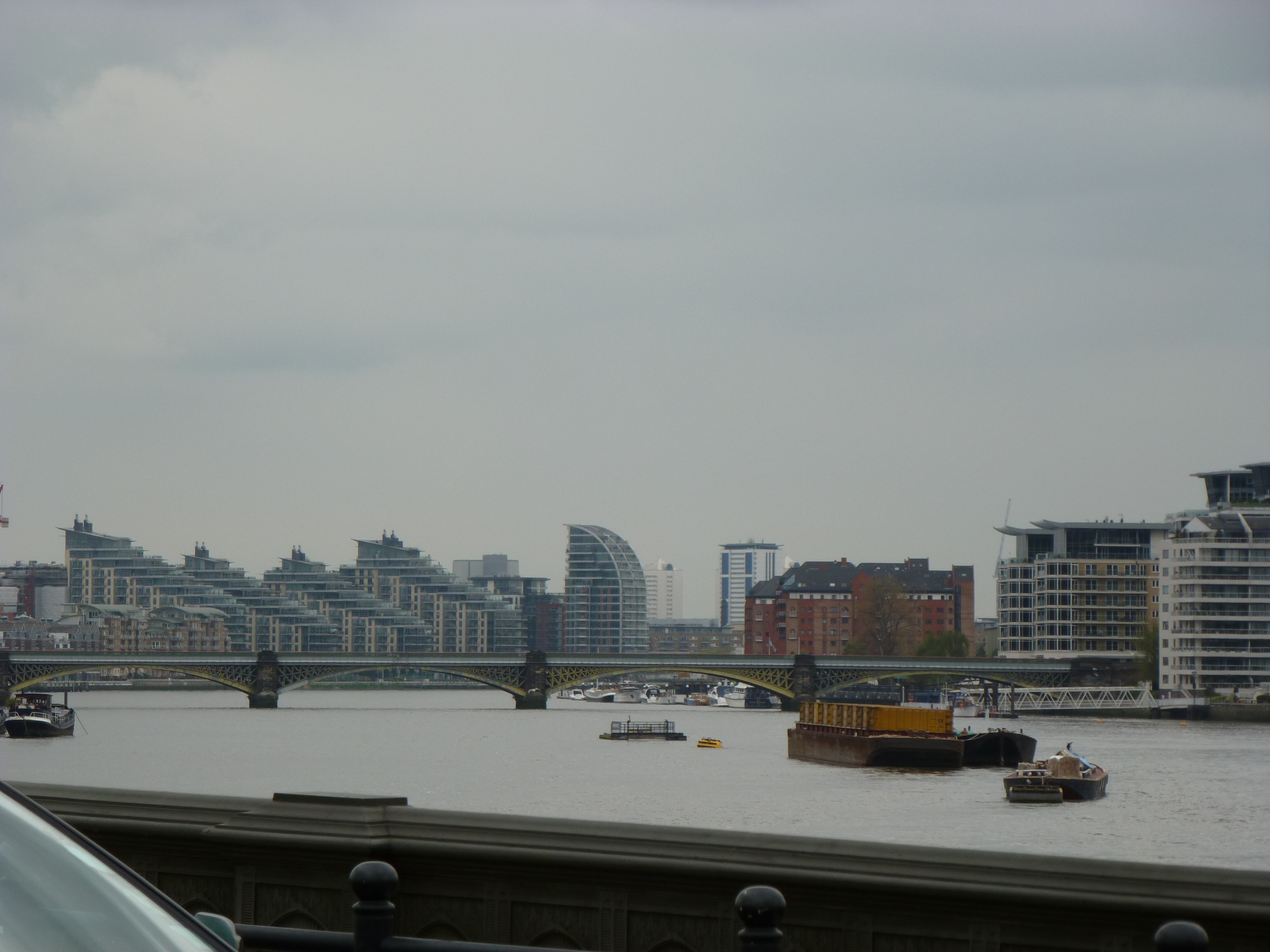
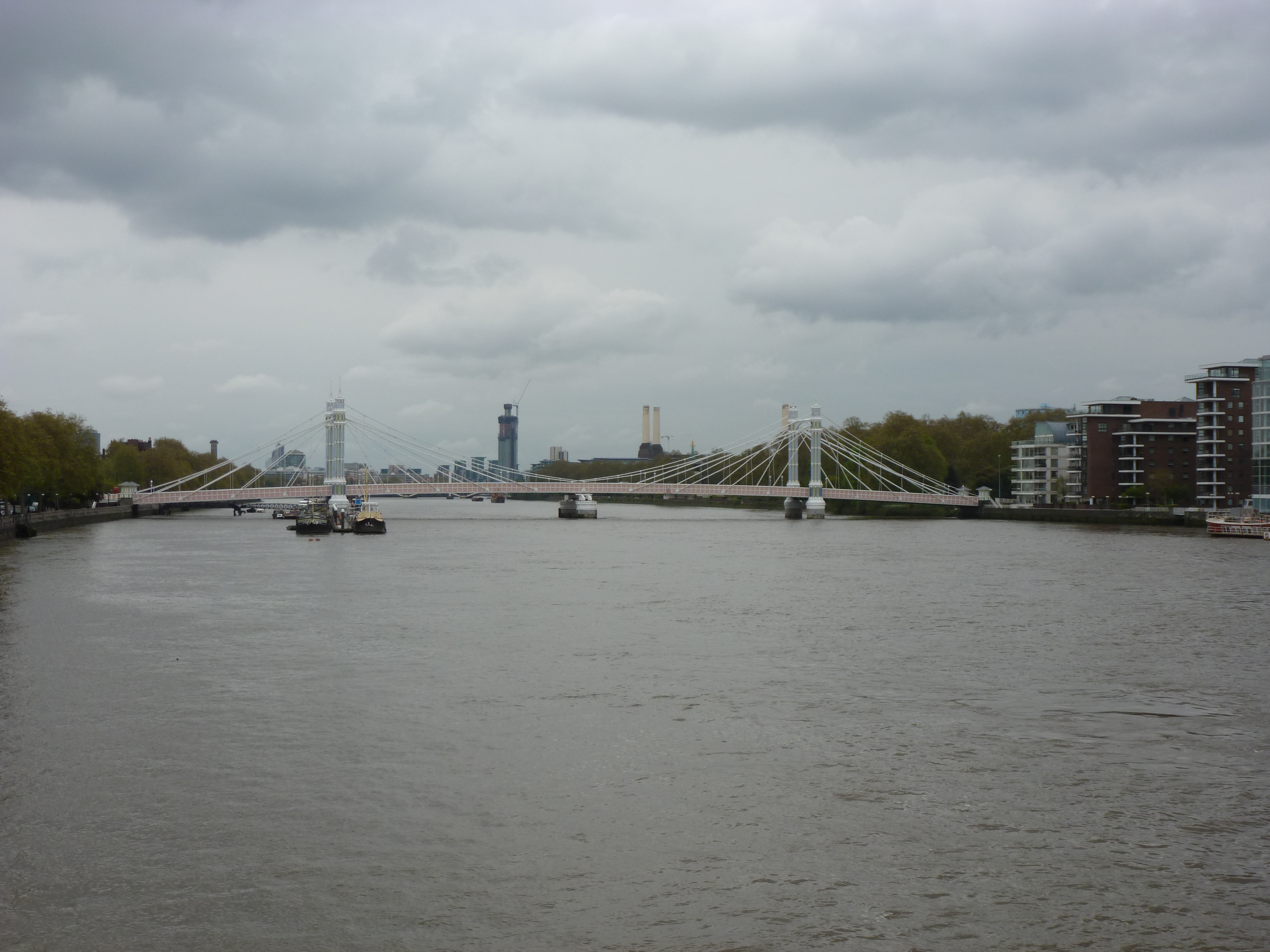
The Battersea Bridge was the first bridge in London that I walked across.  The bridge, built in 1890, connects the London neighborhoods of Kensington & Chelsea (north of the river) and Wandsworth (south of the river).  The north side had traditional, classic architecture, but the south side had some newer developments.  From the bridge looking west, I saw a bridge for the tube and several modern developments.  To the east, I saw the Albert Bridge, the Battersea Power Station, and the Shard tower then under construction.

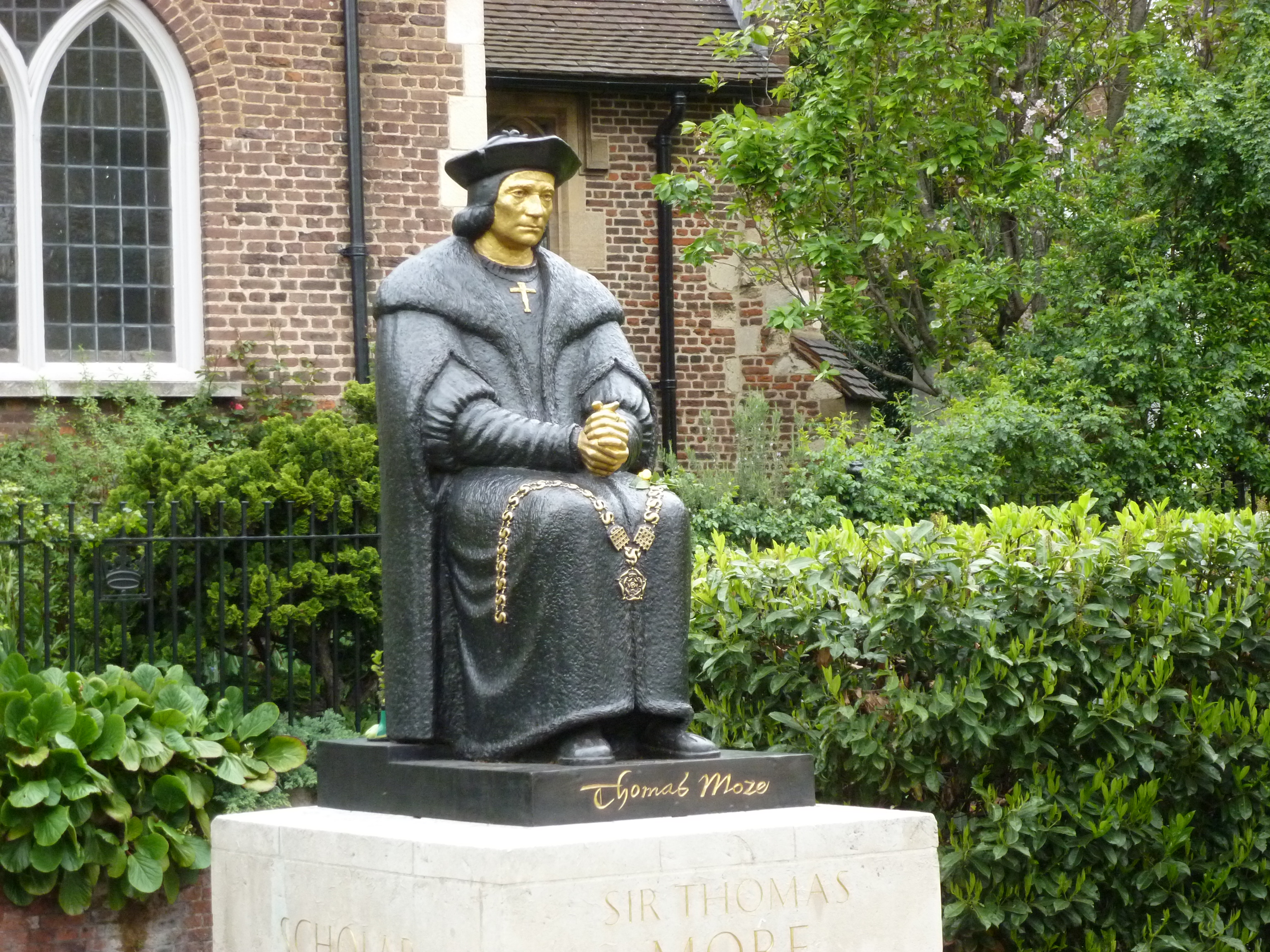
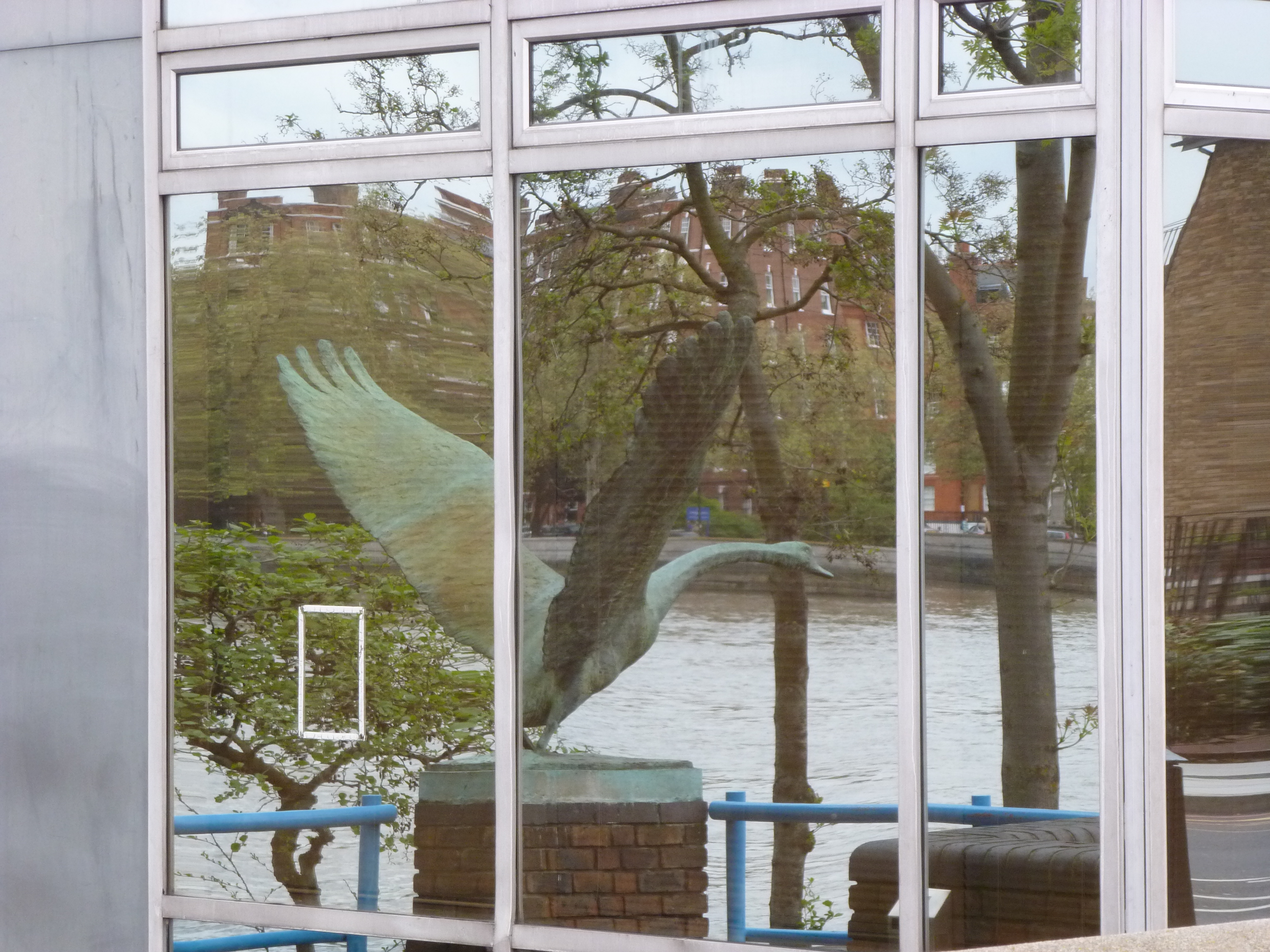
I enjoyed this bridge.  I appreciated its simple, yet stately design.  The traffic was low, though this might have had more to do with the time of day (Sunday afternoon) than any other factor.  There were two sights near the bridge that particularly caught my attention.  The first was a statue of Sir Thomas More on the north side, with gilded face and hands, a style not familiar to me.  The second was a seemingly random statue of a flying goose just off the south end of the bridge.

The name of Battersea intrigued me, so I did a Google search to try and find the origin of the name.  The result was that there is no known origin.  The possibilities included an Anglo-Saxon term meaning Badric’s Island, battles that were fought in the river at low tide when the river was fordable, and an evolution of spellings from a term meaning St Peter’s water or river.

Three Sisters: 6th Street Bridge

Originally, I thought I would write one post about the Three Sisters Bridges in Pittsburgh as they look identical and are so close together that their views of the city would not vary much.  However, after walking them, I decided that the 6th Street Bridge has enough going for it to deserve its own post.  (The other two Sisters are the 7th and 9th Street Bridges.)

The 6th Street Bridge is very active (much more so than its two sister bridges) and as such, I have walked over it multiple times.  It connects Downtown to the North Shore right next to PNC Park (the Pirates baseball stadium).  On game days the bridge is often closed to vehicular traffic, so that people who park, live, or work downtown as well as those who take public transit downtown can walk to the stadium across the bridge without crowding the sidewalks.  I believe this is true for baseball games as well as football games, both University of Pittsburgh and Steelers, down river at Heinz Stadium.  This bridge is also closed off to vehicles as part of the route for Pittsburgh’s annual Turkey Trot, which I participated in last year with several members of my family.

In my walk across the Three Sisters, I found additional reasons beyond the special closings of the bridge for writing about the 6th Street Bridge separately from the other two.

First, I discovered that the bridges are not completely identical.  In 1928, the 6th Street Bridge won the Most Beautiful Steel Bridge Award.  After crossing the Three Sisters, I agree that the 6th Street Bridge truly is the most beautiful (at least of the three).  This is because of the light fixtures.  The 7th and 9th Street Bridges have normal, ordinary street lights painted yellow, whereas the 6th Street Bridge has classic black posted street lamps (see image below).  Though all three had hanging flower baskets, the difference in the lamps made the flowers on the 6th Street Bridge look more vibrant and beautiful than those on the other two bridges.

The second reason for discussing the Three Sisters Bridges separately is because they each have alternate names.  The 6th Street Bridge is also called the Roberto Clemente Bridge.  The bridge was renamed in the late 1990s.  Roberto was a former Pirates player, who I remember learning about in elementary school as being an important force in combating racism in sports.  There is a plaque honoring Roberto on the bridge.

Another piece of interest about the 6th Street Bridge is that Kayak Pittsburgh is located underneath the bridge on the north side.  Ever since I moved to Pittsburgh, I’ve heard of Kayak Pittsburgh and its location, but I could never truly understand where it was.  The hut on the water near the bridge that I thought was Kayak Pittsburgh for years is actually the shed for river emergency services.  When I walked over the 6th Street Bridge this time, I approached it from the Three Rivers Trail on the north side, and finally saw Kayak Pittsburgh.  The last time and perhaps only time I was on that part of the trail was the middle of winter, so there weren’t any kayaks or kayakers to see.


Heth’s Run Bridge Part II

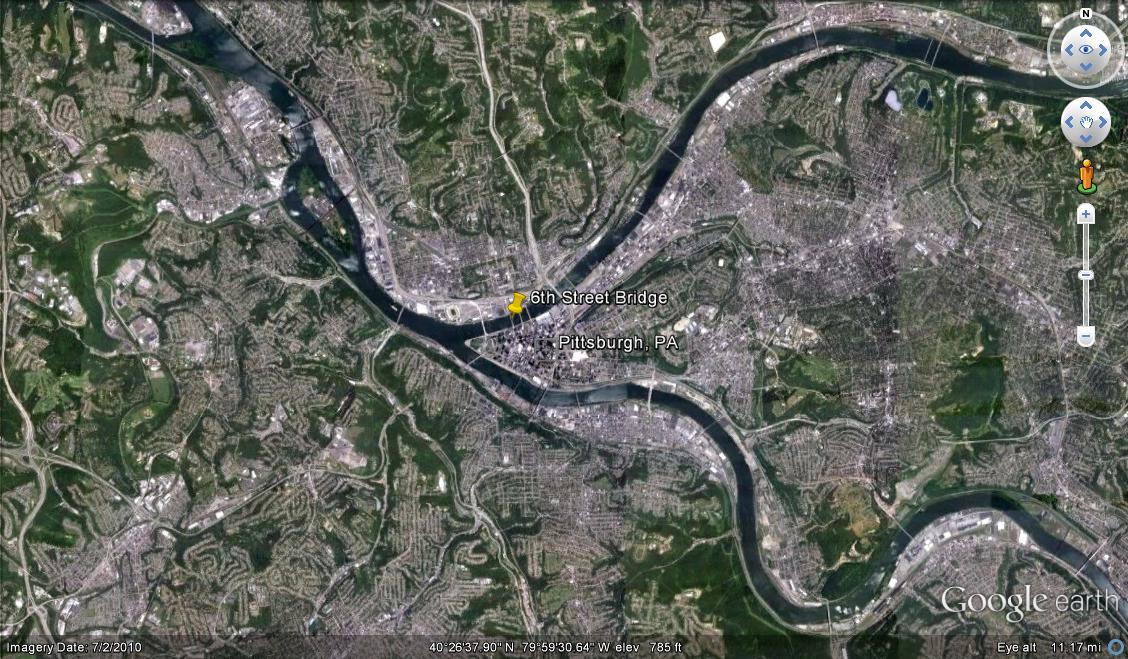
I have a few thoughts to add about Heth’s Run Bridge.  First is the map above which identifies the location of the Bridge compared to downtown.  Second is the bridge’s condition.  There recently has been a lot of buzz around town about the terrible condition of all the bridges in Pittsburgh and Allegheny County as well as many in the rest of Pennsylvania.  This gossip tends to give the impression that most of our bridges are ready to collapse at any moment.  Transportation for America’s website describes a report on deficient bridges, which is probably what fueled the gossip above, however the report presents a slightly more favorable picture.  While the Pittsburgh Metro area is identified as the metro area with the highest percentage of deficient bridges in the US, it turns out that only 30% of the bridges are deficient.  While I am unable to comment on the structural integrity of Heth’s Run Bridge or even if there is any need for it to be structural sound (I don’t think the ravine has been completely filled in under the bridge, but I can’t be sure), I can attest to the condition of the sidewalks.

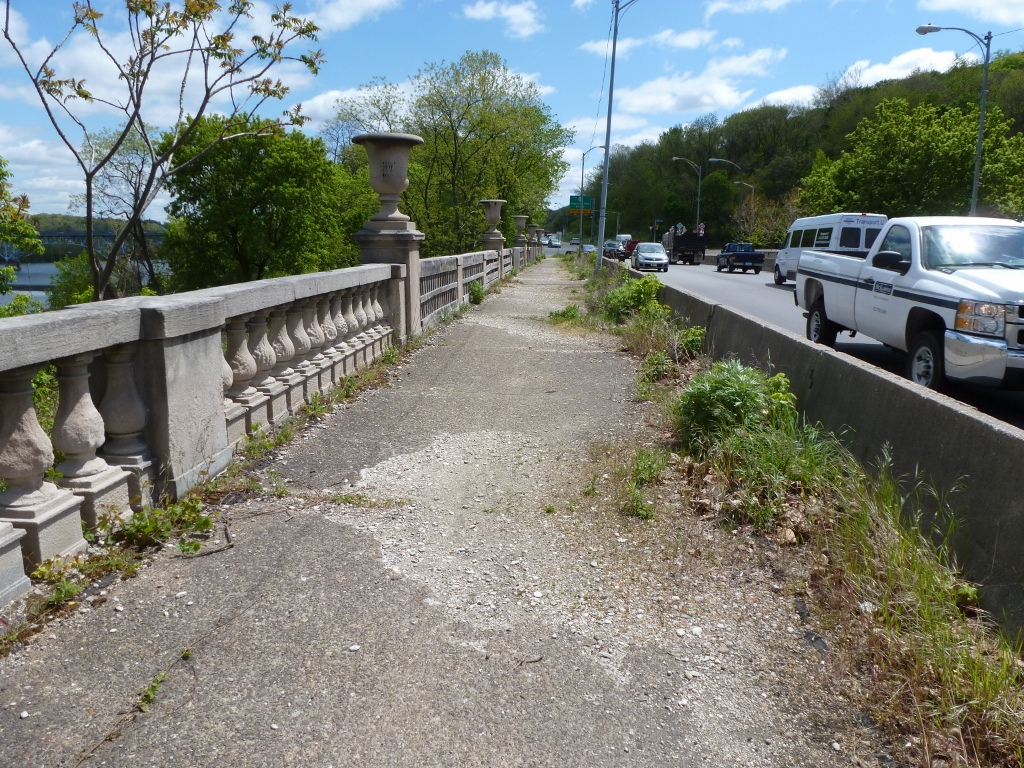
The sidewalk is quite wide, but as the image above shows, it is deteriorated with weeds growing however they please.  The sidewalk on the other side is in similar condition.  The first time I walked this bridge I could not understand why the sidewalk was so wide, particularly as on the other side, the sidewalk narrows considerably.  Across the bridge I’d guess the sidewalk is over 10 feet wide, but once across it is only a couple feet wide, with only about a foot of usable space due to dirt and overgrown weeds.  Clearly this is not an area that the city considers to have a high enough volume of foot traffic to warrant good sidewalk maintenance.  As there often is high vehicular traffic in this area, I say the city should make the sidewalks across the bridge much narrower so that they can add another car lane.  The riverside traffic has two lanes before the bridge and two lanes after, but narrows considerably to make room for a useless wide and deteriorating sidewalk.

In writing the first post on Heth’s Run Bridge (see May 31 post), I believe I discovered the reason for this unusually wide sidewalk that today essentially goes nowhere (at least nowhere that the average pedestrian would wish to go).  The 1911 map of the bridge and surrounding area shows that the bridge connected Butler Street and Washington Boulevard (today’s Allegheny River Blvd), both of which were lined with houses and other buildings.  There is even a school on Washington Boulevard.  As such it was probably only natural that when the current bridge was built in 1914 it would have large sidewalks to help facilitate the movement of people before the prevalence of the car between the houses, businesses, and schools that lined these roads.  Today all the buildings that lined Washington Boulevard at this point do not exist.  The land they once stood on is all wilderness and on the landward side of the road is incorporated into Highland Park.  The large, deteriorating sidewalk of Heth’s Run Bridge is the only reminder of a time when this area was probably busy and vibrant.