A Vibrant, Green City

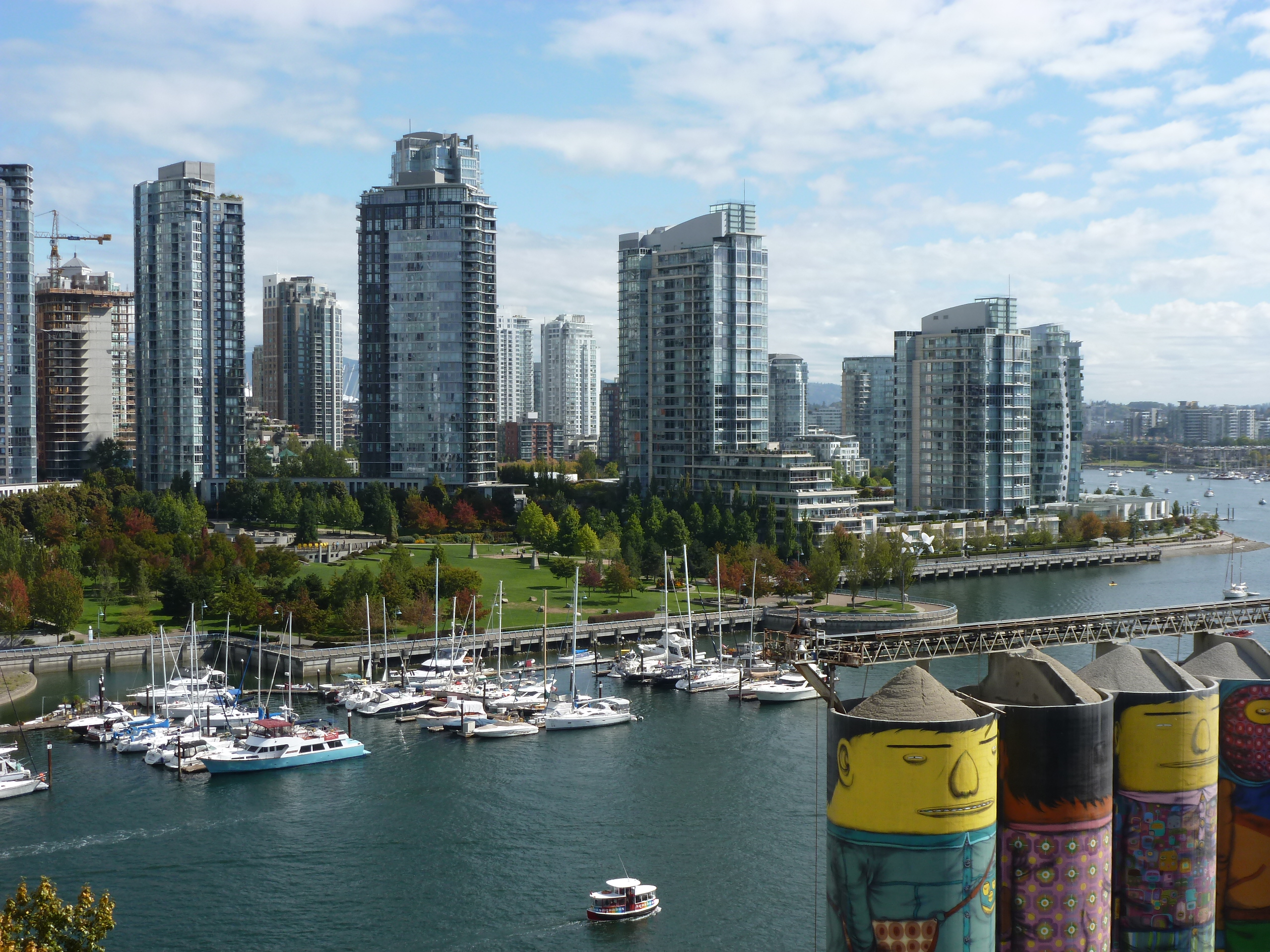
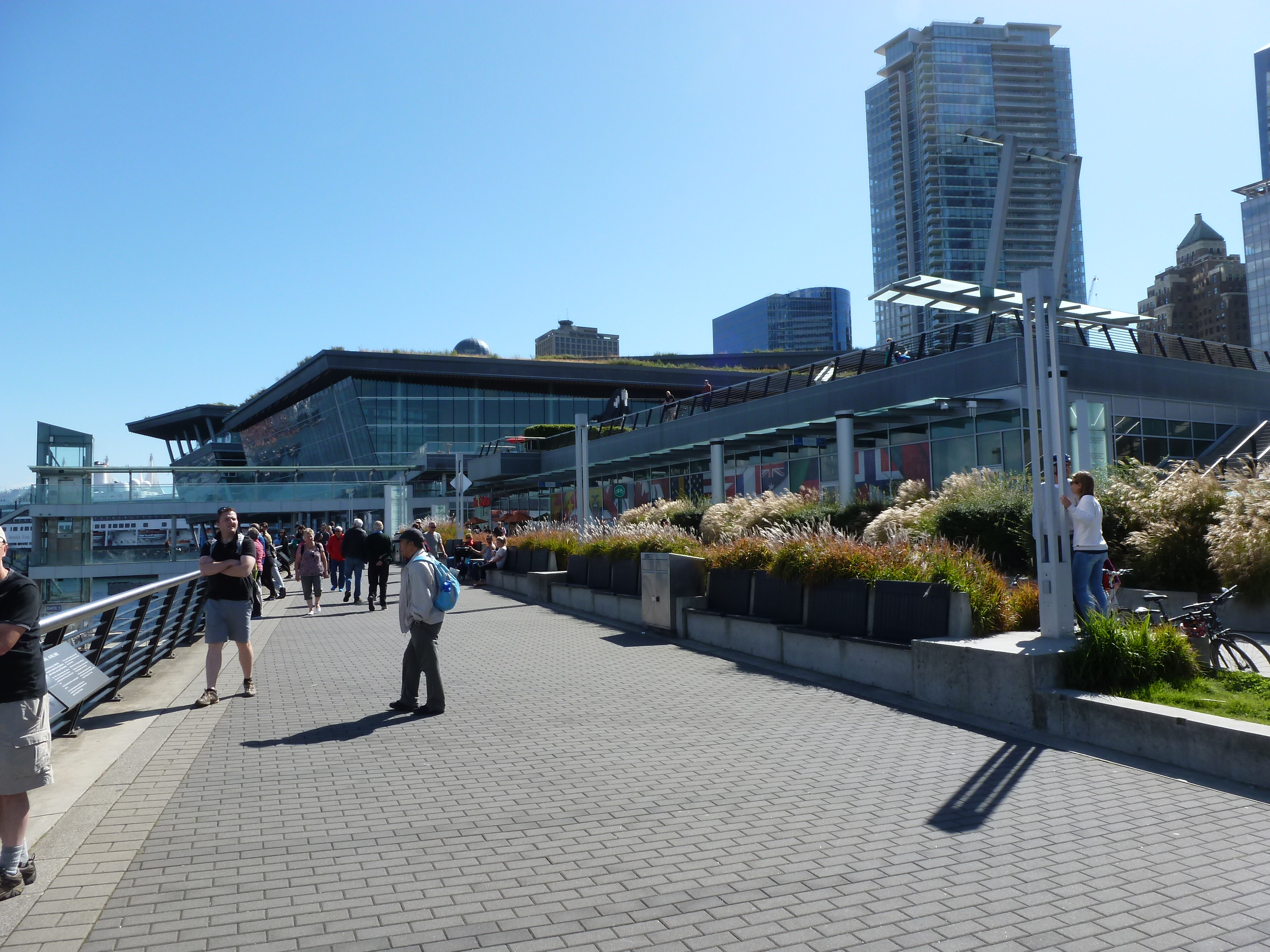
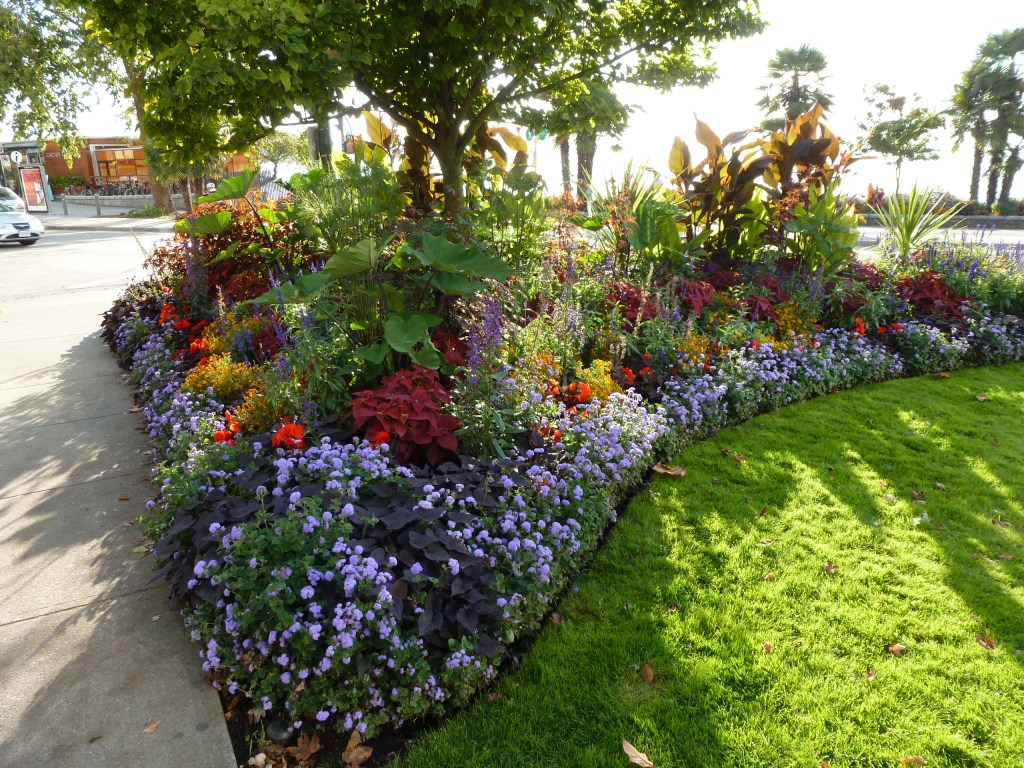
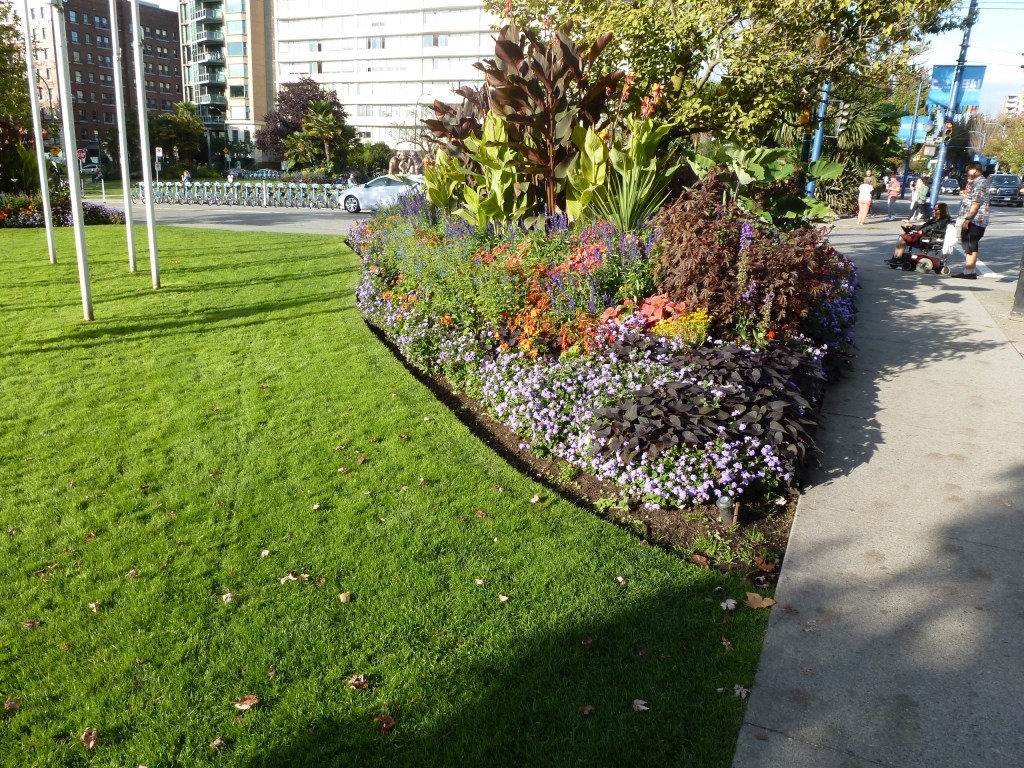
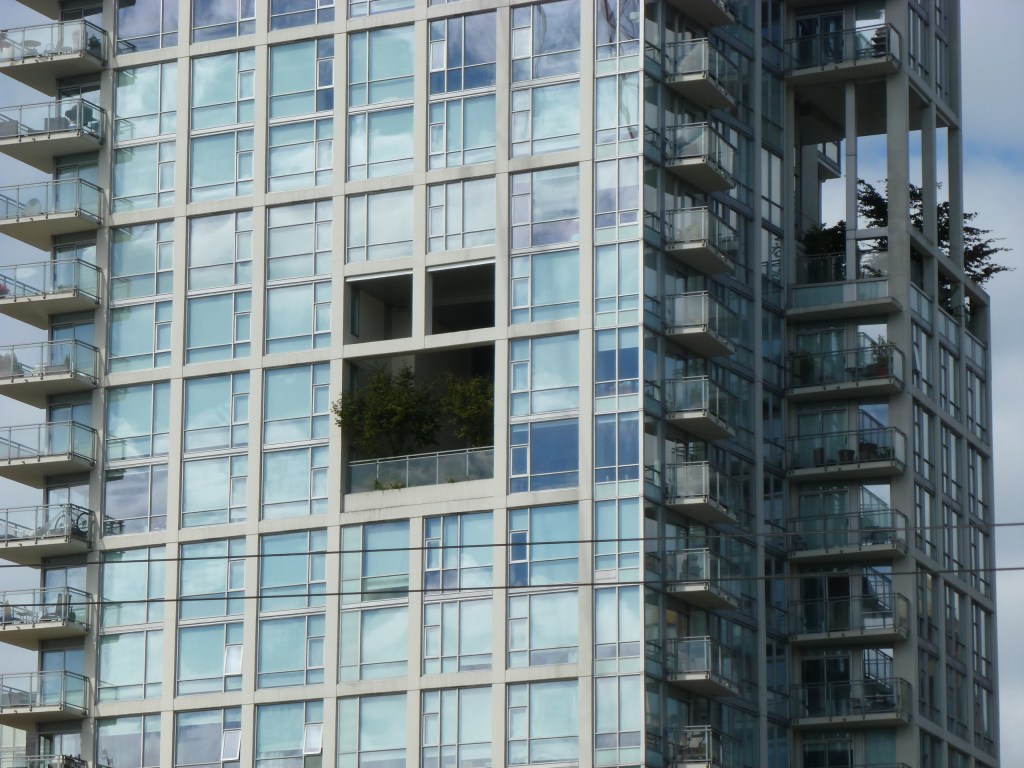
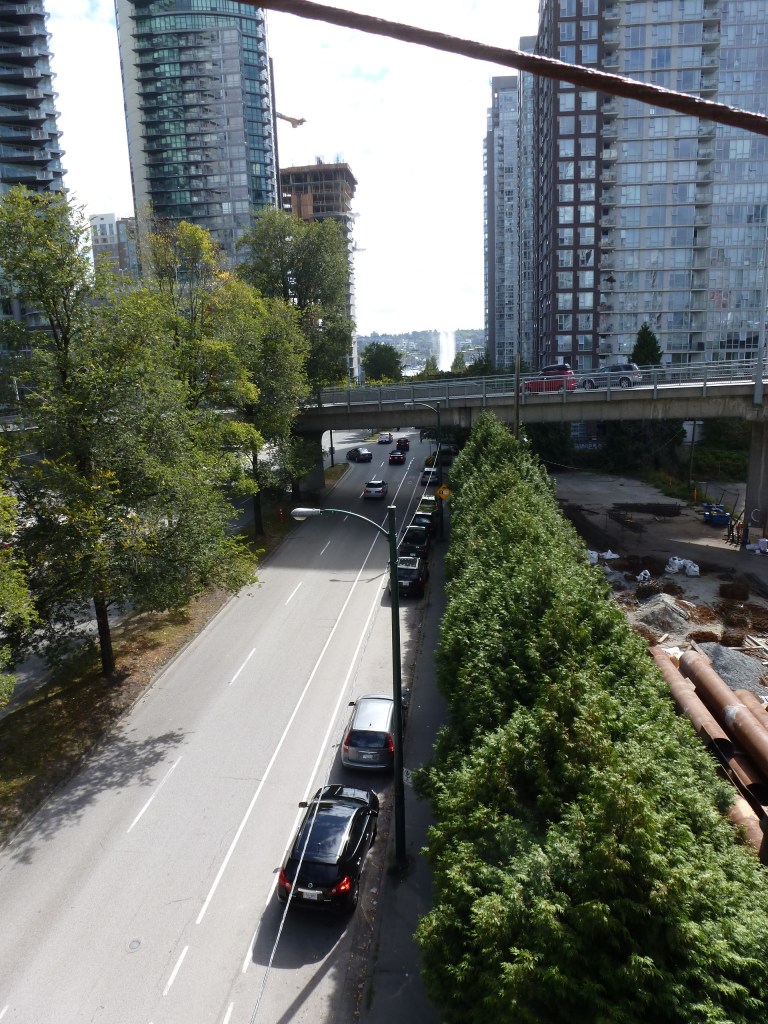
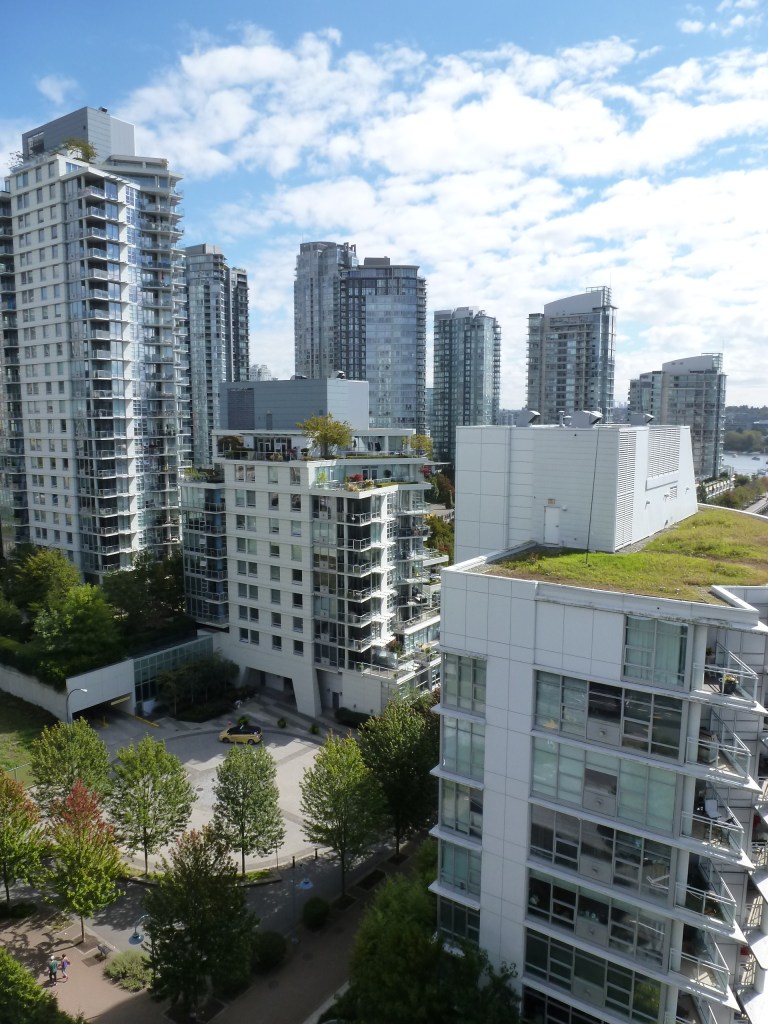
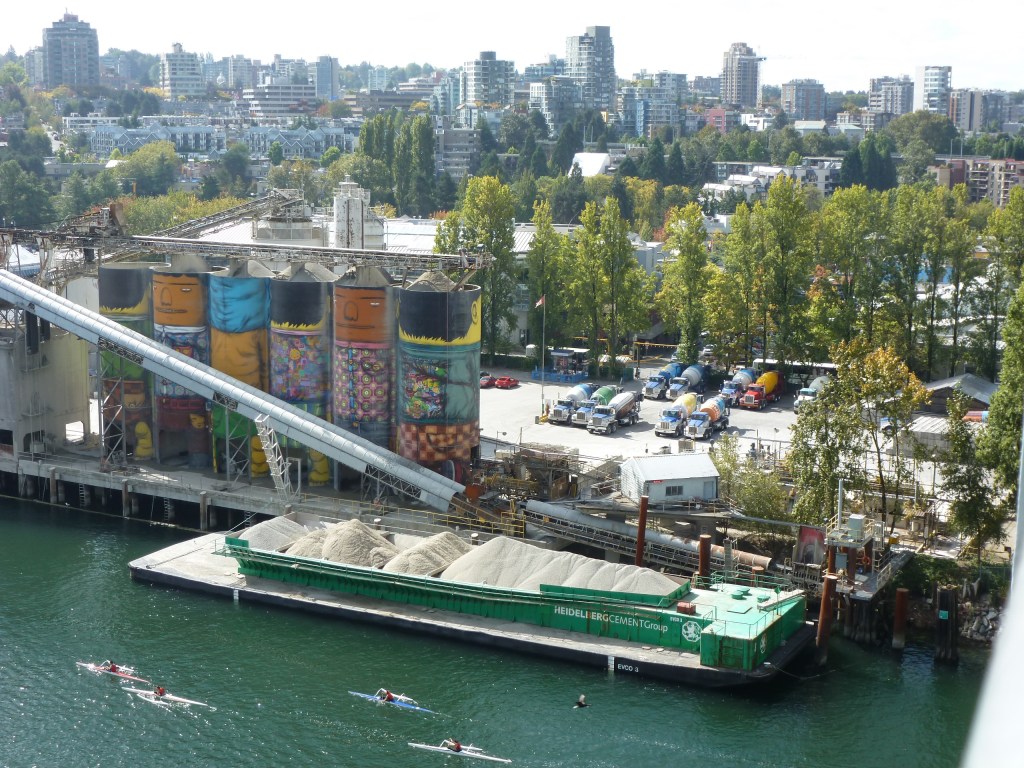
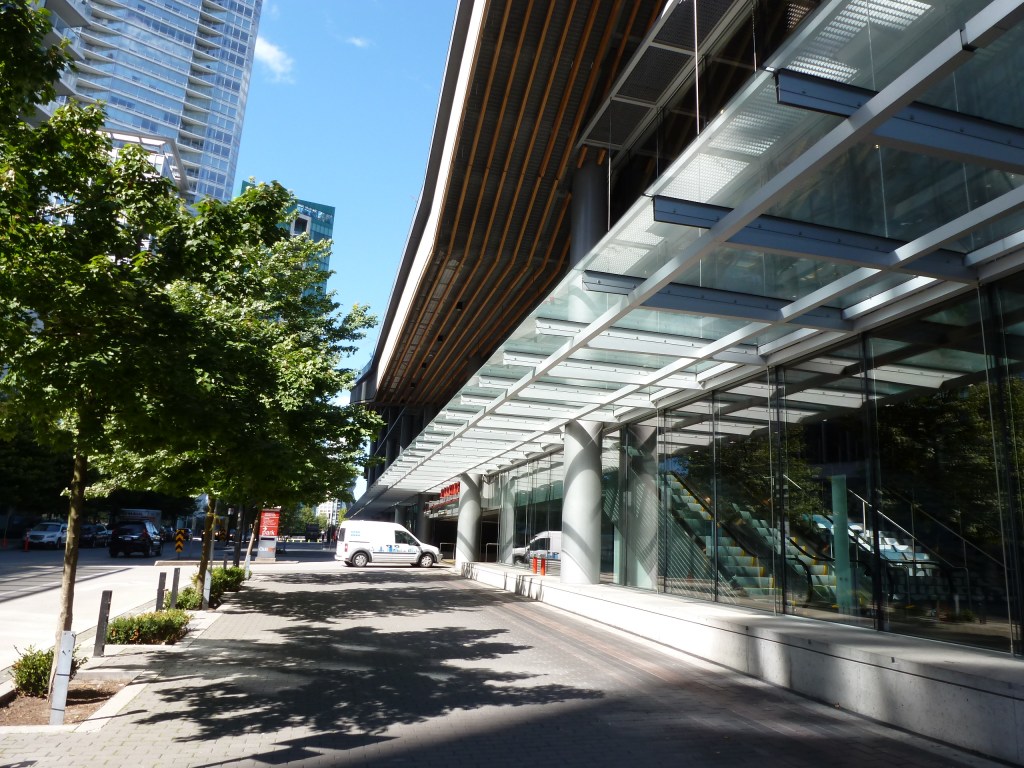
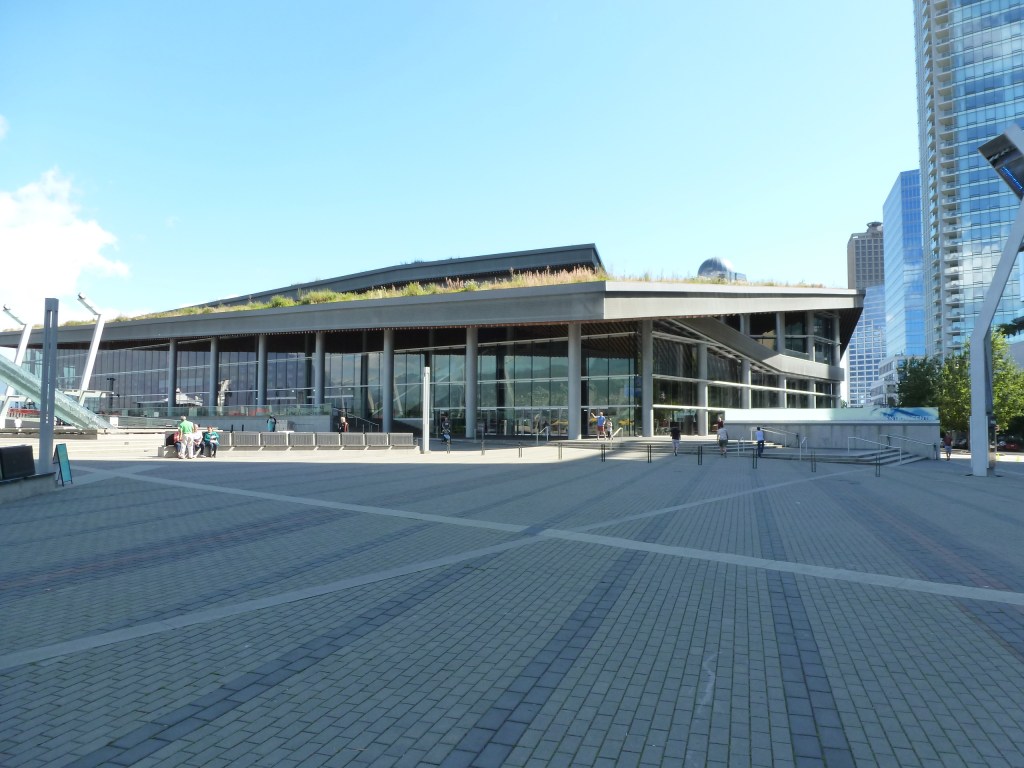
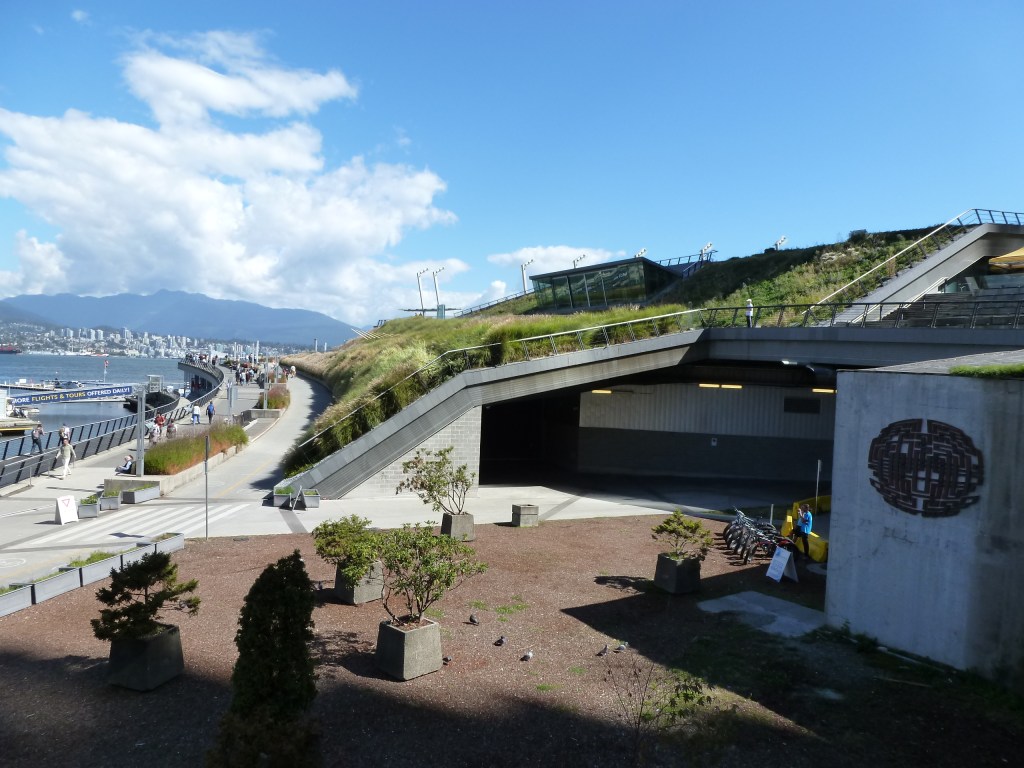
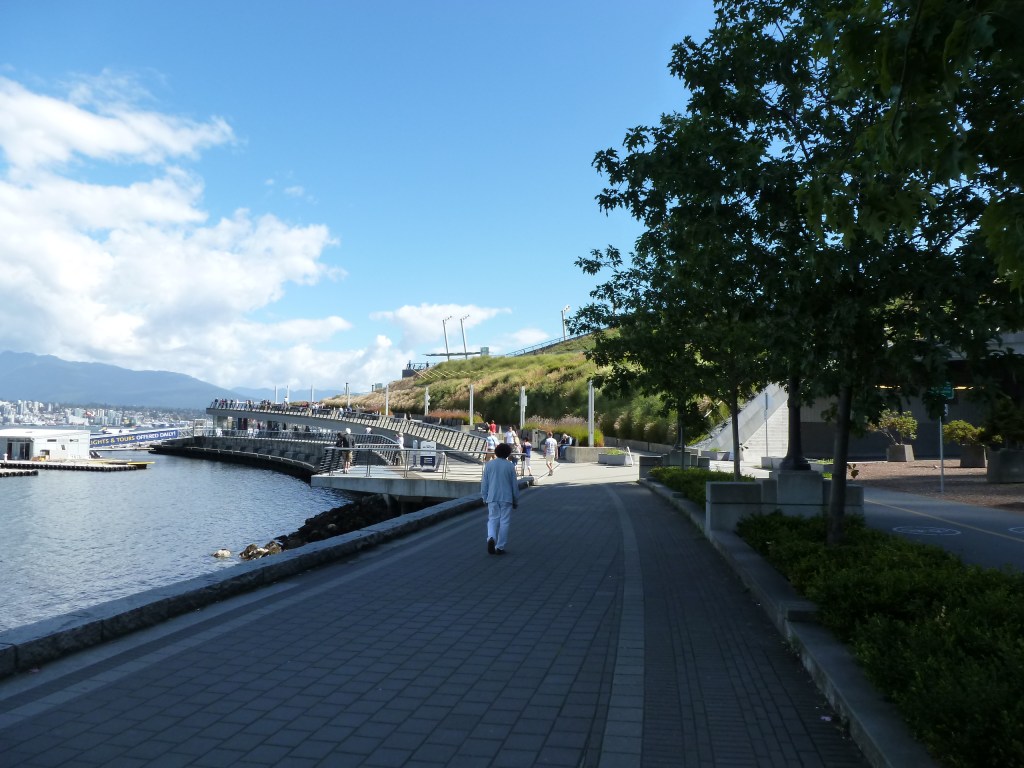
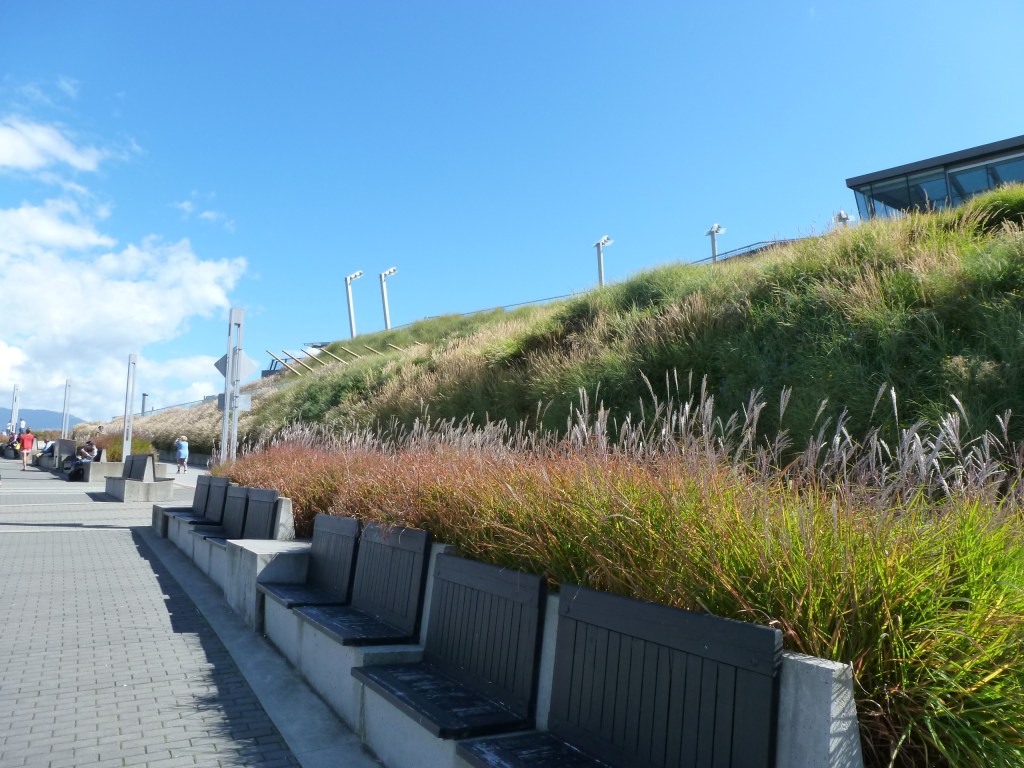
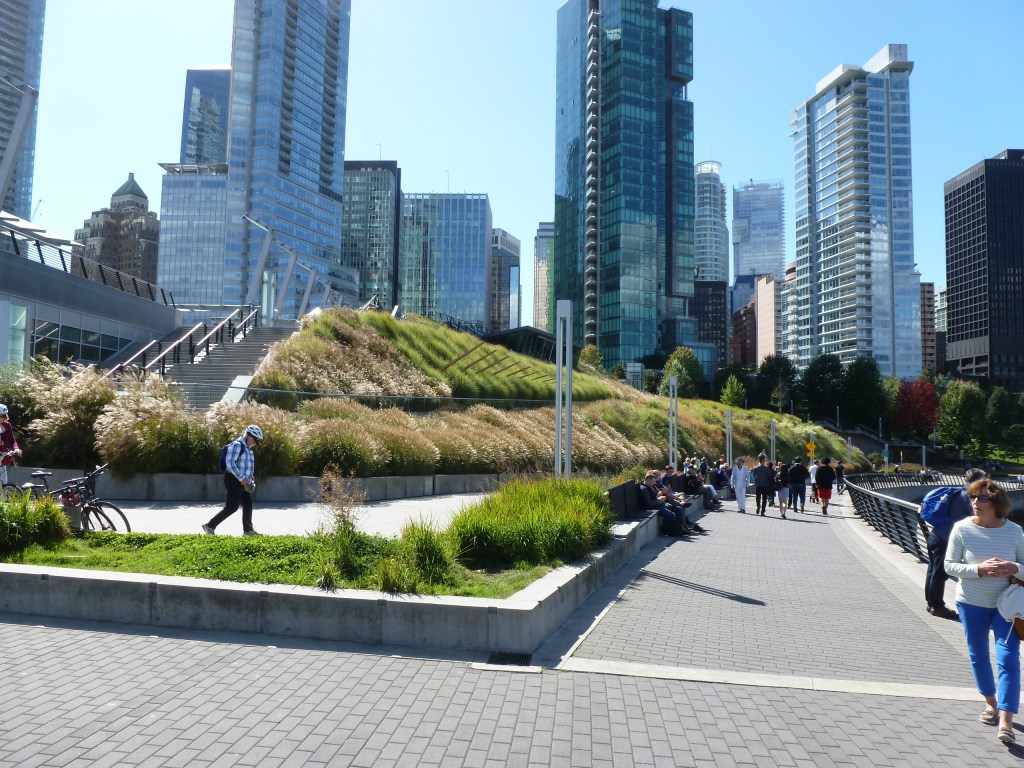
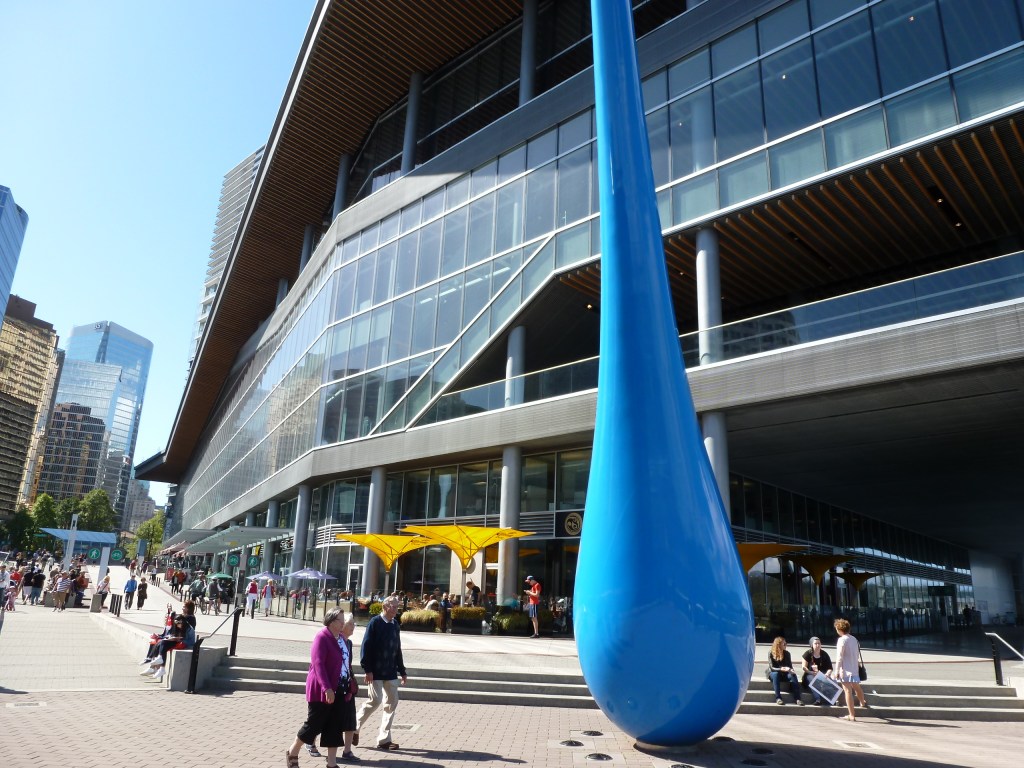
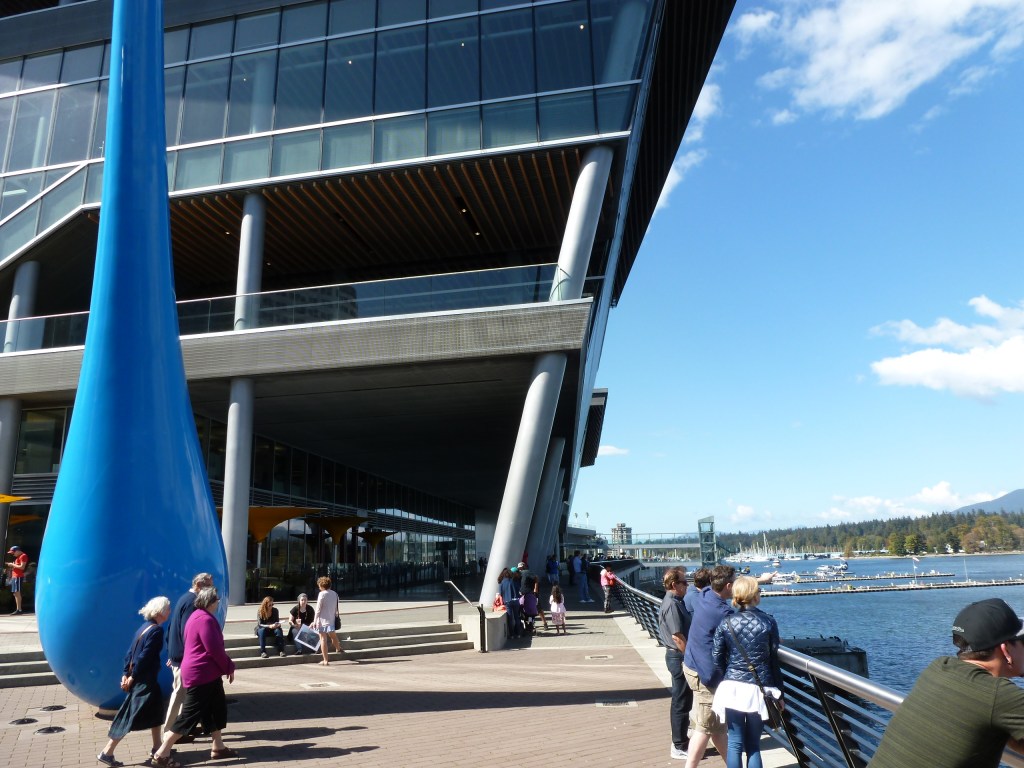
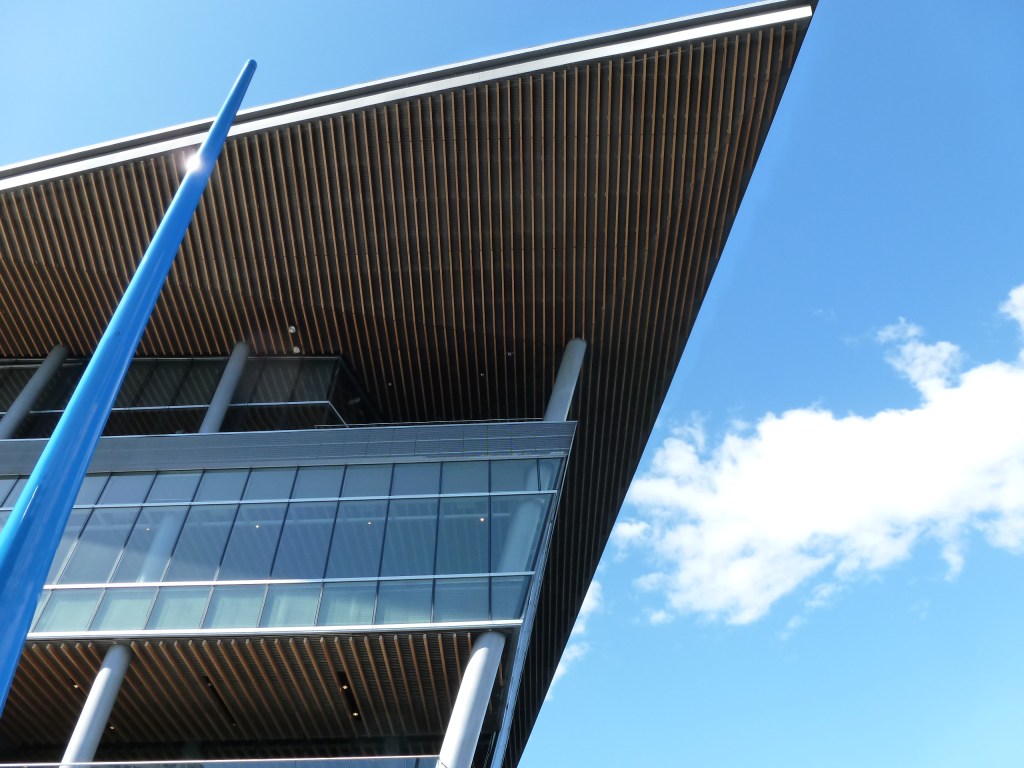
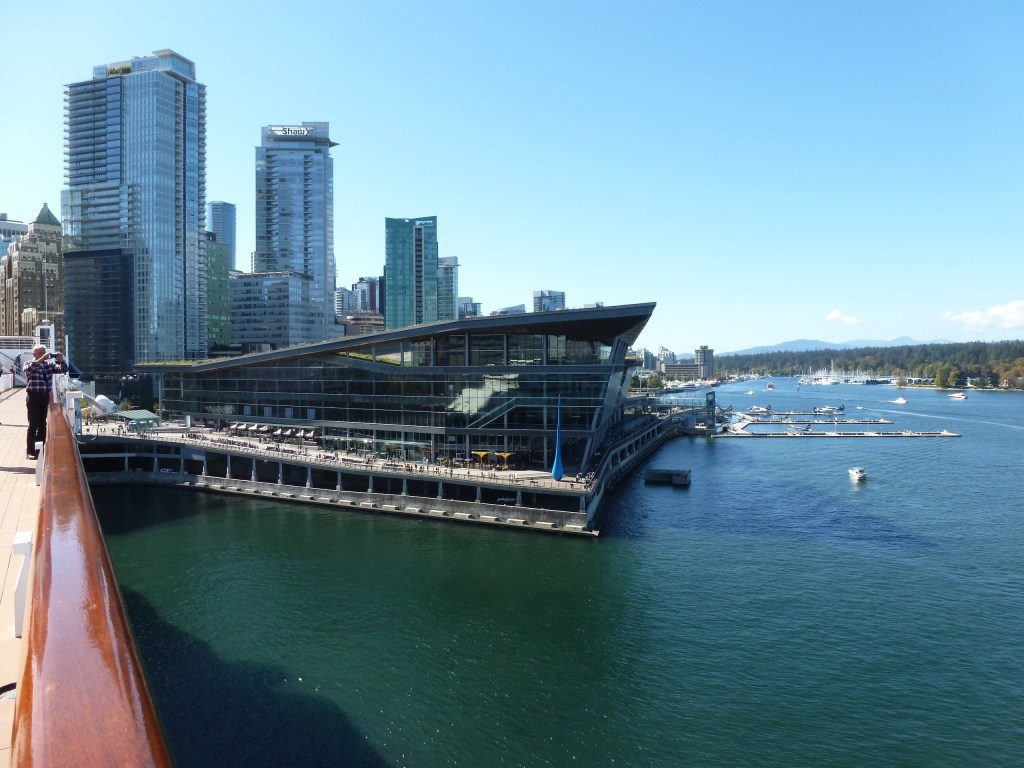
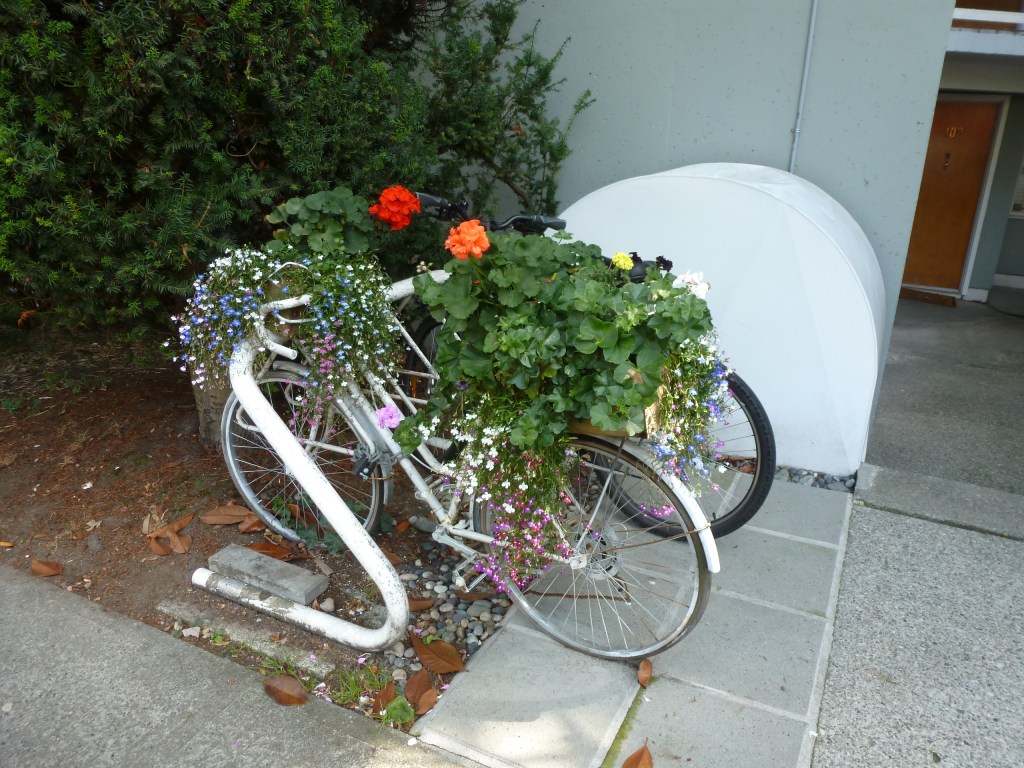
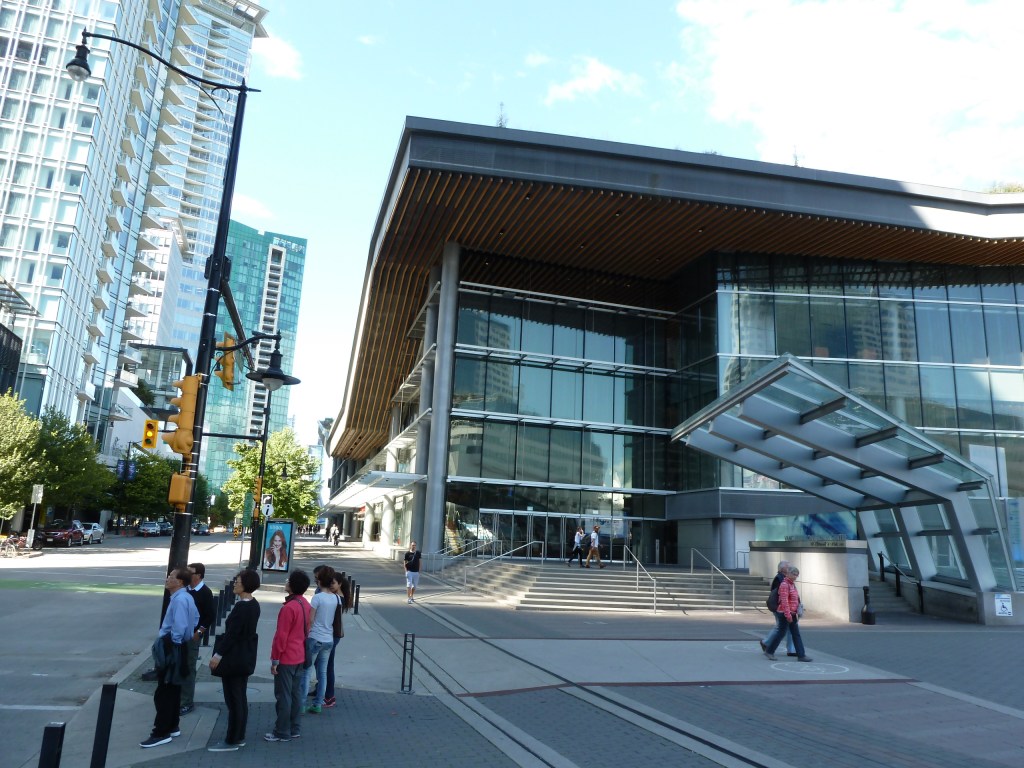
In Vancouver, greenery sprouts up everywhere despite its density. There are green parks, green roofs, green balconies, and even green bikes. The Vancouver Convention Center with its tiers of green roofs inspired me to design an Architectural Dessert Masterpiece of it. Unfortunately, my health challenges in the following months prevented me from executing it and I have since forgotten the plans.

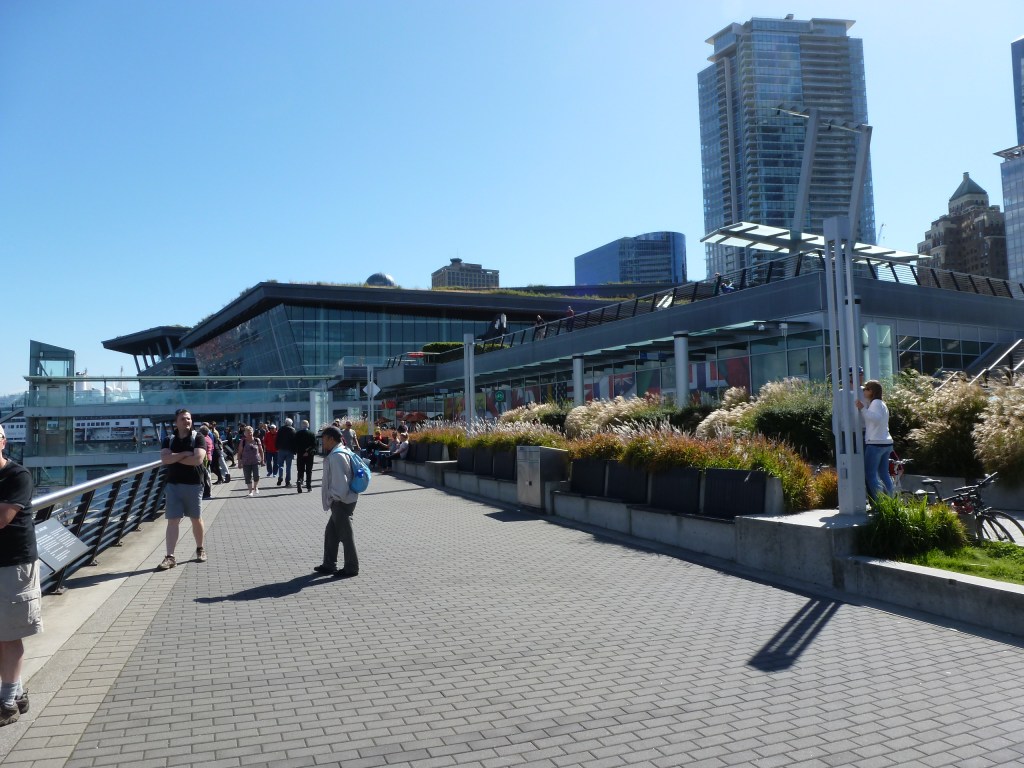
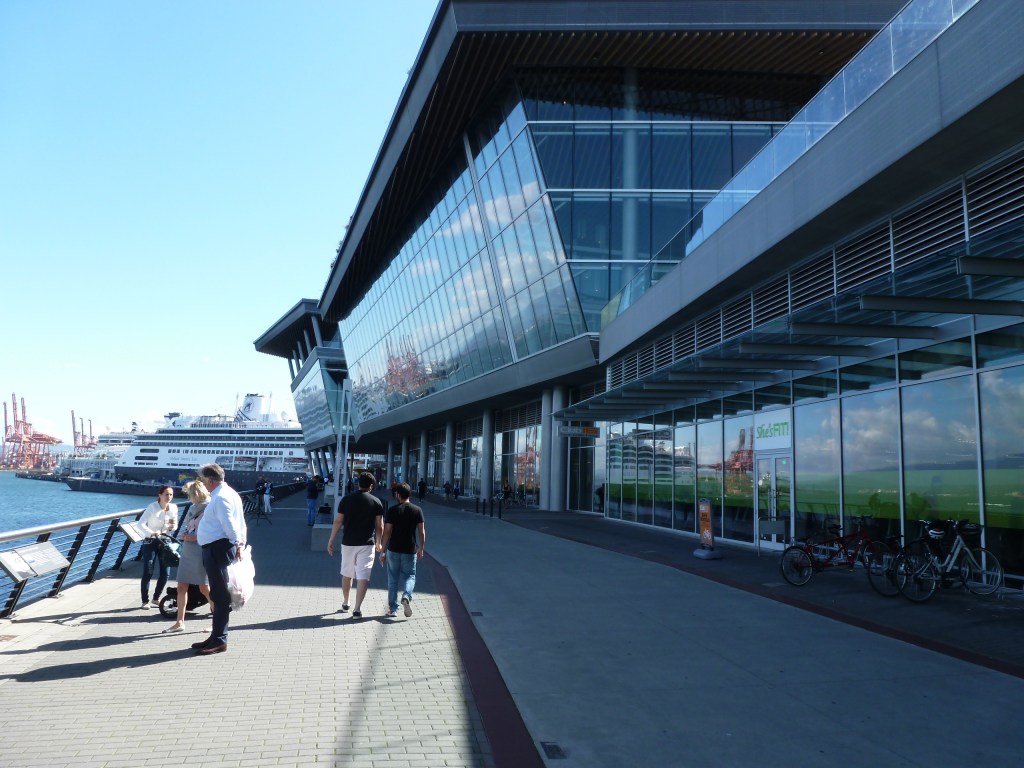
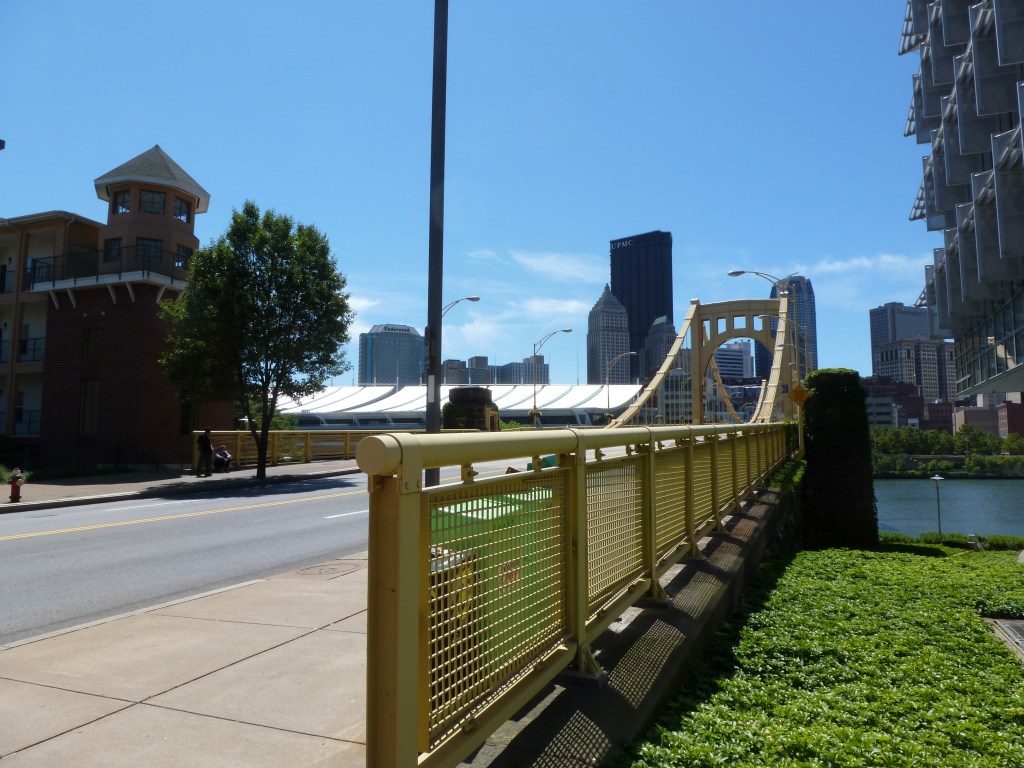
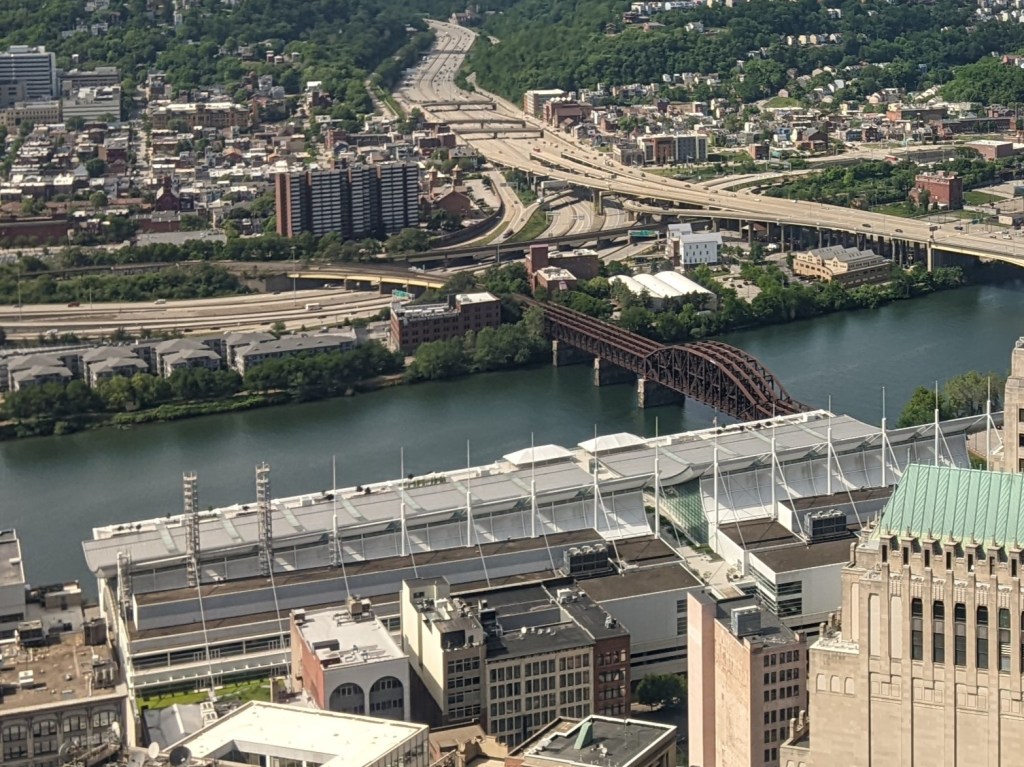
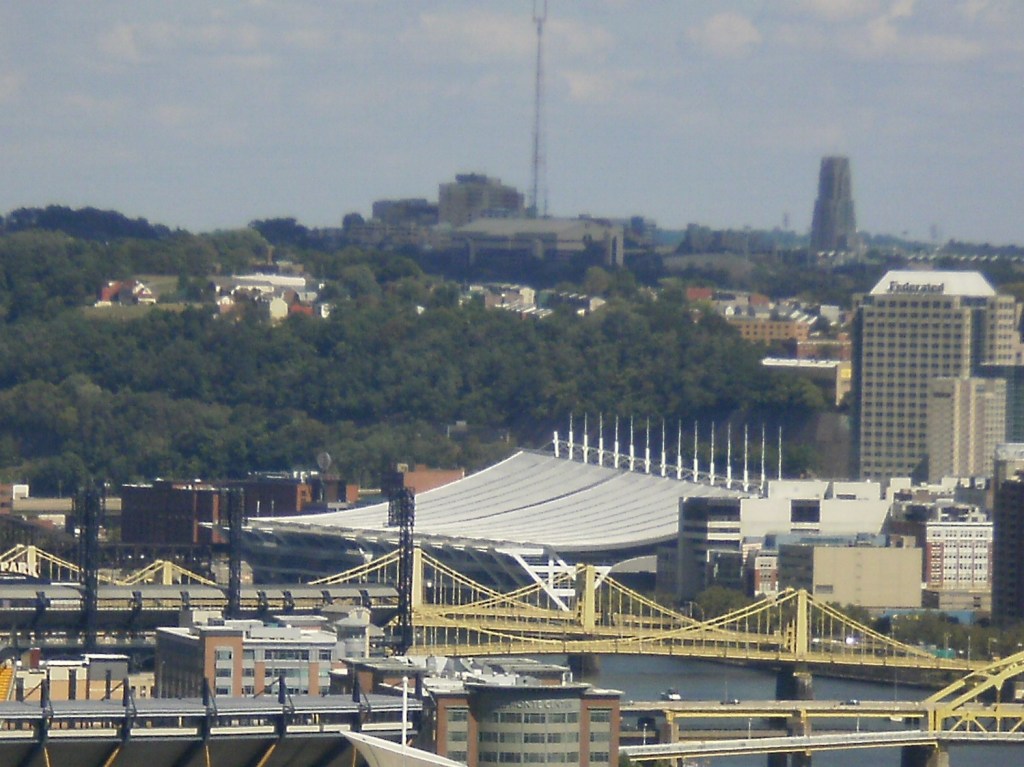
I spent much time exploring the engaging architecture of the Vancouver Convention Center and comparing it to the stand-offish convention center in Pittsburgh. Both convention centers pay homage to the natural environment of their respective cities. Vancouver’s mimics the mountains across the inlet with its sloping green roofs. The roof of Pittsburgh’s convention center mimics the curves of the suspension cables on the Three Sisters Bridges and intended to have a waterfall cascading down its curve and into the river, but this ended up being infeasible. Both convention centers provide popular connections to the waterfront trails, but Vancouver’s Convention Center invites people to engage with the building while Pittsburgh’s repulses. Both have outward facing tenant spaces. Vancouver’s is filled with popular bars and restaurants. Pittsburgh’s has a underutilized Jimmy John’s. Vancouver’s architecture creates an inviting and human-scale design while Pittsburgh’s oversized blank walls are oppressive.

And if that list of contrasts isn’t enough to convince you of my opinions of Vancouver’s and Pittsburgh’s convention centers, in the thousands of photos I’ve taken in Pittsburgh, none are specifically of the convention center. I took numerous photos of the Vancouver Convention Center because it was interesting and because I intended to recreate it in desserts. However, I only have photos of Pittsburgh’s Convention Center as a building that happens to be next to a bridge or that is noticeable from bird’s eye views of the city.

Vancouver’s Greenery

Vancouver’s Convention Center

Pittsburgh’s Convention Center

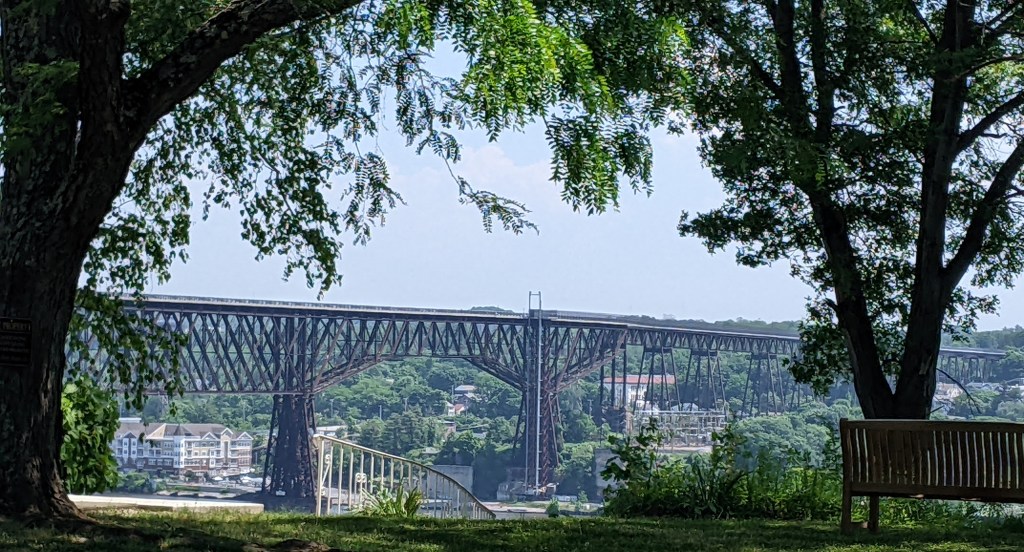
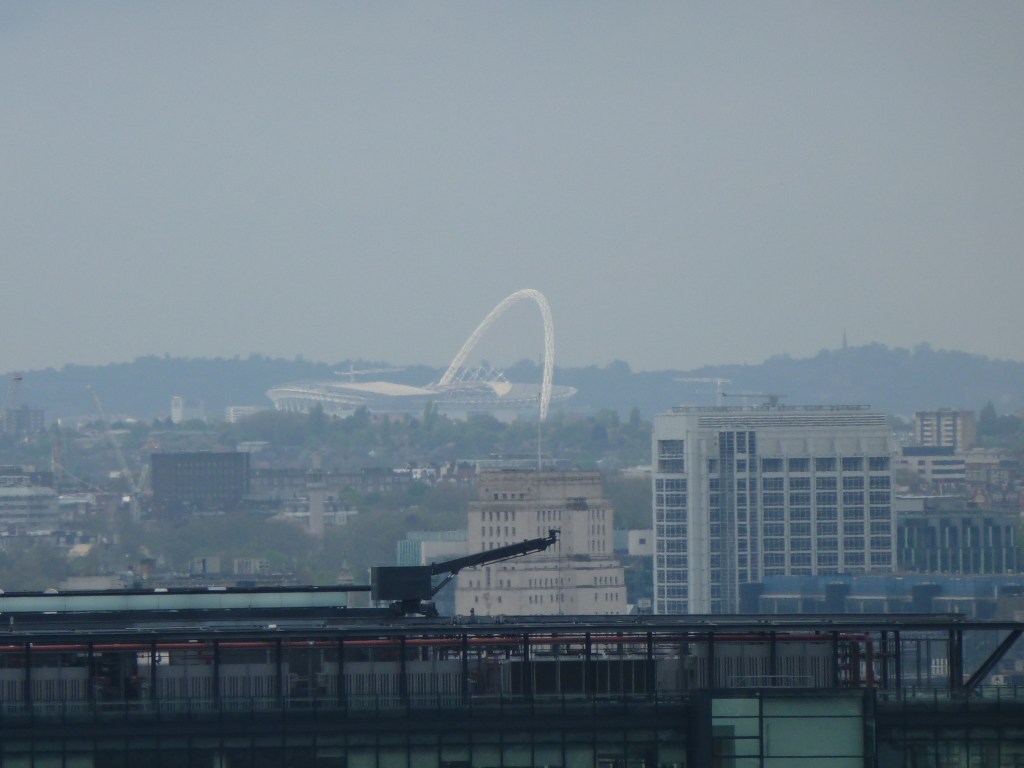
Vancouver Bridges

I can’t believe I never posted anything about my 2016 Alaskan cruise trip. It was one of my top 3 monumental trips, up there with my first train trip to Colorado (8th birthday) and my first international trip touring England and Wales (14th birthday). By the time I was 10, I decided that I would take an Alaskan cruise for my 30th birthday. By my mid-20s, I realized that wasn’t going to happen, but then when I was 29, my friend and her family were planning their annual cruise and picked Alaska. I asked to join them and a few weeks after my birthday celebrated my 30th while cruising in Alaska.

The trip was amazing. I gathered enough materials and felt excited enough about what I saw and experienced to be energized to share the trip with my readers. However, as soon as I got home from the cruise, life overwhelmed me. The months after the cruise were when I first learned to hate my job, I was house hunting, and my appendix burst. This plethora of life distractions prevented me from blogging.
Now, however, I have an opportunity to catch up on the trips and traipses that I intended to blog about but never did. I’ve had Long COVID since November 2023, which has reduce my ability to do new urban traipsing, but on days when I’ve had energy and inspiration, I am revisiting former trips to share with you. Through the rest of this year and throughout 2025 (and maybe beyond), I’ll be sharing these retrospective reflections of my past travels.
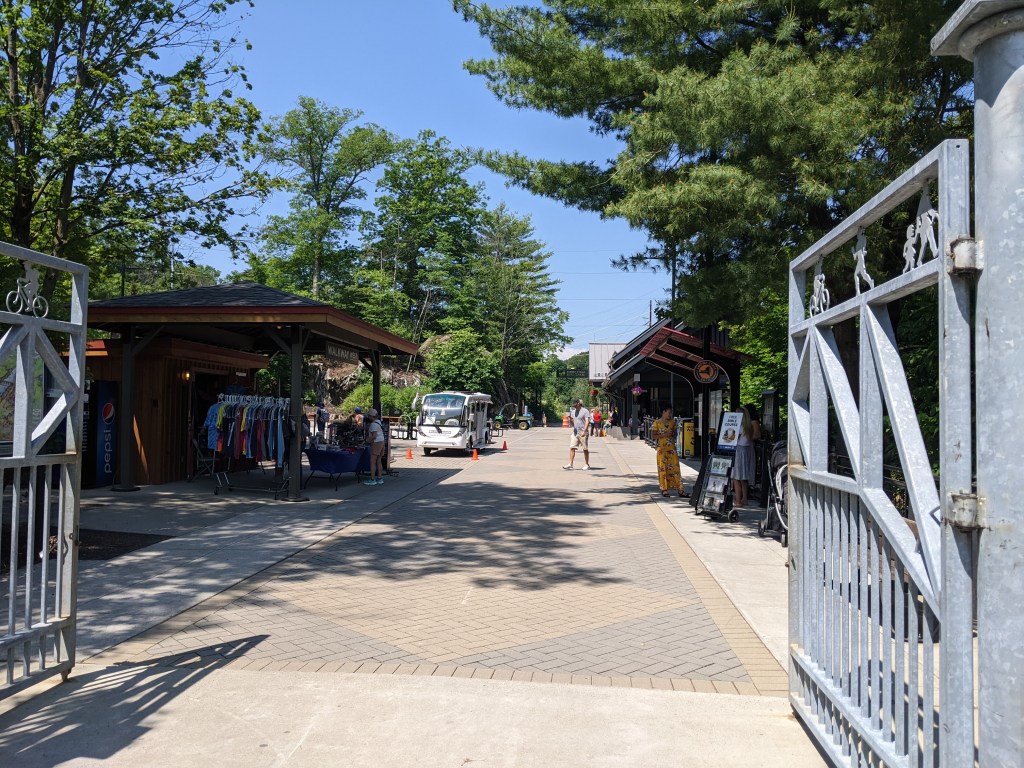
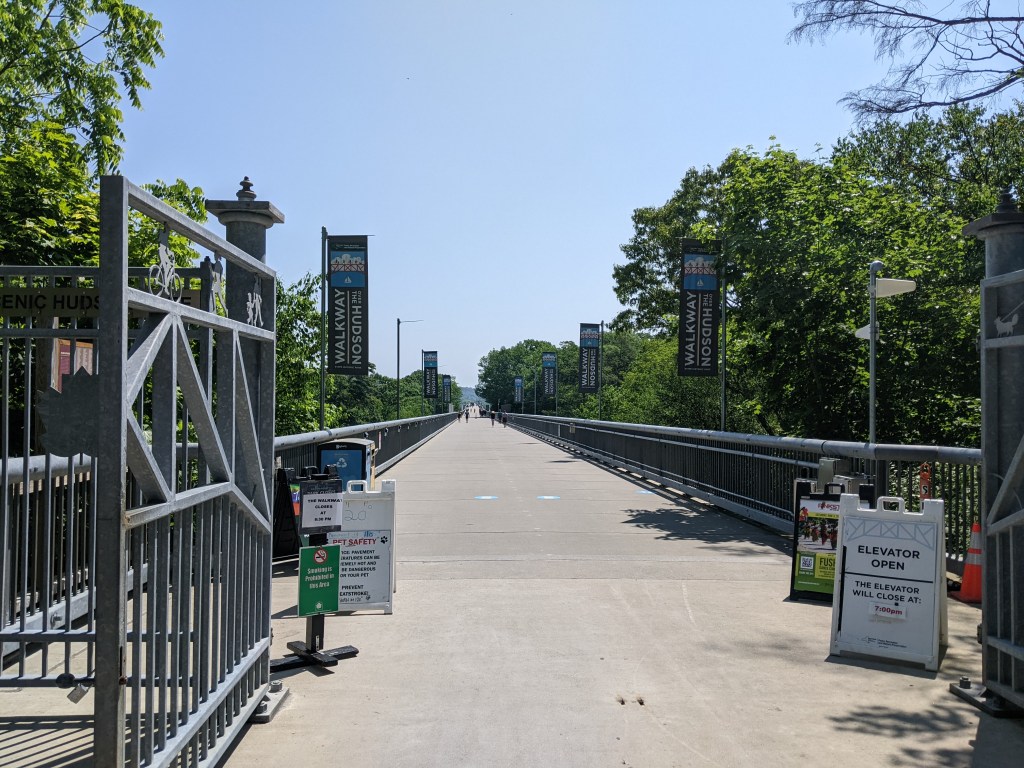
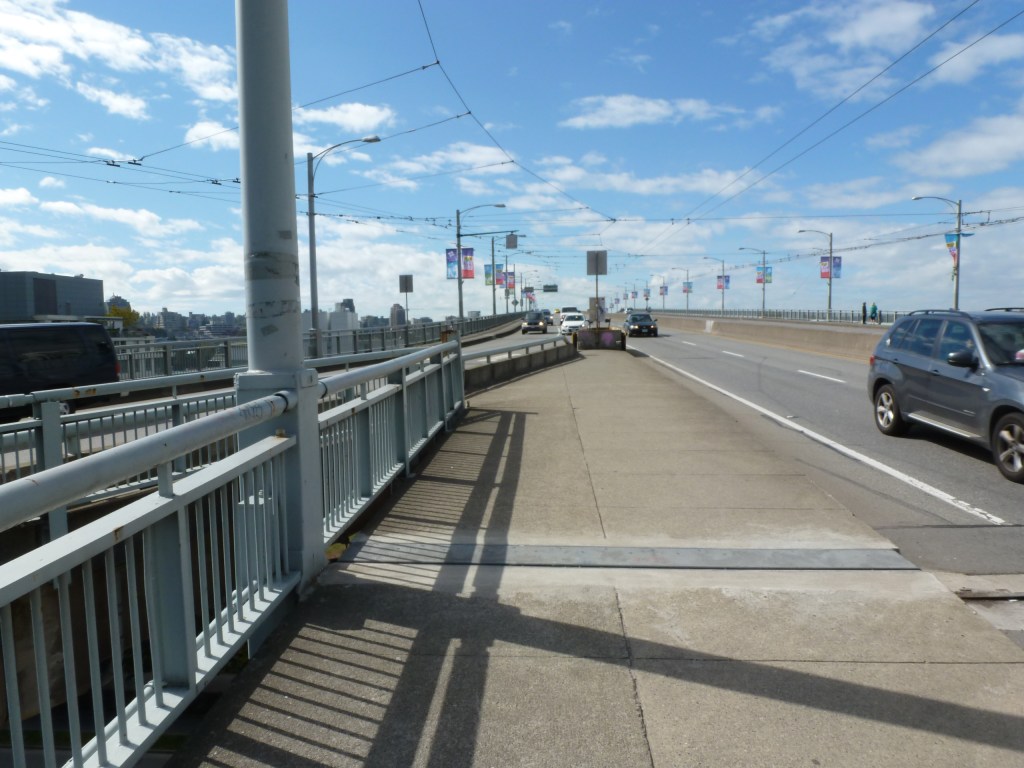
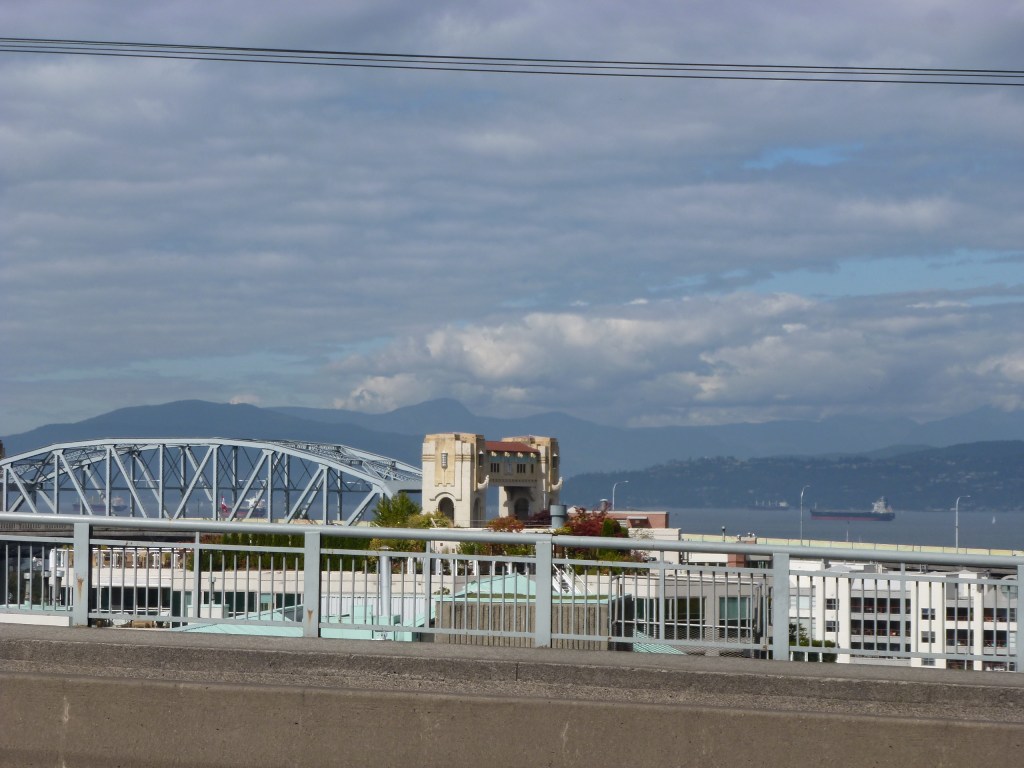
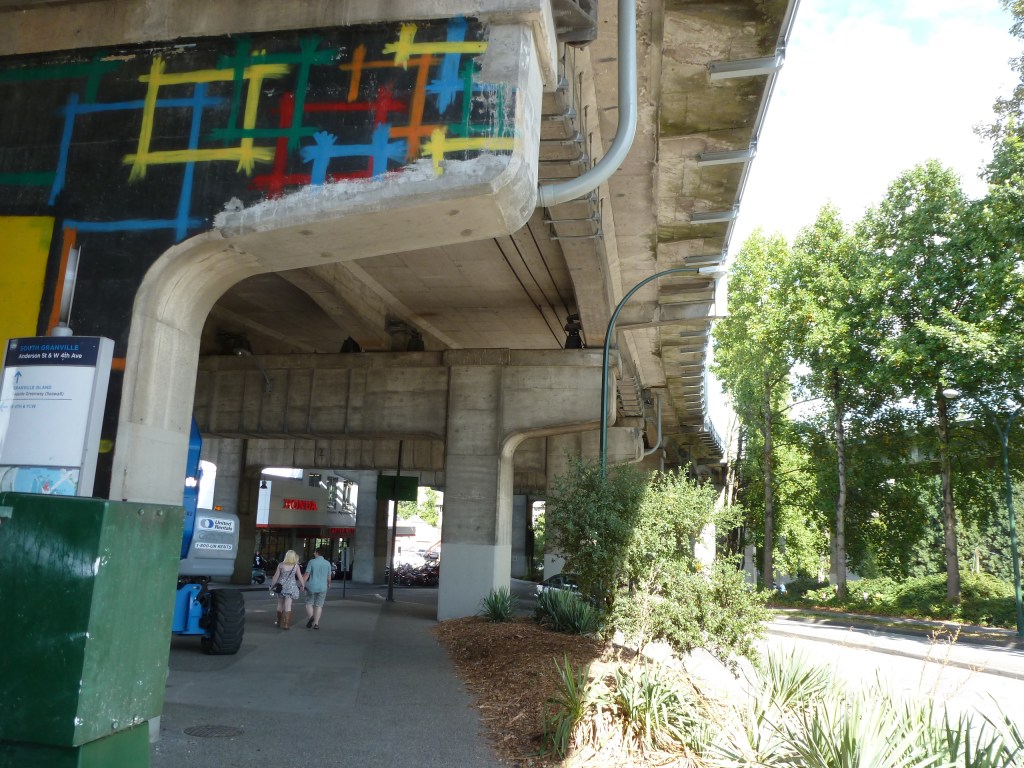
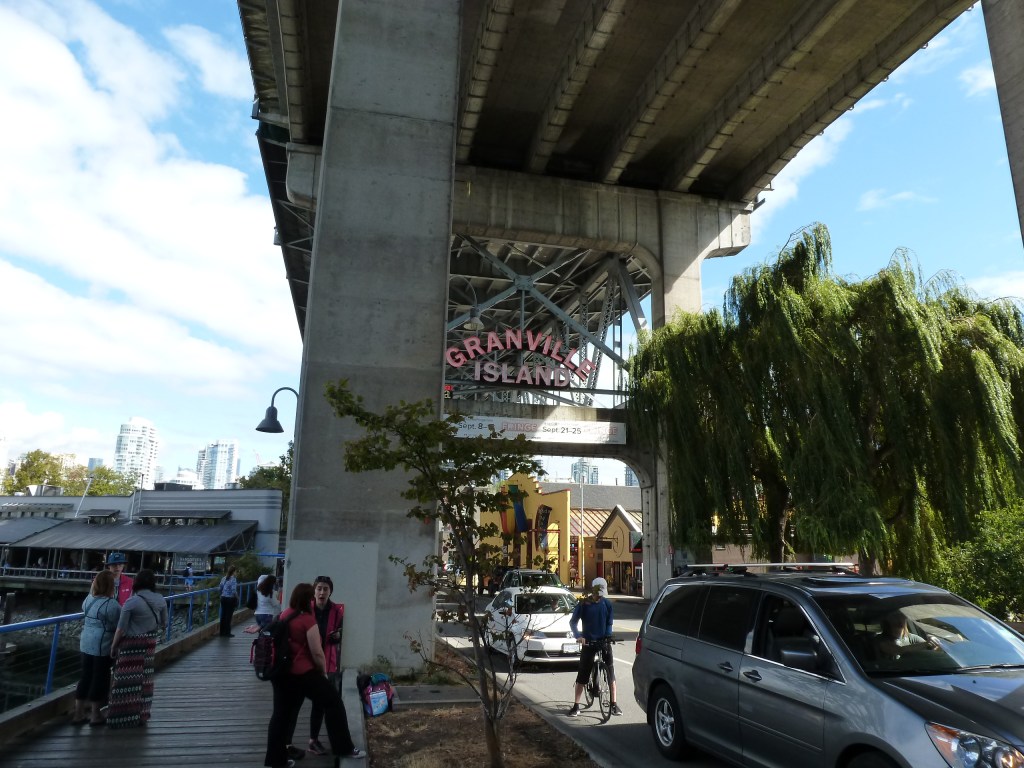
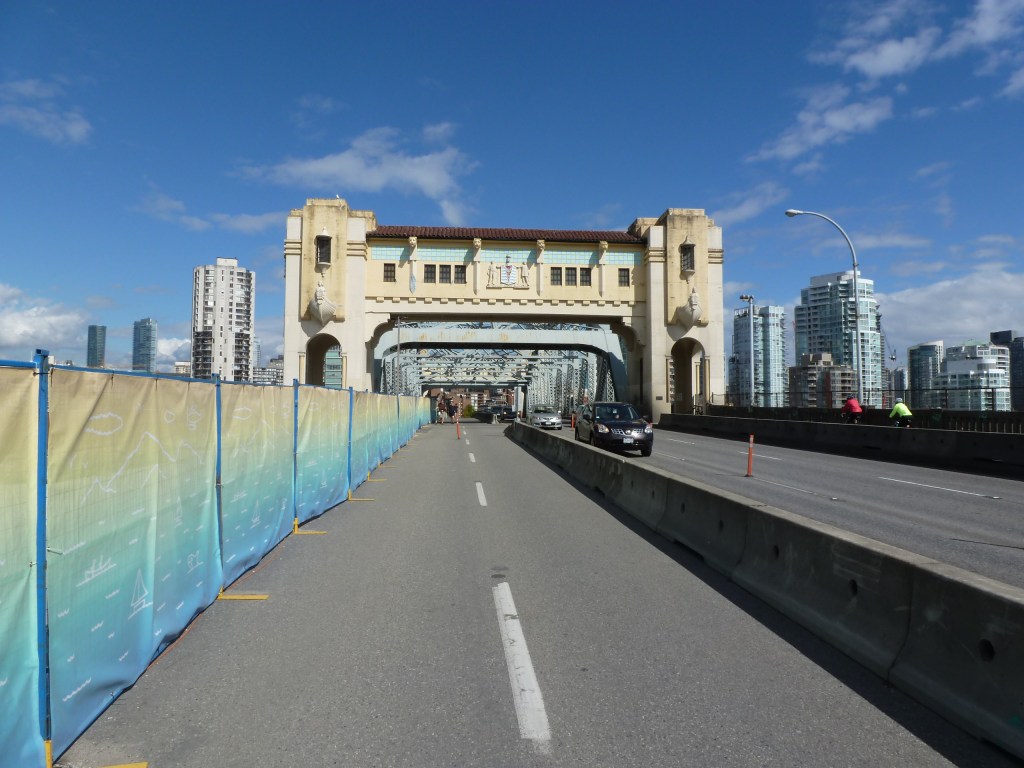
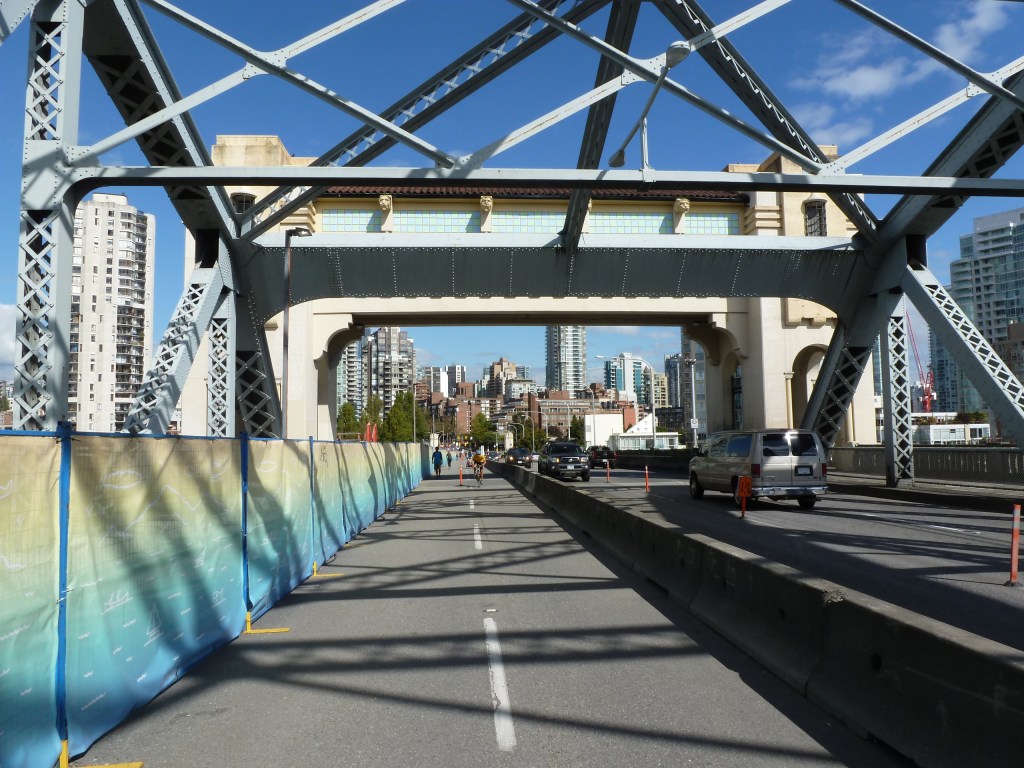
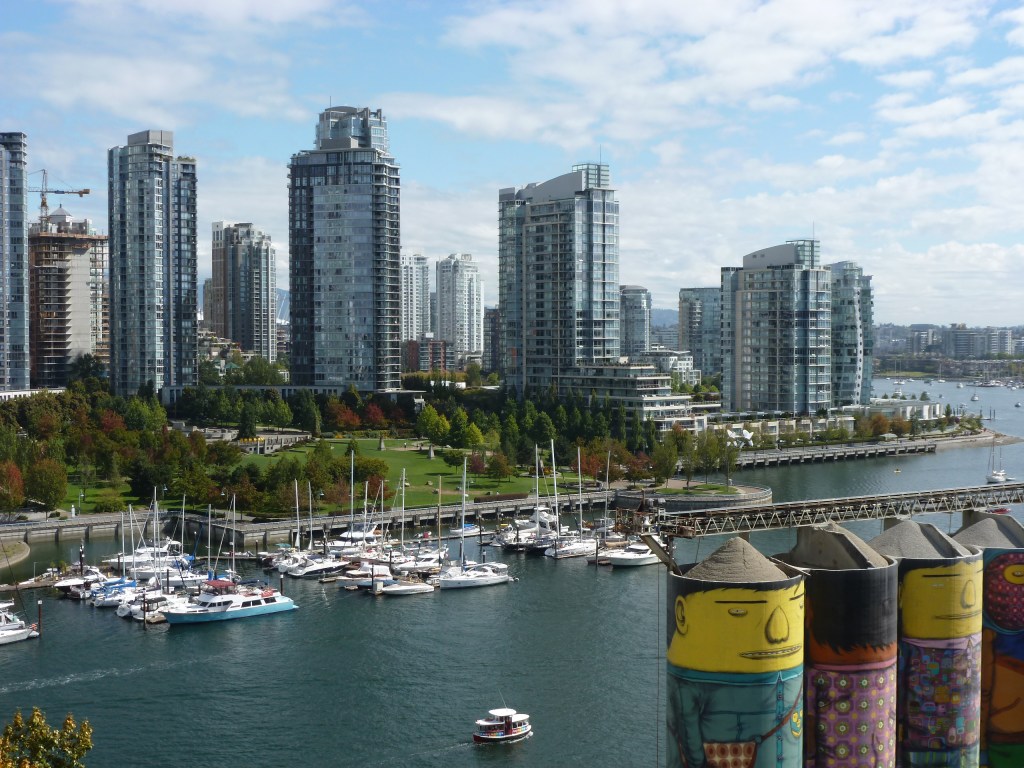
My 2016 Alaskan cruise started in Vancouver and ended in Anchorage. I added a few nights on either end to allow me to explore those cities. Naturally, I found my way to bridges in Vancouver. At this point in time (8 years after the fact), I don’t remember which was the instigating factor, the bridges or the store. Whichever inspired me first, I took advantage of walking over the Granville Bridge to visit Hammered & Pickled on Granville Island and returning by way of Burrard Street Bridge. I chose Hammered & Pickled for my destination to satisfy my curiosity on what kind of pickled they covered: pickled vegetables, pickled metal, or pickled people. It turned out it was a silversmith selling handcrafted jewelry.
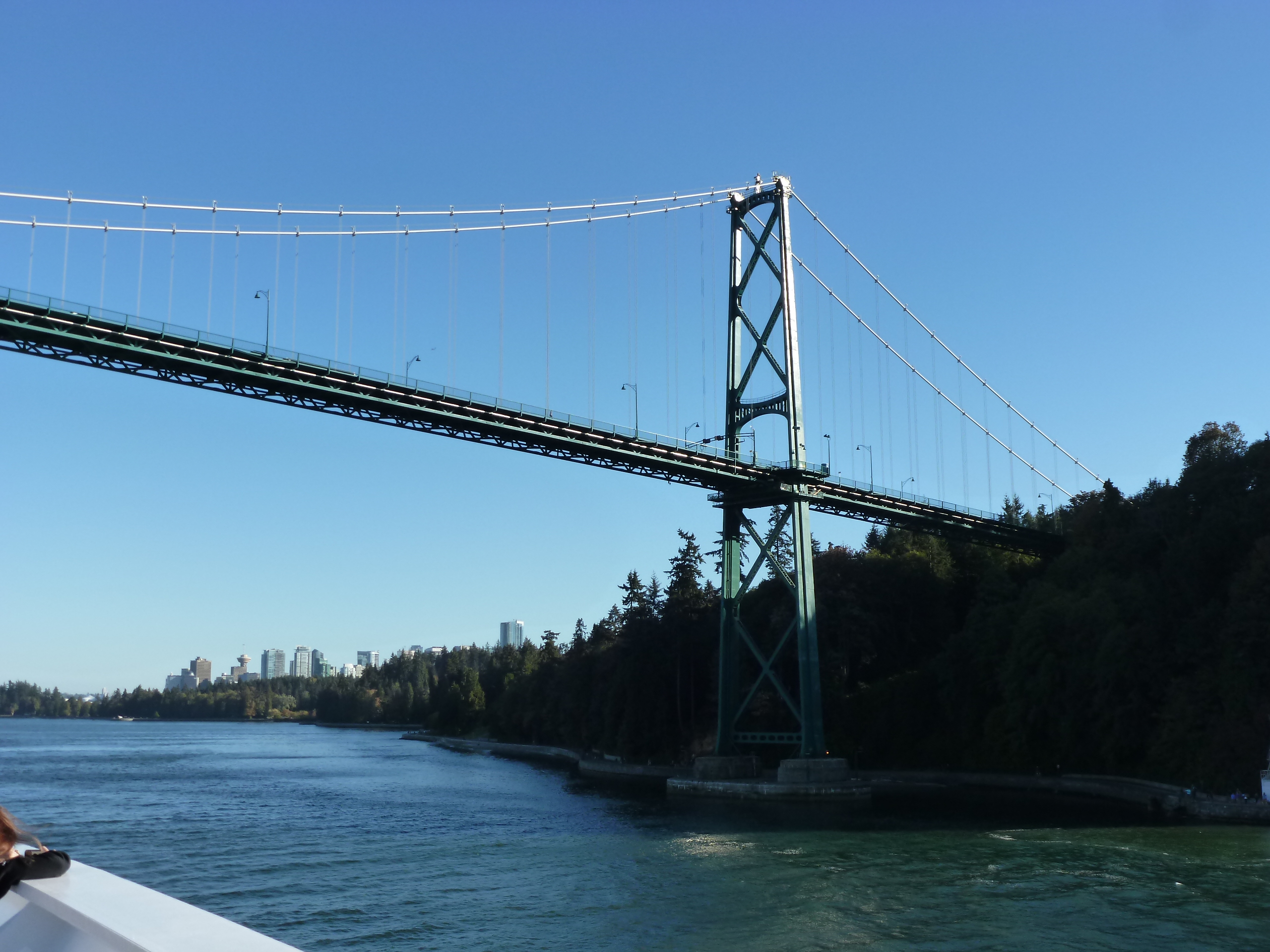
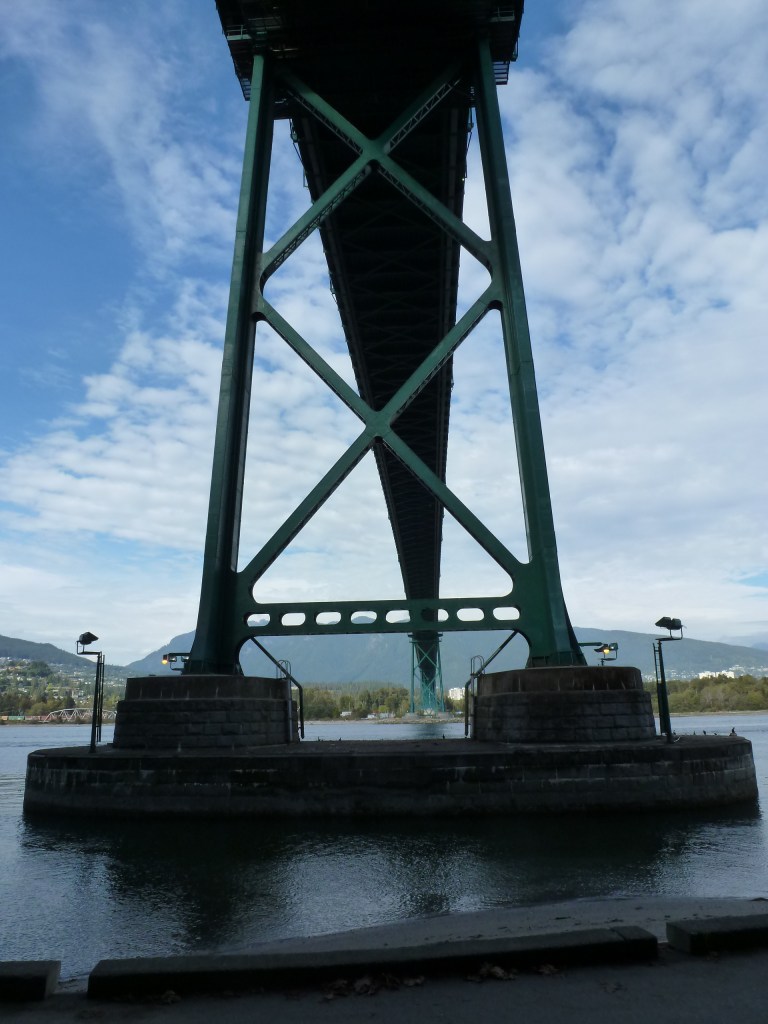
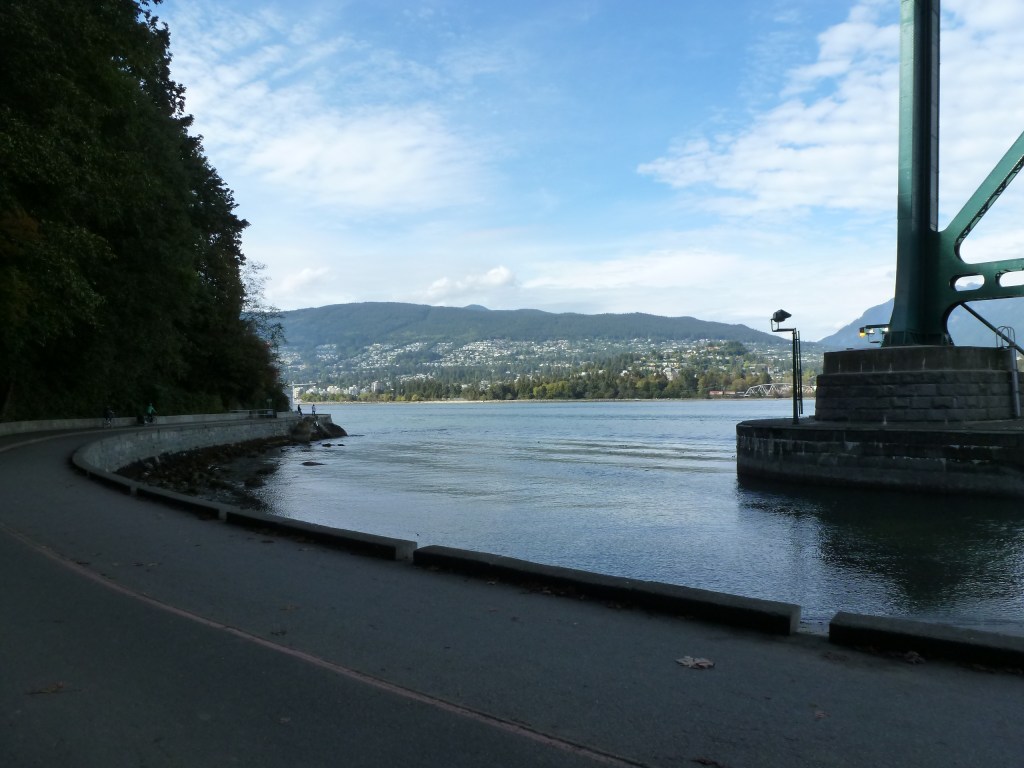
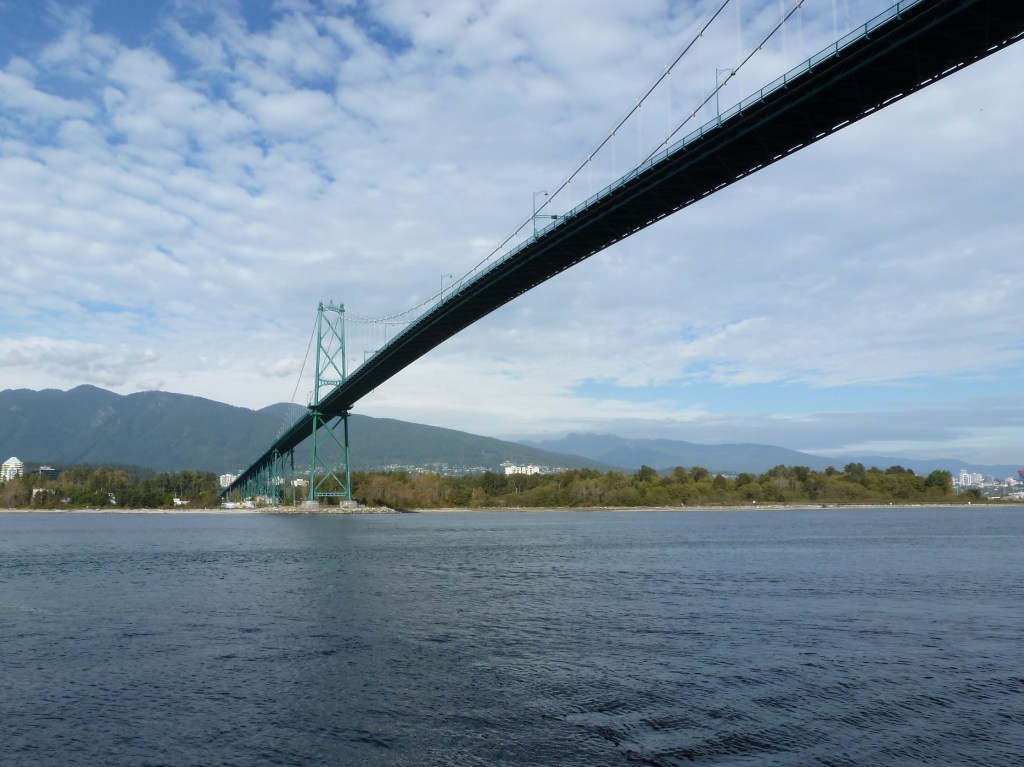
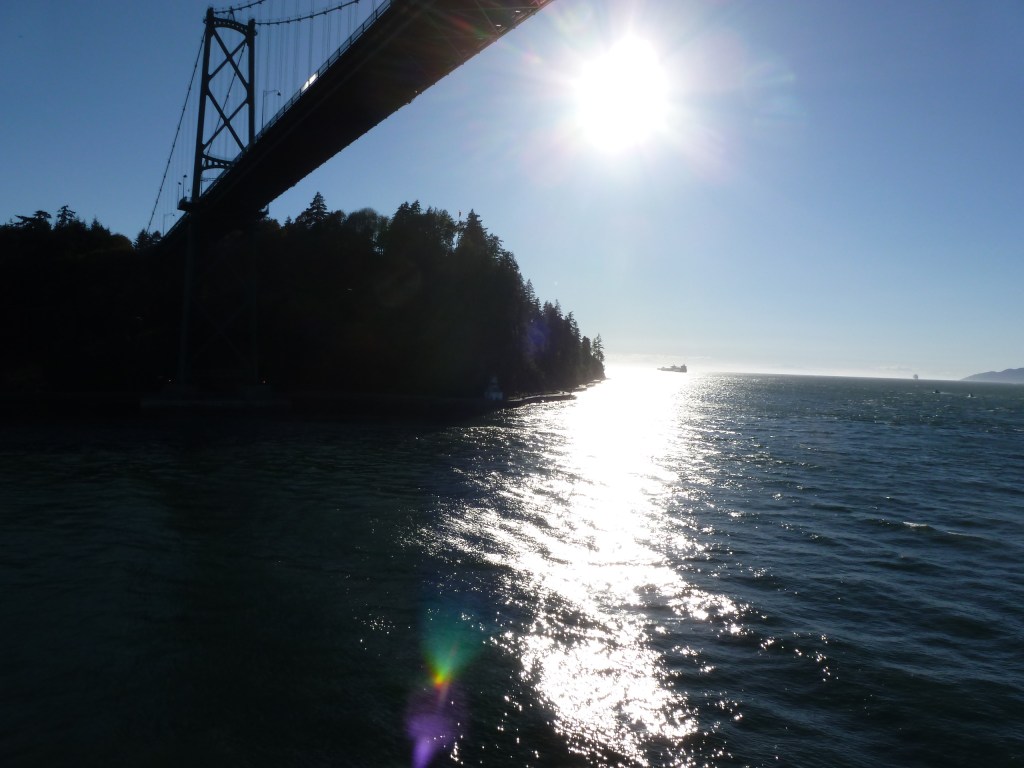
Oddly, from my walks across the Granville and Burrard Street Bridges to and from Hammered & Pickled, I took more photos of the less structurally interesting bridge. This may have been the impact of being tired and dehydrated on the return or of the construction on the Burrard Street Bridge. However, the bridge that I took the most photos of in Vancouver was one I didn’t walk: the Lions Gate Bridge. I biked the waterfront trail underneath this bridge, rode over it by bus on the way to Grouse Mountain, and later passed under the bridge as the cruise ship left the Vancouver harbor.

Granville and Burrard Street Bridges

Lions Gate Bridge

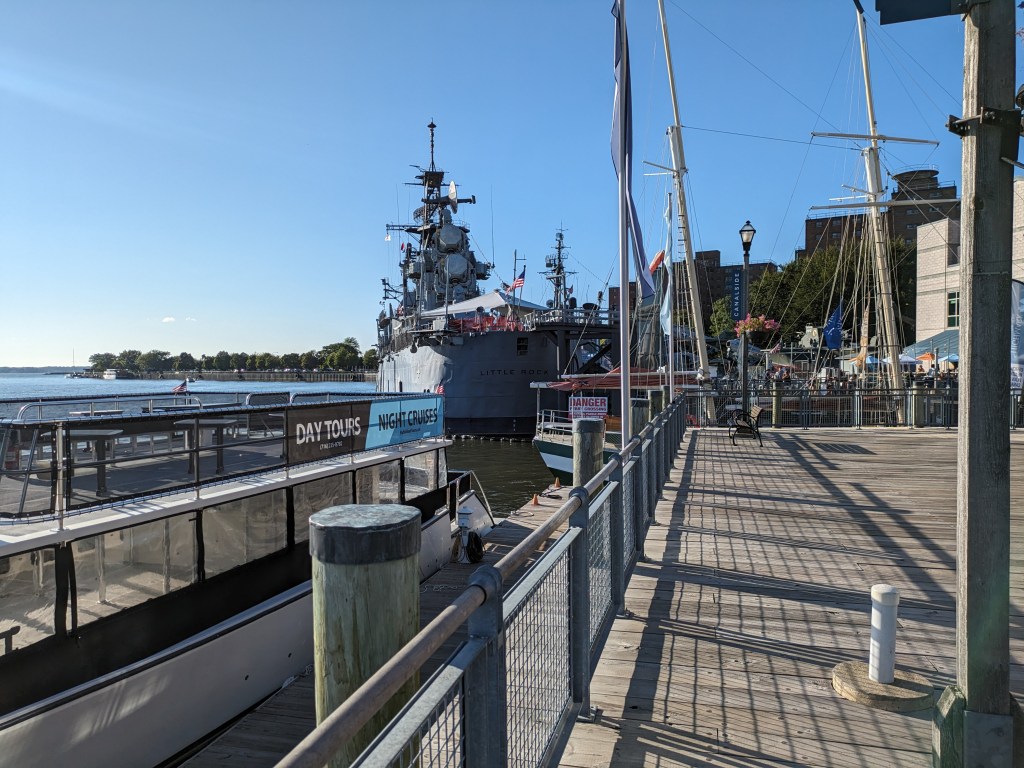
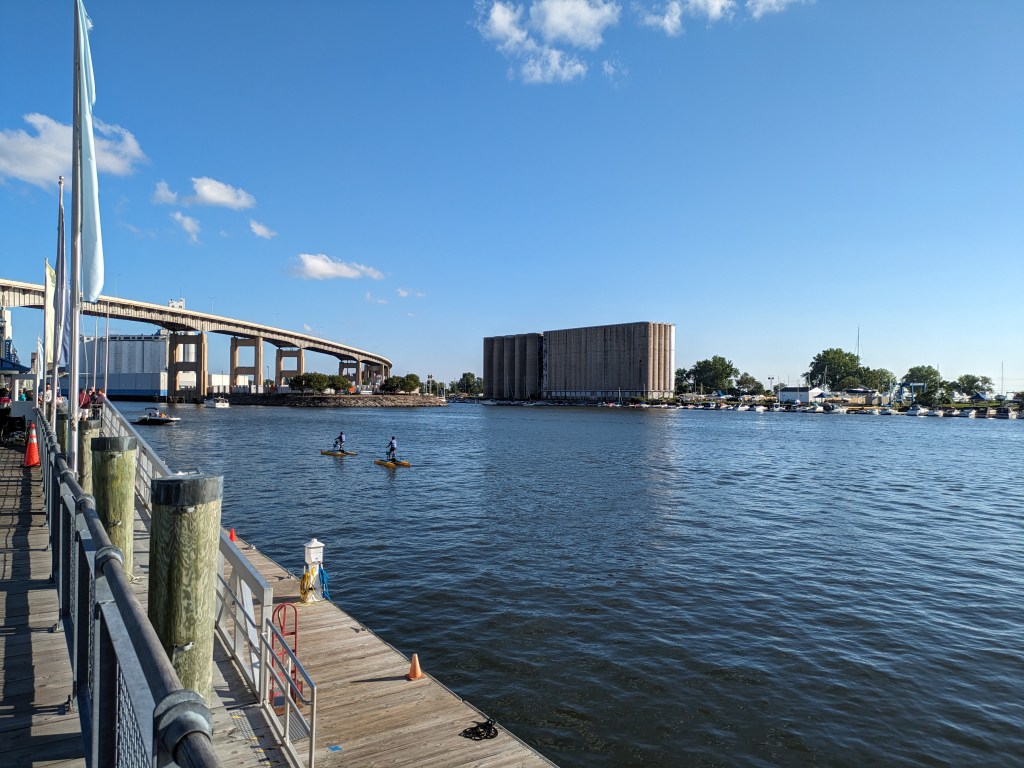
Buffalo Waterfront I

Waterfronts are often the reason why cities exist where they are. However, in the last 50-75 years, we have built barriers cutting ourselves off from these natural amenities. I’ve written about the experience of trying to reach waterfronts in Erie and Chicago. Buffalo echoes those experiences, but with a happier ending.

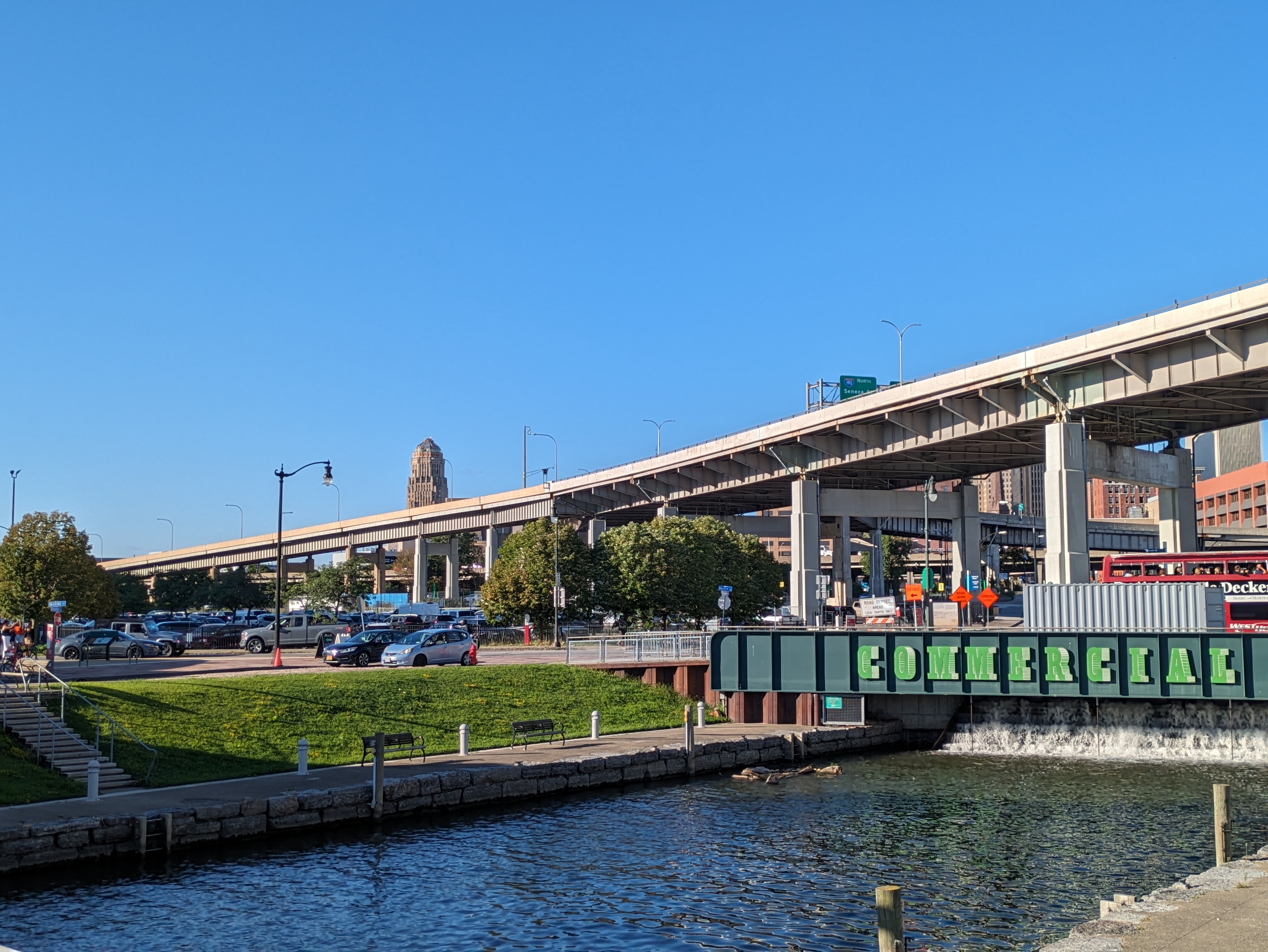
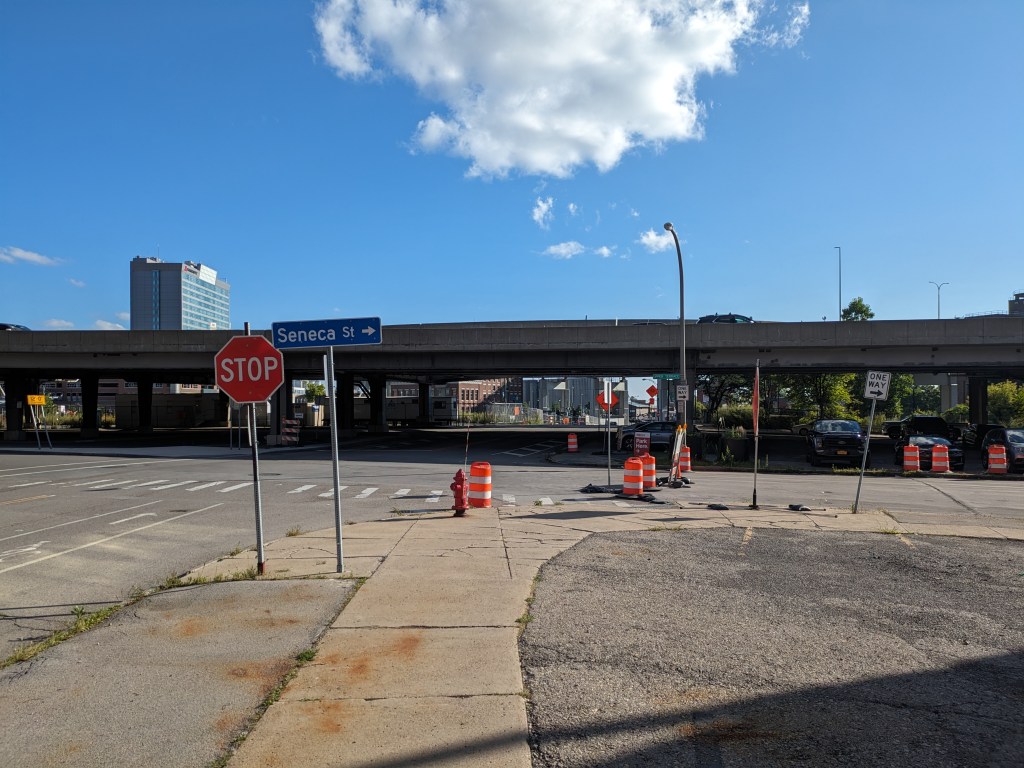
Before making an official urbantraipsing trip to Buffalo, I had encountered the freeways around the city multiple times. The flying roadway carrying Route 5 that starts near downtown and travels over a sizable portion of the industrial area along the waterfront is a memorable piece of infrastructure. And one that I had assumed would contribute to the cutting off of the waterfront from the city.

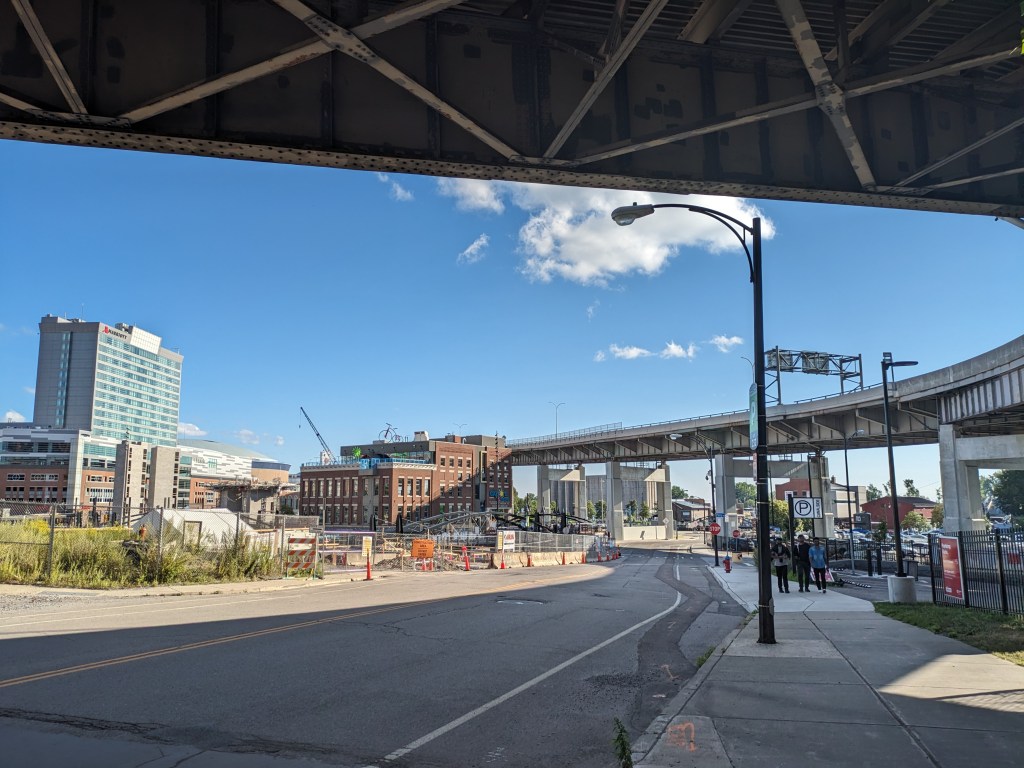
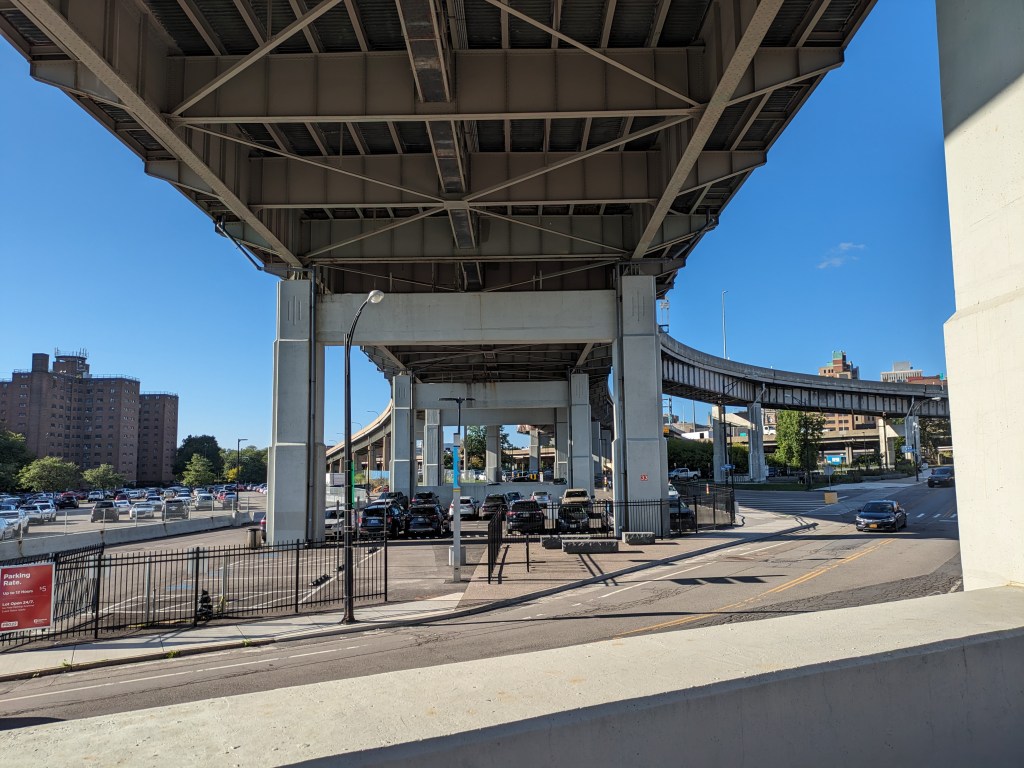
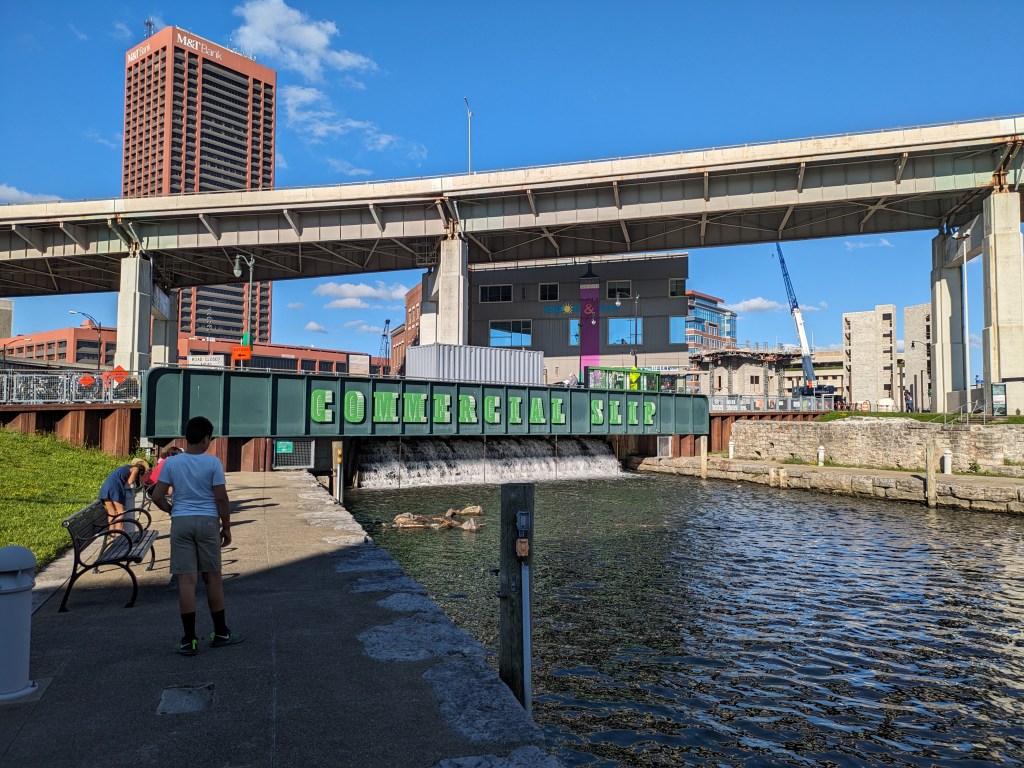
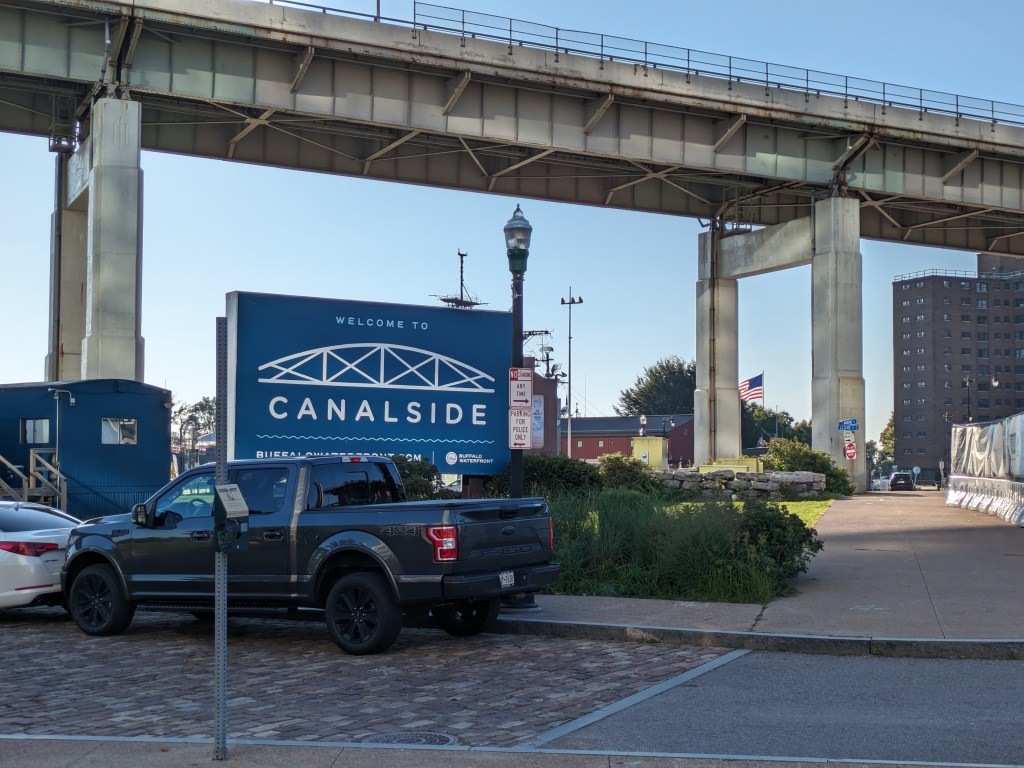
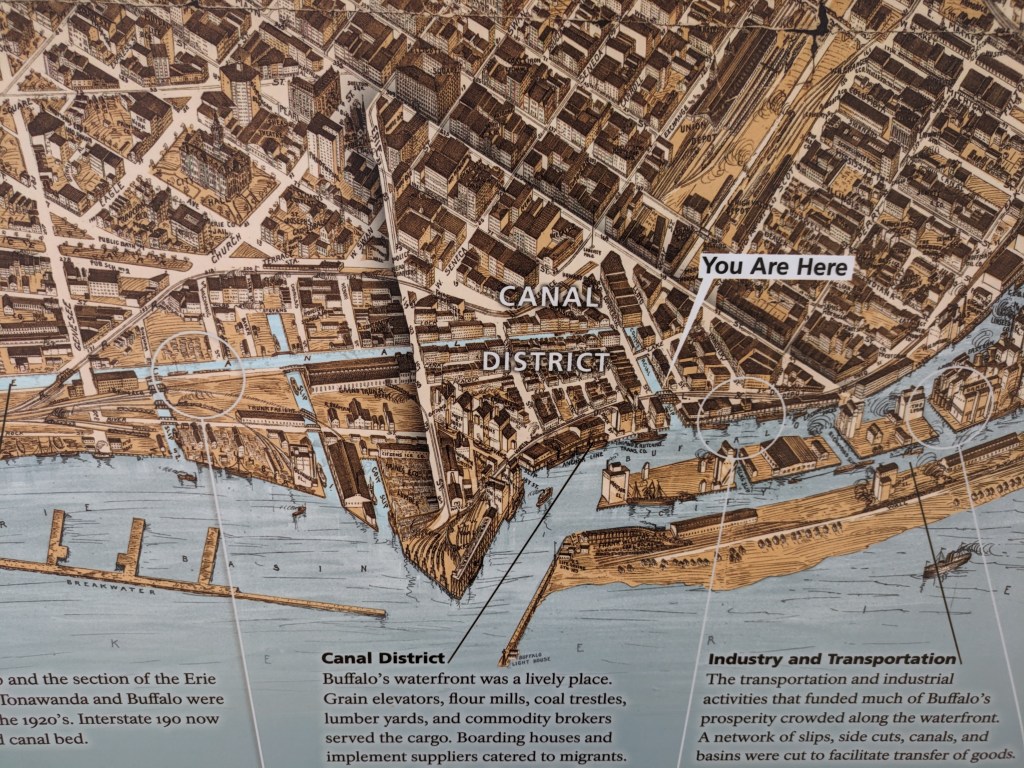
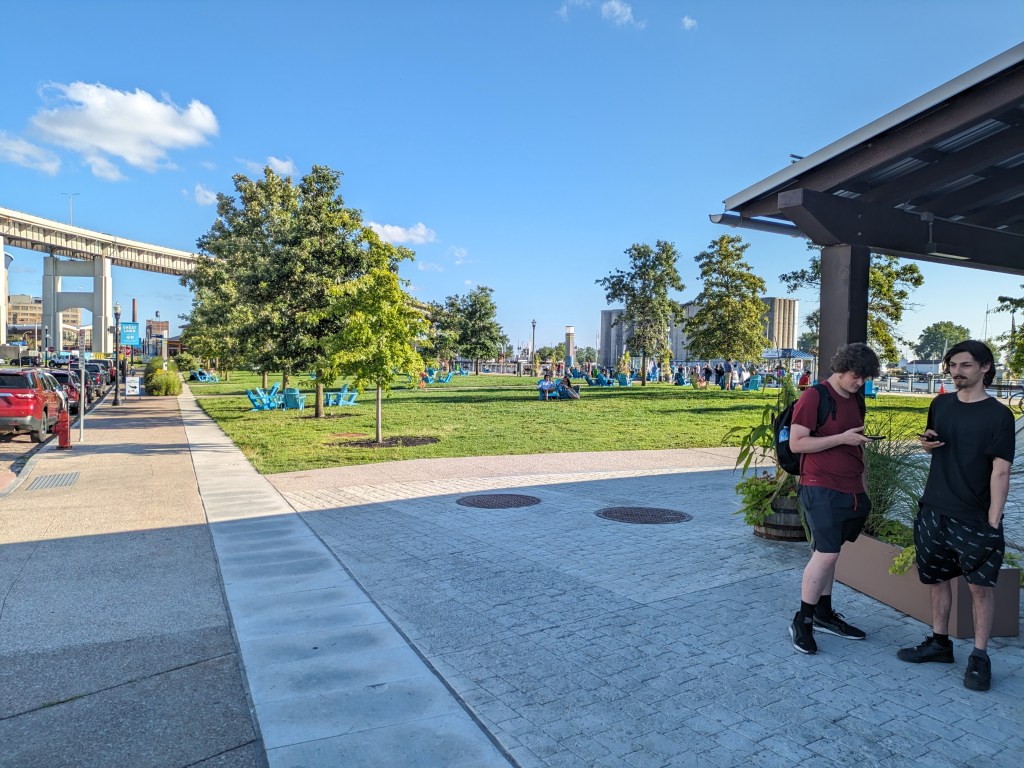
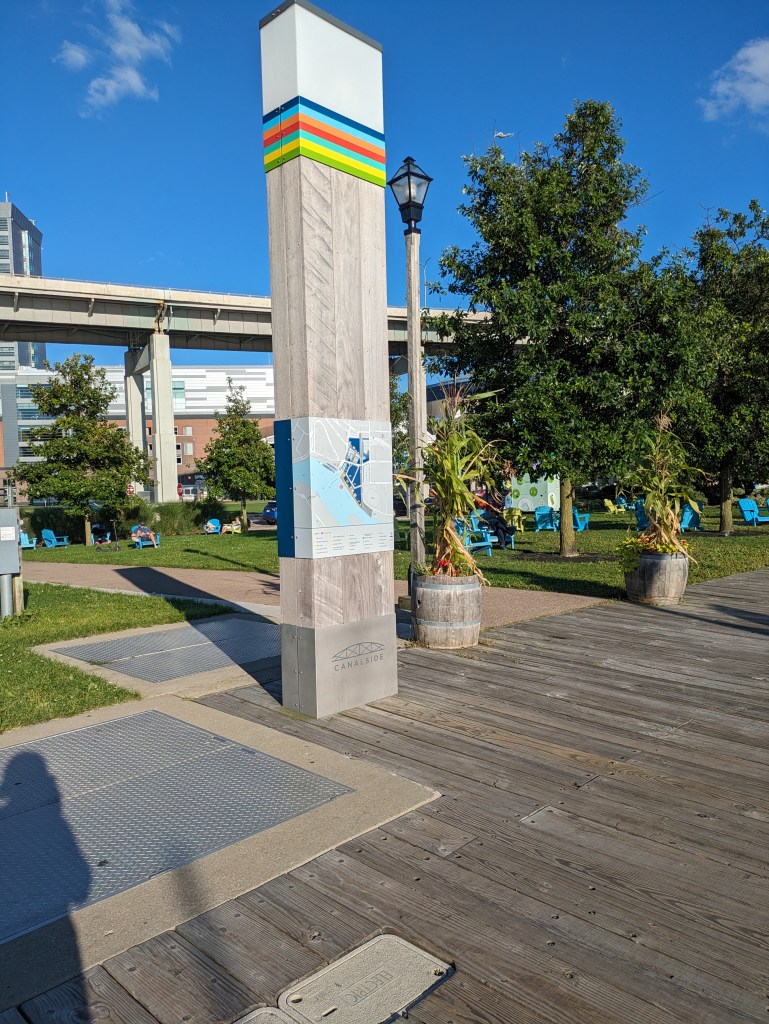
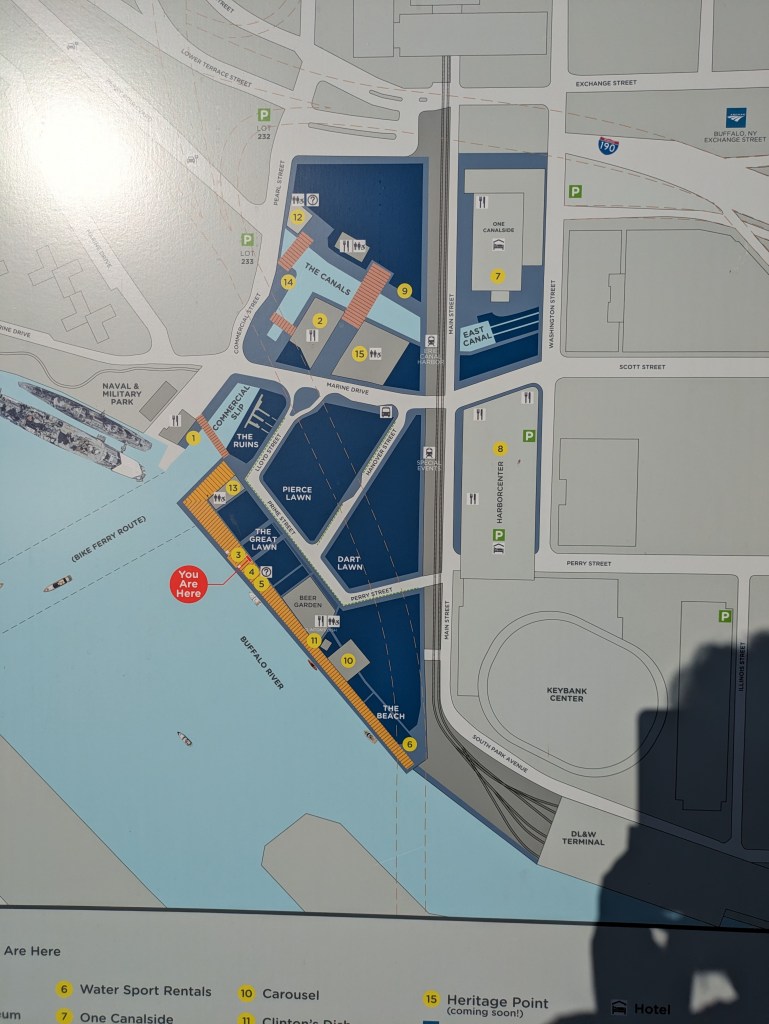
Route 5 and I-190 meet at the southwestern corner of downtown Buffalo creating a knot of an interchange and on/off ramps that block access between downtown and the waterfront. But, beyond that point of intersection, both roads are elevated leaving open multiple pathways underneath for pedestrians, cars, and transit. They still create a psychological barrier – it never feels welcoming to pass underneath overpasses like these – but the physical connection is there. And once you pass through the barrier, there is much to see and do at Canalside.

The Barrier

The Waterfront

The Flamingo’s-Eye View

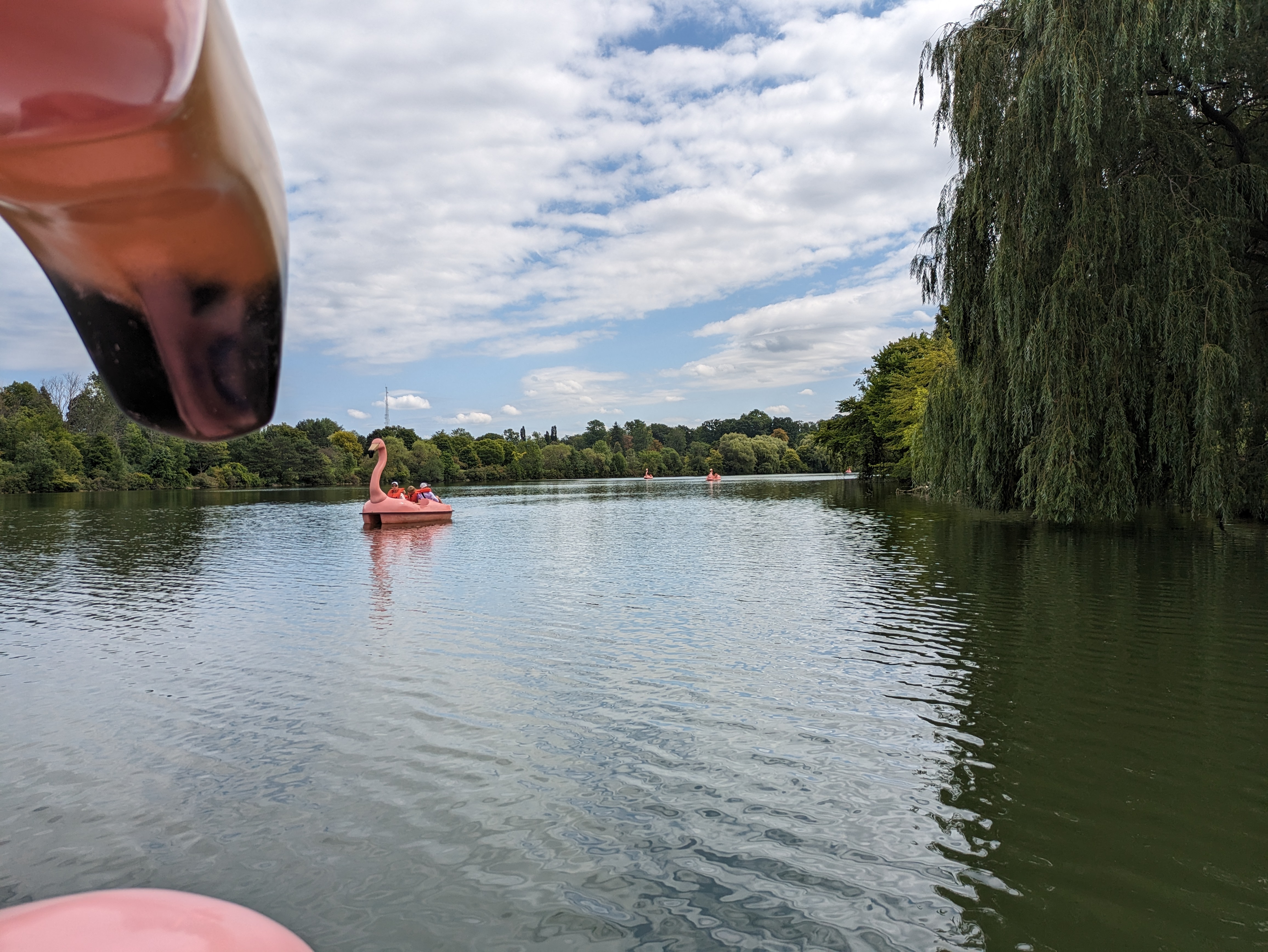
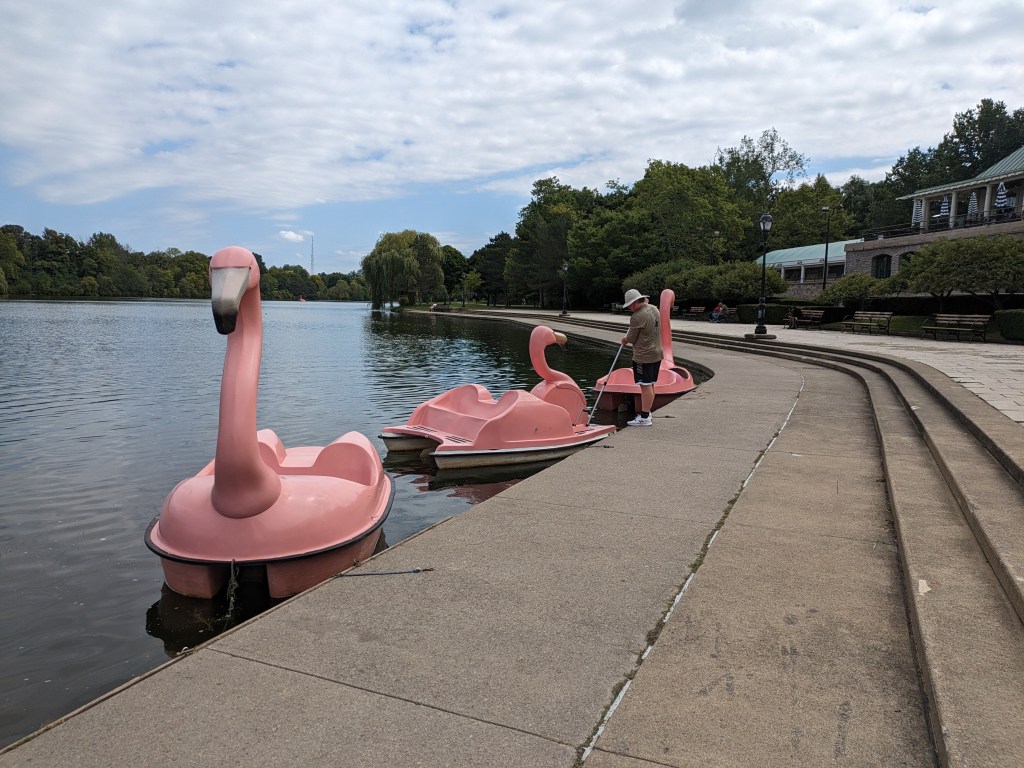
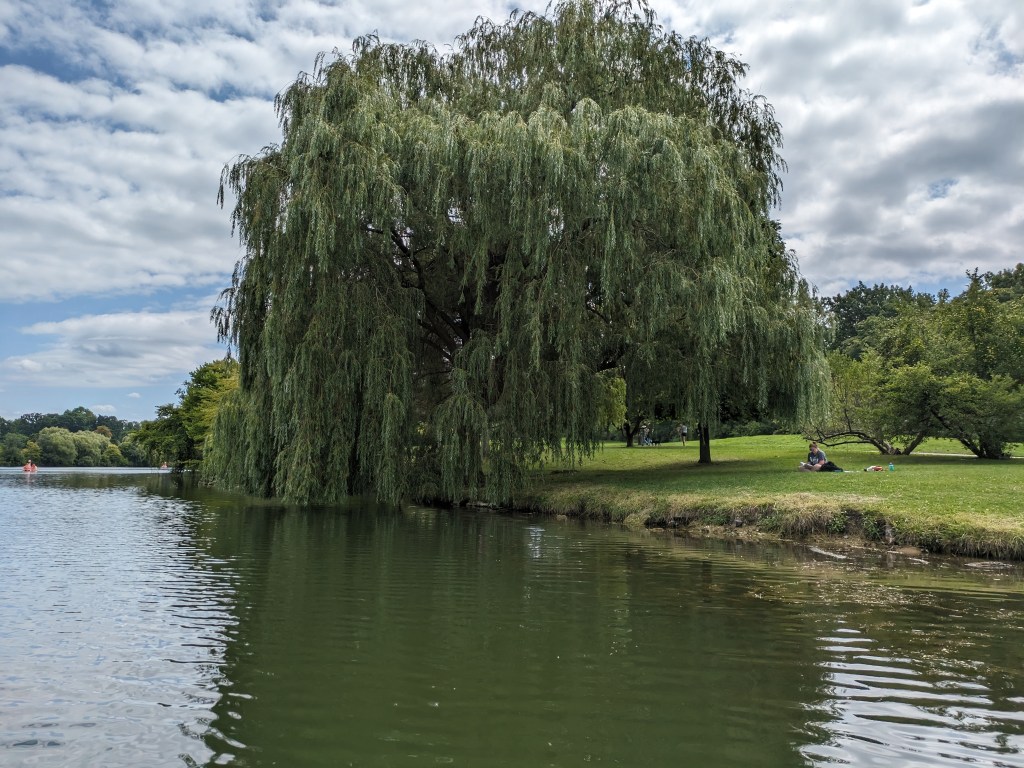
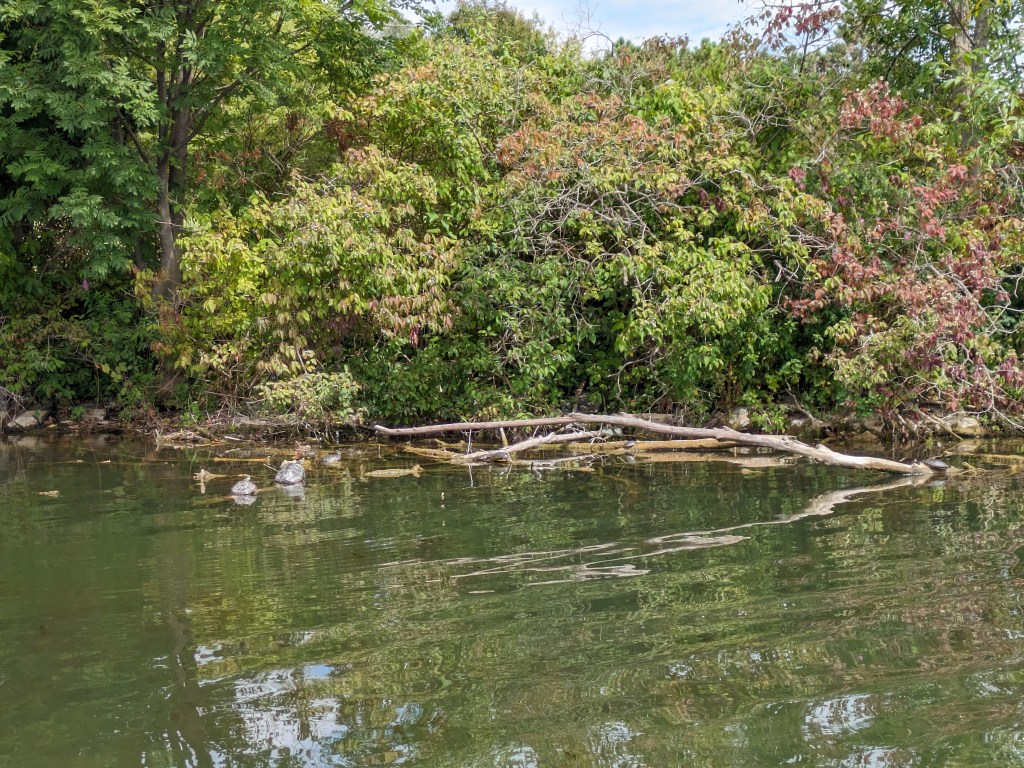
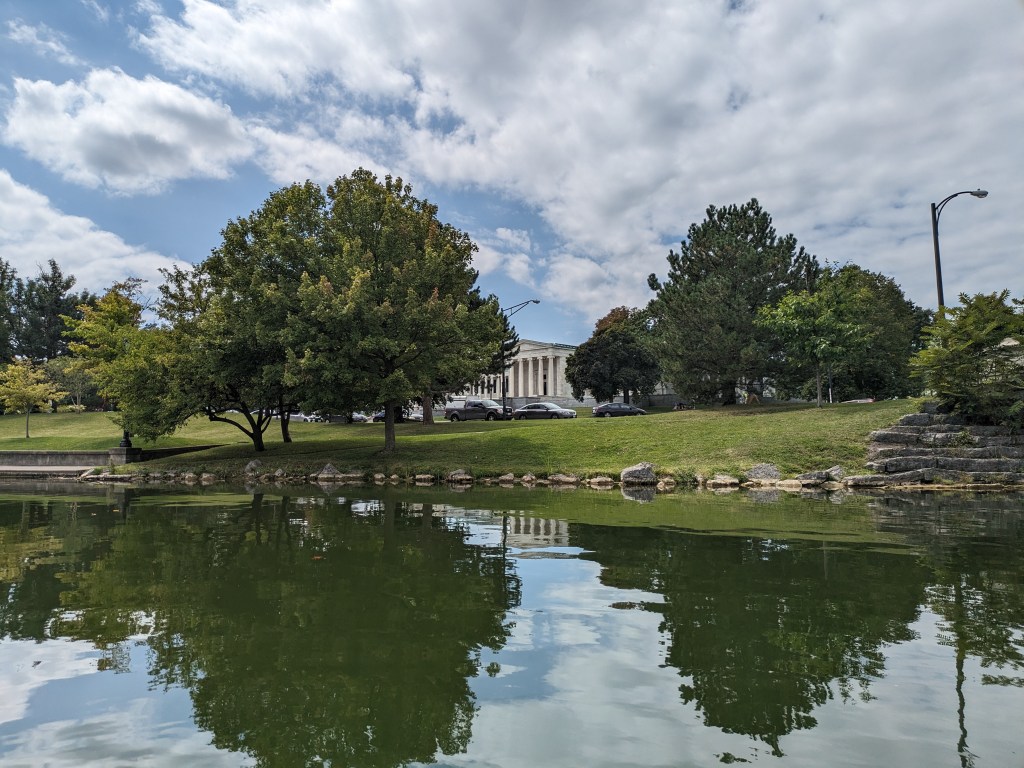
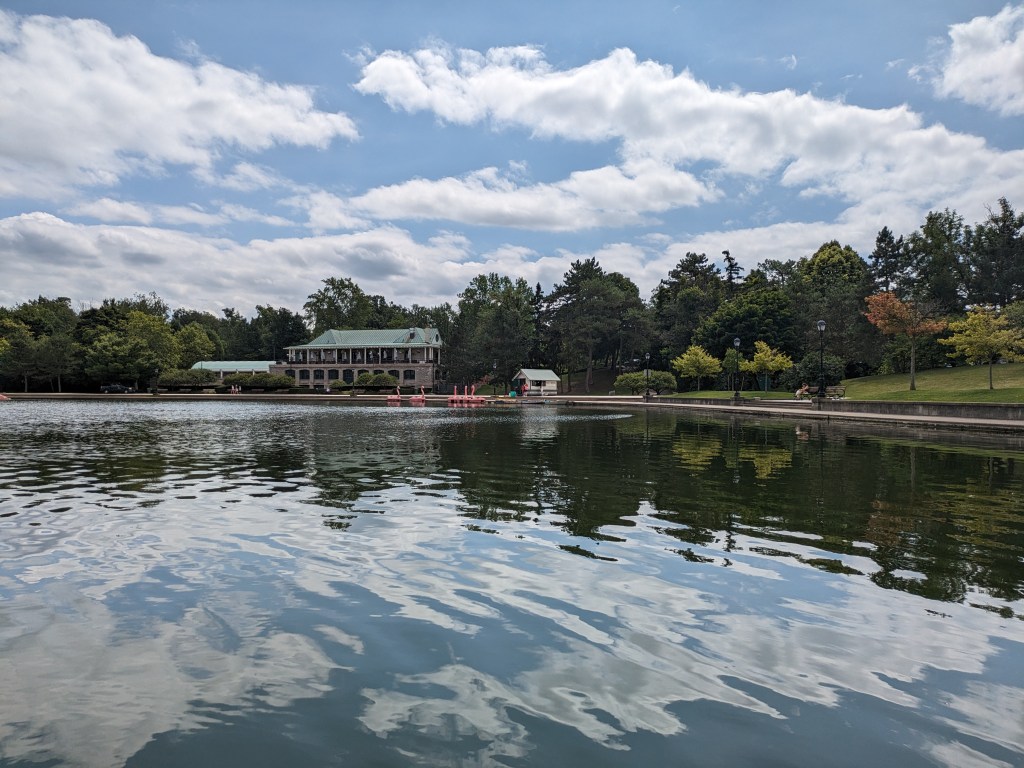
I took an enjoyable interlude in my wanderings in Buffalo’s Delaware Park that included getting the nice lake-eye views of the Lincoln Parkway Bridge I shared last month. I wonder if Frederick Law Olmsted ever imagined something like flamingo paddle boats as a potential use of the lake he designed. I don’t know if he would approve, but I had fun stepping out of the ordinary for a hour to view the lake and the park from the flamingo’s perspective. Below you can vicariously join me on the experience in a short video or in the sample of photos I took around the lake (including one with at least 4 turtles sunning themselves).

Buffalo Bridges: Delaware Park

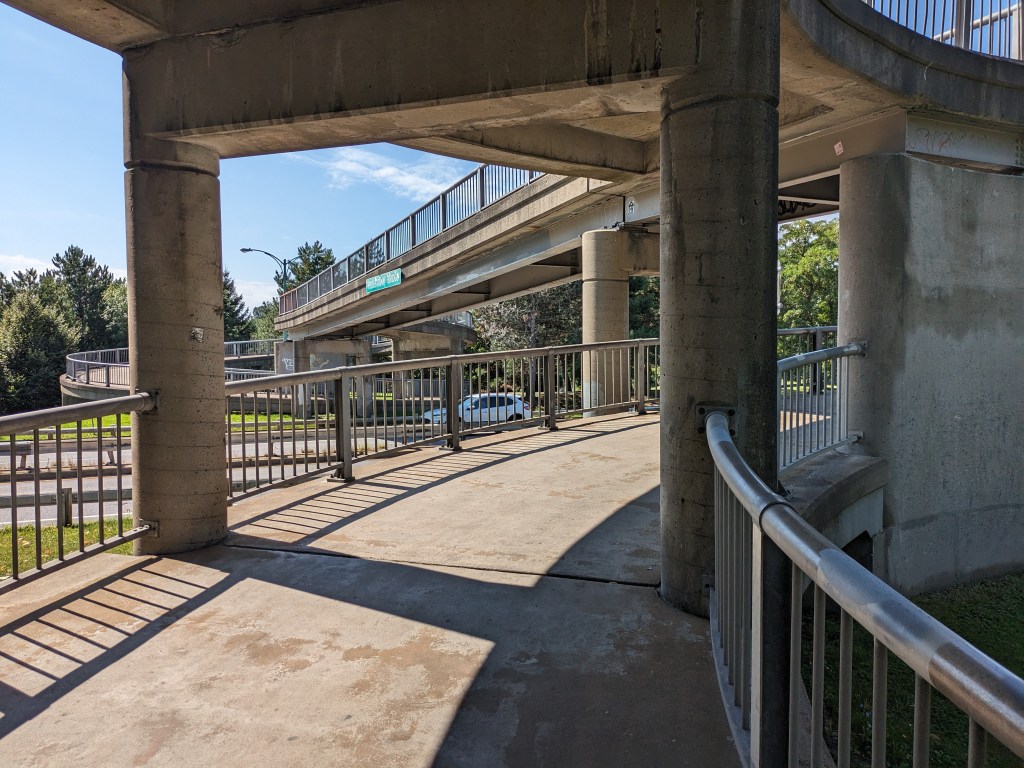
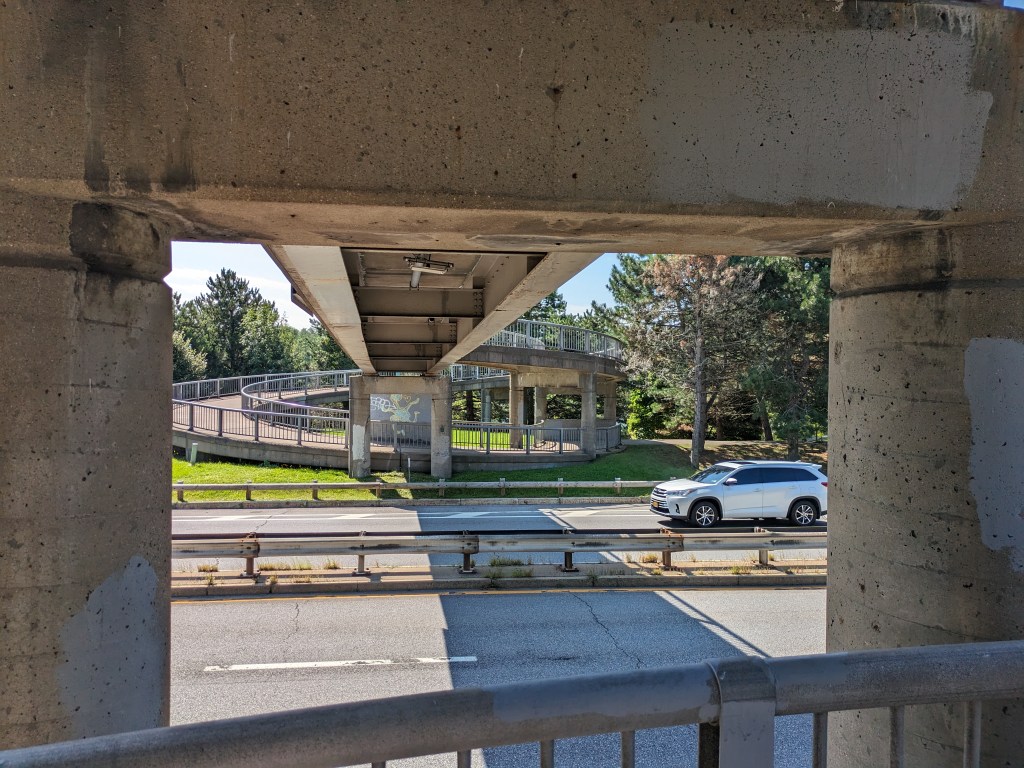
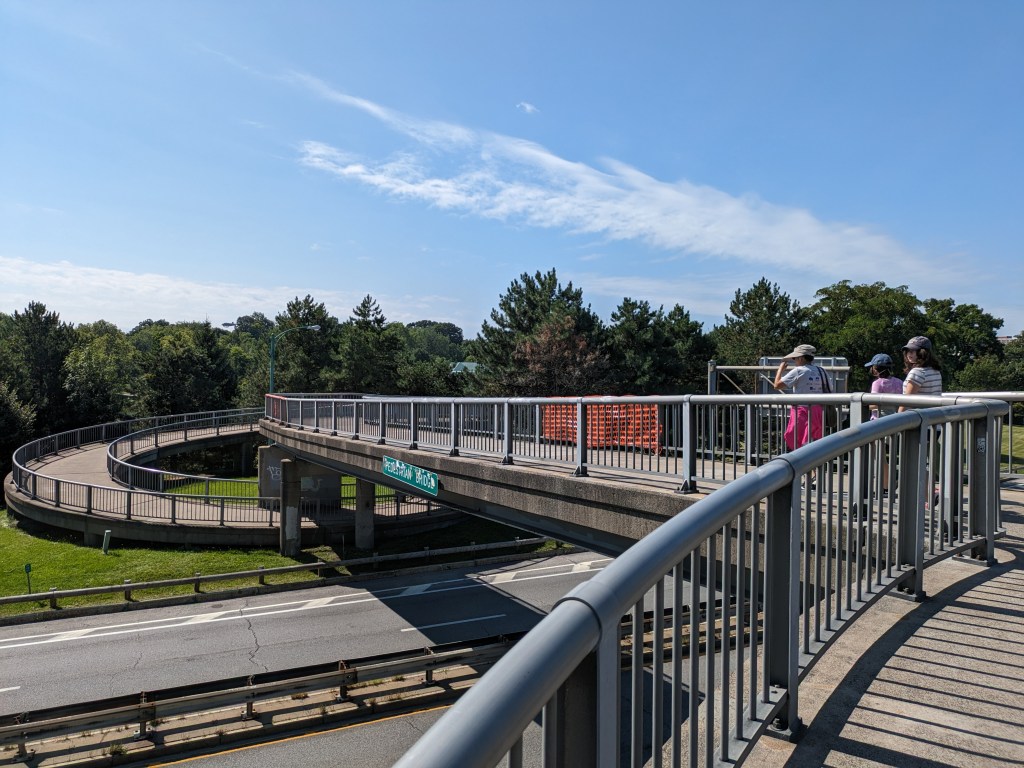
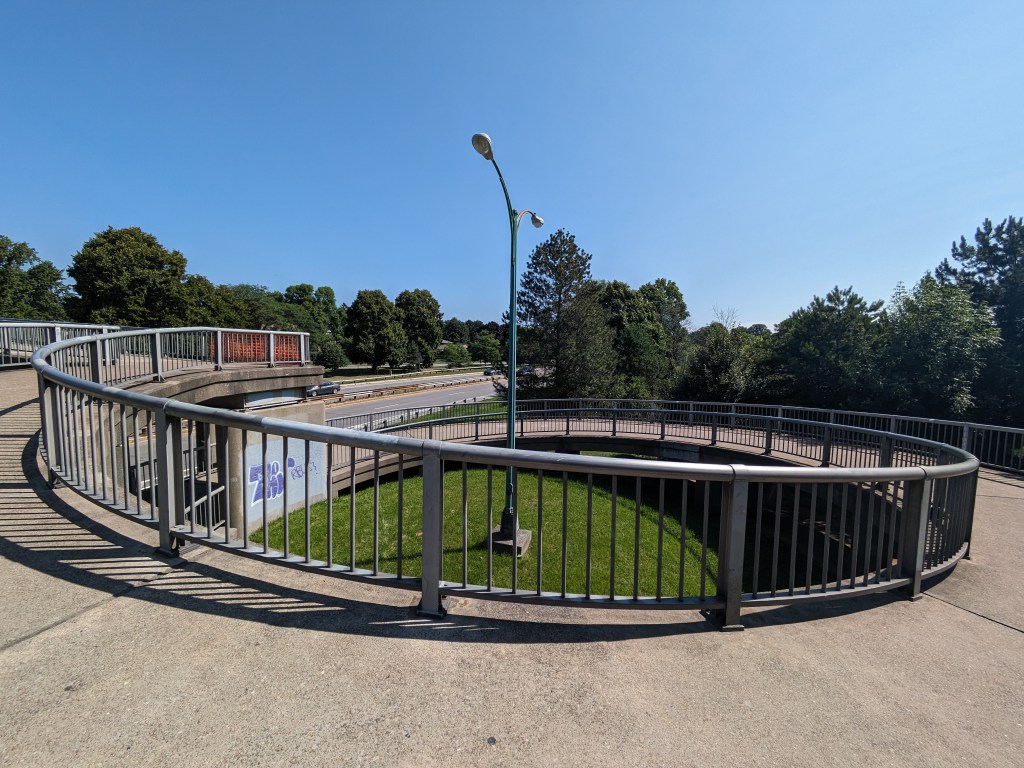
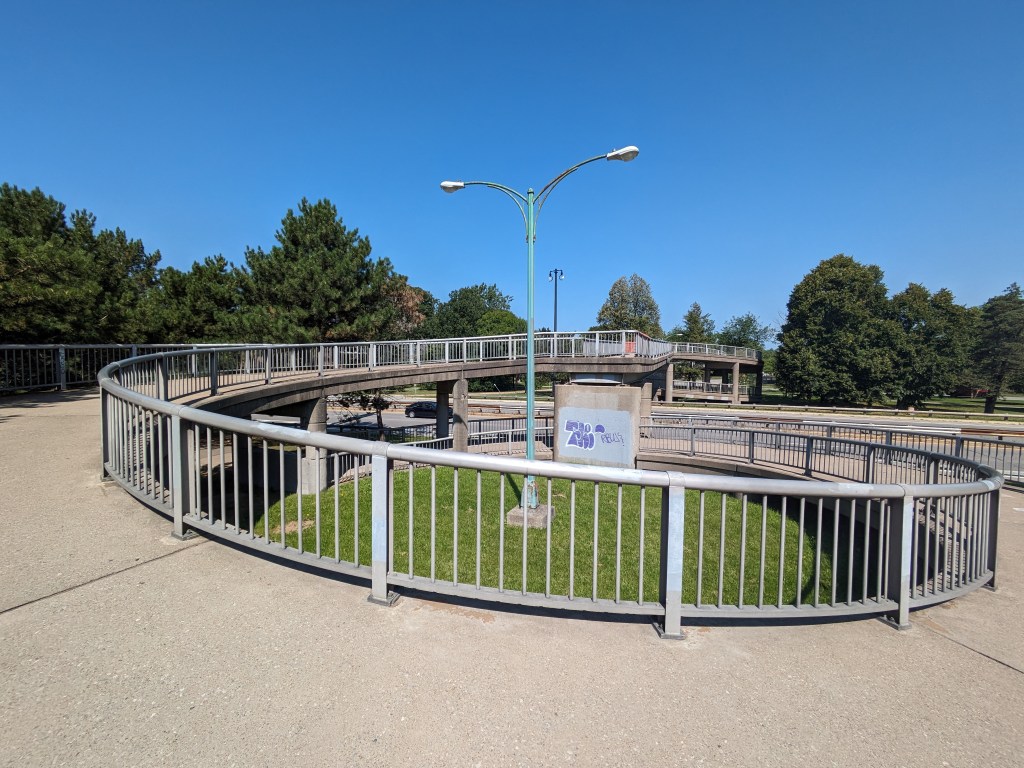
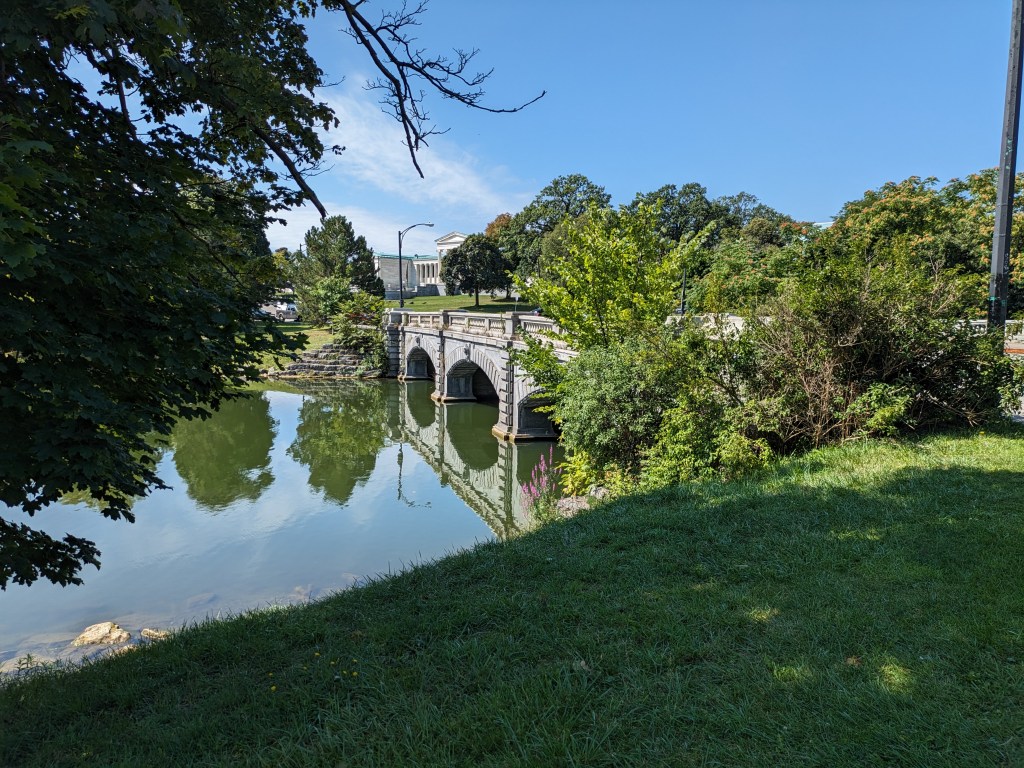
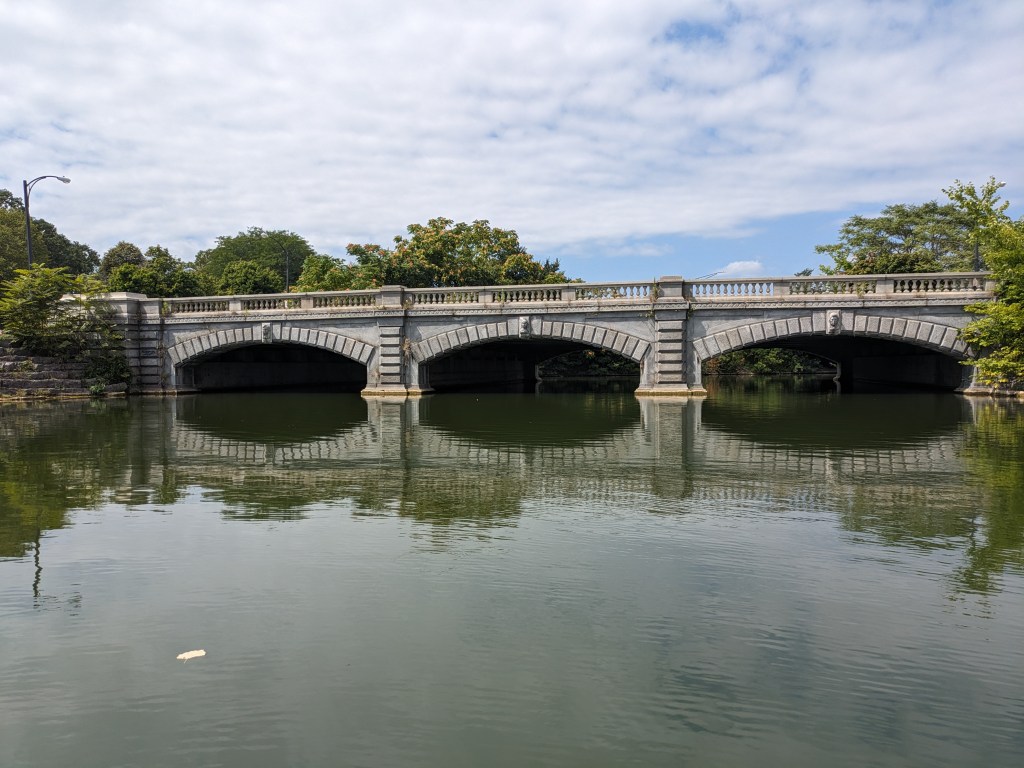
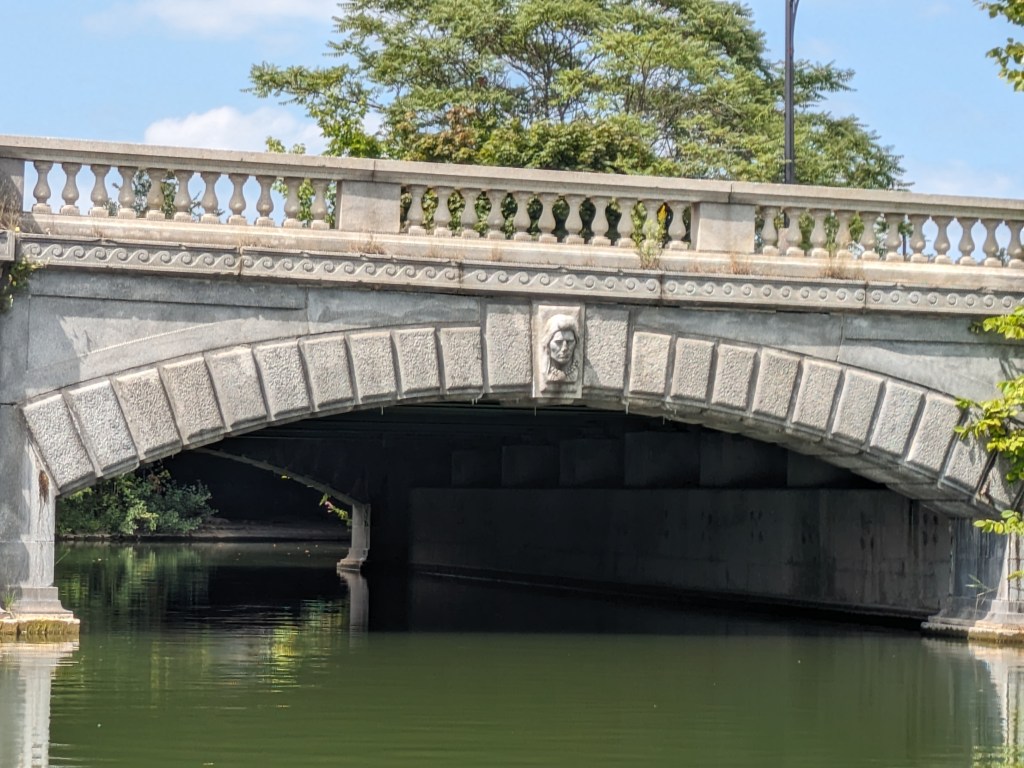
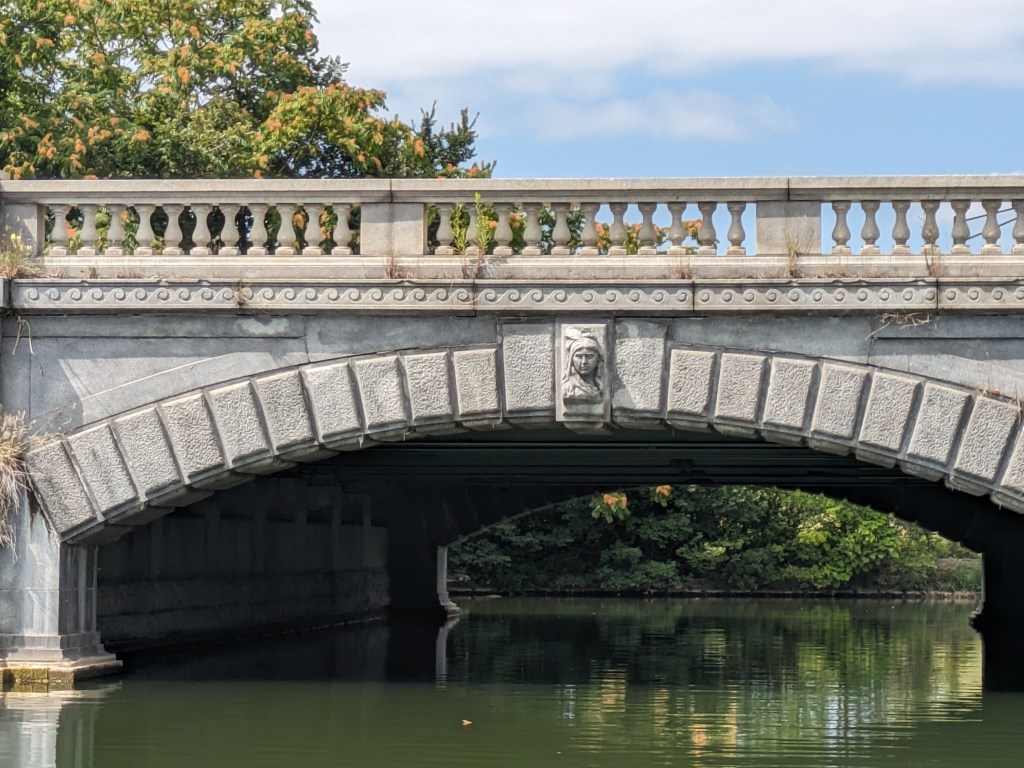
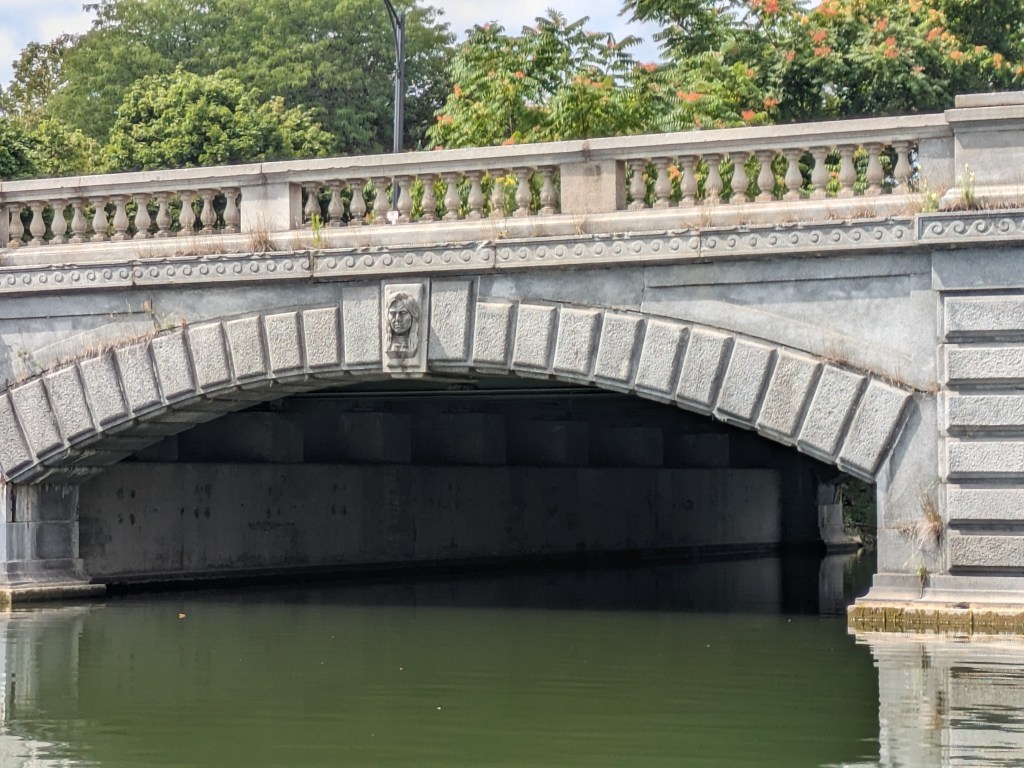
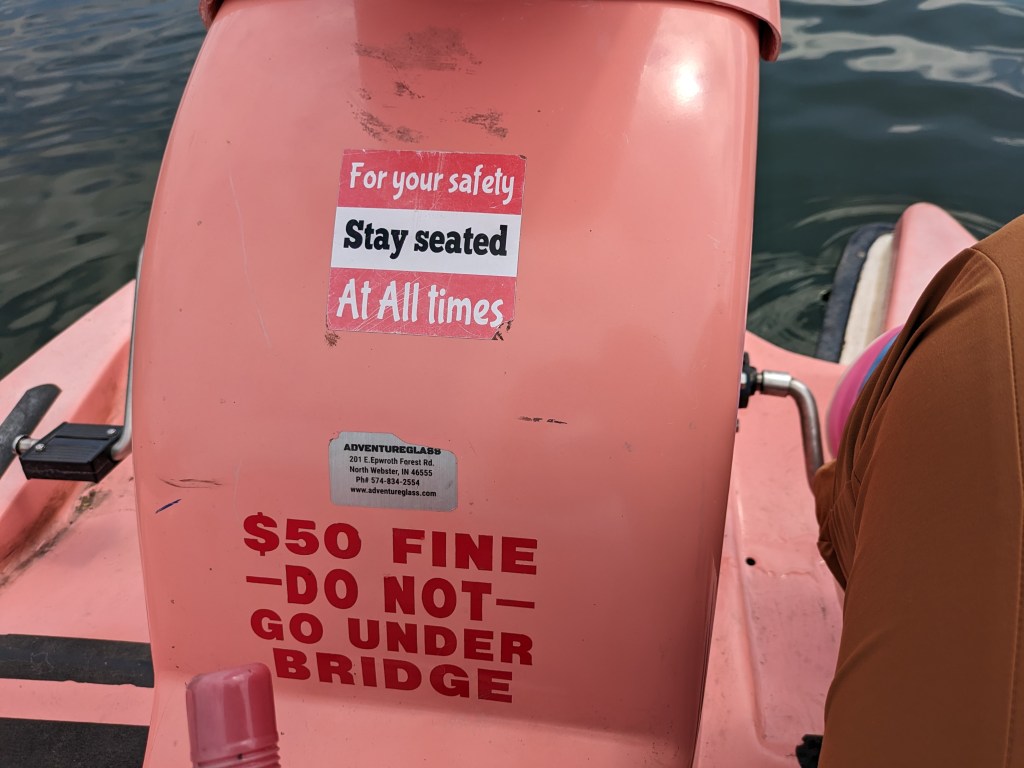
In my meanderings in Delaware Park as part of my exploration of World’s Fair sites, I walked over two interesting bridges: the Whirly-Twirly Bridge and the Lincoln Parkway Bridge. The Whirly-Twirly Bridge is the best named bridge of the 100+ bridges that I’ve encountered since I started walking bridges (even beating out the Big Dam Bridge). It also provides one of the few pedestrian links across the Scajaquada Expressway which divides Delaware Park. The Lincoln Parkway Bridge was built in 1900, perhaps as part of the 1901 Pan-American World’s Fair. If so, the story of this bridge gets drowned out in the attention paid to the temporary Triumphal Bridge with its massive pylons that lasted only as long as the fair. From my observation, the Lincoln Parkway Bridge is a nice, modest scale, stone arch bridge that acknowledges the indigenous people of the area in its sculpture. I was able to get a nice lake-eye view of these sculptures from a rented paddle boat that sadly included a prohibition on paddling underneath the bridge.

Whirly-Twirly Bridge

Lincoln Parkway Bridge

Chicago’s Other World’s Fair

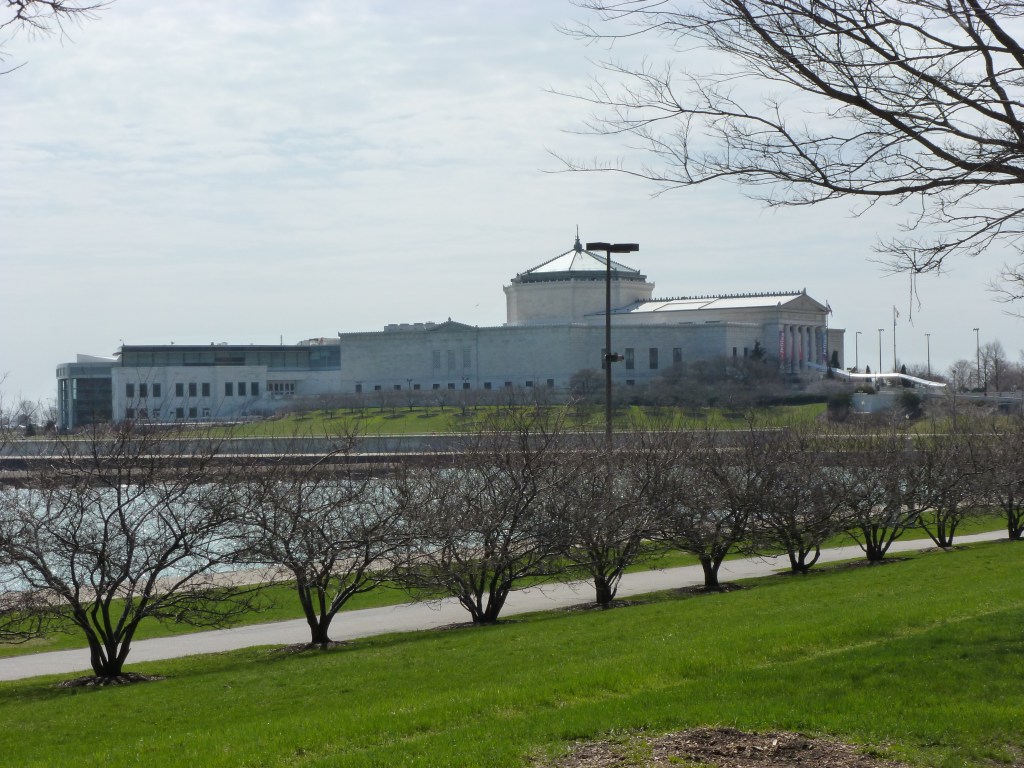
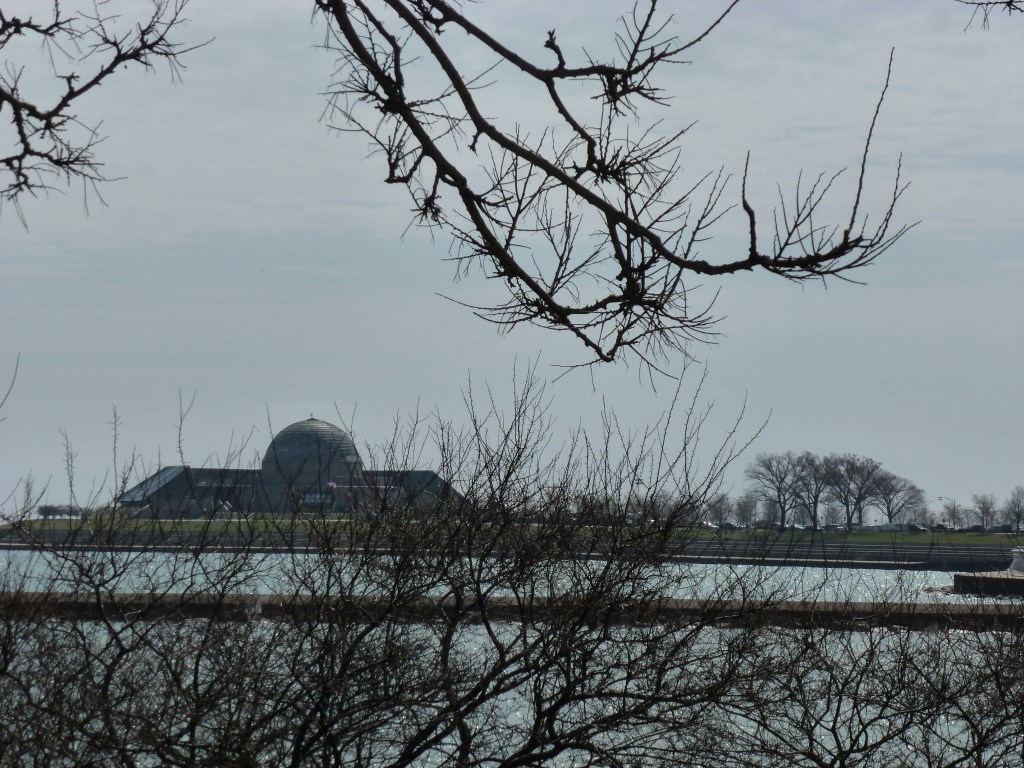
Unbeknownst to me at the time, on my aborted bike ride to the site of the White City in 2013, I rode right passed the site of Chicago’s other World’s Fair. The Century of Progress 1933 World’s Fair was located on what is now called Northerly Island. Adler Planetarium and Shedd Aquarium were the obligatory permanent museums opened in conjunction with or adjacent to the fair.

One of the interesting tidbits I’ve learned about this fair is that it used a rainbow of colors. Clearly, this was intended to be among the elements that would distinguish this fair from the previous one. However, it sounds to me more like Chicago was trying to imitate Buffalo’s Rainbow City, the 1901 World’s Fair.
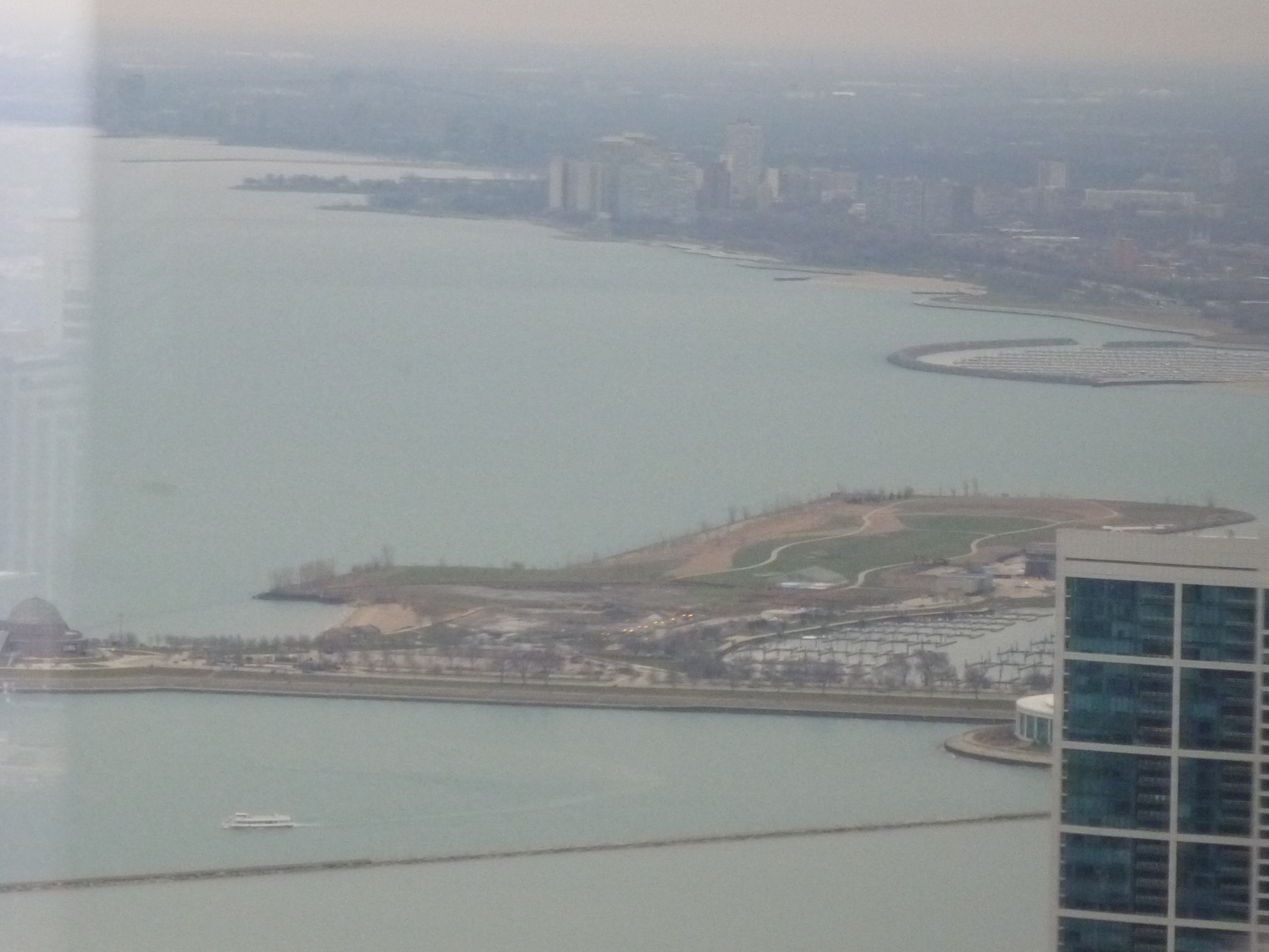
My thanks to Zachary L. Brodt and his book From the Steel City to the White City: Western Pennsylvania & the World’s Columbian Exposition for helping me to realize that I can say I’ve visited four former US hosted World’s Fair sites as of May 2024.

Buffalo’s Rainbow City

Having now been to two former World’s Fair sites, I felt compelled to round it out with a third. Weeks before COVID hit, I was in the planning phase for a trip to Buffalo when I discovered that they had held a World’s Fair in 1901. I had found my third site, though the visit was delayed several years from the fallout of COVID and life.

As I got off the bus at the end of a bridge over an expressway, I had moment of panic before seeing I was right next to the History Museum and a quiet residential neighborhood, just as I had intended. There were several parallels between this site and those I explored in San Francisco and Chicago, but the feel of the place was completely different. There was the characteristic lagoon, or in this case lake, surrounded by park, but the park and lake were designed by Frederick Law Olmsted long before the idea of the fair was born. Like Chicago, the remaining fair building(s) was used as a museum, and while the architecture is intended to inspire awe and perhaps intimidation, it is the normal awe and intimidation of the average temple to art or history seen in many cities and not the massive scale of San Francisco’s Palace. The park is also bisected by a road with dangerously fast traffic, but there are multiple safe pedestrian crossing points over and under (including the Whirly-Twirly Bridge). There was a Japanese Garden here as well, but it was installed decades after the fair and was illustrative of the fact that this site had a life before the fair and continues to have an on-going life after the fair.

The remainder of the fair site between the park and the railroad tracks where the fair had a station has been fully redeveloped. Over half of that area is now residential neighborhood(s) with a variety of housing types from modest single-family dwellings to large homes with security fencing and landscaping staff. (Passing these houses and taking photos, I again felt the potential for someone to approach and question my belonging and right to explore.) There were also two-family dwellings and apartments. I passed two schools, a former church, some industrial properties, a paddock, and a strip mall. One of the residential streets had a sign acknowledging the past as the site of the 1901 Pan American Exposition. Otherwise, I wouldn’t have know I was on the site of a former World’s Fair without having carefully studied the map of the fair beforehand. I felt as though I was in any other neighborhood of any other city that is flat and that has residents who have at least a little, though in many parts it was clear that the residents had a lot.
As I had unintentionally read about the World’s Fairs in San Francisco and Chicago before visiting those sites, I decided that I needed to intentionally read about Buffalo’s before going so that there would be some consistency in my approach. One of the points that Margaret Creighton reiterated in her book The Electrifying Fall of Rainbow City was that Buffalo was trying to outdo Chicago (they picked the Rainbow City theme and lighting scheme to be in direct contrast to Chicago’s White City). In the end, and certainly not helped by the fact that President McKinley was shot at the fair, Buffalo did not have the success they sought in receipts or in numbers of visitors.

Having now visited both Chicago and Buffalo’s fair sites, I would say that over 100 years later, Buffalo has had the greater long-term success on its fair site than Chicago. The entire area once covered by the fair is now, and has been for some time, an actively used location. From the park with a number of tourists and residents enjoying all the amenities (even in the middle of a Monday at the beginning of the school year) to the homes to the businesses, Buffalo’s fair site must by this point have long outstripped Chicago’s in number of visitors/residents/users and in tax revenue/receipts.

Chicago Waterfront III

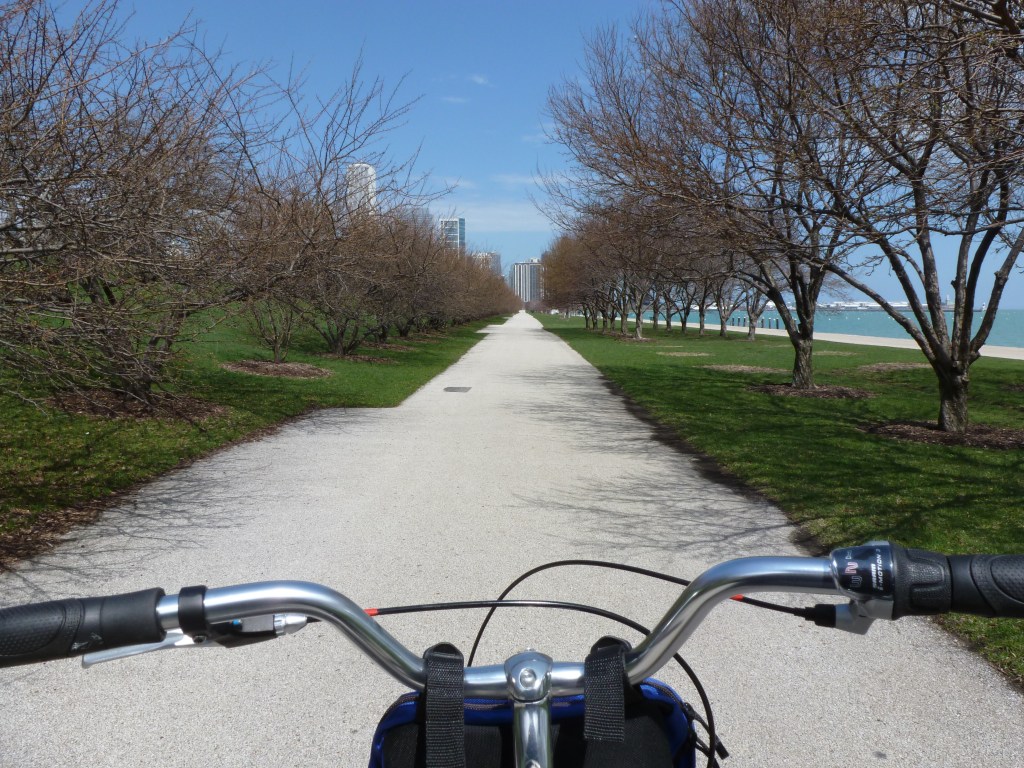
I’ve had multiple aborted experiences in Chicago. In 2013, I aborted an attempt to bike to the 1893 World’s Fair site. In 2019, I aborted an attempt to reach the waterfront. But during the eventually aborted bike ride, I experienced several miles of interesting waterfront. I don’t recall how I got to and from the waterfront for the bike ride as Chicago has the classic US urban problem of using highways to divide the waterfront from the rest of city. Once I was on the waterside, I enjoyed a variety of natural, architectural, and sculptural sights. I even unknowingly captured the remaining buildings from Chicago’s other World’s Fair (post pending).

Chicago Dangos

Chicago is one of the US cities with perhaps the most well-known art parade fundraisers, though I’ve only found a few of the sculptures after the fact (two cows, a dog, and a dog). Jun Kaneko’s temporary installation of Dangos caught my eye in 2013 as a similar kind of artwork, but one that I didn’t have to go hunting down each individual piece.

Chicago’s White City

My fascination with World’s Fairs was started when I was a child by Laura Ingalls Wilder and the San Francisco Panama-Pacific Exposition. It has continued as an adult. Chicago’s 1893 World’s Columbian Exposition is the World’s Fair for planners. The “White City” was the first major example of the City Beautiful Movement, an attempt to reduce or eliminate the unhealthy, overcrowded cities of the time.

After years of hearing about the importance of the 1893 Chicago World’s Fair in planning and architecture and after reading Eric Larson’s The Devil in the White City, I made it a goal to visit the fair site. On one trip to Chicago when the weather was beautiful, I rented a bike and rode down the waterfront trail toward what was left of the White City. This was before I had a smart phone which meant I turned around and gave up because I feared that I had misjudged the distance by bike trail. Later, I realized I was probably pretty close and if I had only gone around one more curve, I would have seen my destination.

My next trip to Chicago was the same year I visited San Francisco. This time, I took a bus to the fair location. I picked the bus stop that on the map appeared to be the closest stop to the remaining places of interest from the fair. When I stepped off the bus onto a broken sidewalk, I found a desolate expanse of vacant land, scraggly trees, and pock-marked lawns. A weary walk presented itself every way I turned.

The bus didn’t run frequently out there. The roads that crossed the vacant expanse stretched far and wide, empty except for the random sudden appearance of a single speeding vehicle.

As soon as I had stepped off the bus and it drove off, I felt tired and scared. I wondered how to extricate myself from this horrible environment. I had some additional information that expanded the negative emotions stirred by the conditions around me. I had heard or read somewhere that the former Midway, which was where I got off the bus, was used as a sort of DMZ buffer to keep “those people” (in this case, primarily people with little income or people of color) away from the University of Chicago campus. I had clearly landed in the middle of a land of have-nots.

As I had come this far with a purpose and there seemed to be little else to do, I moved forward toward the lake. Migraine-inducing music was blaring from an unseen picnic far away and it followed me wherever I went. After feeling like I had taken my life in my hands by daring to cross the road where at any second a car could come speeding by, I reached a path among experimental plantings. Following random turns, I found the lagoon from the fair. The one white building that remained was on the opposite shore and was surrounded by scaffolding. The walk that once circumscribed the water was shut off by a menacing 6-foot high, chain link fence and a bridge that divided the lagoon seemed no longer safe to cross over, though passing under through the muck and mud was an option.

I eventually found a way forward and reached the Japanese Garden that was developed for the fair and remains a peaceful spot. Prior to that, at the moment of being confronted with a security fence and a broken bridge, the fear and doubt that often accompanies me on my explorations became overwhelming. What if I’m stopped? What if I’m questioned? Do I have a right to explore here and pass this way? Do I have a right to explore places and pass judgement?