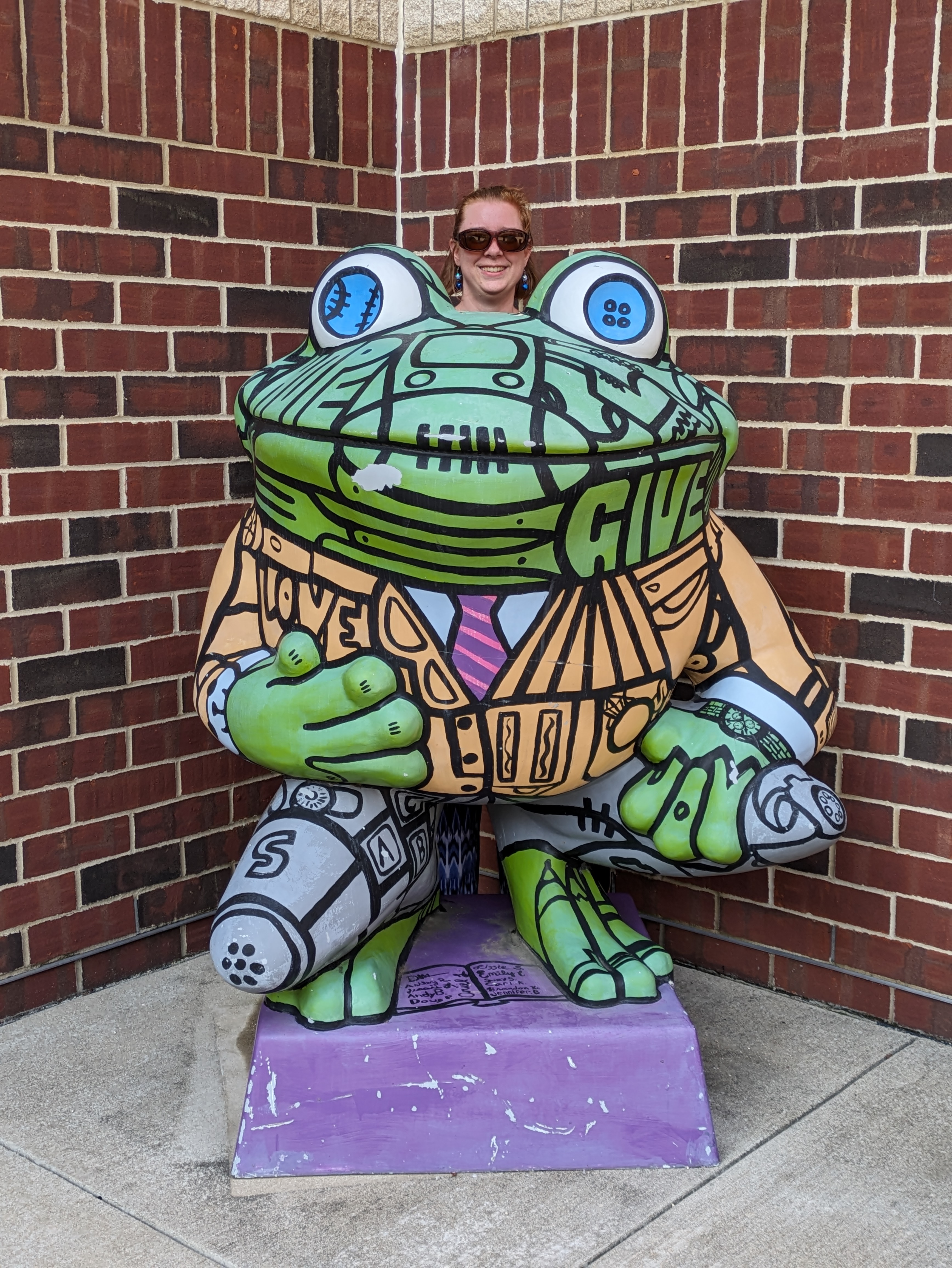
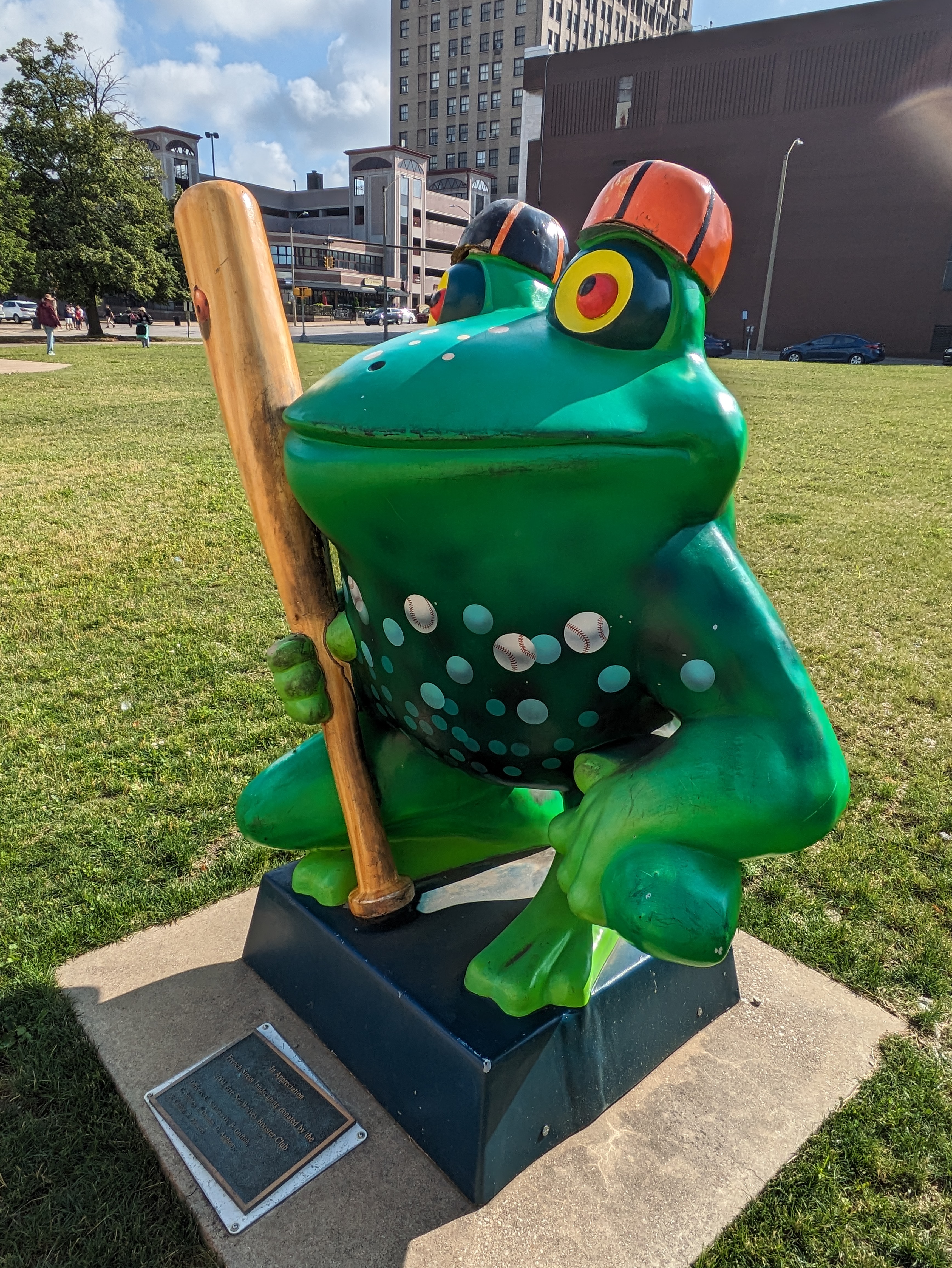
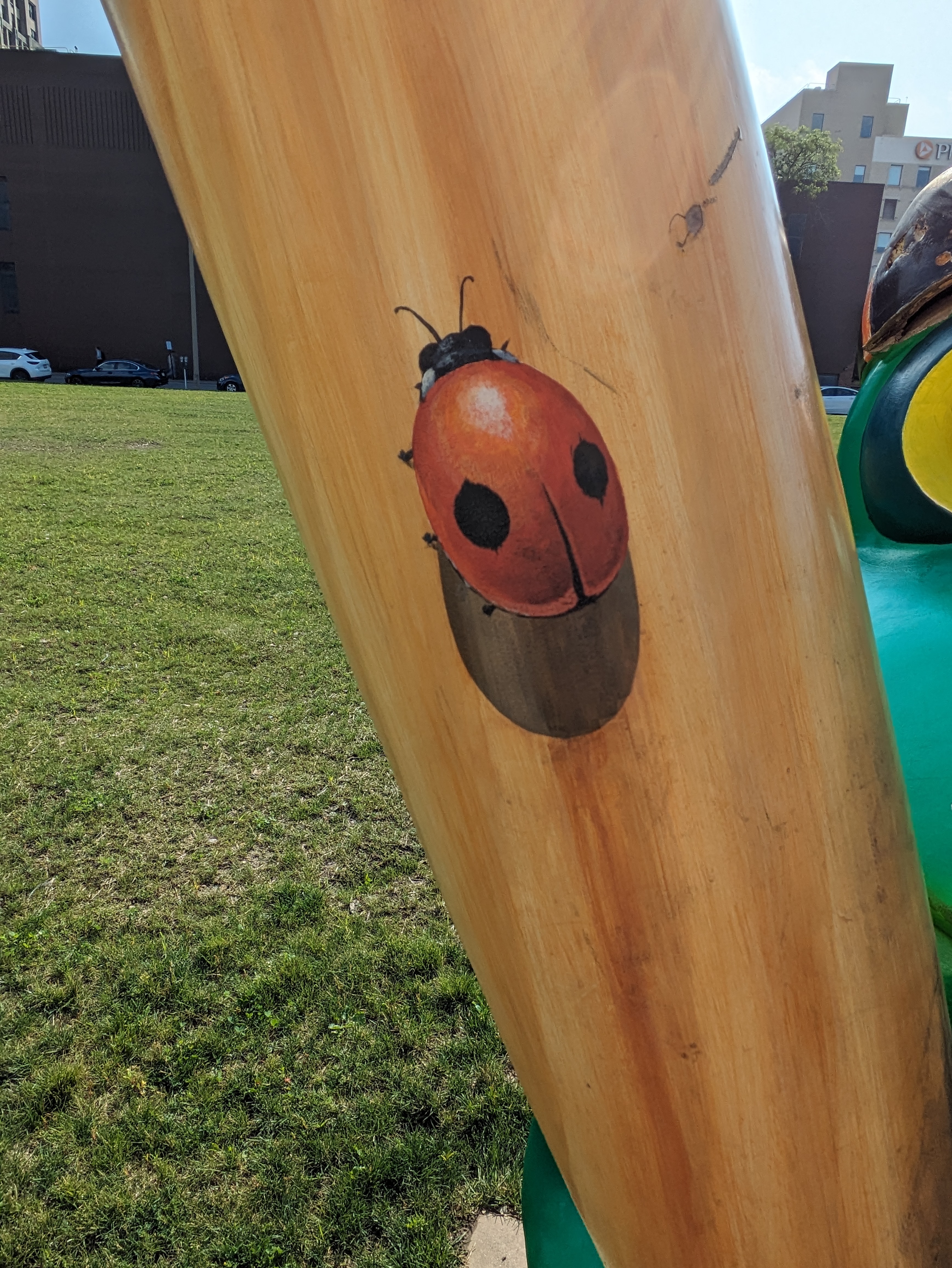
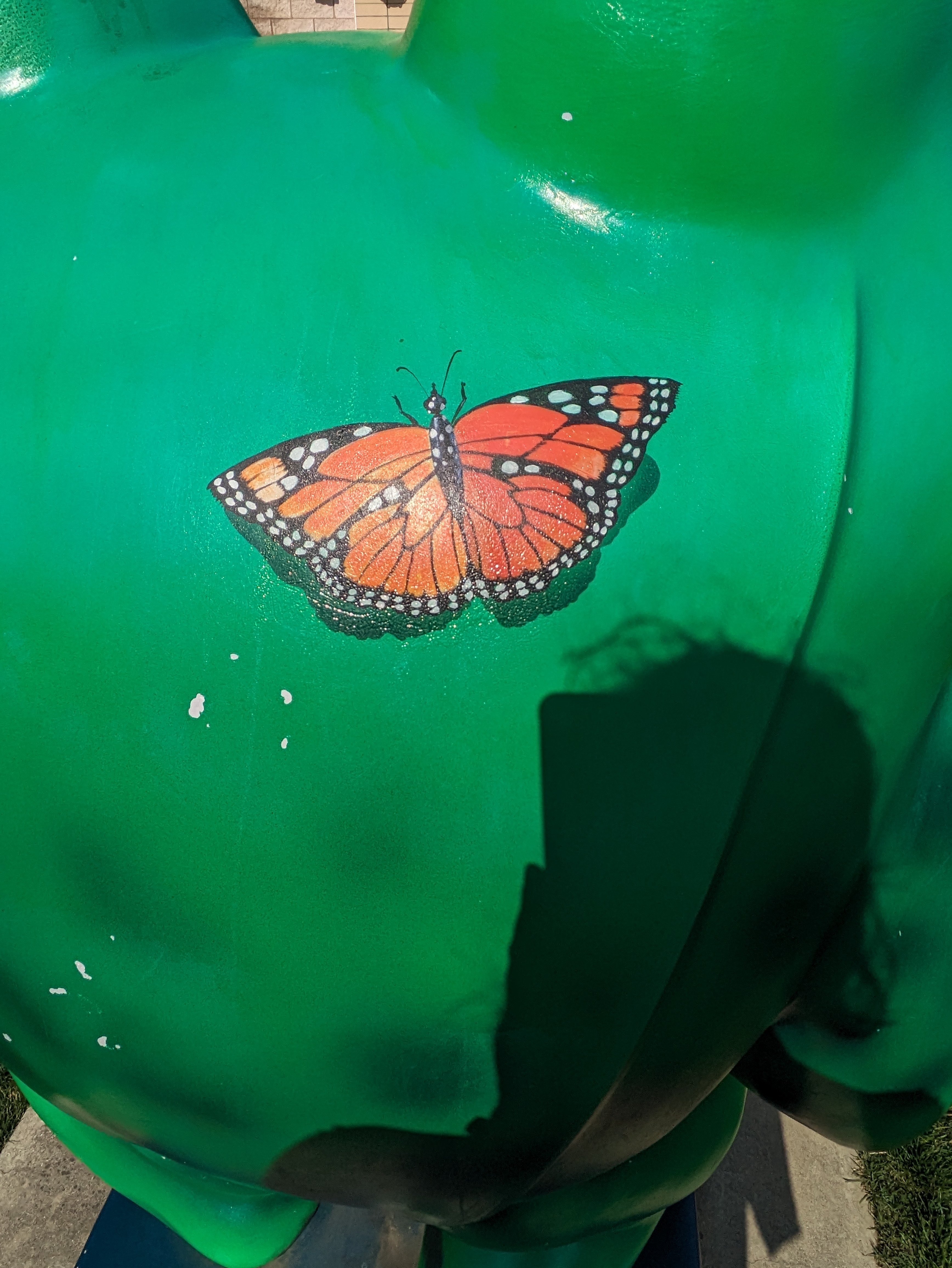
LeapFrog! was a fundraiser in Erie, PA, in 2004. In 2023, Amy H.’s map of Erie’s frogs helped us find “Thrifty Hopper” by Doug Vicary and Walnut Creek Middle School Student Artists in a courtyard off of French Street.

LeapFrog! was a fundraiser in Erie, PA, in 2004. In 2023, Amy H.’s map of Erie’s frogs helped us find “Thrifty Hopper” by Doug Vicary and Walnut Creek Middle School Student Artists in a courtyard off of French Street.
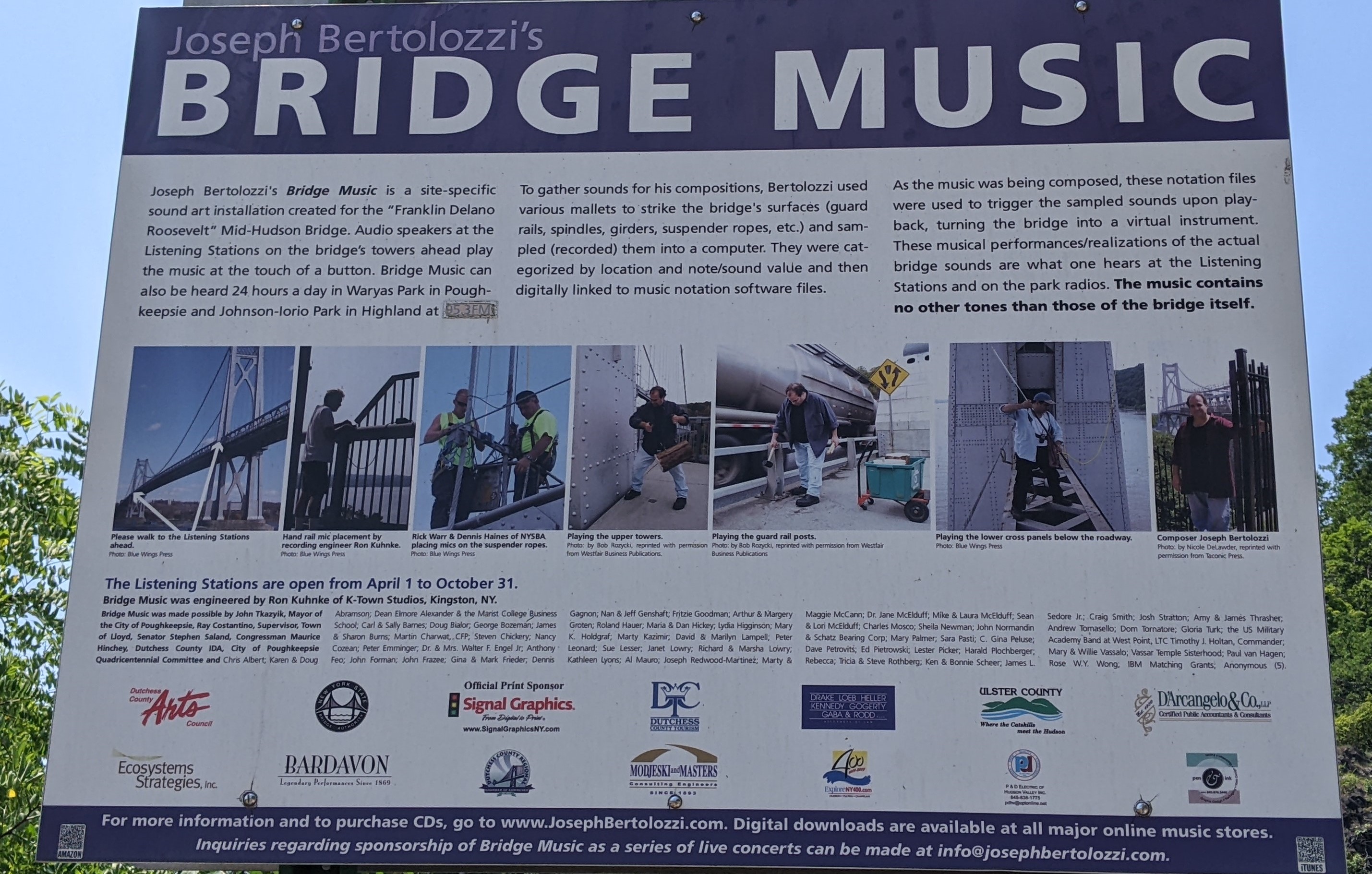
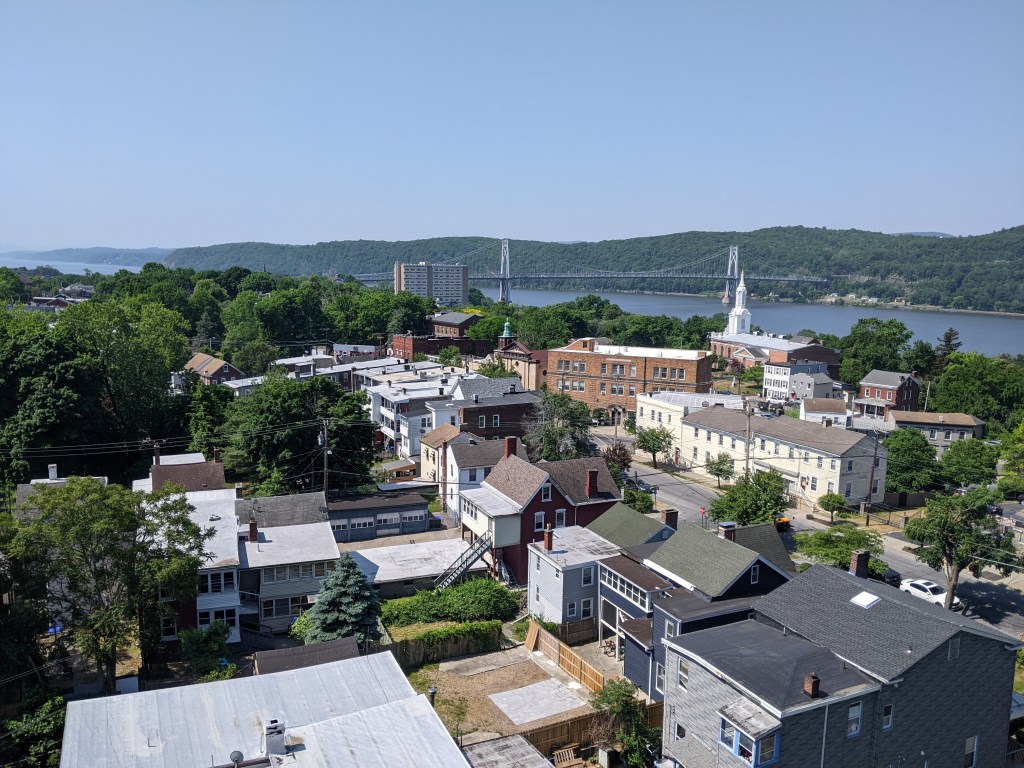
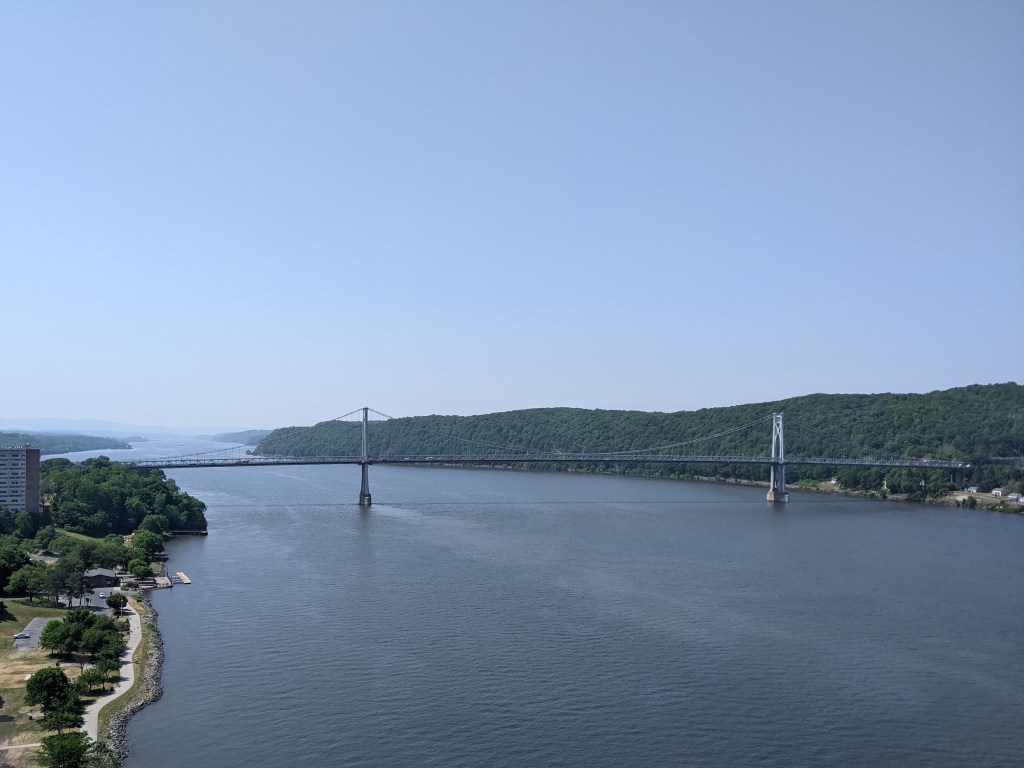
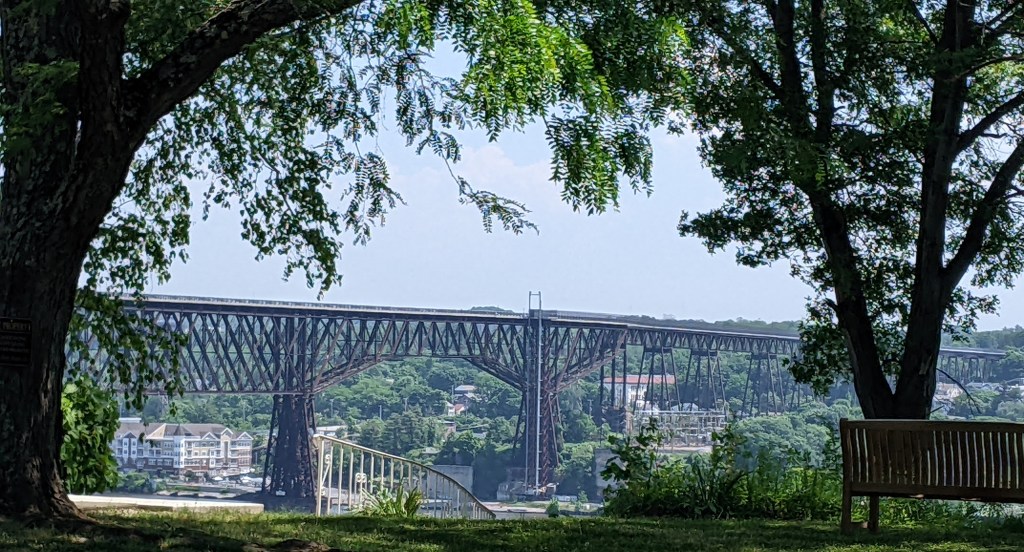
The Mid-Hudson Bridge has a unique additional feature. In 2009, Joseph Bertolozzi used the bridge as the sole instrument in his sound-art installation Bridge Music (see Bertolozzi’s official website for more information). There are two listening stations on the bridge, one at each pier, and those driving across the bridge can also access the music on their car radio. The full Bridge Music is available on CD and Bertolozzi has several YouTube videos of the music. Below is a sample of the music I captured in a video with views of the Hudson River and the two bridges (the Walkway Over the Hudson is the second bridge).
LeapFrog! was a fundraiser in Erie, PA, in 2004. After searching for several frogs hidden inside buildings in 2023, it was refreshing to spot “One Hopper” by Ben Gibson as we rounded the corner at E 10th and French. Amy H.’s map of Erie’s frogs led us to this location.
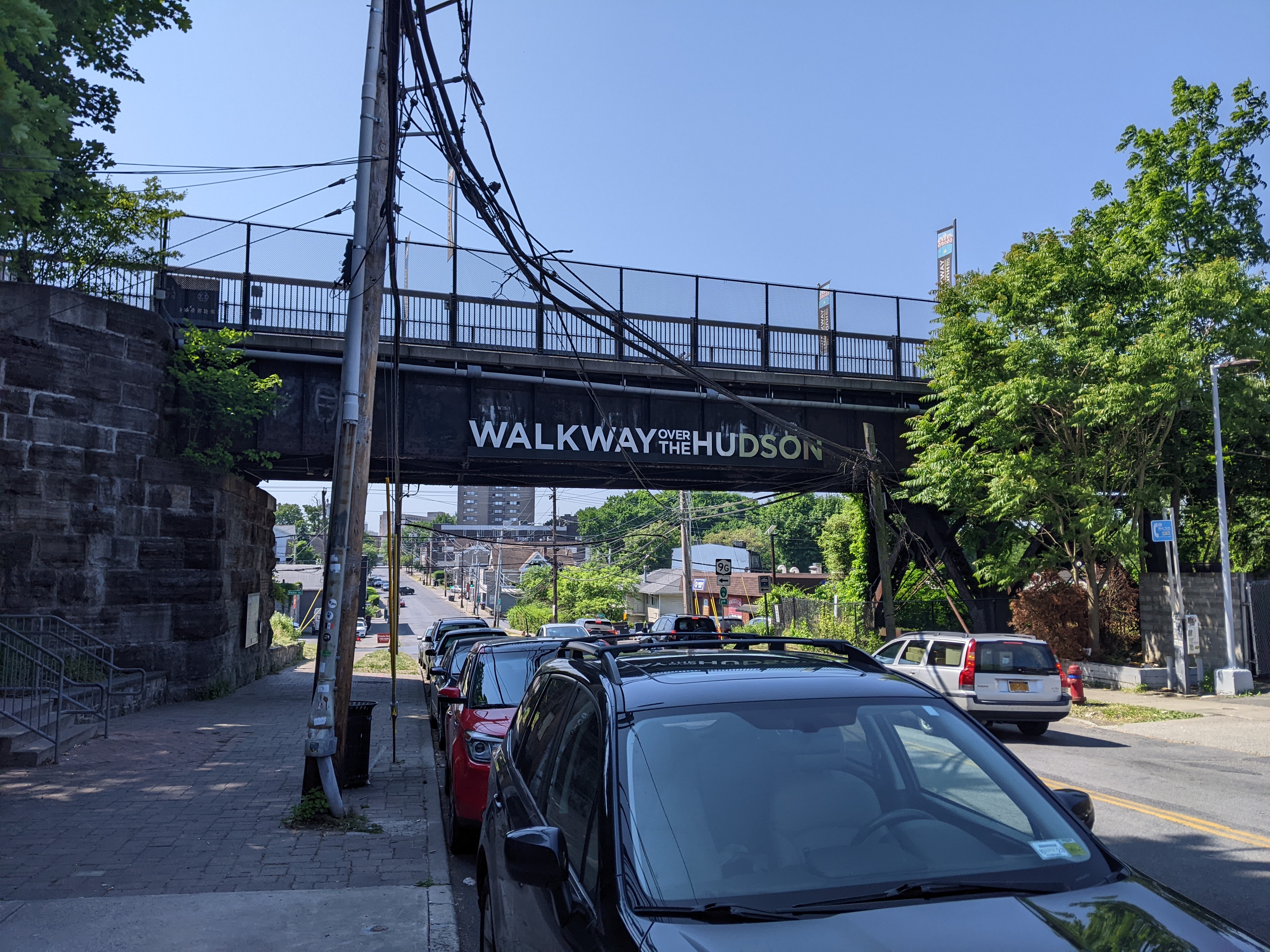
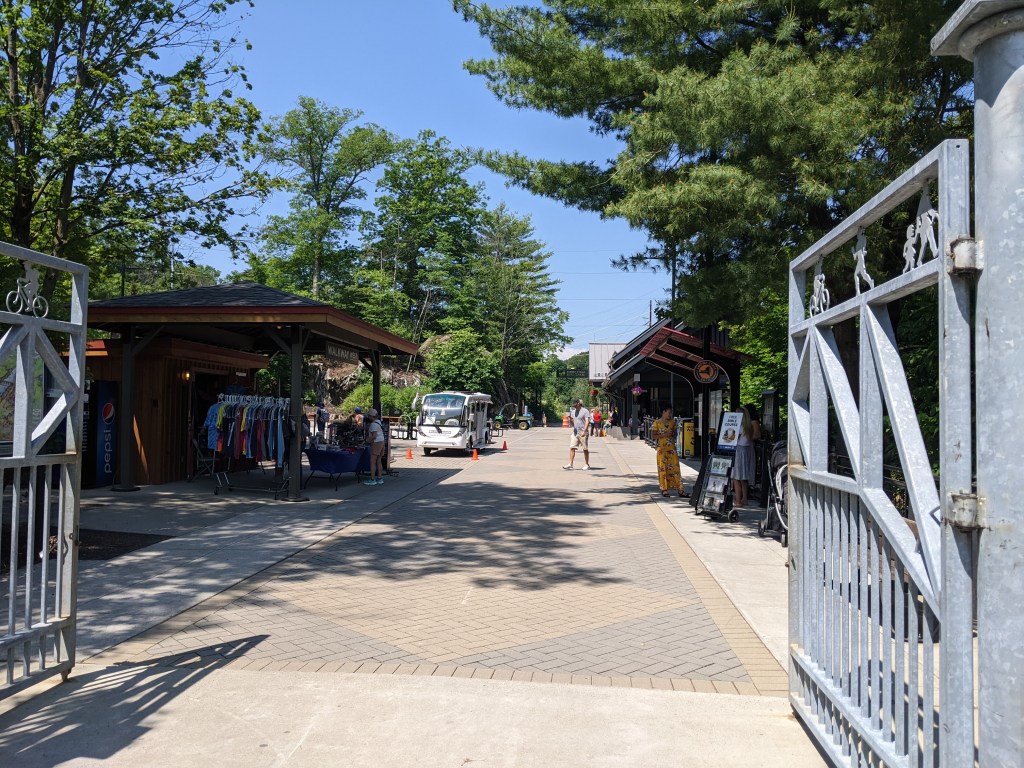
I don’t remember how I first heard about the Walkway Over the Hudson, but it was several years before I developed the habit of walking bridges. Even at that time it sounded like a cool place to check out. Once I became a bridge-walker, it became a must-experience site. Over a decade later, I finally walked the Walkway Over the Hudson.
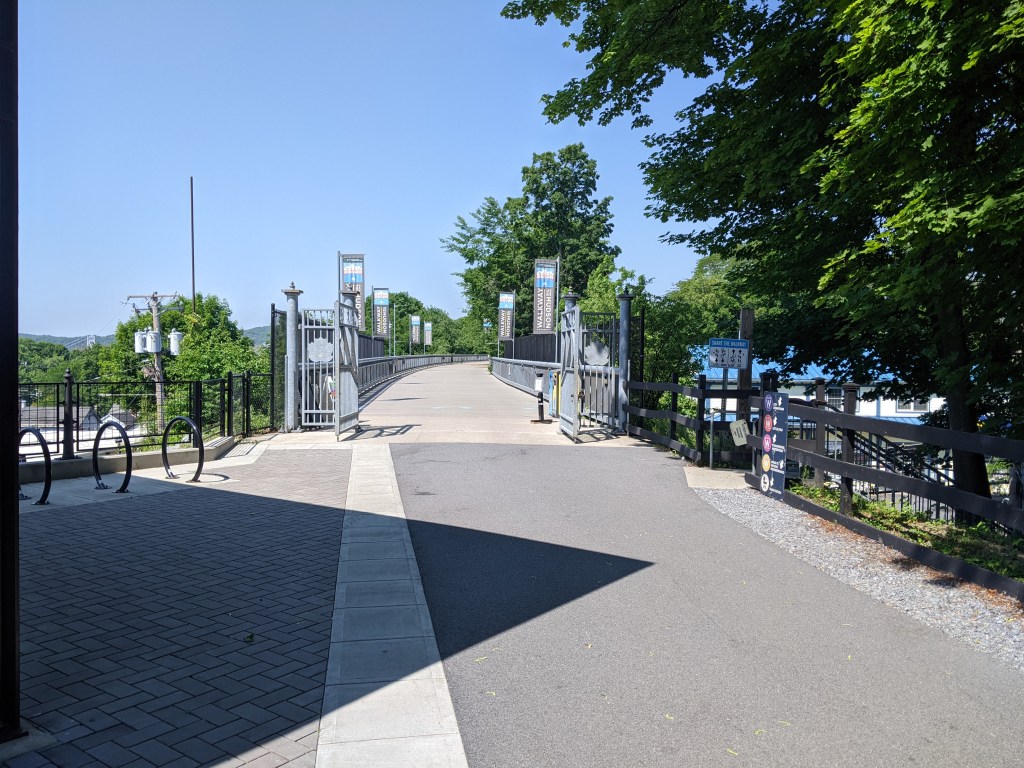
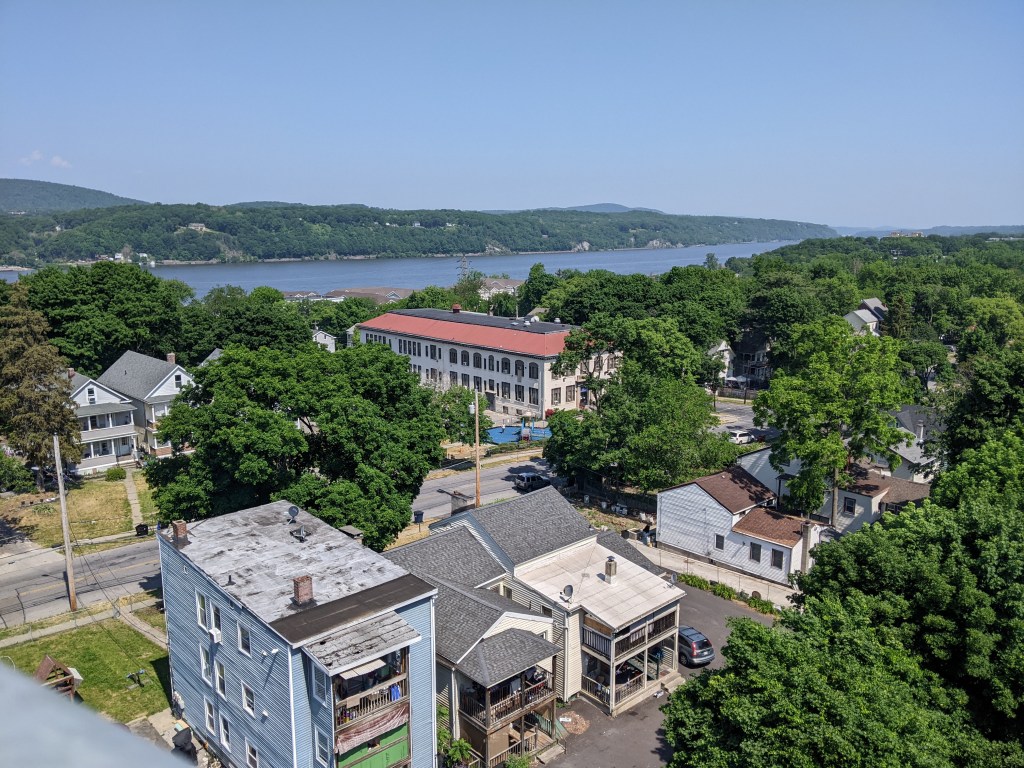
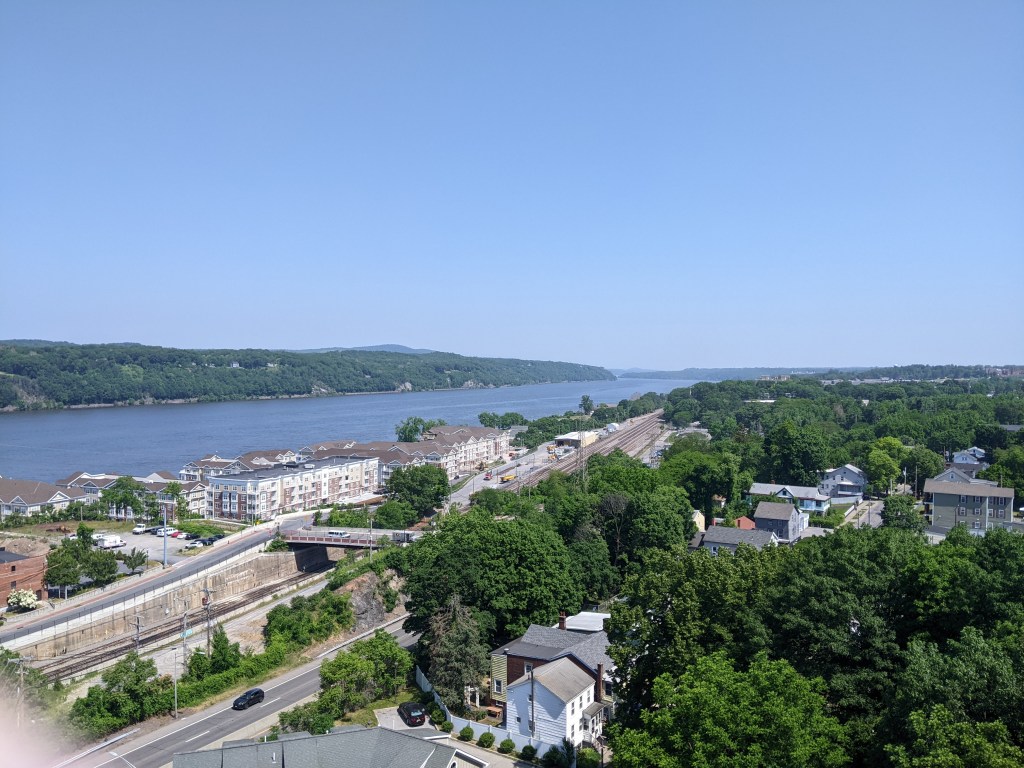
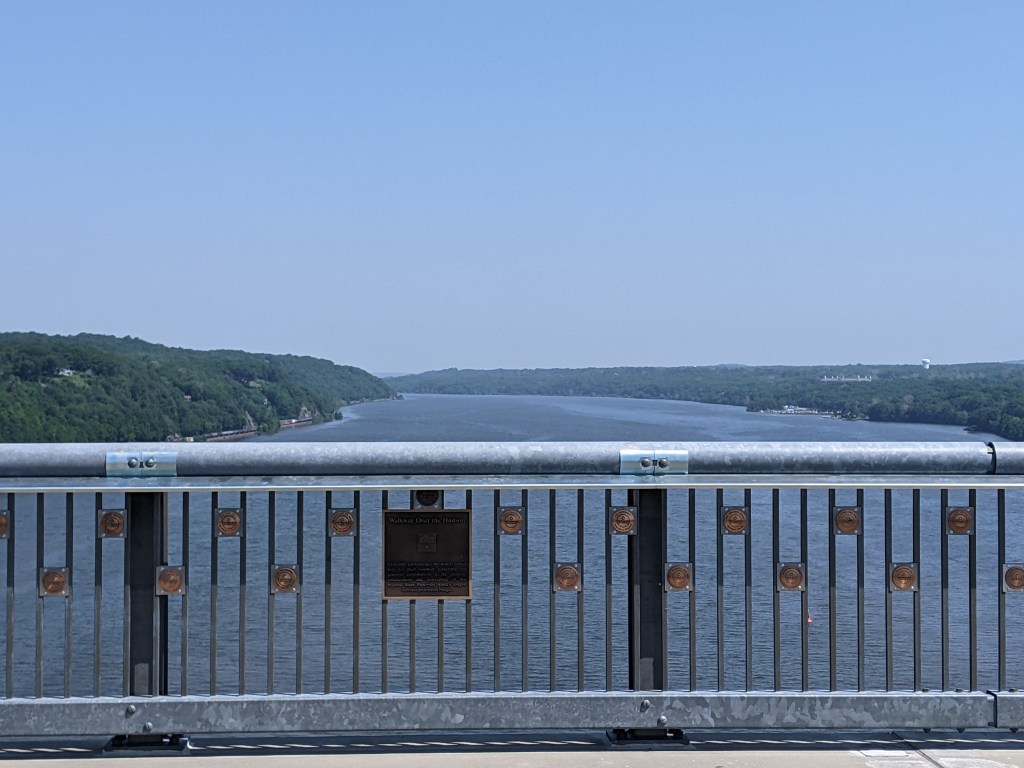
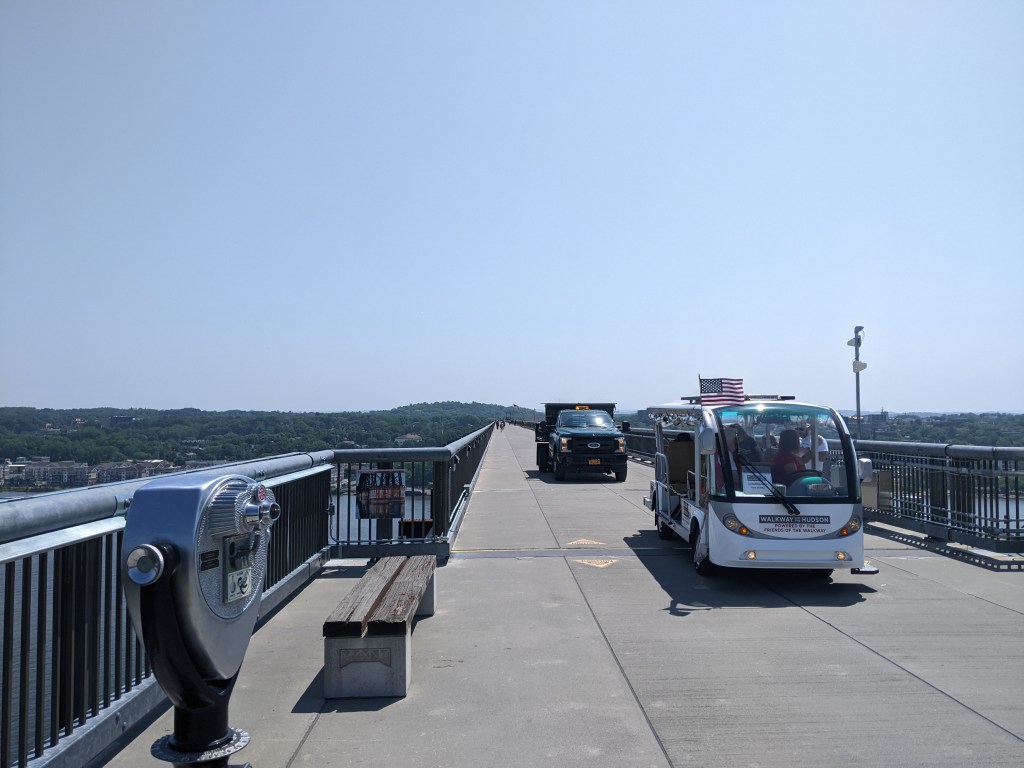
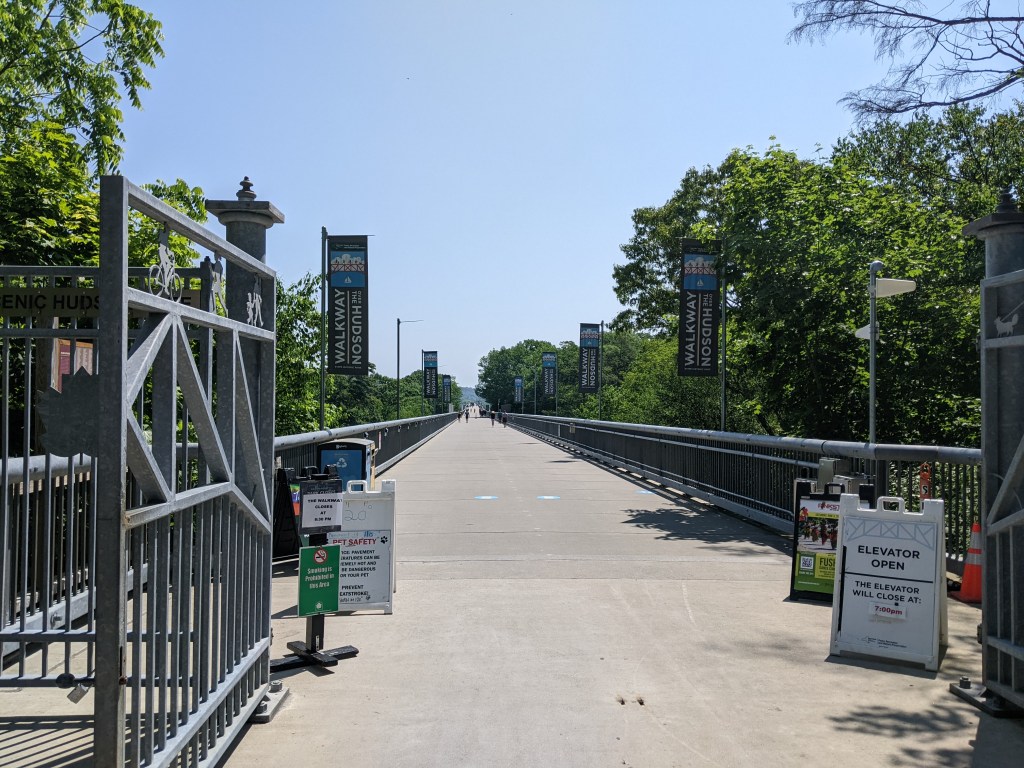
The Walkway Over the Hudson crosses the Hudson River at Poughkeepsie, NY. It opened in 1889 as a railroad bridge. It closed in 1974 after being damaged by fire and reopened as a renovated pedestrian bridge in 2009. It is both a National Historic Civil Engineering Landmark and on the National Register of Historic Places. At 1.28 miles it claims to be the longest pedestrian bridge in the world.
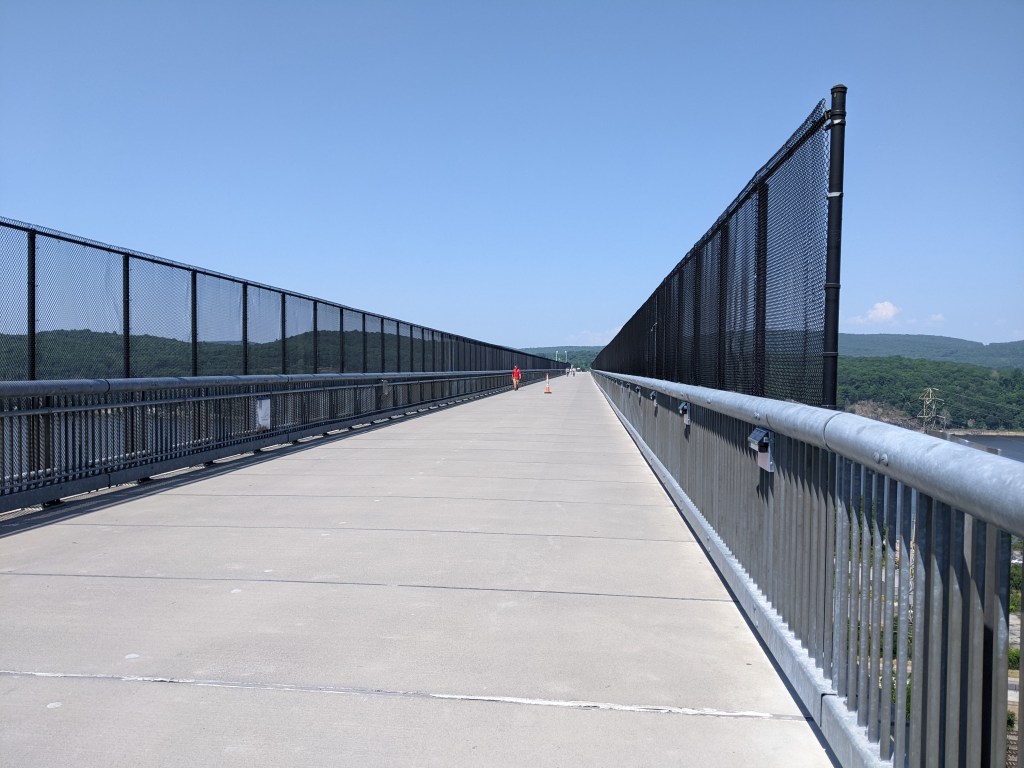
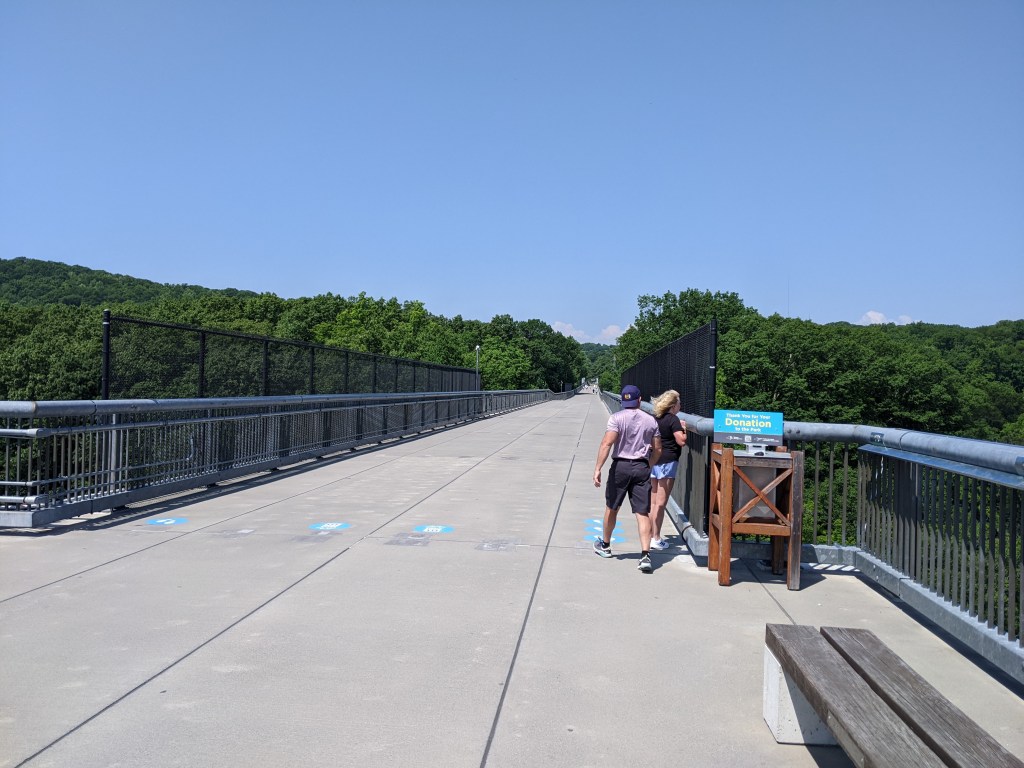
It is also 212 feet above ground or river level. In discussing my experience of climbing to the top of St. Paul’s Cathedral in London, I glossed over the fact that I almost didn’t reach the top due to my discomfort with heights and instead focused on the fact that claustrophobia almost prevented me from coming back down. Proportions and railing heights have a significant impact on whether I can manage heights. The Whispering Walk inside the base of the dome in St. Paul’s was too narrow and enclosed for me to handle the height above the floor (98 feet). The Walkway Over the Hudson, on the other hand, was quite wide having once carried two railroad tracks side-by-side. And so despite being more than twice as high up as the Whispering Walk, I did not experience much trouble with the height. I was more concerned about the possibility of the wind tearing my phone/camera out of my hand and over the edge.
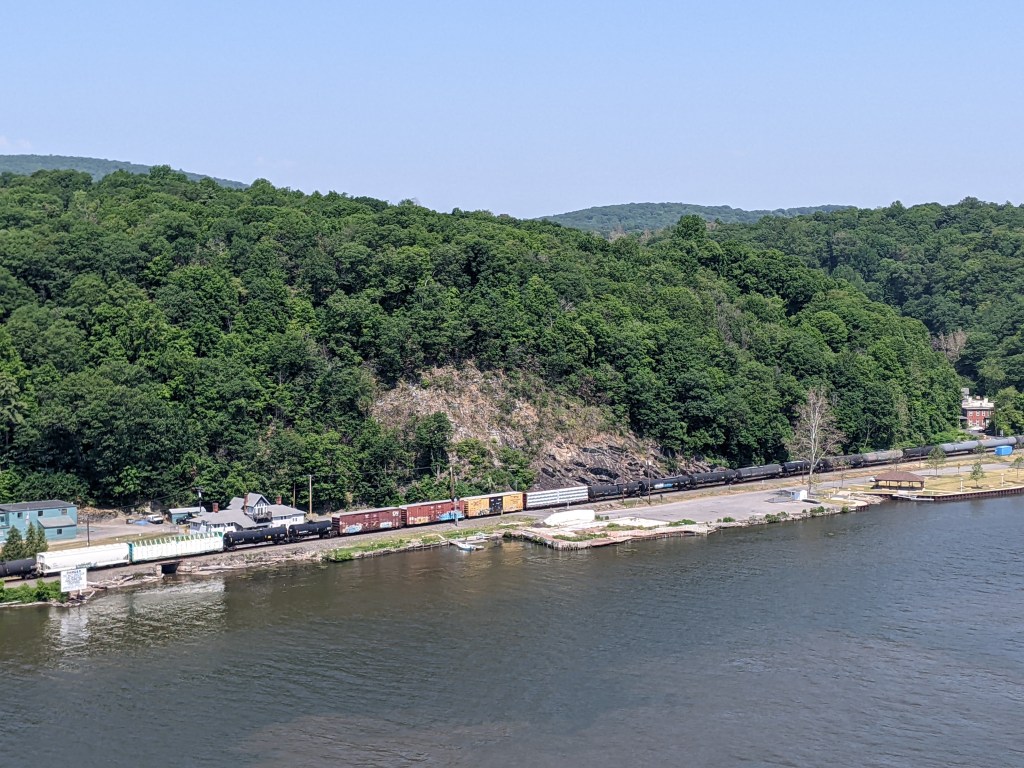
Despite the potential damage that objects falling off the side of the bridge could cause, extra high barriers to prevent that are only located over the railroad tracks. As I’ve discussed in previous posts, some bridges have extra fencing only along portions of their walkways, typically over railroads and sometimes over automobile roads. The extra fencing on the Walkway Over the Hudson is from a time after it was common to curve the top, creating a cage-like feel, but before the need for extra height was incorporated into the design of the bridge itself.
There is no shade on a deck-truss bridge 212 feet off the ground. On a hot, July day, you feel the full force of the sun when taking such an exposed 1.28 mile walk starting at 11:30. If I hadn’t discovered that there was another bridge that I could walk across, I probably would have opted to take the shuttle back.
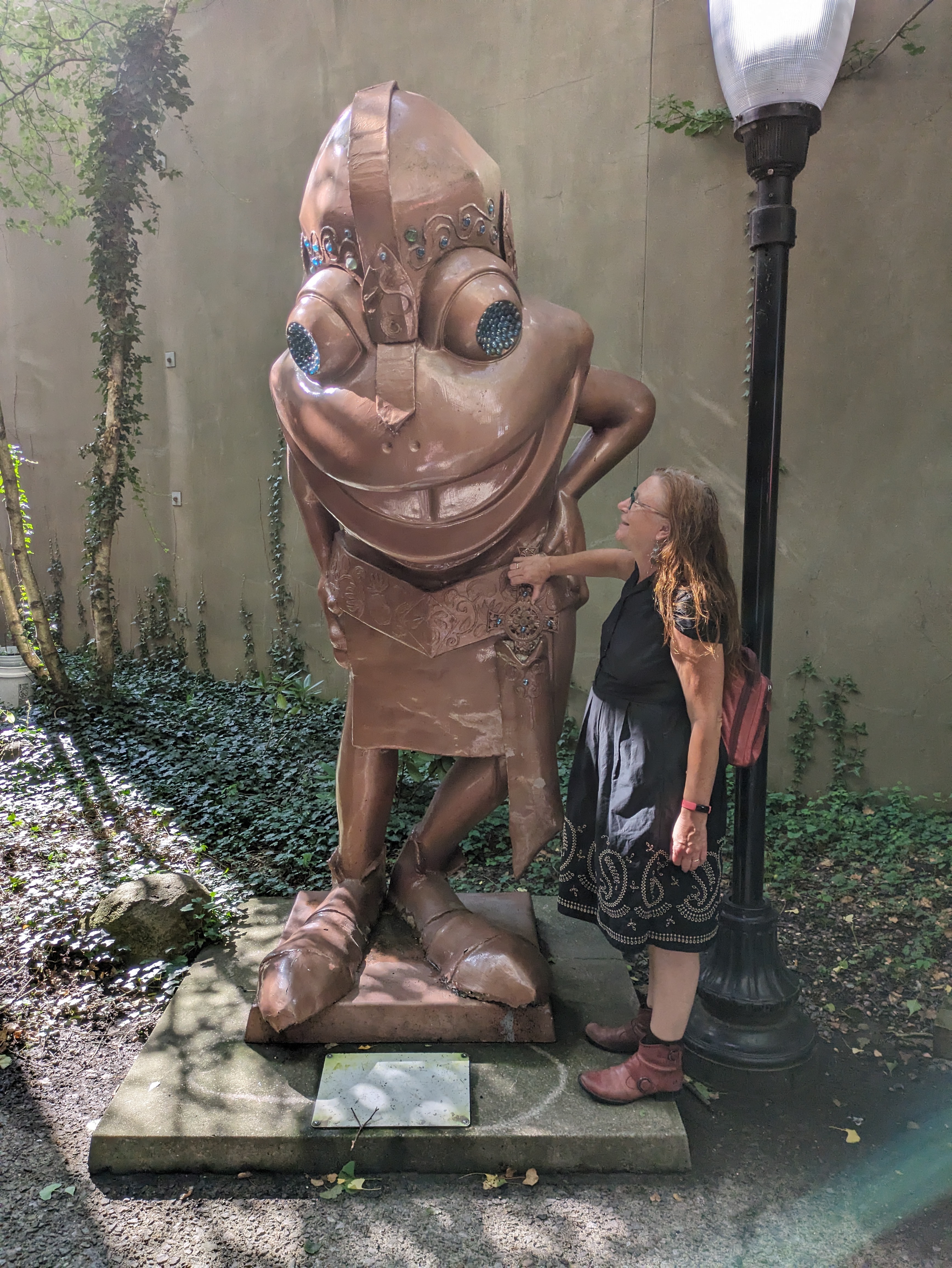
LeapFrog! was a fundraiser in Erie, PA, in 2004. Amy H.’s map helped us find this one in the interior courtyard of the Avalon Hotel in 2023. Shelly then challenged “Art-thurian King” by Jodi Staniunas Hopper to his sword.
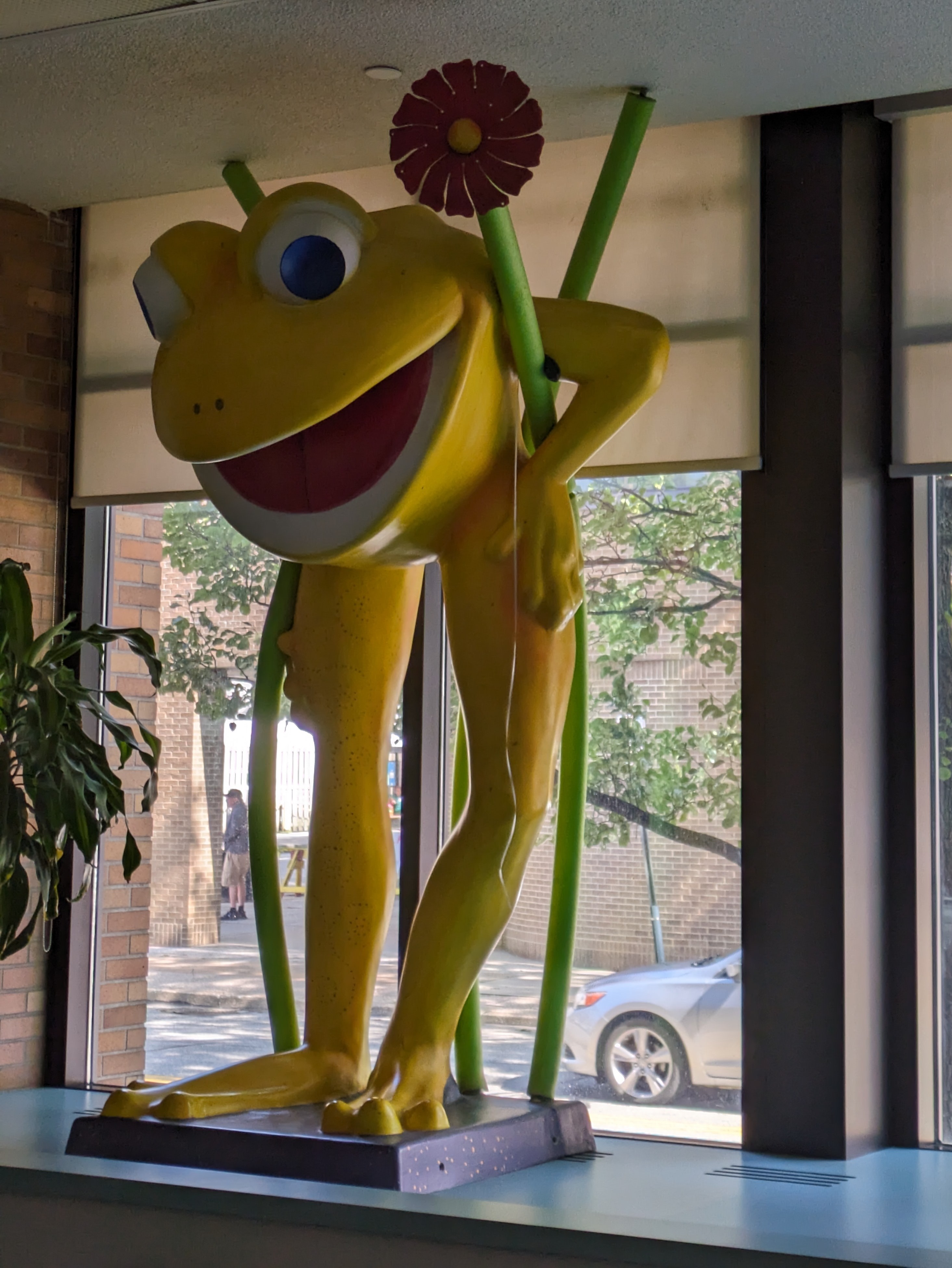
LeapFrog! was a fundraiser in Erie, PA, in 2004. Amy H.’s map pinpointed the building where “Victorian Flower Frog” by MC Gensheimer now resides, but we had to ask a couple people to find it in the cafeteria.
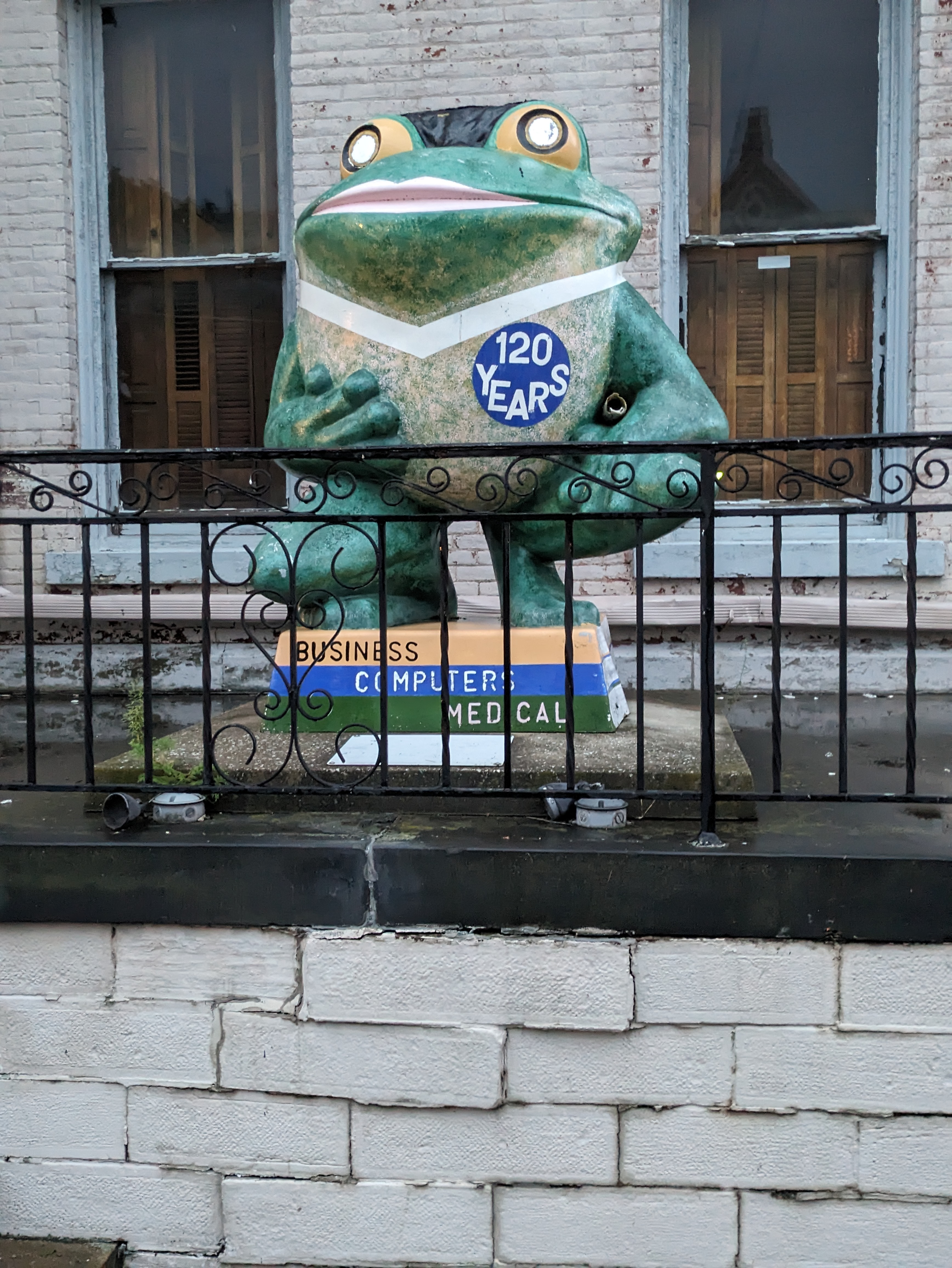
LeapFrog! was a fundraiser in Erie, PA, in 2004. I returned to Erie in 2023 prepared to use Amy H.’s map to find more of Erie’s frogs. However, “E.B. Chelsie” by Mary Pat Lynch was one we stumbled on after thinking we were done looking for frogs for the day.
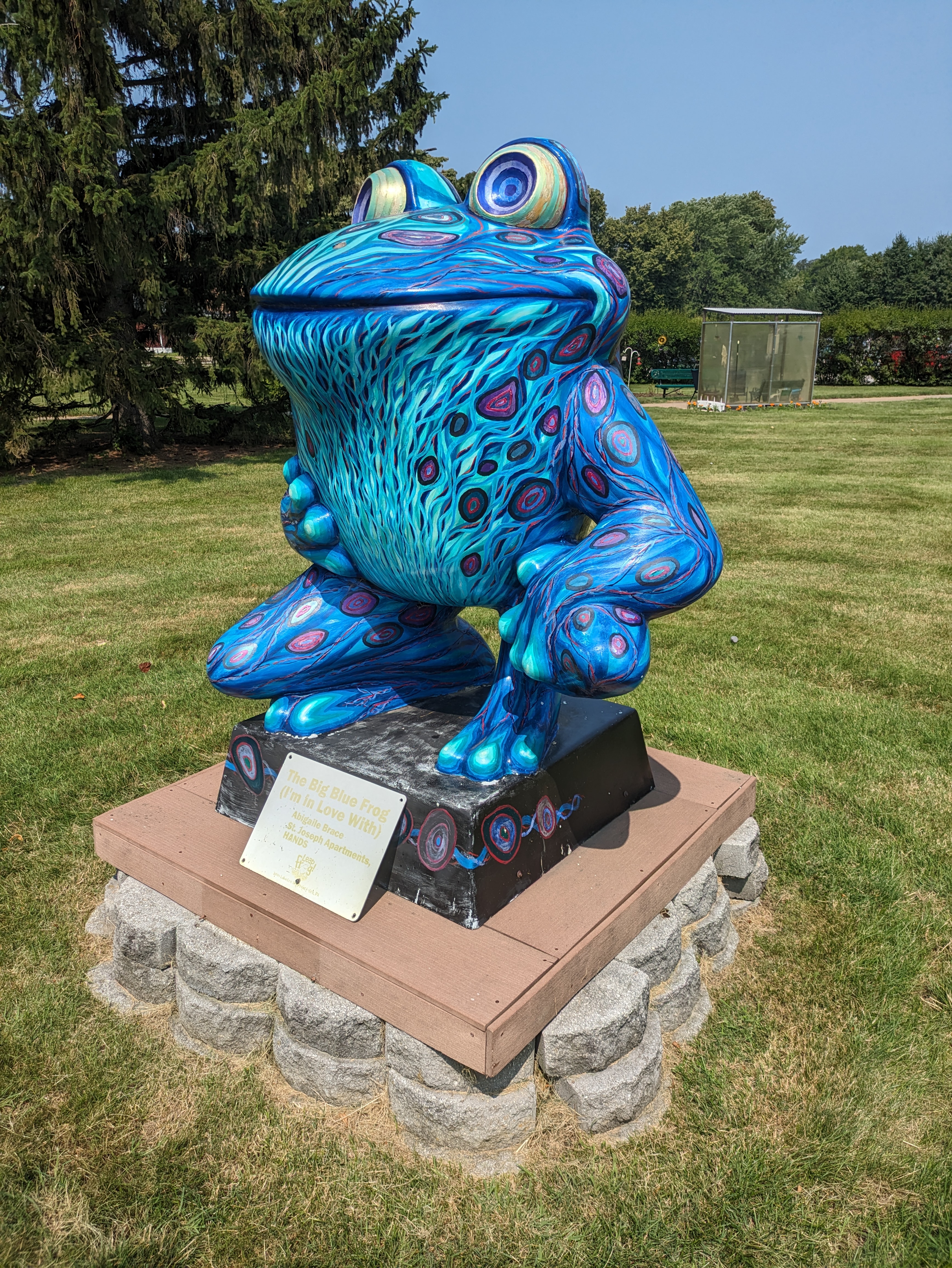
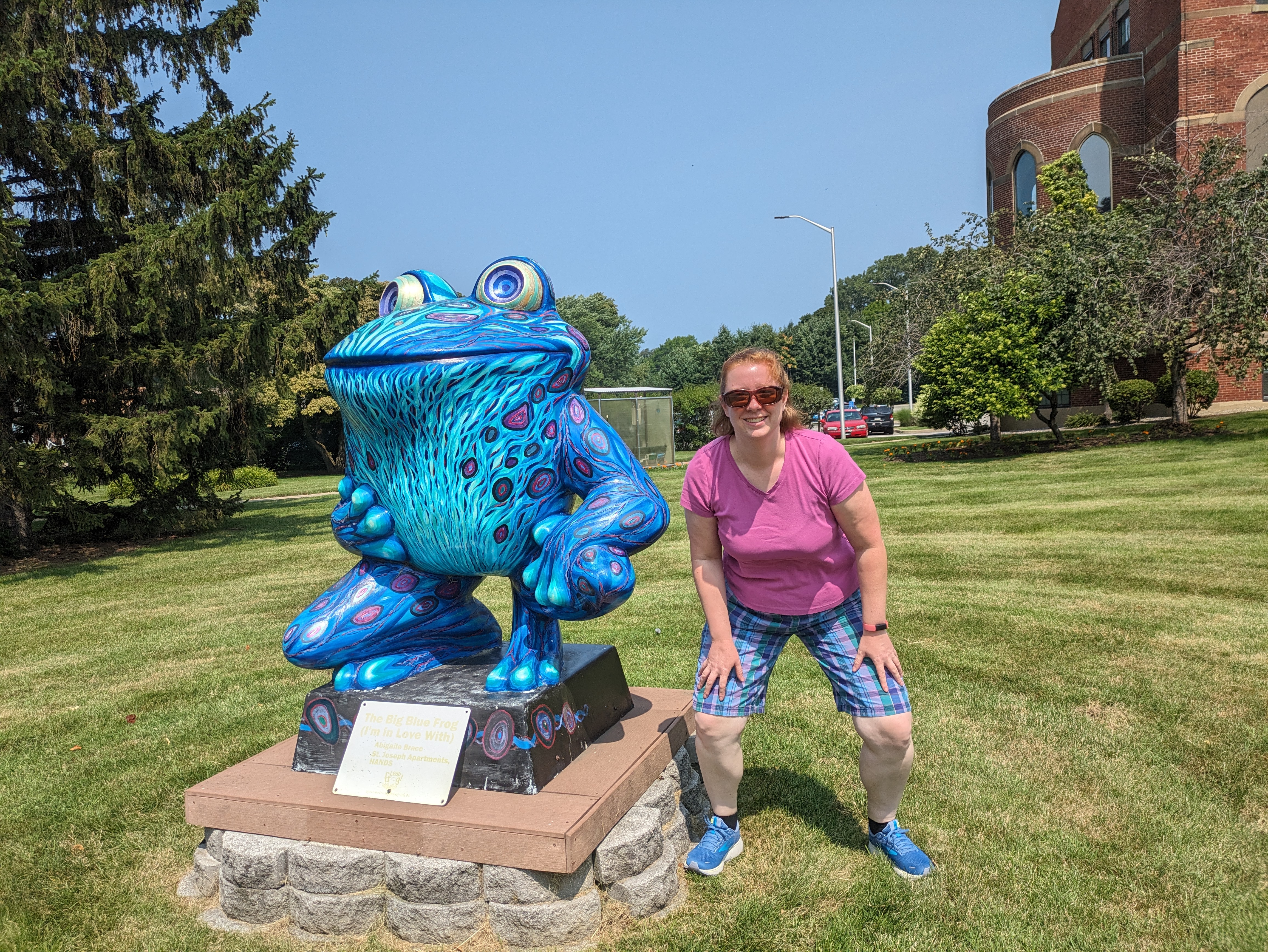
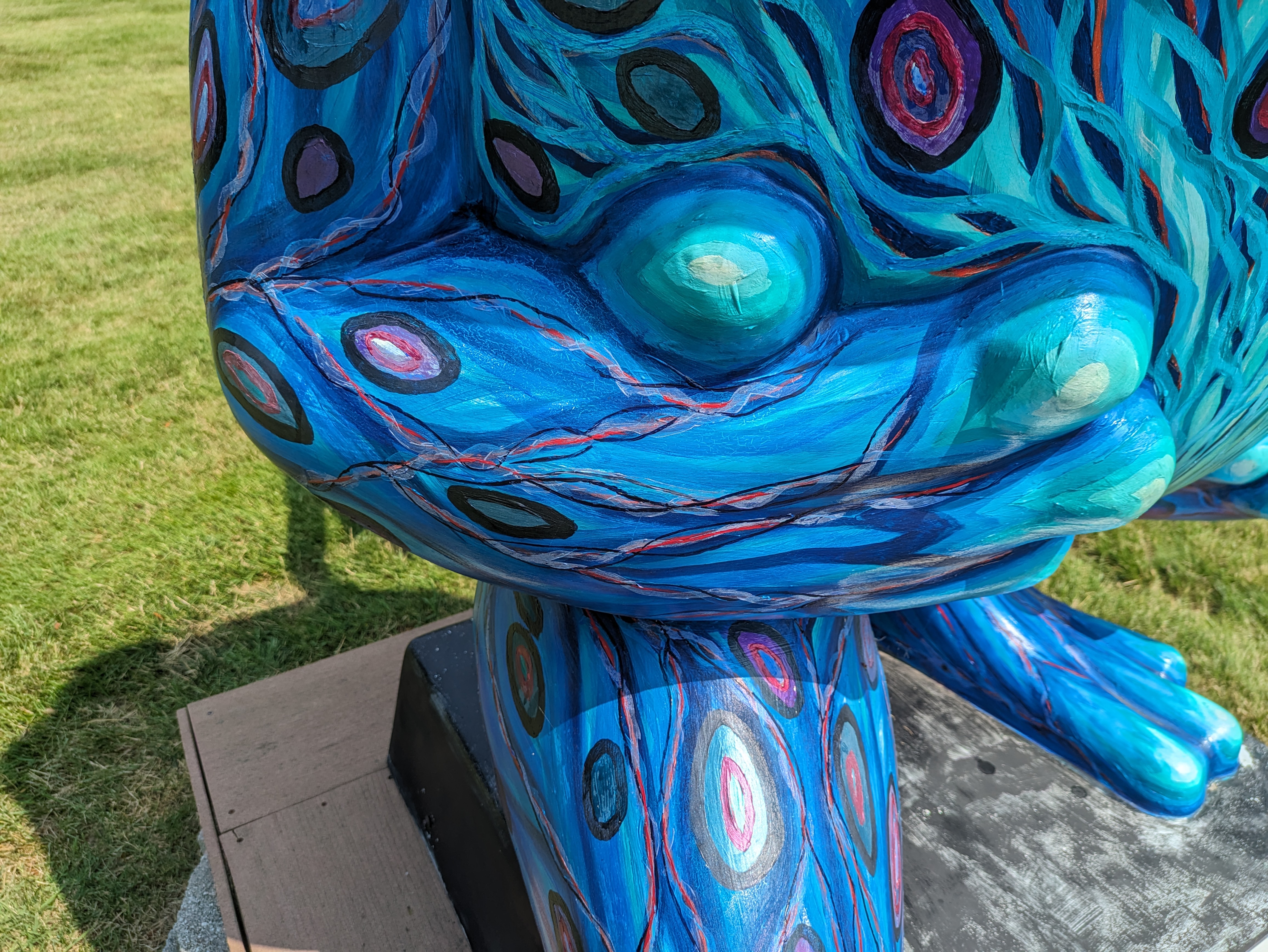
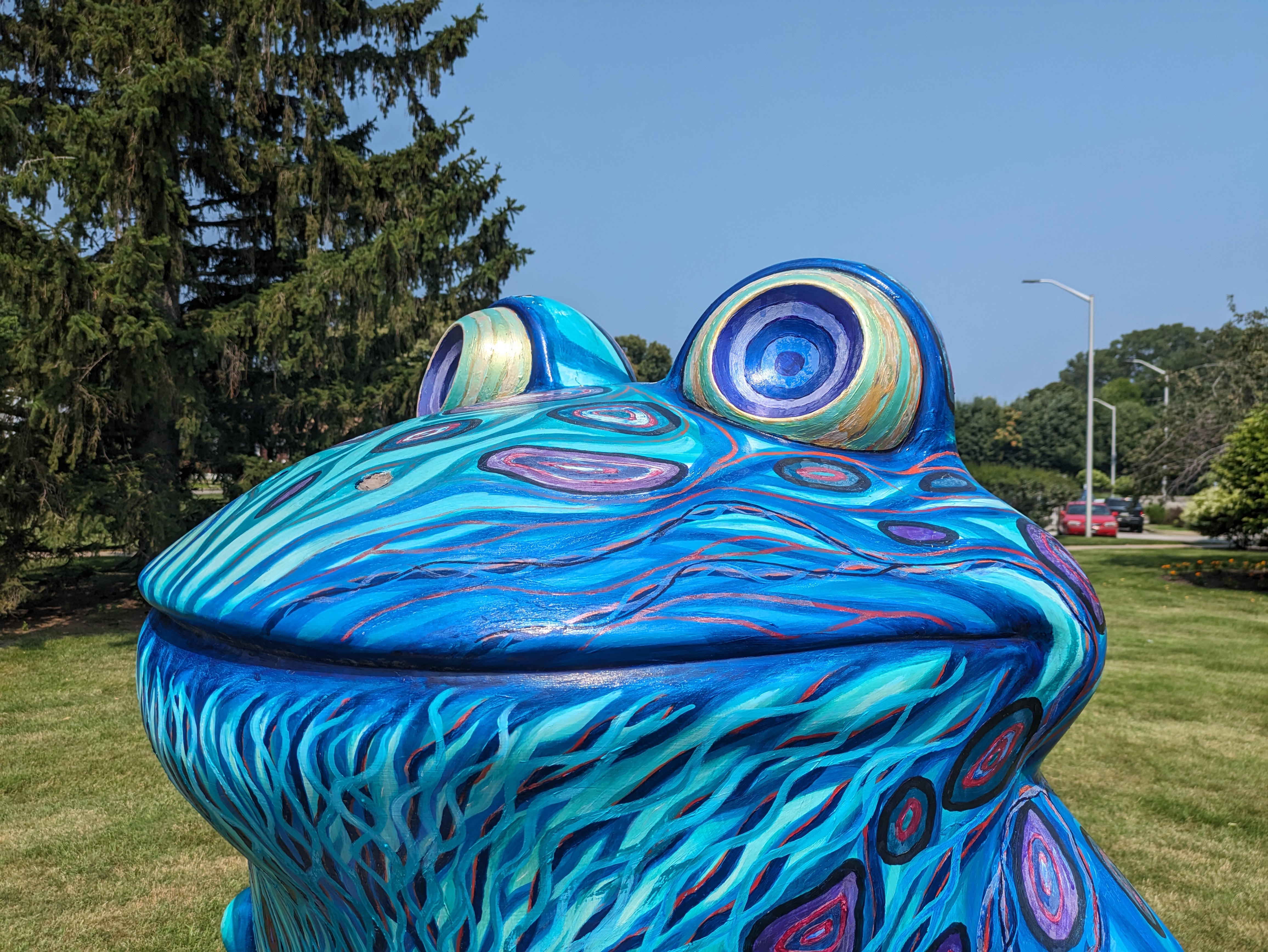
LeapFrog! was a fundraiser in Erie, PA, in 2004. While in 2023, I was prepared to use Amy H.’s map to find more of Erie’s frogs, I found this one in a classic case of driving along to a specific destination and suddenly spotting a frog. “The Big Blue Frog (I’m in Love With)” by Abigaile Brace was sponsored by St. Joseph Apartments, HANDS, and it still sits on their lawn.
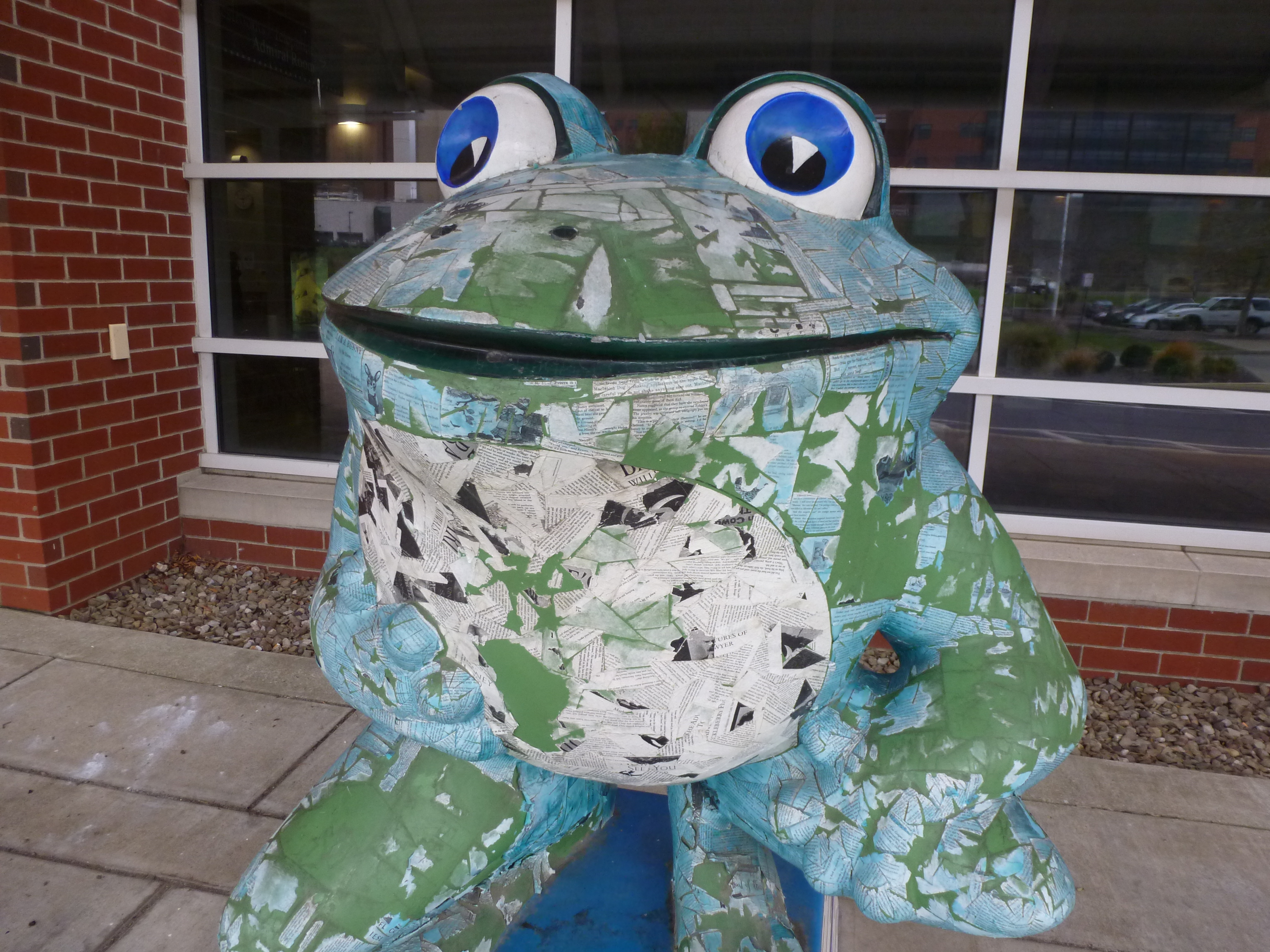
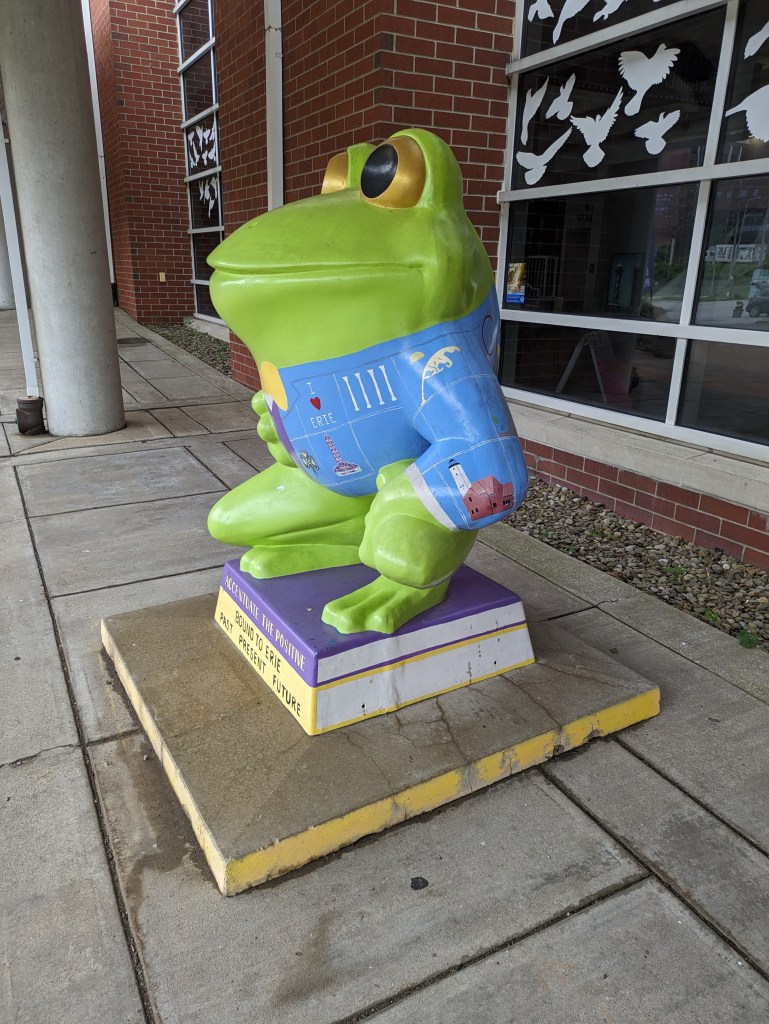
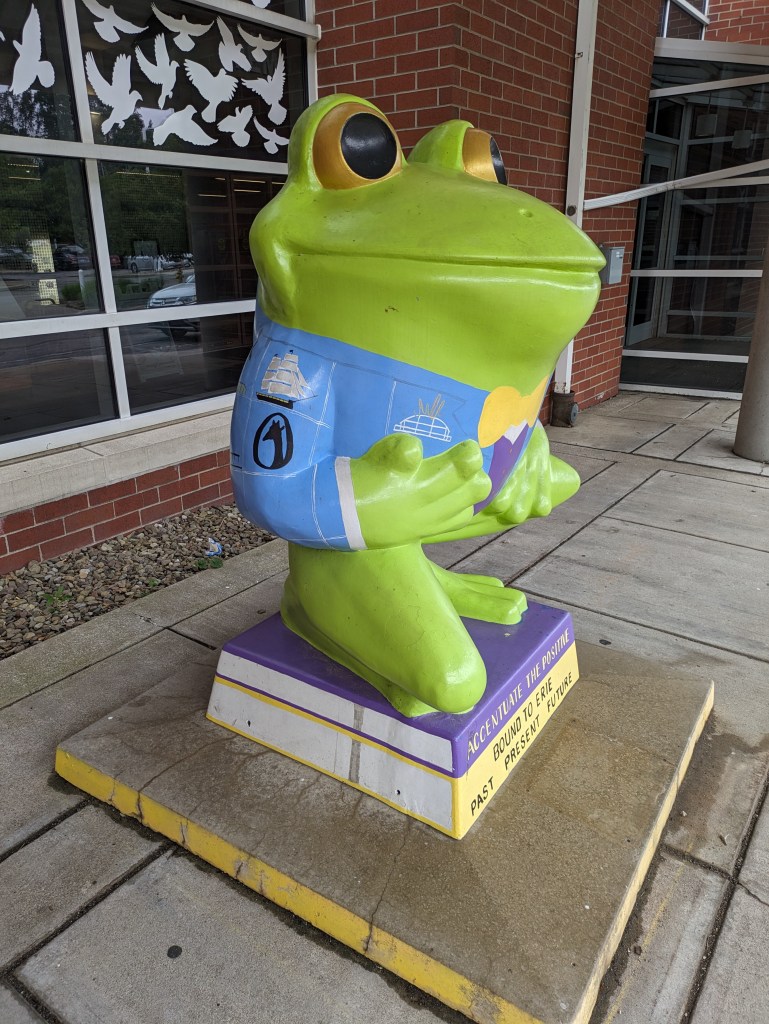
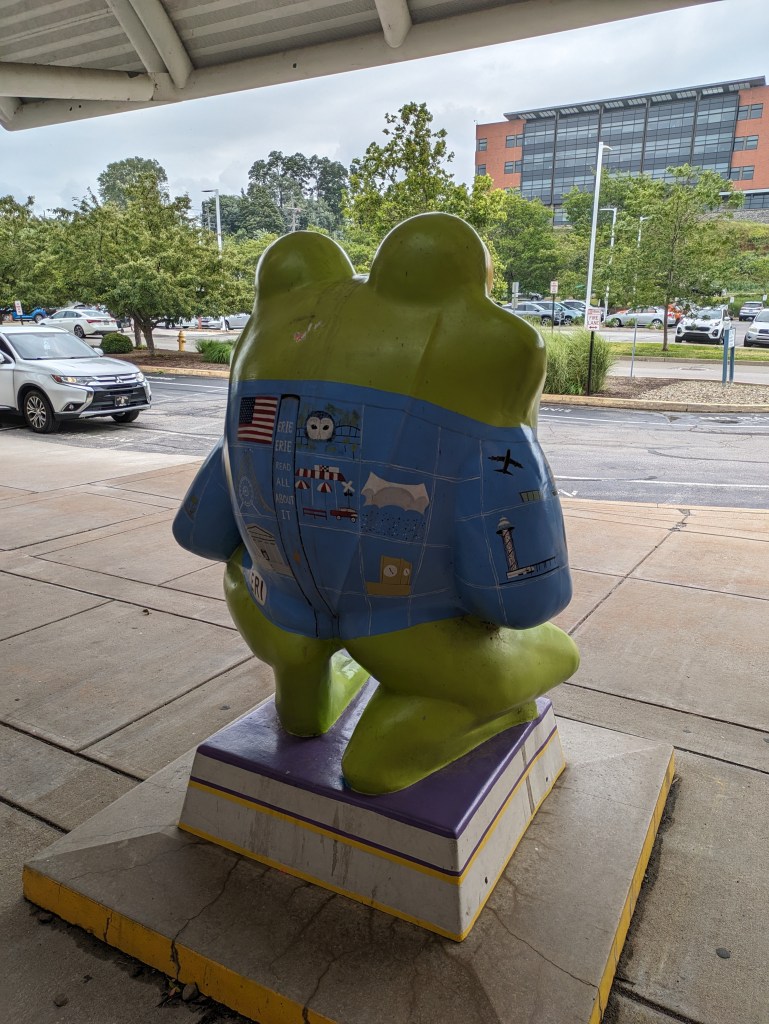
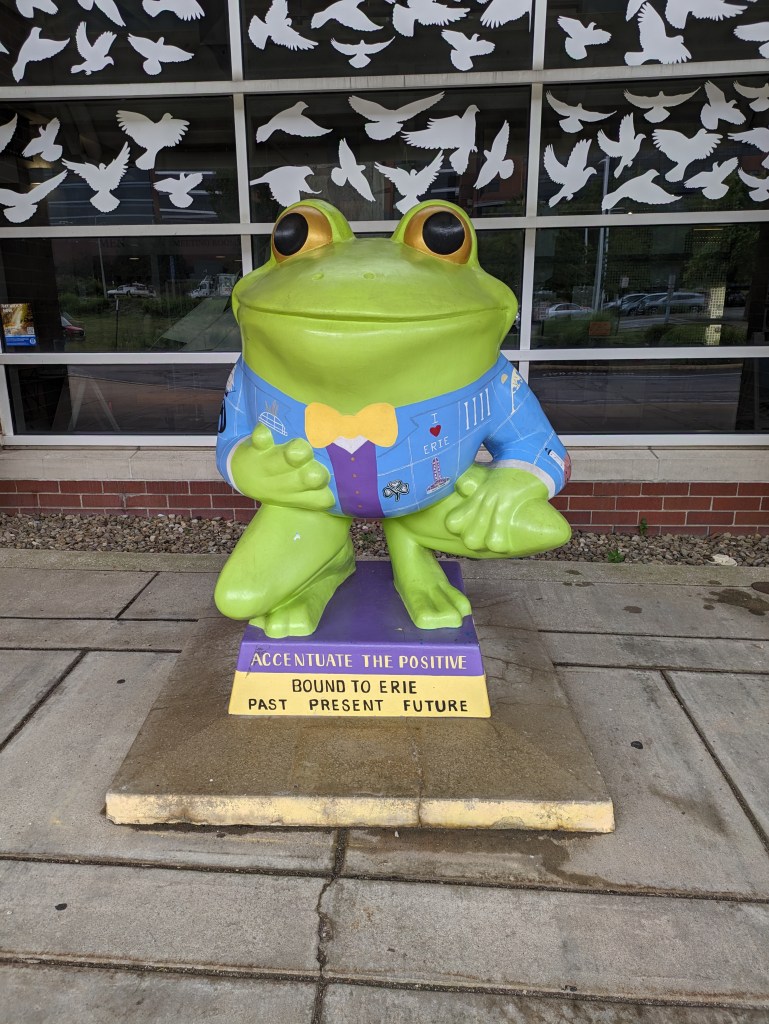
LeapFrog! was a fundraiser in Erie, PA, in 2004. This “Literary Leaper” by Nancy Hall caught my eye in 2012 (above). When I went back in 2023, it had been repainted (below) and is now know as “Accentuate the Positive.” In both visits, it was outside the public library connected to the Maritime Museum. I think I found it in 2012 on my way to the bus station across the street. In 2023, I rediscovered it thanks to Amy H.’s map.
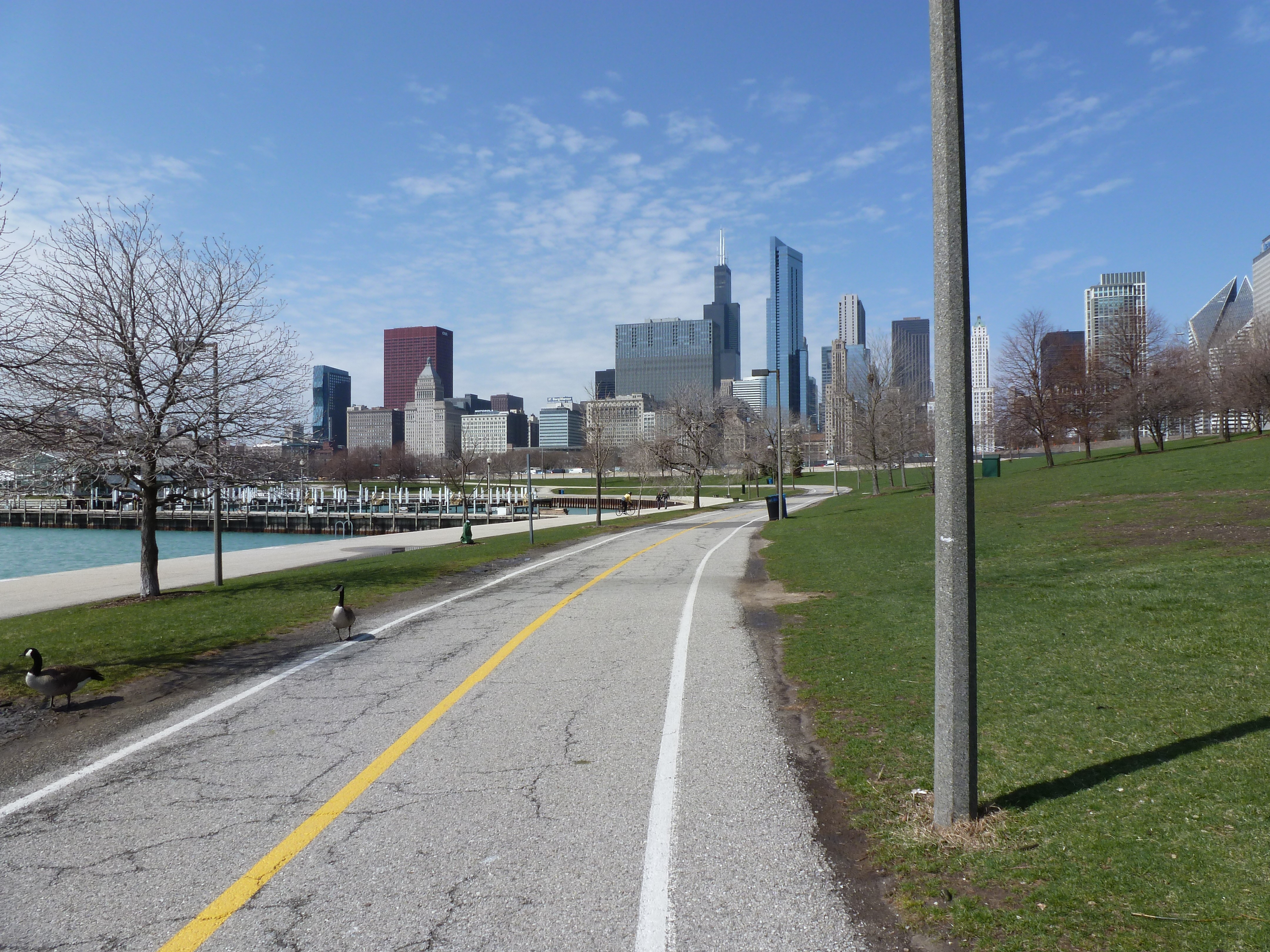
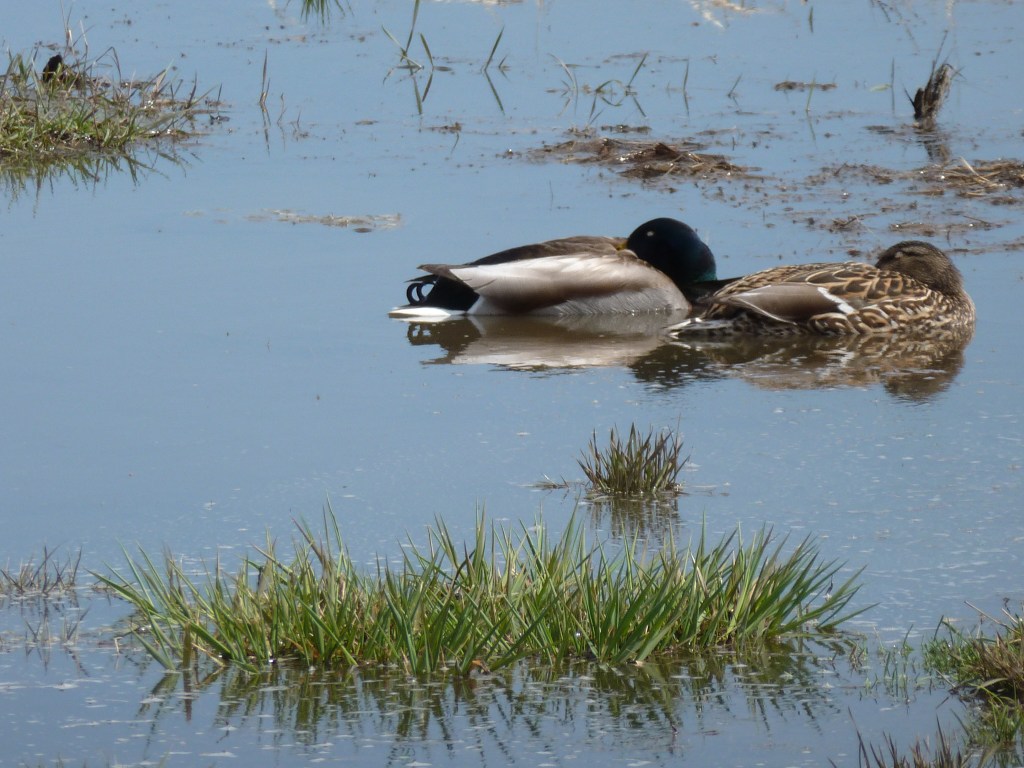
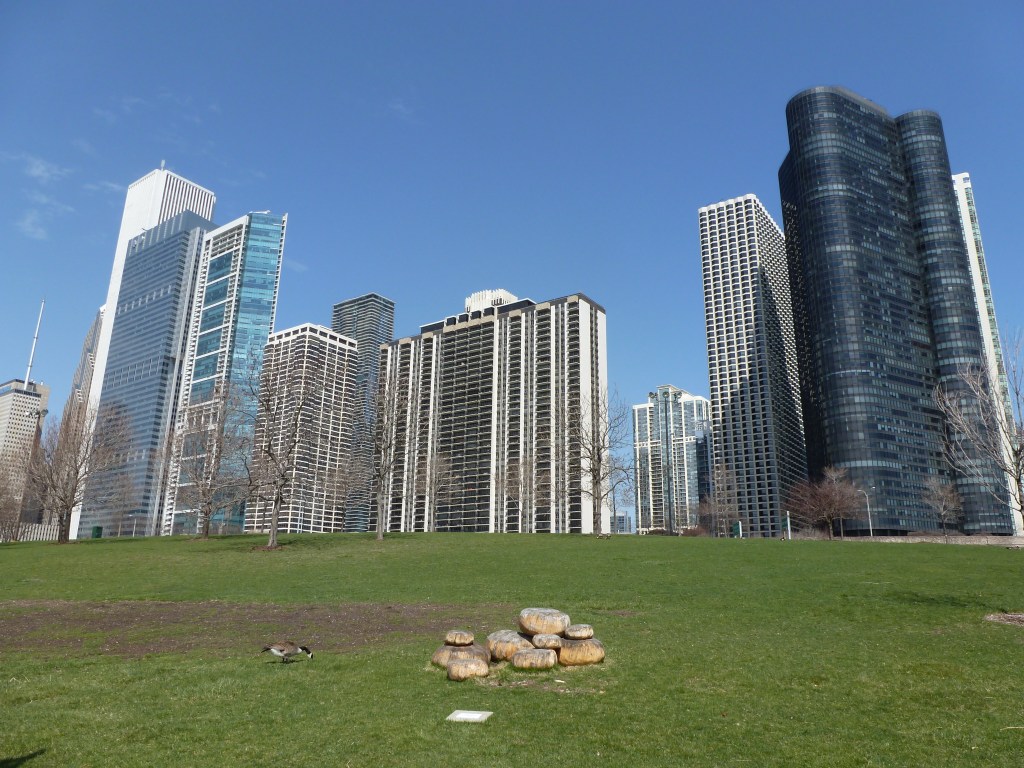
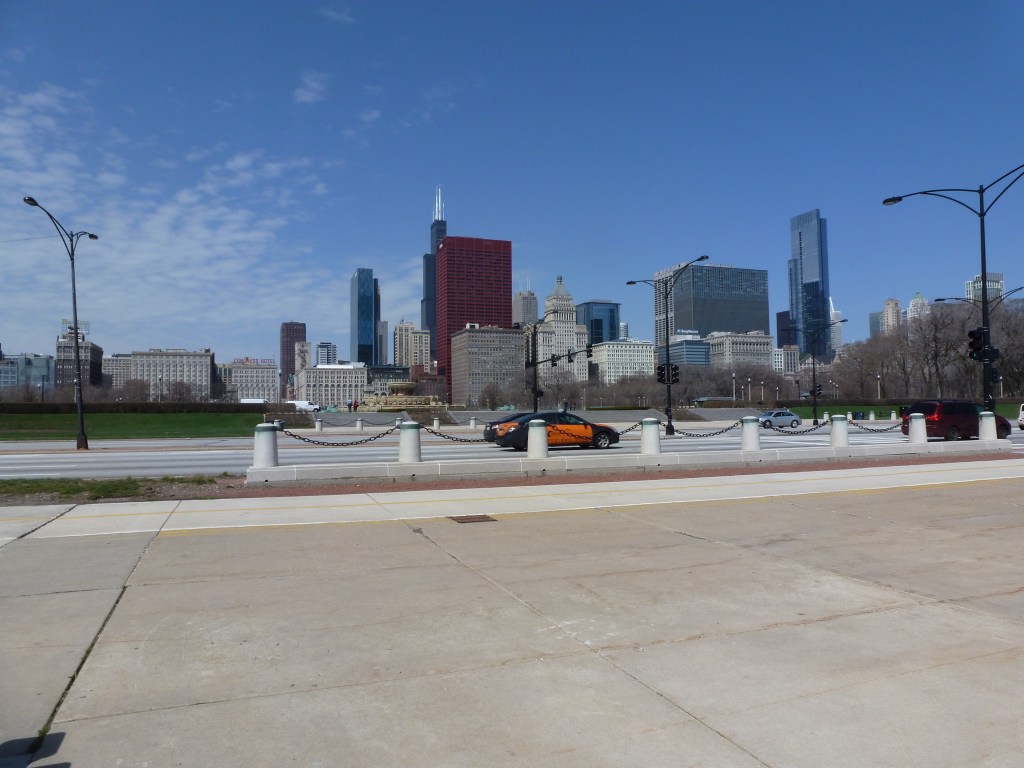
I’ve had multiple aborted experiences in Chicago. In 2013, I aborted an attempt to bike to the 1893 World’s Fair site. In 2019, I aborted an attempt to reach the waterfront. But during the eventually aborted bike ride, I experienced several miles of interesting waterfront. I don’t recall how I got to and from the waterfront for the bike ride as Chicago has the classic US urban problem of using highways to divide the waterfront from the rest of city. Once I was on the waterside, I enjoyed a variety of natural, architectural, and sculptural sights. I even unknowingly captured the remaining buildings from Chicago’s other World’s Fair (post pending).




 urbantraipsing