


Street trees have a tough life. Between extensive pruning away from power, cable, and internet lines, baking in the radiant heat from the surrounding pavement, and (in winter climates) runoff from salt or sand, it is amazing any survive. Yet in some neighborhoods street trees are thriving while in others they are non-existent or barely hanging on.
Street trees first appeared in US cities in the 1840s and 1850s as part of a growing interest in landscape architecture. However, they soon encountered challenges. Fire insurance companies banned street trees in towns that relied on bucket brigades as the trees helped spread fires that decimated swaths of towns. Then, the street trees worst nemesis arrived – the overhead lines. First telephone companies then power companies pruned trees away from their lines. John R. Stilgoe in Outside Lies Magic notes that the resultant loss of street trees created a “nationwide uproar” by 1920. One hundred years later, this conflict between wires and trees is still unresolved.
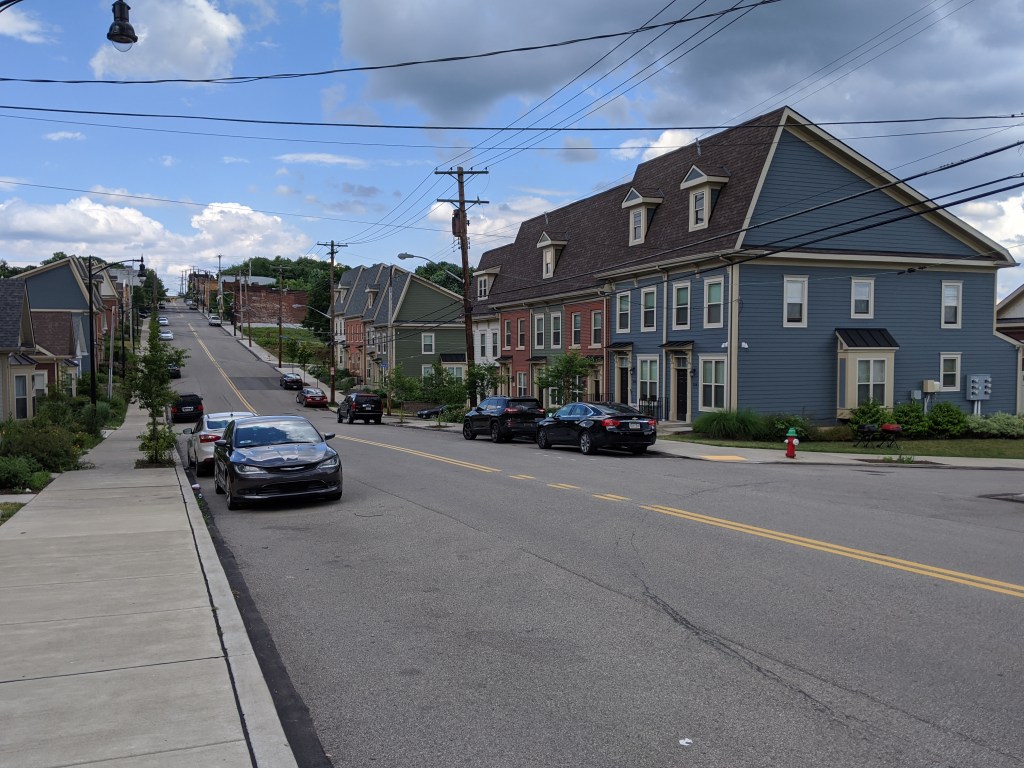
As I traveled around Pittsburgh this spring and summer, I noticed that some neighborhoods seem to have found a way to maintain both old, large canopy street trees and overhead lines. Other neighborhoods appear to struggle to establish and maintain even understory or decorative trees. The pattern of where street trees are thriving versus where they aren’t appears to match the wealth of the neighborhood.
I first noticed this pattern as a child, though I couldn’t articulate it as such at the time. The Pennsylvania town where I partially grew up had a Green Street. The name made a strong impression on me at the time because half of Green Street was very aptly named. It had the oldest and thickest street tree canopy in town. The other half of the street, as I remember it, did not have a single street tree (or yard tree). This dichotomy fascinated me as a child.
Now, looking back on this memory with my urbanist eyes, it seems the perfect example of the correlation between wealth and street trees. The half of Green Street with the street trees was predominantly detached, single-family dwellings with large front, side, and rear yards. The half of Green Street without street trees was predominantly attached homes, possibly with some duplexes, and shallower front yards.
In Pittsburgh, the division is by neighborhood, not block. Neighborhoods like Squirrel Hill, Point Breeze, and Shadyside, which used to contain most of the city’s millionaires rows and continue to have housing values 3-4 times the city’s average, have old, well-established street trees that are somehow able to grow around the overhead lines. Neighborhoods like Homewood and the Hill District, which were victimized by Urban Renewal policies in the ‘50s and ‘60s and now have housing values two-thirds the city’s average, have few street trees, most of which were planted within the last ten years.
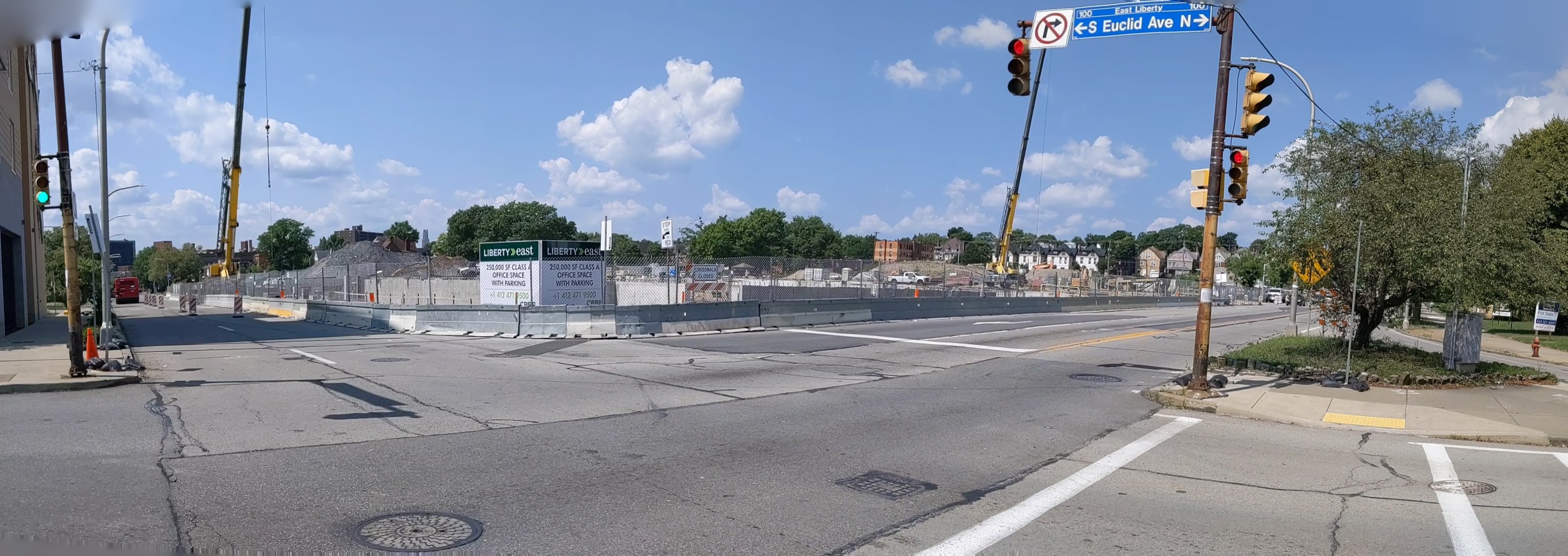
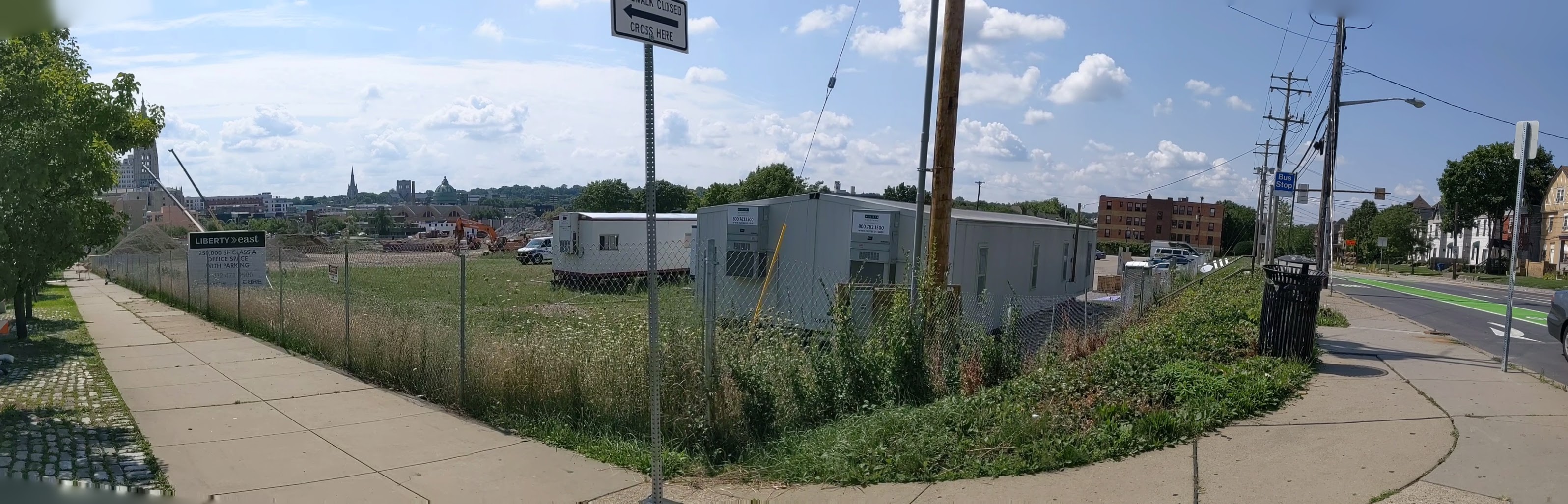
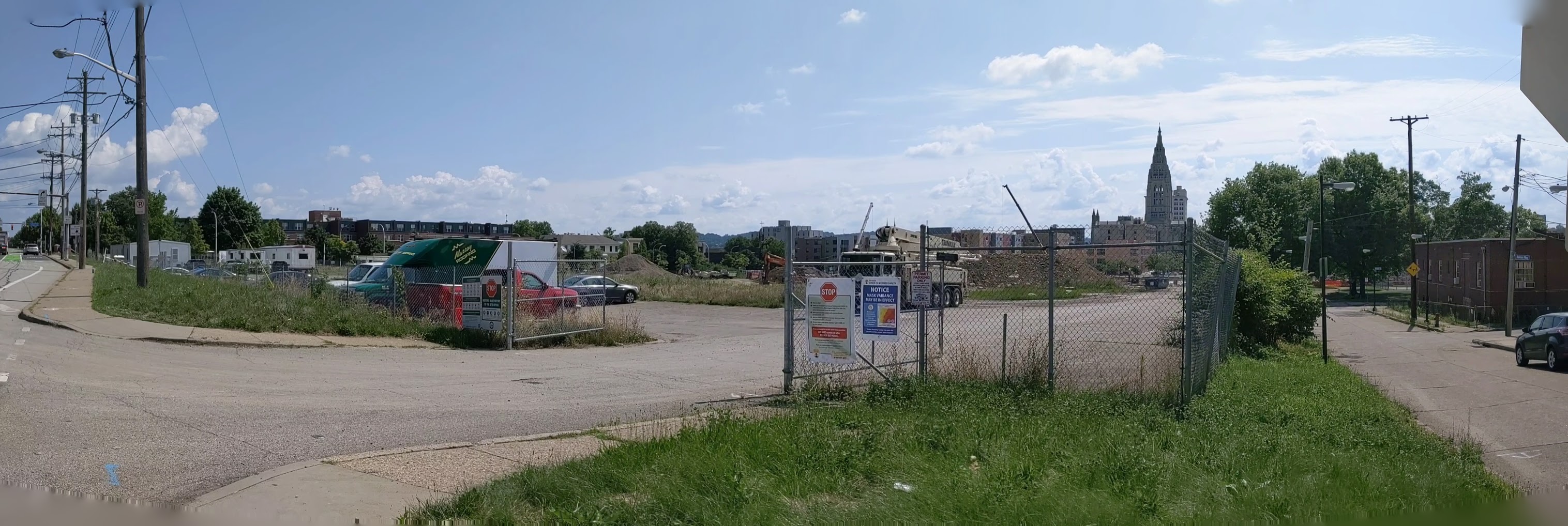
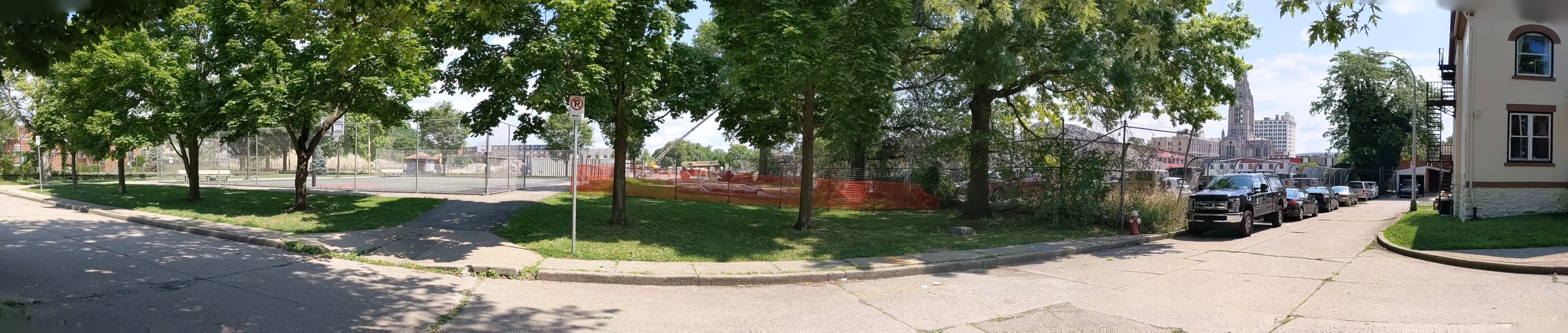
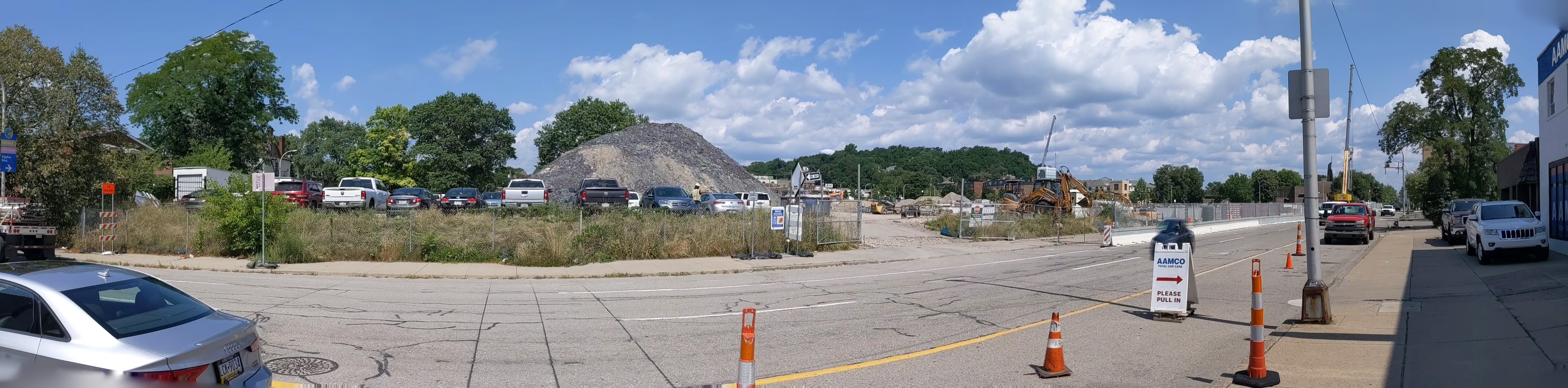
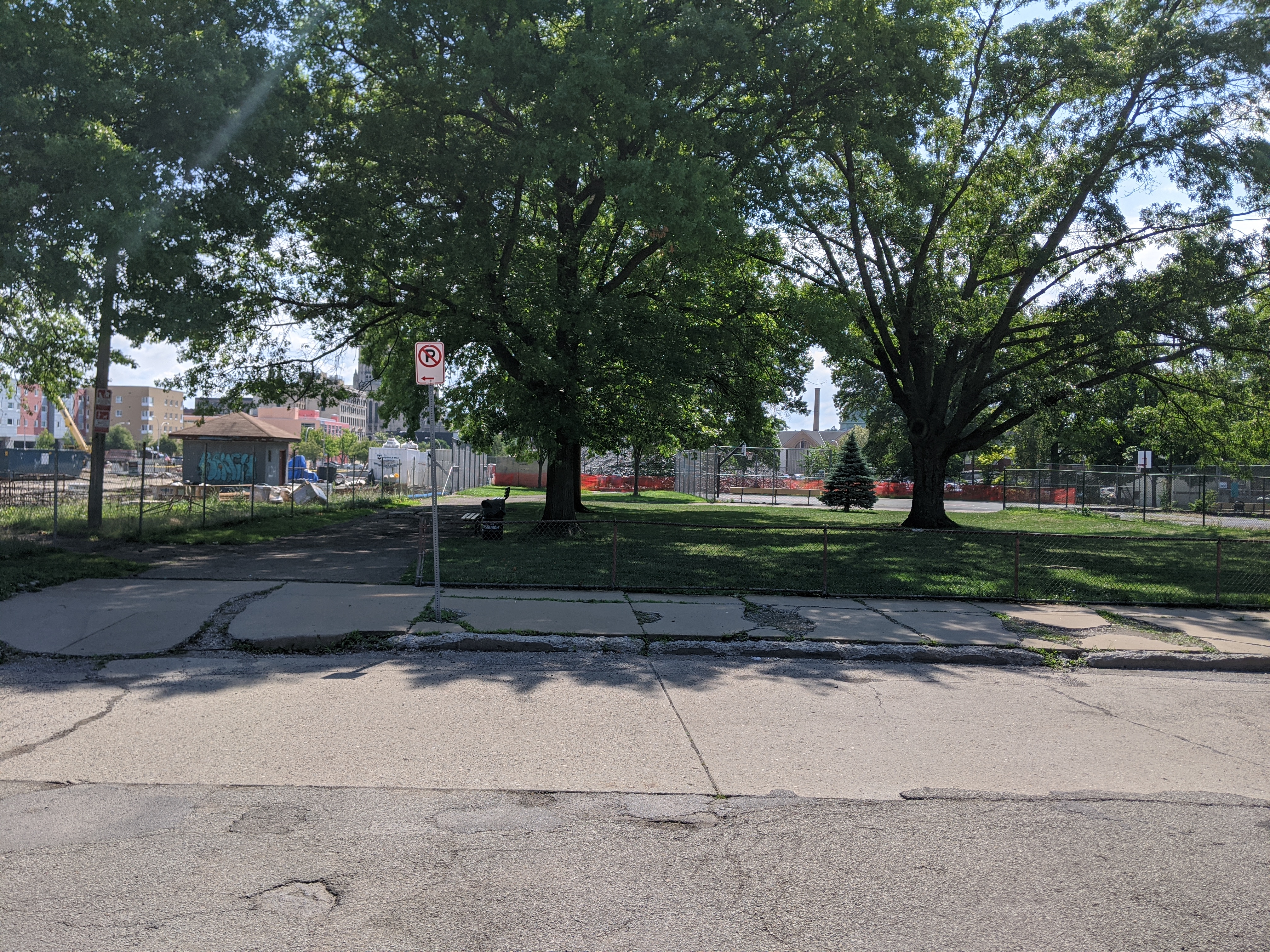
I regret not starting this series on the former Penn Plaza site sooner. I missed opportunities to photograph the former apartments in their neglected, partially occupied state and the demolition of the buildings. Starting with the project several months into construction is a case of better late than never and provides an opportunity to watch how the promise to rebuild the neighborhood park becomes fulfilled.


Penn Plaza in the News
Evictions 2015-2019:
Evictions Highlight Lack of Affordable Housing (City Paper, July 22, 2015)
Residents Meet About Eviction Notices (New Pittsburgh Courier, July 23, 2015)
Evictions Set Standard for Future (WESA, February 29, 2016)
Owners and Displaced Tenants Work out Deal (WTAE, February 29, 2016)
Final Residents Move Out (WESA, March 31, 2017)
Mass Evictions (Downstream, February 15, 2018)
Protesters Call for Action Years After Evictions (KDKA, July 28, 2018)
Dark Stain on the City (Pittsburgh Current, July 30, 2018)
Defining Community (Public Source, September 27, 2019)
Negotiations 2017-2019:
Penn Plaza Support and Action Blog
City, Community, Developer Reach Agreement (WESA, October 27, 2017)
Final Go-Ahead Approved (Post-Gazette, February 12, 2019)
City Seeks Land Swap (WESA, October 4, 2019)
Controversy Continues with Land Swap Proposal (Tribune Review, October 15, 2019)
City Fails to Keep Promises (WESA, October 23, 2019)
City Falling Short on Guarantees (Post-Gazette, October 28, 2019)
Residents Concerned About Park Reconfiguration (Tribune Review, October 28, 2019)
Construction 2019-current:
City Council Clears the Way (WESA, October 29, 2019)
Construction Starts (Pittsburgh Business Times, October 30, 2019)
Groundbreaking Announced for December 2019 (Next Pittsburgh, October 30, 2019)








Lower Hill in the News:
Mayor’s Press Release (May 5, 2020)
Penguins Stop Development (Public Source, May 14, 2020)
Penguins Pull Out (Trib, May 14, 2020)
Penguins Back Out (WPXI, May 15, 2020)
Penguins Cease Redevelopment (Patch, May 15, 2020)
Penguins Halt Lower Hill Development (WESA, May 18, 2020)
Mayor’s Press Release (May 20, 2020)
Mayor Urges URA to Approve Development (Trib, May 20, 2020)
URA Explanation of Community Benefits
URA Board Votes to Move Lower Hill Development Forward (May 21, 2020)
URA Board Approves Development Project (WPXI, May 21, 2020)
Never Mind, Penguins Back In (WTAE, May 21, 2020)
President Trump Tweets about BRT Grant Award (May 29, 2020)
Previous posts in series:
After introducing my series of Keeping an Eye on Uptown, the CAP, and the Lower Hill, I remembered that Hazelwood is another neighborhood expected to experience changes over the next several years. Between Hazelwood’s main street (2nd Avenue) and the Monongahela River is a 178-acre site of the former Jones and Laughlin Steel Company. Most of the structures from the mill have been demolished, leaving a large brownfield. In 2002, the site was purchased for redevelopment by Almono LP (at the time, an entity made up of four Pittsburgh foundations). After years of planning and a rebranding of the site as Hazelwood Green, a series of public streets and the first building opened for use in 2019. Construction is underway for more buildings and a public plaza.
During the planning and preparation stages, a question arose as to the effects of this redevelopment on the surrounding neighborhood. Hazelwood is one of Pittsburgh’s neighborhoods that has experienced high vacancy rates and subsequent demolition in its residential and business districts. While the building stock of the neighborhood has experienced a long downward trend, the community of people is strong. Only time will tell if the redevelopment of Hazelwood Green will connect with this community or if Hazelwood Green will become and isolated spot of prosperity for others.
Through two more photographic series, Keeping an Eye on Hazelwood Green and Keeping an Eye on Hazelwood, I will periodically document the physical changes to the former steel mill site and to the surrounding neighborhood.


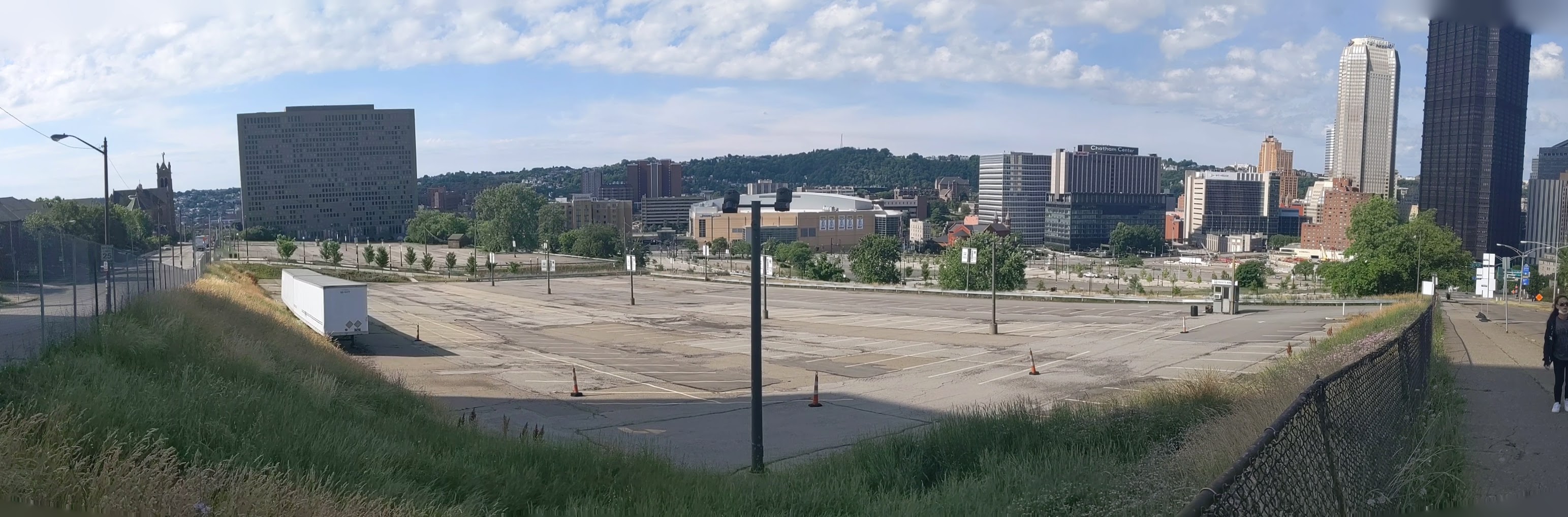
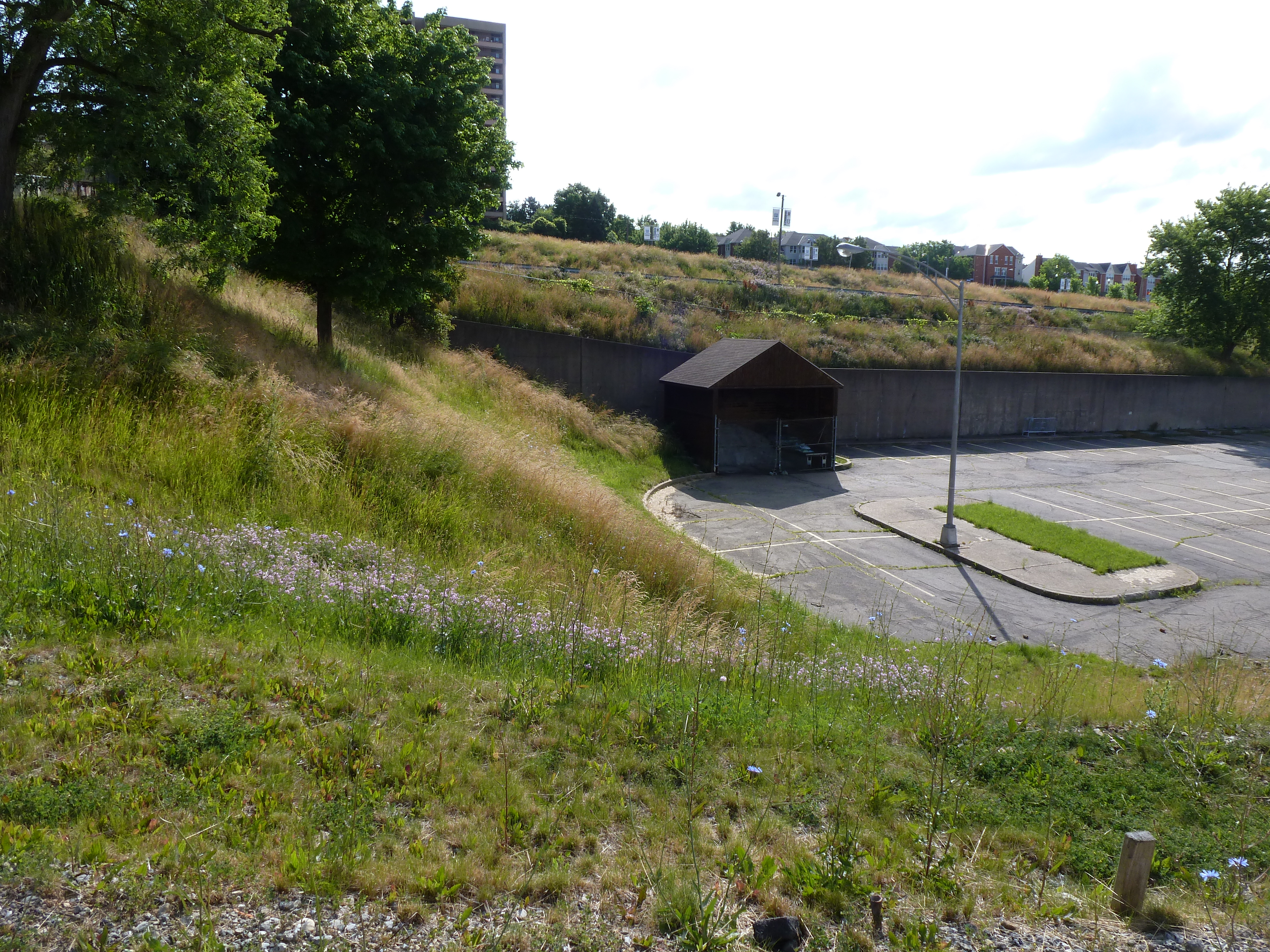
Lower Hill Redevelopment in the news:
October 8, 2019, Post-Gazette: Lacing the skates: Former Civic Arena redevelopment may be ready to roll
October 9, 2019, Post-Gazette: First wave of ex-Civic Arena site redevelopment would add garage, music and maybe money for Hill projects
October 10, 2019, KDKA: Urban Redevelopment Authority To Vote On Civic Arena Site Plans
October 10, 2019, Tribune-Review: Pittsburgh redevelopment authority postpones vote on construction at Civic Arena site
October 18, 2019, Tribune-Review: Pittsburgh authority gives preliminary OK for development of former Civic Arena site
October 18, 2019, WESA: URA Vote Sets the Stage for Lower Hill Development in Spring 2020
October 18, 2019, WPXI: City board green lights former Civic Arena site redevelopment
October 21, 2019, Arena Digest: Civic Arena Redevelopment Plan Moves Forward
Lower Hill Redevelopment project sites:
Sports and Exhibition Authority
 urbantraipsing