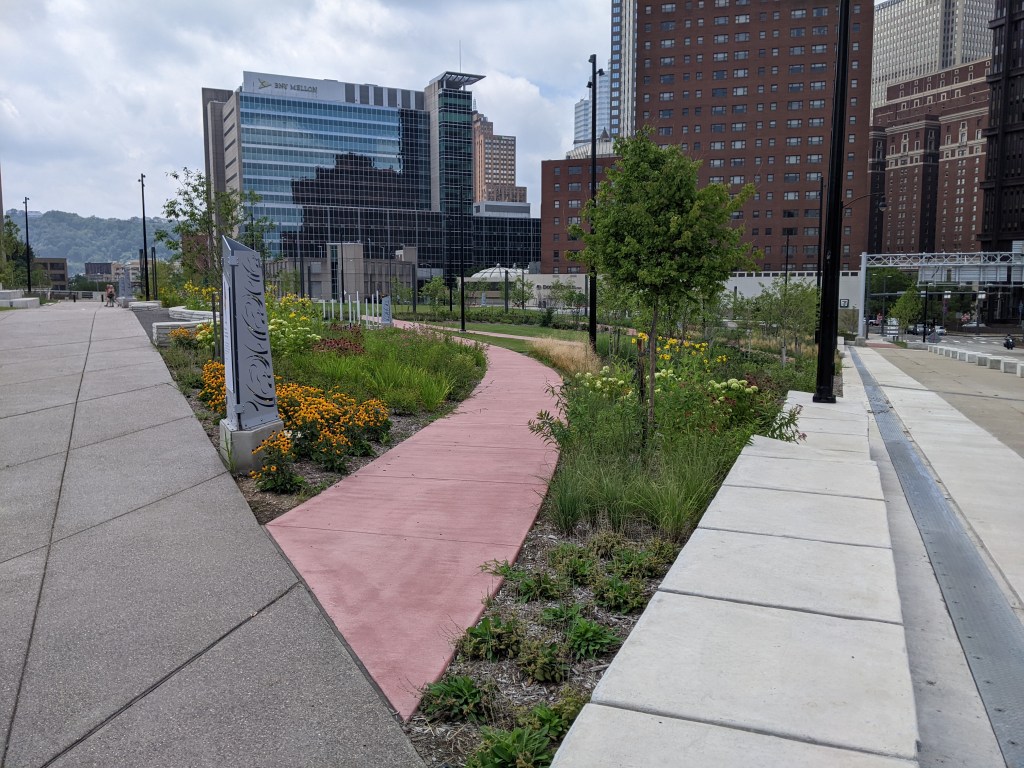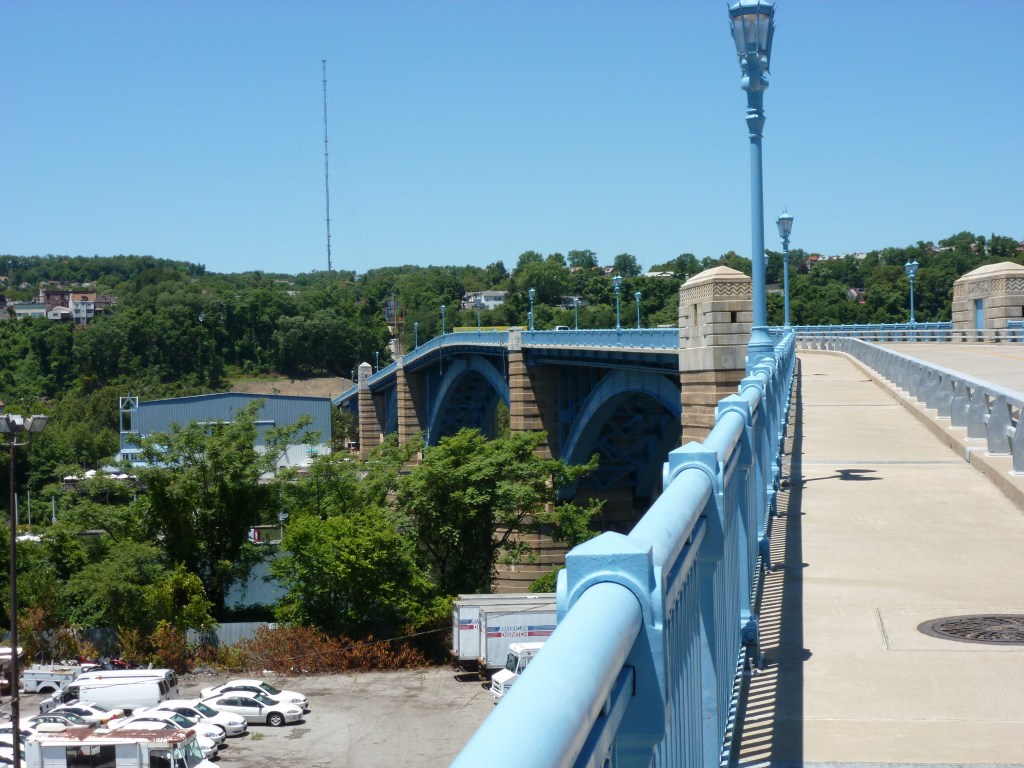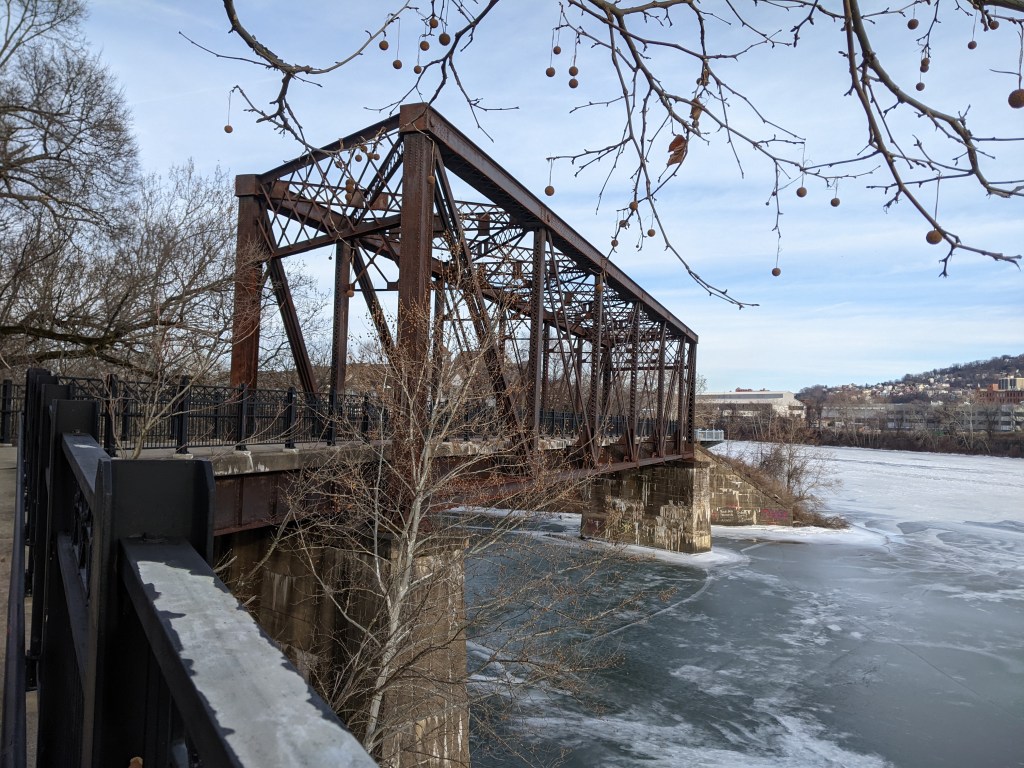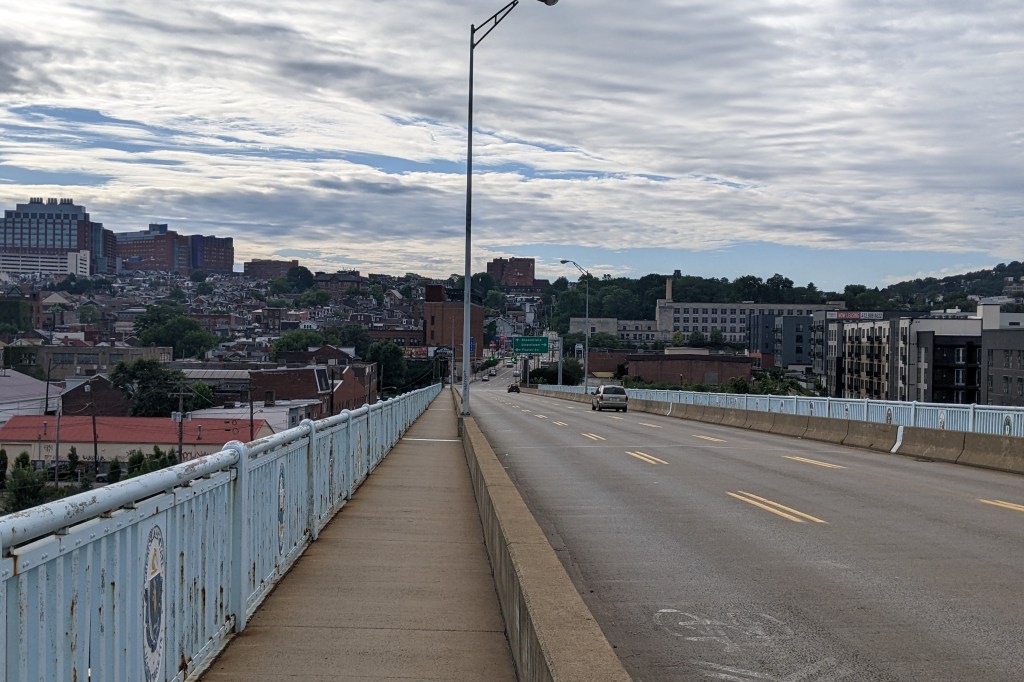
What is a Bridge? Millvale Edition

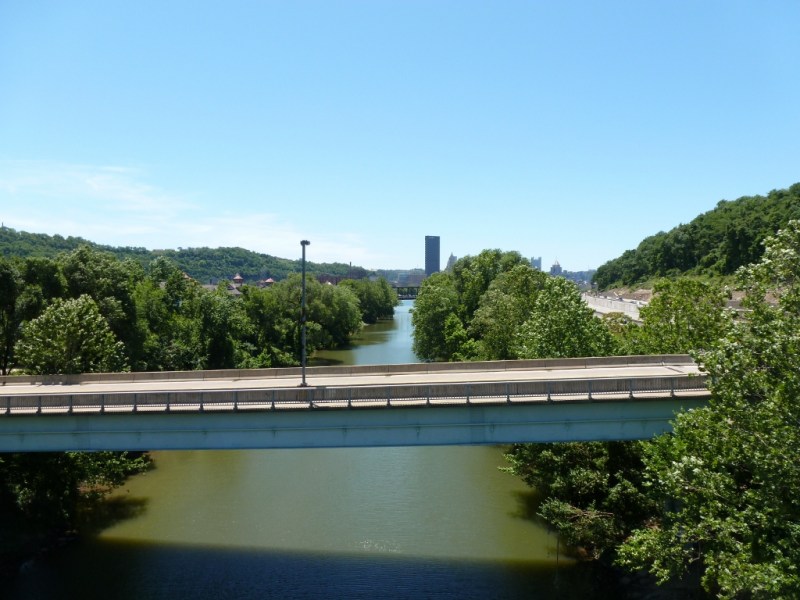
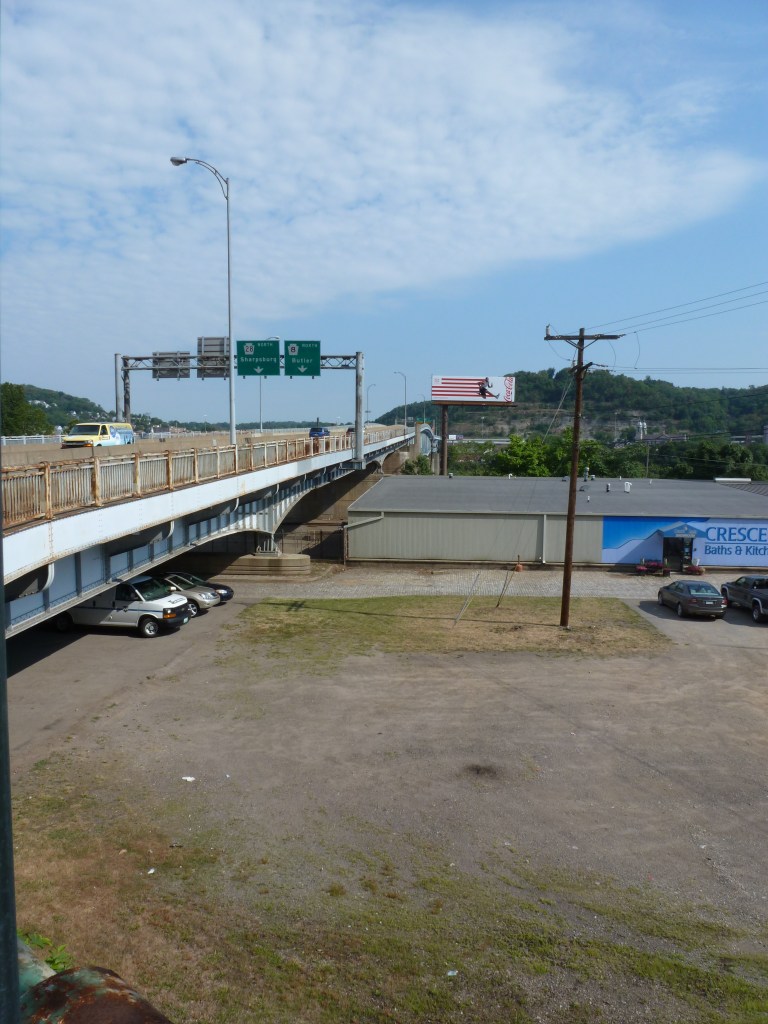
Millvale, PA, sits tucked in a valley that spills out into the Allegheny River at the far end of Pittsburgh’s 40th Street Bridge. Like all the valleys in this region, it formed over time by a stream cutting into the bed of the Allegheny Plateau. But when PennDOT announced the indefinite closure of two of Millvale’s bridges, I struggled to pinpoint their location. One of the two streets appeared to be nowhere near the streambed.

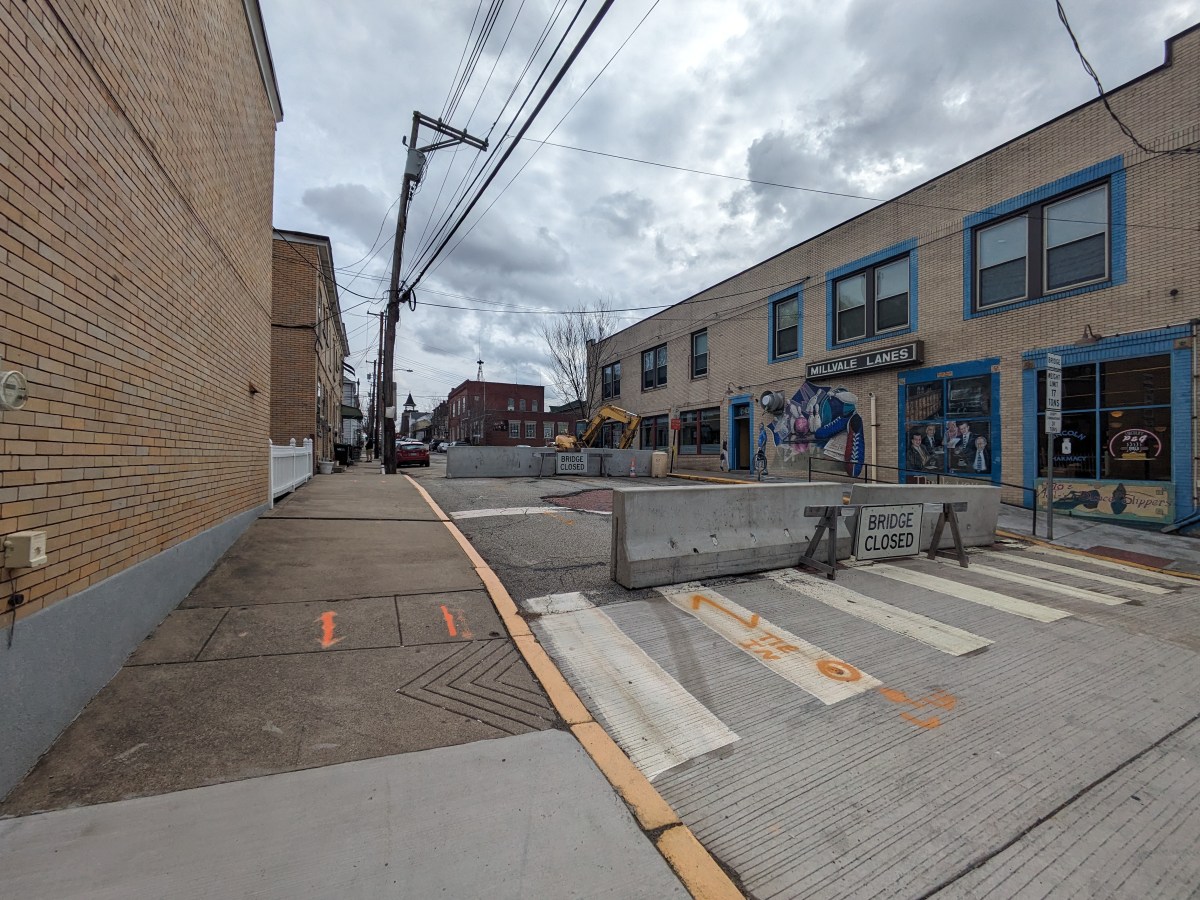
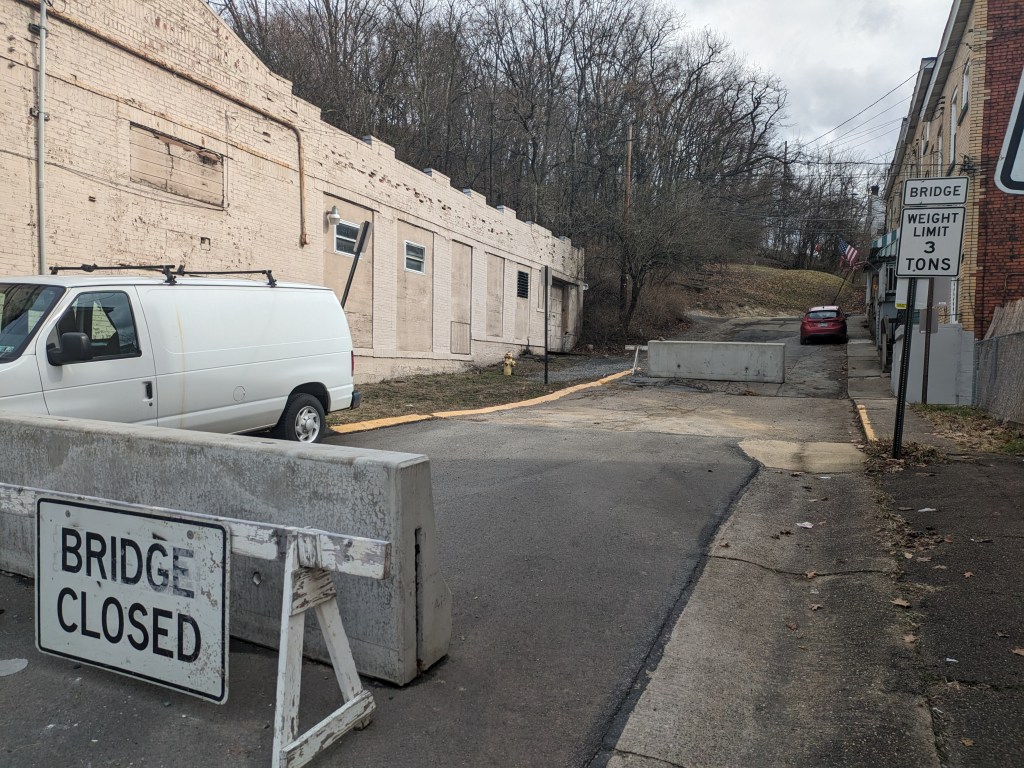
Then, in 2024, while I was primarily home-bound due to Long COVID and my mom sometimes took me along on her errands to help me get out of the house, she wanted to stop at a shop in Millvale. I thought I would sit in the car and wait for her, but as she was looking for a parking space, I noticed a barrier across one of the roads we passed with a sign that appeared to say “Bridge Closed.”

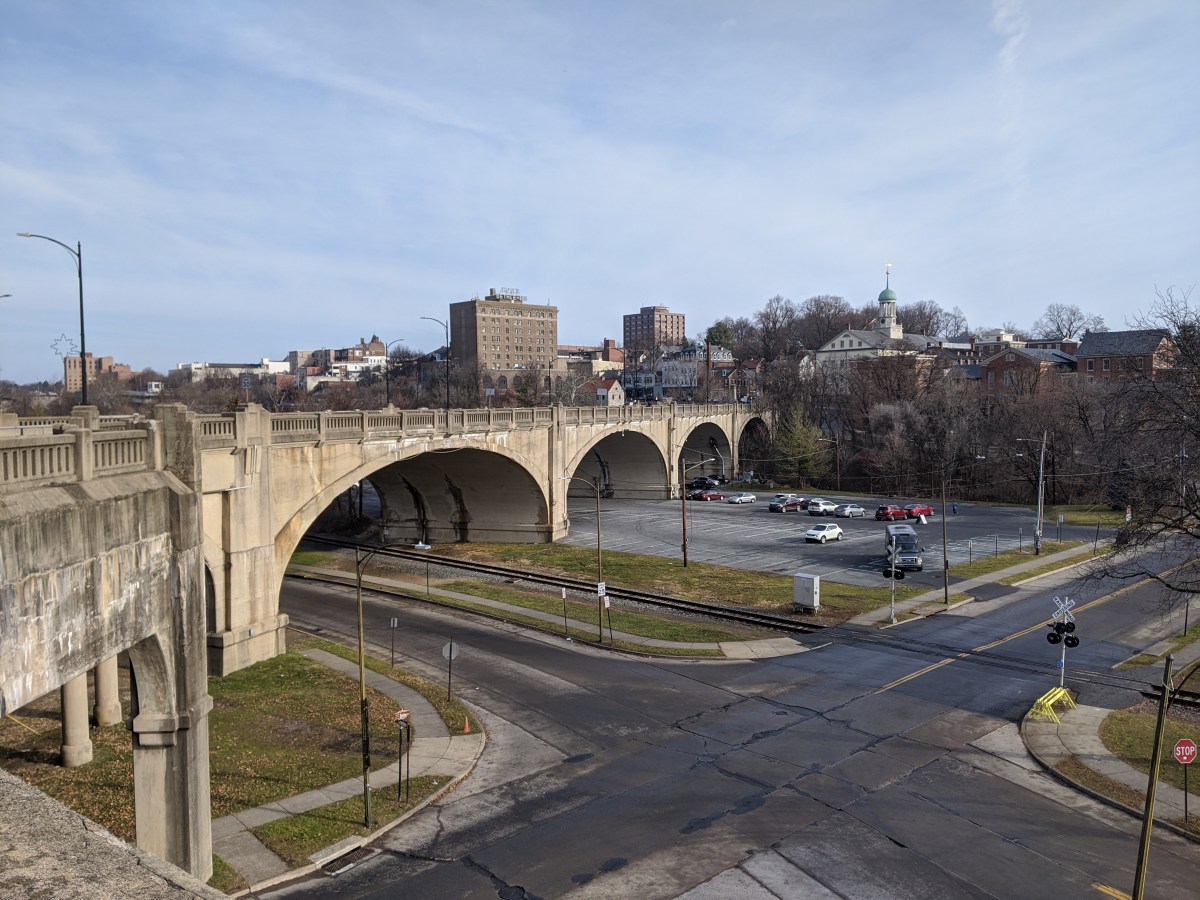
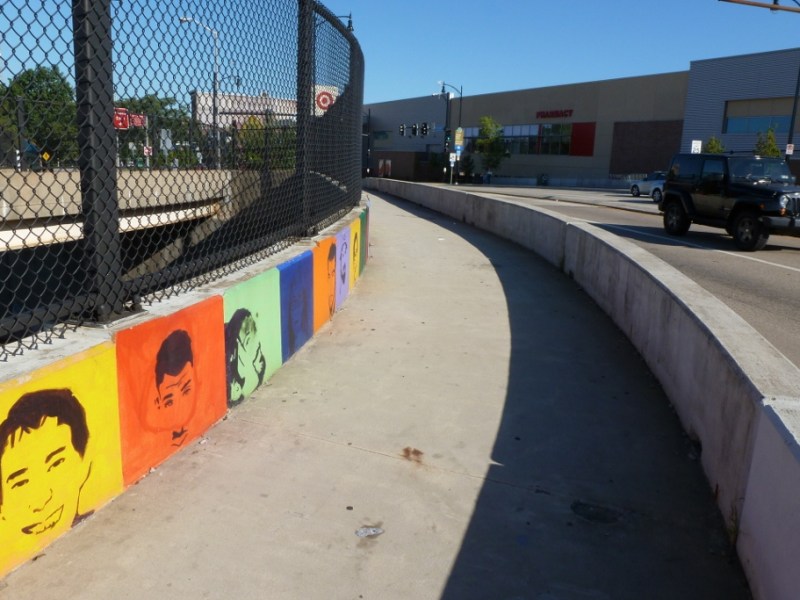
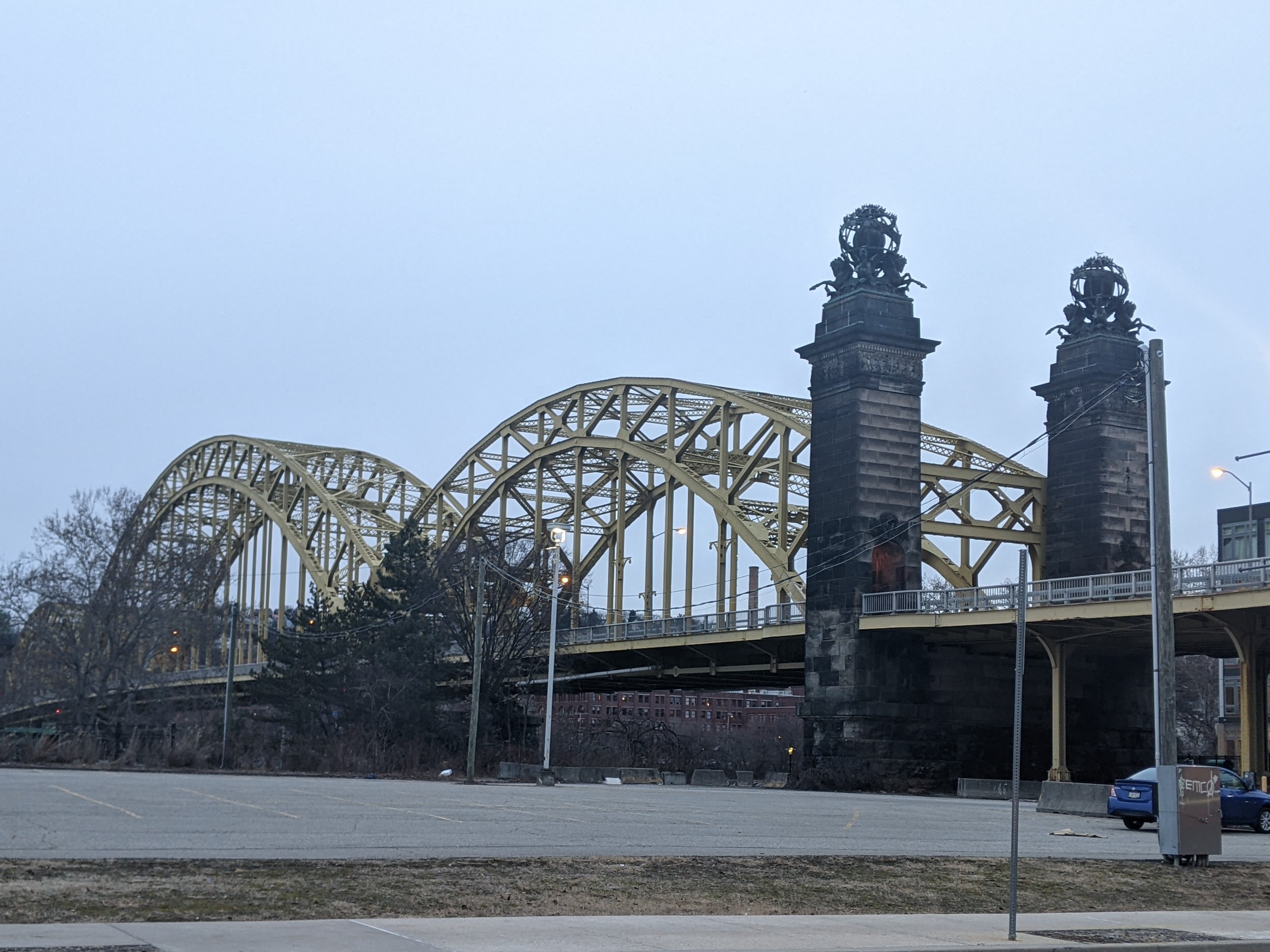
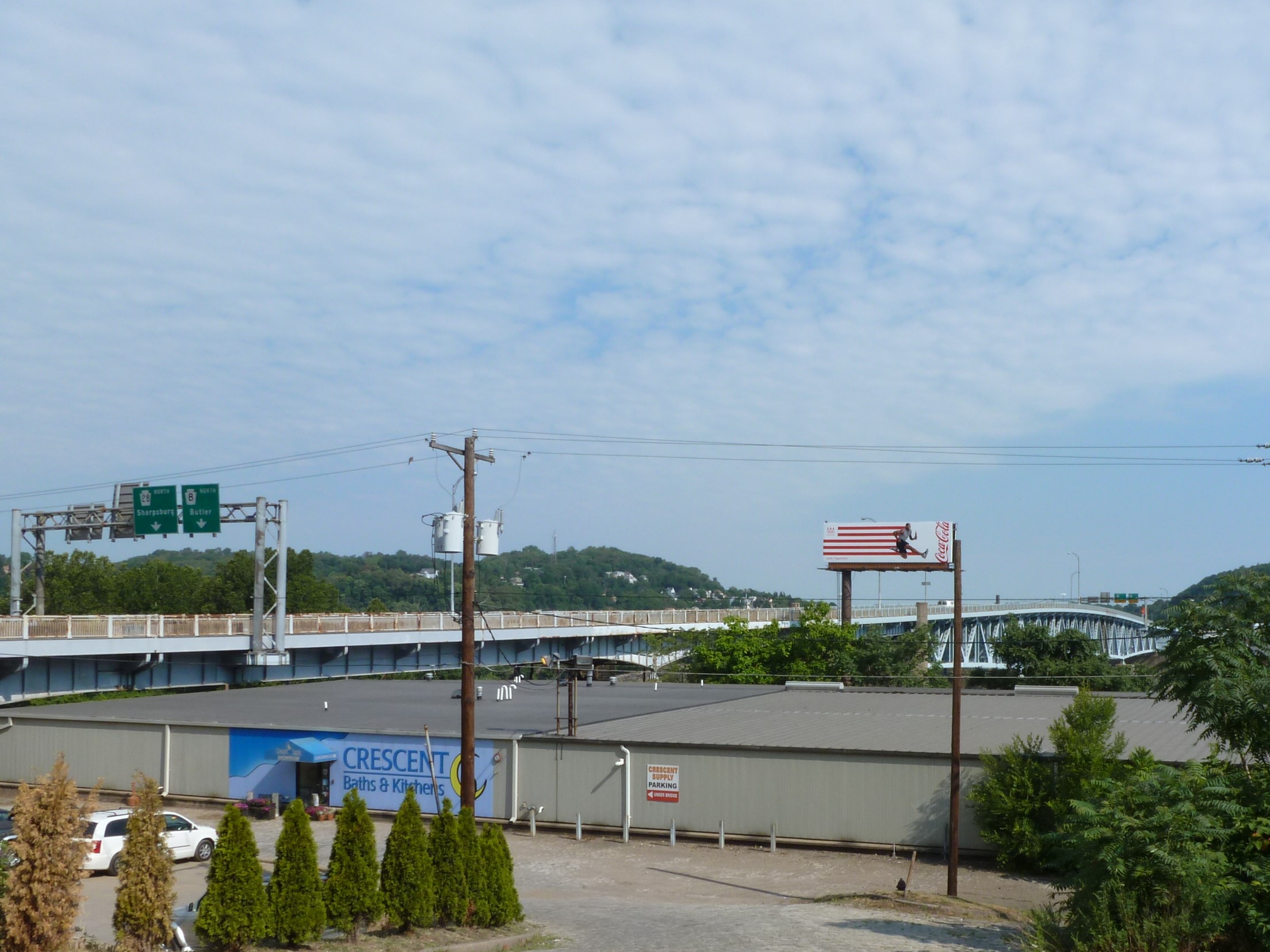
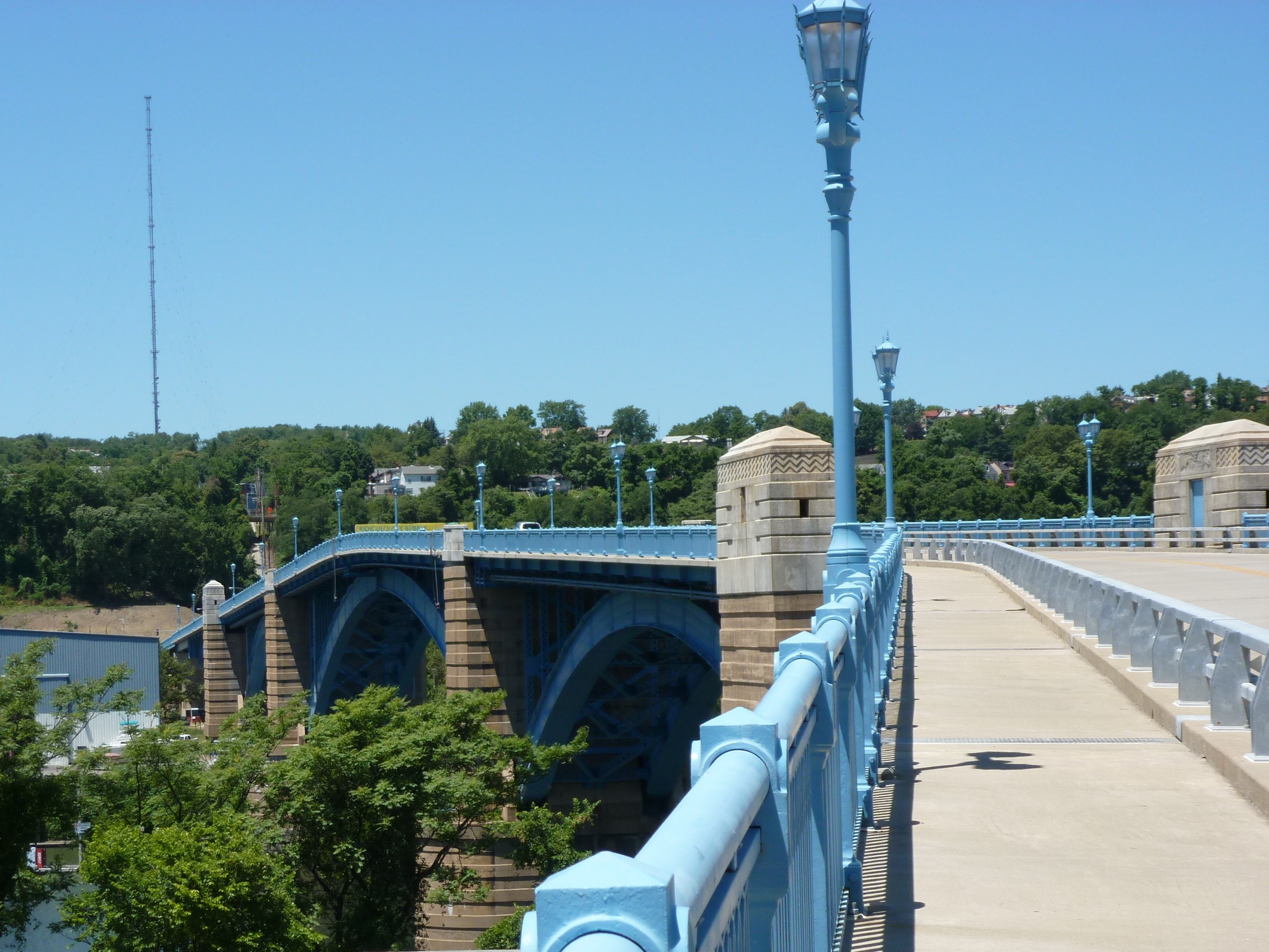
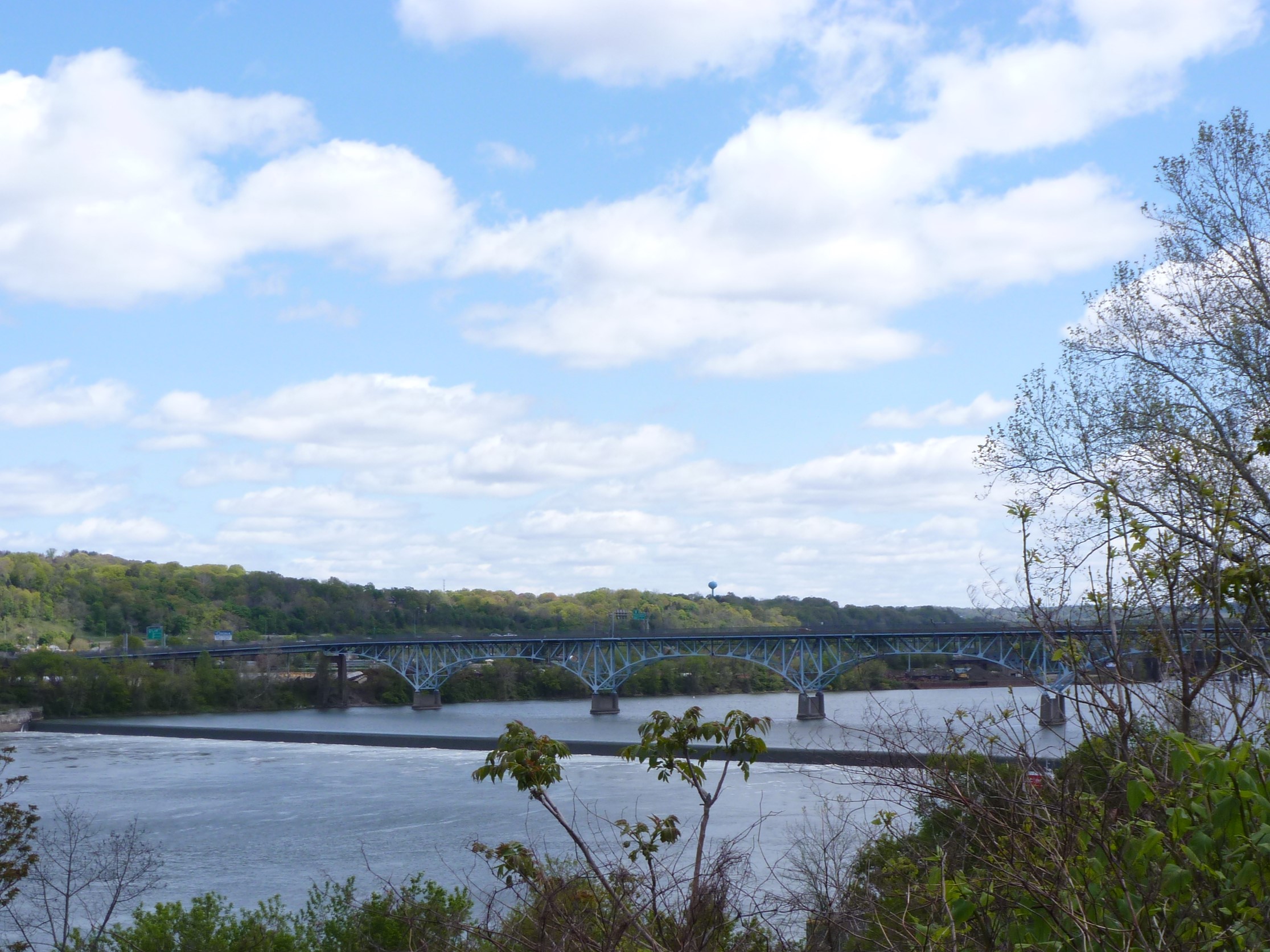
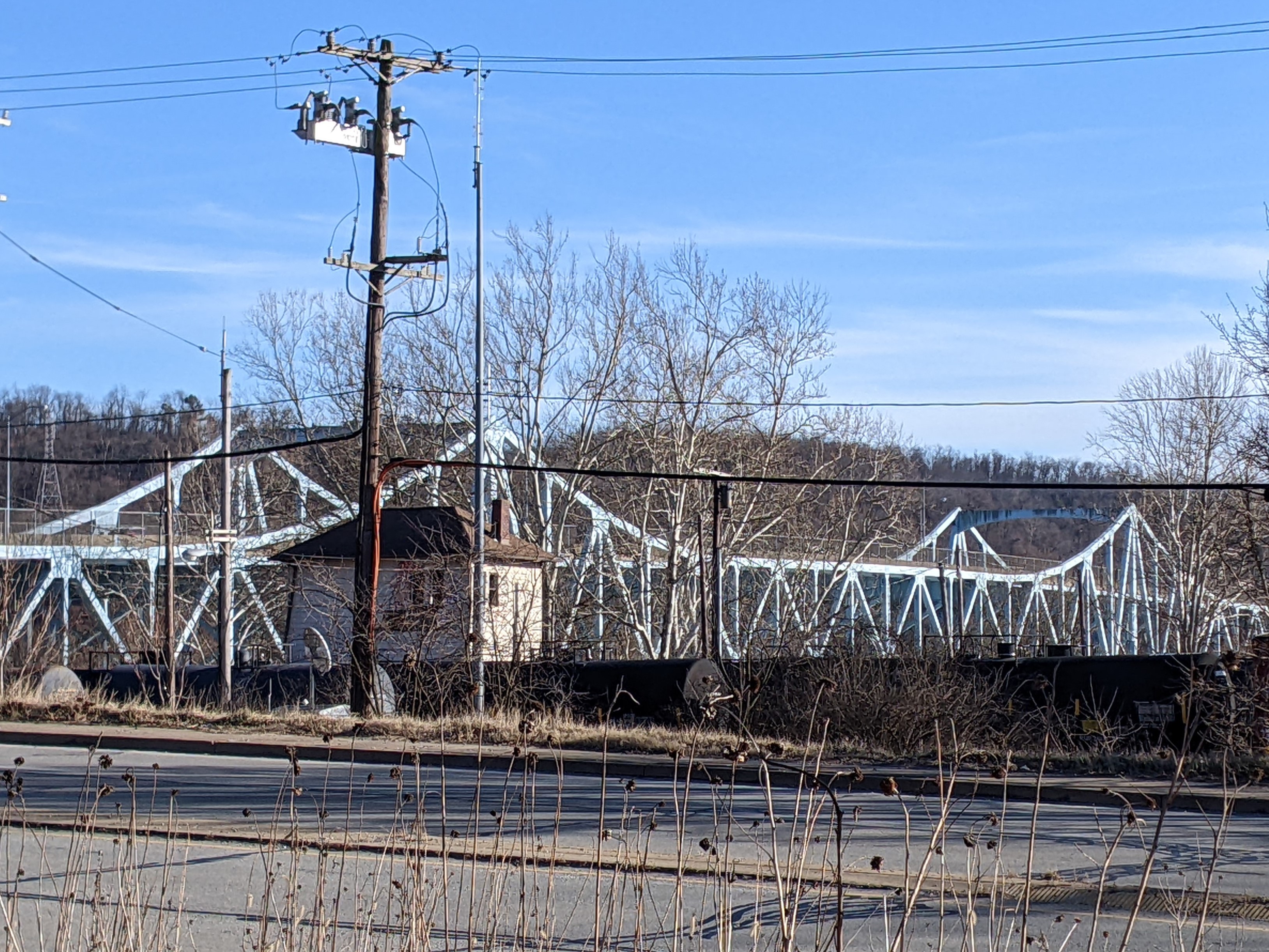
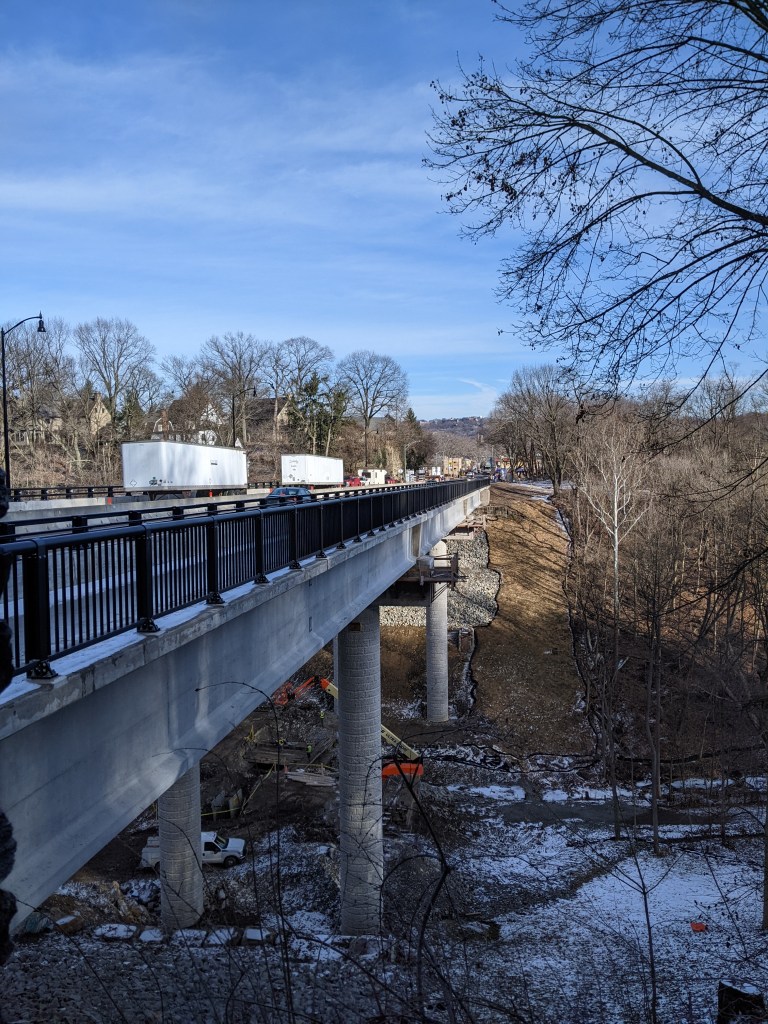
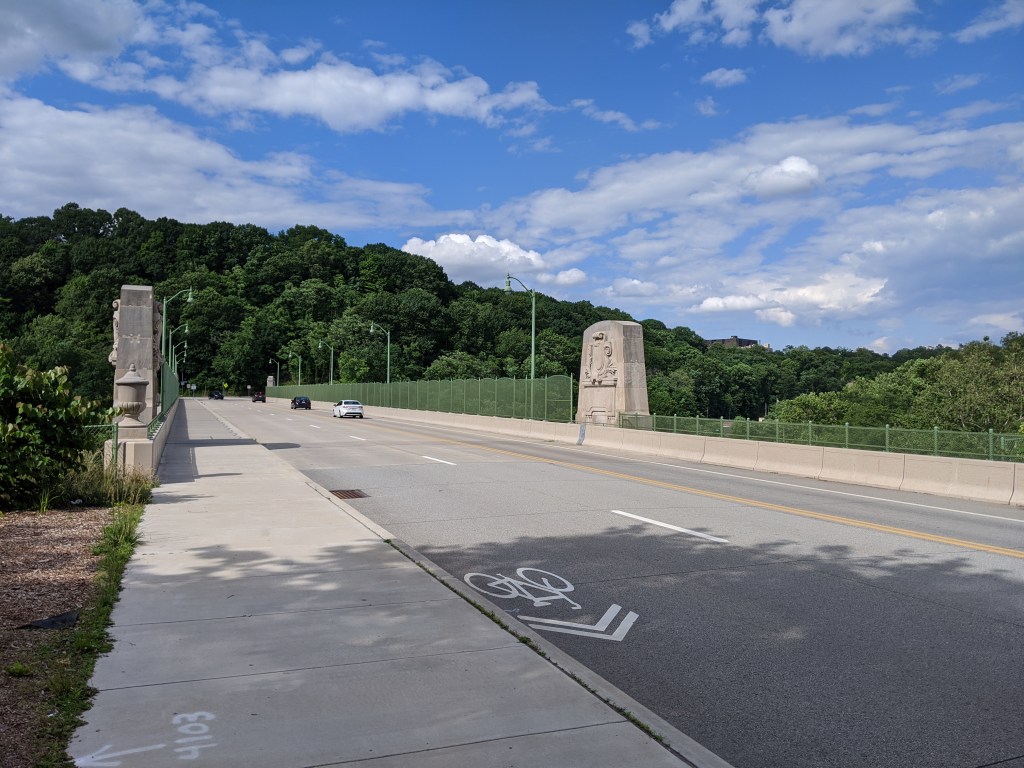
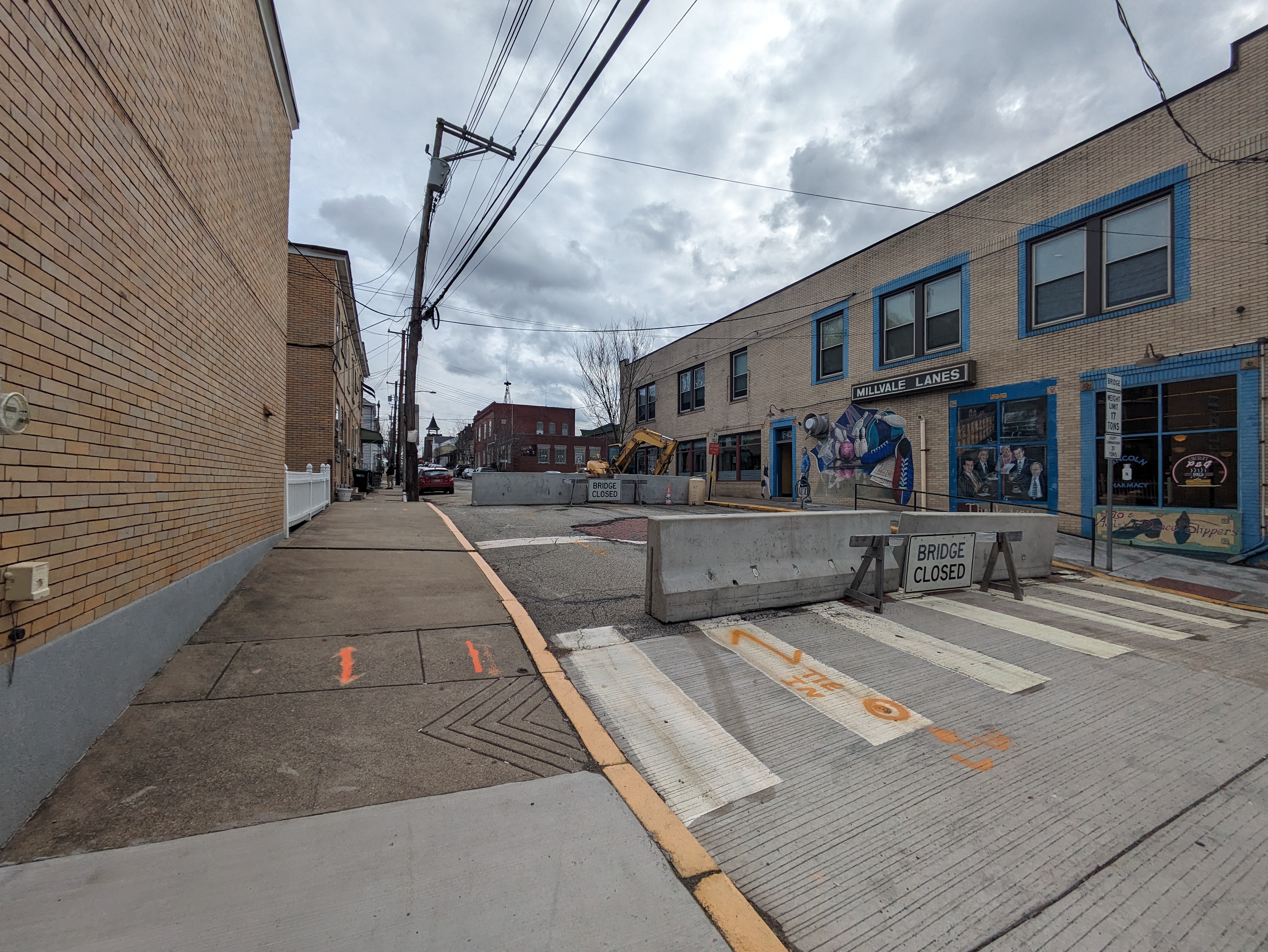
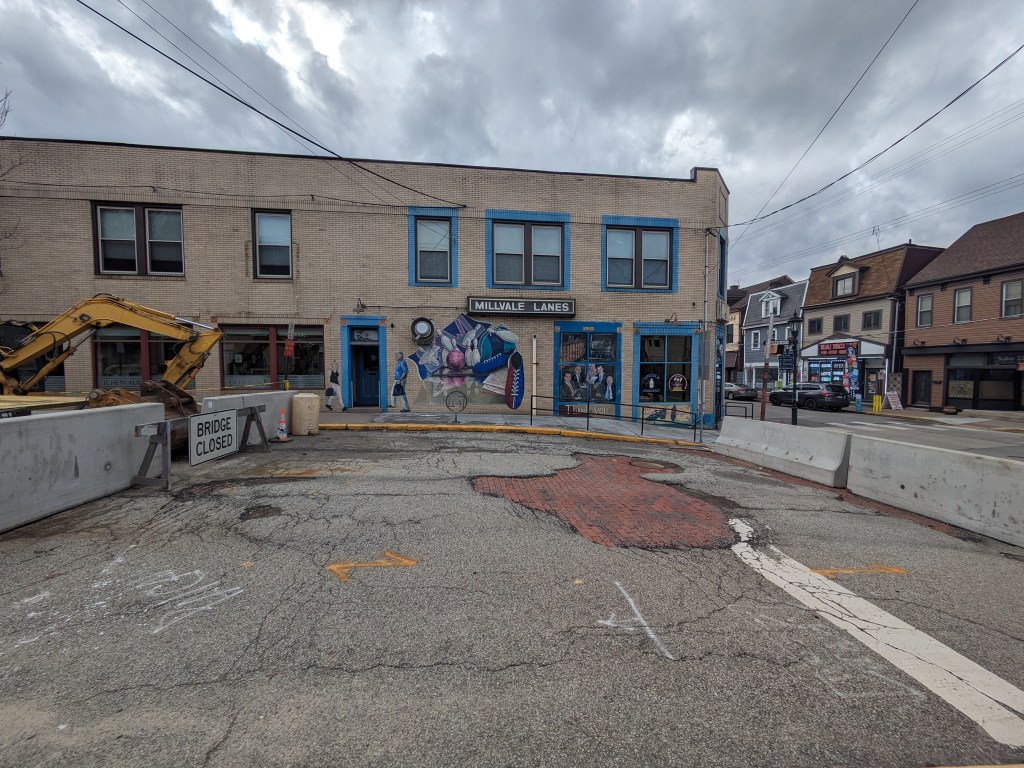
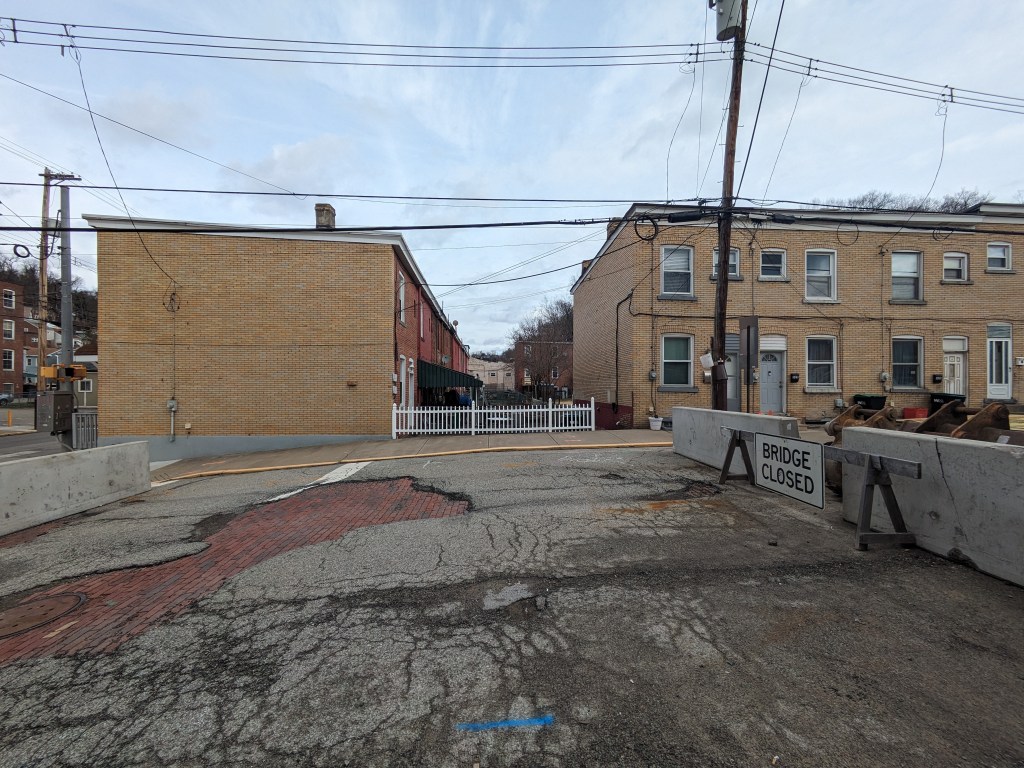
I investigated the closure while my mom went on her errand. Sure enough, on what looked like a street, just like all the other streets around, were jersey barriers marked with “Bridge Closed” signs (photo above). This street/bridge was the Lincoln Avenue Bridge that PennDOT had closed a year before. The only indication that this was a bridge was the “Bridge Closed” sign and the bridge weight limit sign on the right side of the bridge. A block over, Fremont Street had a similar barrier with “Bridge Closed” next to a bridge weight limit sign. Again, looking around from this bridge, it made perfect sense to me why I was unable to pinpoint its location on the map. (photos below)

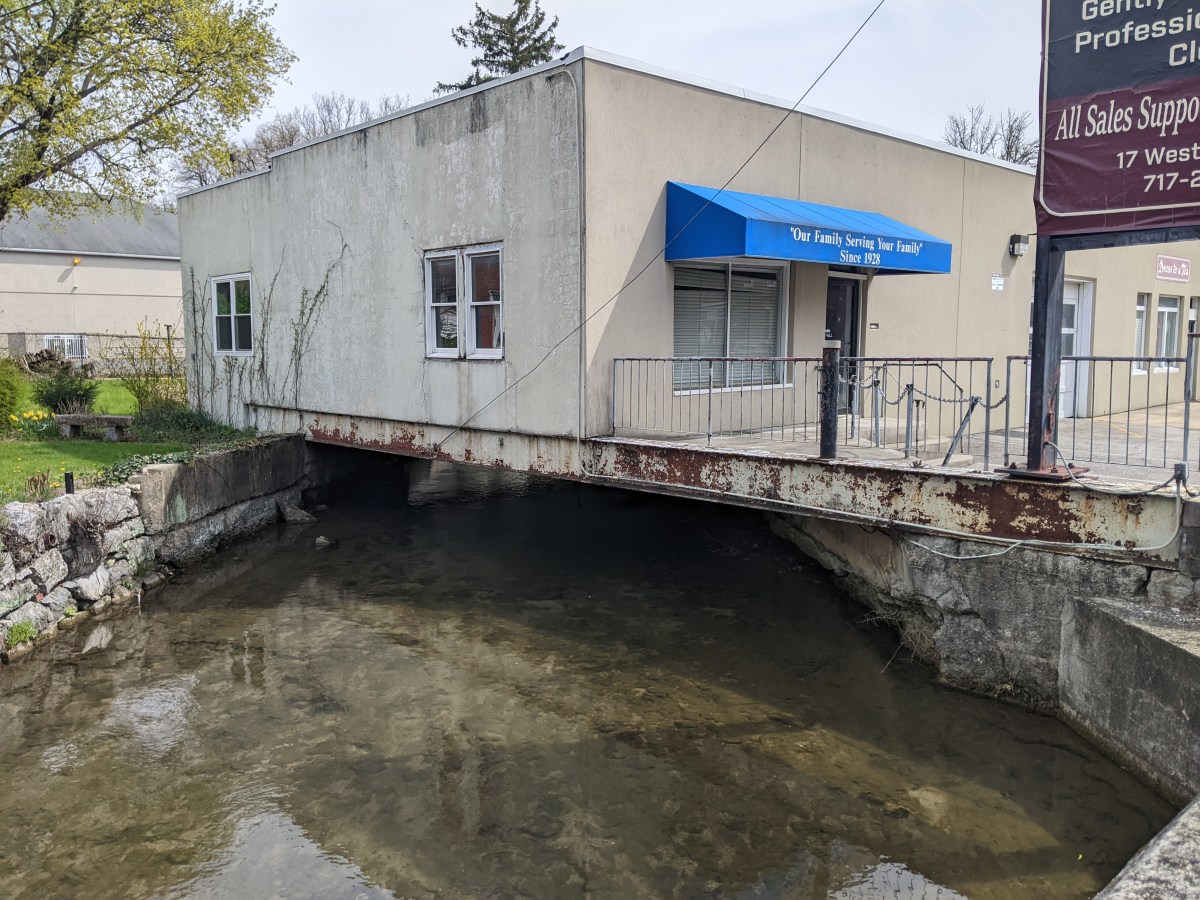
While standing on the Liberty Avenue Bridge, it struck me if this road was a bridge, then what are the buildings and back yards on either side of the bridge in the direction of the pathway of Girty’s Run? Is the bowling alley a bridge? Is the back lawn of the adjacent houses a bridge? Do the people who live and play in these spaces know that they are on bridges?

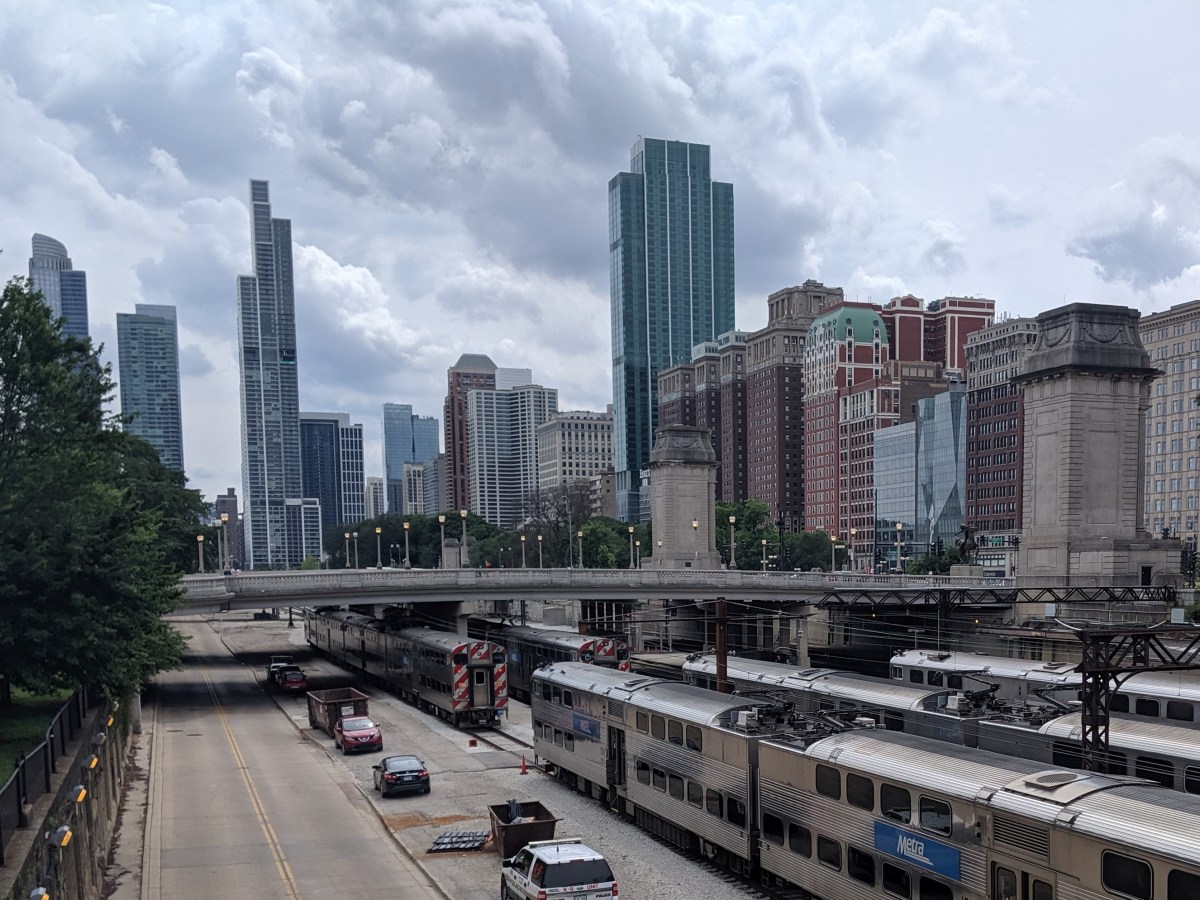
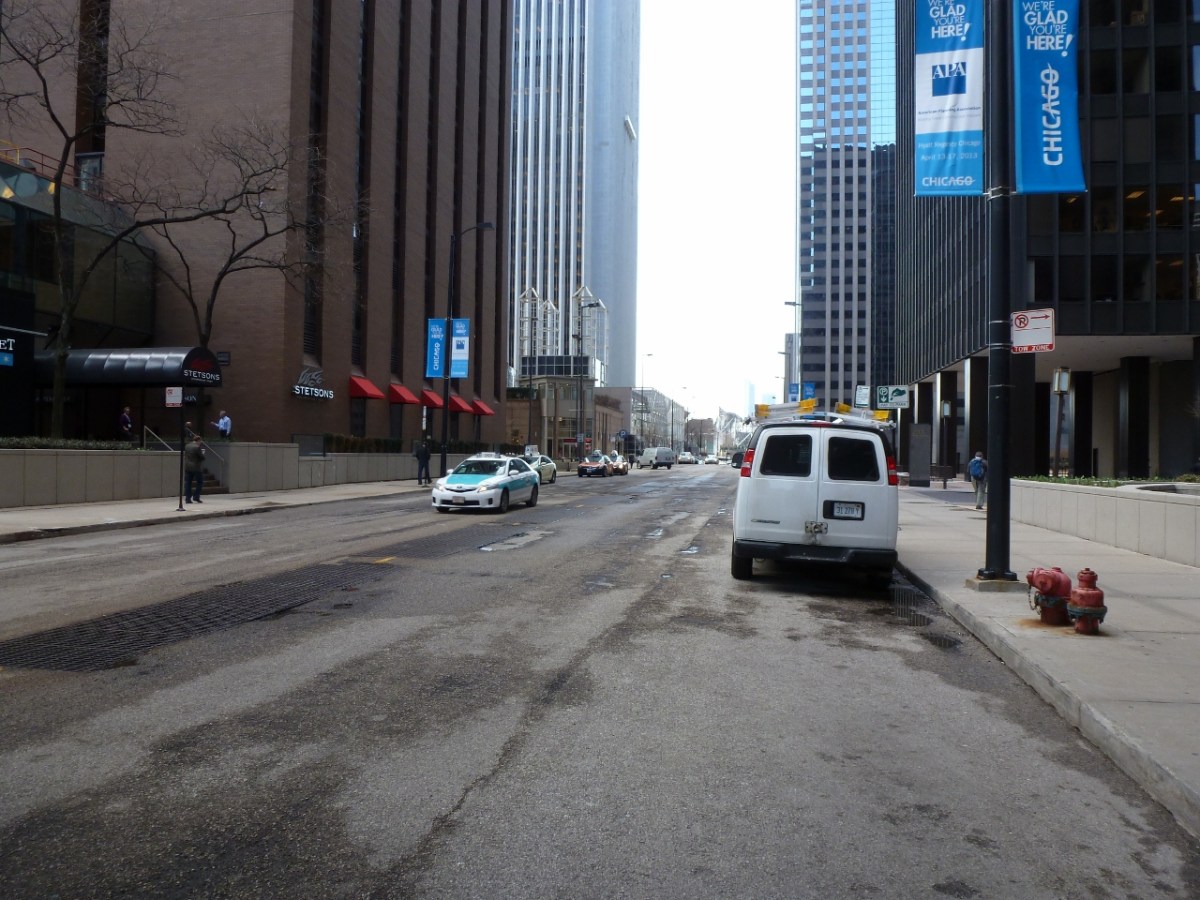
I asked similar questions in Chicago as the ground shook beneath my feet with the passing of trucks and buses and as I walked over expansion joints. However, there wasn’t a river running underneath the Chicago ground-bridges. Those “bridges” enabled a variety of activities to happen while stacked one above the other as a solution to work with the density of the city.

In Millvale, the presence of bridges hidden in plain sight bothered me. I’ve heard over the years that Millvale has lots of trouble with flooding, in a region where flooding is common. That hearsay has left the impression that Millvale’s flooding is worse than average for the area. The municipal website includes directions for what to do when you hear the town siren give off flood warnings, which seems to support my impression. When I saw how much of the stream was buried under “bridges” made of roads, buildings, and backyards, it instantly made sense that flooding would be a major problem here.

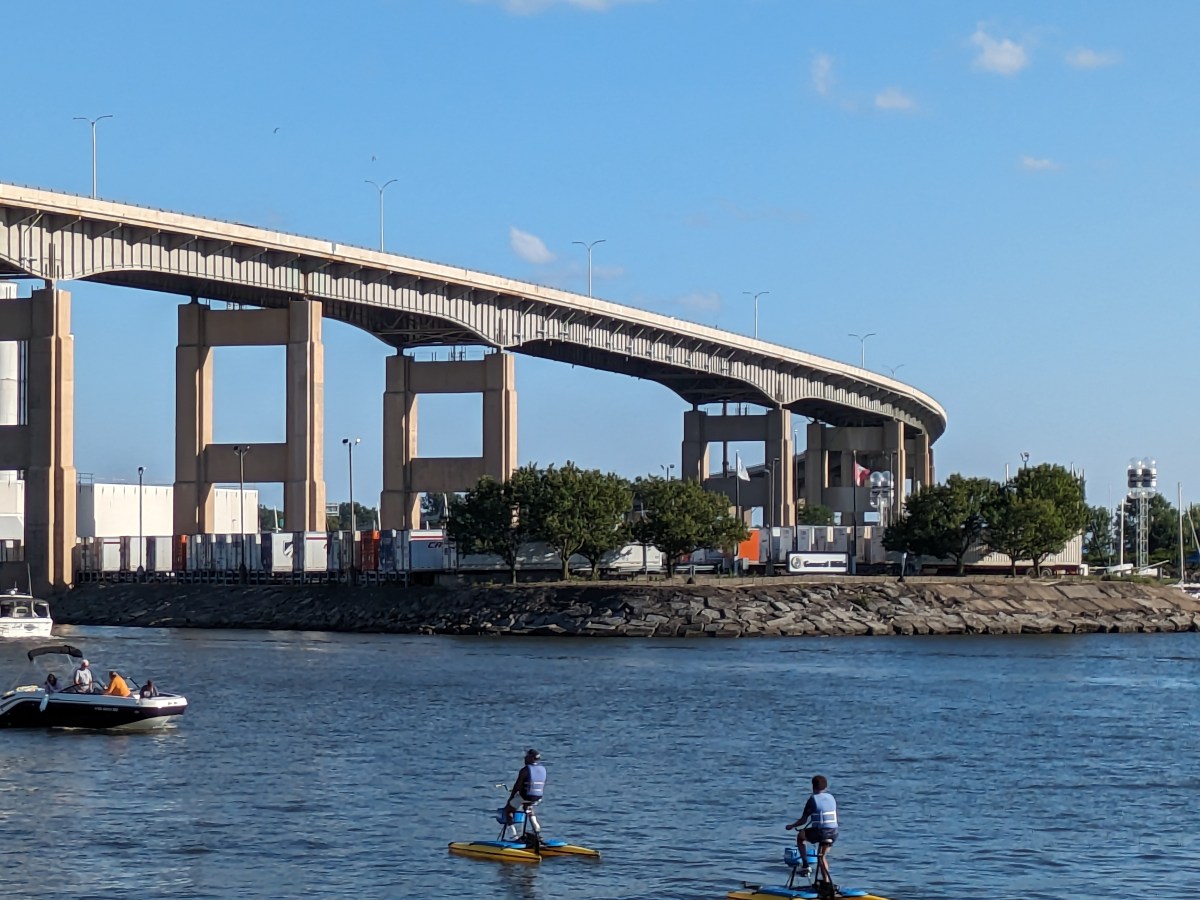
Over my years of bridge-walking, I have come to see that intent is a part of the definition of what a bridge is. Most bridges seem to have the intent of connecting two (or more) points. However, in Buffalo, I encountered a bridge that the number one intent seems to be passing over an area. Millvale illustrates a third, vital component. The intent seems to go beyond just connecting two points (and passing over something, in this case, a stream). The intent here seems to include a demonstration that humans best nature . . . a demonstration that doesn’t appear to be working in this particular town.
Additional Posts in Series:

Washington Crossing Bridge

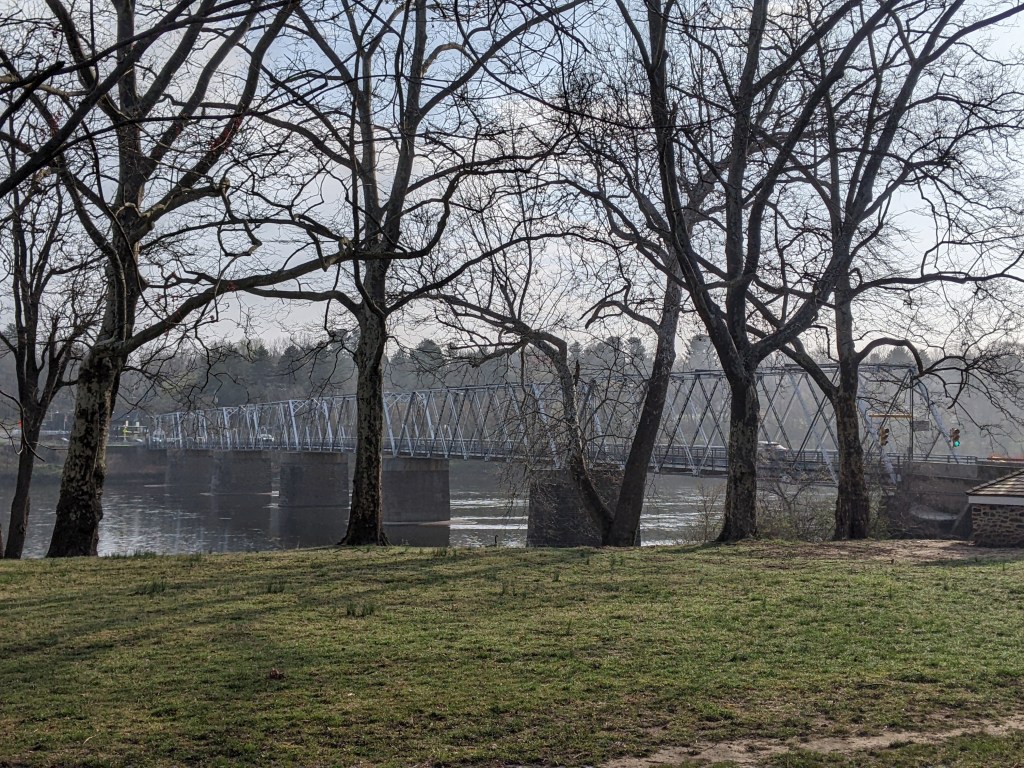
Last week, I unexpectedly found myself driving across the Washington Crossing Bridge. Once I got over the initial shock of finding myself driving on such a small bridge, I was struck by the parallels with other bridges I’ve encountered.

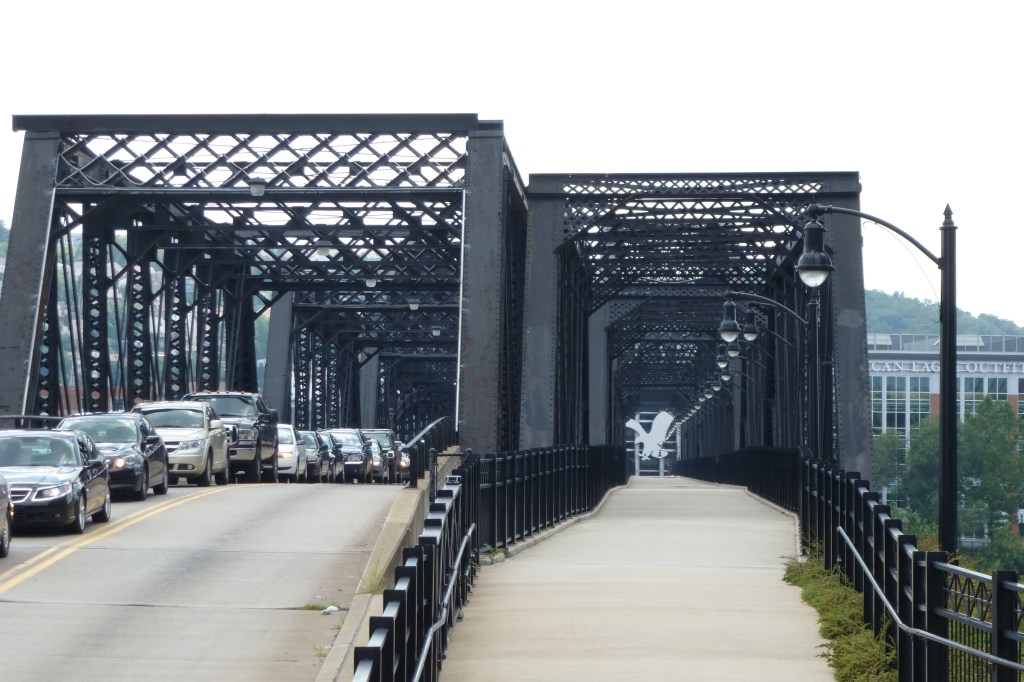
There was an immediate sense of deja vu having stumbled upon and walked across a similarly old and narrow bridge in 2017. The Market Street Bridge, Steubenville, bridges the Ohio River to connect Ohio and Pennsylvania; while the Washington Crossing Bridge bridges the Delaware River to connect New Jersey and Pennsylvania. Relying solely on my memory, I thought these two bridges were of the same design. However, looking back at my pictures, Market Street Bridge appears to be a hybrid suspension-truss bridge with the trusses painted yellow. The Washington Crossing Bridge is solely a truss bridge, with blue trusses. This leaves me with an unresolved sense of deja vu of having encountered a blue truss bridge of similar design somewhere once before.
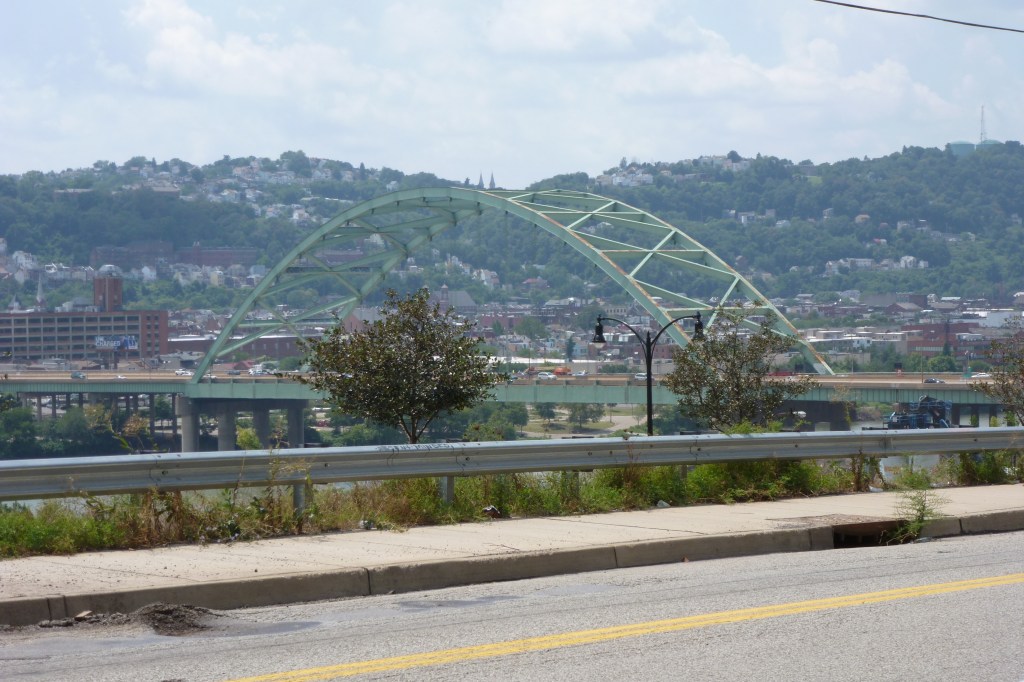
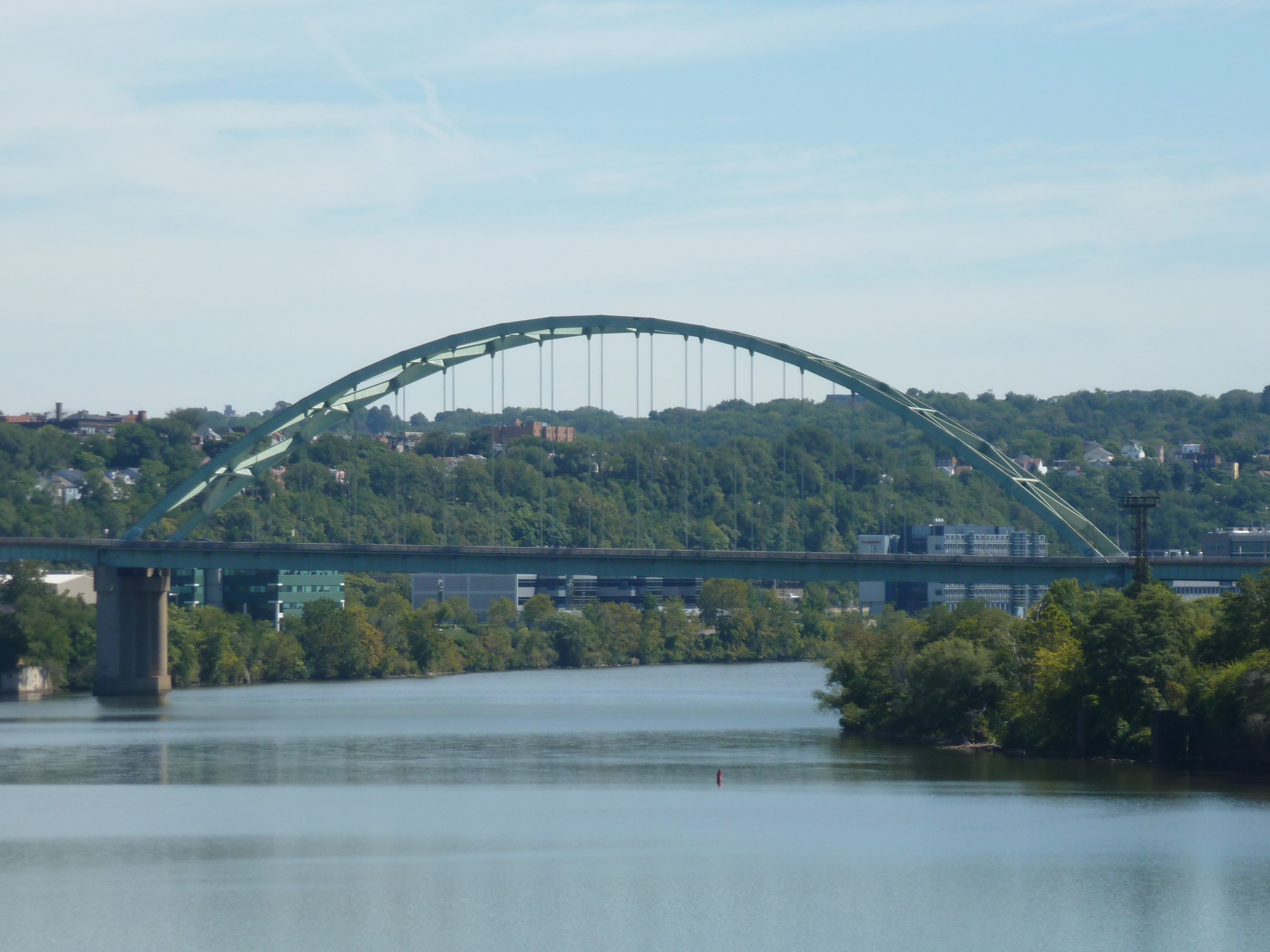
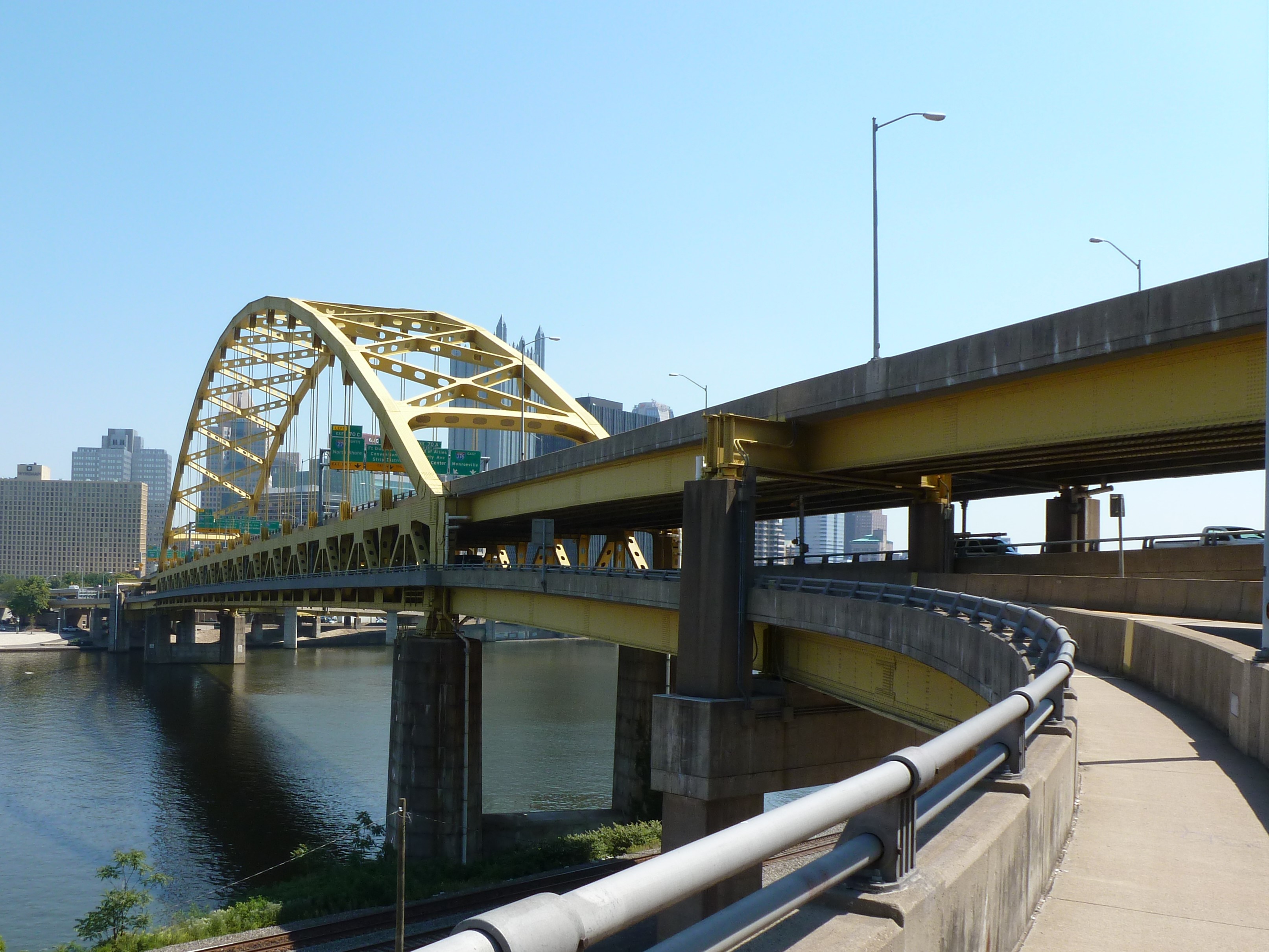
The second parallel appeared when I stopped on the Pennsylvania side to figure out where I was and take more pictures of the bridge. A historic park made it easy to learn that this bridge and its surroundings were known as Washington Crossing. While I have a vague recollection of the story of Washington crossing the Delaware under the noses of the British Army, living in Pittsburgh, that crossing is eclipsed by his earlier crossing of the Allegheny River, when he fell in and had to spend the night on an island in the river before continuing on his mission on behalf of the British. The Allegheny River crossing is memorialized by the 40th Street Bridge‘s alternative name, Washington Crossing’s Bridge.

Best Bridge – Bridge Madness 2023

Smithfield Street Bridge wins the 2023 Bridge Madness Tournament with 88% of the votes.

Thank you for participating in the 2023 Bridge Madness Tournament. While there were some close contests throughout the tournament, in the end, the Smithfield Bridge emerged as the clear winner with 88% of the votes to the 16th Street Bridge’s 12%.

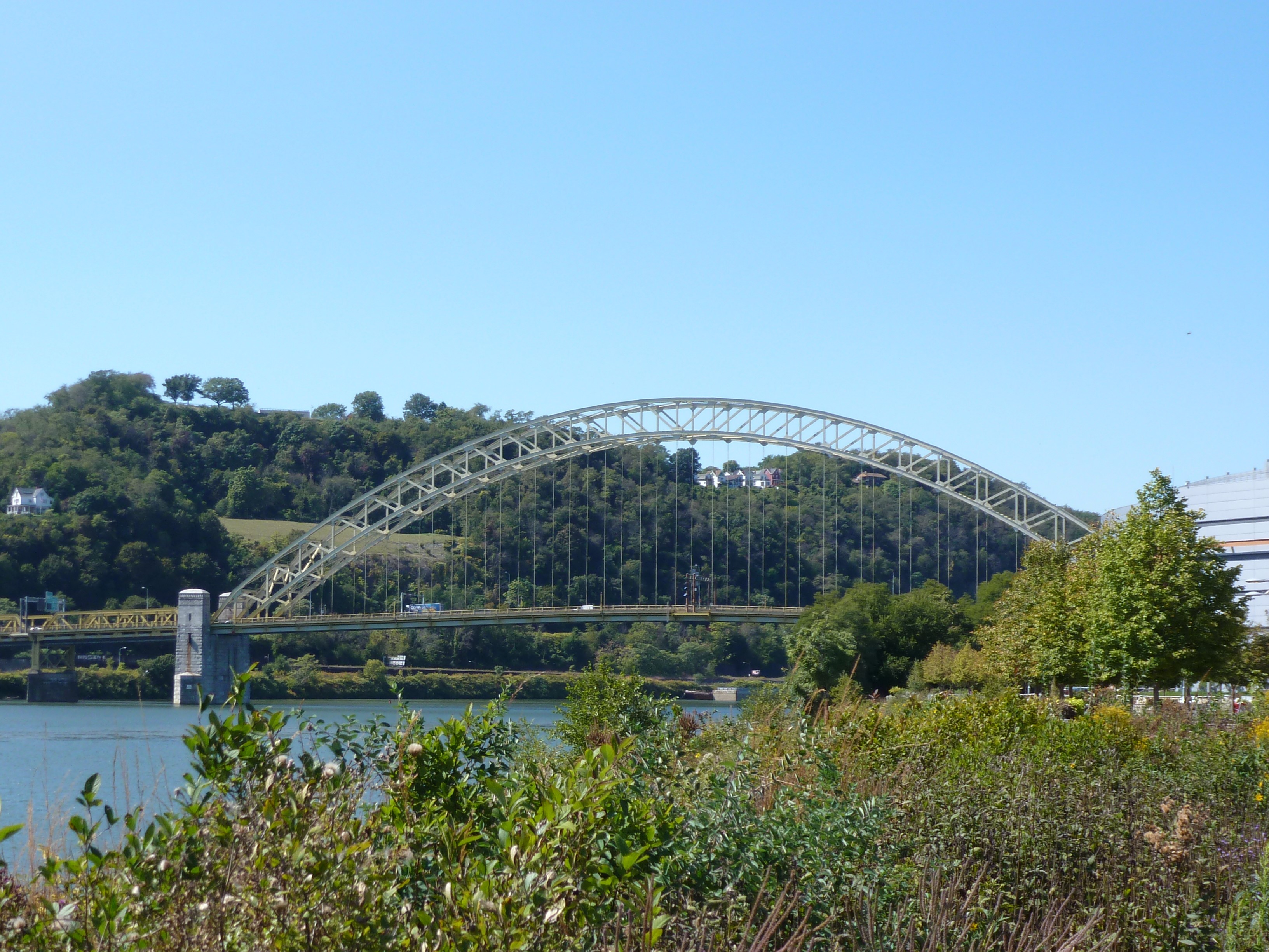
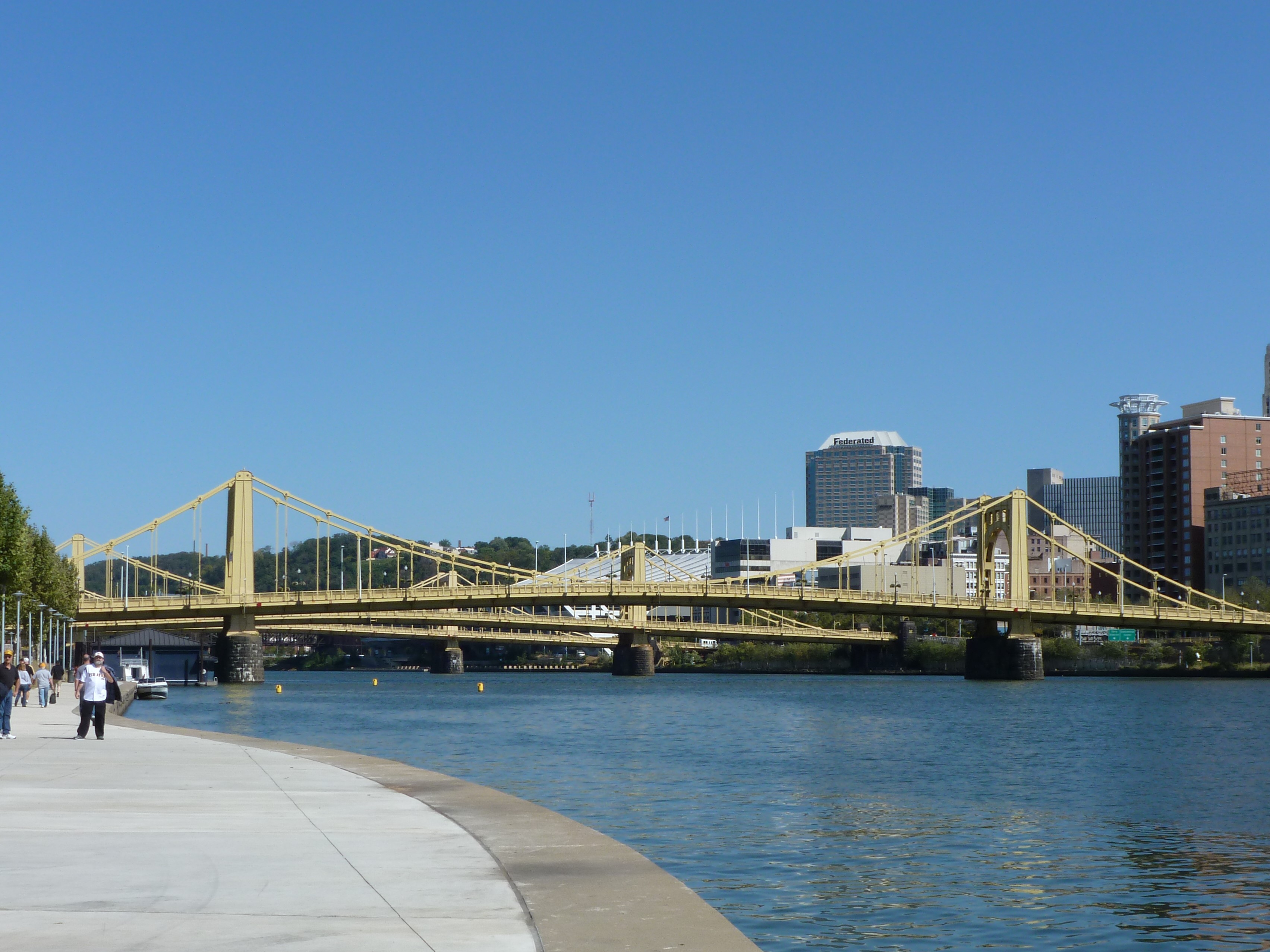
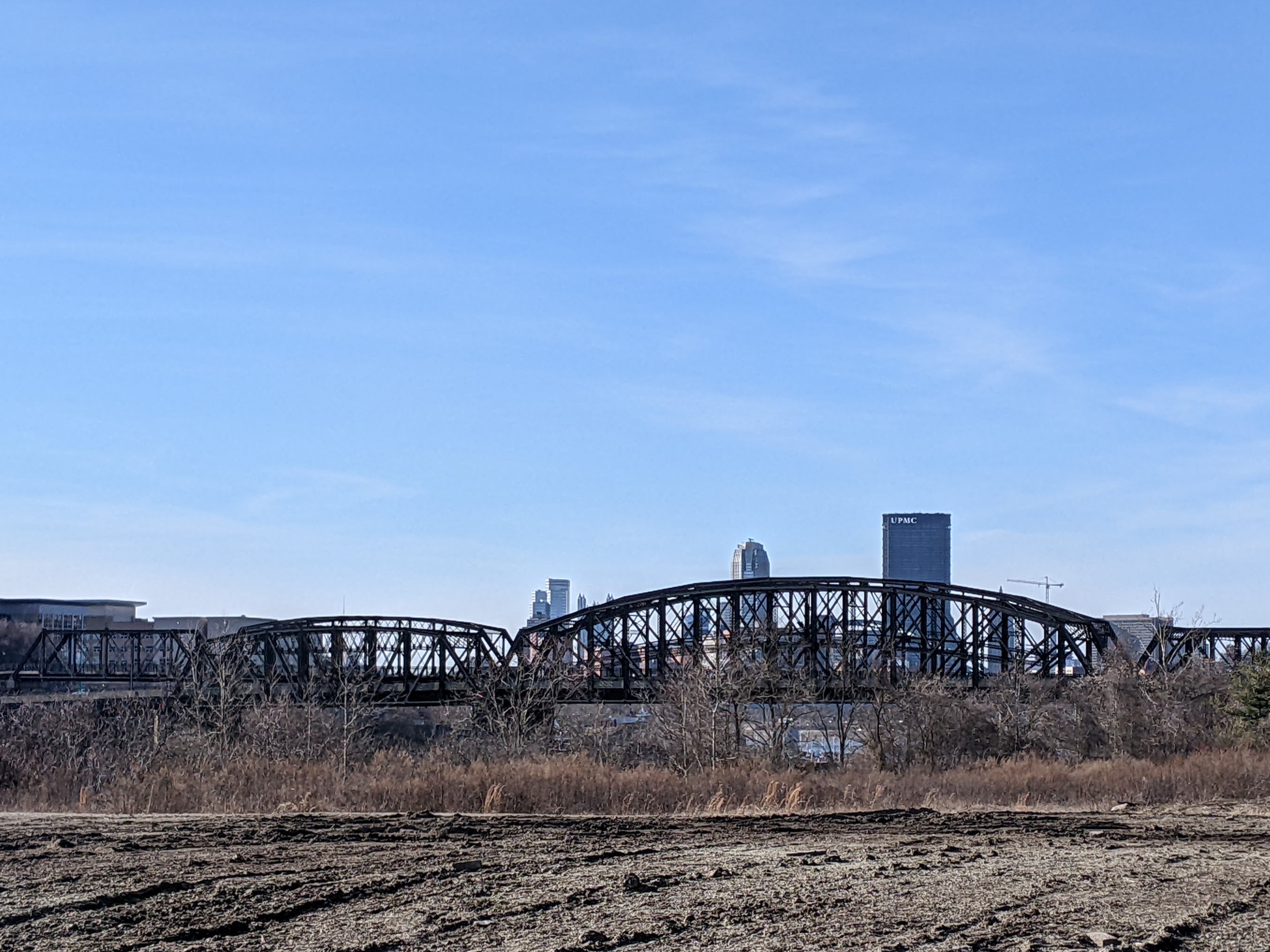
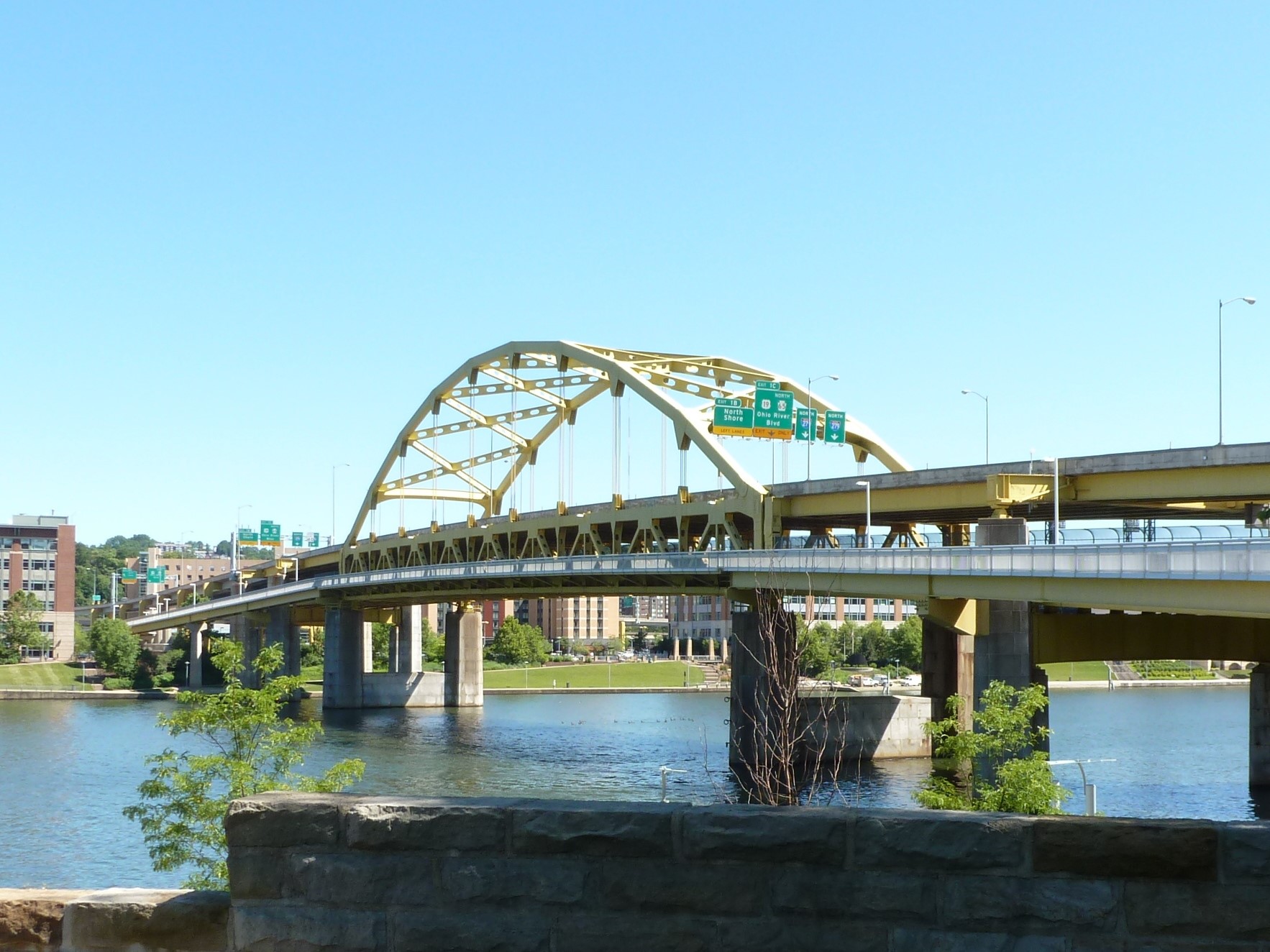
Bridge Madness 2023 featured bridges or groups of bridges that are accessible to vehicles and pedestrians. From east to west, these bridges on the Allegheny and Ohio Rivers are the Highland Park Bridge, the 62nd Street or R.D. Fleming Bridge, the 40th Street or Washington’s Crossing Bridge, the 31st Street Bridge, the 16th Street or David McCullough Bridge, the Three Sisters Bridges (6th Street, 7th Street, and 9th Street), the Fort Duquesne Bridge, and the West End Bridge. From east to west, these bridges on the Monongahela River are the Homestead Greys Bridge, the Glenwood Bridge, the Hot Metal Bridges, the Birmingham Bridge, the South 10th Street Bridge, the Liberty Bridge, the Smithfield Bridge, and the Fort Pitt Bridge.

Bridge Madness 2023 – Championship

The results are in from the Final Four match-ups in 2023’s Bridge Madness Tournament. The tournament features bridges or groups of bridges that are accessible to vehicles and pedestrians. From east to west, these bridges on the Allegheny and Ohio Rivers are the Highland Park Bridge, the 62nd Street or R.D. Fleming Bridge, the 40th Street or Washington’s Crossing Bridge, the 31st Street Bridge, the 16th Street or David McCullough Bridge, the Three Sisters Bridges (6th Street, 7th Street, and 9th Street), the Fort Duquesne Bridge, and the West End Bridge. From east to west, these bridges on the Monongahela River are the Homestead Greys Bridge, the Glenwood Bridge, the Hot Metal Bridges, the Birmingham Bridge, the South 10th Street Bridge, the Liberty Bridge, the Smithfield Bridge, and the Fort Pitt Bridge.

In the Allegheny and Ohio Conference

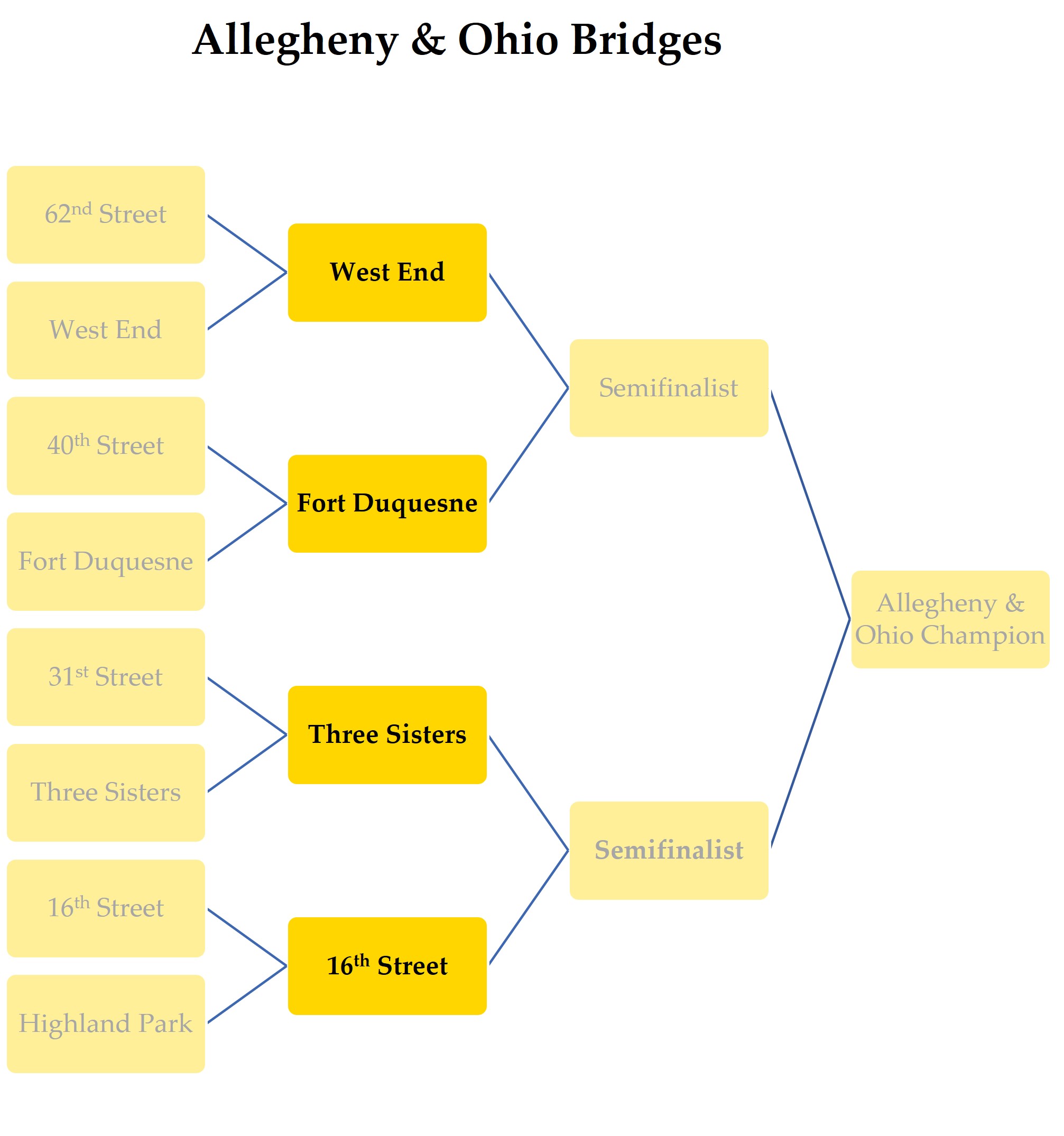
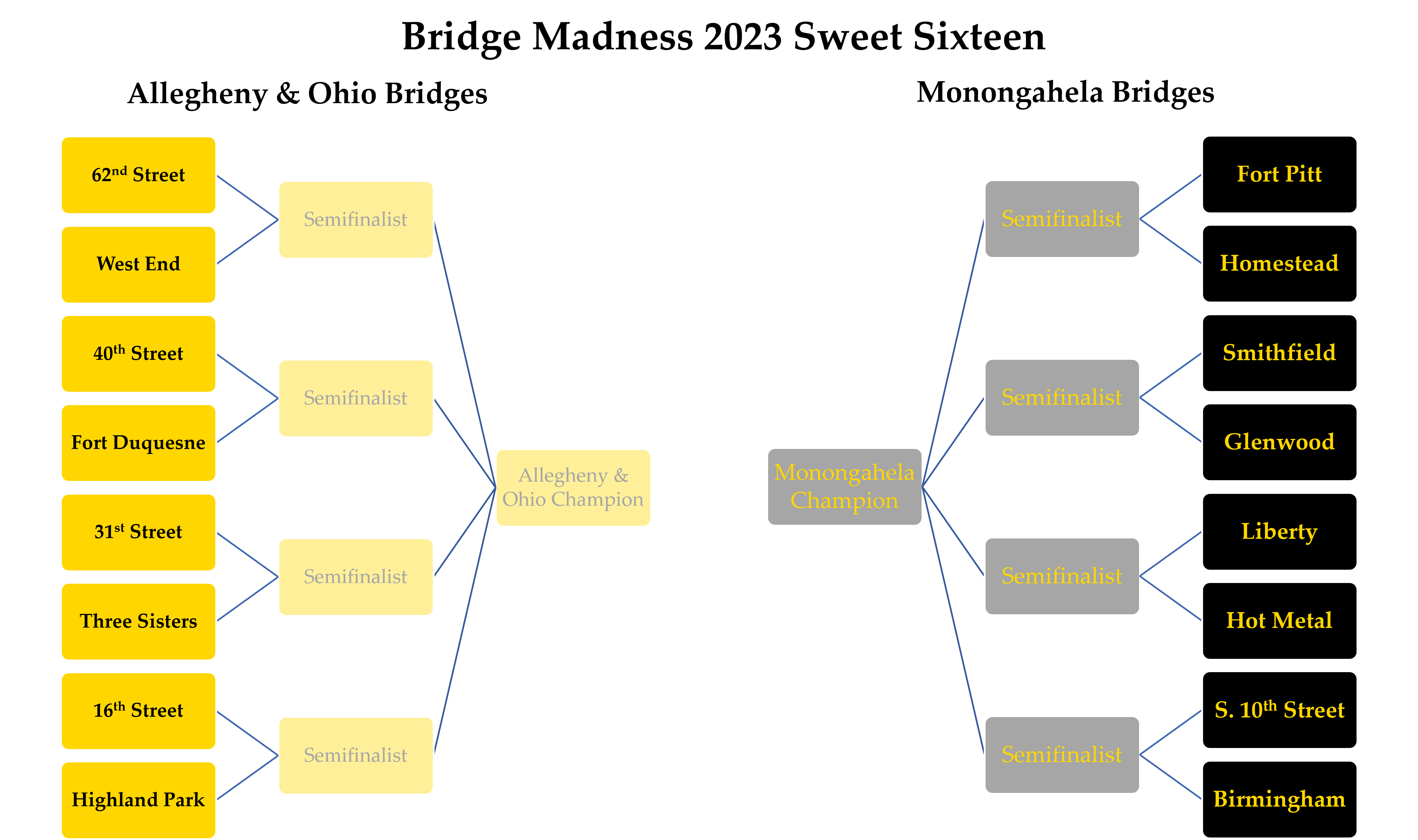
Bracket 7 was the 16th Street Bridge (46%) vs. the Three Sisters Bridges (37%) vs. the West End Bridge (17%).

In the Monongahela Conference

Bracket 7 was the Smithfield Bridge (55%) vs. the Hot Metal Bridges (45%).

The winners are matched up below for the Championship. Vote for your favorite bridge by noon on March 29, then check back on March 30 for the announcement of the winner.

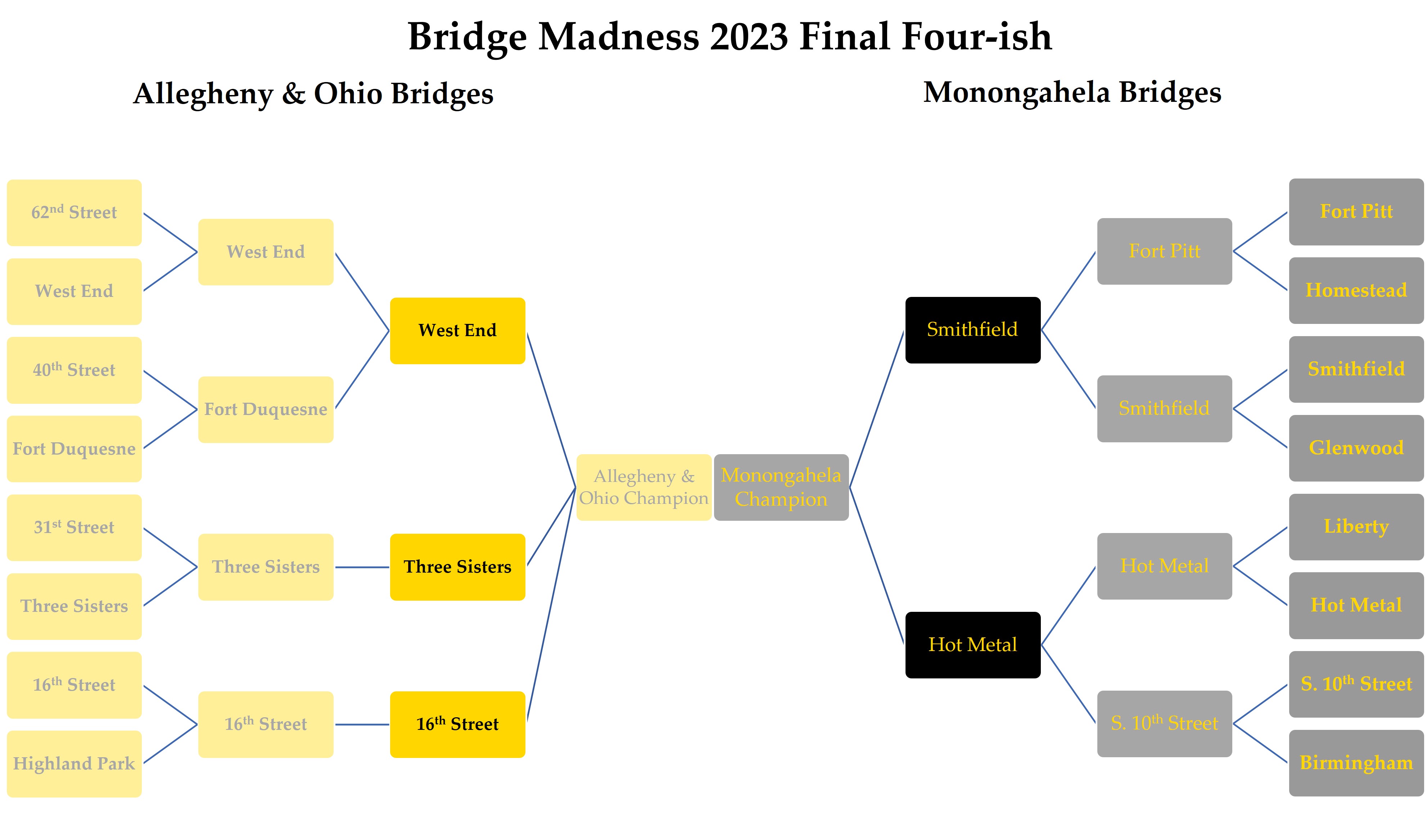
Bridge Madness 2023 – Final Four(ish)

The results are in from the Elite Eight match-ups in 2023’s Bridge Madness Tournament. The tournament features bridges or groups of bridges that are accessible to vehicles and pedestrians. From east to west, these bridges on the Allegheny and Ohio Rivers are the Highland Park Bridge, the 62nd Street or R.D. Fleming Bridge, the 40th Street or Washington’s Crossing Bridge, the 31st Street Bridge, the 16th Street or David McCullough Bridge, the Three Sisters Bridges (6th Street, 7th Street, and 9th Street), the Fort Duquesne Bridge, and the West End Bridge. From east to west, these bridges on the Monongahela River are the Homestead Greys Bridge, the Glenwood Bridge, the Hot Metal Bridges, the Birmingham Bridge, the South 10th Street Bridge, the Liberty Bridge, the Smithfield Bridge, and the Fort Pitt Bridge.

In the Allegheny and Ohio Conference

Bracket 5 was the West End Bridge (63%) vs. the Fort Duquesne Bridge (34%).

Bracket 6 was the Three Sisters Bridges (50%) vs. the 16th Street Bridge (50%).

In the Monongahela Conference

Bracket 5 was the Smithfield Bridge (79%) vs. the Fort Pitt Bridge (21%).

Bracket 4 was the Hot Metal Bridges (71%) vs. the South 10th Street Bridge (293%).

The winners in these brackets are matched up below for the Final Four. Vote for your favorite bridges below by noon on March 26, then check back on March 27 for the Championship.

Bridge Madness – Elite Eight Allegheny & Ohio Round

The results are in for the Allegheny and Ohio Bridges half of the Sweet Sixteen in 2023’s Bridge Madness Tournament. The tournament features bridges or groups of bridges that are accessible to vehicles and pedestrians. From east to west, these bridges on the Allegheny and Ohio Rivers are the Highland Park Bridge, the 62nd Street or R.D. Fleming Bridge, the 40th Street or Washington’s Crossing Bridge, the 31st Street Bridge, the 16th Street or David McCullough Bridge, the Three Sisters Bridges (6th Street, 7th Street, and 9th Street), the Fort Duquesne Bridge, and the West End Bridge.

Bracket 1 was the West End Bridge (80%) vs. the 62nd Street Bridge (20%).

Bracket 2 was Fort Duquesne Bridge (52%) vs. the 40th Street Bridge (48%).

Bracket 3 was the Three Sisters Bridges (92%) vs. the 31st Street Bridge (8%).

Bracket 4 was the 16th Street Bridge (77%) vs. the Highland Park Bridge (23%).

The winners in these brackets are matched up below for the Allegheny and Ohio Bridges half of the Elite Eight. Vote for your favorite bridges below by noon on March 20, then check back on March 21 for the Monongahela match-ups in the Elite Eight.

Bridge Madness – Sweet Sixteen Allegheny & Ohio Round

The 2023 Bridge Madness Tournament kicks off with the Allegheny and Ohio Bridges half of the Sweet Sixteen. The tournament features bridges or groups of bridges that are accessible to vehicles and pedestrians. From east to west, these bridges on the Allegheny and Ohio Rivers are the Highland Park Bridge, the 62nd Street or R.D. Fleming Bridge, the 40th Street or Washington’s Crossing Bridge, the 31st Street Bridge, the 16th Street or David McCullough Bridge, the Three Sisters Bridges (6th Street, 7th Street, and 9th Street), the Fort Duquesne Bridge, and the West End Bridge. Vote for your favorite bridges below by noon on March 14, then check back on March 15 for the Monongahela match-ups in the Sweet Sixteen.

Bridge Madness 2023 – Introduction

Rules

In the 2023 Bridge Madness Tournament, 16 bridges across Pittsburgh’s rivers go pier-to-pier in a reader’s choice tournament to pick the best one. The tournament features bridges or groups of bridges within the city limits that cross the Allegheny, Ohio, and Monongahela Rivers and that are accessible to vehicles and pedestrians. Beginning March 12, you will be able to vote for your favorite bridge in each bracket. The champion bridge will be announced on March 30.

The bridges are divided into two conferences: the Allegheny and Ohio Conference and the Monongahela Conference. From east to west, the bridges in the Allegheny and Ohio Conference are the Highland Park Bridge, the 62nd Street or R.D. Fleming Bridge, the 40th Street or Washington’s Crossing Bridge, the 31st Street Bridge, the 16th Street or David McCullough Bridge, the Three Sisters Bridges (6th Street, 7th Street, and 9th Street), the Fort Duquesne Bridge, and the West End Bridge. From east to west, the bridges in the Monongahela Conference are the Homestead Grays Bridge, the Glenwood Bridge, the joint Hot Metal Bridge and Monongahela Connecting Railroad Bridge, the Birmingham Bridge, the South 10th Street Bridge, the Liberty Bridge, the Smithfield Bridge, and the Fort Pitt Bridge.

Each round of voting will go live at 8 AM on the scheduled day and close at noon two days later. The following morning, the next round of voting will go live, until the winner is announced on March 30. The schedule is:

  • March 12 – Sweet Sixteen: Allegheny & Ohio Conference
  • March 15 – Sweet Sixteen: Monongahela Conference
  • March 18 – Elite Eight: Allegheny & Ohio Conference
  • March 21 – Elite Eight: Monongahela Conference
  • March 24 – Final Four (both conferences)
  • March 27 – Championship
  • March 30 – Winner announced

Allegheny & Ohio Conference Bridges

Monongahela Conference Bridges

Bridge Madness 2023 Map

Best Pittsburgh Bridge?

From time to time, someone will ask me which Pittsburgh bridge is my favorite. I typically answer the Smithfield Street Bridge. The shape and color of its trusses are unique in a city of golden bridges. The lights gently rising and falling along the curves the the trusses create a soft reflection on the river. Walking over it placed the stress of work on the other side of the river. Walking over it, it’s best not to look down at the holes rusted through the sidewalk that reveal the rushing water underneath.

This question came up again when my family was visiting for the holidays. I had postponed my first walk across the new Fern Hollow Bridge about a week to share the experience with them. While we were walking across it, I was asked what bridge(s) I liked in Pittsburgh. While I answered that the Smithfield Bridge is probably my favorite, we had experienced that one multiple times in the past, so I started to think about what are the other bridges I find interesting that are less visible than the Smithfield Bridge. This spurred an impromptu driving tour of bridges in Pittsburgh.

We went from the Fern Hollow Bridge to the Greenfield Bridge, as the last time we were all in Pittsburgh together we watched the cloud of dust from the implosion of the former bridge through the trees of Schenley Park. We passed the Hot Metal Bridge, Birmingham Bridge, and South 10th Street Bridge before passing through the Armstrong Tunnel for the fun of it. That positioned us to encounter the CAP – which is one of those bridges that doesn’t look like a bridge – on our way toward the Allegheny River. I added an extra turn so that we could pass over the 28th Street Bridge – the only through truss bridge over the busway – before crossing the 31st Street Bridge (my other favorite bridge to walk, except for the fact that it is out of the way). We got out of the car at this point to walk the pedestrian/bike trail bridge to Herr’s Island. While that was the end of this unofficial tour, we did pass by the 40th Street Bridge and cross the R.D. Fleming or 62nd Street Bridge to complete our loop.

Your Choice

In March, you will have the chance to vote for your favorite Pittsburgh River Bridges in the 2023 Bridge Madness Tournament. Details will be announced on March 7.

Bridge Photos

Tour Map