Millennium Bridge

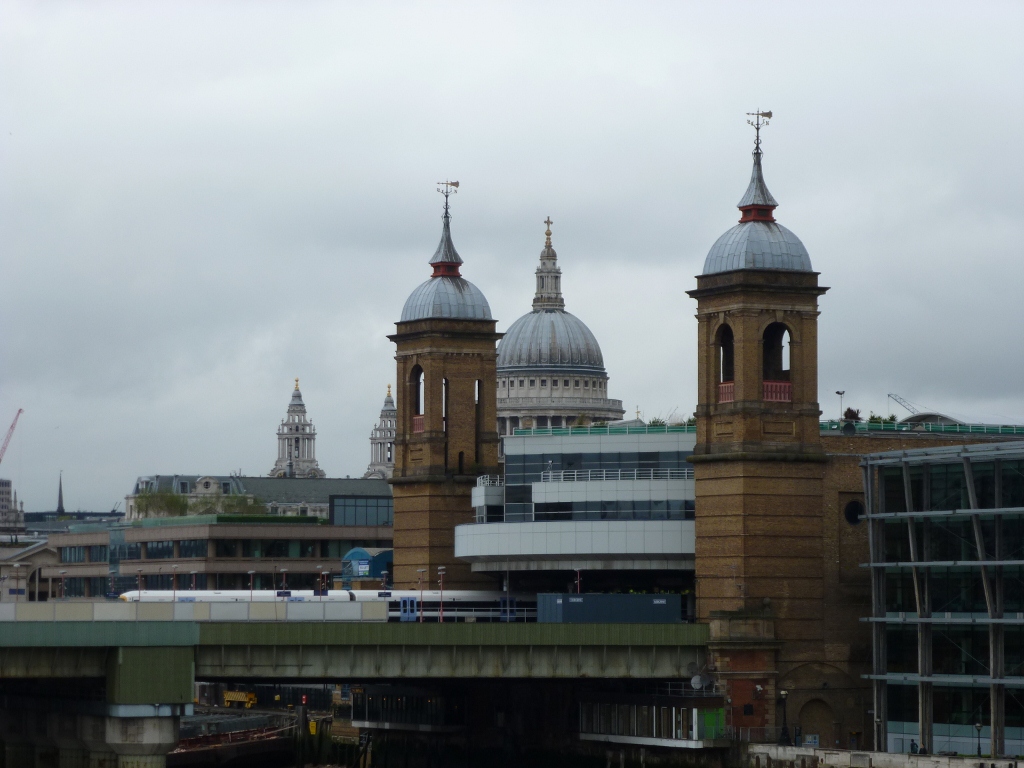
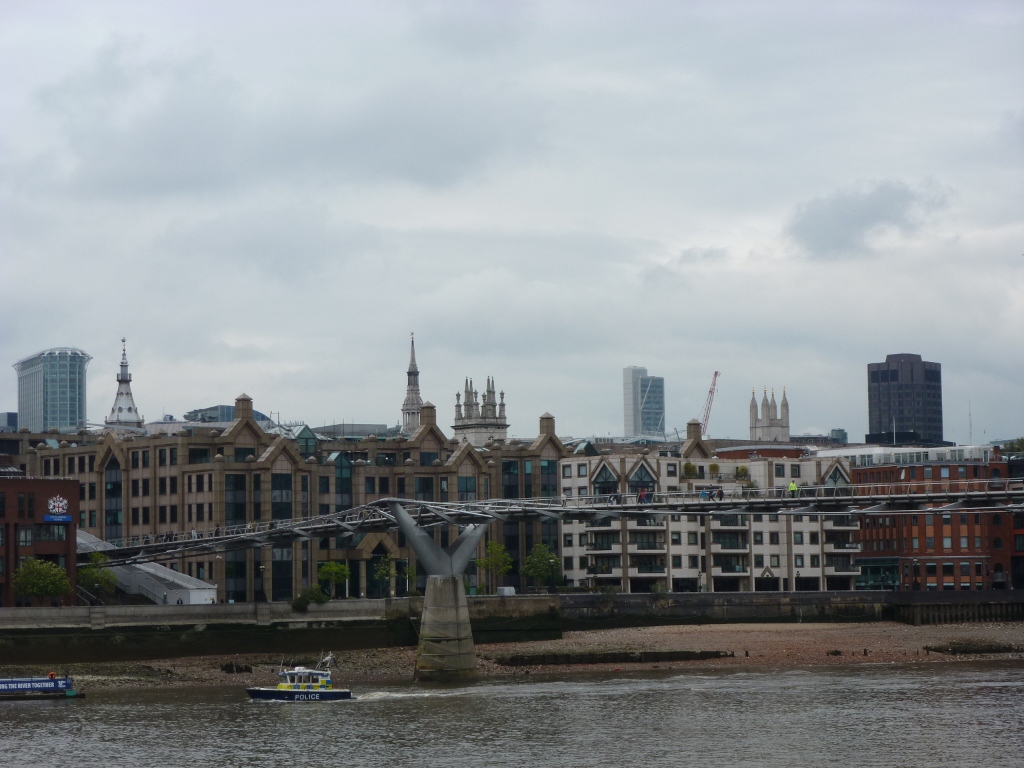
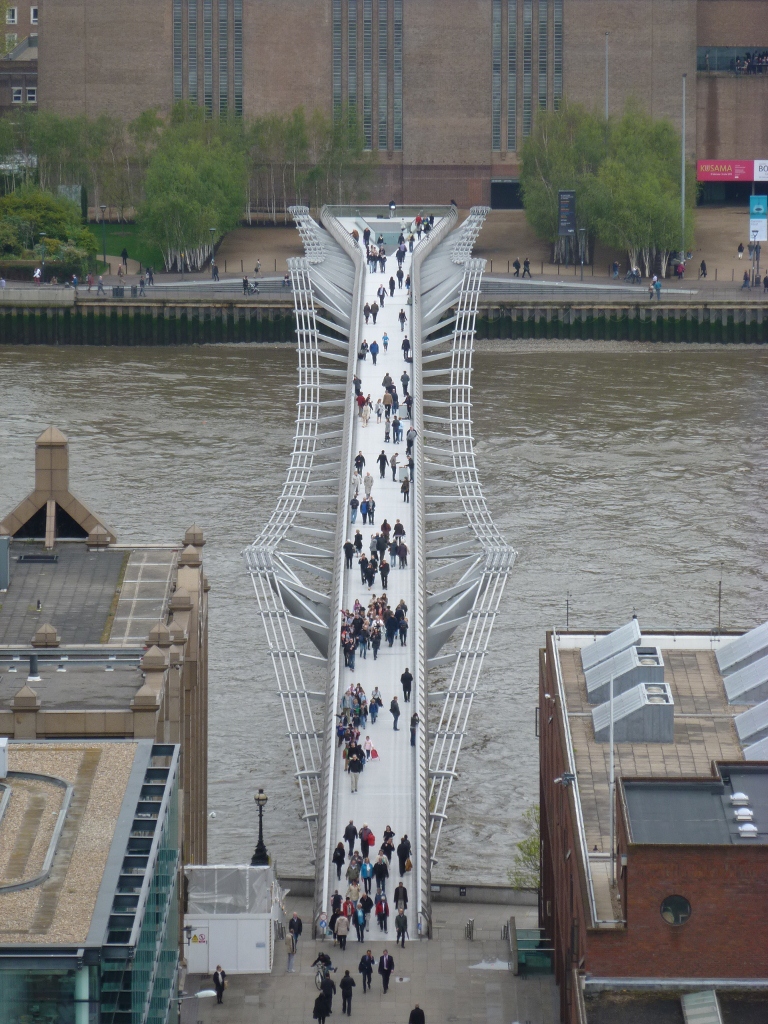
The Millennium Bridge is the first of two pedestrian bridges that cross the Thames.  The second, the Jubilee Bridge (click to see post), opened 3 years later in 2003.  While the Millennium Bridge is sadly only one color, I think it was probably the most photogenic bridge I walked in London.  Although I like the picture above less for the bridge and more for the buildings behind it, which show the city’s transition from a time when church steeples were the tallest thing around to today when that honor belongs to the skyscrapers.

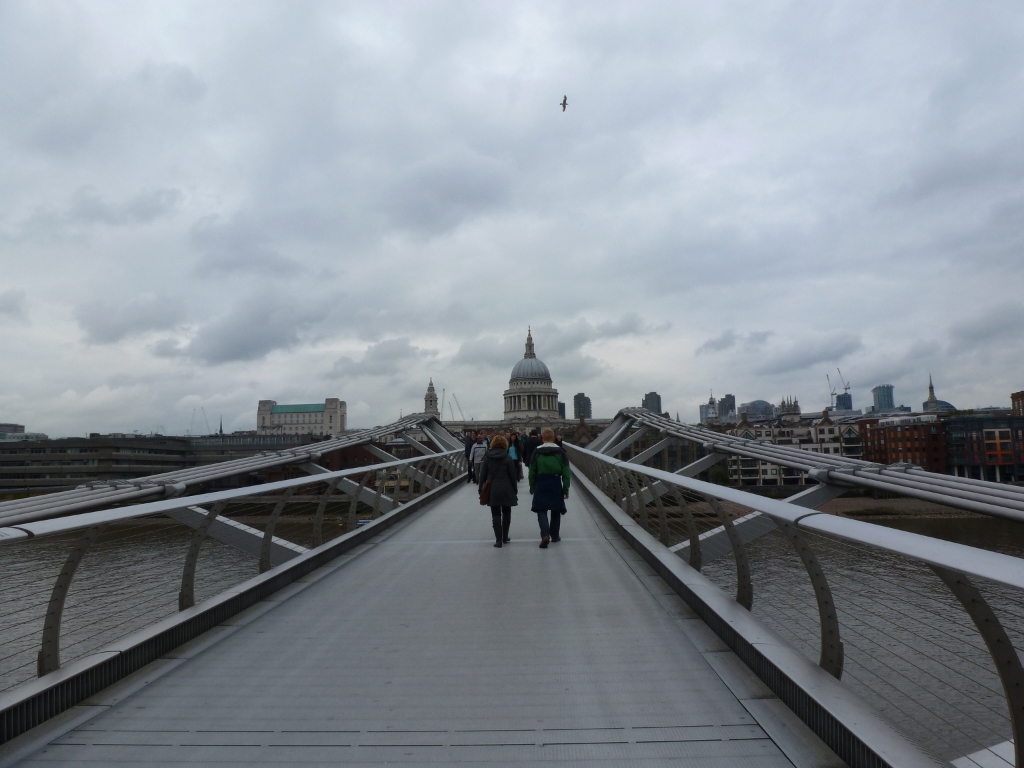
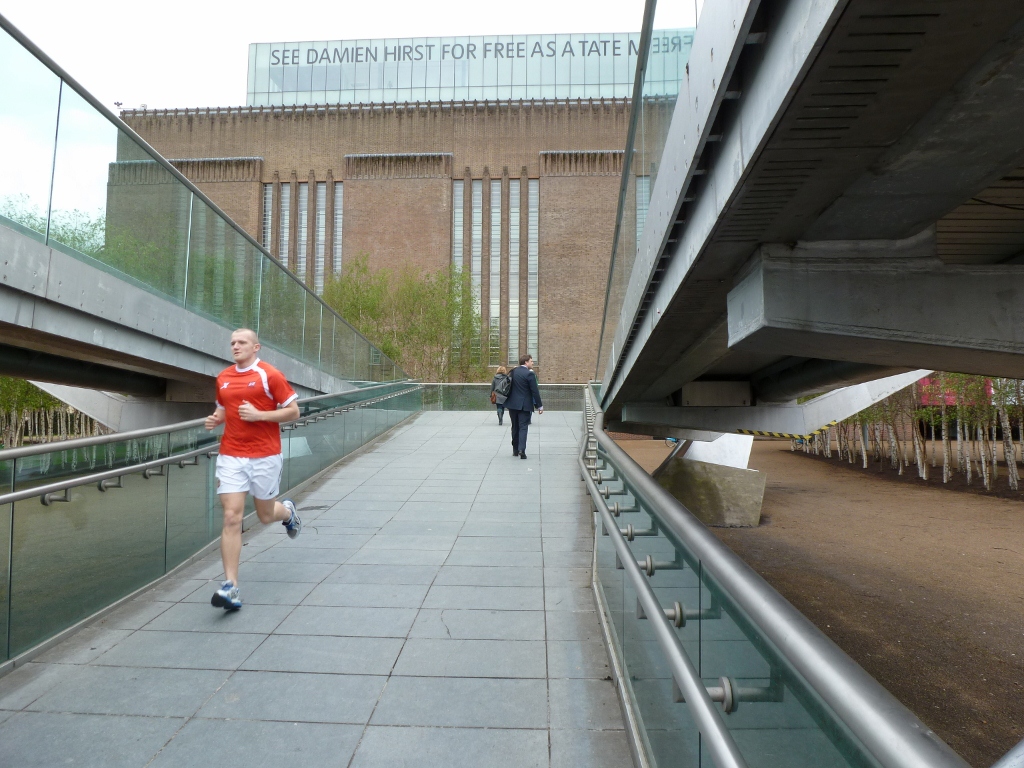
The location of the bridge was very good.  It leads directly to St. Paul’s Cathedral.  In some ways I am surprised that it wasn’t until 2000 that a bridge was built at this location.  (I picked up some souvenir maps while in London depicting the city in 1520, 1666, 1843 and 1902 and none have a bridge or even ferry boat at this location.)  On the other hand, the other side of the bridge connects to the Tate Modern, which didn’t open as the international modern and contemporary art museum until 2000.  Before then the site was a power plant from 1947 until 1981 when it became redundant and closed, remaining vacant until the Tate took it.

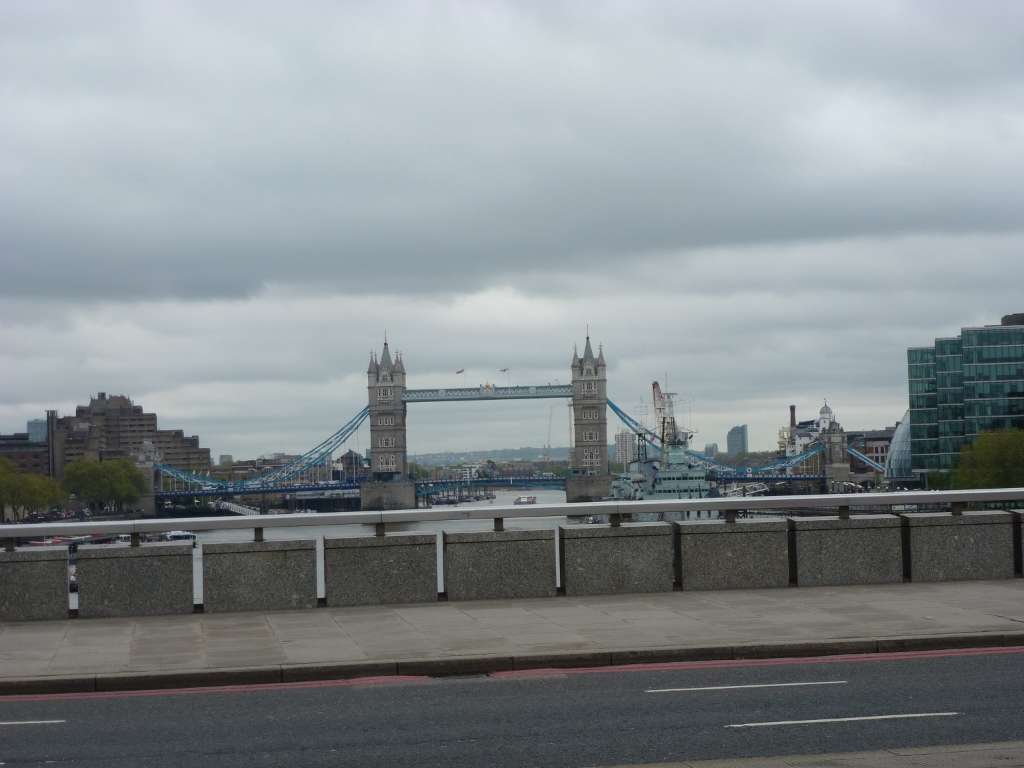
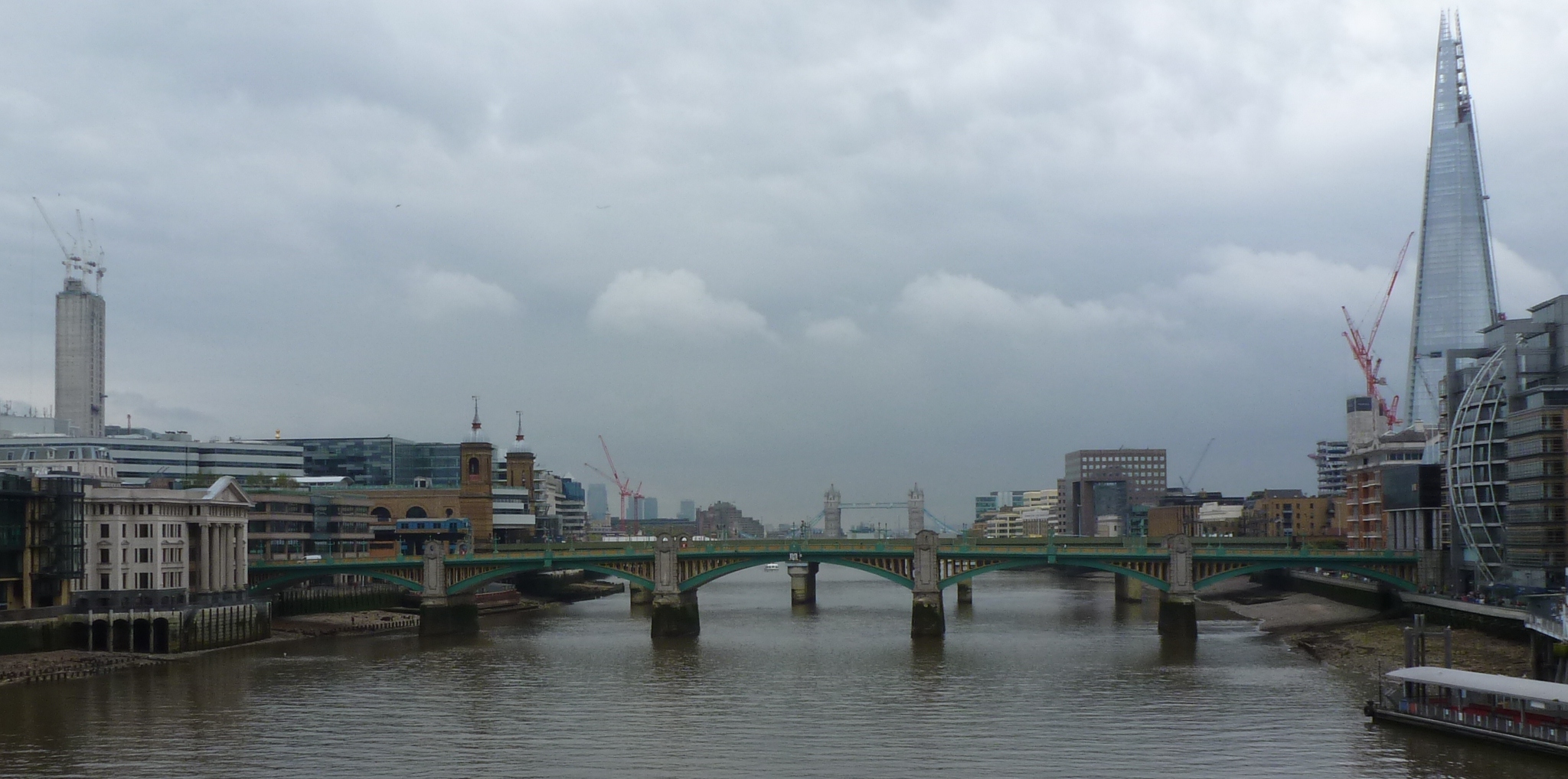
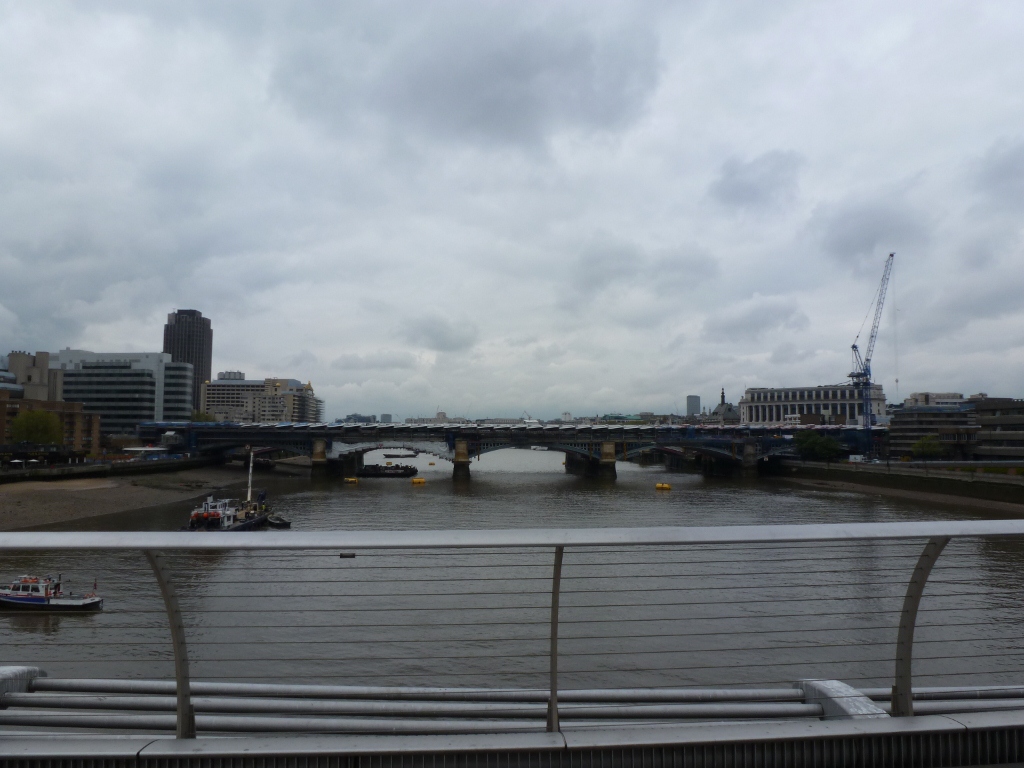
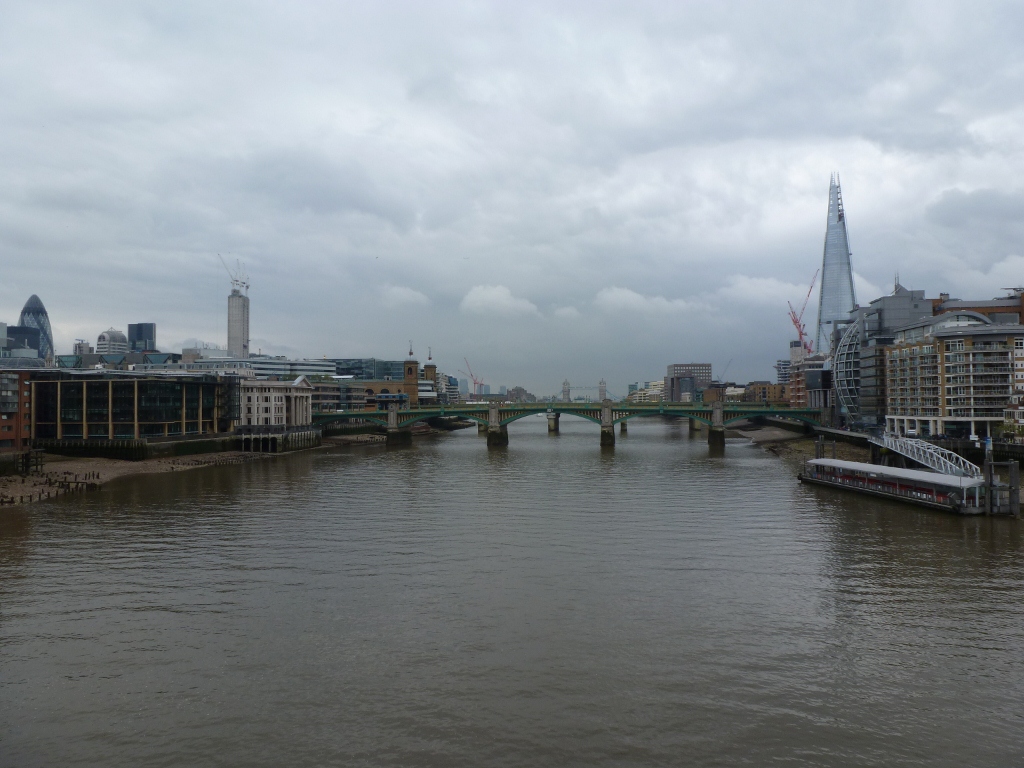
The views from the Millennium Bridge show two things of interest related to the other city bridges.  First, upriver is a view of the first rail station to span the Thames and the longest solar bridge in the world (see July 31 post).  Downriver, the Tower Bridge, which I believe is the most iconic London bridge, comes into view for the first time.

I started this post by claiming that the Millennium Bridge was the most photogenic of the London bridges.  The views of it above are pretty interesting, but the best shot was the one I took from the top of St. Paul’s Cathedral looking down.

Blackfriars Bridge

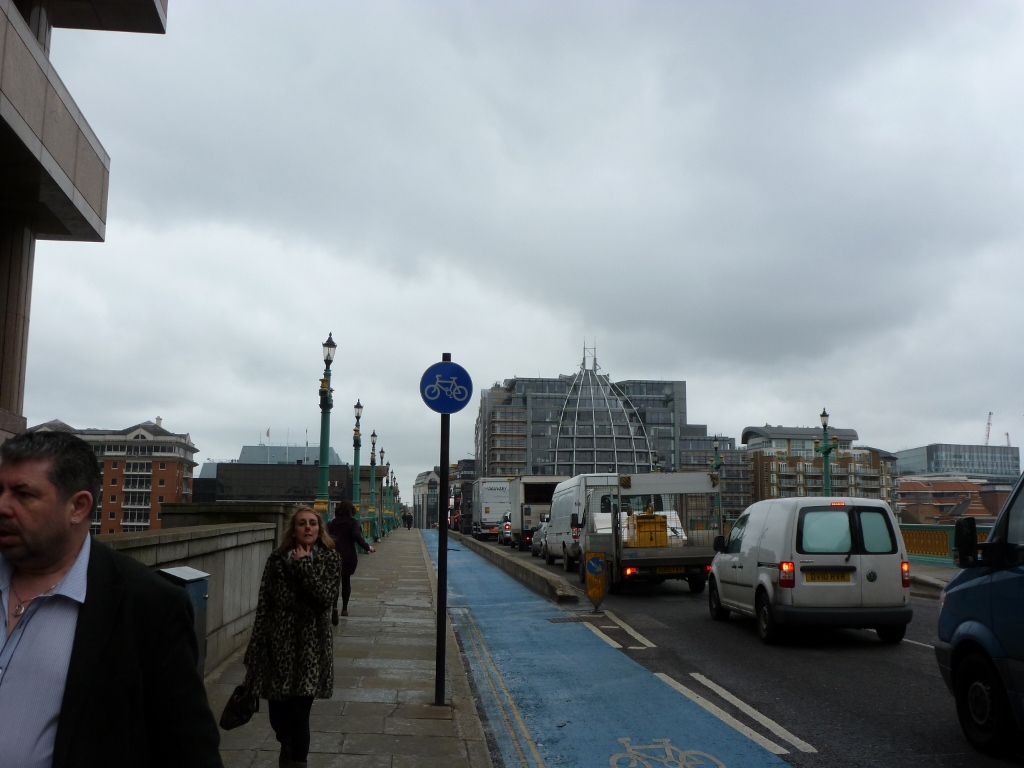
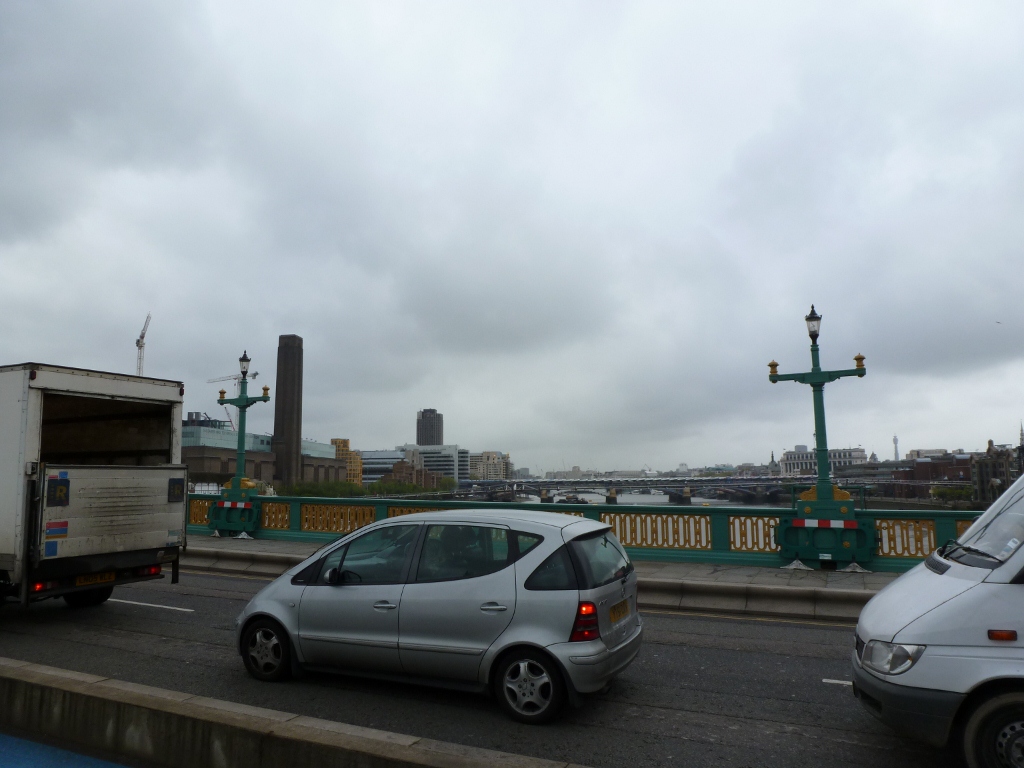
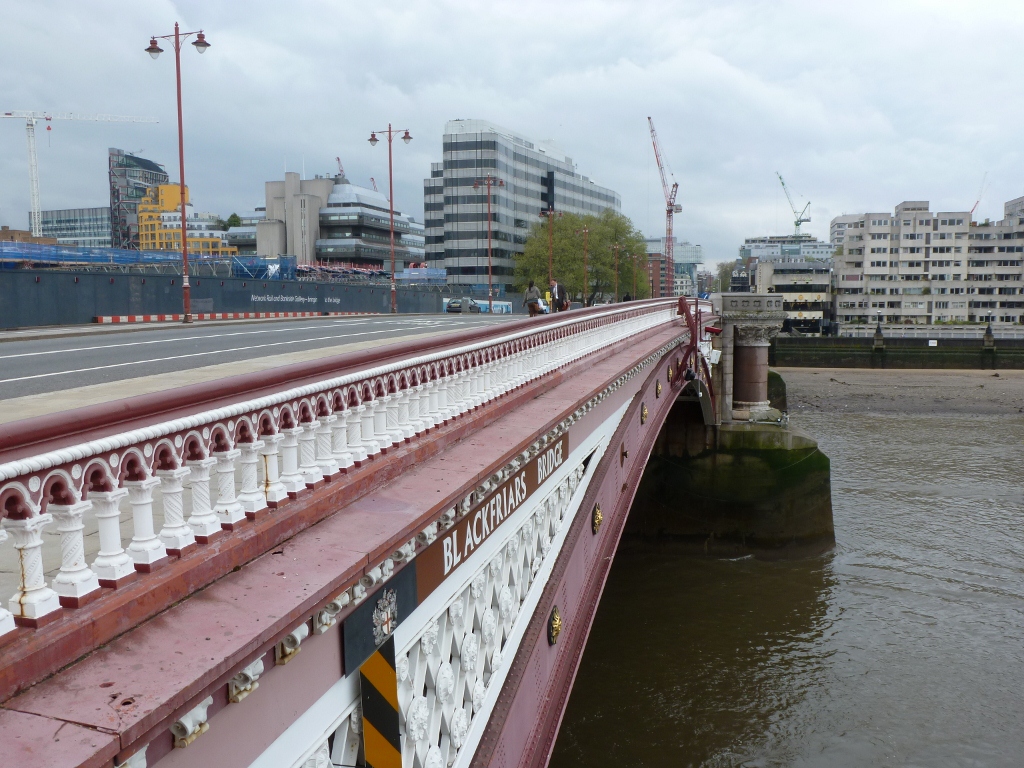
One thing that stuck out to me while in London was the amount of construction going on.  It seemed like everywhere I went in the city there were cranes and/or something was being built, and I didn’t go anywhere near any of the sites for the Olympics.  While on the bridges, cranes could often be seen at a distance, but the Blackfriars Bridge seemed to be in the heart of a construction area.

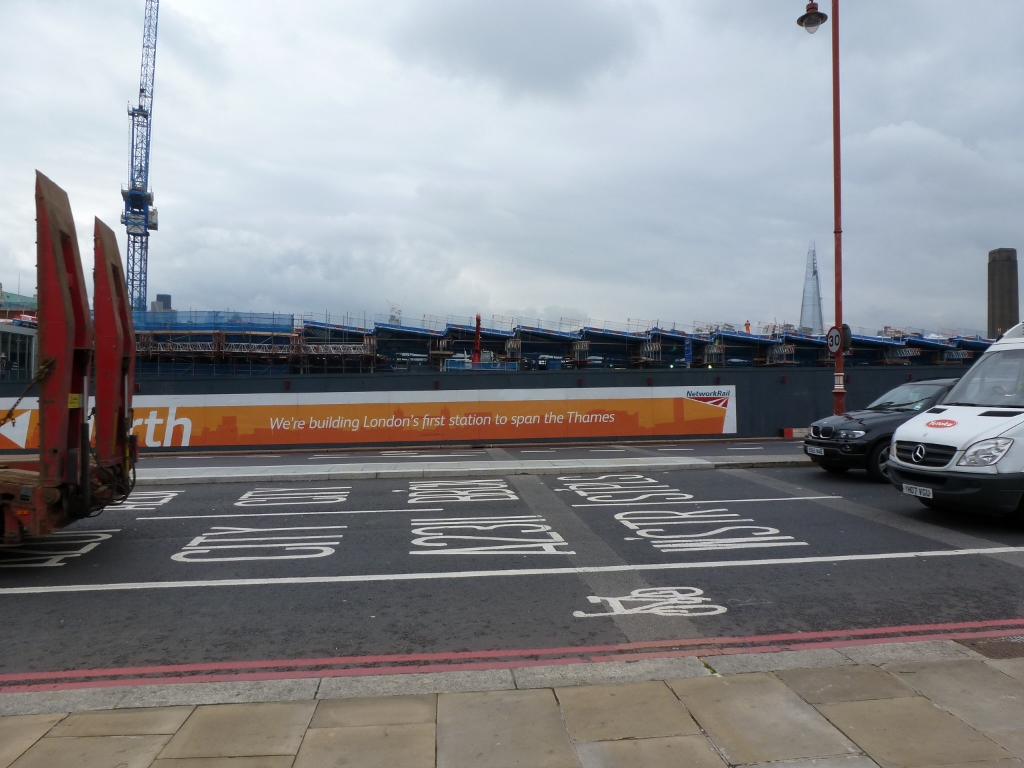
Cranes can be seen on the southern shore in the first image above.  The downriver view from the bridge was completely blocked and will remain blocked by “London’s first station to span the Thames.”  At first I find this very annoying, as I think there would be a good view of the city looking downstream from Blackfriars Bridge.  However, building a station over the Thames is actually an interesting idea.  In a city as dense as London there isn’t much room for expansion.  There doesn’t appear to be anywhere else this close to the heart of the city to build a new large station.  The rail website explains that this station, which is being built on top of a Victorian railway bridge, will allow for longer commuter trains and improve access to the Tate Modern and the Globe Theater.  Another piece of note about the bridge is that it is being fully equipped with solar panels and will be the longest solar bridge in the world.  Apparently, the competition for the title “World’s Longest Solar Bridge” is not particularly tough at the moment as there is only one other known solar bridge in the world which is the pedestrian Kurilpa Bridge in Australia.

My favorite part about this revamped railway bridge is that it challenges the function of a bridge.  Today, most bridges function simply as a way to get from point A to point B.  One exception to this is the Galata Bridge in Istanbul (see June 25 post).  I remember seeing and using a bridge in Bath, England, when I was a kid that had shops on both sides so that you couldn’t even tell you were on a bridge while crossing it.  Bridges like this seem to have been popular in medieval Europe.  In a class I took on the history of cities, we looked at medieval Paris which had multiple bridges with buildings lining both sides.  Perhaps with the invention of transportation technologies that permit sprawling cities, there is no reason to use bridges as anything more than a connector.

I suppose if there were more bridges with mixed functions like carrying shops as well as roads, then there would be less great views, still it’s an interesting concept.  Bridges often end up adding to the dead space of a city, but this might be more because of what they connect than because of their function to move people along.

Waterloo Bridge: The Finest Non-inspiration

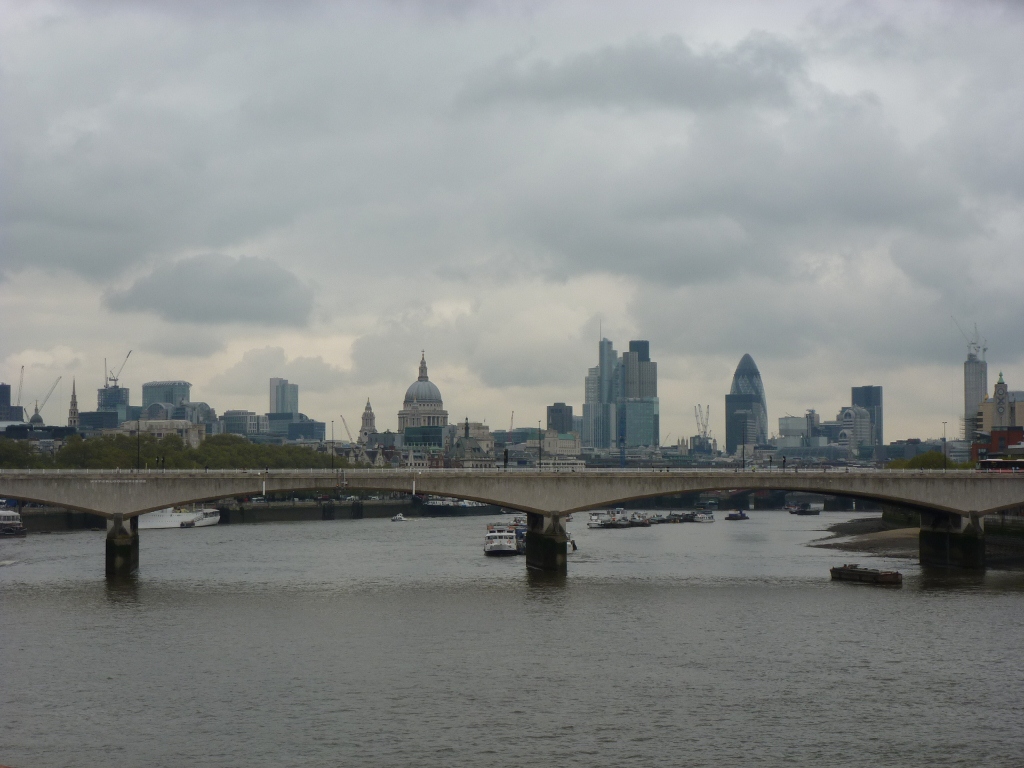
To pick up where I left off with the London bridges I walked earlier this year, the next bridge is Waterloo Bridge.  (The last one I discussed was Jubilee Bridge on July 10.)  The Waterloo Bridge was the most boring bridge in London, though I didn’t realize it at the time.  When I got home however, I realized I only took two pictures from it and hadn’t taken any of the bridge itself.  The picture above was one I took from the Jubilee Bridge to show the downriver view from the bridge, which happens to include the Waterloo Bridge.

I was expecting that the London Bridge would be boring.  Sometime before my trip, I mistakenly identified the Tower Bridge as the London Bridge.  The discussion that ensued, in which I was corrected, led me to believe that the London Bridge was plain and uninteresting and as such, I was not the first to mistake the Tower Bridge for it.  While the London Bridge itself was boring and like the Waterloo Bridge lacked the colors and sculpture found on the other bridges (see the examples of the Albert Bridge and Vauxhall Bridge), it there were many interesting things to see from the London Bridge.  While crossing the Waterloo Bridge, I was only inspired to take shots of the downriver and upriver views.

The most interesting thing to note about these views, is in comparing the downriver view from the Jubilee Bridge with the downriver view from the Waterloo Bridge (pictured above) it appears that the new buildings are pushing the classical buildings such as St. Paul’s out of the frame.

When I come across a situation like this, where there isn’t much to say from my experience, I turn to the internet to give me something to fill out with.  I found two intriguing bits in my Google search.  First is that while I found the views from Waterloo Bridge uninspiring, Wikipedia suggests that the views of the city from this bridge “are widely held to be the finest from any spot at the ground level.”  The second is that Hollywood has made two films called “Waterloo Bridge” in 1931 and 1940 in which the main characters meet on the Waterloo Bridge.  The interesting part is that the movie Production Codes changed in between which resulted in two fairly different films–the first about a scarlet woman accidentally killed, the second about a proper woman who commits suicide to save the man she loves from scandal.

Jubilee Bridge

The Jubilee Bridge is quite unique, at least compared to the other bridges in London.  First, it is the newest bridge I crossed–Her Royal Highness Princess Alexandra dedicated the bridge on July 2, 2003.  Second, it is one of only two pedestrian bridges.  Third, it crosses the Thames twice.

Built on either side of one of the underground bridges which connects to the Embankment station, this bridge is really two bridges.  Particularly for my project, it was very thoughtful of the builders to put a bridge on either side of the underground one so that pedestrians can choose which view of the river they get.

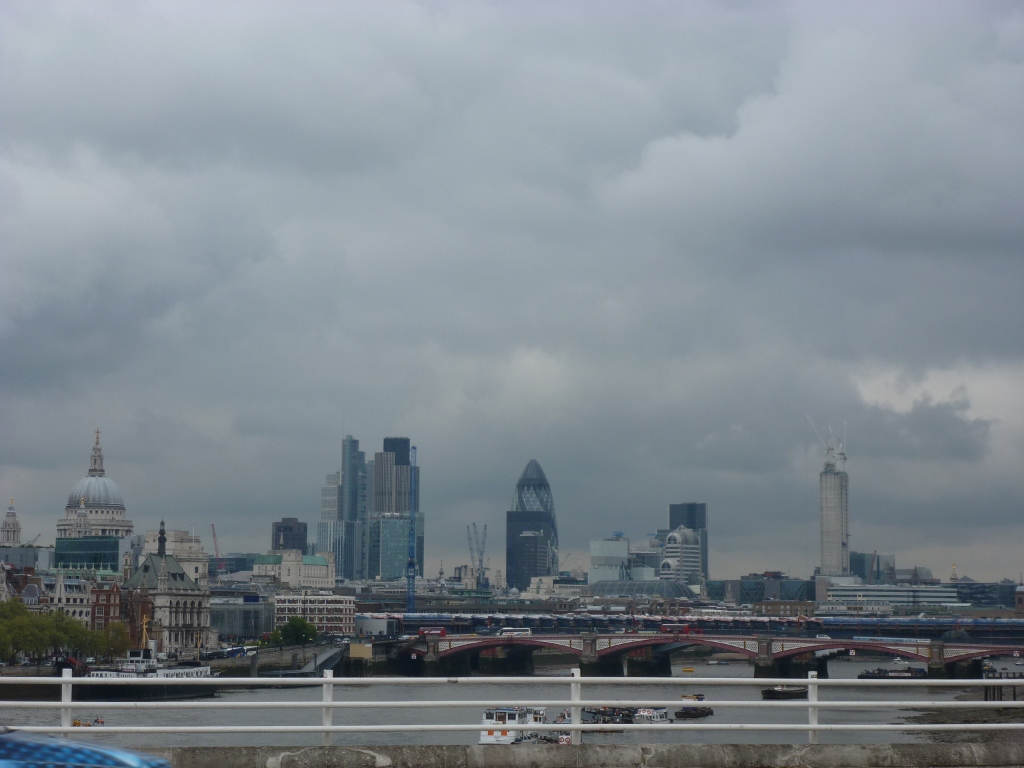
Downriver shows a great view of the changing skyline of London Town.  St. Paul’s Cathedral still dominates its part of the skyline, but more towers are popping up around it.  It almost seems like there are more cranes than buildings in this view of London.

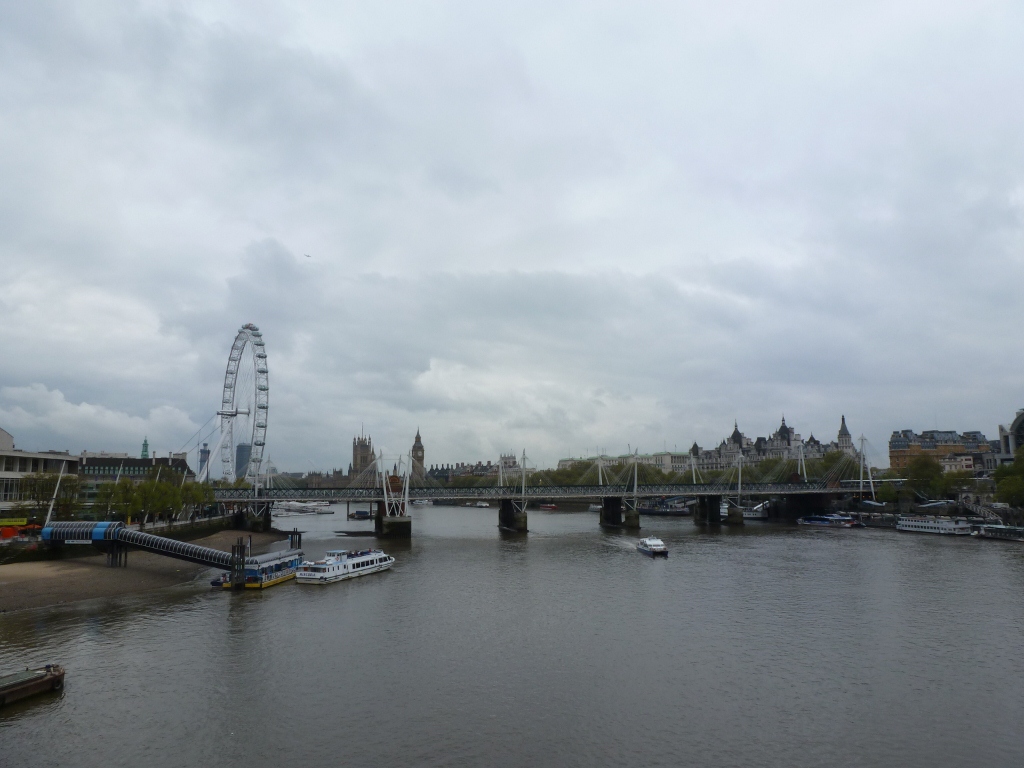
The upriver span of the bridge provides an excellent view of the London Eye and the Houses of Parliament.  And speaking of Parliament, I recently saw that Big Ben has been renamed Elizabeth Tower (see article in the BBC news).  While I agree that it is a great accomplishment for Queen Elizabeth to have reached her 60th year on the throne, I am quite dismayed by the decision to rename Big Ben.  Big Ben is such an iconic and catchy name.  I don’t see how Elizabeth Tower could possibly catch on.  It is one thing to rename the King’s Tower as Victoria Tower, but quite another to rename Big Ben.  It seems like there surely must be something else that Parliament could rename to honor the Queen.

Maps are Awesome!

While talking with someone recently, we discovered we shared a seemingly rare love of maps.  Maps are truly awesome and useful tools and not just for figuring out how to get from one place to another.  Maps provide insight into what a place looks like, giving clues about the layout and geography of a place you’ve never been.  Street names and other labels can hint at the history of the place.  Historical maps show what a place looked like in times past.

I have used maps several times to help me with writing my blog and there are many more times when I should have gone to a map first. As I mentioned in the first Heth’s Run Bridge post, the G.M. Hopkins maps on Historic Pittsburgh are probably my favorite resource for Pittsburgh.  Heth’s Run Bridge presented many puzzles that the maps helped me understand.  I realized yesterday that I probably should have gone to these maps first when wanting to figure out which bridge remnant I saw from the Fort Duquesne Bridge (see June 19’s post).  While writing that post, I did a search on the internet, but came up with nothing.  The G.M. Hopkins maps came to the rescue, although there are two possibilities for which bridge the remnant belonged to.  The first possibility I found on the 1900 map.  This one was called the Union Bridge.  By 1929, the Union Bridge was gone and another bridge connected the Point to the North Side.  This one was called Manchester Bridge.  This bridge was demolished in 1970, by which time the Fort Duquesne Bridge was built (see June 19th post).  I made a few other discoveries about Pittsburgh while looking at the 1929 map.  First, Penn and Liberty avenues used to come straight through to Water Road which ran along the northern shore of the Monongahela River.  Today these avenues stop much further inland.  The second major discovery was that Point Park already existed in 1929.  It was significantly smaller than it is today, but it is there.

Google Maps helped me with identify the buildings near Lambeth Bridge (see June 28th post) that I didn’t take the time to stop and investigate while I was walking the bridge.  Several of the buildings I was able to identify from labels that Google Maps conveniently placed on the map.  The Parliament View Apartments weren’t labeled, but using Google Maps’s other wonderful feature–Street View–I was able to find a sign on the building identifying it.

The image leading this post is of another highly convenient map.  On my recent trip to Cleveland, I arrived Downtown 2 hours before the person I was visiting finished work.  We arranged to meet at their place of work, but I was only familiar with two or three of the streets in downtown Cleveland, and the meeting place wasn’t on any of them.  I had just decided to use my skills of logic to find it (which would have been feasible in this case as one of the cross streets was a numbered street and the other was called Lakeside) when I came across this map on a street corner.  It turns out that these maps are posted regularly around downtown Cleveland, which I thought was very considerate of the city.  It made the city feel like it welcomed visitors with open arms, engaging them in being engaged in the city.  Even though I had a plan for finding where I was going without a map, I prefer being safe rather than sorry, so I took the easy way out and used the map to figure out where I was supposed to end up.  I also used it to plot out how I could spend the time I had until my friend got out of work to cross at least one of Cleveland’s bridges over the river Cuyahoga.  I ended up getting distracted from this goal, but that is a story for another day….(see July 9 post)….

Westminster Bridge

I mentioned in my post on Battersea Bridge that the traffic on the bridge was low, but that this was probably in part due to the fact that I crossed it on Sunday afternoon.  I was so excited about walking all the bridges in London that I walked half of them first thing that Sunday afternoon when I arrived.  The traffic condition on most of the bridges was similar to the Battersea Bridge–not much.  I did pass several other pedestrians as I walked along the Thames River Path to get between the bridges, but the volume of the pedestrian traffic changed significantly when I reached Westminster Bridge.  Crowds of people were crossing the Westminster Bridge, enough that an ice cream truck parked at one end to attract customers from the passersby.


Going back to the mysterious tower under construction next to the St Georges Wharf Apartments (see Lambeth Bridge post and Battersea Bridge post), my favorite view of these buildings was from the Westminster Bridge.  The way they appear in a cluster with other buildings along the river soothes my sense of harmony, as the tower doesn’t stick out so abruptly in this view.  This is one of my favorite things about walking bridges–seeing how the appearance of a particular location can change drastically when viewed from different locations.  The Thames River is particularly good for this as it twists and turns quite a bit as it passes through London.  This causes the incomplete tower to look like it is right next to the other tall building, when in reality they are separated by a fair distance and are on opposite sides of the river (again refer to the Lambeth Bridge post for a different view of these buildings).

Lambeth Bridge

Lambeth Bridge toned down the color schemes a bit by using only two main colors, compared to the three or more colors found on the Vauxhall and Albert bridges (see June 20 and June 16 posts).  Also, the character of the area surrounding Lambeth Bridge changed from that surrounding the bridges I crossed previously.  There was much more of the older, classic London around Lambeth Bridge.  The southern shore combines the old and new.  On the left, looking from the bridge is the historic Lambeth Palace, the site of the Archbishop of Canterbury’s London residence since the 13th century.  (This accounts for the building’s religious appearance.  I had assumed when seeing it in person that it was some kind of church, so when I looked it up from the comfort of home and saw it was a palace I was initially disappointed at my error.)  To the right across the street from the Palace, is a sleek, modern, glass building housing the Parliament View Apartments.  In retrospect, I regret not taking a picture that includes both the Palace and the apartments in one frame.


The views up- and down-river from the bridge correspond to the sites at the southern end of the bridge.  Downriver, the side corresponding to the old Lambeth Palace, the view is dominated by old London architecture particularly the Houses of Parliament.  At the same time the upriver view is dominated by newer architecture, like the Parliament View Apartments upriver from Lambeth Palace.


I would like to add a correction to my post on the Battersea Bridge where I identified the tower under construction, also visible in the Lambeth Bridge upriver photo above, as the Shard.  In the Battersea Bridge post, I identified the building as the Shard because it was the only tower under construction in London on which I could find any information on.  Also, one of the photos labeled as the Shard looked similar to this building.  However the Shard is closer to central London.  Today I learned that the complex next to the tower is the St Georges Wharf Apartments, which are rented by the night.  Based on the style of architecture of these buildings and the tower and their proximity to each other, I have a suspicion that they are related.  It would probably be a good thing if the tower was an expansion of the apartments because the current apartments are completely booked.  Out of curiosity, I searched multiple dates between now and June 2013; none of them had any availability.

Vauxhall Bridge

I must say that London has the most interesting and varied color schemes for its bridges of any city I have yet visited.  In Pittsburgh, for instance, the bridges that have color use only one (and that tends to be yellow).  All the examples I can think of for bridges in other US cities follow a similar color design as Pittsburgh, though not in yellow.  On the other hand, London’s Vauxhall Bridge presents yet another tri-color design scheme different from the three bridges I’ve already posted about and from the nine more to come.

Upriver from the bridge, the smoke stacks of the Battersea Power Station (see June 18 post) are still in view.  In the other direction, classic, old London architecture appears, after the views from the bridges upriver were dominated by modern architecture (when I say modern architecture I include anything from the Modern Movement beginning roughly in the 1920s through contemporary architecture).


More interesting than the color scheme of this bridge was the sculpture.  Vauxhall Bridge has five arches; there are four statues on each side of the bridge, one in-between each arch.  Each statue obviously represented what I guessed to be some form of art or industry.  The one holding the model of St. Paul’s Cathedral and the one with the scythe were easy to identify as Architecture and Agriculture respectively.  I could not immediately determine the symbolism of several of the others including the one holding the urn.  Fortunately, we have the internet, which has given me the official representation for each statue.  In order they are: Government, Education, Fine Art, Science/Astronomy, Agriculture, Architecture, Engineering, and Pottery.


For more information about Vauxhall Bridge including pictures and quotes about the previous bridge on this site, I found this website interesting.

A power station and Sherlock Holmes

The Battersea Power Station intrigued me from the first glimpse I got of it.  The smoke stacks first entered my frame of view at the Battersea Bridge (see June 15th post).  I kept my eyes on the building as I got closer to it and was thrilled to get such a close view.  I couldn’t tell from the early views of it that it was on the river.  It was obviously empty as I could see sky through some of the windows.  However I did not know what it was.  While large, empty, industrial buildings intrigue me, I don’t know enough about them to identify their previous purposes.  This one used to be a power station built in the 1930s and closed over the 1970s and 1980s.  The National Heritage website indicates that building was to be adapted to new uses starting in 2005 and a BBC article said the building was to open as a new shopping and etc. complex in 2009.  I did not see any signs of any use of the building when I passed, so I’m assuming these projects have yet to come to fruition.

After returning home from my trip to the UK, I received Sherlock Season 2 on DVD.  One of the best parts of the season was in the first episode “A Scandal in Belgravia” where a sequence took place at the Battersea Power Station, which I instantly recognized, from having spent so much time staring at it while walking past it along the River Thames.  This has been one of my favorite parts about my trip to the UK, now when I watch my British TV or read my British literature I recognize and understand the locations more from having seen them in person.

I did have a false call with this over the weekend.  I was reading “For all the Tea in China” by Sarah Rose which talked about the Chelsea Physic Garden.  I immediately said, “I know that place, I remember walking past it.”  However, when looking at pictures of it online, I realized that I passed by the Physic Garden completely oblivious to its presence.  What I remembered walking past was the Chelsea Flower Show grounds, which were being set up for a big show, that the gardeners were a little concerned about due to the excess rain the UK experienced this spring.

Chelsea Bridge, London


The part I most enjoyed about the Chelsea Bridge was the four golden ships, two at each end of the bridge.  I only took two pictures of these ships.  I originally was only going to take one as I assumed that they were all different, but I took a second when I noticed the coat of arms below the ships were different on each side.  The first one is the coat of arms of London and the other one is the coat of arms of one or some of the boroughs.  Like the Albert Bridge, the 19th century Chelsea Bridge had structural issues.  Unlike the Albert Bridge, the Chelsea Bridge was demolished and rebuilt in the 1930s.  The red and white color scheme, while not as striking as the Albert Bridge’s pink, green, and blue scheme, does also catch the eye.  I suppose this may serve a similar purpose of making the bridge visible under challenging visual conditions.

Similar to the Albert Bridge, the view from the Chelsea Bridge encompassed mostly modern buildings among the trees lining the river embankments.  The Battersea Power Station, now vacant, was one of the oldest buildings visible from the bridge.  (Watch for an up-coming post with more on the power station and Sherlock Holmes.)


An interesting tidbit I discovered while looking up the Chelsea Bridge online is that Billy Strayhorn composed a song entitled Chelsea Bridge.  Apparently the piece is misnamed as Strayhorn was inspired by the image of the Battersea Bridge, which he identified at the Chelsea Bridge.  While I am not familiar with Strayhorn’s work, I am intrigued by this connection as Strayhorn went to high school in Pittsburgh and started his career here.  A local theater, the Kelly-Strayhorn Theater, is named in his and Gene Kelly’s honor.  (Gene Kelly also went to high school and college in Pittsburgh.)