Williamsport Public Art

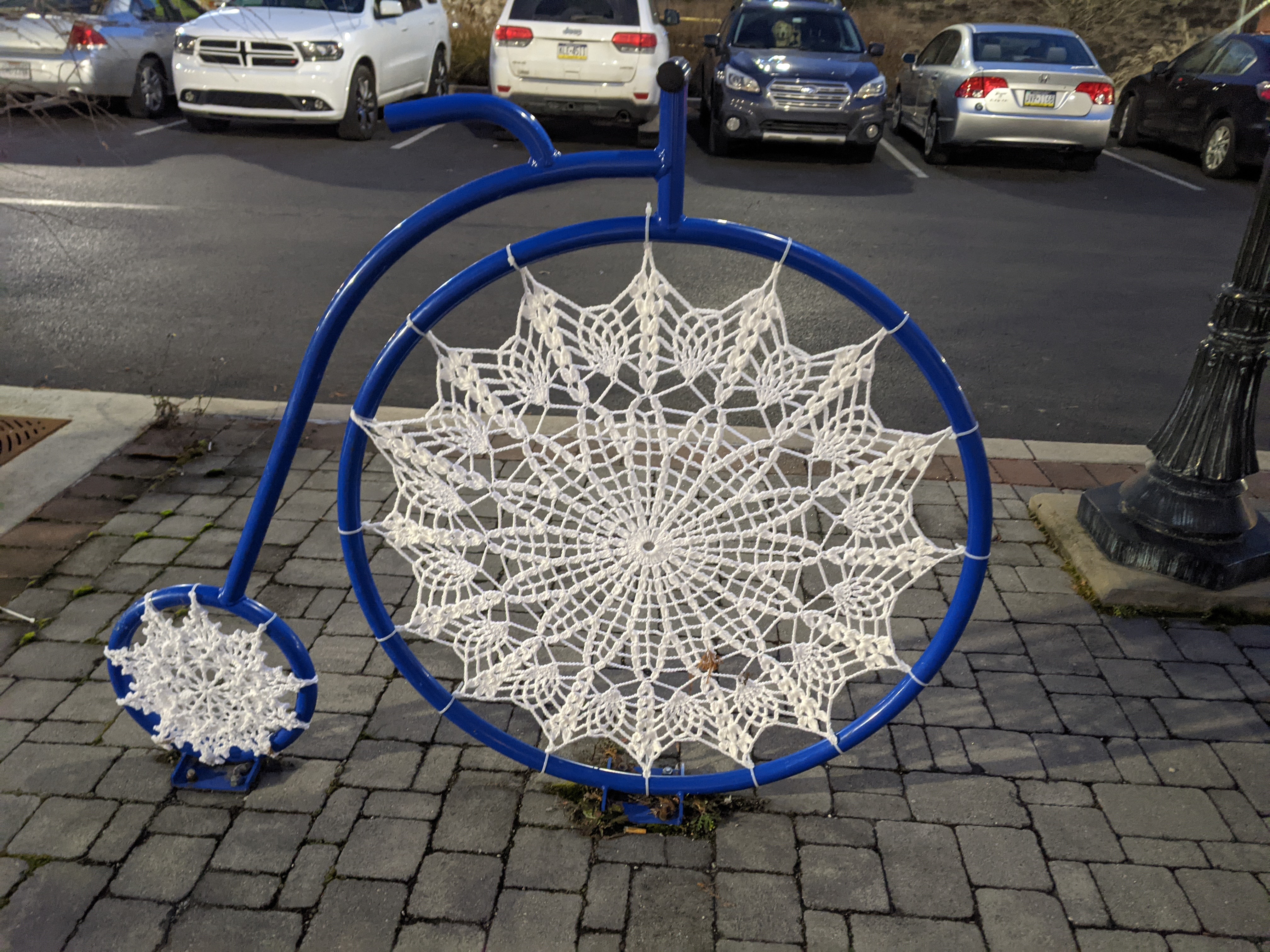
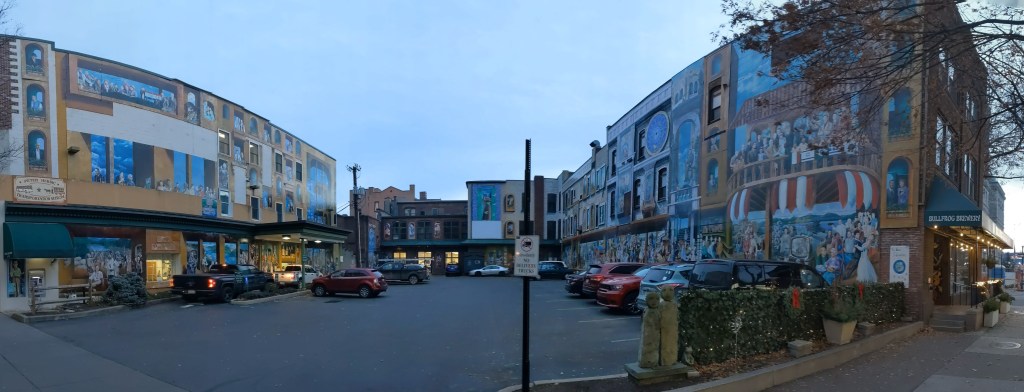
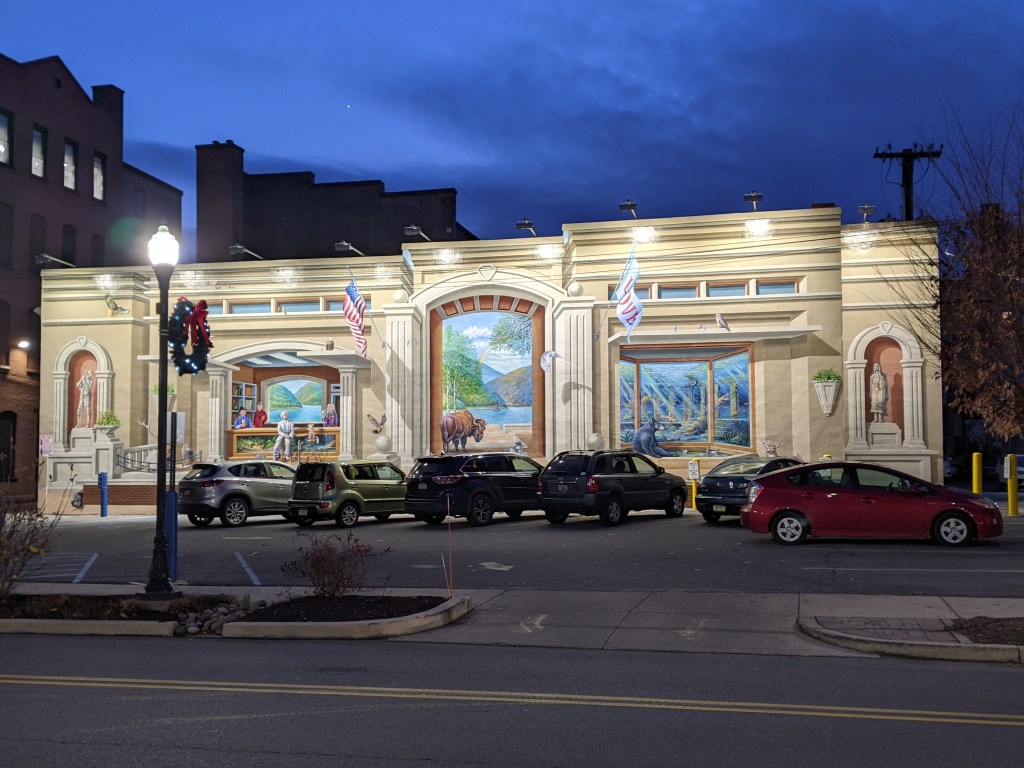
I enjoy my layovers in Williamsport, PA, even though I introduced the town on my blog with my least favorite experience there so far – walking its bridges. I am always on the tail end of a trip when I’m visit, which may explain why I have a tendency to not take as many photographs as I otherwise would. For example, the Little League Museum is in Williamsport and at one intersection the public art reflects this with a statue at each corner of little leagues players one each at home plate and the three bases. When I stumbled across that intersection I was too tired to hit all four corners and so I didn’t even take photographs of the statues at the two corners I did pass. However, the crochet-filled penny-farthing bike rack and a couple murals filling in the normally blank walls along parking lots were inspiring enough for me to stop for a minute to take photos, despite being so tired.
Williamsport Bridges

Williamsport is a town of just over 25,000 along the upper Susquehanna River in Pennsylvania. I discovered it as an excellent stop-over point to break up the drive home from my relatives in Rutland (where I’ve explored public art, a bridge, covered bridges, and the drawing of municipal boundaries). I enjoy a historic hotel, good restaurants, and a great bookstore (particularly useful when I’ve run out of reading on a trip) whenever I stop in Williamsport.

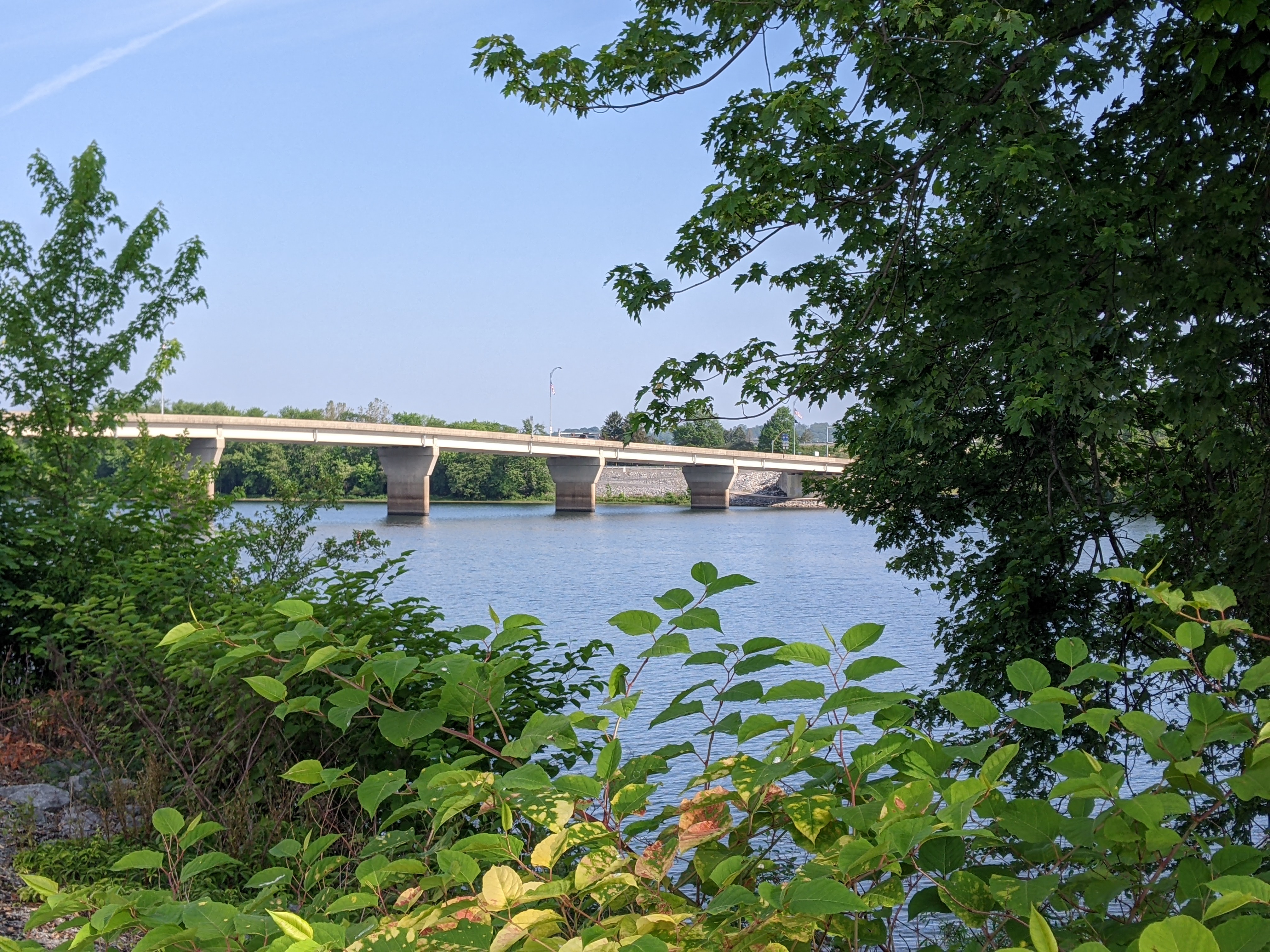
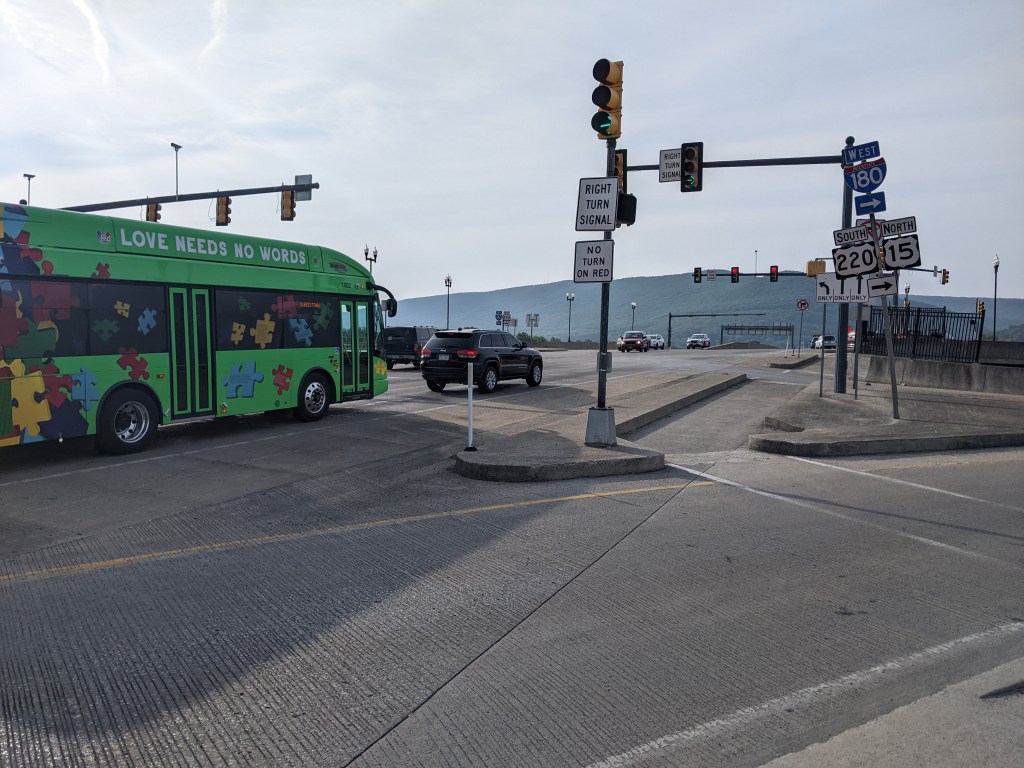
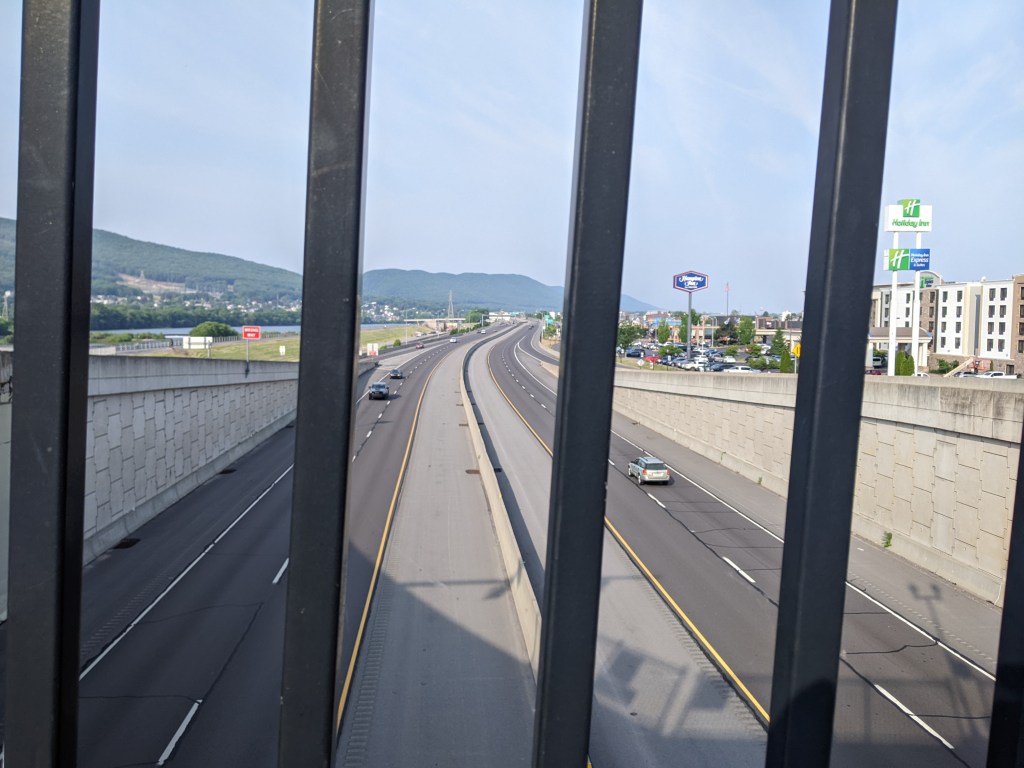
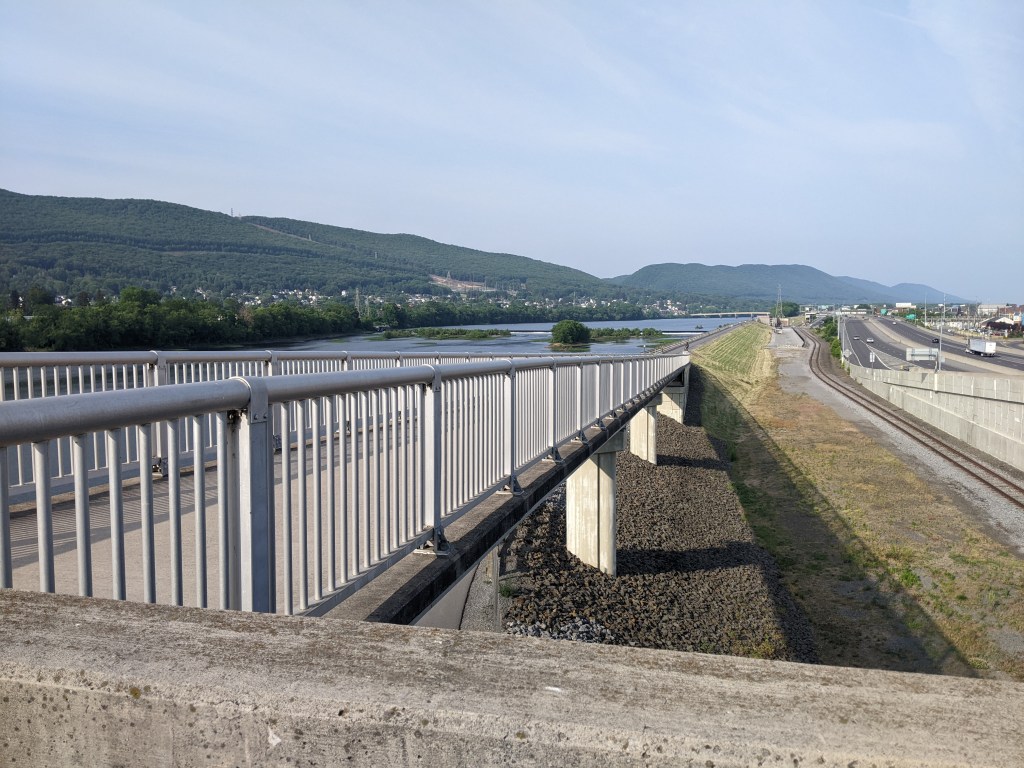
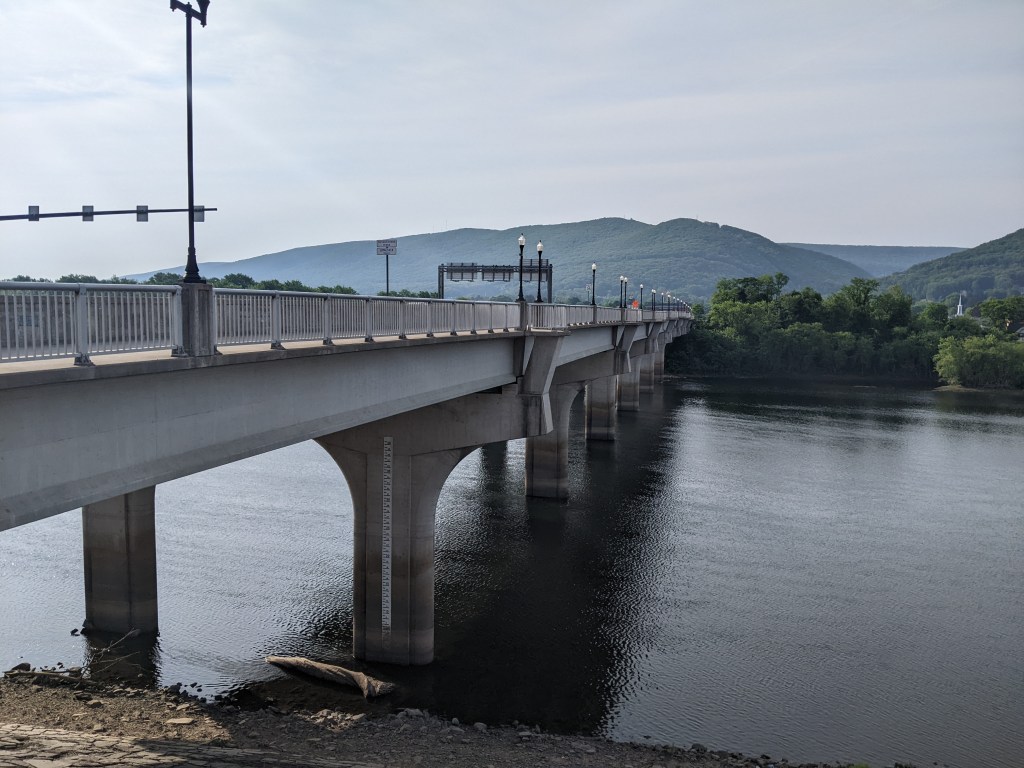
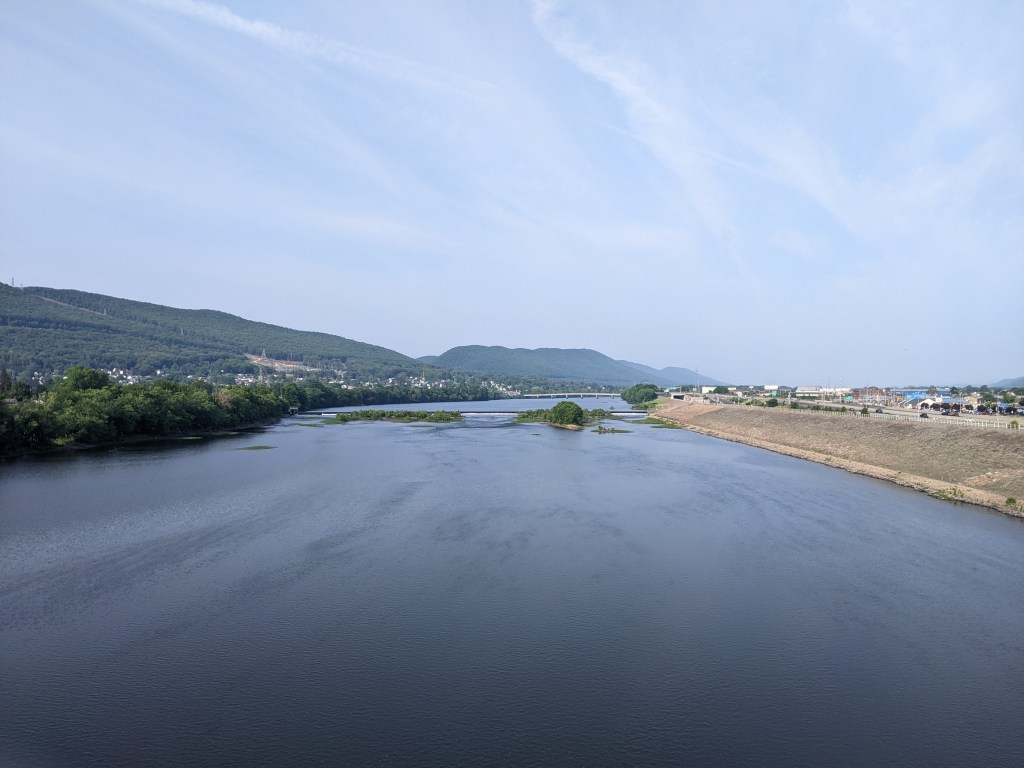
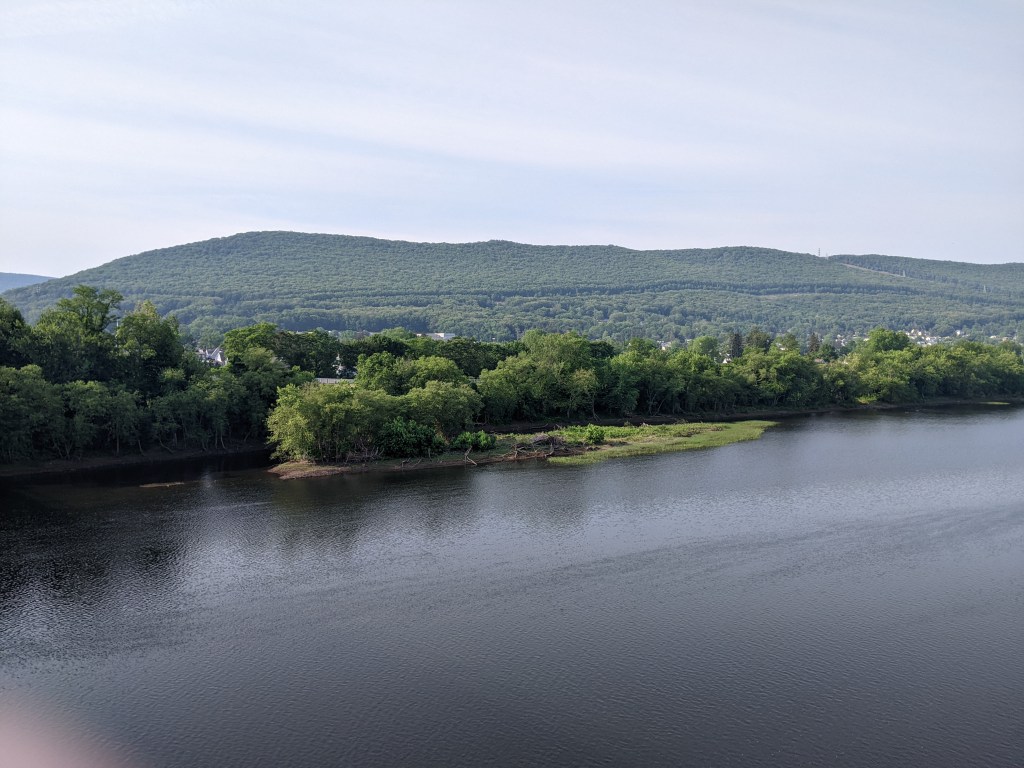
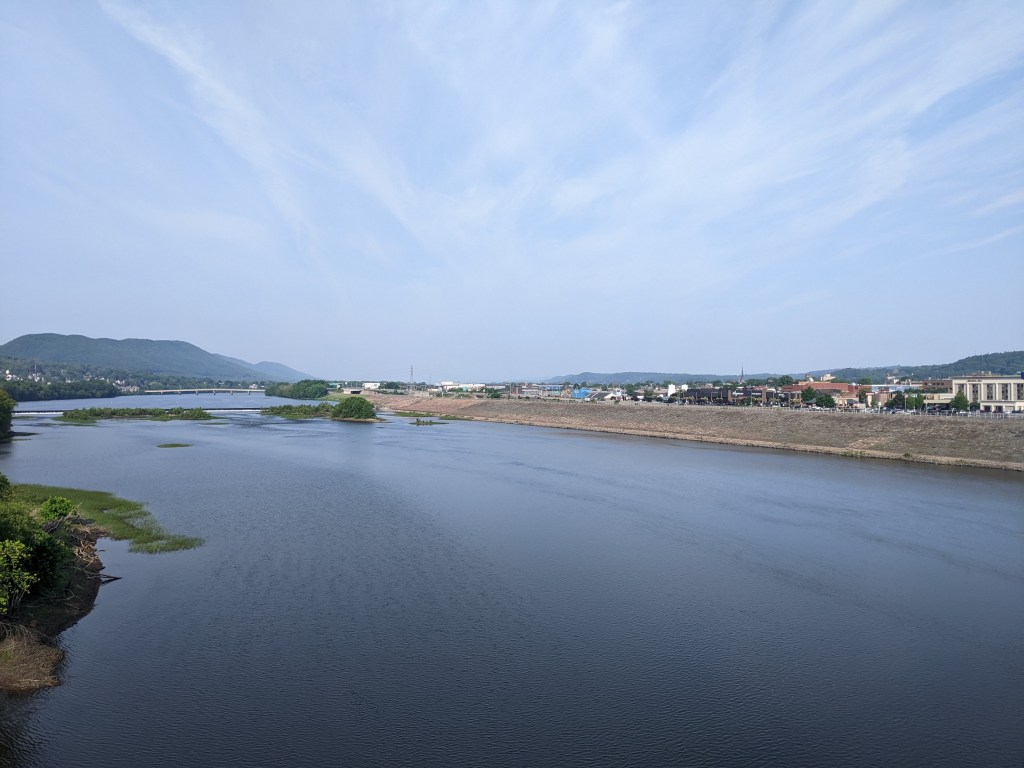
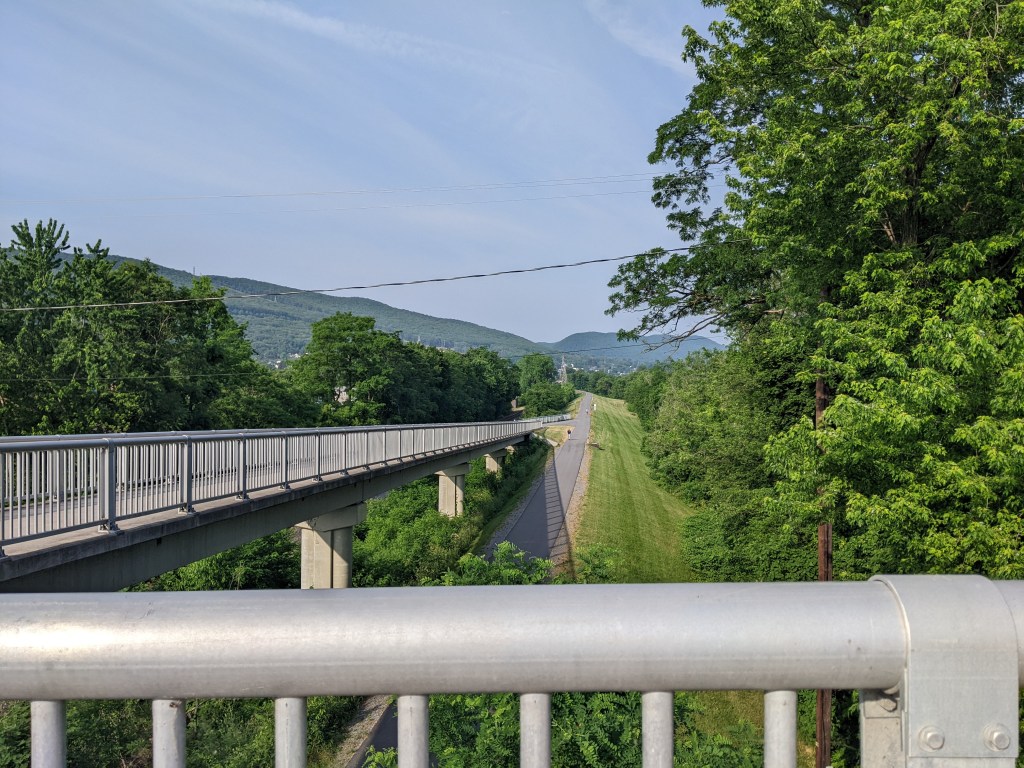
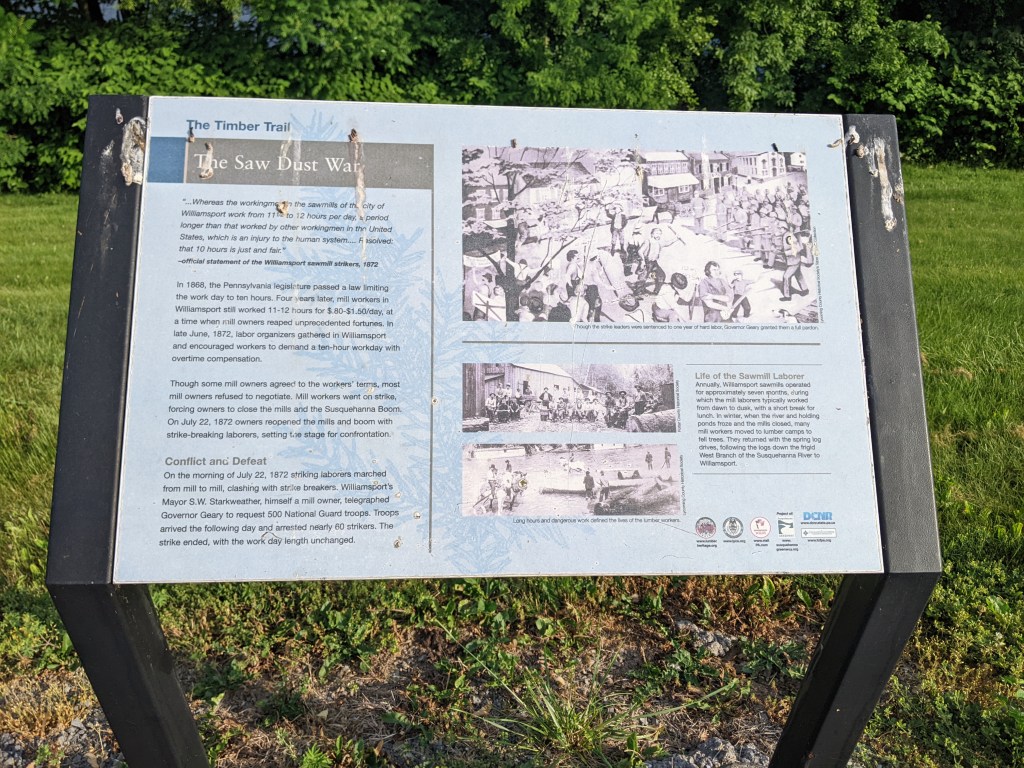
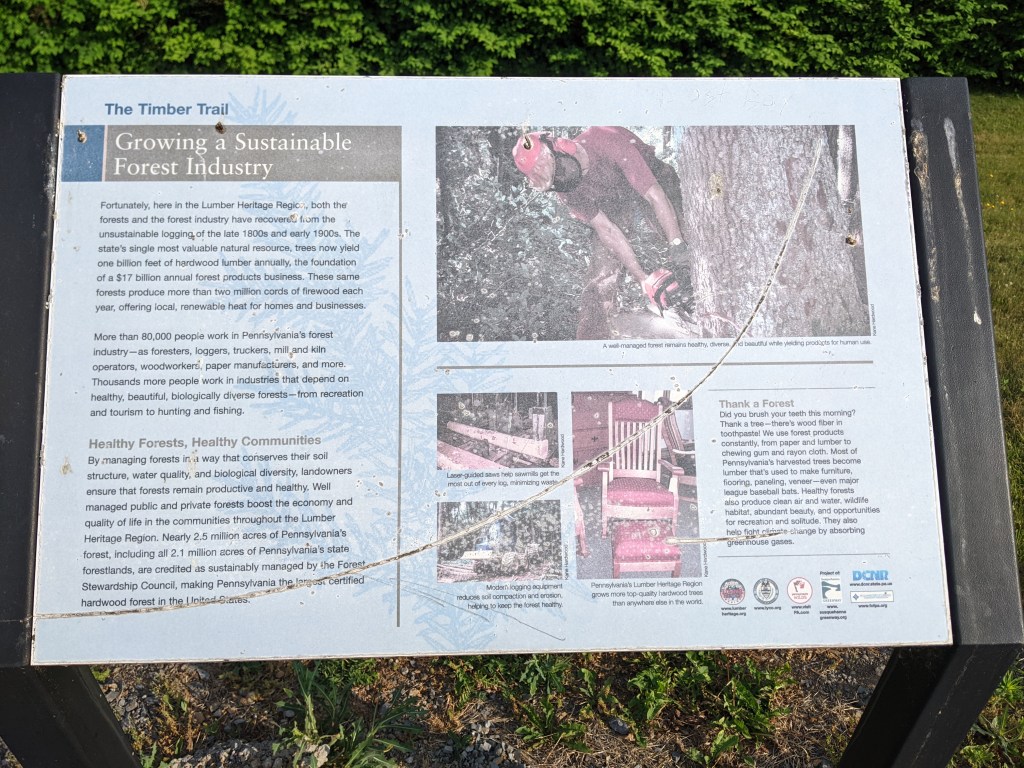
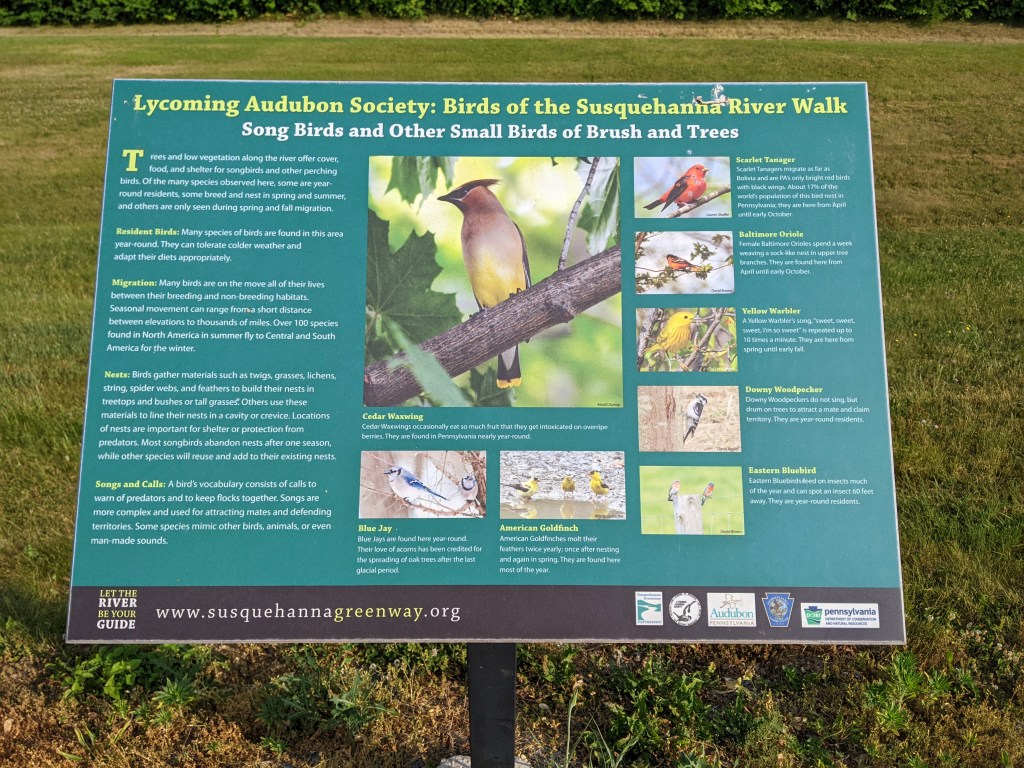
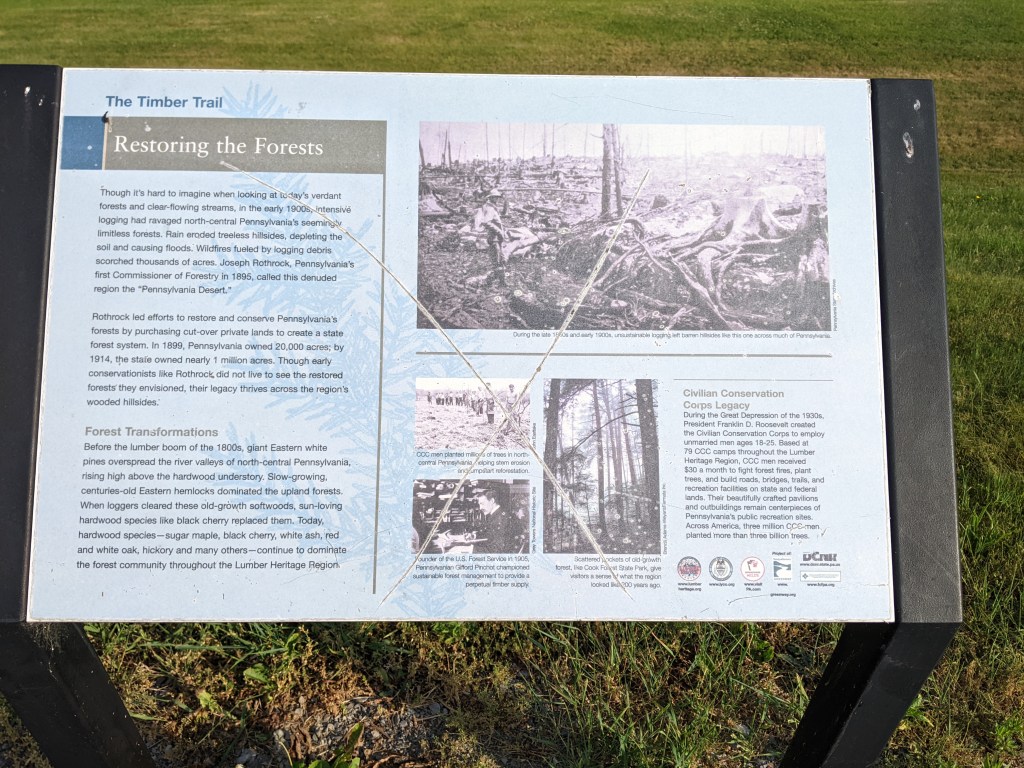
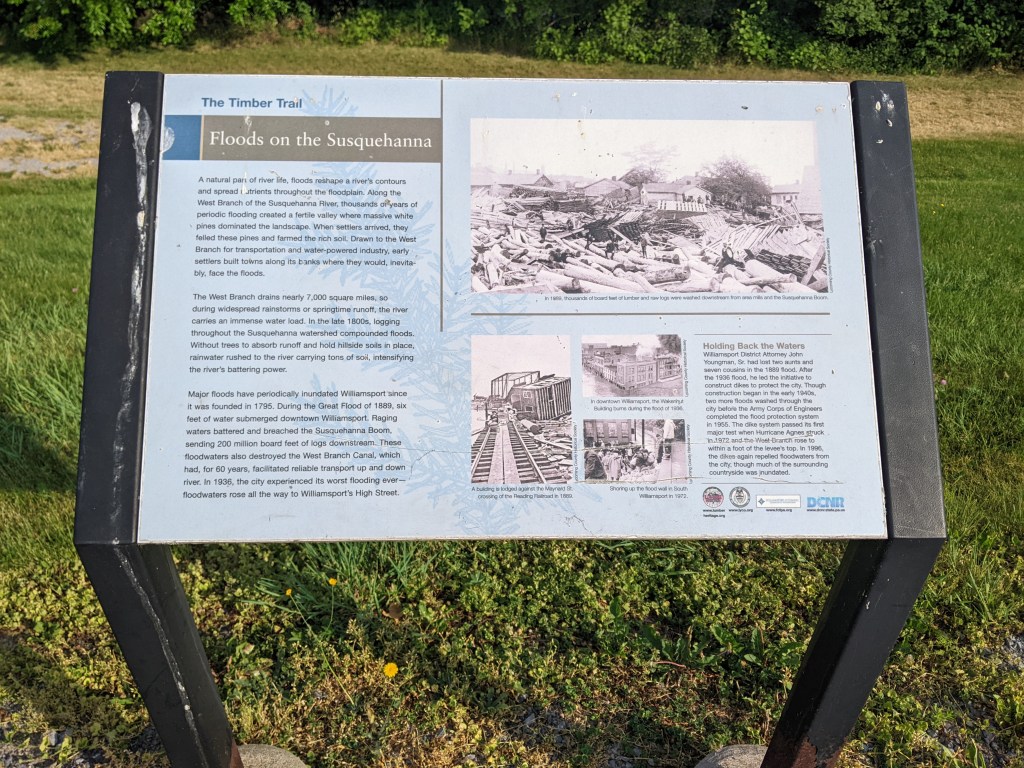
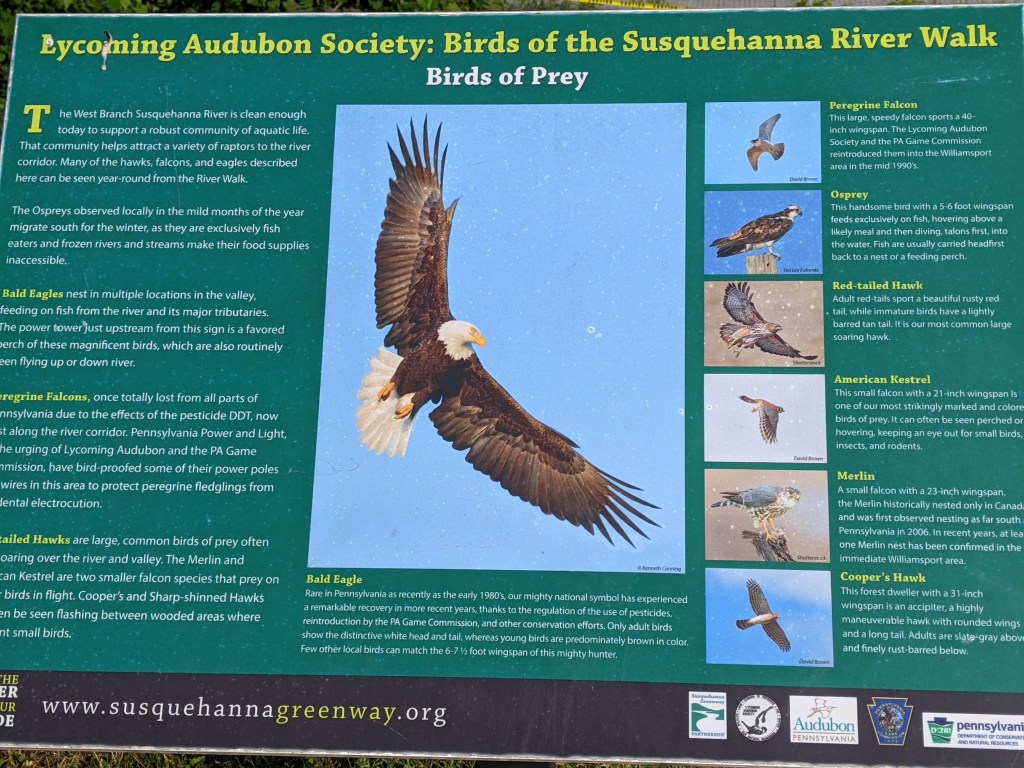
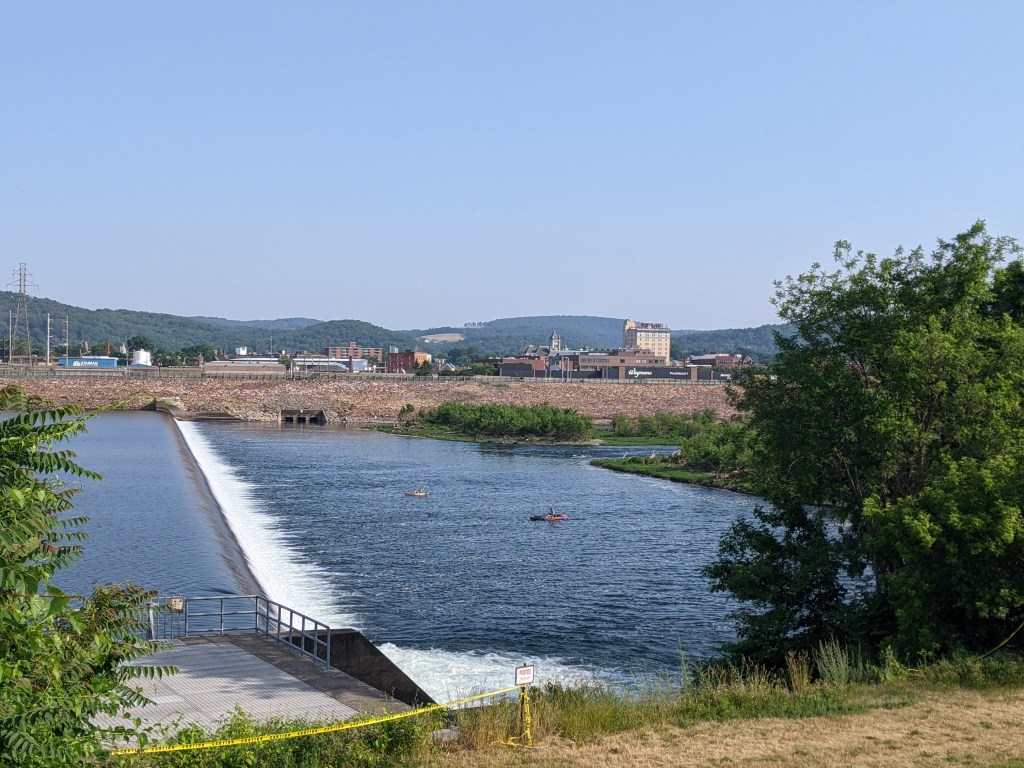
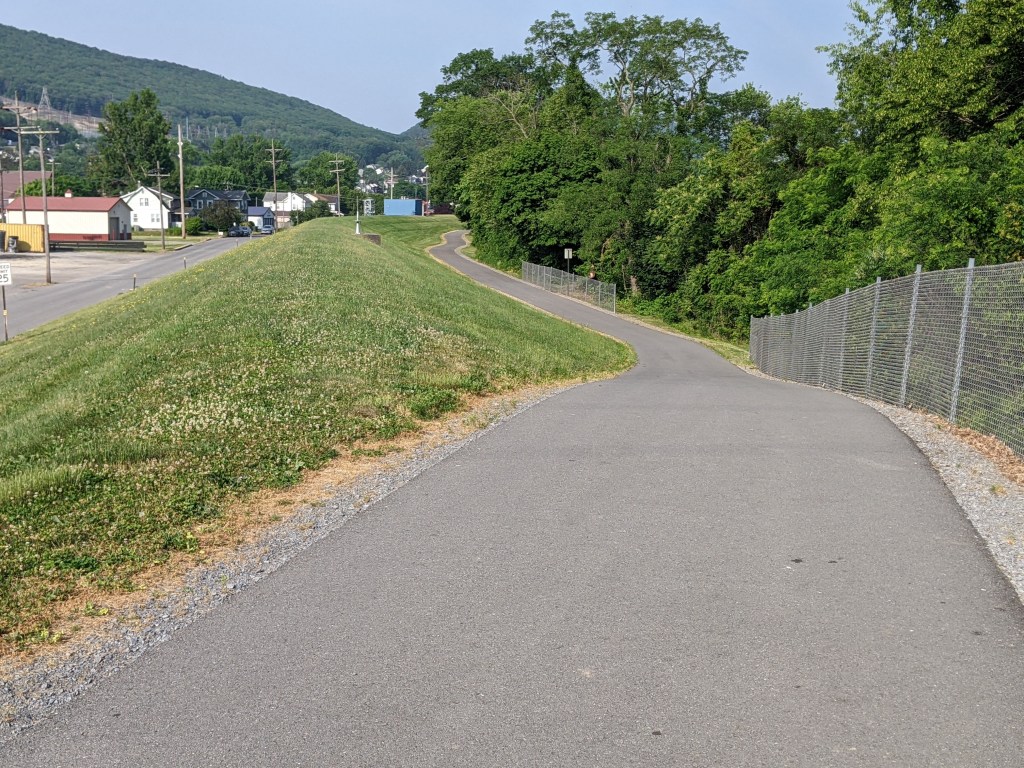
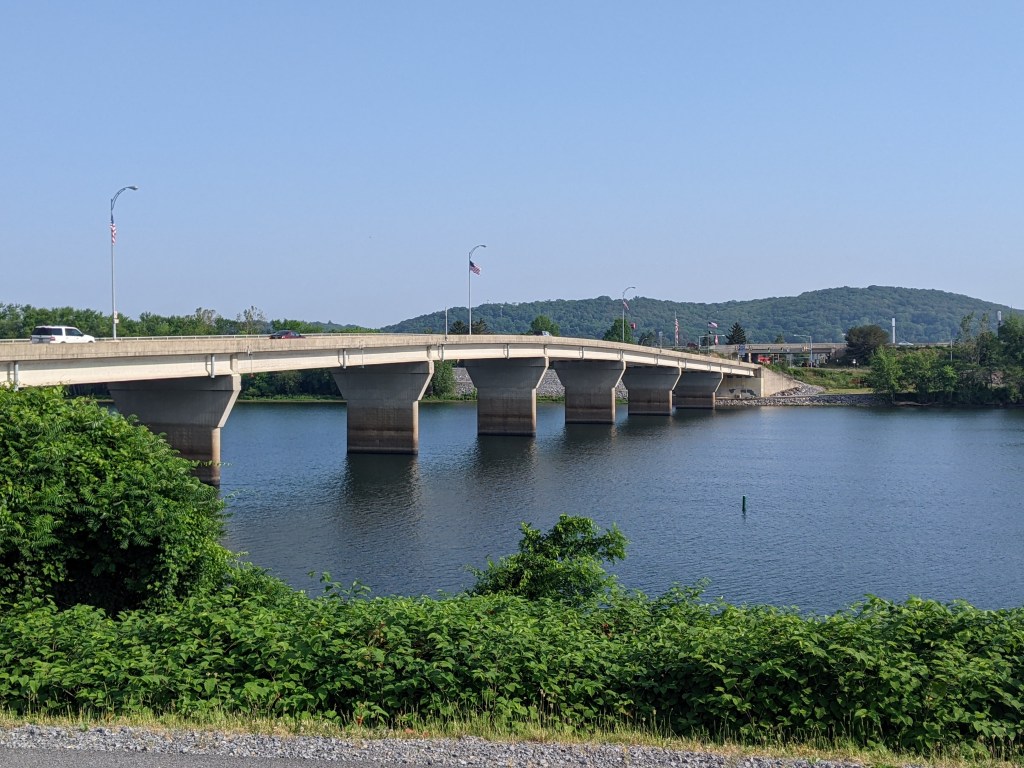
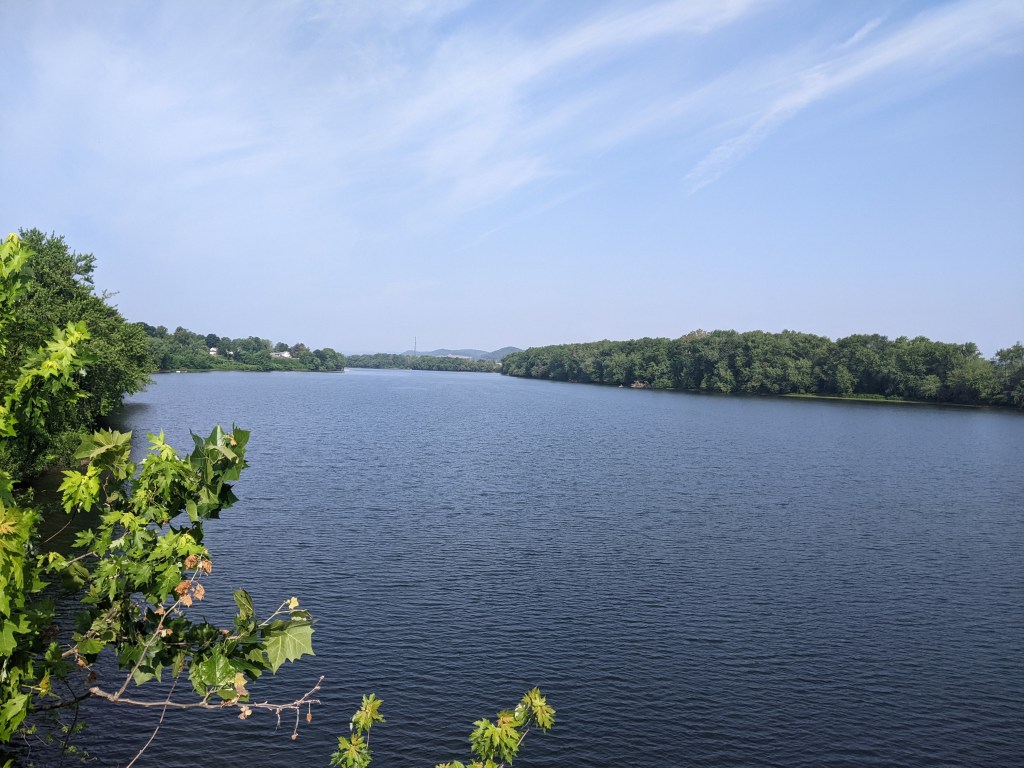
On a recent trip, I decided to walk the Market Street and Maryland Street Bridges over the Susquehanna while I was there. I took the walk in the morning, leaving my hotel shortly before 8:00 AM, so that I’d be back before checkout time. The sun was already high enough in the sky to be uncomfortably warm and there was very little relief from shade over the bridges and along the river. I spent most of the walk looking forward to when it would be over. A nice riverside trail connected the two bridges. I walked the southern route and frequently wished that the trees came closer to the trail to provide some relief from the sun. As such, I did not take the time to stop and read the informational signs about the region’s history in lumbering or about the birds that might be seen along the river.