Visualizing the Wealth Gap

My experience in Tijuana, Mexico, was the first time I remember noticing stark visuals of concentrated poverty and concentrated wealth side-by-side, with an effort to hide the poverty. I had seen poor areas and rich areas around the US prior to that, but never remembered that stark side-by-side contrast.

The next time I experienced a physical and emotional reaction to this kind of contrast was as an adult in Cardiff, Wales. I spent three or four days exploring the city and suburbs, while based in the center of the city near the Castle. The city center and the roads I walked while searching for adaptively reused religious structures (see Newport Road, Cathedral Road, and Inkspot) averaged a well maintained appearance. Some of the buildings were used by agencies providing supportive services, but overall, it gave me the impression of a blended mixed-income environment.

As a fan of Doctor Who, I couldn’t go to Cardiff without visiting Cardiff Bay, the location of a volatile rift in time and space where the Doctor and his companions have several adventures. When I looked up directions from my hotel, the recommendation was to take a light rail line. However, it was only a mile or mile and a half away and basically straight down one road. I chose to walk.

A few blocks from my hotel, after crossing a dividing swath of railroad tracks and highway, I entered a residential section of town. On one side ran identical row houses showing signs of poverty. On the other ran a stone wall 10-12 feet high above which ran the light rail tracks. The houses stopped before the end of the line, where there was a transition of what appeared to be underutilized mixed-use buildings before the touristy Cardiff Bay area began.

Around the Bay were several tourist destinations, shops, restaurants, and entertainment venues. Several shops and restaurants catered to a clientele wealthy enough to make me feel nervous about approaching too close in my serviceable, middle class, traveling clothes. Wandering around the Bay reinforced the feeling that started when I walked through the residential area. I felt that I had yet again gone where tourists weren’t intended to go. Tourists were welcomed in the City Center with shops, restaurants, a castle, museums, and places of business, or in Cardiff Bay with shops, restaurants, museums, and entertainment. But to travel between the two, tourists were supposed to take the light rail (raised above and shaded by trees from the poor residential area) or take a taxi down the fast road on the other side of the tracks, thereby remaining ignorant of the presence of the hard working families and individuals of limited means in the midst of these two wealthy, tourist hubs.

I felt indignant on behalf of the residents over the obvious investment in the City Center and Cardiff Bay and equally obvious disinvestment of this residential neighborhood….

Border Crossing

With summer full upon us, I have pulled out all my summer straw hats. One I picked up as an emergency hat. I’ve squished it into a suitcase, sat on it, and abused it in other fashions for years, but it’s still a great plain soft straw hat. Another one is a broad brim straw hat with a plain black band I acquired in Old Town Sacramento to complete my 1860s costume. It’s a great hat, but without the hat pin, it blows off at the slightest provocation. The cream of the crop is a fine two-toned, straw hat with green and grey cords, peach-colored flowers, and an extra wide brim. This one came from Tijuana, Mexico.

I was fifteen or sixteen when my parents took me across the border for a day trip in Tijuana. My memory of this trip is fuzzy, but punctuated with sharp images of intense emotion. I vaguely remember booths and lots of lanes of cars, even by California standards, for crossing south, but lots of lines of people for crossing north. While we drove down, we had to leave our car somewhere along the border. All the tourists were funneled on foot onto the main drag, which was glitzy enough to rival Las Vegas. Shop owners stood on the sidewalk outside their stores to entice the US currency from our pocket to theirs.

I squinted at the glare and cringed at the solicitous fawning. After we visited several shops, my Dad asked a proprietor where he could find a CD of a particular kind of music. The proprietor gave us directions to a shop several blocks away from the main road. As soon as we stepped into the first side street, all the glitz and glamour vanished. Instead, we found blocks of small, plain adobe or stucco houses. The contrast turned my stomach.

The honest plainness of these blocks soothed my eyes, while throwing into sharp relief the fashionable begging of the tourist trap we temporarily left. I was surprised we were given directions that went outside the trap. I wondered how many tourists crossed that invisible line.

Though most of these buildings looked the same, we were able to locate the music shop without incident. My Dad found what he wanted and we went back the way we came. Not long after we returned to the border to cross back to the US.

We had to stay in a waiting area either for our car or for our turn to go through the border crossing. While there, my Mom had me try on hats for sale at a small kiosk. I suspect this was in part to distract me from the physical reaction I was having to the contrasts we saw and in part to encourage me to get a souvenir from this excursion. Having a weakness for hats, I ended up with a beautifully-crafted straw hat that I still wear for special summer occasions.

Reaching for the Heights


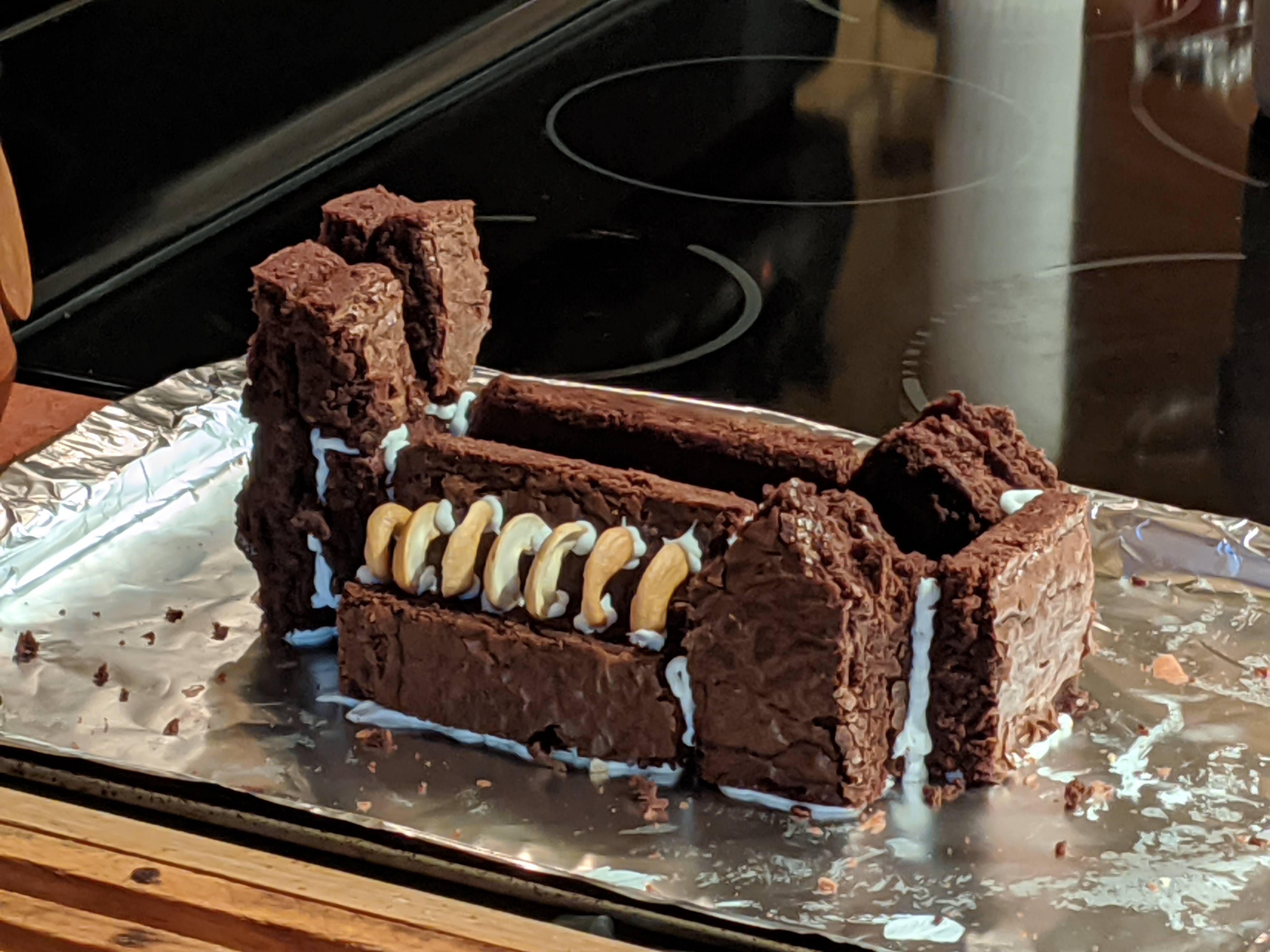
After having tackled dome-making, I decided it was time to try a skyscraper.  The Marina Towers in Chicago fascinated me with their double uniqueness, which I decided to imitate in a dessert.  My brilliant idea for pulling this off was to make one large, thin brownie sheet, cut out circles, stack, and ice.  In theory, by far the easiest Architectural Dessert Masterpiece yet.  That theory overlooked the fact that brownies, like cakes, cupcakes, and other desserts, raise more in the middle than they do at the edges of the pan.  Cutting out the circles that had flat bottoms, but tilted tops, I thought I could stack them in a way to counterbalance the unevenness…I was still trying for a quick, easy masterpiece.

At first, it appeared I had succeeded, until I turned the cake around and found I had brought Pisa to Chicago…

Leaning Marina

P.S. Somehow it managed, like the Leaning Tower of Pisa, to stay upright until my friends arrived and helped me devour it.

Layers of the City: Chicago Edition

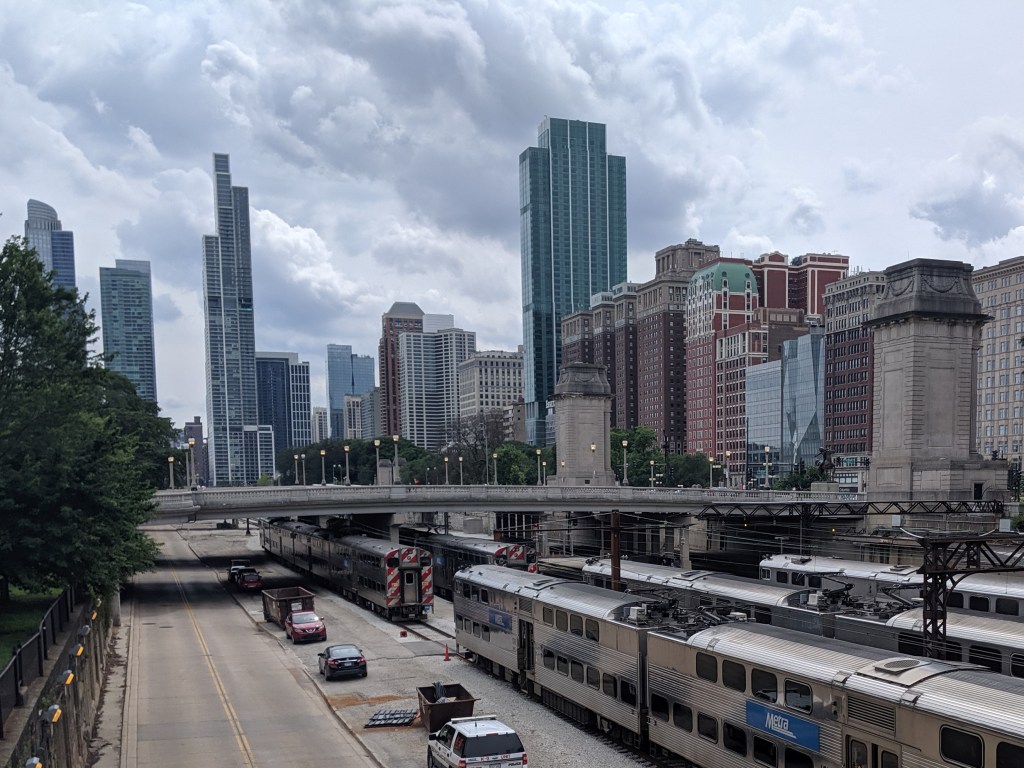
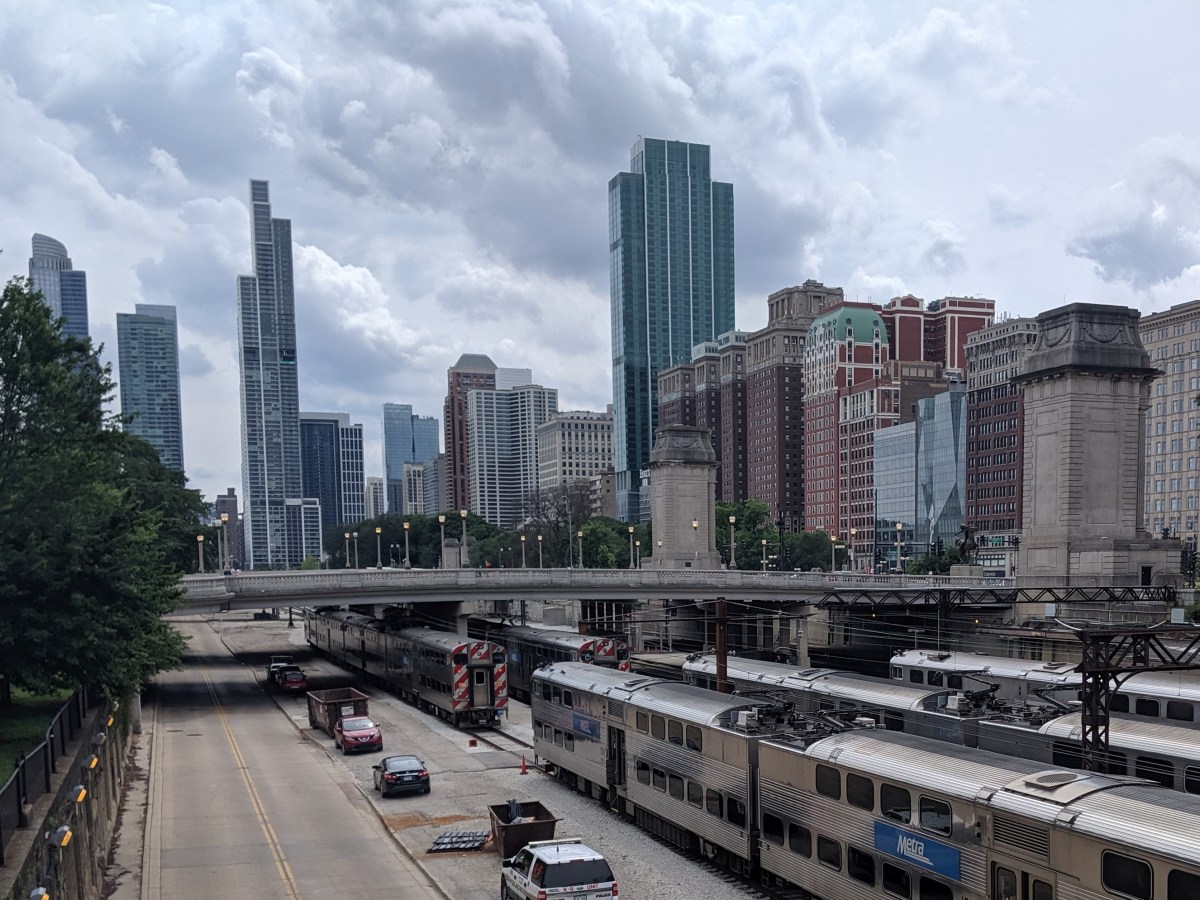
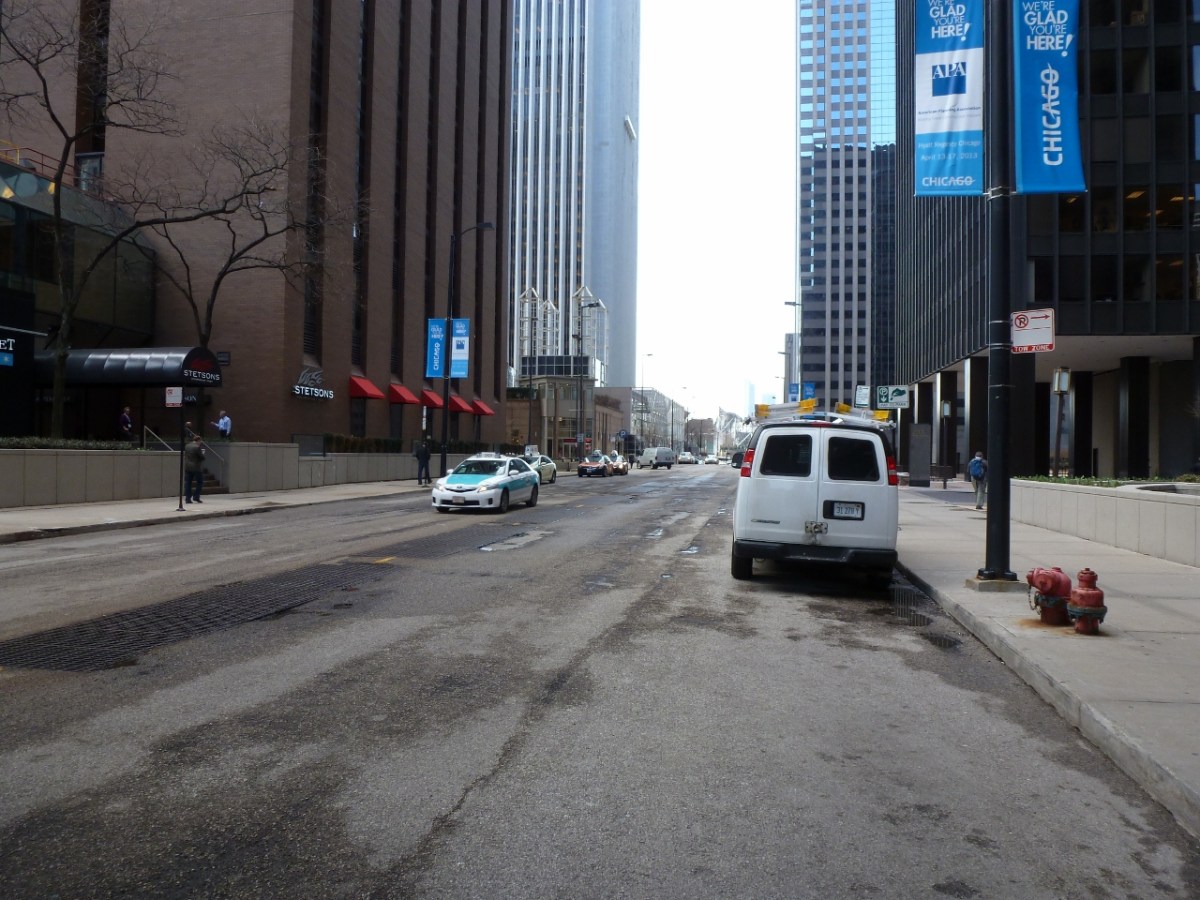
The first place to show me how a city can be stacked like a layer cake, Chicago provided ample opportunities to explore all levels of the city. The experience of noticing the expansion joints in roads that I assumed were on solid ground opened my eyes to the possibilities of stacking uses.

Underground Life

A vacant lot two stories below street level solved the mystery of the expansion joints, by exposing the inner guts.  Two more roads sit below street level to segregate trash pick-up and deliveries from the flow of traffic.  These lover levels also provide some opportunities for parking without monopolizing valuable real estate above.  Retail shops connected by pedestrian passageways are also interspersed in these layers.

River Life

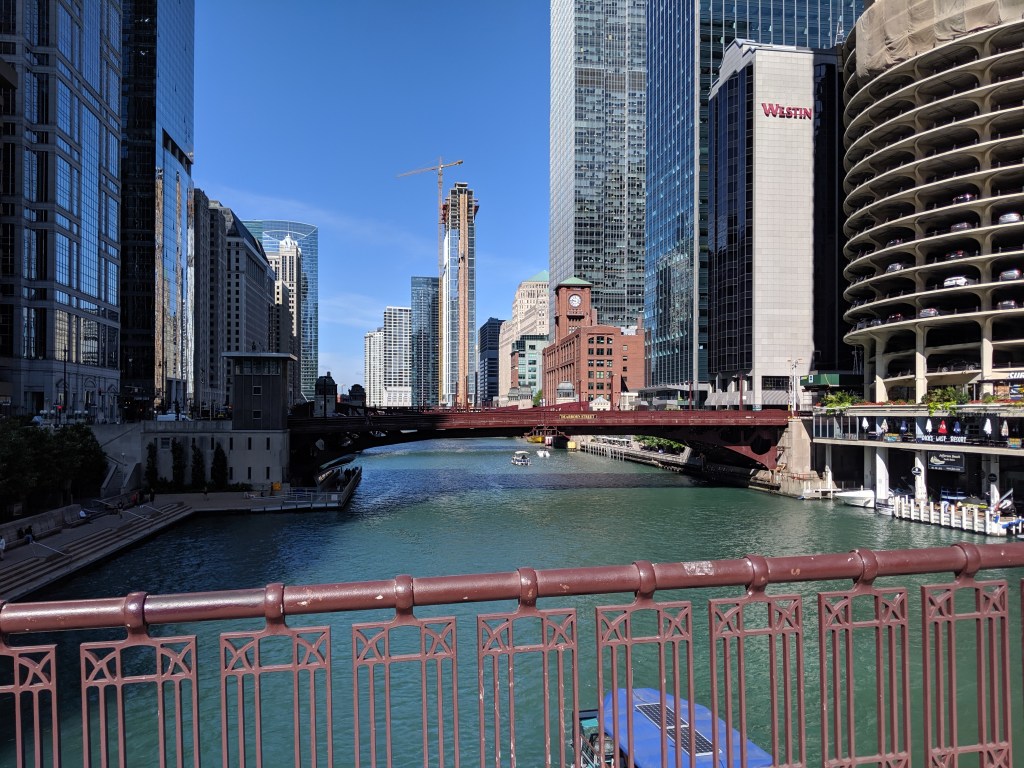
At the same elevation as the “underground life,” the Chicago River flows through the heart of the city.  On and along the river are a variety of activities.  Pedestrian paths, cafes, housing, parks, industrial uses, and homeless encampments line the shores.  Meanwhile, the river abounds with ducks, boat tours, water taxis, construction staging, and marinas.

Street Level

Back up on the street level, life buzzes.  Vehicular and pedestrian traffic rush passed, occasionally pealing off to visit the numerous shops, offices, museums, restaurants, cafes, parks, and trails.

Pie in the Sky

Yet, more life looms above.  Several of the skyscrapers have penthouse, or nearly penthouse, restaurants.  Others have rooftop observation platforms.  Between these and the street are many other opportunities for enjoying life including a religious sanctuary, the “L”, gardens, art, pedestrian bridges, and of course, offices, apartments, hotel rooms, and shops.

Unlike Pittsburgh, in Chicago, the public is welcome in some form on every level to gain a full experience of the city.