Glenwood Bridge

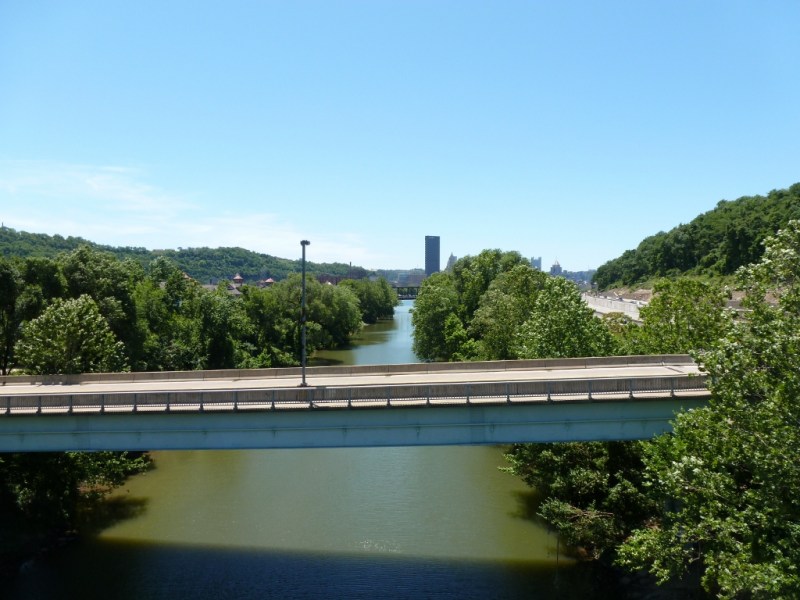
While many characteristics are shared between the Pittsburgh bridges, each has its own unique combination.  The Glenwood Bridge, built in 1966 across the Monongahela, was one of the nicer ones to walk across, but I had a hard time finding a reason for anyone to walk it.
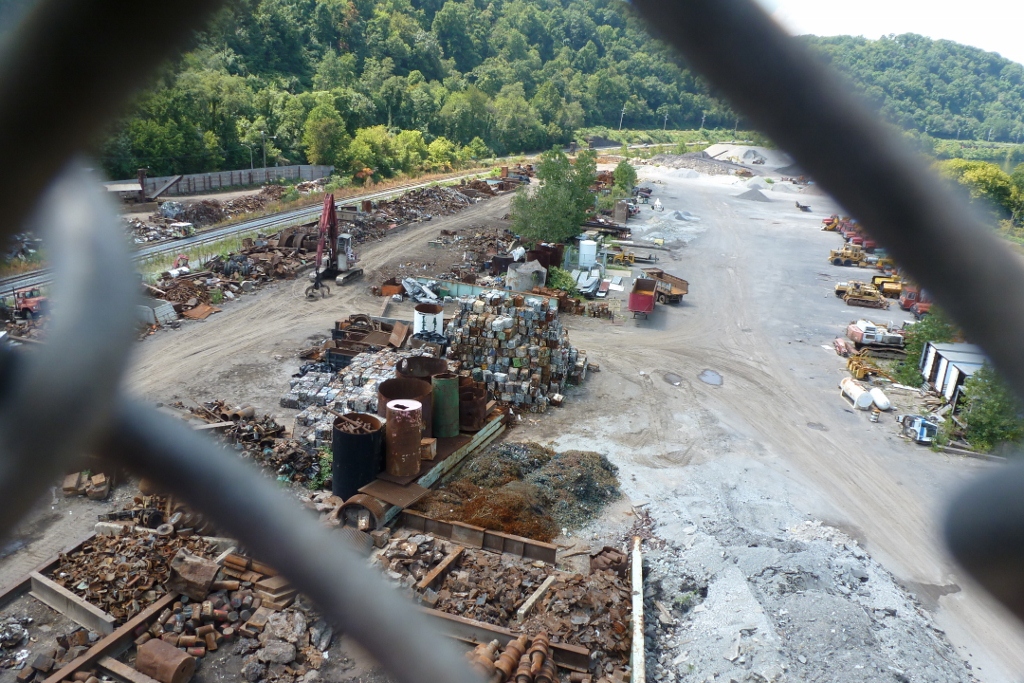
The Glenwood Bridge perhaps has the most in common with the Highland Park Bridge.  Both bridges cross over industrial land uses.  On the north shore of the Monongahela, the Glenwood Bridge crosses over a railroad yard and on the south shore, the bridge crosses over a scrap yard.  The Highland Park Bridge also crosses a scrap yard, but while that one seems to focus on braking up the pieces of scrap metal, the one at the Glenwood Bridge seems to sort it and condense it into cubes.

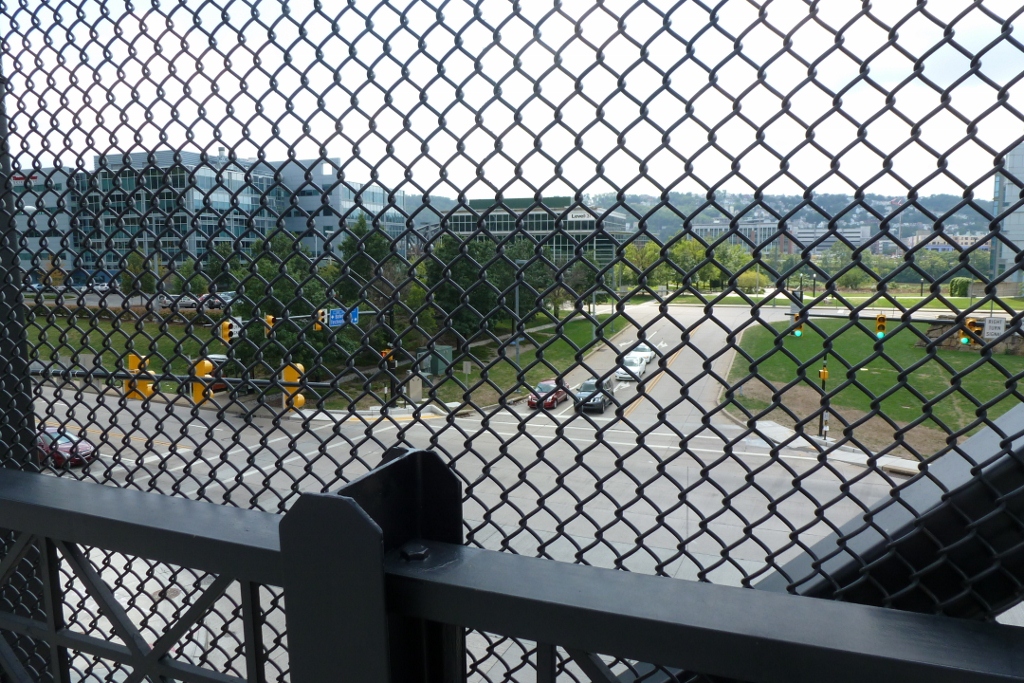
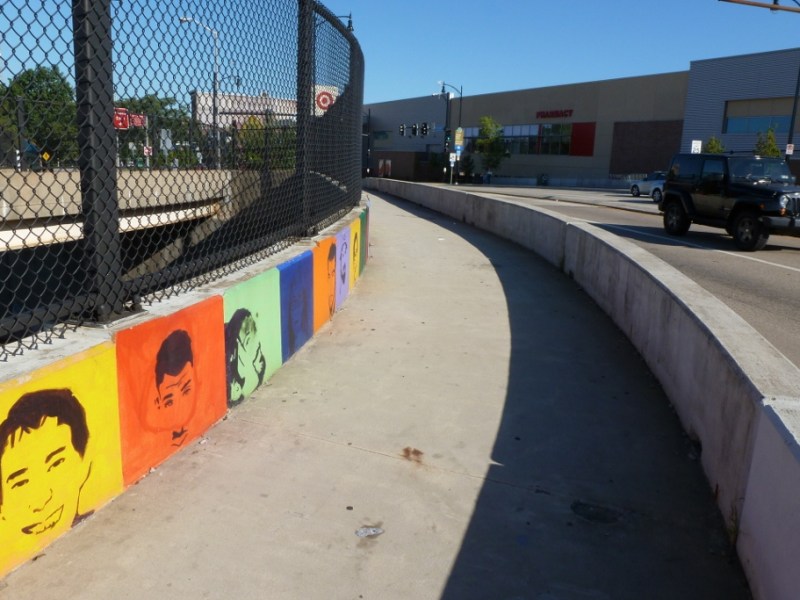
While the Glenwood Bridge has some similarities with the Highland Park Bridge, there are also some significant differences.  Cars travel very fast across this bridge, but they are much more spread out than on the Highland Park Bridge.  Also, the sidewalk is very broad and clear of debris (a stark contrast to the Highland Park Bridge where the sidewalk looks similar but is narrow and collects debris).  This bridge has the mesh fence that I usually rant against as making me feel caged in, but in this case the fence does not curve inward at the top as many of the others do like the Millvale, Negley and Aiken Avenue bridges.  As a result of the straight fence and the width of the sidewalk, I did not feel caged in on this bridge.

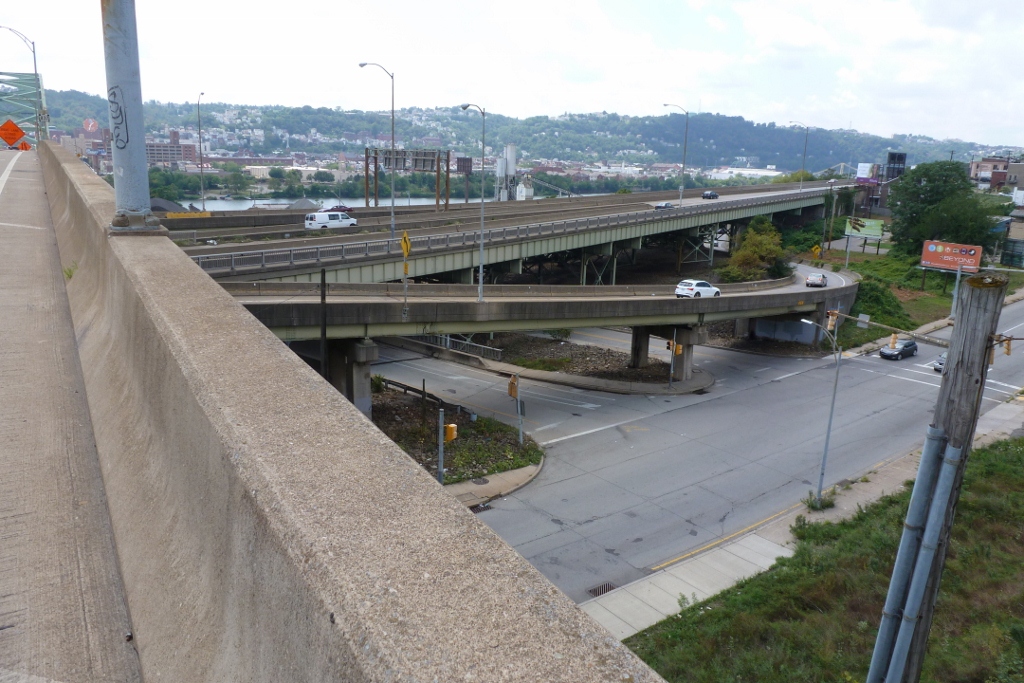
Unfortunately the southern end of the bridge does not live up to the standard set by the rest of it.  Like the Birmingham Bridge, the sidewalk leaves the bridge before its end and goes down a stairway to ground level.  The stairs are not nearly as well-maintained as the rest of the sidewalk.  They are overgrown, broken and covered with litter.  The sidewalk at the bottom only allows one choice of direction for the pedestrian: to go left underneath the bridge.  Following this sidewalk (which is covered in mud and litter in places), the pedestrian crosses another short bridge (carrying a roadway over a roadway) and comes to another stairway in much worse condition than the one above.
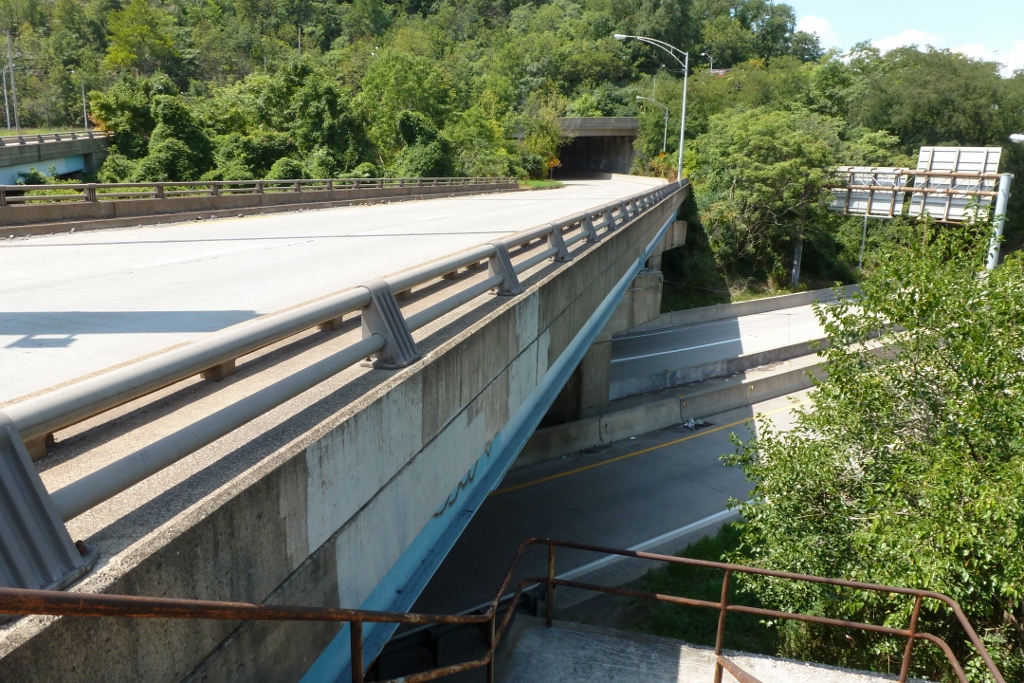
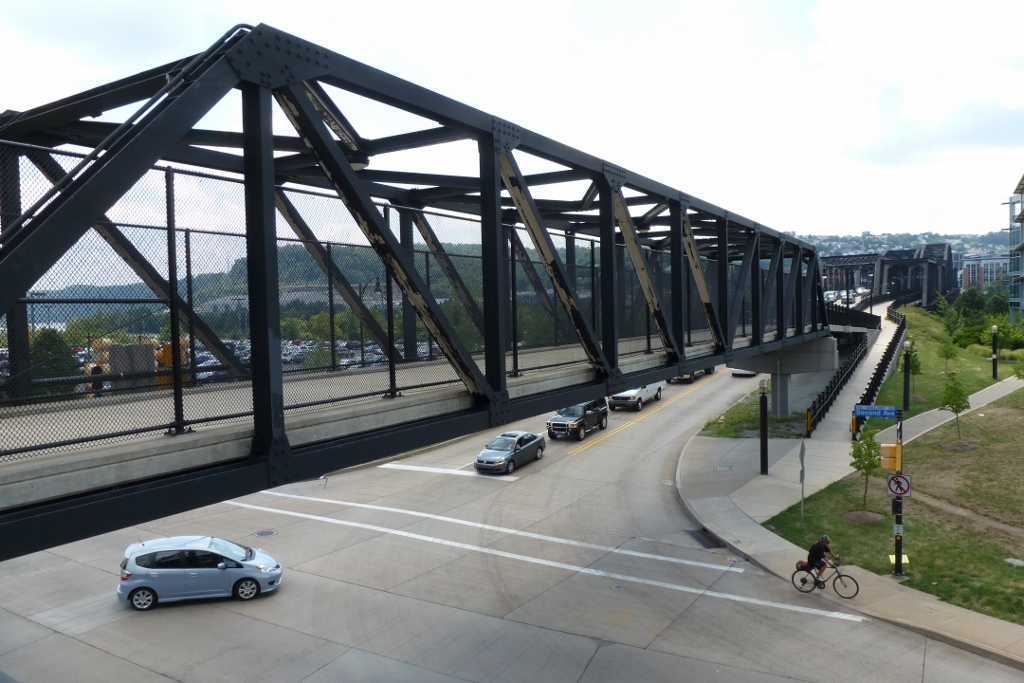
This area is a labyrinth of high speed roadways.  The picture above is the second bridge taken from the top of the second stairway.  These stairs lead to a slower speed road that followed inland leads to some residences and followed toward the river leads to Sandcastle or the scrap yard the Glenwood Bridge crosses.
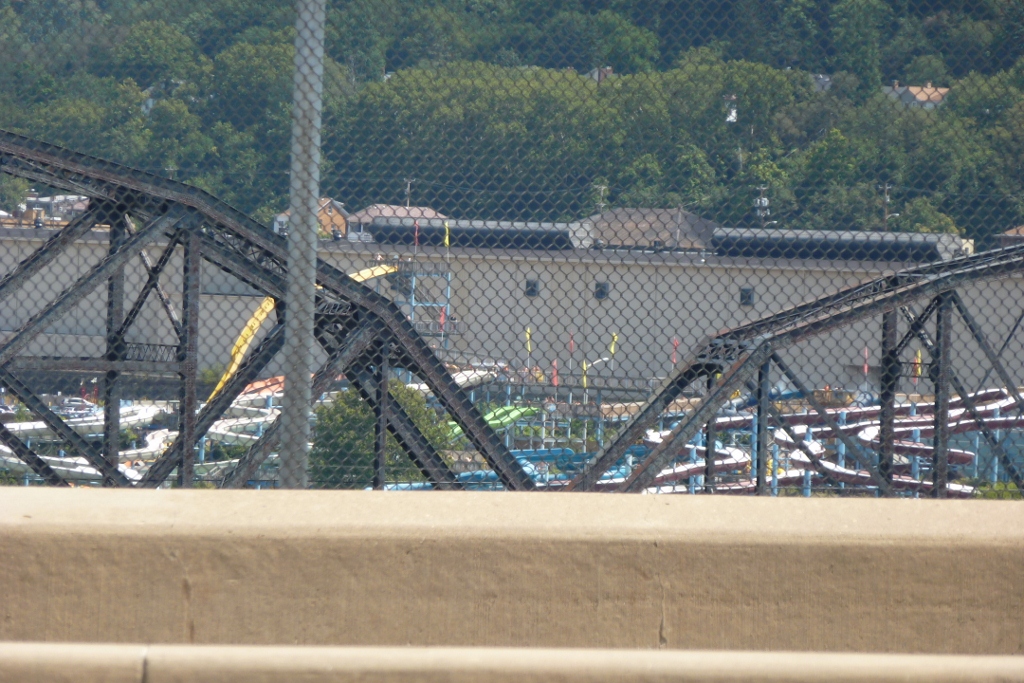
Given the unpleasantness of the southern end of the bridge for pedestrians and the fact that the main use of that area is an interchange for cars between various high speed roads, I could see very little incentive or reason for pedestrians to actually use the nice, broad, clear sidewalk of the Glenwood Bridge.  The only reason I could think of was perhaps if residents of the Hazelwood neighborhood wanted to walk to Sandcastle (the waterpark on the other side of the river).

This lack of purpose for the sidewalks on the Glenwood Bridge is intriguing.  The bridge has two wide sidewalks on either side, whereas the Highland Park and Birmingham bridges have sidewalks only on one side.  It doesn’t seem likely that whoever built the bridge would have wasted money on two such broad sidewalks if they didn’t expect them to be used.  Perhaps when the bridge was built in the 1960s, people still used walking as a common mode of transportation to work.  At that time period, I believe that there was much more industrial work to be found along this part of the river.  I am not as familiar with this area of the Monongahela as I am with parts farther upstream and downstream, but given that in both directions were large steel mills, this part of the river probably also had some mills or other industry.  Therefore the sidewalks might originally have been in high demand as a commuter path.
Fort Pitt Bridge

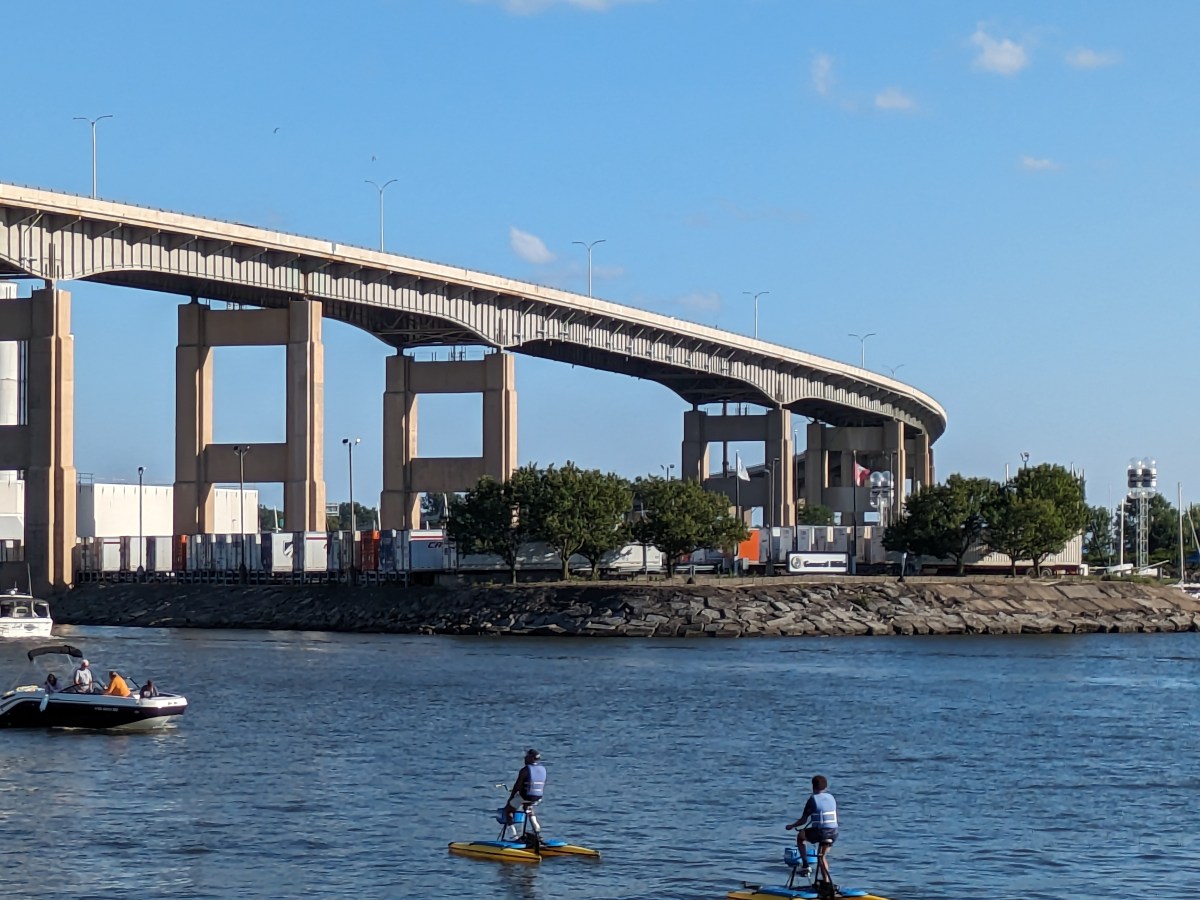
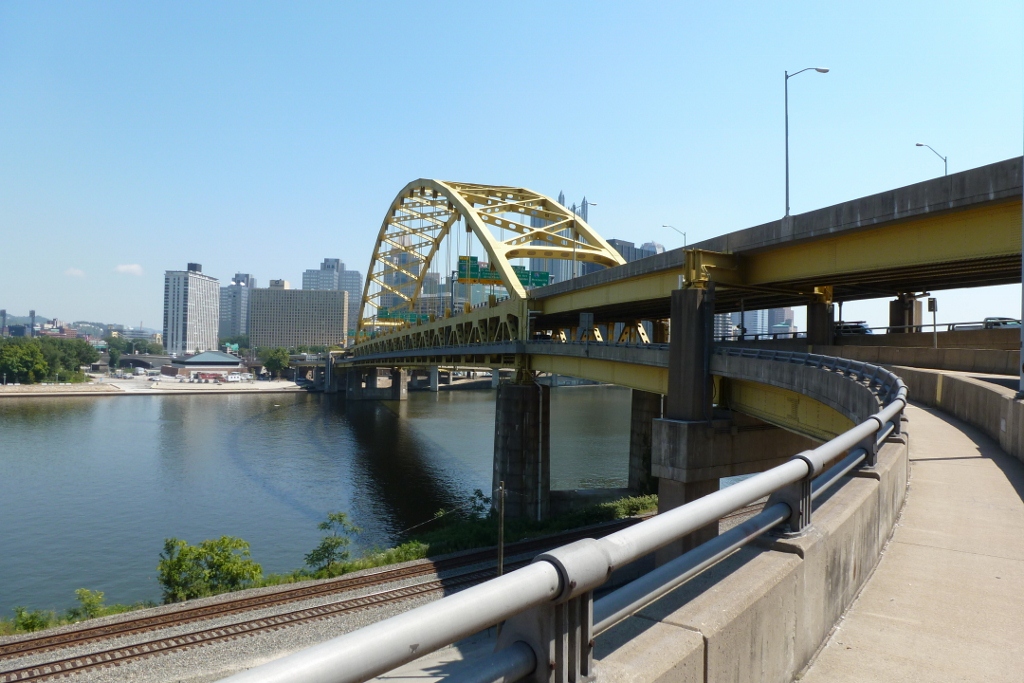
Pittsburgh has the Three Sisters Bridges with the 6th, 7th, and 9th Street bridges, but I think it should also have the Twin Brothers Bridges with the Fort Pitt and Fort Duquesne (see post) bridges.  The two Fort bridges look very much alike as I think my featured images for the bridges show.  The roadway connecting them across the Point further suggests a close relationship between the bridges as do the names themselves.

To be honest, I had not been looking forward to my walk across the Fort Pitt Bridge.  It carries a freeway and the southern end connects to a highway and dirt.  Last spring I was at a conference at a downtown hotel and overheard a hotel employee giving directions to some out-of-town visitors to the Duquesne Incline, which involved crossing the Fort Pitt Bridge and walking along West Carson Street.  I couldn’t believe what I was hearing.  I didn’t understand why anyone would send a tourist along that route, as you always want to show tourists the best side of a city.  If the tourists had asked me, I would have sent them across the Smithfield Street Bridge and up the Monongahela Incline.  Then I would have recommended they walk along Grandview Avenue to the observation platform by the Duquesne Incline as it provides a more iconic view of the city.

After walking the route across the Fort Pitt Bridge to the Duquesne Incline myself, I don’t feel so bad about tourists being sent on it.  It wasn’t that bad of a walk and the view from the top is one of the best in the city.

I’ve probably made it quite clear by now that I really don’t like the fenced in bridges.  (See for instance thee Busway Bridges posts for Shadyside, East Liberty, and Millvale Avenue.)  The Fort Pitt Bridge sidewalk is wide and open, though the traffic is a little loud and it might have been hard to hear if I had wanted to have a conversation with a walking buddy.  The worst part was the stretch pictured above alongside the Fort Pitt Museum.

I enjoyed the views from the bridge as I never see the city from this angle.  It certainly does not present the most exciting view of the downtown buildings, but that was one of my goals with this project—to see all the views of downtown.

While crossing the bridge, I realized that I never spend any time on the Monongahela side of the Point.  I’m not sure why, but I always end up on the Allegheny side (or at the tip of the Point before it was under construction) when I come to the park.  This made me realize I really need to explore Point State Park more as the Monongahela side looks quite pleasant.

Renaming Bridges

There is a proposal to rename at least one of Pittsburgh’s bridges.  Apparently, Allegheny County has been considering renaming its bridges for at least the last year.  According to a July 25th article in the Post-Gazette, the county council’s public works committee passed a motion to rename the 16th Street Bridge after the historian David McCullough, who is from Pittsburgh.  I must not have read the paper that day as I’m sure the headline would have grabbed my attention: “Allegheny County May Rename the 16th Street Bridge for McCullough.”

The first that I became aware of this proposal was Wednesday this week (Aug. 22nd) when another article announced that the whole county council voted on the proposal and passed it.  This article does not commit to which bridge will be renamed.  Though it later says that the 16th Street bridge is the most likely, it starts by saying “a major span” may be named after McCullough.  This really got me interested.  As I’ve discovered from walking and writing about Pittsburgh’s bridges, many of the bridges already have alternative names that honor someone.  I believe that most people in Pittsburgh are aware that the Three Sisters Bridges have alternative names, but I don’t think people are as aware that the 40th Street Bridge also has an alternative name.  So, I wondered, which “major spans” in Pittsburgh are left to be renamed?

I believe that “major spans” probably translates to bridges over the three rivers.  Here follows a list of the bridges spanning the rivers and any alternative names they have.

On the Allegheny River:

Fort Duquesne Bridge – The Bridge to Nowhere (see post)

6th Street Bridge – Roberto Clemente Bridge (see post)

7th Street Bridge – Andy Warhol Bridge (see post)

9th Street Bridge – Rachel Carson Bridge (see post)

Fort Wayne Railroad Bridge

Veteran’s Bridge (see post)

16th Street Bridge – David McCullough Bridge (see post)

31st Street Bridge – William Raymond Prom Memorial Bridge (see post)

33rd Street Railroad Bridge – B&O Railroad Bridge

40th Street Bridge – Washington’s Crossing Bridge (see post)

62nd Street Bridge – R. D. Fleming Bridge (see post)

Highland Park Bridge (see post)

Brilliant Branch Railroad Bridge

On the Monongahela River:

Fort Pitt Bridge-Parkway West (see post)

Smithfield Street Bridge (see post)

Monongahela Bridge – Panhandle Bridge (railroad)

Liberty Bridge-South Hills Bridge

South 10th Street Bridge – Philip Murray Bridge (see post)

Birmingham Bridge (see post and post)

Monongahela Connecting Railroad Bridge (see post)

Hot Metal Bridge (see post)

Glenwood Bridge (see post)

Bridge Number 73 – Glenwood Bridge: B&O Railroad

Homestead Grays Bridge – Homestead High Level Bridge (see post)

On the Ohio River:

West End Bridge – West End/North Side Bridge

Ohio Connecting Railroad Bridge

McKees Rocks Bridge

The 16th, 31st, and 10th Street Bridges are the most likely candidates for being renamed.  Other bridges like the Highland Park Bridge and the West End Bridge could be renamed to honor someone or something.  Some bridges with only one name such as the Hot Metal and Veteran’s bridges already honor or refer to something historical and it would be a shame to replace with a new name.  (Of course not all of these bridges are within the county’s jurisdiction.)

While I am talking about bridge names, I realize I should have had a discussion about the name of the Birmingham Bridge when I posted about that bridge as its name is somewhat significant.  Pittsburgh’s South Side, before it was annexed to the city, was the village of Birmingham.  So this is another bridge that should not be renamed as this tidbit of history could then be easier to lose.

The Aug. 22nd article in the paper said that there is an unofficial suggestion that a bridge should be renamed for Art Rooney, Sr., the founding owner of the Steelers.  If McCullough gets the 16th Street Bridge, perhaps the West End Bridge or 31st Street Bridge should be the one to be renamed for Rooney as he lived on the North Side and they are the only significant bridges left that connect to that part of Pittsburgh.

Another article of interest relating to the discussion of renaming bridges was published yesterday.  It discusses the dilemma of whether or not a living person should be honored in such a way.

Pedestrian Bridges: Bates Street

The trail bridge over Bates Street, which opened in 2011, is the second newest bridge in Pittsburgh.  The newest is the pedestrian bridge in East Liberty (see Taking the Long Way Round post).  The East Liberty bridge was a completely new bridge, whereas there was a trail bridge over Bates Street before.  This bridge carries the Eliza Furnace Trail.  This trail is part of the larger Three Rivers Heritage Trail.  I believe that this is the only bridge over a road along the Three Rivers Trail system.  There is a converted railroad bridge that carries the trial over part of the Allegheny River (see July 15 post).  The Hot Metal (Aug 9 post), Smithfield Street and Fort Duquesne (June 19 post) bridges are also considered part of the trail system according to the trail map.

As I mentioned in the Birmingham Bridge post, the part of the Three Rivers Trail system that travels on the northern side of the Monongahela is not a very pleasant stretch.  This area around the Bates Street Bridge is one of the worst sections.  The trail is caught between a freeway and the high traffic, through way of Second Avenue.  There is no vegetation or anything else to act as barriers to the noise of the traffic on these two roads and to the sun on a hot day.

Further away from town (in the direction the picture above looks), the trail improves some as it comes to an elevation between that of the freeway and Second Avenue and there is more space between the trail and the roads.  I’ve traveled on this trail toward town only once or twice, so I don’t remember specifics about it.  I do remember that it does continue to lean toward being unpleasant.  The times I traveled on it, I was biking.  From that experience I know I would never choose to walk it.  On a bike, you go fast enough to ignore much of the harshness of the trail, but walking you would be forced to take it all in.

Perhaps the biggest problem with this part of the trail system is that it doesn’t approach anywhere near the river.  This is a significant flaw for a trail considered part of a river trail system.  At the Bates Street Bridge, the trail is separated from the Monongahela River by Second Avenue and the office/technology park I reference in the Birmingham Bridge post.

One of my original fascinations with my walking bridge project was the different views of the city captured from the various bridges.  The Bates Street Bridge adds to the views of downtown I’ve collected so far:

Hot Metal Bridge

After walking the Hot Metal Bridge, I realized that it is really three separate bridges.  One of the bridges is the bike/pedestrian bridge pictured above that crosses over Second Avenue.  The other two are in the background of the image above–one carries all vehicular traffic while the other carries all pedestrians and bicycles.  The bridge pictured above is not structurally connected with either of the other bridges.  The two bridges that span the Monongahela River were built at different times.  While at this end (north) the bridges are at the same level, they are at two different elevations on the other side of the river.

The Hot Metal Bridge is one of the more locally famous and popular bridges in the city.  In my experience of participating in and overhearing people’s conversations locally about Pittsburgh bridges, the Hot Metal and Smithfield Street bridges are the two that come up the most as fun to use and interesting.  In the case of the Hot Metal Bridge, this is perhaps because it used to be a set of railroad bridges which have now been converted.  They were built and used by the Jones & Laughlin Company to connect its sites on opposites of the river.  The name of the bridge (Hot Metal) came from the fact that the trains were carrying molten metal from one factory to another.  There are, or at least there were, placards along Water Street along the South Side Works that describe the history of the J&L steel company on this site and on the bridge.  I don’t know if they are still up as there is currently construction going on in this area.

According to the description attached to the oldest image of the bridge on Historic Pittsburgh, the bridge was built in 1887.  This image, as well as PGHbridges.com’s page for the bridge, identifies the names of the two structures as the Monongahela Connecting Railroad Bridge (now the vehicular bridge) and the Hot Metal Bridge (now the pedestrian bridge).  The G.M. Hopkins maps tell a slightly different story.  As early as 1882, the maps show a bridge at this location.  That map and the 1889 map identify the bridge as the East End Bridge.  All the maps from 1890 through 1923 of this site call it the Jones & Laughlins Bridge.  Up until 1904, the bridge is depicted as carrying a single track, which I assume would be the bridge that is now the pedestrian bridge.  Starting in 1910, the bridge is depicted with three railroad tracks, meaning the current vehicular bridge was added in that time.

It is amazing to me that as late as 1998 this part of the city was still dominated by steel mill buildings as illustrated by this photo.  I suppose this means that I did not come to this part of the city then.  As the South Side Works mall did not exist yet, I guess there was no reason for me to come over here.  According to PGHbridges.com, the conversion of the bridges began in 1998, but the larger of the two bridges didn’t open until 2000 while the pedestrian bridge opened in 2007.

My final comment on this bridge is that there is a nice view of downtown from here, although the buildings don’t form any interesting patterns and clusters like they did in the views from the Allegheny River bridges (see 16th Street Bridge post for an example of this).

Birmingham Bridge

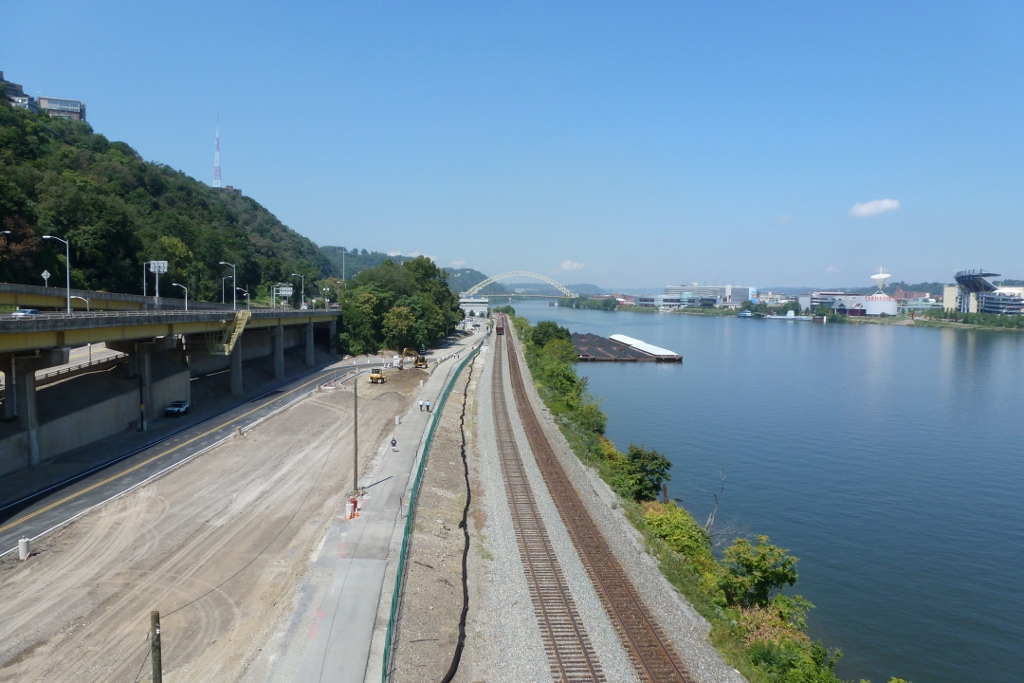
Outside of the safety issues of the Birmingham Bridge (see July 30 post), the surroundings and view from the bridge were interesting.  I was particularly interested in the uses along the waterfront around the bridge as there were three distinct types of use.

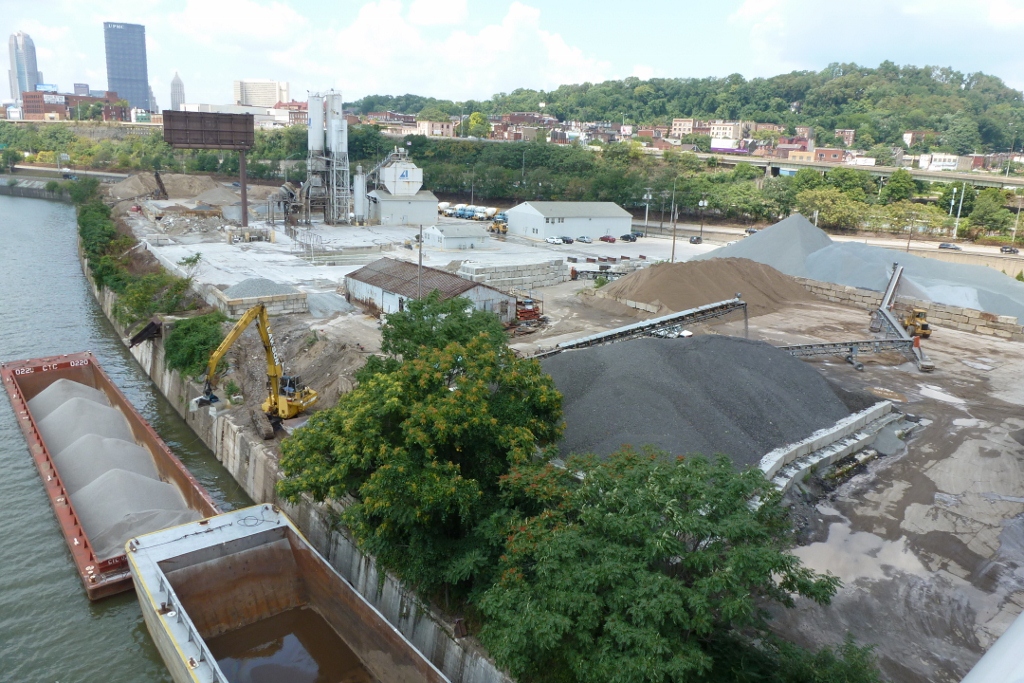
On the northern shore of the river and western side of the bridge is this gravel/cement? factory. I classify it as an industrial use, but I don’t really know what its purpose is.  I watch for a little while as the excavator scooped gravel from the barge and dumped it on the conveyor belt which passed it along and piled with the rest.  I think it is easy to forget at times that our rivers are still working rivers–some coal and other materials are still shipped by the rivers.  The image above is a reminder of this as the gravel was obviously delivered by river.

On the same shore, but the other side of the bridge, is one of Pittsburgh’s redeveloped brownfields.  This area used to be part of the Jones and Laughlin Steel Company, dominated by the Soho Iron Works (see 1923 map).  Today it is home to several office buildings along Technology Drive, including Carnegie Mellon University’s Entertainment Technology Center.  I believe the University of Pittsburgh may also have property on this site.  This site is an illustration of Pittsburgh’s Second Renaissance, the “Eds and Meds,” which was implemented in the 1980s to counteract the job loss and deterioration caused by the decline of the steel industry.  Here the former steel plant was replaced by buildings housing at least the education part of “Eds and Meds.”

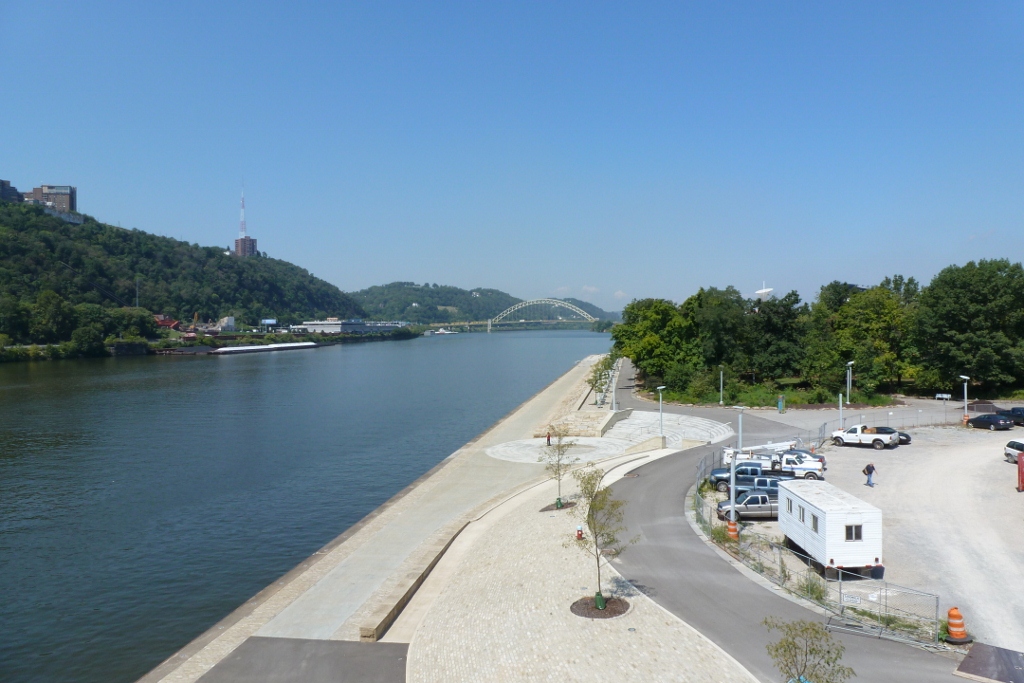
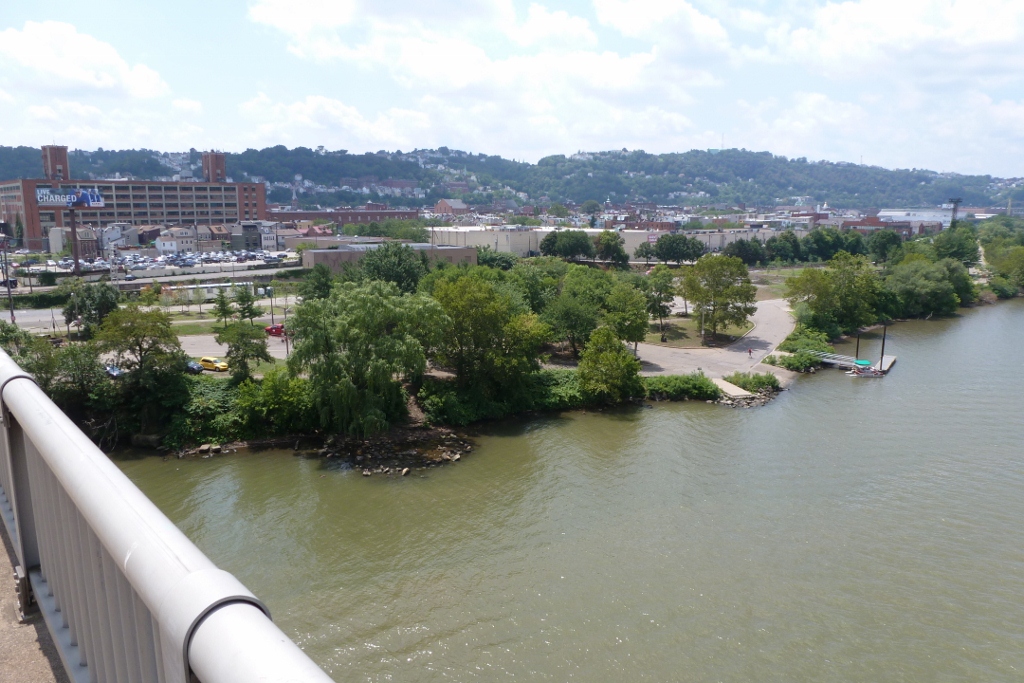
The third use of the waterfront at the Birmingham Bridge is recreation (and green space) on the southern shore.  The Three Rivers Heritage Trail travels near the river among the trees and grass.  The trail also passes under the Birmingham Bridge on the north shore, but the technology park and gravel site separate the trail from the river and it passes near the freeway, making it not a very pleasant place for recreation.  The southern branch of the trail on the other hand is pleasant as it passes among greenery and near the river.  The western side of the bridge provides additional opportunities for recreation on the southern shore as there is a boat launch and a parking lot that provides access to the boat launch and some picnic areas nearby.

The area around the Birmingham Bridge captures the various uses which riverfront property has been put in Pittsburgh.  First it was an ideal spot for industry and mills.  This has been replaced in some areas with new developments such as the offices at the technology center.  Now there seems to be an increasing interest in making the river fronts accessible and available for recreational use.

Bridge Safety

The first time I walked across the Birmingham Bridge was before I came up with the idea of walking all the bridges in Pittsburgh.  I was going to an event on the South Side and according to the bus schedule, the best method for getting to this event was to take one of the Fifth Avenue buses to the Birmingham Bridge and walk across the bridge and down a few blocks on East Carson Street to the event.  I was quite dismayed when I got off the bus and saw that there was no sidewalk across the bridge–it turns out there is a sidewalk but it only connects to Forbes Avenue which is significantly lower than Fifth Avenue at this point.  Fortunately, there is a bike lane, clearly marked with a buffer zone across the bridge.  I kept as far to the right as I possibly could, hoping that cars recognized and honored the bike lane (I have noticed this is an issue for drivers in Pittsburgh at least in some areas), and headed across.  Nearly a quarter mile from Fifth Avenue, a ramp comes up from Forbes Avenue with a sidewalk.  I climbed over the cement barrier and crossed the core of the bridge on the sidewalk.  However on the southern half of the bridge, the sidewalk goes down a set of steps and comes out between the back of a parking lot and the underside of the bridge.  This seemed like a potentially unsafe place for a lone pedestrian, so I climbed back over the barrier and finished crossing the bridge as I had started, separated from the cars by only the painted lines of the bike lane.

I have walked this bridge a few times since then, employing this same method every time.  I have also observed other pedestrians using a similar method, though some don’t bother climbing over the barrier onto the sidewalk when that becomes an option.  This is truly the case of a bridge that may be pedestrian accessible, but is not at all pedestrian friendly.  In my post “One River Down,” I mention that Highland Park Bridge, Washington’s Crossing Bridge, and the 62nd Street Bridge are less than pedestrian friendly.  The Birmingham Bridge beats these bridges as the least pedestrian friendly bridge I’ve walked in Pittsburgh to the point that it is potentially unsafe for pedestrian use.

While the bridge is designed so that pedestrians can use a buffered sidewalk across the length of the bridge, the access points to this sidewalk are not convenient.  I discuss in “Taking the Long Way Round” that there are times and situations when pedestrians will go out of their way, but the Birmingham Bridge sidewalk does not meet them.  The northern access point is in a hollow surrounded by vacant or industrial-use lots and passes under several ramps/bridges/elevated roads carrying an interstate before reaching the level of the bridge.  Also there is no easy way to get there from Fifth Avenue at the bridge.  A pedestrian has to go down a block to a road that connects Fifth and Forbes avenues and then come back down toward the bridge to reach the sidewalk for it.  There is no incentive for a pedestrian on Fifth Avenue to go so far out of their way when the bridge is right in front of them.  The staircase at the other end of the bridge that I mentioned earlier makes about as much sense as this end’s inaccessible sidewalk access.  Not to mention that the staircase excludes anyone using a wheelchair from access to the sidewalk (it looks like there used to be a ramp on this end as well, but it is now sealed off and cut off).

What is a Bridge? Pittsburgh Edition II

When I wrote the first “What is a Bridge?” post, I felt confident that Merriam-Webster’s definition of a bridge, “a structure carrying a pathway or roadway over a depression or obstacle,” was sufficiently explicit to exclude ramps.  However, while crossing the Penn Avenue Bridge in East Liberty I found a new structure to challenge the definition of a bridge.

The former bus ramp from the former Penn Avenue (Bus) Station to the (not former) East Liberty Busway Station meets the above definition of a bridge as it carries a roadway over the obstacle presented by the railroad bordering the busway.  On the other hand, it also meets the definition of a ramp, “a slope or inclined plane for joining two different levels,” as the busway is significantly lower than most of the surrounding area.  So, is it a bridge or a ramp?  It almost feels like asking is a tomato a fruit or vegetable? or perhaps even which came first, the chicken or the egg?  Are these equally impossible questions to answer or is it rather the case that there are exceptions to every rule?  There aren’t always easy or straight-forward answers.  I suppose in this case the structure is both a bridge and a ramp.

Perhaps a way to answer the question a little more specifically is to look at the way it is used.  In its previous use, the point of the structure was to get buses down onto or up out of the lower busway level.  While it was used in this fashion, I’d say it was more a ramp than a bridge.  There is a future plan for it to be turned into a pedestrian bridge to transport pedestrians safely across the railroad and busway to the busway station (see Busway Bridges: East Liberty).  At that point, in function the structure will be more of a bridge, though I suppose the ramp end will still function as a ramp to provide an accessible route to the station.  Whether it is a ramp or a bridge, I did not walk it yet as it is not currently designed for pedestrian access.  After its conversion is complete in the next couple years, I will come back to walk it.


Additional Posts in Series: