A Lofty Location

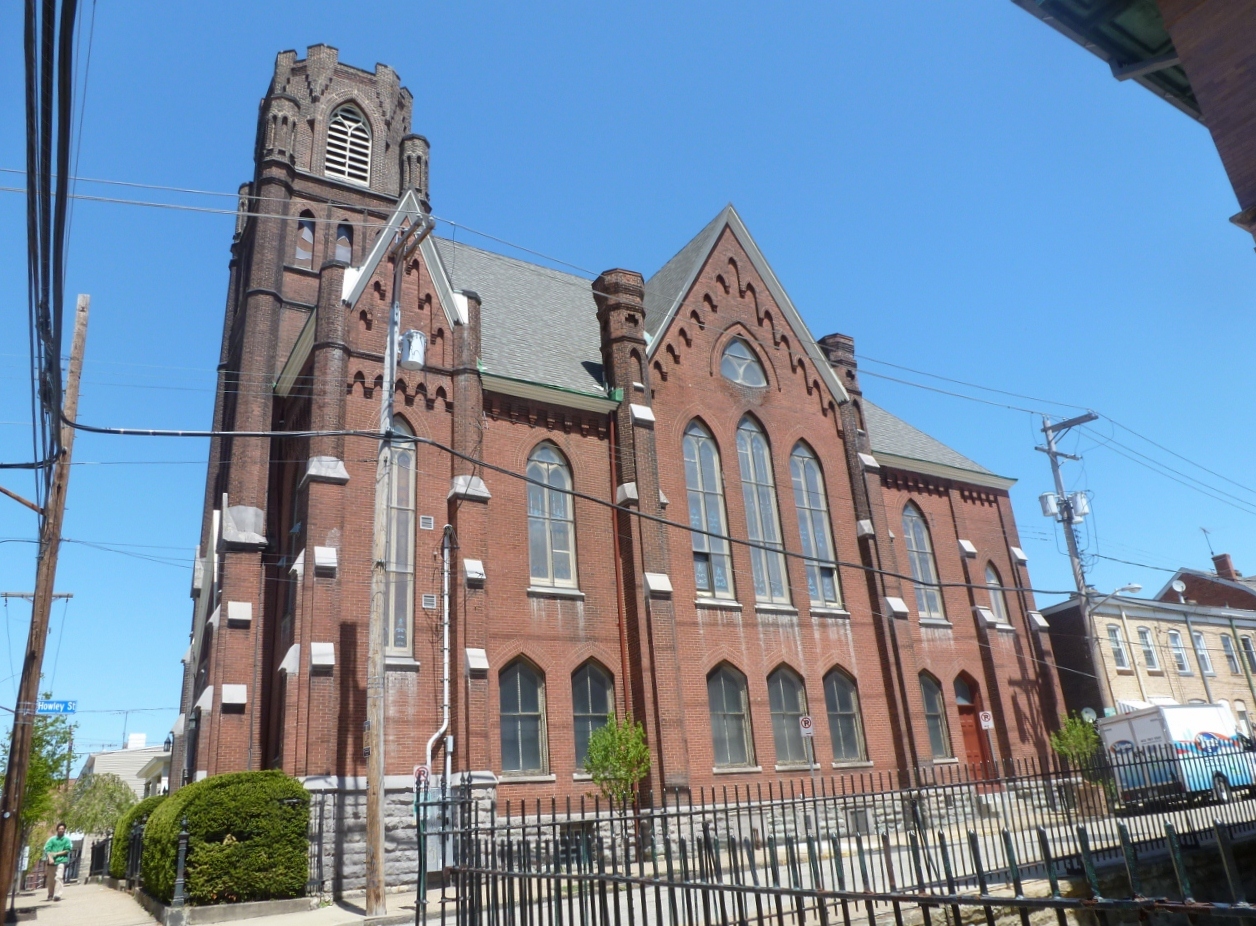
St. John German Evangelical Lutheran Church

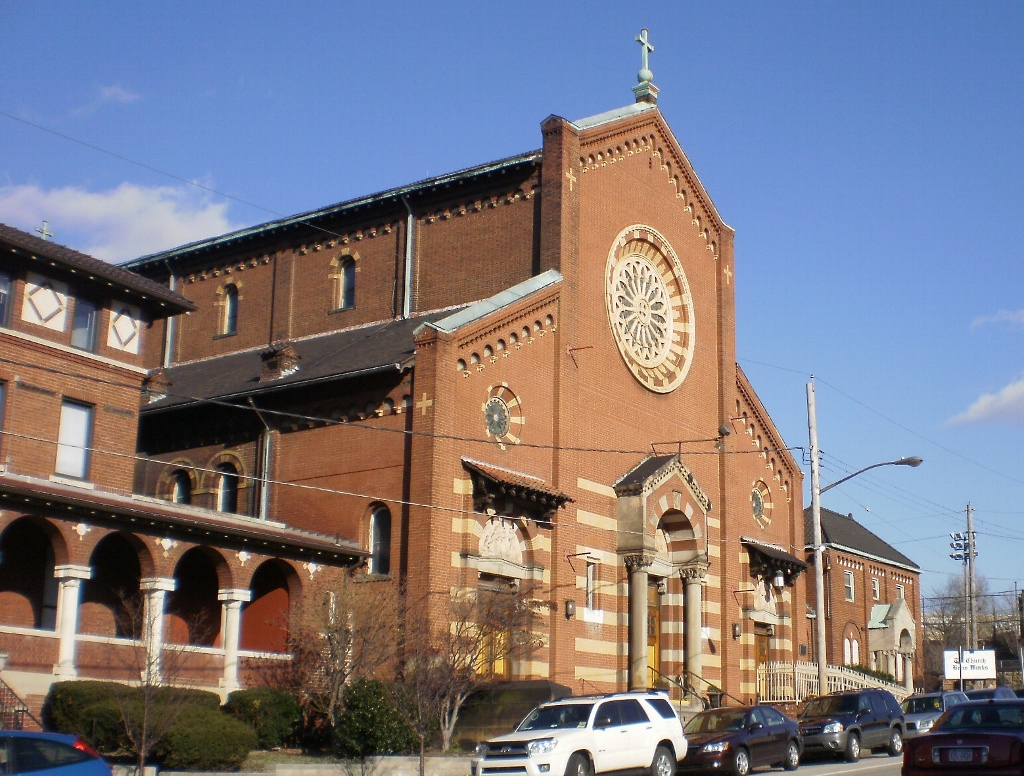
This little gem in Pittsburgh’s Lawrenceville neighborhood is full of surprises.  In the 20-some years I’ve been passing through this area, I never noticed the building.  It was brought to my attention a few years ago when I began researching adapted church buildings in Pittsburgh.  If you are in the nearby vicinity, the building blends into its surroundings.  But from other parts of the city it stands out (see 31st Street Bridge, Bloomfield Bridge, Busway Bridges: Herron Street, Busway Bridges: 28th Street).  It is also visible standing out along the ridge in the second photo in my Washington’s Crossing Bridge post.

40th Street Rise

There are two characteristics that make it stand out from a distance.  The first is its location at the highest point on 40th Street in Lawrenceville.
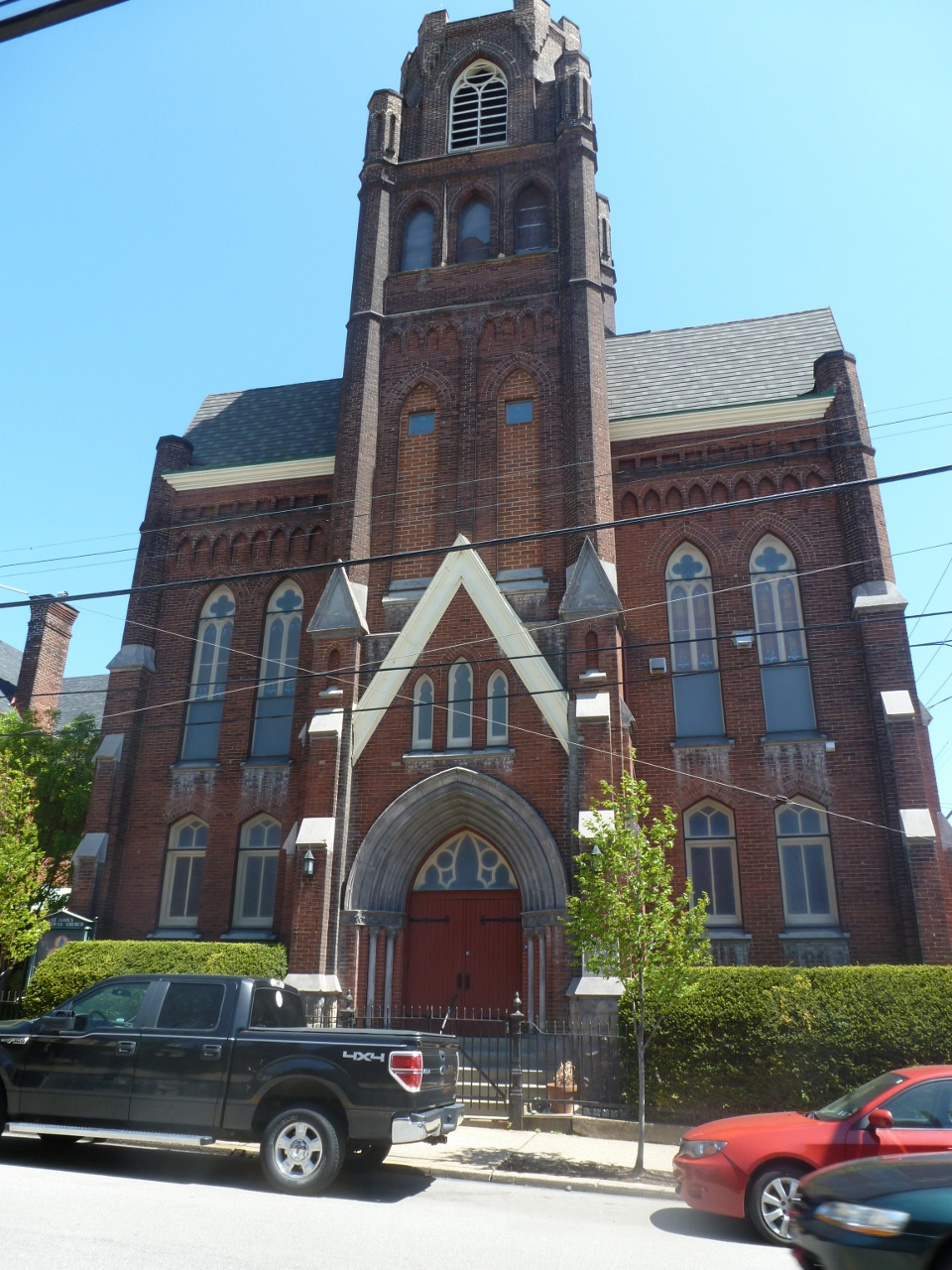
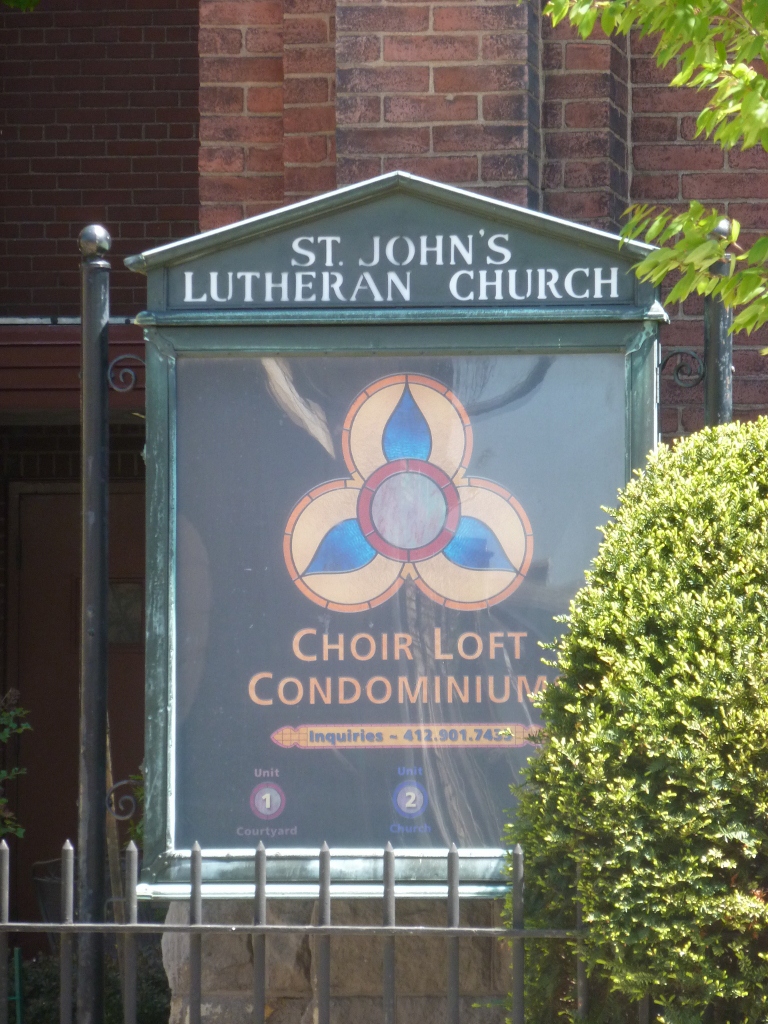
St John's/Choir Loft Condominiums

The second characteristic is one of the most intriguing parts of this building: the fellowship hall is at ground level and the sanctuary is above, reached by a flight of stairs.  This is the only church building I have been in where the sanctuary is a full flight of stairs above ground level.  I’m very curious to know if there are any others–please share, if you’ve come across one!

St John's Evangelical Lutheran Church Choir Loft Condominiums

The building was built in 1896-97 for the German Evangelical Lutheran St. John’s Congregation, which later became St. John’s German Evangelical Lutheran Church.  In 2002, the congregation merged with St. Andrew’s Lutheran Church and closed the doors on this location.  A real estate agent purchased the property and prepped it for conversion into 3 condominiums–one unit each for the sanctuary, fellowship hall, and parish house–before the current owners purchased the property and completed most of the rehab work creating the Choir Loft Condominiums.  (A side note that may be of interest is that the current owners considered purchasing the building that is now the Union Project but chose this one instead.)

The owner reported that the building was essentially empty for nearly 2 years before he acquired it.  The floors were in bad condition–the pews had been ripped out, tearing the sanctuary’s floor, and the choir loft’s floor was completely missing.  He said his goal in renovating the building was to “not destroy the architecture and the interior.  We wanted it to feel like a church still because it is a church.”

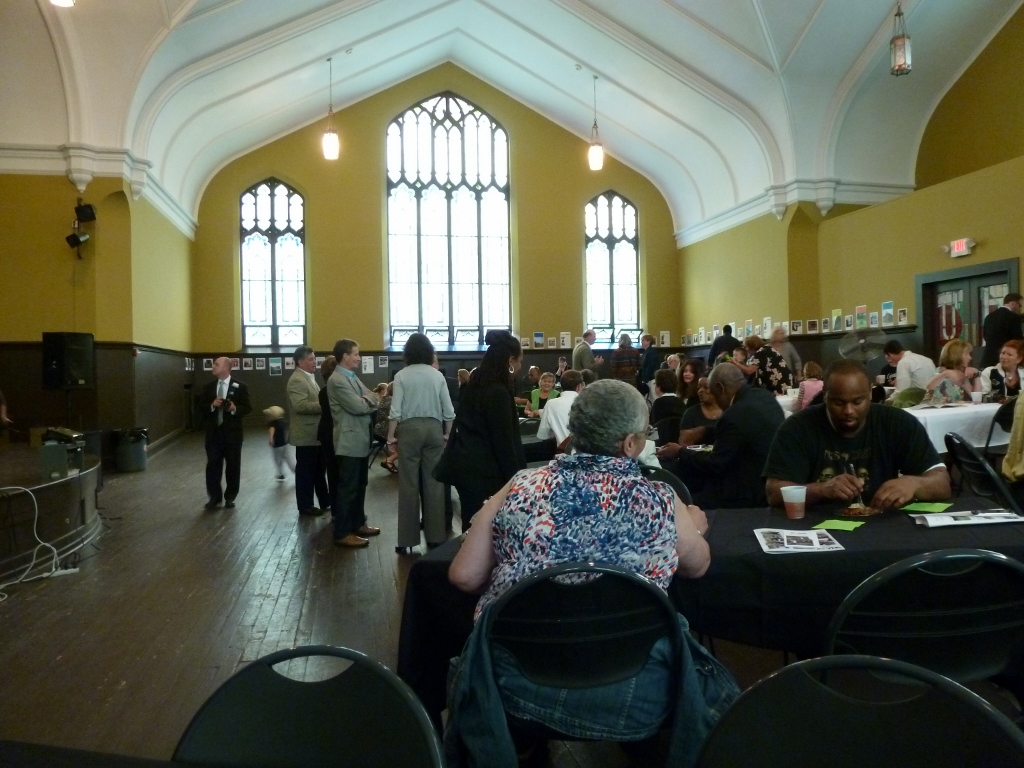
Having gotten a tour of the interior of the sanctuary unit, I’d say they succeeded in this goal.  The former sanctuary space is an open loft configuration with hardwood floors.  The raised steps for the altar area were kept and made into the kitchen.  The choir loft remained open and served as the bedroom.  The gorgeous stained glass windows were also intact.  While I was there on a winter evening after sunset, I loved the description of how the colored pattern from the stained glass gradually moves across the floor like a very colorful sundial.  My other favorite part was that there was still a bell in the tower, which the owner rang for me.  While inside the sound was muffled, it sounded like it could have woken sleeping neighbors.

Gingerbread Blue Mosque

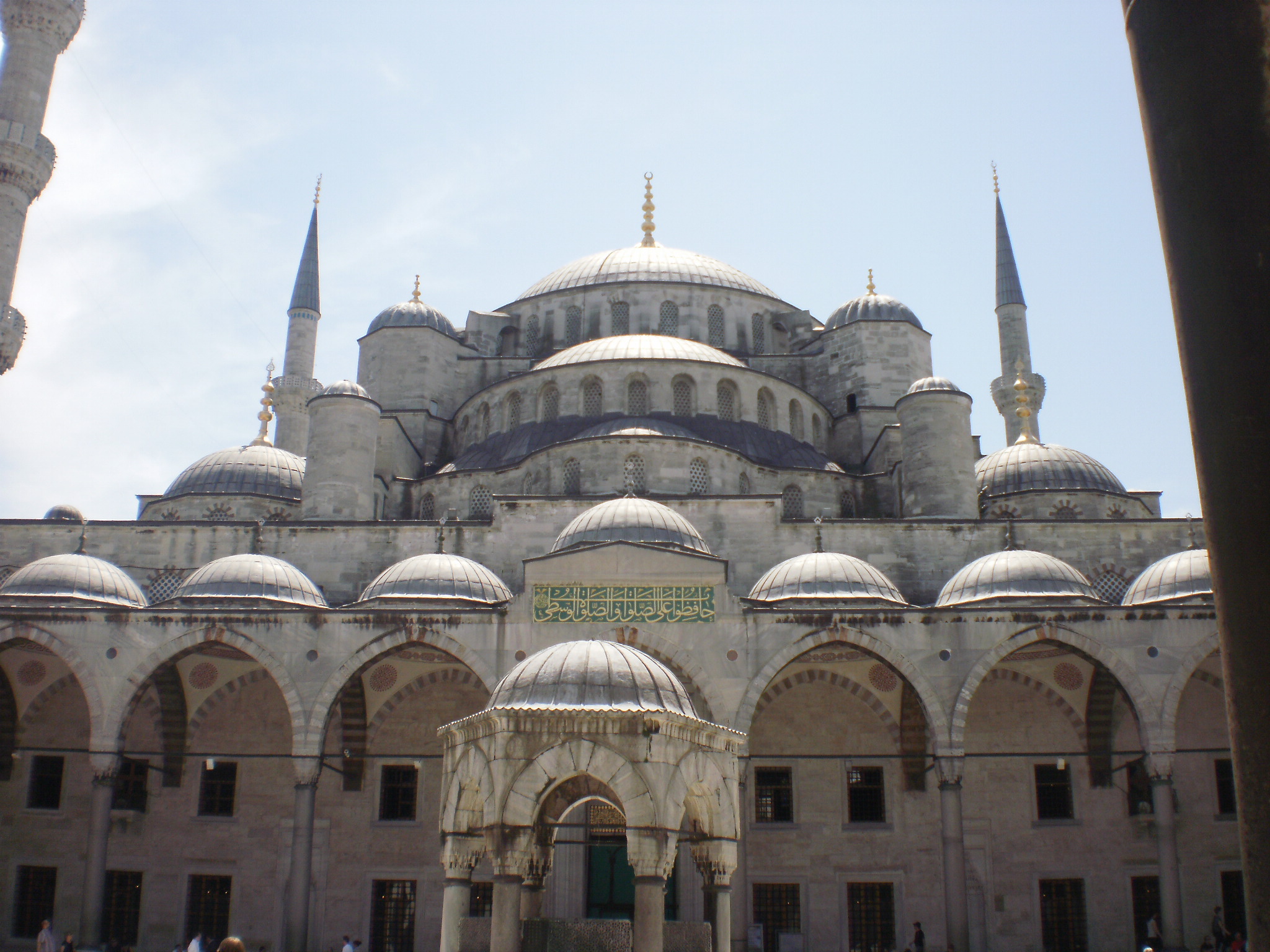
Gingerbread Blue Mosque Blue Mosque

Figuring out how to design an accurate representation of the Parthenon out of cake and cookies (see post) was an intriguing task that set me on a new hobby of designing models of existing buildings out of deserts.  Beginning with my second Architectural Dessert Masterpiece, all my creations are based on buildings/structures that I have personally encountered in my urban explorations.

I created my second desert building in December 2011.  While eating the Parthenon the previous year, suggestions were put out about how to create other shapes and buildings such as using jello and creating round shapes.  I was particularly engaged by the idea of how to create a dome.  I had not figured out how to create a dome such as those on capital buildings in the US, but I thought I could create one that would be close to those on the mosques I visited in Istanbul.  I chose the Blue Mosque as a visually interesting structure that would require a diversity of desserts to create.

Gingerbread cookies seemed to be the best way to design the frame of the building given the variety of heights and shapes of the building.  I used sugar cookies for the larger domes and half domes.  I knew someone growing up who was able to create perfectly rounded sugar cookies, no matter how I try I have never been able to create the same effect.  My sugar cookies worked well for the medium-sized domes, but I had to put two cookies together for the larger domes.  M&Ms made great small domes–they were also the base unit that determined the scale of my model.  I think another reason why I chose to create a mosque was so I’d have an excuse to use the Pirouette cookies again, this time as minarets.  I love these cookies, but hardly ever get them.  Using my piping set, I was able to create pointed tops on the minarets and add balconies.

This was by far the most time-consuming Architectural Dessert Masterpiece to create (at least of the four I’ve made so far) because of having to design the required sizes and shapes for the gingerbread cookies and cutting them out and then also baking sugar cookies, which somehow always takes forever.  I also played with “whitewashing” the gingerbread walls, but the method I tried didn’t create the desired effect so I gave up on it.

Eating Architectural Dessert Masterpieces is also an interesting experience, as they often require creative thinking to destruct them.  With the Parthenon, I employed a karate-chop method for cutting through the wafers.  On the other hand, with the Blue Mosque a free-for-all of pulling it apart with your fingers seemed most appropriate.

Gingerbread Blue Mosque Blue Mosque

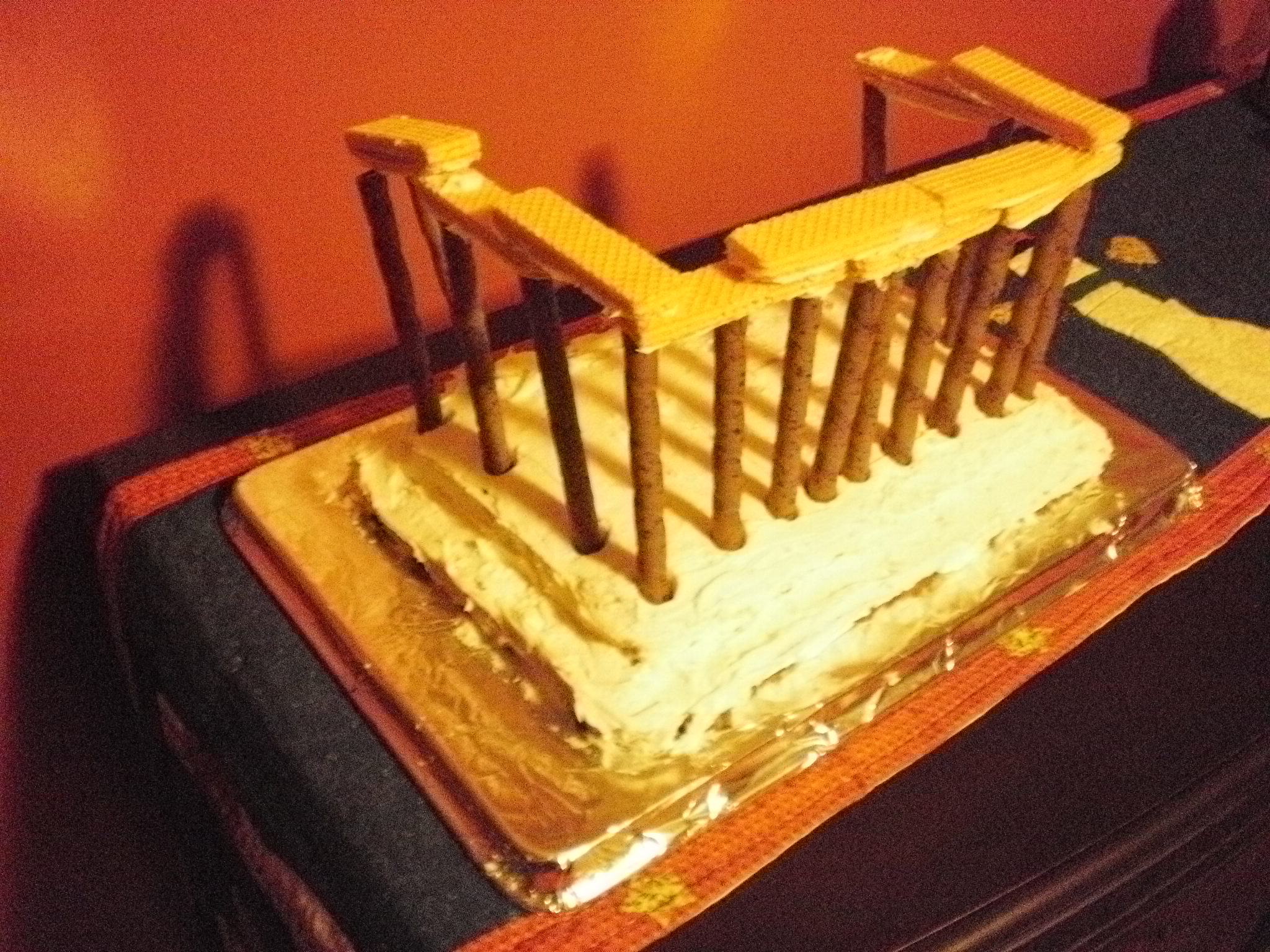
Parthenon Cake

Parthenon Cake

My hobby of creating Architectural Desert Masterpieces began about three years ago, when I was an AmeriCorps volunteer.  Searching for activities to do with my kindergartners in the after-school program, I somehow came across a recipe for making an Ancient Temple Cake.  While this was not at all feasible to do with my students, I thought it was an awesome idea and saved the recipe to try one day.

The following December, I decided it was time to try the Ancient Temple Cake.  By that point I was back in school and had taken a history of Western Architecture course, which included detailed discussions of ancient temples including the Parthenon.  When I pulled out the recipe, I decided it needed some improvements to make it a reasonable imitation of the Parthenon.  The directions were to bake a sheet cake, frost it, stick Pirouette cookies around the edge and top the Pirouettes with wafer cookies.  However, from my architecture course I knew that proportions were important as were the steps up to the temple.

I created a step to the temple but cutting off the edges, cutting them in half (height-wise) and reattaching the bottom halves to the cake body with frosting.  Then I added a number of Pirouette cookies based on the proportion of columns on the long and short sides of the Parthenon.  When I was done, I had a much better representation of the Parthenon in cake form than the recipe I started with.

Unfortunately, my cake temple aged rather quickly resulting in the collapse of the columns on one side.

Ruined Parthenon Cake

The Union Project: Engaging Community

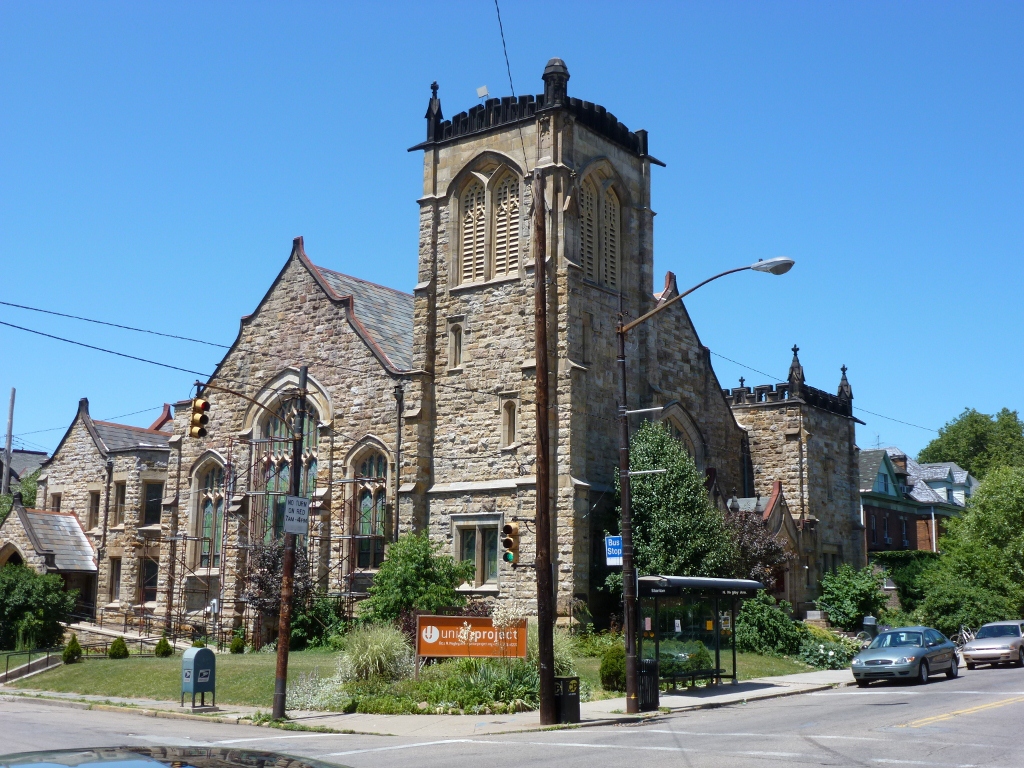
The Union Project

Every adapted church building I’ve come across has something that makes it unique.  Of all the ones I’ve come across so far, the Union Project used the most creative method in restoring/adapting the building.

In the late 1990s, a small group of people came together and said that they wanted a “space for art and faith” in their neighborhood.  (The quotes in this post are from one of the founding members, who I interviewed for a school project.)  By 2001, this group and this sentiment had grown and they purchased the vacant, former Union Baptist Church at the intersection of Negley and Stanton Avenues, two major roads in the East End of Pittsburgh, to convert it into a community center.

When the community center acquired it, the church was still considered active, but it had not been used regularly for two to four years.  The building was in very poor condition: the roof leaked, there were broken windows, and pigeons and rodents lived inside.  It took four years to prepare the building for occupancy and an additional six years to completely restore the structure.

The part that I like the most about how this building was adapted, was the alternative method they came up with for restoring the stained glass windows of the structure.  All the windows needed restoration, which I’m sure would have added up to a colossal expense.  Instead of giving up or attempting to raise all the funds to pay for a professional restoration, they offered community classes in stained glass restoration using the church’s windows as the class materials.  Some of the windows needed to be completely reconstructed in which case the instructor, a stained glass professional, created the new windows.  Beside these, all the windows were restored by community members at the classes.

Stain Glass Restoration

Stain Glass Restoration

I took one of the classes a few summers ago.  It was a lot of fun and quite interesting to learn how stained glass windows are put together.  At least a couple of the people in my class were taking the course so they would be able to restore the stained glass windows in their homes.  Much of the housing stock in the neighborhoods surrounding the building feature at least one stained glass window, so this was a useful skill for the local homeowners to learn.  A 2012 article in the Post-Gazette announces the completion of this restoration project.

Over the years since the Union Project began, the building has slowly been restored one piece at a time.  The former classrooms behind the sanctuary were restored first and converted into office space.  Several of these offices are used for the administration of the Union Project, while the rest are rented out to other community groups including a church group.  The basement was converted into an art space.  This is where the stained glass restoration classes were held.  There is also a pottery studio which offers classes.  Hula-hooping classes are held in the atrium, or out on the lawn in nice weather.  The sanctuary is used as a rental hall for receptions, community events and the like.  The narthex is a little coffee shop.

Restored Sanctuary

By the summer 2012, the building finally looked like a completed project: the stained glass windows were restored, the sanctuary was finally completely repainted, and the black soot was cleaned off the stone façade.  Because of Pittsburgh’s past as a major industrial city, all stone façade buildings collected black soot–many of these buildings have been cleaned in the last ten to twenty years.  In cleaning the soot off the Union Project, the crenellations on top of the towers were left black, leaving a respectful reminder of the past, while the change from a black building to white brightened up this corner of the neighborhood.

This is a project that showed me, and the group who completed it, that “anything is possible.”

Church Brew Works

Church Brew Works

January 8, 2013, has been declared by City Council as Church Brew Works Day in the city of Pittsburgh to recognize the work of the restaurant’s founder/president, head brewer, and staff.  Council’s proclamation highlights the success of this group in adapting a vacant church “into a premiere, nationally recognized craft brewery, neighborhood fixture, and regional asset.”

The Church Brew Works is probably the most infamous of Pittsburgh’s adaptively reused churches.  Its notoriety stems from the fact that the brew house is located in the former altar.  A friend of mine told me that this positioning bothers her and if she eats at the Church Brew Works, she has to sit with her back to the altar.  I have heard that other people consider it sacrilegious to have the brew house on the former altar area and that these people refuse to patronize the restaurant.

This building was formerly an Eastern European Catholic Church and was purchased in 1996 to be converted into a restaurant and brewery.  I interviewed the founder/president for a paper on adaptively reused church buildings in Pittsburgh.  He explained that the idea for the restaurant started in 1994.  The first building selected for the project was an old fire hall two blocks away from the church.  The church was chosen in the end because of the availability of parking and the “great architecture.”  It was also easily accessible by car, which he felt was important for the success of the restaurant as Pittsburgh “lacks good public transit.”  Five months after the purchase was completed, the restaurant opened.

The church had been empty for two years by the time it was purchased in 1996.  The school attached to the church had been closed for twenty-five years.  The president felt that this added to the decrease in the congregation.  The closing of the mills drove church members away to search for new jobs while the closing of the school drove them away to find a new school for their children.  As a result of these pressures, the congregation dropped from 2000 to 200 parishioners.  When acquired for the restaurant, the church was “worn out” from a lack of reinvestment over the years and there was additional damage as a result of being completely closed for two years.  While the initial renovations of the building were completed in five months, paving the parking lot and completing the patio took longer.  Fifteen years later, work is still being done because of the “age of the building.”

Church Brew Works Sign

Much of the original building was reused or adapted in the conversion from a church to a restaurant.  The history section of the restaurant’s website explains how the pews were reused as benches for the tables and the bricks from the confessional that was taken down were used to create the pillars for the restaurant’s sign outside.  The original floor and lanterns were restored.  The result is a beautiful and unique interior for this restaurant.  To see what the interior looks like, check out the website or stop by for a meal.  I’ve enjoyed the food the few times I’ve eaten here.

Adaptive Reuse of Churches: London

When I started planning on going to London this year, my first idea was to go for a month or so to study the adaptive reuse of churches in that city.  I thought London would be a good place to see a wide variety of adaptions as the UK has been working with the problem of redundant churches for about a hundred years.  As I was pursuing this idea I found a book from 1977 which addresses this problem across Great Britain.  (I have not come across any book publications on the adaptive reuse of church buildings in the US.)  This book “Chapels and Churches: Who Cares?” includes a discussion of what had been done up until that point in time in the adaptive reuse of church buildings.  I compiled a list of 76 different uses that these buildings have been adapted to from the book.  In my observations in the Pittsburgh area, I have seen less than ten types of new use for church buildings with housing being the most common.

There was one factor about the church buildings in London that I found fascinating, perhaps in part because it is not a factor in Pittsburgh, or any US city for that matter.  Many churches sustained damage during WWII and The Blitz.  The churches damaged during the war were demolished, rebuilt, adaptively reused, or memorialized, resulting in some unique (at least to me) situations.

I ended up not going to London to complete a research project on the adaptive reuse of church buildings, but instead went to the city for a few days and explored as much of the city as I could in that time.  This included looking for a few of the adaptively reused churches I had learned about in my preliminary research.  In the process of looking for the ones I knew about and simply walking around the city, I found some other adaptively reused churches.

Lambeth Bridge

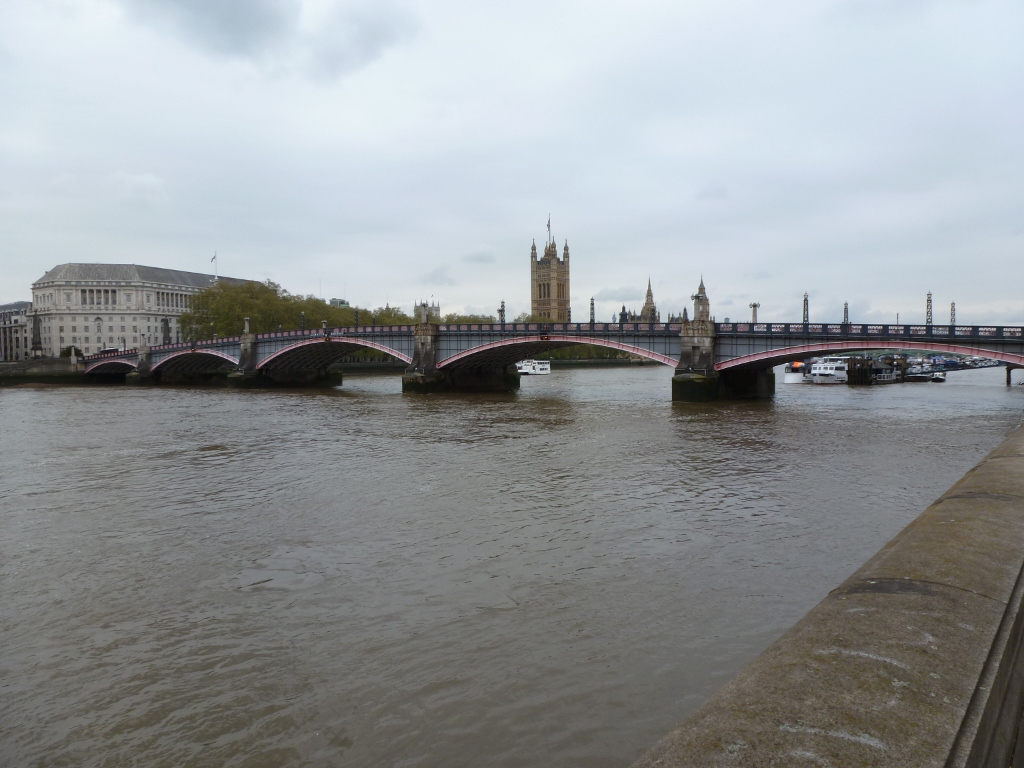
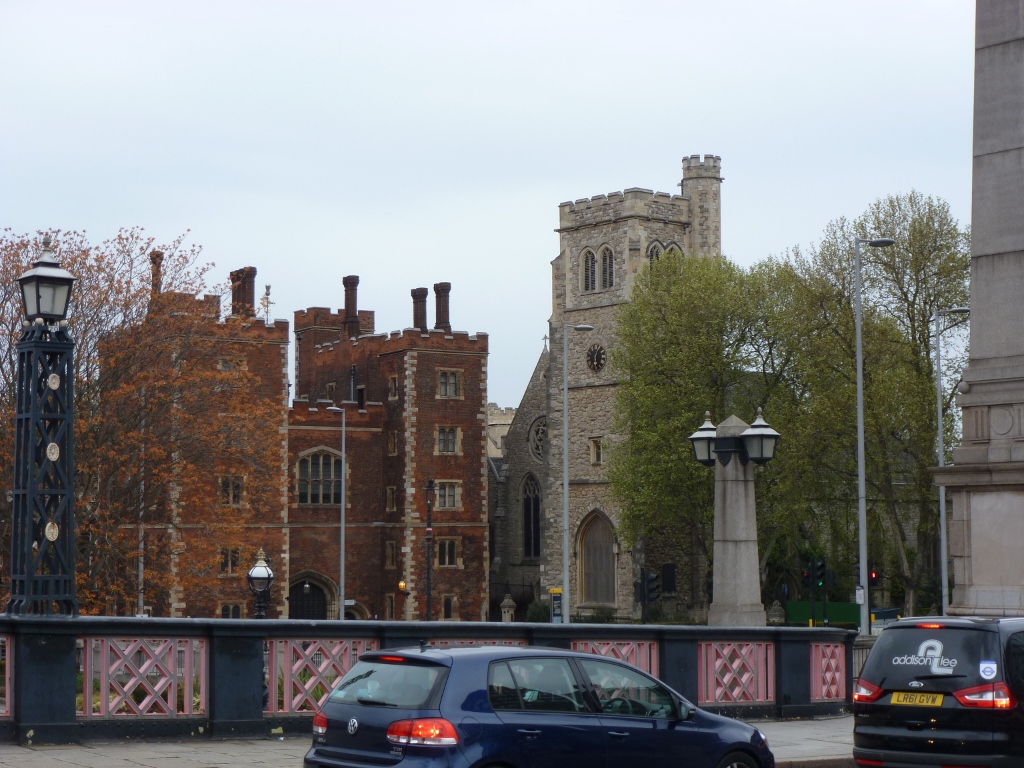
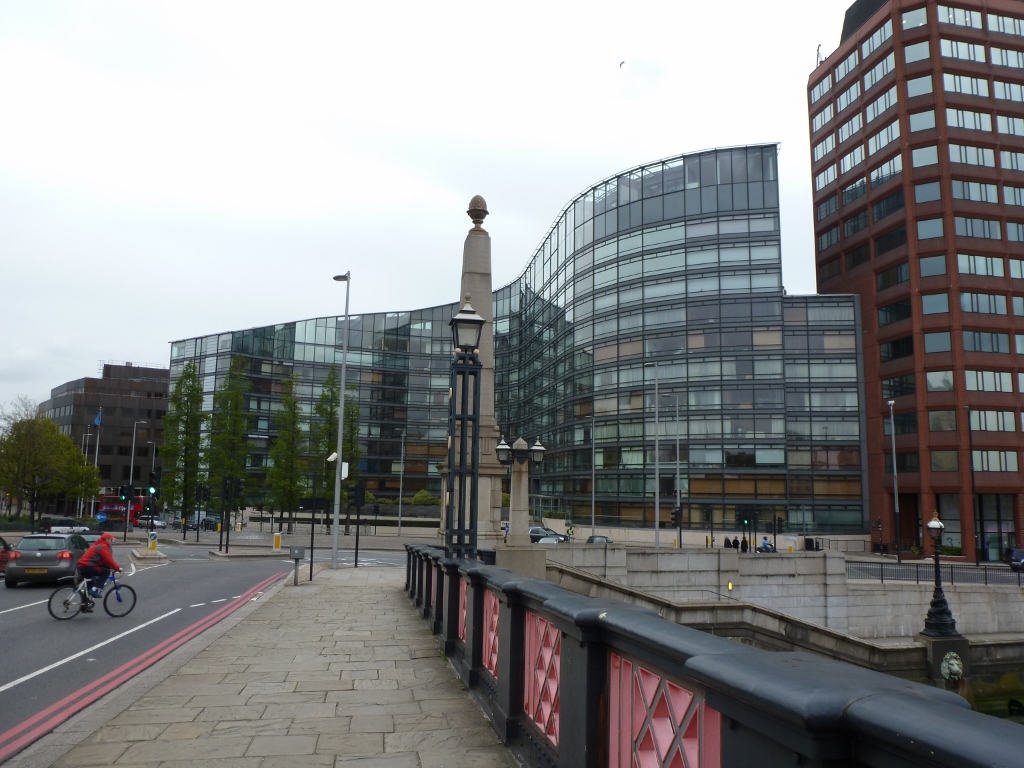
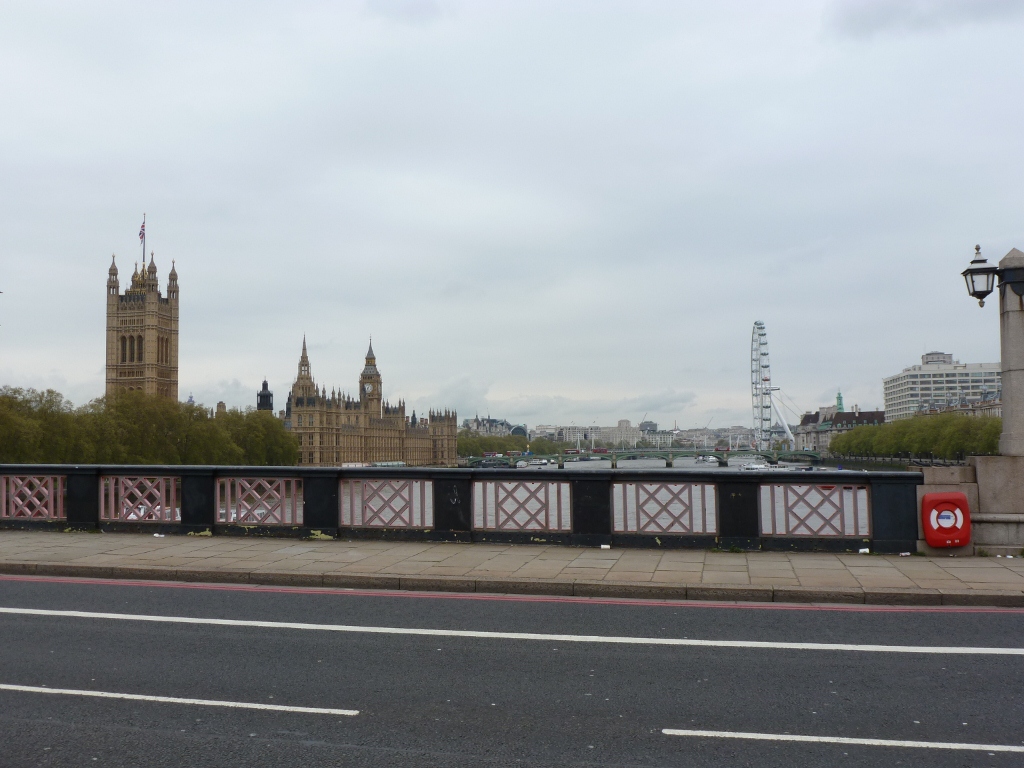
Lambeth Bridge toned down the color schemes a bit by using only two main colors, compared to the three or more colors found on the Vauxhall and Albert bridges (see June 20 and June 16 posts).  Also, the character of the area surrounding Lambeth Bridge changed from that surrounding the bridges I crossed previously.  There was much more of the older, classic London around Lambeth Bridge.  The southern shore combines the old and new.  On the left, looking from the bridge is the historic Lambeth Palace, the site of the Archbishop of Canterbury’s London residence since the 13th century.  (This accounts for the building’s religious appearance.  I had assumed when seeing it in person that it was some kind of church, so when I looked it up from the comfort of home and saw it was a palace I was initially disappointed at my error.)  To the right across the street from the Palace, is a sleek, modern, glass building housing the Parliament View Apartments.  In retrospect, I regret not taking a picture that includes both the Palace and the apartments in one frame.


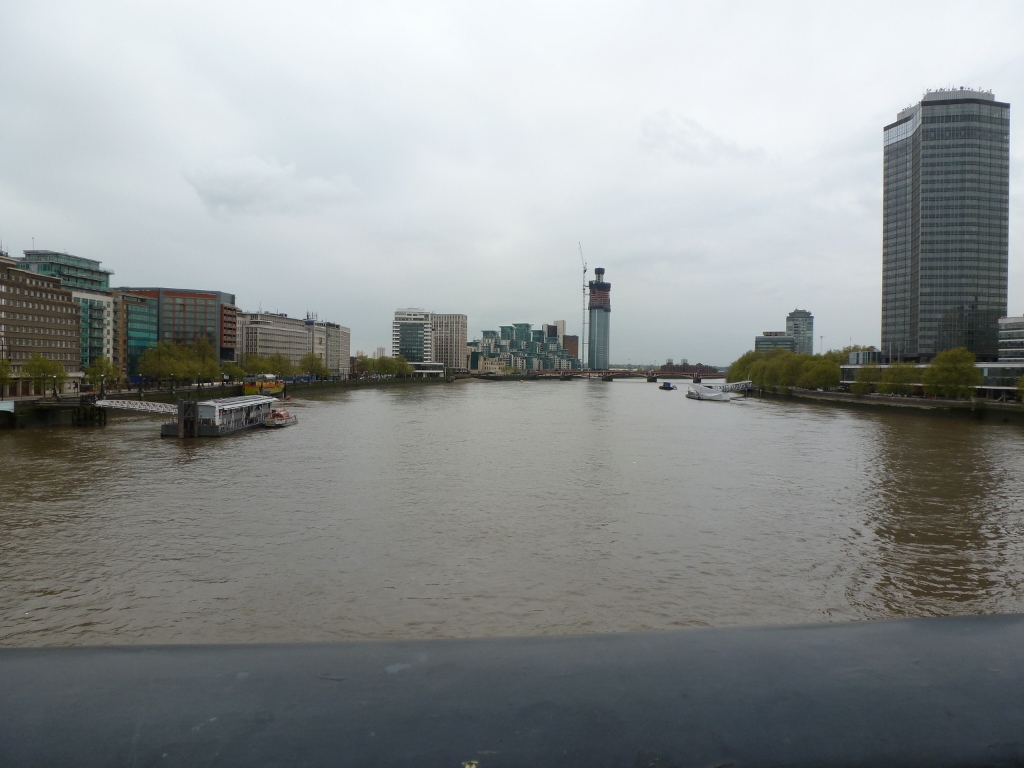
The views up- and down-river from the bridge correspond to the sites at the southern end of the bridge.  Downriver, the side corresponding to the old Lambeth Palace, the view is dominated by old London architecture particularly the Houses of Parliament.  At the same time the upriver view is dominated by newer architecture, like the Parliament View Apartments upriver from Lambeth Palace.


I would like to add a correction to my post on the Battersea Bridge where I identified the tower under construction, also visible in the Lambeth Bridge upriver photo above, as the Shard.  In the Battersea Bridge post, I identified the building as the Shard because it was the only tower under construction in London on which I could find any information on.  Also, one of the photos labeled as the Shard looked similar to this building.  However the Shard is closer to central London.  Today I learned that the complex next to the tower is the St Georges Wharf Apartments, which are rented by the night.  Based on the style of architecture of these buildings and the tower and their proximity to each other, I have a suspicion that they are related.  It would probably be a good thing if the tower was an expansion of the apartments because the current apartments are completely booked.  Out of curiosity, I searched multiple dates between now and June 2013; none of them had any availability.

Roald Dahl, Norwegians, Doctor Who, and a Church

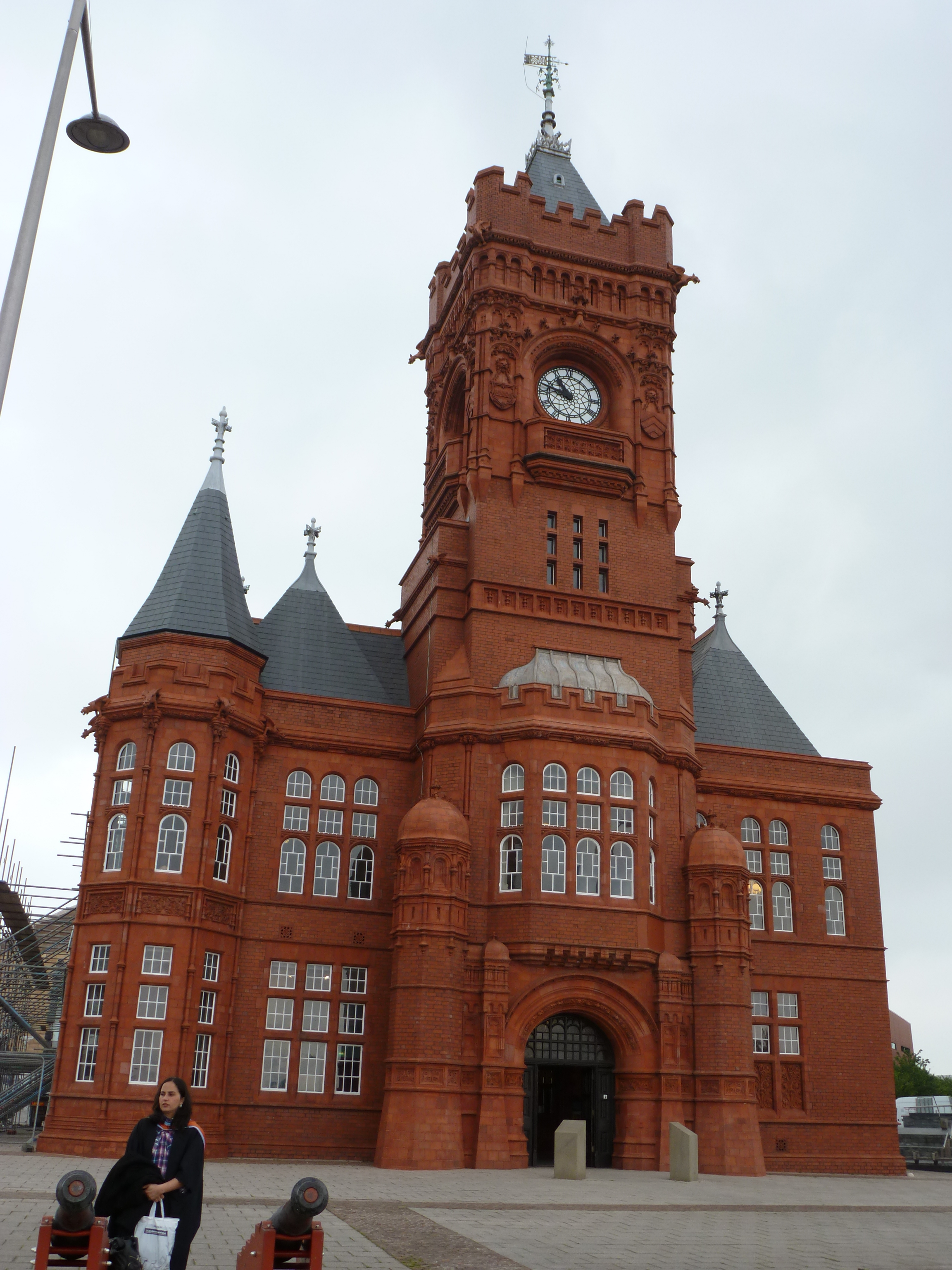
I watch the new Doctor Who series and the spin-off show Torchwood.  The Doctor Who episodes set in modern Cardiff are centered on Cardiff Bay and Torchwood is based in Cardiff Bay.  In the long shots of the area, I was most intrigued by the building pictured above.  I believed it must have been some sort of church.  When I was preparing to visit Cardiff, I was excited by the paragraph in my guidebook which referred to a repurposed church on Cardiff Bay.  I assumed that the building that intrigued me in Doctor Who and Torchwood must be the former Norwegian church now adapted to a rental facility.

On arriving at the site, I had a feeling that something was off.  It wasn’t until I stepped inside that I figured out what it was.  It turned out that this building never held a church.  I suppose that the lack of stained glass, the small widows, and the cannons outside should have been a clue, but with the peaked roof (not visible in the above photo), the gargoyles, and the central tower I didn’t know what else it could be besides a church.  The building is called the Pierhead and it guarded the port, or at least kept track of the traffic coming and going in the port.  It is open to visitors now as a museum of the port.  I learned a lot about the history of Cardiff from a short, entertaining film, such as the name came from Welsh for “Fort on the River Taff.”  The color and decoration of the interior also intrigued me.


When I left the Pierhead, I looked around the bay and quickly spotted the actual church described in the guidebook.  Norwegian sailors who passed through the port built this church (pictured below).  Roald Dahl was baptized here.  Now the building is used as a rental facility.  The sanctuary is the rental hall, when I was there it was being set up for a wedding reception on the following day; the choir loft level is now an art gallery; and the space below the choir loft, which I imagine would have been the entryway/gathering space, is now a coffee shop with some delicious pastries.  Unique features of this building included the model of a Norwegian sailing ship hanging from the center of the ceiling in the main room and a stained glass window that featured fish.  Unfortunately my camera temporary malfunctioned while I was visiting this building and as a result I do not have any shots of the interior.

Newport Road, Cardiff

The one mile walk from the city center to the Inkspot along Newport Road revealed more church buildings of interest for adaptive reuse and the history of the city. (Newport Road is so named as it was the main road from Cardiff northeast to Newport before the highway came along.)

The first building of interest that I came across was just off Newport Road. My observations indicated that this building was a former church probably adapted to a new use similar to the Wallich Centre (see post on Cathedral Road, Cardiff) but with a strong religious component. A sign on the building read “UCKG Help Centre,” which suggested that it provided help to those in need. My ideas for the possible targeted audience included people experiencing homelessness, depression, or low-income. I identified the Centre’s religious focus from a sandwich board in front of the entrance advertising holy/healing oil.

I was correct in my supposition that the building’s original use was a church (after I discovered I mistakenly identified two other buildings as former churches I began to doubt my guess with this building). It was built as a Unitarian Church in the 1880s. However, I was mistaken in the new use. It turns out that UCKG stands for the Universal Church of the Kingdom of God and therefore the building is still being used as a church, just not its original denomination.

The second building appeared permanently closed when I passed. This one clearly used to be a church.  The building appeared to be secure and in good condition, which is beneficial for any potential reuse.  This building was built as the Church of St James the Great in the 1890s and closed in 2006. A newspaper article from 2008 announces the redevelopment of the church’s spire into a seven-story flat (flat=apartment, please excuse my British vocab and spellings, such as centre, while I discuss British places).  The rest of the structure would be converted into 11 other one- and two-bedroom flats. However, there was no indication when I was passing that this has occurred or was in the process of occurring. There is no further mention of this redevelopment online, suggested it either fell through or is being held up.

I passed one more church building on Newport Road, one still used for religious worship, before reaching the Inkspot. This building interested me as it was a larger church complex than any of the others I passed, was a block away from the Inkspot, and part of a complex blocked off for construction work of some unknown sort.

Passing four church buildings, three of which were no longer housing their original uses, intrigued me. Coming from Pittsburgh, my immediate assumption was that Cardiff must have experienced a significant population loss. After all it used to be a major port—exporting more coal than probably any other port in the world. The port closed some time ago and Cardiff stopped exporting coal. I imagined this change resulted in the loss of many jobs and therefore a significant population loss followed. Yet, the population statistics for Cardiff over the last 200 years destroyed this theory. The population dipped slightly from 1971 to 1981, but by 1991 Cardiff had more residents than ever (see Cardiff Timeline for population statistics). The port closing may have influenced the dip in population, but net population loss cannot be the cause of the closed and adaptively reused religious buildings I observed in Cardiff.

I cannot verify my second theory for the reason these buildings lost their original uses. This theory is a change in the religious views of the population. This can go two ways. The first idea is that people are becoming less religious (this is how the Dutch explain their large number of churches adapted to new uses). I found a few articles that identify a similar trend in all of Britain (Number of Christians falls, Muslims pass on faith at higher rates than Christians). The second idea is that while the overall population is growing, people are still moving out and those that are moving in are of a different demographic or religion and therefore do not want the same religious institutions as those that came before them. Both theories are mostly speculation as I haven’t found detailed statistics on religious beliefs and practices in Cardiff, Wales, or Britain.

Cathedral Road, Cardiff

As I mentioned in the post on Inkspot, it felt like I had more success with repurposed churches in Cardiff than London, despite having done extensive research on the adaptive reuse of churches in London.  Perhaps this is in part because it is far more exciting and rewarding to come upon a repurposed church than to go where you already know you will find one.  My first day in Cardiff I discovered two adapted religious buildings within a few blocks of each other—thrilling!

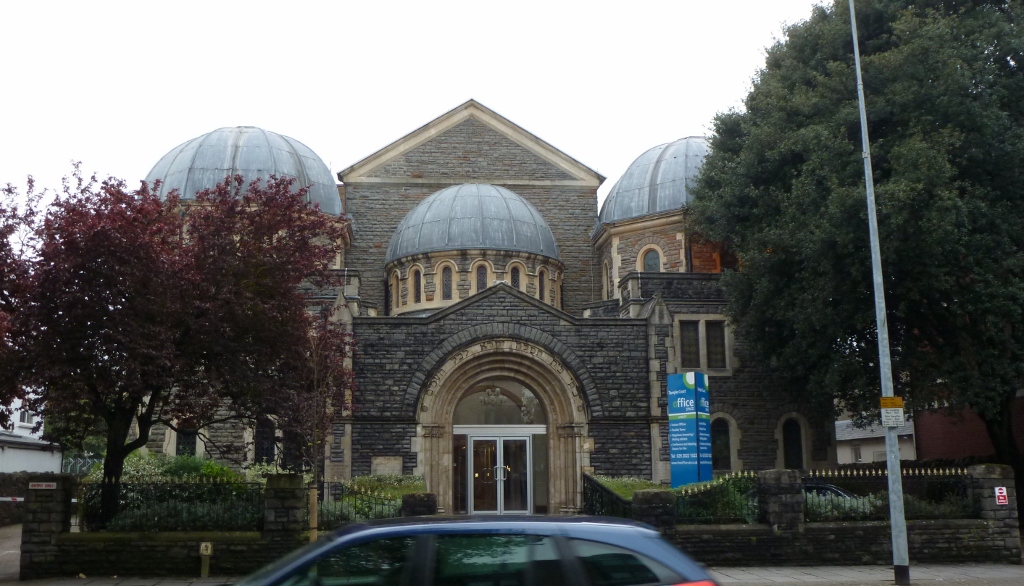
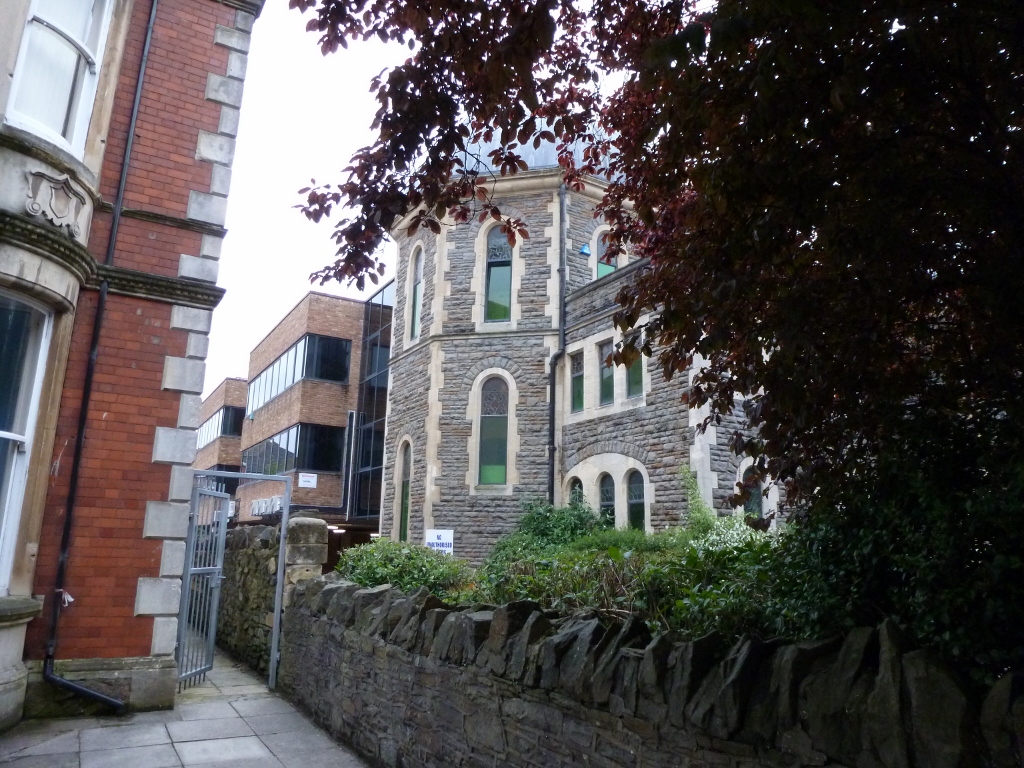
The first of these buildings, formerly the Cardiff New Synagogue now office space.  (I am also interested in the adaptive reuse of synagogues as there are some similar issues when repurposing synagogues or churches, but I am less familiar with the architecture and interior design of synagogues and they seem less common adapted church buildings.)  The façade of this former synagogue appeared to be unaltered, however in the back there was a modern office building extension.  I could not tell from my observations whether or not part of the original building was demolished to make way for the extension.  The original building seemed a bit short, which made me think that part of it might have been demolished.  However, some of the townhouses nearby had similar additions in the back as they were now used for businesses or apartment complexes.  The depth of these buildings matched those that did not have additions and that of the original structure of the synagogue, suggesting that the synagogue may have been intact.  I found the YouTube video on the building’s website interesting as it is easy to tell which rooms are in the original building and which in the addition.

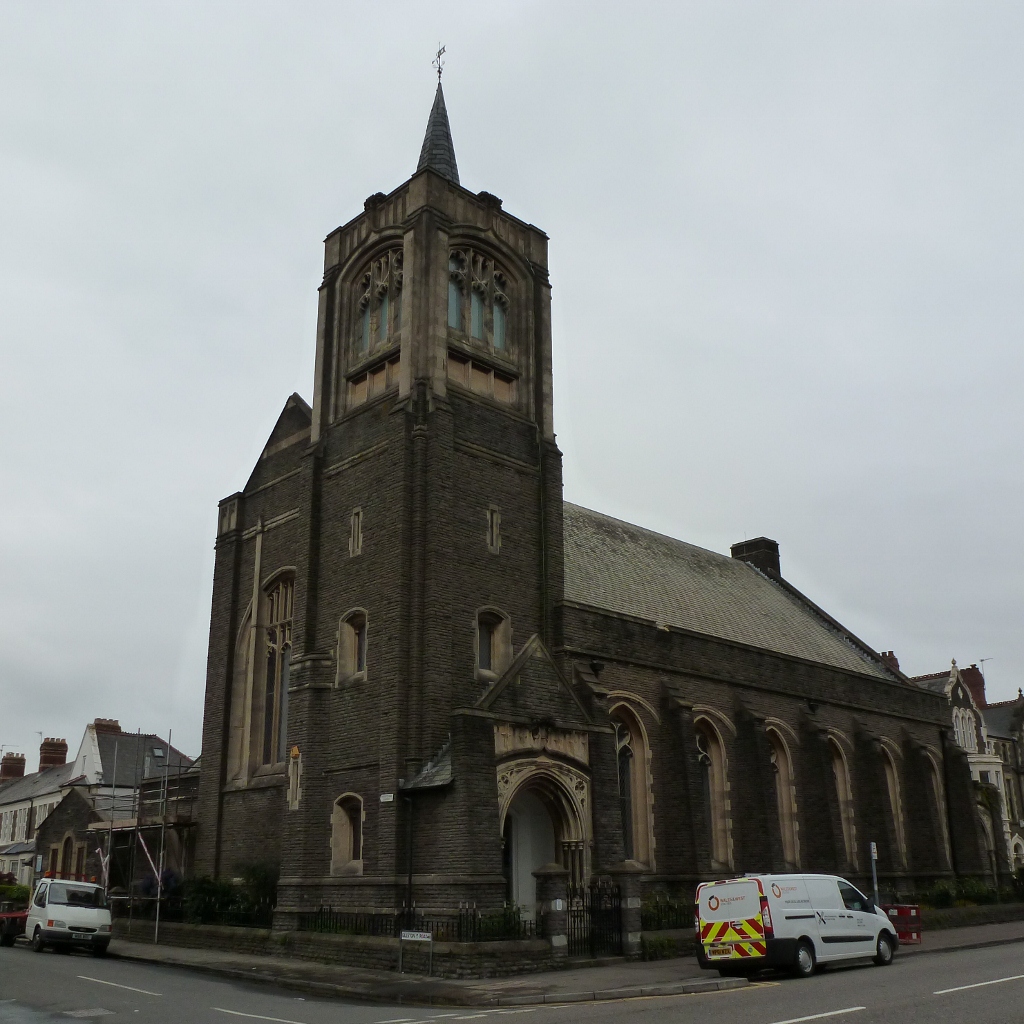
The second building was a former Presbyterian Church of Wales, now The Wallich Centre.  Their motto is “homeless people first” which gave a clear indication of their purpose, although the website suggests that this building may not be used directly for the homeless as it is identified as the administrative centre as well as a venue for hire for meetings, conferences, etc. which I don’t imagine would be used by the homeless.  There appeared to be little or no alteration to the exterior of this building, except for the glass doors inside the covered entrance.  Only a small sign (blocked by the van in the picture) indicated that this building no longer functioned as a religious institution.