Maps are Awesome!

While talking with someone recently, we discovered we shared a seemingly rare love of maps.  Maps are truly awesome and useful tools and not just for figuring out how to get from one place to another.  Maps provide insight into what a place looks like, giving clues about the layout and geography of a place you’ve never been.  Street names and other labels can hint at the history of the place.  Historical maps show what a place looked like in times past.

I have used maps several times to help me with writing my blog and there are many more times when I should have gone to a map first. As I mentioned in the first Heth’s Run Bridge post, the G.M. Hopkins maps on Historic Pittsburgh are probably my favorite resource for Pittsburgh.  Heth’s Run Bridge presented many puzzles that the maps helped me understand.  I realized yesterday that I probably should have gone to these maps first when wanting to figure out which bridge remnant I saw from the Fort Duquesne Bridge (see June 19’s post).  While writing that post, I did a search on the internet, but came up with nothing.  The G.M. Hopkins maps came to the rescue, although there are two possibilities for which bridge the remnant belonged to.  The first possibility I found on the 1900 map.  This one was called the Union Bridge.  By 1929, the Union Bridge was gone and another bridge connected the Point to the North Side.  This one was called Manchester Bridge.  This bridge was demolished in 1970, by which time the Fort Duquesne Bridge was built (see June 19th post).  I made a few other discoveries about Pittsburgh while looking at the 1929 map.  First, Penn and Liberty avenues used to come straight through to Water Road which ran along the northern shore of the Monongahela River.  Today these avenues stop much further inland.  The second major discovery was that Point Park already existed in 1929.  It was significantly smaller than it is today, but it is there.

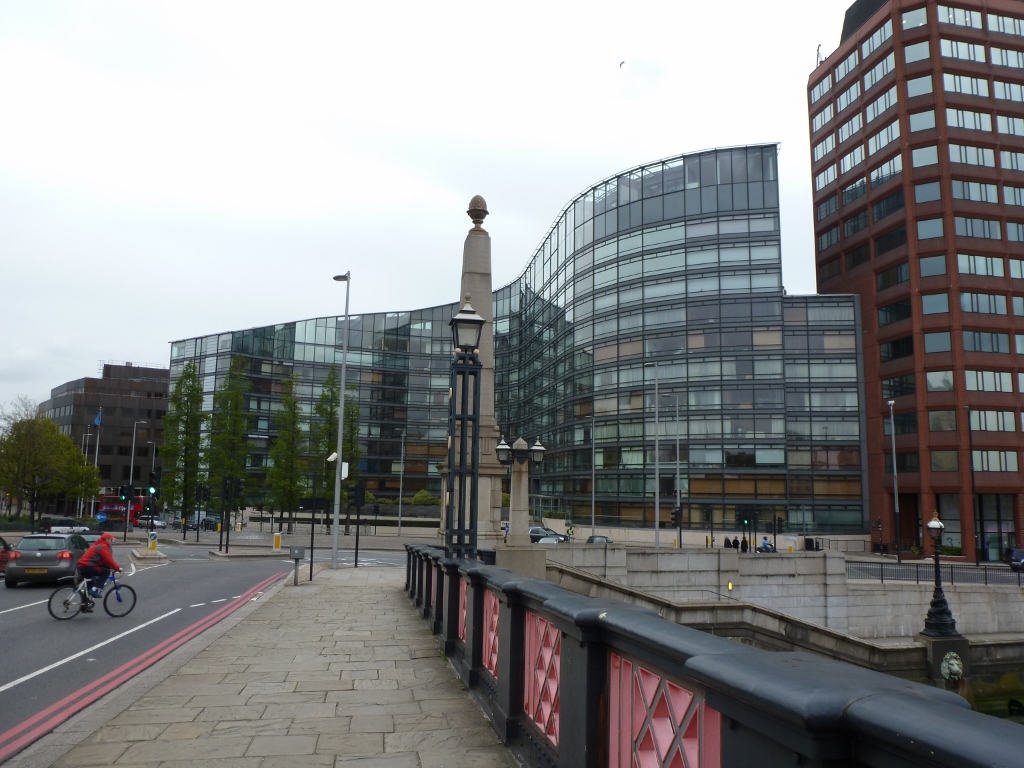
Google Maps helped me with identify the buildings near Lambeth Bridge (see June 28th post) that I didn’t take the time to stop and investigate while I was walking the bridge.  Several of the buildings I was able to identify from labels that Google Maps conveniently placed on the map.  The Parliament View Apartments weren’t labeled, but using Google Maps’s other wonderful feature–Street View–I was able to find a sign on the building identifying it.

The image leading this post is of another highly convenient map.  On my recent trip to Cleveland, I arrived Downtown 2 hours before the person I was visiting finished work.  We arranged to meet at their place of work, but I was only familiar with two or three of the streets in downtown Cleveland, and the meeting place wasn’t on any of them.  I had just decided to use my skills of logic to find it (which would have been feasible in this case as one of the cross streets was a numbered street and the other was called Lakeside) when I came across this map on a street corner.  It turns out that these maps are posted regularly around downtown Cleveland, which I thought was very considerate of the city.  It made the city feel like it welcomed visitors with open arms, engaging them in being engaged in the city.  Even though I had a plan for finding where I was going without a map, I prefer being safe rather than sorry, so I took the easy way out and used the map to figure out where I was supposed to end up.  I also used it to plot out how I could spend the time I had until my friend got out of work to cross at least one of Cleveland’s bridges over the river Cuyahoga.  I ended up getting distracted from this goal, but that is a story for another day….(see July 9 post)….

Westminster Bridge

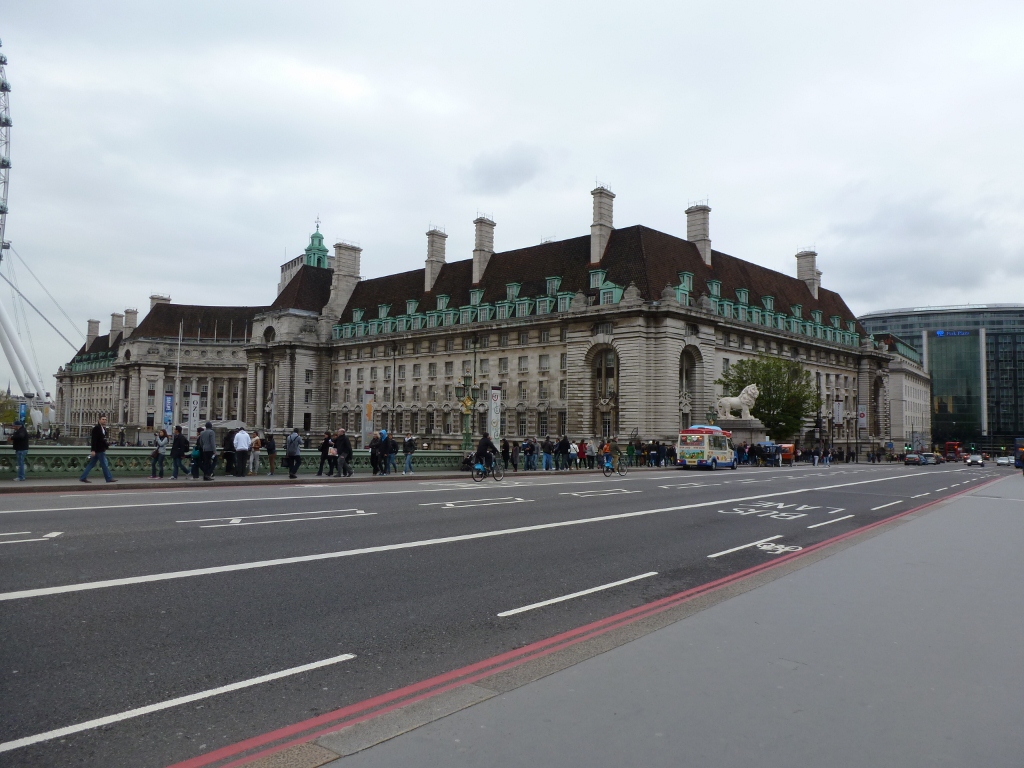
I mentioned in my post on Battersea Bridge that the traffic on the bridge was low, but that this was probably in part due to the fact that I crossed it on Sunday afternoon.  I was so excited about walking all the bridges in London that I walked half of them first thing that Sunday afternoon when I arrived.  The traffic condition on most of the bridges was similar to the Battersea Bridge–not much.  I did pass several other pedestrians as I walked along the Thames River Path to get between the bridges, but the volume of the pedestrian traffic changed significantly when I reached Westminster Bridge.  Crowds of people were crossing the Westminster Bridge, enough that an ice cream truck parked at one end to attract customers from the passersby.
      

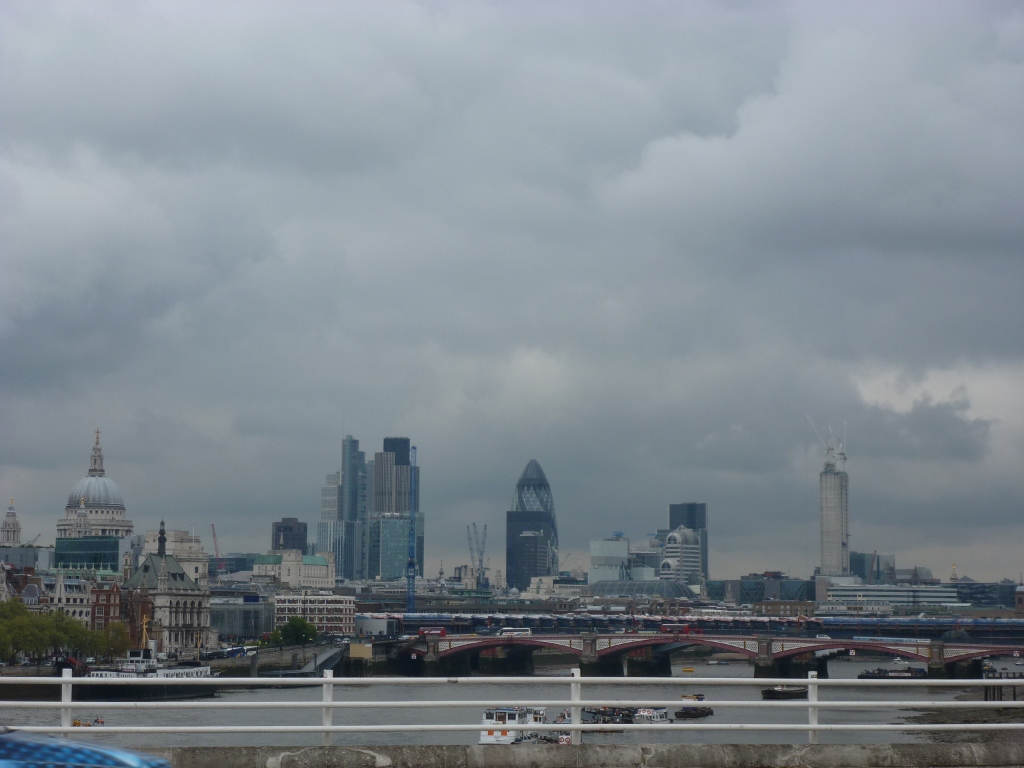
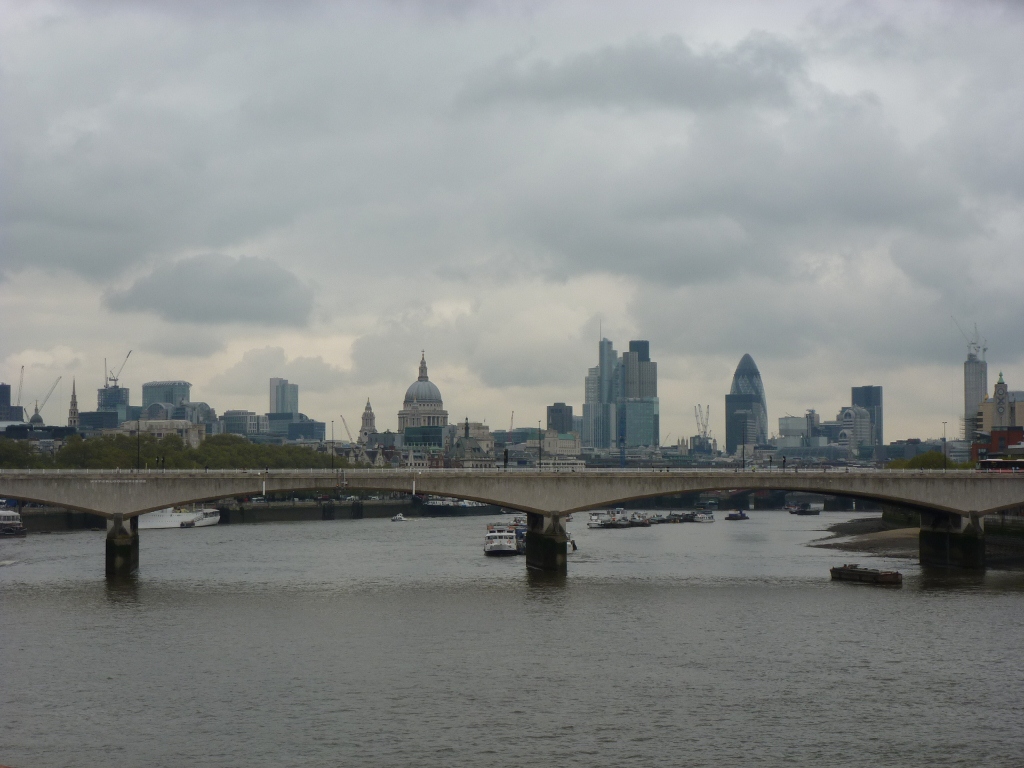
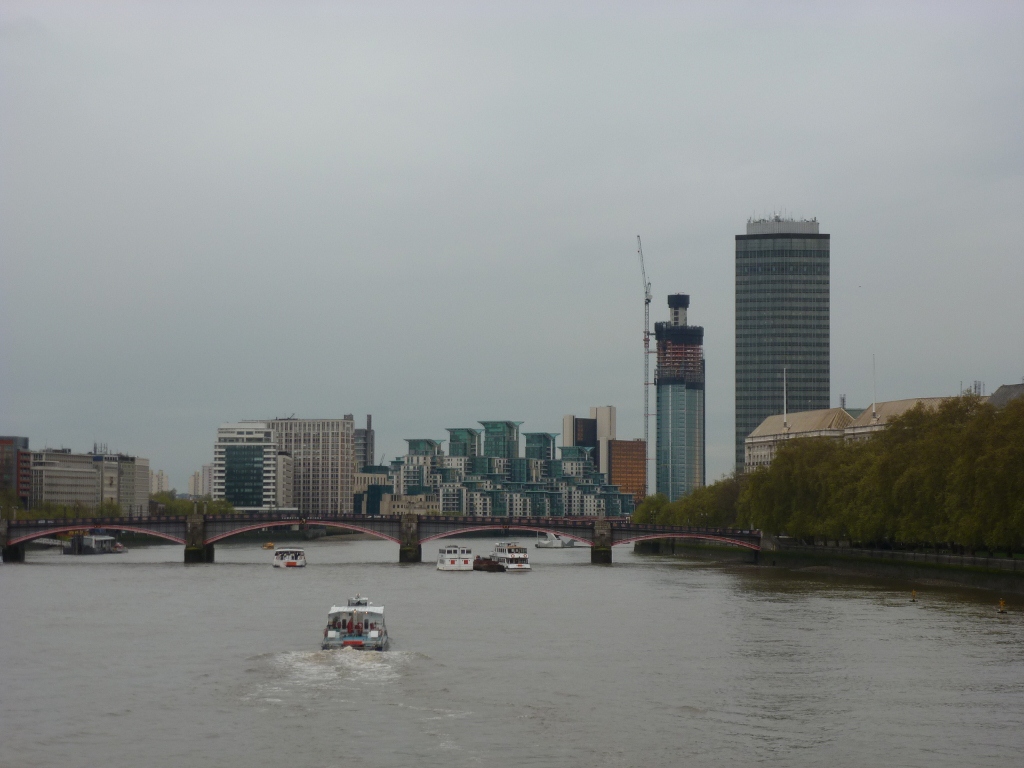
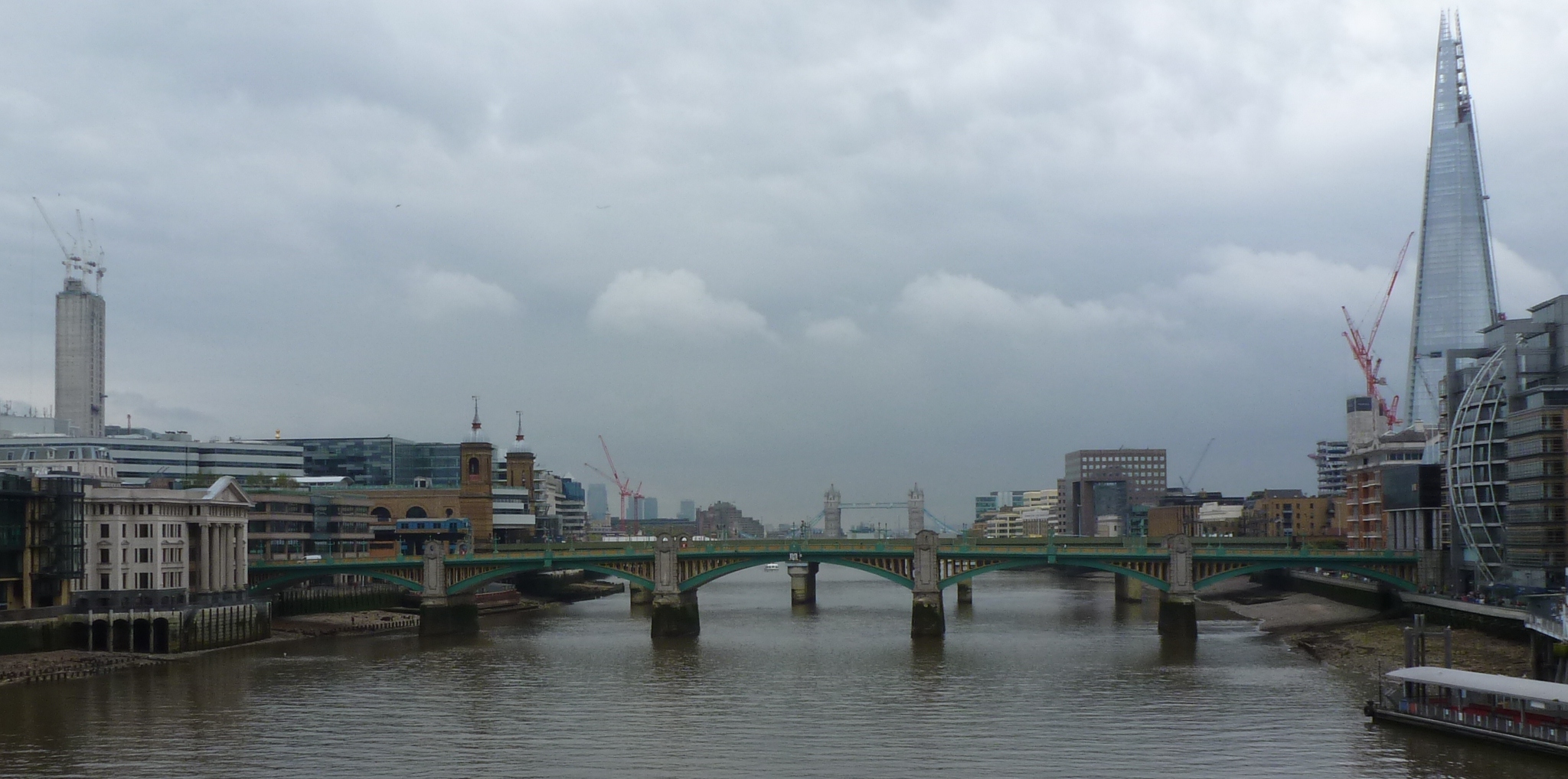
Going back to the mysterious tower under construction next to the St Georges Wharf Apartments (see Lambeth Bridge post and Battersea Bridge post), my favorite view of these buildings was from the Westminster Bridge.  The way they appear in a cluster with other buildings along the river soothes my sense of harmony, as the tower doesn’t stick out so abruptly in this view.  This is one of my favorite things about walking bridges–seeing how the appearance of a particular location can change drastically when viewed from different locations.  The Thames River is particularly good for this as it twists and turns quite a bit as it passes through London.  This causes the incomplete tower to look like it is right next to the other tall building, when in reality they are separated by a fair distance and are on opposite sides of the river (again refer to the Lambeth Bridge post for a different view of these buildings).

Lambeth Bridge

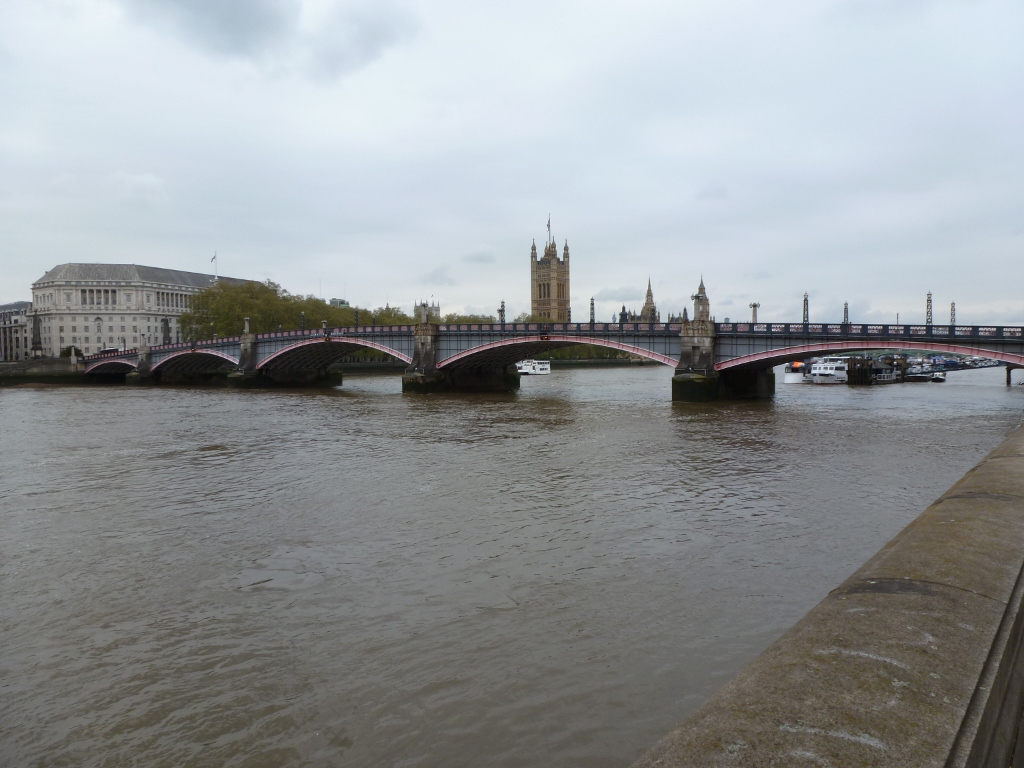
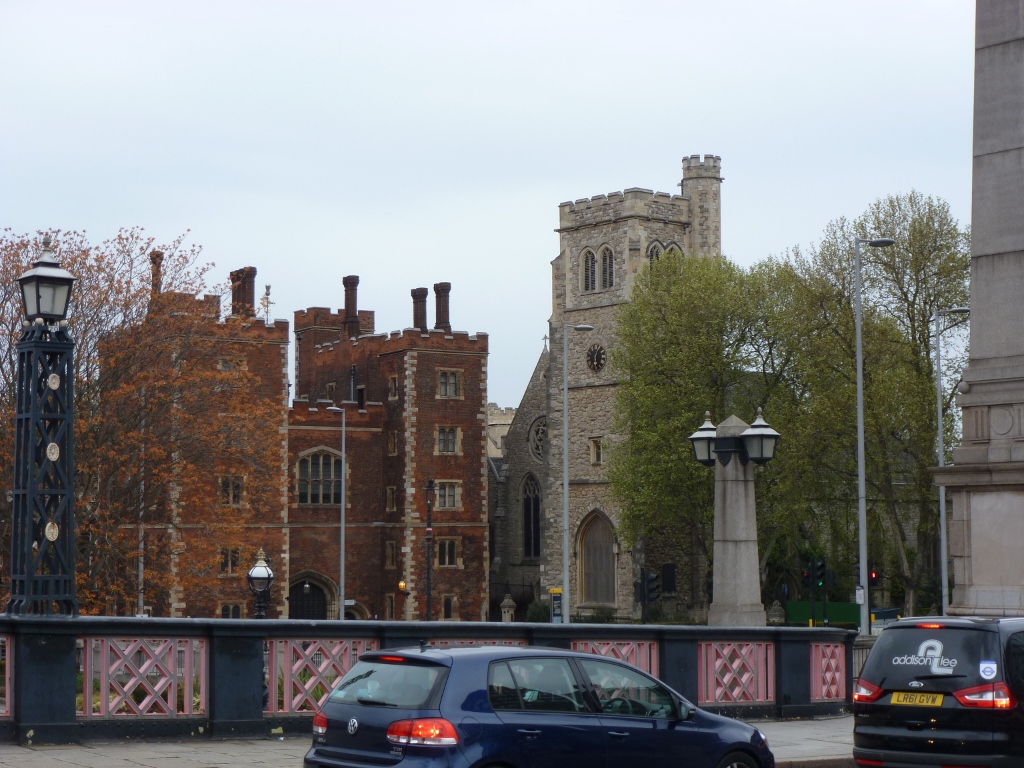
Lambeth Bridge toned down the color schemes a bit by using only two main colors, compared to the three or more colors found on the Vauxhall and Albert bridges (see June 20 and June 16 posts).  Also, the character of the area surrounding Lambeth Bridge changed from that surrounding the bridges I crossed previously.  There was much more of the older, classic London around Lambeth Bridge.  The southern shore combines the old and new.  On the left, looking from the bridge is the historic Lambeth Palace, the site of the Archbishop of Canterbury’s London residence since the 13th century.  (This accounts for the building’s religious appearance.  I had assumed when seeing it in person that it was some kind of church, so when I looked it up from the comfort of home and saw it was a palace I was initially disappointed at my error.)  To the right across the street from the Palace, is a sleek, modern, glass building housing the Parliament View Apartments.  In retrospect, I regret not taking a picture that includes both the Palace and the apartments in one frame.


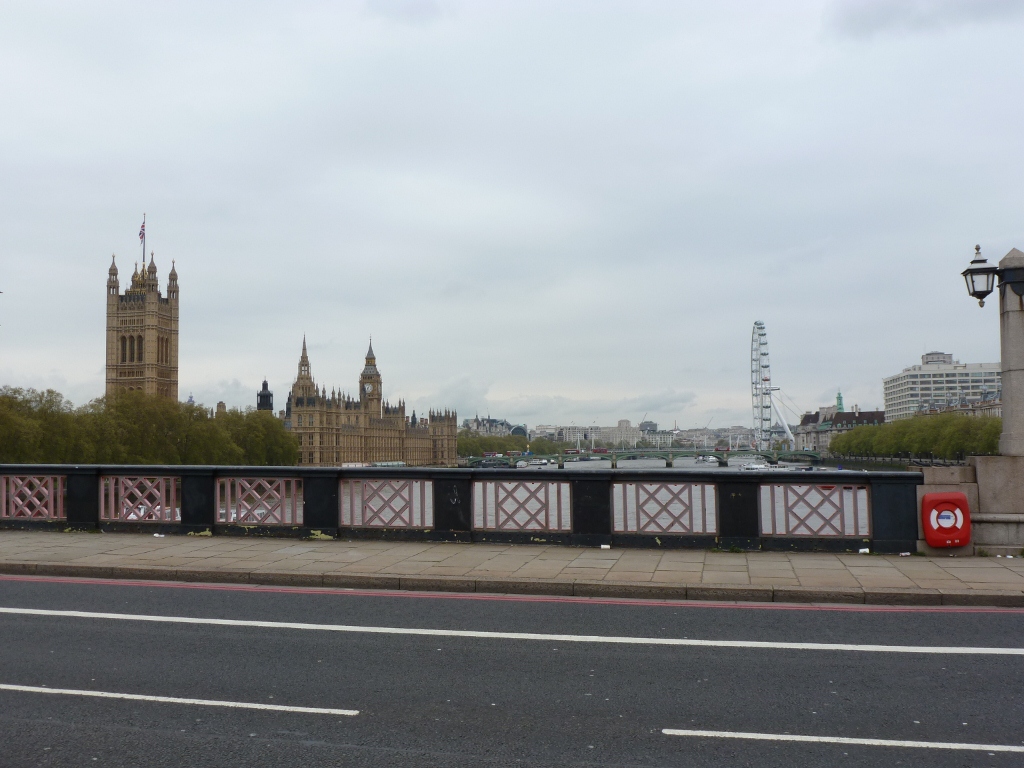
The views up- and down-river from the bridge correspond to the sites at the southern end of the bridge.  Downriver, the side corresponding to the old Lambeth Palace, the view is dominated by old London architecture particularly the Houses of Parliament.  At the same time the upriver view is dominated by newer architecture, like the Parliament View Apartments upriver from Lambeth Palace.


I would like to add a correction to my post on the Battersea Bridge where I identified the tower under construction, also visible in the Lambeth Bridge upriver photo above, as the Shard.  In the Battersea Bridge post, I identified the building as the Shard because it was the only tower under construction in London on which I could find any information on.  Also, one of the photos labeled as the Shard looked similar to this building.  However the Shard is closer to central London.  Today I learned that the complex next to the tower is the St Georges Wharf Apartments, which are rented by the night.  Based on the style of architecture of these buildings and the tower and their proximity to each other, I have a suspicion that they are related.  It would probably be a good thing if the tower was an expansion of the apartments because the current apartments are completely booked.  Out of curiosity, I searched multiple dates between now and June 2013; none of them had any availability.

Vauxhall Bridge

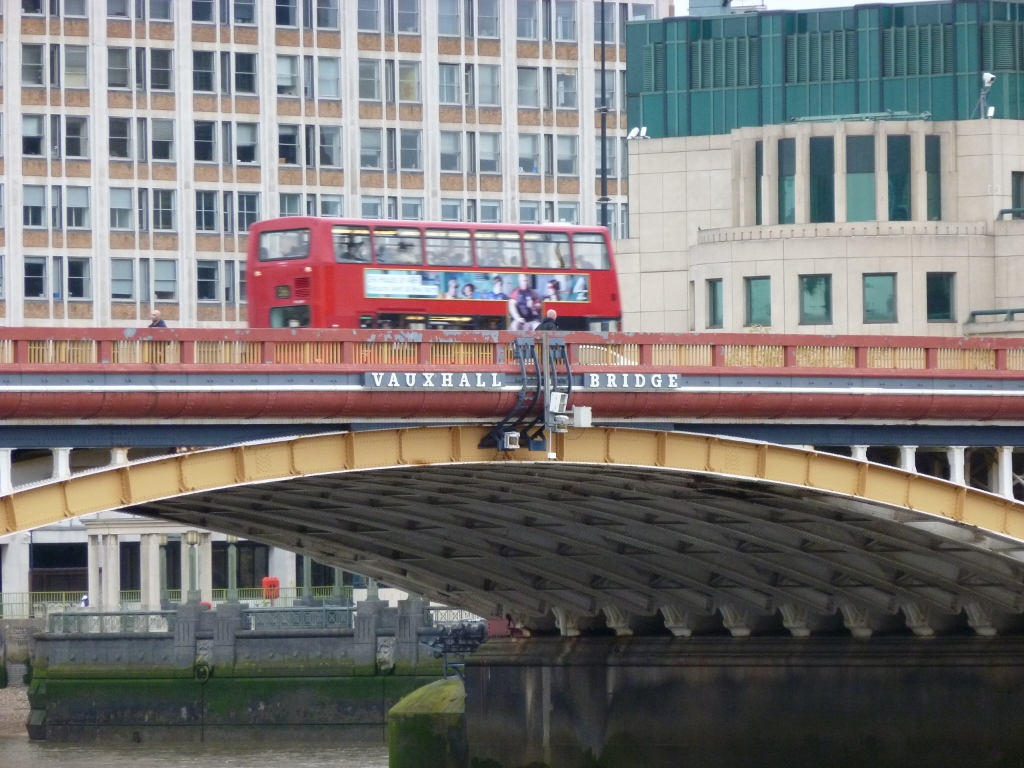
I must say that London has the most interesting and varied color schemes for its bridges of any city I have yet visited.  In Pittsburgh, for instance, the bridges that have color use only one (and that tends to be yellow).  All the examples I can think of for bridges in other US cities follow a similar color design as Pittsburgh, though not in yellow.  On the other hand, London’s Vauxhall Bridge presents yet another tri-color design scheme different from the three bridges I’ve already posted about and from the nine more to come.

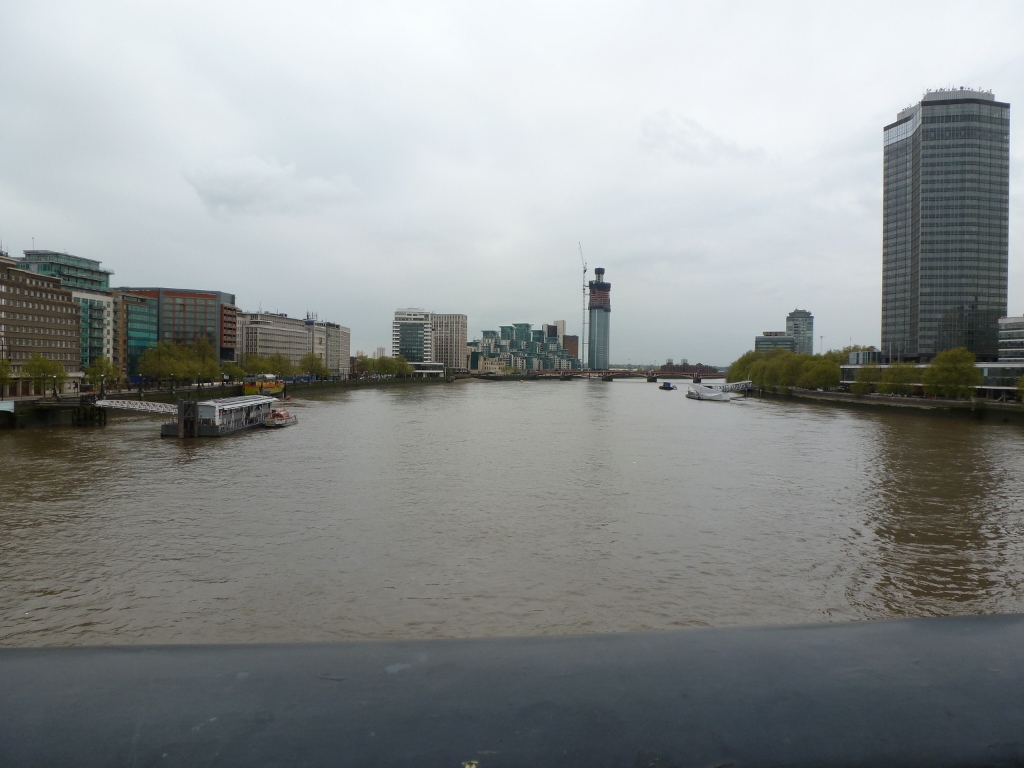
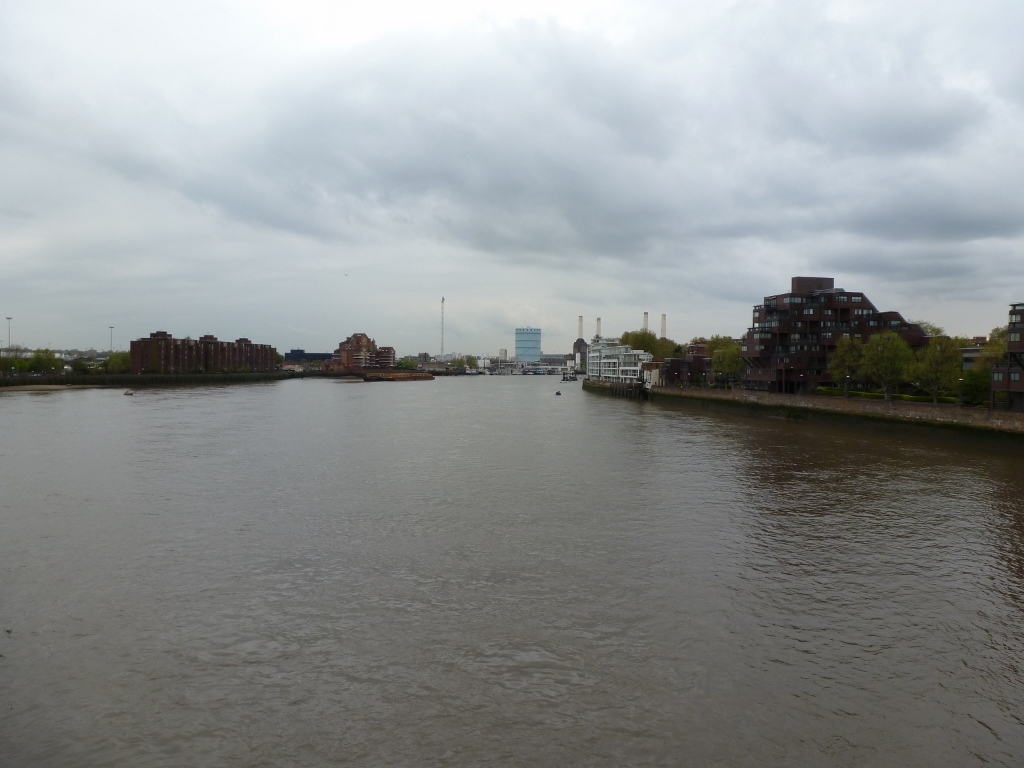
Upriver from the bridge, the smoke stacks of the Battersea Power Station (see June 18 post) are still in view.  In the other direction, classic, old London architecture appears, after the views from the bridges upriver were dominated by modern architecture (when I say modern architecture I include anything from the Modern Movement beginning roughly in the 1920s through contemporary architecture).


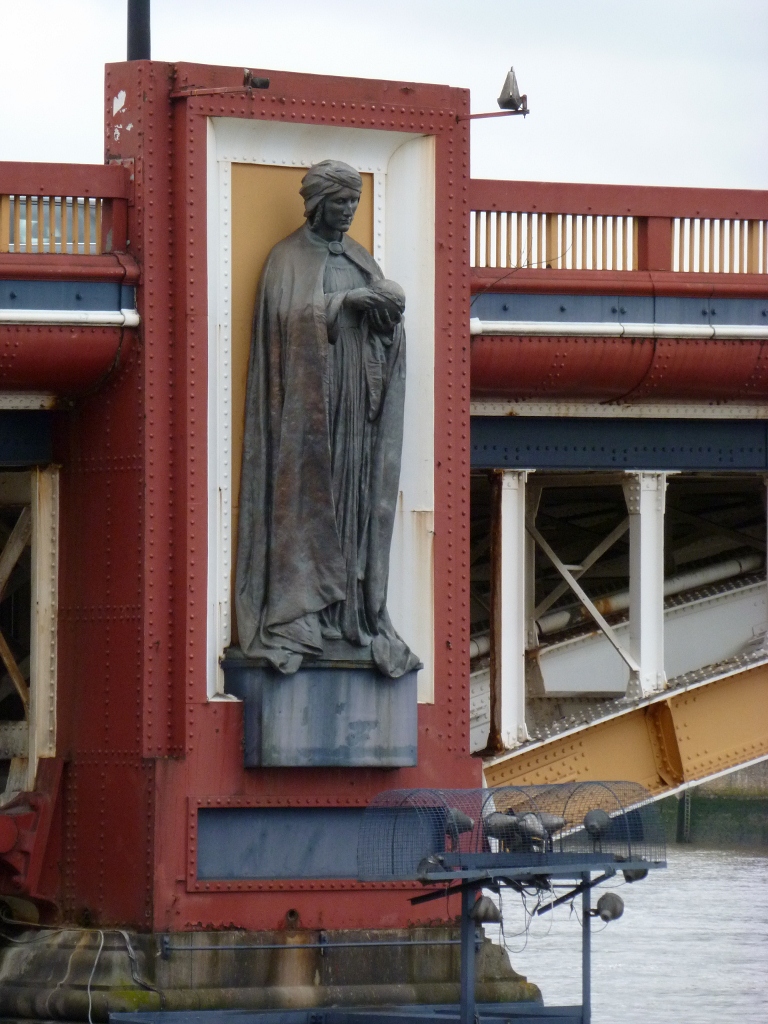
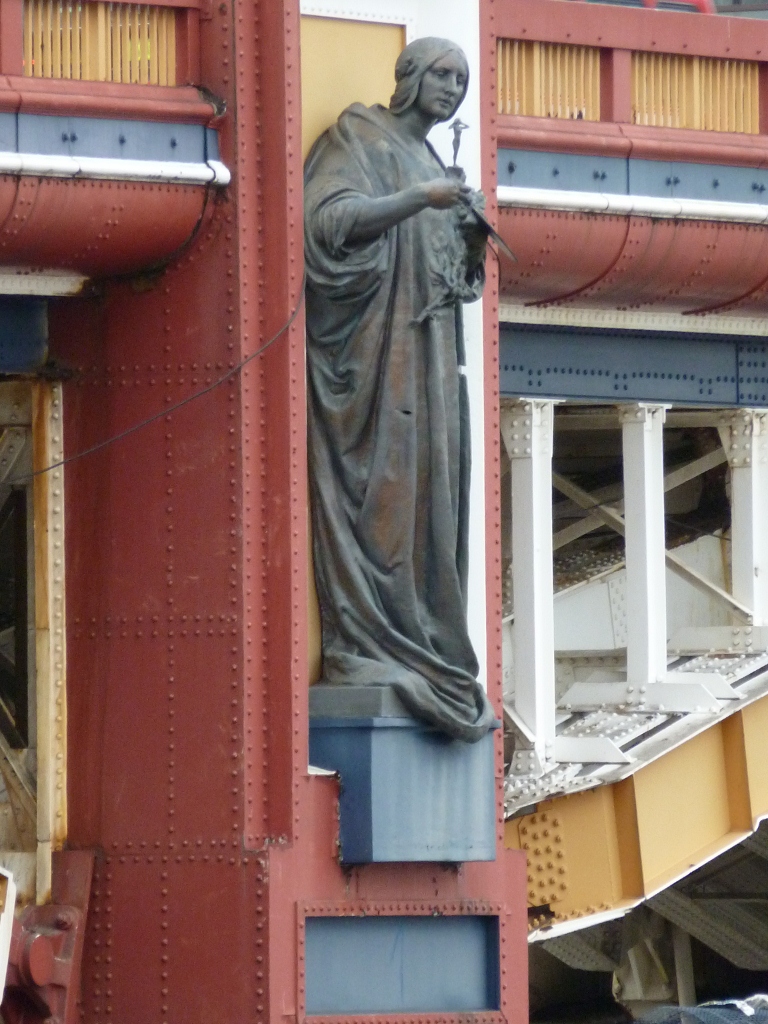
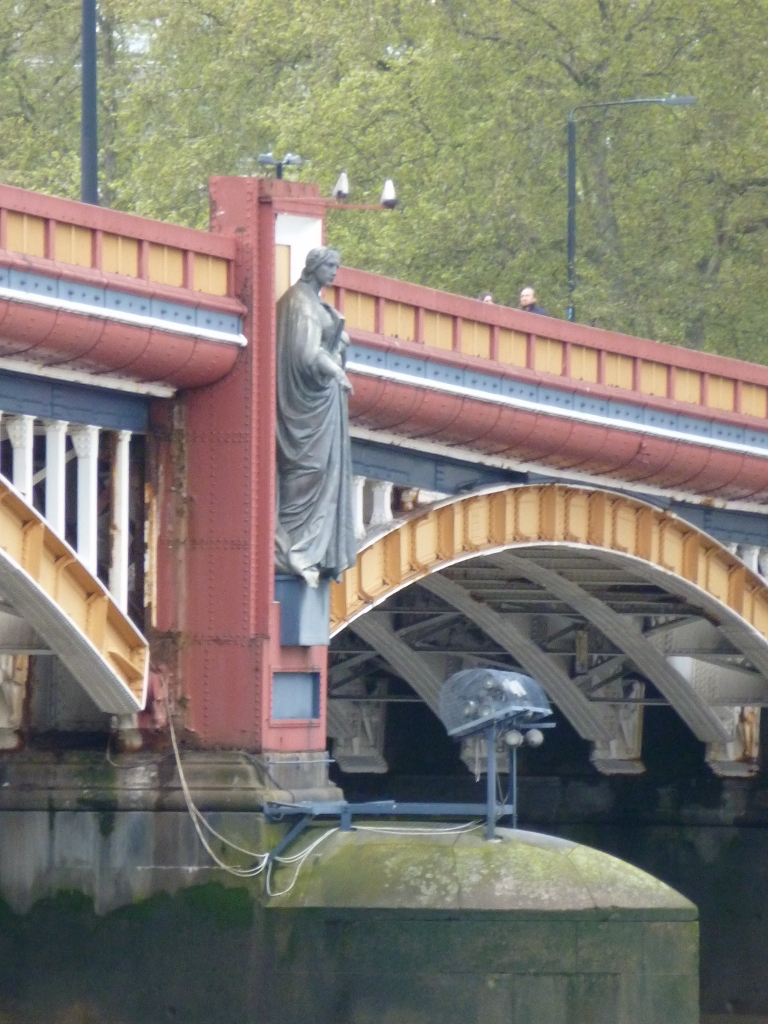
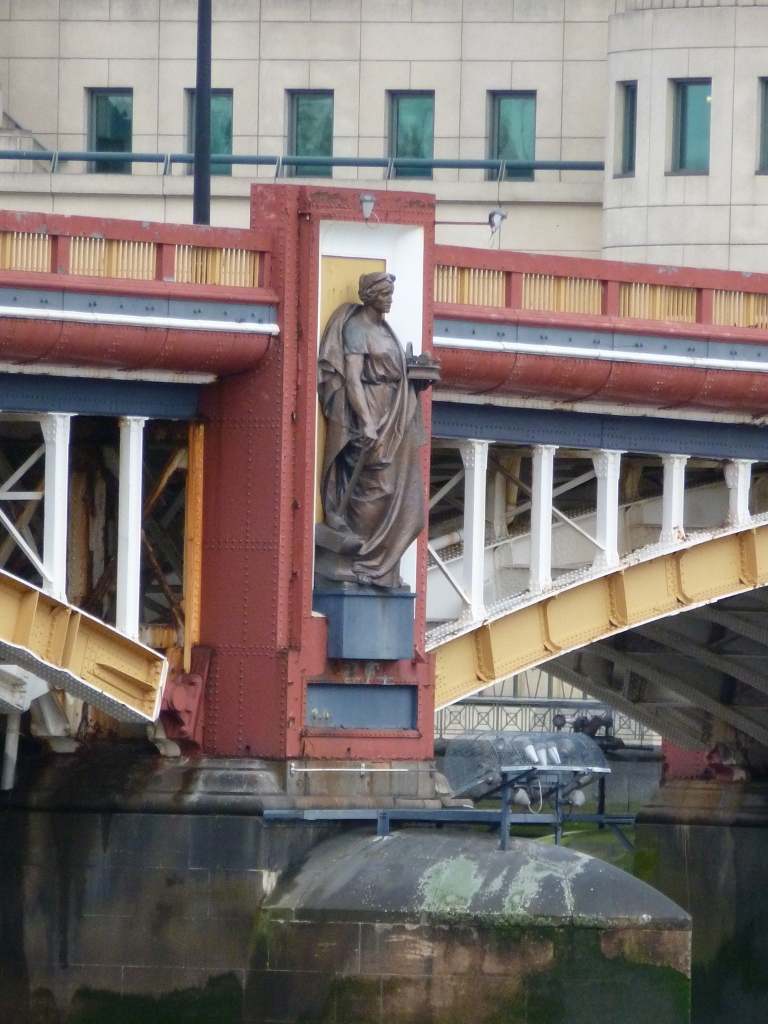
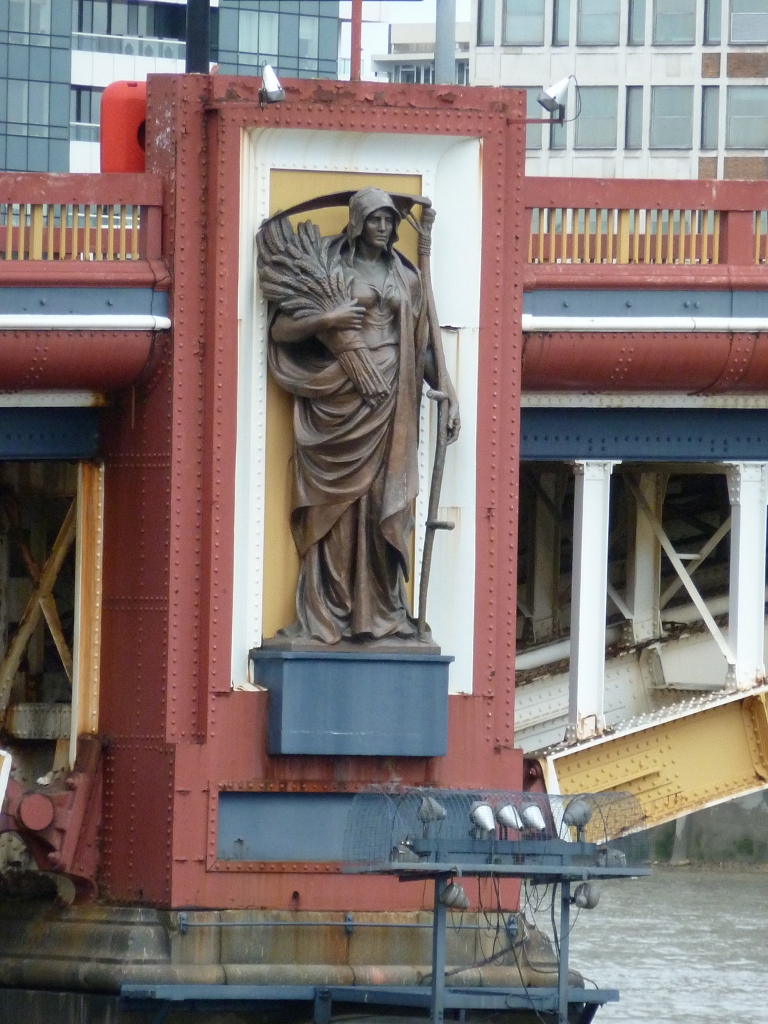
More interesting than the color scheme of this bridge was the sculpture.  Vauxhall Bridge has five arches; there are four statues on each side of the bridge, one in-between each arch.  Each statue obviously represented what I guessed to be some form of art or industry.  The one holding the model of St. Paul’s Cathedral and the one with the scythe were easy to identify as Architecture and Agriculture respectively.  I could not immediately determine the symbolism of several of the others including the one holding the urn.  Fortunately, we have the internet, which has given me the official representation for each statue.  In order they are: Government, Education, Fine Art, Science/Astronomy, Agriculture, Architecture, Engineering, and Pottery.


For more information about Vauxhall Bridge including pictures and quotes about the previous bridge on this site, I found this website interesting.

Chelsea Bridge, London


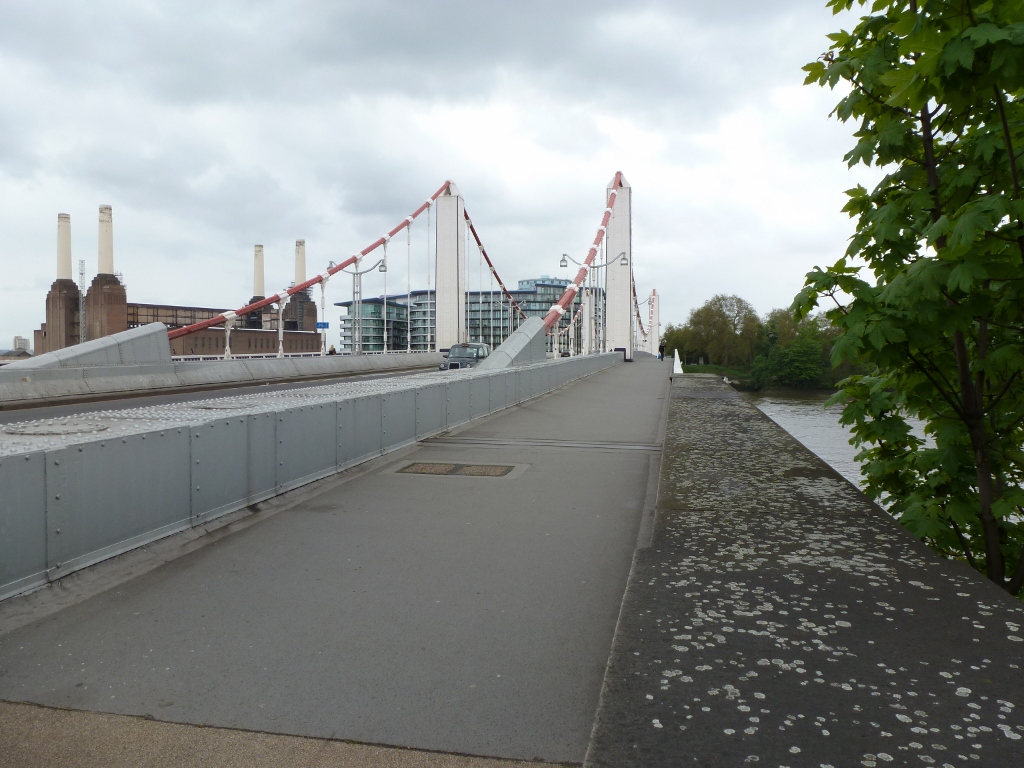
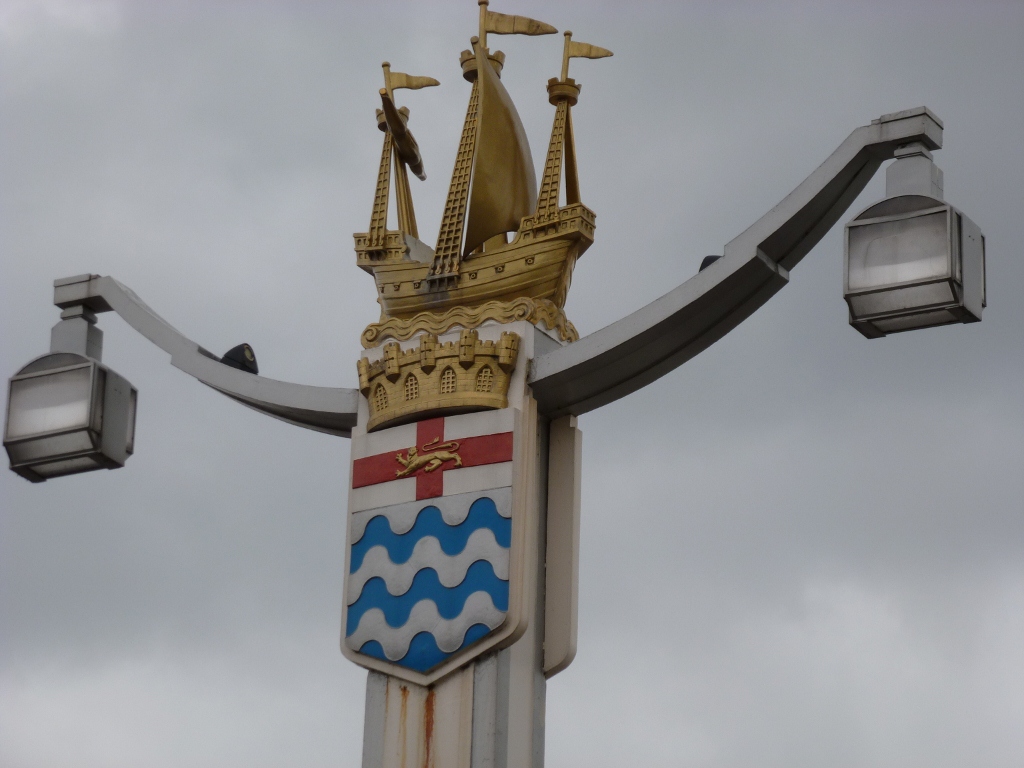
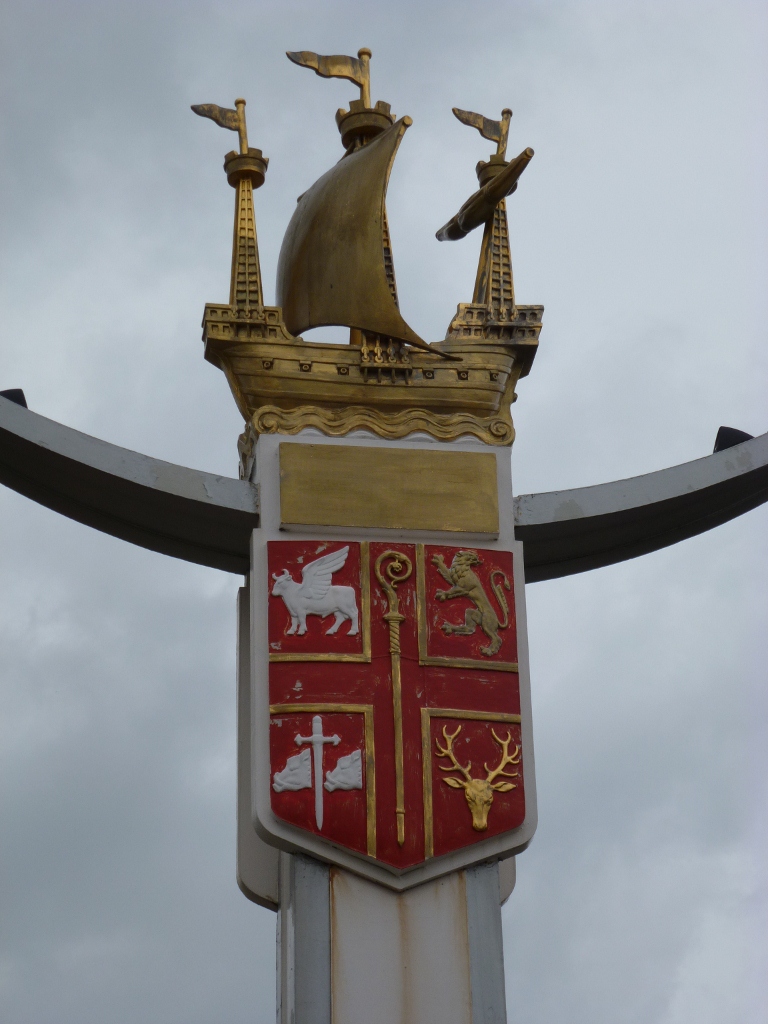
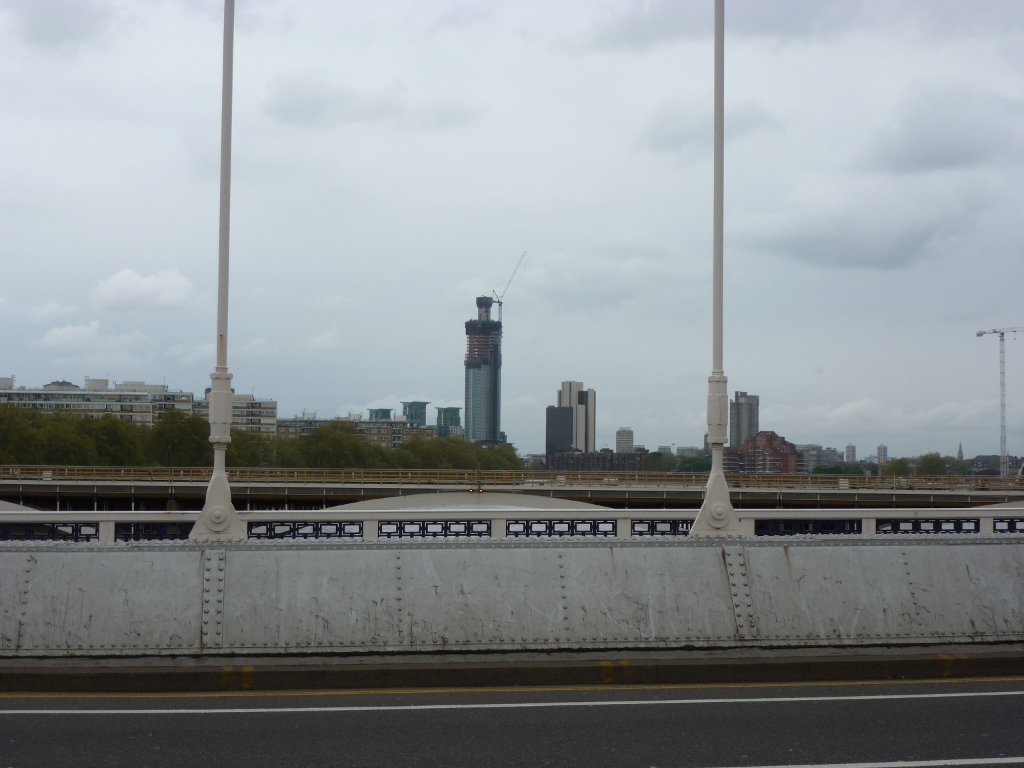
The part I most enjoyed about the Chelsea Bridge was the four golden ships, two at each end of the bridge.  I only took two pictures of these ships.  I originally was only going to take one as I assumed that they were all different, but I took a second when I noticed the coat of arms below the ships were different on each side.  The first one is the coat of arms of London and the other one is the coat of arms of one or some of the boroughs.  Like the Albert Bridge, the 19th century Chelsea Bridge had structural issues.  Unlike the Albert Bridge, the Chelsea Bridge was demolished and rebuilt in the 1930s.  The red and white color scheme, while not as striking as the Albert Bridge’s pink, green, and blue scheme, does also catch the eye.  I suppose this may serve a similar purpose of making the bridge visible under challenging visual conditions.

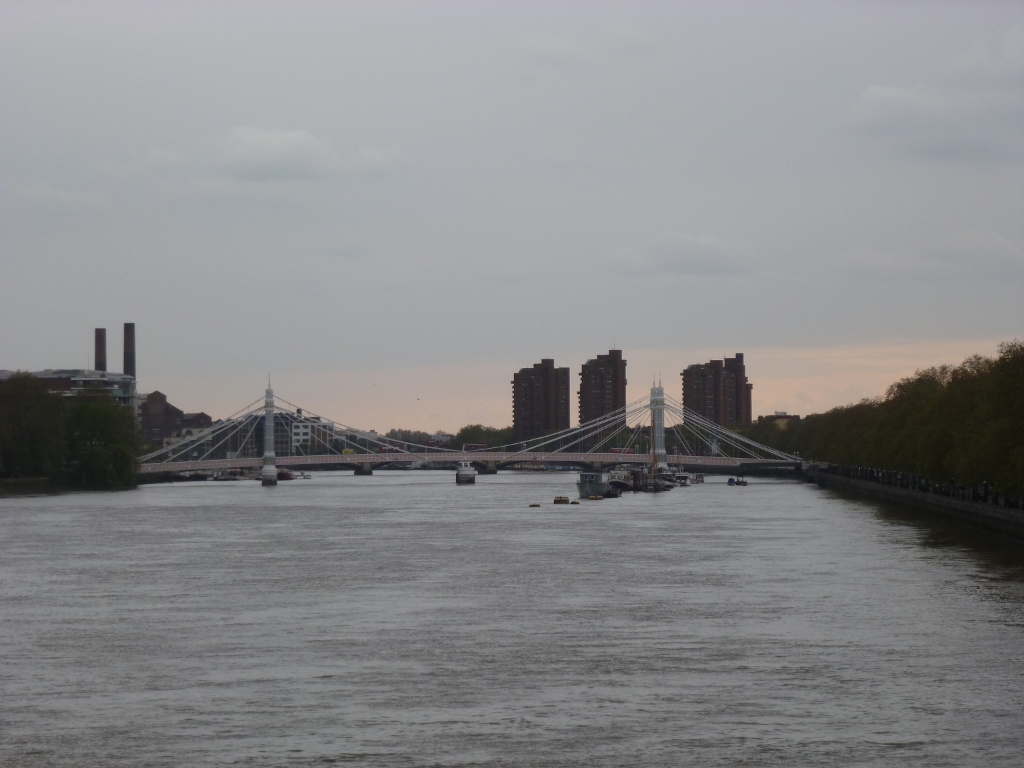
Similar to the Albert Bridge, the view from the Chelsea Bridge encompassed mostly modern buildings among the trees lining the river embankments.  The Battersea Power Station, now vacant, was one of the oldest buildings visible from the bridge.  (Watch for an up-coming post with more on the power station and Sherlock Holmes.)


An interesting tidbit I discovered while looking up the Chelsea Bridge online is that Billy Strayhorn composed a song entitled Chelsea Bridge.  Apparently the piece is misnamed as Strayhorn was inspired by the image of the Battersea Bridge, which he identified at the Chelsea Bridge.  While I am not familiar with Strayhorn’s work, I am intrigued by this connection as Strayhorn went to high school in Pittsburgh and started his career here.  A local theater, the Kelly-Strayhorn Theater, is named in his and Gene Kelly’s honor.  (Gene Kelly also went to high school and college in Pittsburgh.)

Albert Bridge

The Albert Bridge, opened 1874, was my favorite London bridge.  Who came up with the idea to paint a bridge pink?  The color scheme looks perfect for a nursery and really bizarre for a bridge particularly one named after Prince Albert.  According to Wikipedia, this color scheme is rather new, the bridge having been painted pink, green, and blue in 1991 to increase the visibility of the bridge in foggy and other low visibility conditions.  This is one of those incidents where the facts are disappointing–I had been imagining all sorts of reasons for the color scheme, including that these three colors were Prince Albert’s favorite or that these colors were chosen specially to symbolize aspects of Prince Albert’s personality or accomplishments.

As this sign indicates, the Albert Bridge is not the most structurally sound and the force of troops marching in step could be enough to bring the bridge down.  Despite the structural deficiency of the bridge, it is one of the only bridges across the Thames in London to be still the original structure (more or less).  It has been renovated and reinforced on multiple occasions, but never demolished and rebuilt.

It seems possible to create a convincing argument for how the Albert Bridge symbolizes Prince Albert.  The bridge is unstable and the colors are not traditionally considered masculine.  Prince Albert was a man who struggled as the husband of Queen Victoria.  This marriage suffered from tensions between the idea that the man was the “head” and “ruler” of the family and the fact that in this case the woman was the head and ruler of an entire empire, so how could her husband be the head and ruler of her? (Particularly since he was German and the ruling British classes were very suspicious of and against any influence from the Germans.  “Victoria and Albert” (2001) is a good film about the love and tension in this marriage.)  Prince Albert had to deal with feeling less manly and powerful, at times, than he wished, while the bridge named after him is less strong and serious-looking than most other bridges.

Most of the buildings visible from the Albert Bridge were of new or modern construction and appeared to be used mostly for residential or office use.  One industrial site was visible to the west past the Battersea Bridge in the form of a factory near Chelsea Harbor.  There were also many boats parked in the Thames near the Albert Bridge; I don’t know if they were houseboats, fishing boats, or something else.


Battersea Bridge

The Battersea Bridge was the first bridge in London that I walked across.  The bridge, built in 1890, connects the London neighborhoods of Kensington & Chelsea (north of the river) and Wandsworth (south of the river).  The north side had traditional, classic architecture, but the south side had some newer developments.  From the bridge looking west, I saw a bridge for the tube and several modern developments.  To the east, I saw the Albert Bridge, the Battersea Power Station, and the Shard tower then under construction.

I enjoyed this bridge.  I appreciated its simple, yet stately design.  The traffic was low, though this might have had more to do with the time of day (Sunday afternoon) than any other factor.  There were two sights near the bridge that particularly caught my attention.  The first was a statue of Sir Thomas More on the north side, with gilded face and hands, a style not familiar to me.  The second was a seemingly random statue of a flying goose just off the south end of the bridge.

The name of Battersea intrigued me, so I did a Google search to try and find the origin of the name.  The result was that there is no known origin.  The possibilities included an Anglo-Saxon term meaning Badric’s Island, battles that were fought in the river at low tide when the river was fordable, and an evolution of spellings from a term meaning St Peter’s water or river.

London Bridges

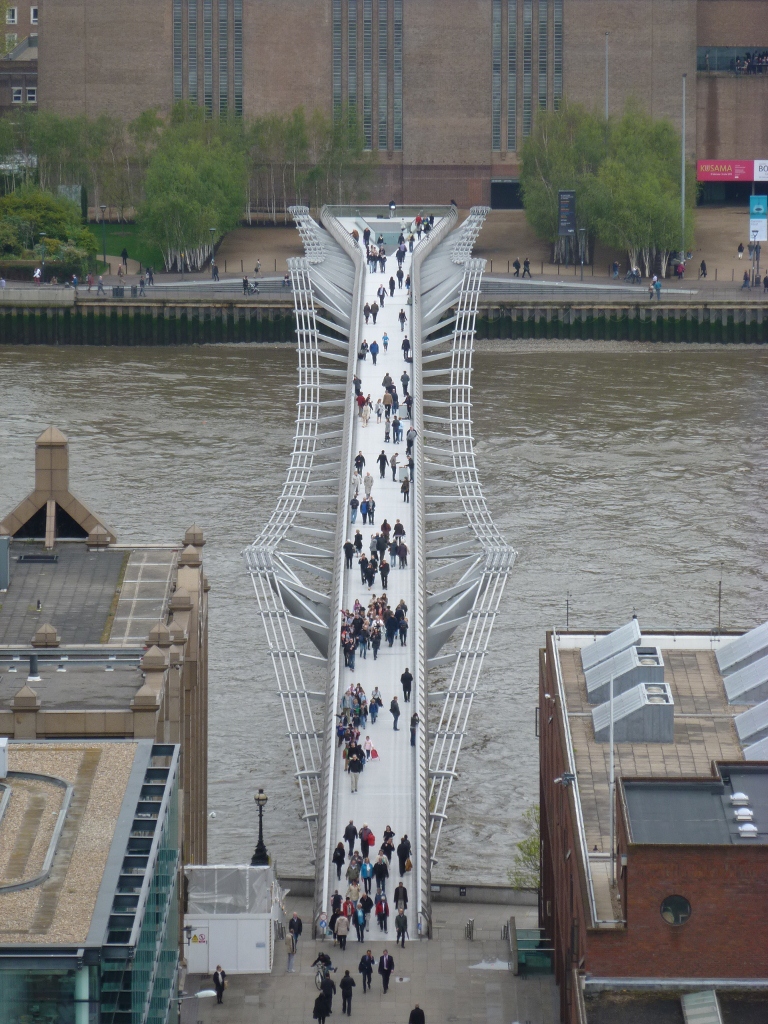
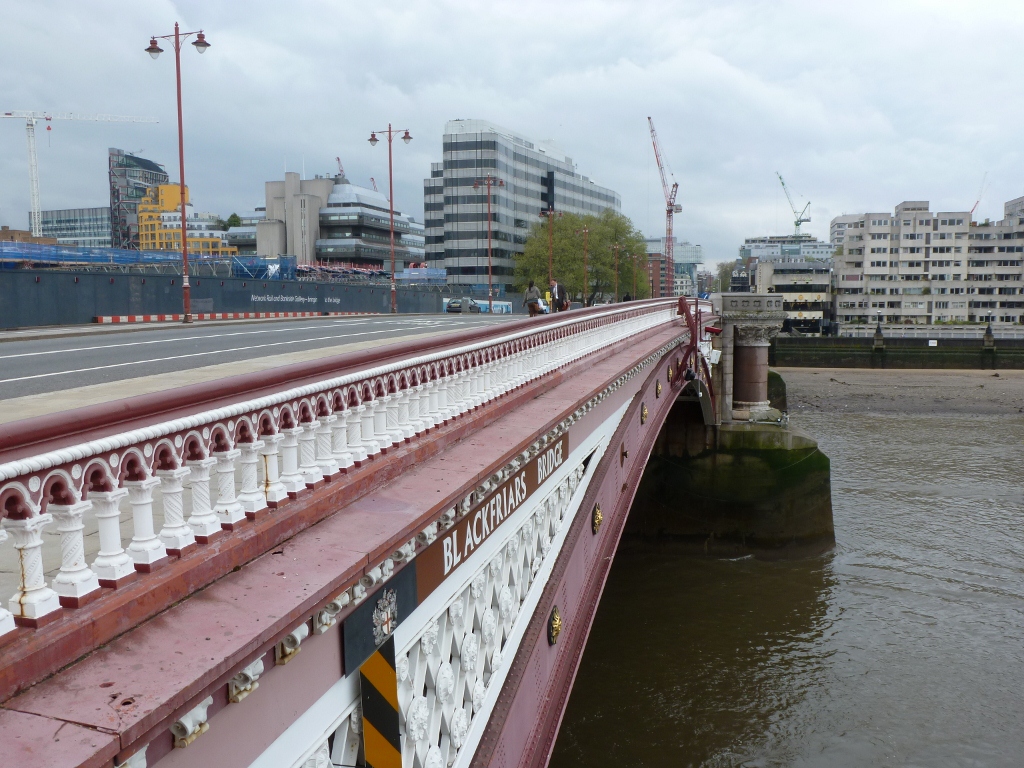
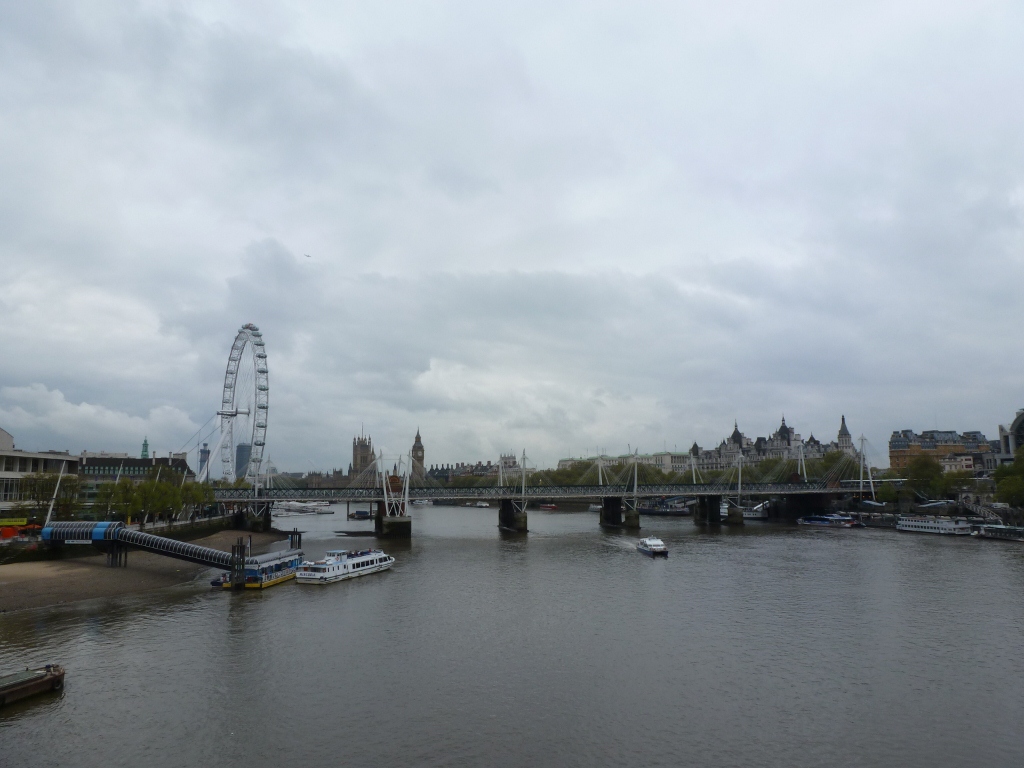
When I arrived in London this spring and saw the bridges over the river Thames, I decided I had to walk them all as I have the goal of walking all the bridges in Pittsburgh and this was my one opportunity for doing the same in London.  I did succeed in walking all thirteen of the pedestrian friendly bridges on my map of London in the few days I was there.  I believe there may be two more bridges to the west which I should have crossed in order to be able to say I walked all the Thames bridges in Inner London, but due to the bend in the river and the limitations of my map I did not know of their existence until coming home.  While walking the bridges I got a wide variety of views of London, some of which I would have missed otherwise, aided by London’s excellent river walkways.  Over the next few weeks, look for posts describing my experiences and observations of the thirteen Thames bridges: Battersea Bridge, Albert Bridge, Chelsea Bridge, Vauxhall Bridge, Lambeth Bridge, Westminster Bridge, Jubilee Bridge, Waterloo Bridge, Blackfriars Bridge, Millennium Bridge, Southwark Bridge, London Bridge, and Tower Bridge.