Istanbul Bridges

I decided it was time to add some variety to my bridges post.  Last year I spent two weeks in Istanbul.  While I was not as absorbed in my bridges quest at that time, I found that thinking about the bridges in Pittsburgh and London caused me to reflect on the bridges in Istanbul.  Considering how much water there is in Istanbul, there are very few bridges.  I can only recall seeing three: the Galata Bridge, Ataturk Bridge, and the Bosphorus Bridge.  (Apparently my memory is a little rusty as I just looked up a map of Istanbul which shows there were four bridges that I would have seen, this obviously reflects the fact that I was not in my bridges phase at that time.)  Of these four bridges, I only crossed the Galata Bridge, but I walked under the Bosphorus Bridge and took some pictures of it.

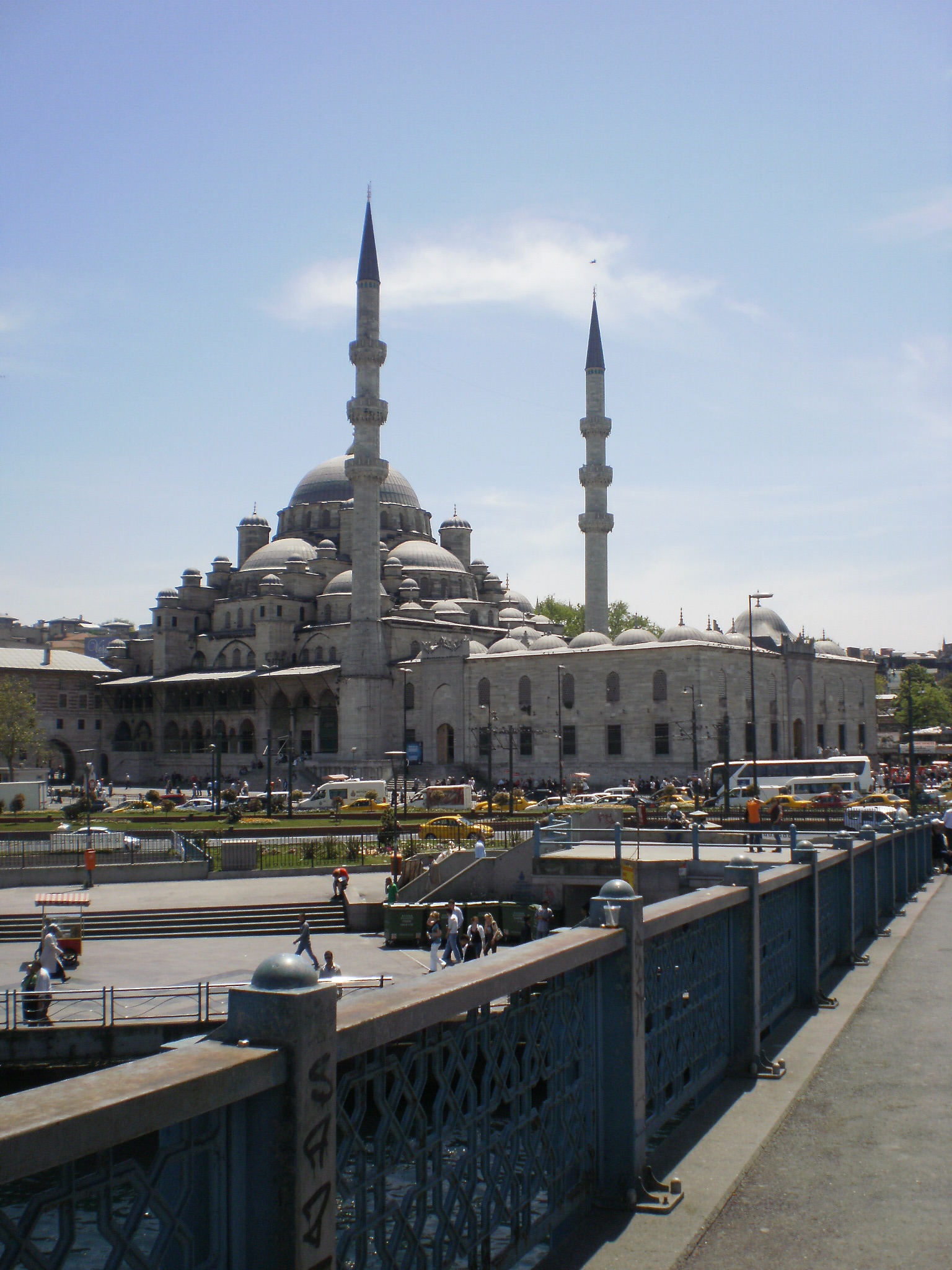
The Galata and Bosphorus bridges are very different in age and use.  There has been a Galata Bridge since the middle of the 19th century and a bridge over the Golden Horn (the body of water the Galata Bridge spans) since at least the 6th century.  The Galata Bridge has many uses.  There are wide sidewalks that accommodate pedestrians, three lanes in each direction for cars, and tracks down the middle of the bridge for the trams.  While I worked very hard not to get any of them in the picture above, the bridge is usually lined with fisherman and street vendors sell freshly caught and cooked fish.  Below the street deck are numerous restaurants.  One day, we had fish sandwiches for lunch at one of these, which were surprisingly good (I’m not much of a fish fan).  The line of one of the fisherman on the street deck above can be seen in my picture from the restaurant.  The Galata Bridge not only provides access between two points, but also provides people access to their livelihoods and to decent meals.  This shows that bridges do not have to be just about funneling traffic from one place to another; they can be a lively and interactive space in the city.


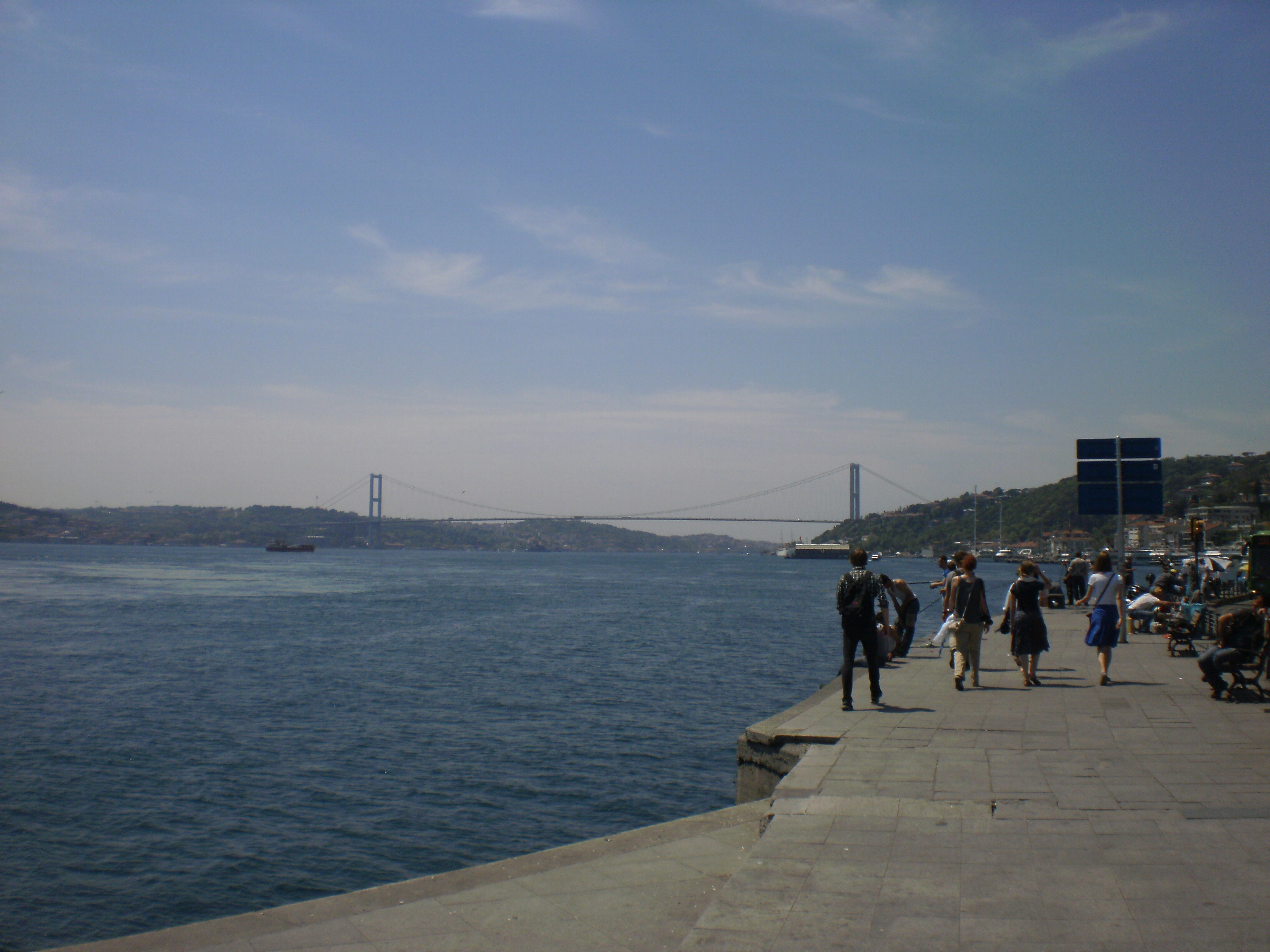
On the other hand, the Bosphorus Bridge, built in the 1970s as the first bridge to span the Bosphorus strait, is purely a funnel (as far as I observed).  It looks like it could be in New York or almost any other US city.  The purpose of the Bosphorus Bridge is like that of most of Pittsburgh’s river bridges–to provide vehicular access across a body of water.
      

Vauxhall Bridge

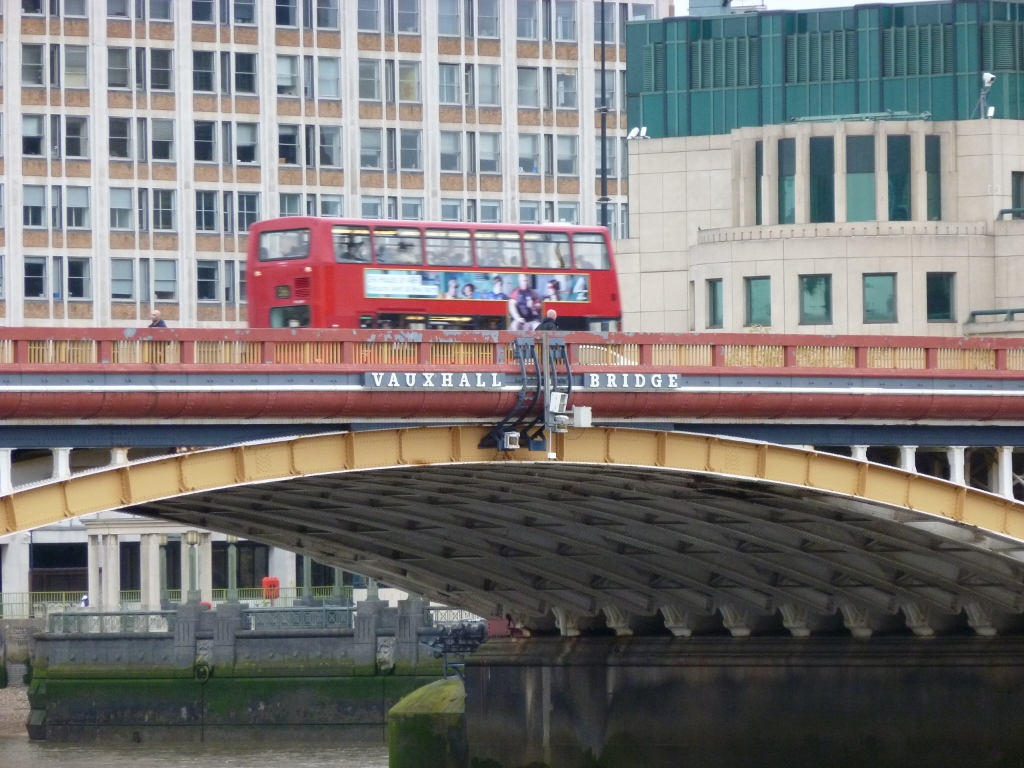
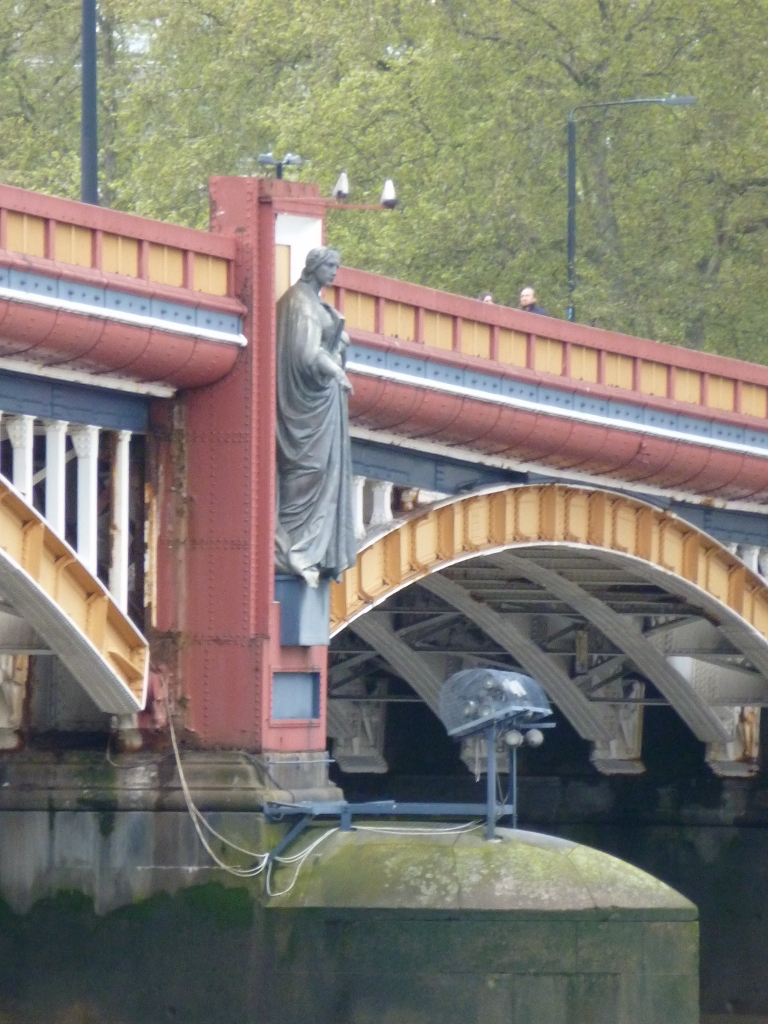
I must say that London has the most interesting and varied color schemes for its bridges of any city I have yet visited.  In Pittsburgh, for instance, the bridges that have color use only one (and that tends to be yellow).  All the examples I can think of for bridges in other US cities follow a similar color design as Pittsburgh, though not in yellow.  On the other hand, London’s Vauxhall Bridge presents yet another tri-color design scheme different from the three bridges I’ve already posted about and from the nine more to come.

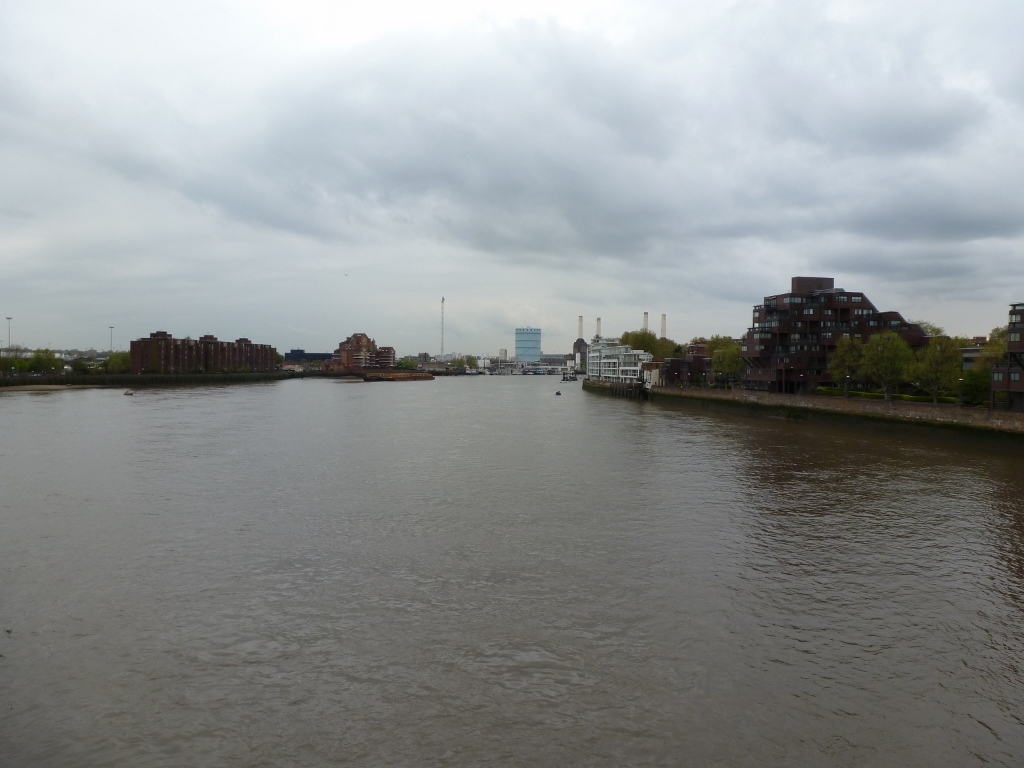
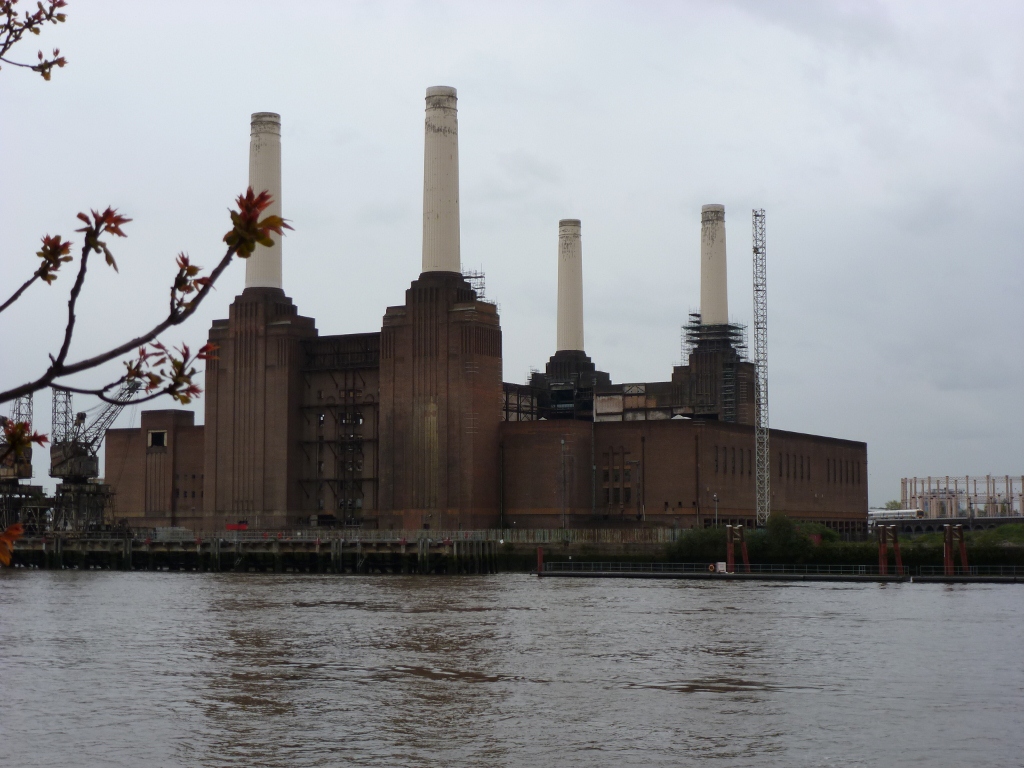
Upriver from the bridge, the smoke stacks of the Battersea Power Station (see June 18 post) are still in view.  In the other direction, classic, old London architecture appears, after the views from the bridges upriver were dominated by modern architecture (when I say modern architecture I include anything from the Modern Movement beginning roughly in the 1920s through contemporary architecture).


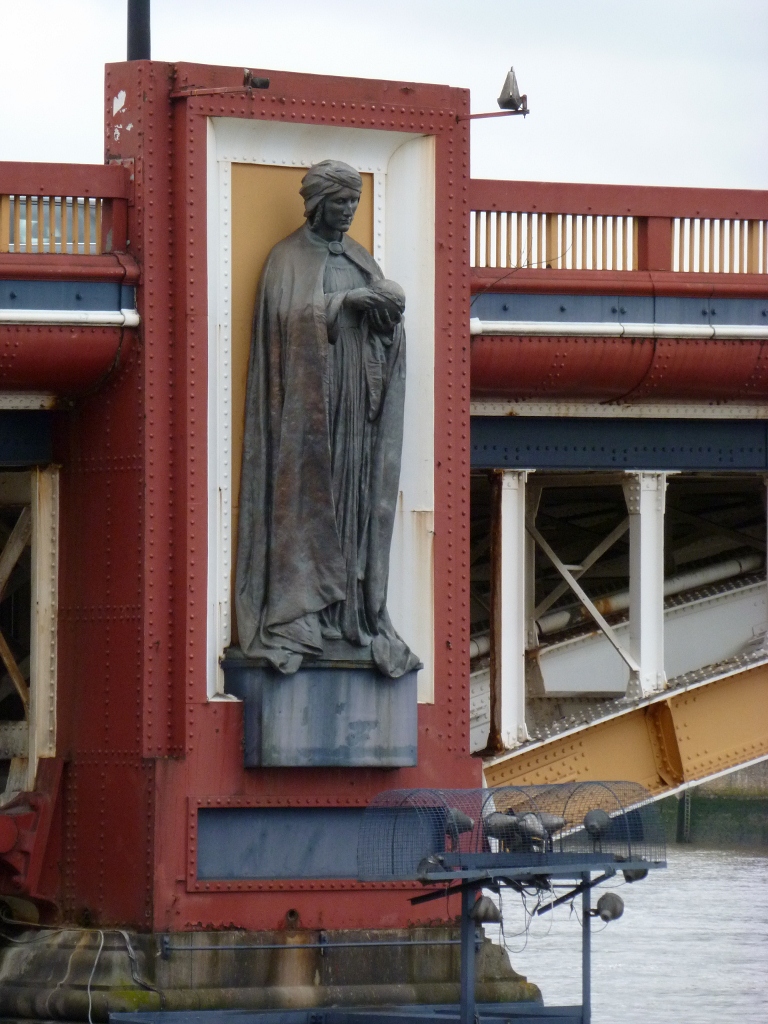
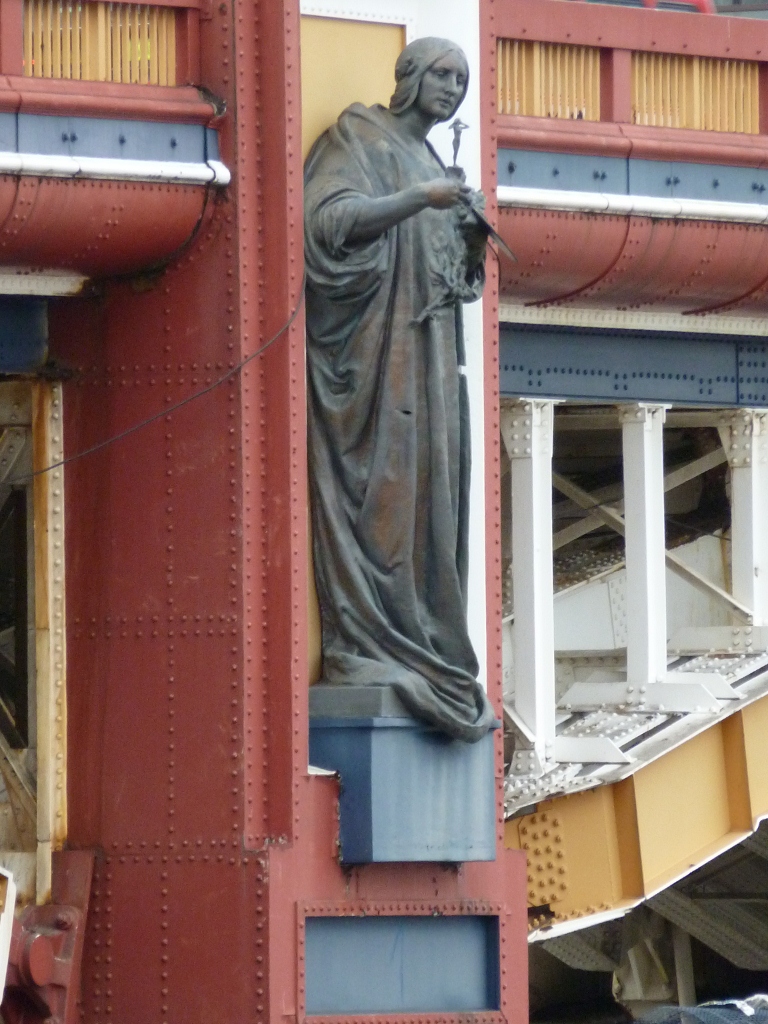
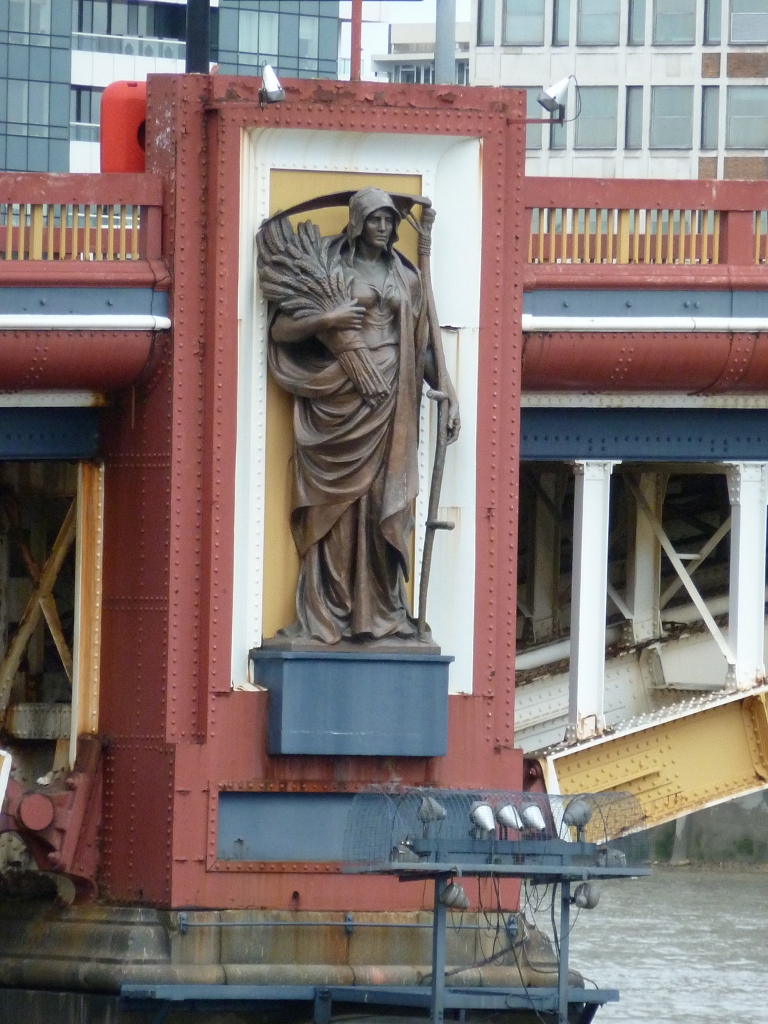
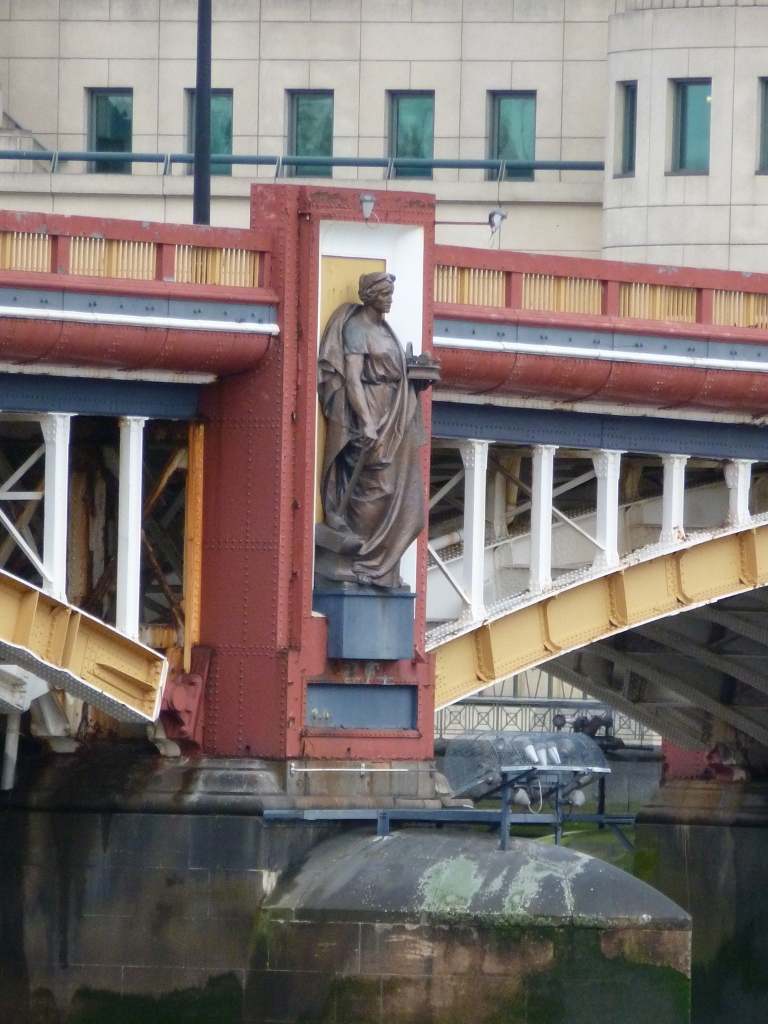
More interesting than the color scheme of this bridge was the sculpture.  Vauxhall Bridge has five arches; there are four statues on each side of the bridge, one in-between each arch.  Each statue obviously represented what I guessed to be some form of art or industry.  The one holding the model of St. Paul’s Cathedral and the one with the scythe were easy to identify as Architecture and Agriculture respectively.  I could not immediately determine the symbolism of several of the others including the one holding the urn.  Fortunately, we have the internet, which has given me the official representation for each statue.  In order they are: Government, Education, Fine Art, Science/Astronomy, Agriculture, Architecture, Engineering, and Pottery.


For more information about Vauxhall Bridge including pictures and quotes about the previous bridge on this site, I found this website interesting.

A power station and Sherlock Holmes

The Battersea Power Station intrigued me from the first glimpse I got of it.  The smoke stacks first entered my frame of view at the Battersea Bridge (see June 15th post).  I kept my eyes on the building as I got closer to it and was thrilled to get such a close view.  I couldn’t tell from the early views of it that it was on the river.  It was obviously empty as I could see sky through some of the windows.  However I did not know what it was.  While large, empty, industrial buildings intrigue me, I don’t know enough about them to identify their previous purposes.  This one used to be a power station built in the 1930s and closed over the 1970s and 1980s.  The National Heritage website indicates that building was to be adapted to new uses starting in 2005 and a BBC article said the building was to open as a new shopping and etc. complex in 2009.  I did not see any signs of any use of the building when I passed, so I’m assuming these projects have yet to come to fruition.

After returning home from my trip to the UK, I received Sherlock Season 2 on DVD.  One of the best parts of the season was in the first episode “A Scandal in Belgravia” where a sequence took place at the Battersea Power Station, which I instantly recognized, from having spent so much time staring at it while walking past it along the River Thames.  This has been one of my favorite parts about my trip to the UK, now when I watch my British TV or read my British literature I recognize and understand the locations more from having seen them in person.

I did have a false call with this over the weekend.  I was reading “For all the Tea in China” by Sarah Rose which talked about the Chelsea Physic Garden.  I immediately said, “I know that place, I remember walking past it.”  However, when looking at pictures of it online, I realized that I passed by the Physic Garden completely oblivious to its presence.  What I remembered walking past was the Chelsea Flower Show grounds, which were being set up for a big show, that the gardeners were a little concerned about due to the excess rain the UK experienced this spring.

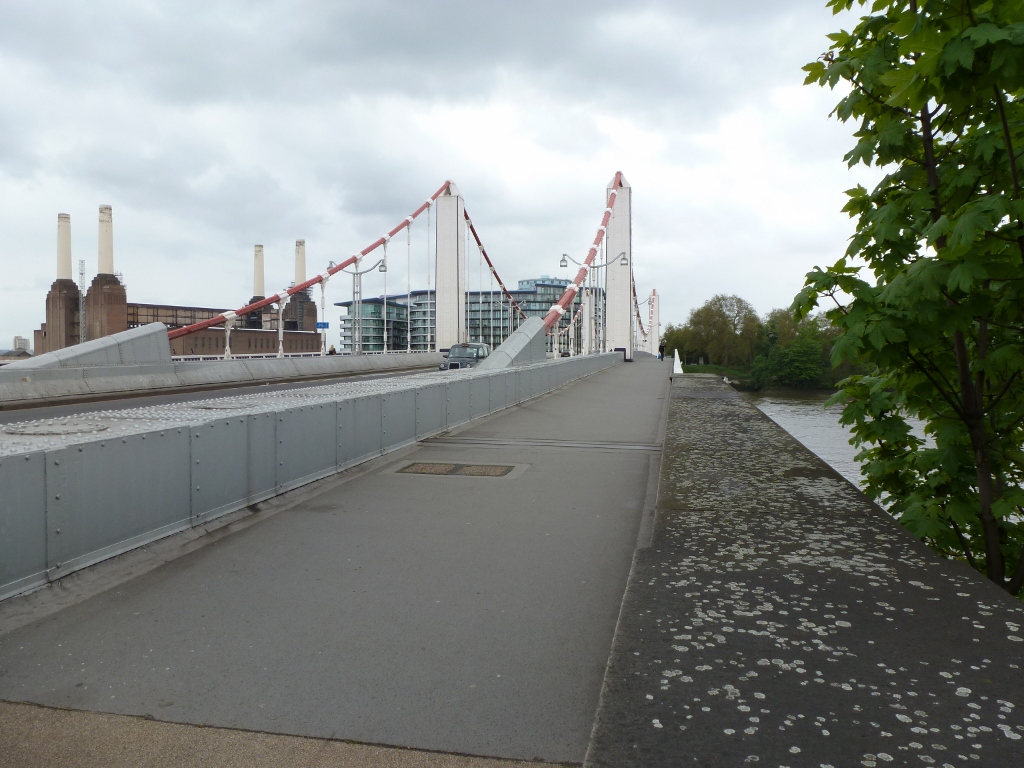
Chelsea Bridge, London


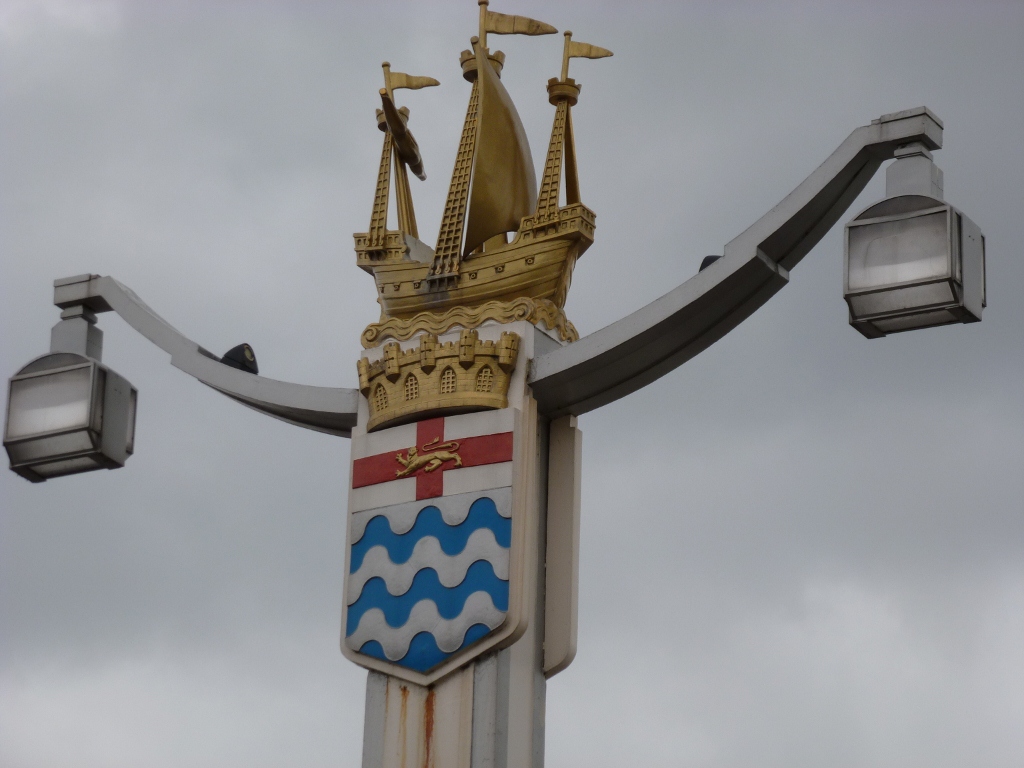
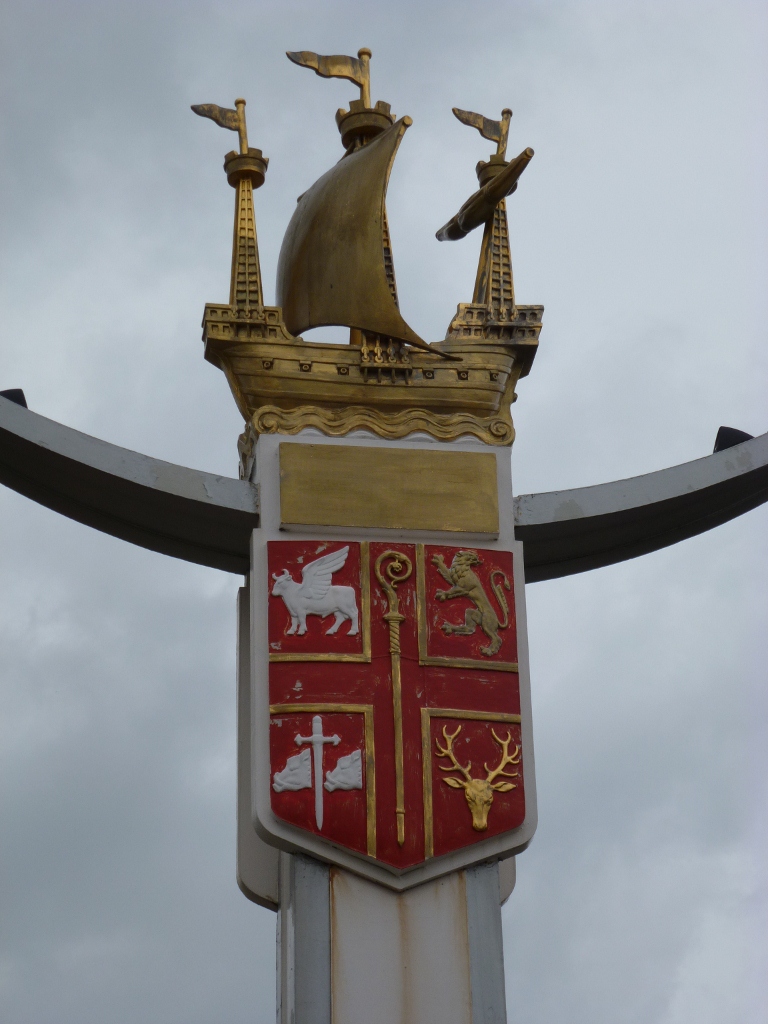
The part I most enjoyed about the Chelsea Bridge was the four golden ships, two at each end of the bridge.  I only took two pictures of these ships.  I originally was only going to take one as I assumed that they were all different, but I took a second when I noticed the coat of arms below the ships were different on each side.  The first one is the coat of arms of London and the other one is the coat of arms of one or some of the boroughs.  Like the Albert Bridge, the 19th century Chelsea Bridge had structural issues.  Unlike the Albert Bridge, the Chelsea Bridge was demolished and rebuilt in the 1930s.  The red and white color scheme, while not as striking as the Albert Bridge’s pink, green, and blue scheme, does also catch the eye.  I suppose this may serve a similar purpose of making the bridge visible under challenging visual conditions.
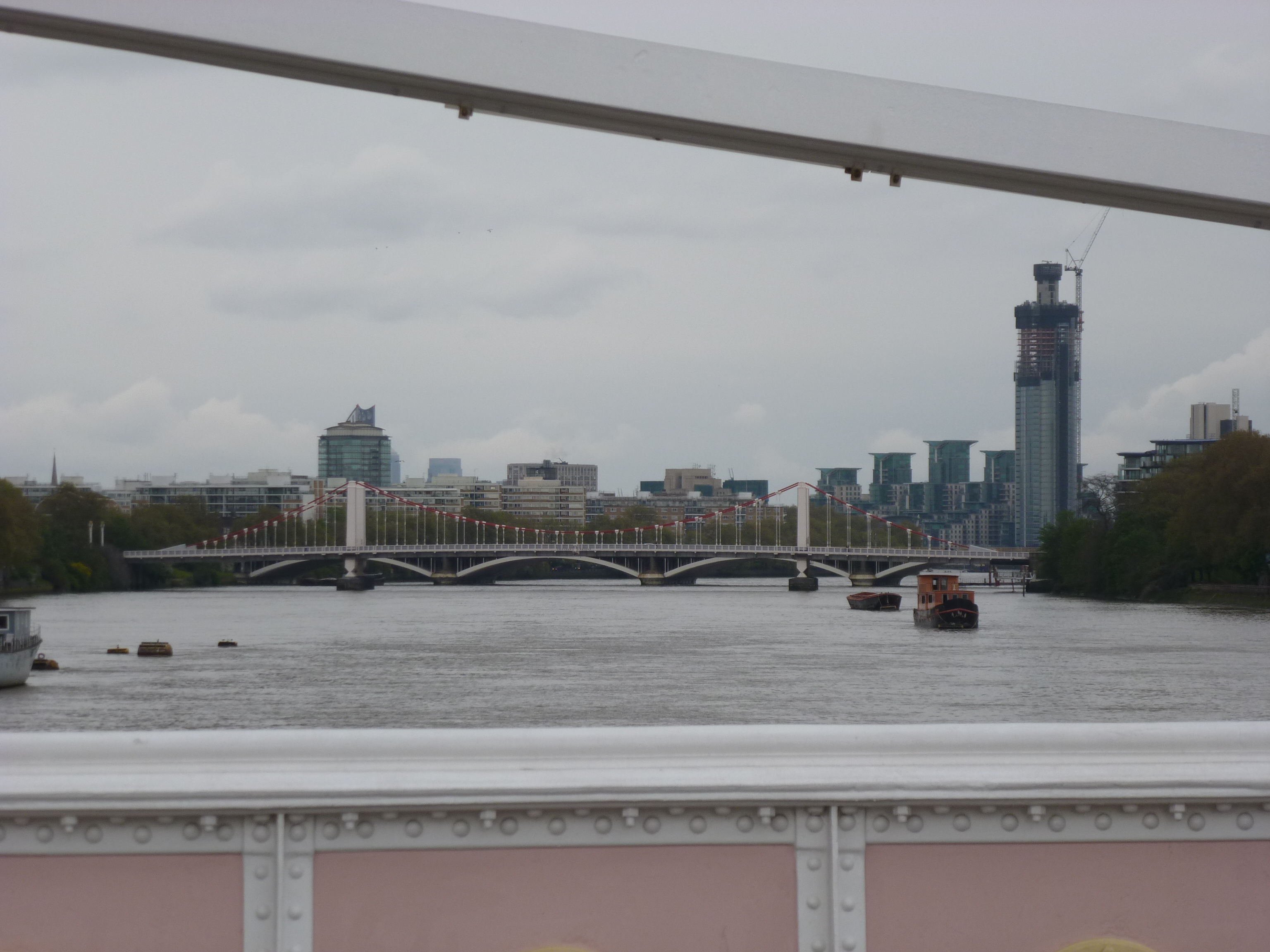
Similar to the Albert Bridge, the view from the Chelsea Bridge encompassed mostly modern buildings among the trees lining the river embankments.  The Battersea Power Station, now vacant, was one of the oldest buildings visible from the bridge.  (Watch for an up-coming post with more on the power station and Sherlock Holmes.)


An interesting tidbit I discovered while looking up the Chelsea Bridge online is that Billy Strayhorn composed a song entitled Chelsea Bridge.  Apparently the piece is misnamed as Strayhorn was inspired by the image of the Battersea Bridge, which he identified at the Chelsea Bridge.  While I am not familiar with Strayhorn’s work, I am intrigued by this connection as Strayhorn went to high school in Pittsburgh and started his career here.  A local theater, the Kelly-Strayhorn Theater, is named in his and Gene Kelly’s honor.  (Gene Kelly also went to high school and college in Pittsburgh.)

Albert Bridge

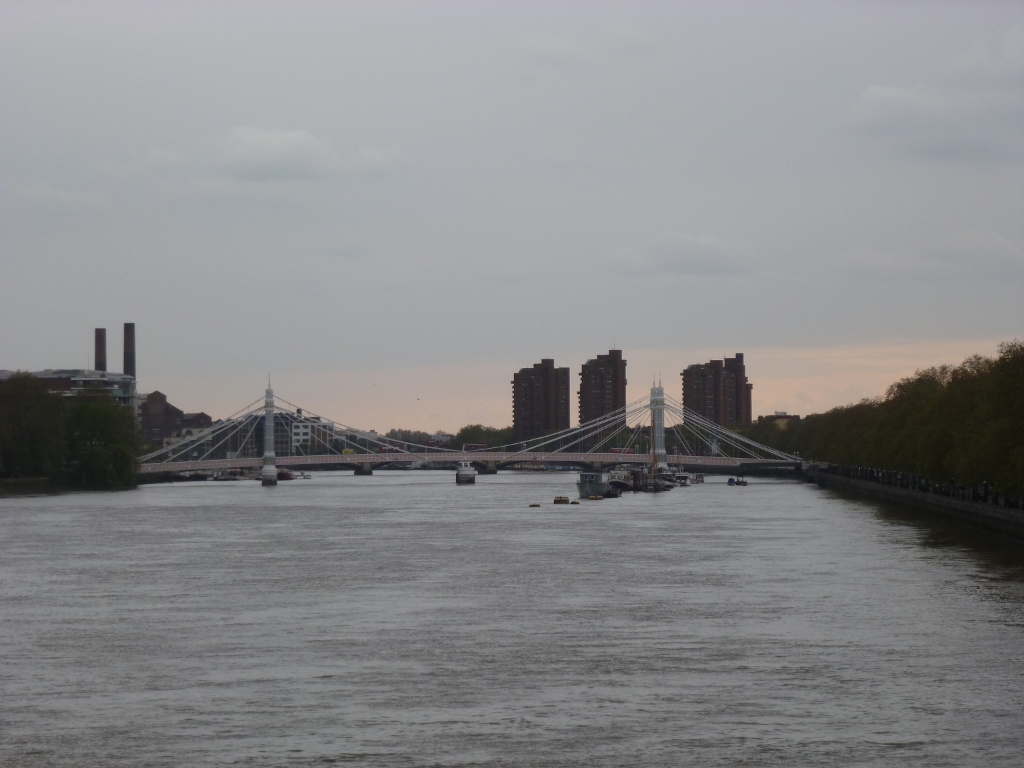
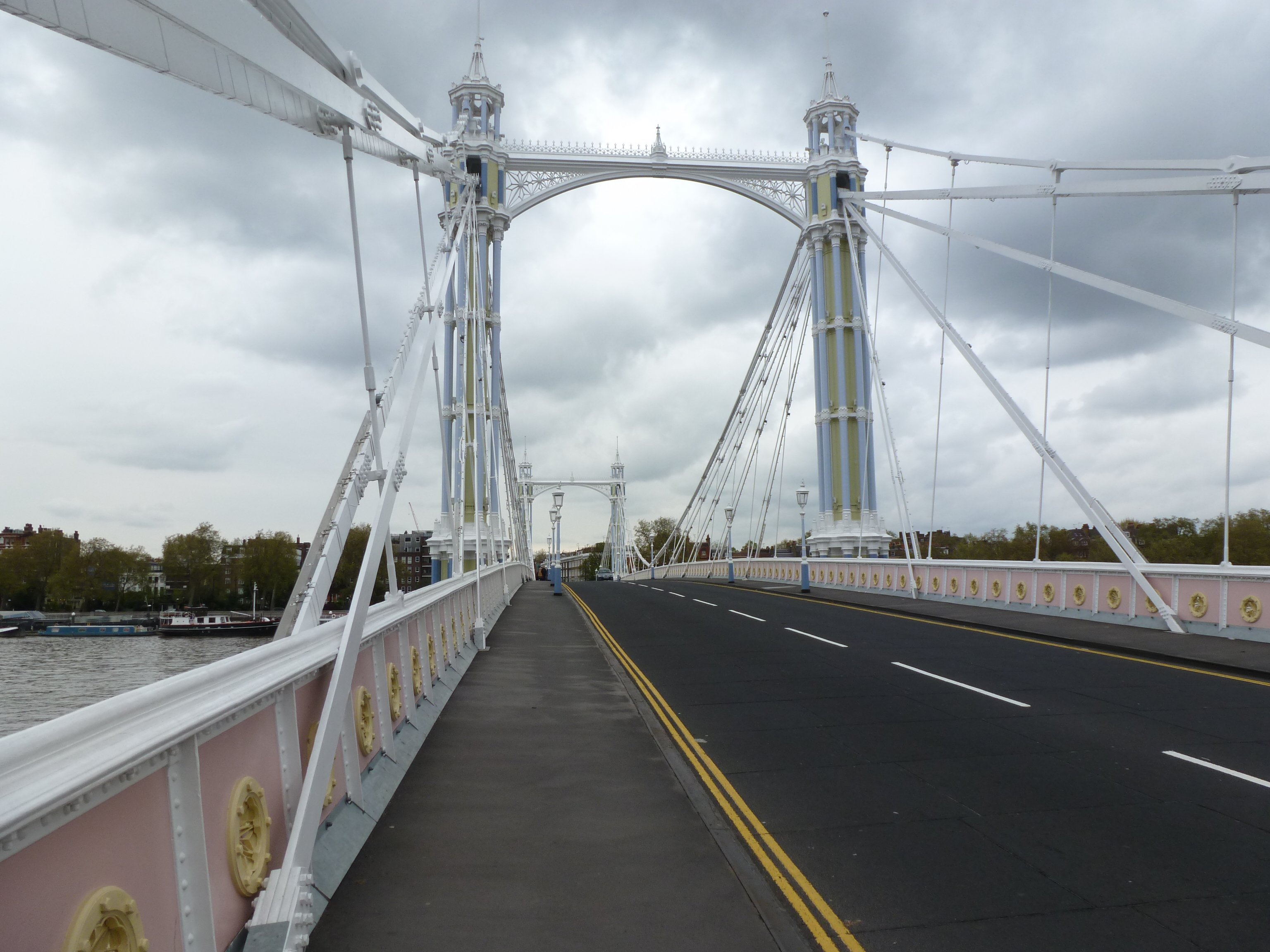
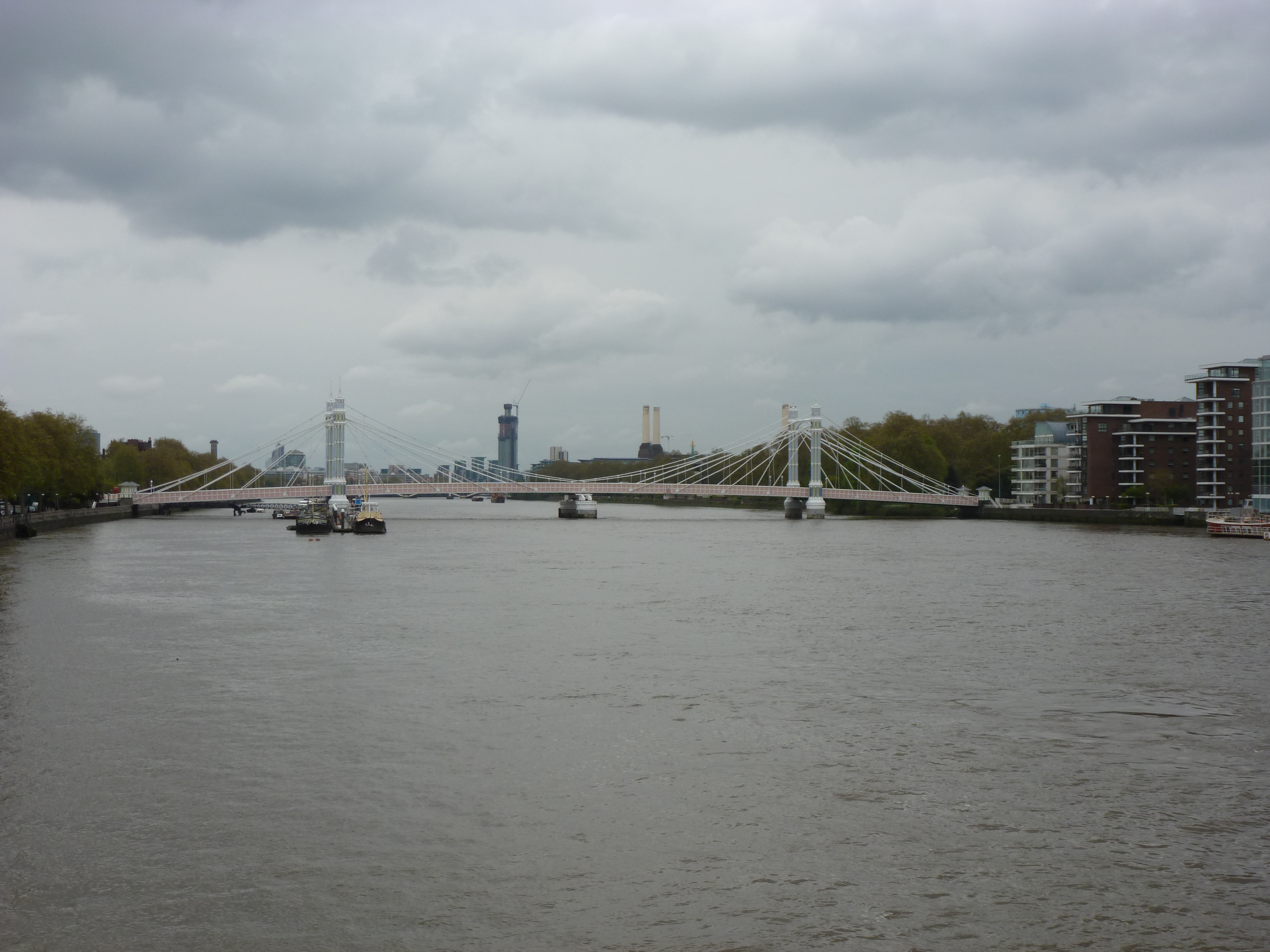
The Albert Bridge, opened 1874, was my favorite London bridge.  Who came up with the idea to paint a bridge pink?  The color scheme looks perfect for a nursery and really bizarre for a bridge particularly one named after Prince Albert.  According to Wikipedia, this color scheme is rather new, the bridge having been painted pink, green, and blue in 1991 to increase the visibility of the bridge in foggy and other low visibility conditions.  This is one of those incidents where the facts are disappointing–I had been imagining all sorts of reasons for the color scheme, including that these three colors were Prince Albert’s favorite or that these colors were chosen specially to symbolize aspects of Prince Albert’s personality or accomplishments.

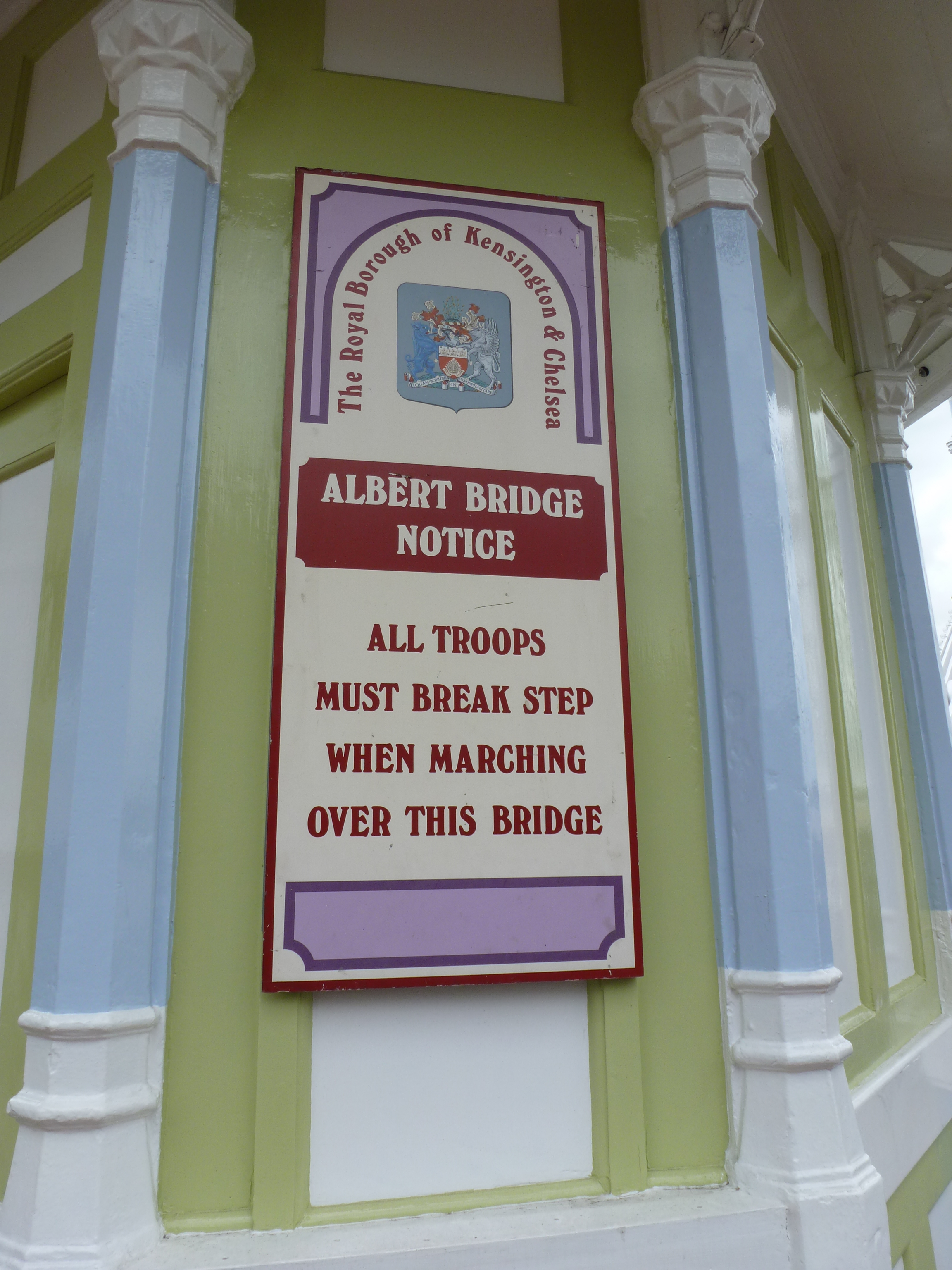
As this sign indicates, the Albert Bridge is not the most structurally sound and the force of troops marching in step could be enough to bring the bridge down.  Despite the structural deficiency of the bridge, it is one of the only bridges across the Thames in London to be still the original structure (more or less).  It has been renovated and reinforced on multiple occasions, but never demolished and rebuilt.

It seems possible to create a convincing argument for how the Albert Bridge symbolizes Prince Albert.  The bridge is unstable and the colors are not traditionally considered masculine.  Prince Albert was a man who struggled as the husband of Queen Victoria.  This marriage suffered from tensions between the idea that the man was the “head” and “ruler” of the family and the fact that in this case the woman was the head and ruler of an entire empire, so how could her husband be the head and ruler of her? (Particularly since he was German and the ruling British classes were very suspicious of and against any influence from the Germans.  “Victoria and Albert” (2001) is a good film about the love and tension in this marriage.)  Prince Albert had to deal with feeling less manly and powerful, at times, than he wished, while the bridge named after him is less strong and serious-looking than most other bridges.

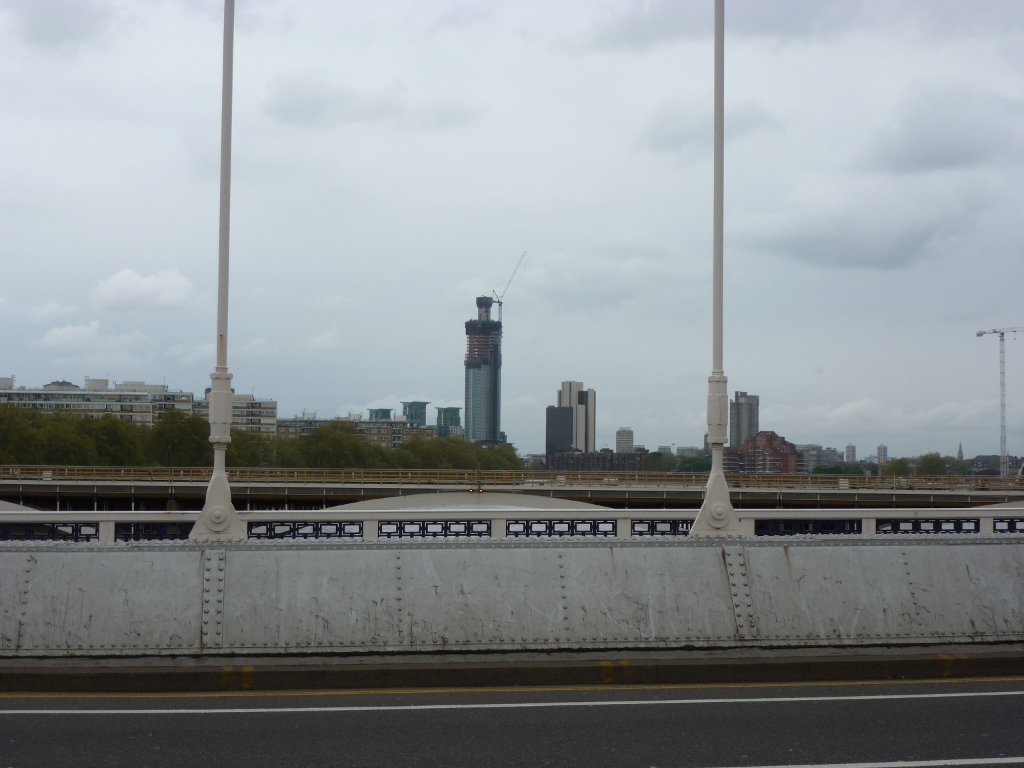
Most of the buildings visible from the Albert Bridge were of new or modern construction and appeared to be used mostly for residential or office use.  One industrial site was visible to the west past the Battersea Bridge in the form of a factory near Chelsea Harbor.  There were also many boats parked in the Thames near the Albert Bridge; I don’t know if they were houseboats, fishing boats, or something else.


Battersea Bridge

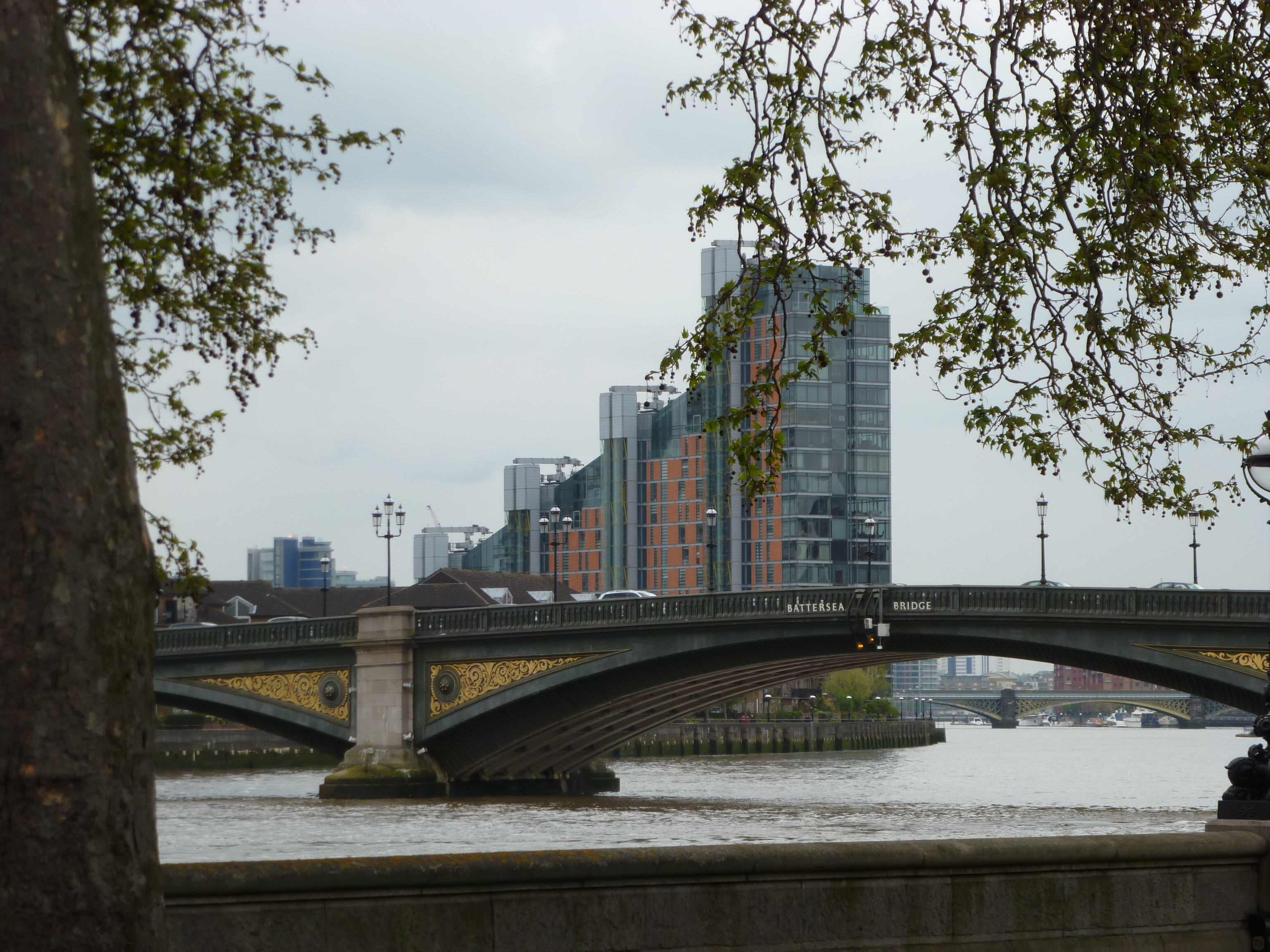
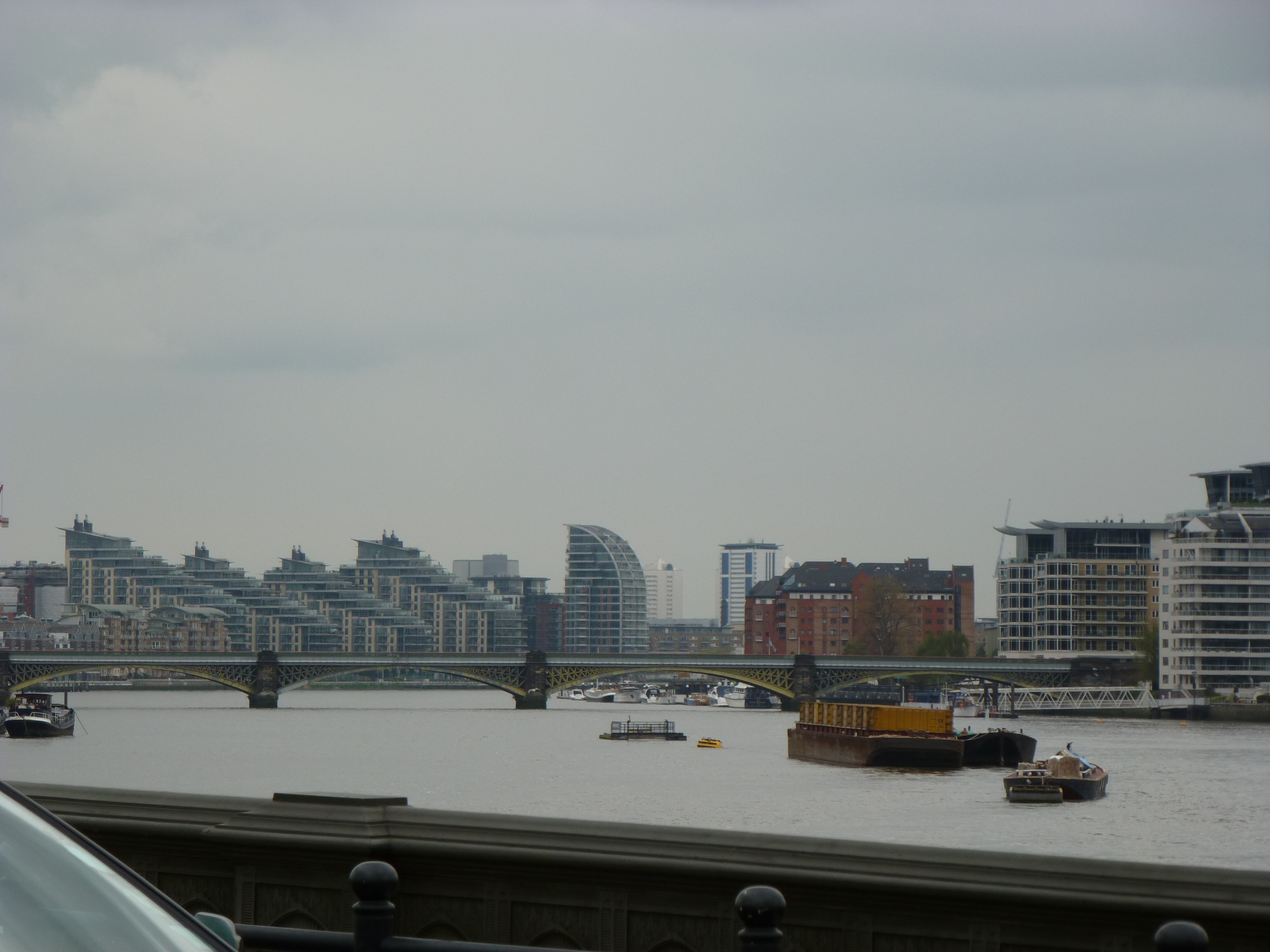
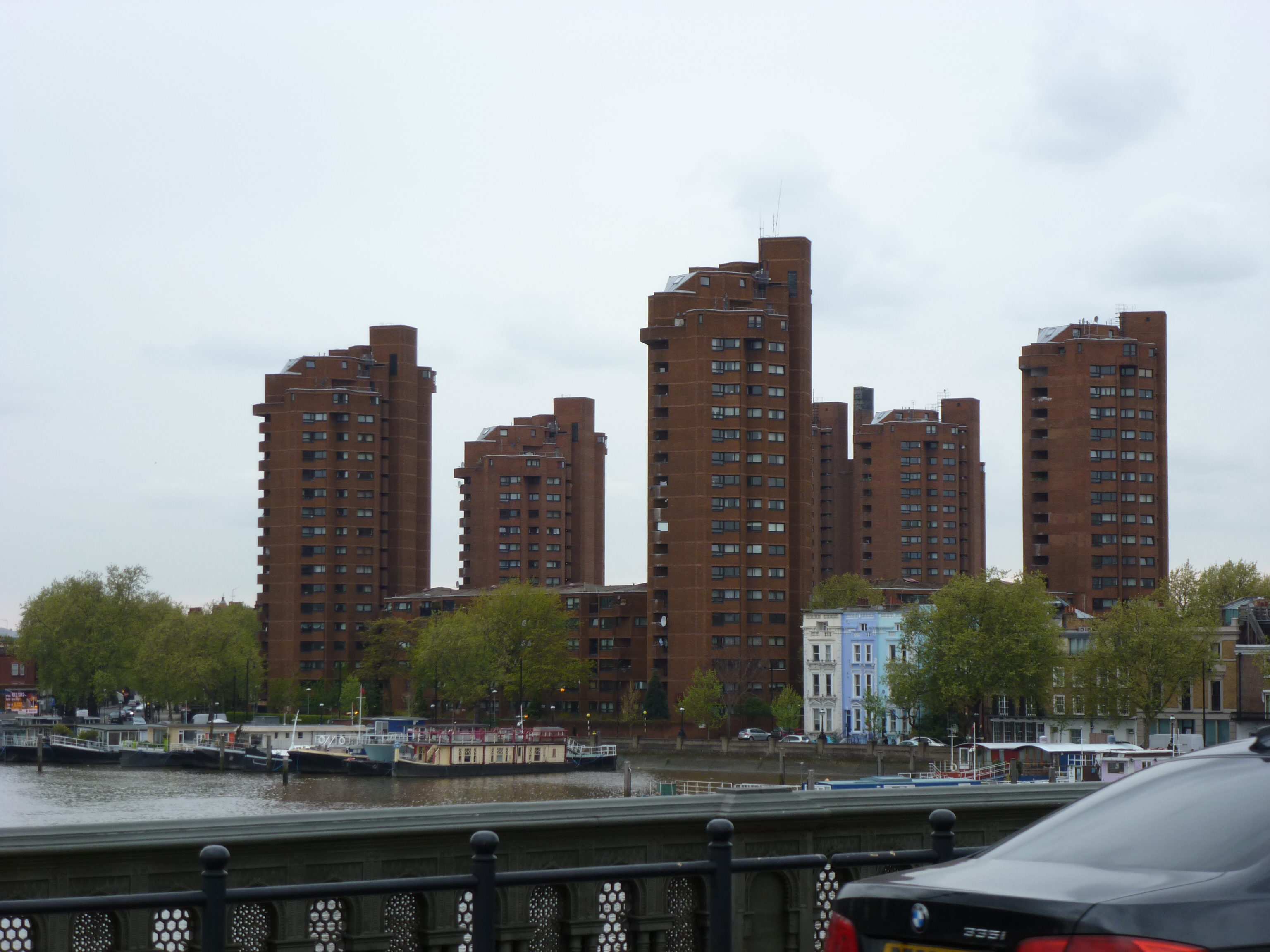
The Battersea Bridge was the first bridge in London that I walked across.  The bridge, built in 1890, connects the London neighborhoods of Kensington & Chelsea (north of the river) and Wandsworth (south of the river).  The north side had traditional, classic architecture, but the south side had some newer developments.  From the bridge looking west, I saw a bridge for the tube and several modern developments.  To the east, I saw the Albert Bridge, the Battersea Power Station, and the Shard tower then under construction.

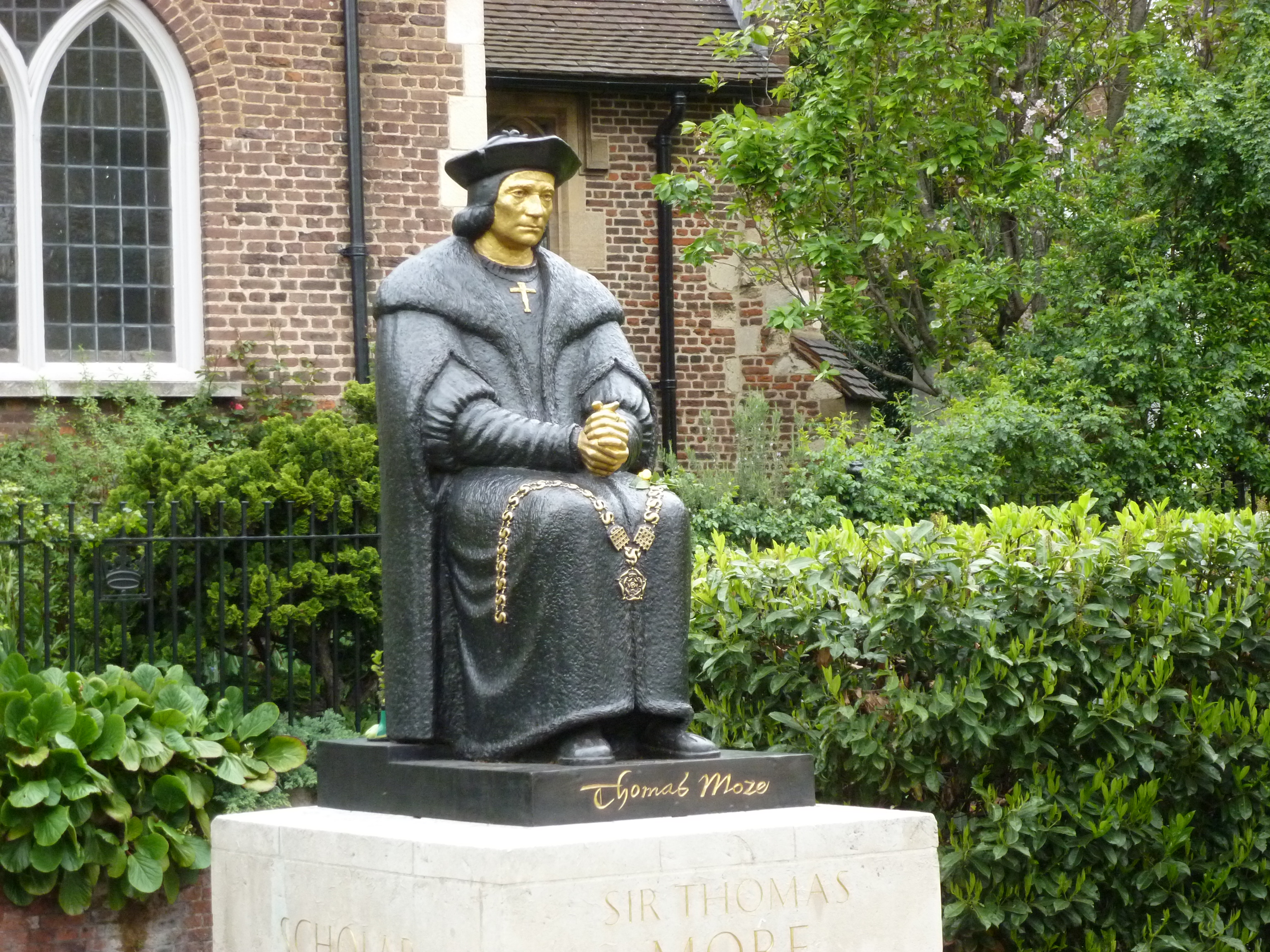
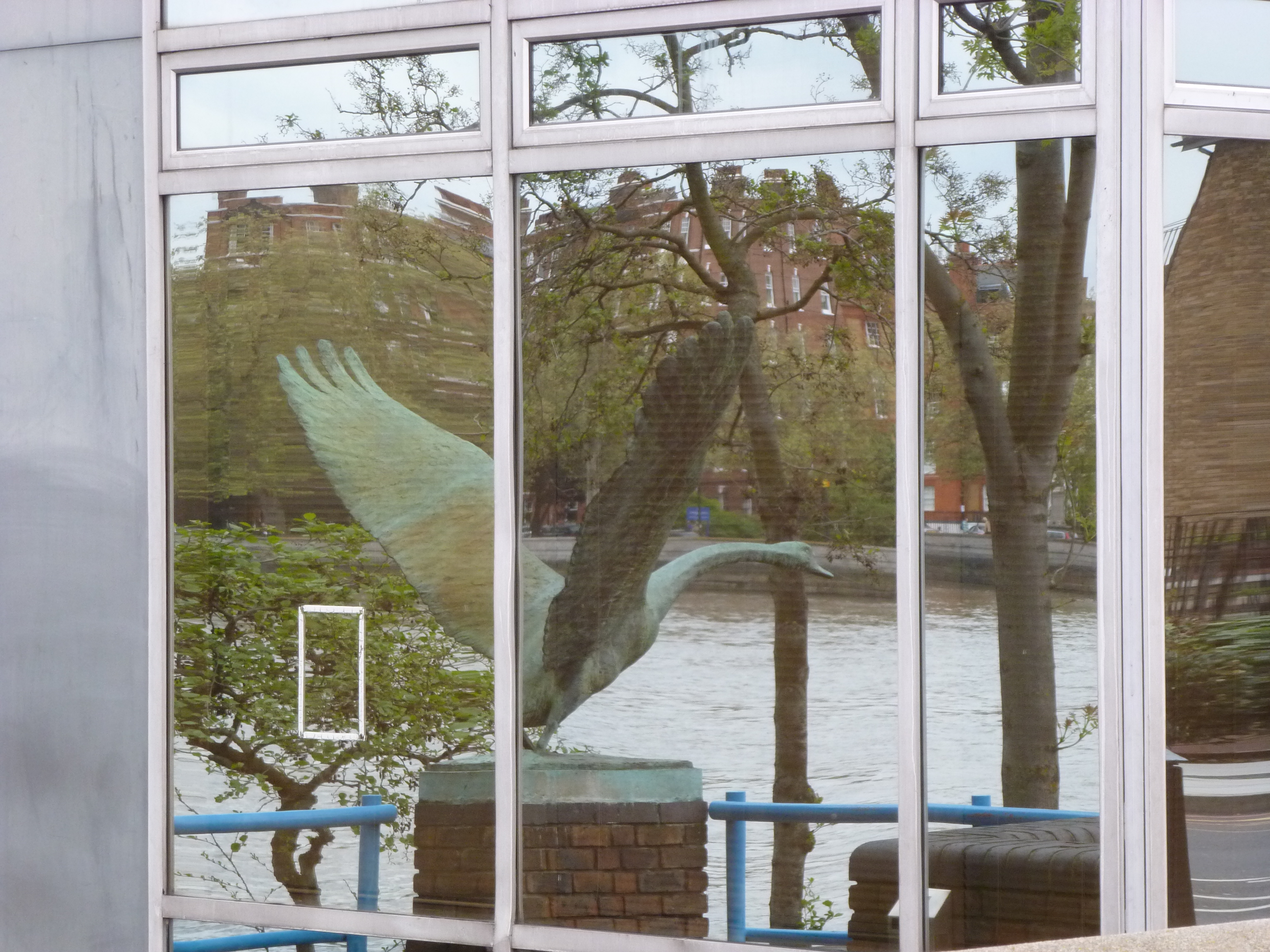
I enjoyed this bridge.  I appreciated its simple, yet stately design.  The traffic was low, though this might have had more to do with the time of day (Sunday afternoon) than any other factor.  There were two sights near the bridge that particularly caught my attention.  The first was a statue of Sir Thomas More on the north side, with gilded face and hands, a style not familiar to me.  The second was a seemingly random statue of a flying goose just off the south end of the bridge.

The name of Battersea intrigued me, so I did a Google search to try and find the origin of the name.  The result was that there is no known origin.  The possibilities included an Anglo-Saxon term meaning Badric’s Island, battles that were fought in the river at low tide when the river was fordable, and an evolution of spellings from a term meaning St Peter’s water or river.

London Bridges

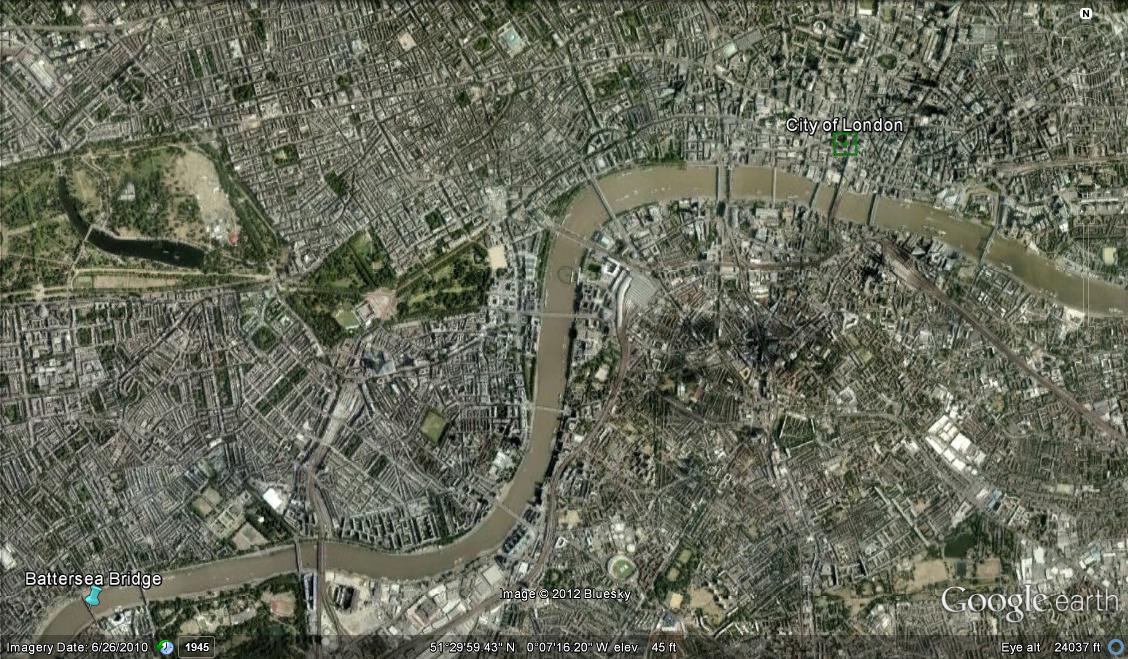
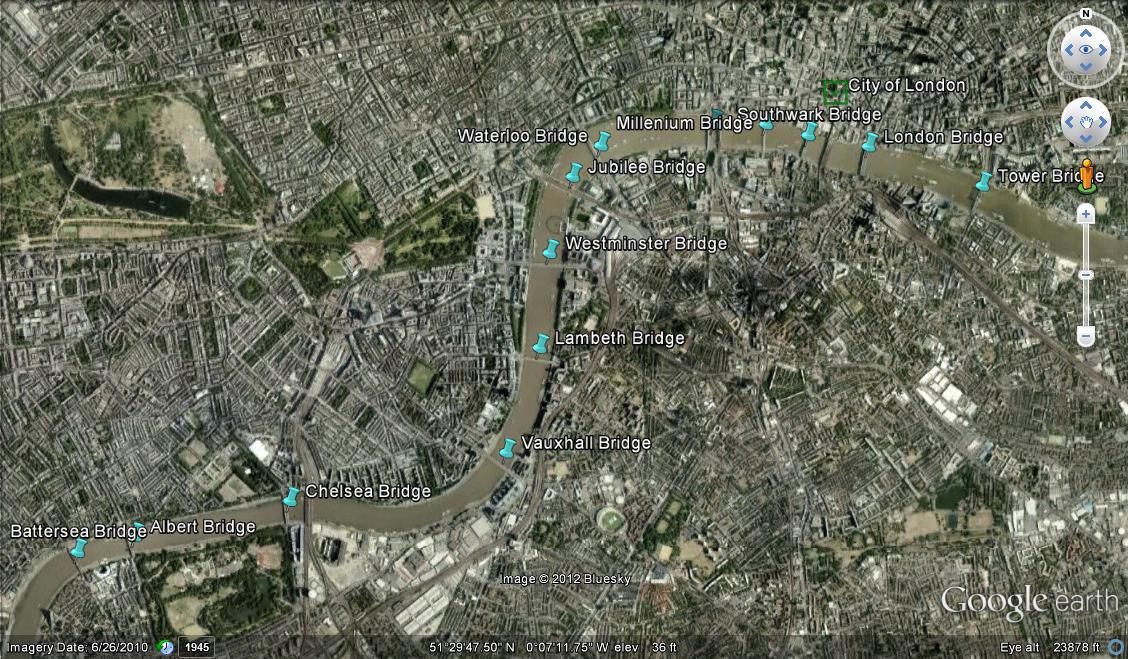
When I arrived in London this spring and saw the bridges over the river Thames, I decided I had to walk them all as I have the goal of walking all the bridges in Pittsburgh and this was my one opportunity for doing the same in London.  I did succeed in walking all thirteen of the pedestrian friendly bridges on my map of London in the few days I was there.  I believe there may be two more bridges to the west which I should have crossed in order to be able to say I walked all the Thames bridges in Inner London, but due to the bend in the river and the limitations of my map I did not know of their existence until coming home.  While walking the bridges I got a wide variety of views of London, some of which I would have missed otherwise, aided by London’s excellent river walkways.  Over the next few weeks, look for posts describing my experiences and observations of the thirteen Thames bridges: Battersea Bridge, Albert Bridge, Chelsea Bridge, Vauxhall Bridge, Lambeth Bridge, Westminster Bridge, Jubilee Bridge, Waterloo Bridge, Blackfriars Bridge, Millennium Bridge, Southwark Bridge, London Bridge, and Tower Bridge.

Roald Dahl, Norwegians, Doctor Who, and a Church

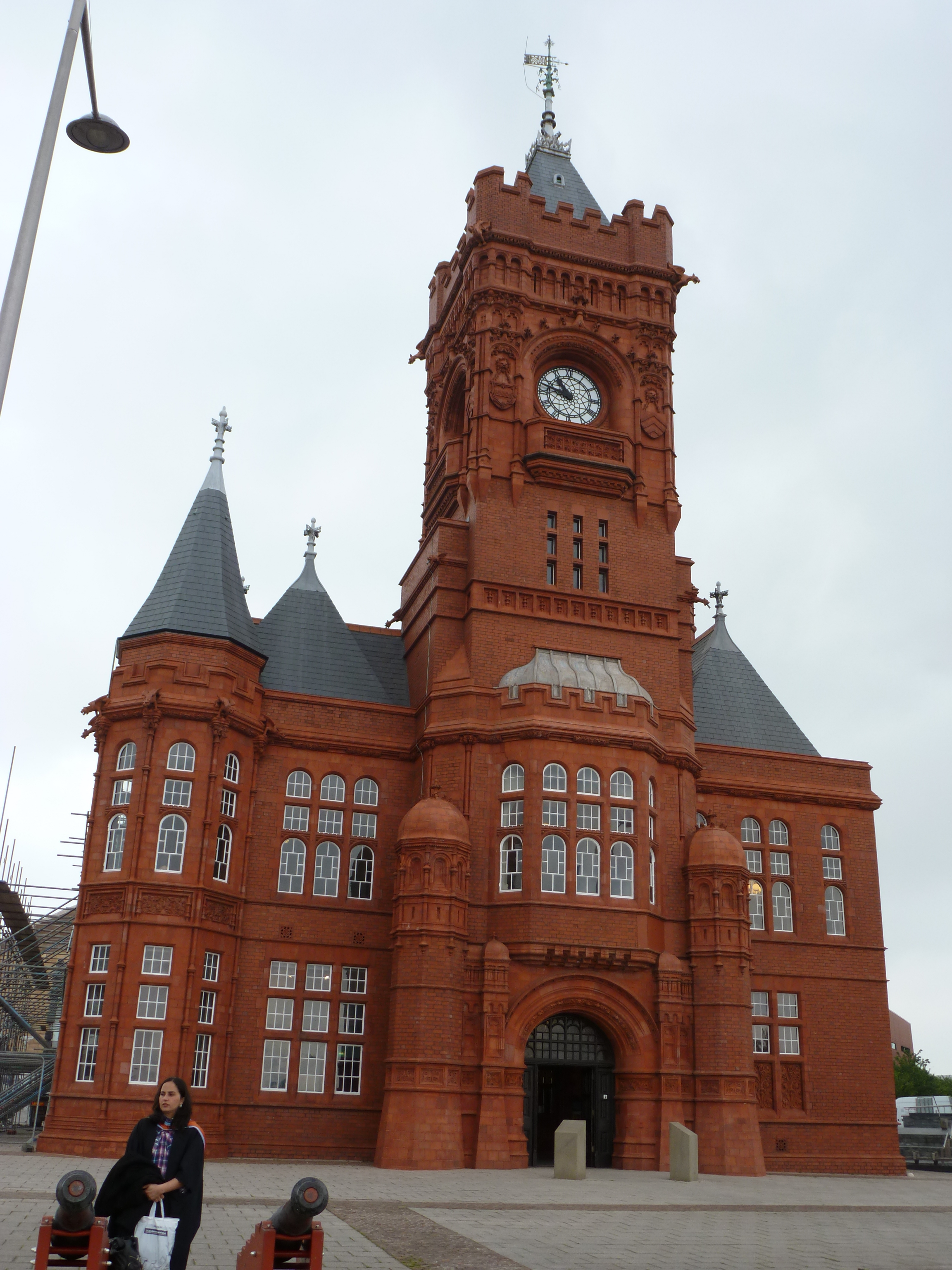
I watch the new Doctor Who series and the spin-off show Torchwood.  The Doctor Who episodes set in modern Cardiff are centered on Cardiff Bay and Torchwood is based in Cardiff Bay.  In the long shots of the area, I was most intrigued by the building pictured above.  I believed it must have been some sort of church.  When I was preparing to visit Cardiff, I was excited by the paragraph in my guidebook which referred to a repurposed church on Cardiff Bay.  I assumed that the building that intrigued me in Doctor Who and Torchwood must be the former Norwegian church now adapted to a rental facility.

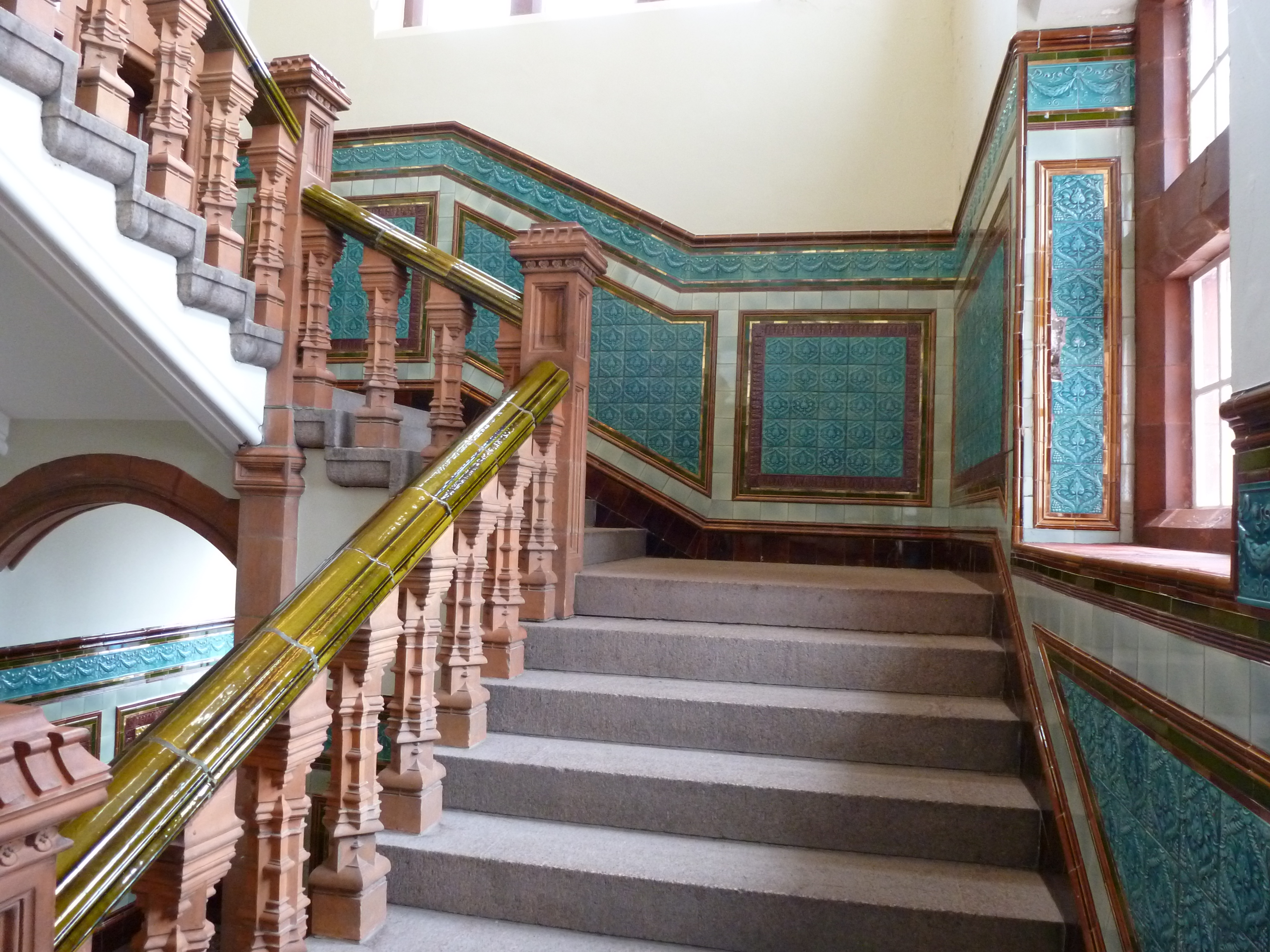
On arriving at the site, I had a feeling that something was off.  It wasn’t until I stepped inside that I figured out what it was.  It turned out that this building never held a church.  I suppose that the lack of stained glass, the small widows, and the cannons outside should have been a clue, but with the peaked roof (not visible in the above photo), the gargoyles, and the central tower I didn’t know what else it could be besides a church.  The building is called the Pierhead and it guarded the port, or at least kept track of the traffic coming and going in the port.  It is open to visitors now as a museum of the port.  I learned a lot about the history of Cardiff from a short, entertaining film, such as the name came from Welsh for “Fort on the River Taff.”  The color and decoration of the interior also intrigued me.


When I left the Pierhead, I looked around the bay and quickly spotted the actual church described in the guidebook.  Norwegian sailors who passed through the port built this church (pictured below).  Roald Dahl was baptized here.  Now the building is used as a rental facility.  The sanctuary is the rental hall, when I was there it was being set up for a wedding reception on the following day; the choir loft level is now an art gallery; and the space below the choir loft, which I imagine would have been the entryway/gathering space, is now a coffee shop with some delicious pastries.  Unique features of this building included the model of a Norwegian sailing ship hanging from the center of the ceiling in the main room and a stained glass window that featured fish.  Unfortunately my camera temporary malfunctioned while I was visiting this building and as a result I do not have any shots of the interior.

Newport Road, Cardiff

The one mile walk from the city center to the Inkspot along Newport Road revealed more church buildings of interest for adaptive reuse and the history of the city. (Newport Road is so named as it was the main road from Cardiff northeast to Newport before the highway came along.)

The first building of interest that I came across was just off Newport Road. My observations indicated that this building was a former church probably adapted to a new use similar to the Wallich Centre (see post on Cathedral Road, Cardiff) but with a strong religious component. A sign on the building read “UCKG Help Centre,” which suggested that it provided help to those in need. My ideas for the possible targeted audience included people experiencing homelessness, depression, or low-income. I identified the Centre’s religious focus from a sandwich board in front of the entrance advertising holy/healing oil.

I was correct in my supposition that the building’s original use was a church (after I discovered I mistakenly identified two other buildings as former churches I began to doubt my guess with this building). It was built as a Unitarian Church in the 1880s. However, I was mistaken in the new use. It turns out that UCKG stands for the Universal Church of the Kingdom of God and therefore the building is still being used as a church, just not its original denomination.

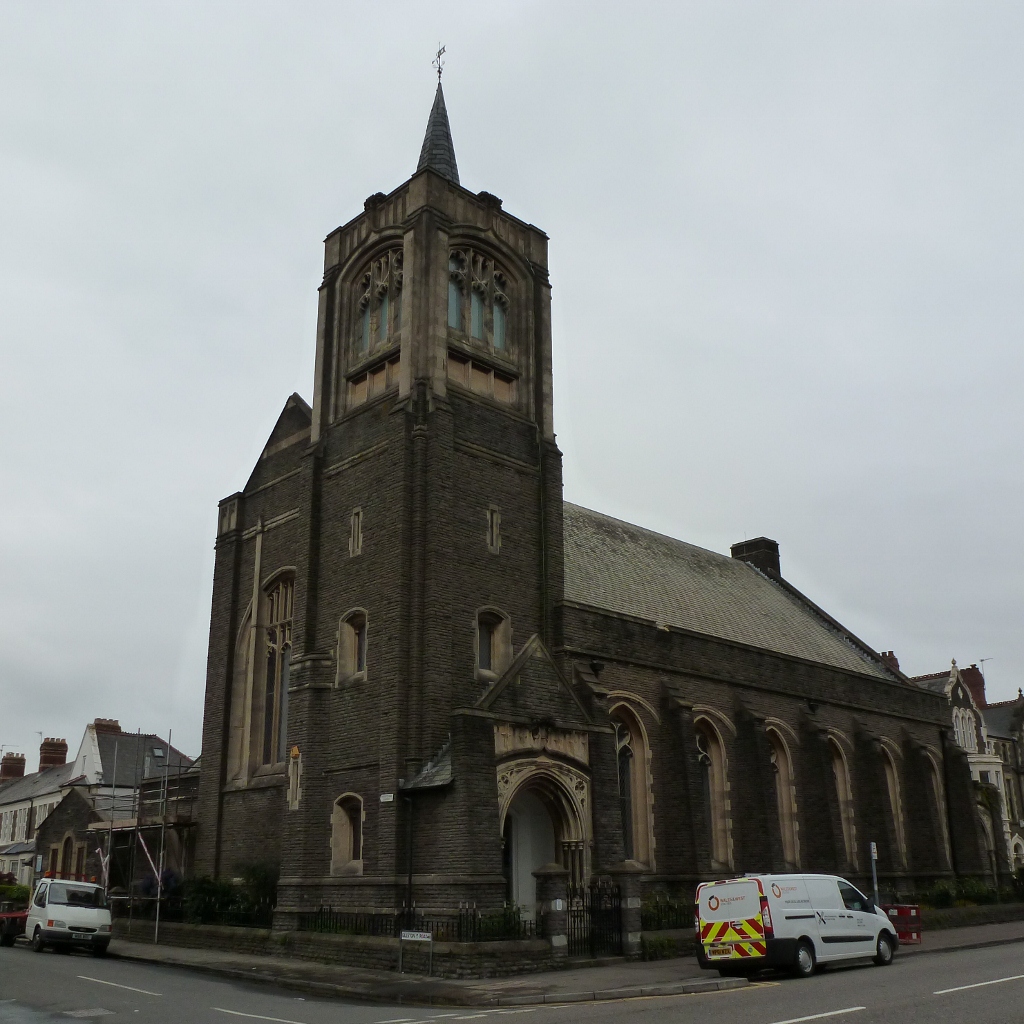
The second building appeared permanently closed when I passed. This one clearly used to be a church.  The building appeared to be secure and in good condition, which is beneficial for any potential reuse.  This building was built as the Church of St James the Great in the 1890s and closed in 2006. A newspaper article from 2008 announces the redevelopment of the church’s spire into a seven-story flat (flat=apartment, please excuse my British vocab and spellings, such as centre, while I discuss British places).  The rest of the structure would be converted into 11 other one- and two-bedroom flats. However, there was no indication when I was passing that this has occurred or was in the process of occurring. There is no further mention of this redevelopment online, suggested it either fell through or is being held up.

I passed one more church building on Newport Road, one still used for religious worship, before reaching the Inkspot. This building interested me as it was a larger church complex than any of the others I passed, was a block away from the Inkspot, and part of a complex blocked off for construction work of some unknown sort.

Passing four church buildings, three of which were no longer housing their original uses, intrigued me. Coming from Pittsburgh, my immediate assumption was that Cardiff must have experienced a significant population loss. After all it used to be a major port—exporting more coal than probably any other port in the world. The port closed some time ago and Cardiff stopped exporting coal. I imagined this change resulted in the loss of many jobs and therefore a significant population loss followed. Yet, the population statistics for Cardiff over the last 200 years destroyed this theory. The population dipped slightly from 1971 to 1981, but by 1991 Cardiff had more residents than ever (see Cardiff Timeline for population statistics). The port closing may have influenced the dip in population, but net population loss cannot be the cause of the closed and adaptively reused religious buildings I observed in Cardiff.

I cannot verify my second theory for the reason these buildings lost their original uses. This theory is a change in the religious views of the population. This can go two ways. The first idea is that people are becoming less religious (this is how the Dutch explain their large number of churches adapted to new uses). I found a few articles that identify a similar trend in all of Britain (Number of Christians falls, Muslims pass on faith at higher rates than Christians). The second idea is that while the overall population is growing, people are still moving out and those that are moving in are of a different demographic or religion and therefore do not want the same religious institutions as those that came before them. Both theories are mostly speculation as I haven’t found detailed statistics on religious beliefs and practices in Cardiff, Wales, or Britain.

Cathedral Road, Cardiff

As I mentioned in the post on Inkspot, it felt like I had more success with repurposed churches in Cardiff than London, despite having done extensive research on the adaptive reuse of churches in London.  Perhaps this is in part because it is far more exciting and rewarding to come upon a repurposed church than to go where you already know you will find one.  My first day in Cardiff I discovered two adapted religious buildings within a few blocks of each other—thrilling!

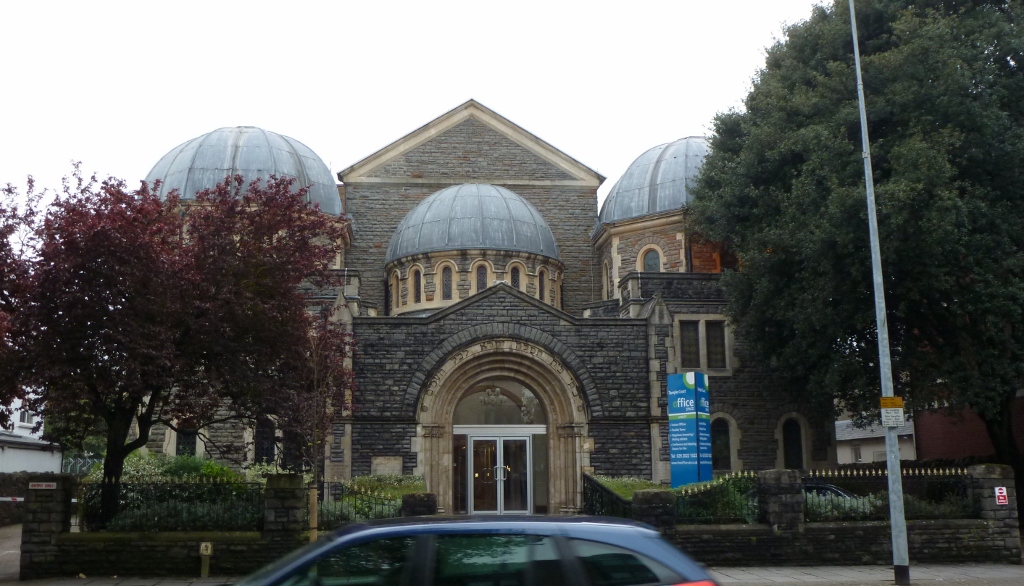
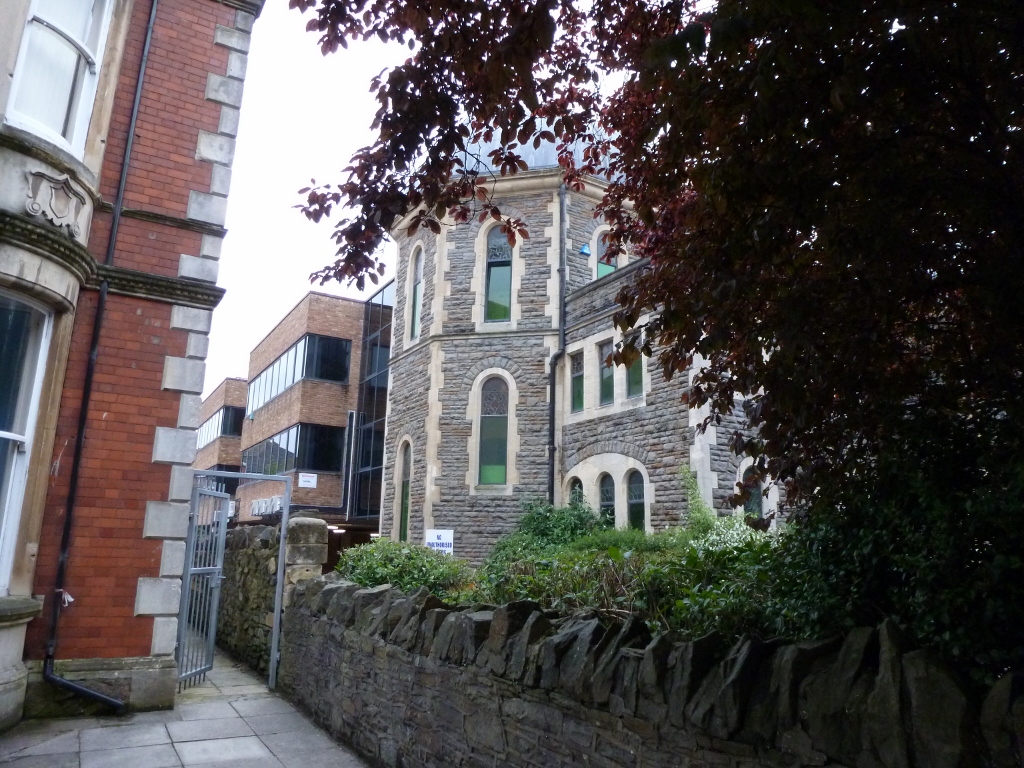
The first of these buildings, formerly the Cardiff New Synagogue now office space.  (I am also interested in the adaptive reuse of synagogues as there are some similar issues when repurposing synagogues or churches, but I am less familiar with the architecture and interior design of synagogues and they seem less common adapted church buildings.)  The façade of this former synagogue appeared to be unaltered, however in the back there was a modern office building extension.  I could not tell from my observations whether or not part of the original building was demolished to make way for the extension.  The original building seemed a bit short, which made me think that part of it might have been demolished.  However, some of the townhouses nearby had similar additions in the back as they were now used for businesses or apartment complexes.  The depth of these buildings matched those that did not have additions and that of the original structure of the synagogue, suggesting that the synagogue may have been intact.  I found the YouTube video on the building’s website interesting as it is easy to tell which rooms are in the original building and which in the addition.

The second building was a former Presbyterian Church of Wales, now The Wallich Centre.  Their motto is “homeless people first” which gave a clear indication of their purpose, although the website suggests that this building may not be used directly for the homeless as it is identified as the administrative centre as well as a venue for hire for meetings, conferences, etc. which I don’t imagine would be used by the homeless.  There appeared to be little or no alteration to the exterior of this building, except for the glass doors inside the covered entrance.  Only a small sign (blocked by the van in the picture) indicated that this building no longer functioned as a religious institution.