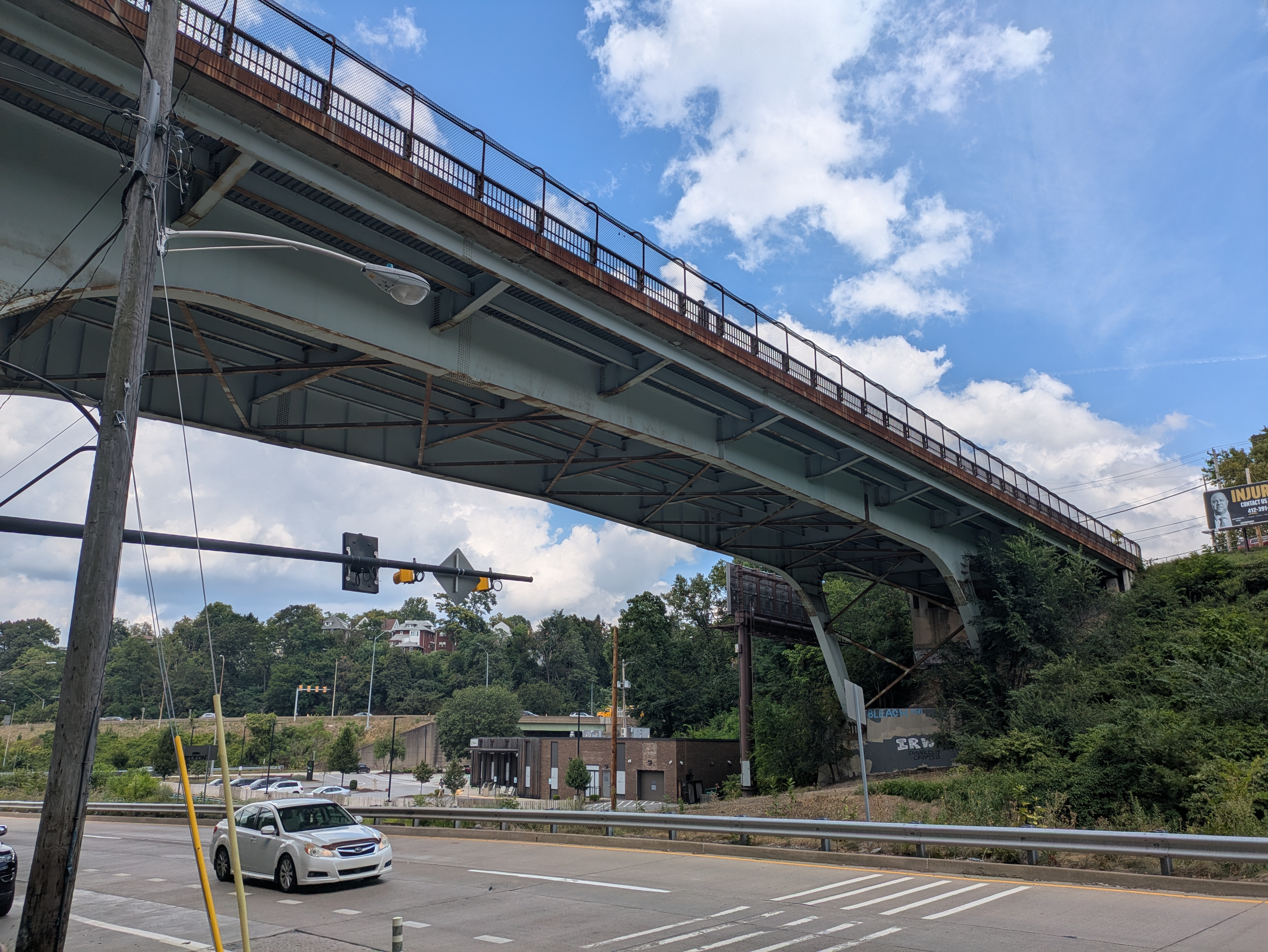
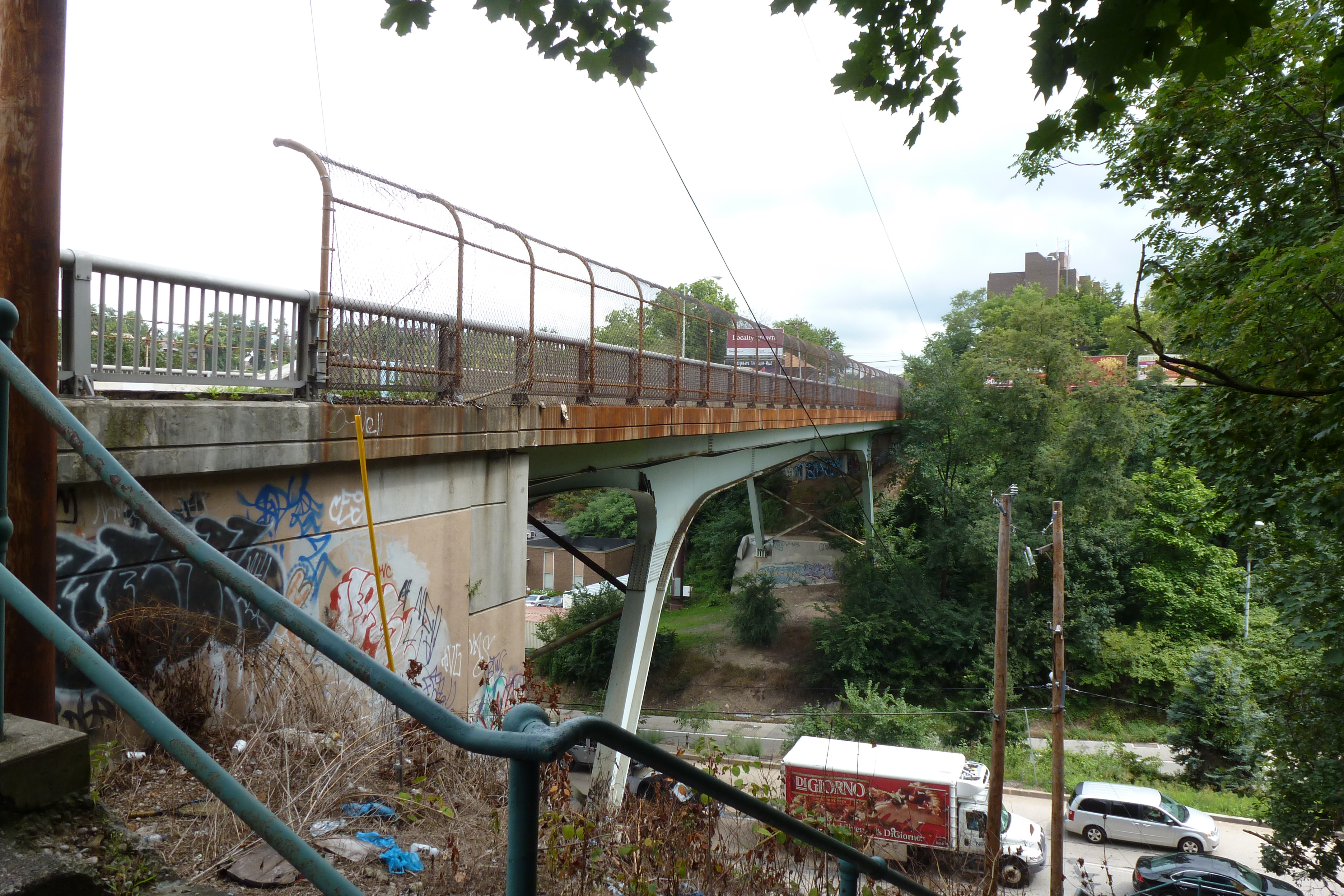
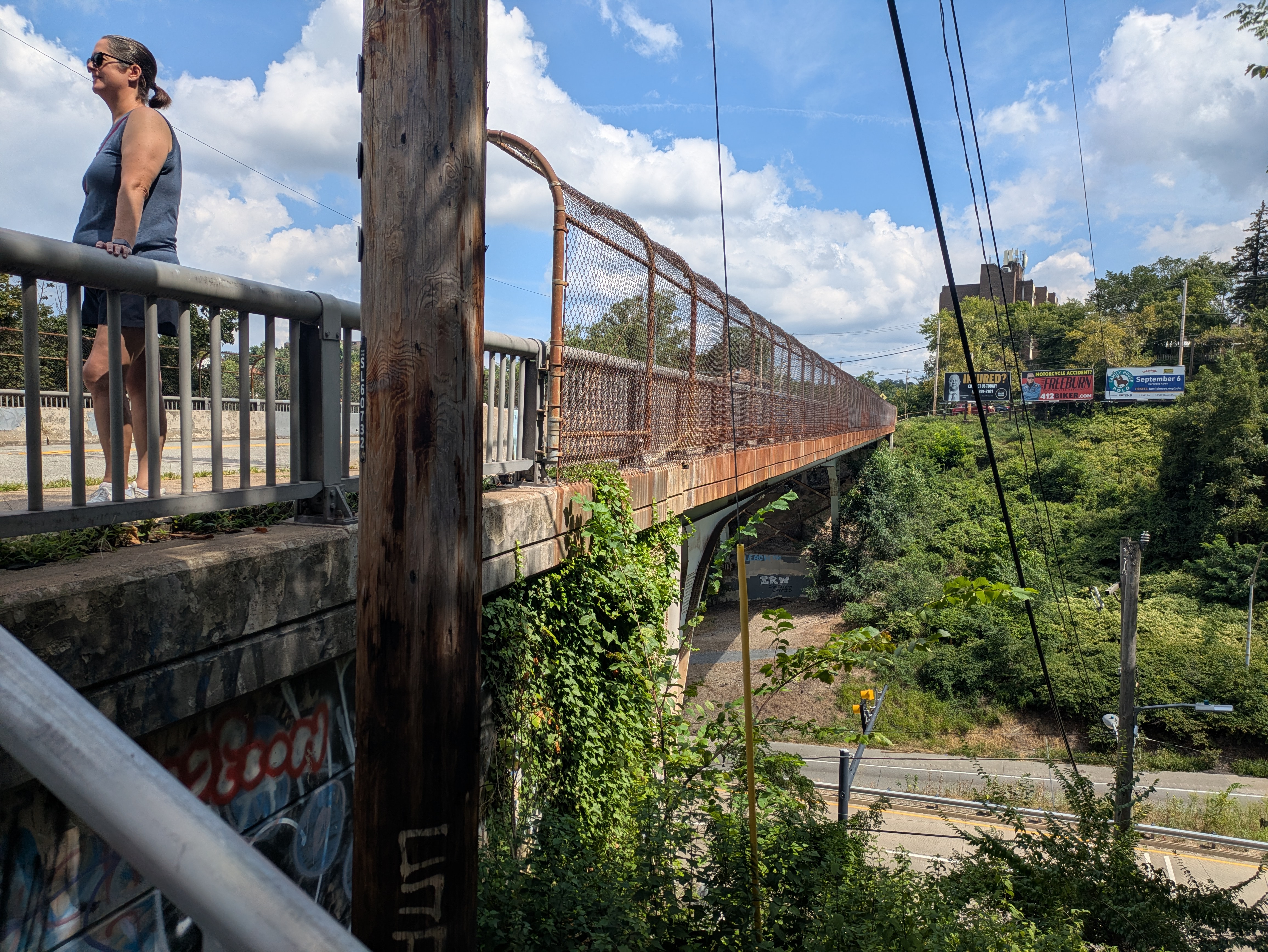
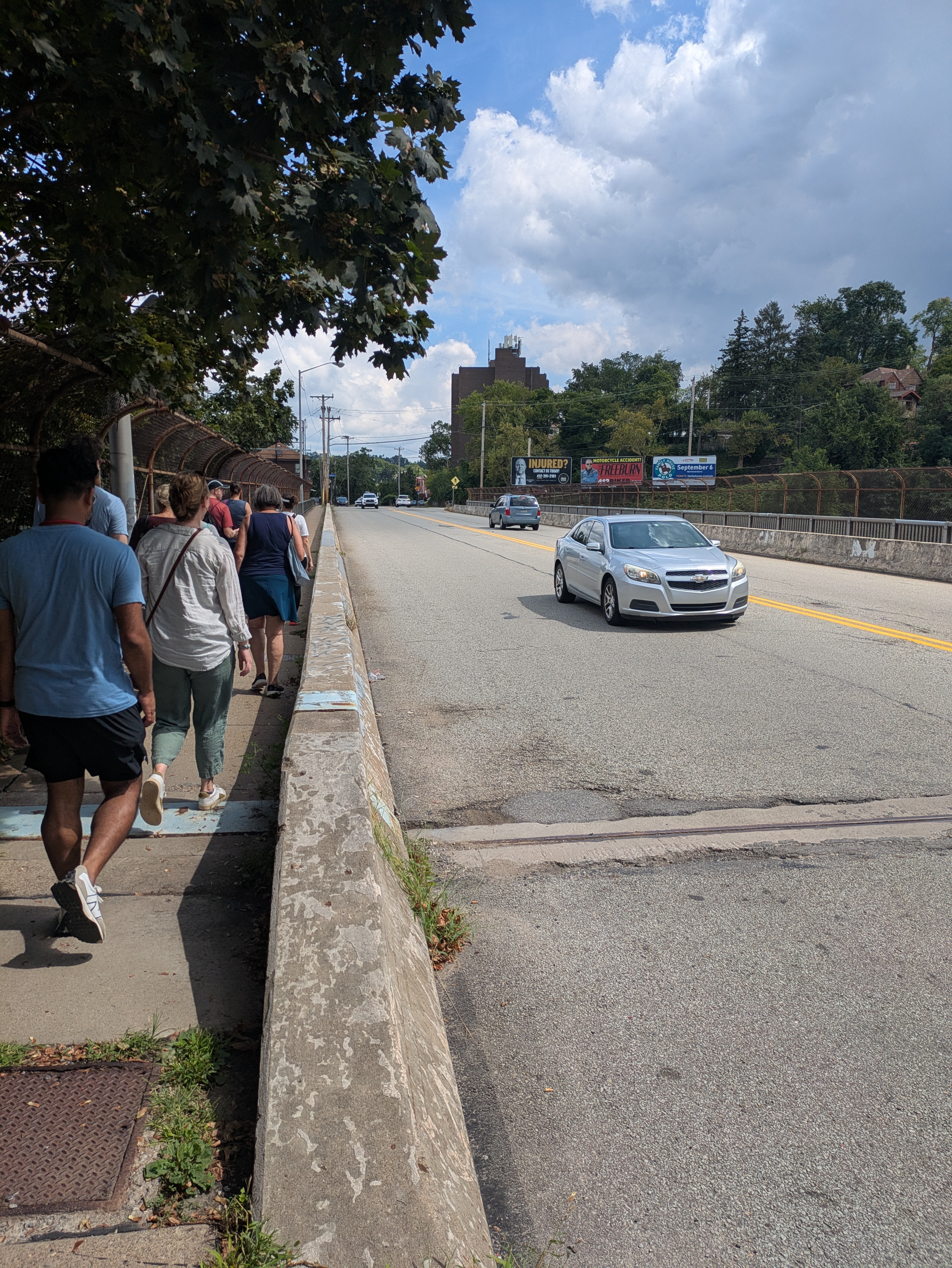
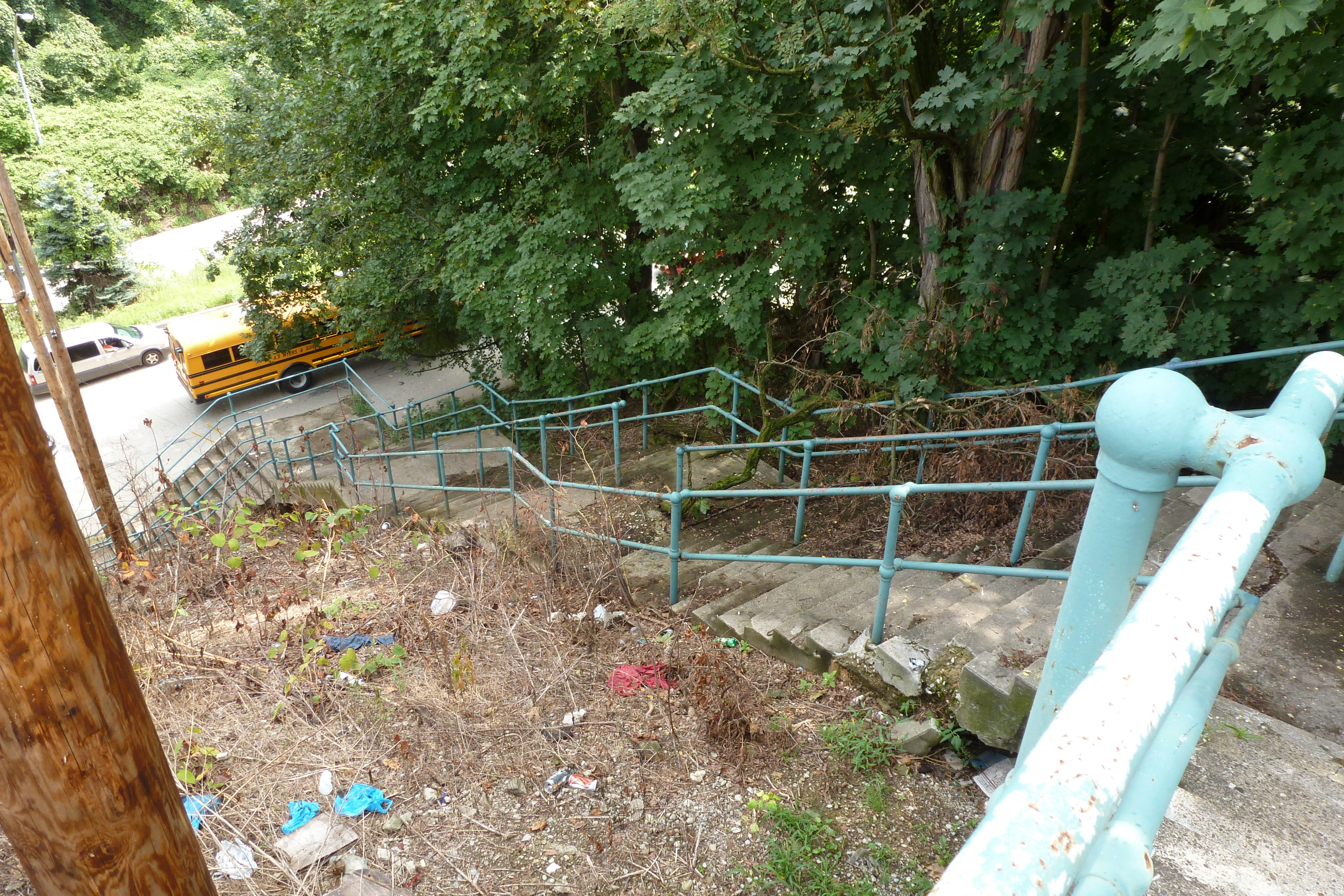
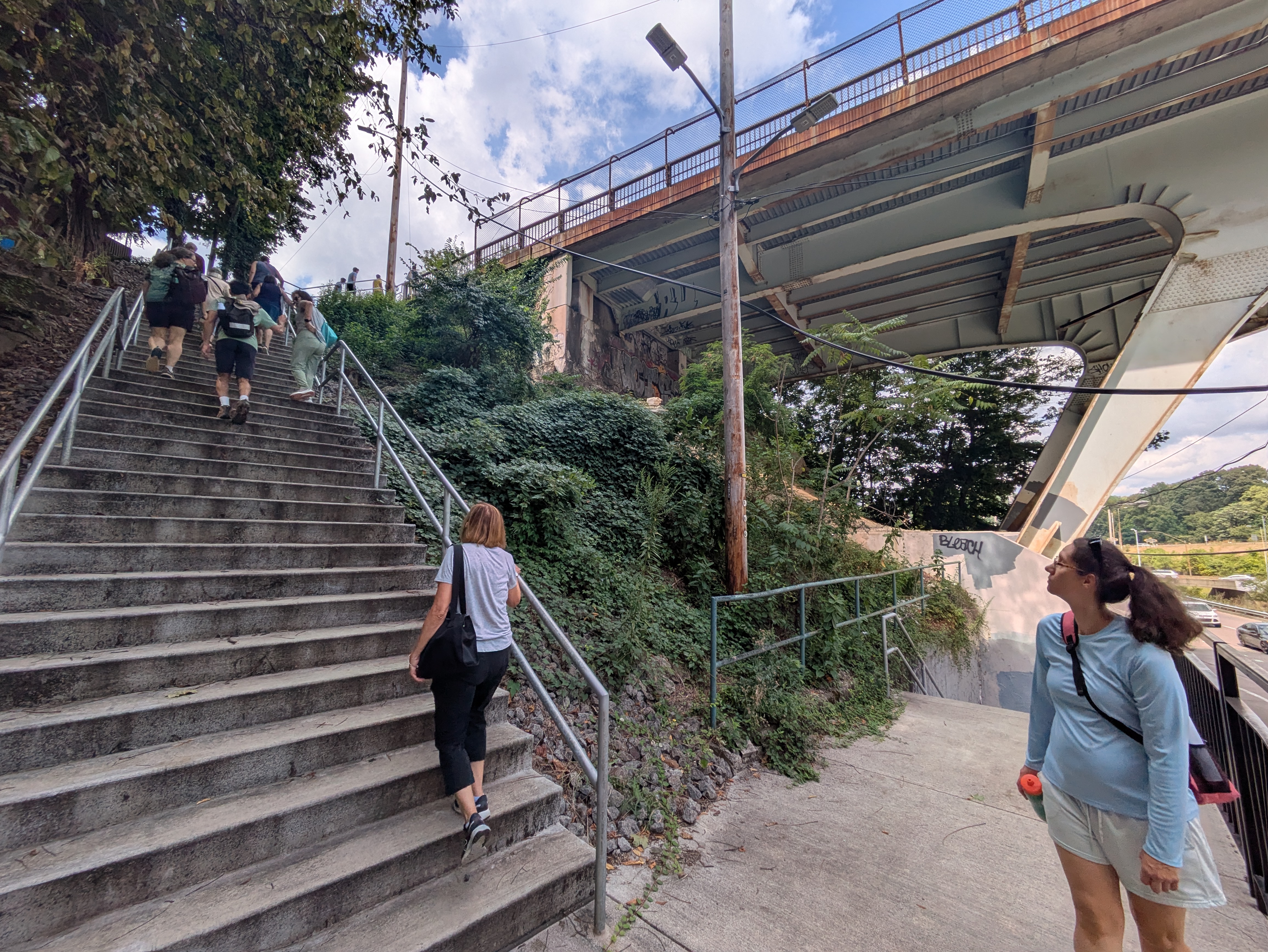
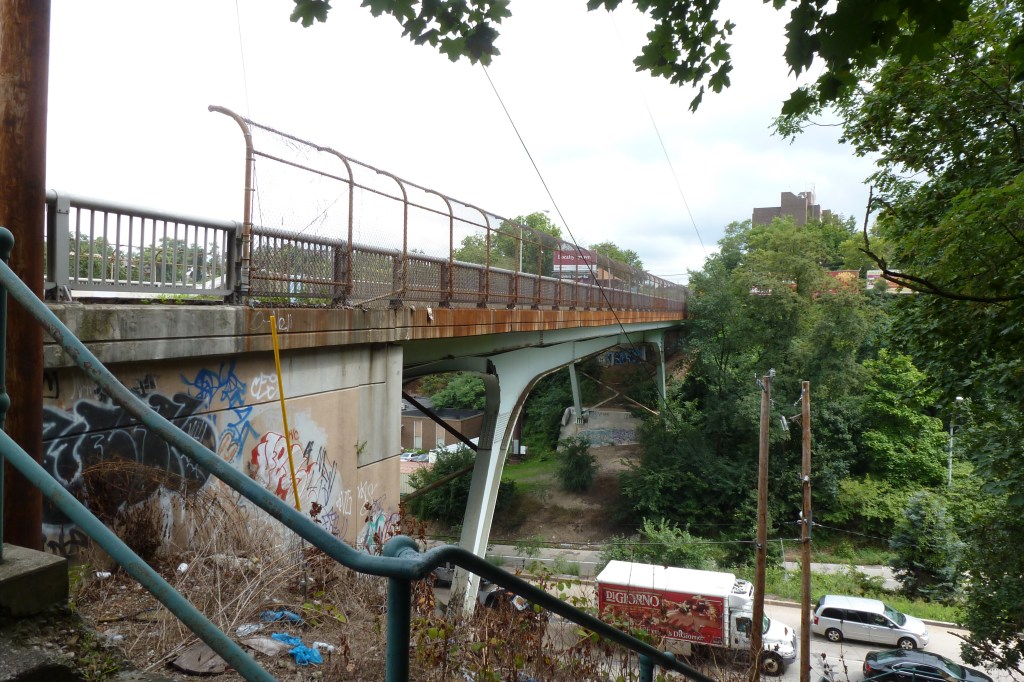
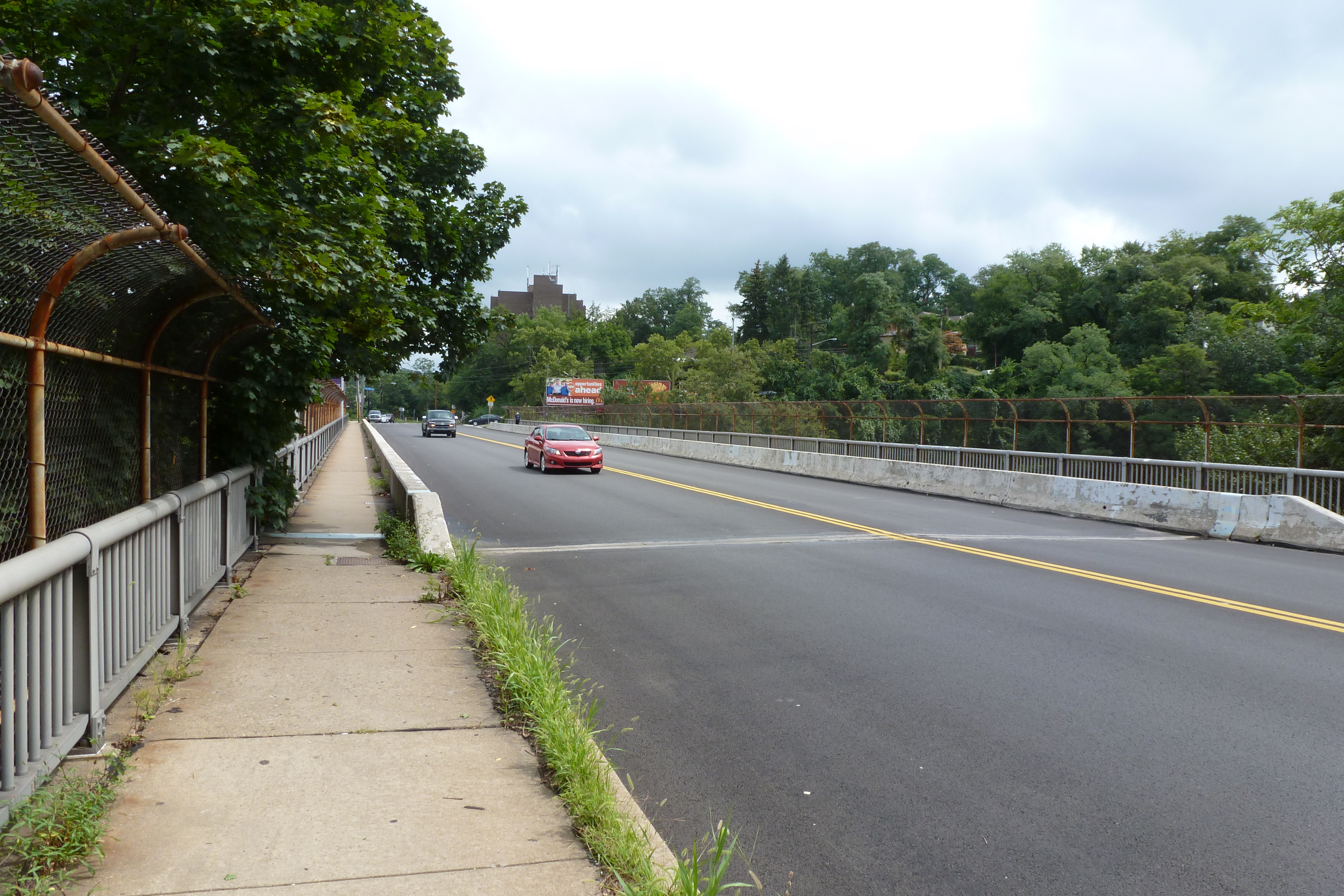
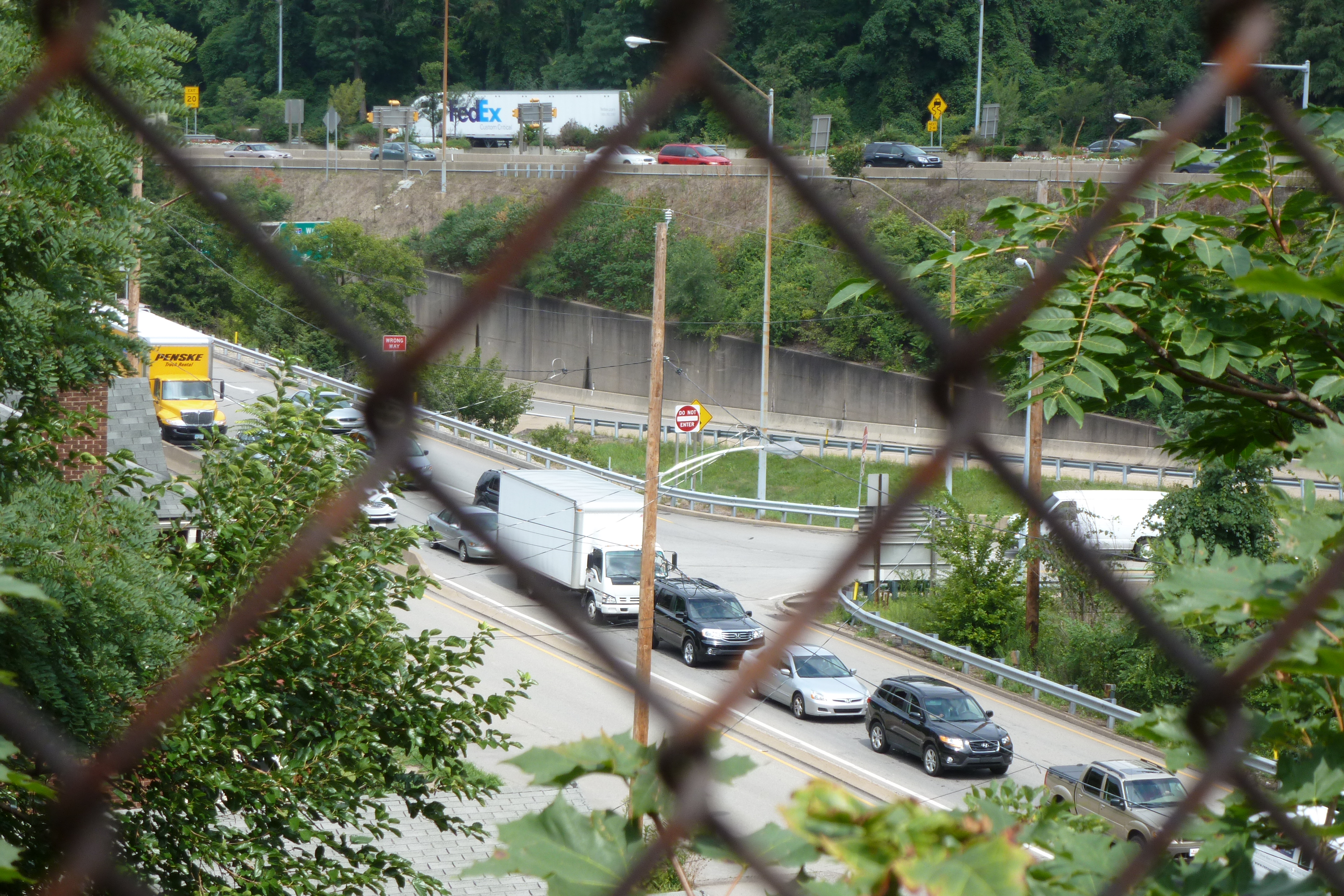
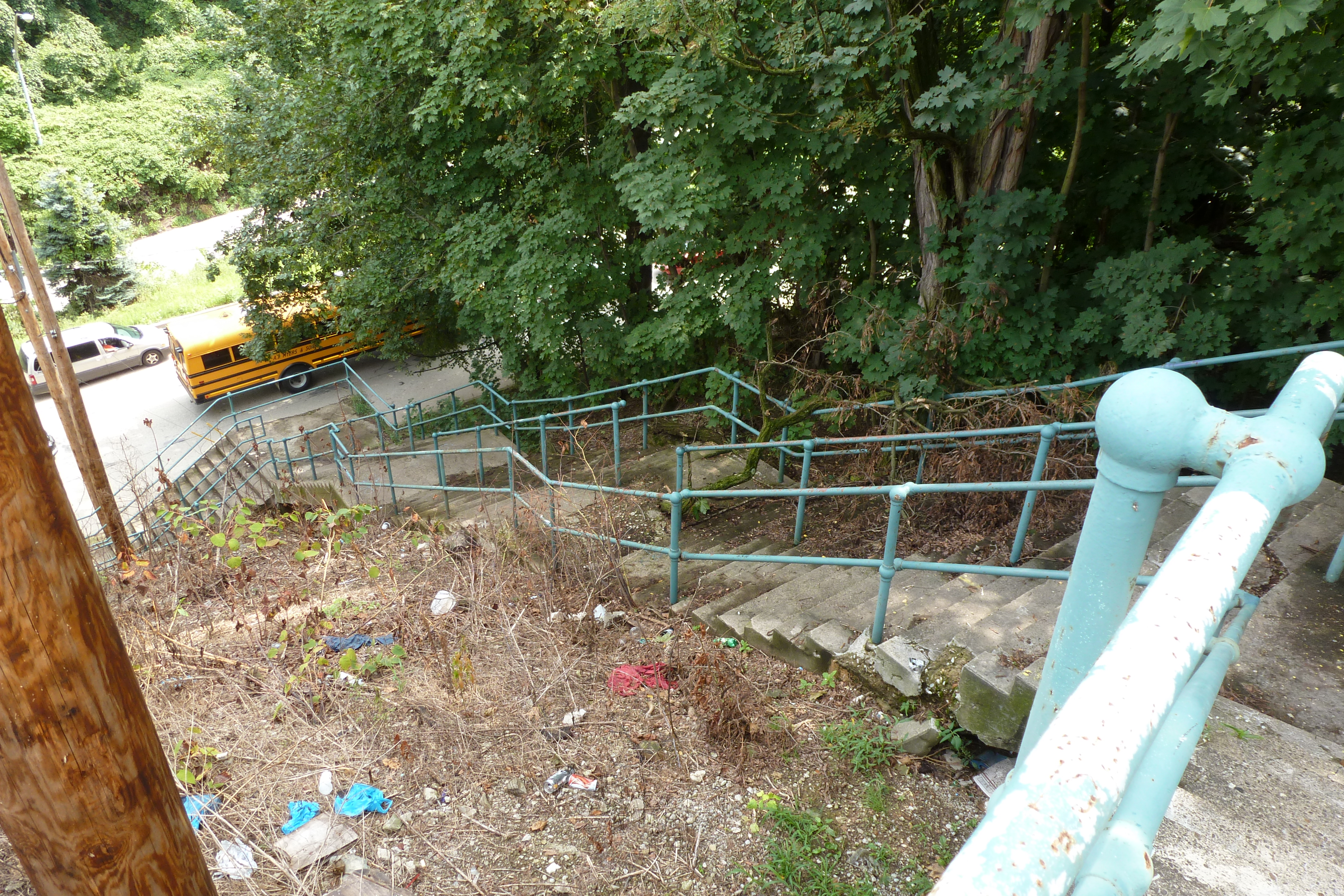
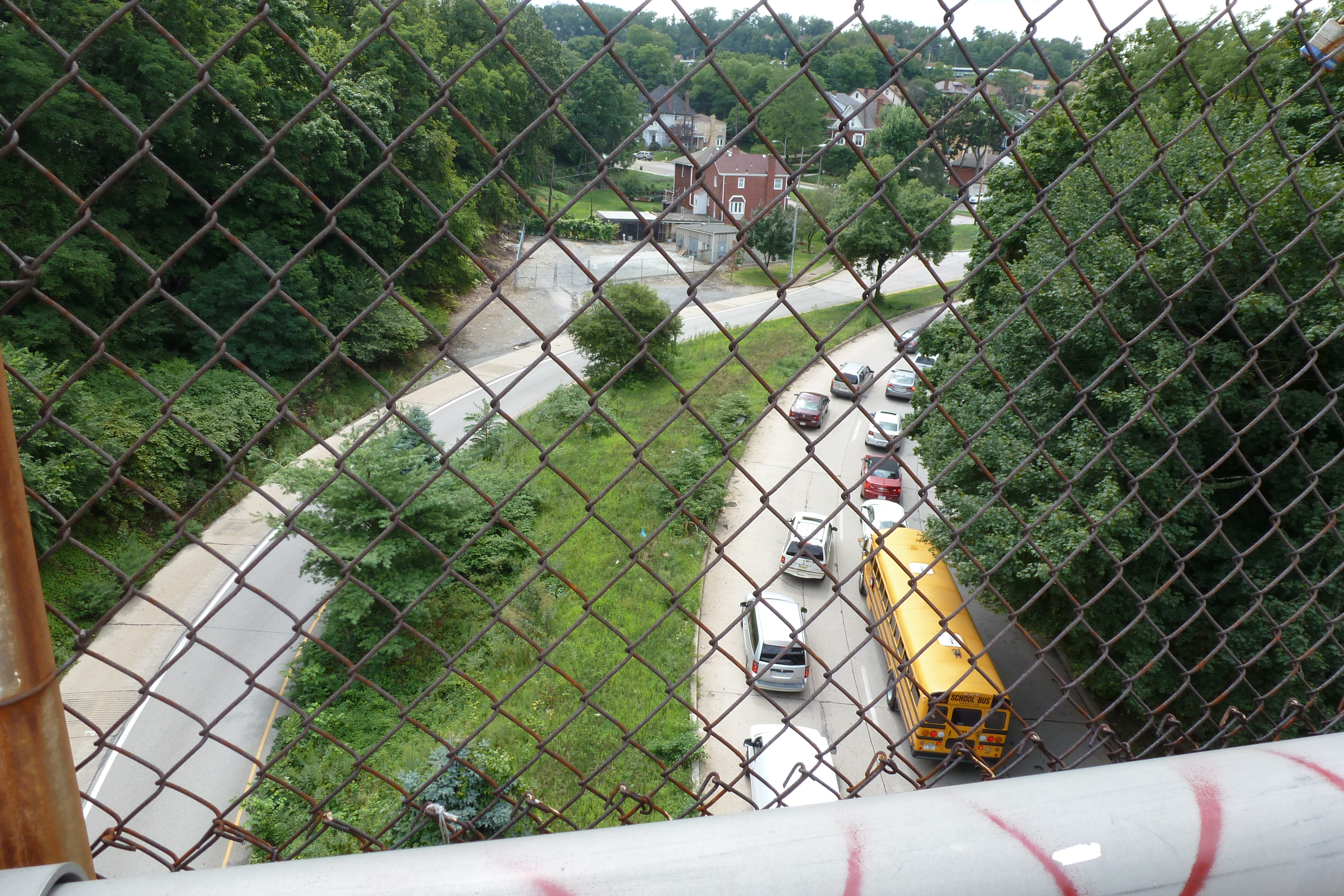
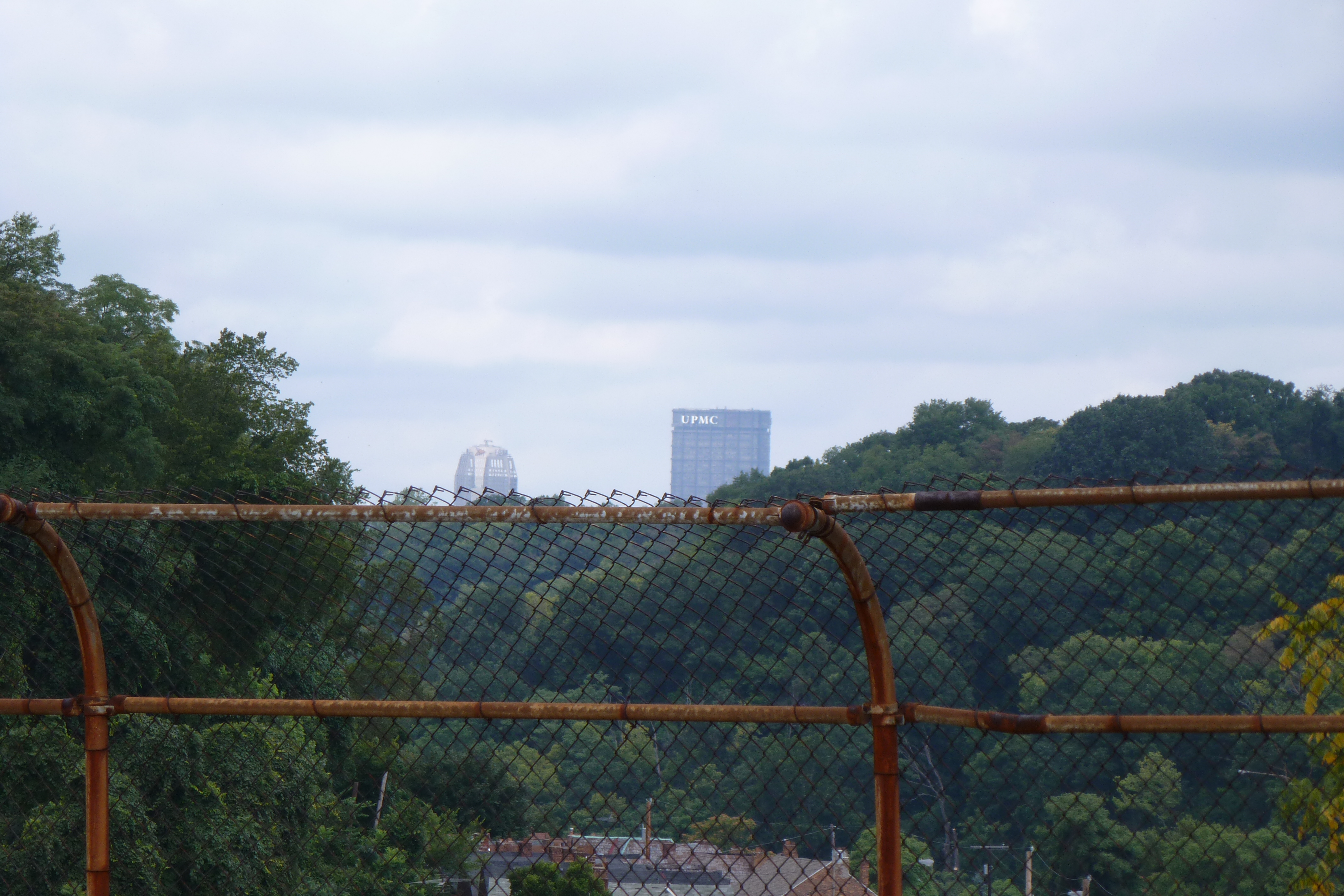
Ironically, a few days after my catch-up post about the Murray Avenue Bridge in Squirrel Hill went live, I unexpectedly found myself walking that bridge for the first time since 2012. The bridge looks mostly the same, slightly rusted but presumable functional as it hasn’t collapsed or been closed following a regular inspection. The stairs have been replaced though. I didn’t have a reason to go down them in 2012 and didn’t feel comfortable testing them out for the heck of it then. In 2025, the Urban Hike walk I was on came at the bridge from the street below and we climbed up the newish, solid-looking steps; a few of us (me included) pausing “for the view” on our way up.
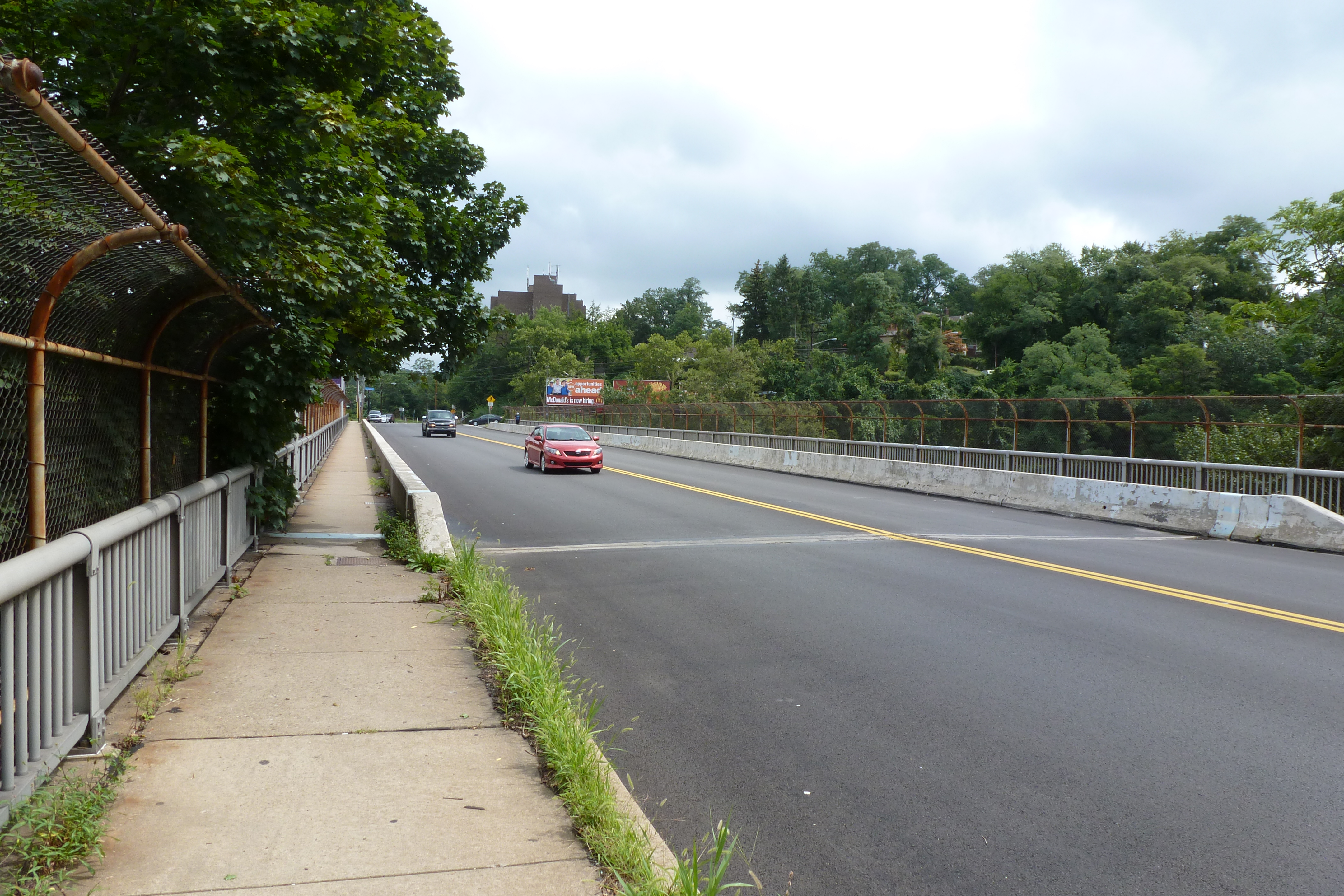
The before and after photo pairs below don’t exactly line up, given the different angles and orientations of the photos, but it seemed a good opportunity to try out the image compare option. Before: August 2012, After: August 2025.
I walk bridges faster than I can post about them. Here are views of and from Pittsburgh’s Murray Avenue Bridge over Beechwood Blvd that I took when I walked it in 2012.
Street trees have a tough life. Between extensive pruning away from power, cable, and internet lines, baking in the radiant heat from the surrounding pavement, and (in winter climates) runoff from salt or sand, it is amazing any survive. Yet in some neighborhoods street trees are thriving while in others they are non-existent or barely hanging on.
Street trees first appeared in US cities in the 1840s and 1850s as part of a growing interest in landscape architecture. However, they soon encountered challenges. Fire insurance companies banned street trees in towns that relied on bucket brigades as the trees helped spread fires that decimated swaths of towns. Then, the street trees worst nemesis arrived – the overhead lines. First telephone companies then power companies pruned trees away from their lines. John R. Stilgoe in Outside Lies Magic notes that the resultant loss of street trees created a “nationwide uproar” by 1920. One hundred years later, this conflict between wires and trees is still unresolved.
As I traveled around Pittsburgh this spring and summer, I noticed that some neighborhoods seem to have found a way to maintain both old, large canopy street trees and overhead lines. Other neighborhoods appear to struggle to establish and maintain even understory or decorative trees. The pattern of where street trees are thriving versus where they aren’t appears to match the wealth of the neighborhood.
I first noticed this pattern as a child, though I couldn’t articulate it as such at the time. The Pennsylvania town where I partially grew up had a Green Street. The name made a strong impression on me at the time because half of Green Street was very aptly named. It had the oldest and thickest street tree canopy in town. The other half of the street, as I remember it, did not have a single street tree (or yard tree). This dichotomy fascinated me as a child.
Now, looking back on this memory with my urbanist eyes, it seems the perfect example of the correlation between wealth and street trees. The half of Green Street with the street trees was predominantly detached, single-family dwellings with large front, side, and rear yards. The half of Green Street without street trees was predominantly attached homes, possibly with some duplexes, and shallower front yards.
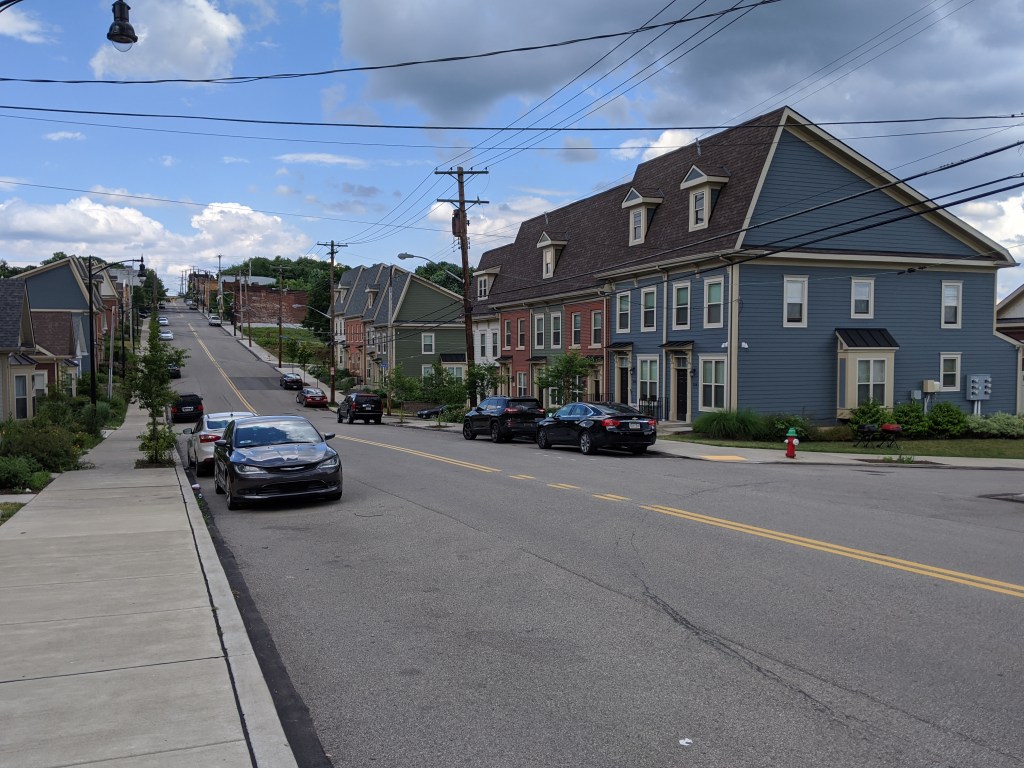
In Pittsburgh, the division is by neighborhood, not block. Neighborhoods like Squirrel Hill, Point Breeze, and Shadyside, which used to contain most of the city’s millionaires rows and continue to have housing values 3-4 times the city’s average, have old, well-established street trees that are somehow able to grow around the overhead lines. Neighborhoods like Homewood and the Hill District, which were victimized by Urban Renewal policies in the ‘50s and ‘60s and now have housing values two-thirds the city’s average, have few street trees, most of which were planted within the last ten years.


 urbantraipsing