Birmingham Bridge

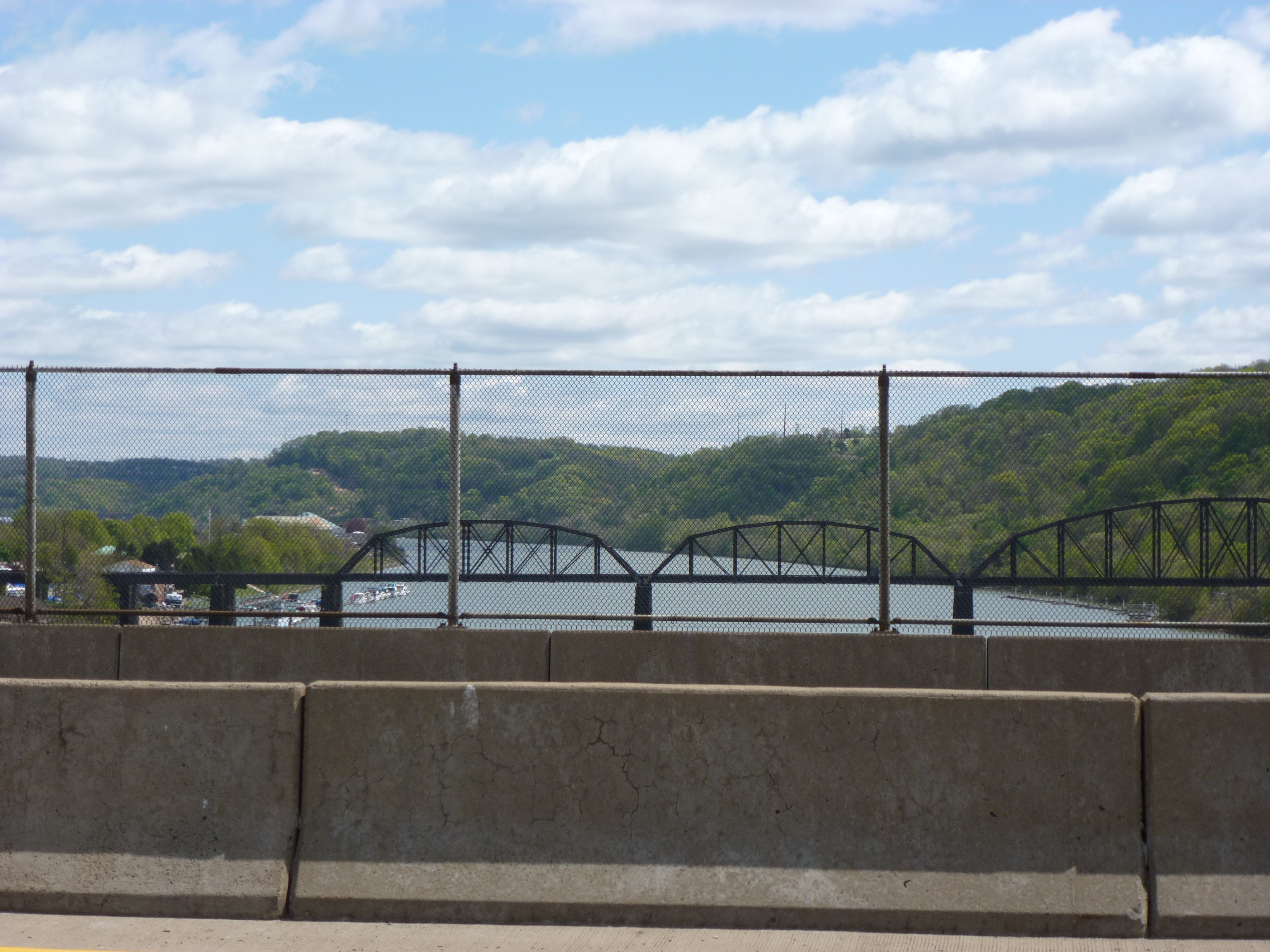
Outside of the safety issues of the Birmingham Bridge (see July 30 post), the surroundings and view from the bridge were interesting.  I was particularly interested in the uses along the waterfront around the bridge as there were three distinct types of use.
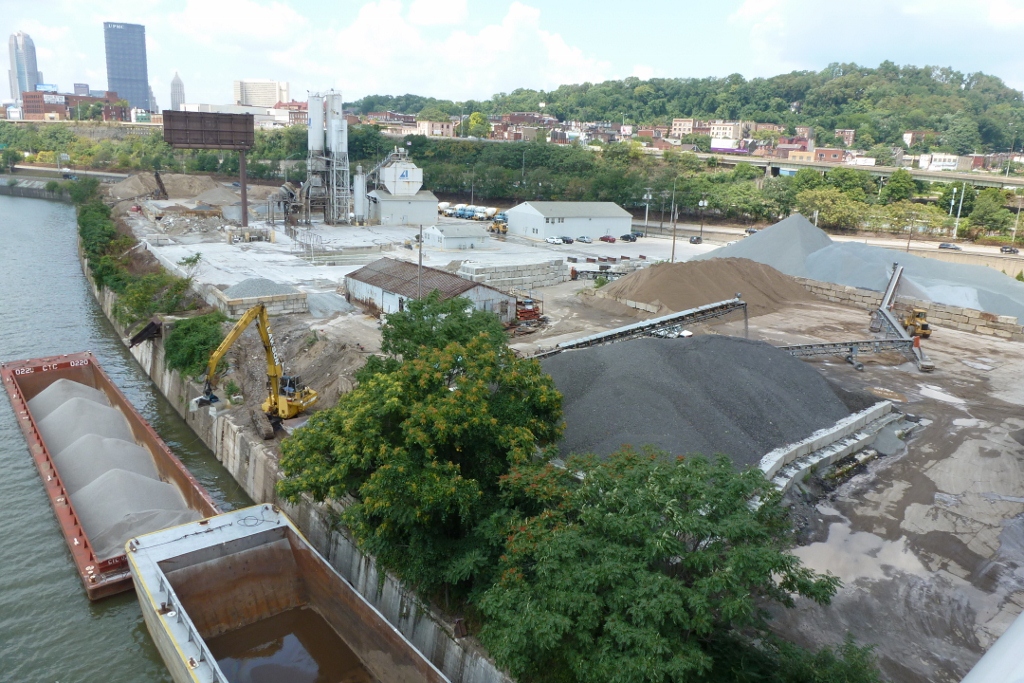
On the northern shore of the river and western side of the bridge is this gravel/cement? factory. I classify it as an industrial use, but I don’t really know what its purpose is.  I watch for a little while as the excavator scooped gravel from the barge and dumped it on the conveyor belt which passed it along and piled with the rest.  I think it is easy to forget at times that our rivers are still working rivers–some coal and other materials are still shipped by the rivers.  The image above is a reminder of this as the gravel was obviously delivered by river.

On the same shore, but the other side of the bridge, is one of Pittsburgh’s redeveloped brownfields.  This area used to be part of the Jones and Laughlin Steel Company, dominated by the Soho Iron Works (see 1923 map).  Today it is home to several office buildings along Technology Drive, including Carnegie Mellon University’s Entertainment Technology Center.  I believe the University of Pittsburgh may also have property on this site.  This site is an illustration of Pittsburgh’s Second Renaissance, the “Eds and Meds,” which was implemented in the 1980s to counteract the job loss and deterioration caused by the decline of the steel industry.  Here the former steel plant was replaced by buildings housing at least the education part of “Eds and Meds.”
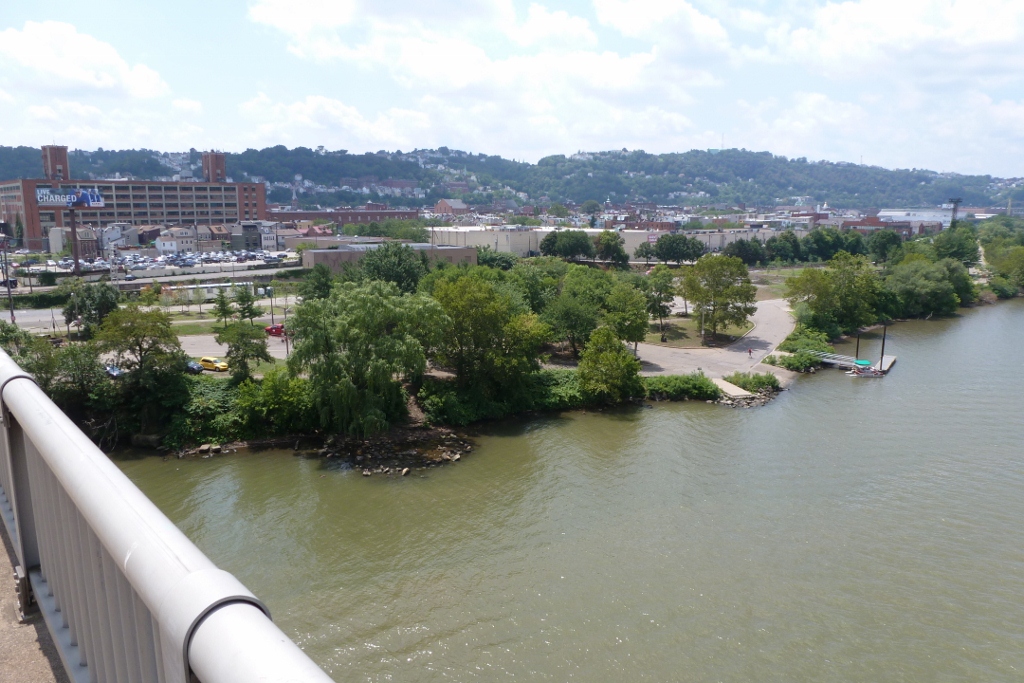
The third use of the waterfront at the Birmingham Bridge is recreation (and green space) on the southern shore.  The Three Rivers Heritage Trail travels near the river among the trees and grass.  The trail also passes under the Birmingham Bridge on the north shore, but the technology park and gravel site separate the trail from the river and it passes near the freeway, making it not a very pleasant place for recreation.  The southern branch of the trail on the other hand is pleasant as it passes among greenery and near the river.  The western side of the bridge provides additional opportunities for recreation on the southern shore as there is a boat launch and a parking lot that provides access to the boat launch and some picnic areas nearby.

The area around the Birmingham Bridge captures the various uses which riverfront property has been put in Pittsburgh.  First it was an ideal spot for industry and mills.  This has been replaced in some areas with new developments such as the offices at the technology center.  Now there seems to be an increasing interest in making the river fronts accessible and available for recreational use.
Converted Railroad Bridge

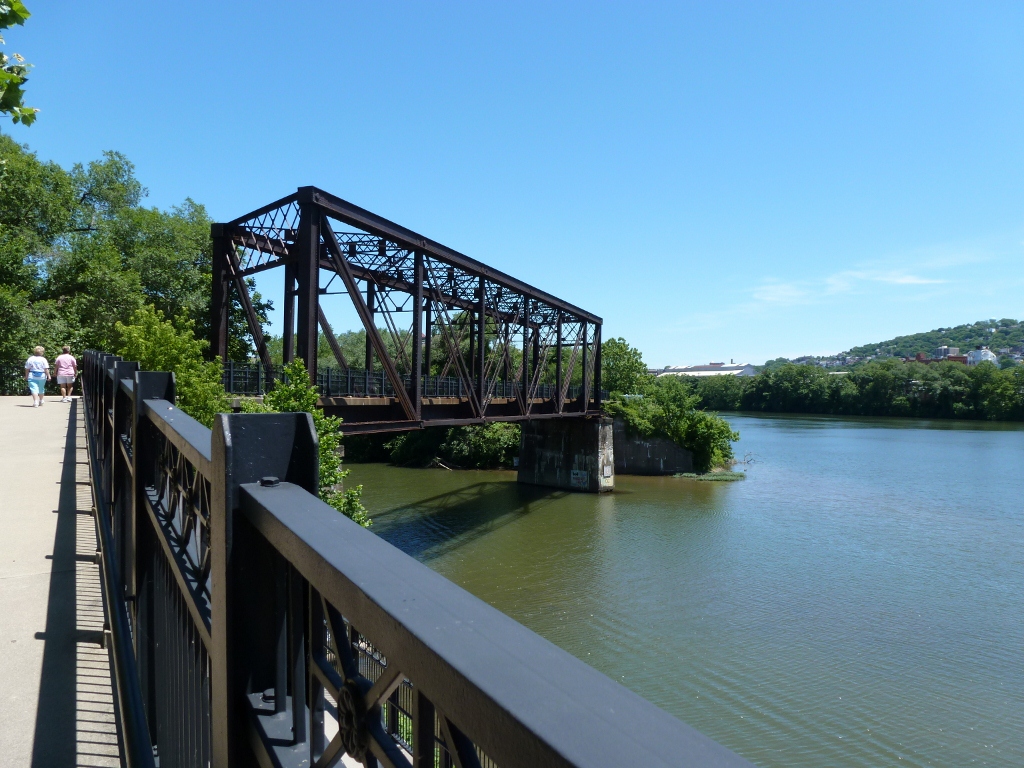
This is the bridge that I missed when identifying the river bridges to cross on GoogleEarth.  I missed it because it doesn’t cross the entire width of the Allegheny River.  About 2.5 miles upriver from Downtown Pittsburgh is Herr’s Island, also known as Washington’s Landing.  The name Washington’s Landing refers to the story that this was where George Washington spent the night after a crossing of the Allegheny River during which he fell into the river.  (The folk song “The Forks of the Ohio” describes the incident.)  Herr’s Island refers to one of the original landowners of the island, Benjamin Herr.

One of the names of this bridge is Herr’s Island Railroad Bridge.  While PGHbridges.com lists multiple names for the bridge, none of them refer to the new use of the bridge as a pedestrian bridge.  The bridge connects the northern shore of the Allegheny with Herr’s Island and I image was very well used while the island was covered with industry.  Now is it a very pleasant pedestrian bridge connecting the northern branch of the Three Rivers Heritage Trail with Herr’s Island, which now features a swanky residential area.


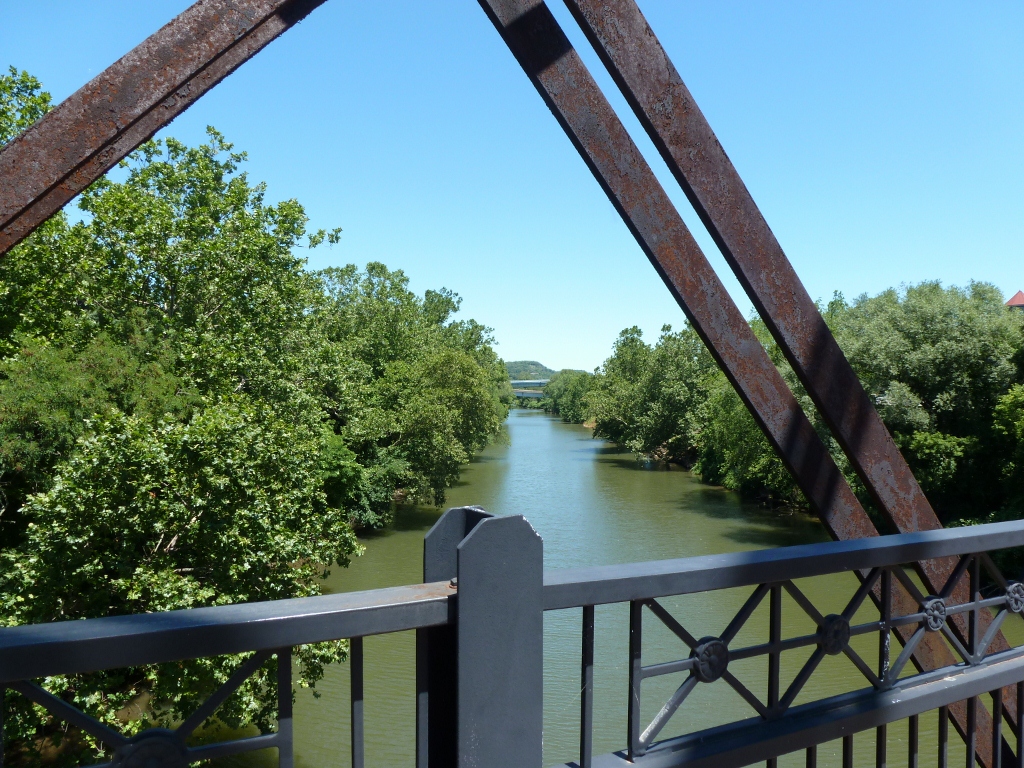
The view upstream shows the little stretch of the Allegheny that separates the northern shore from Herr’s Island, while the downstream view captures downtown.

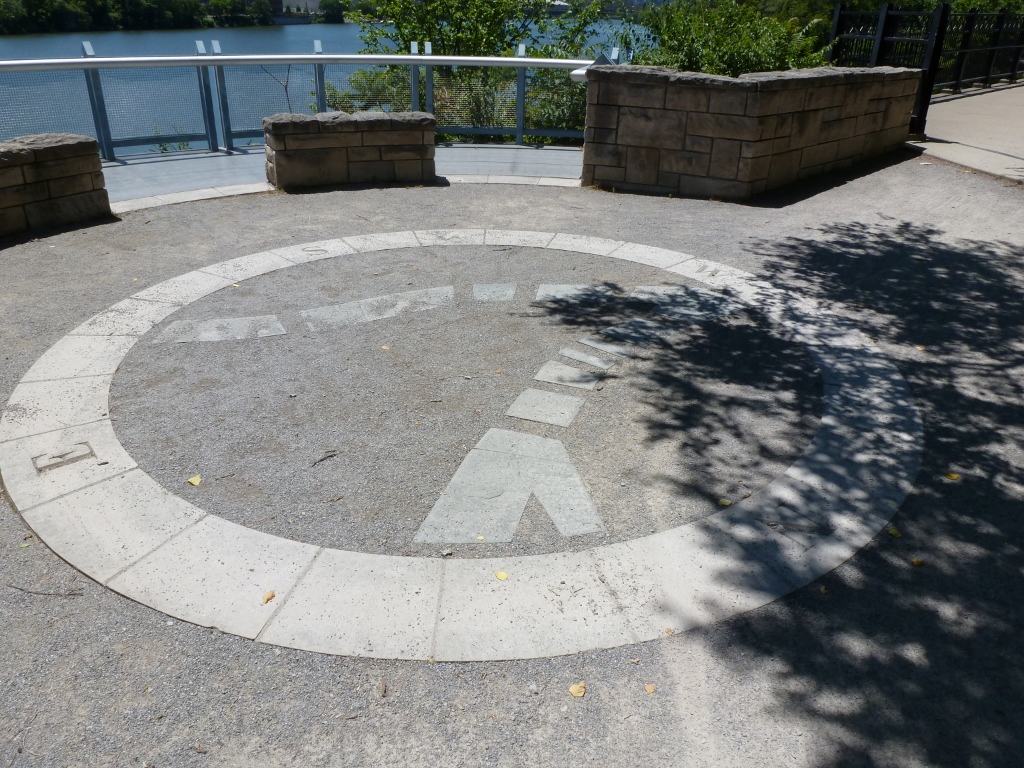
At the Herr’s Island end of the bridge is a nice look-out space featuring this compass with the three rivers.  While this part is nice and seems to welcome the public, I always feel very awkward as I continue on the trail along Herr’s Island.  The way the island was developed, it feel like it’s a private, gated community and people like me who use the trail but don’t live there are interlopers and trespassers.

Maps are Awesome!

While talking with someone recently, we discovered we shared a seemingly rare love of maps.  Maps are truly awesome and useful tools and not just for figuring out how to get from one place to another.  Maps provide insight into what a place looks like, giving clues about the layout and geography of a place you’ve never been.  Street names and other labels can hint at the history of the place.  Historical maps show what a place looked like in times past.

I have used maps several times to help me with writing my blog and there are many more times when I should have gone to a map first. As I mentioned in the first Heth’s Run Bridge post, the G.M. Hopkins maps on Historic Pittsburgh are probably my favorite resource for Pittsburgh.  Heth’s Run Bridge presented many puzzles that the maps helped me understand.  I realized yesterday that I probably should have gone to these maps first when wanting to figure out which bridge remnant I saw from the Fort Duquesne Bridge (see June 19’s post).  While writing that post, I did a search on the internet, but came up with nothing.  The G.M. Hopkins maps came to the rescue, although there are two possibilities for which bridge the remnant belonged to.  The first possibility I found on the 1900 map.  This one was called the Union Bridge.  By 1929, the Union Bridge was gone and another bridge connected the Point to the North Side.  This one was called Manchester Bridge.  This bridge was demolished in 1970, by which time the Fort Duquesne Bridge was built (see June 19th post).  I made a few other discoveries about Pittsburgh while looking at the 1929 map.  First, Penn and Liberty avenues used to come straight through to Water Road which ran along the northern shore of the Monongahela River.  Today these avenues stop much further inland.  The second major discovery was that Point Park already existed in 1929.  It was significantly smaller than it is today, but it is there.

Google Maps helped me with identify the buildings near Lambeth Bridge (see June 28th post) that I didn’t take the time to stop and investigate while I was walking the bridge.  Several of the buildings I was able to identify from labels that Google Maps conveniently placed on the map.  The Parliament View Apartments weren’t labeled, but using Google Maps’s other wonderful feature–Street View–I was able to find a sign on the building identifying it.

The image leading this post is of another highly convenient map.  On my recent trip to Cleveland, I arrived Downtown 2 hours before the person I was visiting finished work.  We arranged to meet at their place of work, but I was only familiar with two or three of the streets in downtown Cleveland, and the meeting place wasn’t on any of them.  I had just decided to use my skills of logic to find it (which would have been feasible in this case as one of the cross streets was a numbered street and the other was called Lakeside) when I came across this map on a street corner.  It turns out that these maps are posted regularly around downtown Cleveland, which I thought was very considerate of the city.  It made the city feel like it welcomed visitors with open arms, engaging them in being engaged in the city.  Even though I had a plan for finding where I was going without a map, I prefer being safe rather than sorry, so I took the easy way out and used the map to figure out where I was supposed to end up.  I also used it to plot out how I could spend the time I had until my friend got out of work to cross at least one of Cleveland’s bridges over the river Cuyahoga.  I ended up getting distracted from this goal, but that is a story for another day….(see July 9 post)….

A power station and Sherlock Holmes

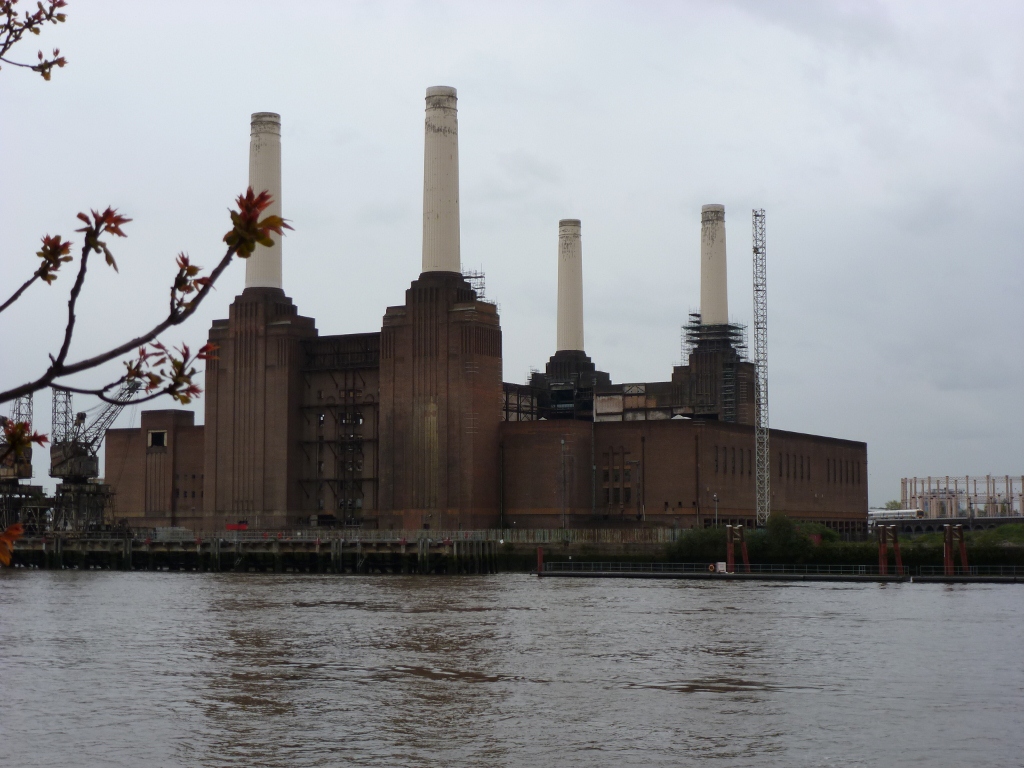
The Battersea Power Station intrigued me from the first glimpse I got of it.  The smoke stacks first entered my frame of view at the Battersea Bridge (see June 15th post).  I kept my eyes on the building as I got closer to it and was thrilled to get such a close view.  I couldn’t tell from the early views of it that it was on the river.  It was obviously empty as I could see sky through some of the windows.  However I did not know what it was.  While large, empty, industrial buildings intrigue me, I don’t know enough about them to identify their previous purposes.  This one used to be a power station built in the 1930s and closed over the 1970s and 1980s.  The National Heritage website indicates that building was to be adapted to new uses starting in 2005 and a BBC article said the building was to open as a new shopping and etc. complex in 2009.  I did not see any signs of any use of the building when I passed, so I’m assuming these projects have yet to come to fruition.

After returning home from my trip to the UK, I received Sherlock Season 2 on DVD.  One of the best parts of the season was in the first episode “A Scandal in Belgravia” where a sequence took place at the Battersea Power Station, which I instantly recognized, from having spent so much time staring at it while walking past it along the River Thames.  This has been one of my favorite parts about my trip to the UK, now when I watch my British TV or read my British literature I recognize and understand the locations more from having seen them in person.

I did have a false call with this over the weekend.  I was reading “For all the Tea in China” by Sarah Rose which talked about the Chelsea Physic Garden.  I immediately said, “I know that place, I remember walking past it.”  However, when looking at pictures of it online, I realized that I passed by the Physic Garden completely oblivious to its presence.  What I remembered walking past was the Chelsea Flower Show grounds, which were being set up for a big show, that the gardeners were a little concerned about due to the excess rain the UK experienced this spring.

Chelsea Bridge, London


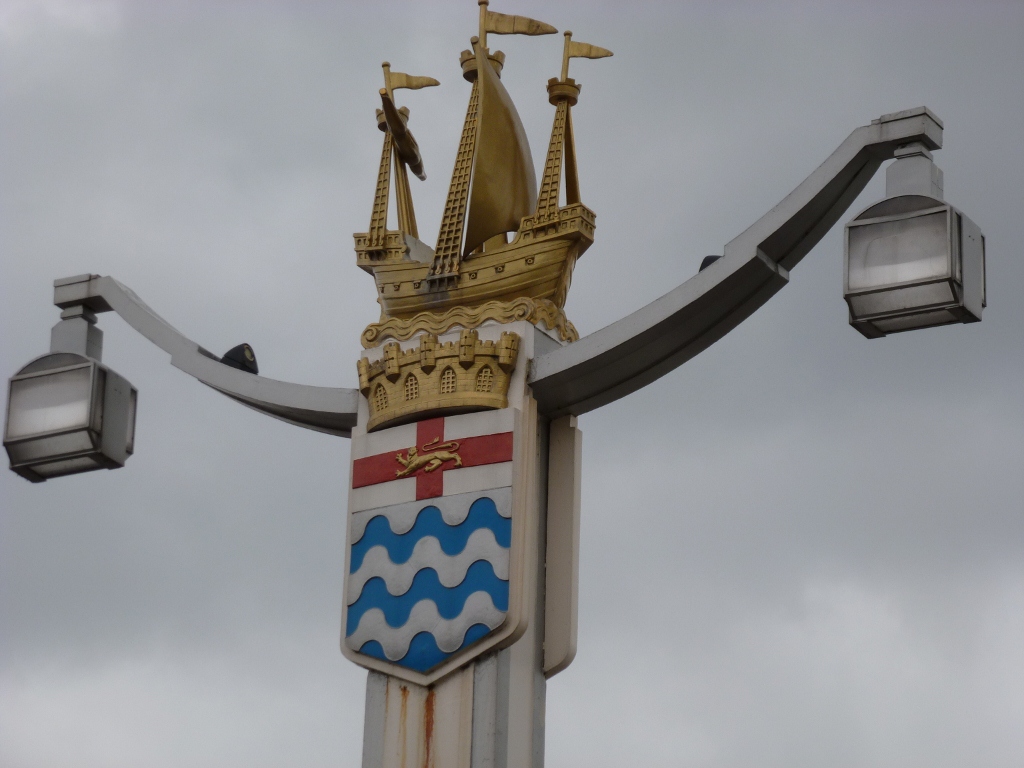
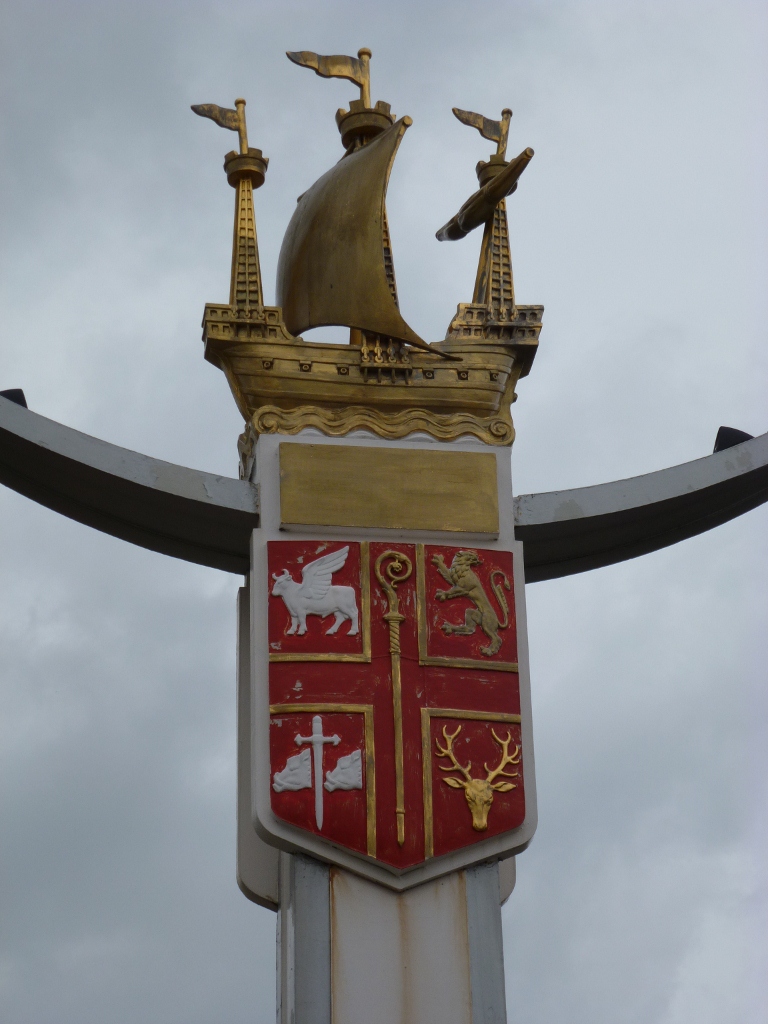
The part I most enjoyed about the Chelsea Bridge was the four golden ships, two at each end of the bridge.  I only took two pictures of these ships.  I originally was only going to take one as I assumed that they were all different, but I took a second when I noticed the coat of arms below the ships were different on each side.  The first one is the coat of arms of London and the other one is the coat of arms of one or some of the boroughs.  Like the Albert Bridge, the 19th century Chelsea Bridge had structural issues.  Unlike the Albert Bridge, the Chelsea Bridge was demolished and rebuilt in the 1930s.  The red and white color scheme, while not as striking as the Albert Bridge’s pink, green, and blue scheme, does also catch the eye.  I suppose this may serve a similar purpose of making the bridge visible under challenging visual conditions.
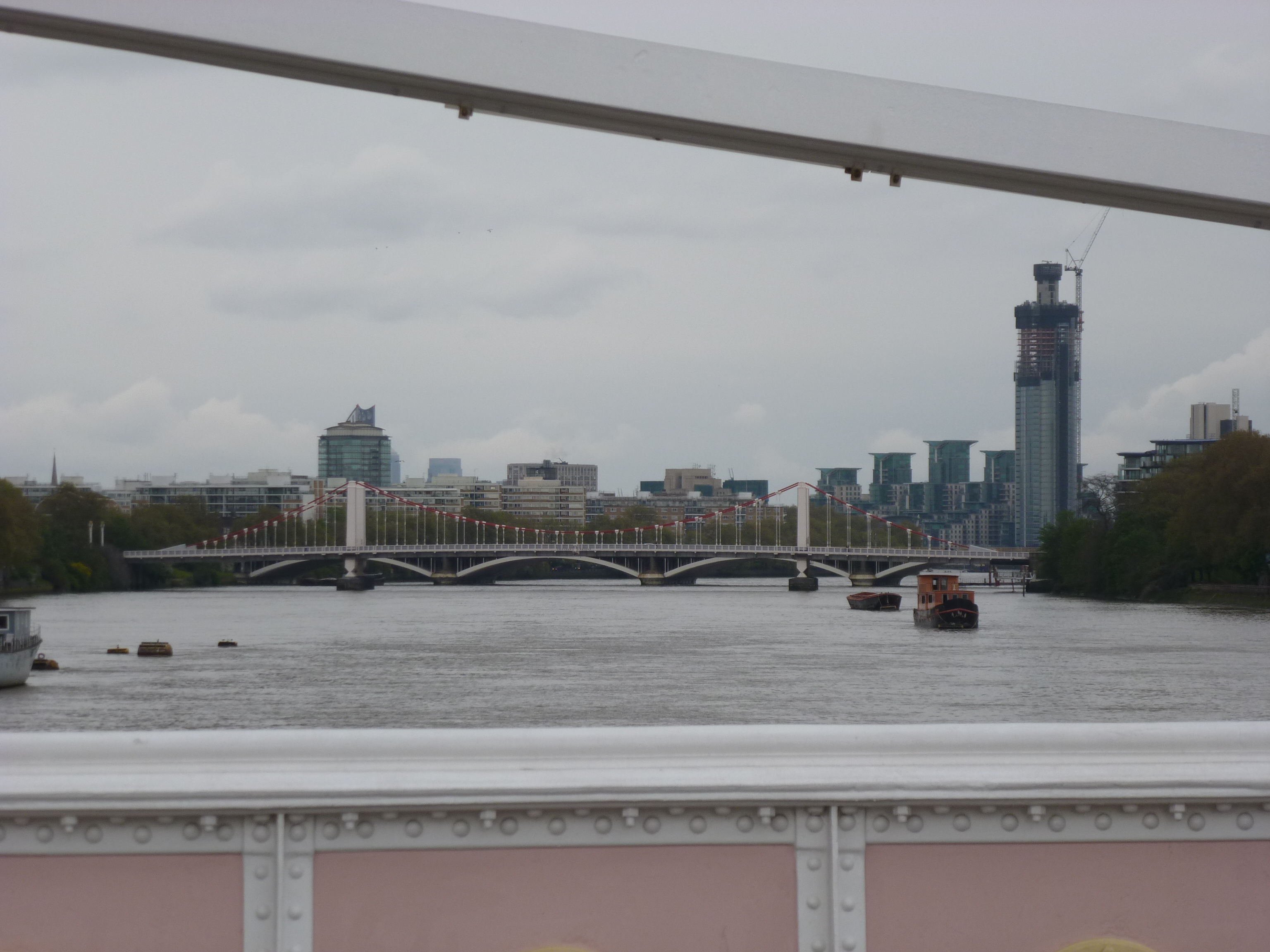
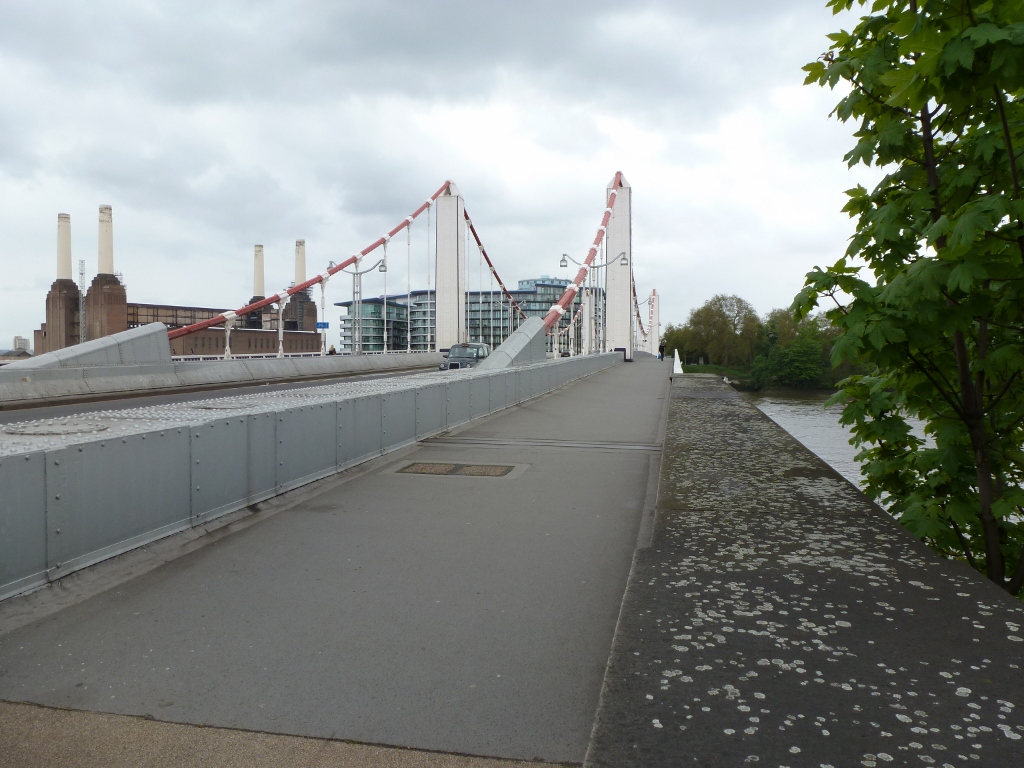
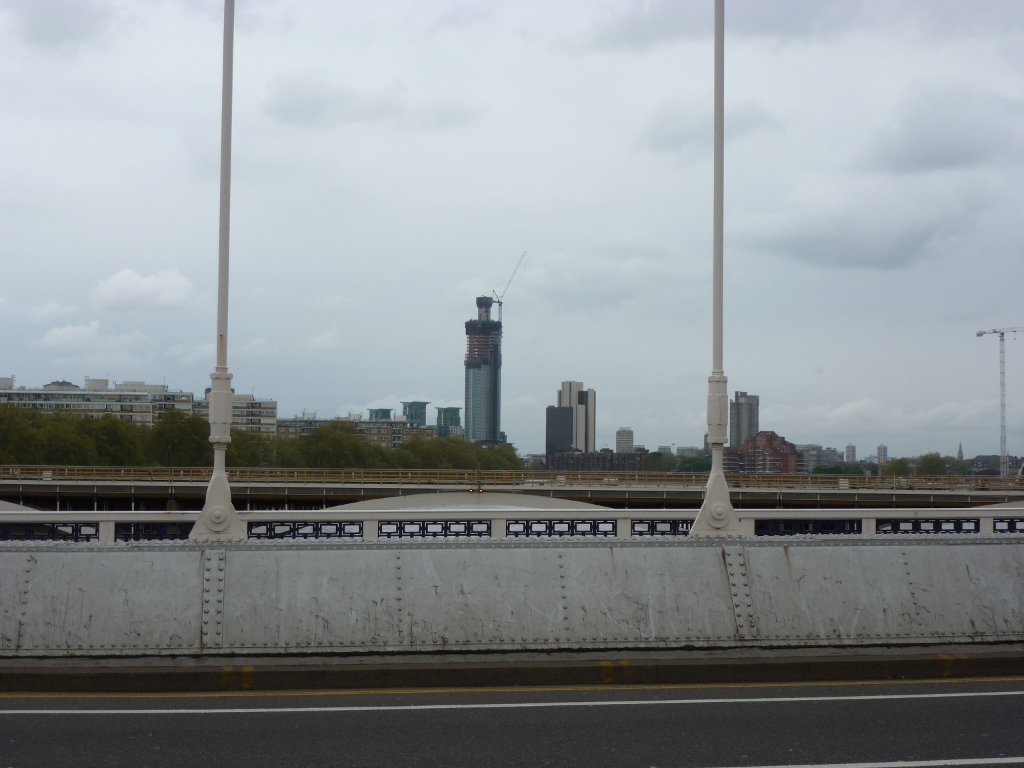
Similar to the Albert Bridge, the view from the Chelsea Bridge encompassed mostly modern buildings among the trees lining the river embankments.  The Battersea Power Station, now vacant, was one of the oldest buildings visible from the bridge.  (Watch for an up-coming post with more on the power station and Sherlock Holmes.)


An interesting tidbit I discovered while looking up the Chelsea Bridge online is that Billy Strayhorn composed a song entitled Chelsea Bridge.  Apparently the piece is misnamed as Strayhorn was inspired by the image of the Battersea Bridge, which he identified at the Chelsea Bridge.  While I am not familiar with Strayhorn’s work, I am intrigued by this connection as Strayhorn went to high school in Pittsburgh and started his career here.  A local theater, the Kelly-Strayhorn Theater, is named in his and Gene Kelly’s honor.  (Gene Kelly also went to high school and college in Pittsburgh.)

Albert Bridge

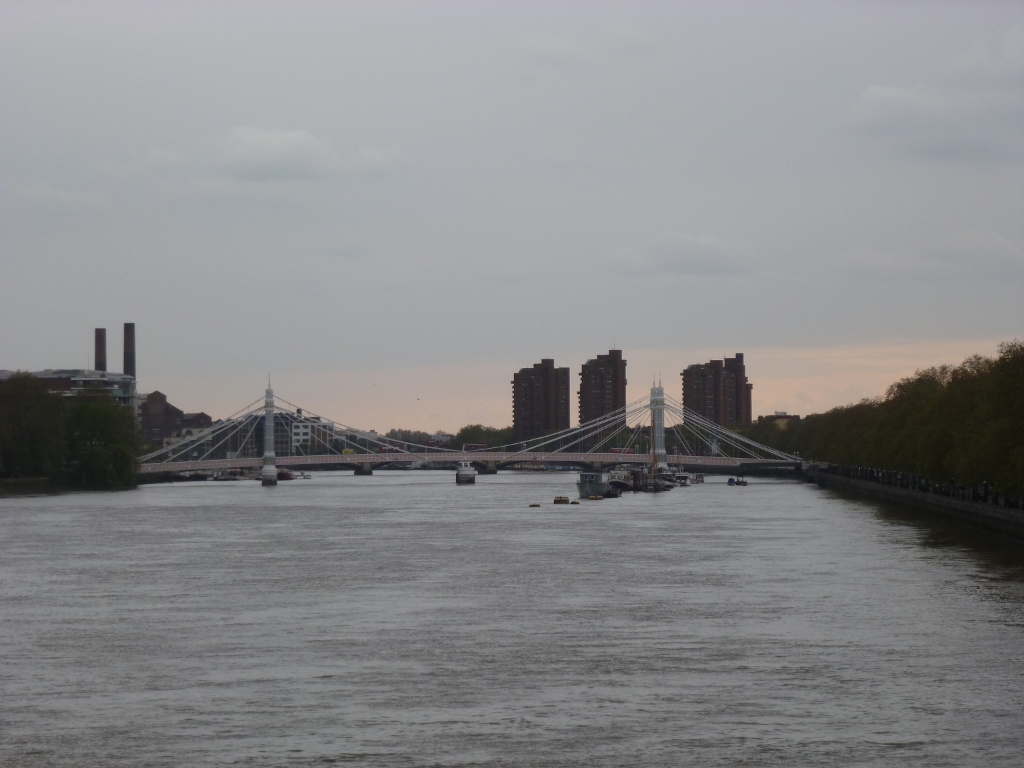
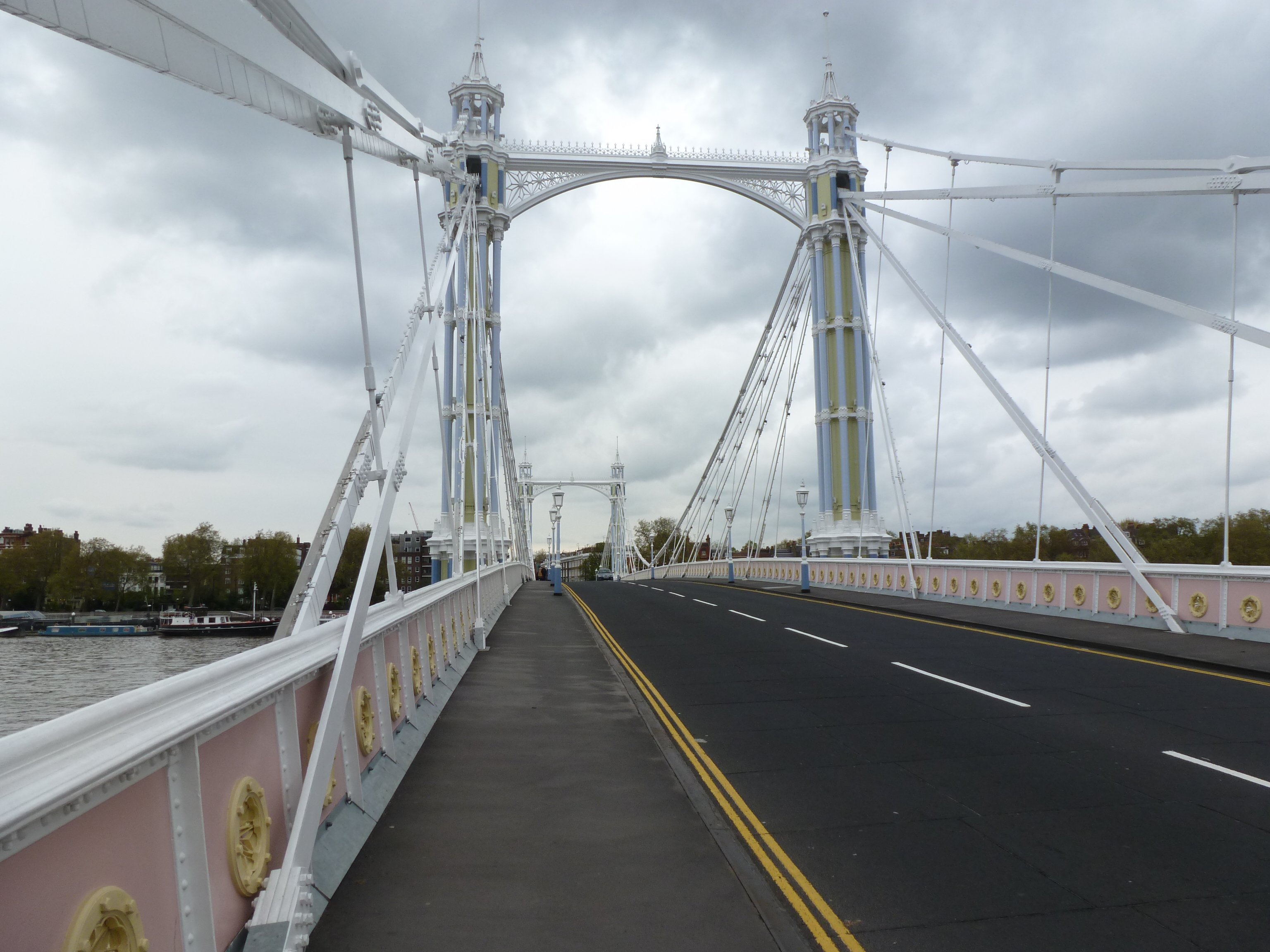
The Albert Bridge, opened 1874, was my favorite London bridge.  Who came up with the idea to paint a bridge pink?  The color scheme looks perfect for a nursery and really bizarre for a bridge particularly one named after Prince Albert.  According to Wikipedia, this color scheme is rather new, the bridge having been painted pink, green, and blue in 1991 to increase the visibility of the bridge in foggy and other low visibility conditions.  This is one of those incidents where the facts are disappointing–I had been imagining all sorts of reasons for the color scheme, including that these three colors were Prince Albert’s favorite or that these colors were chosen specially to symbolize aspects of Prince Albert’s personality or accomplishments.

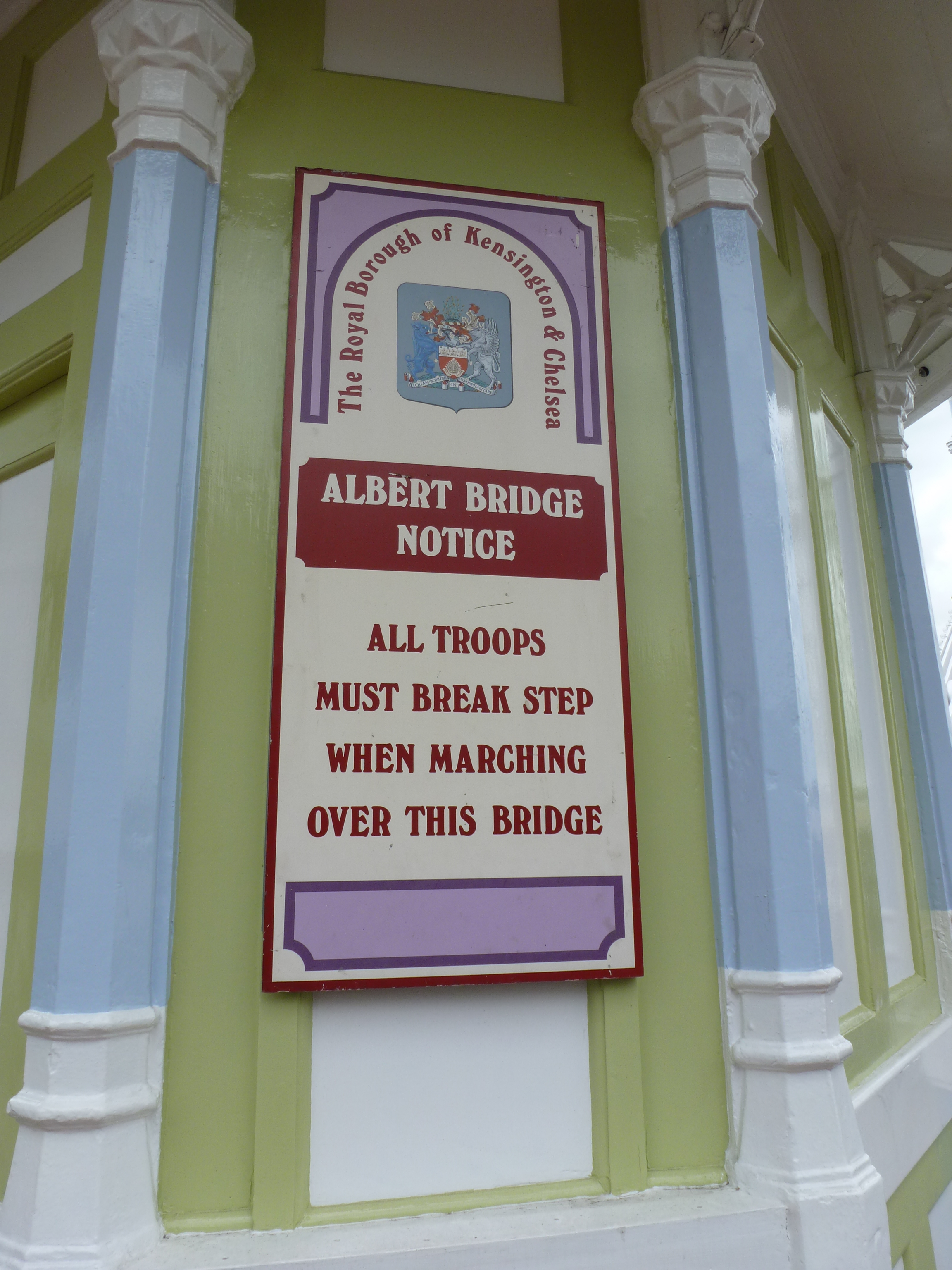
As this sign indicates, the Albert Bridge is not the most structurally sound and the force of troops marching in step could be enough to bring the bridge down.  Despite the structural deficiency of the bridge, it is one of the only bridges across the Thames in London to be still the original structure (more or less).  It has been renovated and reinforced on multiple occasions, but never demolished and rebuilt.

It seems possible to create a convincing argument for how the Albert Bridge symbolizes Prince Albert.  The bridge is unstable and the colors are not traditionally considered masculine.  Prince Albert was a man who struggled as the husband of Queen Victoria.  This marriage suffered from tensions between the idea that the man was the “head” and “ruler” of the family and the fact that in this case the woman was the head and ruler of an entire empire, so how could her husband be the head and ruler of her? (Particularly since he was German and the ruling British classes were very suspicious of and against any influence from the Germans.  “Victoria and Albert” (2001) is a good film about the love and tension in this marriage.)  Prince Albert had to deal with feeling less manly and powerful, at times, than he wished, while the bridge named after him is less strong and serious-looking than most other bridges.

Most of the buildings visible from the Albert Bridge were of new or modern construction and appeared to be used mostly for residential or office use.  One industrial site was visible to the west past the Battersea Bridge in the form of a factory near Chelsea Harbor.  There were also many boats parked in the Thames near the Albert Bridge; I don’t know if they were houseboats, fishing boats, or something else.


Highland Park Bridge

The Highland Park Bridge, built 1938 (technical information can be found here), connects Pittsburgh’s Highland Park neighborhood to Route 28, Apsinwall, Sharpesburg, and the Waterworks Mall.  As a pedestrian this bridge is awkward at best.  There is sidewalk only on the western, down-stream side of the bridge, with a cement divider between the sidewalk and the road with the cars passing at around 45 mph and a metal, mesh fence keeping whoever’s using the sidewalk on the bridge.  The sidewalk is pretty narrow and is decorated with dirt and liter.  The best pedestrian approach to the bridge from the city side of the river starts at the intersection of Baker and Butler Streets.  It is a simple t-intersection with a light and a cross-walk on one side.  I believe it is technically possible to cross to the river side of Butler at One Wild Place, but the intersection there is far more complicated with no visible crosswalk and I doubt drivers even consider the possibility of pedestrians crossing at this point.

Once across Butler (from the intersection at Baker), turn right and cross Heth’s Run Bridge (see June 9 post for description of sidewalk conditions, see May 31 post for more info on this bridge).  As mentioned in the June 9 post on Heth’s Run Bridge, the sidewalk narrows considerably at this point and is broken and half covered in weeds and dirt.  For over 500 feet from the end of this bridge to the ramp for the Highland Park bridge there is no divider between the sidewalk and the street where cars tend to travel quickly.  On the ramp, the weeds go away and the cement divider starts.  At the other end of the bridge, there is a small gap in the divider for pedestrians to cross one of the on ramps for the bridge.  The view of on-coming traffic is often impeded by overgrown weeds/bushes.  Once across this lane, the sidewalk follows another on/off ramp of the bridge around 360 degrees to meet up with Freeport Road which passes underneath the bridge.  While this is the most pleasant part of the bridge as the area inside the circle is a well-maintained grassy spot, it feels a bit ridiculous as a pedestrian to walk around in such a wide circle.

I have walked this bridge several times now, in part because bus service between the East End (which includes Highland Park) and the Waterworks Mall was severely cut a few years ago.  A runner once passed me and bicyclists have passed me multiple times, however I have never encountered (or observed while driving across) any other pedestrians on the Highland Park Bridge.

There a couple of sights of interest from the bridge.  First is the lock.  Quite serendipitously the day I brought my camera to document my crossing of the Highland Park Bridge was the only time I’ve crossed when the lock was in use. The one thing I couldn’t figure out is how they would get the first barge out of the lock when the tug boat is on the higher level water with the second barge.

This is the second sight of interest is pictured above. If there was a place in Pittsburgh that would produce a comic book superhero, it would be here.  The hole in the picture above often gets filled with rainwater that stagnates and on some occasions turns an eerie, neon-like green color–the perfect toxic dump to produce superpowers.  I assume this site is some sort of scrap metal processing place.  A search on Google did not come up with any satisfactory responses.  One day when I walked past, a magnet was lifting up pieces and dropping them down repeatedly.  Whatever the site is, it is one of the reminders of Pittsburgh’s nitty-gritty industrial past.


The upstream and downstream photos present a snapshot of what this part of the city looks like.  Downstream, the 62nd Street Bridge, aka R.D. Fleming Bridge, (see July 24 post) downtown Sharpsburg, Six Mile Island, and lots of trees are visible.  Upstream, trees, a railroad bridge, a dock for personal boats, and the roof of one of the waterworks processing buildings are visible.  Overall there is a very rural feeling six miles up the Allegheny from downtown.