Leap Frog 1

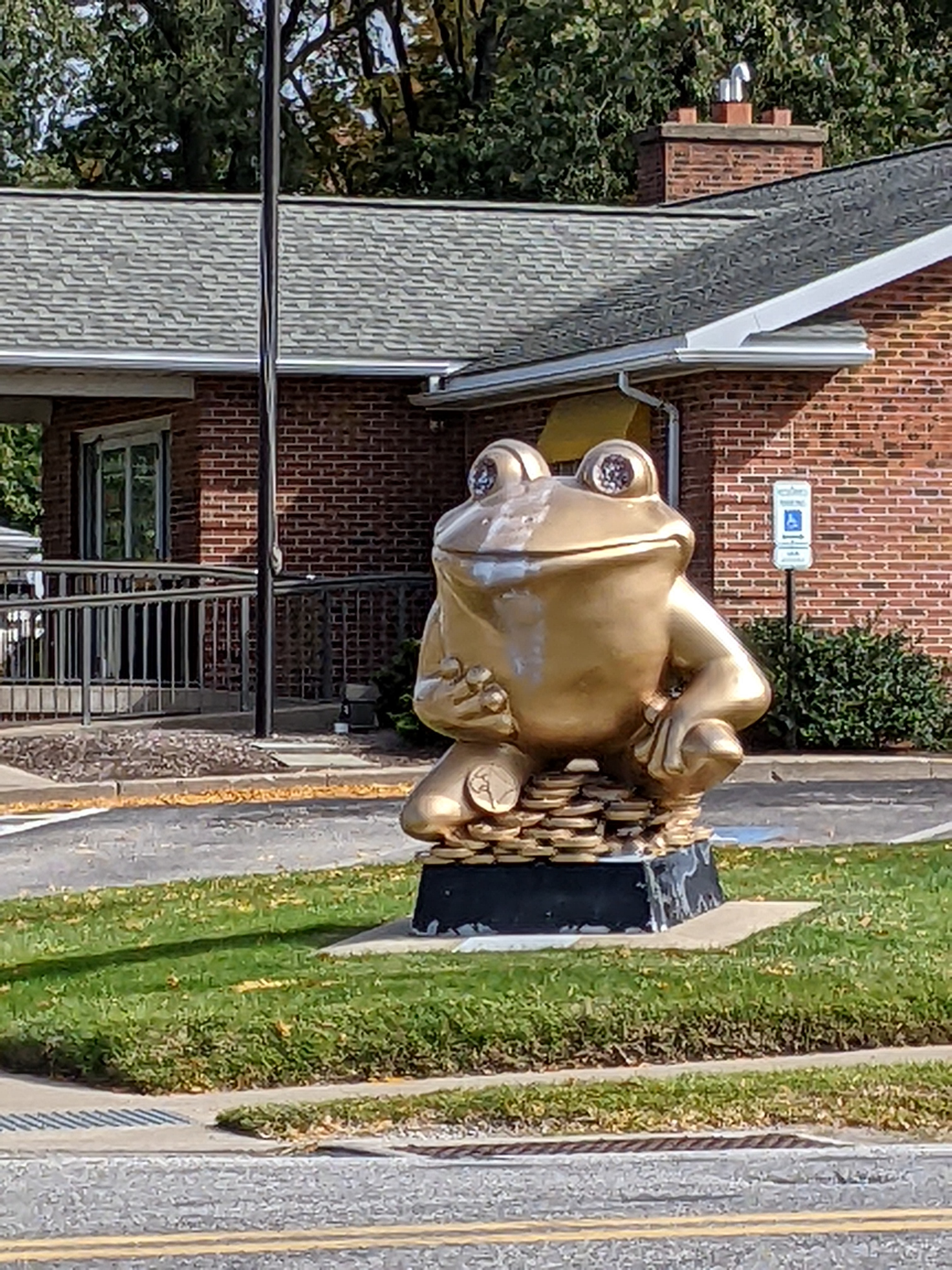
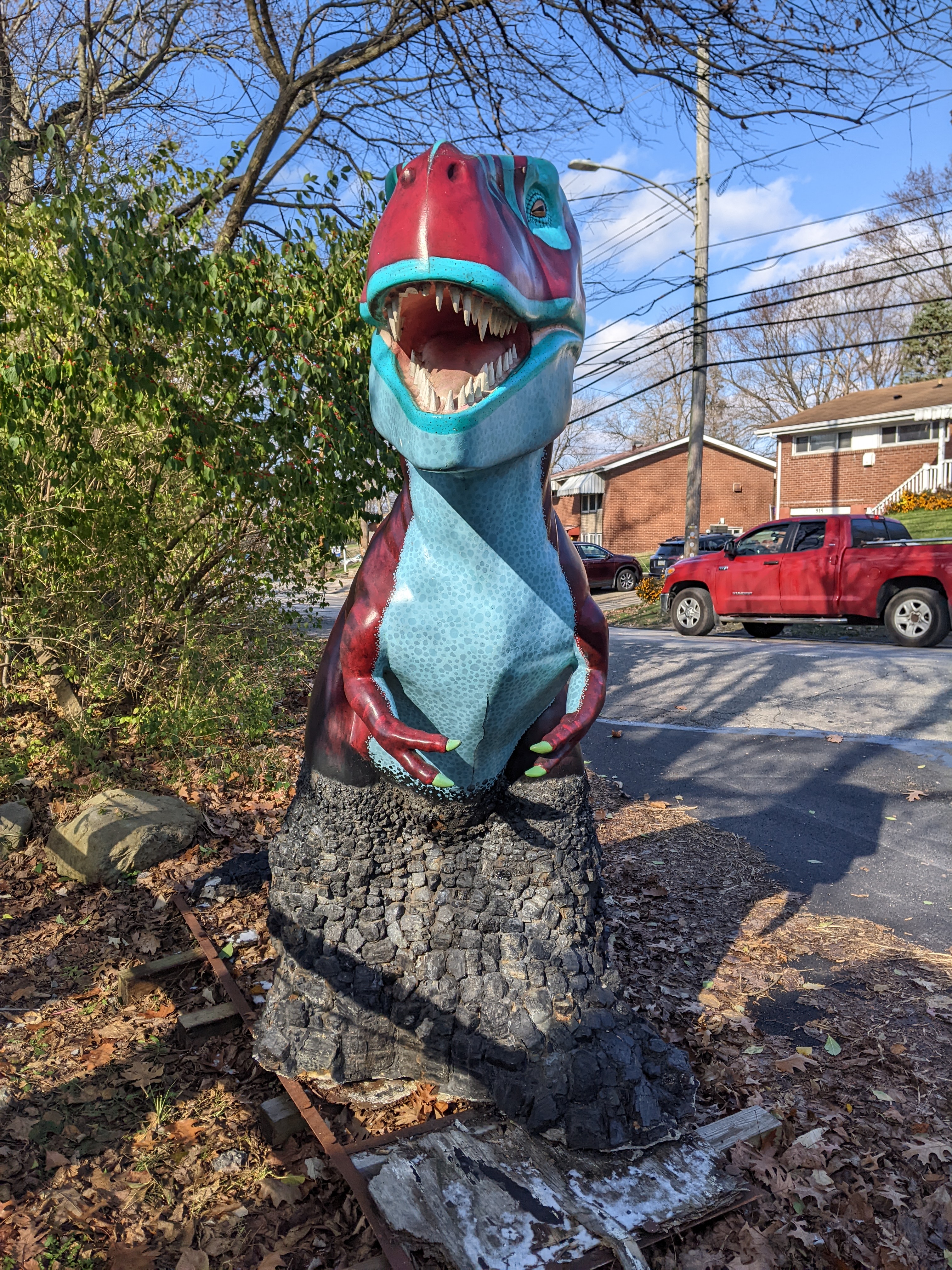
LeapFrog! was a fundraiser in Erie, PA, in 2004. I found the frog above on a trip to Erie in 2012. Like some of Pittsburgh’s dinosaurs, I cannot match it to one of the original frogs in the official book.

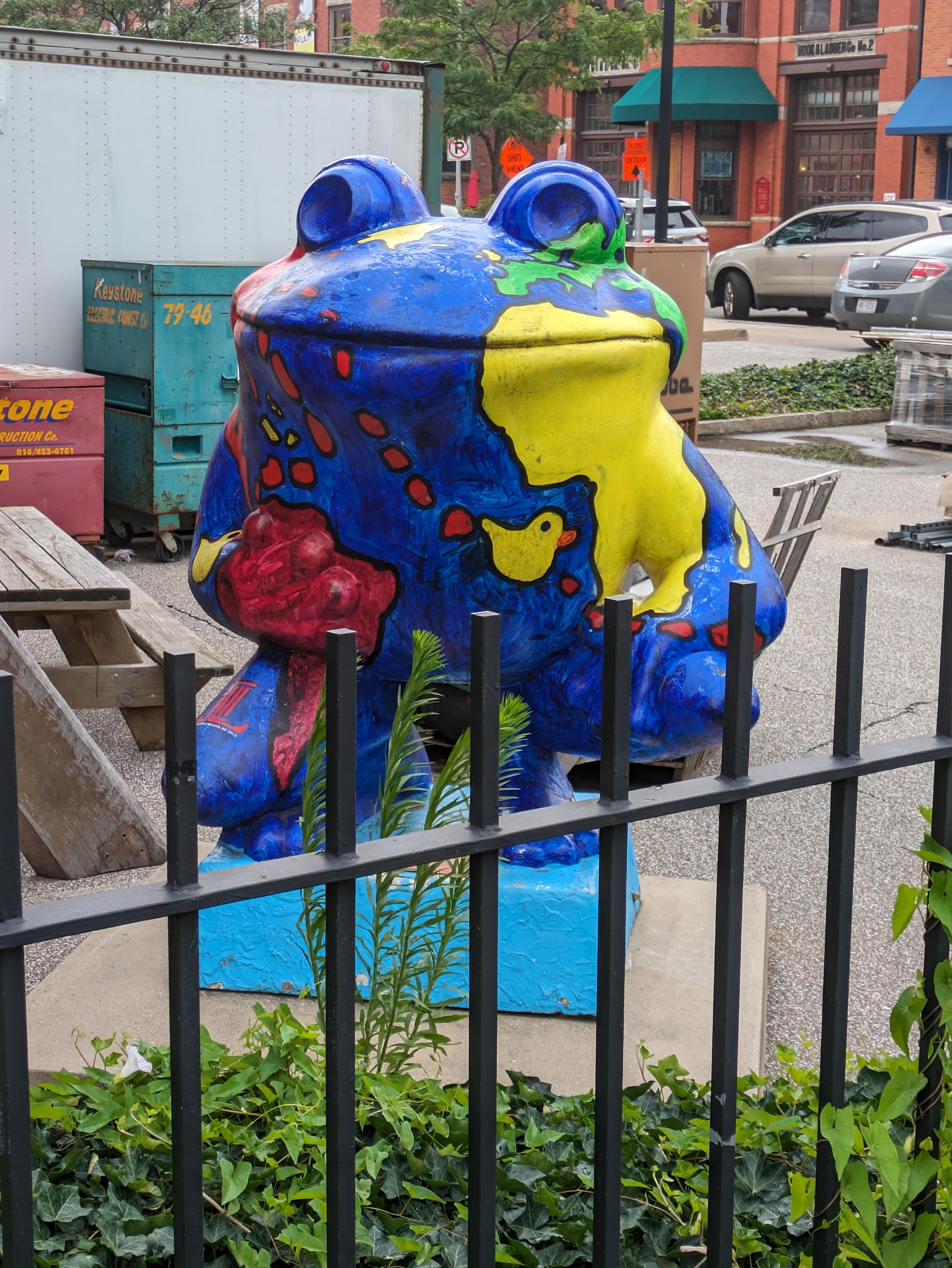
In 2012, I experienced a narrow band of Erie along State Street from downtown to the waterfront. While walking around in this area looking for churches, I found some frogs. At the time, I did not make a note of the locations where I found them.

In 2023, I found that Ami H. maintains a list and map of the locations of the LeapFrog! frogs. I believe the frog that I found in 2012 is the one tagged on Ami’s map at the Children’s Museum. It has been repainted and become “Experience Frog.” (I still can’t find a match for it in the official LeapFrog! book.)

The Story of the Spires – Scranton

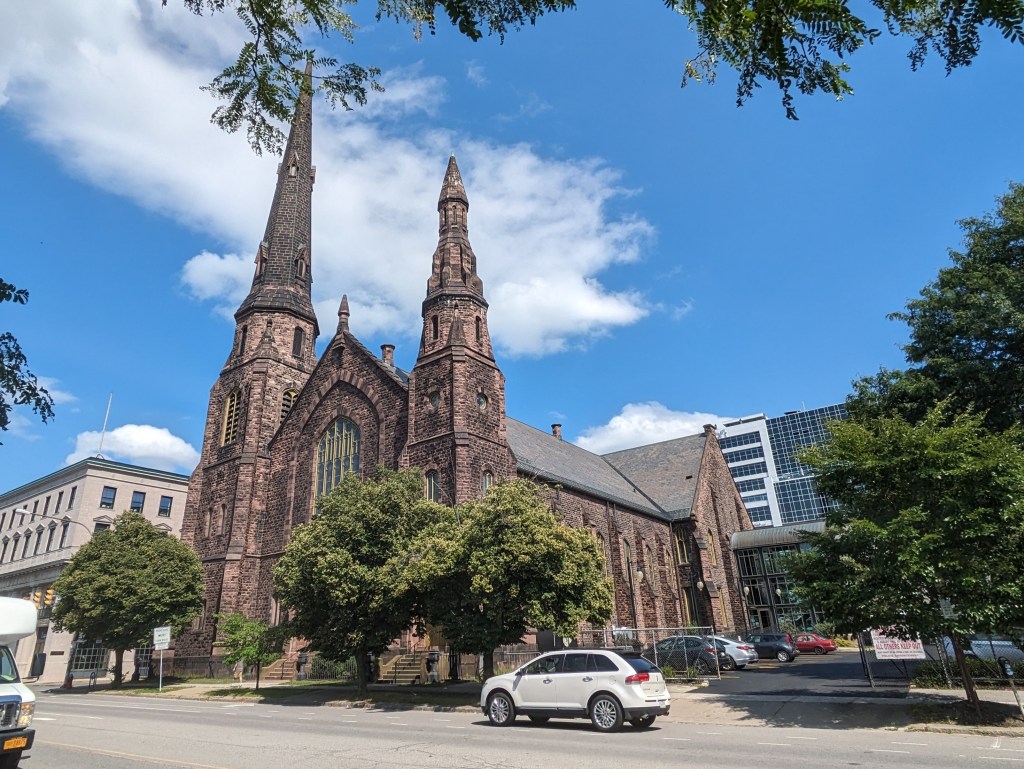
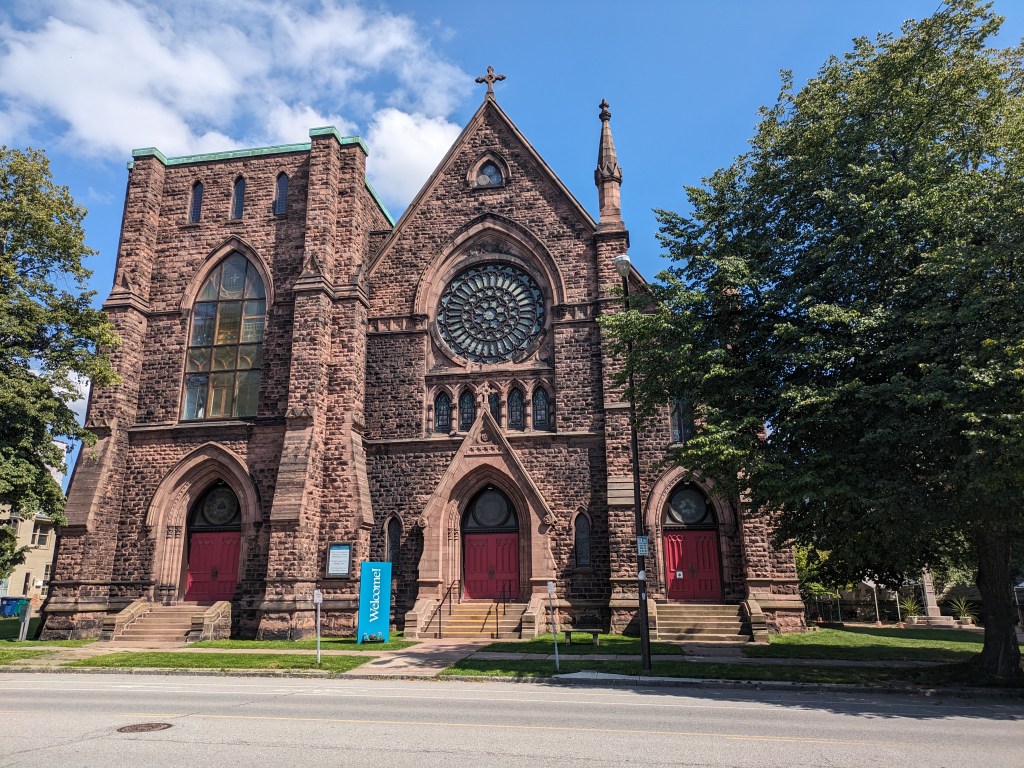
Walking toward the spires in Scranton, PA, I started and ended in Downtown and explored a portion of the Medical and University neighborhoods. Like Pittsburgh and Buffalo, the few religious buildings I found in the heart of downtown remained active. In the adjoining neighborhoods, I found several active religious buildings and others that had been converted to new uses.

Of the 10 total buildings built for religion that I encountered, six remained active while four had been converted to secular uses. One former synagogue is now used for housing. Two former churches are now university buildings. One former church is now a children’s library. This sampling seemed representative enough to contribute to my observations on trends in adaptive reuse and population change. Scranton has experienced a 47% drop in population since its peak population in the 1930s. Based on this information, I expected to find several vacant and reused religious buildings. The surprise finding was that none of them appeared vacant when I got out on the ground.

I also noticed several religious buildings as I drove through the southern neighborhoods on my way home. Because I was driving, I didn’t have the ability to stop and take notes or photos of these buildings, but those that I noticed appeared to be either active religious buildings or active in a secular reuse.

The lack of vacant buildings may perhaps be explained by the recent population trends. While overall, the population is significantly down from the peak, in the last couple decades the decline in population has slowed and the 2020 census showed a miniscule increase in population. It is, so far, the only one of my comparison cities that had a major population drop and a recent increase in population. While Bethlehem and Stroudsburg also saw population increases in the 2020 census, they did not have the same steep drop since the peak population that Scranton and most of the other cities in this survey did.

CityPopulation Loss Since Peak (Peak Year)Population Change in 2020Status of Religious Buildings
Bethlehem1% (1960)0.86%Primarily active sacred uses
Erie26% (1960)-6.82%Primarily active sacred uses
Homestead85% (1920)-9.04%Significant numbers closed or converted to secular uses
Pittsburgh55% (1950)-0.96%Significant numbers closed or converted to secular uses
Scranton47% (1930)0.30%Significant numbers converted to secular uses
Stroudsburg14% (1950)6.47%Primarily active sacred uses
Wilkinsburg49% (1950)-10%Significant numbers closed or converted to secular uses

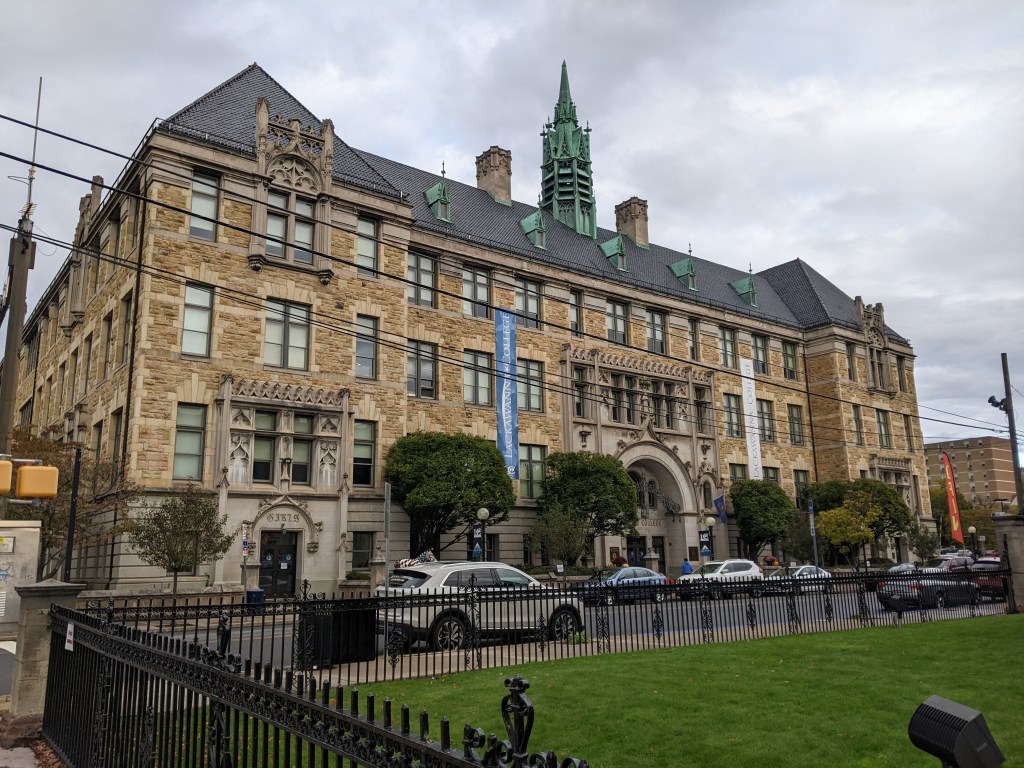
In addition to the religious and former religious buildings, I found 2 civic buildings and 1 school that sported spires.

The Story of the Spires – Buffalo

When I visit a town, I have a habit of searching out the bridges and the spires to get a feel for the place. Buffalo is one of the most recent places where I applied this approach. Given the size of Buffalo (52 square miles with a population over 275,000), I wasn’t able to explore enough of the city on this trip to add to observations of population trends and adaptive reuse of the religious buildings. So instead, I focused on the spires I could see in downtown. Comparing this to Pittsburgh, where the downtown also has several spires and where I have done a pretty thorough survey of the entire city, I realized that neither Pittsburgh’s nor Buffalo’s downtowns would be indicative of the city-wide trends of adaptive reuse of sacred buildings. The development pressures of a downtown are significantly different from the outlying neighborhoods. In both cities, the religious buildings that survived the development pressures of a downtown have remained in active use.

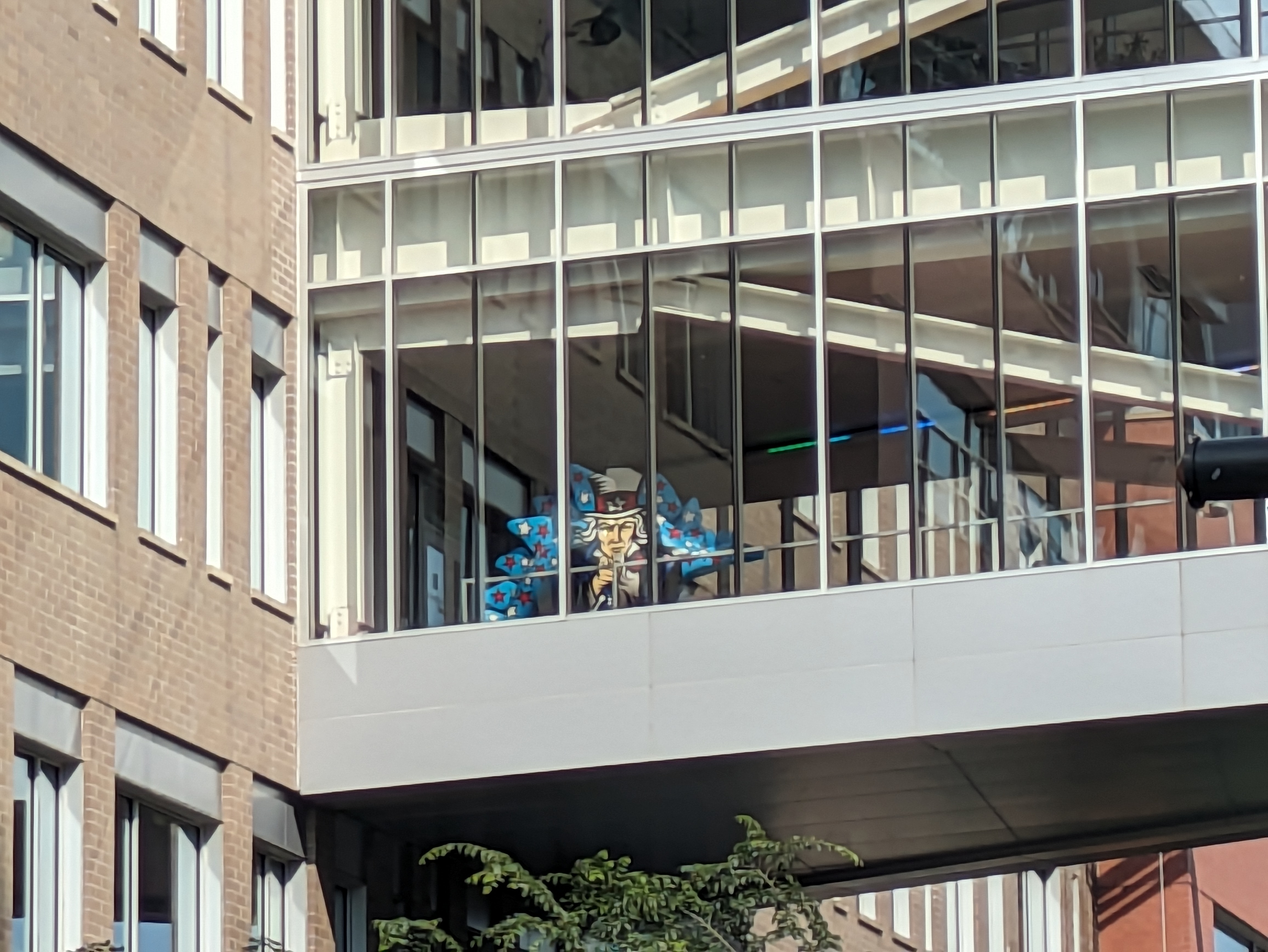
What struck me while walking toward the spires in downtown Buffalo was how I typically eliminate or discount spires for secular buildings that I find while on these searches. In Buffalo, I felt that if I’m calling my approach “the story of the spires” leaving out the secular spires leaves out a part of the story.1 The secular spires that caught my eye were for buildings across a spectrum of uses. The Erie County building (1872); a former US Post Office (1901), now a part of SUNY Buffalo’s campus; and the former headquarters of the Buffalo General Electric Company (1912), now an office building, were the three secular spires that caught my eye. These three buildings underscore the larger trend in monumental architecture passing from religious to government to corporate buildings.

Below, I share photos of both the sacred and the secular spires that I found in downtown Buffalo.

Sacred Spires

Secular Spires

  1. For those of you who are word nerds, I double checked the definition of spire as I typically only use it when talking about religious buildings, so I wanted to make sure that the term applies to the same kind of structure whatever the building’s use is. In doing this, I got the confirmation I wanted, but also discovered that Merriam-Webster’s #1 definition for spire is: “a slender tapering blade or stalk (as of grass).” ↩︎