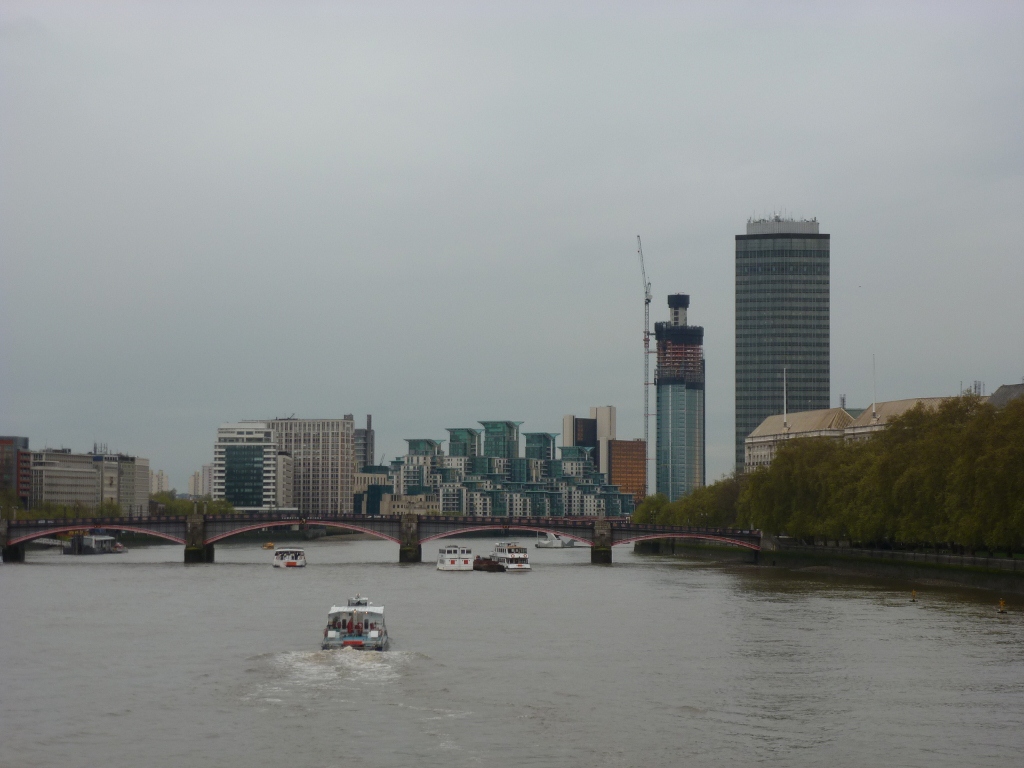
London Bridges

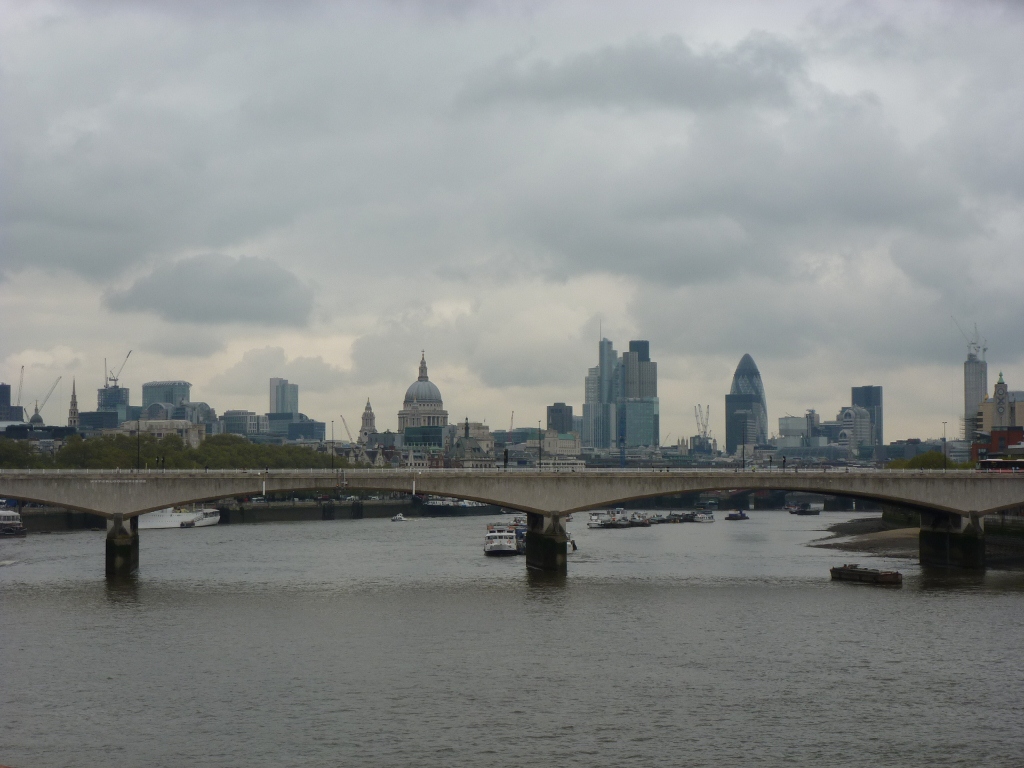
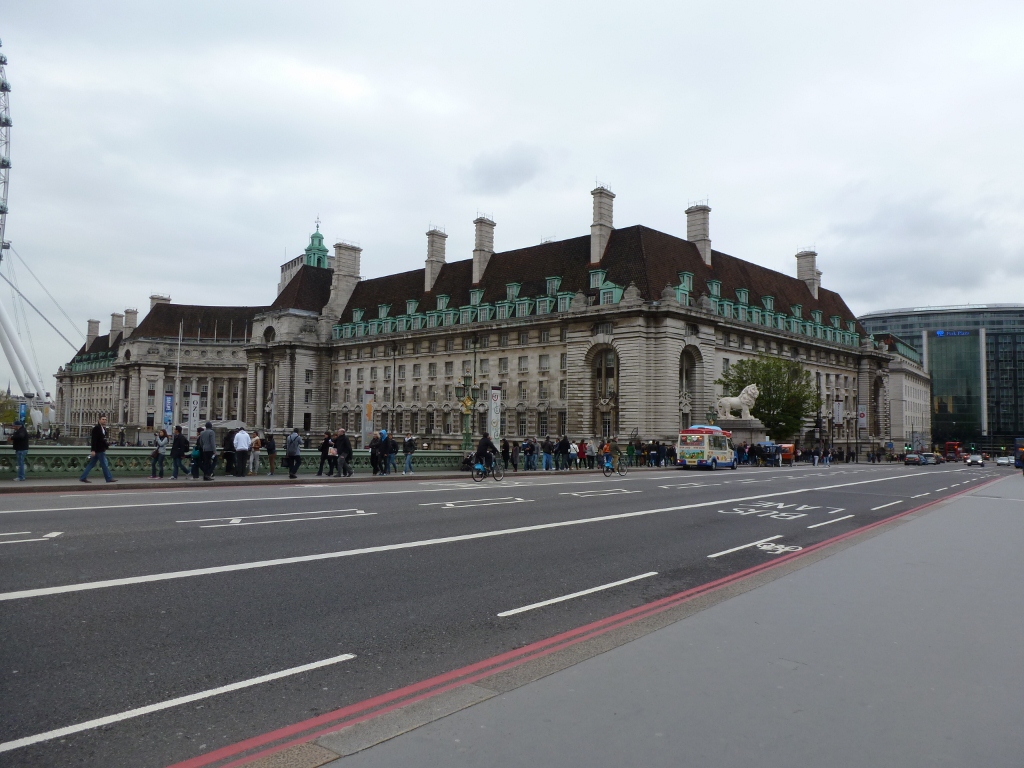
When I arrived in London this spring and saw the bridges over the river Thames, I decided I had to walk them all as I have the goal of walking all the bridges in Pittsburgh and this was my one opportunity for doing the same in London.  I did succeed in walking all thirteen of the pedestrian friendly bridges on my map of London in the few days I was there.  I believe there may be two more bridges to the west which I should have crossed in order to be able to say I walked all the Thames bridges in Inner London, but due to the bend in the river and the limitations of my map I did not know of their existence until coming home.  While walking the bridges I got a wide variety of views of London, some of which I would have missed otherwise, aided by London’s excellent river walkways.  Over the next few weeks, look for posts describing my experiences and observations of the thirteen Thames bridges: Battersea Bridge, Albert Bridge, Chelsea Bridge, Vauxhall Bridge, Lambeth Bridge, Westminster Bridge, Jubilee Bridge, Waterloo Bridge, Blackfriars Bridge, Millennium Bridge, Southwark Bridge, London Bridge, and Tower Bridge.

Highland Park Bridge

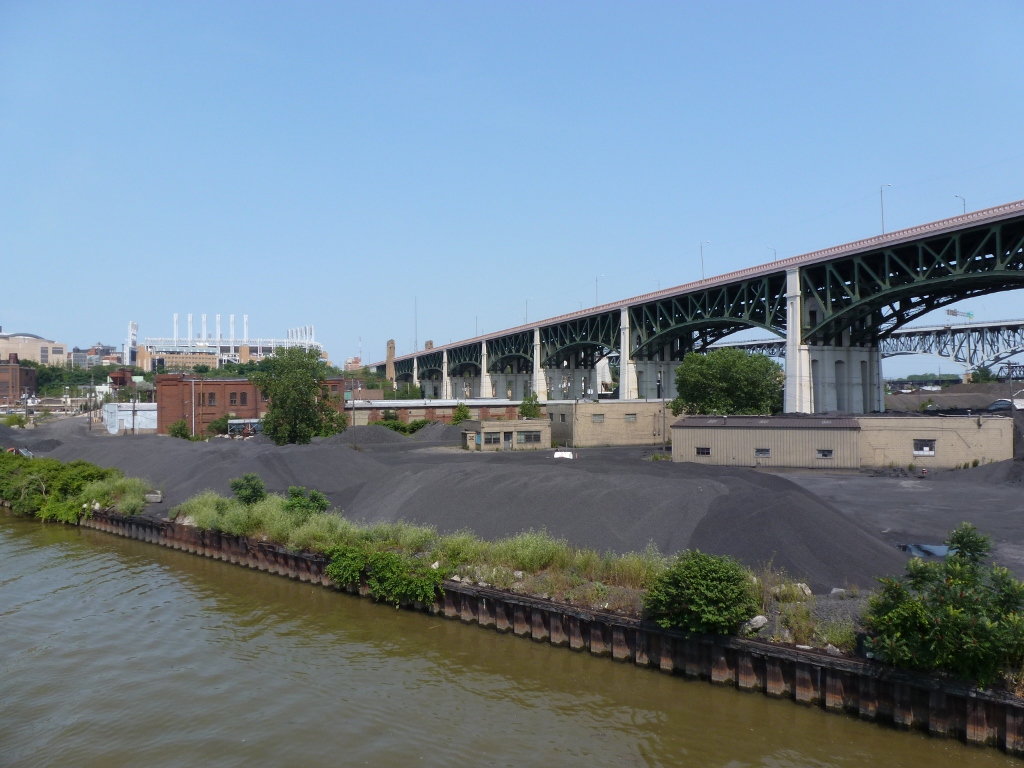
The Highland Park Bridge, built 1938 (technical information can be found here), connects Pittsburgh’s Highland Park neighborhood to Route 28, Apsinwall, Sharpesburg, and the Waterworks Mall.  As a pedestrian this bridge is awkward at best.  There is sidewalk only on the western, down-stream side of the bridge, with a cement divider between the sidewalk and the road with the cars passing at around 45 mph and a metal, mesh fence keeping whoever’s using the sidewalk on the bridge.  The sidewalk is pretty narrow and is decorated with dirt and liter.  The best pedestrian approach to the bridge from the city side of the river starts at the intersection of Baker and Butler Streets.  It is a simple t-intersection with a light and a cross-walk on one side.  I believe it is technically possible to cross to the river side of Butler at One Wild Place, but the intersection there is far more complicated with no visible crosswalk and I doubt drivers even consider the possibility of pedestrians crossing at this point.

Once across Butler (from the intersection at Baker), turn right and cross Heth’s Run Bridge (see June 9 post for description of sidewalk conditions, see May 31 post for more info on this bridge).  As mentioned in the June 9 post on Heth’s Run Bridge, the sidewalk narrows considerably at this point and is broken and half covered in weeds and dirt.  For over 500 feet from the end of this bridge to the ramp for the Highland Park bridge there is no divider between the sidewalk and the street where cars tend to travel quickly.  On the ramp, the weeds go away and the cement divider starts.  At the other end of the bridge, there is a small gap in the divider for pedestrians to cross one of the on ramps for the bridge.  The view of on-coming traffic is often impeded by overgrown weeds/bushes.  Once across this lane, the sidewalk follows another on/off ramp of the bridge around 360 degrees to meet up with Freeport Road which passes underneath the bridge.  While this is the most pleasant part of the bridge as the area inside the circle is a well-maintained grassy spot, it feels a bit ridiculous as a pedestrian to walk around in such a wide circle.

I have walked this bridge several times now, in part because bus service between the East End (which includes Highland Park) and the Waterworks Mall was severely cut a few years ago.  A runner once passed me and bicyclists have passed me multiple times, however I have never encountered (or observed while driving across) any other pedestrians on the Highland Park Bridge.

There a couple of sights of interest from the bridge.  First is the lock.  Quite serendipitously the day I brought my camera to document my crossing of the Highland Park Bridge was the only time I’ve crossed when the lock was in use. The one thing I couldn’t figure out is how they would get the first barge out of the lock when the tug boat is on the higher level water with the second barge.

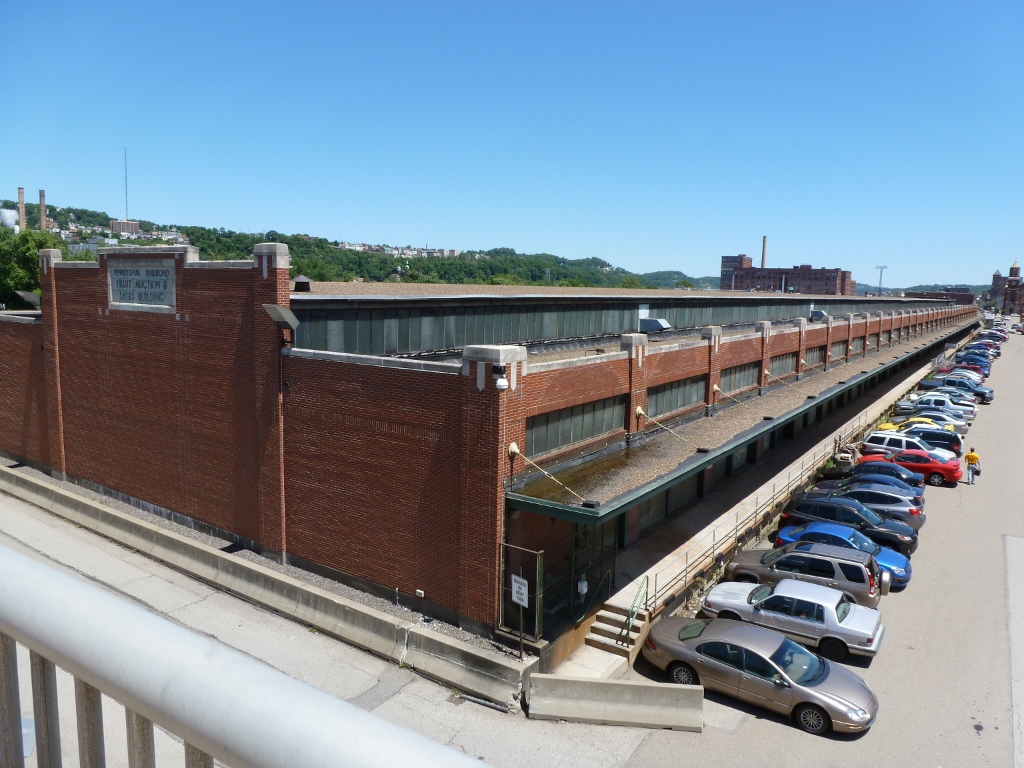
This is the second sight of interest is pictured above. If there was a place in Pittsburgh that would produce a comic book superhero, it would be here.  The hole in the picture above often gets filled with rainwater that stagnates and on some occasions turns an eerie, neon-like green color–the perfect toxic dump to produce superpowers.  I assume this site is some sort of scrap metal processing place.  A search on Google did not come up with any satisfactory responses.  One day when I walked past, a magnet was lifting up pieces and dropping them down repeatedly.  Whatever the site is, it is one of the reminders of Pittsburgh’s nitty-gritty industrial past.


The upstream and downstream photos present a snapshot of what this part of the city looks like.  Downstream, the 62nd Street Bridge, aka R.D. Fleming Bridge, (see July 24 post) downtown Sharpsburg, Six Mile Island, and lots of trees are visible.  Upstream, trees, a railroad bridge, a dock for personal boats, and the roof of one of the waterworks processing buildings are visible.  Overall there is a very rural feeling six miles up the Allegheny from downtown.

Roald Dahl, Norwegians, Doctor Who, and a Church

I watch the new Doctor Who series and the spin-off show Torchwood.  The Doctor Who episodes set in modern Cardiff are centered on Cardiff Bay and Torchwood is based in Cardiff Bay.  In the long shots of the area, I was most intrigued by the building pictured above.  I believed it must have been some sort of church.  When I was preparing to visit Cardiff, I was excited by the paragraph in my guidebook which referred to a repurposed church on Cardiff Bay.  I assumed that the building that intrigued me in Doctor Who and Torchwood must be the former Norwegian church now adapted to a rental facility.

On arriving at the site, I had a feeling that something was off.  It wasn’t until I stepped inside that I figured out what it was.  It turned out that this building never held a church.  I suppose that the lack of stained glass, the small widows, and the cannons outside should have been a clue, but with the peaked roof (not visible in the above photo), the gargoyles, and the central tower I didn’t know what else it could be besides a church.  The building is called the Pierhead and it guarded the port, or at least kept track of the traffic coming and going in the port.  It is open to visitors now as a museum of the port.  I learned a lot about the history of Cardiff from a short, entertaining film, such as the name came from Welsh for “Fort on the River Taff.”  The color and decoration of the interior also intrigued me.


When I left the Pierhead, I looked around the bay and quickly spotted the actual church described in the guidebook.  Norwegian sailors who passed through the port built this church (pictured below).  Roald Dahl was baptized here.  Now the building is used as a rental facility.  The sanctuary is the rental hall, when I was there it was being set up for a wedding reception on the following day; the choir loft level is now an art gallery; and the space below the choir loft, which I imagine would have been the entryway/gathering space, is now a coffee shop with some delicious pastries.  Unique features of this building included the model of a Norwegian sailing ship hanging from the center of the ceiling in the main room and a stained glass window that featured fish.  Unfortunately my camera temporary malfunctioned while I was visiting this building and as a result I do not have any shots of the interior.

Heth’s Run Bridge Part II

I have a few thoughts to add about Heth’s Run Bridge.  First is the map above which identifies the location of the Bridge compared to downtown.  Second is the bridge’s condition.  There recently has been a lot of buzz around town about the terrible condition of all the bridges in Pittsburgh and Allegheny County as well as many in the rest of Pennsylvania.  This gossip tends to give the impression that most of our bridges are ready to collapse at any moment.  Transportation for America’s website describes a report on deficient bridges, which is probably what fueled the gossip above, however the report presents a slightly more favorable picture.  While the Pittsburgh Metro area is identified as the metro area with the highest percentage of deficient bridges in the US, it turns out that only 30% of the bridges are deficient.  While I am unable to comment on the structural integrity of Heth’s Run Bridge or even if there is any need for it to be structural sound (I don’t think the ravine has been completely filled in under the bridge, but I can’t be sure), I can attest to the condition of the sidewalks.

The sidewalk is quite wide, but as the image above shows, it is deteriorated with weeds growing however they please.  The sidewalk on the other side is in similar condition.  The first time I walked this bridge I could not understand why the sidewalk was so wide, particularly as on the other side, the sidewalk narrows considerably.  Across the bridge I’d guess the sidewalk is over 10 feet wide, but once across it is only a couple feet wide, with only about a foot of usable space due to dirt and overgrown weeds.  Clearly this is not an area that the city considers to have a high enough volume of foot traffic to warrant good sidewalk maintenance.  As there often is high vehicular traffic in this area, I say the city should make the sidewalks across the bridge much narrower so that they can add another car lane.  The riverside traffic has two lanes before the bridge and two lanes after, but narrows considerably to make room for a useless wide and deteriorating sidewalk.

In writing the first post on Heth’s Run Bridge (see May 31 post), I believe I discovered the reason for this unusually wide sidewalk that today essentially goes nowhere (at least nowhere that the average pedestrian would wish to go).  The 1911 map of the bridge and surrounding area shows that the bridge connected Butler Street and Washington Boulevard (today’s Allegheny River Blvd), both of which were lined with houses and other buildings.  There is even a school on Washington Boulevard.  As such it was probably only natural that when the current bridge was built in 1914 it would have large sidewalks to help facilitate the movement of people before the prevalence of the car between the houses, businesses, and schools that lined these roads.  Today all the buildings that lined Washington Boulevard at this point do not exist.  The land they once stood on is all wilderness and on the landward side of the road is incorporated into Highland Park.  The large, deteriorating sidewalk of Heth’s Run Bridge is the only reminder of a time when this area was probably busy and vibrant.

Newport Road, Cardiff

The one mile walk from the city center to the Inkspot along Newport Road revealed more church buildings of interest for adaptive reuse and the history of the city. (Newport Road is so named as it was the main road from Cardiff northeast to Newport before the highway came along.)

The first building of interest that I came across was just off Newport Road. My observations indicated that this building was a former church probably adapted to a new use similar to the Wallich Centre (see post on Cathedral Road, Cardiff) but with a strong religious component. A sign on the building read “UCKG Help Centre,” which suggested that it provided help to those in need. My ideas for the possible targeted audience included people experiencing homelessness, depression, or low-income. I identified the Centre’s religious focus from a sandwich board in front of the entrance advertising holy/healing oil.

I was correct in my supposition that the building’s original use was a church (after I discovered I mistakenly identified two other buildings as former churches I began to doubt my guess with this building). It was built as a Unitarian Church in the 1880s. However, I was mistaken in the new use. It turns out that UCKG stands for the Universal Church of the Kingdom of God and therefore the building is still being used as a church, just not its original denomination.

The second building appeared permanently closed when I passed. This one clearly used to be a church.  The building appeared to be secure and in good condition, which is beneficial for any potential reuse.  This building was built as the Church of St James the Great in the 1890s and closed in 2006. A newspaper article from 2008 announces the redevelopment of the church’s spire into a seven-story flat (flat=apartment, please excuse my British vocab and spellings, such as centre, while I discuss British places).  The rest of the structure would be converted into 11 other one- and two-bedroom flats. However, there was no indication when I was passing that this has occurred or was in the process of occurring. There is no further mention of this redevelopment online, suggested it either fell through or is being held up.

I passed one more church building on Newport Road, one still used for religious worship, before reaching the Inkspot. This building interested me as it was a larger church complex than any of the others I passed, was a block away from the Inkspot, and part of a complex blocked off for construction work of some unknown sort.

Passing four church buildings, three of which were no longer housing their original uses, intrigued me. Coming from Pittsburgh, my immediate assumption was that Cardiff must have experienced a significant population loss. After all it used to be a major port—exporting more coal than probably any other port in the world. The port closed some time ago and Cardiff stopped exporting coal. I imagined this change resulted in the loss of many jobs and therefore a significant population loss followed. Yet, the population statistics for Cardiff over the last 200 years destroyed this theory. The population dipped slightly from 1971 to 1981, but by 1991 Cardiff had more residents than ever (see Cardiff Timeline for population statistics). The port closing may have influenced the dip in population, but net population loss cannot be the cause of the closed and adaptively reused religious buildings I observed in Cardiff.

I cannot verify my second theory for the reason these buildings lost their original uses. This theory is a change in the religious views of the population. This can go two ways. The first idea is that people are becoming less religious (this is how the Dutch explain their large number of churches adapted to new uses). I found a few articles that identify a similar trend in all of Britain (Number of Christians falls, Muslims pass on faith at higher rates than Christians). The second idea is that while the overall population is growing, people are still moving out and those that are moving in are of a different demographic or religion and therefore do not want the same religious institutions as those that came before them. Both theories are mostly speculation as I haven’t found detailed statistics on religious beliefs and practices in Cardiff, Wales, or Britain.

Cathedral Road, Cardiff

As I mentioned in the post on Inkspot, it felt like I had more success with repurposed churches in Cardiff than London, despite having done extensive research on the adaptive reuse of churches in London.  Perhaps this is in part because it is far more exciting and rewarding to come upon a repurposed church than to go where you already know you will find one.  My first day in Cardiff I discovered two adapted religious buildings within a few blocks of each other—thrilling!
The first of these buildings, formerly the Cardiff New Synagogue now office space.  (I am also interested in the adaptive reuse of synagogues as there are some similar issues when repurposing synagogues or churches, but I am less familiar with the architecture and interior design of synagogues and they seem less common adapted church buildings.)  The façade of this former synagogue appeared to be unaltered, however in the back there was a modern office building extension.  I could not tell from my observations whether or not part of the original building was demolished to make way for the extension.  The original building seemed a bit short, which made me think that part of it might have been demolished.  However, some of the townhouses nearby had similar additions in the back as they were now used for businesses or apartment complexes.  The depth of these buildings matched those that did not have additions and that of the original structure of the synagogue, suggesting that the synagogue may have been intact.  I found the YouTube video on the building’s website interesting as it is easy to tell which rooms are in the original building and which in the addition.

The second building was a former Presbyterian Church of Wales, now The Wallich Centre.  Their motto is “homeless people first” which gave a clear indication of their purpose, although the website suggests that this building may not be used directly for the homeless as it is identified as the administrative centre as well as a venue for hire for meetings, conferences, etc. which I don’t imagine would be used by the homeless.  There appeared to be little or no alteration to the exterior of this building, except for the glass doors inside the covered entrance.  Only a small sign (blocked by the van in the picture) indicated that this building no longer functioned as a religious institution.

Inkspot

Last month, I spent a few days each in Cardiff (the capital of Wales) and London. Before going, I had done some research on the adaptive reuse of church buildings in London, but none on Cardiff. Despite this, I almost had more success with exploring repurposed churches on the ground in Cardiff than London.

The pamphlet in my hotel room in Cardiff, highlighting things to do in the city, contained an ad for the Inkspot – a crafts store housed in a former church. This was an amazing find as not only am I into the adaptive reuse of church buildings, but I am also a craft-person. Additionally, none of the repurposed churches I have come across in Pittsburgh have a use like this. Most in Pittsburgh are adapted to housing, restaurants/bars, and community centers. So, this building showed me a new option for how a church space can be used.

As a crafts store, it was a bit disappointing. The items for sale were the same as what I would find in any crafts store in the US. Perhaps I should have expected that, as how different can paint or pencils be from country to country? I however was hoping for an experience more like going to the grocery store in the UK vs. the US. Both sell food, but the options are slightly different. First, the fruit is more naturally sized, unlike our bananas and apples on steroids. In the bakery department, I found personal-sized baguettes, brioche, and crumpets. Yogurt flavors were different–such as strawberries and clotted cream. Among the juices I found Apple & Beetroot and Grape & Elderberry flavors. I thought the crafts store would be like that, similar products, but just enough different that I would be able to find somethings I wouldn’t find in a crafts store in the US.

As a repurposed church, the Inkspot was fascinating. The owner was in while I was visiting so I was able to add some facts to my observations. The building was built in 1868. When the 100-year lease came up in 1968, the property owner refused to grant the church a renewal. The building is located on Newport Road, which at least at one time was the main road between Cardiff and Newport (another potentially important city in Wales), near two intersections. It is prime real estate and in the 60’s there was talk of the road being widened, which would have required the demolition of the church. For whatever reason, this plan did not go through and in 1995 the owner and his family purchased the building to move their crafts store into it. Upon purchasing, they were advised to tear down the building and start from scratch, but they took the risk of spending the money to repair the damage from decades of being empty.

They modified the building slightly, by making the sanctuary two stories. The first floor had paper crafts, kids’ crafts, yarn, etc., while the second floor was dedicated to painting supplies with an art gallery in the back above where the altar used to be. The downstairs felt a little claustrophobic, but the upstairs still felt huge and airy. I could not decide from just walking around and observing the building if the two-story design was original or added during the repurposing. It must have been huge inside when it was a church. In addition to the crafts supplies for sale and the art gallery, there was space for artists’ studios in what I assume must have been office space previously.

I did not feel comfortable taking pictures inside where the sale items were, but I did take the picture below of the staircase. The white walls and green carpeting were used throughout the store.

Heth’s Run Bridge

Heth’s Run Bridge as seen today presents many mysteries.  Digging into the mysteries uncovers a interesting story.  I have crossed Heth’s Run Bridge many times, usually in a car on the way to the Zoo, but it was only in recent years that I realized it was a bridge.  When looking toward the zoo parking lot from the bridge (as in the picture below) it does not appear that the height of the road differs enough from the surrounding landscape to be a bridge.  However, in the view above (taken from the Zebra Ice Station parking lot on the river side of the road) it looks like a bridge.  The G.M. Hopkins Maps, one of my all-time favorite resources available on the Historic Pittsburgh website, explains the history of and the reason for this bridge.

The 1899 map identifies a bridge in this location called High Bridge, indicating that there was a significant difference in elevation at this point.  A 1912 photograph shows that this was indeed a high bridge, quite unlike the current bridge and its surroundings.  This would have been caused by a small stream called Haight’s Run which flowed under the bridge into the Allegheny River.  By 1911, most of this stream was covered over and Haight’s Avenue ran along its path.  The 1939 map shows no evidence of Haight’s Run, the name on the road and the bridge is now Heth’s, and the road is marked “not open.”  Also in this map, the bridge appears to be a different width than in the others, this is because the current structure was built in 1914, more technical and historical information about the bridge can be found here.  1939 is the most recent year for the G.M. Hopkins Maps.  I speculate that the bridge would still have been raised over the surrounding landscape at that time, based on the similarities in the surroundings between the 1911 and 1939 maps.  However, sometime between then and now, Haight’s/Heth’s Run was filled in and the zoo parking lots built on top, level with the height of Heth’s Bridge.

If I had not passed this way on foot, I doubt that would have realized that this was in fact a bridge or that once not long ago (in geological terms) a stream flowed along this way.  There is a tendency in urban areas for nature to be ignored or in this case built over, which sometimes causes catastrophic results.  Not far from Heth’s Run is Negley Run, another stream that was buried under a road.  The burial of this stream likely contributed to the tragic flood on Washington Boulevard last summer that resulted in several deaths.  I look forward to the day when all our roads and sidewalks will be made of permeable material, allowing for more natural absorption of rain water and reducing flooding.

Urban Traipsing

Welcome to my Urban Traipsing Blog.  Join me as I wander around cities observing their various designs, what makes them similar or different, and how people use and experience them.  My current base is Pittsburgh, PA, but other cities in the US and abroad will be included as I visit them.  Currently there are two main themes directing my walking explorations: bridges and the adaptive reuse of churches.  Both themes provide insight into cities’ pasts as well as their present.  Observations outside these themes may emerge along the way.  Enjoy!

Pittsburgh Bridges

The 20 bridges that span Pittsburgh’s rivers within the city limits.

One day, while overlooking the city of Pittsburgh from Mt. Washington, I set myself the goal of walking all the bridges in Pittsburgh.  It is said that Pittsburgh has more bridges than any other city in the world including Venice.  The current count of Pittsburgh’s non-railroad bridges longer than 8 feet is 446.  Perhaps my goal is a bit too ambitious, but I intend to give it a shot.  By the end of the summer, I intend to document walks over the 20 bridges on the three rivers (Allegheny, Monongahela, and Ohio) within the city limits as well as many of the land bridges in the city between the Allegheny and Monongahela Rivers.

From the bridges I have walked so far, I am fascinated by two things.  First, I find the diversity of viewpoints on the city engaging, from the beautiful views of the bridges connected to downtown to the underbelly views seen on bridges scattered throughout the city including the Highland Park (see June 10 post) and Bloomfield (see Aug 18 post) bridges.  In addition, I am gaining a greater awareness and appreciation for the geography of the city through this project.  Attempting to identify the numerous bridges is forcing me to reconsider parts of the city that I have taken for granted through over-familiarity.  Heths Run Bridge is an example of this (see May 31 and June 9 post).