
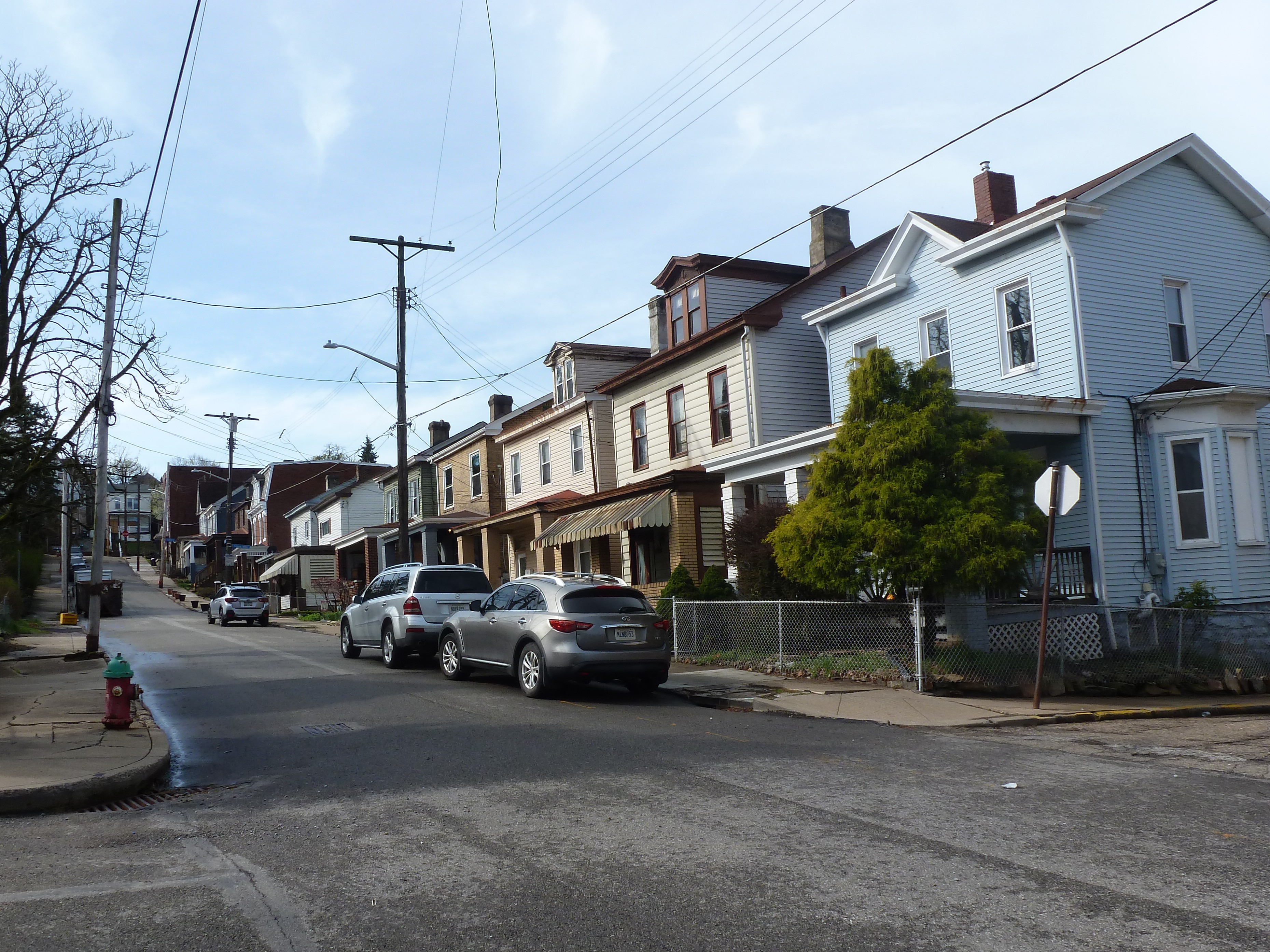
Allentown Neighborhood
Allentown features a tight grid gently folded over undulating terrain. Densely-packed, modest houses line narrow roads. A resident across from one of the religious sites, who was interested in what I was photographing, shared that her house was built in the 1880s. In those pre-automobile days, residents may have commuted downhill to the industries along the river flats by way of the numerous inclines, one of which used to have a terminus not far from where we were standing and talking.
Three of the jobs I’ve held in my decades of working in Pittsburgh included some element of work in this neighborhood. Much of the neighborhood felt the same as I remembered it from my prior encounters. Long-standing neighborhood restaurants mixed in between vacant storefronts and newer ventures lined the commercial district. Vacant lots and vacant houses sit scattered among the residential blocks. However, I was impressed that some long vacant lots had new infill housing designed for those wanting to age-in-place or people with accessibility needs.
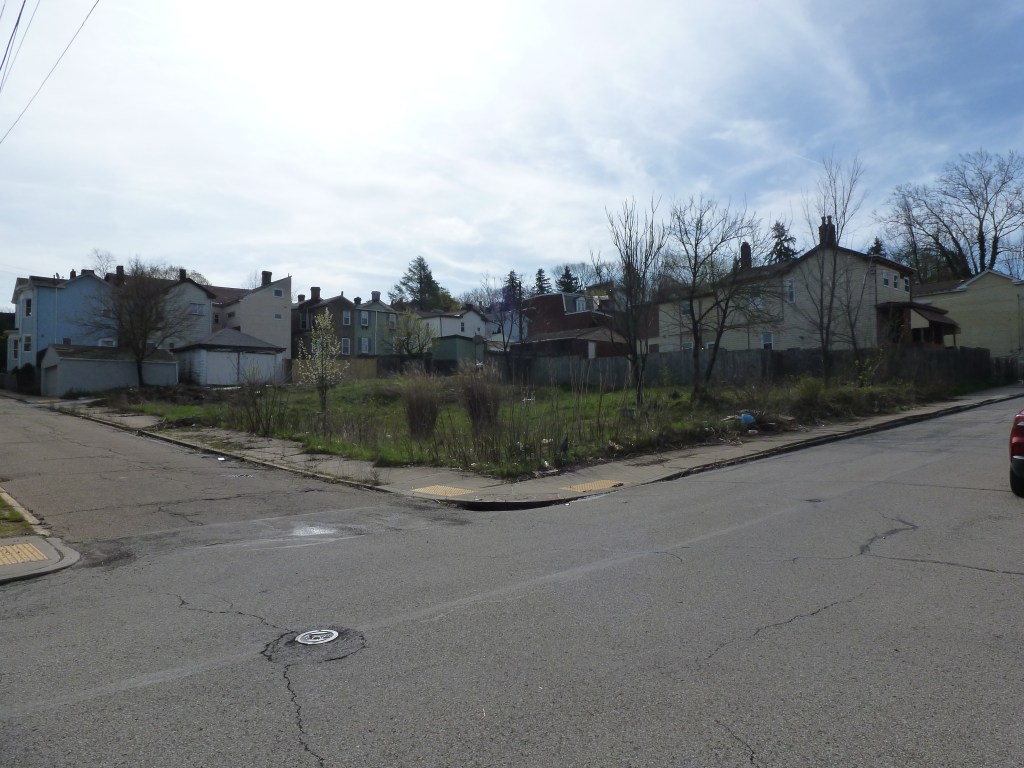
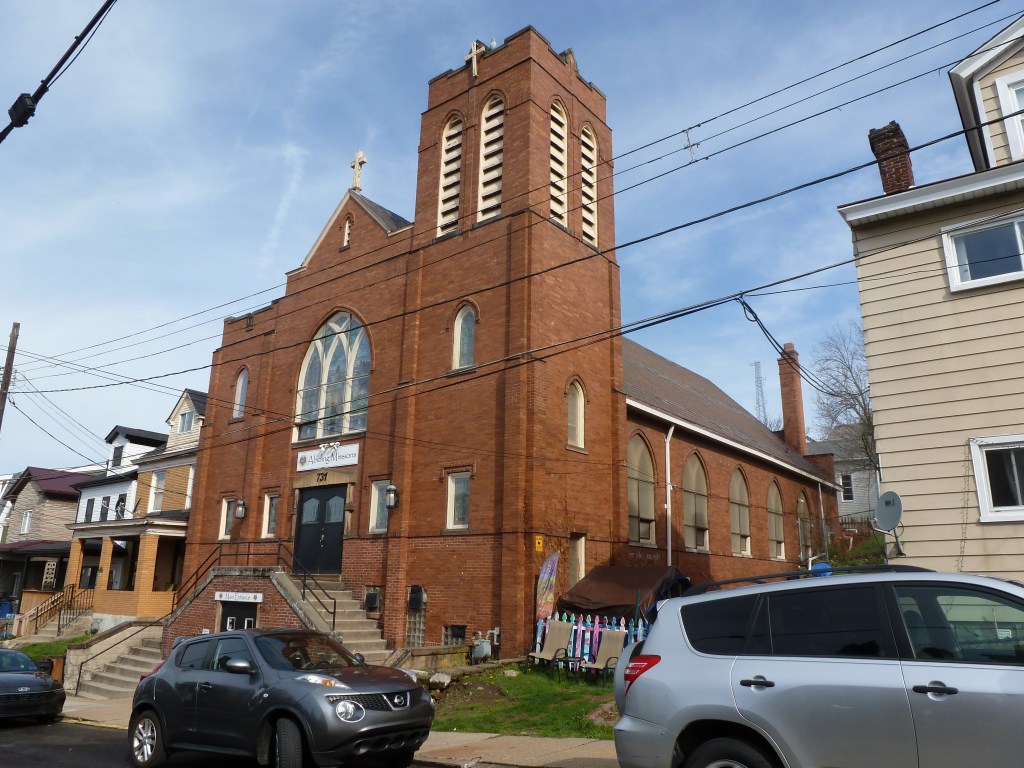
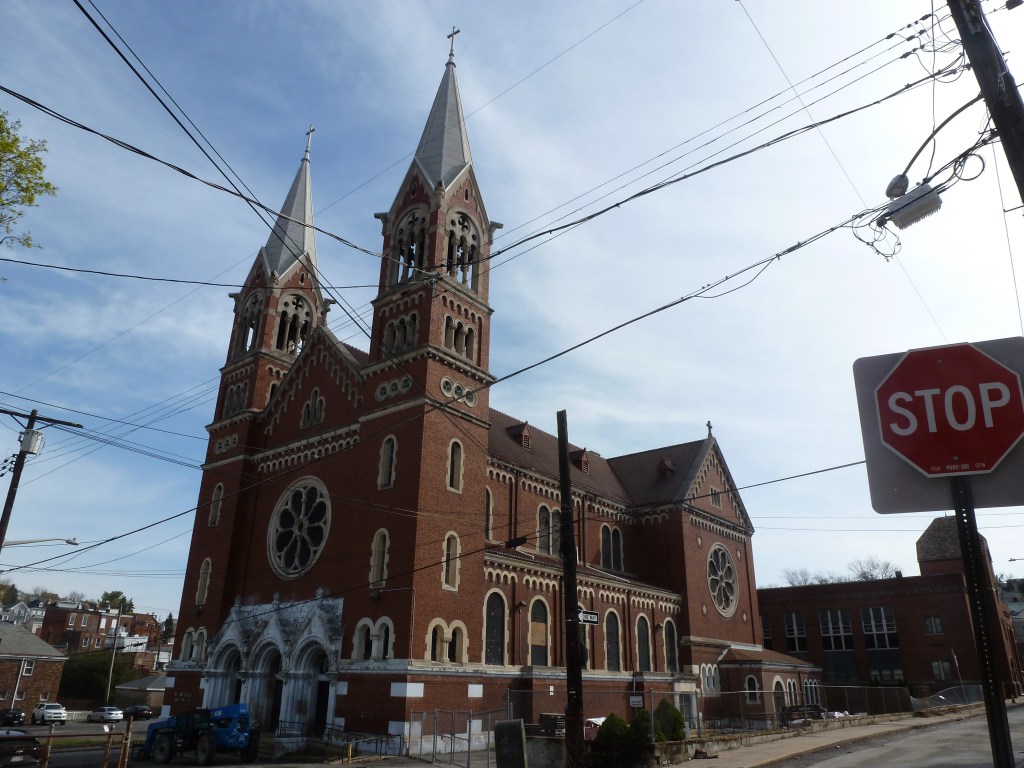
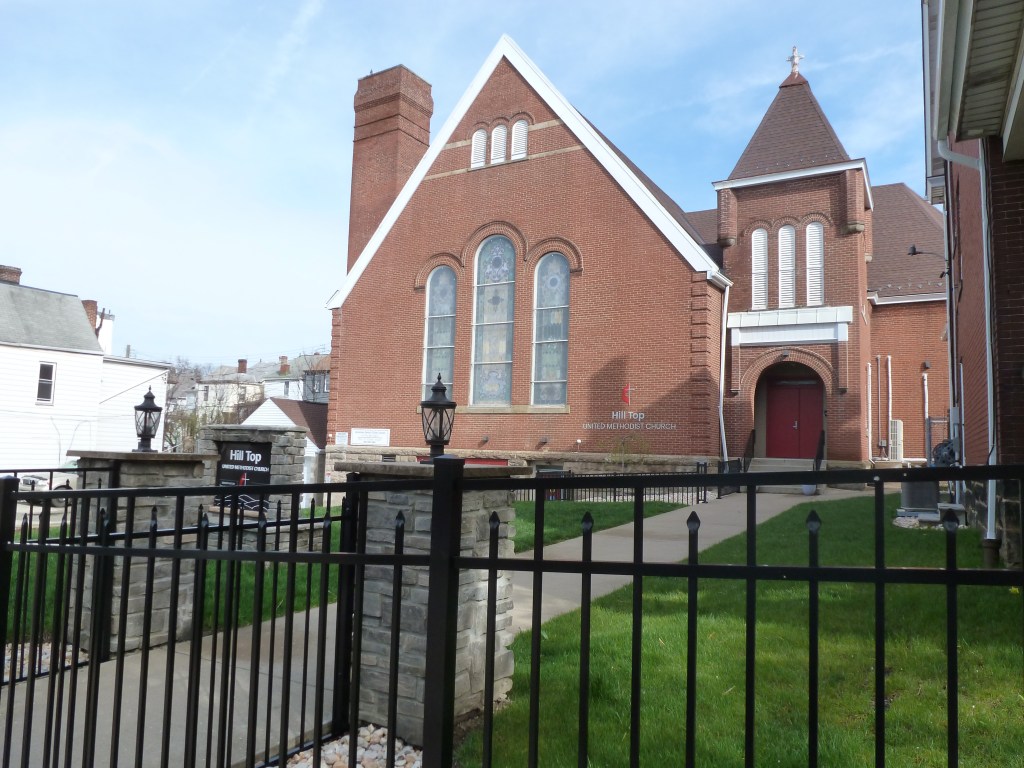
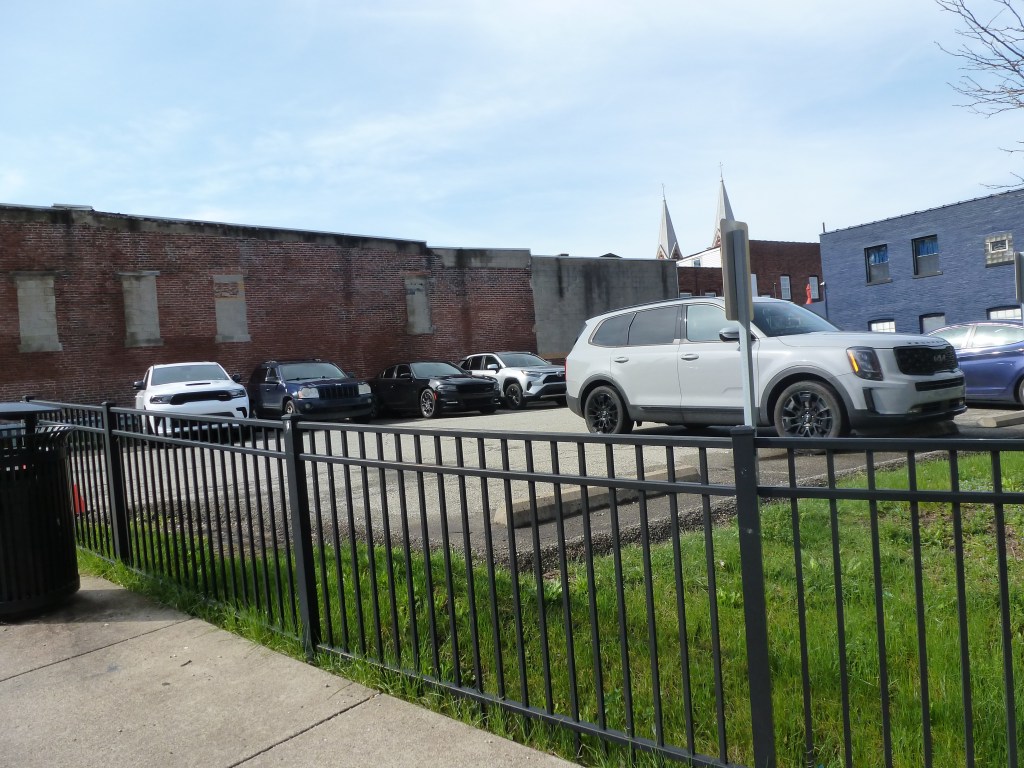
The neighborhood was never targeted for any large-scale Urban Renewal efforts, but individual properties that are vacant, abandoned, or tax delinquent have been demolished from time-to-time. This implies patterns of change, including population loss and disinvestment. The 5 religious sites from 1926 reflect that with each one featuring a unique outcome today: one remains religious, one is now a secular use, one sits vacant, one is a vacant lot, and one is a parking lot.
Neighborhood Statistics (Out of the 70 in this series)
- 50th largest by acreage
- 38th highest number of sites (multi-way tie)
- 18th most sites/acre
Locations
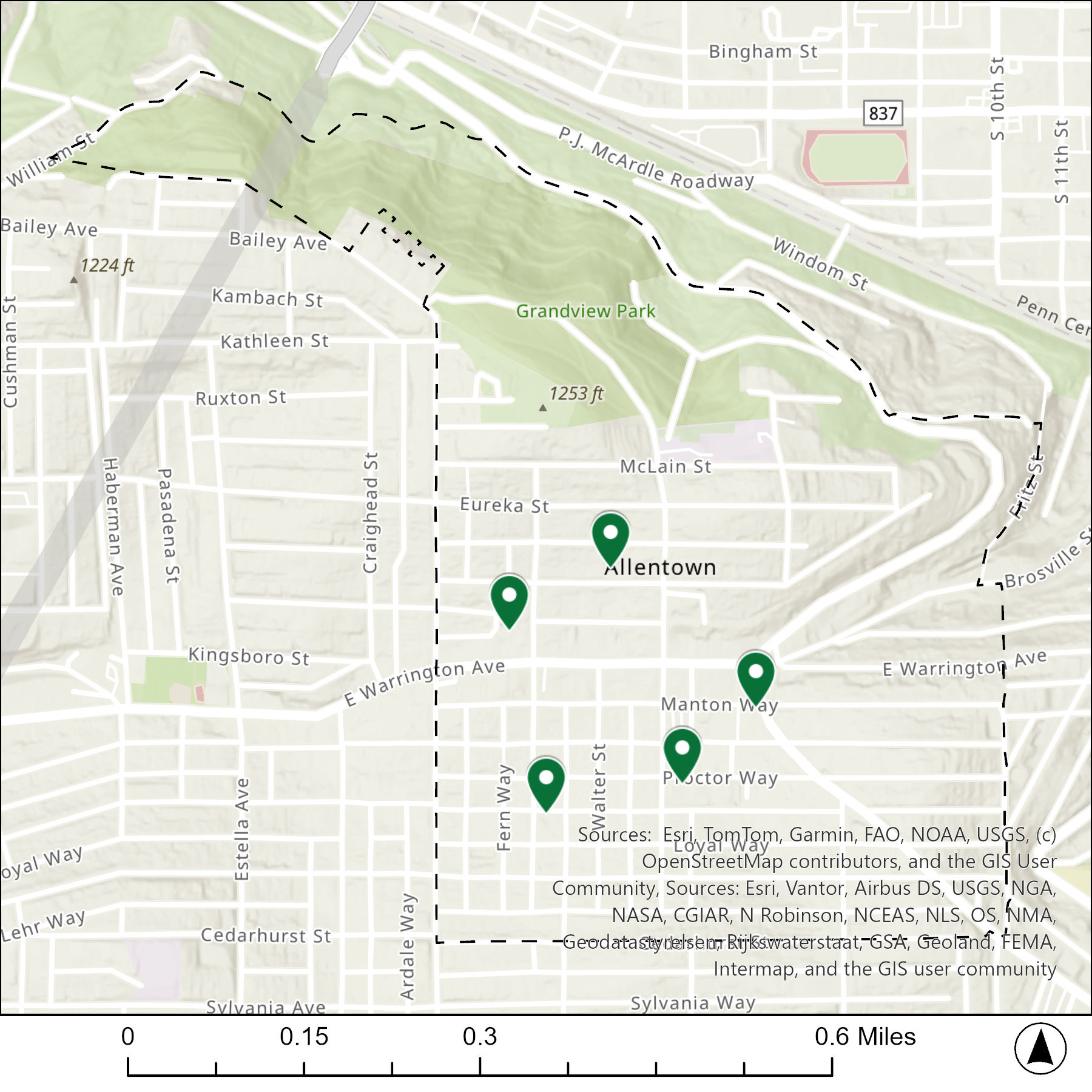
The map below shows the locations of the 5 congregations listed in the 1926 directory for Allentown (the dotted line marks the neighborhood boundary).
What are they now?
The table below matches the 5 congregations listed in the 1926 directory with the current use of the site.
| 1926 Congregation Name | By 2026 the Congregation’s Building is: |
| Bethlehem Lutheran Evangelical Church | converted to a community center |
| First Methodist Episcopal Church | demolished |
| Progressive Spiritualists Church | replaced with a parking lot |
| St. George (German) Catholic Church | vacant |
| Trinity Methodist Episcopal | changed to a different religious institution |
Photos
For more on this series, visit our introductory post.
Sources:
Polk’s Pittsburgh City Directory, 1926. Pittsburgh: R. L. Polk & Co. https://digital.library.pitt.edu/islandora/object/pitt%3A31735056286846/viewer#page/4/mode/1up
Discover more from urbantraipsing
Subscribe to get the latest posts sent to your email.


Pingback: Then & Now 1926-2026: Pittsburgh’s Religious Buildings | urbantraipsing