Cannon Street Railway Bridge

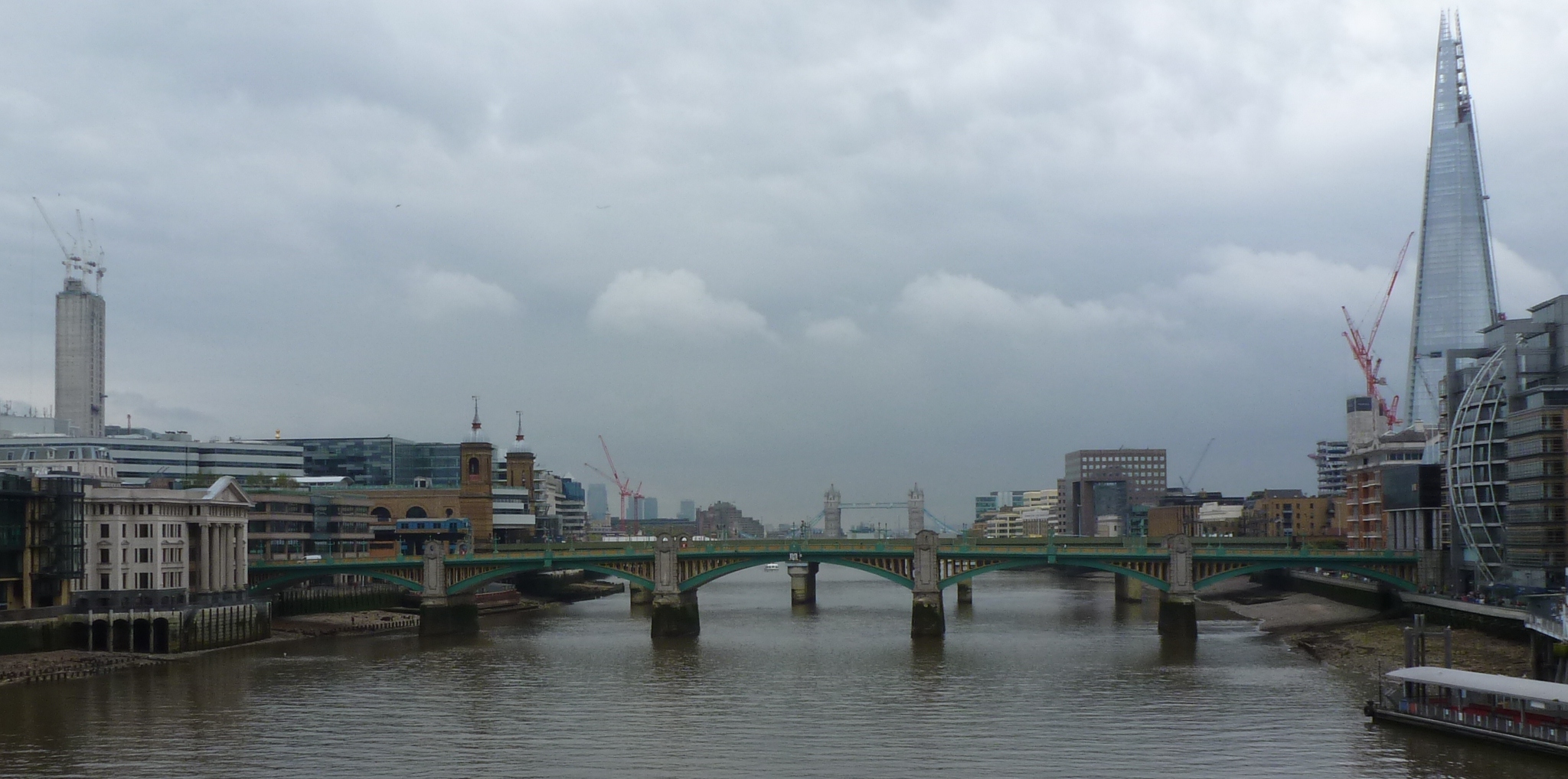
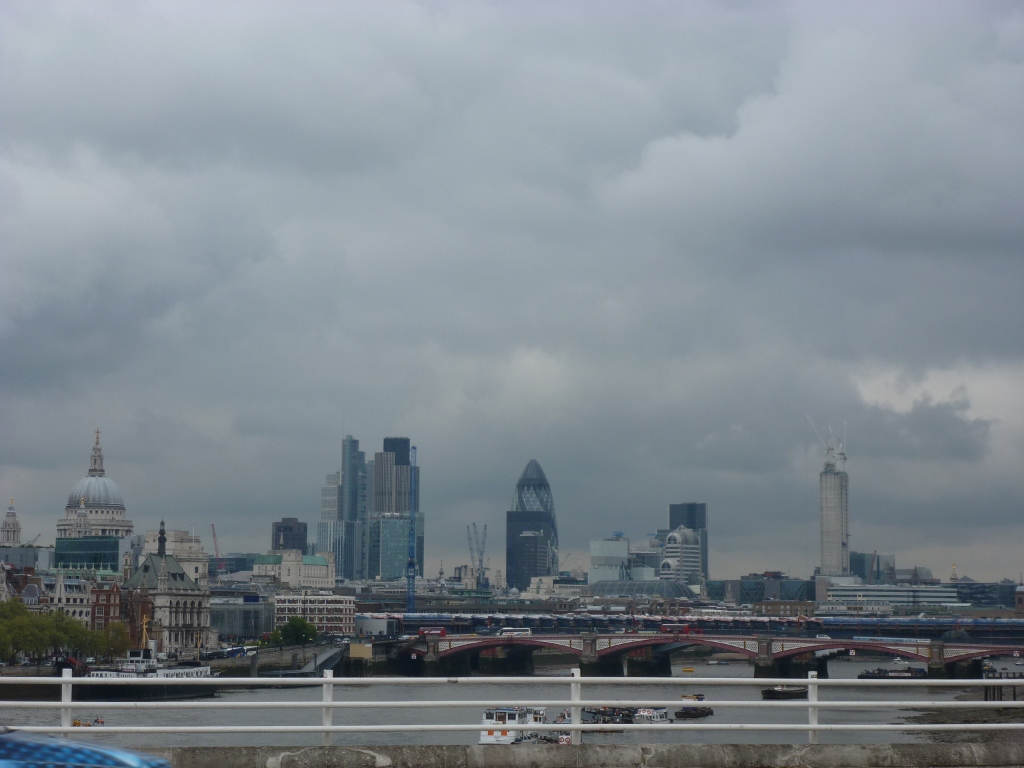
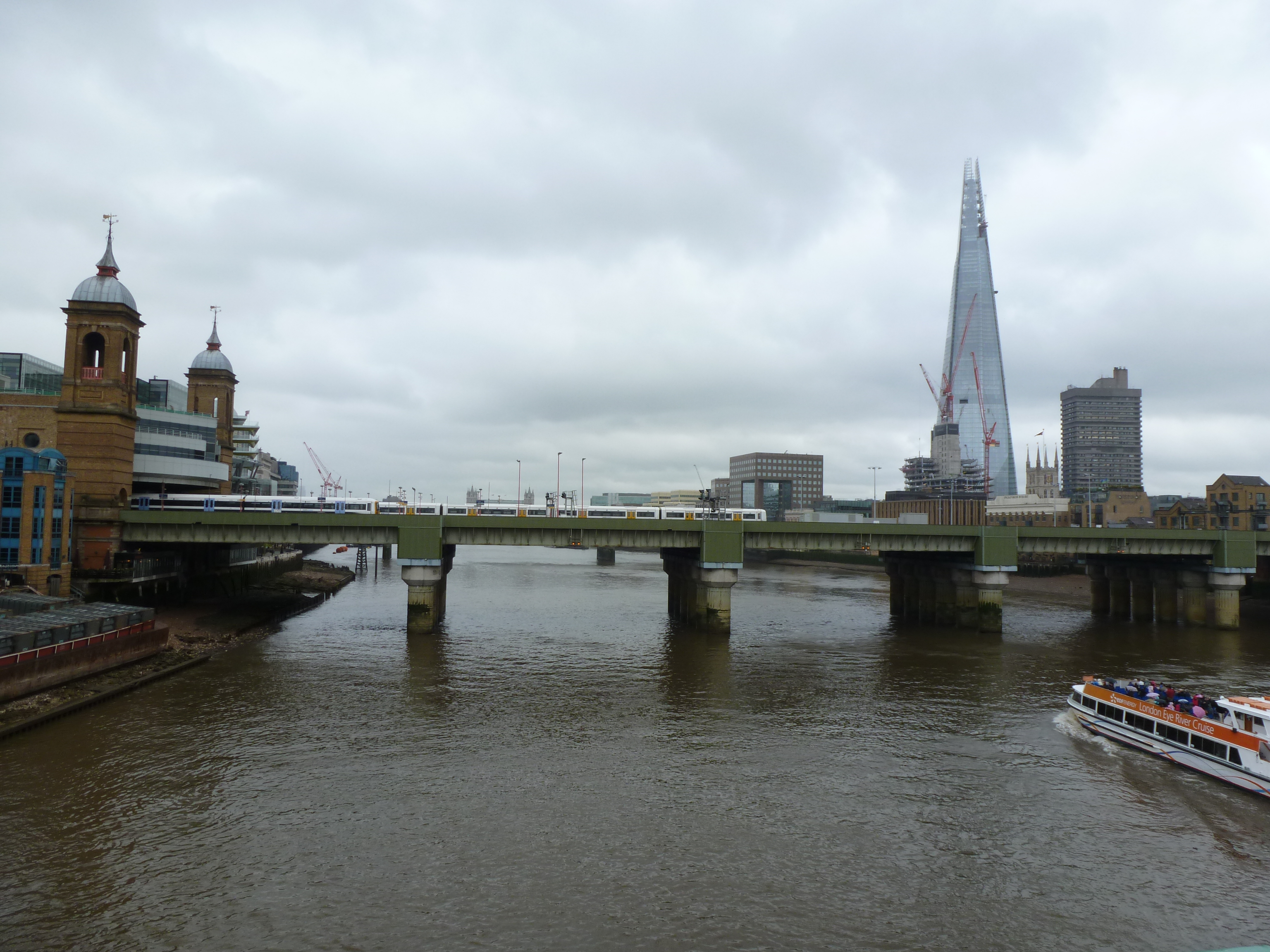
The Cannon Street Railway Bridge is the last of the railroad bridges I encountered on my trip to London in 2012. Compared to the others (Battersea, Grosvenor, Hungerford, and Blackfriars), the Cannon Street bridge is relatively boring, though it also has its unique features. It is the only one of the five constructed with plate-deck girders, a style my “How to Read Bridges” book skips over, but appears to be a complex form of beam bridge for larger spans.

Blackfriars Railway Bridge/Station

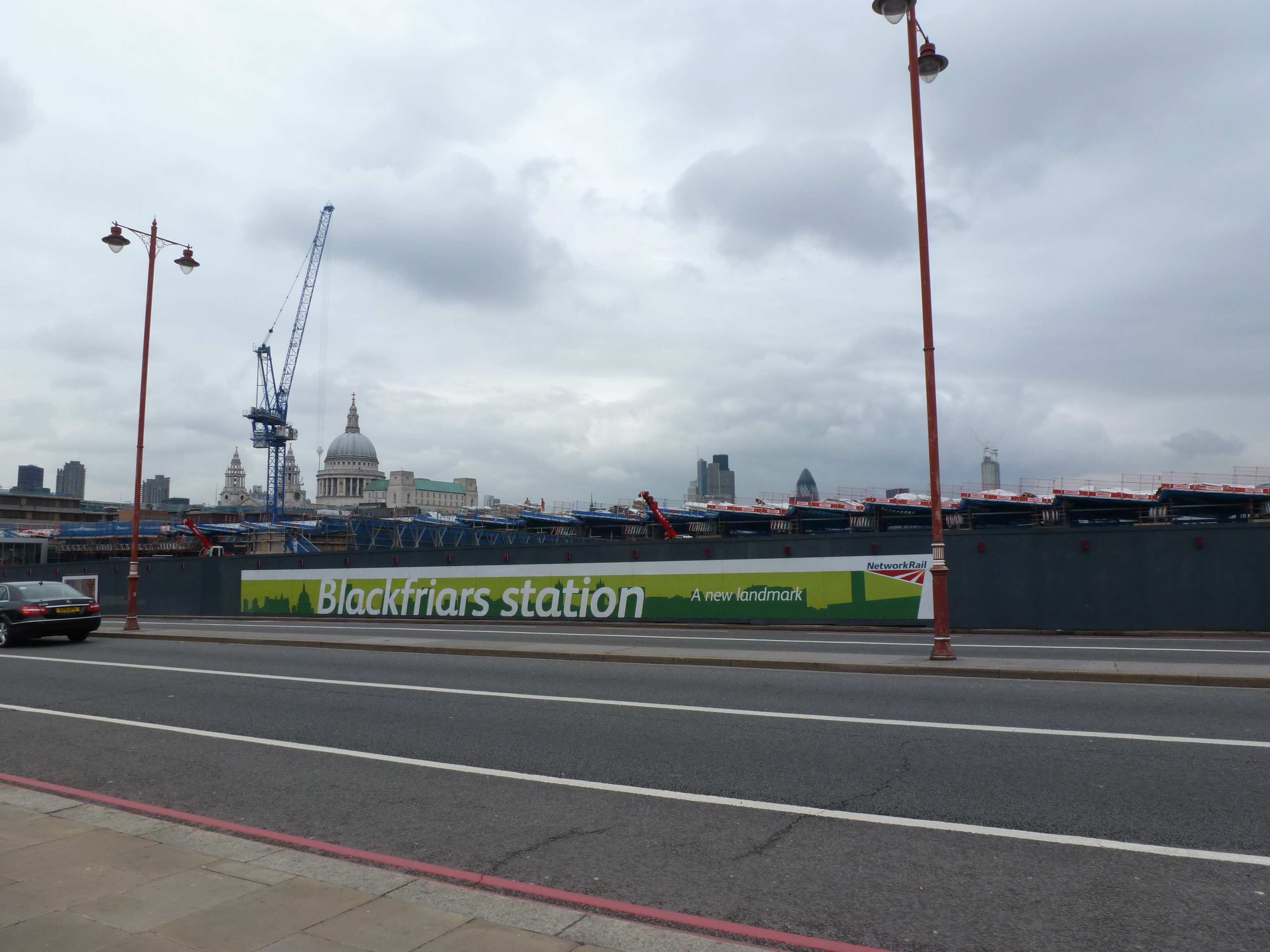
Blackfriars Station is another unique bridge along the Thames. It is a bridge…and it’s a station for the underground. When I was there in May 2012, it was under construction, or rather extensive renovation to extend the platforms along the bridge and add solar panels above. The Guardian heralded it as the “world’s largest solar power bridge” when it opened in 2014. And over a decade later, it seems to retain hold of that title, suggesting an opportunity for more solar bridges to step up to the challenge.

Hungerford Bridge

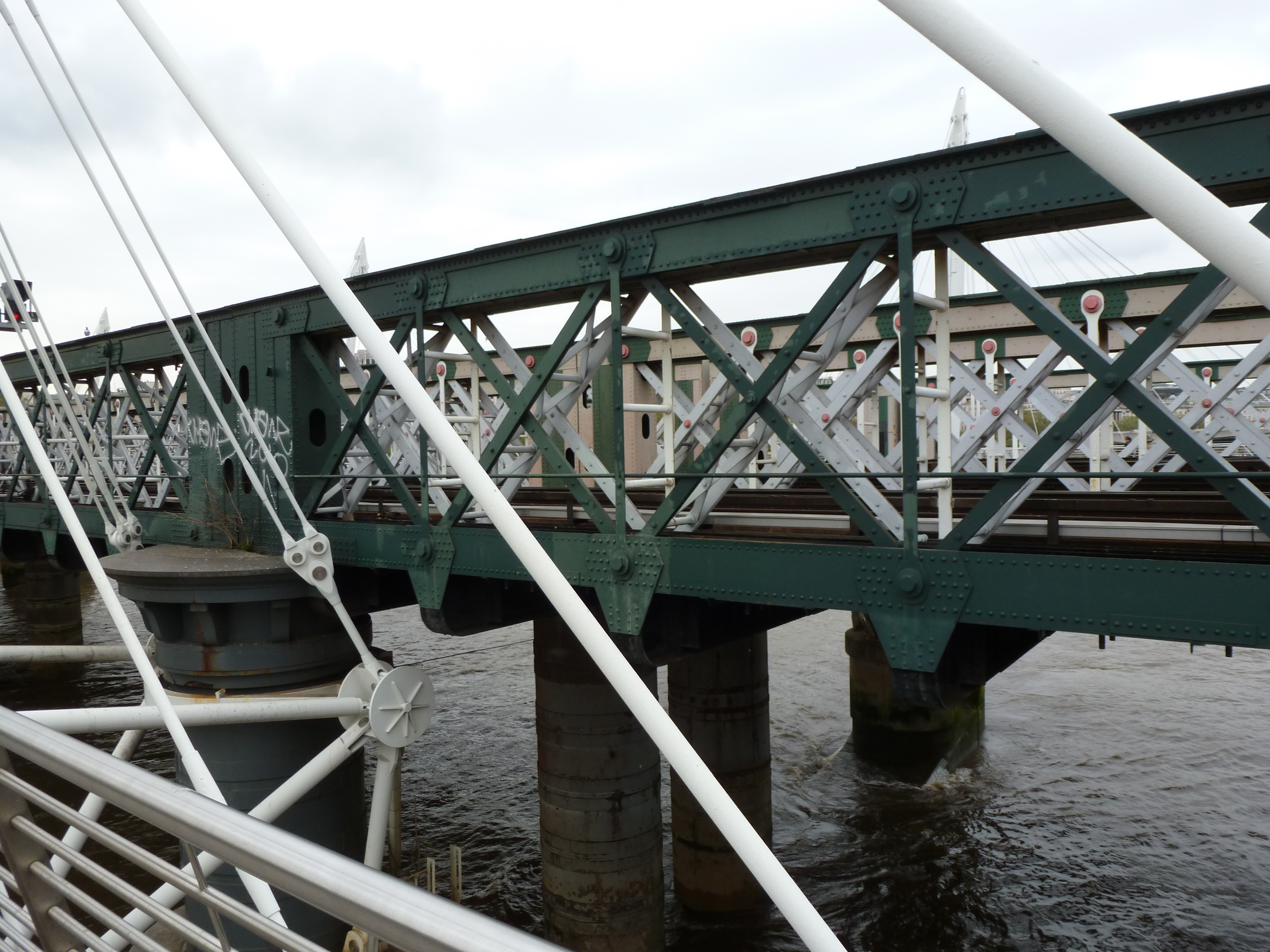
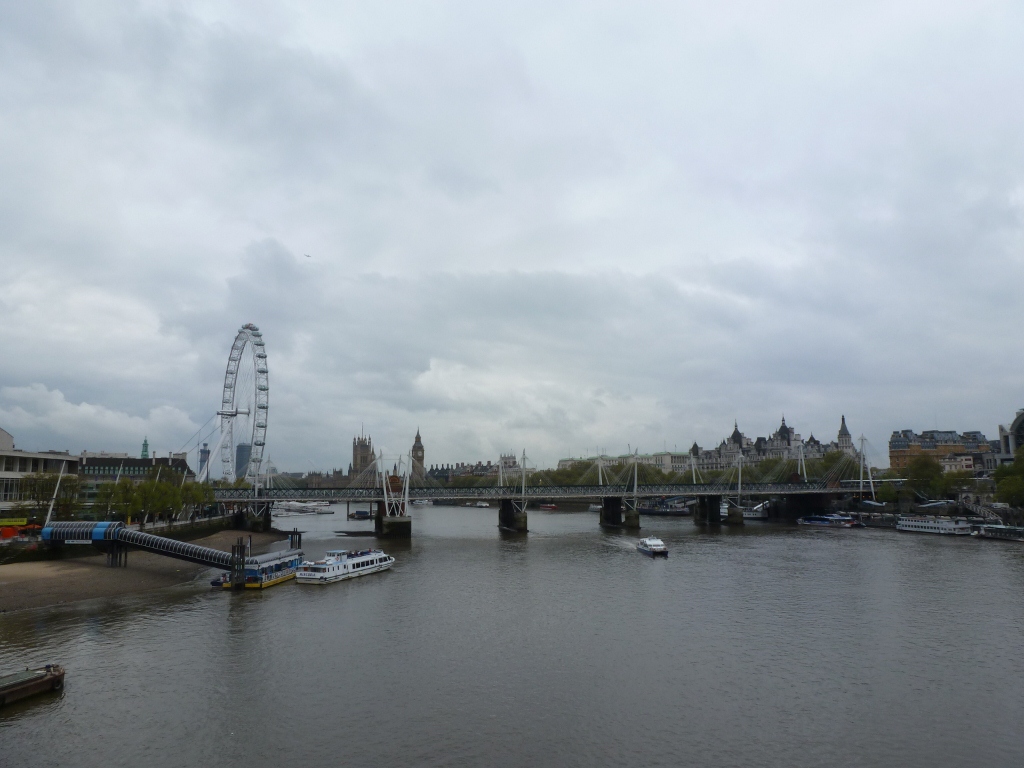
The Hungerford Bridge is unique among London bridges. It is a truss bridge, instead of the more typical deck arch bridges up and down the river. Also, it has a pedestrian bridge hanging off each side of it, collectively know as the Jubilee Bridges, that nearly hide the Hungerford Bridge from view, begging the question: how many is one bridge?

Grosvenor Bridge

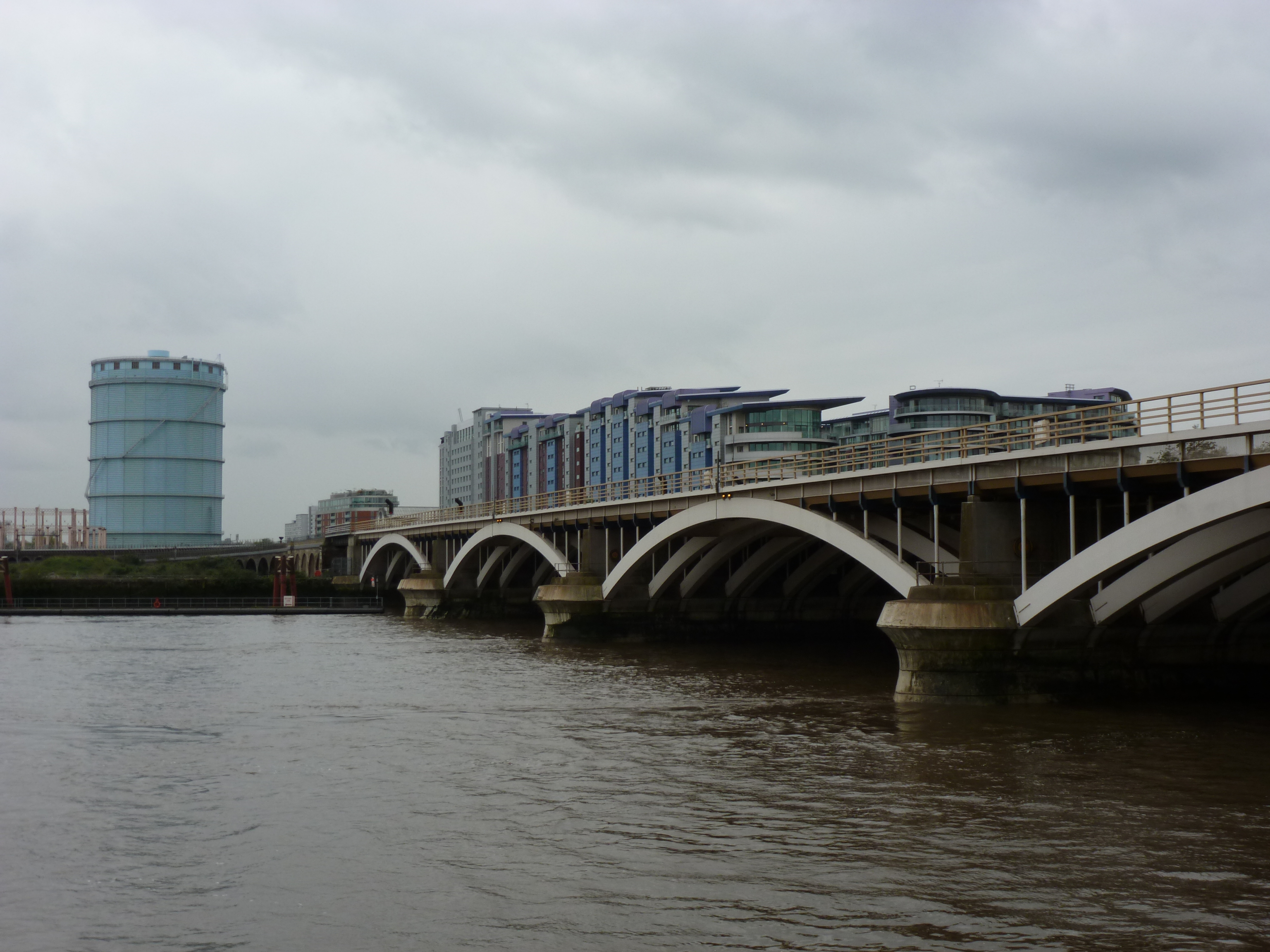
Grosvenor Bridge is the second of the railroad bridges across the Thames that I encountered. Four bridges downriver from the Battersea Railroad Bridge, it is substantially wider to accommodate a higher volume of train traffic. As with most of the Thames River bridges I encountered in 2012, Grosvenor Bridge is a deck arch bridge. However, unlike the others that feature ornate coloring and ornamentation, here the arches and spandrels are left to speak, simply, for themselves.

Battersea Railroad Bridge

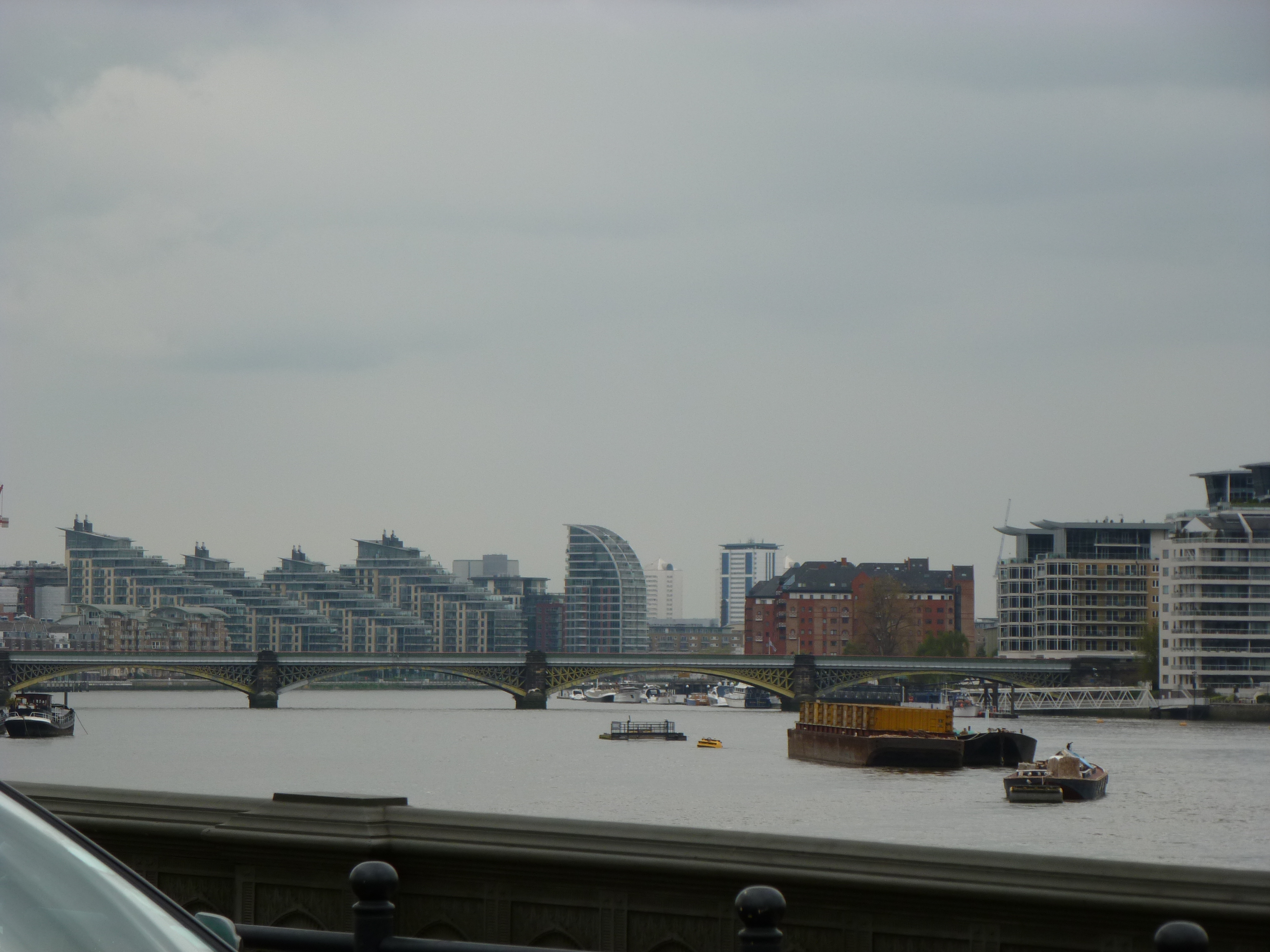
Just upriver from the Battersea Bridge – technically the first bridge I traipsed – is the Battersea Railroad Bridge. It mimics the deck arch style, and echoes the gold contrasted against a dark tone color-scheme, of the Battersea Bridge. The railroad bridge also has a similarly narrow road bed, making it the skinniest of the railroad bridges I encountered in my bridge walking of London in 2012.

This is the closest I got to the Battersea Railroad Bridge. My paper map ended about there – I refused to get a smartphone for several more years – and I had no idea there was another bridge just beyond that bend in the Thames that I could have walked. However, my motivating goal in walking bridges was to capture different views of the city. I took numerous photos from and near each of the bridges I walked, usually including at least one upriver and one downriver view, which enabled me to capture views of bridges that weren’t pedestrian accessible, such as the Battersea Railroad Bridge.

London Bridge

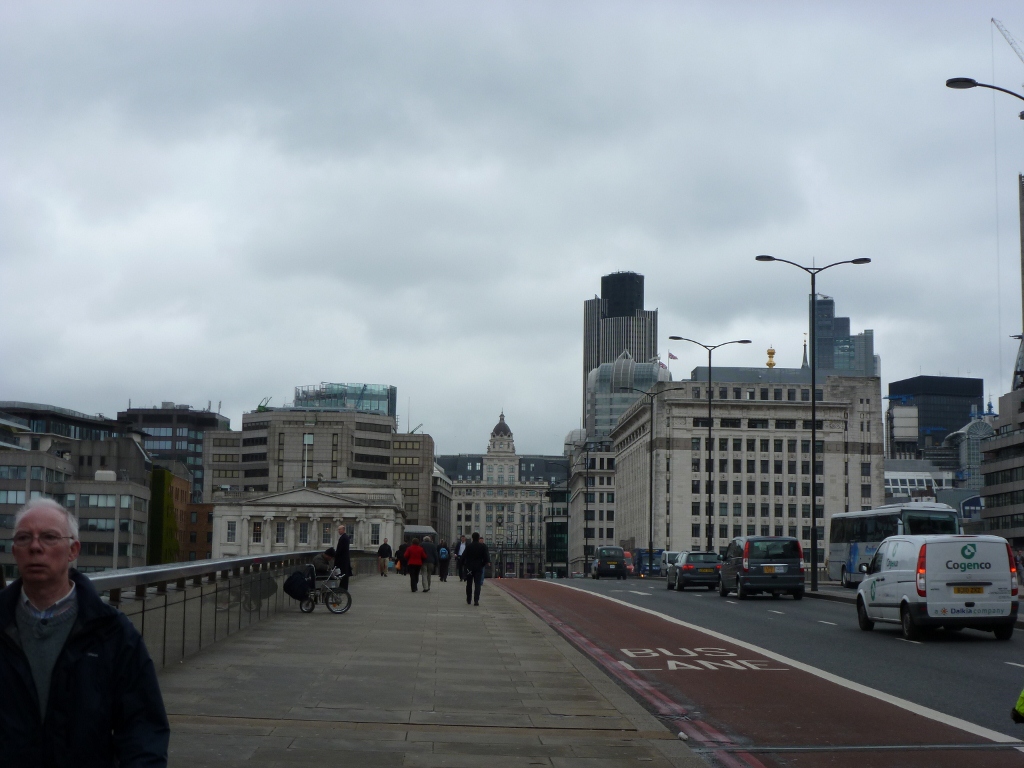
London Bridge, perhaps the most famous of the bridges I walked because it fell down, rivaled the Waterloo Bridge for boring-ness (see July 29 post).  Both were similarly plain concrete structures.  The London Bridge is slightly more interesting for having a dedicated bus lane, but I can’t stand the maroon color of the bus lanes.  Luckily the surroundings were more interesting than those at the Waterloo Bridge.

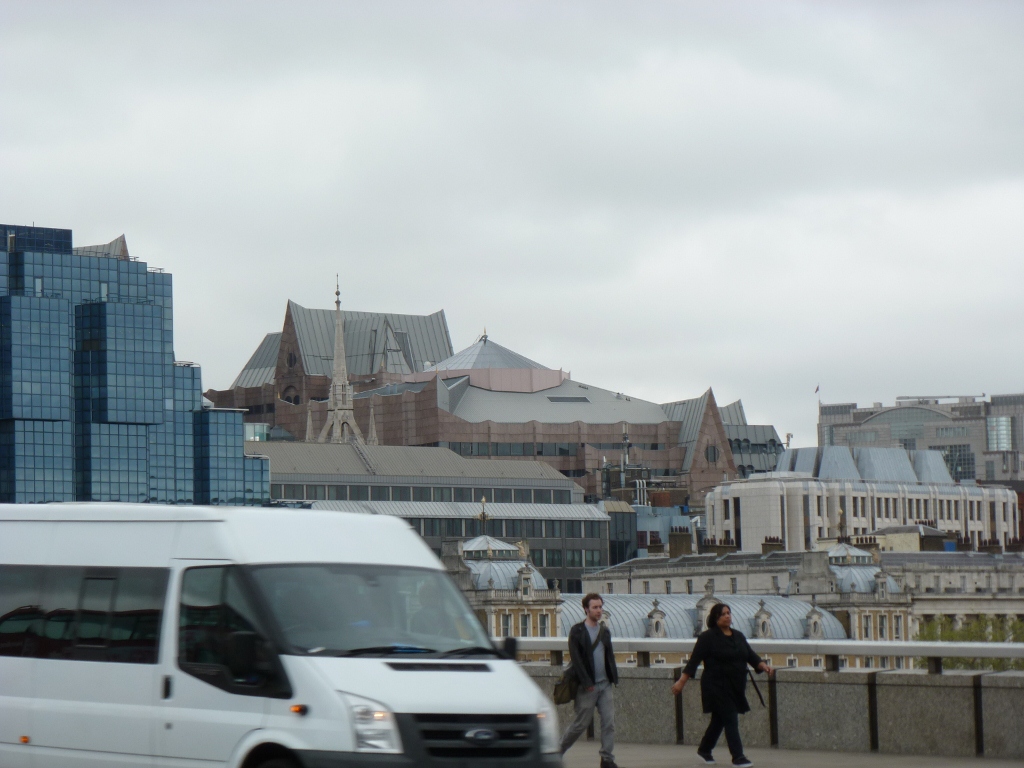
I loved the geometry of these buildings visible from the London Bridge.  I went onto Google Maps to try and discover what they are as I did for Lambeth Bridge (see June 28, and Maps are Awesome! posts), but when I did, I found that Google Maps has the London Bridge miss-labeled.  The pinpoint for London Bridge sits right on top of the Tower Bridge.  As I mentioned in my Waterloo Bridge post, I had also at one time mistaken the Tower Bridge for the London Bridge.  While the London Bridge is the most famous in song, the Tower Bridge is the most famous in images.  I believe that it for this reason–that both bridges are the most famous in London, but in different media–that they get mistakenly identified.  (For some reason it is hard to imagine that there might be more than one famous bridge in London.)

The pointy building in the background is the London offices of Zurich, an insurance company.  The blue glass building houses Northern and Shell, a media company.  Next to that building and lower down is the Old Billingsgate Market, which used to house the largest fish market in the world (the market moved to Canary Wharf area, but is still the largest in the UK based on its website).

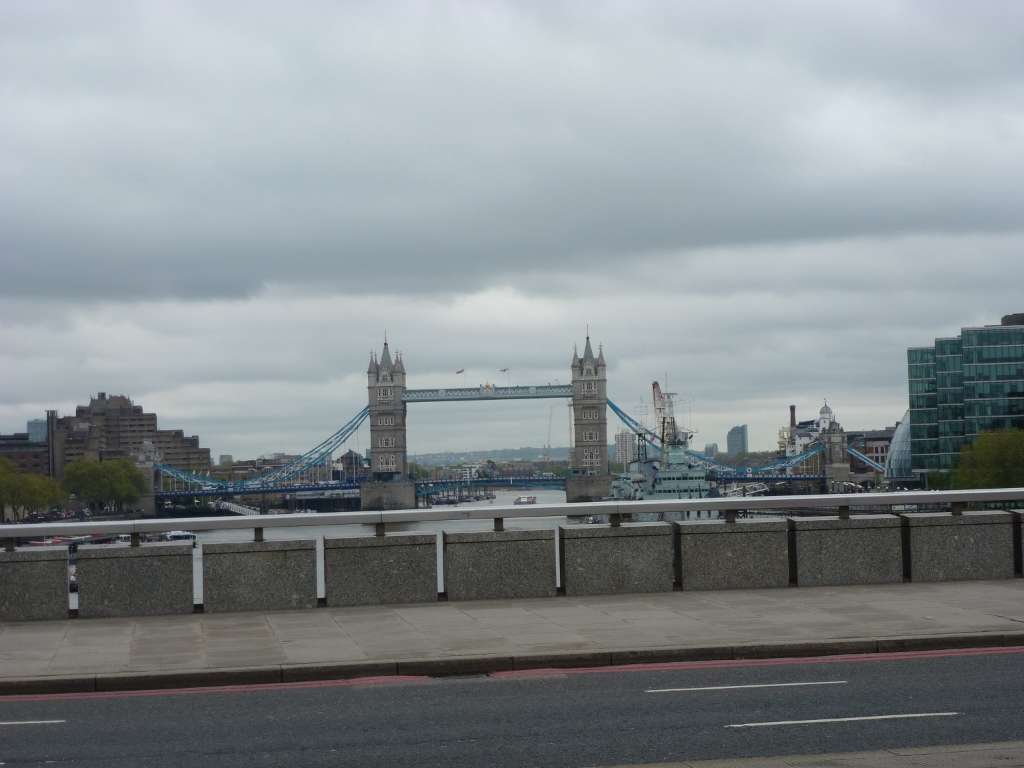
A battleship was parked in between the London and Tower bridges.  At first, I thought it was the battleship I saw on the news in the days before walking the bridge as the one moving up the Thames in an exercise to practice for the Olympic security measures.  Afterwards, I realized that this one (the HMS Belfast) was probably a permanent fixture and had not just traveled up the Thames.  It turns out I was correct the second time as the HMS Belfast is now part of the Imperial War Museums.

Southwark Bridge

After three mono-color bridges (see Jubilee Bridge, Waterloo Bridge, and Millennium Bridge posts), the Southwark Bridge returned to using the unique color schemes that I came to expect of London bridges after walking the first few (see Battersea Bridge, Albert Bridge, Chelsea Bridge, Vauxhall Bridge, Lambeth Bridge, and Westminster Bridge posts).

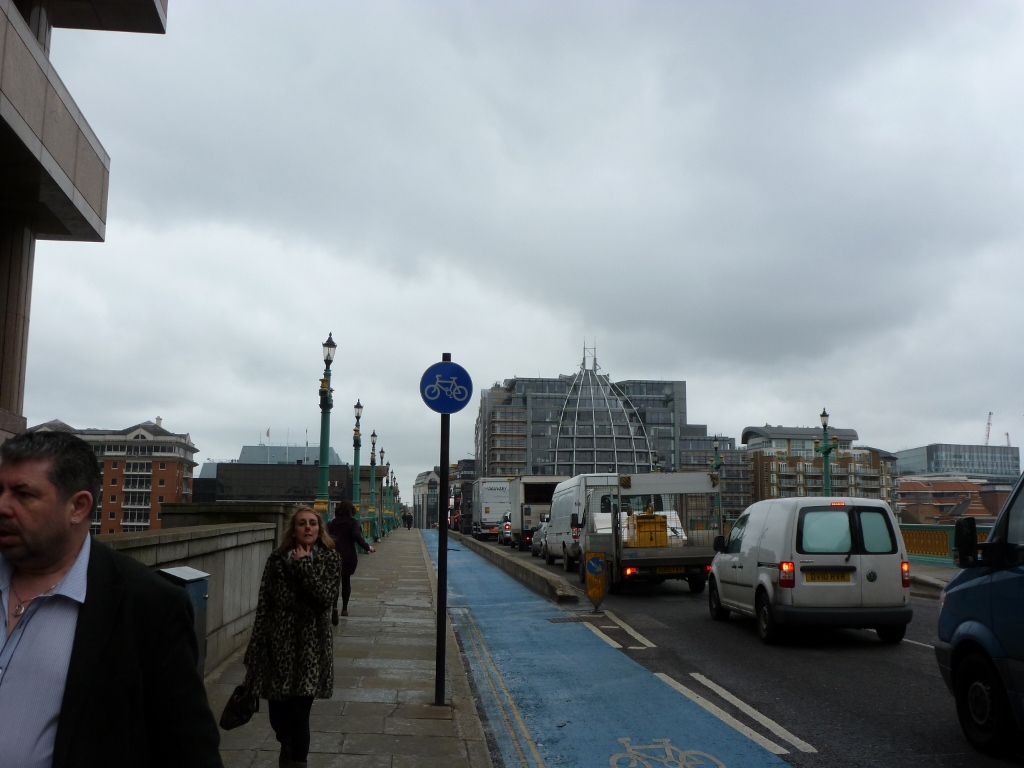
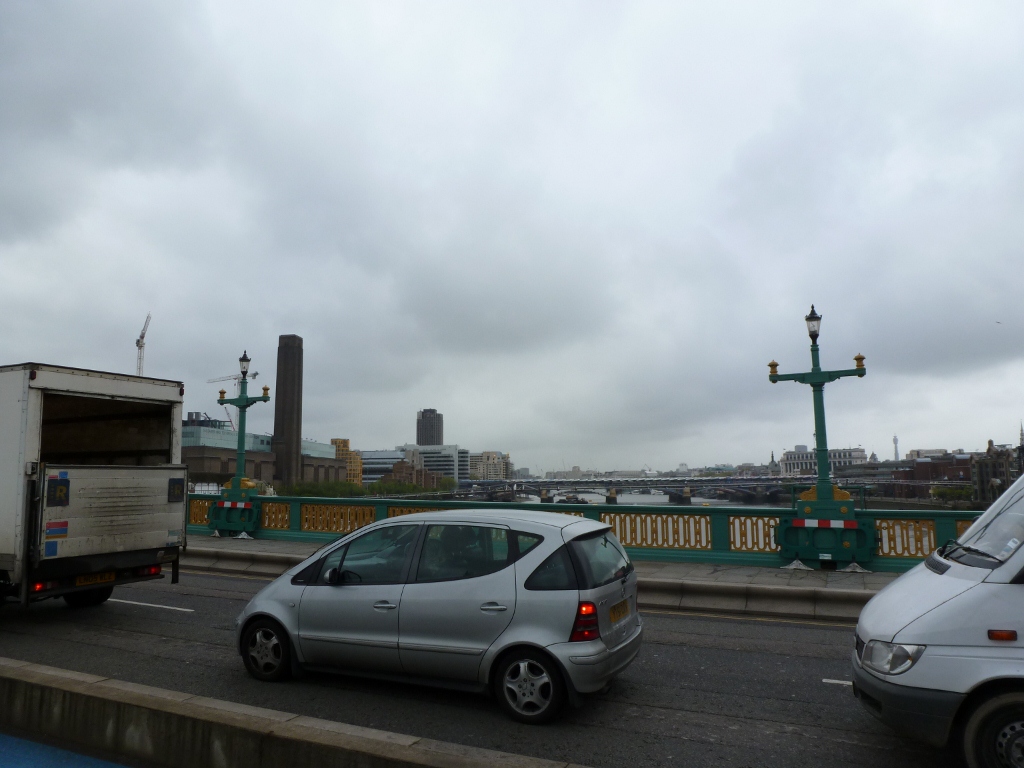
The Southwark Bridge had the most, or at least slowest, vehicular traffic of any of the bridges I walked in London.  It was also the only one with a painted bike lane.  I believe this lane is part of London’s Cycle Superhighway system.  These bike lanes are intended to make bike travel to central London from the surrounding areas easier (see website).  I really liked the bright blue color of these lanes.  It is highly visible and makes it quite clear this is not a place for cars.  Of course I am sure it costs a lot to paint miles of bike lanes solid.

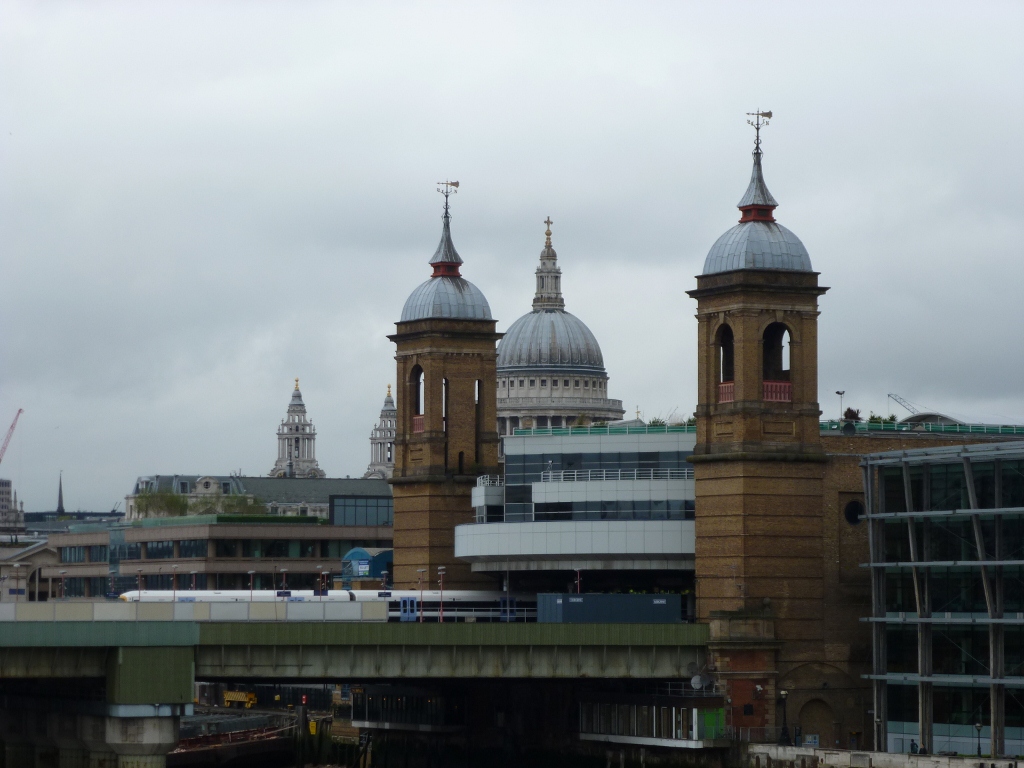
The little domes on this building had been visible to me long before I saw the rest of the building.  I was in anticipation for several days to learn what it was.  I assumed it would be something really interesting like a church built by Eastern European immigrants, in which case its prominent location on the waterfront would led to a fascinating story, I’m sure.  Consequently I was a little disappointed to learn that it was only a train station.  (Note: I learned what the building was while on the Southwark Bridge, but the view above was taken from the London Bridge on the other side of the station from Southward Bridge.)

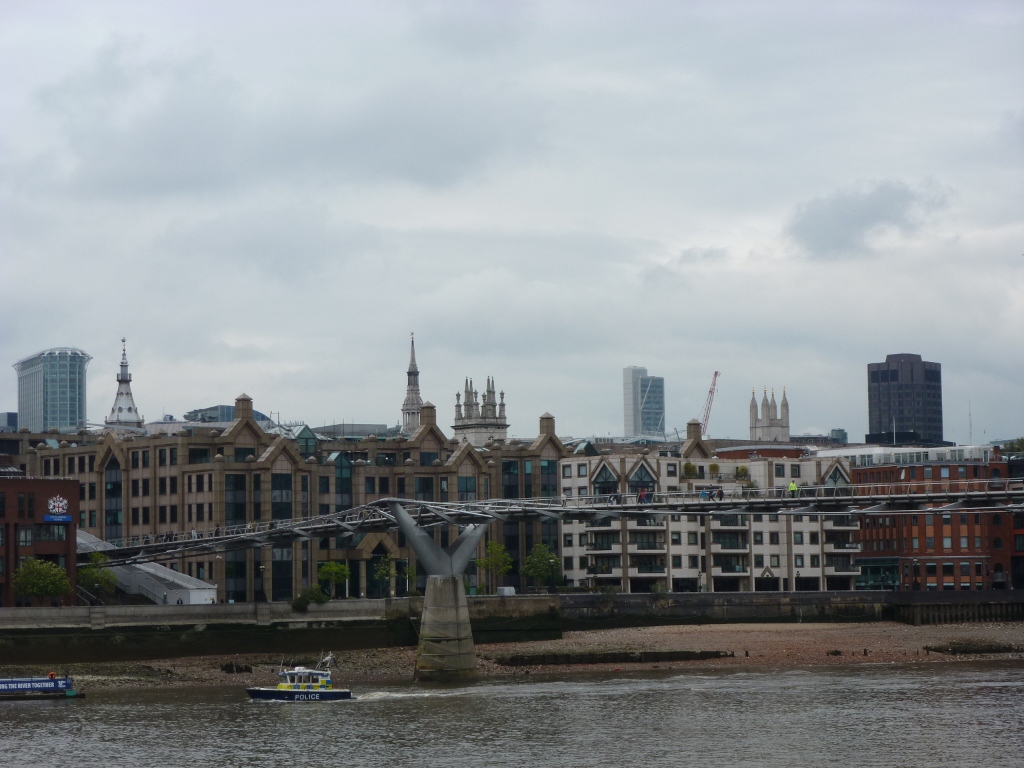
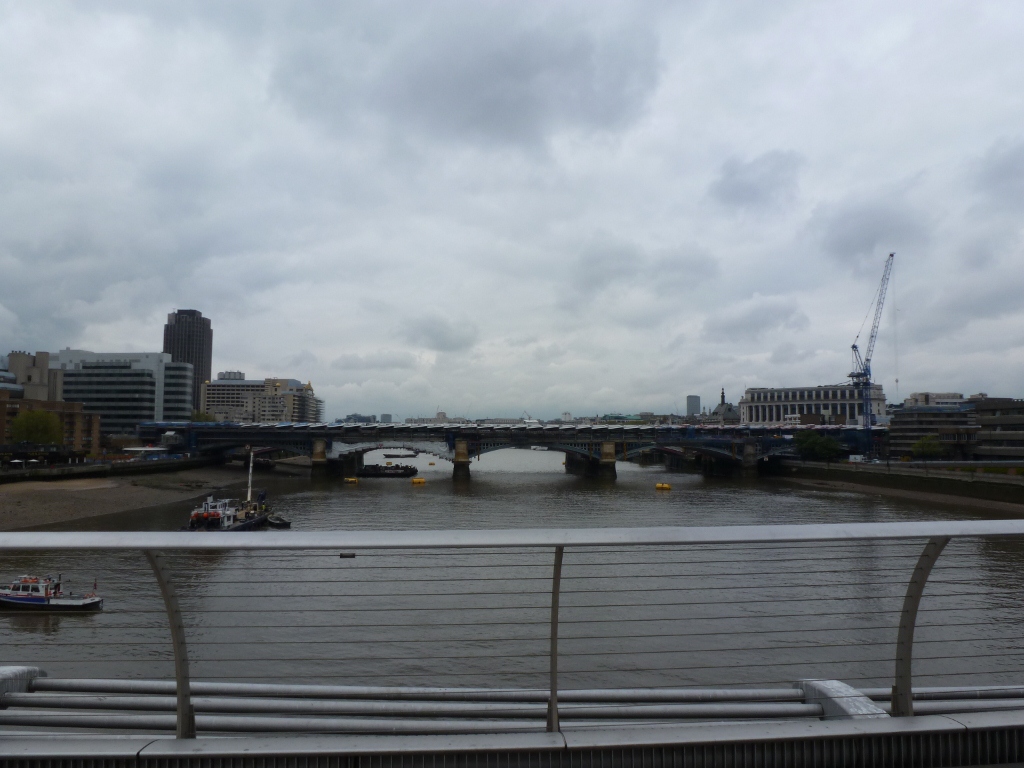
In this view upstream, the Millennium Bridge, which was so photogenic from the other angles (see Aug 2 post), becomes invisible against the background of the Blackfriar’s Rail Station spanning the Thames (see Blackfriar’s Bridge post).

Millennium Bridge

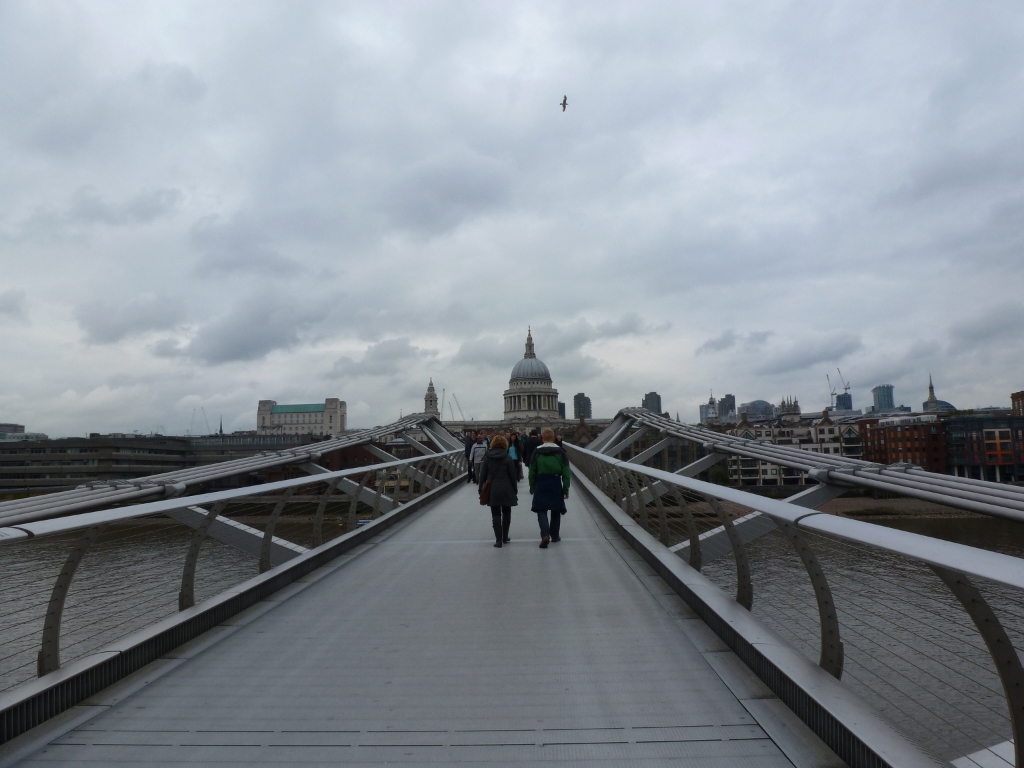
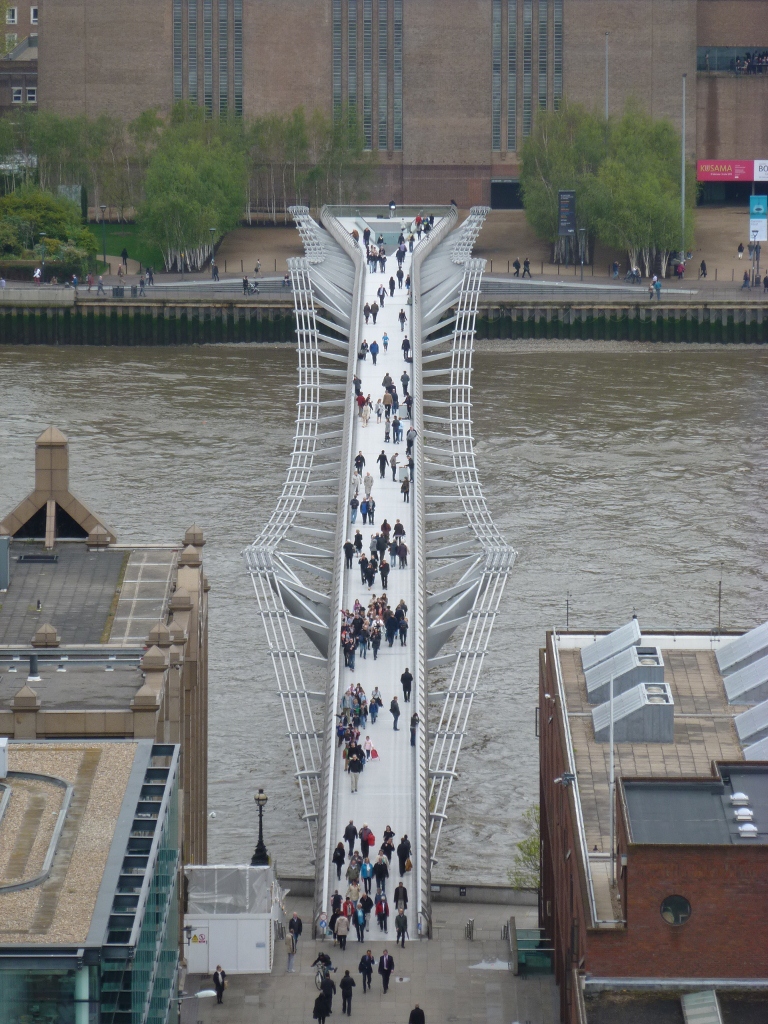
The Millennium Bridge is the first of two pedestrian bridges that cross the Thames.  The second, the Jubilee Bridge (click to see post), opened 3 years later in 2003.  While the Millennium Bridge is sadly only one color, I think it was probably the most photogenic bridge I walked in London.  Although I like the picture above less for the bridge and more for the buildings behind it, which show the city’s transition from a time when church steeples were the tallest thing around to today when that honor belongs to the skyscrapers.

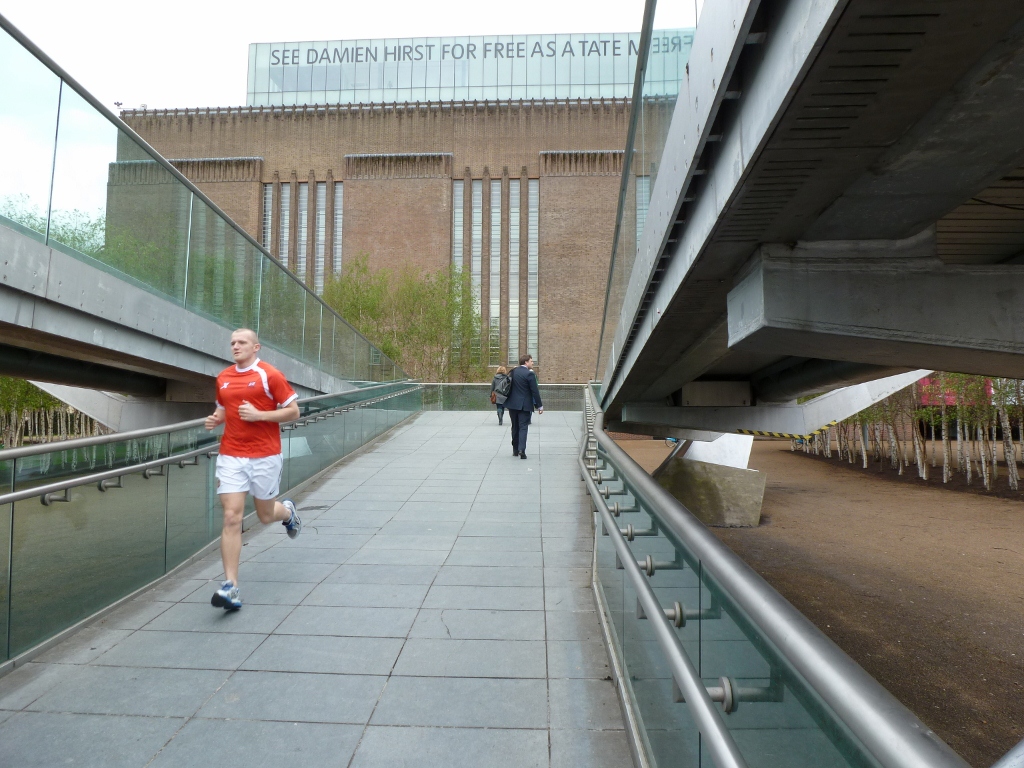
The location of the bridge was very good.  It leads directly to St. Paul’s Cathedral.  In some ways I am surprised that it wasn’t until 2000 that a bridge was built at this location.  (I picked up some souvenir maps while in London depicting the city in 1520, 1666, 1843 and 1902 and none have a bridge or even ferry boat at this location.)  On the other hand, the other side of the bridge connects to the Tate Modern, which didn’t open as the international modern and contemporary art museum until 2000.  Before then the site was a power plant from 1947 until 1981 when it became redundant and closed, remaining vacant until the Tate took it.

The views from the Millennium Bridge show two things of interest related to the other city bridges.  First, upriver is a view of the first rail station to span the Thames and the longest solar bridge in the world (see July 31 post).  Downriver, the Tower Bridge, which I believe is the most iconic London bridge, comes into view for the first time.

I started this post by claiming that the Millennium Bridge was the most photogenic of the London bridges.  The views of it above are pretty interesting, but the best shot was the one I took from the top of St. Paul’s Cathedral looking down.

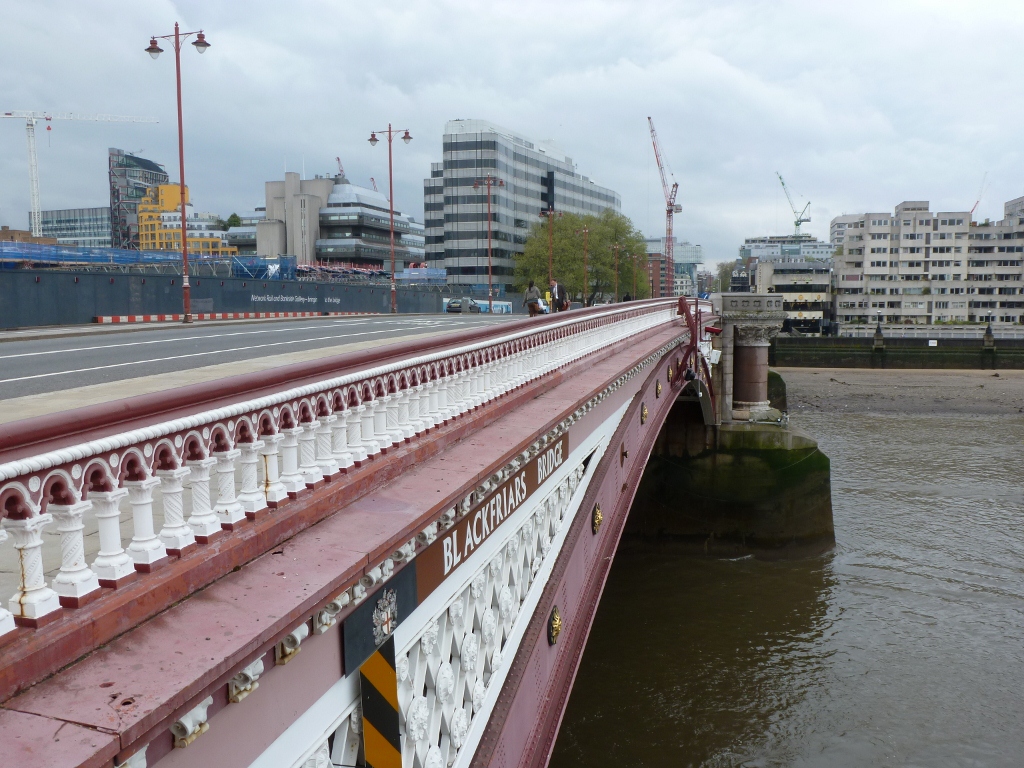
Blackfriars Bridge

One thing that stuck out to me while in London was the amount of construction going on.  It seemed like everywhere I went in the city there were cranes and/or something was being built, and I didn’t go anywhere near any of the sites for the Olympics.  While on the bridges, cranes could often be seen at a distance, but the Blackfriars Bridge seemed to be in the heart of a construction area.
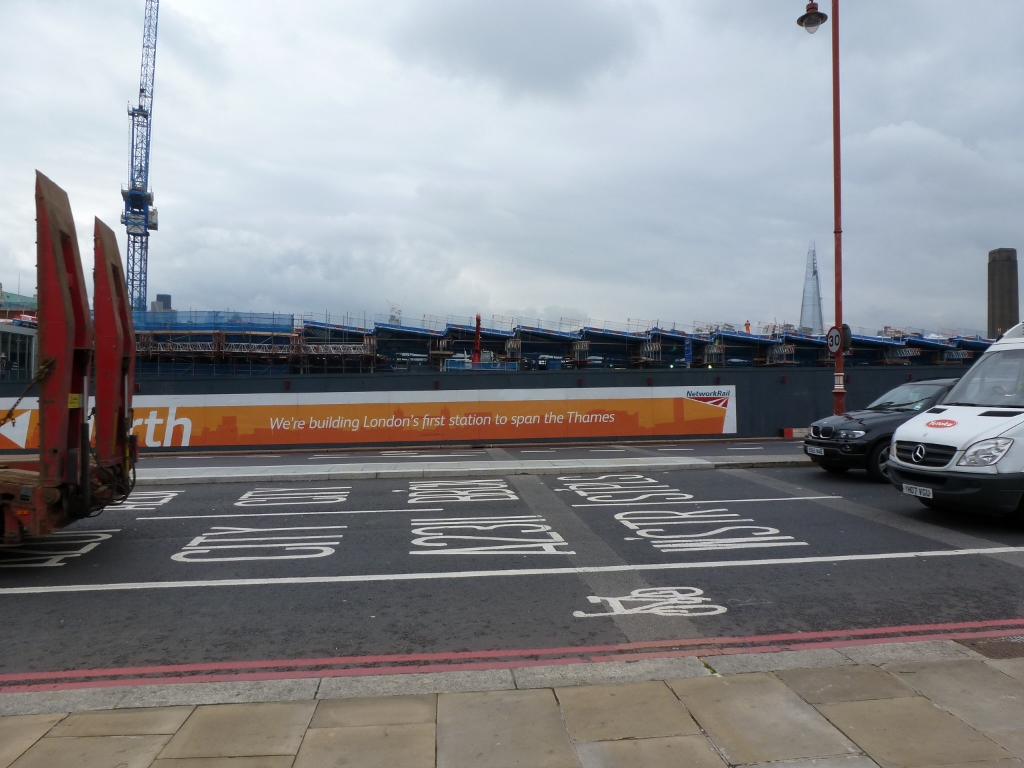
Cranes can be seen on the southern shore in the first image above.  The downriver view from the bridge was completely blocked and will remain blocked by “London’s first station to span the Thames.”  At first I find this very annoying, as I think there would be a good view of the city looking downstream from Blackfriars Bridge.  However, building a station over the Thames is actually an interesting idea.  In a city as dense as London there isn’t much room for expansion.  There doesn’t appear to be anywhere else this close to the heart of the city to build a new large station.  The rail website explains that this station, which is being built on top of a Victorian railway bridge, will allow for longer commuter trains and improve access to the Tate Modern and the Globe Theater.  Another piece of note about the bridge is that it is being fully equipped with solar panels and will be the longest solar bridge in the world.  Apparently, the competition for the title “World’s Longest Solar Bridge” is not particularly tough at the moment as there is only one other known solar bridge in the world which is the pedestrian Kurilpa Bridge in Australia.

My favorite part about this revamped railway bridge is that it challenges the function of a bridge.  Today, most bridges function simply as a way to get from point A to point B.  One exception to this is the Galata Bridge in Istanbul (see June 25 post).  I remember seeing and using a bridge in Bath, England, when I was a kid that had shops on both sides so that you couldn’t even tell you were on a bridge while crossing it.  Bridges like this seem to have been popular in medieval Europe.  In a class I took on the history of cities, we looked at medieval Paris which had multiple bridges with buildings lining both sides.  Perhaps with the invention of transportation technologies that permit sprawling cities, there is no reason to use bridges as anything more than a connector.

I suppose if there were more bridges with mixed functions like carrying shops as well as roads, then there would be less great views, still it’s an interesting concept.  Bridges often end up adding to the dead space of a city, but this might be more because of what they connect than because of their function to move people along.

Waterloo Bridge: The Finest Non-inspiration

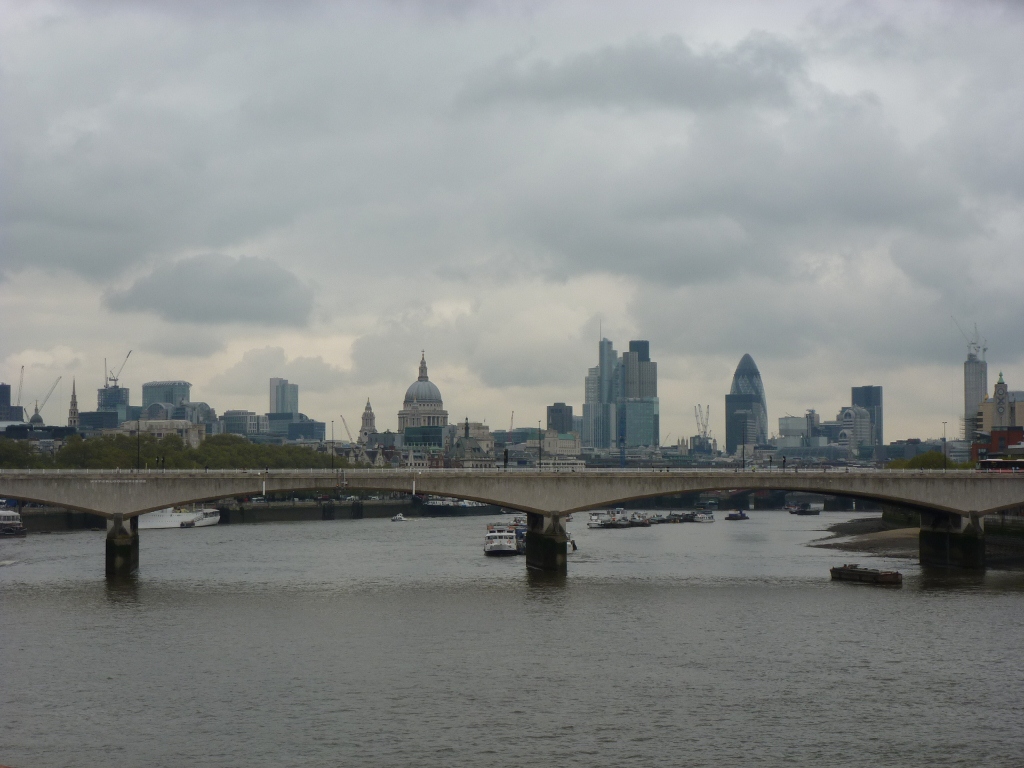
To pick up where I left off with the London bridges I walked earlier this year, the next bridge is Waterloo Bridge.  (The last one I discussed was Jubilee Bridge on July 10.)  The Waterloo Bridge was the most boring bridge in London, though I didn’t realize it at the time.  When I got home however, I realized I only took two pictures from it and hadn’t taken any of the bridge itself.  The picture above was one I took from the Jubilee Bridge to show the downriver view from the bridge, which happens to include the Waterloo Bridge.

I was expecting that the London Bridge would be boring.  Sometime before my trip, I mistakenly identified the Tower Bridge as the London Bridge.  The discussion that ensued, in which I was corrected, led me to believe that the London Bridge was plain and uninteresting and as such, I was not the first to mistake the Tower Bridge for it.  While the London Bridge itself was boring and like the Waterloo Bridge lacked the colors and sculpture found on the other bridges (see the examples of the Albert Bridge and Vauxhall Bridge), it there were many interesting things to see from the London Bridge.  While crossing the Waterloo Bridge, I was only inspired to take shots of the downriver and upriver views.

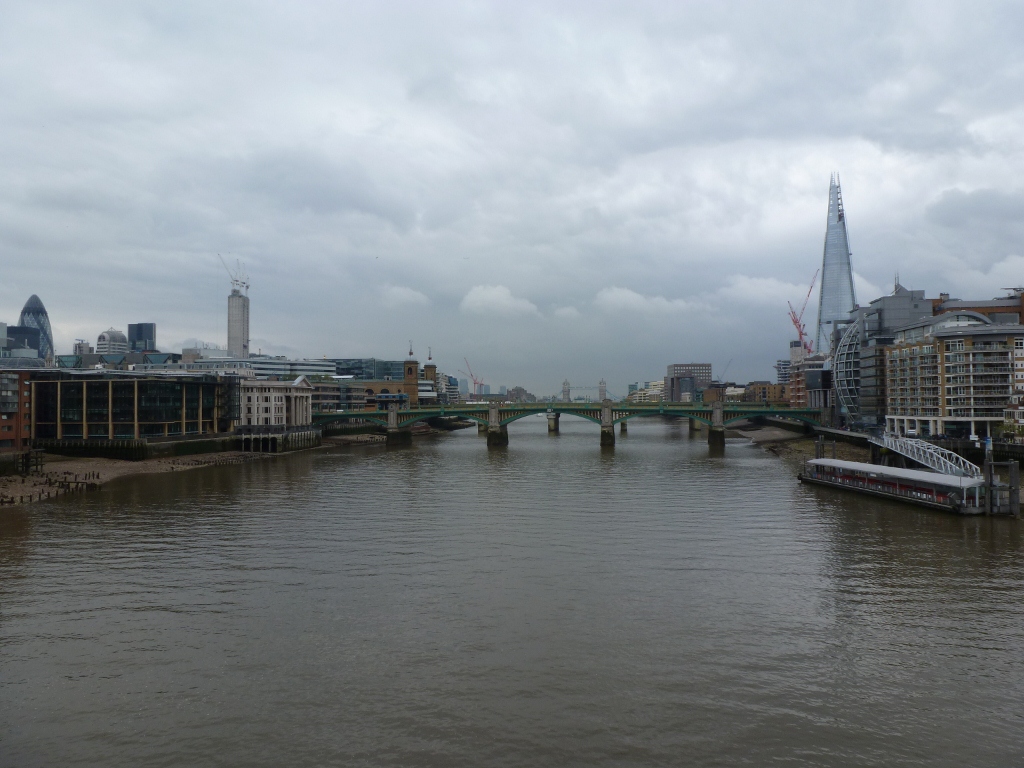
The most interesting thing to note about these views, is in comparing the downriver view from the Jubilee Bridge with the downriver view from the Waterloo Bridge (pictured above) it appears that the new buildings are pushing the classical buildings such as St. Paul’s out of the frame.

When I come across a situation like this, where there isn’t much to say from my experience, I turn to the internet to give me something to fill out with.  I found two intriguing bits in my Google search.  First is that while I found the views from Waterloo Bridge uninspiring, Wikipedia suggests that the views of the city from this bridge “are widely held to be the finest from any spot at the ground level.”  The second is that Hollywood has made two films called “Waterloo Bridge” in 1931 and 1940 in which the main characters meet on the Waterloo Bridge.  The interesting part is that the movie Production Codes changed in between which resulted in two fairly different films–the first about a scarlet woman accidentally killed, the second about a proper woman who commits suicide to save the man she loves from scandal.