A Bridge under a Bridge

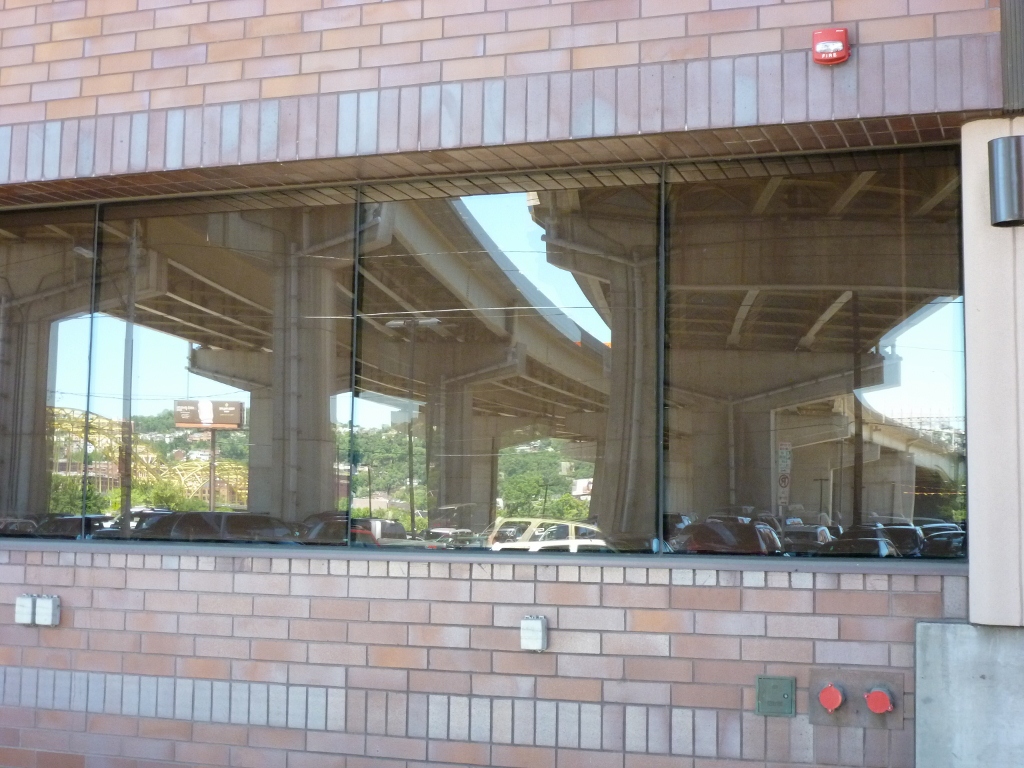
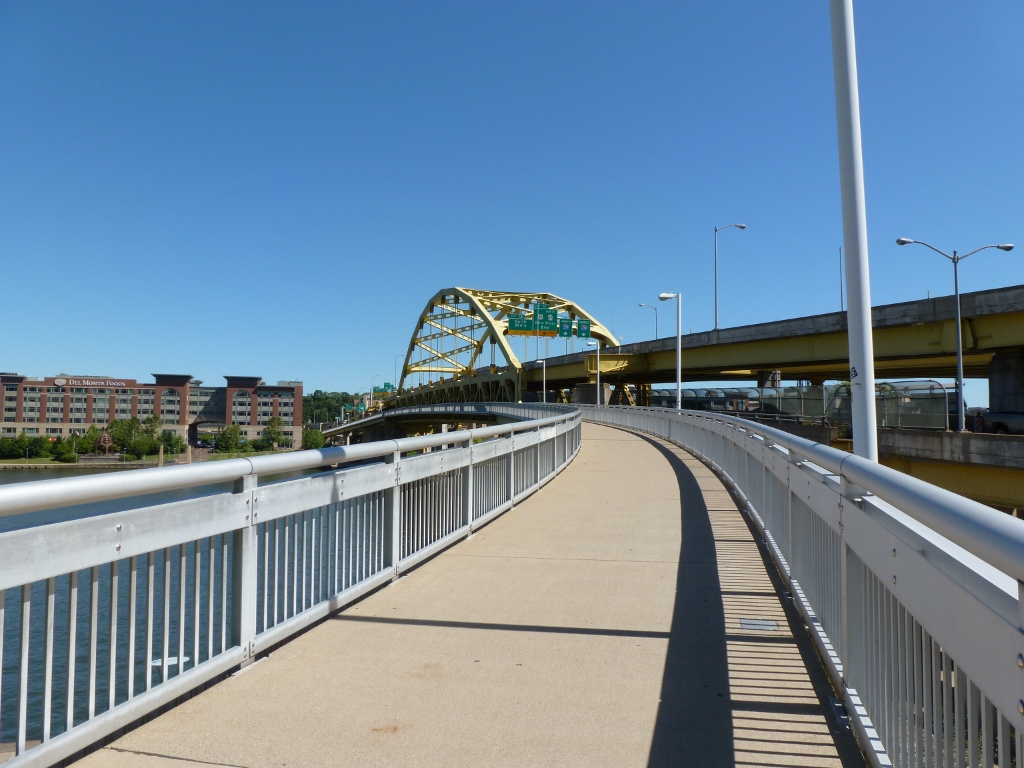
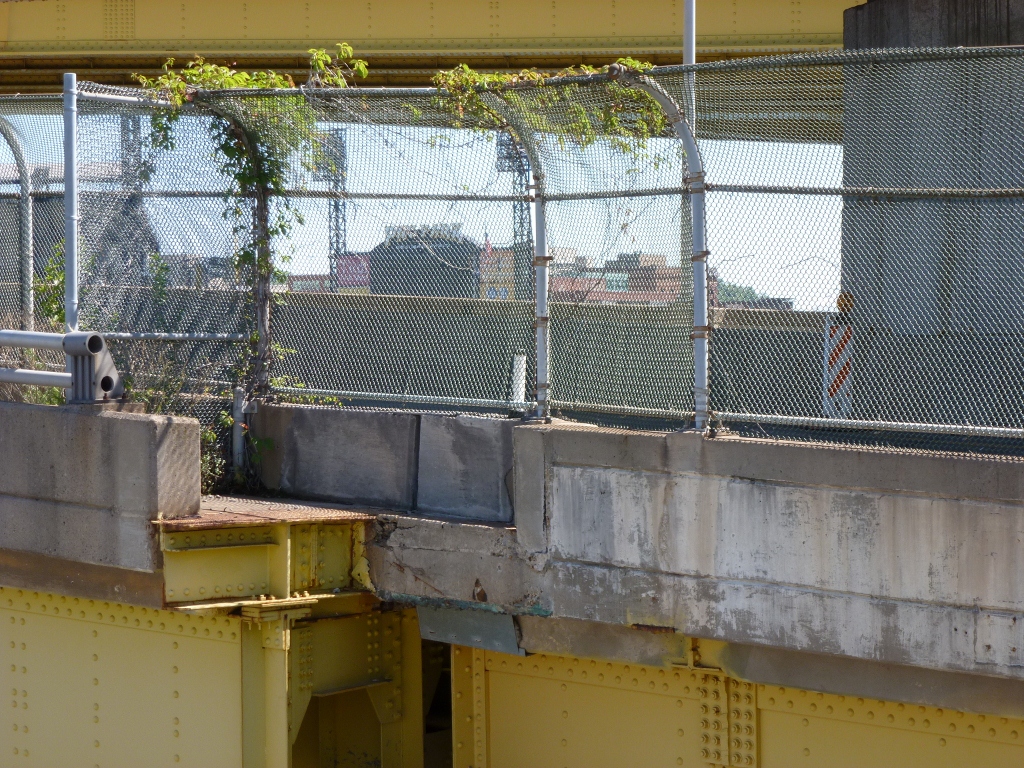
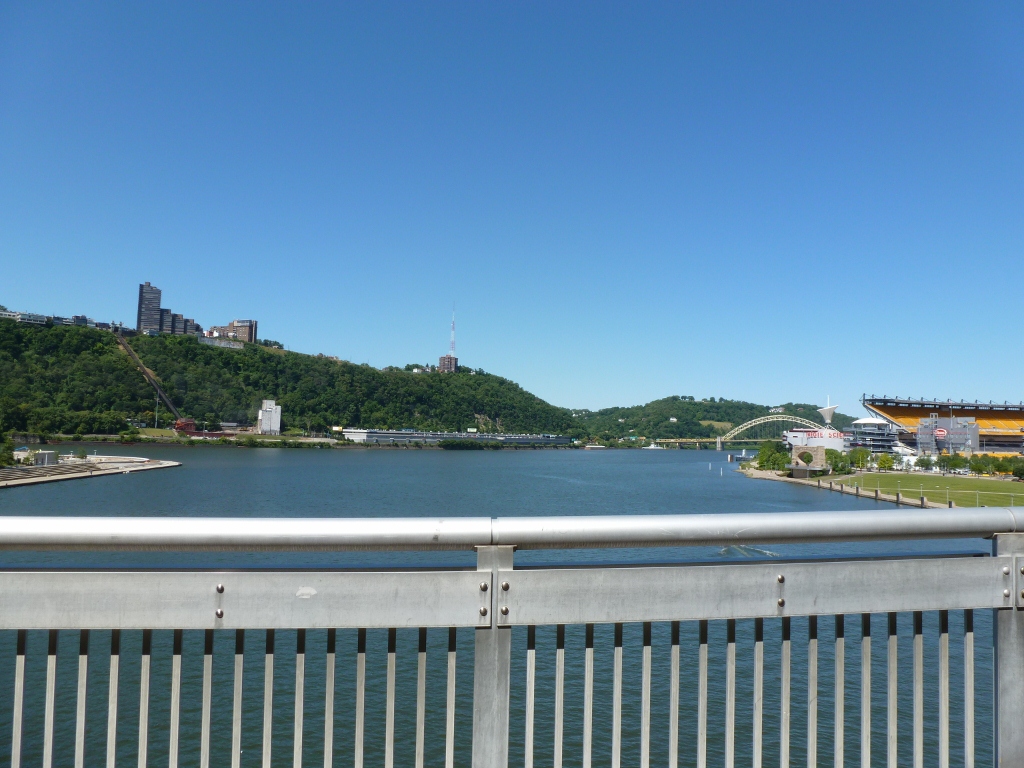
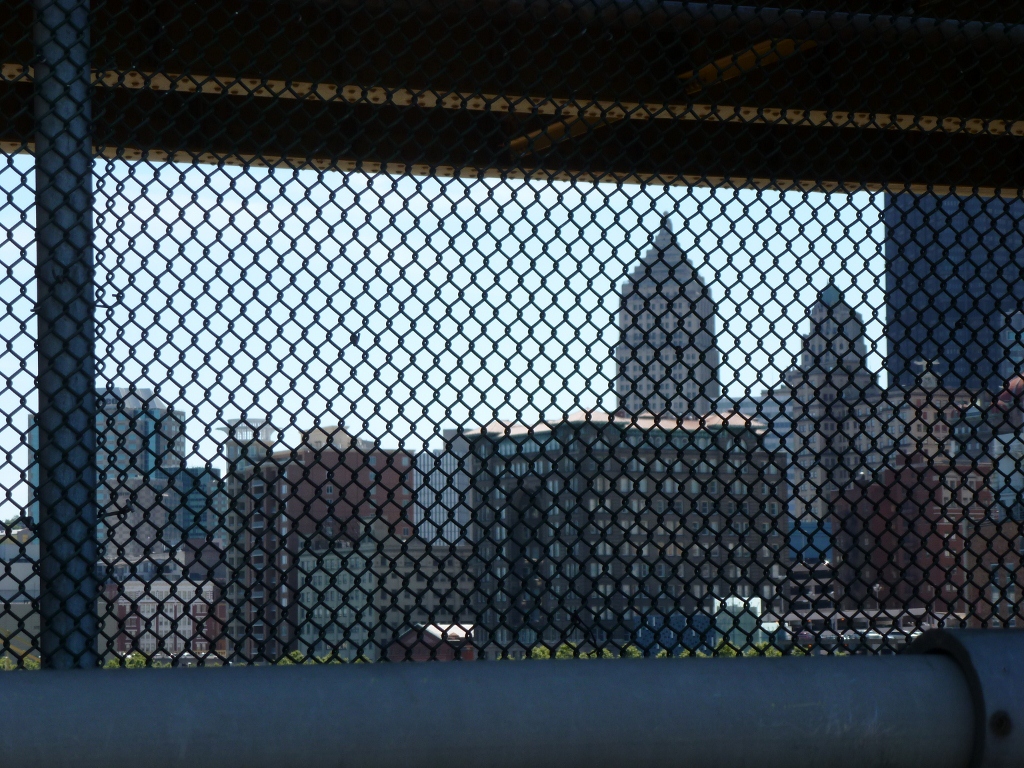
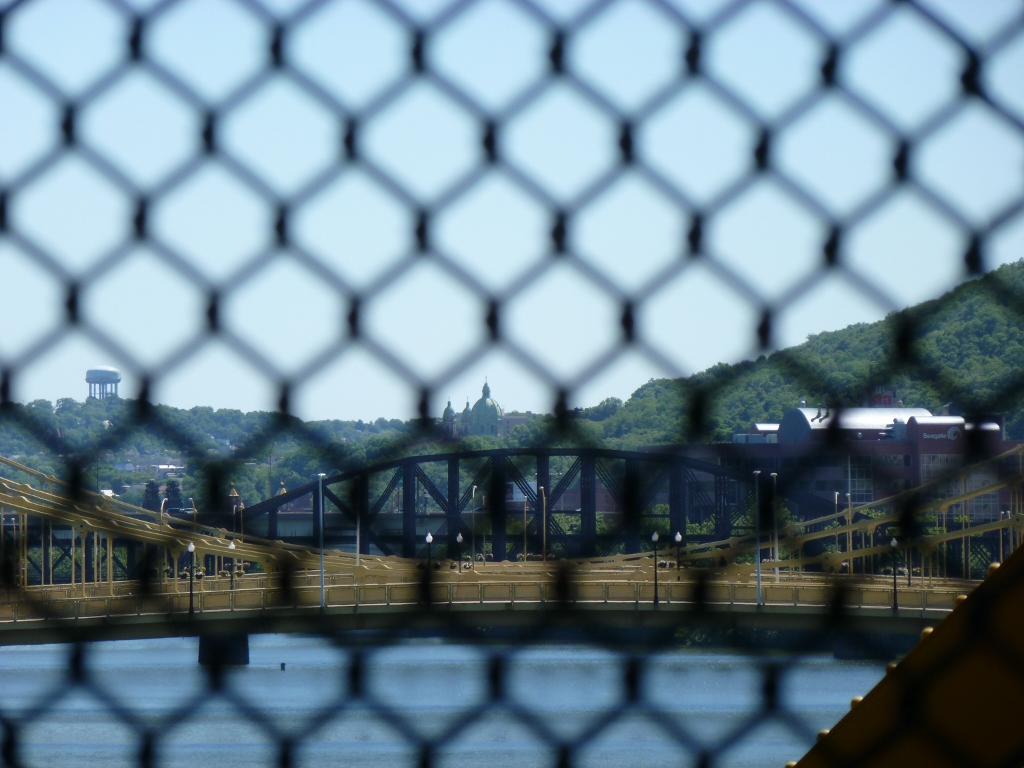
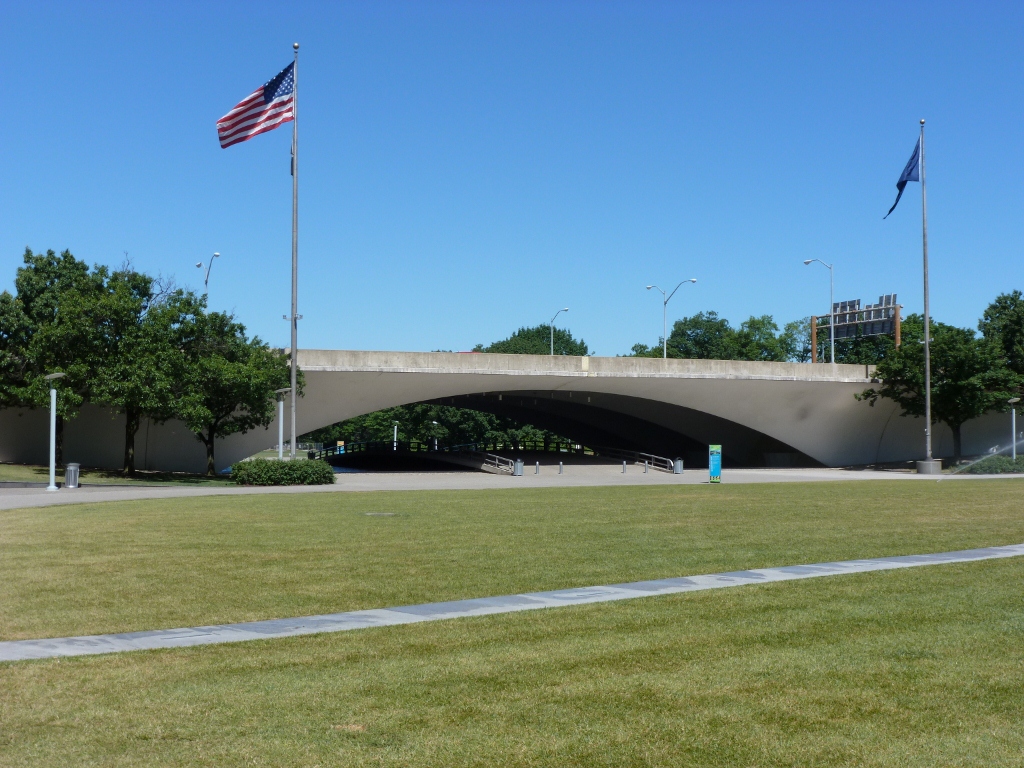
This pedestrian bridge is located in downtown Pittsburgh.  As best as I can tell, this bridge was built in the early 1960s.  The upper bridge is called the Portal Bridge, carries one of the interstates over the Point, and does not have pedestrian access so I will not be walking it or posting about it.  The pedestrian bridge does not have its own name and is not included in PGHbridges.com’s list of bridges in Pittsburgh.  It crosses over a reflecting pool to connect the two parts of Point State Park which are divided by the highway.  It is the only access point from downtown to the park.

The Point hosted both British (Fort Pitt) and French (Fort Duquesne) forts early in its European history.  (The outlines of these forts are laid out on the grounds of the park.)  This area became a railroad and warehouse district before the first (we are apparently now on our third) “Pittsburgh Renaissance” in the 1930s/40s/50s at which time it was turned into a park with the interstate transecting it.

The view above is looking toward the pedestrian bridge and the park away from downtown.  This side of the bridge is a large, unexciting field.  During festivals and events there will often be tents and kiosks here.  On the other side of the bridge are the interesting parts of the park.  My favorite feature is the fountain, which unfortunately has been turned off and under reconstruction for the last three years.  According to a press release, the fountain will be back in working order next summer and better than ever.  Also found on the other side of the pedestrian bridge is the Fort Pitt Museum (which I believe I went to once and keep saying I should visit again), the steps along the Allegheny River used for watching boat races and the Three Rivers Regatta which will be held June 30-July 4 this year, and some tree-lined walks.


Battersea Bridge

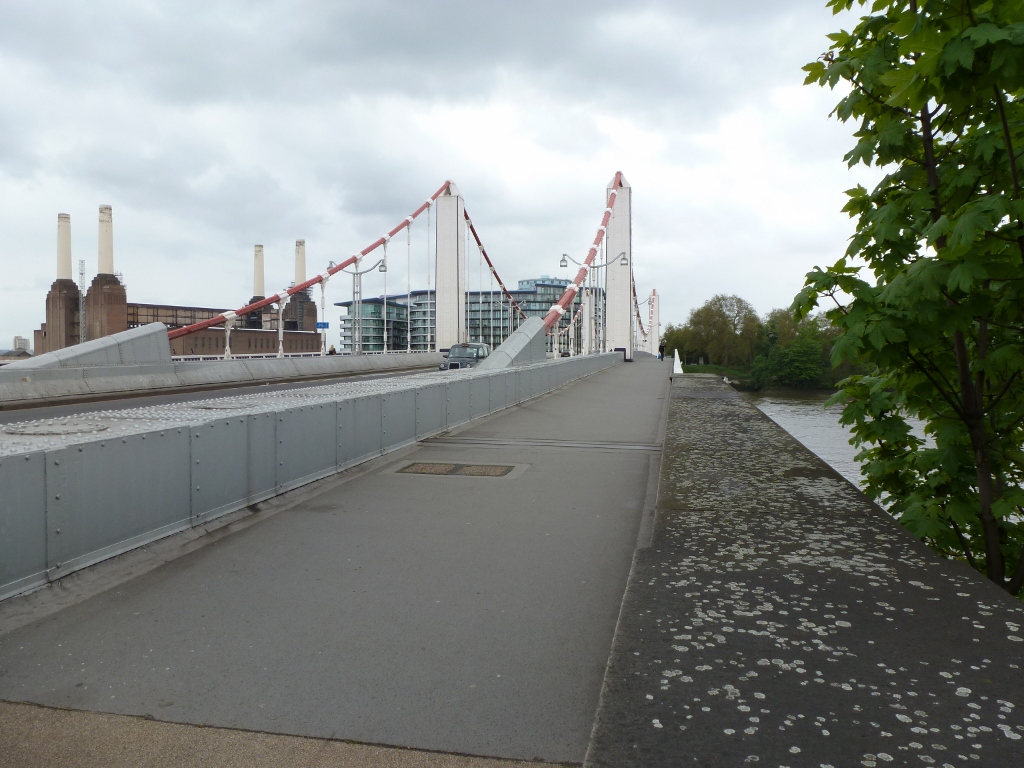
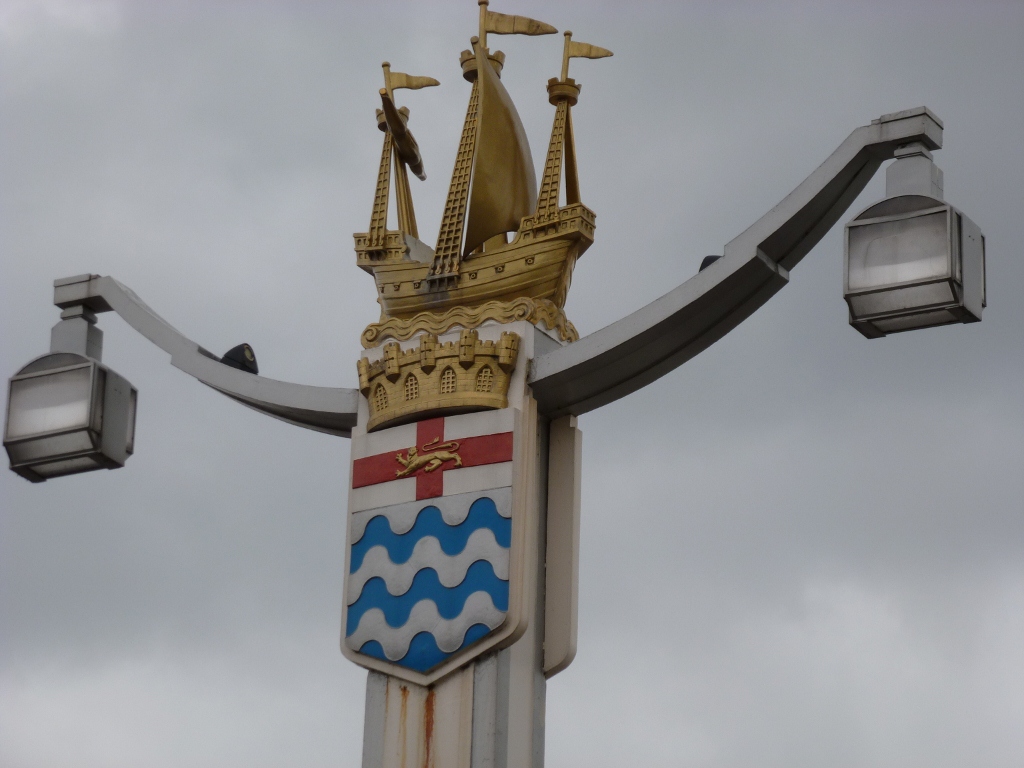
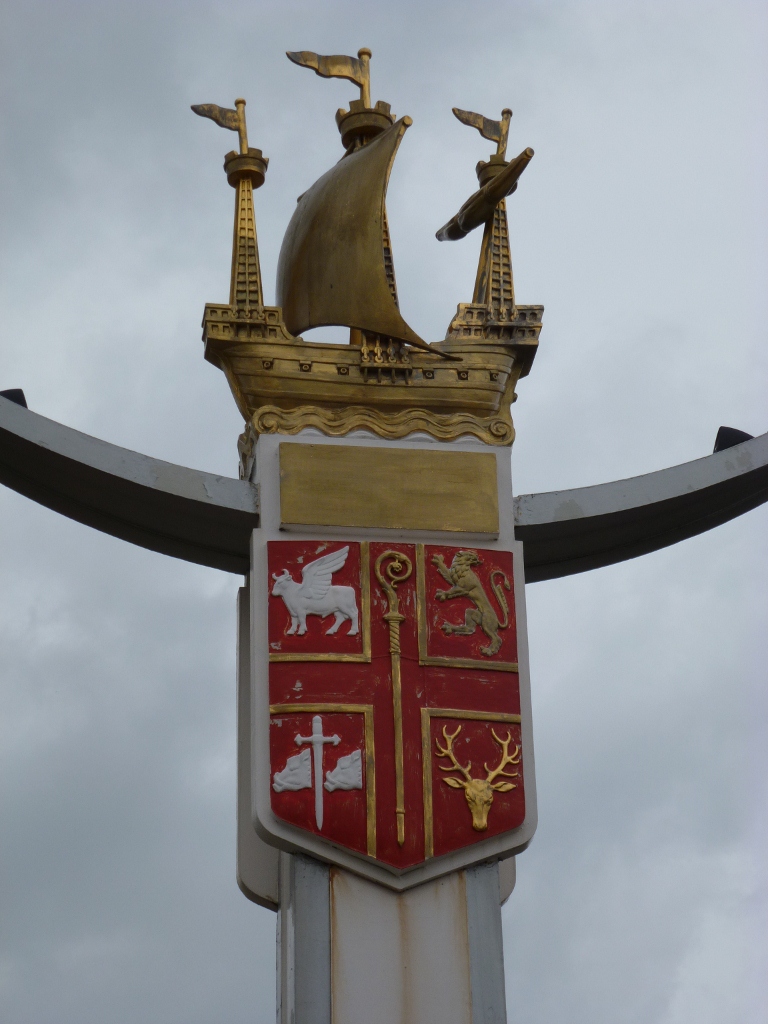
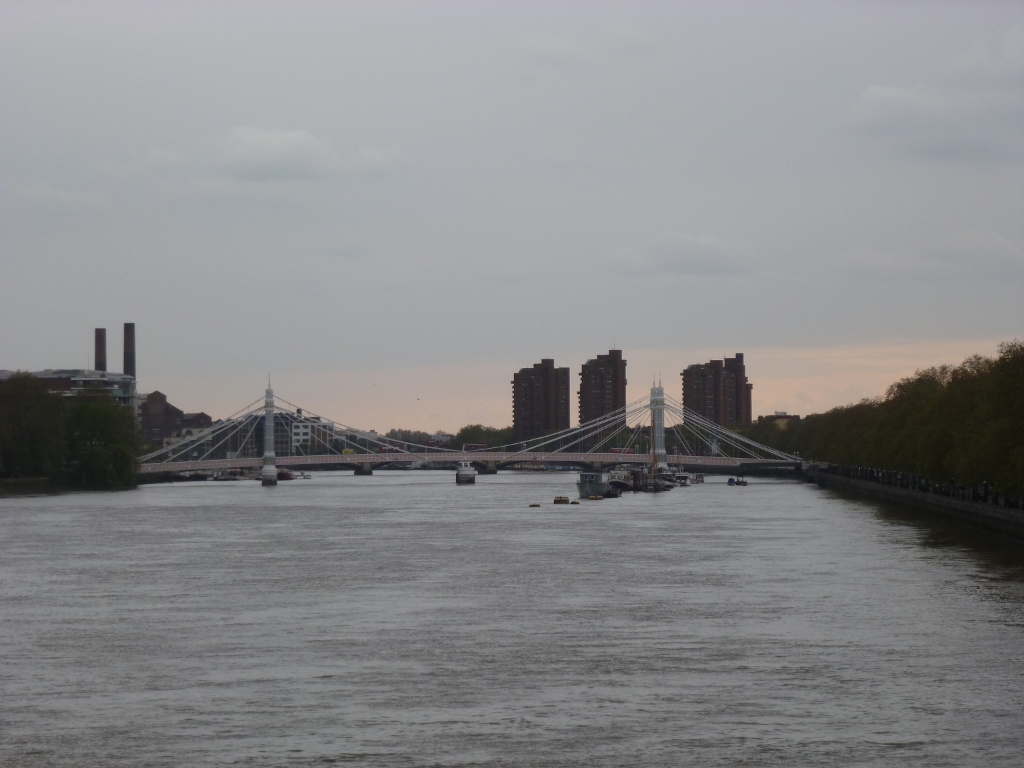
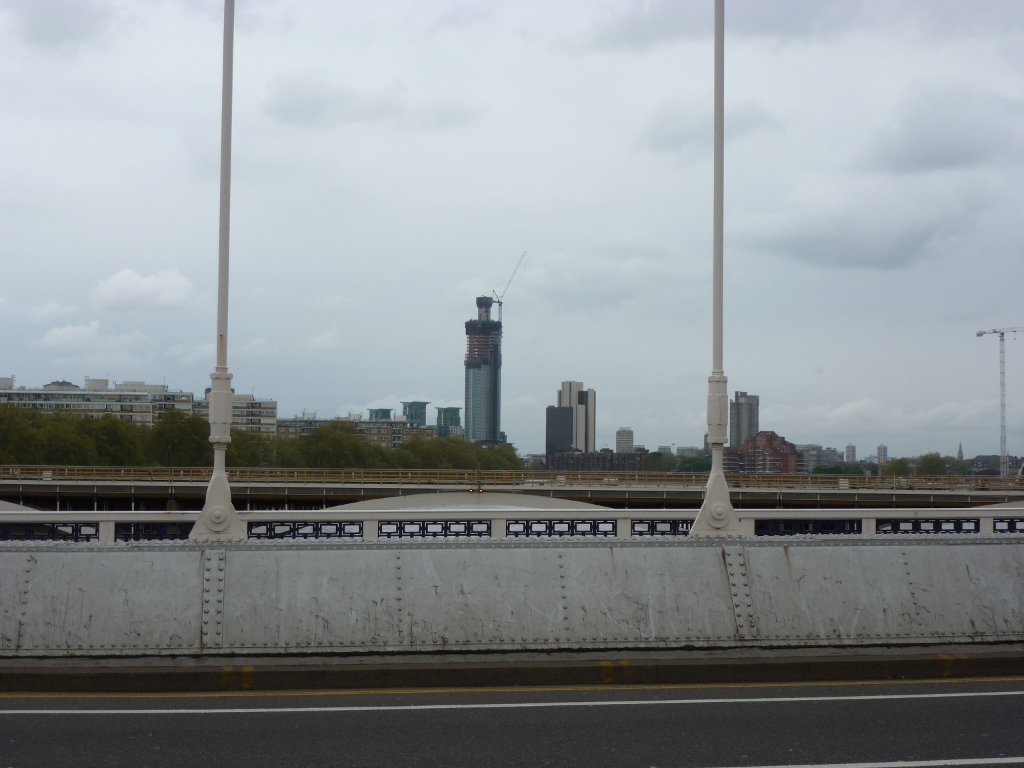
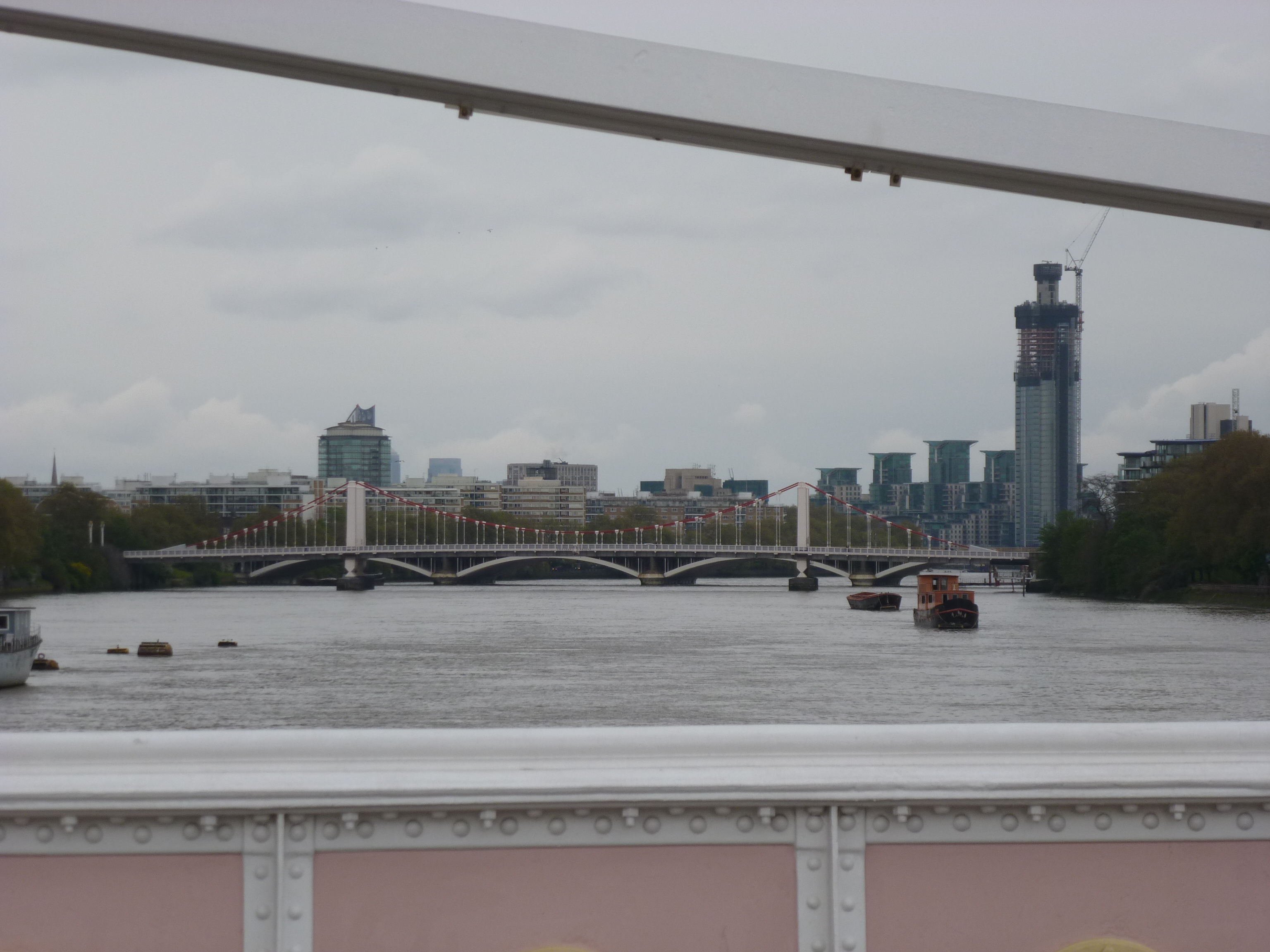
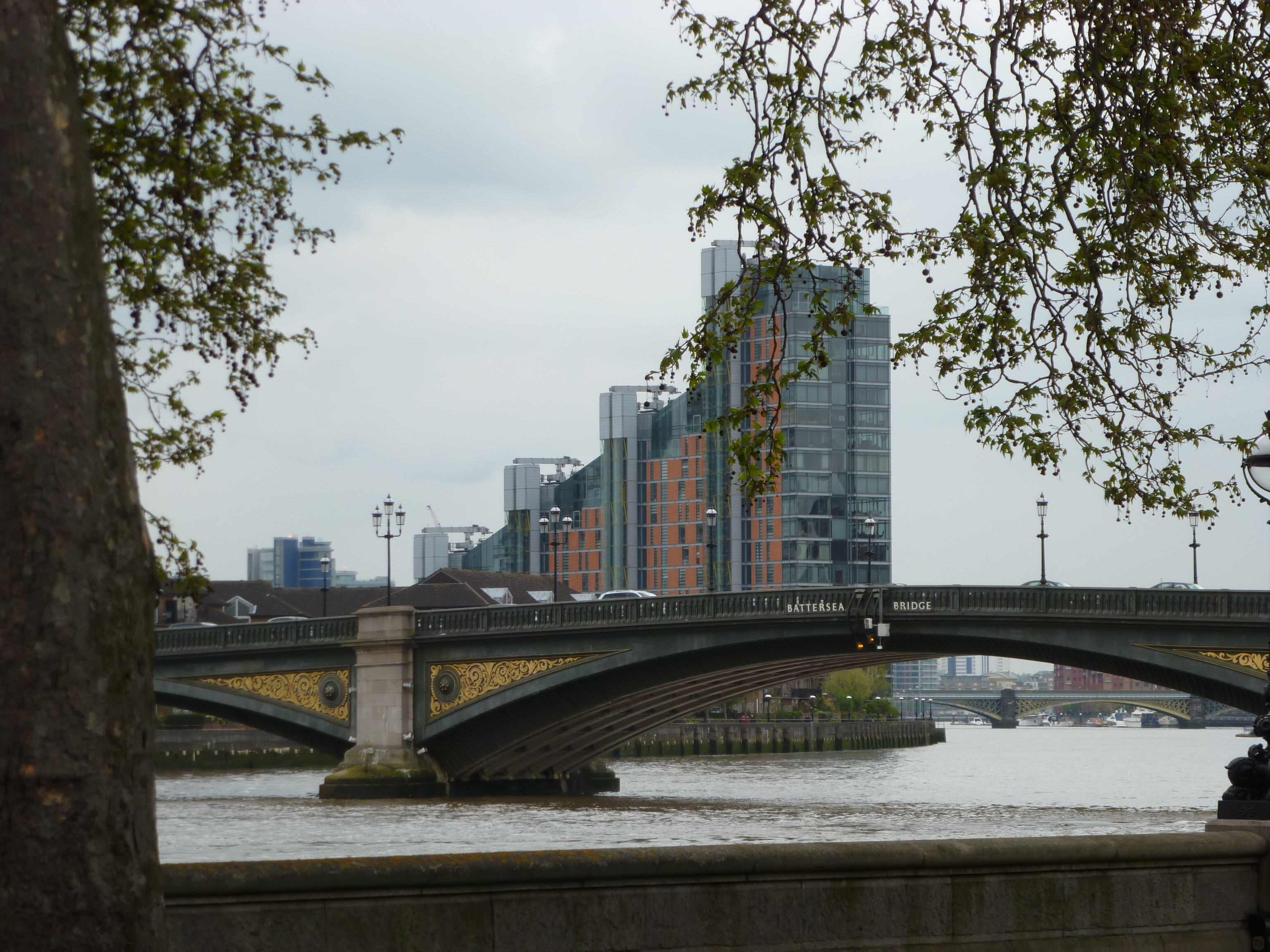
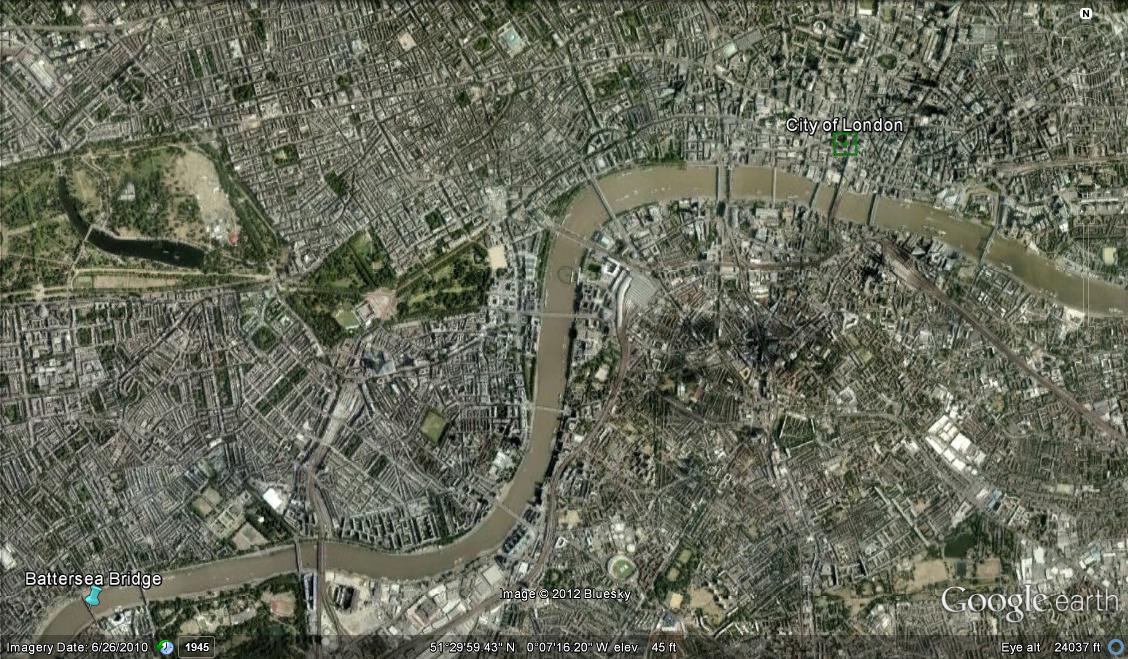
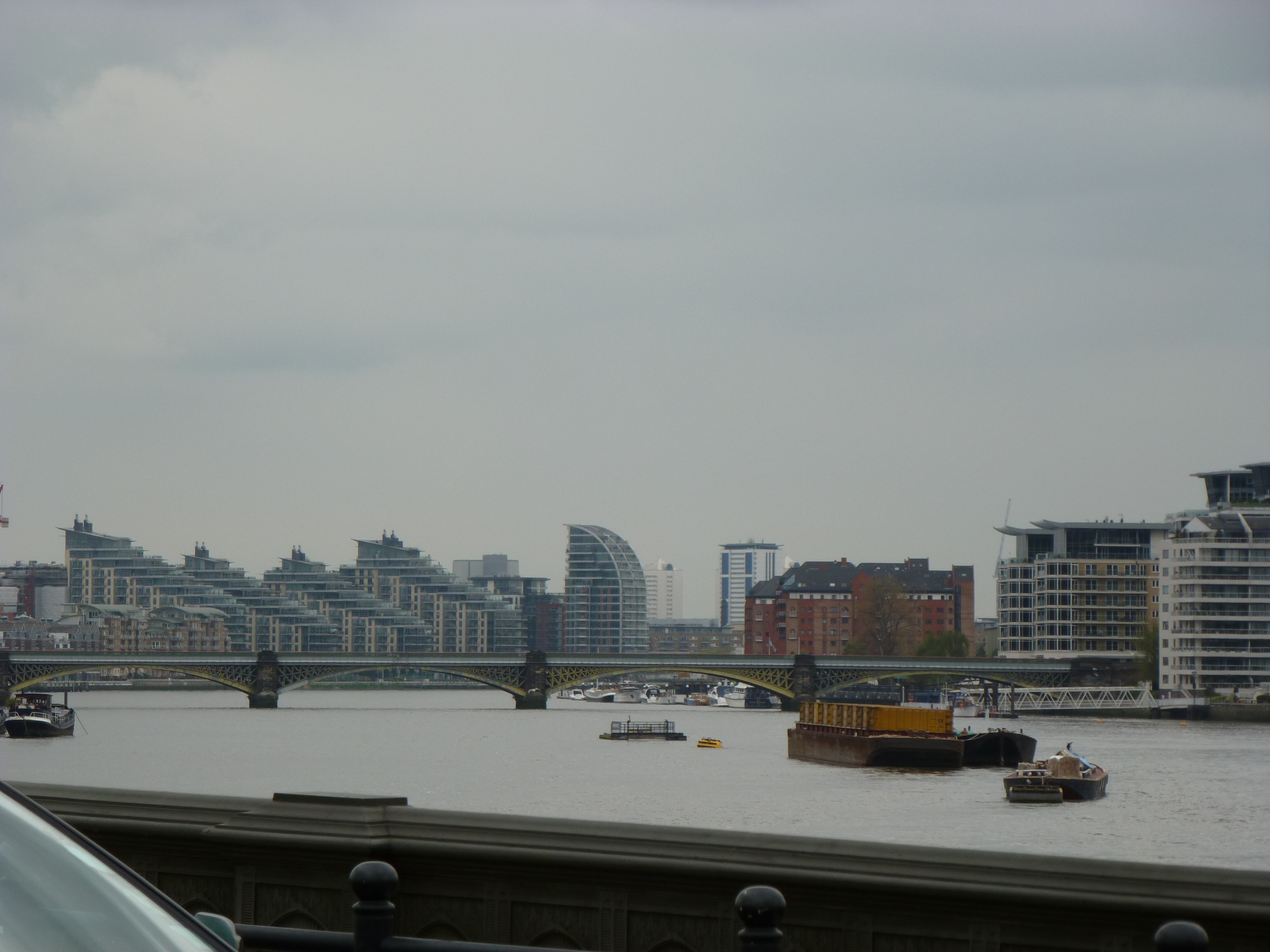
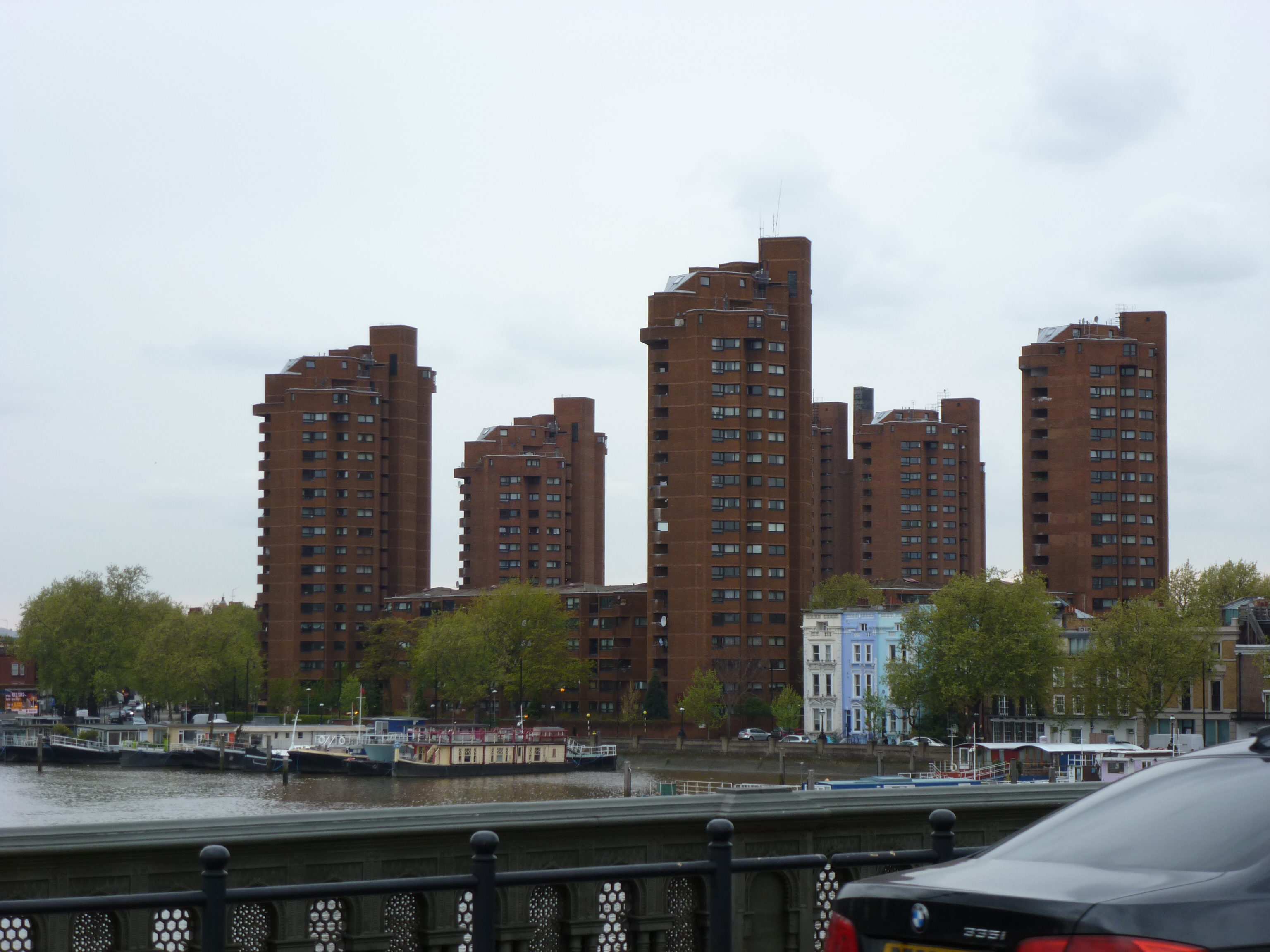
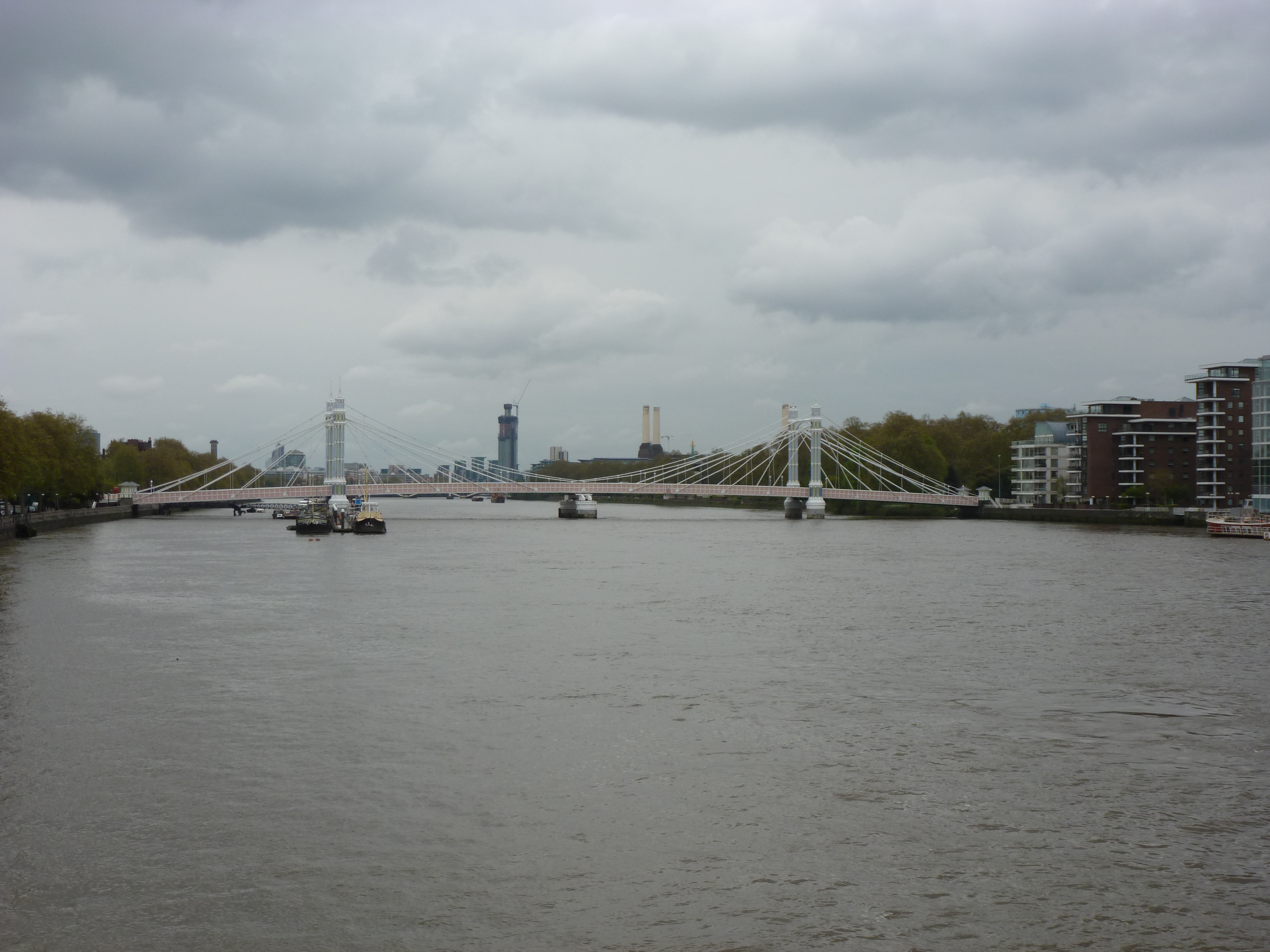
The Battersea Bridge was the first bridge in London that I walked across.  The bridge, built in 1890, connects the London neighborhoods of Kensington & Chelsea (north of the river) and Wandsworth (south of the river).  The north side had traditional, classic architecture, but the south side had some newer developments.  From the bridge looking west, I saw a bridge for the tube and several modern developments.  To the east, I saw the Albert Bridge, the Battersea Power Station, and the Shard tower then under construction.

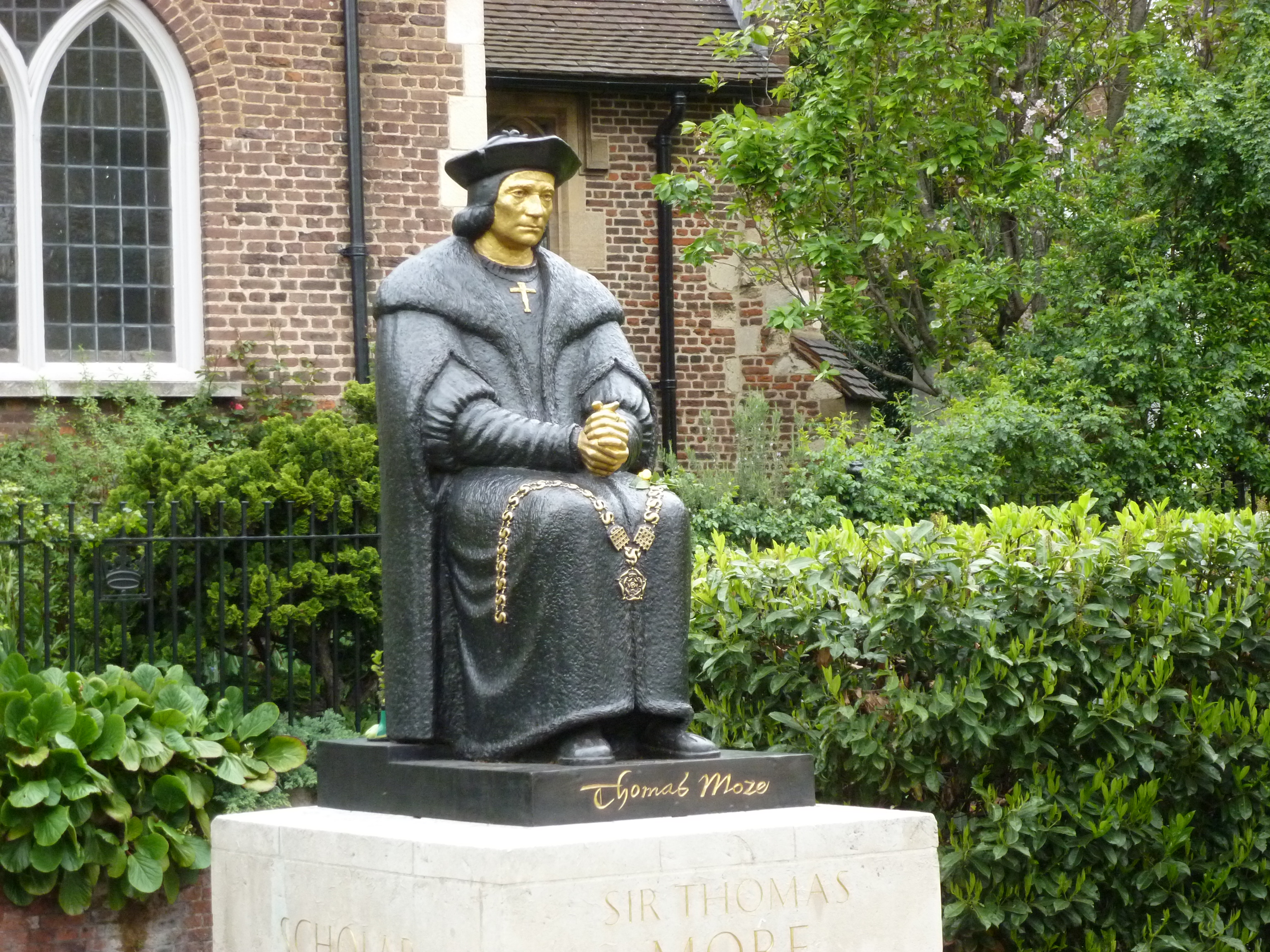
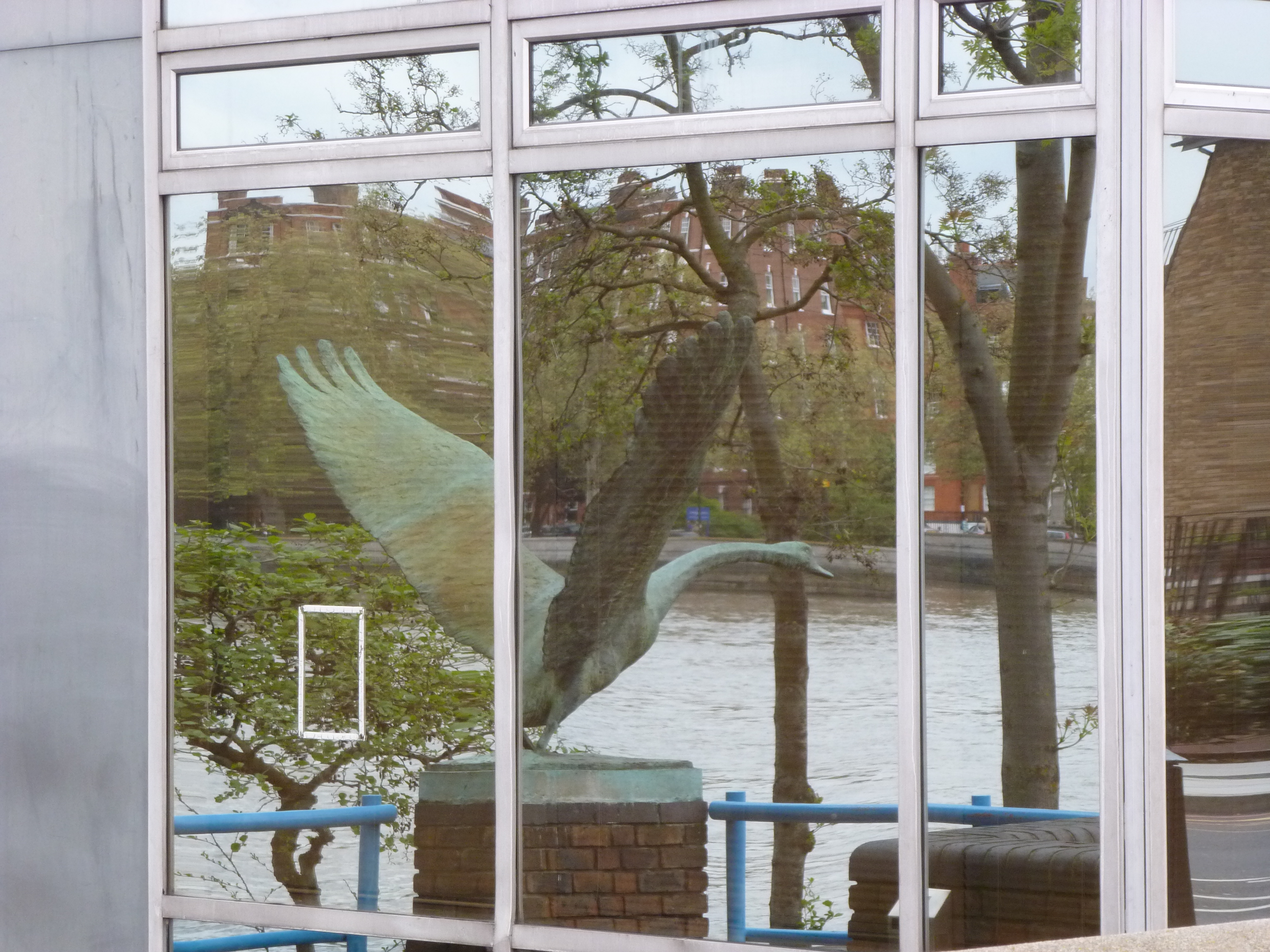
I enjoyed this bridge.  I appreciated its simple, yet stately design.  The traffic was low, though this might have had more to do with the time of day (Sunday afternoon) than any other factor.  There were two sights near the bridge that particularly caught my attention.  The first was a statue of Sir Thomas More on the north side, with gilded face and hands, a style not familiar to me.  The second was a seemingly random statue of a flying goose just off the south end of the bridge.

The name of Battersea intrigued me, so I did a Google search to try and find the origin of the name.  The result was that there is no known origin.  The possibilities included an Anglo-Saxon term meaning Badric’s Island, battles that were fought in the river at low tide when the river was fordable, and an evolution of spellings from a term meaning St Peter’s water or river.

Three Sisters: 6th Street Bridge

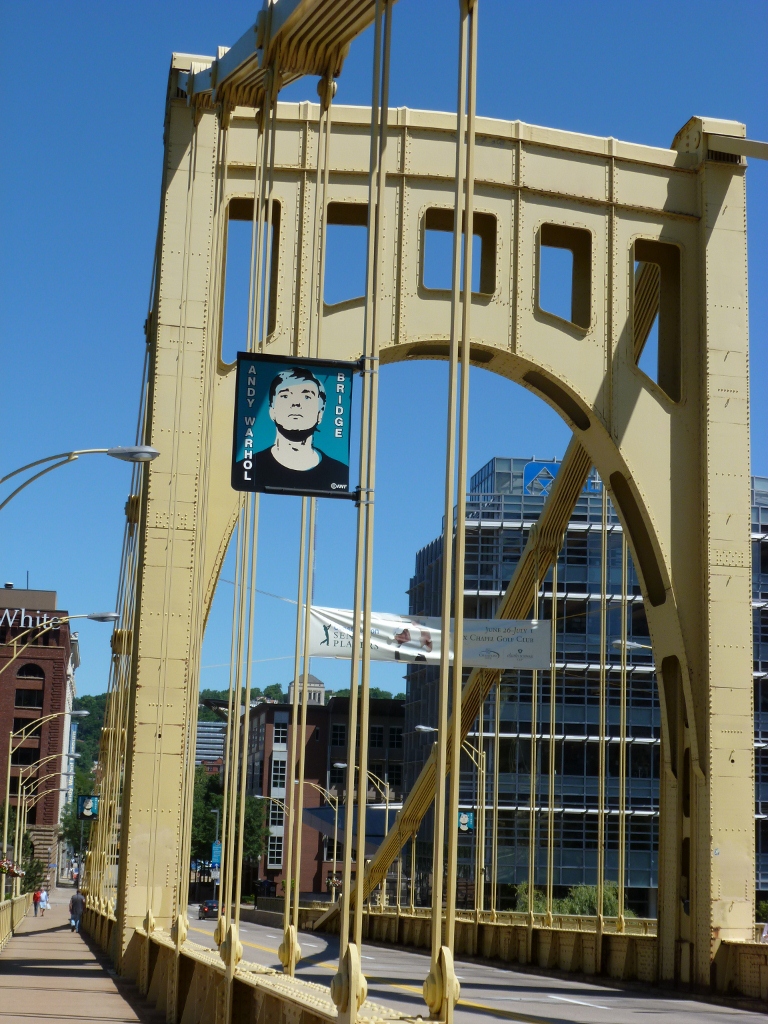
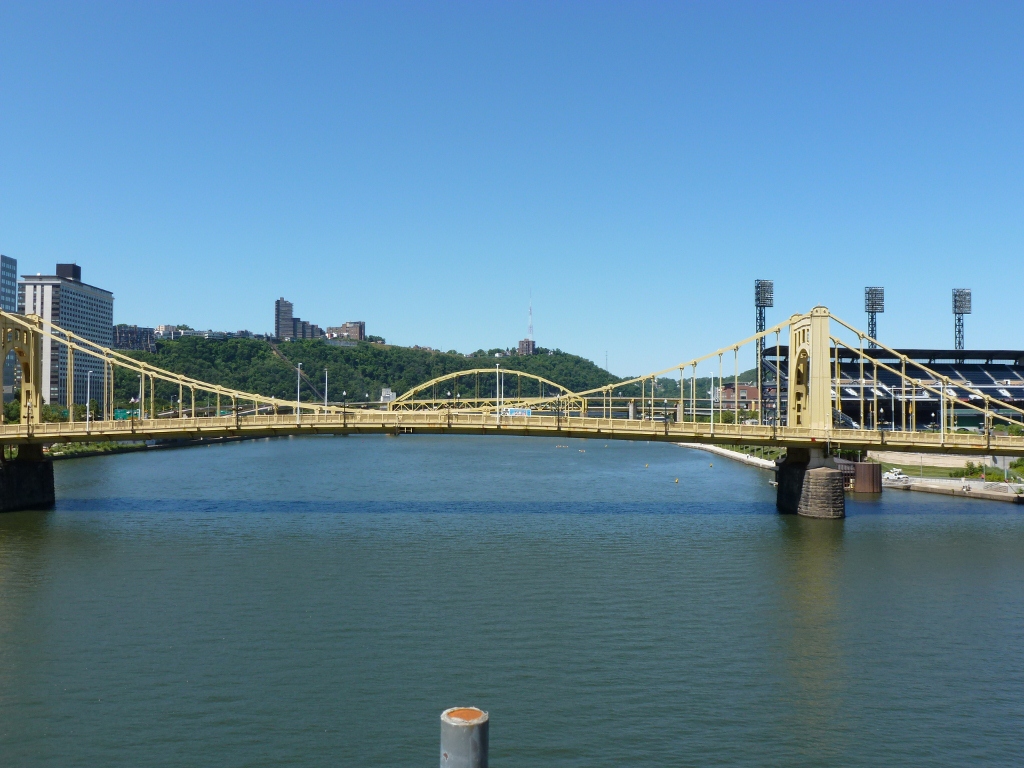
Originally, I thought I would write one post about the Three Sisters Bridges in Pittsburgh as they look identical and are so close together that their views of the city would not vary much.  However, after walking them, I decided that the 6th Street Bridge has enough going for it to deserve its own post.  (The other two Sisters are the 7th and 9th Street Bridges.)

The 6th Street Bridge is very active (much more so than its two sister bridges) and as such, I have walked over it multiple times.  It connects Downtown to the North Shore right next to PNC Park (the Pirates baseball stadium).  On game days the bridge is often closed to vehicular traffic, so that people who park, live, or work downtown as well as those who take public transit downtown can walk to the stadium across the bridge without crowding the sidewalks.  I believe this is true for baseball games as well as football games, both University of Pittsburgh and Steelers, down river at Heinz Stadium.  This bridge is also closed off to vehicles as part of the route for Pittsburgh’s annual Turkey Trot, which I participated in last year with several members of my family.

In my walk across the Three Sisters, I found additional reasons beyond the special closings of the bridge for writing about the 6th Street Bridge separately from the other two.

First, I discovered that the bridges are not completely identical.  In 1928, the 6th Street Bridge won the Most Beautiful Steel Bridge Award.  After crossing the Three Sisters, I agree that the 6th Street Bridge truly is the most beautiful (at least of the three).  This is because of the light fixtures.  The 7th and 9th Street Bridges have normal, ordinary street lights painted yellow, whereas the 6th Street Bridge has classic black posted street lamps (see image below).  Though all three had hanging flower baskets, the difference in the lamps made the flowers on the 6th Street Bridge look more vibrant and beautiful than those on the other two bridges.

The second reason for discussing the Three Sisters Bridges separately is because they each have alternate names.  The 6th Street Bridge is also called the Roberto Clemente Bridge.  The bridge was renamed in the late 1990s.  Roberto was a former Pirates player, who I remember learning about in elementary school as being an important force in combating racism in sports.  There is a plaque honoring Roberto on the bridge.

Another piece of interest about the 6th Street Bridge is that Kayak Pittsburgh is located underneath the bridge on the north side.  Ever since I moved to Pittsburgh, I’ve heard of Kayak Pittsburgh and its location, but I could never truly understand where it was.  The hut on the water near the bridge that I thought was Kayak Pittsburgh for years is actually the shed for river emergency services.  When I walked over the 6th Street Bridge this time, I approached it from the Three Rivers Trail on the north side, and finally saw Kayak Pittsburgh.  The last time and perhaps only time I was on that part of the trail was the middle of winter, so there weren’t any kayaks or kayakers to see.


London Bridges

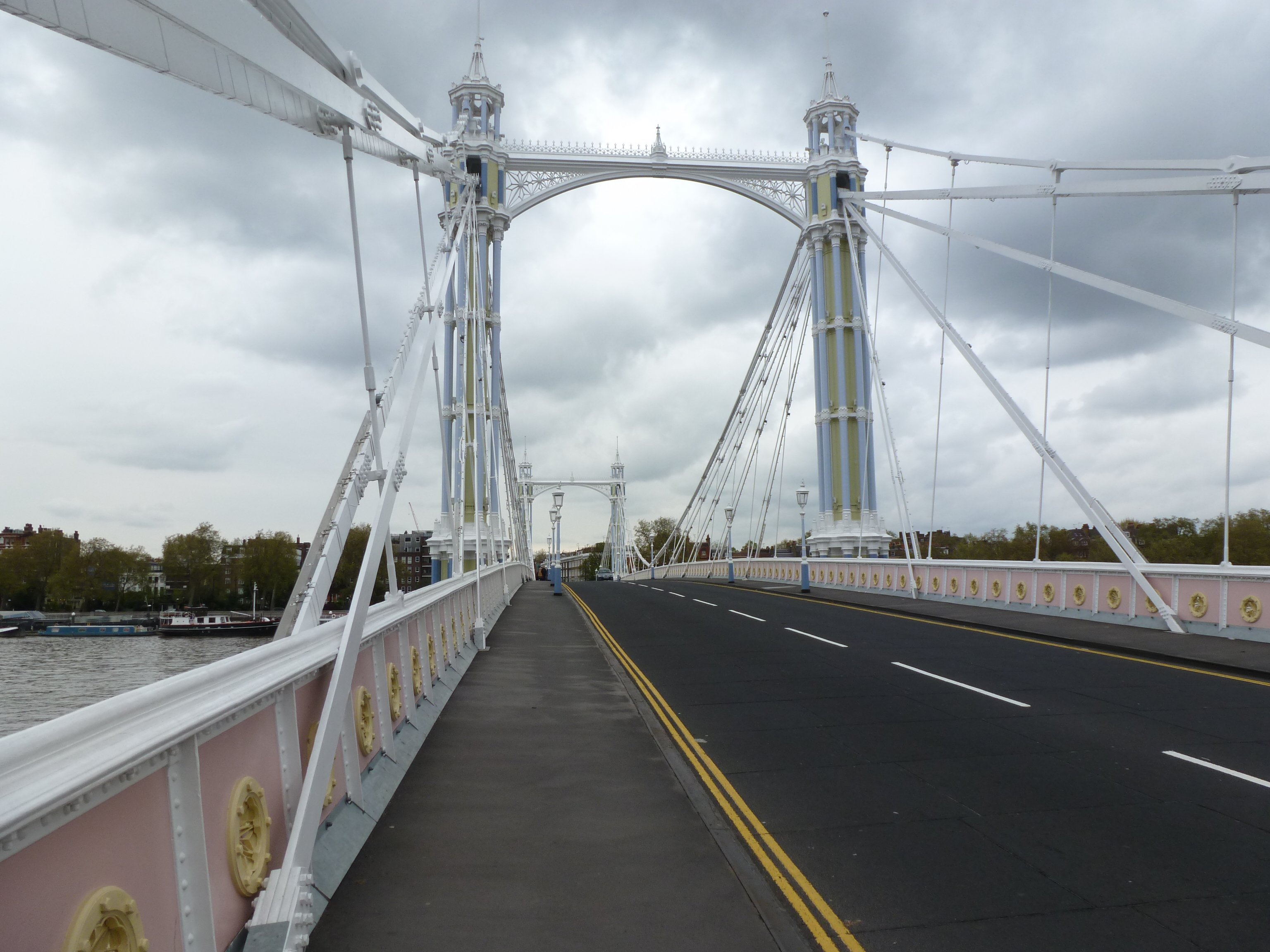
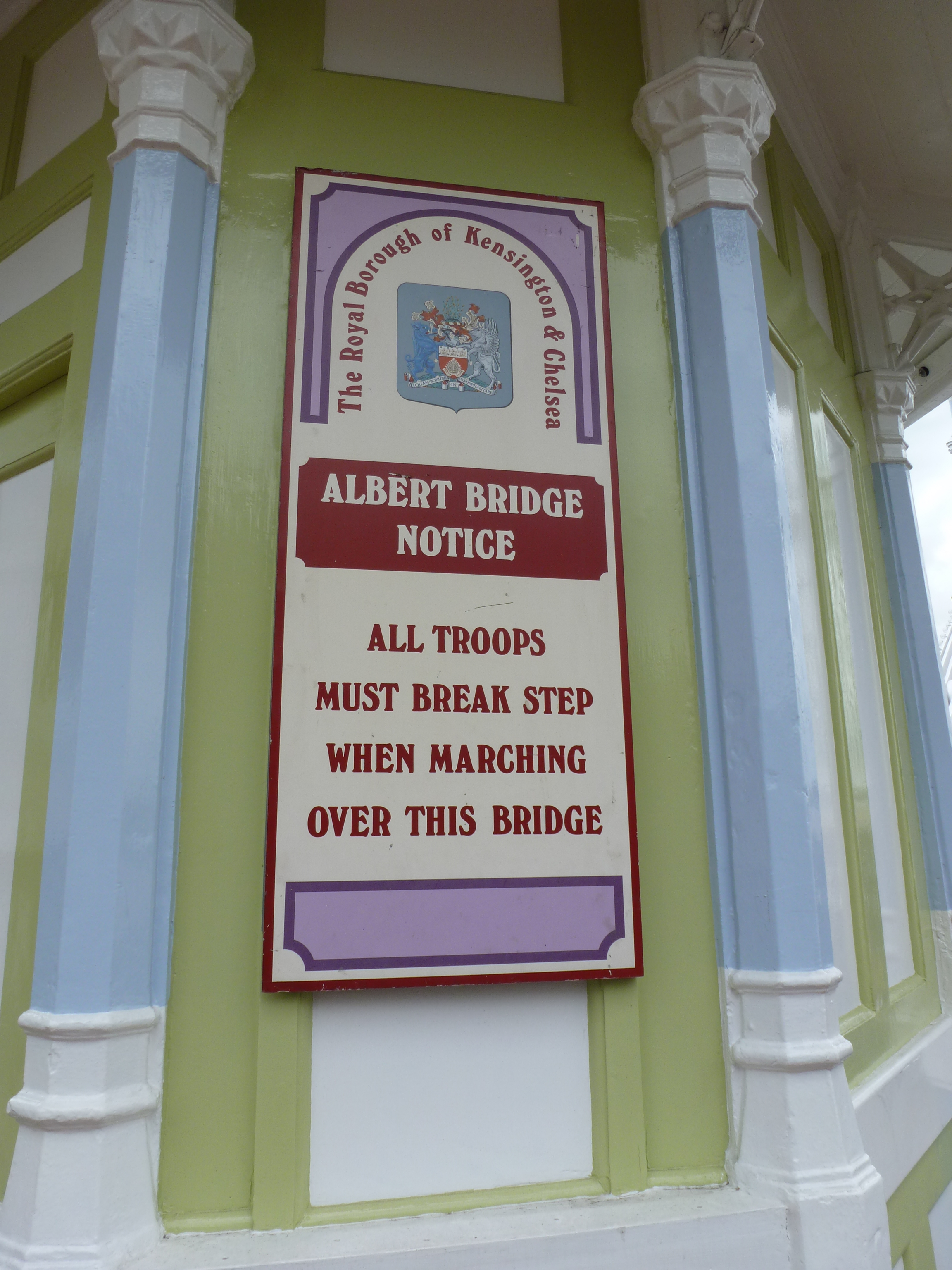
When I arrived in London this spring and saw the bridges over the river Thames, I decided I had to walk them all as I have the goal of walking all the bridges in Pittsburgh and this was my one opportunity for doing the same in London.  I did succeed in walking all thirteen of the pedestrian friendly bridges on my map of London in the few days I was there.  I believe there may be two more bridges to the west which I should have crossed in order to be able to say I walked all the Thames bridges in Inner London, but due to the bend in the river and the limitations of my map I did not know of their existence until coming home.  While walking the bridges I got a wide variety of views of London, some of which I would have missed otherwise, aided by London’s excellent river walkways.  Over the next few weeks, look for posts describing my experiences and observations of the thirteen Thames bridges: Battersea Bridge, Albert Bridge, Chelsea Bridge, Vauxhall Bridge, Lambeth Bridge, Westminster Bridge, Jubilee Bridge, Waterloo Bridge, Blackfriars Bridge, Millennium Bridge, Southwark Bridge, London Bridge, and Tower Bridge.

Highland Park Bridge

The Highland Park Bridge, built 1938 (technical information can be found here), connects Pittsburgh’s Highland Park neighborhood to Route 28, Apsinwall, Sharpesburg, and the Waterworks Mall.  As a pedestrian this bridge is awkward at best.  There is sidewalk only on the western, down-stream side of the bridge, with a cement divider between the sidewalk and the road with the cars passing at around 45 mph and a metal, mesh fence keeping whoever’s using the sidewalk on the bridge.  The sidewalk is pretty narrow and is decorated with dirt and liter.  The best pedestrian approach to the bridge from the city side of the river starts at the intersection of Baker and Butler Streets.  It is a simple t-intersection with a light and a cross-walk on one side.  I believe it is technically possible to cross to the river side of Butler at One Wild Place, but the intersection there is far more complicated with no visible crosswalk and I doubt drivers even consider the possibility of pedestrians crossing at this point.

Once across Butler (from the intersection at Baker), turn right and cross Heth’s Run Bridge (see June 9 post for description of sidewalk conditions, see May 31 post for more info on this bridge).  As mentioned in the June 9 post on Heth’s Run Bridge, the sidewalk narrows considerably at this point and is broken and half covered in weeds and dirt.  For over 500 feet from the end of this bridge to the ramp for the Highland Park bridge there is no divider between the sidewalk and the street where cars tend to travel quickly.  On the ramp, the weeds go away and the cement divider starts.  At the other end of the bridge, there is a small gap in the divider for pedestrians to cross one of the on ramps for the bridge.  The view of on-coming traffic is often impeded by overgrown weeds/bushes.  Once across this lane, the sidewalk follows another on/off ramp of the bridge around 360 degrees to meet up with Freeport Road which passes underneath the bridge.  While this is the most pleasant part of the bridge as the area inside the circle is a well-maintained grassy spot, it feels a bit ridiculous as a pedestrian to walk around in such a wide circle.

I have walked this bridge several times now, in part because bus service between the East End (which includes Highland Park) and the Waterworks Mall was severely cut a few years ago.  A runner once passed me and bicyclists have passed me multiple times, however I have never encountered (or observed while driving across) any other pedestrians on the Highland Park Bridge.

There a couple of sights of interest from the bridge.  First is the lock.  Quite serendipitously the day I brought my camera to document my crossing of the Highland Park Bridge was the only time I’ve crossed when the lock was in use. The one thing I couldn’t figure out is how they would get the first barge out of the lock when the tug boat is on the higher level water with the second barge.

This is the second sight of interest is pictured above. If there was a place in Pittsburgh that would produce a comic book superhero, it would be here.  The hole in the picture above often gets filled with rainwater that stagnates and on some occasions turns an eerie, neon-like green color–the perfect toxic dump to produce superpowers.  I assume this site is some sort of scrap metal processing place.  A search on Google did not come up with any satisfactory responses.  One day when I walked past, a magnet was lifting up pieces and dropping them down repeatedly.  Whatever the site is, it is one of the reminders of Pittsburgh’s nitty-gritty industrial past.


The upstream and downstream photos present a snapshot of what this part of the city looks like.  Downstream, the 62nd Street Bridge, aka R.D. Fleming Bridge, (see July 24 post) downtown Sharpsburg, Six Mile Island, and lots of trees are visible.  Upstream, trees, a railroad bridge, a dock for personal boats, and the roof of one of the waterworks processing buildings are visible.  Overall there is a very rural feeling six miles up the Allegheny from downtown.

Heth’s Run Bridge Part II

I have a few thoughts to add about Heth’s Run Bridge.  First is the map above which identifies the location of the Bridge compared to downtown.  Second is the bridge’s condition.  There recently has been a lot of buzz around town about the terrible condition of all the bridges in Pittsburgh and Allegheny County as well as many in the rest of Pennsylvania.  This gossip tends to give the impression that most of our bridges are ready to collapse at any moment.  Transportation for America’s website describes a report on deficient bridges, which is probably what fueled the gossip above, however the report presents a slightly more favorable picture.  While the Pittsburgh Metro area is identified as the metro area with the highest percentage of deficient bridges in the US, it turns out that only 30% of the bridges are deficient.  While I am unable to comment on the structural integrity of Heth’s Run Bridge or even if there is any need for it to be structural sound (I don’t think the ravine has been completely filled in under the bridge, but I can’t be sure), I can attest to the condition of the sidewalks.

The sidewalk is quite wide, but as the image above shows, it is deteriorated with weeds growing however they please.  The sidewalk on the other side is in similar condition.  The first time I walked this bridge I could not understand why the sidewalk was so wide, particularly as on the other side, the sidewalk narrows considerably.  Across the bridge I’d guess the sidewalk is over 10 feet wide, but once across it is only a couple feet wide, with only about a foot of usable space due to dirt and overgrown weeds.  Clearly this is not an area that the city considers to have a high enough volume of foot traffic to warrant good sidewalk maintenance.  As there often is high vehicular traffic in this area, I say the city should make the sidewalks across the bridge much narrower so that they can add another car lane.  The riverside traffic has two lanes before the bridge and two lanes after, but narrows considerably to make room for a useless wide and deteriorating sidewalk.

In writing the first post on Heth’s Run Bridge (see May 31 post), I believe I discovered the reason for this unusually wide sidewalk that today essentially goes nowhere (at least nowhere that the average pedestrian would wish to go).  The 1911 map of the bridge and surrounding area shows that the bridge connected Butler Street and Washington Boulevard (today’s Allegheny River Blvd), both of which were lined with houses and other buildings.  There is even a school on Washington Boulevard.  As such it was probably only natural that when the current bridge was built in 1914 it would have large sidewalks to help facilitate the movement of people before the prevalence of the car between the houses, businesses, and schools that lined these roads.  Today all the buildings that lined Washington Boulevard at this point do not exist.  The land they once stood on is all wilderness and on the landward side of the road is incorporated into Highland Park.  The large, deteriorating sidewalk of Heth’s Run Bridge is the only reminder of a time when this area was probably busy and vibrant.

Heth’s Run Bridge

Heth’s Run Bridge as seen today presents many mysteries.  Digging into the mysteries uncovers a interesting story.  I have crossed Heth’s Run Bridge many times, usually in a car on the way to the Zoo, but it was only in recent years that I realized it was a bridge.  When looking toward the zoo parking lot from the bridge (as in the picture below) it does not appear that the height of the road differs enough from the surrounding landscape to be a bridge.  However, in the view above (taken from the Zebra Ice Station parking lot on the river side of the road) it looks like a bridge.  The G.M. Hopkins Maps, one of my all-time favorite resources available on the Historic Pittsburgh website, explains the history of and the reason for this bridge.

The 1899 map identifies a bridge in this location called High Bridge, indicating that there was a significant difference in elevation at this point.  A 1912 photograph shows that this was indeed a high bridge, quite unlike the current bridge and its surroundings.  This would have been caused by a small stream called Haight’s Run which flowed under the bridge into the Allegheny River.  By 1911, most of this stream was covered over and Haight’s Avenue ran along its path.  The 1939 map shows no evidence of Haight’s Run, the name on the road and the bridge is now Heth’s, and the road is marked “not open.”  Also in this map, the bridge appears to be a different width than in the others, this is because the current structure was built in 1914, more technical and historical information about the bridge can be found here.  1939 is the most recent year for the G.M. Hopkins Maps.  I speculate that the bridge would still have been raised over the surrounding landscape at that time, based on the similarities in the surroundings between the 1911 and 1939 maps.  However, sometime between then and now, Haight’s/Heth’s Run was filled in and the zoo parking lots built on top, level with the height of Heth’s Bridge.

If I had not passed this way on foot, I doubt that would have realized that this was in fact a bridge or that once not long ago (in geological terms) a stream flowed along this way.  There is a tendency in urban areas for nature to be ignored or in this case built over, which sometimes causes catastrophic results.  Not far from Heth’s Run is Negley Run, another stream that was buried under a road.  The burial of this stream likely contributed to the tragic flood on Washington Boulevard last summer that resulted in several deaths.  I look forward to the day when all our roads and sidewalks will be made of permeable material, allowing for more natural absorption of rain water and reducing flooding.

Pittsburgh Bridges

The 20 bridges that span Pittsburgh’s rivers within the city limits.

One day, while overlooking the city of Pittsburgh from Mt. Washington, I set myself the goal of walking all the bridges in Pittsburgh.  It is said that Pittsburgh has more bridges than any other city in the world including Venice.  The current count of Pittsburgh’s non-railroad bridges longer than 8 feet is 446.  Perhaps my goal is a bit too ambitious, but I intend to give it a shot.  By the end of the summer, I intend to document walks over the 20 bridges on the three rivers (Allegheny, Monongahela, and Ohio) within the city limits as well as many of the land bridges in the city between the Allegheny and Monongahela Rivers.

From the bridges I have walked so far, I am fascinated by two things.  First, I find the diversity of viewpoints on the city engaging, from the beautiful views of the bridges connected to downtown to the underbelly views seen on bridges scattered throughout the city including the Highland Park (see June 10 post) and Bloomfield (see Aug 18 post) bridges.  In addition, I am gaining a greater awareness and appreciation for the geography of the city through this project.  Attempting to identify the numerous bridges is forcing me to reconsider parts of the city that I have taken for granted through over-familiarity.  Heths Run Bridge is an example of this (see May 31 and June 9 post).