Keeping an Eye on the Lower Hill: Sept. 2023

Overview

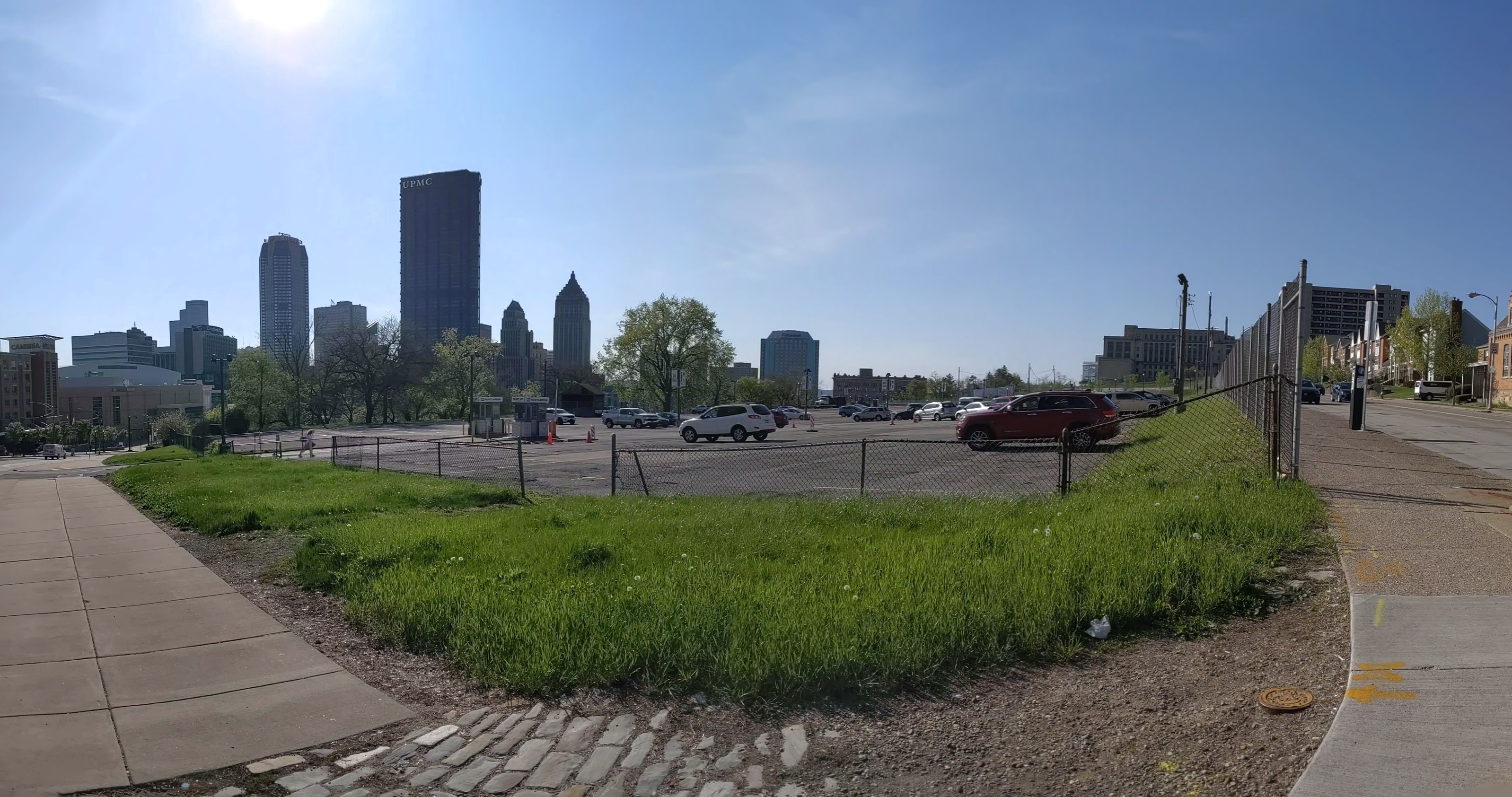
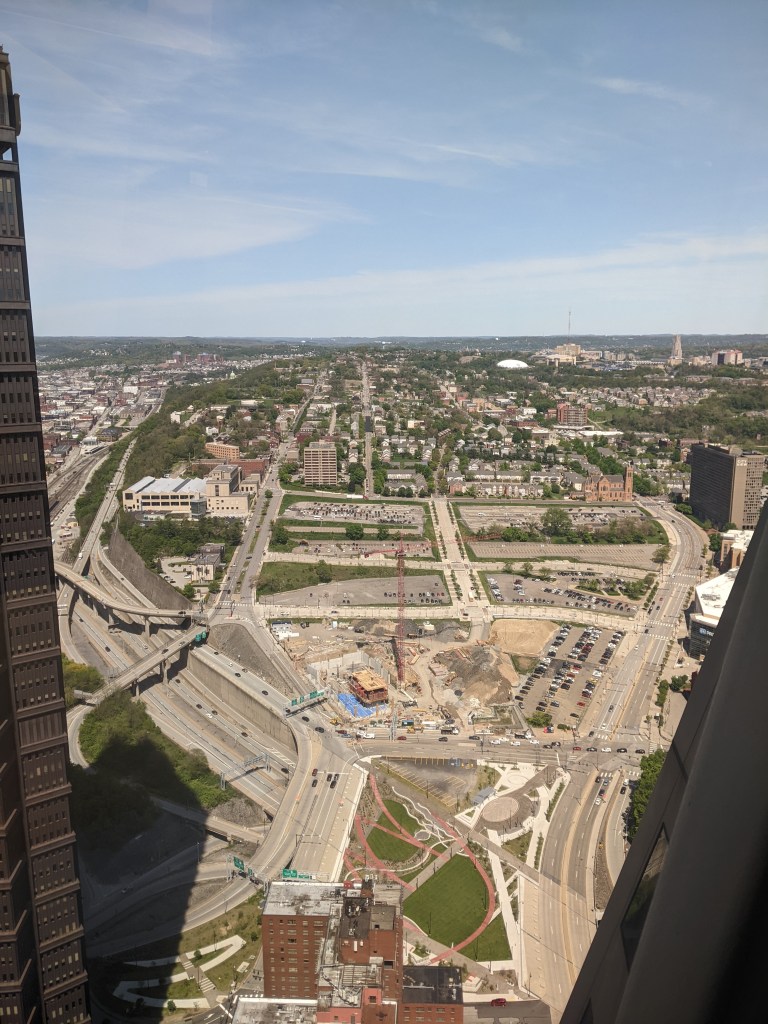
The Lower Hill is a notorious site in Pittsburgh, a scar on the city from the height of Urban Renewal. A vibrant (but poor and predominately Black) neighborhood was demolished in the 1950s so the City could build a cultural mecca centered on a Civic Arena, most of which ended up not being built and was left as parking lots.

Now that the arena has been demolished and replaced adjacent to the former location, the Penguins hockey team has the development rights to rebuild the Lower Hill, stitching back together the fabric of the city and reconnecting the remainder of the Hill District neighborhoods with downtown.

However, grand language describing the wonderful benefits to a city are part and parcel of any major development project, including the 1950’s Urban Renewal of the Lower Hill. Fifty years later, the Urban Renewal of the Lower Hill is rarely, if ever described as a good thing. In fact the current redevelopment is sometimes described as undoing the mistakes of that project. However, can the negative financial, social, and emotional repercussions of the original demolition and decades of disconnect be undone simply by reinstating (most of) the former street grid?

This blog post is part of an on-going photographic series to watch the redevelopment of the Lower Hill. Periodically, approximately once every six months, I return to the site to take new photographs. In addition, I include links to articles about the project that I’ve encountered since the previous post in the series. At the end of the post, there are links to all the previous posts in the series.

What’s New

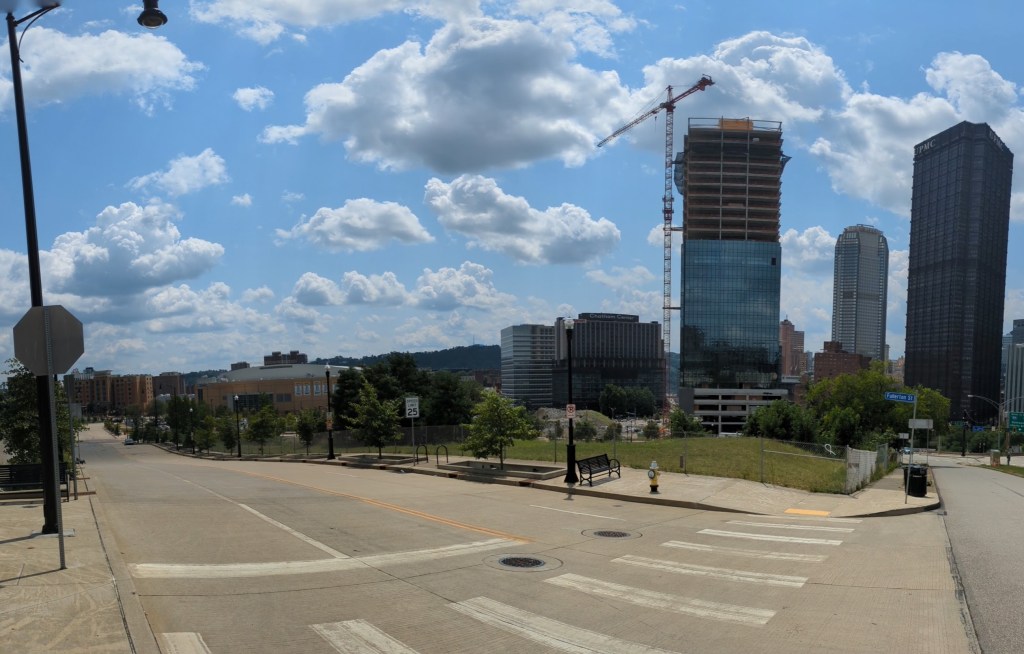
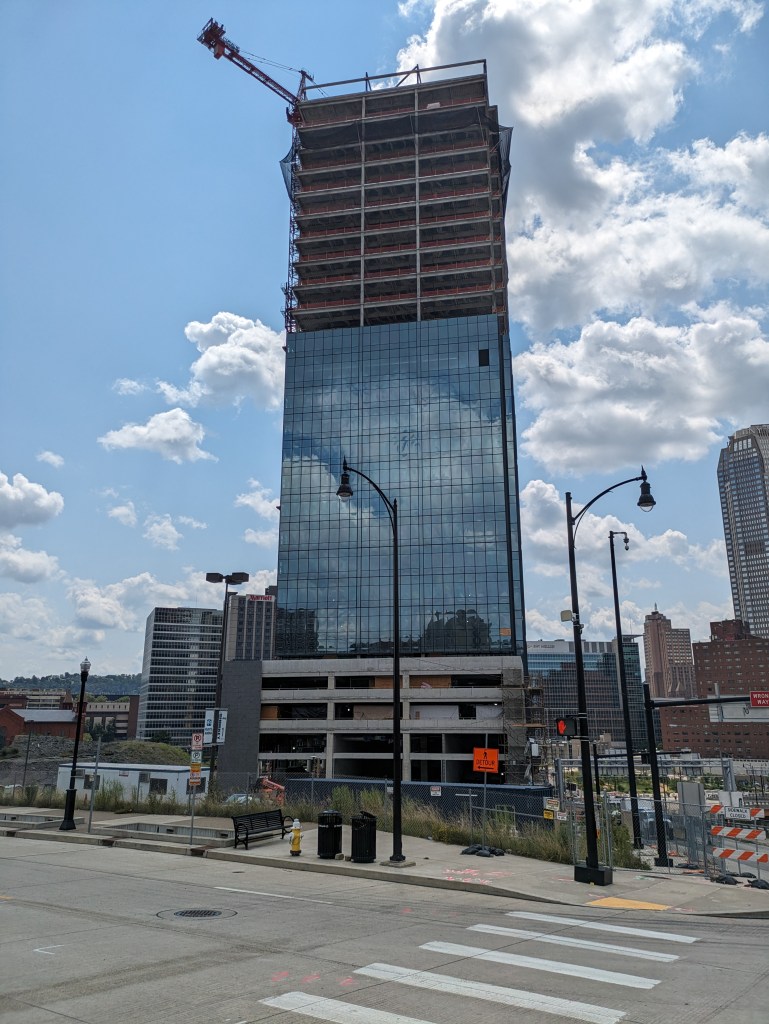
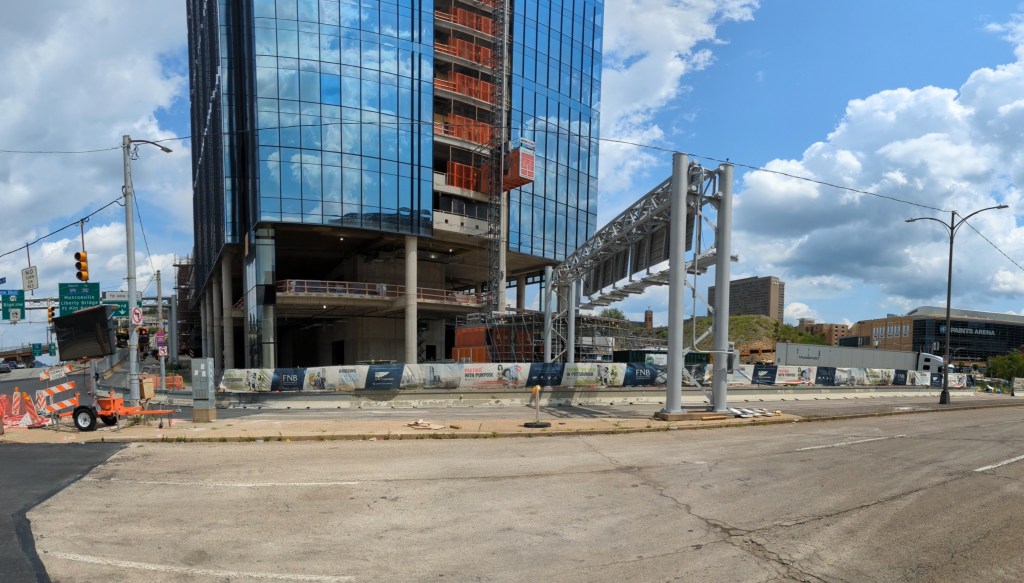
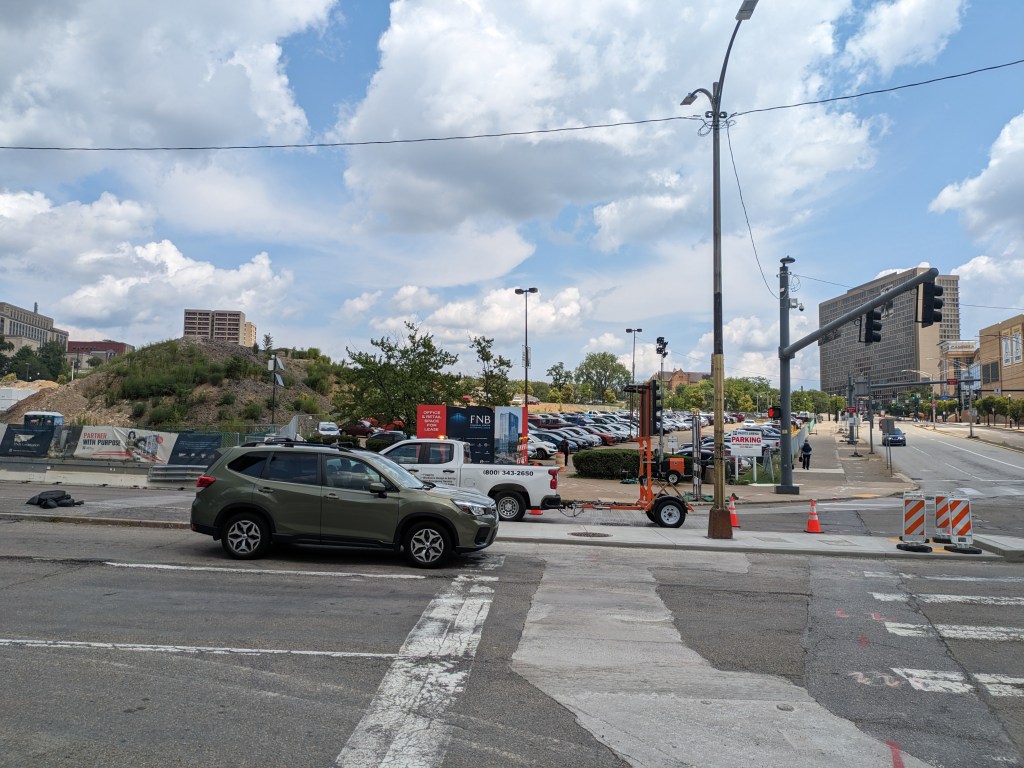
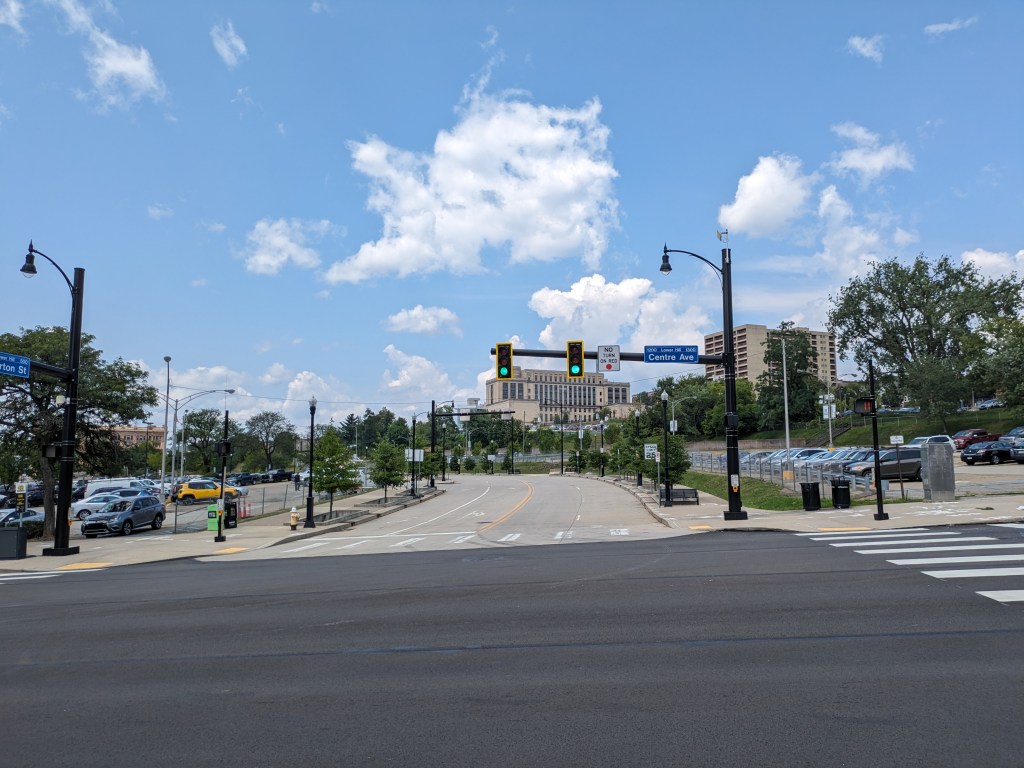
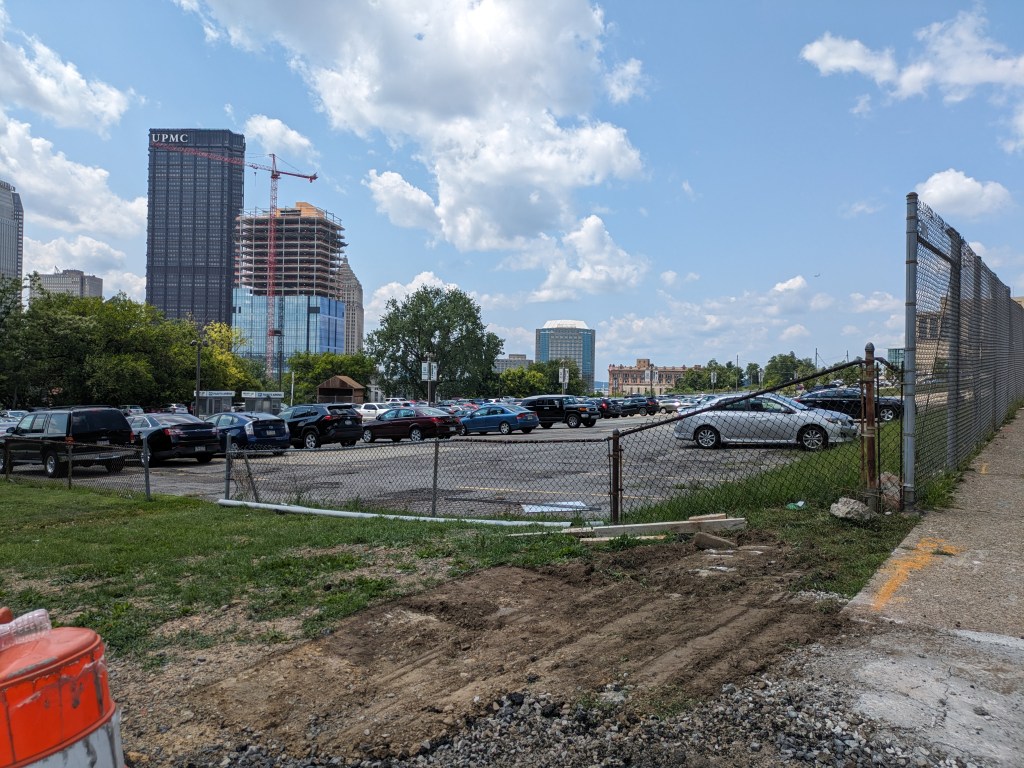
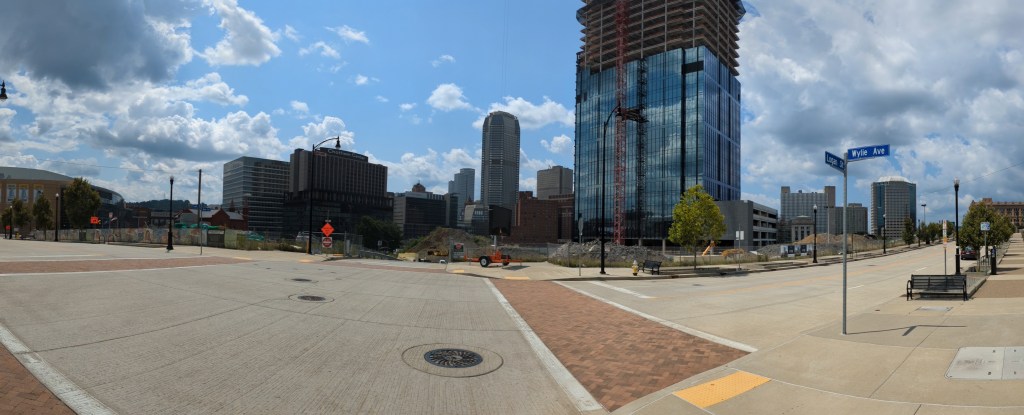
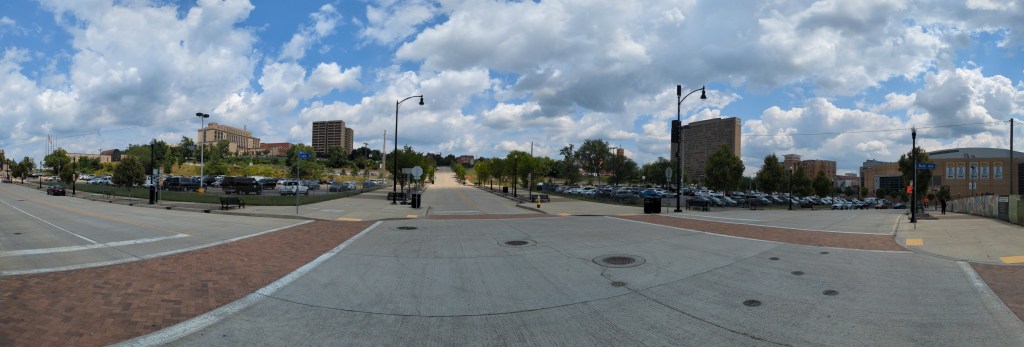
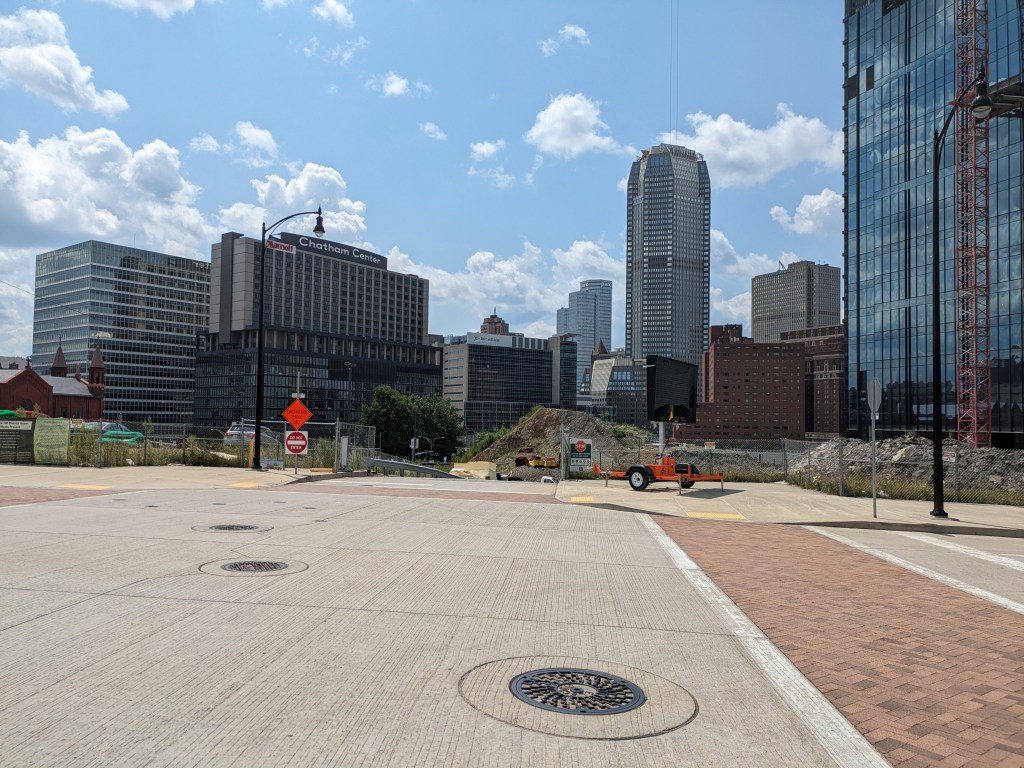
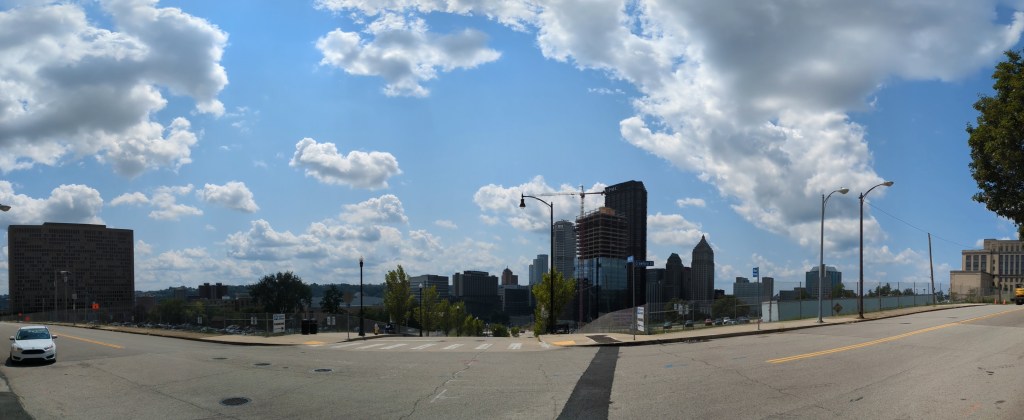
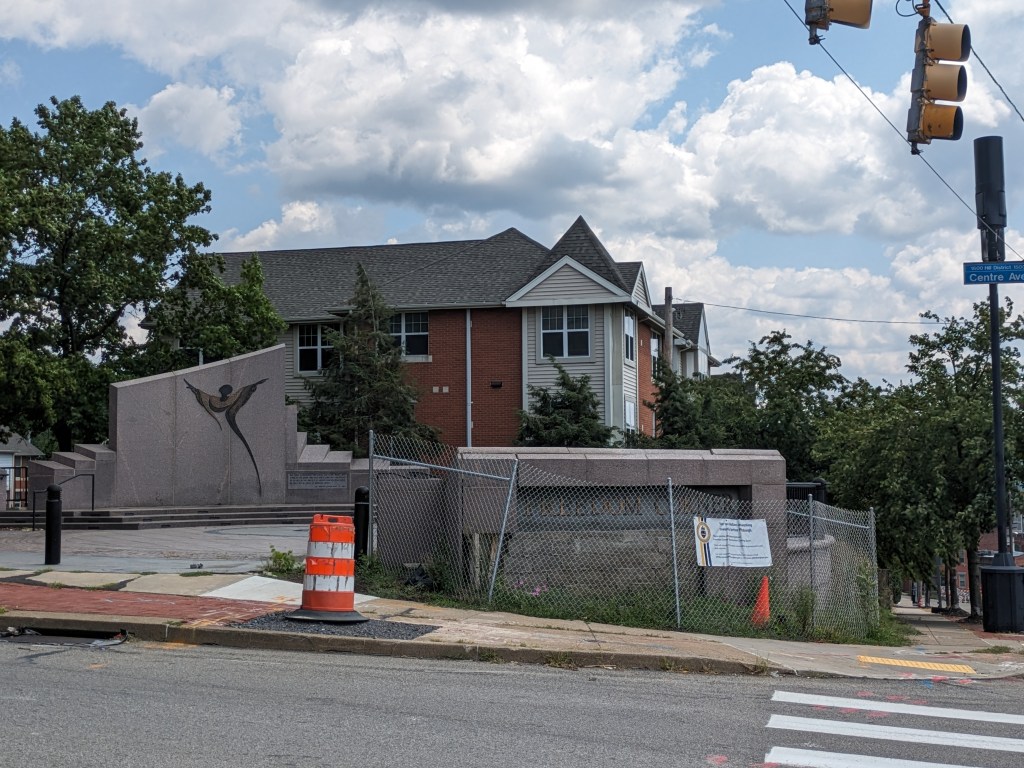
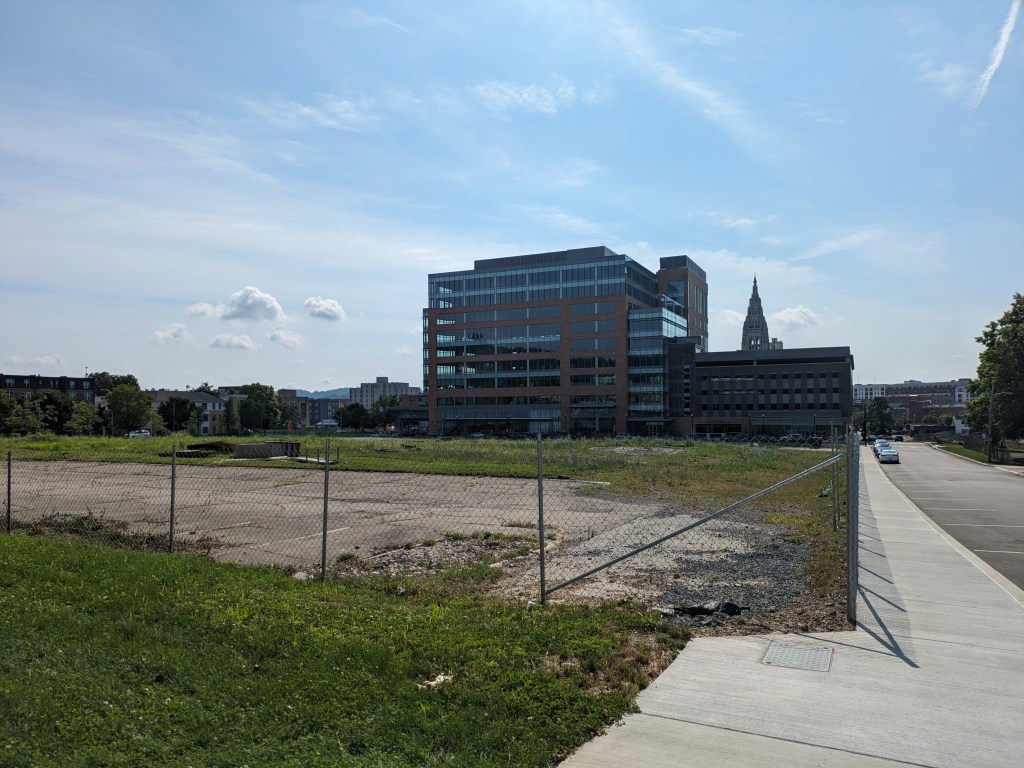
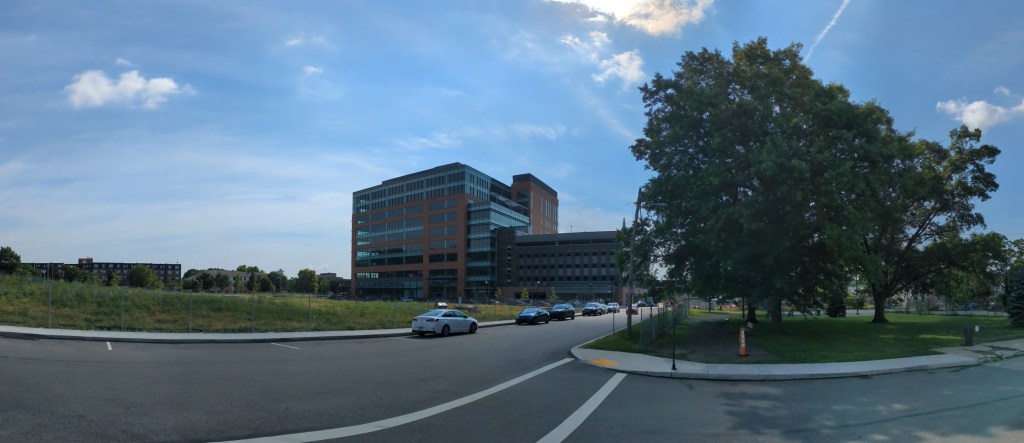
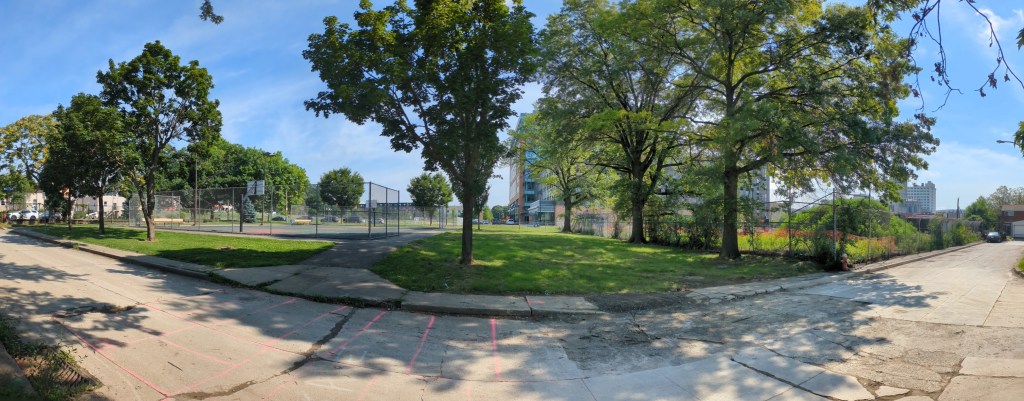
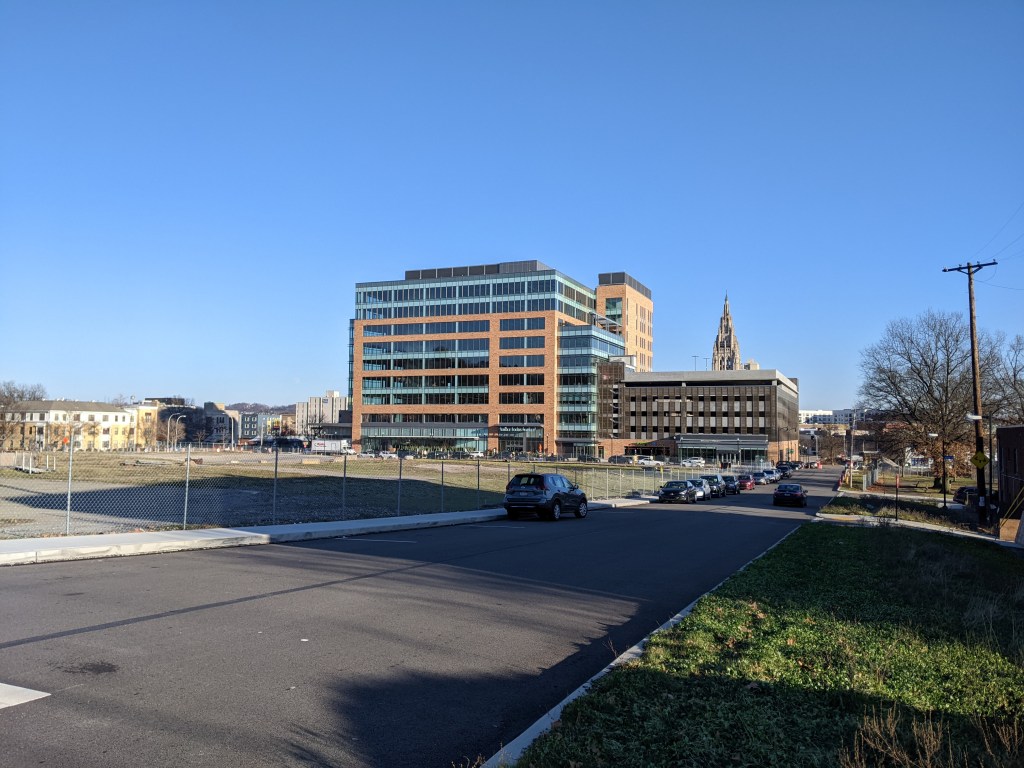
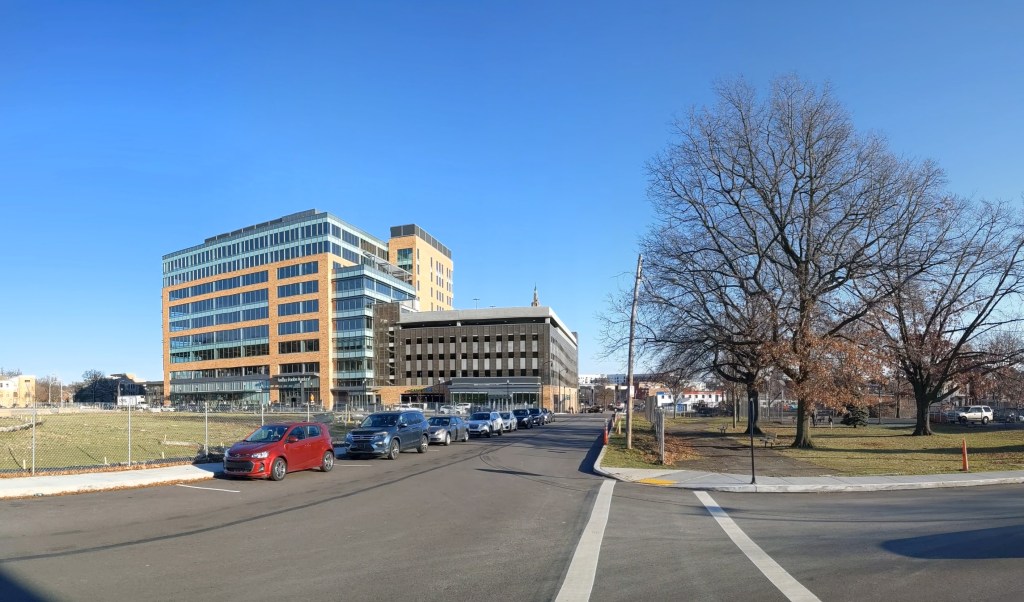
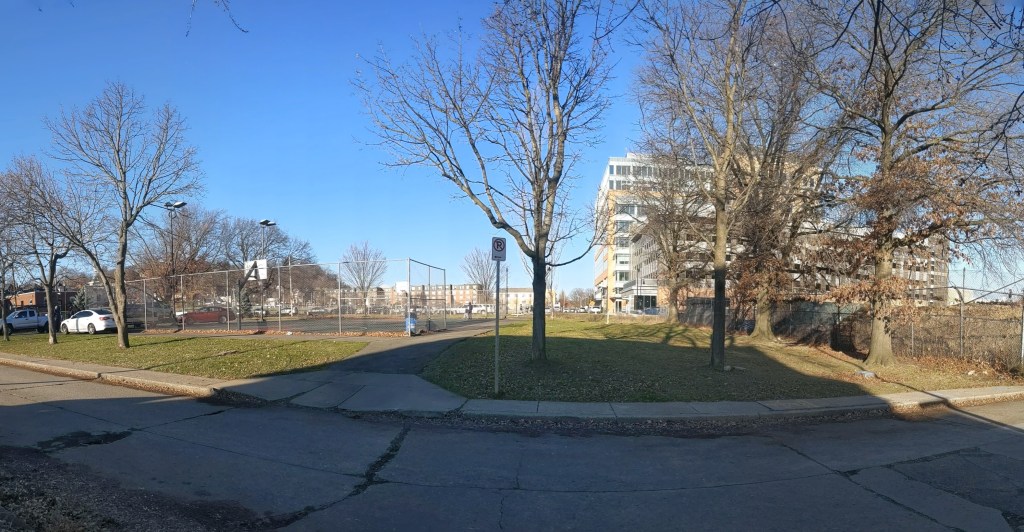
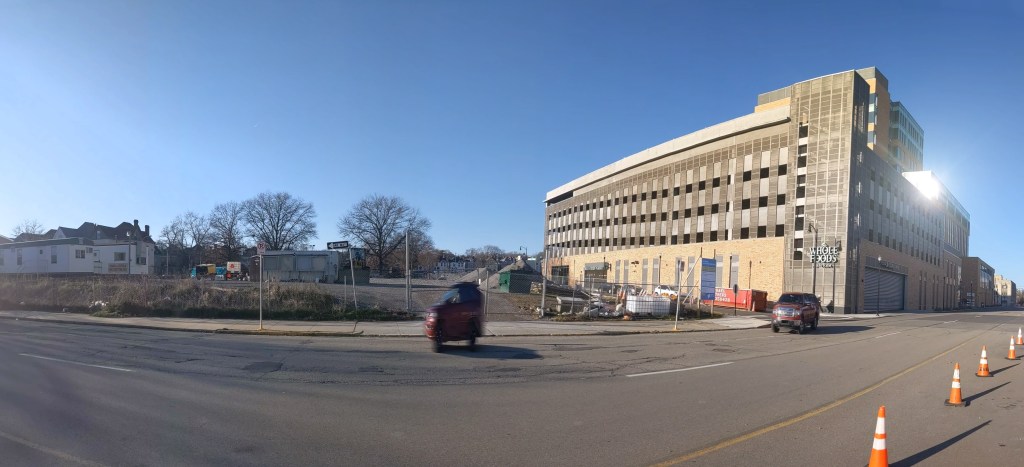
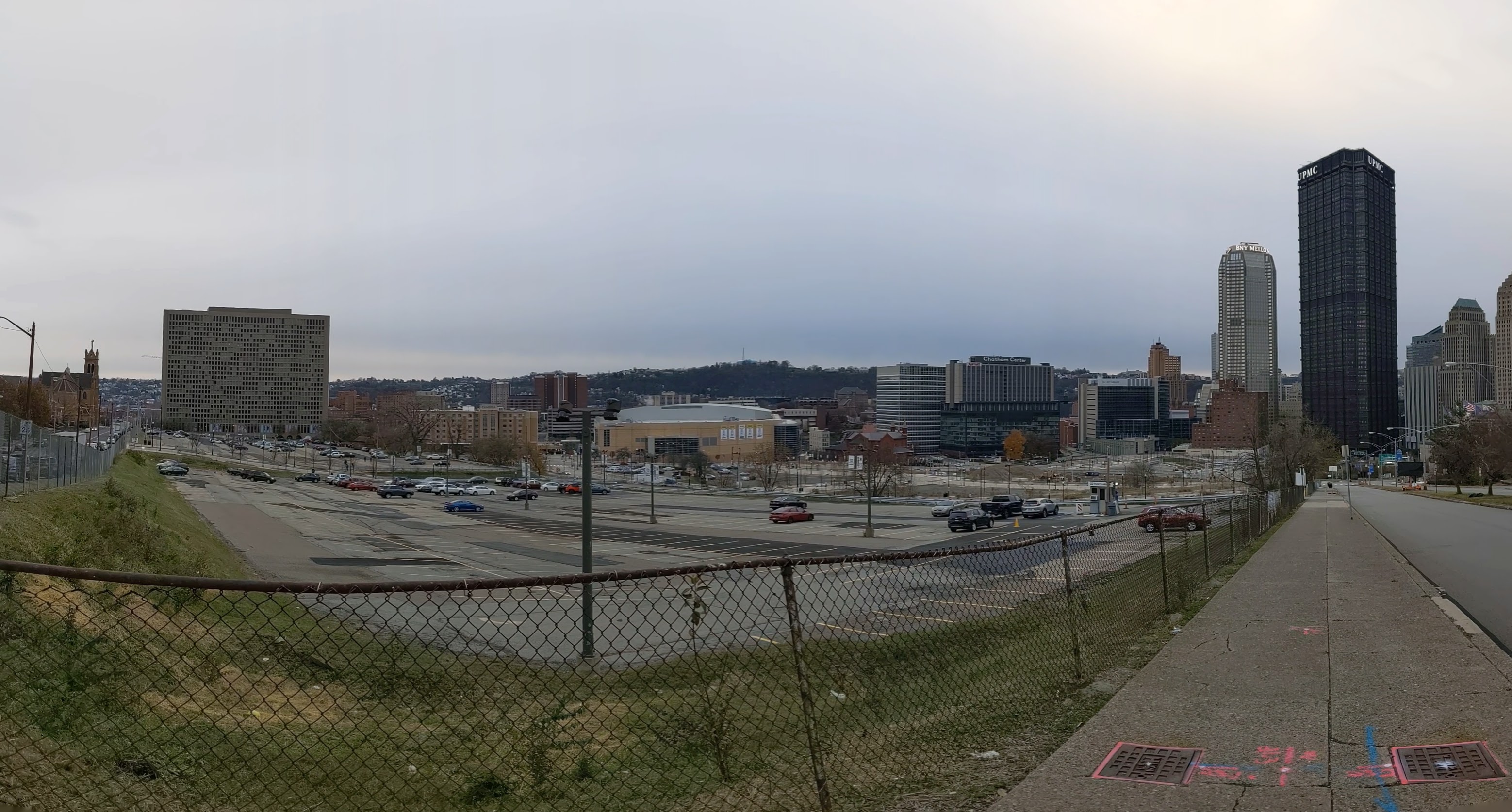
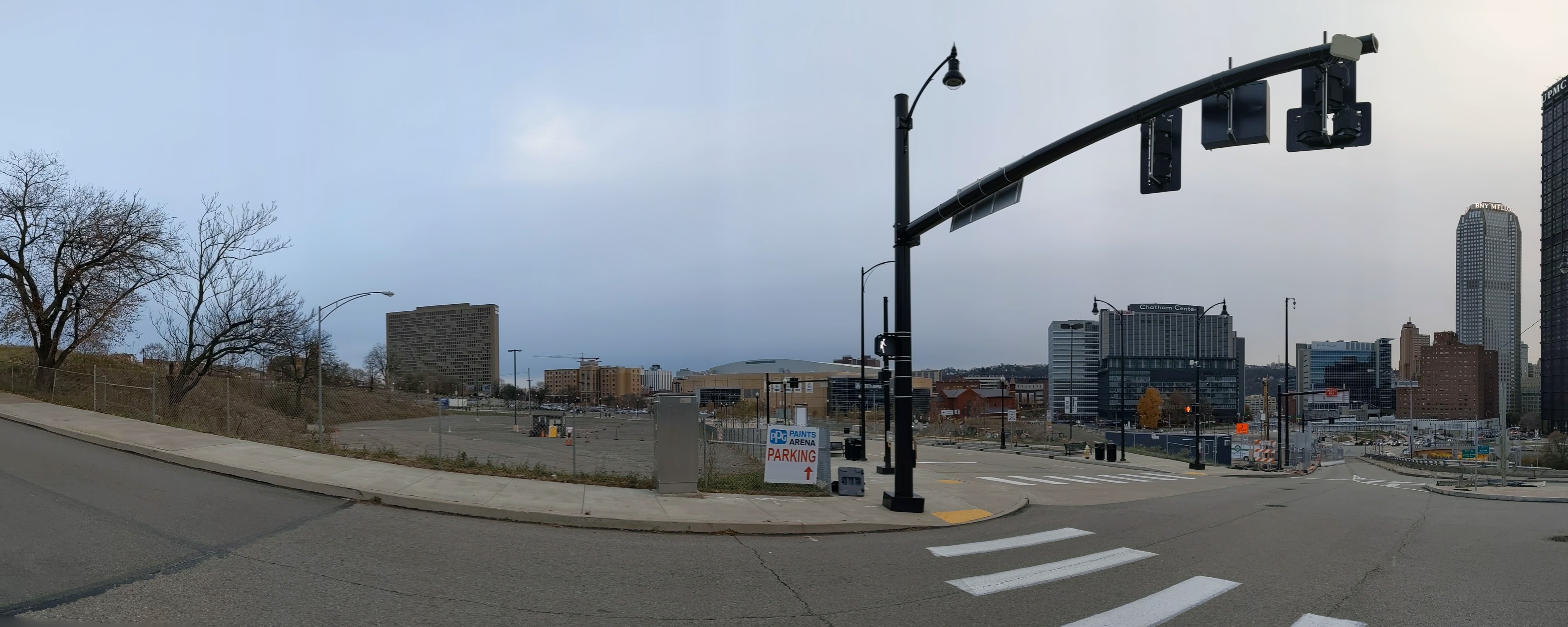
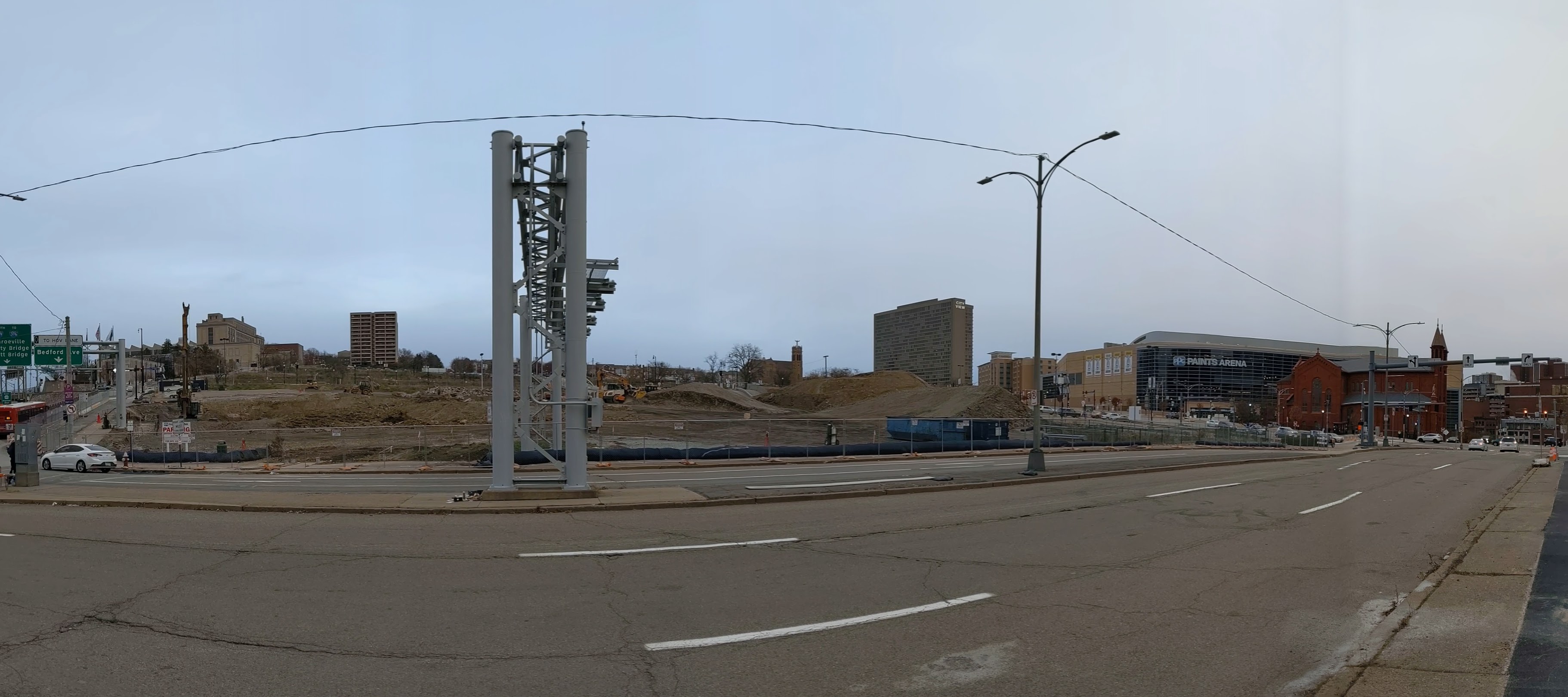
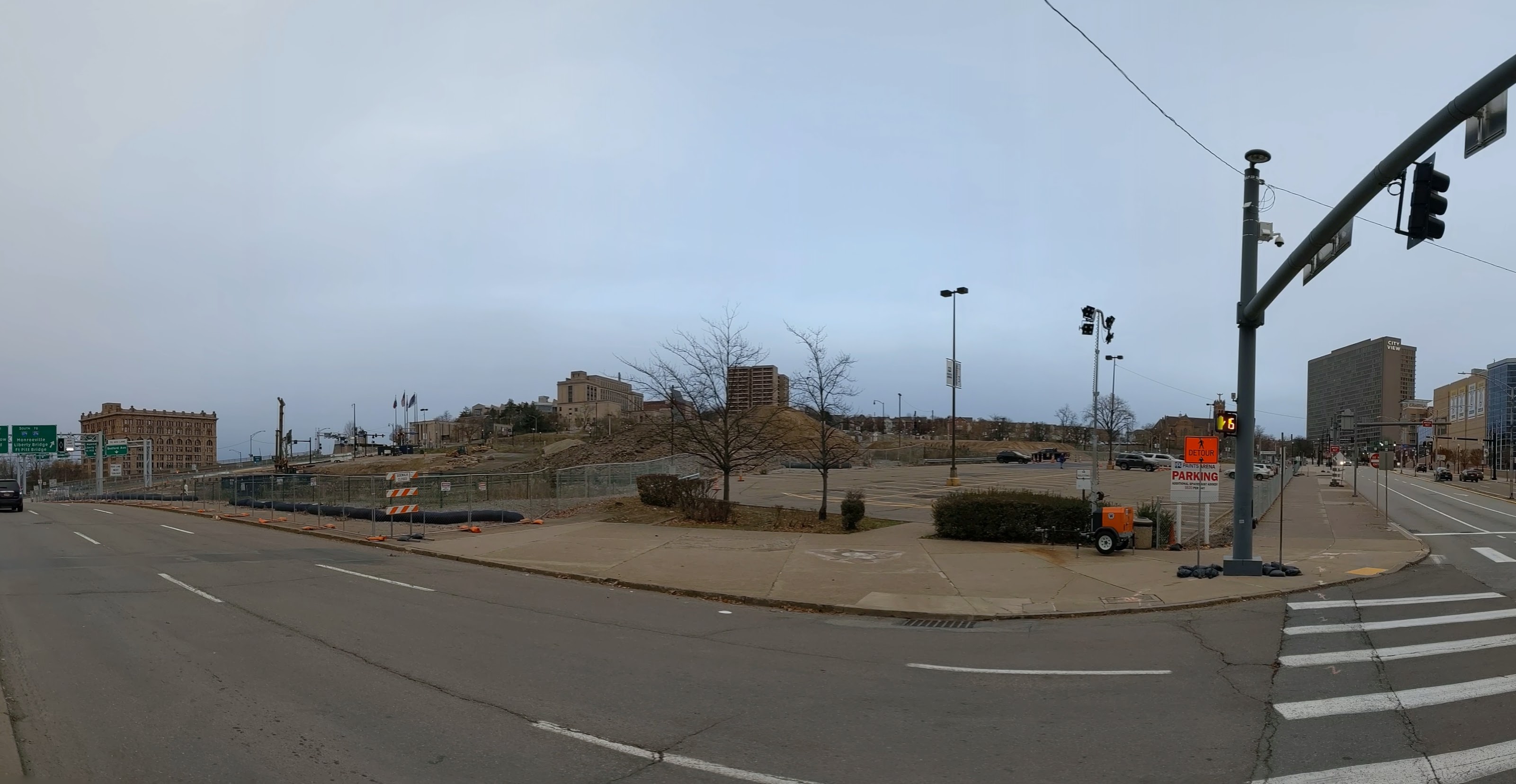
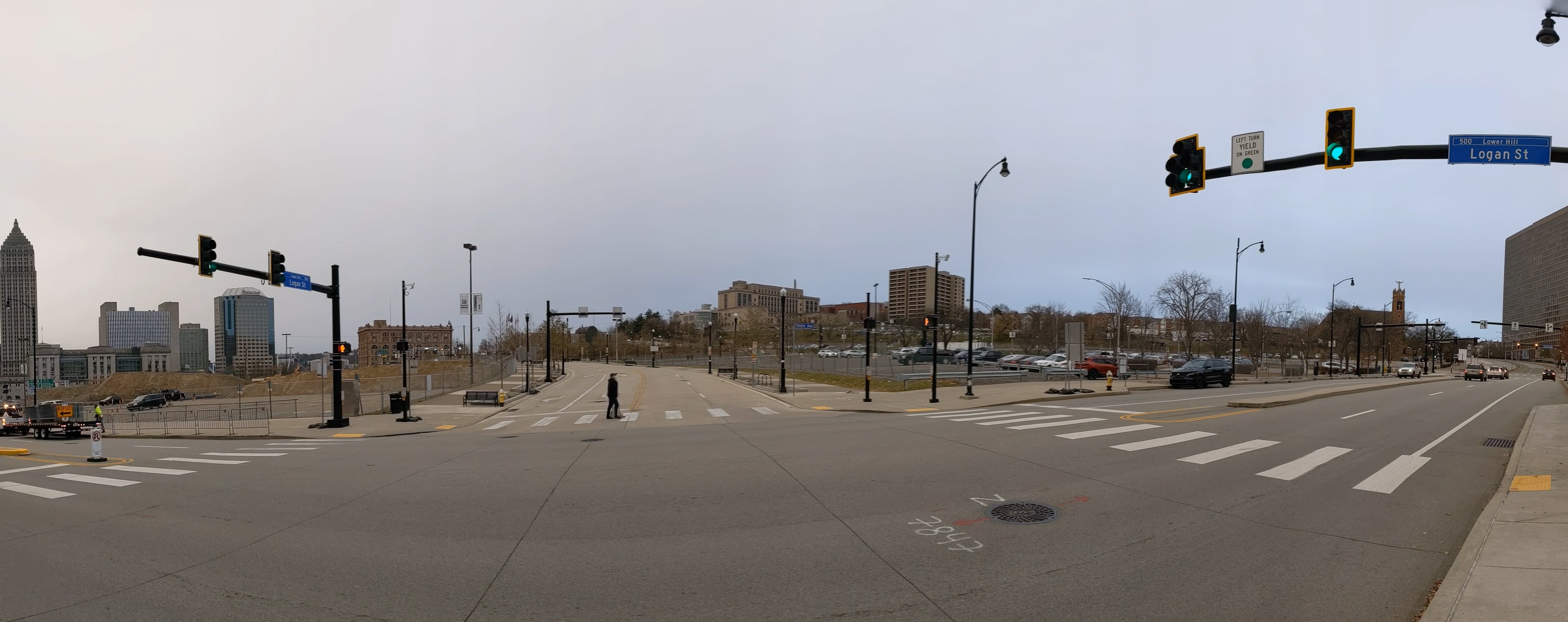
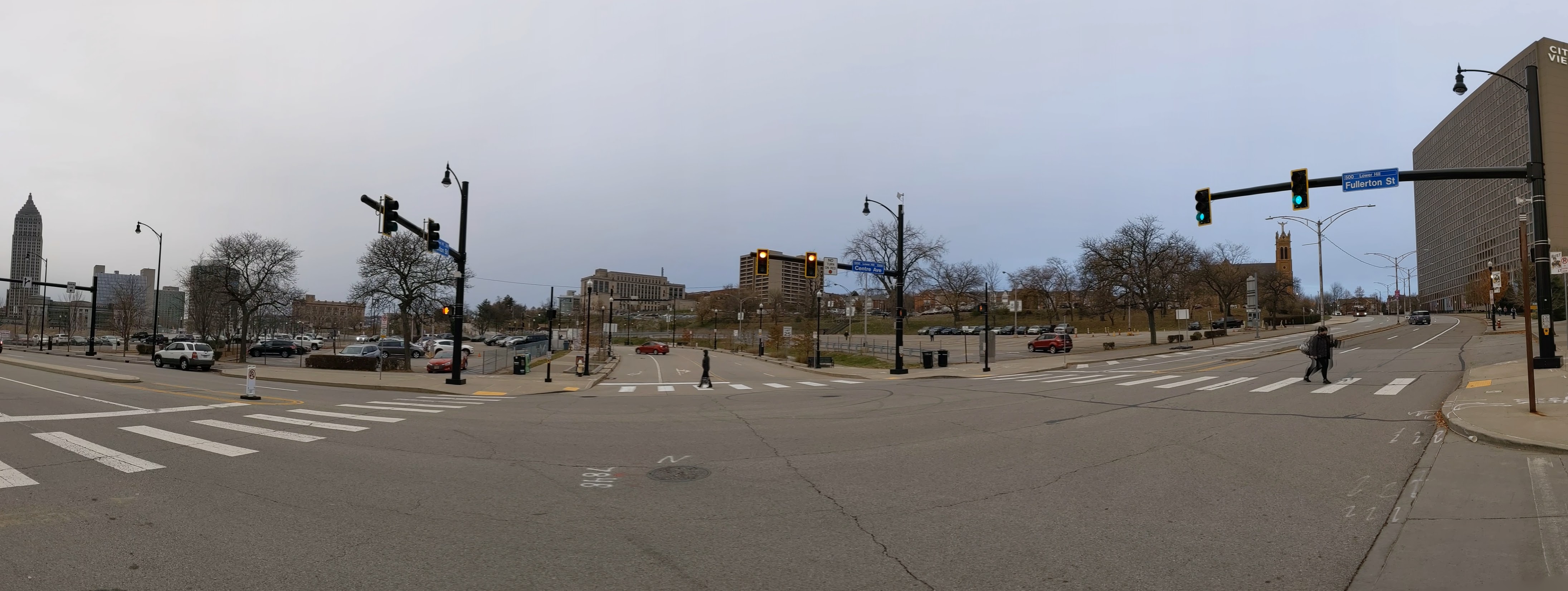
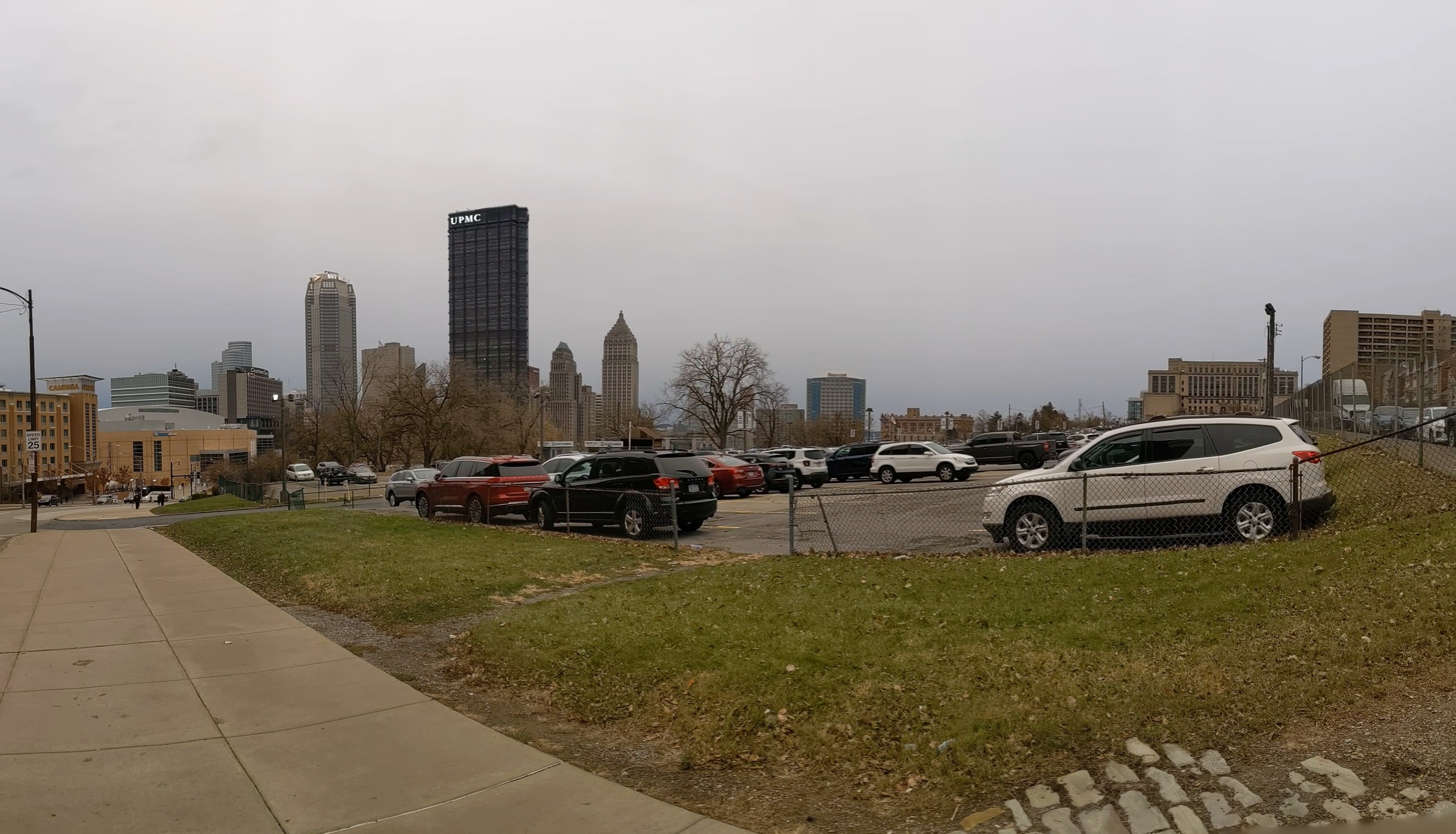
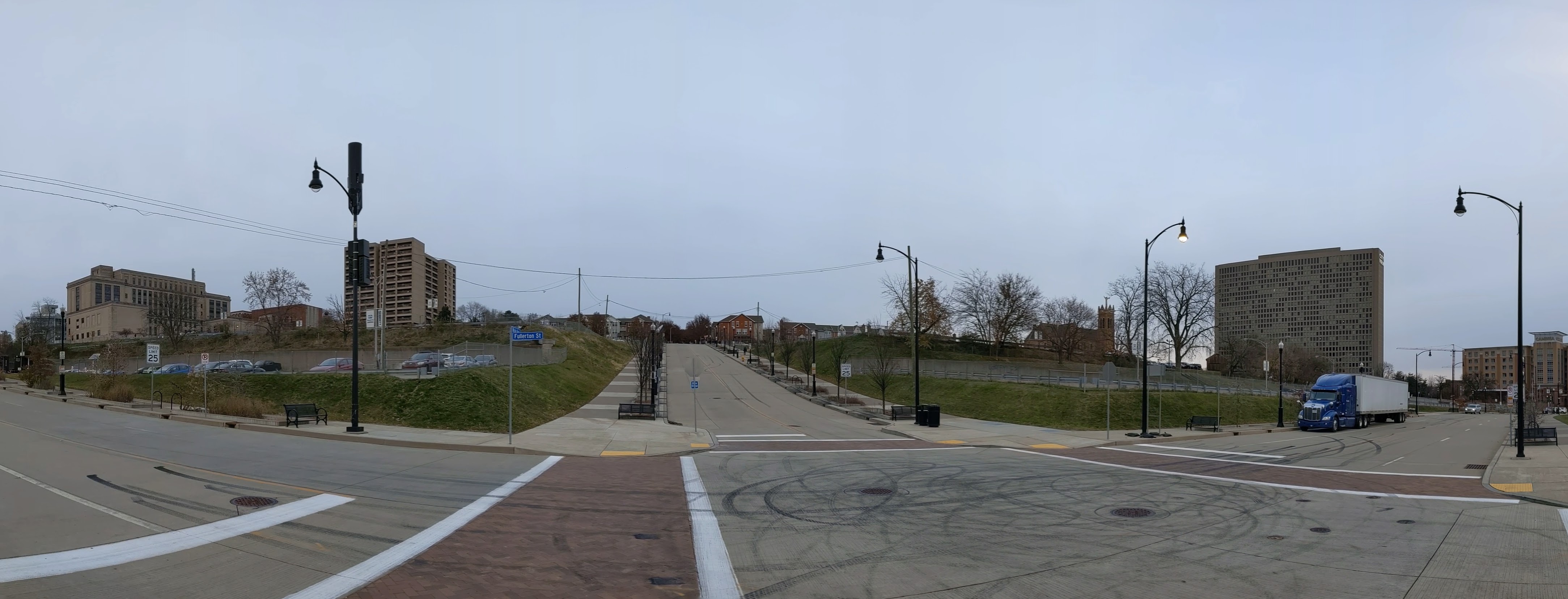
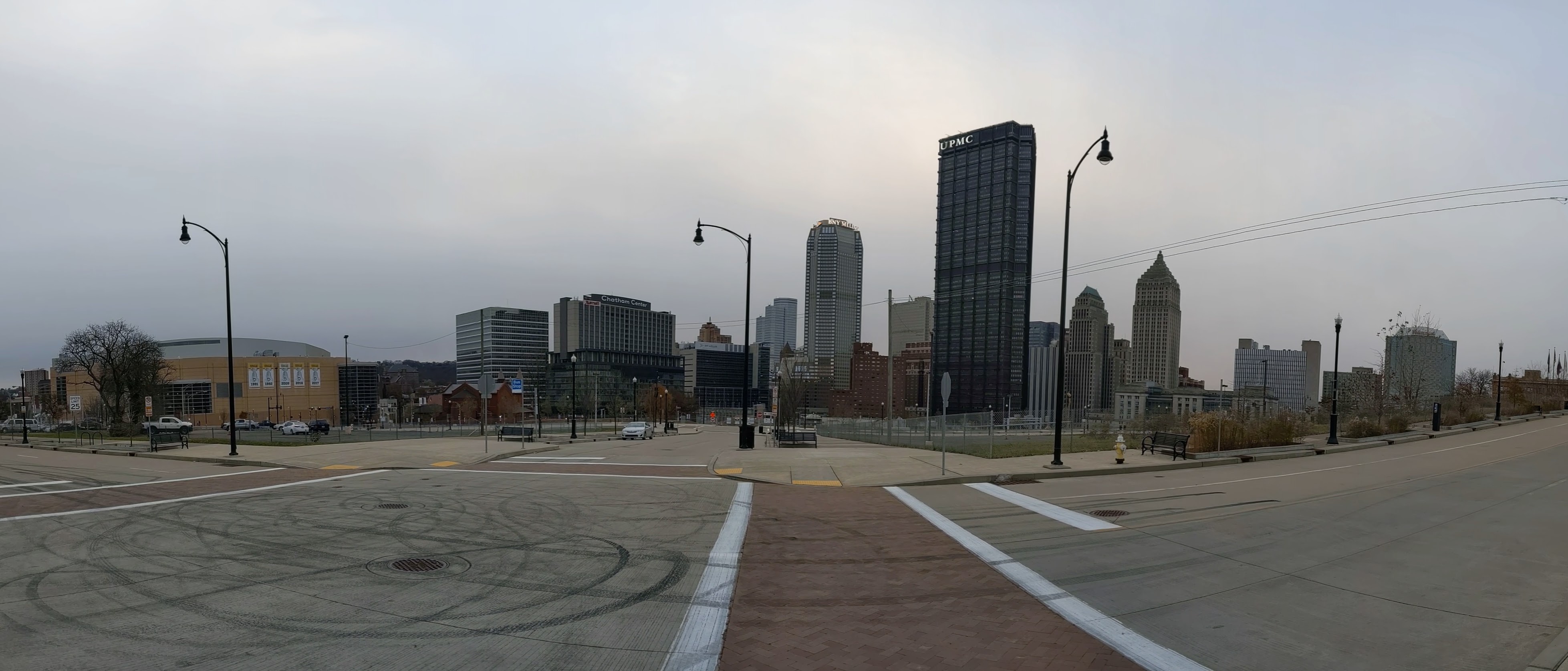
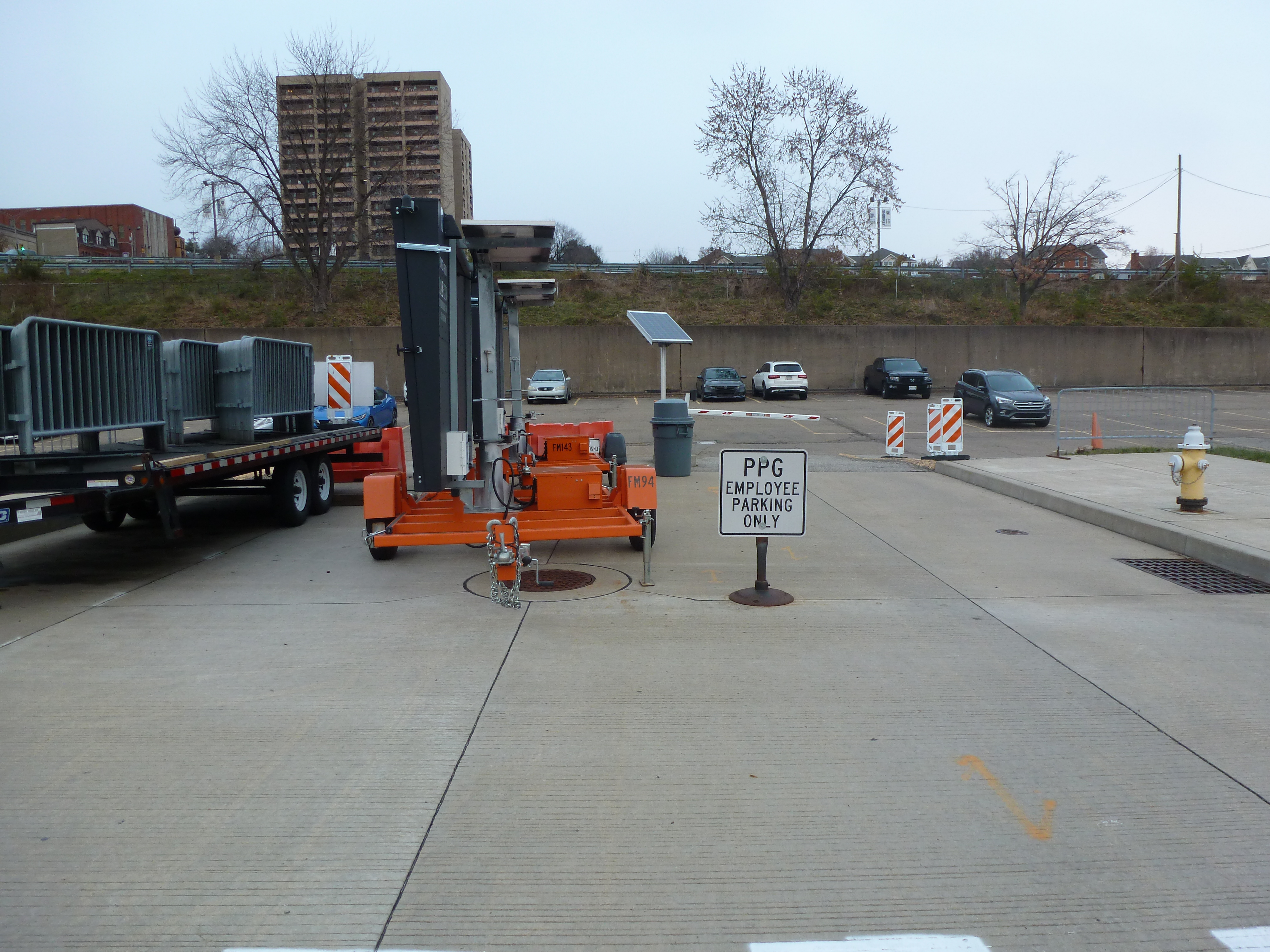
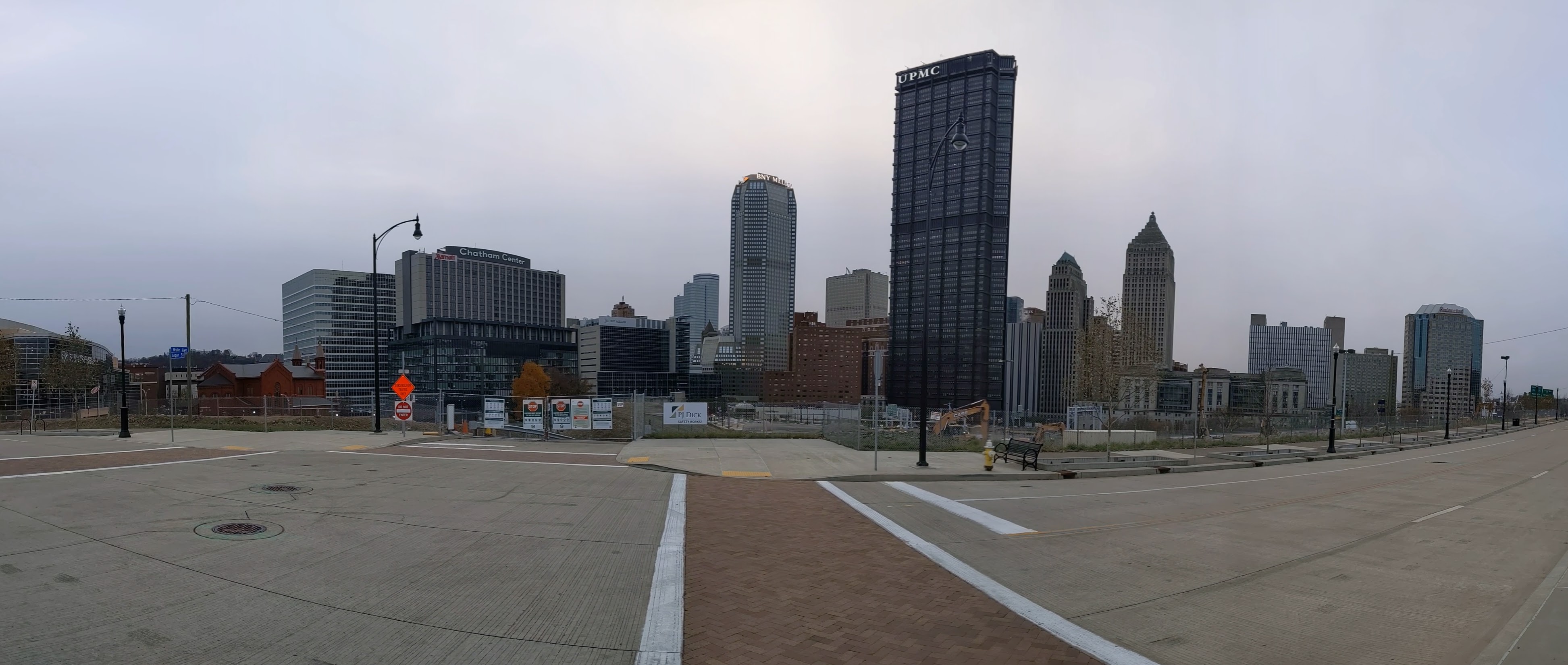
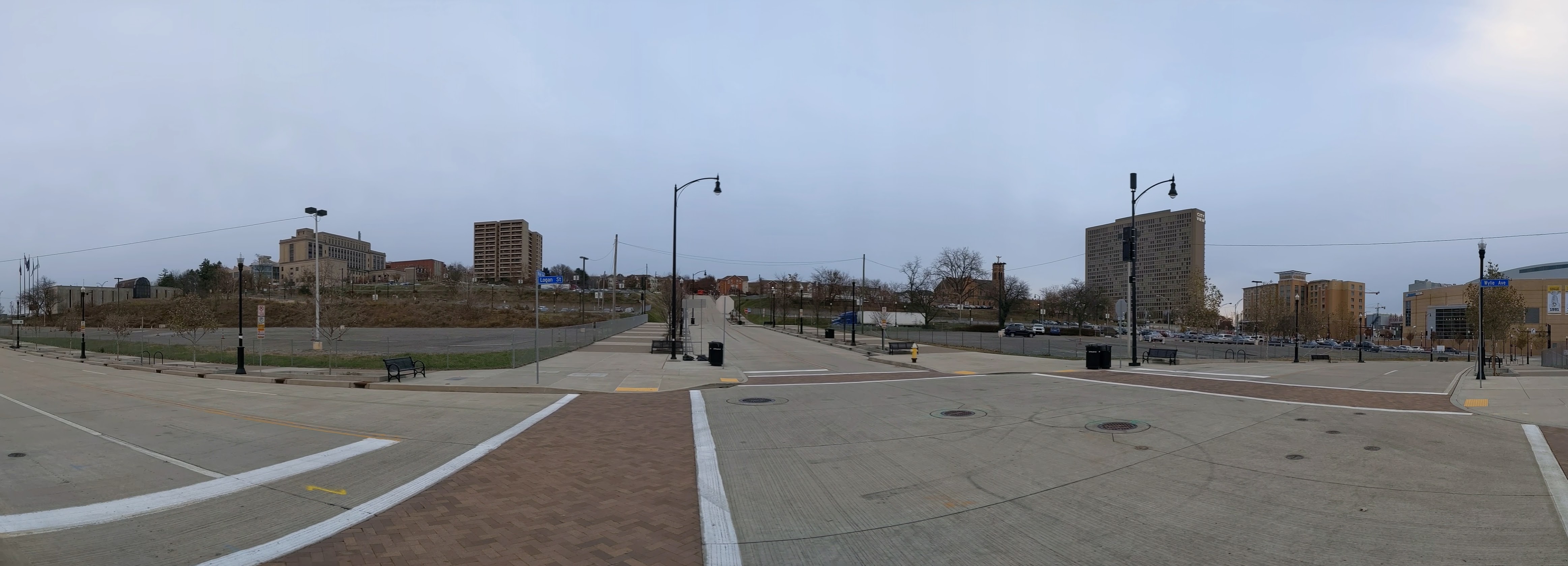
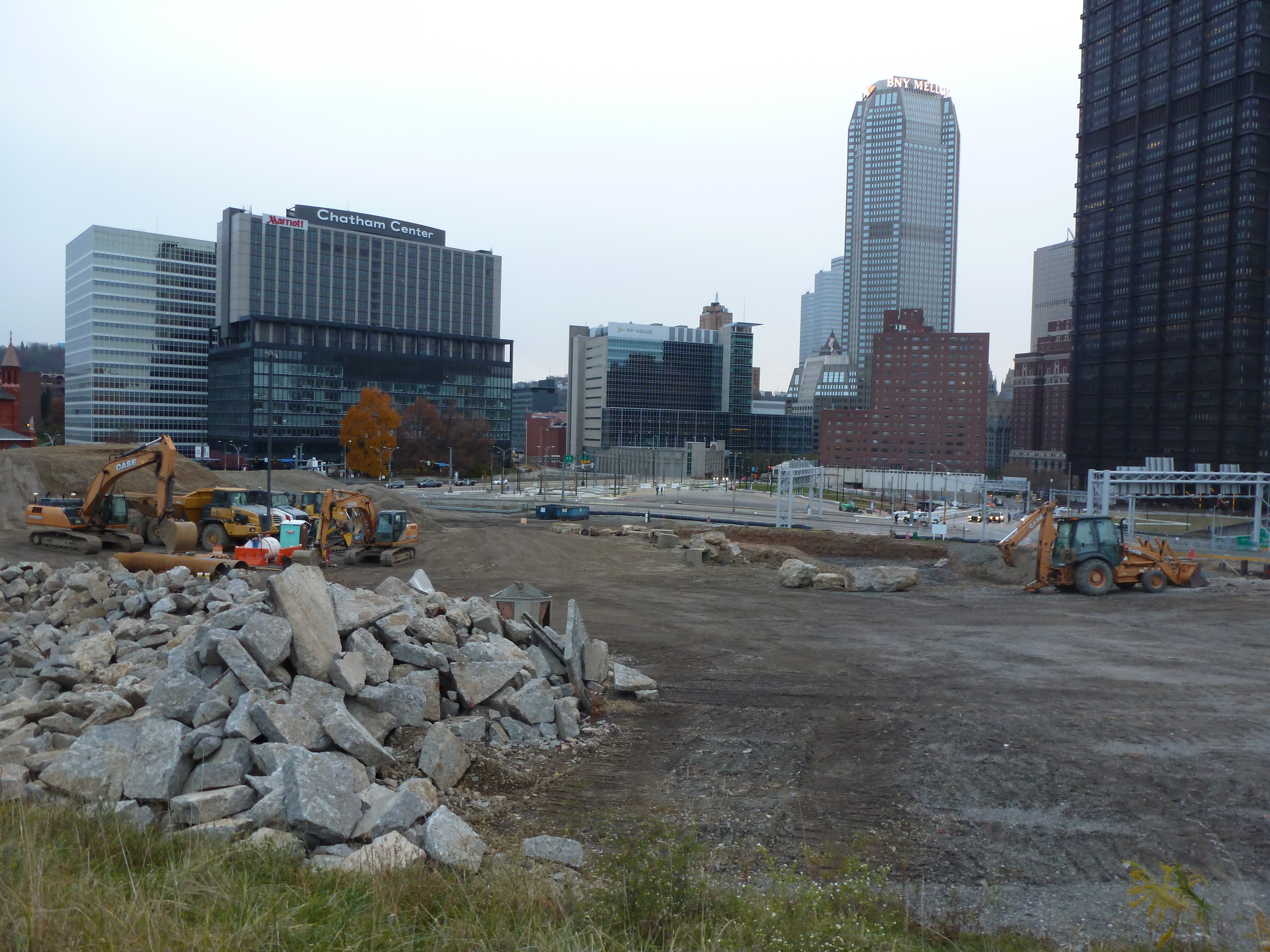
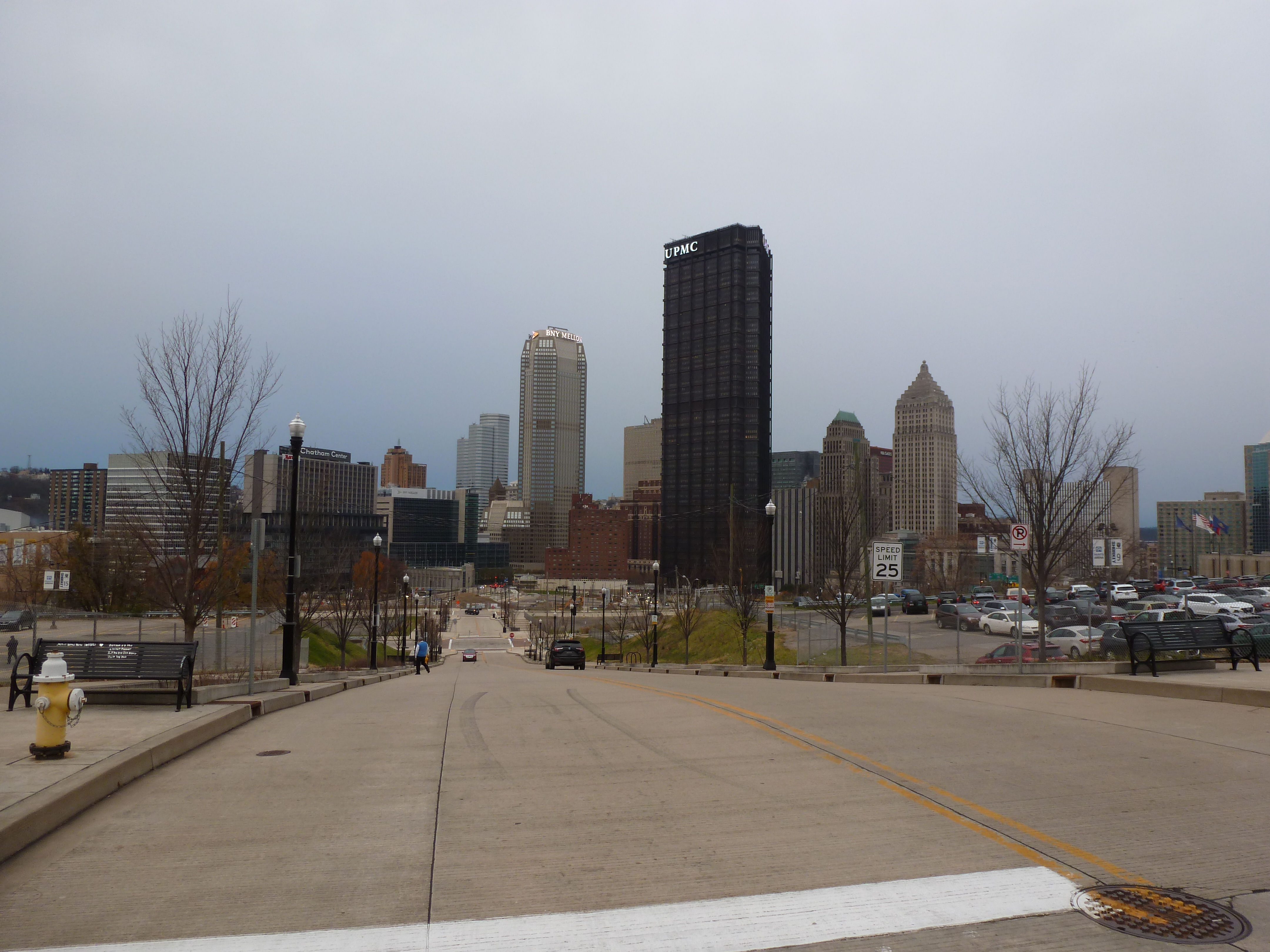
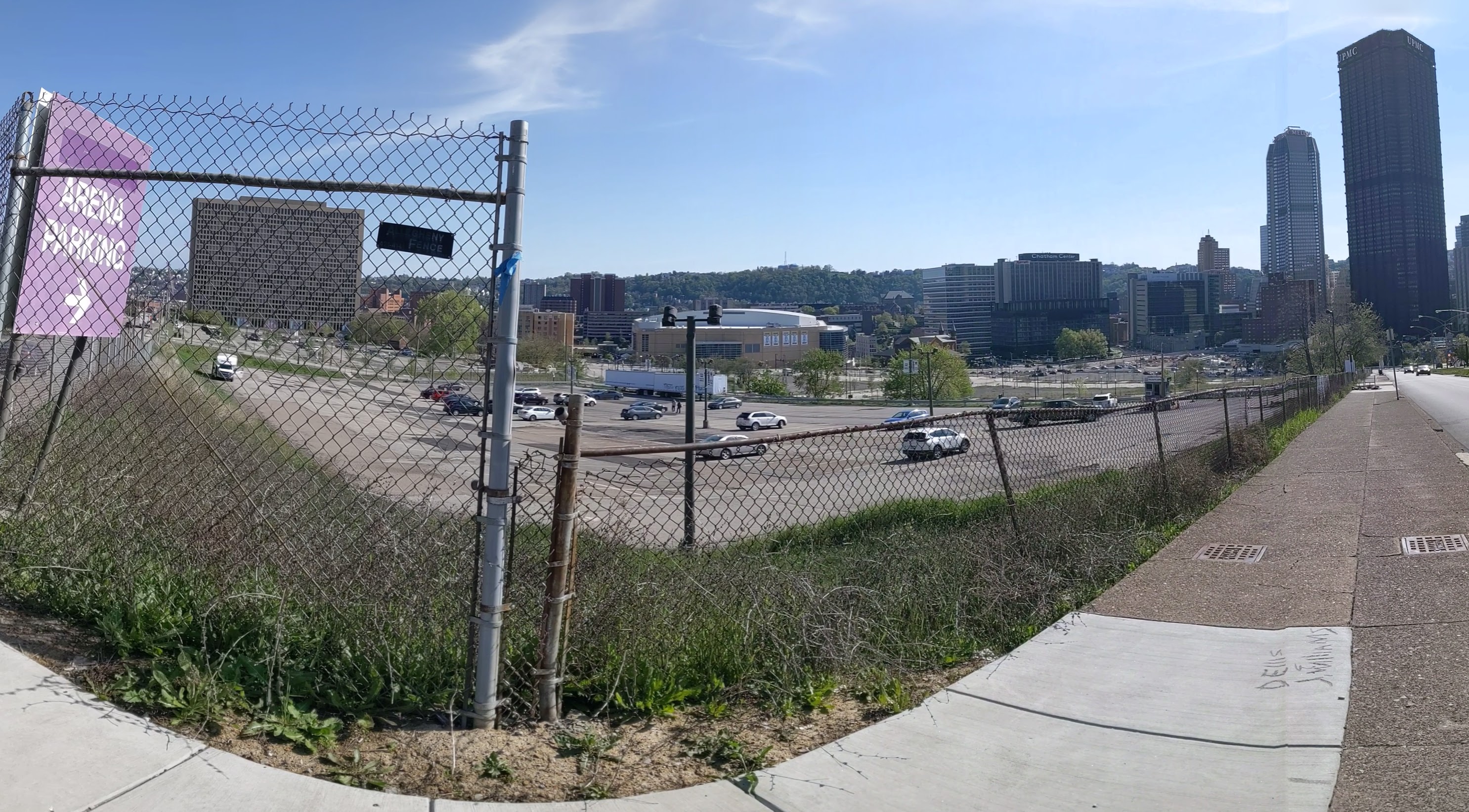
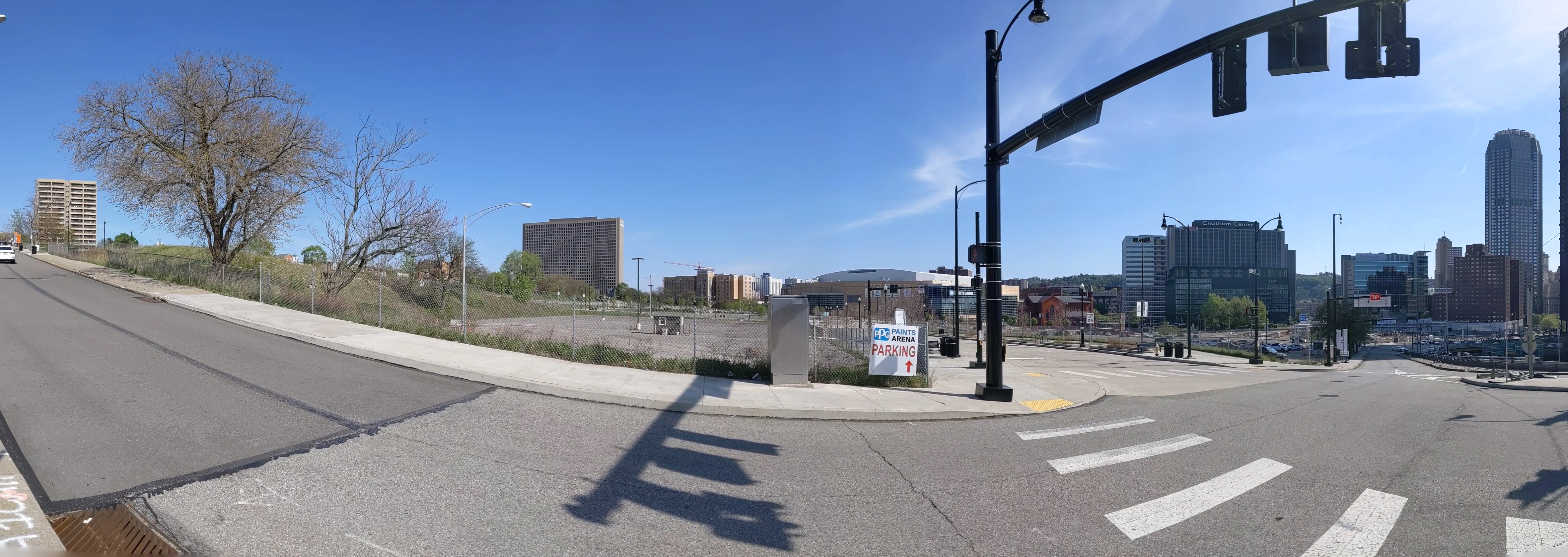
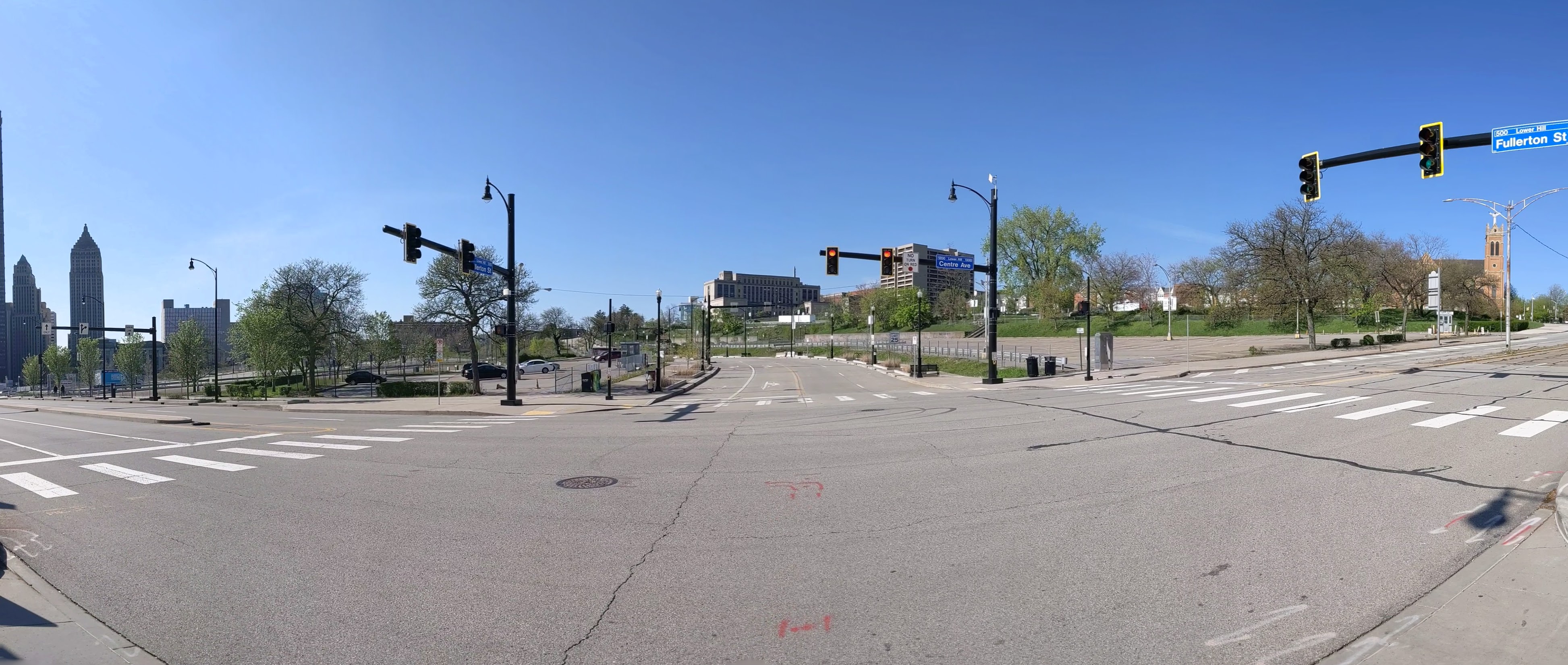
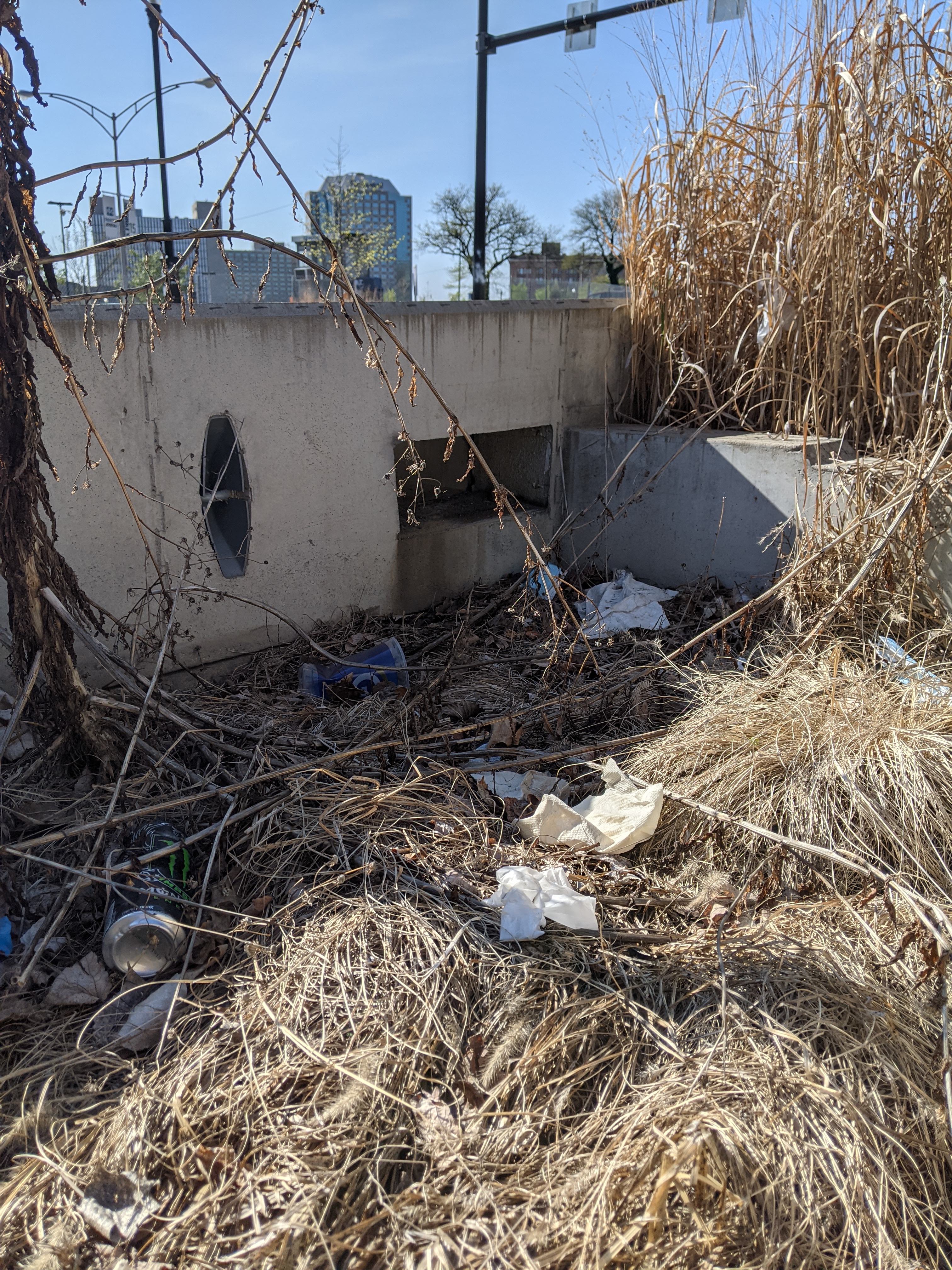
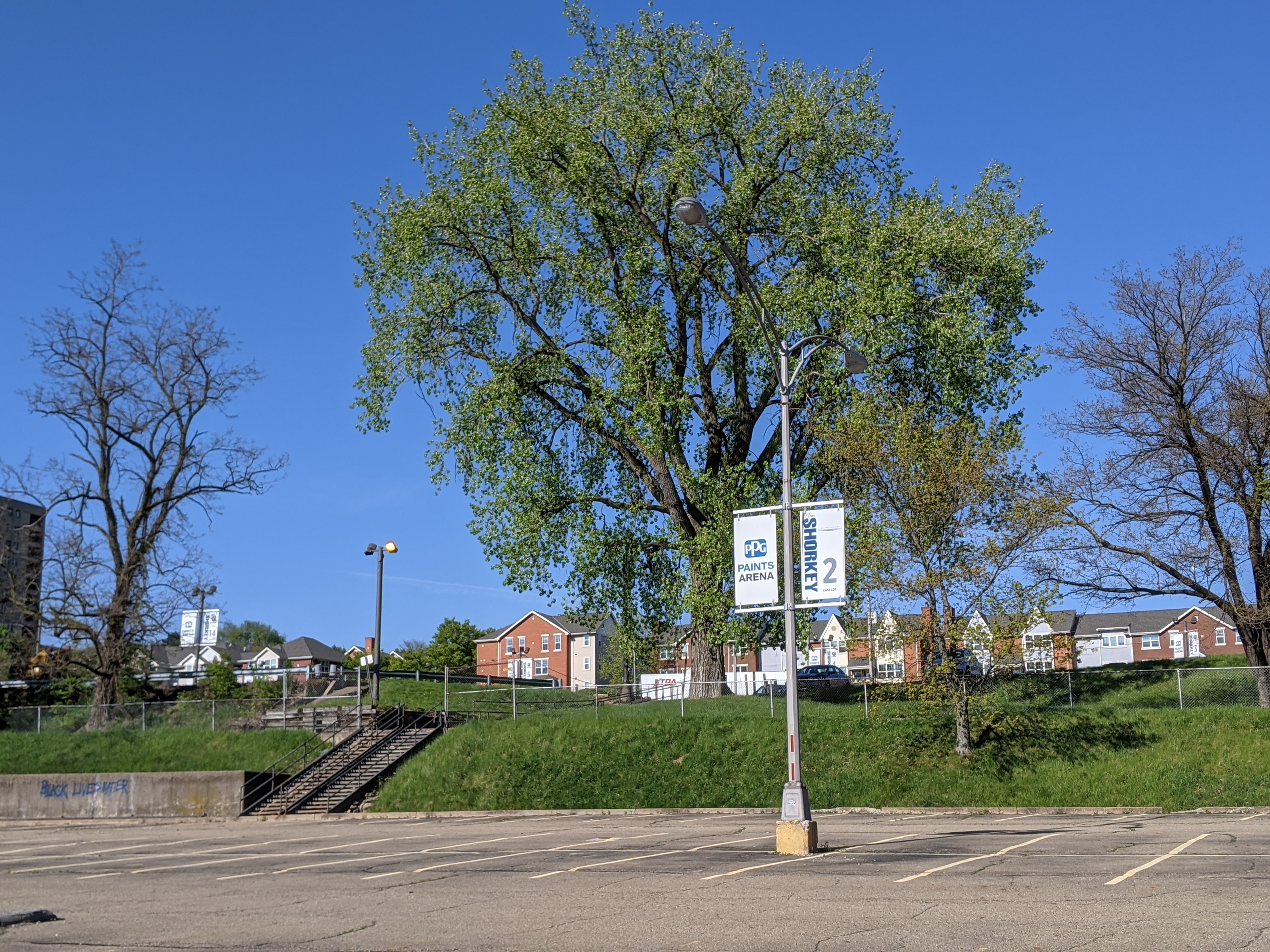
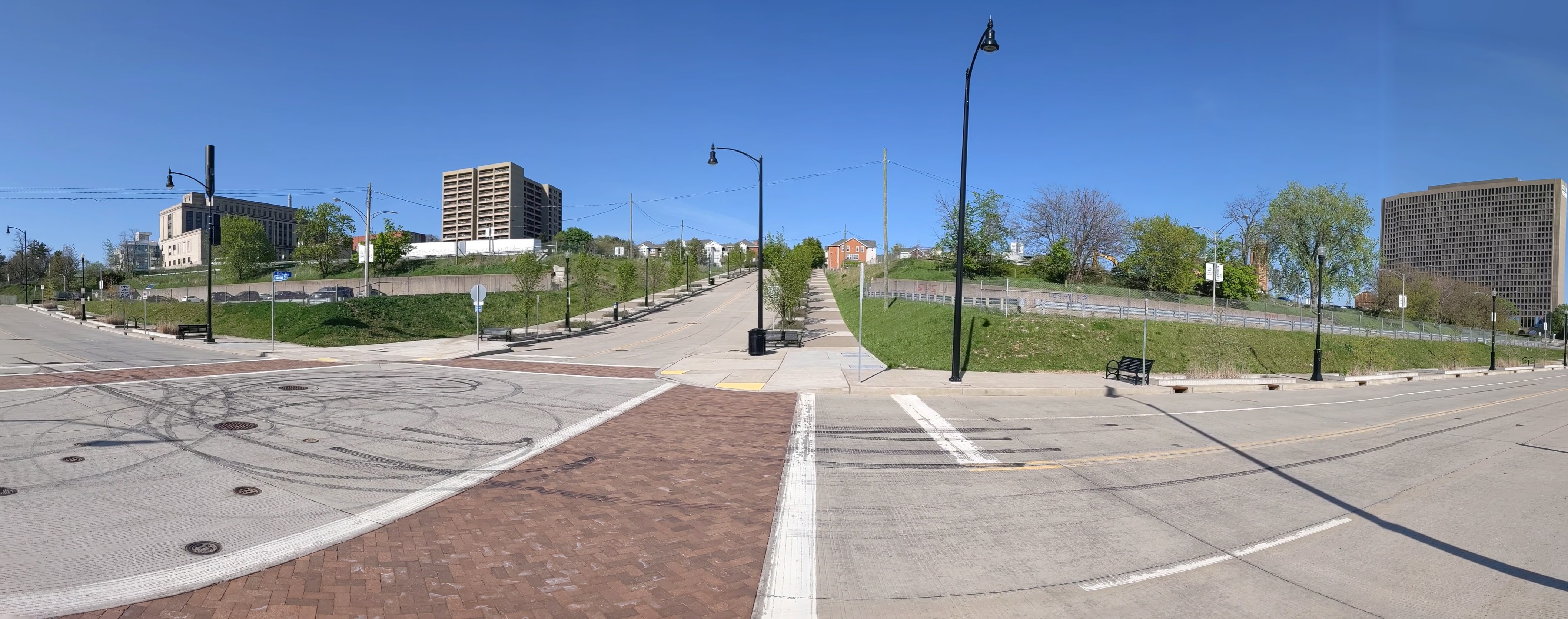
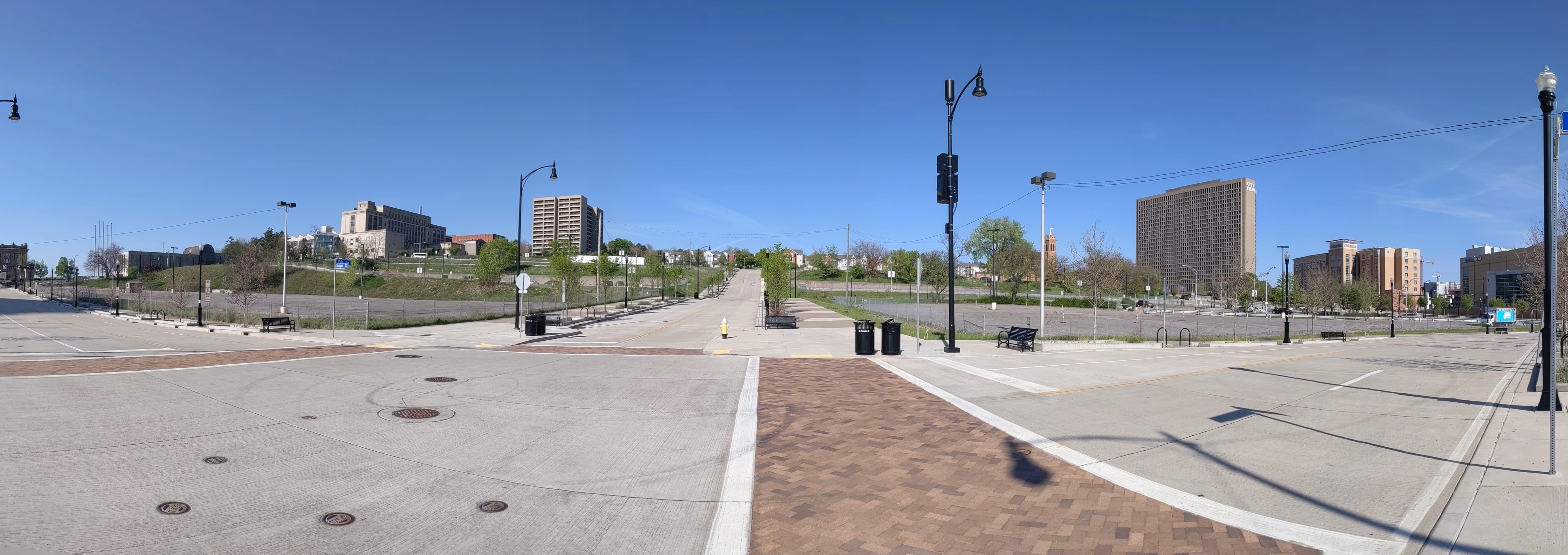
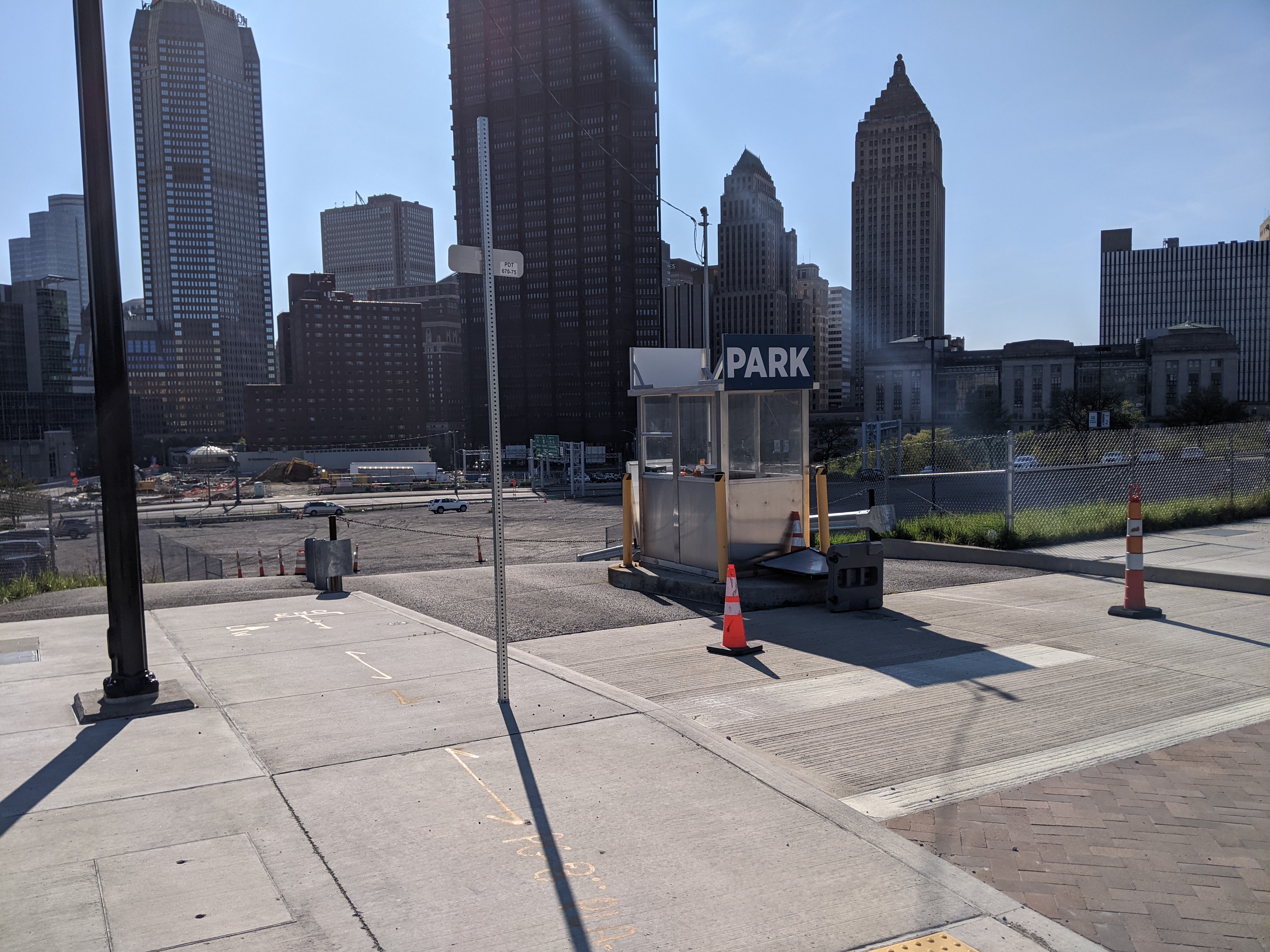
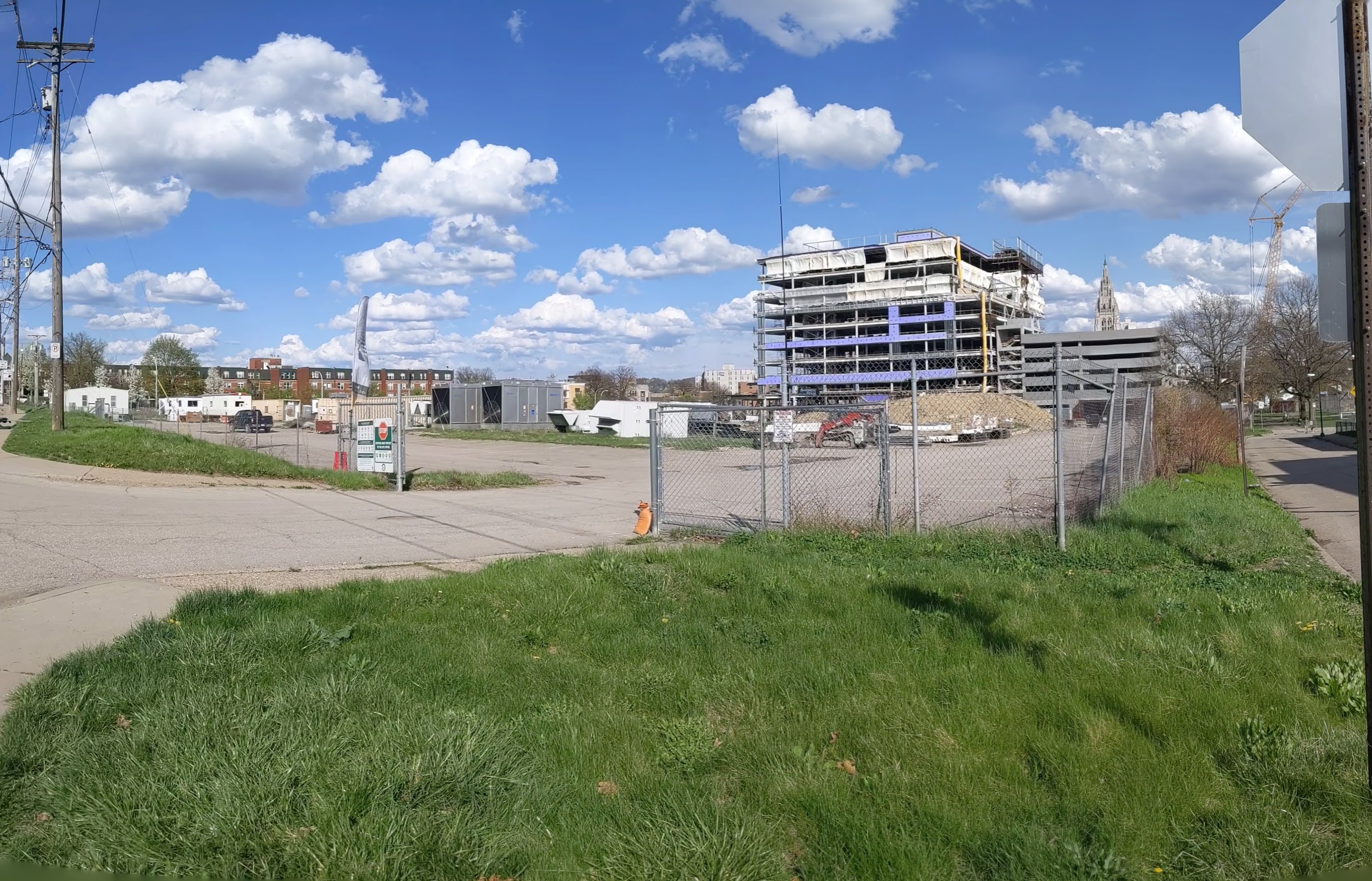
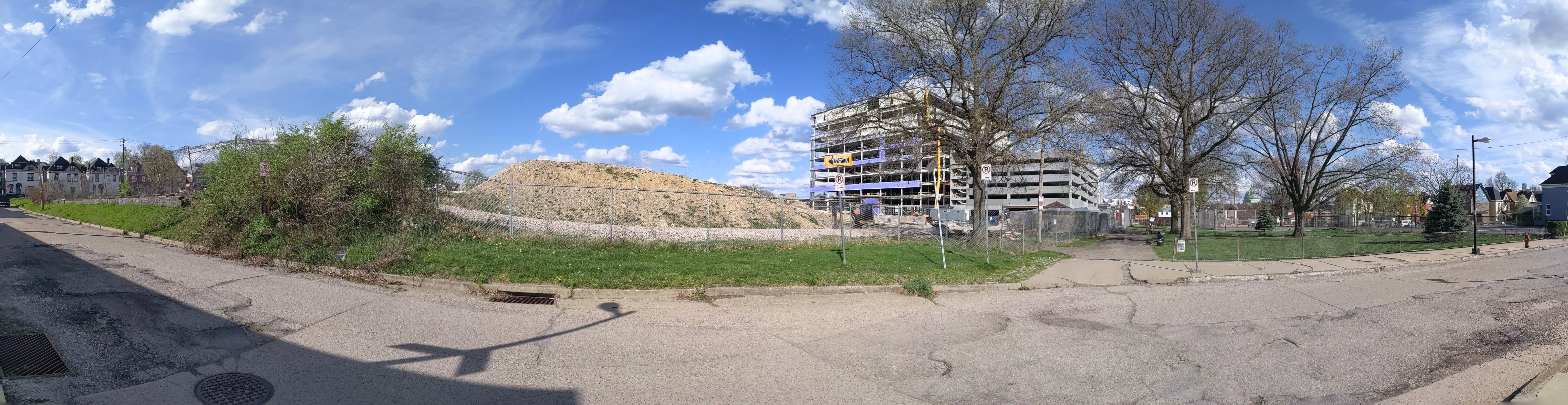
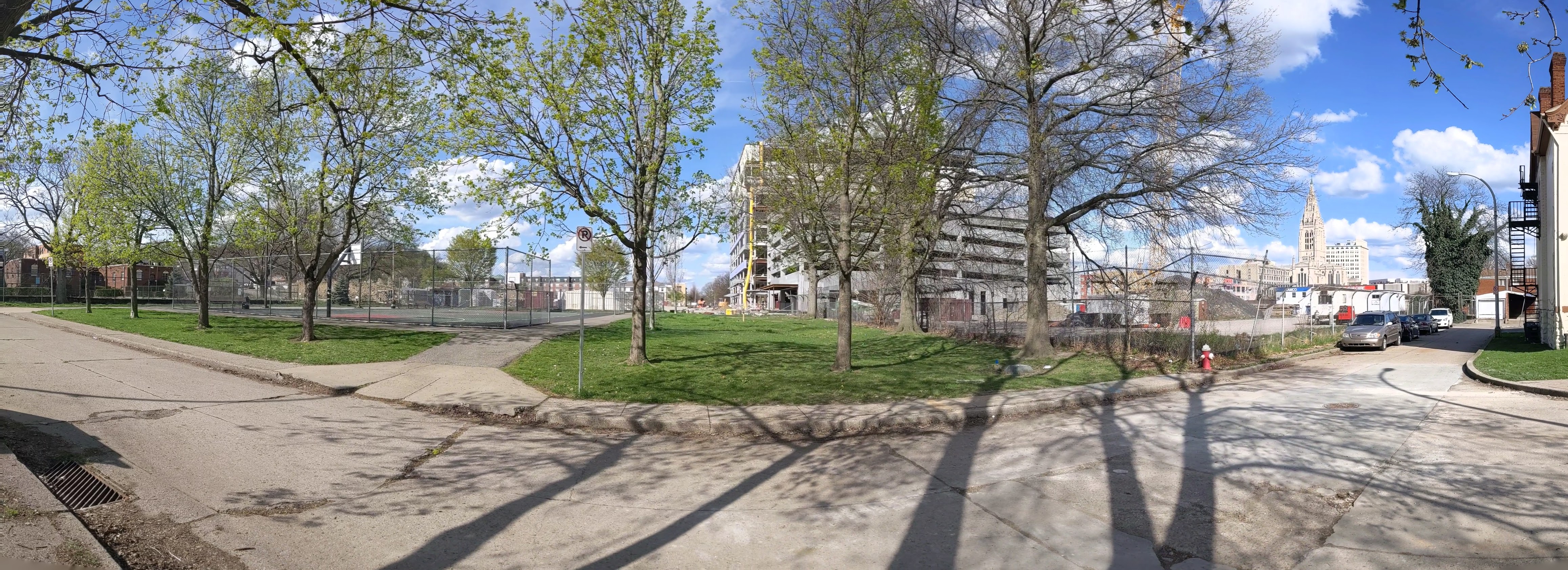
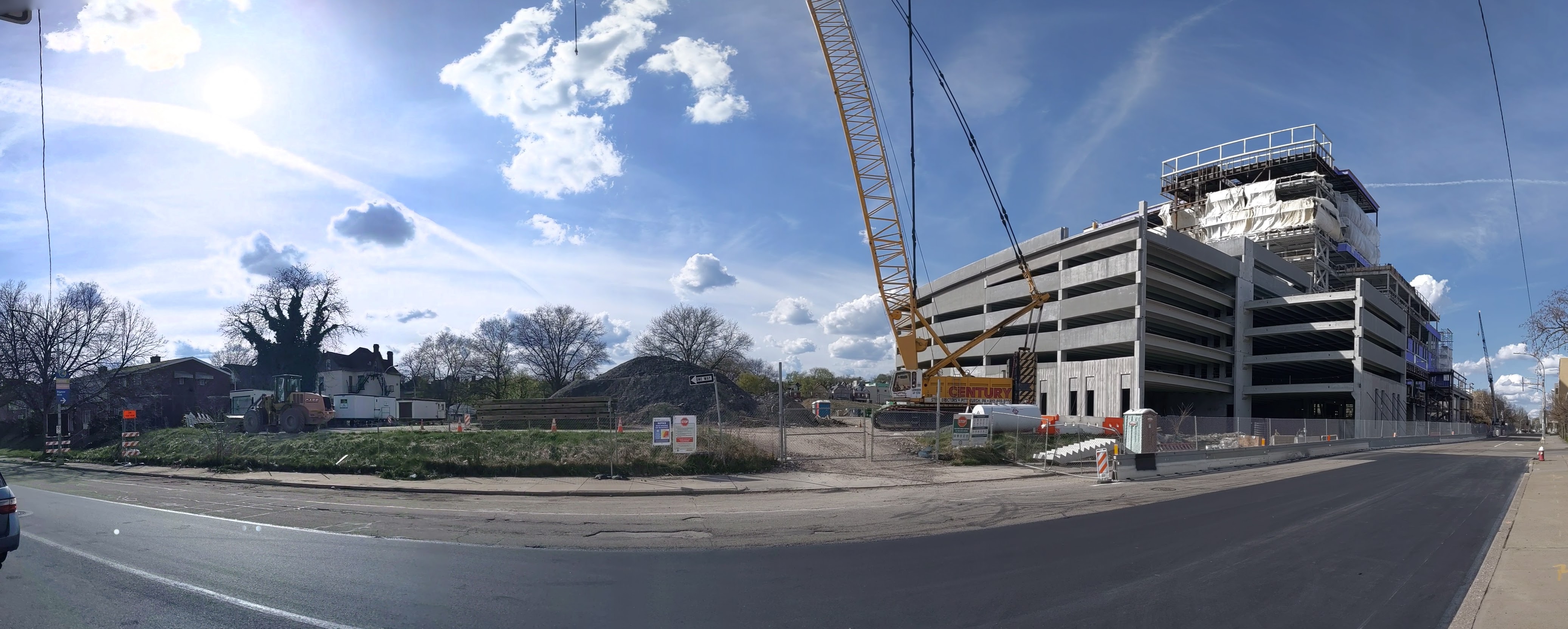
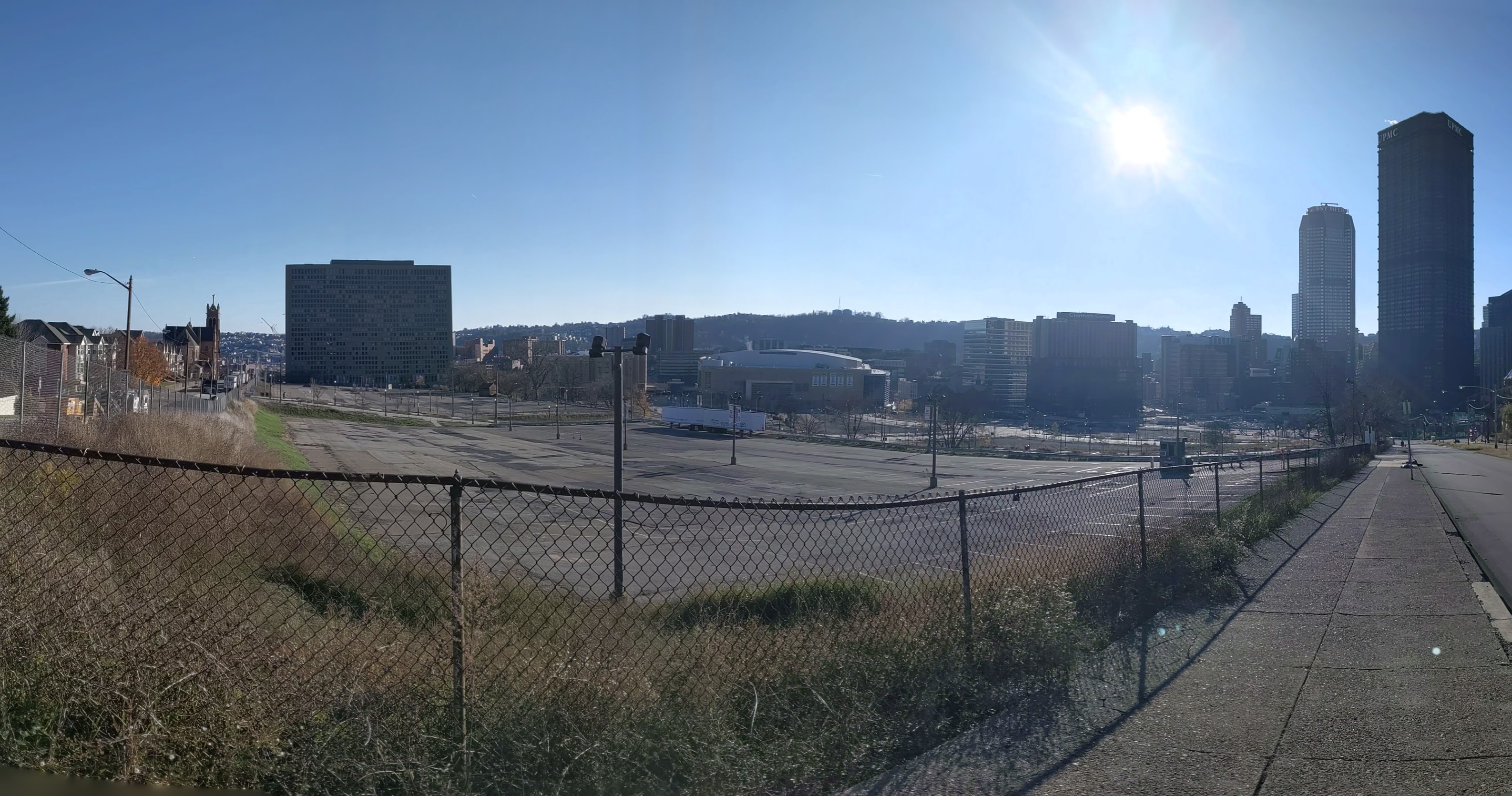
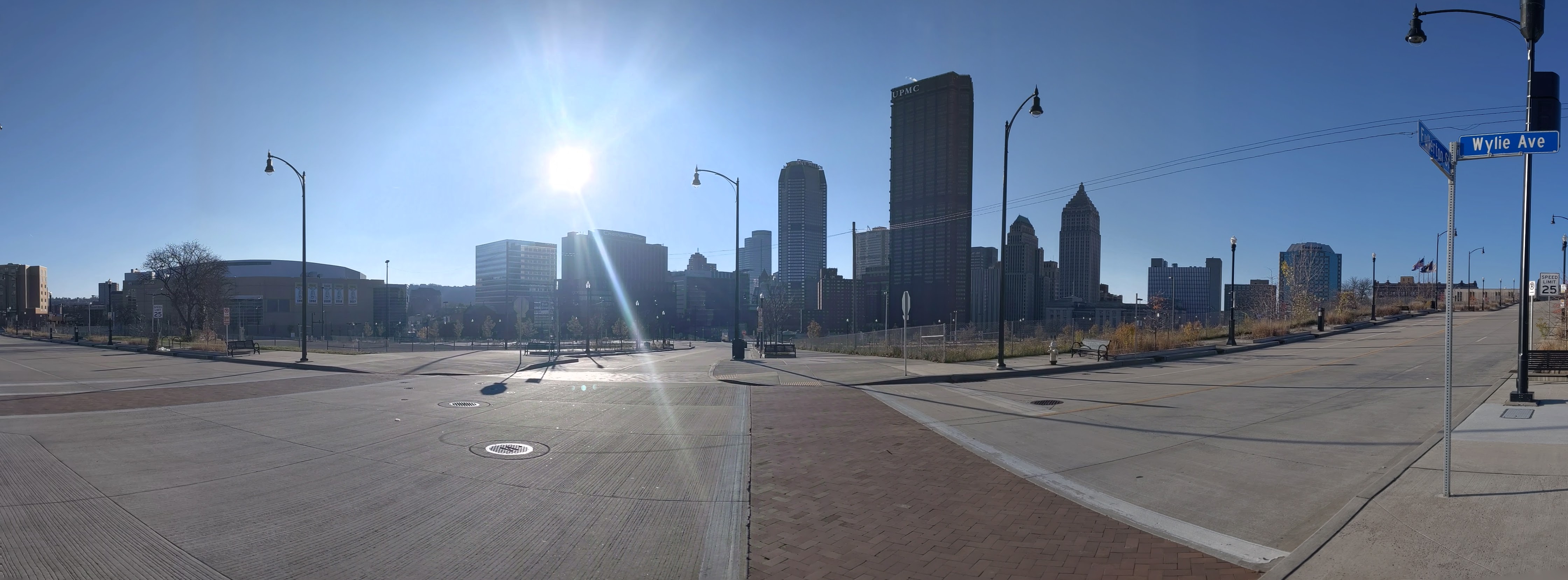
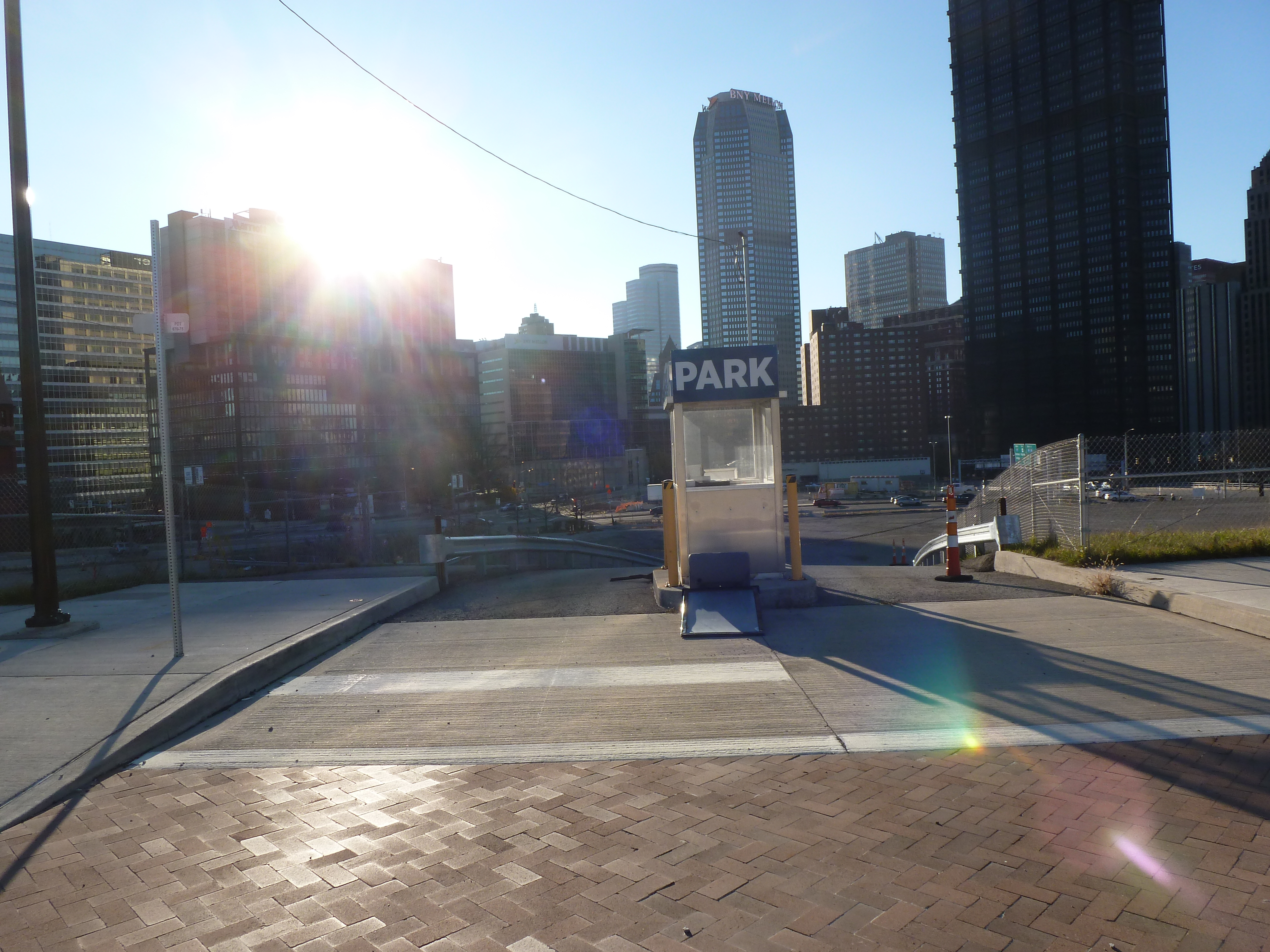
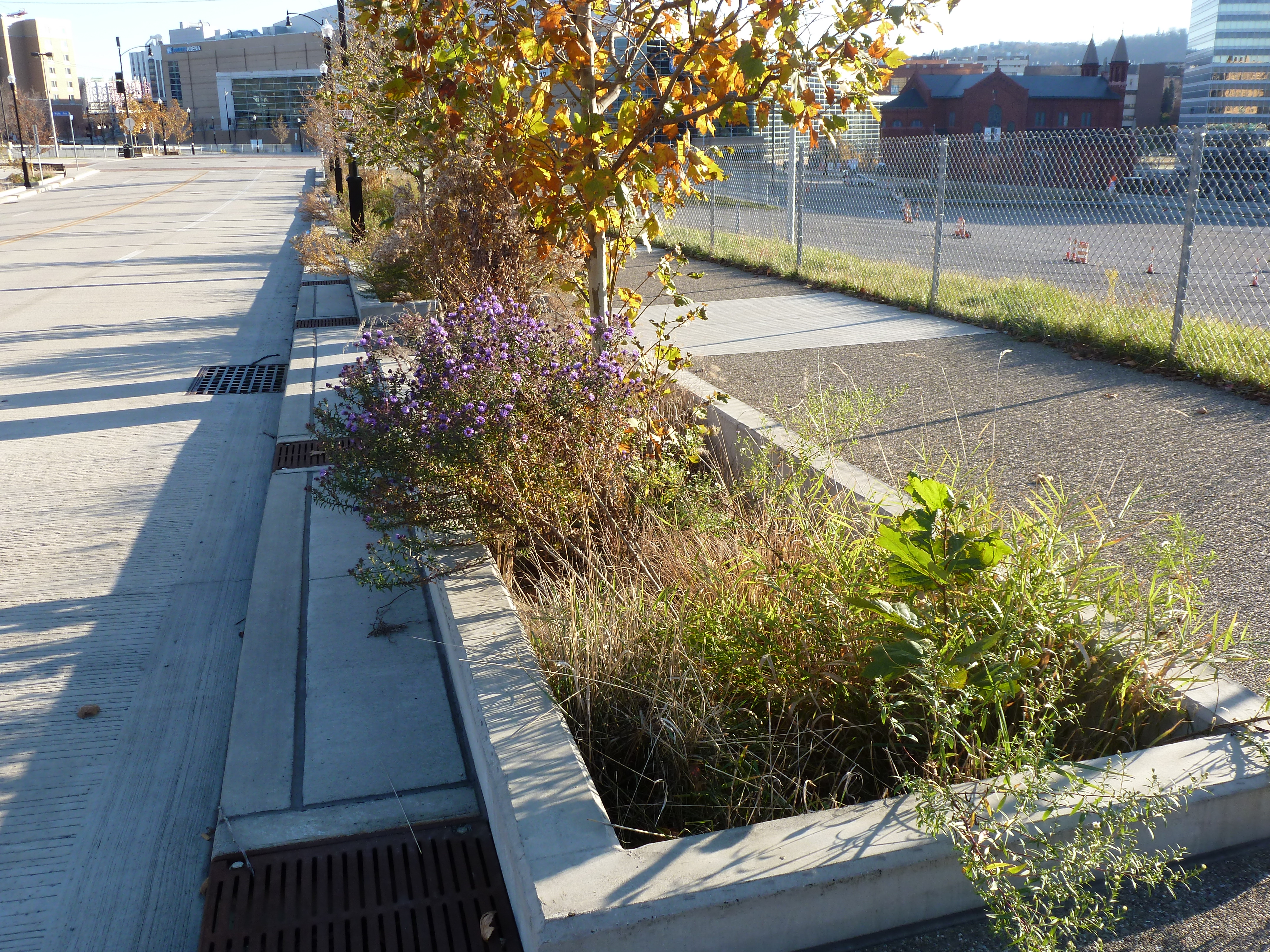
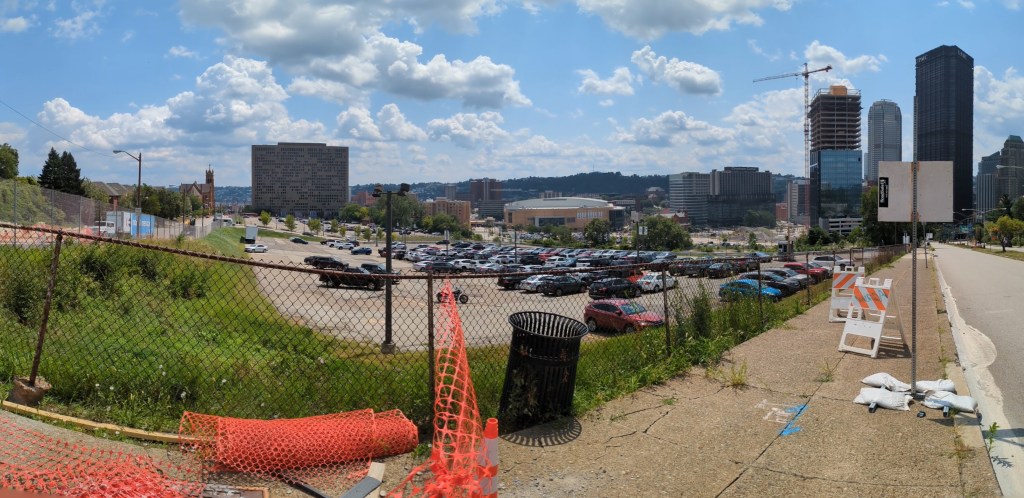
While still primarily a sea of parked cars, there have been a few changes on the site:

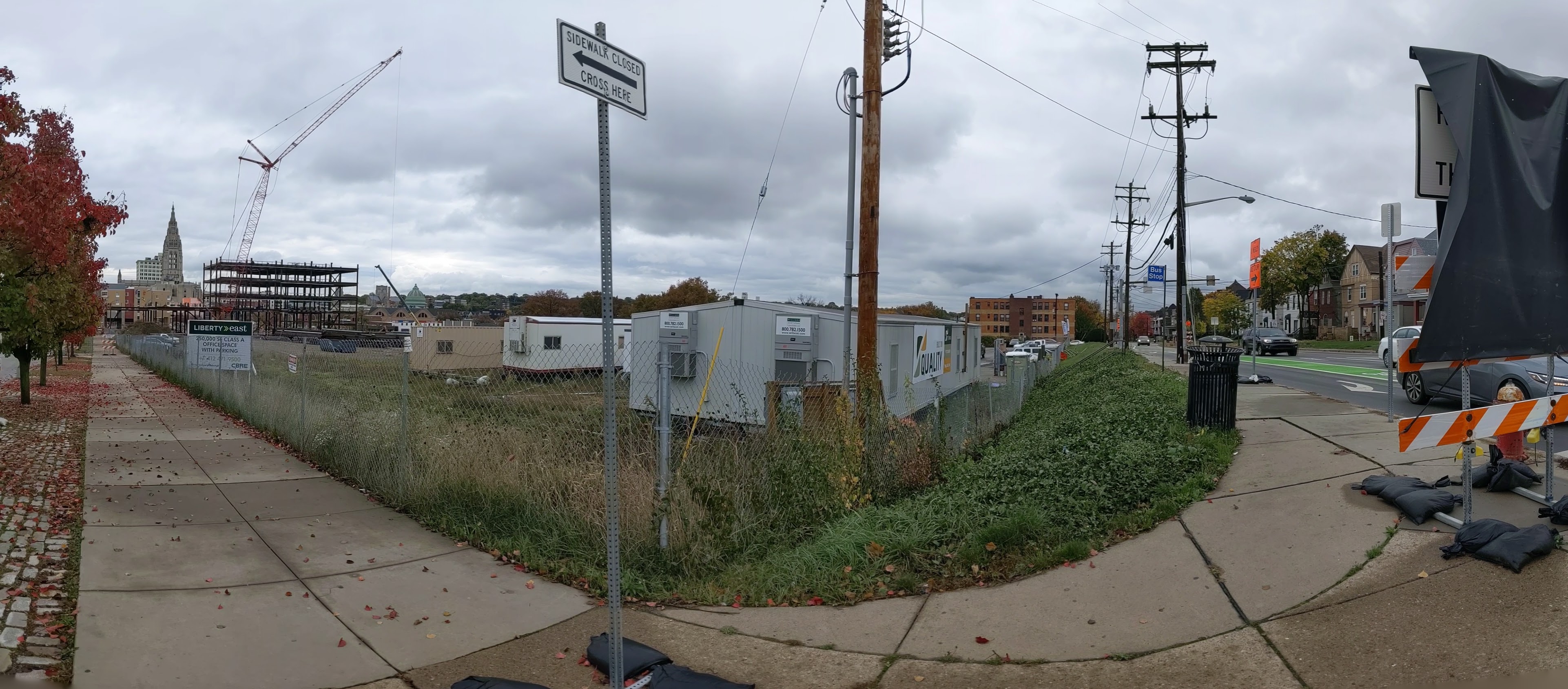
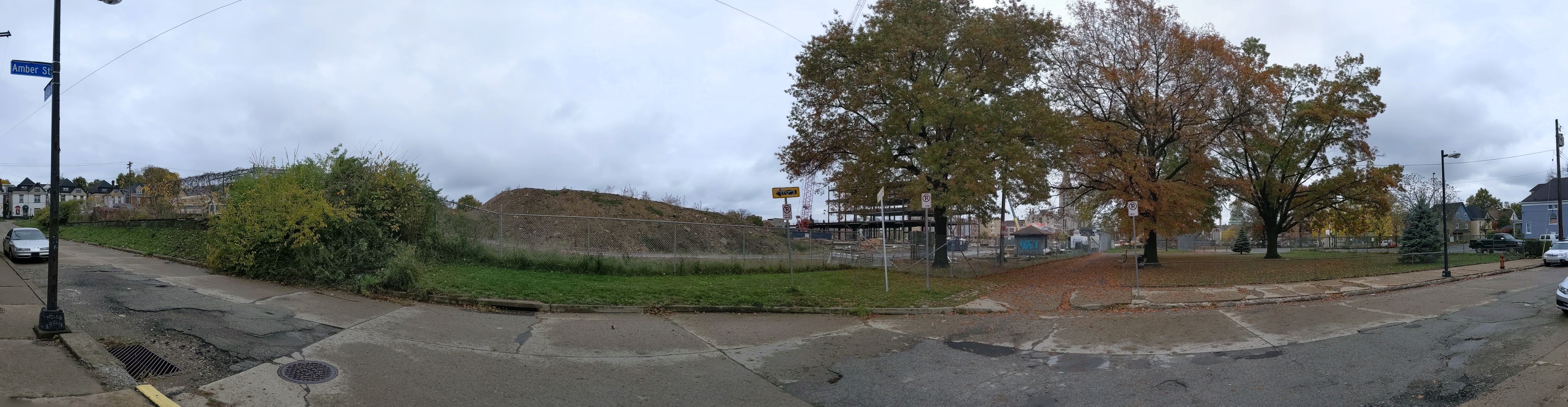
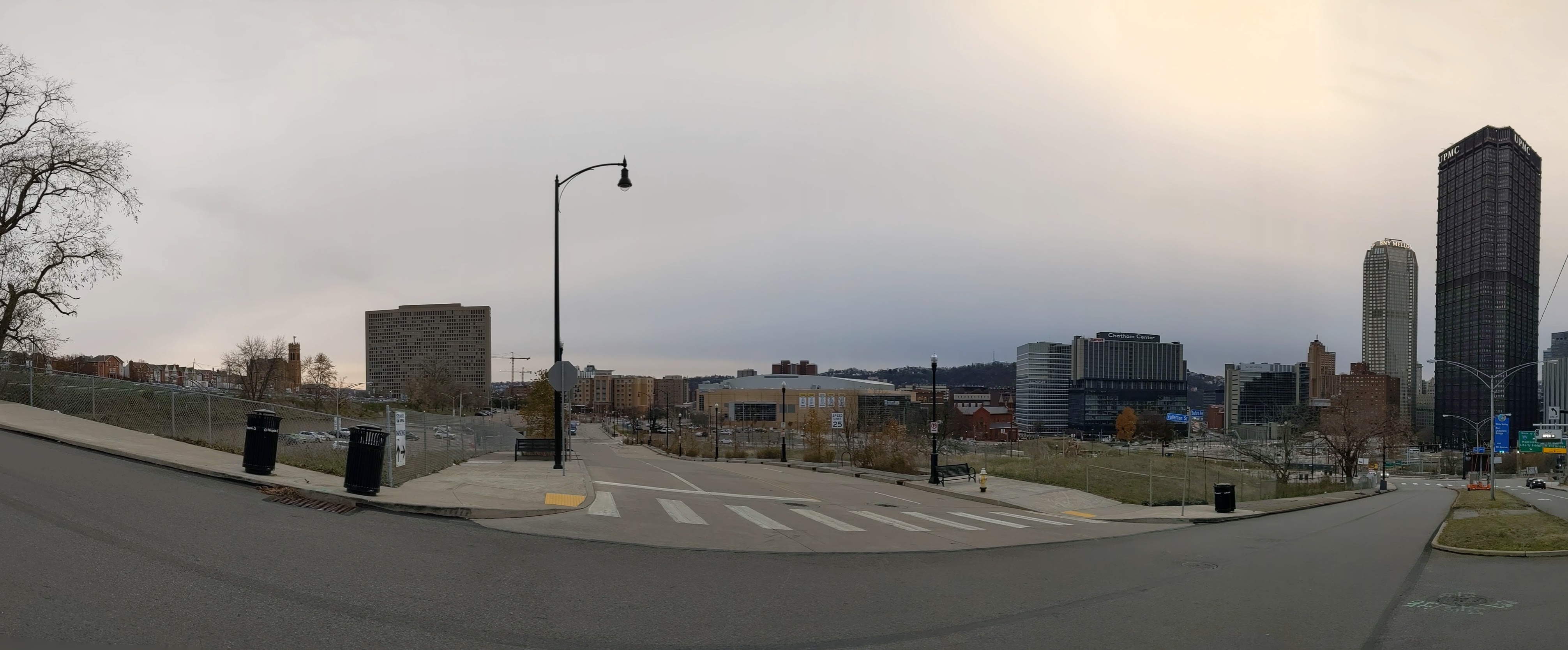
  • After months of the FNB Tower seemingly stuck at 5 or so stories despite activity on the site, the building shot up to what I assume is its full height.
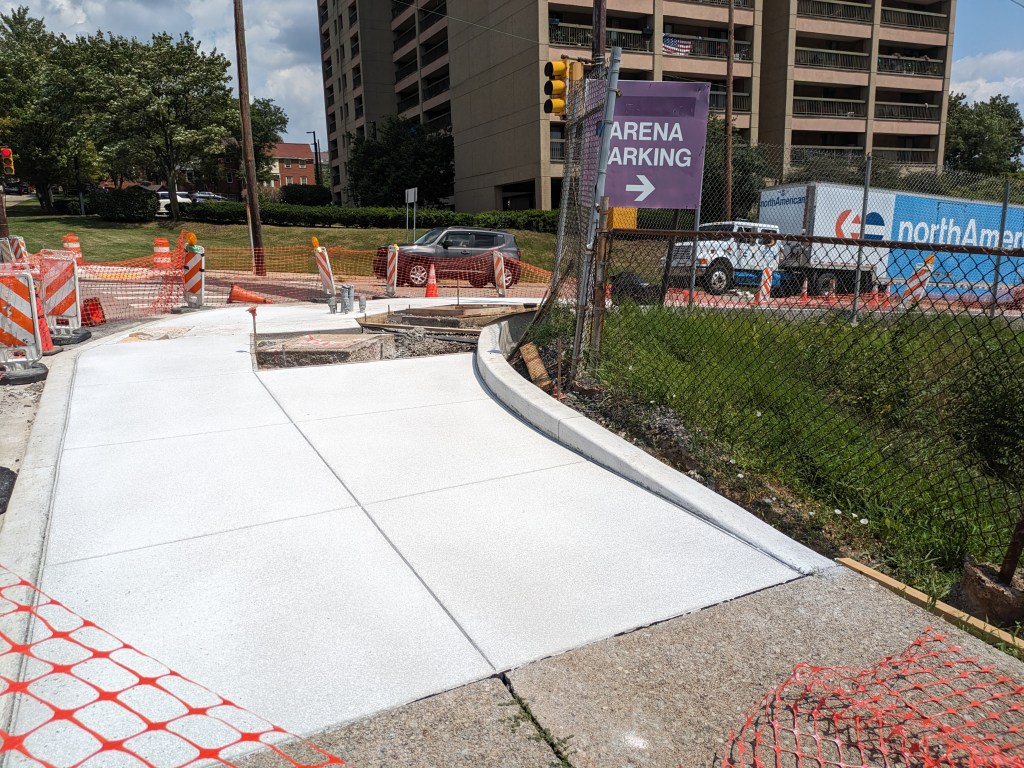
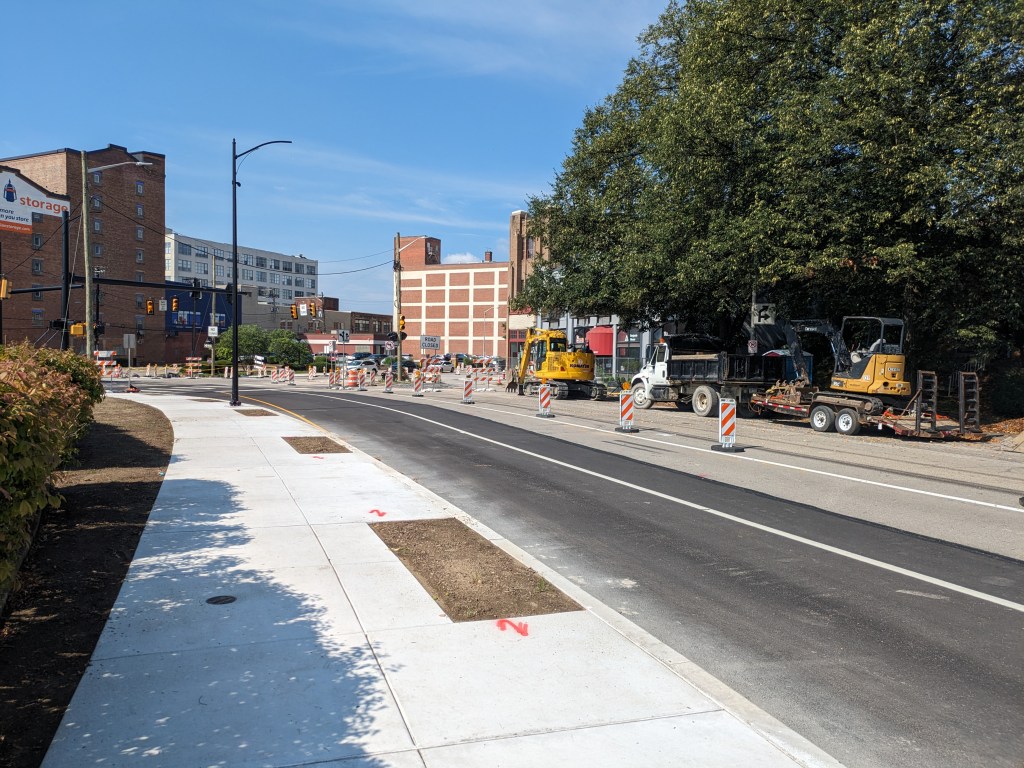
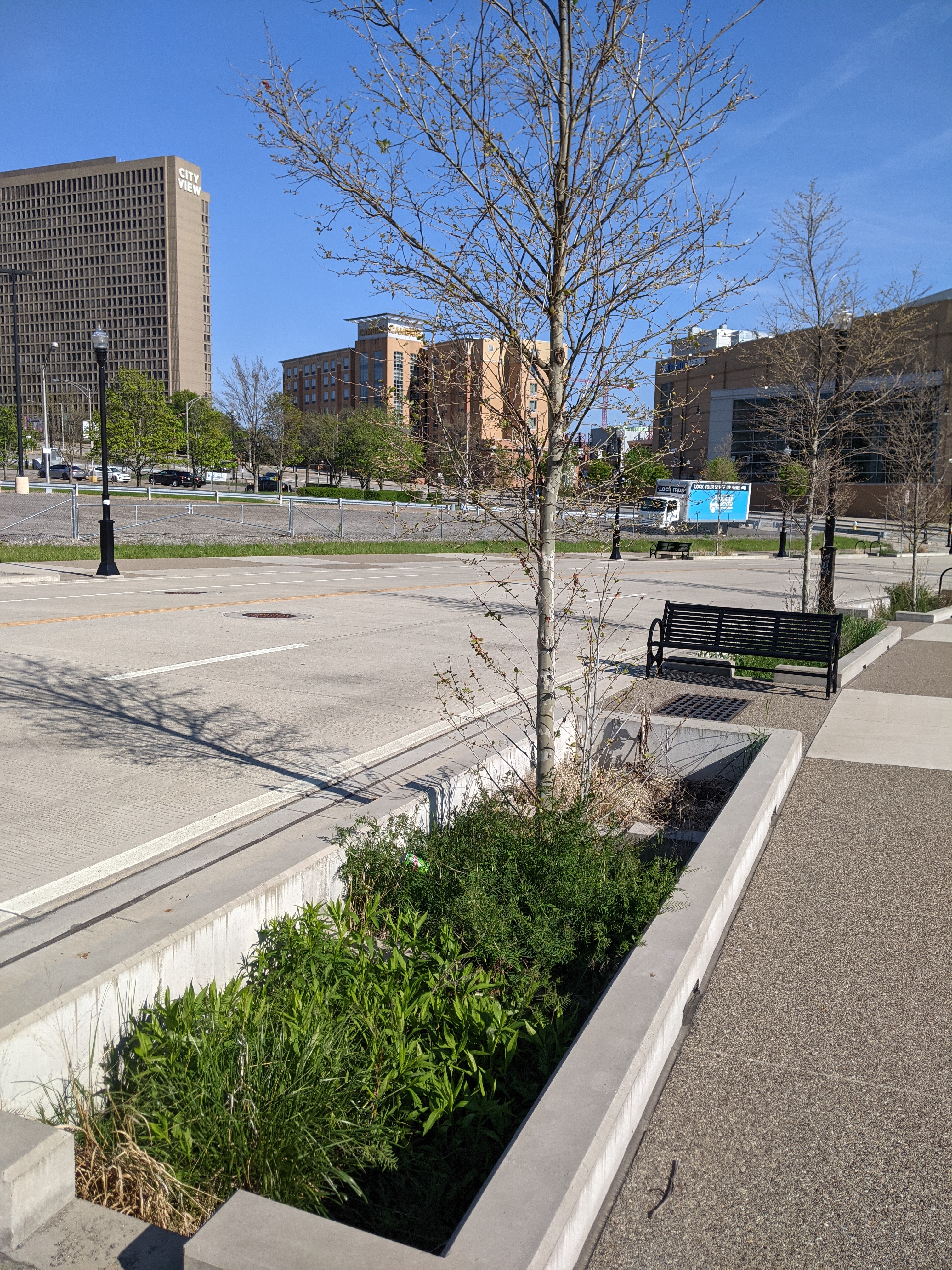
  • There was some sidewalk restructuring on the older sections – though as that’s happening around the city, it may not indicate anything special in regards to the redevelopment of the Lower Hill.
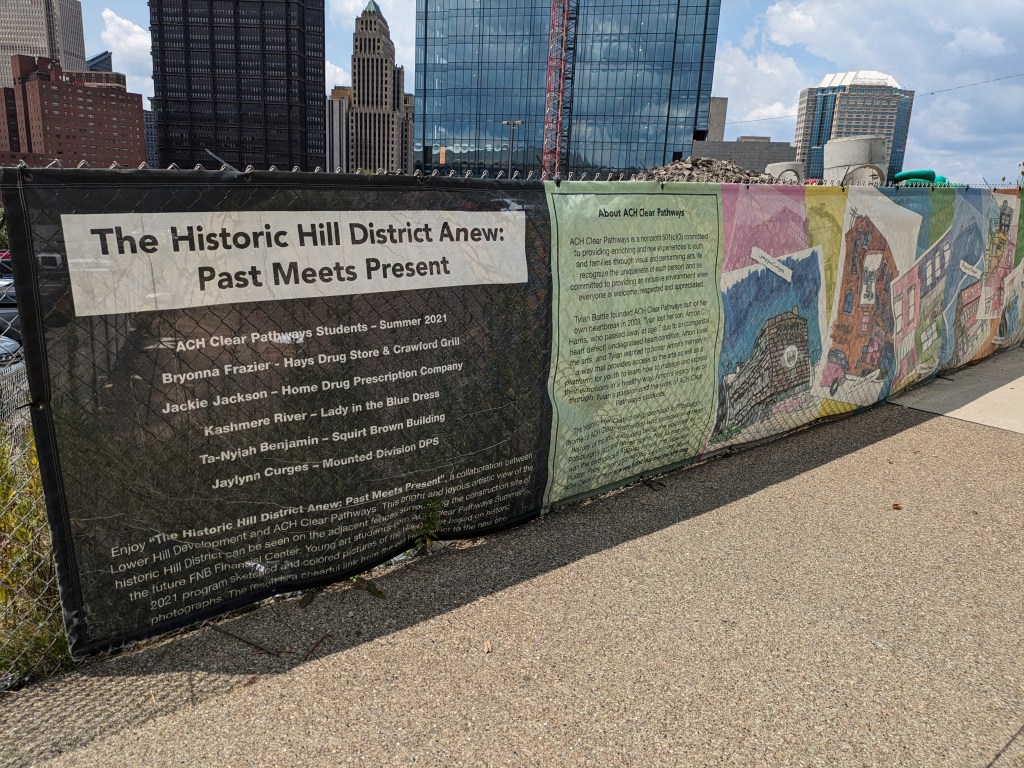
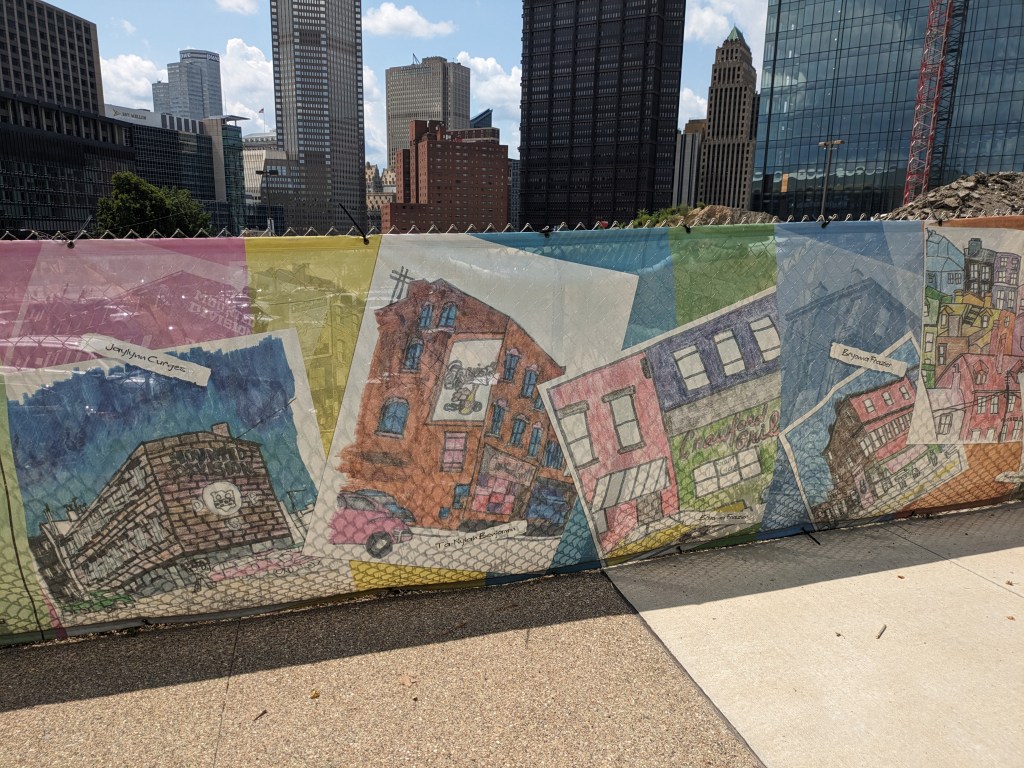
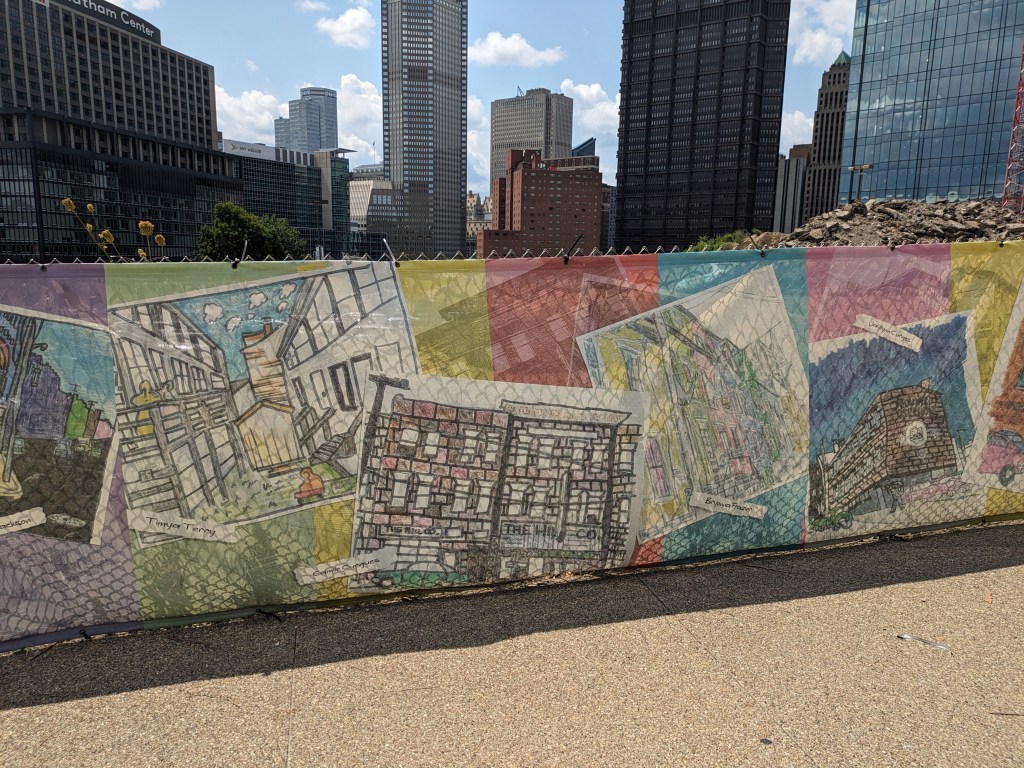
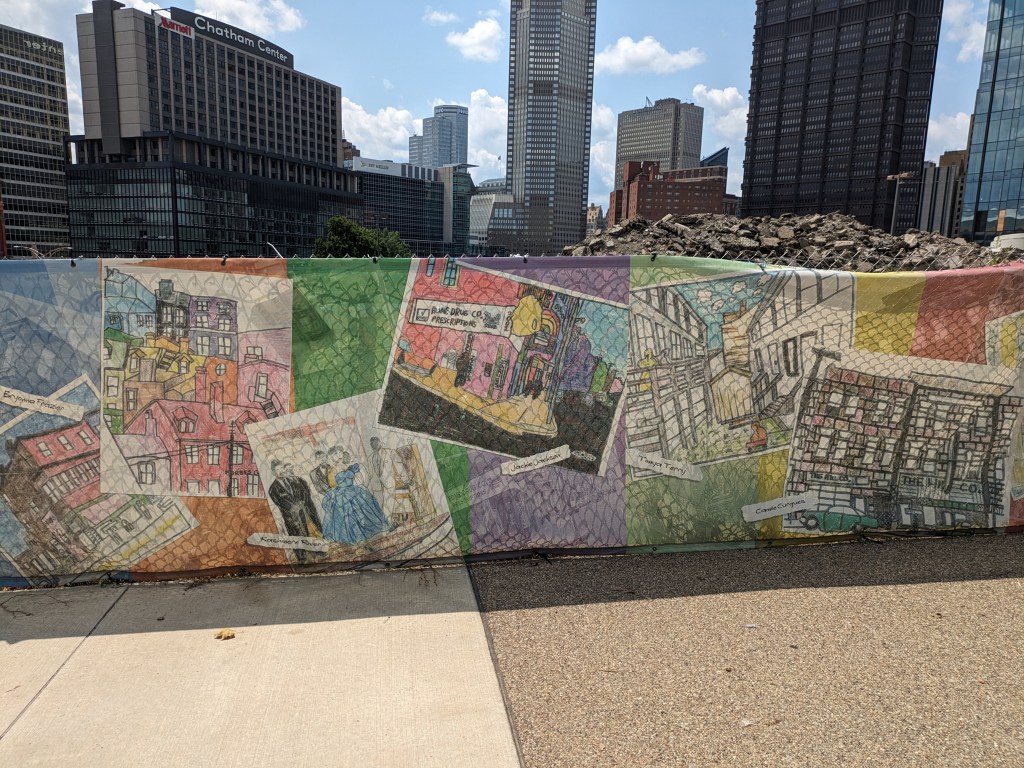
  • The construction fencing now has a temporary art installation by a non-profit that based in the Hill District and focused on connecting youth with arts.
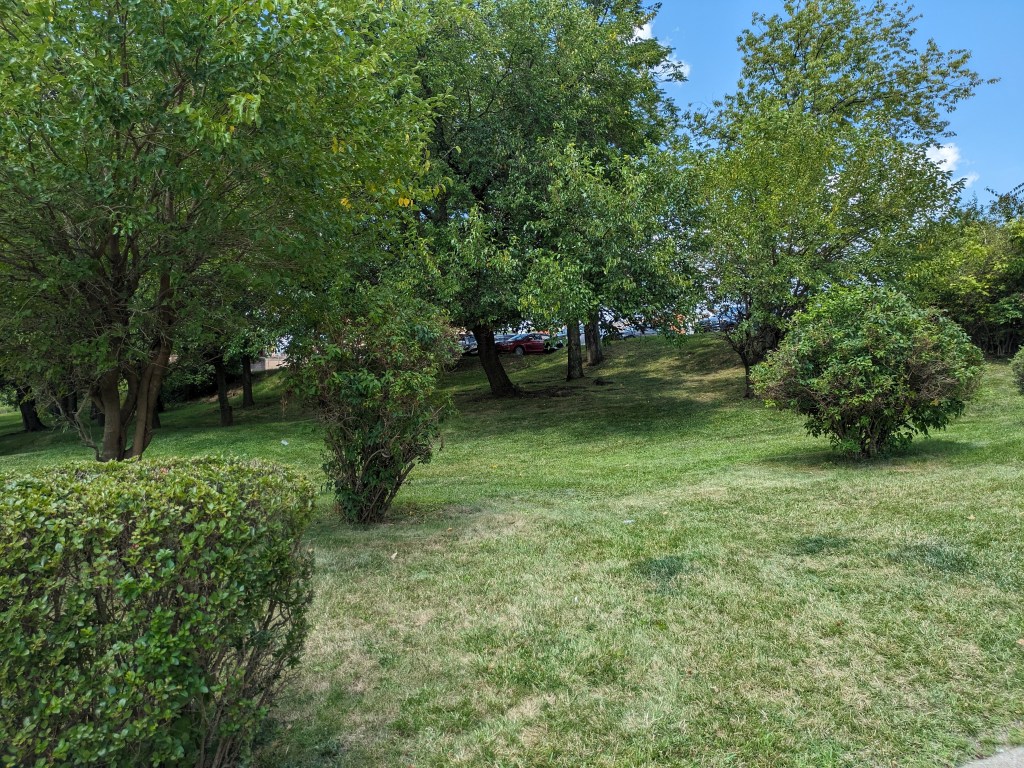
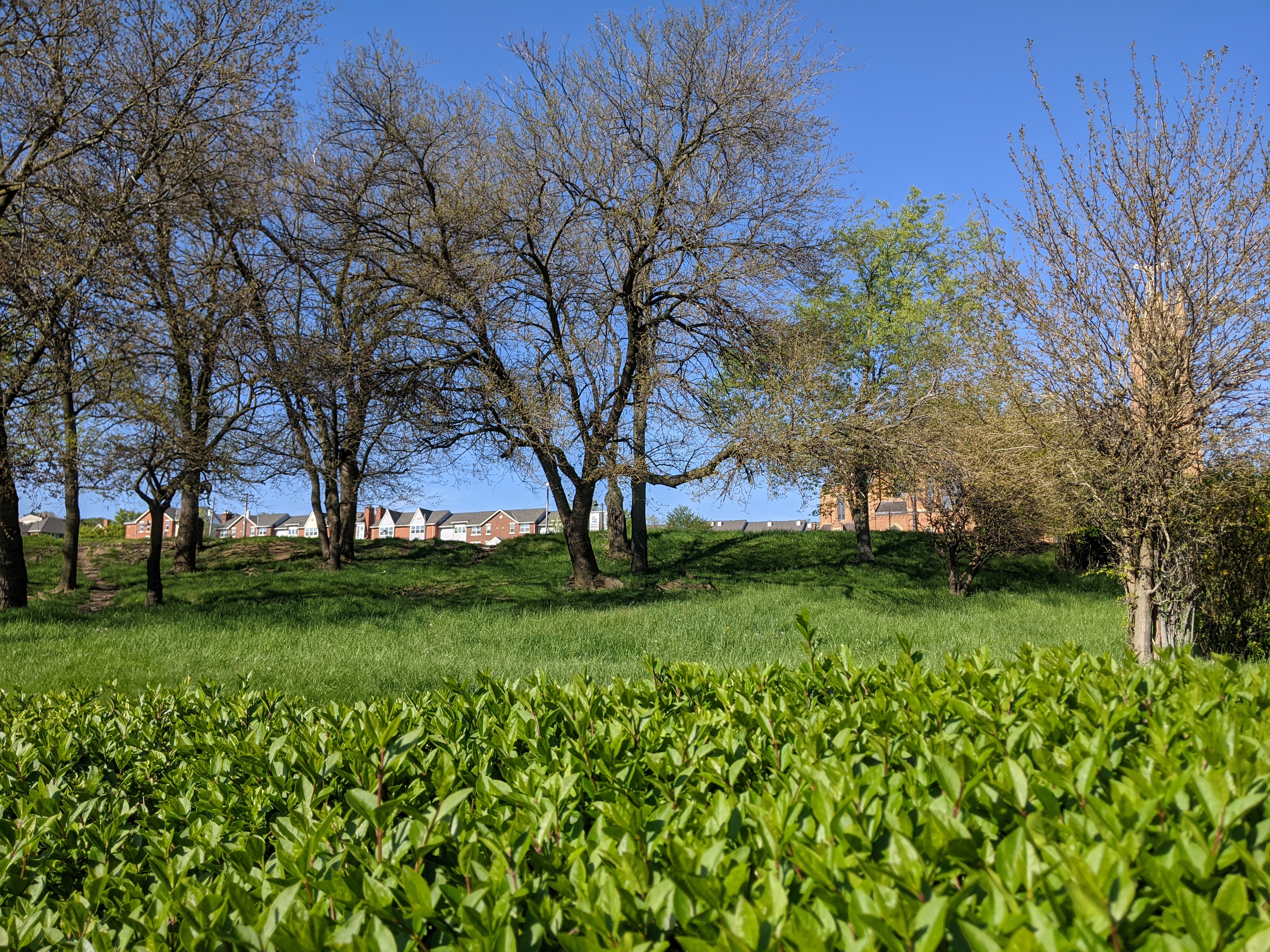
  • The hedges along Centre Ave were noticeably taller than the last time I photographed them.

Other than that, the site remains much the same. But there has been LOTS of news about it and other developments in the Hill District (see below).

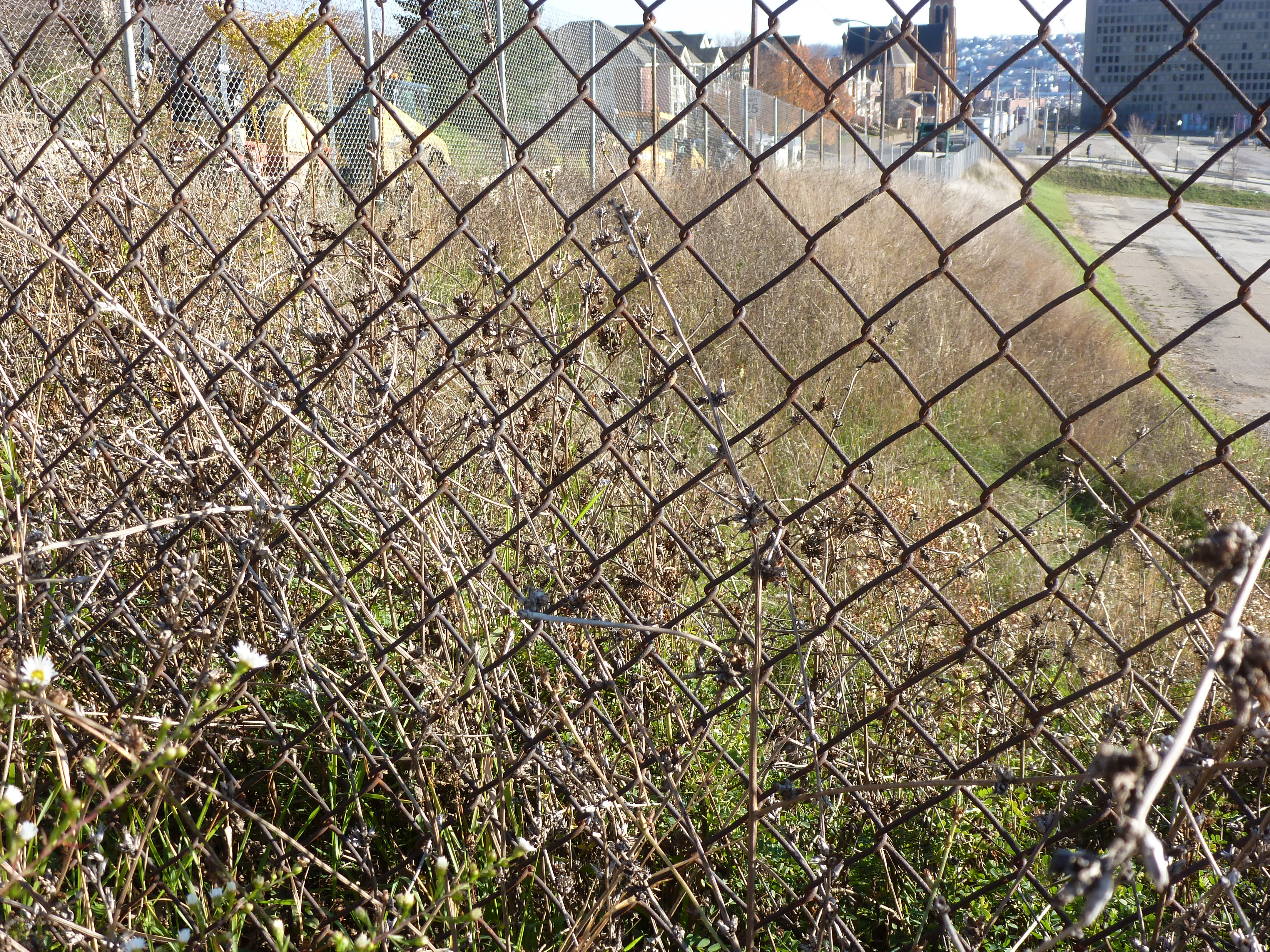
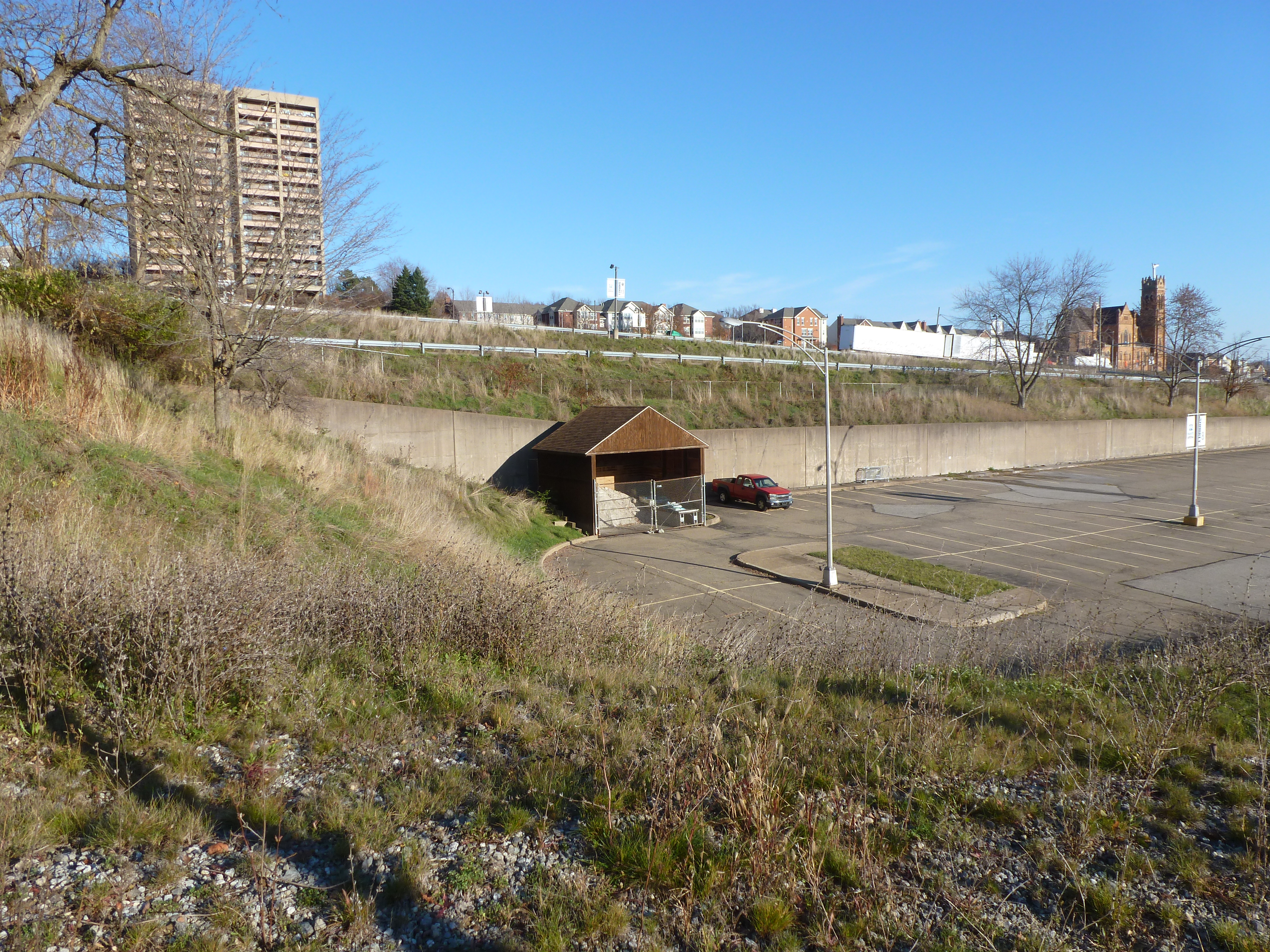
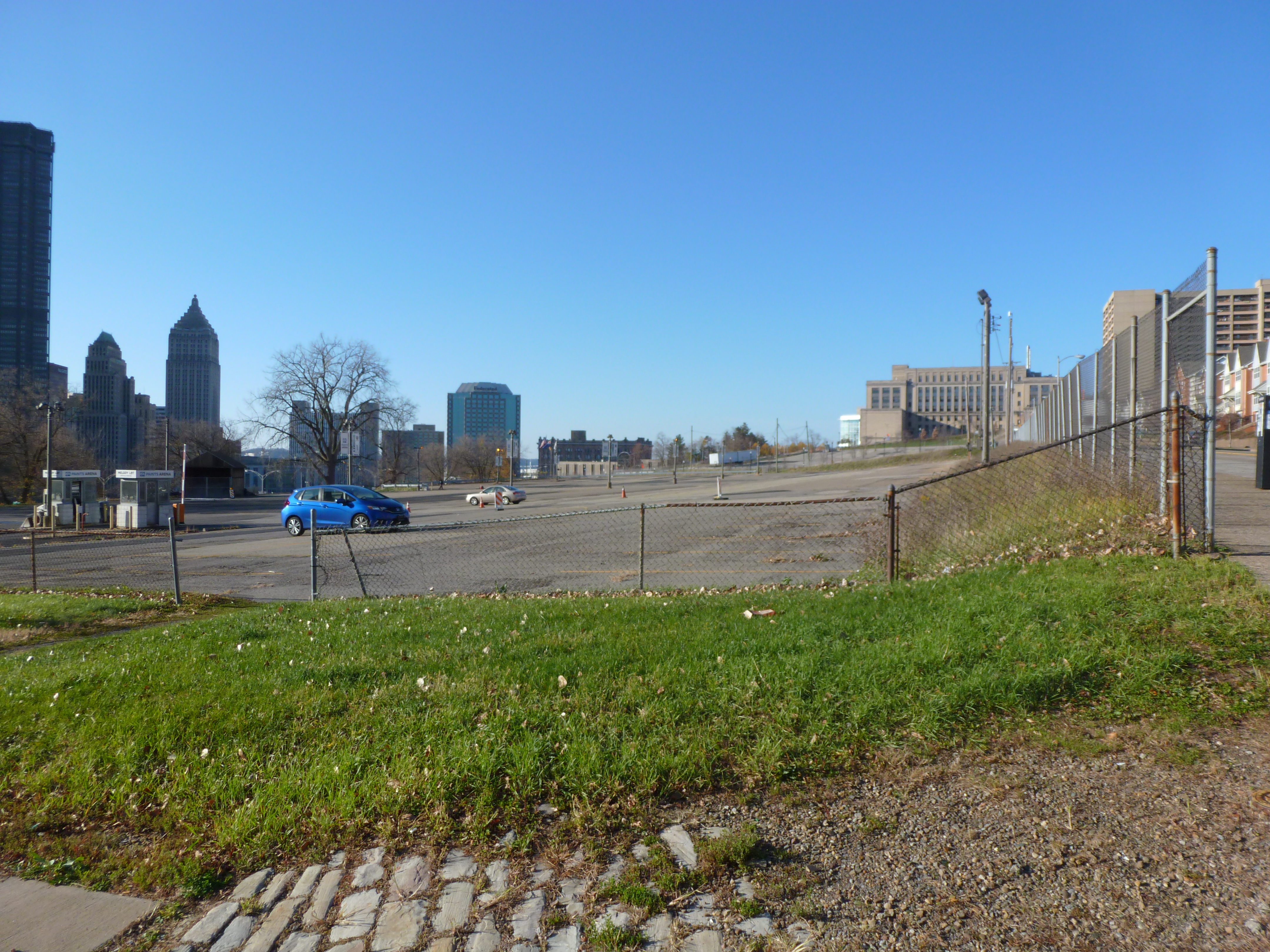
Photos
Lower Hill in the News

Next Pittsburgh named the Lower Hill redevelopment as one of the top 8 developments to watch in Pittsburgh in 2023 (January 11, 2023). Throughout the year, there have been conversations on the development opportunities happening and projected in the Lower Hill and beyond (Pittsburgh Business Times, June 7, 2023; Pittsburgh Business Times, June 8, 2023; Pittsburgh Business Times, June 13, 2023).

The question of how to equitably develop the Lower Hill and other areas of the city that have long seen disinvestment is a hot topic this year (Public Source, January 23, 2023). The community continues to express concern about the deals and process in the redevelopment of the Lower Hill (Next Pittsburgh, January 25, 2023; Public Source, April 22, 2023; Pittsburgh Business Times, May 15, 2023; City Paper, May 16, 2023). The proposed concert venue that is one of the subprojects generating concern in the community moved forward (Pittsburgh Business Times, January 10, 2023; Public Source, January 10, 2023; Public Source, January 24, 2023; Pittsburgh Business Times, May 11, 2023; Public Source, May 11, 2023).

A project website dedicated to construction bidding opportunities shows the most recent bid opportunity was for the controversial concert venue.

The FNB Tower construction makes progress (Pittsburgh Business Times, May 18, 2023) while FNB gets approval for a new skyline sign on the building (Pittsburgh Business Times, February 7, 2023) and announced an investment in the neighborhood (Pittsburgh Business Times, May 15, 2023).

Bethel AME is Pittsburgh’s oldest Black congregation. They were one of the organizations forced out of the Lower Hill neighborhood to make way for what became the Civic Arena and a sea of parking lots. They are now seeking reparations and the ability to return to the neighborhood (Public Source, April 14, 2023). An agreement between Bethel AME and the Penguins was reached (Public Source, April 14, 2023; Pittsburgh Business Times, April 14, 2023).

The funding announced last year for the redevelopment of the Housing Authority’s Bedford Dwelling apartments has been augmented by an additional $50 million grant (Pittsburgh Business Times, July 21, 2023; Public Source, July 21, 2023; Pittsburgh Business Times, July 28, 2023) and Planning Commission approval of the plans (Pittsburgh Business Times, July 11, 2023; Public Source, July 25, 2023). The Pittsburgh Business Times also ran a profile of Michele Beener (May 11, 2023), who helped with the grant application for Bedford Dwellings that received funding in 2022.

The New Granada Theater is a historic building with strong ties to the cultural wealth of the Hill District about 0.5 miles from the Lower Hill. The community has put in decades of advocacy, planning, fundraising, and more around redeveloping this building in a meaningful way. Fruits of their labors are starting to ripen with the groundbreaking for new life for the theater (Pittsburgh Business Times, May 25, 2023; Post-Gazette, May 26, 2023) and a ribbon cutting for a new affordable housing development adjacent to the theater (Post-Gazette, September 1, 2023).

The grocery store that the Hill District advocated for many years, was built, and closed after a few years in business is getting new life. A local multi-ethnic market purchased the site earlier this year (Pittsburgh Business Times, April 13, 2023; Public Source, April 13, 2023).

For more information on the community that lives and has lived in the Hill District, Ralph Proctor Jr. published a book describing his memories and experience living in the Hill District (Next Pittsburgh, June 20, 2023) and Next Pittsburgh published an article on the influence of the Burke family on the bar and entertainment scene in the Lower Hill from the 1920s to 1960s (January 19, 2023).

Locating the Lower Hill


Previous posts in series

Keeping an Eye on the Lower Hill: 2022 Recap

Keeping an Eye on the Lower Hill: Dec. 2021

Keeping an Eye on the Lower Hill: May 2021

Keeping an Eye on the Lower Hill: Dec. 2020

Keeping an Eye on the Lower Hill: Jun. 2020

Keeping an Eye on the Lower Hill: Jan. 2020

Keeping an Eye on Uptown: Introduction

Keeping an Eye on the Lower Hill: 2022 Recap

Overview

The Lower Hill is a notorious site in Pittsburgh, a scar on the city from the height of Urban Renewal. A vibrant (but poor and predominately Black) neighborhood was demolished in the 1950s so the City could build a cultural mecca centered on a Civic Arena, most of which ended up not being built and was left as parking lots.

Now that the arena has been demolished and replaced adjacent to the former location, the Penguins hockey team has the development rights to rebuild the Lower Hill, stitching back together the fabric of the city and reconnecting the remainder of the Hill District neighborhoods with downtown.

However, grand language describing the wonderful benefits to a city are part and parcel of any major development project, including the 1950’s Urban Renewal of the Lower Hill. Fifty years later, the Urban Renewal of the Lower Hill is rarely, if ever described as a good thing. In fact the current redevelopment is sometimes described as undoing the mistakes of that project. However, can the negative financial, social, and emotional repercussions of the original demolition and decades of disconnect be undone simply by reinstating (most of) the former street grid?

This blog post is part of an on-going photographic series to watch the redevelopment of the Lower Hill. Periodically, at least once a year, I return to the site to take new photographs. In addition, I include links to articles about the project that I’ve encountered since the previous post in the series. At the end of the post, there are links to all the previous posts in the series.

What’s New

In 2022, construction of the FNB Tower progressed. Not much else changed on the ground, but the news shared some of the negotiations and deals being made to move the rest of the site forward.

Photos

Lower Hill in the News

Next Pittsburgh named the Lower Hill redevelopment as one of the top 10 developments to watch in Pittsburgh in 2022 (January 3, 2022).

Bethel AME, Pittsburgh’s Oldest Black Church (Public Source, January 31, 2022) who’s building was taken through eminent domain and demolished in the 1950s to build the Civic Arena, has been in talks with the Penguins about reparations as part of the redevelopment of the Lower Hill (Next Pittsburgh, October 3, 2022). In October 2022, it appeared a preliminary agreement had been reached (Public Source, October 17, 2022; Next Pittsburgh, October 17, 2022), but in November the talks stalled according to Bethel AME (City Paper, November 18, 2022).

The plans for “Block E” were presented to the Planning Commission in the first of two hearings (Planning Commission Agenda & Application; Public Source, December 13, 2022; Pittsburgh Business Times, December 13, 2022). In the months prior to this hearing, this plan, which is a revision from the original Preliminary Land Development Plan, was presented to the community amid concerns about process and the Community Collaborative Implementation Plan (Pittsburgh Business Times, October 14, 2022).

Funding announcements for the greater Hill District included infrastructure funding from a federal RAISE Grant (City Paper, August 11, 2022) and Housing Authority funds allocated toward the redevelopment of the Bedford Dwelling apartments along with the intention to apply for a Choice Neighborhoods grant (Public Source, December 15, 2022).

A car crashed into Freedom Corner damaging the monument on the site (City Paper, August 3, 2022). This is an important neighborhood location for many social justice actions including as a marker at the demarcation line of the redevelopment of the Lower Hill, which did not spread beyond that line due to community resistance.

In other Hill District development new, the redevelopment of the former Miller School into apartments was moving forward (Pittsburgh Business Times, November 30, 2022).

Locating the Lower Hill


Previous posts in series

Keeping an Eye on the Lower Hill: Dec. 2021

Keeping an Eye on the Lower Hill: May 2021

Keeping an Eye on the Lower Hill: Dec. 2020

Keeping an Eye on the Lower Hill: Jun. 2020
Keeping an Eye on the Lower Hill: Jan. 2020

Keeping an Eye on Uptown: Introduction

Keeping an Eye on Penn Plaza: Aug. 2023

What’s New

While there are no visible changes yet, the redevelopment of Enright Park has made significant progress so far this year. It has been presented to the Art Commission, the Zoning Board of Adjustment (ZBA), and the Planning Commission. Art Commission because any projects on city-owned land require Art Commission approval; ZBA because the proposal includes a fence taller than is permitted in the zoning regulations; and Planning Commission because of the zoning district where the park is located (AP – Mixed-Use Planned Unit Development). All three boards and commissions have approved the project.

Enright Park was one of the City’s bargaining chips when the developer of the Penn Plaza site was seeking approval to redevelop affordable housing that had been disinvested by the owner into a mixed-use development. For the new layout to work, the developer needed a portion of the land that Enright Park covered. The final agreement between the City and the developer included swapping land so that the park remained and at a similar size and the developer agreed to contribute a significant portion of the cost to redevelop the park.

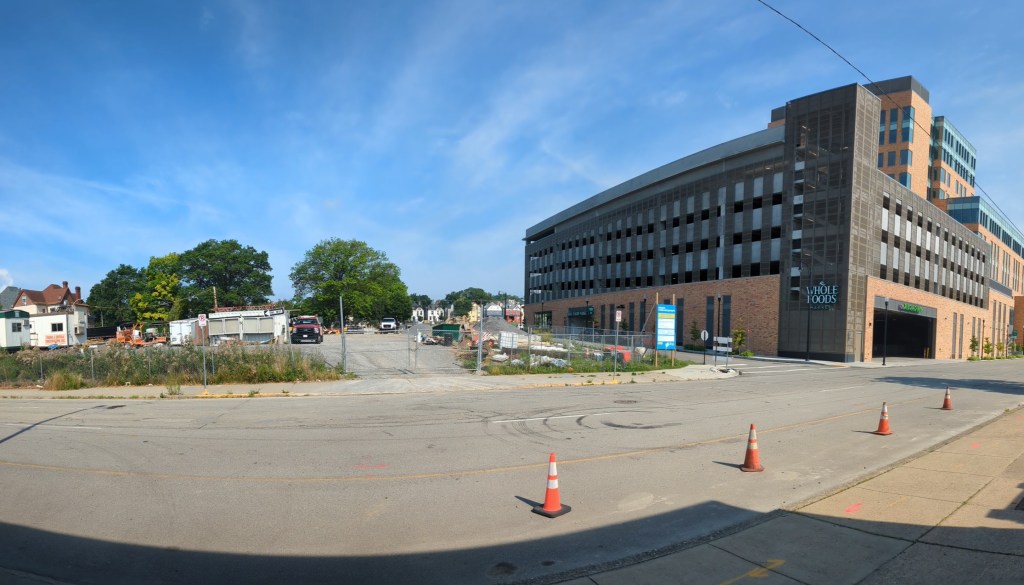
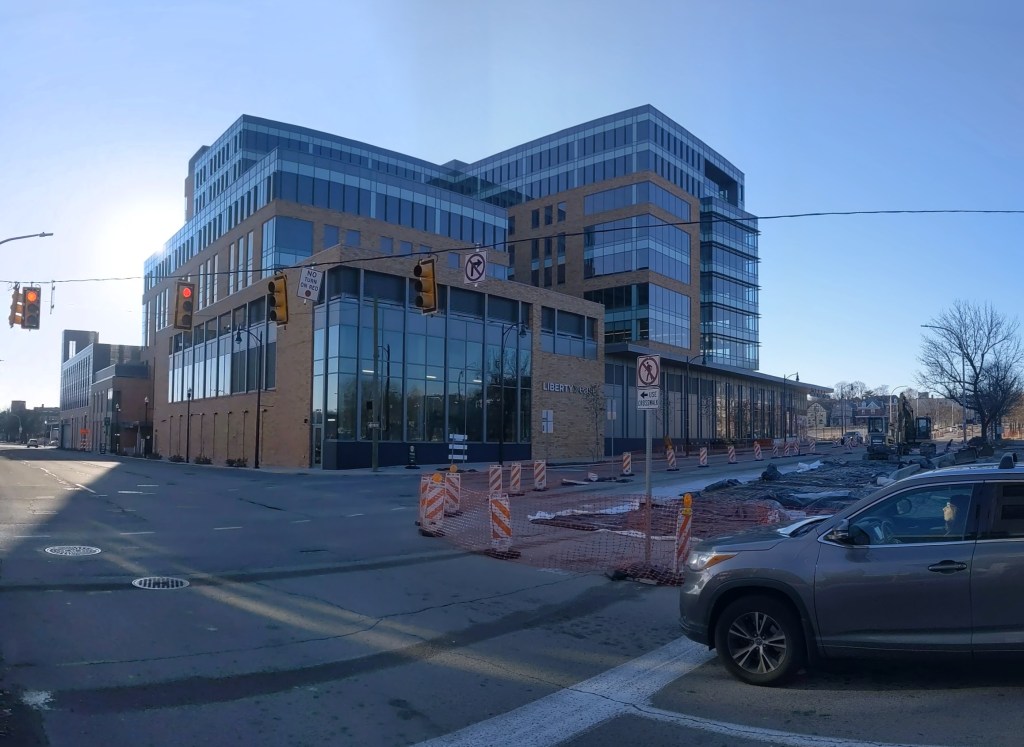
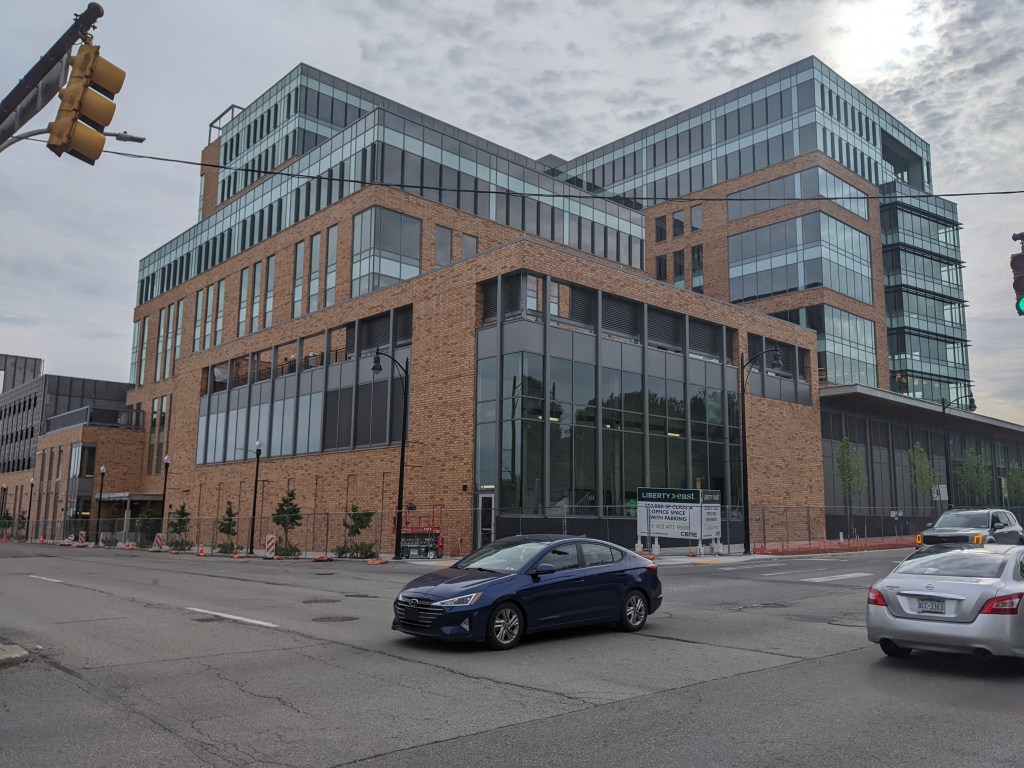
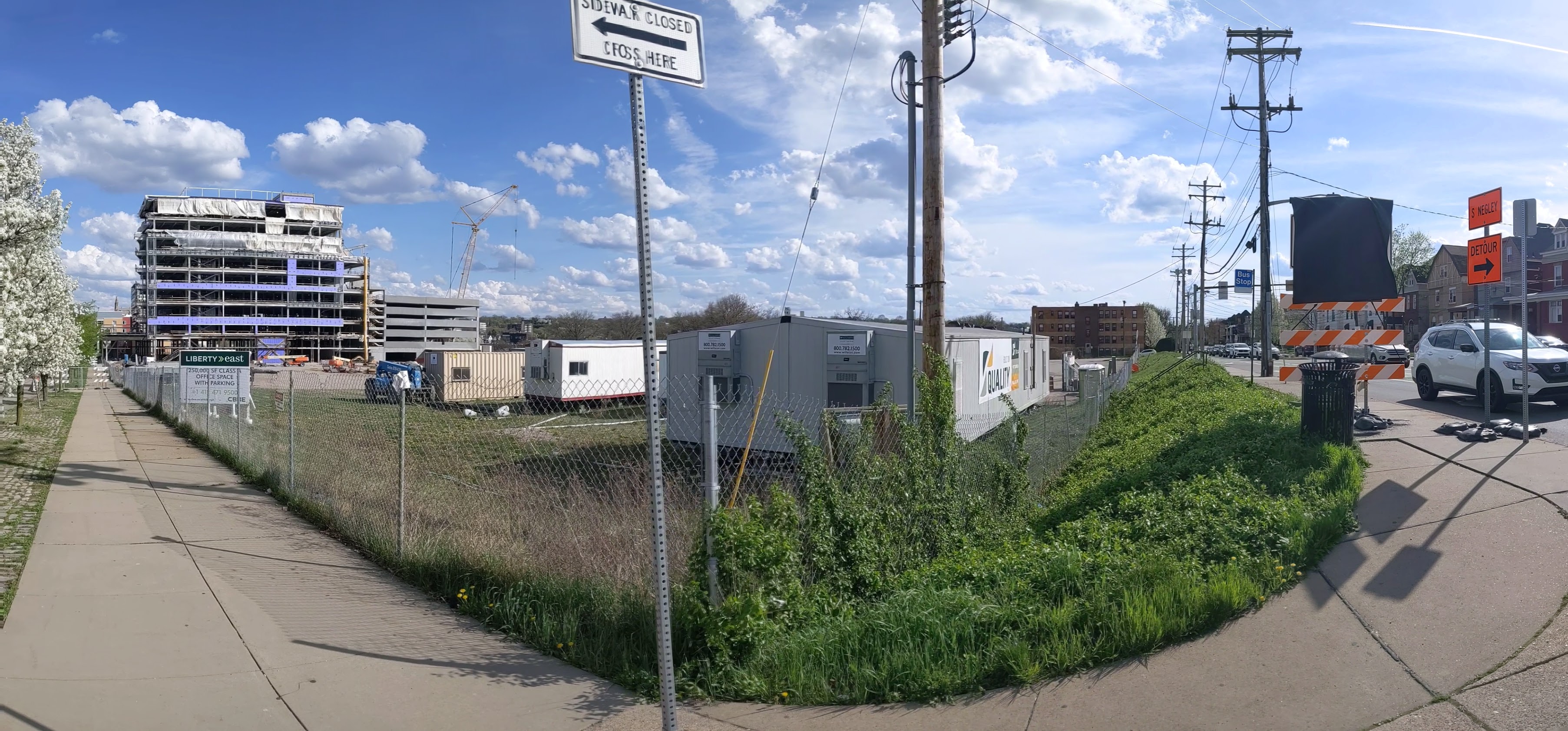
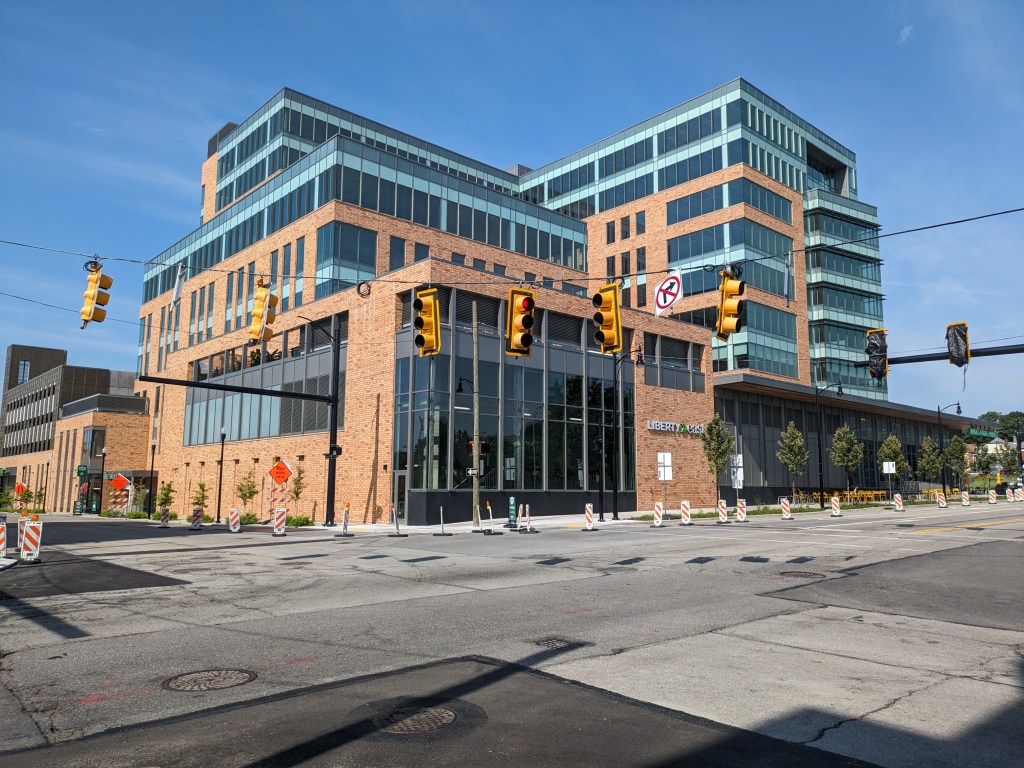
The Phase 1 building (Liberty East) remains much as it did in 2022. Whole Foods takes up most of the first floor and the one other space at ground level remains vacant. However, according to the news a second office space has been taken by the developer of the building (LG Realty). Duolingo was the first office tenant to move in.

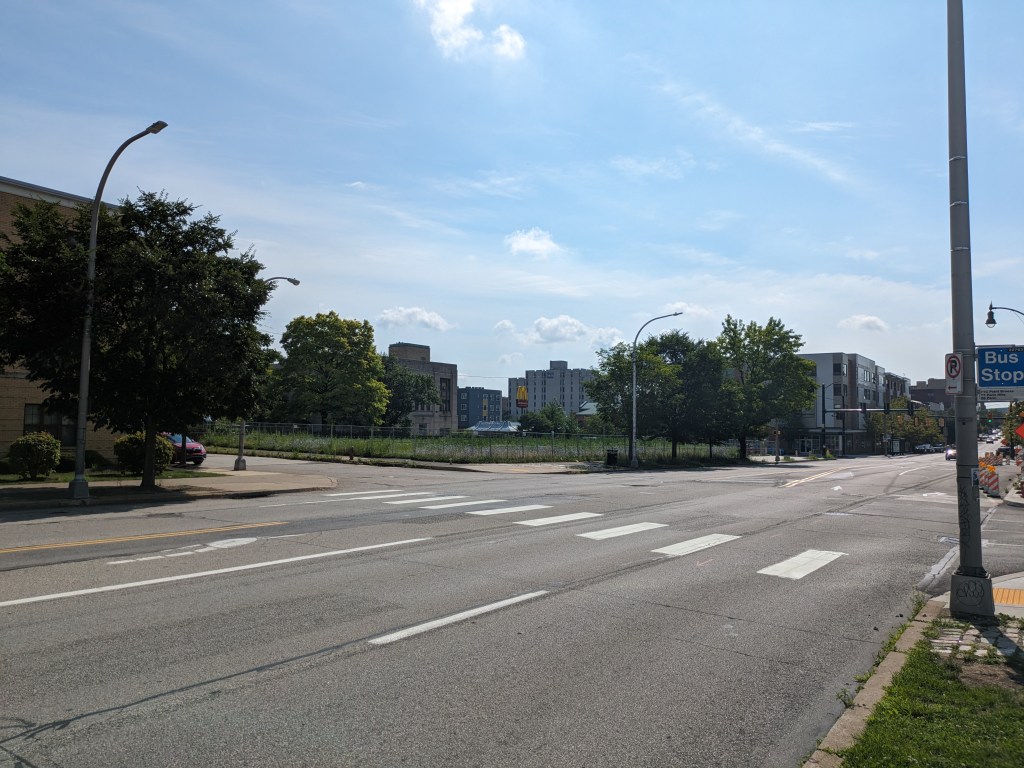
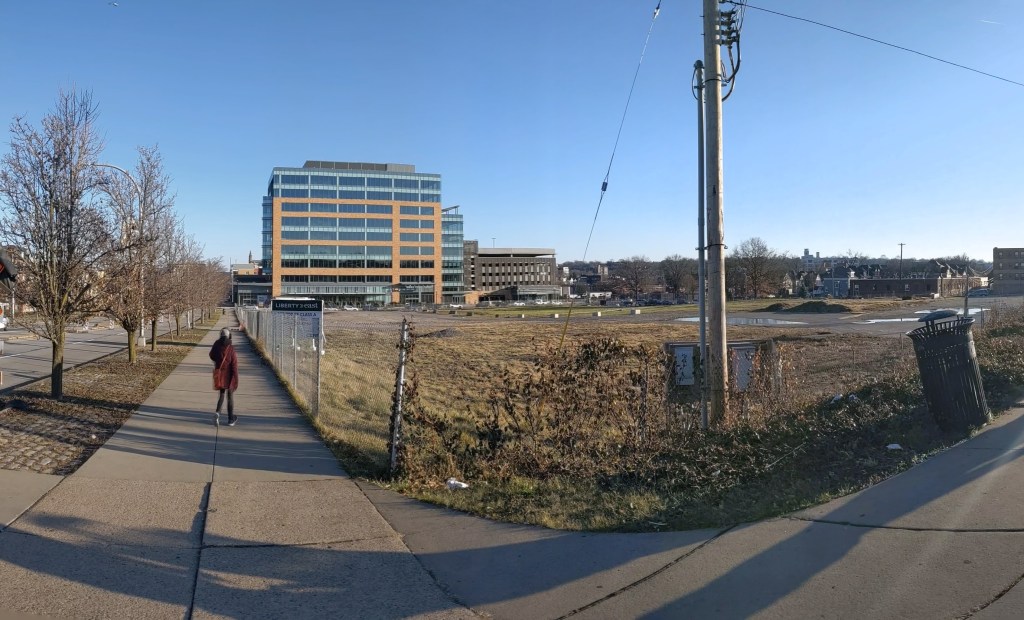
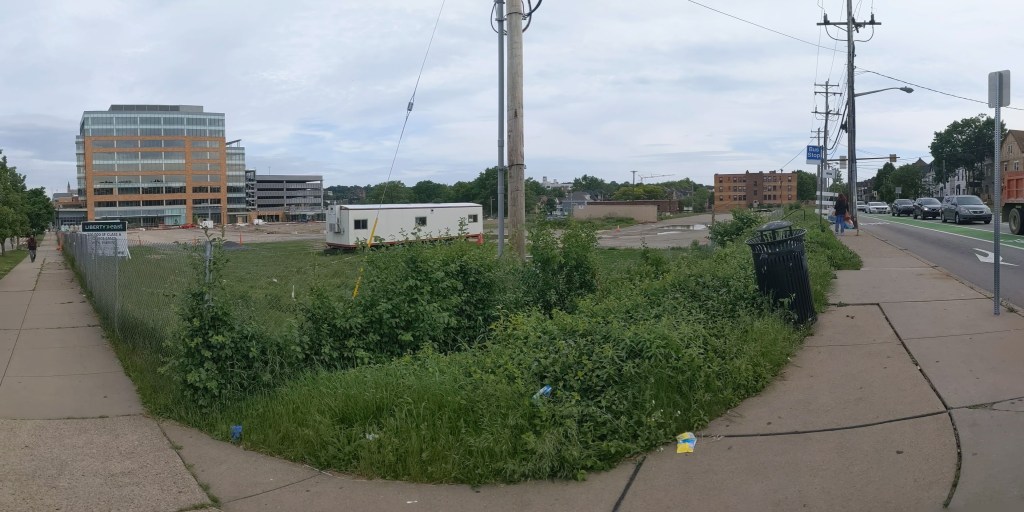
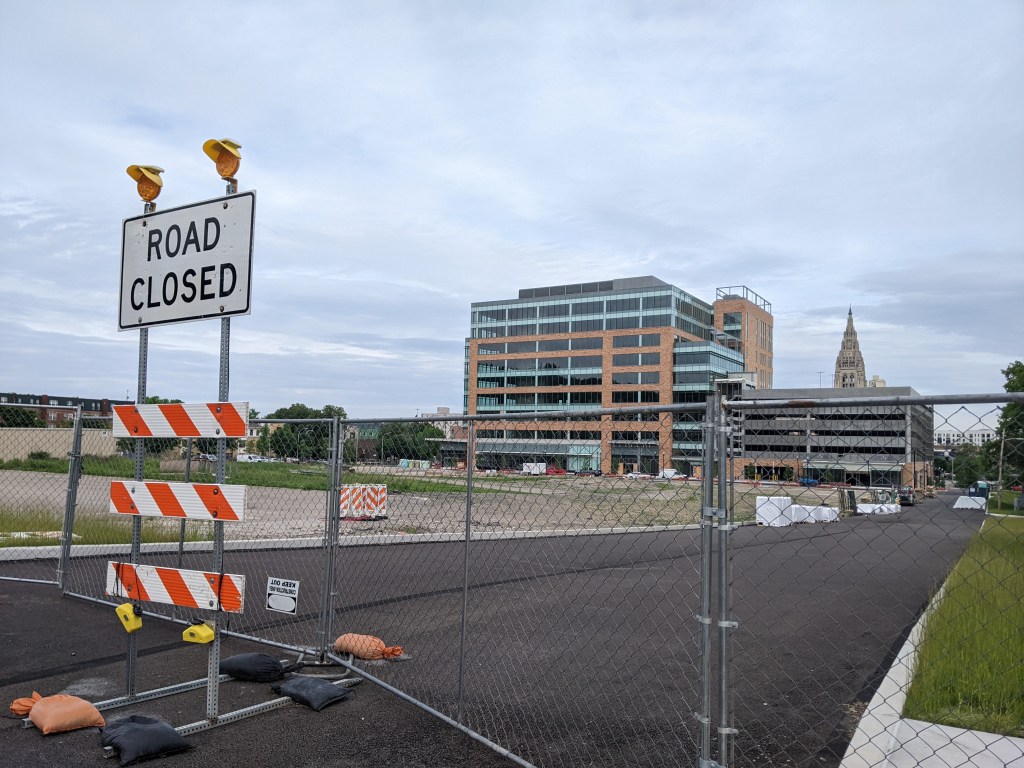
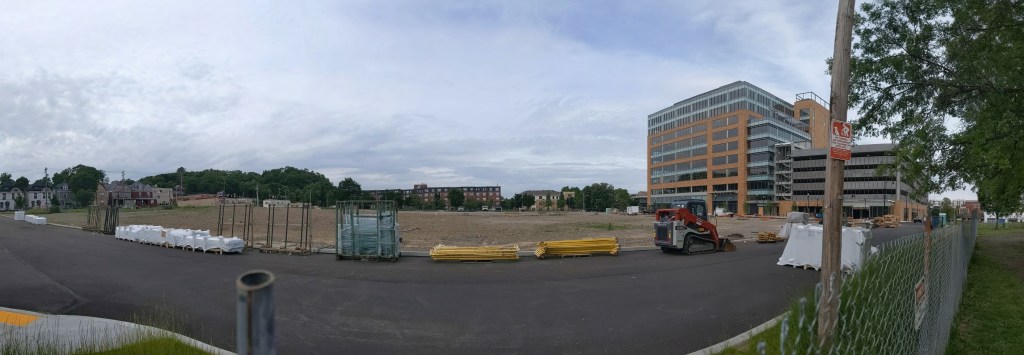
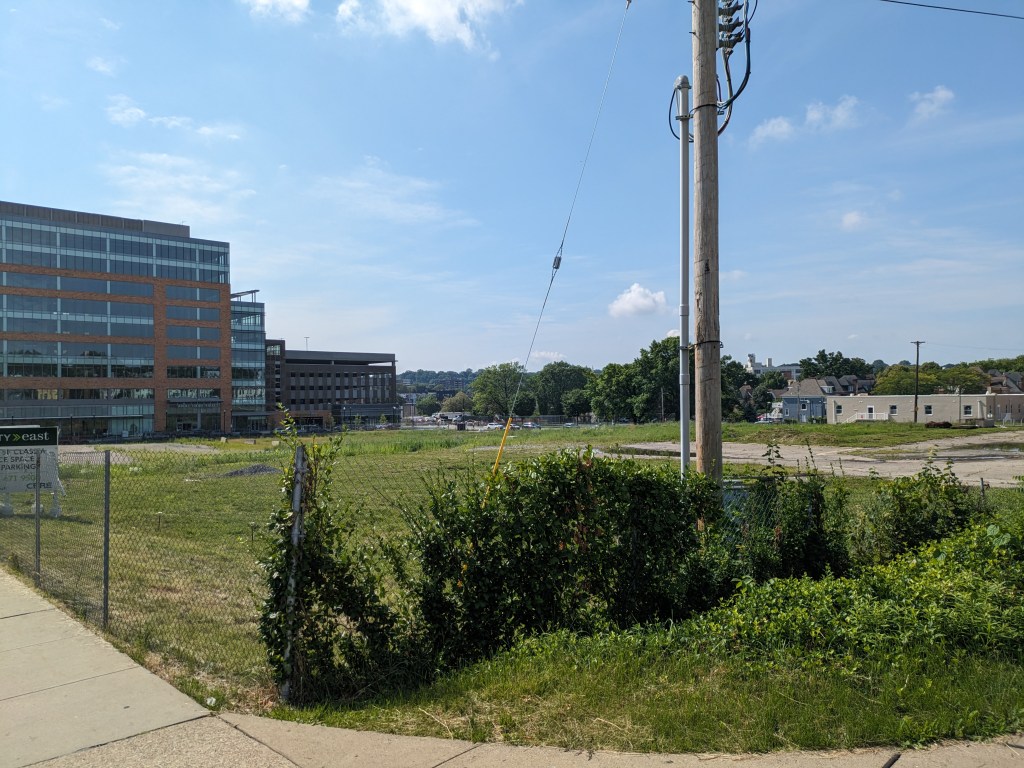
The large block where Phase 2 will go remains visible untouched. Perhaps behind the scenes work is moving forward.

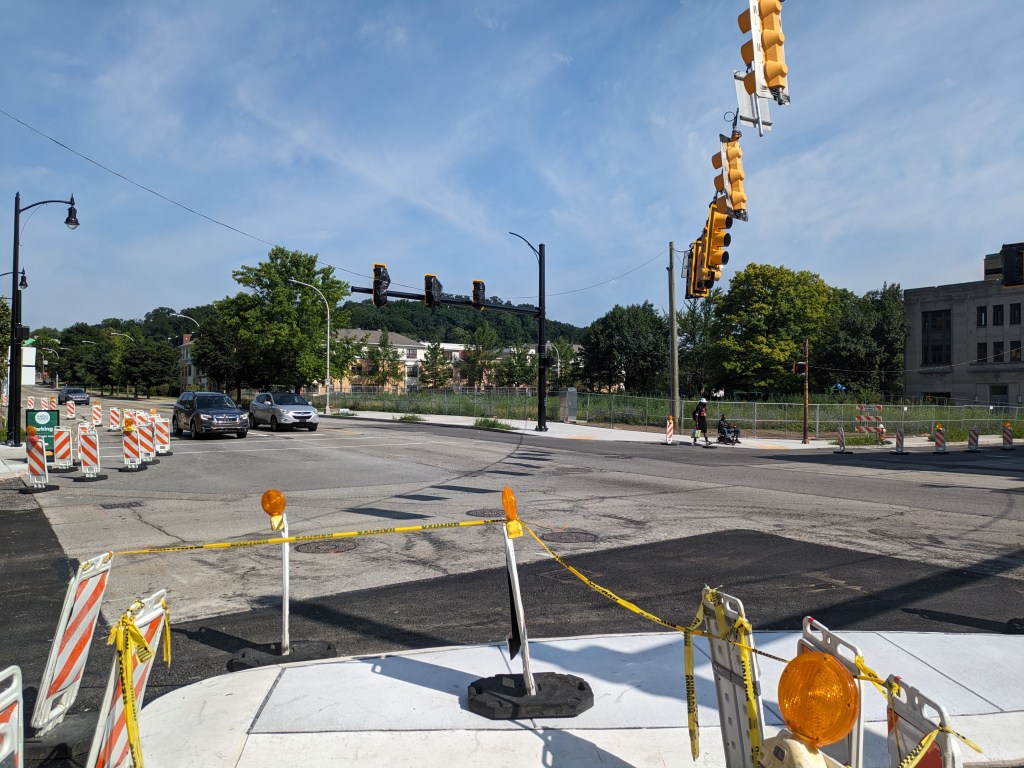
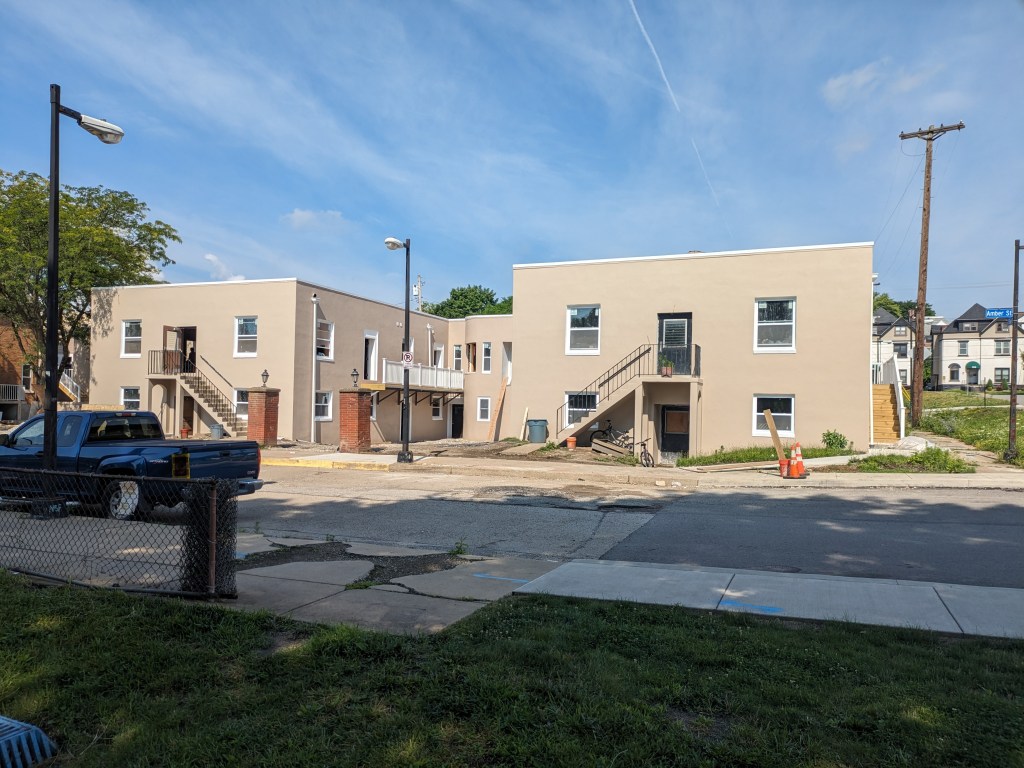
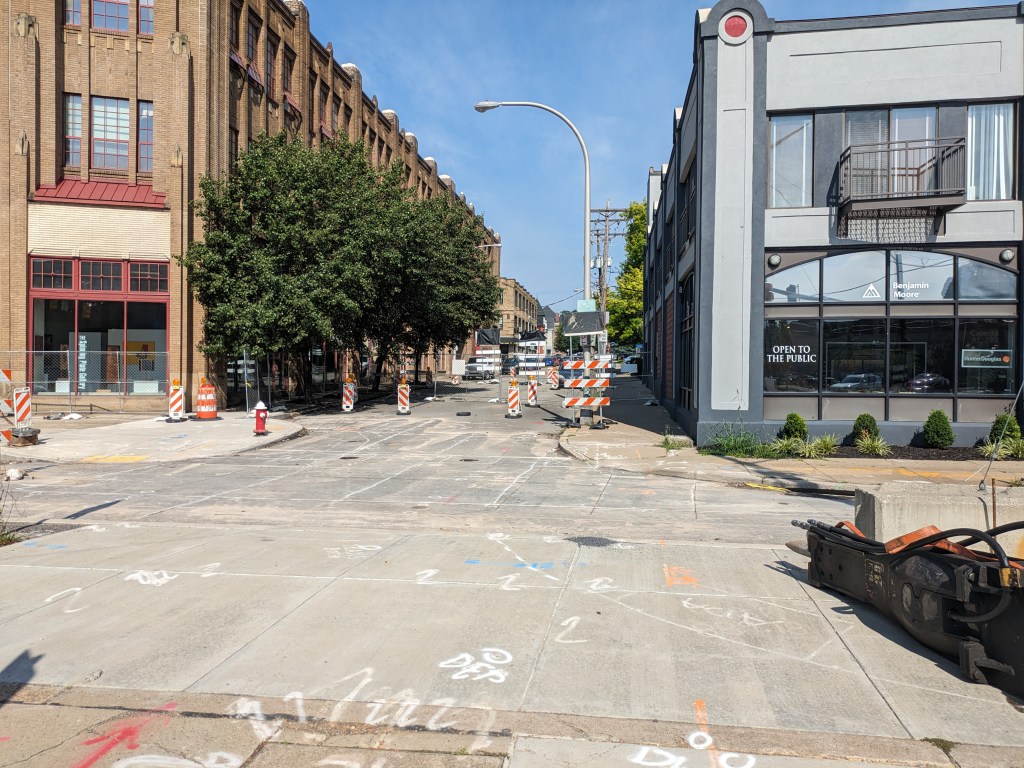
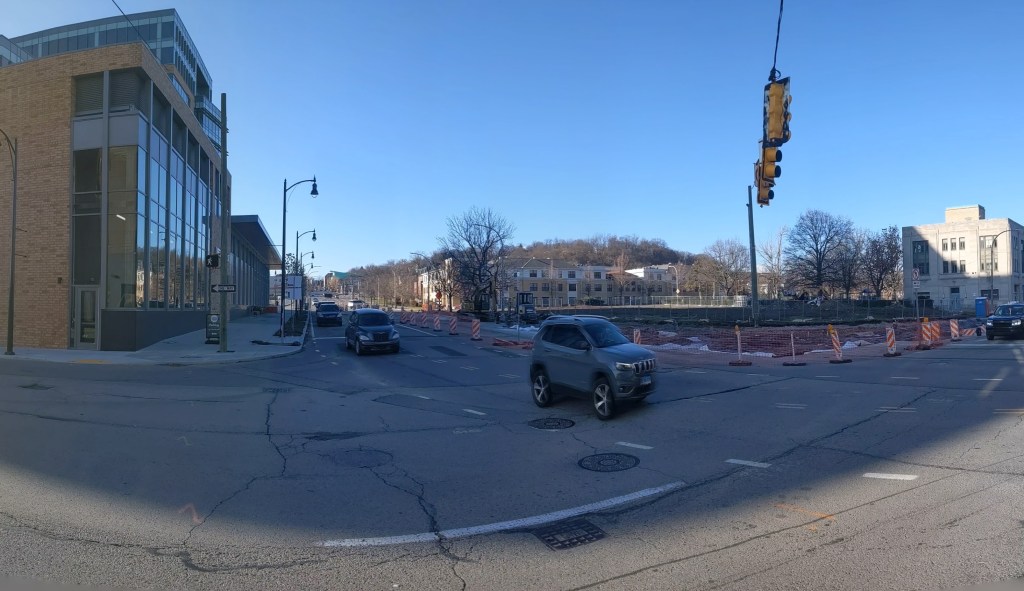
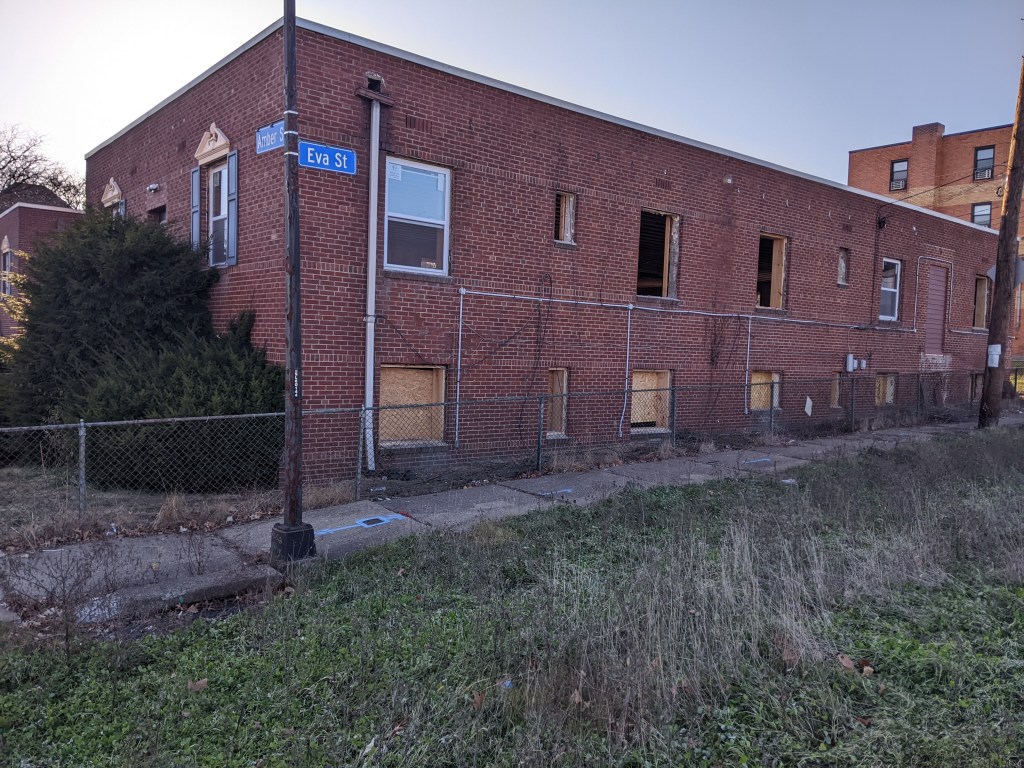
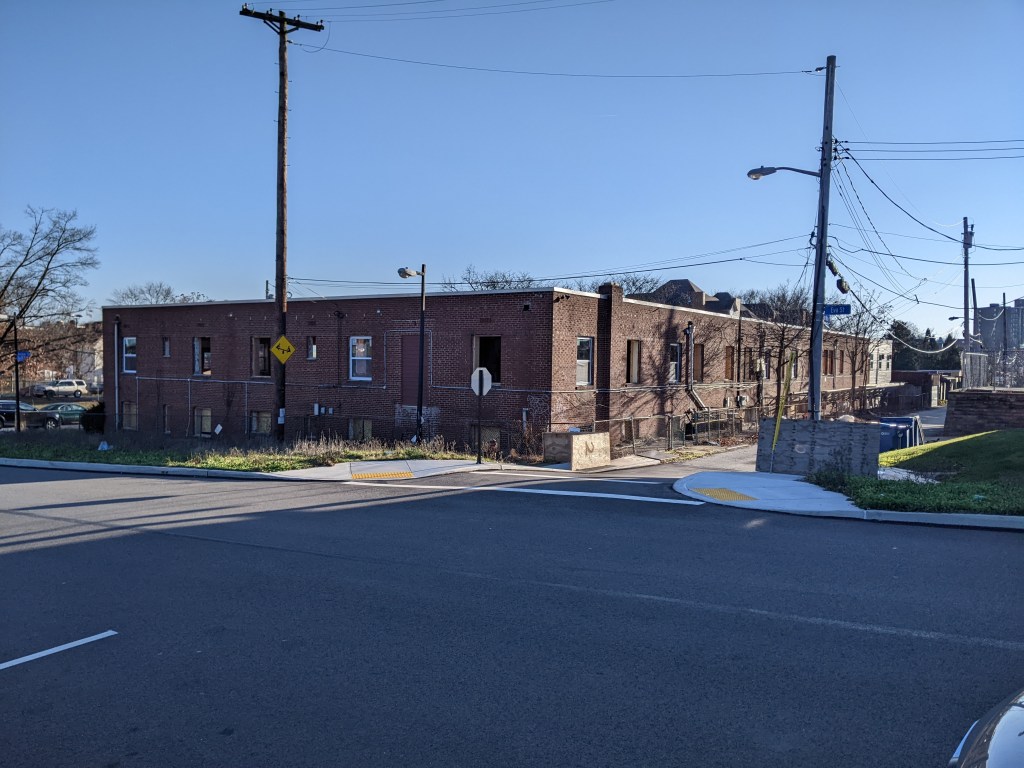
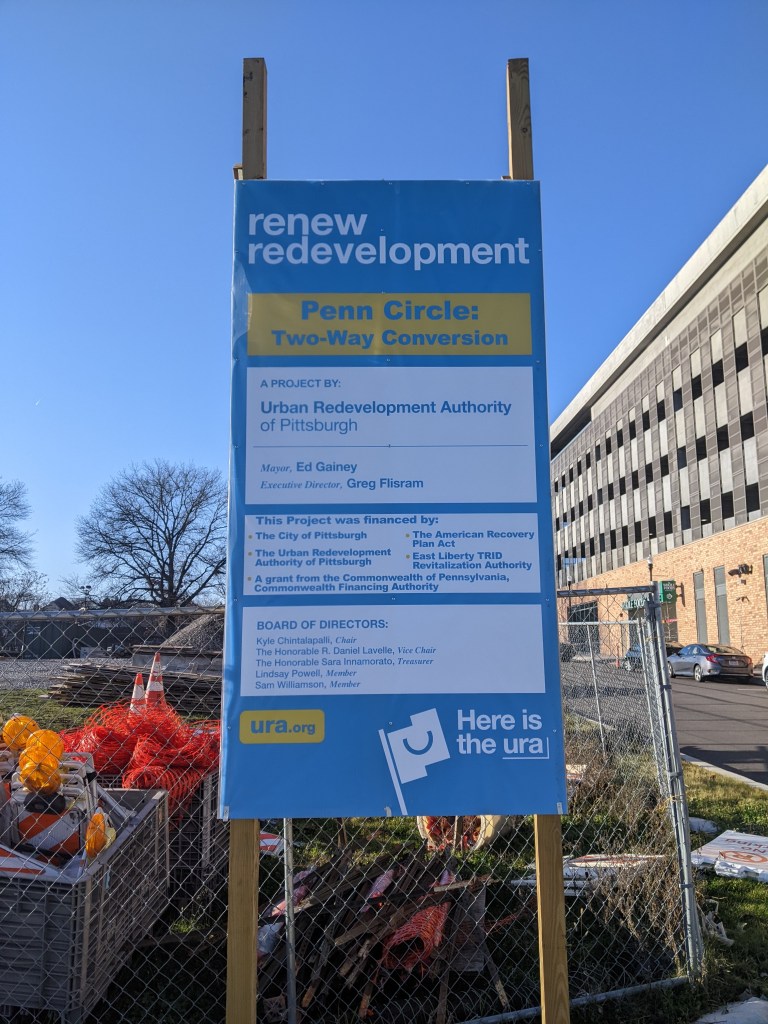
Around the site, the re-establishment of two-way traffic on Euclid Avenue continues; the renovation of the nearby apartment building also progresses, though now they look like they belong in California instead of Pittsburgh since the brick was covered up; and the former site of the East Liberty Lutheran Church remains vacant.

Background

The former Penn Plaza Apartments was a group of large of apartments buildings that served a low-income population. After years of neglecting these apartments, the owner gave 200 residents notice to vacate within 90 days in the summer of 2015. By then, the surrounding neighborhood of East Liberty was a hopping place to live with low vacancy rates and the average rent much higher than what these residents could afford. There was a large outcry at the time, which only got worse as the owner’s plans for the site were understood. The owner wanted to swap some land with the City and change the zoning district to build a large scale mixed-use development: 54,600 sq ft of retail and 246,090 sq ft of office with accessory parking (see the application materials starting on page 54 from the final Planning Commission review and approval). After months of negotiation with the City and the community, the land and the zone change were given to the development while the affordable housing crisis in Pittsburgh only got worse and the former residents were forced to uproot their lives.

The Penn Plaza Support and Action Coalition has more information on what was promised and what happened as the residents were forced to find new housing.

Photos: The Site

Photos: The Surroundings

Penn Plaza in the News and Additional Resources

Enright Park:

  • City of Pittsburgh project page
  • The Art Commission approved the plans (TribLive, March 23, 2023)
  • The Zoning Board of Adjustment approved a variance to the fence height (ZBA agenda; ZBA application)
  • The Planning Commission approved the plans (TribLive, May 16, 2023; Planning Commission agenda; Planning Commission presentation slides; Planning Commission hearing beginning at 1:06:30)

LG Reatlty moves into new office (Pittsburgh Business Times, June 16, 2023)

City of Pittsburgh project page for the two-conversion of Penn Circle (Euclid Avenue)

City of Pittsburgh project page for pedestrian and traffic improvements to East Liberty

Giant Eagle spoke at a community meeting in January 2023 to share what their plans are for the site that closed and is expected to reopen after redevelopment of the shopping center formerly known as Shady Hill or Shakespeare.

Locating Penn Plaza


Previous Posts in the Series

Keeping an Eye on Penn Plaza – 2022 Recap

Keeping an Eye on Penn Plaza – Jun. 2022

Keeping an Eye on Penn Plaza – Apr. 2021

Keeping an Eye on Penn Plaza – Nov. 2020

Keeping an Eye on Penn Plaza – Aug. 2020

Keeping an Eye on Penn Plaza: 2022 Recap

What’s New in 2022

Phase 1 of the Penn Plaza redevelopment opened in 2022, seven years after the initial eviction notices went to the low-income residents of the former Penn Plaza Apartments. The redevelopment is a new retail/office complex that is being constructed in place of the former 519-unit affordable housing complex.

The new building is called Liberty East. Whole Foods is the anchor retail tenant and Duolingo is the first office tenant. An area about twice the size of the footprint of this building remains an untouched meadow with broken pavement scattered throughout and surrounded by a 6-foot high chain link fence. One day, future phases of this redevelopment will begin. In the meantime, changes are starting on land surrounding the site.

  • Across Penn Avenue, the East Liberty Lutheran Church sold its property in August, seven years after first listing it. By December, the site was completely demolished and leveled – ready for whatever comes next.
  • On the other side of Penn Plaza, a two-story, garden apartment building is showing the first signs of renovation.
  • Behind the new building, Euclid Ave and, further down, Station Street are in the initial stages of being converted back to two-way after the 1960s Urban Renewal project that created the Penn Circle ring road.
  • On the opposite site of East Liberty’s commercial core, the affordable Giant Eagle closed for the redevelopment of that shopping plaza.

Background

The former Penn Plaza Apartments was a group of large of apartments buildings that served a low-income population. After years of neglecting these apartments, the owner gave the remaining 200 residents notice to vacate within 90 days in the summer of 2015. By then, the surrounding neighborhood of East Liberty was a hopping place to live with low vacancy rates and the average rent much higher than what these residents could afford. There was a large outcry at the time, which only got worse as the owner’s plans for the site were understood. The owner wanted to swap some land with the City and change the zoning district to build a large scale mixed-use development: 54,600 sq ft of retail and 246,090 sq ft of office with accessory parking (see the application materials starting on page 54 from the final Planning Commission review and approval). After months of negotiation with the City and the community, the land and the zone change were given to the development while the affordable housing crisis in Pittsburgh only got worse and the former residents were forced to uproot their lives.

The Penn Plaza Support and Action Coalition has more information on what was promised and what happened as the residents were forced to find new housing.

Photos: The Site

Photos: The Surroundings

Penn Plaza in the News

The site:

The surroundings:

  • East Liberty Lutheran Church’s sale (Pittsburgh Business Times, August 2, 2022)
  • Giant Eagle closure (East Liberty Development, June 17, 2022)
  • Echo Realty presented the redevelopment of the Giant Eagle shopping center to Pittsburgh’s Planning Commission (Pittsburgh Business Times, November 15, 2022) and got approval (Public Source, November 29, 2022; Pittsburgh Business Times, November 29, 2022)

Locating Penn Plaza


Previous Posts in the Series

Keeping an Eye on Penn Plaza – Jun. 2022

Keeping an Eye on Penn Plaza – Apr. 2021

Keeping an Eye on Penn Plaza – Nov. 2020

Keeping an Eye on Penn Plaza – Aug. 2020

Keeping an Eye on Penn Plaza: June 2022

Seven years after the initial eviction notices went to the low-income residents of the former Penn Plaza Apartments, the mixed-use redevelopment of the size nears completion of Phase 1.

The former Penn Plaza Apartments was a group of large of apartments buildings that served a low-income population. After years of neglecting these apartments, the owner gave 200 residents notice to vacate within 90 days in the summer of 2015. By then, the surrounding neighborhood of East Liberty was a hopping place to live with low vacancy rates and the average rent much higher than what these residents could afford. There was a large outcry at the time, which only got worse as the owner’s plans for the site were understood. The owner wanted to swap some land with the City and change the zoning district to build a large scale mixed-use development: 54,600 sq ft of retail and 246,090 sq ft of office with accessory parking (see the application materials starting on page 54 from the final Planning Commission review and approval). After months of negotiation with the City and the community, the land and the zone change were given to the development while the affordable housing crisis in Pittsburgh only got worse and the former residents were forced to uproot their lives.

The Penn Plaza Support and Action Coalition has more information on what was promised and what happened as the residents were forced to find new housing.

Penn Plaza in the News

While the construction of Phase 1 of the new development appears to be nearing completion, I did not find any news items specifically about the site. News about affordable housing issues in Pittsburgh continue.

Public Source articles discuss:

New affordable housing units opened and another project broke ground in October 2021 (Tribune Review).

A brief from the Federal Reserve Bank of Philadelphia on the homeownership gap in that city including findings applicable to Pittsburgh and other cities (East Liberty Development Inc, January 4, 2022).


Previous Posts in the Series

Keeping an Eye on Penn Plaza – Apr. 2021

Keeping an Eye on Penn Plaza – Nov. 2020

Keeping an Eye on Penn Plaza – Aug. 2020

Keeping an Eye on the Lower Hill: Dec. 2021

Overview

The Lower Hill is a notorious site in Pittsburgh, a scar on the city from the height of Urban Renewal. A vibrant (but poor and predominately Black) neighborhood was demolished in the 1950s so the City could build a cultural mecca centered on a Civic Arena, but most of the site ended up not being built and was left as parking lots.

Now that the arena has been demolished and replaced adjacent to the former location, the Penguins hockey team has the development rights to rebuild the Lower Hill, stitching back together the fabric of the city and reconnecting the remainder of the Hill District neighborhoods with downtown.

However, grand language describing the wonderful benefits to a city are part and parcel of any major development project, including the 1950’s Urban Renewal of the Lower Hill. Fifty years later, the Urban Renewal of the Lower Hill is rarely, if ever, described as a good thing. In fact, the current redevelopment is sometimes described as undoing the mistakes of that project. However, can the negative financial, social, and emotional repercussions of the original demolition and decades of disconnect be undone simply by reinstating (most of) the former street grid?

This blog post is part of an on-going photographic series to watch the redevelopment of the Lower Hill. Periodically, approximately once every six months, I return to the site to take new photographs. In addition, I include links to articles about the project that I’ve encountered since the previous post in the series. At the end of the post, there are links to all the previous posts in the series.

What’s New

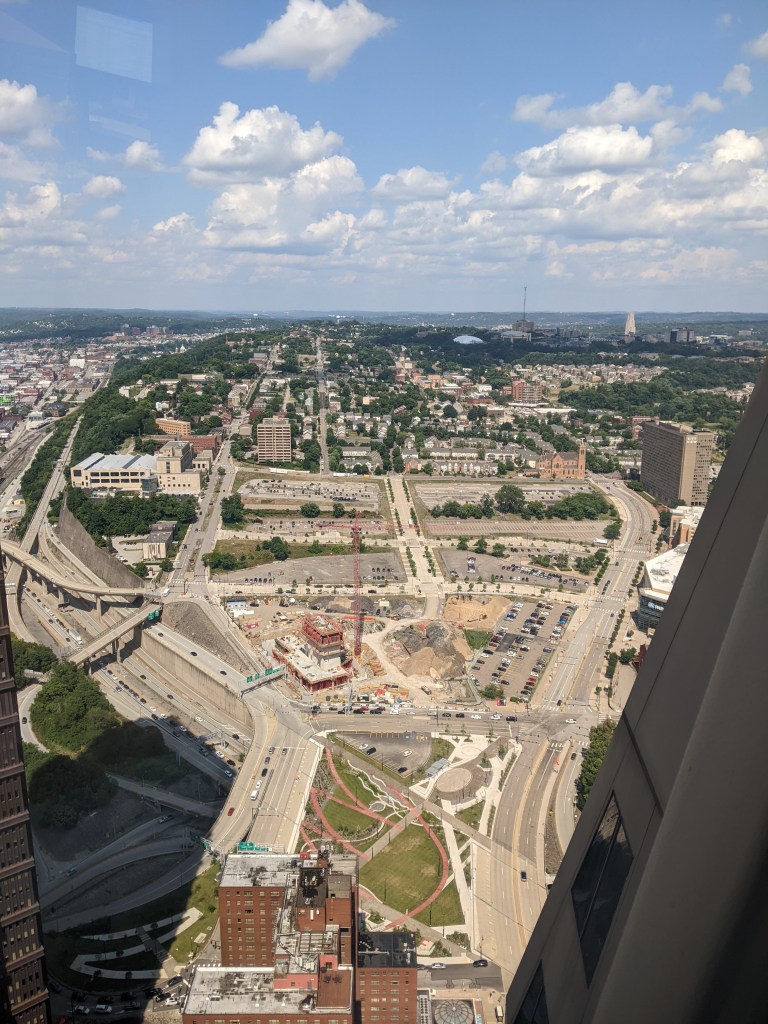
Ground has broken! There are a large hole, giant piles of dirt and debris, and closed sidewalks as construction begins for the new FNB Tower, the first building to be built on the site.

This was also the first time that I’ve visited the site on the day of a Penguins game, which was interesting to see how the sea of parking lots get used for events. At least one of the lots is reserved for employees only during events. There is also a slight price differential, the lot closet to the arena costs $30 to park for the event, while the one at the top of the hill is “only” $25.

Photos

Lower Hill in the News

Controversy and concerns continue over the redevelopment of the Lower Hill from the Executive Management Committee that was appointed to answer how the redevelopment would benefit the entire Hill District in private meetings (September 17, 2021, Public Source, & September 23, 2021, NextPittsburgh) to the impact of a pending change in owner of the Penguins (November 23, NextPittsburgh) and the pending registration of a second community organization in the Lower Hill, which would then also participate in the Lower Hill development activities meetings (November 19, 2021, Public Source). The potential new owner has previously been involved in real estate development around sports arenas (November 21, 2021, Post-Gazette).

Locating the Lower Hill


Previous posts in series

Keeping an Eye on the Lower Hill: May 2021

Keeping an Eye on the Lower Hill: Dec. 2020

Keeping an Eye on the Lower Hill: Jun. 2020
Keeping an Eye on the Lower Hill: Jan. 2020

Keeping an Eye on Uptown: Introduction

Keeping an Eye on the Lower Hill: May 2021

The Lower Hill is a notorious site in Pittsburgh, a scar on the city from the height of Urban Renewal. A vibrant (but poor and predominately Black) neighborhood was demolished in the 1950s so the City could build a cultural mecca centered on a Civic Arena, most of which ended up not being built and was left as parking lots.

Now that the arena has been demolished and replaced adjacent to the former location, the Penguins hockey team has the development rights to rebuild the Lower Hill, stitching back together the fabric of the city and reconnecting the remainder of the Hill District neighborhoods with downtown.

However, grand language describing the wonderful benefits to a city are part and parcel of any major development project, including the 1950’s Urban Renewal of the Lower Hill. Fifty years later, the Urban Renewal of the Lower Hill is rarely, if ever described as a good thing. In fact the current redevelopment is sometimes described as undoing the mistakes of that project. However, can the negative financial, social, and emotional repercussions of the original demolition and decades of disconnect be undone simply by reinstating (most of) the former street grid?

This blog post is part of an on-going photographic series to watch the redevelopment of the Lower Hill. Periodically, approximately once every six months, I return to the site to take new photographs. In addition, I include links to articles about the project that I’ve encountered since the previous post in the series. At the end of the post, there are links to all the previous posts in the series.

Lower Hill in the News:

A deep look at the Penguins development in anticipation of ground breaking later this year (January 13, 2021, The Undefeated)

Is the project moving too fast to make sure it is done right for the community? (March 15, 2021, Pittsburgh Post-Gazette)

Community questions if the first building is being rushed at the community’s expense (March 16, 2021, WESA)

Pittsburgh’s Equal Opportunity Commission approved the Penguins’ MWBE participation plan (March 18, 2021, Pittsburgh Business Times)

Penguins updated the community on progress of MWBE inclusion as ground breaking approaches (April 1, 2021, Pittsburgh Business Times)

The census line is moved to undo the Urban Renewal inclusion of the Lower Hill in the downtown census tract, but will this divert needed funds from the rest of the Hill District? (April 7, 2021, Public Source)

A major Black church was demolished as part of Urban Renewal while a nearby White church was saved from the wrecking ball, are reparations now possible? (April 14, 2021, Public Source)

Penguins propose a $5 million Opportunity Zone fund (April 16, 2021, Pittsburgh Post-Gazette)

The final plan presented to Pittsburgh’s Planning Commission for the new FNB Tower proposes not finishing the last block to reconnect Wylie Ave to downtown. This is a change from the guiding redevelopment plan and technically requires an amendment that the developer says will take too long. (April 20, 2021, Pittsburgh Business Times)


Previous posts in series:

Keeping an Eye on the Lower Hill: Dec. 2020

Keeping an Eye on the Lower Hill: Jun. 2020
Keeping an Eye on the Lower Hill: Jan. 2020

Keeping an Eye on Uptown: Introduction

Keeping an Eye on Penn Plaza – Apr. 2021

“@#$%&!” slipped out of my mouth when I was several blocks away from the former Penn Plaza site and I saw a hulking behemoth of a building looming high above the surrounding neighborhood. In it’s current state, the new development appears to be as tall as the Daniel Burnham apartment building on Highland Ave opposite East Liberty Presbyterian Church, which is much taller than any other structure remaining in the neighborhood besides the church. While I had seen the early drawings of the proposed development when I worked at the City, I was bowled over by seeing the actual size and how it has no relation to the surrounding neighborhood.

This has promoted me to look back at the process of how this project got approval from the city. What I have found so far has only prompted more questions. When a developer proposes a project that is in compliance with the zoning code regulations, there is not much the city can do besides ask “pretty please.” I had assumed that was what the story was here, but so far I don’t see how this project was in compliance with the zoning requirements. I’ll continue digging through the past records to try and wrap my head around the zoning approval for this project. In the meantime, below are photos of the current building progress and some news articles about the development since my last post.


Penn Plaza in the News

In a November 23, 2020, article WESA explores what the Mayor’s Office really knew before the eviction notices. WESA also produced a podcast on Land & Power to explore what happened and how in this East Liberty site.

Former Penn Plaza Residents are being given an opportunity to return to the neighborhood in the new Mellon Orchard Development as reported by ELDI (December 15, 2020) and the Post-Gazette (February 17, 2021).


Previous Posts in the Series

Keeping an Eye on Penn Plaza – Nov. 2020

Keeping an Eye on Penn Plaza – Aug. 2020

Keeping an Eye on the Lower Hill: Dec. 2020

Lower Hill in the News:

URA board votes in favor of FNB Tower (Pittsburgh Business Times, May 21, 2020)

FNB tower will be among first post-pandemic buildings (Pittsburgh Business Times, May 22, 2020)

The Penguins and FNB Corp provide funds for tech center in the Hill District (Pittsburgh Business Times, August 27, 2020)

FNB and Penguins establish partnership (Pittsburgh Business Times, September 10, 2020)

Funding secured for FNB tower in Lower Hill (Pittsburgh Business Times, October 8, 2020)

Penguins miss deadline; URA considering next moves (Pittsburgh Business Times, November 12, 2020)

Lower Hill commercial redeveloper, Mayor Peduto, and Councilman Lavelle announce partnership (Mayor’s Press Release, November 19, 2020)

New Lower Hill partnership could move project forward (Public Source, November 19, 2020)

Lower Hill redeveloper establishes downtown office and announces local firms and personnel added to team (Pittsburgh Business Times, November 19, 2020)

Previous posts in series:

Keeping an Eye on the Lower Hill: Jun. 2020
Keeping an Eye on the Lower Hill: Jan. 2020
Keeping an Eye on Uptown: Introduction