After cataloguing the photos from my April 2025 bridge walking in Washington, DC,1 I revisited the photos from my prior trips to the city and was surprised to find this wasn’t the first time I had walked a bridge across the Potomac River.
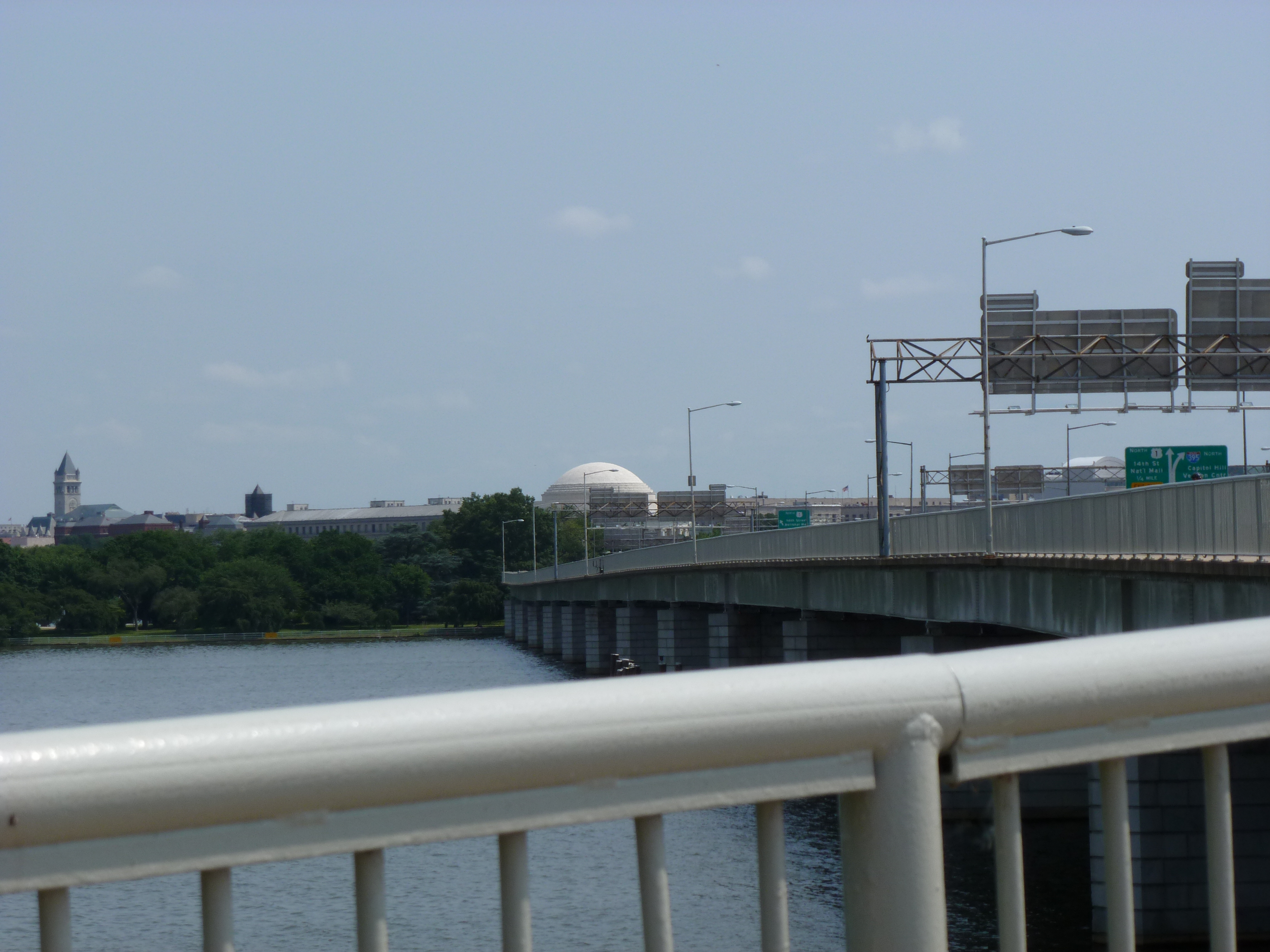
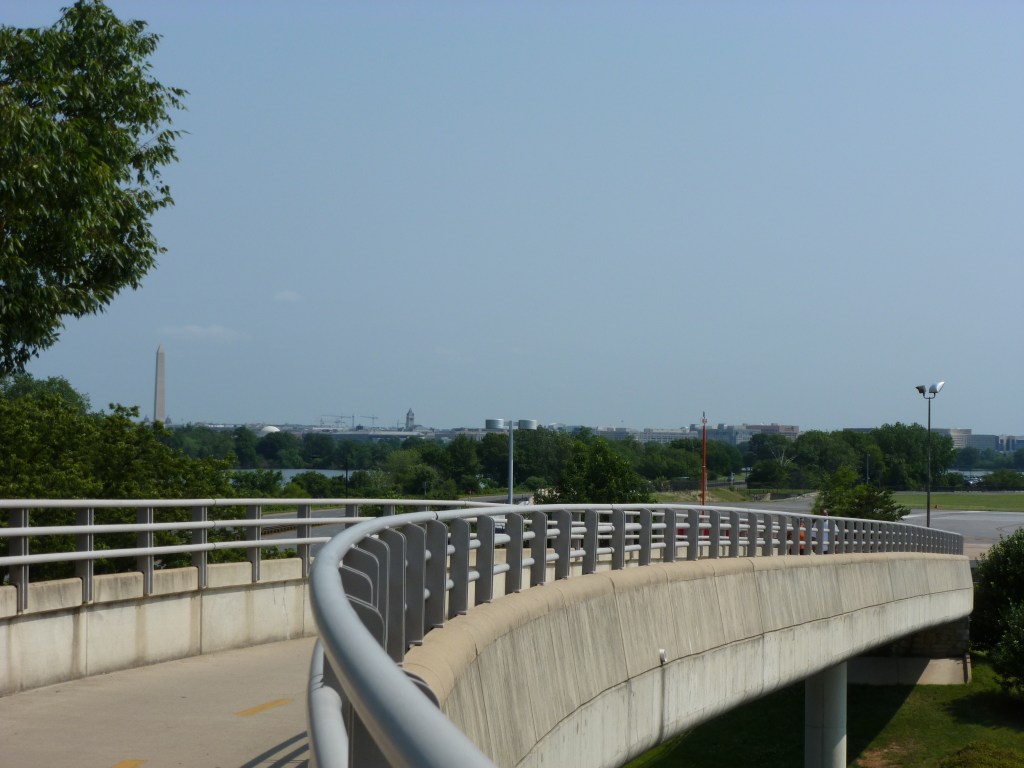
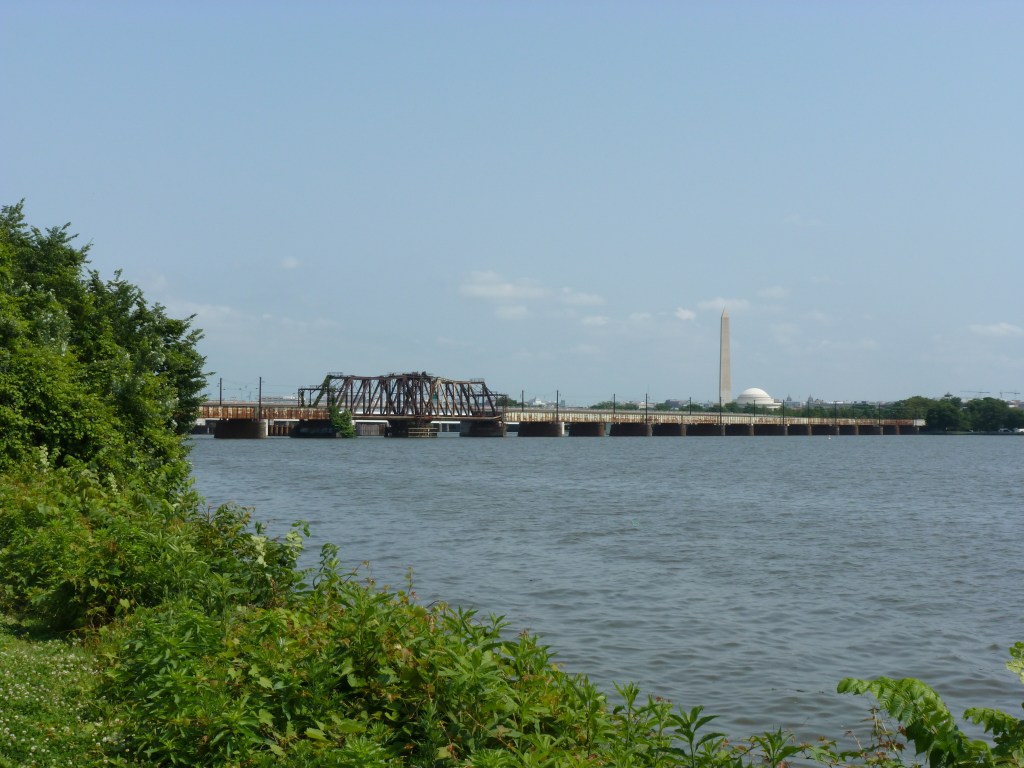
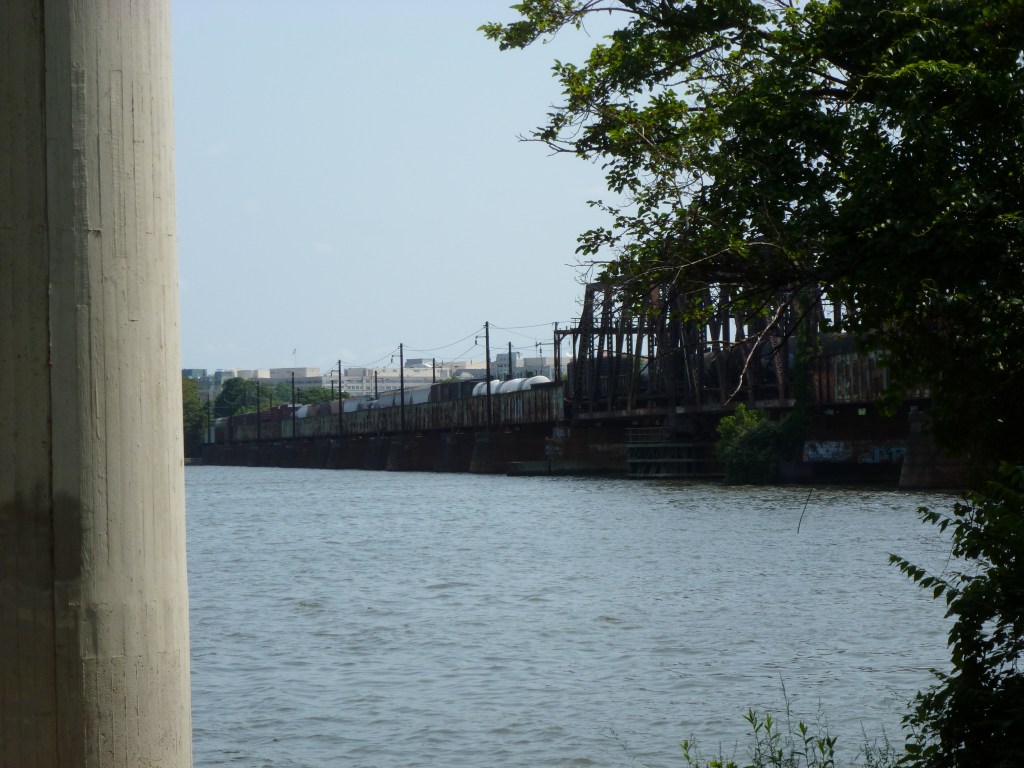
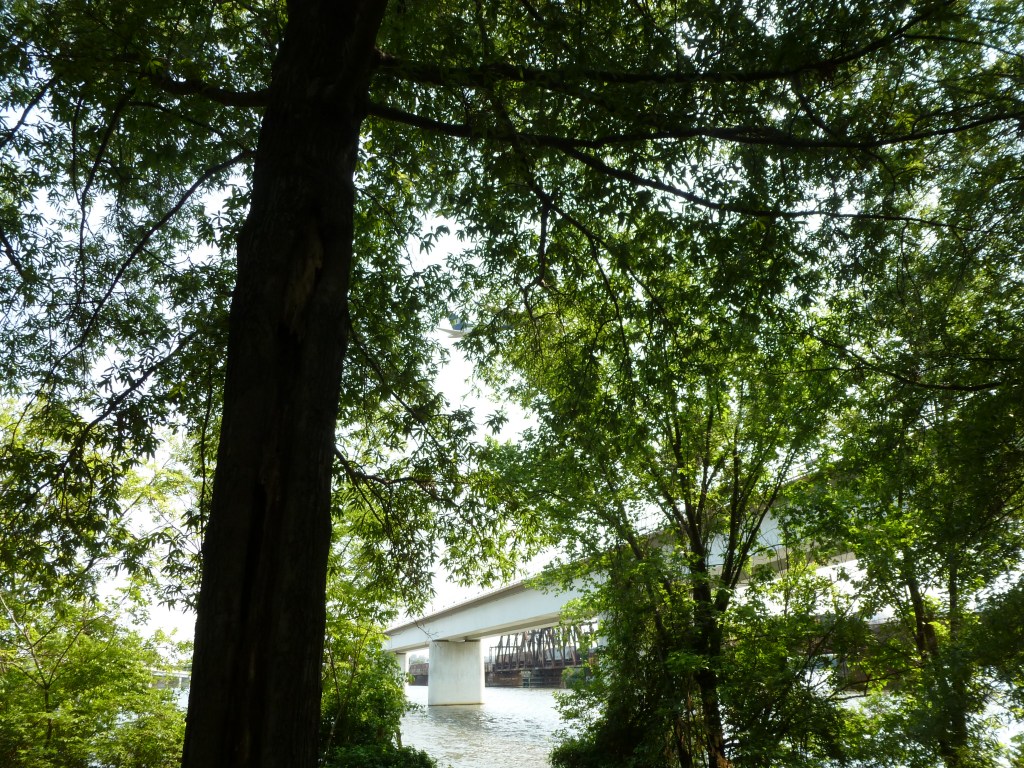
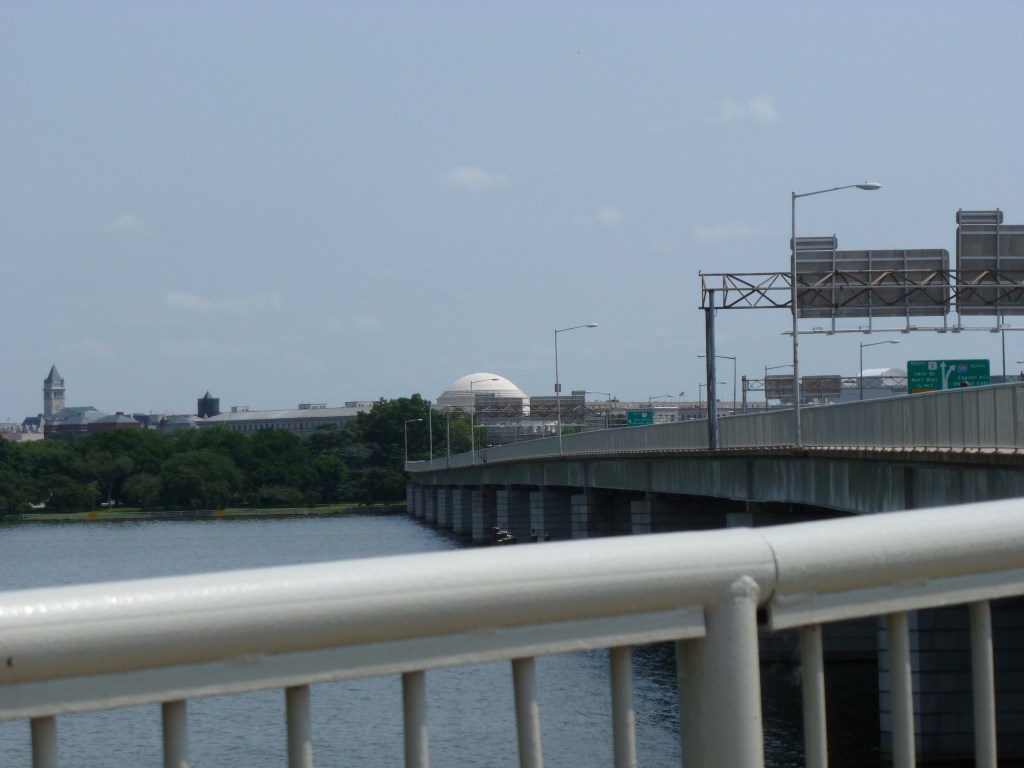
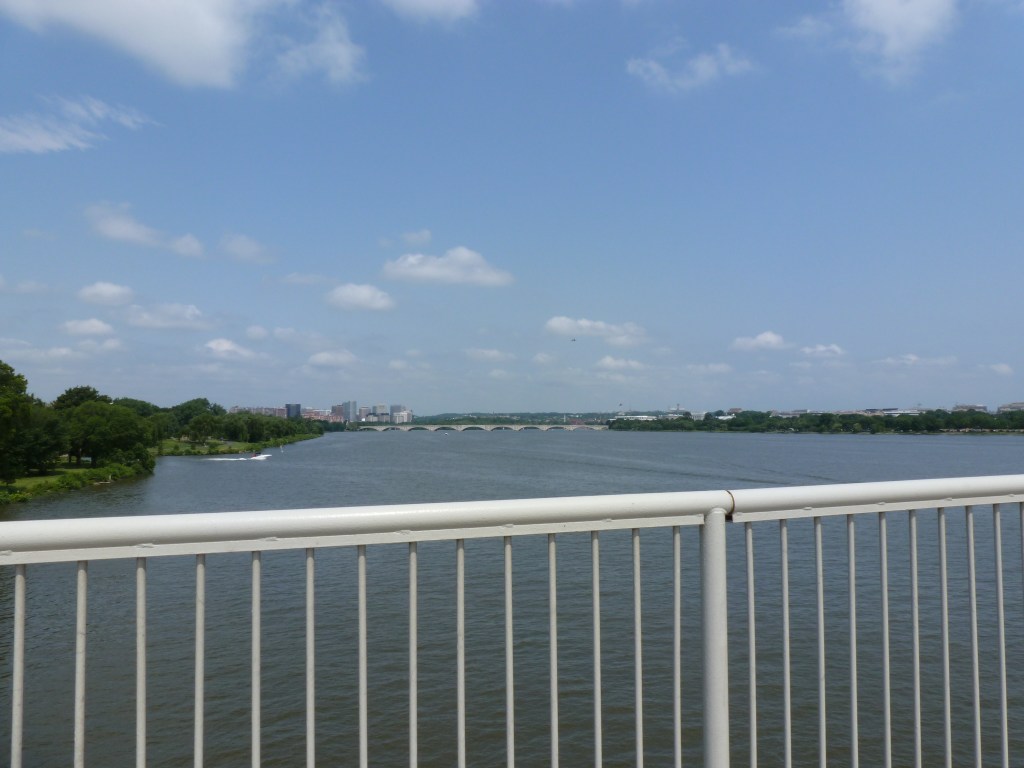
In May 2012, weeks after I had launched my bridge-walking career in London and days before I launched this blog, I was in Washington, DC, visiting my uncle. Based on my photos, I believe we rode the Metro and got off at the Crystal City stop. From there, we walked the Mount Vernon Trail passing over National Avenue/Smith Blvd by bridge and passing under the Long Bridge, Charles R. Fenwick Bridge, Arland D. Williams Jr. Memorial Bridge, 14th Street Bridge, and George Mason Memorial Bridge. We finished our bridge exploring by walking across the Potomac River on the George Mason Memorial Bridge.
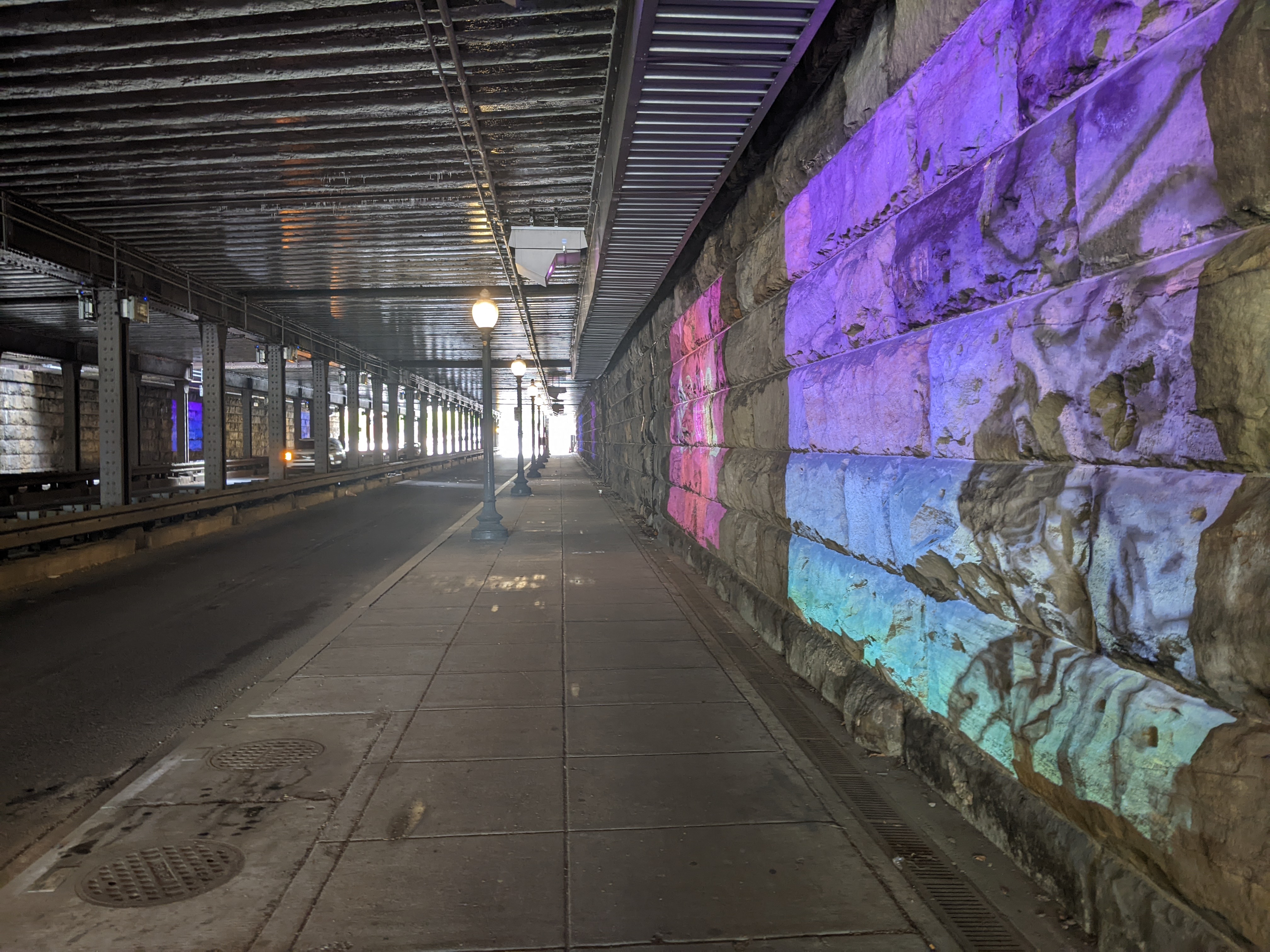
On Day 2 of my April 2025 Washington, DC, trip, I needed to take it easy. However, I couldn’t sit inside all day. On a short excursion near Union Station, I got uncomfortable as I approached the underbelly of the railroad bridge over K Street. My experience of similar structures in Pittsburgh is that they are dark, dirty, untended, and creepy. Bird droppings or bridge droppings are likely to land on you at any point.
The underbelly of this bridge over K Street defied my expectations. A light mural created a welcoming and engaging experience that felt more like Buffalo’s Seneca One murals than the underbelly of Pittsburgh’s railroad bridges. Because light was used instead of paint, it lit up a dark place and incorporated engaging animation:
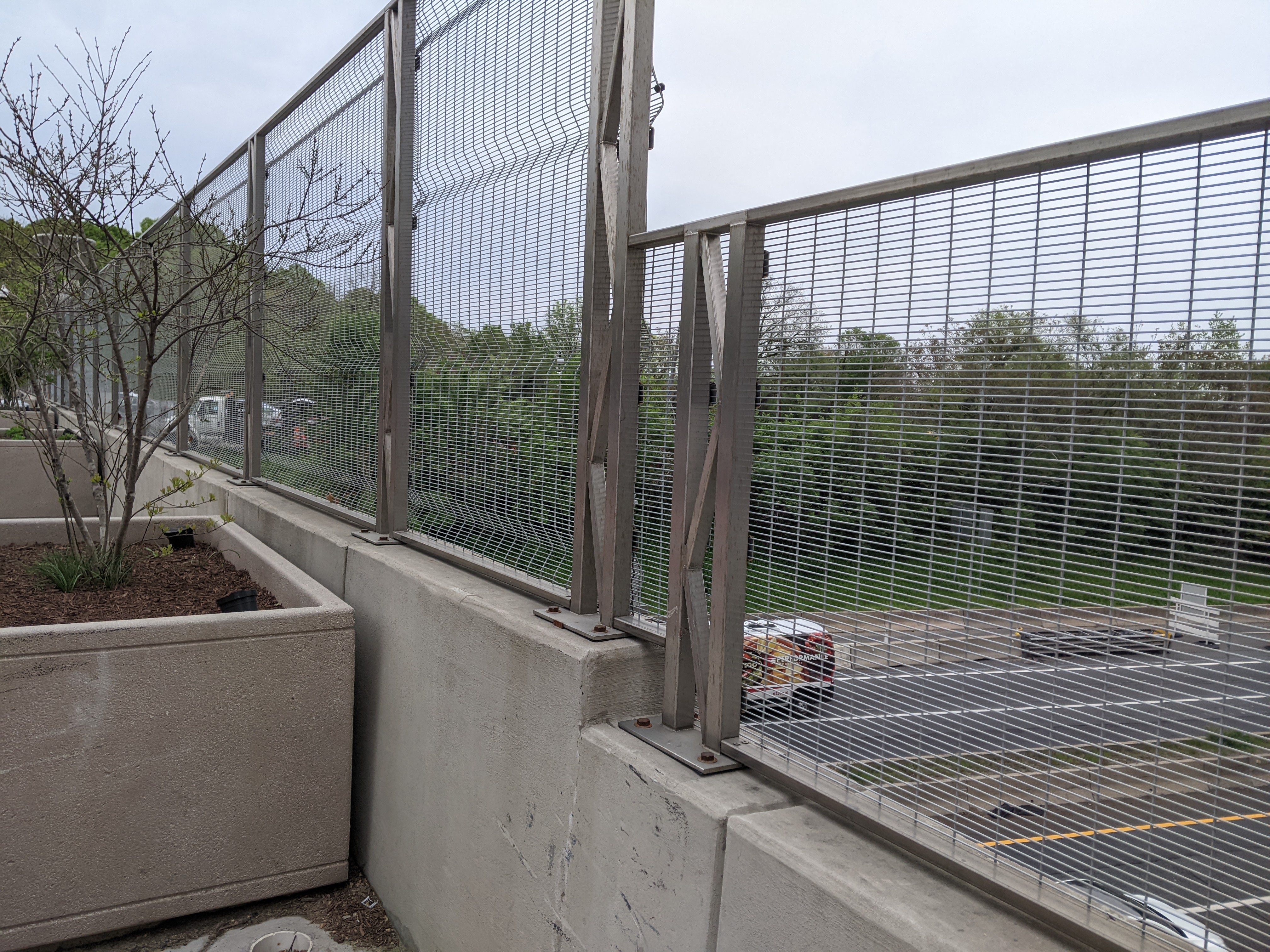
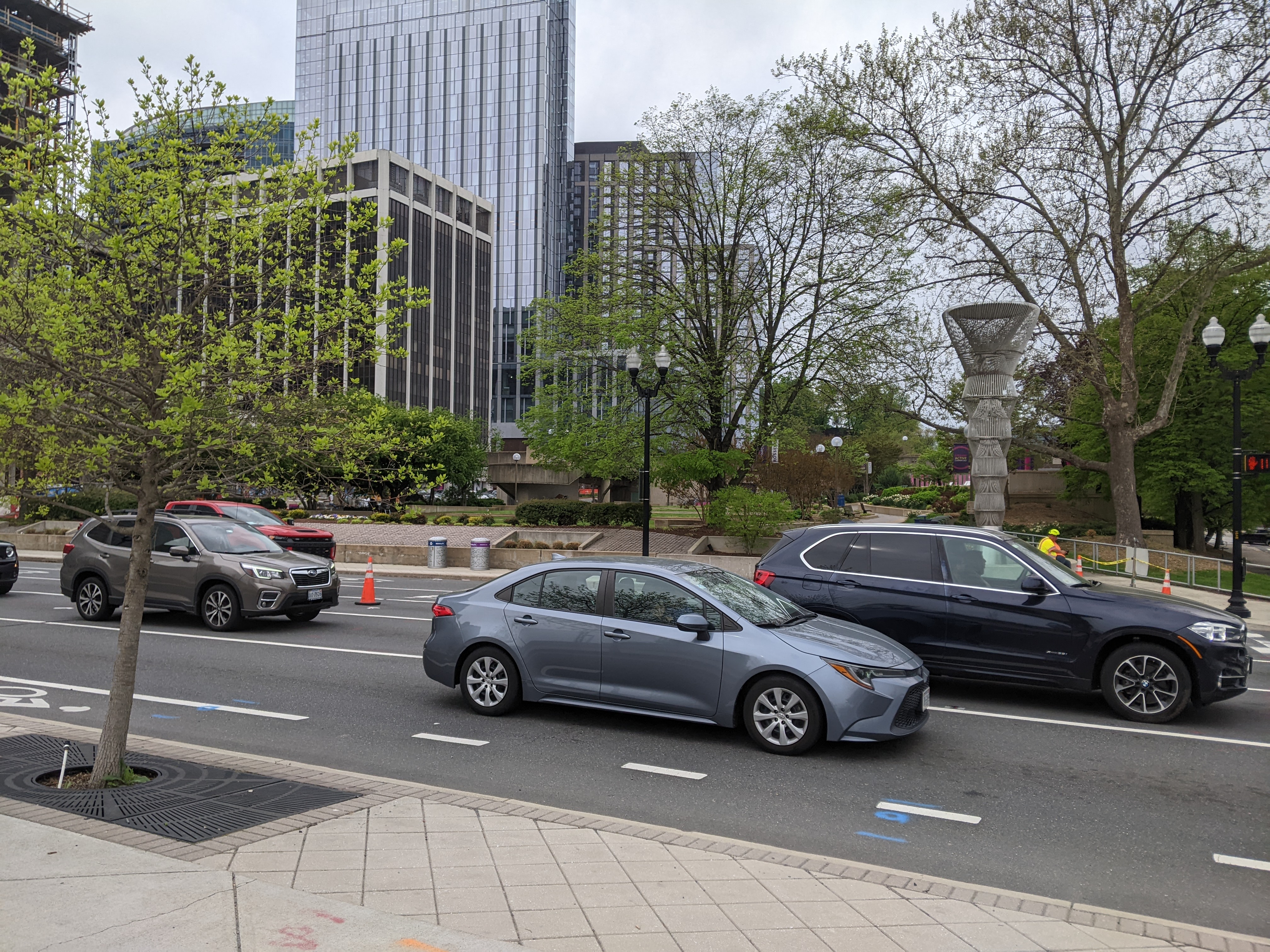
While walking from the Rosslyn Metro Station to the Francis Scott Key Memorial Bridge over the Potomac, we walked over a surprise bridge. If we had chosen to walk over on the upriver side of the Francis Scott Key Memorial Bridge, I may have completely missed that we walked a bridge over I-66.
Gateway Park is a “cap” over the freeway and is both a park and a bridge. Unlike Pittsburgh’s CAP or Frankie Pace Park, Gateway Park was built in the 1980s at the same time as the freeway it covers. It also distinguishes itself from Pittsburgh’s park/bridge by appearing to be fully integrated with the surrounding city and having well-utilized programming.
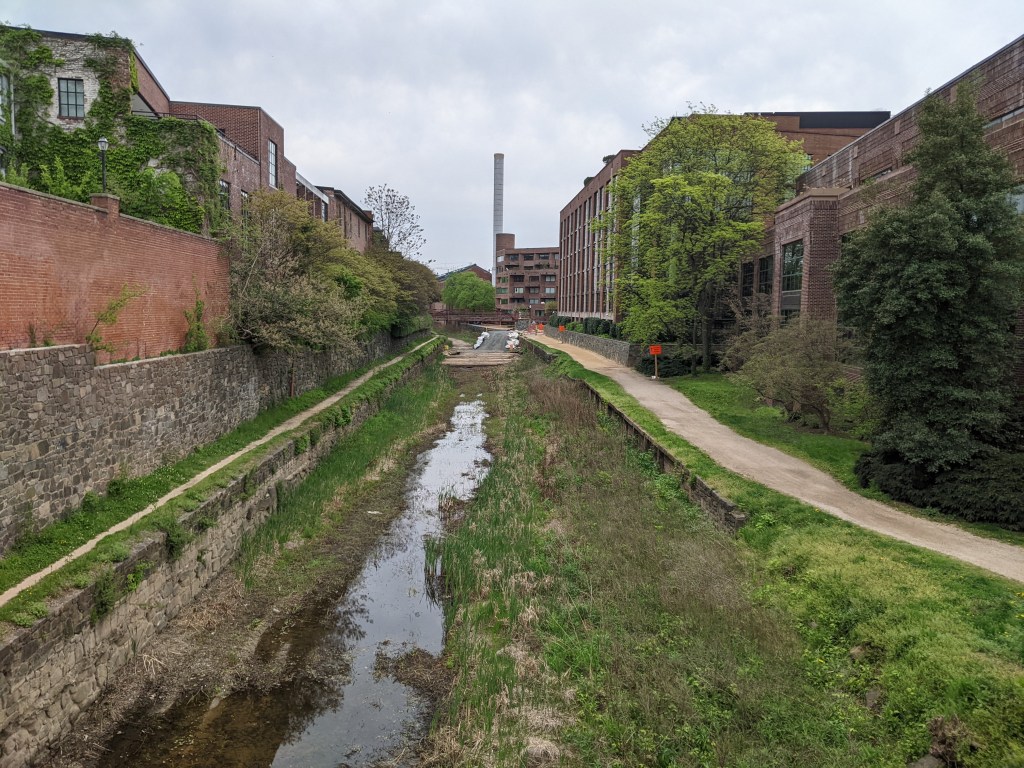
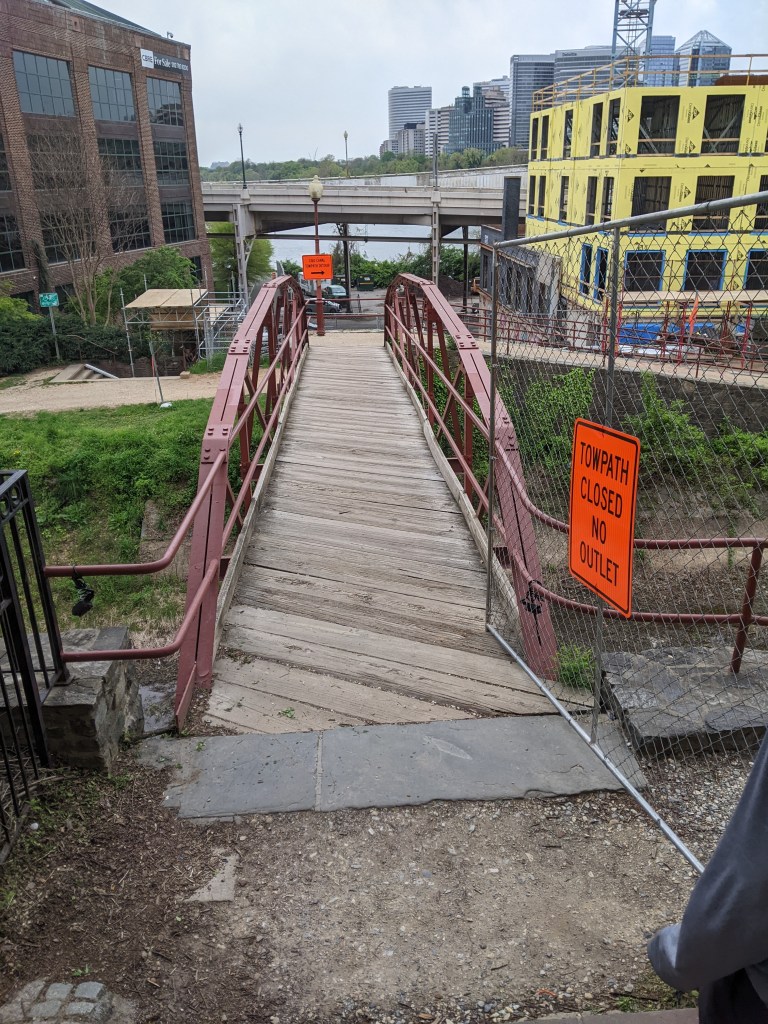
I couldn’t resist the temptation to walk across the C&O Canal, or what’s left of it. The climb down to this bridge from Georgetown and the Francis Scott Key Memorial Bridge included a very steep street and then some steps. Yet, this bridge is still significantly above the level of the river, approximately in line with the elevated freeway of Rt. 29.
After walking the downward slope across this bridge and its ramp to the towpath level, we had to walk down a set of stairs to reach the level of the Georgetown Waterfront Park. As the sidewalk on Francis Scott Key Memorial Bridge is more than 60 ft above the water, the hike from the bridge to the waterfront park across the C&O Canal bridge is similar to climbing down and then up the stairs in a 6-7 story building.
There was an interesting mural along the stairs, and the park itself was beautiful, but the need to conserve my energy at this point limited the photos I took to the most important (the views of the Francis Scott Key Memorial Bridge and the underside of the elevated freeway shared in the Francis Scott Key Memorial Bridge post).
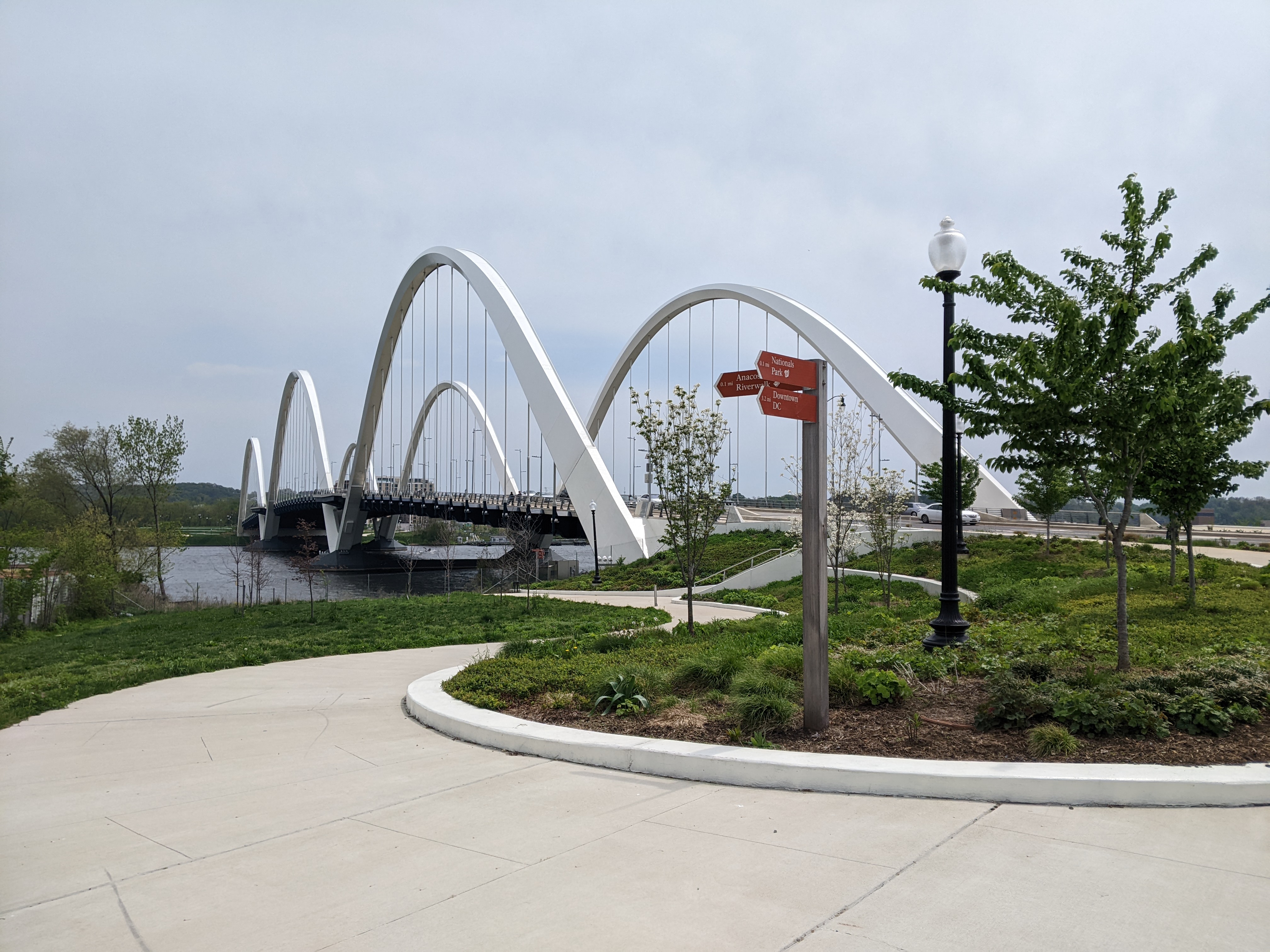
Knowing that wandering at will and walking as many bridges as possible was no longer a feasible option for me, my brother and I identified two must-see bridges for my weekend in DC: the Frederick Douglass Memorial Bridge and the Francis Scott Key Memorial Bridge.
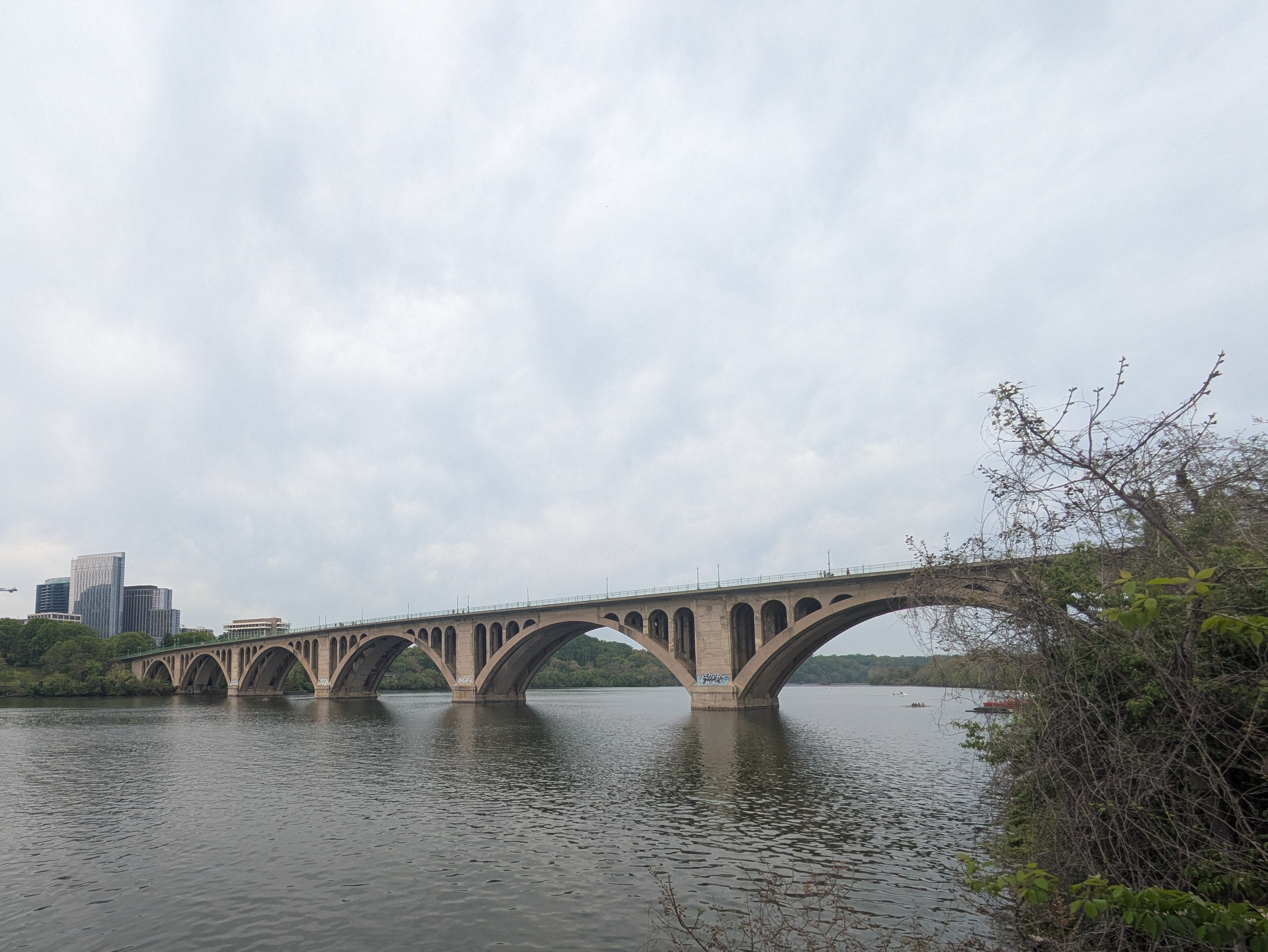
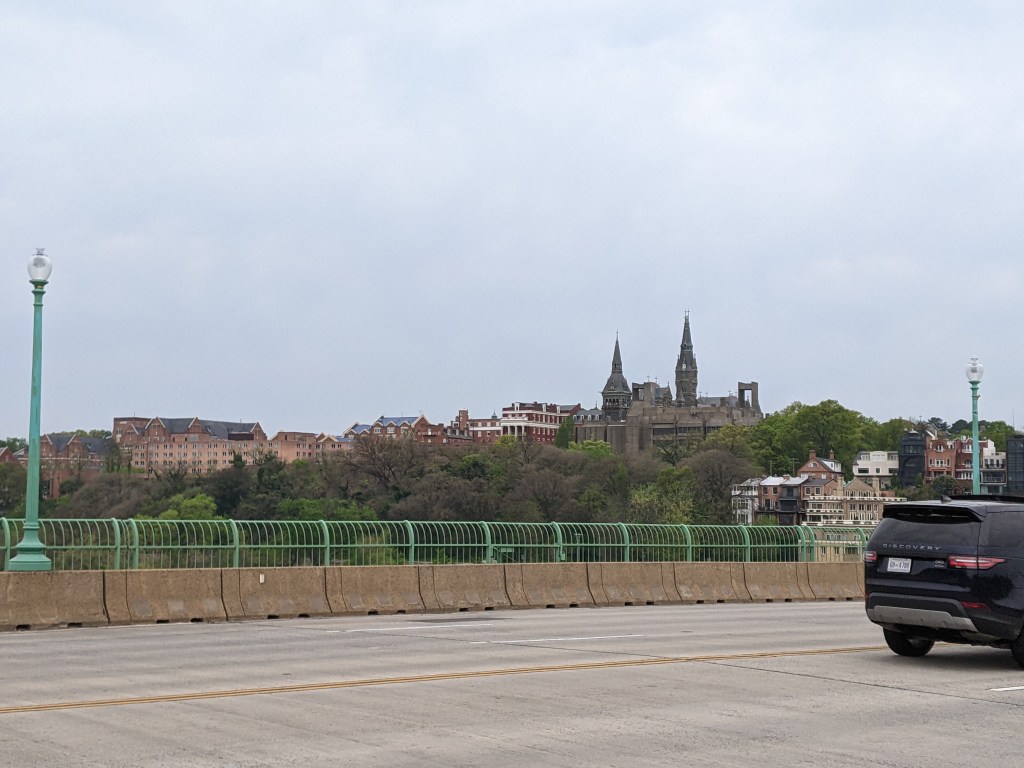
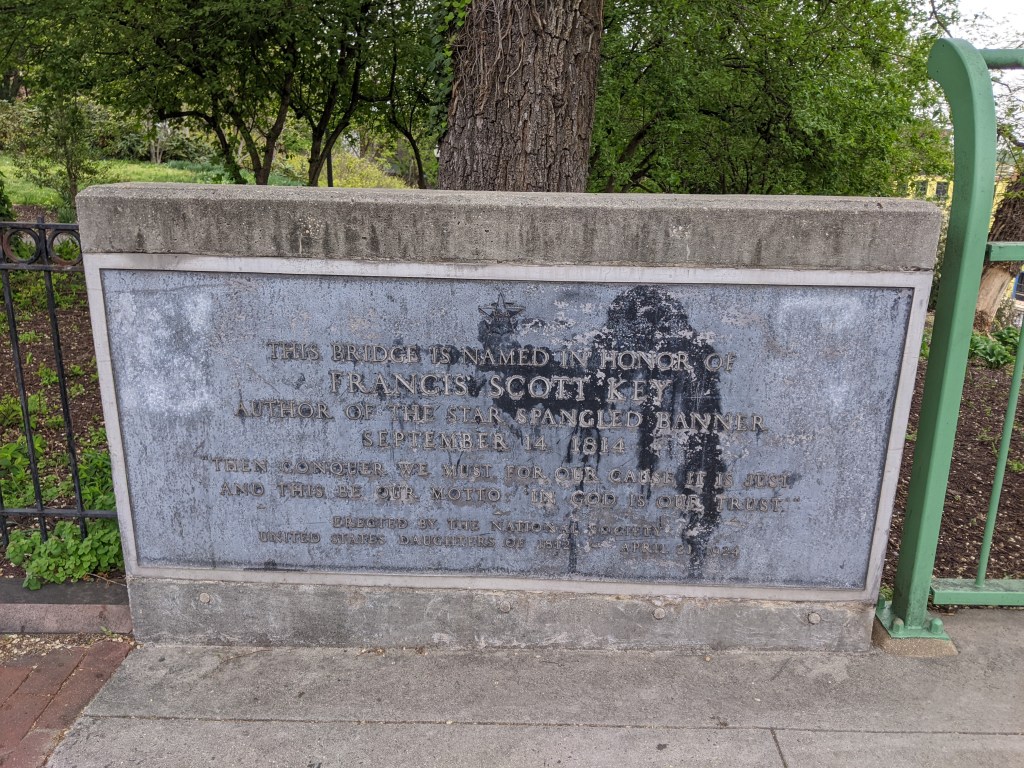
Not to be confused with Baltimore’s collapsed Francis Scott Key Bridge, the Francis Scott Key Memorial Bridge links Georgetown, DC, to the Rosslyn neighborhood of Arlington, VA.
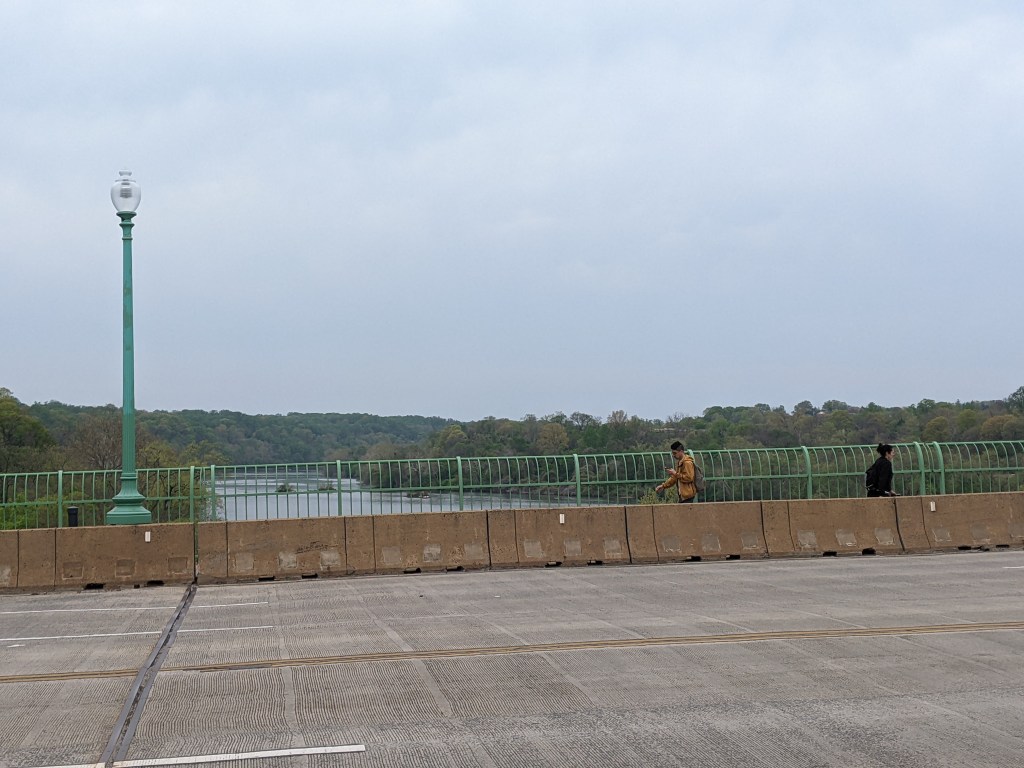
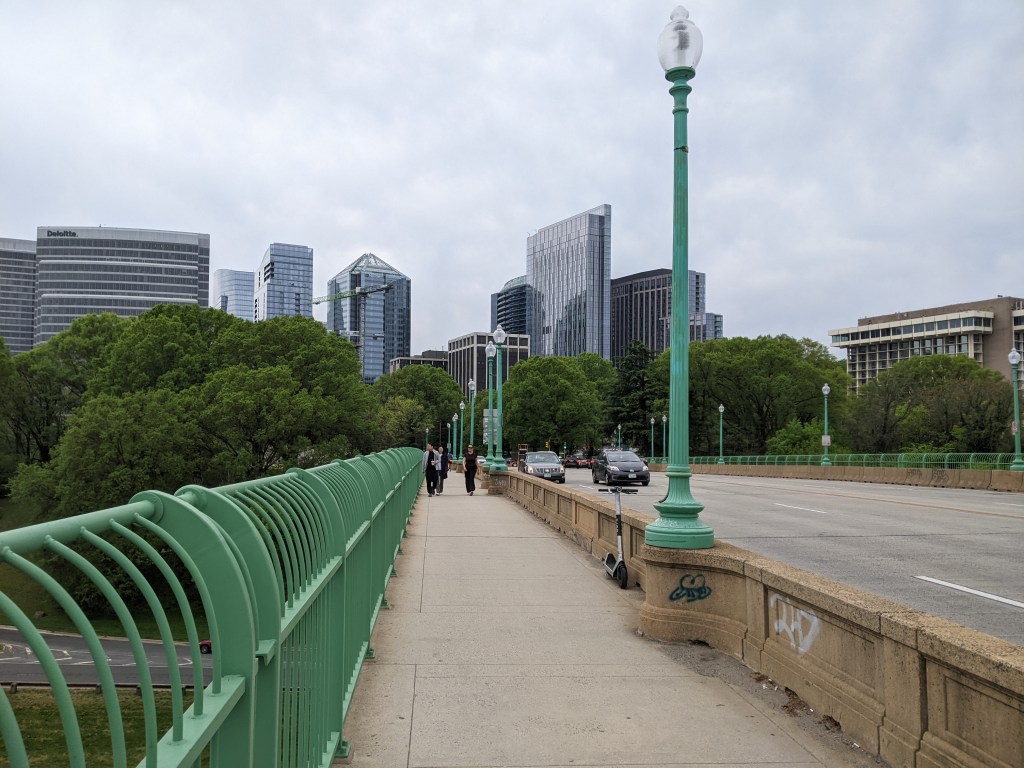
The Francis Scott Key Memorial Bridge is a curvilinear arch bridge carrying a six-lane highway with wide sidewalks on both sides over the Potomac River. It was built in 1917-1924. The width made it easy and comfortable to walk despite a high number of other pedestrians, bikes, and scooters on the sidewalk, and the speed of cars racing across.
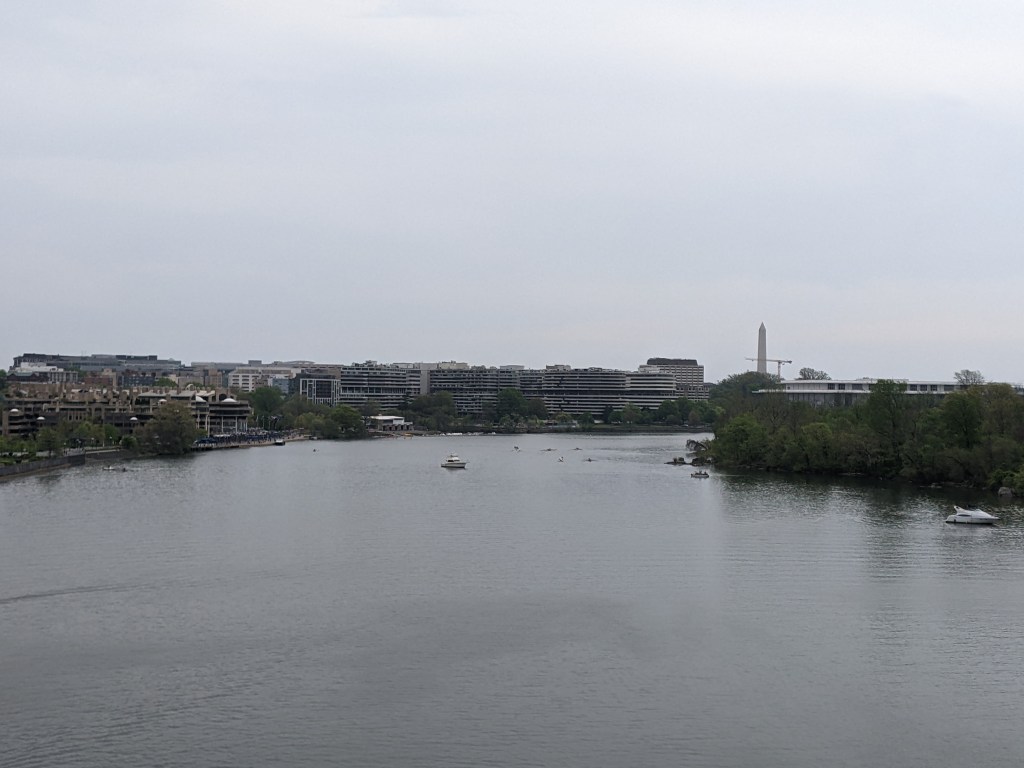
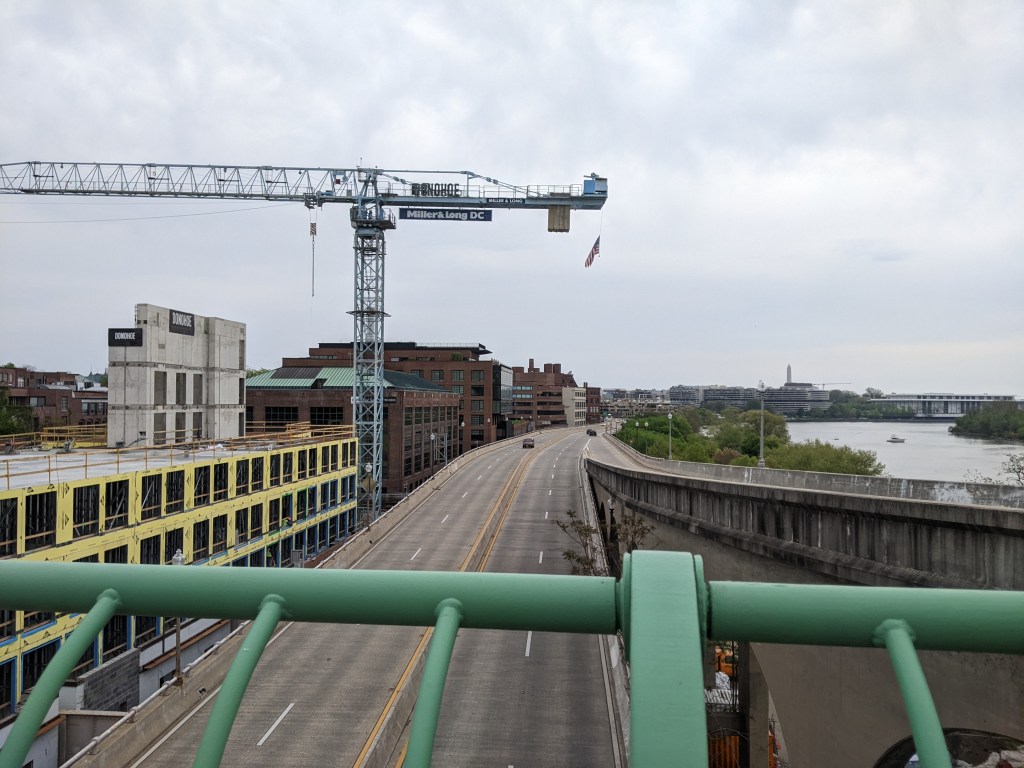
We walked along the downriver side, which provides ever changing views of downtown DC, the Kennedy Center, and the Washington Monument, thanks to the forested Theodore Roosevelt Island and nearly 90 degree bend in the river. This gave me plenty of excuses to pause, hydrate, rest, and take a photo.
Georgetown and Rosslyn both sit high above the river, which meant the bridge is also elevated far above the river. It is high enough that an elevated freeway sits comfortably halfway between the bridge and the riverside ground level on the Georgetown side.
The goals of urbantraipsing and pacing for Long COVID were a delicate balance as we walked across the Francis Scott Key Memorial Bridge. There were several important decision points along the way. Option 1 was to walk only half-way across the bridge. I don’t like doing that for urbantraipsing and there was a coffee shop on the far end that was a good option for refilling my water bottle and taking a short rest. So we walked all the way across.
As we approached the Georgetown side, I was very tempted to climb down to the park near the level of the water. I could tell that this would be a great spot to get an establishing shot for the bridge, but the effort of climbing down and back up from there did not seem worth it . . . until I saw that in doing so, we would walk across a C&O Canal bridge. Adding another bridge to my collection along with the fact that we could sit by the riverside and rest before climbing back up tipped the balance of pros and cons in favor of going down.
Due to the placement of Metro stations, the only choice for getting back to the Metro and on to our next stop was to retrace our steps back across the bridge. By the time we did all that, it was lunchtime and I had nearly reached my daily step count.
For years, even before I started urbantraipsing, I thought nothing of walking from transit stop to transit stop, bridge to bridge, as I explore and encounter the expected and unexpected nooks and crannies of a city. That way of life came crashing to a devastating halt in the fall of 2023 when I developed Long COVID.
Six months passed.
And then a year.
The return to “normal” my doctors promised seemed increasingly unlikely. But a return to functional seemed within reach. The question remained: did urbantraipsing fall within this new functionality?
After a few local test excursions, I felt physically and mentally strong enough to test travel. In April 2025, I took a long-overdue trip to visit my brother in Washington, DC. On this trip, I encountered some great bridges and learned that, much like other activities, with modification and accommodation urbantraipsing is a way of life I can continue.
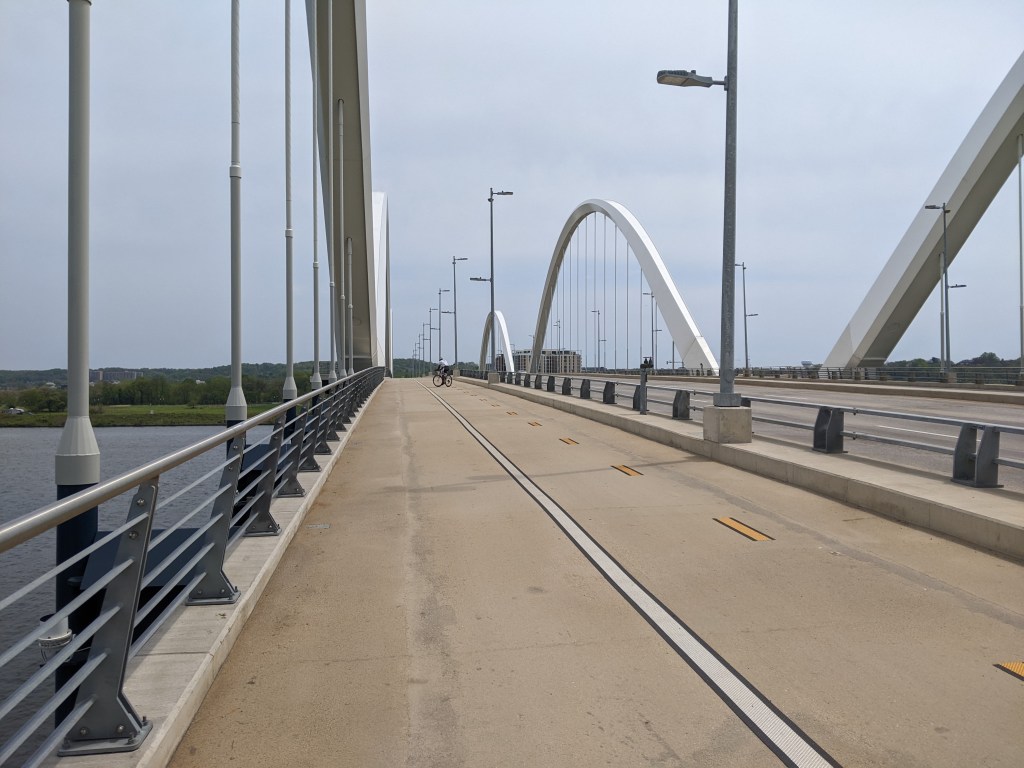
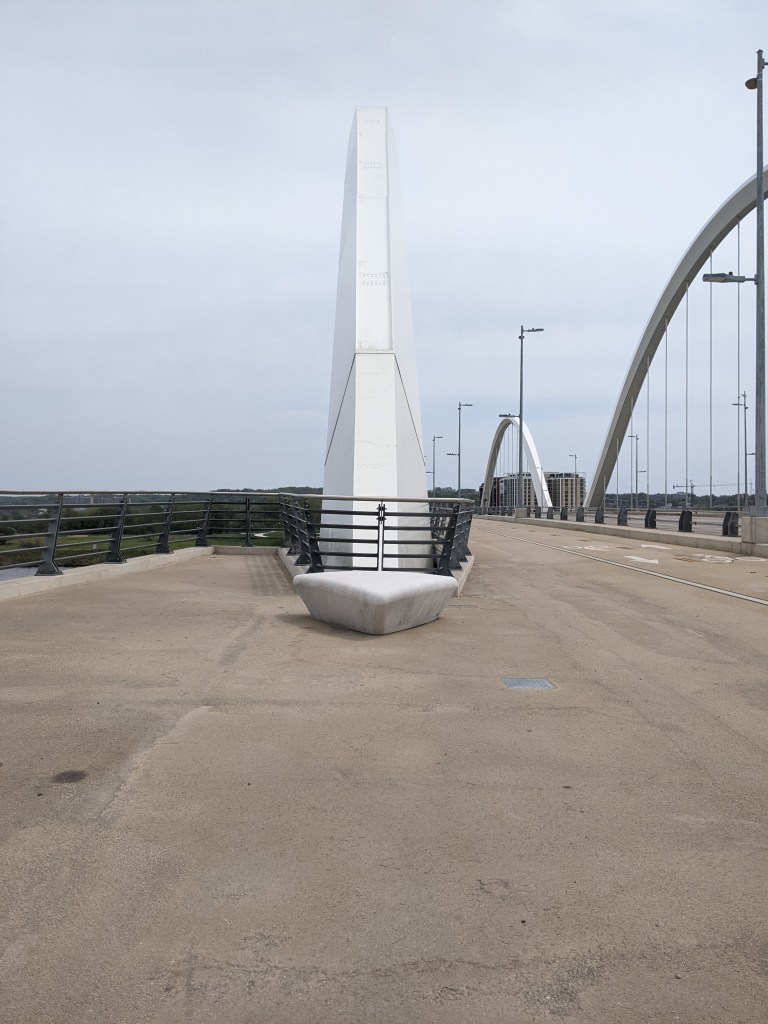
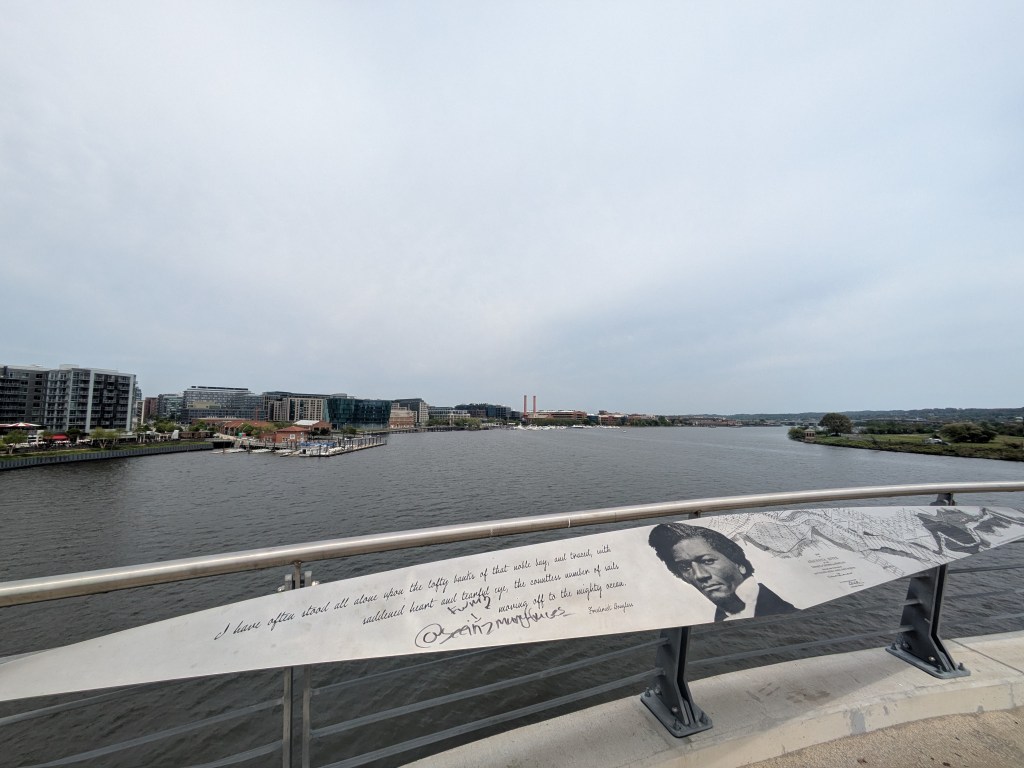
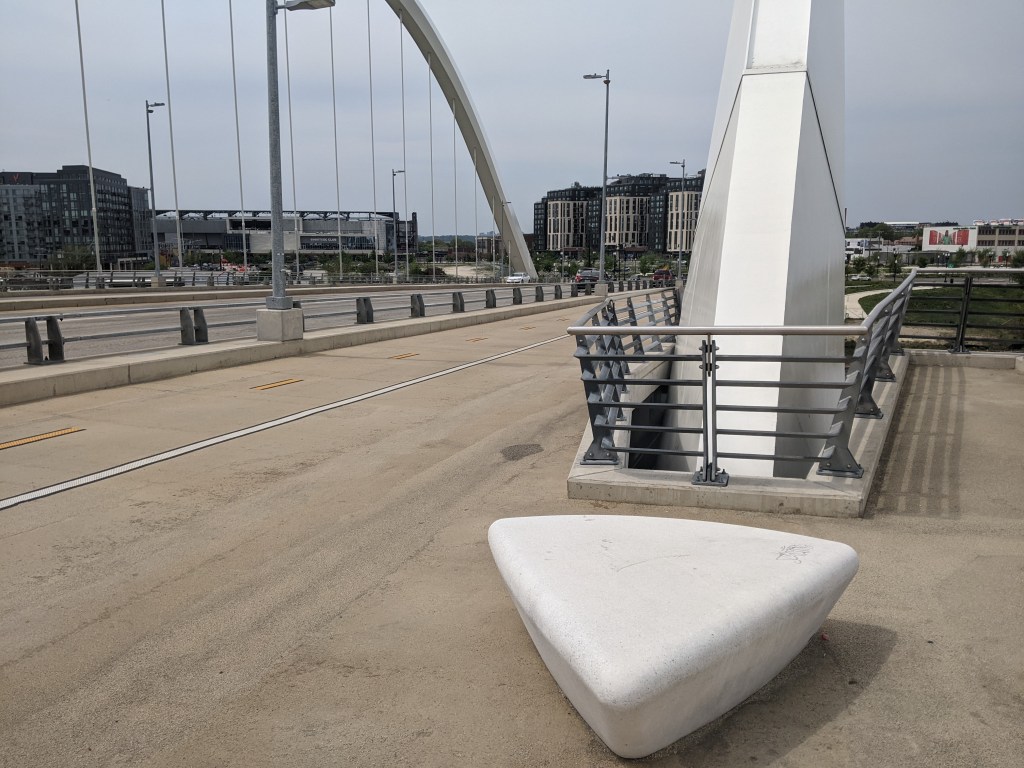
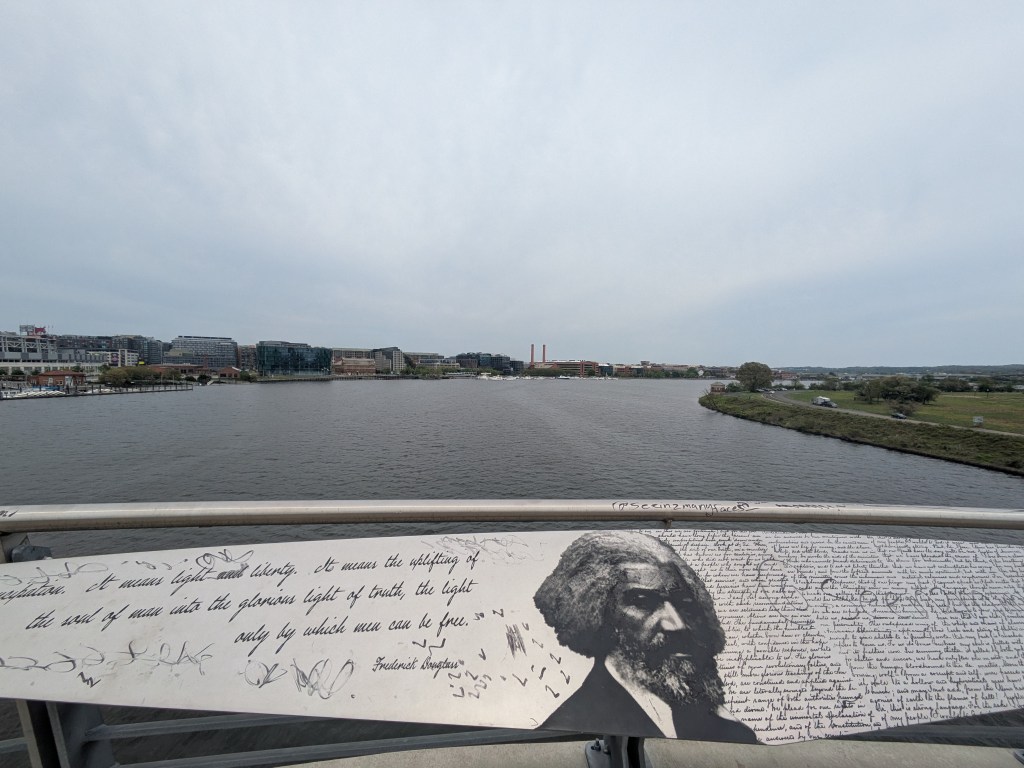
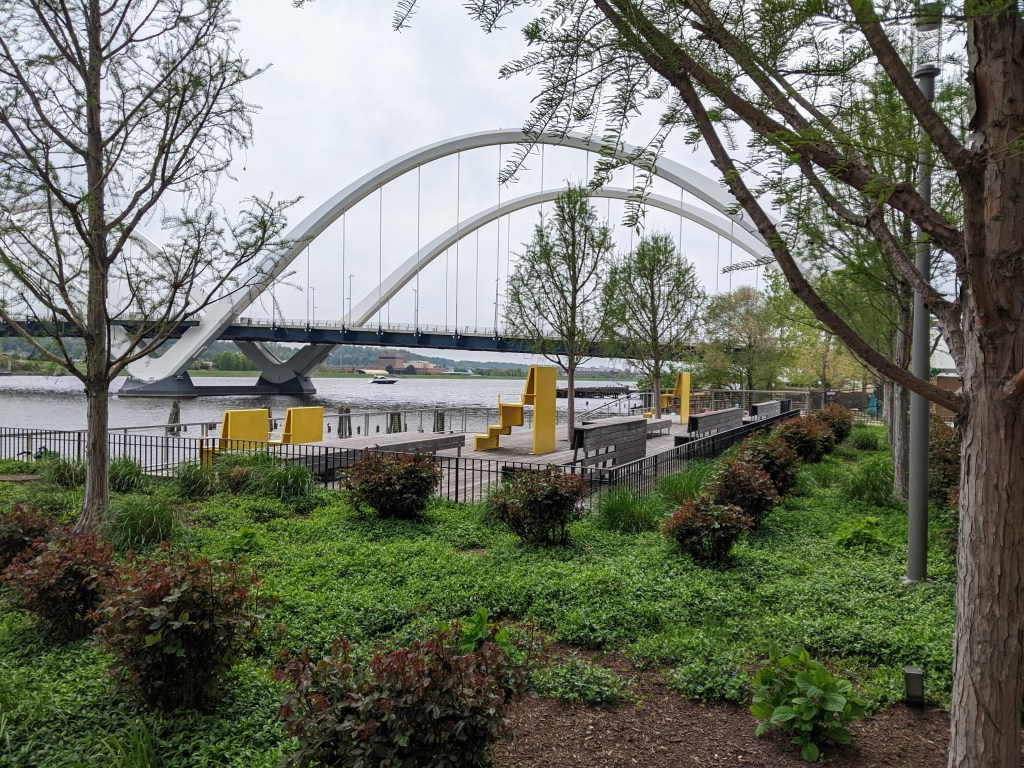
The open, through-arch Frederick Douglass Memorial Bridge was one of our expected encounters. I probably would have been ecstatic about the unexpected benches in the lookouts between the arches under previous circumstances. After all, it isn’t every day that you find a bench on a bridge. However, in the past, I probably would have just said “that’s cool,” photographed them, and moved on. Instead, I took full advantage of these seats for one of my rest and rehydration breaks. This slow down is the reason I spotted the Yard Park Bridge, a bridge I definitely needed to add to my collection.
Perhaps slowing down and being more intentional to accommodate my Long COVID needs will continue to add depth to my urbantraipsing experiences.
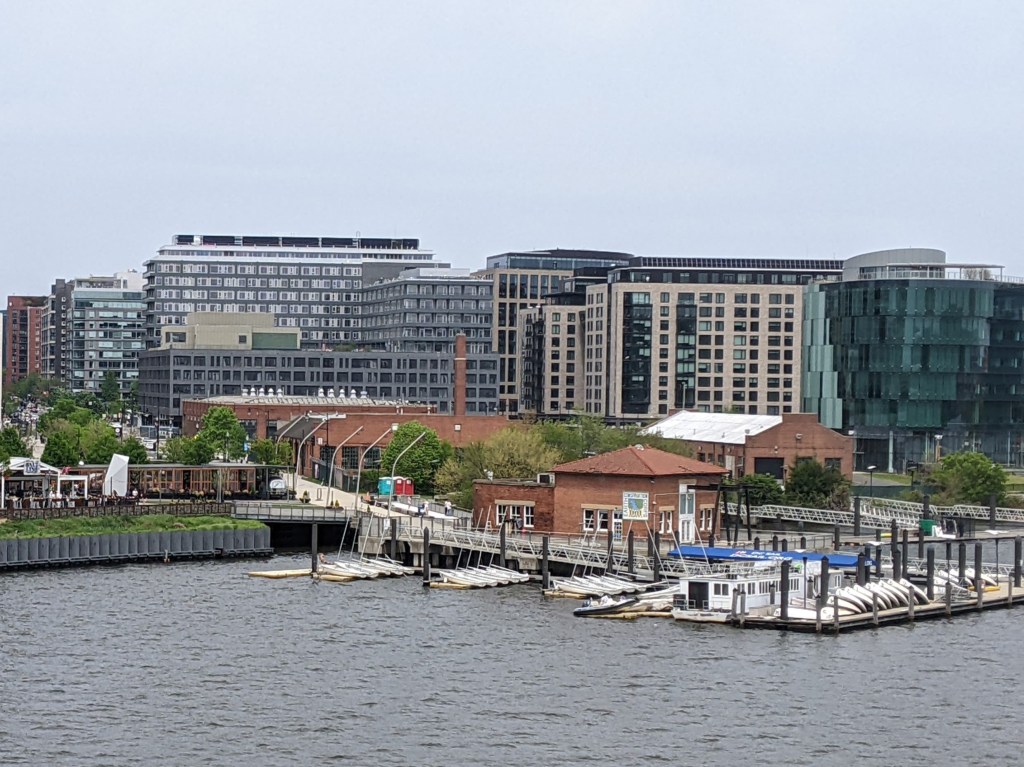
The Anacostia Riverwalk Trail crosses over the openings of several canal channels within a short distance from the Frederick Douglass Bridge in Washington, DC. The first canal opening that I walked over, I had no idea that I was walking on a bridge…like when I walked over the Grosvenor Canal in London. It wasn’t until I was checking out the views from the Frederick Douglass Bridge that I saw the opening for the canal underneath the path I had just walked. (First picture in the slide show below.)
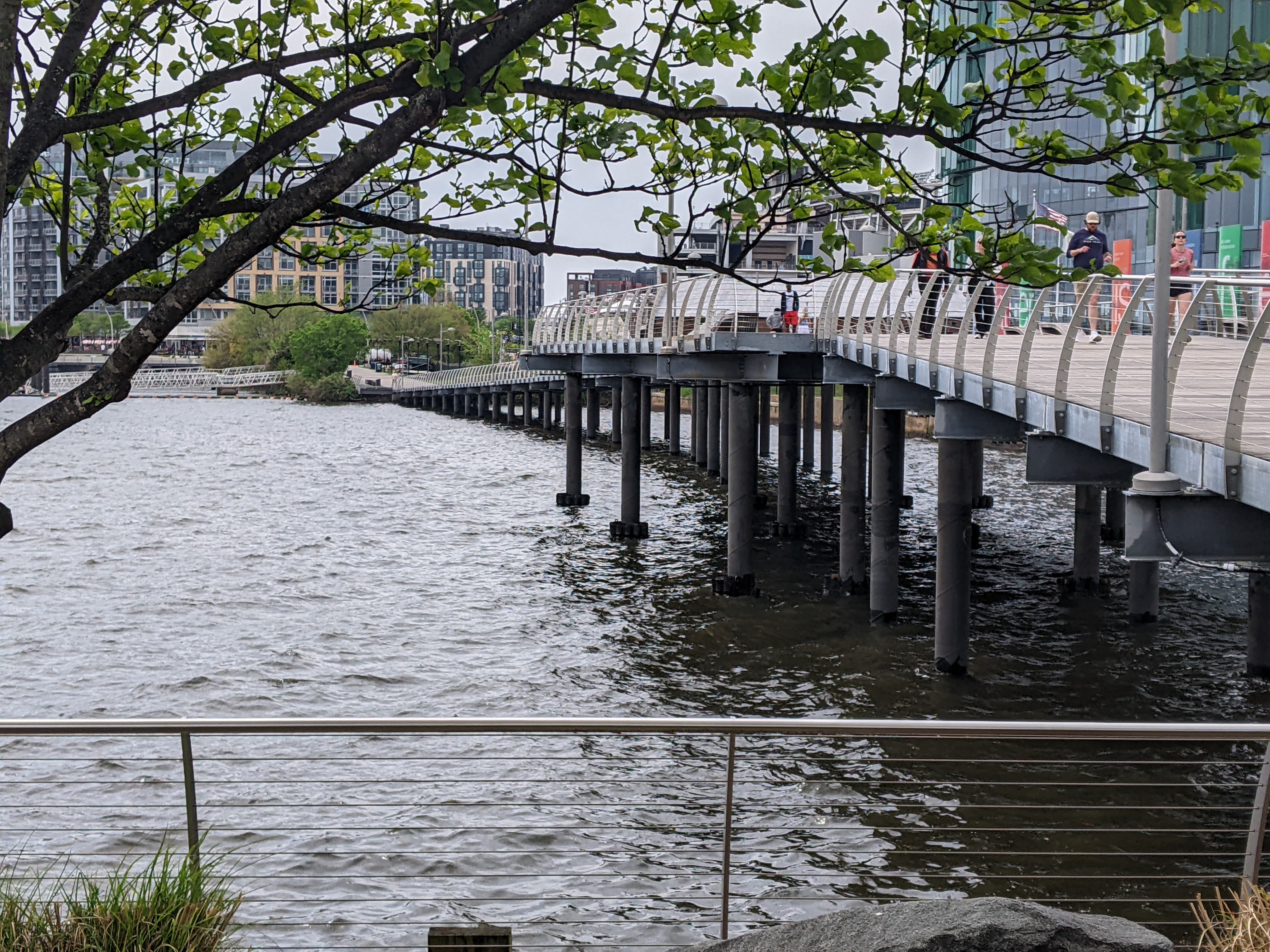
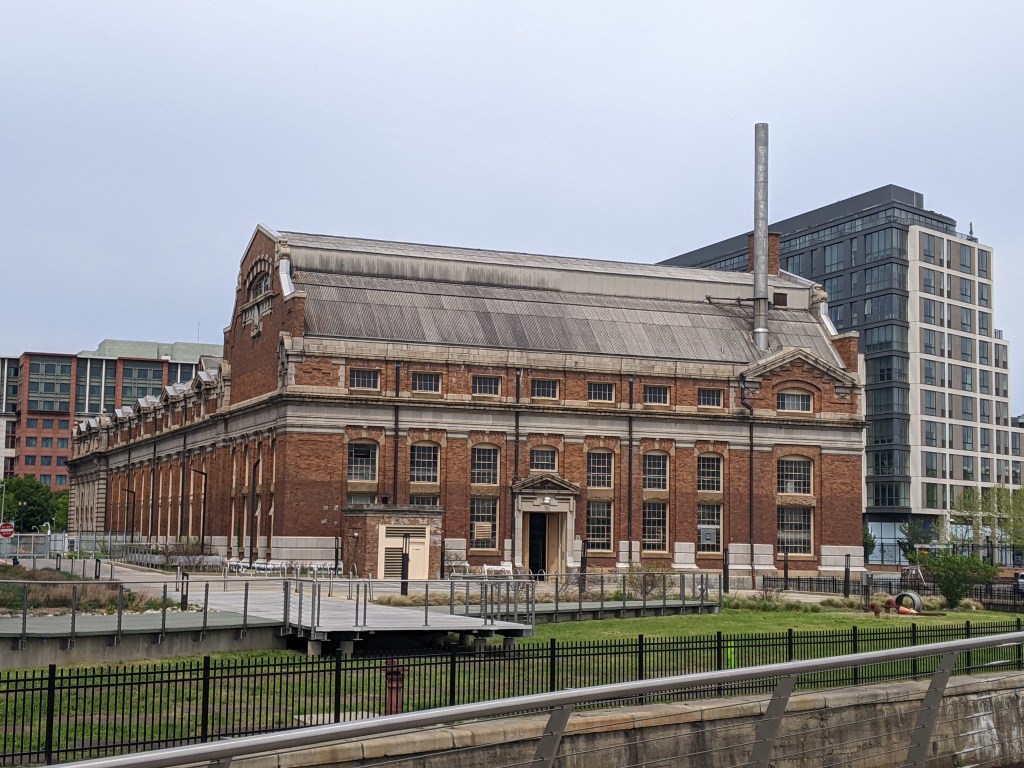
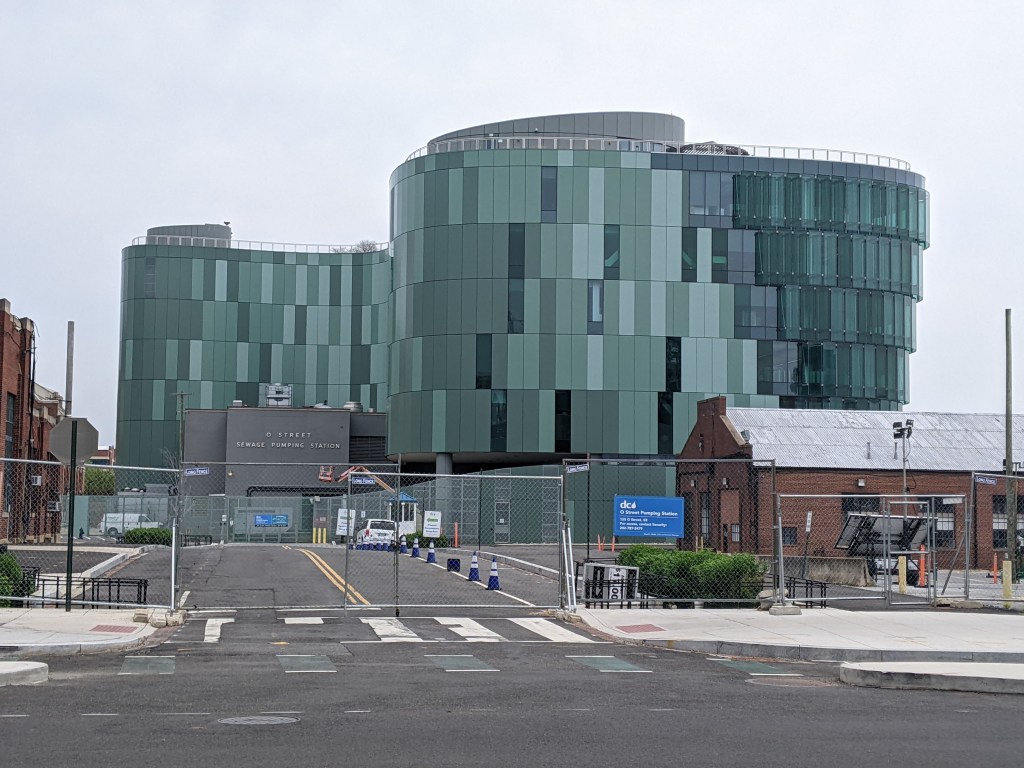
The bridge pictured above appears to have been over a canal that fed into or out of (or both?) the old O Street Pumping Station. This bridge was clearly visible as we walked passed it on our way to the Frederick Douglass. I was tempted to cross it (as a bridge walker, it is hard to walk passed a bridge and not over it), but I was tired and trying to conserve energy. However, once on the Frederick Douglass Bridge, I spotted another pedestrian bridge just beyond this one that I could not pass up the opportunity to walk, no matter how tired I was.
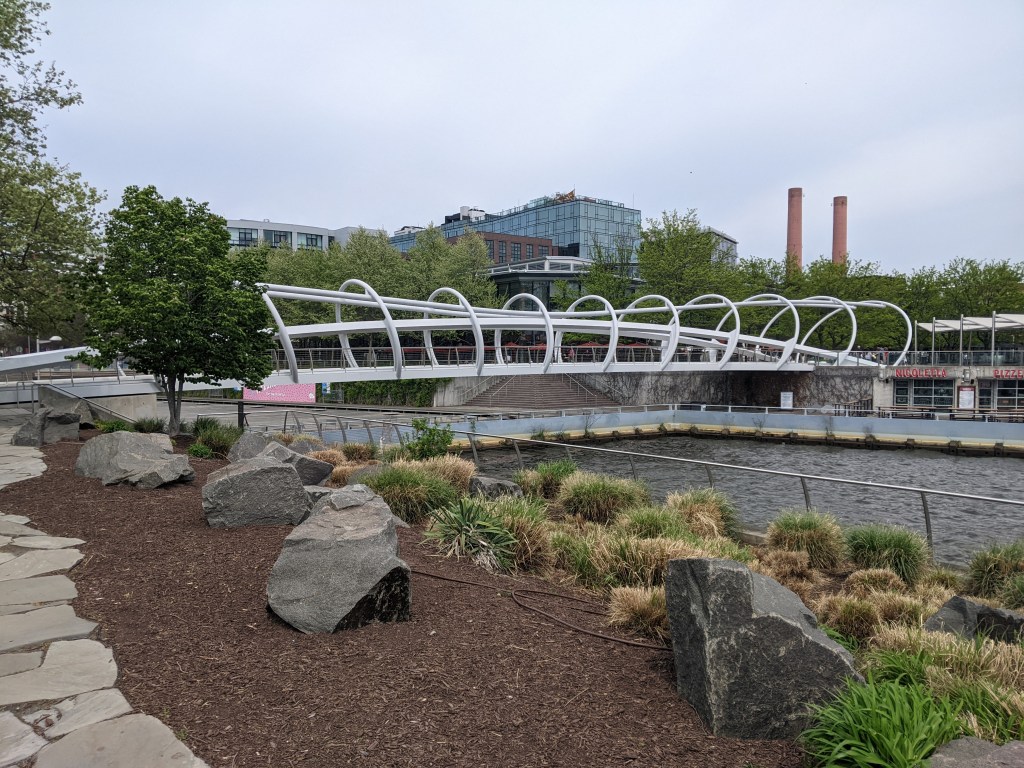
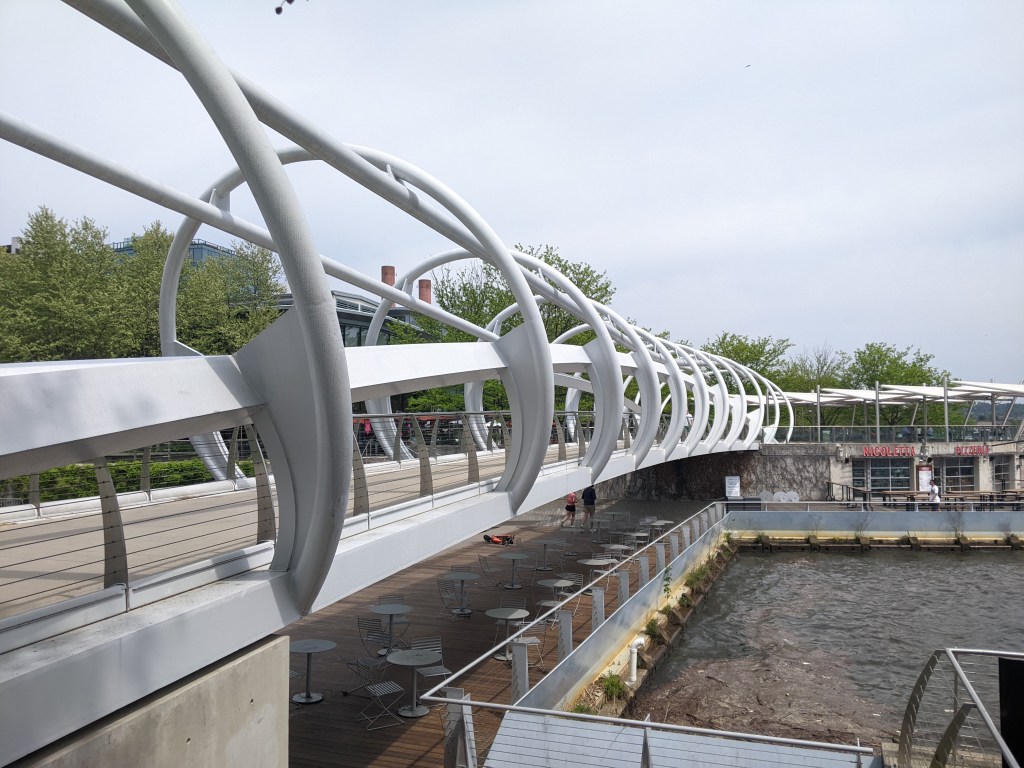
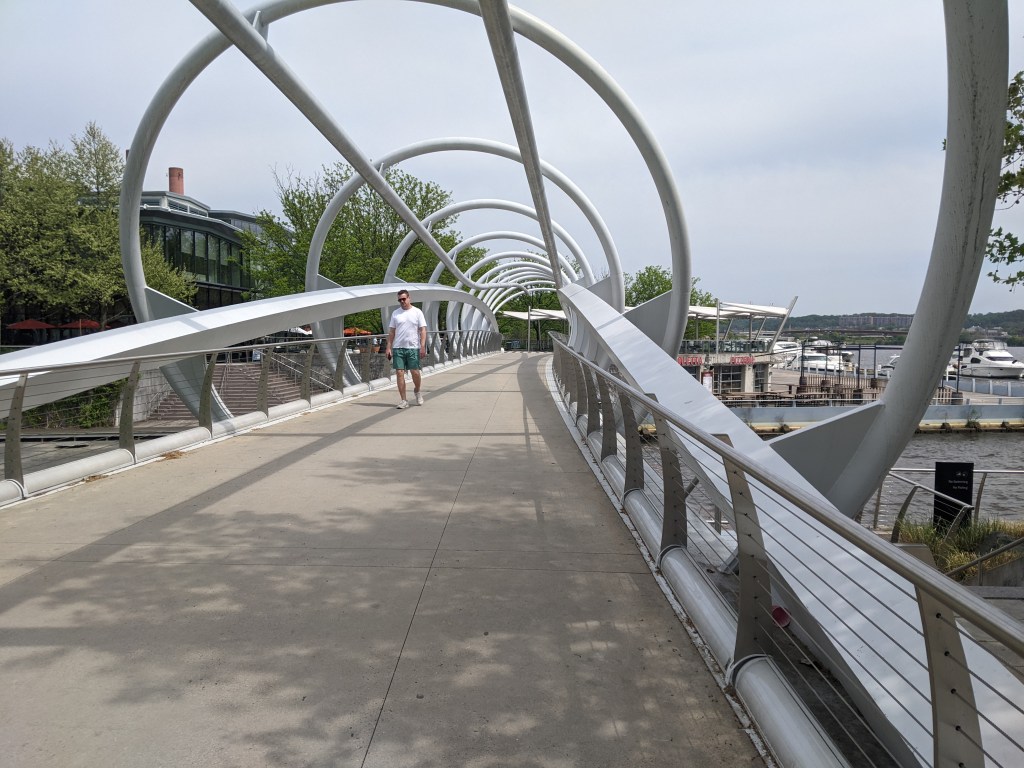
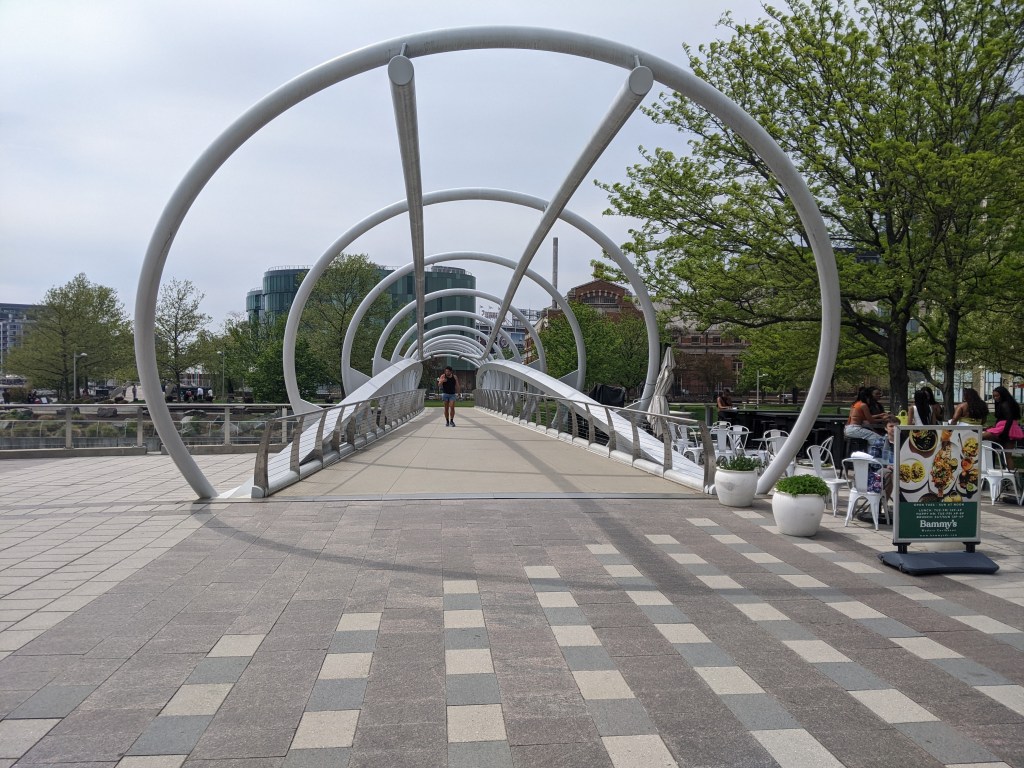
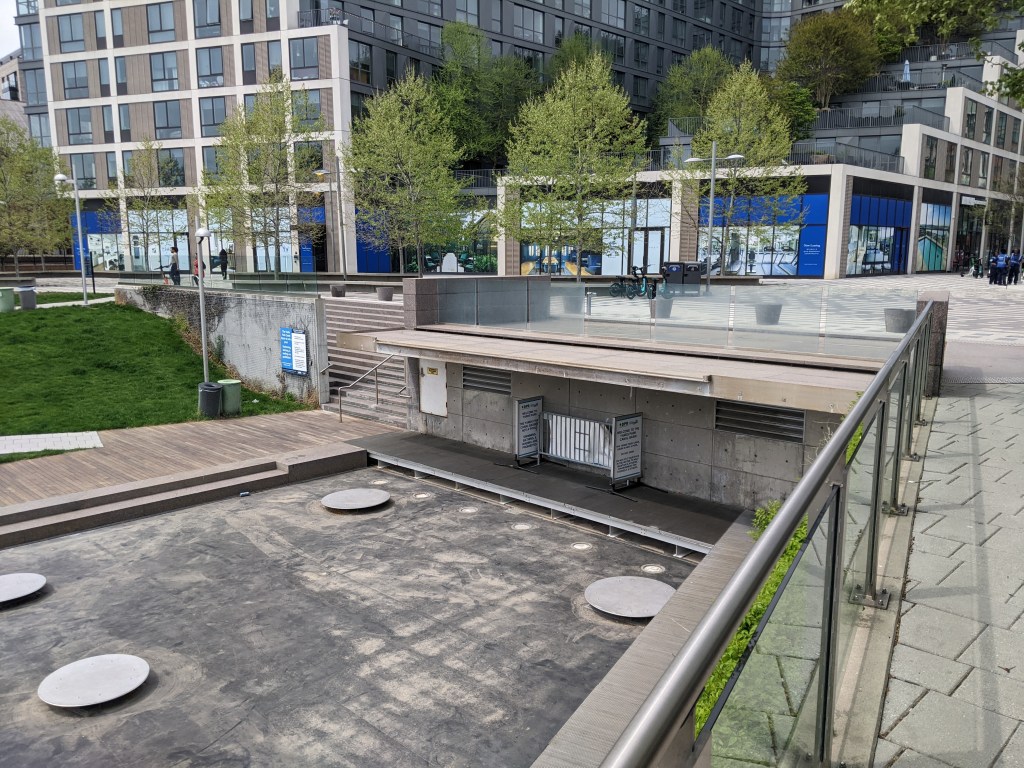
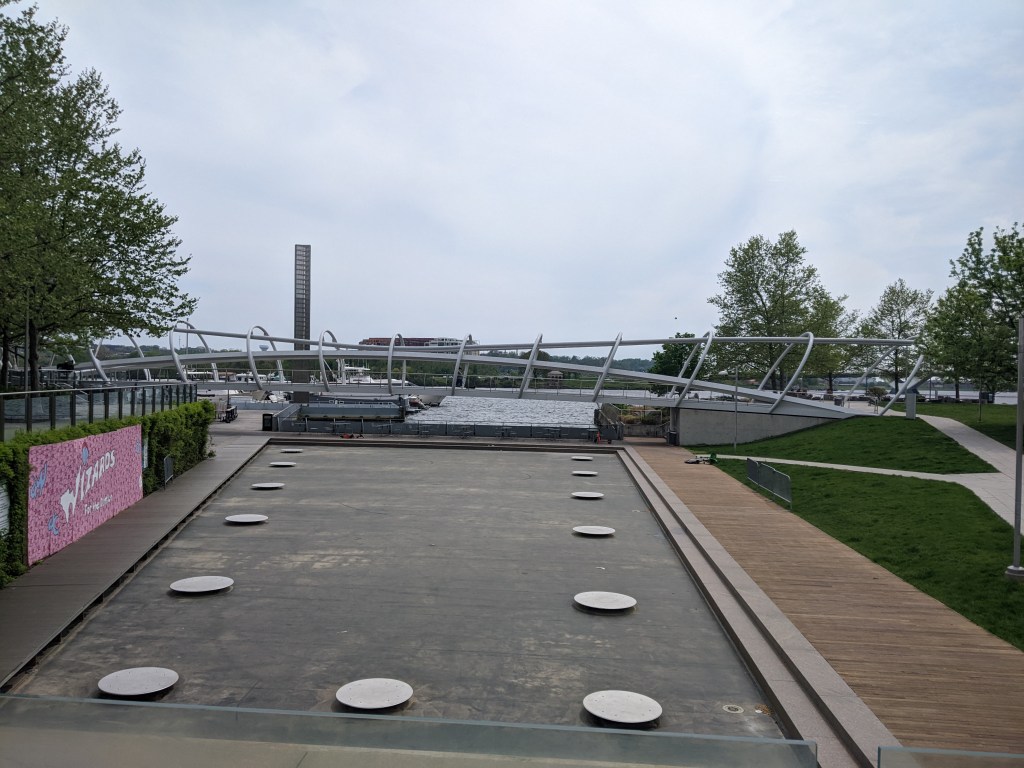
The Yard Park Bridge is a highly photogenic bridge, perhaps rivalling London’s Millennium Bridge. It crosses over what I think are the remnants of the Washington City Canal, most of which has been paved over. The paved portion visible from the Yard Park Bridge reminded me of the portions of the Erie Canal in Buffalo paved over for a skating rink and other recreational purposes.
Bridge over an unknown canal
Old O Street Pump Station
New O Street Pump Station
Yard Park Bridge exterior 1
Yard Park Bridge exterior 2
Inside the Yard Park Bridge
Yard Park Bridge opening
Paved-over vestiges of the Washington City Canal 1
Paved-over vestiges of the Washington City Canal 2
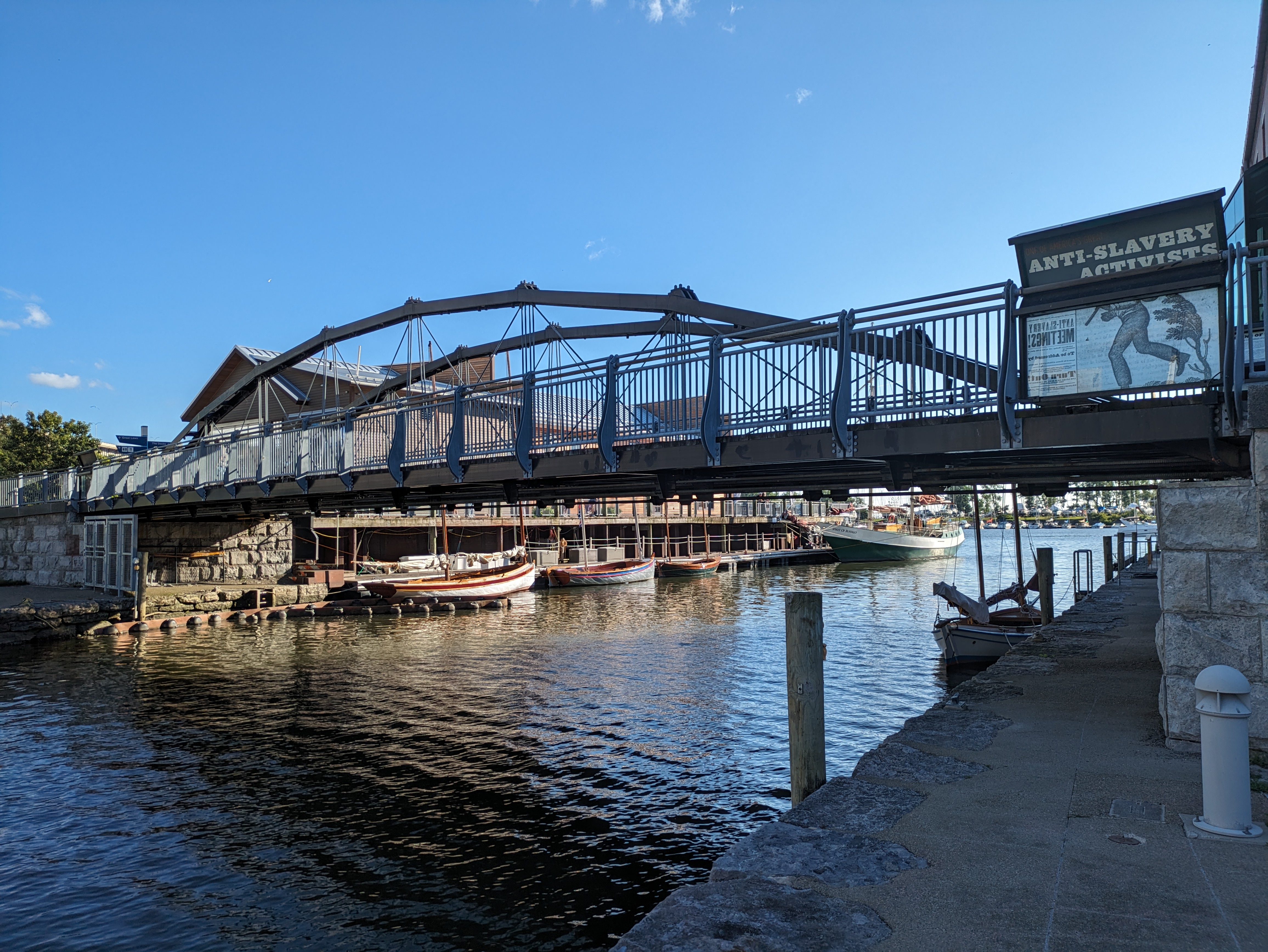
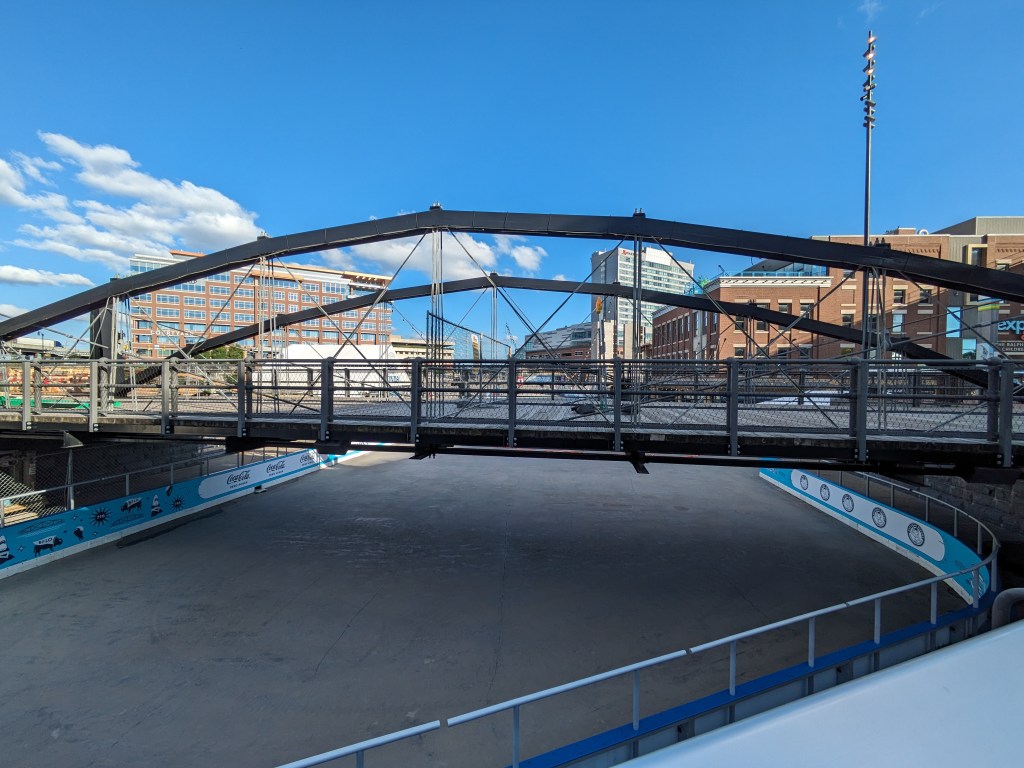
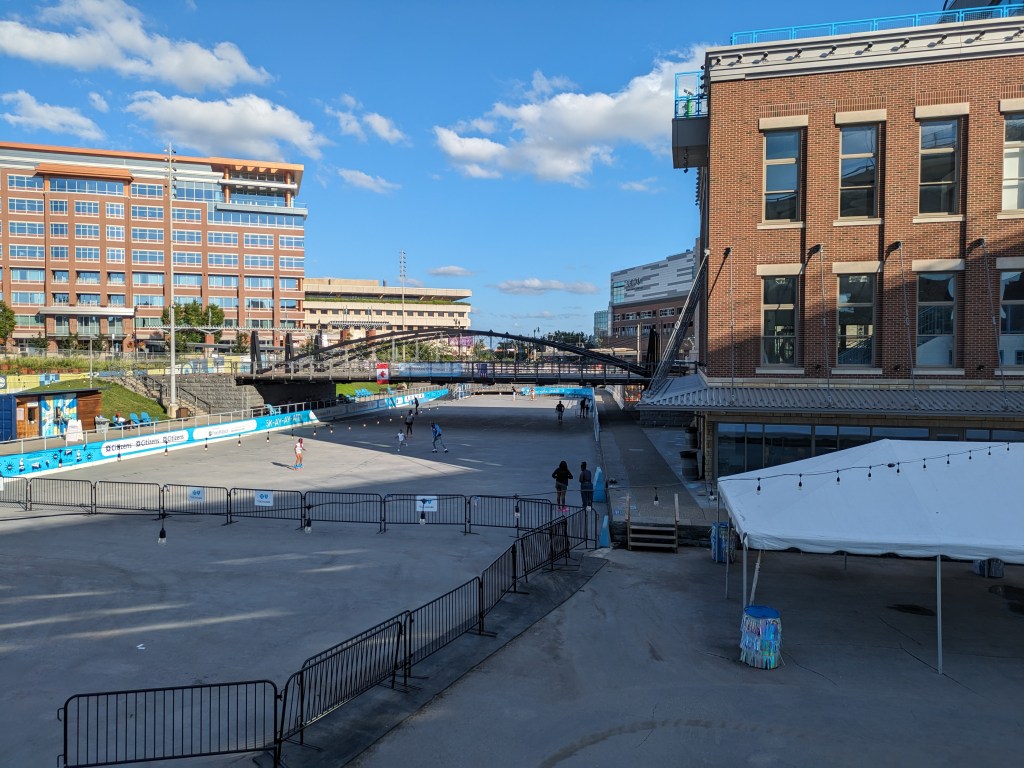
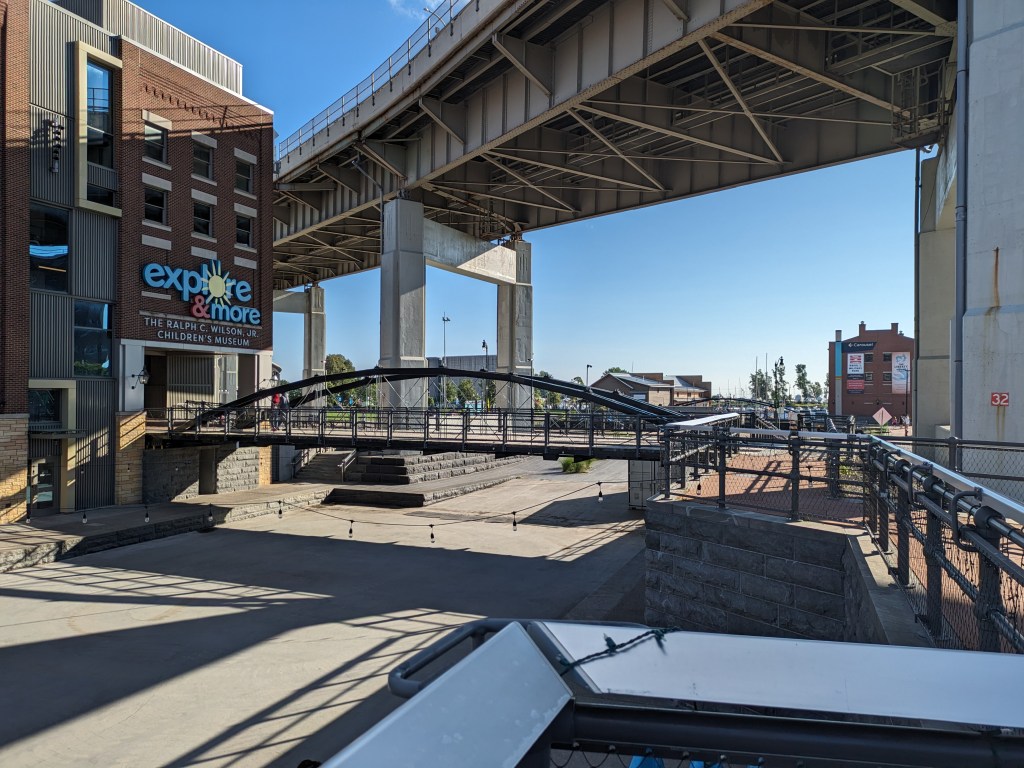
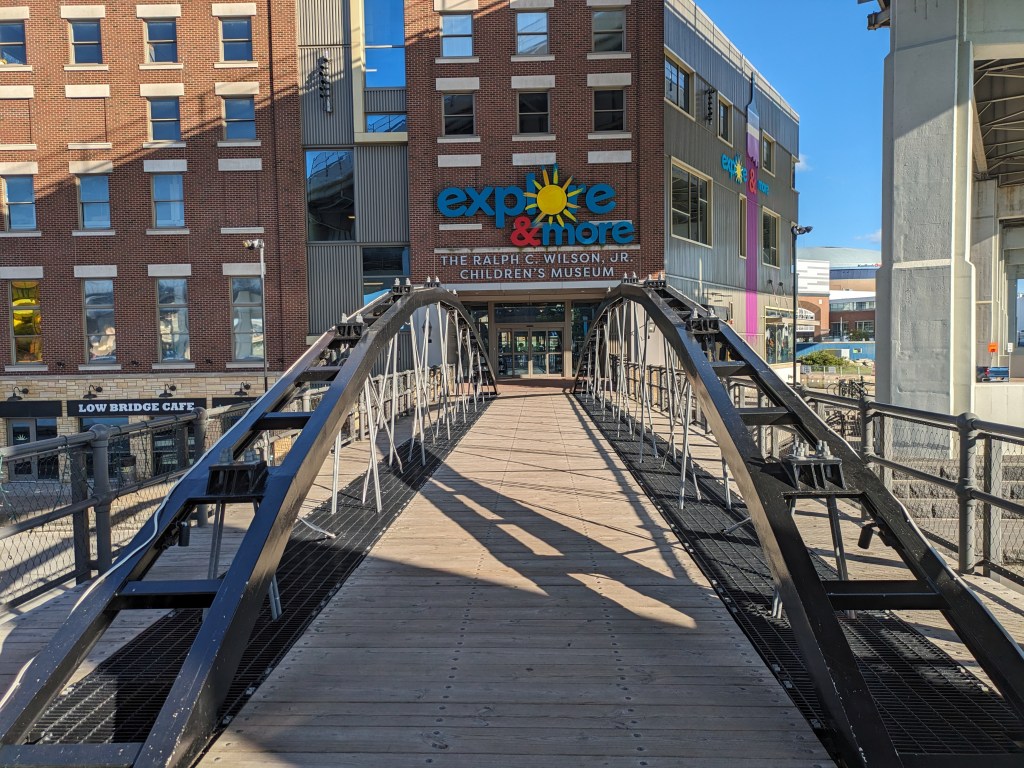
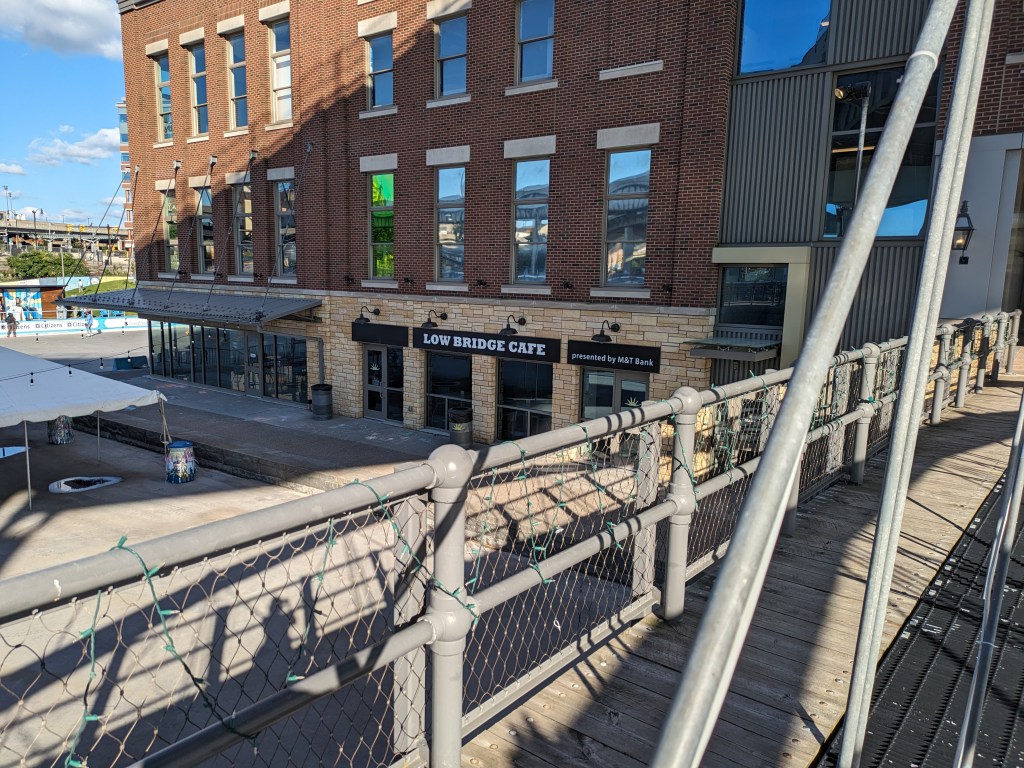
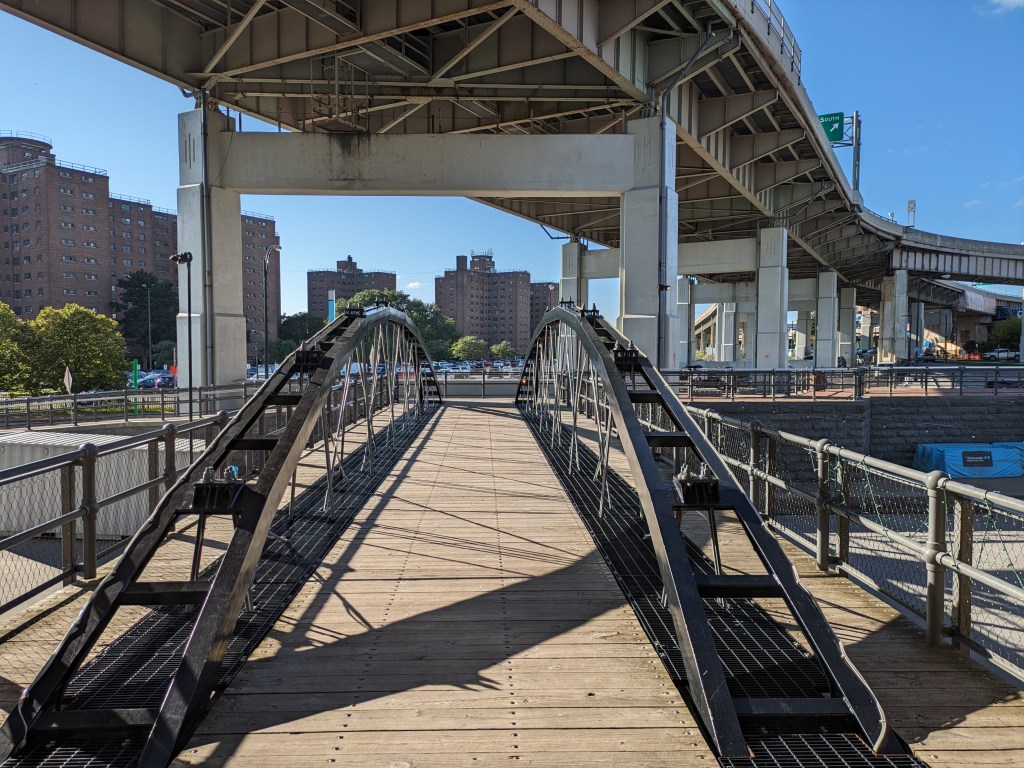
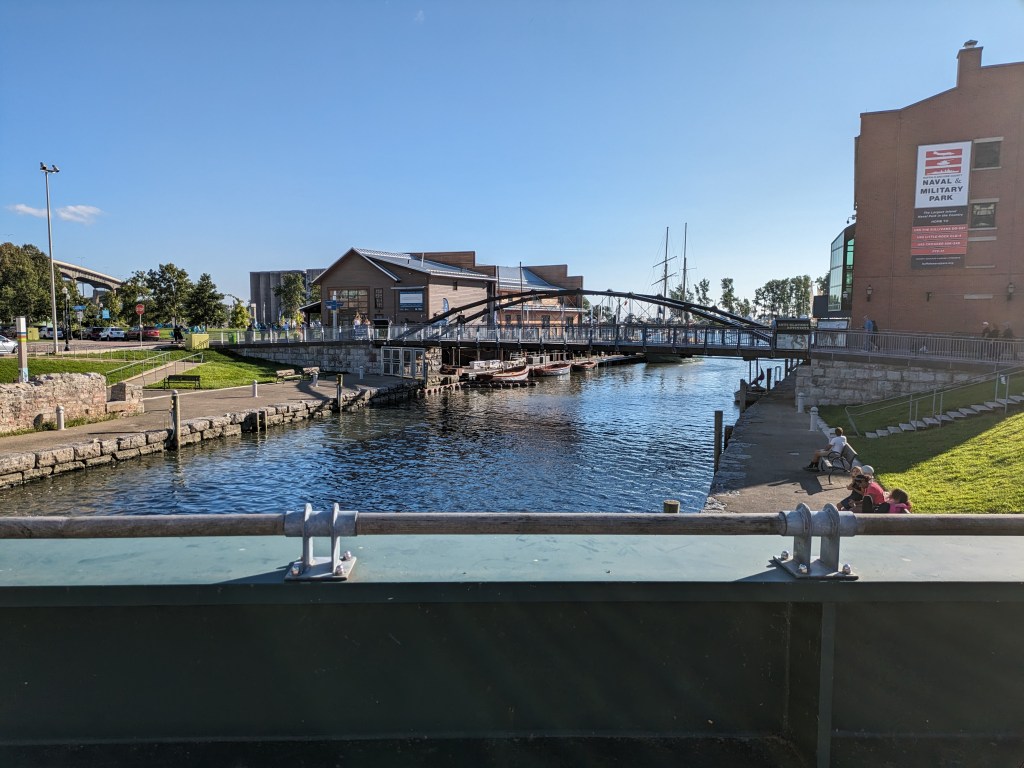
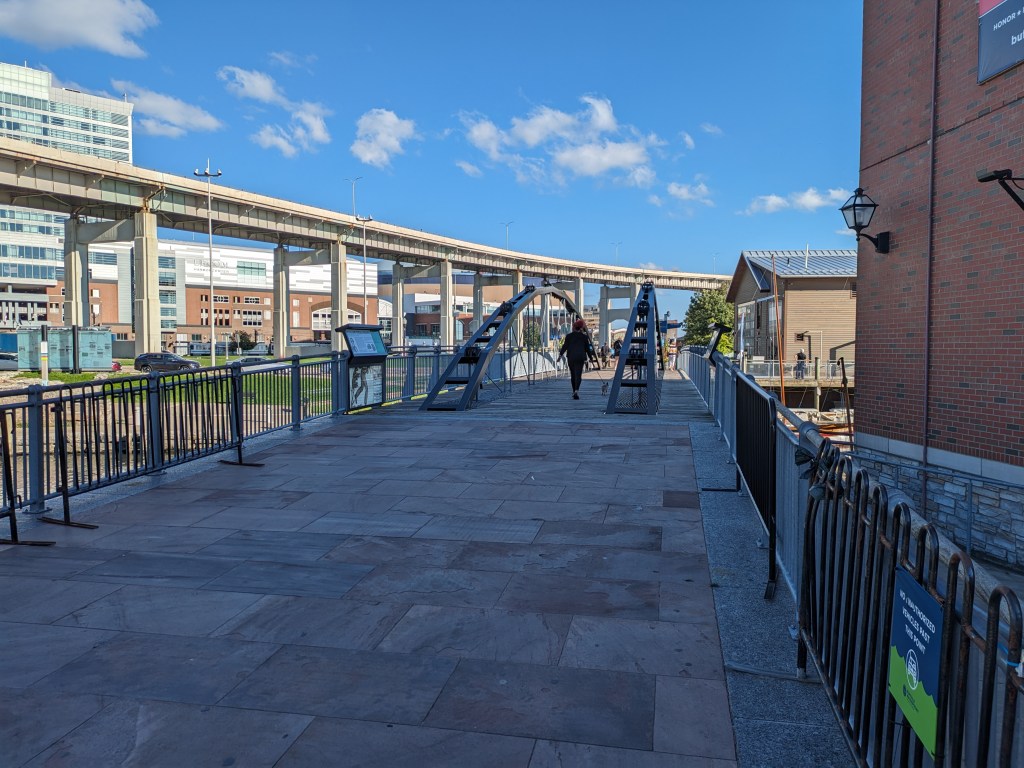
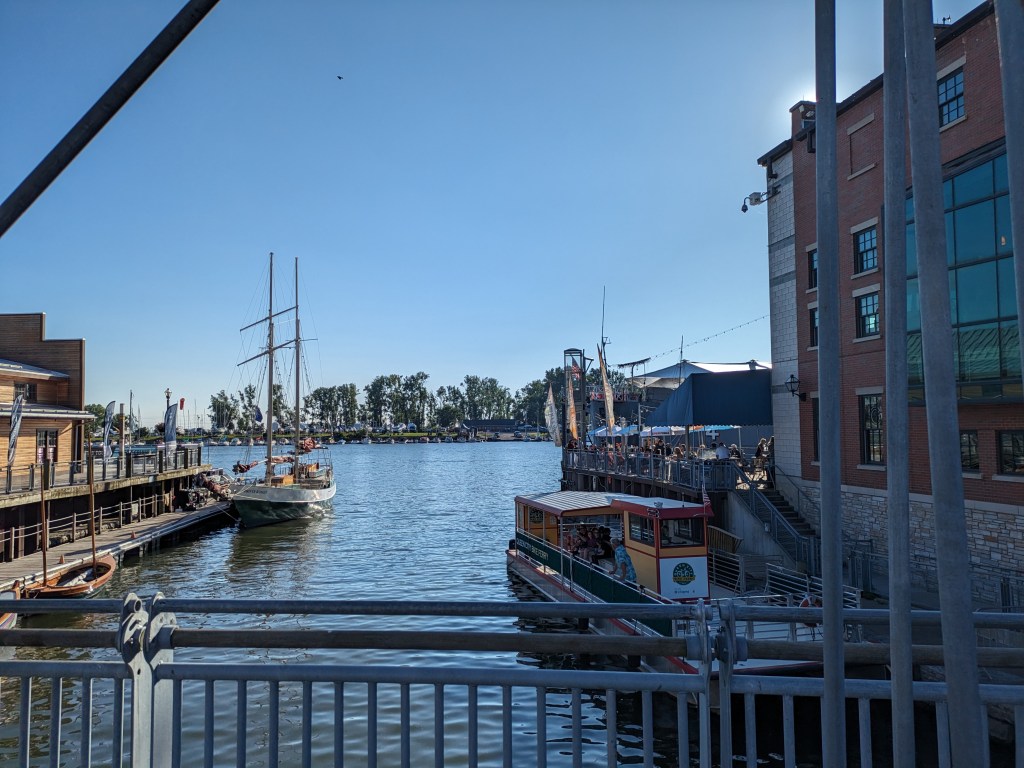
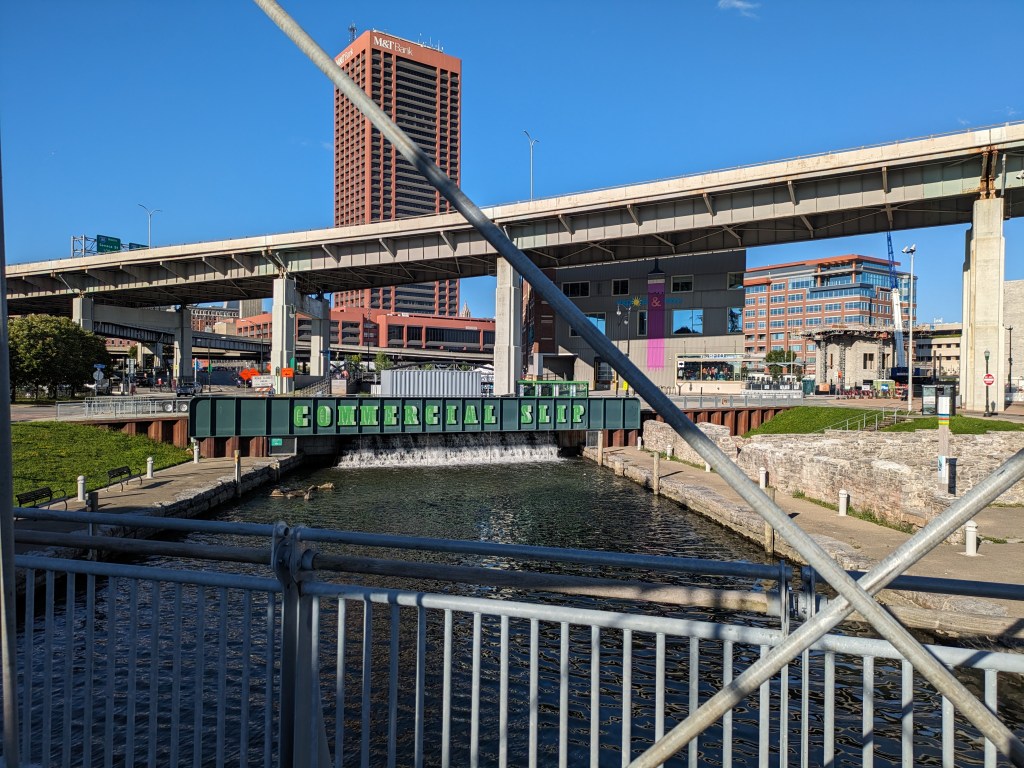
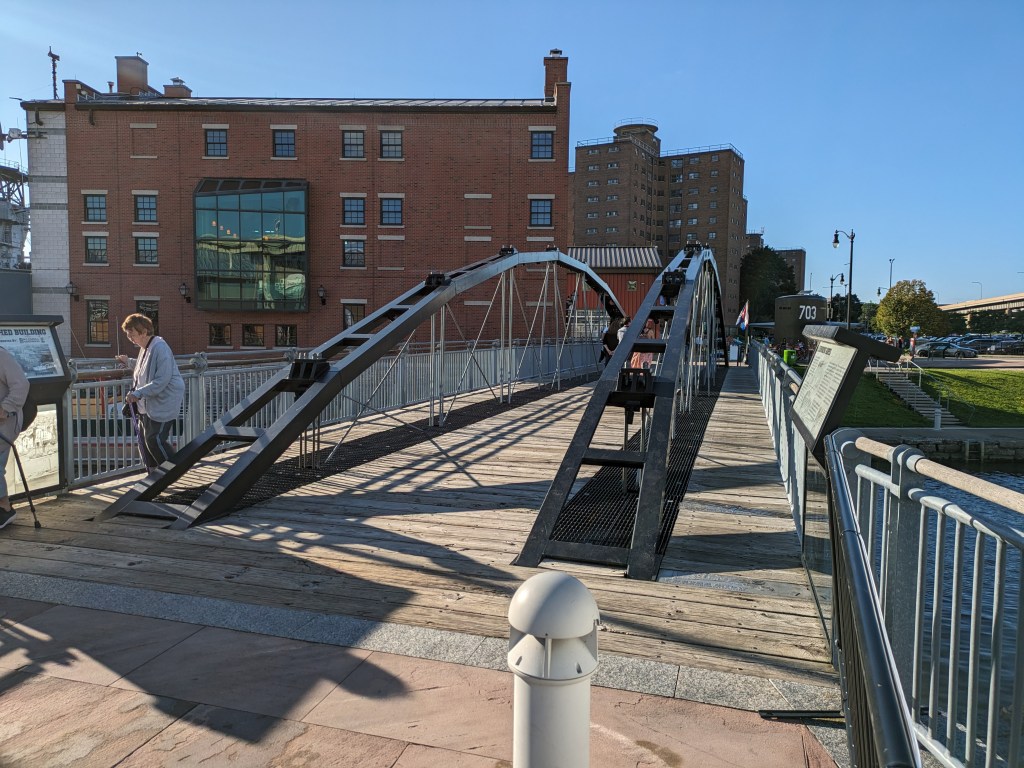
There are several pedestrian-only bridges at Canalside, Buffalo. They pass over the end of the Erie Canal, a portion of which has been paved over with a skating rink. When I was there, one of these bridges was closed due to construction and I couldn’t figure out how to get to another one. I did walk over two others of these pedestrian bridges – one over the paved portion and one over the water portion.
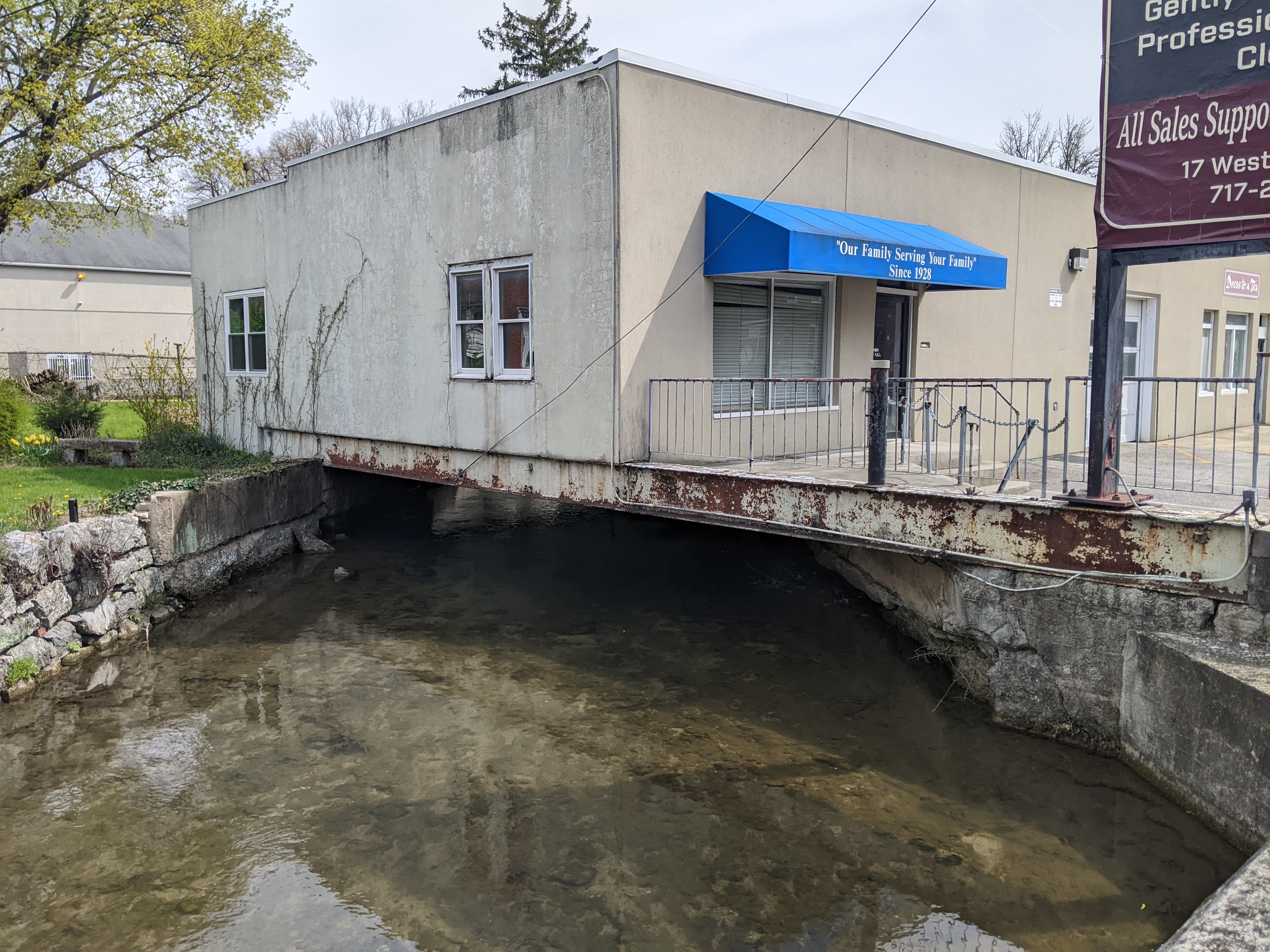
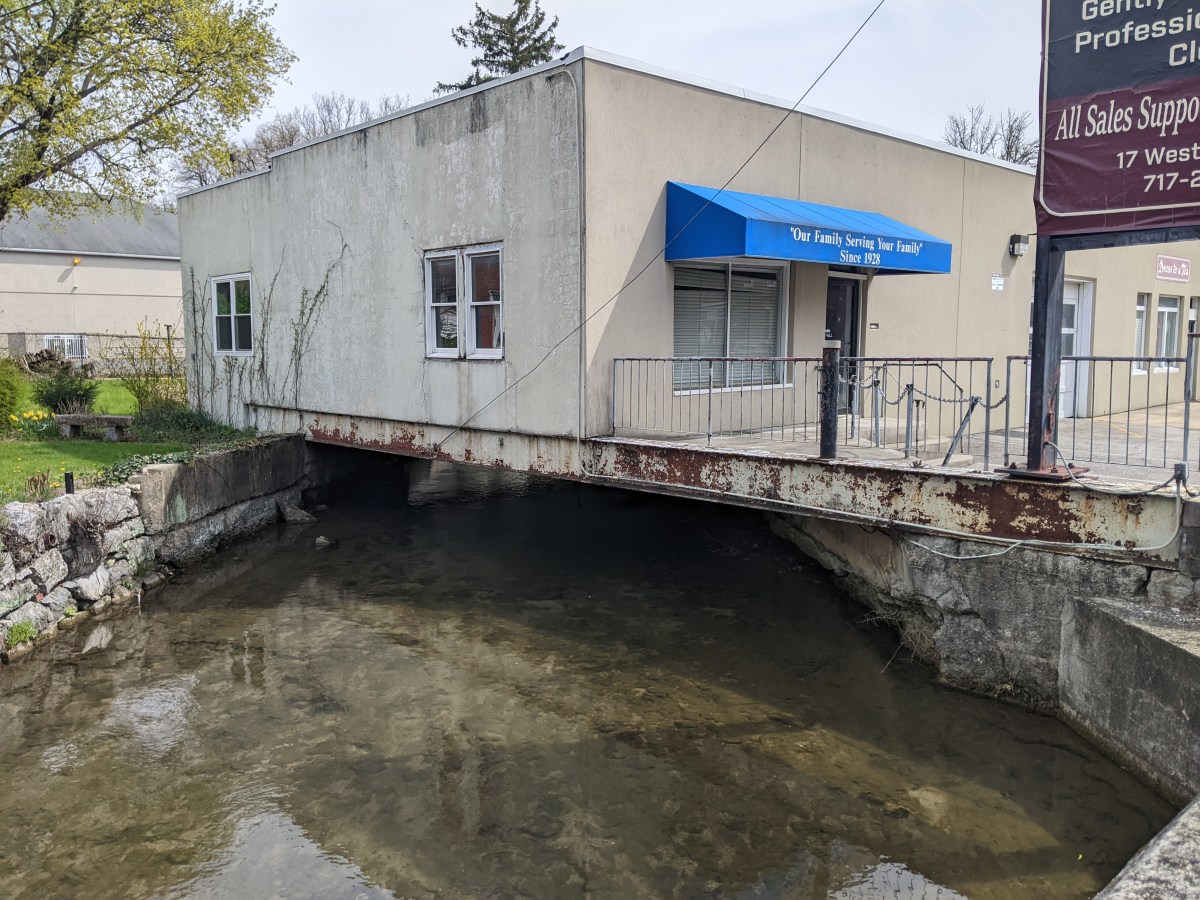
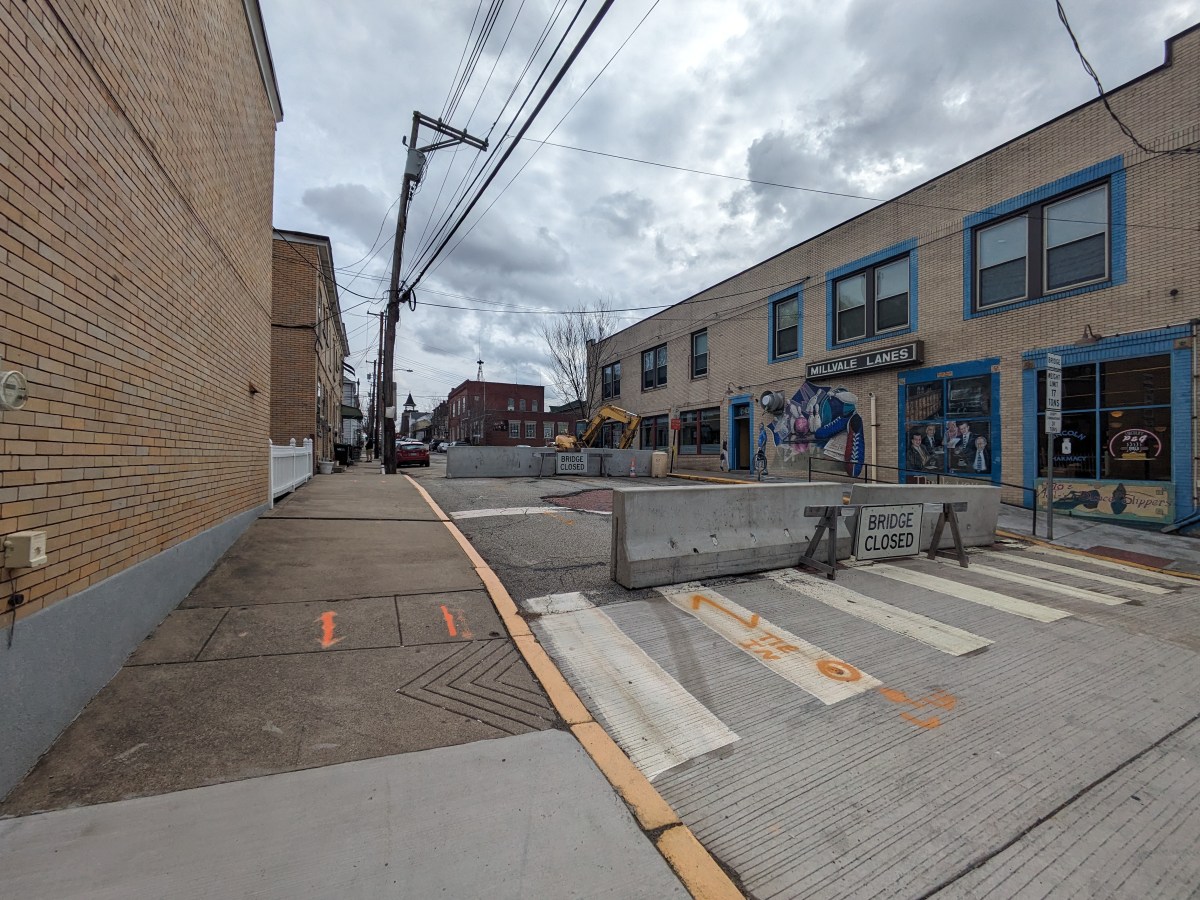
As I continue to explore the question “What is a Bridge?” I find that there is a structural, or form, perspective and a more philosophical, or function, perspective. In asking if the building in Chambersburg pictured above is a bridge, I earlier came to the conclusion that it is. That answer required searching beyond two standard dictionary definitions both of which required that the structure carry a path or roadway to qualify as a bridge. The Encyclopedia Britannica did not have that qualification and so I embraced their definition as I felt that this Chambersburg building and the backyards and buildings I discuss in Millvale should be called bridges. Structurally, these may be bridges, but philosophically are they bridges? Does a bridge need to allow movement across it to fulfill the purpose of a bridge?
Up to this point, I’ve been primarily focused on Merriam-Webster’s definition of bridge as a structure found in the built environment. There are many other definitions and types of bridges under their entry for “bridge,” starting with a time, place, or means of connection or transition. Other examples of “bridges” include the bridge of a nose, the bridge of a violin and other string instruments, the passage of music called a bridge that links two sections of the piece, a dental bridge, and a ship’s bridge. For each of these examples, the function of connection or transition seems to be the crucial part that makes them bridges.
In Buffalo, I also questioned the different between a structural bridge and a philosophical bridge. I proposed then that an overpass may be structurally a bridge, but philosophically if the primary purpose of the structure is to pass over instead of to connect then it is not a bridge.
Putting these ideas together, there is a difference between a structural bridge and the concept of a bridge. The Chambersburg and Millvale examples are structurally bridges, I believe, but their main purpose is to expand the buildable area. They are not intended to create connection and therefore they are not bridges.
In Chambersburg, PA, a historic town along the Lincoln Highway, the question of what is a bridge comes up again. This time, the specific iteration is: “Is a building a bridge?”
This question is a continuation of the one inspired by Millvale. When I shared my thoughts on the building/bridge and backyard/bridge in that town, I focused on the fact that those bridges were hidden from sight and are likely an important factor contributing to the town’s flooding issues.
The structure in Chambersburg, on the other hand, sits in plain view. To tackle this question, I think it is time to return to the formal definition of a bridge. I looked up a definition of a bridge for the first Pittsburgh edition of this series and seemed to accept that definition at face value. I returned to a definition of a bridge in the second Chicago definition to help define what a viaduct is. I again did not question the definition of bridge. Perhaps it is time to change that?
Merriam-Webster defines bridge as a structure carrying a pathway or roadway over a depression or obstacle.
The Oxford English Dictionary defines bridge as a structure forming or carrying a road, path, or (in later use) a railroad, etc., which spans a body of water, a roadway, a valley, or some other obstacle or gap, and allows a person or vehicle to pass unimpeded over or across it.
Both of these definitions avoid the interaction of buildings and bridges.
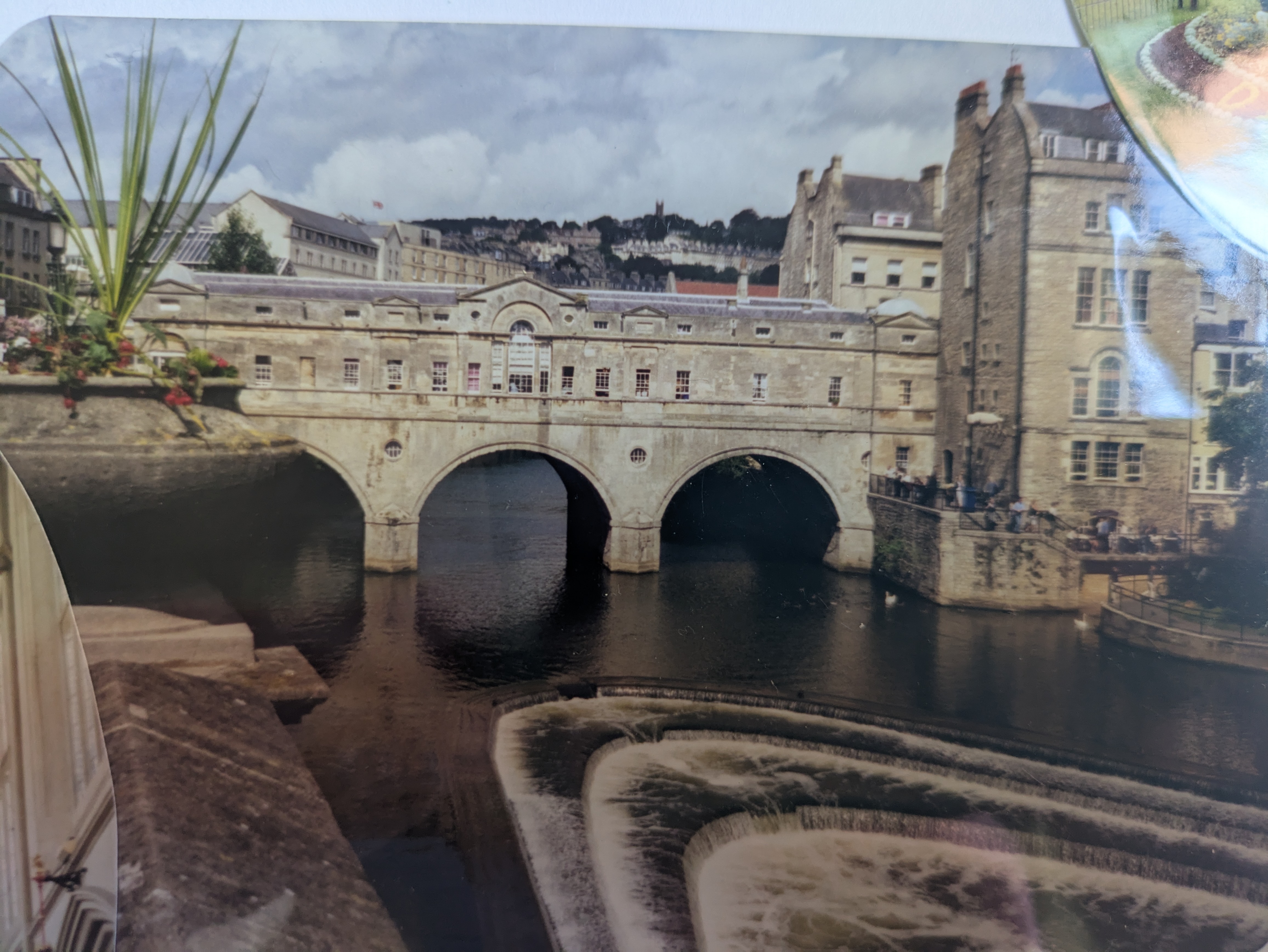
My first encounter with buildings on bridges was Pulteney Bridge in Bath, UK (photo of photo below). I was 13. It would be over a decade before I would start intentionally walking bridges. At that time, I declared, “That is one of the coolest bridges I’ve ever been on. There are shops on both sides of the road. You can’t tell you’re on a bridge.” (Notice the echoes of my later musings on the “bridges” of Chicago.)
The next most memorable building/bridge encounter was in Istanbul. The Galata Bridge is a 2-decker bridge with the lower deck full of restaurants with open seating facing the Bosphorus.
While both of these bridges also carry multi-modal roadways and therefore meet the two dictionary definitions of a bridge, they suggest the possibility of a broader definition of bridge.
As I did with viaducts, I next turned to “How to Read Bridges” by Edward Denison and Ian Stewart. Interestingly, they do not provide a definition for a bridge. They discuss bridge types – if the Chambersburg building is a bridge, it would be a beam bridge. They also discuss bridge uses. “Bridges are designed to satisfy a wide range of different uses from the obvious, such as vehicle, railroad, cycles, and pedestrian traffic, to the more obscure, such as carrying water. Many are even designed to cater to multiple uses.” (68) While they hint at “more obscure” uses, their chapter on uses goes on to talk specifically about pedestrian, water, vehicular, rail, and military uses. Buildings are missing from that list. However, their case studies do include Bath’s Pulteney Bridge and Florence’s Ponte Vecchio, which also includes buildings featuring shops and apartments on the bridge.
The Encyclopedia Britannica (Britannica.com) has the broadest definition of a bridge that I’ve encountered so far: Bridge, structure that spans horizontally between supports, whose function is to carry vertical loads. The prototypical bridge is quite simple – two supports holding up a beam – yet the engineering problems that must be overcome even in this simple form are inherent in every bridge: the supports must be strong enough to hold the structure up, and the span between supports must be strong enough to carry the loads.
By that criteria, the building/bridge in Chambersburg meets the definition of a bridge as it is a horizontal structure “whose function is to carry vertical loads.”
Moreover, this criteria suggests a broader interpretation of my framing question than I intended. “Is a building a bridge?” was intended to ask if a building built over a stream is considered a bridge. However, I wasn’t that specific in my wording and reading Britannica’s description of a bridge, it sounds like any building floor that is not the equivalent of concrete poured on the ground would count as a bridge. . . .Supports, beams, arches, piers, and cantilevers are all elements used in both bridges and buildings. . . .And so, the answer to the unintended broader question of “is a building a bridge?” may in fact be “yes.”
While there absolutely are structural similarities between buildings and bridges, I am not comfortable with a definition of bridge so broad that it includes all multi-story buildings and perhaps even some single-story ones. Perhaps a common distinguishing element between a building and a bridge is that bridges are designed to allow the free passage of air underneath the horizontal structure. That would make my working definition of a bridge: a structure that spans horizontally between supports, whose function is to carry vertical loads and that allows unobstructed passage of elements, objects, or animals, etc., underneath.
By this version of a definition of bridge, the building in Chambersburg is a bridge, the backyards and buildings in Millvale are likely bridges (assuming the stream has unobstructed passage below them all), but Heth’s Run Bridge while it was buried was not a bridge.







 urbantraipsing