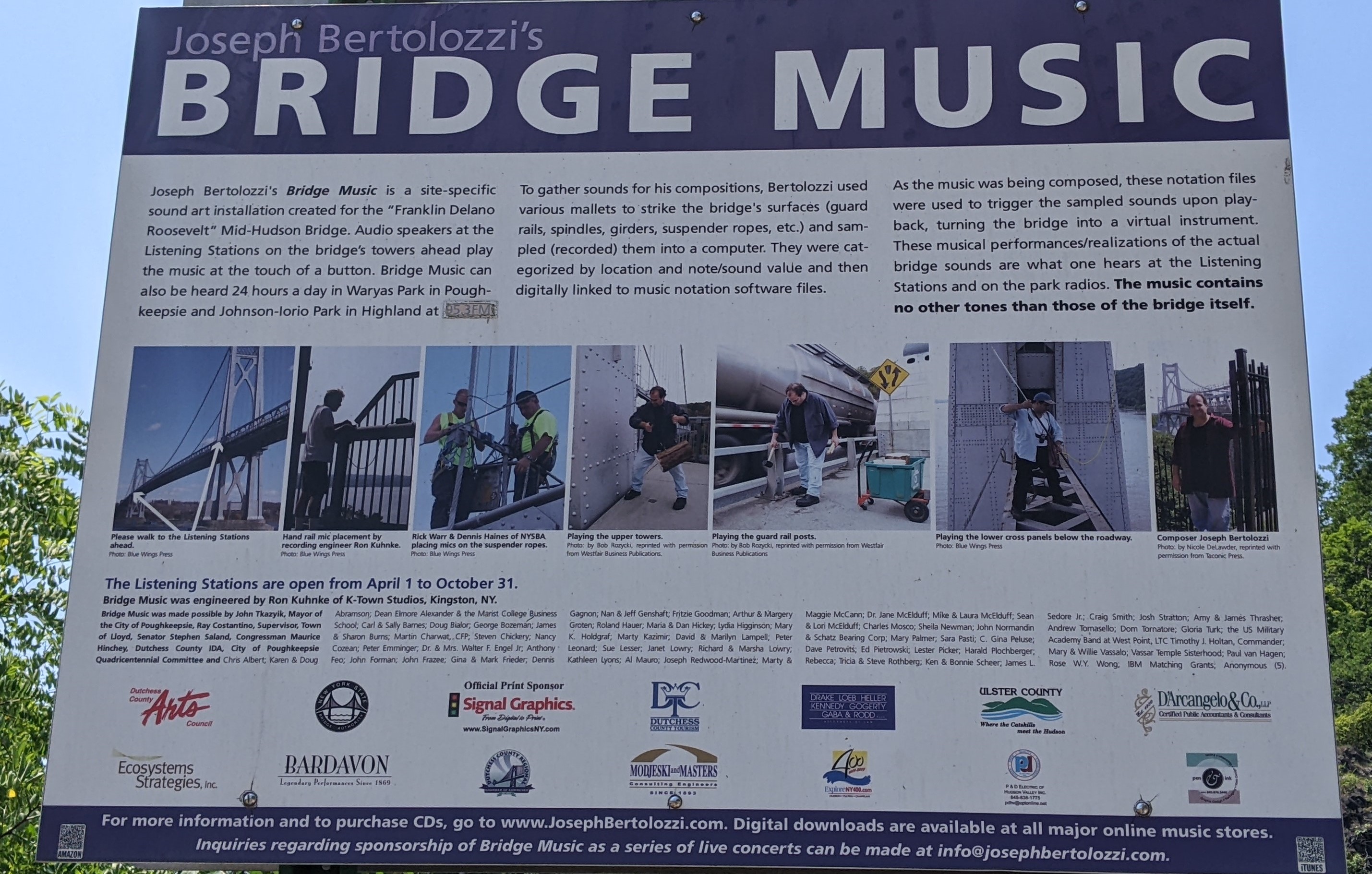
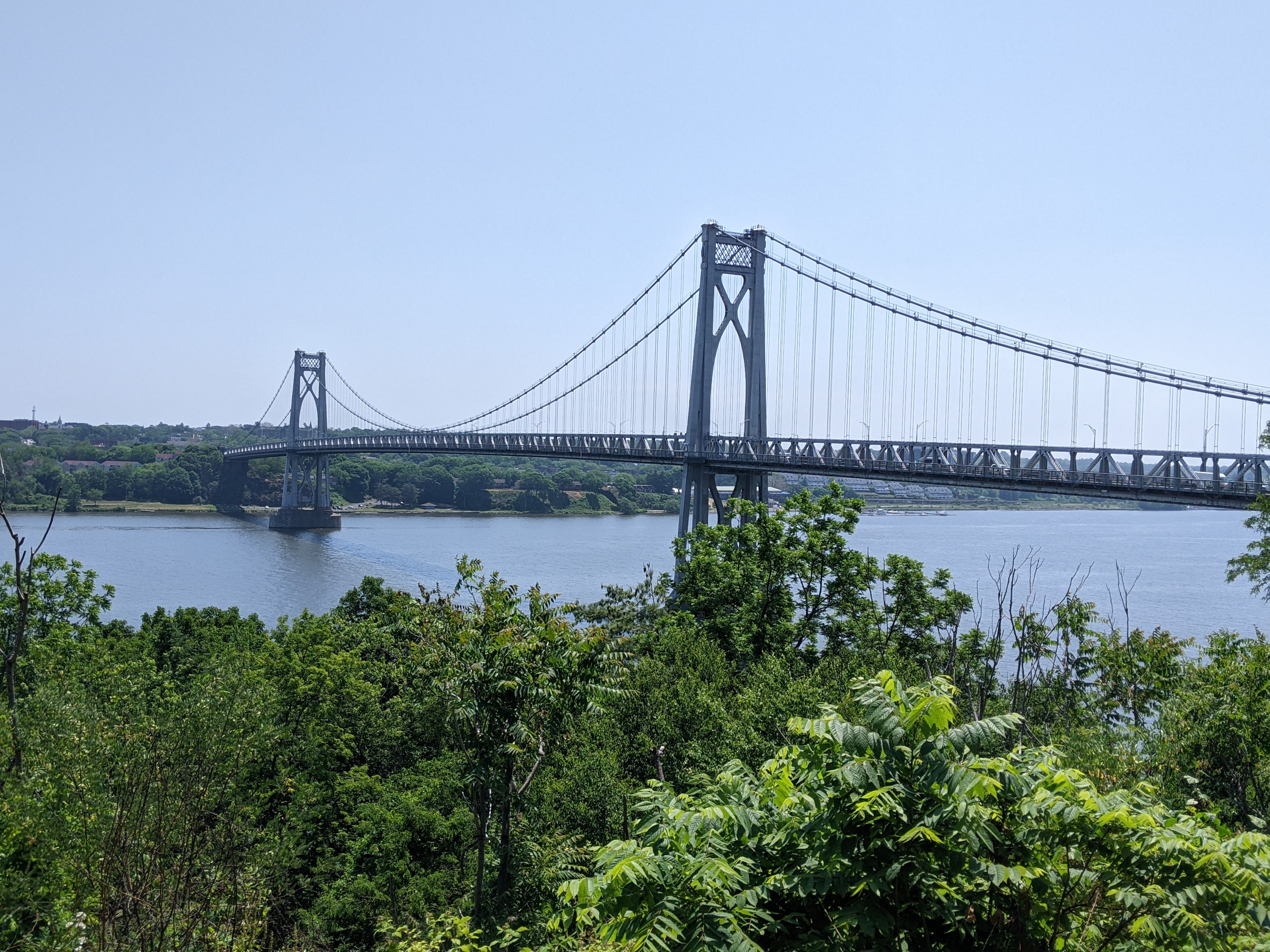
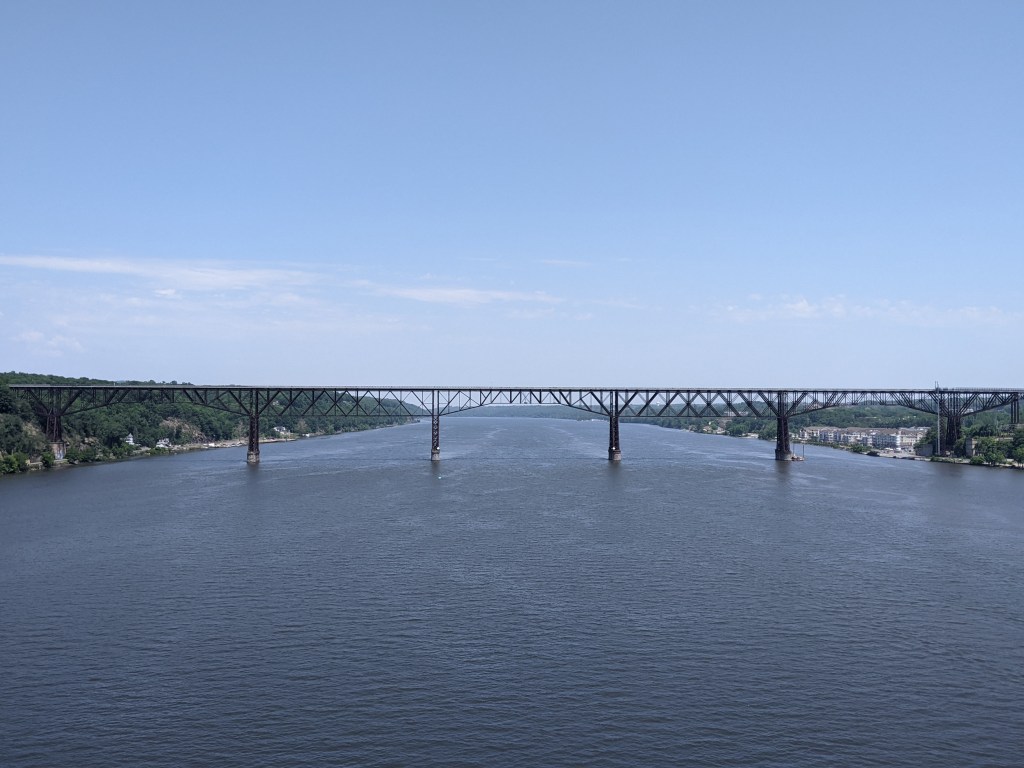
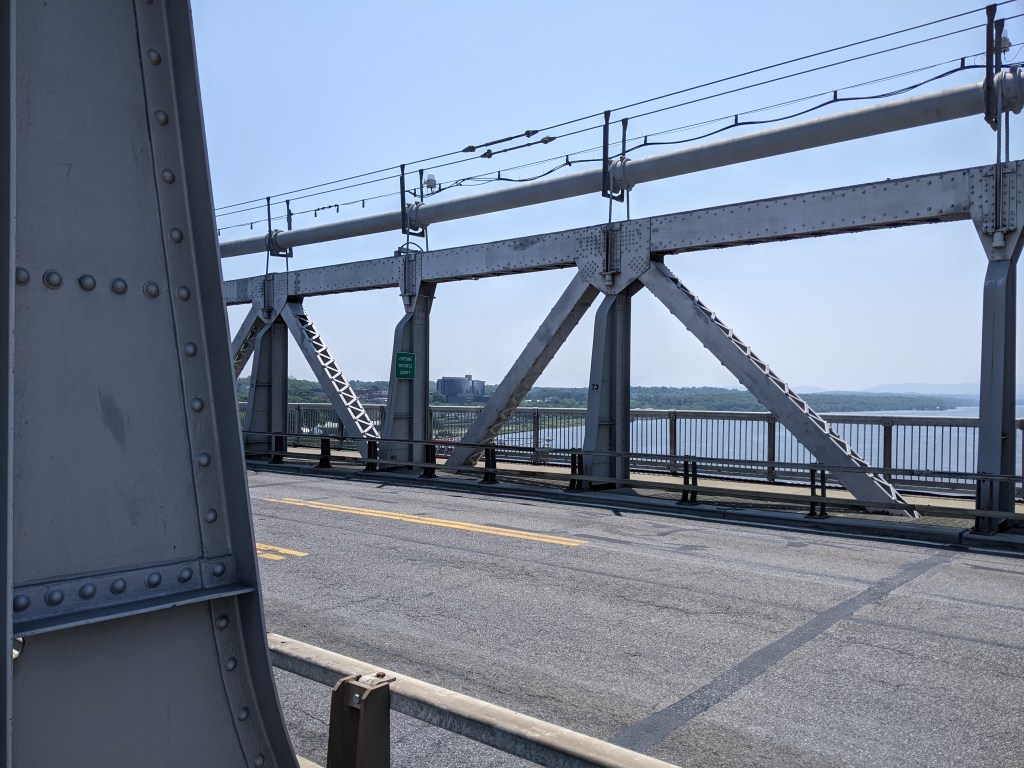
The Mid-Hudson Bridge has a unique additional feature. In 2009, Joseph Bertolozzi used the bridge as the sole instrument in his sound-art installation Bridge Music (see Bertolozzi’s official website for more information). There are two listening stations on the bridge, one at each pier, and those driving across the bridge can also access the music on their car radio. The full Bridge Music is available on CD and Bertolozzi has several YouTube videos of the music. Below is a sample of the music I captured in a video with views of the Hudson River and the two bridges (the Walkway Over the Hudson is the second bridge).
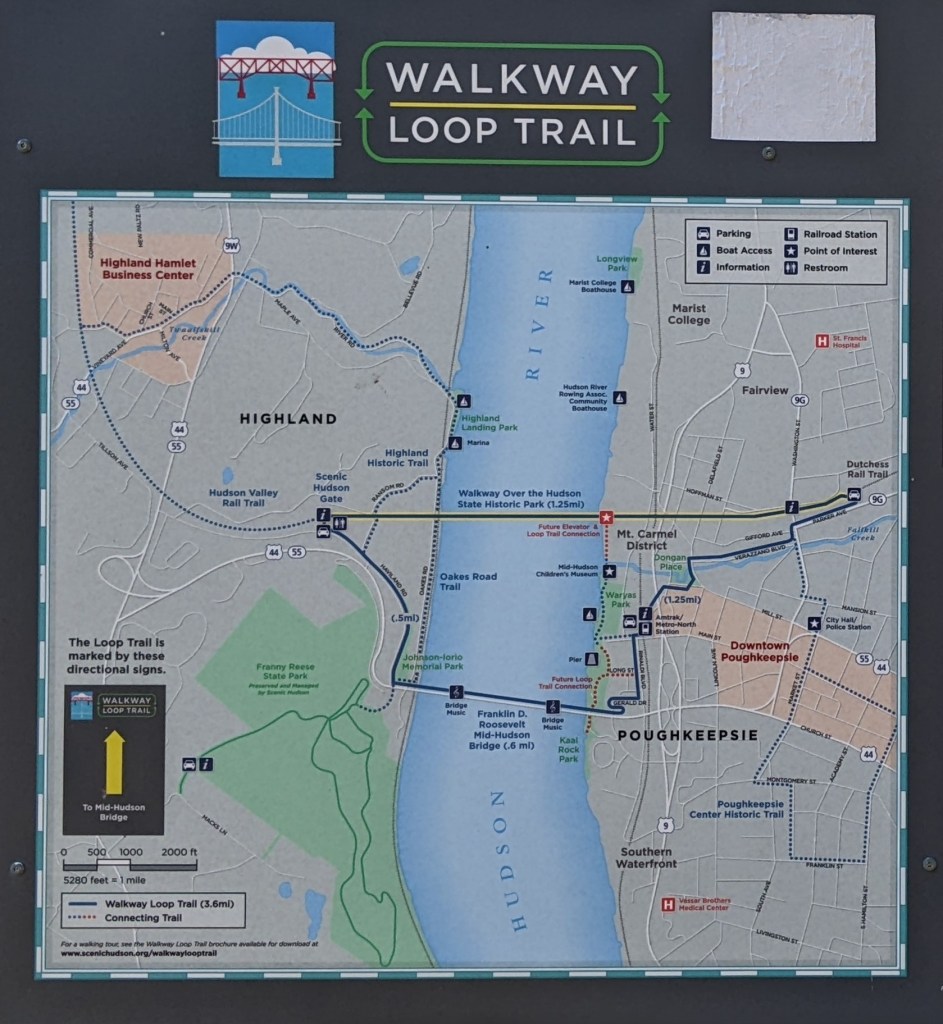
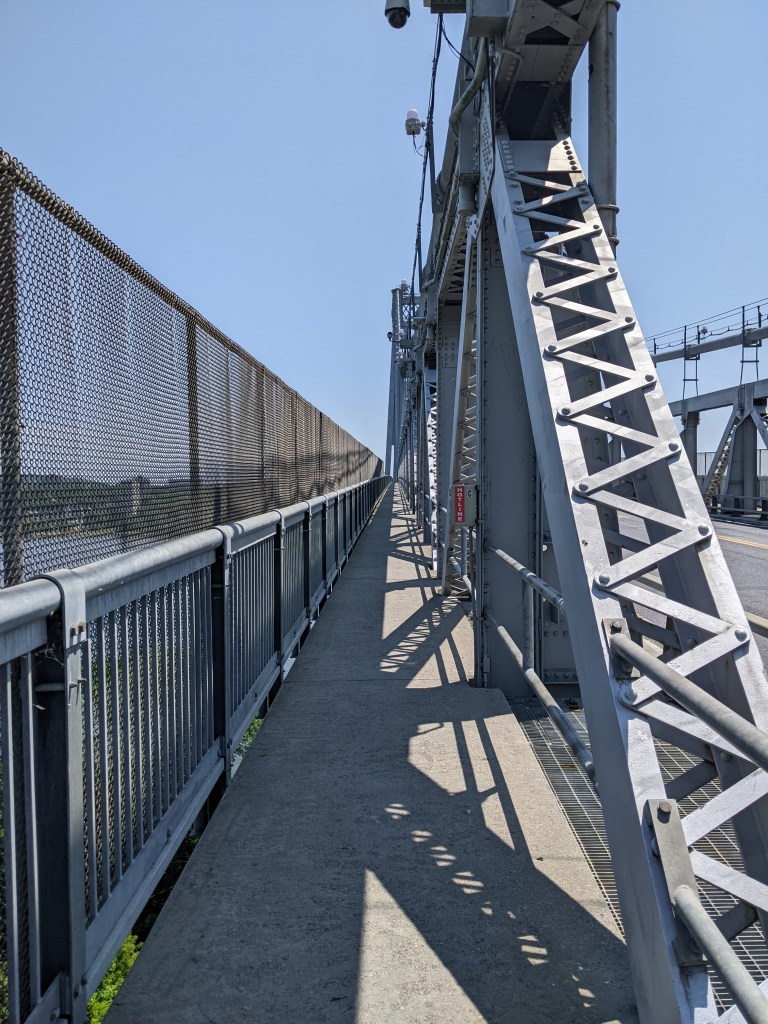
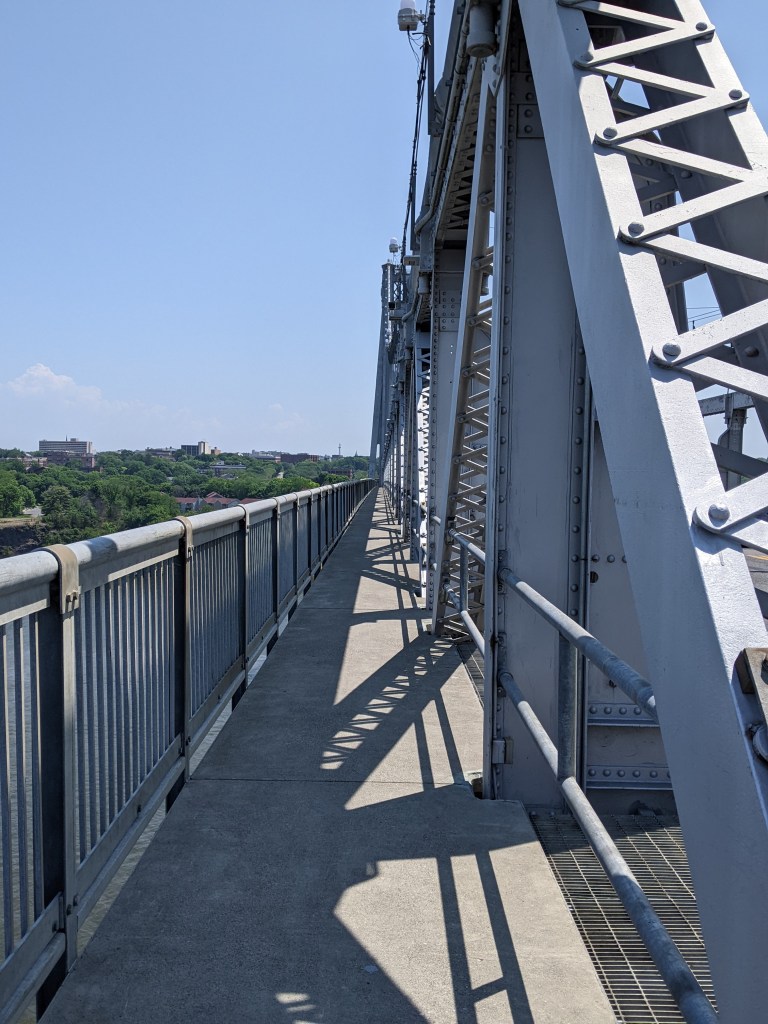
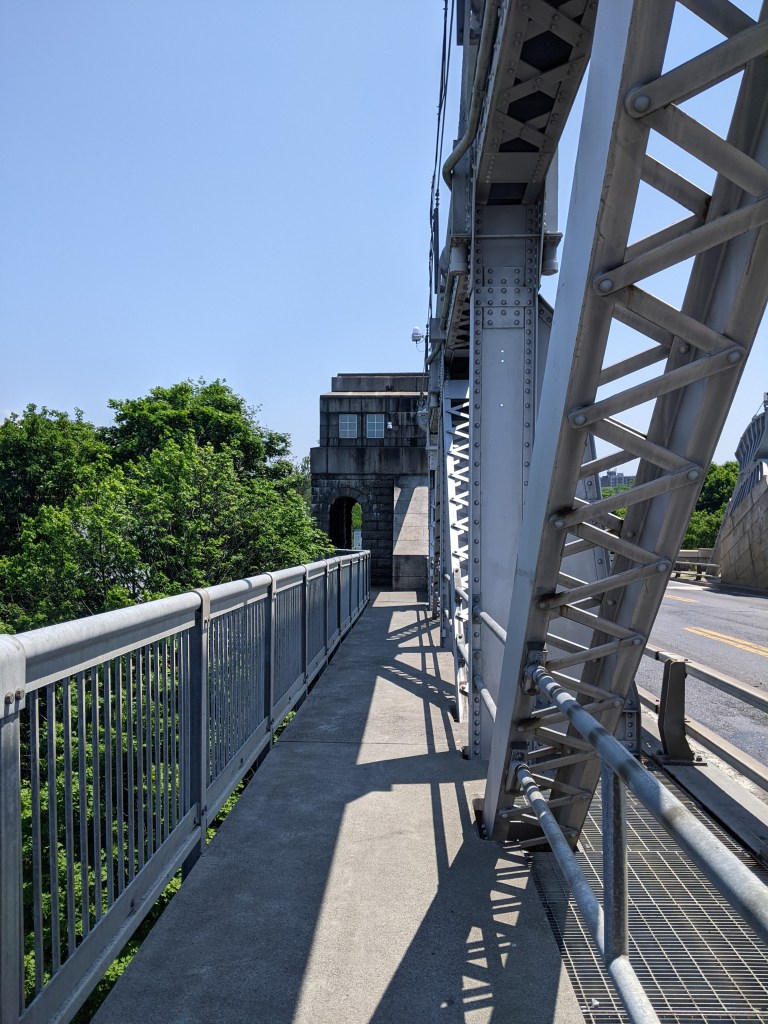
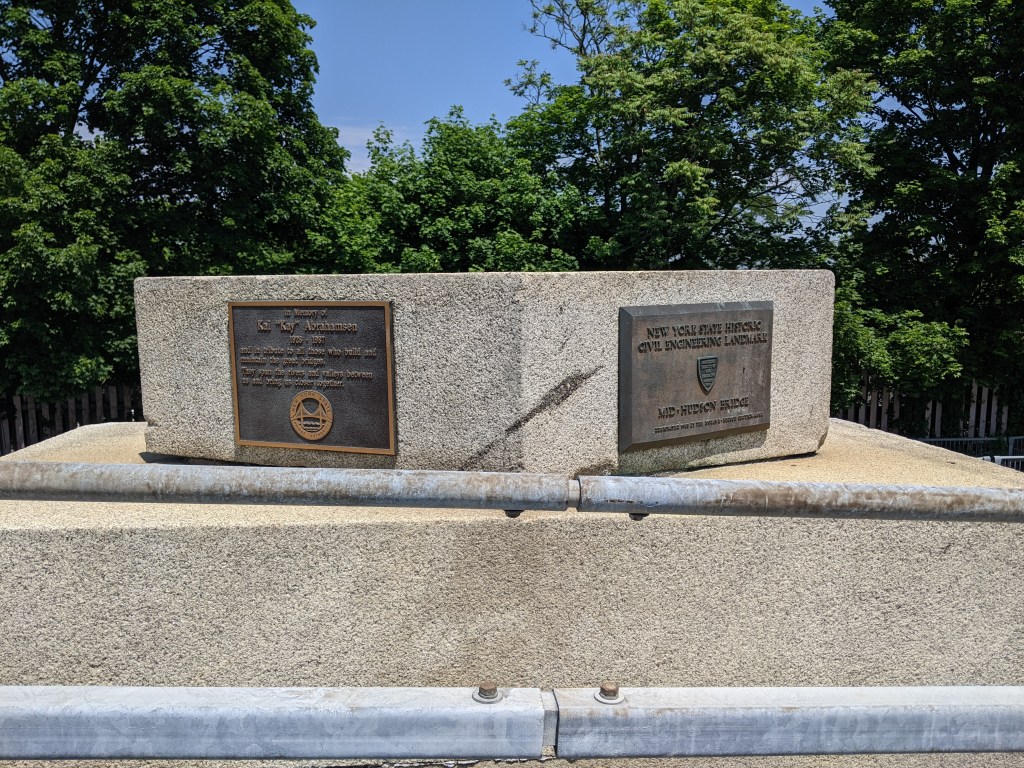
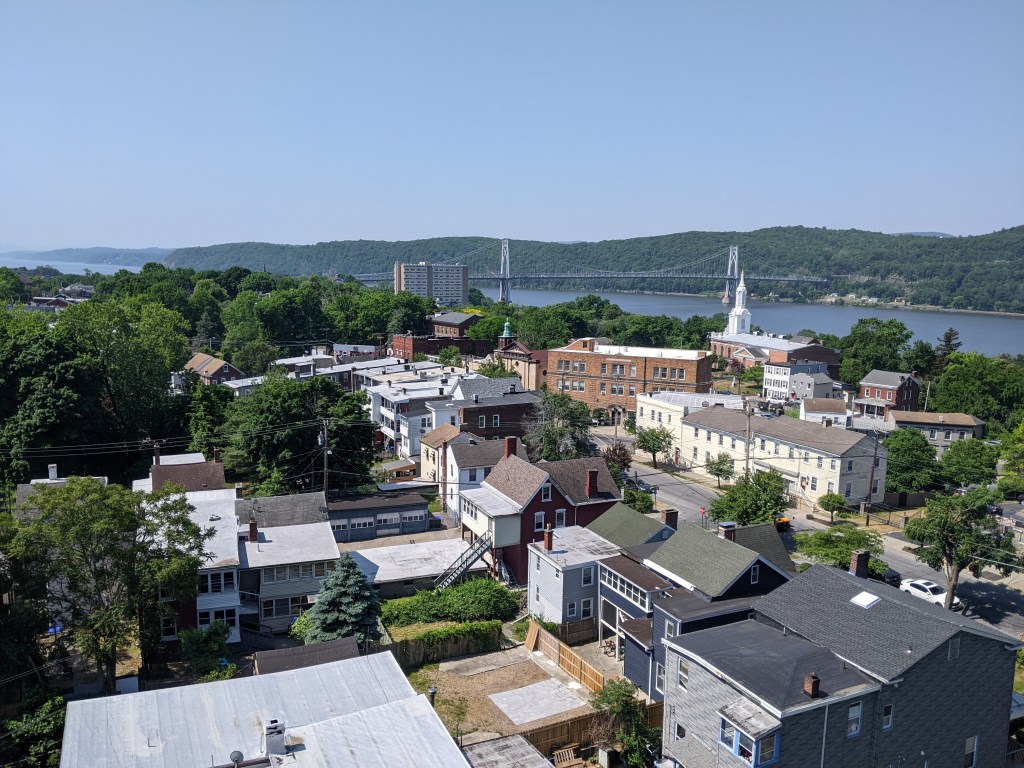
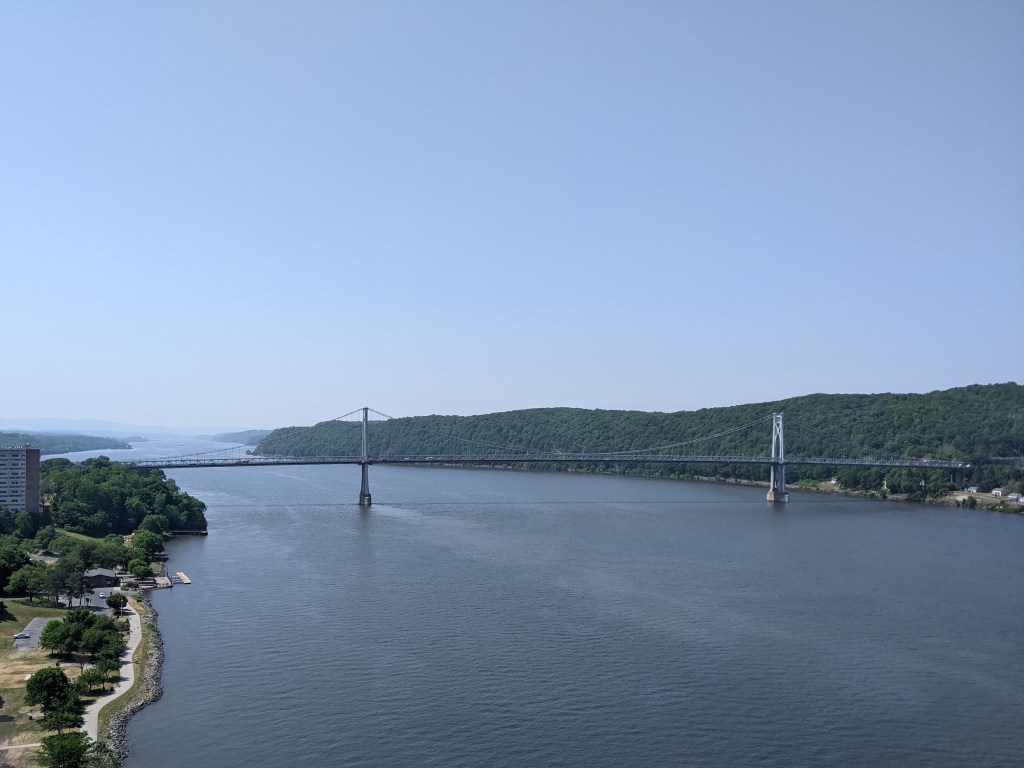
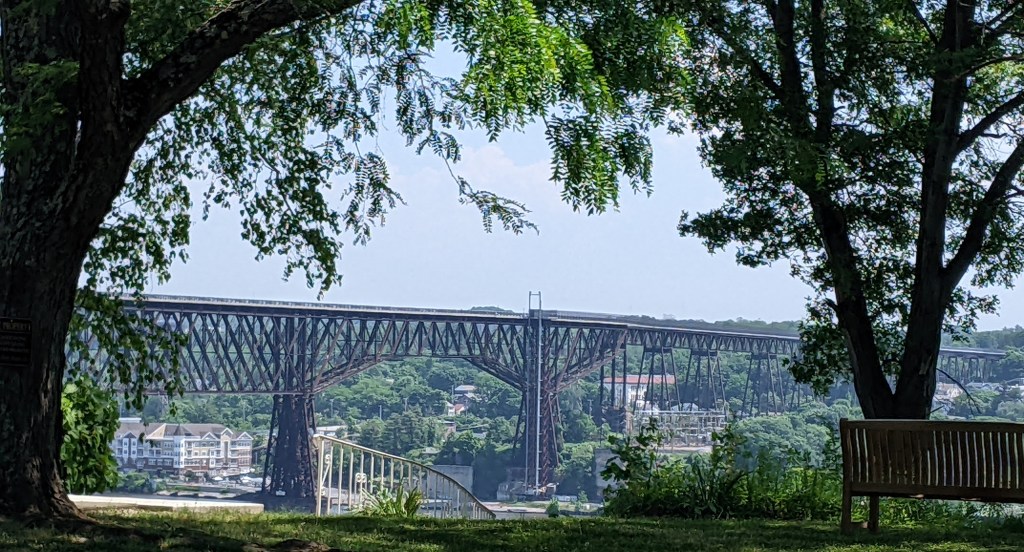
Half a mile downriver from the Walkway Over the Hudson (slightly closer as the crow flies) is the Mid-Hudson Bridge, so named for being halfway between New York and Albany. After being completely exposed to the noonday July sun on the Walkway Over the Hudson, I learned the relief of shade that can be had on a bridge, particularly when it incorporates some truss-like structure like the Mid-Hudson Bridge. I remember being completely in the shade while walking the Manhattan Bridge, but as that was in late December it had a completely different effect.
Taking in the Mid-Hudson Bridge added significantly to the length of my walk, but was worth it for the shade and the ability to add another bridge to my ever-growing list of walked bridges. I also encountered signs for “Bridge Music” on my way to this bridge which intrigued me and which I’ll explain further later.
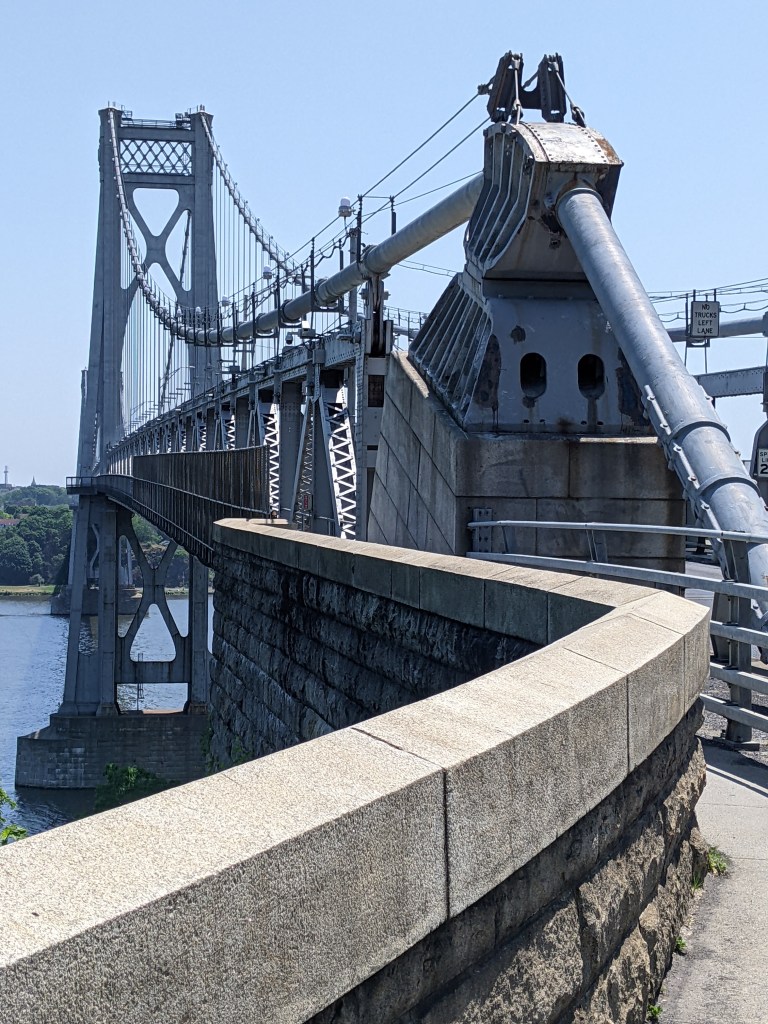
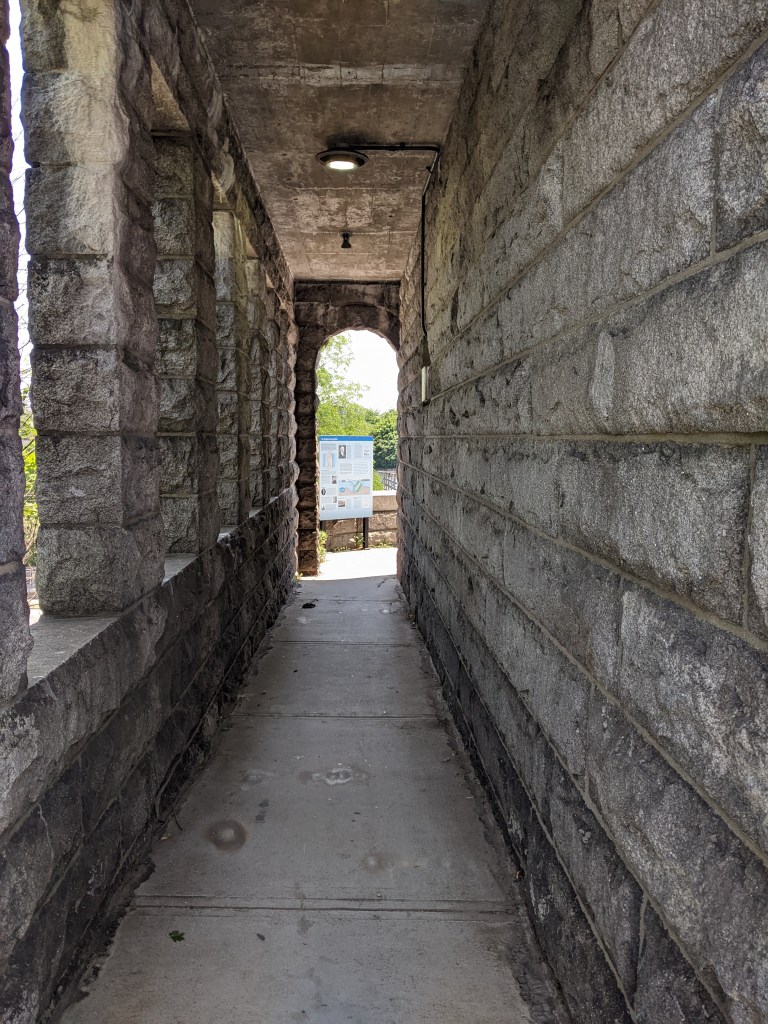
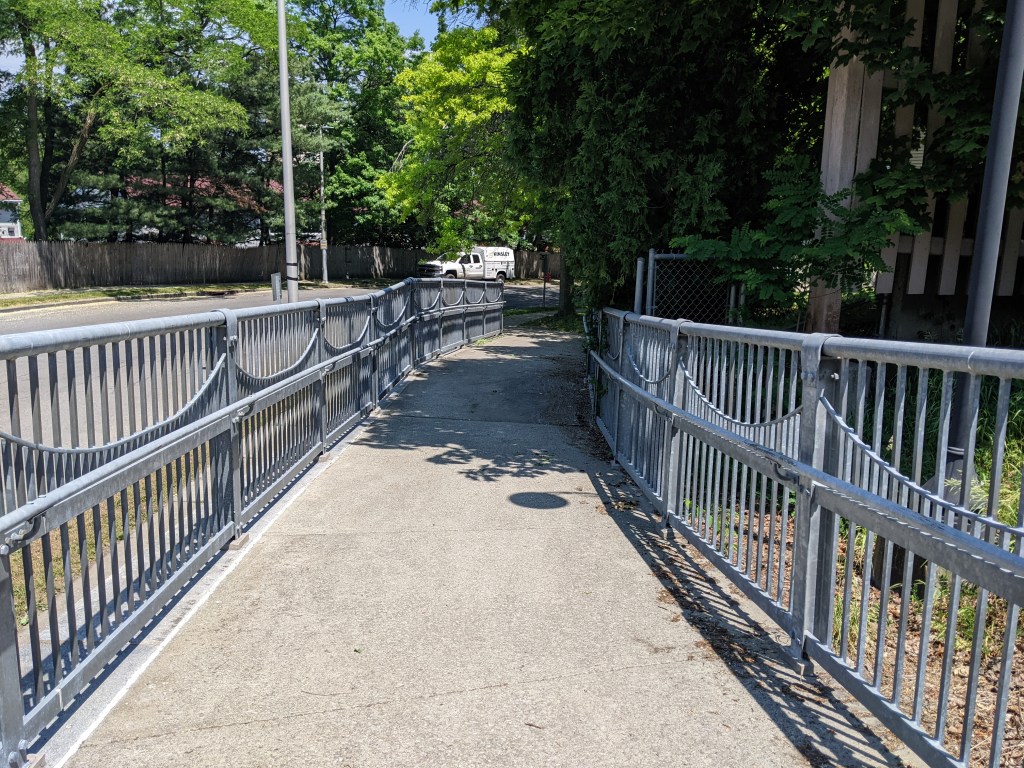
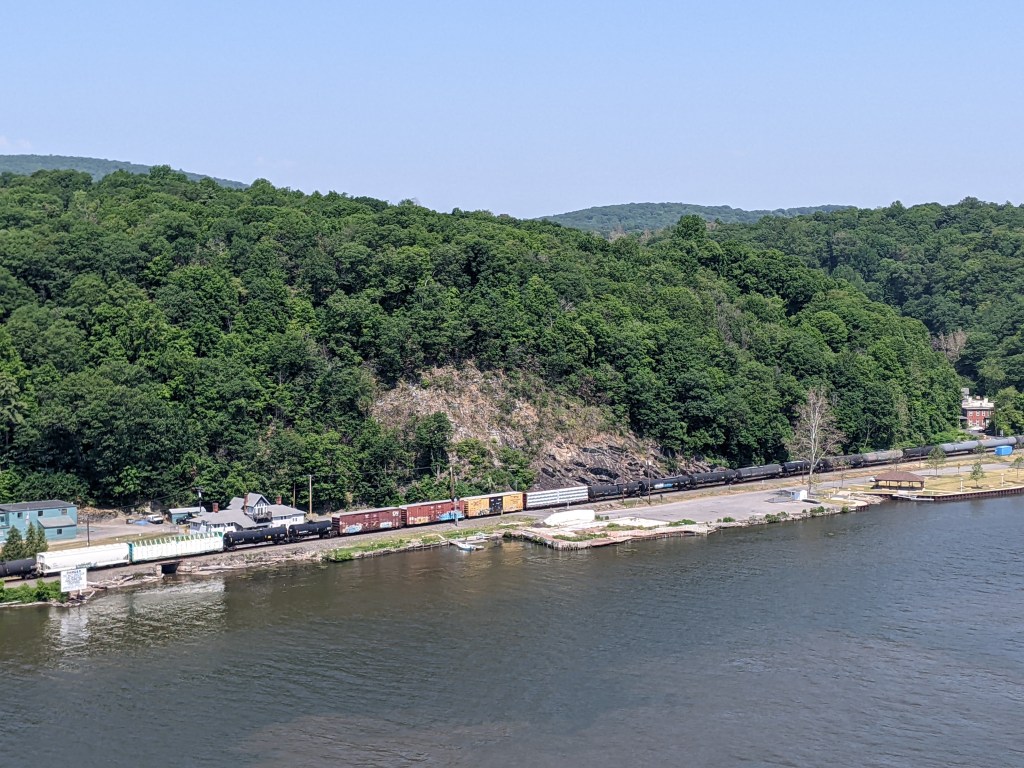
Once again, additional fencing is provided on the portion of the bridge that crosses over the railroad tracks. Other than that pinch point and one or two other pinch points, my photographs suggest to me that this was a very pleasant bridge to walk. And overall, I think it was, but I was quite spooked by the number of signs warning pedestrians not to aggravate the nesting peregrine falcons on the piers. It wasn’t clear from these signs what behaviors would be sufficient to aggravate these predators, but I took the signs to mean that these birds were more sensitive than the ones found on tall buildings in Pittsburgh and curtailed my observations of and from the bridge accordingly.
I also tested out taking video of a portion of the walk of the bridge. This is something I have been considering as another way to share the experience of bridge walking with my readers. The video is below the sample of photographs. As I am holding my phone in my hand to take the video, there is a little bounce from my gait and some other slight stability issues.
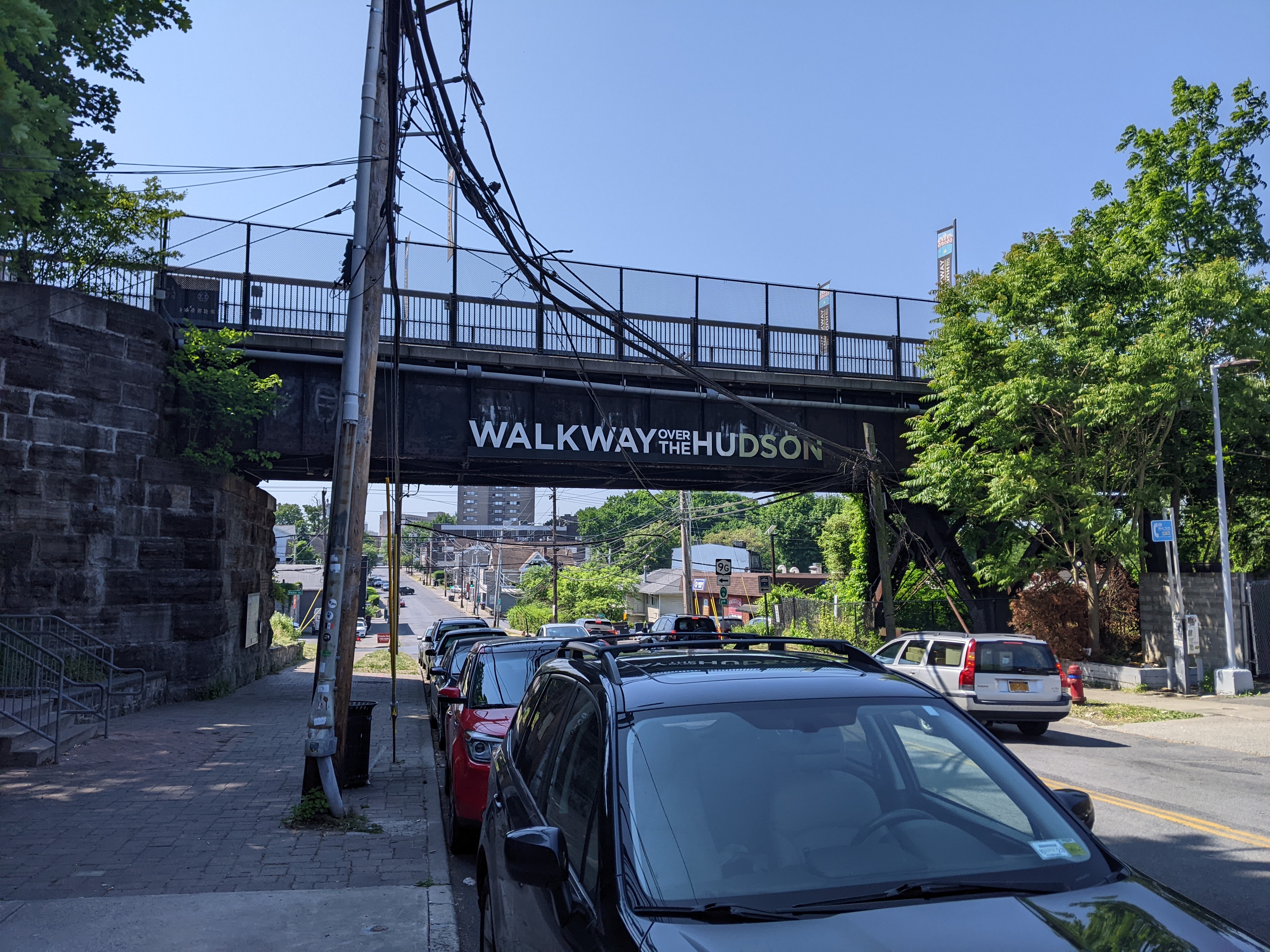
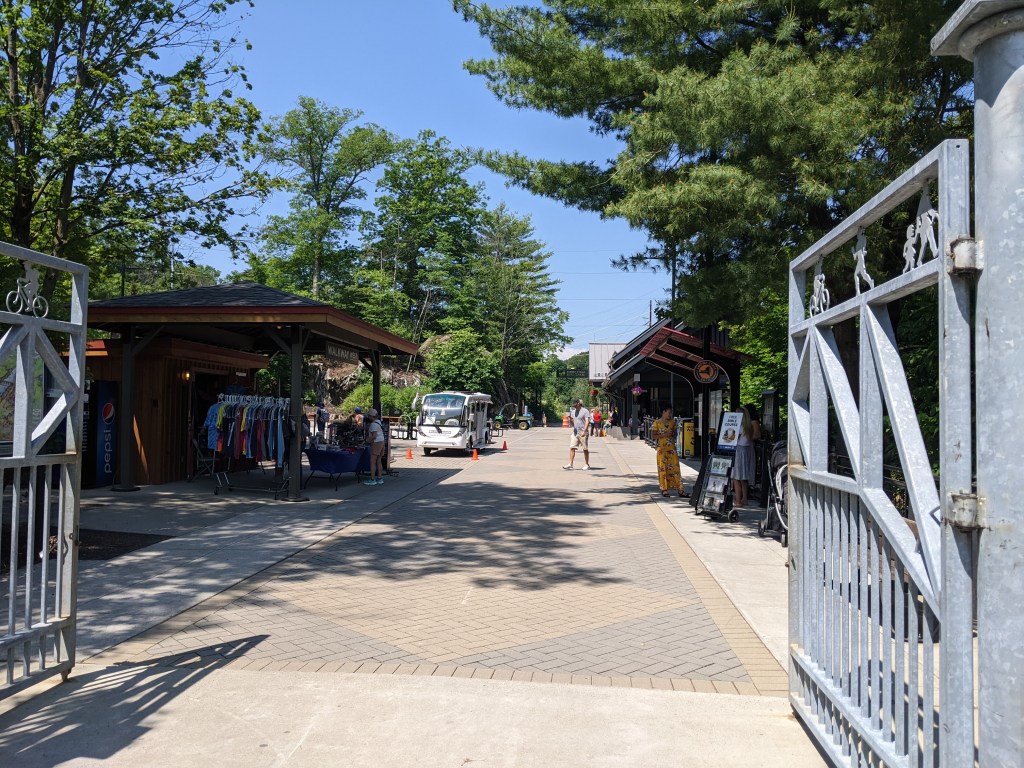
I don’t remember how I first heard about the Walkway Over the Hudson, but it was several years before I developed the habit of walking bridges. Even at that time it sounded like a cool place to check out. Once I became a bridge-walker, it became a must-experience site. Over a decade later, I finally walked the Walkway Over the Hudson.
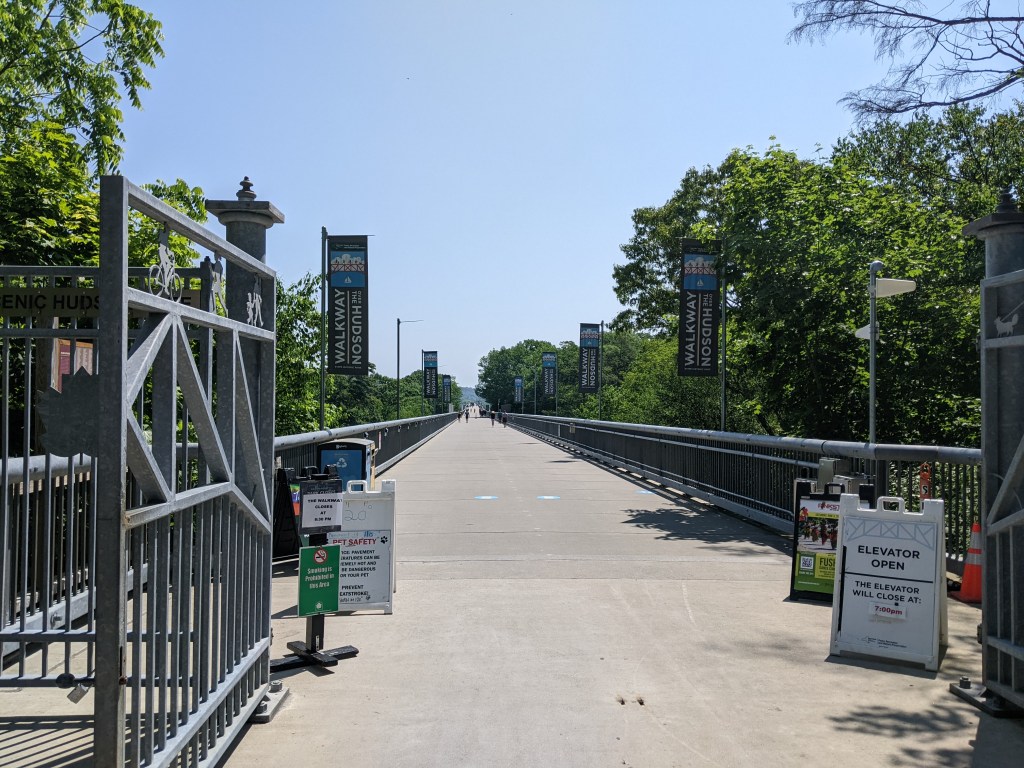
The Walkway Over the Hudson crosses the Hudson River at Poughkeepsie, NY. It opened in 1889 as a railroad bridge. It closed in 1974 after being damaged by fire and reopened as a renovated pedestrian bridge in 2009. It is both a National Historic Civil Engineering Landmark and on the National Register of Historic Places. At 1.28 miles it claims to be the longest pedestrian bridge in the world.
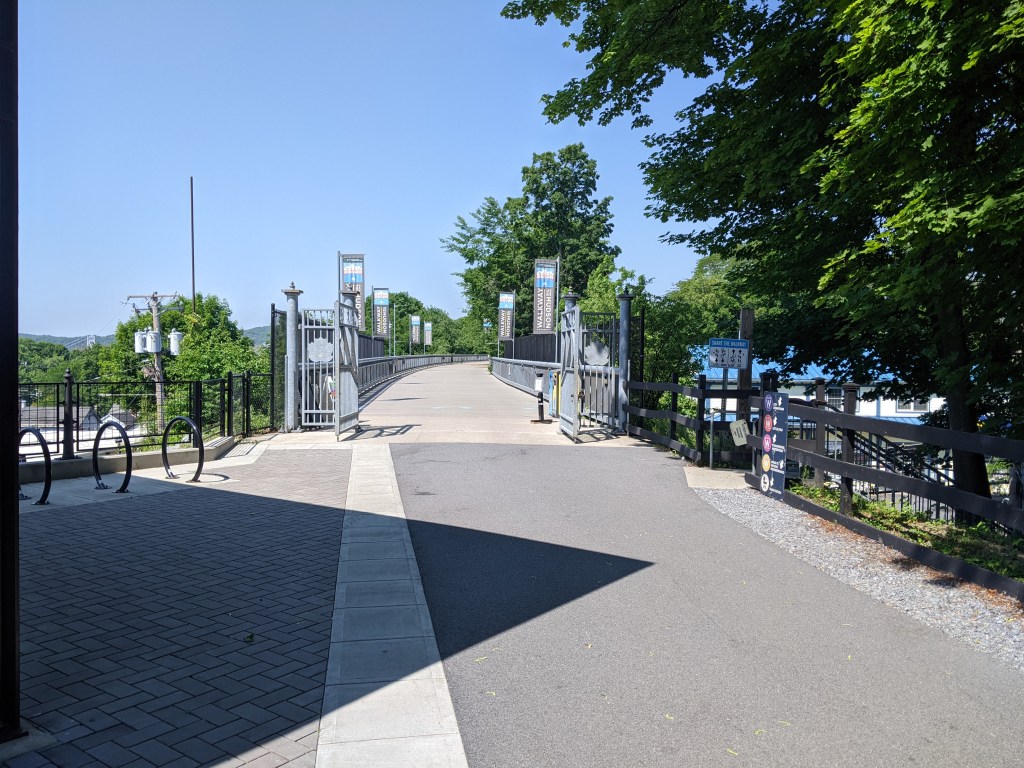
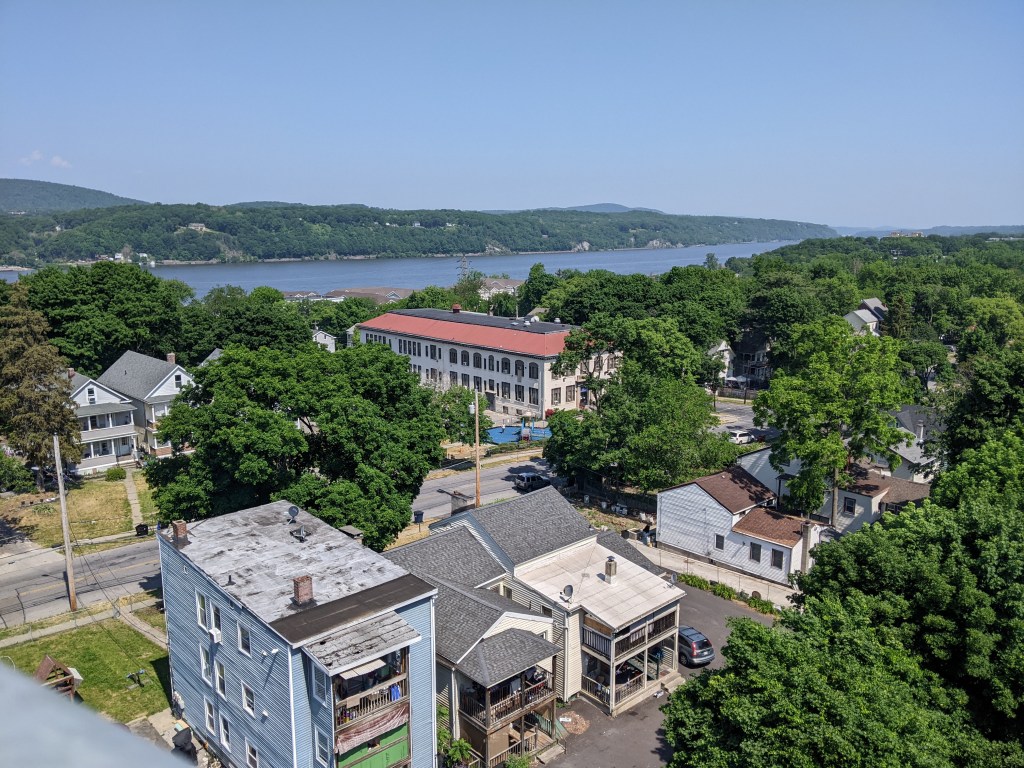
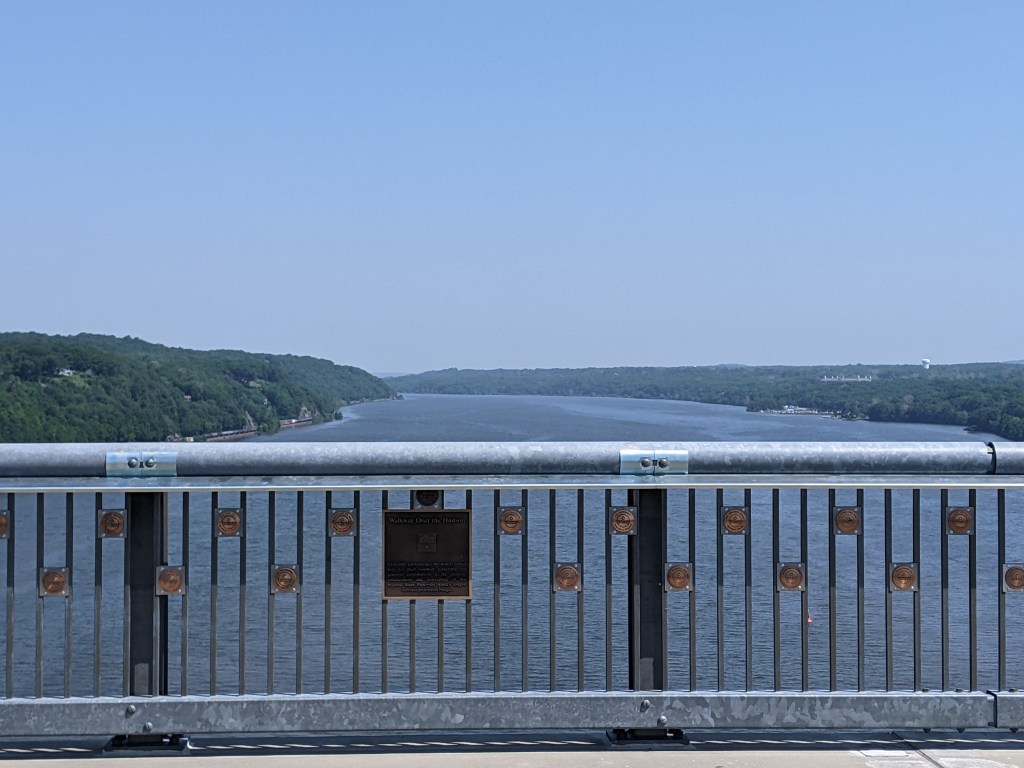
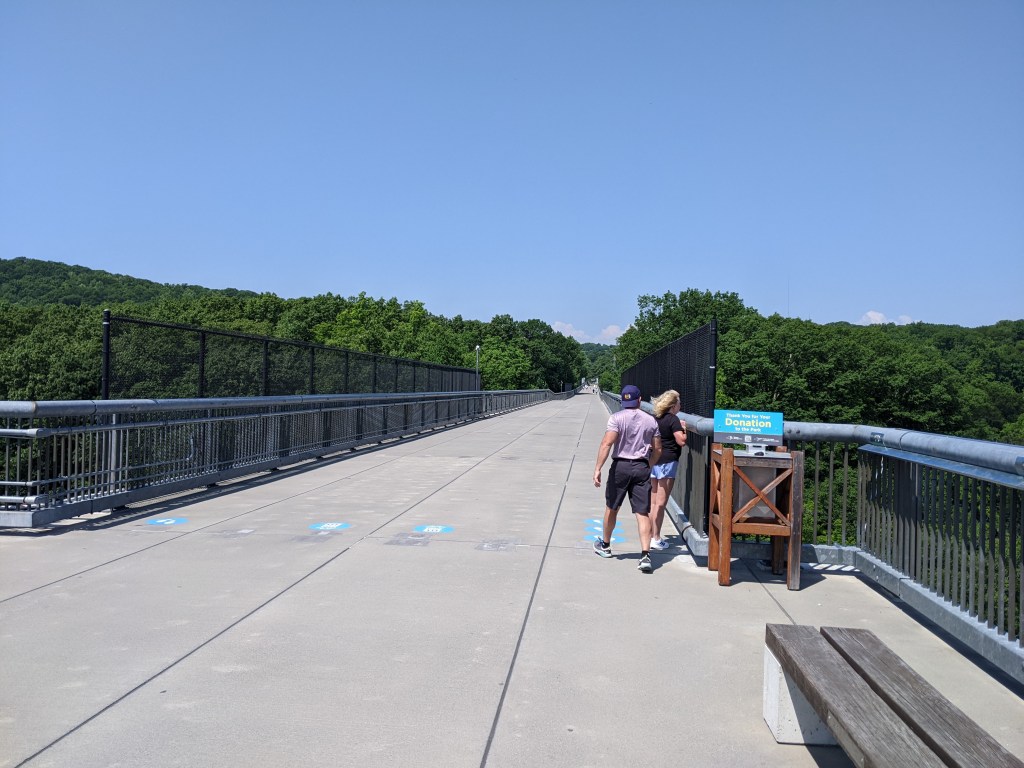
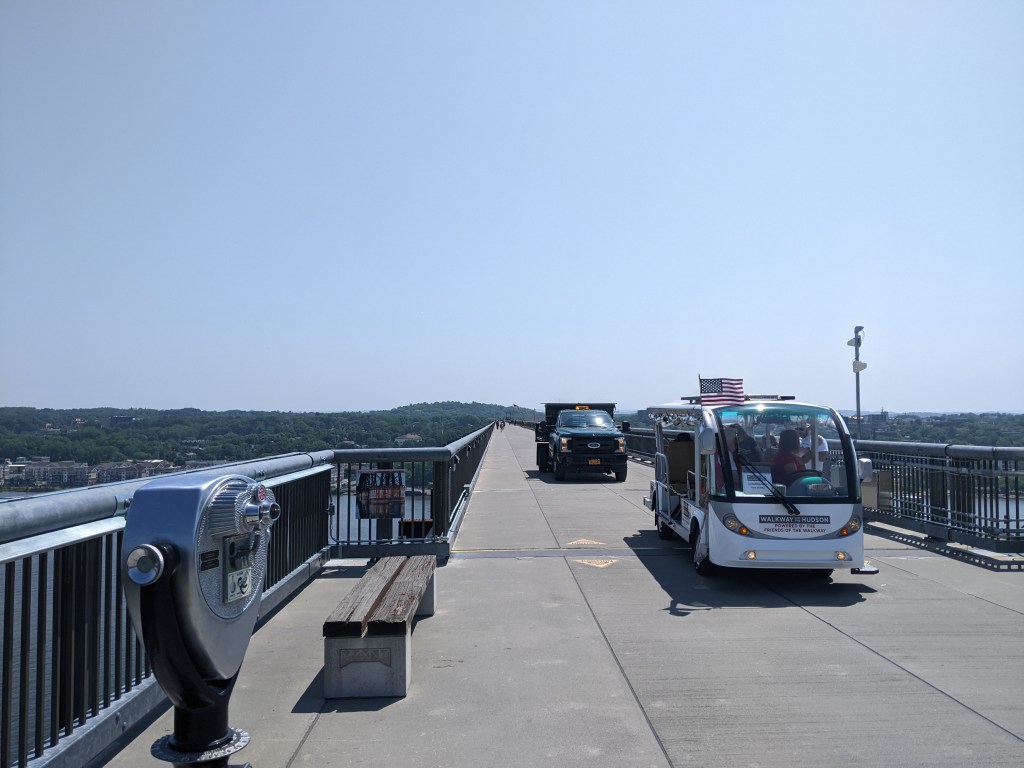
It is also 212 feet above ground or river level. In discussing my experience of climbing to the top of St. Paul’s Cathedral in London, I glossed over the fact that I almost didn’t reach the top due to my discomfort with heights and instead focused on the fact that claustrophobia almost prevented me from coming back down. Proportions and railing heights have a significant impact on whether I can manage heights. The Whispering Walk inside the base of the dome in St. Paul’s was too narrow and enclosed for me to handle the height above the floor (98 feet). The Walkway Over the Hudson, on the other hand, was quite wide having once carried two railroad tracks side-by-side. And so despite being more than twice as high up as the Whispering Walk, I did not experience much trouble with the height. I was more concerned about the possibility of the wind tearing my phone/camera out of my hand and over the edge.
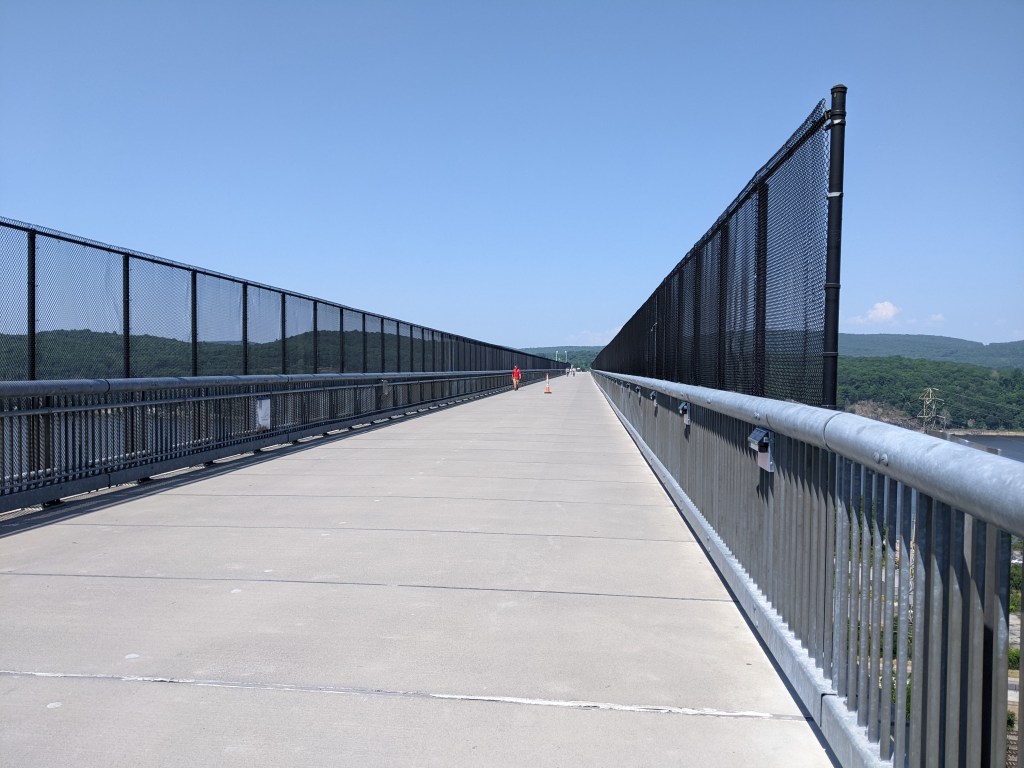
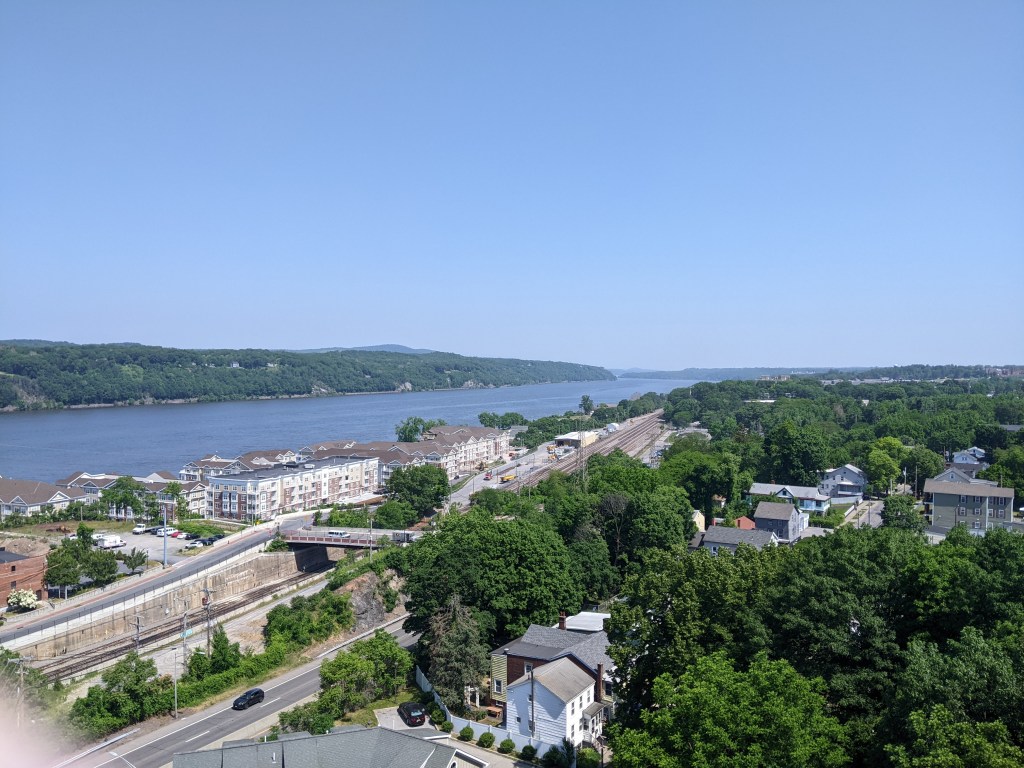
Despite the potential damage that objects falling off the side of the bridge could cause, extra high barriers to prevent that are only located over the railroad tracks. As I’ve discussed in previous posts, some bridges have extra fencing only along portions of their walkways, typically over railroads and sometimes over automobile roads. The extra fencing on the Walkway Over the Hudson is from a time after it was common to curve the top, creating a cage-like feel, but before the need for extra height was incorporated into the design of the bridge itself.
There is no shade on a deck-truss bridge 212 feet off the ground. On a hot, July day, you feel the full force of the sun when taking such an exposed 1.28 mile walk starting at 11:30. If I hadn’t discovered that there was another bridge that I could walk across, I probably would have opted to take the shuttle back.

 urbantraipsing