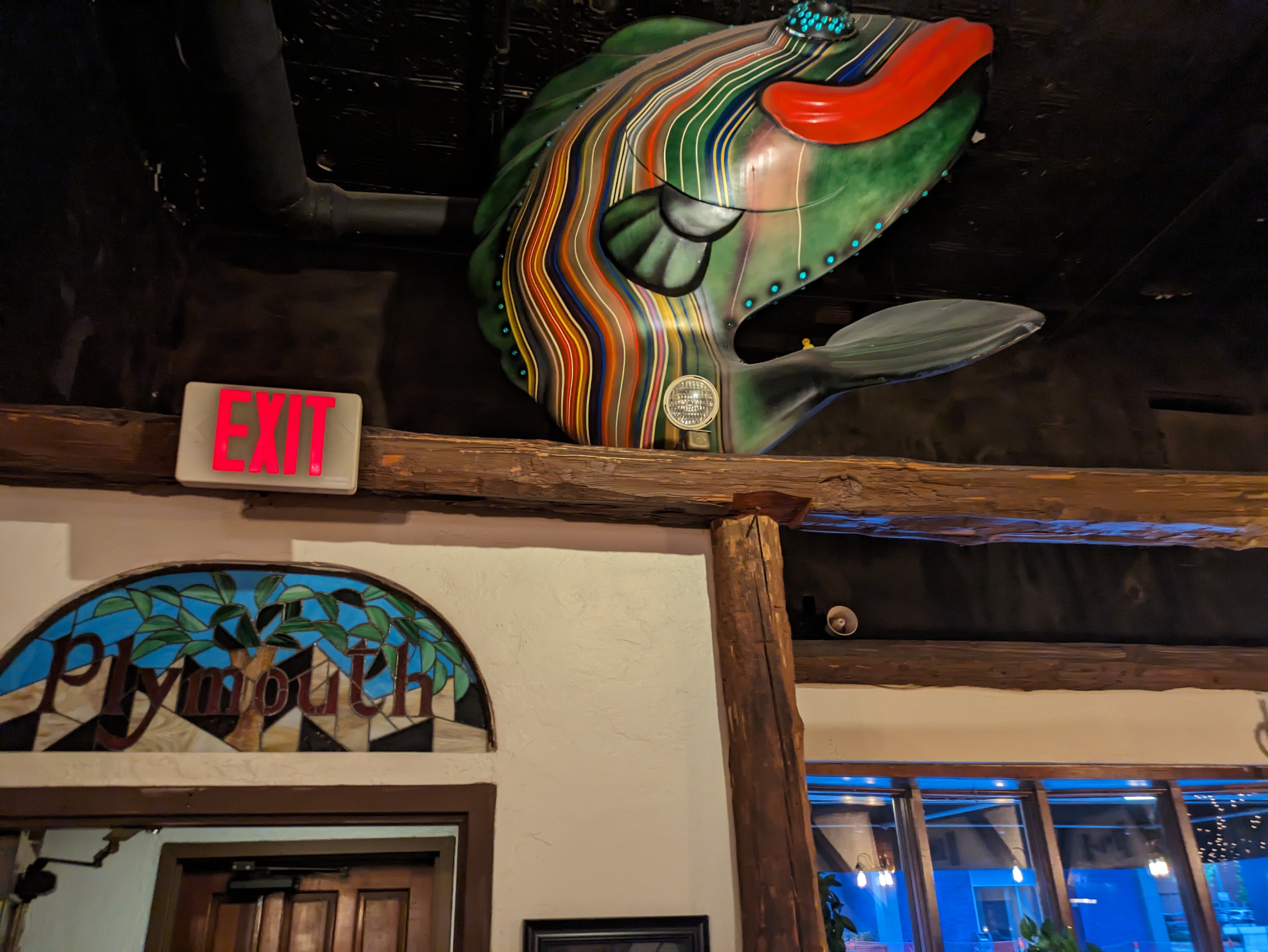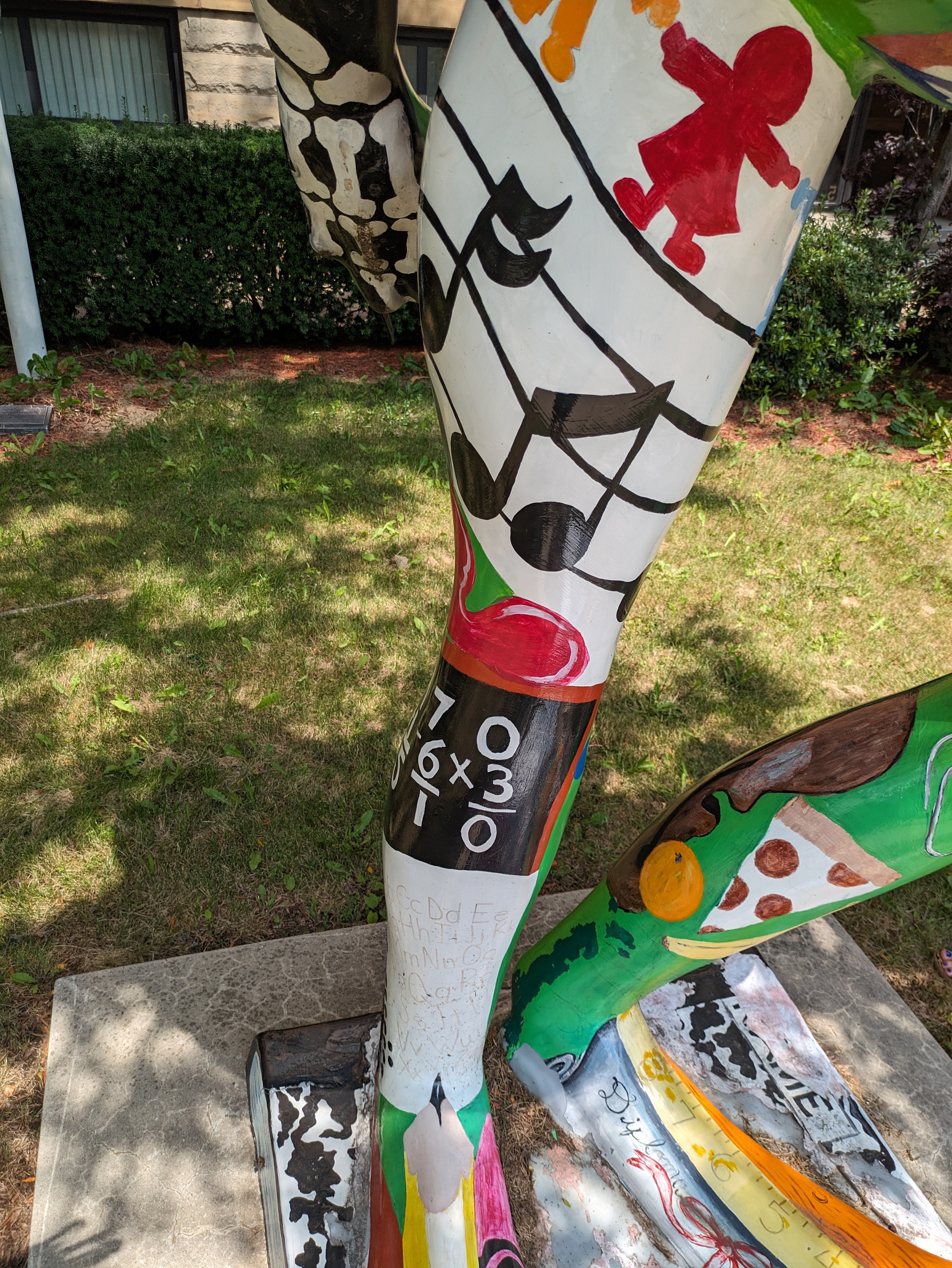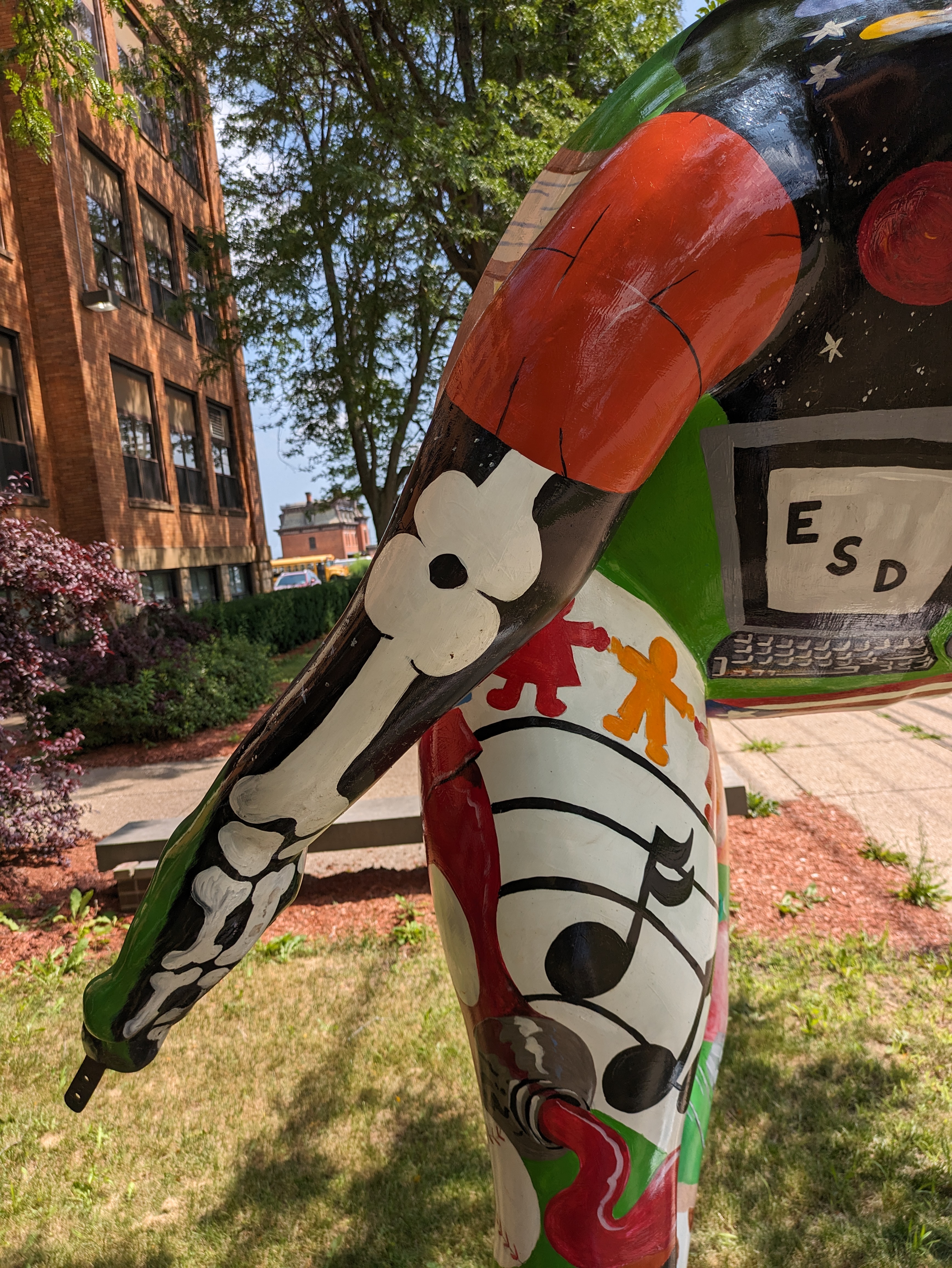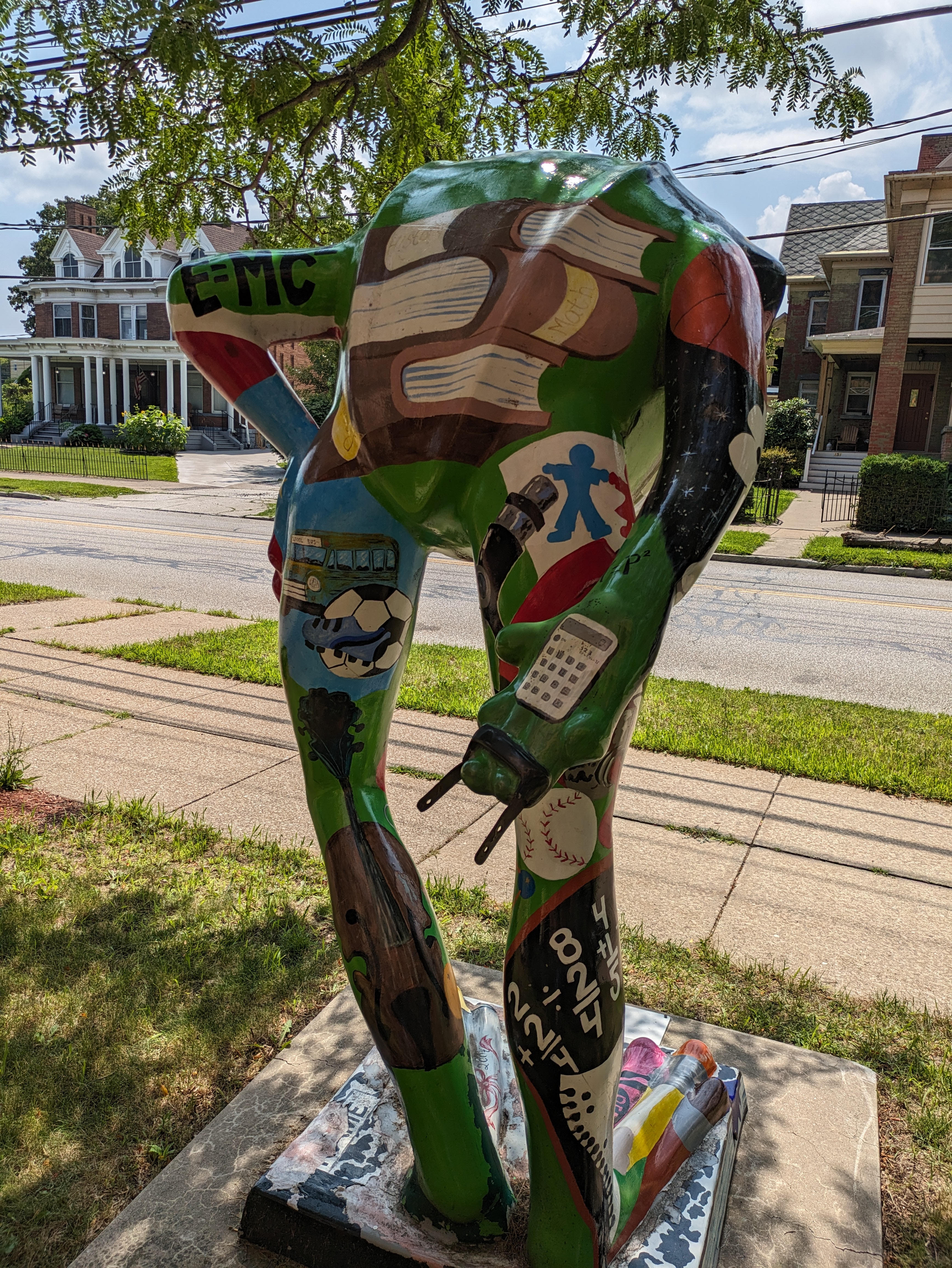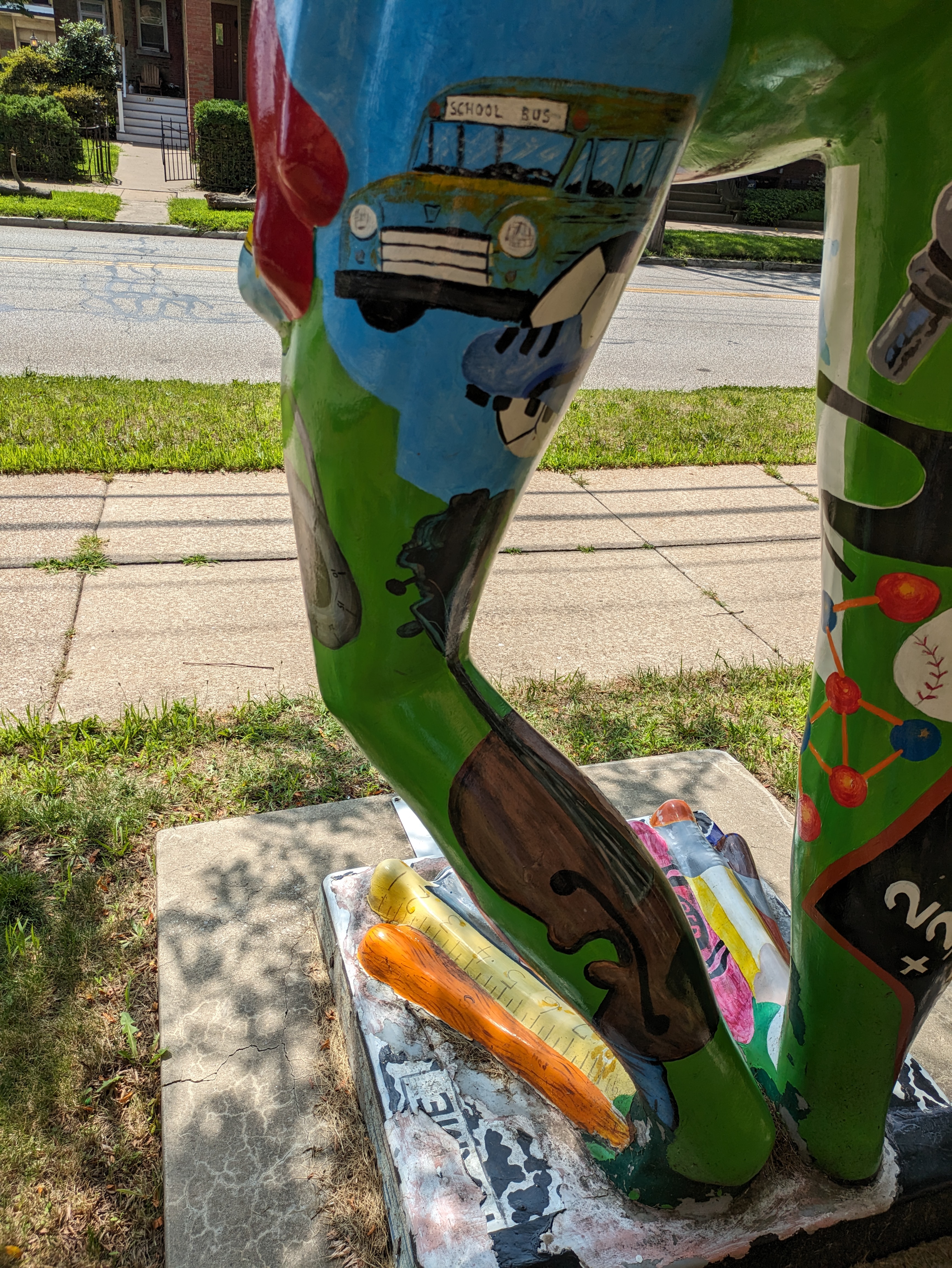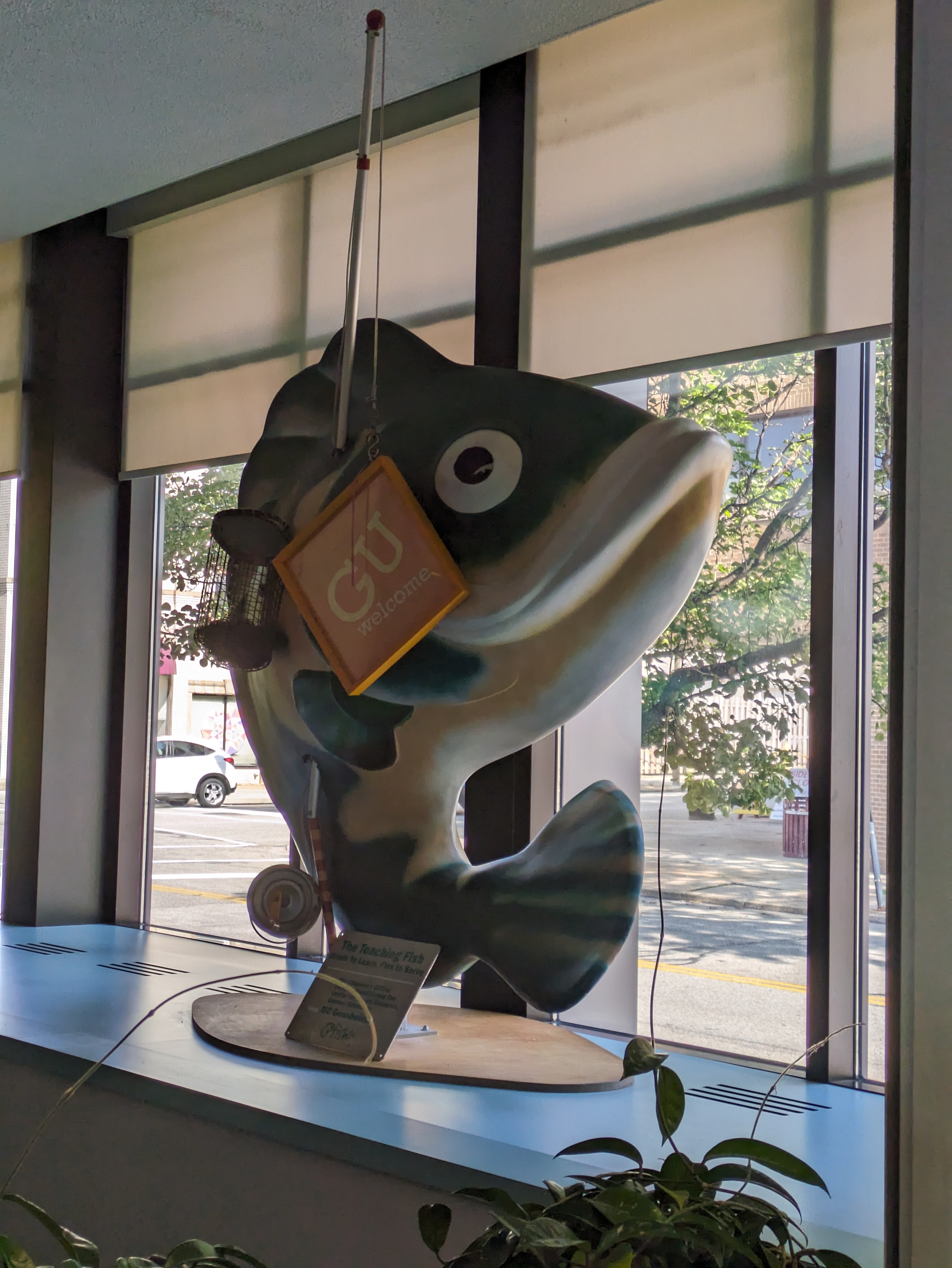
Go Fish 2

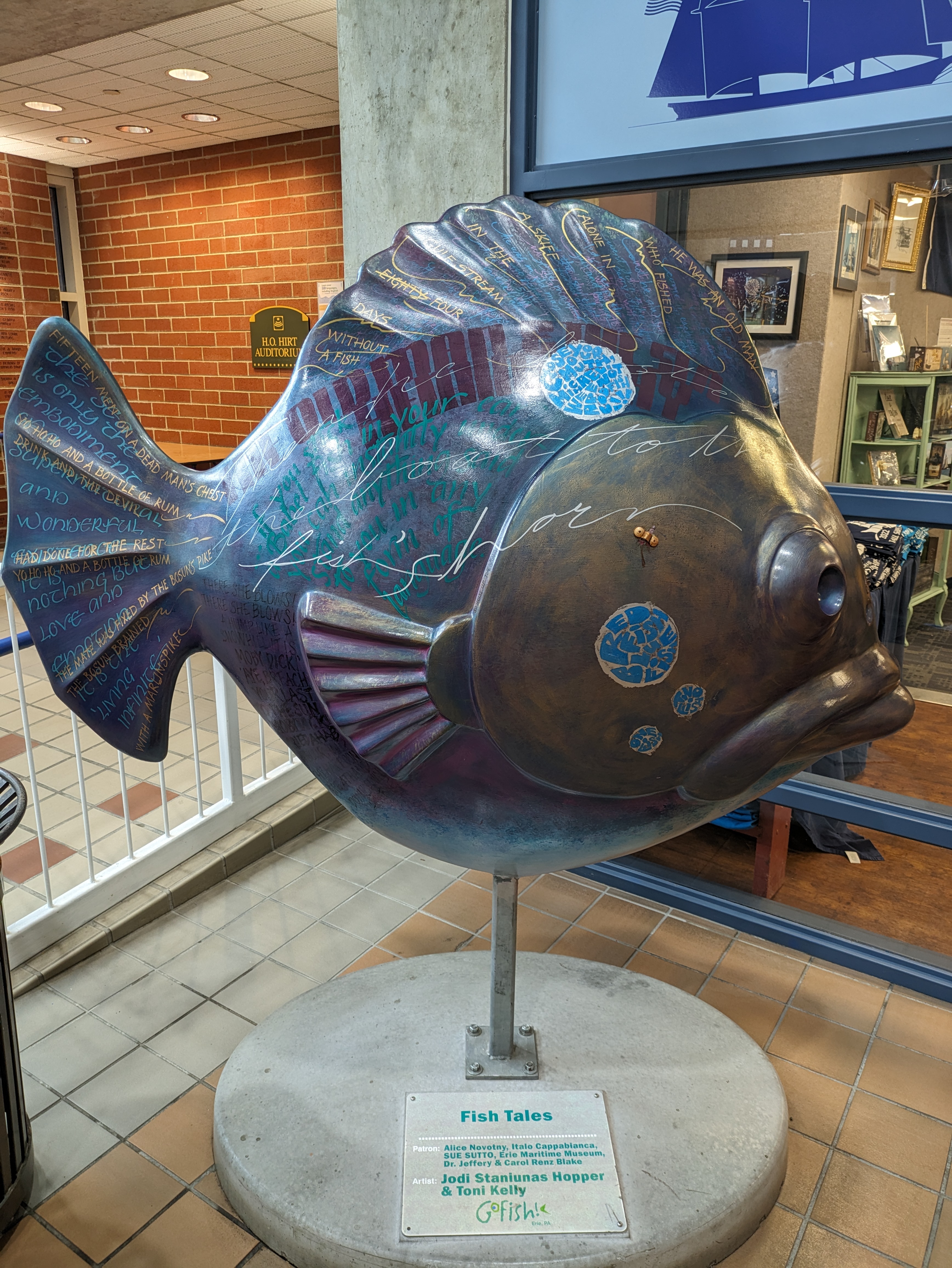
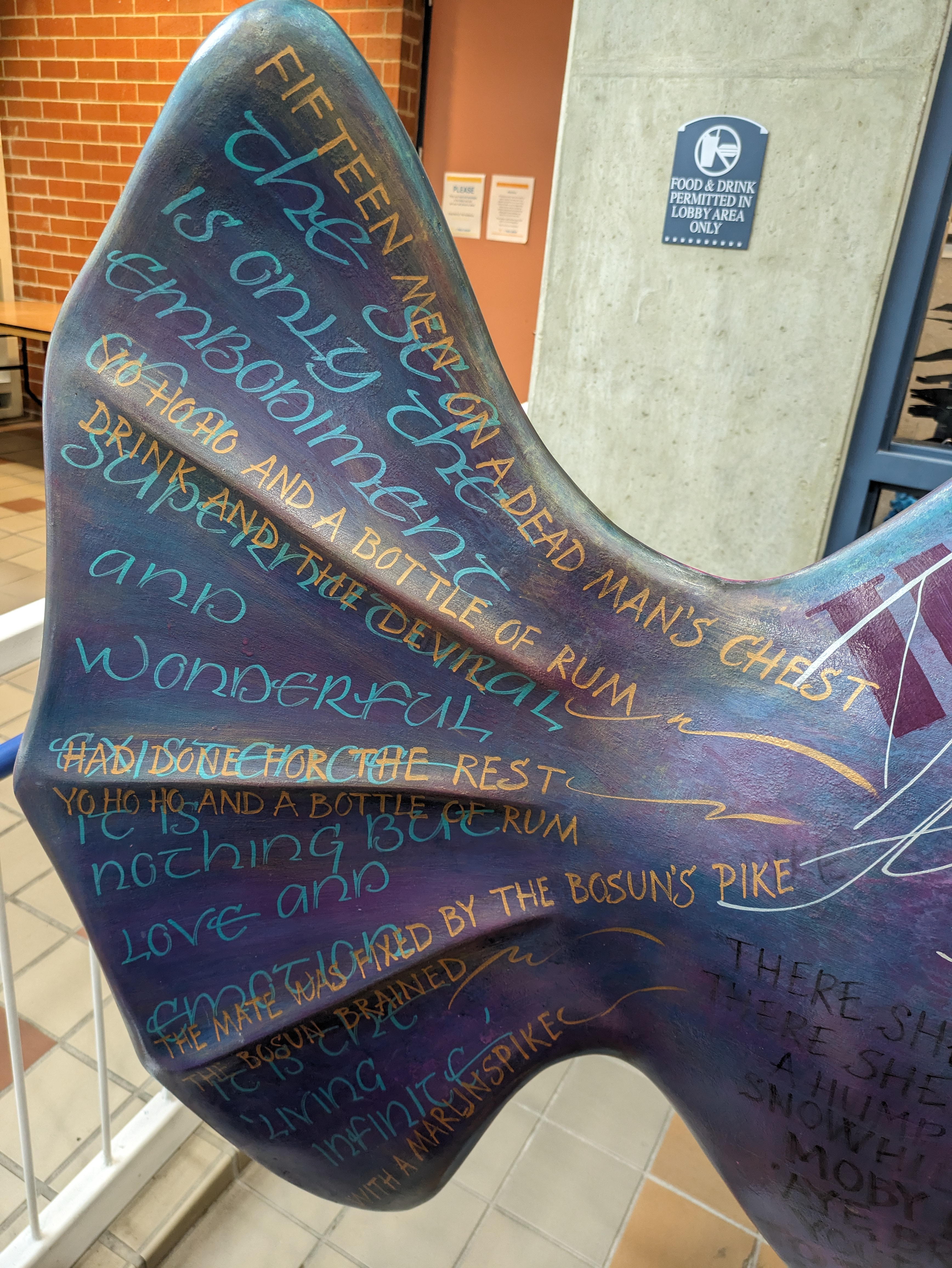
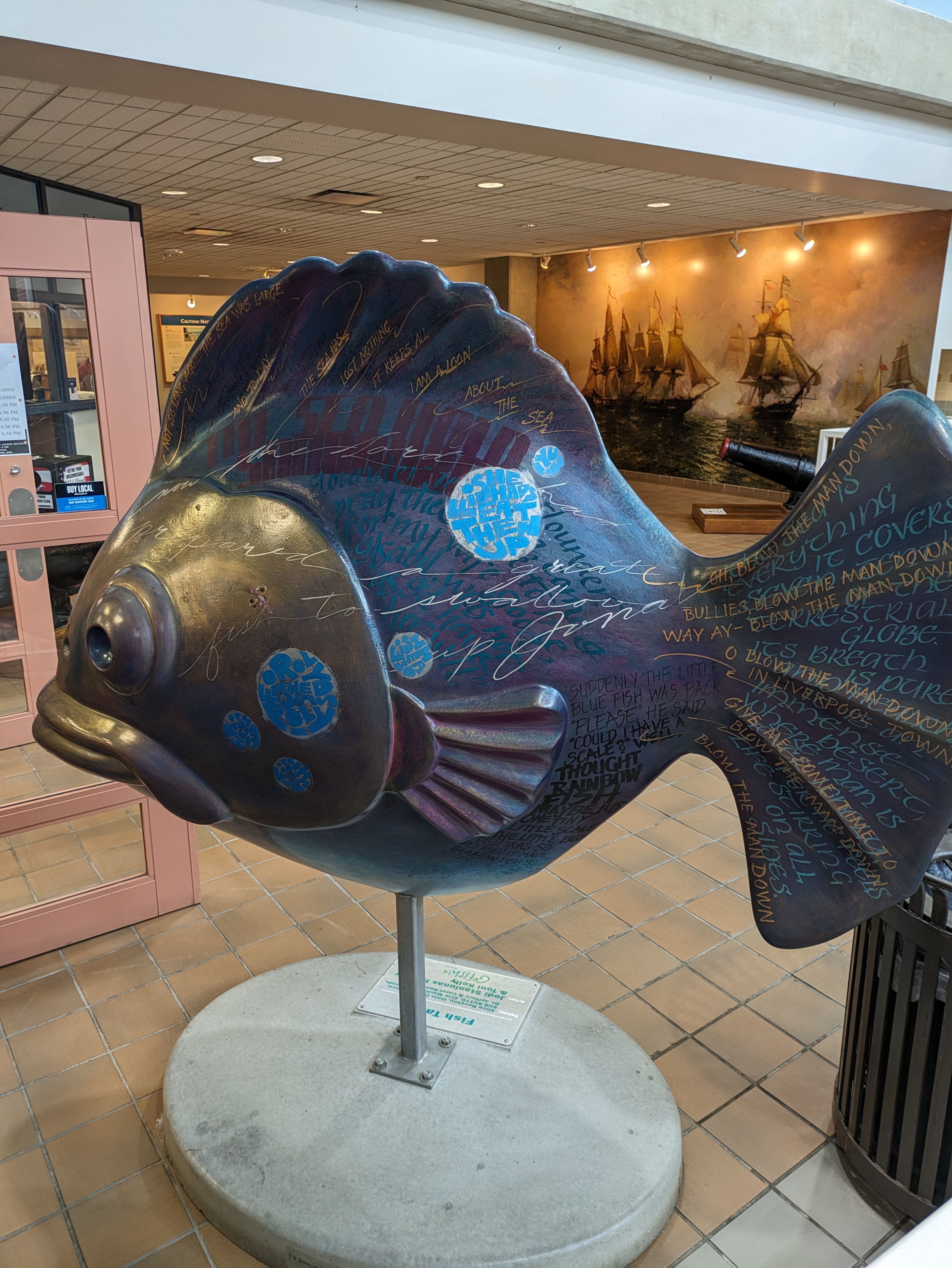
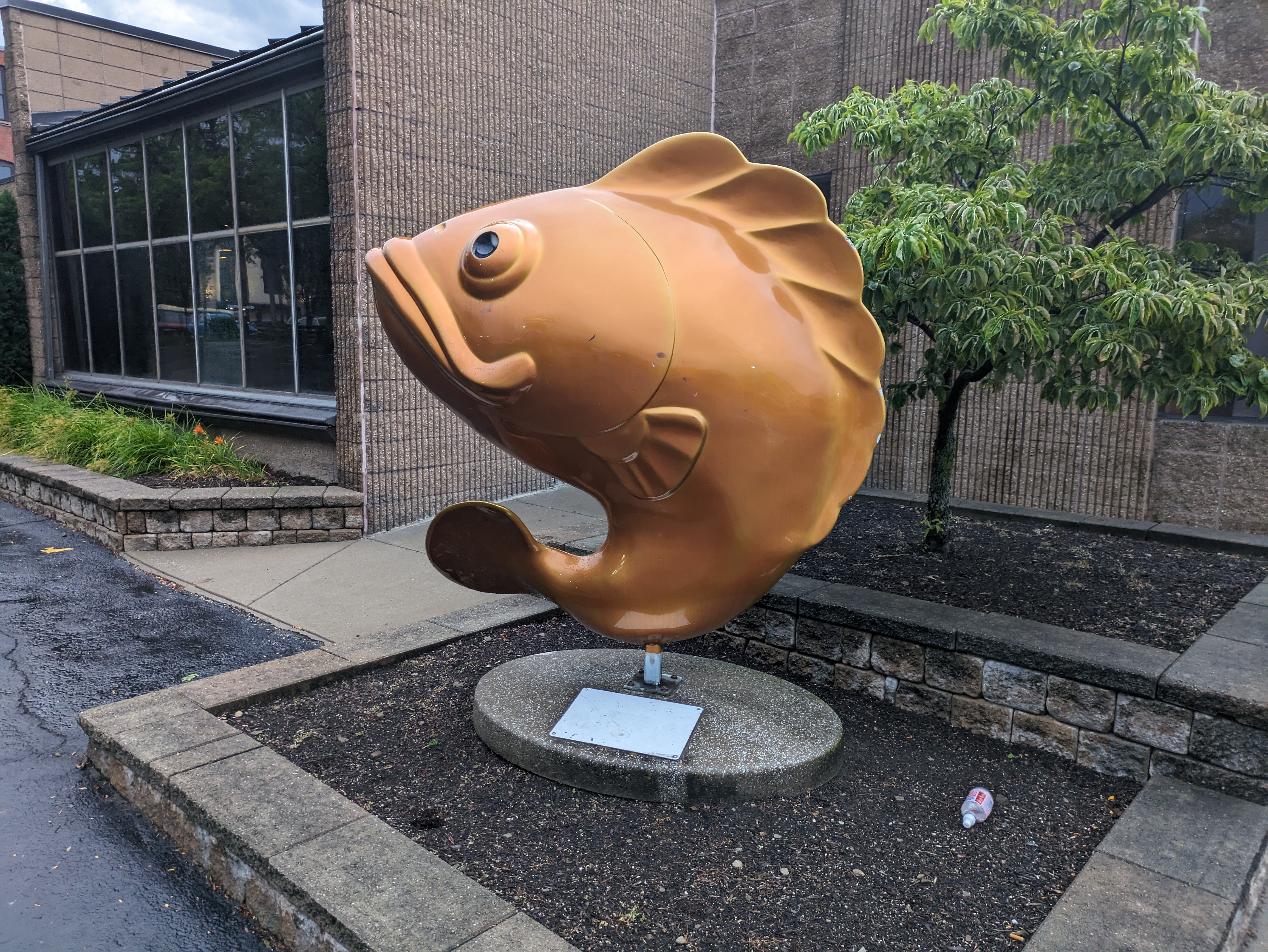
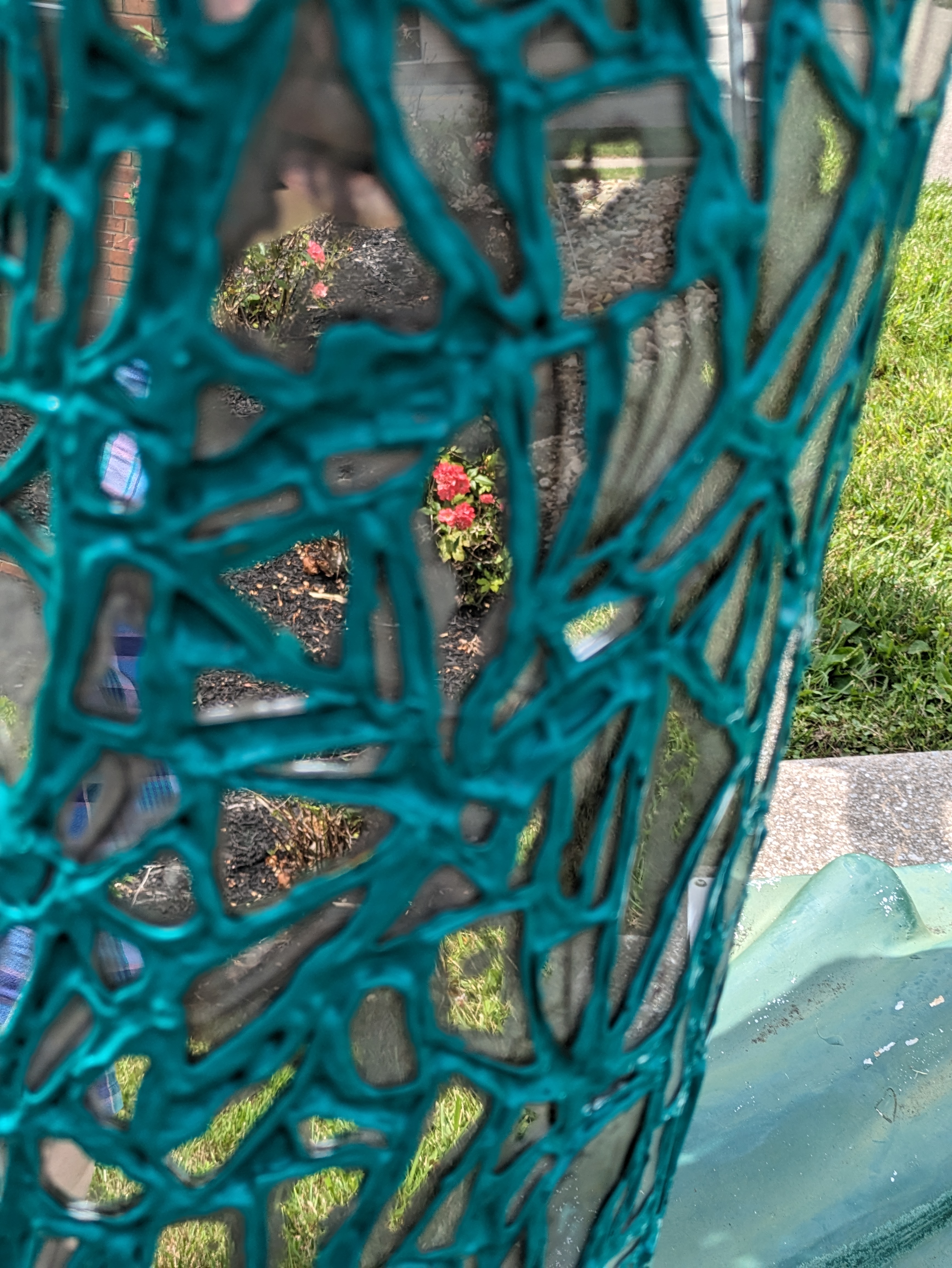
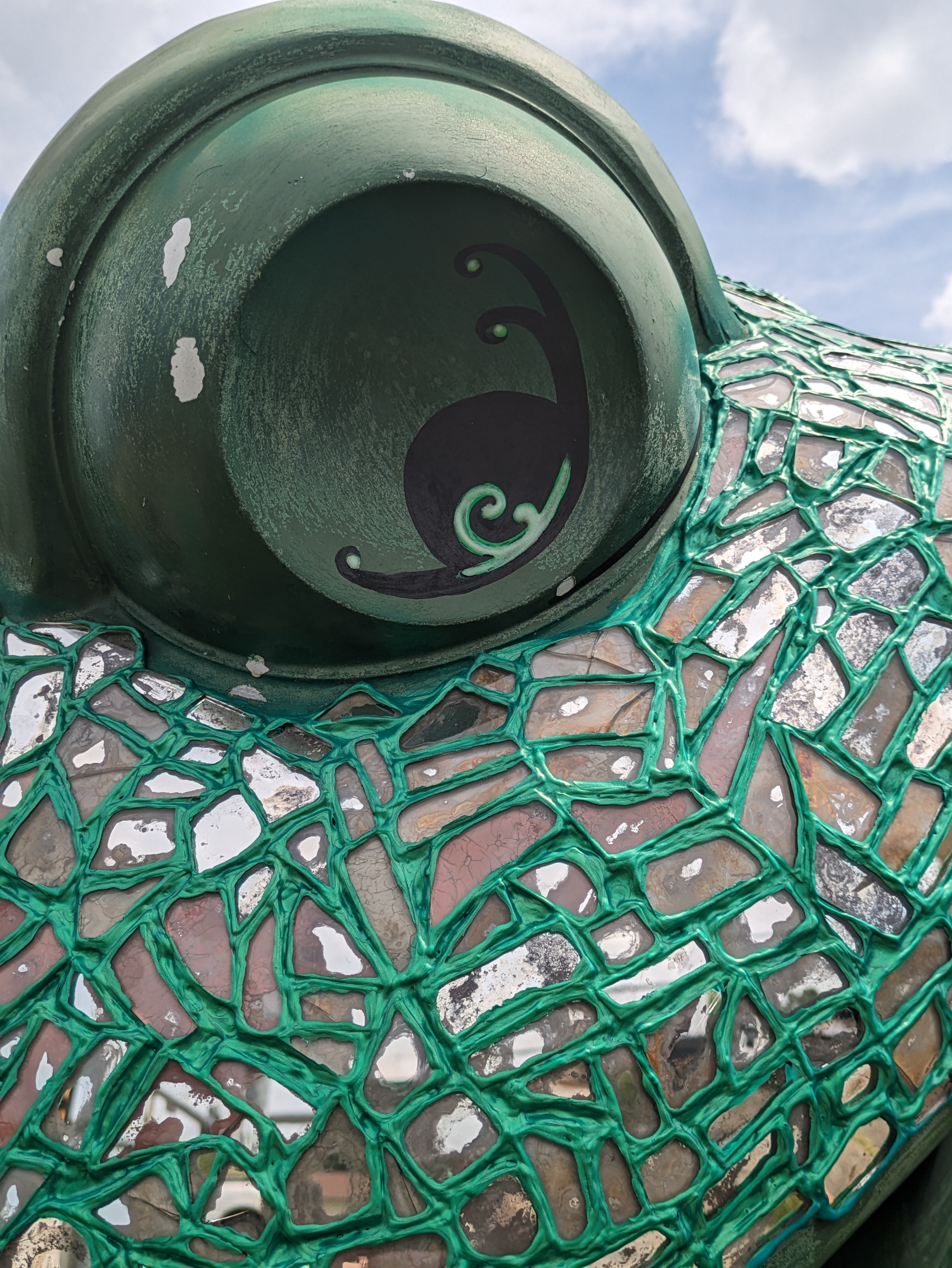
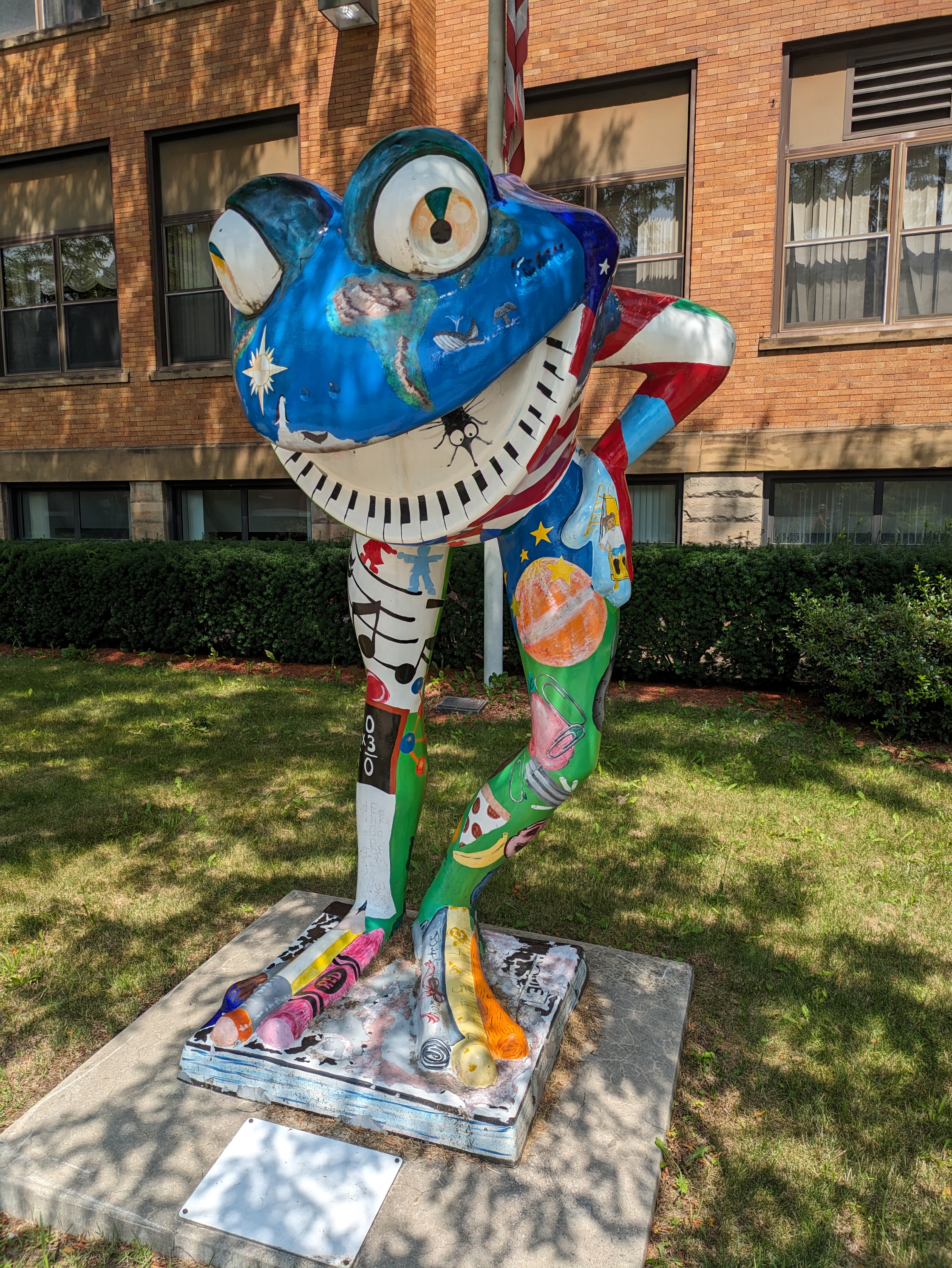
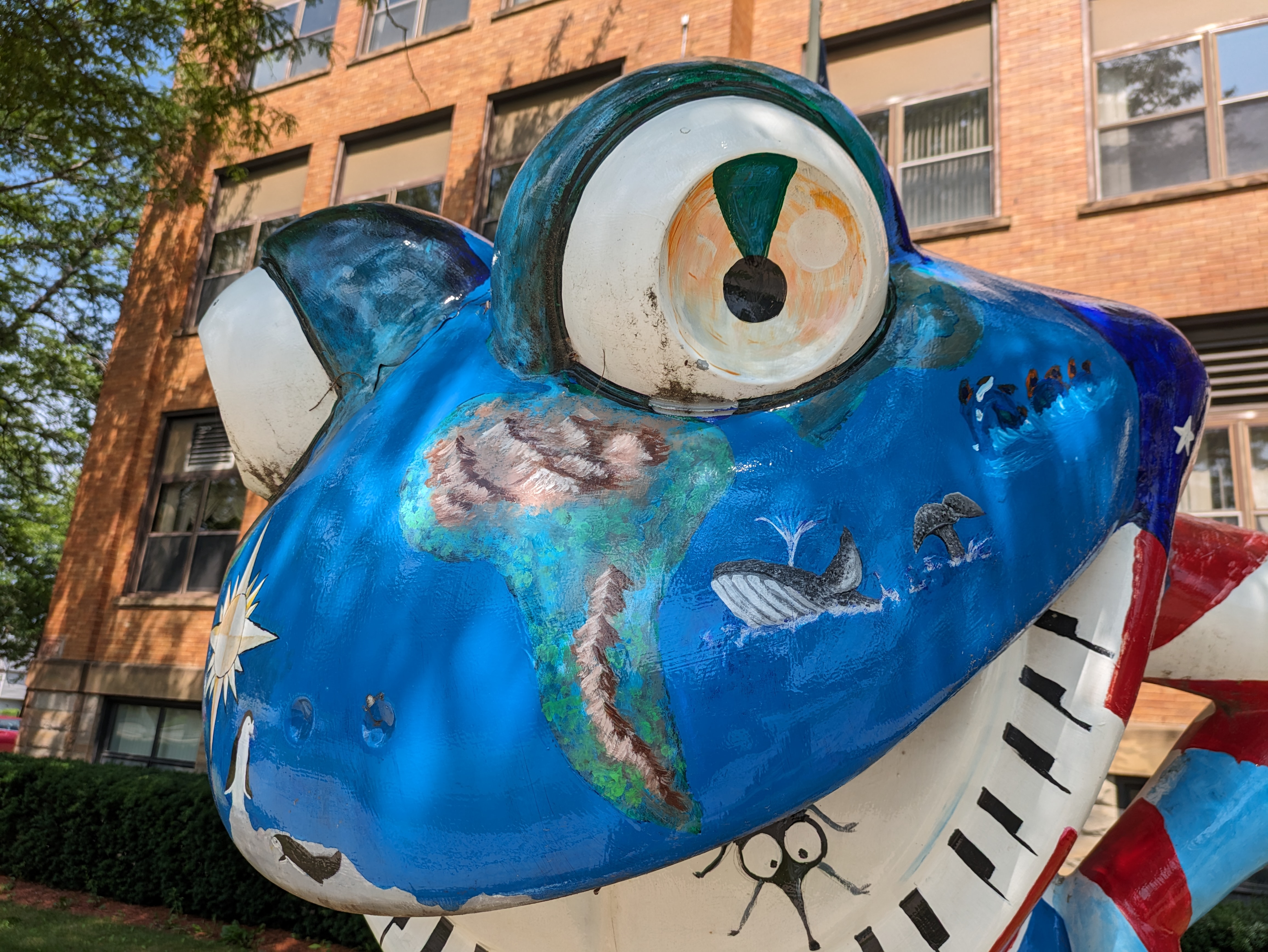
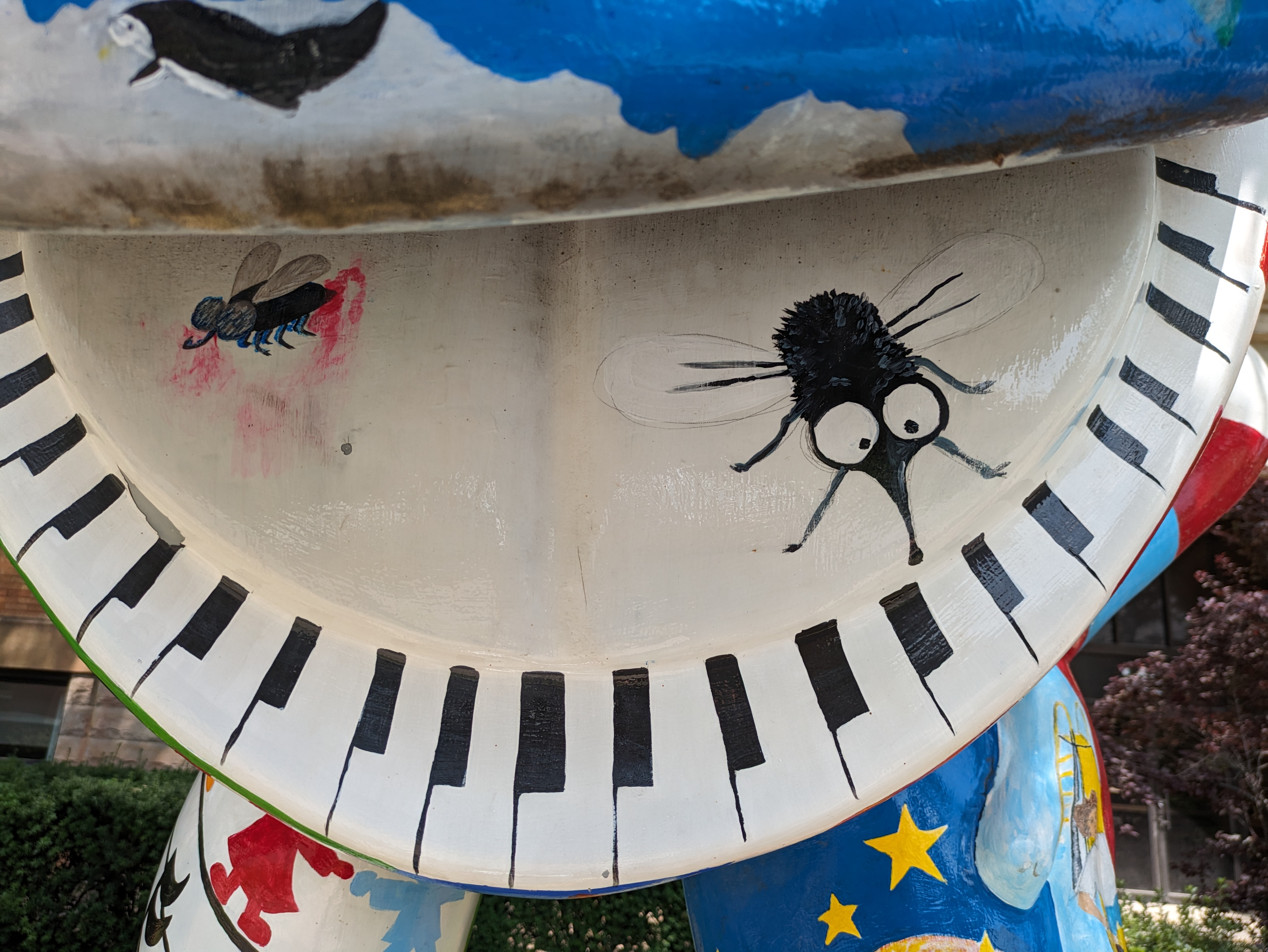
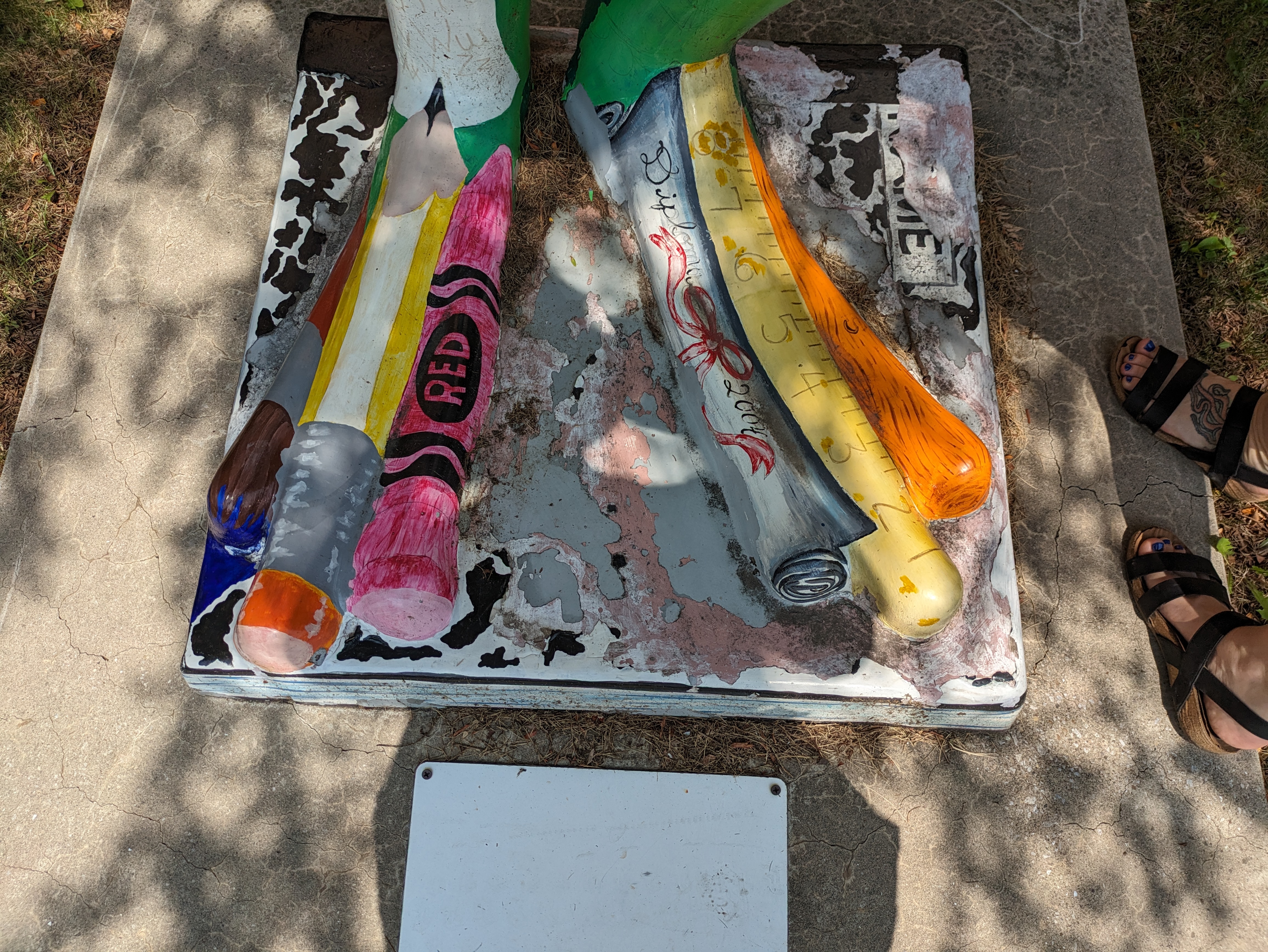
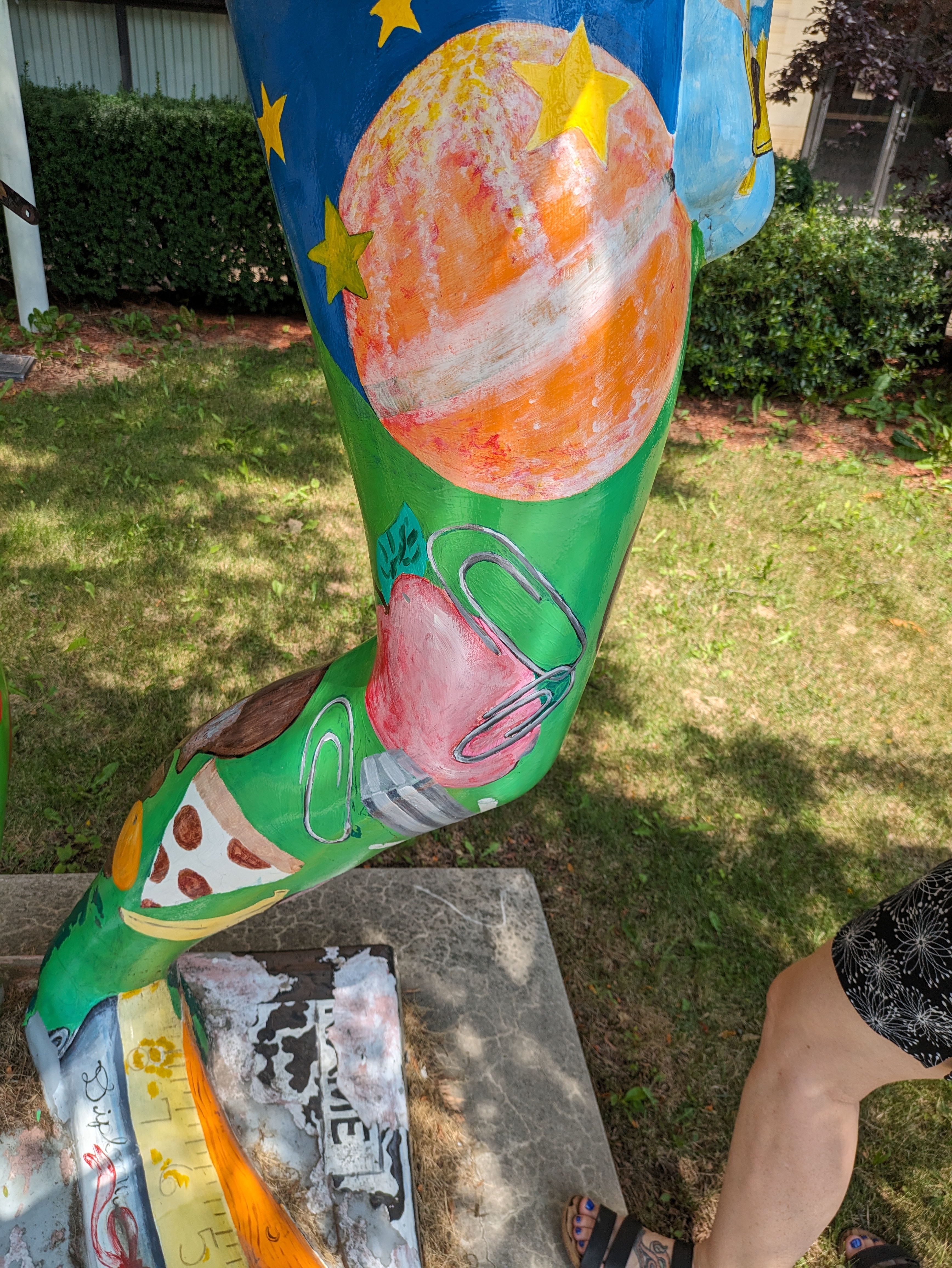
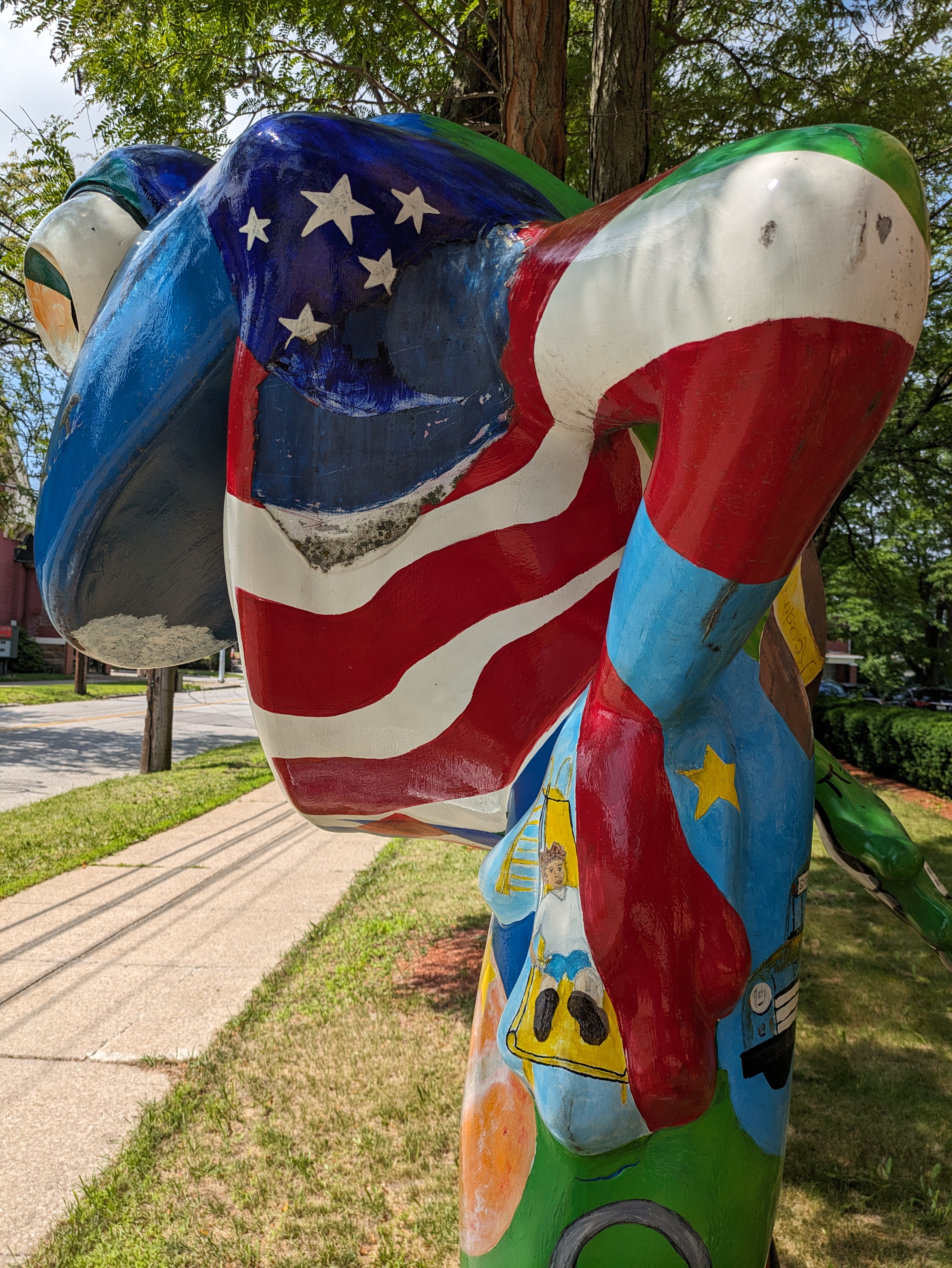
GoFish! was a fundraiser in Erie, PA, in 2001. I can’t find a match for this one in the “offishial” GoFish! book and the plaque underneath is too faded to read after 22 years in the sun and rain. Amy H.’s FourSquare map identified this one as “Goldfish.” Unfortunately, since FourSquare folded, I can no longer access her map. However, I have created my own which you can view on my new Public Art Maps page.

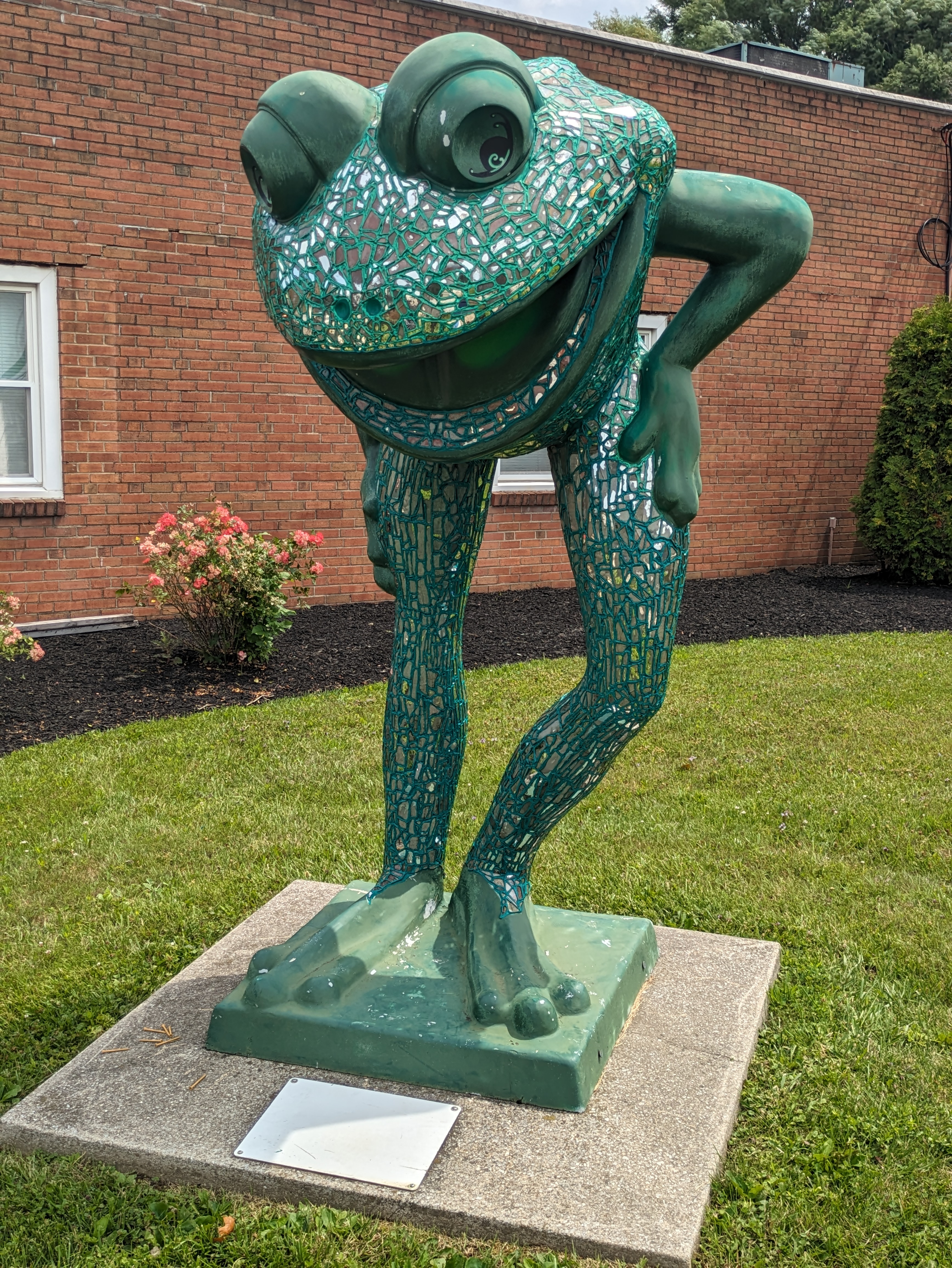
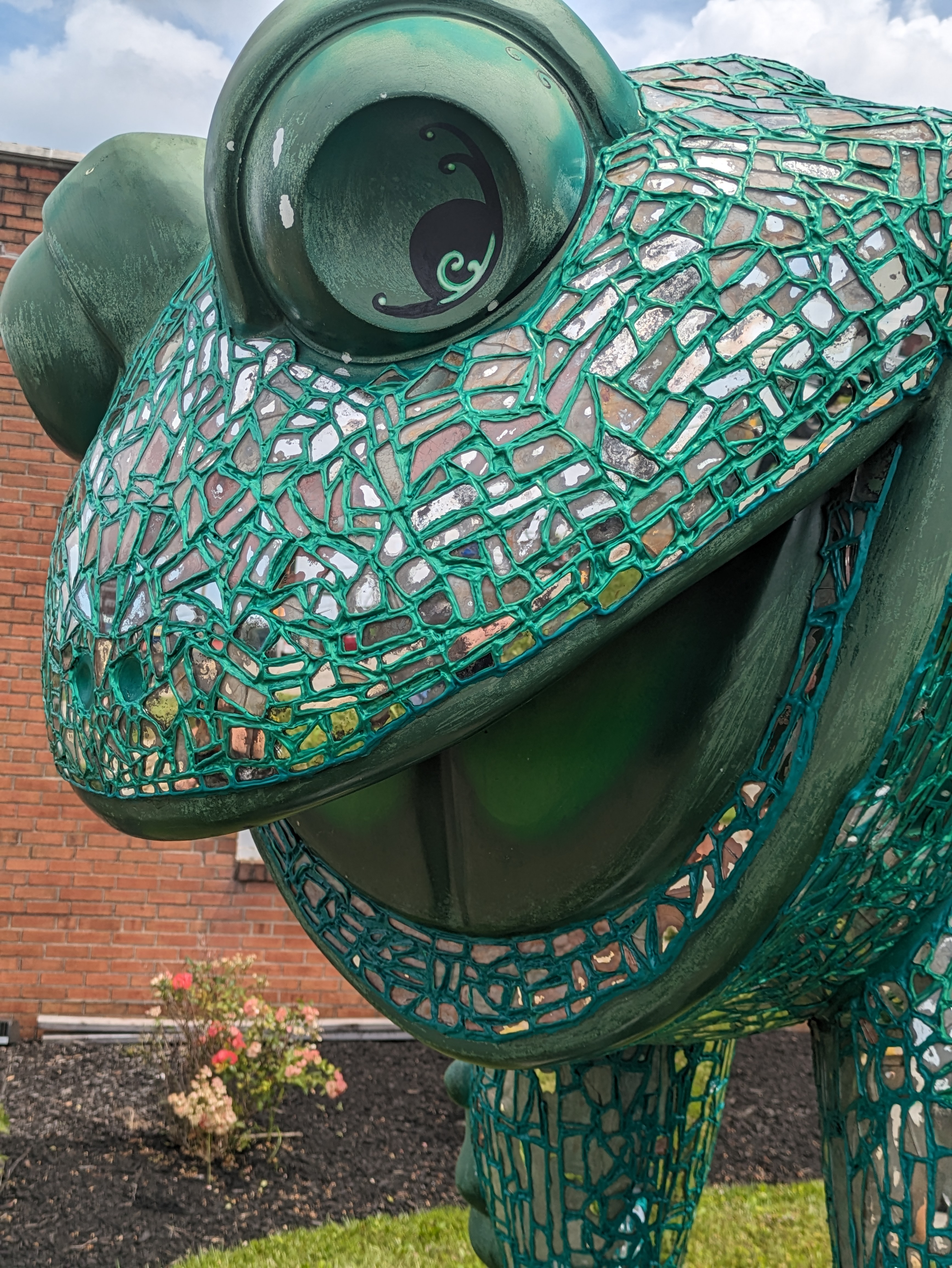
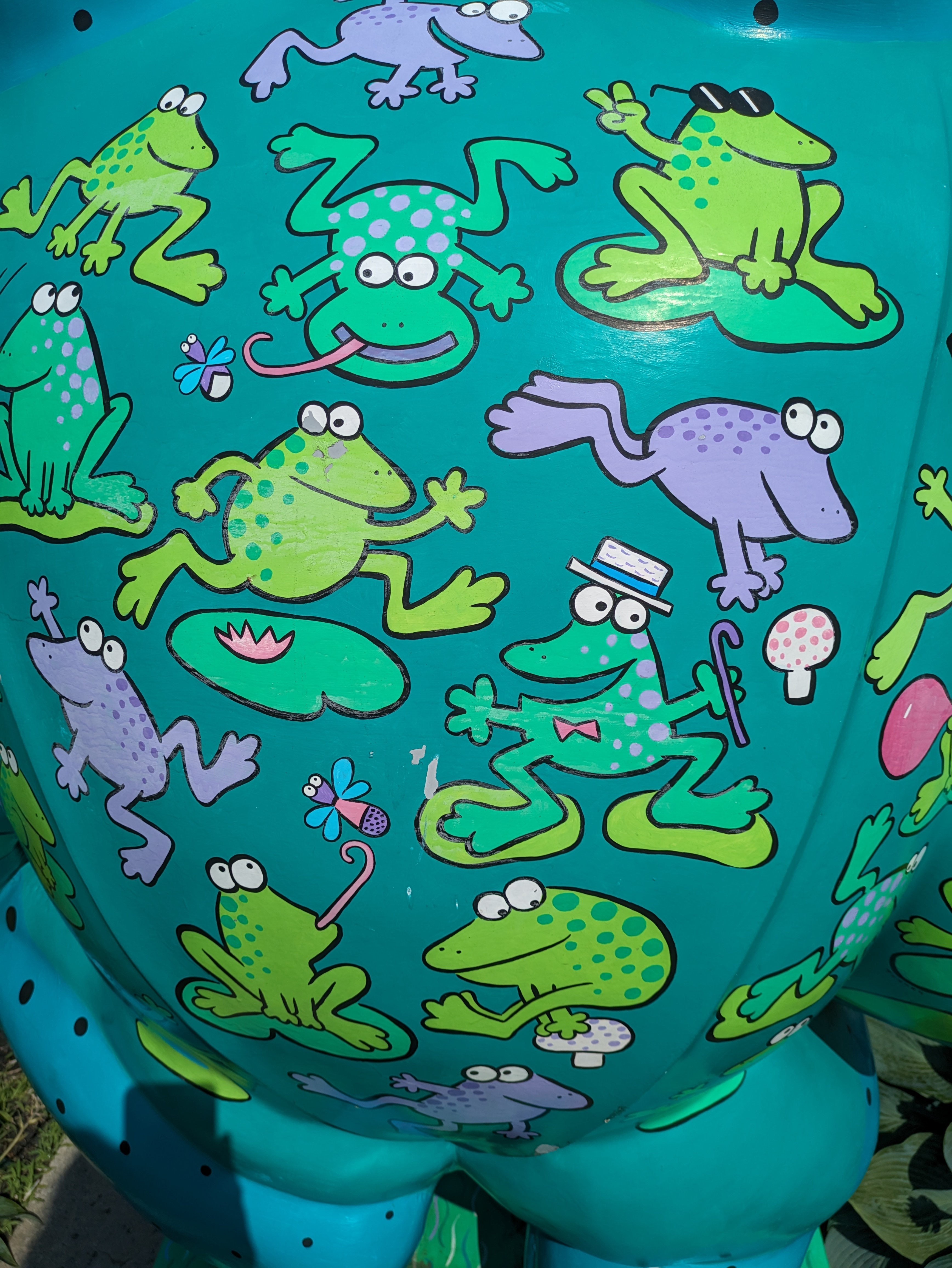
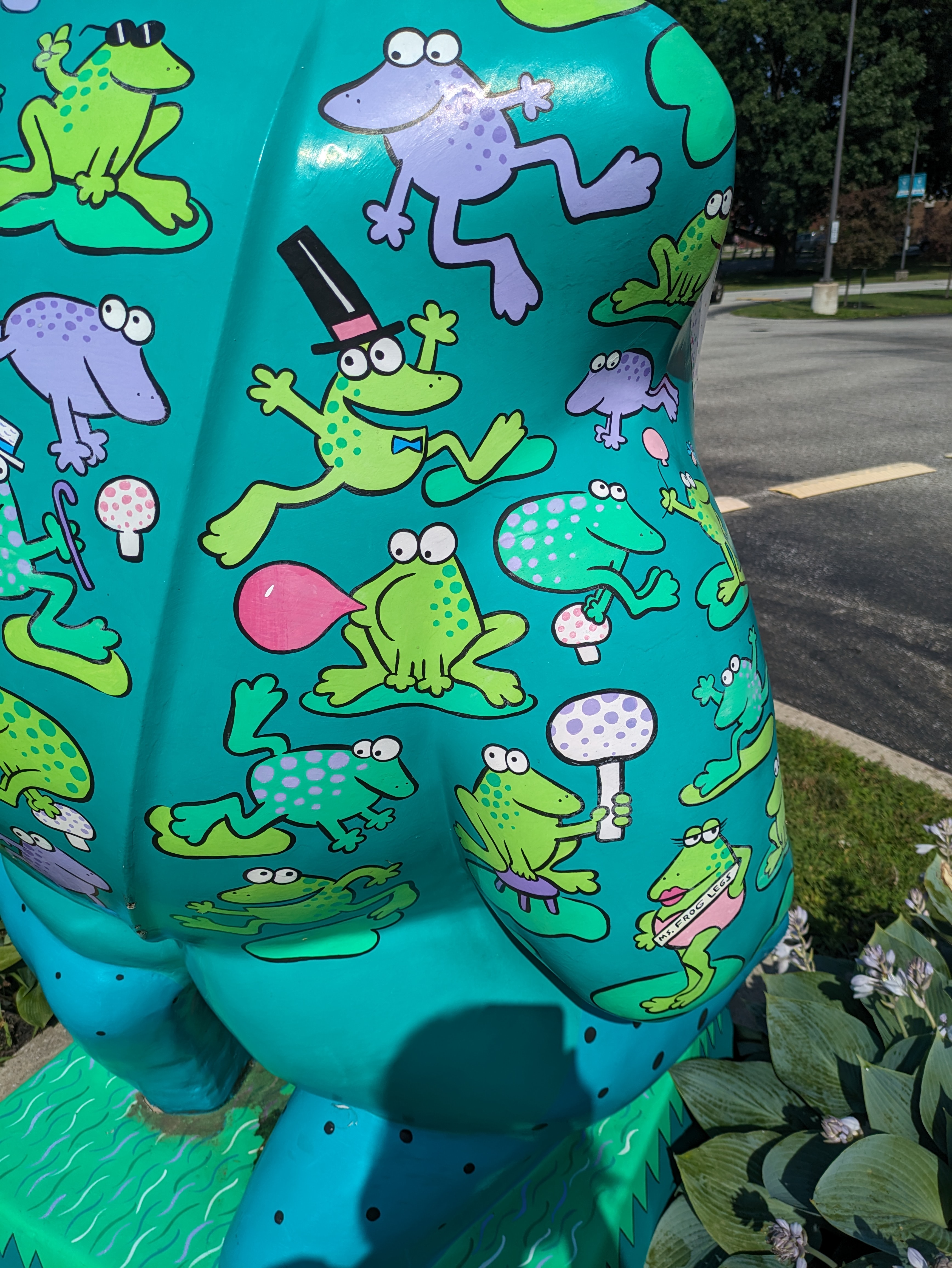
Leap Frog 14

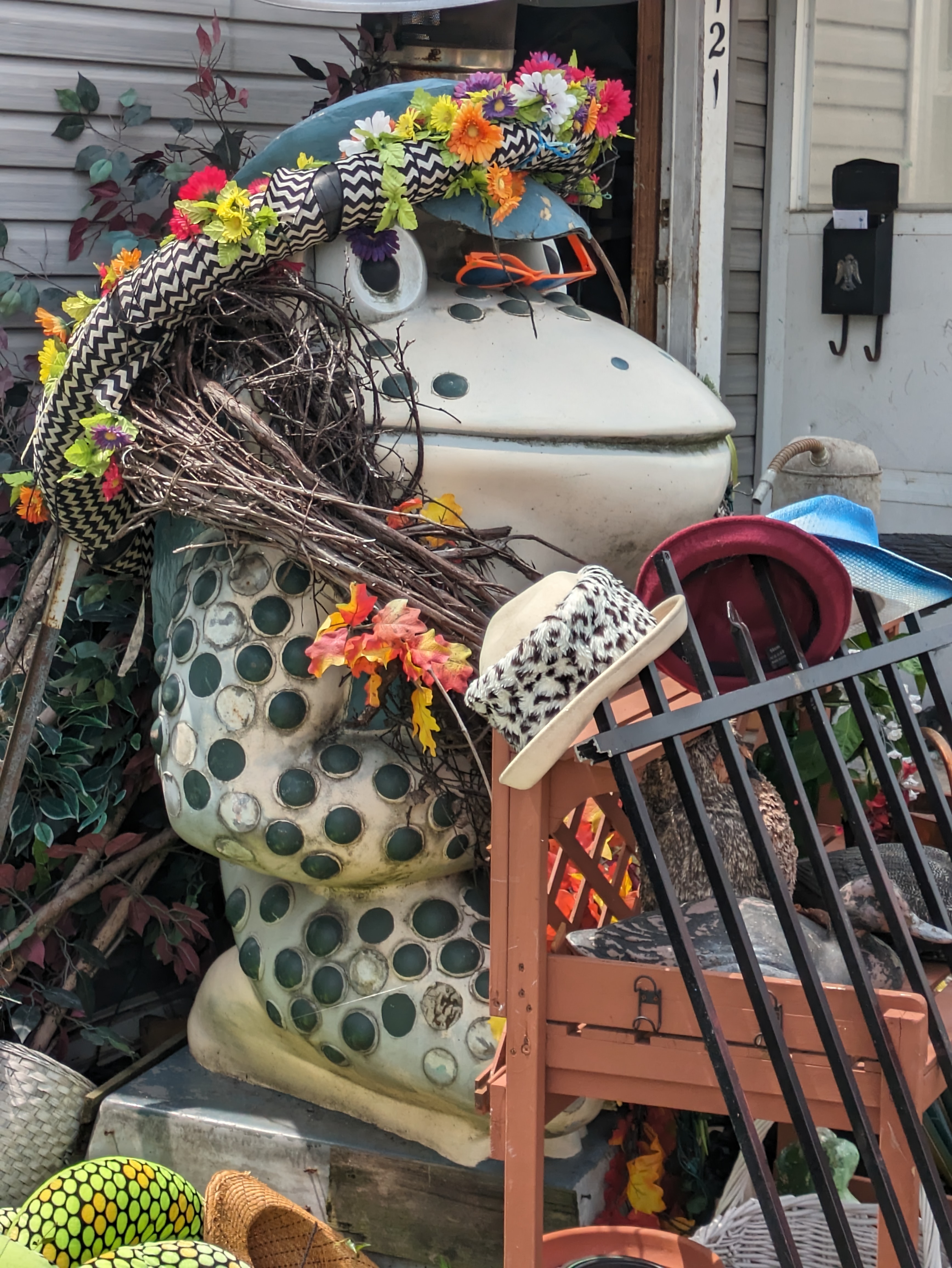
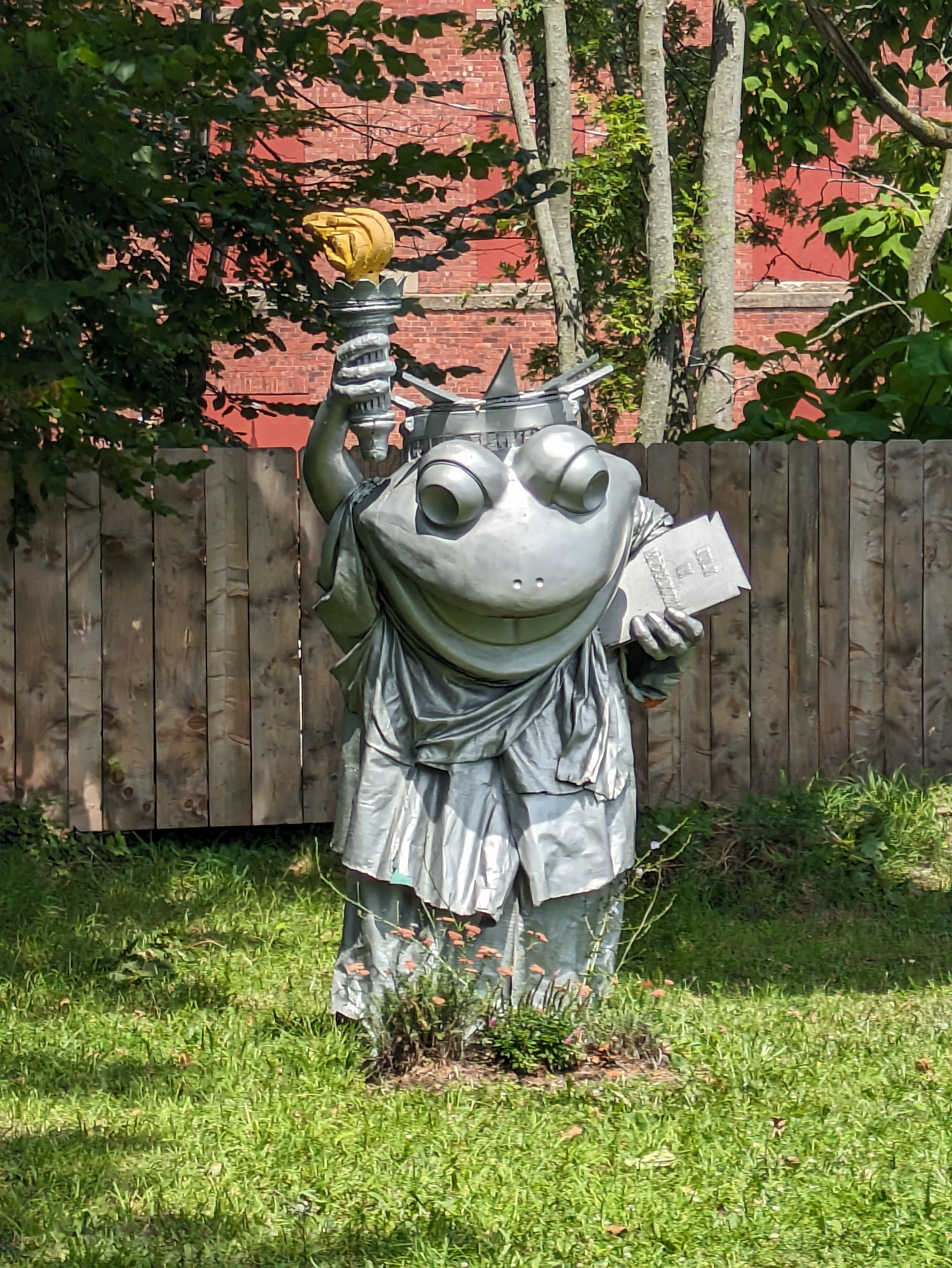
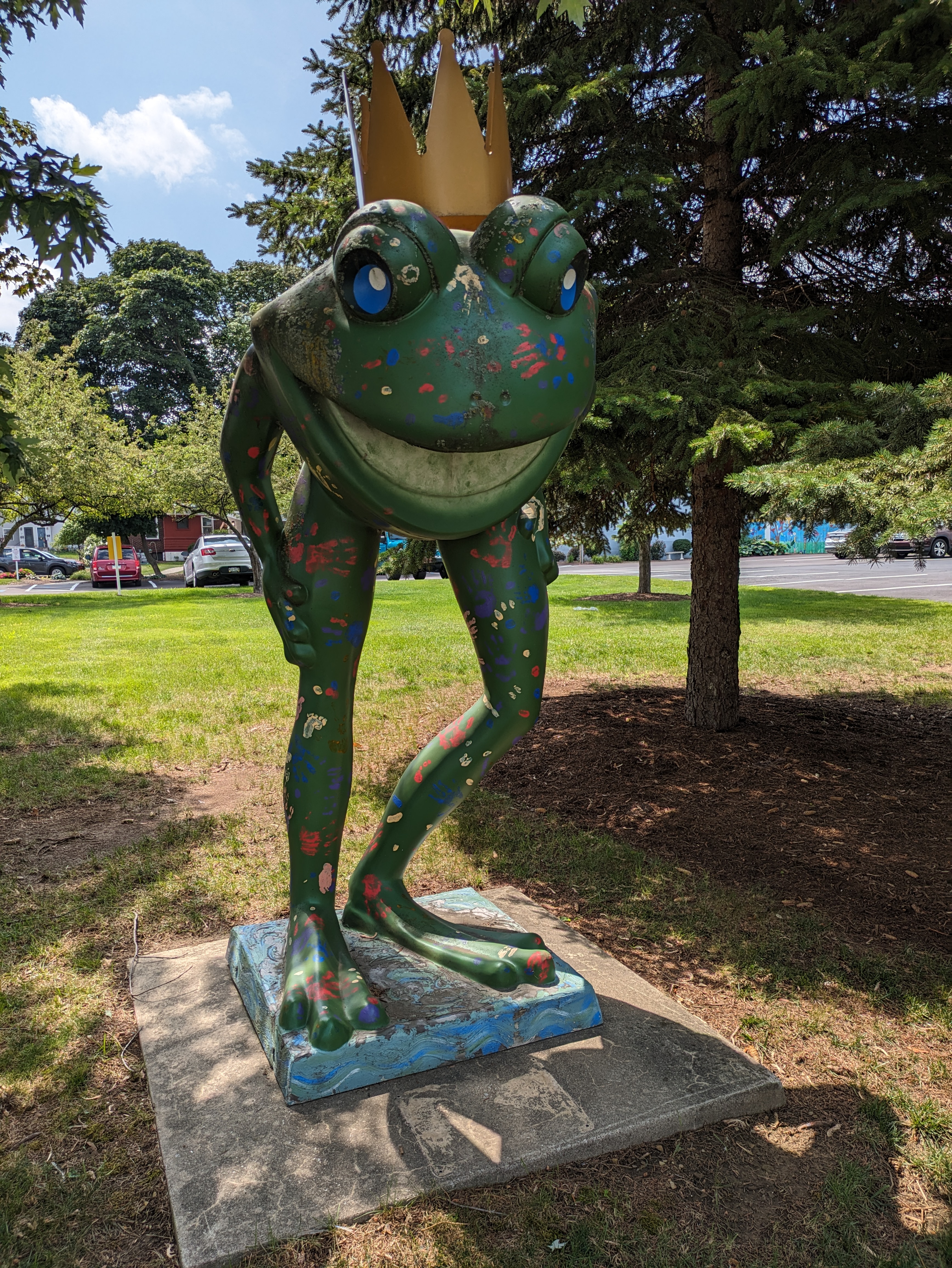
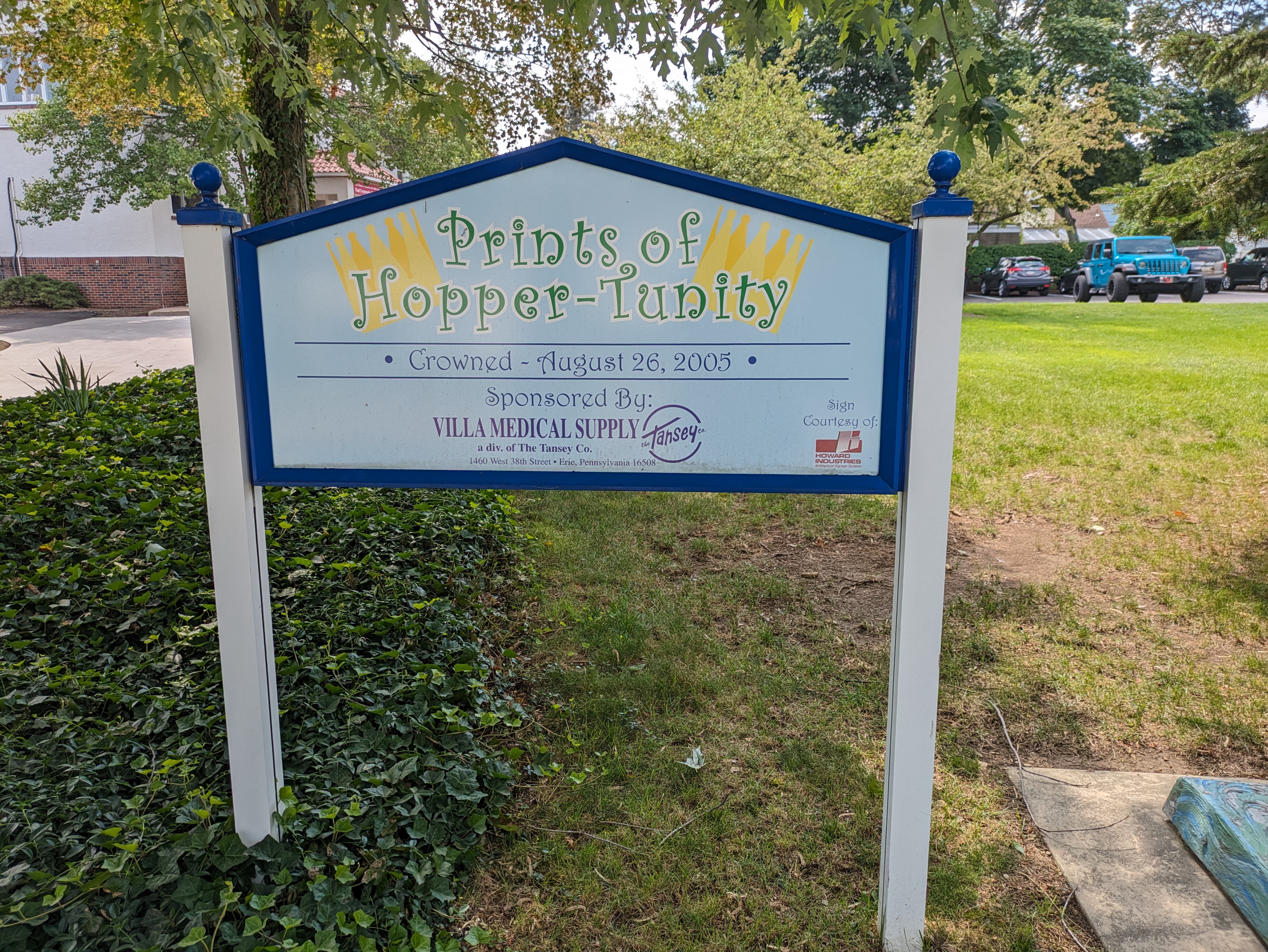
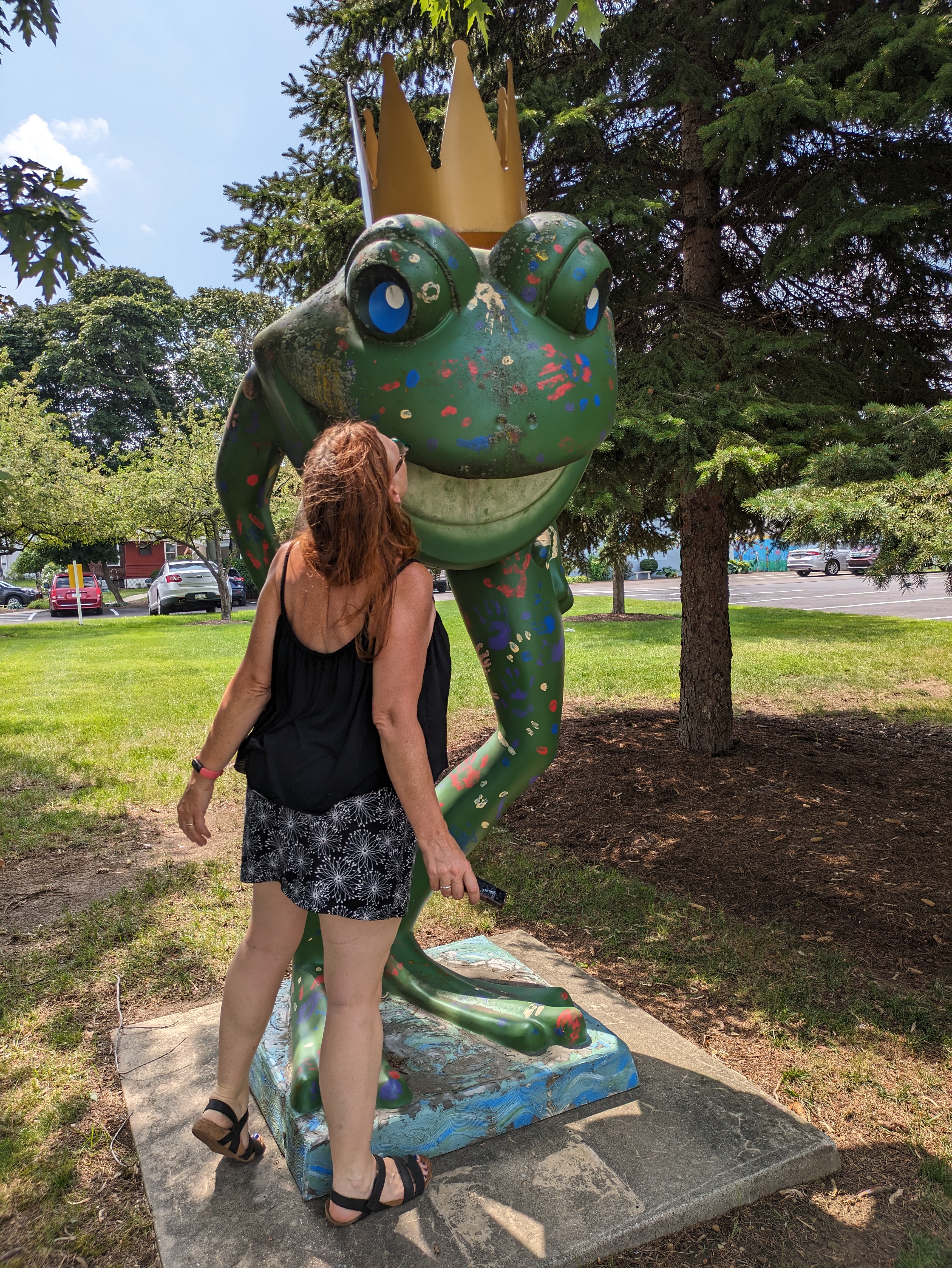
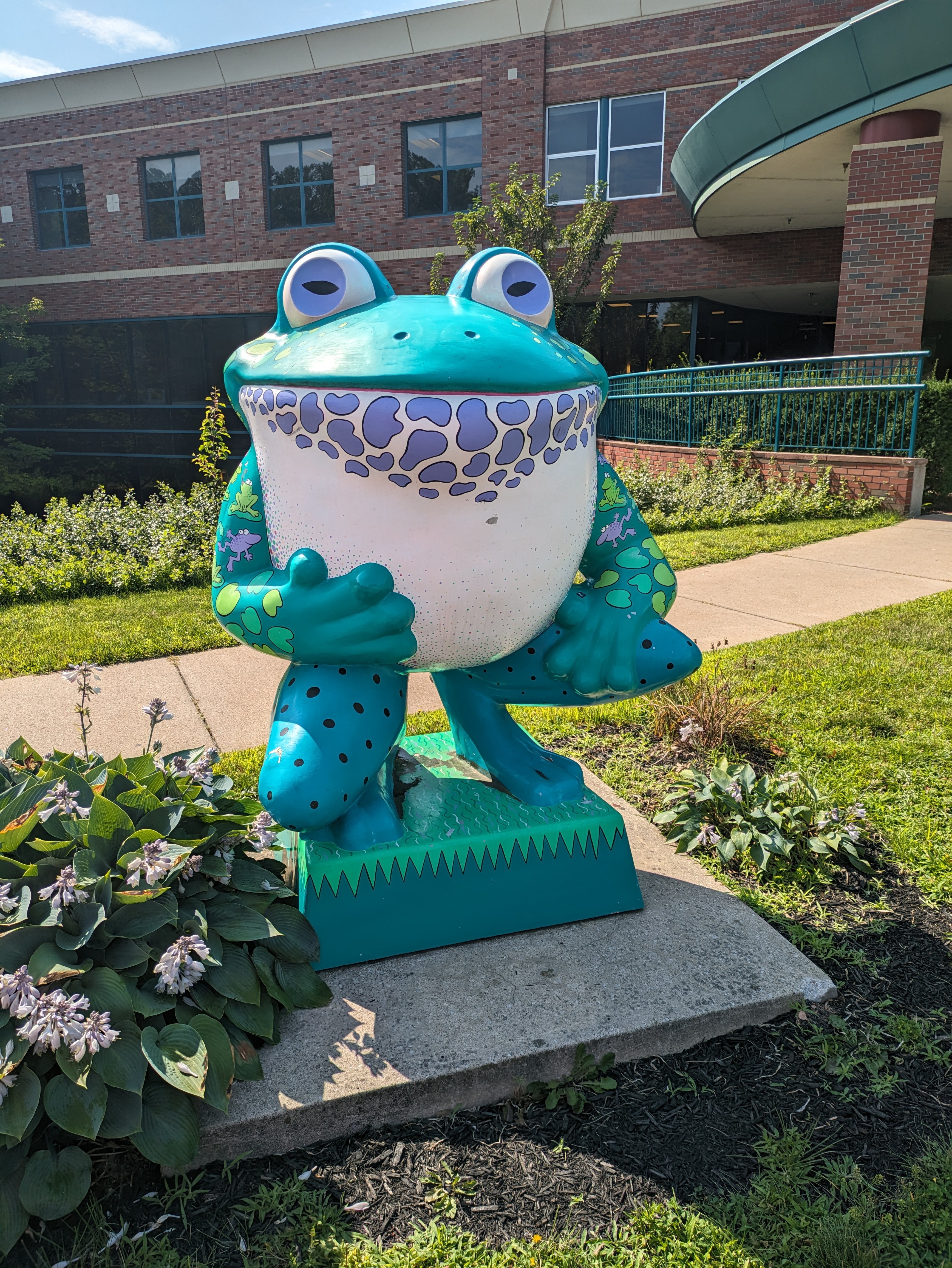
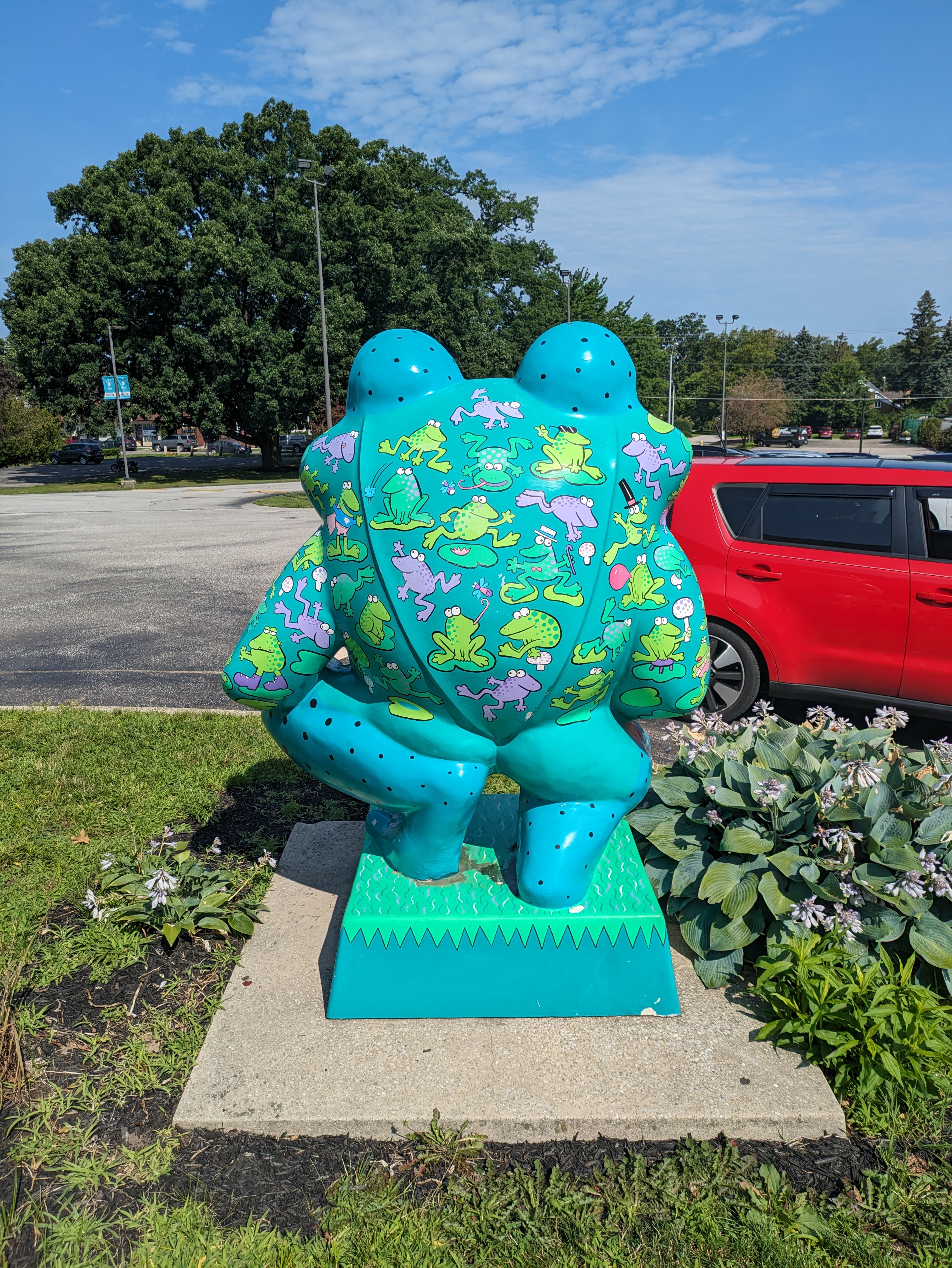
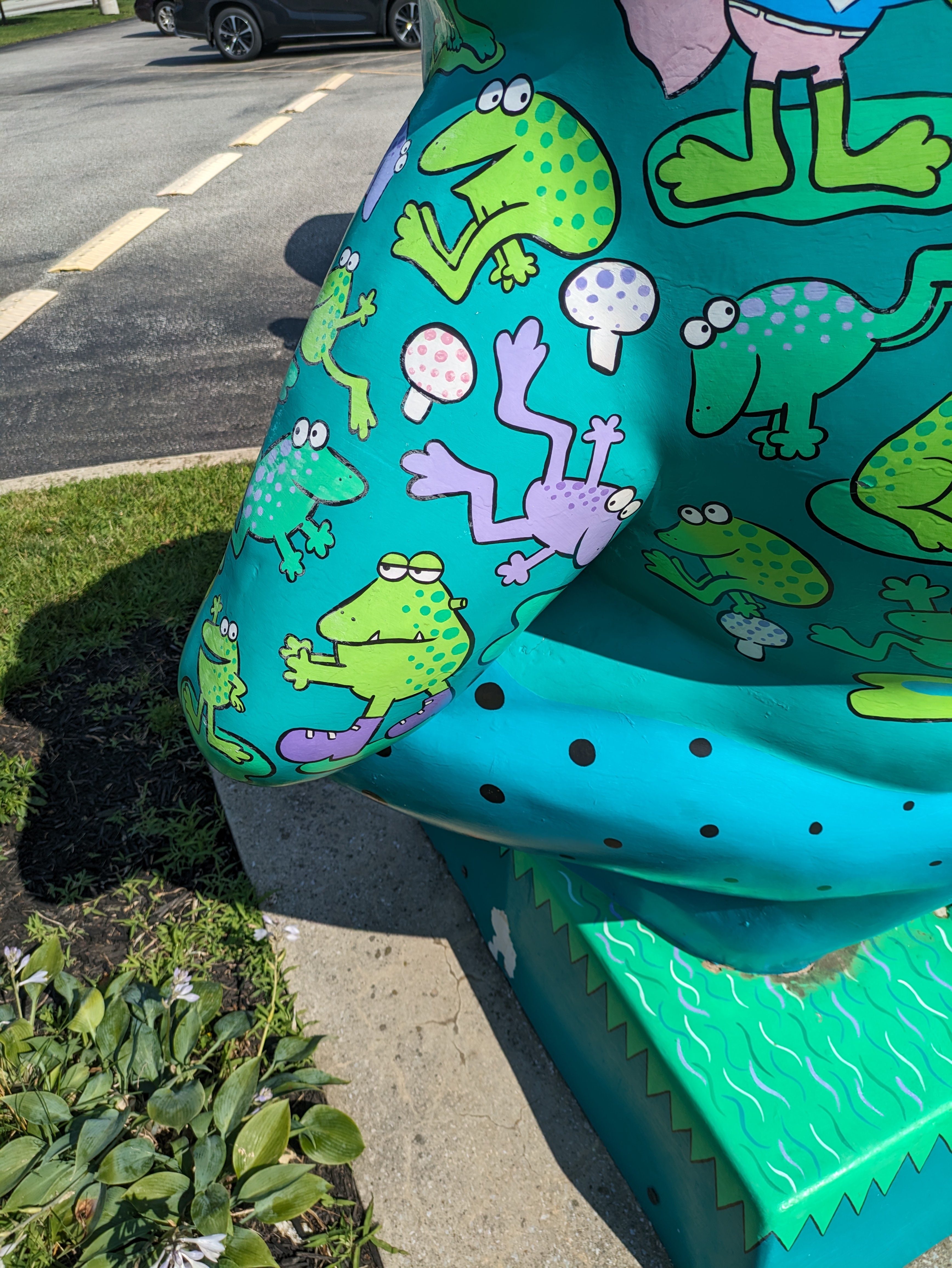
LeapFrog! was a fundraiser in Erie, PA, in 2004. The “Prints of Hopper-Tunity” was crowned in 2005, so it may not have been part of the original fundraiser. We stumbled upon the “Prints” while looking for another frog Amy H.’s map said was in the vicinity, but that one we didn’t find. The “Prints” did not change into a “Prince” when Shelly kissed him.

Grove City History

I didn’t have to go far to learn more about Grove City to flesh out the observations I made while walking the bridges. The Borough helpfully installed history markers along the historic business core of South Broad Street. I photographed 33 of the plaques, which I think is all, for anyone interested in virtually visiting these history markers. Of course, these could also be used in the debate over art vs. sign as they also fall into the nuanced mess of the grey area.

What is a Sign?

My day job for the last decade is working with zoning ordinances. *Yawn,* right? Except I find it surprisingly intriguing. For example, when I visited Grove City in 2022, I was in the middle of writing new model sign regulations for zoning. The puzzle pieces for this effort included incorporating Supreme Court rulings on the constitutionality of sign regulations and making the regulations easier to understand and follow.1 So signs were already on my mind when I encountered Grove City’s parking sculptures and my brain exploded.

Besides the century-old battle between planners and billboard companies, the most difficult thing about sign regulations is the definition of sign. Art cannot be regulated by zoning, but signs can. However, there is a lot of grey between art and sign. Grove City exemplifies that grey area.

Grove City has a series of outdoor sculptures that incorporate directional signage for public parking areas. Based on a strict interpretation of Pittsburgh’s definition of sign (which interpretation frequently got me into arguments with my boss when I was zoning staff for Pittsburgh), the minute any component of a piece of artwork contains a sign, the whole piece of art becomes a sign (see Pittsburgh’s Zoning Ordinance Section 919.01.C.1). The phrase “or any structure designed to carry the above visual information” supports my interpretation that Grove City’s parking sculptures would not be permitted in Pittsburgh because they would not comply with the sign regulations.

Fortunately, Grove City’s zoning ordinance measures a sign only on the “separate individual letters, words, or graphic elements on the background” (see Grove City Zoning Ordinance Section 702, page 72 of 84 in the PDF). As the structure doesn’t count in the calculation of sign area in Grove City, I can now understand how parking sign sculptures could be created without violating their own ordinance.

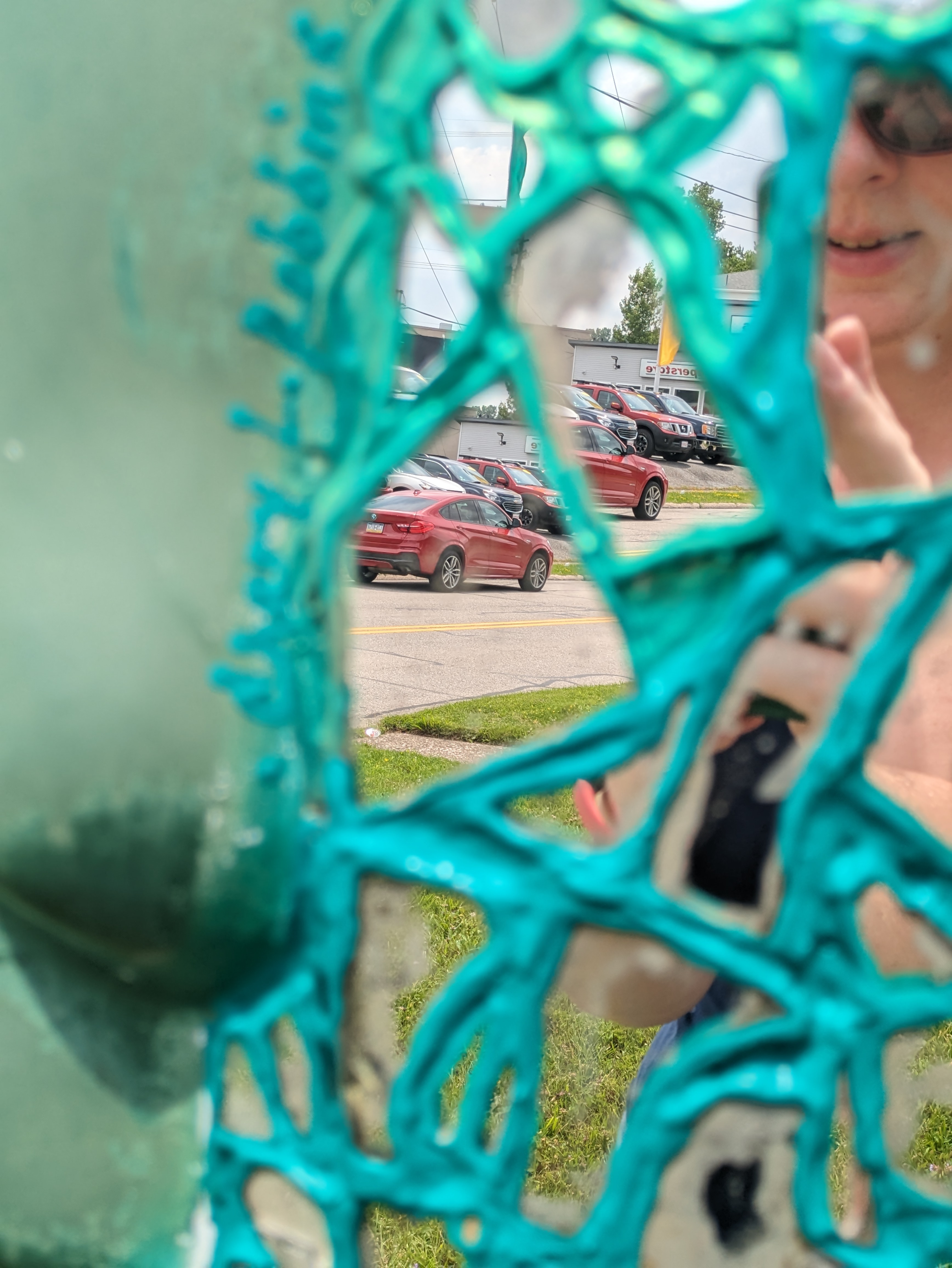
If you are a frequent visitor to urbantraipsing, you know I don’t typically take selfies. However, I did with the first parking sculpture I encountered in Grove City to provide a sense of scale. These are substantial structures. I am standing in the selfie…and, for those who don’t know me in person, I am 6 feet tall.

  1. I succeeded in creating a model ordinance that balanced brevity with thoroughness and usability with constitutionality. Economy, PA, (Chapter 180, Article XIV) and McCandless, PA, (Article 1305) are two of the municipalities that have adopted this ordinance to their specific needs. ↩︎