
As I mentioned in the post on Inkspot, it felt like I had more success with repurposed churches in Cardiff than London, despite having done extensive research on the adaptive reuse of churches in London. Perhaps this is in part because it is far more exciting and rewarding to come upon a repurposed church than to go where you already know you will find one. My first day in Cardiff I discovered two adapted religious buildings within a few blocks of each other—thrilling!
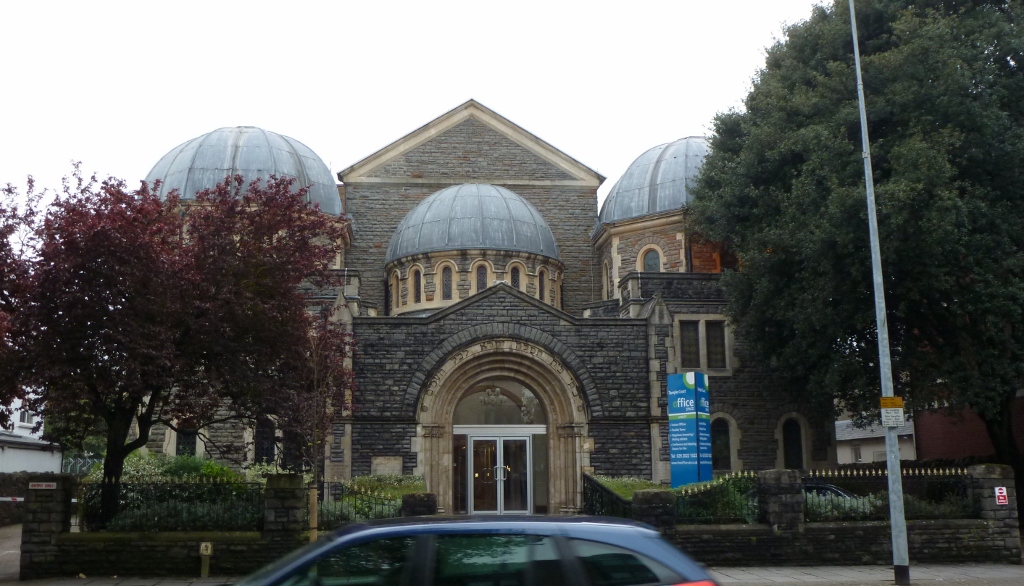
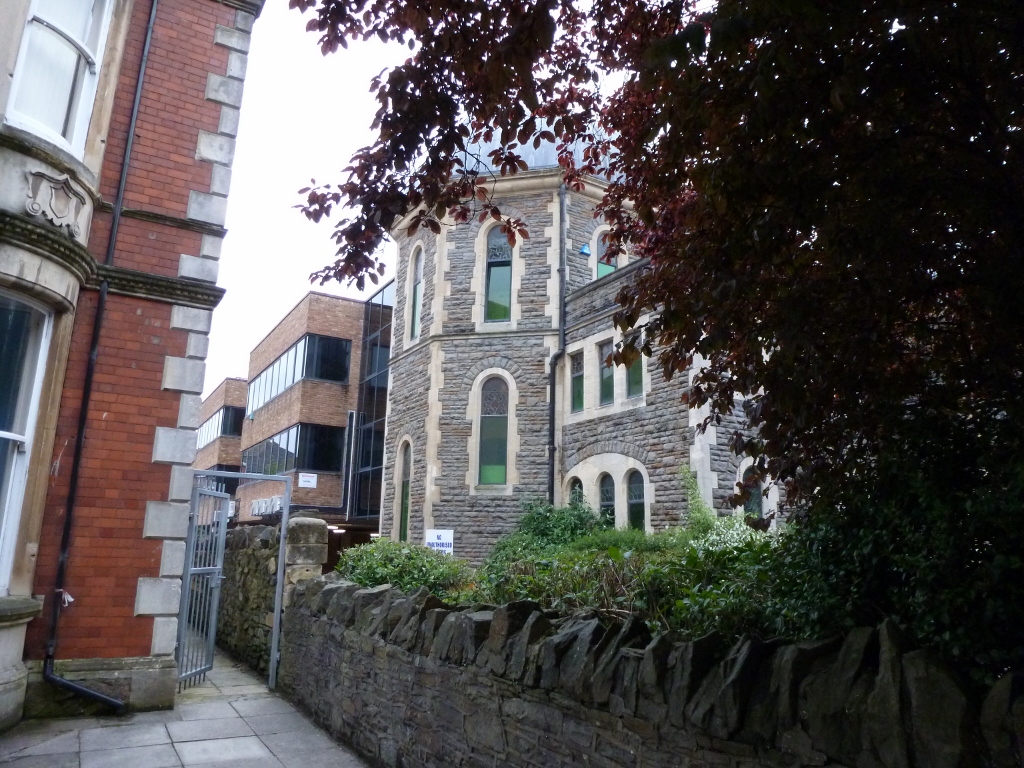 The first of these buildings, formerly the Cardiff New Synagogue now office space. (I am also interested in the adaptive reuse of synagogues as there are some similar issues when repurposing synagogues or churches, but I am less familiar with the architecture and interior design of synagogues and they seem less common adapted church buildings.) The façade of this former synagogue appeared to be unaltered, however in the back there was a modern office building extension. I could not tell from my observations whether or not part of the original building was demolished to make way for the extension. The original building seemed a bit short, which made me think that part of it might have been demolished. However, some of the townhouses nearby had similar additions in the back as they were now used for businesses or apartment complexes. The depth of these buildings matched those that did not have additions and that of the original structure of the synagogue, suggesting that the synagogue may have been intact. I found the YouTube video on the building’s website interesting as it is easy to tell which rooms are in the original building and which in the addition.
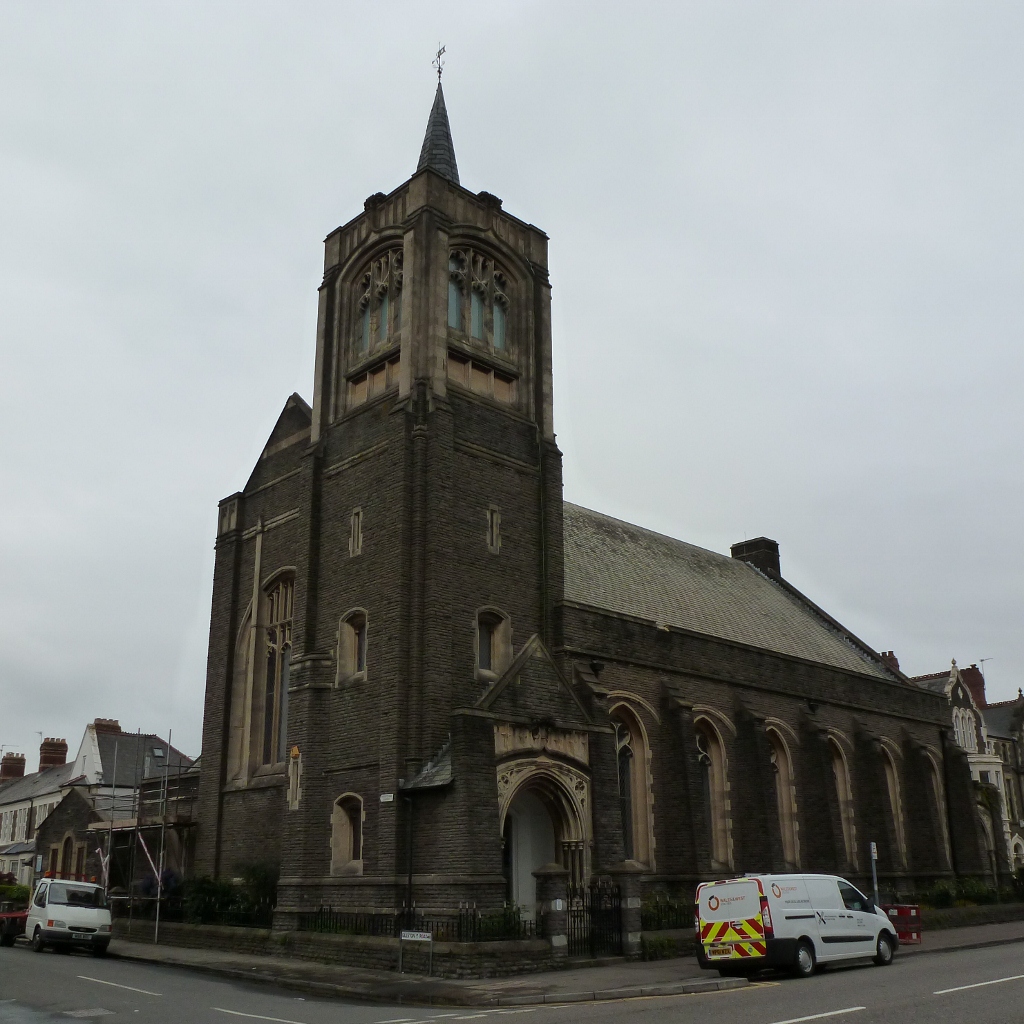
The second building was a former Presbyterian Church of Wales, now The Wallich Centre. Their motto is “homeless people first” which gave a clear indication of their purpose, although the website suggests that this building may not be used directly for the homeless as it is identified as the administrative centre as well as a venue for hire for meetings, conferences, etc. which I don’t imagine would be used by the homeless. There appeared to be little or no alteration to the exterior of this building, except for the glass doors inside the covered entrance. Only a small sign (blocked by the van in the picture) indicated that this building no longer functioned as a religious institution.


 urbantraipsing