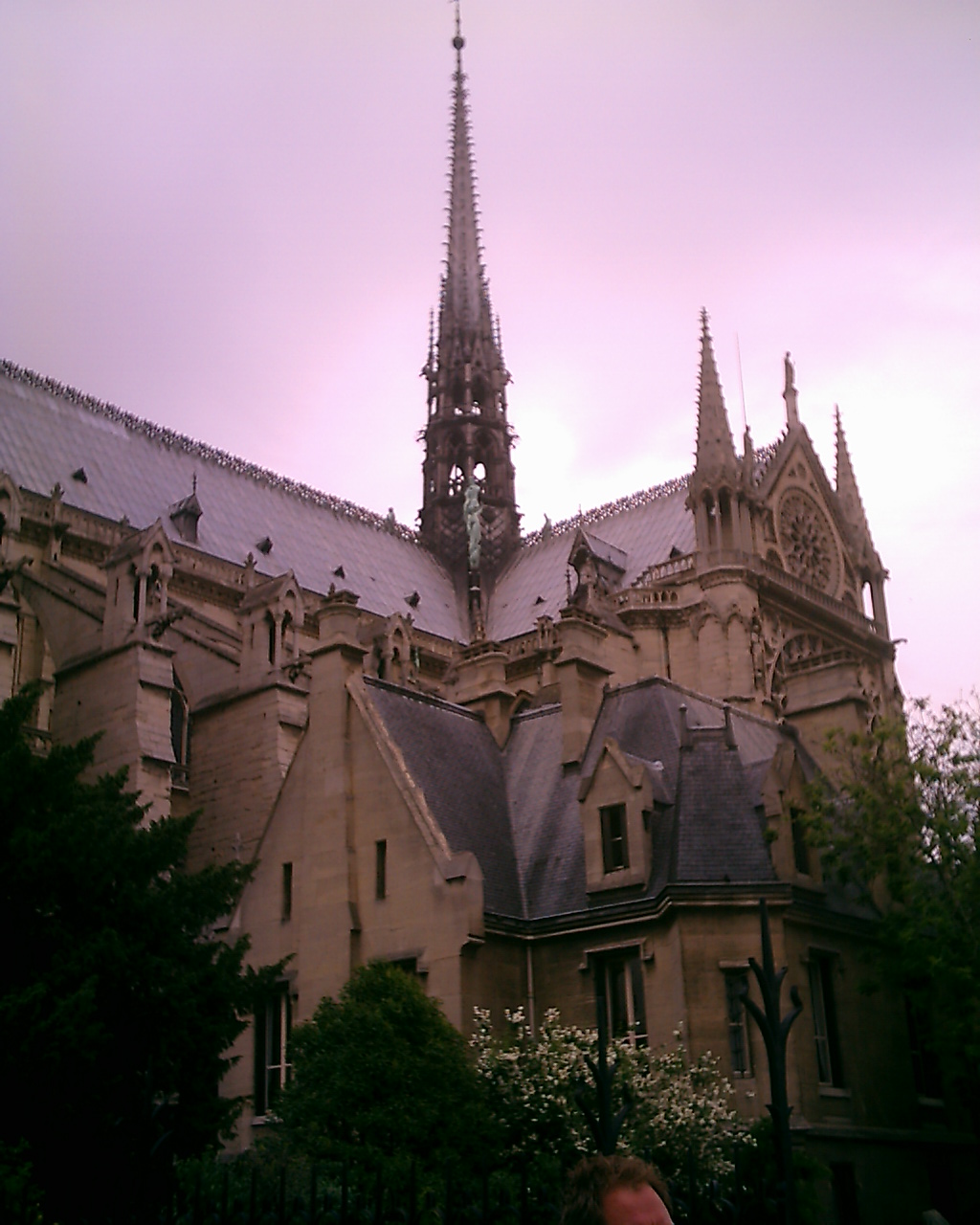
Notre Dame Fire Five Years Later

On April 15, 2019, the roof of Notre Dame caught fire and collapsed. The cathedral has been closed ever since. Almost immediately came promises to rebuild exactly as it was and reopen within 5 years. These promises are almost fulfilled. The new spire was recently uncovered and looks much like the one in my photo from 2005. The cathedral is scheduled to reopen in December 2024, five years and eight months after the fire. (Paris Je T’aime, Friends of Notre Dame; Mad White; World, April 4, 2024)

I was fascinated by the fire and commemorated it in 2019 with one of my architectural dessert masterpieces. 1 As I mentioned in that post, I visited Paris in 2005 and was fortunate to have a connection to a guest organist. We were invited to experience the cathedral from the organ loft. A unique experience that I was distracted from enjoying fully for a number of reasons.

This trip was before I officially began urbantraipsing, but was one of the first places I unknowingly tested out the habit. It was also the first time I liked a city, a foundational necessity for urbantraipsing which paved the way for my return trip to London in 2012 where I explored adaptively reused churches and bridges.

I enjoyed the Paris trip immensely and before we left was looking forward to returning. There was much I didn’t get to see on that trip and bridges that I didn’t know I would need to document walking. One day, I will return with a more advanced camera and improved photography skills.

  1. Unfortunately, personal encounters with COVID have disrupted my intention to have an annual architectural dessert masterpiece over the last few years. I look forward to resuming the tradition one day. ↩︎
Flying Cashews

The near fail of the Leaning Marina Tower of Chicago left me determined to prove that brownies could successfully be used to create an Architectural Dessert Masterpiece. All I needed was a subject.

Looking back on 2019, the most significant architectural moment for me was the fire of Notre Dame Cathedral. I felt gratitude that I had the opportunity in 2005 to see inside the cathedral from the vantage point of the organ loft; disappointment that all I really remember from the experience was how dark it was; curiosity about what they would do with the remaining structure (perhaps put a glass roof on it to increase the light?); and amazement that neither the cathedral nor Paris had experienced any major fires before in their centuries of existence.

The Great Fire of London in the 17th Century cleared the way for the construction of St. Paul’s Cathedral. One third of Pittsburgh burned in 1845. According to legend, the Great Chicago Fire of the 1870s was started when a cow kicked over a lantern. This fire destroyed approximately 17,500 buildings. Paris, Texas, experienced three major fires between 1877 and 1916. Yet, Paris, France, remained unscathed by significant fires until 2019.

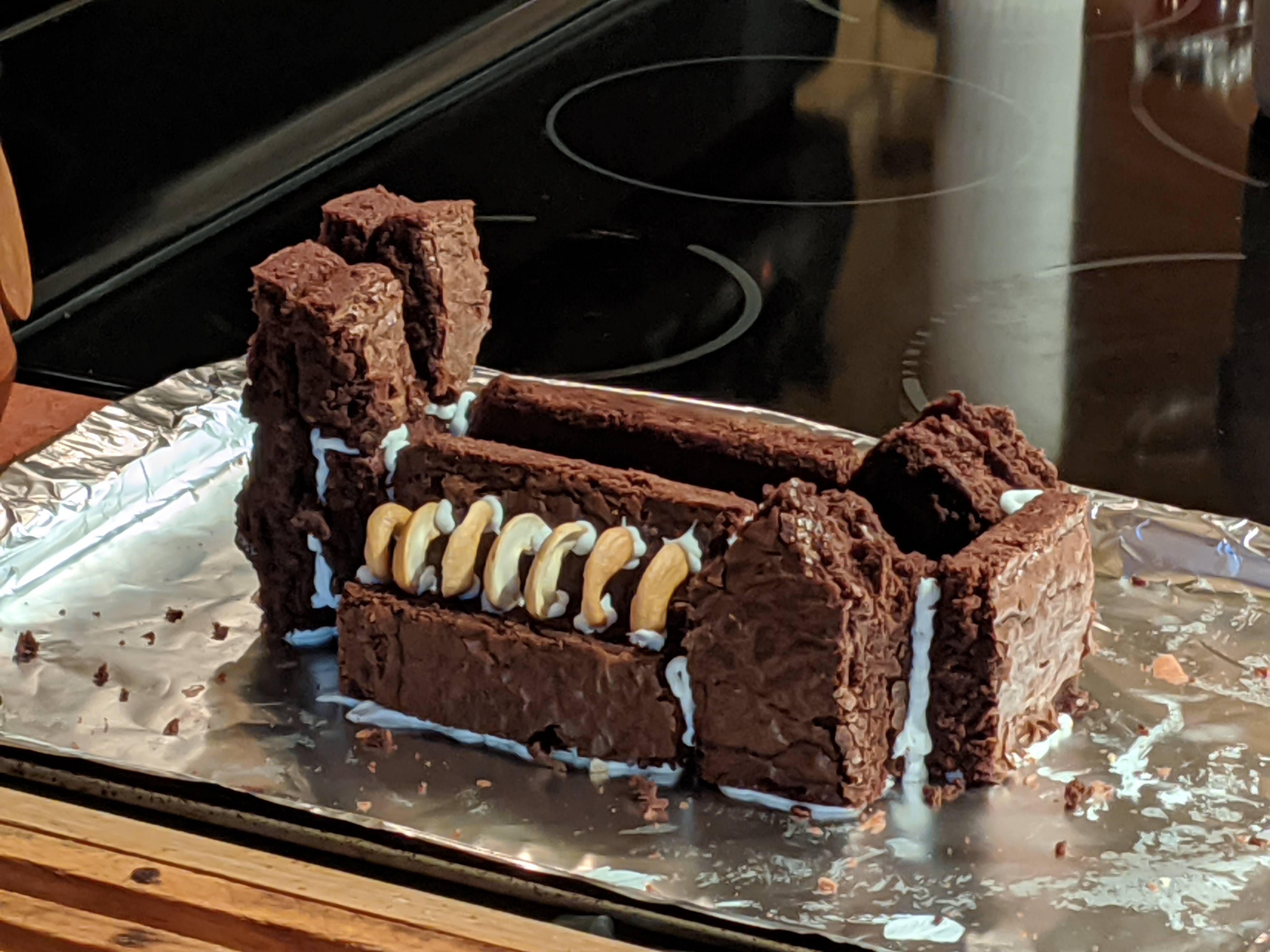
To commemorate the incident, I reached for my brownie pan, only to stop short at the challenge of creating the flying buttresses. While I believed that brownies were structurally sound enough to use as building blocks, I did not trust them to fly. In the spirit of the season, I briefly considered candy canes. However, their shape didn’t really match the flying buttresses of Notre Dame. I also hesitated to use candy as I have become more sugar conscious since my first Architectural Dessert Masterpiece. Sugary candy on top of sugar-heavy brownies seemed like a bad idea. I began to think I would have to give up on making Notre Dame as I didn’t have time for the meticulous, but safe process of designing and cutting out numerous pieces of gingerbread for the cathedral. Before I gave up completely, I walked the bulk foods aisle of the grocery store searching for inspiration. I found it between the candies and the grains. Nuts of all shapes, sizes, and flavors sparked my imagination. They go well with brownies and would counterbalance the sugar. I compared the shapes of the peanuts, walnuts, Brazil nuts, and cashews and determined that cashews were made to fly.

After selecting my materials, there were several more moments of anxiety that my walls and towers would collapse. I am pleased to say that like the cathedral it was based on, my structure stood through the test of time (eight hours from construction to consumption).

IMG_20191224_160442