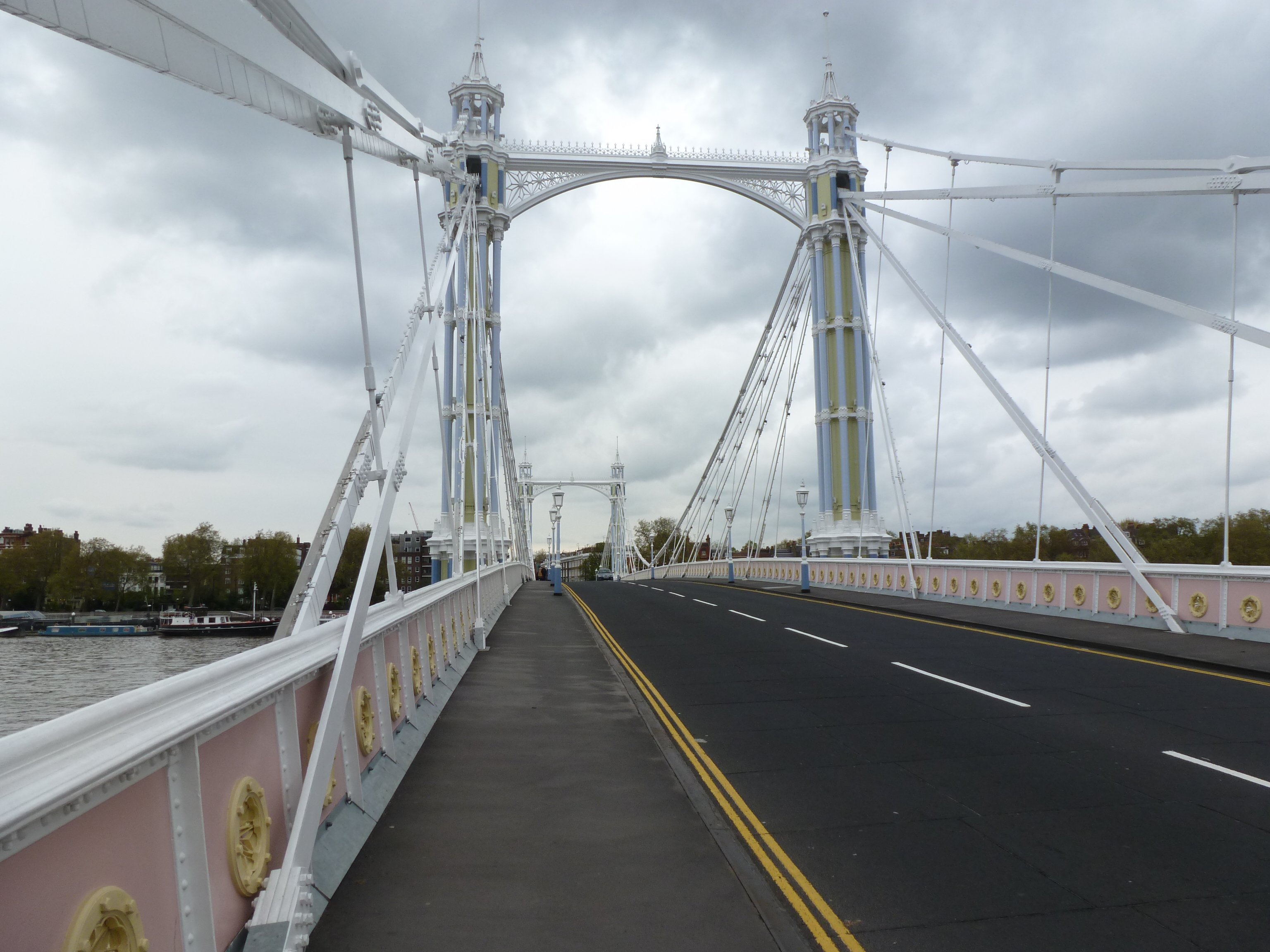
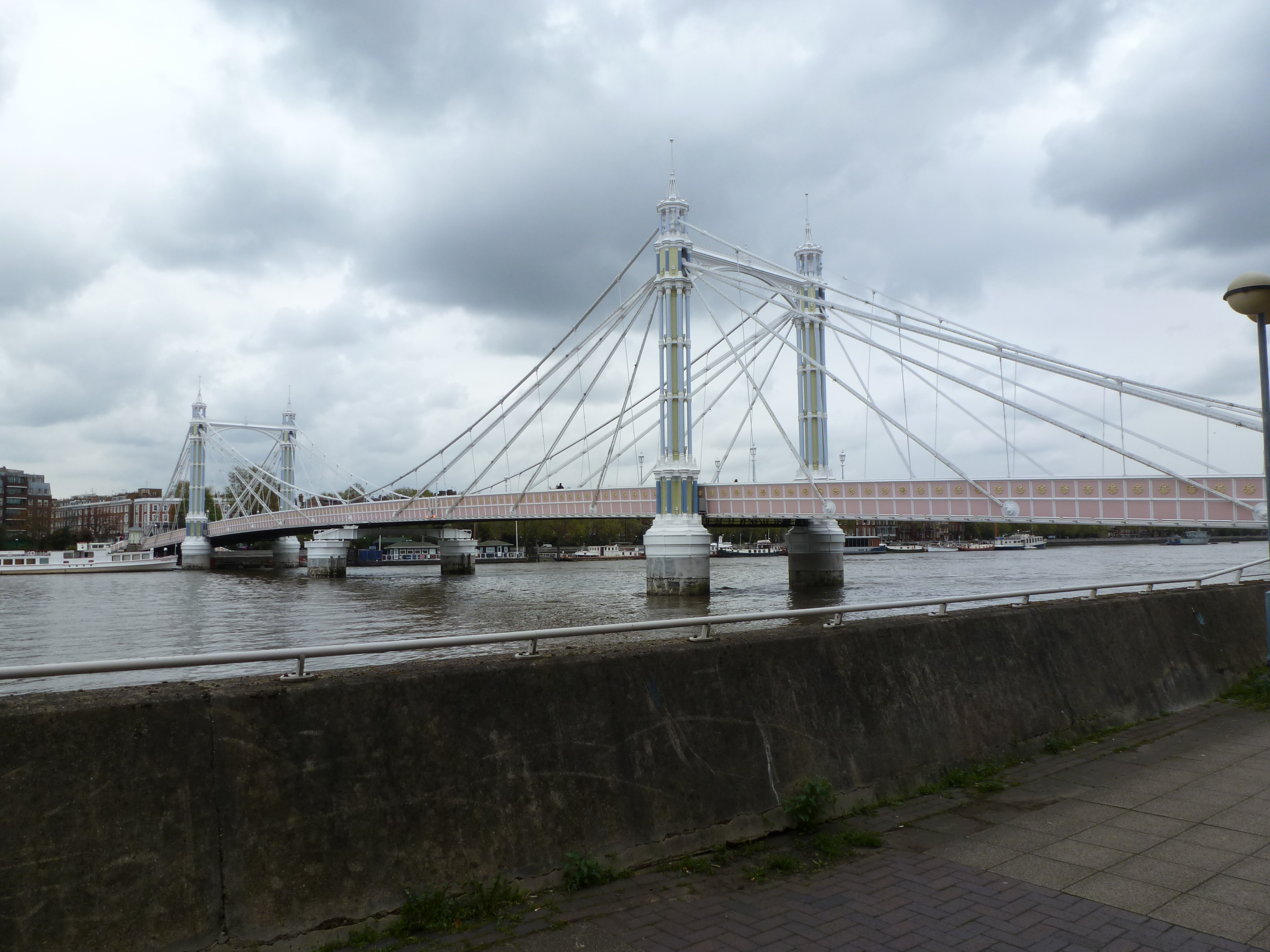
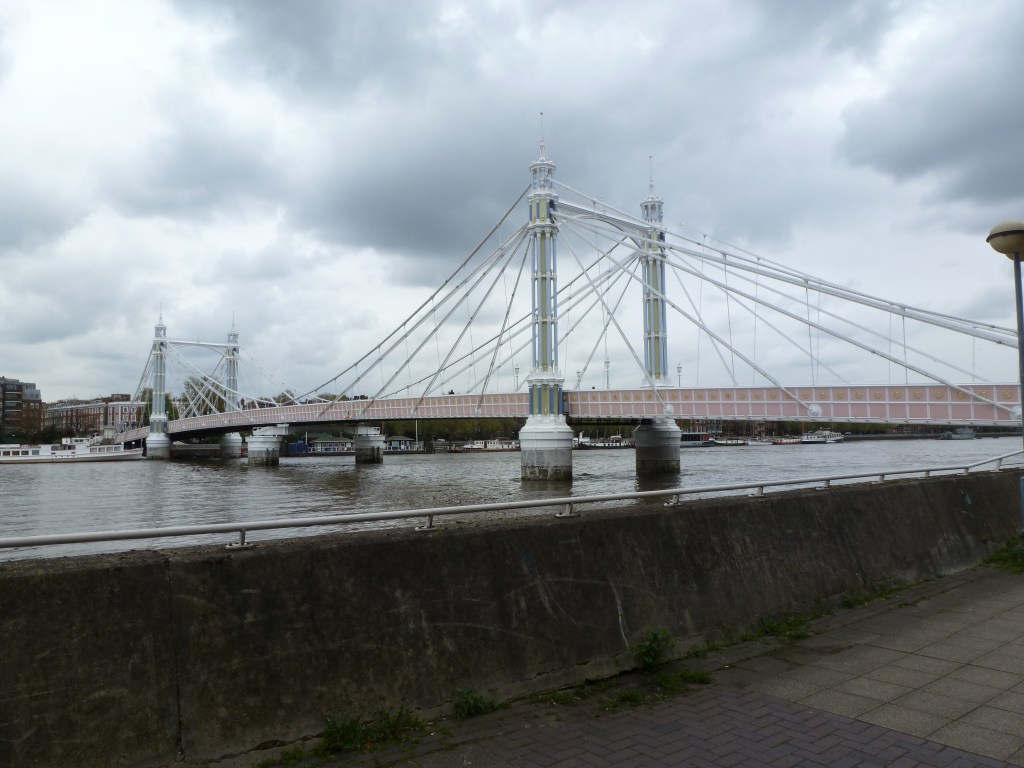
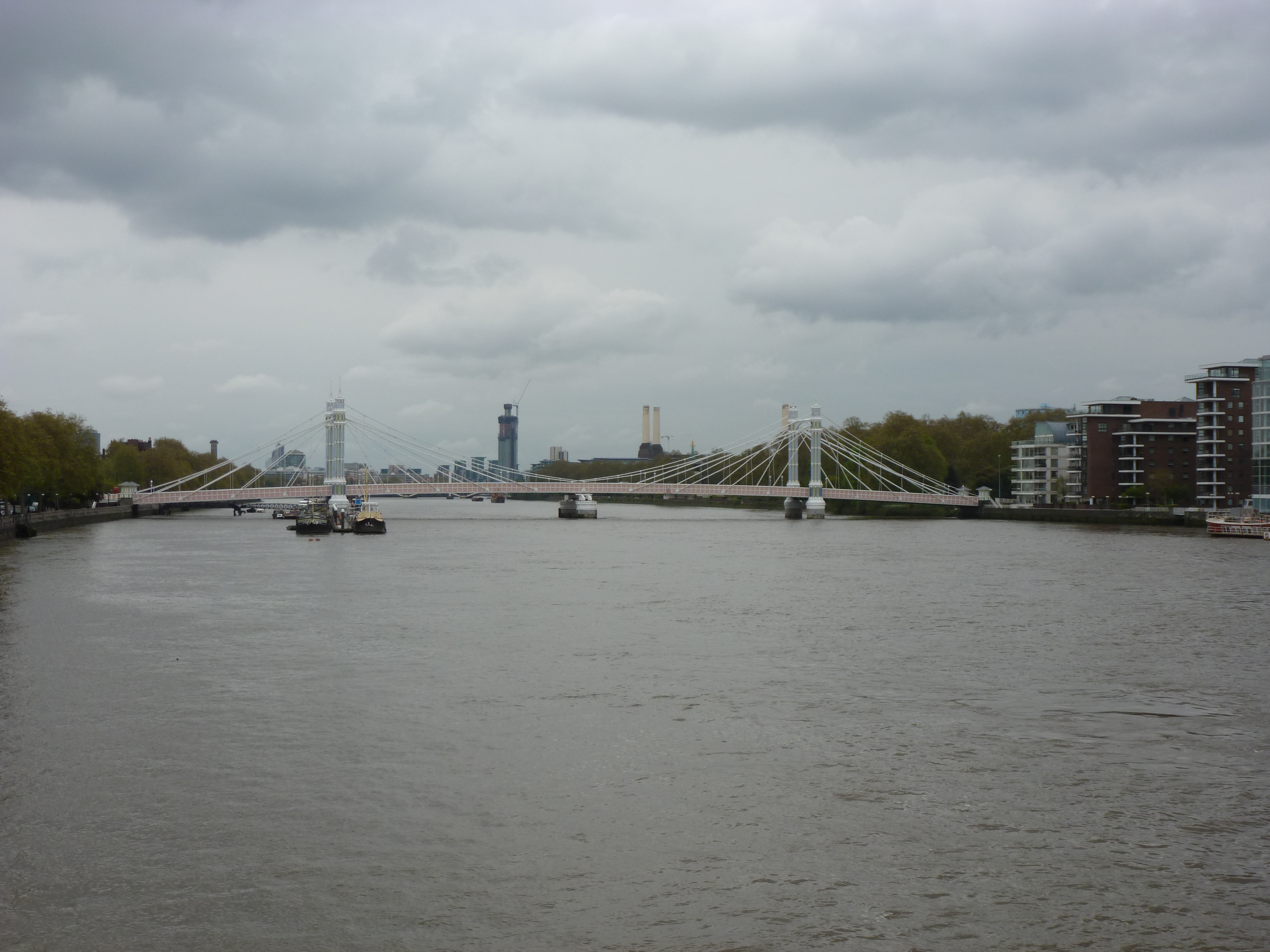
The Albert Bridge, opened 1874, was my favorite London bridge. Who came up with the idea to paint a bridge pink? The color scheme looks perfect for a nursery and really bizarre for a bridge particularly one named after Prince Albert. According to Wikipedia, this color scheme is rather new, the bridge having been painted pink, green, and blue in 1991 to increase the visibility of the bridge in foggy and other low visibility conditions. This is one of those incidents where the facts are disappointing–I had been imagining all sorts of reasons for the color scheme, including that these three colors were Prince Albert’s favorite or that these colors were chosen specially to symbolize aspects of Prince Albert’s personality or accomplishments.
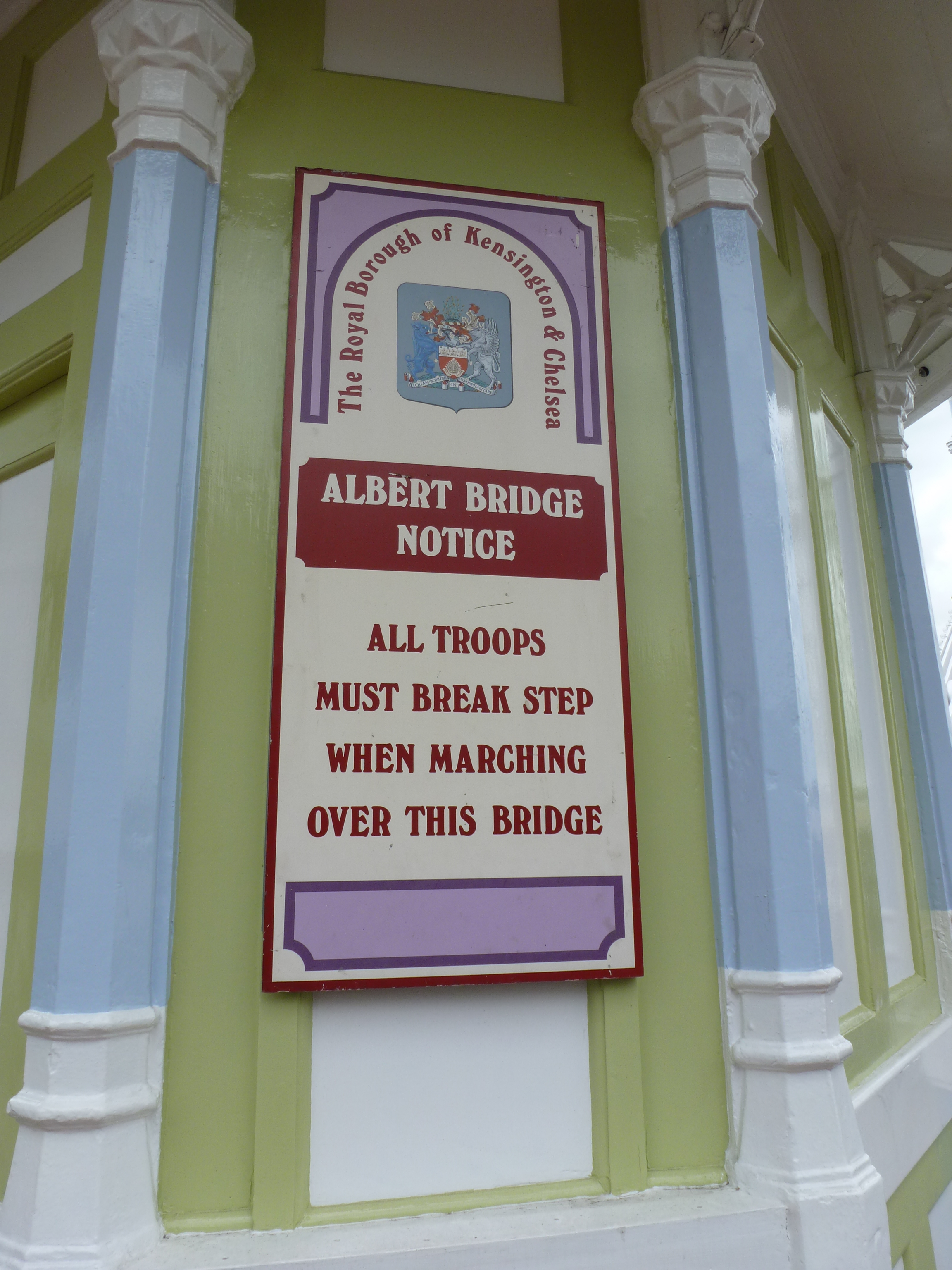
As this sign indicates, the Albert Bridge is not the most structurally sound and the force of troops marching in step could be enough to bring the bridge down. Despite the structural deficiency of the bridge, it is one of the only bridges across the Thames in London to be still the original structure (more or less). It has been renovated and reinforced on multiple occasions, but never demolished and rebuilt.
It seems possible to create a convincing argument for how the Albert Bridge symbolizes Prince Albert. The bridge is unstable and the colors are not traditionally considered masculine. Prince Albert was a man who struggled as the husband of Queen Victoria. This marriage suffered from tensions between the idea that the man was the “head” and “ruler” of the family and the fact that in this case the woman was the head and ruler of an entire empire, so how could her husband be the head and ruler of her? (Particularly since he was German and the ruling British classes were very suspicious of and against any influence from the Germans. “Victoria and Albert” (2001) is a good film about the love and tension in this marriage.) Prince Albert had to deal with feeling less manly and powerful, at times, than he wished, while the bridge named after him is less strong and serious-looking than most other bridges.
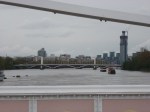
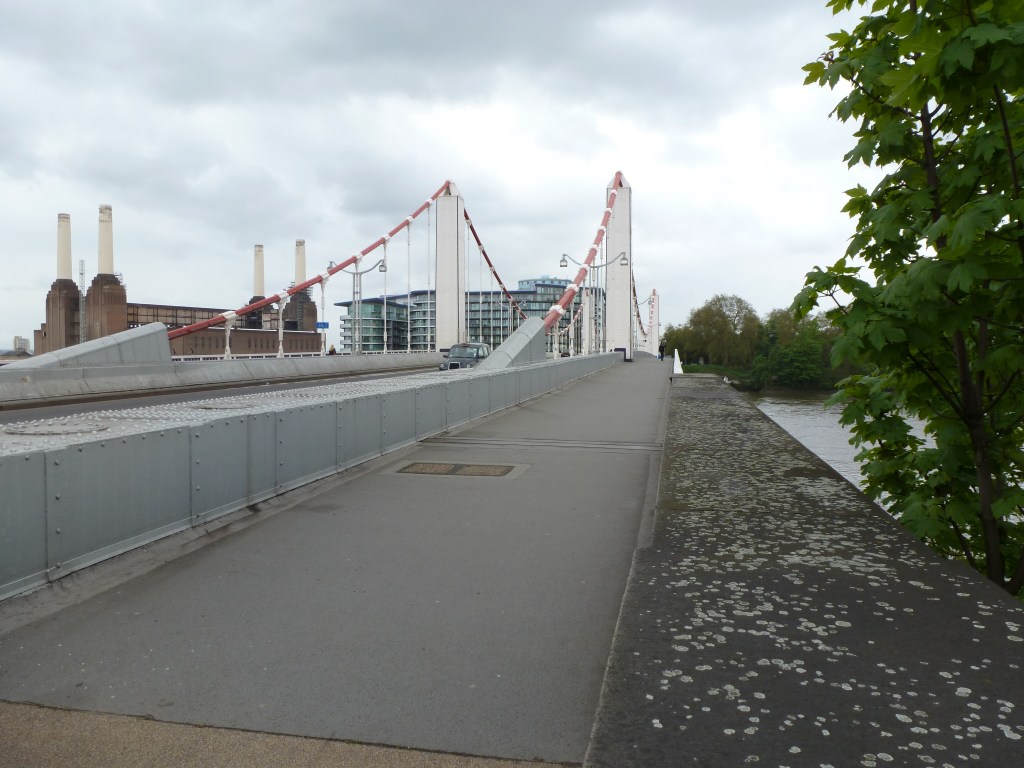
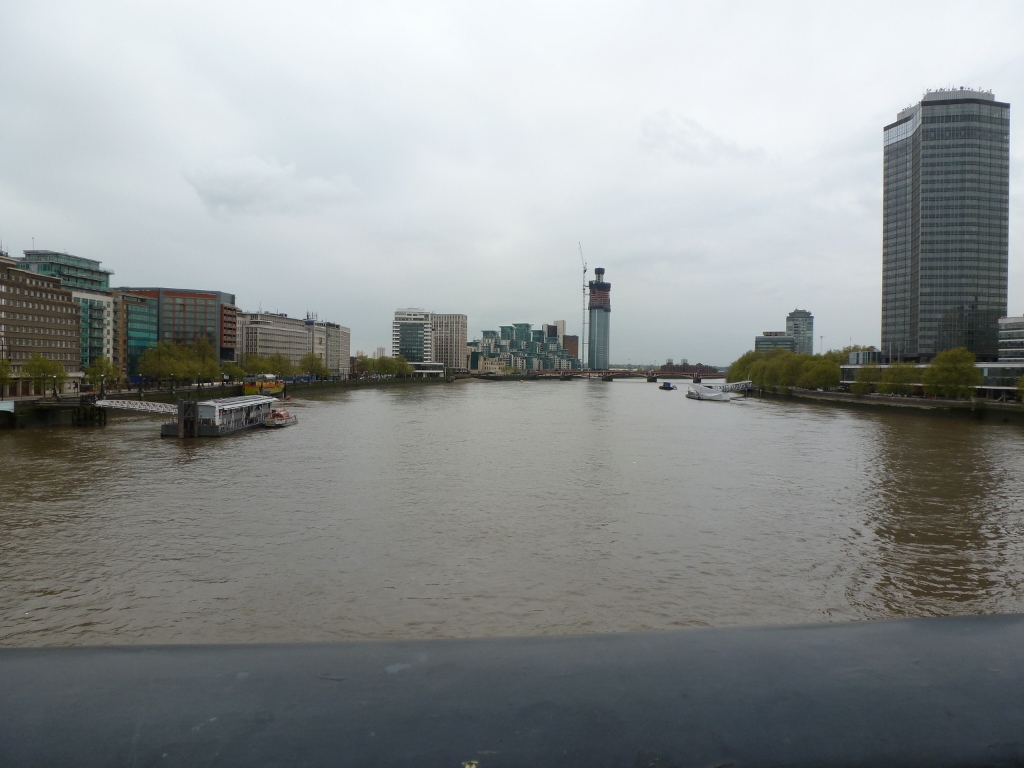
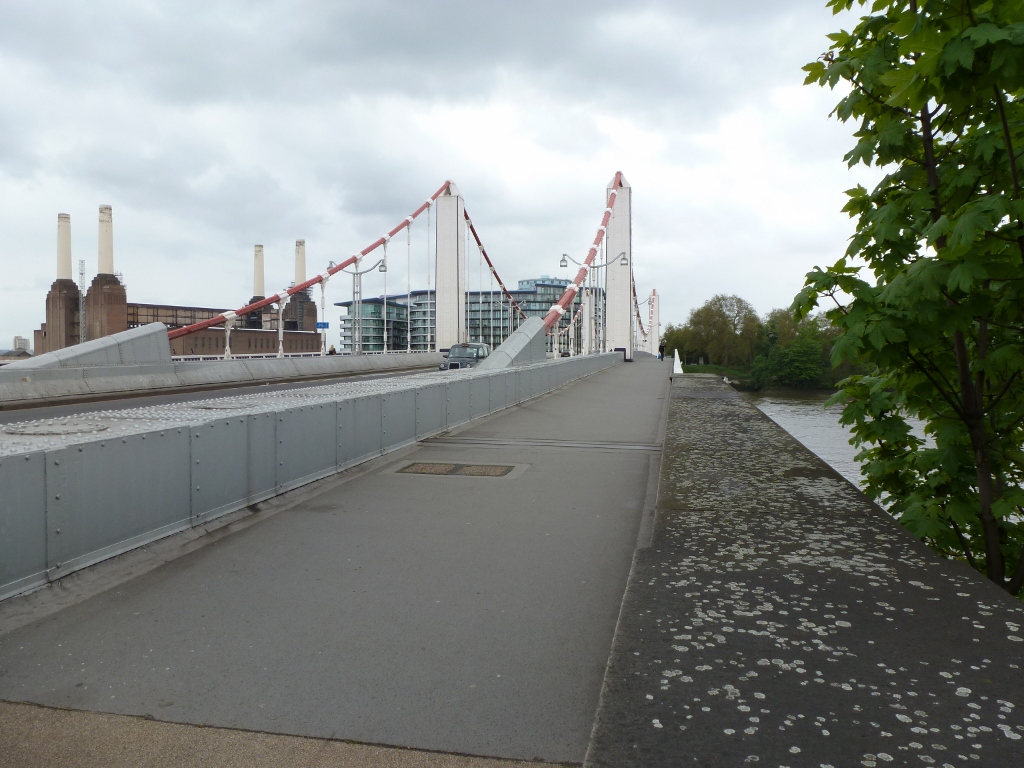
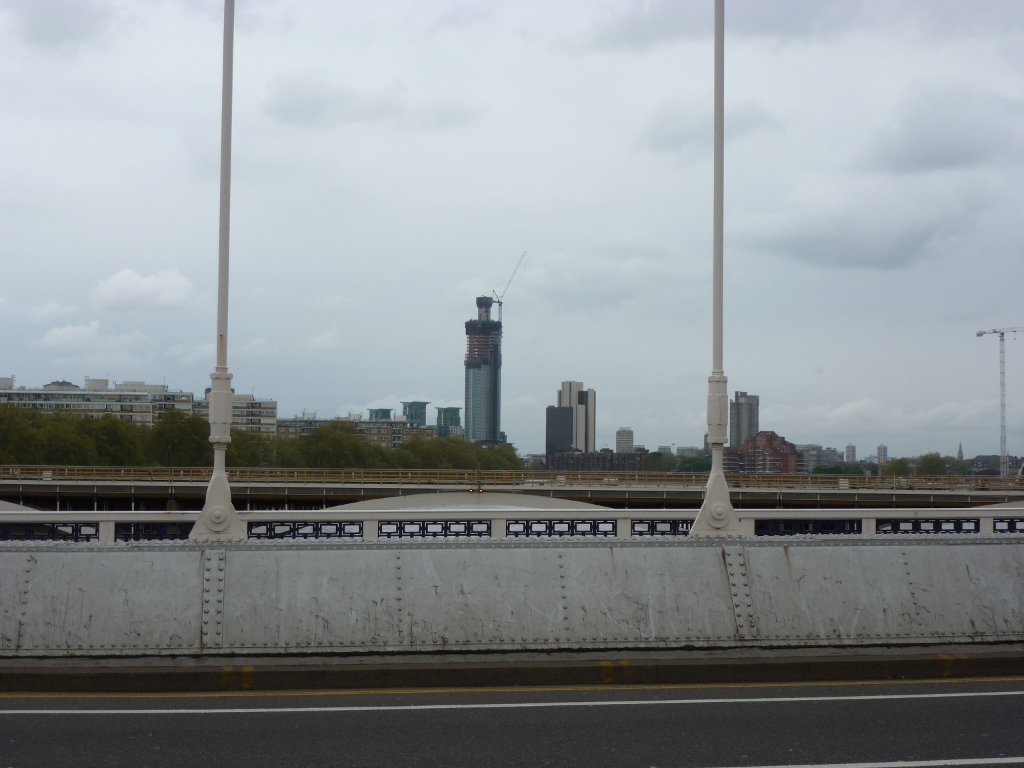
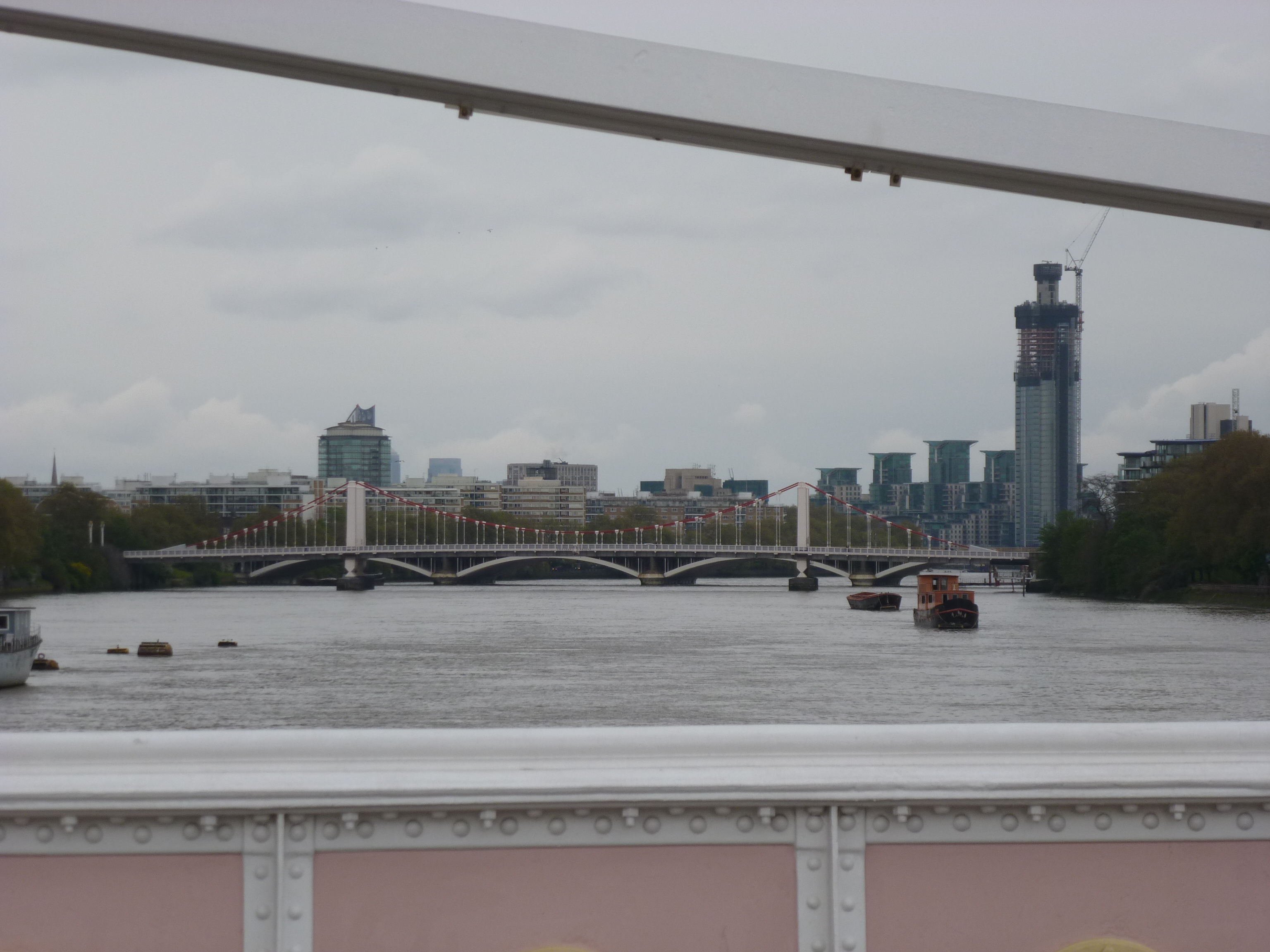
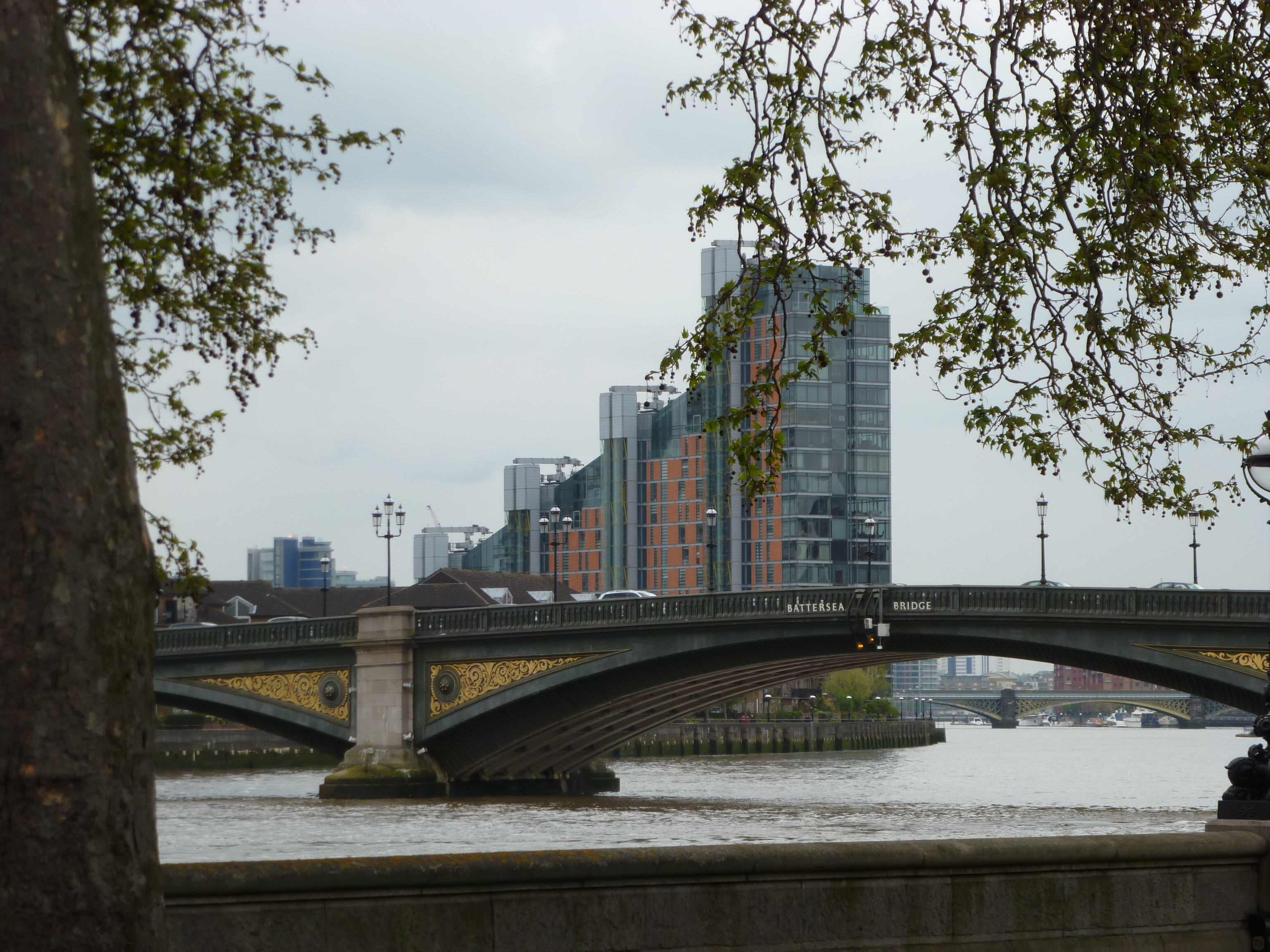
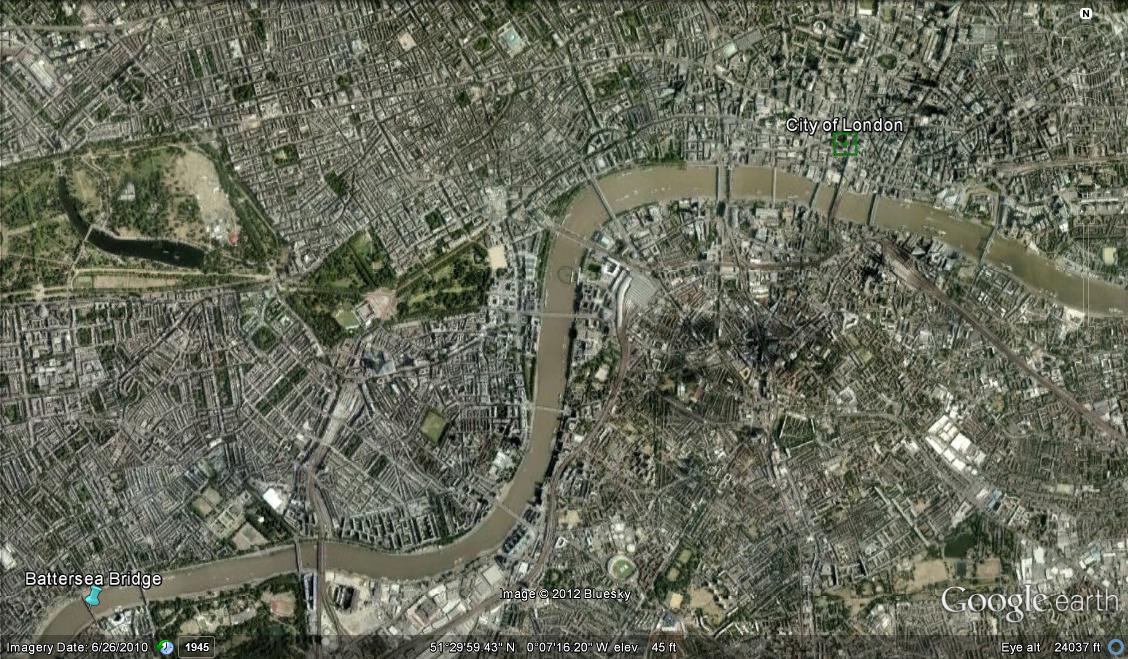
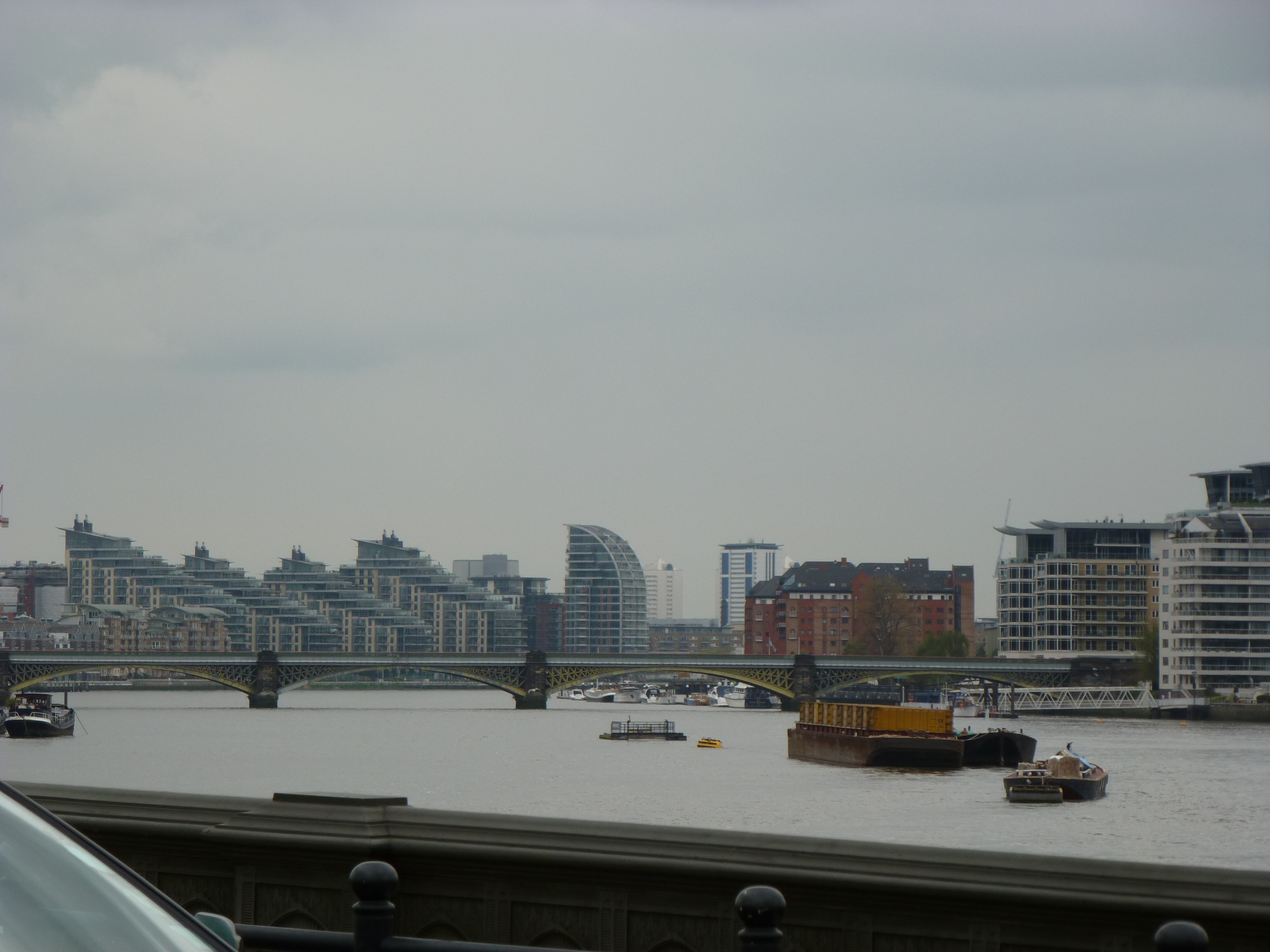
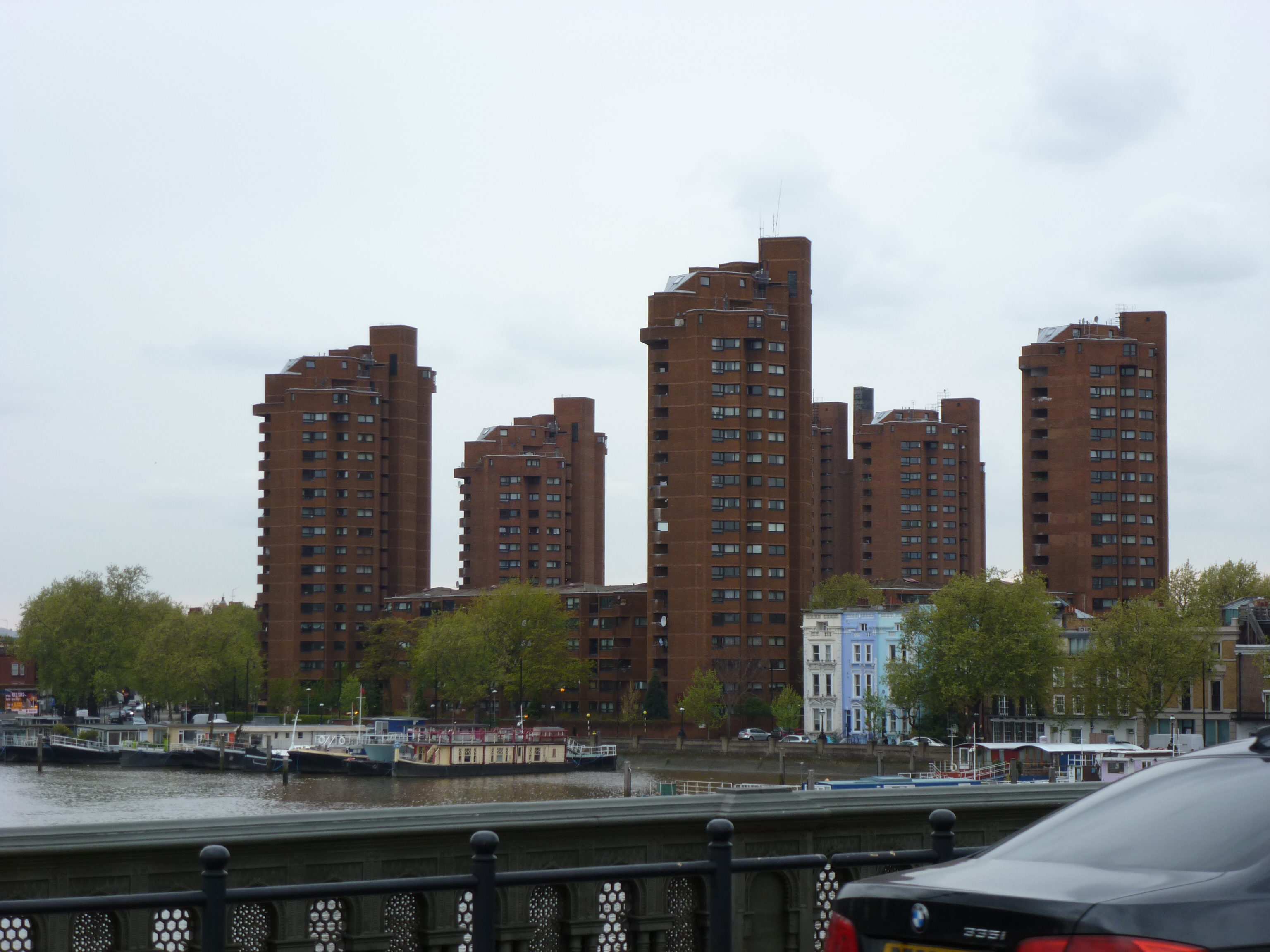
Most of the buildings visible from the Albert Bridge were of new or modern construction and appeared to be used mostly for residential or office use. One industrial site was visible to the west past the Battersea Bridge in the form of a factory near Chelsea Harbor. There were also many boats parked in the Thames near the Albert Bridge; I don’t know if they were houseboats, fishing boats, or something else.


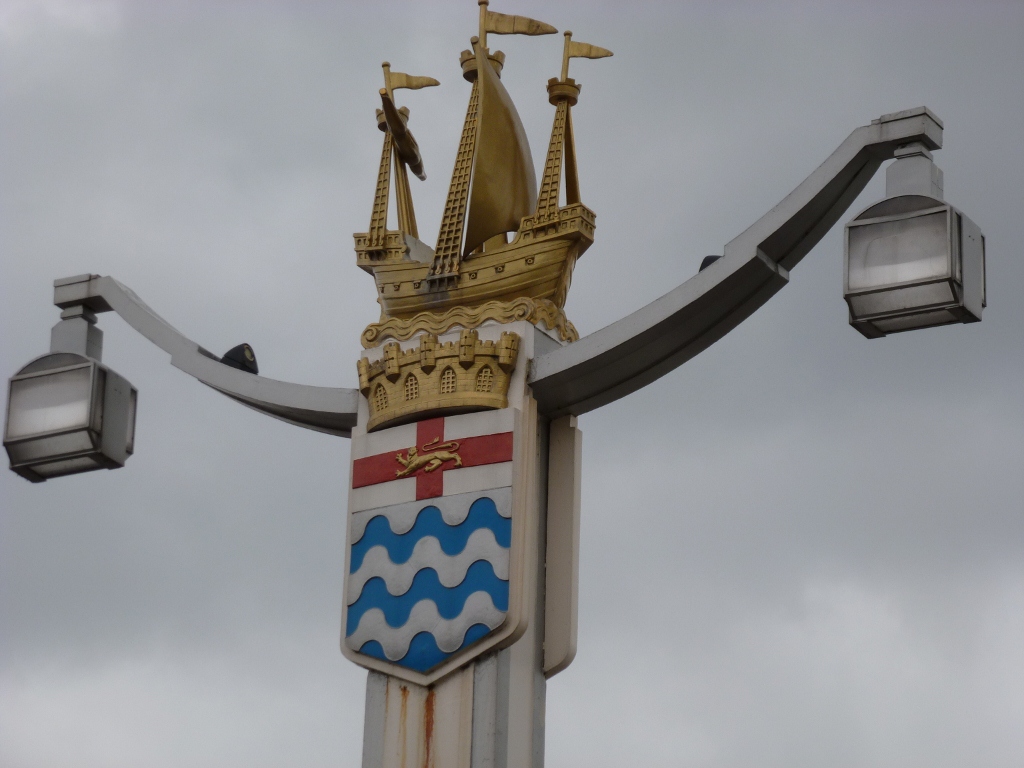
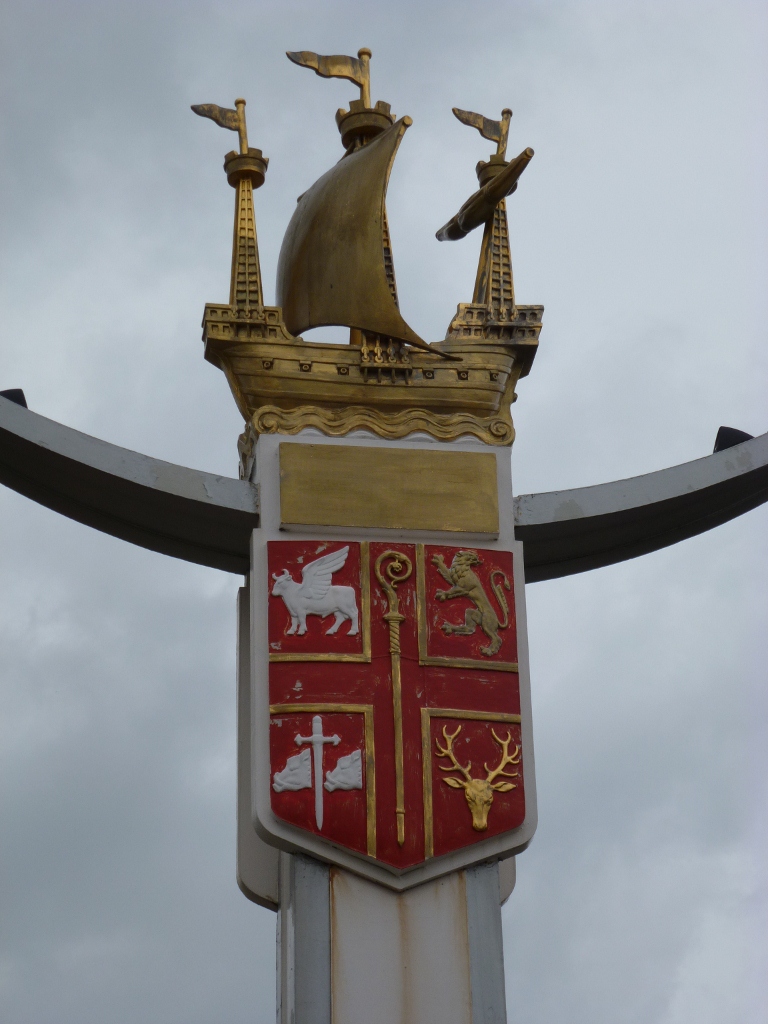
 The part I most enjoyed about the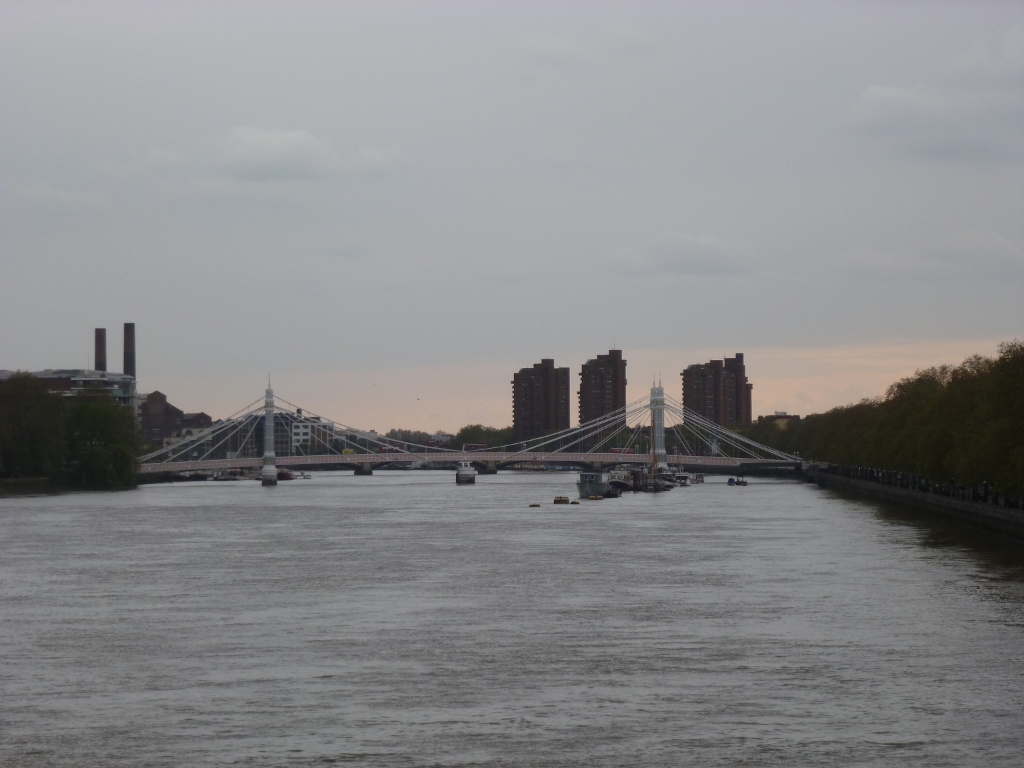


 urbantraipsing