
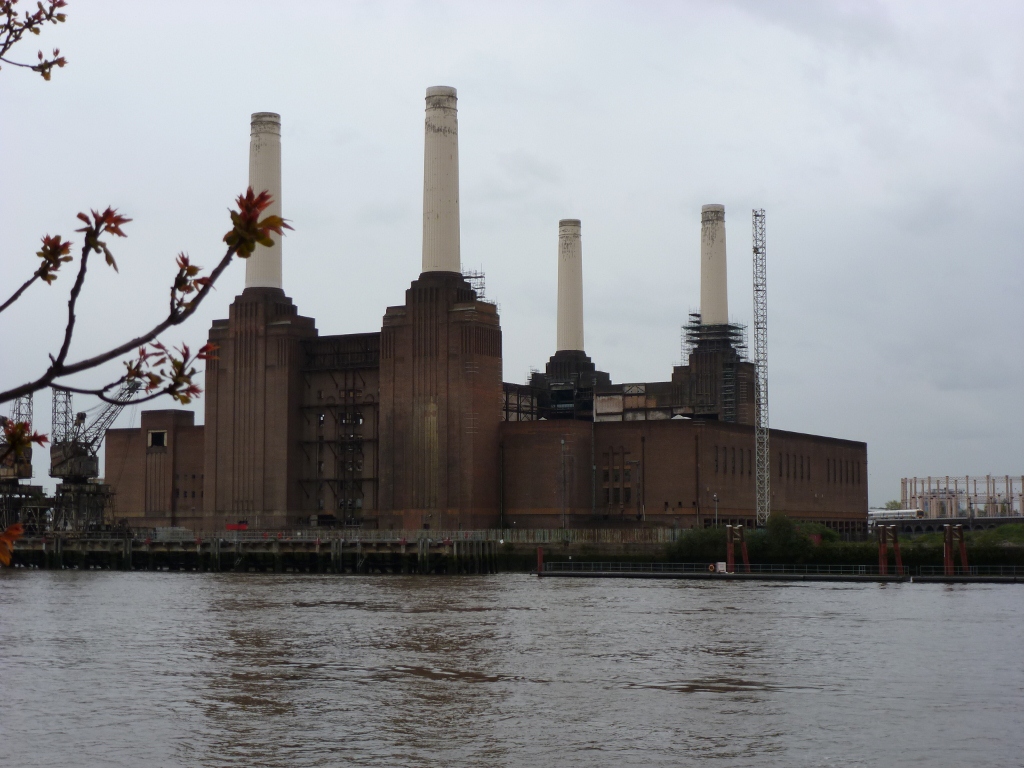
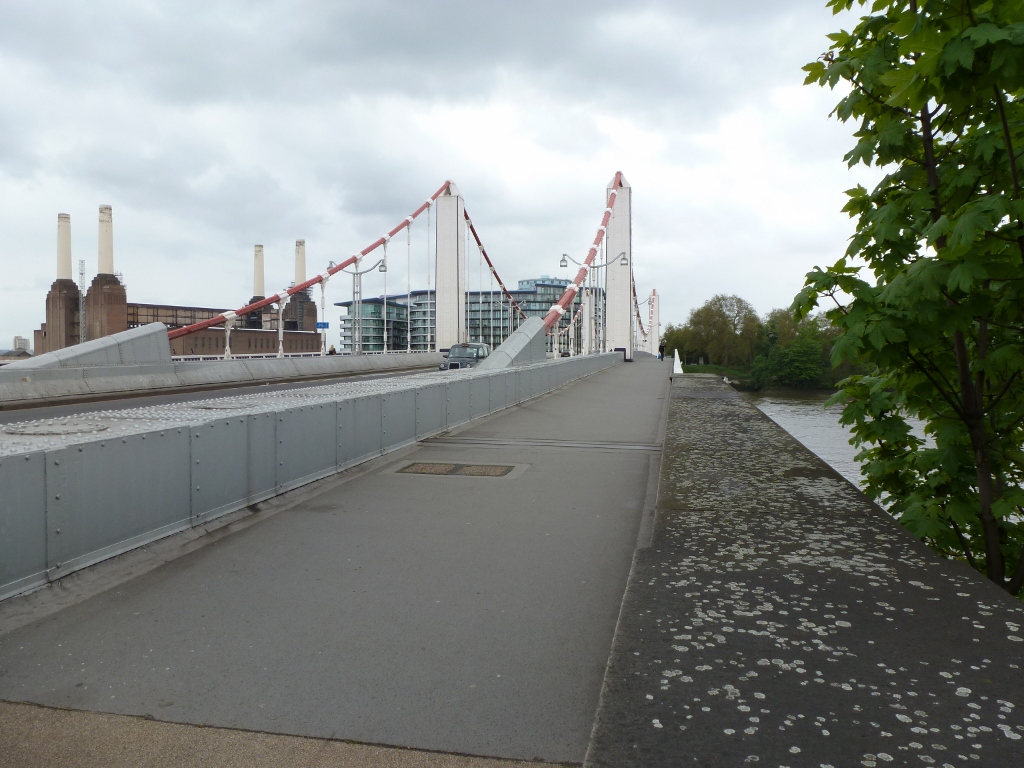
The Battersea Power Station intrigued me from the first glimpse I got of it. The smoke stacks first entered my frame of view at the Battersea Bridge (see June 15th post). I kept my eyes on the building as I got closer to it and was thrilled to get such a close view. I couldn’t tell from the early views of it that it was on the river. It was obviously empty as I could see sky through some of the windows. However I did not know what it was. While large, empty, industrial buildings intrigue me, I don’t know enough about them to identify their previous purposes. This one used to be a power station built in the 1930s and closed over the 1970s and 1980s. The National Heritage website indicates that building was to be adapted to new uses starting in 2005 and a BBC article said the building was to open as a new shopping and etc. complex in 2009. I did not see any signs of any use of the building when I passed, so I’m assuming these projects have yet to come to fruition.
After returning home from my trip to the UK, I received Sherlock Season 2 on DVD. One of the best parts of the season was in the first episode “A Scandal in Belgravia” where a sequence took place at the Battersea Power Station, which I instantly recognized, from having spent so much time staring at it while walking past it along the River Thames. This has been one of my favorite parts about my trip to the UK, now when I watch my British TV or read my British literature I recognize and understand the locations more from having seen them in person.
I did have a false call with this over the weekend. I was reading “For all the Tea in China” by Sarah Rose which talked about the Chelsea Physic Garden. I immediately said, “I know that place, I remember walking past it.” However, when looking at pictures of it online, I realized that I passed by the Physic Garden completely oblivious to its presence. What I remembered walking past was the Chelsea Flower Show grounds, which were being set up for a big show, that the gardeners were a little concerned about due to the excess rain the UK experienced this spring.
 The part I most enjoyed about the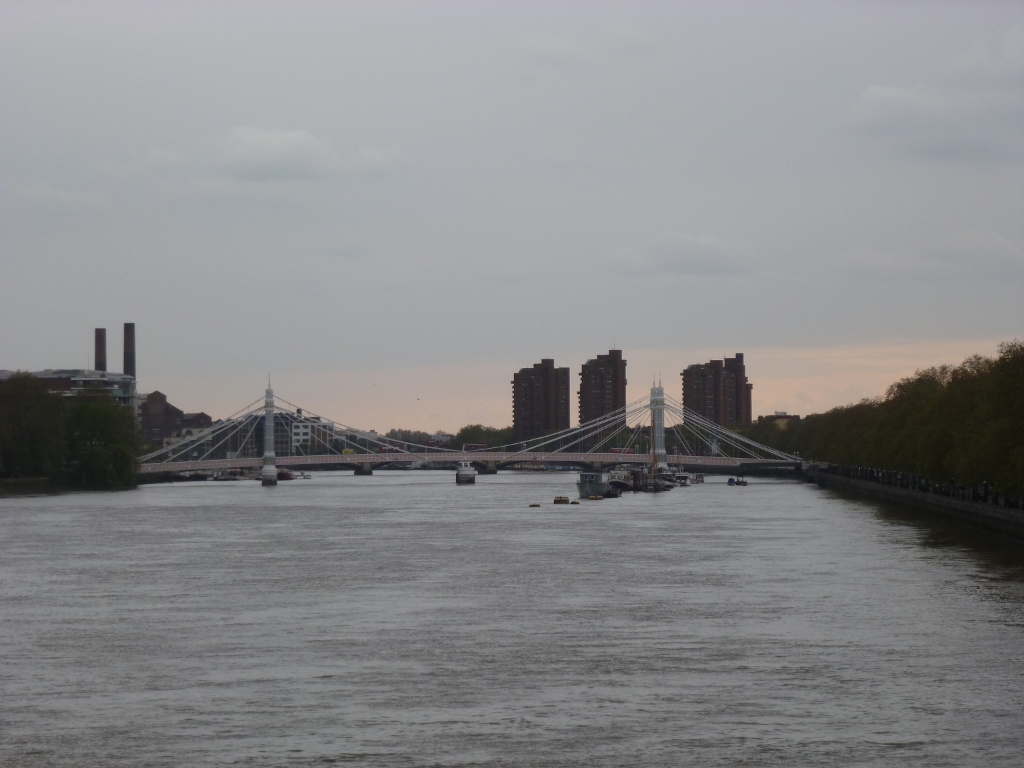
 urbantraipsing